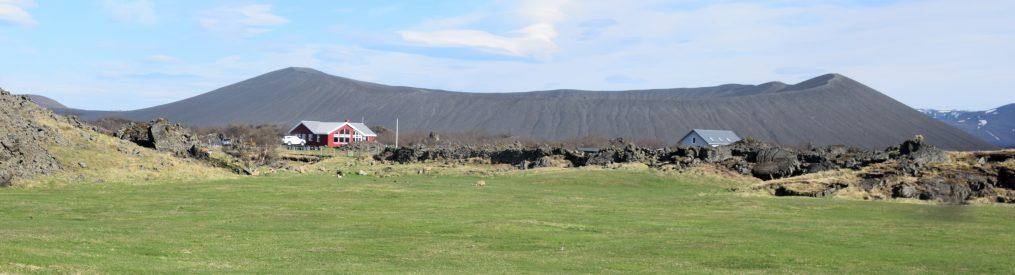
Having previously done justice to Cyprus, Malta and more recently Corsica it has been a further ambition to similarly explore the Tyrrenhian island of Sardinia. The last-named has been fortunate in largely escaping the ravages of mass-market tourism and offers a range of interesting habitats for an extensive flora and fauna. The scenery is very varied with mountains and rugged limestone hills, extensive forests, farmland; and extensive coastal wetlands in which birds (see previous post) and particularly odonata thrive.
Dragonflies
Sardinia, the second largest island in the Mediterranean, can host several African dragonfly species that extend into southern Europe mostly here and in parts of the Iberian peninsula. But it soon became clear that some of these must occur in very small numbers and take some searching out. The Naturetrek tour itinerary cited a potential 35 different dragon and damselflies at this time of year, but I actually observed around 20. Most disappointing of all the exotic Green Hooktail and Bladetail, the odo-orientated participants’ top two targets for the trip, were not found.
My dragonfly of the trip was the seriously beautiful Long Skimmer, a large, elongated and powerful species that is common in tropical and north-west Africa and parts of south-west Asia. This was my third most important reason for joining this tour as it was not amongst some northward expanding dragons I had self-found in Portugal in 2014. LS was first recorded there in 1991, where it remains uncommon and highly localised in the south of the country.
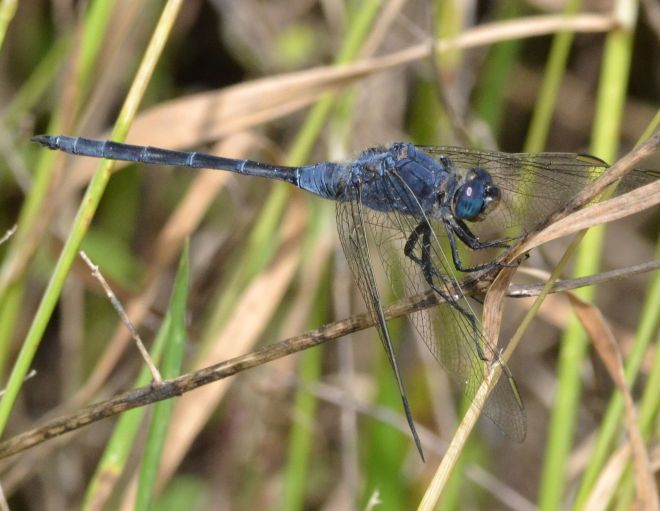
Long Skimmer (mature male)
On 4th we visited Lago Baratz in the north-west corner of Sardinia, the island’s only natural fresh-water lake. For me this was the outstanding location of the tour, as the lakeside vegetation simply teemed with dragonflies whose exuvia littered the reed stems. There were thousands of Black-tailed Skimmer here, and fairly abundant amongst those were the highly attractive Long Skimmer (pictured above and below). The males are dark-slate coloured blue with a thin cylindrical abdomen of 38-44mm that is bulbous in segments 1 and 2. In mature males the abdomen can appear almost black, while immature males have an olive-yellow ground colour that turns gradually blue. The pale yellow females were more difficult both to locate and take pictures of.


Banded Groundling is another abundant and widespread African dragonfly that has colonised Sardinia and parts of Iberia very locally in recent decades. As the name suggests this species prefers to fly low over and to perch on bare ground where it is nicely camouflaged. They are often found around grazing animals and may even follow humans to catch disturbed smaller insects. The tour itinerary said “hundreds would be flying as we walked along, making the ground appear to shimmer beneath our feet”, which was something of an exaggeration. In the event we found rather more modest numbers first at Lago del Cuga in north-west Sarninia on 5th, then subsequently at various locations further south.
At emergence both genders are yellowish and lack wing-bands that develop gradually in extent and intensity. The male’s body and bands eventually become black, while females become brownish with less distinct brown bands. The twin-coloured cream and brown pterostigma are common to all forms and life stages. I had observed this species once previously in Morocco but had not come across the immature form (below, right) before. As with Long Skimmer, mature females were more difficult to locate and I only gained one poor shot of the latter.


Two more species self-found before in Portugal and Morocco also featured prominently on this trip. I had been delighted by the highly attractive Violet Dropwing upon first encountering it in the Algarve in 2014, and gained more good quality images this time around. Males are a small, pink and purple dragonfly with striking amber wing bases and veining, while the deep yellow females are similarly pleasing on the eye. Having expanded their range out of Africa since the 1970s, much of the northern Mediterranean margin has now been colonised. They tend to perch prominently and in one place I found male, female and immature individuals on the same shrub for comparison.


Broad Scarlet, also known as Scarlet Darter, was one of the week’s more frequent sightings wherever we went. Once common only in the Mediterranean region, the robust and aggressive, all-red males are becoming recorded ever more frequently further north. This species is also common and widespread throughout Africa and in western Asia. Young males and females are brown-yellow with pale stripes on the thorax and blackish lines on the abdomen. This species often makes a striking picture, but especially so against the resplendent swaying grass-heads of Lago Baratz (below).

Broad Scarlet (above and below)


As anywhere in the Mediterranean, Red-veined Darter was also encountered fairly regularly. This small red dragonfly is common and widespread across southern Europe and North Africa, though more sporadic further north including Great Britain. I should also mention Southern Darter, a new species for me that is quite difficult to distinguish from the more abundant Common Darter. Our tour leader Nicola Scatassi assured me the individual he is holding in the bottom right picture (below) is one. I can assure anyone who might be opposed to netting insects that none of the specimens he presented to the group in this way were injured. Southern Darter were called from time to time, but I probably paid insufficient attention to that particular lifer on the trip.


Red-veined, Southern and Common Darters (above and below)


The dragonfly list for the trip was completed by two medium-sized blue species that are familiar at home: Black-tailed and Keeled Skimmer. The first of those were plentiful in most places we went, while the latter were found first at Su Baione then at other locations in the south of the island. I always find the yellow and black newly emerged BTS especially attractive and photogenic and at Lago Baratz that was no exception.


Damselflies
Fortunately the trip’s damselfly content added a bit more in the new and different sense, with five life list additions. The most satisfying of these were two new Spreadwings, or Emeralds as they are known in Great Britain. The first, Dark Spreadwing is a Sardinia speciality and our tour was timed to coincide with their limited flight season there. This species is also highly localised across southern Europe from the Iberian peninsula to Turkey.
On our first day, 3rd we took a ferry to the island of Asinara off the north-west tip of Sardinia. Once a penal colony in centuries past, this place is now a national nature reserve and several local companies operate 4×4 tours there. It didn’t take long to find Dark Spreadwings that were active at the first brackish habitat we stopped at. I found their two-tone blue head and thorax and generally dark and metallic colouring very attractive, and the notably large and dark pterostigma are quite a striking diagnostic. More were found at a site near Cagliari in the south of the island on 8th.


I was also pleased to catch up with Migrant Spreadwing on this trip, that in Great Britain is known as Southern Emerald. At home I believe this rather pale-toned damsel has since 2002 occurred only at certain sites in Kent known to local odo royalty, hence my relief at having now observed it abroad. MS has increased dramatically in northern Europe since the mid-1990s, and also occurs eastwards as far as Mongolia. The yellow jowls, wide antehumeral stripes and bi-coloured pterostigma are all diagnostic. The pictures below were taken near Su Baione.


The commonest damselfly in Sardinia appeared to be Island Bluetail that we came across almost everywhere we went. This species is closely related to the Common Bluetail that is abundant in Great Britain, but has always a bright green face and thorax and a particularly vivid blue segment 8. IB is endemic to the Tyrrhenian islands, Sicily and Malta where it replaces CB in standing and running waters with rich vegetation.


Two more new (for me) blue damselflies were observed in various places. Dainty Bluet is rather localised throughout southern Europe but is expanding northwards, inhabiting slow-flowing waters with rich vegetation. We first found them on Asinara and only occasionally thereafter. The aptly named Blue-eye is a southern species that can be abundant in the Mediterranean region. The slender males have a diagnostic goblet marking on segment 2 and just look at those big blue eyes. These were seen at a number of locations throughout the trip, often perching horizontally on emergent stakes above the water’s surface.


Last but by no means least were the dark, metallic Copper Demoiselle that were observed at a number of sites in central and southern areas. This common larger damselfly occurs only around the western Mediterranean and north-west Africa. Disappointingly all those recorded were of the same blue form that I had seen previously in Portugal, whereas I had been hoping for the beautiful deep copper-red form that gives the species it’s name.


The lingering sentiment from this trip, with so few lifers gained is one of anti-climax. Sardinia on this occasion at least was not the dragonfly hunting mecca of its billing. It is said to have been the wettest spring in Italy for many years, which could have had some bearing on the dearth of exotics. I am not so sure of that, although much of the island remains unexplored and under-recorded in odonata terms. The most sought African species might perhaps have been hiding out there somewhere, but I will never know and feel little inclination to return.
 Ramblings and Scribblings