I place this post’s lead item amongst the most attractive of Orchids. But nationally I had only recorded the now lone parent plant of BBOWT Hartslock’s Lady X Monkey colony in Oxon (see here), and some in les Cévennes, France. Hence I wanted to enjoy them in greater quantity within their Kent strongholds, and so booked onto one of Mariposa’s twin Orchid tours over this weekend. What transpired in the morning here greatly exceeded my expectations.
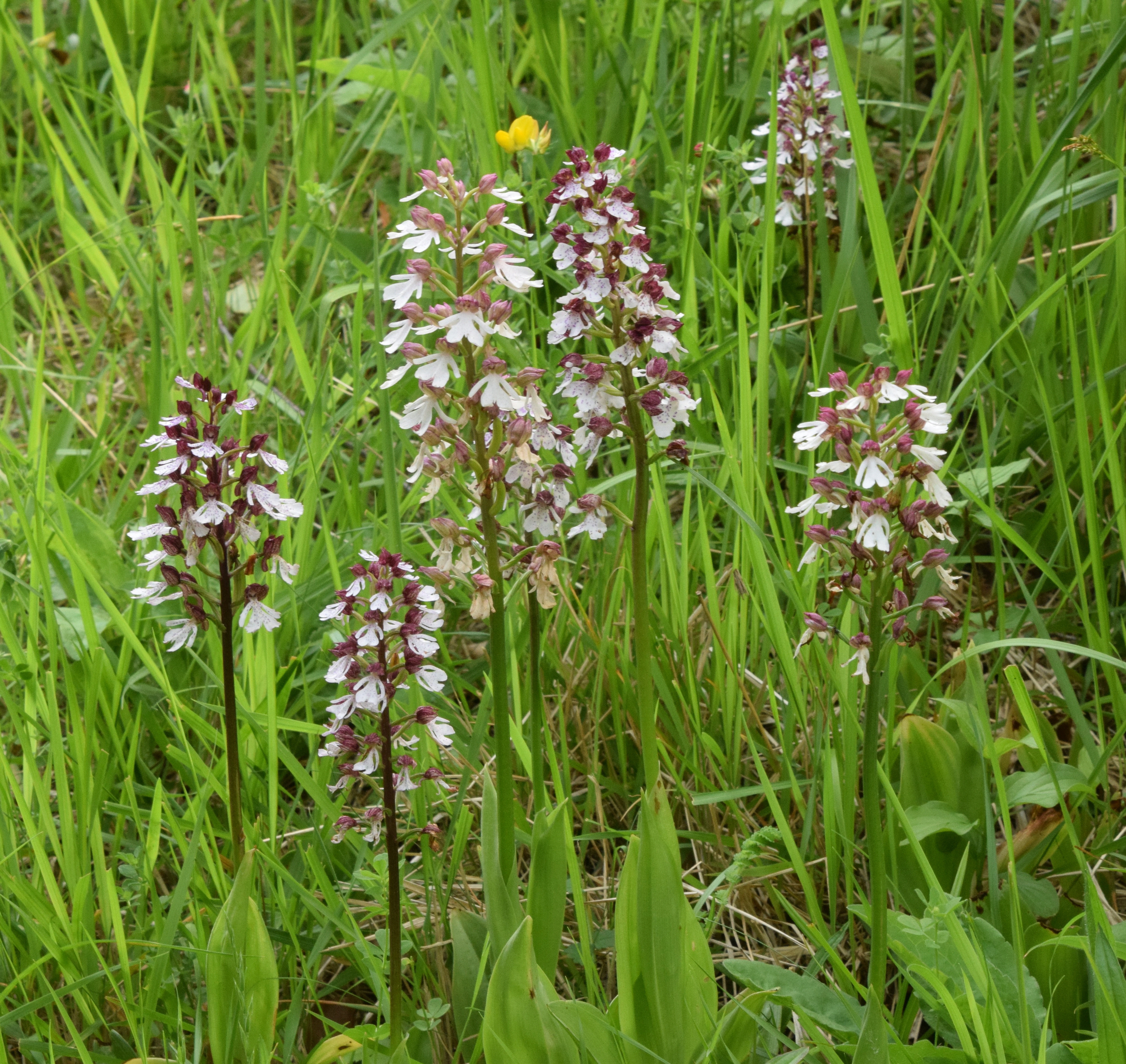
Bonsai Bank (CT4 7EZ – TR102507) is a large former chalk quarry within Denge Wood, an extensive ancient and semi-natural woodland to the south-west of Canterbury, owned by Forestry England and managed by the Woodland Trust. It is so-named because conifers planted in the past have not grown as normal and so are all rather stunted. Double-figured species of Orchid abound here, amongst which and most prominent are thousands of my sought Lady Orchid. Our guides, Jon Dunn and Richard Bate, said those have never looked better than in this dry and often difficult season in so many other places. The almost two hours spent on site were without doubt the best part of this day.
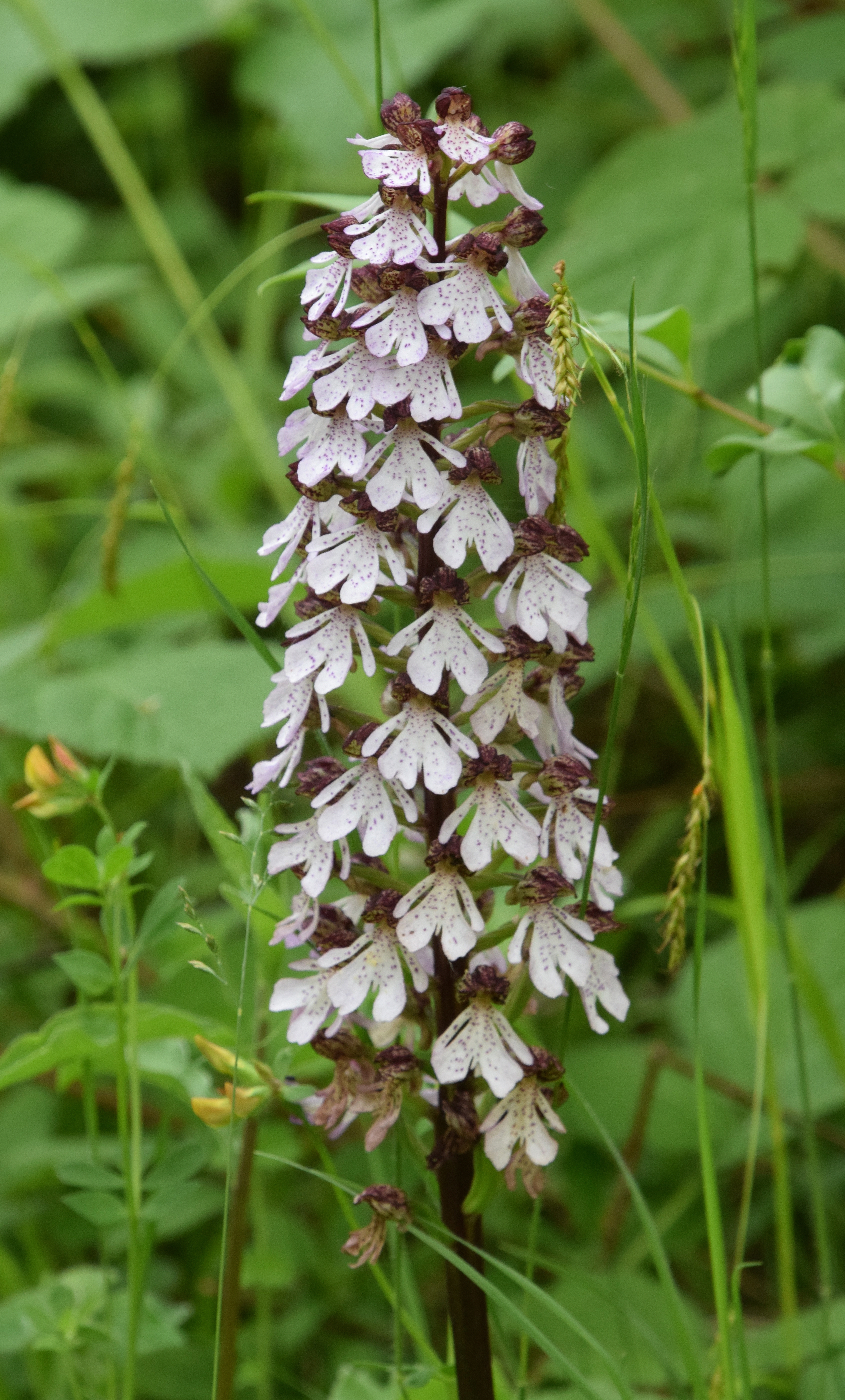
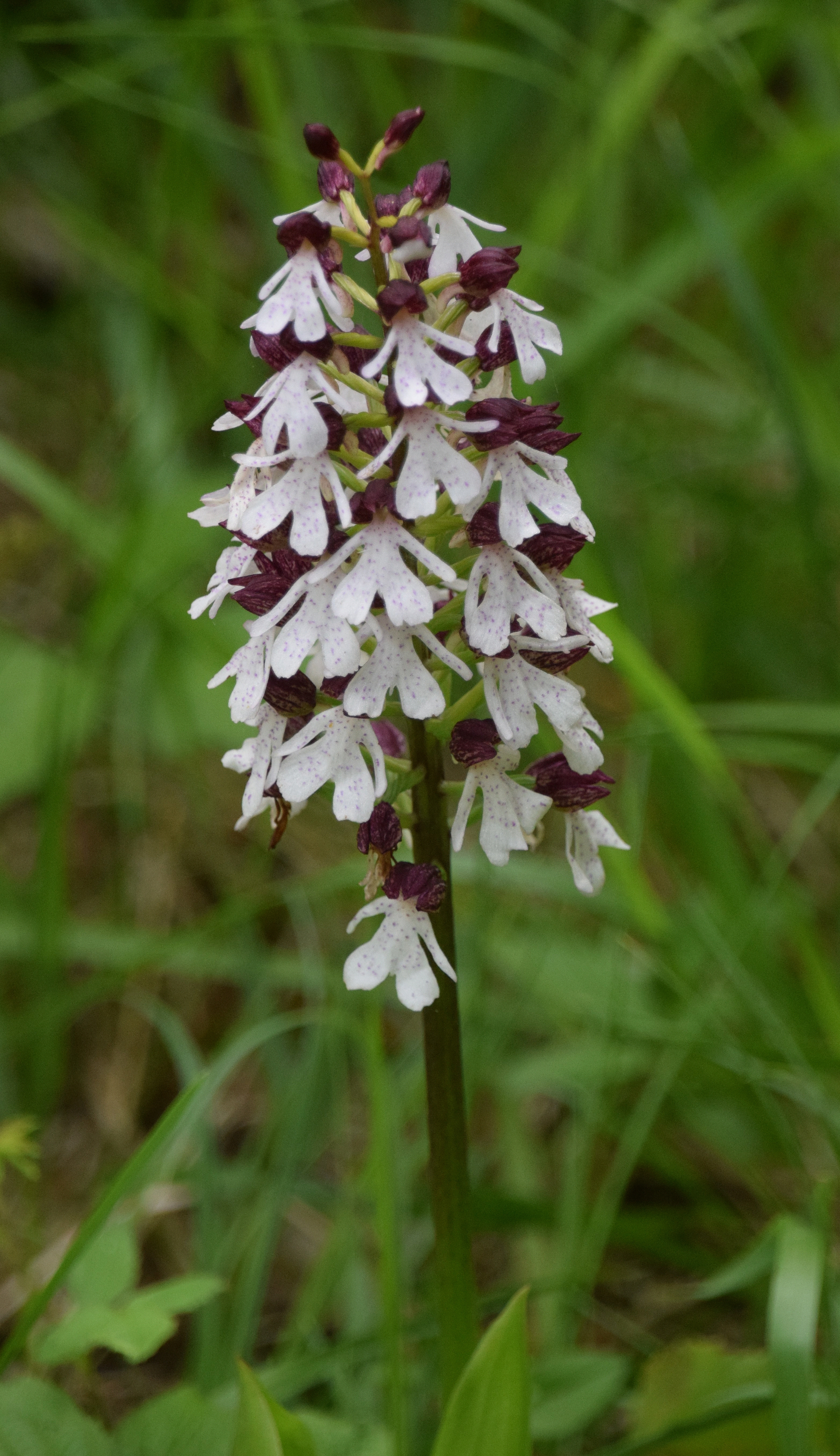

This spectacular site’s most eye-catching resident, the stately Lady Orchid is so named because the up to 50 flowers per stem suggest figures wearing a bonnet and gown. The most frequent colour form is deep red (pictured above), but I was captivated here by the different variations (below). The top prize today was a white and yellow form, var alba (bottom right).
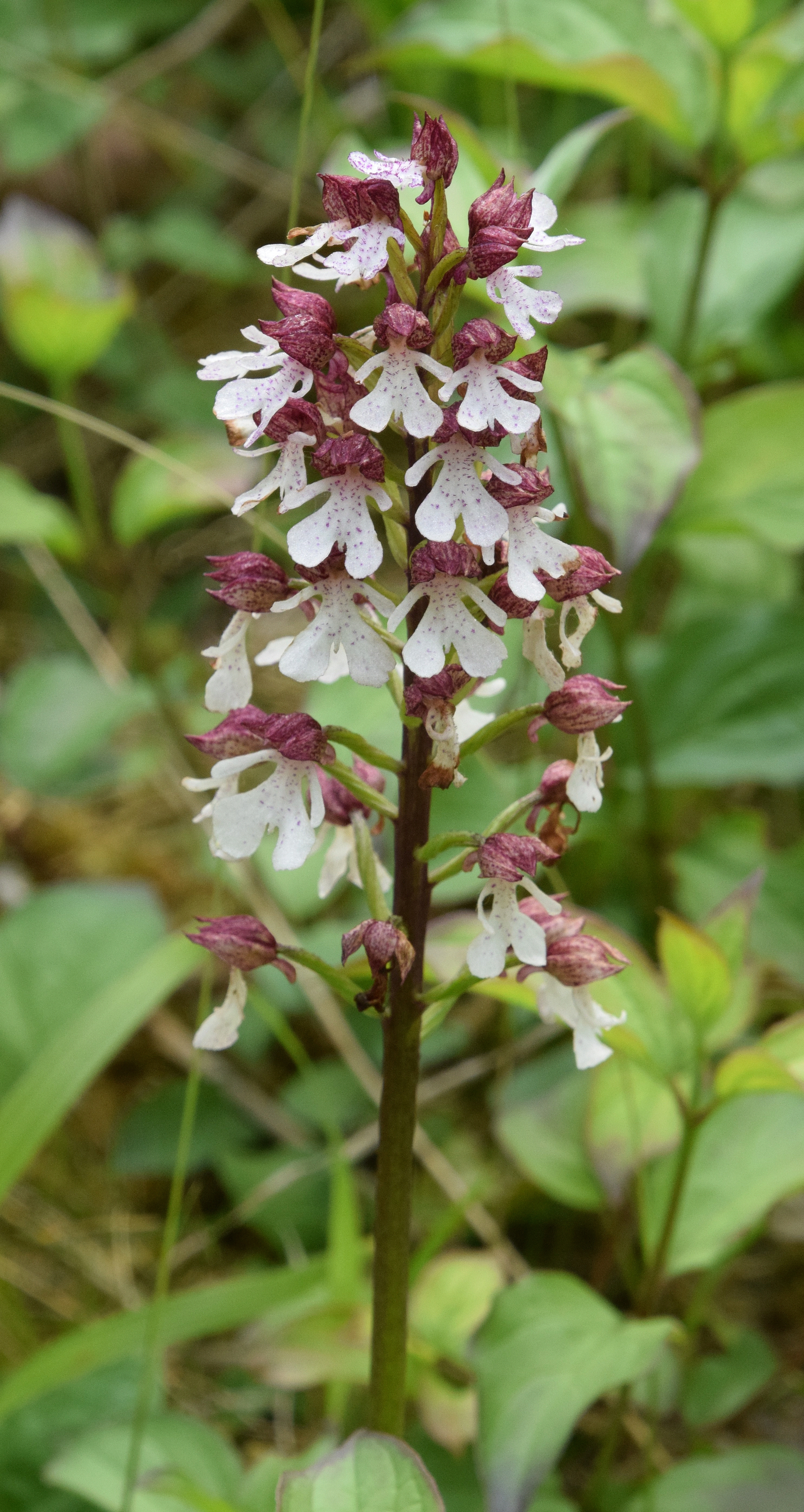
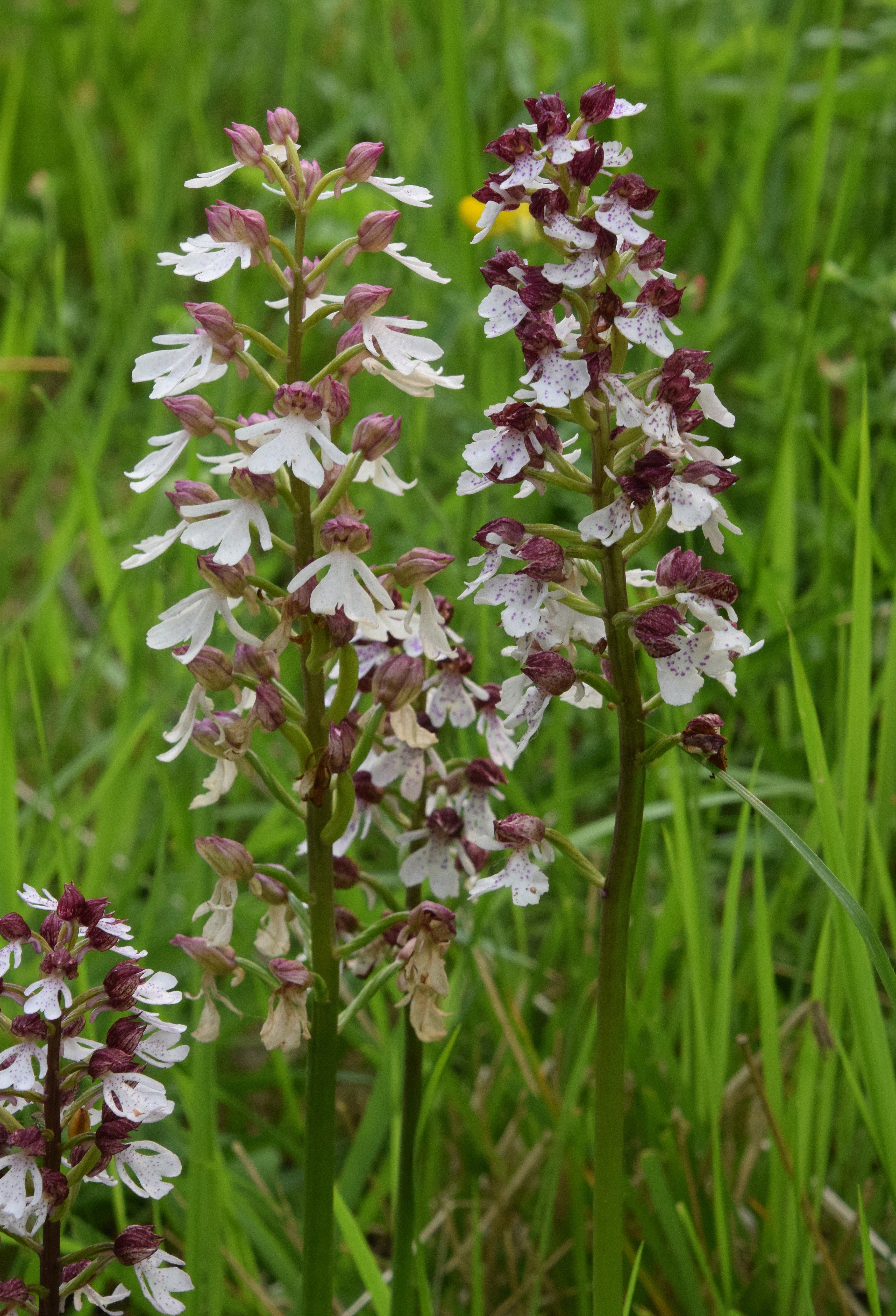
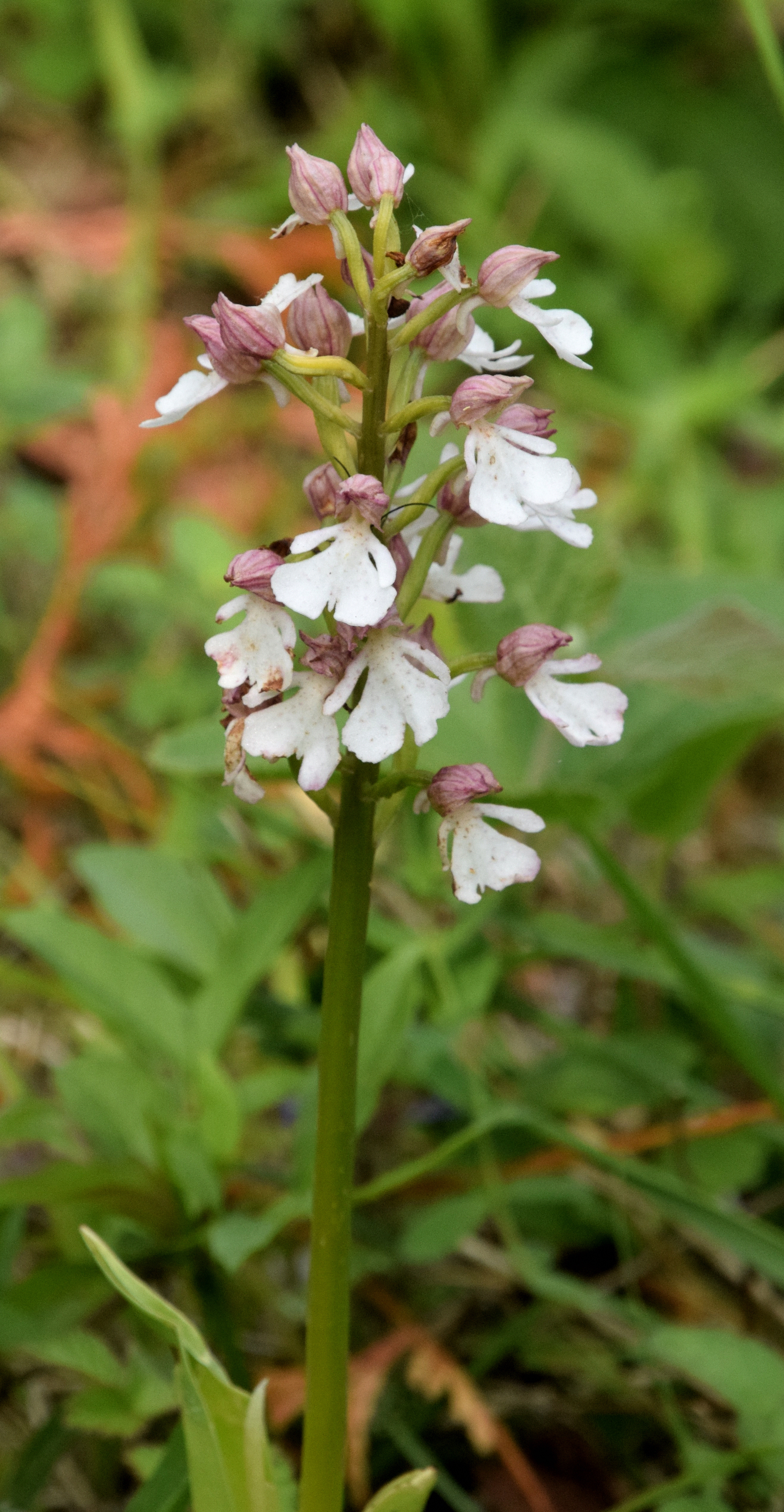
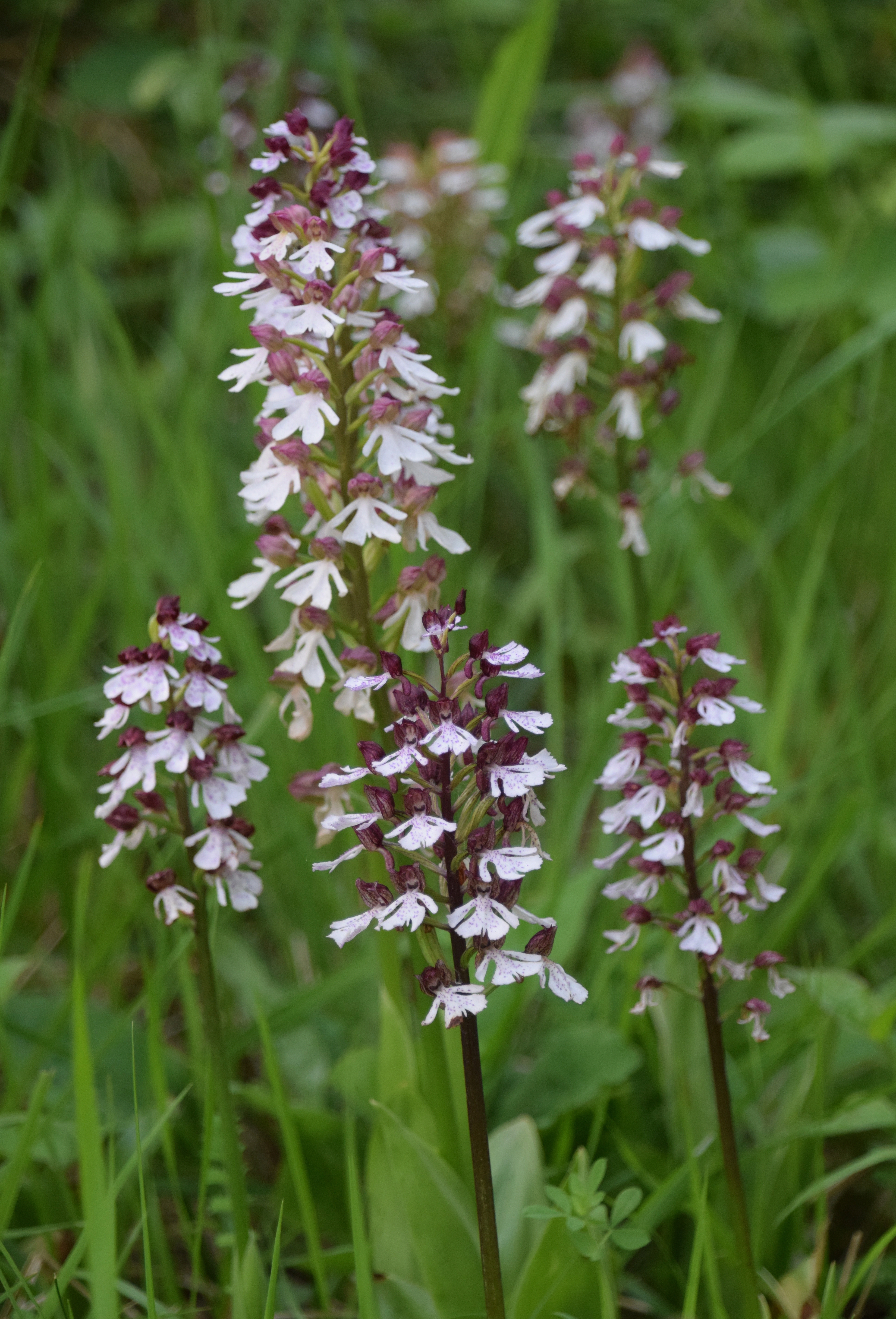
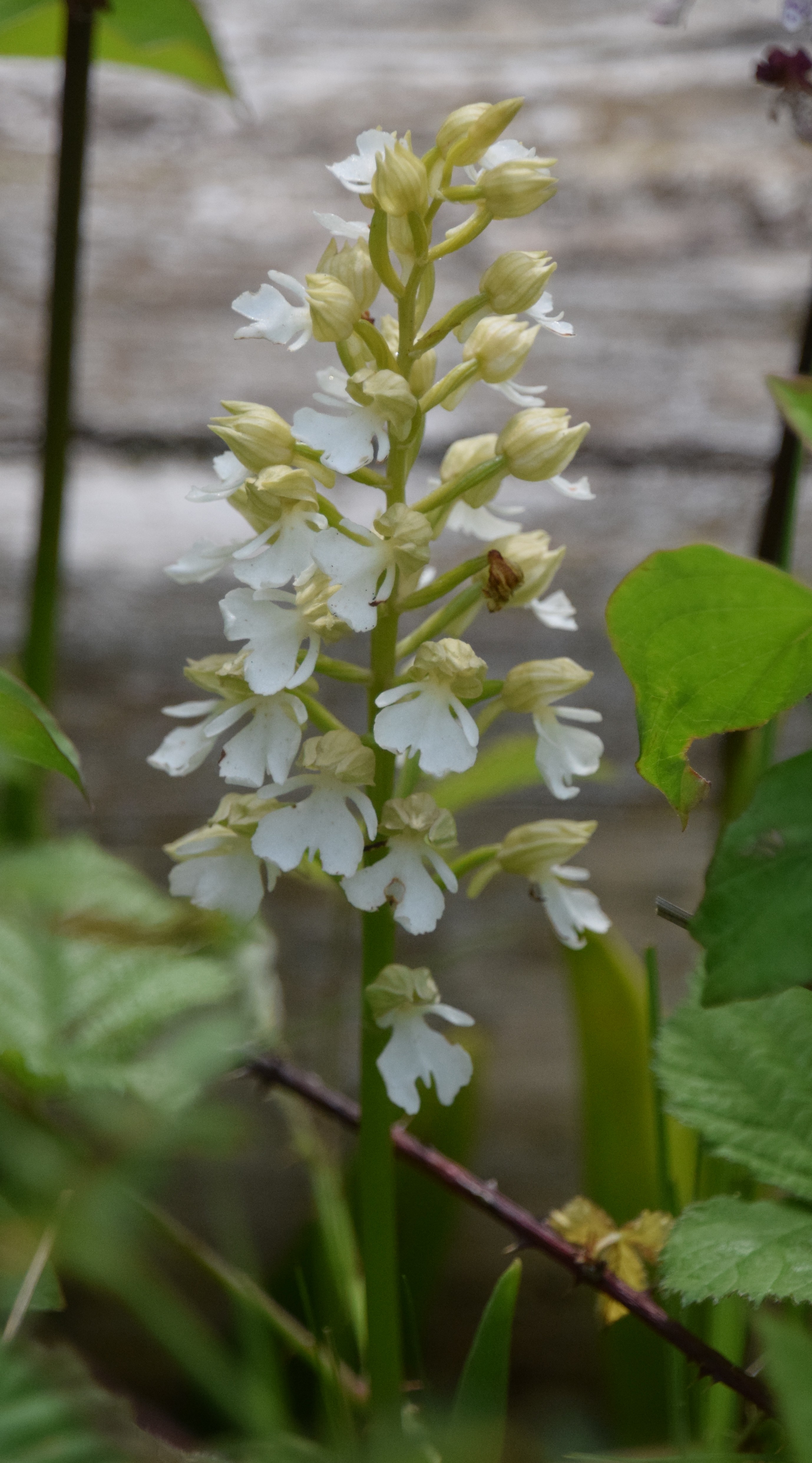
Lady Orchid is nationally scarce, no longer surviving in around 60 per cent of its historic range due to changes in woodland management, particularly lack of coppicing. This is because the plant prefers well-lit but sheltered areas along paths and rides, in open woodland on calcareous soils. Kent’s geological and climatic blend, in conjunction with sympathetic habitat management, suits them perfectly. Bonsai Bank offers a prime example of these conditions.
- Well-drained, chalky soils low in nutrients, which prevents root rot and reduces competition from more aggressive plants,
- Relatively warm and dry climate, that creates favourable conditions for blooming and germination,
- Traditional woodland coppicing that creates dappled light and open areas, without exposing the plants to scorching sun,
- Undisturbed, stable ground that maintains the orchids symbiotic relationship with specific ectomycorrhizal fungi. This refers to mutually beneficial associations between fungi and the root systems of particular plants from which they draw nutrients. In return the mushrooms contribute to their hosts’ growth and survival in various ways.
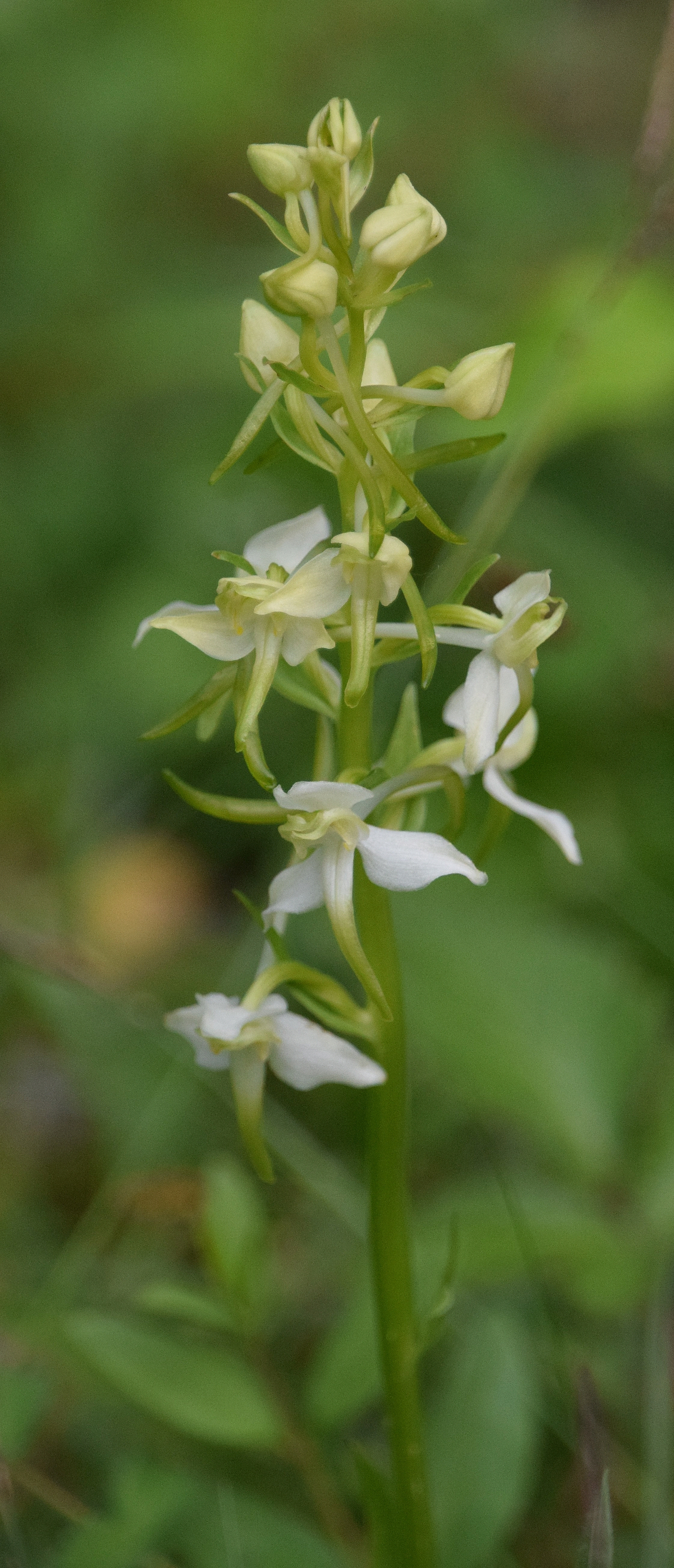


Greater Butterfly Orchids
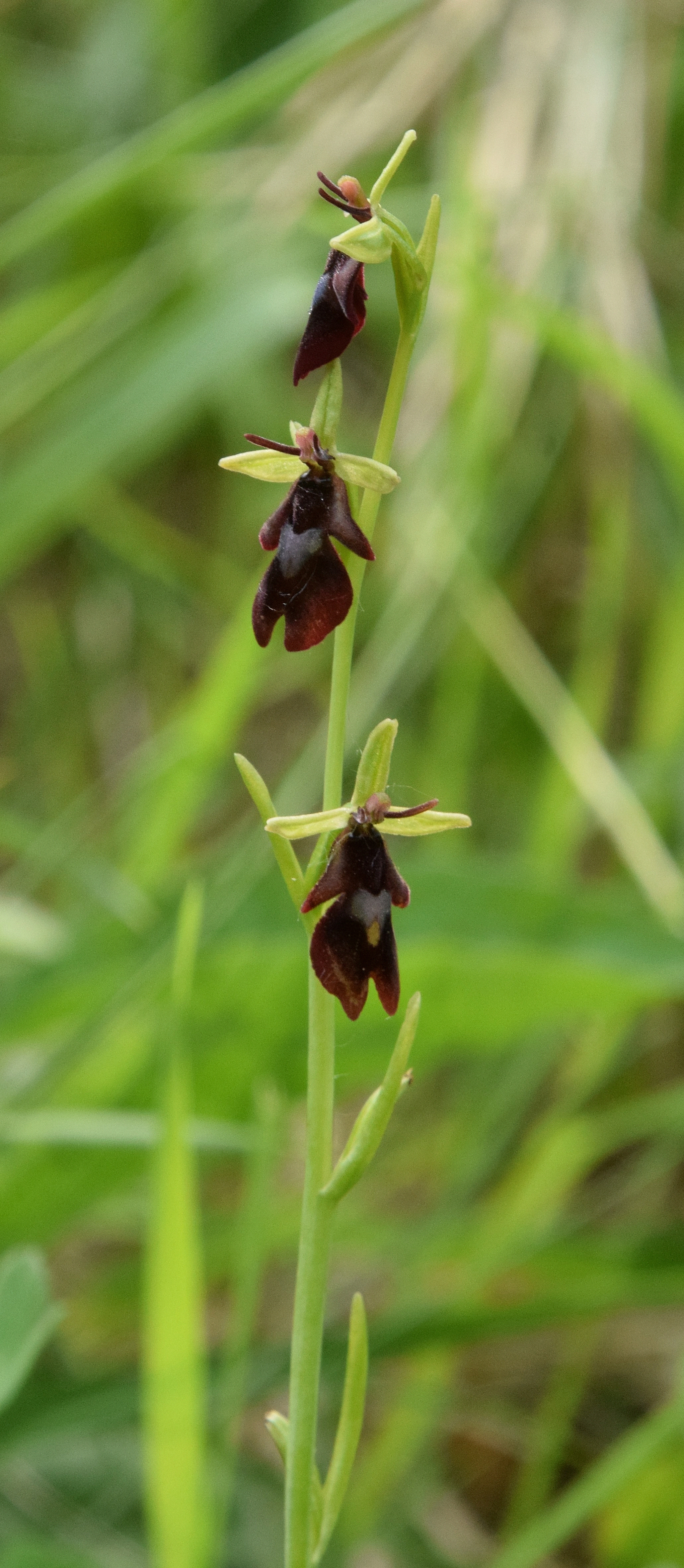
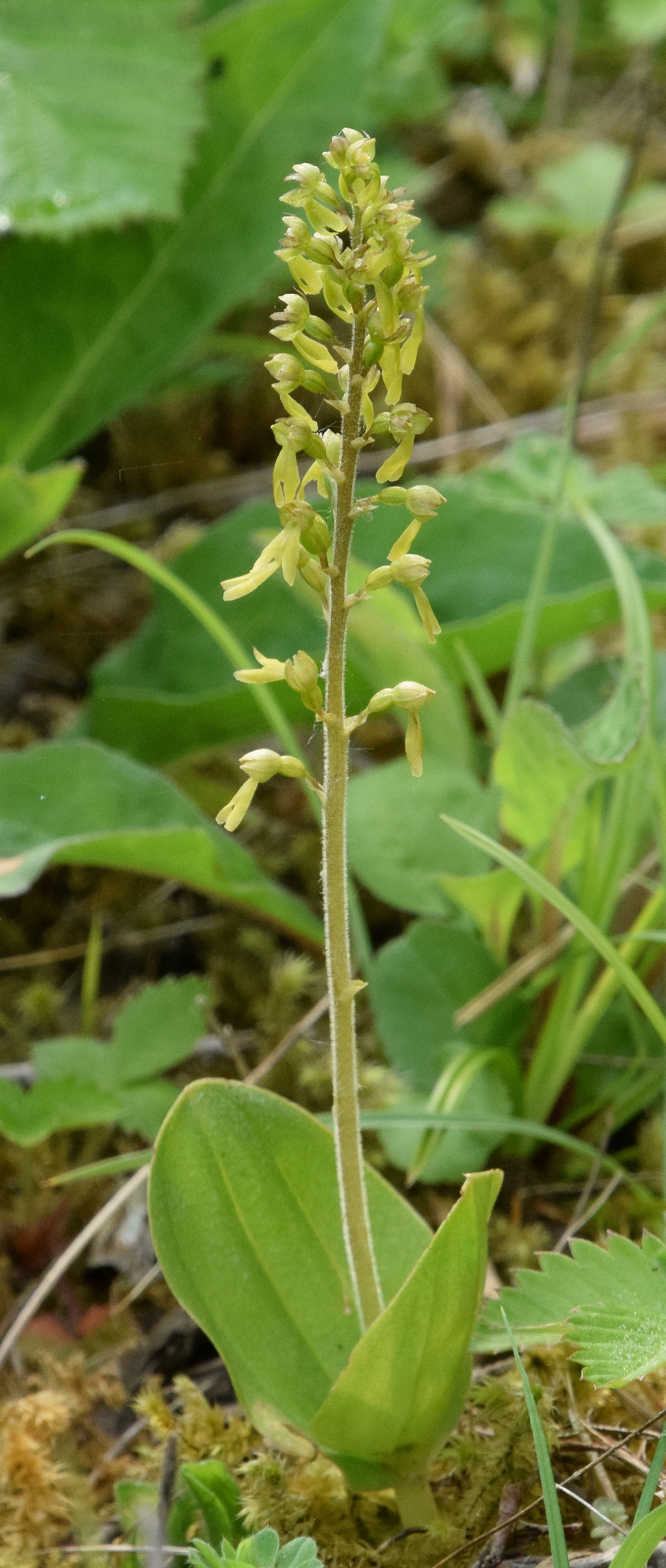
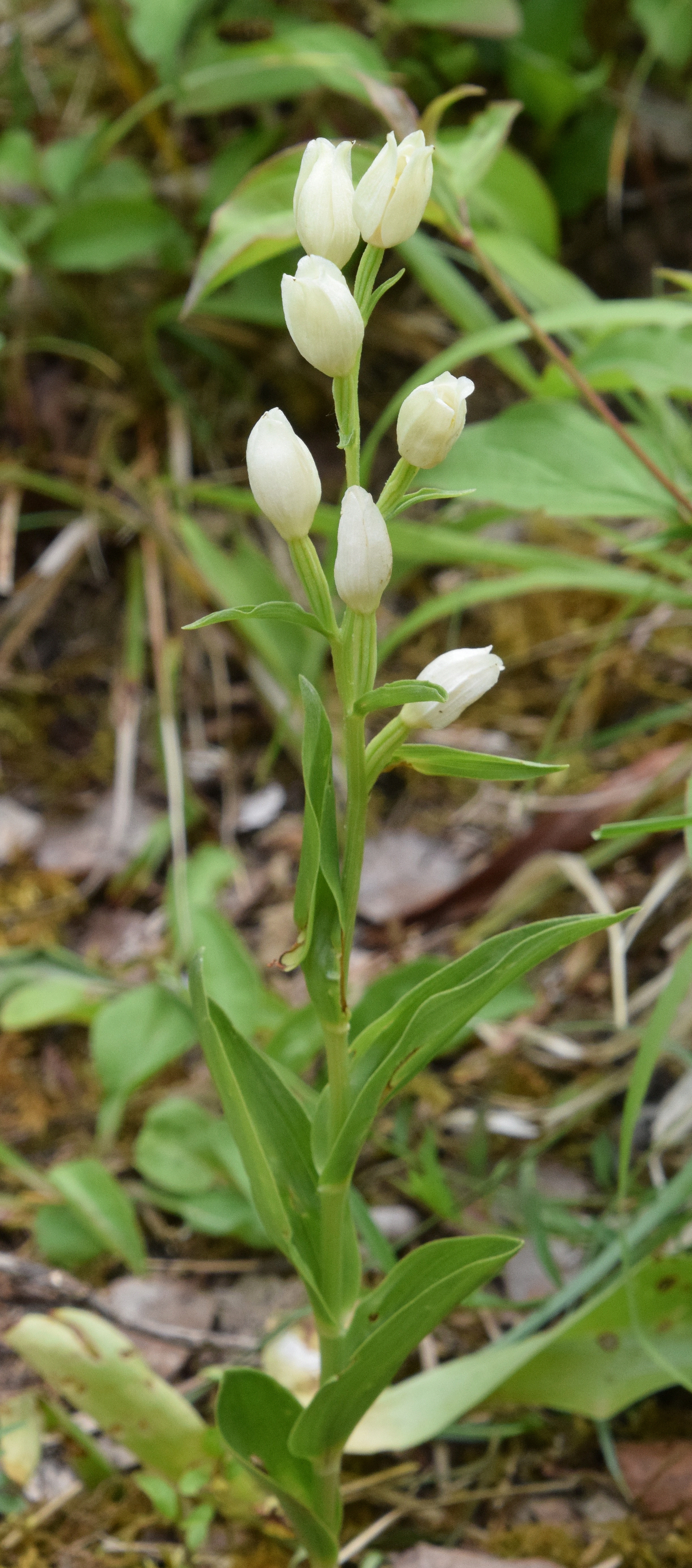
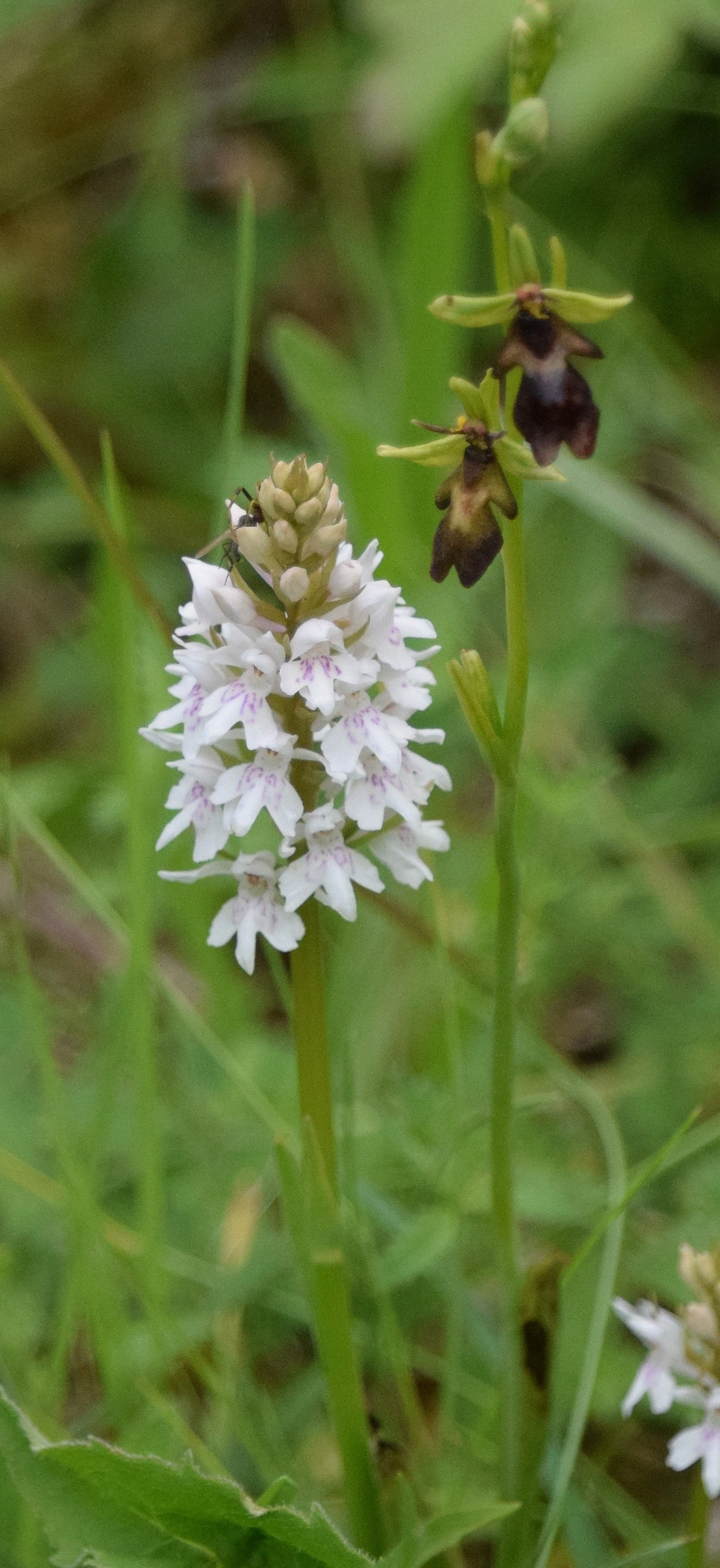
In all we recorded seven other Orchid species flowering here today. In the above sequences these are in the top row (from left) Fly Orchid, Common Twayblade that were particularly profuse, White Helleborine and Common Spotted Orchid. Chalk Fragrant and fading Early Purple Orchids were also present. There were good numbers of Greater Butterfly Orchids (second row) along the rides mixed in with the Ladies, amongst which was an attractive aberration (right hand picture). Jon Dunn described Bonsai Bank as one of his favourite of all Orchid locations, and after this magical experience I can sincerely endorse his sentiment.


Did this trip with Jon Dunn in 2022 (then Greenwings) – a superb way of seeing the main Kent orchids in 1 day. Also went on Richard Bate’s Mariposa trip to Hutton Roof Crags for Dark Red Helleborines last July – another I can highly recommend. Don’t think I could have navigated those crags for the first time by myself.
LikeLike