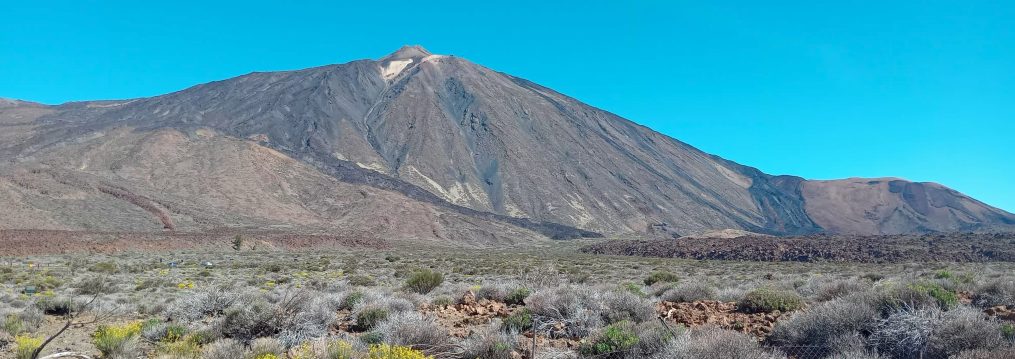
When I found out about this I just had to come back. During my April trip I thought there was just one population of the shy and endangered reptile on Tenerife, largely confined to precipitous cliffs in the island’s north-west corner. But a Spanish online resource (see here) I was referred to at the Teno Information Centre confirmed there is a second, smaller cluster just outside of Los Cristianos in the south-west, where I had stayed for the first two nights of that earlier exercise. One group of herpetologists (see here) blogged from there in 2024, while iNaturalist and other sources also mention the location.
The area in question is the Mirador Los Cristianos and Montaña de Guaza, mountainous uplands rising above and effectively enclosing the east and south of the town. The higher Mirador is flanked by large apartment complexes, so I secured a suitable studio there at reasonable cost, that would give me a base for up to four days’ searching. This is a popular hiking area (see here), so each day I could set out on foot for as much as I wished, with no need for a hire car, all nicely away from the hustle and bustle of the mass market resort below. There was nothing not to like here.
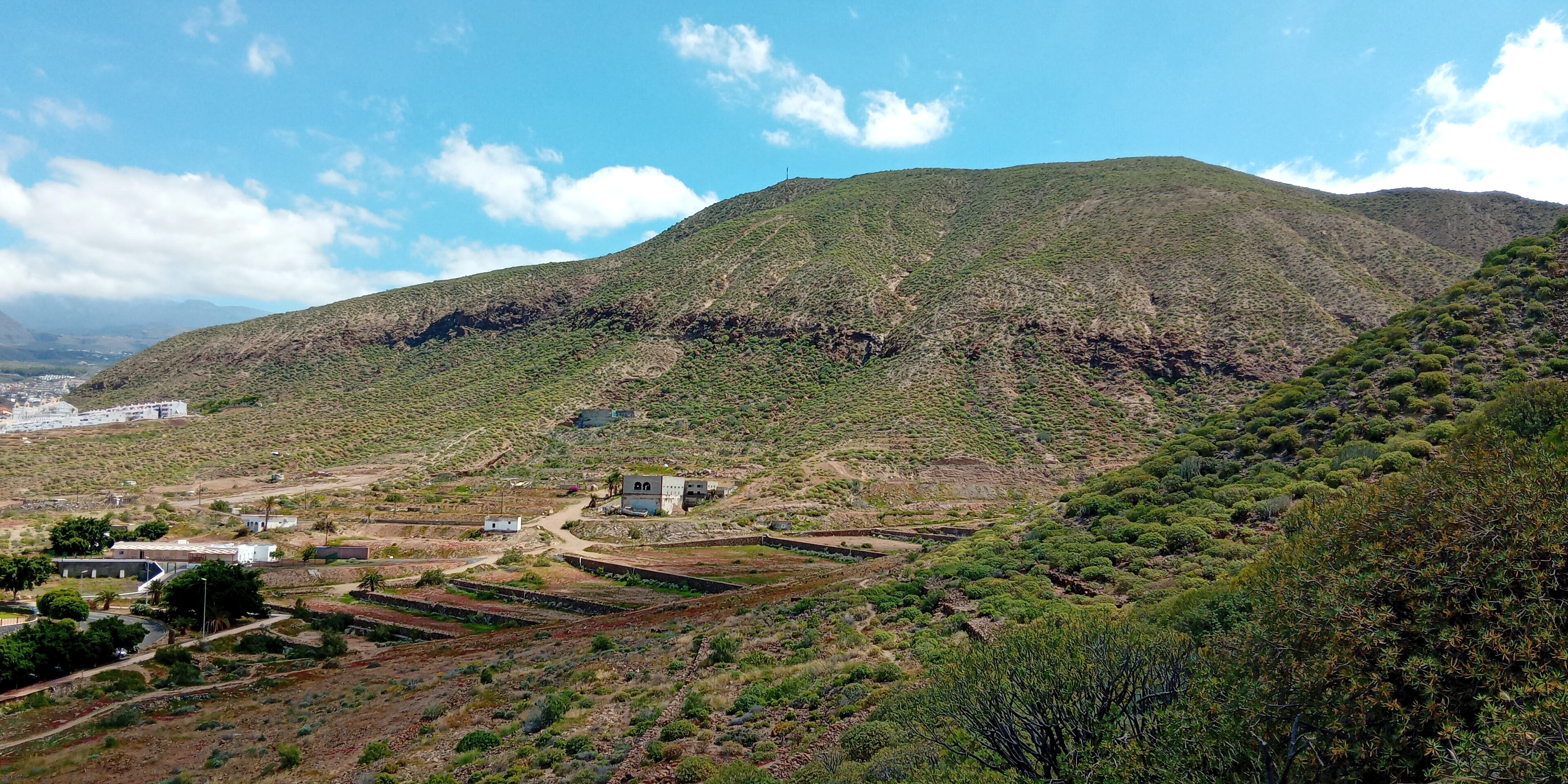
The dome-like Monumento Natural Montaña de Guaza‘s steep (100 m high), north-facing cliff (pictured below, top) is crossed by a hiking trail that was at first difficult to pick out from below. That took me some time on 19th, but from the start point along Calle Marea on the edge of town an information board is visible about a third of the way up the slope. This proclaims the presence of Tenerife Speckled Lizard (Gallotia intermedia) in the locality and details the conservation effort surrounding it (see here). A second notice tells people not to proceed further as the trail is unsafe. The local authority has good reason to cover itself against liability in that way, but plenty of walkers still make the climb every day.
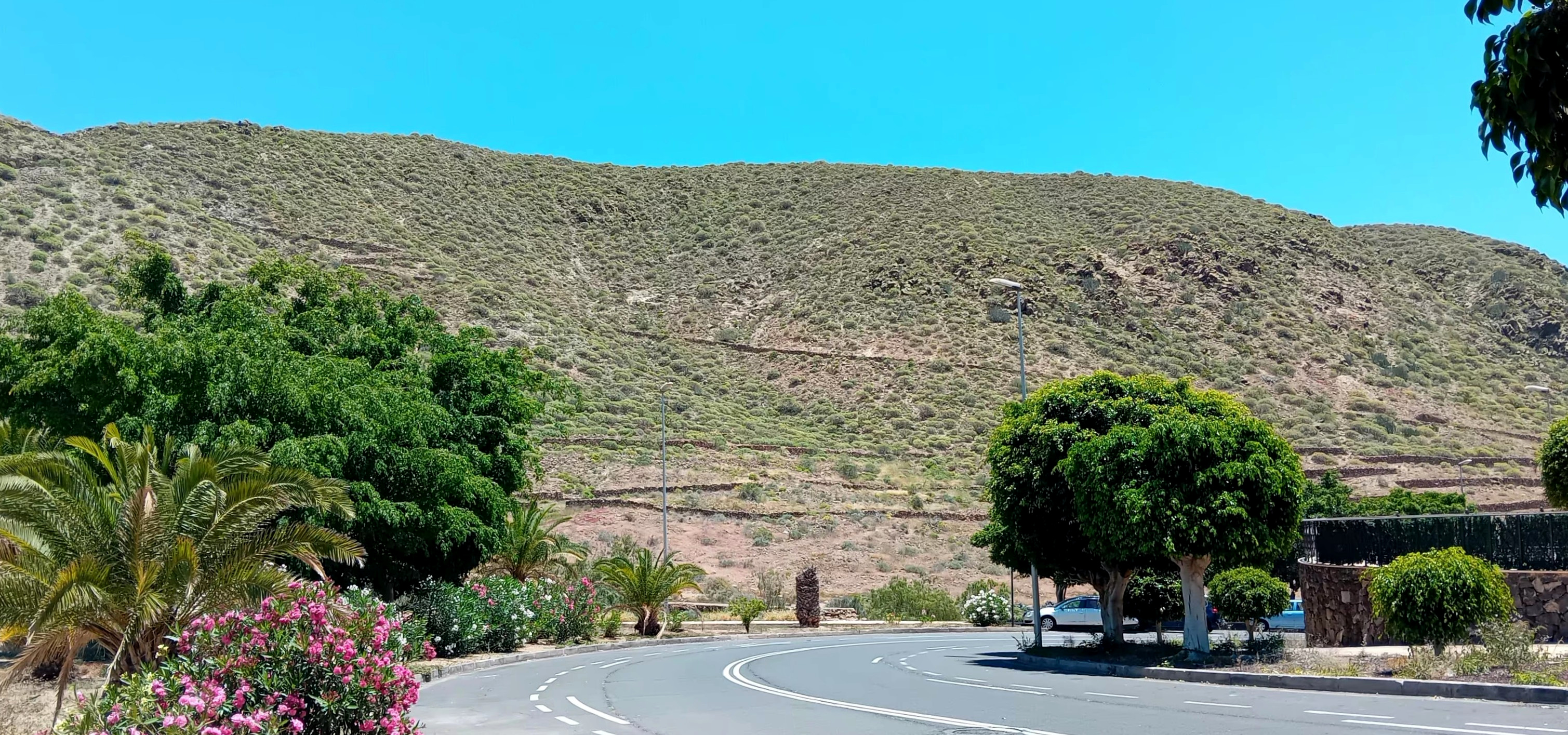
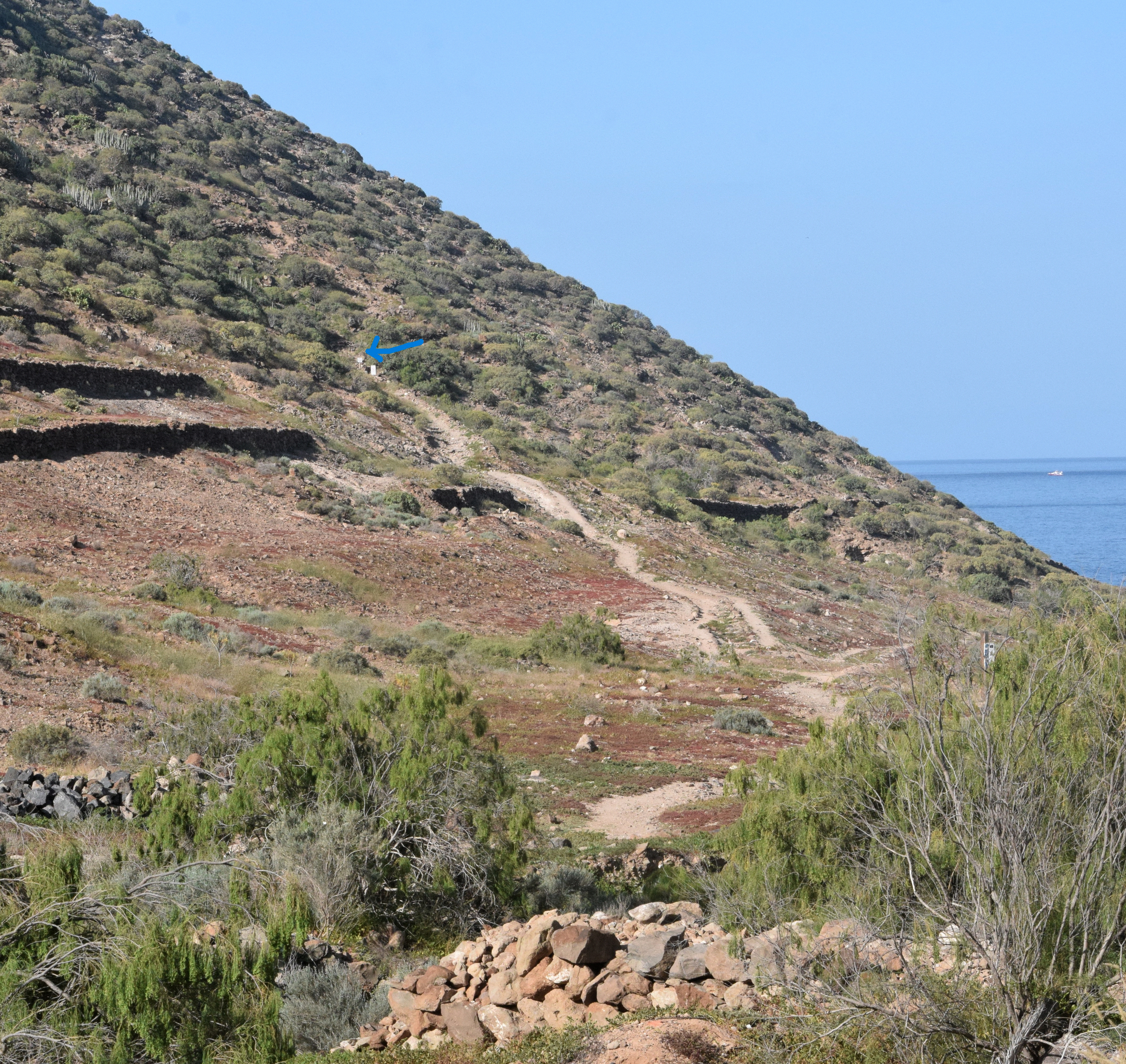
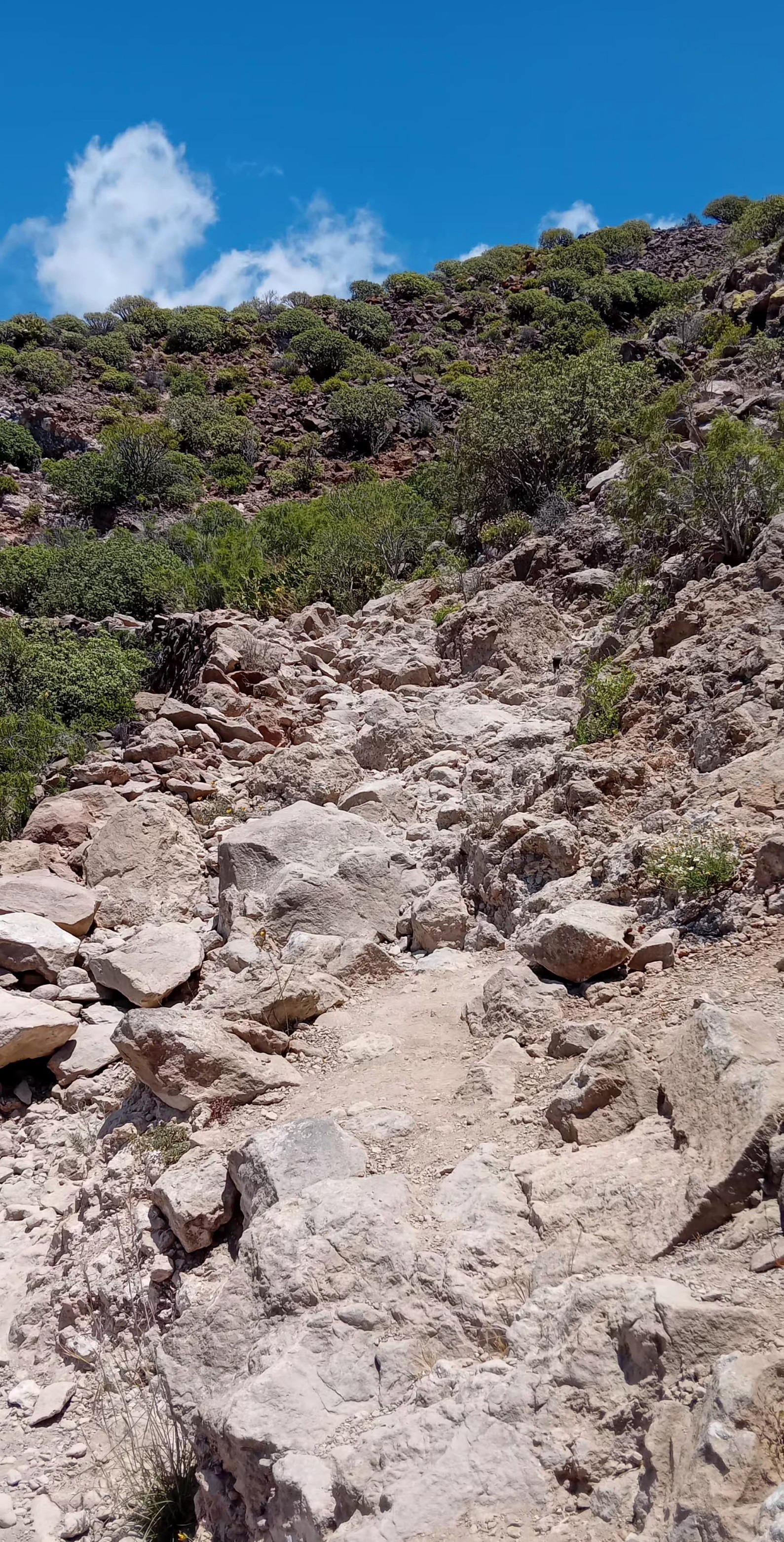
Trail start point (left) and most challenging stretch (right)
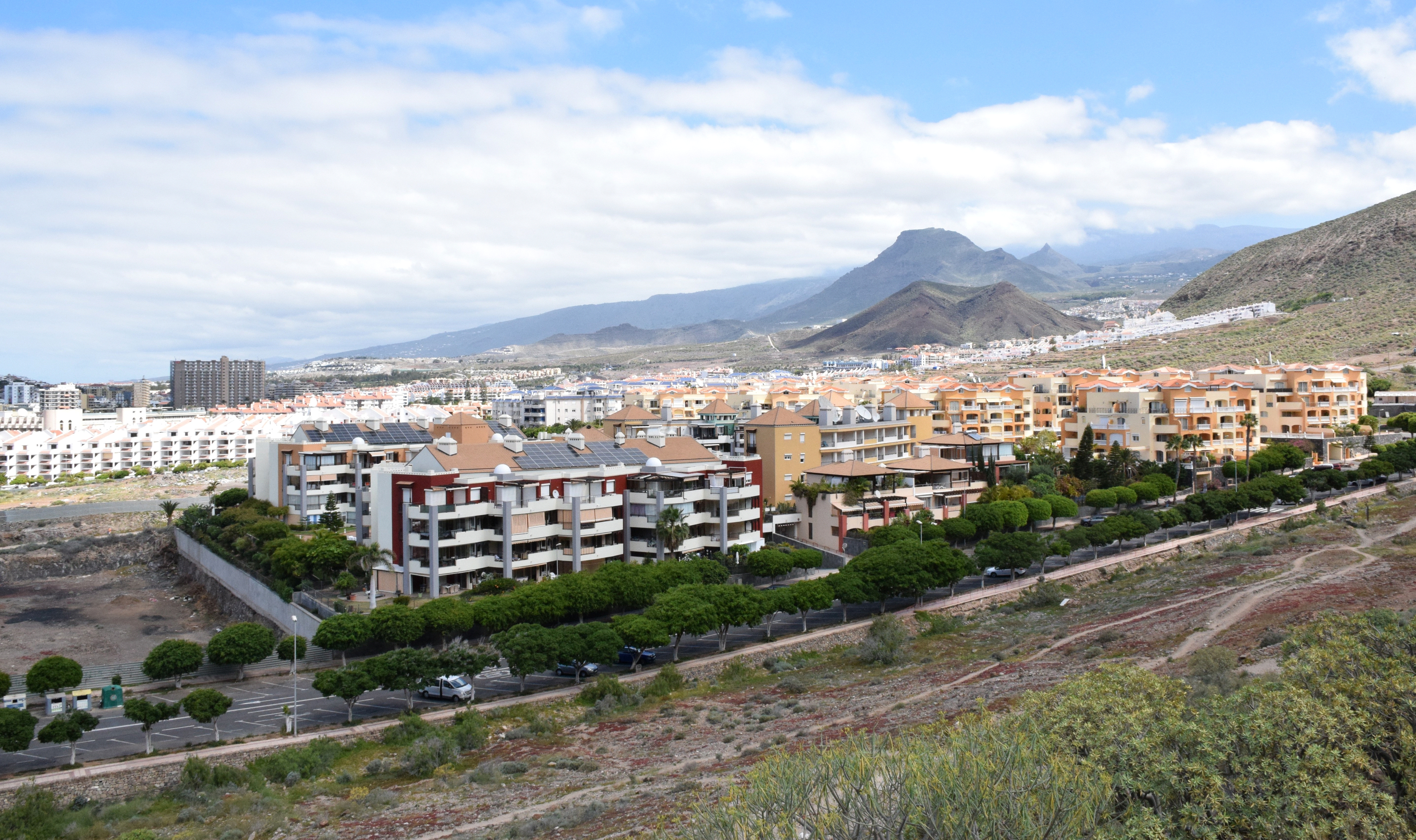
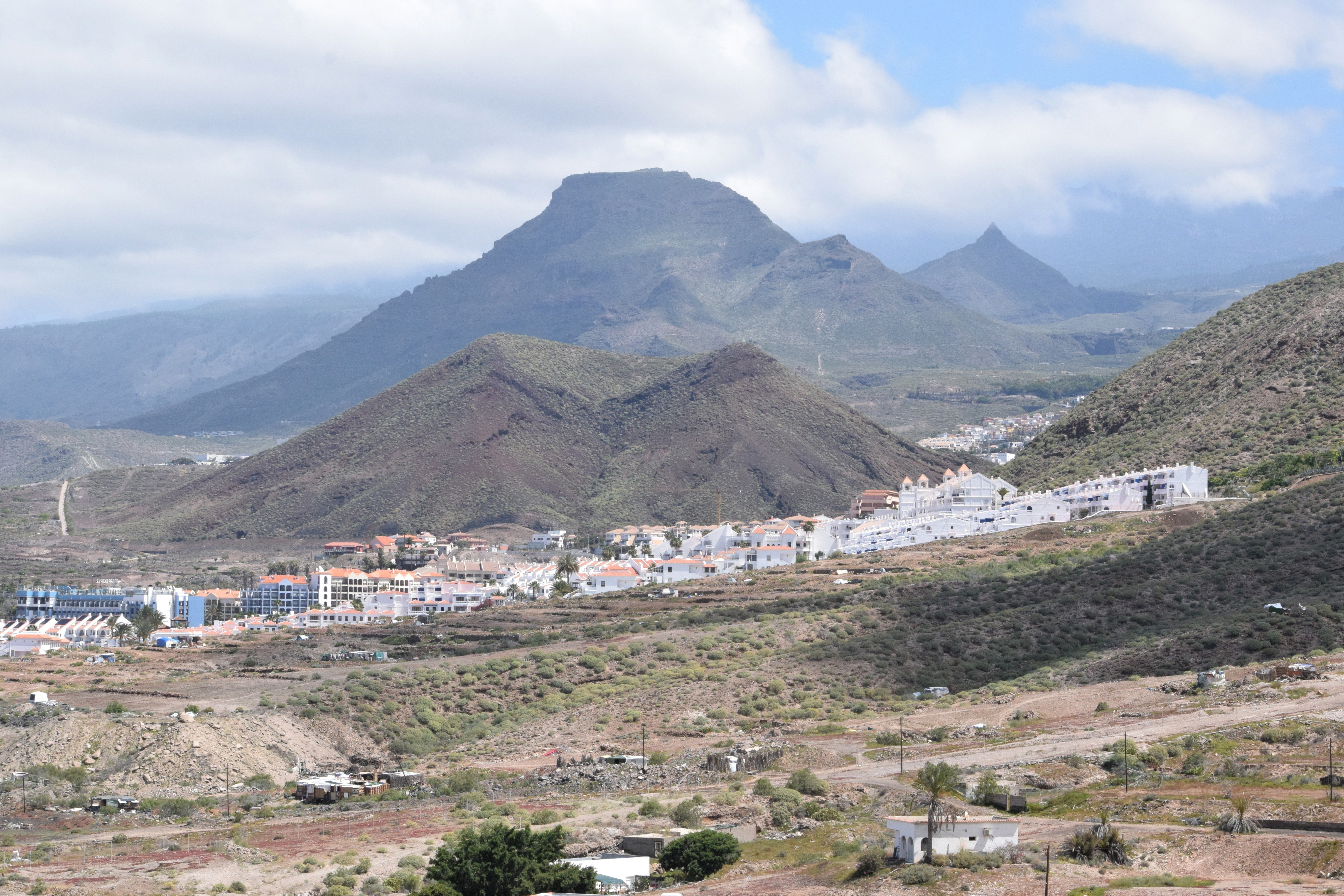
From that point the way forward is plain, following the line of the highest dry stone walls in the top picture, then zig-zagging above the trees at the left, where things become challenging. The right-hand picture (above) really does show part of the trail. From the top one route continues to the summit of the Mirador, while more traverse Guaza giving access into further hiking areas in the south-western corner of Tenerife. My base was the long white building at the top right of the vistas in this slide show (below).
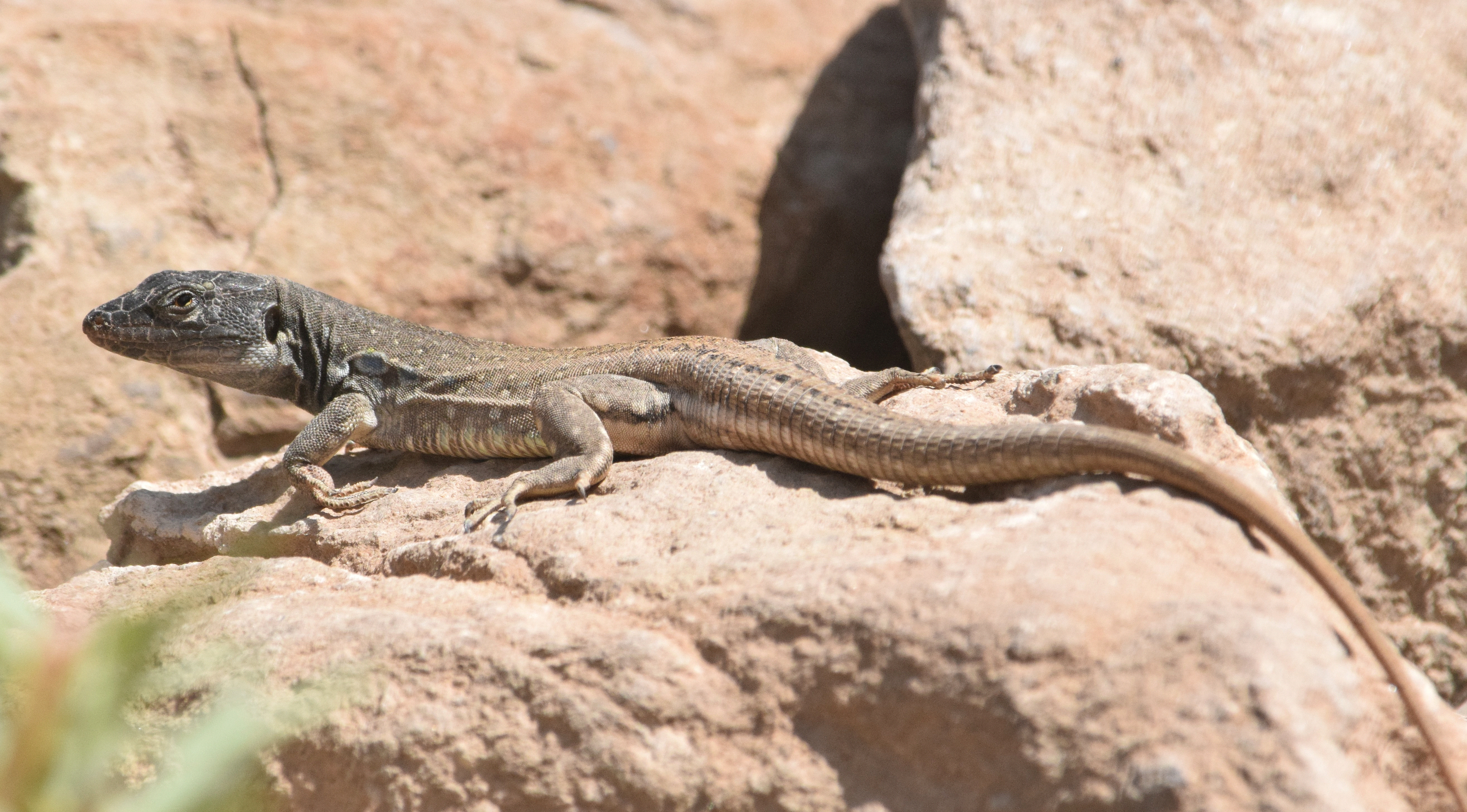
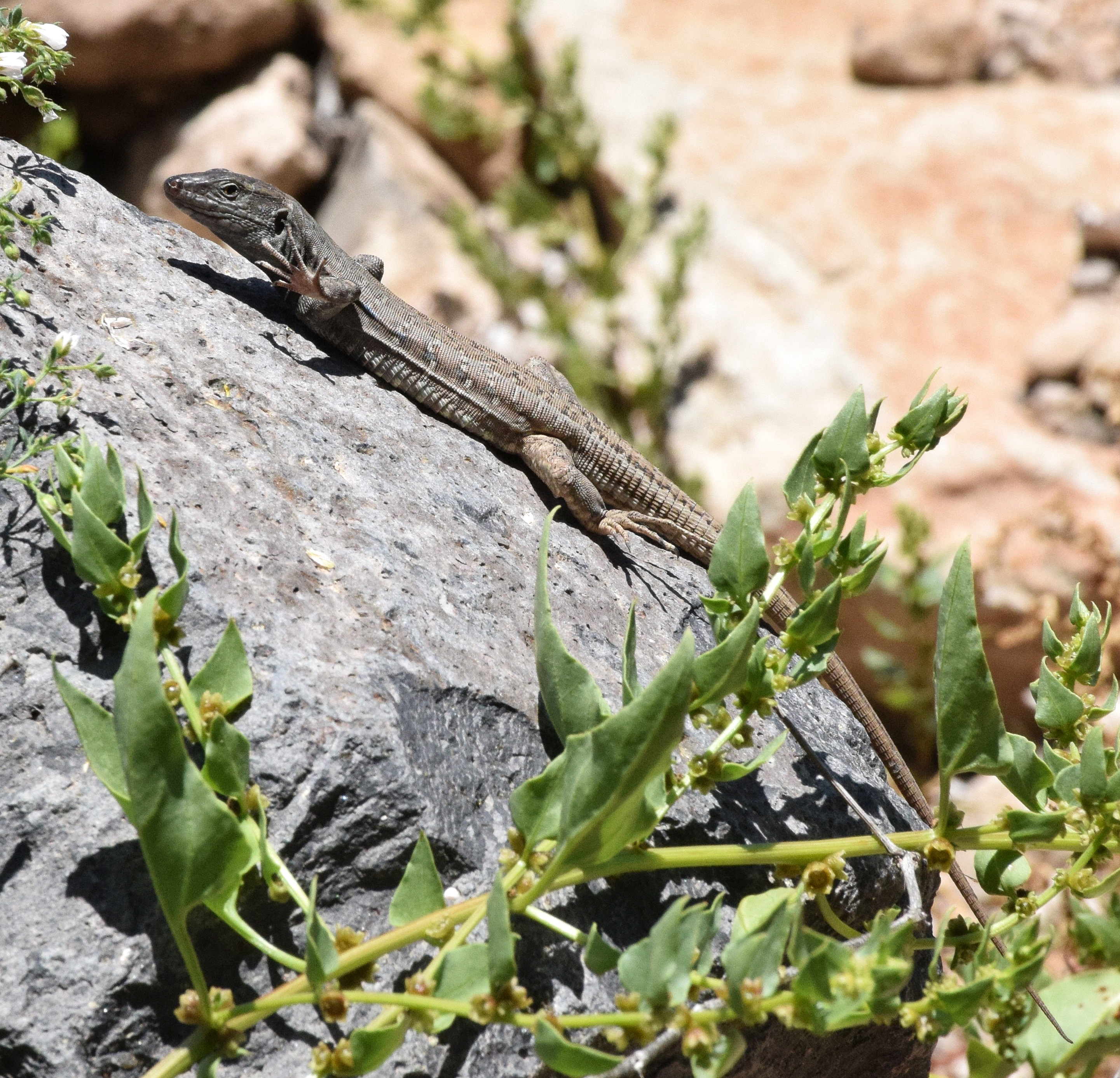
On the ascent, as so often happens if and when it does, a suitably pale-looking lizard emerged from rocks on one side of the track and posed nicely (below). This looked different from the Tenerife Lizards (Gallotia galloti) I had observed in April. It matches the illustration of Gallotia intermedia in my Collins field guide sufficiently well for me to count it as my trip quest, unless I am corrected by suitably qualified sources who state their own credentials in doing so. There are said to be around 100 individuals in this locality, compared to 500 in the north-west, and the landscape they inhabit is vast. The main threat to their survival is predation by feral cats especially, and rats; hence they try to keep out of harm’s way in inaccessible places.
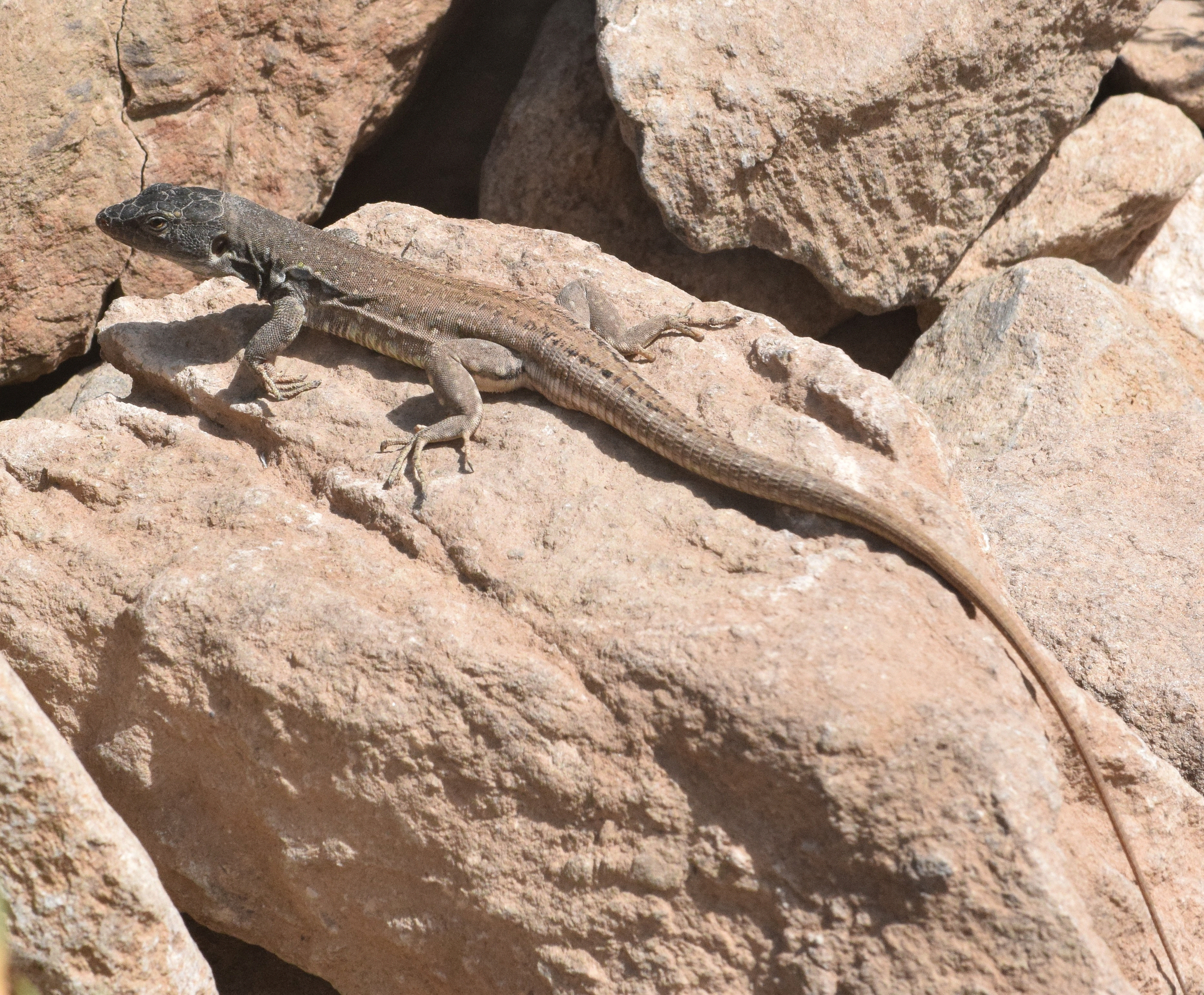
Though once widespread, this Tenerife endemic was thought to be extinct before being re-discovered in 1996. Through the present century it has been estimated there may be 40 isolated populations in the north-western distribution area along 9km of coast. Numbers are increasing due to control of introduced mammals, but the current range is only 5% of the potential habitat. The species is still listed in Spain as being in danger of extinction. It is up to 15cm from snout to vent, with the tail about twice as long, the smallest of the Canary giant lizards. As my pictures show, the back is most usually light brown and spotted, with pale ocelli lower down that may be blue. In female and immature Gallotia galotti the back is ocellated too.
After that encounter I continued to climb ever upward. More lizards showed themselves at intervals, but none kept still. Away to the east stretched the Mirador (below), at least twice as high as where I was. It had become apparent as soon as I set out that to find lizards from my base on those precipitous slopes would be impossible. The only way up is the one I was now treading, and it is a long trek. A popular pastime for the adventurous is to go to the summit at sunset. My mind boggles at how they get down again unscathed in the dark.
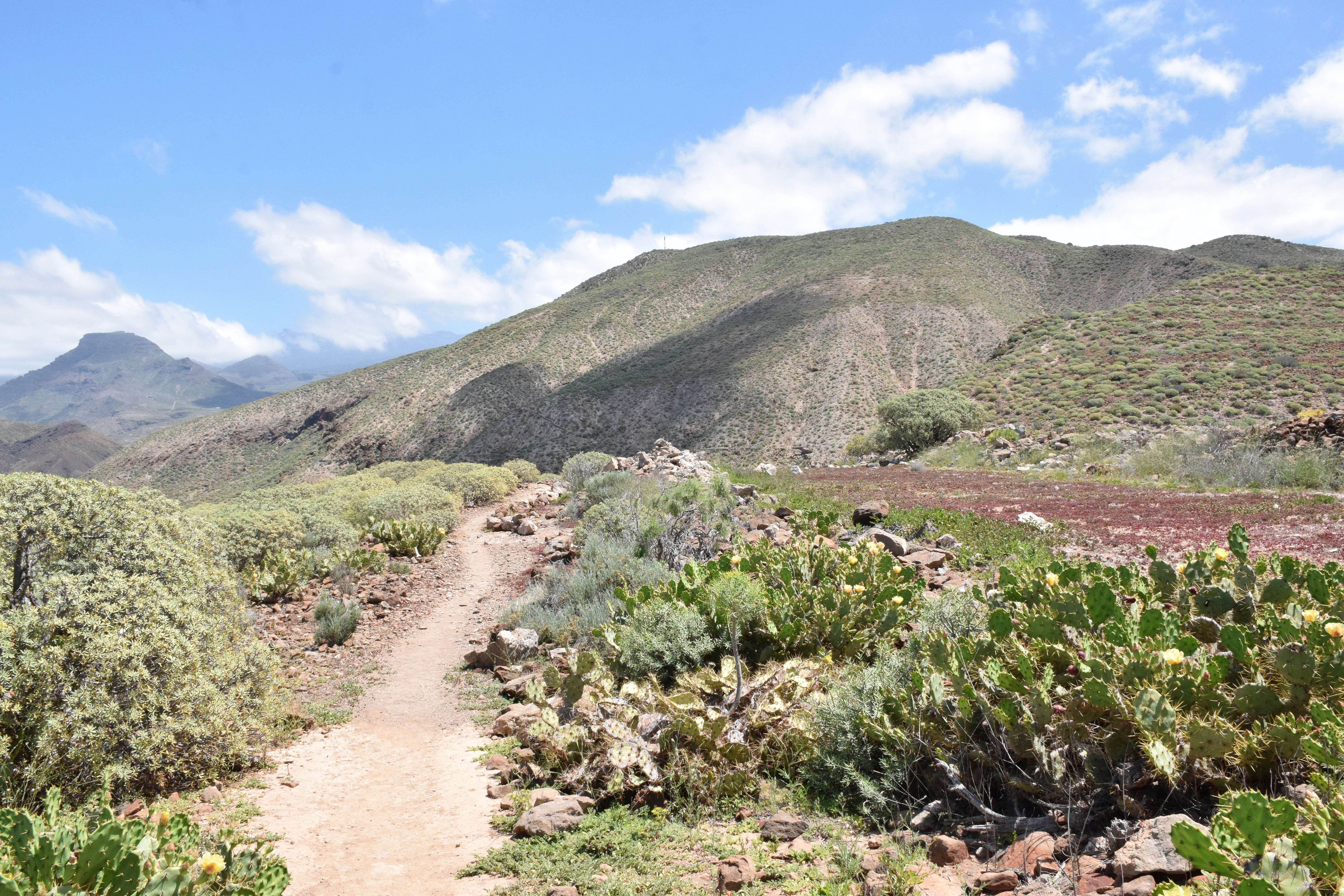
At the top I headed southward into a high plateau of arid and rocky habitat (pictured above, slide 2). Over everything always loomed the Mirador. Guaza’s origin was volcanic and there are extensive lava flows here. The landscape, filled with abundant spurge plants and large cacti, was spectacular and uplifting to walk in but more of the mere 100 lizards I was searching for might be anywhere. I concluded the most likely place to cross paths with Gallotia intermedia is therefore on the ascent.
Between my base and the scheduled protected area of Guaza lies marginal land that appears to cater for the marginalised, and so was unsuitable for walking as well. This is not the tourist end of town. It is dotted with rough sleeper’s tents and rough shelters, and fringed with lines of the casually parked motor homes of their owners more affluent class of loafer. It is also very suitable lizard habitat and there were more encounters there as I headed out and back. But the individual in this next picture, with an ocellated back, is just not right for a Tenerife Speckled, even should they occur that low down.
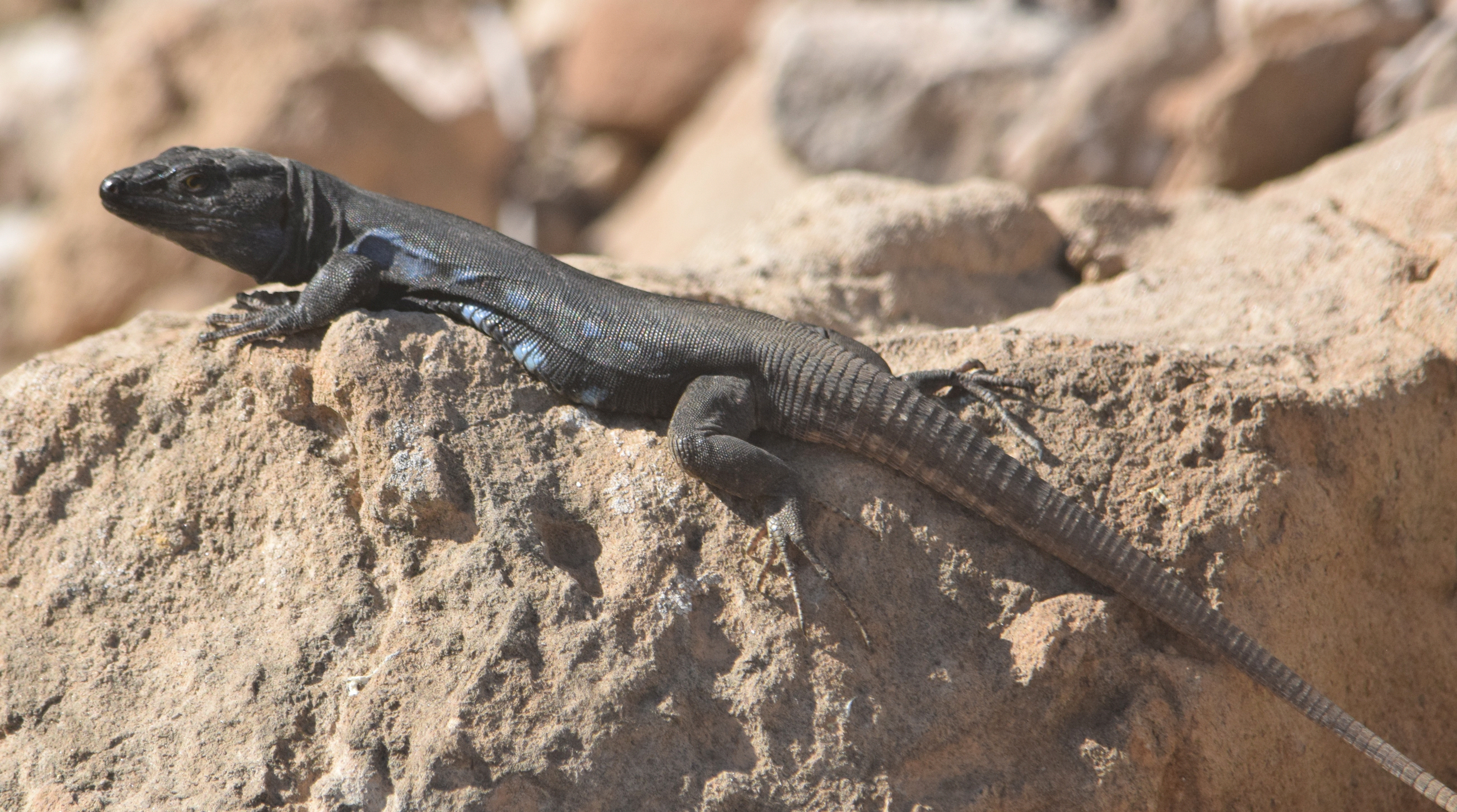
The next day I did pretty much the same again. Having resolved not to climb to the top at first, in the event there was nothing else to do. After time spent food shopping and exploring the area around my base, the day had warmed up when I got out to Guaza and I encountered very little. So on 21st I was careful to re-visit during the optimum time window as the day warms up of 10am to noon, stayed on the lower part of the trail and was rewarded with many more active lizards. These were all Gallotia galloti (pictured below), the male being typical of very dark-toned, almost black southern Tenerife variants.
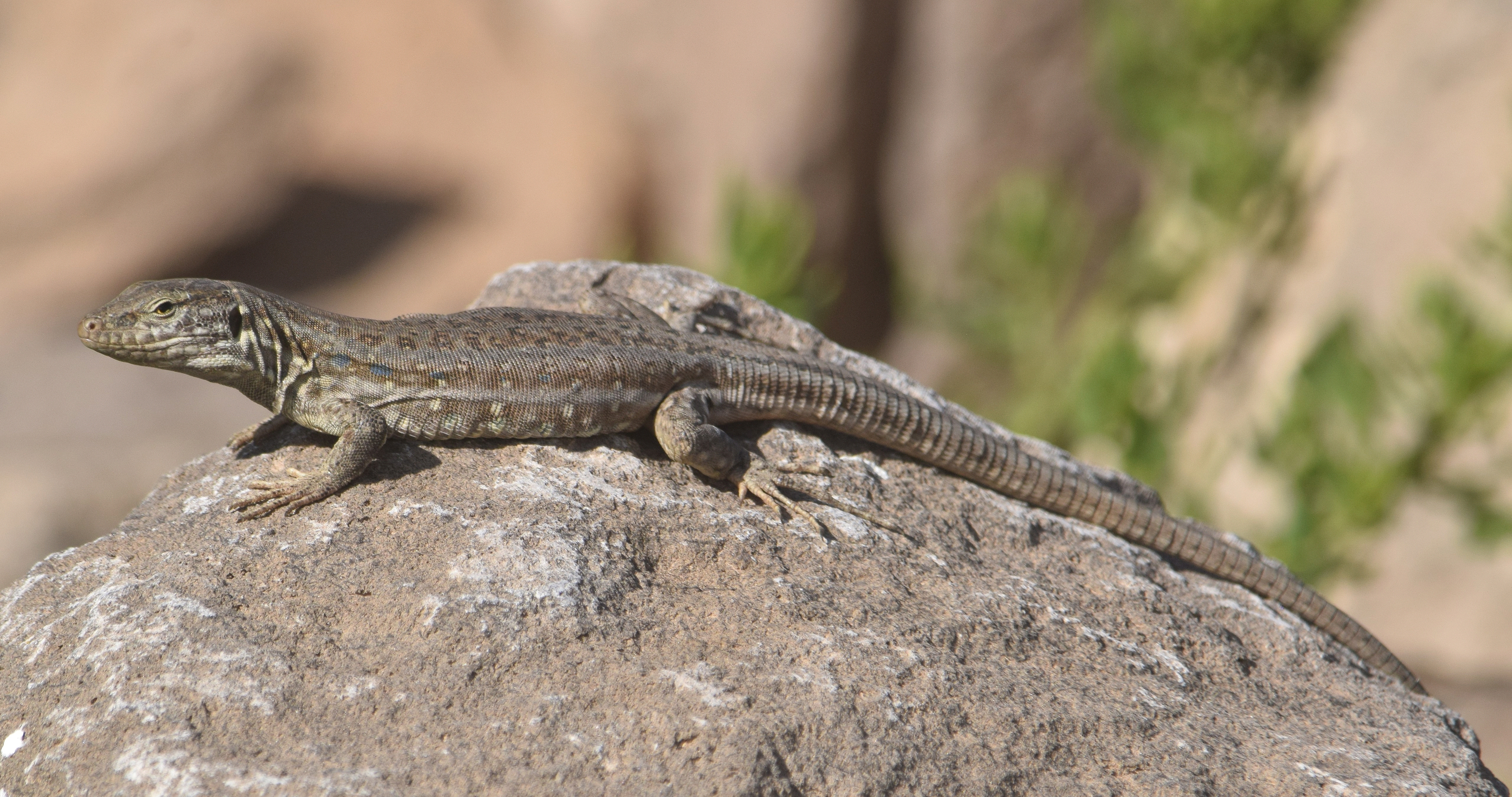
I had been lucky to connect with my trip quest on day one, but that was not to be repeated as things turned out. For myself there is nothing more fulfilling than going somewhere wild and remote, completely alone and self-locating something as exclusive as this particular lizard. Like the Harlequin Ducks at Laxárdalur in Iceland 12 months ago, this may take some ousting as my best wildlife experience of the year. The bottom line is … I did it.
Footnote: There appears to be ambiguity over the area designated as Montaña de Guaza, Some sources name what I have called the Mirador as Guaza, but in the context of this post it was convenient to separate the two.

