Gran Canaria Giant Lizards at Barranco de Guayadeque – 18th Apr

For my last two nights in the Canary Islands I rented a superb studio apartment near Tenerife South airport and early on Saturday morning took a Binter Canarias flight to Gran Canaria. The objective was to record the latter island’s large endemic lizard. These are common and widespread across GC and especially favour rocky ravines (barrancos) and coastal plains. I had researched a number of sites within 20 minutes drive of the airport and headed for the closest one that was also cited as the best hotspot.
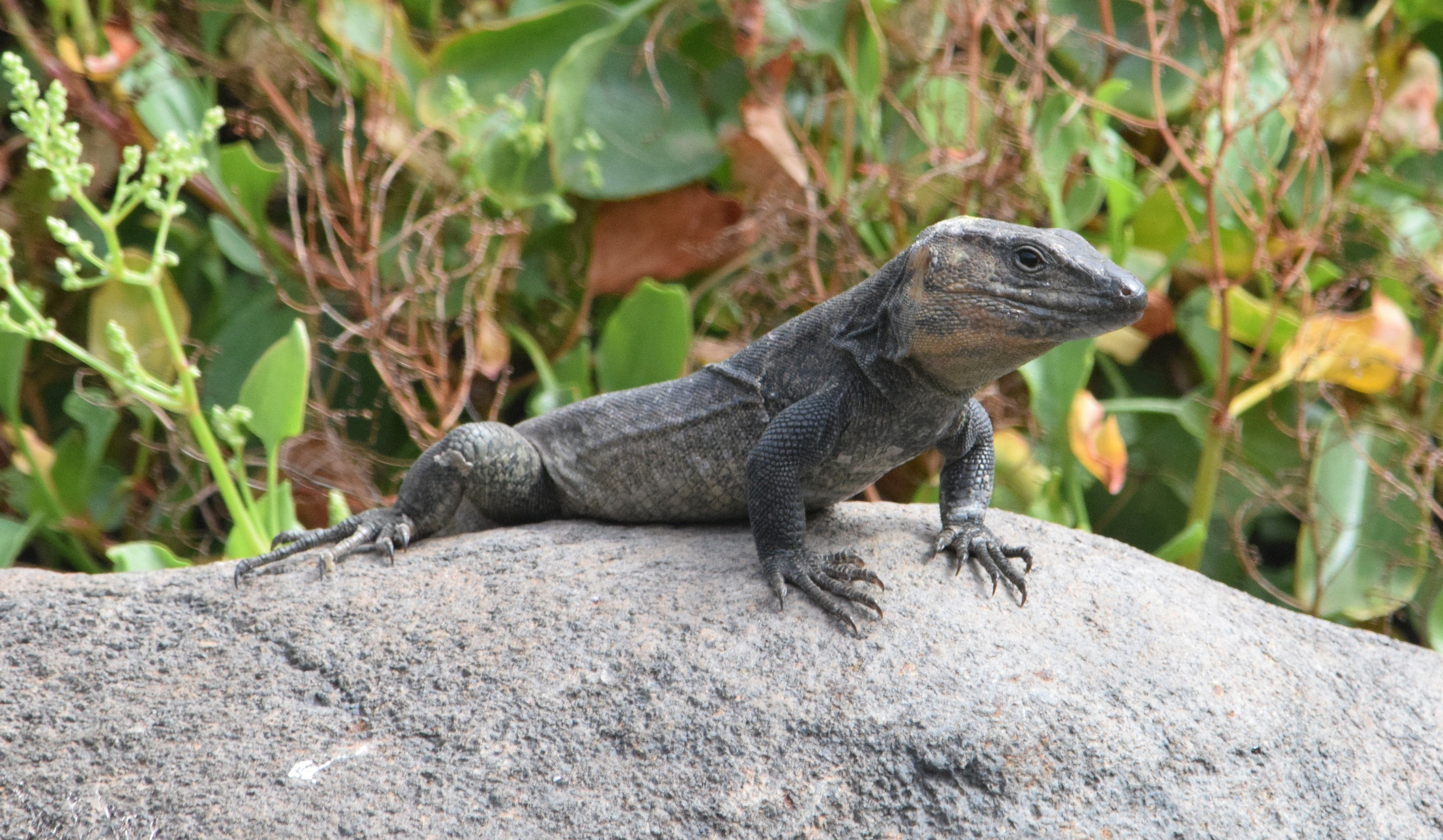
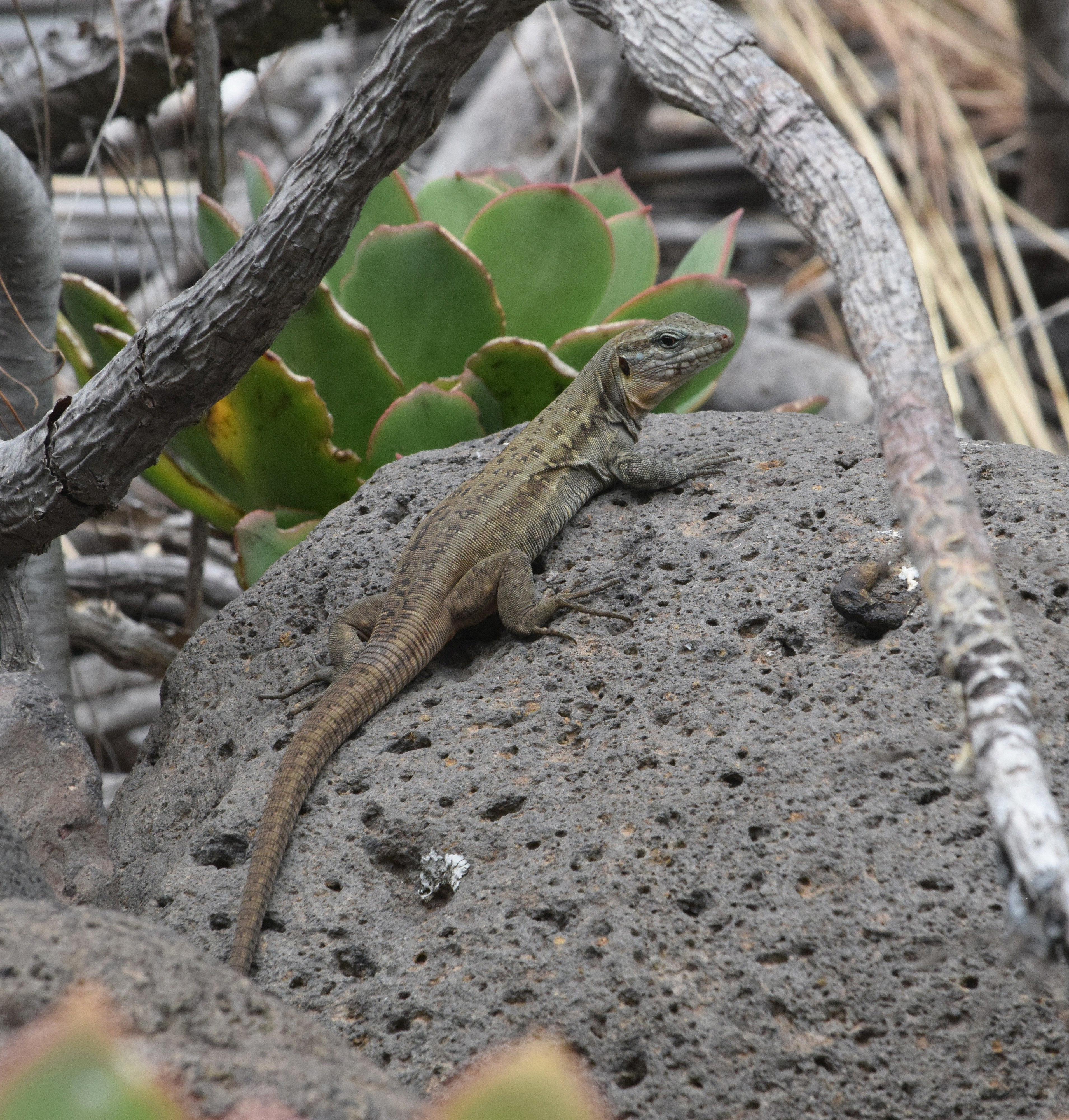
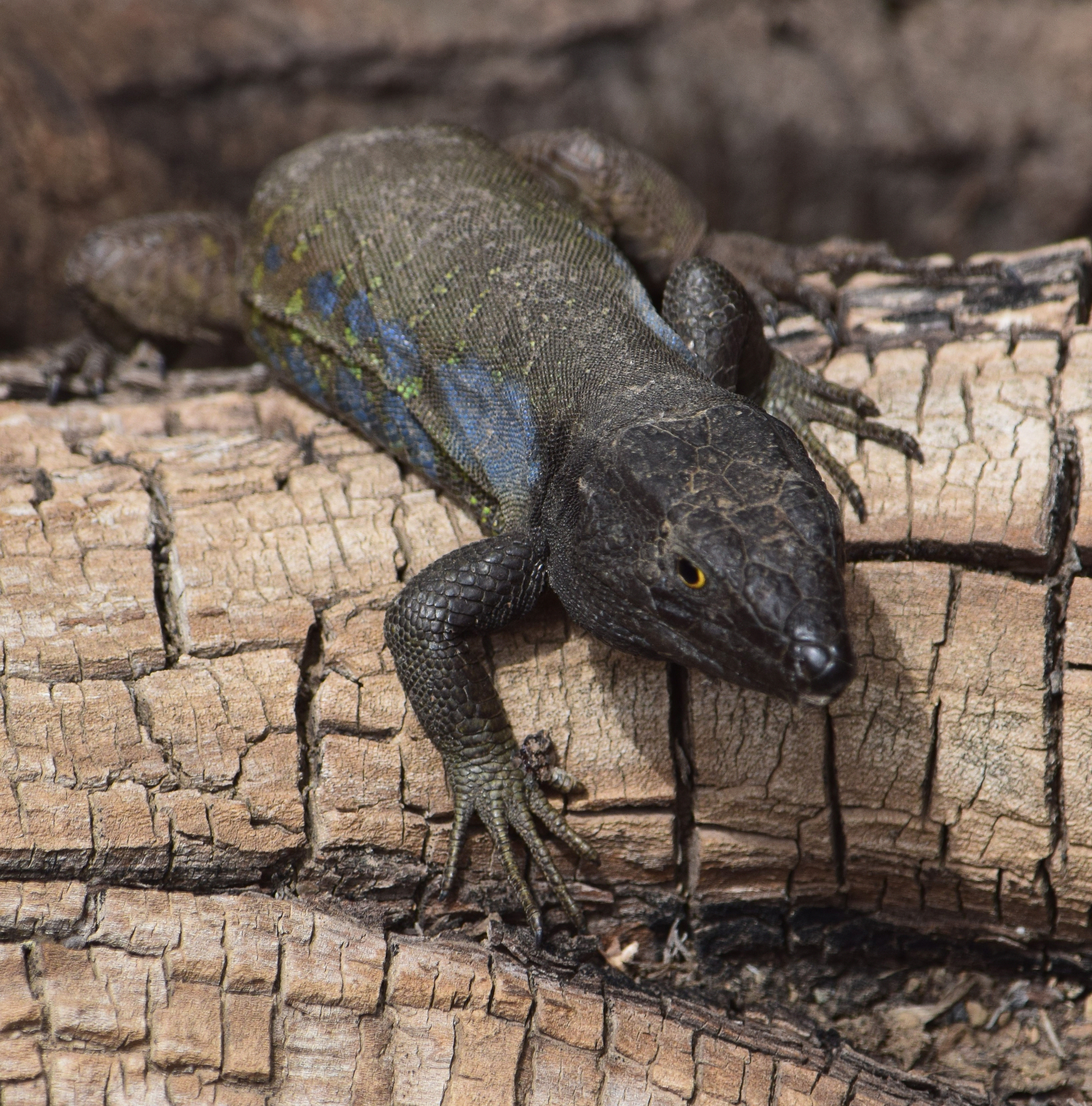
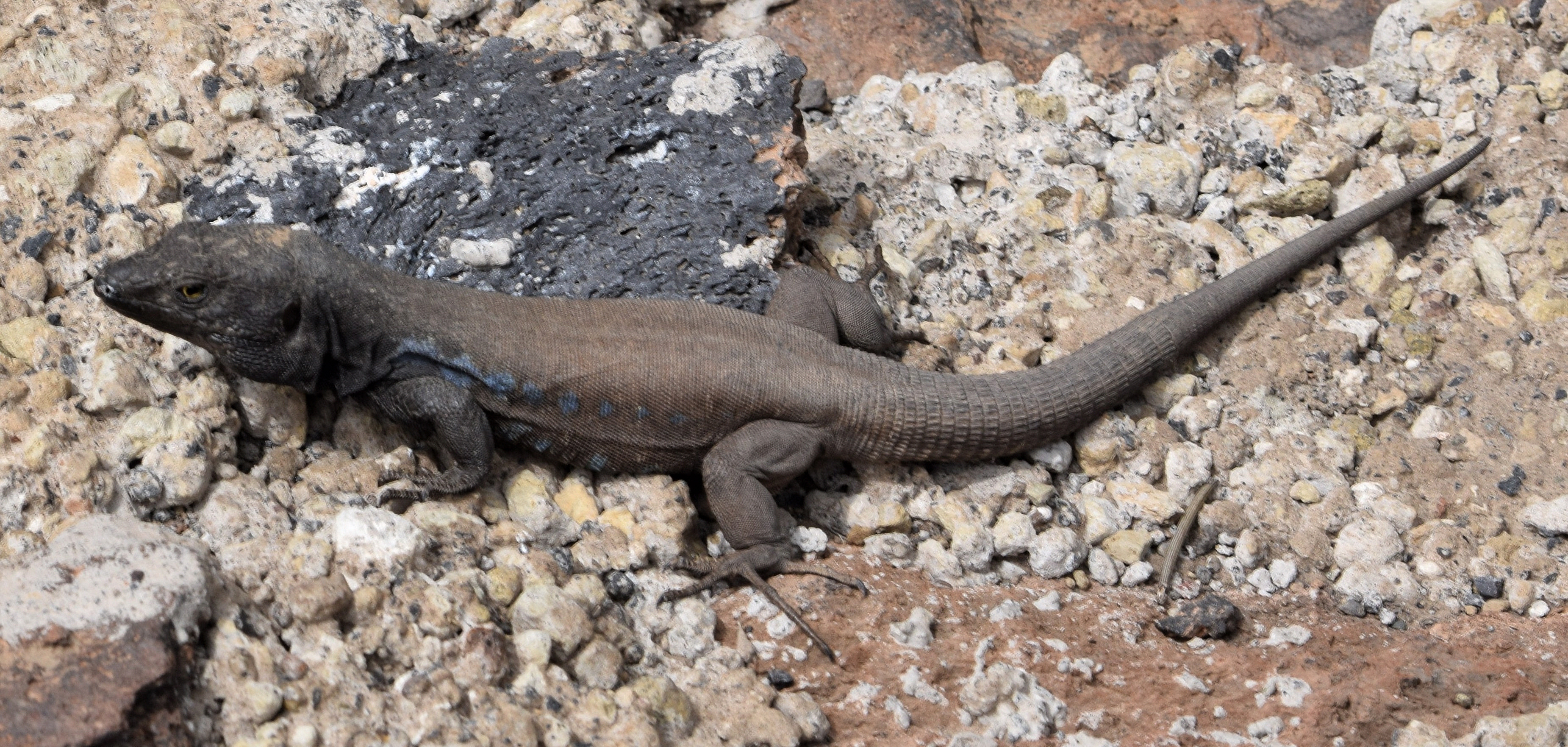
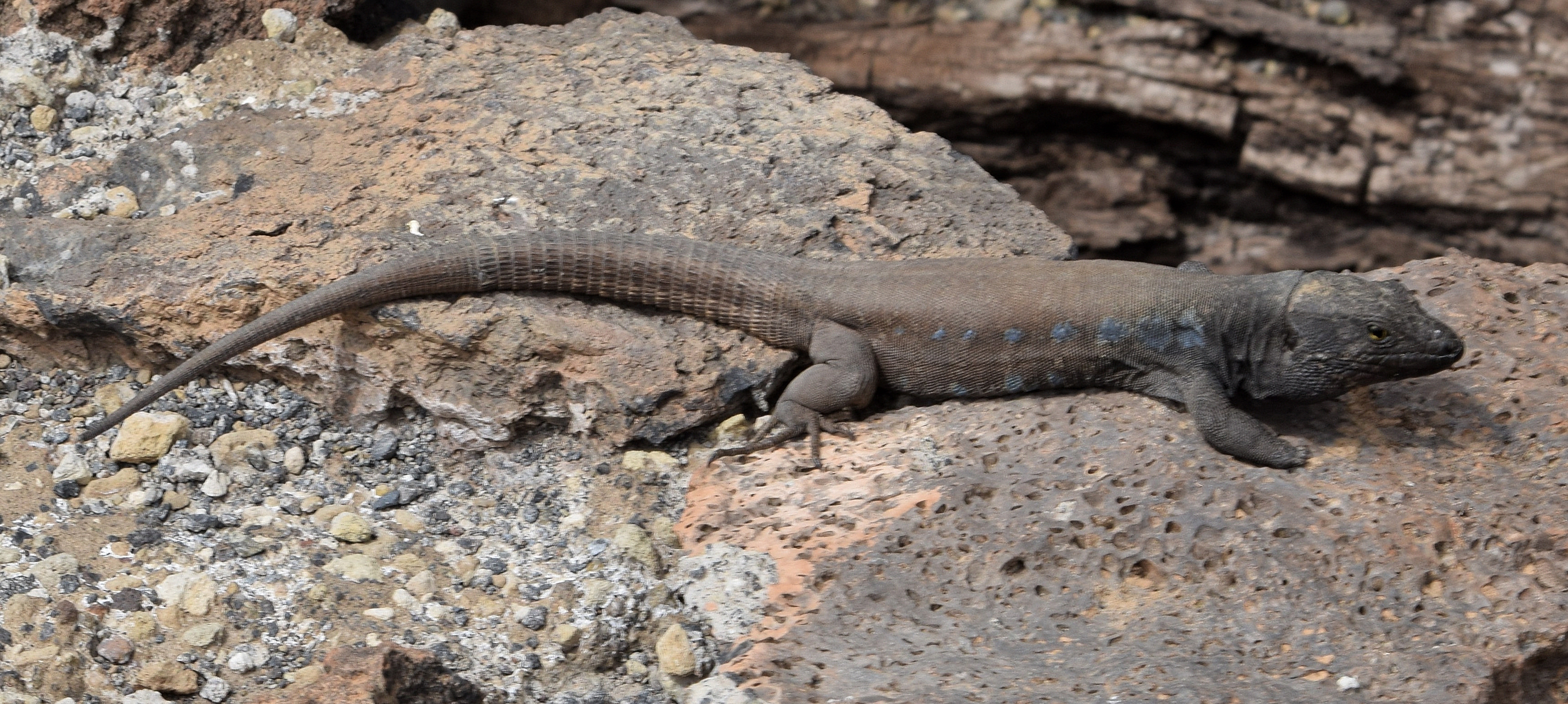
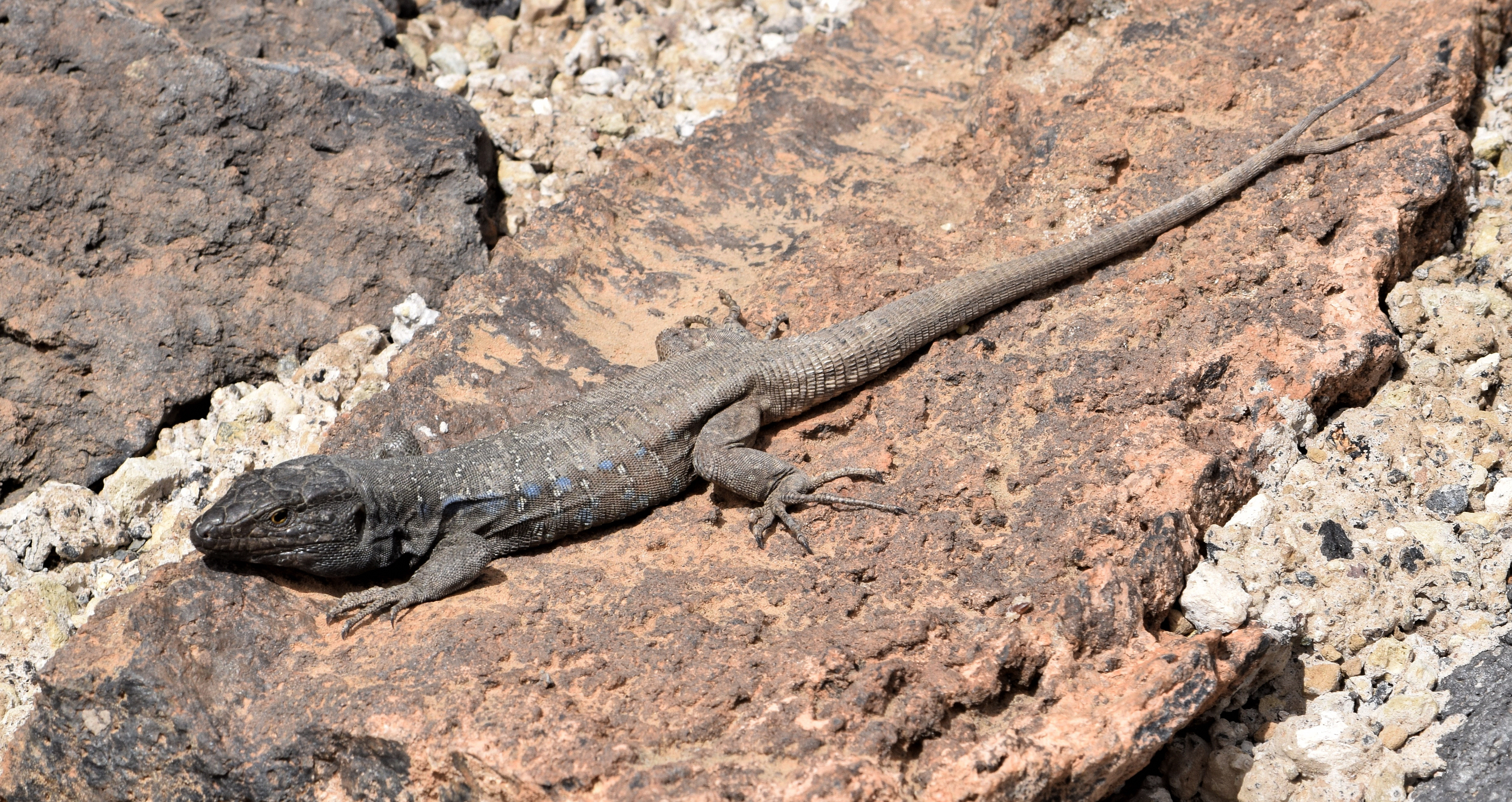
What a beauty! – Gran Canaria Giant Lizard (male)

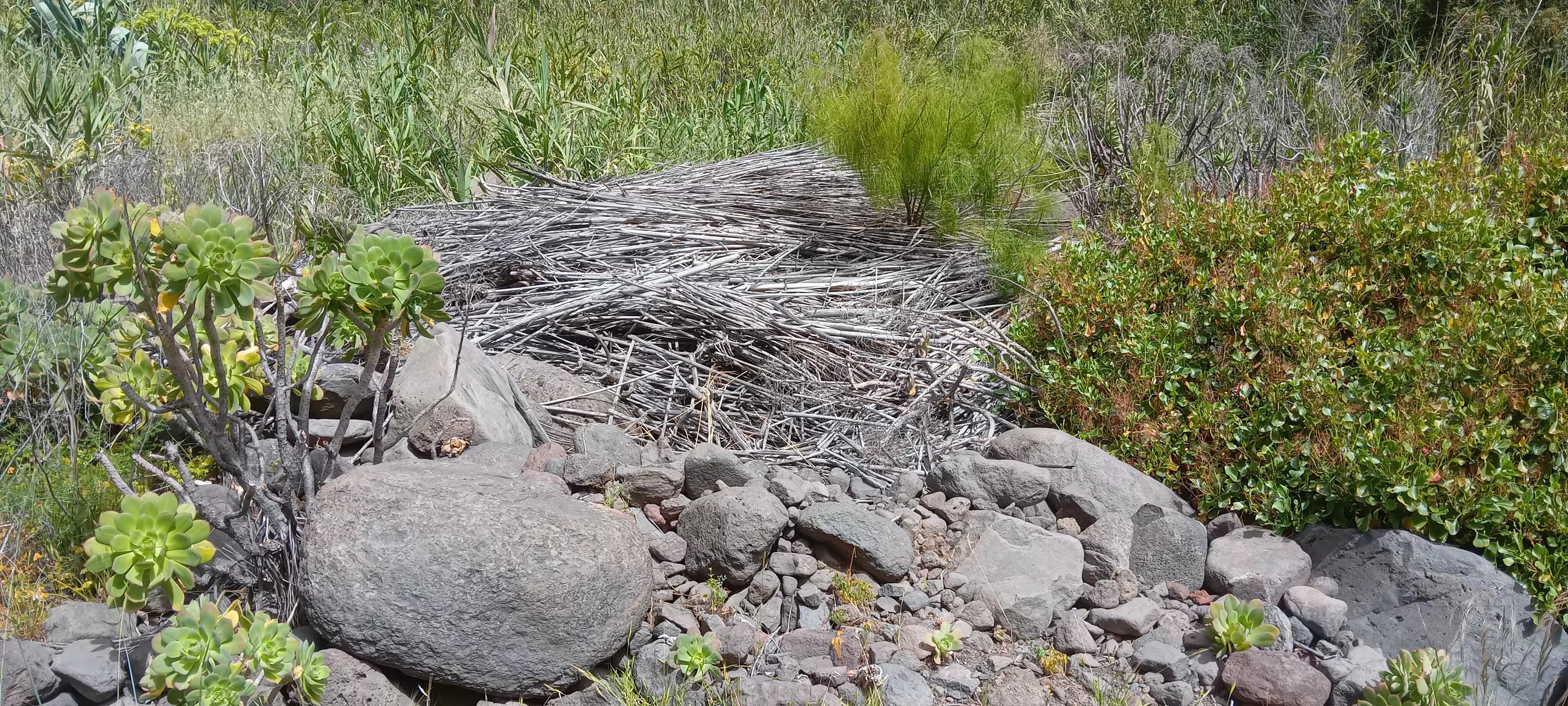
An 8km (5 mile) drive in discouragingly overcast conditions brought me to the Barranco de Guayadeque, an immense geological feature stretching for a further 11or so km north-westward from the town of Ingenio, and one of the largest ravines on the island. I stopped at the first suitable place for roadside parking I found, immediately below which a trail ran along the valley floor, and walked up the barranco then down. I realized I was in excellent reptile habitat, with in particular several piles of dried cut reeds on top of rock strewn areas (pictured below). By 10 am the weather was brightening from the north, I began to hear tell tale rustlings and then to catch glimpses of scuttling lizards of varying hues.
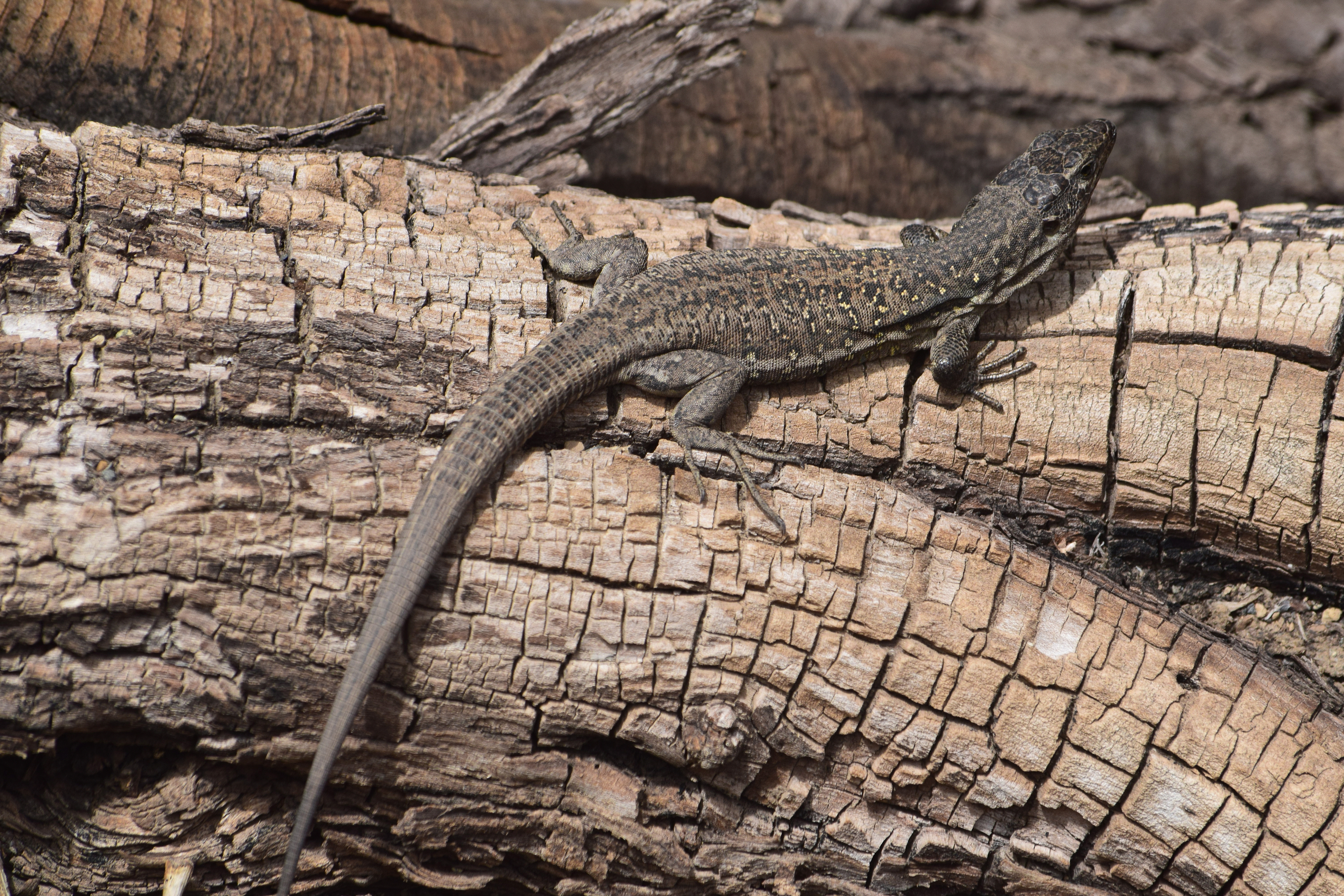
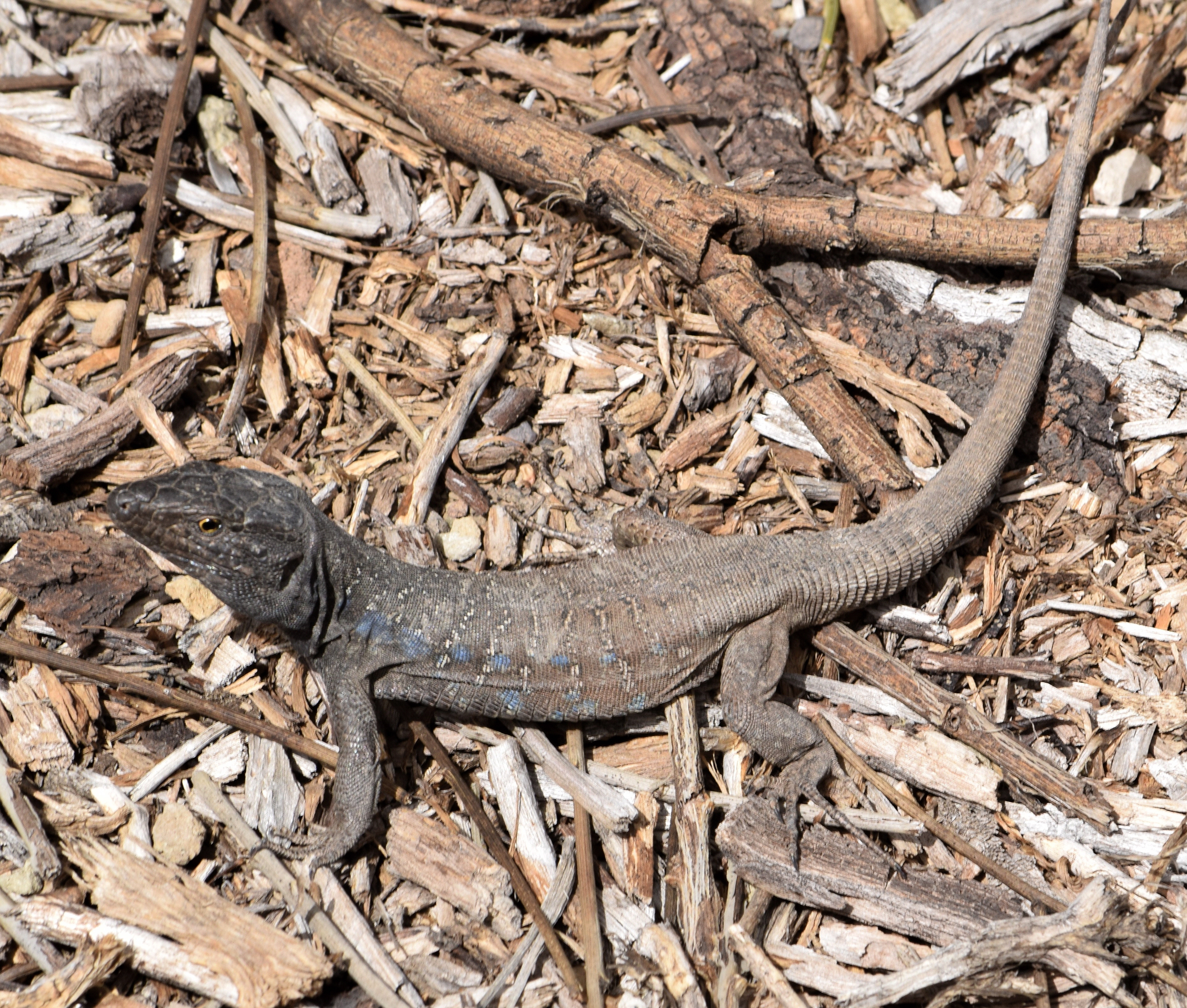
All of a sudden there he was: a large male Gran Canaria Giant Lizard (Gallotia stehlini – lead picture) basking atop a boulder. This was not a full-grown male that are big, bristly beasts indeed, but still pretty impressive. The species can reach up to 27cm from snout to vent with the tail twice as long again, but 18cm is more typical. Mature males develop imposing heads and jowls, with characteristically deep orange cheeks. Occurring in a wide range of habitats, they are sedentary and aggressive towards one another. Lifespan can be up to 12 years. I sat down in communion with this individual for some time.

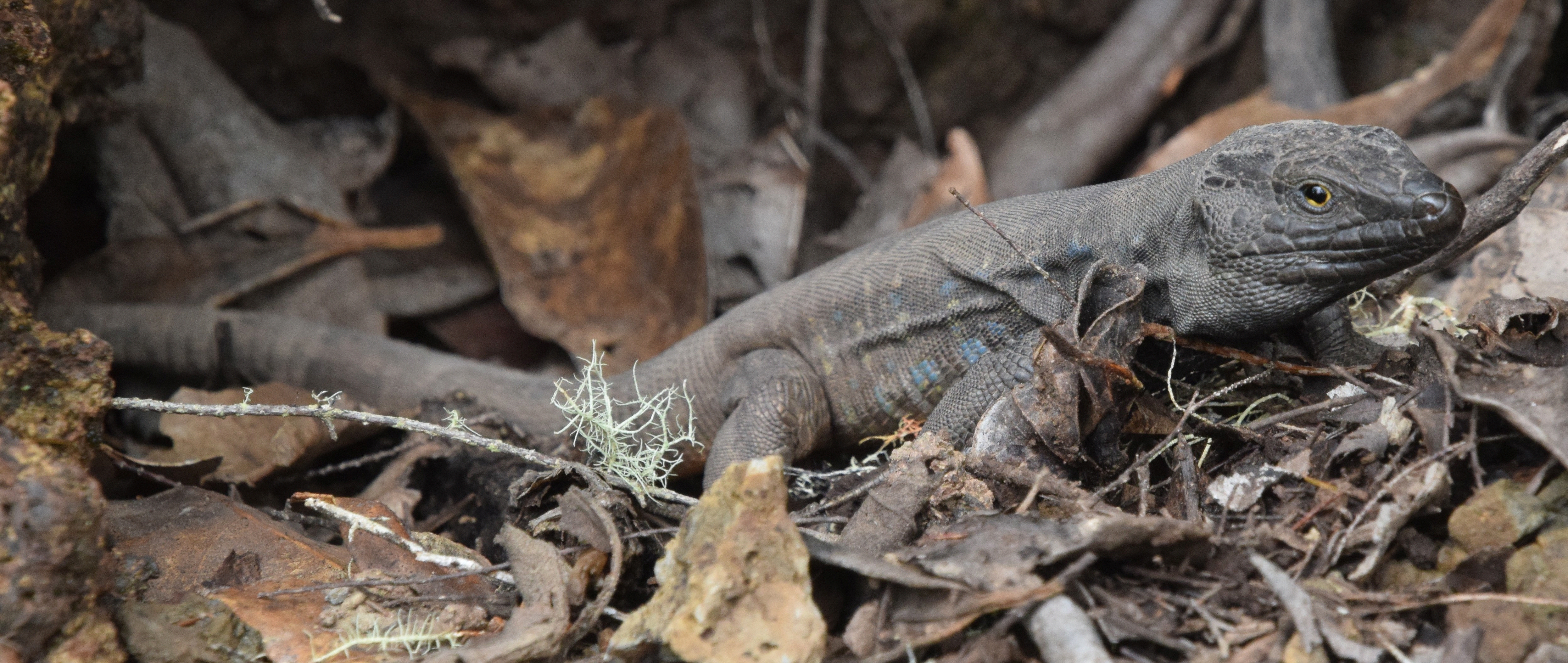
Realising I had quite by chance found such a suitable location, I felt no inclination to move on anywhere else. I was in my element again here, just me and the wildlife in spectacular scenery, the situation I most prefer; and through the late morning conditions were warm and sunny. After a while my male slipped back into cover, then partially emerged again (below, left).
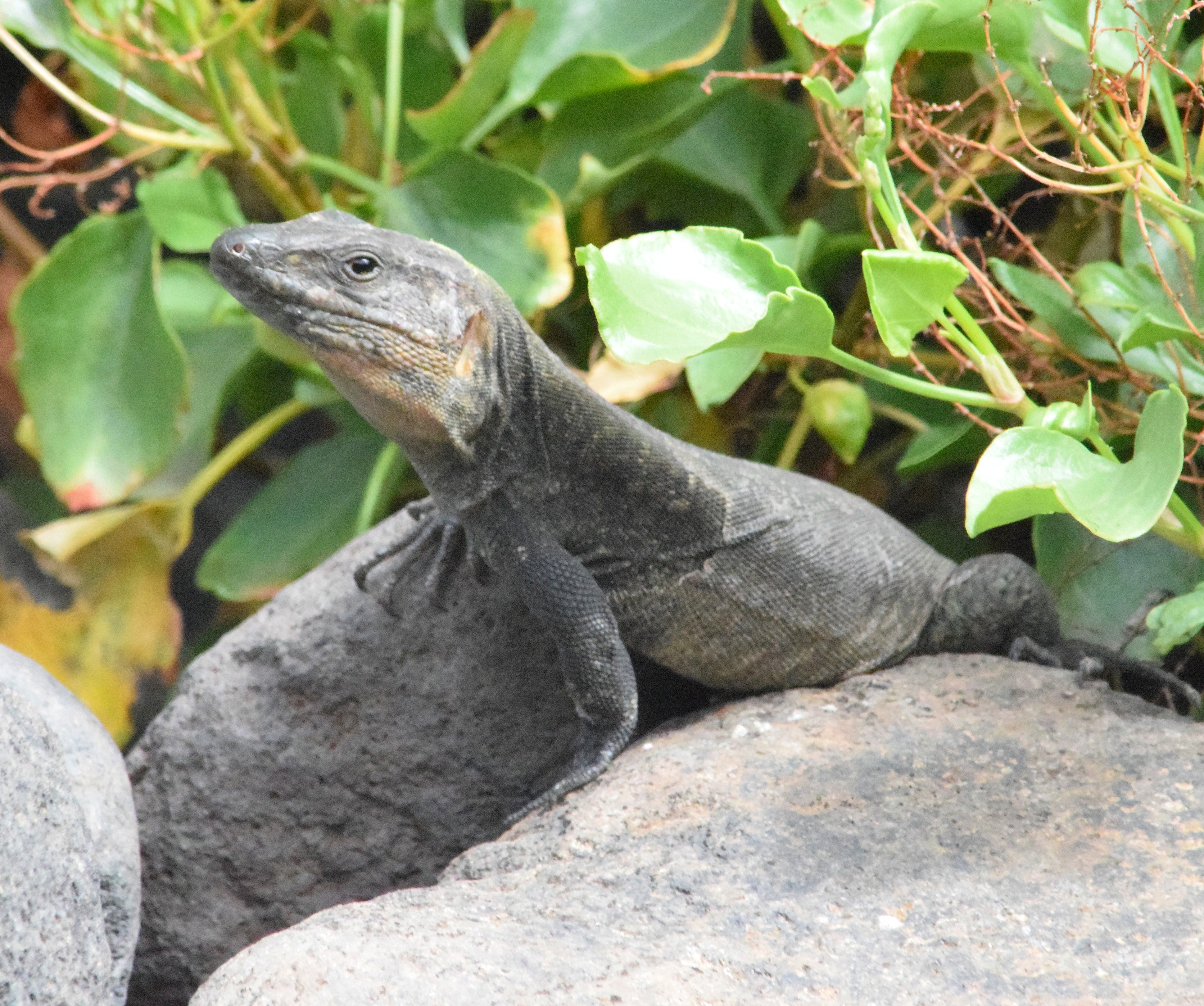
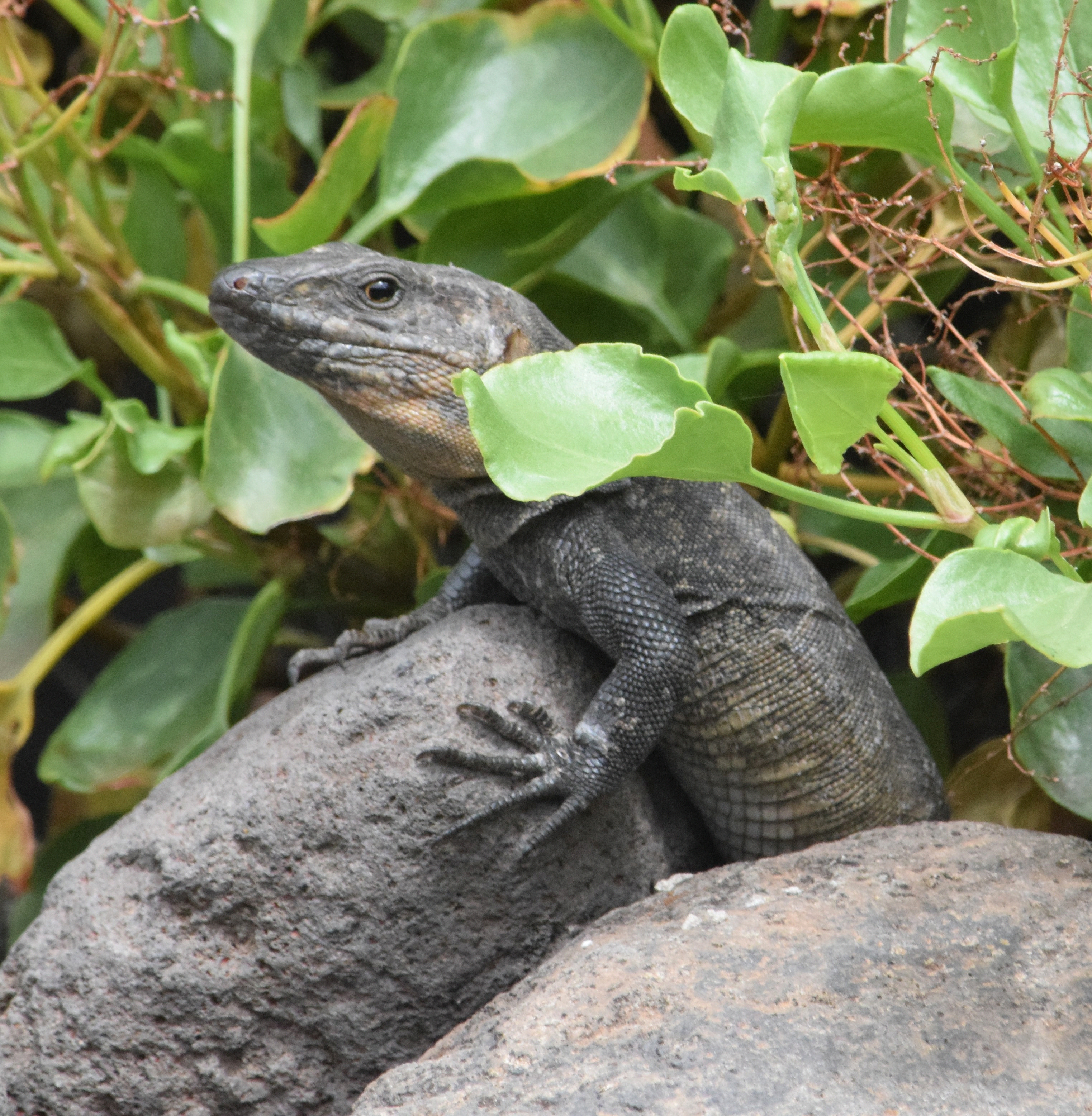
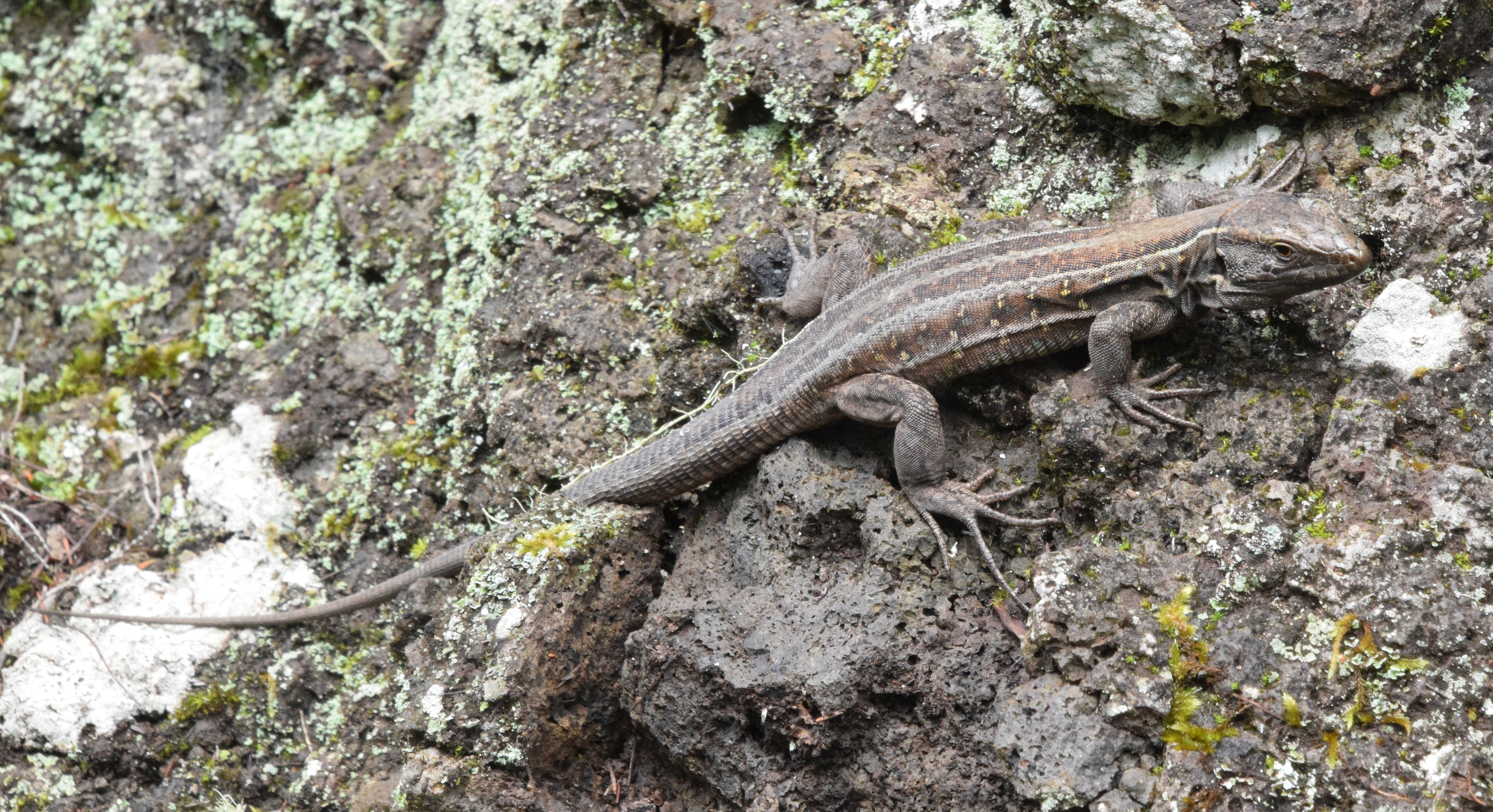
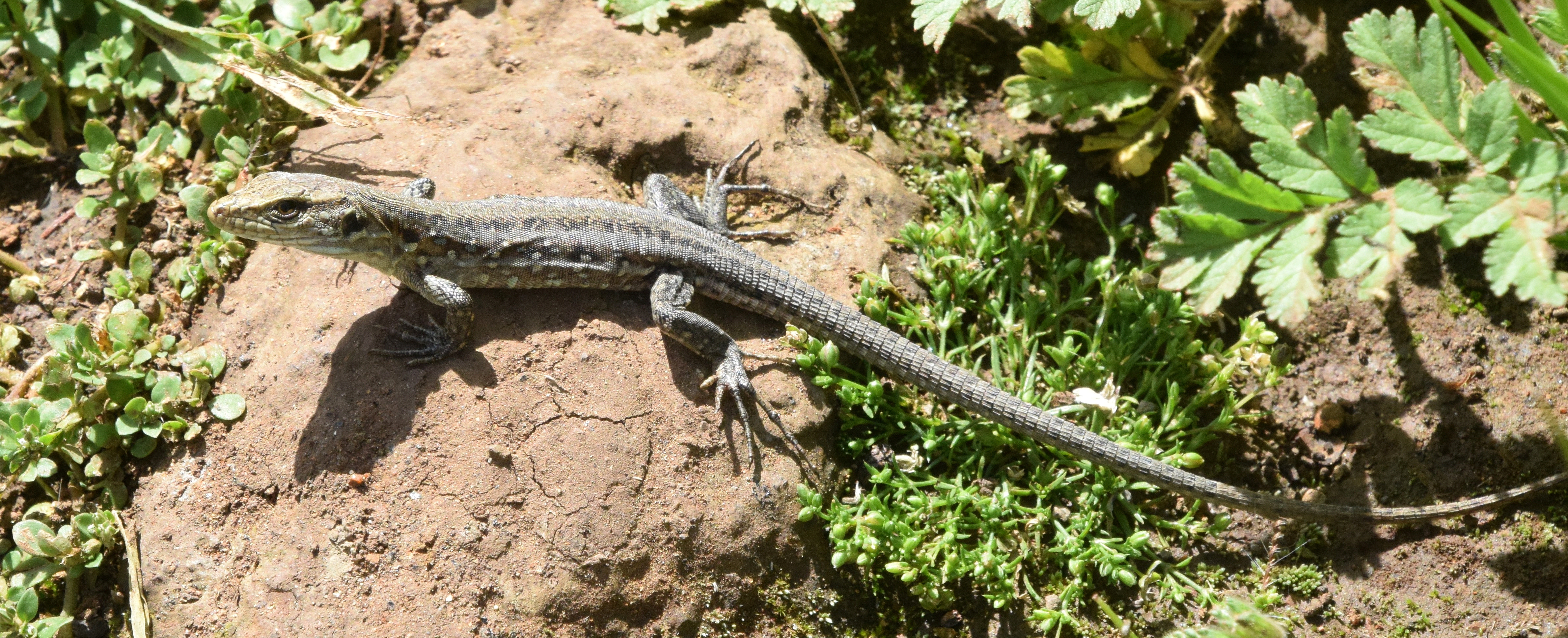
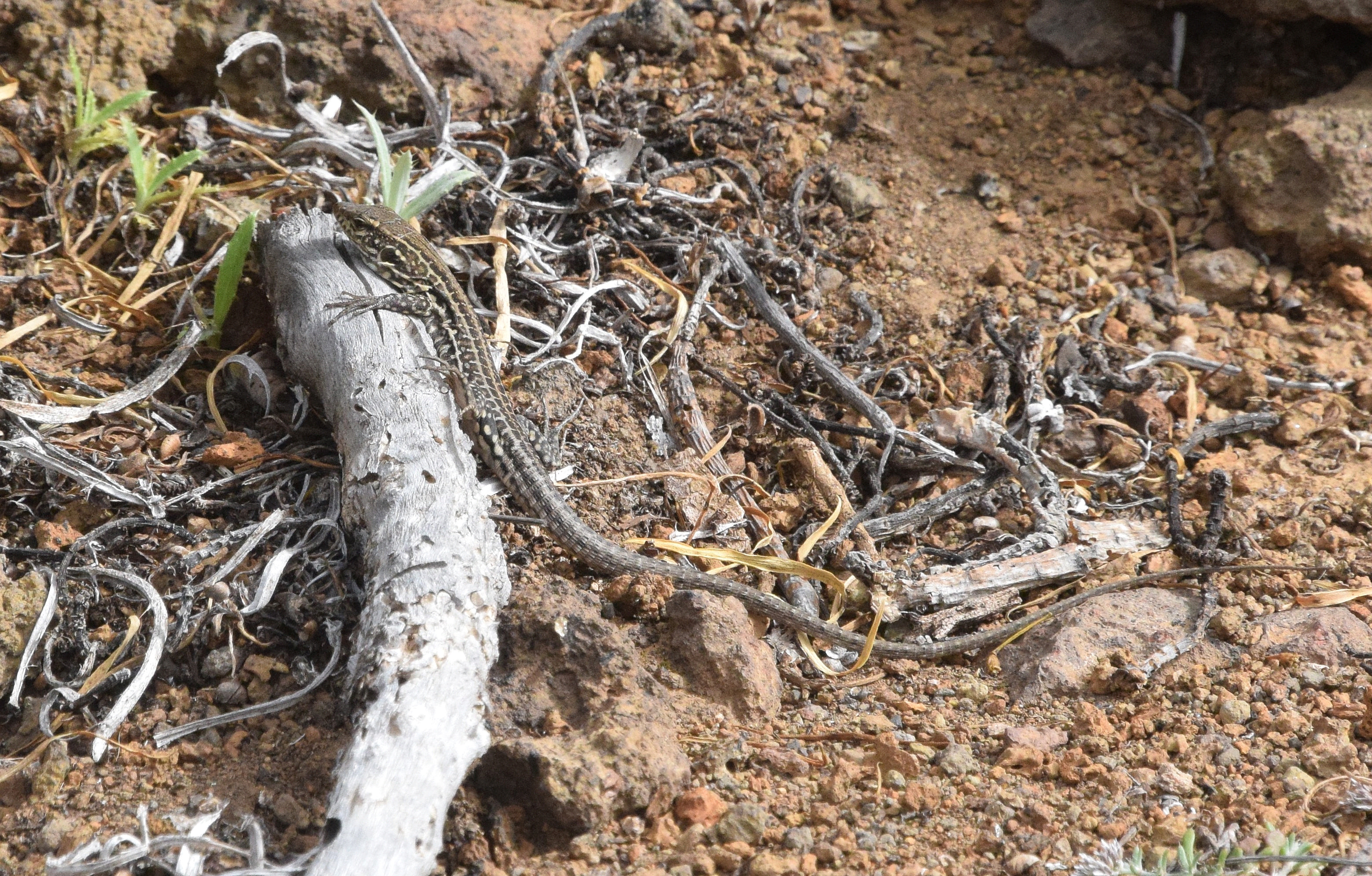
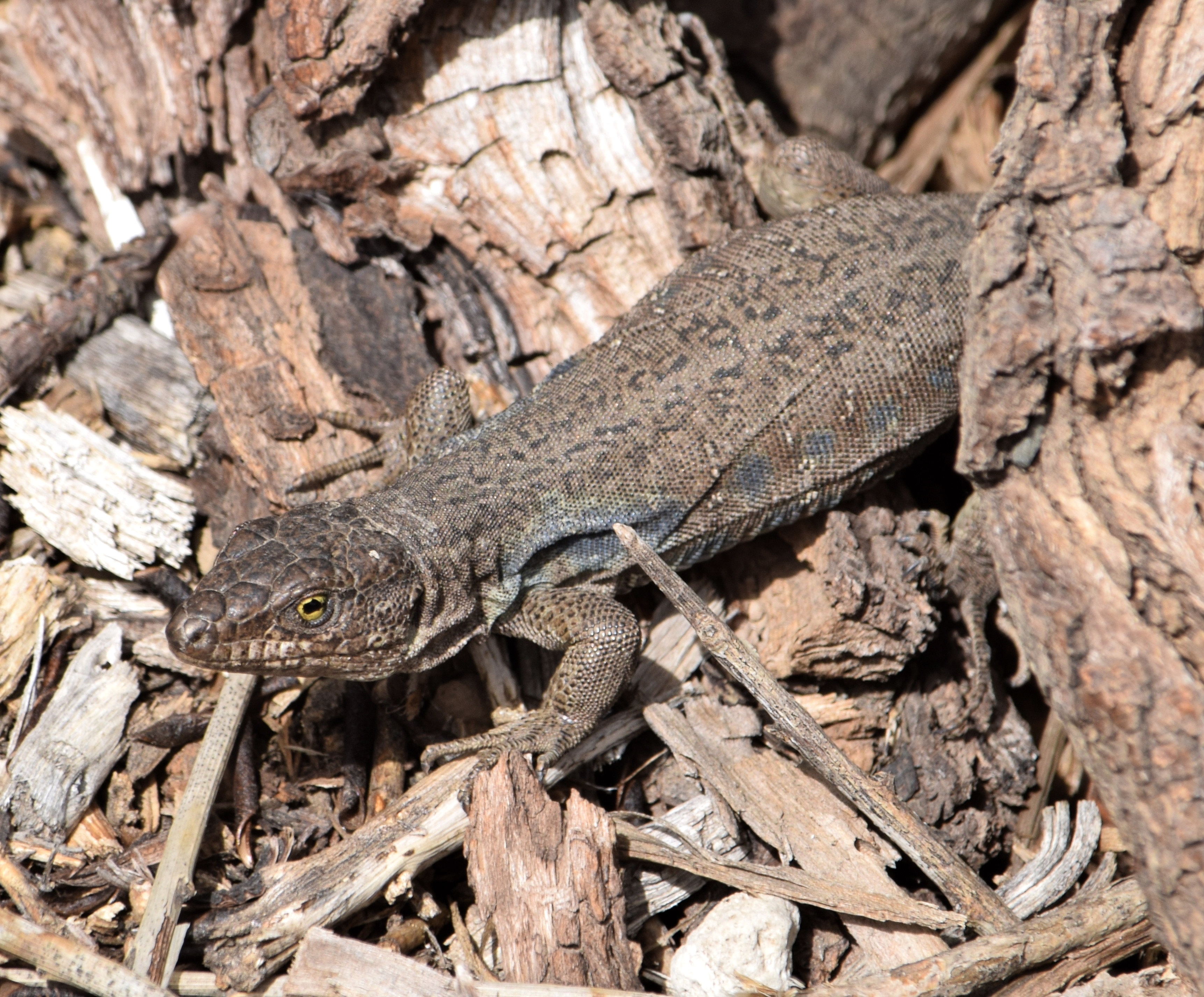
At intervals I walked up and down the same stretch of track with its rocks and reed piles, but it seemed that the day having warmed up lizards were now mostly content to keep out of sight. Occasionally one would stop and keep still though, and I gained these very pleasing studies of females or immatures (below).
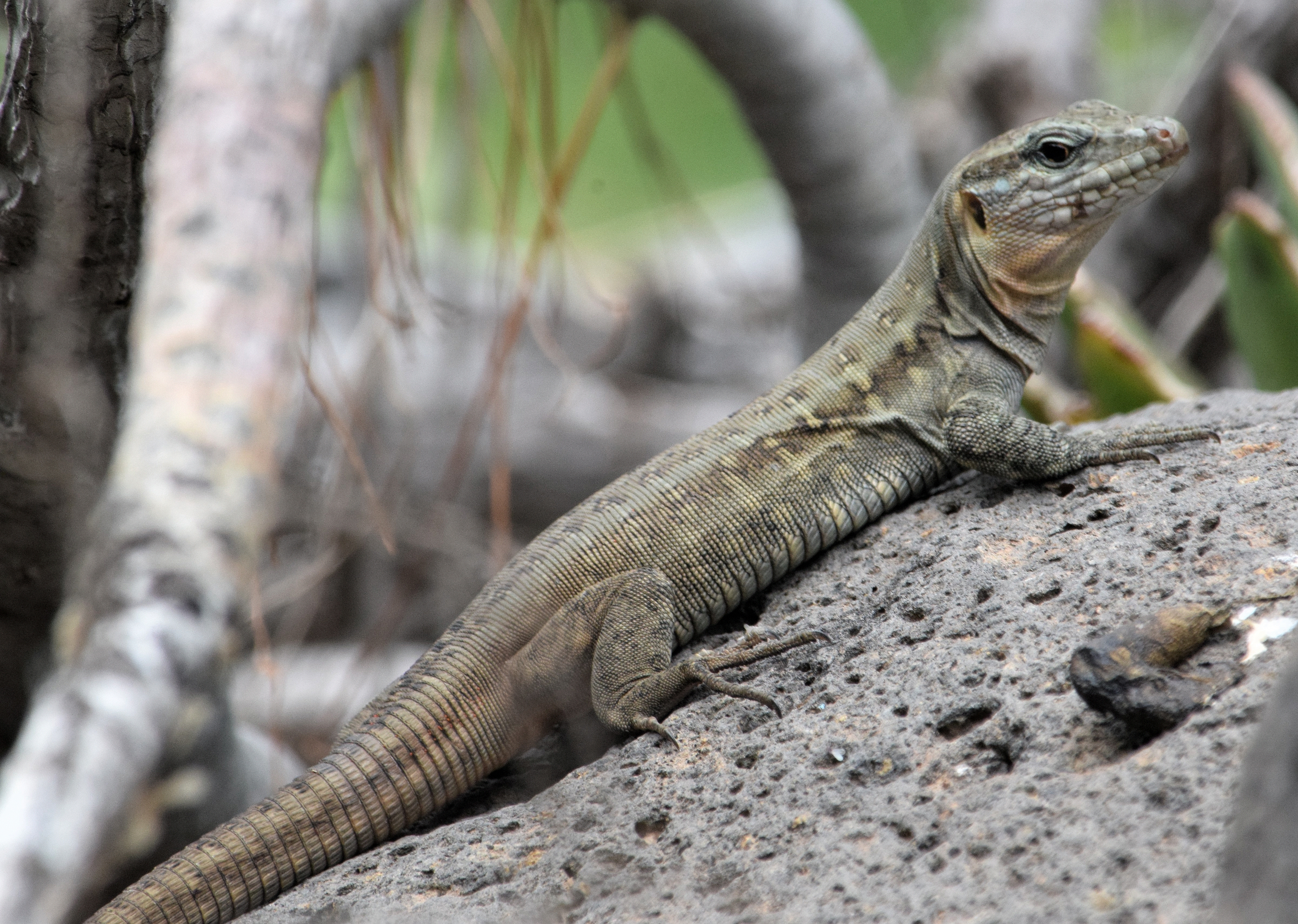
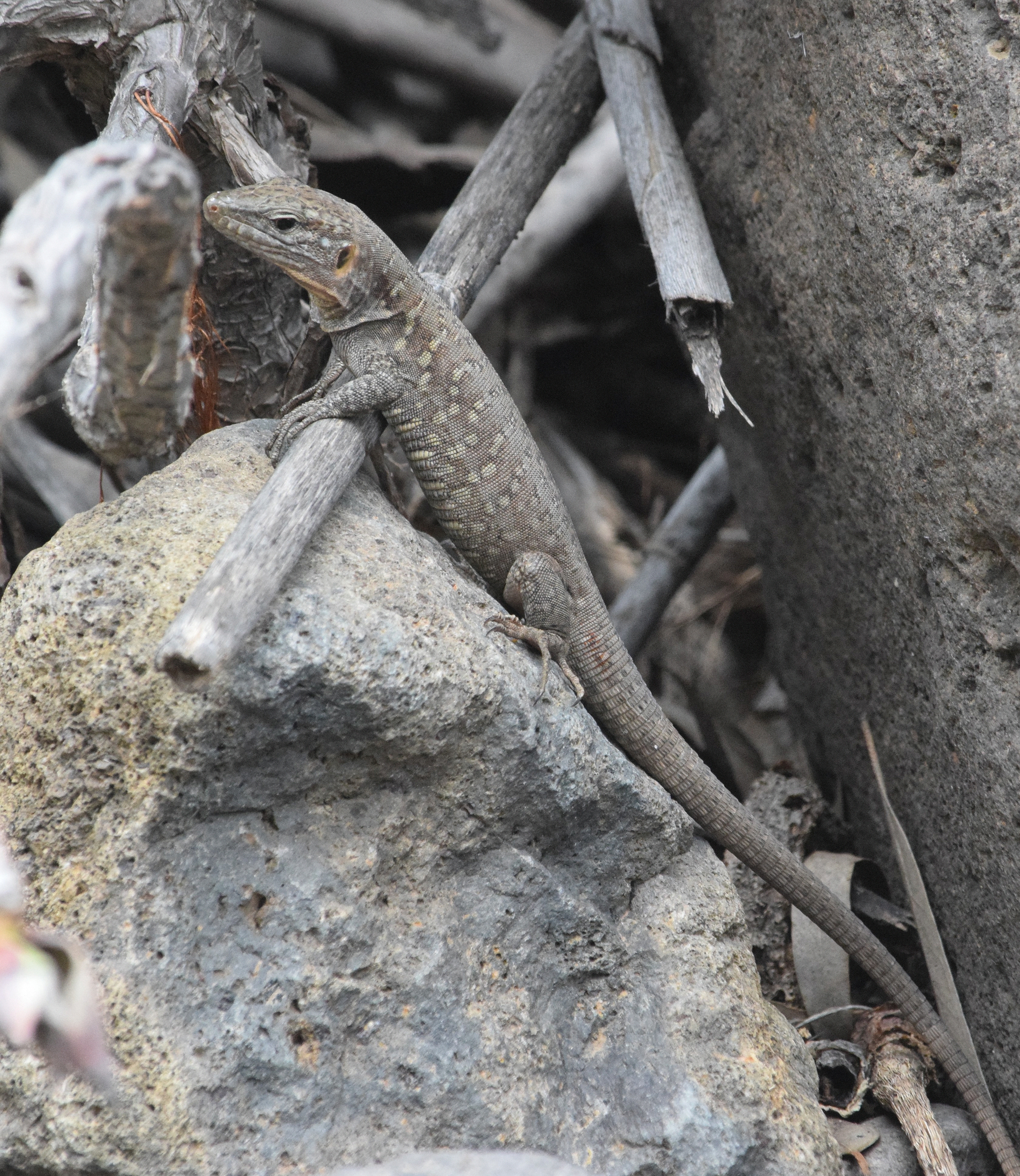
Gran Canaria Giant Lizards (female or immature male – above and below)

Eventually I went back to my hire car to retrieve, and if necessary share sandwiches I had stocked up with at the airport. But unlike the Tenerife Lizard at El Portillo visitor centre, my male showed no interest in the titbits I tried to tempt him back out of cover with. He soon approached but came no closer than in the right hand picture higher up this post. In the early afternoon I indeed came to tire of the situation and so decided to leave. And with no signal to set Google maps with I then made the mistake of driving further up the ravine, not downward.

Emerging from my wildlife idyll, a sea of humanity had accumulated on the road above. But these people were not here to walk the trails or enjoy nature. I have been in the situation before where scenic locations I go to observe wildlife by late morning become overwhelmed by the number of visitors and vehicles they attract. Further on from where I stopped there are a number of restaurants that must have an avid following. Either side of each venue cars lined the roadsides while fashionably dressed people milled about and queued to gain admittance, something I myself would never do.

Since there was no phone signal down in the ravine I wondered how on earth these glitterati might occupy themselves until tables became available. Eventually things grew scary when the narrow road ahead of two adjacent eating places was closed on an incline, and cars including my own had to turn round while still more poured in from behind. After some nervous moments I high-tailed it out of there.

With around 90 minutes remaining till I needed to get back to the airport and return my car, I opted to drive up to the island’s north-east corner and back, to see a little of Gran Canaria so I thought. But I wasn’t impressed by what I encountered, things seeming quite overdeveloped with little of Tenerife’s charm and allure. The western parts of this island are of course the wild side. It was very fulfilling to have come here by myself and self-found my quest at the first attempt, and I may return for longer at some future time.
Some hard herp lessons in Las Canarias, ft endemic Tenerife Lizards: 14 – 17th Apr

This journal’s 2026 season opens with some special herpetora. My admittedly self-punishing preference for evolution over repetition now restricts potential for short-haul breaks. But upon becoming aware of the Canary Islands’ very particular suite of reptiles, a workable solo expedition in the Rn’S tradition suggested itself. I put together a detailed itinerary aimed at covering the major species of three islands in five days. This was mostly using MS Copilot, but whereas initially I had wondered (ie marvelled) at the AI technology, I now merely wonder just how accurate it can be relied upon to be.

Tenerife Lizard (male with forked tail)

Tenerife and Gran Canaria have distinct large lizards that were my top targets. Depending on the level of detail individual observers might prefer, each Canary Island also has its own sub-species of Skink and nocturnal Gecko. There is just one small lacertid (on Gran Canaria) and a few introduced items to look out for. And the holy grail for this trip would be the endangered and difficult to locate Tenerife Speckled (or Intermediate) Lizard (Gallotia intermedia), that I really wasn’t confident about connecting with. As I suspected, a visit to the Teno NP information centre confirmed this last species’ c500 remaining individuals are mostly confined to coastal cliff ledges where they keep out of danger from predation, and few other than authorised biologists know where they are (see here).

Once in the field on Tenerife it soon became clear that doing everything in five days was an over-ambitious plan. I had begun with a day trip to La Gomera (Tue), where I inexplicably dipped that island’s default species Boettger’s Lizard (see here), said to be common everywhere. The weather was right and I found ideal habitat, but only crossed paths with one small candidate that I couldn’t get pictures of. I will say no more here and look into the failure.

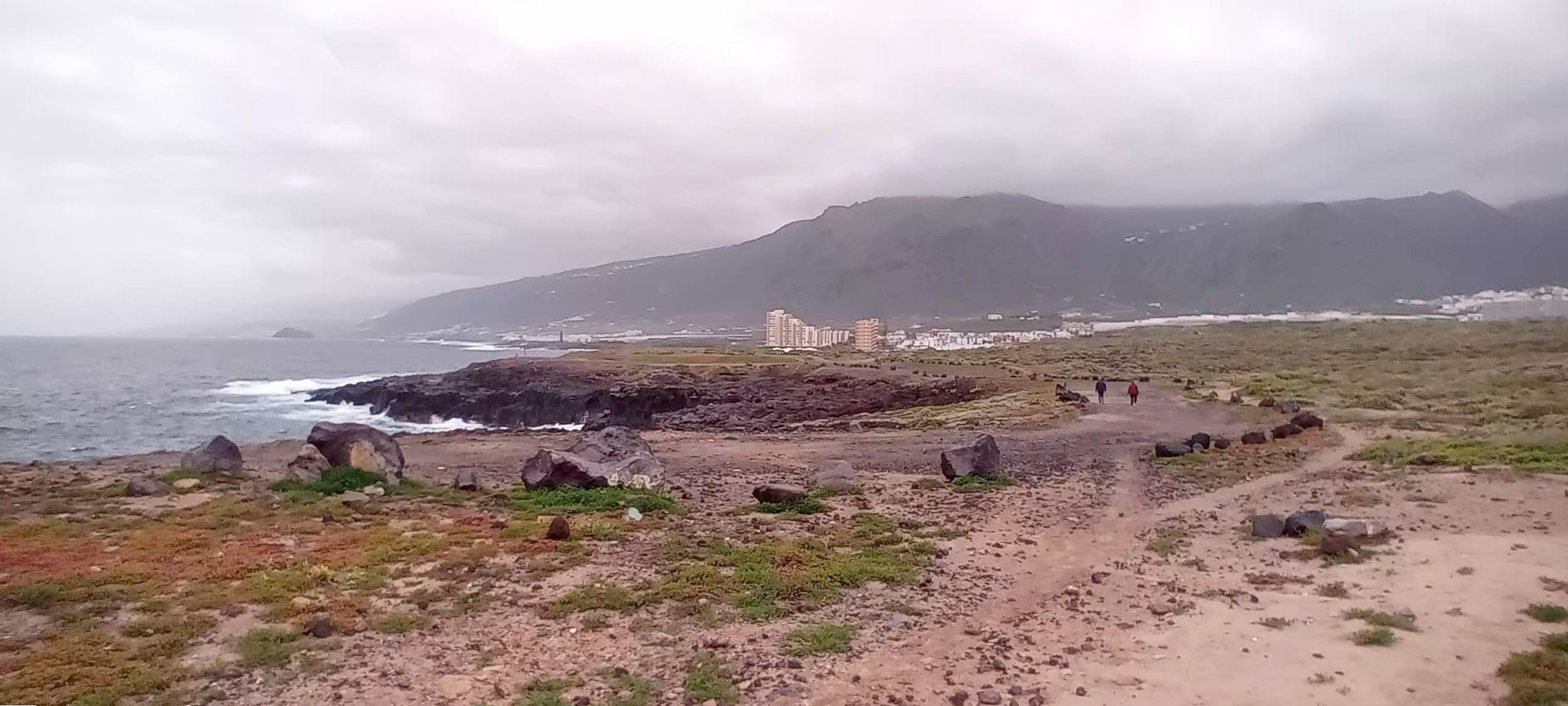
What you don’t hear about before going to Tenerife

What that electronic briefing had not prepared me for was the micro-climate in north-west Tenerife where I stayed for two nights (Wed and Thu). The above picture was taken on a coastal path between Los Silos and Buenavista del Norte, one of two Tenerife Lizard sites I had researched. So whilst the south coast beach resorts bathed in 26 deg sunshine, I realised quite a contrast is probably more the norm where I was, as the grey stuff stacks up against the vast bulk of the Teno massif; just as it invariably does on a smaller scale when I visit the Chilterns escarpment at home. The habitat was once more ideal for reptiles, but lizards were not likely to show themselves in such conditions. Then re-crossing the high tops, my base just south of the massif, Santiago del Teide was sunlit. Second lesson learned.

After giving up on the north coast sites during Thursday, I went in the afternoon to Erjos on the massif’s eastern flank. Earlier in the day a Teno NP ranger had advised me to look for Tenerife’s endemic pigeons on the TF-53 trail south-west into what is described as the island’s finest laurel forest, that those birds favour. Instead what should I self-find but four Tenerife Lizard (Gallotia galloti), a male and three females / immatures. My demoralisation lifted at once, the trip was now rescued, and I lost all interest in pigeons for the day. I had already recorded my first Blue Chaffinch here, one of four WestPal bird list additions on this trip.

Tenerife Lizard (male)

There is a great range in both size (up to 14.5cm from snout to vent) and pattern of male Tenerife Lizards. This one (above) was quite small but looks bigger in the picture, possibly a second summer individual, with the paler colouration typical of reptiles in the island’s north (per Collins). He scuttled into his burrow from trackside on seeing me coming, then didn’t come further out than shown, despite darting back in several more times during our communion. Otherwise he was content just to rest there stock still. This default species for Tenerife occurs in all wild and cultivated habitats on the island, sometimes reaching high densities and being considered a pest. I assumed the lizard pictured below is a female or immature male, and Teno information centre has confirmed that.

Tenerife Lizard (female / immature)

Walking up from Erjos to the high part of the trail, I had crossed paths with some very small lizards scurrying in and out of cover (pictured below, top). At first I thought they must be Skinks, but on reviewing my pictures realized they were not. Teno Information Centre has confirmed these are indeed juvenile Gallotia galloti, so in this place I had encountered Mama, Papa and the bambinos. I assume the last would probably have hatched in late autumn last year. In such a benign climate lizards do not truly hibernate, merely becoming more selectively active through the winter months, and on appearances not growing very much.

Juvenile Tenerife Lizards (above and below)

On Friday morning (17th) I paid attention to rough land adjacent to Santiago del Teide cemetario, that Mariposa visits on its butterfly tour here. Once more, in two dry, stony places I found numbers of hyperactive small lizards (above) that my source again confirmed as juvenile Gallotia galloti. Unfortunately I then stepped into a pothole while looking around, tripped and fell onto my telephoto lens, damaging it beyond repair. The afternoon plan of visiting El Teide NP, the big volcano, immediately became second priority to securing a replacement lens. After a lunch break and leaving my holiday let I drove to the nearest high-end camera shop in Costa Adeje to the south-west and quickly sourced another one. I couldn’t face the prospect of going to Gran Canaria for stage three of this trip unequipped.

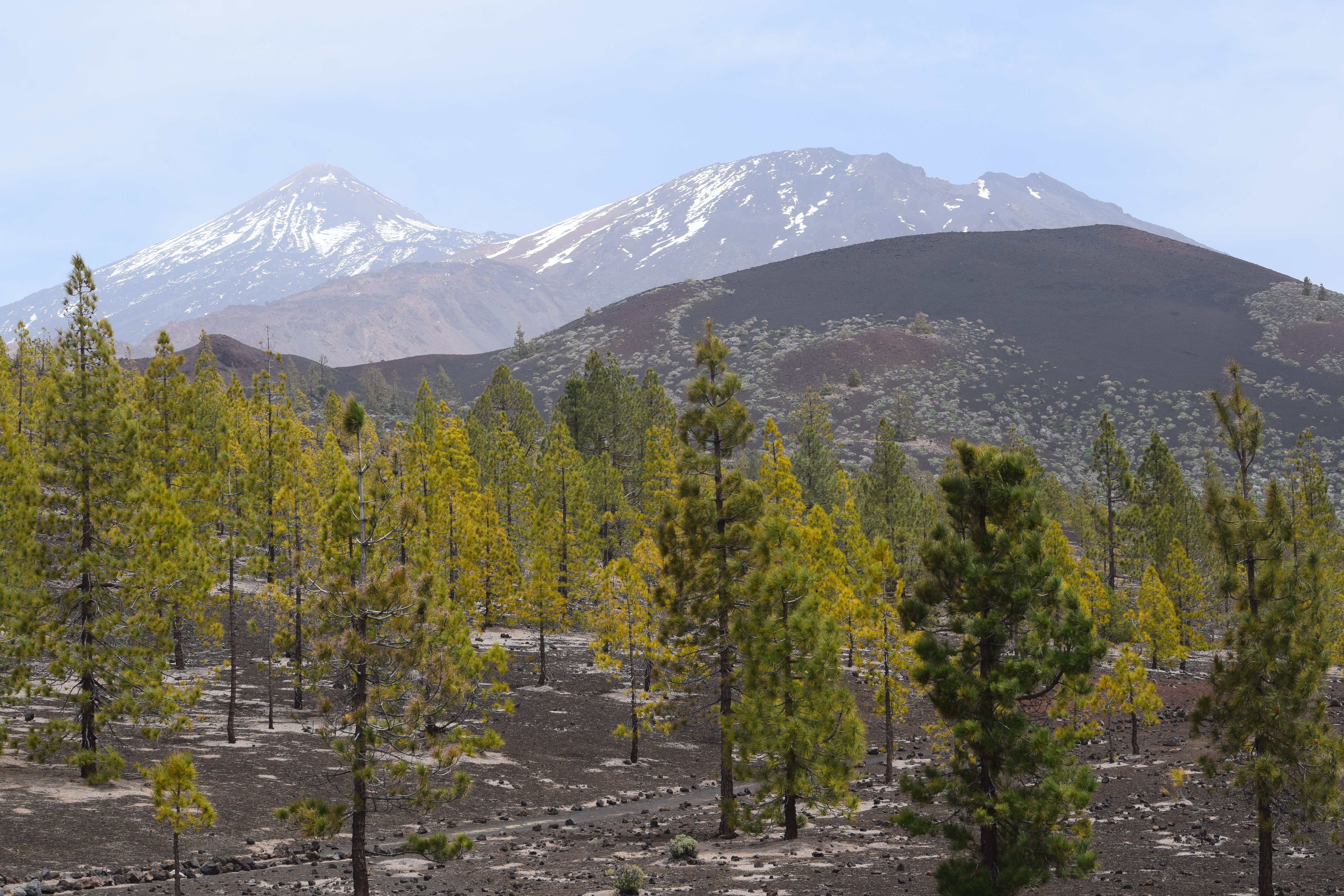
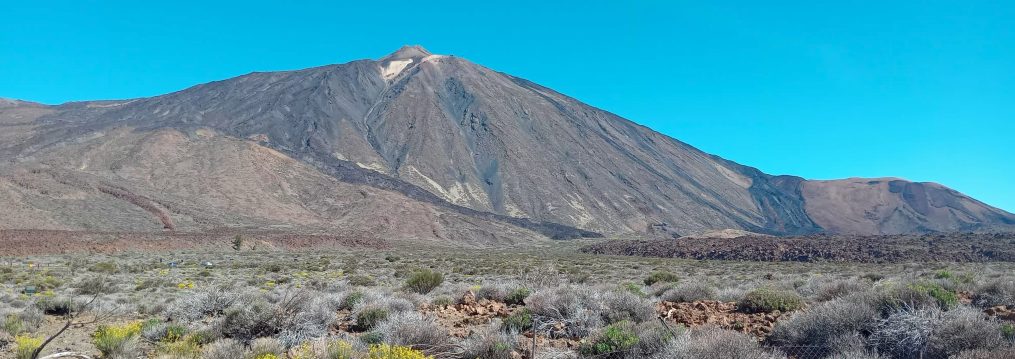
The caldera of Mt Teide

Time remained for a very quick visit to Teide NP before my scheduled car hire return. Tenerife has a very diverse and scenic mix of landscapes, but that around the caldera is simply spectacular. On and on I drove through vast moonscapes of lava flows and rock formations, all free on this day from settled cloud, but there was no time for picture taking. At El Portillo visitor centre I asked where I might see Blue Chaffinches and was directed to a small man-made pond in the botanical garden where the birds come to drink. There I sat down on a low wall to eat the only sandwiches I had found all week (in a Carrefour Express), and that at once attracted the attention of a group of several adult Gallotia galloti.

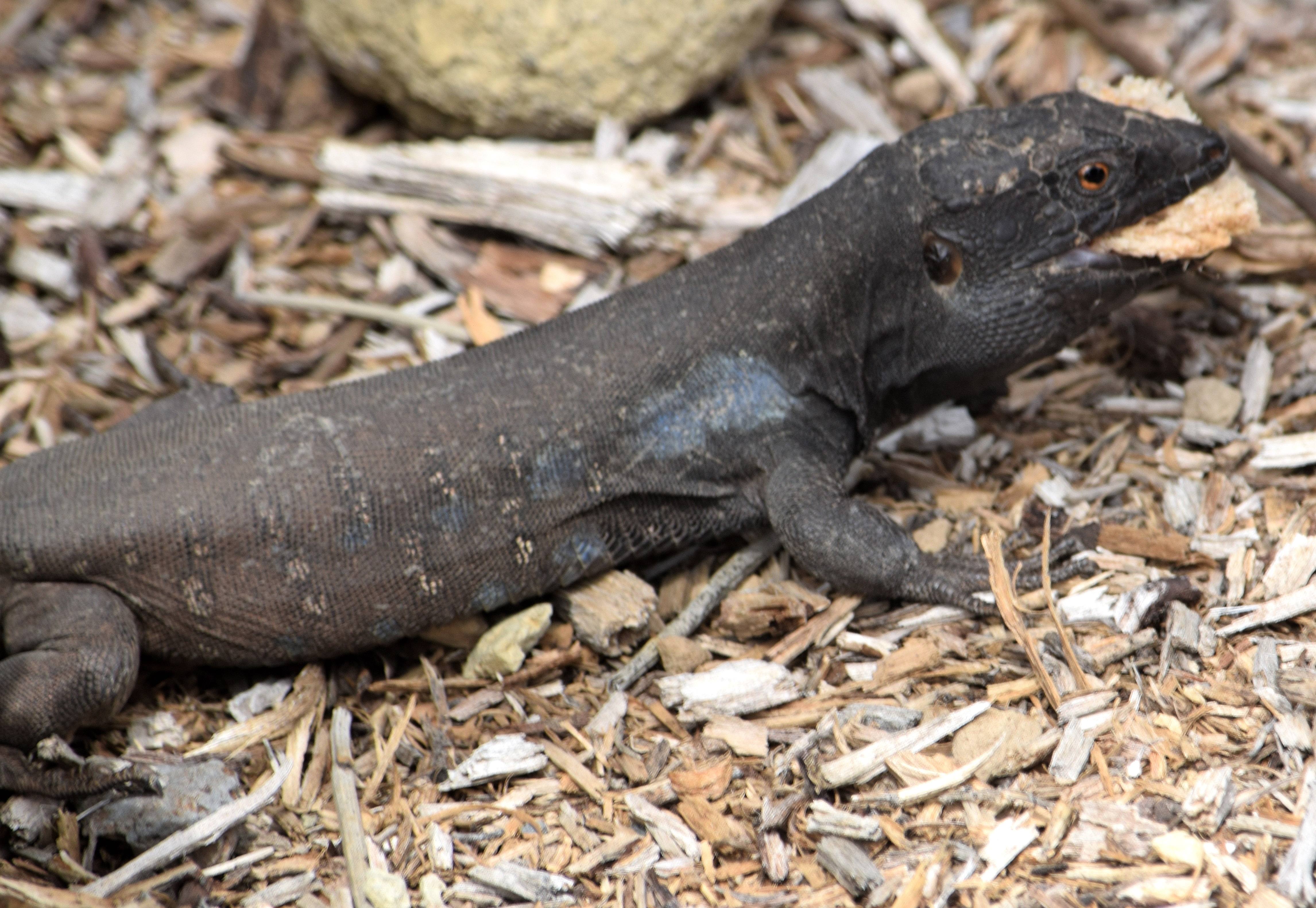
Jumping up to take pictures I left a bite-sized morsel on the wall. That was soon taken by a large, blue-toned male (pictured above) that emerged and crept up on its snack. I had read that in places where they are used to people these lizards become inquisitive and approachable, and that was true here. Soon afterwards I saw the thief heading into cover with a larger titbit that had been lying on the ground. It seemed this probable dominant male of the group had first refusal on such available food. After that he didn’t emerge into the open again.

The less boldly marked males in the sequence below and this post’s lead picture were the next largest of the group, and the ones that posed the most readily. Immature males closely resemble females, especially in their first year, before developing characteristic larger heads with broader jaws, bulkier body size and blue flank patches.

Tenerife Lizards (Gallotia galloti)

So after two initial days of frustration I was now finding my quests everywhere I went. That must indicate just how abundant Tenerife Lizard is on the island of its name, and there really had been no need to research in advance those north coast sites. Through this past travel free winter I had often thought I would like to do longer trips again if I can find somewhere that may be suitably motivating without the wildlife having to be new and different.

Three days in the beautiful landscapes of north-west Tenerife was barely sufficient to scratch the surface of what might be enjoyed there. Having found an ideal holiday let this time I may well return for longer and seek to do things justice. I have often said herein that I love all reptiles and especially lizards. This week was difficult … but it worked.