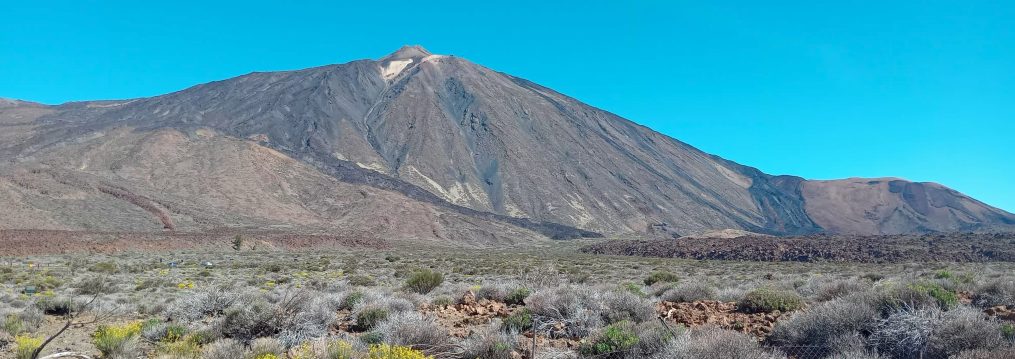
For my last two nights in the Canary Islands I rented a studio apartment near Tenerife South airport and early on Saturday morning took a Binter Canarias flight to Gran Canaria. The objective was to record the latter island’s large endemic lizard. These are common and widespread across GC and especially favour rocky ravines (barrancos) and coastal plains. I had researched a number of sites within 20 minutes drive of the airport and headed for the closest one that was also cited as the best hotspot.
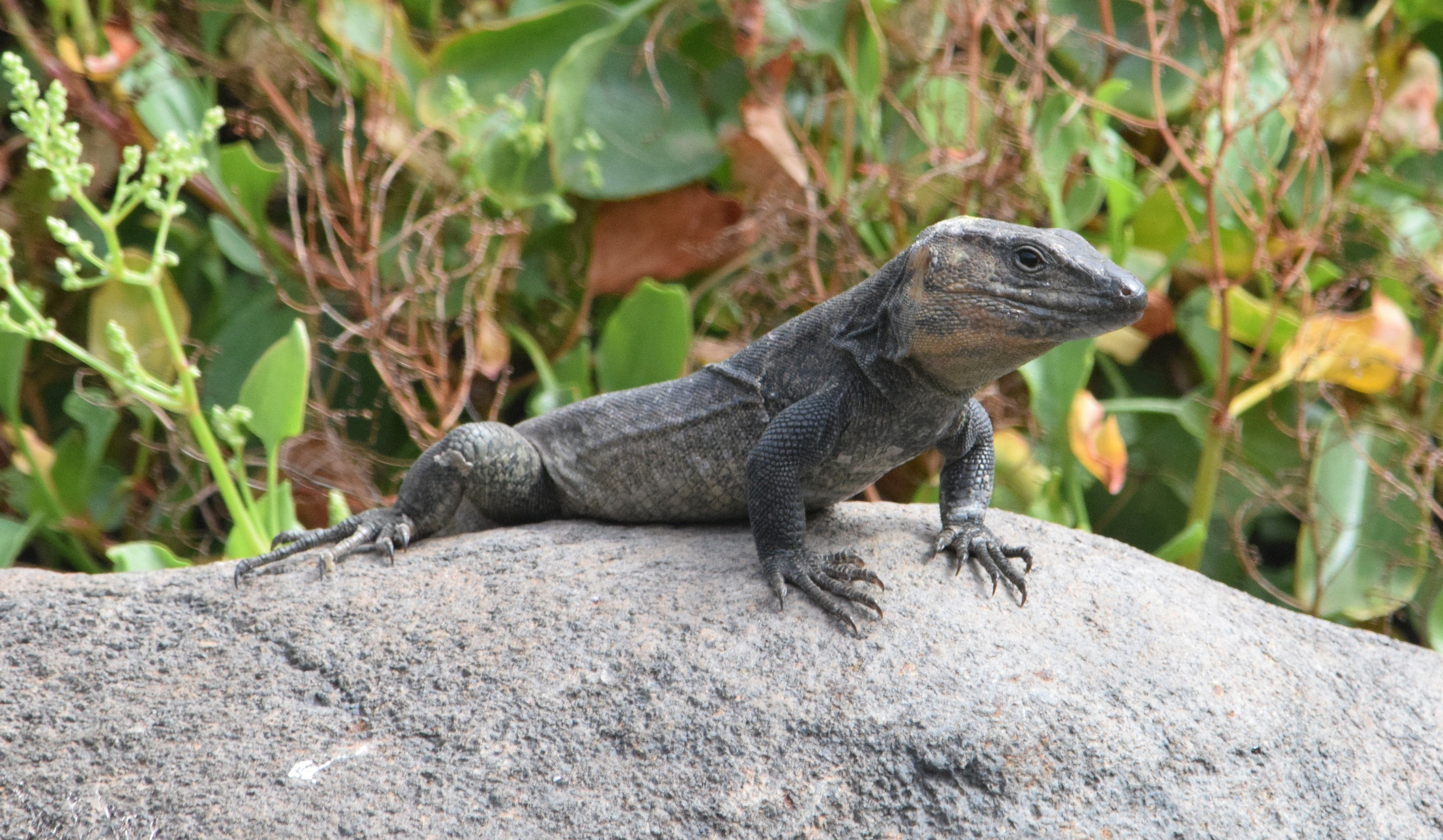
An 8km (5 mile) drive in discouragingly overcast conditions brought me to the Barranco de Guayadeque, an immense geological feature stretching for a further 11or so km north-westward from the town of Ingenio, and one of the largest ravines on the island. I stopped at the first suitable place for roadside parking I found, immediately below which a trail ran along the valley floor, and walked up the barranco then down. I realized I was in excellent reptile habitat, with in particular several piles of dried cut reeds on top of rock strewn areas (pictured below). By 10 am the weather was brightening from the north, I began to hear tell tale rustlings and then to catch glimpses of scuttling lizards of varying hues.
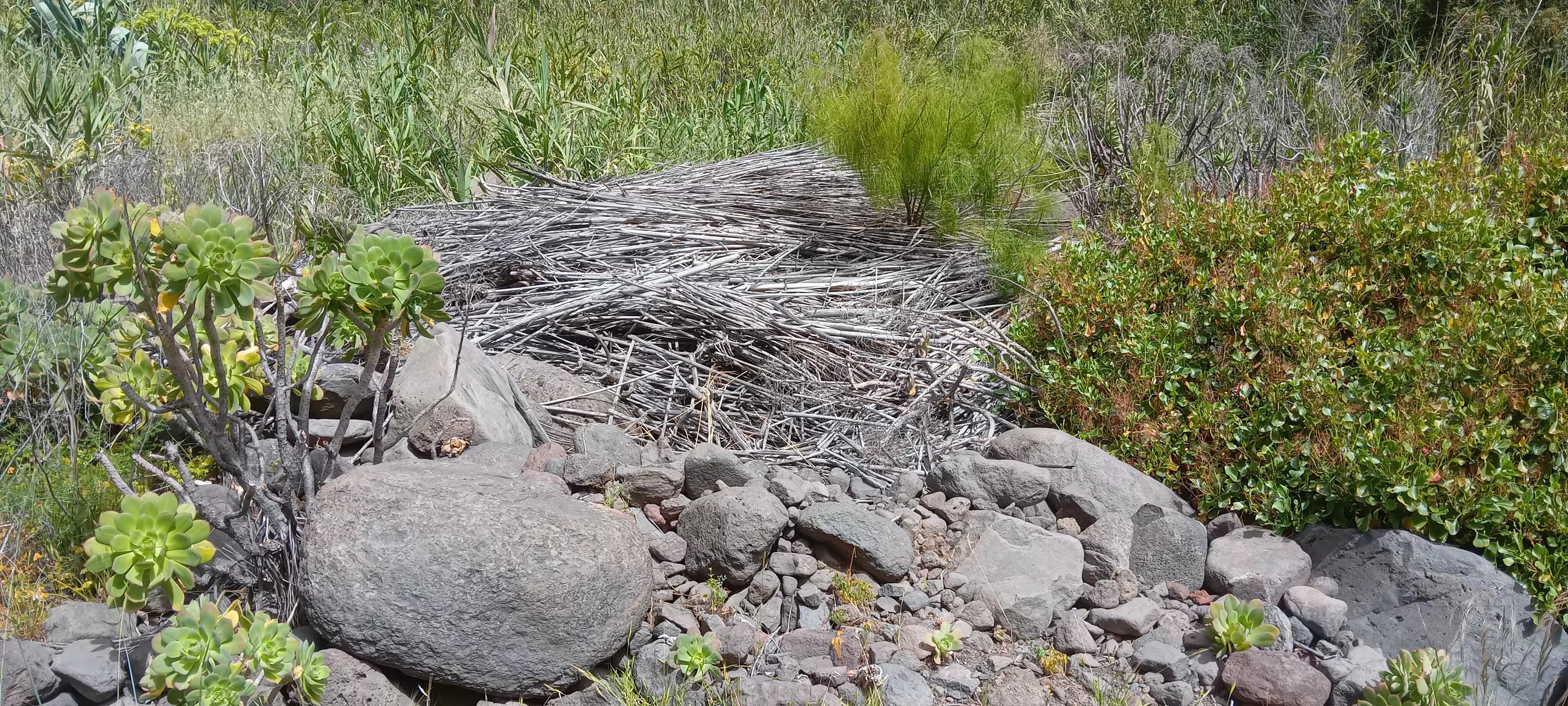
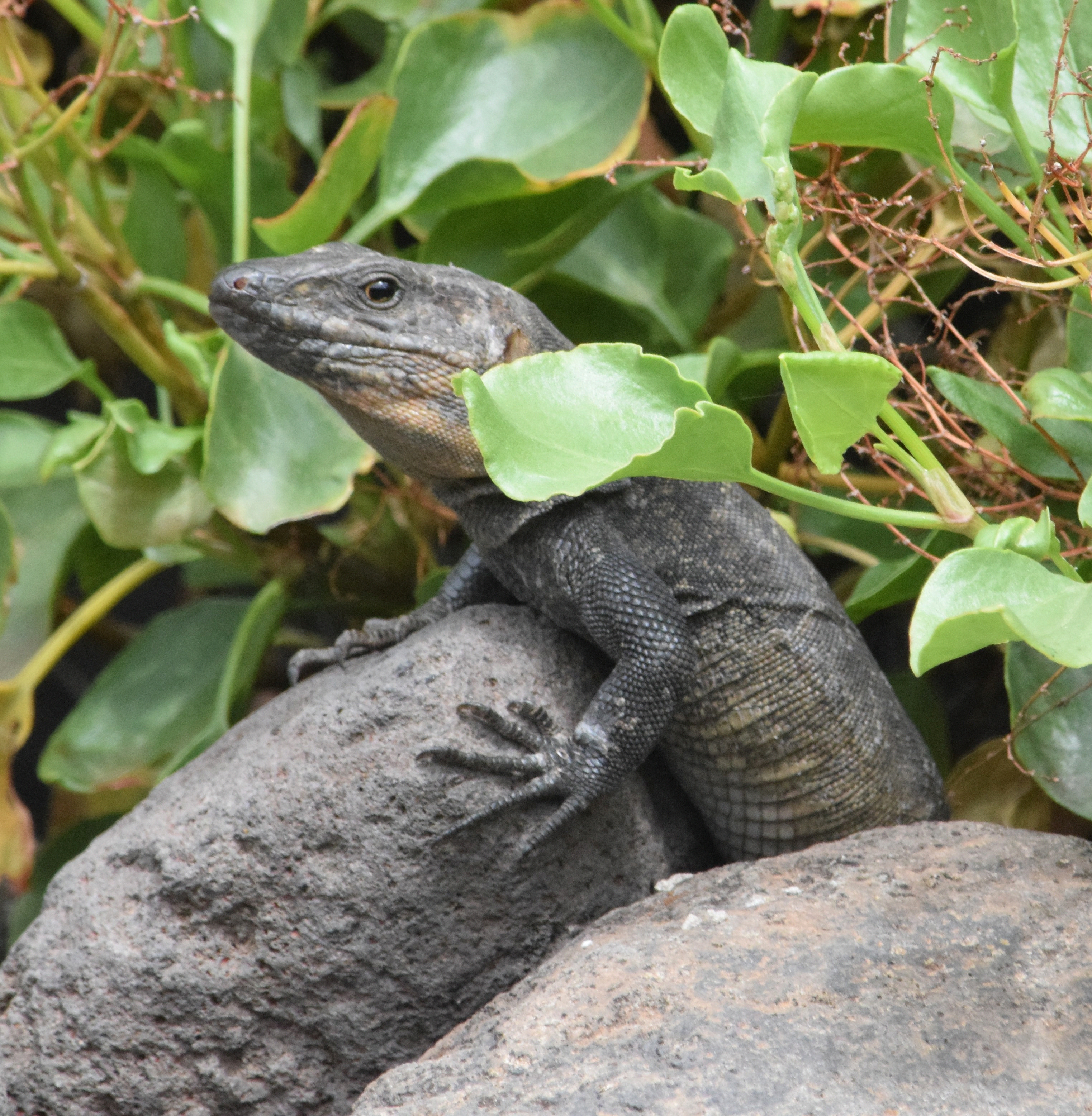
All of a sudden there he was: a large male Gran Canaria Giant Lizard (Gallotia stehlini – lead picture) basking atop a boulder. This was not a full-grown male that are big, bristly beasts indeed, but still pretty impressive. The species can reach up to 27cm from snout to vent with the tail twice as long again, but 18cm is more typical. Mature males develop imposing heads and jowls, with characteristically deep orange cheeks. Occurring in a wide range of habitats, they are sedentary and aggressive towards one another. Lifespan can be up to 12 years. I sat down in communion with this individual for some time.
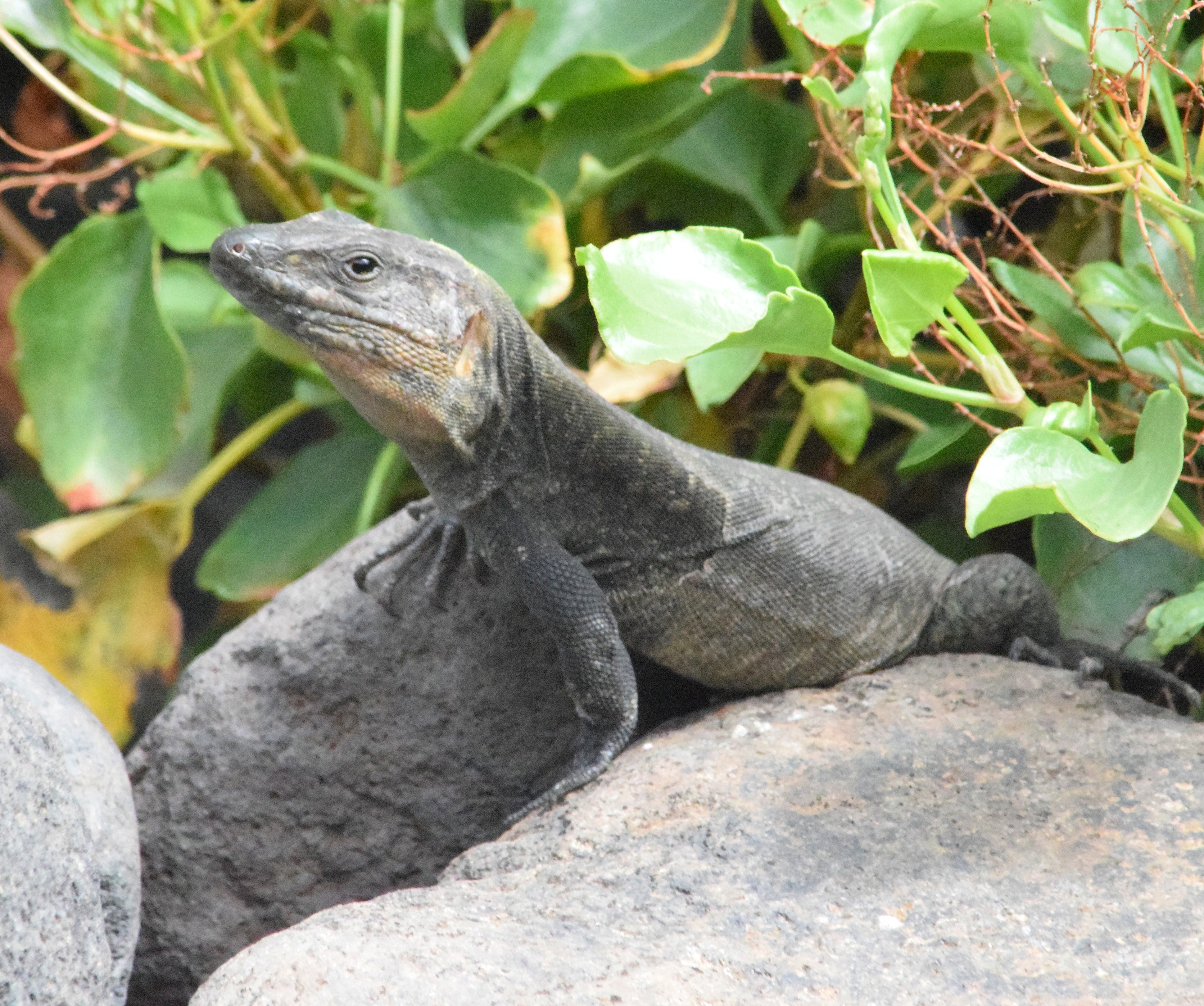
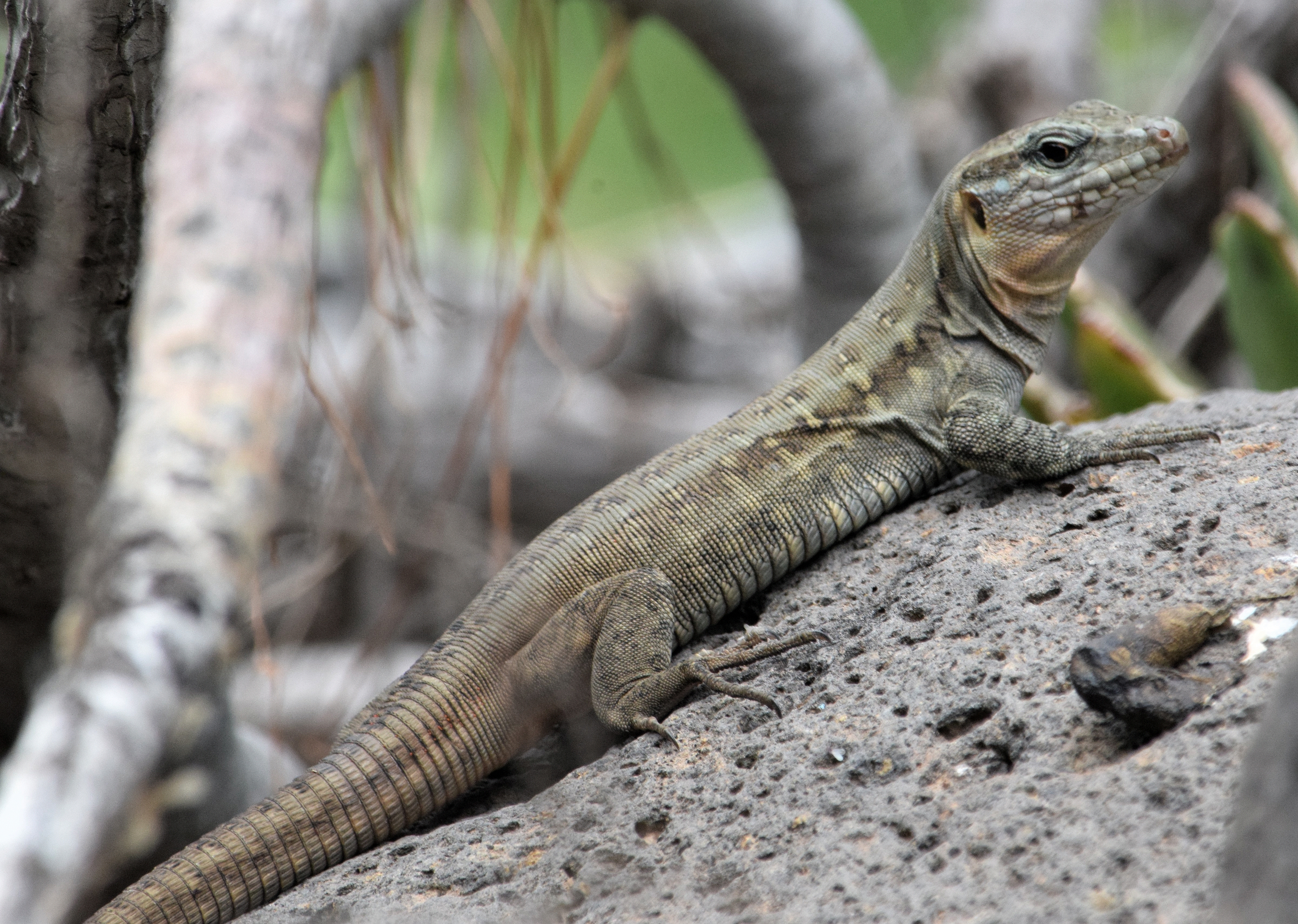
Realising I had quite by chance found such a suitable location, I felt no inclination to move on anywhere else. I was in my element again here, just me and the wildlife in spectacular scenery, the situation I most prefer; and through the late morning conditions were warm and sunny. After a while my male slipped back into cover, then partially emerged again (below, left).
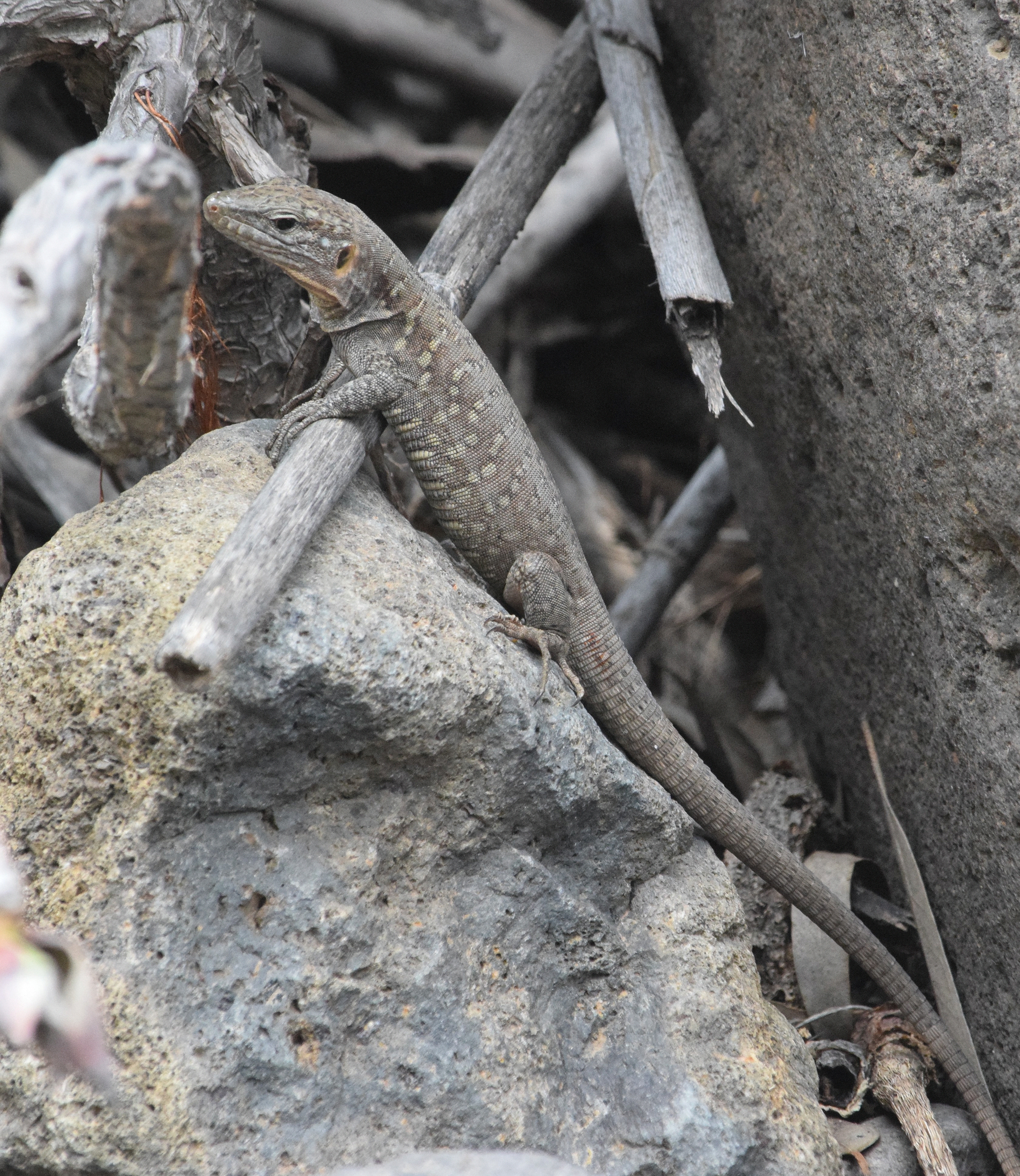
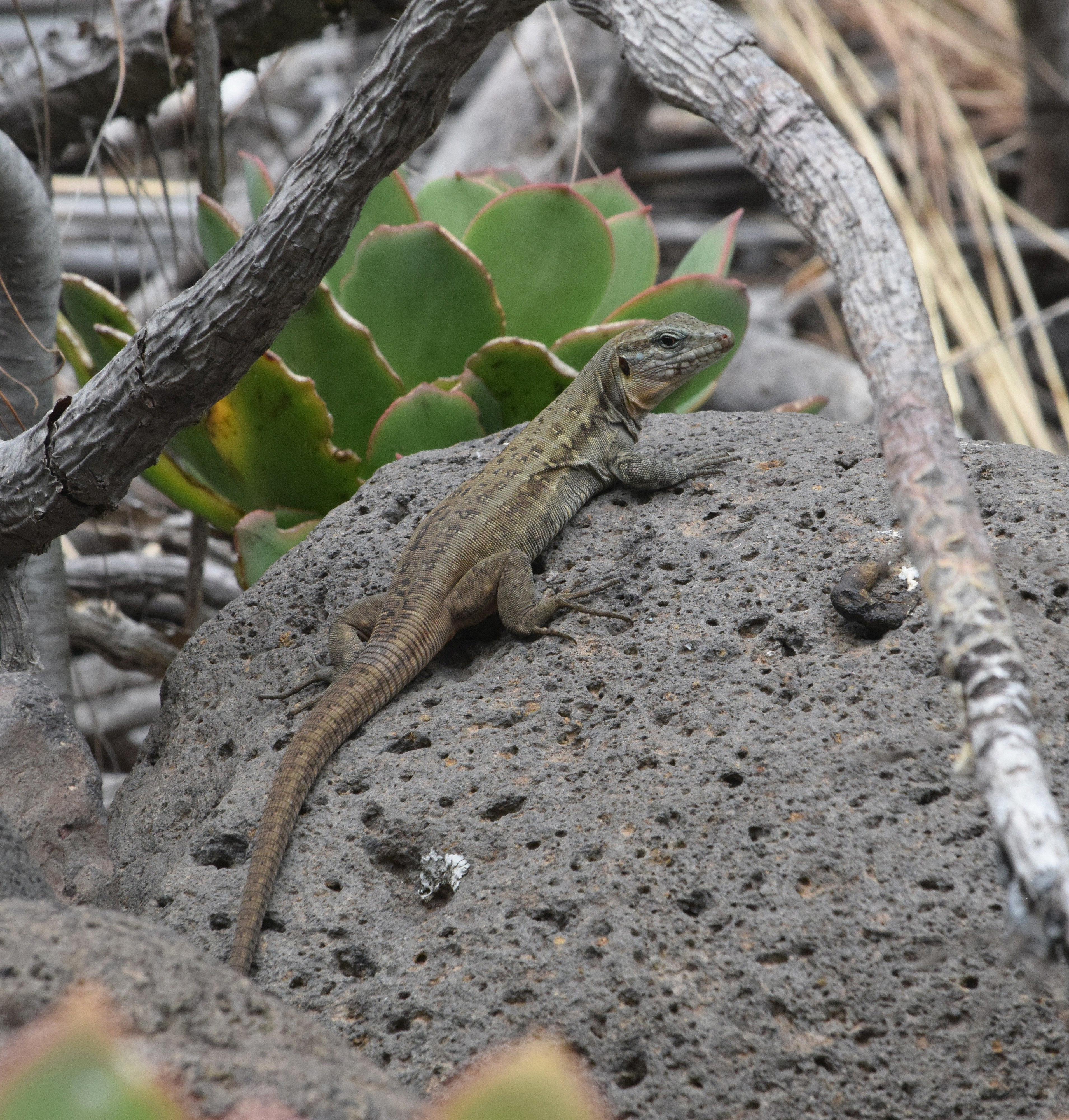
At intervals I walked up and down the same stretch of track with its rocks and reed piles, but it seemed that the day having warmed up lizards were now mostly content to keep out of sight. Occasionally one would stop and keep still though, and I gained these very pleasing studies of females or immatures (below).
Eventually I went back to my hire car to retrieve, and if necessary share sandwiches I had stocked up with at the airport. But unlike the Tenerife Lizard at El Portillo visitor centre, my male showed no interest in the titbits I tried to tempt him back out of cover with. He soon approached but came no closer than in the right hand picture higher up this post. In the early afternoon I indeed came to tire of the situation and so decided to leave. And with no signal to set Google maps with I then made the mistake of driving further up the ravine, not downward.
Emerging from my wildlife idyll, a sea of humanity had accumulated on the road above. But these people were not here to walk the trails or enjoy nature. I have been in the situation before where scenic locations I go to observe wildlife by late morning become overwhelmed by the number of visitors and vehicles they attract. Further on from where I stopped there are a number of restaurants that must have an avid following. Either side of each venue cars lined the roadsides while fashionably dressed people milled about and queued to gain admittance, something I myself would never do.
Since there was no phone signal down in the ravine I wondered how on earth these glitterati might occupy themselves until tables became available. Eventually things grew scary when the narrow road ahead of two adjacent eating places was closed on an incline, and cars including my own had to turn round while still more poured in from behind. After some nervous moments I high-tailed it out of there.
With around 90 minutes remaining till I needed to get back to the airport and return my car, I opted to drive up to the island’s north-east corner and back, to see a little of Gran Canaria so I thought. But I wasn’t impressed by what I encountered, things seeming quite overdeveloped with little of Tenerife’s charm and allure. The western parts of this island are of course the wild side. It was very fulfilling to have come here by myself and self-found my quest at the first attempt, and I may return for longer at some future time.

