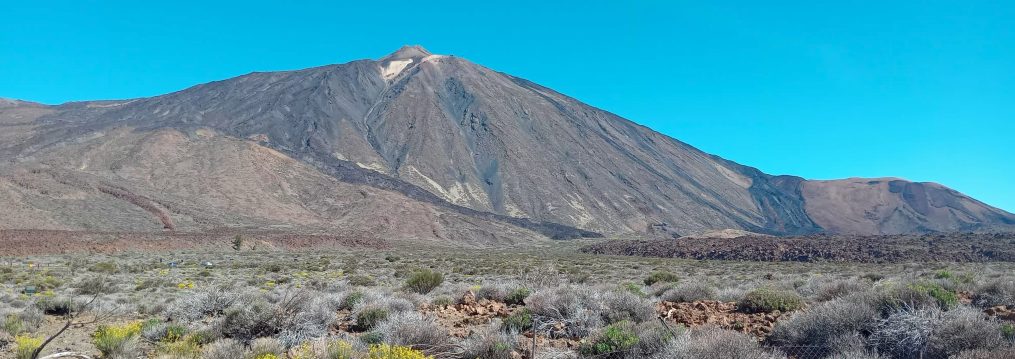
There is a daily TITSA bus from Los Cristianos to Teide NP that allowed me over three hours at the El Portillo visitor centre where I had time for only a rushed visit back in April. On finding that out, I at once sought to do justice to the location. In a week when it transpired that in other respects blue was thankfully not to be the colour this year, that tone certainly pervaded proceedings here. And as people I sent pictures home to reacted: “Just look at that blue sky!”
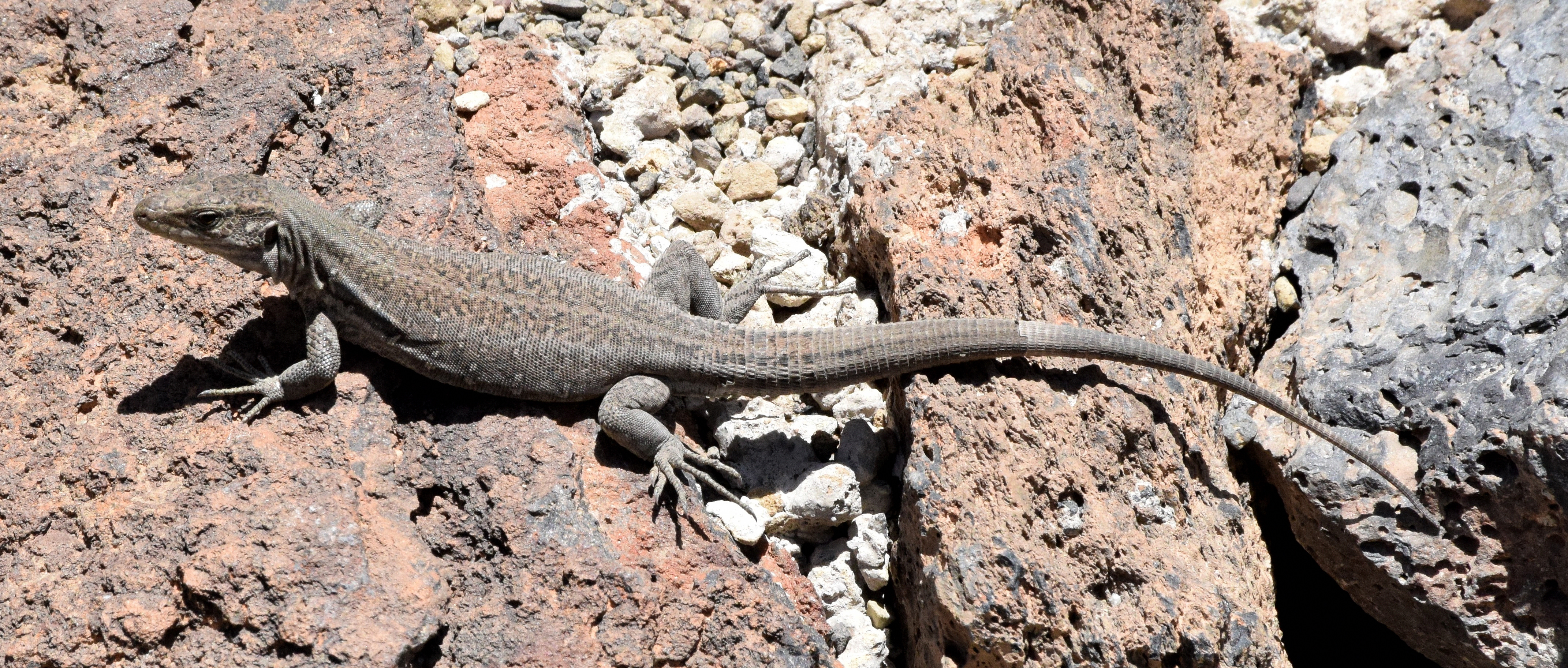
On my previous visit I had been directed to a small pond in the botanic garden where Blue Chaffinch come in to drink. That was where I headed straight away this time. Sitting on the same low wall again, as soon as I got my sandwich out and as anticipated I became surrounded by Tenerife Lizards, like pigeons in a city centre square. It seemed they could hear the rustling of cellophane as I attempted to unwrap that well-packed lunch, and numbers gathered round my feet that I had to be careful not to tread upon. More seemed curious about my rucksack, walking over it and attempting to get inside, while others looked up at me from either side on the wall. There are dozens of Gallotia galloti here that have no fear of the humans they are so used to and equate with easy meals. Visitors are requested not to feed them.
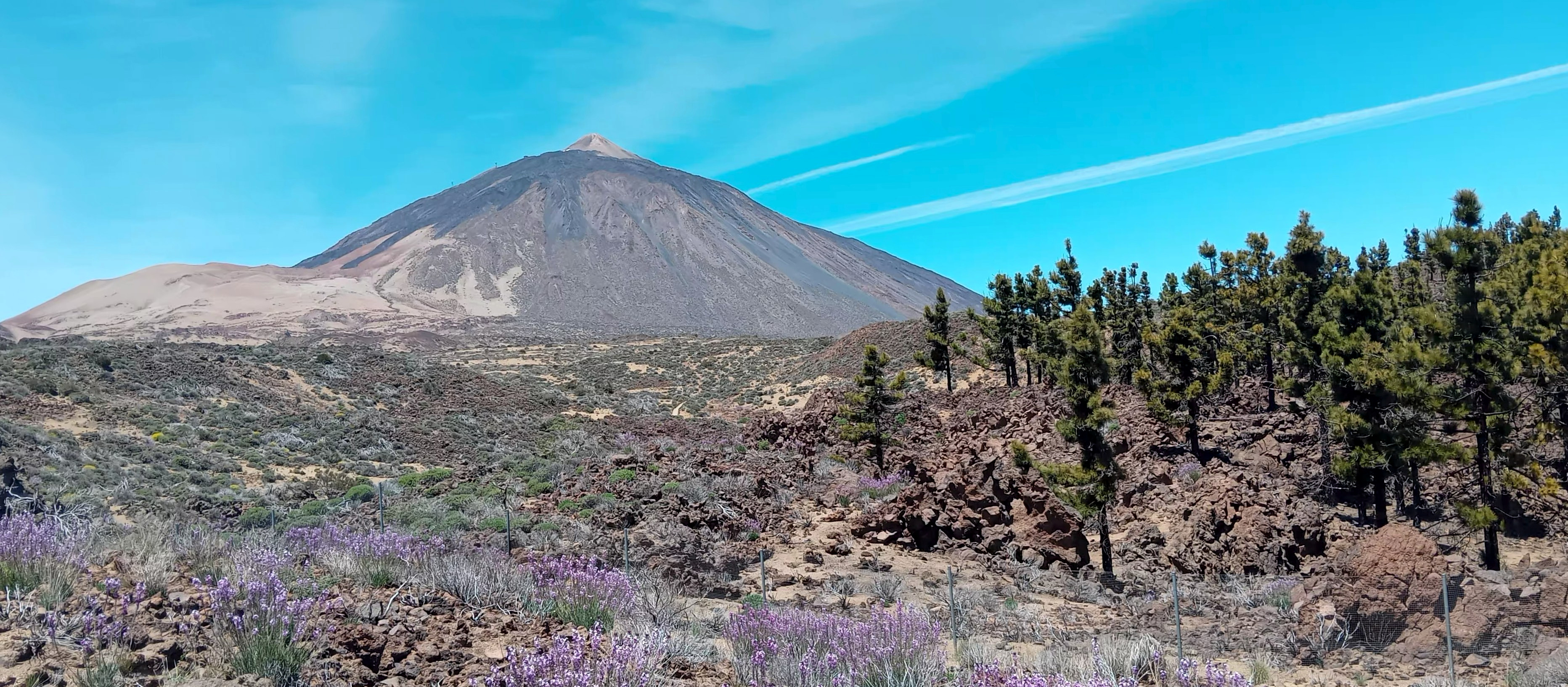
Amidst all this I heard a bird call that had to be a Blue Chaffinch, which I attempted to take pictures of with one hand while keeping my baguette out of harm’s way with the other. When I made my way out of the garden and along a trail towards Mt Teide (lead picture) there seemed no particular place for these birds to be and so I returned to the pond. After a while the call was heard again and a striking male (pictured below) made it’s way down a strategically placed perch (right) to drink at the water’s edge (left). It certainly had chutzpah.
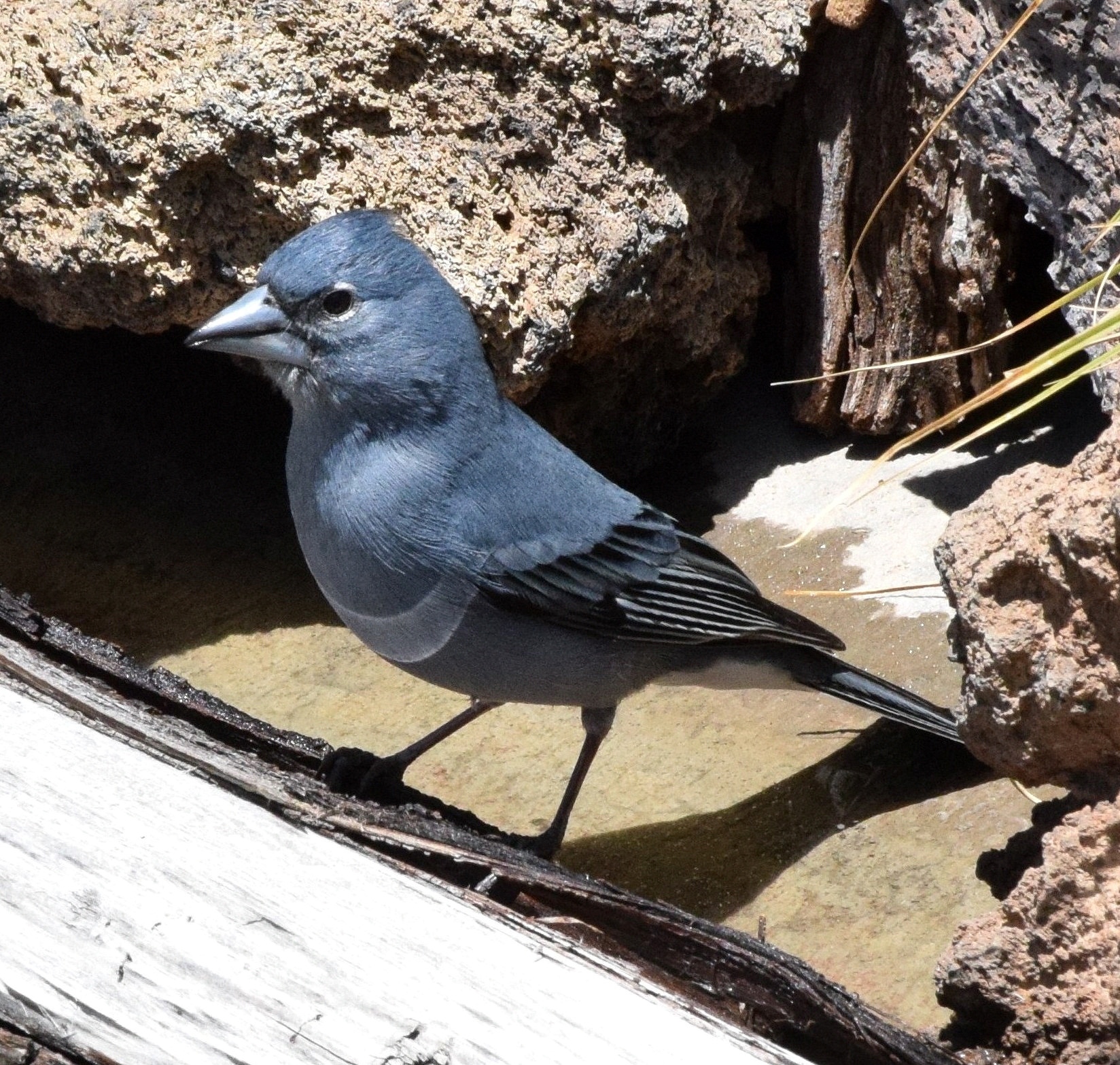
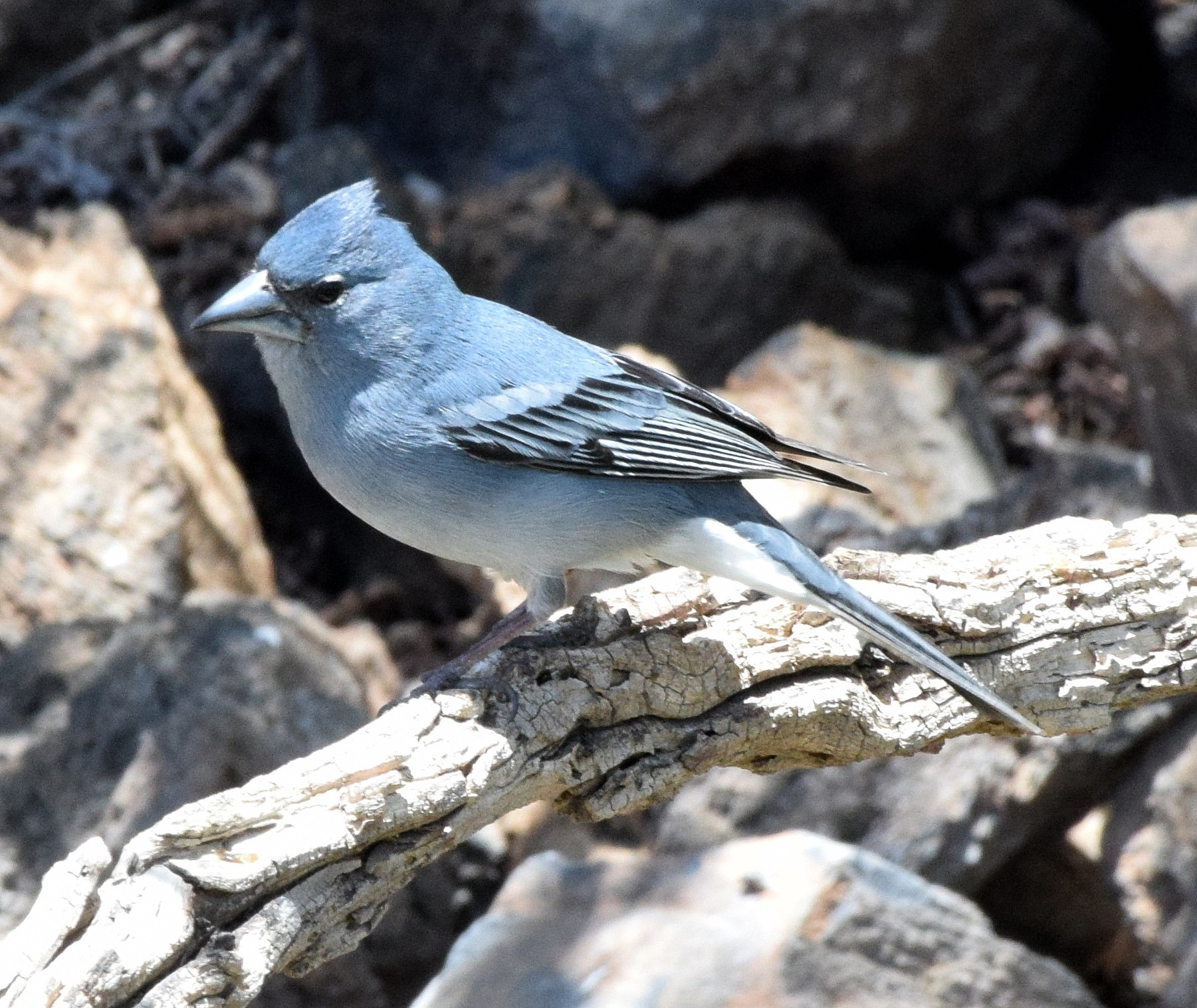
Blue Chaffinch: the same bird in different light
This Tenerife endemic, an official symbol of the island, is larger and more heavily built than the familiar Chaffinch at home. Males in breeding plumage are bold and deeply blue-toned, with a strong and heavy looking, conical, slate-grey bill. The locally abundant species most commonly occurs in montane Canarian Pine forest from 1200 – 1800m, so my present location was probably as good a place as any to find them at higher altitude. There is a sub-species on Gran Canaria that is scarcer and classed as threatened.
Atlantic Canary (Serinus canaria) became my 499th European career bird record (Tenerife being part of Spain politically) at this location today. Other lifers from my two Tenerife trips were Plain Swift, either Cory’s or Scopoli’s Shearwater (tbc), Nanday Parakeet (an IAS), a female Blue Chaffinch in April, and Barbary Falcon at Montaña de Guaza. I believe those account for Canary specialties missed previously through my four past visits to Fuerteventura.
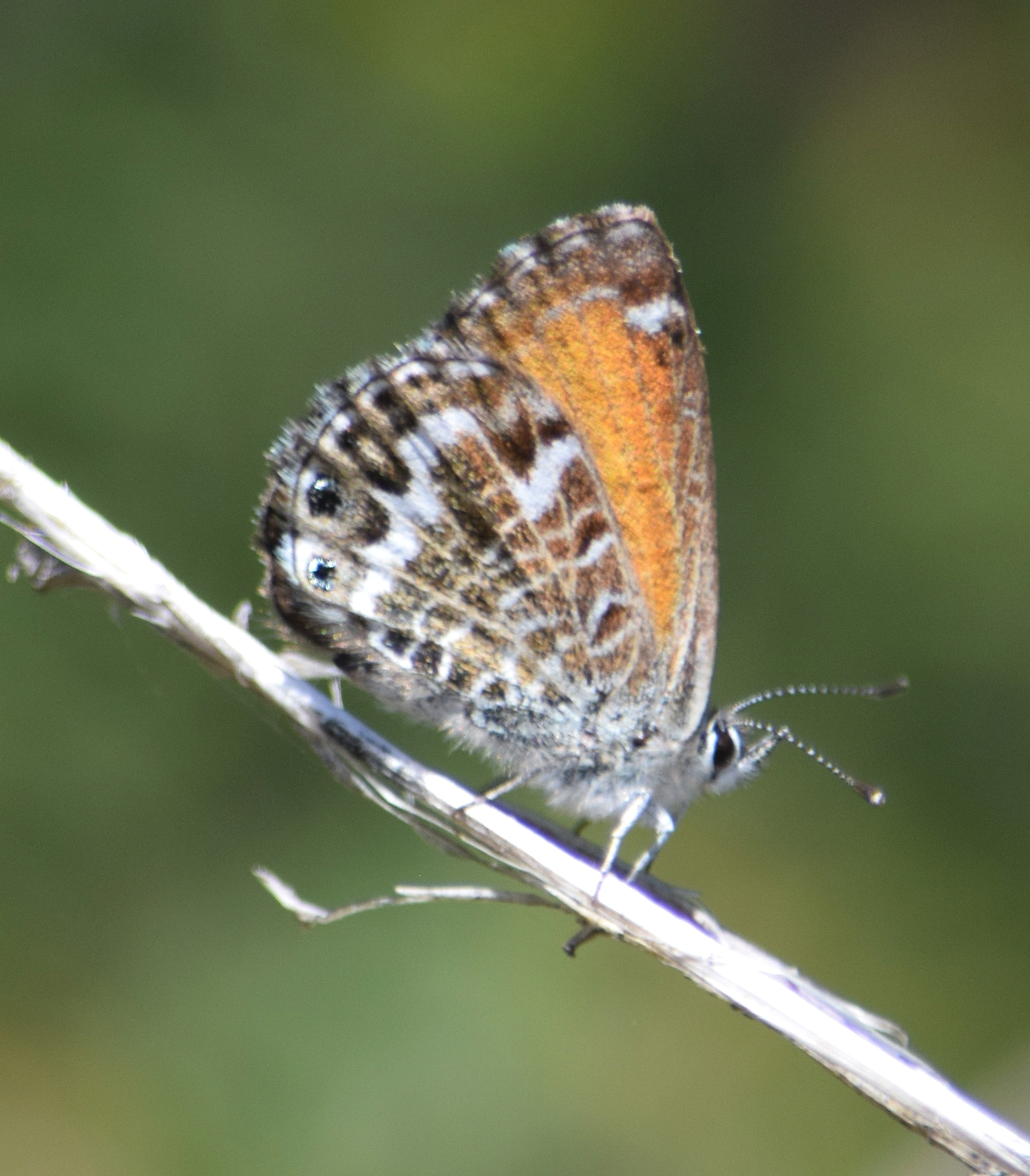
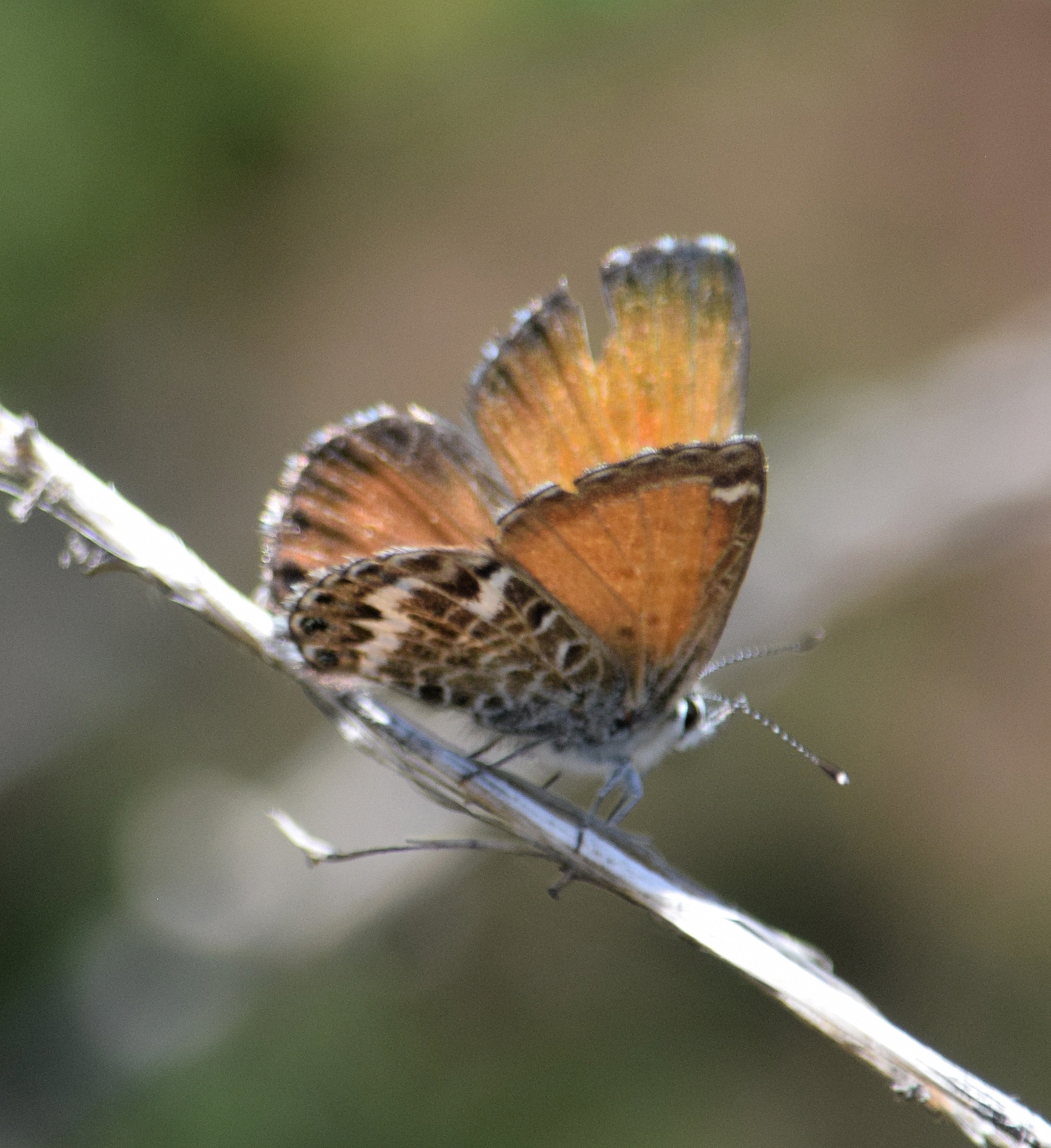
There were good numbers of Canary Blue butterfly (see here) on the wing at el Portillo. Tiny, fast-flying and hyperactive, these were a pleasing item to tick off the island wish-list being a full species endemic in the western Canary Islands. A Teide specialty, it is unlike any other European blue since the underwings are a variegated brown in both genders, displaying distinct white webbed patterns with a tooth-shaped white band and eye-spots. On the upper side males are a deep, translucent blue and females rich brown. This multi-brooded species is abundant in grassy flowery places amongst trees and scrub all year round in coastal locations, and flies from March to August at higher altitude to 3000m. The female (pictured above) which kept still for me was unfortunately rather tatty when she opened her wings.
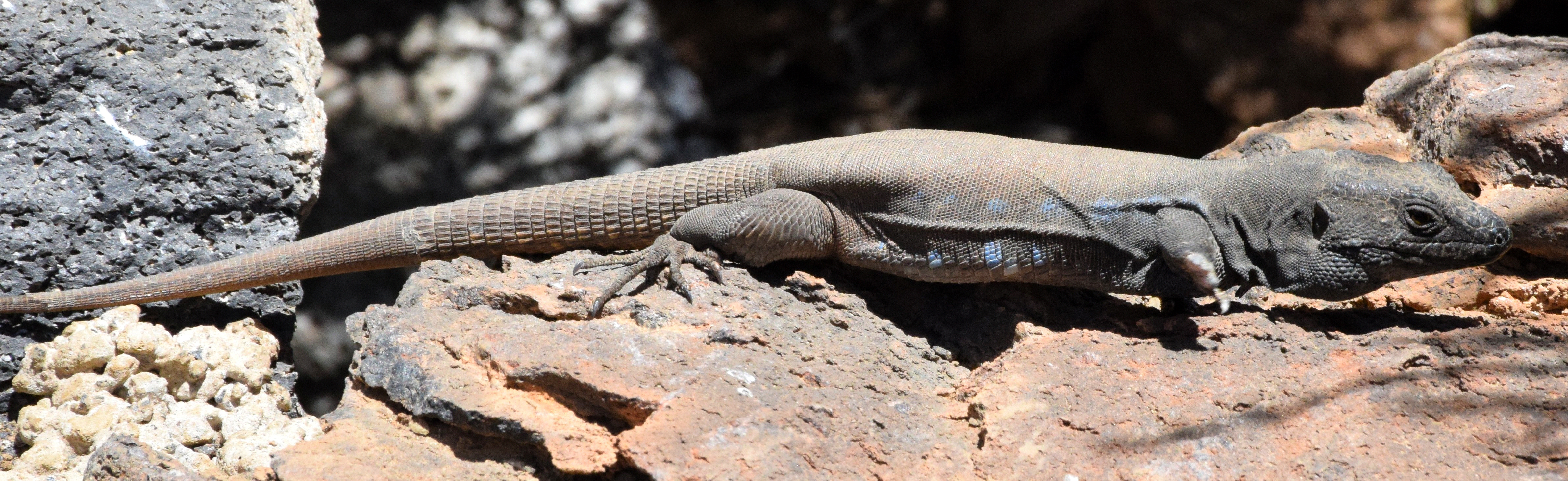
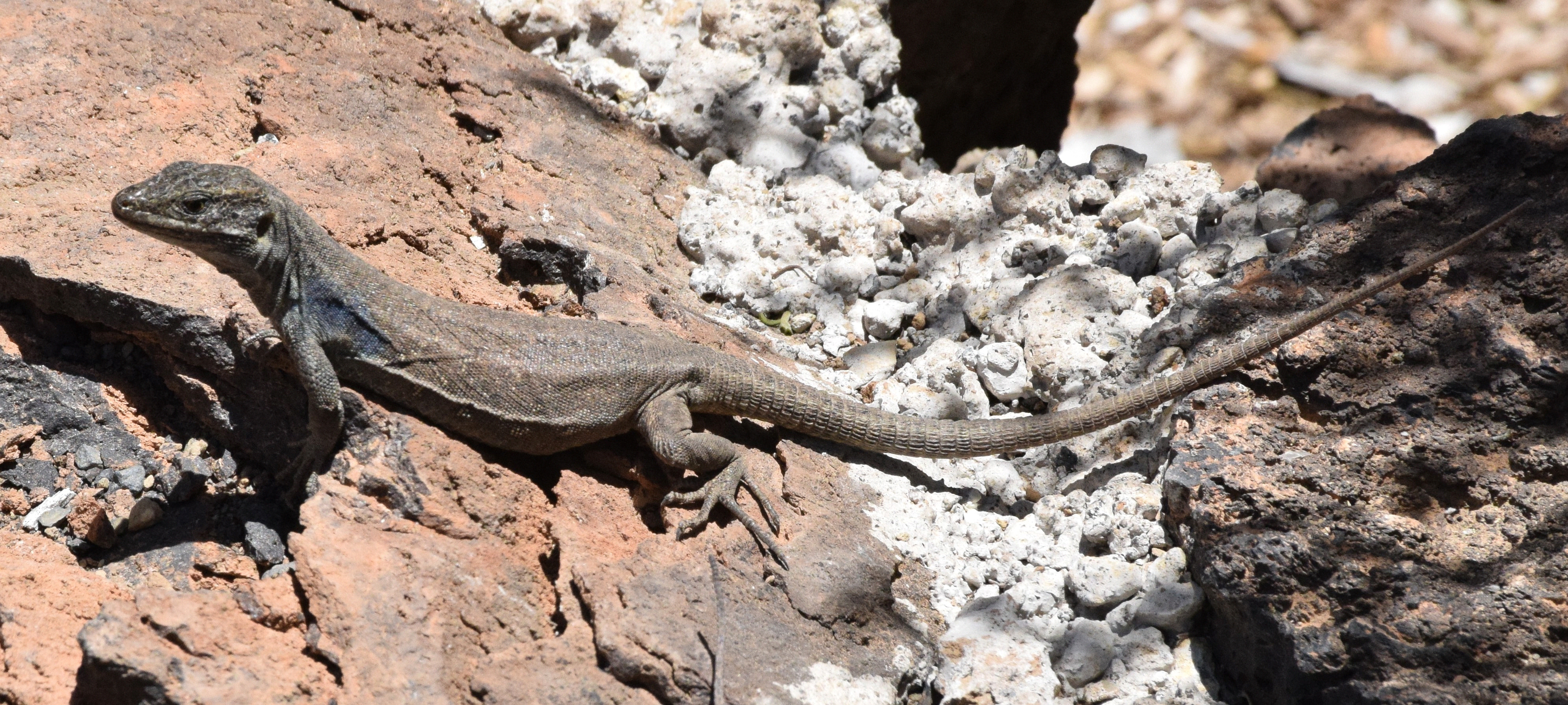
All the while and wherever I went Tenerife Lizards scurried about. Being amongst so many of them in one place afforded an opportunity to witness the variation that arises in this like other species, especially in females and immatures of different ages. In the sequence (below) the first picture is a mature male, complete with enhanced head and jowls, showing the paler colouration of northern subjects. The second is a maturing male with less blue toning, and the third a female or immature male with less obvious ocellation than most others I observed .
Something else that pictures of have to be taken home from here is the iconic Mount Teide Red Bugloss (Echium wildpretii – pictured below). These biennial herbaceous plants are also endemic to Tenerife, growing mainly in the sub-alpine zone of Teide NP. They produce dense rosettes of leaves in their first year, then very striking erect inflorescences to 3 metres in the second spring and early summer. After blooming they die. There were very many of them all over the park. The left hand picture (below) was at the more commercialised visitor centre Las Canadas, where the bus stopped for 25 minutes on the outward journey.
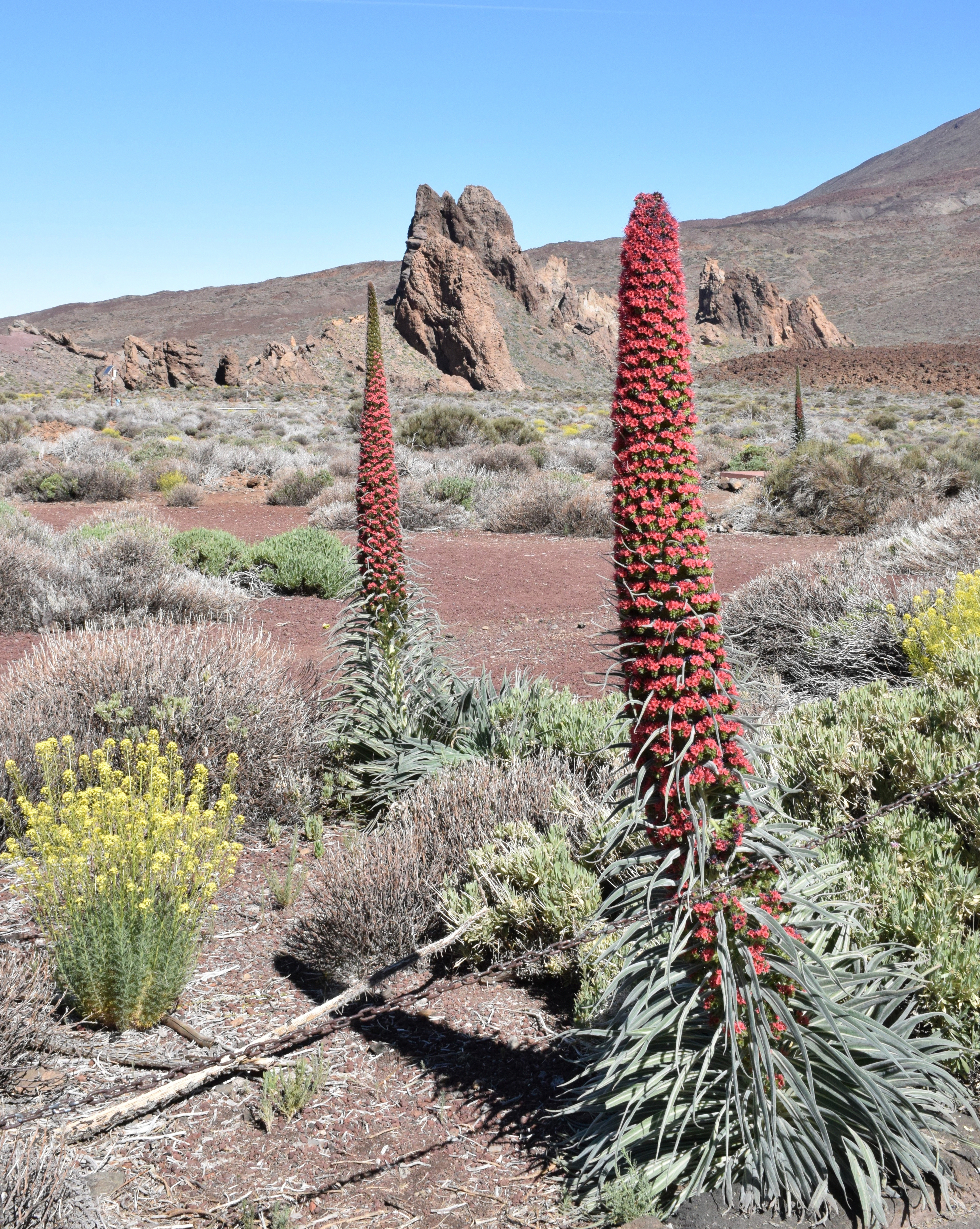
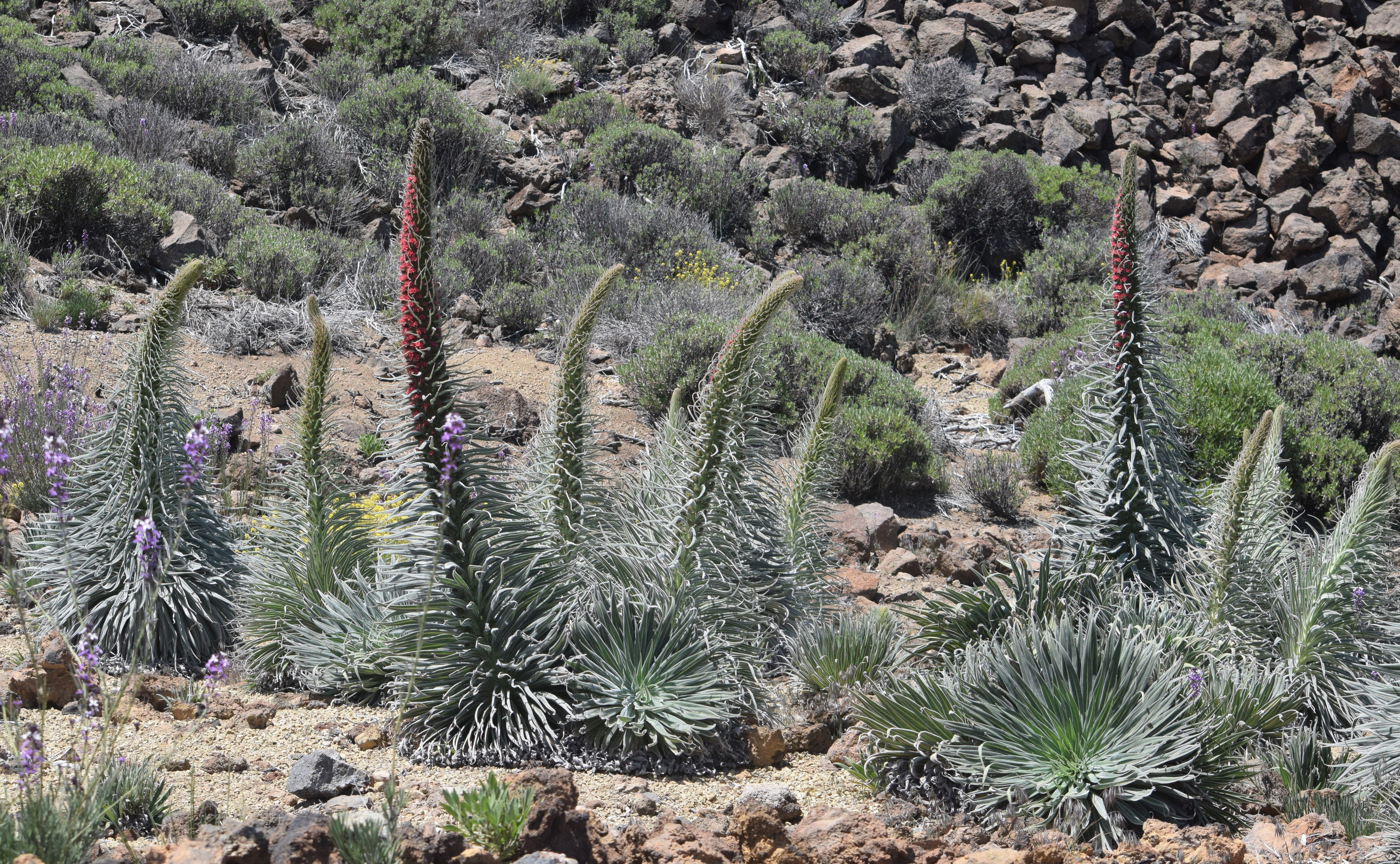
And so I end with a vivid splash of red amongst this post’s blue subjects. This day trip must be the most spectacular bus ride I have ever enjoyed, and for a mere £12.20 return fare. The scenery of Teide NP is simply breathtaking. From Los Cristianos the journey unfolded ever upward. Part of the experience was looking down from such great height upon the mountains of my previous post and coastal cloud cover, now very far below. Hence the aforementioned blueness of the sky above.
The road wound on across precipitous slopes and around countless hairpin bends through Teide’s pine forest zone, to emerge into landscapes of volcanic rock formations and vast lava fields surrounding the highest mountain in Spain. It was relaxing not to be doing the driving myself, but much of this could only be taken in through the smoked glass of the bus windows. So I may come back and for longer to fully appreciate this very special place.

