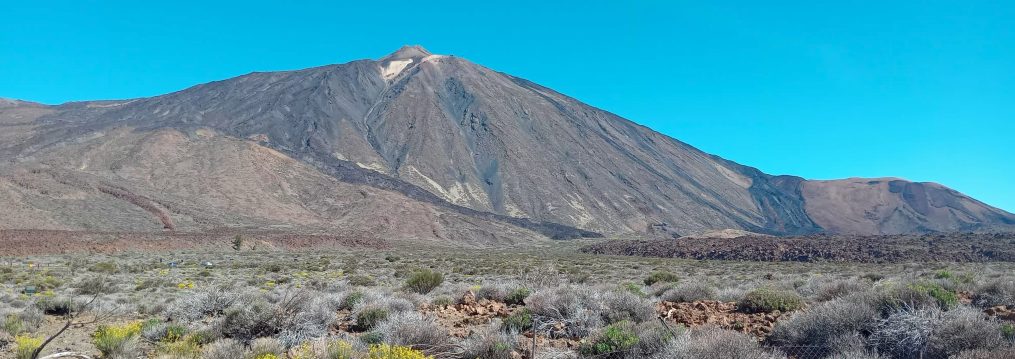
I will begin by apologising for this post being about myself and what I do rather than the wildlife I observe. But what can I possibly add about its subject anyway, and the landmark it represents should be recorded herein. After several bird lifers in Tenerife earlier this year my next one would be 500 for Europe (the Canaries being part of Spain), so it would be a pity not to write things up on a matter of personal ethics.
As any birder knows, there have been two Long-tailed Shrikes nationally this summer. The first in Fife, Scotland from 5 – 8th July which prompted a massive twitch (see here) was only the second British record. Then a different individual was found much closer to home just across my county border in Glos on 8th, that date overlapping with the first bird. News of the latter was not put out straight away as the landowner was away from home and did not wish to accommodate another large-scale twitch until he returned. But everything fell into place at Eastleach Downs (SP208076) over this featured week.
Sunday 19th July was a day on which I needed to get out. So I started with an early visit to a Hawfinch breeding site in east-Oxon, then indulged a little local Odo surveying. Returning home for lunch and anticipating an afternoon in the garden, I checked the bird news and there it was! There had been anticipation that the Glos LTS would cross our county’s western boundary and now it seemed poised to do so. In any case this could be that Euro 500th, so there was only brief hesitation before I activated the microwave, wolfed down some left overs, then “got out the door”. I should add that I keep the Oxon Birding Forum muted since the sound of constant message alerts of varying relevance can drive me crazy.
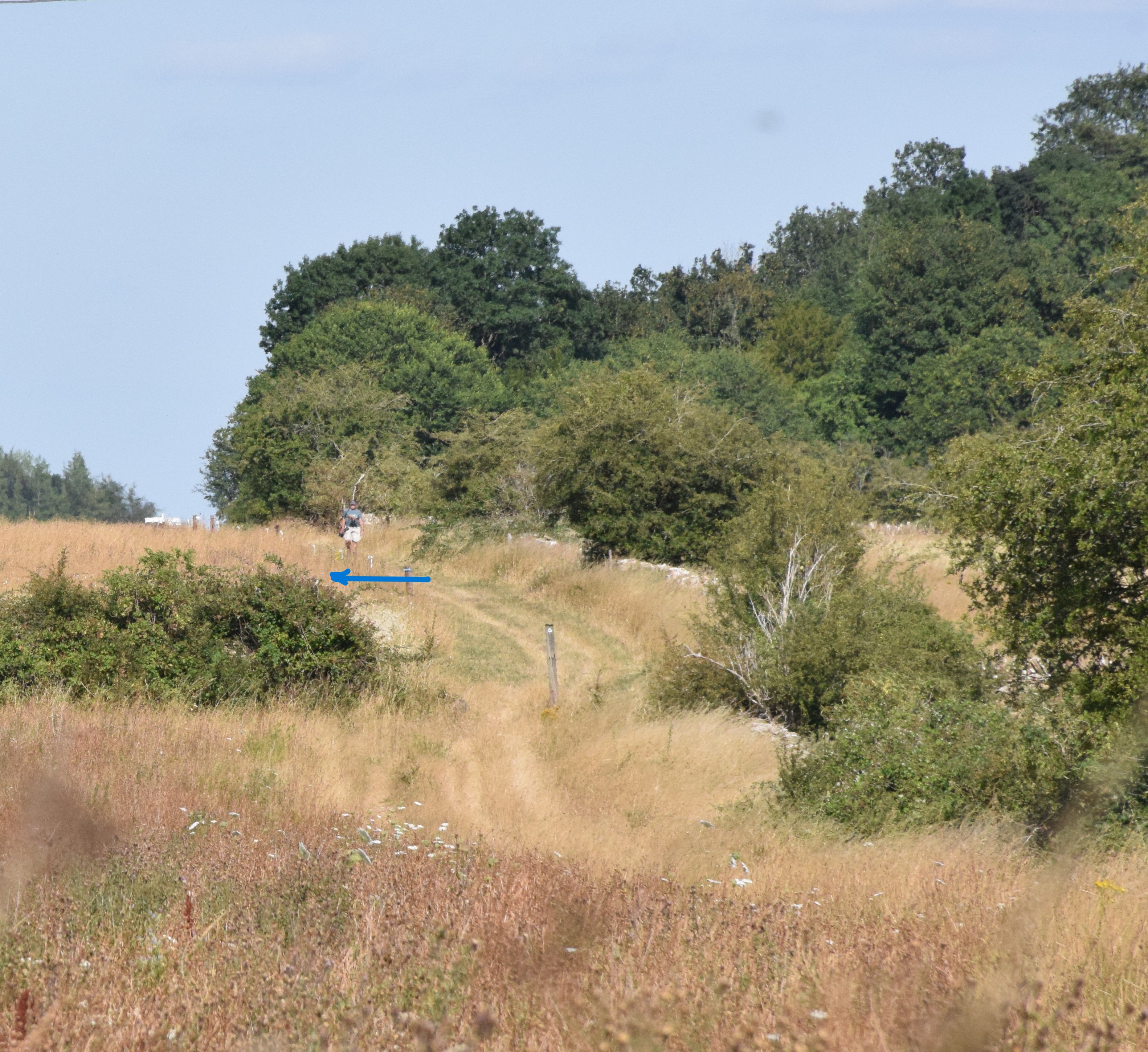
The Long-tailed Shrike, a first-summer male is just visible as a tiny dot in the above landscape (blue arrow). I was informed that the wooden post in the picture’s centre marks the county boundary. So in this instance I accepted Hawkeye must rule my quest was just into Oxon, eh Johnny Mac? I am by no means alone in adopting that interpretation. It was not a situation I wished to over-analyse, but of course that ensued in OBF the following day, together with discussions about where the on-site collection might be going and other birders’ behaviour. Such are why I keep WhatsApp groups muted. But by Tuesday 21st almost every active lister in the current OB league table had connected on the Oxon side of that hedge and post.
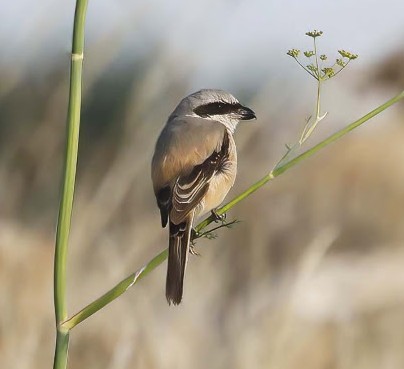
This species’ (see here) home range spans much of south and south-east Asia, where it favours scrub and open habitats and is typical of other Shrikes in its prominent perching habits. It is an extremely rare vagrant to western Europe, with just one Dutch (2011) and one Scottish (2000) accepted records prior to this summer’s double bill. The individual of this post was in heavy wing and tail moult in late July.
I would like to thank personally the landowner who made an orderly twitch possible, and our Gloster birding colleagues who arranged access and stewarded the parking facility provided. Lastly Oxon Birding admins who confirmed I had observed this 500th European record in my home county, possibly the rarest bird ever recorded here. This was also my British 390th and WestPal 535th career bird record.
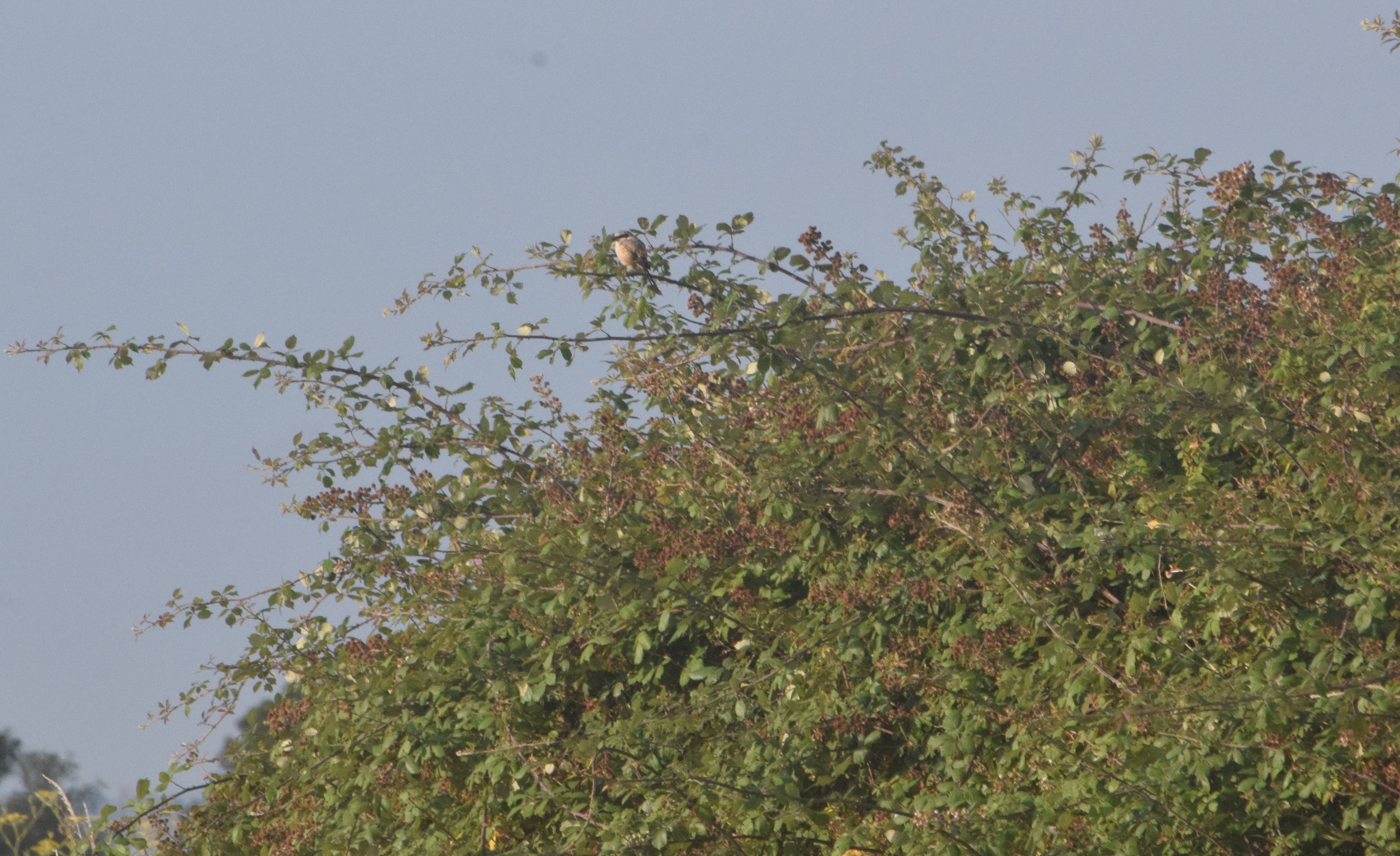
Fast forward five days and I needed to get out again. After waking very early on 24th, feeling disorientated from the continuing “heatwave” and too much time spent at home escaping it, I opted to go back for Shrike seconds. Arriving on site some time after 6am, I walked in from the Oxon side and joined a group of birders along the bridleway in the top picture that swelled to 25 while I was there. Some called the bird now and again, then I myself enjoyed good and prolonged scope views from around 50 metres in pleasing light. So the relevant dot in the above picture is now larger than in this post’s lead one.
After a “bathroom break”, so often an unfortunate facet of early starts now; I returned to the car park, made my donation and went back for more. With up to just 50 observers present there was far less sensitivity about people treading the bridleway, as earlier in the week when hundreds lined the lane to the west, and so everything was now good natured. The LTS continued to provide excellent value, but the glary light was terrible compared to early morning, with significant heat haze. I had seen this amazing rarity properly though in a variety of poses, and witnessed it feeding on invertebrate prey, so this intentionally brief post became a little longer.
This likely “bird of the year” was in an active state of moult, and so was anticipated to remain in its adopted surroundings for some time to come. Thus it proved. Each day for the next five weeks the possibly rarest item ever to occur in Oxon was reported on the bird information services, and on Oxon Birding whenever it crossed that county line. I resolved to revisit once its moult was complete.

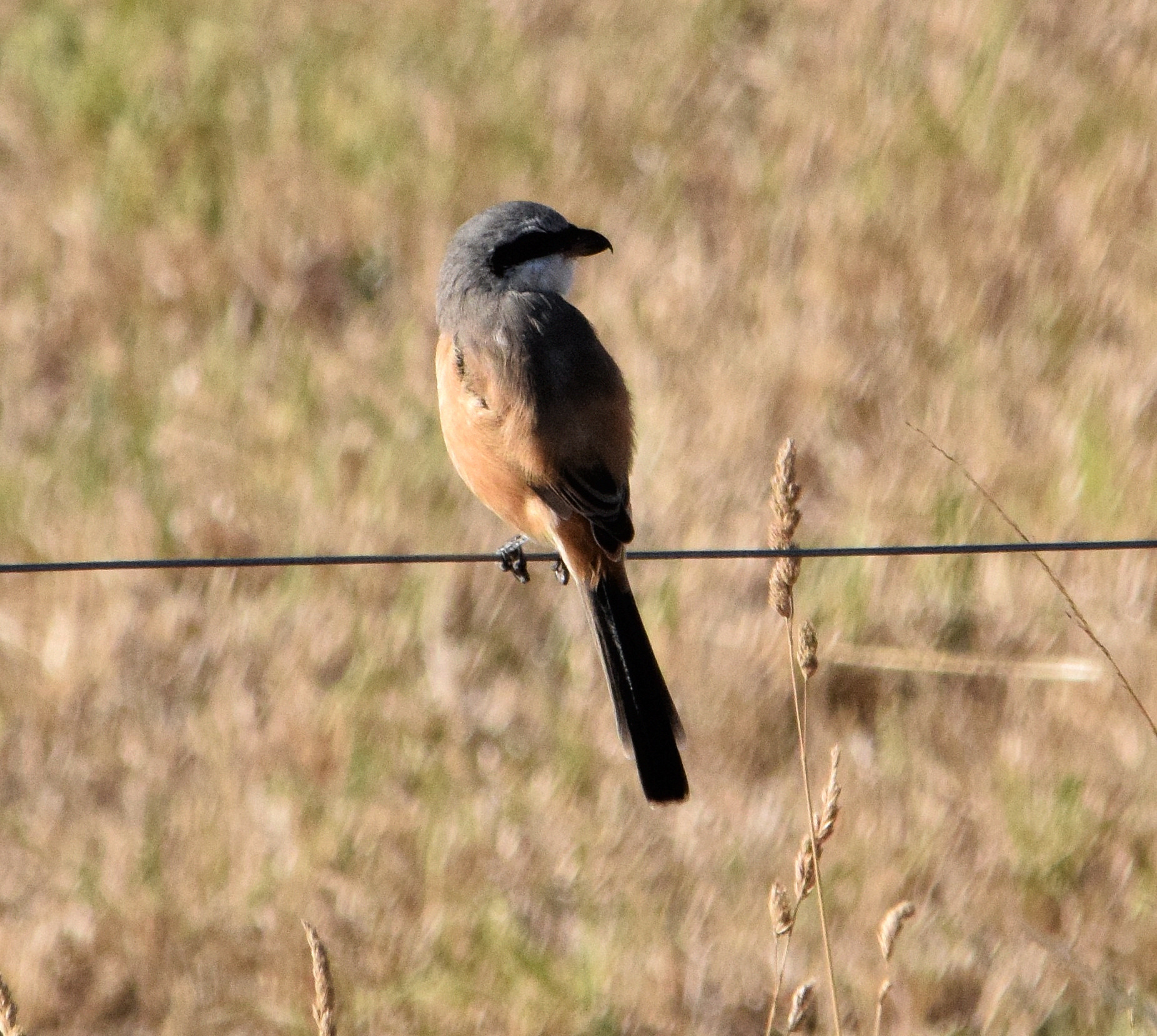
Returning to site early on Saturday 22nd August, having collected Sally on the way, the Shrike was indeed looking very smart (pictured above) and I gained my closest views of the three visits. The long dark tail of this celebrity’s name and rich orange and grey hues of the upper parts were especially noticeable. During our time on site it caught two voles and various other invertebrate prey. The constraint in early morning is the bird is most likely to be viewed at least partially into the sun, whilst much better pictures may be possible in evenings (see here). But not being a photographer, the most important thing for me was just watching this mega rarity at close quarters and appreciating it’s sublime beauty. What a stunner!
==========================
Footnote: The land farmed at Eastleach Downs (see here) is in a Higher Level Environmental Scheme which aims to redress the balance of unsympathetic agricultural practices, encourage farmland birds back to their natural habitat, and protect a diverse wildlife population. Through all the prior OB reports I was intrigued by the variety of other birds listed by various observers in their posts, but I had not paid attention to that during my first two visits.
Wanting to address that aspect this time I chose an especially observant companion who likes her small passerines. Between us we logged Whinchat, Stonechat, Common Redstart, Northern Wheatear, Corn Bunting, Common and Lesser Whitethroats, Spotted Flycatcher and a large Goldfinch flock; merely along the Oxon bridleway out to the Shrike itself. That for me was a quite impressive selection in a single location that I would have been very pleased with back in county year listing days.
NB: This “bird of the year” remained faithful to the site until 11th September.

