I normally try to avoid repetition herein. Likewise, each recent year in late autumn I go out mushroom hunting thinking I really don’t need any more Magpie Inkcap images. But the fascination that iconic fungus exerts over me always prevails, and the quality of picture opportunity this year during a first visit to this post’s Chiltern beechwood caused those twin conventions to be overlooked. I have not previously encountered so many of them and such large specimens at one site as here, or observed the full four-day fruiting cycle in a single visit.
Like this journal’s featured fungi location of a year ago (see here) Gussetts Wood (51.593655, -0.89948416 – SU763888) is a favoured site of the Bucks county recorder. On reading her late October sightings I went to check the place out for myself. Finding an attractive strip of woodland with a narrow lane running through it, I stopped where three very large Magpie Inkcaps and many more at the gone over stage were visible to one side. As the old allure drew me once more, some of the pictorial records in this post were quite special.
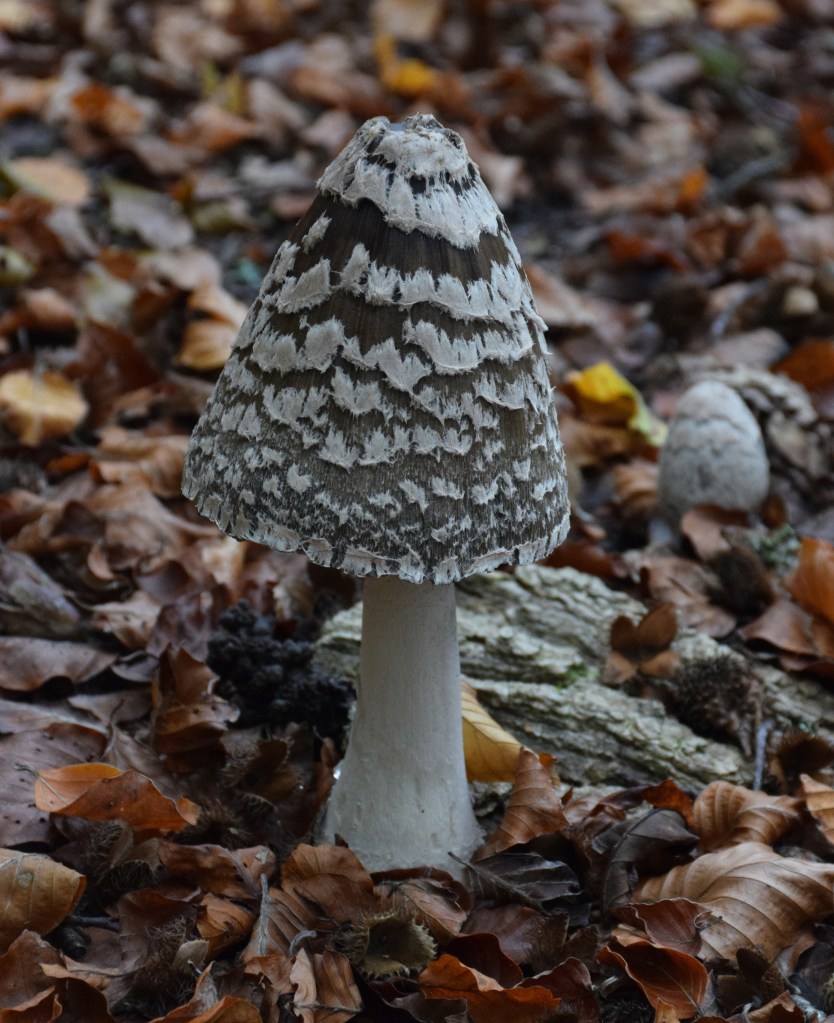
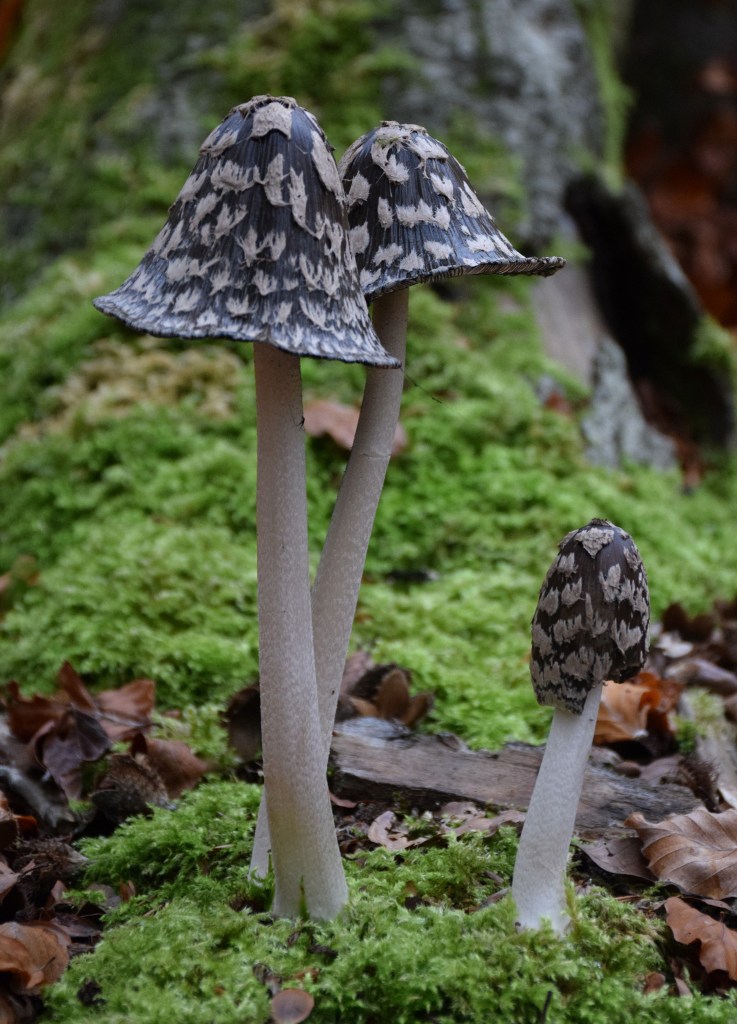
What made this experience stand out was being able to capture different stages of the fruiting cycle in a single study. I had formerly understood it is quite unusual to find such groups since fruits more usually occur singly or are at least well spaced. Ruined, gone-over stems were the most prevalent, but as I wandered around almost as many emergent fruits were thrusting themselves up from the forest floor.
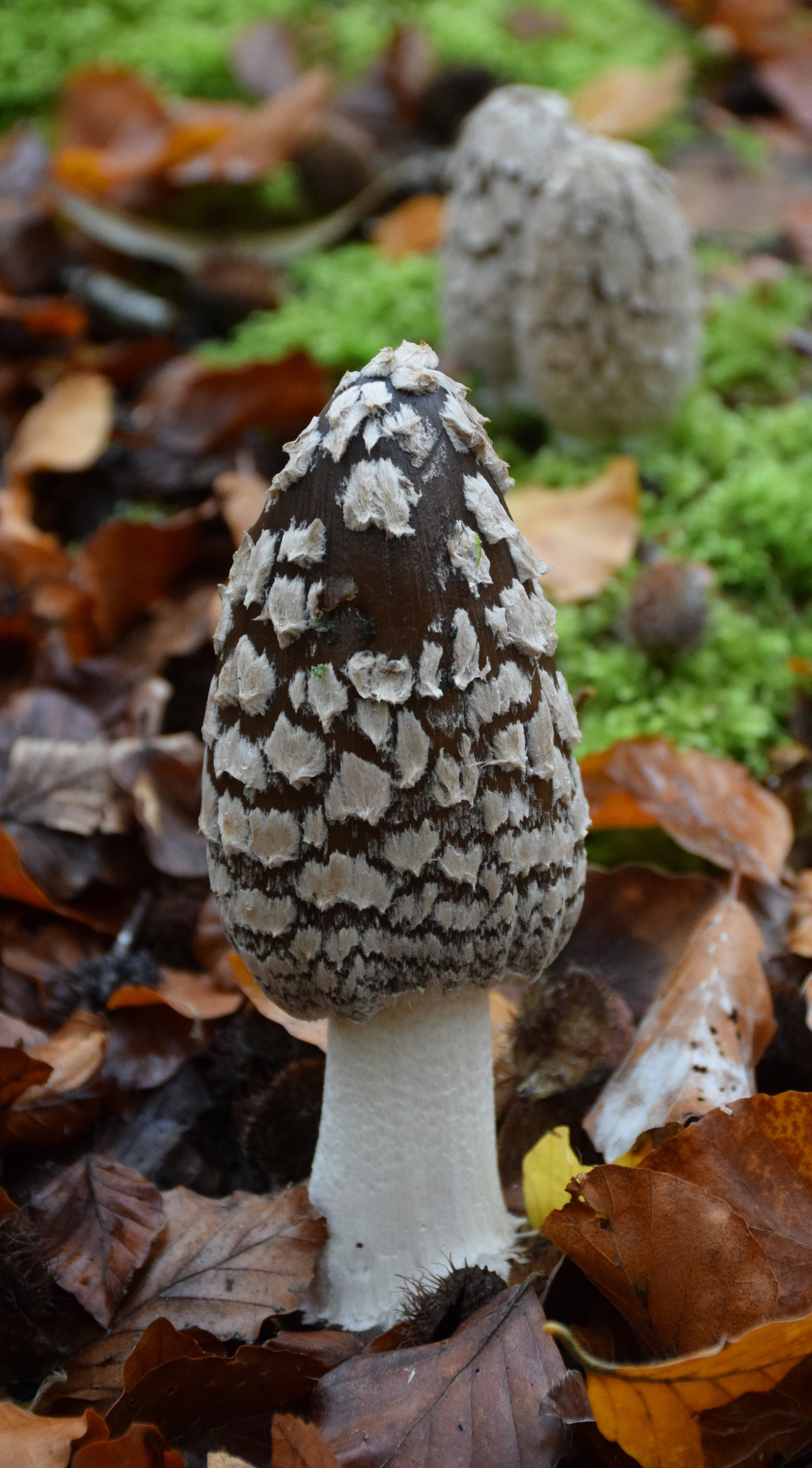
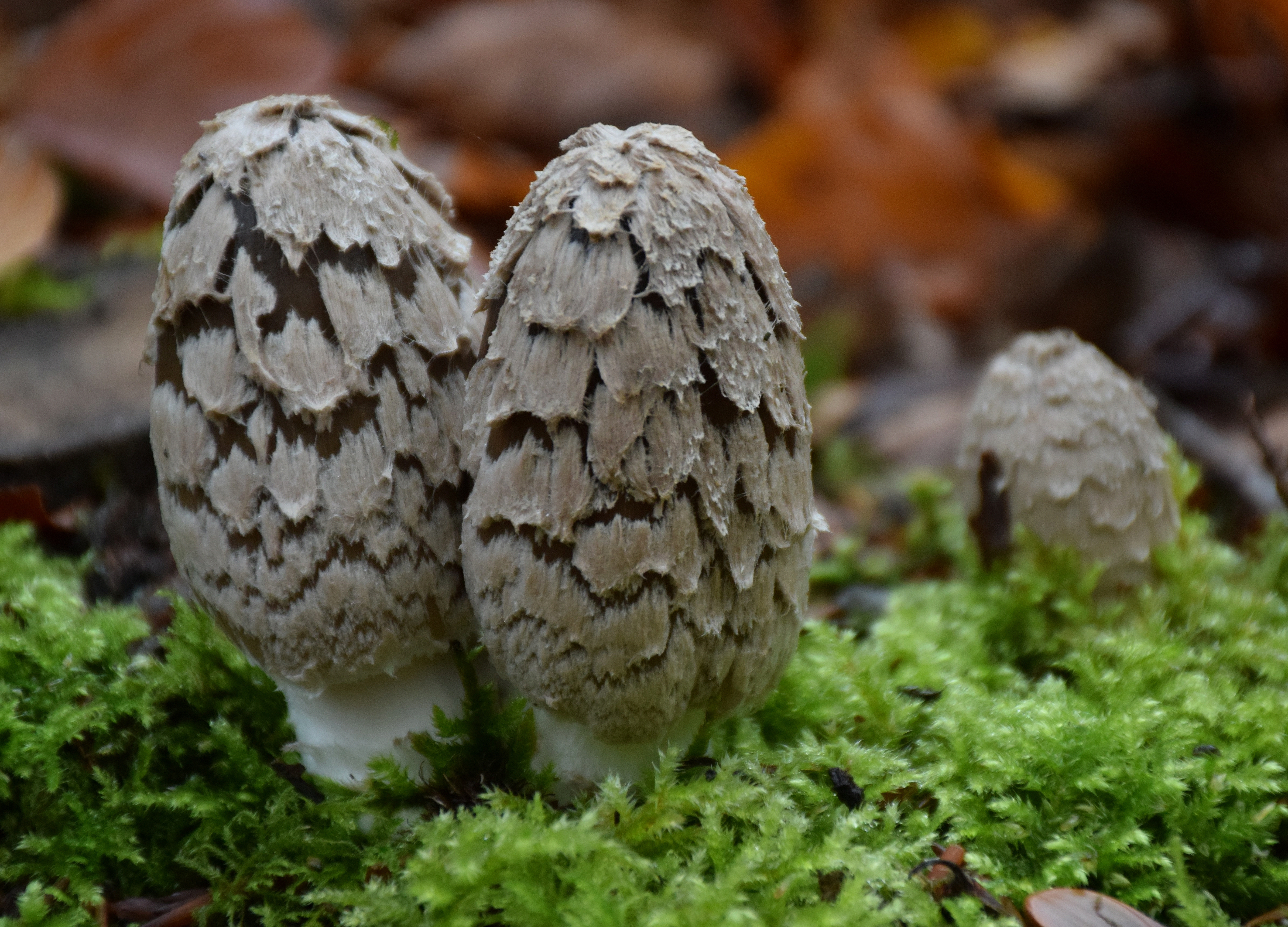
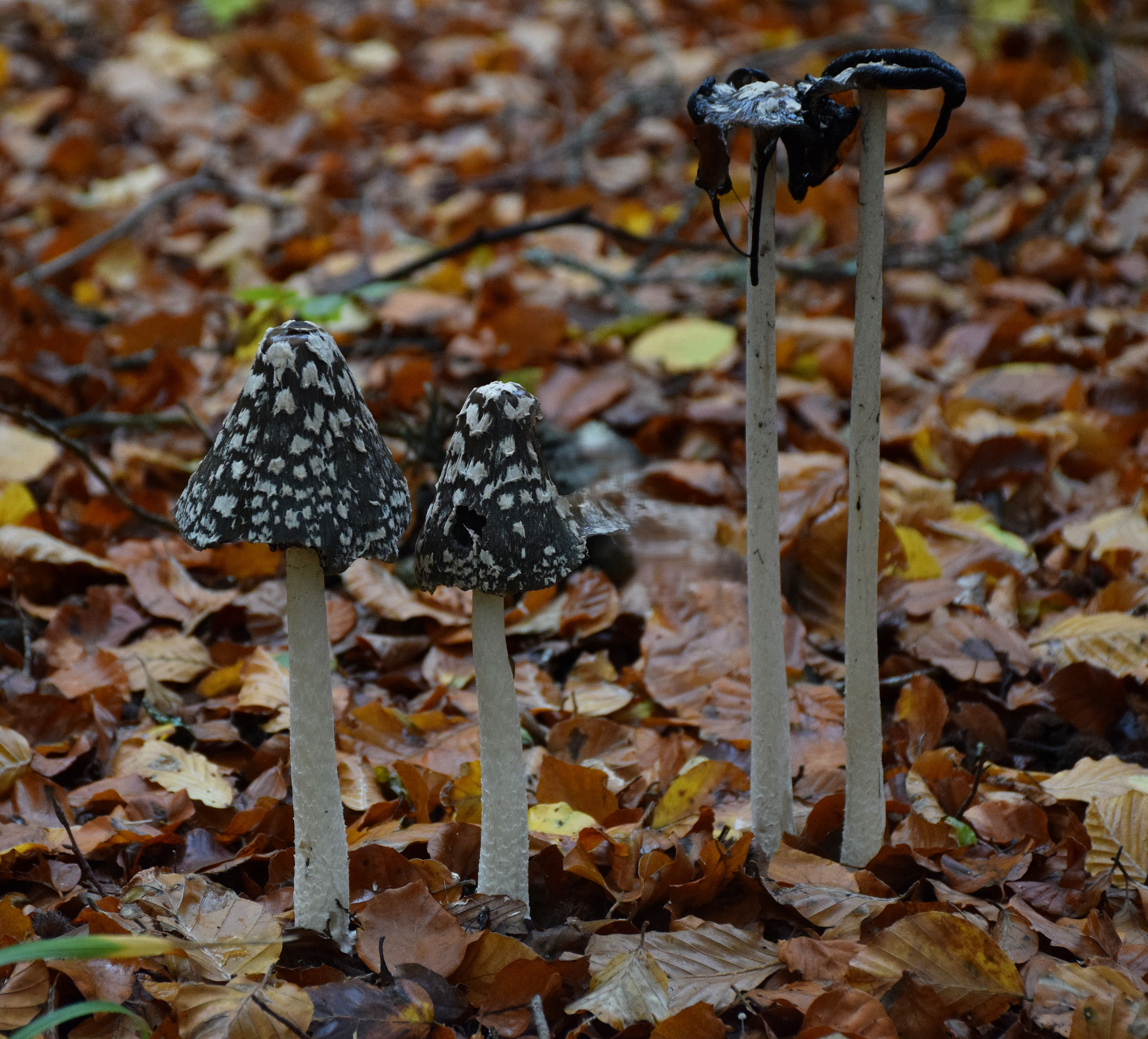
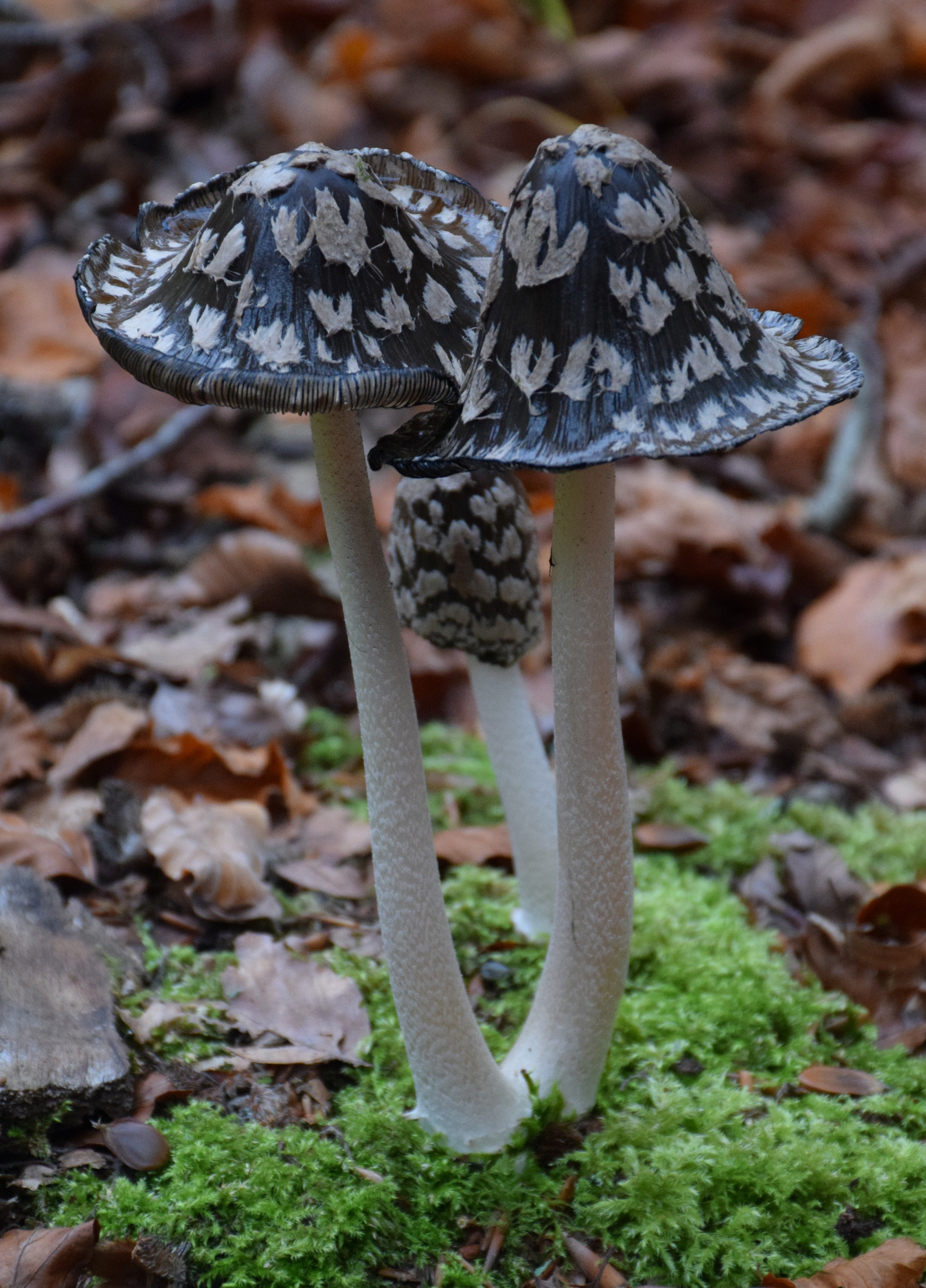
Between them the images (above) illustrate in a rather different way the complete four-day fruiting cycle of the Magpie Inkcap that I featured herein back in October 2020. That post (see here) was the first I published about mushrooms and has now breached the all-time top 35 in terms of referrals. Indeed it was tracking this species then over several days that first enthused me with mycology, and as a novice made me aware all mushrooms have a fruiting sequence of different shapes and forms. Six years on this annual autumn pastime is no less fascinating.
In amongst all this at Gussetts Wood I came across two more attractive Inkcap species. I had recorded the delicate Hare’s Foot Inkcap three times previously at Cowleaze Wood (2021), Farmoor Reservoir (2022) and the BBOWT Warburg Reserve(2023); all in Oxon. But the diminutive Impatient Inkcap (below right) was a first for me here on 7th. The first of those is the more common of the two in Beech and other broadleaved woodlands on lime-rich soils, and the pictures are of the later fruiting stages. The latter is saprobic upon tree roots, appearing singly or in small groups amongst leaf litter.
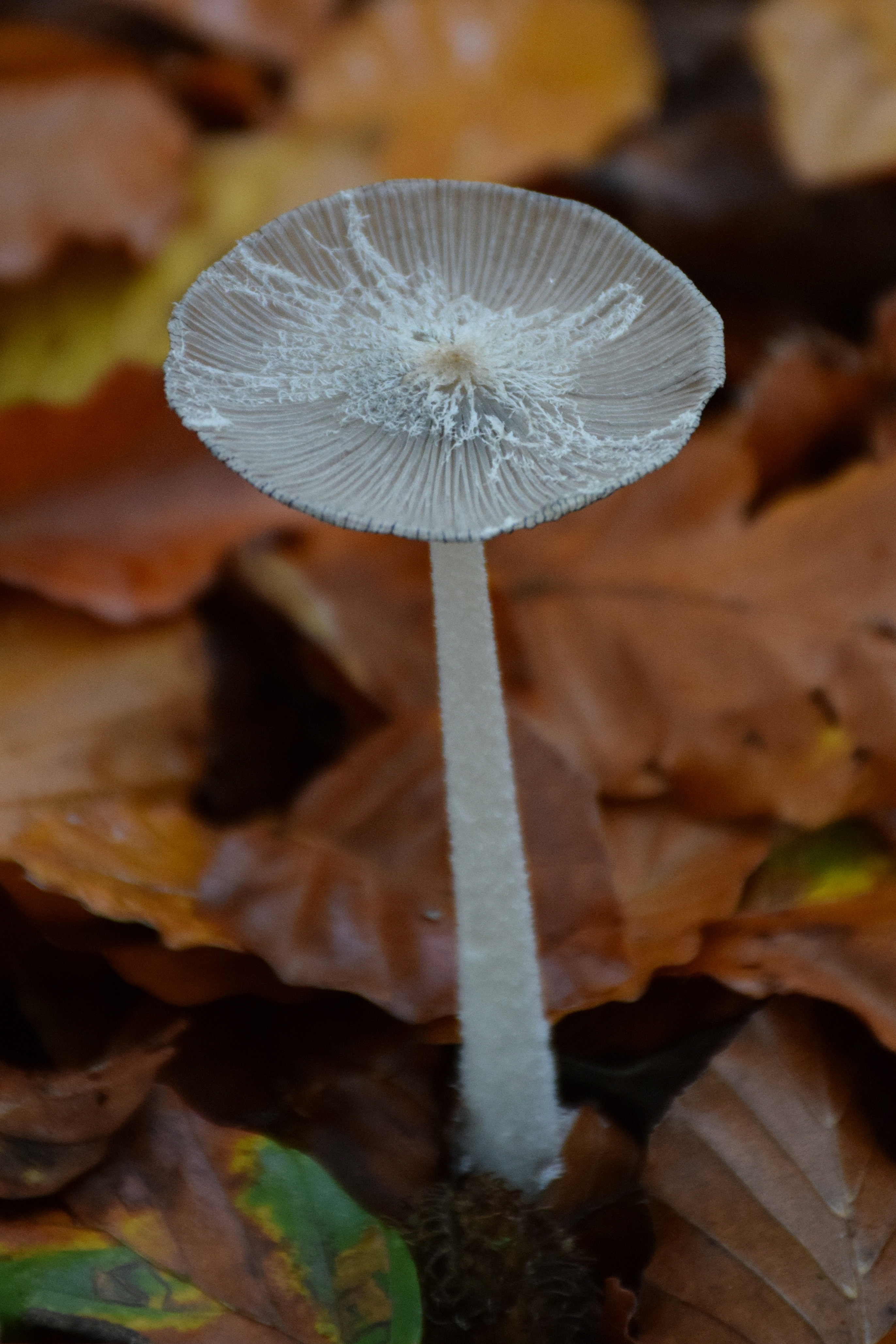
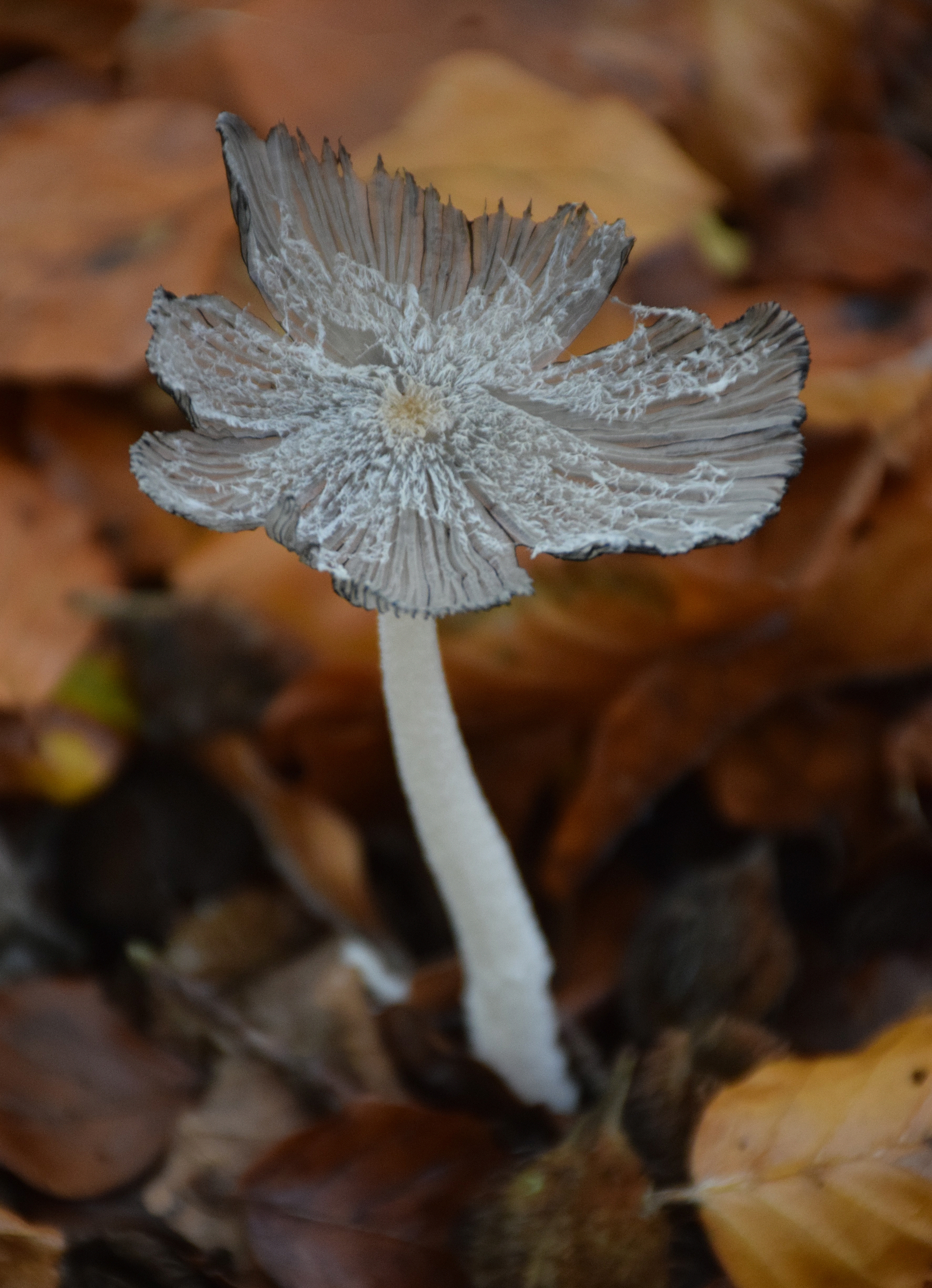
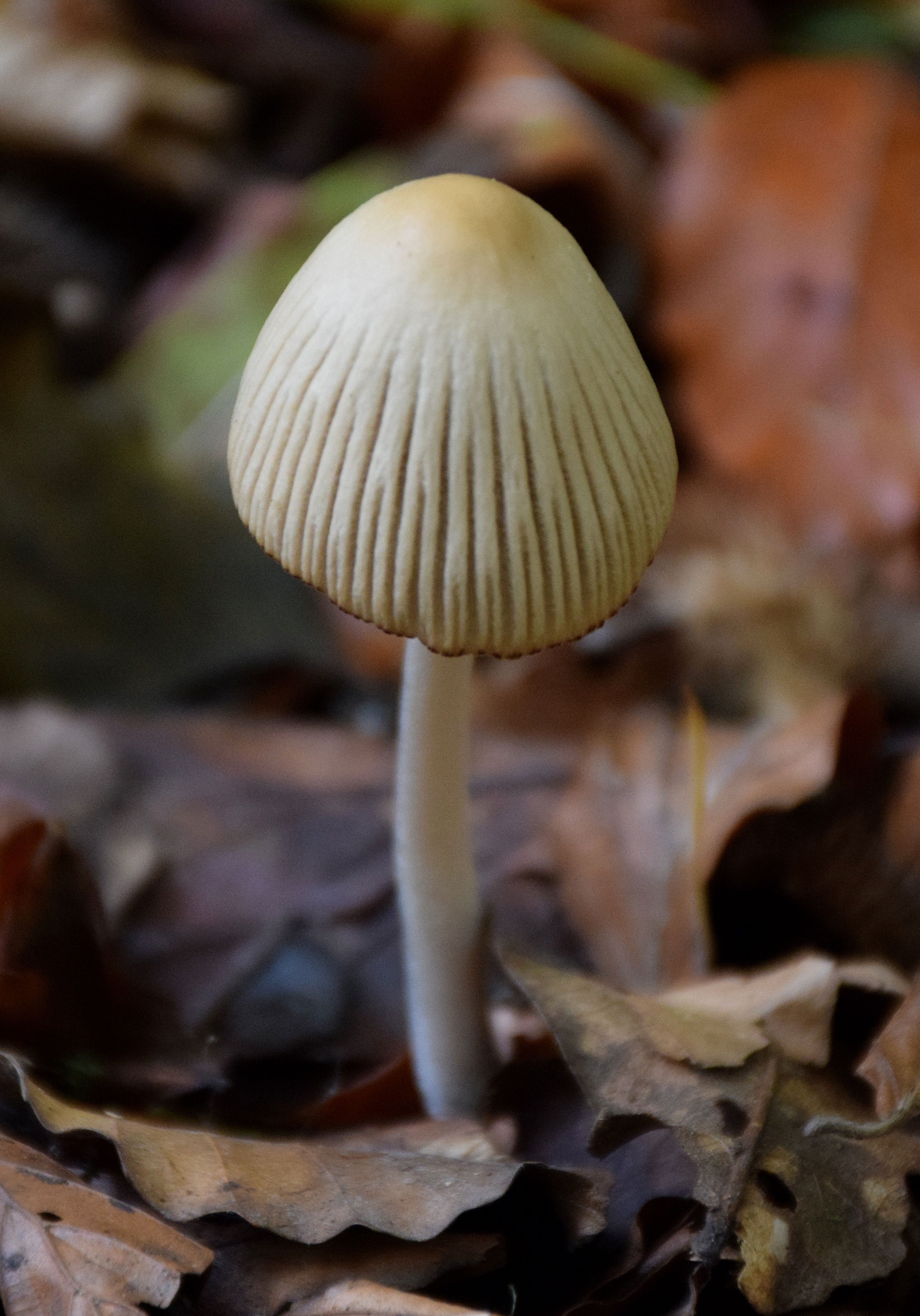
Hare’s Foot (left and centre) and Impatient Inkcaps (right)
I had anticipated that the mushroom season might take time to get going this year after such a dry summer, and so it largely proved. Then on a third visit to my historic stomping ground of Highmoor Common, Oxon at the end of October there had been an apparent eruption of fungi but that was mostly frequent and familiar fayre. So on becoming aware of the new site (for me), Gussetts Wood I switched my attention there, was rewarded with several first time finds, and decided it would be this journal’s autumn fungi feature.
Another mushroom of which I observed the complete fruiting cycle in one spot at Gussetts Wood on 7th was Slender Parasol. Large and stately parasols are a staple of any autumn fungi season, occurring in both woodland and grassland, but these on 7th were my first records of this smaller species.
To be continued …

