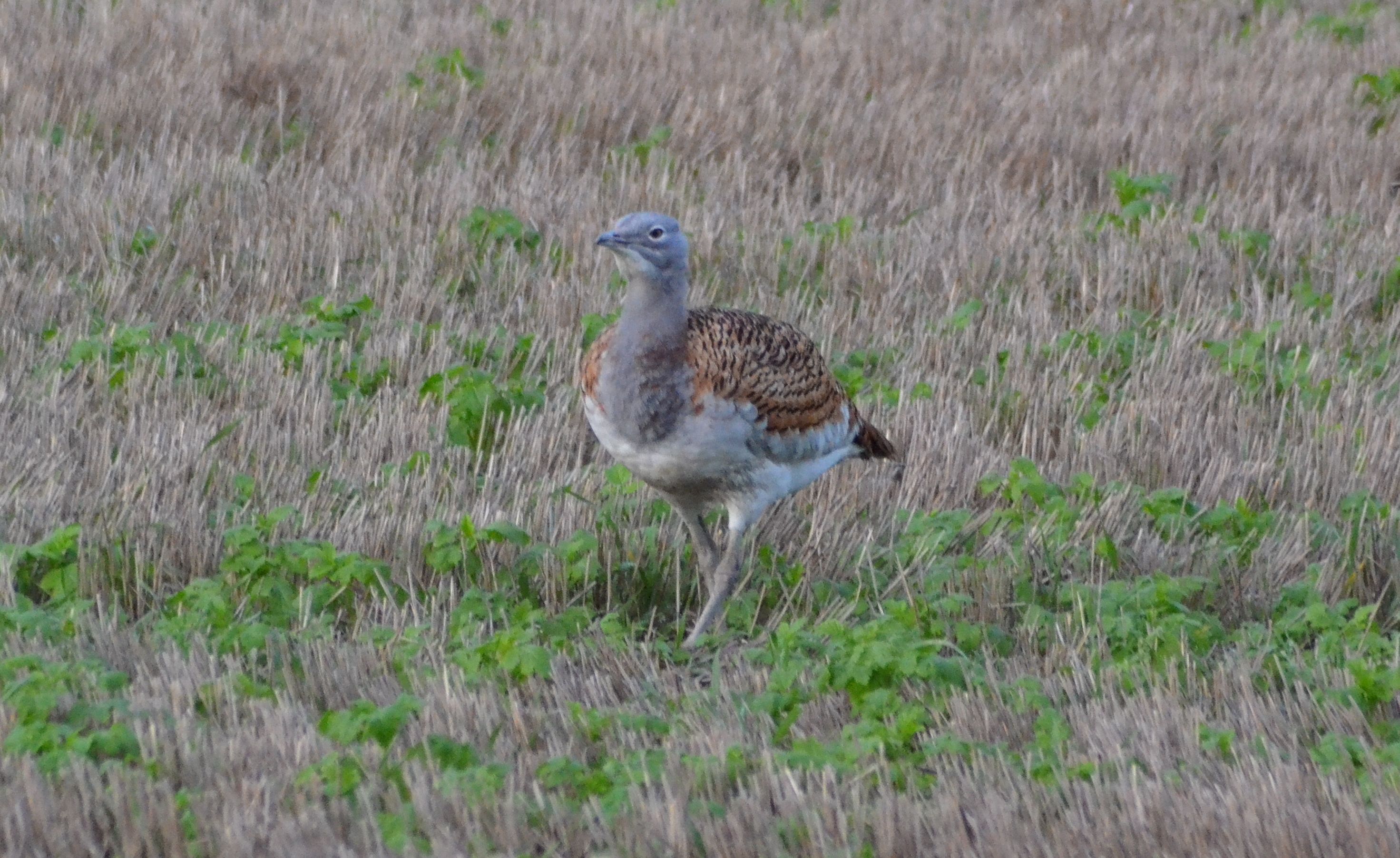
All this week a Great Bustard originating from the re-introduction project on Salisbury Plain, Wilts has been drawing observers to the village of Letcombe Regis (OX12 9JG – SU386869) near Wantage in south Oxfordshire. This first winter male is the most recent of several individuals to stray from the same scheme to my home county over the past 11 years and is thought to have been in the wider south Oxon downland area for some months.
I last experienced what is the world’s heaviest flying bird locally near Oddington, in the Otmoor basin to the north-east of Oxford in April 2010. So given the ease with which the latest was being recorded pictorially I visited on Tuesday afternoon (8th) where upon my arrival at the most frequent viewing location a number of people were walking back along a metalled farmland path to the east of the village.

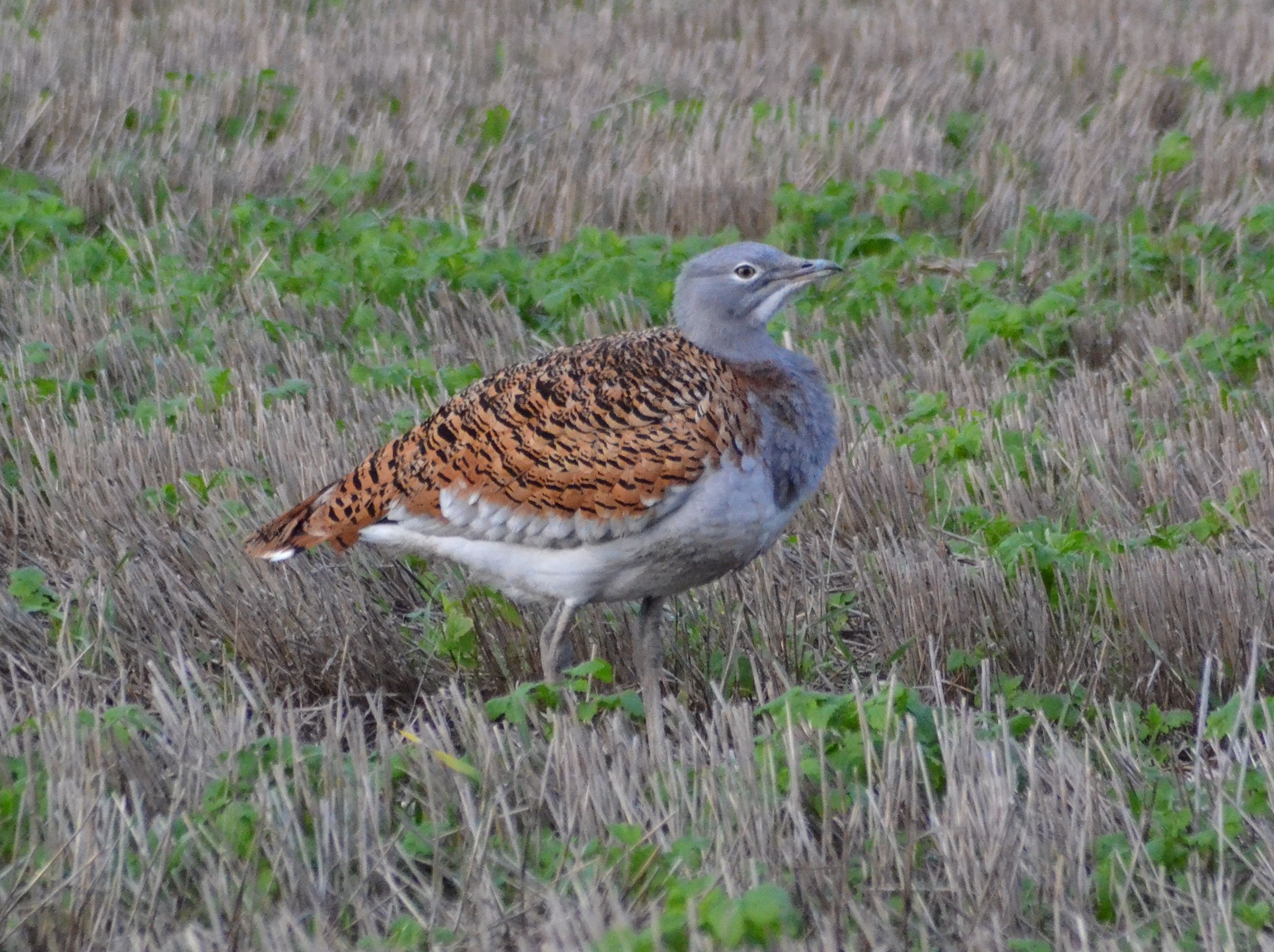
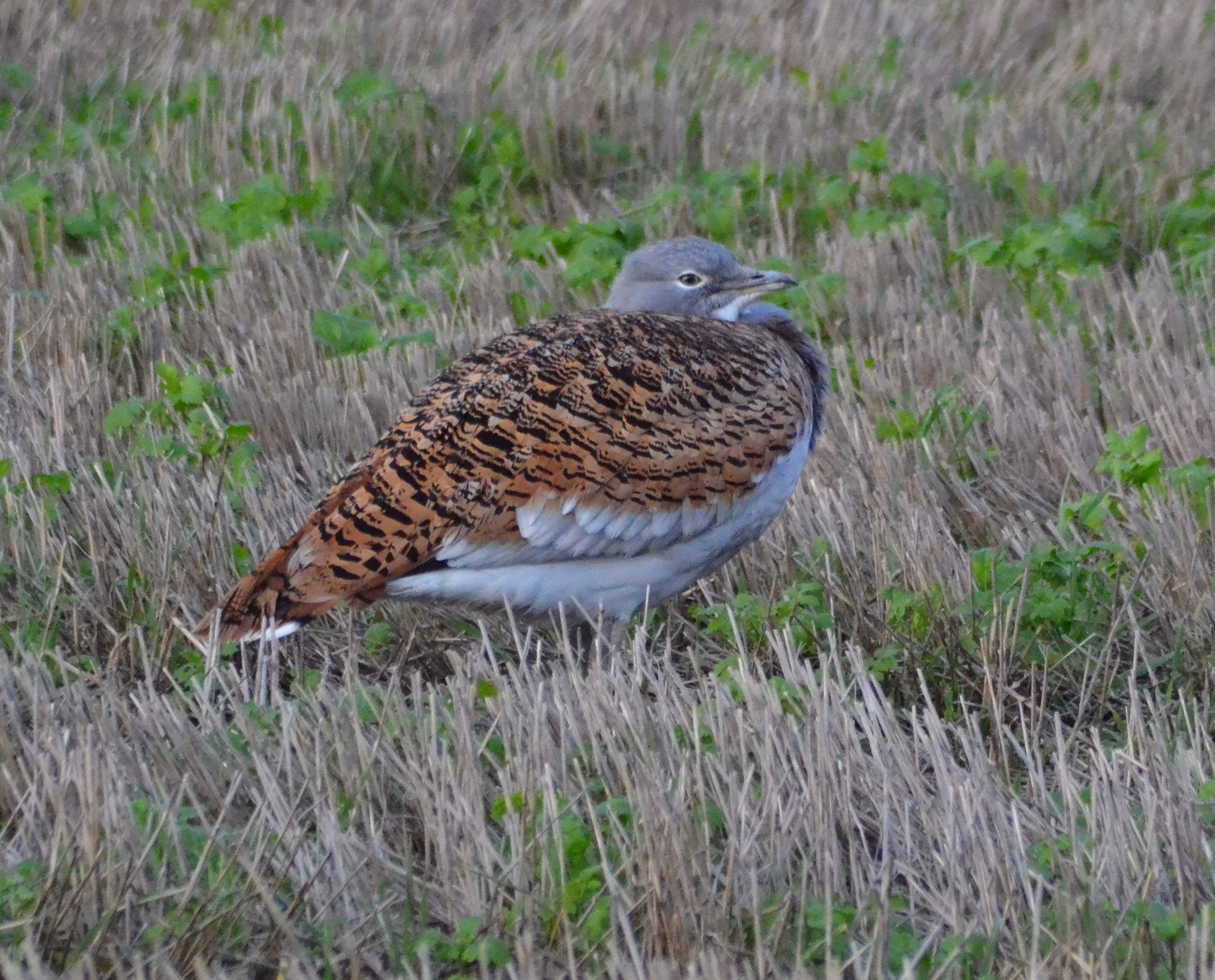
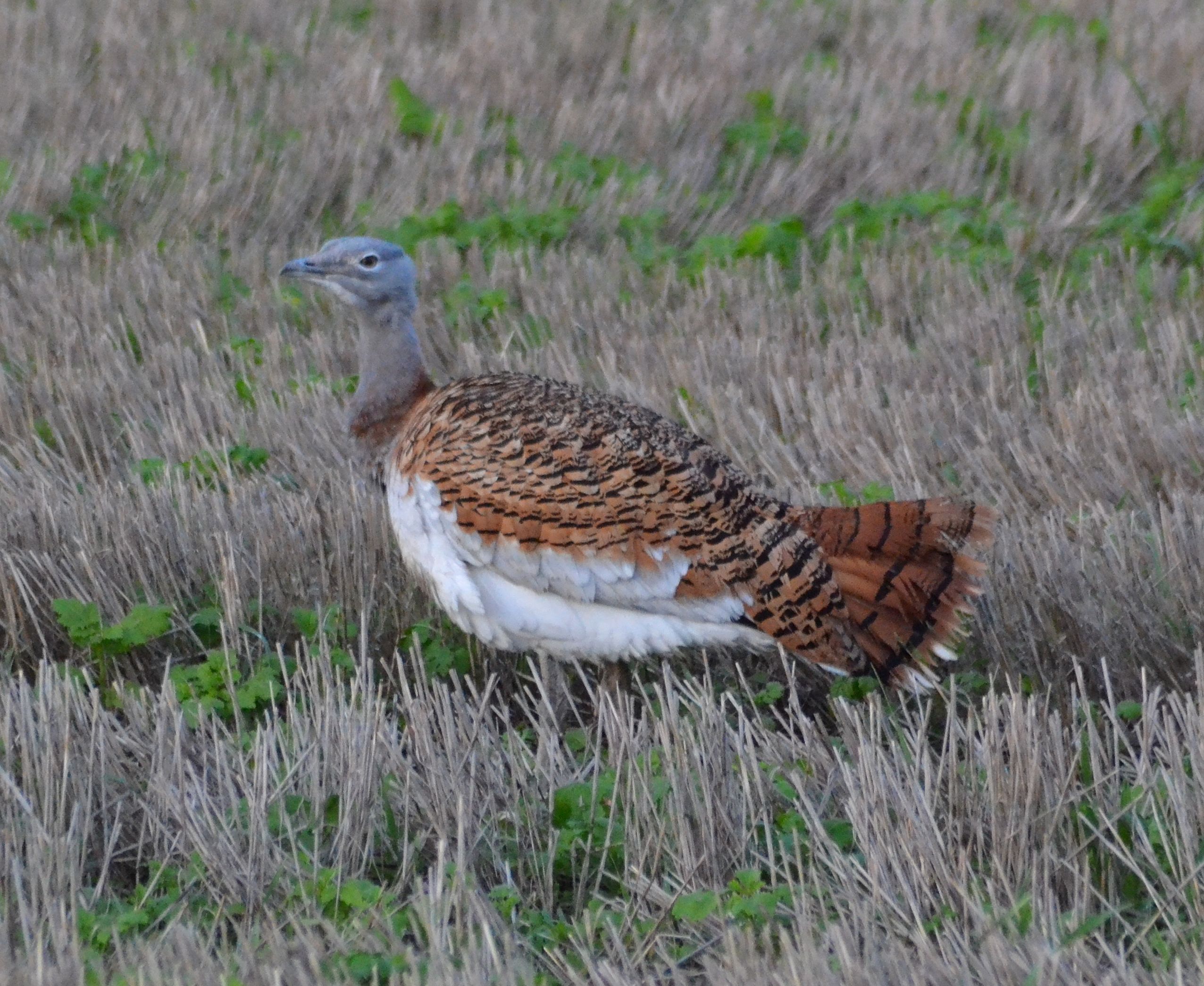
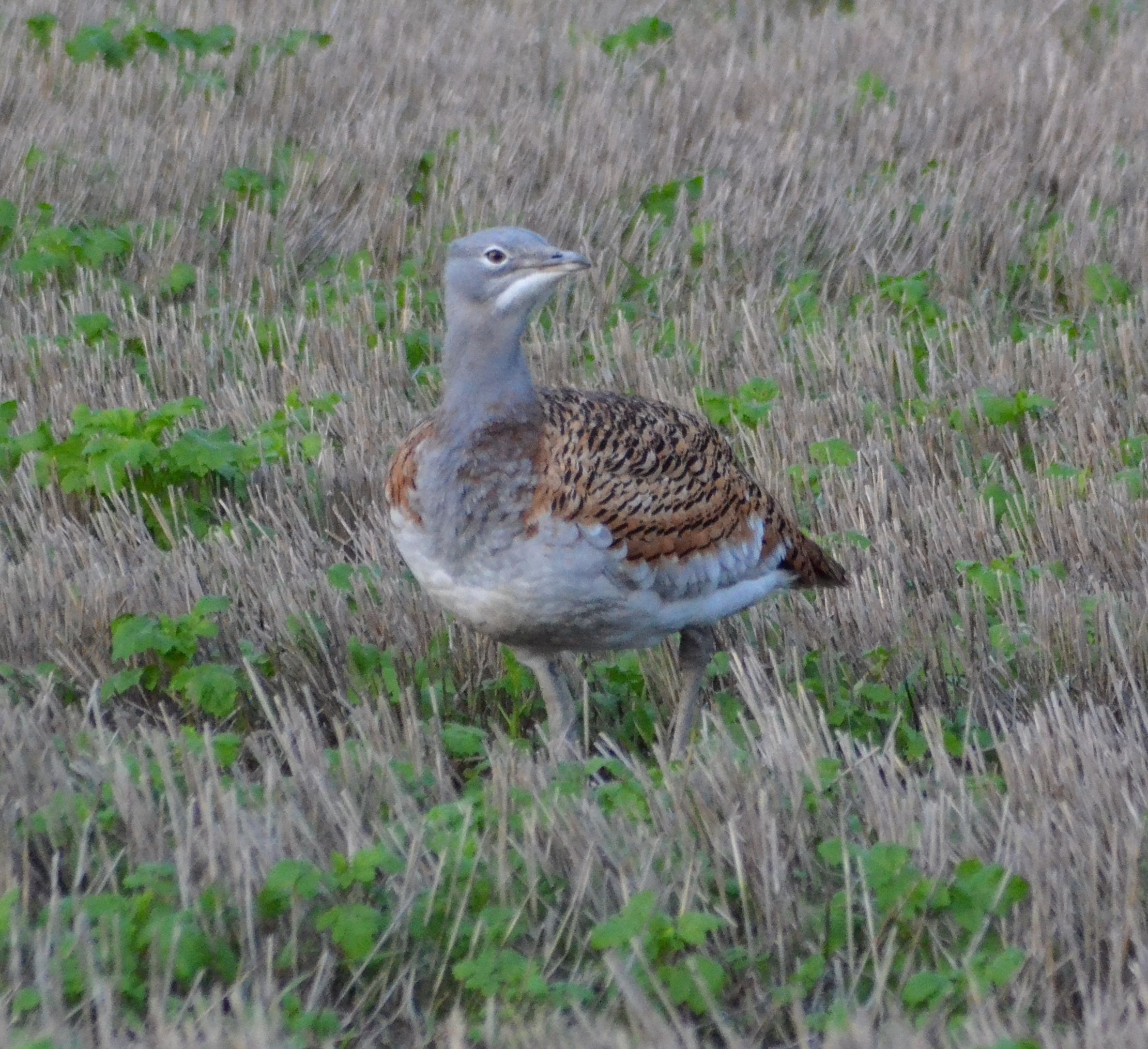
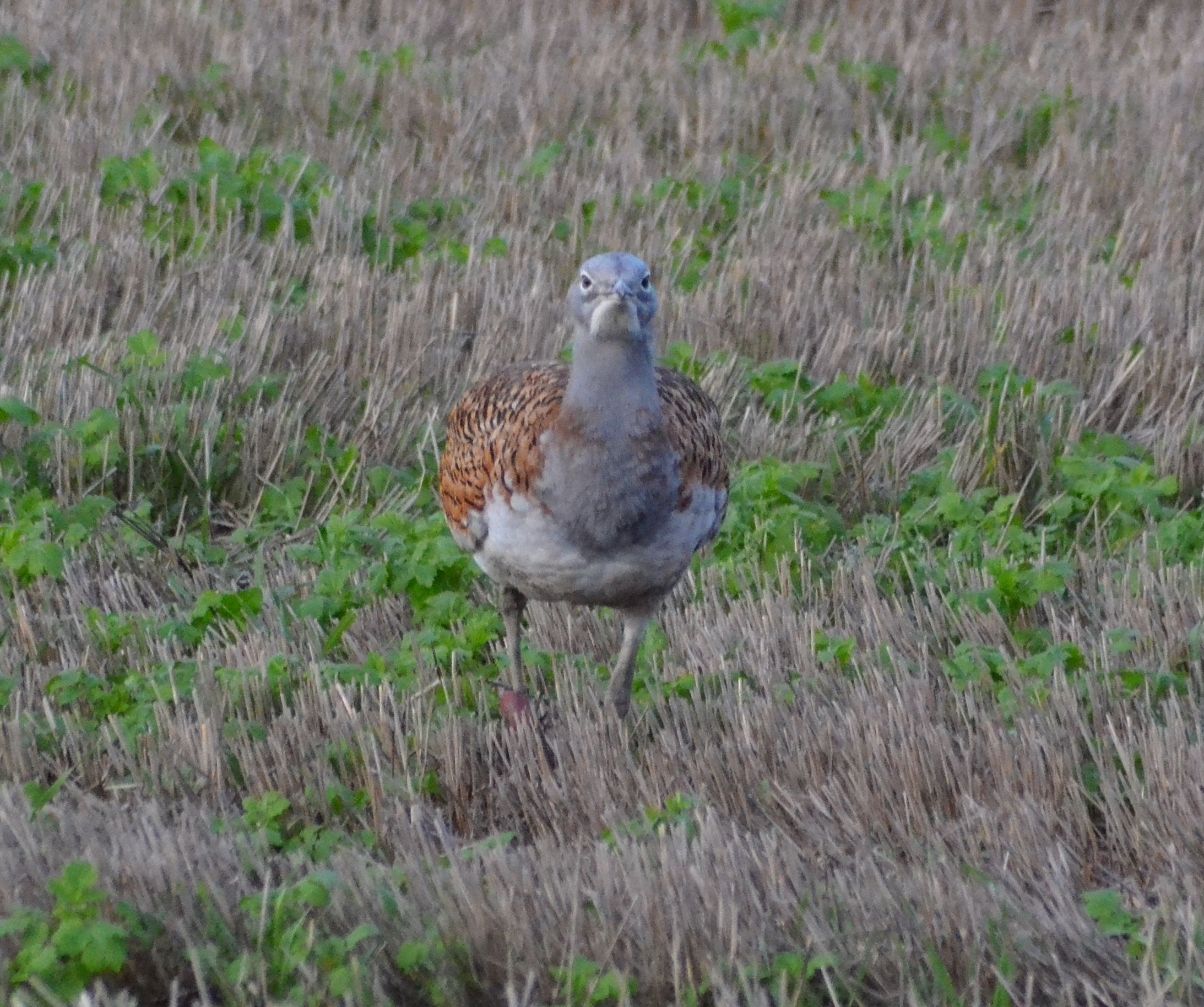
After around 300 metres there it was and what a handsome sight (pictured above), grazing about half way across a rough fallow field. In time it walked to within 25 metres of me, pausing at intervals between feeding and looking all around itself, an uplifting opportunity to observe a large species in prime condition. Though known for being wary in the truly wild state, this one must have been both fully aware of and unconcerned by its audience so long as sudden or intrusive movements were avoided, and I indeed wondered if it was only too pleased to oblige.
Talking to passing dog walkers here suggested the presence of this “escaped” bird is arousing some interest locally. So, not having published anything in this journal for more than five weeks I have researched how it came to be there. What follows does not present anything that will not be known already to seasoned bird enthusiasts, but I hope it may be informative to anyone who having shared this experience might have web-searched the topic to learn more.
Wild Great Bustard populations occur across the Eurasian land mass from the Iberian peninsula to China. Those are both migratory in the east and resident or dispersive elsewhere, while overall distribution is highly fragmented. They are gregarious grazing birds but also very wary by nature. The total population, variously estimated at between 44,000 and 57,000, has undergone a long-term decline over the past 200 years that has been arrested more recently by conservation action in different countries. As a result the European population has increased over the last 20 years and pan-Eurasian figures have stabilised.

In Great Britain the species, that in former times ranged over southern chalk downland and the East Anglian Brecks, was hunted to extinction by the early 1830s. The “Salisbury Plain release project” is operated by the Great Bustard Group, a registered charity working to re-establish and promote the species nationally. A now 100 strong population of free flying adult birds on rented, MoD military training land is said to be the largest introduced one anywhere. A major part of the project’s funding comes from pre-arranged and supervised public visits to the otherwise inaccessible site.
An initial 10 year trial re-introduction began in 2004 using eggs and chicks rescued from agricultural operations in the Trans-Volga region of southern Russia. There the ground nesting Bustards’ breeding season coincides with large-scale cereal cultivation. Sitting females are said to be “reluctant to fly” from approaching farm machinery and hence difficult to spot in time despite their size, so destruction of nests is widespread in Europe’s second highest breeding population of around 8000 birds.
But this Russian stock from what is a Bustard summering ground was ultimately deemed to have rather too strong “migratory tendencies”, presumably meaning the birds are prone to scarpering and / or perishing in the process. Perhaps that’s true of charitable re-introduction programmes in general, more recently the White-tailed Eagles in the Isle of Wight, one of which also deemed to spend time in Oxfordshire where many more “kosher” scarcities seemingly fear to touch down.
So from 2013 the emphasis turned to sourcing stock from the world’s largest resident Great Bustard concentration of 29 – 35k breeding birds in Spain. Studies had revealed this was closer genetically to the extinct British population and also Europe’s least prone to wander, which after all must be an important consideration for a wildlife visitor attraction. There had in any case been long standing concerns over the impact on the Russian donor population, and regulatory issues surrounding importing and releasing birds from there had been problematic.

This, as presented here is a great simplification of the various factors that are explained in detail on the GBG web site. Progress in achieving the project’s key objective of establishing a self-sustaining population has been slow, with a recurring mix of successes and setbacks. Though breeding took place every year between 2007 and 2013 none of the juveniles reached adulthood due to the substantial death rate arising from their dispersal. I have not been able to locate more recent data on breeding performance, but hand reared birds from imported eggs that have reached maturity at the project site now number around 100.
Natural mortality in the wild is in any case more than 80% in the first year. As ground nesting birds with a reluctance to fly they are vulnerable to predation when feeding, nesting and roosting. Many eggs and chicks are taken by both mammalian and avian predators, though young birds grow very quickly and adults are more than capable of defending themselves. Those that survive their first year typically live on for between 15 and 20 more.
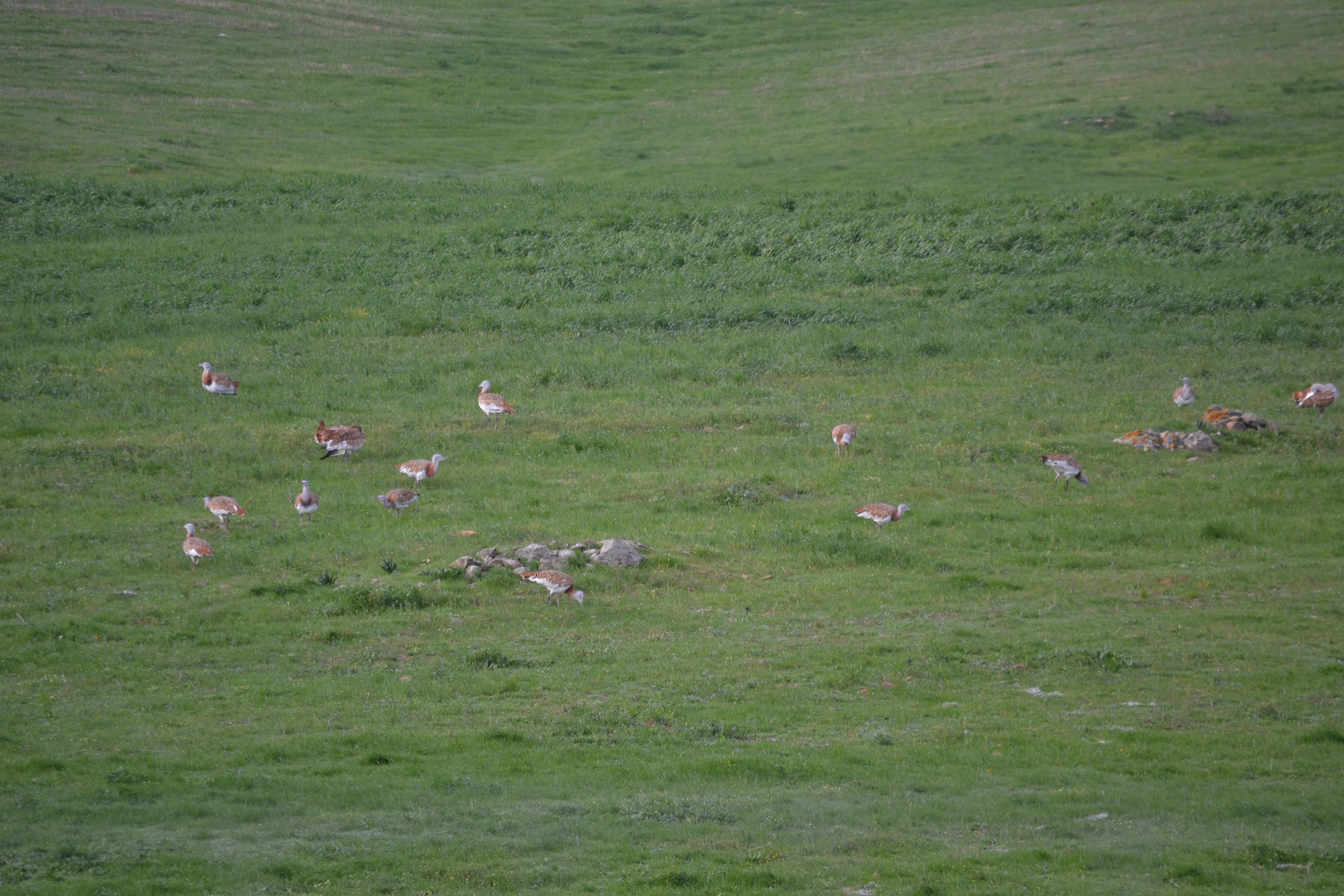
My personal experience of Great Bustards in between the two Oxon ones was all of a resident wild population in the Baixo Alentego region of southern Portugal in 2013 / 14 (pictured above). There it was possible to drive around the steppe grassland for hours on end without seeing any, then all of a sudden come across grazing “droves” as their social flocks are termed in the middle distance. I enjoyed a number of self-found encounters but was never able to observe them at such close range as this week’s bird. Doing so now, whatever it’s “plasticity” in birding parlance, was a most enjoyable event.
 Ramblings and Scribblings