This was something I intended to do a year ago. The first sunny days of April are said to offer the best opportunity for observing Sand Lizards as they emerge from hibernation and turn their minds to propagating the species. An early item on my national wildlife agenda for 2020, re-scheduled to 2021 was therefore to experience the scarcest British lizard within its classic stronghold of the Dorset heaths.
The Dorset Wildlife Trust reserve of Higher Hyde Heath (BH20 7NY – SY854899), around three miles south of Bere Regis from the A31 (see here) is reputedly one of the most reliable English sites for Sand Lizard. And that is in no small measure due to a quite particular piece of habitat management. Such small needles in huge haystacks as these might better be encountered when basking on rock outcrops. Three years ago I was briefly successful after much time and effort on a hilltop tor on the Surrey heaths (see here). At today’s location the desired outcome has long enjoyed a helping hand.
In Great Britain this lizard occurs naturally only in lowland heaths and sand dunes of Dorset, Hampshire and Surrey as well as some coastal dune systems in Merseyside and North Wales. The protected species is regarded as threatened due mainly to habitat fragmentation and destruction through commercial development and wild fires. This is nowhere more prevalent than on the Dorset heaths where my day’s quest is now largely confined to managed nature reserves. As mature sunny habitats are required containing open undisturbed sand in which to lay eggs, they can have quite limited distribution even within the protected areas.
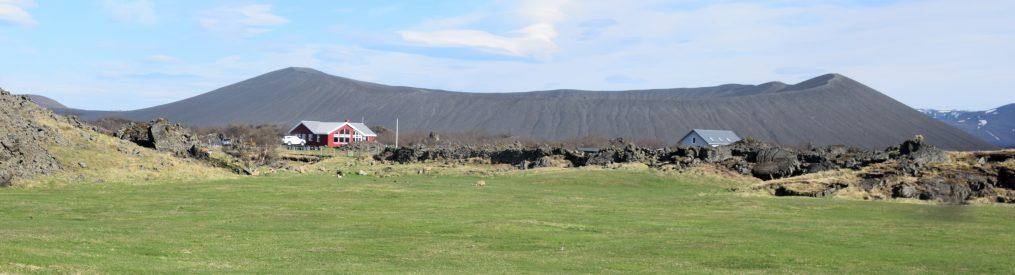
Arriving on site at around 10am I found the car park off Puddletown Road full of police vehicles and heavily armed officers toting automatic weaponry who were about to begin a firearms training exercise. With the Army also driving tanks along the road outside the atmosphere was a little unsettling as I set about finding the cited lizard habitat, and that took time. From the reserve entrance a trail skirts a landscaped gravel pit, before a left turn leads back towards the road and a former Hanson building aggregates yard. The piles of old broken roof tiles I was searching for lay along that path and just outside the yard.
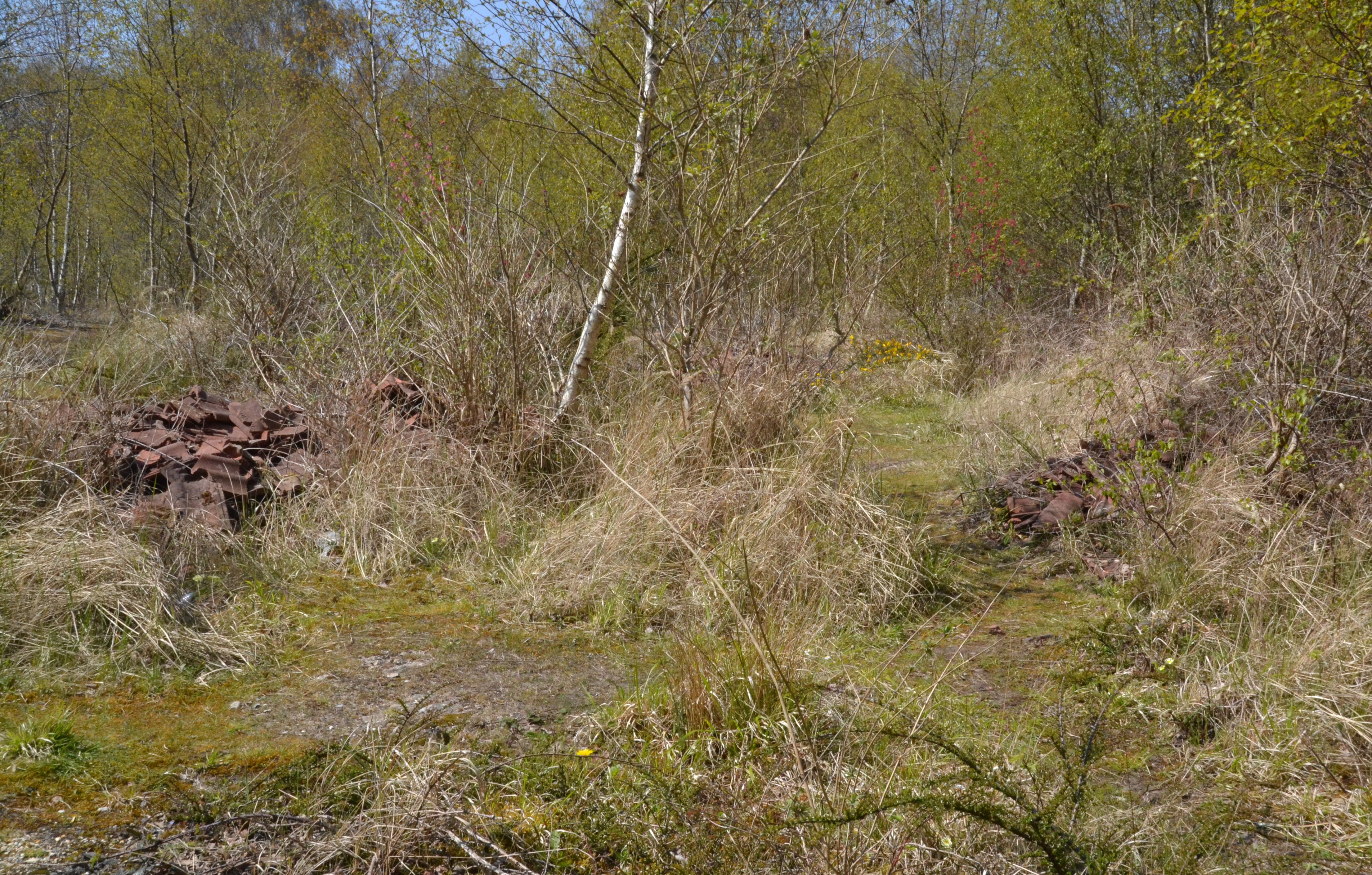
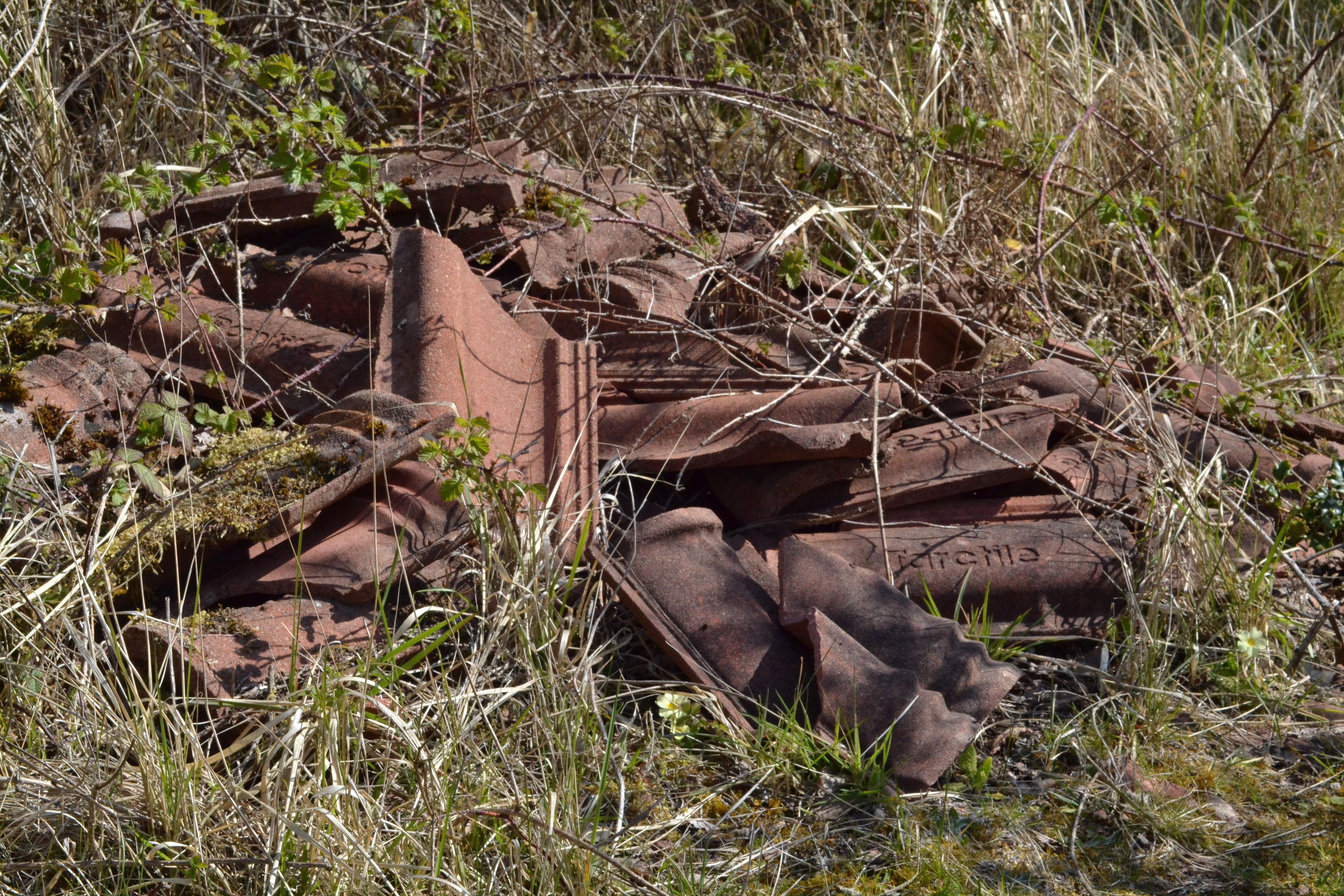
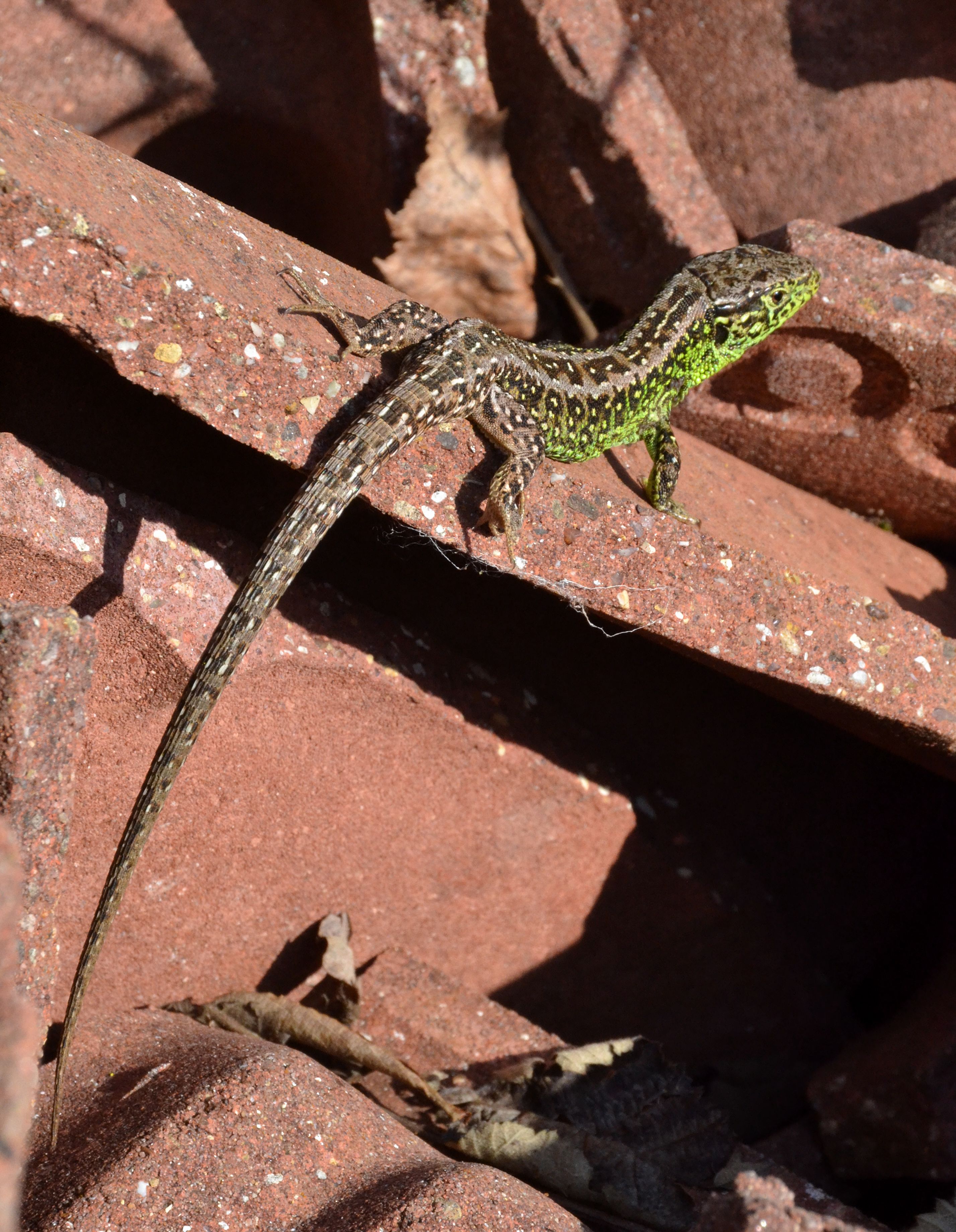
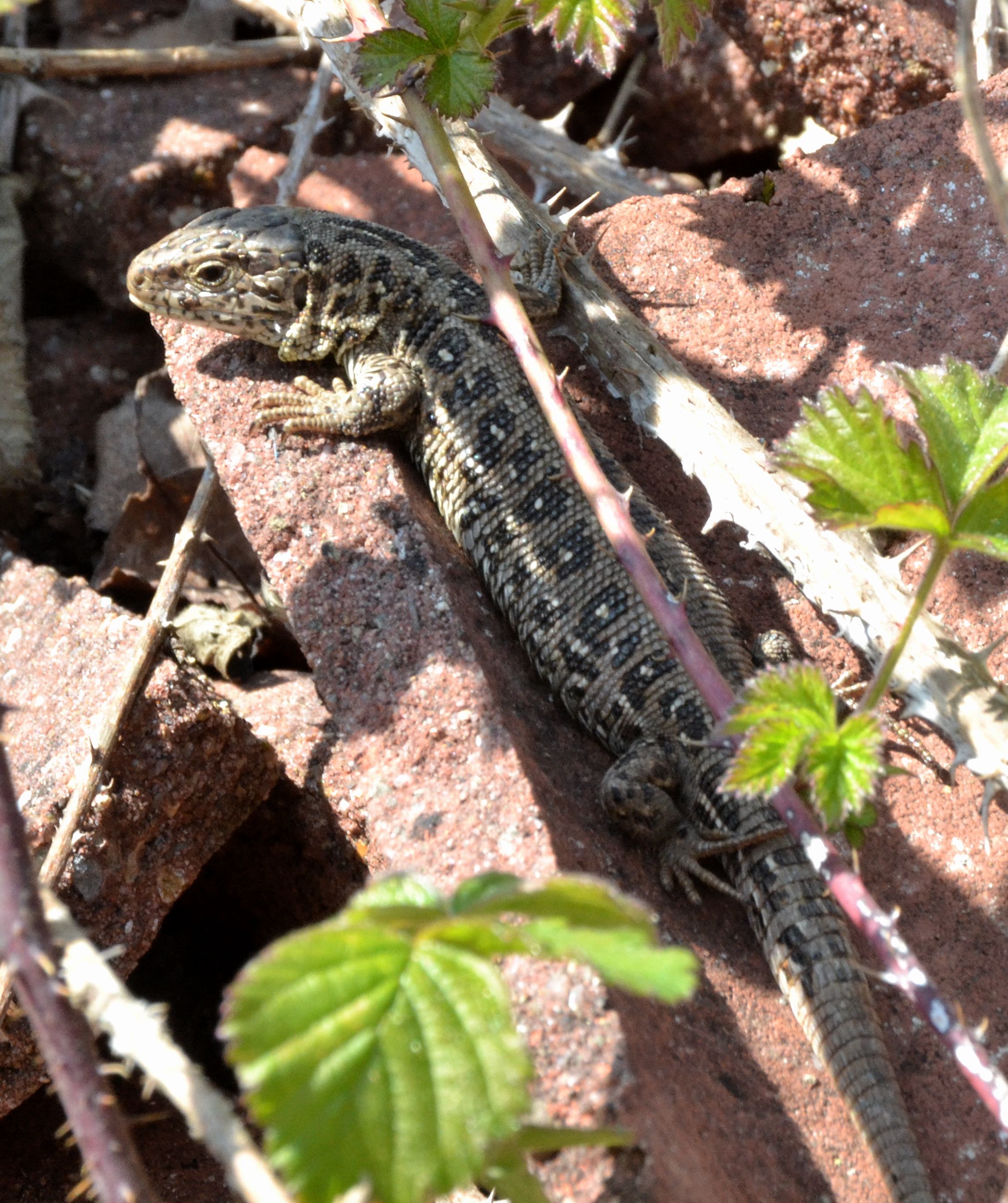
Looking around I quickly noticed possibly four Sand Lizard active within one of those piles but that soon ceased. It was now 10:30 and so past the optimal observation time as they bask to warm up with the day. Three years ago I was advised there was less likelihood of success through the hottest part of the day, and so it proved again over the ensuing two hours. But there was an exception. The lady in the right hand lead picture (top) was dozing gently in the morning sunshine, showing no objection to my gradual approach. She let me get so close that I took another picture with my phone that prompted some WhatsApps and drew responses.
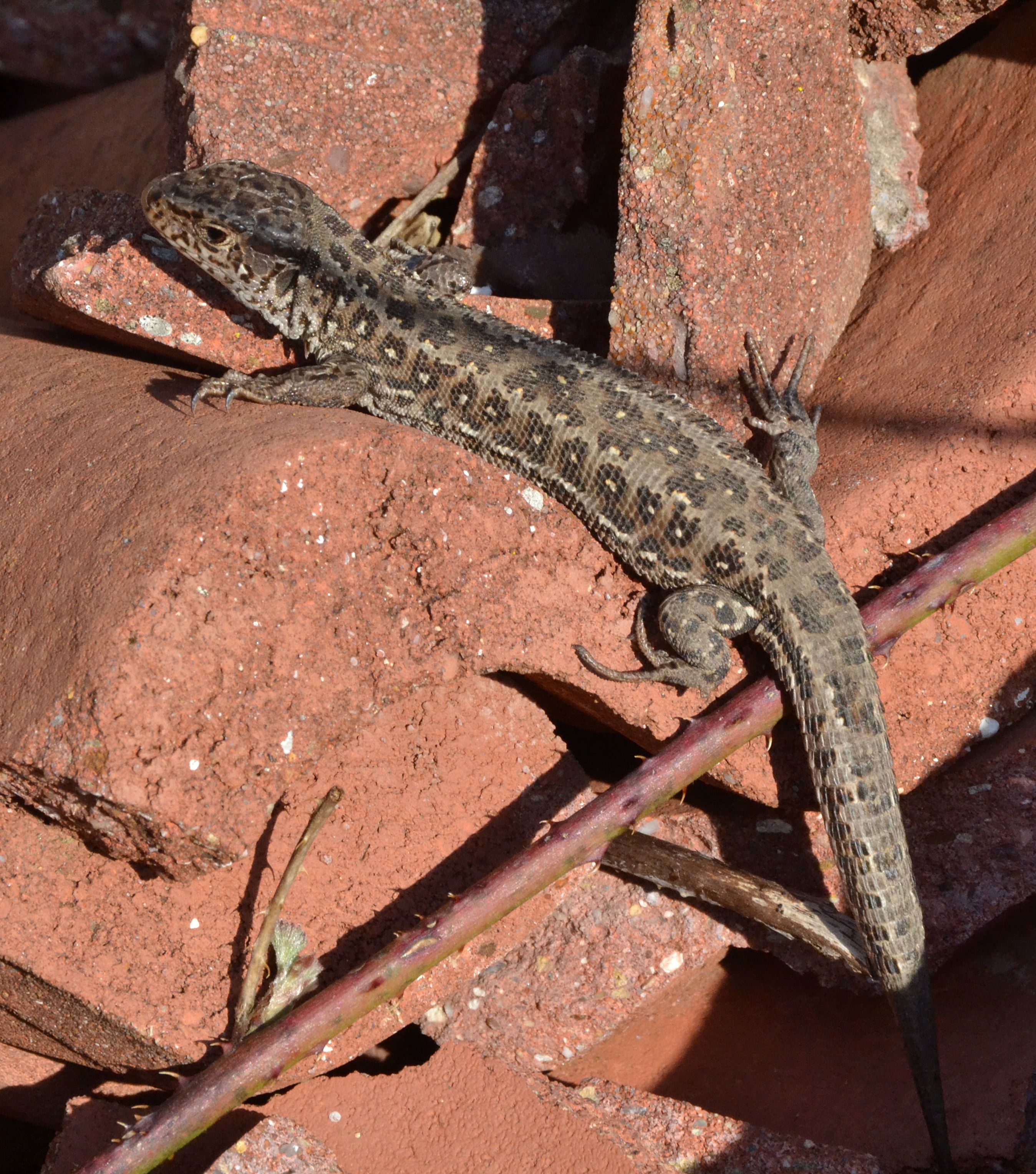
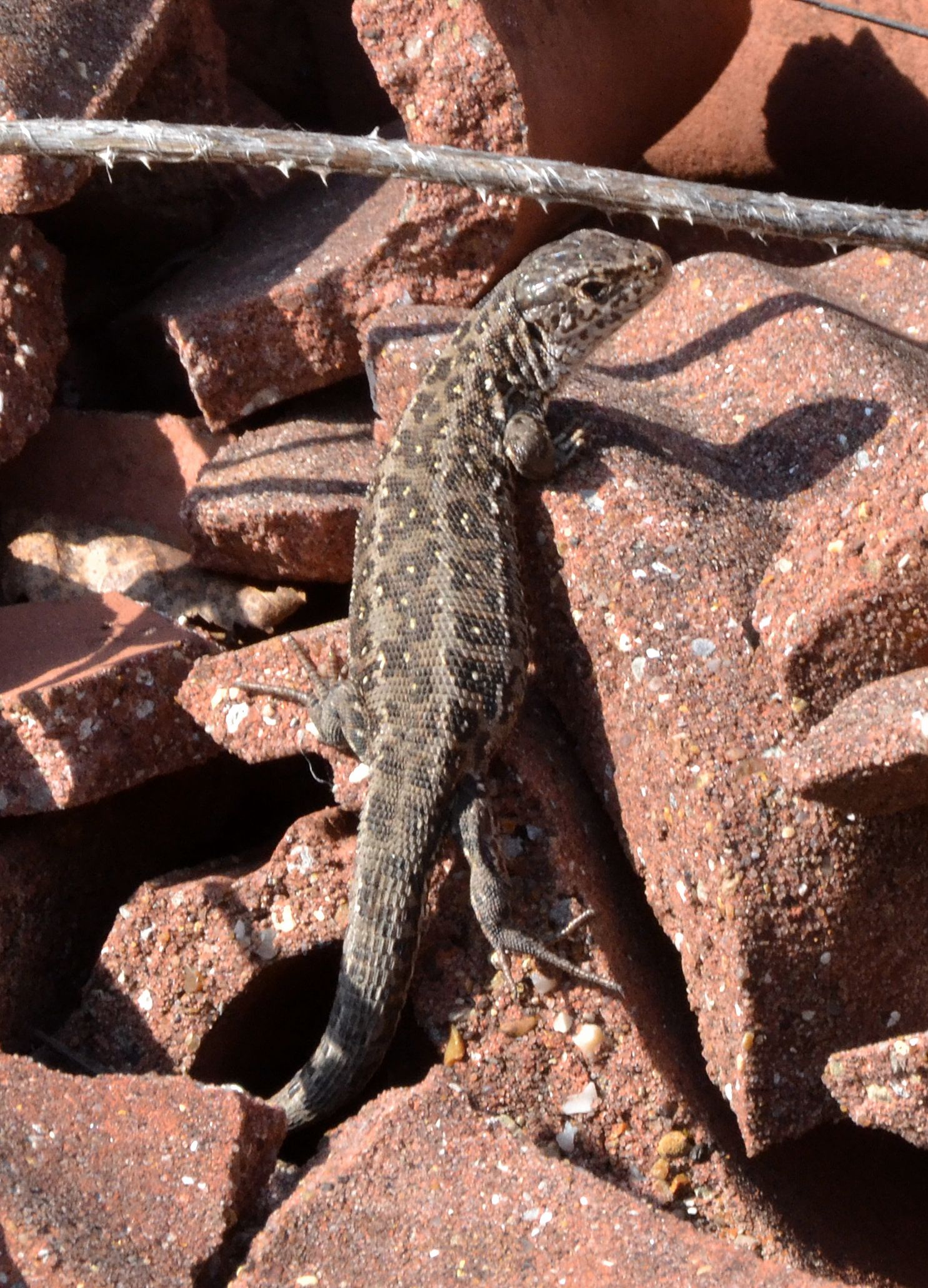
Most of the other lizards seen briefly in the morning today were also females that will lay their eggs in late May or early June to hatch in late August and September. Both genders are robust and stocky in appearance, growing up to 20cm in length of which the tail accounts for half. They have a rounded head that is larger in males than females, short legs and two strong pale stripes running the length of the body. Between those “dorsal lateral” stripes along the centre of the back and on the flanks is usually a complexly variable brown camouflage pattern with “ocelli” (eyed markings), dark blobs with enclosed pale centres that signify life stages.
At around 2pm I drove back to Bere Regis for a sandwich break and then returned. The priority now was to acquire images of males in their April and May breeding colouration of striking bright green flanks and mottled brown back. I also wanted to assess whether the reptiles would become more active again as the afternoon began to cool down, and in the event was amply rewarded. The wildlife experience shortly to commence was off the top of the scale and I was the only observer present on site throughout.
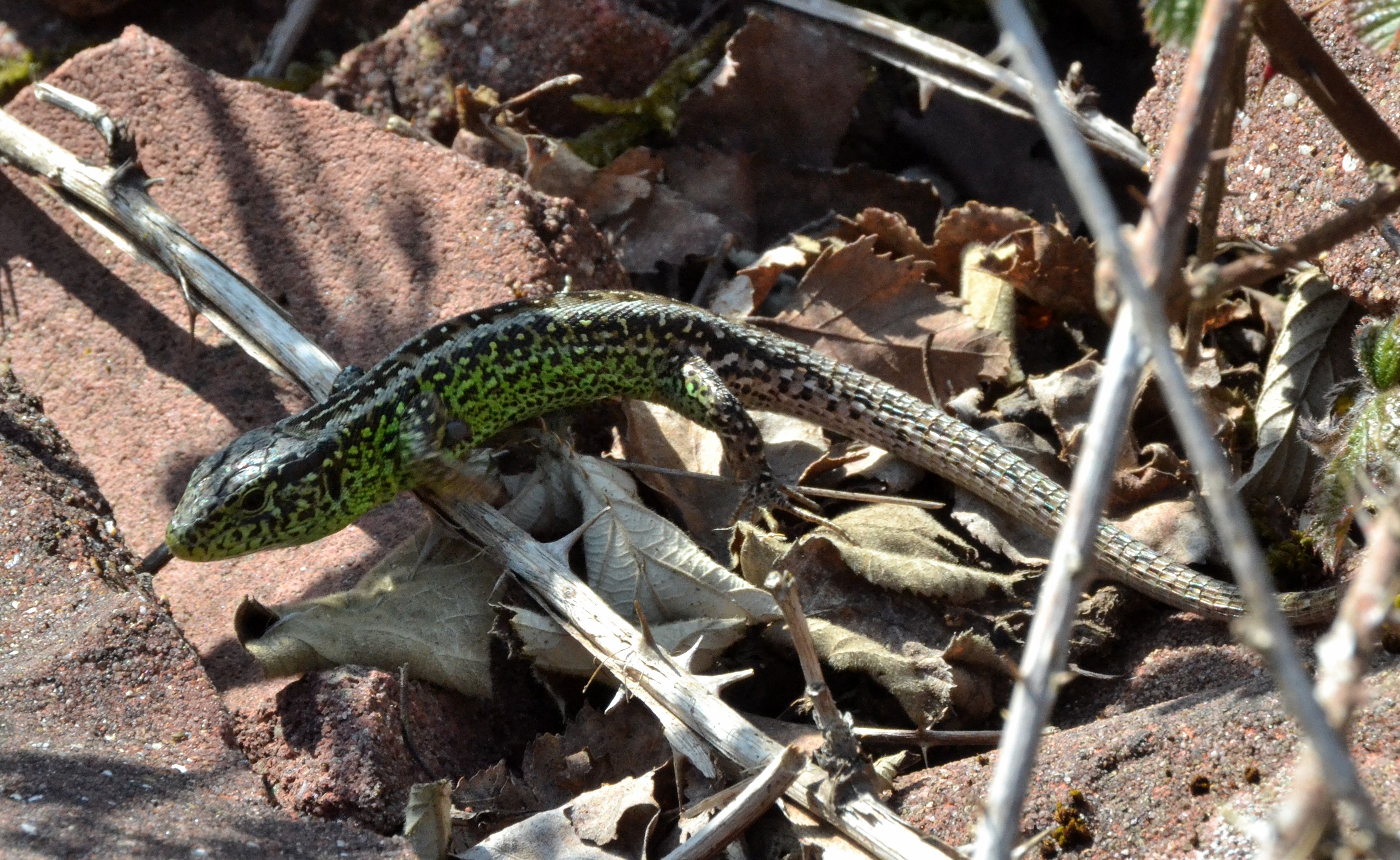
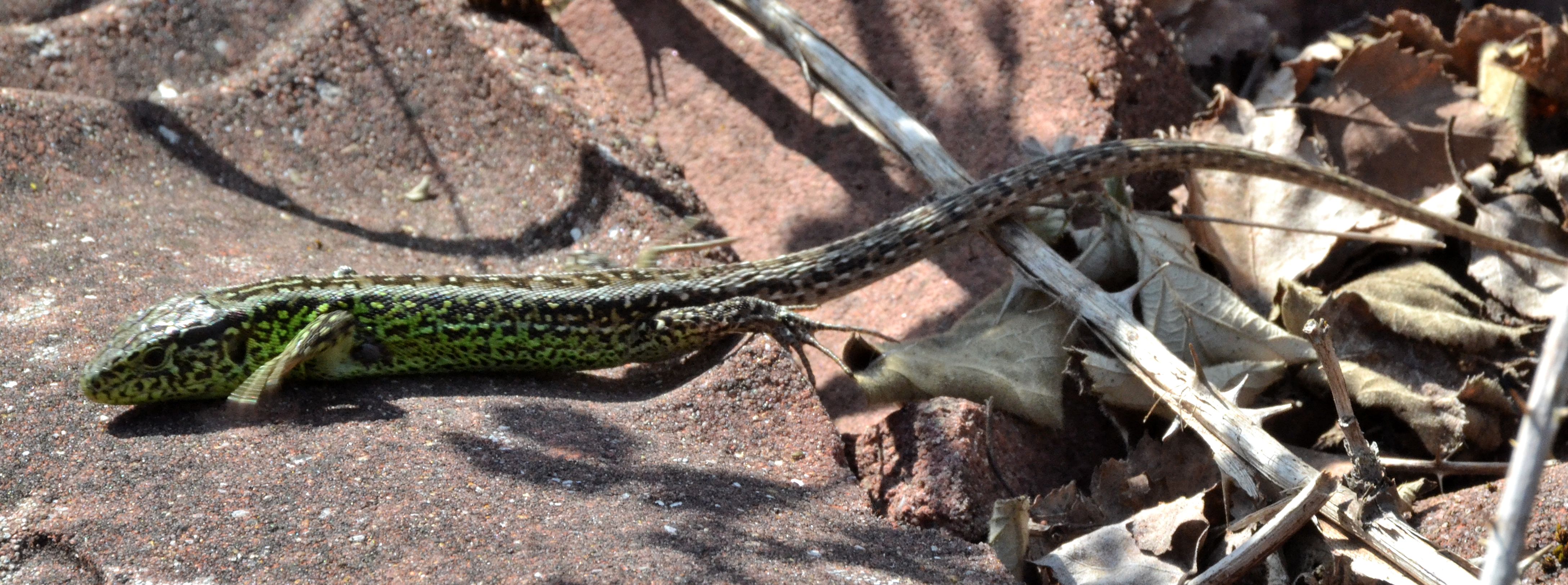
Fairly soon a green-toned male (pictured above) showed itself in one tile pile before walking out and into adjacent ground cover, foraging and flicking it’s tongue all the while. Then I noticed a female basking in the neighbouring pile who remained still for a long time, seemingly unconcerned by my attention. After 4pm possibly two different males emerged from the same pile and my camera went into overdrive. These last three individuals offered simply amazing value over the next 60 minutes.
I have been in this situation many times, more usually with butterflies and odonata, of enjoying total communion with wildlife that becomes fully accepting of my presence and unconcerned by it as I linger. This is only possible when alone and I would not have gained the pictures in this post had anyone else been present, never mind a group of jostling camera toters.
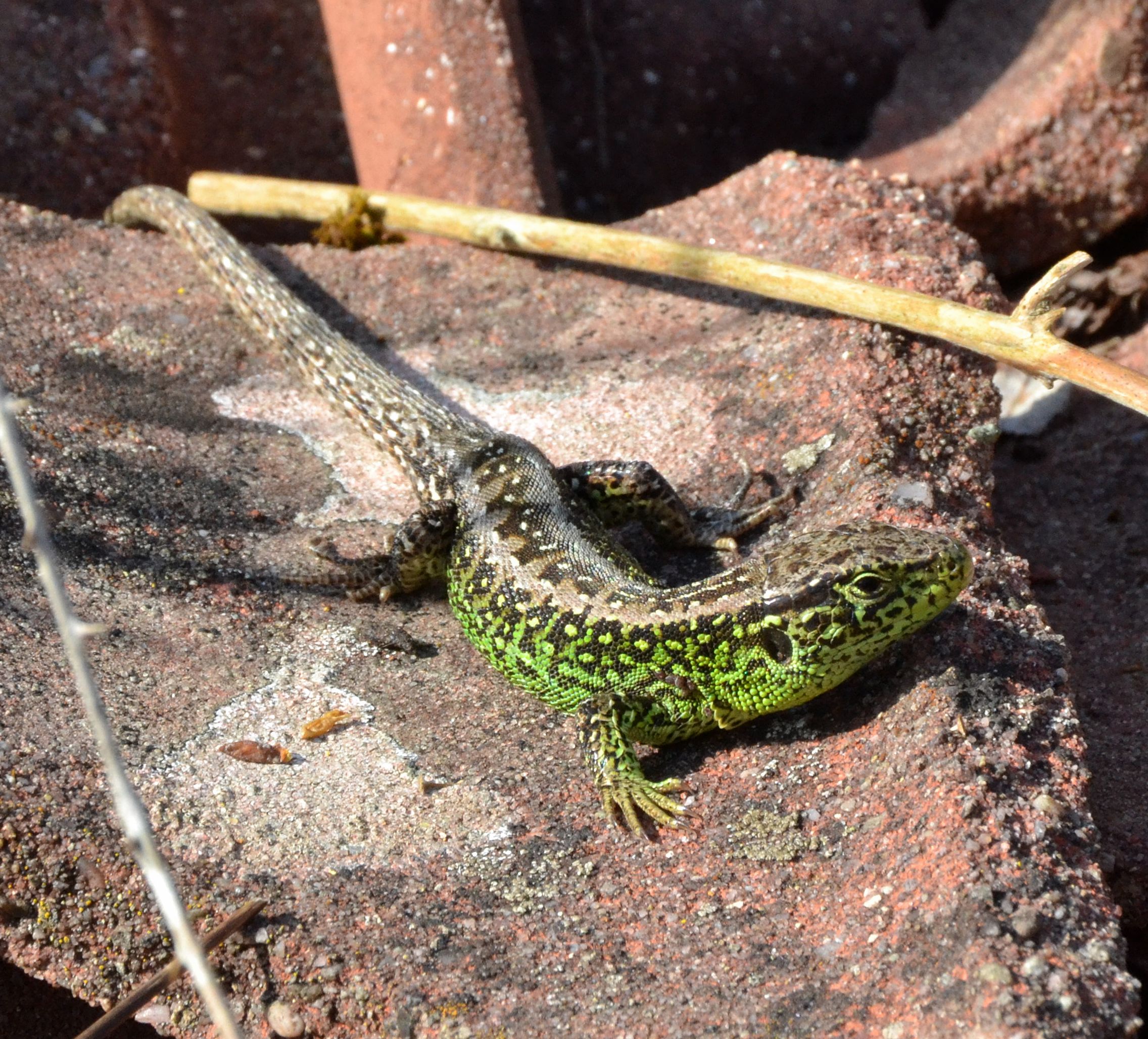

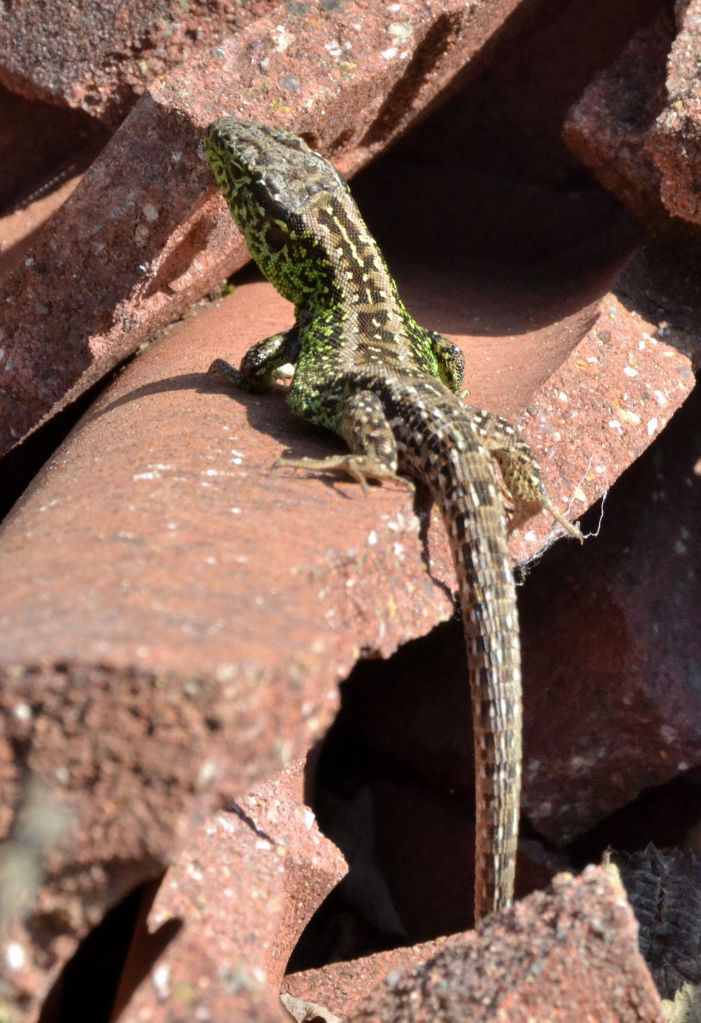
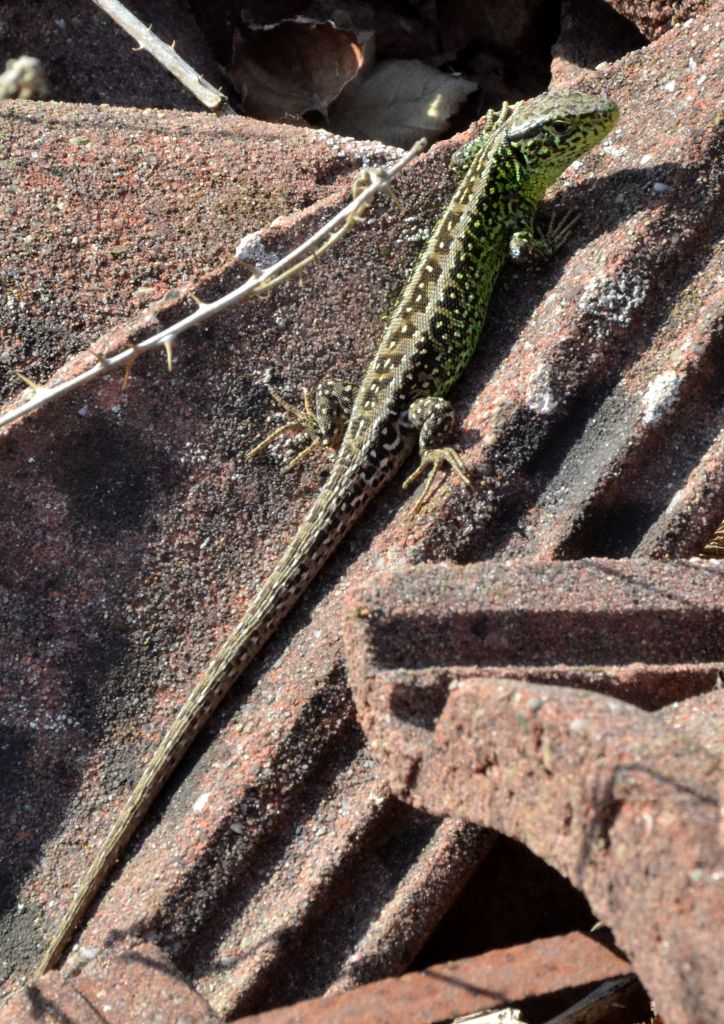

Up until now I had kept a careful distance, expecting these reptiles to be wary and skittish. But in some of the images as I moved closer they are looking straight at me and not bothered in the slightest. As they seemingly grew more and more tolerant of me I threw caution to the wind. But stumbling on the periphery of the pile, casting shadows on the lizards or even removing twigs from around them – each things about which I would expect to be roundly barracked had other people been present – were all met with the same indifference by my willing subjects. Yes it most certainly is possible for a lone, careful and experienced fieldsman to mingle freely with wildlife and gain acceptable records without causing illegal disturbance.
Performing the ground level contortions required for these results wasn’t easy as the previous day my left hip had gone into spasm. But I needed to hit the road and armed with a can of Deep Heat spray felt no inclination to miss out on a warm weather opportunity. I fully expected to hardly be able to move at all when it came to writing up this piece, but actually feel alright physically not to mention elated by this whole reptilian experience.
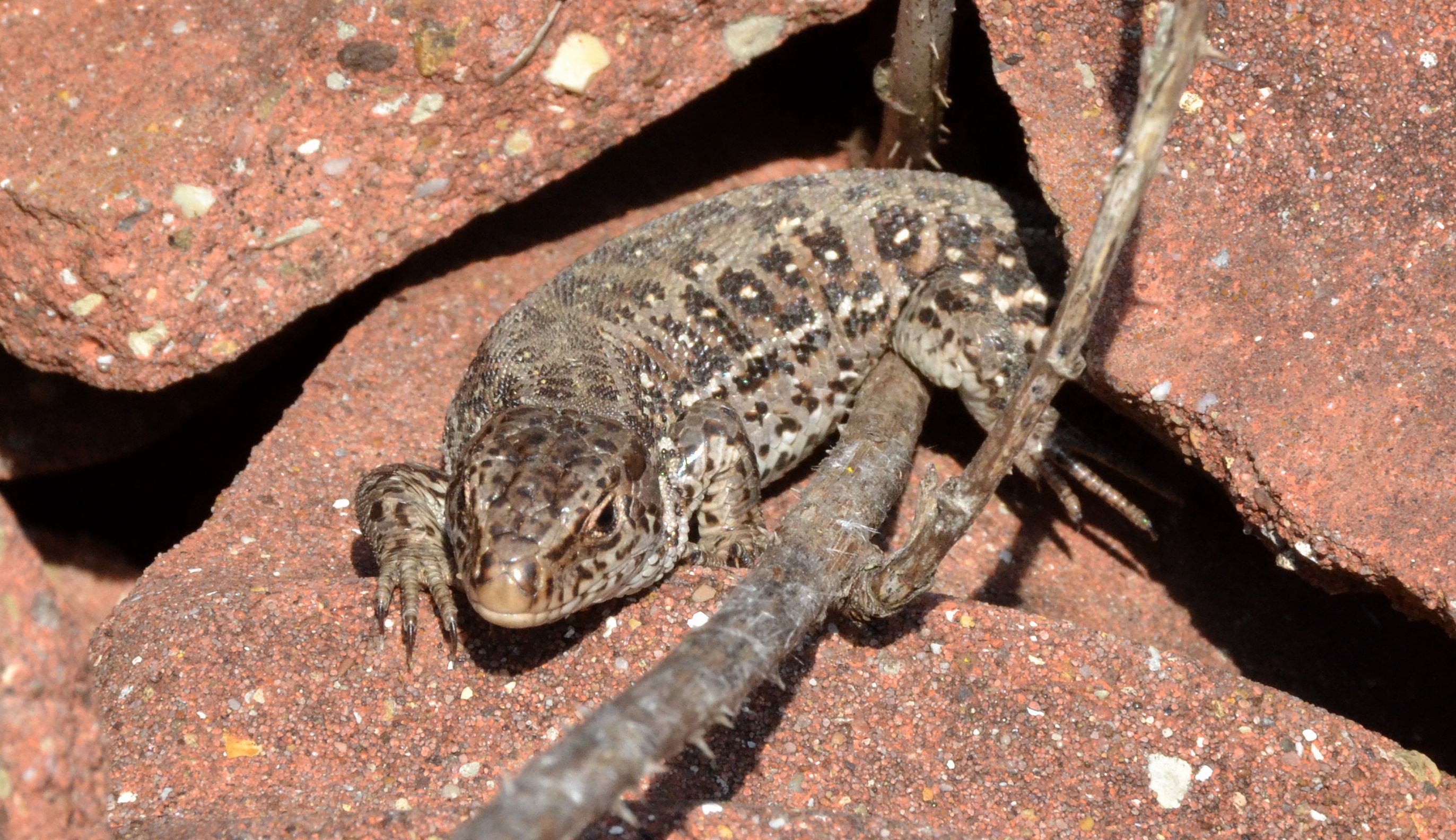
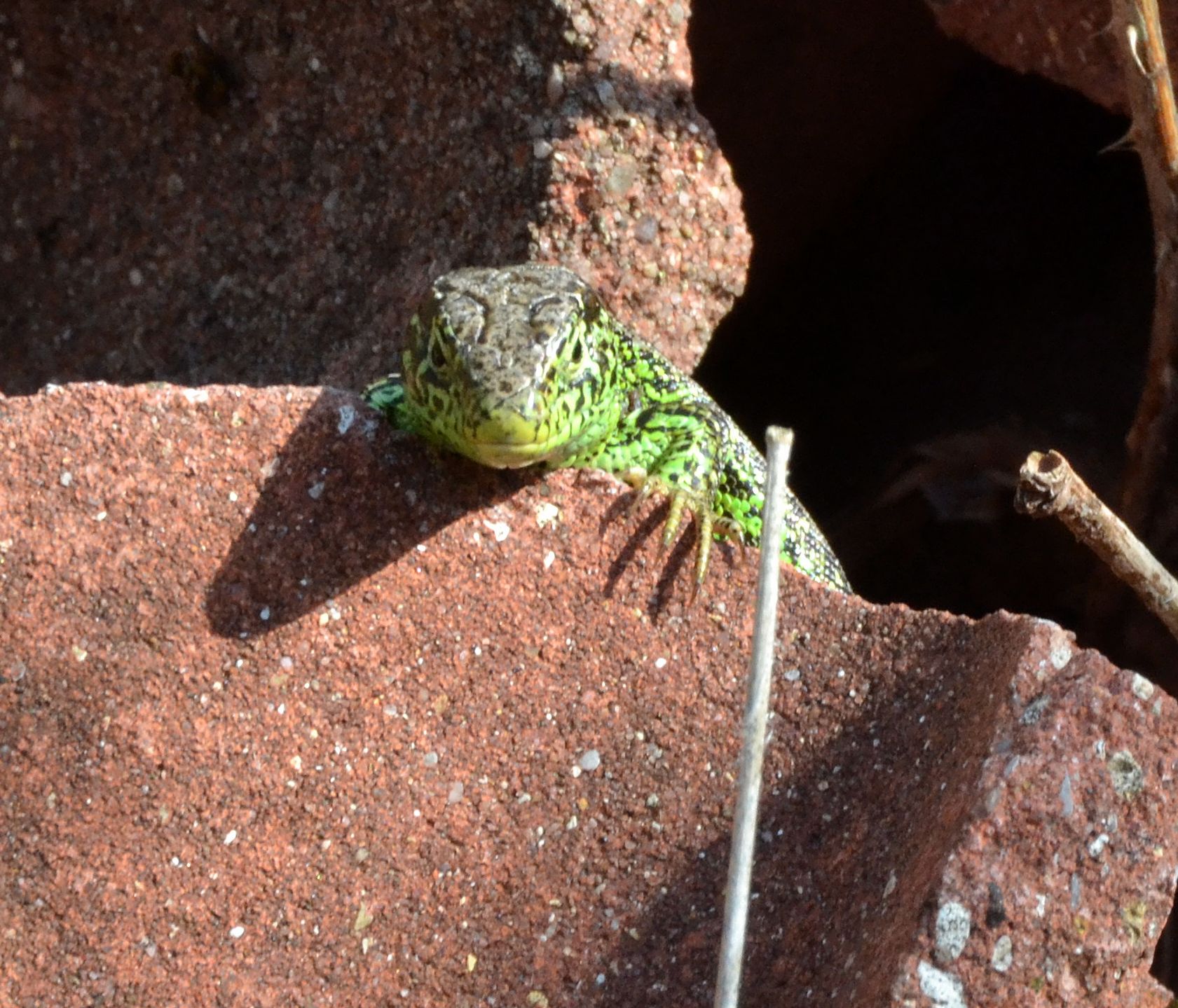
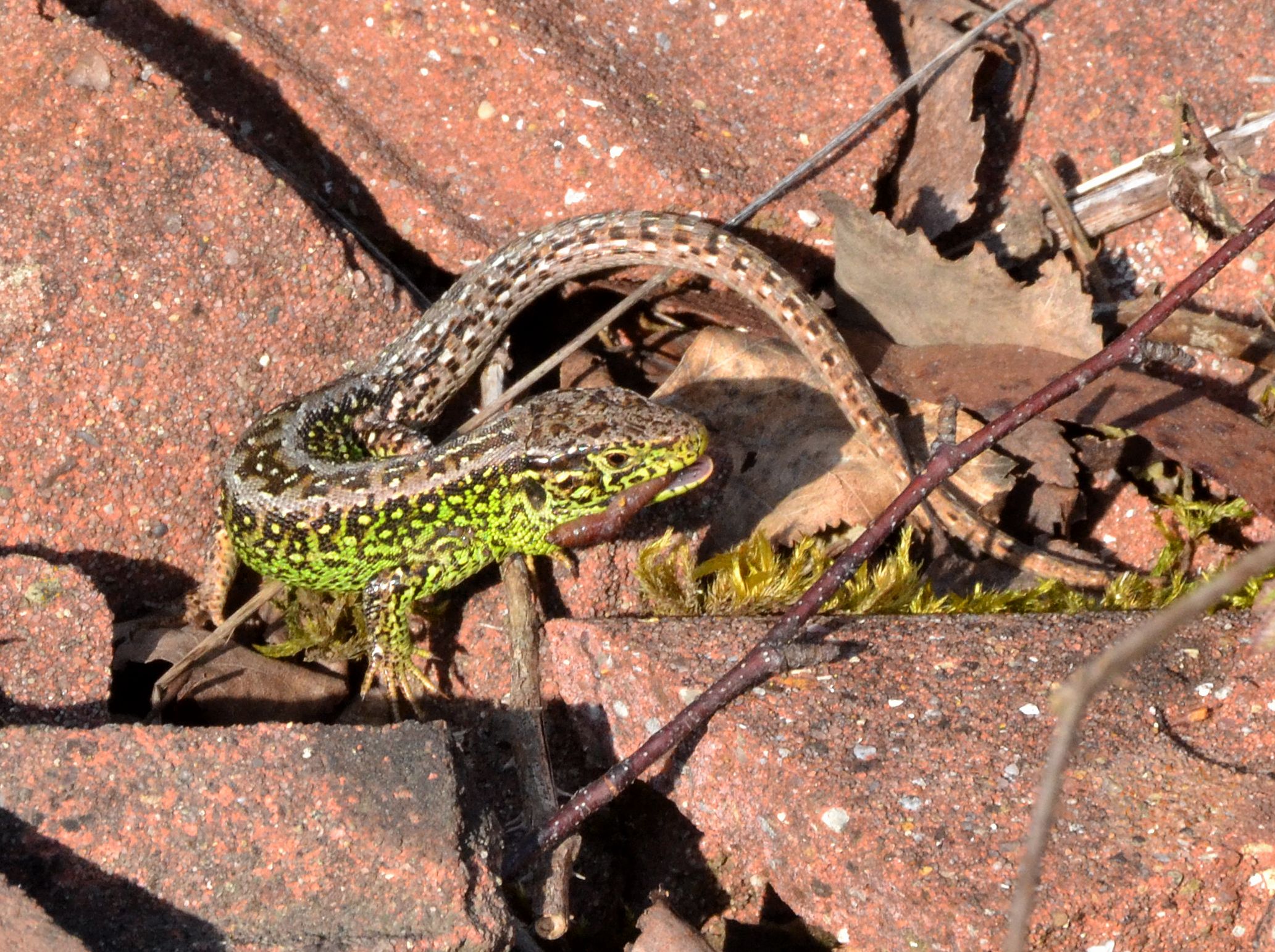
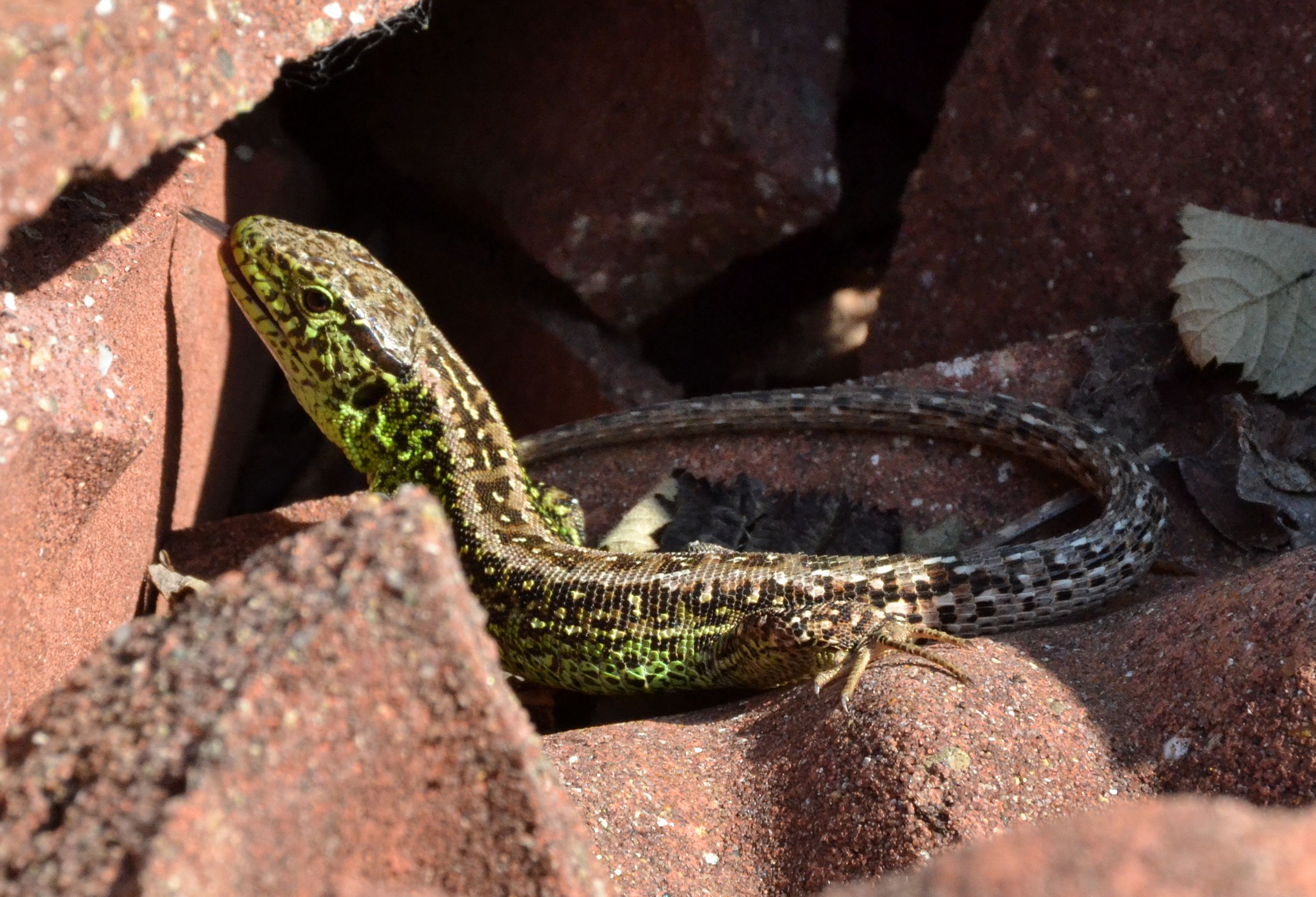
I must have observed around a dozen Sand Lizards on this occasion. Having spent three days in 2018 tracking down just two individuals, the difference here was certainly the focal point offered by the basking habitat. More normally in dry, heathland situations these largely ground dwellers keep to older dense heather stands in which they remain very inconspicuous.
The Dorset heath and other southern English “Wealdon” populations are actually separate sub-species but very difficult to tell apart in the field. Indeed the numerous re-introductions of Dorset stock into Surrey makes it effectively impossible to distinguish between the two. Re-introductions have also taken place in other areas nationally.
My planned 2020 wildlife agenda is finally up and running and in the coming season it may be difficult to better what was a simply superb episode today.
Addendum
On 7th May I returned here with Ewan who had not seen Sand Lizards before and wanted to. We arrived at 9:15 in time for the optimal window through to 10:30, observing possibly two or three males in that interval but no females. This time we had to share the space with two photographers. While myself, Ewan and one of the others quietly staked out a tile pile each, the second togger paced constantly about. Then when the sun came out again just as the other two left at 10:30, perhaps not surprisingly a male Sand Lizard re-emerged and basked openly for some time (pictured below).

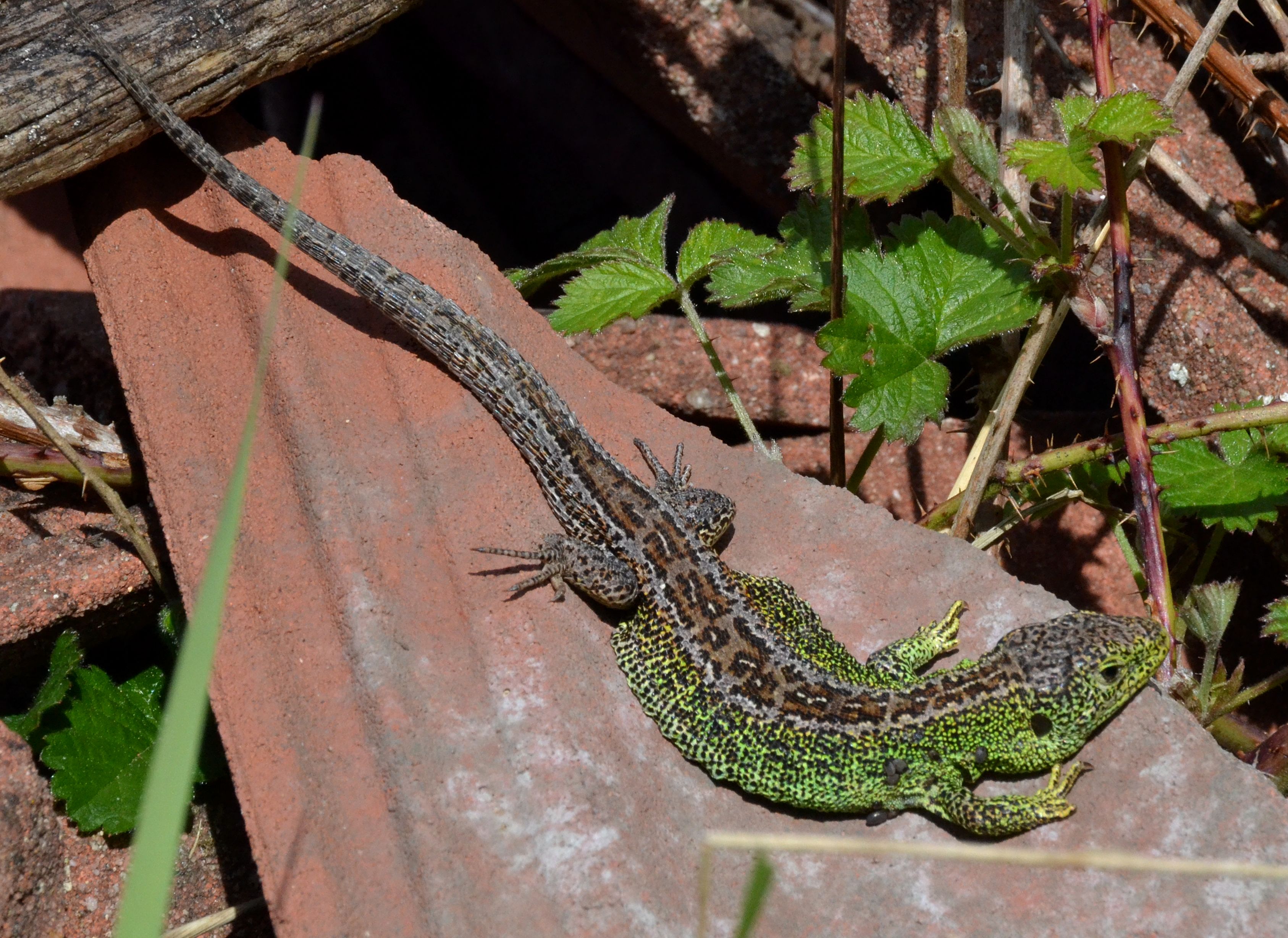
This individual has a number of ticks around it’s right-hand foreleg, the most common external form of parasitism in reptiles. These are usually found under the scales or in the nostrils where they feed on the host’s blood and are readily visible to the naked eye (as in the above images) especially if engorged with blood. Ticks do carry diseases that can be transmitted to other animals or indeed humans. In captive lizards they may be removed with small forceps or tweezers, but this one will have to take its chance. Here was another instance this morning of how the timing of my first visit at the earliest seasonal opportunity had been so special.
 Ramblings and Scribblings