This was a welcome diversion. Amongst the evolved Odonata records I am achieving currently through focussing on teneral (or immature) forms, a liking may be apparent for the bright orange. Having converted one such item recently in Blue Chaser (see here), a second prize on my agenda was female Scarce Blue-tailed Damselfy in what is known as the “Aurantiaca” phase.
Until a year ago making this observation entailed visiting a particular site in Hampshire’s New Forest (see here). Then last summer a new colony was discovered much closer to home at Longford Park, a housing and country park development just outside the north-Oxfordshire town of Banbury (see here). County odo royalty then descended upon what is described as a storm water pool at SP469390, where a number of Aurantiacae were recorded. But I myself was not successful, observing only adult males.
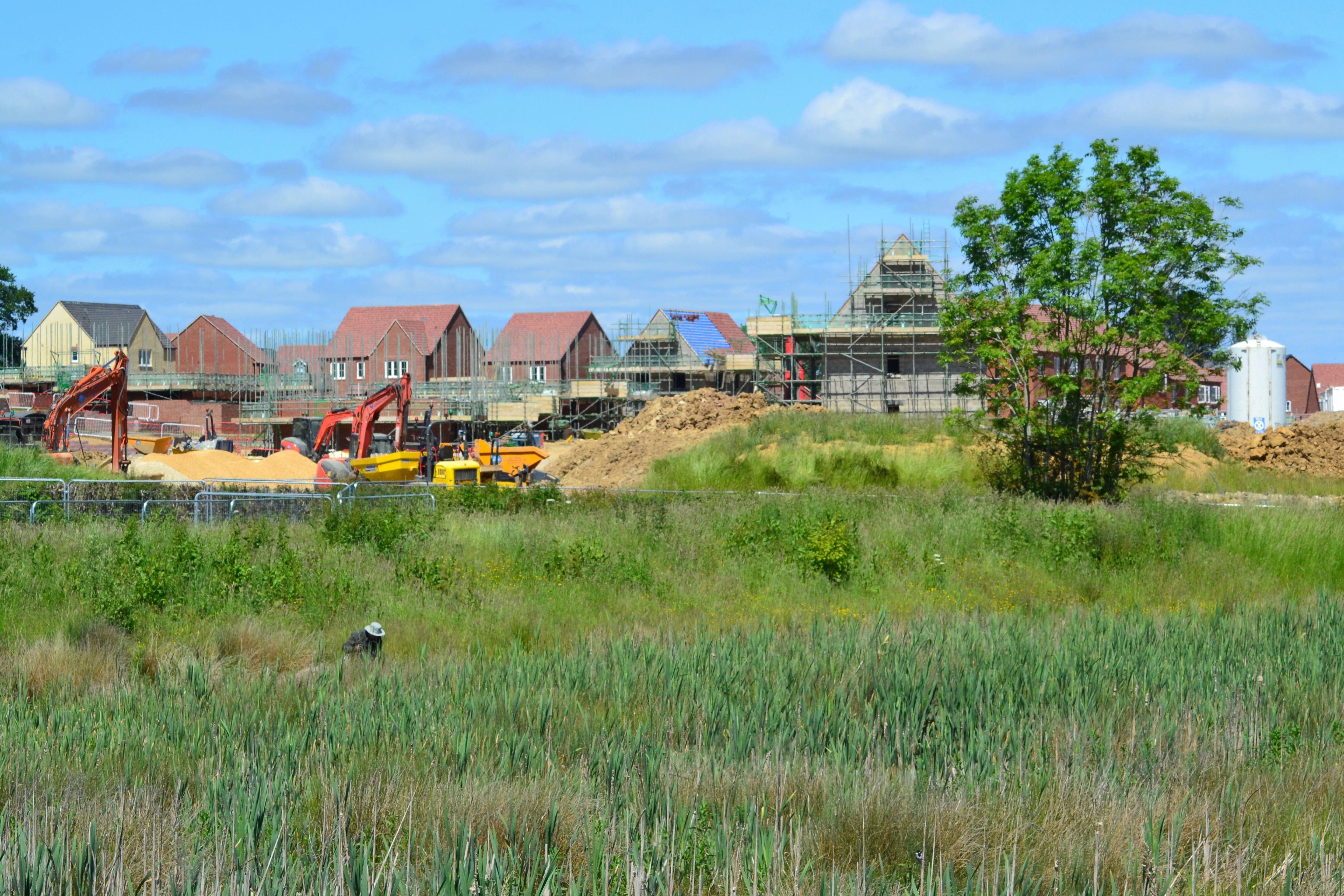
A year on from then what was presumed to be a transient feature of the development is still very much in place (pictured above) and remains a superb piece of Odonata habitat. On 12th the first records for 2021 were posted on Oxon Dragonflies by my county wildlife colleague Wayne Bull, so there was only one place I was likely to head the following morning.
Arriving on site around 10:45am I was at first surprised by being the only observer present. Concentrating on the wetter edge of the pool that had been the most productive spot in 2020, I picked out possibly four mature male Scarce Blue-tailed Damselfly (or Small Bluetail) but not my quest. Then I waded in a little but not too much, since the shallow habitat here is quite resilient, and amongst various ghostly emergent damselflies noticed what looked like an interesting new (to me) form. Was this a pre-Aurantiaca phase female I wondered?

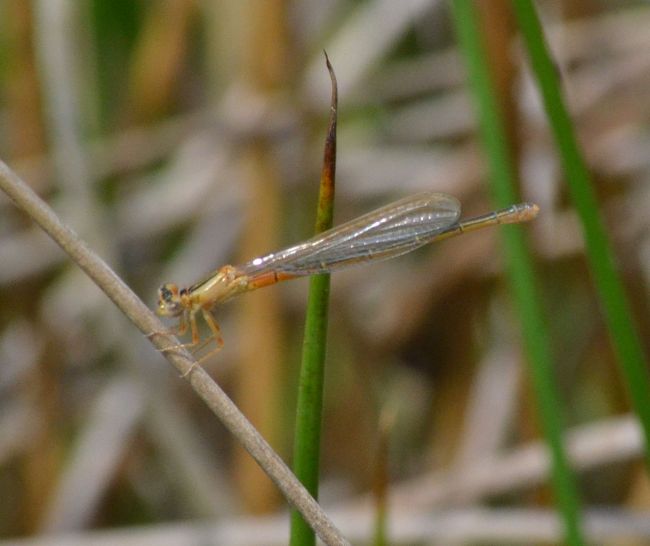
Searching on I came across a second such individual that kept still for the camera, on the back of which I discerned the paler orange and developing colouration of what I assumed to be a recent emergent. This being a welcome new colour form in my experience I then called Wayne, one of our most knowledgeable odo experts and he confirmed the ID. Indeed he said two of his three records a day earlier were of such tenerals, that unlike males favour drier vegetation at the pool’s edge; the third being an Aurantiaca of the pure orange form (below, left).
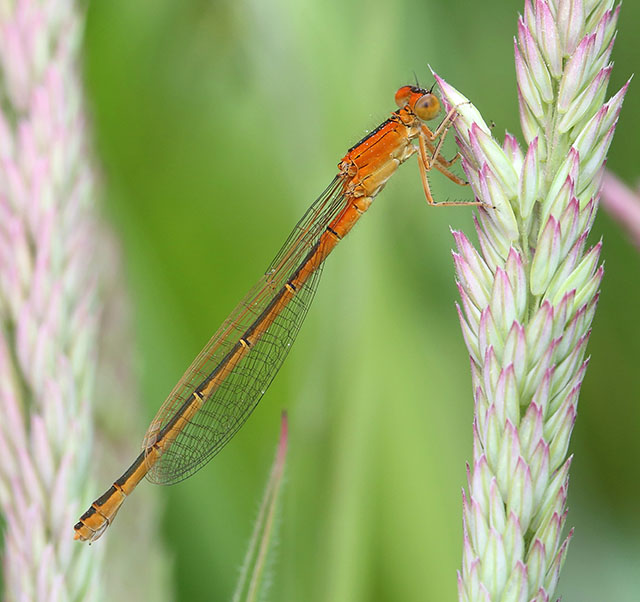
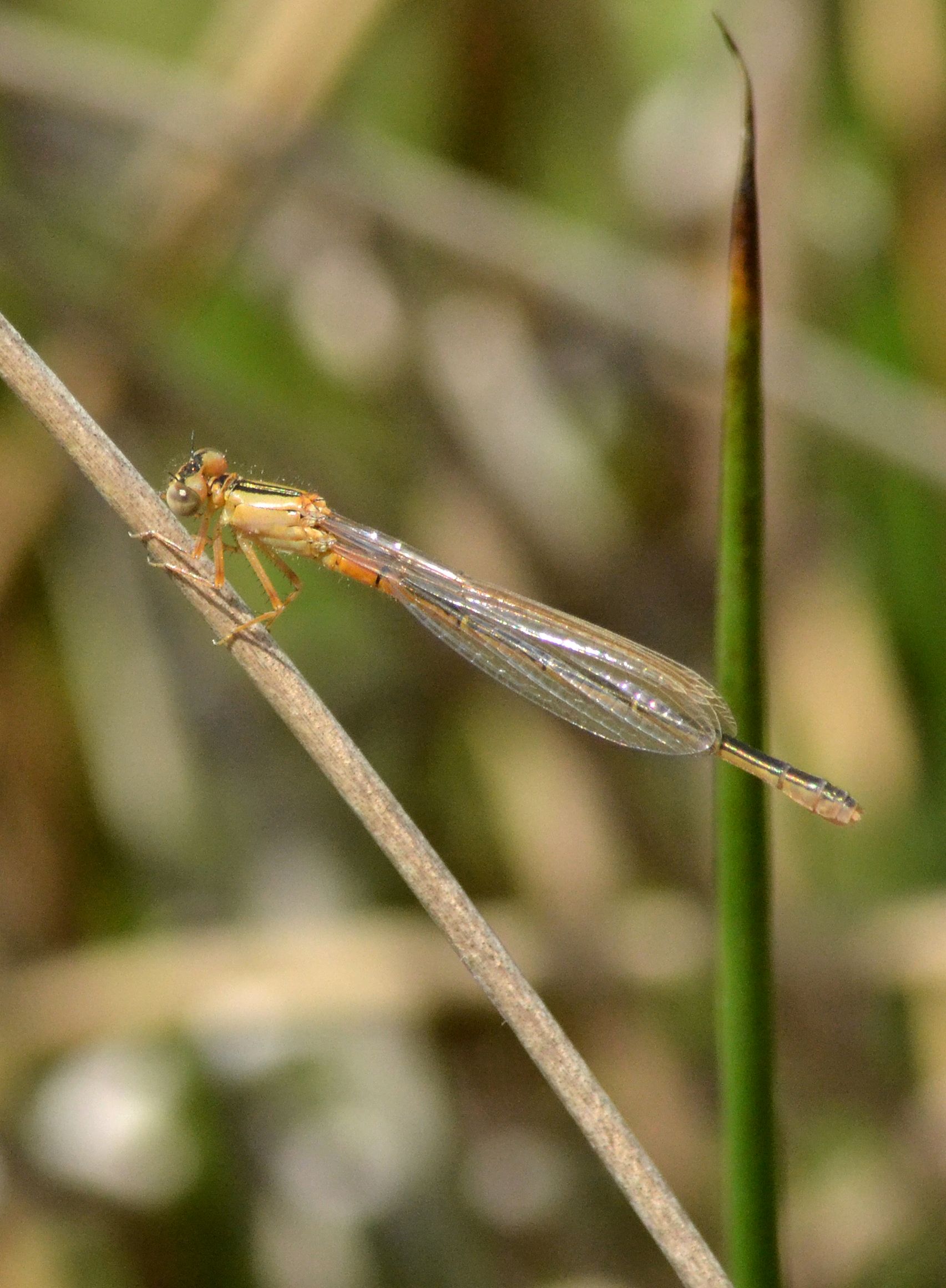
Aurantiaca phase female (left) © and courtesy of Wayne Bull, and today’s teneral (right)
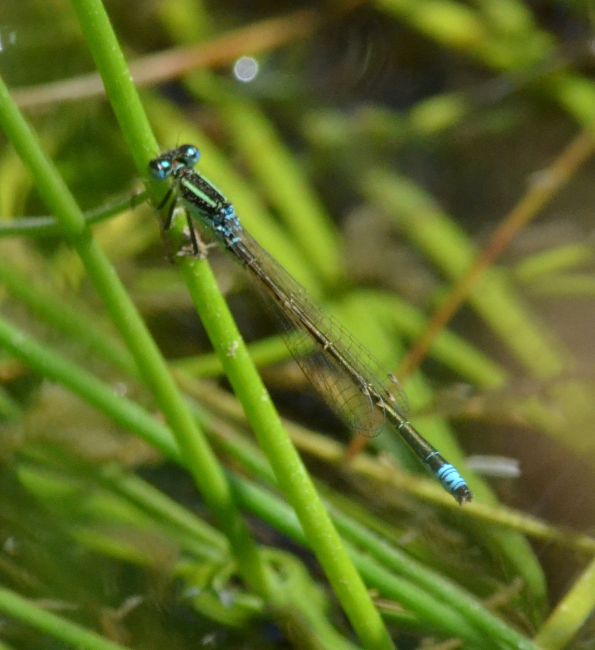
On 14th I re-visited hoping to find a bright Aurantiaca or two of my own, but could not locate any. Maybe the site’s few individuals of this transient form had matured and gone into cover already. But I was as thrilled to record a first ever teneral male (below, left and centre). This is a colour form I wasn’t aware of previously even as a field guide illustration. So I am indebted to Wayne for offering the ID for what I at first took to be a Common Emerald. Having been so advised and looking closely I could see the apex of abdomen diagnostics of segments 8 and 9 match, as the following sequence shows. And I have to say the male and female teneral forms of this quite intriguing damselfly are equally attractive.
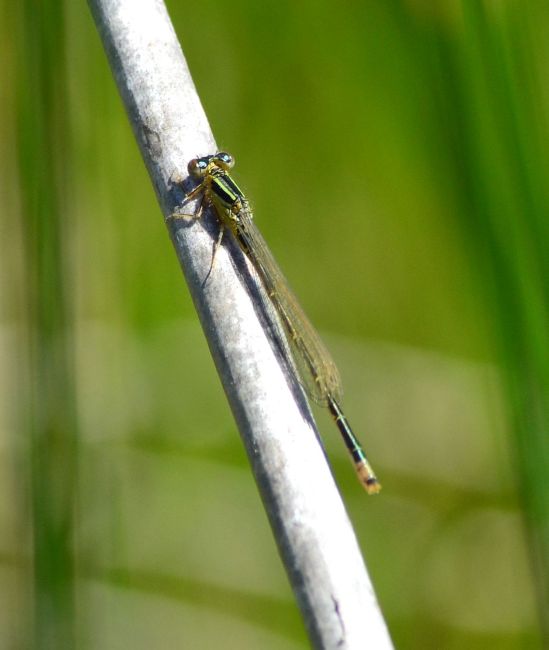
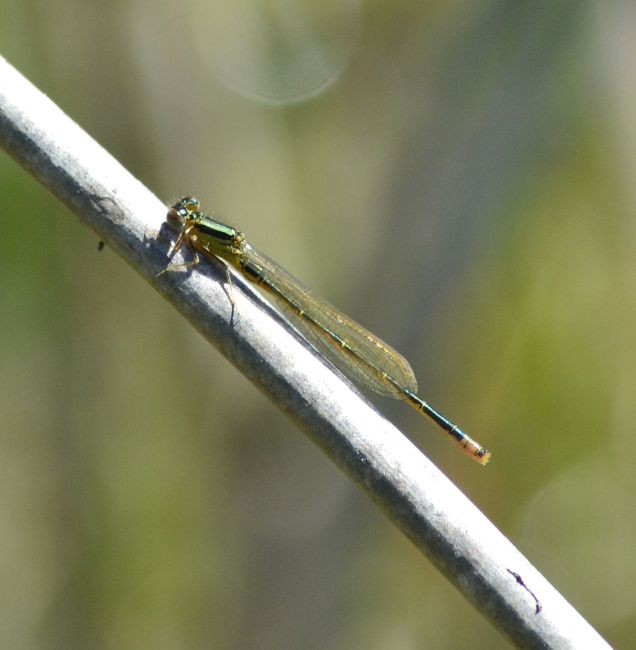
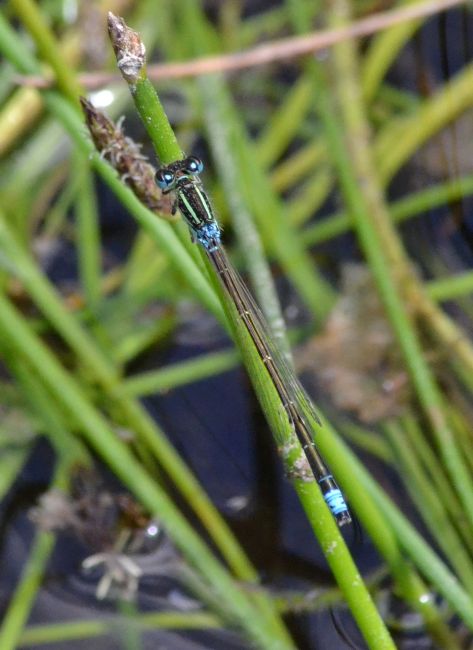
Teneral and adult (right) male Scarce Blue-tailed Damselfly
In 2020 this site attracted some attention from odo enthusiasts, since SBTD is a nationally scarce species, as well as being a first site for Oxfordshire. The country park on the edge of which it lies is currently closed and fenced off, prior to hand over to the local authority. I fear for what lies in store for the Odonata of the storm water pool if it is fated to become doggy stick throwing grand central for surrounding new housing. But for the moment the site remains an outstanding, natural wildlife oasis where very few people go.
 Ramblings and Scribblings