Since extending my butterfly experience abroad seems unlikely in the current travel restricted year, I have included an extra Fritillary in my national wildlife agenda for the first time in six seasons. Their emergence was announced on the Kent BC Facebook page a week ago (16th) and today being the most suitable weather one since then I set out to re-experience a quite special insect double bill that is available in that county just to the east of Canterbury.
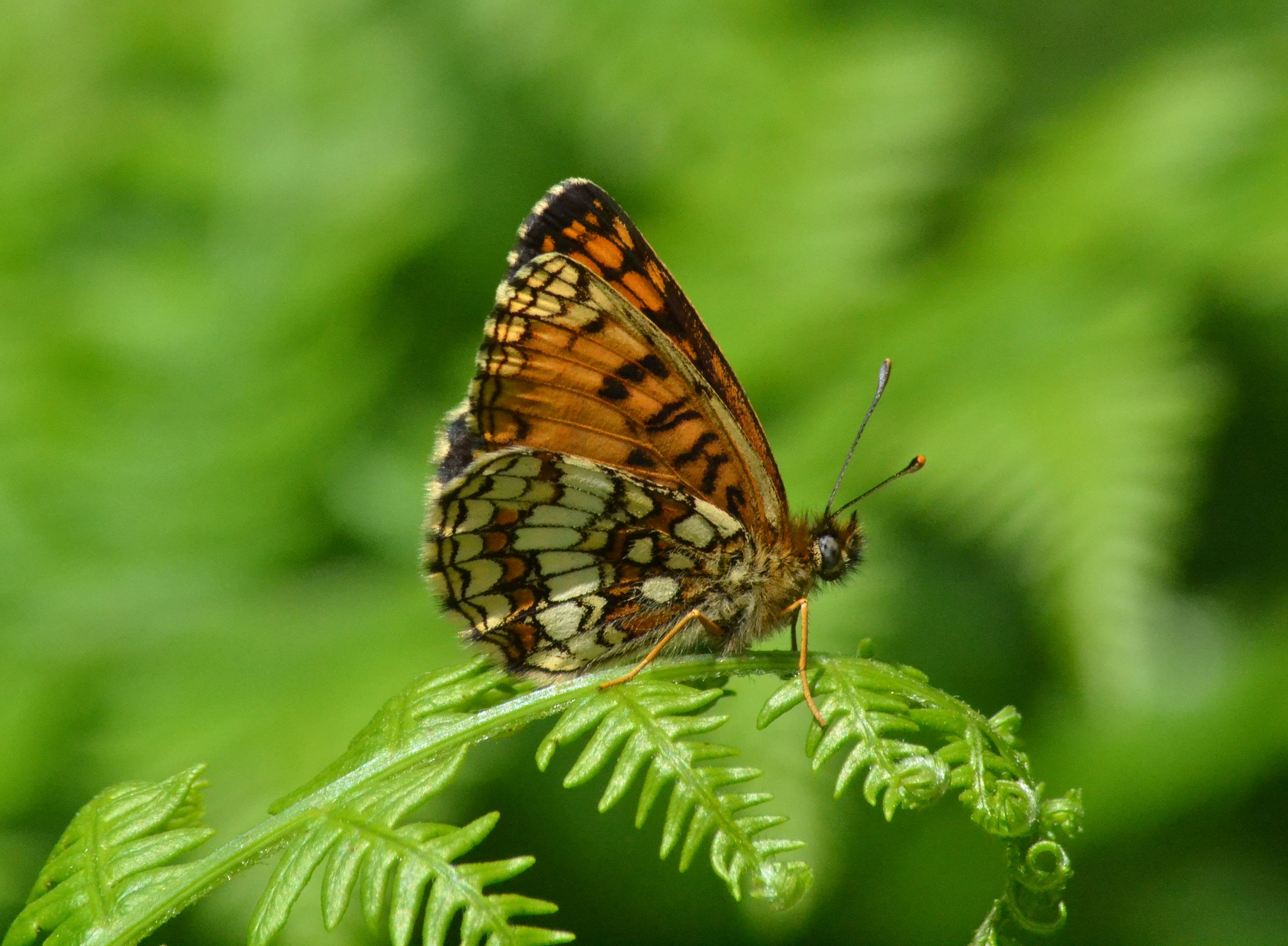
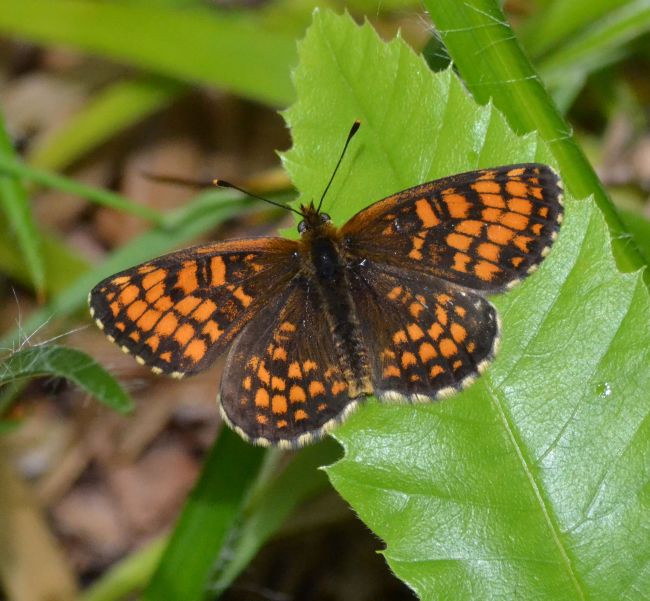
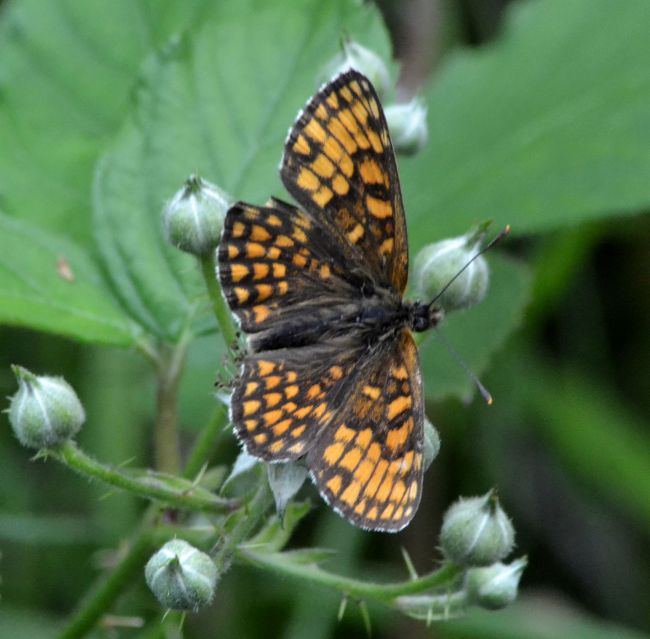
Though common and widespread across mainland Europe, Heath Fritillary (pictured above) is one of Great Britain’s rarest butterflies. It remains here naturally only at today’s ancient woodland site, that accounts for 60% of the national population, and in a few high coombes around Dunkery Beacon on Exmoor in Somerset. There have been re-introductions in a number of other places in south-west England and Essex. I had observed them previously at East Blean Wood in 2015 and Exmoor two years earlier. The two places are very different in character but what they have in common is a lot of bracken.
East Blean Wood NNR (CT3 4JS – TR 194642) lies on a low ridge between Canterbury and the sea and is administered by the Kent Wildlife Trust (see here). Two factors here favour the reserve’s annual star attraction, the Heath Fritillary. Firstly soil is mostly acidic, lying atop poorly drained London clay, so the often damp forest floor is carpeted in part by plants associated with upland heaths. And as for centuries this 122 ha (300 acre) woodland is still managed by coppicing and newly felled areas are quickly colonised by Cow-wheat, the butterfly’s main larval food plant.
At the end of a sunny near 150-mile journey I arrived on site late morning in lightly overcast conditions and so set out a little apprehensively to seek my quest. From that former visit I recalled coming across large numbers of the butterflies in a coppiced clearing, so the question in such a traditionally managed woodland was where exactly such habitat could be found this time around. The sun lovers of my intent are said not to fly in temperatures below 18ºC and to favour habitat where the vegetation has recently been cut, burned or cleared.
HF are therefore mobile from year to year within the overall site since the coppiced areas quickly become unsuitable for both the butterflies and their food plant as broad-leaved tree growth regenerates and shade intensifies. Maximum population size is reached in the first two or three years after coppicing, then populations decline as light conditions become too low and they will die out without continued targeted management.
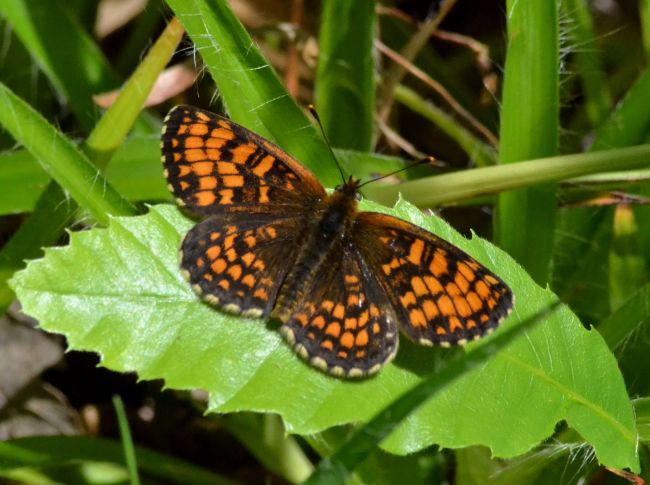
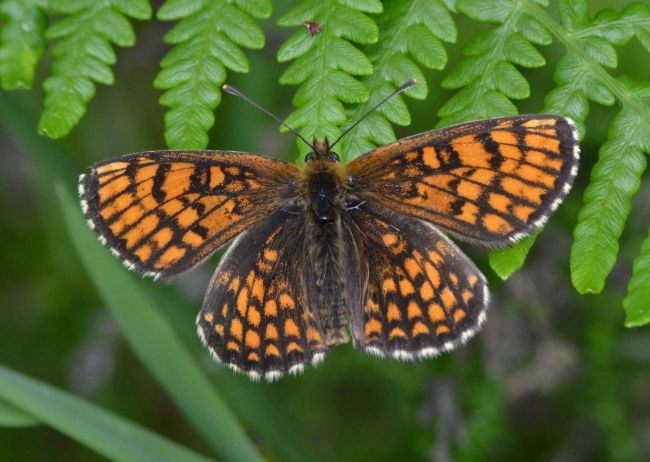
At East Blean numbers declined by 73% over the 20 years between 1984 and 2004 until conservation effort between various organizations restored the population to former levels by 2011. Adults live for between five and 10 days, rarely straying from the breeding site. By 2019 almost 2300 butterflies was one of the highest day counts ever.
Today not re-finding the same locations as last time I followed instinct and tried to seek out more open glades or rides. With the sun breaking through overhead intermittently I began to wonder about re-tracing my steps and trying again, at which point the morning’s first Heath Fritillary settled on some bracken right in front of me. More soon materialised along the track ahead of there, all very fresh looking and I realised I had found a good spot.
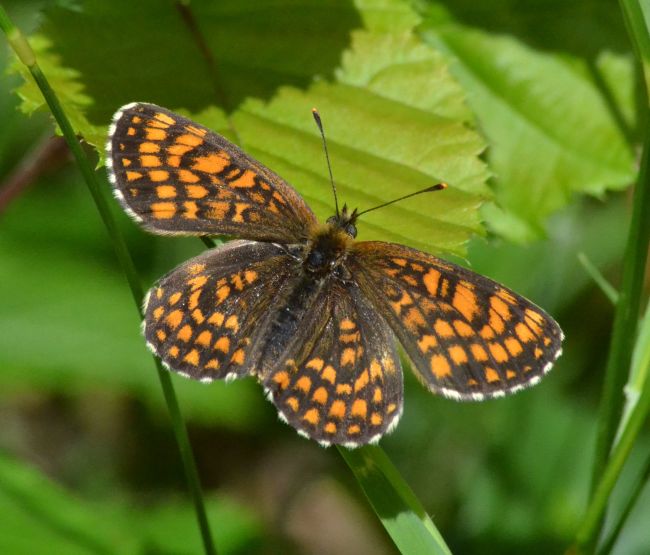
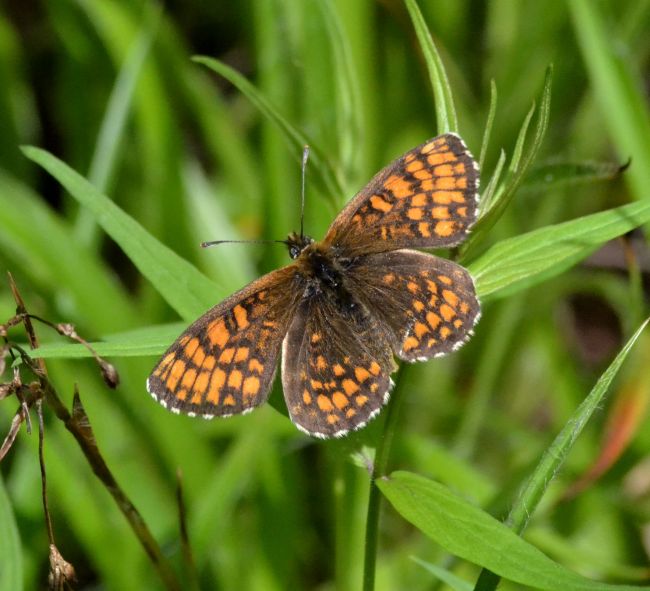
At that early stage in the weather window the butterflies would settle on bracken with their wings turned slightly downwards to bask and absorb heat. Warming up with the day was very much the order of play as more and more insects appeared in bursts of sunshine and were not too flighty. These mostly allowed a close approach, tolerating my “gardening” around them to remove offending bits of vegetation that might spoil the pictures I was taking. As the earlier lingering cloud dispersed the small, delicate brown items with a light flying jizz appeared to be airborne all around.

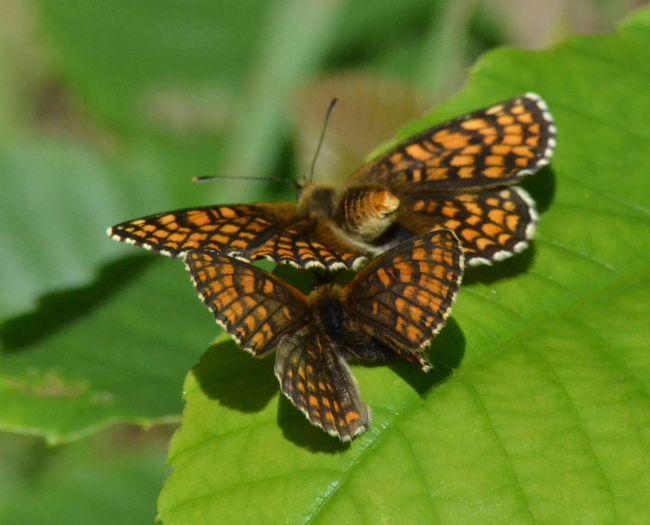
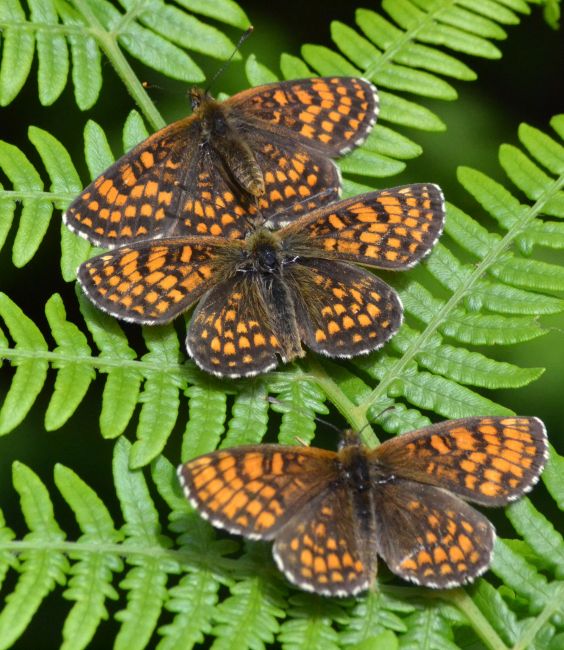
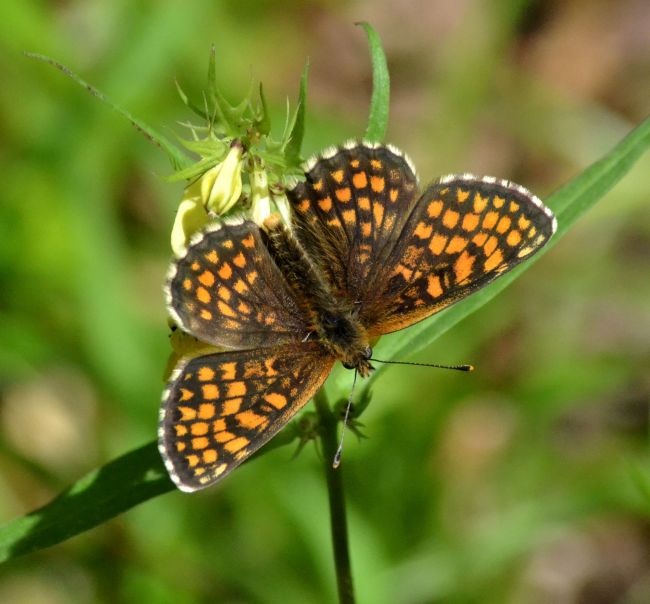
Once warmed up the HF flew more widely and quickly, and the darker toned males soon turned their attention perhaps inevitably to matters in hand. I witnessed several attempts at mating but the females involved did not appear to be receptive. To my untrained eye it seemed there was a lot of sniffing and nudging but not any coupling going on. I had not observed this particular butterfly scenario, as depicted by the above images before.
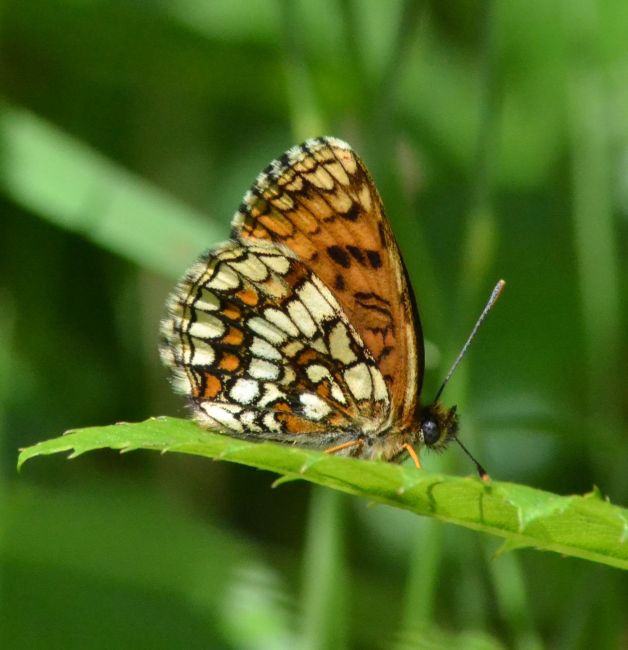
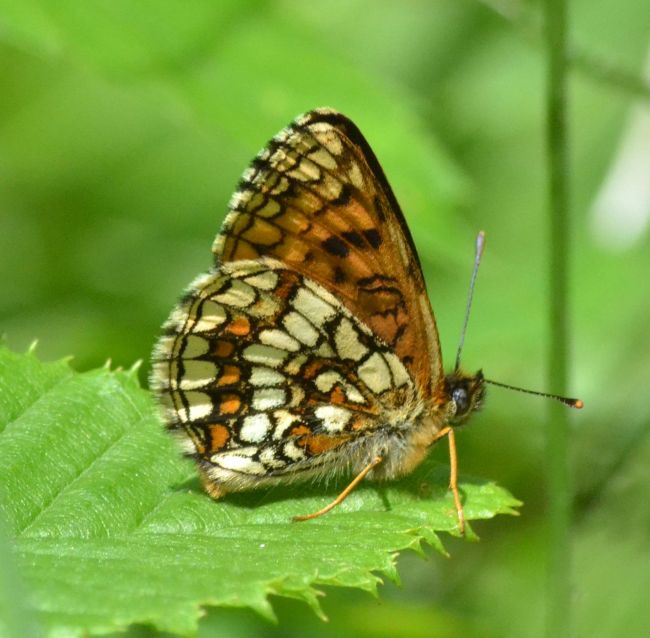
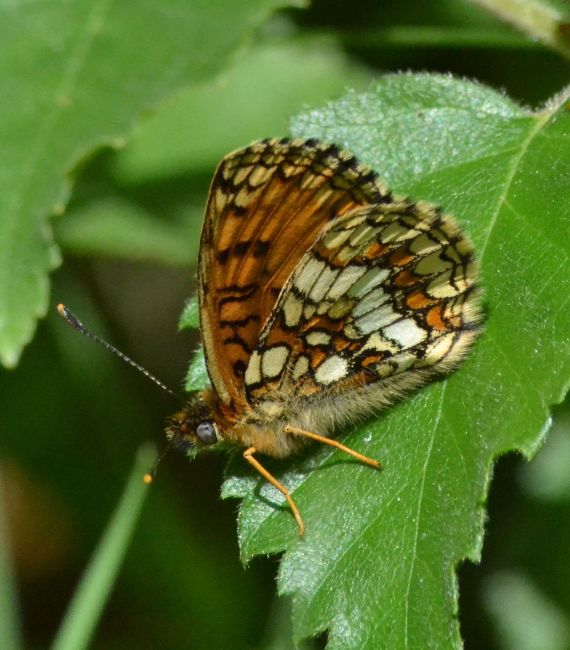
It was also noticeable how the longer suitable temperatures persisted my subjects became more inclined to settle with wings closed. That was especially welcome for gaining difficult to come by underwing studies such as these (above).
I left site at around 12:30pm, encountering more observers on their way out as I walked back to the parking area. They didn’t know where to look, and having had things largely to myself thus far I was able to tell them. So it seemed I had not only been in the right place today but was leaving at the best time. The second part of the Kent double bill now awaited with Green-eyed Hawkers to re-visit five miles onward at Westbere Marsh.
 Ramblings and Scribblings