Well there I was, strolling along minding my own business … no, don’t go there! When so many mushrooms look so similar it has seemed sensible as a beginner to pick out just a few more distinctive items to ramble on and scribble about in this debut autumn season. The Wrinkled Peach (Rhodotus palmatus) is such a fungus, being both a European scarcity and suggested as a strong contender for the title “Britain’s most beautiful” by the First Nature website I have referred to much in the past six weeks. So over five more days I have tracked a located group in the same way as for those earlier Inkcaps and Amanitae.
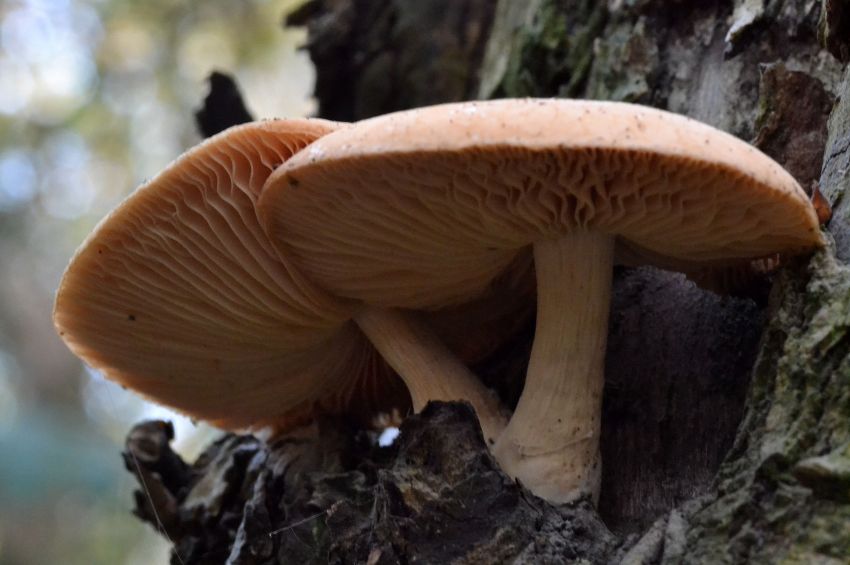
It all began on Saturday (13th) when an Oxon birder alerted me to an easily viewable item within the gravel pit complex at Standlake Common (SP385020) in the west of our county. My more regular birding colleague Ewan had asked in the morning if I was going out mushroom hunting, so I passed the information on together with a picture of the same species another friend had taken elsewhere. Though he had never heard of this particular rarity it appeared Ewan was instantly smitten, and we agreed to meet on site at 2pm. Well he can’t after all have a Varied Thrush (see here) every day!
Most Wrinkled Peach records in the British Isles are from southern England where this fungus prefers low-lying, rotting hardwood in shady locations. Its scarcity is due to a predominant association with Elm, that in Europe has mostly been removed over the last 60 years due to the ongoing blight of Dutch Elm Disease. Young regenerated growth from tainted root stock soon succumbs itself to be cleared over again, but at this site there appears to be an abundance of fallen or still standing, dying or dead trees that the specialist mushroom can colonise.
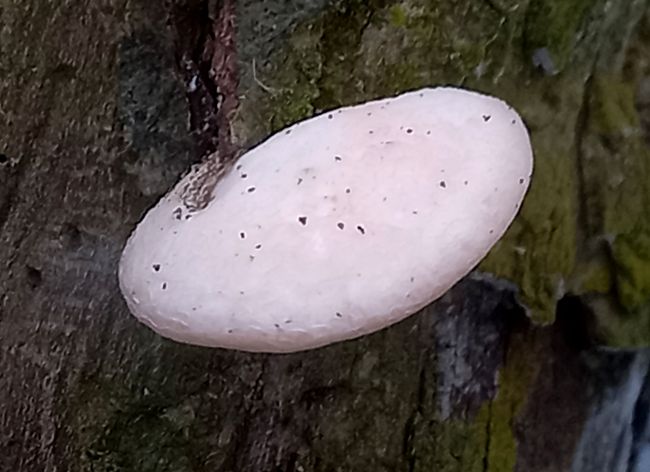
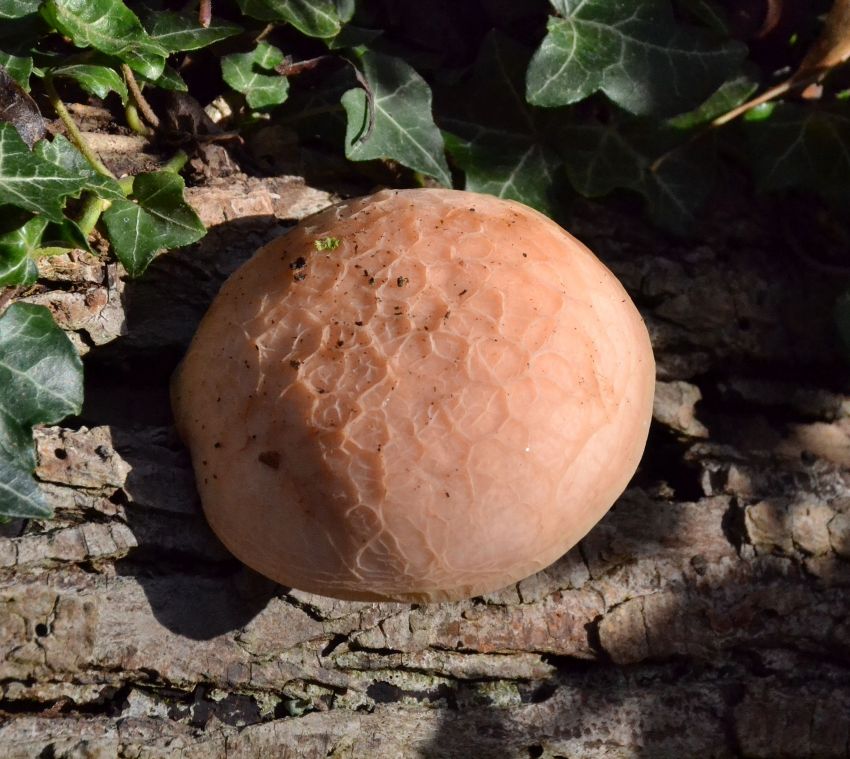
Wrinkled Peach #1 from above 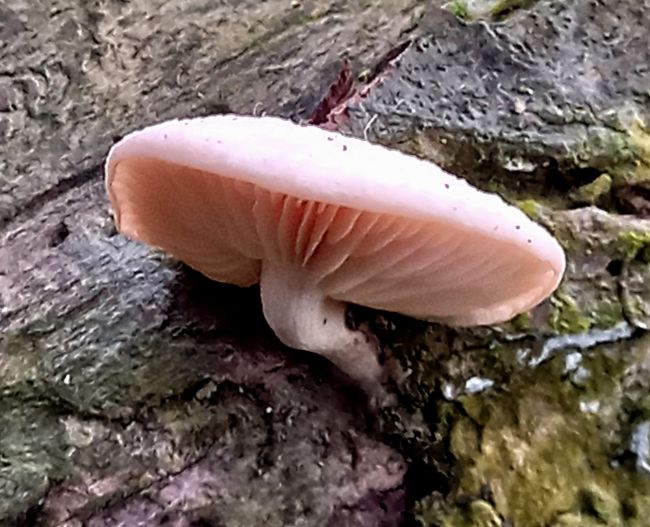
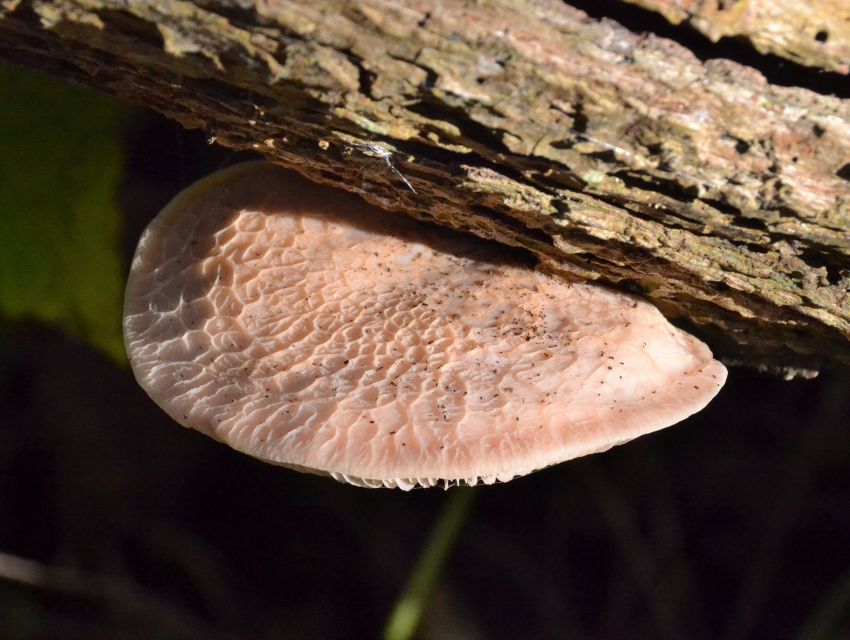
And from below (cap diameter 2cm)
In attempting to follow the directions I had received, our quest proved far from simple to convert. First we located what looked like a very small Oyster-type mushroom and then a second as insignificant fungus, low down to one side of the path we trod. Upon close inspection the latter indeed revealed the pale orange tone of a Wrinkled Peach, but its cap was only 2 cm in diameter … surely the birder hadn’t sent us here to see this. We searched on up and down the path without success before deciding to settle for what was a rather underwhelming outcome. But fate was yet to smile upon us as walking back to the village I noticed five good sized and one small specimen on another fallen Elm.
My companion described this moment as producing the same adrenalin buzz he feels on connecting with the most mega rare birds on hard-core twitches to remote outposts of the British Isles. I was just pleased to get down on my hands and knees, as is my wont to crawl about and record the latest addition to the many fungi I have observed this autumn. In this cluster the specimen in the top row (below) was the most diagnostic, displaying both the salmon-orange tone and network of interconnected ridges that gives the mushroom its name. The surface colour varies depending on the lighting conditions each individual experiences during its development.

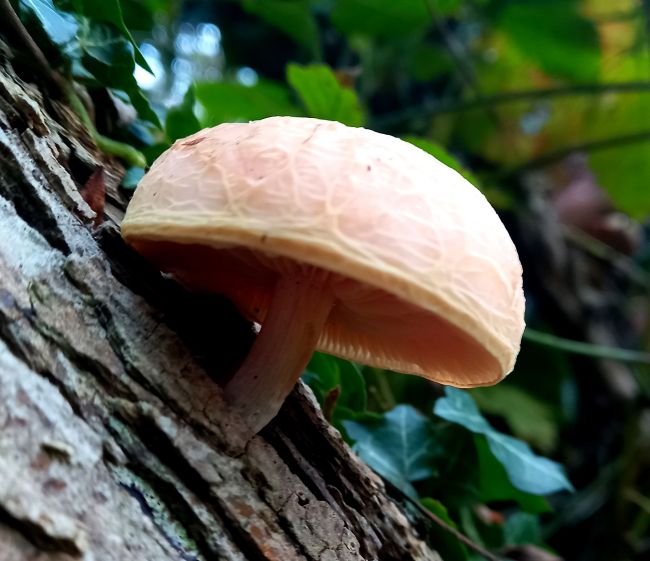
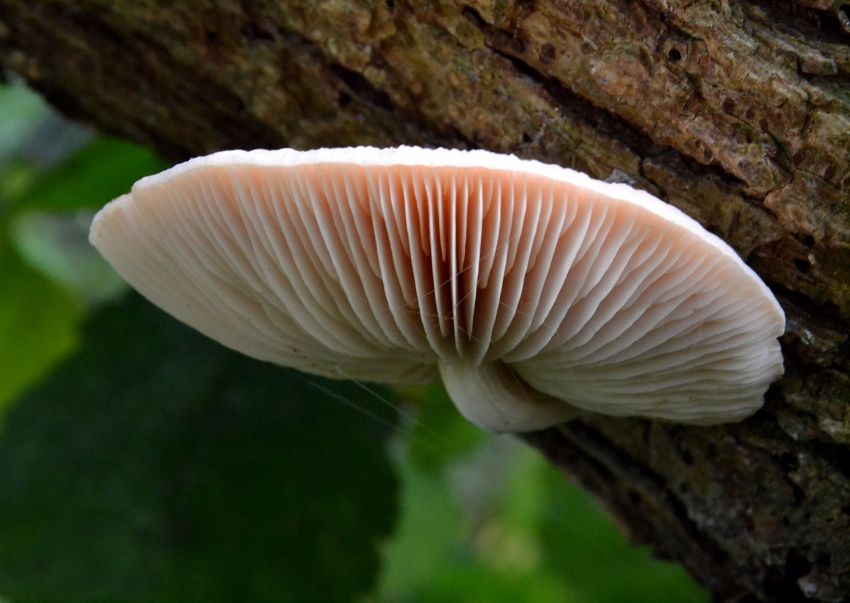
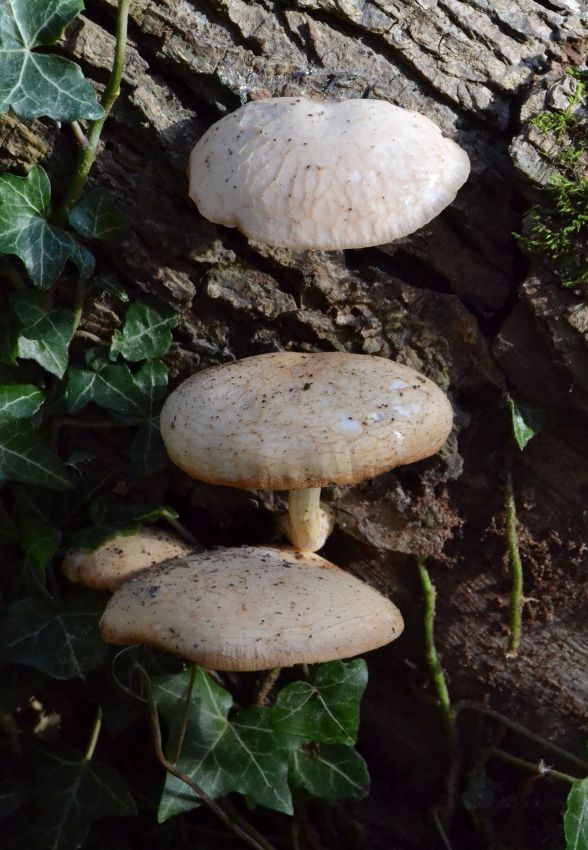
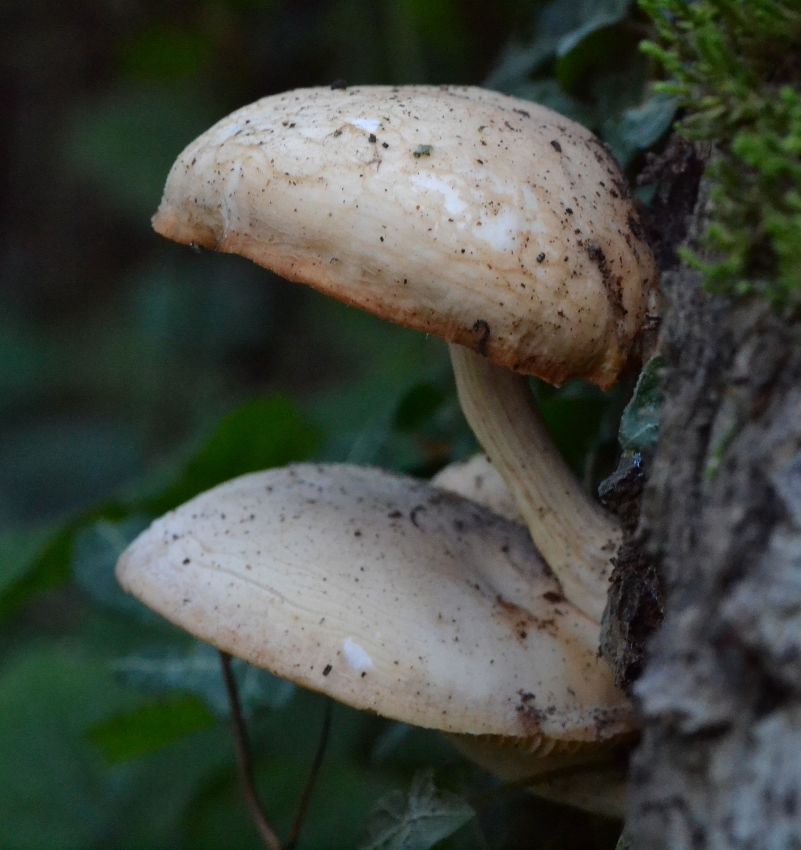
The fruiting body is initially globe-shaped, then becomes convex with an in-rolled margin, and eventually flattens. The cap when fully developed may be from 5 to 10 cm across with a tough upper skin. The un-ringed stem, ranging from 3 to 7cm long and 1 to 1.5 cm in diameter, is most usually curved because of the mushroom’s sideways and upward growing habit. But some images I had seen online were of much brighter and deeper pink or reddish fruits than we now encountered. So I resolved to track progress through the week ahead to see how those pictured above might evolve.
On Monday (15th) I returned in the early afternoon to find Ewan’s car parked at the top of the access lane to the site. As I set off he called to tell me he had found what that other birder must have meant us to see originally. After re-acquainting myself with the group of six I joined him at a spot we both realised we must have walked past without noticing our quest those two days earlier. There before us, six feet up on a dead though still upright Elm was an entity of true beauty: a double Wrinkled Peach (# 7 & 8 – pictured below), each stem inclining seductively in outward directions and upwards to reveal the gills from below.

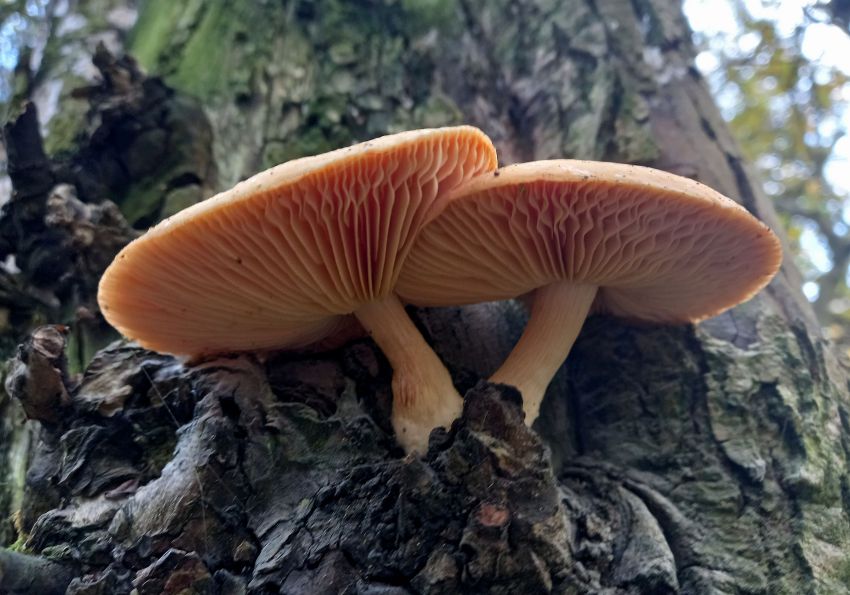
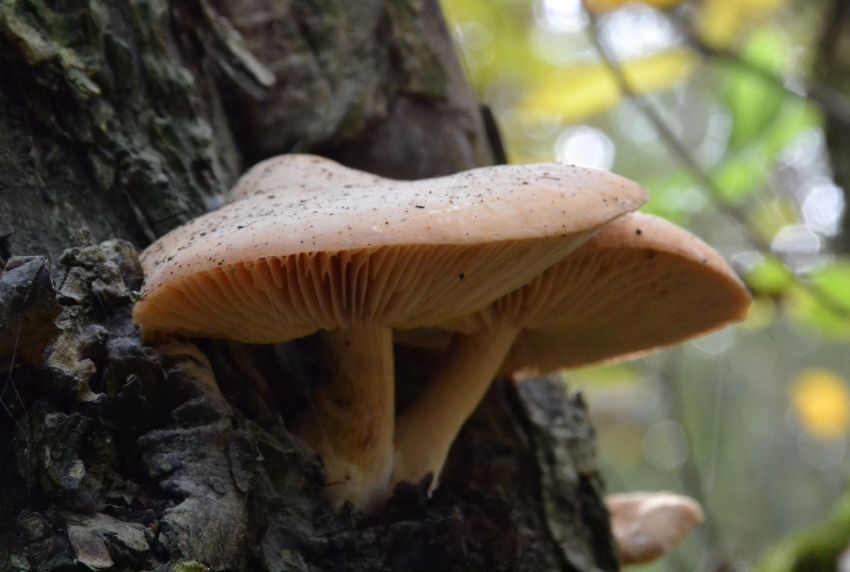
We also located three more small specimens nearby (pictured below), one of which offered a valuable lesson. Now I realised the most brightly coloured and strikingly patterned WPs I had seen pictures of online were emergent fruits. The one below left was no more than 1.5 cm in diameter and also showed bleeding red droplets on its stem. This weeping, known as “guttation” and lasting through the fruit’s life, is a curious and not fully understood process shared with certain other species, especially polypores. By this stage we had located 11 WPs at an apparent hotspot.

Wrinkled Peach #10 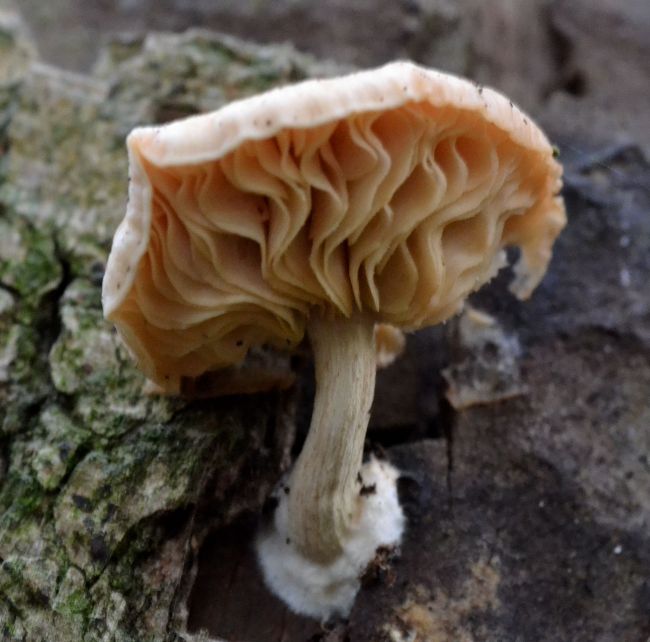
Wrinkled Peach #9 
Wrinkled Peach #11
On my third visit here I was most concerned to track the progress of what I dubbed the “bright little peach” (above left). In the sequence (below top row) it had grown slightly and the guttation on the stem was very apparent. But a day later I was told the little gem had been dislodged from it’s host bough, possibly by a bird or squirrel, and so that was an end of things. On 17th the first specimen (#1) found on day one had also disappeared.
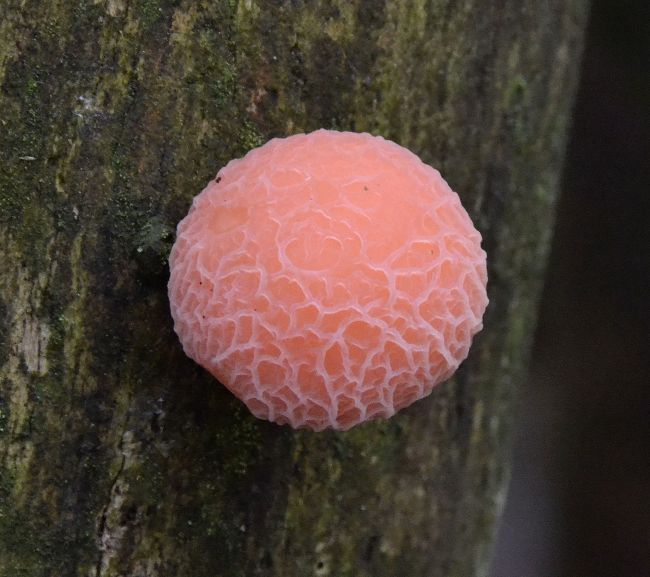

Wrinkled Peach #10 (all images) 
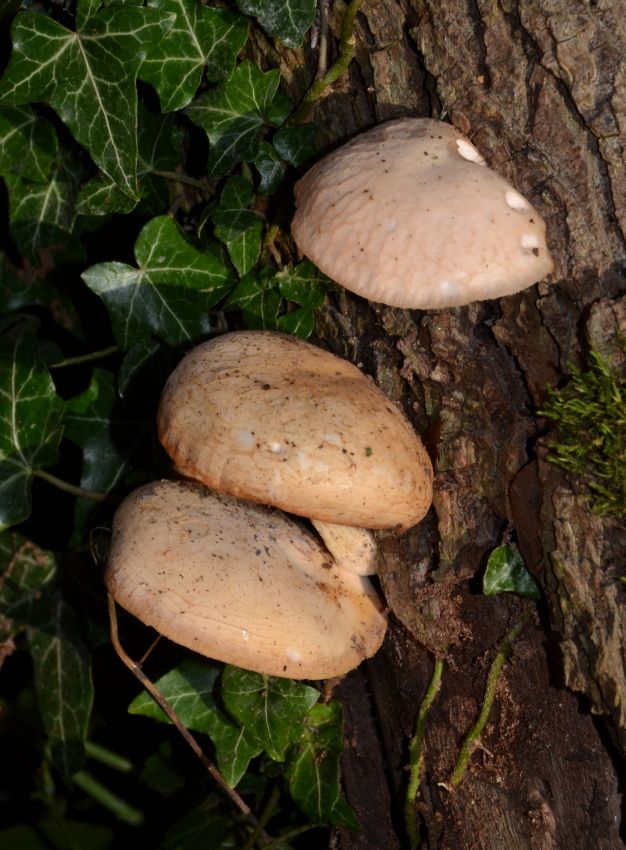
By this fifth day of my study period the group of six from day one were also looking more peachy in tone (above, second row). Something else that seemed really noticeable throughout my interest in the group were how, unlike most of the mushrooms I have featured recently, this tough-skinned one does not seem to be attacked by maggots, slugs and all manner of other munchers.
And with that final observation I shall now stroll, or ramble on.
 Ramblings and Scribblings