My attention was caught earlier this week by a report of hundreds of Small Blue butterflies at a site on the South Oxon Downs. And what made that record all the more alluring was the mention of several Duke of Burgundy at the same place. I recalled being told several years ago of a Duke colony in the vicinity by a mysterious and enigmatic downs-man of local repute who is known by the epithet of “The Keeper”. But the location (as was his wont) had not been forthcoming. Now maybe word was out, at least for myself.
My local butterflying so far this season has been concentrated at Watlington Hill on the Chilterns escarpment, with spring specialities Green Hairstreak, Dingy and Grizzled Skipper, Brown Argus and Common Blue all recorded. But I’m not sure whether Small Blue occurs at that adopted patch, and Duke of Burgundy certainly doesn’t. The popular site of choice for the latter this season seems to have been Incombe Hole (see here) in north Bucks, which hence was bound to be a circus that my current petrol-saving mode gave a second reason to avoid. Now, today’s previously unvisited alternative offered an evolved experience, such as I seek for each of the title butterflies of this post.
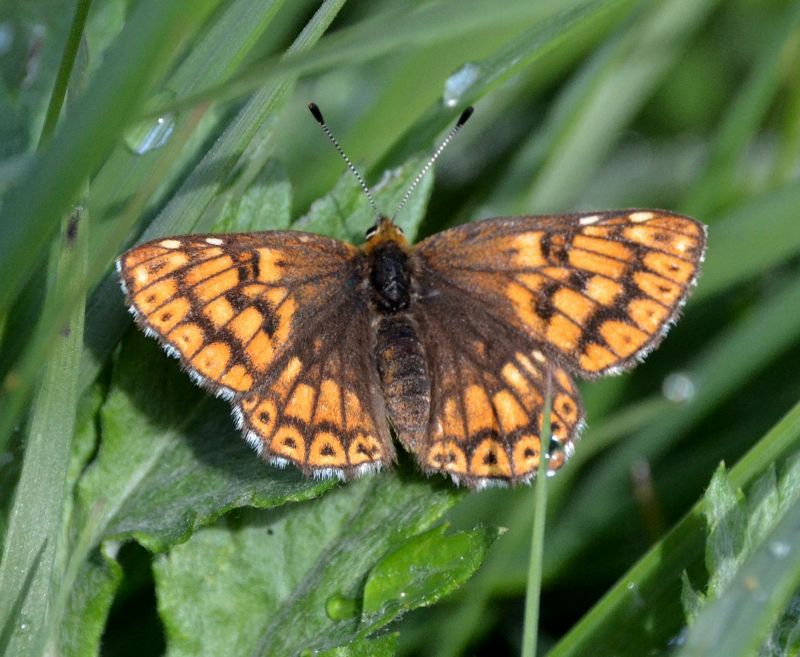
So this morning I went to check things out. Parking at the roadside and walking along a right of way I quickly noticed large numbers of Small Blue in the trackside vegetation. Then, as soon as I found Cowslips I beheld a first Duke of Burgundy, though it was quite a worn specimen. Shortly afterwards the female in the picture (above) announced herself, and that was job done. This much sought species is reaching the end of its flight season now, but I had recorded it rather agreeably for another season.
I believe this is a remnant and fragile colony of Dukes and so will not publish the precise location herein. The BC Upper Thames Branch Atlas of Butterflies, published in 2016 cited just three remaining colonies on Lambourn Downs, of which one is private and specially managed for the species. Elsewhere in the survey region, DoB is restricted to a strong population at the Ivinghoe Beacon / Incombe Hole complex of north Bucks, and a smaller one at Bradenham in the same county. The only other recorded Oxon colony of living memory at Aston Upthorpe Downs near Cholsey and Blewbury has long been extinct.
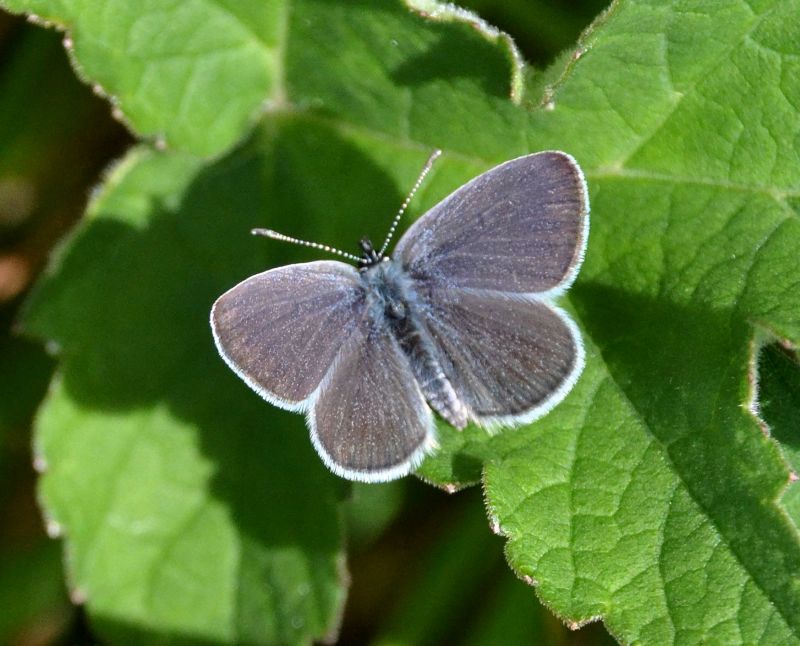
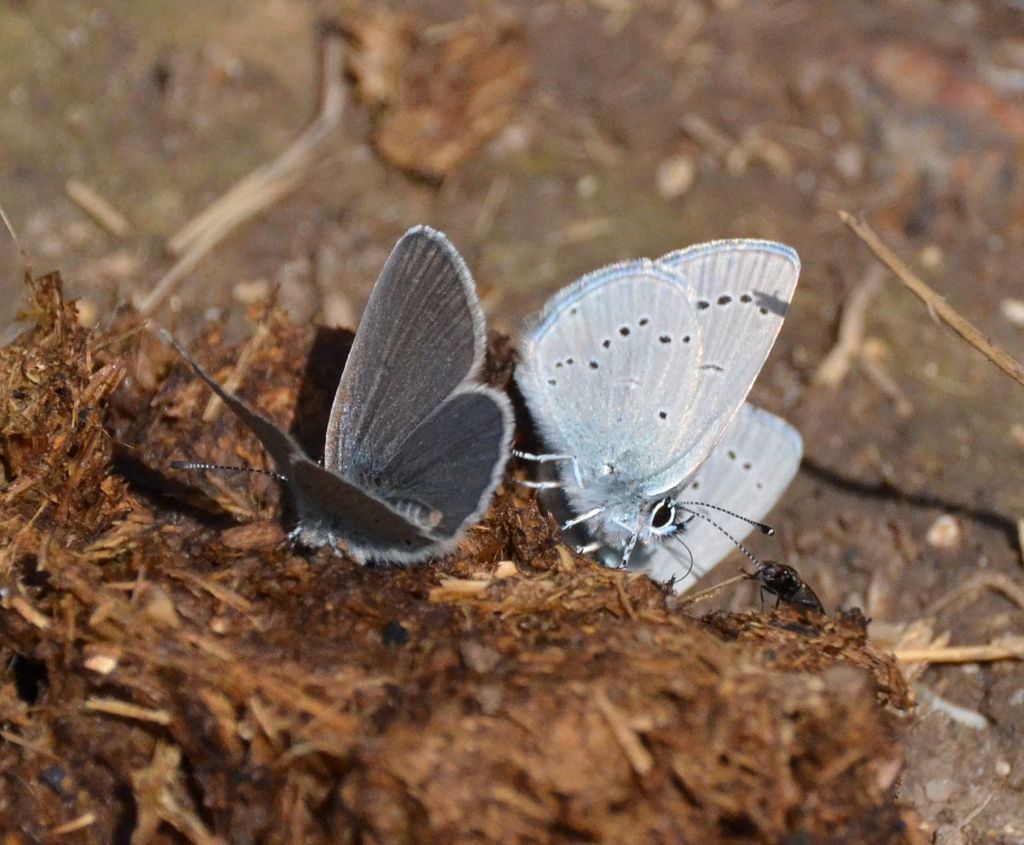
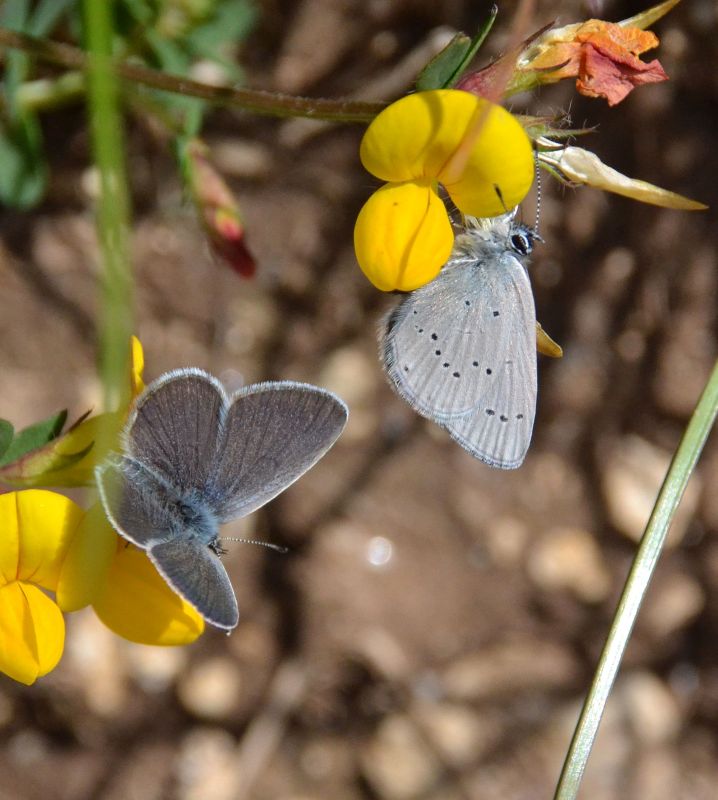
All along the track a profusion of Small Blue (pictured above) continued, the most I have ever seen in one place. Brooks and Lewington describes such large occurrences of this most diminutive of British butterflies as few and far between, with the vast majority of colonies containing no more than 30 adults. These typically breed for many generations in very sheltered downland conditions where the soil is thin and unstable and the plant cover sparse and warm. Embankments, old quarries and dunes are all favoured habitats.
Emergence usually begins in mid-May with numbers peaking around three weeks later. A few may linger into July, almost overlapping with a small second brood. Adults are highly colonial, often being confined to no more than 200 sq m of land supporting perhaps two dozen Kidney Vetch food plants. As I saw today, males gather in sheltered, sunny hollows at the foot of slopes, perching for most of the day with wings half open 30 – 120cm above the ground and spaced 1 – 2 metres apart. Females visit these perching sites to be mated and thereafter avoid them.
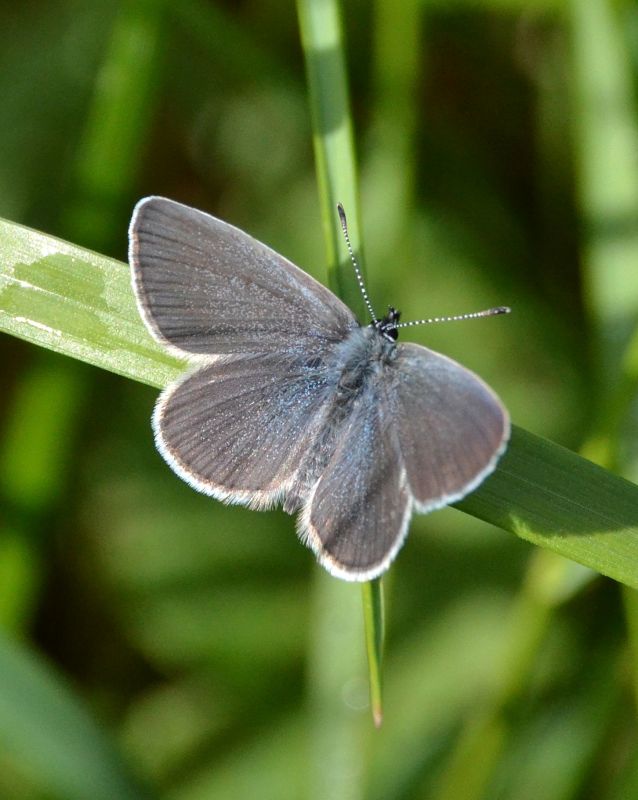
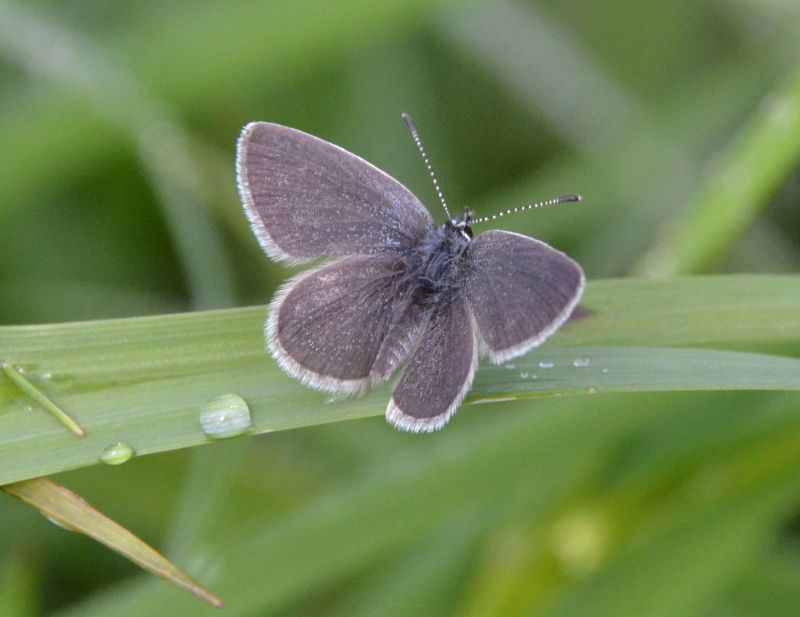
Today’s experience afforded the opportunity to witness most of this behaviour, but not mating. In the past I have concentrated my Small Blue attentions in Oxfordshire mostly to the Ridgeway above the Devil’s Punchbowl near Wantage, Lowbury Hill above Aston Upthorpe that is now plagued by off-road motor cyclists, Lardon Chase above Streatley, and Hagbourne Railway Embankment. Today’s encounter with what is one of my favourite British butterflies was by far the most instructive and rewarding to date.
The Duke of Burgundy posts in this journal from different out of county sites have been well referred to over the last eight seasons, reflecting the enduring popularity of a much-sought item amongst British butterfly enthusiasts. For archive detail on the species see:
Duke of Burgundy at Incombe Hole, Bucks – 27 & 30th Apr 2021 – 178 views
Pearl-bordered Fritillary, DoB et al at West Wood Hants – 20th & 21st May 2019 – 356 views
Marsh Fritillary, DoB et al at Battlesbury Hill, Wilts – 19th May 2018 – 879 views
DoB @ Heyshott Down, Sussex and Noar Hill, Hants – 8 & 10th May 2018 – 110 views
Duke of Burgundy at Noar Hill, Hants and Butser Hill Sussex – 4 & 5th May 2018 – 192 views
Duke of Burgundy at Noar Hill, Hants – 20th April 2015 – 313 views
 Ramblings and Scribblings