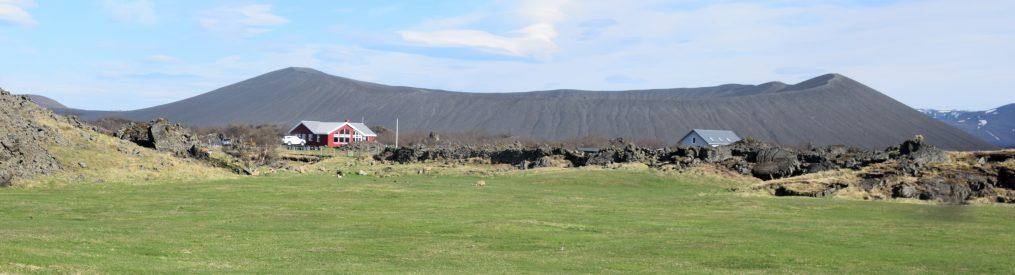
For my first holiday in three years I chose a week’s itinerary in the Scottish Highlands run by Glenloy Wildlife. Such group tours are not my natural habitat but with the potential for 10 lifers across odonata, butterflies and mammals, plus two British bird list additions, this was a case of needs must. I would be unlikely to observe that wildlife going solo.
The prime focus was intended to be the northern odonata – Azure Hawker, Northern Emerald and Northern Damselfly. Proper Scottish Chequered Skipper if any were still flying, and Mountain Ringlet given the right weather conditions, were also possibilities. Where birds were concerned I was pleased to add Golden Eagle (376) to my British list though we were not lucky with Crested Tit.
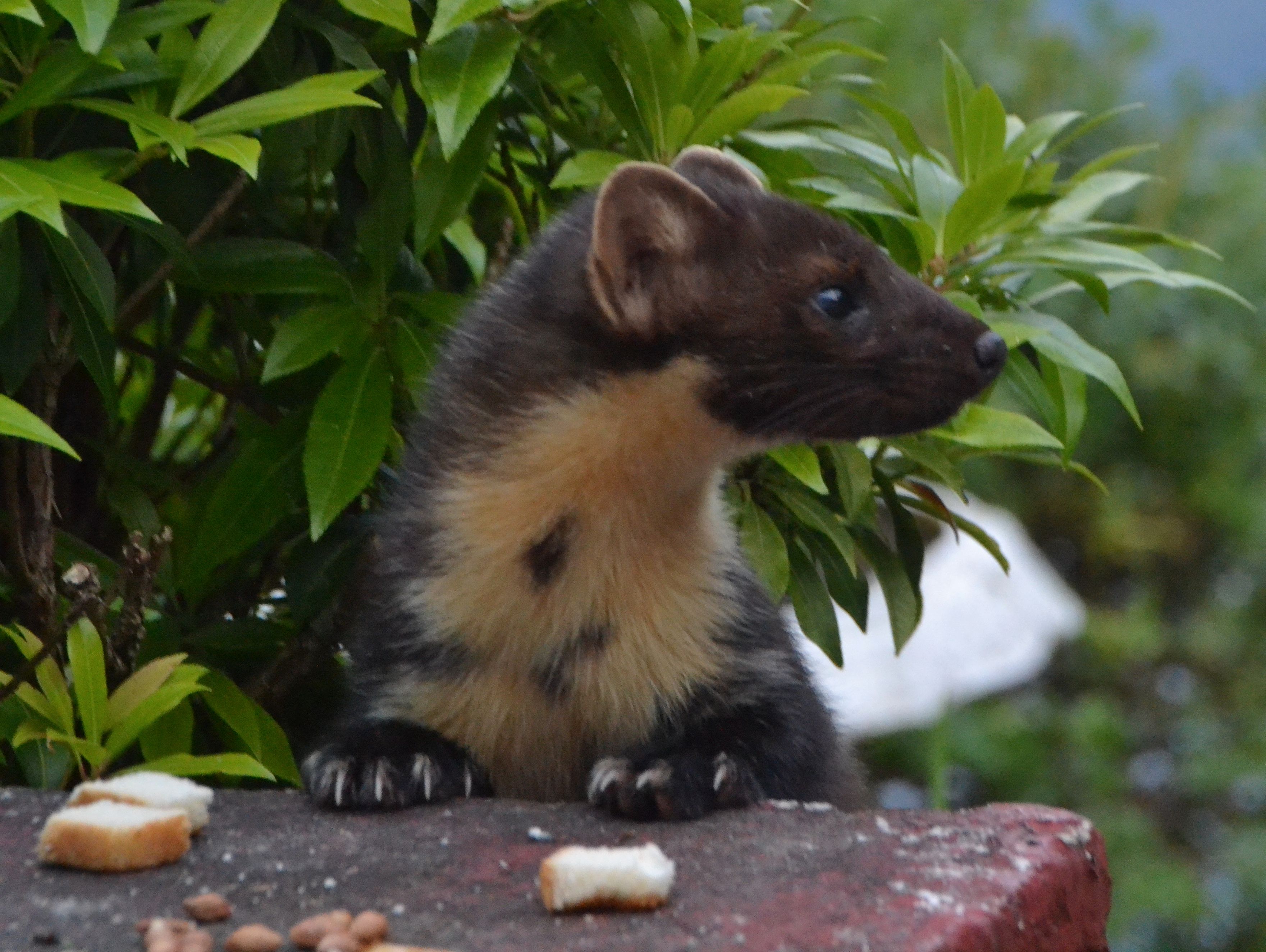
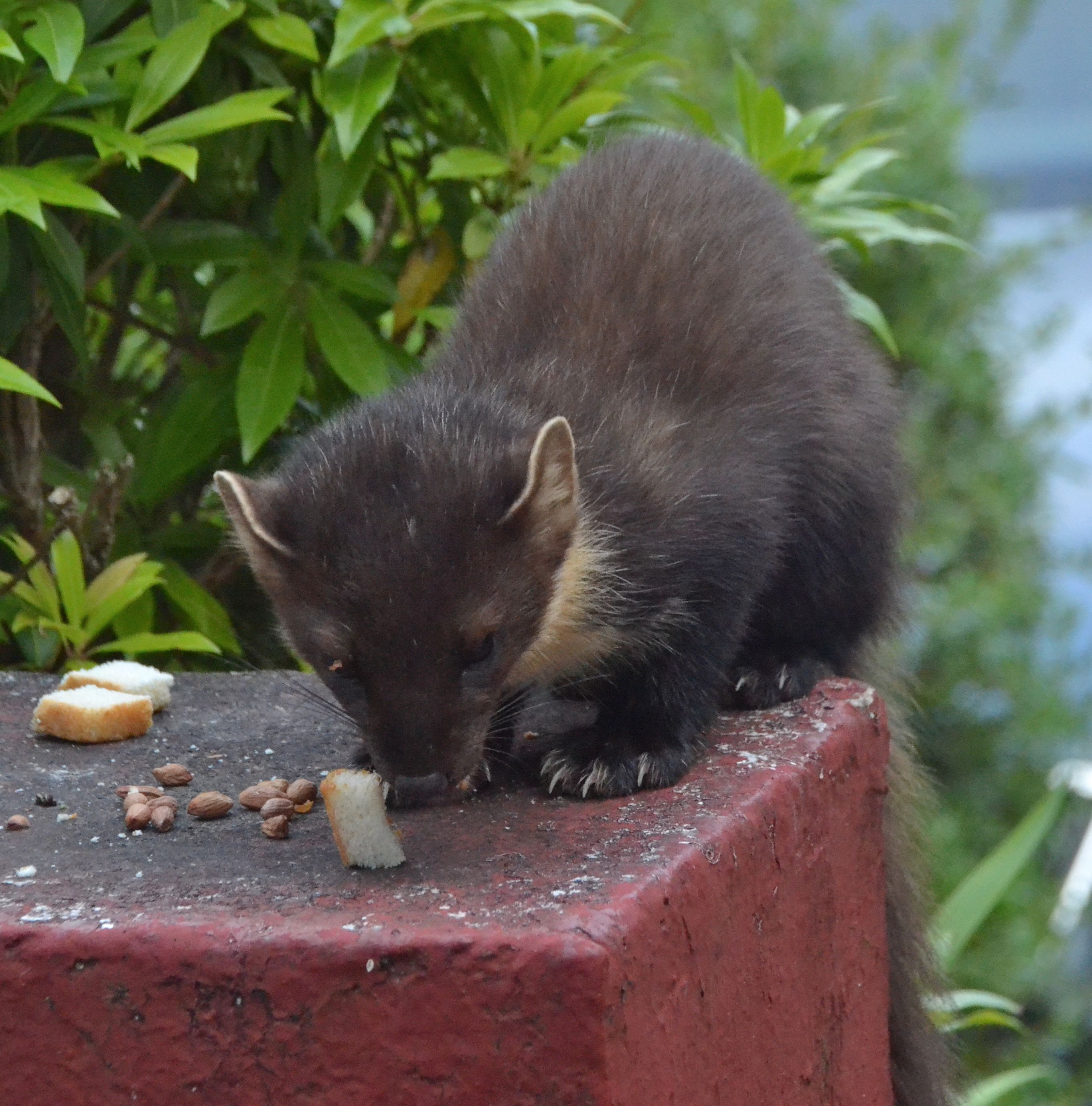
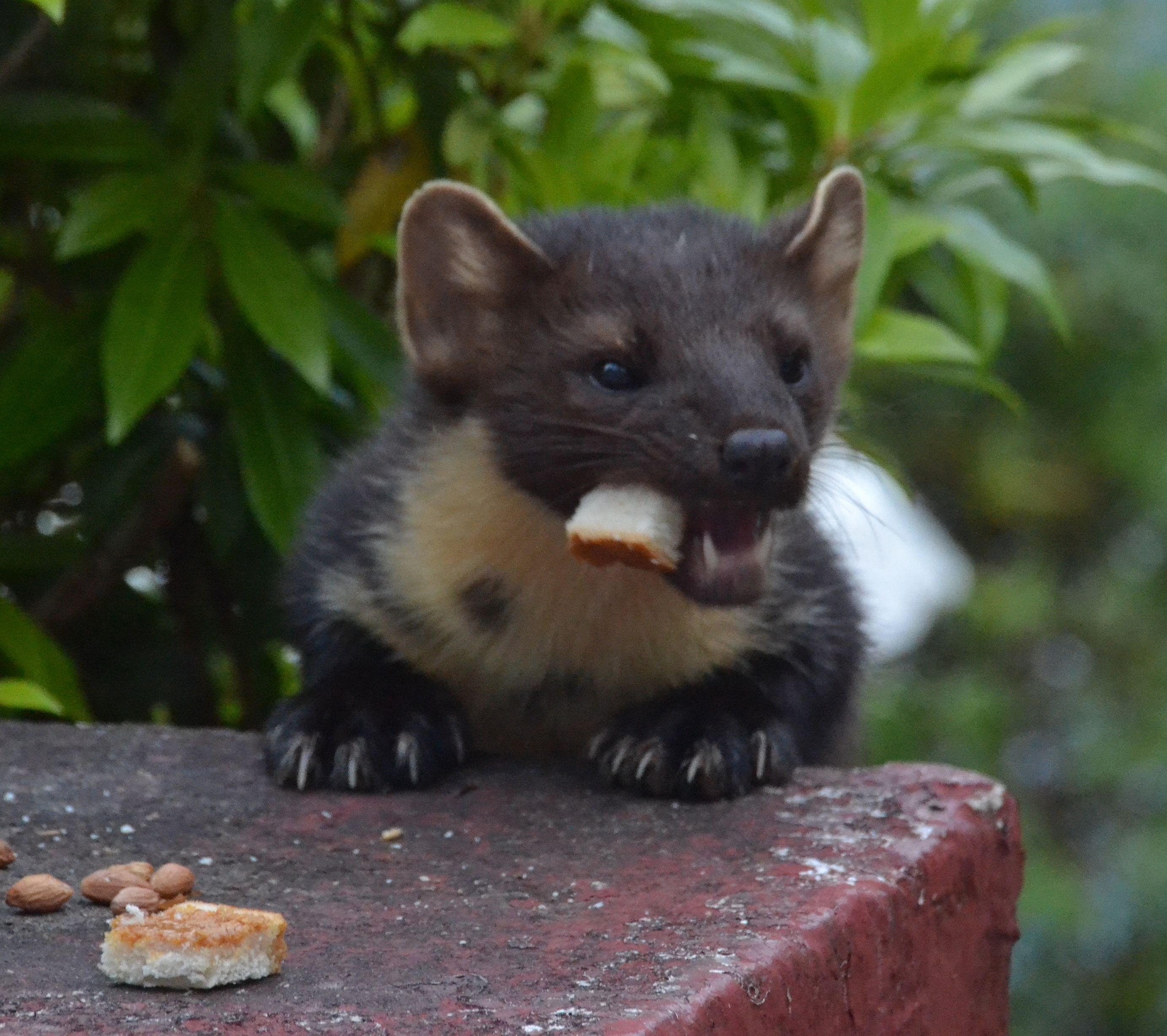
In the event the most successful area was mammals, with my first experiences of Pine Marten, Red Squirrel, Otter, Red Deer and Sika Deer all gained; and good observations of Common Seal and Dolphin. Of those the first two are resident in the grounds of Glenloy Lodge (NN118778) which is run by Jon and Angela Mercer. Each evening food is put out for the Pine Martens, while the Red Squirrels come to bird feeders through the day.

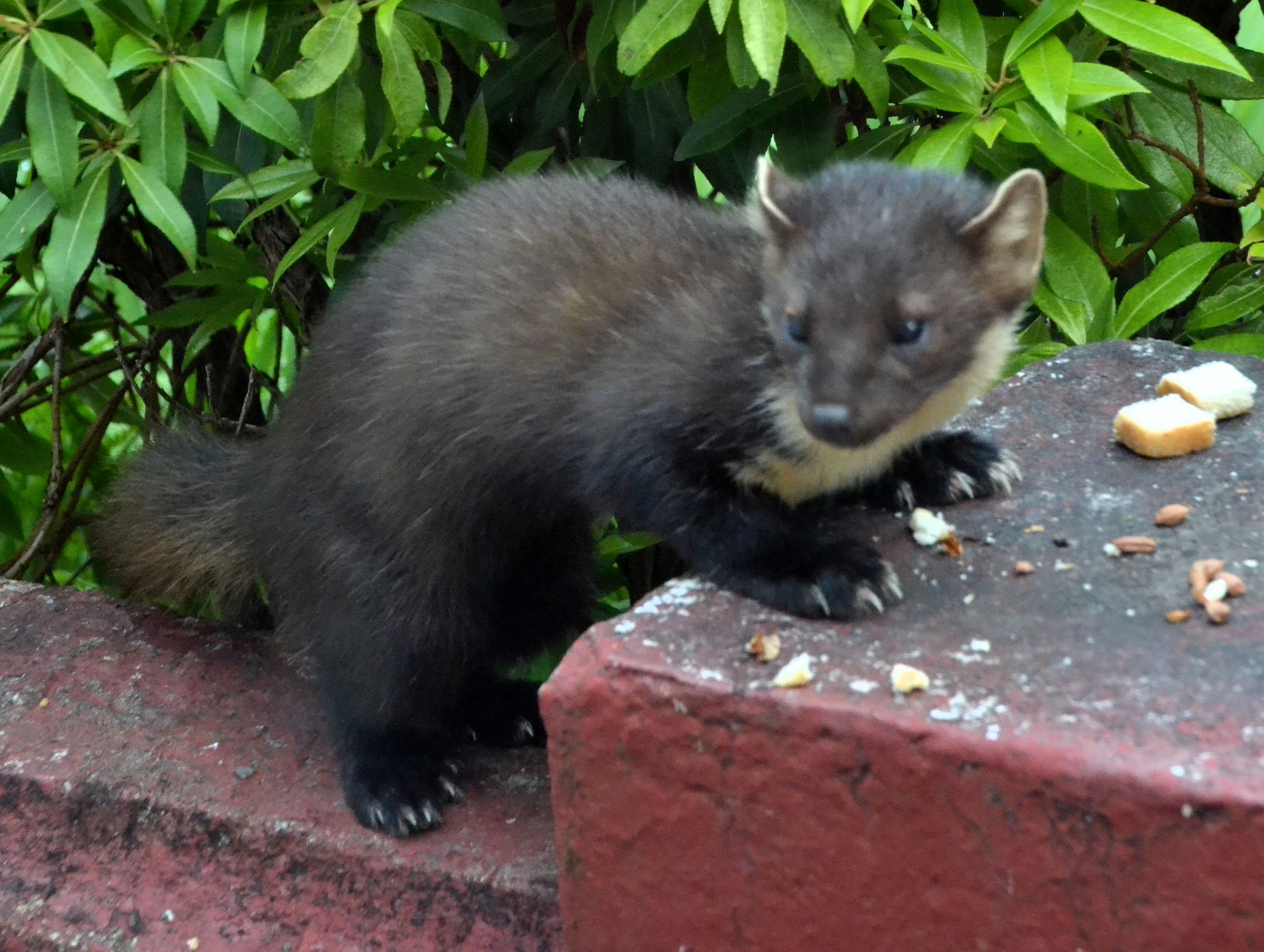
Pine Marten occurs widely across most of continental Europe, Andalucia, the Caucuses and parts of the middle east. Generalist predators, they have territories that vary in size according to habitat and food availability. Their dens may be found in hollow trees or the fallen root masses of Scots pines. In the British Isles most of the population is confined to the Scottish Highlands north of the central belt as well as the Grampians, preferring well-wooded areas with plenty of cover. Though they have increased their range in recent decades this remains one of the rarest British mammals and I would not expect to observe them other than in situations where they are attracted by man-made feeding opportunities.
These animals become active hunting and foraging at dusk, and at Glenloy Lodge usually appear from around 8:30pm onwards. There is a sun lounge on the front of the building outside which the Pine Martens’ food is laid out and each evening through my stay a female and two juveniles put on a show for the paying guests. I also saw the resident male once on the squirrels’ nut feeders in the morning. These (below) are the best of my pictorial records, captured through the double glazing of the sun lounge, some of which depict a juvenile … Aaaaw!

The early shift in the mornings was manned by the Red Squirrels that on some days I watched before breakfast. Ever since childhood I have read of how this native British mammal has been negatively impacted by the introduced north American Grey Squirrel, a story that has not changed too much in all those years. Now I was experiencing the fabled national original for the first time.
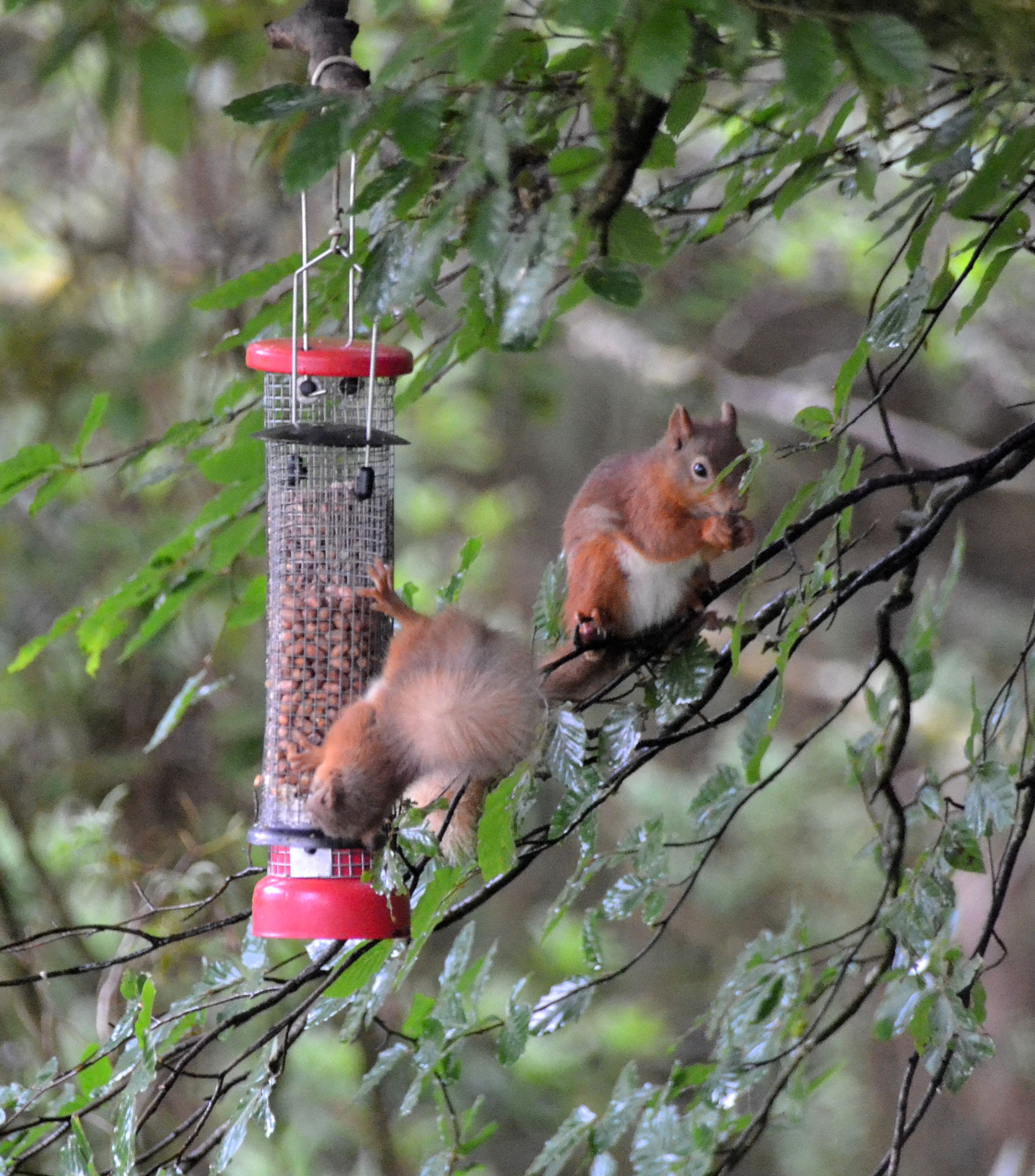
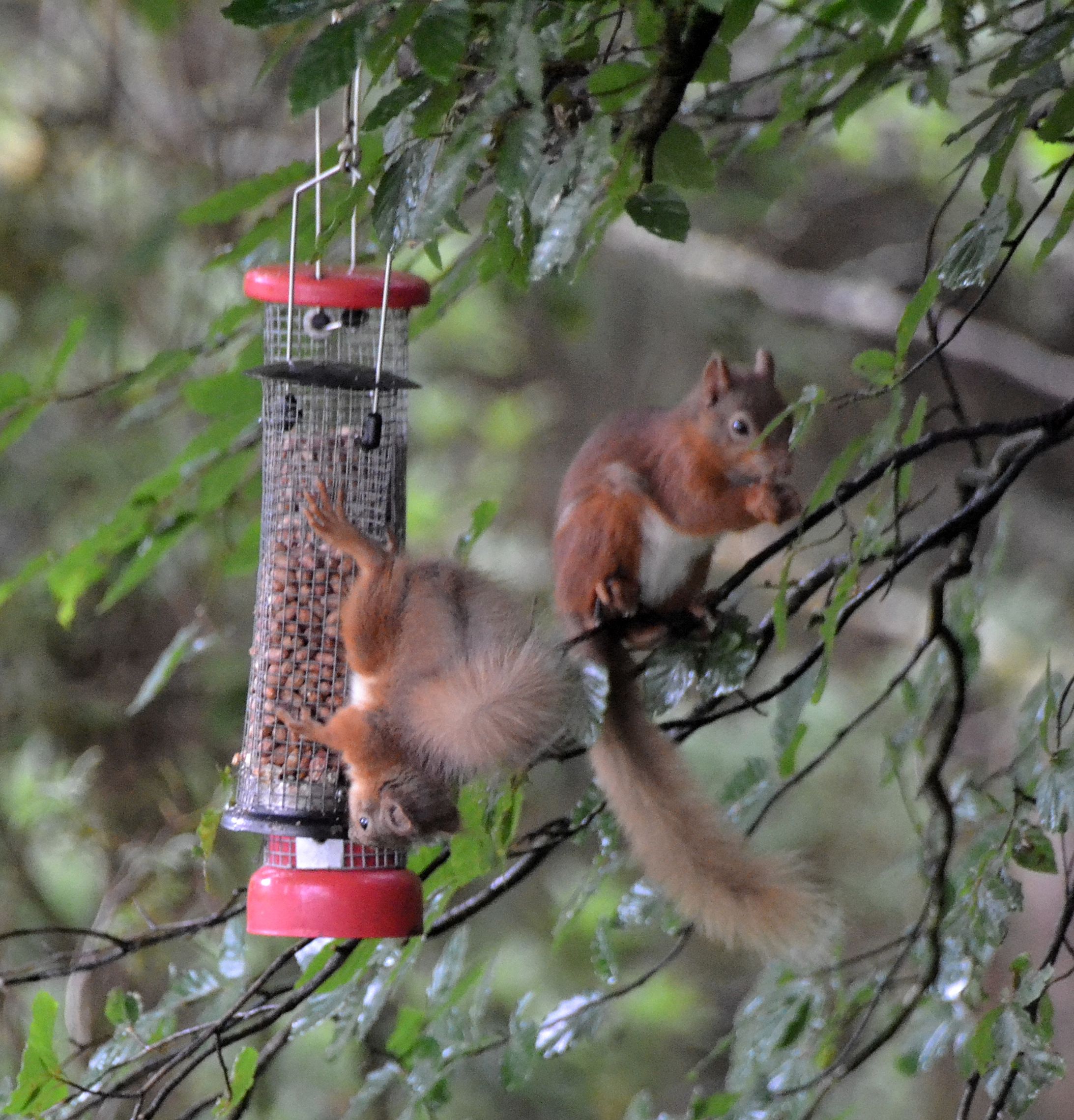
Red Squirrels occur across the Taiga zone of northern Europe and Siberia in coniferous woodlands, favouring Scots and Siberian Pine and Norway Spruce. They also inhabit broad-leaved woods in western and southern Europe where the mixture of tree and shrub species can provide better year-round food sources. But they have long been driven out of this habitat in the British Isles by the larger and more competitive Grey Squirrel that exploits the feeding opportunities to its own advantage.
Red numbers are said to have stabilised in Scotland, where 85 per cent of the British population of around 287,000 is now found. Increased Pine Marten numbers actually help the situation since the latter predate and hence help to control Grey Squirrels. Reds could actually live in most rural, suburban and even some urban habitats as long as there is no threat from greys. So conservation management in locations where reds have been re-introduced must keep the two species apart as they cannot live together long term. Such work is essential if the Red Squirrel is not to become extinct in the British Isles.

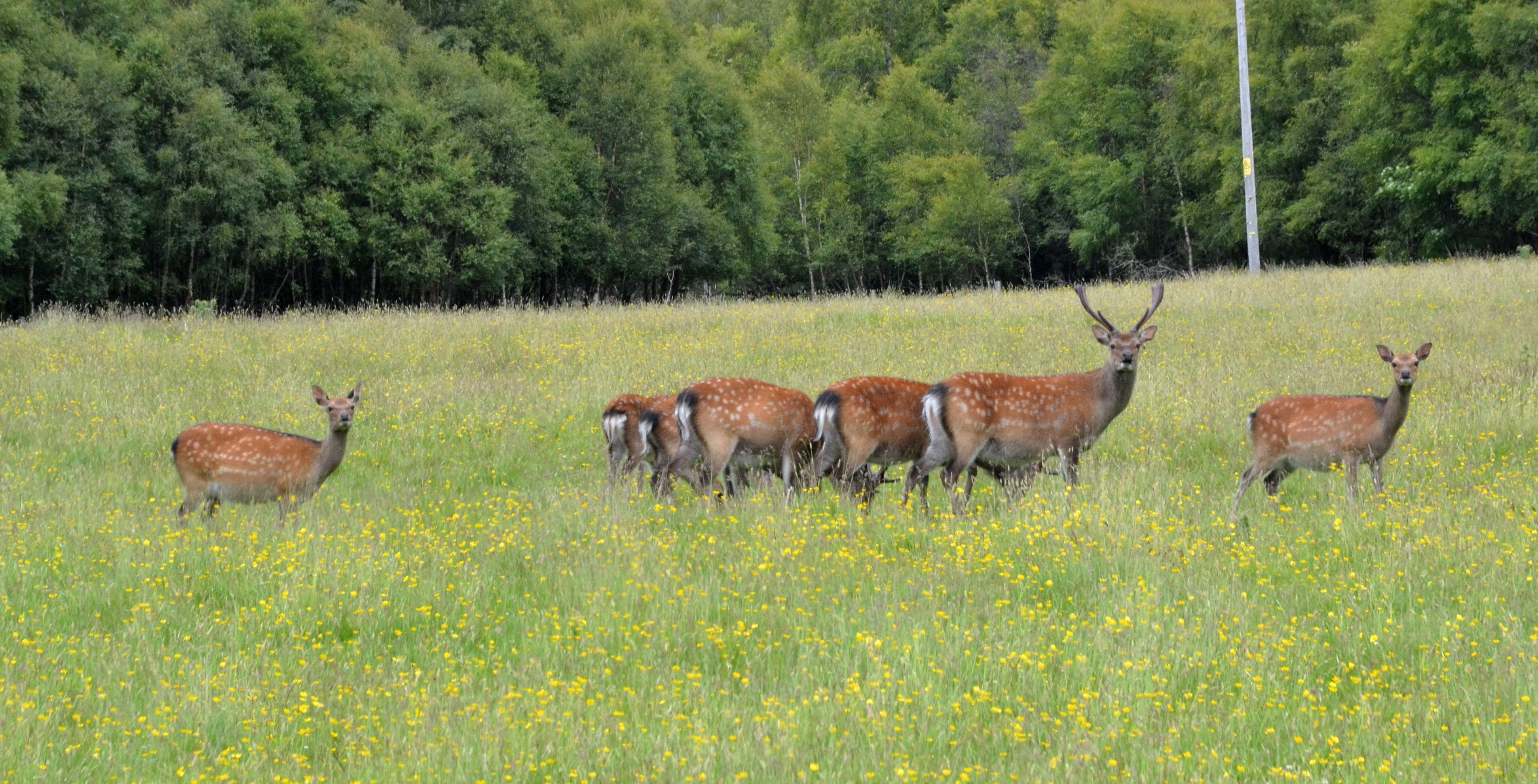
Red (left) and Sika Deer
Driving around rather too much in the tour minibus, in the absence of fieldwork opportunities for odonata, native Red Deer and introduced Sika were encountered fairly regularly. Red Deer is the largest British land mammal, widely distributed and expanding in range and number, and native stock is common in the Scottish Highlands. The distribution of Sika Deer too in Scotland is widespread and expanding. Their preferred habitat is coniferous woodland and heaths on acid soils.
Sika were first introduced from the far east and especially Japan in the 1860s. They are similar in coat colour to Fallow Deer with a distinctive black and white rump, and there is often a dark-coloured dorsal stripe running the length of the back. Populations of both these featured deer species require careful management to maintain health and quality and ensure a sustainable balance with their environment.
Surprising as it may seem it has also taken me this long to experience my first Otters, as well as the scarcer mammals that headline this post. A probable family group of four were encountered on Loch Linnhie to the south-west of Fort William on 28th. Lastly there were Common Seal in the same area then from a boat trip from Arisaig on 30th. After my superb experience of the Atlantic Grey Seal breeding colony at Donna Nook, Lincs in November 2019 (see here) it was now very pleasing to follow suit with these smaller, scarcer cousins.
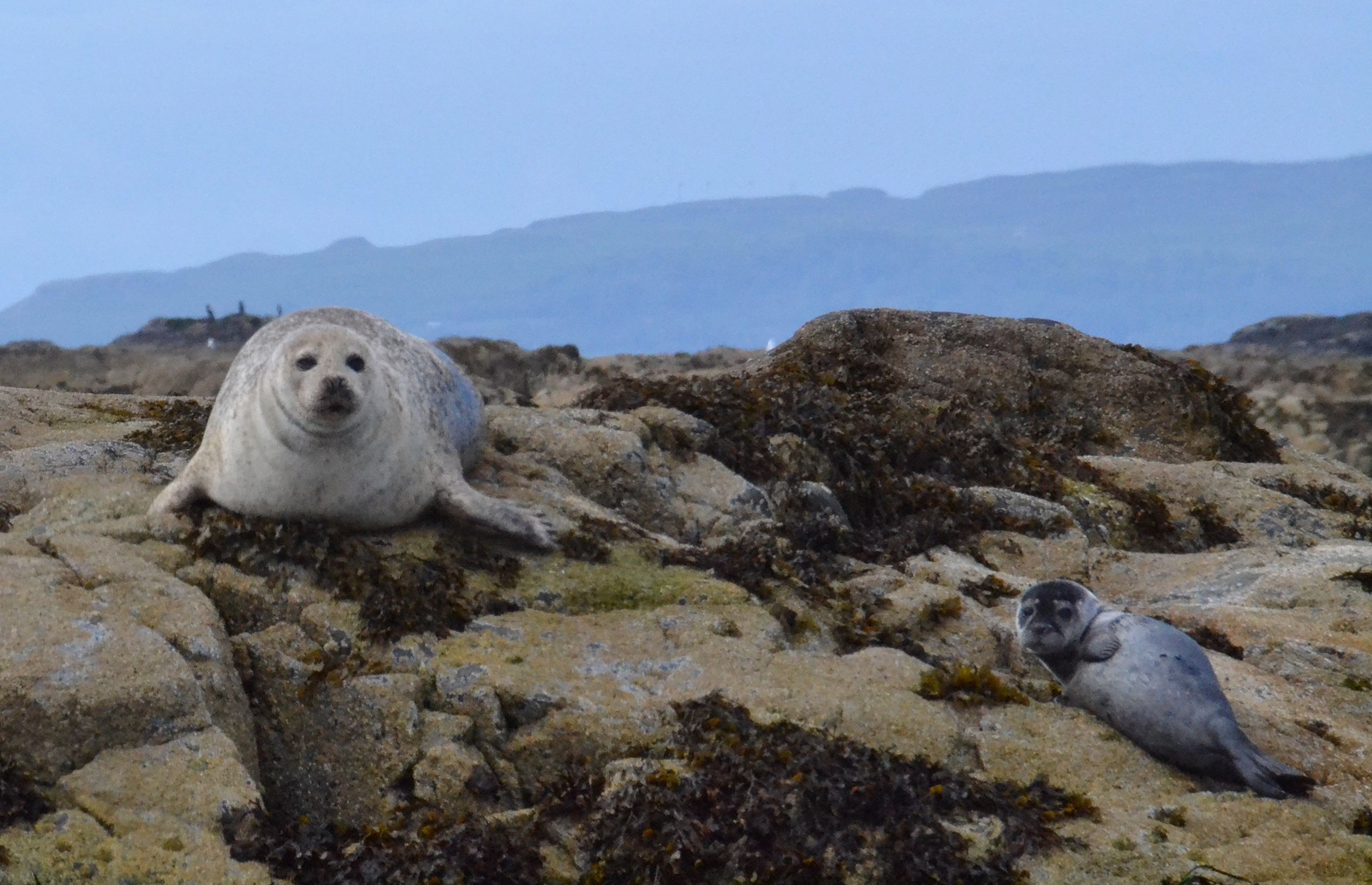

Common Seal (pictured above) feed at sea but regularly haul out on to rocky shores or inter-tidal sandbanks around the coast of Scotland to rest or to give birth and suckle single pups in June or July each year. Pups are very well developed at birth and can swim and dive when just a few hours old. This enables Common Seals to breed in estuaries where sand-banks are exposed for only part of the day. Mothers feed their young with an extremely rich milk and pups grow rapidly, doubling their birth weight during the three or four weeks that they suckle. The above images are from Lock Nan Ceall just out of Arisaig on the boat trip.
 Ramblings and Scribblings