Until now my activity in the autumn fungi season has been limited mainly to tracking and attempting to gain a better understanding of the seemingly different mix to last year at my home patch of Highmoor Common, Oxon following the summer’s drought. All that changed today after I was invited unexpectedly to view a cluster of one of Great Britain’s scarcer and most exotic mushrooms at a woodland site in Sussex.

Devil’s Fingers or Octopus Stinkhorn
Clathrus archeri, the “Devil’s Fingers” is a native Antipodean species that is also found in warmer areas of Europe and very sporadically across the south of England. It was first reported in both England and France in 1914 and is thought to get here through spores transported in imported wood chippings and bark mulch. As such it tends to turn up in gardens and parks to the potential alarm of non-fungi savvy home owners, in addition to scattered locations in the leaf litter of ancient woodlands and elsewhere. 2022 is reported as being a very good year for them nationally.


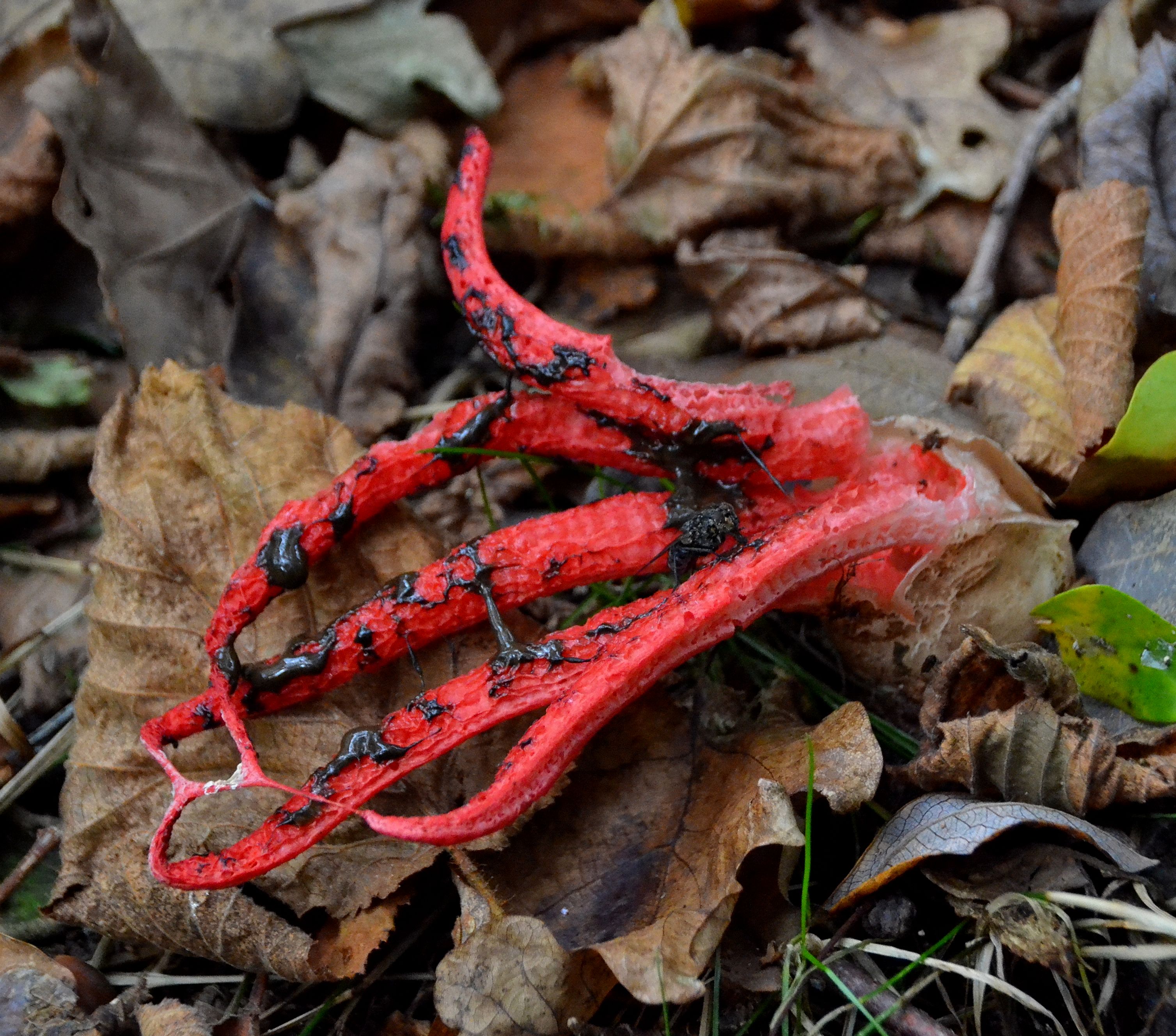
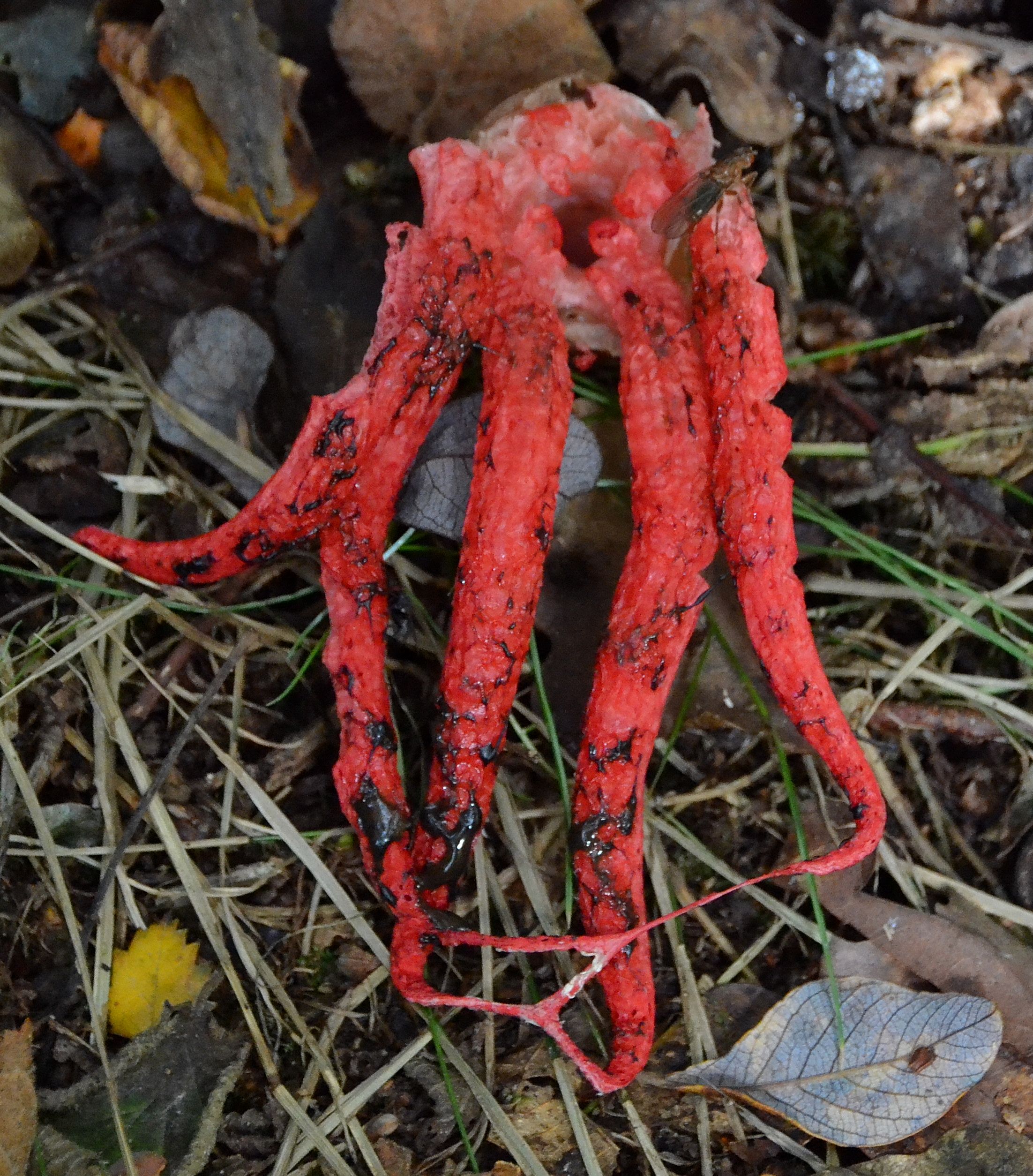
Like other members of its Stinkhorn family this strange, Starfish-shaped item emerges from a partly buried off-white 2-3 cm ball. We found up to 20 specimens today in all stages of the fruiting cycle. The mature fruit body is typically 20 cm across with arms arching to 10 cm in height. The inner sides of the red or pink fingers are covered in drops of black spore-bearing slime or gleba that becomes available to visiting insects as the limbs spread out, and hence spore dispersal occurs. A foetid odour arises from this material which is commonly described as putrid or awful, but to myself as a seasoned Aroid fancier it seemed quite mild.
The following images perhaps best convey this species’ European common name. In the Antipodes and United States the same fungus is known as “Octopus Stinkhorn”, that does not seem so appropriate as there are more usually only five limbs.
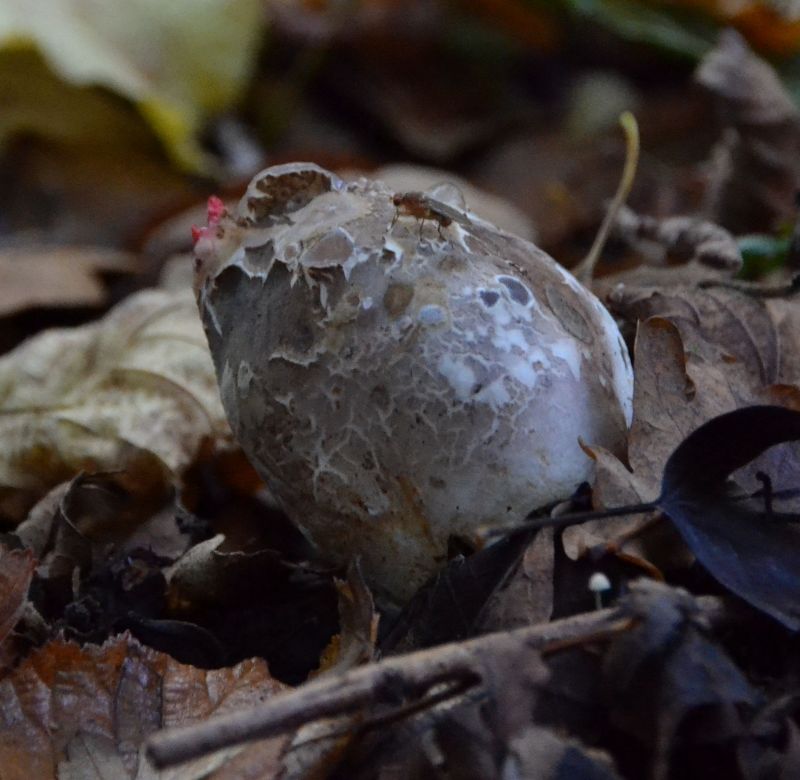
Perhaps the most alluring stage of the fruiting cycle to my mind is the initial one. Devil’s Fingers can remain at the “egg stage” for several weeks, eventually showing traces of the colour and outline of the tentacles within, while waiting for exactly the right conditions before the ball ruptures. The translucent, gelatinous textured structures (pictured below) are often likened to the Xenomorph eggs in the 1979 Alien movie, one of which famously opened in a similar way though rather more dramatically. But no face huggers were encountered by us here today.

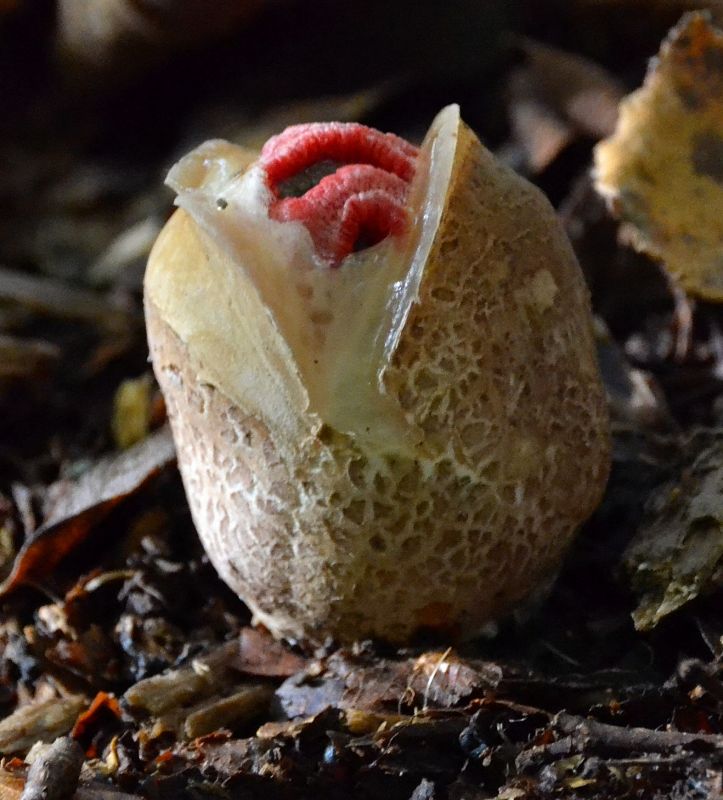
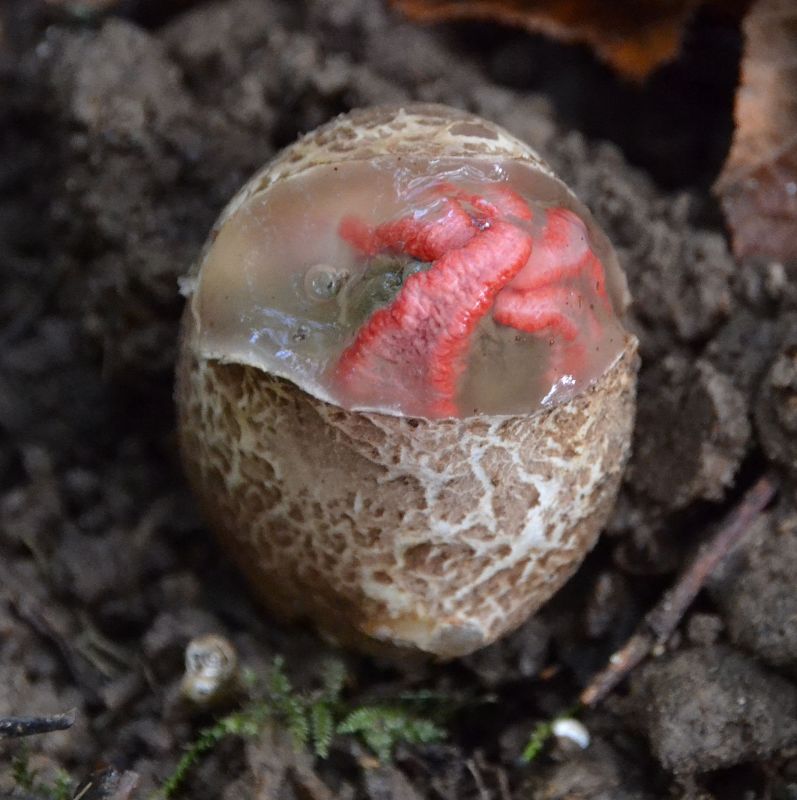
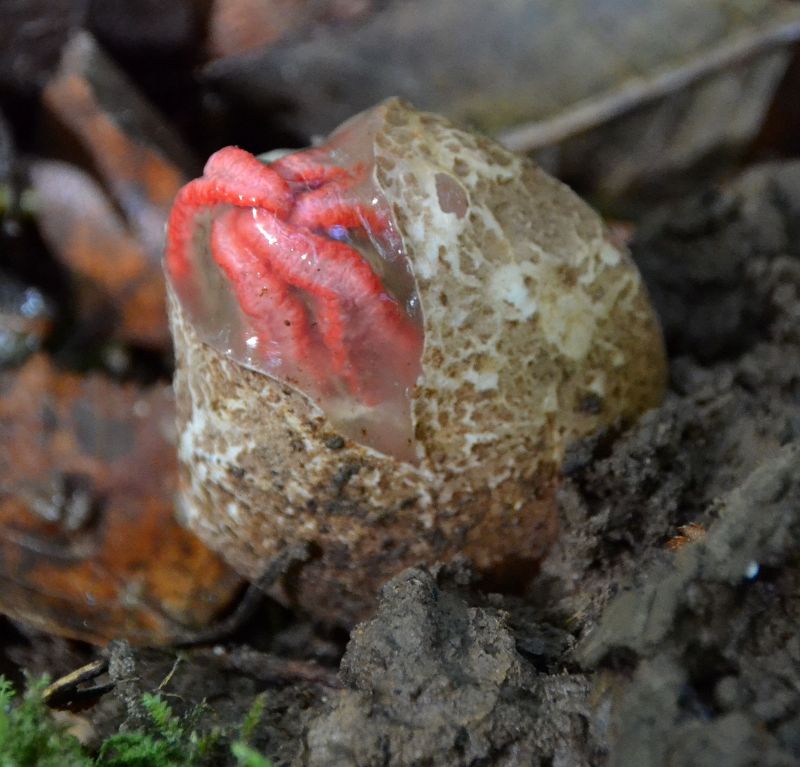
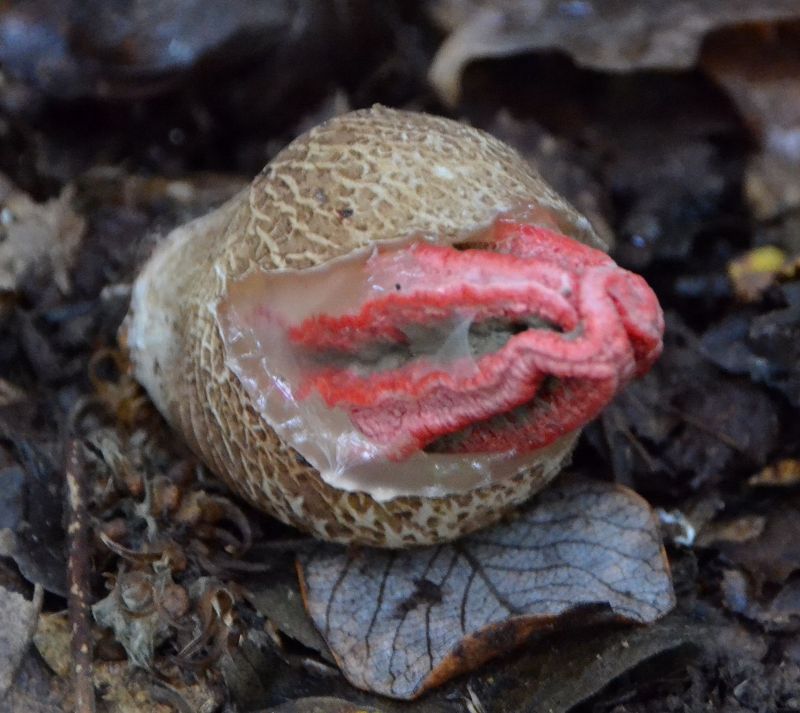
The above sequence shows the emergence of the five fingers forming within, at first vertically and in a bunch (top sequence, below). Like the movie monster these grow to full size quickly before the limbs unfurl back upon themselves as in this post’s lead pictures. Their flesh is brittle and spongy and the mushrooms soon break up and assume a ruined appearance, as in the second row of pictures below. This fungus is not toxic and is quite harmless, but their unpleasant texture and odour renders them largely inedible.
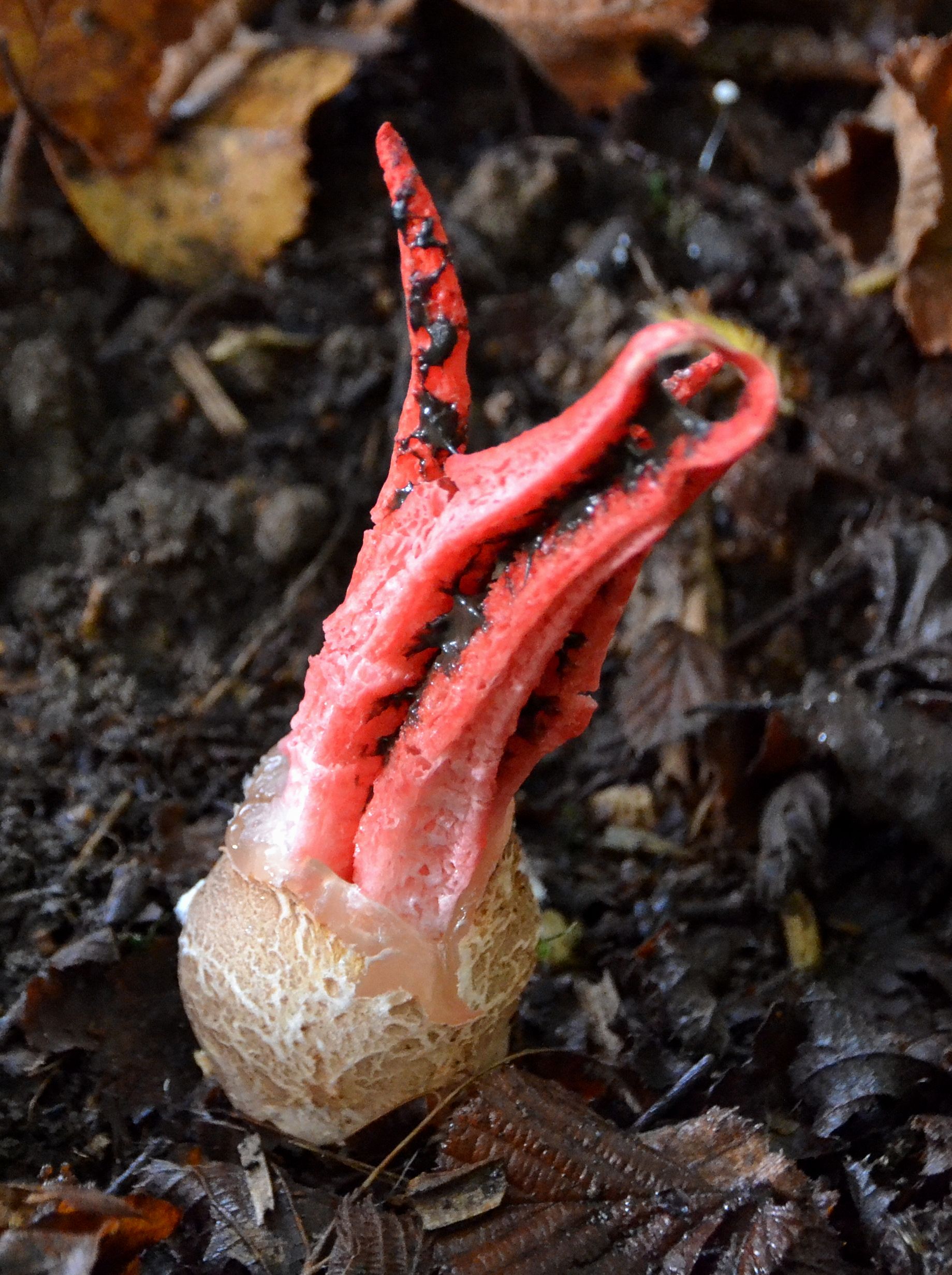

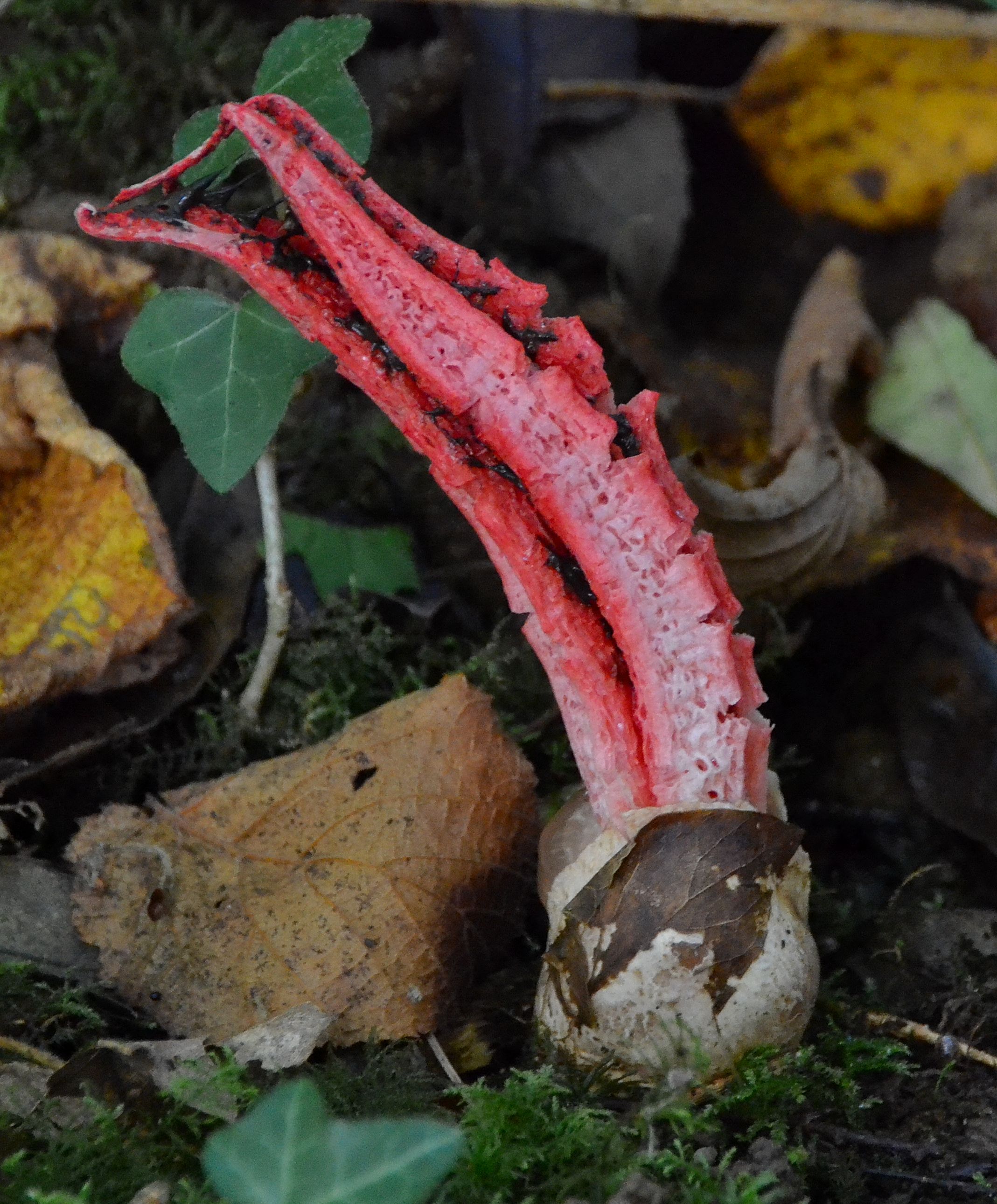
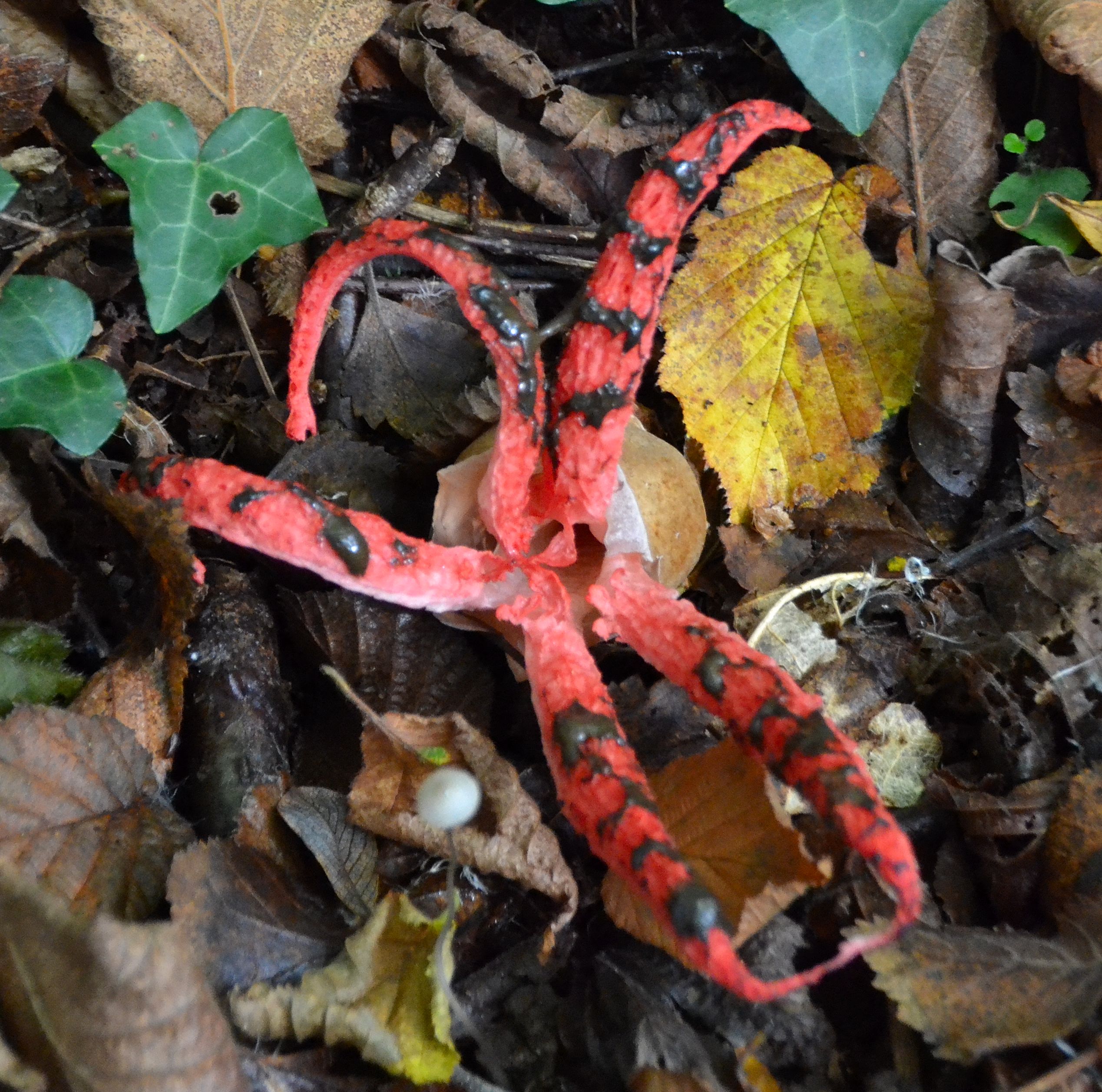

Always a rare find in England, the Devil’s Fingers is thought to have been introduced to this country with supplies of wood and wool for the armed forces during both world wars. A first Cornish record came from Penzance in 1946. A more recent stronghold has been areas of the New Forest in Hampshire that were used for military training during World War II. From those the mushroom has spread all over that national park, attracting much attention from mycologists in the early years of this century. Colonies there have been known to re-appear several years after areas of Heather and Gorse were burnt.
Range expansion is continuing and individual populations also appear to be increasing. The site we visited today, like the species itself is very sensitive to footfall, so by agreement with my contacts I cannot disclose the location of this post.
 Ramblings and Scribblings