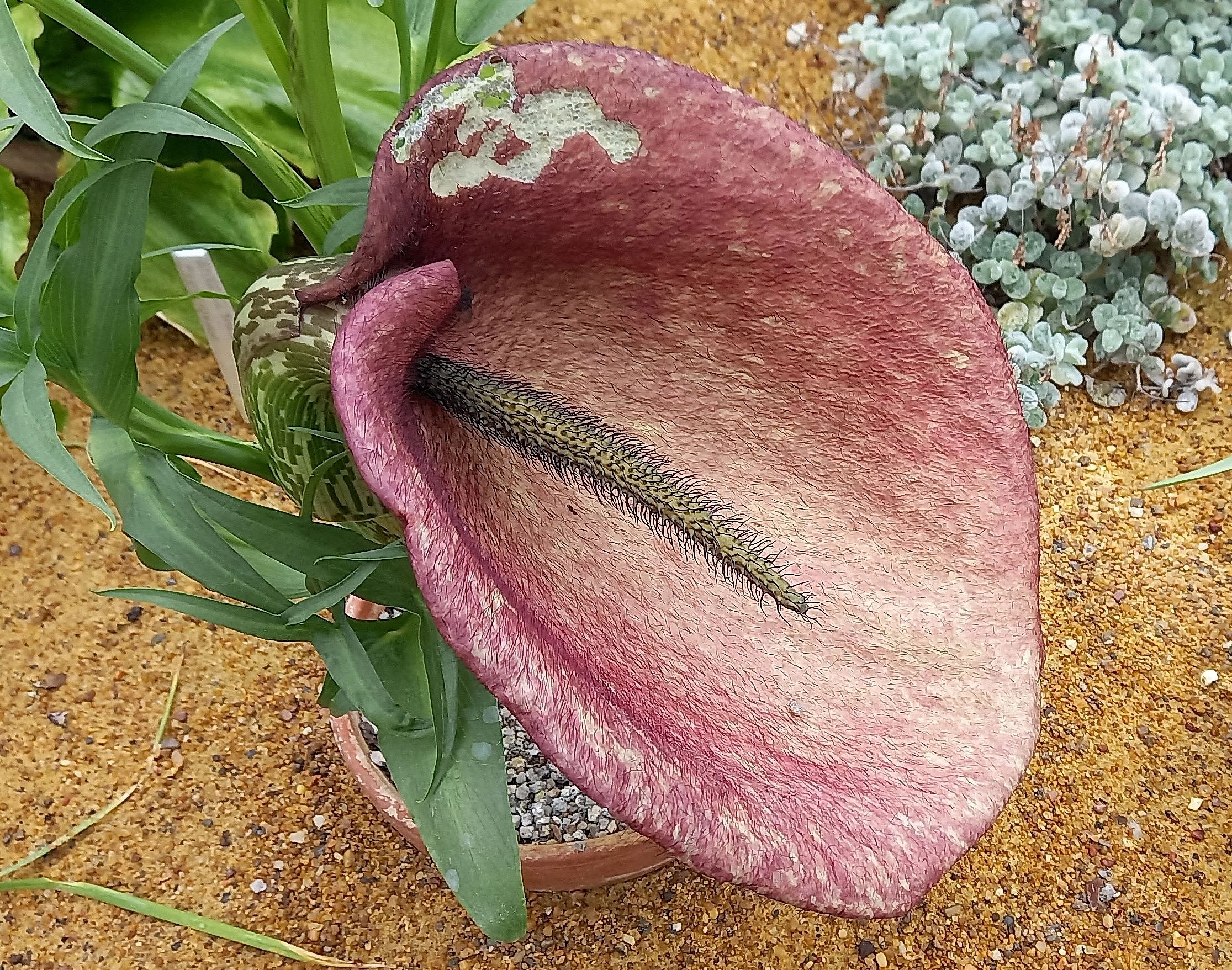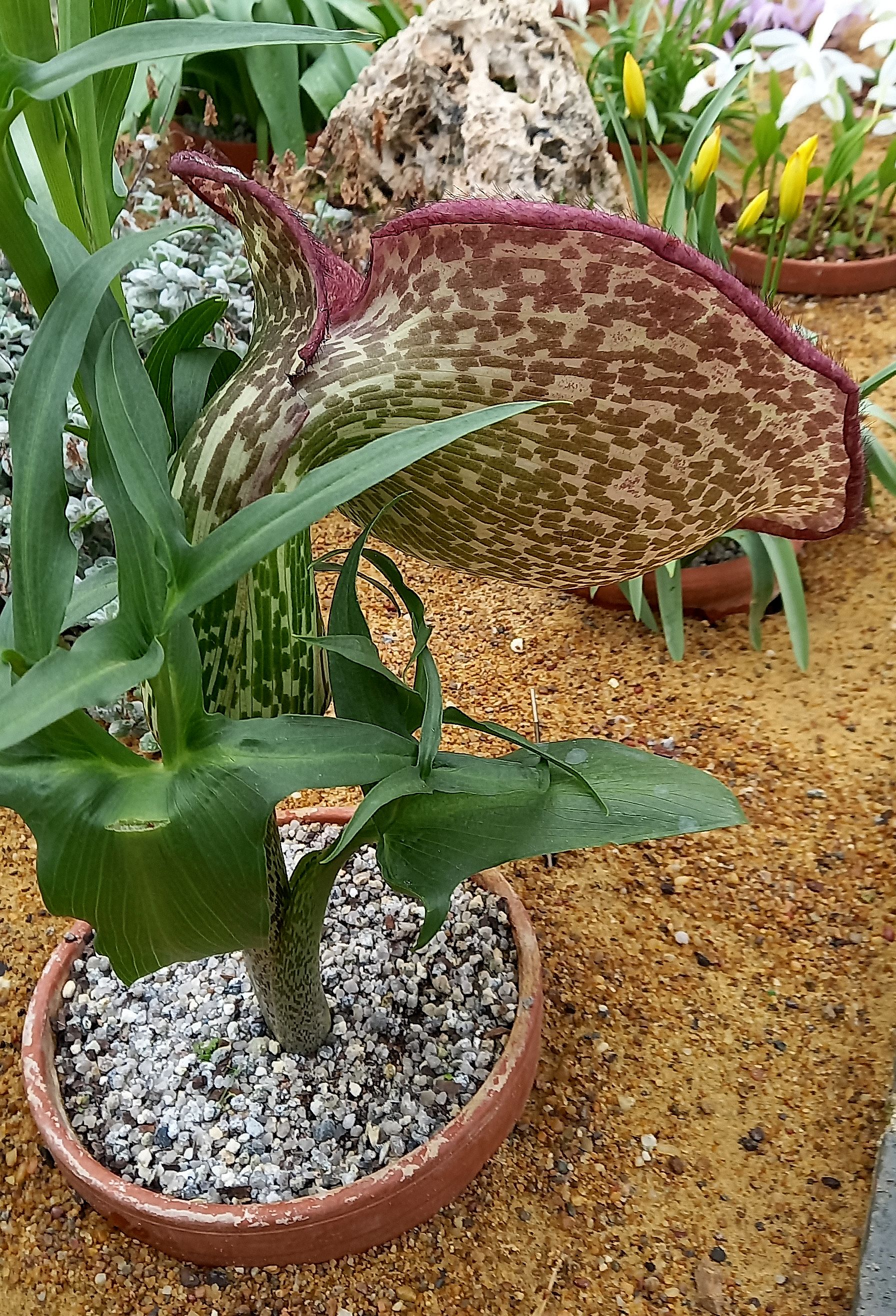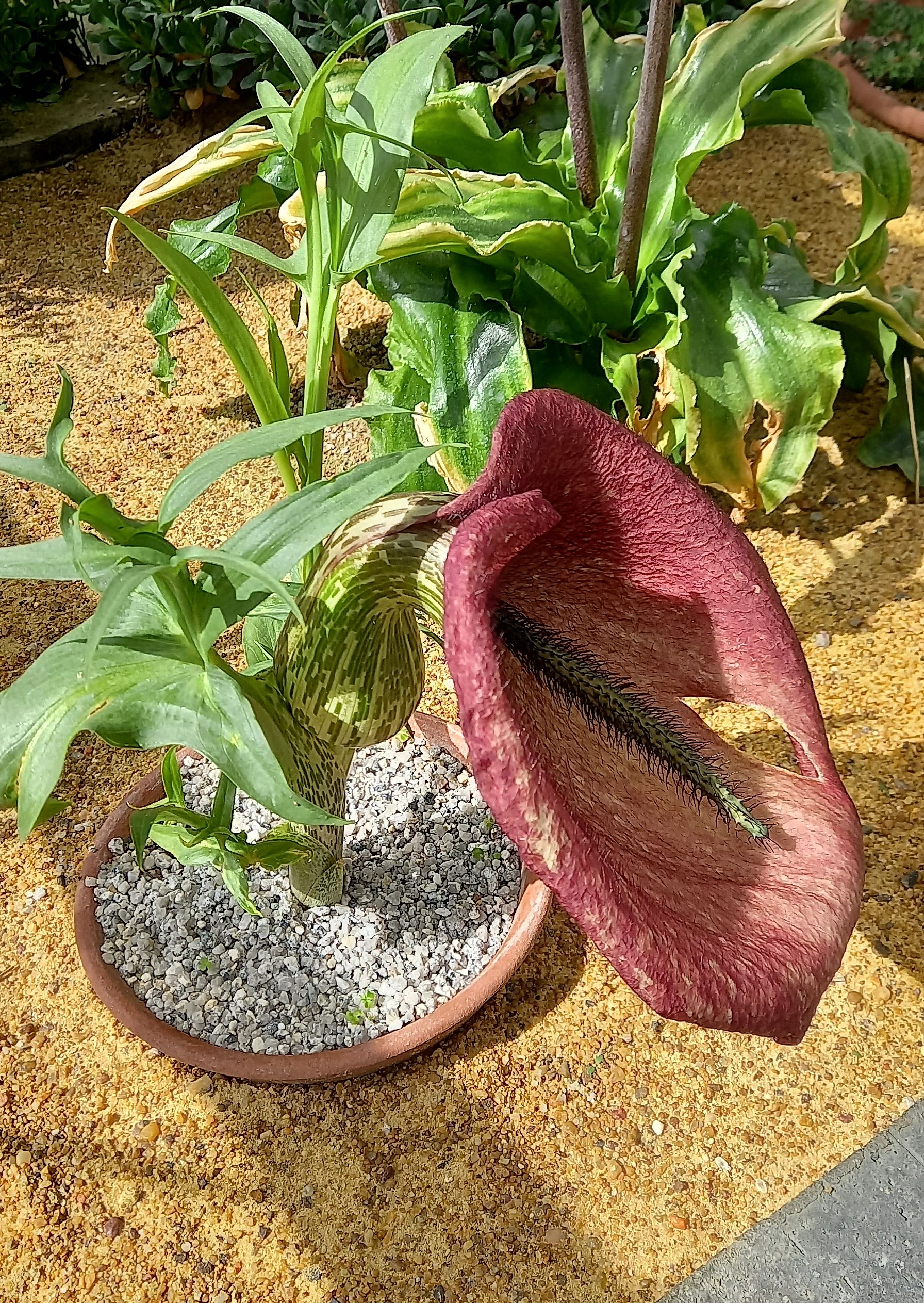
2023 Helicos at the University Botanic Garden, Oxford: 13th April – 11th May

I will admit to a peculiar fascination with Helicodiceros muscivorus and apparently am not alone in that. The review article herein (see here) published upon the acquisition in 2020 of a “two-year from flowering” tuber for my own Aroid collection has now passed 500 referrals to reach the top 20 most popular Rn’S posts. But disappointingly that item did not bloom on schedule last season and has yet to make any growth this time around. If at all the tuber is shrinking rather than putting on bulk.

Hence my concern to check out the plants at UOBG again this year. When I first viewed these a little under 12 months ago (see here) the most mature specimen was past its best and two smaller ones had already gone over, so this year I timed things a little earlier in April than then. Great Britain’s longest established scientific gardens lie just across the road from Magdalen College, so on 13th I combined the post before last’s visit there with this.
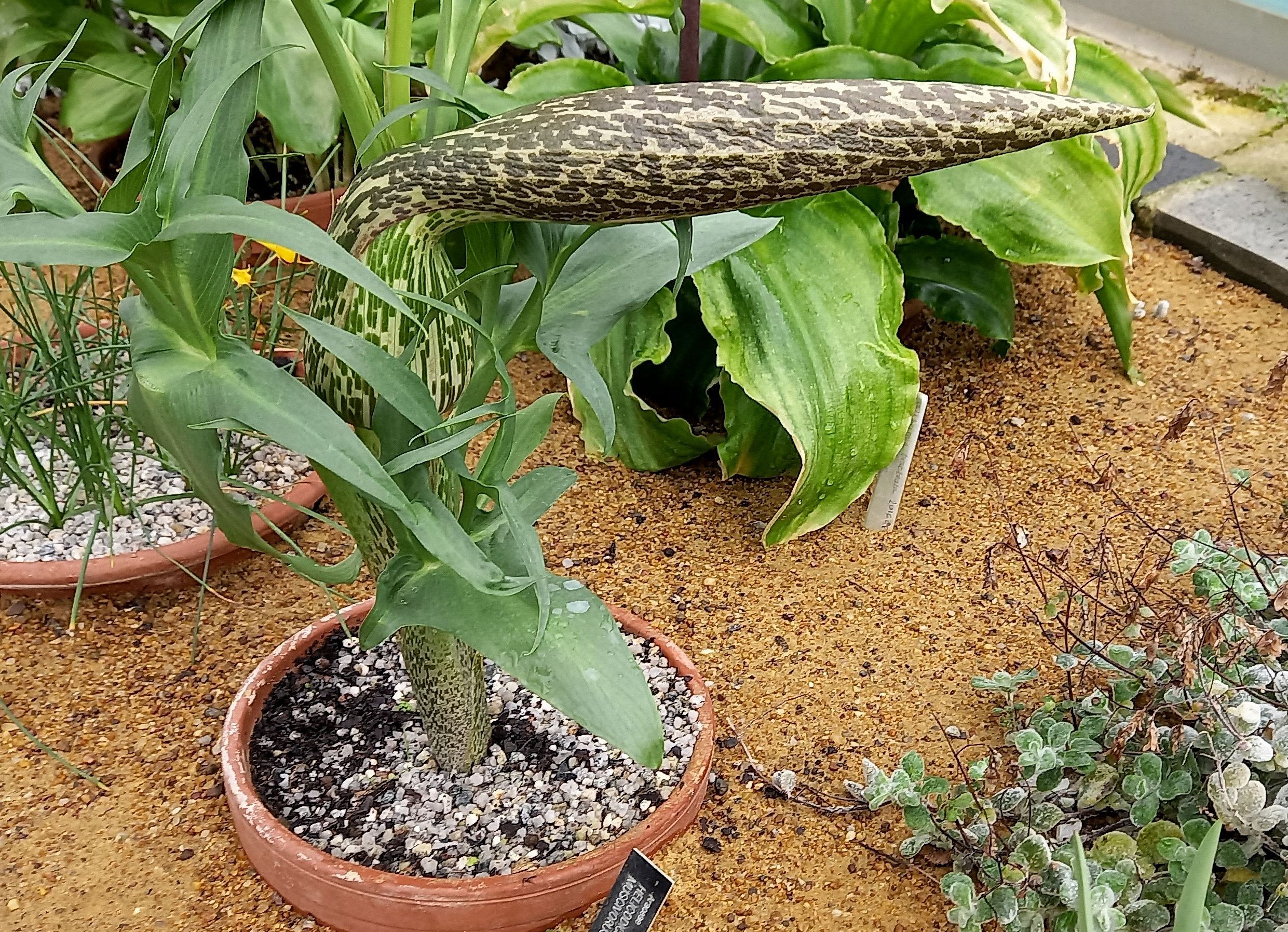
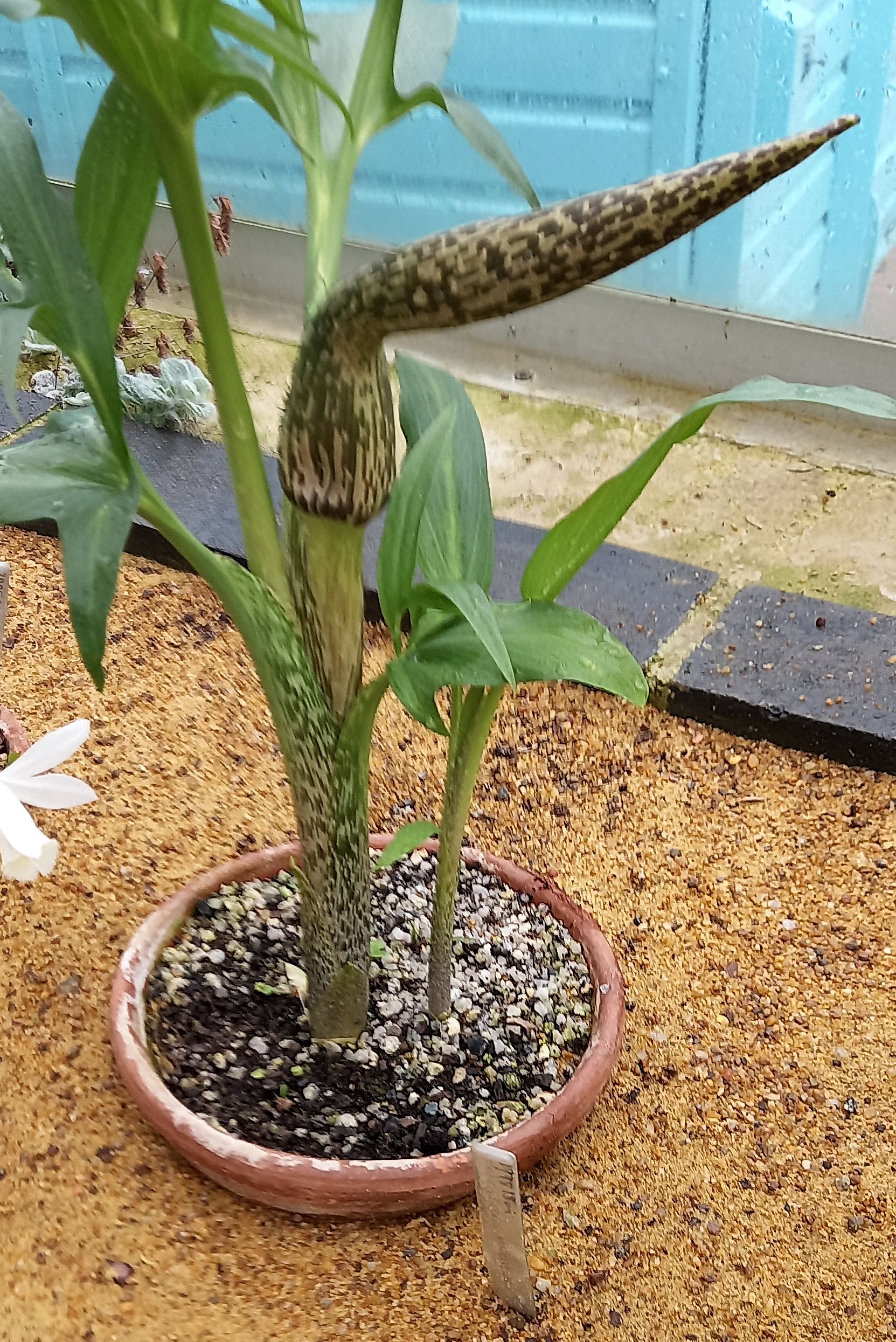
Heliodiceros muscivorous, the “Dead Horse Arum”

In the same glasshouse where I saw the Helicos last year there were two developing specimens. Just look at that bulging, ripe inflorescence (above left) and feel the sense of anticipation mingled with imminent danger as it prepares to unleash its magnificence and malodour upon the world. I had clearly timed things better this season and the plant could not be far from blooming. So it was now a matter of coming back on each available day until the event could be witnessed.

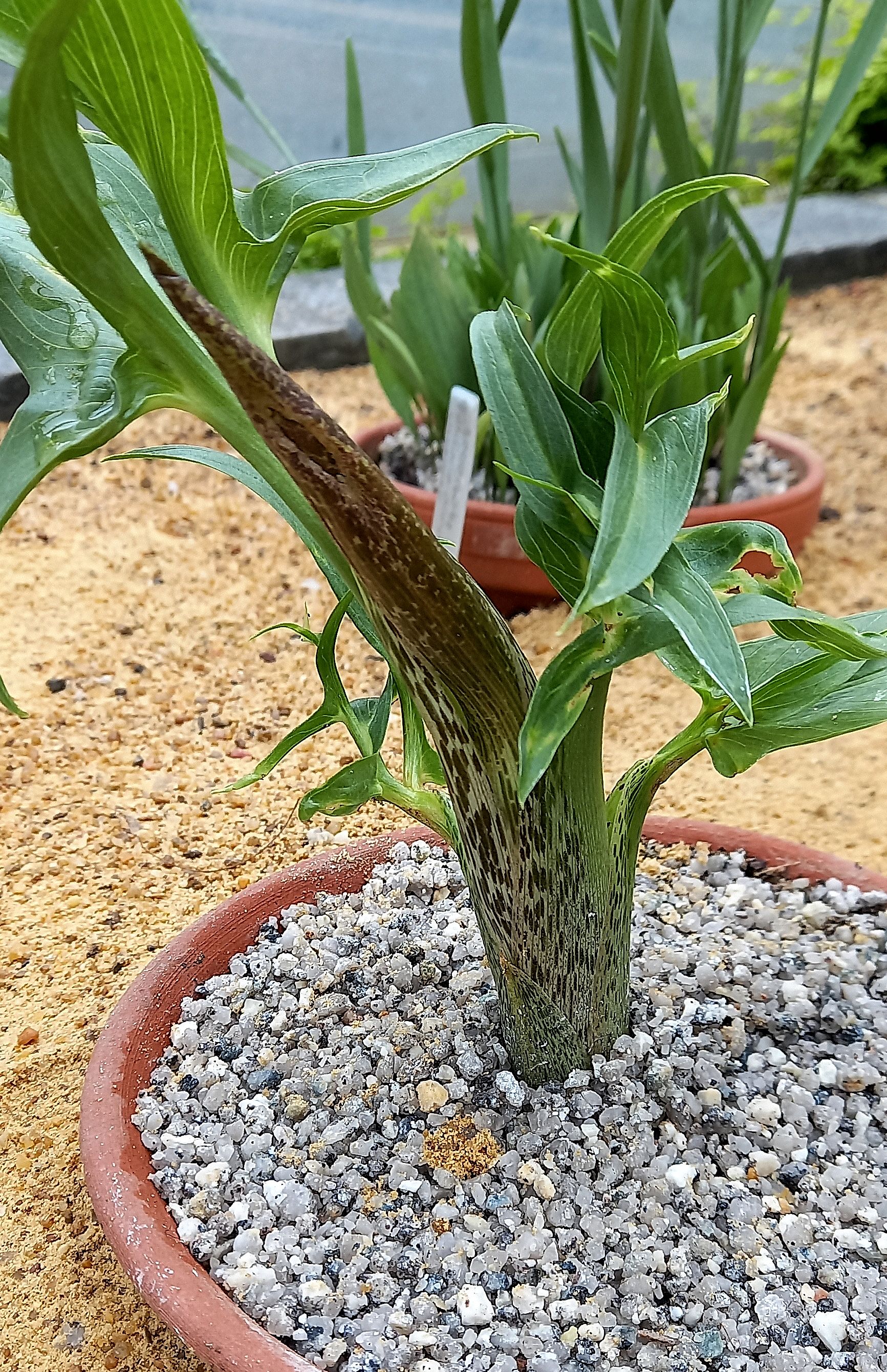
This took several more visits to achieve. Through four checks in five days the following week the inflorescence grew ever more plump and expectant looking but appeared to be in no hurry. By Friday (21st) the spadix was beginning to unfurl (below right), while a third plant had been put out in the glasshouse (left). Would sod’s law dictate that the blooming event I was tracking so patiently might materialise over my working weekend?
Today (Monday 24th) I hoped the wait would be over. Walking across Magdalen Bridge one more time I looked to see if the door to the glasshouse was open, suggesting there might be a bit of a pong inside? The object of my dedicated attention is of course reputed to be one of the world’s 10 foulest smelling plants. But the door was closed and within the largest Helico (pictured below) was beyond the pristine state in which I had hoped to record it. The spadix must indeed have opened over the weekend, probably on Saturday morning (22nd) as there was some damage to it and the infamous “Dead Horse Arum” odour was barely detectable. But a mission of 12 days had now been accomplished.
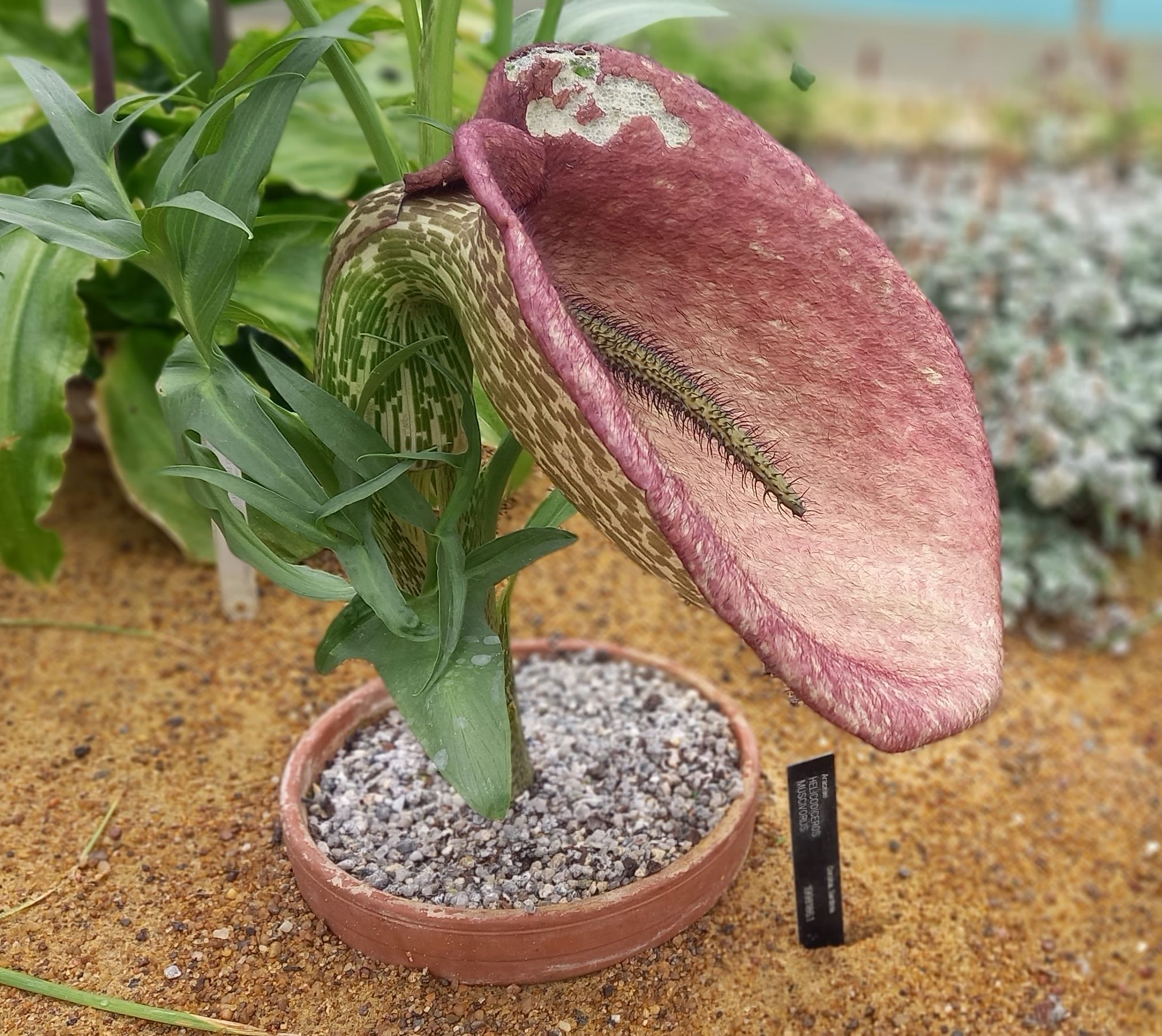
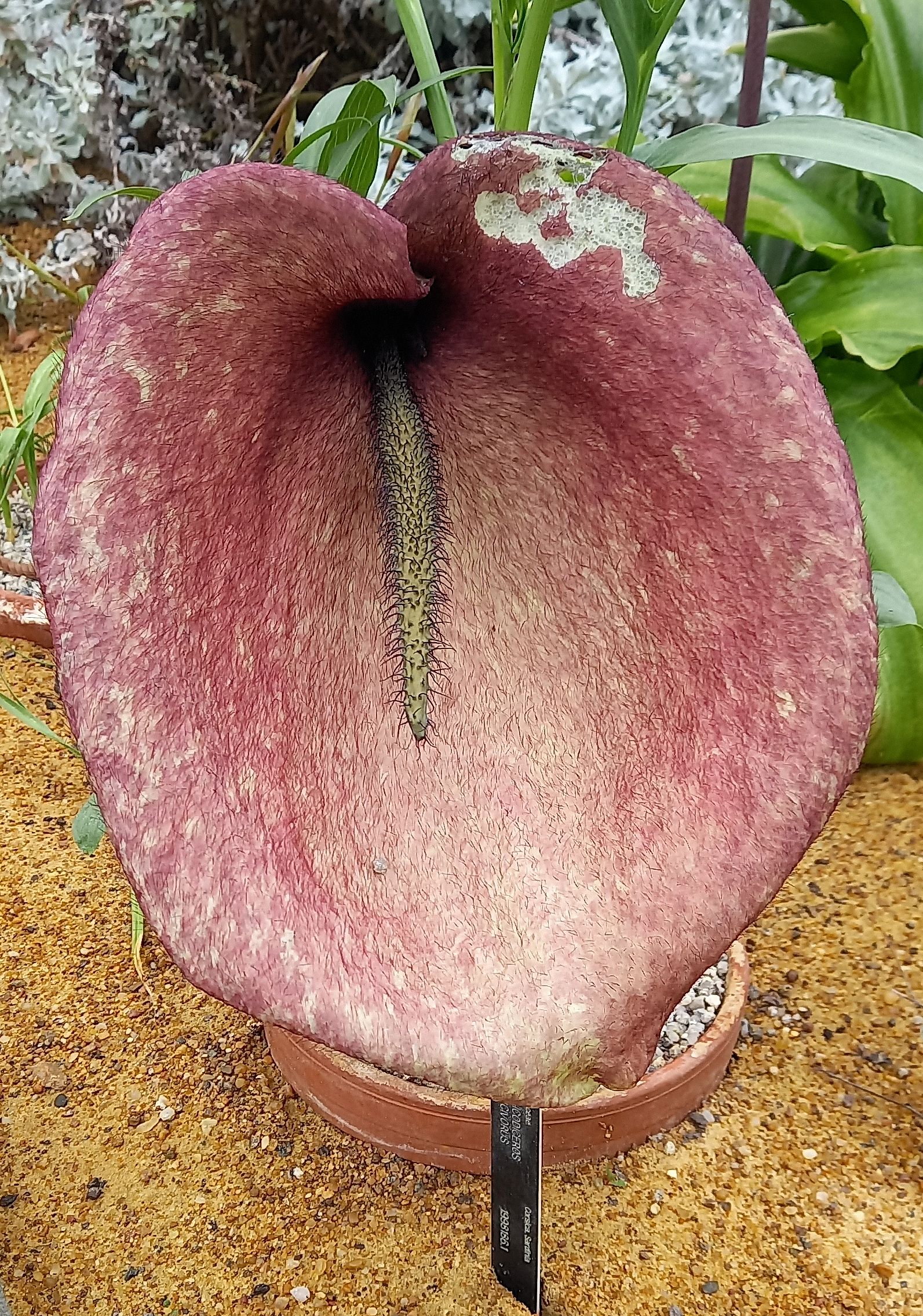
What’s been nibbling at and spoiling this then? There were two more plants here to attempt to connect with on their first day of flowering, so I went back on Thursday 11th May after my week in Greece (see next three posts). The smaller plant was in full bloom though the spadix had also suffered damage (below left), and an odour was detectable. To me this was no more intense than from other Aroids I have grown at home, but the flies were loving it. The larger plant (right) appeared to have gone over, the closed spadix becoming even more suggestive looking in the process.
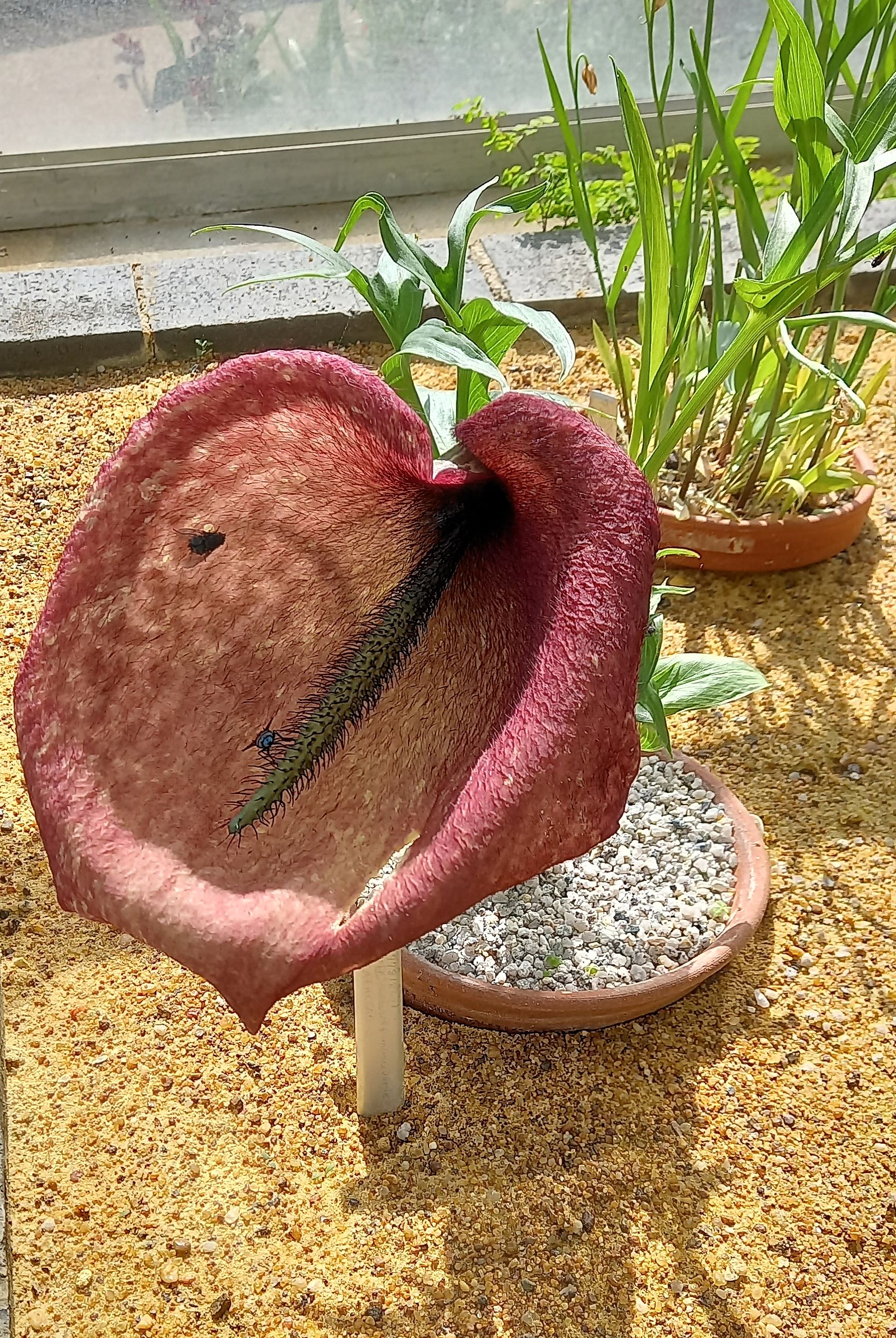
So the Helico blooming season at UOBG had now almost run its course. When I got home I checked my own 2020 FS2 purchase that prompted this series herein, and the tuber was still firm but doing very little. The pictures in this post were all taken with my phone, which proved a better solution inside a glasshouse and often against the light.

Early days at a major Green-winged Orchid colony in Bernwood Meadows, Bucks: 9 – 19th April

A further wild flower spectacle locally that I should have paid attention to before now is the annual spring profusion of Orchids at a BBOWT reserve on the Oxon / Bucks border. I have visited here in several previous years a little later in the season to observe Black Hairstreak and other butterflies, but to avoid trampling habitat have not strayed far from the edges of its famed wild flower meadows. The site is best known for thousands of Green-winged Orchid (see here), which though quite widespread nationally I had not observed before.

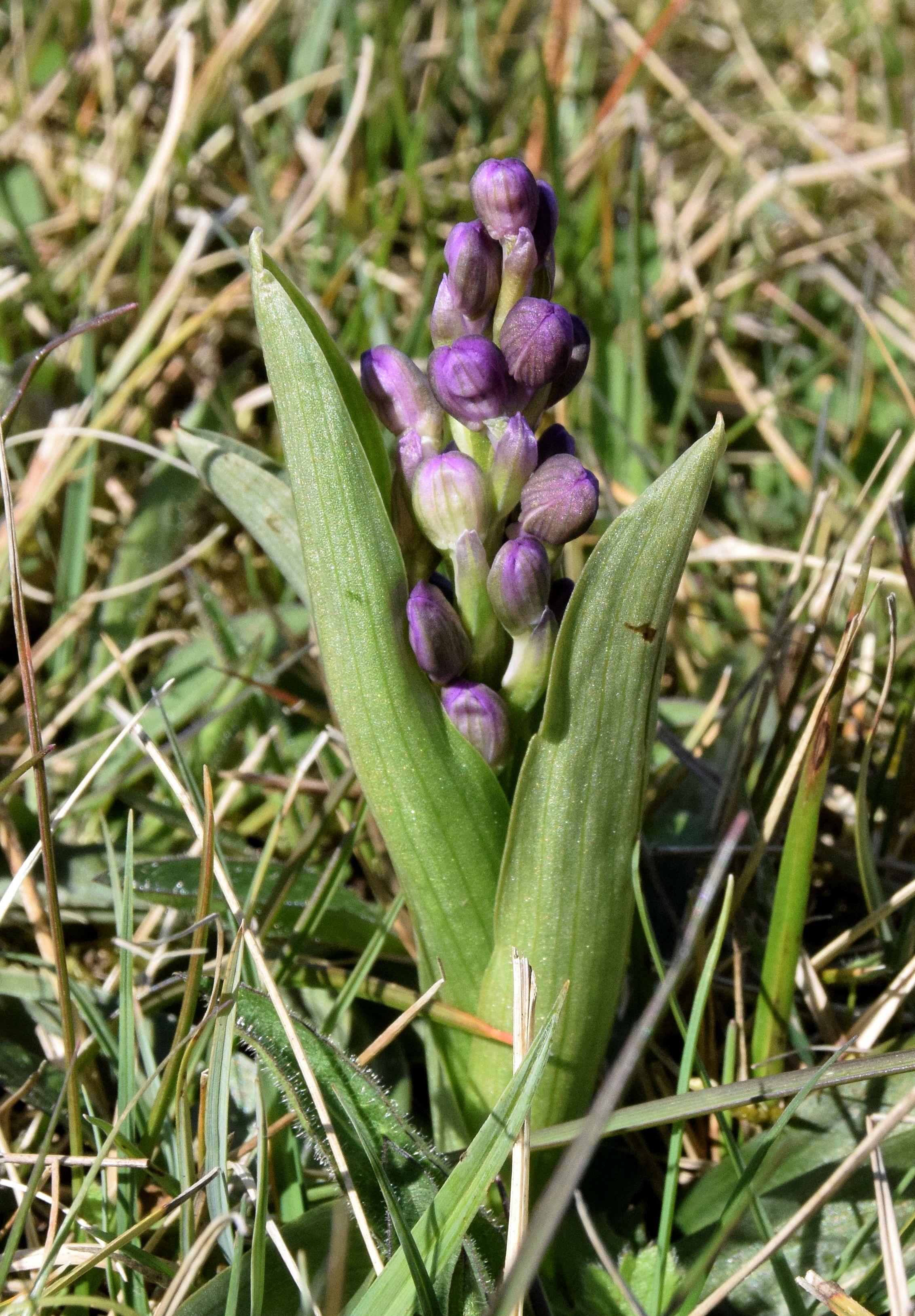
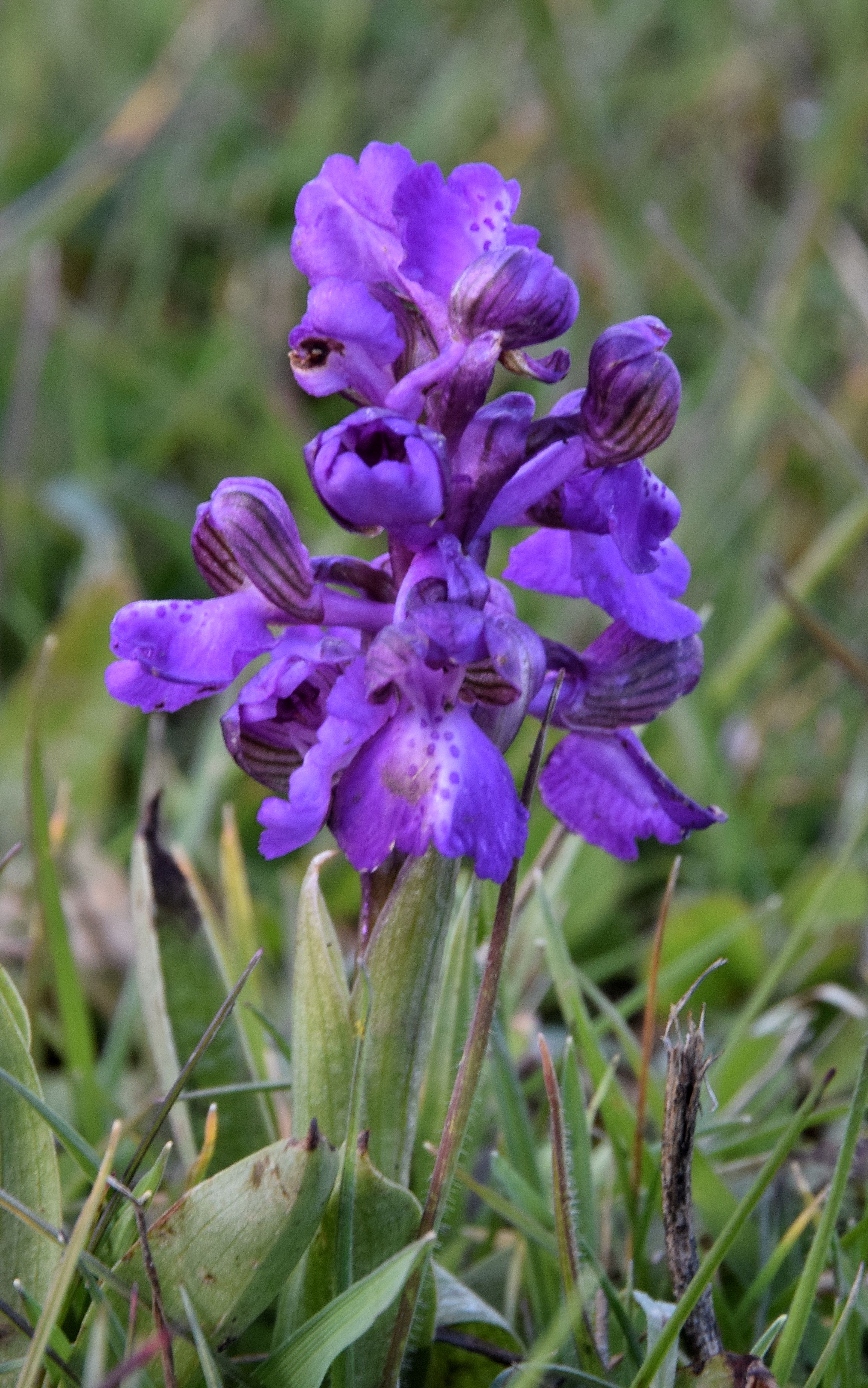
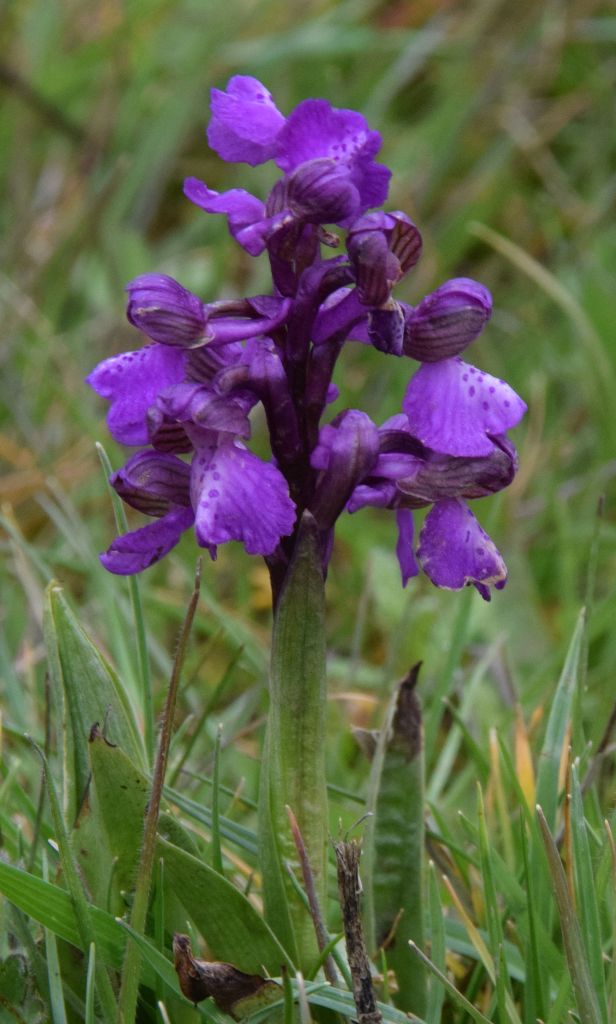
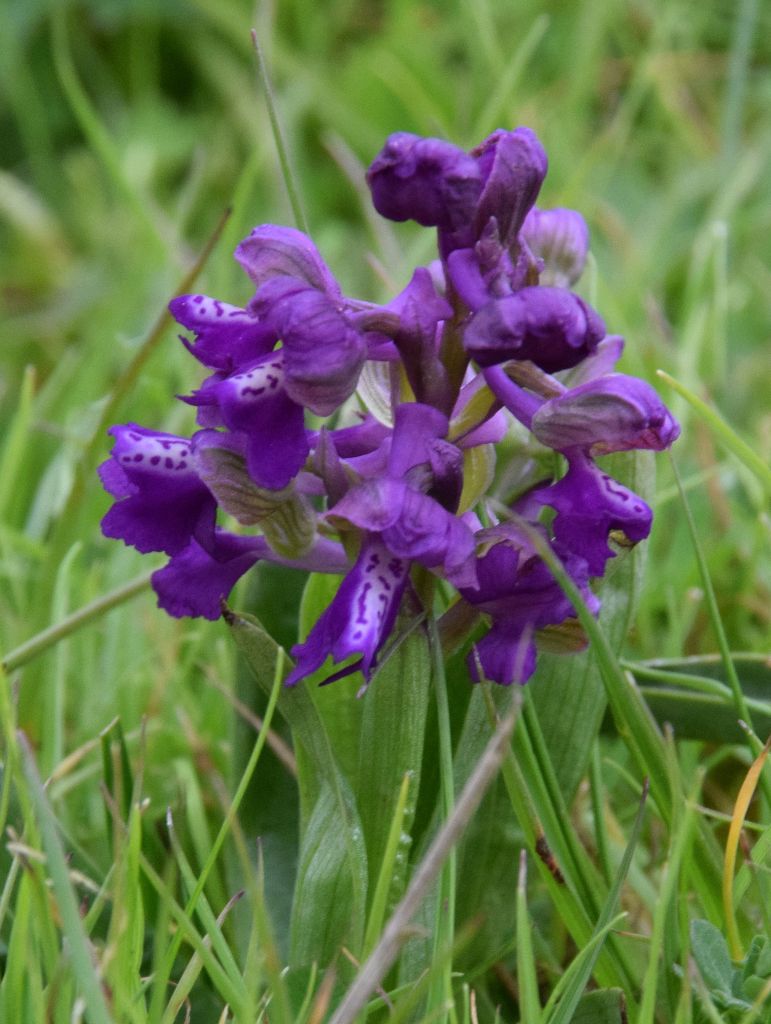
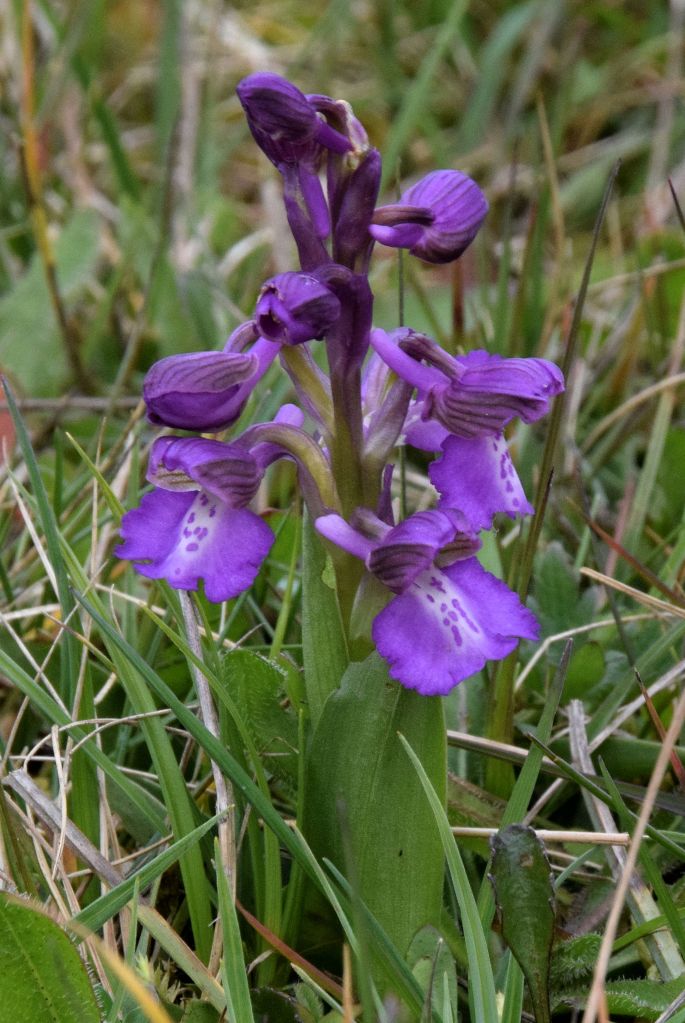
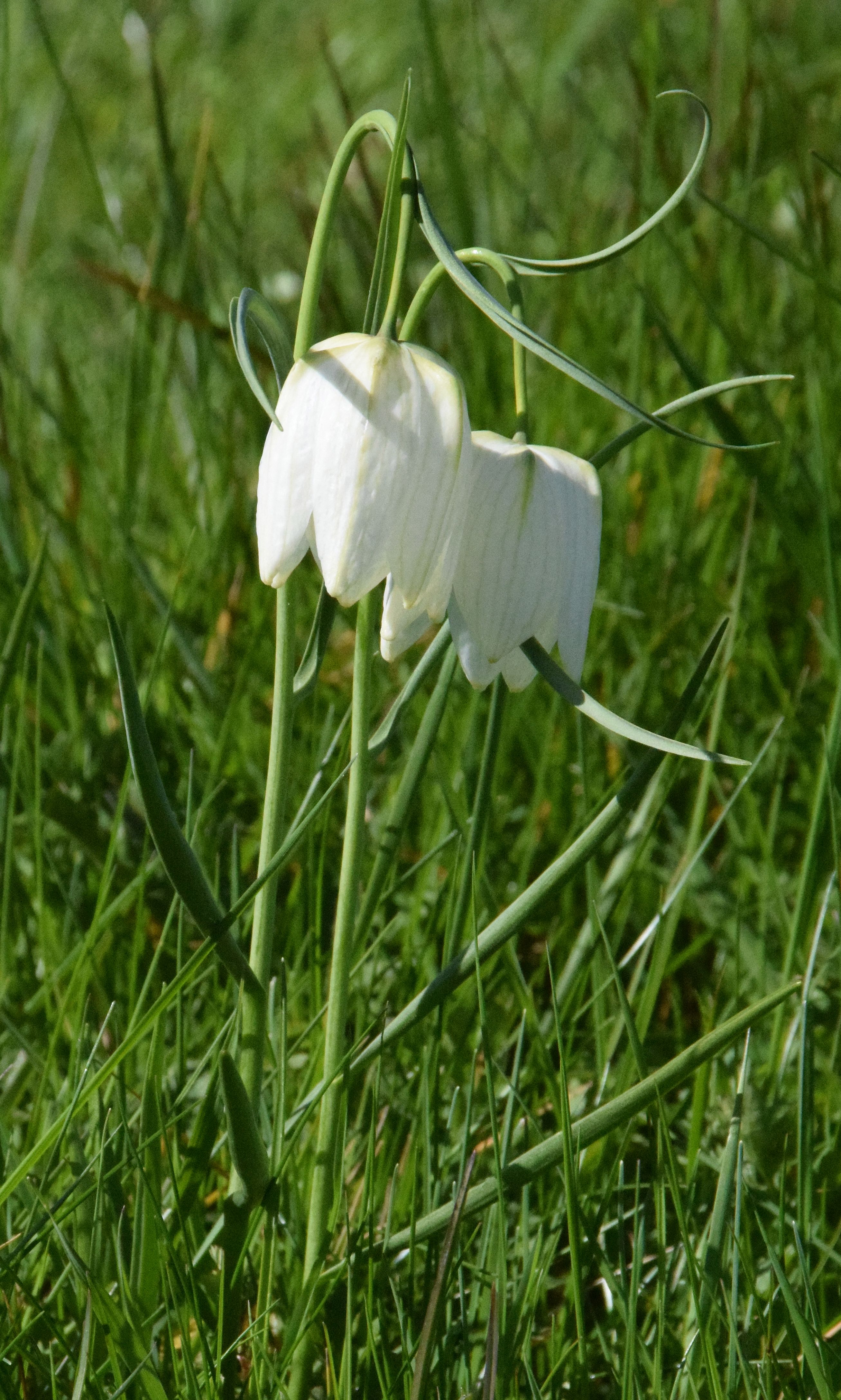
This is a “petite” (5 – 15 cm) Orchid of unimproved grasslands, occurring mainly on chalky soils. Once commonplace nationally in meadows and pastures, its historic range has halved in parallel with agricultural intensification since the mid-20th century. It is now one of the most rapidly declining British species away from sympathetically managed habitat. The name comes from green or bronze parallel veins in the hood of up to 25 helmet-shaped flowers that grow in a loose, linear bunch at the top of the single stalk. The inflorescence may be of various shades, mainly purple but ranging from pale pink, through mauve to blackish-purple. White forms are found occasionally. Although individually spaced this plant tends to grow in large colonies, such as here.
Green-winged Orchid

Most material published online cites May as the best time to visit, but prompted by a good response to the recent botanical posts herein I first decided to reconnoitre Bernwood Meadows (SP608109) on Easter Sunday morning 9th April. The habitat having undergone a pre-season mow I walked up and down in the centre of the main field where I had feared previously to tread. Save for a solitary Cuckoo Flower clump only Cowslips were coming into bloom, though the developing foliage of other wild plants was much in evidence.

Then I was surprised to locate an emergent Orchid which my Seek ID-app confirmed was Green-winged, but stomping around at random I found no others. The idea thus formed in my mind that if I re-visited at intervals through the rest of April and ahead of the peak flowering season, I might be able to gain close-up images of more early specimens without fear of damaging other wild flowers around them, and that I resolved to do.

I next visited four days later in a sunny weather window on 13th and soon re-located that first GWO (above left). Then going about I found another emergent plant (centre). Walking away a dog walker called out there were more along that edge of the meadow and indeed I found two others, each in a further stage of flowering (right) than the previous one. The plan of familiarising myself with this Orchid and gaining pictures on the close cut sward was now progressing nicely.

After another four day interval there was a much greater choice of subjects and searching indiscriminately I noticed 28 specimens in overcast conditions. Things were starting to get going here now as I had expected. Most GWO were in their early stages of development and none were more than 8cm high. Those in the following sequence are the more presentable ones encountered on this third occasion.

With these results my own education on one of the earlier flowering Orchids in any British season seemed complete. It now remains to appreciate the full spectacle of Bernwood Meadows as the numbers of blooming wild plants multiply many-fold in weeks to come. But with this first instalment of my Orchid self-tutorial having been so successful I decided to if possible repeat the exercise for another of the seasonal vanguards, the appropriately named and third commonest British species, Early Purple Orchid.

A still disappointingly dull weather day on 19th hence saw me surveying the local wildlife gem that is Sydlings Copse (SP 559096) just to the north of the city and close to RSPB Otmoor. But splendid as the intense little BBOWT reserve with its unusual combination of habitats proved to be, no Orchids were yet in bloom amongst the carpets of Cowslips, Violets, English Bluebells and other wild plants. So my conclusion is that Early Purple may not always be the species to herald a new season after all, and at least in the right place given such a wet spring as this Green-winged can begin to announce themselves first.

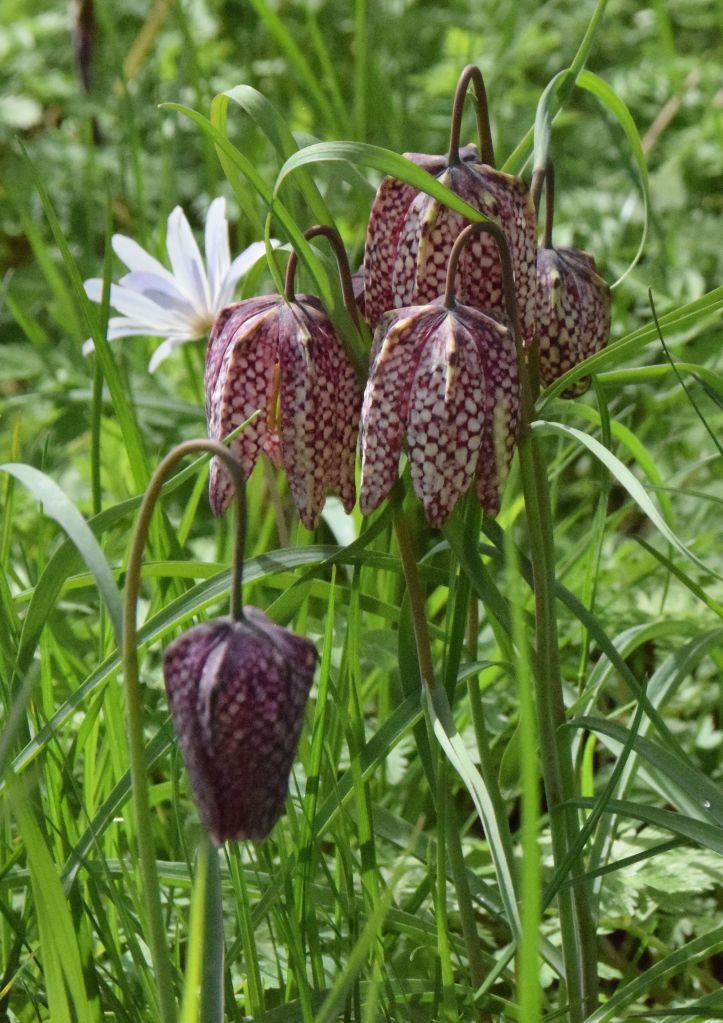
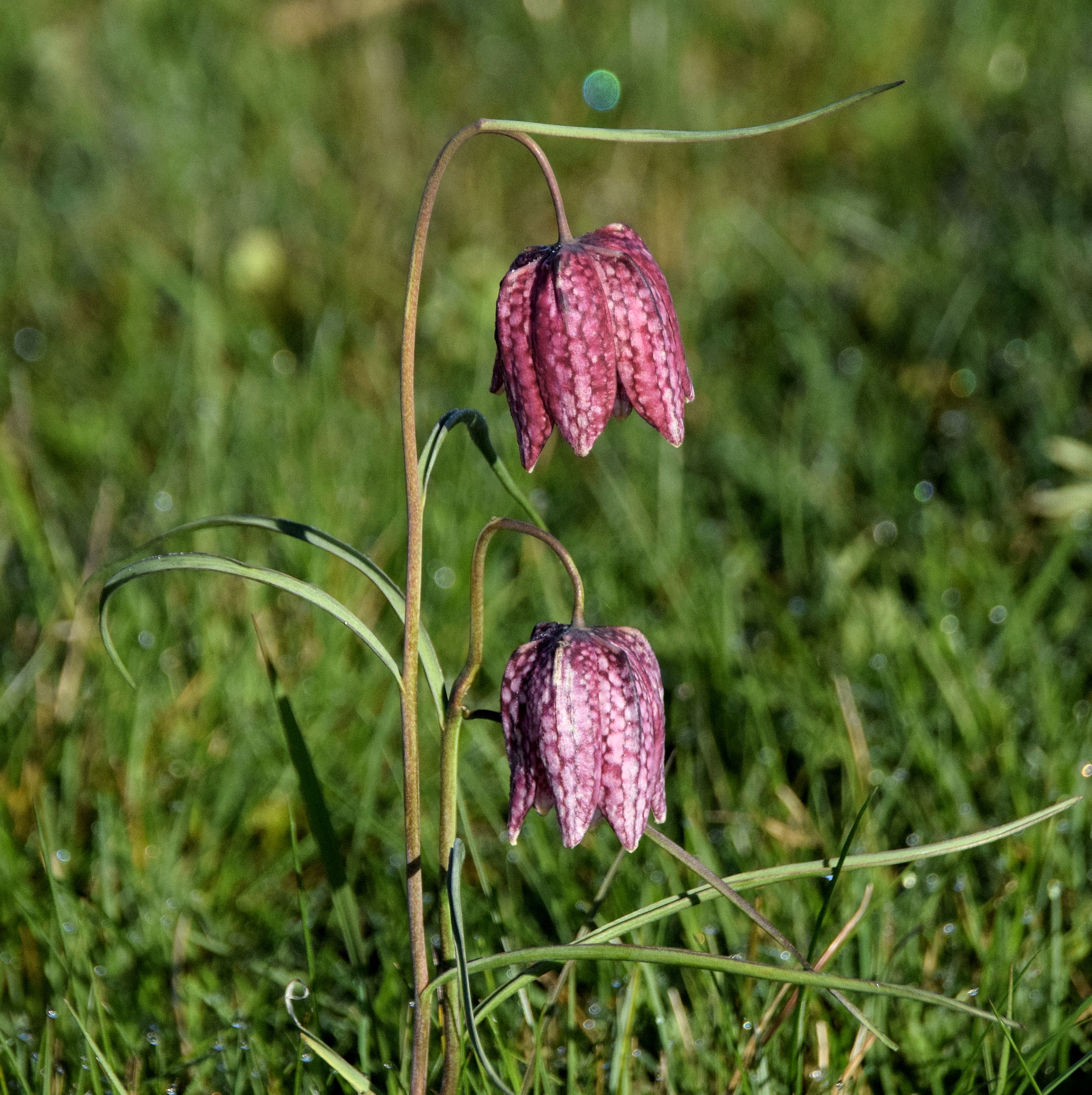
A second and superior Snake’s head Fritillary encounter at Magdalen College grounds, Oxford – 13th Apr

After early second helpings at Iffley Meadows on this only fair weather day of the week, I moved on to the other of Oxford’s famous Fritillary sites in the parkland of the historic and august University district. The first of those experiences had been pleasing enough but I could in no way have imagined the superlative quality and sheer joy of the floral spectacle that was about to dwarf it.

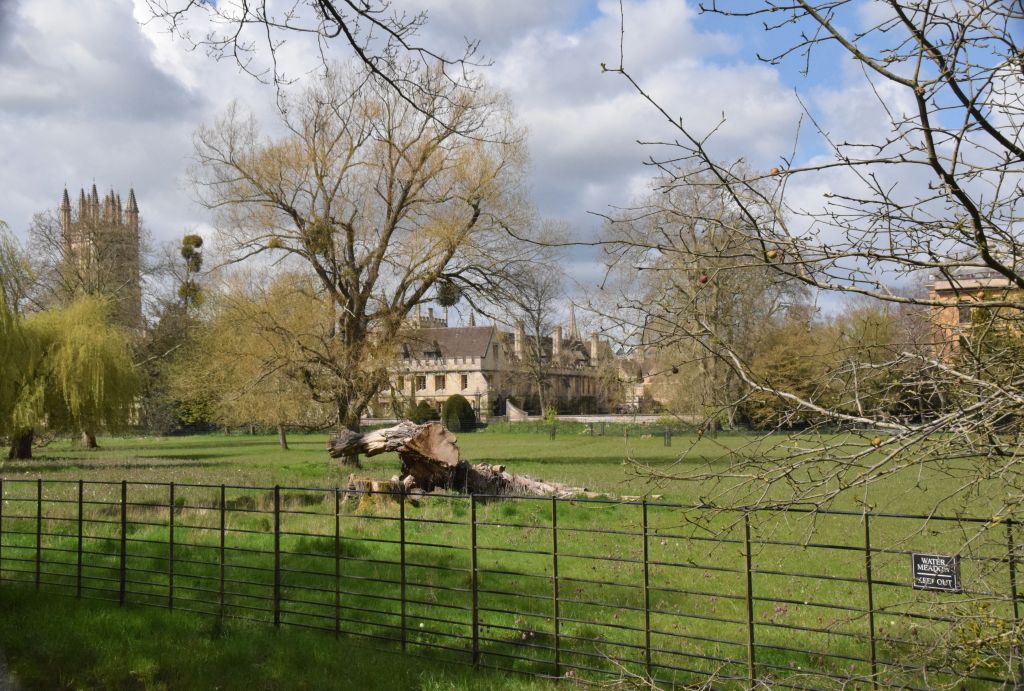
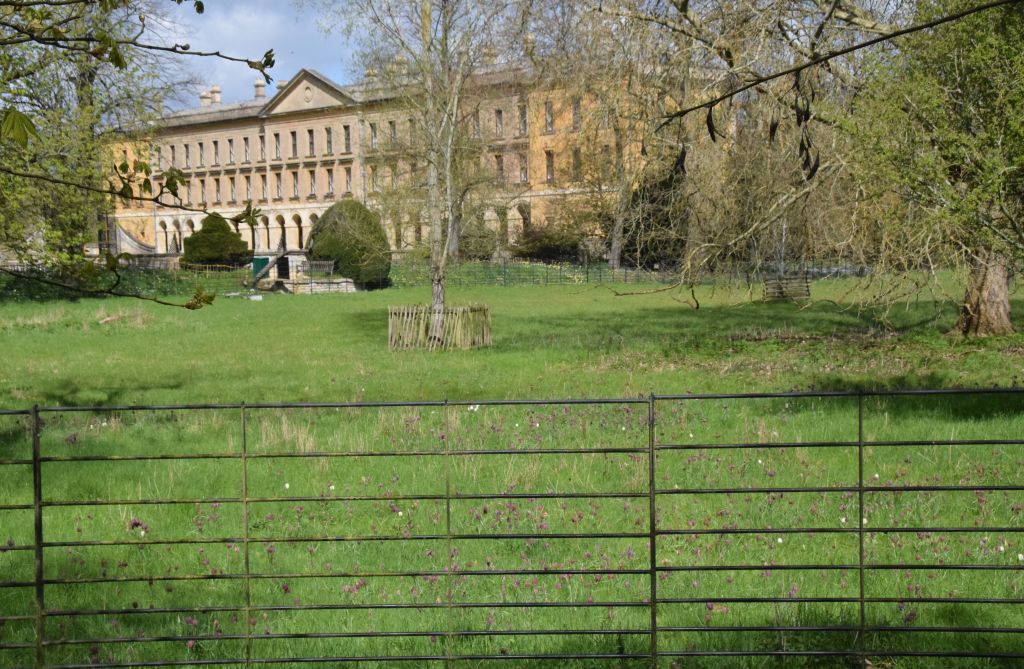
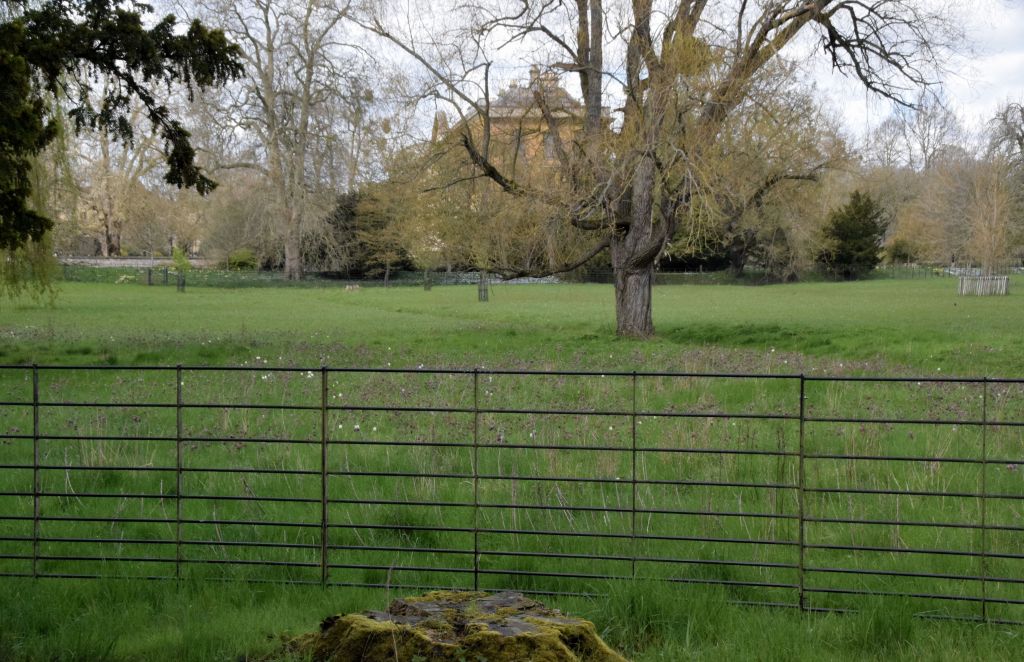
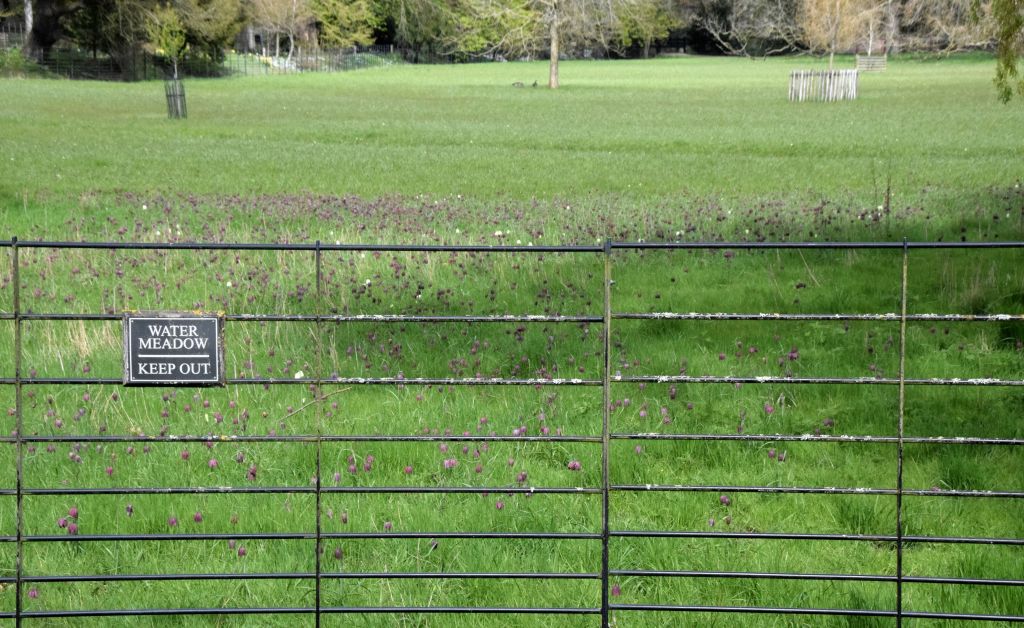
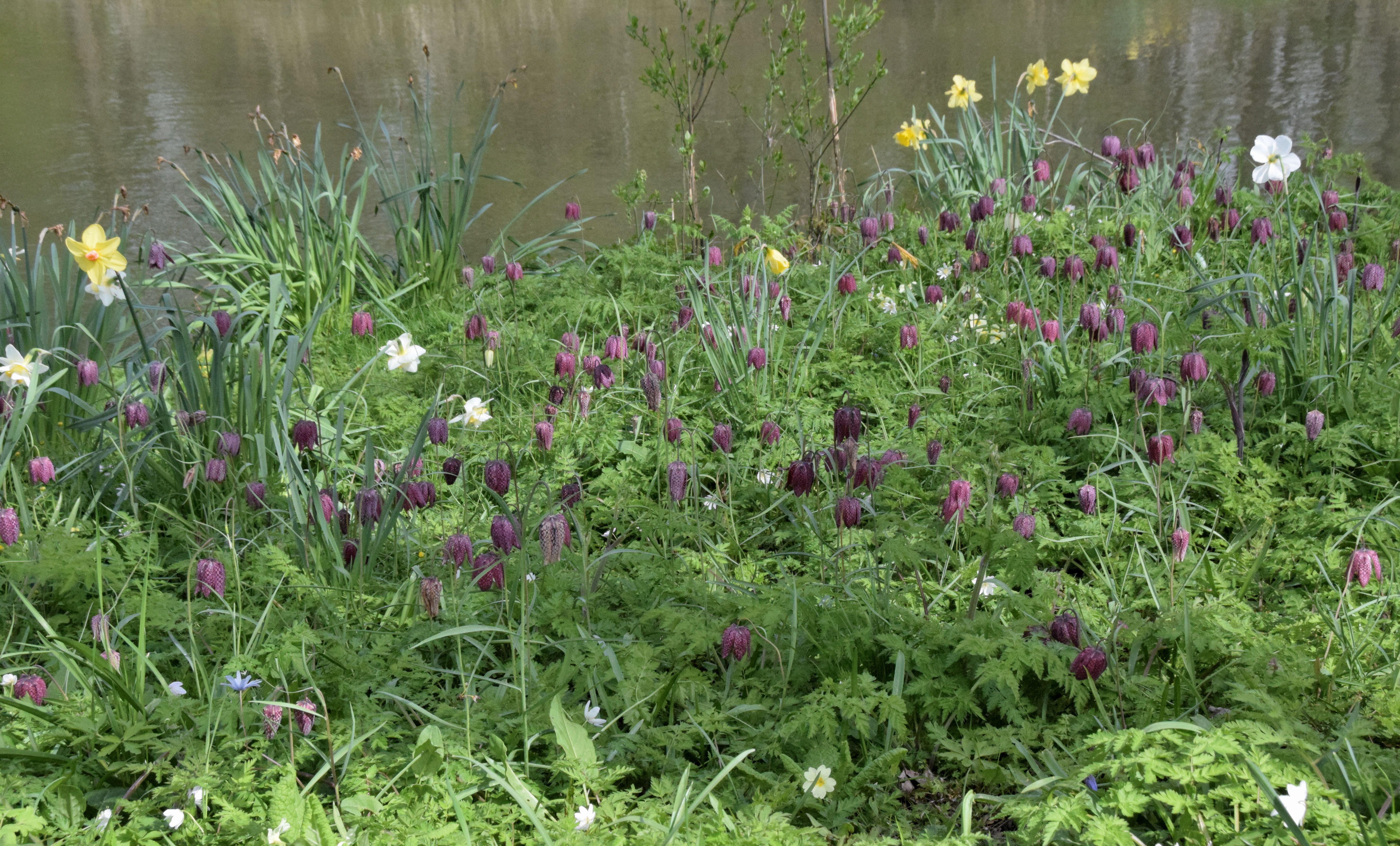
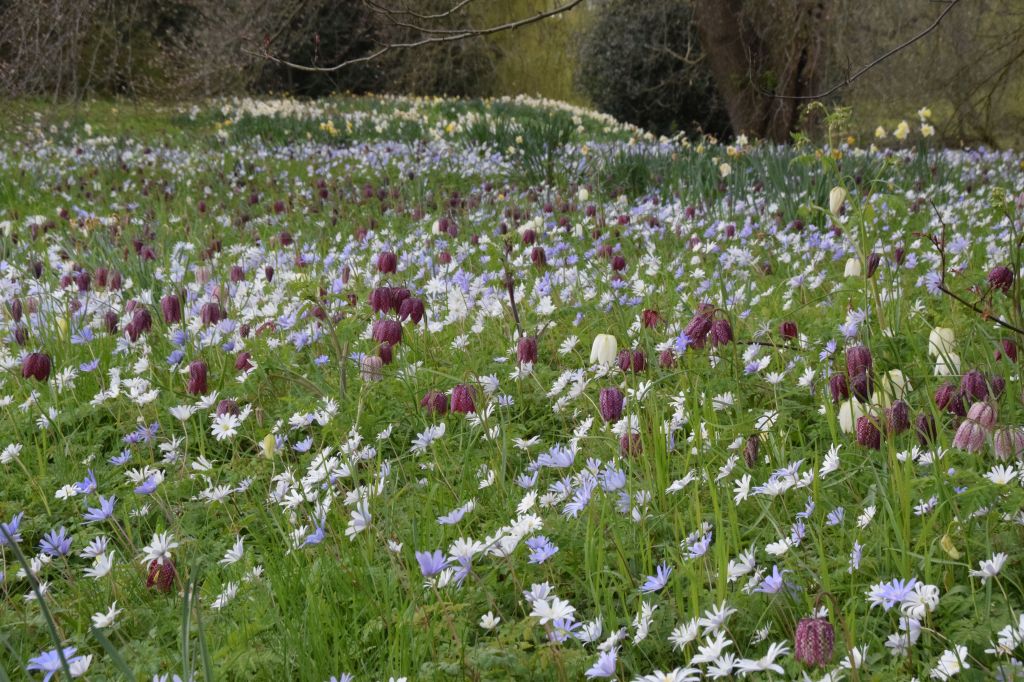
Immediately east of Magdalen College there is an ancient wild flower meadow covering an island between two branches of the River Cherwell. Around it’s perimeter and flooded boundary ditches runs a series of paths, Addison’s and Magdalen Water Ways (SP521064) to which Oxford residents are not charged for admission. There is no public access to the meadow itself, which is surrounded by rather formidable and unsightly black iron railings. But it was immediately plain to see the scale and intensity of the Snake’s head Fritillary colonies lying within (pictured below).

If Iffley Meadows has 90,000 plants there must be millions here. I believe the beautifully maintained park has changed very little since the late 17th century, and has been immortalised in literature and verse by Joseph Addison (1672 – 1719) and later C S Lewis (1898 – 1963), both former fellows of Magdalen College. Given such unending sympathetic management and lack of disturbance it is plain beyond measure how the spring wild or naturalised plants here must just have carried on multiplying to the present day.

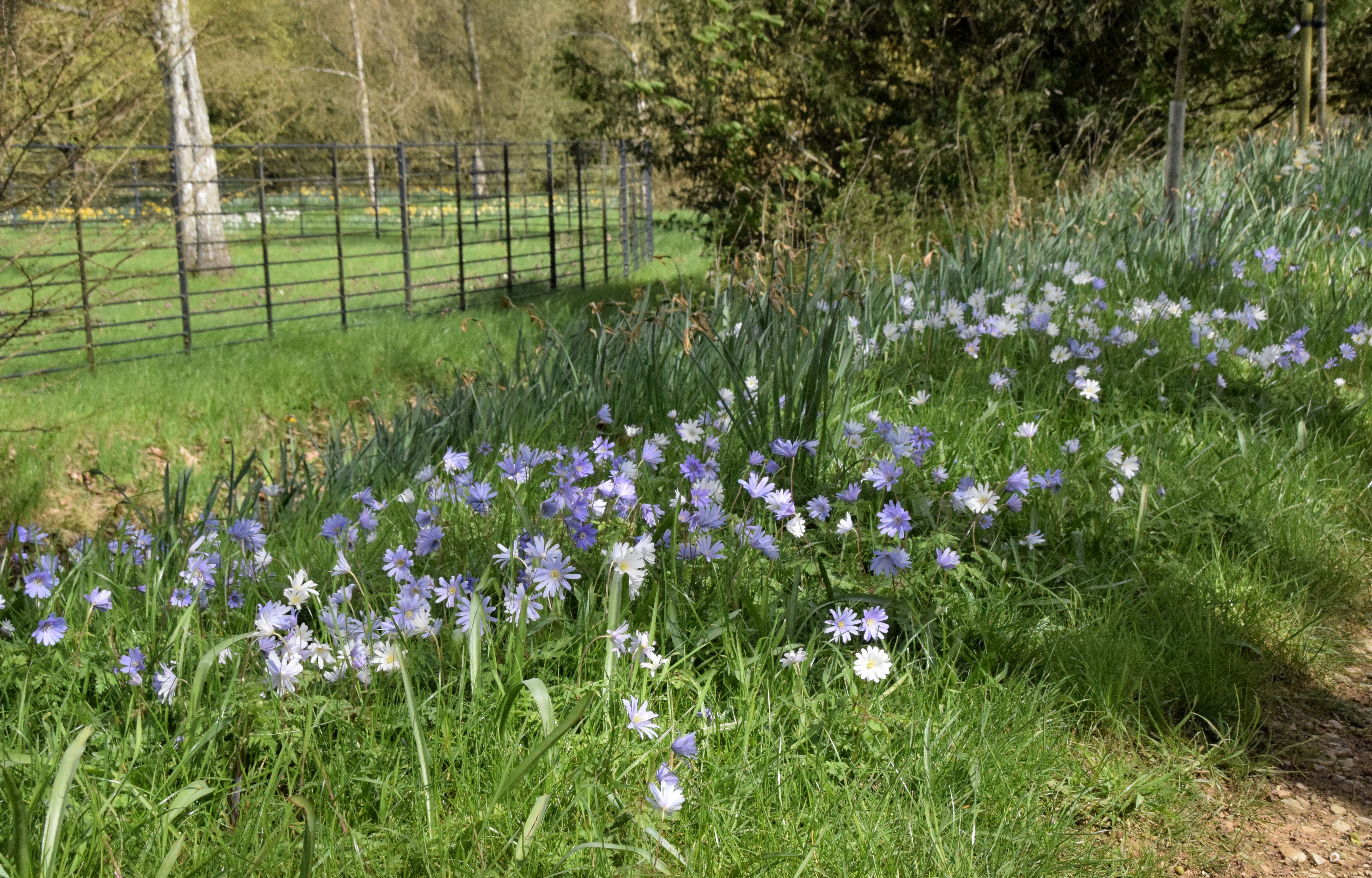
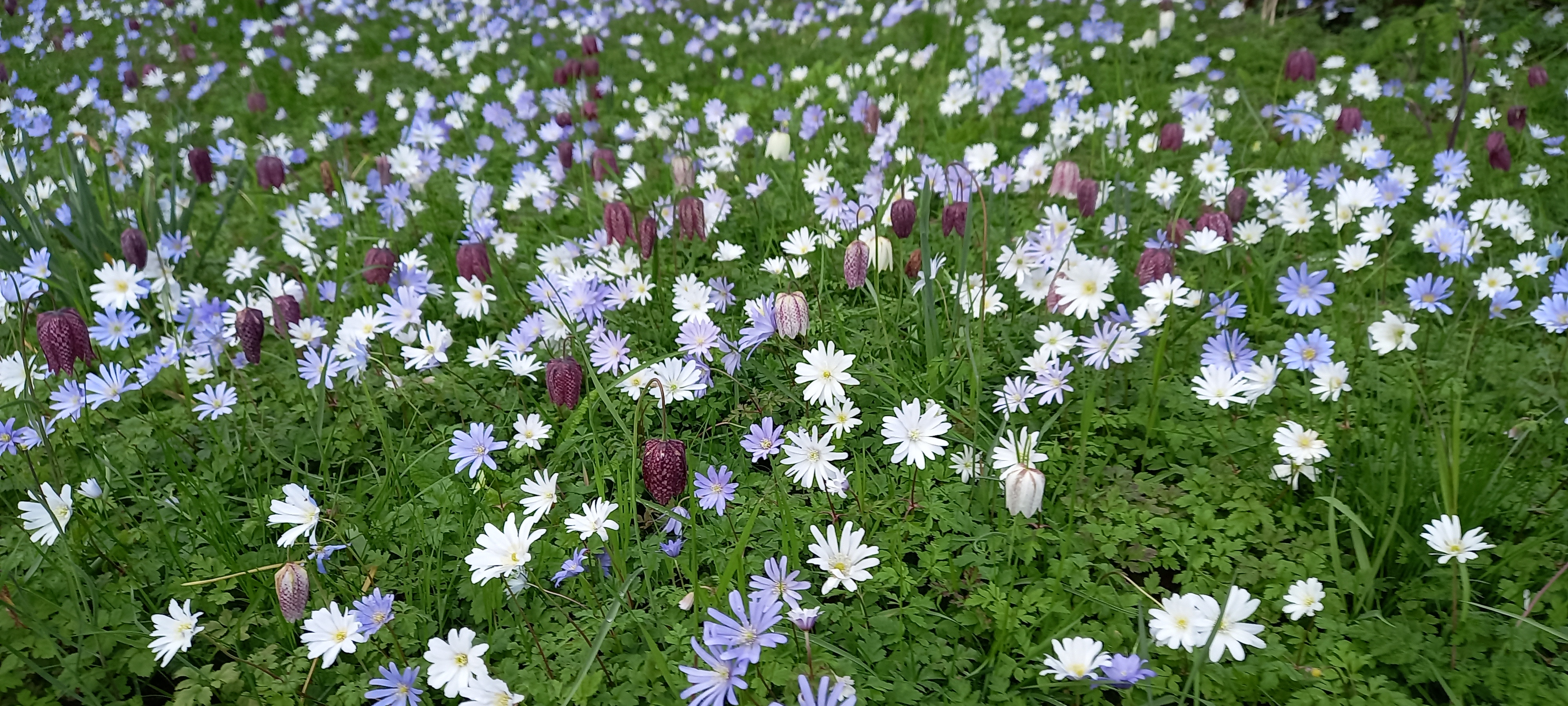
Where it is possible to get in amongst the Fritillaries is the adjacent Fellows’ Garden and that is where this experience went off the top of the scale. Between the hard path through here and the main channel of the Cherwell the nodding, swaying bells stretched before me as I walked on, mixed in with waterside plants, fading or gone over spring Narcissi and an even greater profusion of blue and white Anemones. The latter proliferate across the parkland and became very noticeable as soon as I started the waterside walk (below left). But in here there is a continuous dense carpet out of which countless Fritillary flowers rose all around in biblical quantities.

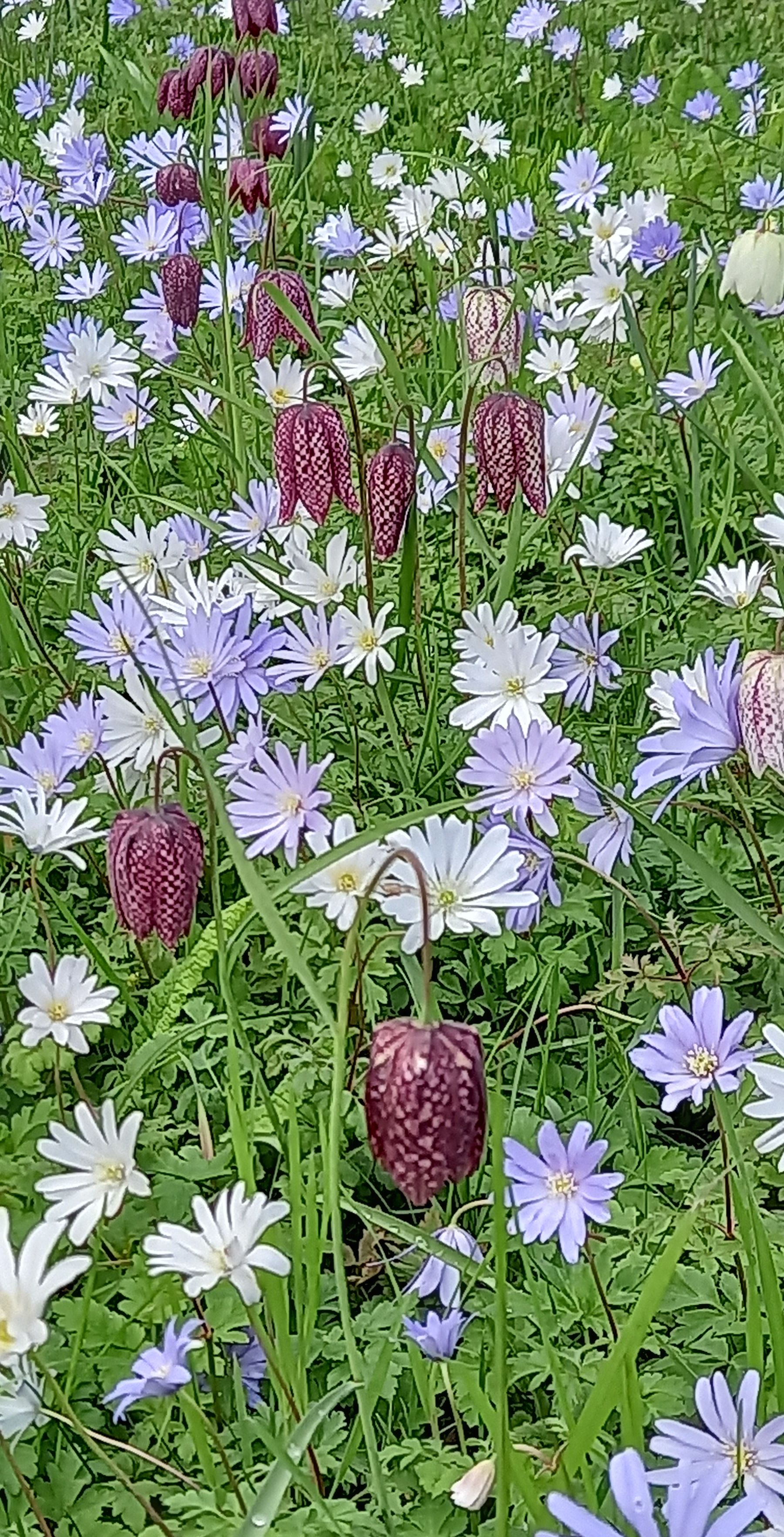
If there are millions of Fritillaries in Magdalen College grounds there must be trillions of naturalised Mediterranean Anemone blanda, and the visual juxtaposition and interaction of the two plants in such vast numbers was simply breath-taking. That quality peaked to the right of the path near it’s far end from the entrance where there is a circular walk around a bank covered in both species and that is where the following pictures were taken.

Having lived close to Oxford for more than 35 years and counting, how could I have not been aware of this until now? It is difficult to find words to convey adequately the spectacle I am attempting to describe, which is perhaps much better achieved in pictures. This was quite simply the most stunning and stimulating “wildlife” experience I have enjoyed and one of the best things I have done for quite some time … and it gladdened my heart.

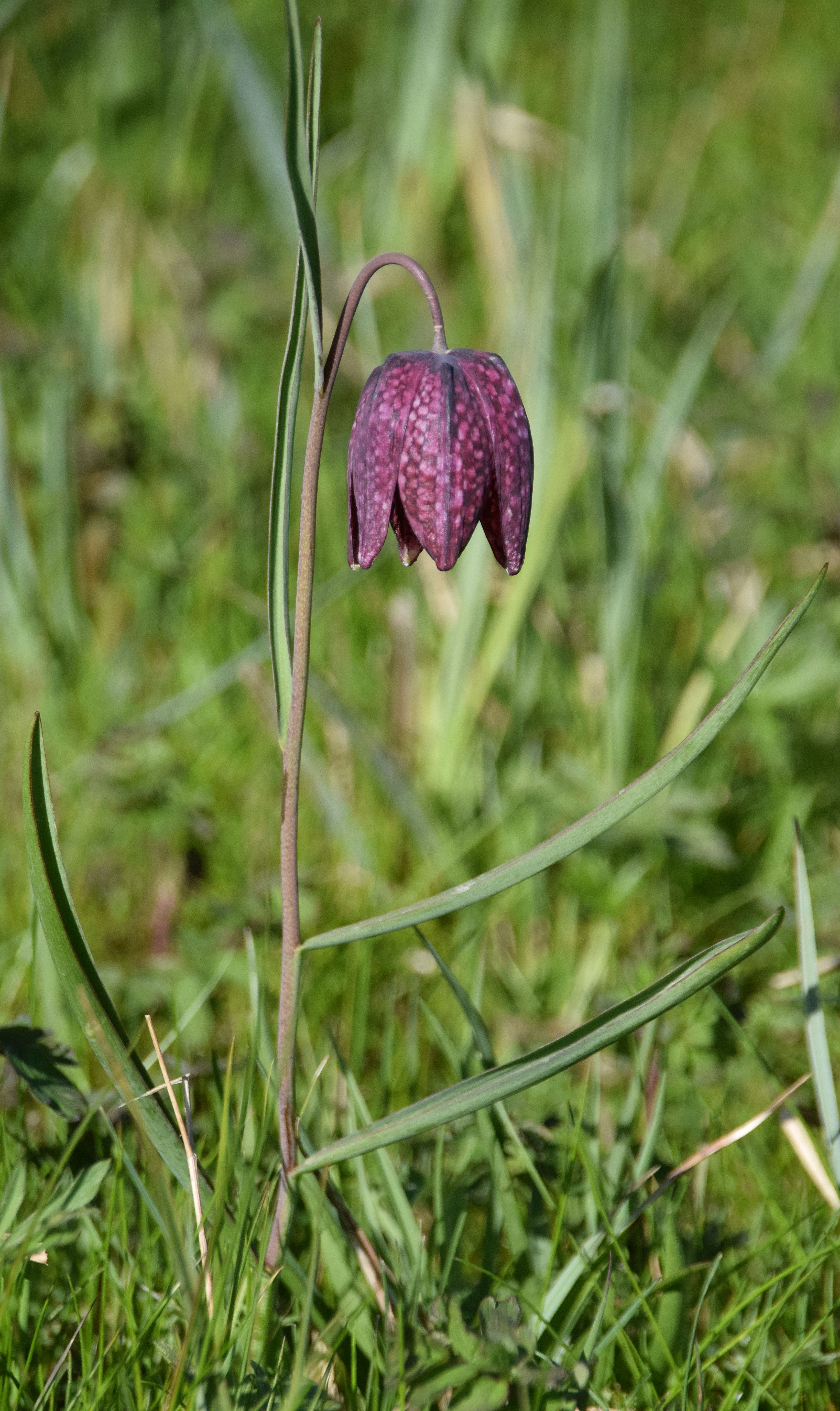
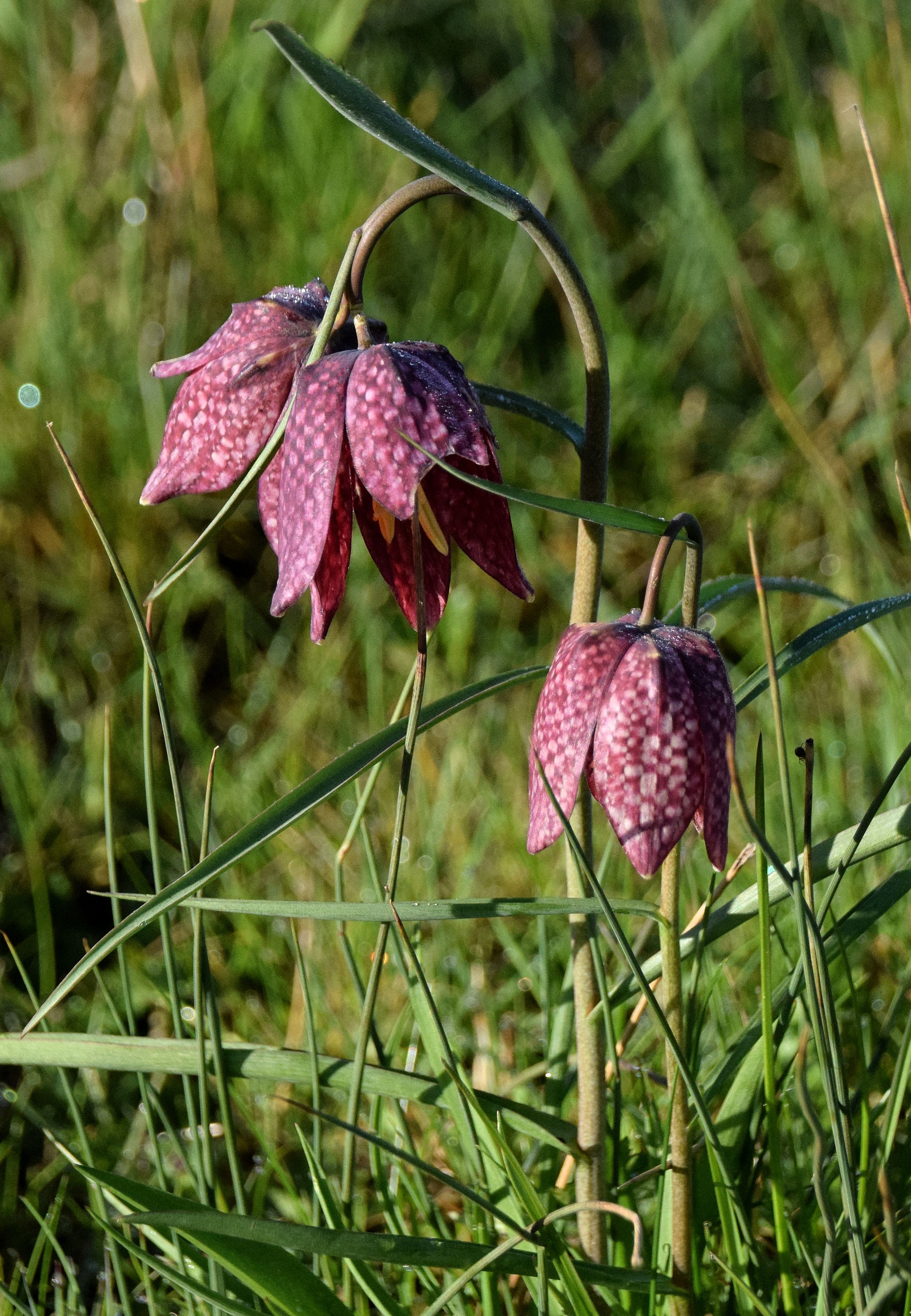
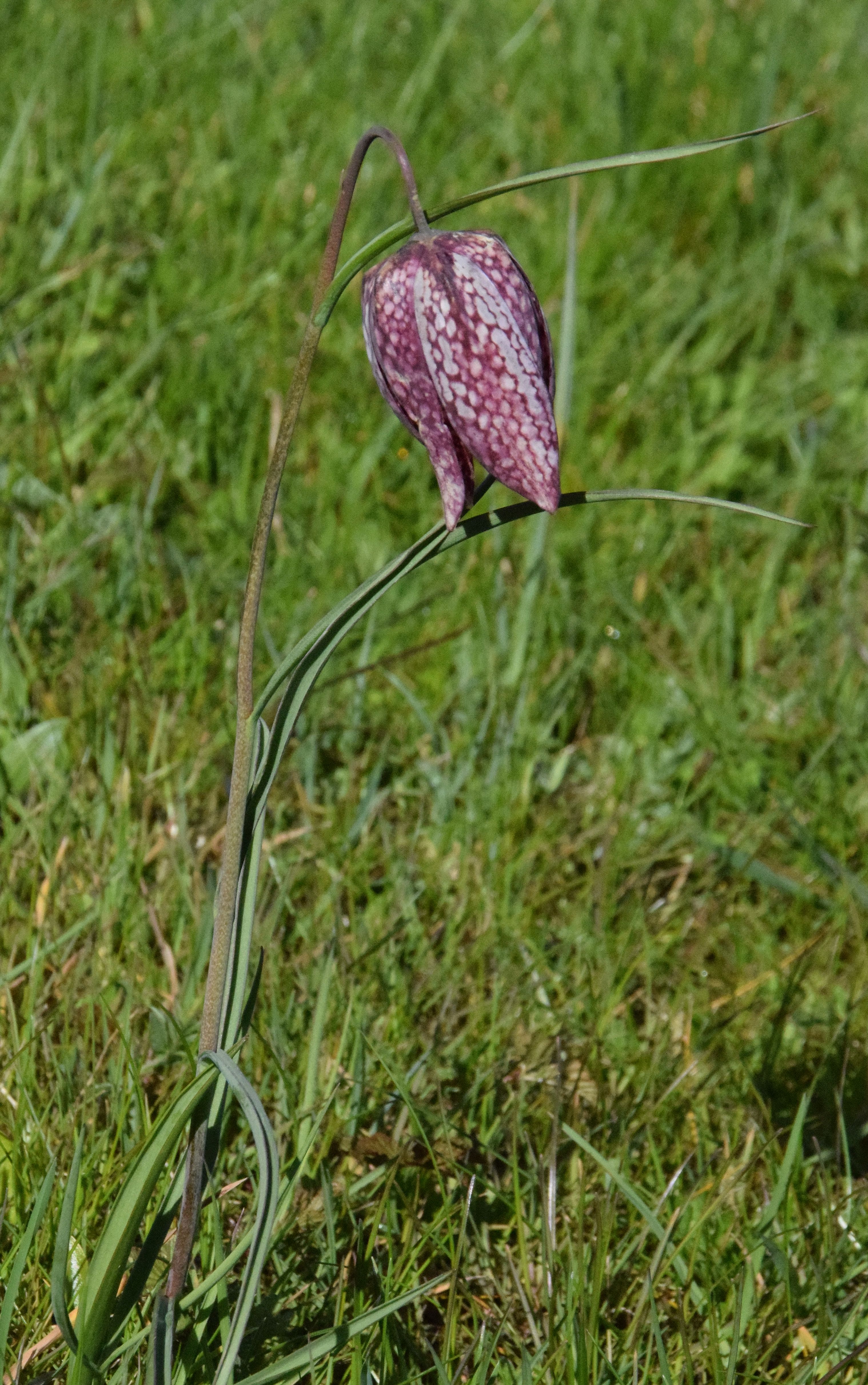
The annual Snake’s head Fritillary spectacle in Iffley Meadows, Oxford – 7 & 13th Apr

This is something I really should have done a long time ago. Each April numbers of visitors are drawn to a Thames-side nature reserve in central Oxford to witness carpets of up to 90,000 blooms of what has become considered an iconic Oxon wild plant. Since the cultivated equivalent is now flowering in my own garden at home, having woken early on this sunny bank holiday morning I went to take a look myself and was not disappointed.

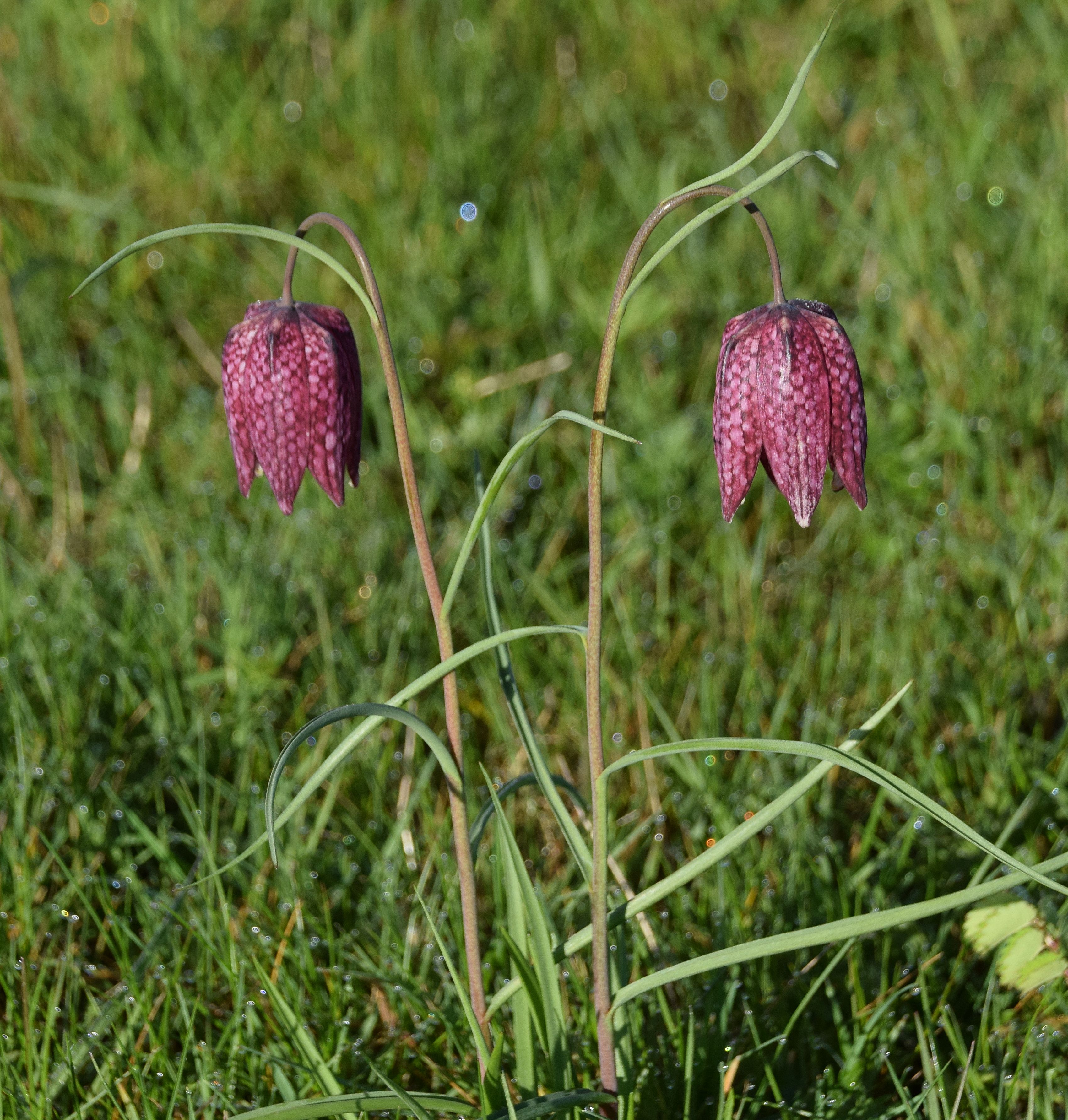
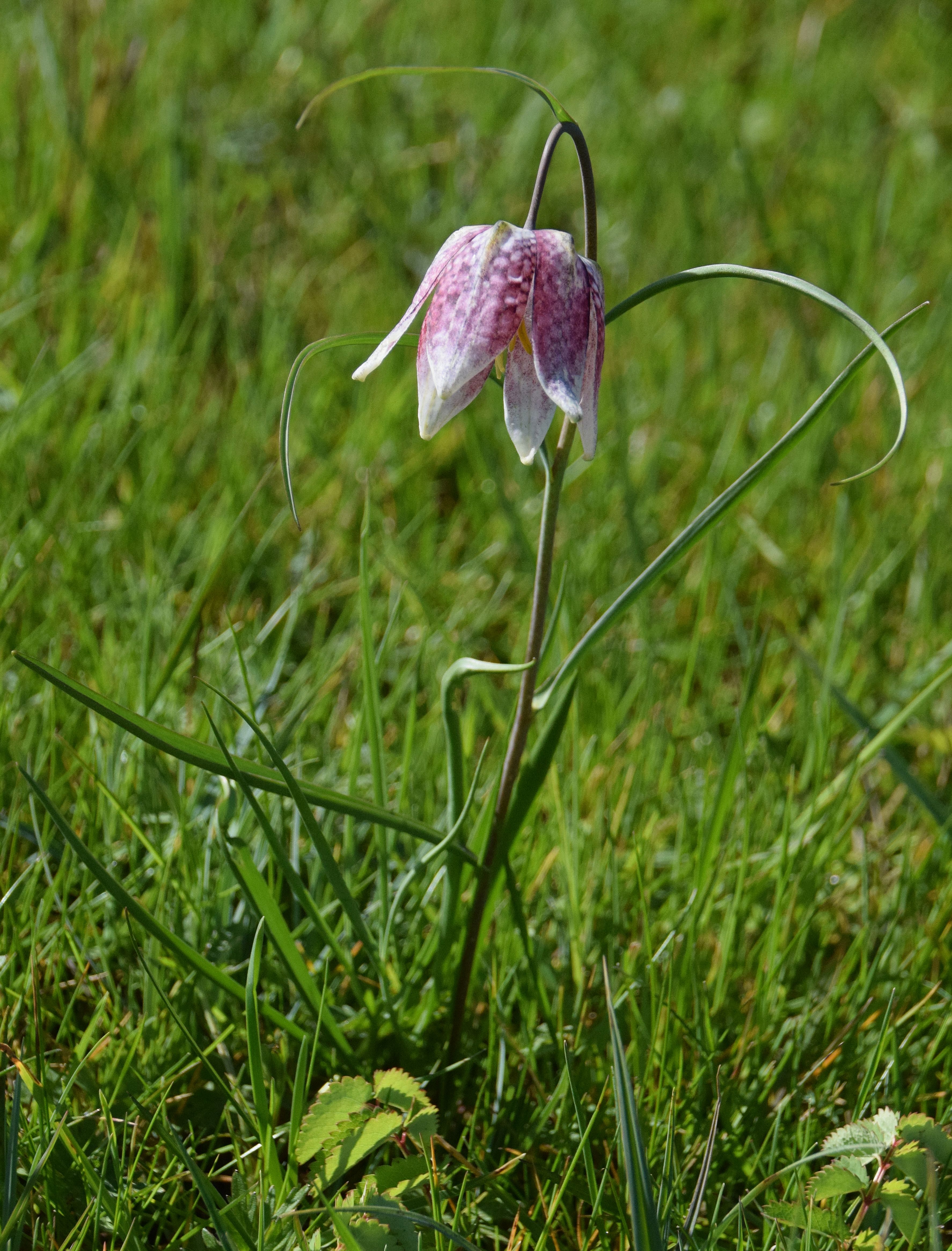
Now a scarce and localised species, Snake’s head Fritillary (Fritillaria meleagris) is Great Britain’s only native member of the genus. It occurs naturally at fewer than 30 mostly wet meadow sites in southern England and the Midlands and within those is often quite profuse. Iffley Meadows and nearby Magdalen College grounds in Oxford are widely cited as hosting some of the top five national populations. When BBOWT took over management of the former in 1983 there were around 500 plants here, but now annual surveys count in excess of 76,000 and more still in best years.

Snake’s head Fritillaries

These 33 hectares of wet meadows (OX1 4UP – SP525039) crossed by old river channels with willow-lined ditches have a rich diversity of wildlife. Such old, unspoilt meadow land was once a widespread feature of native river systems, but much has been lost to drainage and farming. There can be few British cities through which a river flows where such wildlife habitat still exists just 2.6 km from the urban centre, or where so much original floodplain habitat remains undeveloped as here in Oxford, and for such reasons I have always felt quite blessed to live here.

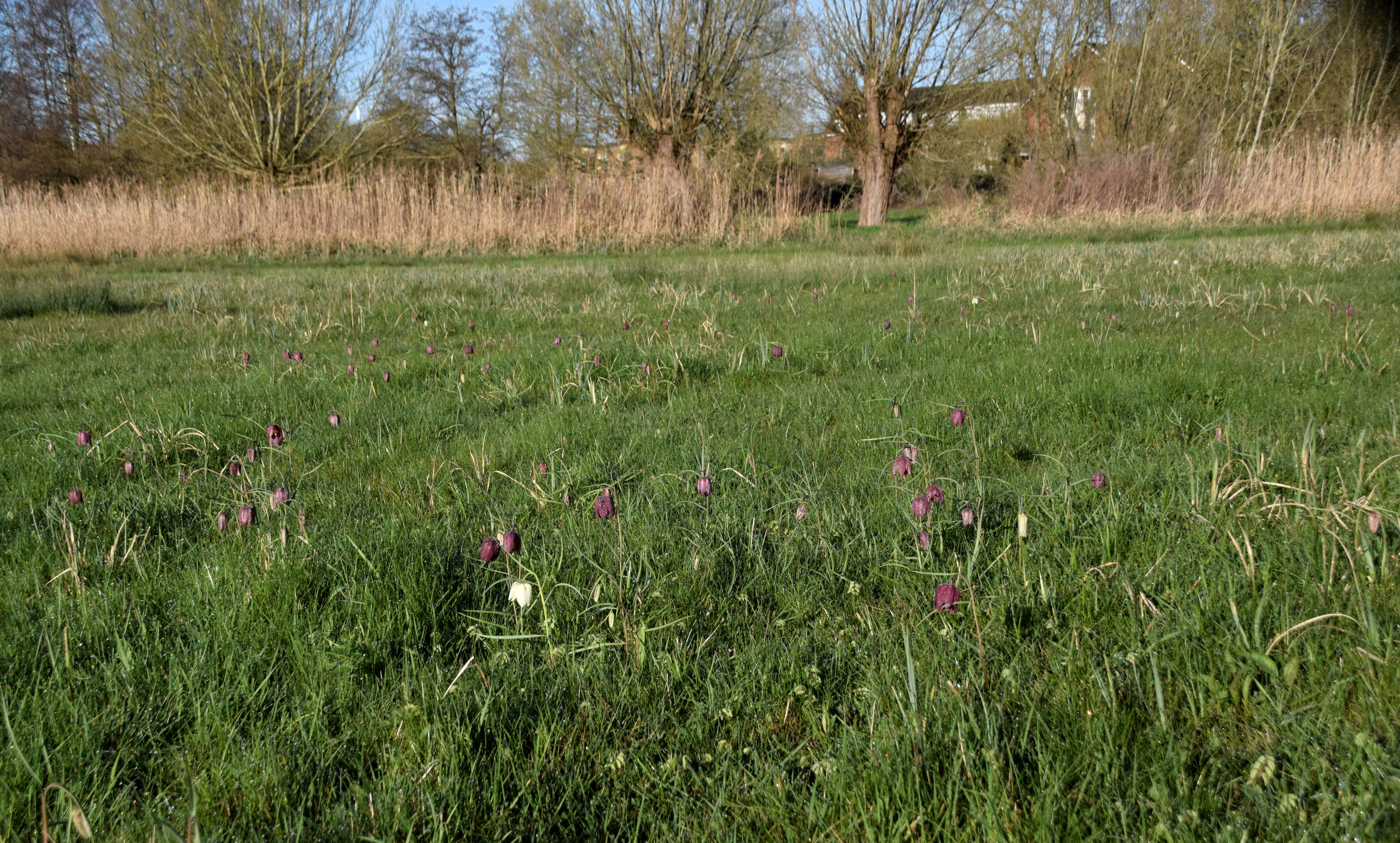
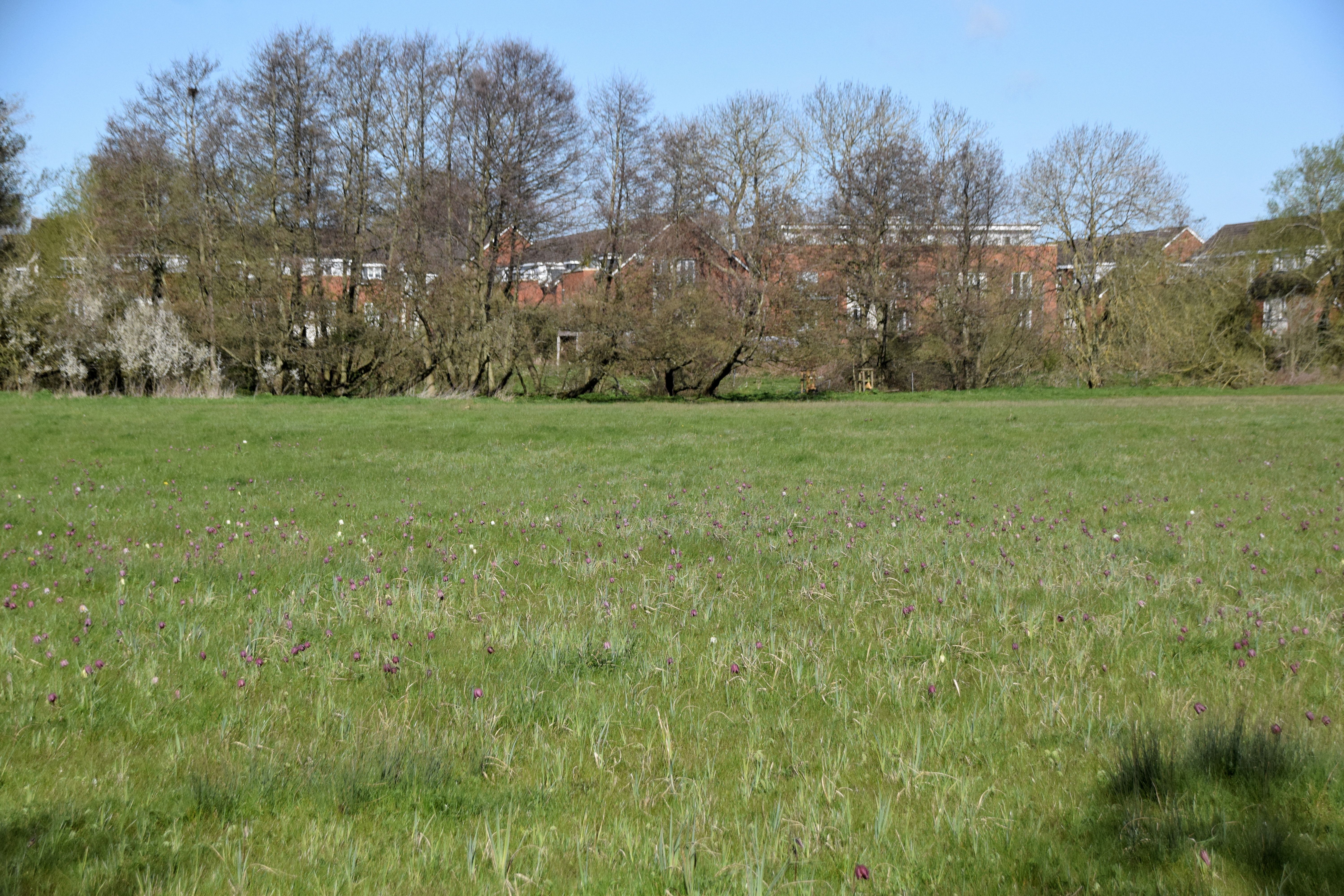
As I arrived on site the earliness of the hour seemed appropriate, as so soon upon the onset a week ago of English summer time and with it fair weather, I have found myself in an apparent phase of re-emergence and renewal. But more of that later. I wasn’t sure exactly where to look, but a dog walker called out, having noticed my camera and guessed my intent, and gave me directions. After a short walk onward I soon found what I was seeking (pictured below), though the display seemed some way from its annual peak.

Iffley Meadows Fritillary field # 1

This 15 – 40 cm tall bulbous plant favours damp riverside meadows that flood in winter, and BBOWT also maintains a regime of controlled grazing and July hay cutting at Iffley to optimise growing conditions. Botanists disagree as to whether it is a truly native species or a long-established and naturalised garden escapee. The first reference to it growing in the wild was in 1736, whilst it was known from gardens up to 150 years earlier. Though also native to continental Europe and western Asia it has been an endangered species in many localities and more often found as a cultivated than wild plant. But the fact that nationally it is usually confined to ancient hay meadows in the wild and rarely spreads to adjoining habitat casts doubt upon that theory.

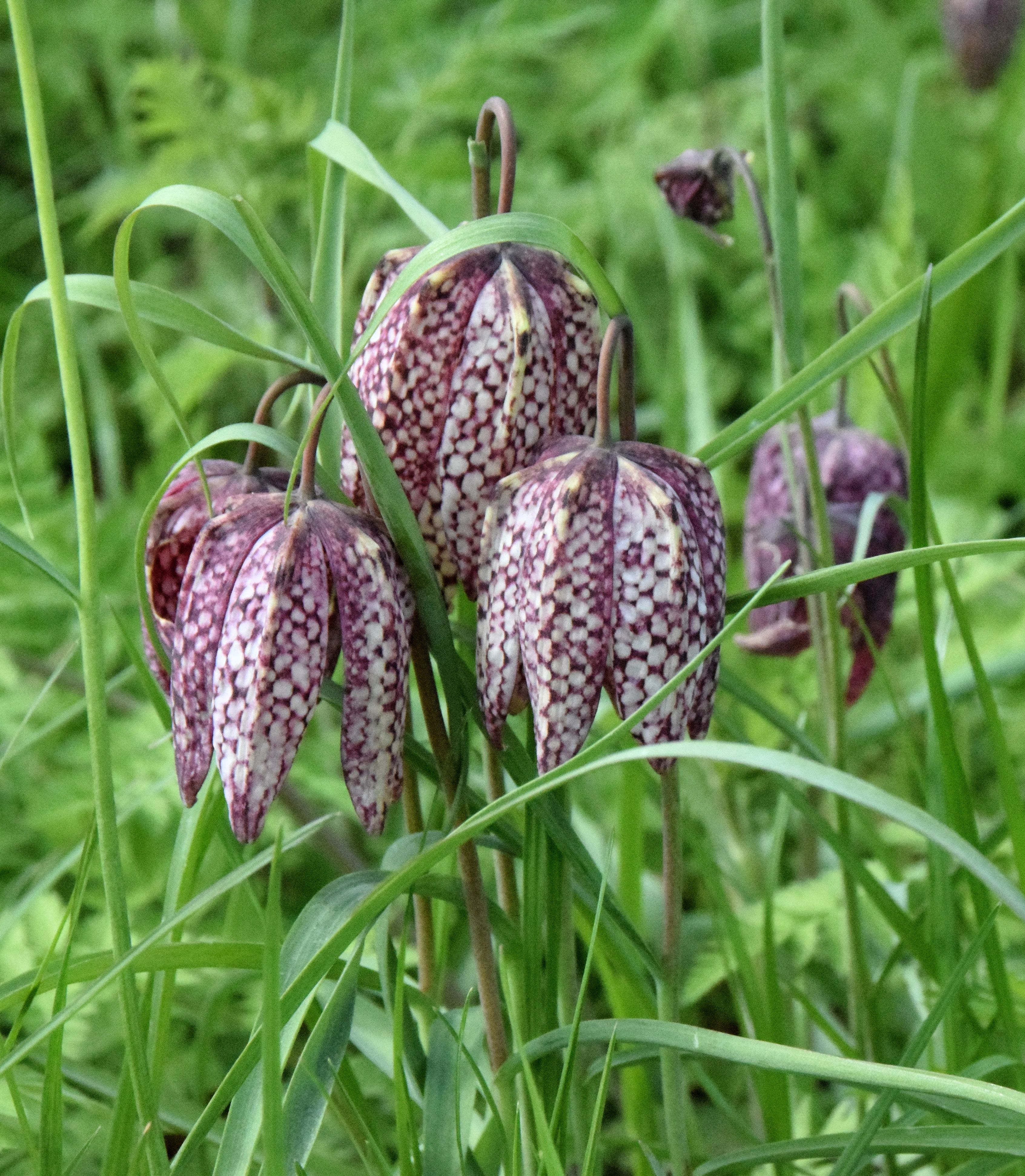
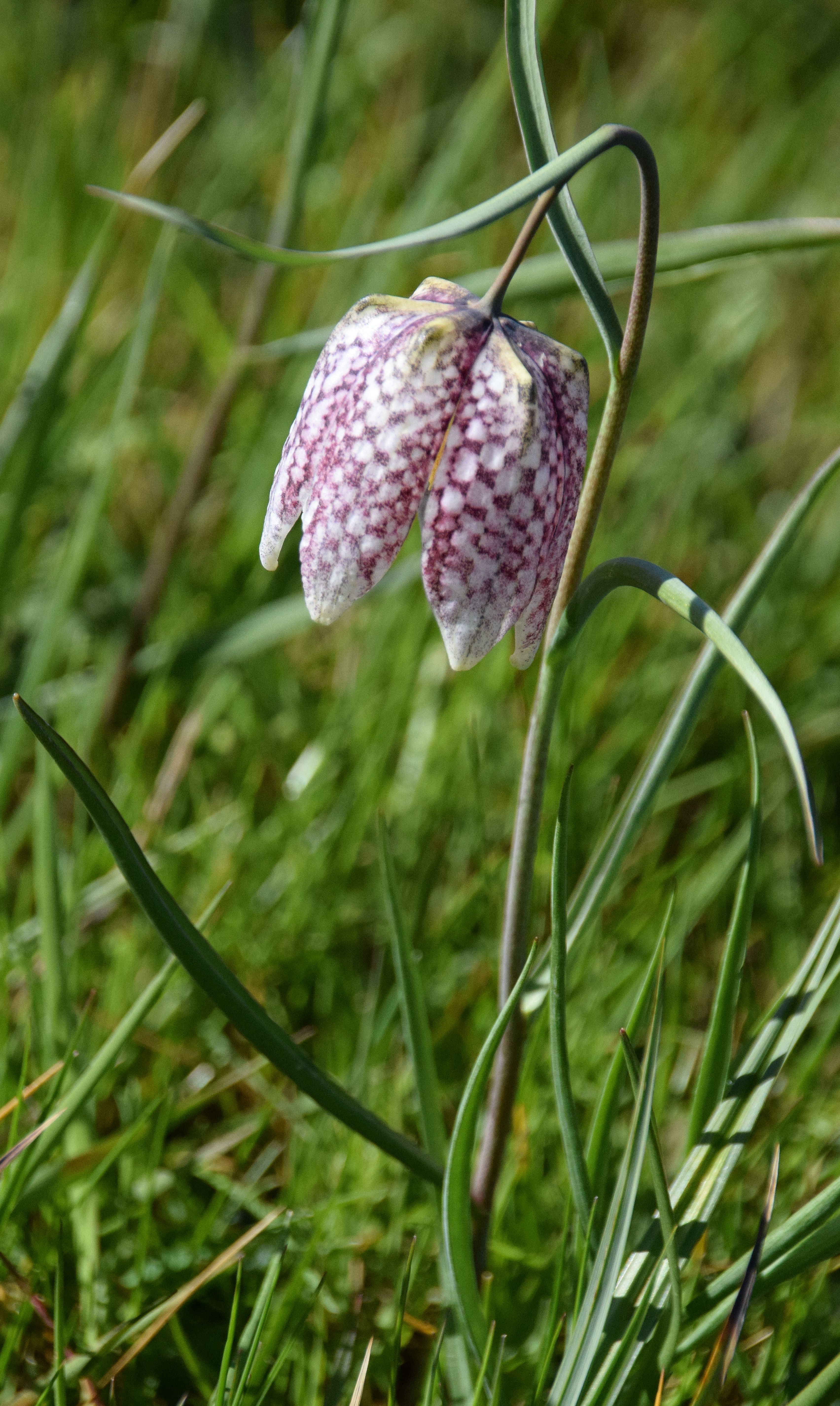
By way of a little trivia, Meleagris is Latin for Guinea Fowl and the mottled pattern of the bell-shaped blooms is said to resemble those birds’ plumage. The likeness to snakes’ heads presumably comes from the nodding habit. Older common English names included Chess Flower, Frog Cup and Leper Lily since the flower shape was thought to resemble the bells once carried by the pariahs that were leprosy sufferers. In 2002 SHF was chosen as the county flower of Oxfordshire following a poll by the wild flora conservation charity Plantlife.

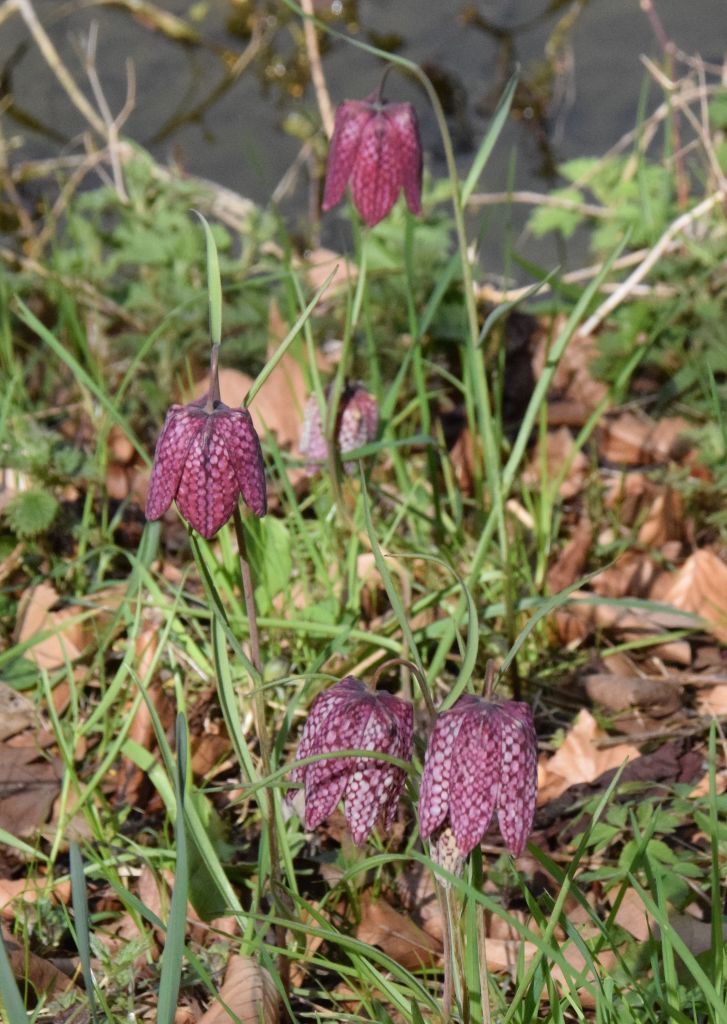
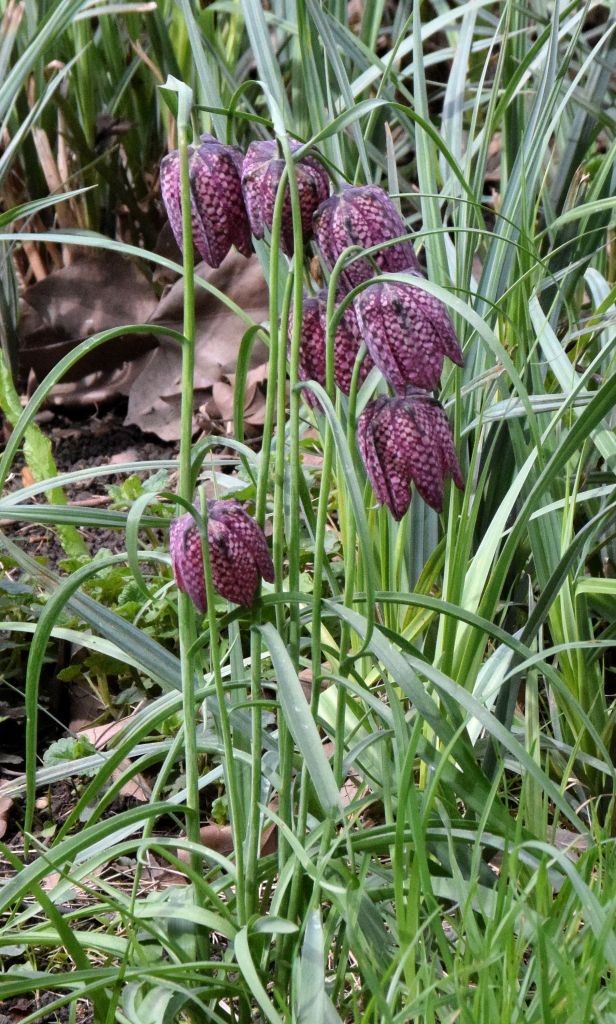
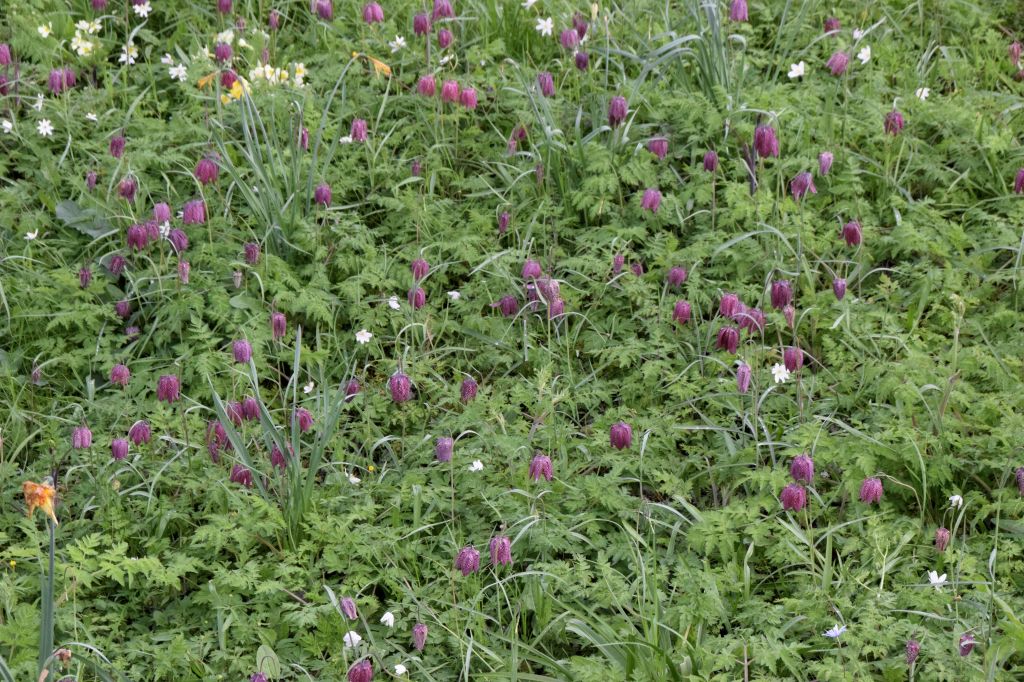
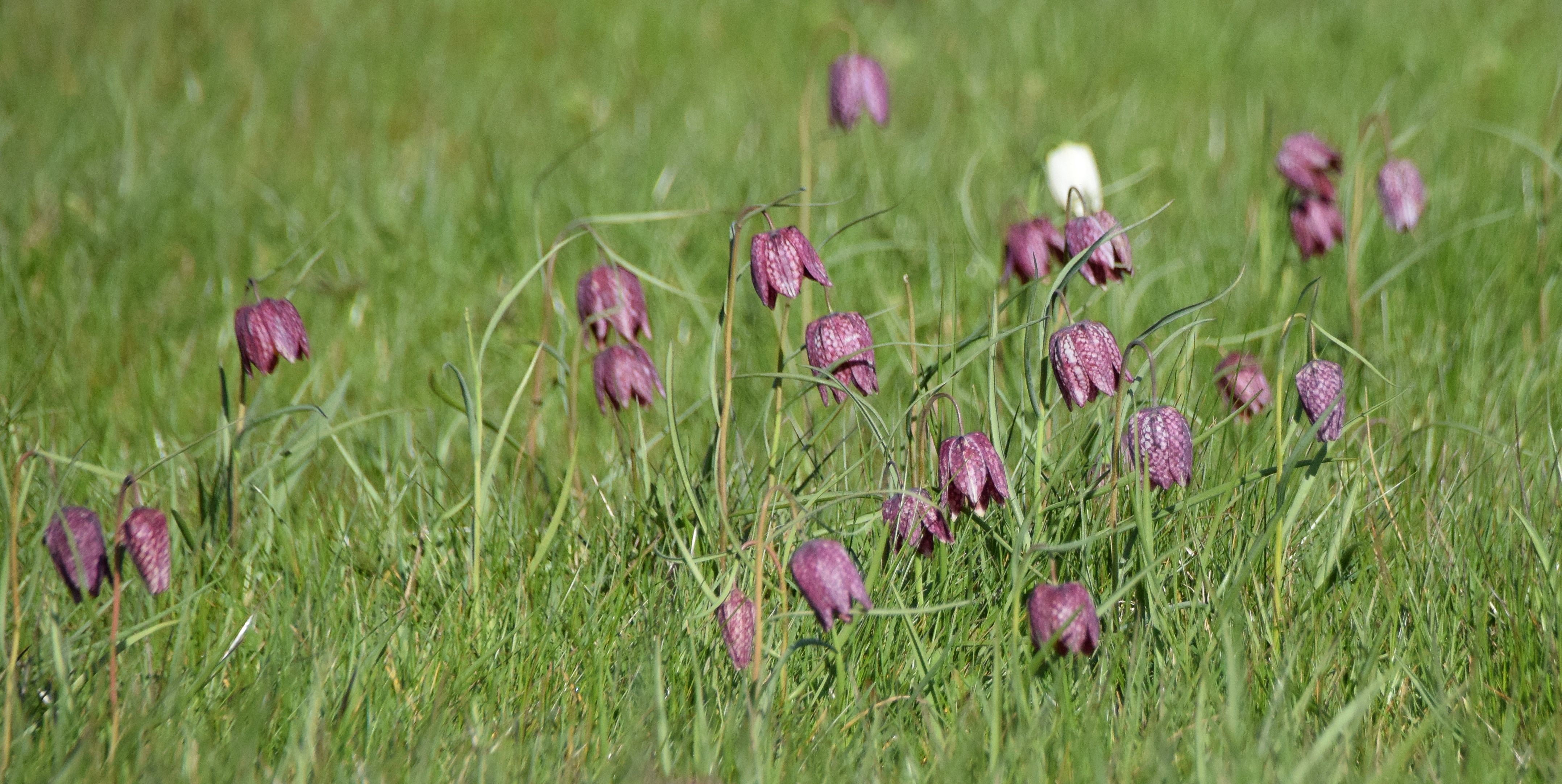
I spent around an hour here treading carefully amongst the sea of nodding, delicate, mainly purple, pink or berry-red chequered flower heads (pictured above), depending upon how the light caught them. These are said to look their best early in the day when backlit by the low spring sun. Smaller numbers are cream coloured with green highlights. Local residents I met all knew what I had come for, such is the reserve’s popularity with wild flower enthusiasts at this time of year.

Iffley Meadows Fritillary field # 2

Six days later (13th) I returned to see if the display was any more advanced in numbers but found that first spot to be much the same since a lot of blind plants were just the same. Then walking away I met an Oxon birder who lives nearby and he told me the best field is over a stream beyond the reed bed in the second picture from top (above). So I went back to take a look and now recognised the scene of the survey video on the reserve website.

Here, adjacent to Weirs Mill Stream was indeed a greater density of Fritillaries though still many blind plants. Amongst them stood out a proportion of paler mauve blooms (pictured above) that I found especially attractive. Having gone into a new season looking as ever to evolve my wildlife interests I came across more botanical sites when researching new Orchids to seek out locally. So I feel pleased to have at length taken the opportunity to experience a true local treasure. Welly boots are essential when visiting this site.