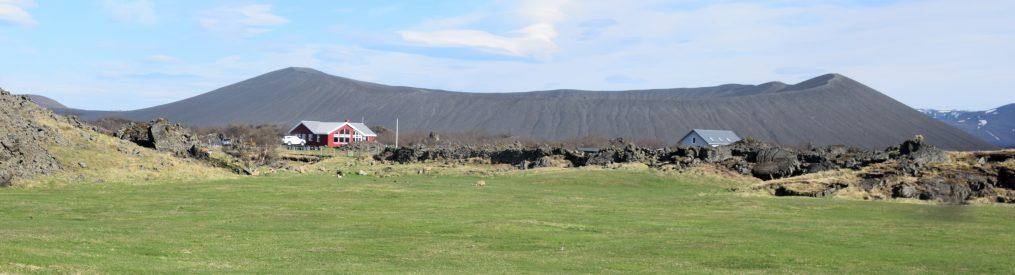
The first part of this was the proverbial needle in a haystack. In planning my current wild Orchid agenda I especially wanted to experience the highly attractive Burnt (or Burnt-tip) rarity. In my home area it occurs only in a few non-disclosed locations on the South Oxon Downs, so this would entail a day tripette to the Cotswold Water Park in neighbouring Wilts.
Clattinger Farm (SN16 9TW – SU014932) is part of Wiltshire Wildlife Trust’s Lower Moor (see here) complex of farms managed by traditional practices. Historical records show that its SSSI-designated hay meadows have never been subjected to artificial fertilisers and agricultural chemicals, the only such lowland farm in Great Britain. Hence it is considered the country’s finest remaining example of enclosed lowland grassland, and of international importance for wild flowers.
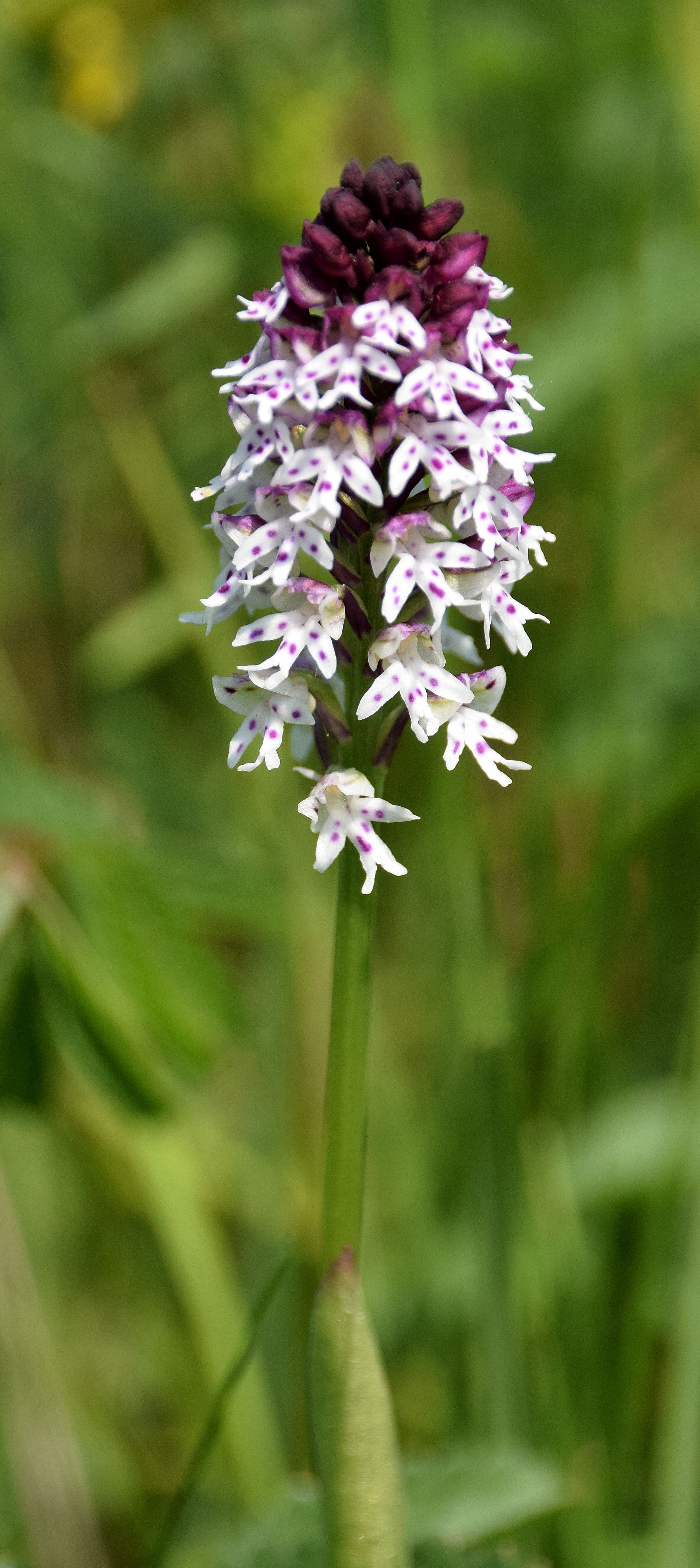
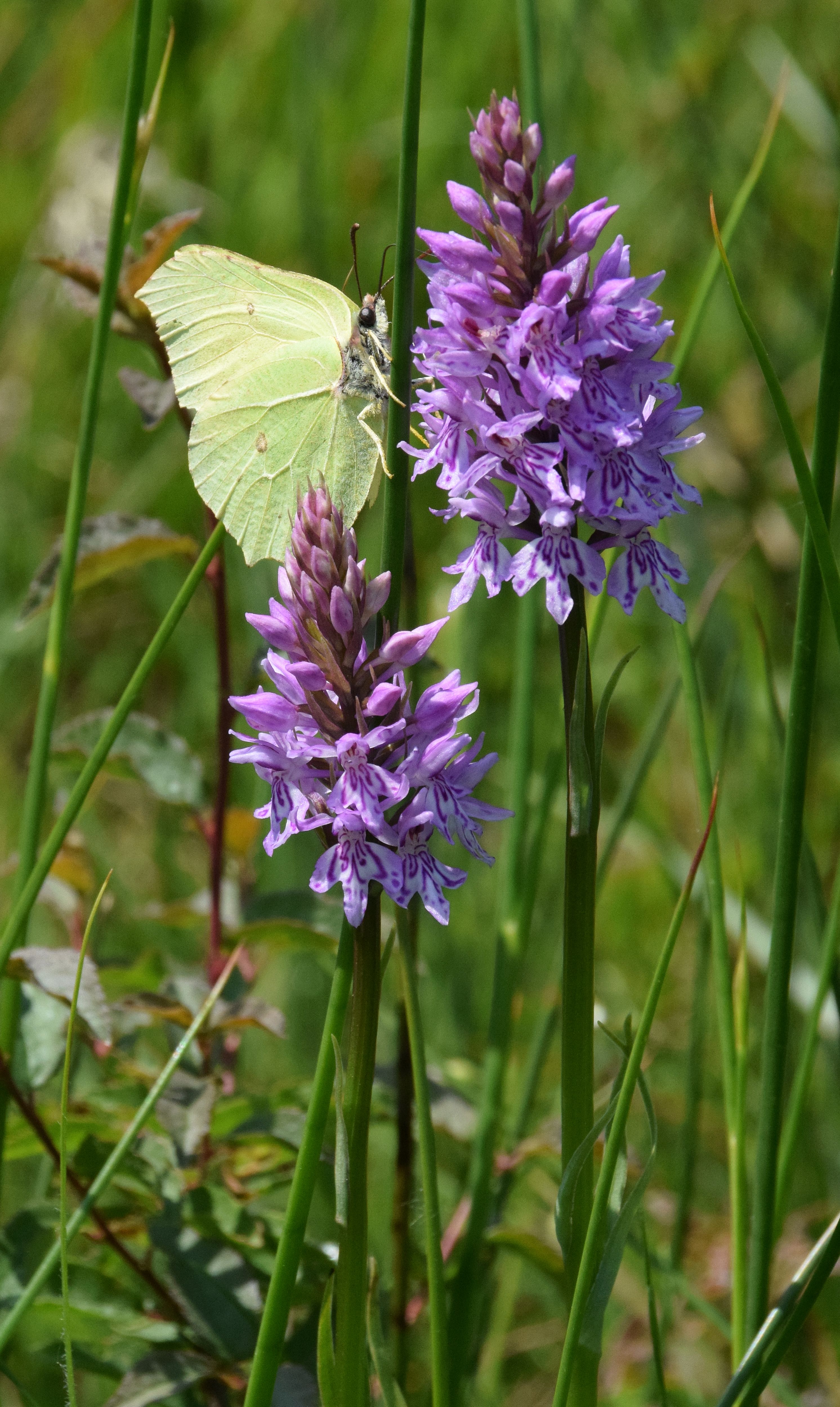
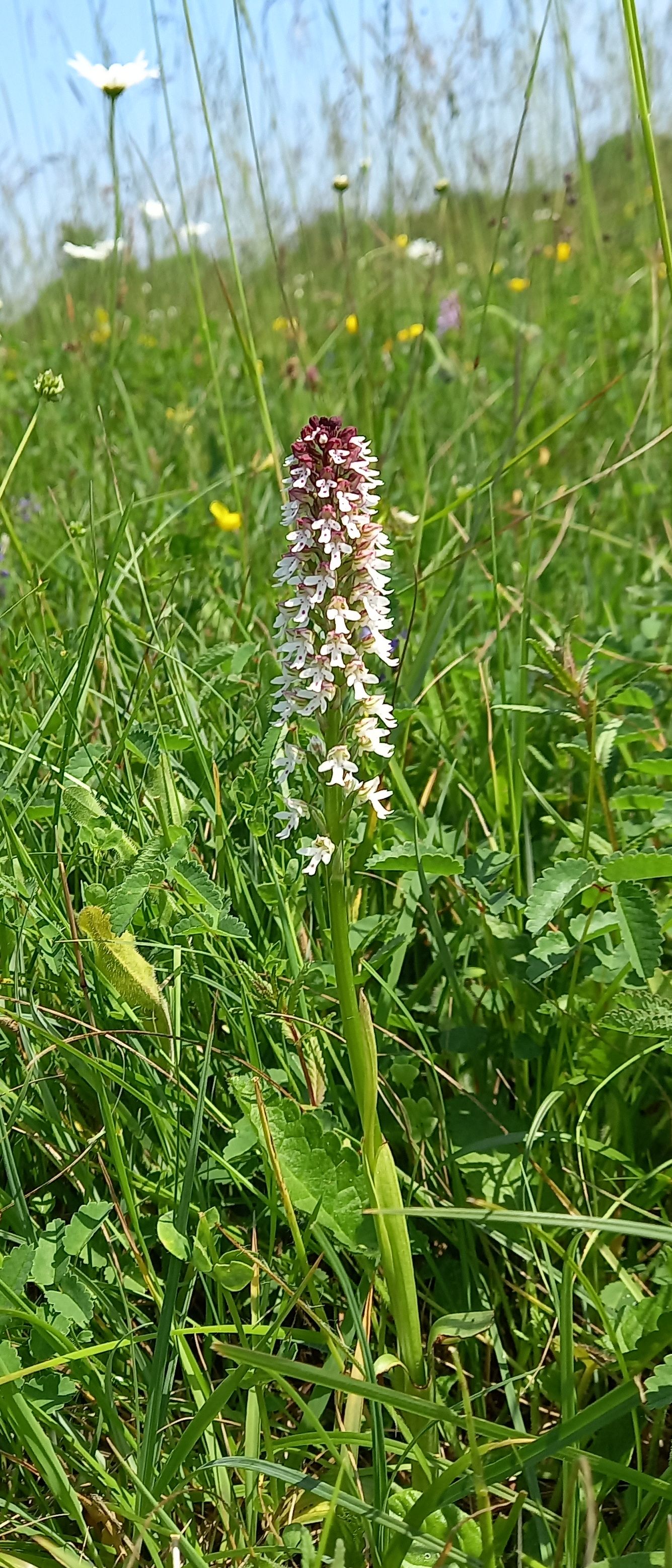
Burnt Orchid (left and right) and Southern Marsh X Common Spotted Orchids with guest
The question was exactly where to look. There was no specific information at the visitor centre and none of the volunteers could tell me either, so I set off to search at random. Prior to visiting I had no idea of just how large this 60 ha (150 acre) site is, there being 14 separate meadows in which I lost my sense of direction easily and a number of times. No other people I met walking around were serious Orchid hunters, which seemed surprising when this is an oft-cited location for the much-sought Burnt Orchid. Eventually I engaged with a local frequent visitor who gave me some vague directions, but still I drew blank.
As Bernwood Meadows, Asham and Wendover Meads were for Green-winged Orchid in May, so this site is for Southern Marsh Orchid. There are thousands of them here, a significant portion of which must be hybrids with Common Spotted Orchid. In amongst them were the fading forms of many gone over Green-winged Orchid. The first of those three varies considerably both in colour tone and the speckle and dash markings on its petals, all of which makes accurate identification of the species difficult. Preferring as I do to minimise scientific detail in this journal I will merely present the following sequence of purer and possibly more hybridised plants.
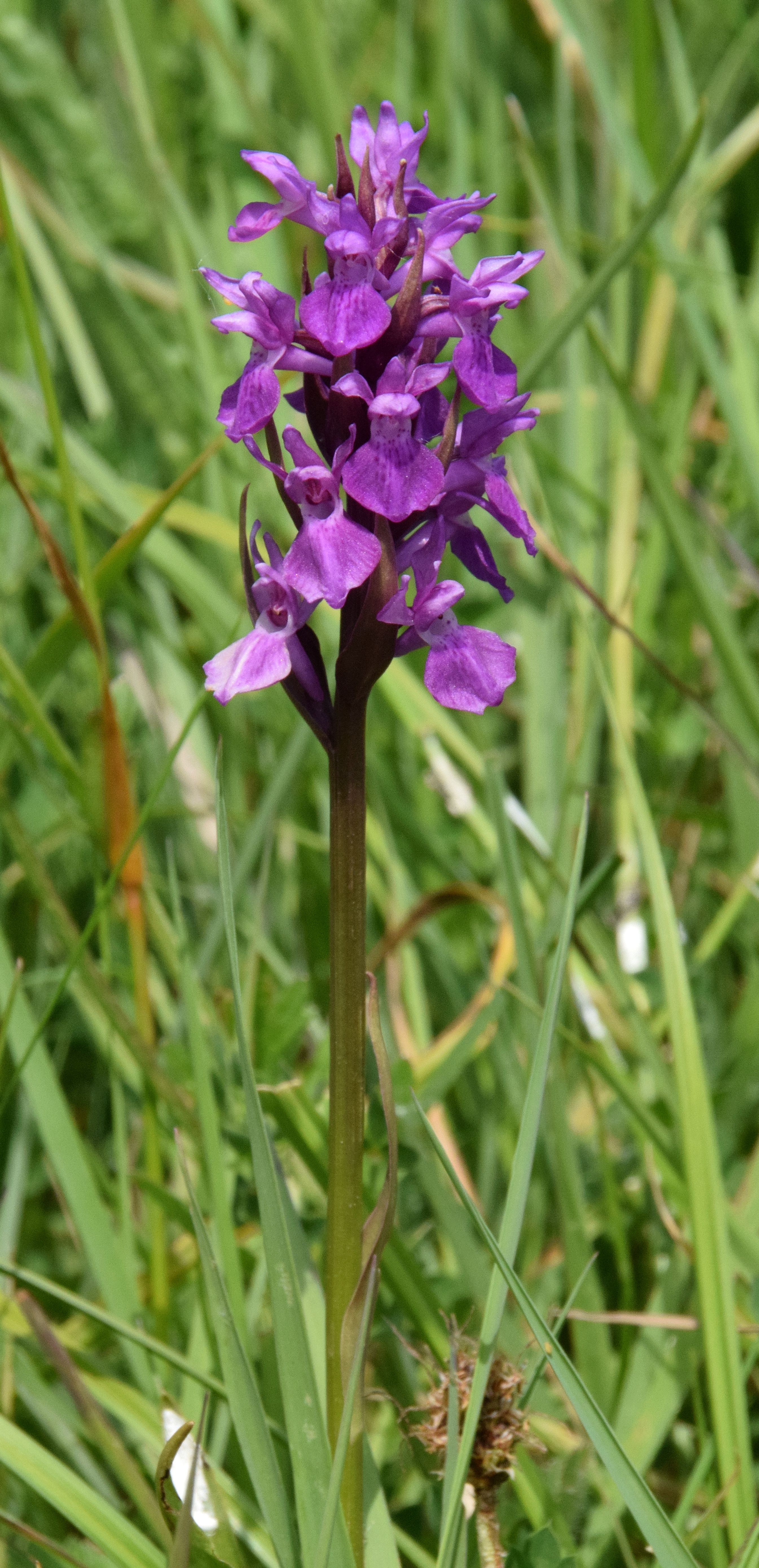
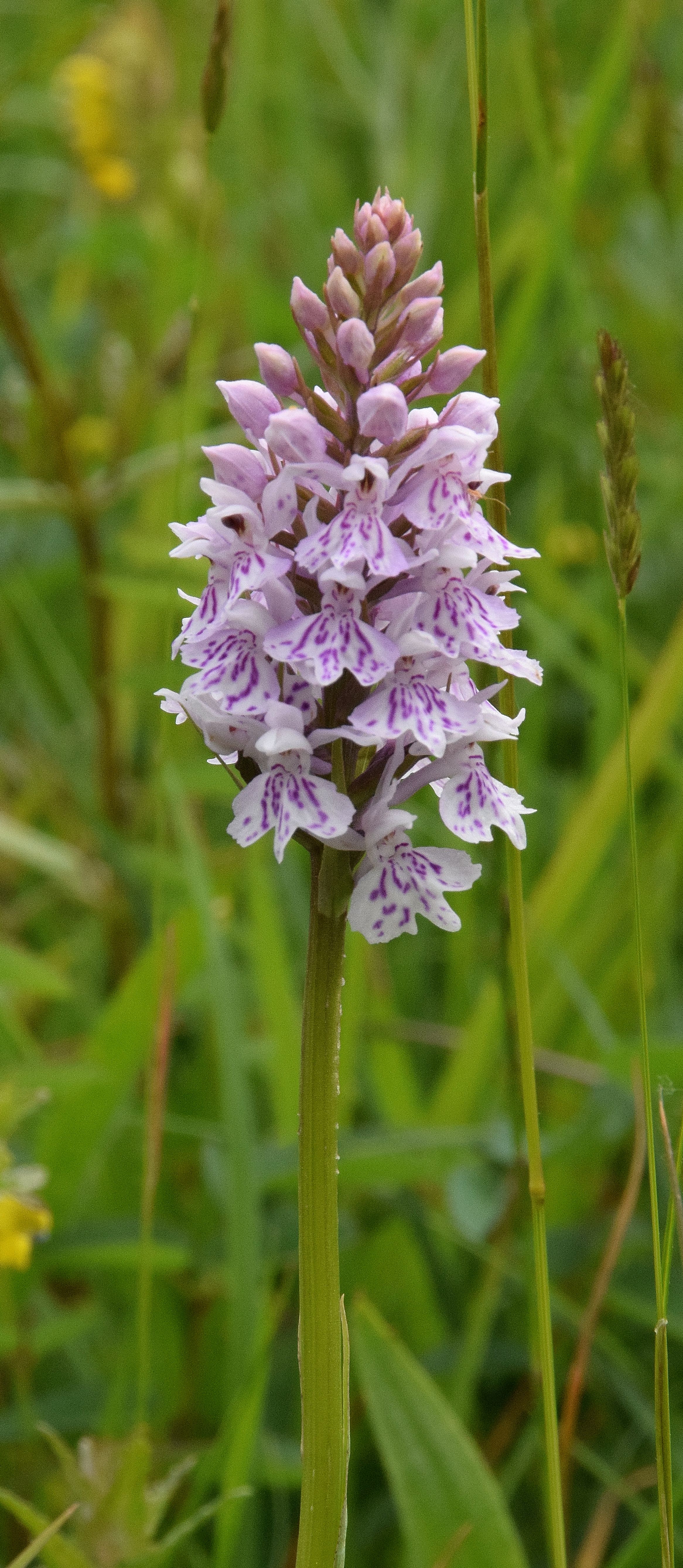
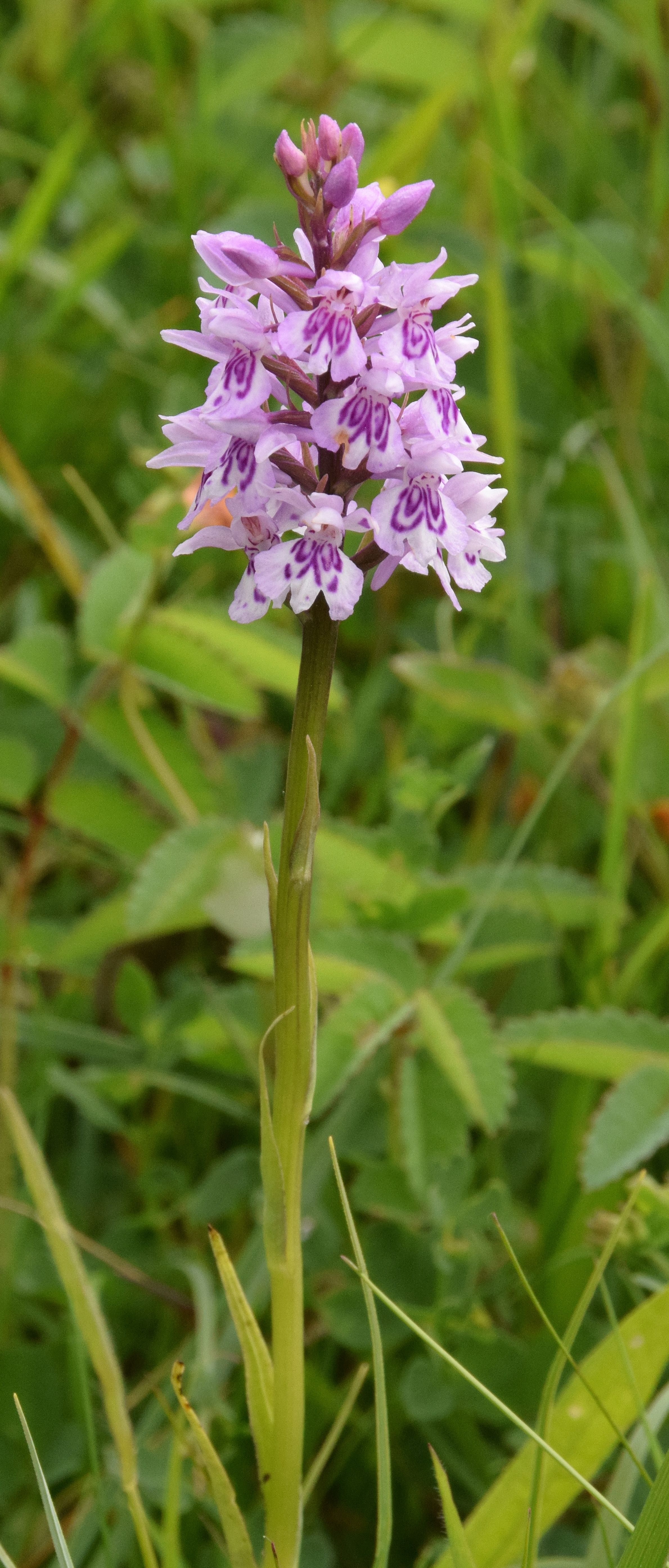
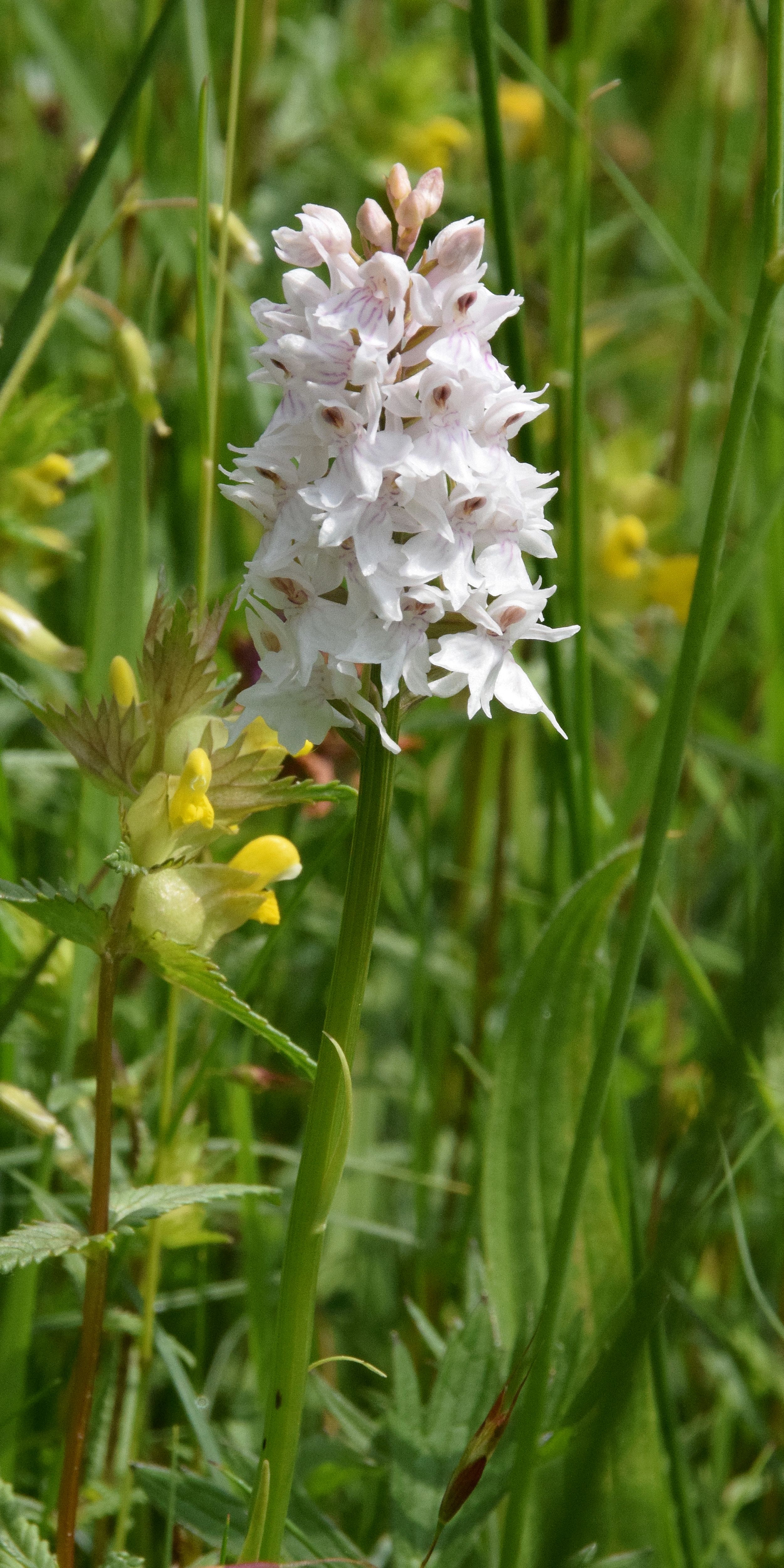
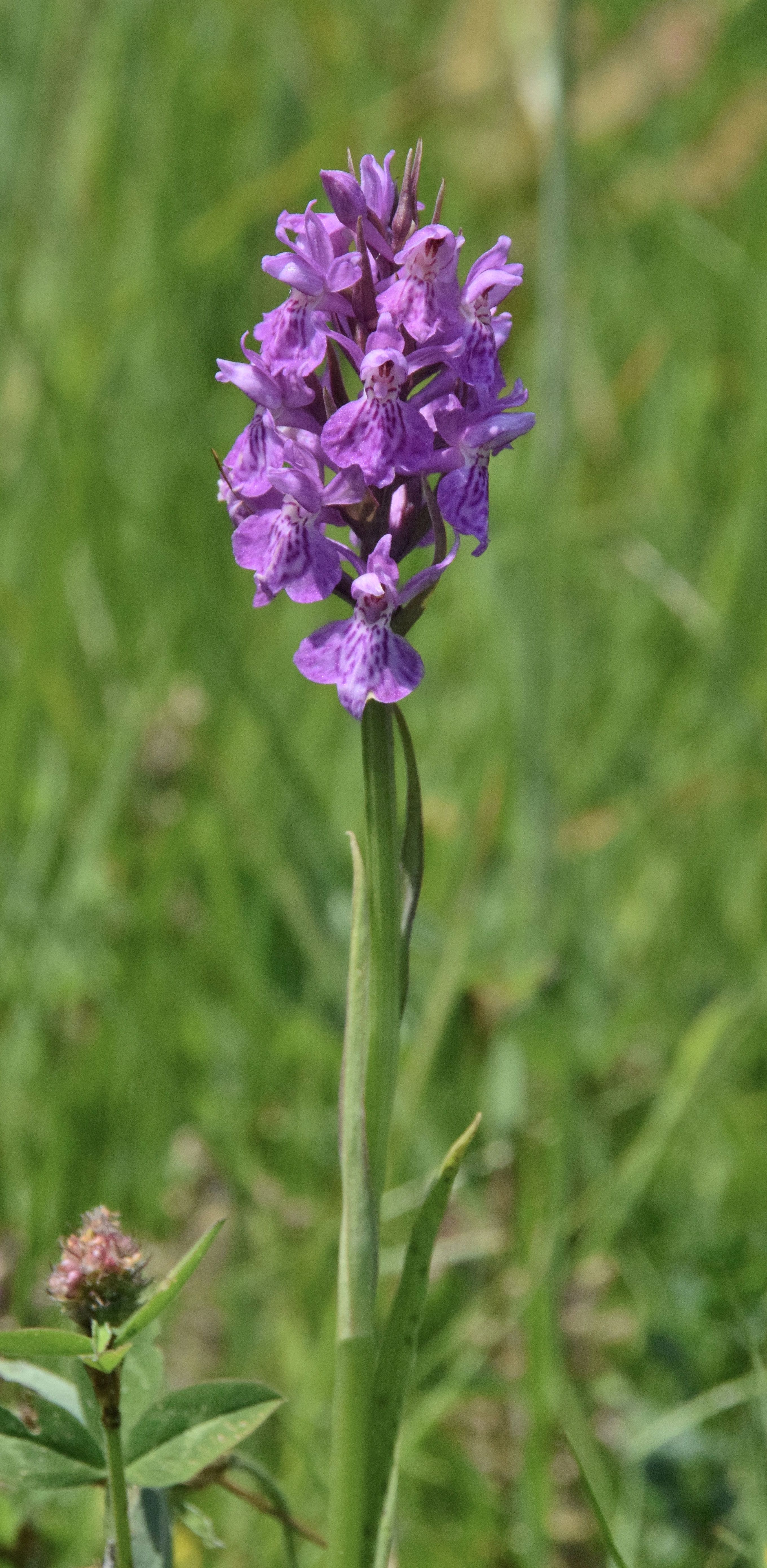
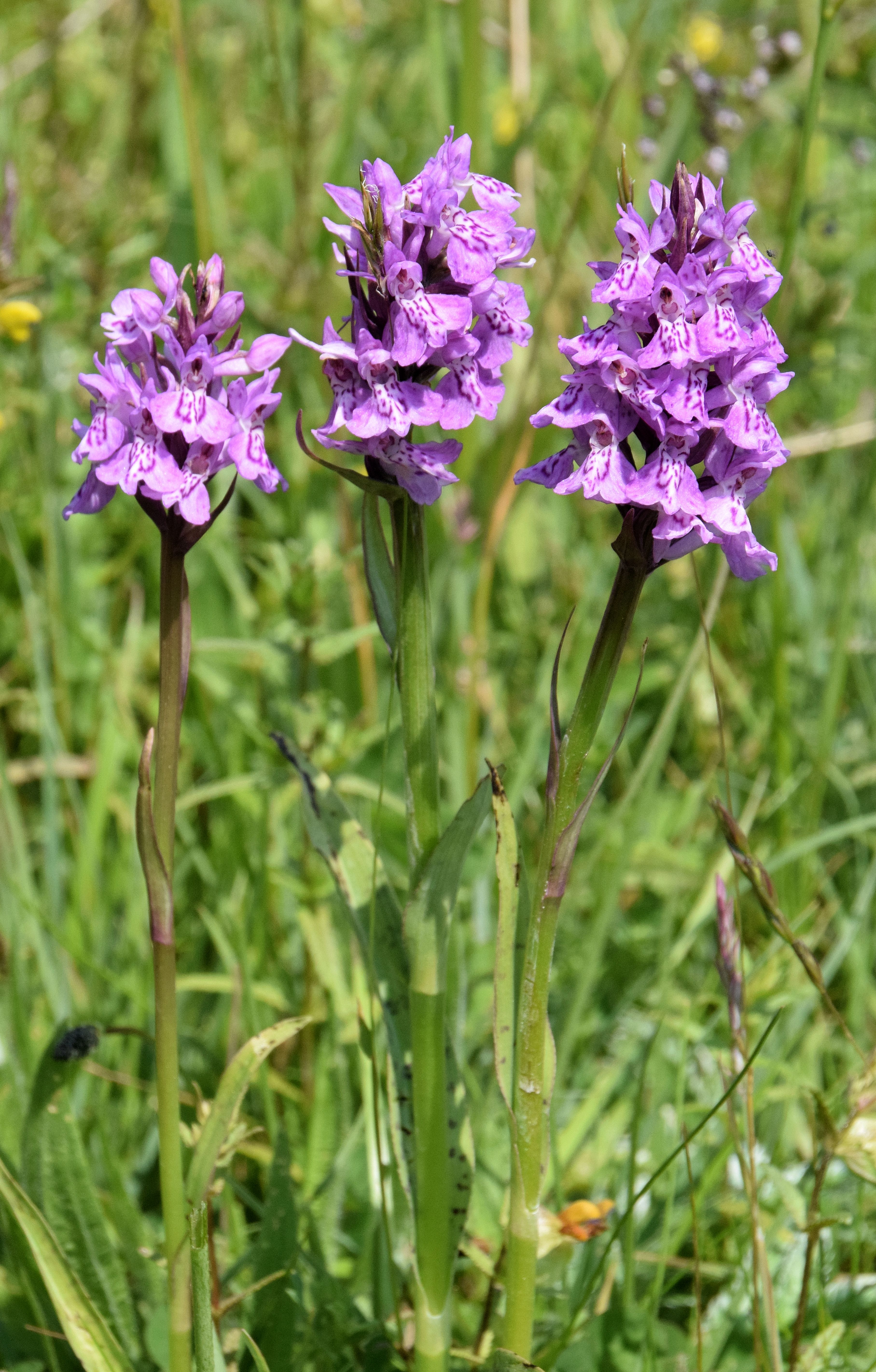

Southern Marsh Orchids or hybrids at Clattinger Farm
Round and round I trudged, always keeping to trodden paths and enjoying as at those local sites another “time capsule” from bygone years in which wild plants abound. The Burnt Orchids could be anywhere. Tiring by mid-afternoon, I decided to check-out that earlier advice again then leave, and this time walked on a little further. Now, in the far south-eastern meadow named Bridge Field on the reserve plan, that is considered the reserve’s best for wild flowers, I noticed a well trampled patch to one side of a trodden path … and there was my quest! It had taken four hours to locate them, cue celebratory WhatsApps to contacts who “keep me company” in the field.
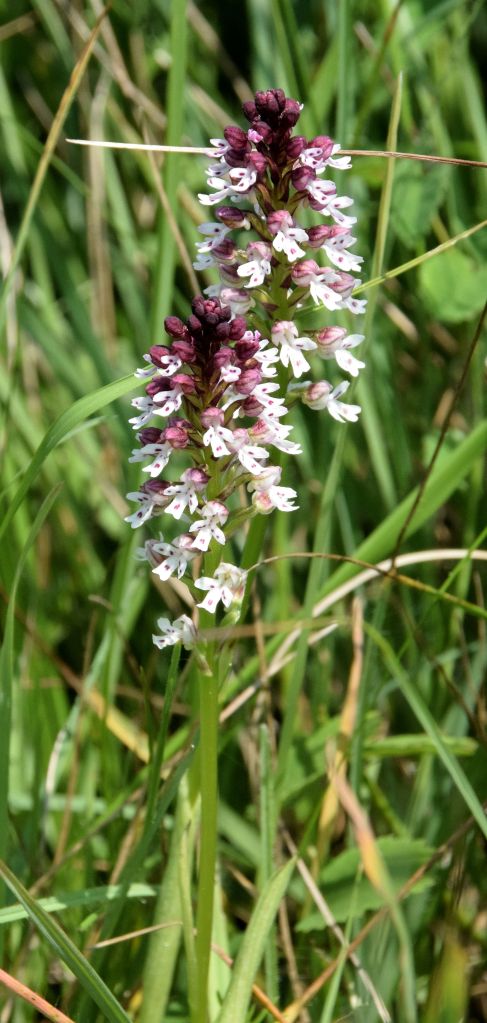
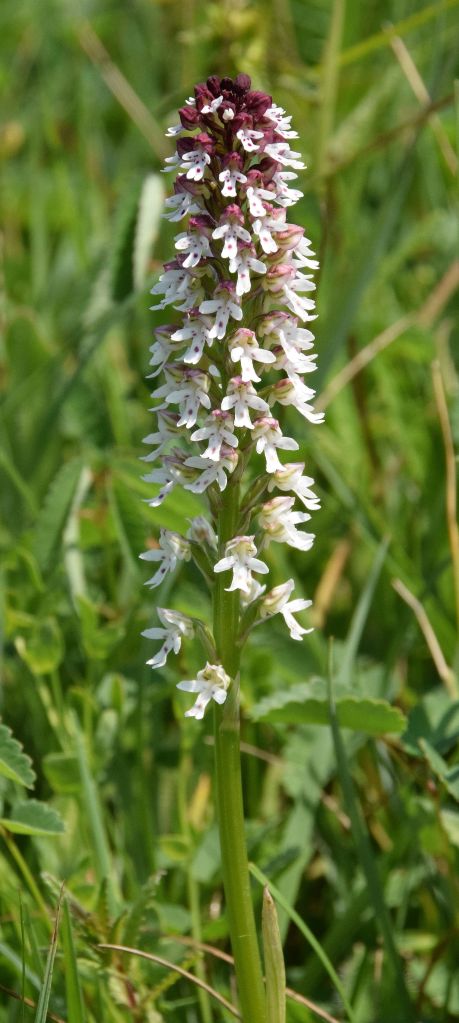
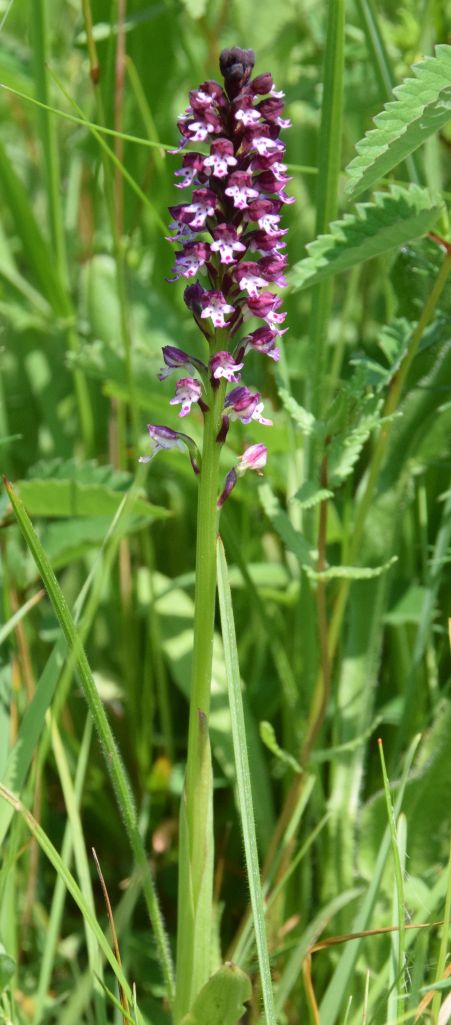
Burnt Orchid (above) has 5 – 10 broad, erect leaves at the base of 10 – 50 cm tall stems. The initially dense inflorescence gets looser as the flowers open. The buds are dark red and as blooming advances the oval spike becomes bi-coloured – white at the bottom and dark red at the top – giving the whole a scorched appearance, hence the name. The species grows more usually on short turf and alkaline chalk or limestone soils, but much more rarely in meadows such as here.
Counting eight specimens at this spot, some of which looked emergent, I resolved to return in the hope of finding more. Later at home I matched this day’s wanderings to Google Earth and picked out the exact location of my success. The trampled patch is even visible in the aerial picture. The bottom line here is I achieved this largely unassisted, and the self-found things are always the best.
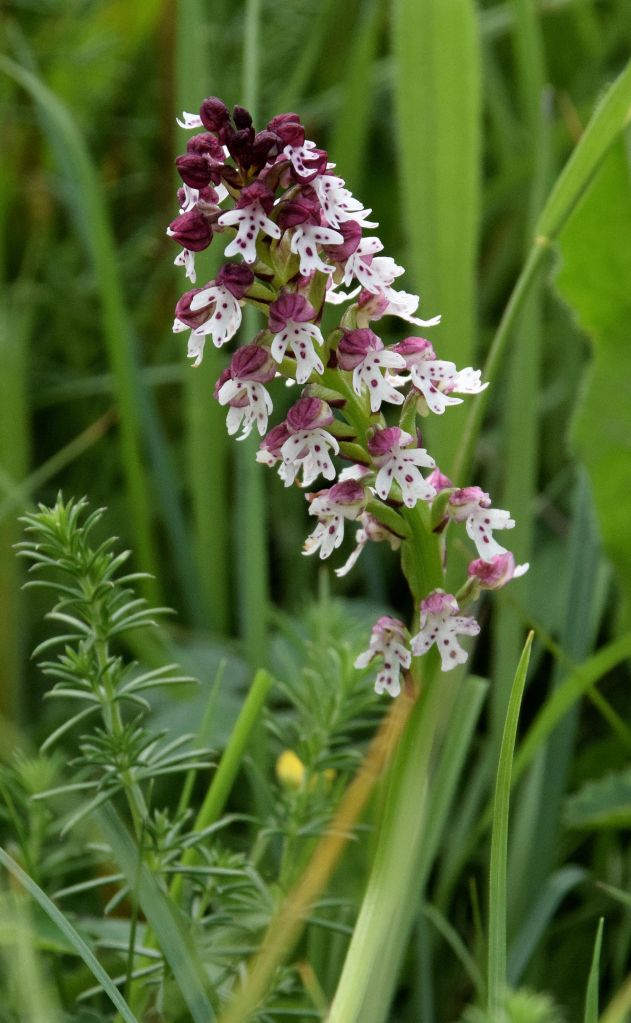
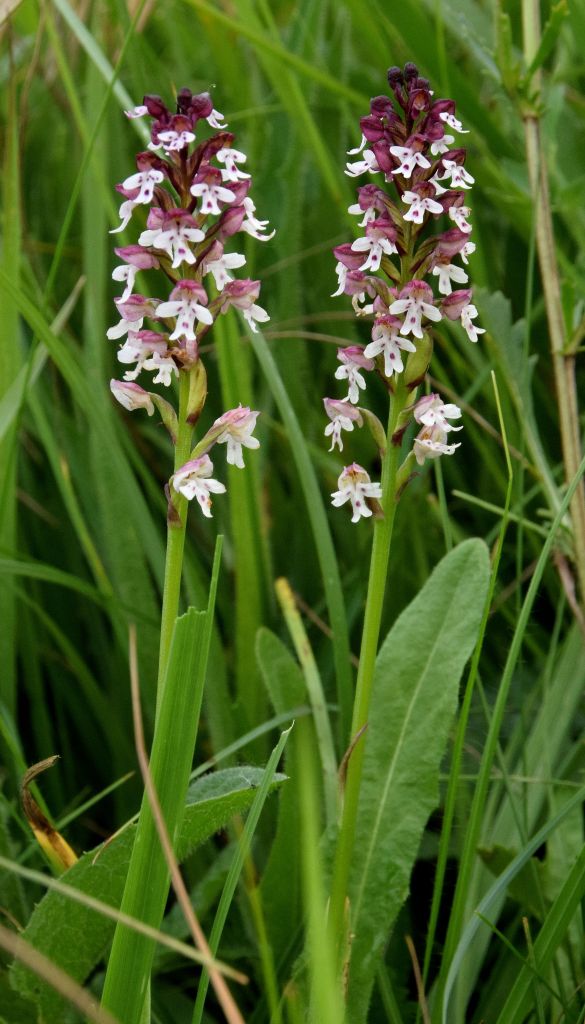
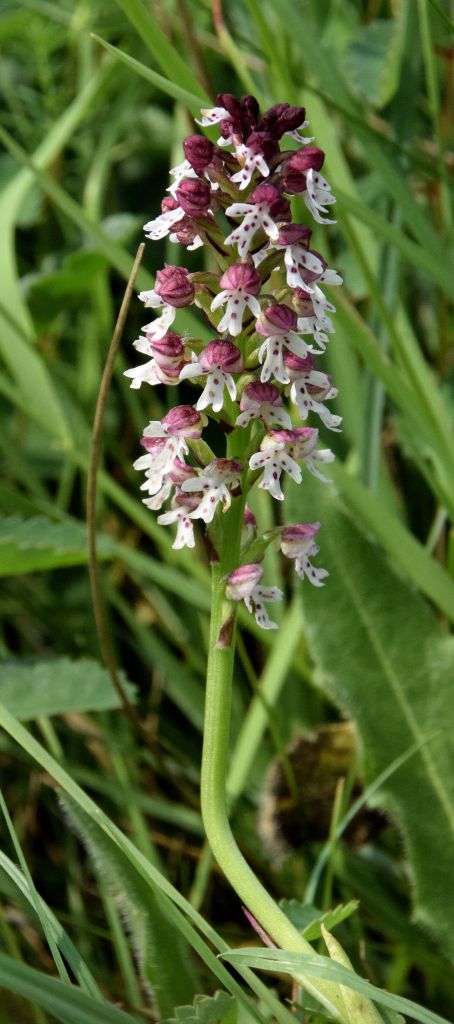
I re-visited five days later on Monday 13th in company with Ewan, this time taking the short route out and re-locating the Burnt Orchids straight away. Some of the previously featured specimens were already going over but there were now a total of 13 in the cluster. From what my more experienced companion and two other observers who joined us said these were all rather petite plants compared to what might be found here and elsewhere. Those pictured above were the more photogenic new ones. I was notified on Sunday 18th that six more good specimens had been found in “11 acres field” immediately to the west of where we had been successful.
Heading home on 7th I visited Tuckmill Meadow in Shrivenham, Oxon (SN6 8TB – SU240900) that has a colony of around 80 Southern Marsh Orchid. This gem of a LNR (see here) is managed by VoWH District Council and BBOWT in conjunction with volunteers, one of whom met me in the parking area and directed me to the plants. These were in the boggy bottom of the damp grassland site’s stream valley. They were much larger and more robust than the younger ones around Clattinger Farm, and all of the pure form (below).
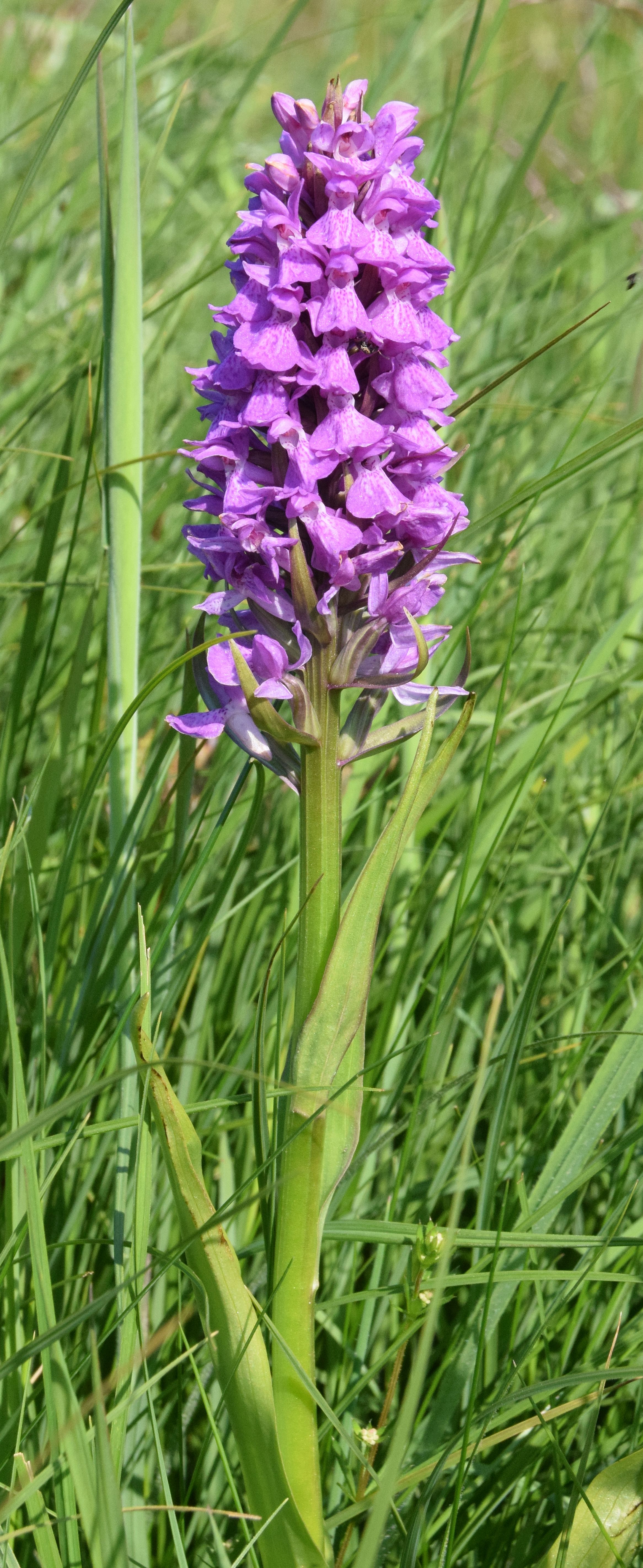
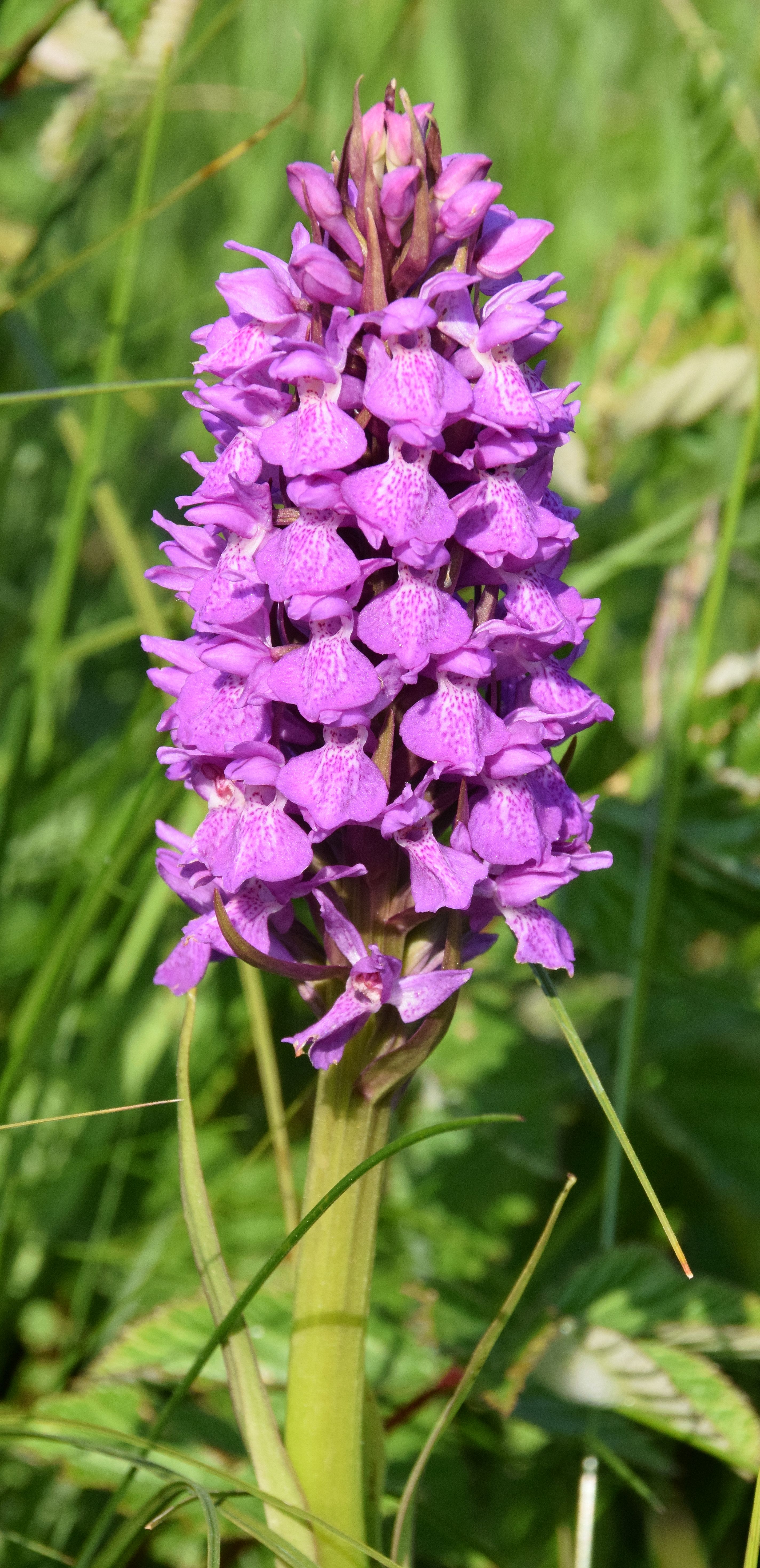
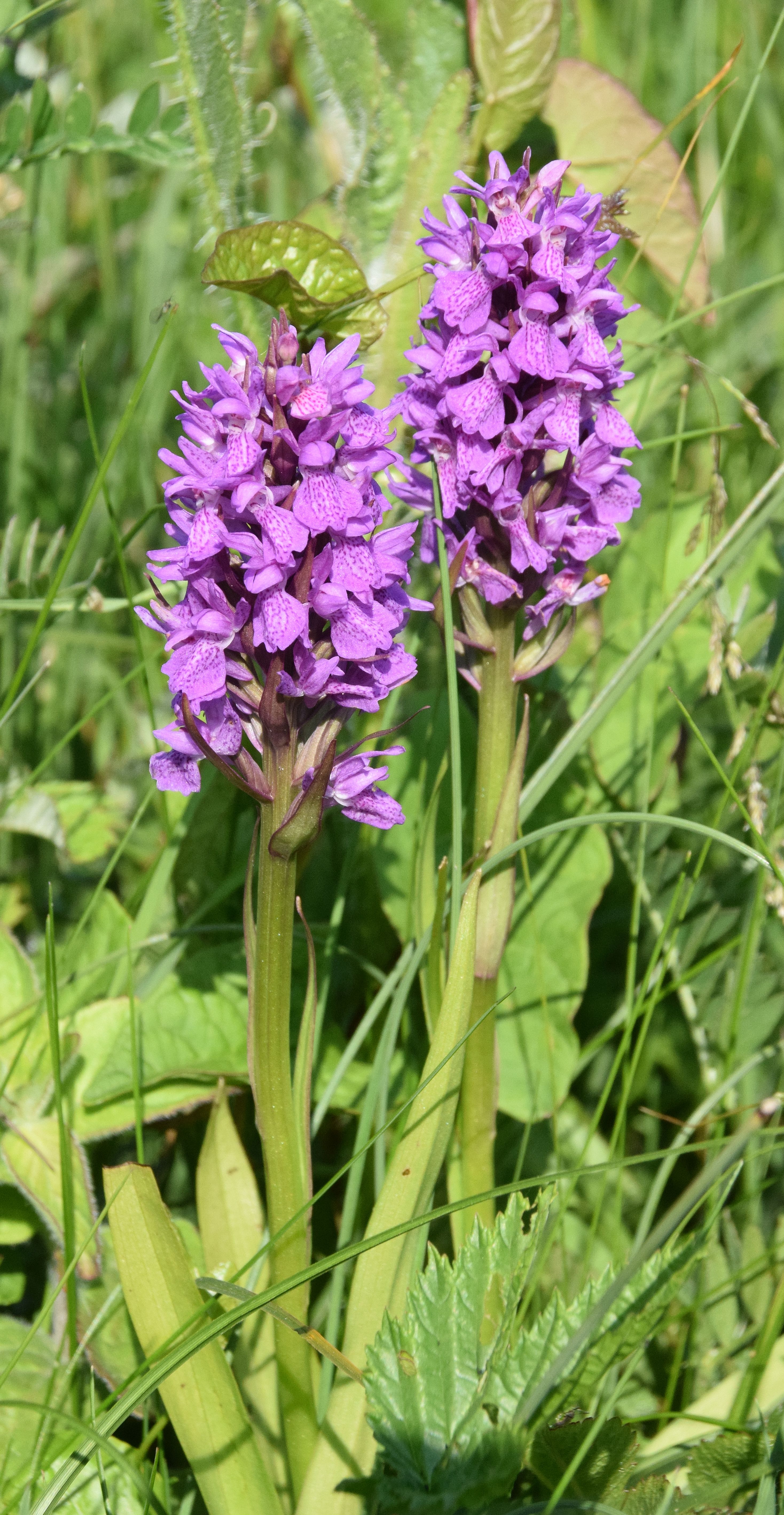
Pure Southern Marsh Orchids at Tuckmill Meadow LNR
This Orchid is widely distributed in southern England, occurring in wet alkaline marsh and meadows especially on chalk soils, at road and river sides and also in former quarries and coastal dune systems. It flowers from late May to the end of July, with crowded cylindrical spikes on strong stems from 30 to 50 but sometimes up to 70cm. But the species is now lost from 20 per cent of its historic range due to drainage, ploughing and development.
Research had suggested I was in the best Oxon place to observe them, in preference to the frequently mentioned Parsonage Moor, and I wasn’t disappointed. Two days later on 9th I checked out that site and Oxford’s Lye Valley LNR, finding just five pure specimens between them and more hybrids at the latter.
 Ramblings and Scribblings