After such a wet July the fungi season may have started early this year. I include posts on the fascinating “fifth order” sparingly herein, since mycology is such a highly complex and scientific field involving continuous discussion and expert re-classification of so many similar species. Hence I limit coverage to more stand-out items, and this discovery at one of my favourite local stomping grounds fits the bill.
In the first week of August, while making a final failed attempt to find Frog Orchid on Watlington Hill (SU705934) my attention was caught by groups of large and rather stately, creamy-toned mushrooms that my Seek app ID’d either as Grisette (Amanita vaginata) or the unrelated Stubble Rosegill. But the former is normally a woodland species, while the latter though a good match visually is described as occurring on arable stubbles after harvesting, muck piles or heavily fertilised grassland. Why should either be present so significantly on a calcareous hill-top?

Consulting an informed local source I was directed to Amanita malleata that has been reported in England only here and at one other site in the Derbyshire Peak District, though it could be undiscovered elsewhere. I visited twice in two days, having gone out minus a SD-card on the first, exploring more widely on the second day when the scarcity announced itself more and more in all stages of its fruiting cycle (pictured below). The epithet malleata comes from the Latin meaning hammered, arising from indentations in the crown that are evident in the first two images. To my mind this approaches the Oxon Fly Agaric (Amanita muscaria) spectacle at North Leigh Common (see here), though not on quite the same scale.

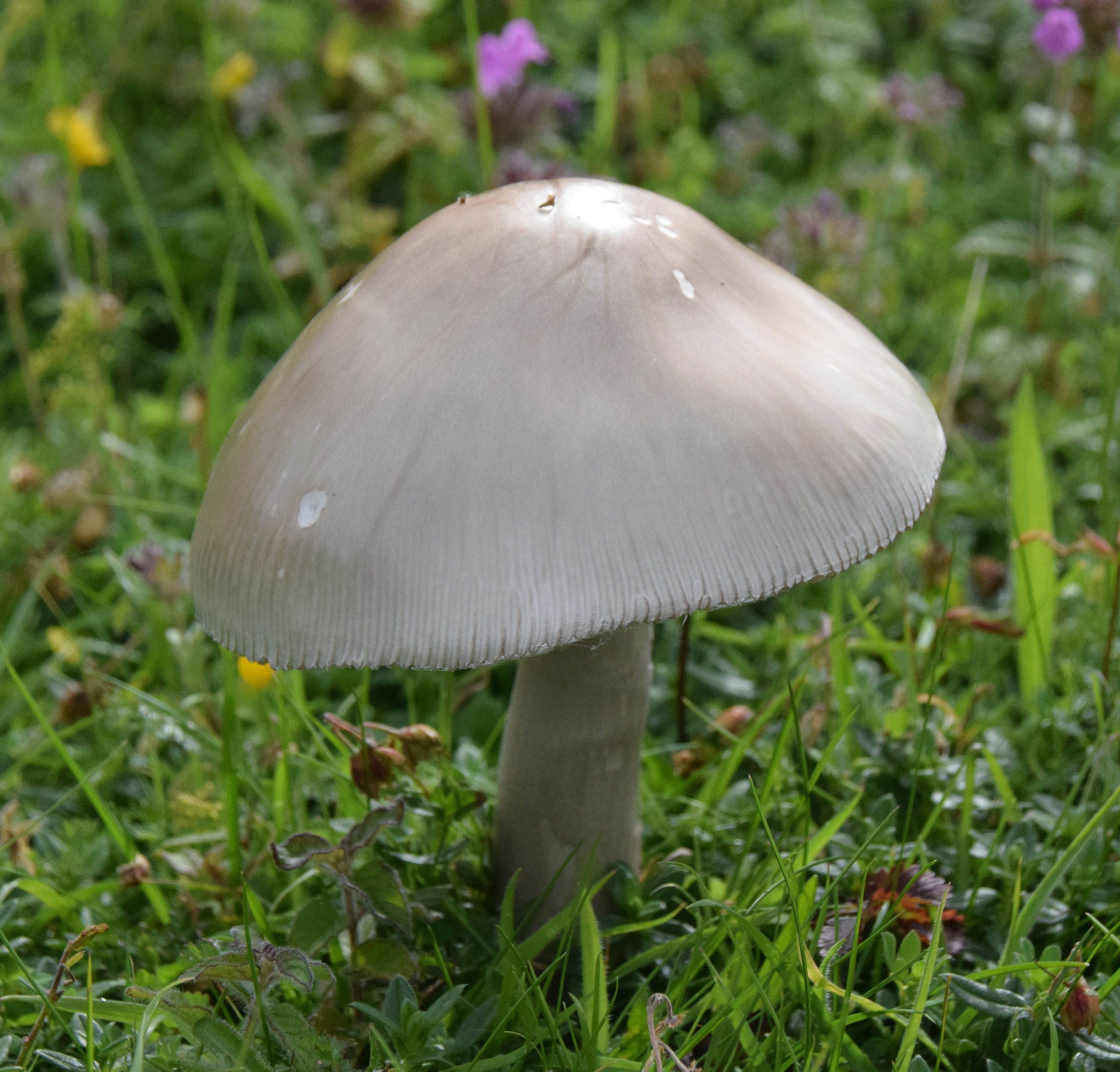


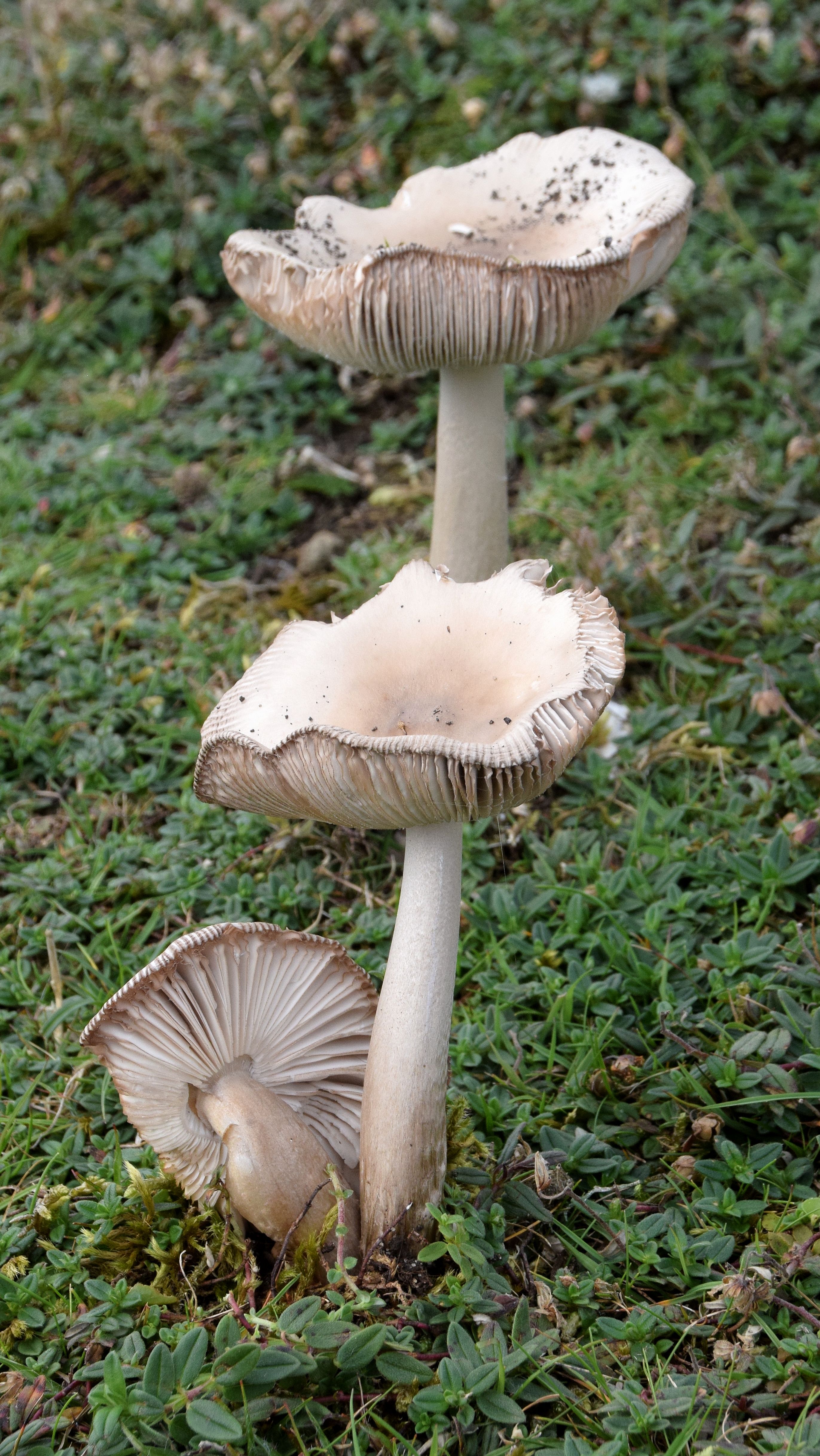
Amanita malleata
My understanding is the then unknown Amanita came to the attention of local mycologists in 2006, though it had first been described at the site in 1988 / 89. Consultation with experts abroad eventually led to the mystery item being named as A malleata some five years later, after much deliberation. Data on what is a member of the A vaginata group has been published from Italy, France and Spain, and it is not thought to occur beyond continental Europe. The published references I have consulted (see here, pages 30-32 and here, pages 24-5) date from 12-13 years ago, since when this mushroom has clearly proliferated further at the Chiltern escarpment site.
The reason for the speciality Amanita being here is because it occurs in or amongst a dwarf woody perennial plant Helianthemum or Rock Rose, with which Watlington Hill is clothed by extensive carpets. Various other less visually striking fungi share that close relationship or “symbiosis” at the site, the most frequent groups being Cortinarius (Webcaps) and Inocybe (Fibrecaps). These are examples of “ectomycorrhizal fungi” that form mutually beneficial associations with the root systems of particular plants from which they draw nutrients. In return the mushrooms contribute to their hosts’ growth and survival in various ways. Two rather more colourful participants are Lurid and Rooting Bolete, that I located in good numbers here and there within the Amanitae eruptions.
I have a particular liking for the Boletes, an 80-strong family nationally of stout, pored not gilled mushrooms with fleshy caps and thick, bulbous stems. Some of these occur widely within the Chilterns AONB, both in woodland where they have mycorrhizal relationships with Beech, Lime, Oak and Pine trees; and on chalk downland in association with woody plants. The generic name Boletus comes from the Greek bolos, meaning lump or clod. Their convex, cushion-shaped caps are normally dry or slightly viscid in wet conditions, never glutinous. Spores are produced in long tubes or pores under the caps. Most are edible and some very choice in that regard, commanding good prices from restaurants for savvy foragers. They are reputedly richer in protein than any other food except nuts.
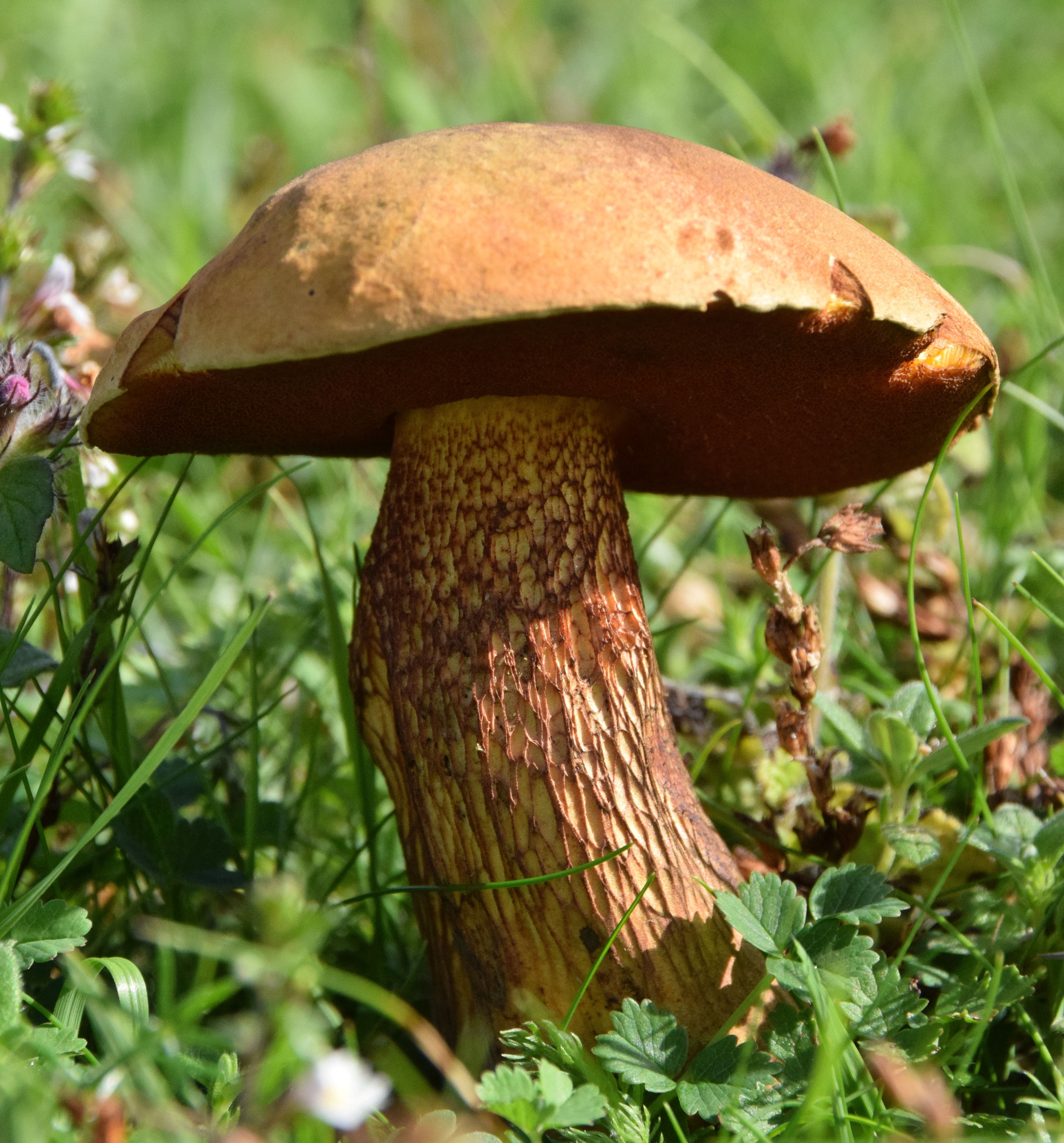

Lurid Bolete (Boletus luridus), one of multiple reddish species, is distinguished by mesh patterning on the stem as the above pictures show. It is fairly frequent in the British Isles and continental Europe in late summer and autumn, mostly on alkaline chalk soils. The epithet luridus means sallow – an “indefinite but unhealthy colour”. The cap (typically 8 -14cm, exceptionally to 20cm) is downy and pale yellow in young specimens, becoming dull yellow-brown as the fruiting body matures, and the flesh turns blue-black if bruised or cut. Beneath the cap, yellow spore tubes terminate in tiny circular pores that are at first yellow but eventually turn orange-red. The underlying surface of the stem, beneath the netting is also yellow. This is said to be a tasty mushroom and almost all of those I found on visit one had been gathered a day later.
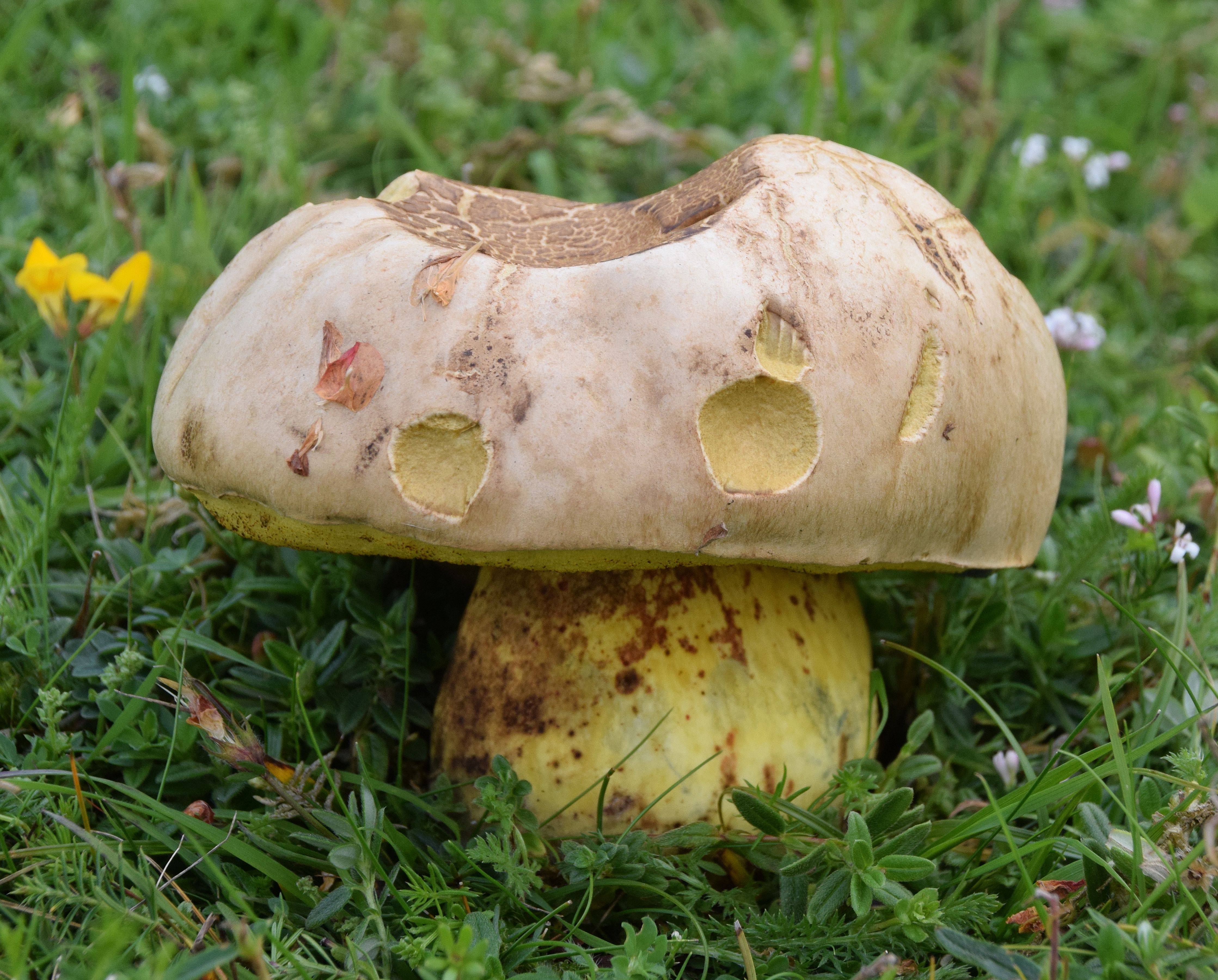
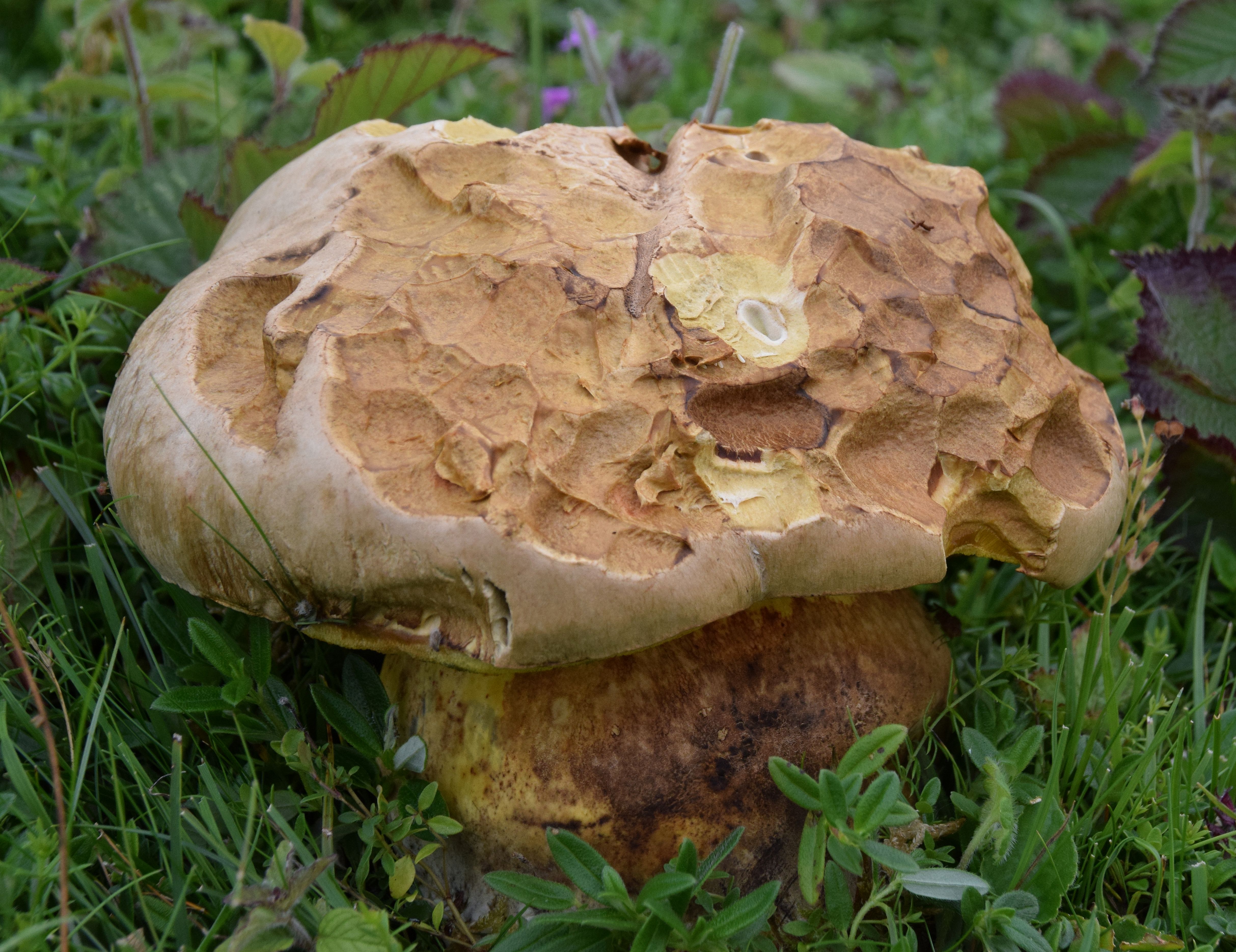
The second Rock Rose associate at Watlington Hill was Rooting Bolete (Boletus radicans), the smoky-grey caps (5 – 20cm) of which are usually dented and misshapen, particularly in more mature specimens such as those pictured above. The pores are an especially attractive yellow, turning blue if touched or cut. The yellow, cylindrical or swollen stems are quite variable in form, also displaying fine reticulation (netting) and sometimes a reddish zone at the base. This species is not considered fit for human consumption, having a bitter taste and unpleasant odour. Three large specimens I found here (pictured above) on the second visit nonetheless appeared to have been tucked into by less picky small furries.
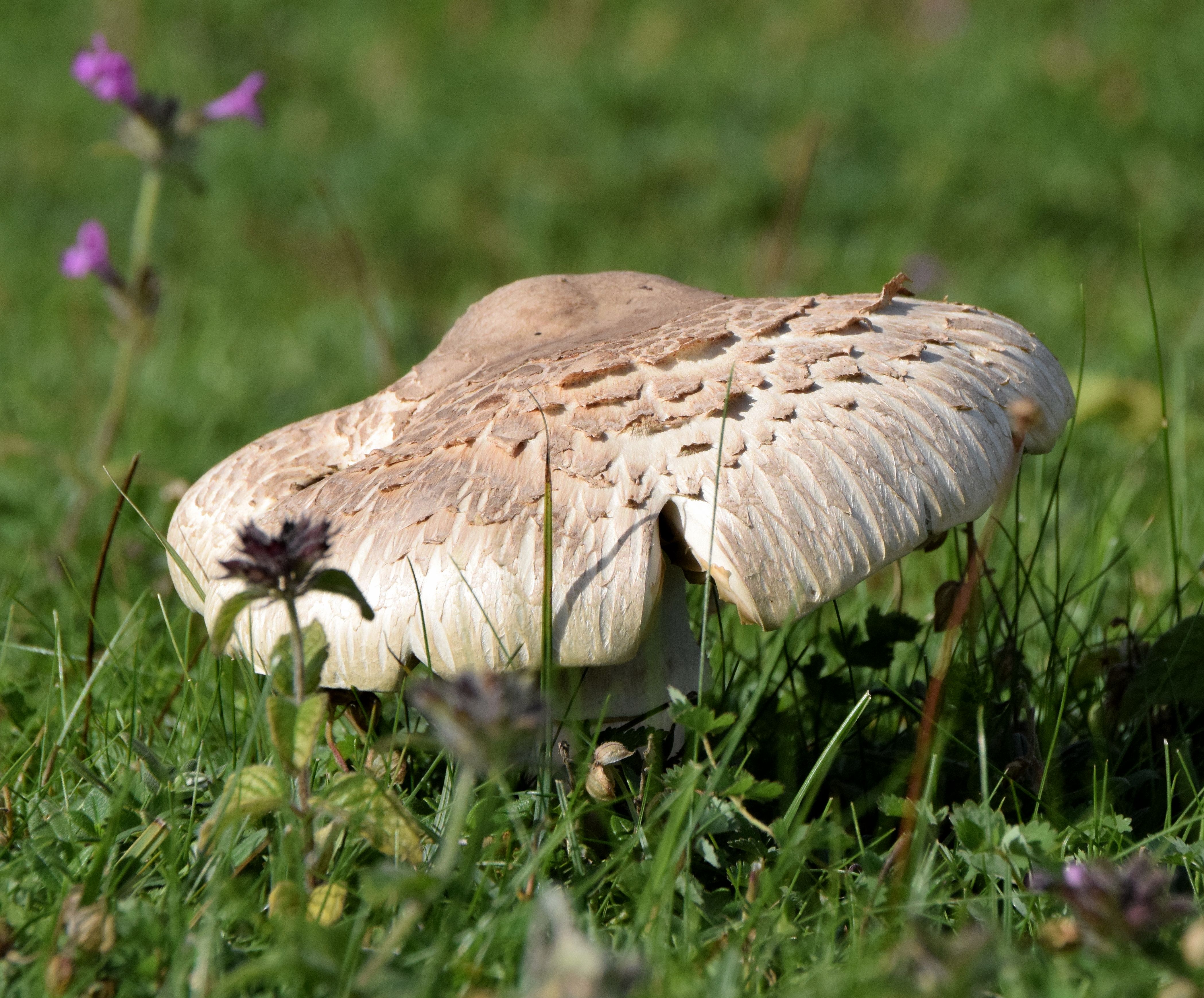
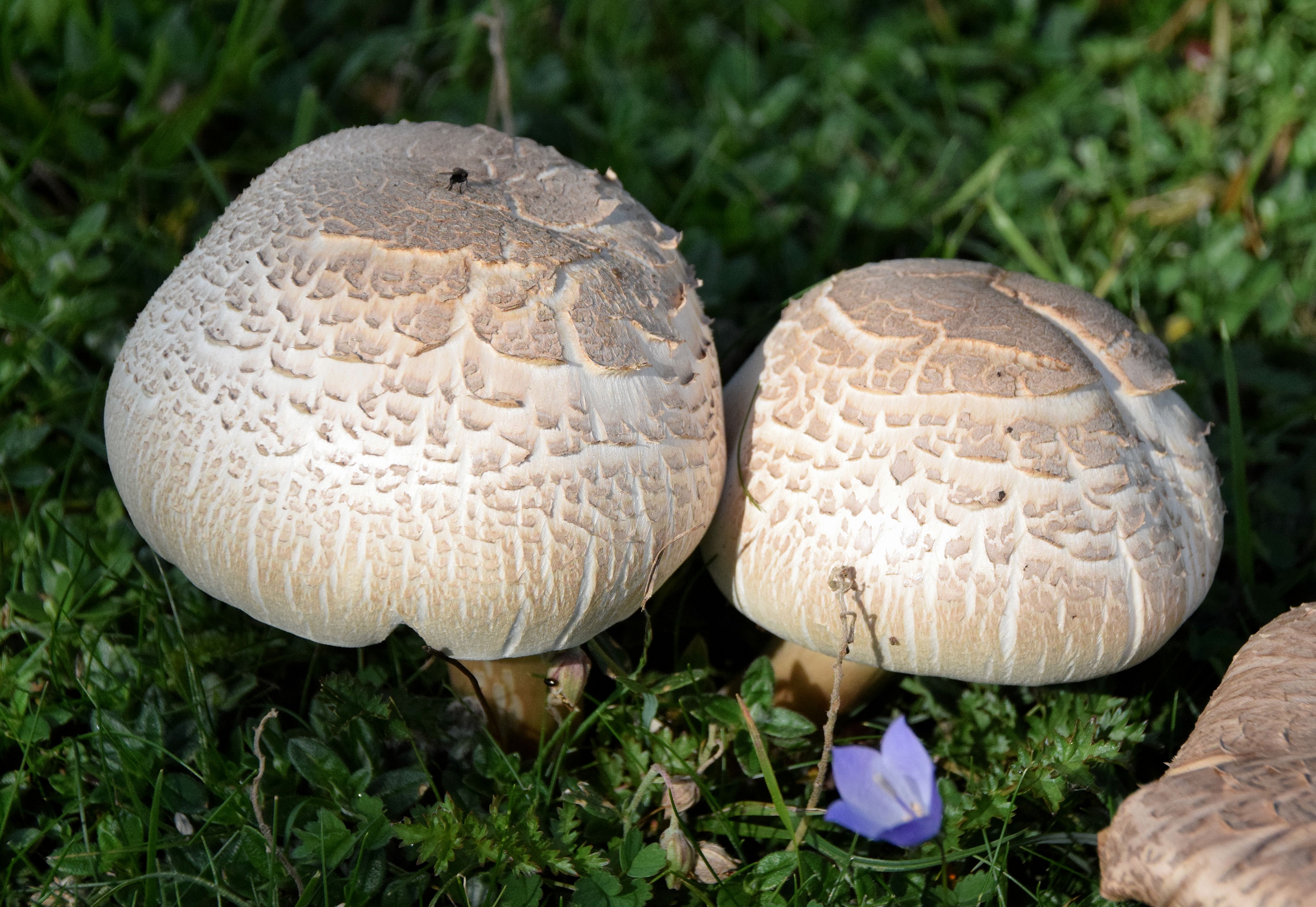
More Amanita malleata (scaly specimens)
When I went back on 11th many of the Amanita malleata had withered, more had been removed and some that remained displayed a scaled appearance reminiscent of Parasols (pictured above). The spectacle that had enthralled me so a week earlier was now past its best. This has been an intriguing and informative exercise, as well as an education to myself, a relative novice on the symbiotic interaction between fungi and host plants. The treasure that is this little known Amanita in such familiar local surroundings will soon lie dormant again for another season. It should be well worth enjoying next year or whenever weather conditions might once more be favourable.
 Ramblings and Scribblings