The orchid adventures in this second season keep on getting better. This post’s lead item was one of four agenda failures in 2023, having died out at its last-known Oxon site. The red-listed as vulnerable Lesser Butterfly Orchid has also been lost from more than 60% of its historic national range due to changes in agricultural practice and consequent habitat destruction. I had seen just one before in Scotland and had to take that tour guide’s word for the ID, not knowing then what I do now. So today I visited an acknowledged lingering stronghold.
Pewsey Downs NNR (see here) is one of England’s finest remaining expanses of unaltered chalk downland. It is both a SSSI and Special Area of Conservation (SAC) due to its Orchid-rich grassland and associated 28 butterfly species. From a car park at SU115638 a right of way leads up Walker’s Hill, the central of the reserve’s three such features. On the summit sits a neolithic long barrow “Adam’s Grave” that was clearly meant to be seen from far and wide in its own time, beyond which more ancient earthworks announce themselves less dramatically.
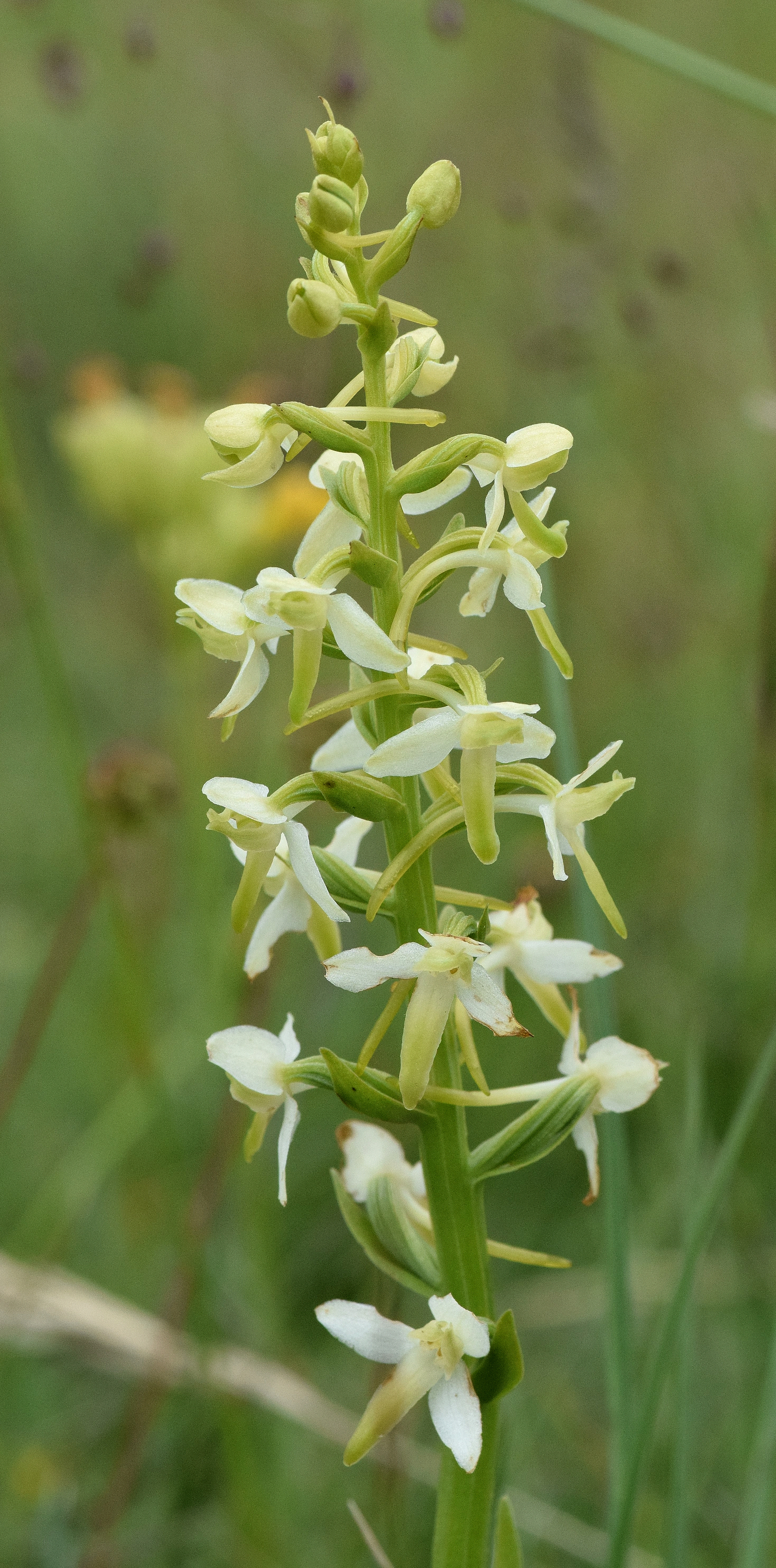
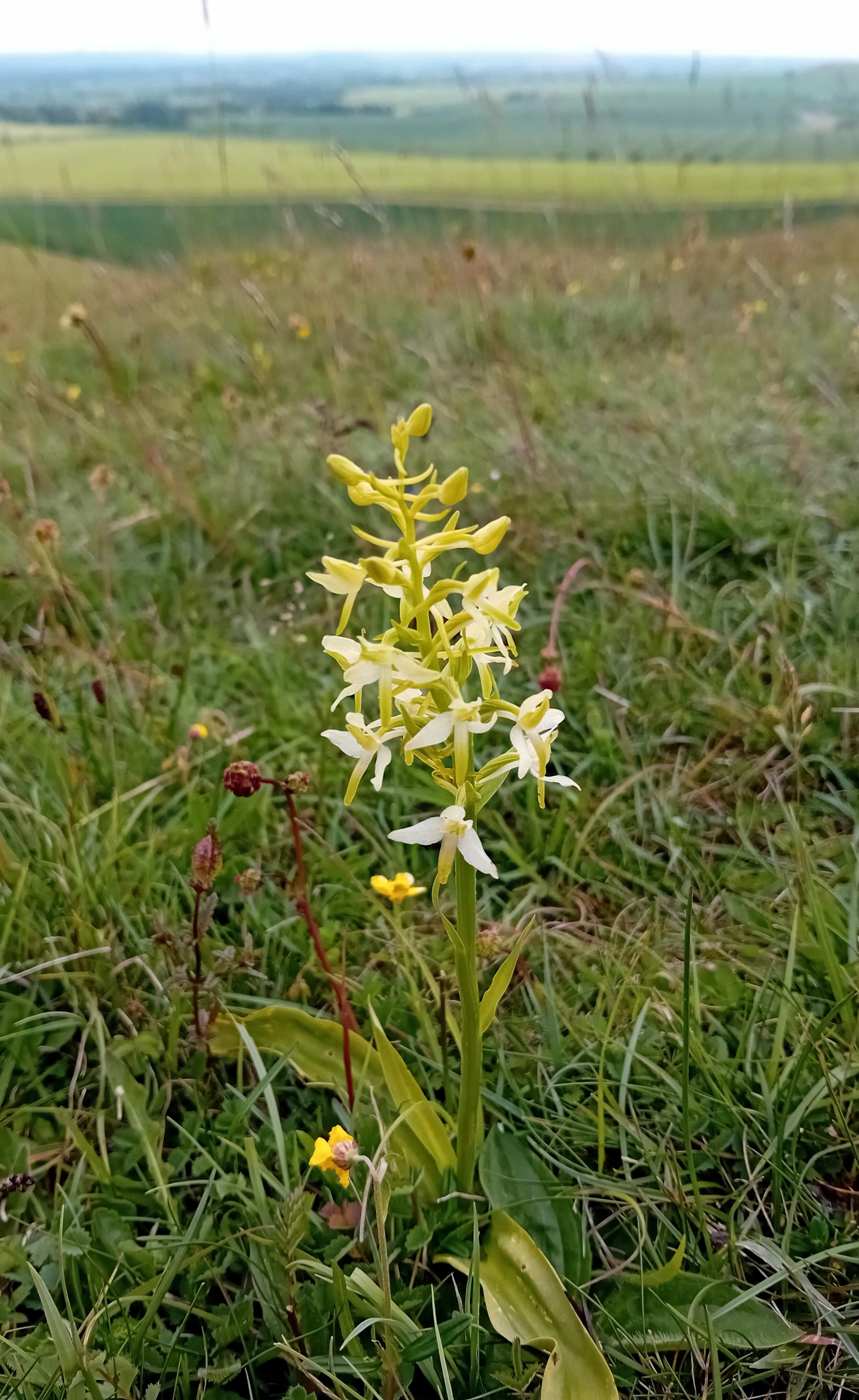
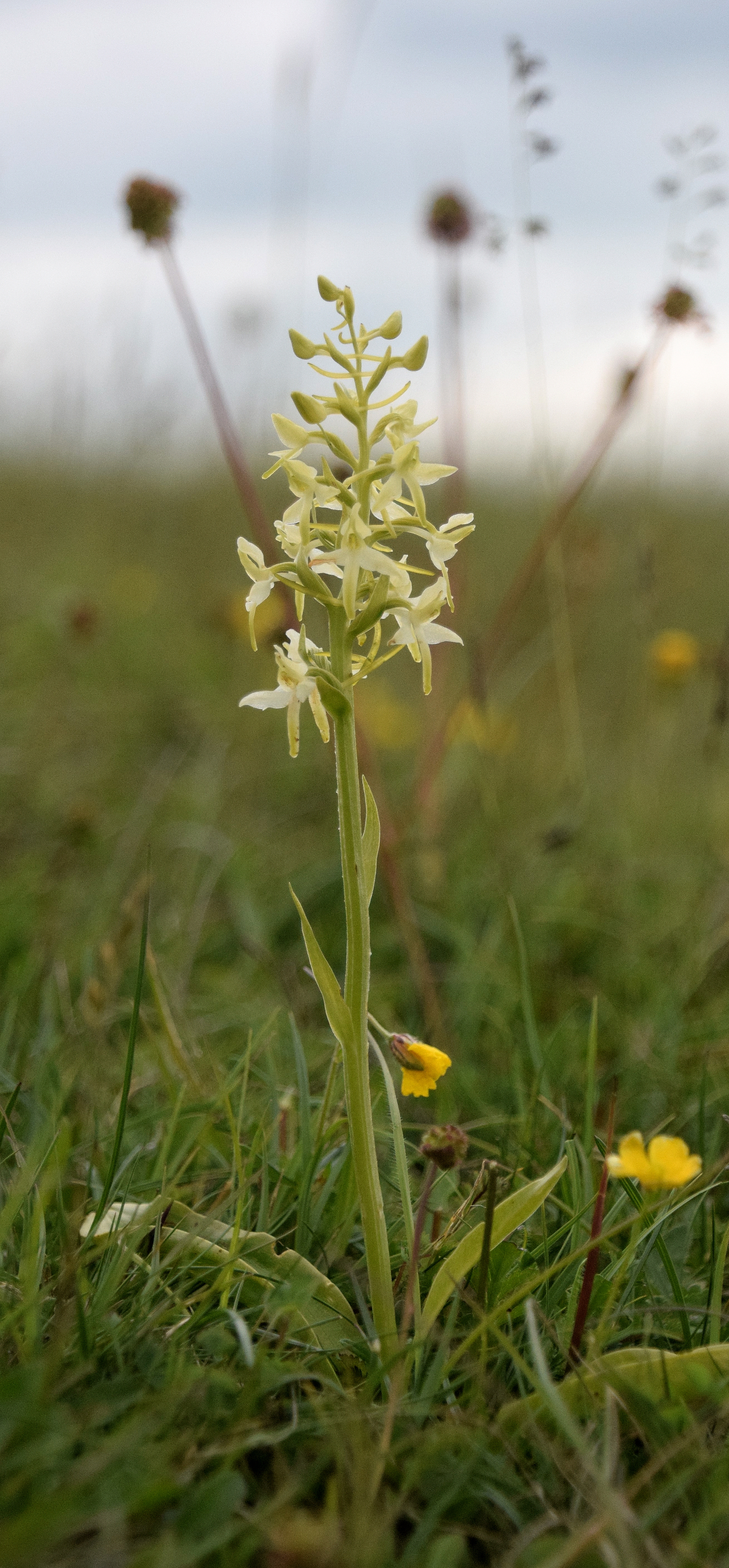
On reaching that landmark I was engaged with by another wild-plant seeker who hadn’t heard of my quest, then began to locate LBOs before I did! I had read that the best Orchid area here is on the south-facing slope below the large barrow and around the next earthwork downward. Once left to my own devices again and back at my usual pace I found many more Lesser Butterfly Orchid (see here and here – pictured above and below), some in pristine condition and rather more going over. There are said to be hundreds in the eastern parts of this site, especially within and around the ancient ditches and enclosures that characterise it.
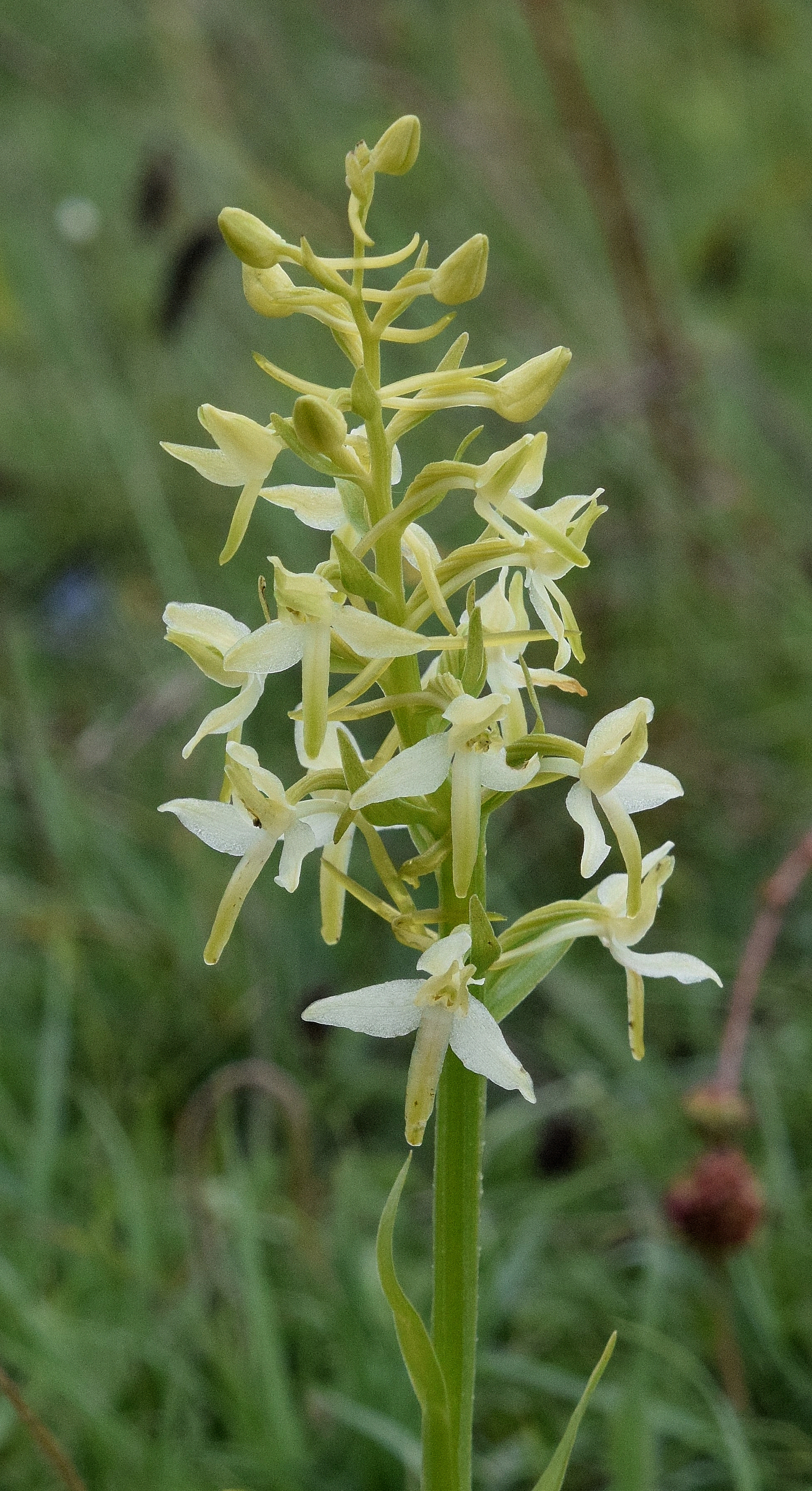
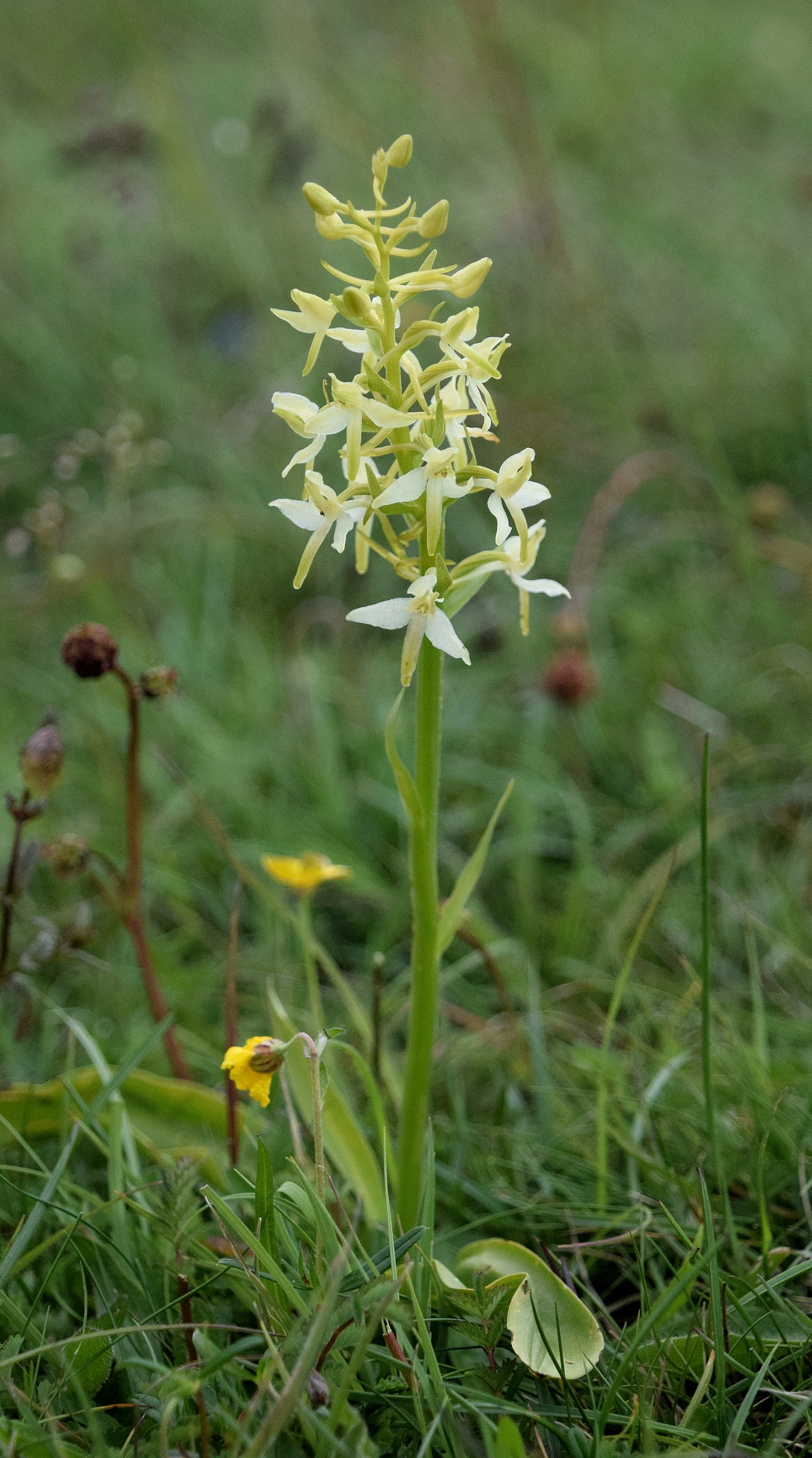
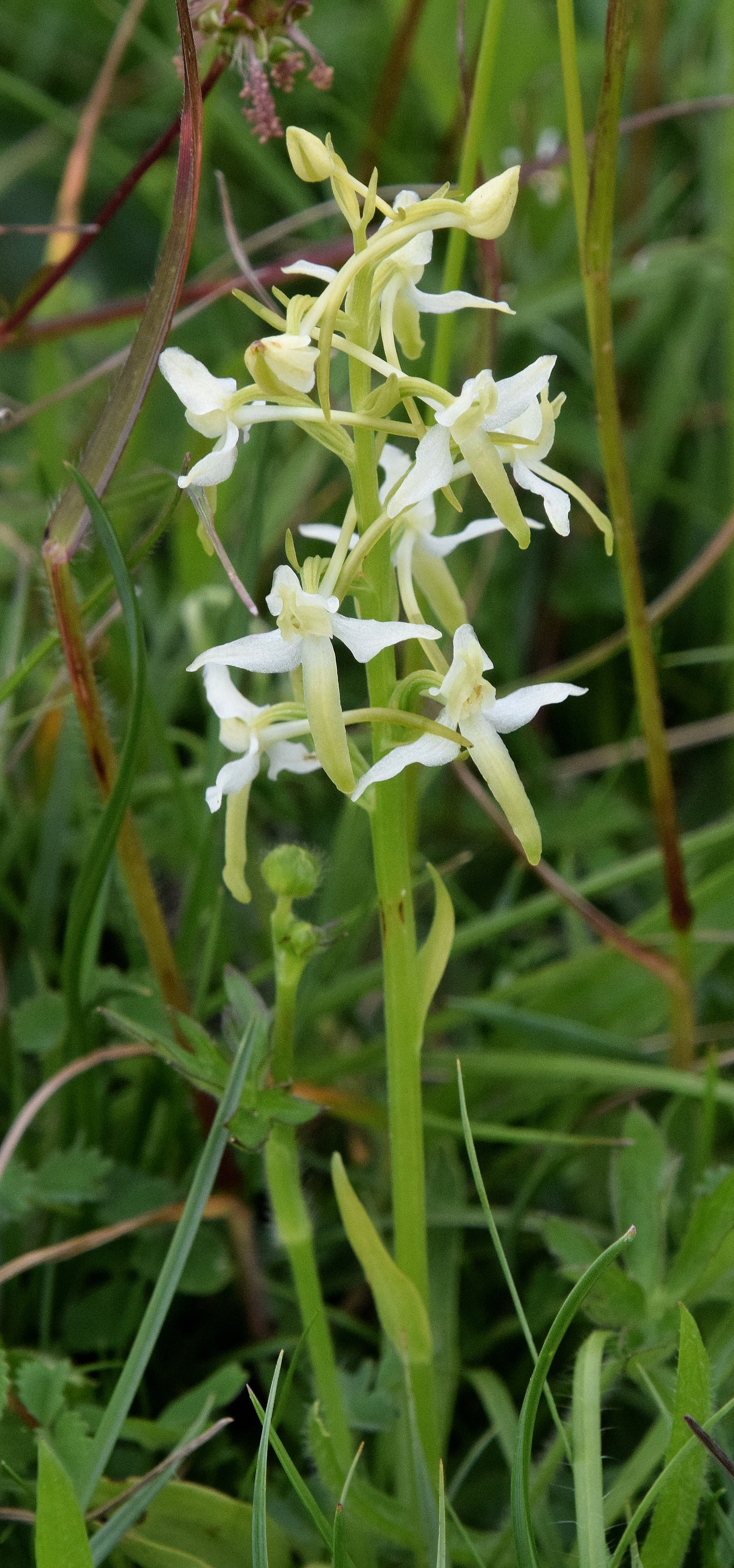
LBO grows to 30 cm tall in June and July; on fertile grassland up to 365 metres such as here, heathland in boggy ground, in woodland on calcareous substrates, and in open alkaline fens. It is thus able to benefit from a wider range of habitats than most Orchids, but within them is said to have particular requirements that are not yet well understood. The plants are described as being generally smaller and more delicate looking than the closely related and more widespread Greater Butterfly Orchid. But those are not reliable indicators, since GBO varies in such physical and other more minor respects.
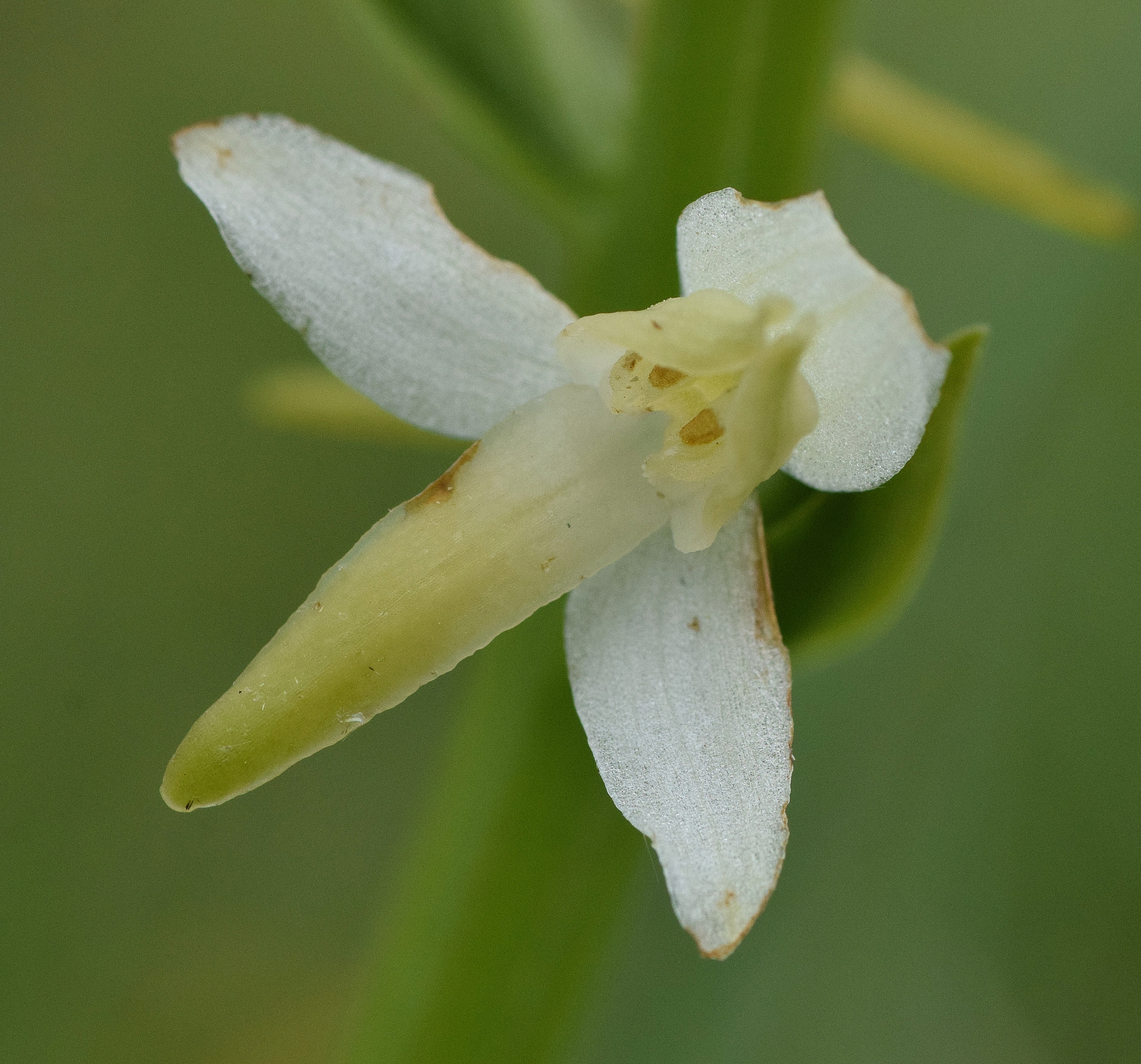

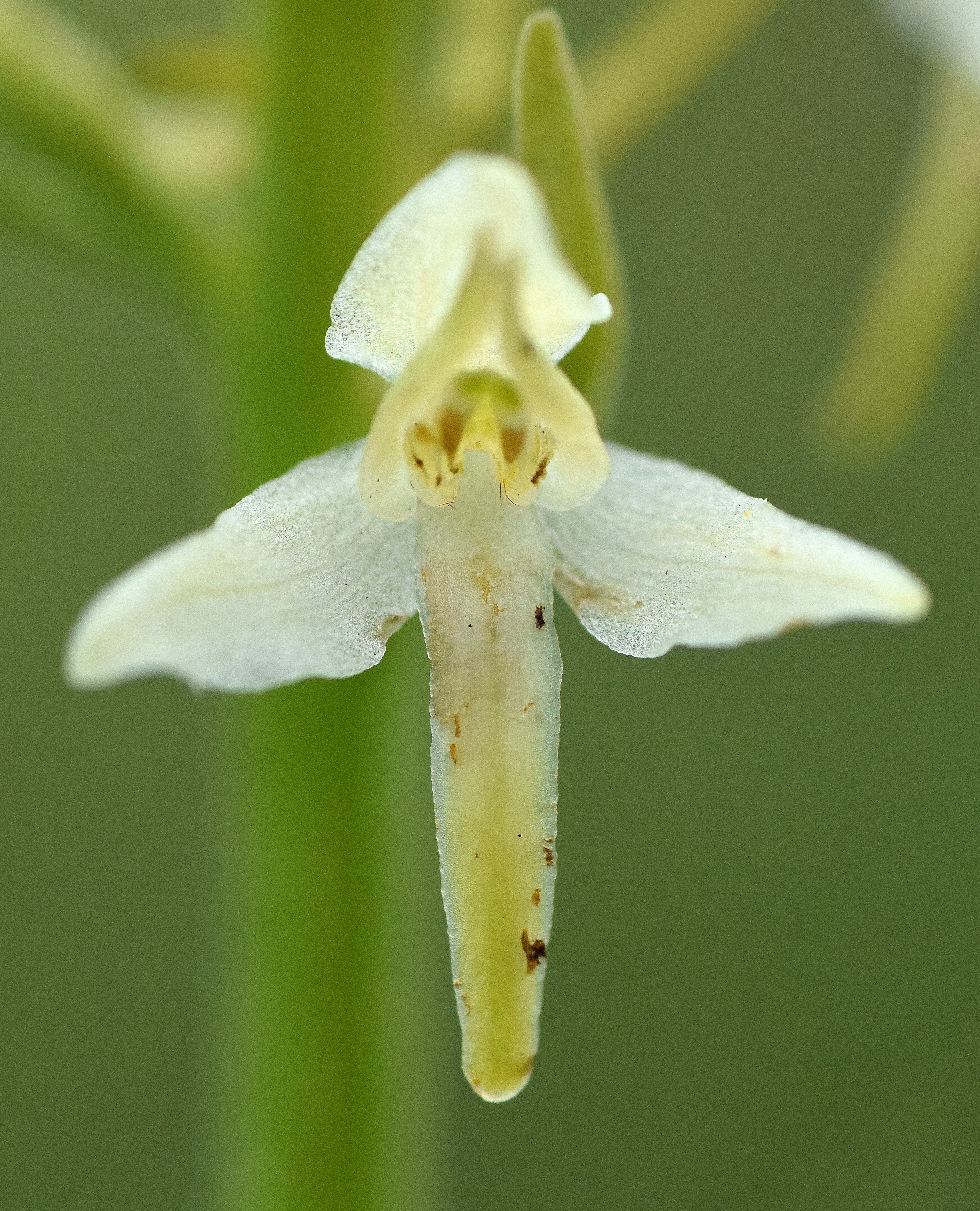
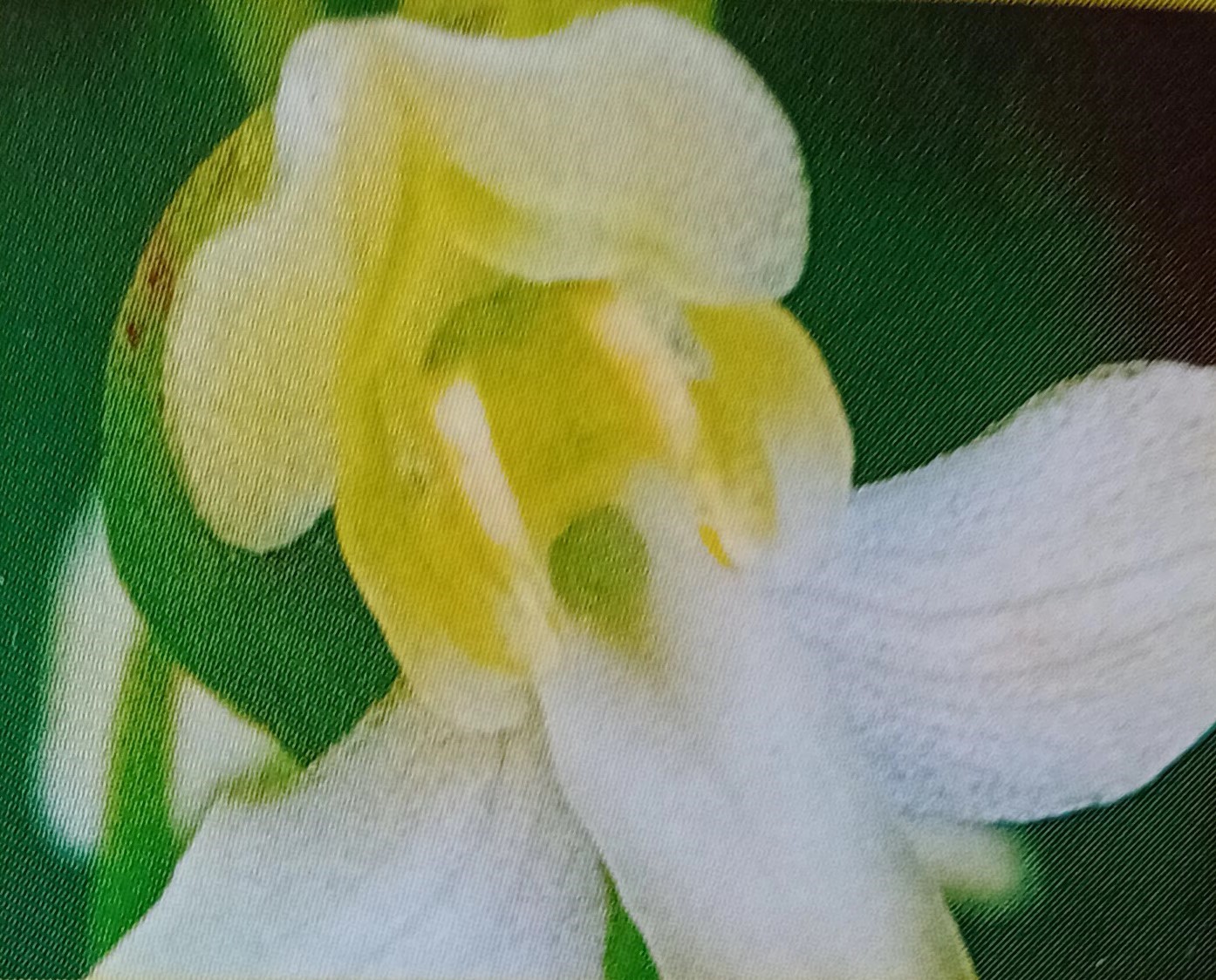
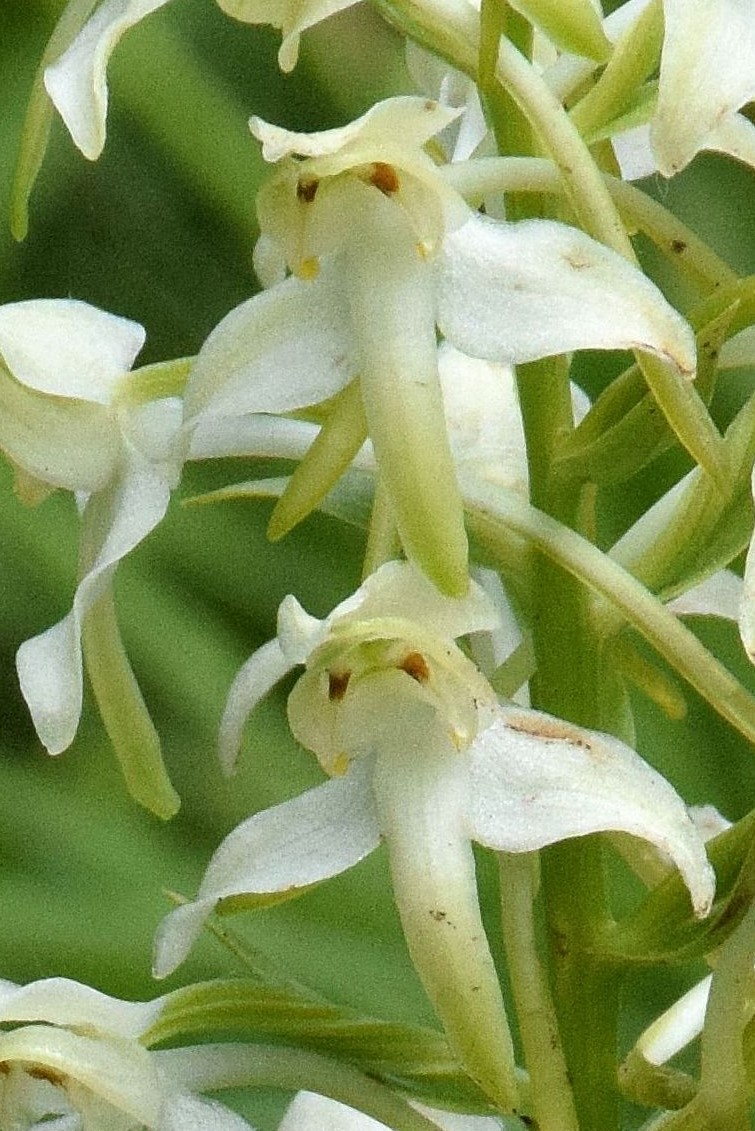
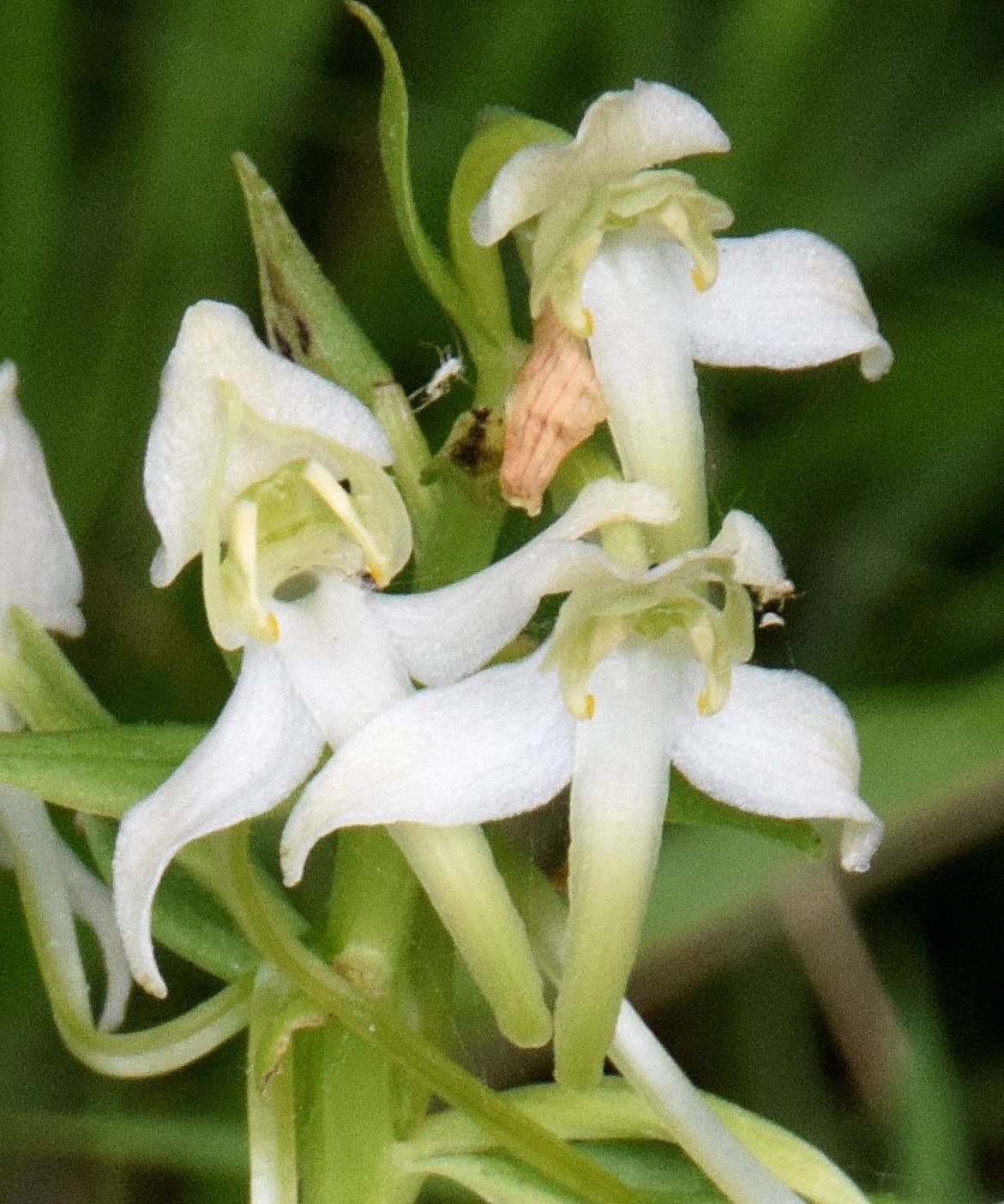
I understand the only accurate way of separating the two is by closely examining the interior of the flowers, within which the pollinia are parallel in lesser, curved in greater. That said the top row central and right hand images (above) are of different flowers on the same stem. But those none-too sharp macro studies are sufficiently like others I have seen online to clinch the ID at today’s widely-cited LBO location. The barely better lower left-hand picture is taken from the Creed and Hudson Orchid guide (© rights of publisher reserved), for clarification. The GBO details in that row are from 2023 plants at Oxon’s Warburg reserve where LBO is now thought to no longer occur.
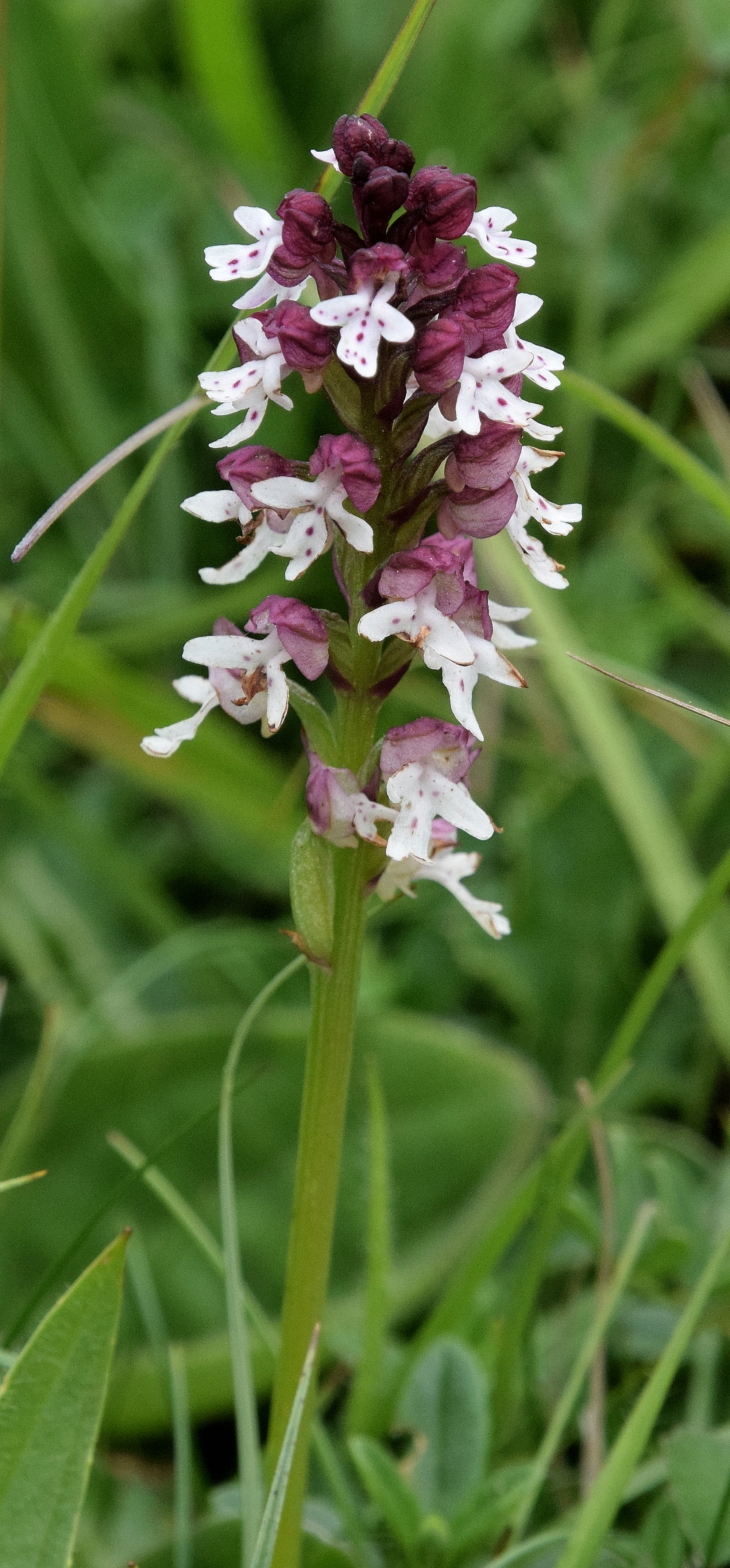
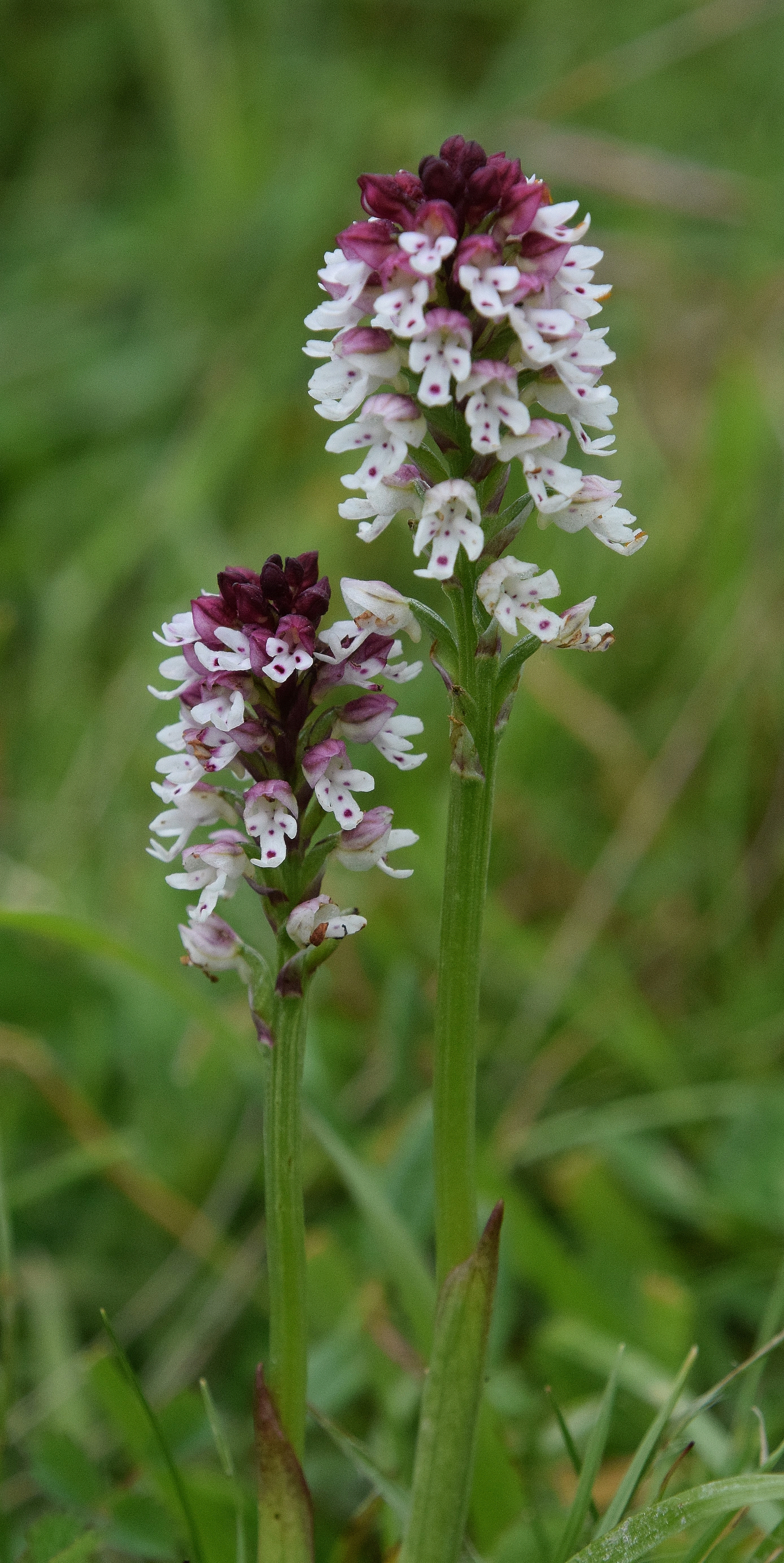
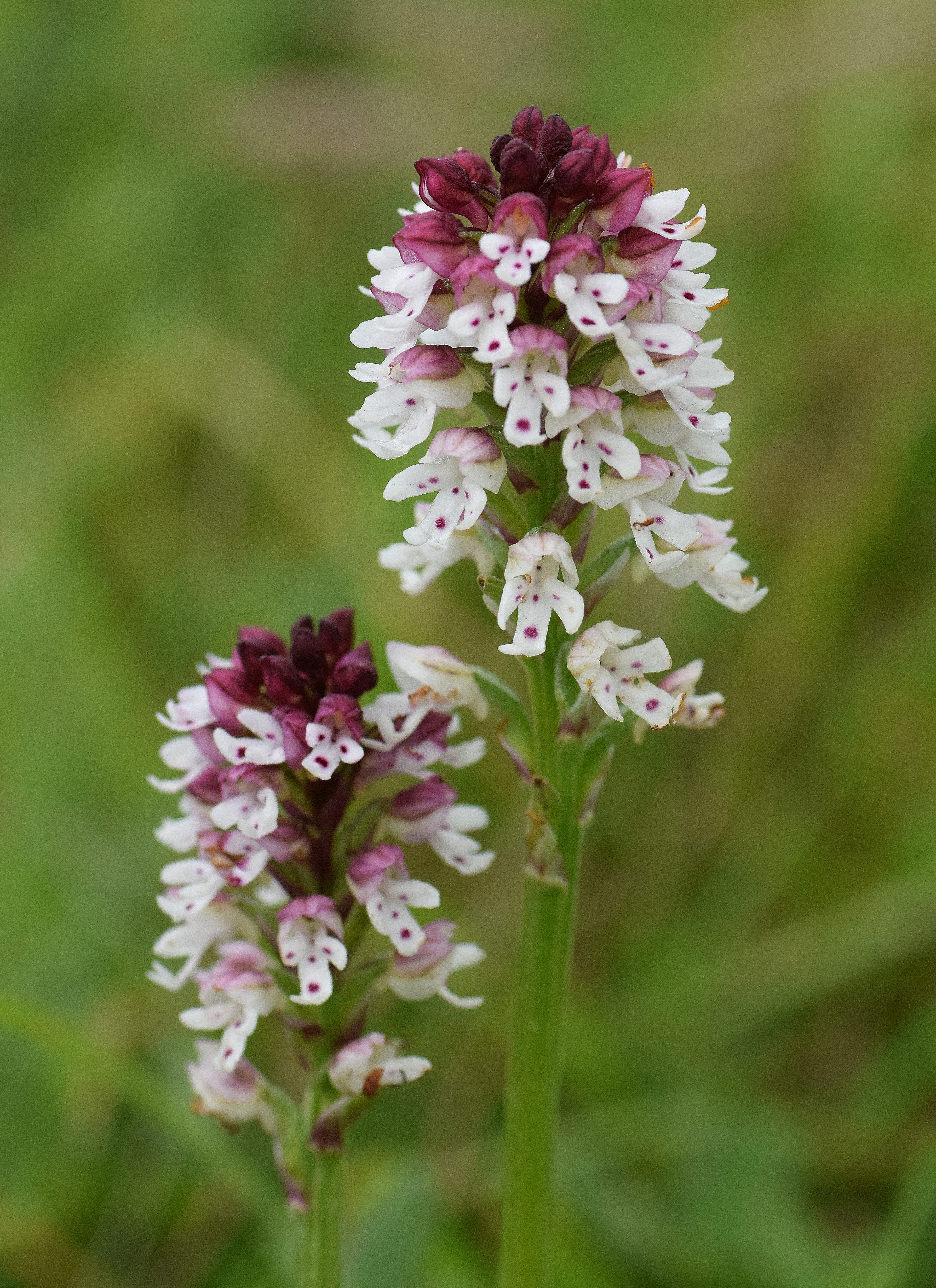
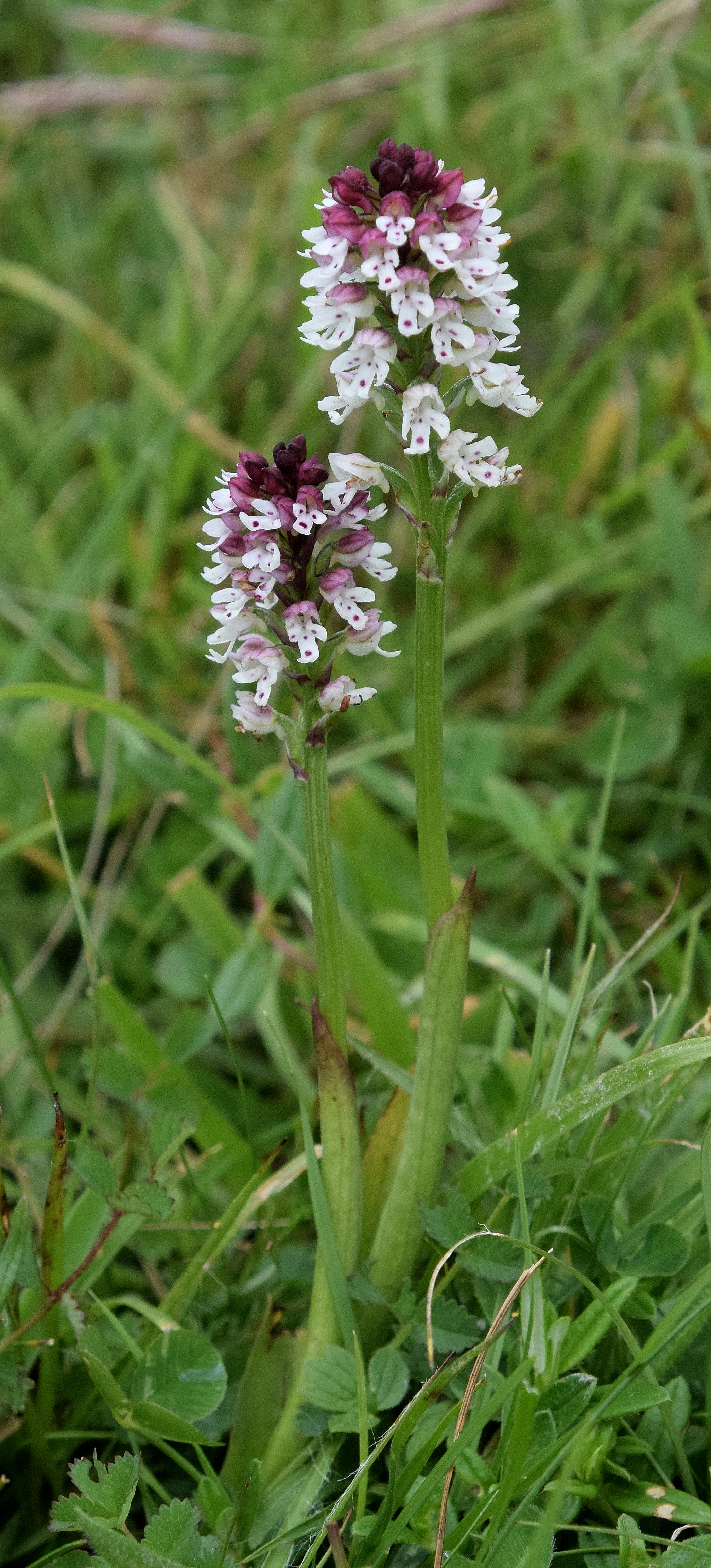
Burnt Orchids on Pewsey Downs
There were also Burnt Orchid here, my season’s fourth site for that so attractive variety. The double example in the preceding sequence is possibly my best ever subject. Chalk Fragrant and Common Spotted Orchid were both abundant. Musk and Frog are still to come and I expect both would be much more challenging to locate in the long sward than my first visit’s fayre. Like most of the places I have sought new (for me) Orchids in the current season, Walker’s Hill is also steep! Cue another recovery day during which to compile this post.
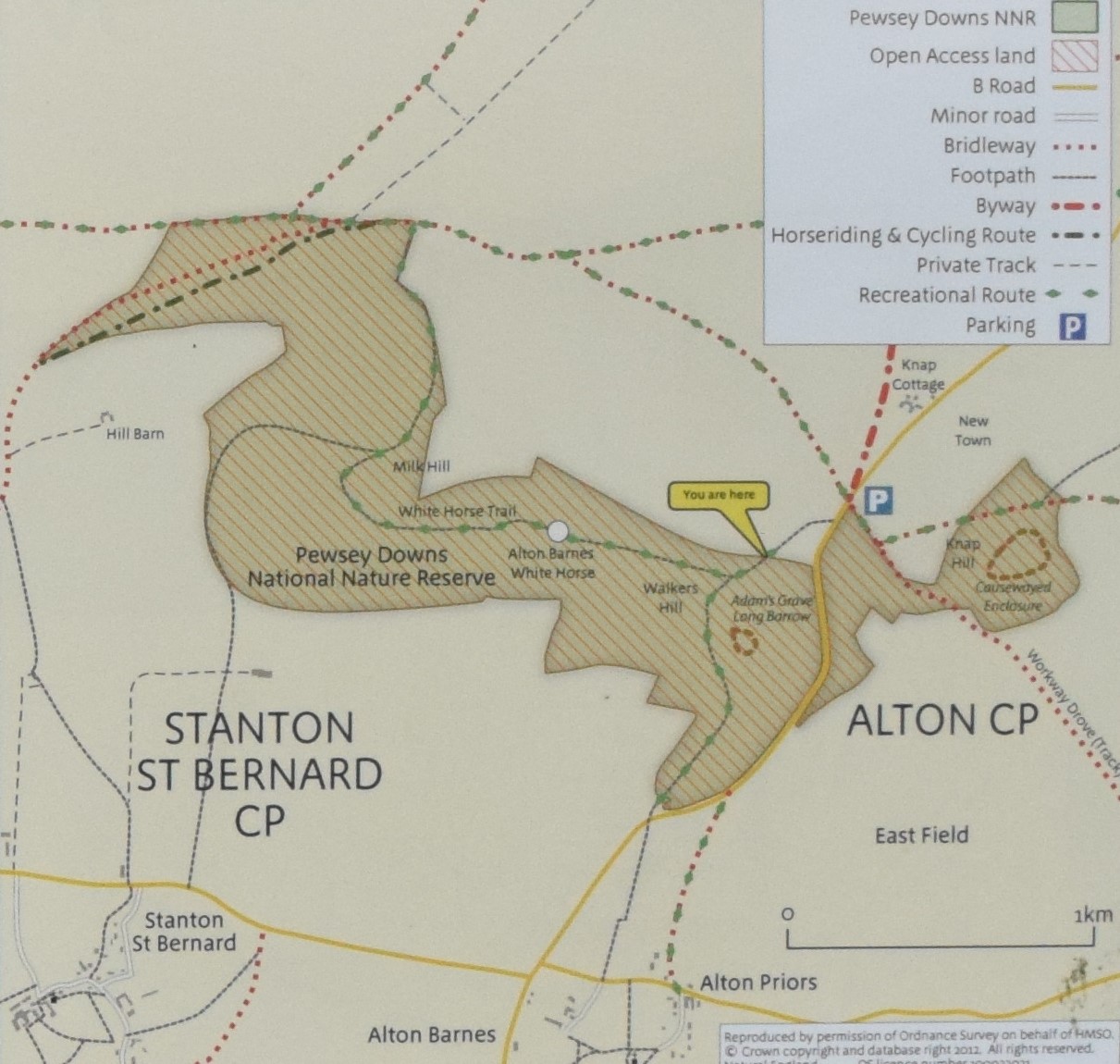
In overcast conditions it was all too apparent that the vistas southward over the Vale of Pewsey and east and west along the escarpment I trod would be spectacular in fairer weather. The Wessex Downs have always held a fascination for me, be it the archaeological heritage of Salisbury Plain further south and Marlborough Downs to the north; or the butterfly-rich hills of Westbury, Cotley (see here), Scratchbury and Battlesbury (here) further south-west. But I had not visited this particular locale previously and like all those others the experience it produced did not disappoint.
 Ramblings and Scribblings