The year’s wet spring and early summer has apparently been an exceptional season for Marsh Orchids at this post’s two featured sites. I had read that a tiny calcareous fen just outside Basingstoke was a hot spot for the first-named and a possibility for the second, and so applied for access to the permit only HWT reserve. The response breathed new life into what I was expecting to be a motivationally dwindling July. Not only did it offer good numbers of what were formerly regarded as the nationally scarce and much sought Narrow-leaved (or Pugsley’s), but a nearby site holds more than 100 of the new for me Marsh Fragrant option.
Having been thus informed I passed things on to potentially interested Oxon colleagues. Adam duly advised that all previously cited Narrow-leaved south of an arbitrary line from Anglesey across to the Humber estuary are now regarded as a fen sub-species of Southern Marsh (Dactylorhiza praetermissa). Researching things myself I learned the Marsh Orchid (Dactylorhiza) genus, of up to 60 species across Europe with four in the British Isles (see here), is notoriously tricky to separate for even the most experienced botanists.
Southern English colonies cited as Narrow-leaved Marsh (Dactylorhiza traunsteineriodes), including the Basingstoke one and another just outside Oxford at BBOWT Parsonage Moor, had been the subject of debate for several years prior to 2012. Then new evidence resulted in their re-classification as Dactylorhiza praetermissa ssp schoenophila (see here). Confused? I have now reached such a level of detail in this current enthusiasm, but studying the contentious plants for myself would nonetheless make for an interesting excursion whatever their exact nomenclature.
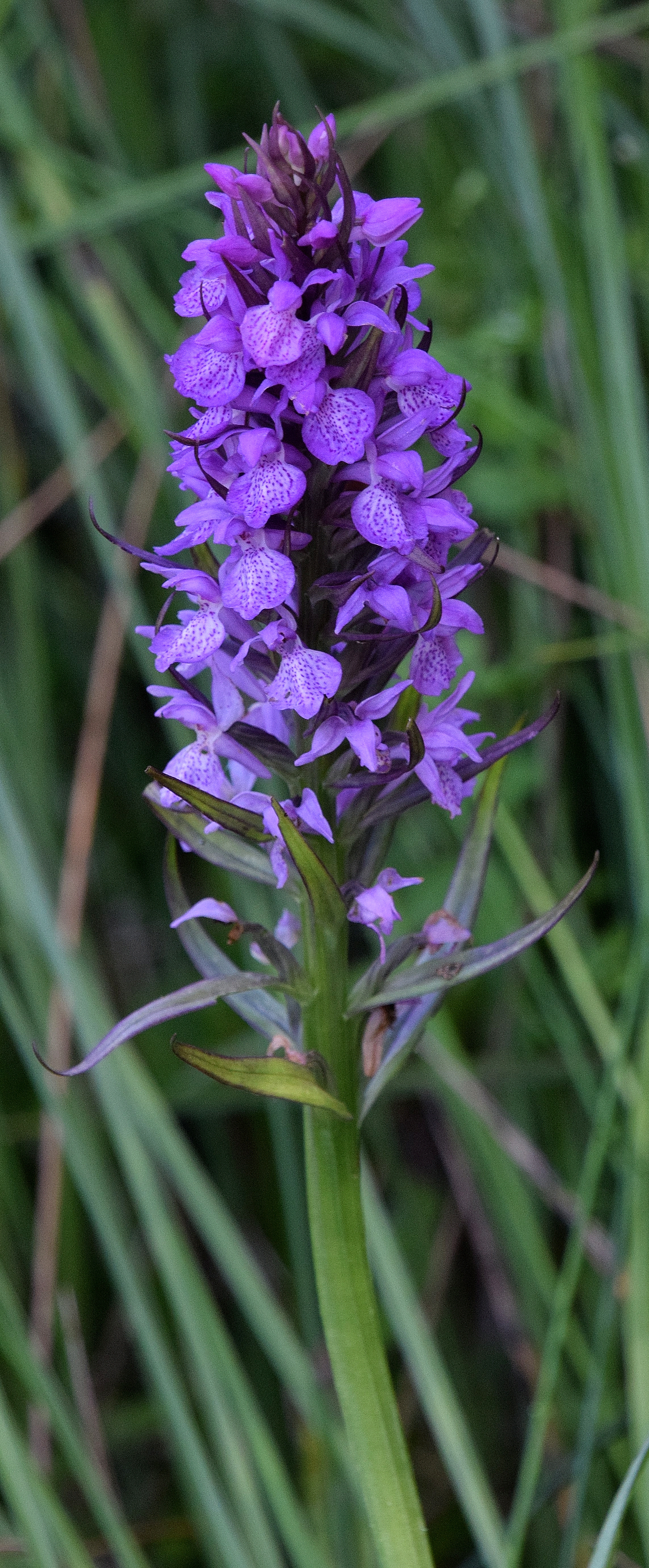
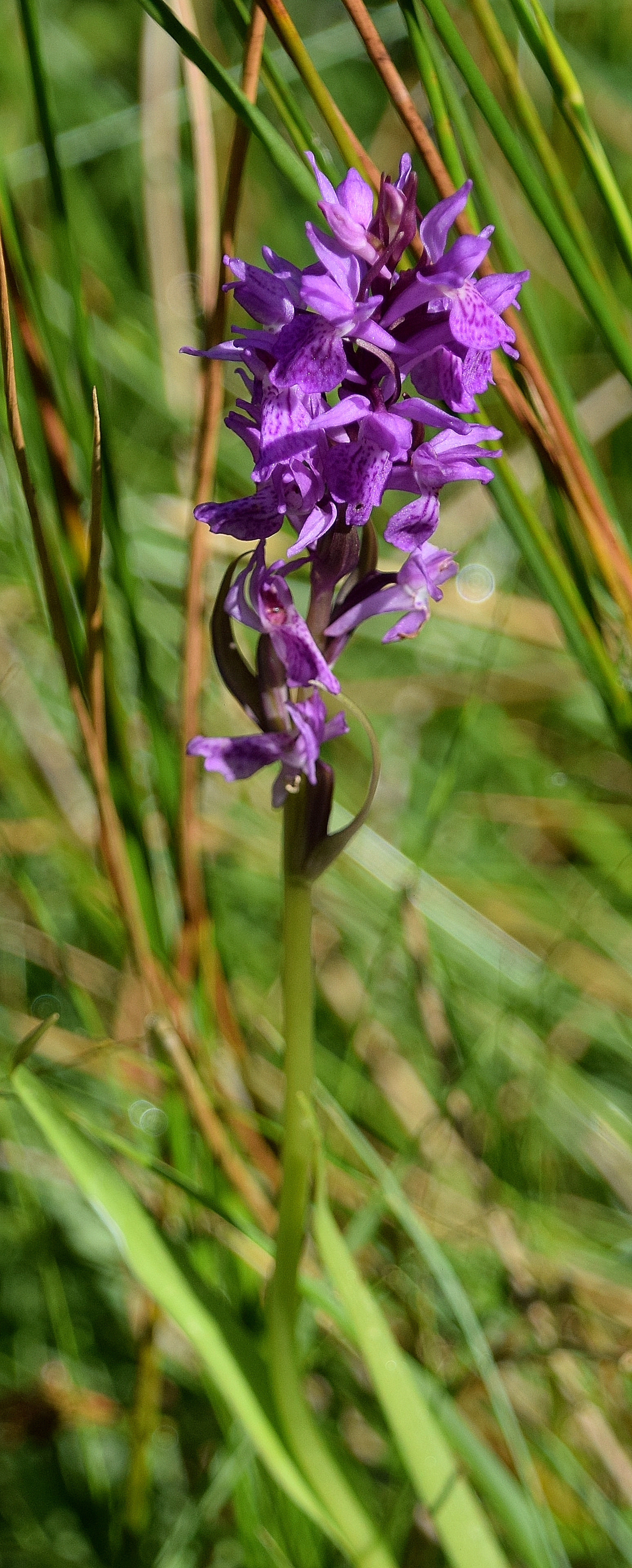
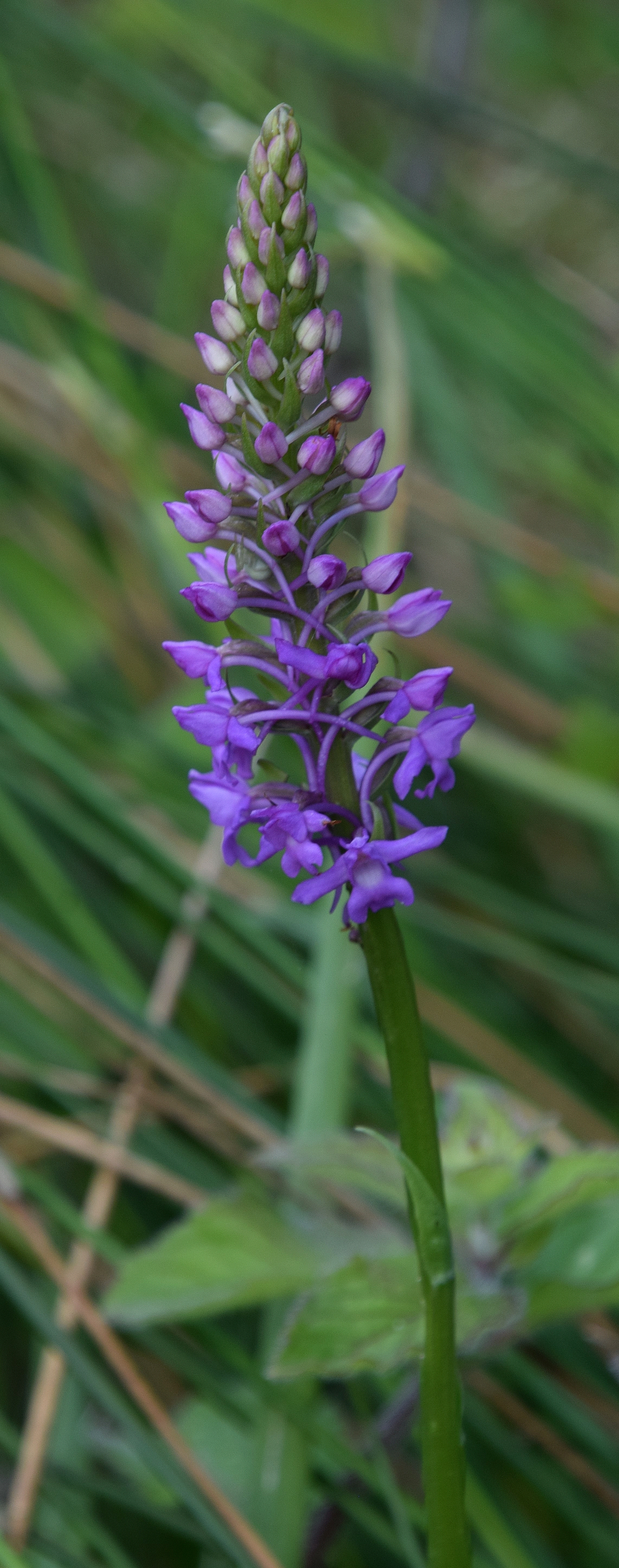
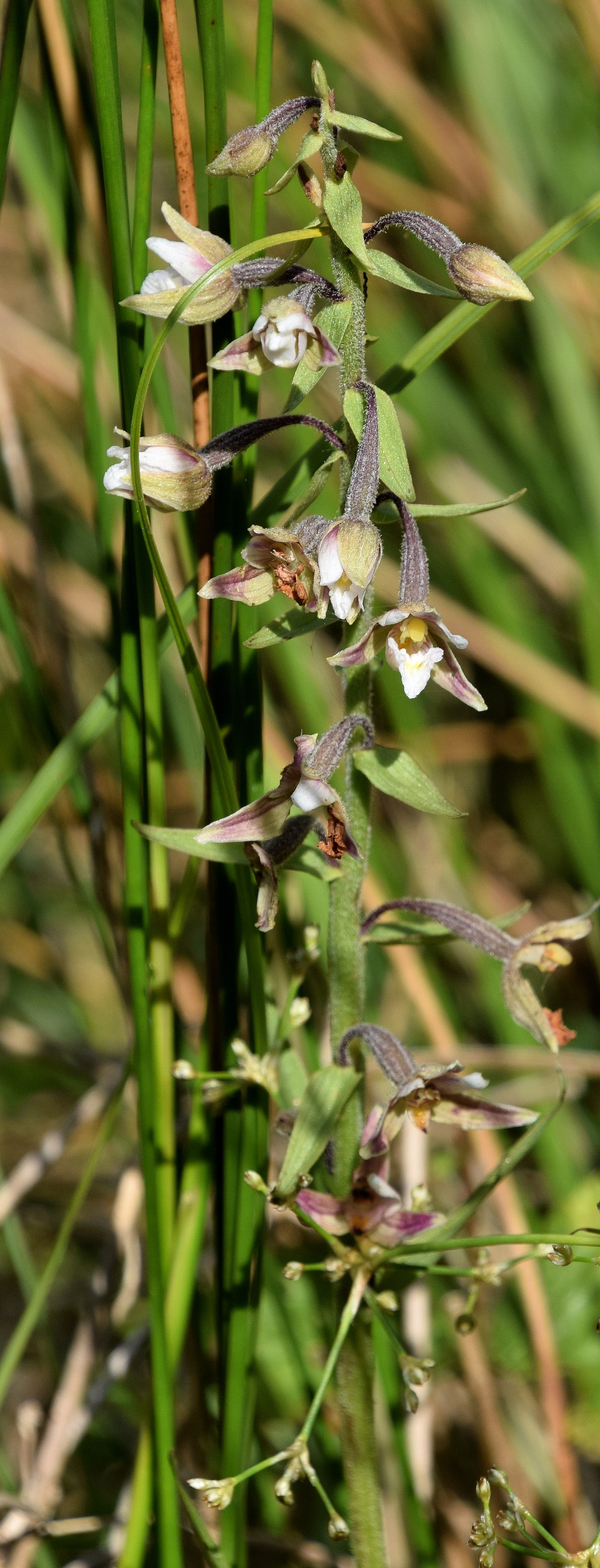
The Mapledurwell Fen Orchid package (from left): Southern Marsh, ssp schoenophila, Marsh Fragrant and Marsh Helleborine
Thursday duly arrived, and myself and Ewan set out to investigate. We would have the opportunity to identify and separate Southern Marsh, the sub-species and Marsh Fragrant Orchids in a single location. I was not expecting that to be a simple task. As a general guide my research suggested schoenophila is a thinner stemmed and more delicate looking plant than regular Southern Marsh with which it readily hybridises, while Marsh Fragrant can reach twice the height of its familiar Chalk Fragrant congener.
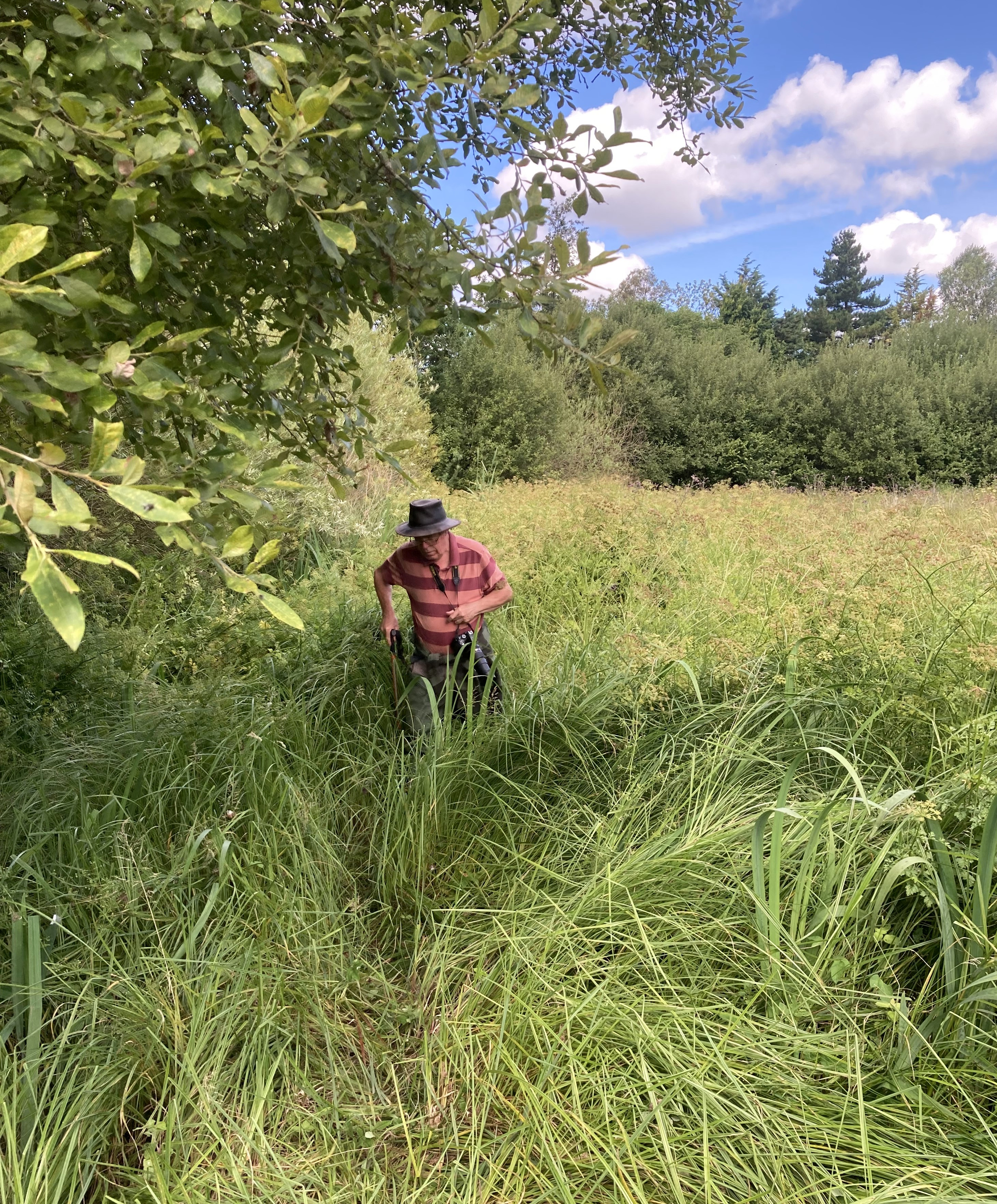
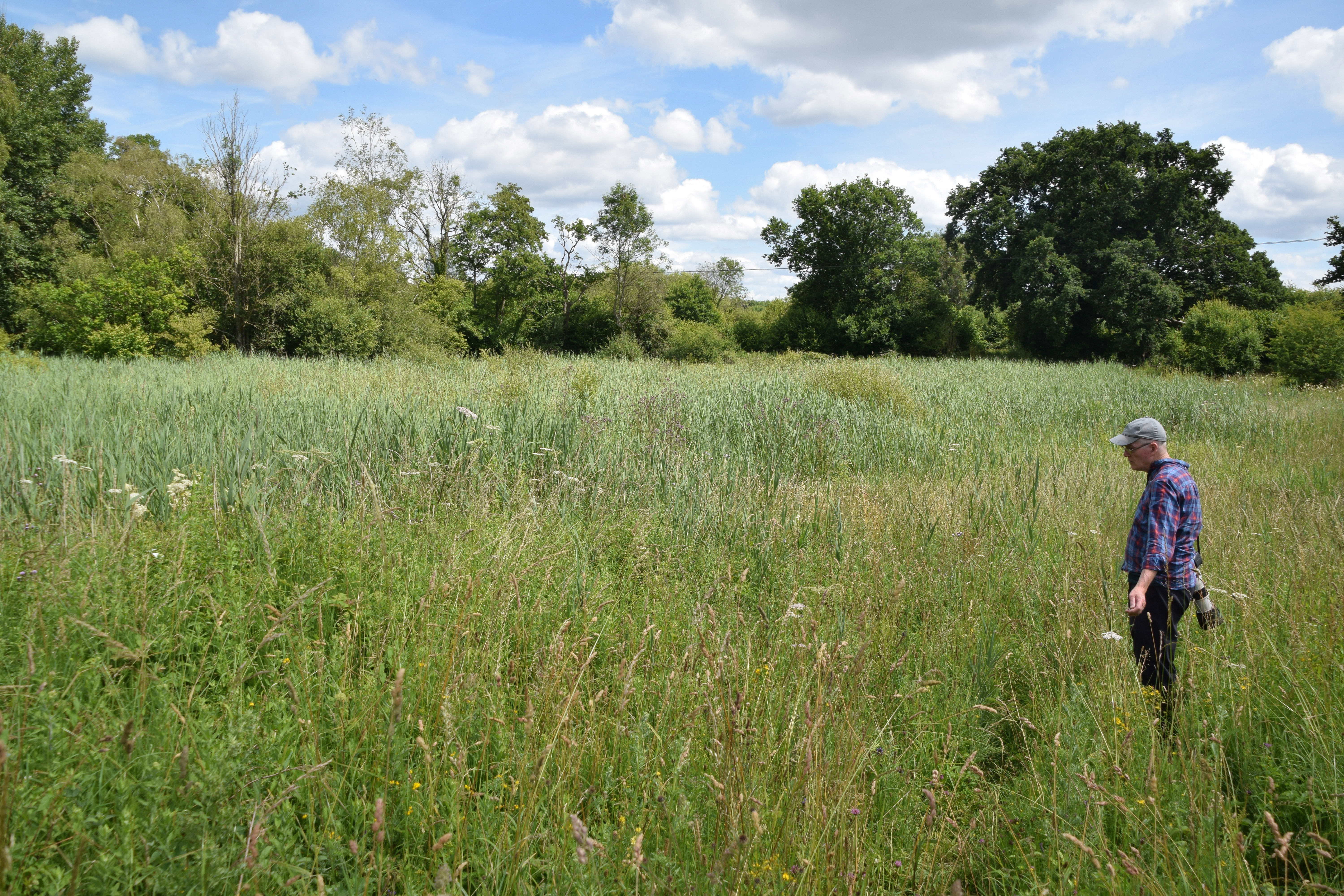
Arriving on site at Mapledurwell Fen (RG24 7JL – SU678523 – see here) the entrance was not easy to find. Housing development encroaches dangerously close, right to the protected area boundary, and the expected way in seemed to be up a private driveway. Then we noticed an iron gate behind the roadside hedge, that despite our having an access code for a supposed padlock we had to climb over. Ewan went to reconnoitre first, returning to say there were Orchids at the far end of the fen. Then I followed through trodden ways in the seriously off-piste habitat (pictured below), and there stretched out what we sought.
The first item I stooped to examine was recognizable from my researches and pictures seen online as the Marsh Orchid formerly known as Narrow-leaved, more of which could be picked out at intervals around. Southern Marsh Orchid ssp schoenophila appeared a thinner stemmed, more delicate looking plant than the more robust regular Southern. Those here were around 15 – 20 cm tall with shorter, typically angular flower spikes, and yes their leaves were narrower. In truly kosher Narrow-leaved the flowers are said to all face in the same direction, which I didn’t notice in any of today’s cluster.
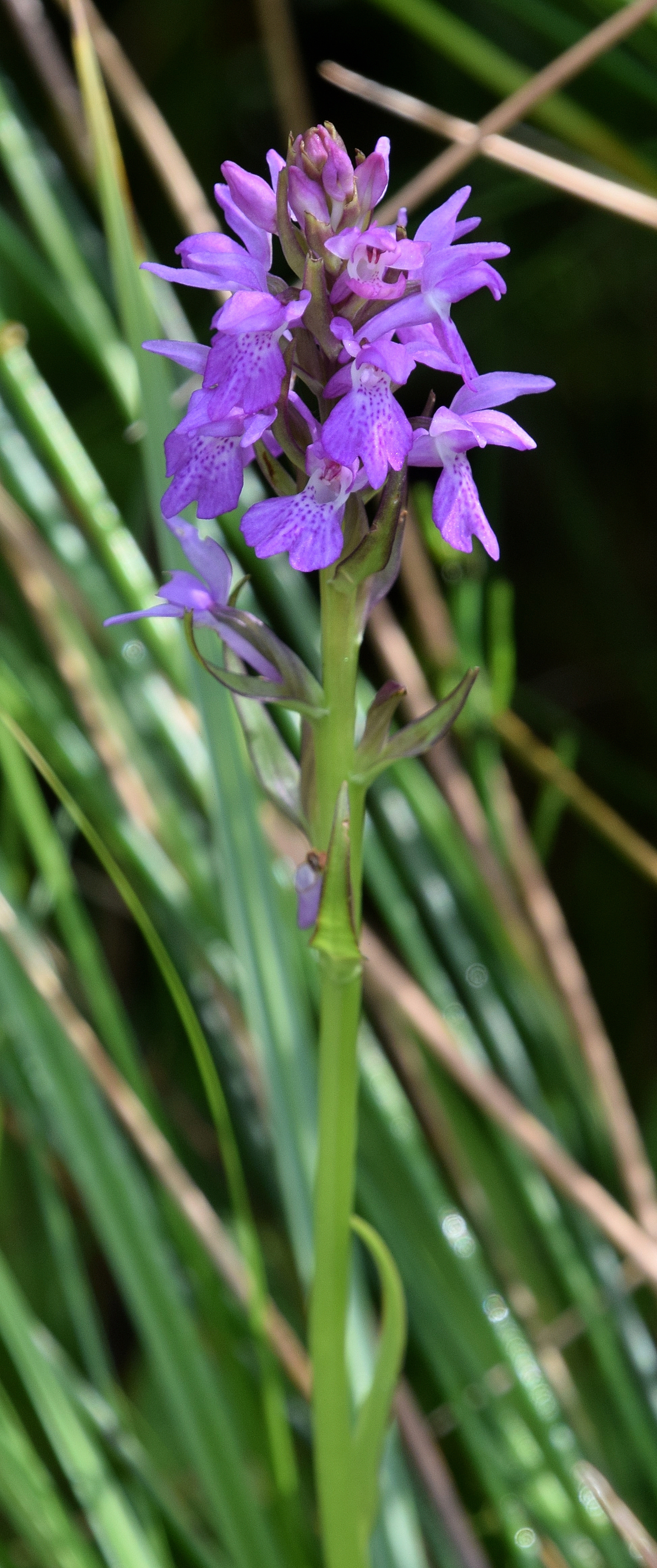
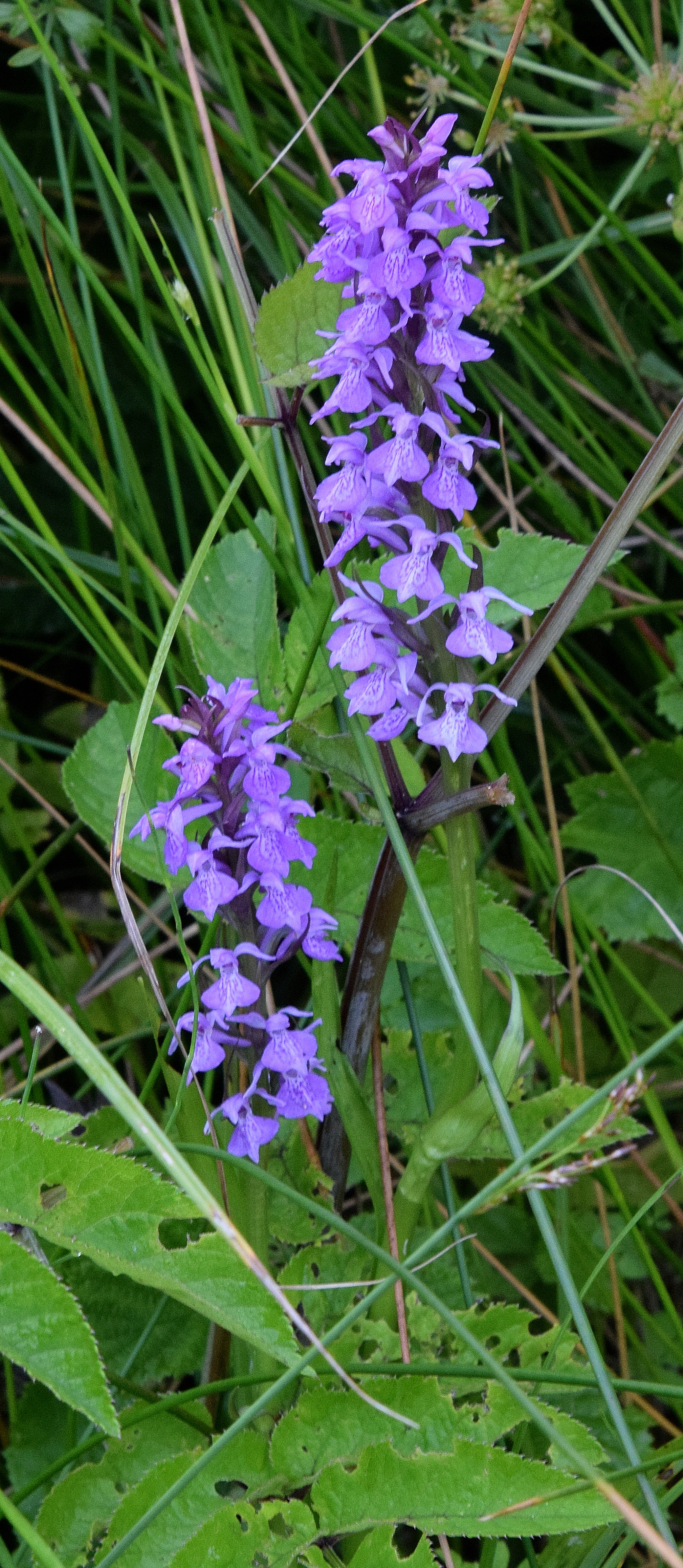
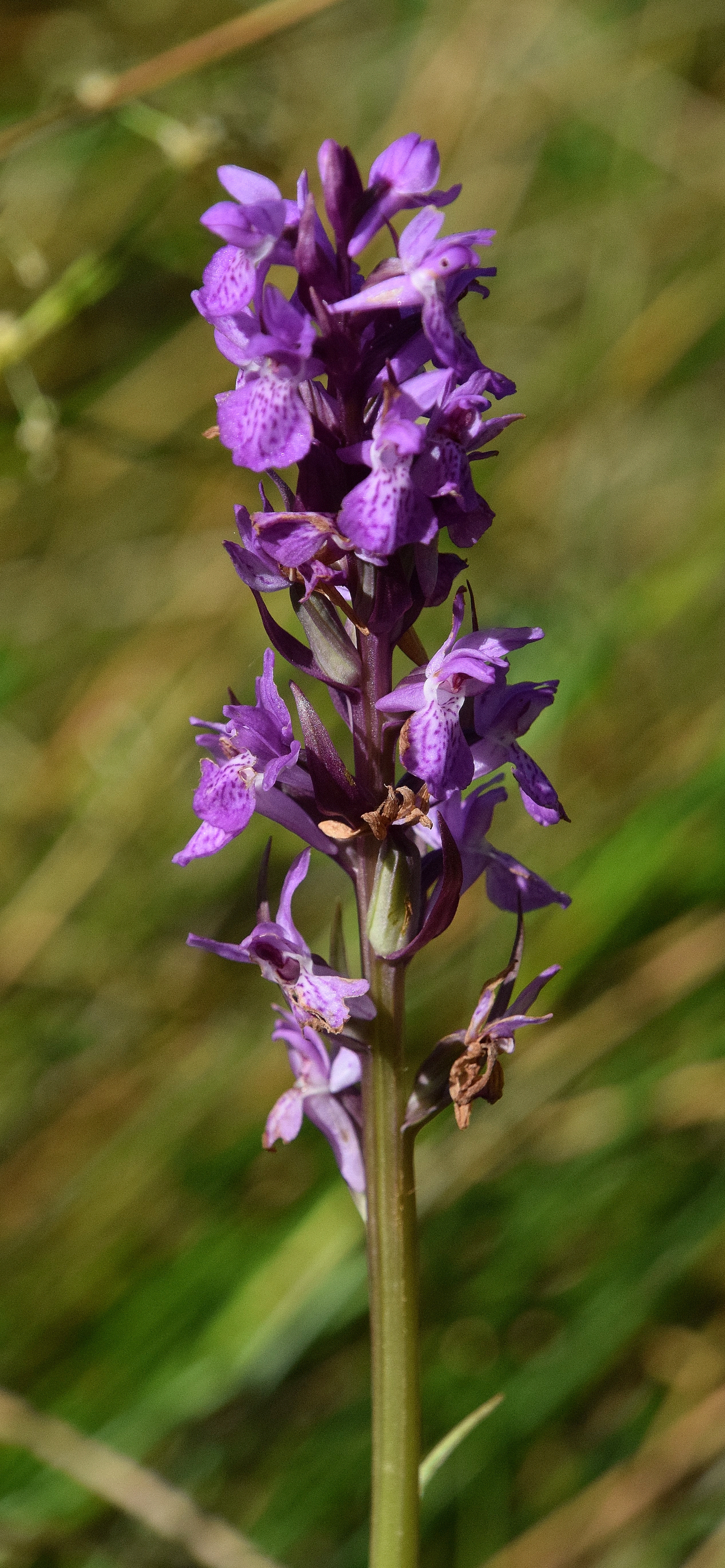

Mapledurwell Fen Marsh Orchids including ssp schoenifila
In the field there was a “gut feel” about which plants were the sought sub-species that was no longer apparent when reviewing my pictures. I sometimes find this with other plants, insects or even birds. So I will not caption any of the above images as schoenophila, but given my brief from the HWT reserves officer at least some of them most likely are. More important was the opportunity to experience this complex mix of varying and hybridising plant forms, and appreciate the difficulty of accurate identification for myself.
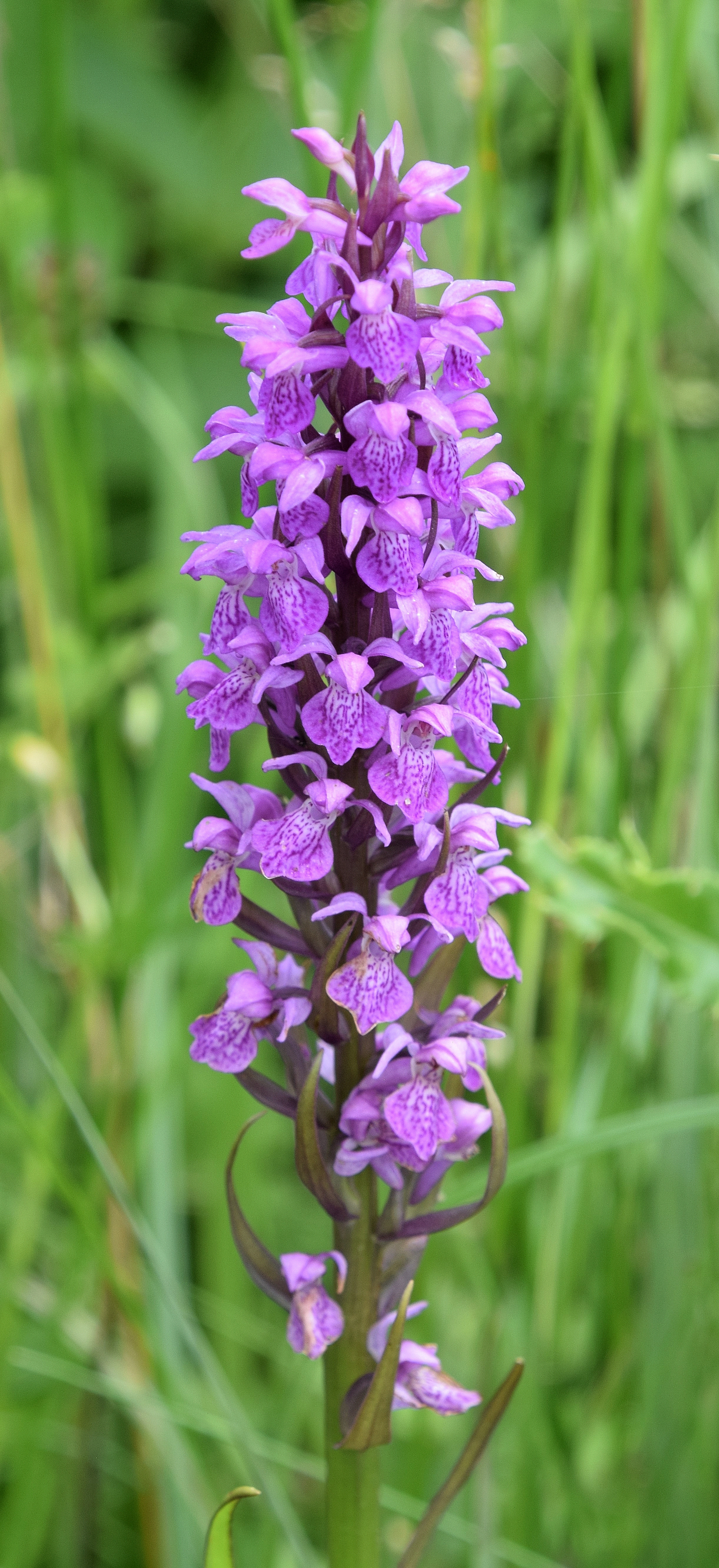
In a shadier area to one side, while my companion busied himself nearby, I noted the taller Marsh Fragrant Orchid that had brought me here in the first place. Then going over to look, good numbers of Marsh Helleborine announced themselves, some of which were a scarce pale form for which the site is noted. The full agenda for this exercise had thus been converted quickly and it remained to record the most photogenic specimens. Amongst the Dactylorhizae were shapes and sizes that allowing for hybridisation would have been virtually impossible to analyze accurately. In the following sequence the first two are particularly stately Southern Marsh. The third and fourth items are Marsh Fragrant. We were clearly in an intriguing place.


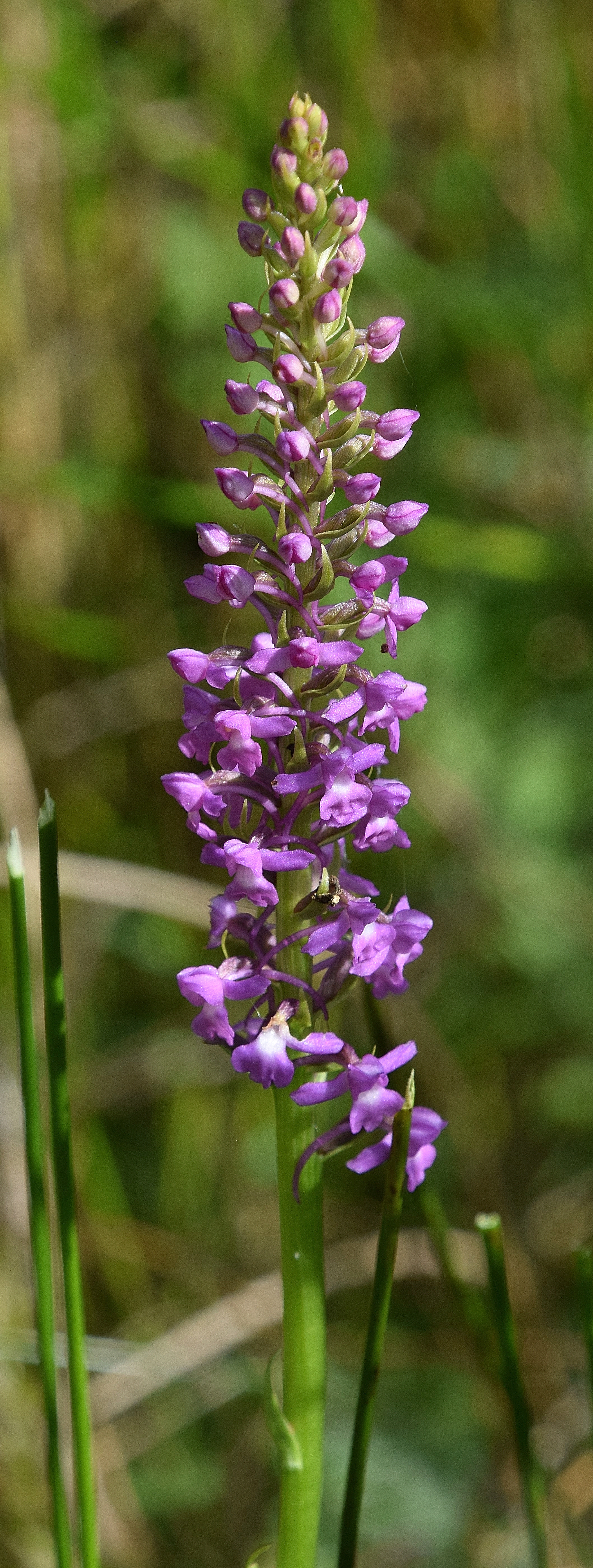
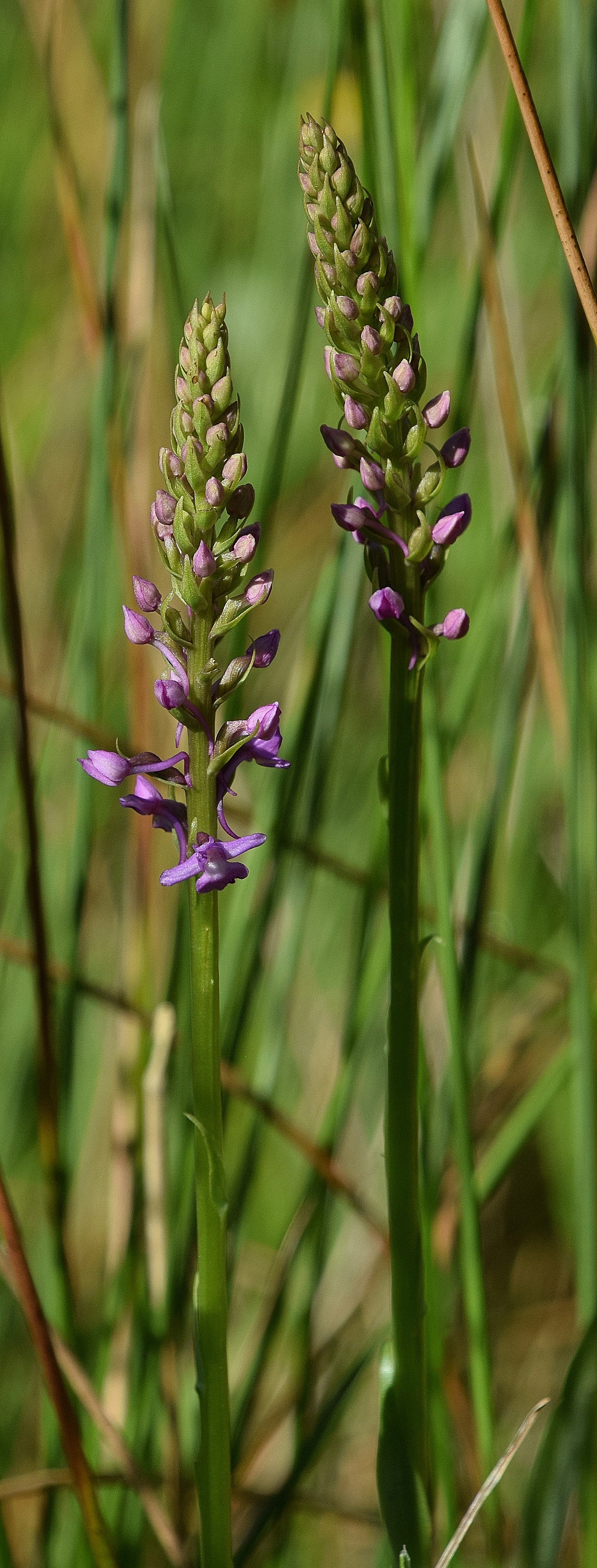
Some taller Southern Marsh specimens (left) and Marsh Fragrant (right)
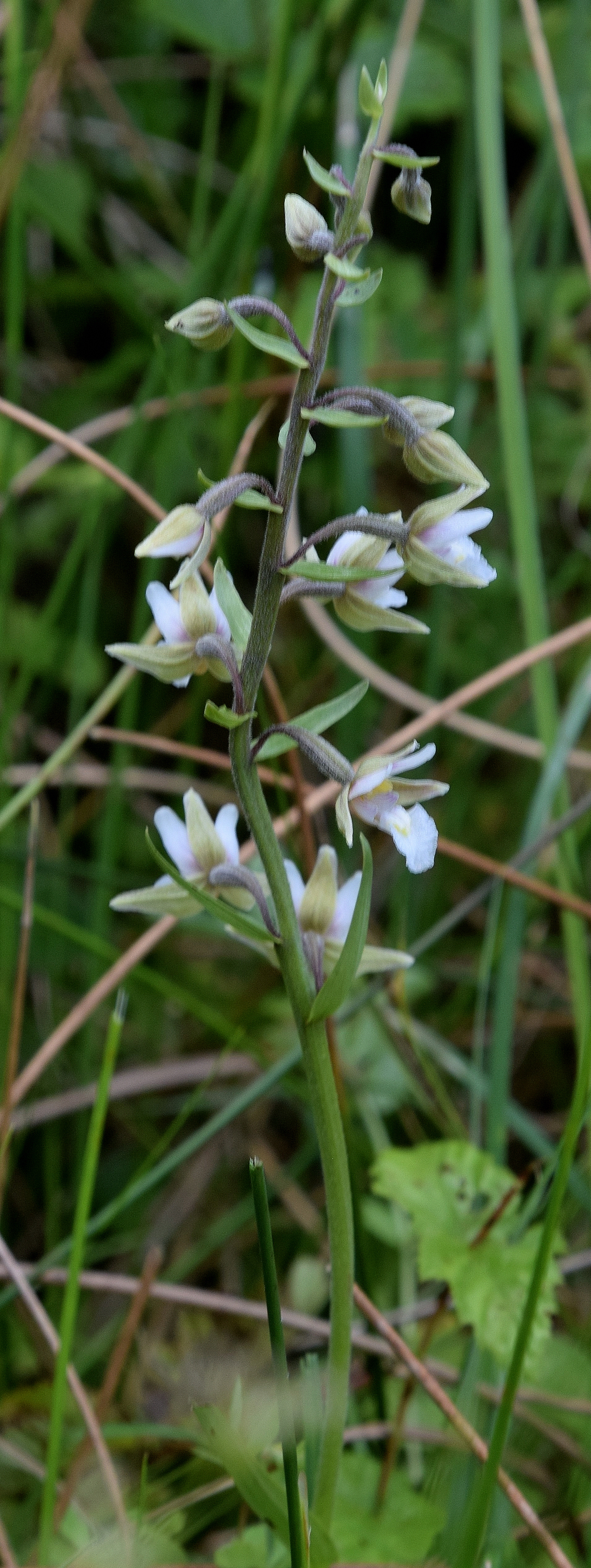
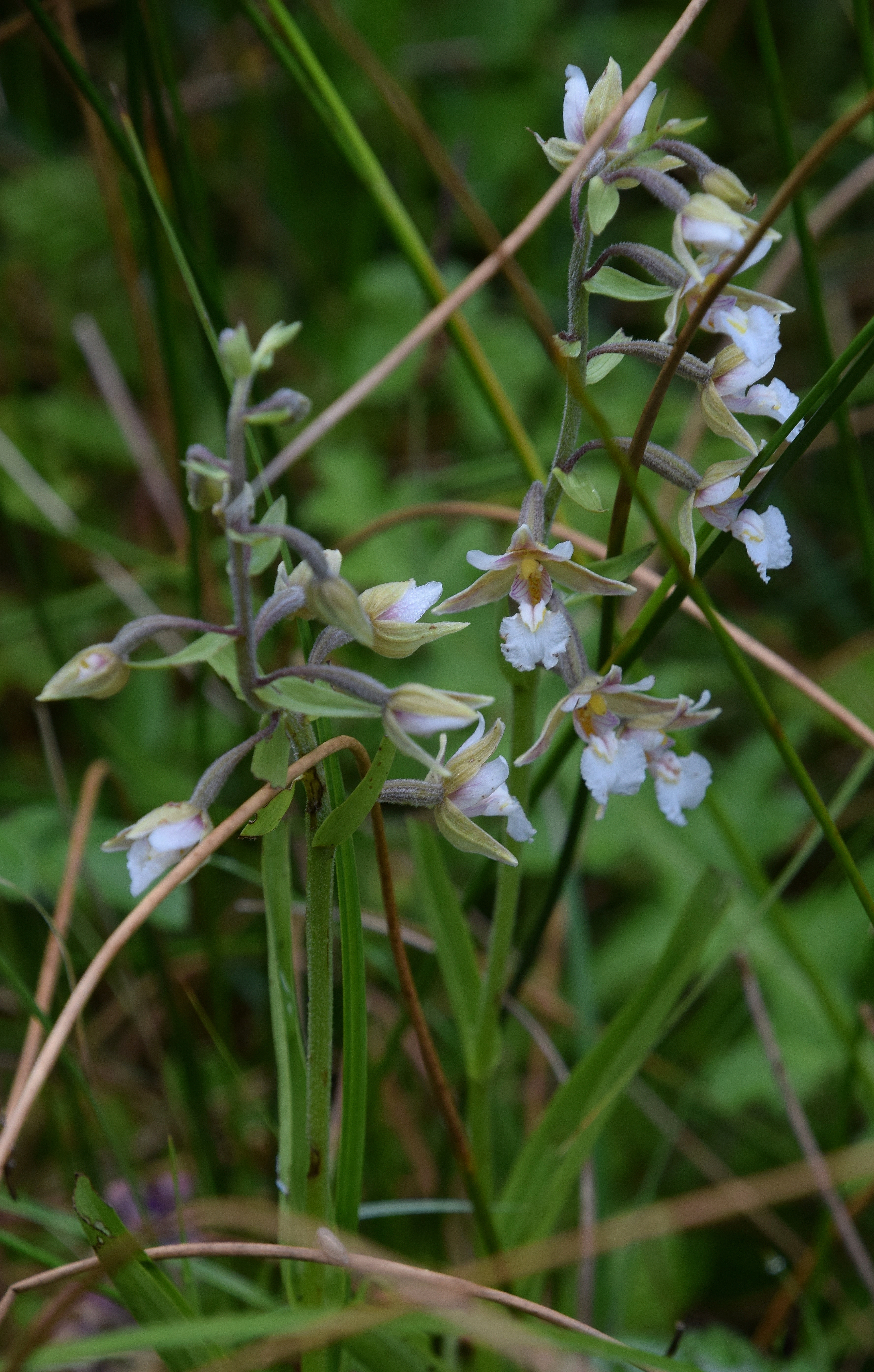
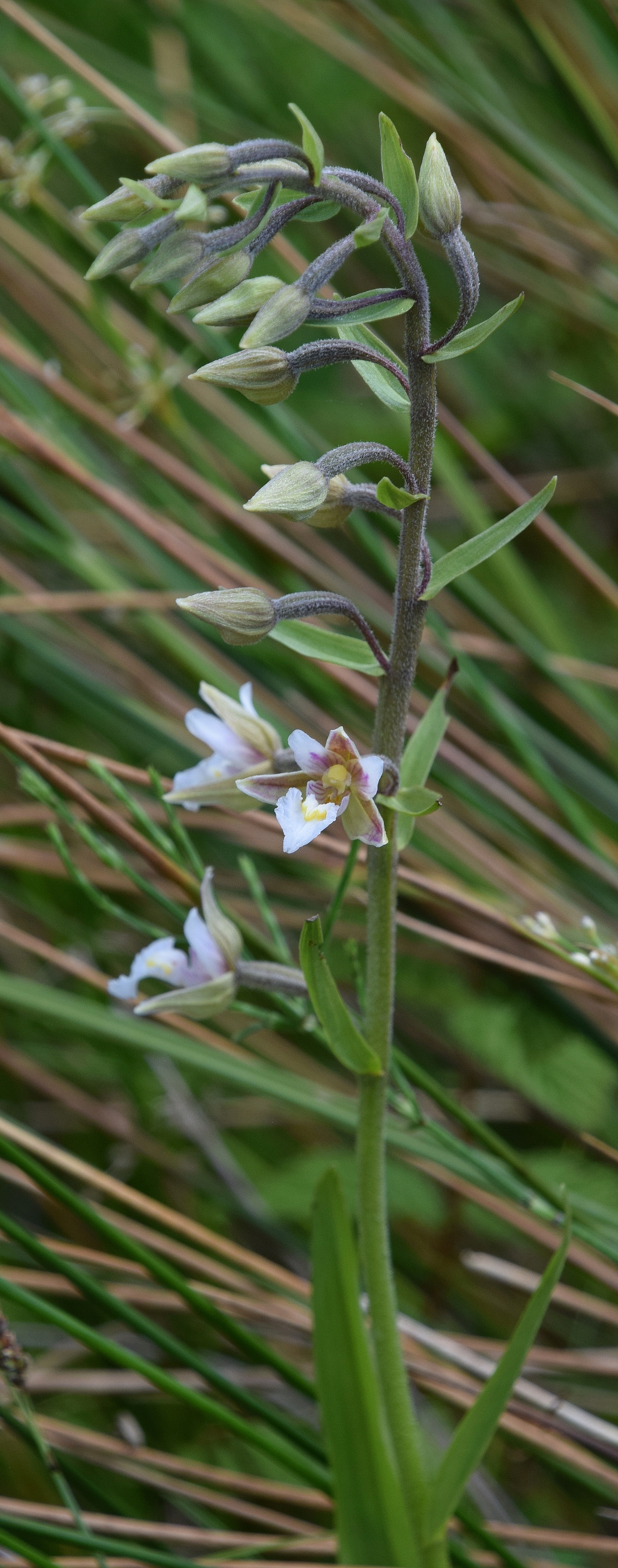
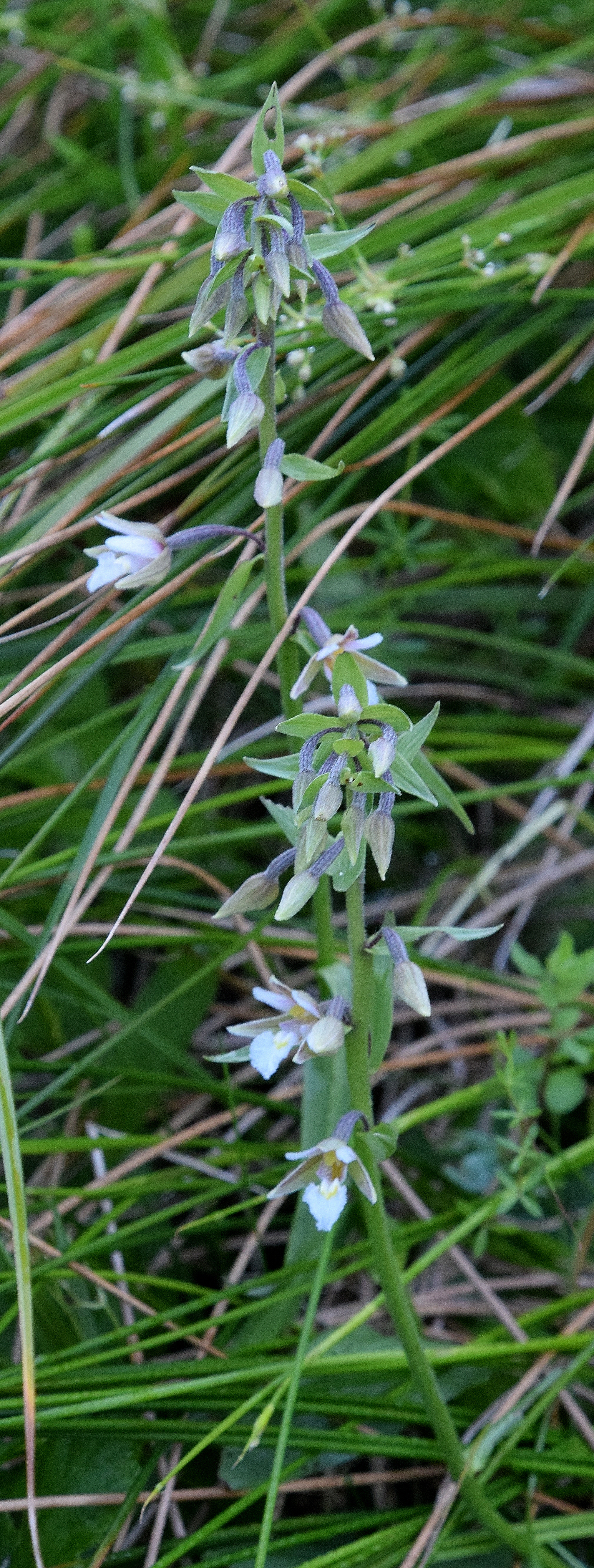
Marsh Helleborines, including the Mapledurwell specialty pale form (far right)
We moved on three miles to an area of HWT’s nationally important Greywell Moors fenland (see here), that is especially rich in Marsh Orchids at the moment. This particular site is noted for blending original, spring-fed calcareous fen with chalk grassland, due to the historic disposal of lime spoil on top of the chalk bedrock. That has given rise to an unusual mix of downland plants co-existing with moisture-loving fen species here. Access is by permit only, obtainable from the reserves officer who can advise the exact location.
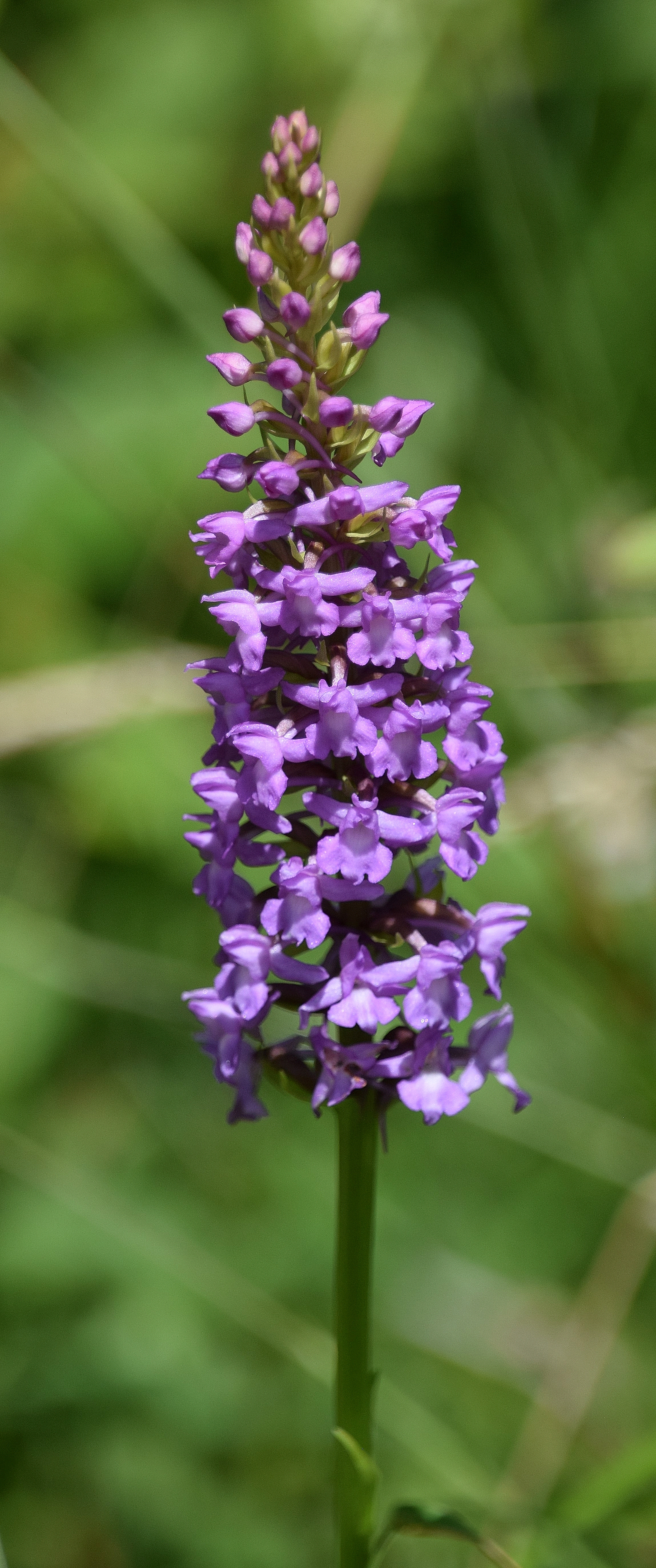
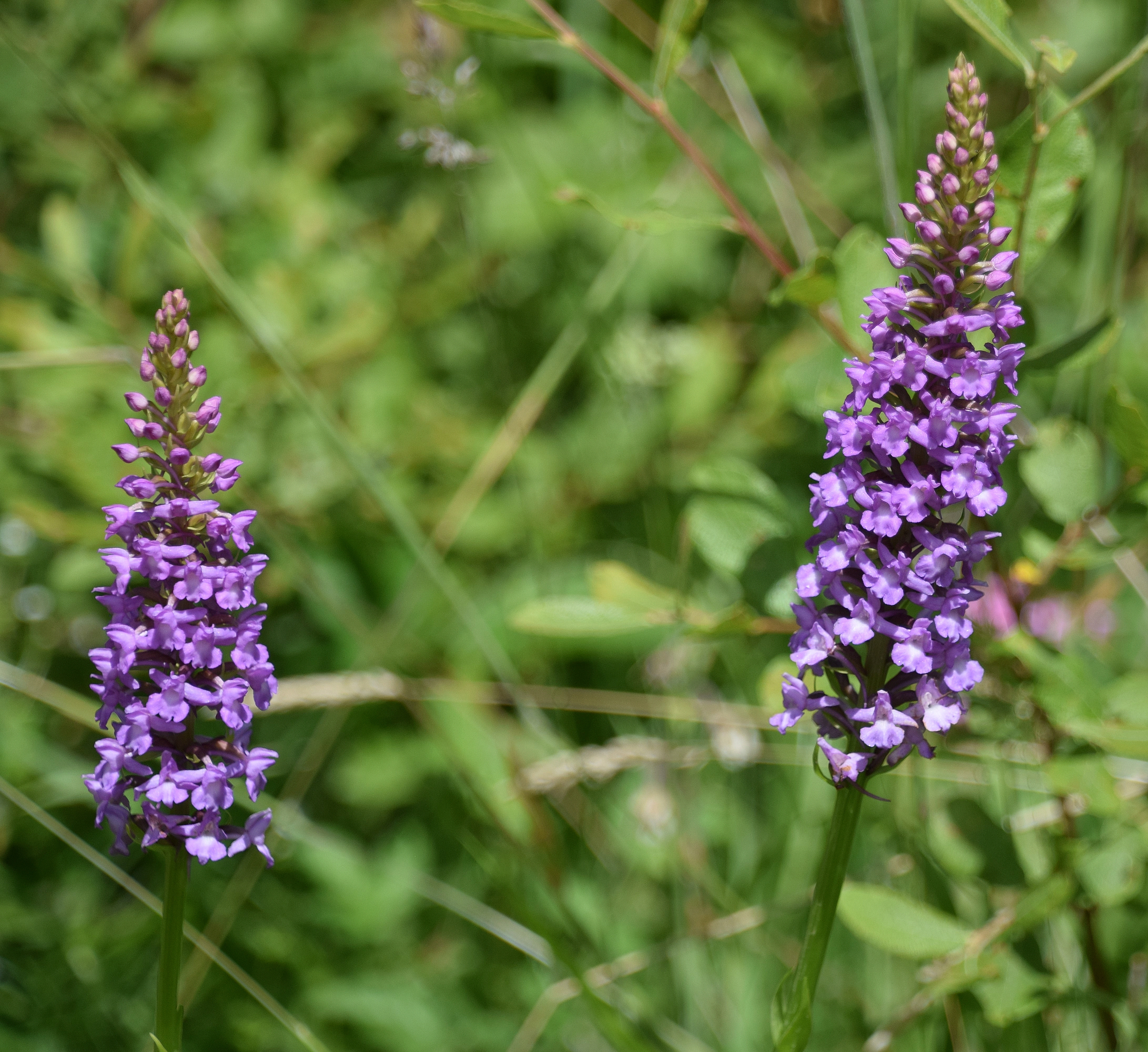
Marsh Fragrant Orchid (Gymnadenia densiflora – pictured above) occurs only in alkaline marshy ground fed by calcareous water. It is thus more distinguishable from the two other British fragrant species on grounds of habitat rather than significant physical features. I have to say today’s plants appeared quite similar to the closely related Chalk Fragrant species. But the spikes are said to be more tightly packed, hence the botanical name. There can be up to 100 flowers in shades of pink on the tallest stems (up to 70 cm) from late June to August. But I understand infinite variation in supposed diagnostics render this group as difficult to separate reliably as the Dactylorhizae, without DNA analysis being employed. Today’s plants certainly lived up to their name as the fragrance when taking these pictures suffused the air.
Walking on past the best area for Marsh Fragrant, we came to an expanse of pure fen that was chock full of Southern Marsh Orchid. Now I became re-acquainted with the robust, round-topped forms that have so appealed to me over the past two summers, rather than the skinny and untidy looking things encountered earlier at Mapledurwell; sub-species, hybrids or whatever they were. I had been briefed that a very rare, pale green Southern Marsh individual was available to view here, but we didn’t find it. And everywhere we might look more and more Helleborines blended in their discrete, unobtrusive way with the other fenland vegetation. I have read the last-named is considered one of the most subtly beautiful of all British Orchids, and they certainly entail allurement.
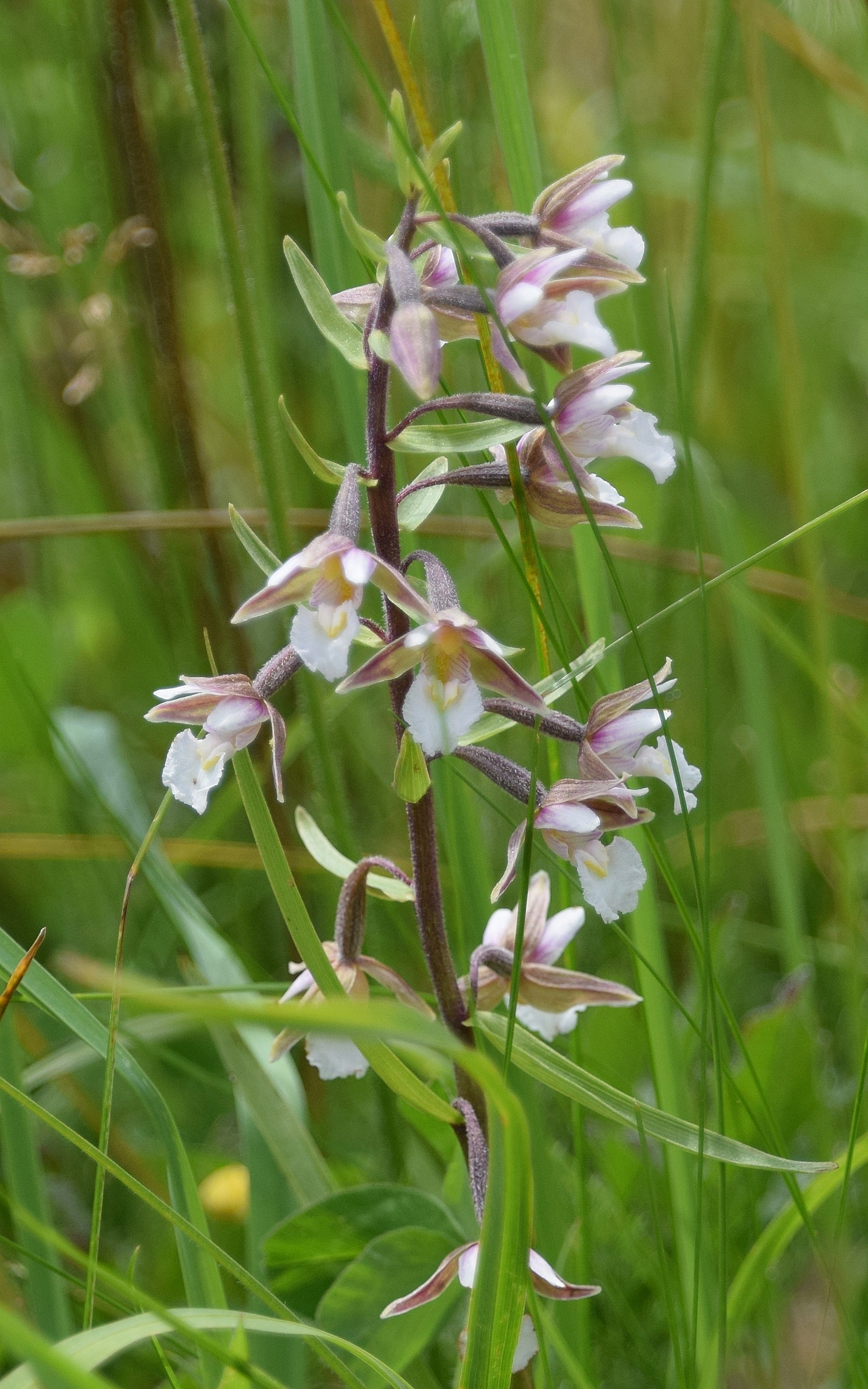

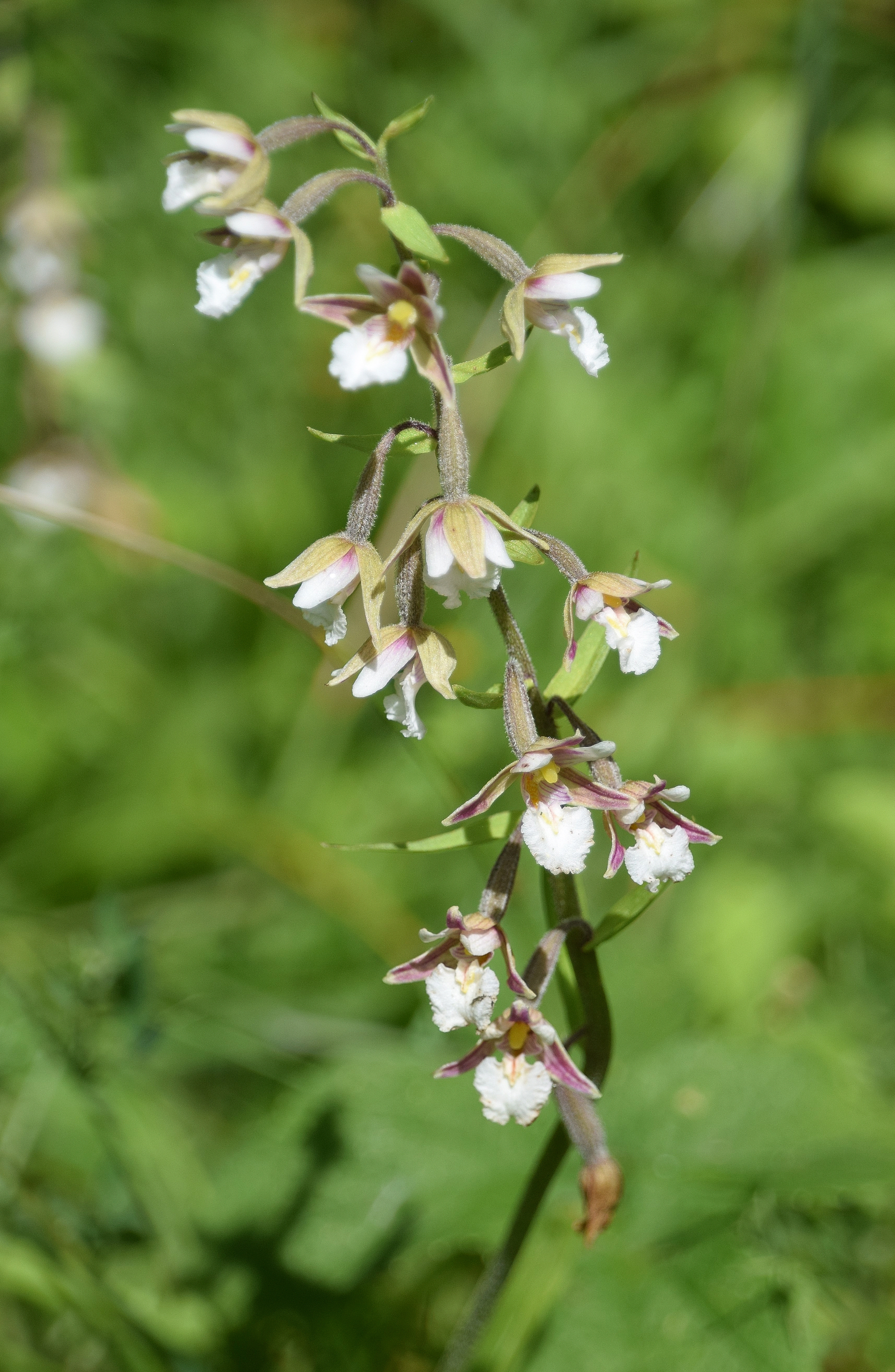
Regular Marsh Helleborines with reddish stems and sepals
Amongst them were examples of the pale-flowered Marsh Helleborine variation epipactis palistris ochroleuca. With these especially attractive items (pictured below) the yellow-white toned flower is almost devoid of red and the three sepals are mostly a greenish-yellow. The hairy stems are likewise less reddish and more green. I understand this variation is more often found in coastal dune systems than fenland.
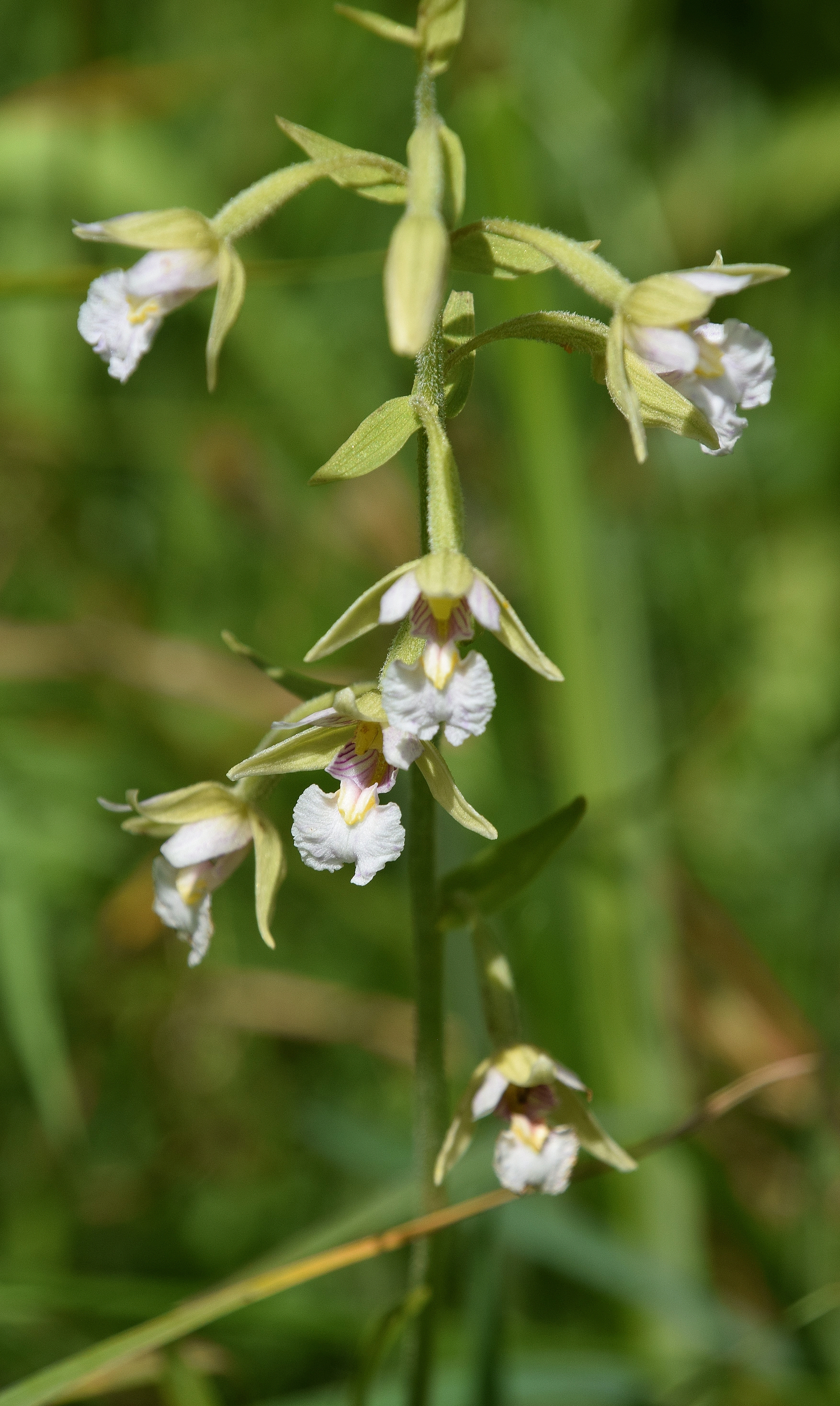

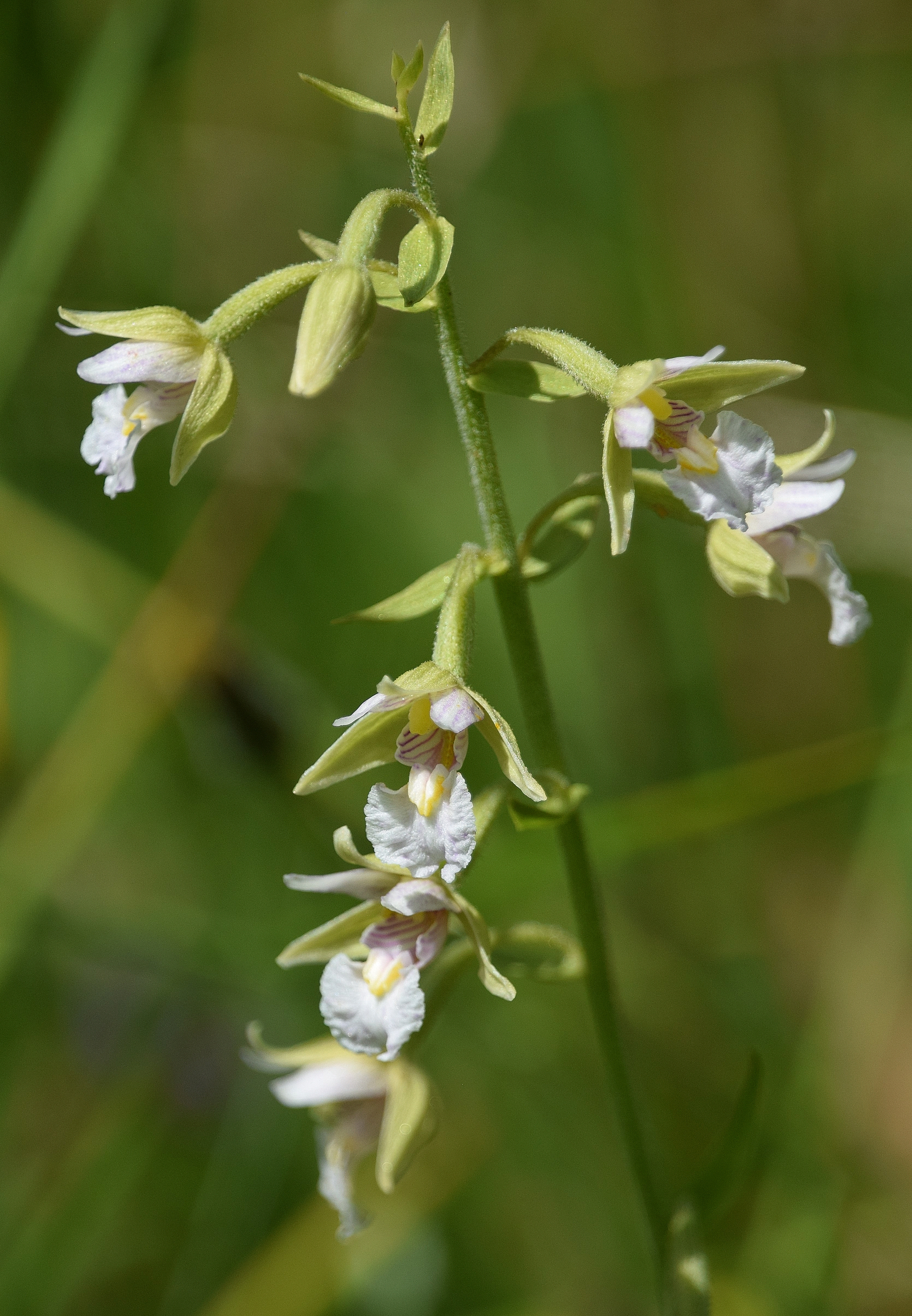
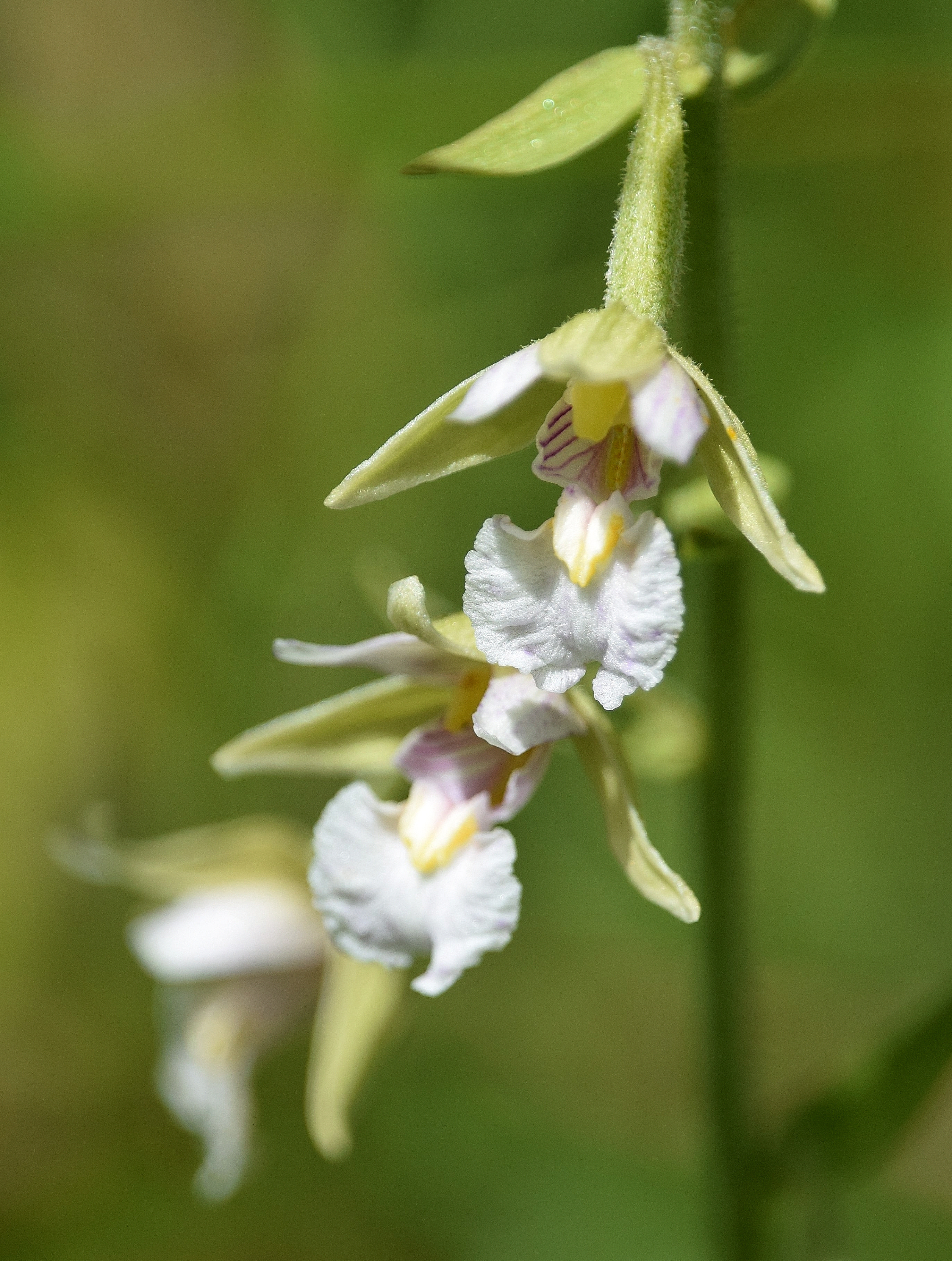
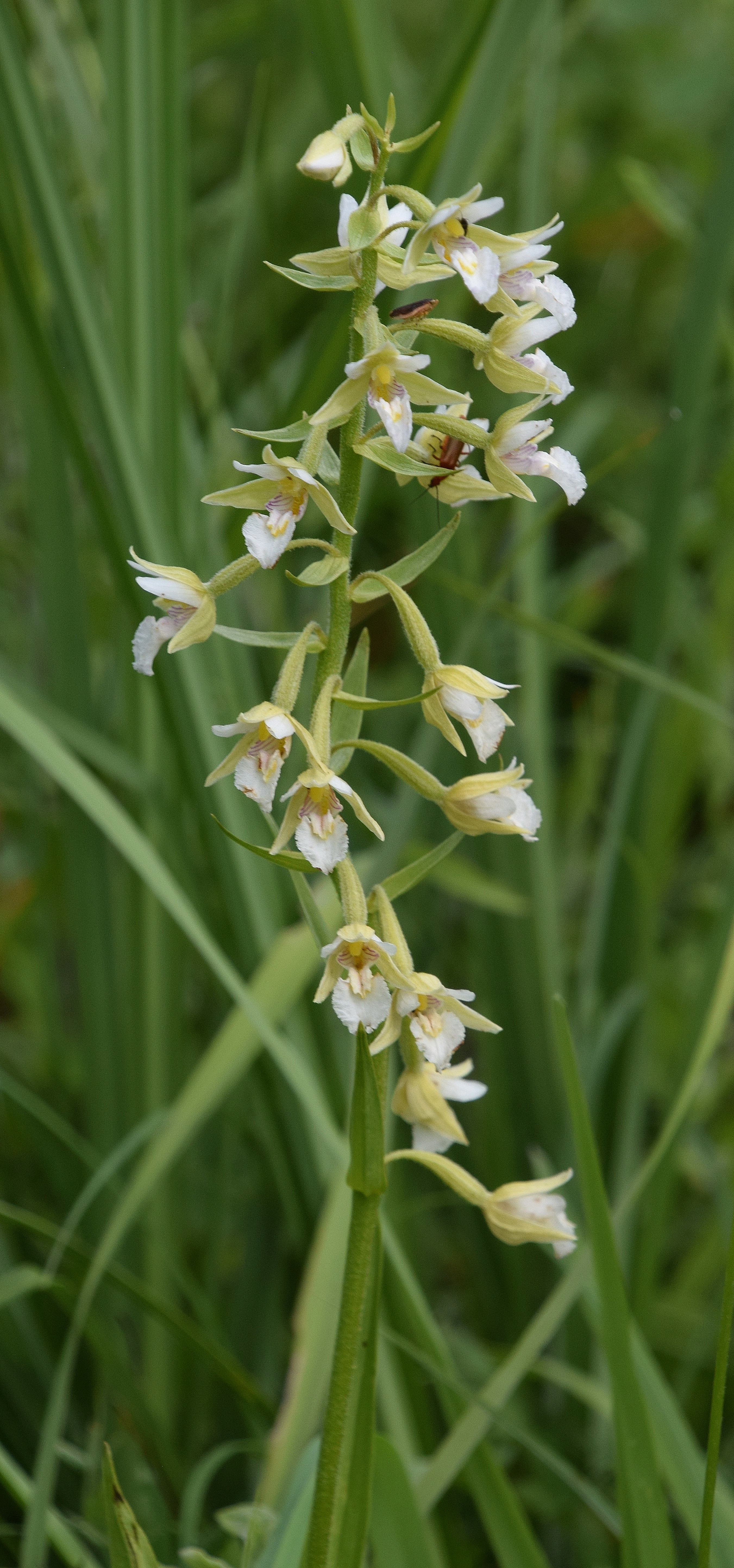
Marsh Helleborine var ochroleuca
It by now being early afternoon, tummies (mine especially) were craving sustenance and so we headed homeward, via first a nearby sandwich stop then a supermarket on the Basingstoke ring road. I usually got birding posts out soon after the event in past years herein, but required research and the quantity of pictures to review and edit when doing Orchids can make them more difficult topics to present. Given the previously stated complexity of this one that process has taken five days! What is recounted herein was one more superb episode in my current national Orchid odyssey, that has now almost run its course, but a little more still awaits.
 Ramblings and Scribblings