This is something I have wanted to experience again for quite a while. Twice in the past at this time of year I joined mid-summer evening RSPB local group outings in the Newbury area: to Snelsmore Common in the late 1980s, then a site just north-west of Greenham Common’s former missile silos in 2013. I was taken to see a lone, south Oxon item in company with select county birders in 2015, and last but by no means least there was a memorable self-find abroad of Red-necked Nightjar along a dirt road outside of El Roccio, Spain in May 2012.
On our way home from the Basingstoke area last week, Ewan briefed me on a further location that currently holds three breeding pairs. Newtown Common (SU 476629 – see here) is one of several examples of lowland heath habitat in west Berks and north Hants that all attract migrant Nightjar in the summer months. I didn’t relish making an evening visit by myself, so enlisted the support of another Oxon birding colleague Sally, herself a seasoned Nightjar observer since they breed close to her second home in mid-Wales.
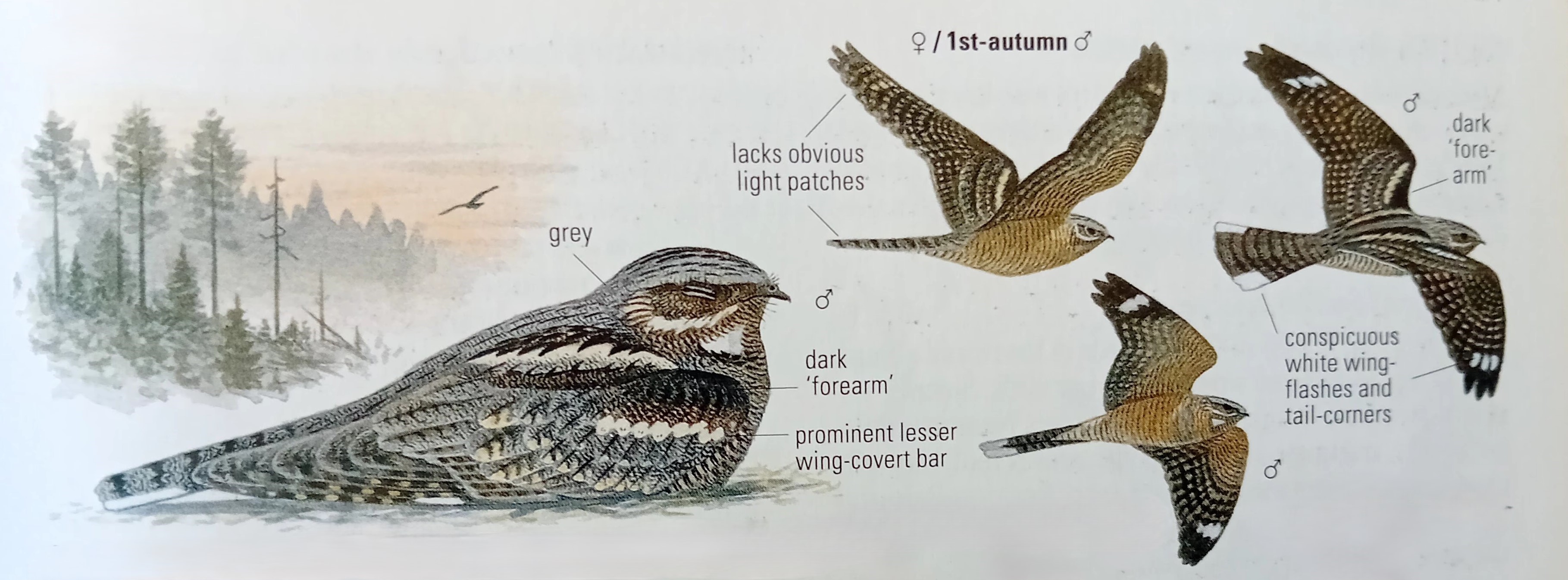
European Nightjar © Harper Collins Publishers
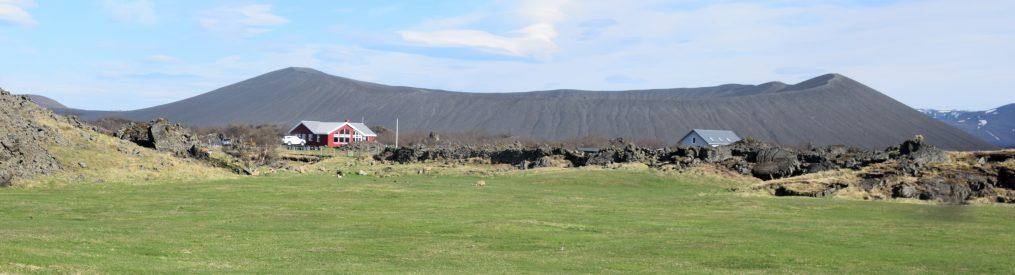
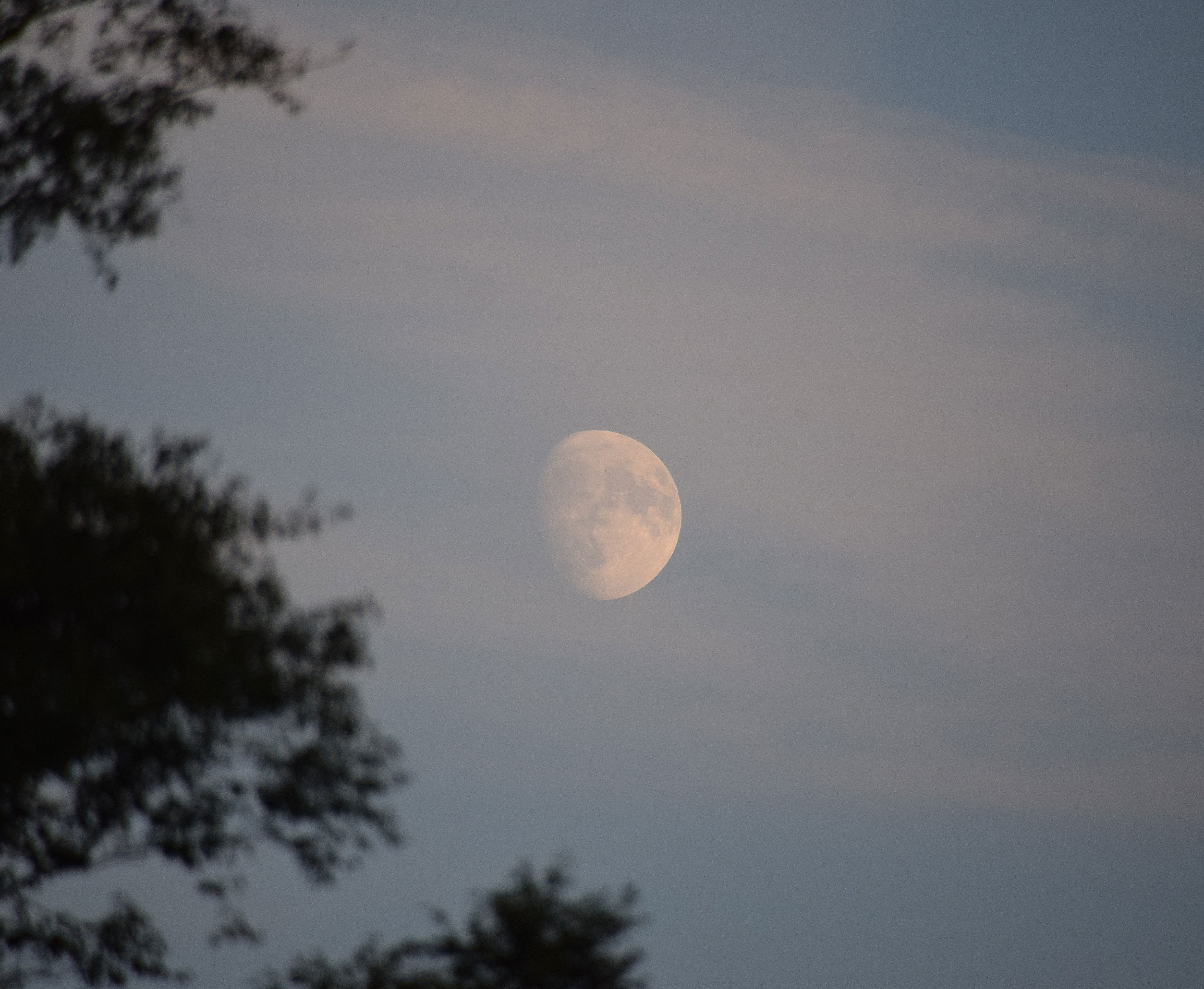
Arriving a little early at around 7:45pm we took a walk around to explore what is typical habitat for our crepuscular in daytime quest that flies at sundown. After crossing paths with two other Oxon birder/photographers, we set up our watch point at a spot near where Ewan had told me a Nightjar perches in a particular tree top. Before long six more people passed by on the same mission, then we waited and waited longer. As dusk drew ever closer, aircraft vapour trails cris-crossed the dimming sky and the subtly-toned moon rose then edged gently to the right. My sense of anticipation intensified to the verge of impatience as the light continued to dim.
More than once Sally said she could hear distant churring, then a “co-ic … co-ic” call announced itself around us. At 9:20pm a dark shape glided past swiftly, silently and banking as it went with a shadowy almost ghostly, hawk-like jizz. A thrill coursed through me as mission was thus accomplished. This first Nightjar of our evening made a few more passes, then from 9:30pm churring commenced in earnest from the middle distance. As night continued to draw in I became infused with a beguiling, almost primeval empathy with both the sound and its setting; and at intervals these Tolkienesque dark riders of the night would flash by again.

Newtown Common
Having not seen flying Nightjar at such close quarters before I now appreciated why American species are named “Nighthawks”. The back-curved wing and long-tailed profile is quite suggestive of a smaller raptor, as strong and deliberate wing-beats alternate with graceful sweeps and wheels with wings held motionless. Males typically lie or crouch along tree boughs when churring, but may also sing from a post or tree top such as the one we were staking out. Females usually incubate two eggs on the bare ground amongst bracken or stones.
It is said that by jumping about waving white handkerchiefs or something similar, observers can attract male birds that will take them for the conspicuous white wing flashes and tail corners of an interloping rival. So my experienced companion now began something akin to a Morris dance. Fairly quickly no less than three birds all came to take a look, appearing suddenly and out of nowhere through gaps in the trees, then flying around and above us in their mysteriously distinctive fashion.

If they were all territorial males this was the entire reported quota for the site, but seemingly they were not easily misled and soon went on their way. By 10pm their strange reeling song was rising and falling from various locations in the deepening gloom, and feeling we had seen and heard enough we headed back to the car, passing the camping seated group of six we had met earlier. They were enjoying wine after a good picnic, local “villagers” as they described themselves, who come here year on year to watch the Nightjars and socilaise. They described the spectacle enjoyed on this night as their “best ever”.
We thus learned of a second good vantage point, overlooking falling ground and complete with a bench, should it not be already taken in future. But our own pitch, though more obstructed by large trees, had been as satisfactory since we had it to ourselves with an excellent outcome. This was the best of my three Nightjar experiences to date in the Thames basin lowland heaths. The birds’ own idiosyncratic activity would continue all night, long after any possible “disturbance” by human visitors such as ourselves and the others ceased. And in each future season the mysterious nocturnal entities will hopefully return to this corner of England from African wintering grounds for the nightly July drama to be replayed.
 Ramblings and Scribblings