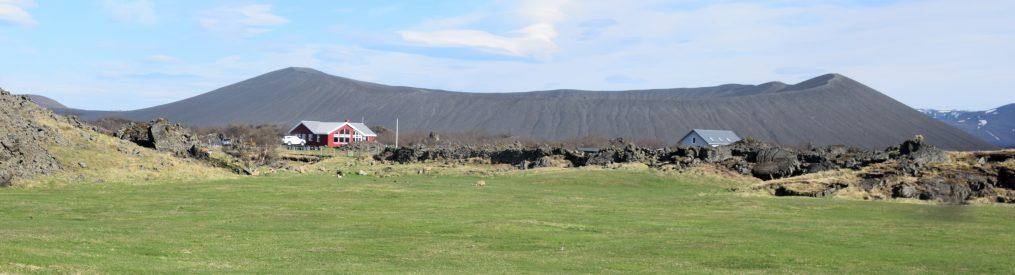
When a newcomer such as myself has recorded a majority of British wild Orchids, the logical progression is to take an interest in forms and hybrids. This week I was asked by a wildlife colleague whether I have done with Orchids for the year, to which I replied not necessarily. An invitation thus came to a private viewing of a rare, strange and very beautiful form of one of the Epipactis group. And I felt pleased once more to have developed such good contacts in the Orchid world so early in my own involvement.
It has been a generally poor national season for Helleborines, which can be quite erratic performers from one season to another. In 2023 the most impressive species I observed was the stately Violet Helleborine at the BBOWT Warburg Reserve near Henley (see here). An especially striking new example today at another Chilterns site blew even those several stonkers away. This variant is rare and localised in southern England, favouring most often Beech woodland where it grows in deep shade.
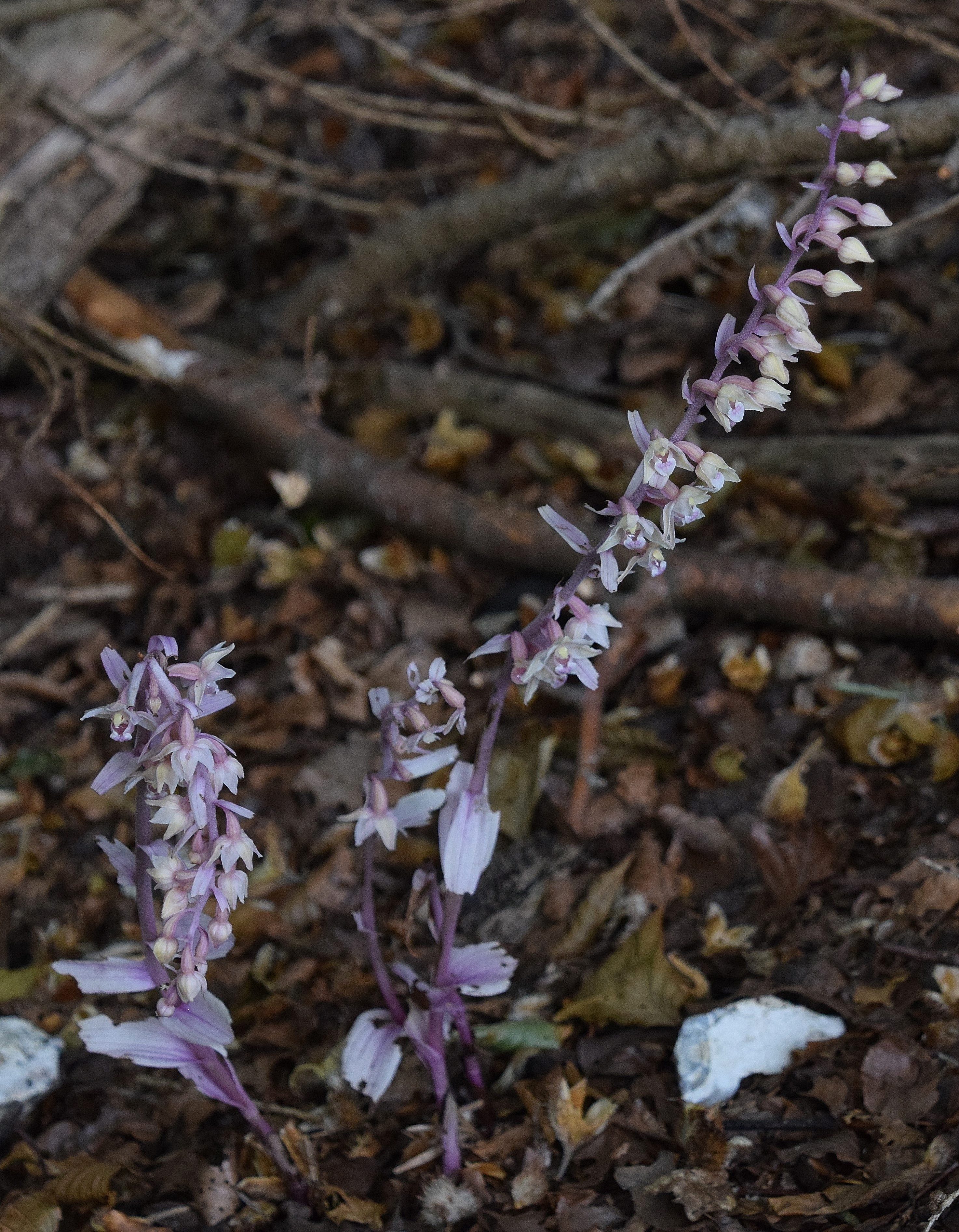
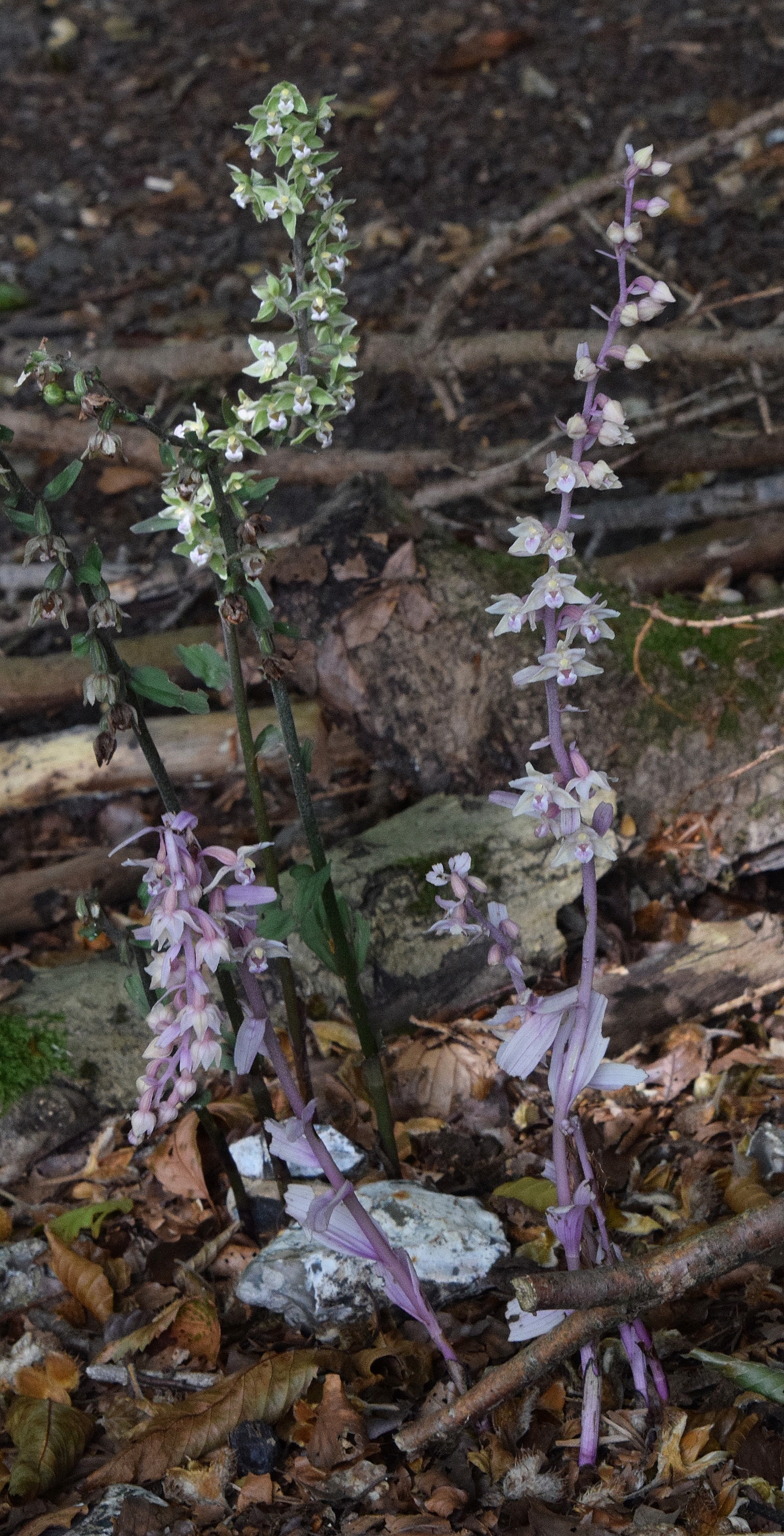
Violet Helleborine var rosea (pictured above, left) is bright pink and white-toned, typically growing to around 40 cm though it can reach up to a metre in height; blooming in July and August. The quite exotic appearance is due to lacking in chlorophyll and this is therefore one of such other wild plants that depend on a relationship with mycorrhizal fungi (see here) in the soil. Our first plant was a twin-stemmed example, one much taller than the other, and there was another close by that had sustained mollusc damage and so was bent in two. This group was directly in front of a similar sized one of regular Violet Helleborine (above right).
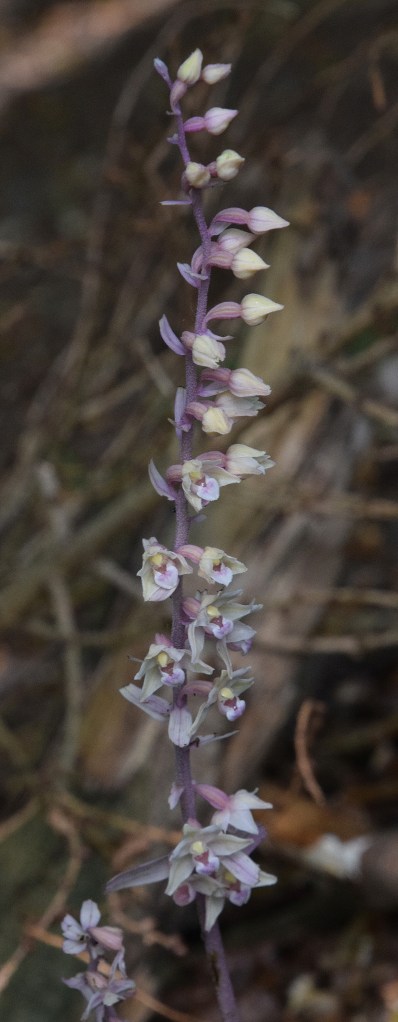
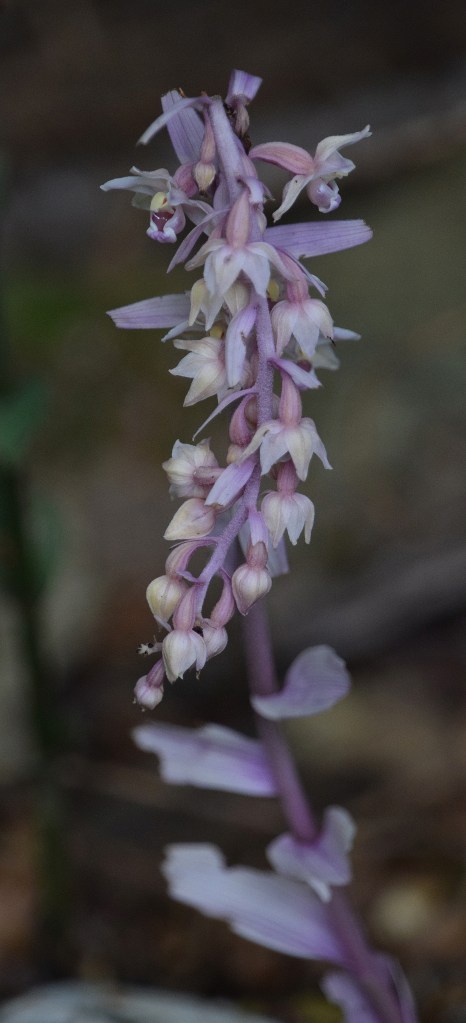
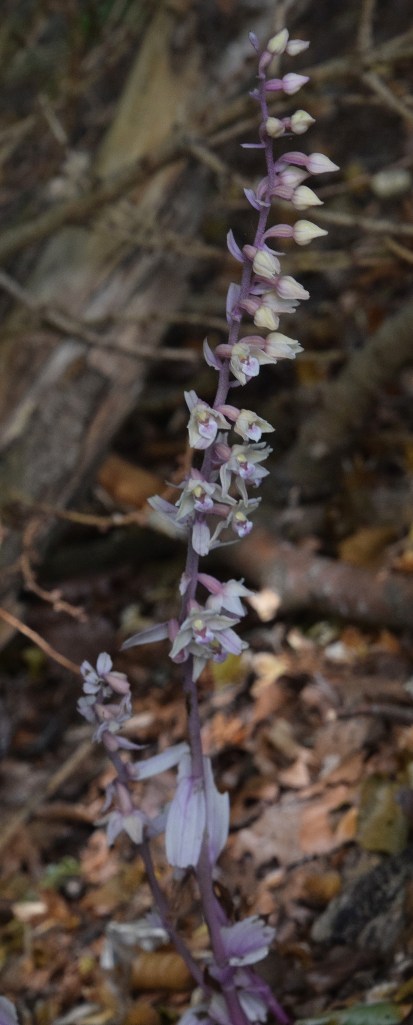
The setting as in so many Chilterns AONB locations was absolutely stunning. By agreement with my guide and his own source I cannot name it herein, to safeguard the highly vulnerable entity just described. As we walked back through the sublime and evocative approaches to the woodland in question, I reflected upon a past week of public disorder across Great Britain. Just what I joked were we doing out in such a beautiful wild landscape, when we could be rioting, hurling rubble at urban buildings and law enforcement officers, and setting emergency vehicles ablaze? I know what my preference is!
Heading homeward we next called in at Aston Rowant NNR (S) to see how its renowned populations of Autumn and Chiltern Gentian on the south facing slope of Bald Hill (SU722960) had benefited or otherwise from the wet spring and summer just past. A year ago in the same place I had enjoyed a tutorial on telling these two species apart (see here) from another county colleague, the inestimable Wayne. This must be a good season as there were very many of the plants along the hillside, amongst which I found some of the iconic Chiltern Gentian (pictured below) in the same places as before.
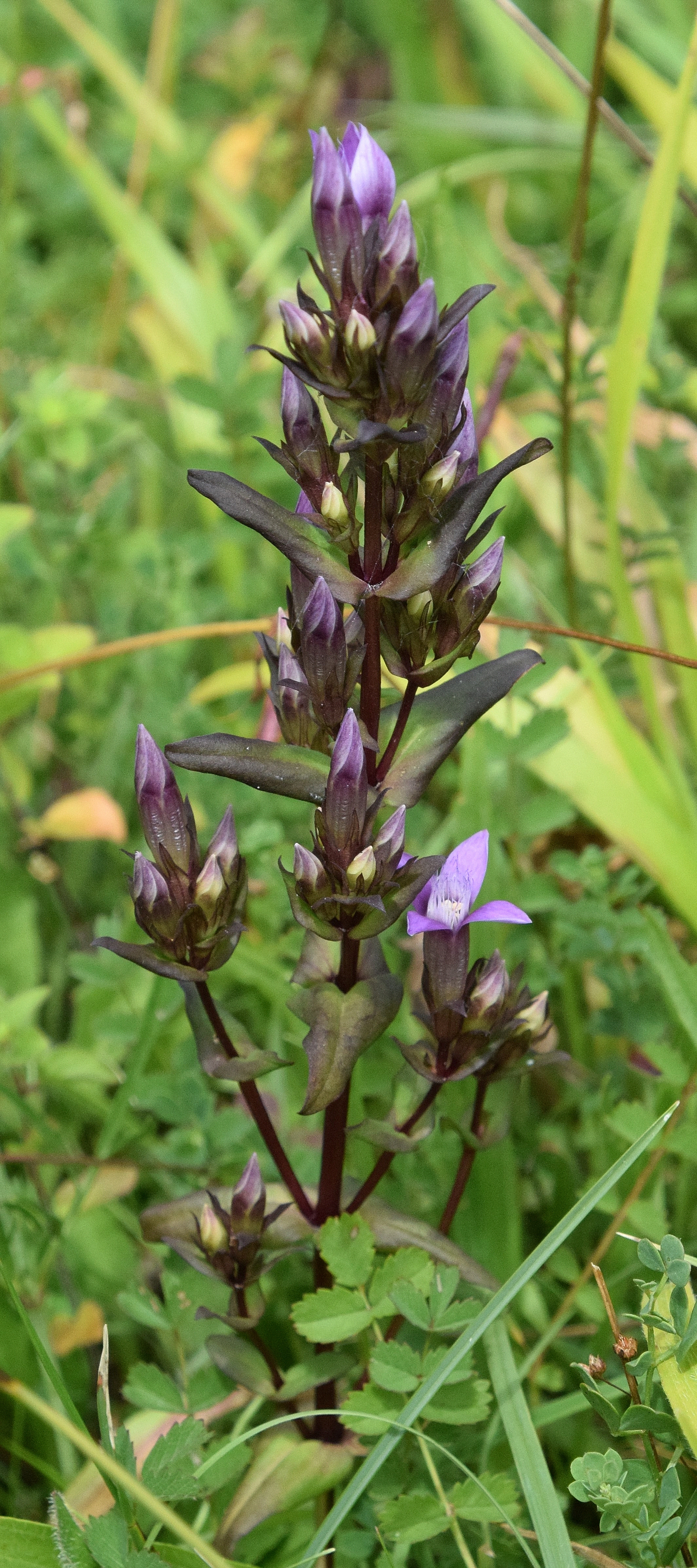
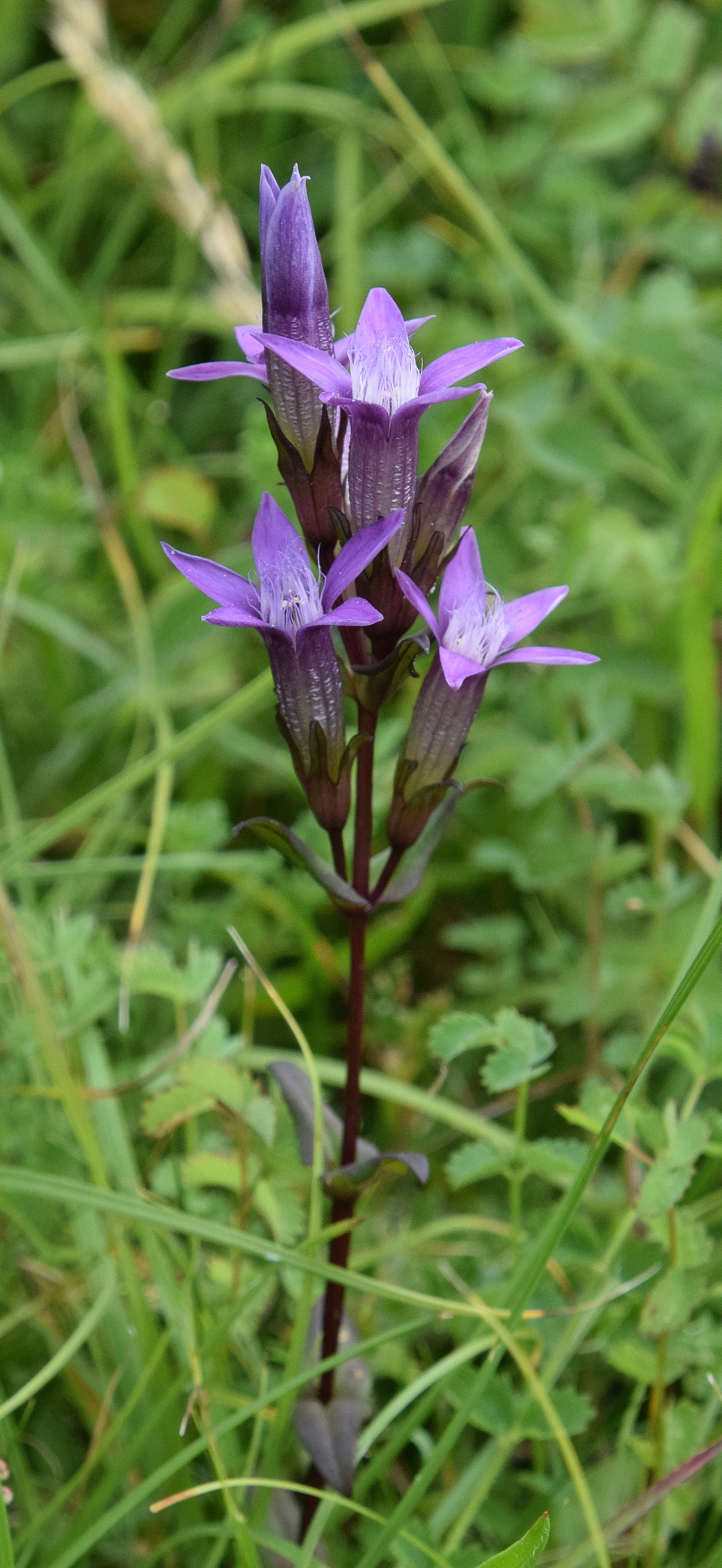
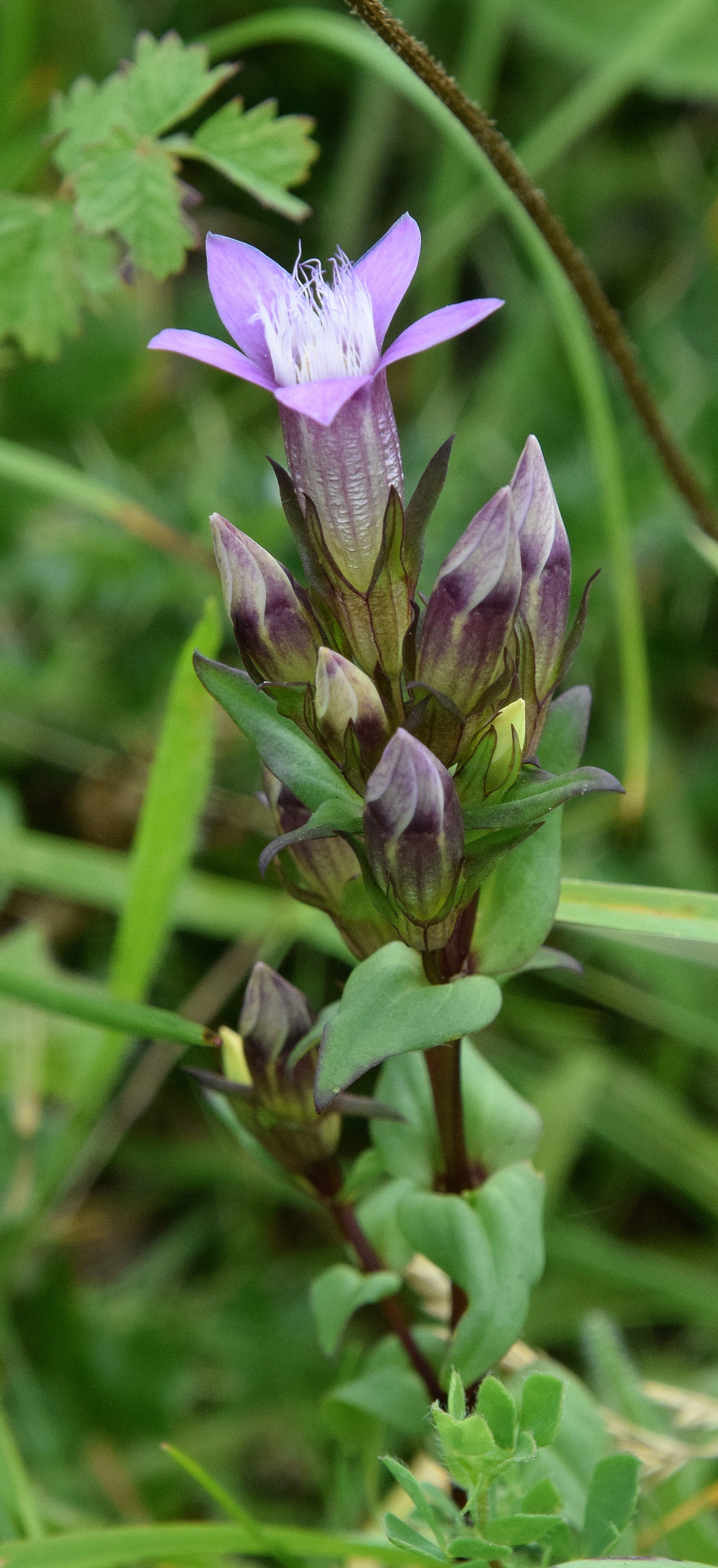
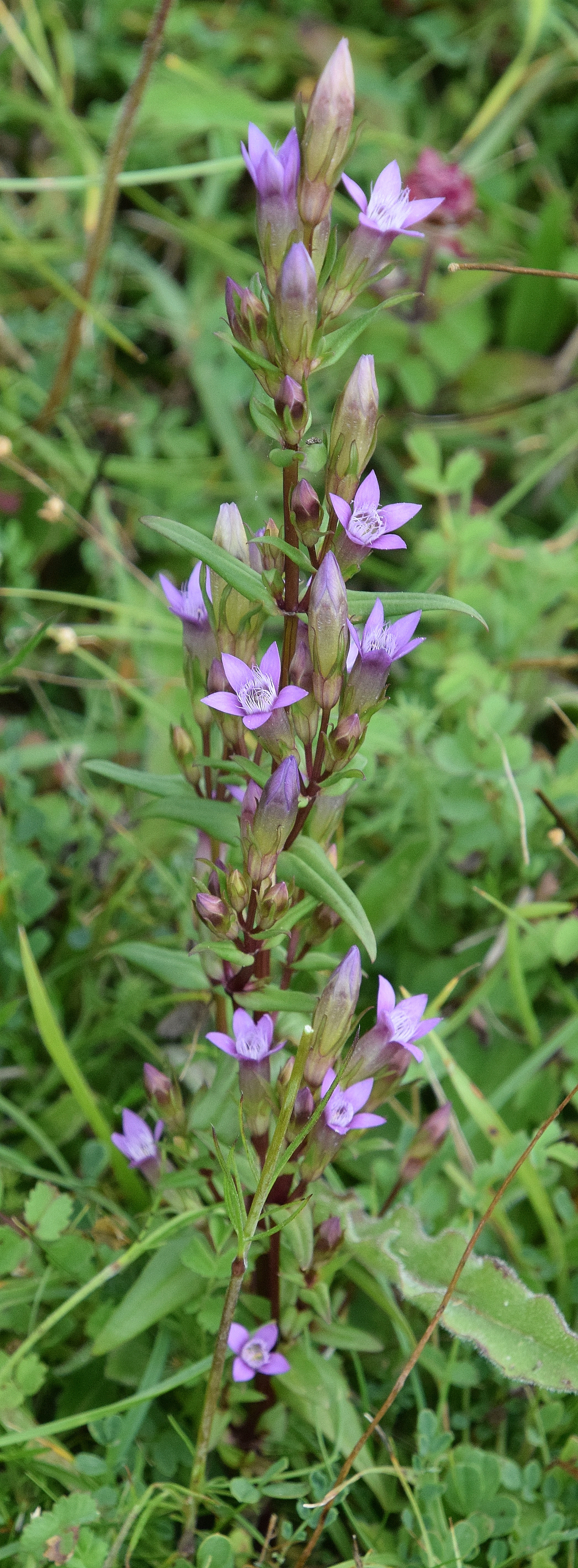
Chiltern Gentian (above) and probable Chiltern X Autumn hybrids (below)
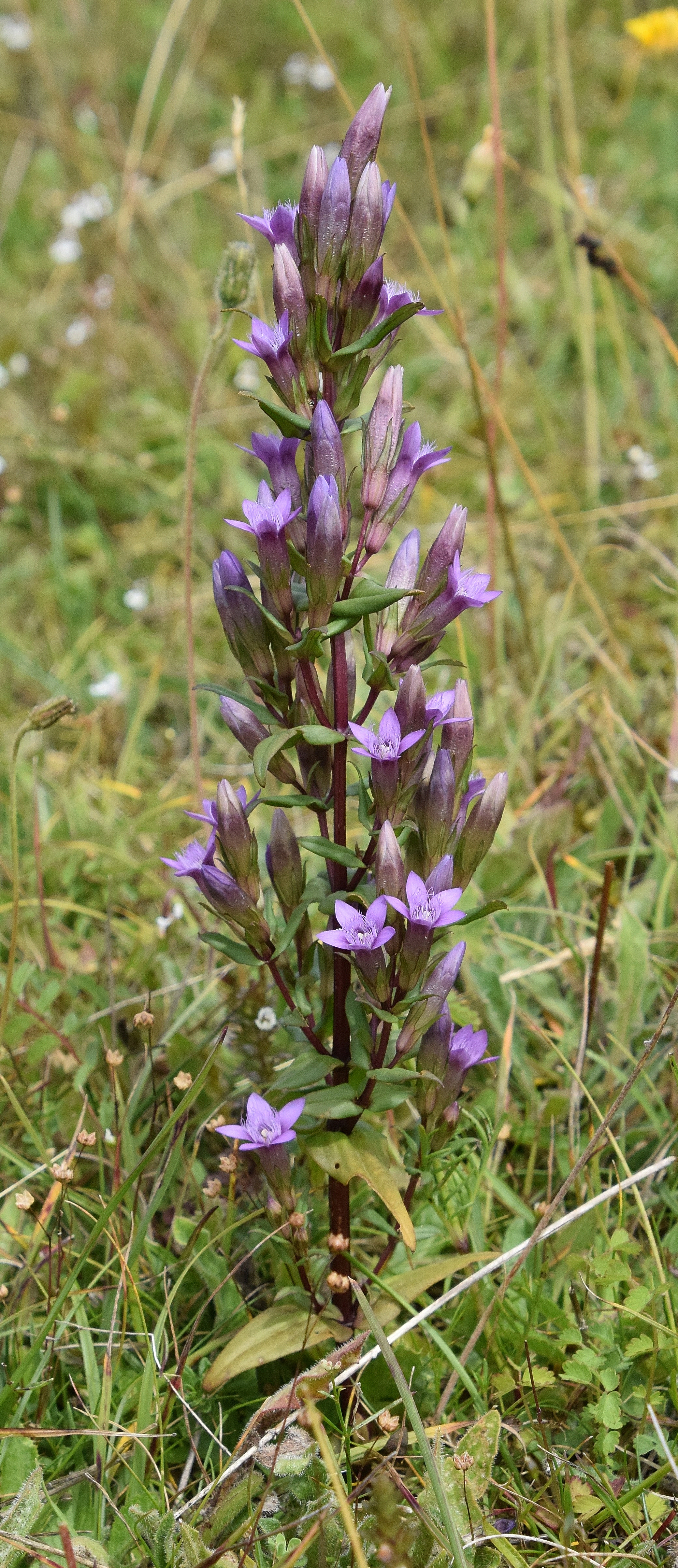
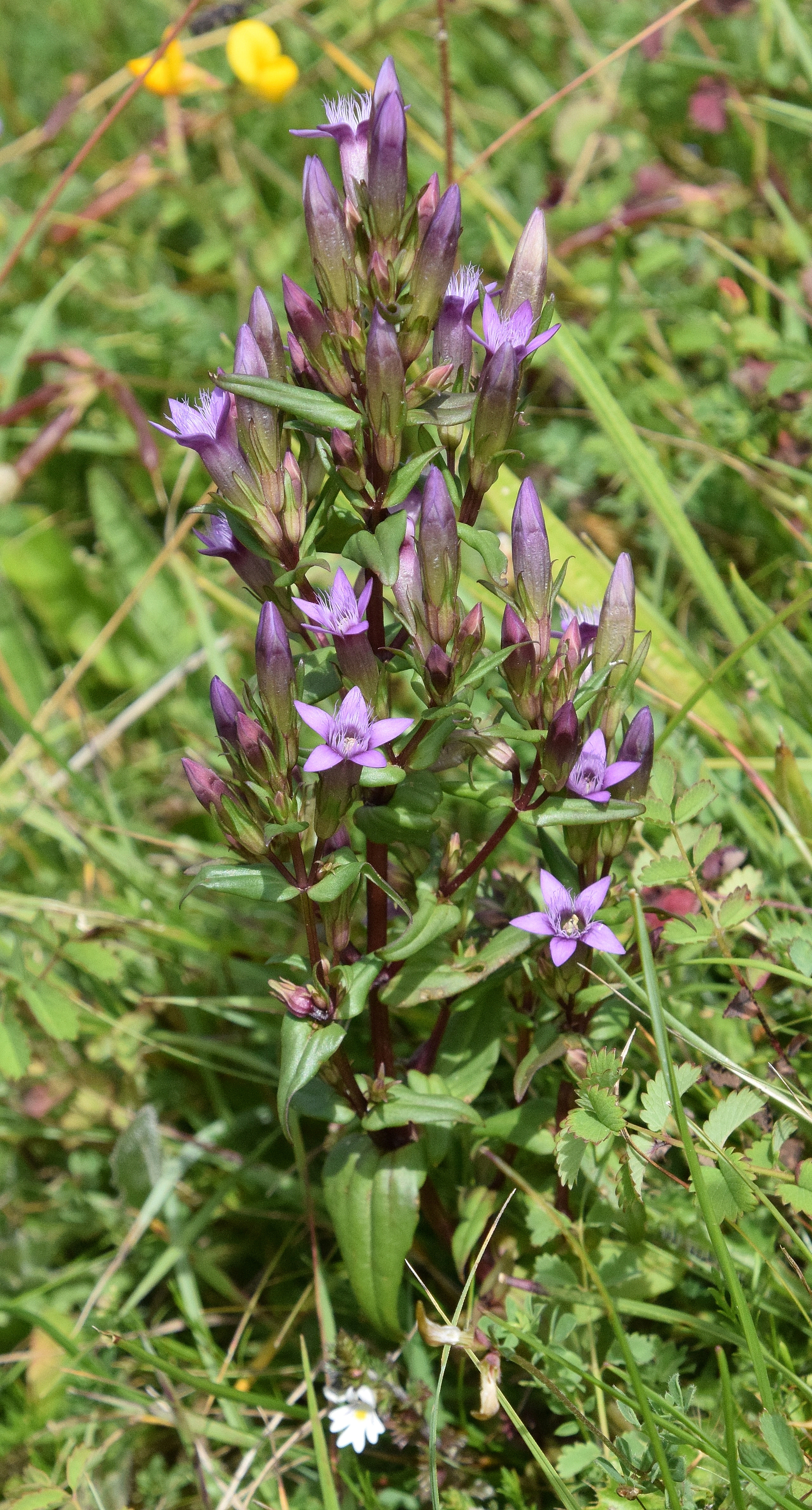
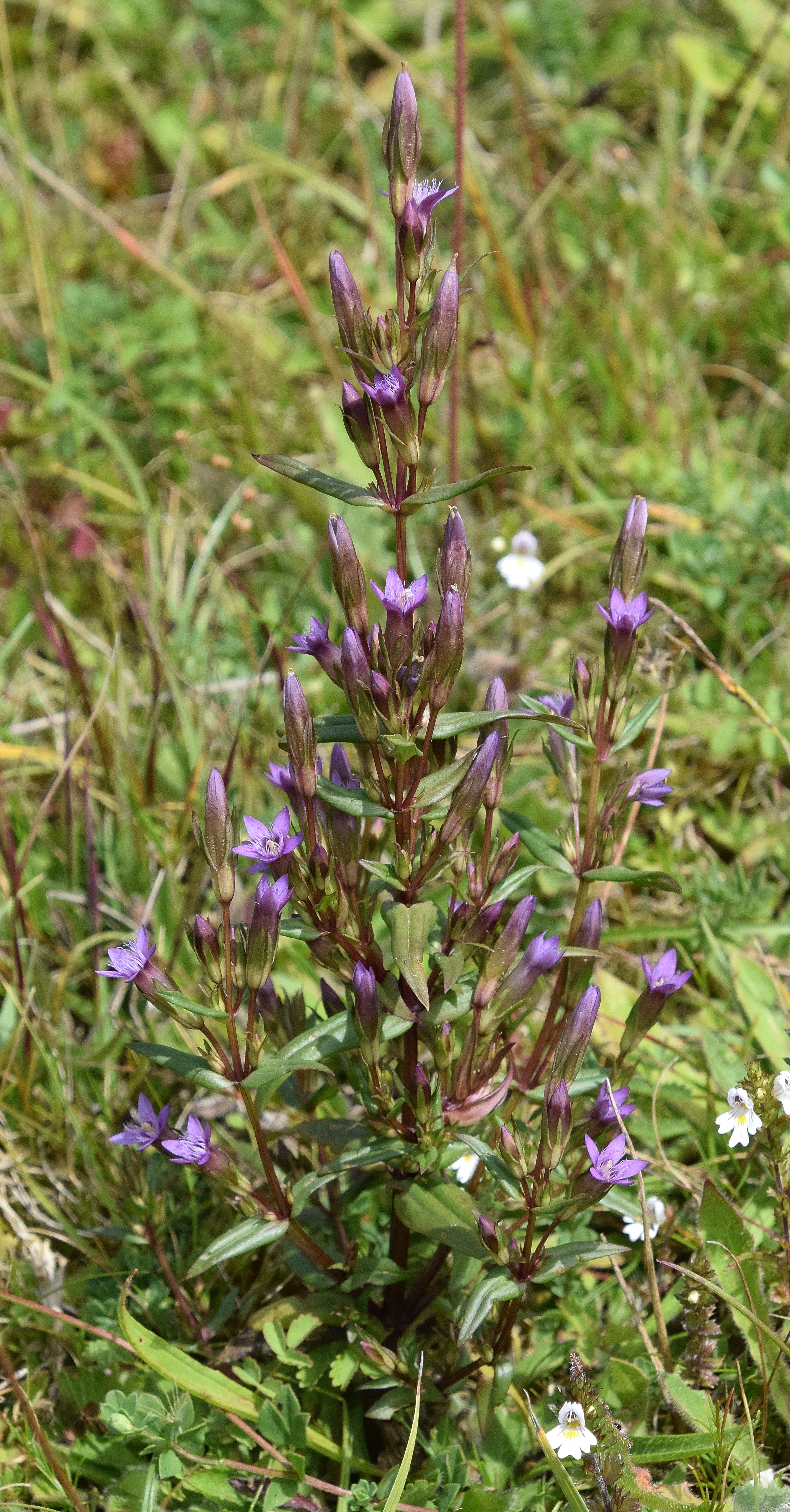

The examples in the second sequence (above) are, I believe hybrids which are also frequent where the two species co-exist. In non-scientific terms I would describe pure Chiltern Gentian as being larger flowered with ‘fluffier’ white centres. That much-sought wild plant is the county flower of Bucks. The Oxon title holder is Snakes-head Fritillary (see here and here), and for Berks Summer Snowflake. For a full check-list of British county wild flowers see here.
Another plant of interest at the ever-rewarding Bald Hill today was Carline Thistle, that I have often encountered in the past when butterflying. A biennial of calcareous grassland and other habitats, this enigmatic item is moderately abundant though localised across much of England and Wales; blooming from July to September. Its distinctive brown and gold blooms resemble daisy family plants such as Asters, but the most assuredly thistle-like foliage has wavy, spined margins (pictured below). The dry, often clustered flower heads appear to be gone over even when they are young and fresh; and can persist into the following spring.


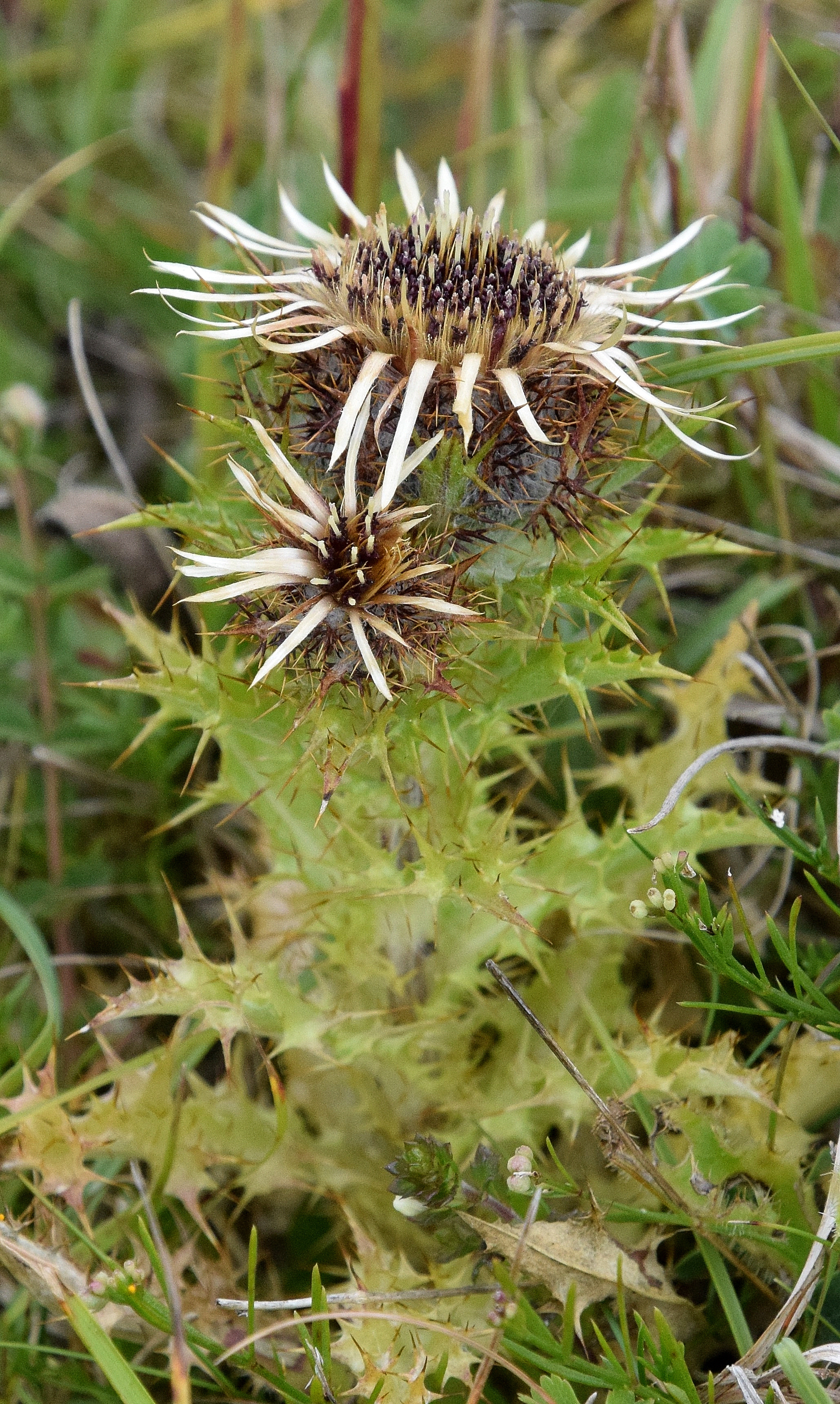
Carline Thistles
On our second stage homeward we took the opportunity to observe Grass of Parnassus, considered by some sources to be amongst the most attractive British wild plants, that flourishes at one of its most southerly national locations within the City of Oxford itself. People visiting the remnant fenland LNR of Lye Valley in Headington (OX3 7HP – SP547058 – see here) generally agree that to do so is like entering another world or alternative dimension. As always the sense of inner peace and tranquility that settled upon us as we re-trod a now familiar route, rendered it difficult to remember we were still in a bustling city. Just a few hundred metres away were roads, noise, traffic fumes and the hullabaloo of humanity in collective discord. Yet here barely a man-made sound, other than one of the volunteer work parties which maintain the place so excellently, reached our ears.
Our quest announced itself in relative profusion, stretching away and upward from a boardwalk that winds through the valley bottom, at the end furthest from the entrance. Visitors are asked not to go into the fen itself or allow dogs to do so. Grass of Parnassus is not a grass at all, but a buttercup-like, though creamy-white perennial of wet places. The grassy epithet possibly comes from green streaking on each flower’s five-petals. Any historic association with Mount Parnassos in Greece is less clear, since the plant is actually rare in southern Europe.
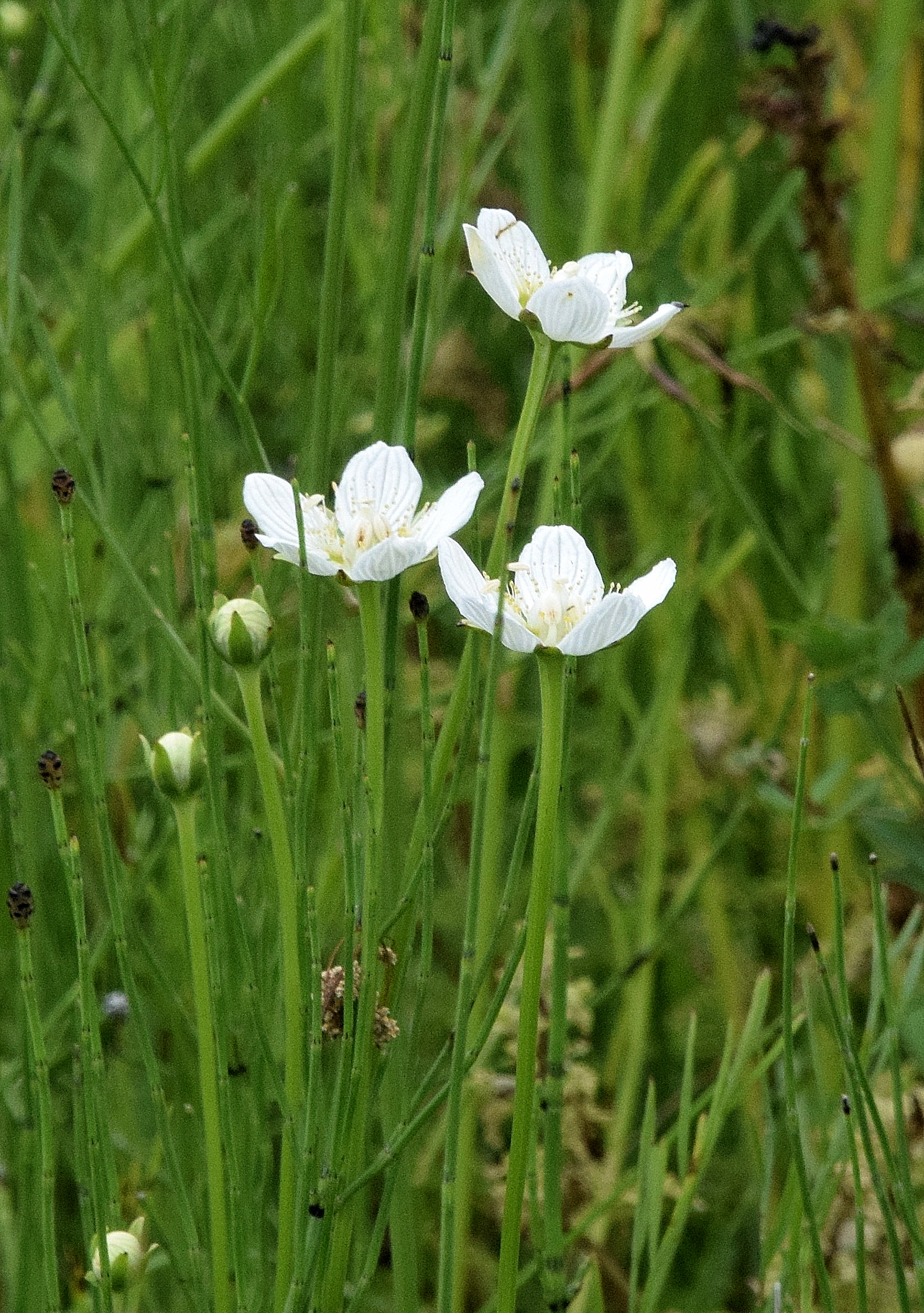
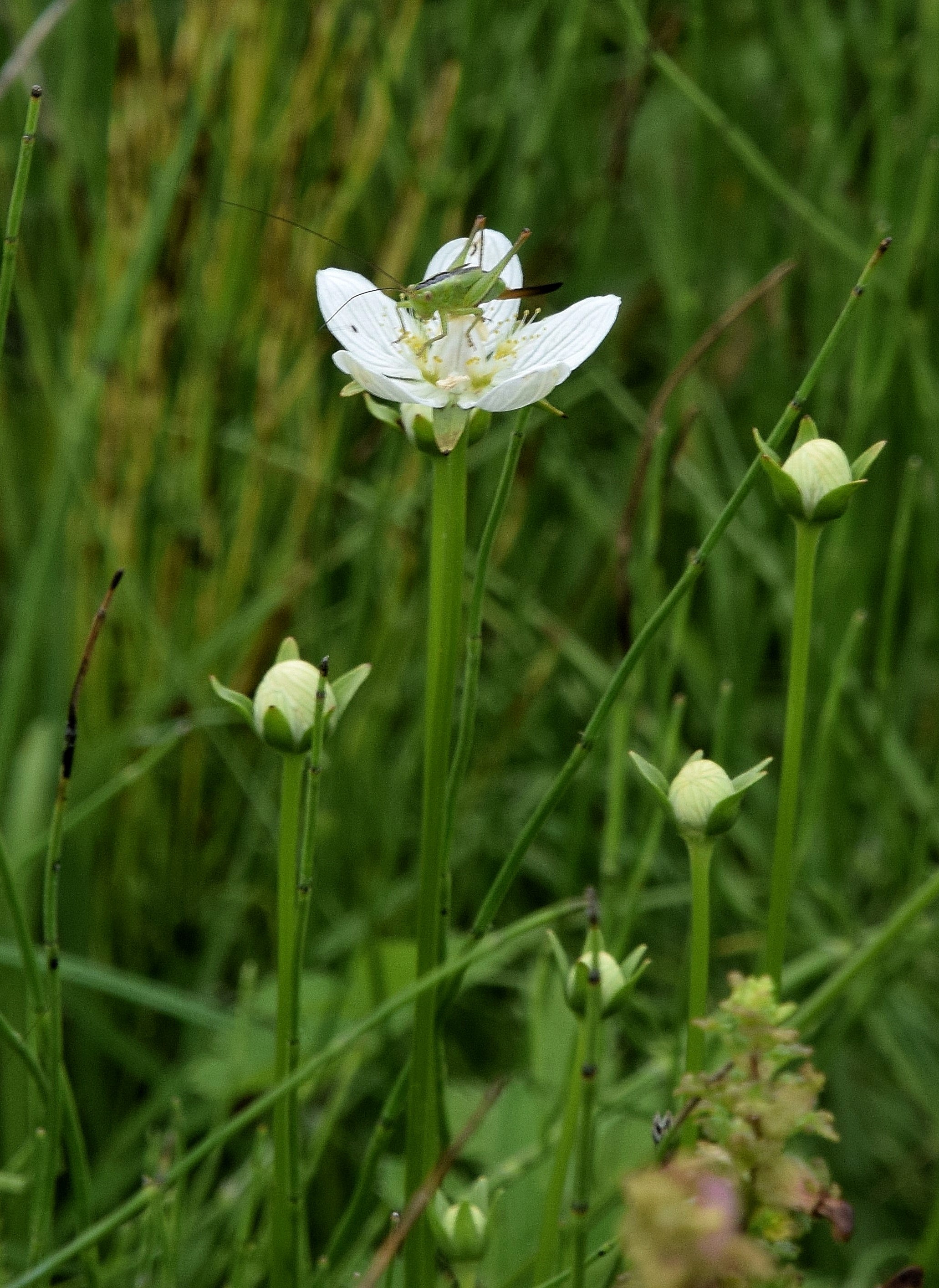
This post’s third subject is locally abundant in areas of Scotland (see here), northern England and north Wales, where it thrives on wet moors, in damp pastures and marshes, upon both acid and calcareous substrates. Further south it becomes much rarer, being confined to remnant habitats such as Oxon’s calcareous fens. It was first recorded in Oxford in the sixteenth century, but is thought to have occurred in the Lye Valley ever since the Ice Age. Another world indeed! Grass of Parnassus is one of 22 different items on the county’s Rare Plants Register (ie at less than 10 sites and threatened) this remarkable piece of habitat holds, amongst 118 species also classified as “important wetland plants”.
Focusing my binoculars, then my camera upon the formerly unobserved subjects, I appreciated at once their subtle, understated beauty and particular charm. The new experience and its setting offered a fitting finale to an intriguing and highly satisfying day. Thinking back to my earlier wandering of mind: hatred … intolerance … pointless aggression … mindless destruction? Such options are not for me, some of the perpetrators are already in prison, and more will be soon.
 Ramblings and Scribblings