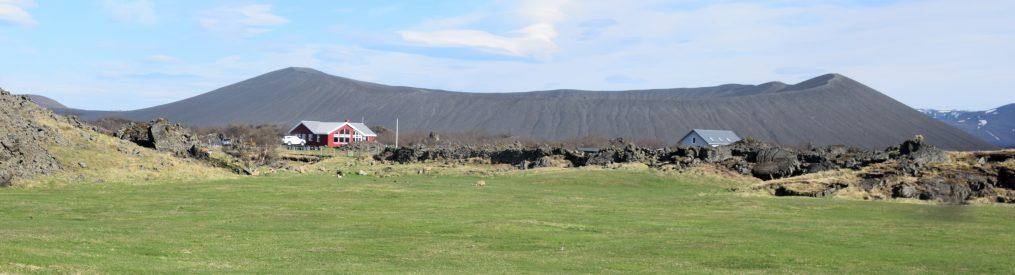
Last spring I got around to joining Amphibian & Reptile Conservation (ARC – see here) to learn more easily where different herpetora might be observed, and be alerted to relevant field meetings. Since then I have converted three new Amphibians nationally, while the lifelong quest of the almost mythical Smooth Snake lingers ever on. So when the invitation went out to this year’s Members Day I booked onto it in a spirit of exploration and enquiry.
The New Forest Reptile Centre (SO43 7GR – SU 271071) operates in partnership between Forestry England and ARC which have been carrying out refurbishment through the spring and summer of 2024. There are several outdoor concrete pods here (pictured below) that accommodate native herpetora in natural conditions. These facilities, dating originally from the 1970s, allow visitors to closely observe normally scarce and secretive snakes and lizards that are difficult to locate in the wild.
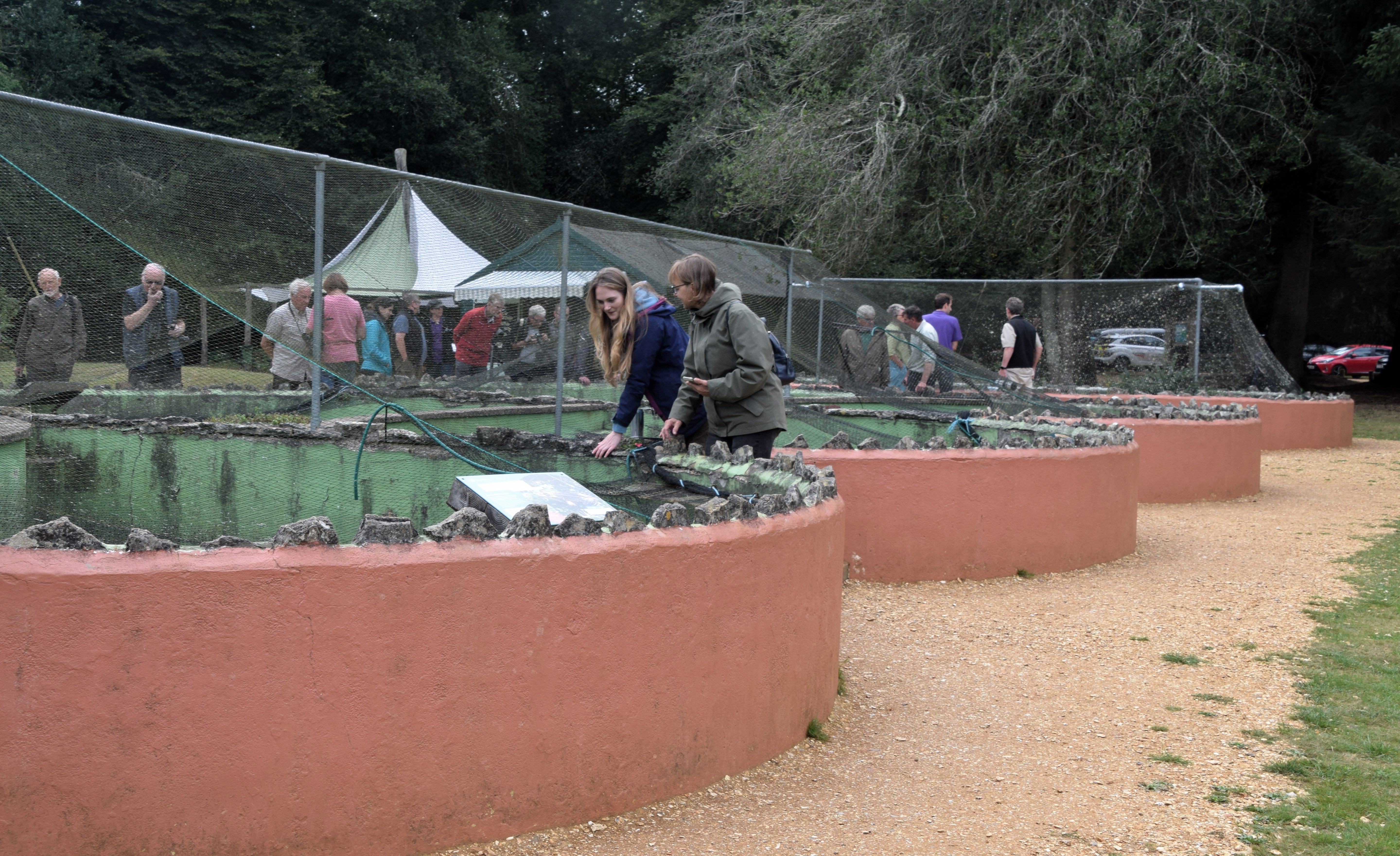
Two recent ecological mishaps have resulted in the loss of most of the centre’s amphibians, firstly an infestation of rats. Before that a Grass Snake in one of the pods took a liking to climbing into others and predating their own occupants, after which the adventurer was promptly returned to the wild. Adder and Smooth Snake are said to be lazier in nature and less inclined to climb. There is now just one of the latter here, a female the hope of experiencing which was a second reason for my own attendance. But on this day she exercised the lady’s prerogative of not putting in an appearance at any stage of proceedings.
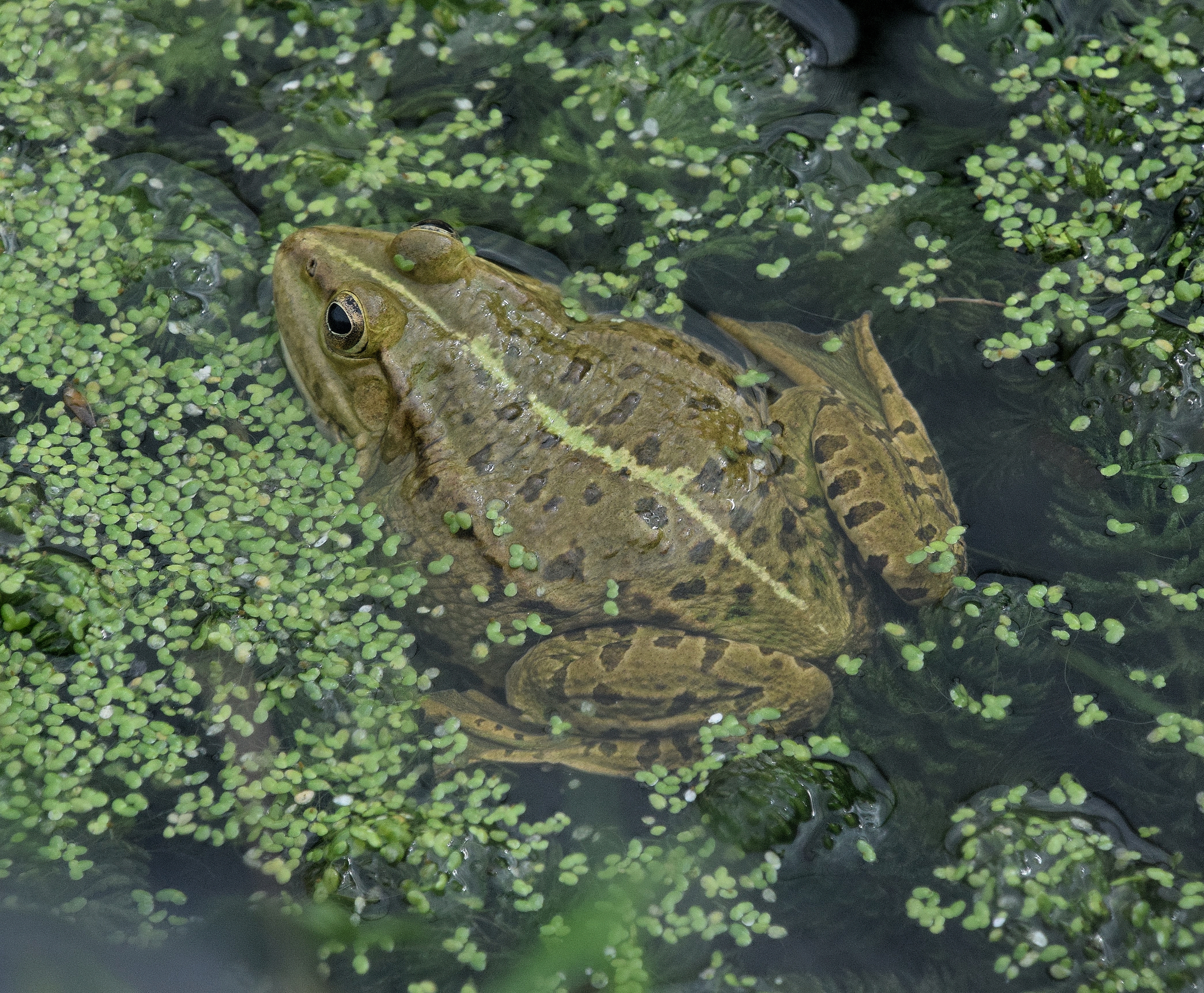
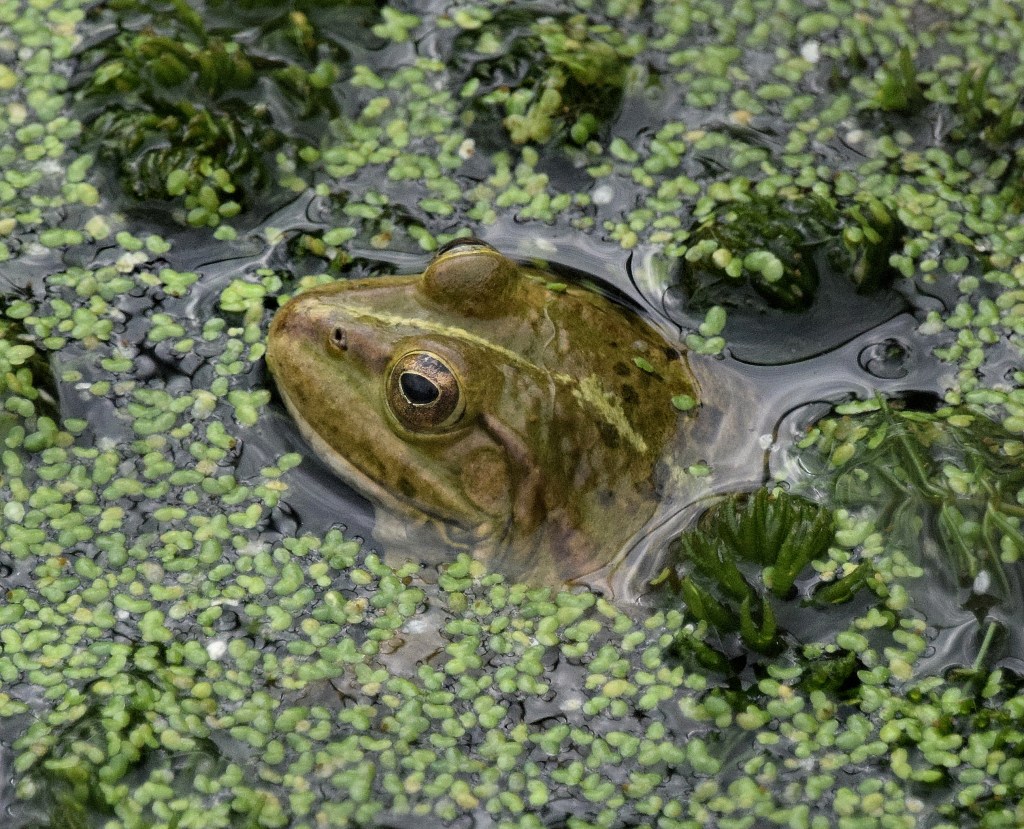
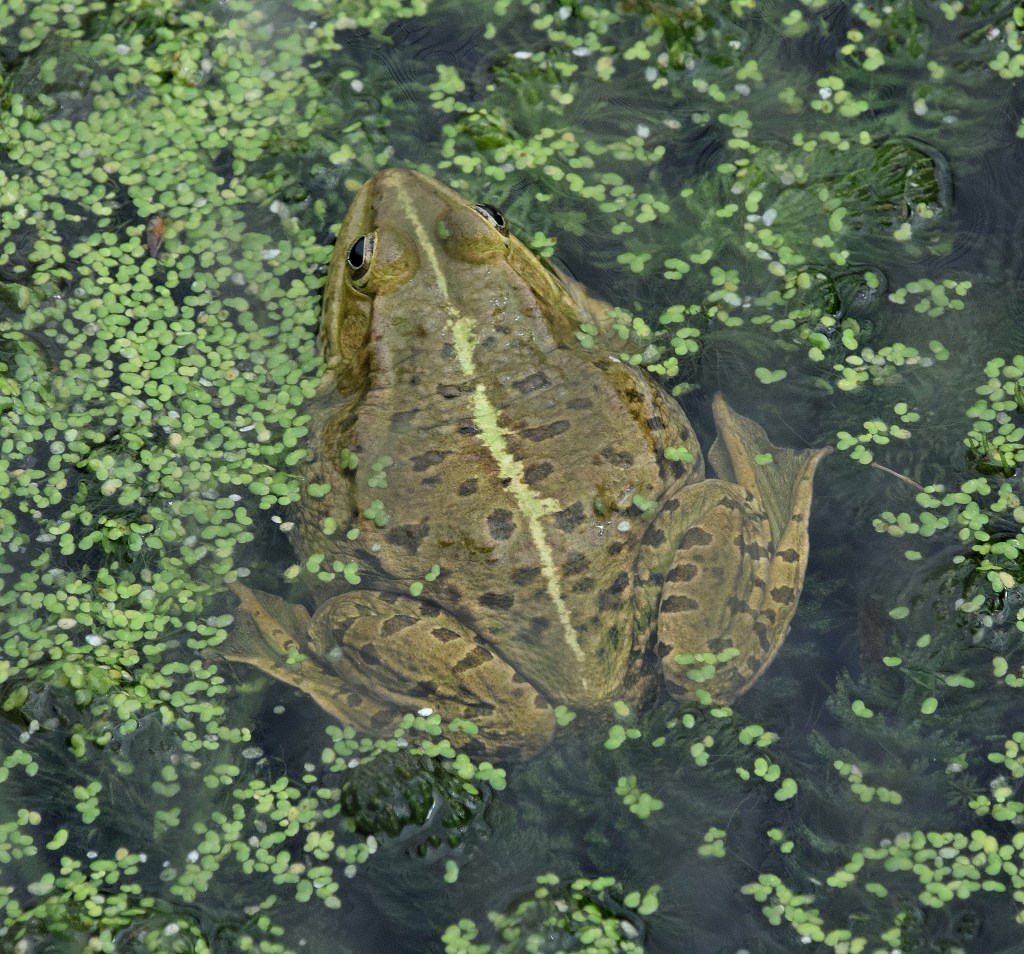
The most pleasing opportunity (for me) here was to complete the set of European water (or green) frogs nationally. Edible Frog (pictured above) has been introduced variously across south-eastern England and East Anglia, and now has expanding populations in Surrey and the north of Sussex. The superficially similar, three-species group is taxonomically ambiguous, especially with inter-breeding. Today’s individuals had a yellow-green dorsal stripe like the Pool Frogs I observed at Greenham Common (see here), which Marsh Frogs at Sandwich Bay (here) clearly lacked. My research nonetheless suggests the most reliable means of separation is to measure the length of the hindlegs, presumably in similarly aged individuals. A second differentiator is the size of the ‘meta-tarsal tubercle’, a bulge at the base of the shortest rear toe. No need to go there, that at once reminds me of anal appendages in dragonflies.
The group as a whole is highly vocal and much more closely associated with water than the default British Common Frog, that spends part of its time on land. Edible Frog is currently the only Amphibian remaining at the NFR centre following the recent losses. The biggest individual of three encountered today certainly looked a bumper mouthful for even the errant and now exiled Grass Snake.

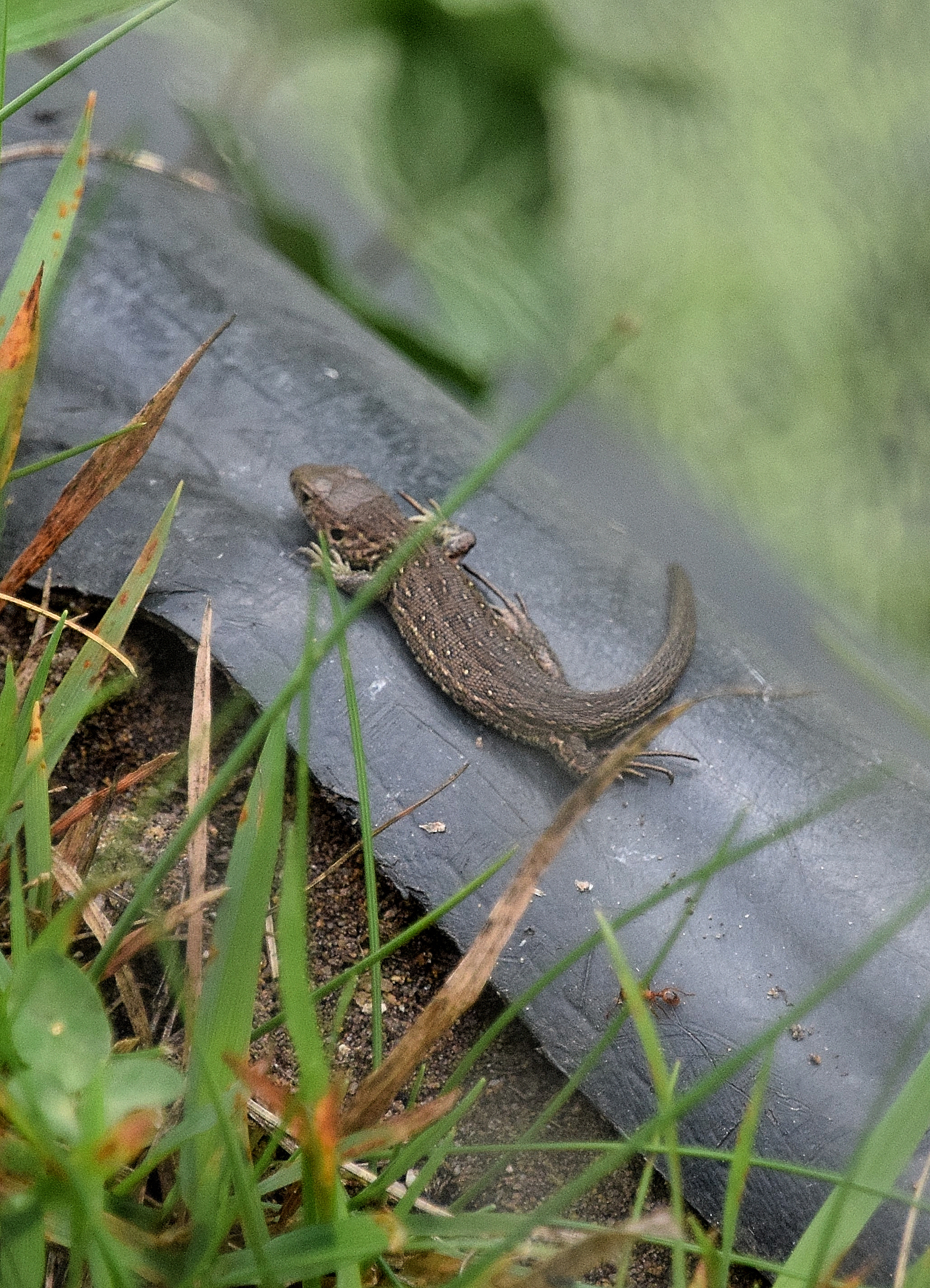
I was assured that the two adult Sand Lizard in the next sequence are both males, though as I have previously observed this reptile only in April today’s records lack the bright green flanks of the breeding season recalled from Higher Hyde Heath Heath, Dorset in 2021 (see here) and Frensham Common, Surrey in 2018 (here). Unlike taking pictures of Orchids or fungi, unwanted blades of grass and other intruding vegetation could not be gardened away in these studies. But they do portray how reptiles are more often observed. The images in this post also suffer from blurring caused by netting that covers the pod tops.


Since its formation in June 2009, succeeding the Hepatological Conservation Trust, ARC has taken the lead in British Sand Lizard conservation supported by multiple other partnership bodies. Many of its land purchases for reserves have been of sites already significant for the species, after which habitat is improved, populations are monitored and extra captive-bred stock is released. Climate concerns, predation by vermin and disturbance to egg-laying areas mean only around 5% of hatchlings survive to become adults, and since these lizards cannot disperse far or cross hostile habitats, they do not easily colonise new suitable areas. So re-introducing captive-bred hatchlings has been an effective means of recovering lost range and maintaining wild populations.

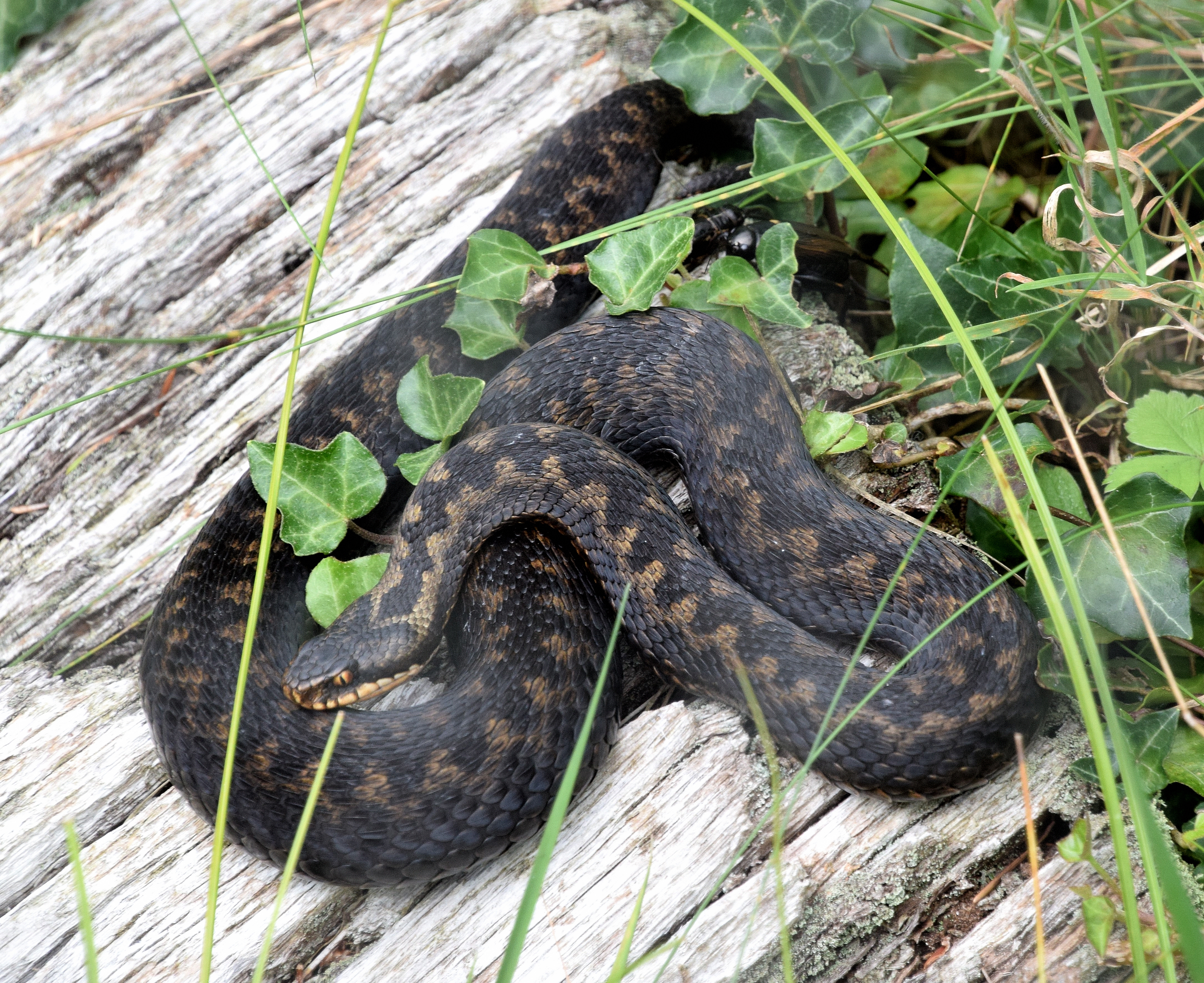
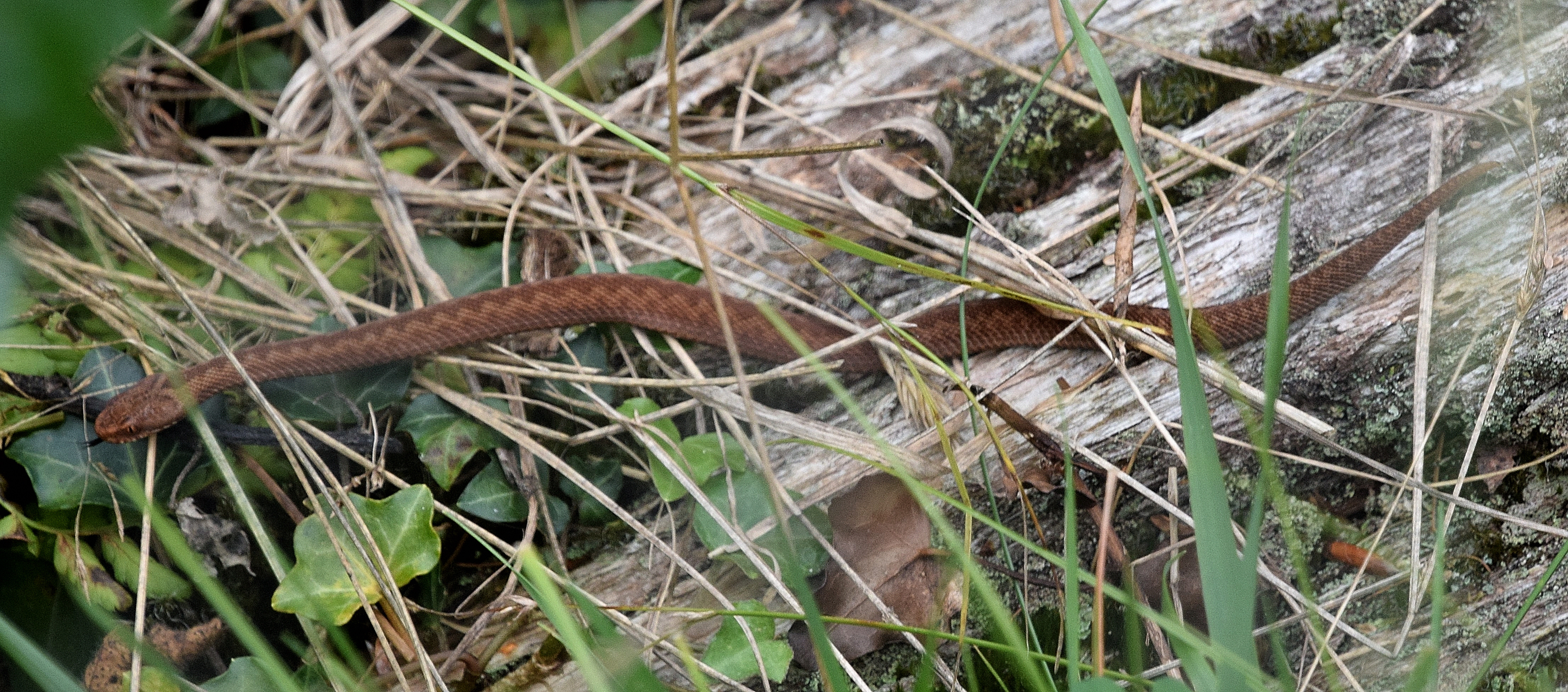
Adder has particularly thrived at the centre. Two large adults (pictured above) were showing themselves today, and at this time of year there was also the opportunity to observe recent hatchlings of both that snake and Sand Lizard. These would be no more than a few weeks old. That is something I had not experienced previously in the field, though I have recorded infant Viviparous (or Common) Lizard often enough.


This was an interesting and enjoyable day. I came away armed with information on more sites at which to attempt the holy grail that is Smooth Snake, and two Natterjack Toad projects in Hampshire. But as ever the issue in the wild will be actually setting eyes upon either of those elusive subjects, especially since unlicensed disturbance and picture taking of both is illegal. One way might be to invest a little over £1000 in three days of wining and dining amidst convenience company at a Dorset country house hotel with Naturetrek for the purpose, but that is not my preference. So my best hope must lie in ARC or other wildlife organisations offering field meetings for the purpose as the newer managed sites mature. That is something I will be keeping a keen eye open for in the near future.
 Ramblings and Scribblings