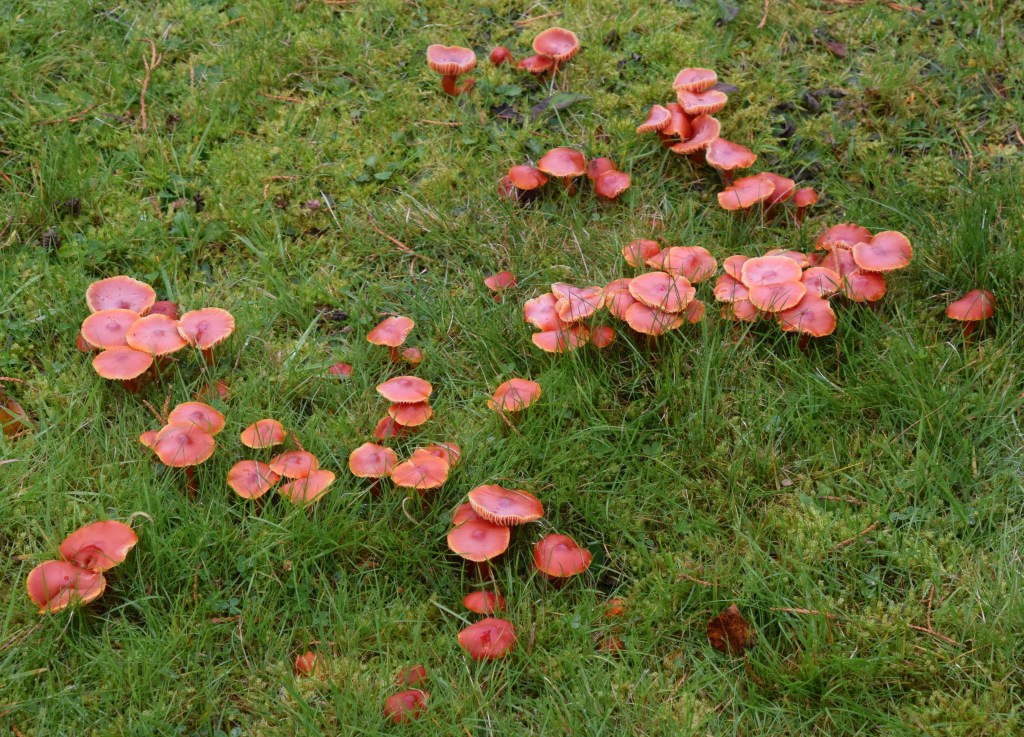
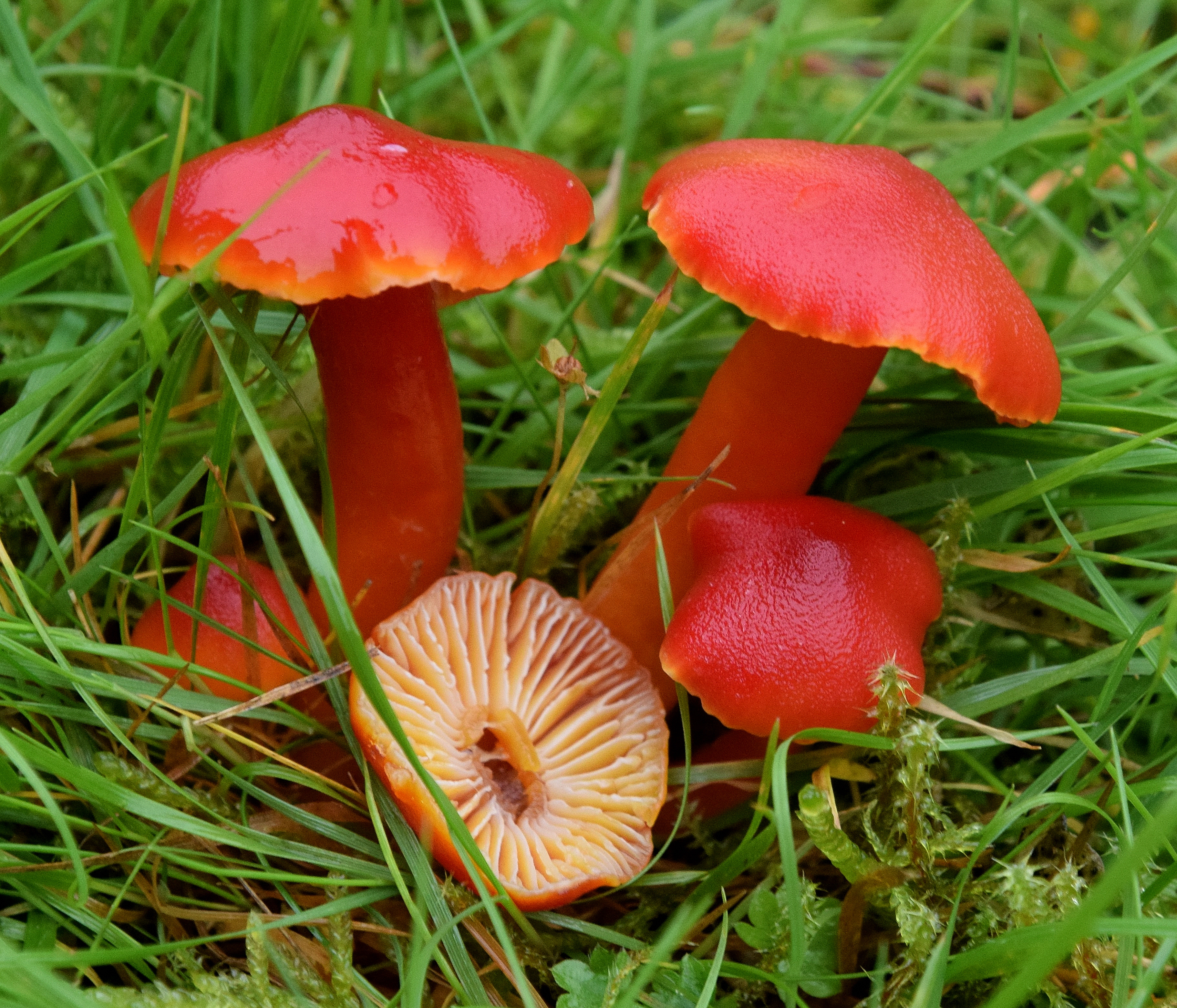
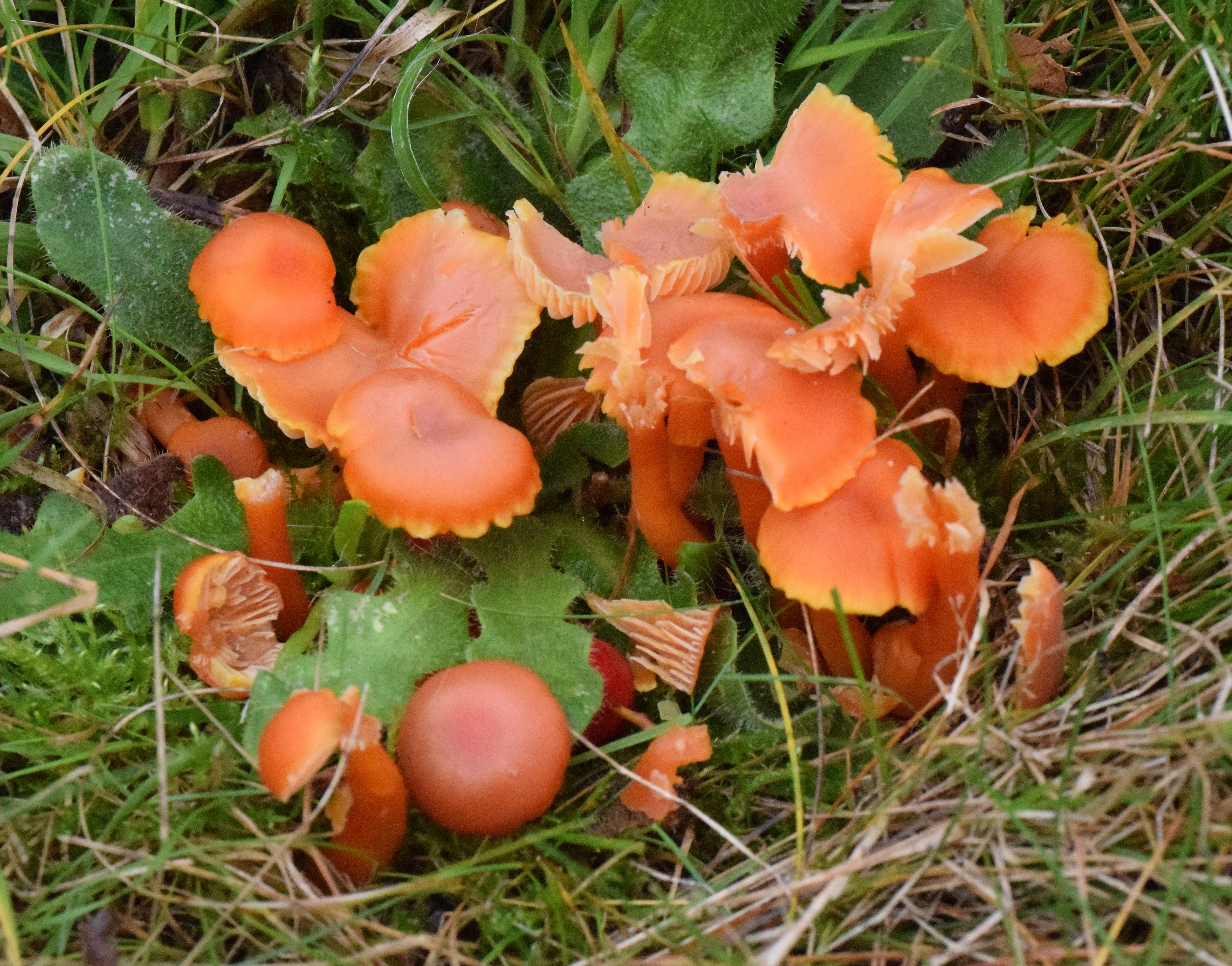
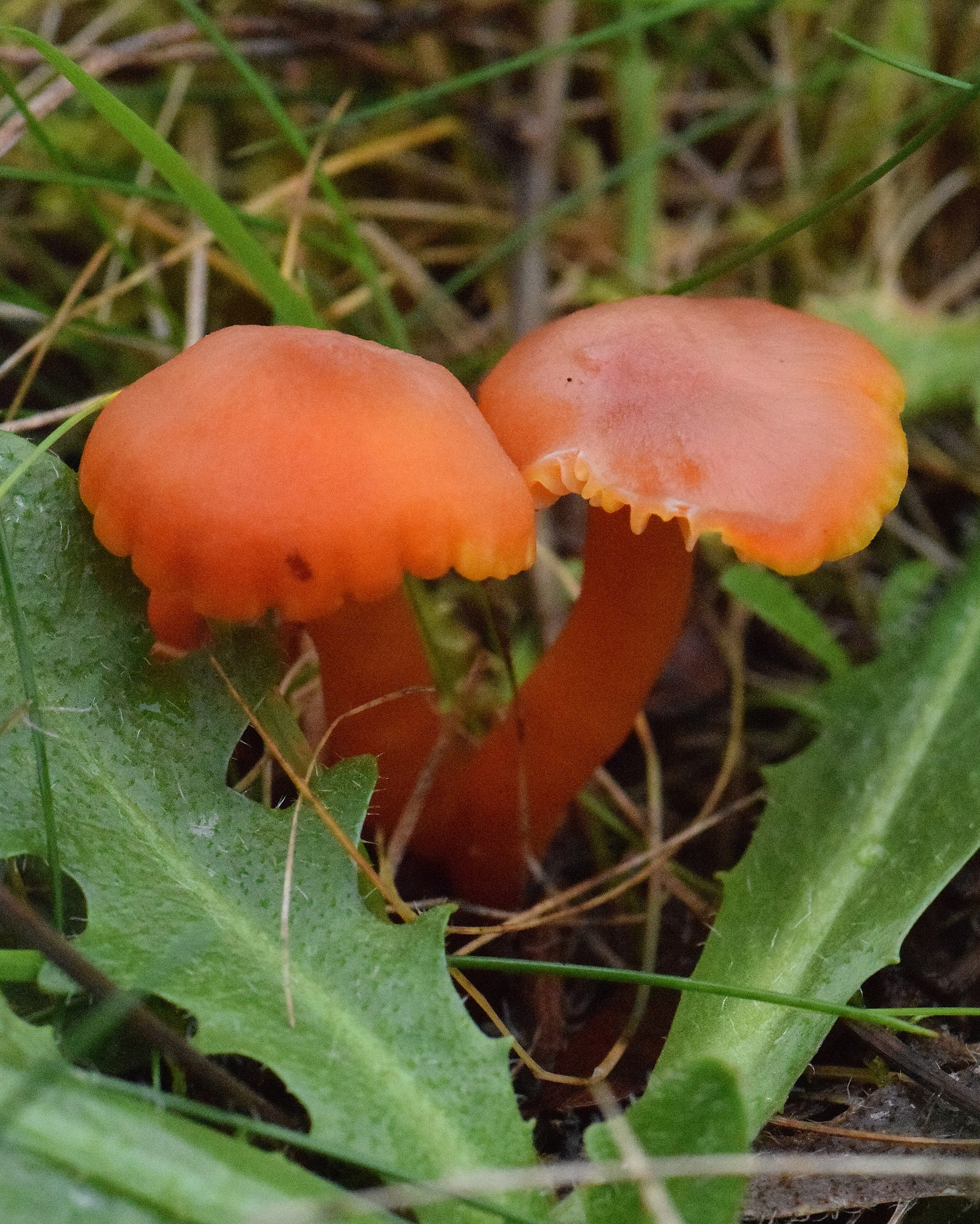
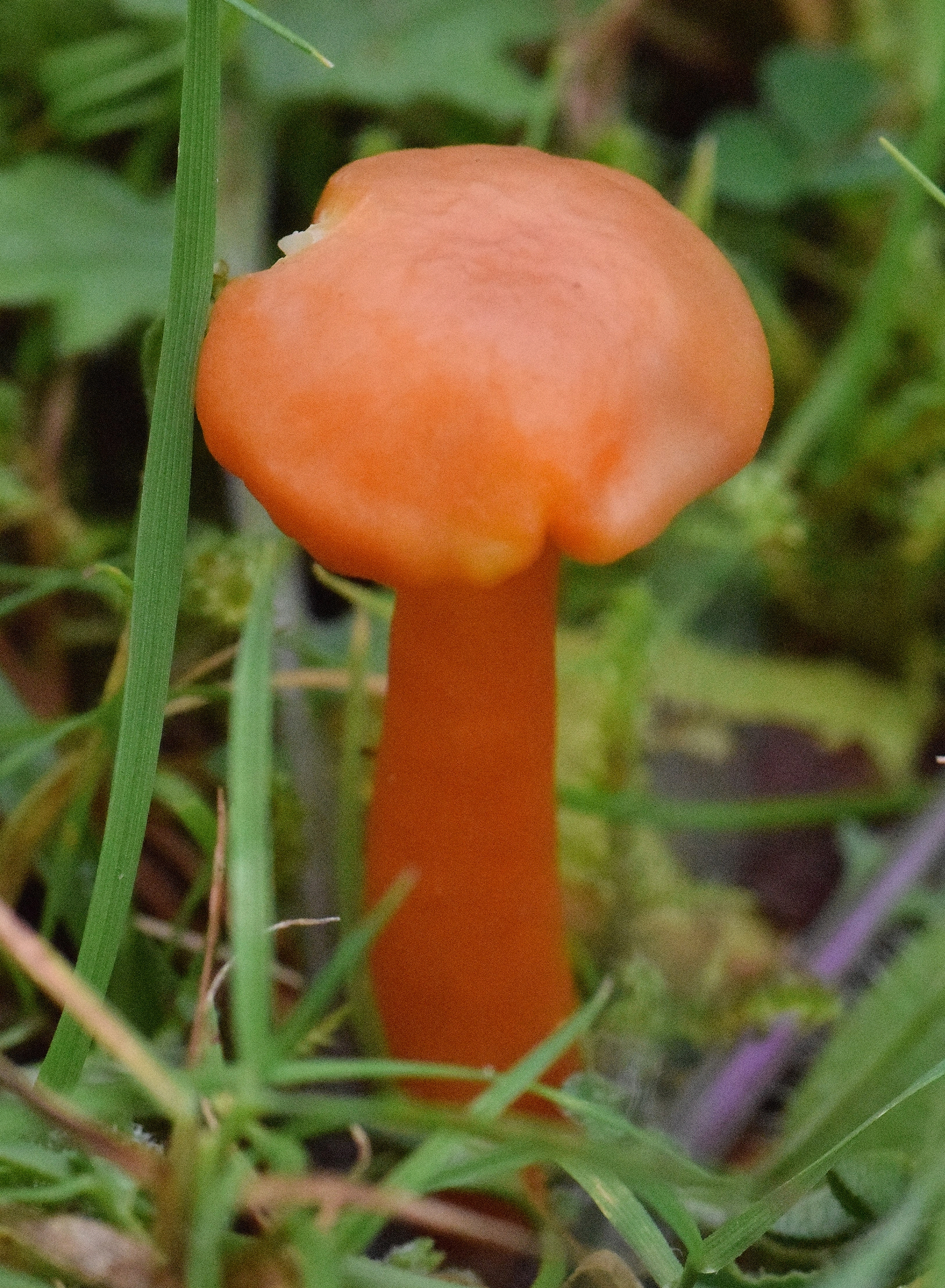
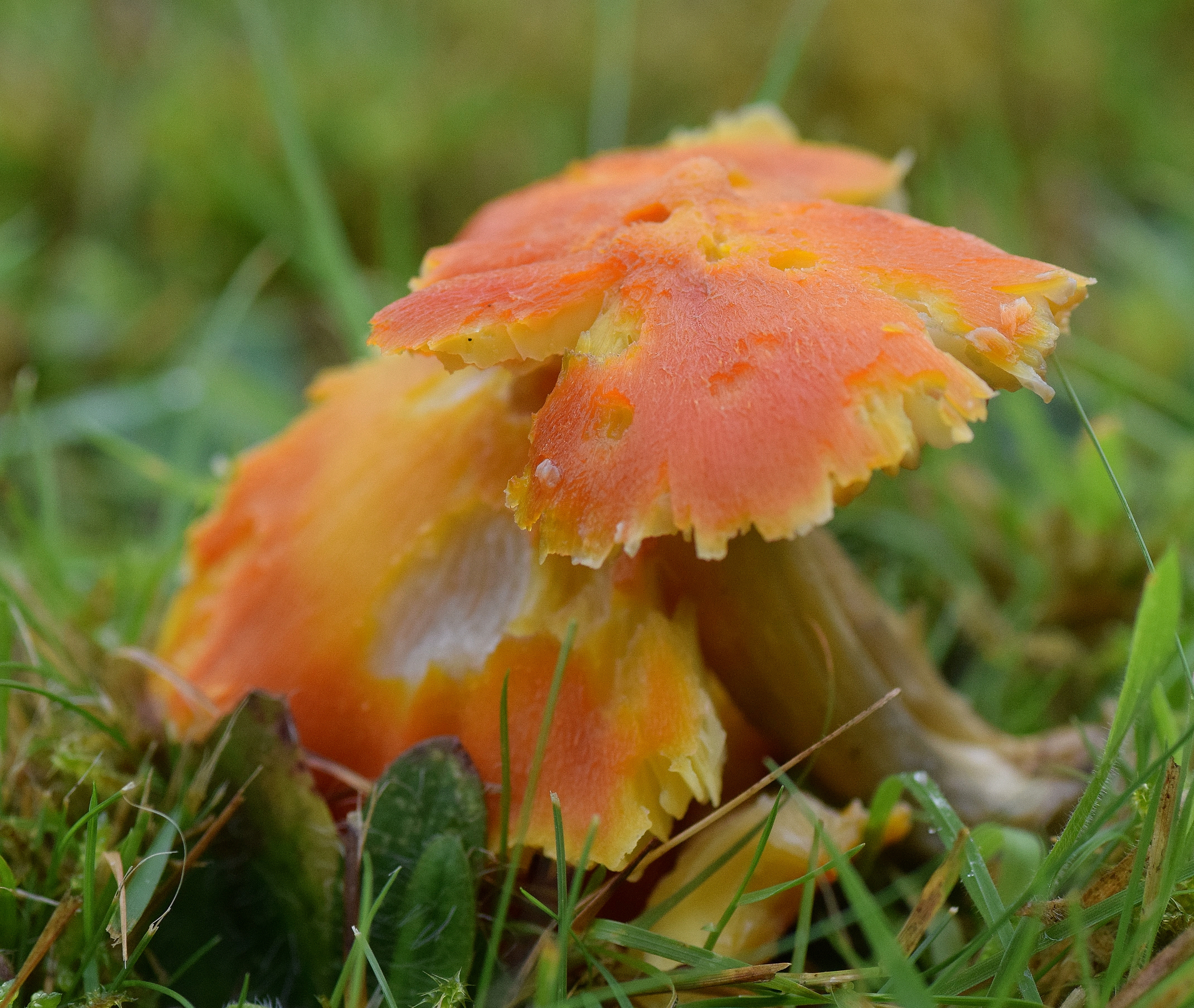
Having converted Pink and Parrot Waxcaps so well in the first two stages of this project, my next priority was to re-experience the original option that had first fired my imagination just under a year ago; but without a mountain bike track right through them (see here). After a quite grizzly weekend in differing respects, I needed to cleanse before doing anything else in the week ahead, and so headed back to Holy Trinity, Prestwood. And on walking through the main entrance on Monday morning, there before me was what I sought … an extensive, fresh and unspoiled expanse of perfectly formed Scarlet Waxcap (see here) mushrooms.
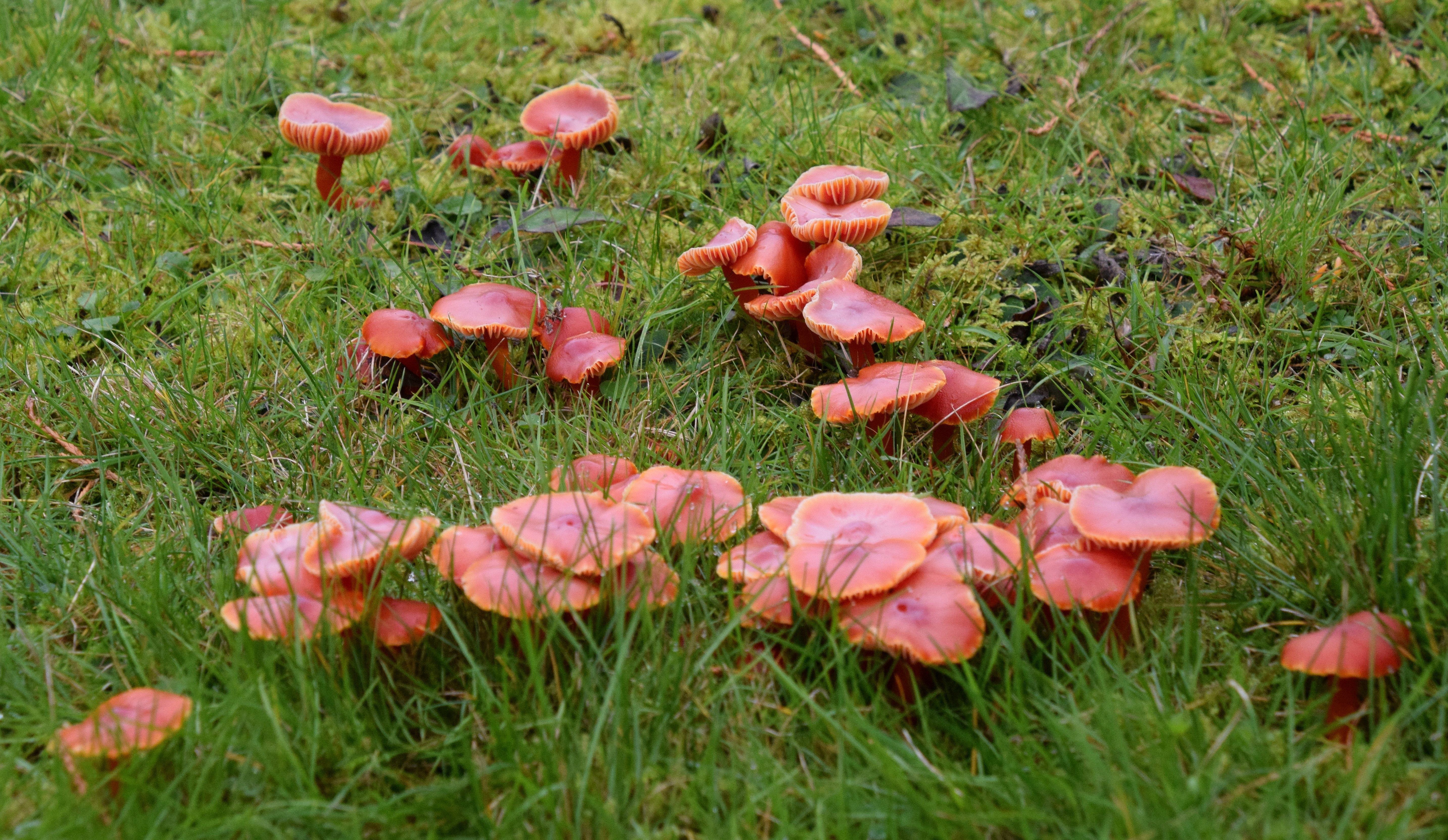
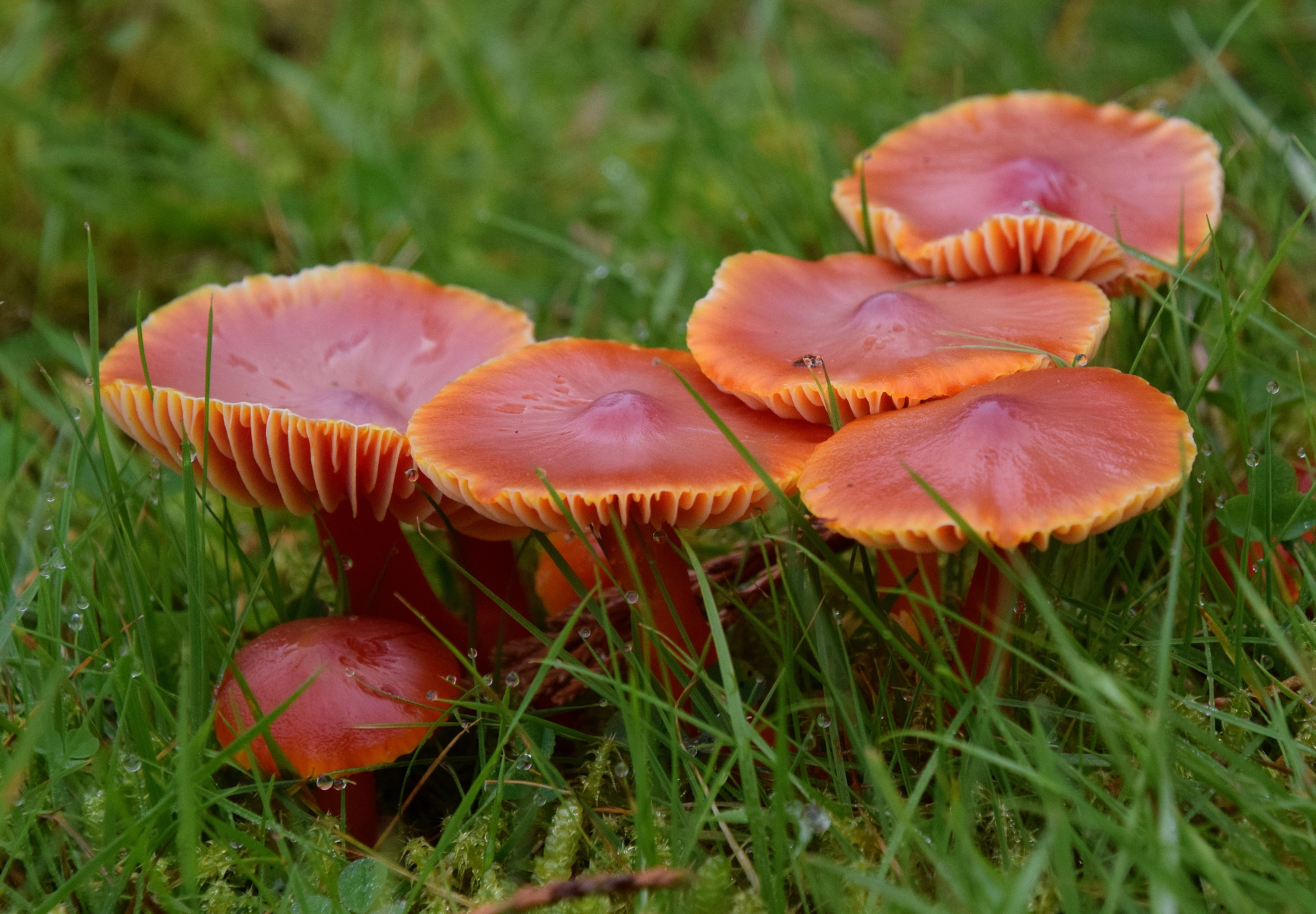
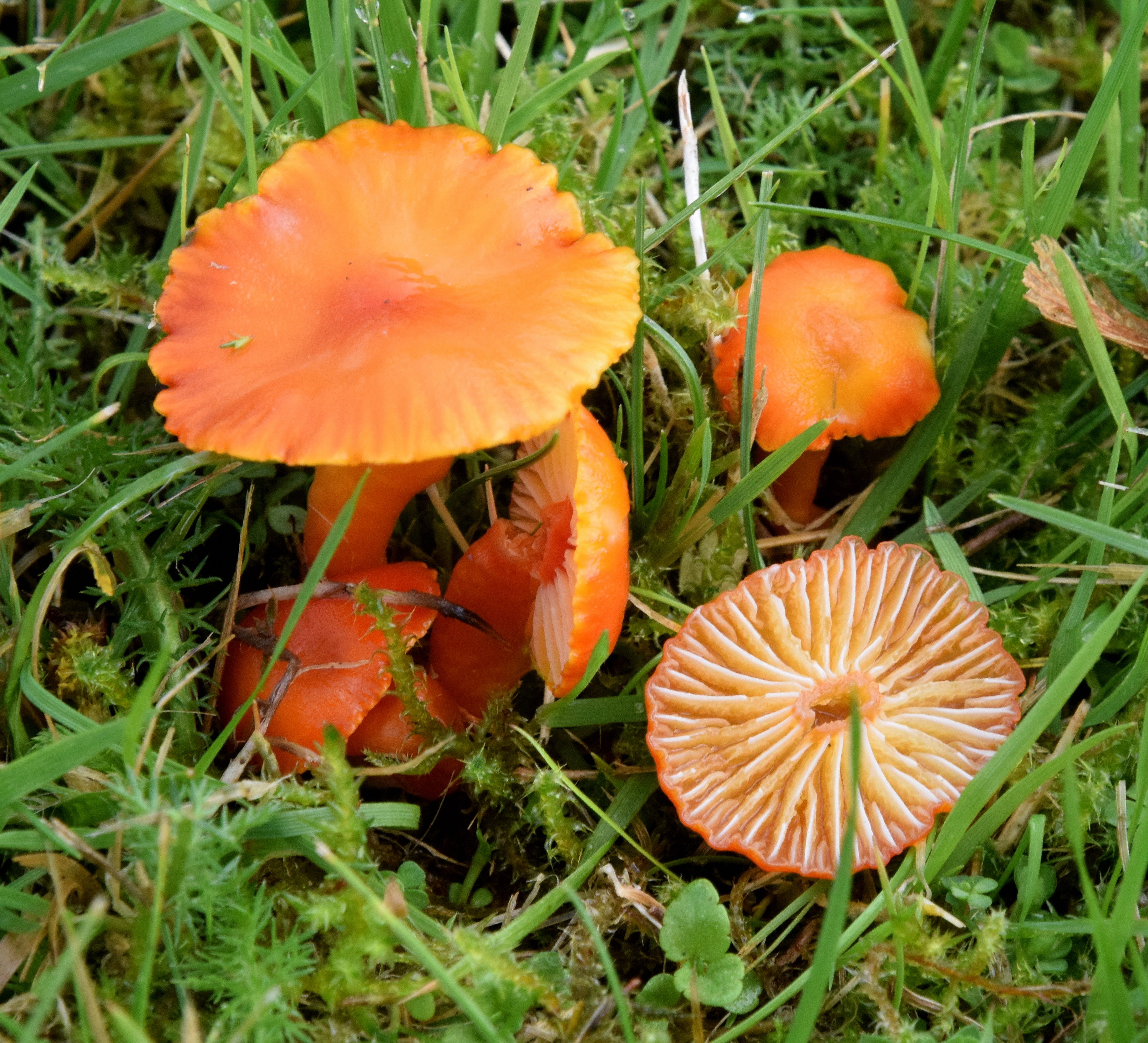
Scarlet Waxcaps
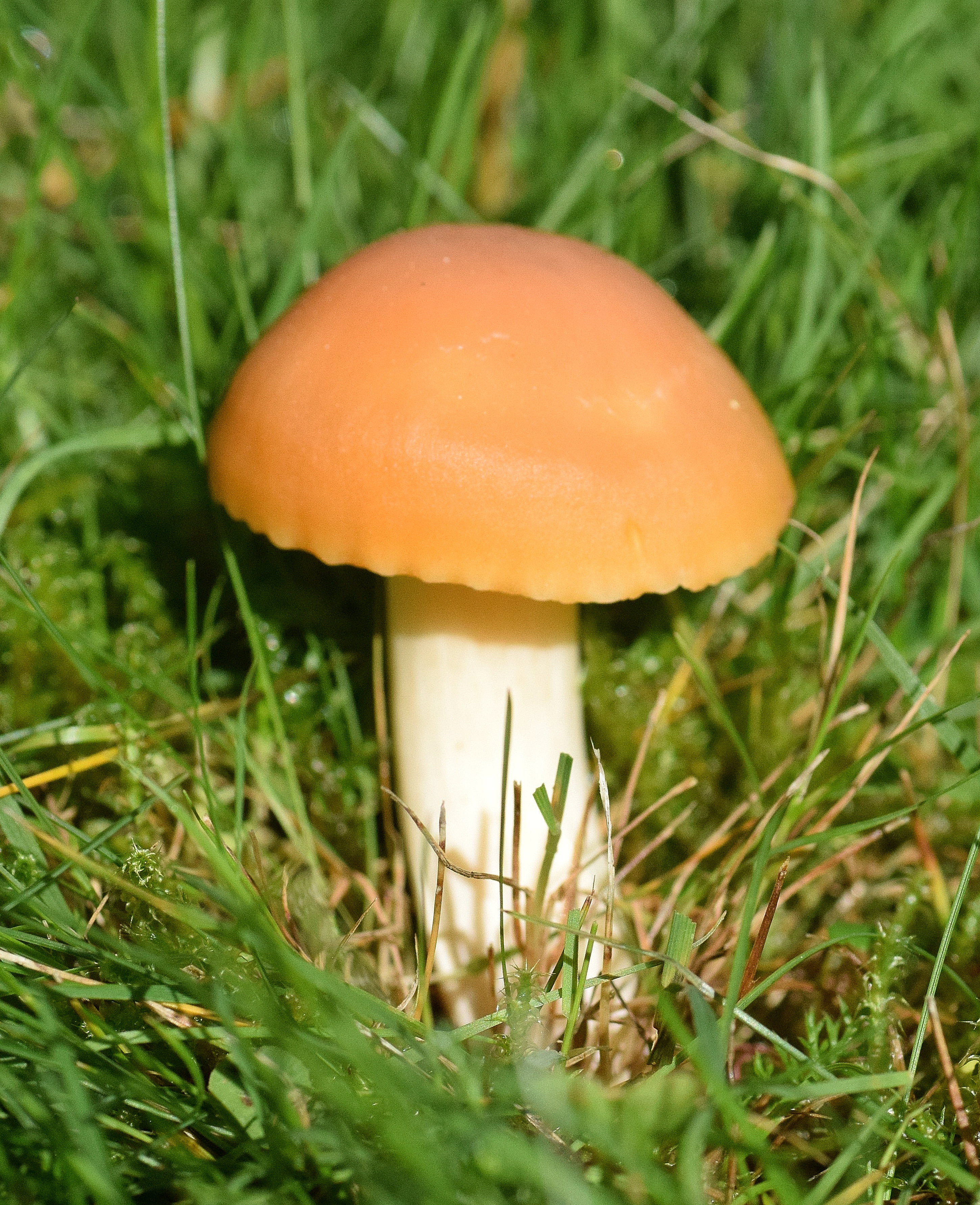
Also known as Scarlet Hood, this is one of the most prized Waxcaps amongst enthusiasts due to its rich colour tone. My first instinct was to grab my camera before anything could damage them, though despite a “bumps and babies” morning in the adjacent church hall my “anxiety” was unfounded. Going back in I met the vicar and some helpers who were clearing up after a weekend event in the church. He promptly went to retrieve his own phone then took pictures himself. The others also looked on approvingly as I gardened around this outstanding opportunity to record such a large and un-munched eruption.
Scarlet Waxcaps (above and below)
Ewan then joined me, who newly returned from an excellent autumn stint on Shetland was seeking a little fungi hunting as an alternative to re-acclimatising to local birding. I felt pleased to have drawn him to this day’s best choice from my own current wildlife agenda. Searching around we found more emergent Scarlets in another area of the churchyard, and throughout I appreciated this was as good an experience with the species as it may be possible to enjoy.
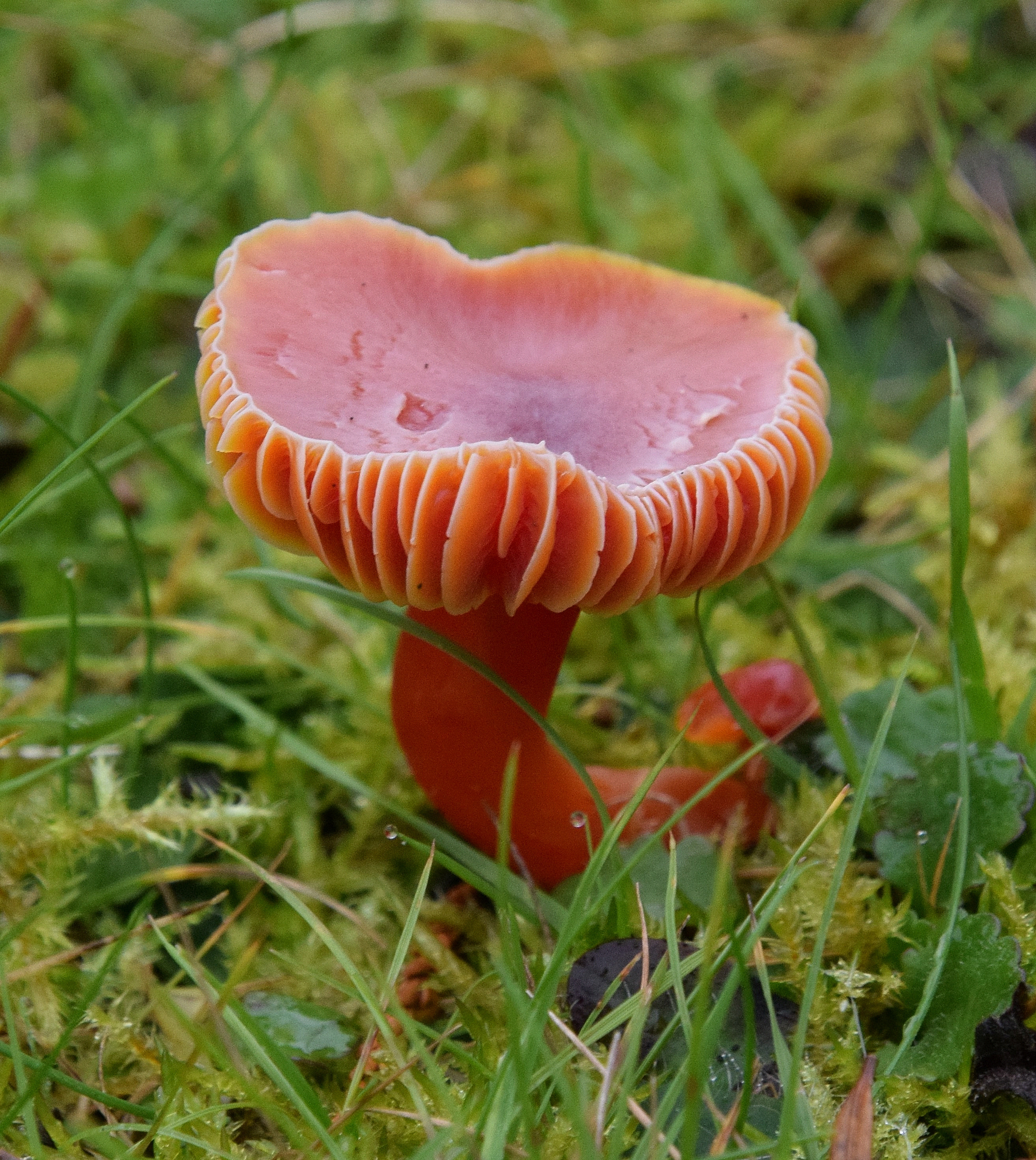
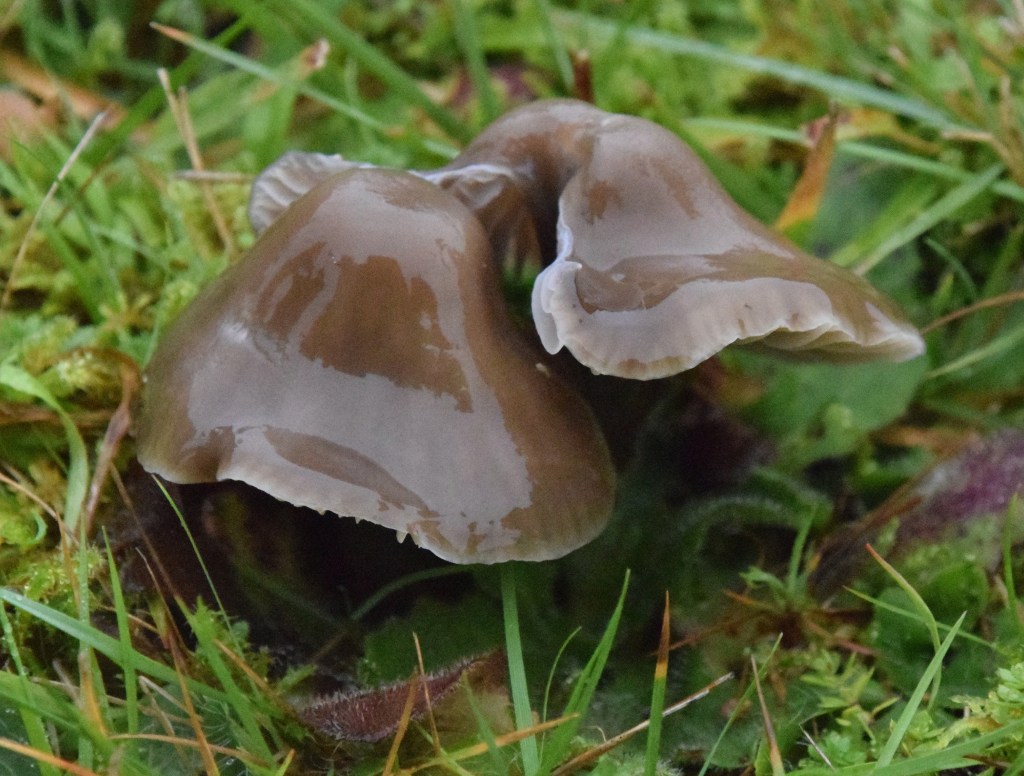
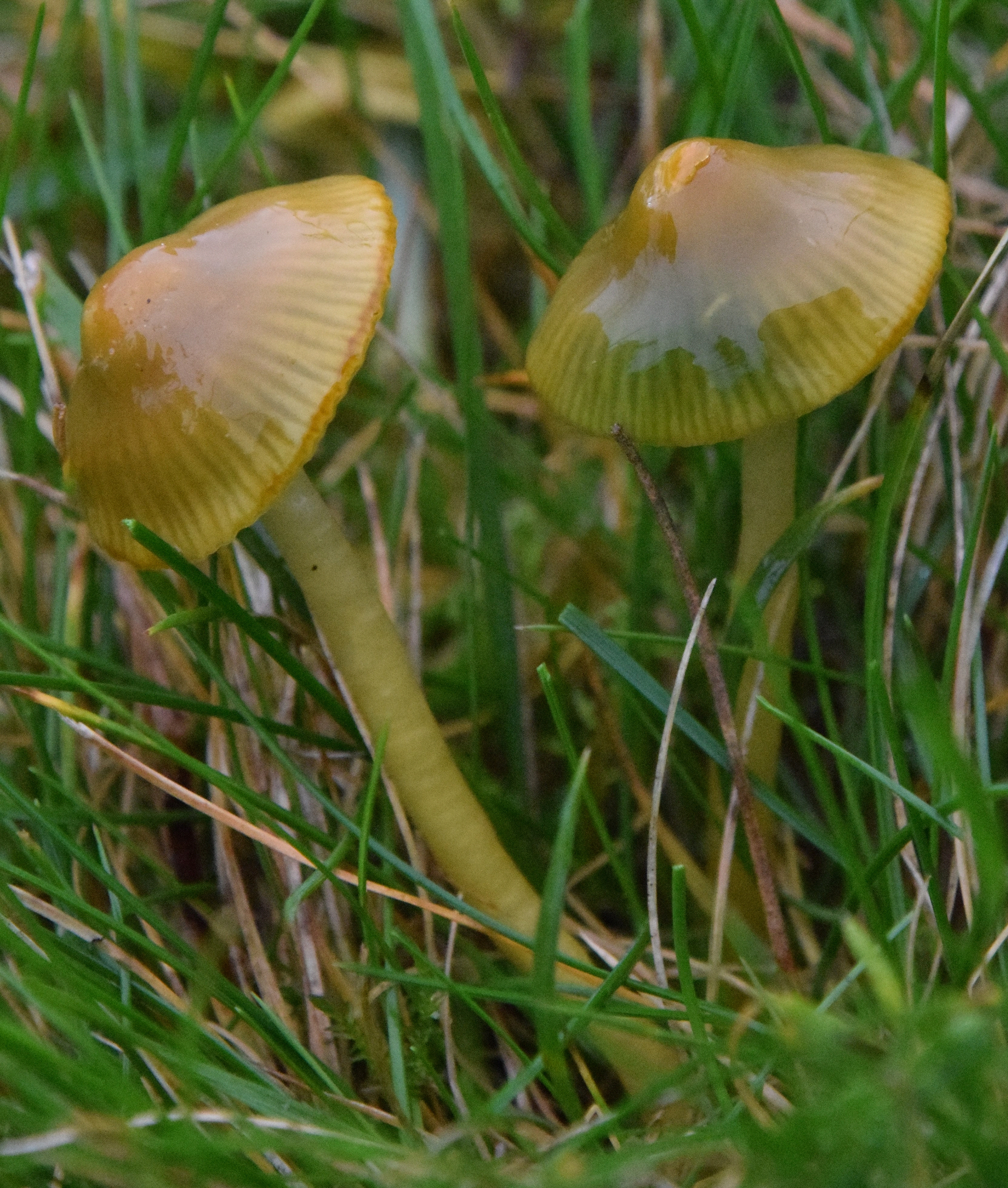
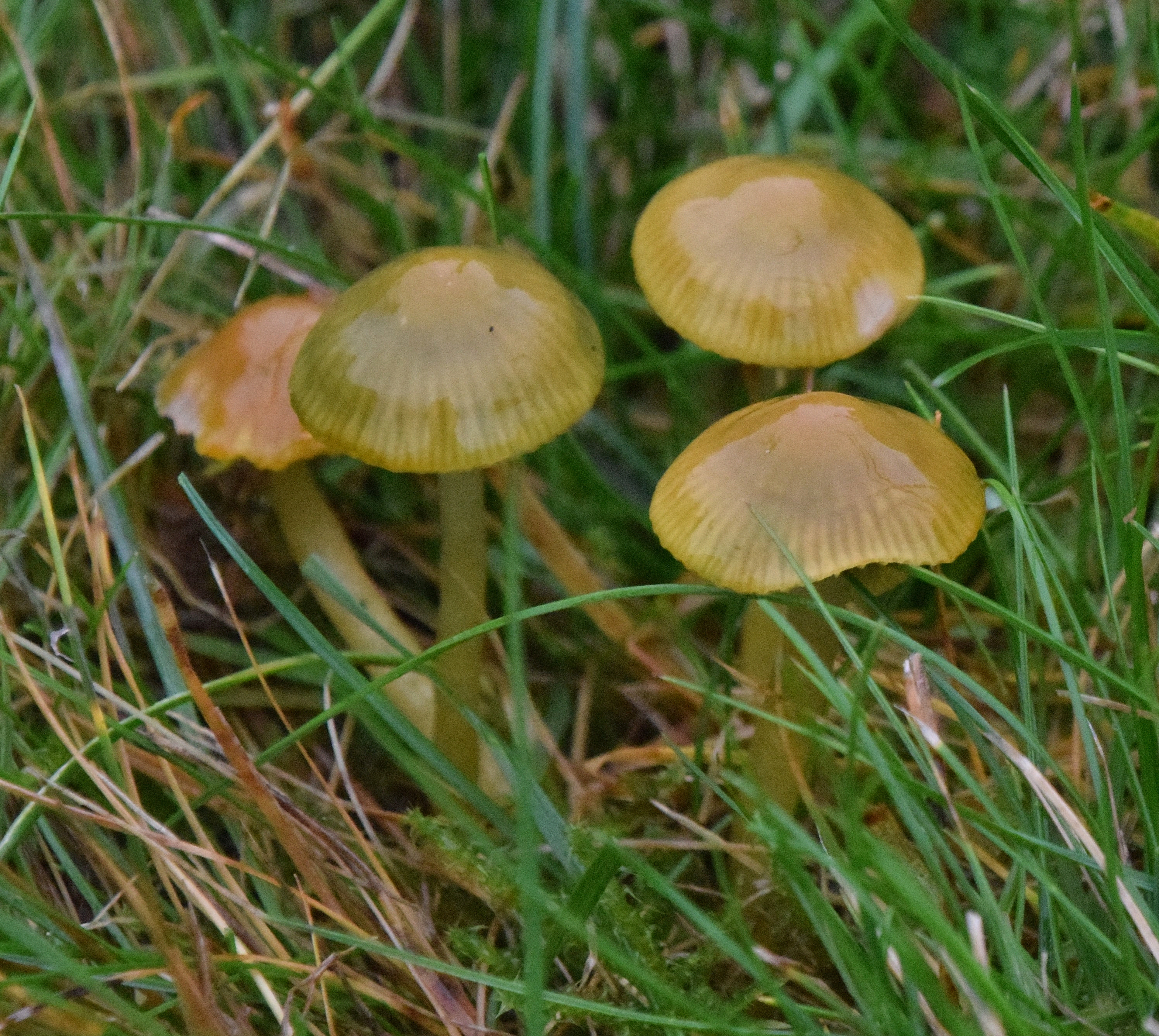
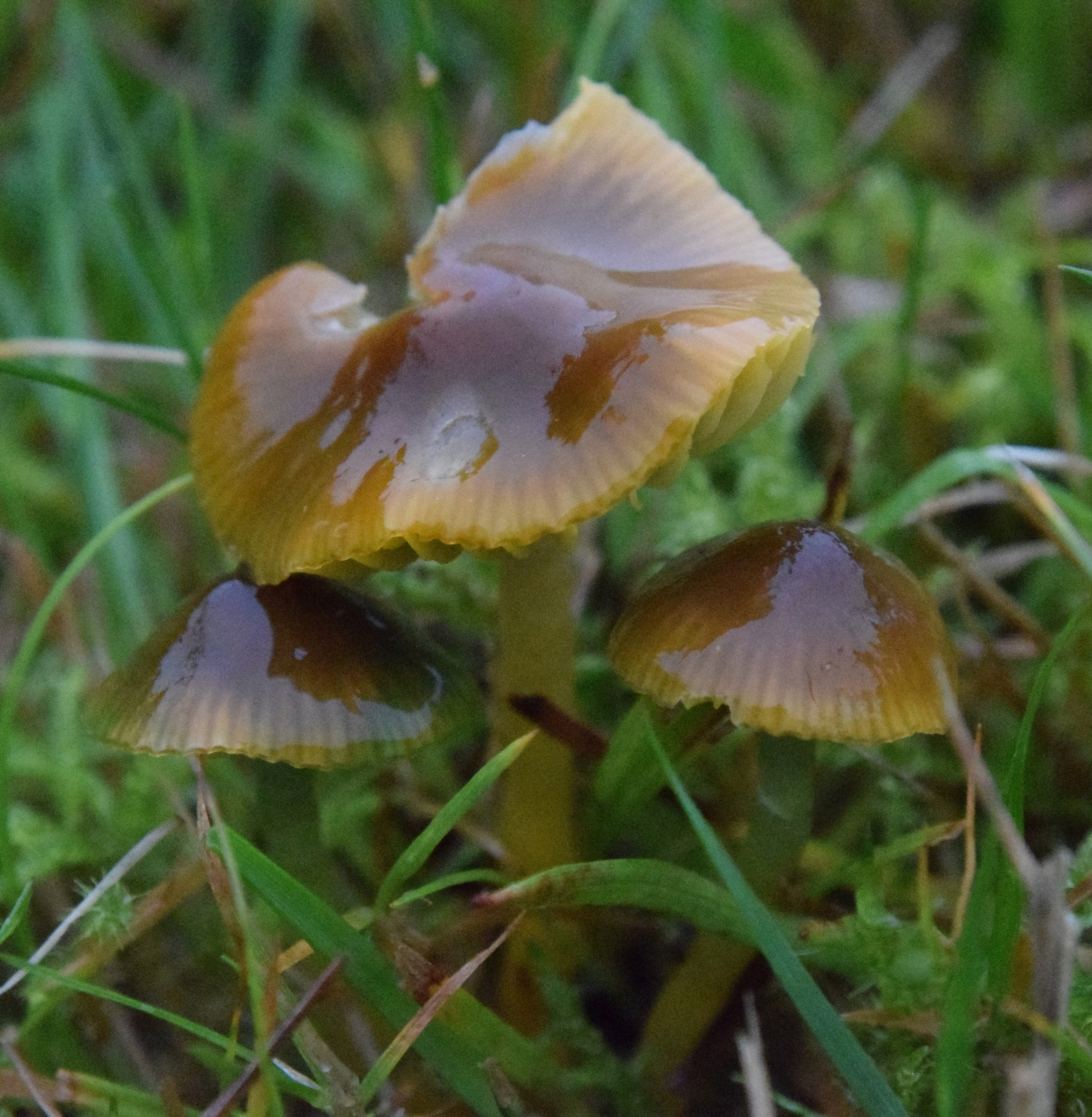
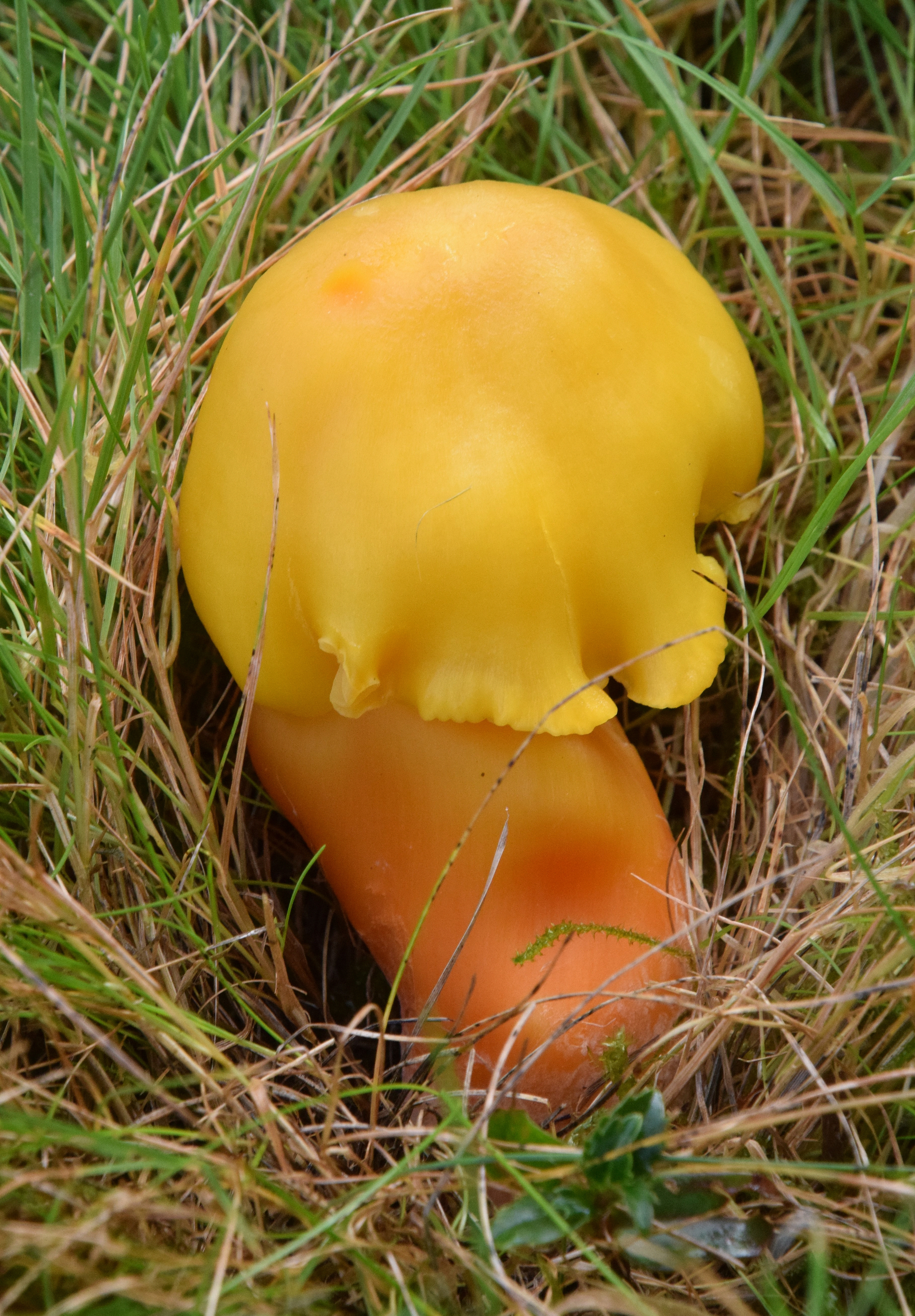
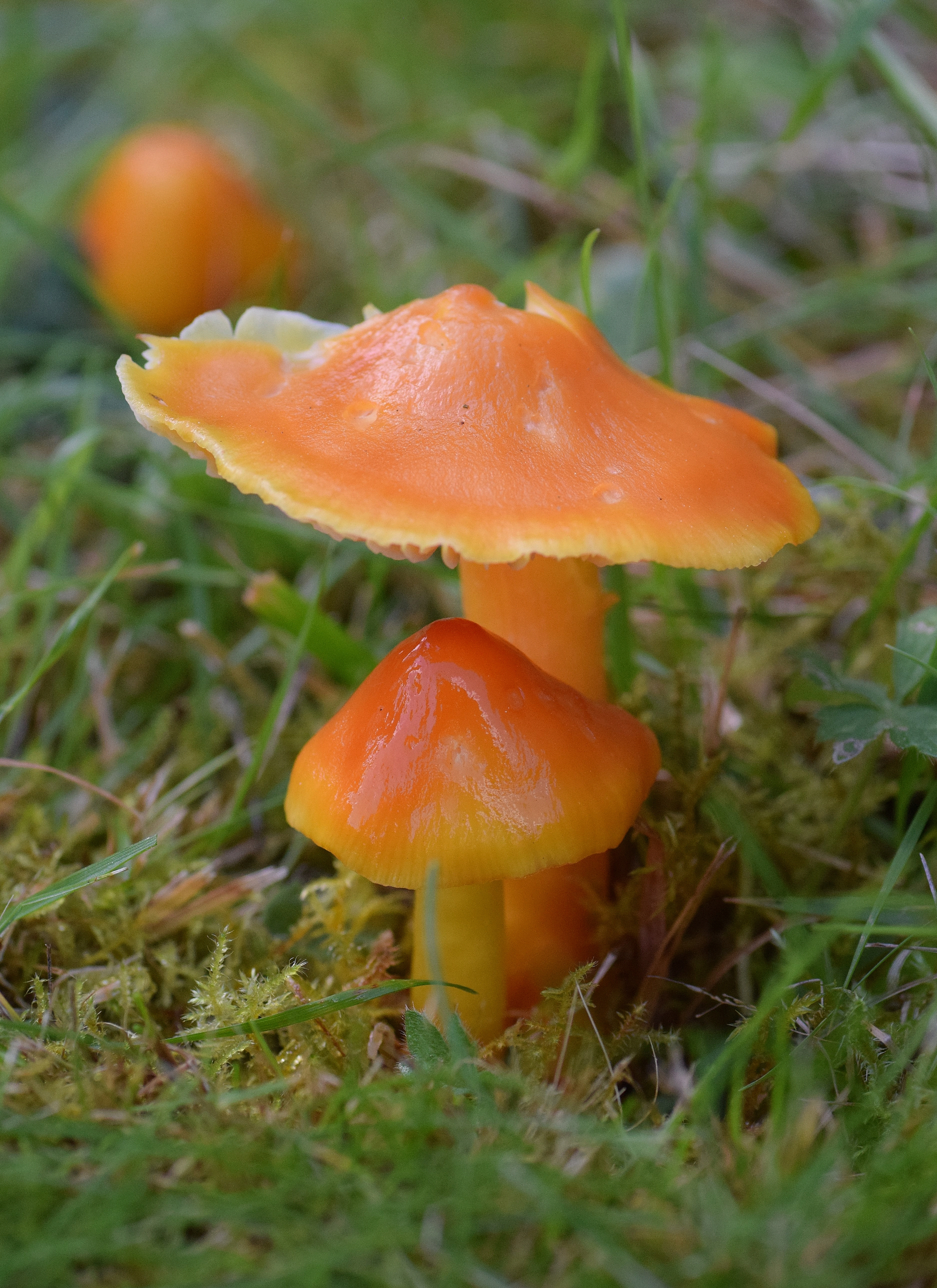
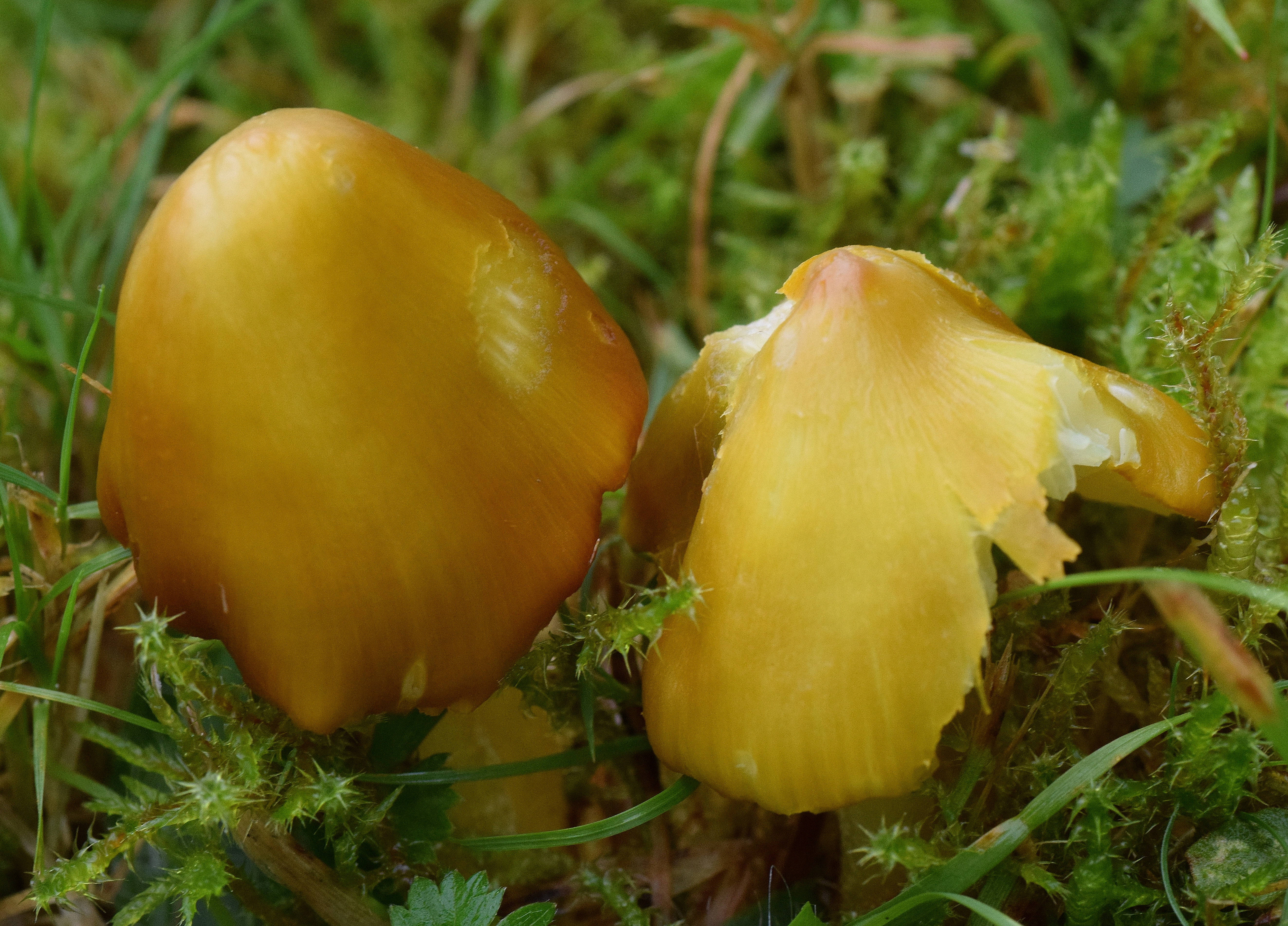
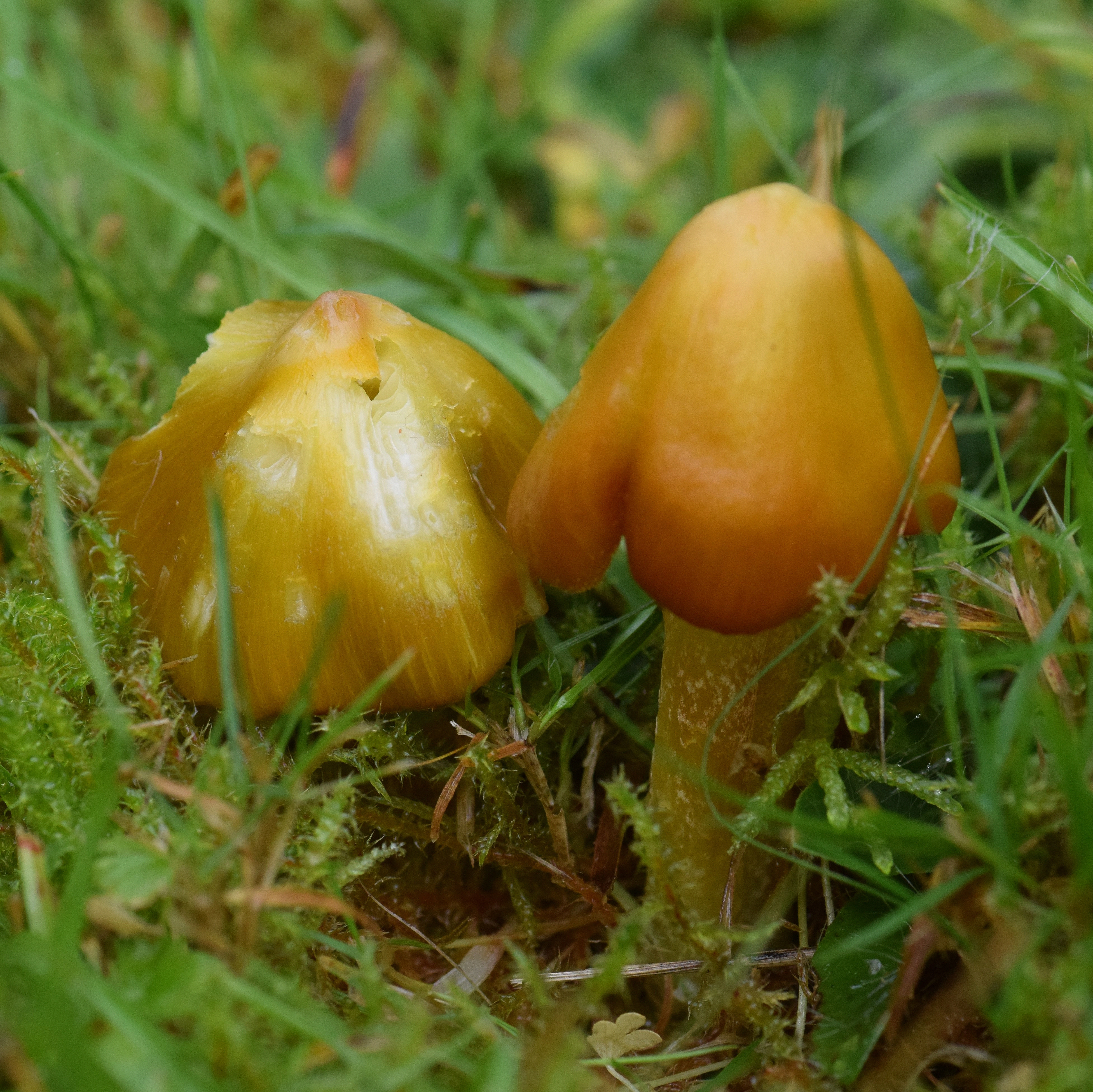
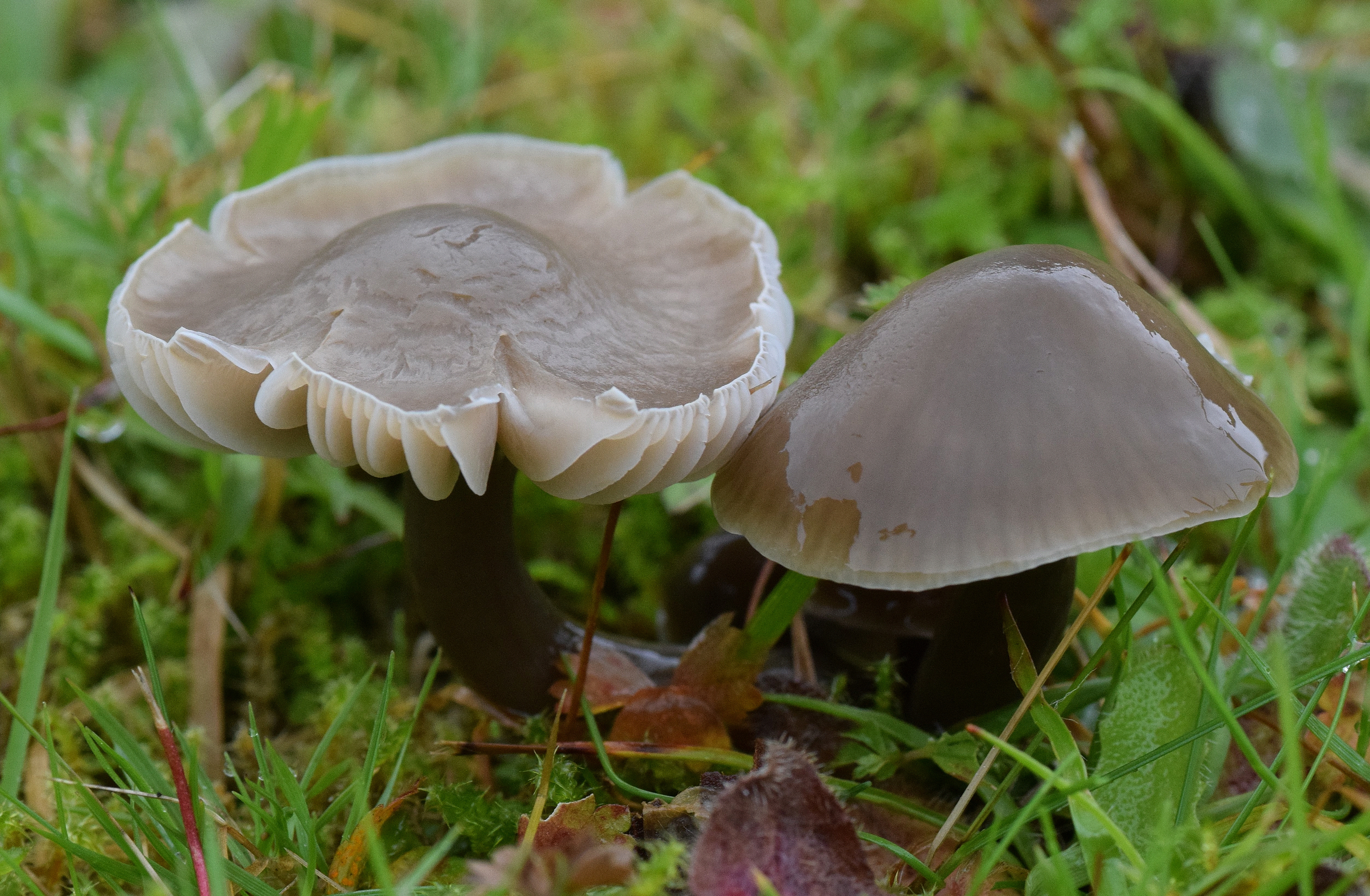
Most of the other Waxcaps of my autumn’s visits so far were also still performing to a greater or lesser extent. Of those I felt Slimy Waxcap (below – here) was the next most interesting to this post’s lead item. Though probably at the opposite end of the attractiveness and certainly the colour spectra, their weird shapes and contours accentuated by their shiny quality exuded a certain idiosyncratic allure of their own. I stopped by at Prestwood again three days later on 24th and the featured Scarlet Waxcap eruption was still intact.
Slimy Waxcaps
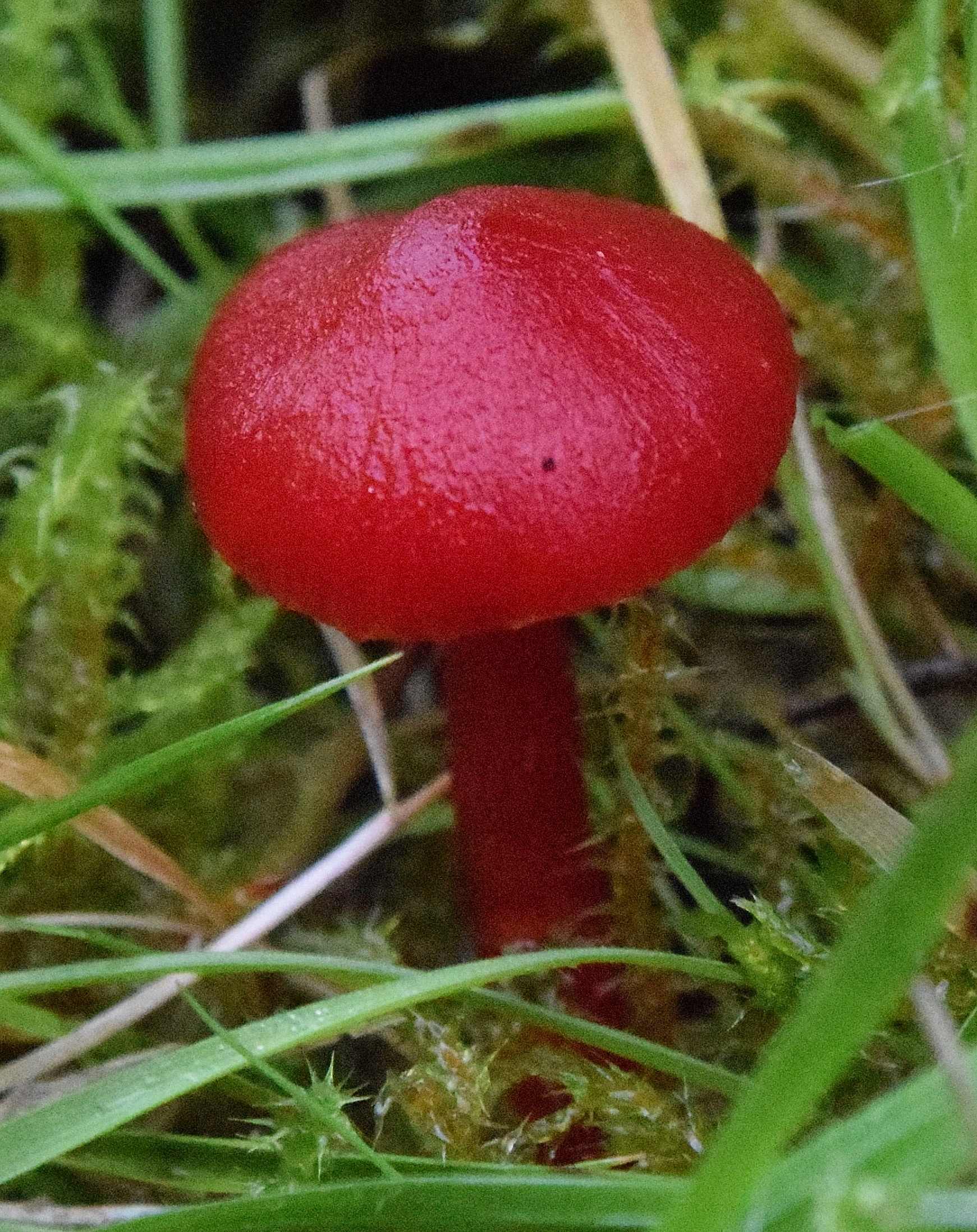
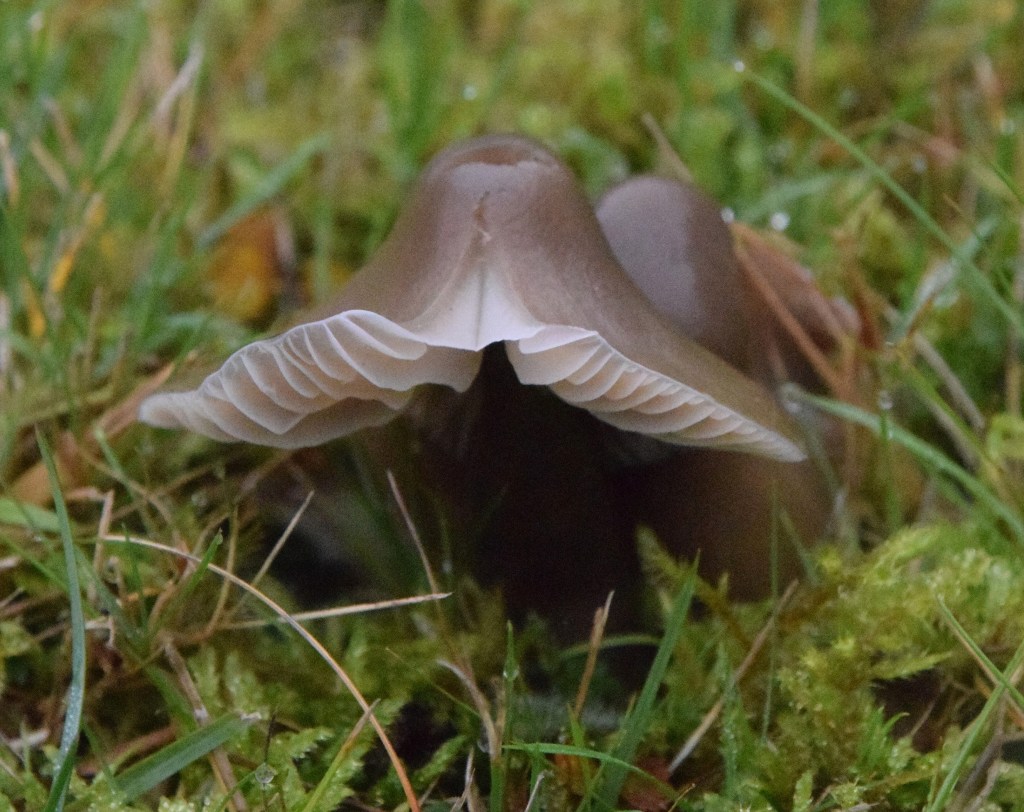
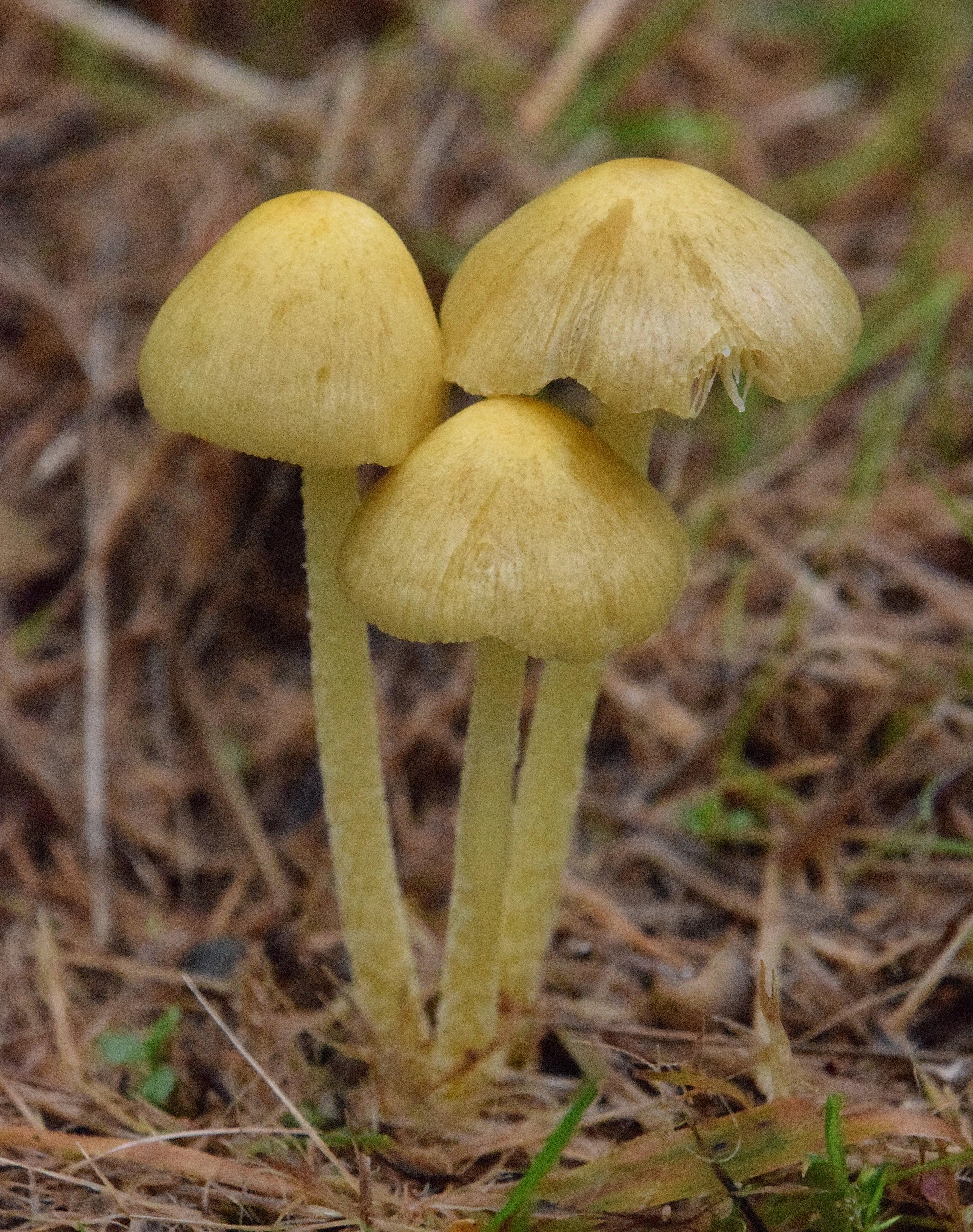
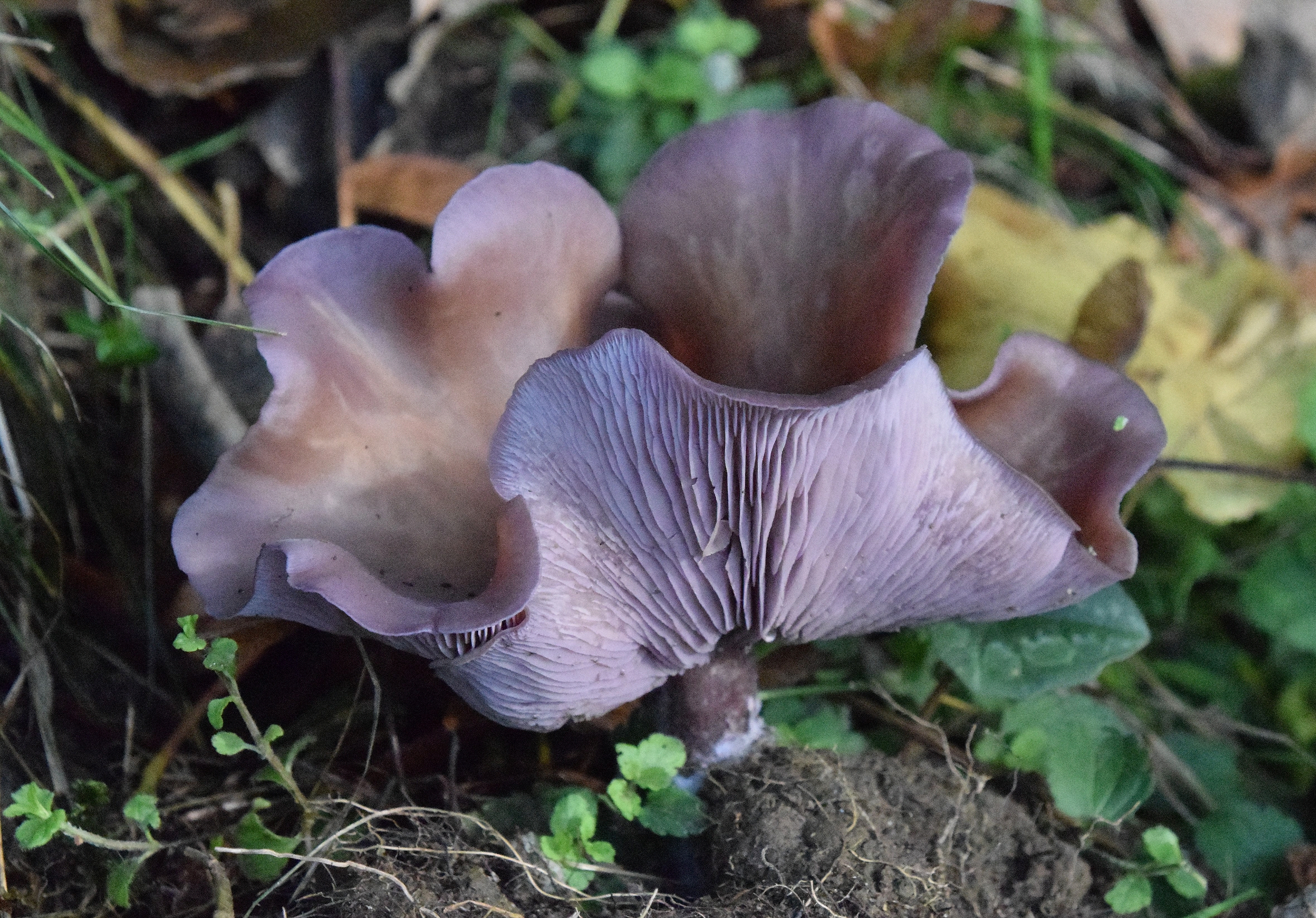
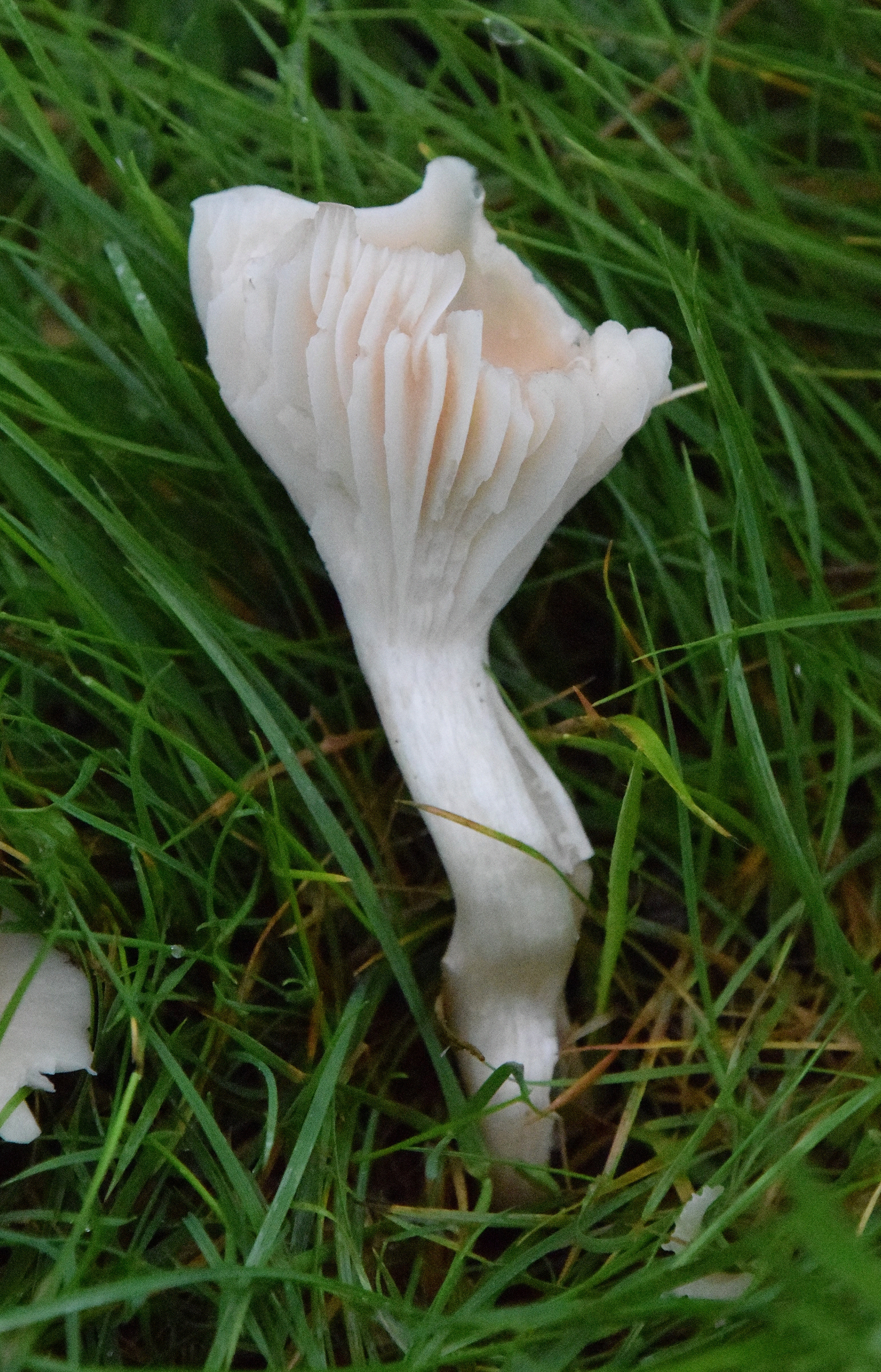
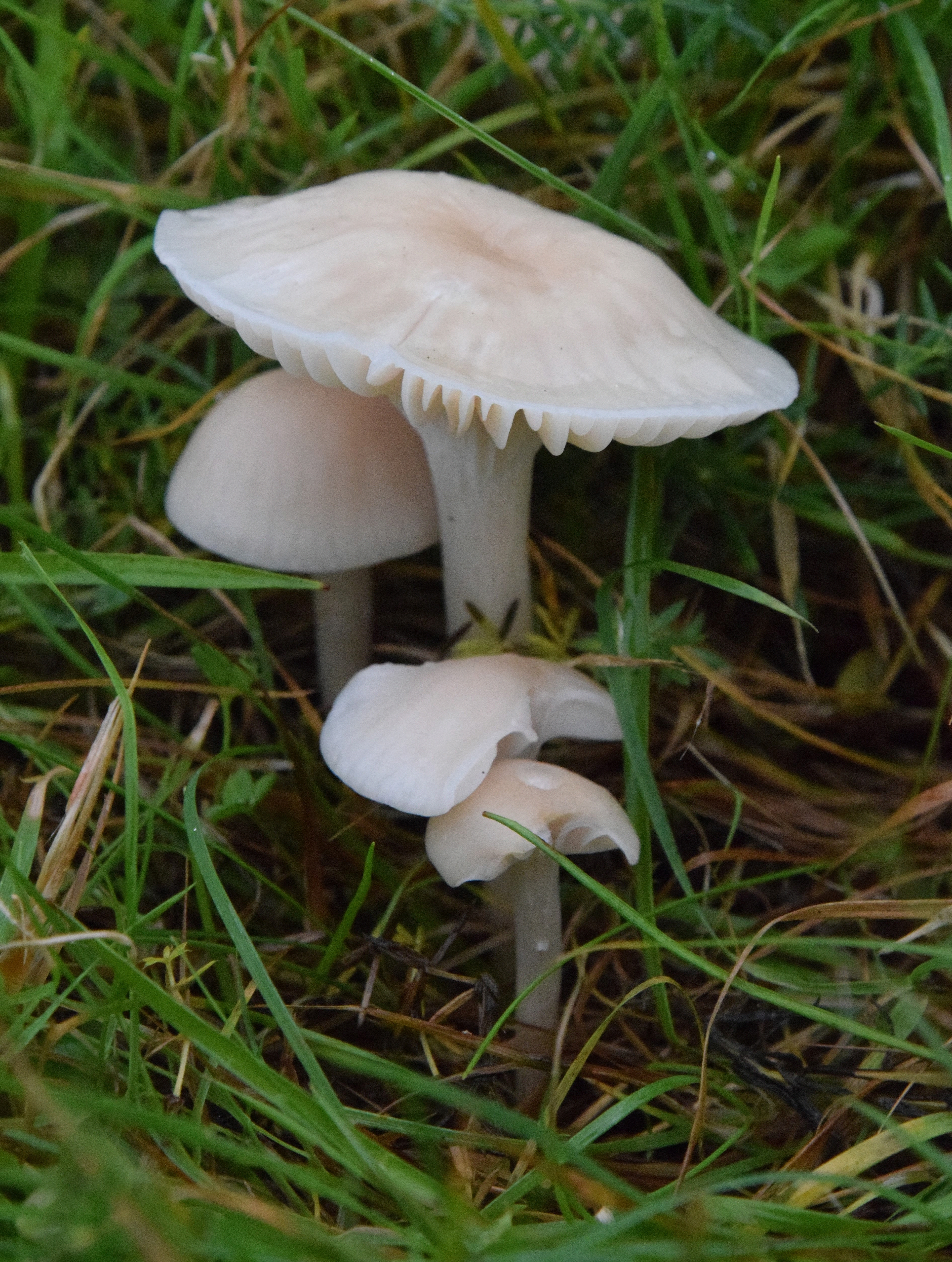
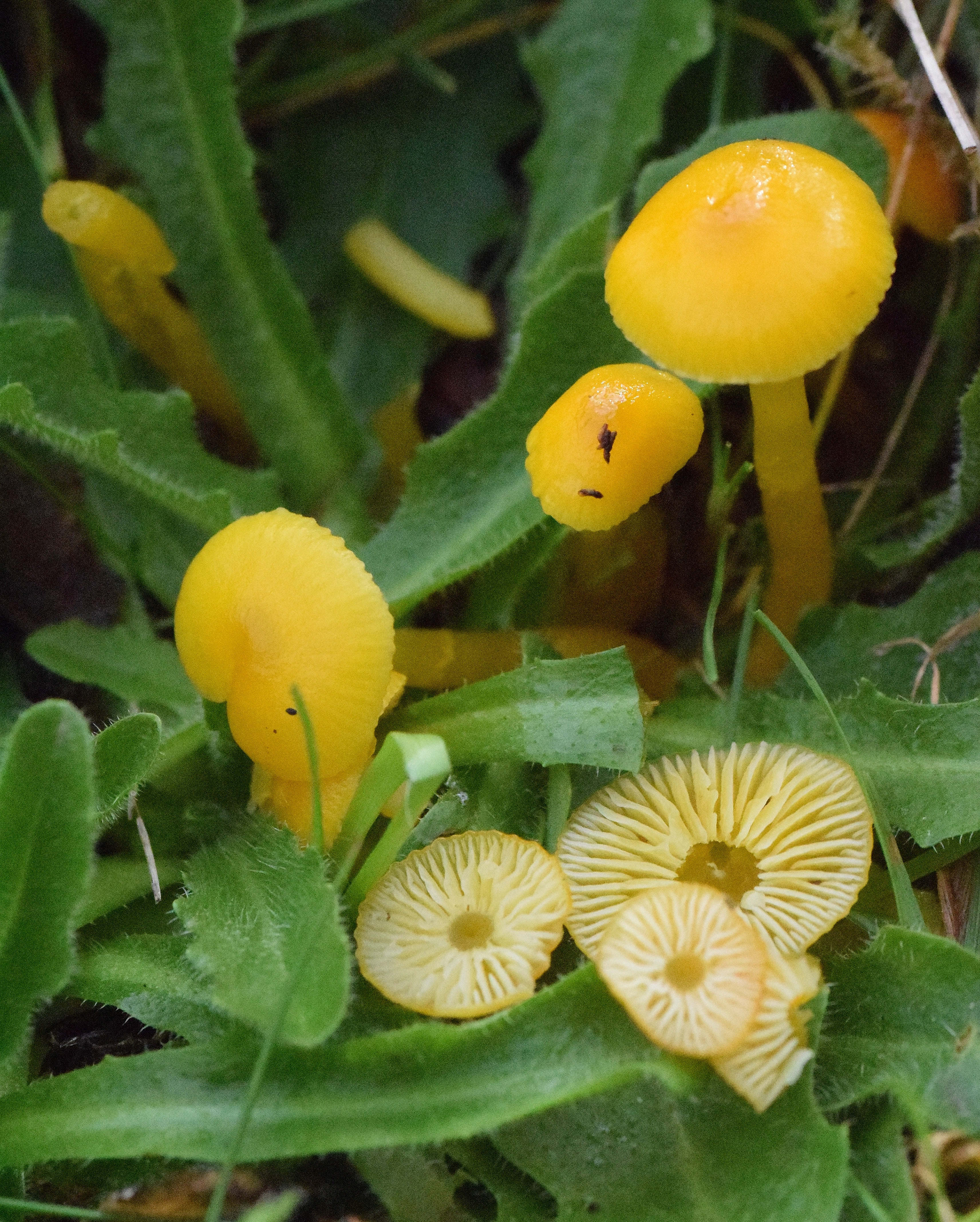
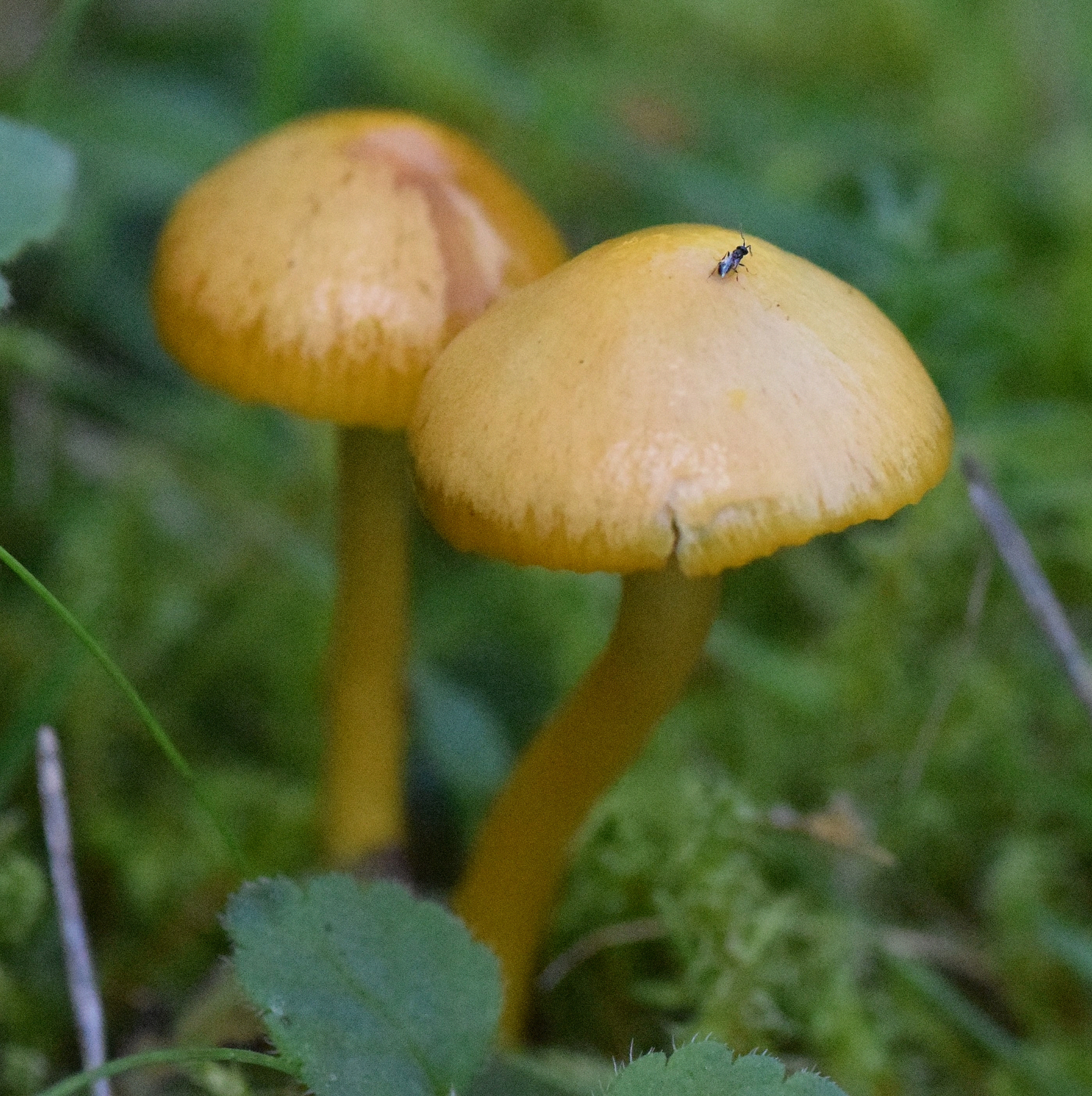
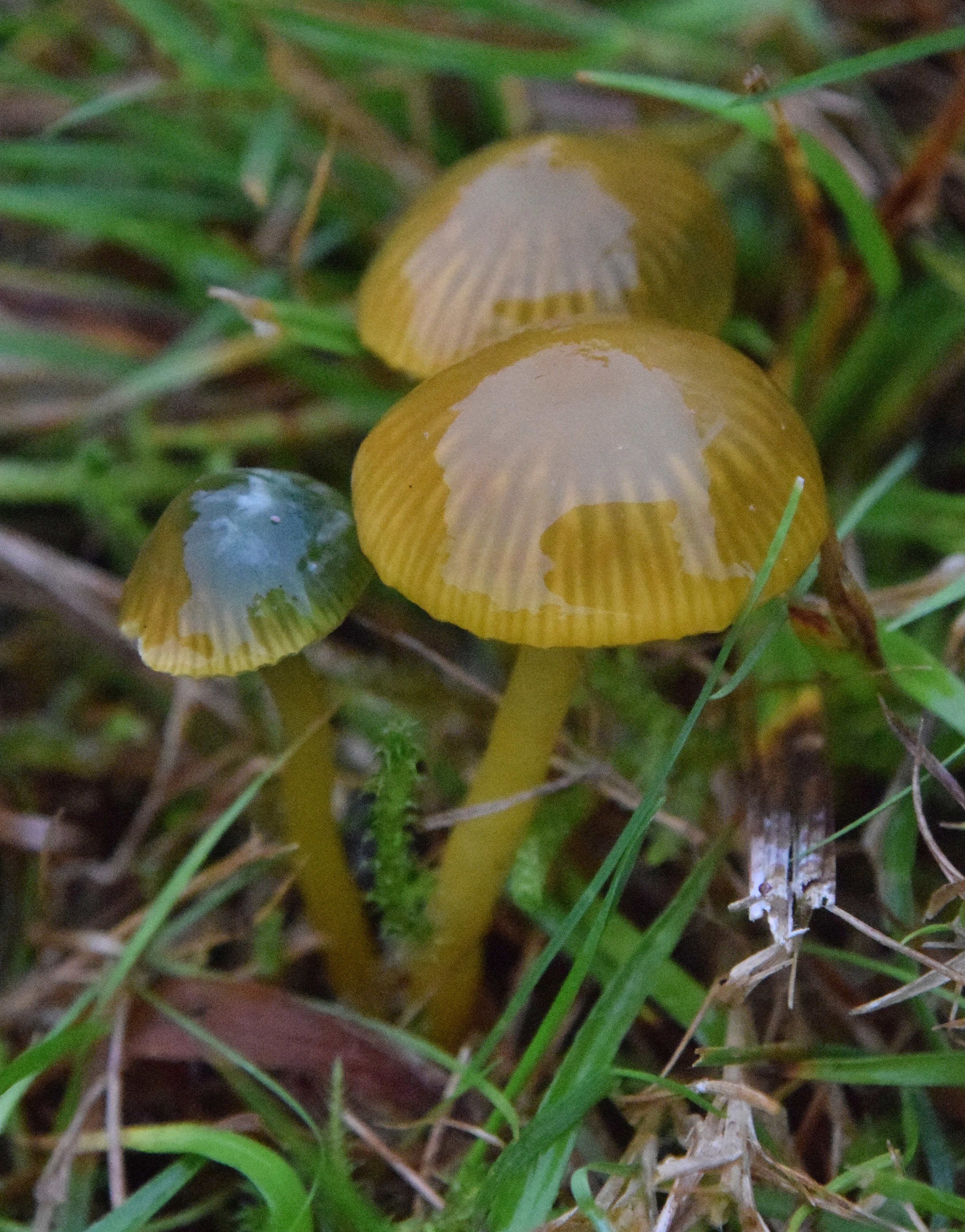
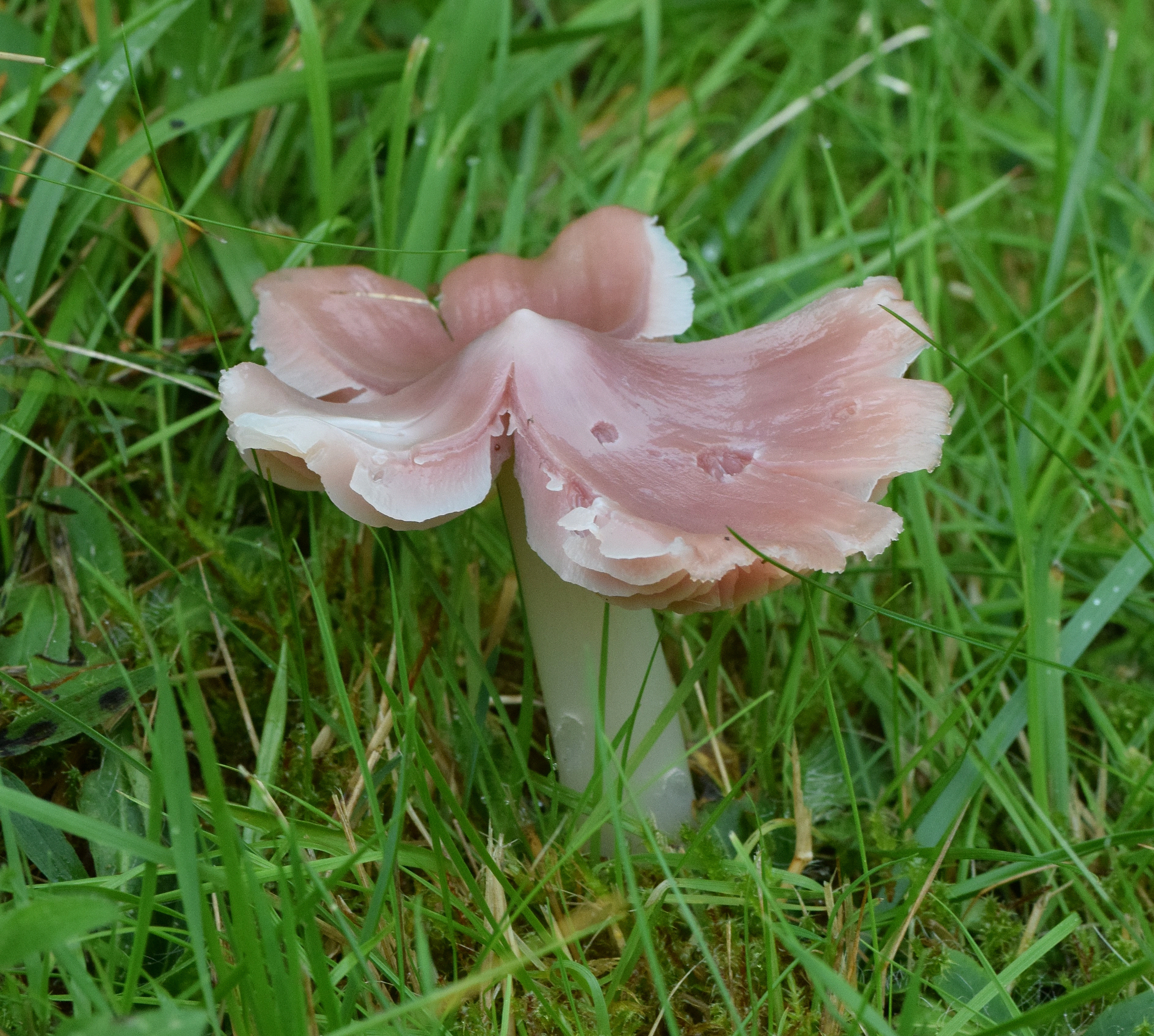
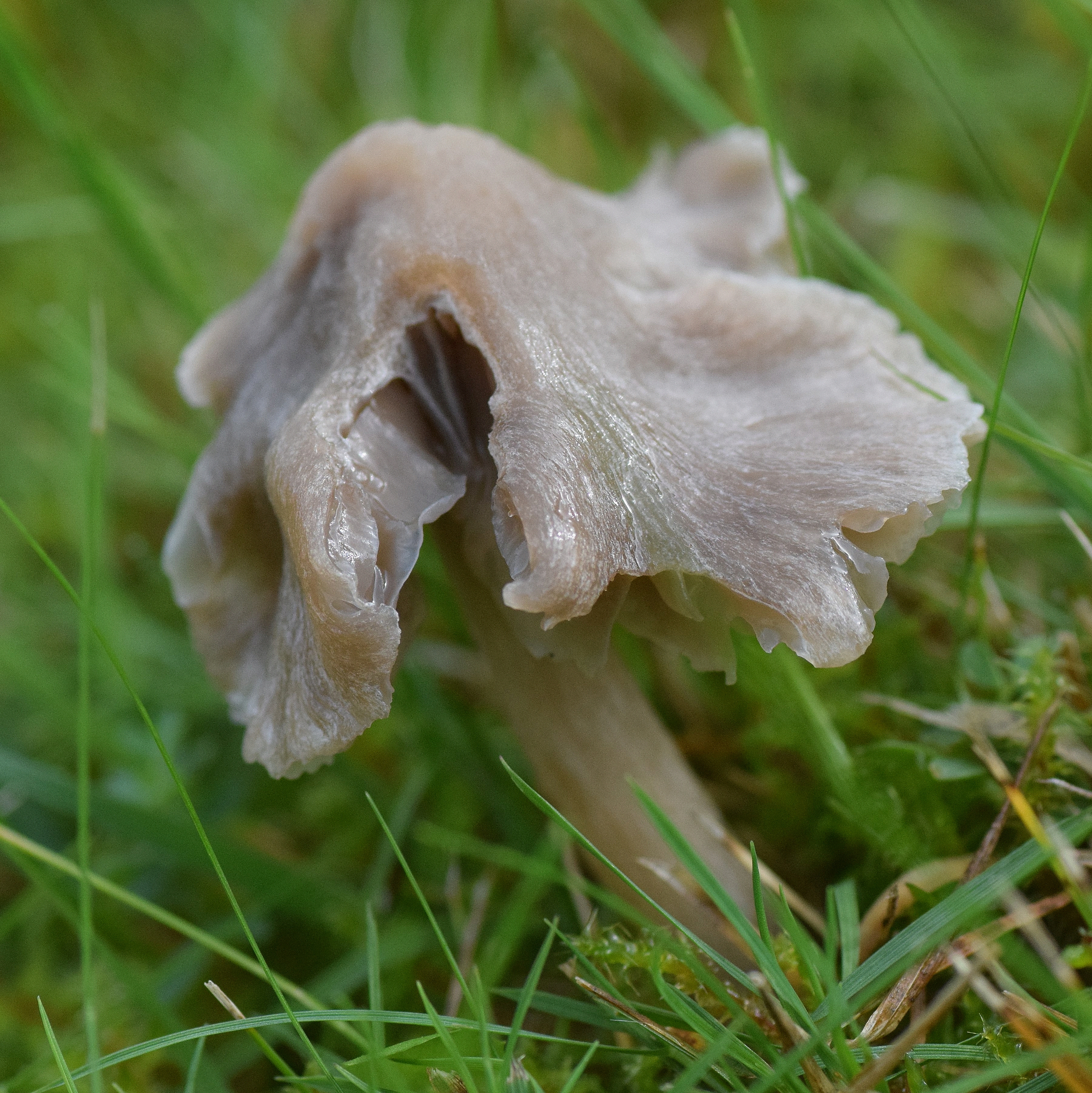
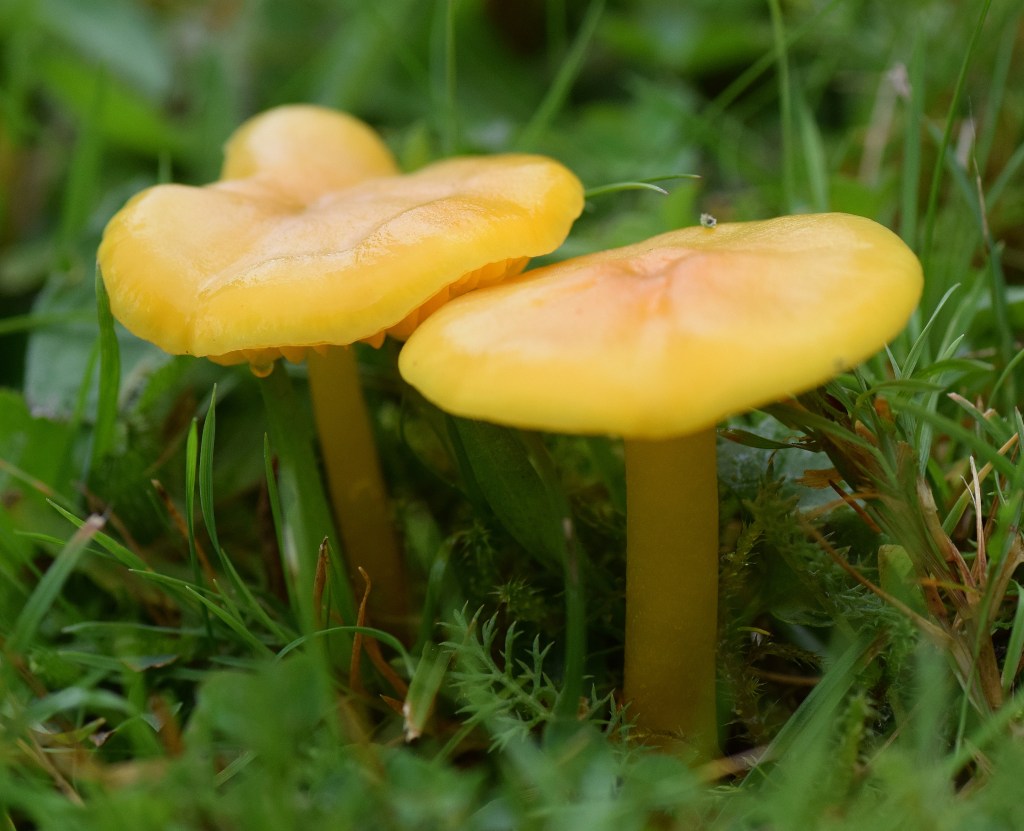
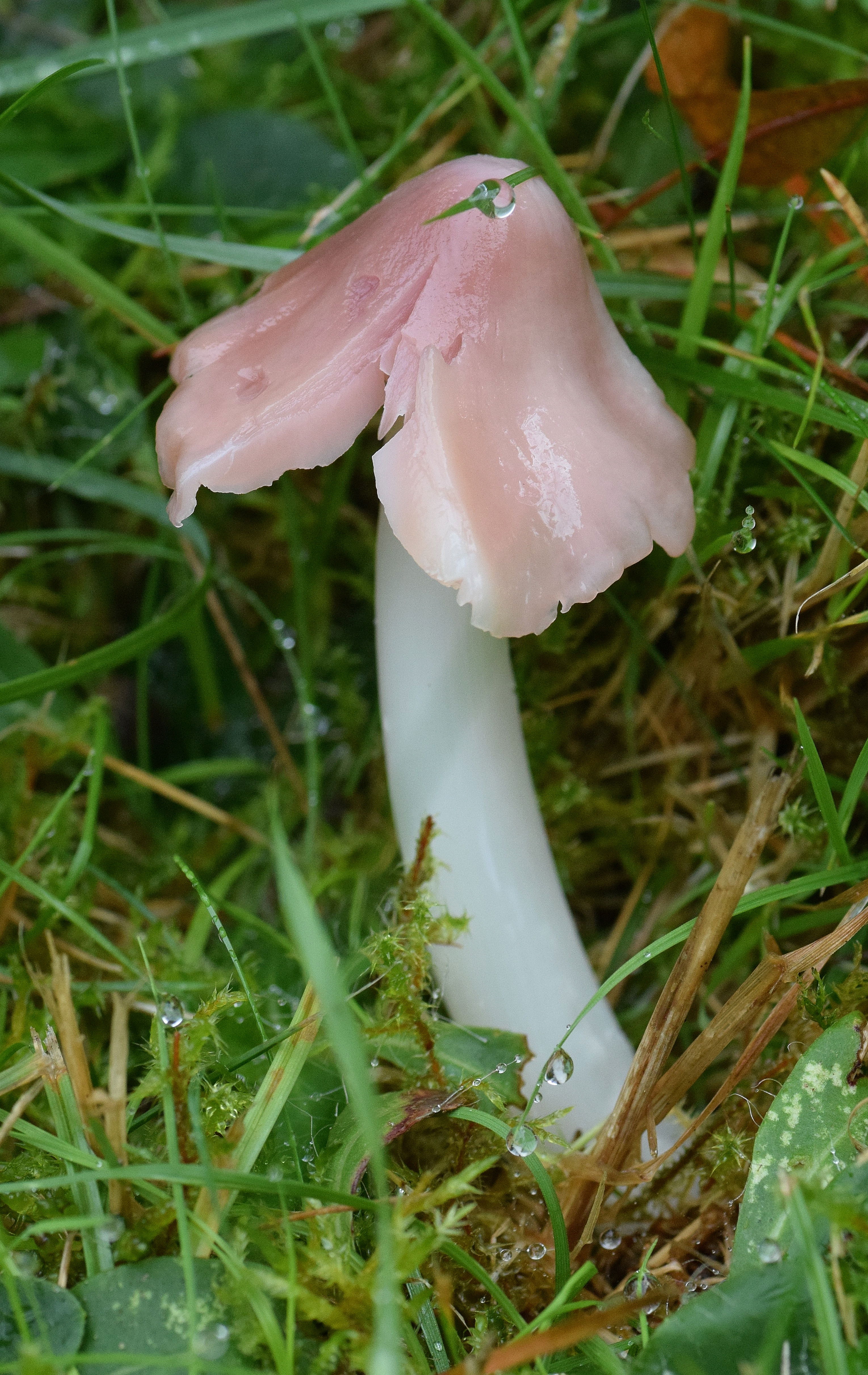
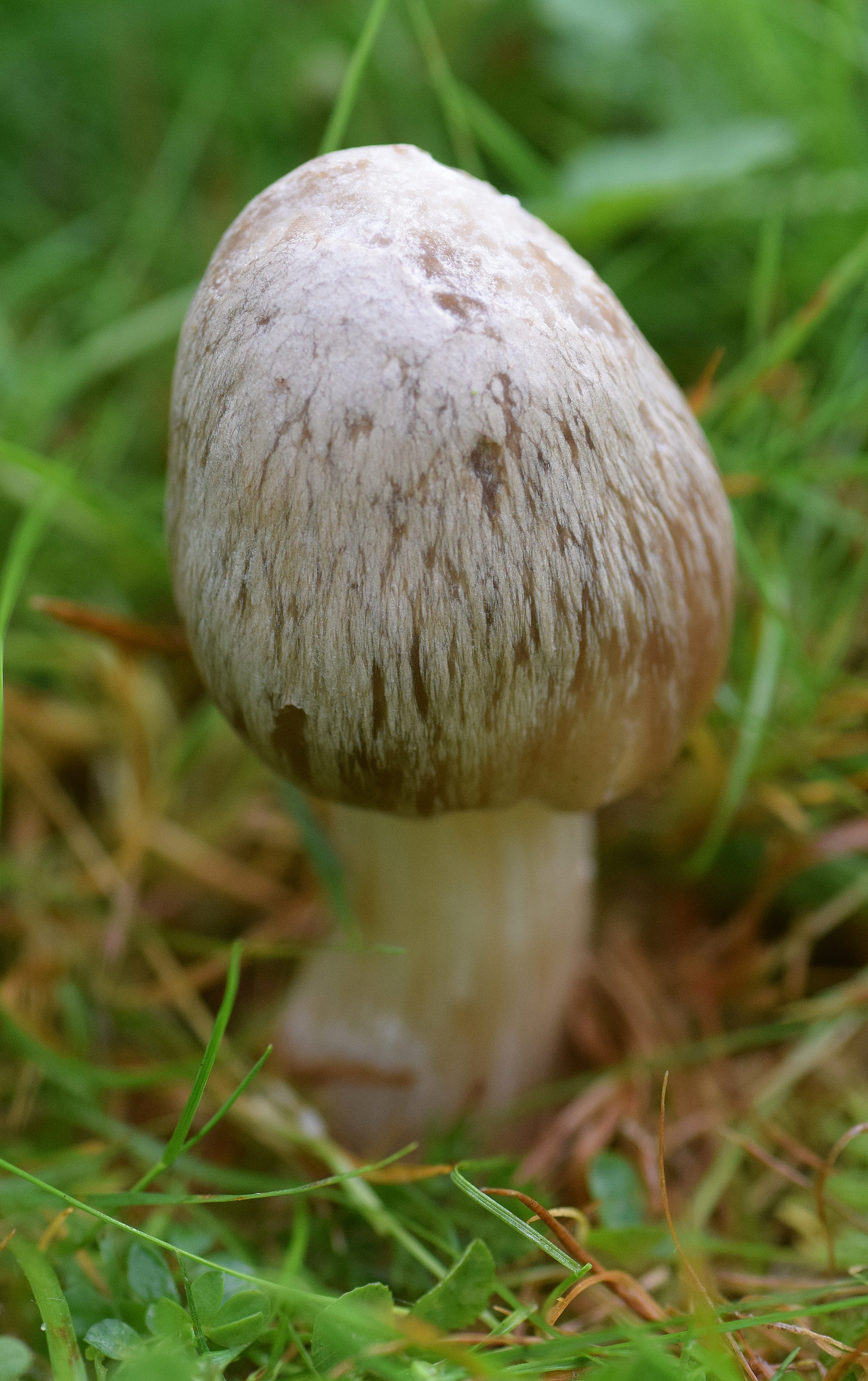
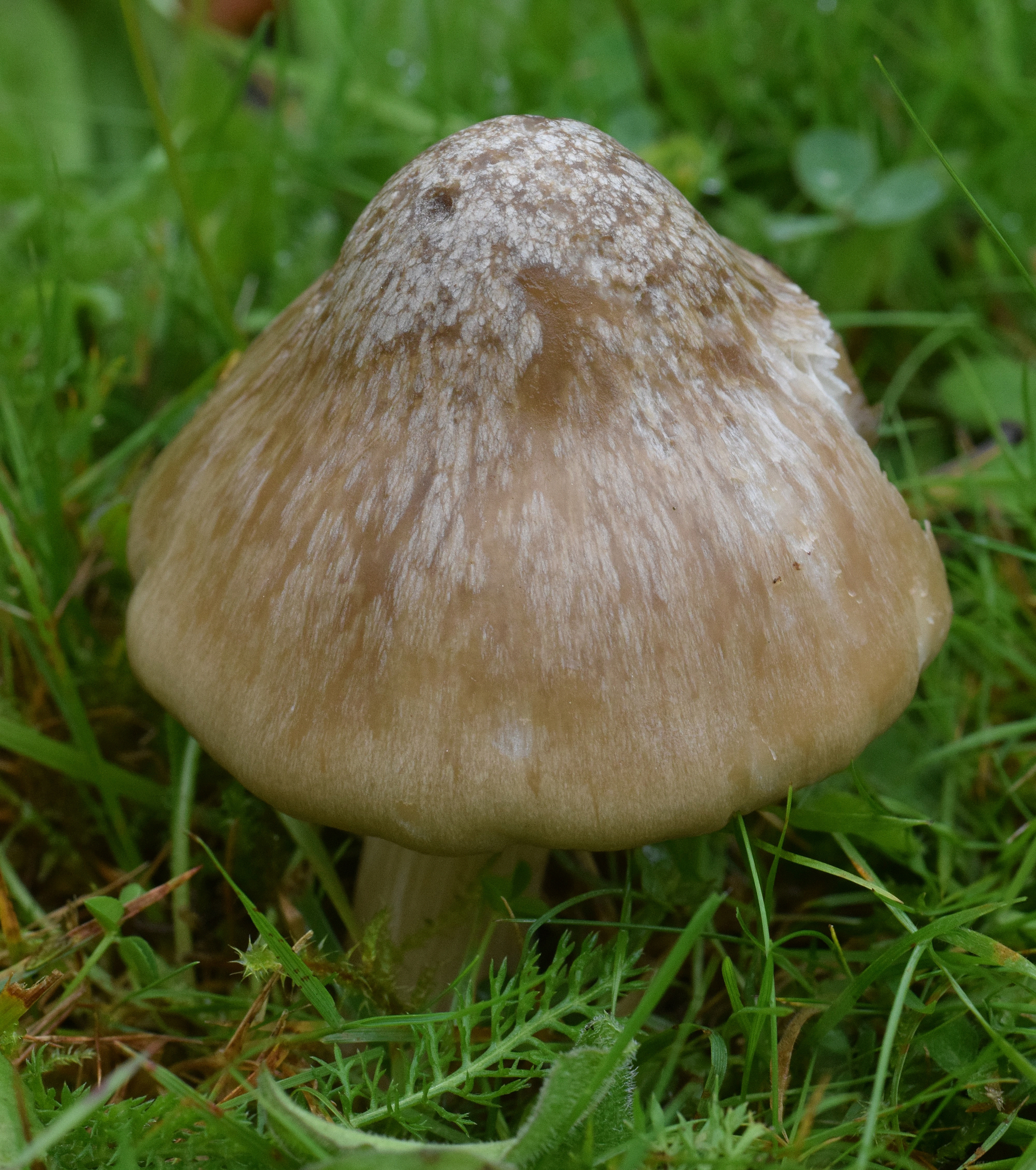
An especially intriguing find there was the little gems pictured below, left. Yellow Fieldcap (here) is one of the shortest-lived of all mushrooms, completing it’s fruiting cycle in less than one day. It is saprobic upon (ie feeds from and breaks down) rotting hay, and may fruit at any time of year. A second extra I have included for interest is a magnificent Wood Blewit (right – here) at Nettlebed. It is unusual to encounter such a large fungus in an undamaged state. When I re-visited there on 22nd it had avoided munchers for four more days, under trees in an unkempt corner of that churchyard.
Yellow Fieldcap (left) and Wood Blewit
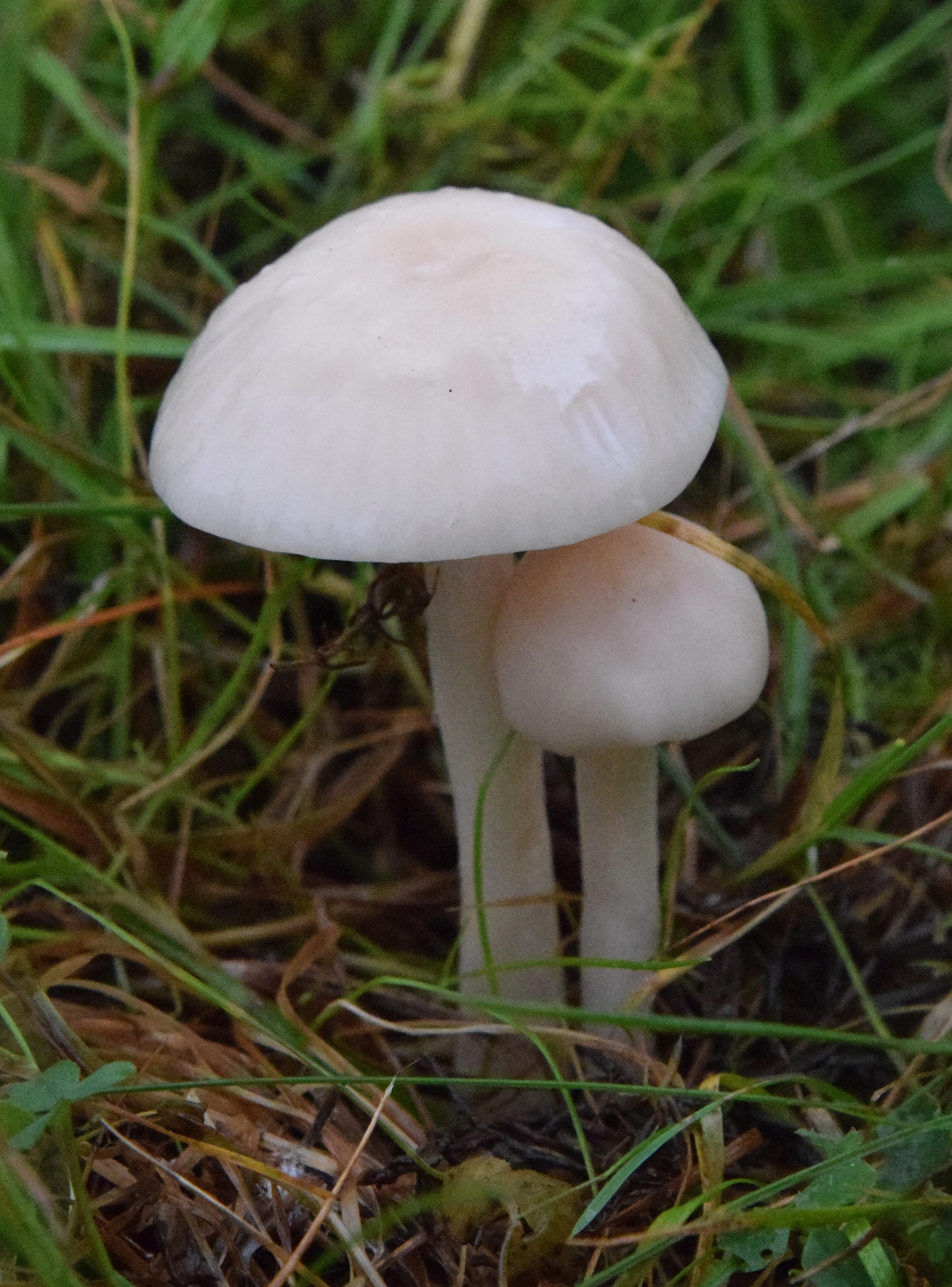
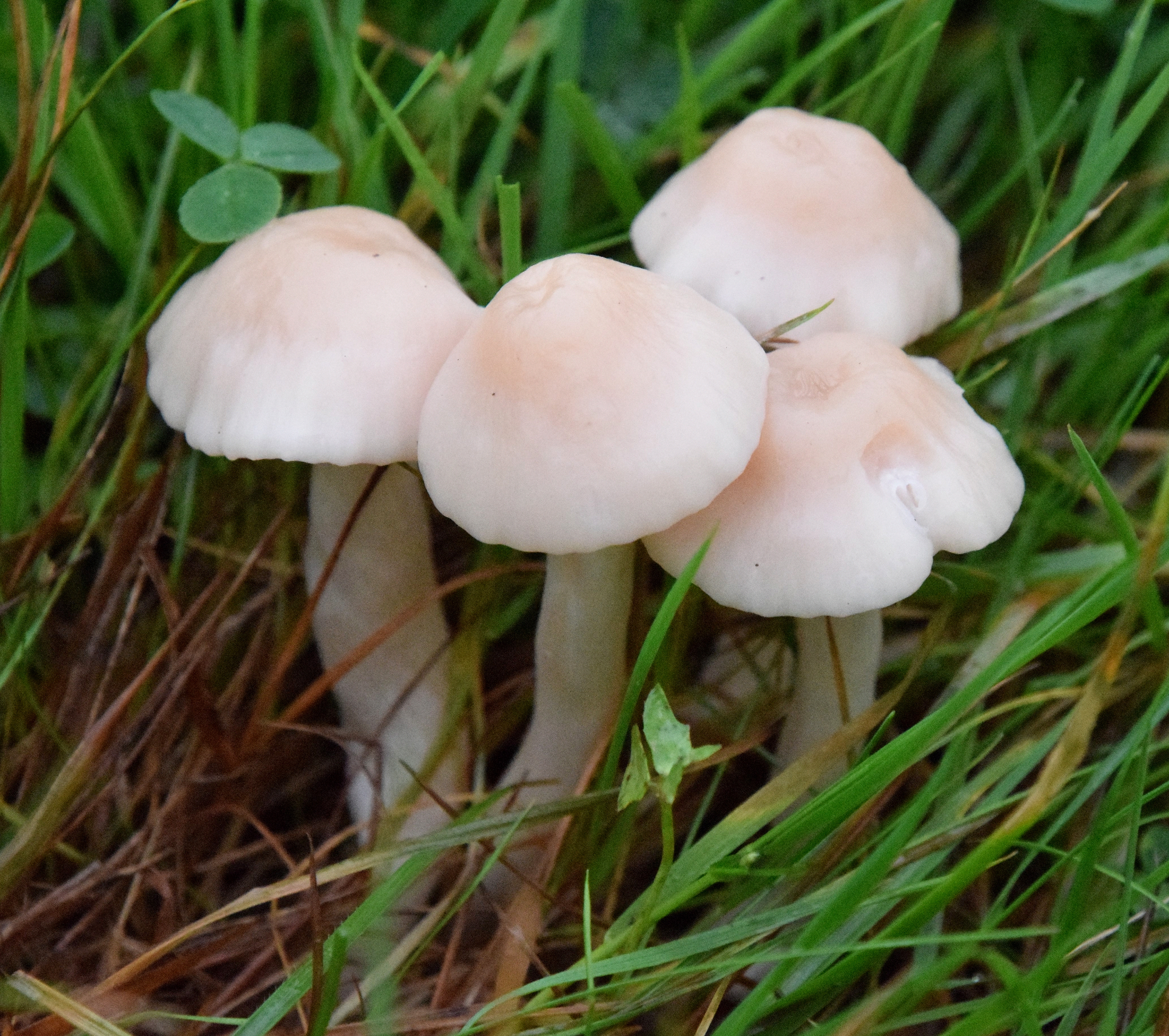
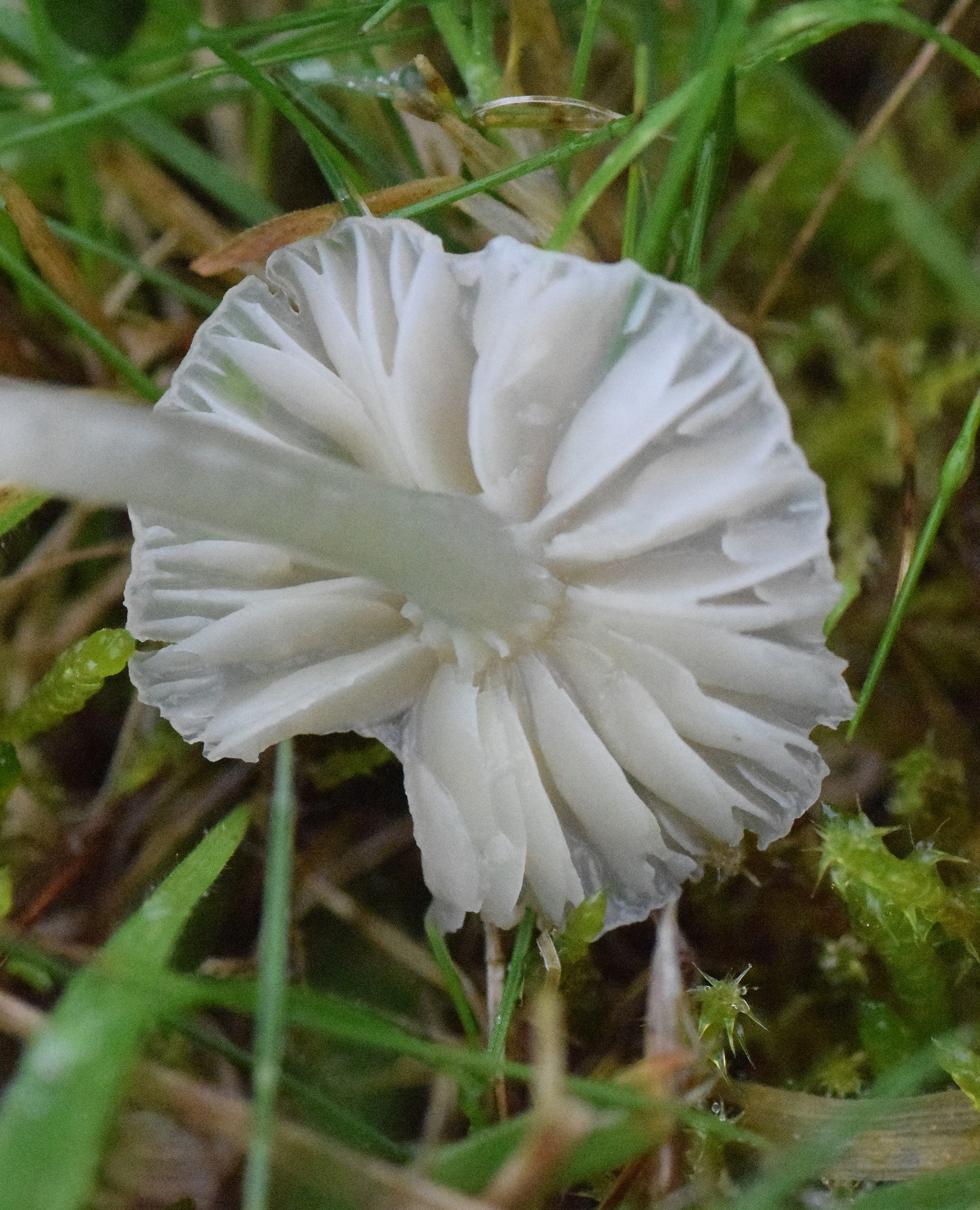
One item largely omitted from these three posts so far is Snowy Waxcap (see here), due to the difficulty of gaining adequate images of such a pale subject. That was finally attained (below) at Stoke Poges Memorial Gardens on 28th. This species became more and more plentiful at all four sites featured herein as the survey period progressed. So everything recorded has now been described and illustrated.
Snowy Waxcaps
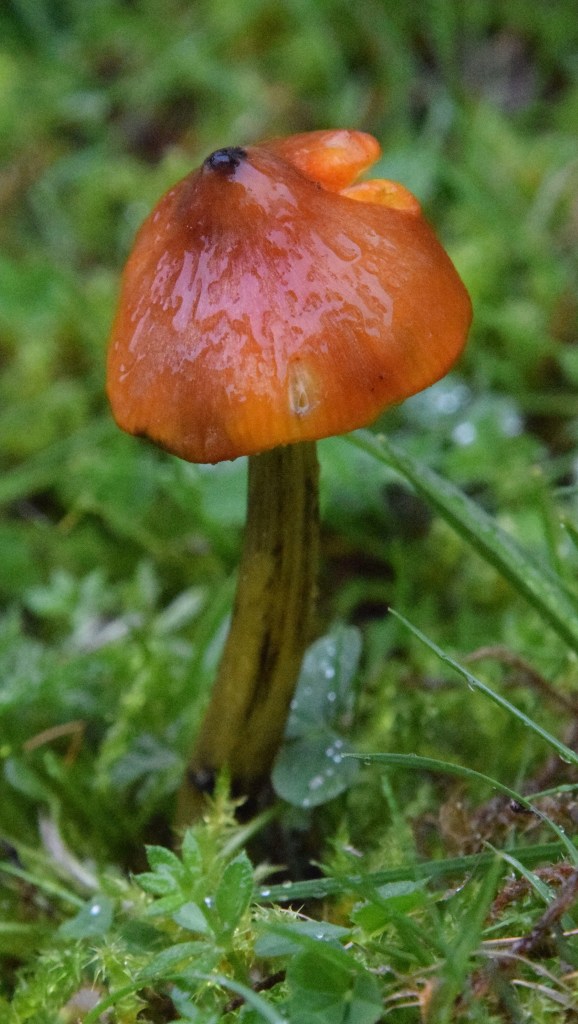
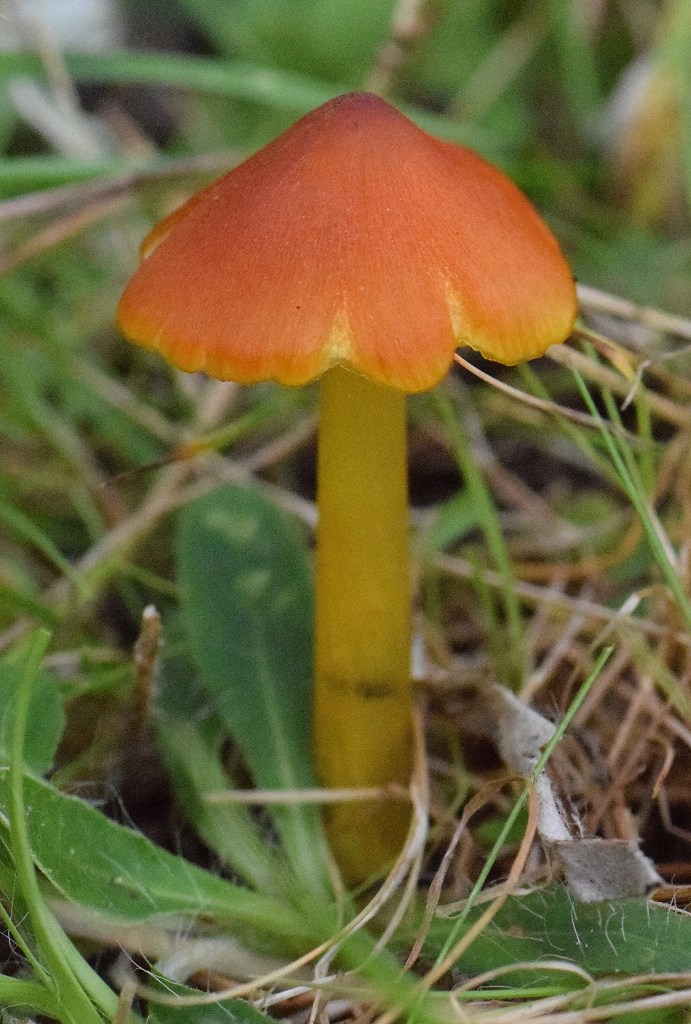
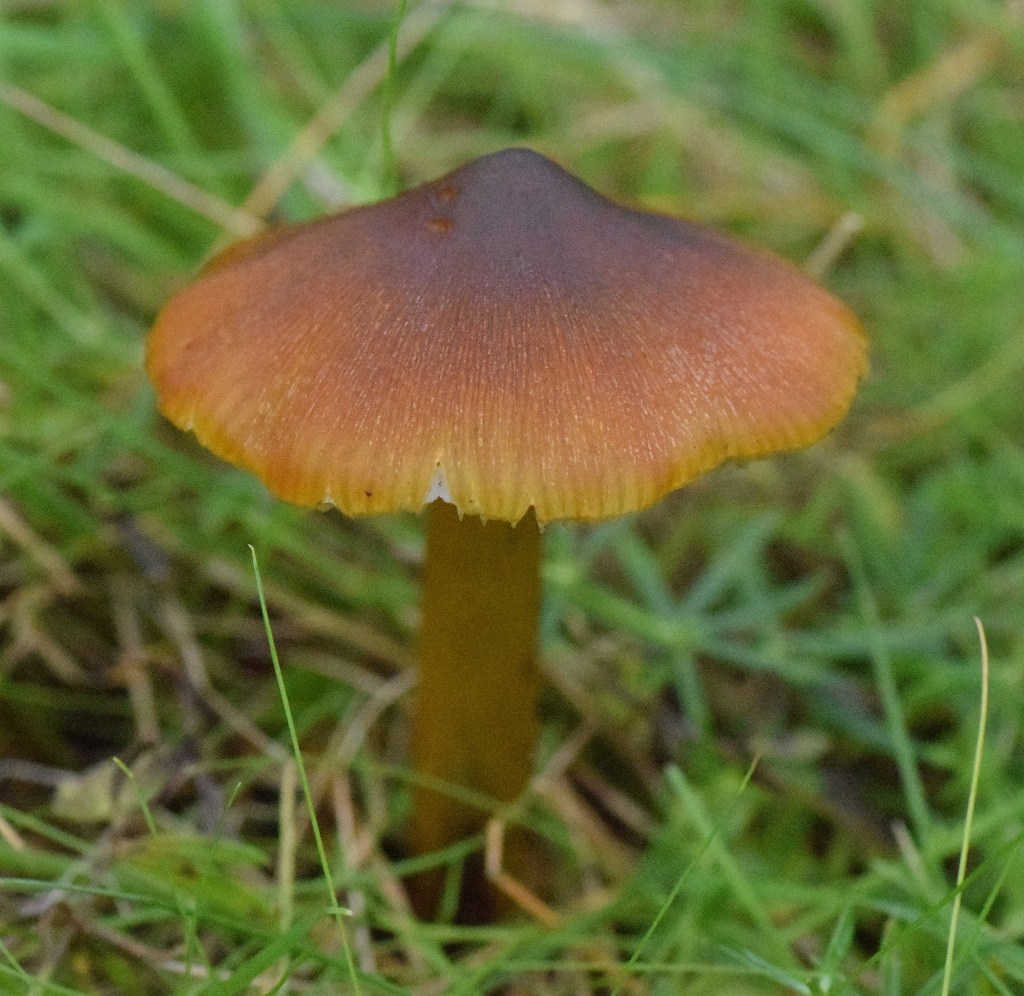
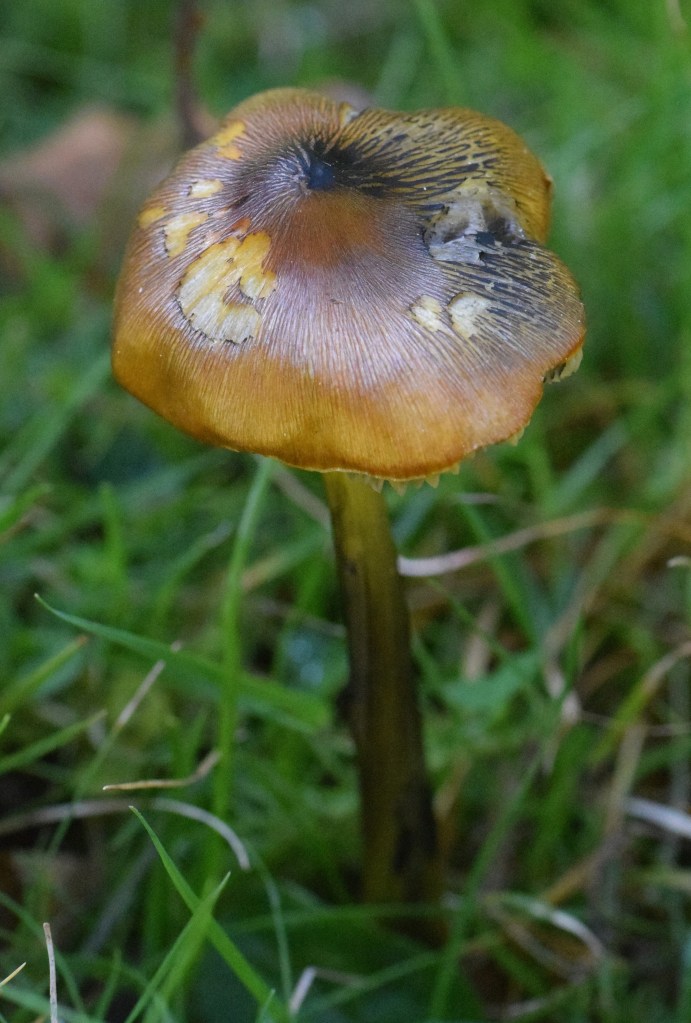
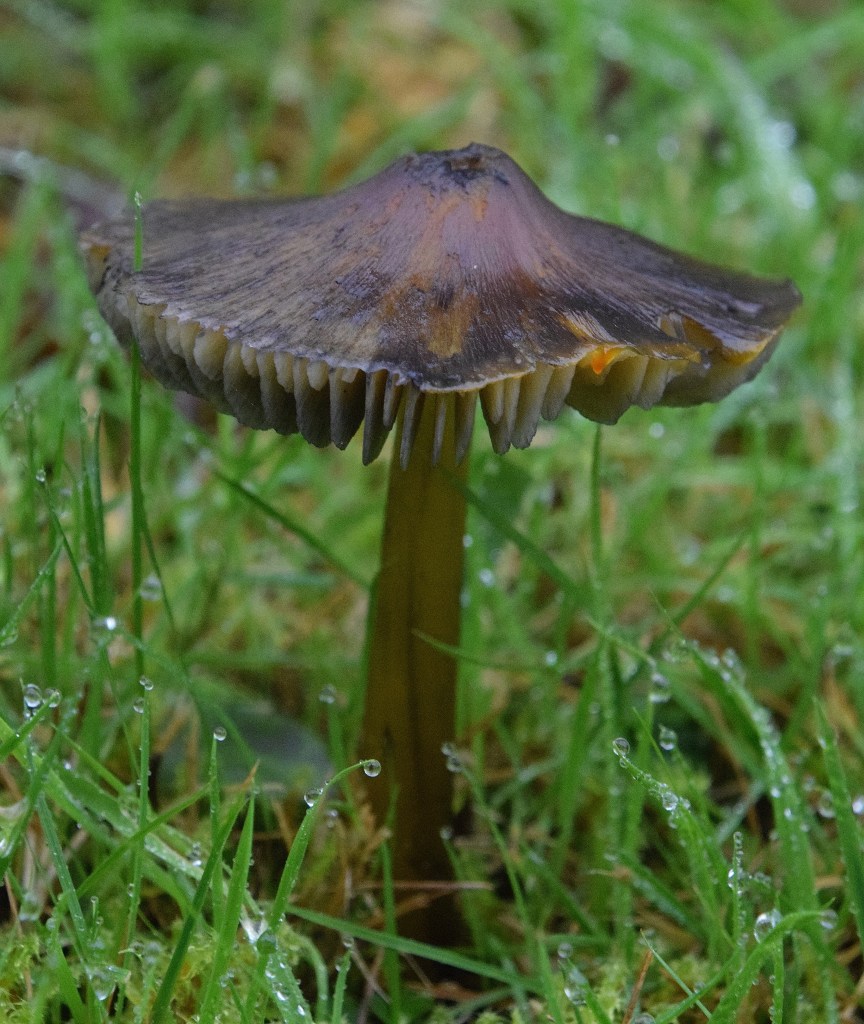
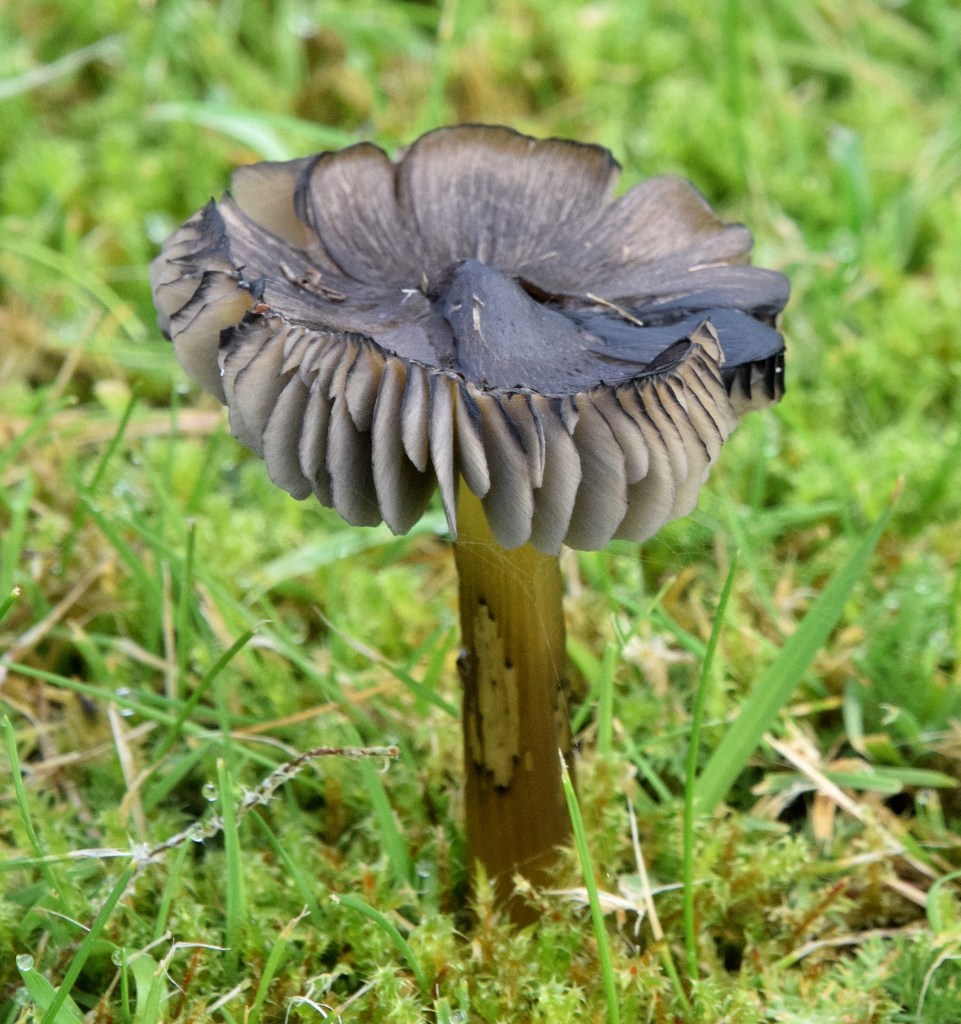
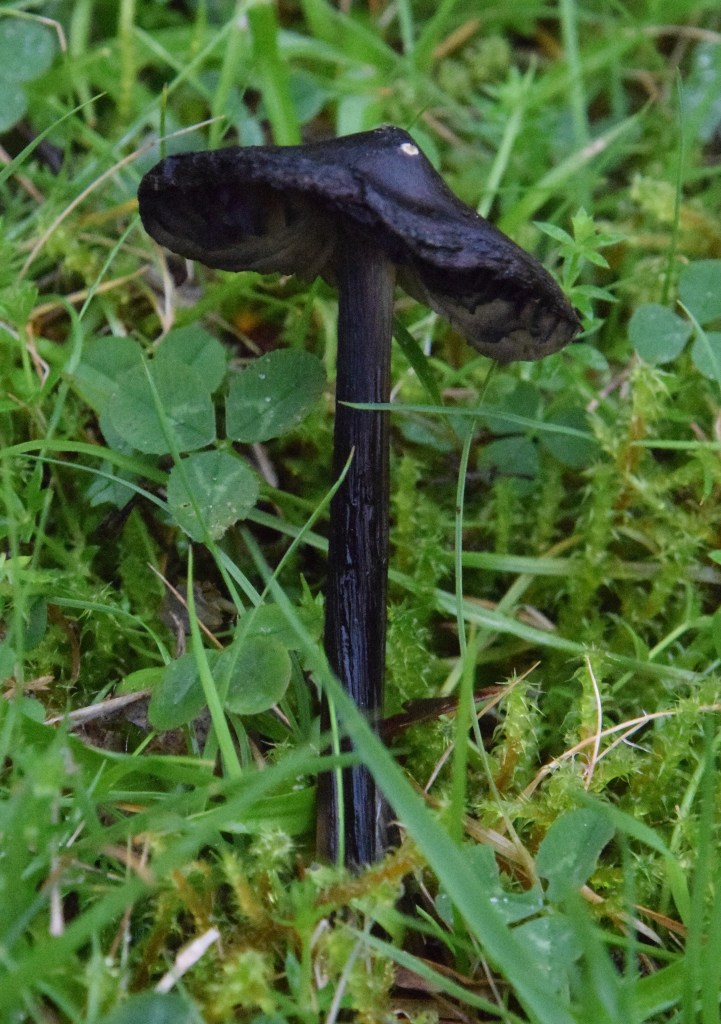
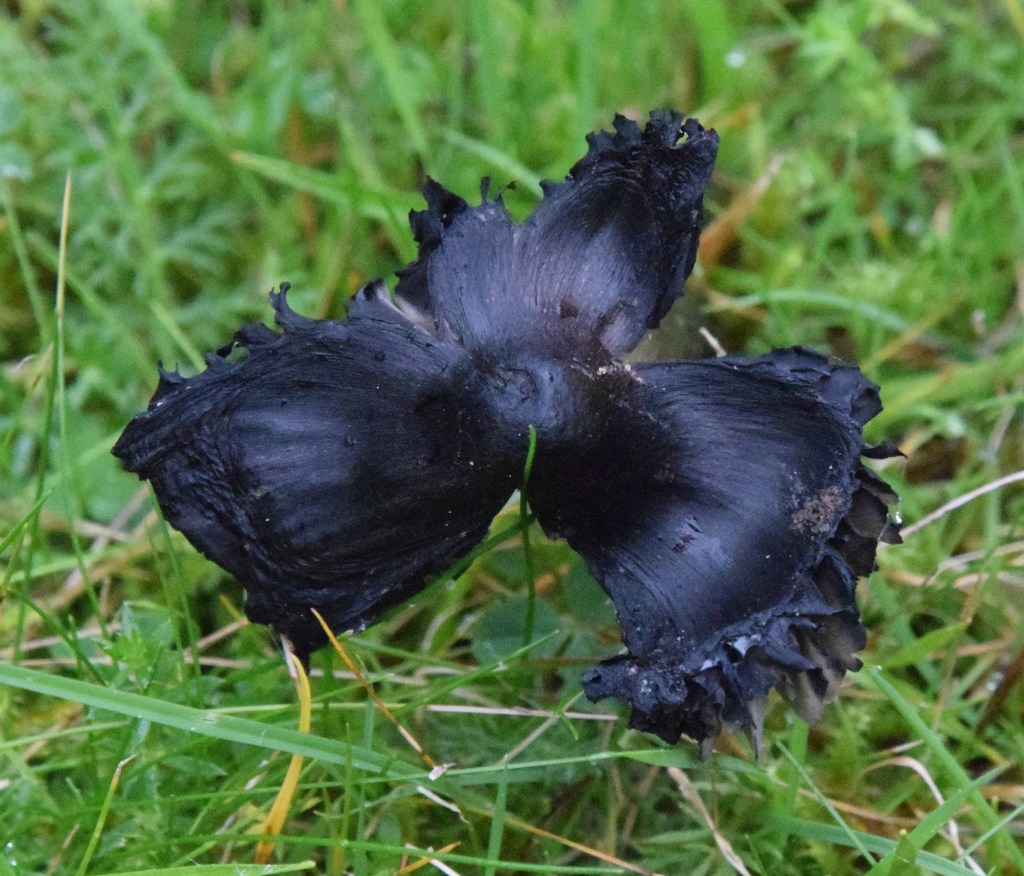
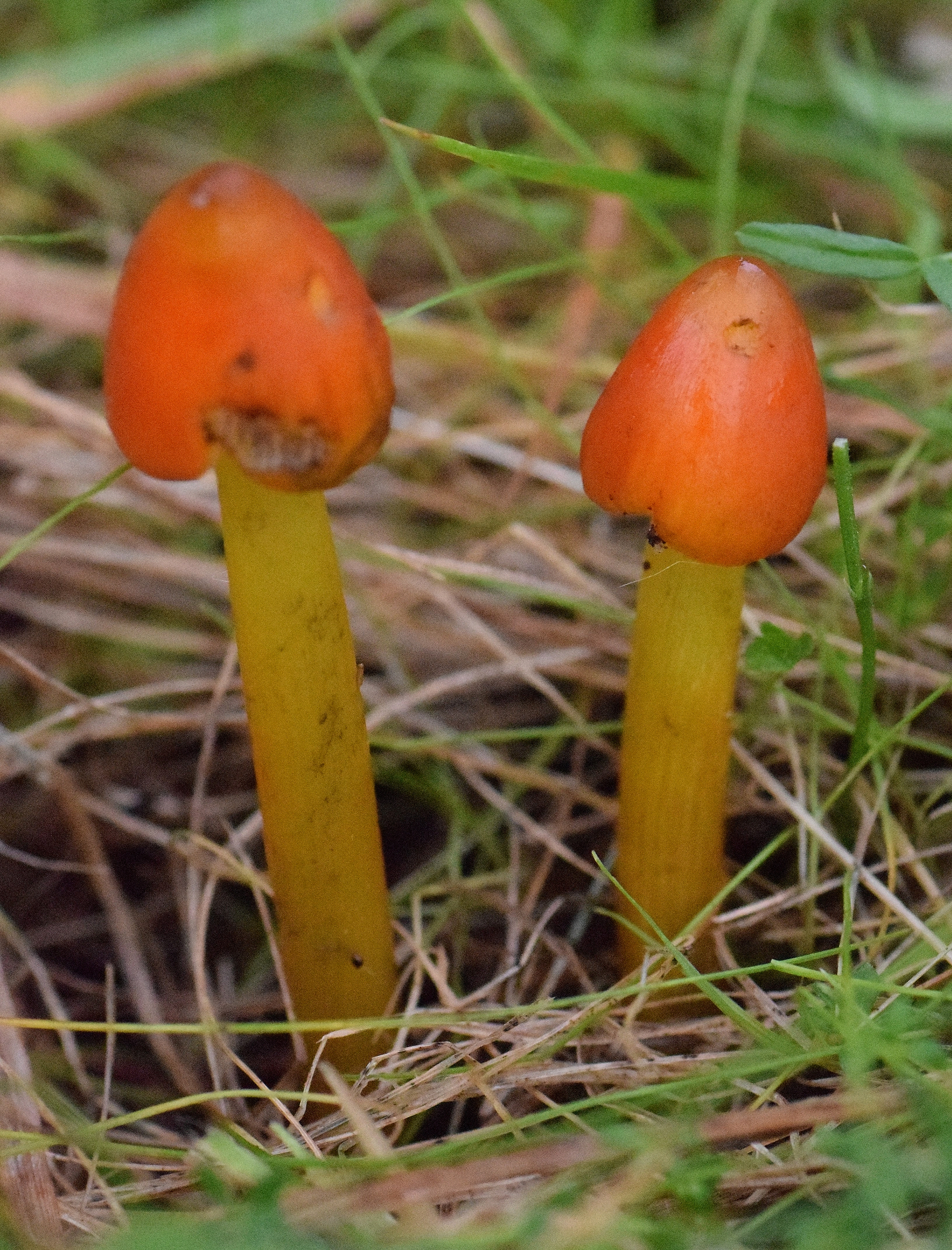
Amongst all the varieties described through this three-post series, perhaps the next most intriguing for me after the subtly colour-morphing Parrots was Blackening Waxcap (see here). This is one of the most frequently encountered European Waxcaps though like all the others localised, and I found them at all four of my survey locations. Also known as “Witch’s Hat”, their conical caps and stems gradually blacken while also morphing through shades of deep orange, yellow and sometimes red. Eventually they become jet black and then may yet stand for some time. I was able to capture the entire fruiting cycle (pictured below) through the different days recounted in these posts, surely my longest such sequence ever.
Blackening Waxcaps through their ageing process
The topic of “Waxcap grasslands” has been my autumn presentation herein as it has given me a different and evolved perspective on fungi from general mushroom hunting in ancient woodlands. I attempt to write entertainingly about stand-out fungi, rather than to present numbers of randomly recorded species or scientific detail that I am not qualified to interpret. This has been an immensely rewarding project.
Eager to progress my autumn Waxcap project in the Chilterns, I checked the Bucks Fungus Group sightings page on the opening day of this post. That source contained a picture of a highly attractive and diminutive Waxcap that I had missed on my previous visit to Prestwood Churchyard. More challenging was it presented the green, slimy and shiny emergent phase of that species’ fruiting cycle that I had yet to encounter in the field.
Emergent Parrot Waxcaps at Stoke Poges
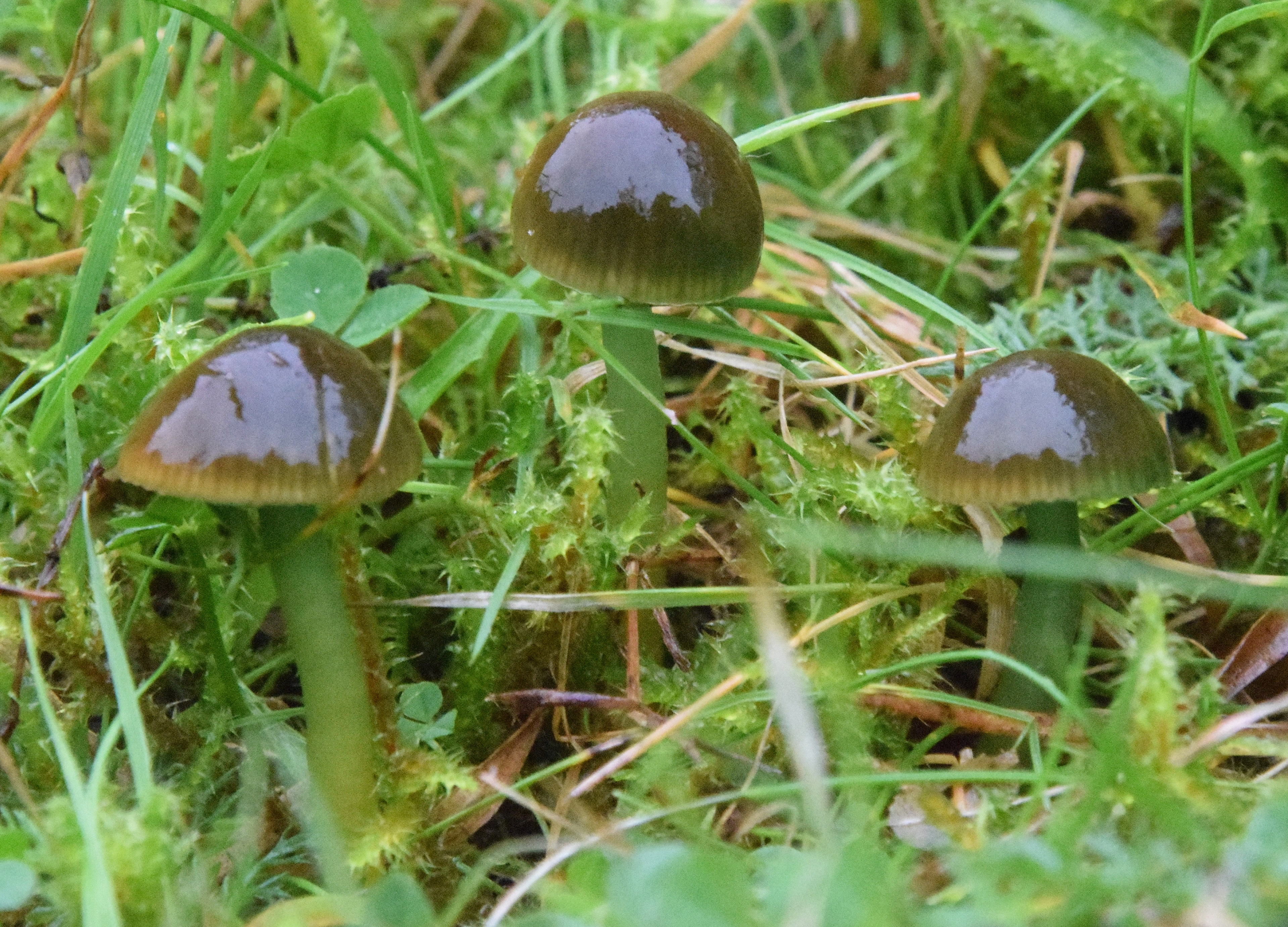
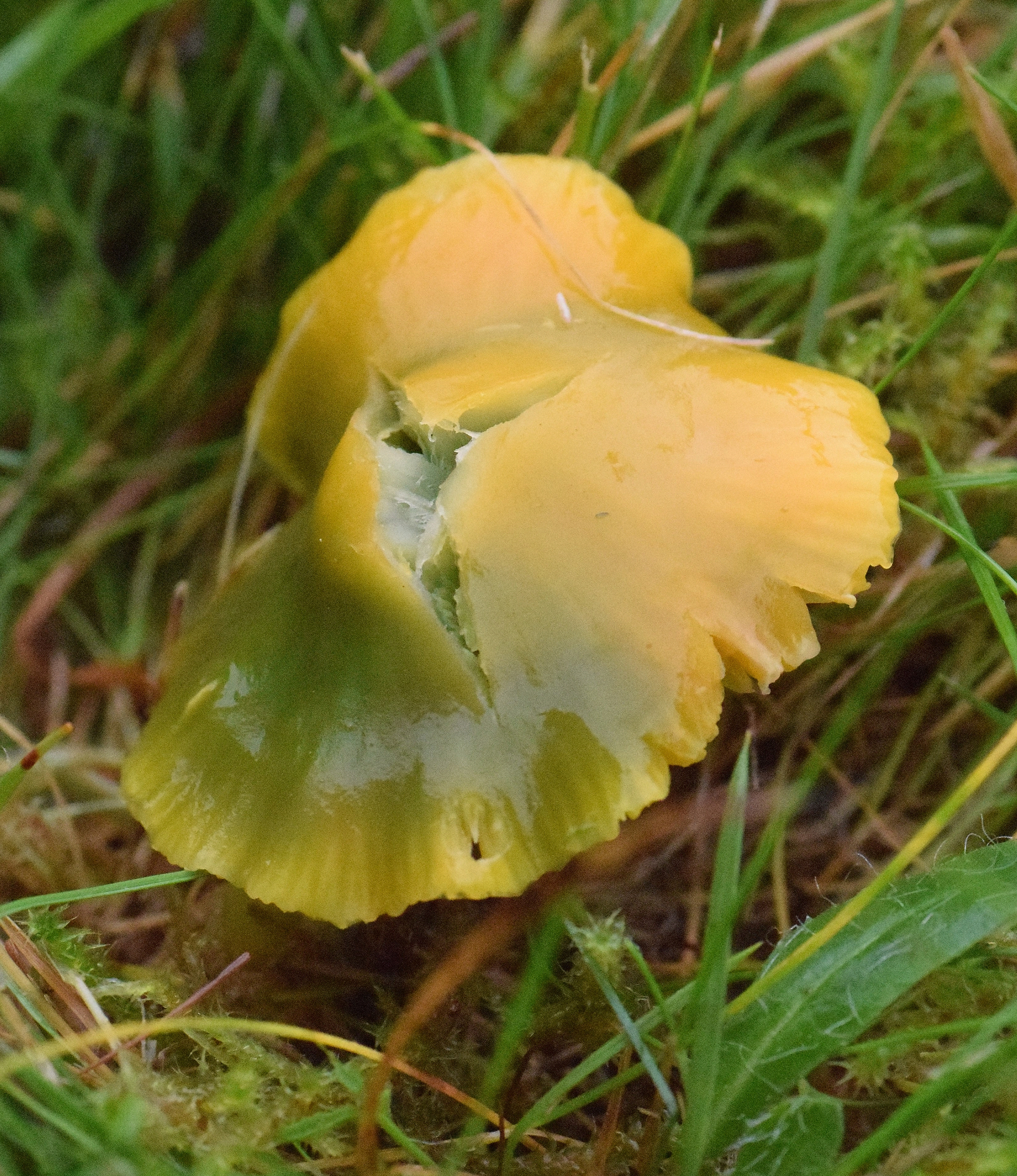
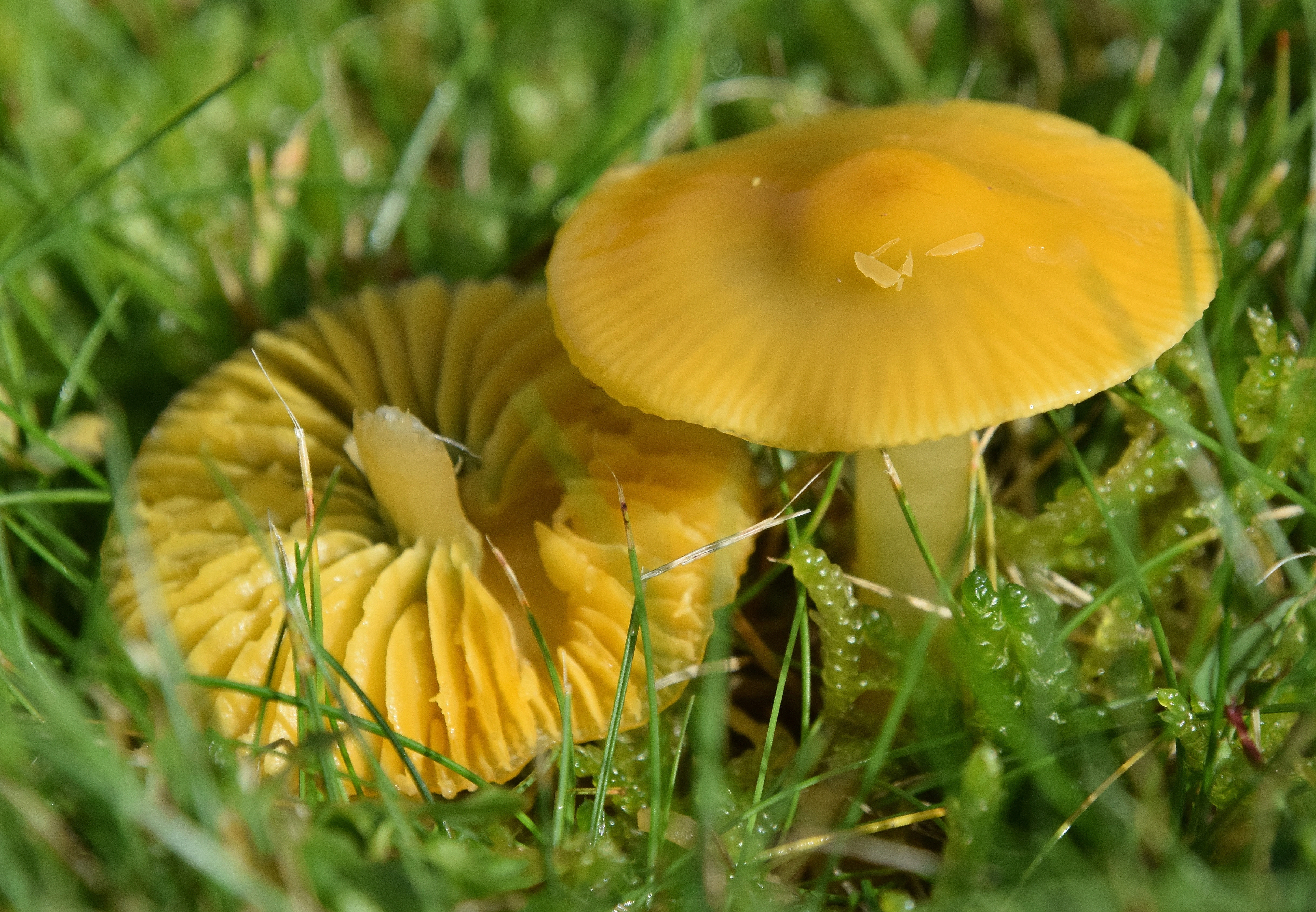
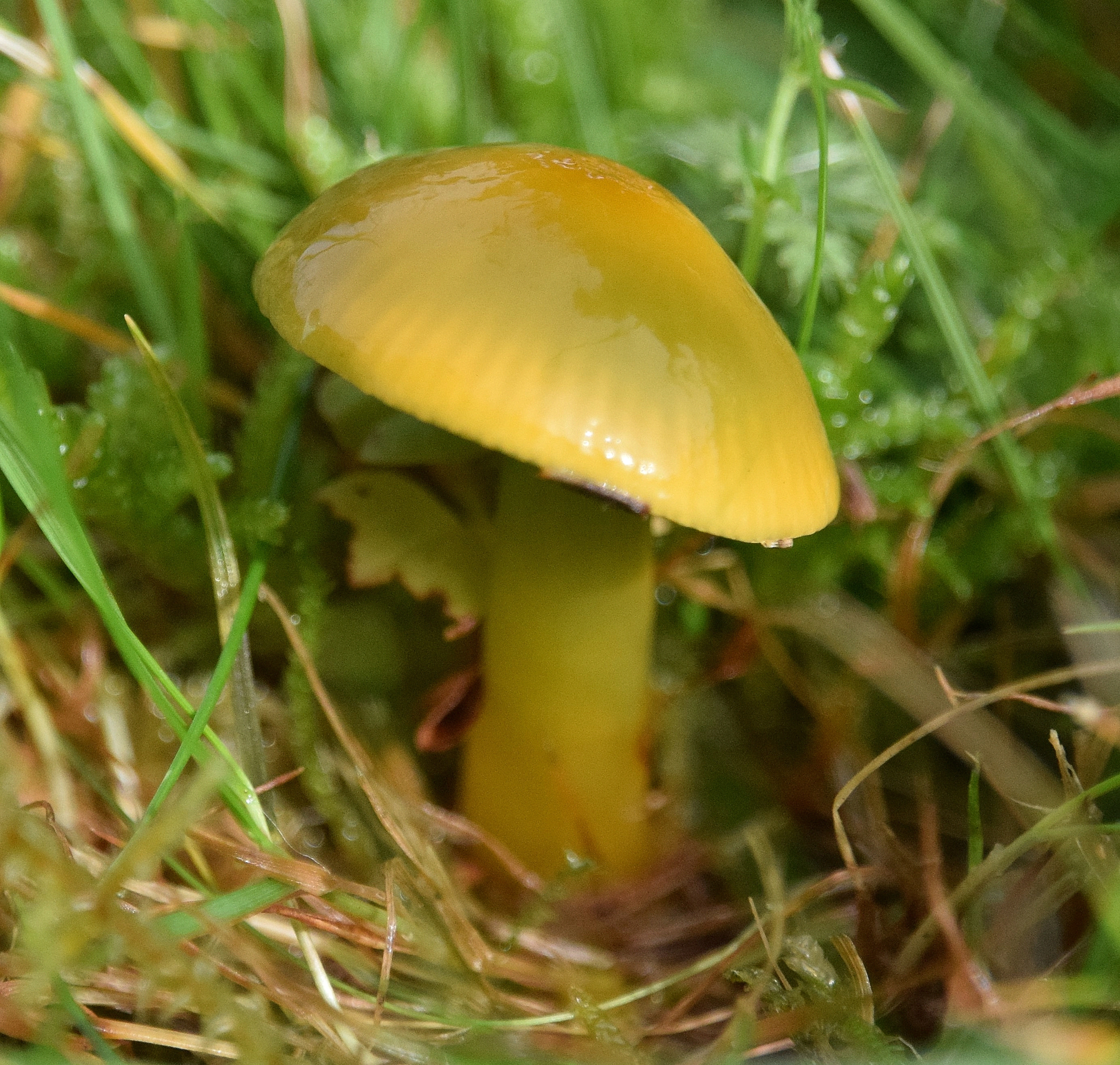
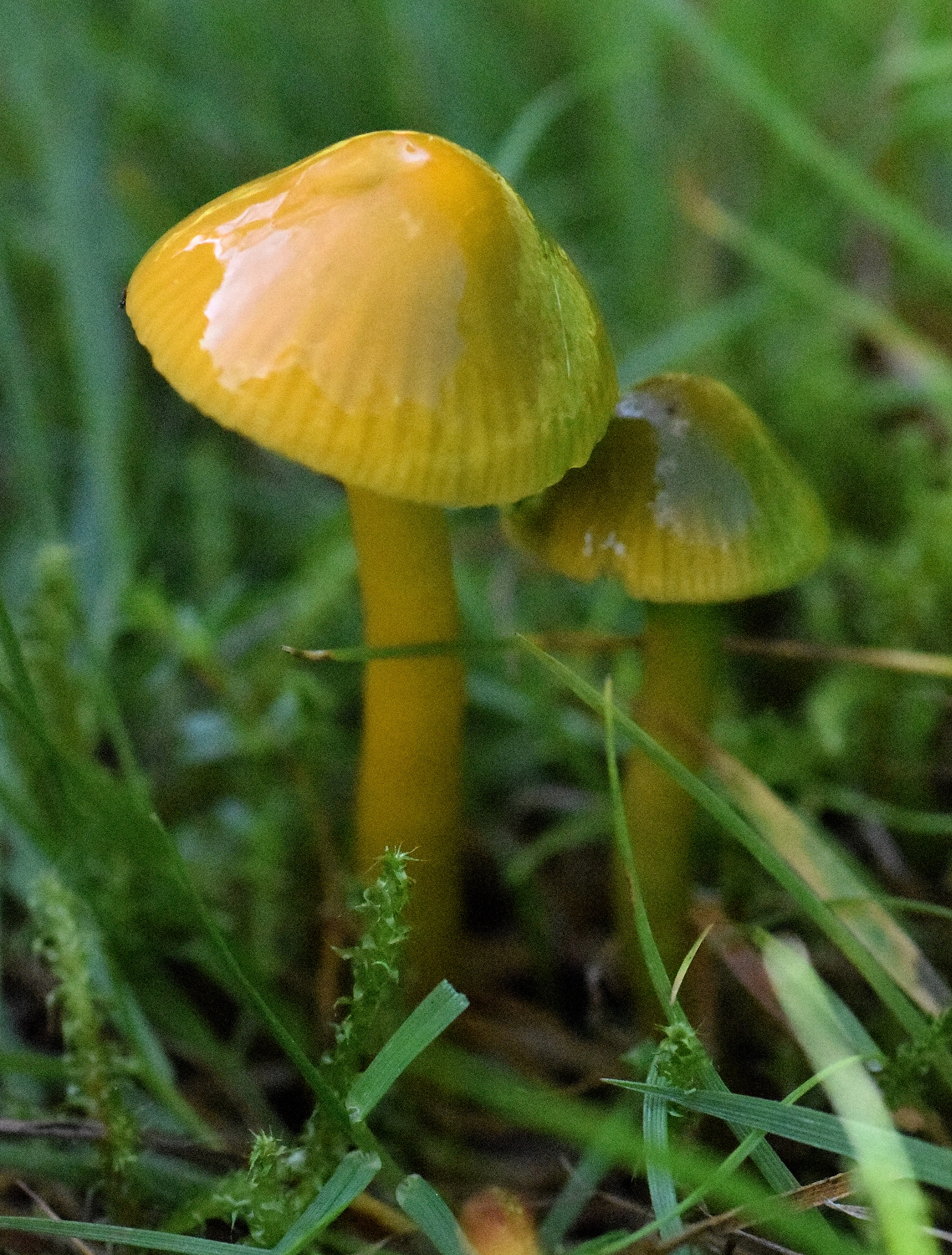
Arriving on site, my first instinct was to check out the Pink Waxcaps of six days earlier. Three had gone over but there were still two emergent items, while the previously noted Smoky Spindles clump lay ruined in a large boot print. My new quest took some time to locate, then it rewarded rather well. Parrot Waxcap (see here) has the particularly appealing quality of morphing through various colour tones during its fruiting cycle. At first the bell-shaped caps are green and slimy, before becoming more rounded as they expand, then turning yellow or orange with brown or purplish tints as the slime washes off.
I had observed orange specimens a year ago at Stoke Poges Memorial Gardens, but now it was the prospect of beholding the especially beguiling green initial phase that had brought me back to Prestwood. The first items I found were nonetheless orange again. I am not a very experienced mycologist, but on both occasions there was just something about this variety that sets it apart from other orange / yellow Waxcaps. In particular, in those first two experiences they seemed more diminutive. This post’s macro studies make them look much bigger than they actually were in the field. Some are tiny, and all have the propensity to entice and enchant in their own quite abstruse manner.
Parrot Waxcaps
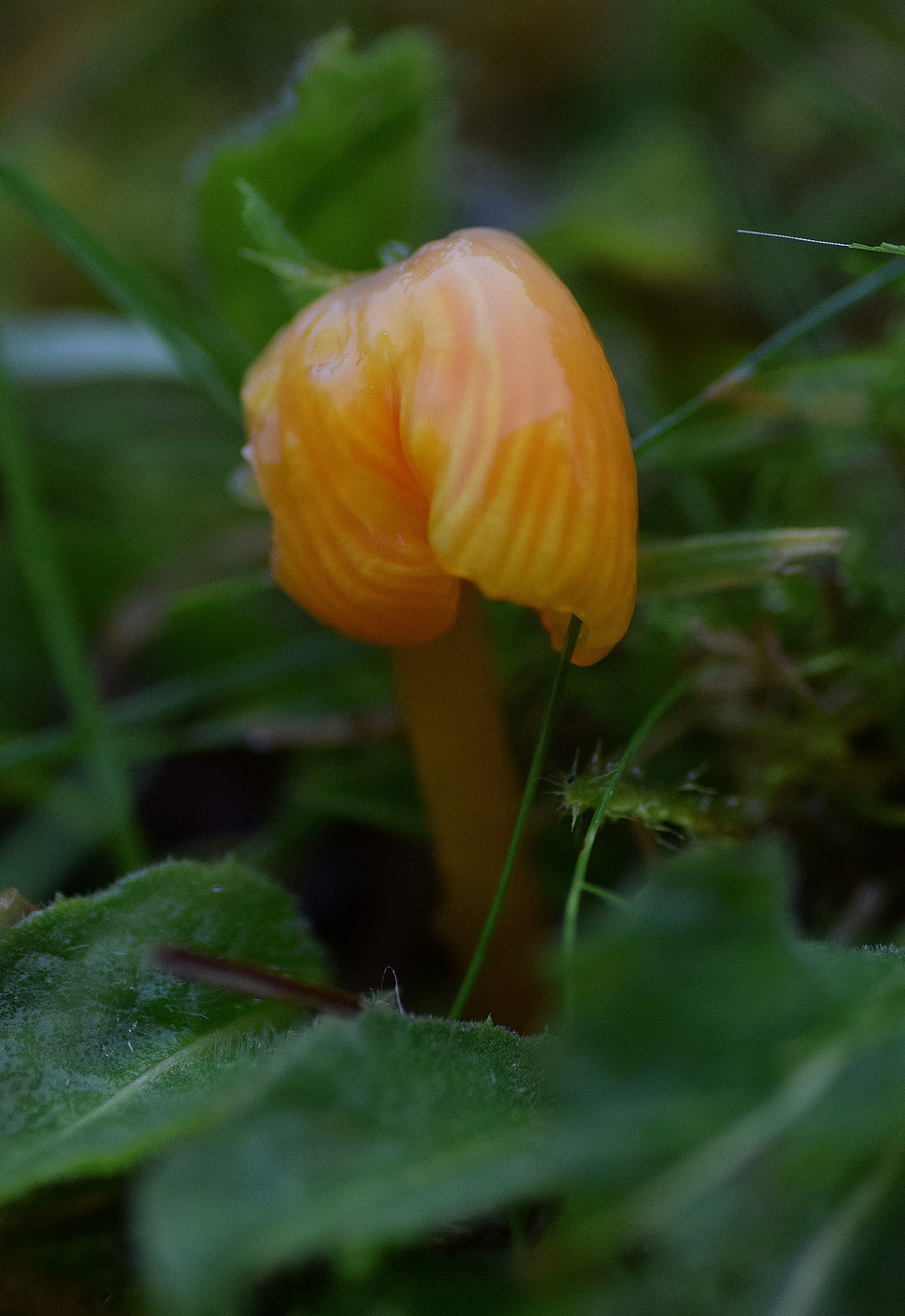
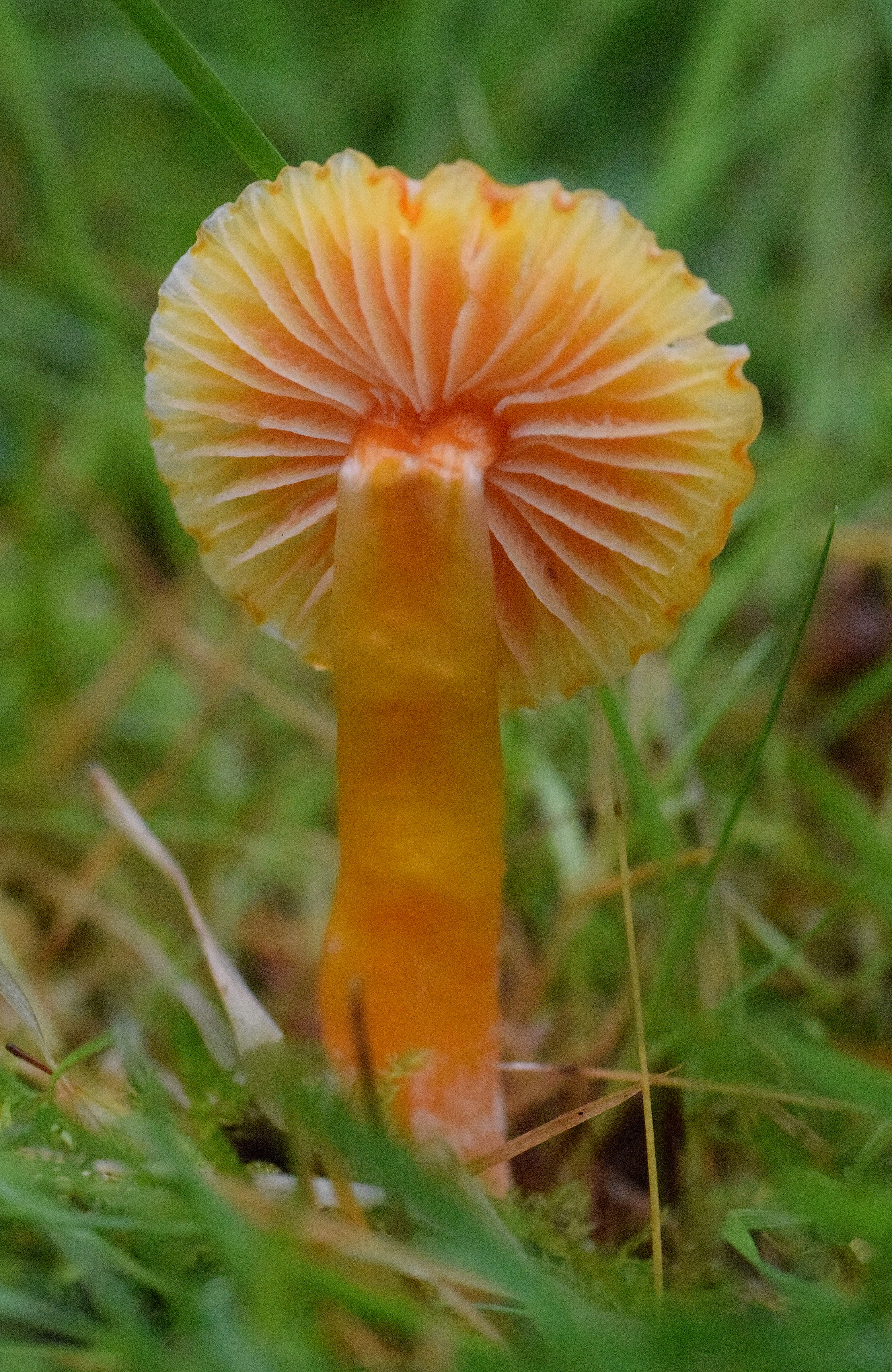
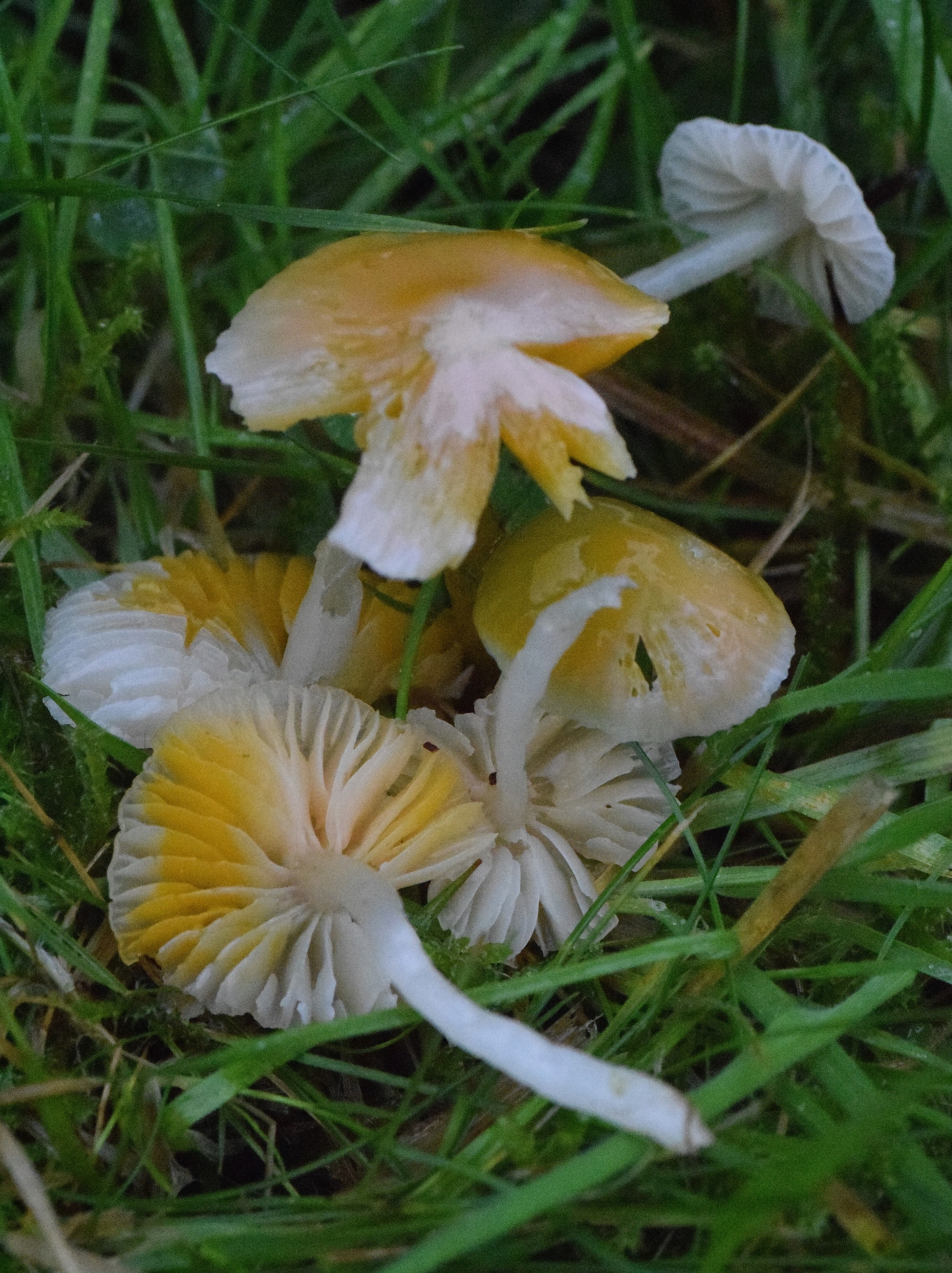
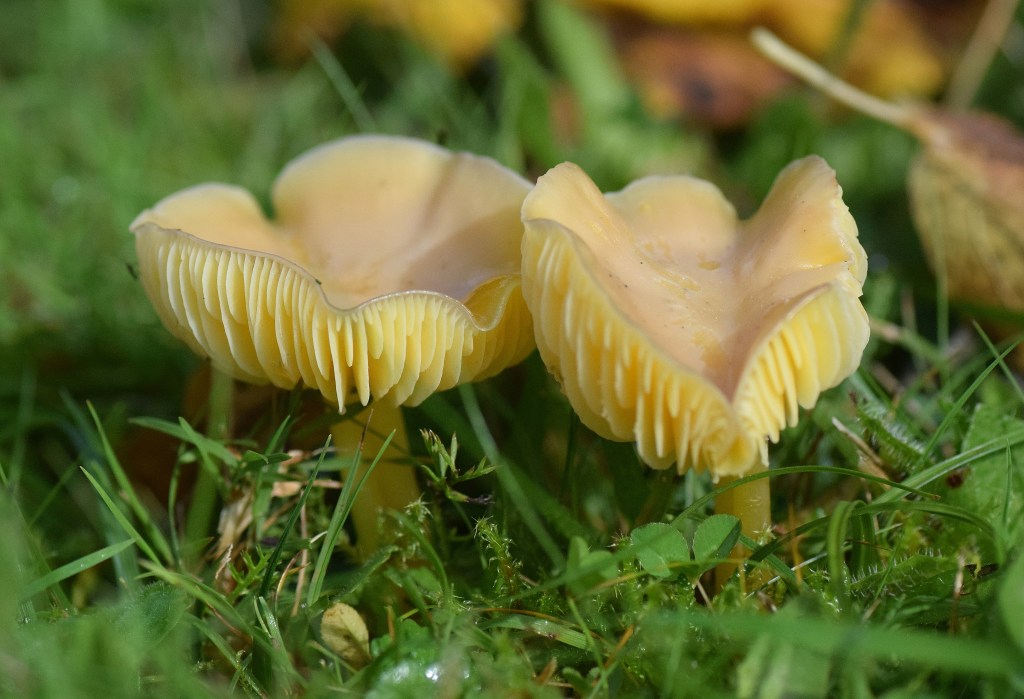
Having converted my quest, more as so often were nearby. Moving on from those five orange specimens (pictured above), two pairs and a singleton, my app next ID’d a second, partly ruined group of ochre yellow and white mushrooms (below) as Parrots too. My doubts over accuracy were removed when hidden amongst them I found a first green and yellow slimer (top row, left above). So that was mission accomplished, albeit that the cap of the specimen in question was no bigger than my fourth finger nails.
Yellow and White-toned Parrot Waxcaps
Back at home, upon seeing the pictures in the relevant First Nature link (here), I just had to observe more of those early stages in the fruiting cycle. This is undoubtedly the most subtly engaging Waxcap I have encountered to date, notwithstanding the pink Ballerina’s obvious beauty. So on 15th I re-visited Stoke Poges Memorial Gardens, also in Bucks (SL2 4NZ – SU 977825). A week previously I had found no Waxcaps at all there. Now the central avenue, that is landscaped as eight oblong, tree planted grassed pitches for the interment of ashes, was carpeted with numbers of at least four species; amongst which was a single Parrot Waxcap in the emergent stage (first row, centre above).
The last-named was pale yellow and white again, having lost its green tones and slime, but was nonetheless unmistakable as this option appears consistently to be. A new item for this autumn on the day was Honey Waxcap (below – see here), whilst Butter Waxcap (here) was present again now and a day earlier at Prestwood. I relied on my Picture Mushroom app to identify these various orange and yellow spectrum species, but truly accurate separation may require assessing both cap and stem texture, gill spacing and smell.
Honey Waxcaps (above). Butter, Blackening and Golden (below) all at Stoke Poges
On Wednesday (16th) I opted for an easier day or so I thought, checking out some churchyards close to home to see what they might contain. It culminated in a visit to St Bartholomew’s, Nettlebed (RG9 5RL – SU 698867), that a year ago a respondent to this journal had advised was a good place for fungi. I couldn’t have imagined what I now found … yes, there are Waxcap grasslands in my home county too! Driving out I appreciated how mycology now motivates me in the way that local birding used to, future county ticks aside, even if only for two late autumn months in the year. And with the experience that had just unfolded, I became even more engrossed in this Waxcap project.
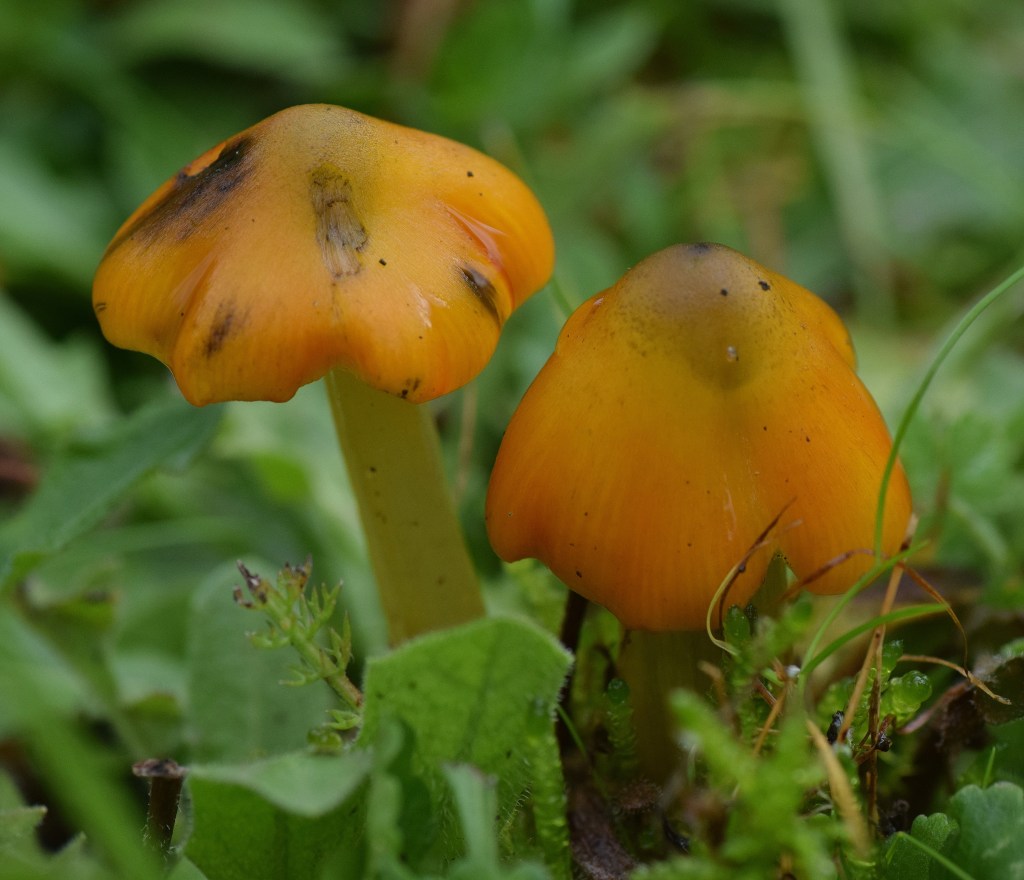
Rather larger Parrot Waxcaps than at Prestwood
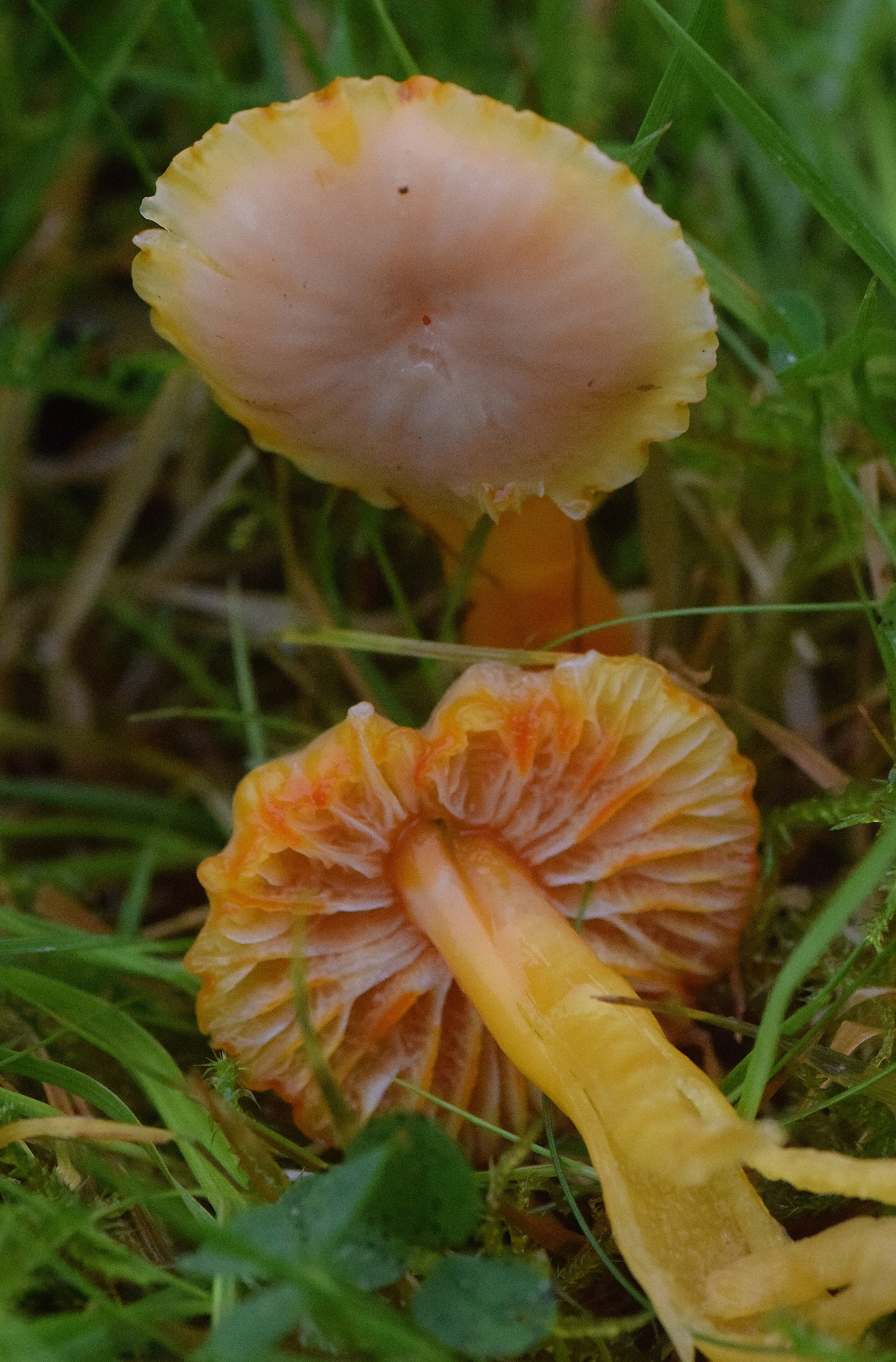
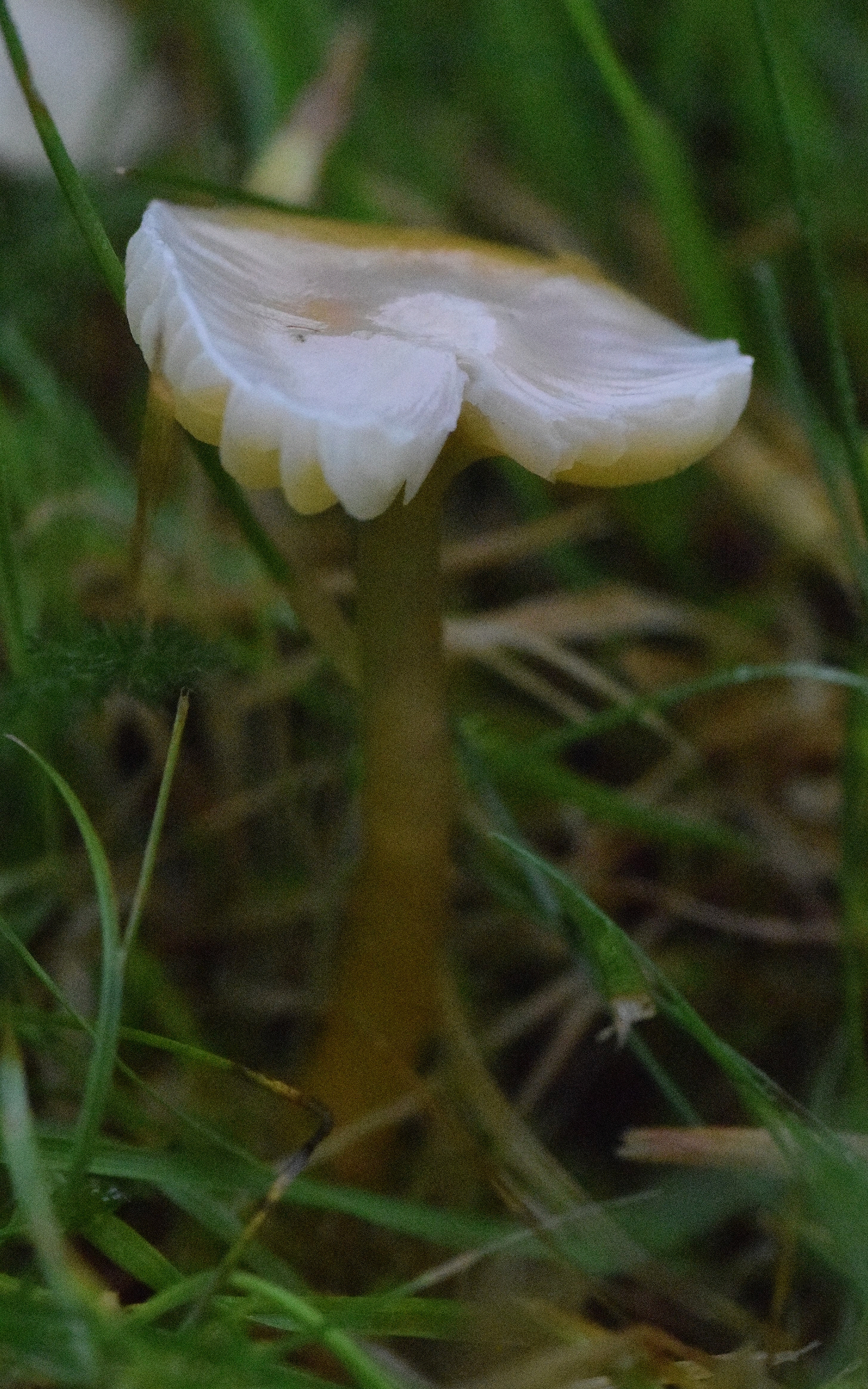
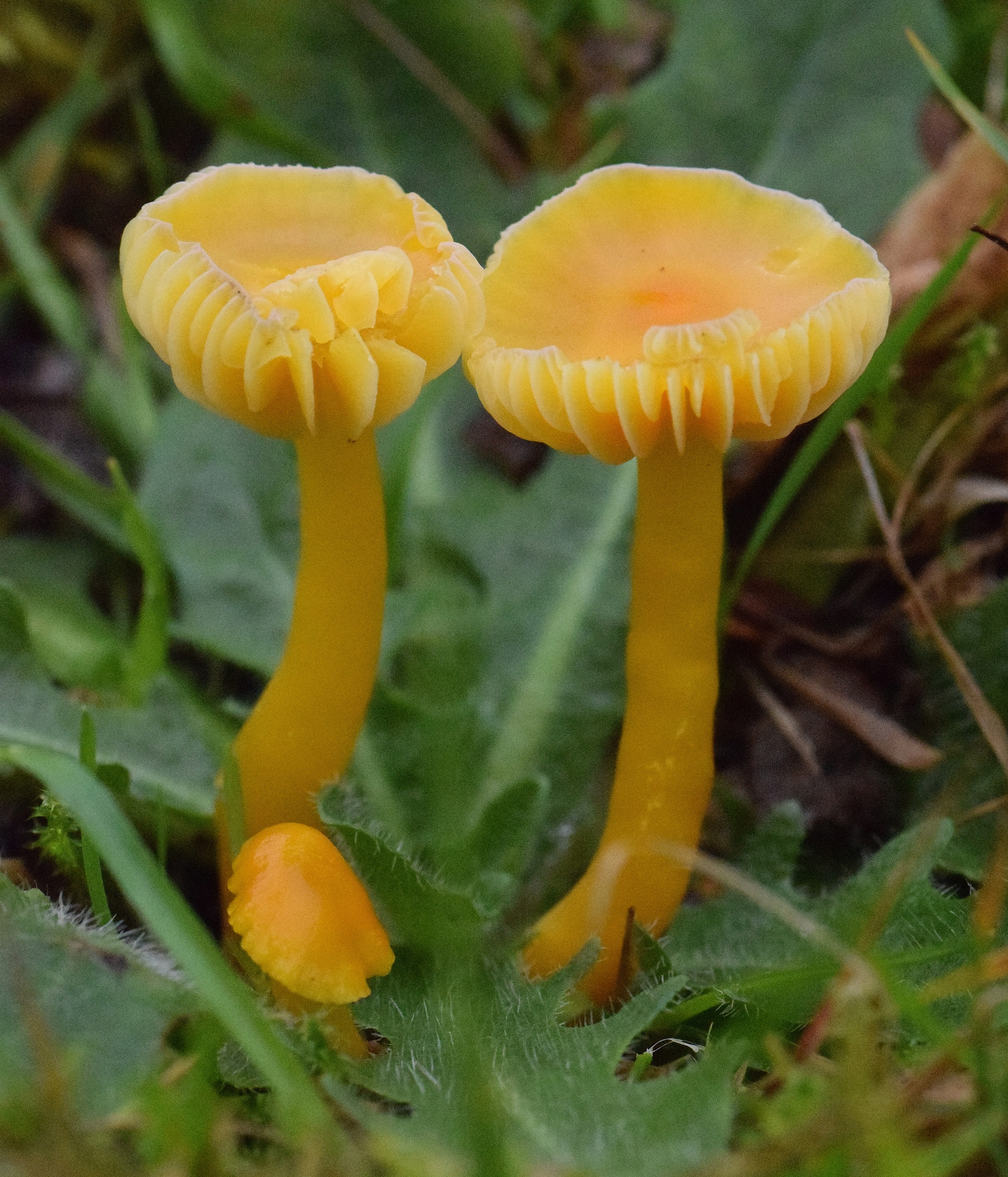
Several Parrot Waxcap here displayed the distinctive green and yellow tints in each stage of the fruiting cycle (above) that I observed. That set them apart from a second orange/yellow variant, Oily Waxcap (below – see here) that I had recorded once before at Prestwood in 2023. Other records were more Golden, Blackening, Meadow and Snowy. The last named was beginning to erupt at all three sites featured herein, but being white is difficult to obtain satisfactory images of.
Oily Waxcaps
Searching online for other Oxon sites, I could find no references for Nettlebed churchyard, but discovered that Waxcap grasslands had existed historically on Boars Hill to the immediate west of the city. Thursday (17th) had a sunny forecast, so I went to check this out but drew blank. At Matthew Arnold’s Field (SP 484023 – see here) the grass was to my mind too long to pick out low growing mushrooms in. The second cited location along Berkeley Road, with its panoramic vistas over the dreaming spires of Oxford is just too large to contemplate, and the grass there didn’t look much shorter.
Parrot WaxcapParrot Waxcap
So I went back to Nettlebed for seconds, and was now rewarded with an emergent Parrot Waxcap with the deep green hues I had been hoping for through the three previous days (pictured above, left). In a little over an hour on site this individual developed noticeably, growing imperceptibly in size and shedding some of its much-desired greenness (right). Mission was thus completely accomplished, but I still desired as many more studies of these colour-fluid little gems as I might find.
The subtle allure of this favourite Waxcap was now exerting quite a hold over me. But on my next visit to Nettlebed on 22nd Oxon’s possibly only surviving Waxcap grassland had been mowed and almost all of the mushrooms had gone. Large, stately items including a fine group of Parasols and a magnificent Goblet had also been removed for no apparent reason. I contacted those responsible for that site’s upkeep, hoping to engage over preserving the precious and irreplaceable resource in their stewardship, but received no reply.
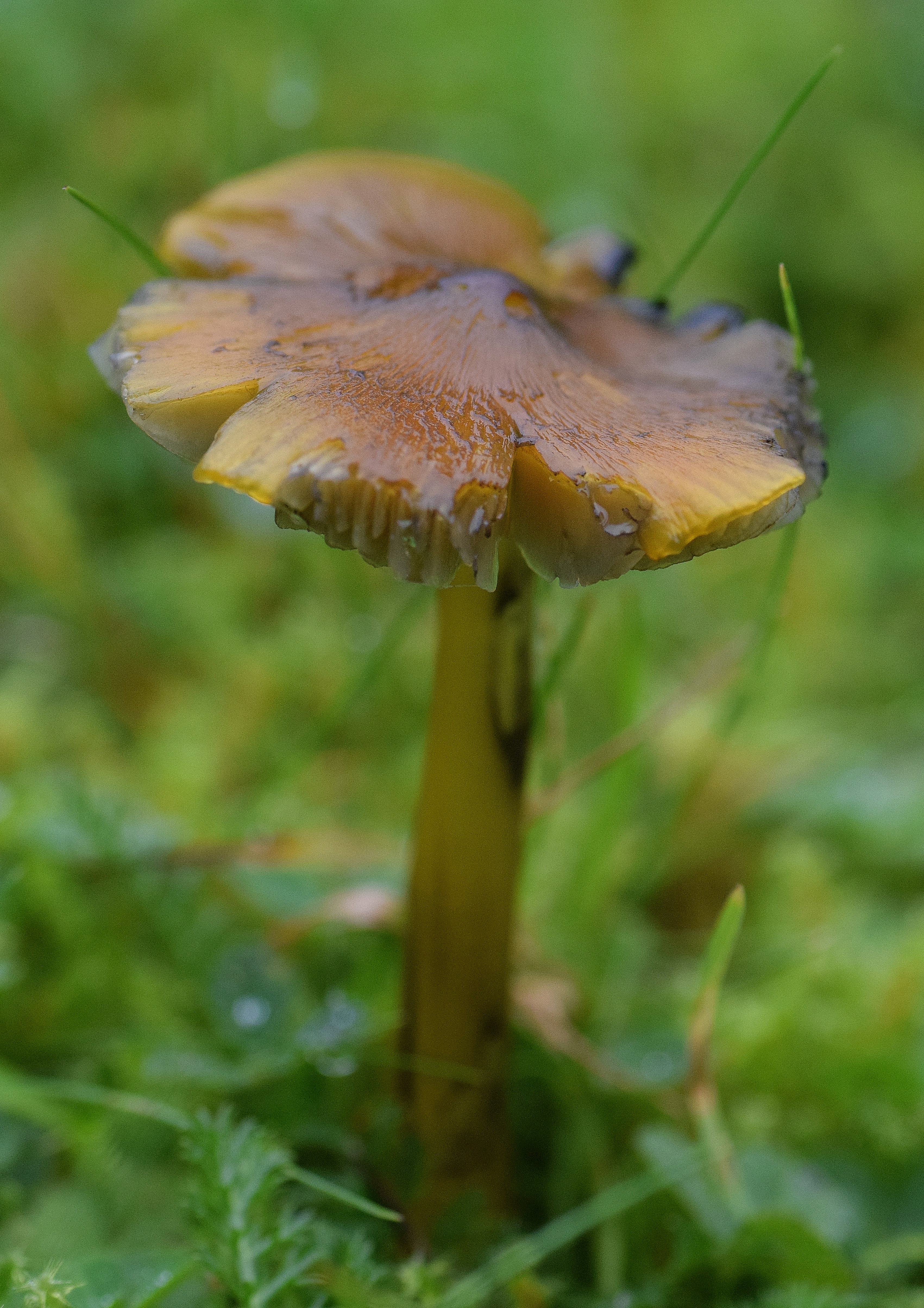
On my next visit to Stoke Poges Memorial Gardens (24th) there was little new interest along the central avenue. So I surveyed some other areas and was eventually rewarded with a large eruption of emergent Parrot Waxcap at w3w ozone.soft.cards. These were all tiny but offered the interesting shapes pictured below (top row). I hoped they would grow and so came back four days later on 28th seeking studies of larger specimens such as at Nettlebed. In the event they were no larger or more photogenic, but now the darkest-toned subjects encountered so far had appeared amongst them (lead post image).
More Parrot Waxcaps
I had imagined this visit might be my season’s last here, but as I rambled on there was more than enough to still motivate me. There were large quantities of different Waxcaps around this wonderful place, and much more fungal interest besides. Eventually I located a second, good-sized cluster of small, emergent Parrot Waxcap (lower row, above) near the far end of the central avenue, at w3w cycle.plus.packet. This had not been there four days previously.
I next moved on to the neighbouring St Giles churchyard (SL2 4PG – SU 975827) where the seemingly burgeoning Waxcap feast continued. Now three groups of again miniscule Parrots had appeared over the weekend and my picture collection of the species continued to grow. The following are the more interesting images from this further location.
Still more Parrot Waxcaps
As October drew to its close and a new dark season arrived I made a further visit to St Bartholomew, Nettlebed, in company with Ewan on our way to a nearby ancient woodland. The vicar was present but did not wish to engage when I attempted to, making it plain that preserving mushrooms is not a priority when keeping the churchyard tidy. The Waxcaps, though were proving resilient, many more having emerged since the site’s recent peak-season mowing. Golden, Snowy and Slimy were all fruiting anew in good numbers, with one or two Blackening and Parrot; and there were some fine examples of Oily Waxcap (pictured below, left) that I have only recorded here this autumn.
Nettlebed specialty Oily (left) and Spangle (?) Waxcaps
We also found a clump of smaller items in the same colour spectrum that to me just seemed different to other varieties recorded so far in this post. My app was not consistent in identifying them but I hope they are Spangle Waxcap (Hygrocybe insipida – above right), that I had previously seen records of from Prestwood but had yet to encounter the mushroom itself. This one is not covered in my usual sources of First Nature or the now ageing Roger Phillips mushroom bible, so who knows?
More certain is that throughout the above-recounted exercise, crawling around on soggy hands and knees, while performing contortions to capture close-up images of often tiny subjects, has been a totally absorbing activity during which nothing else matters. That is very like butterflying on remote mountainsides of southern Europe. So thank heaven for the two-month extension to the annual non-birding wildlife season that fungi provide.
Having done very little with wildlife since the end of the Orchid season, on the last Friday in September I got around to seeing if it was worth starting to mushroom hunt again this autumn. One local source I consult carried a picture of a Pink Waxcap, also rather alluringly known as “The Ballerina”, in a Chilterns churchyard of mycology renown that I first visited last November (see here). That item is described as one of the most attractive of the much-sought Waxcap genus (here), and is also quite rare and very localised across its range. So like the Scarlet Waxcaps that had attracted me to the same location first time around, I decided I would rather like to see it.
Pink or “Ballerina” Waxcap
This was also a test of whether fungi can still fascinate and motivate for a fifth as in past seasons, and the first foray confirmed the answer to be a most definite yes. Churchyards and other burial grounds, especially when managed sympathetically, often provide habitat in which mushroom genera that might have become scarce elsewhere can still thrive. Holy Trinity, Prestwood (HP16 0HJ – SU 874996) is a prime example, being a remnant of pristine acidic grassland in the chalk hills of the Chilterns (see here). Its recipe of short grass left unmown in season, nutrient-poor soil rich in moss on an acidic base, and no use of artificial fertilisers supports populations of Waxcaps, Pinkgills and more besides that have those needs.
Waxcaps exert a particular fascination upon fungi enthusiasts that I have quickly succumbed to. They are considered to be amongst the most spectacular British gilled mushrooms, since some are red or orange. Others are bright yellow, ivory, white, brown, green or black; some even changing colour as they age. Separating the various small red, orange or yellow species within the genus is notoriously difficult, since these may not be accurately identified without very detailed analysis. And last but by no means least, Waxcaps usually disappear if land where they occur is treated with agro-chemical fertilisers.
A “Waxcap grassland” such as Prestwood churchyard will have developed over centuries, so is irreplaceable, and can be destroyed quickly by excessive disturbance, neglect or artificial fertilisation. Pink Waxcap (Porpolomopsis calyptriformis – see here) itself, which occurs annually on site, is a Biodiversity Action Plan species for its special importance and rarity. I did locate this quest at the first attempt but in a ruined state though the remains still suggested some of the original beauty. Of two other larger items, Fibrous Waxcap (below left – here) was also ruined though I managed to make a photogenic arrangement out of the bits; while Yellow-foot Waxcap (right – here) was merely munched.
From left: Fibrous, Persistent and Yellow-foot Waxcaps
Over this and a second visit on 3rd Oct I also recorded three more orange / yellow-toned Waxcaps. Of those perhaps the most beguiling was Blackening Waxcap (here) that, as the name suggests bruises upon touching and blackens as it matures. Golden (or Lemon) Waxcap (here) I had recorded in quantity once before at Aston Clinton Ragpits during last year’s Orchid season. Now it was abundant again at Prestwood churchyard in autumn.
Also there was the intriguingly titled Persistent Waxcap (above centre – here), described as a scarcer item that pops up scattered amongst larger numbers of related species such as those cited above. It is distinguished by its conical shape, but guess what? The rest might produce similar individuals themselves. Another indicator is that it doesn’t blacken. For all these IDs I now use the Picture Mushroom app, that doesn’t always get things right but is more reliable than free options. Then I match them to authoritative resources and attempt to apply common sense. If still in doubt I consult expert local mycologists, who will acknowledge that mushroom identification is always an imprecise art.
Golden WaxcapBlackening WaxcapGolden Waxcap
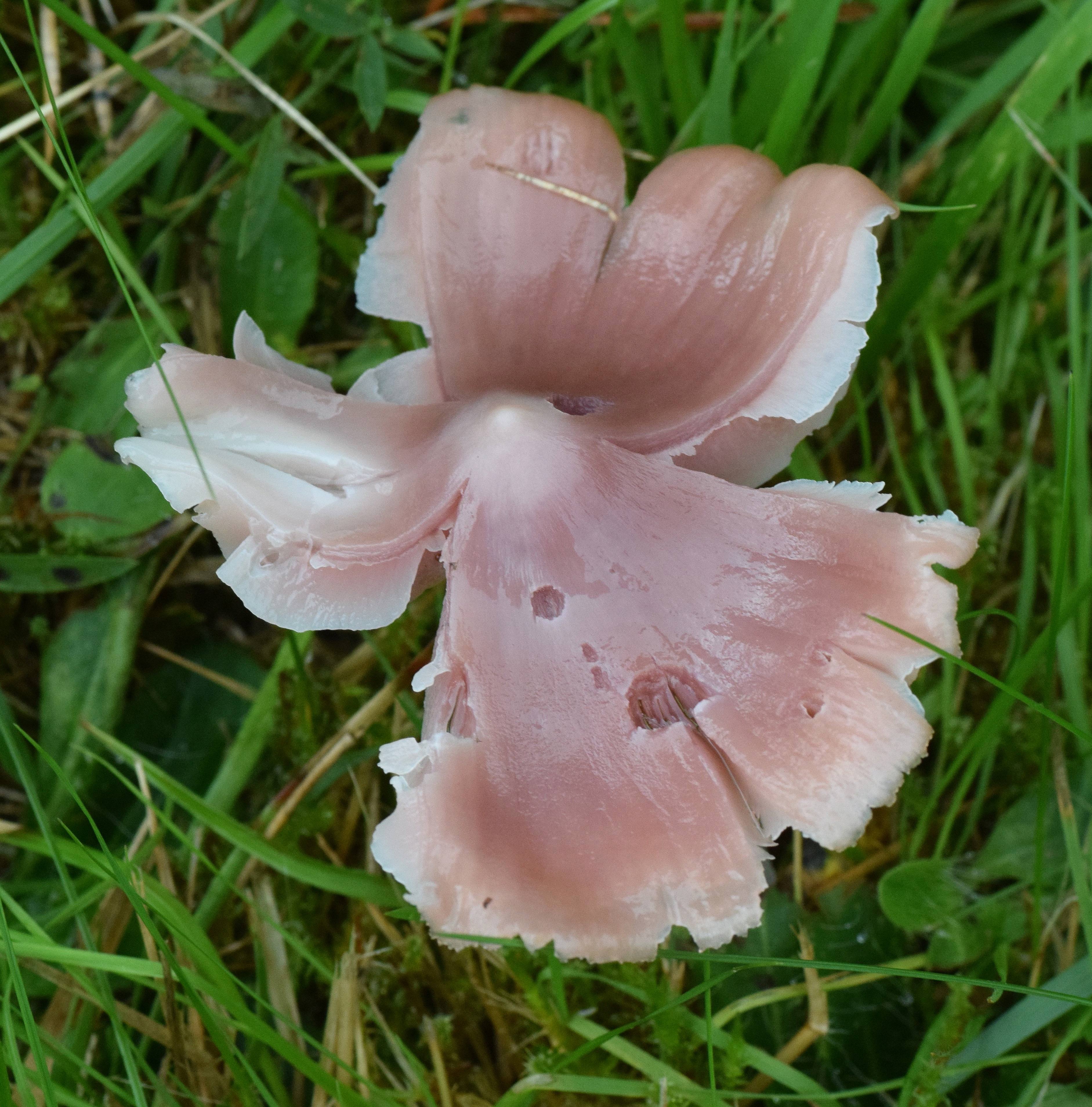
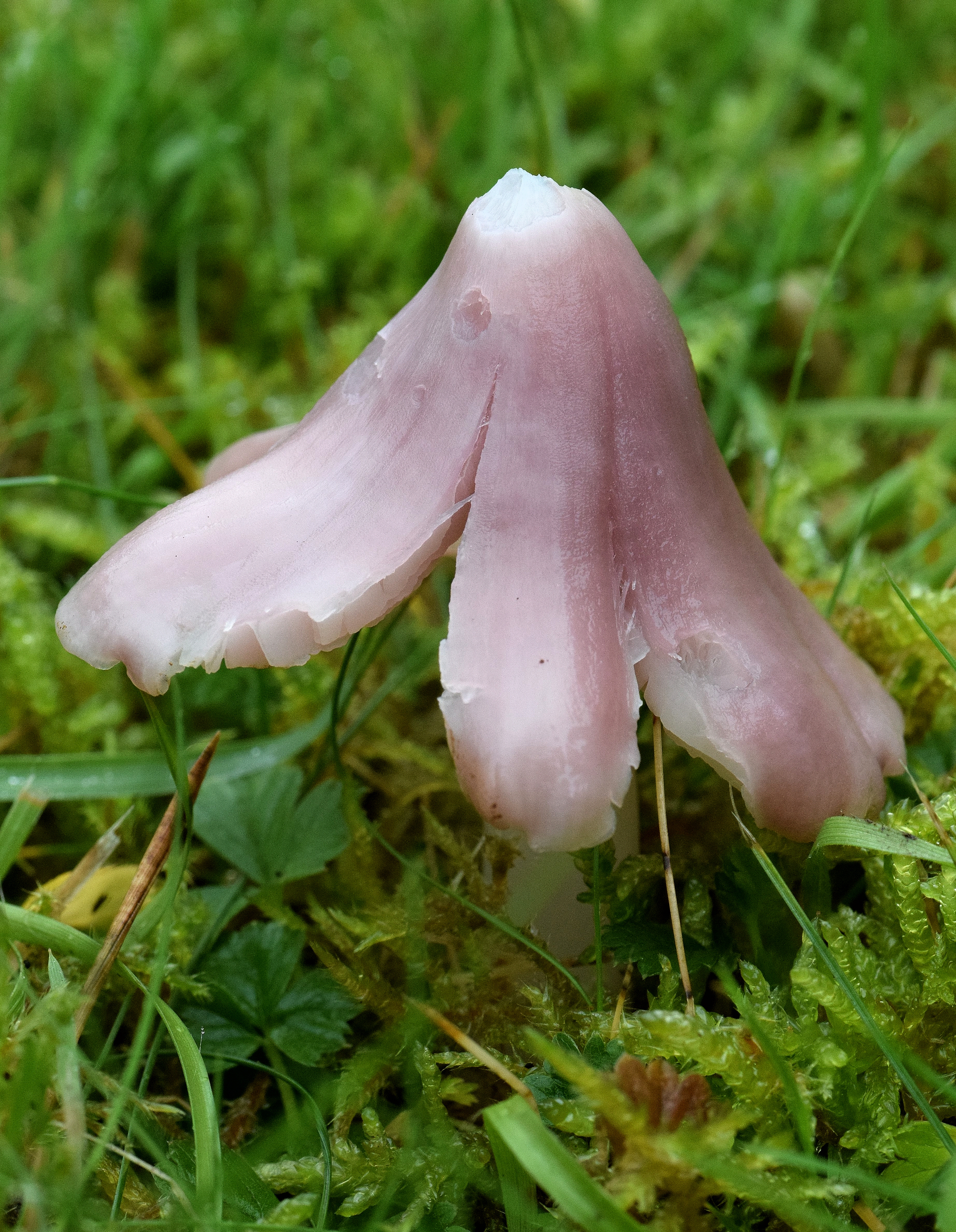
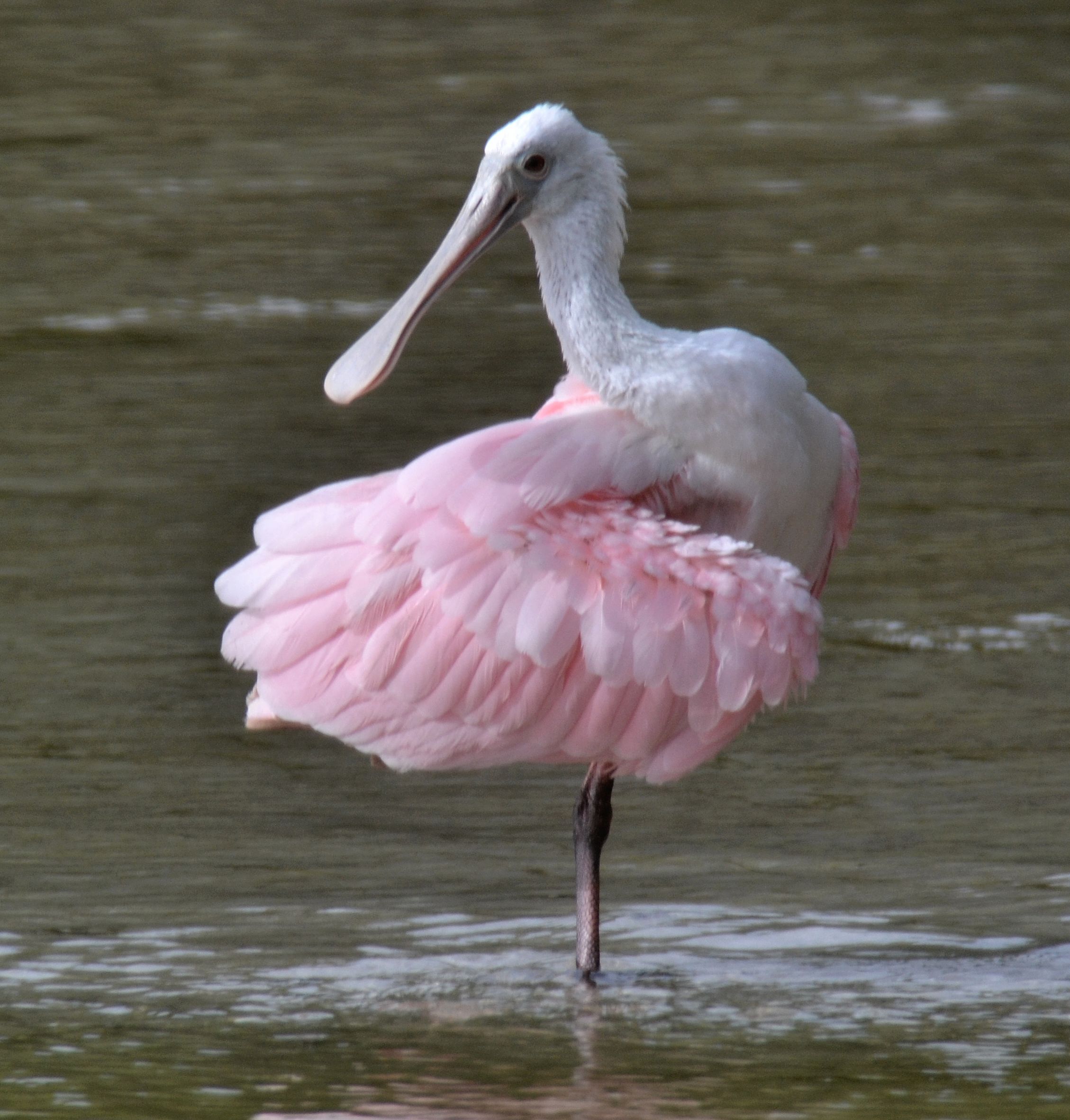
Upon my third visit (9th) I hit paydirt, there being four new Pink Waxcap on the south side of the church. These things of beauty, upon conversion did not disappoint … ballerinas indeed! The initially domed caps very noticeably split, turn up and fan outwards as individuals age. It might be a stretch of the imagination to compare fungi with the juvenile Roseate Spoonbills (see here) of my 2018 Florida lifetime’s experience, but there are similarities. What absolute stunners … in both instances. Solitary specimens of this species are said to re-appear in the same place for many years. It is said to be more common in western Britain and especially Wales, sheep grazed upland commons on acidic soils being more frequent habitat than churchyards. But here it is one of Holy Trinity, Prestwood’s most iconic residents and I had now been amply rewarded.
Pink Waxcaps on 9th October (with archive Roseate Spoonbill)
On this occasion there was a growing profusion of orange / yellow Waxcaps that my preferred ID app seemingly struggled with. The isolated cluster formerly ID’d as Persistent Waxcap now returned Golden, and there was apparent confusion betwen Blackening and options that are not actually meant to do that. All this illustrated the formerly cited difficulty of separating those similar species by sight alone, so better maybe to simply appreciate their special appeal … which is considerable. An extra item on this day was Slimy Waxcap (here) that I also recorded here in 2023. Lastly, Meadow Waxcap (here), also seen in 2023, was present on each visit.
Golden Waxcaps (above, left and top), probable Persistent Waxcap (bottom) and ageing Blackening Waxcap (right). Meadow (left) and Slimy (right) Waxcaps (below)
Of the Pinkgills I found up to five varieties (pictured below) on the three occasions recounted herein. That less showy genus (Entoloma) frequently occurs alongside Waxcaps (Hygrocybe) and is regarded as a fellow indicator of “unimproved” grassland quality, though there are woodland species as well. They are mainly small to medium-sized mushrooms, noted for a remarkable consistency of gill tone (ie pinkish) contrasted with a wide range of cap colours. I soon became quite fond of these understated allies amongst their mostly brighter Waxcap congeners.
From top left: Silky Pinkgill (see here), possible Indigo Pinkgill (here), Blue Edge Pinkgill (here)twice (bottom row with young Waxcap) and Priest’s Hat Pinkgill (E infula)
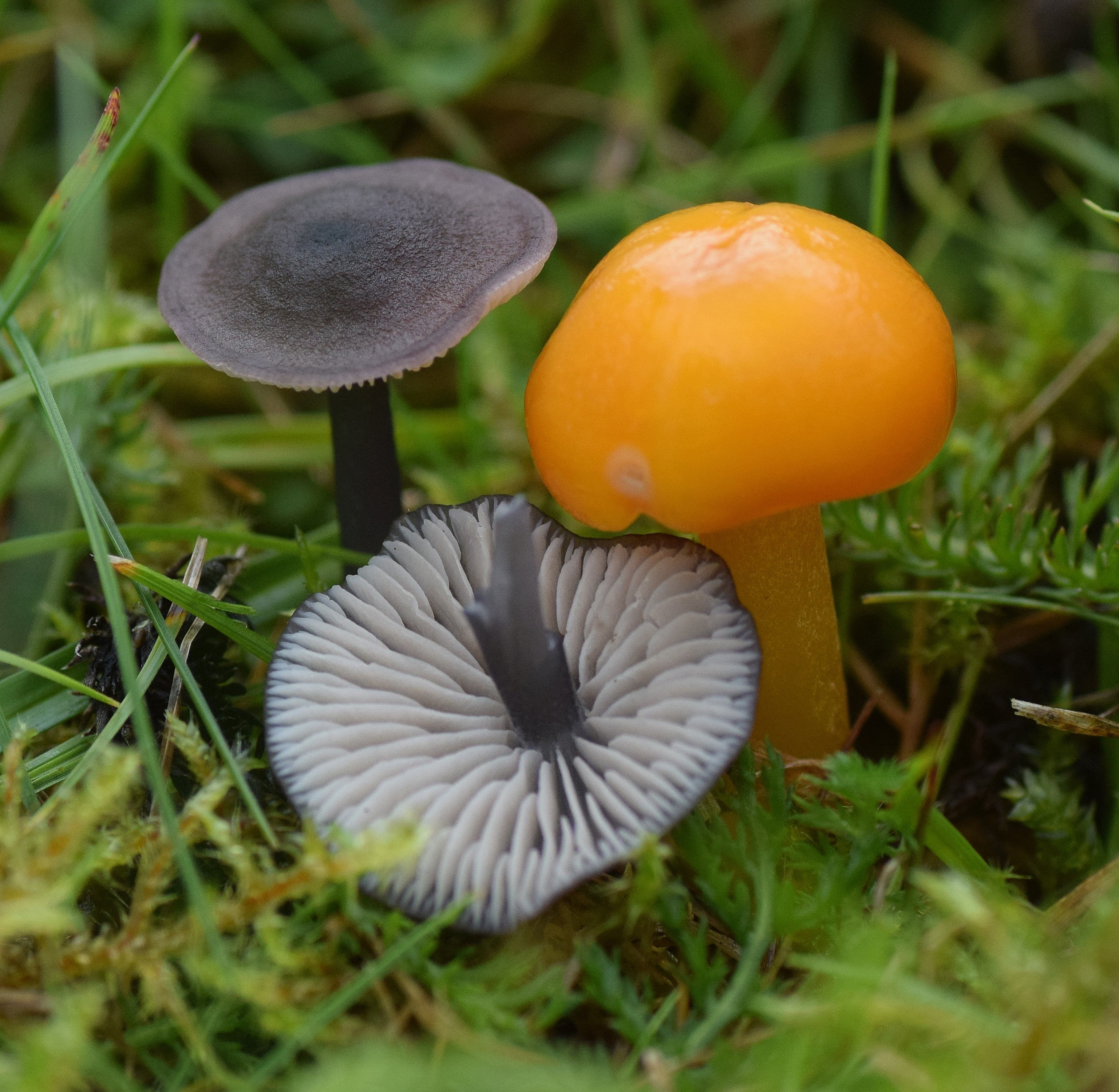
Out of these the most arresting and alluring were the dark blue-capped species which are only occasional finds in southern lowland areas. But here they were at this remarkable site, skulking almost but ready to be picked out in its very particular habitat. As with Waxcaps, this is a very complex group to separate different species within, so once more it might be best just to enjoy them. Another uncommon item was a single Mealy Pinkgill (below – here), a rather more robust and thick-stemmed number than all of the above.
Mealy Pinkgill
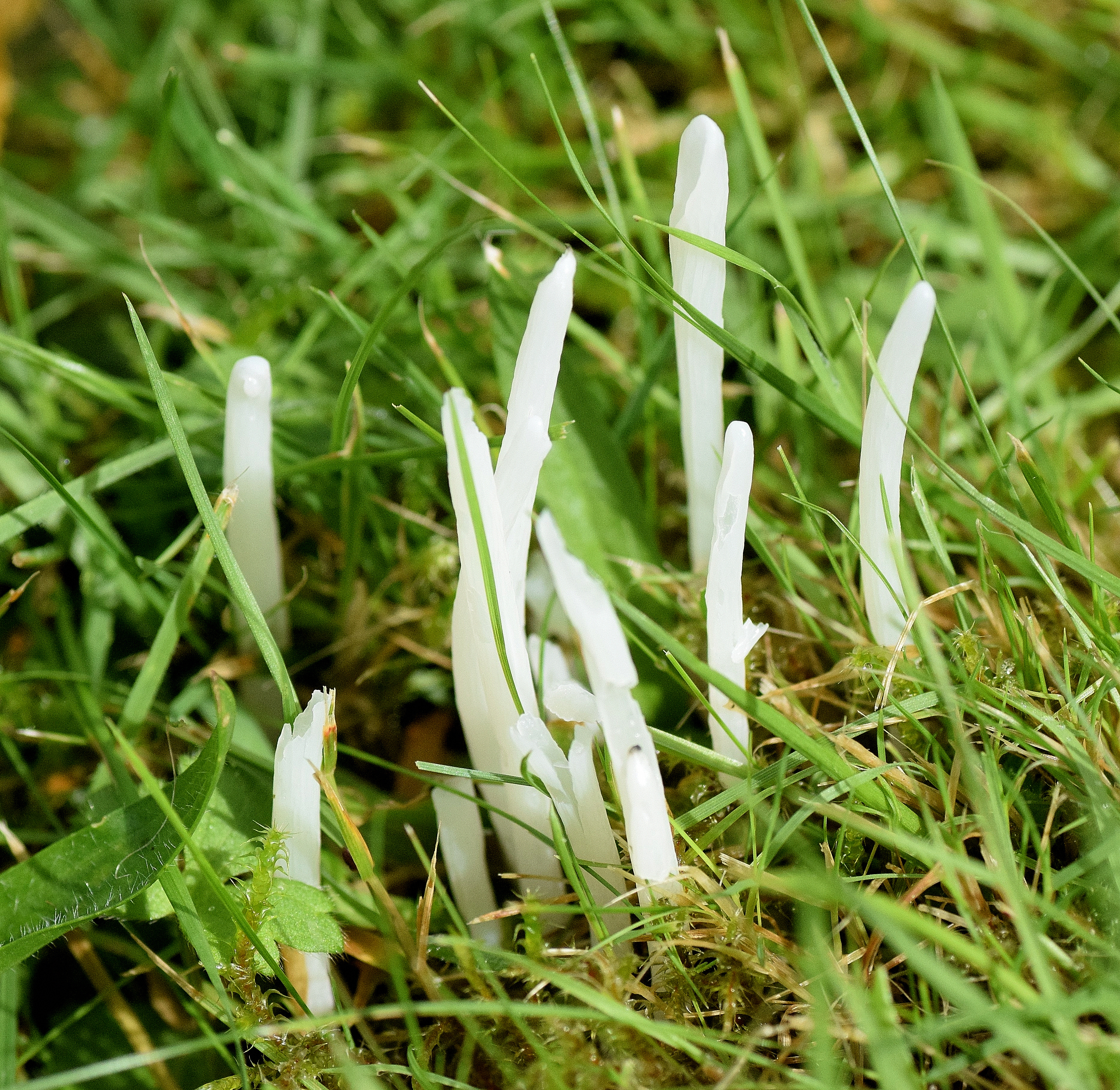
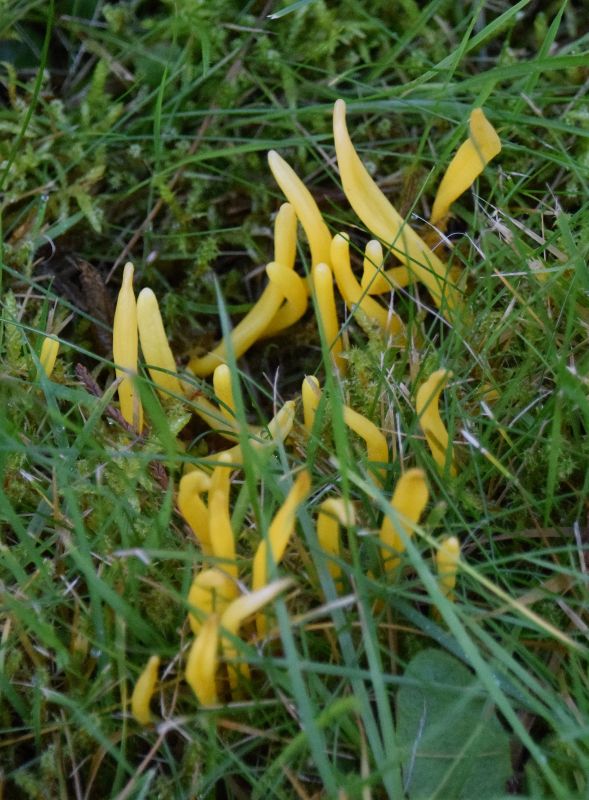
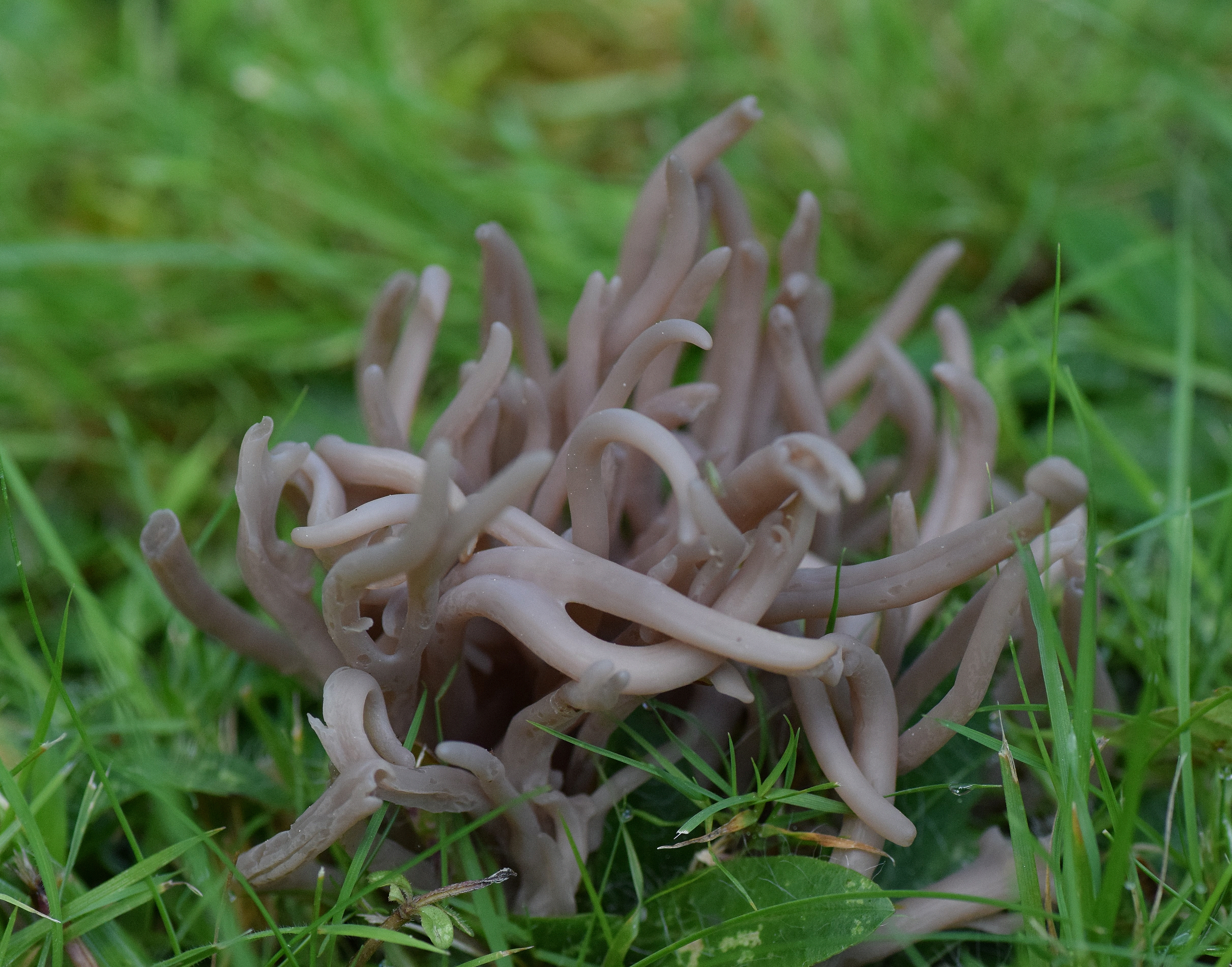
A third specialty that thrives in these conditions is Spindles, part of a large group of diminutive fungi with neither gills nor pores that further includes Clubs and Corals. Though by no means uncommon these strange, wispy items have to be observed in short grass that has not been mown during fruiting … hence the need for sympathetic management again. In 2023 I admired Golden Spindles (see here) amongst the ancient graves of Prestwood Churchyard, and now I have added White (here) and Smoky Spindles (here) to my records.
From left: White, Golden and Smoky Spindles
One pleasing aspect of this exercise is the openness of the location, that allowed pictures to be taken up close and personal with a macro lens. Over four previous seasons I have mostly been accustomed to recording fungi and attempting to capture half-decent images of them in the subdued light of ancient woodlands, so this could be where evolution might lie. The project will continue through October and November, with further updates herein. The intent is to convey the particular fungi potential of unimproved grassland. As I do not feel qualified to discuss these mushrooms in detail that in any case may not appeal to readers, I have instead included links to one of the resources I regularly consult.



















 Ramblings and Scribblings