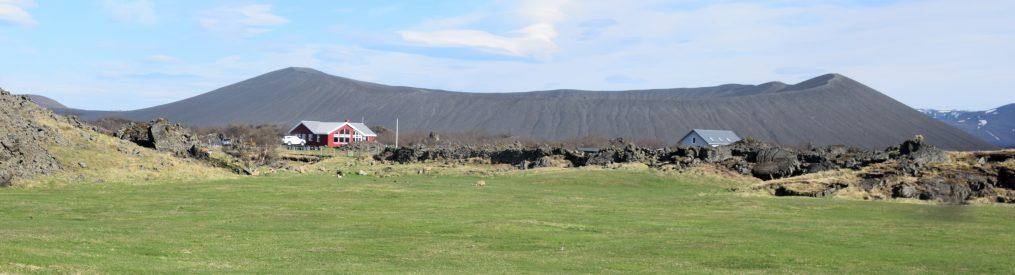
Eager to progress my autumn Waxcap project in the Chilterns, I checked the Bucks Fungus Group sightings page on the opening day of this post. That source contained a picture of a highly attractive and diminutive Waxcap that I had missed on my previous visit to Prestwood Churchyard. More challenging was it presented the green, slimy and shiny emergent phase of that species’ fruiting cycle that I had yet to encounter in the field.
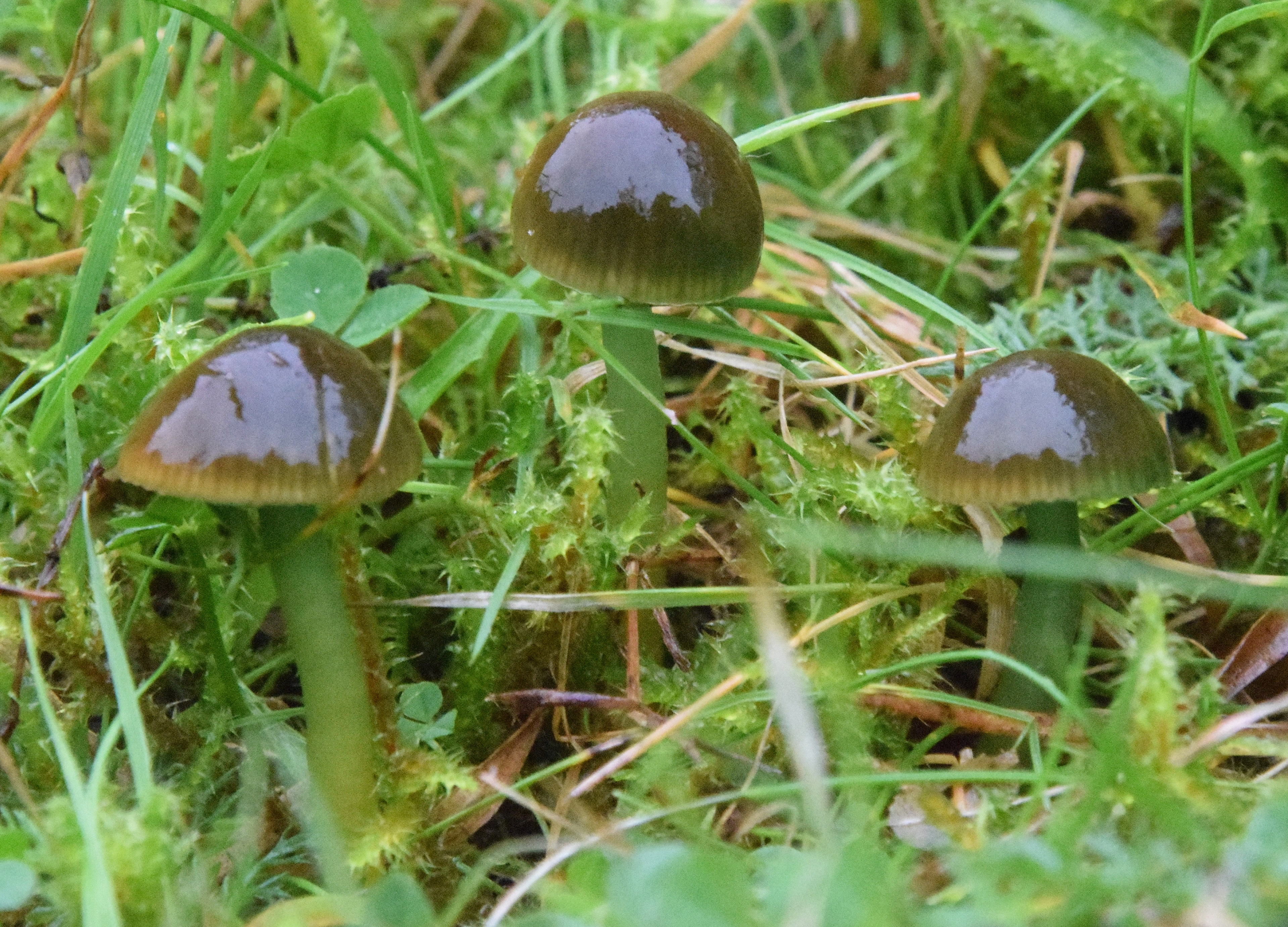
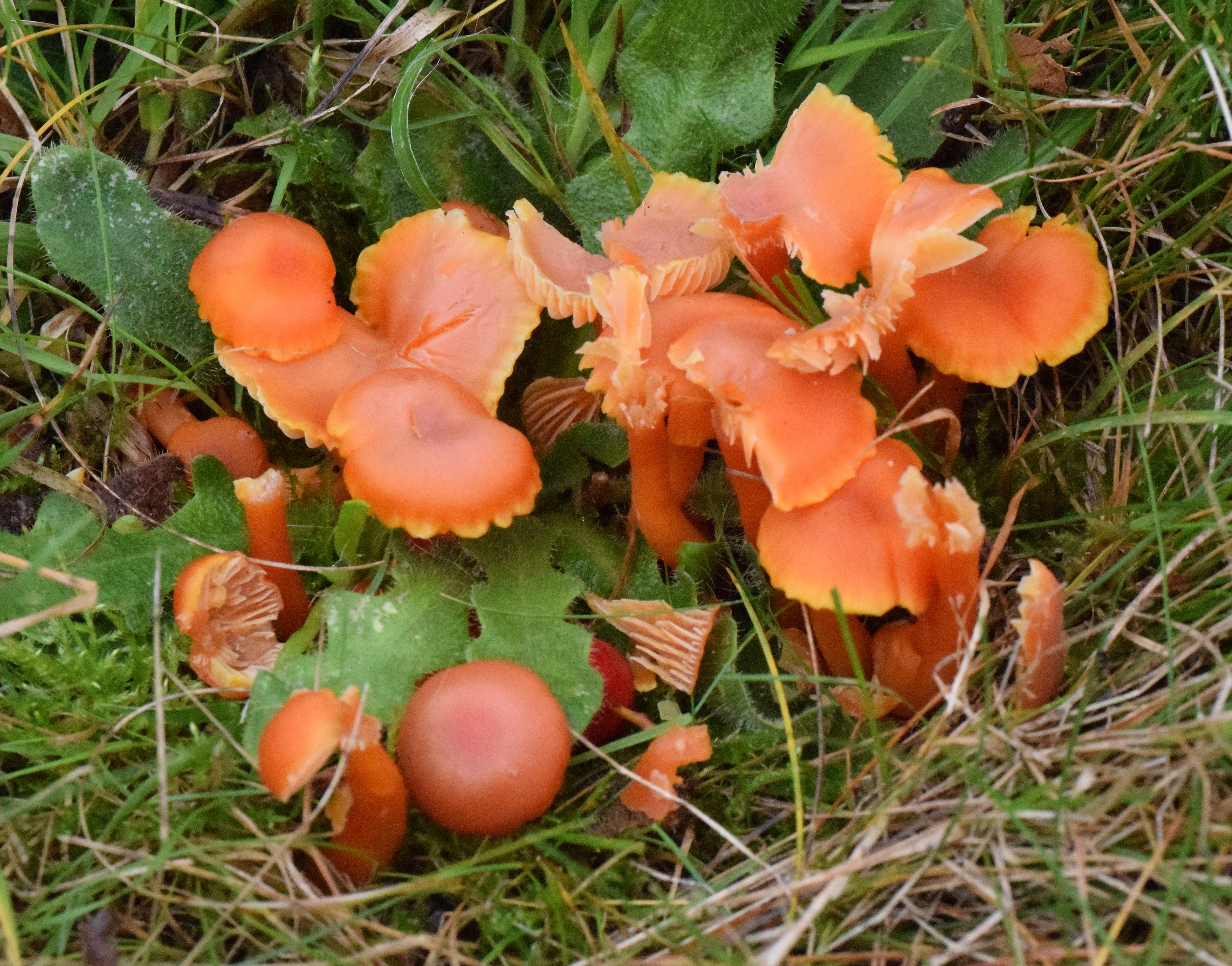
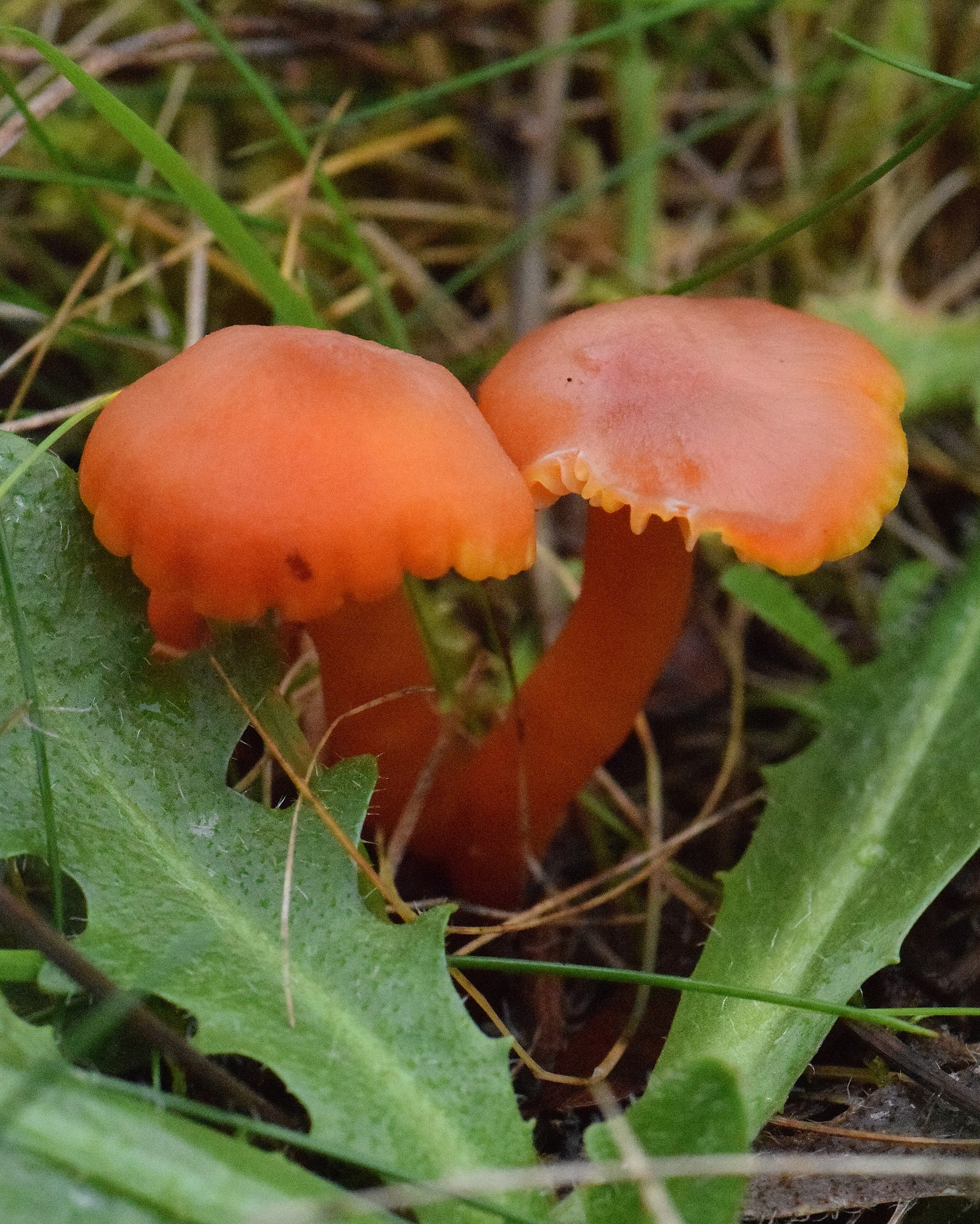
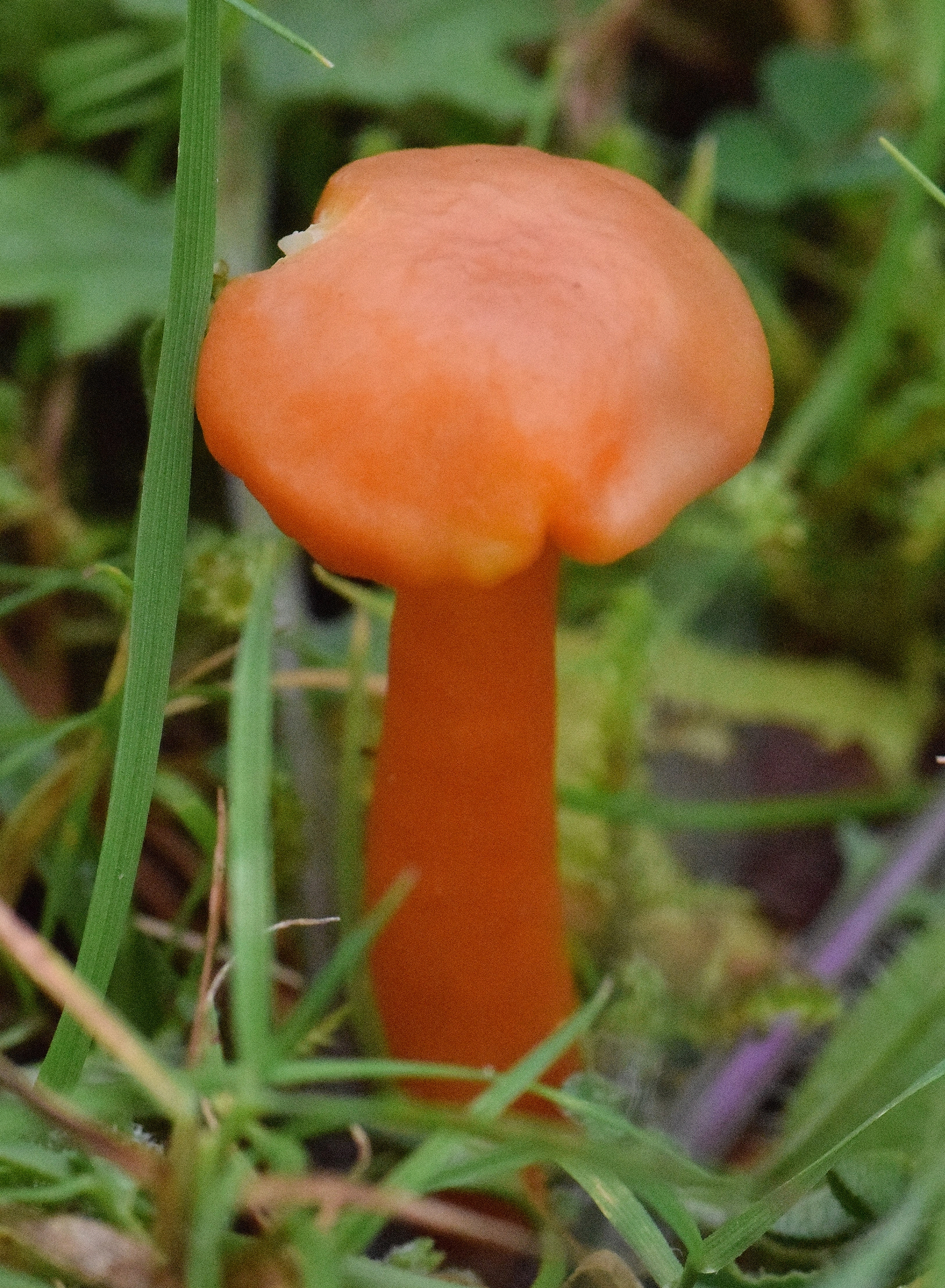
Arriving on site, my first instinct was to check out the Pink Waxcaps of six days earlier. Three had gone over but there were still two emergent items, while the previously noted Smoky Spindles clump lay ruined in a large boot print. My new quest took some time to locate, then it rewarded rather well. Parrot Waxcap (see here) has the particularly appealing quality of morphing through various colour tones during its fruiting cycle. At first the bell-shaped caps are green and slimy, before becoming more rounded as they expand, then turning yellow or orange with brown or purplish tints as the slime washes off.
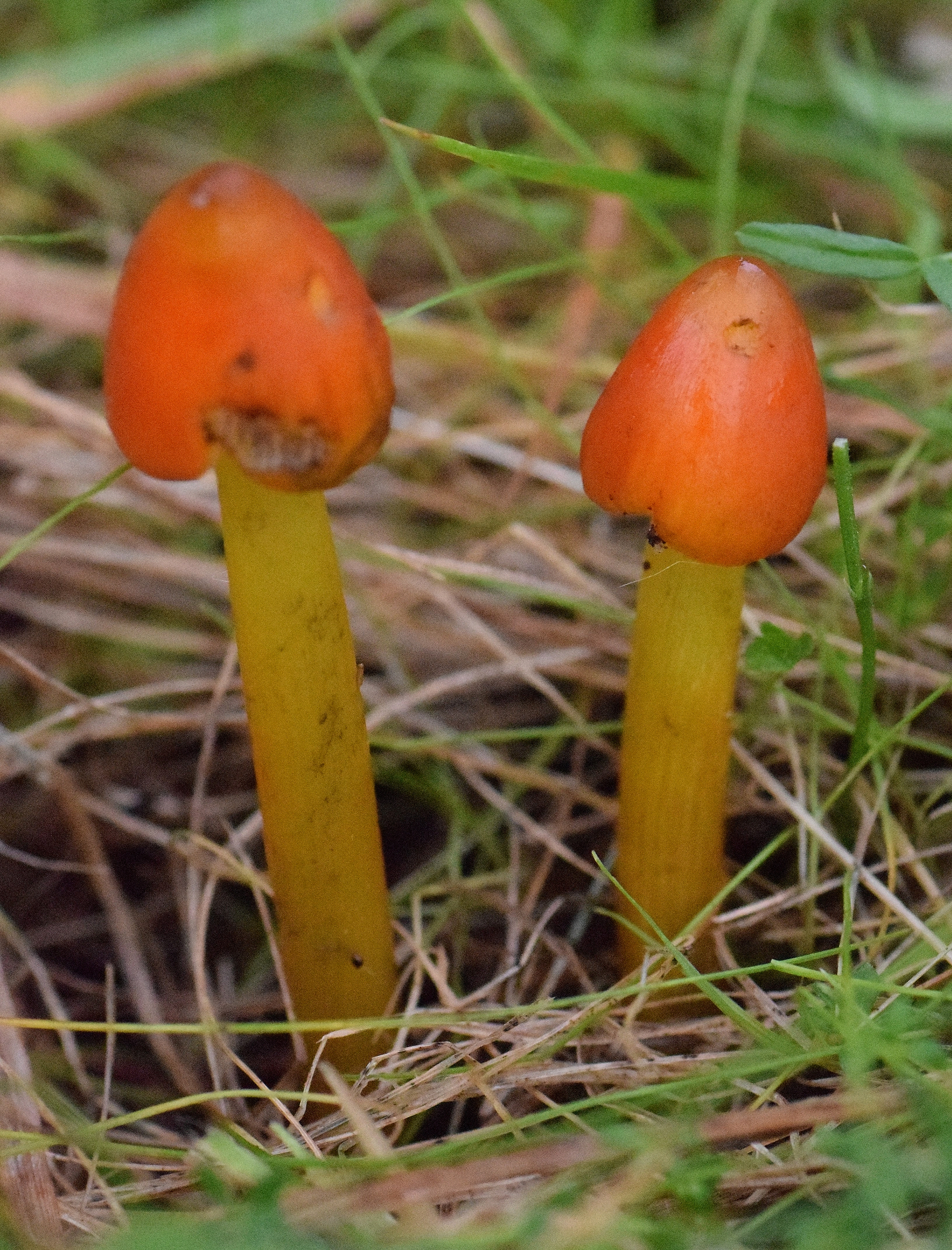
I had observed orange specimens a year ago at Stoke Poges Memorial Gardens, but now it was the prospect of beholding the especially beguiling green initial phase that had brought me back to Prestwood. The first items I found were nonetheless orange again. I am not a very experienced mycologist, but on both occasions there was just something about this variety that sets it apart from other orange / yellow Waxcaps. In particular, in those first two experiences they seemed more diminutive. This post’s macro studies make them look much bigger than they actually were in the field. Some are tiny, and all have the propensity to entice and enchant in their own quite abstruse manner.


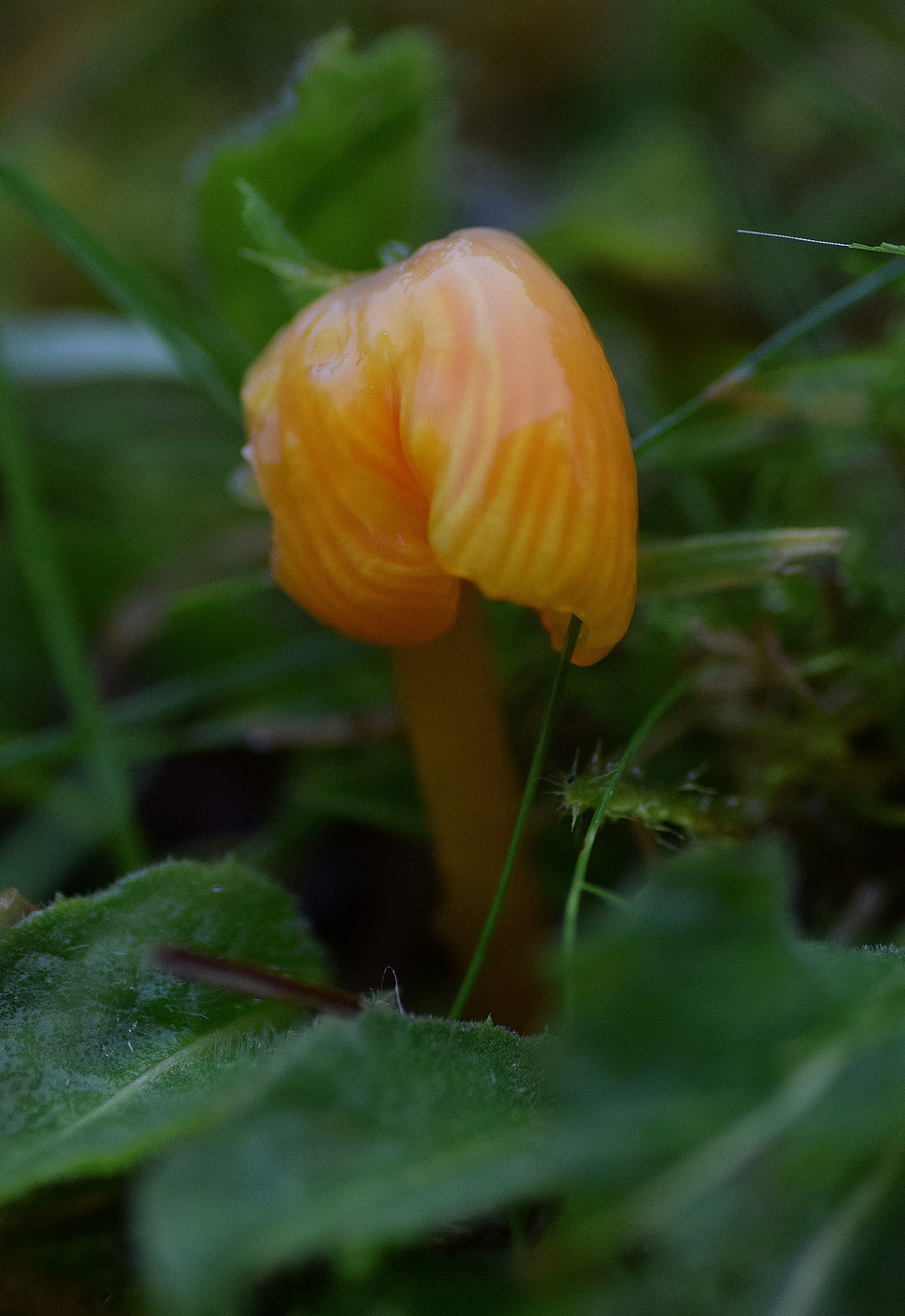
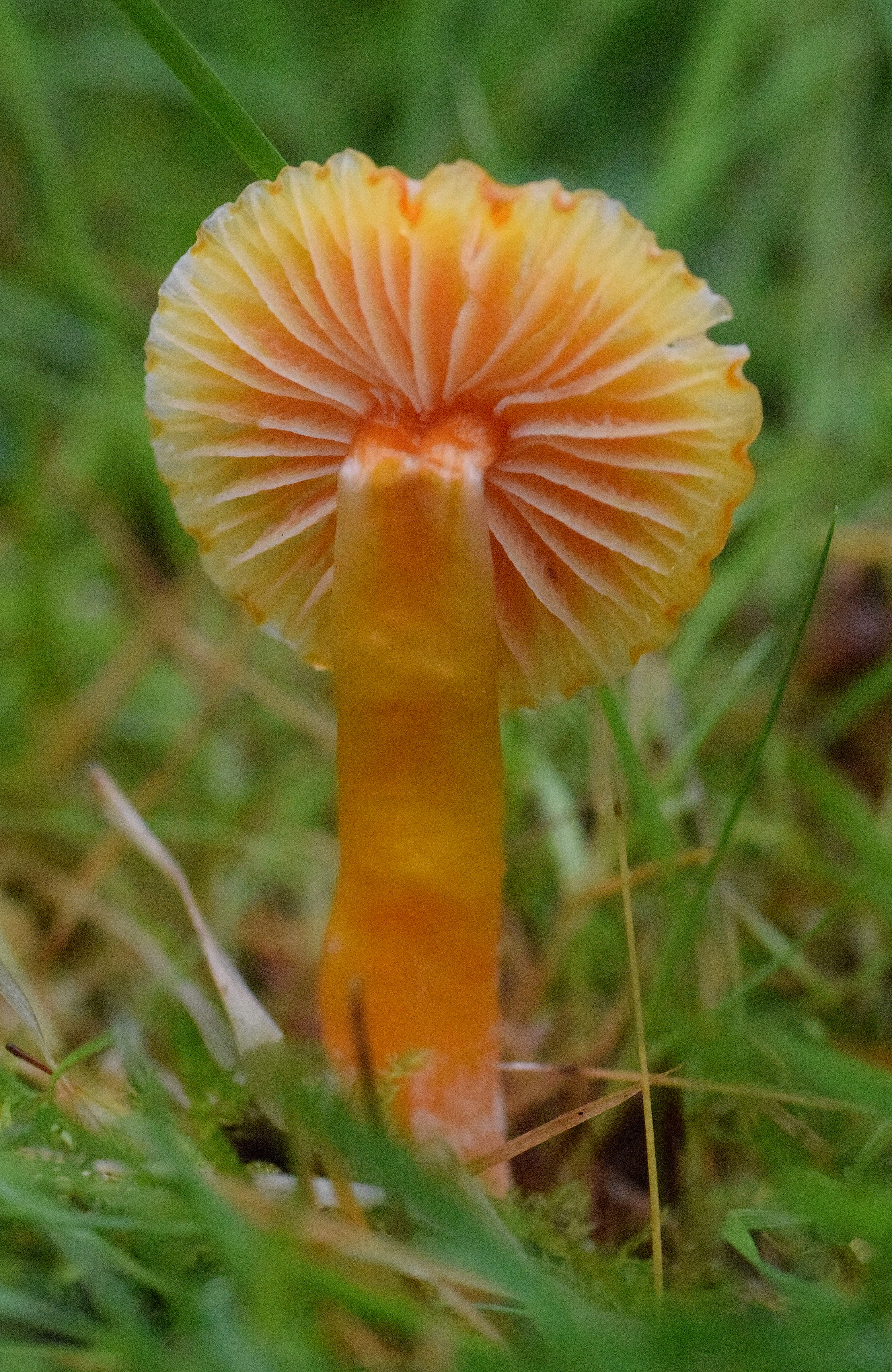
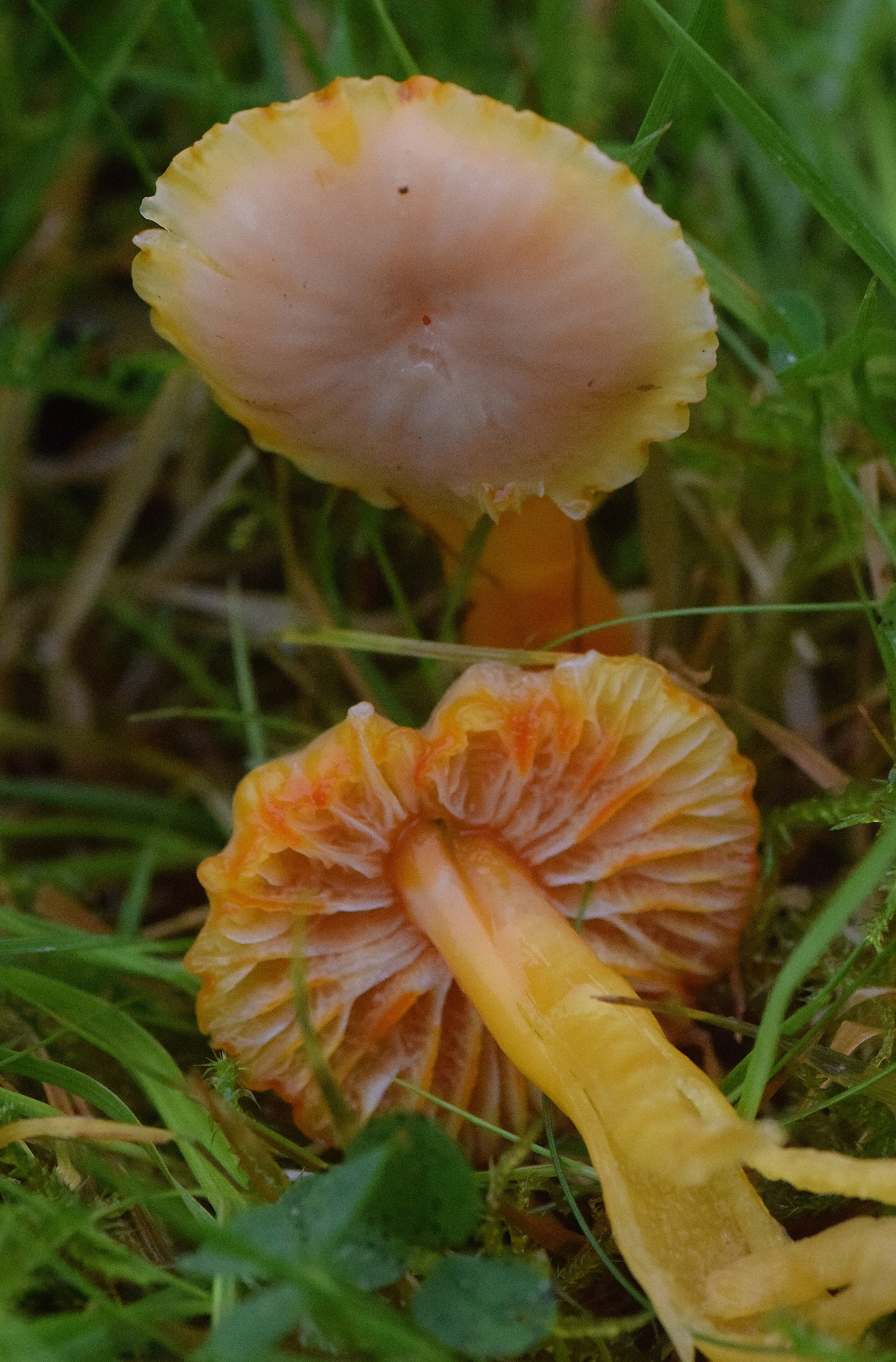

Parrot Waxcaps
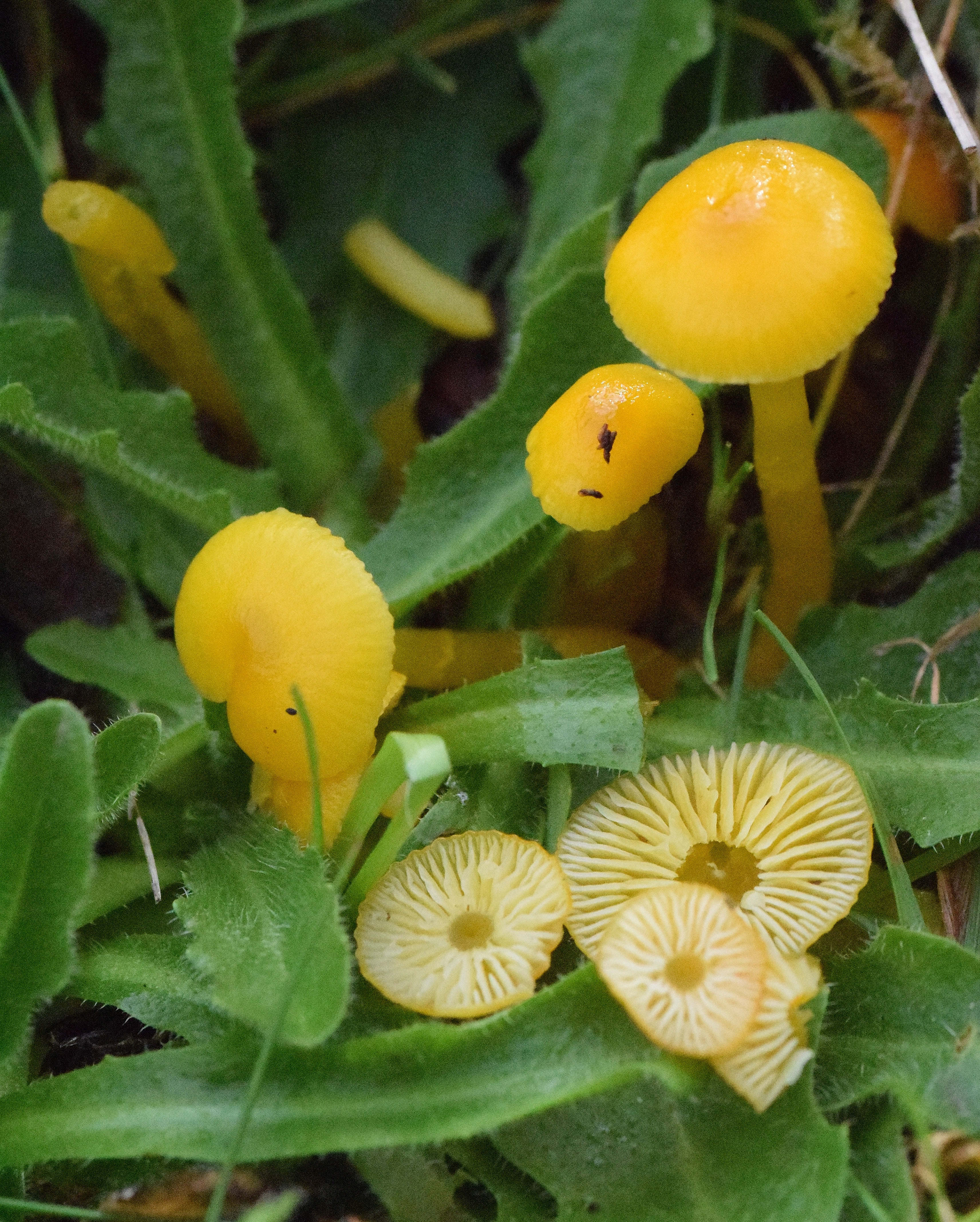
Having converted my quest, more as so often were nearby. Moving on from those five orange specimens (pictured above), two pairs and a singleton, my app next ID’d a second, partly ruined group of ochre yellow and white mushrooms (below) as Parrots too. My doubts over accuracy were removed when hidden amongst them I found a first green and yellow slimer (top row, left above). So that was mission accomplished, albeit that the cap of the specimen in question was no bigger than my fourth finger nails.
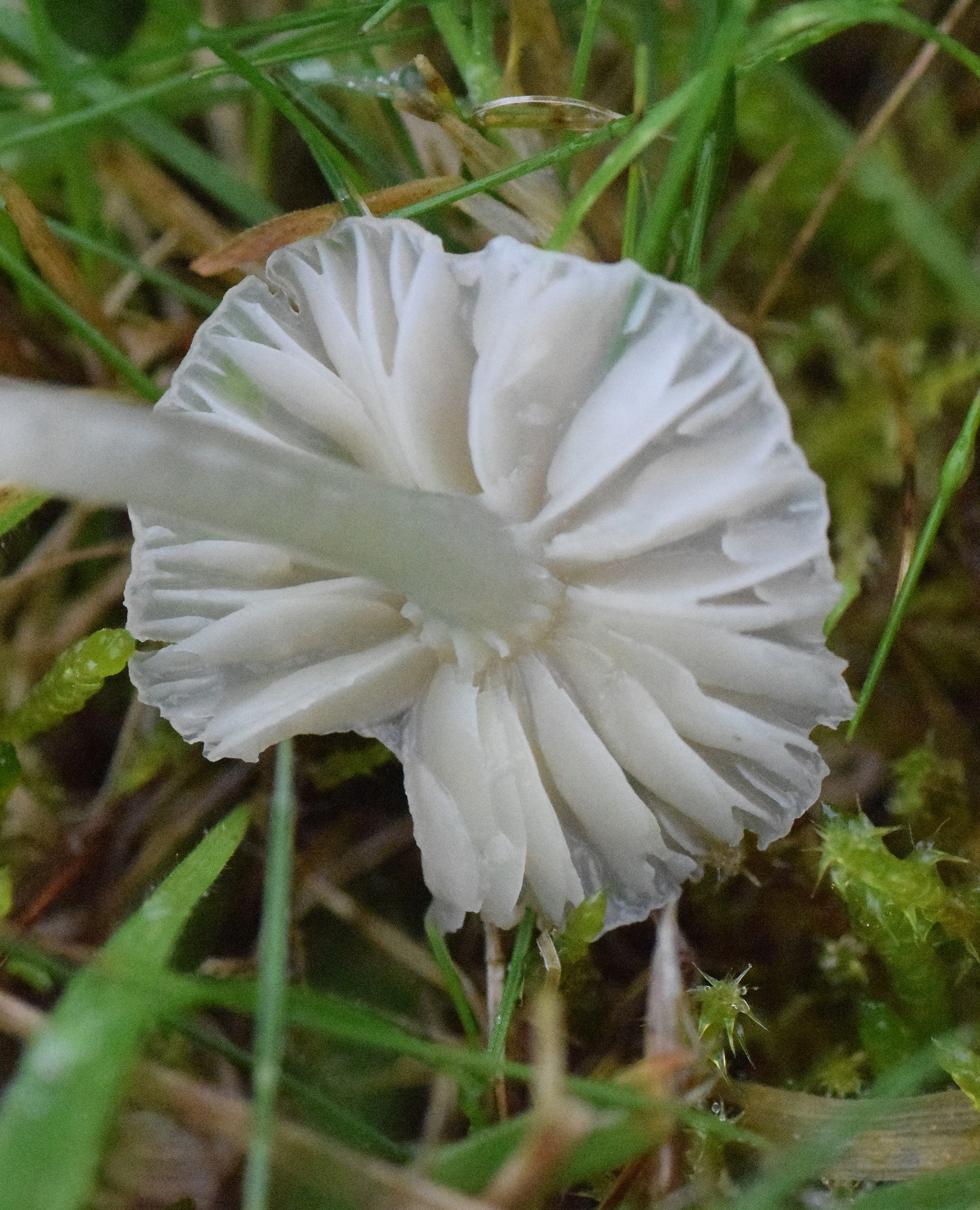
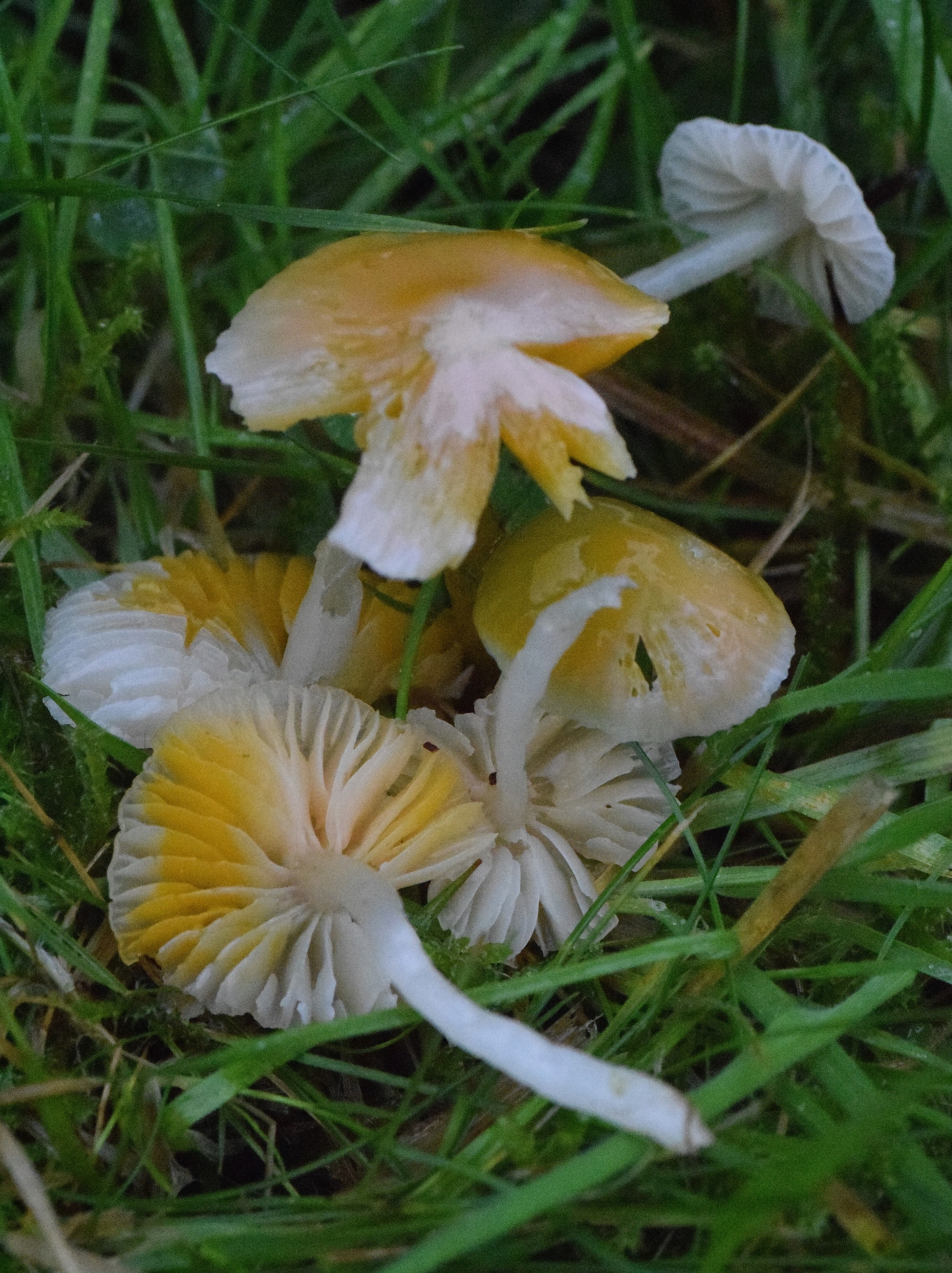
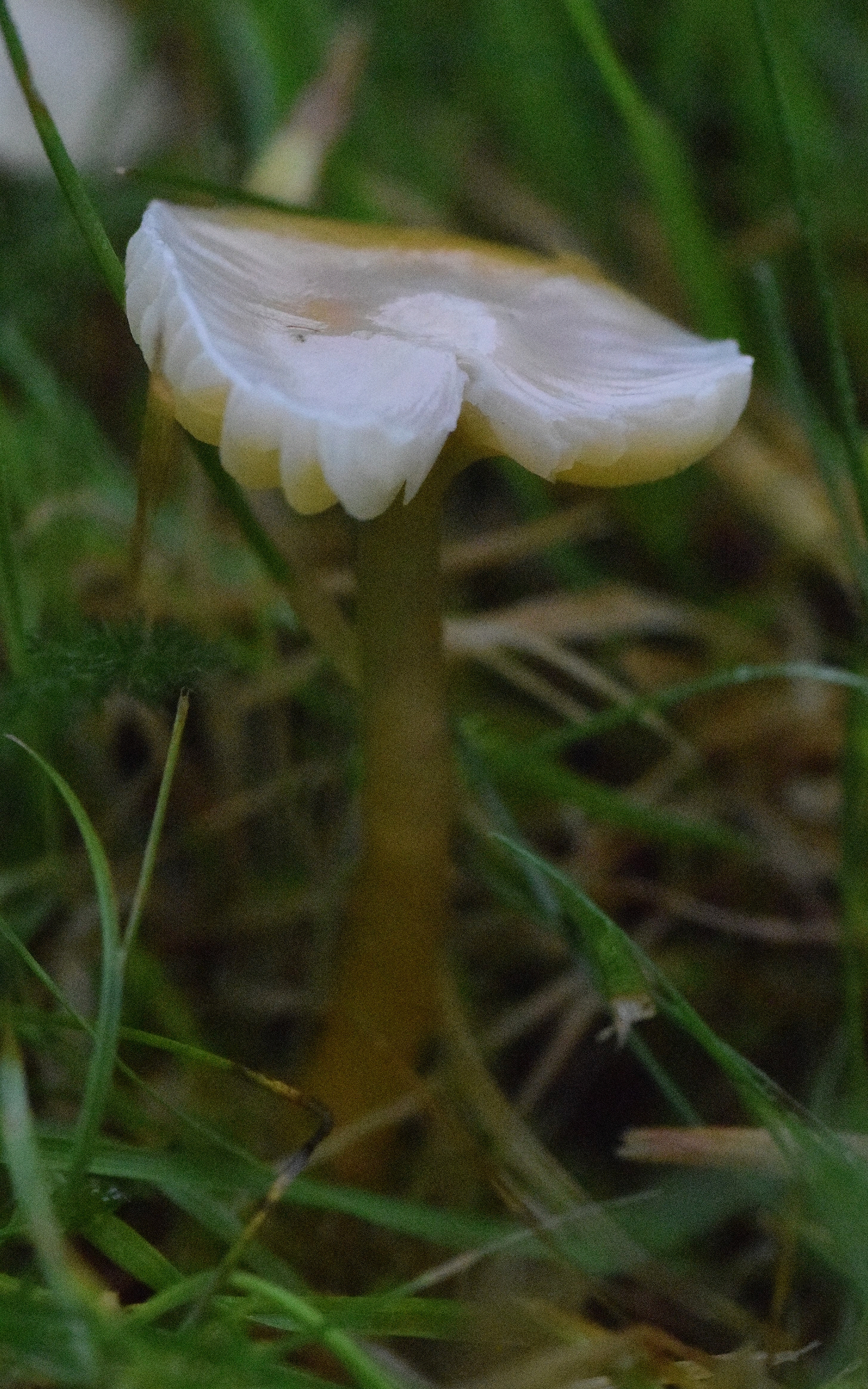
Yellow and White-toned Parrot Waxcaps
Back at home, upon seeing the pictures in the relevant First Nature link (here), I just had to observe more of those early stages in the fruiting cycle. This is undoubtedly the most subtly engaging Waxcap I have encountered to date, notwithstanding the pink Ballerina’s obvious beauty. So on 15th I re-visited Stoke Poges Memorial Gardens, also in Bucks (SL2 4NZ – SU 977825). A week previously I had found no Waxcaps at all there. Now the central avenue, that is landscaped as eight oblong, tree planted grassed pitches for the interment of ashes, was carpeted with numbers of at least four species; amongst which was a single Parrot Waxcap in the emergent stage (first row, centre above).
The last-named was pale yellow and white again, having lost its green tones and slime, but was nonetheless unmistakable as this option appears consistently to be. A new item for this autumn on the day was Honey Waxcap (below – see here), whilst Butter Waxcap (here) was present again now and a day earlier at Prestwood. I relied on my Picture Mushroom app to identify these various orange and yellow spectrum species, but truly accurate separation may require assessing both cap and stem texture, gill spacing and smell.
Honey Waxcaps (above). Butter, Blackening and Golden (below) all at Stoke Poges
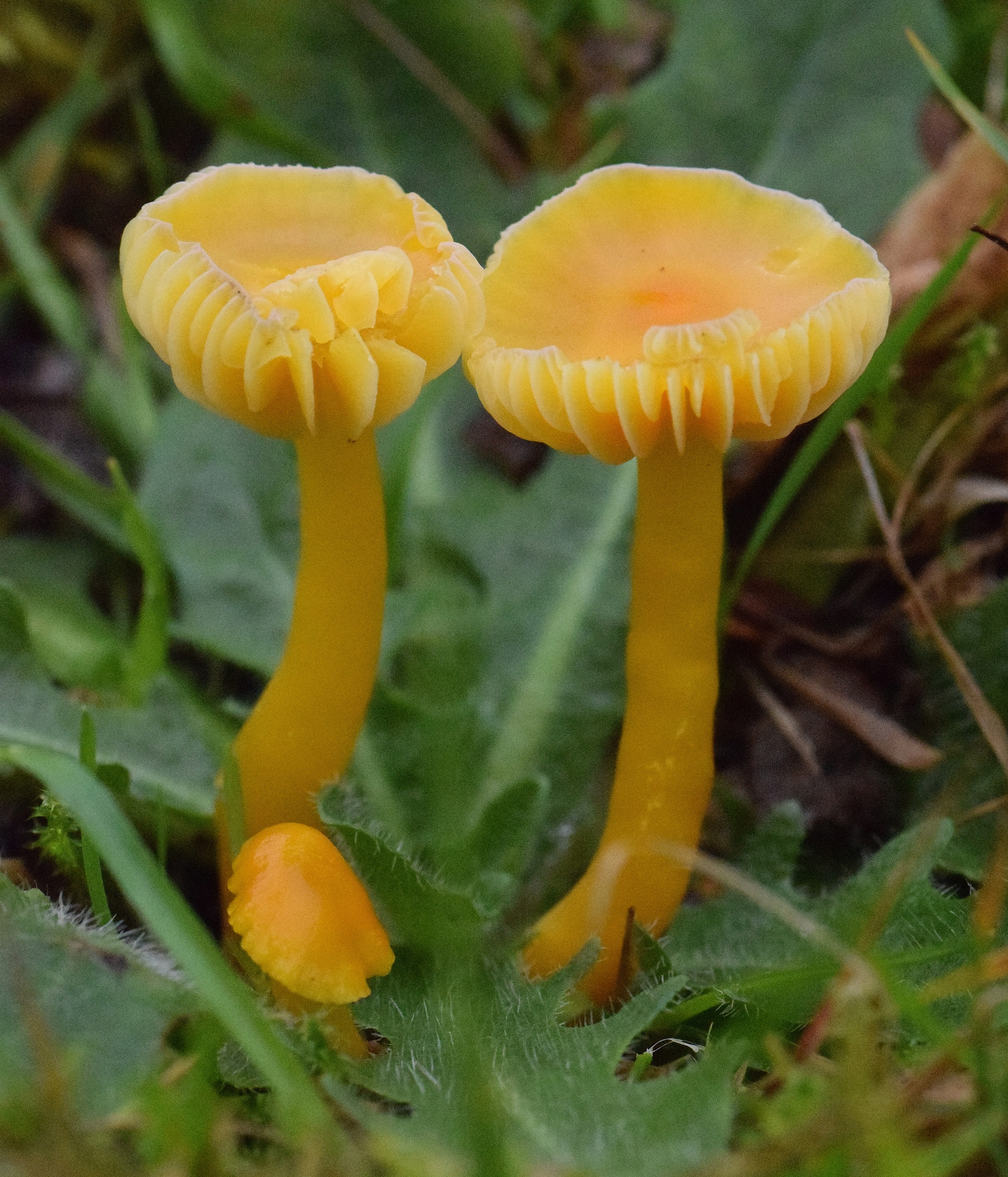
On Wednesday (16th) I opted for an easier day or so I thought, checking out some churchyards close to home to see what they might contain. It culminated in a visit to St Bartholomew’s, Nettlebed (RG9 5RL – SU 698867), that a year ago a respondent to this journal had advised was a good place for fungi. I couldn’t have imagined what I now found … yes, there are Waxcap grasslands in my home county too! Driving out I appreciated how mycology now motivates me in the way that local birding used to, future county ticks aside, even if only for two late autumn months in the year. And with the experience that had just unfolded, I became even more engrossed in this Waxcap project.

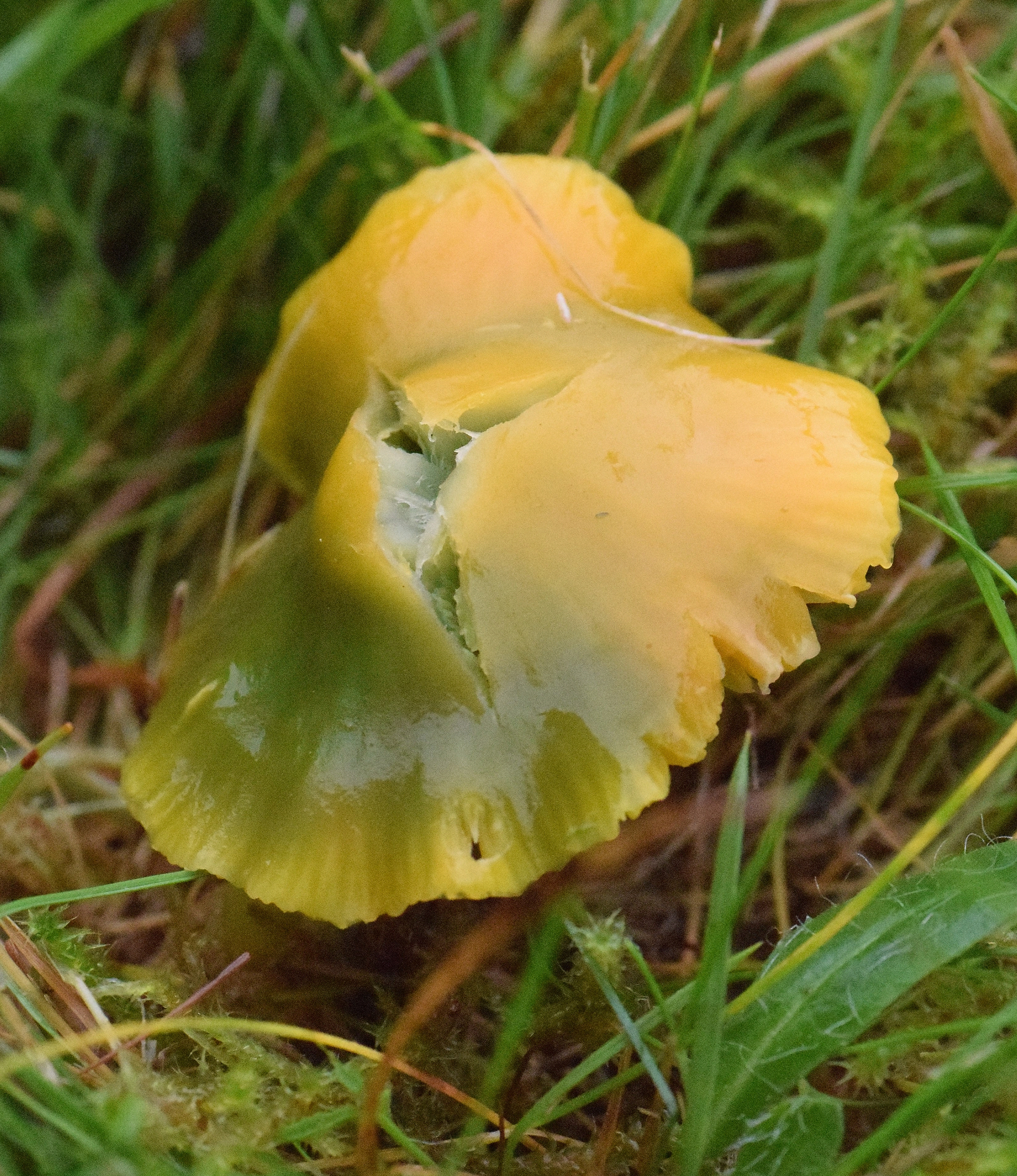
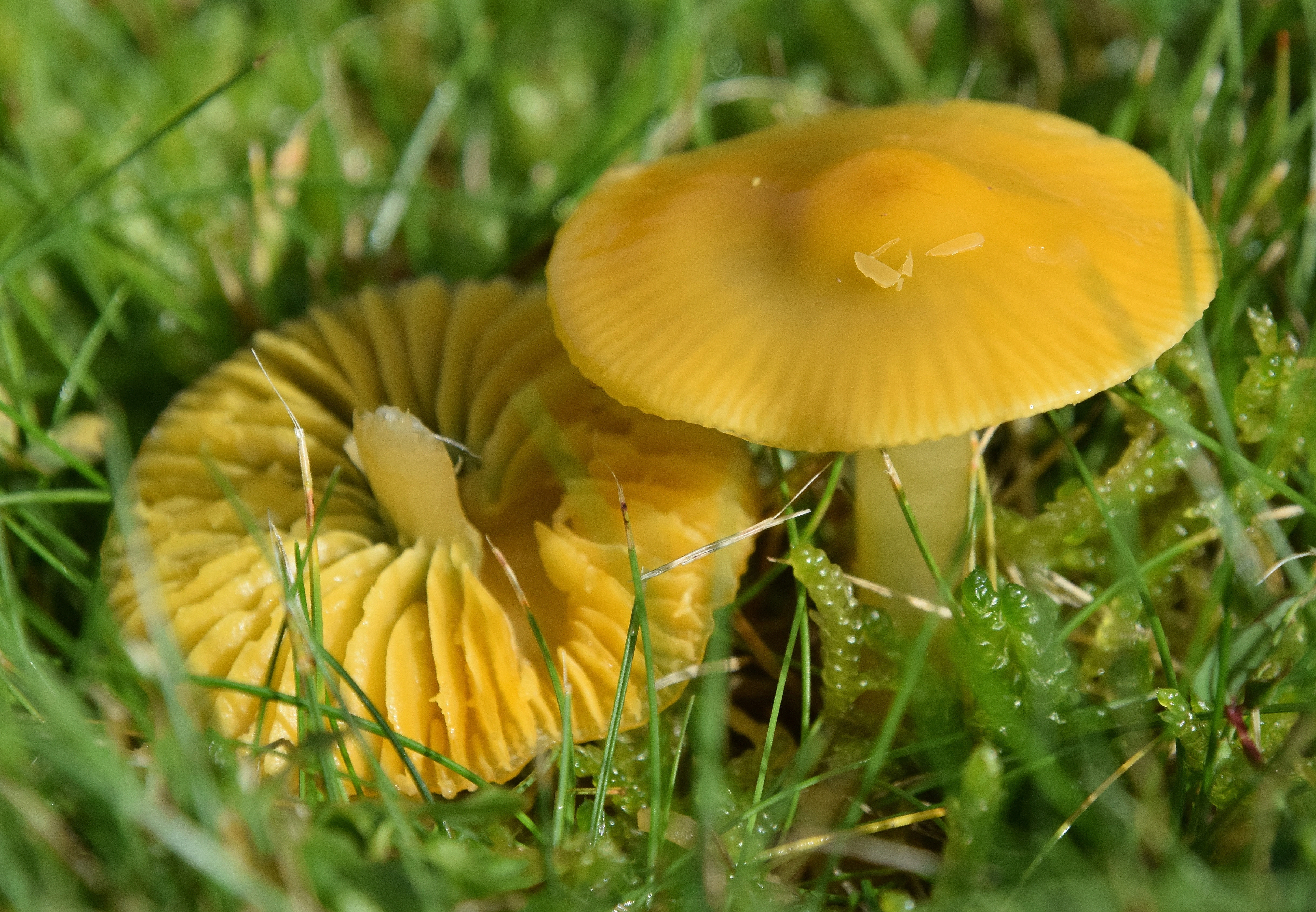
Rather larger Parrot Waxcaps than at Prestwood
Several Parrot Waxcap here displayed the distinctive green and yellow tints in each stage of the fruiting cycle (above) that I observed. That set them apart from a second orange/yellow variant, Oily Waxcap (below – see here) that I had recorded once before at Prestwood in 2023. Other records were more Golden, Blackening, Meadow and Snowy. The last named was beginning to erupt at all three sites featured herein, but being white is difficult to obtain satisfactory images of.


Oily Waxcaps
Searching online for other Oxon sites, I could find no references for Nettlebed churchyard, but discovered that Waxcap grasslands had existed historically on Boars Hill to the immediate west of the city. Thursday (17th) had a sunny forecast, so I went to check this out but drew blank. At Matthew Arnold’s Field (SP 484023 – see here) the grass was to my mind too long to pick out low growing mushrooms in. The second cited location along Berkeley Road, with its panoramic vistas over the dreaming spires of Oxford is just too large to contemplate, and the grass there didn’t look much shorter.

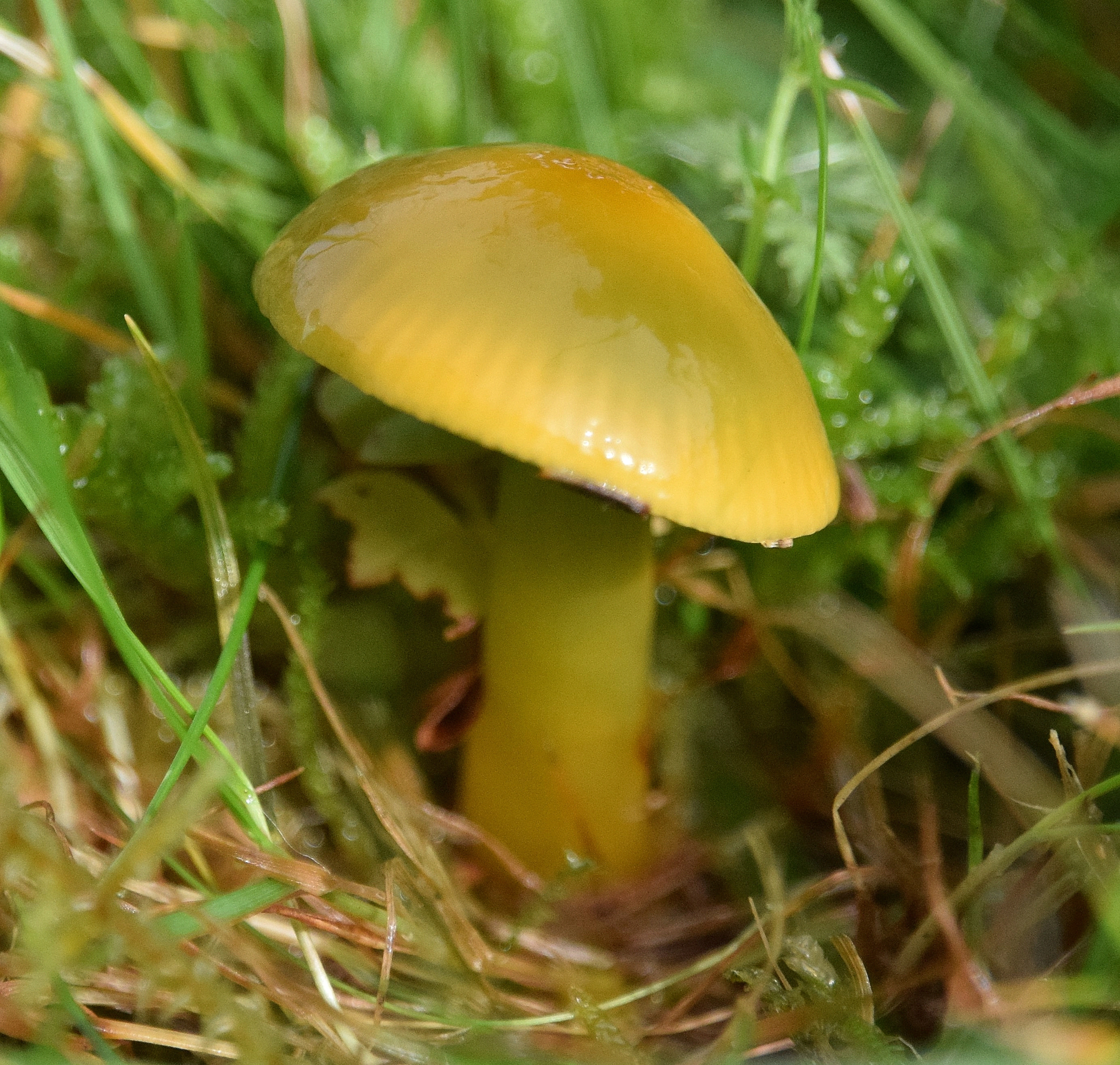
So I went back to Nettlebed for seconds, and was now rewarded with an emergent Parrot Waxcap with the deep green hues I had been hoping for through the three previous days (pictured above, left). In a little over an hour on site this individual developed noticeably, growing imperceptibly in size and shedding some of its much-desired greenness (right). Mission was thus completely accomplished, but I still desired as many more studies of these colour-fluid little gems as I might find.
The subtle allure of this favourite Waxcap was now exerting quite a hold over me. But on my next visit to Nettlebed on 22nd Oxon’s possibly only surviving Waxcap grassland had been mowed and almost all of the mushrooms had gone. Large, stately items including a fine group of Parasols and a magnificent Goblet had also been removed for no apparent reason. I contacted those responsible for that site’s upkeep, hoping to engage over preserving the precious and irreplaceable resource in their stewardship, but received no reply.
On my next visit to Stoke Poges Memorial Gardens (24th) there was little new interest along the central avenue. So I surveyed some other areas and was eventually rewarded with a large eruption of emergent Parrot Waxcap at w3w ozone.soft.cards. These were all tiny but offered the interesting shapes pictured below (top row). I hoped they would grow and so came back four days later on 28th seeking studies of larger specimens such as at Nettlebed. In the event they were no larger or more photogenic, but now the darkest-toned subjects encountered so far had appeared amongst them (lead post image).

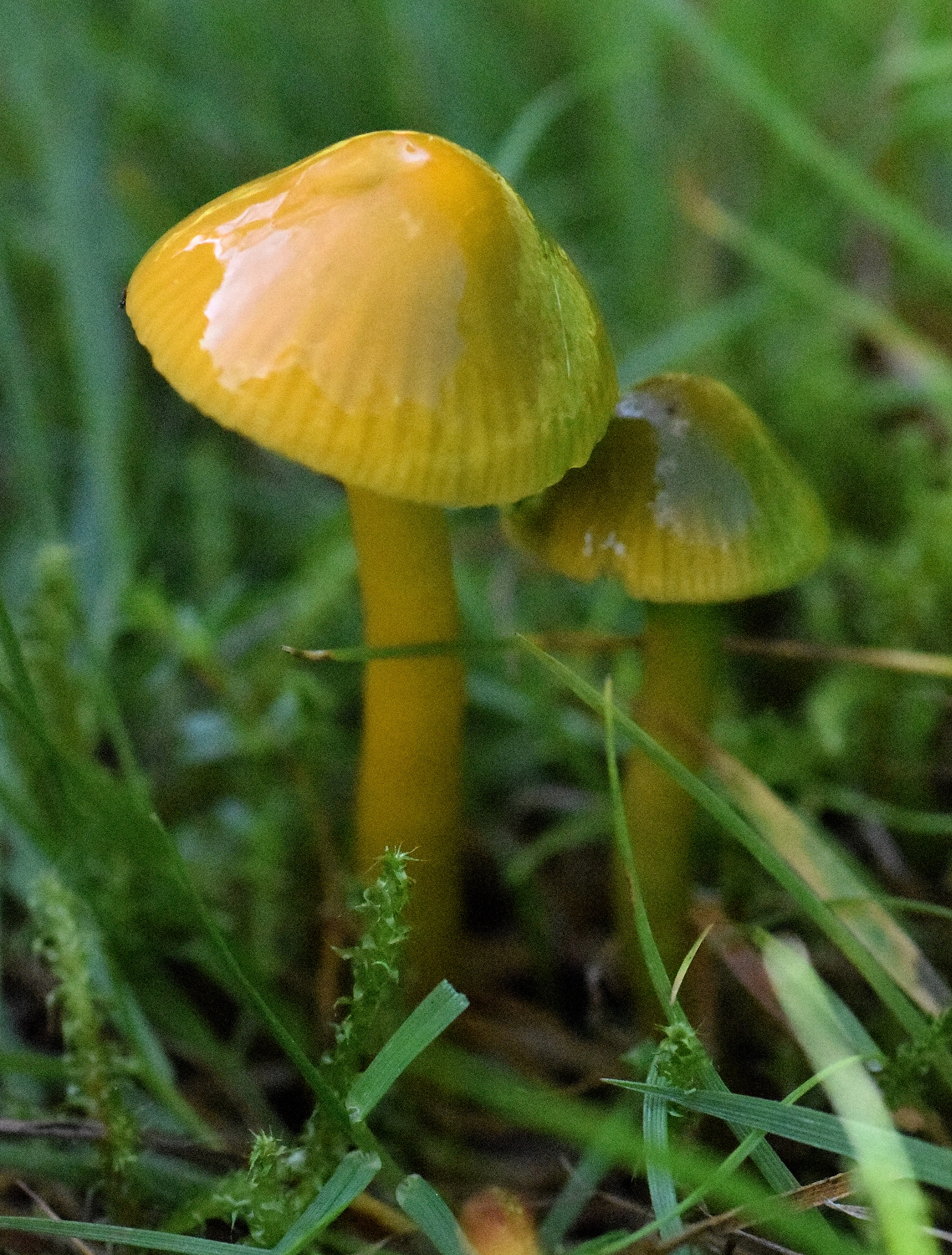
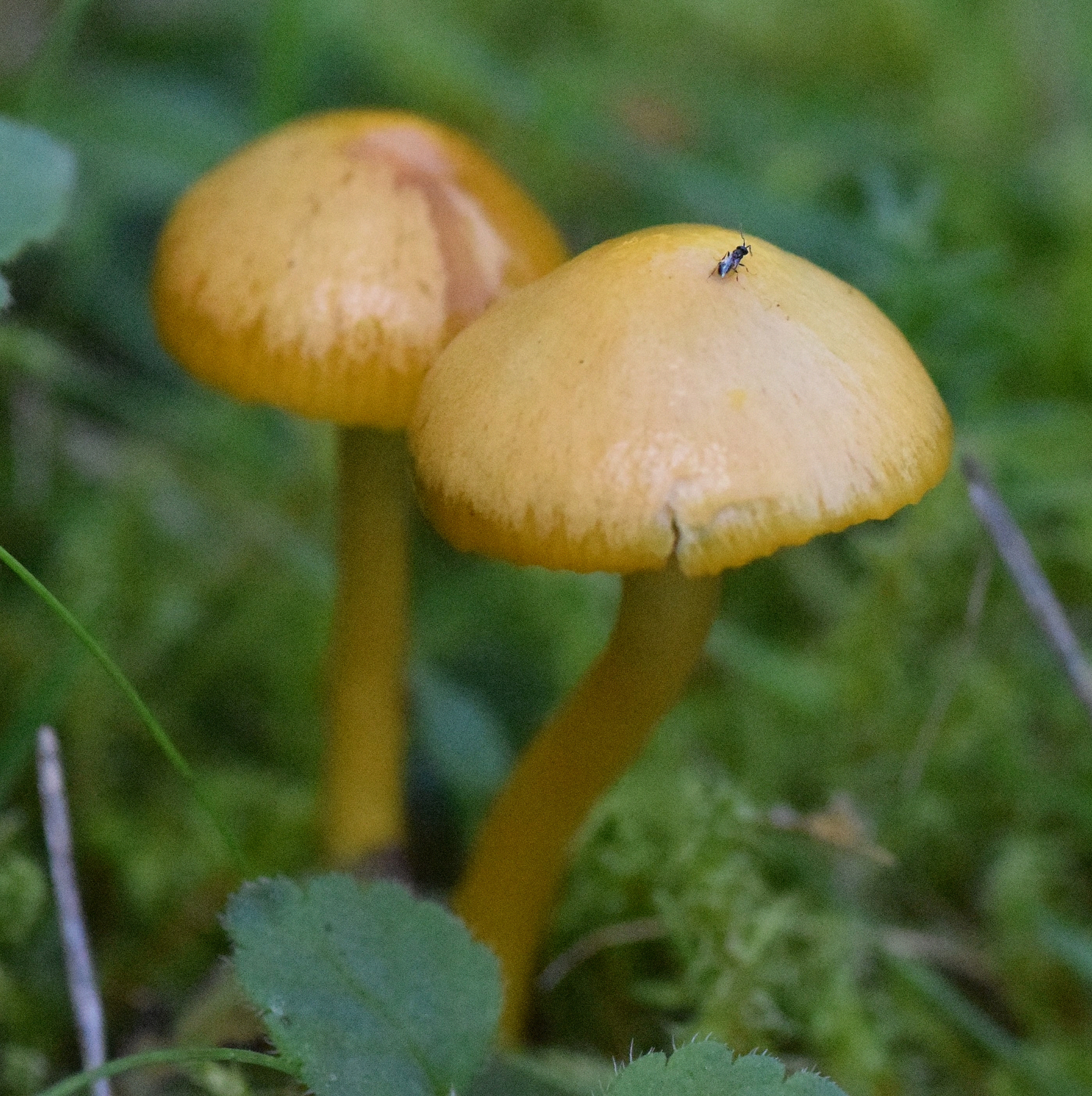

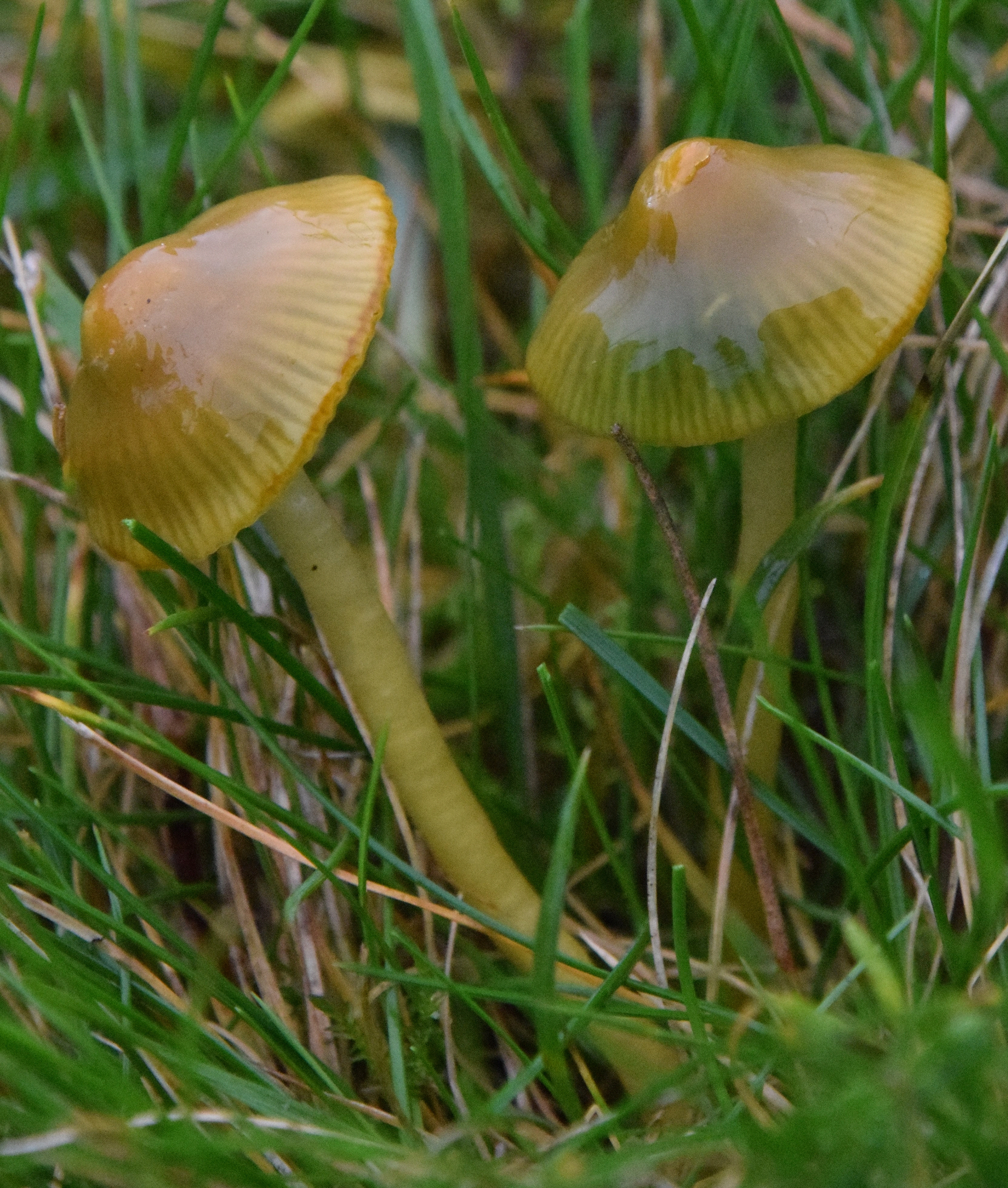
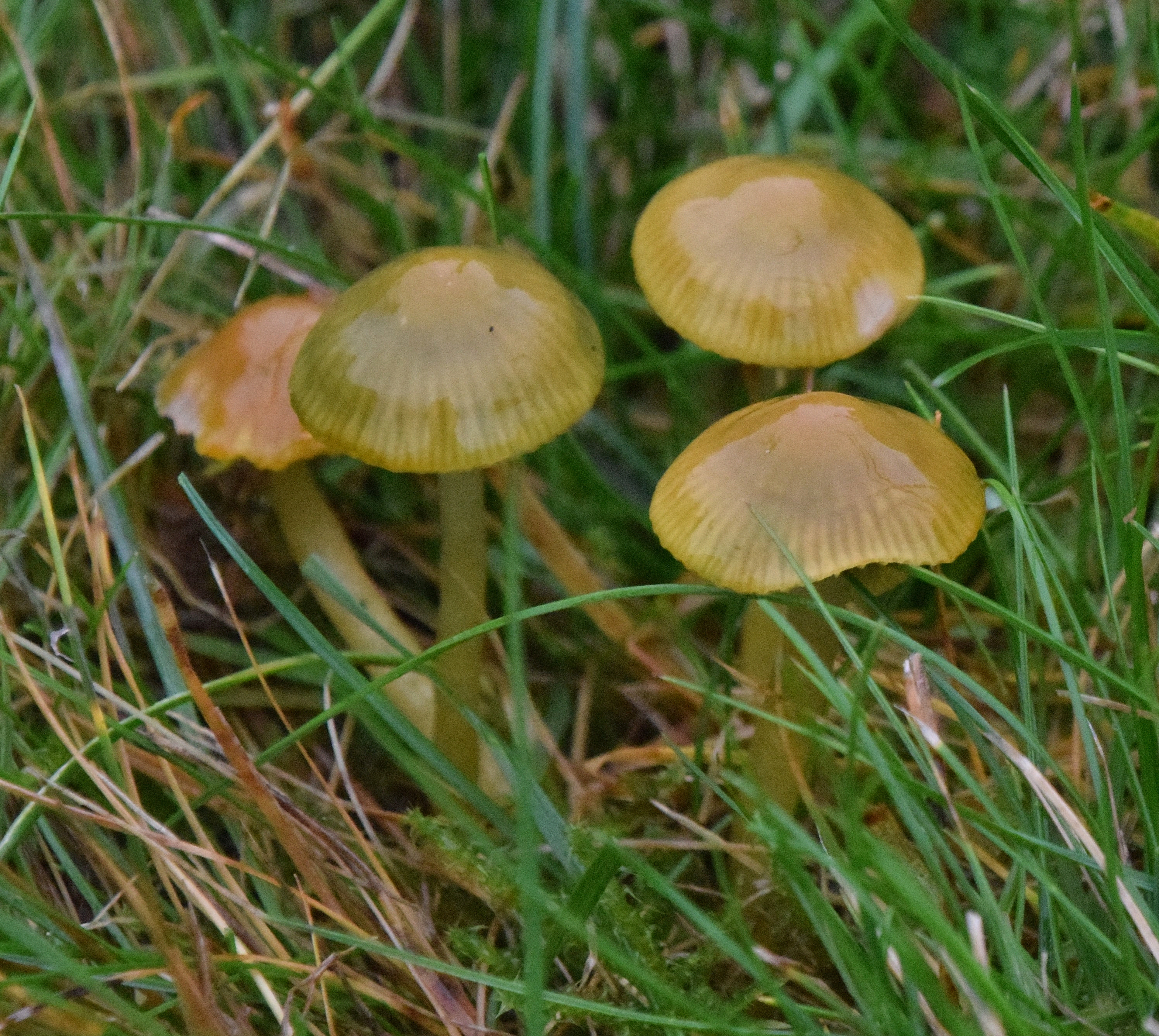
More Parrot Waxcaps
I had imagined this visit might be my season’s last here, but as I rambled on there was more than enough to still motivate me. There were large quantities of different Waxcaps around this wonderful place, and much more fungal interest besides. Eventually I located a second, good-sized cluster of small, emergent Parrot Waxcap (lower row, above) near the far end of the central avenue, at w3w cycle.plus.packet. This had not been there four days previously.
I next moved on to the neighbouring St Giles churchyard (SL2 4PG – SU 975827) where the seemingly burgeoning Waxcap feast continued. Now three groups of again miniscule Parrots had appeared over the weekend and my picture collection of the species continued to grow. The following are the more interesting images from this further location.
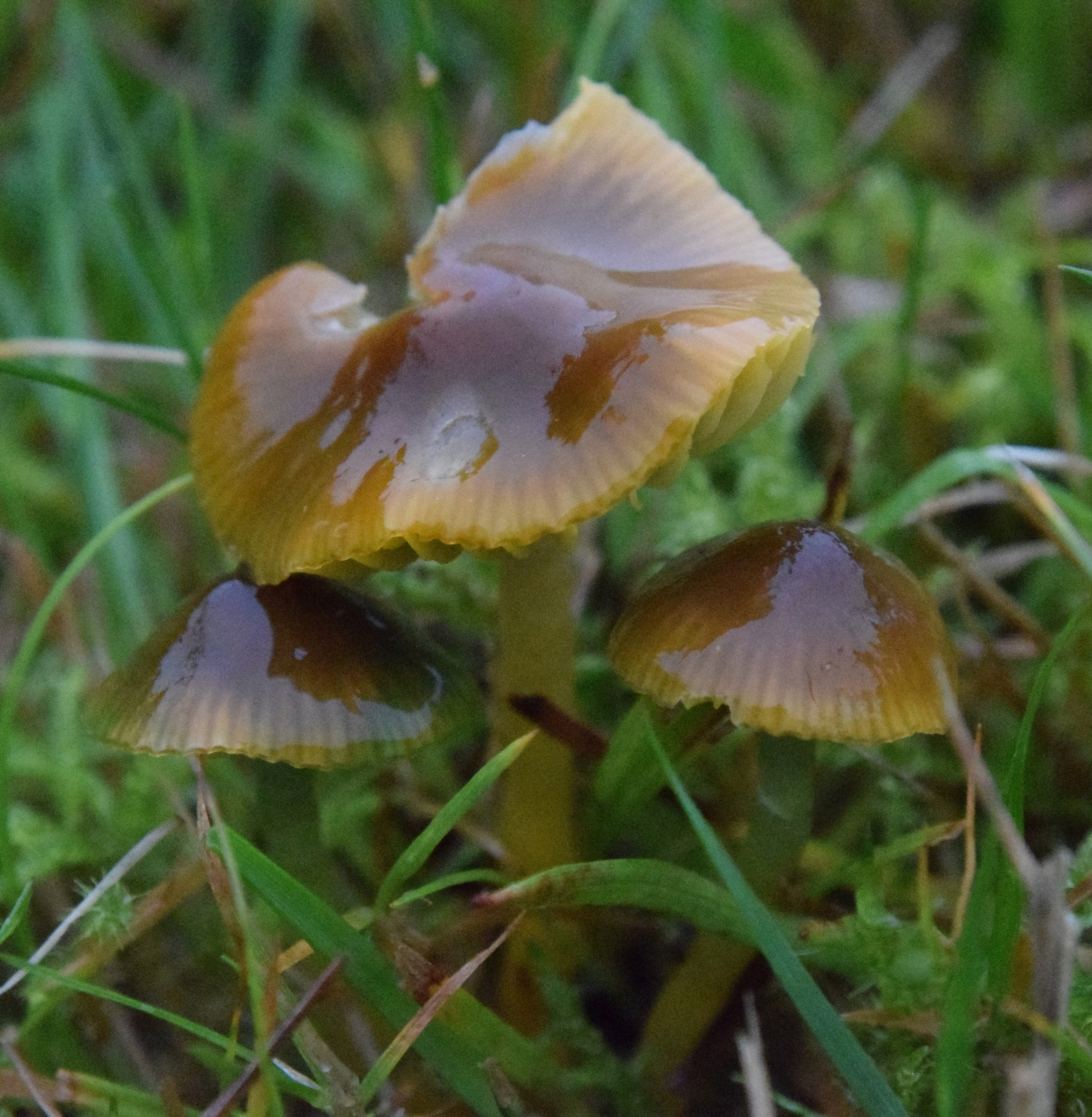
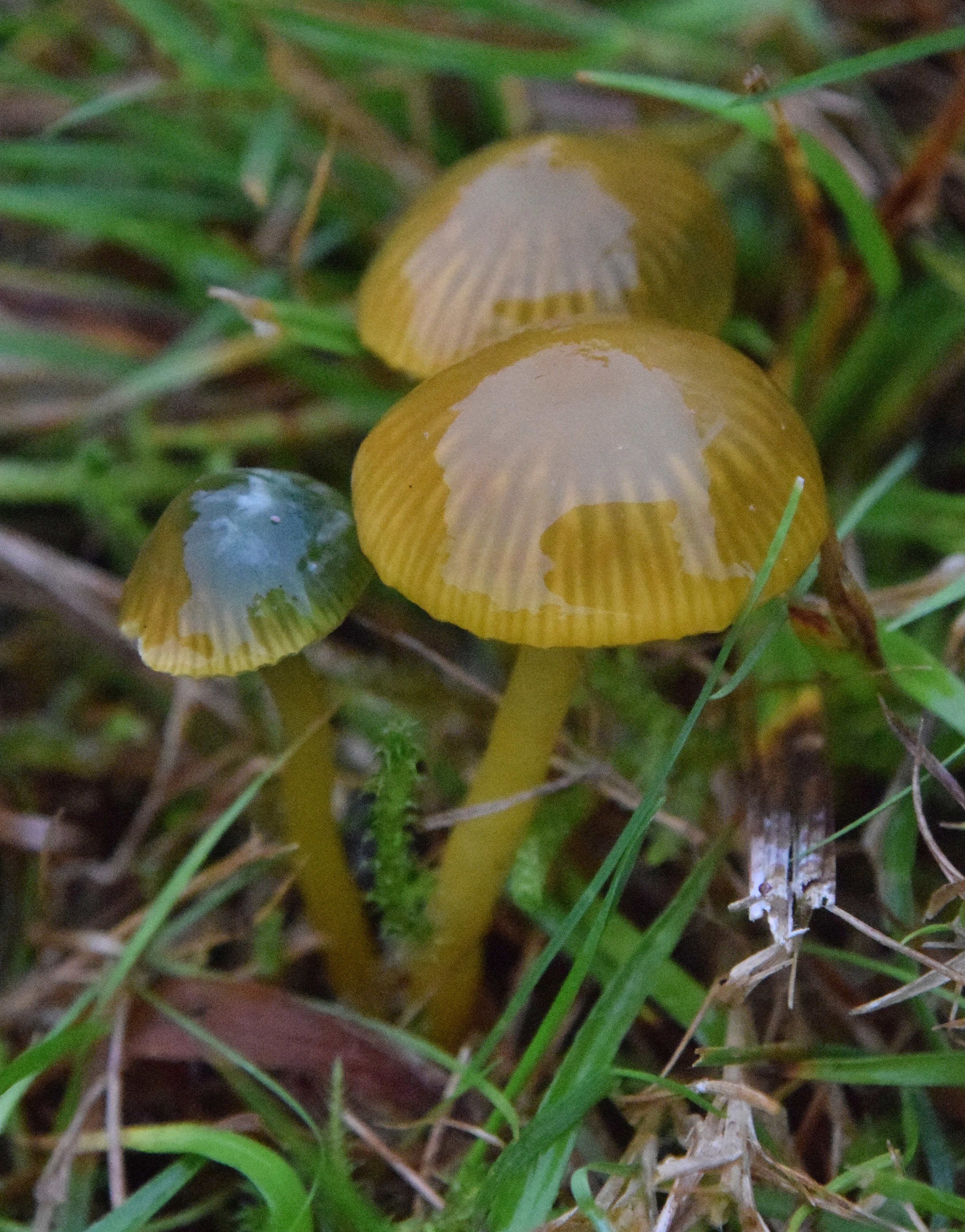


Still more Parrot Waxcaps
As October drew to its close and a new dark season arrived I made a further visit to St Bartholomew, Nettlebed, in company with Ewan on our way to a nearby ancient woodland. The vicar was present but did not wish to engage when I attempted to, making it plain that preserving mushrooms is not a priority when keeping the churchyard tidy. The Waxcaps, though were proving resilient, many more having emerged since the site’s recent peak-season mowing. Golden, Snowy and Slimy were all fruiting anew in good numbers, with one or two Blackening and Parrot; and there were some fine examples of Oily Waxcap (pictured below, left) that I have only recorded here this autumn.
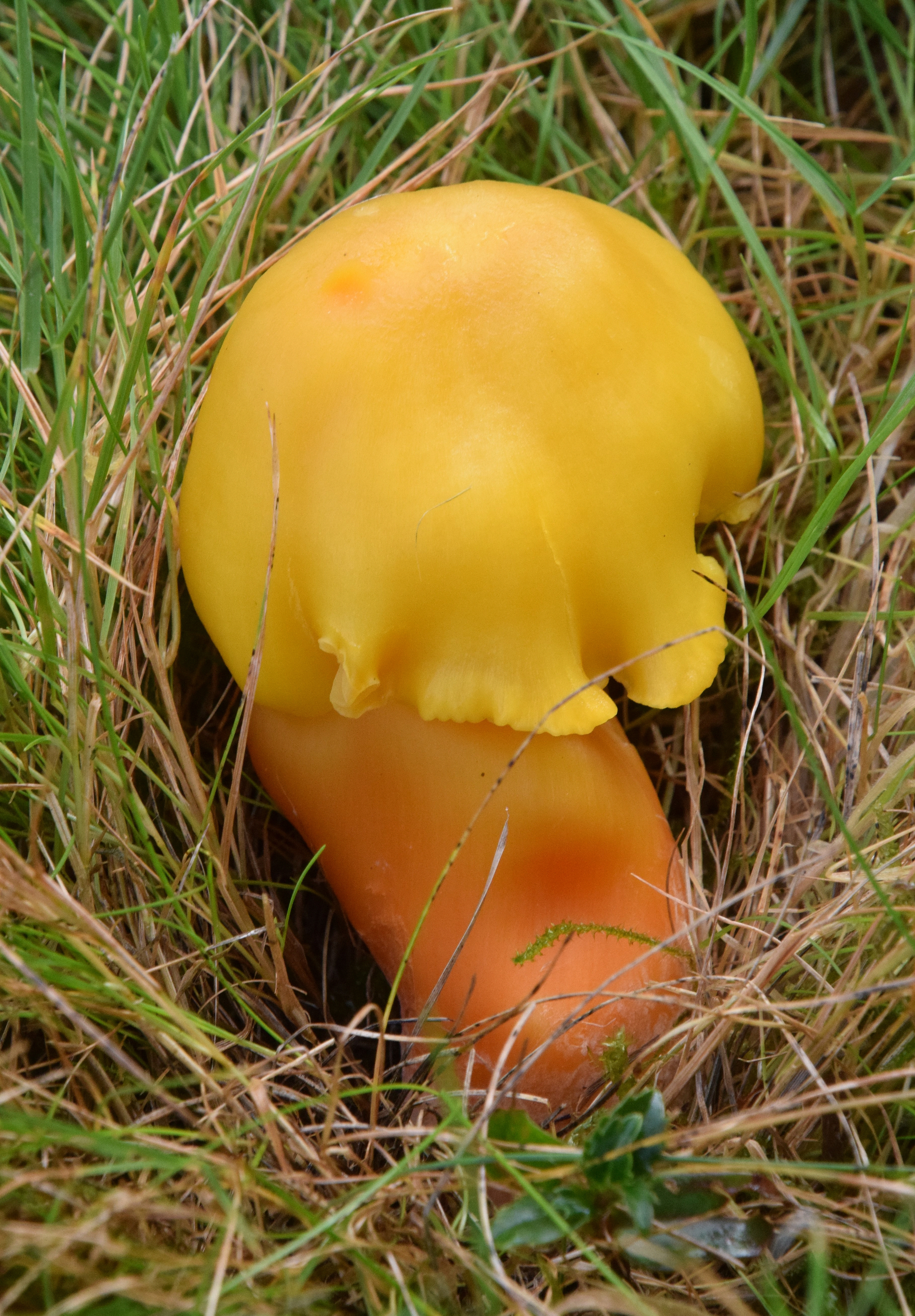
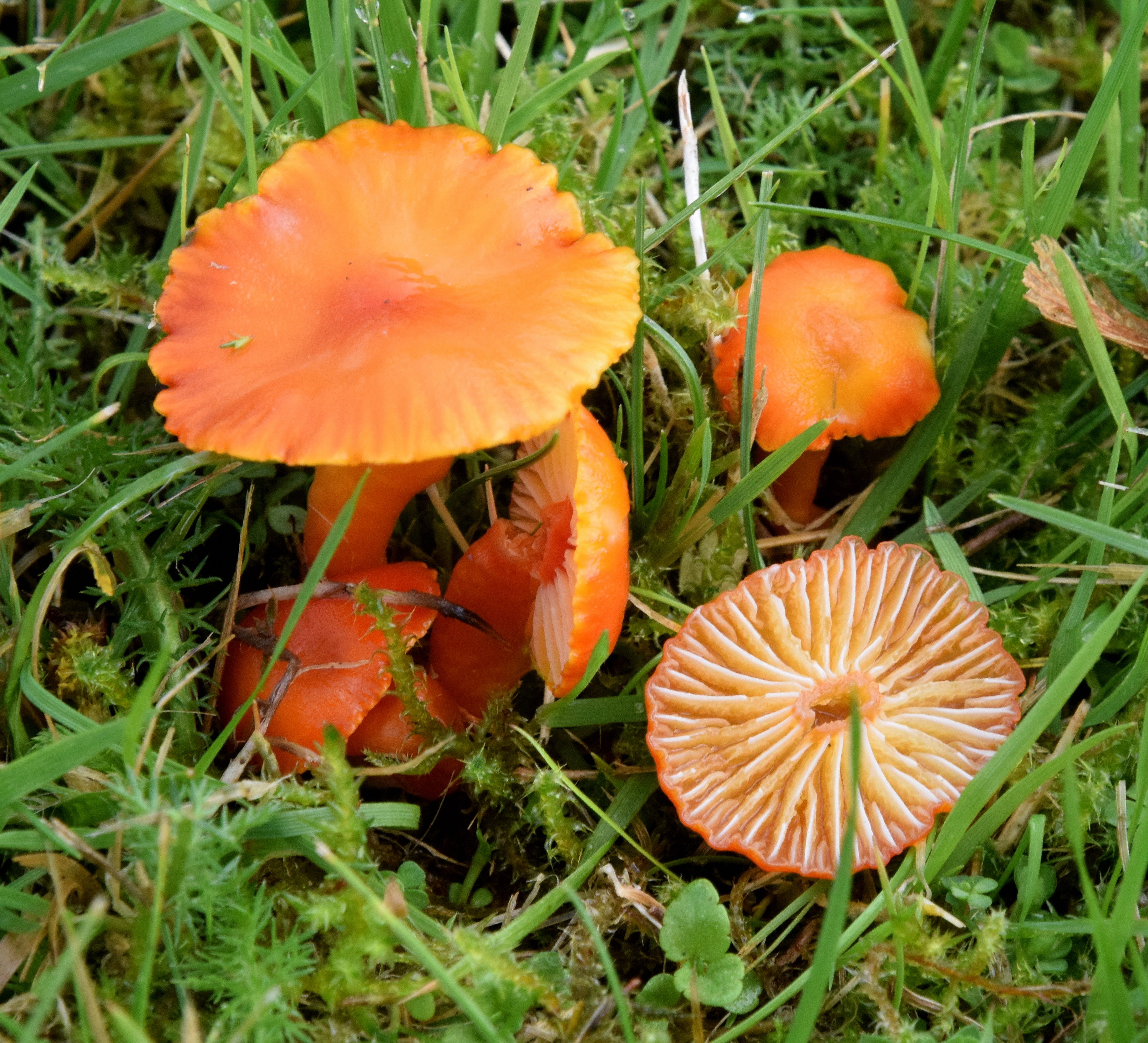
Nettlebed specialty Oily (left) and Spangle (?) Waxcaps
We also found a clump of smaller items in the same colour spectrum that to me just seemed different to other varieties recorded so far in this post. My app was not consistent in identifying them but I hope they are Spangle Waxcap (Hygrocybe insipida – above right), that I had previously seen records of from Prestwood but had yet to encounter the mushroom itself. This one is not covered in my usual sources of First Nature or the now ageing Roger Phillips mushroom bible, so who knows?
More certain is that throughout the above-recounted exercise, crawling around on soggy hands and knees, while performing contortions to capture close-up images of often tiny subjects, has been a totally absorbing activity during which nothing else matters. That is very like butterflying on remote mountainsides of southern Europe. So thank heaven for the two-month extension to the annual non-birding wildlife season that fungi provide.
 Ramblings and Scribblings