A Purple Toothwort haven in Swaythling, Southampton – 10th Apr

When researching this journal’s post before last I decided I would also like to record the second Toothwort species that occurs in the British Isles. So I consulted a trusted, top quality source and soon learned of a location in a northern suburb of Southampton, conveniently close to the first eastbound M27 junction from the M3 interchange, and just 70 miles and a similar number of minutes from home. Hitting the road southward on the A34 from Oxford is always restorative, given the numerous past and meaningful wildlife experiences that have awaited me beyond its end. In mid-morning I arrived in a built-up area then walked out into unspoiled habitat alongside the River Itchen.
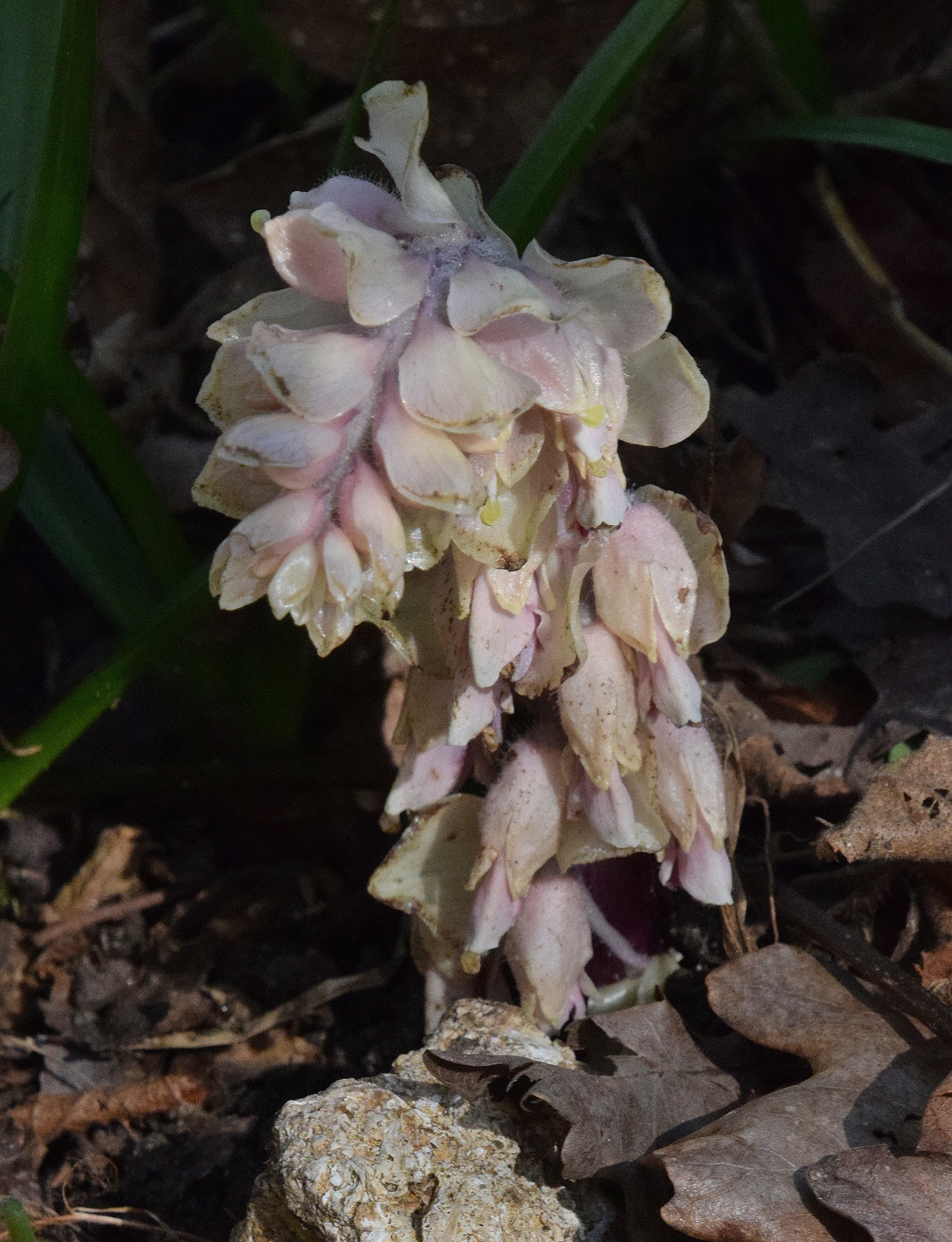
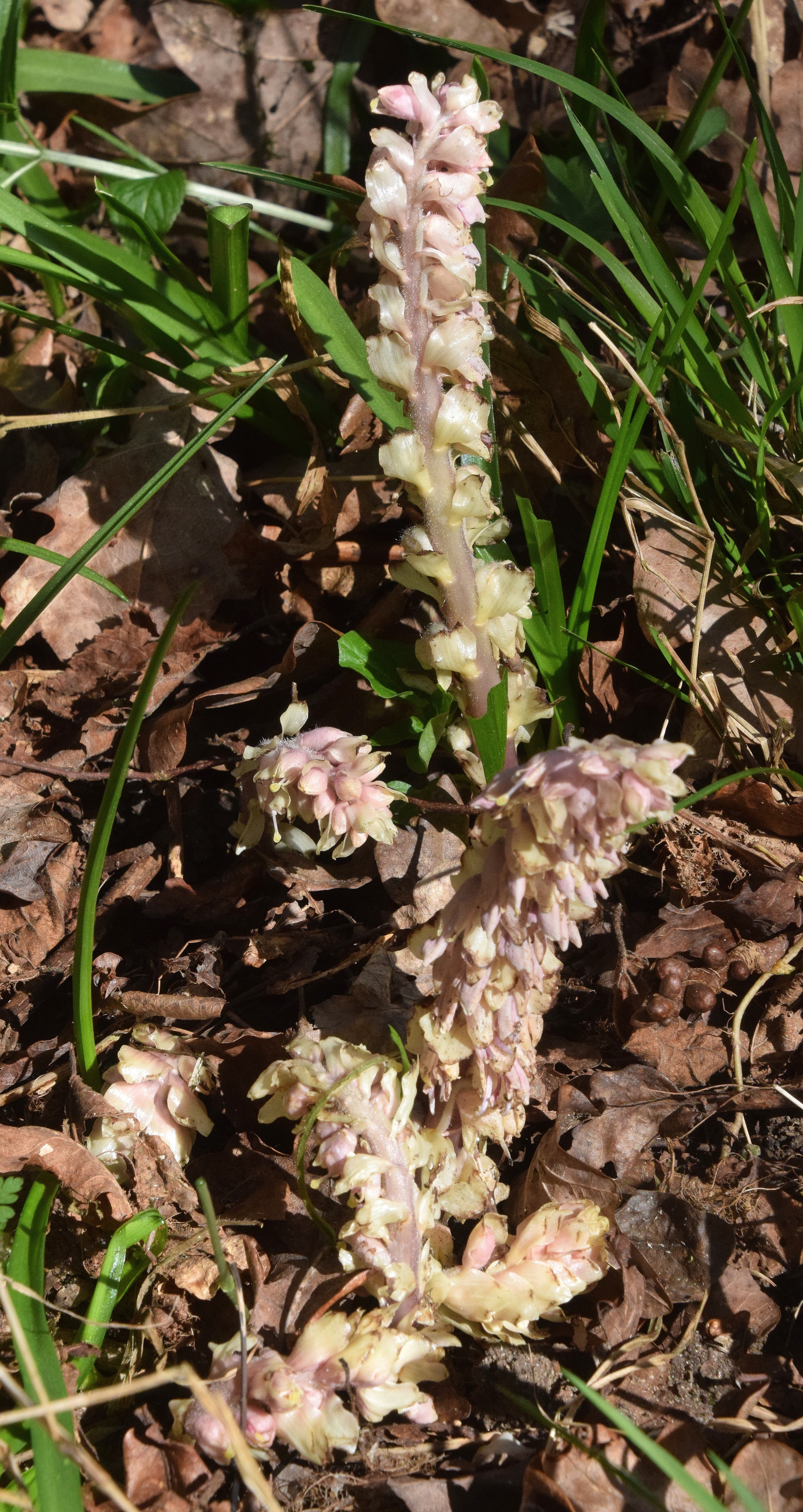
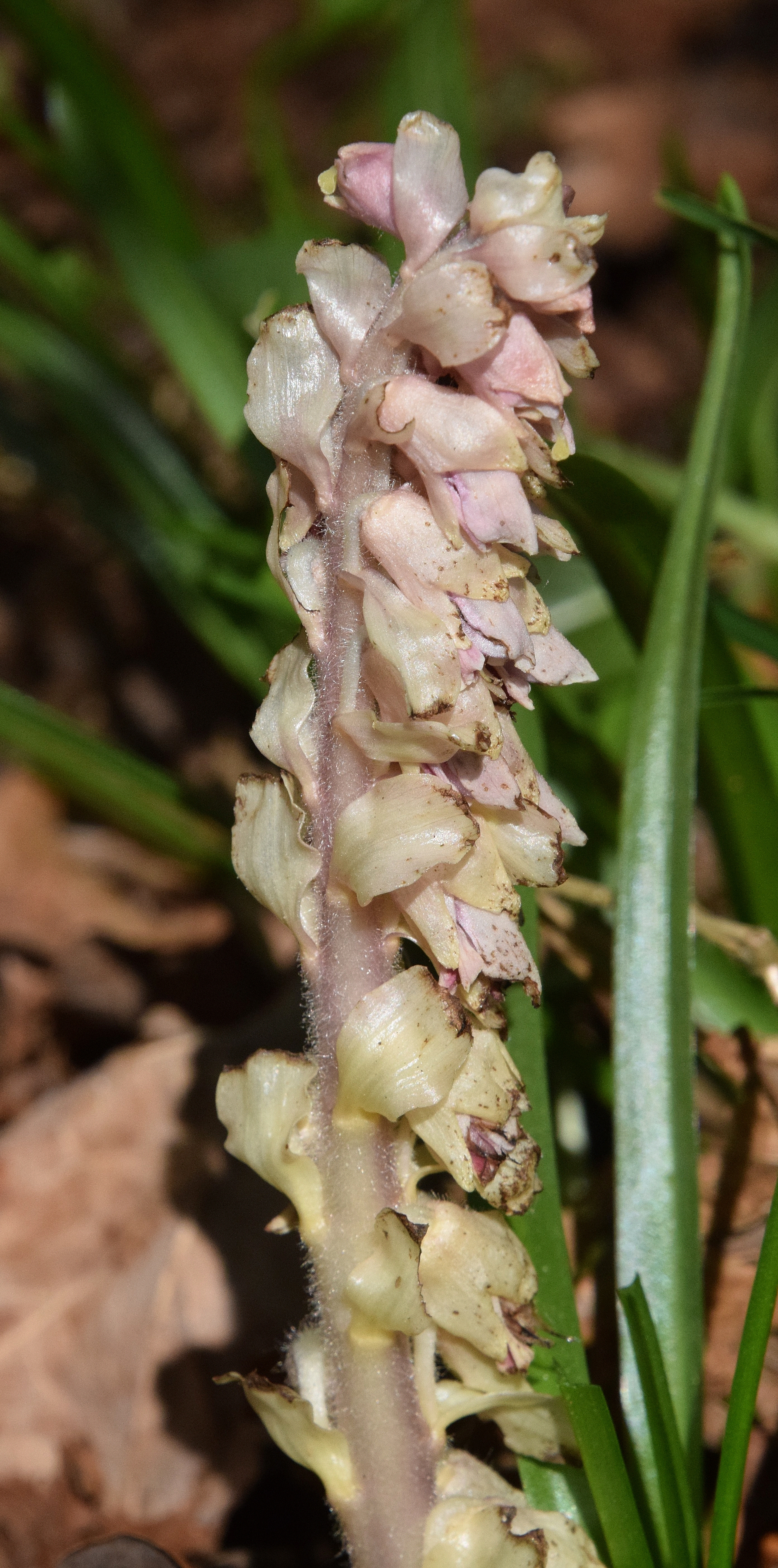
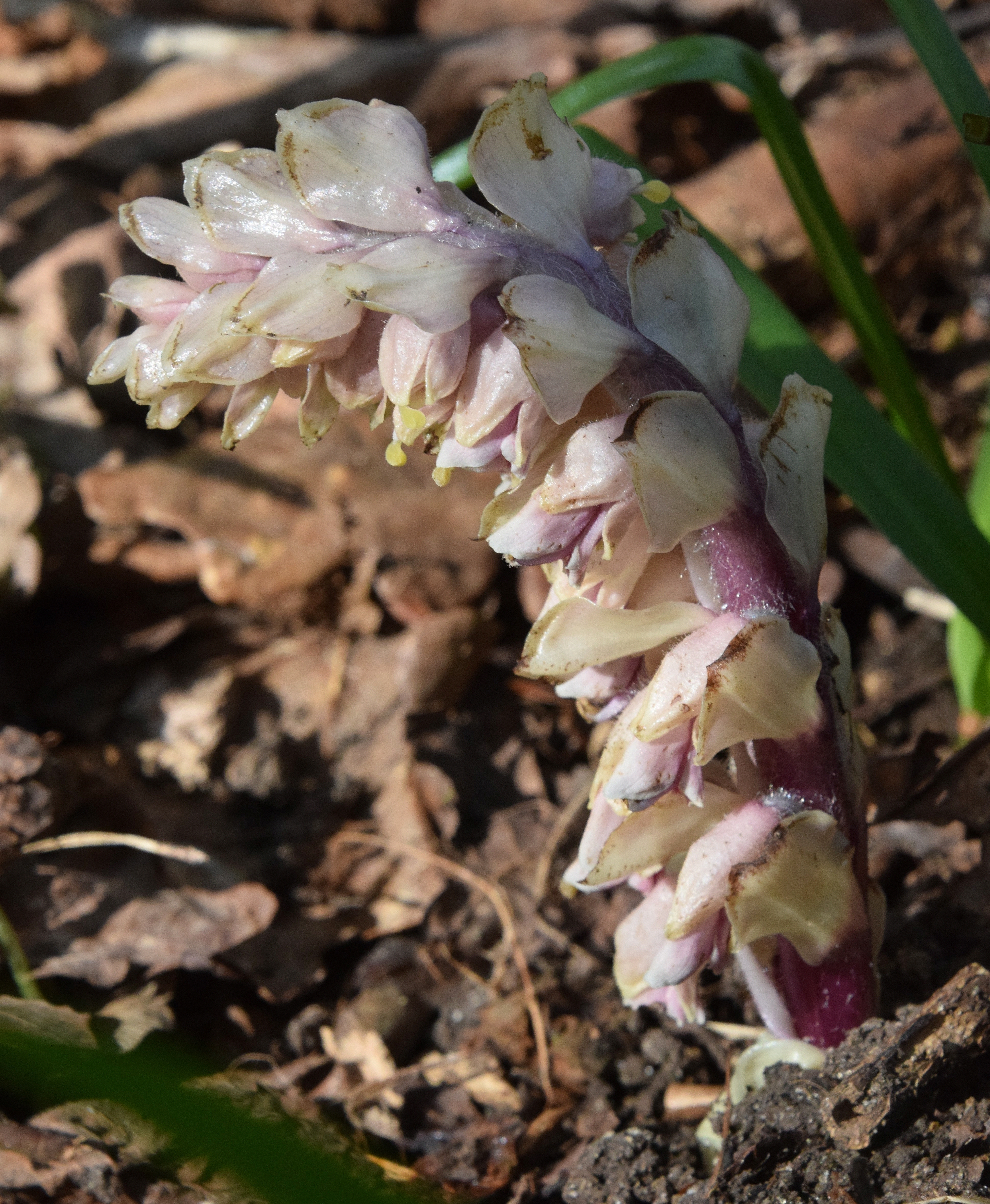
Purple Toothwart

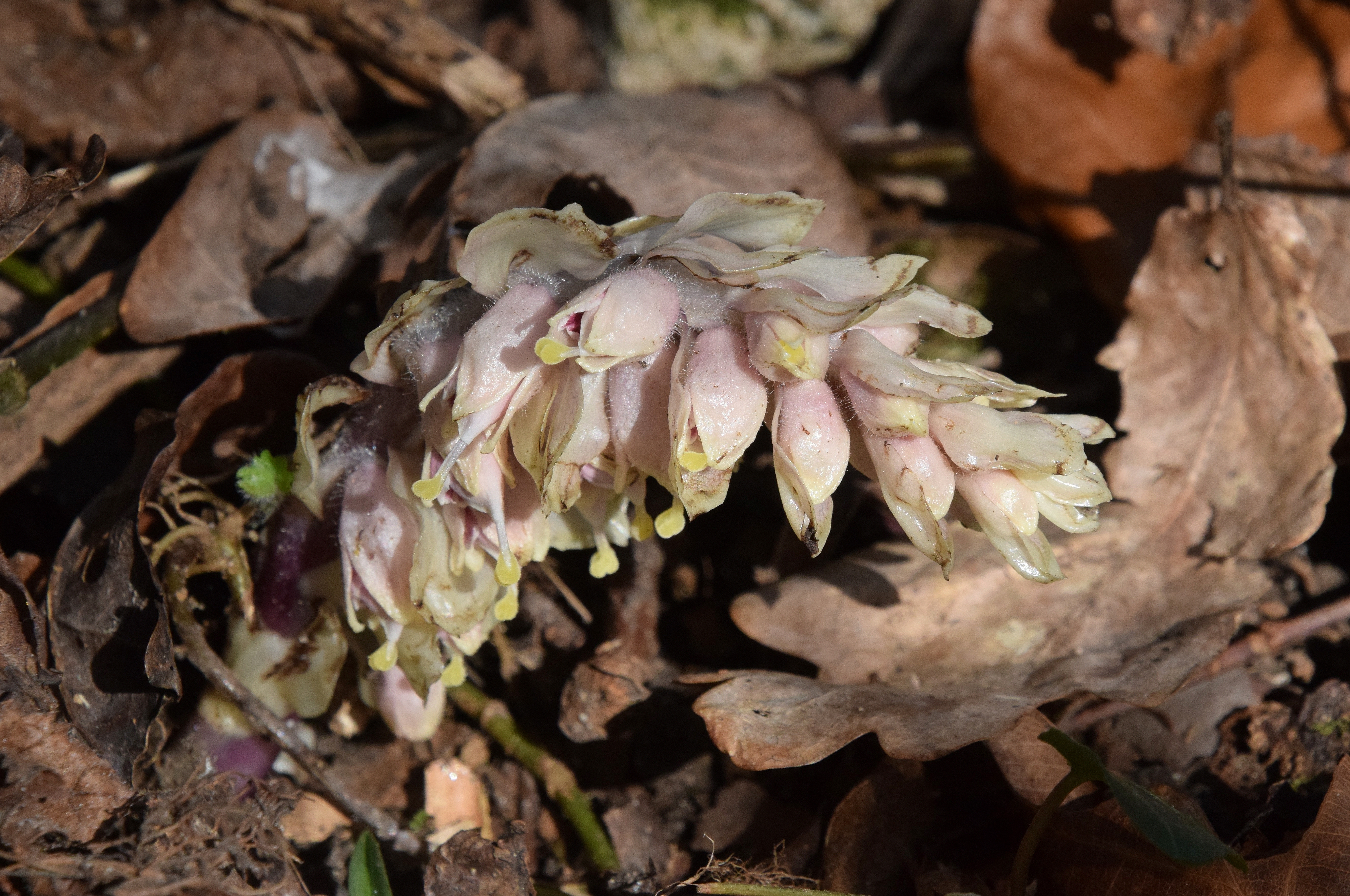
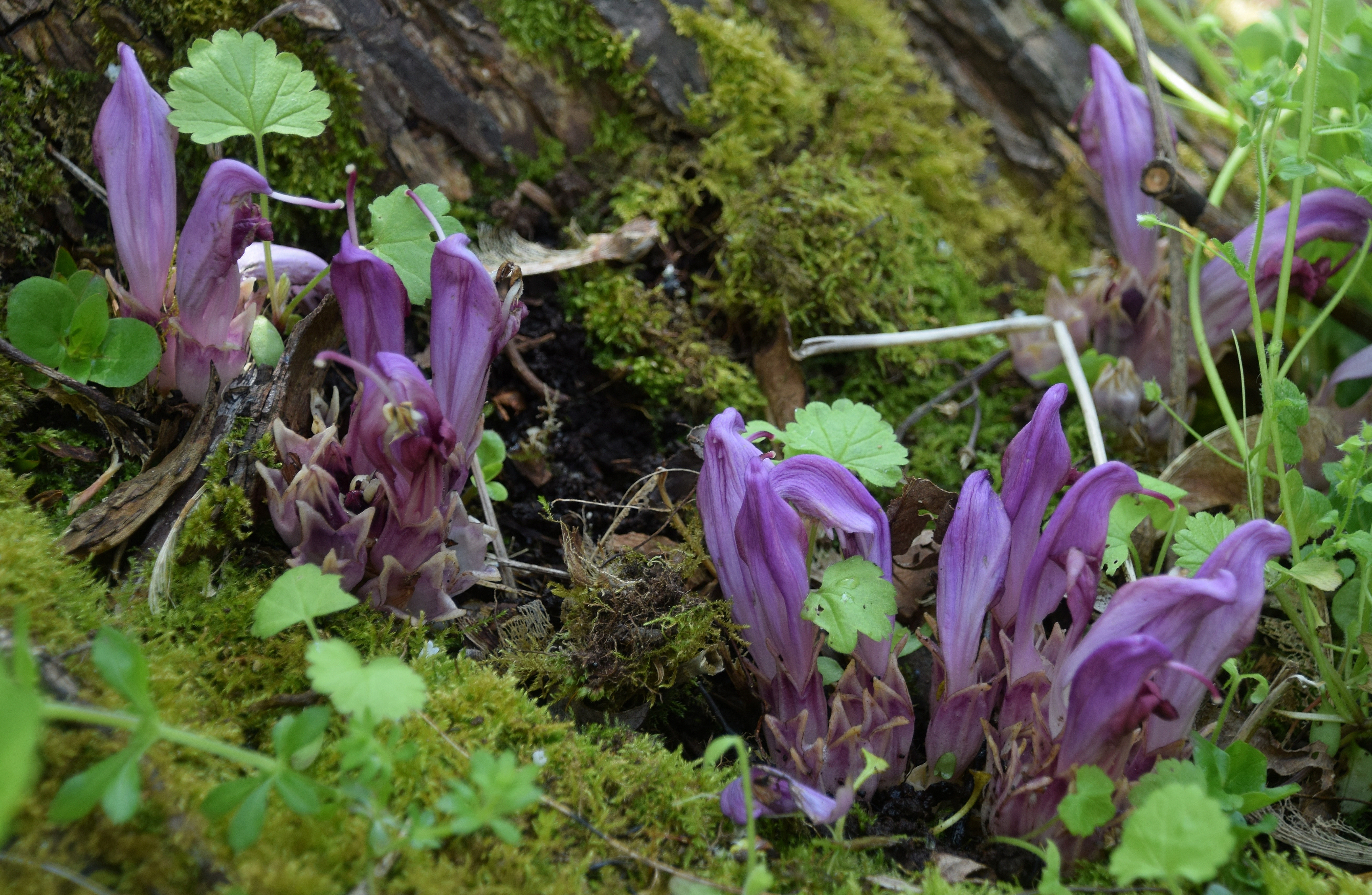
Purple Toothwort (Lathraea clandestina) was blooming in profusion beside a hard path alongside the tributary Monks Brook (SO18 2RS – SU441155), starting at /// leads.will.cove. There was so much of it here that I see no danger in revealing those site details that I believe are reasonably well-known in botanic circles, though less likely to attract the attention of passing general public. One regular walker here did tell me there have been other people taking pictures in recent days.

Like Common Toothwort (see here), this parasitic plant grows on host tree roots, in this case mainly Poplar and Willow, and only shows itself above ground in spring. But it has an entirely different character since the 40-50mm stemless, cowl-like, violet-purple flowers rise straight off the rootstock. Some clumps today were sprouting in fungal fashion from fallen, rotting wood (below left) and one even from the base of a low stone abutment (right). Clearing vegetation from protruding purple patches several times revealed large expanses beneath.
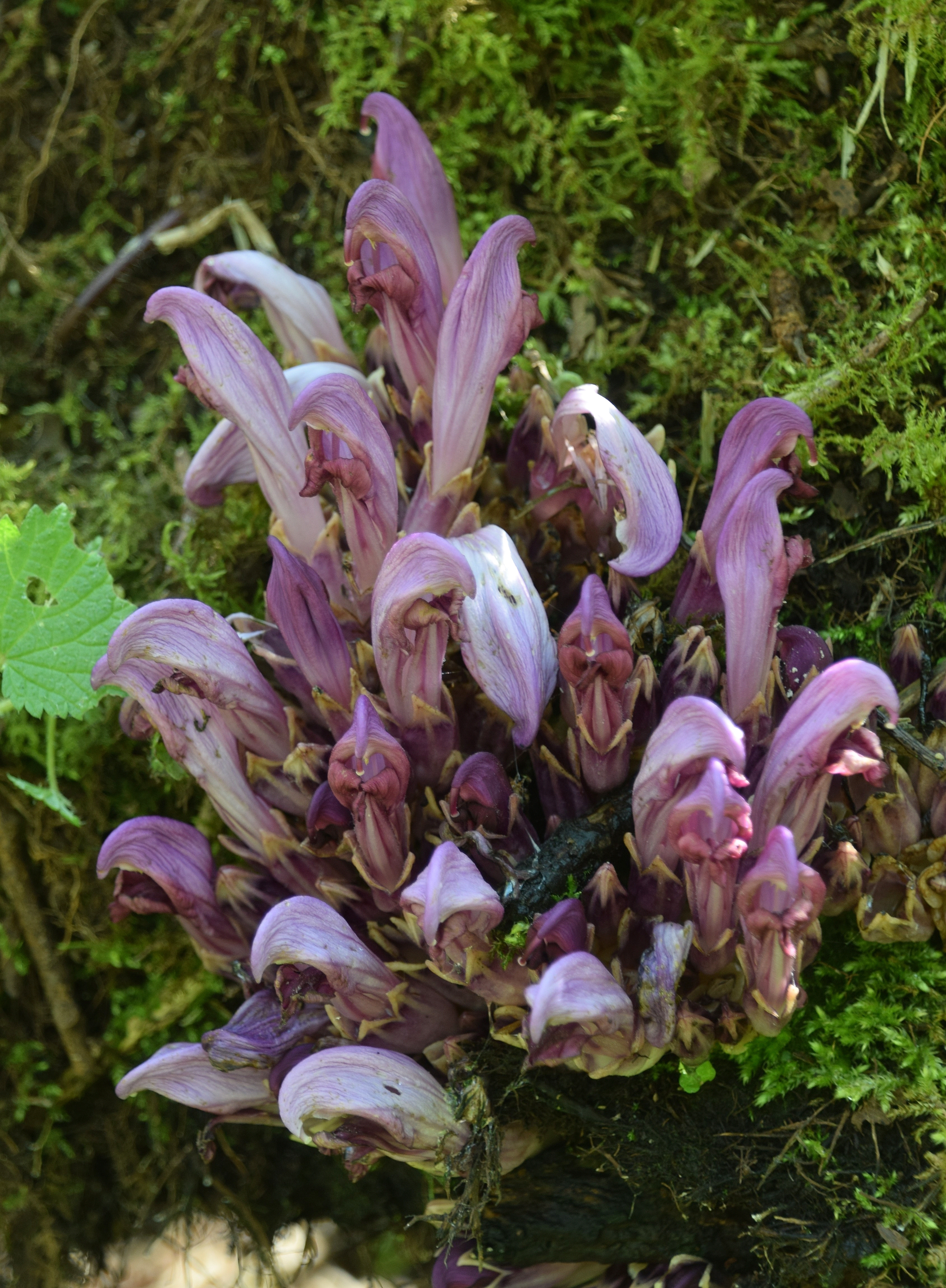
Native Purple Toothwort occurs across the west and south of Europe, from the Belgian Ardennes as far as northern Spain and central Italy, and is especially abundant in western and central France. In Great Britain it was originally introduced as a garden curiosity and planted at Kew Gardens in the late-19th century, then was first reported in the wild in 1908. Since then it has become locally naturalized in older parks and gardens, including both the Cambridge and Oxford University districts and RHS Wisley. The preferred habitat is damp woodland in valley bottoms, usually near streams such as in Swaythling. Several other Lathraea species occur around continental Europe.

The week’s earlier trip to Dorset hadn’t done it in re-humanising me after an exhausting prior working weekend, so this was a suitable opportunity to get out again by myself and draw the tranquility and renewal I seek from non-birding related wildlife activity. I couldn’t have had a better result, achieved with the aid of a precise pin drop in the best possible ambience, and returned home at least partially recovered.
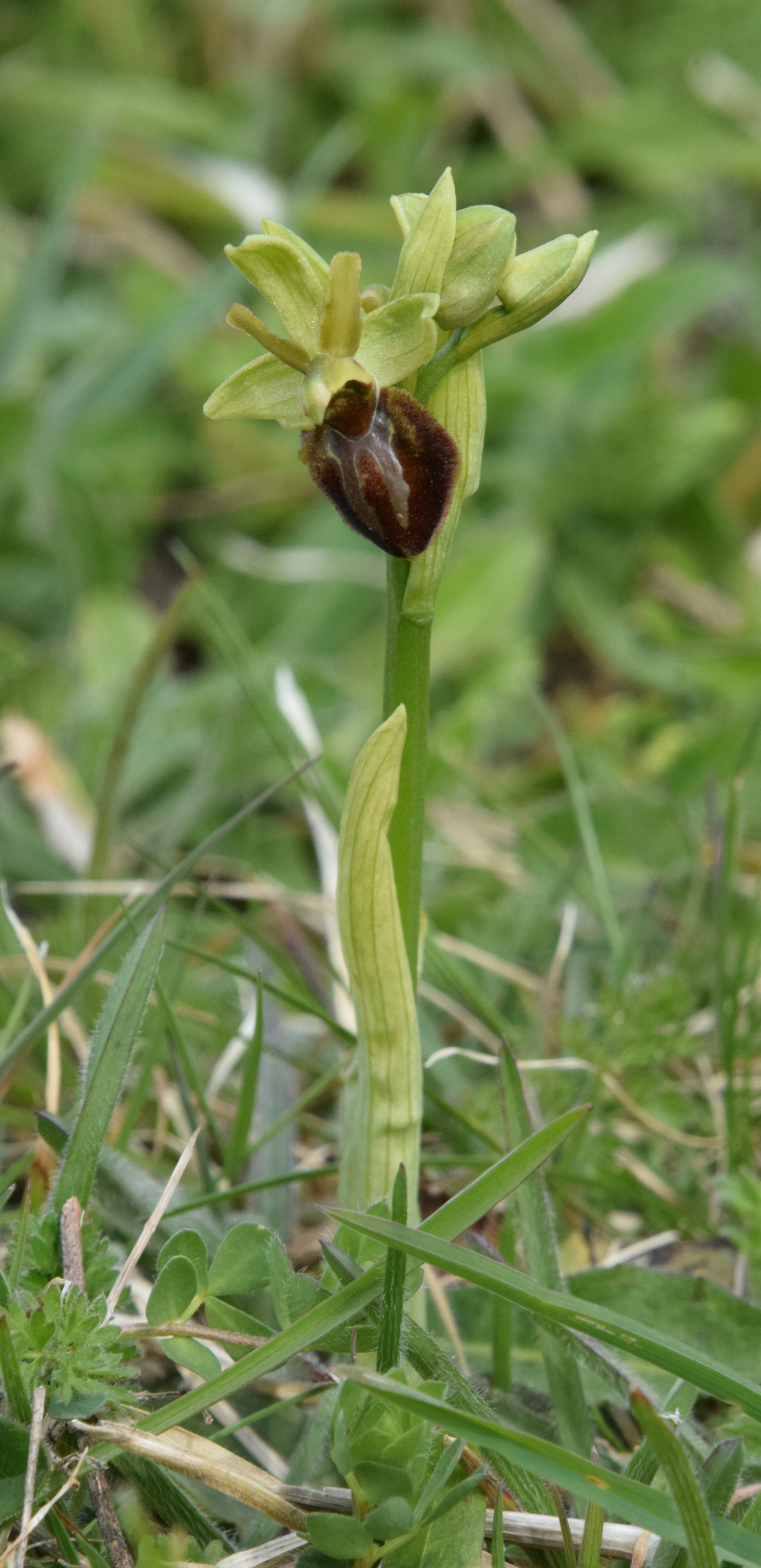
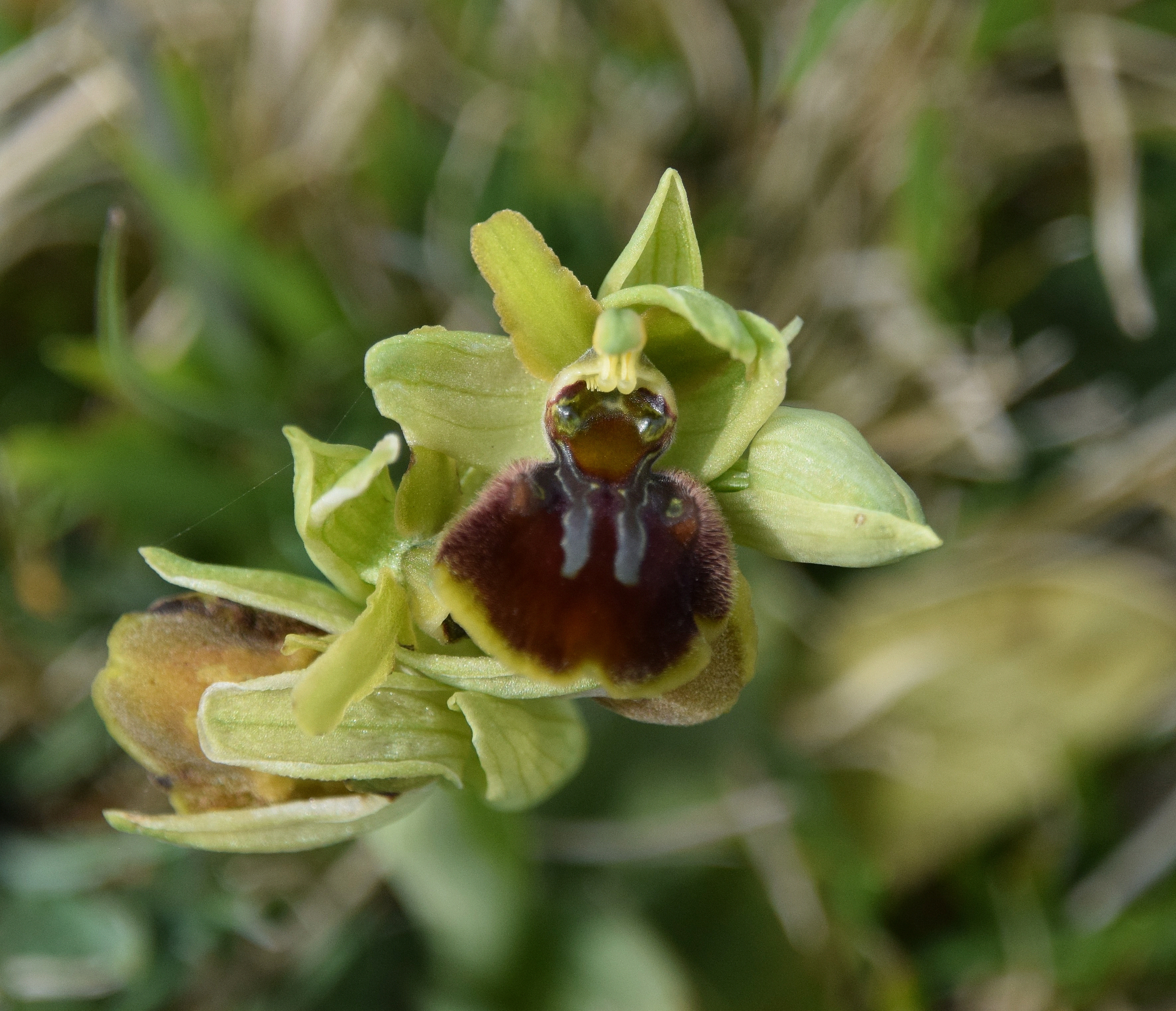
Early Spider Orchids at Durlston NNR, Dorset – 8 & 17th Apr

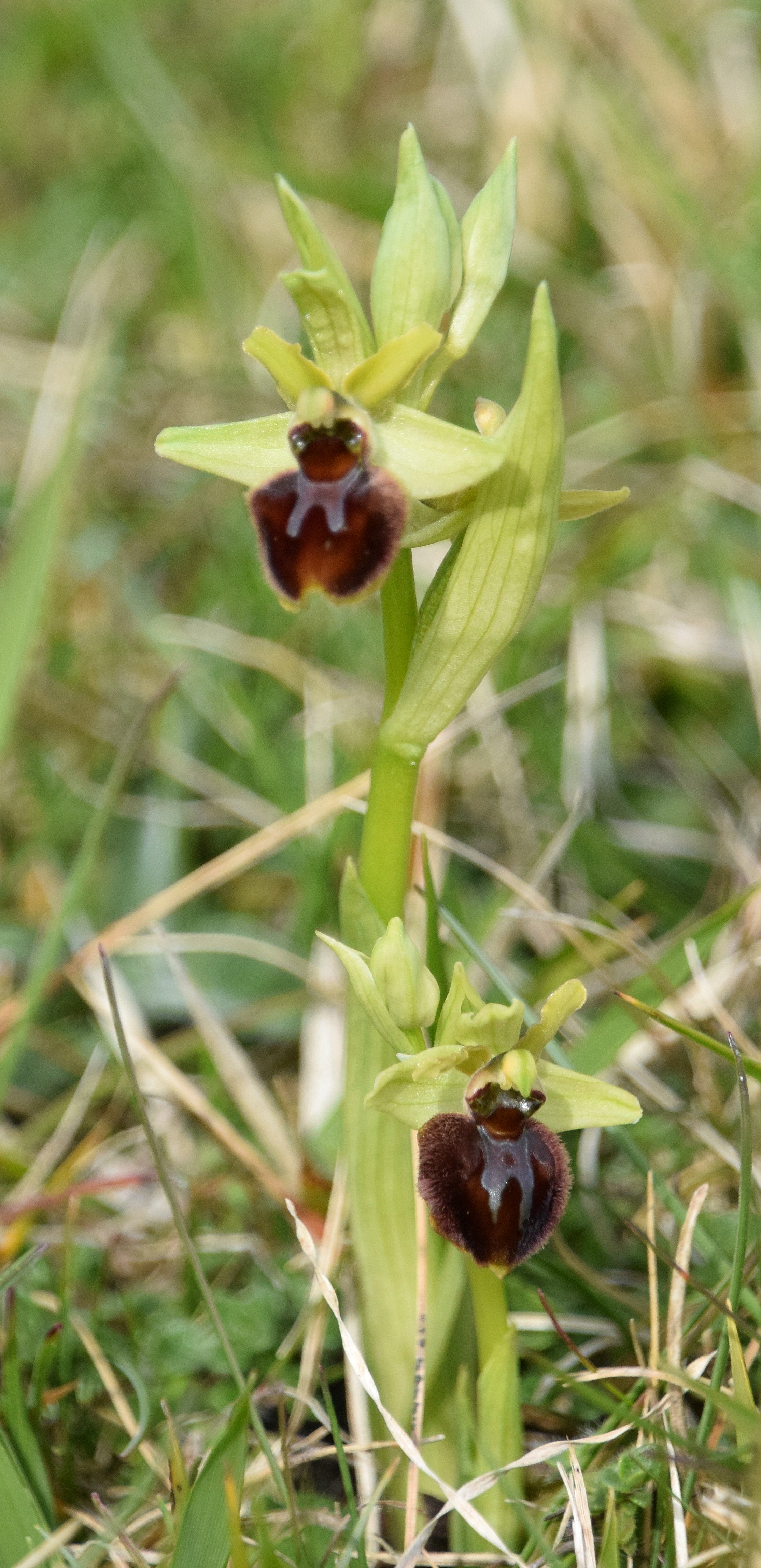
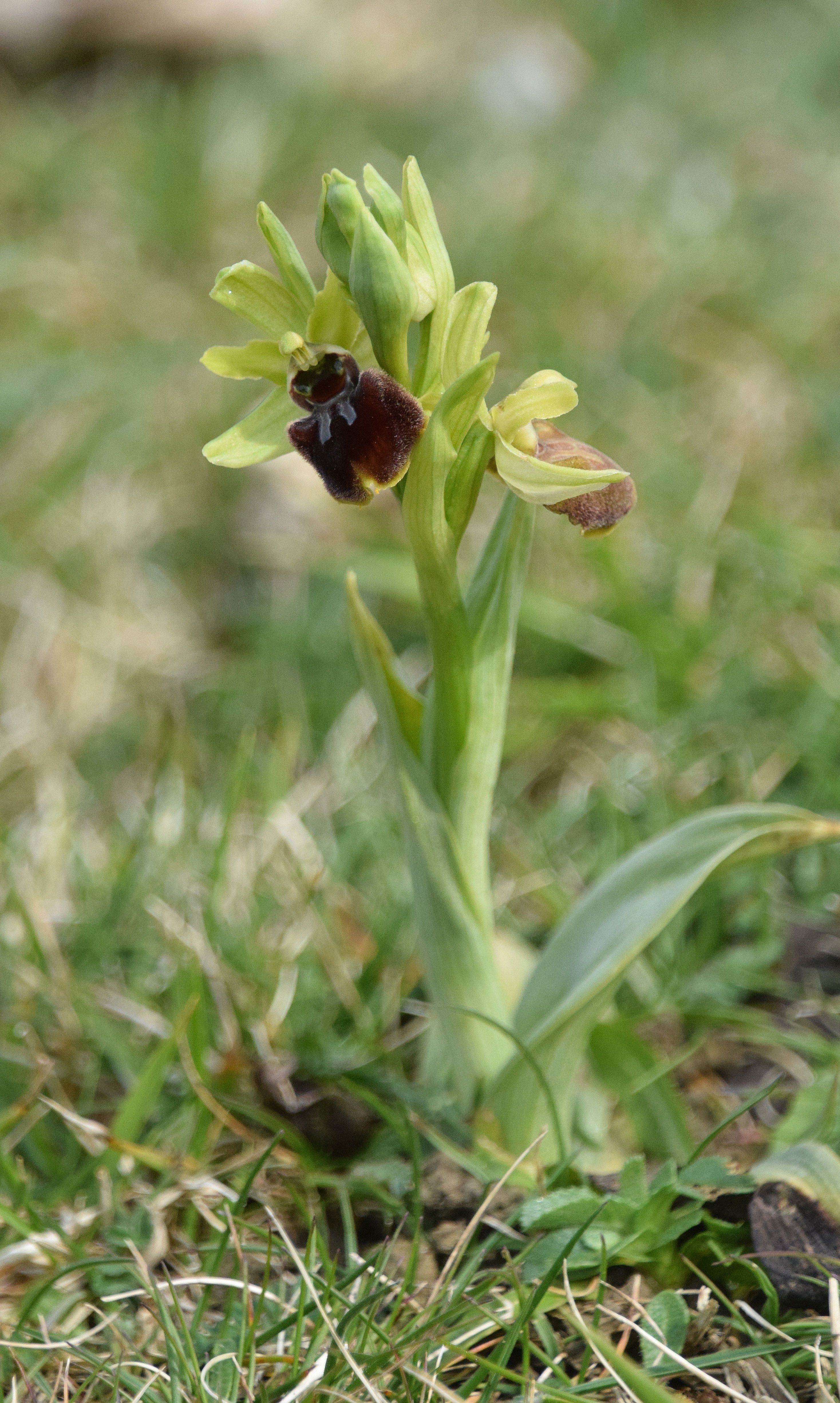
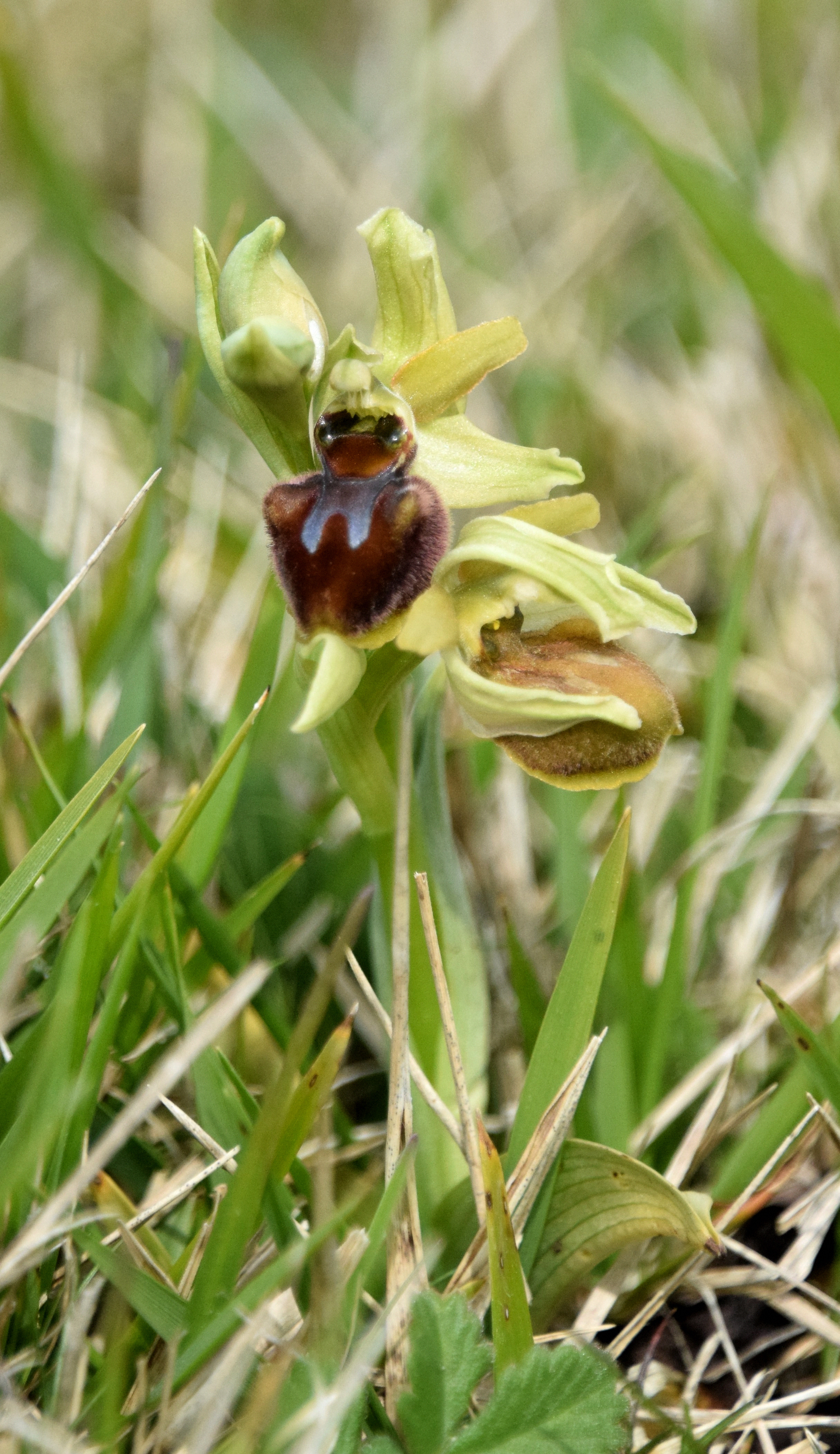
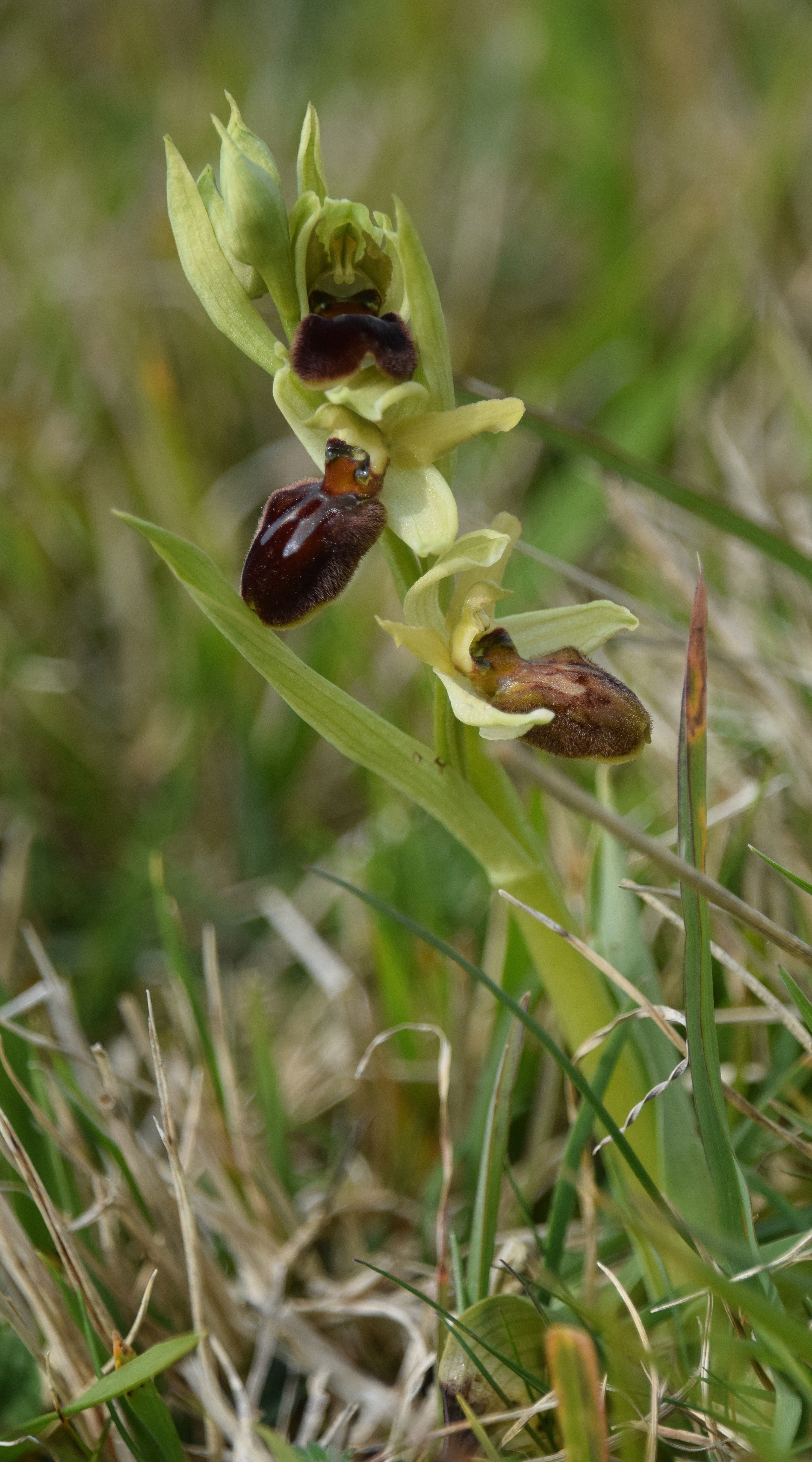
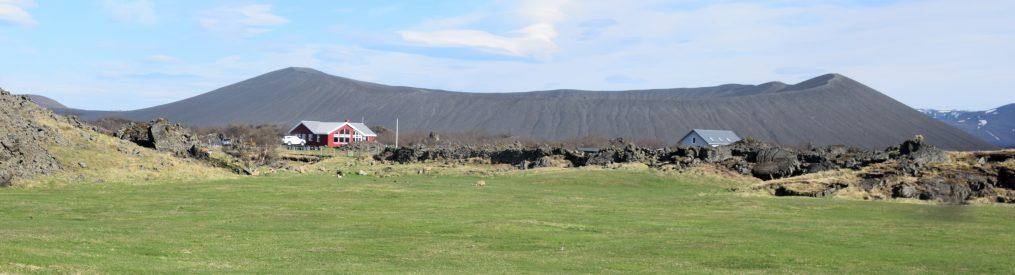
My interest in recording the more-localised British Orchids took off too late last year to include what follows. This post’s item occurs on the extremity of its European range at three south coast sites: today’s location, Castle Hill NNR near Brighton, and more recently Samphire Hoe SSSI at Dover. I had been told the older-established Dorset alternative is the most profuse, so after sightings began to be published in the last week of March, I opted to add this straggler as planned to my 39-strong career total.

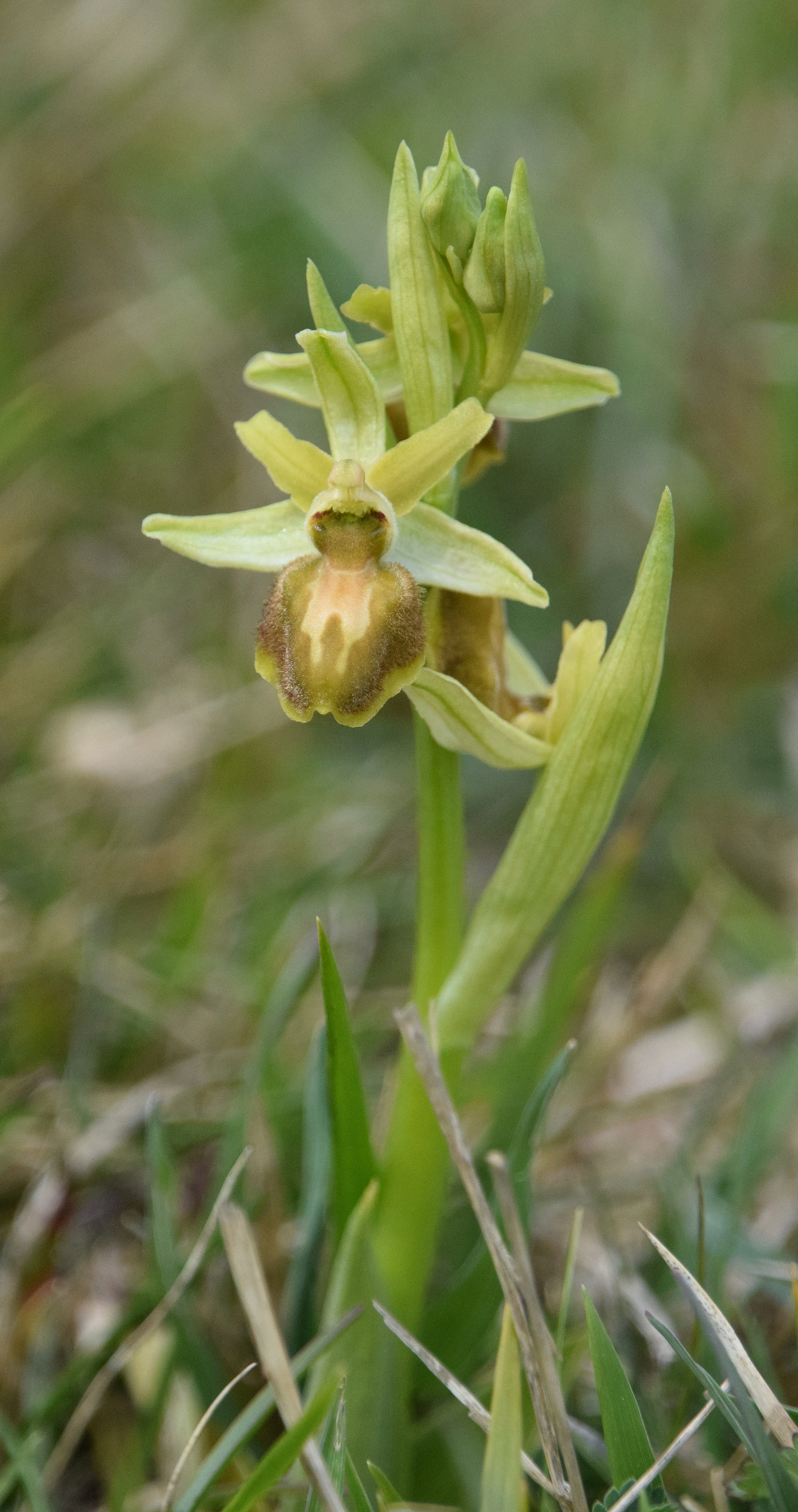
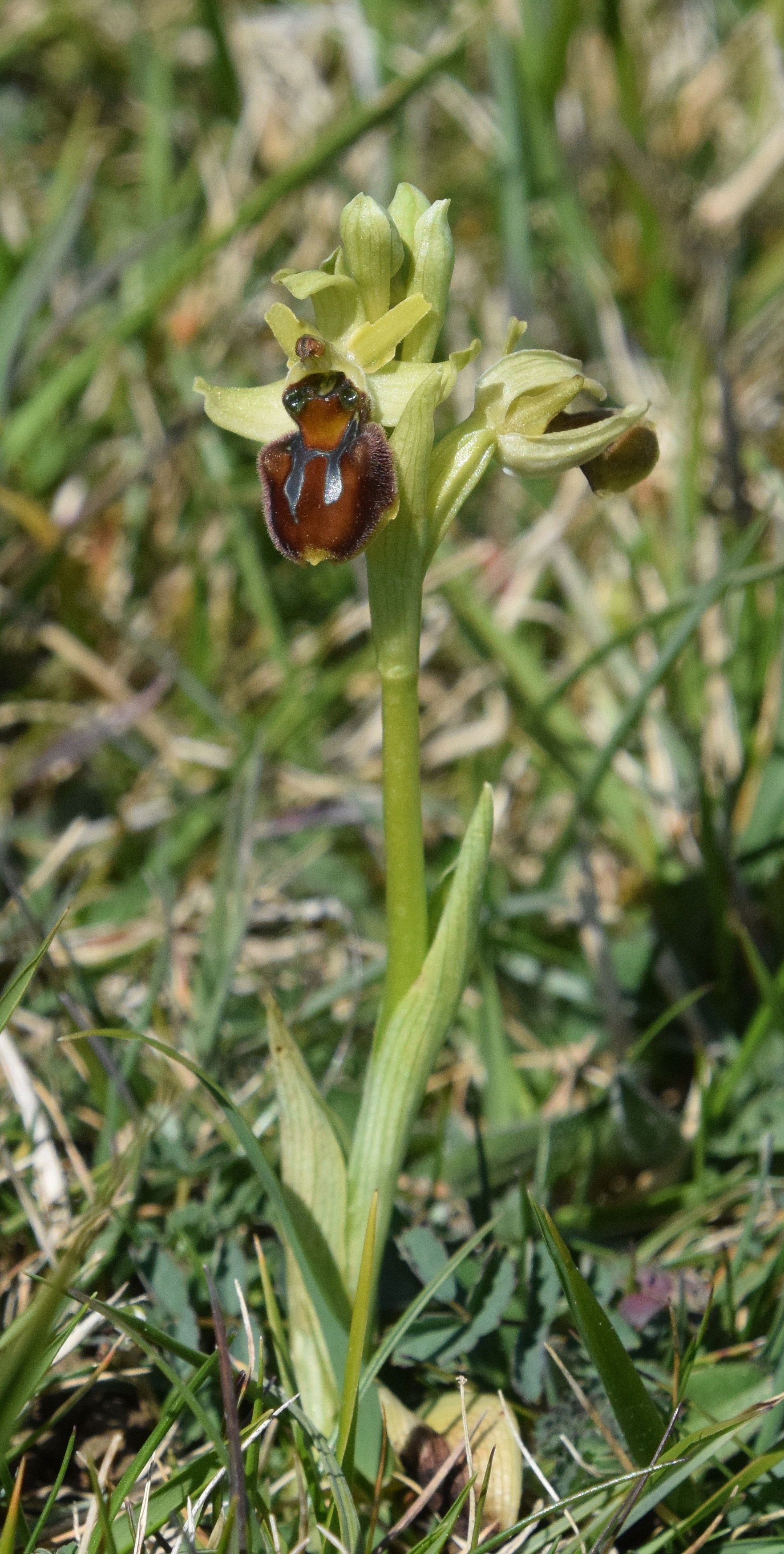
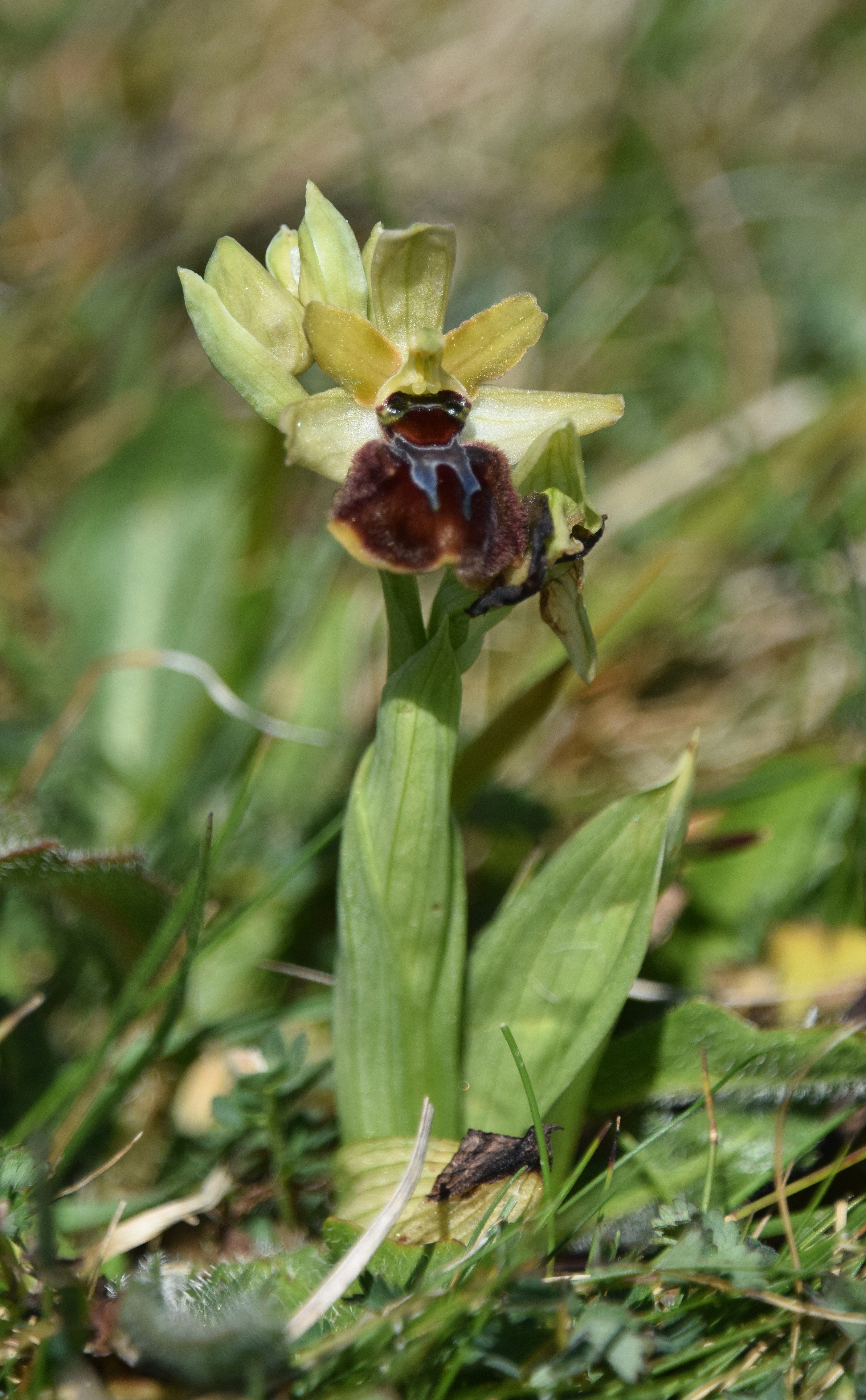
Early Spider Orchid (Ophrys sphegodessee here) was usually the first species to appear nationally in any new season, until Oxon’s famous Giant Orchids arrived upon the scene a few years ago. Similar in stature to the more widespread Bee Orchid, the former derives from the western Mediterranean and Aegean regions and is very variable with 12 or more recognised sub-species and two accepted British hybrids. It appears through April and into May in open areas of unimproved grassland or semi-shaded woodland edges, on calcareous substrates.

Early Spider Orchids, more spidery looking when viewed from above

When we arrived on-site at midday, we were at first directed in the country park visitor centre to an area where we located just two specimens. And so the above left became my first ever record. But as so often success depended upon getting our eyes in. After re-locating, with better instruction to fields immediately east of Anvil Point lighthouse (BH19 2JL – SZ 026770), there were plenty to be found.

Most of the blooming plants we observed today showed just two, occasionally three open flowers that by their mimicry (and like other Ophrys orchids) trick pollinators into trying to mate with them. A typical stem as it matures might grow to 20cm and carry up to 18 flowers, but I understand two to seven flowers are more usual in this particular colony. In other parts of ESO’s range inflorescences can reach 70cm in height. Across the cliff-top fields there were variously intriguing shapes, all in the early stages of flowering. These (below) are some of the day’s more pleasing pictures. I am advised that once pollinated the initially dark-red flowers turn to the orange / ochre tones that some of the images show.

The 129 ha (320 acre) Durlston Country Park and NNR is administered by Dorset County Council as a visitor attraction at the gateway to England’s Jurassic Coast World Heritage Site and 630-mile South-west Coast long-distance footpath. On the wildlife side of things (see here) the majority of the area is calcareous grassland upon underlying limestone. So its varied habitats support more than 500 wild plant species, 33 breeding butterflies and thousands of other invertebrates; not to mention the south coast’s second largest Guillemot colony and more breeding sea-birds on the coastal cliffs.

This was not such a relaxing day as I prefer when doing botany. The unchanging lack of major roads in much of Dorset is part of that enduring gem of an English county’s special charm. But the sheer volume of vehicles battling in and out of the Isle of Purbeck makes driving a chore, especially during a sunny school holiday such as this, which I suppose is an inevitable trade-off.

I returned to the slopes around Anvil Point alone nine days later on 17th during a day pursuing other interests on Purbeck. First time around I had thought it was still early days and there might be more to come here. But now almost all the ESOs had gone over, if not vanished entirely, and in their place were numbers of mostly very small Green-winged Orchids. So I realized things had probably already peaked by the time of that previous visit, and the sunny, dry flowering window had been quite brief from late March. But I did still find a few pristine subjects to add to my picture collection (above). Once again it took an hour to get back to the A31 to head home, a distance of just under 10 miles by the shortest route, though 40 minutes eastward to Ringwood is a more realistic assessment on a good day.

Common Toothwort at BBOWT Sydling’s Copse, Oxon – 1st Apr

When I heard about this from Wayne it appealed sufficiently to my current preference for the new and different to make me go to see for myself. This wild plant is not deemed rare in the British Isles, but is nonetheless considered a special find. It is strange, enigmatic and short-lived in bloom like the Aroids I have enjoyed cultivating at KCP BG; and I had not experienced it previously. The combination of those considerations certainly appealed.

Common Toothwort in deep shade

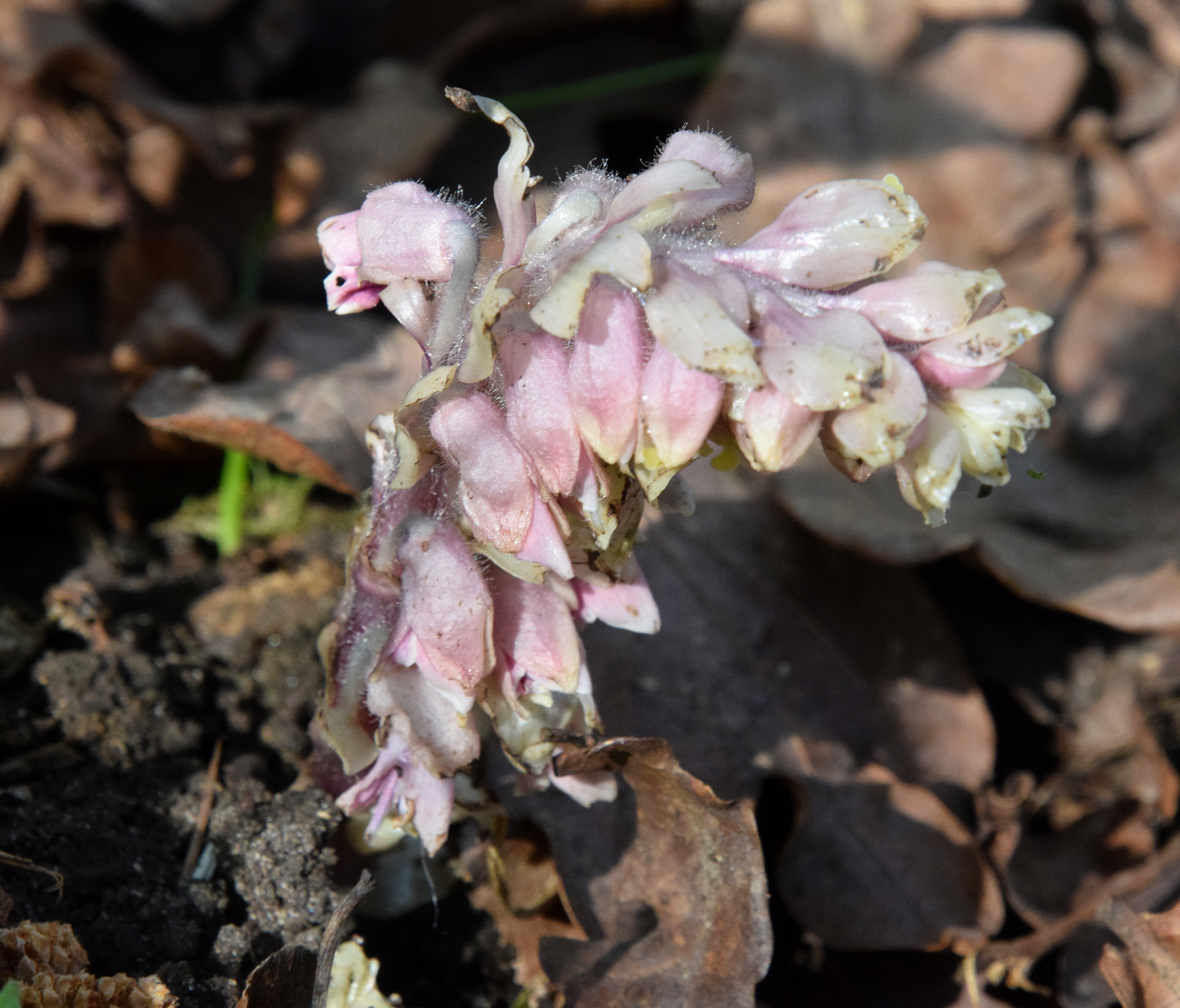
Toothwort (Lathraea squamaria) is an example of a “saprophytic” plant that having lost the ability to photosynthesize, becomes parasitic upon the roots of others; in this case Hazel, Alder and sometimes more trees. Further such examples are Bird’s Nest Orchid (see here) and Broomrapes (here), both of which Toothwart resembles in form if not colour. Upon finding the cluster I had been directed to today I was also at once reminded of the Violet Helleborines var rosea (here) I was taken to observe in the Chilterns last August. The very similar tones of both plants are due to their lack of chlorophyll, the green pigment that allows plants to farm energy from sunlight. As an inexperienced botanist I will welcome correction from more informed sources if I am not describing things quite accurately here.

Toothwort is a widely distributed perennial plant across Europe that occurs mainly in shady, deciduous woodland. The only time it is really visible is in April and early May when the flower spikes appear above ground. Otherwise it remains concealed, consisting of branched underground stems covered with thick, fleshy leaves that are bent over beneath the surface. But it can also produce self-fertilising below-ground flowers and regenerate from broken fragments of the hidden stem. By summer the milky-pink flowering suckers wither, having dropped seed, then withdraw to lie dormant for autumn and winter. The scientific name Lathraea is derived from the Greek for clandestine and secret. Weird and intriguing indeed!

This plant persists in the same locations year upon year, so I presume my guide knew full well where to look. He said he had only ever seen them here, and without his advice they would have been very difficult for me to locate. There could have been no better place to venture out again for the new season in the field than the enchanting other world that is Sydling’s Copse (OX3 9TY – SP559096 – see here). The open parts of this reserve were resplendent with Primroses, Violets and Hawthorn blossom; while Bee-flies and Bumblebees foraged here and there. And in amongst it all was this post’s “scarce and special find”.