When I heard about this from Wayne it appealed sufficiently to my current preference for the new and different to make me go to see for myself. This wild plant is not deemed rare in the British Isles, but is nonetheless considered a special find. It is strange, enigmatic and short-lived in bloom like the Aroids I have enjoyed cultivating at KCP BG; and I had not experienced it previously. The combination of those considerations certainly appealed.
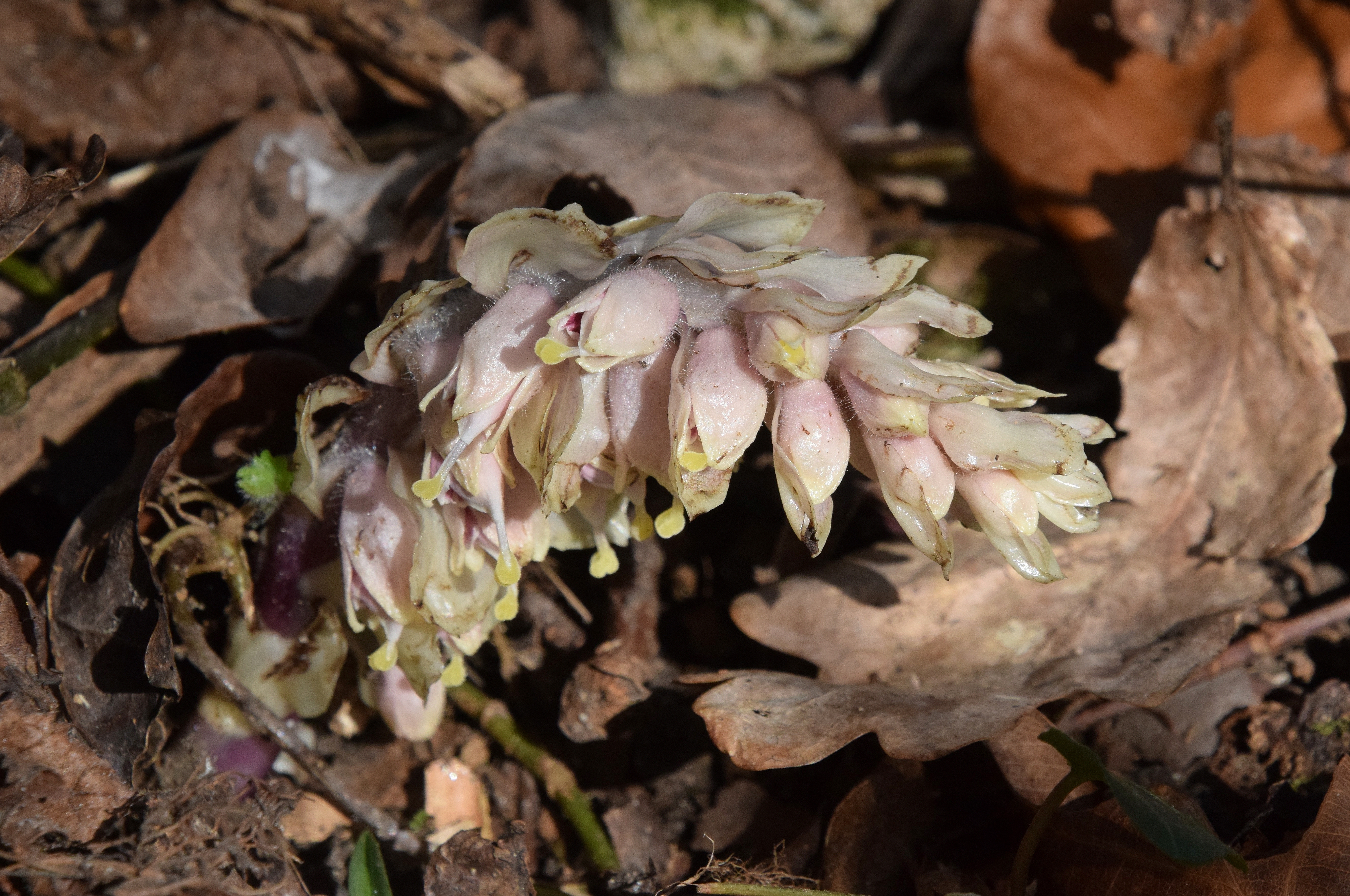
Toothwort (Lathraea squamaria) is an example of a “saprophytic” plant that having lost the ability to photosynthesize, becomes parasitic upon the roots of others; in this case Hazel, Alder and sometimes more trees. Further such examples are Bird’s Nest Orchid (see here) and Broomrapes (here), both of which Toothwart resembles in form if not colour. Upon finding the cluster I had been directed to today I was also at once reminded of the Violet Helleborines var rosea (here) I was taken to observe in the Chilterns last August. The very similar tones of both plants are due to their lack of chlorophyll, the green pigment that allows plants to farm energy from sunlight. As an inexperienced botanist I will welcome correction from more informed sources if I am not describing things quite accurately here.
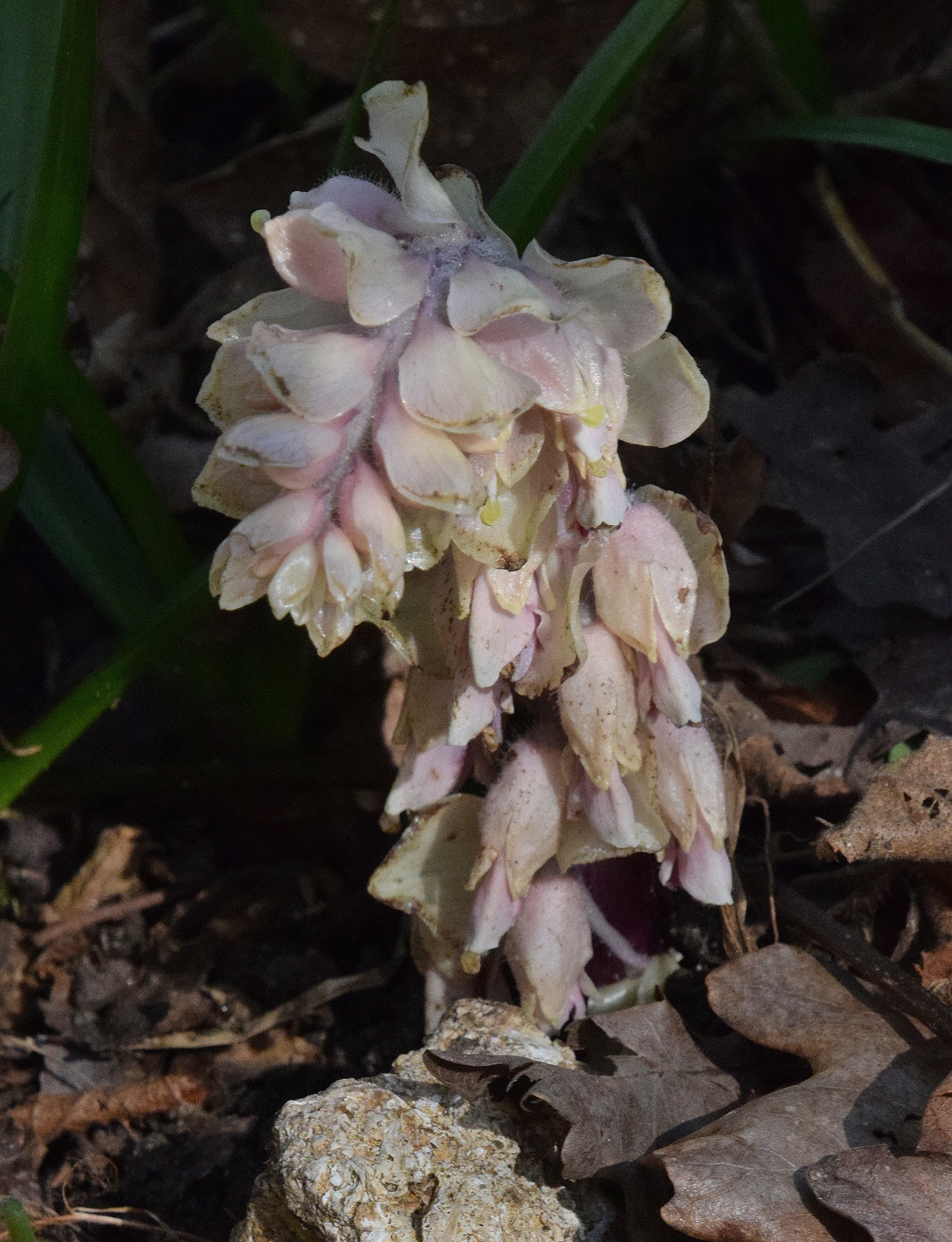
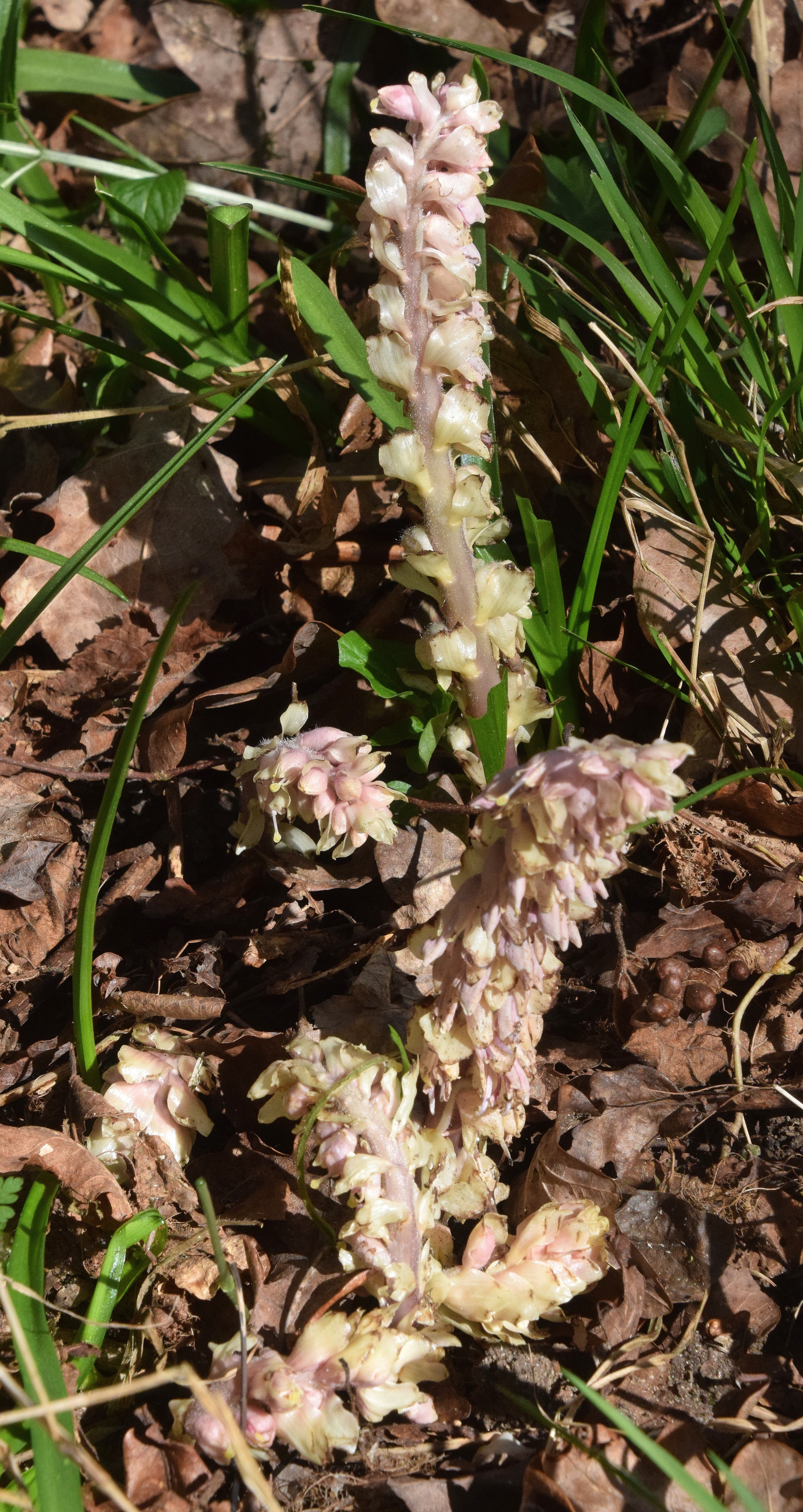
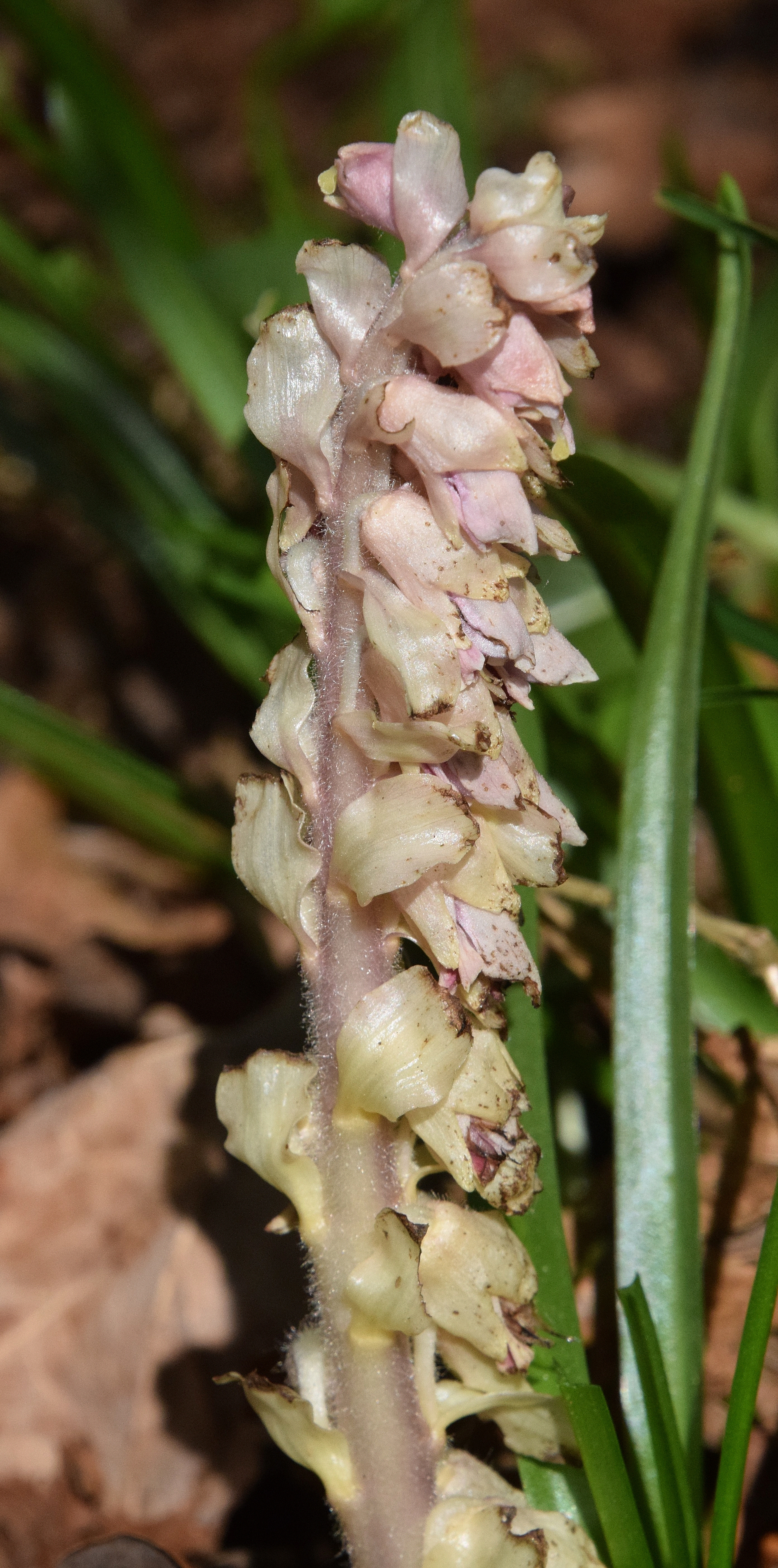
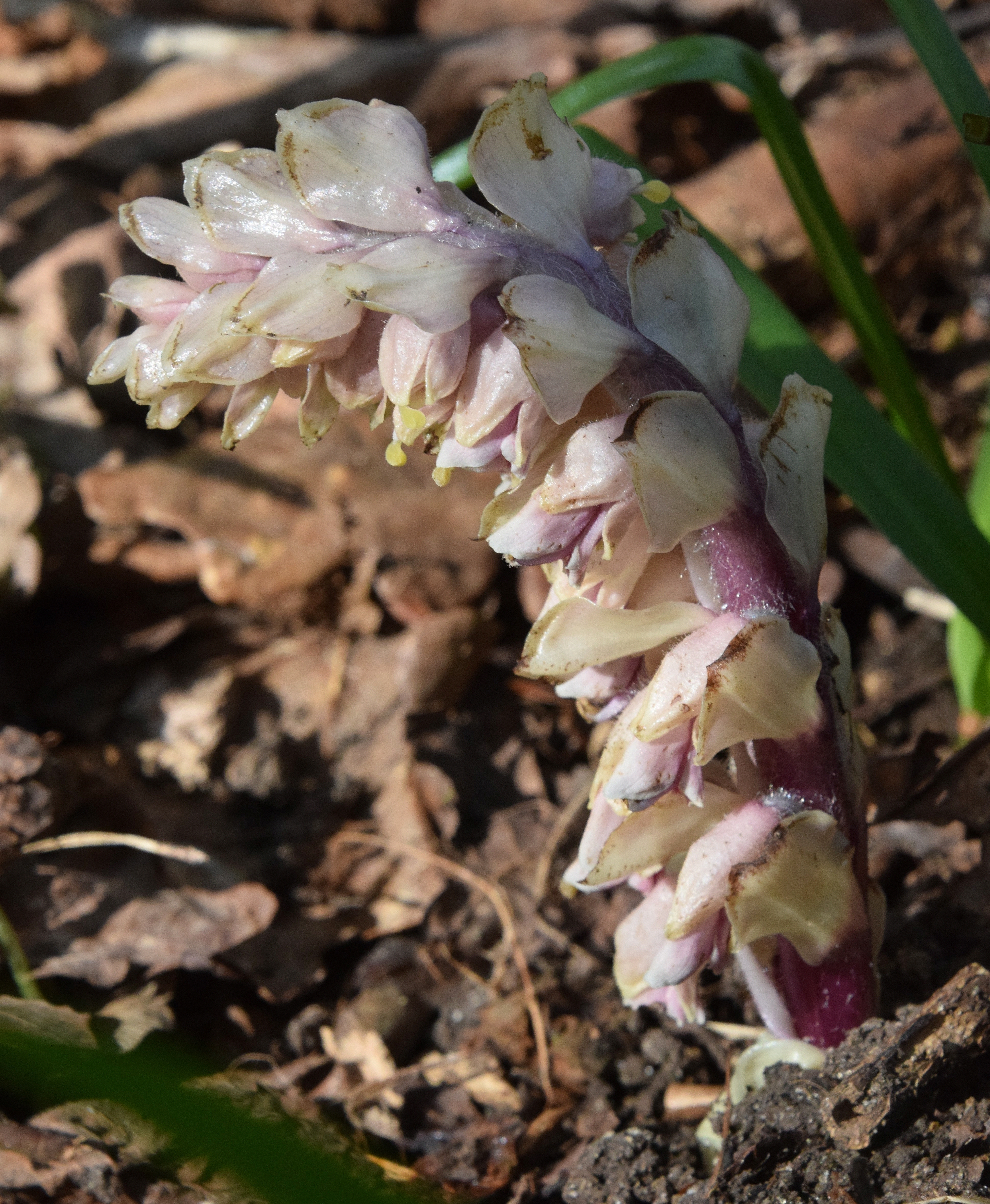
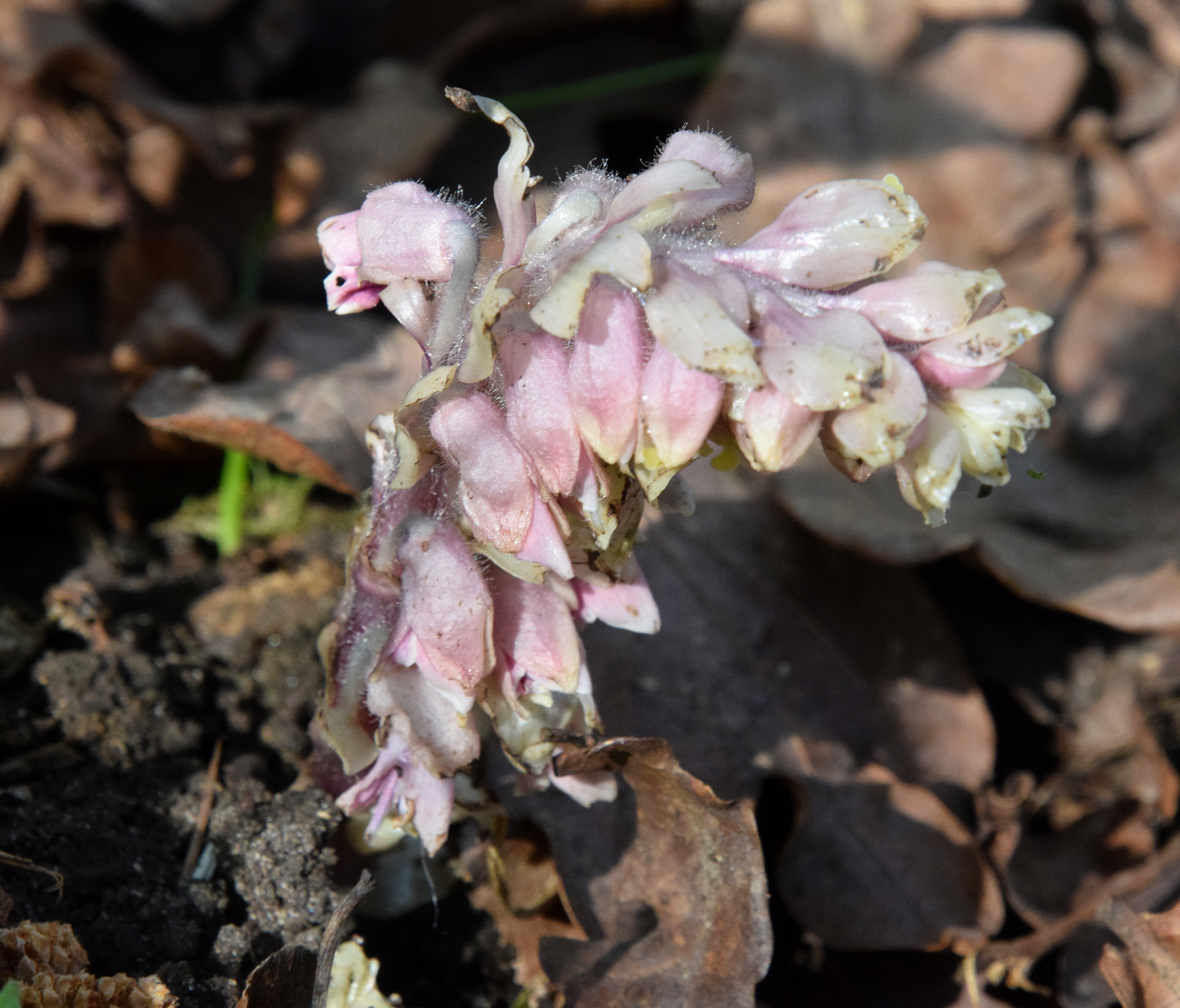
Toothwort is a widely distributed perennial plant across Europe that occurs mainly in shady, deciduous woodland. The only time it is really visible is in April and early May when the flower spikes appear above ground. Otherwise it remains concealed, consisting of branched underground stems covered with thick, fleshy leaves that are bent over beneath the surface. But it can also produce self-fertilising below-ground flowers and regenerate from broken fragments of the hidden stem. By summer the milky-pink flowering suckers wither, having dropped seed, then withdraw to lie dormant for autumn and winter. The scientific name Lathraea is derived from the Greek for clandestine and secret. Weird and intriguing indeed!
This plant persists in the same locations year upon year, so I presume my guide knew full well where to look. He said he had only ever seen them here, and without his advice they would have been very difficult for me to locate. There could have been no better place to venture out again for the new season in the field than the enchanting other world that is Sydling’s Copse (OX3 9TY – SP559096 – see here). The open parts of this reserve were resplendent with Primroses, Violets and Hawthorn blossom; while Bee-flies and Bumblebees foraged here and there. And in amongst it all was this post’s “scarce and special find”.
 Ramblings and Scribblings