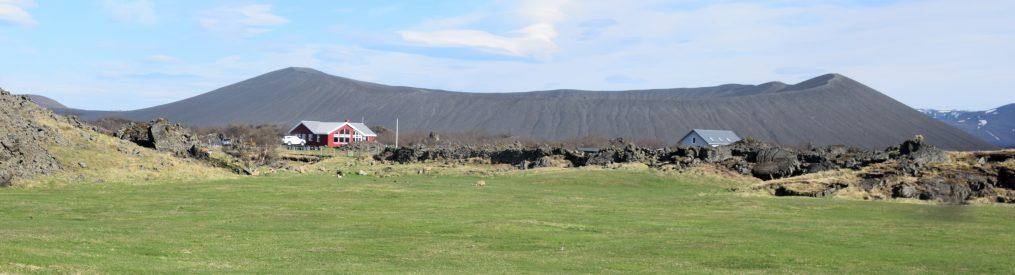
My interest in recording the more-localised British Orchids took off too late last year to include what follows. This post’s item occurs on the extremity of its European range at three south coast sites: today’s location, Castle Hill NNR near Brighton, and more recently Samphire Hoe SSSI at Dover. I had been told the older-established Dorset alternative is the most profuse, so after sightings began to be published in the last week of March, I opted to add this straggler as planned to my 39-strong career total.
Early Spider Orchid (Ophrys sphegodes – see here) was usually the first species to appear nationally in any new season, until Oxon’s famous Giant Orchids arrived upon the scene a few years ago. Similar in stature to the more widespread Bee Orchid, the former derives from the western Mediterranean and Aegean regions and is very variable with 12 or more recognised sub-species and two accepted British hybrids. It appears through April and into May in open areas of unimproved grassland or semi-shaded woodland edges, on calcareous substrates.
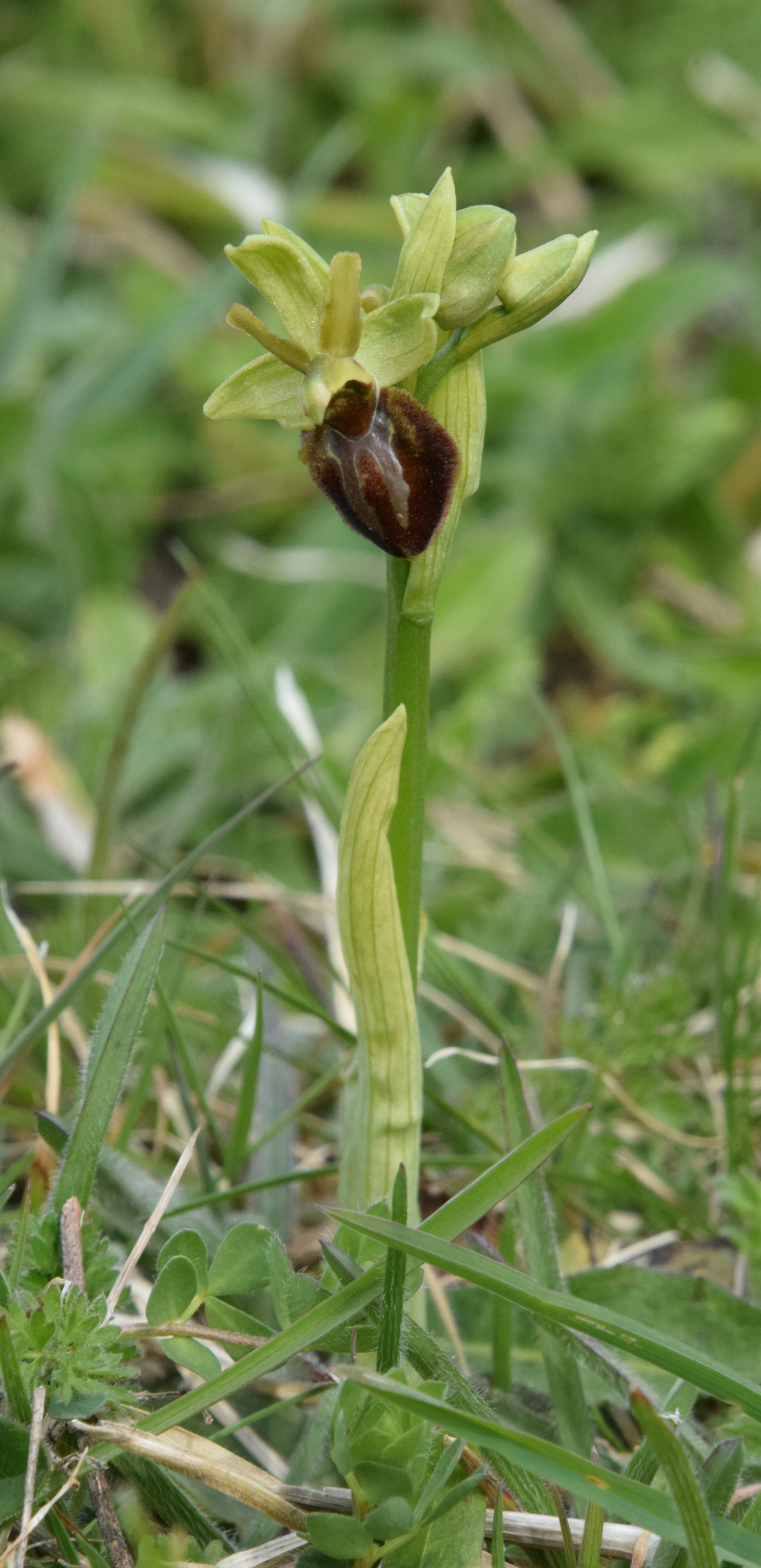
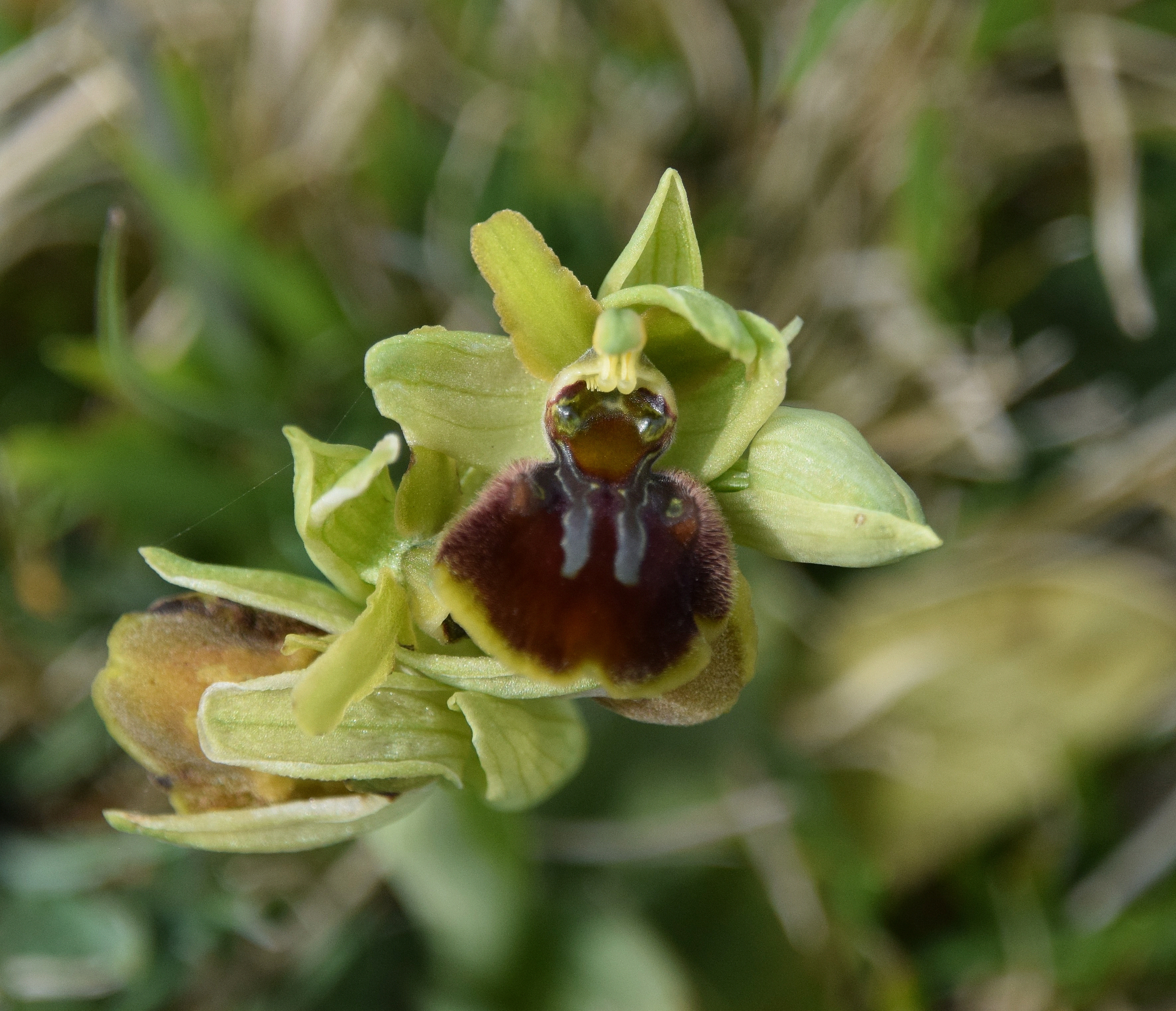
Early Spider Orchids, more spidery looking when viewed from above
When we arrived on-site at midday, we were at first directed in the country park visitor centre to an area where we located just two specimens. And so the above left became my first ever record. But as so often success depended upon getting our eyes in. After re-locating, with better instruction to fields immediately east of Anvil Point lighthouse (BH19 2JL – SZ 026770), there were plenty to be found.
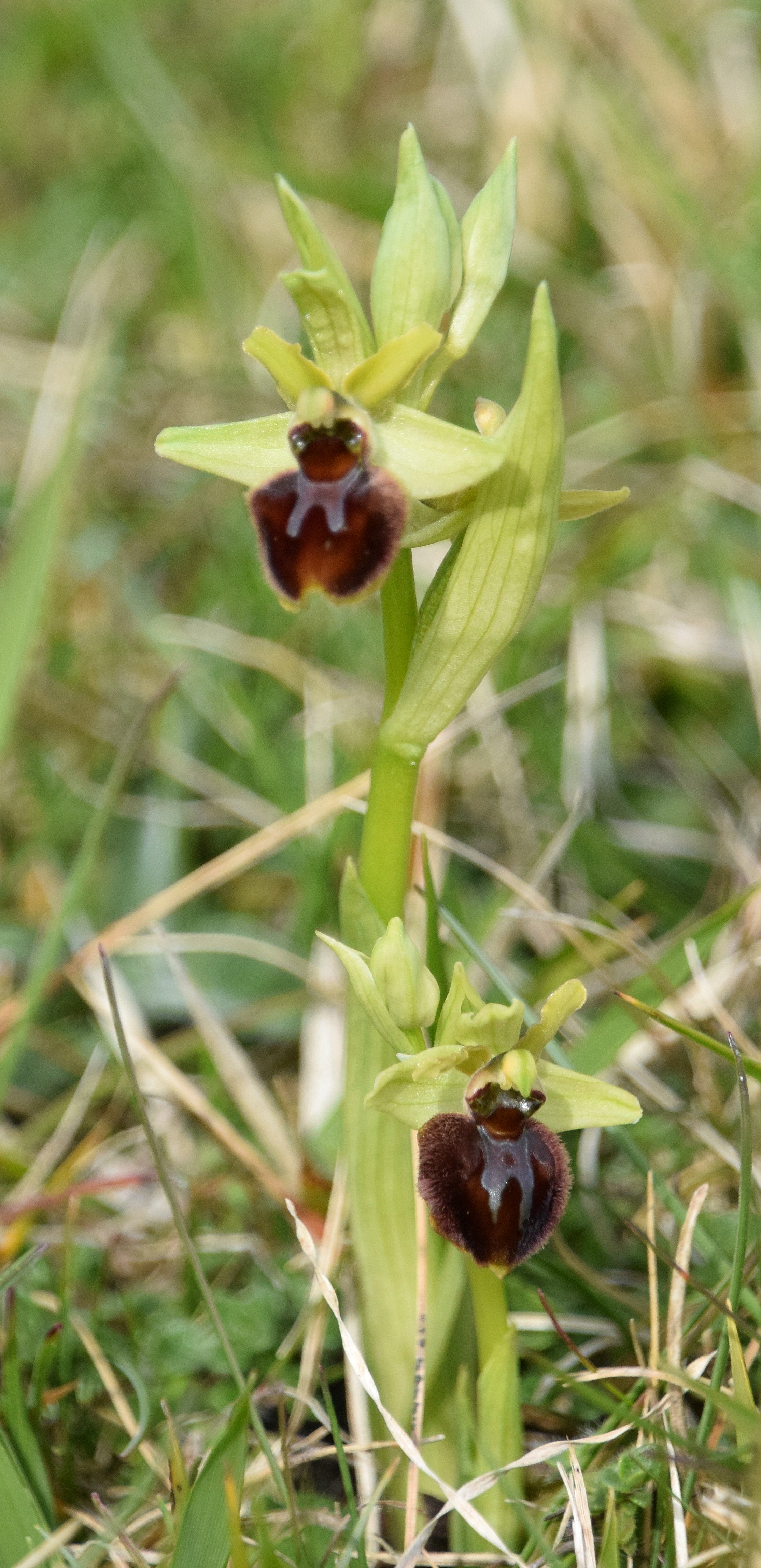
Most of the blooming plants we observed today showed just two, occasionally three open flowers that by their mimicry (and like other Ophrys orchids) trick pollinators into trying to mate with them. A typical stem as it matures might grow to 20cm and carry up to 18 flowers, but I understand two to seven flowers are more usual in this particular colony. In other parts of ESO’s range inflorescences can reach 70cm in height. Across the cliff-top fields there were variously intriguing shapes, all in the early stages of flowering. These (below) are some of the day’s more pleasing pictures. I am advised that once pollinated the initially dark-red flowers turn to the orange / ochre tones that some of the images show.
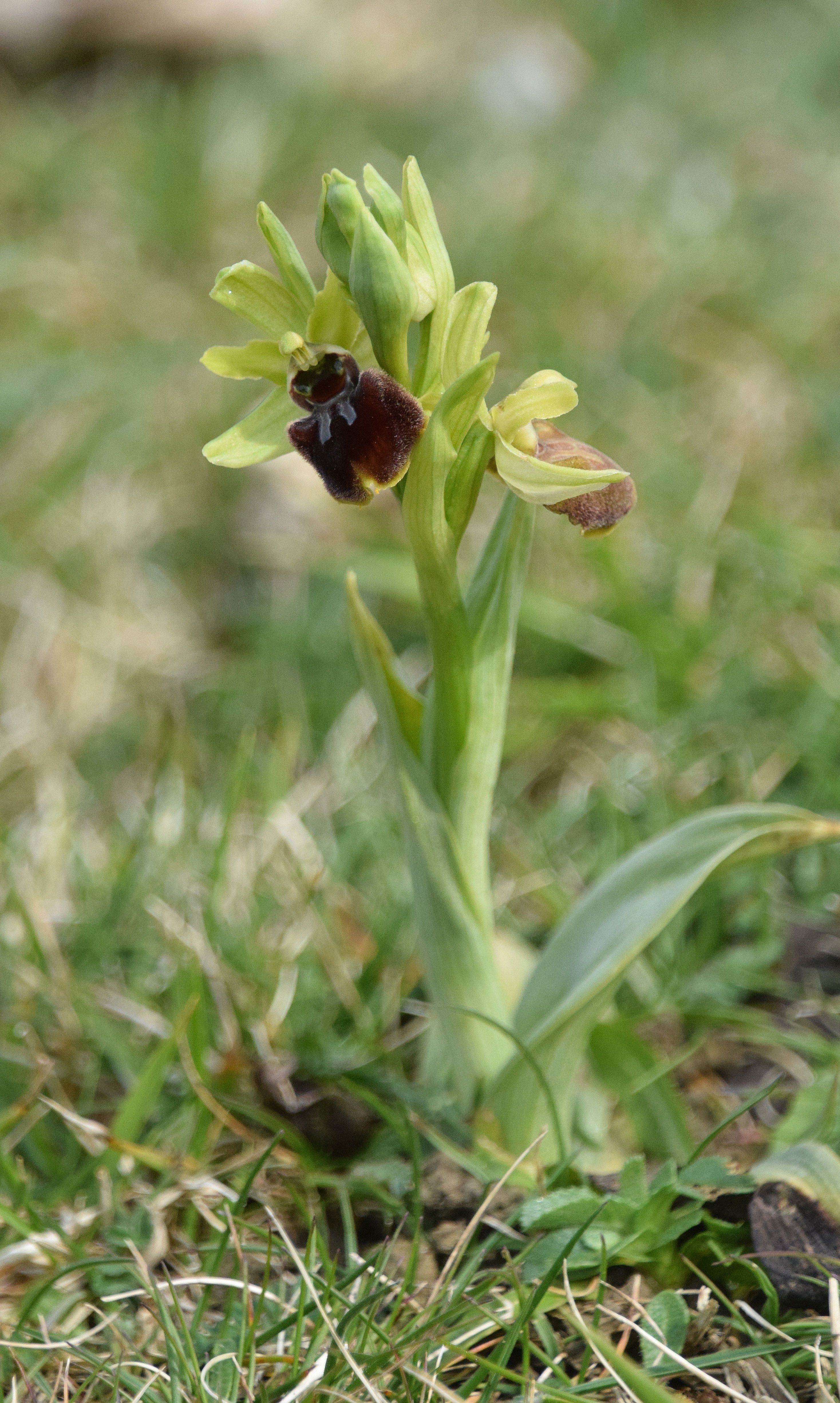
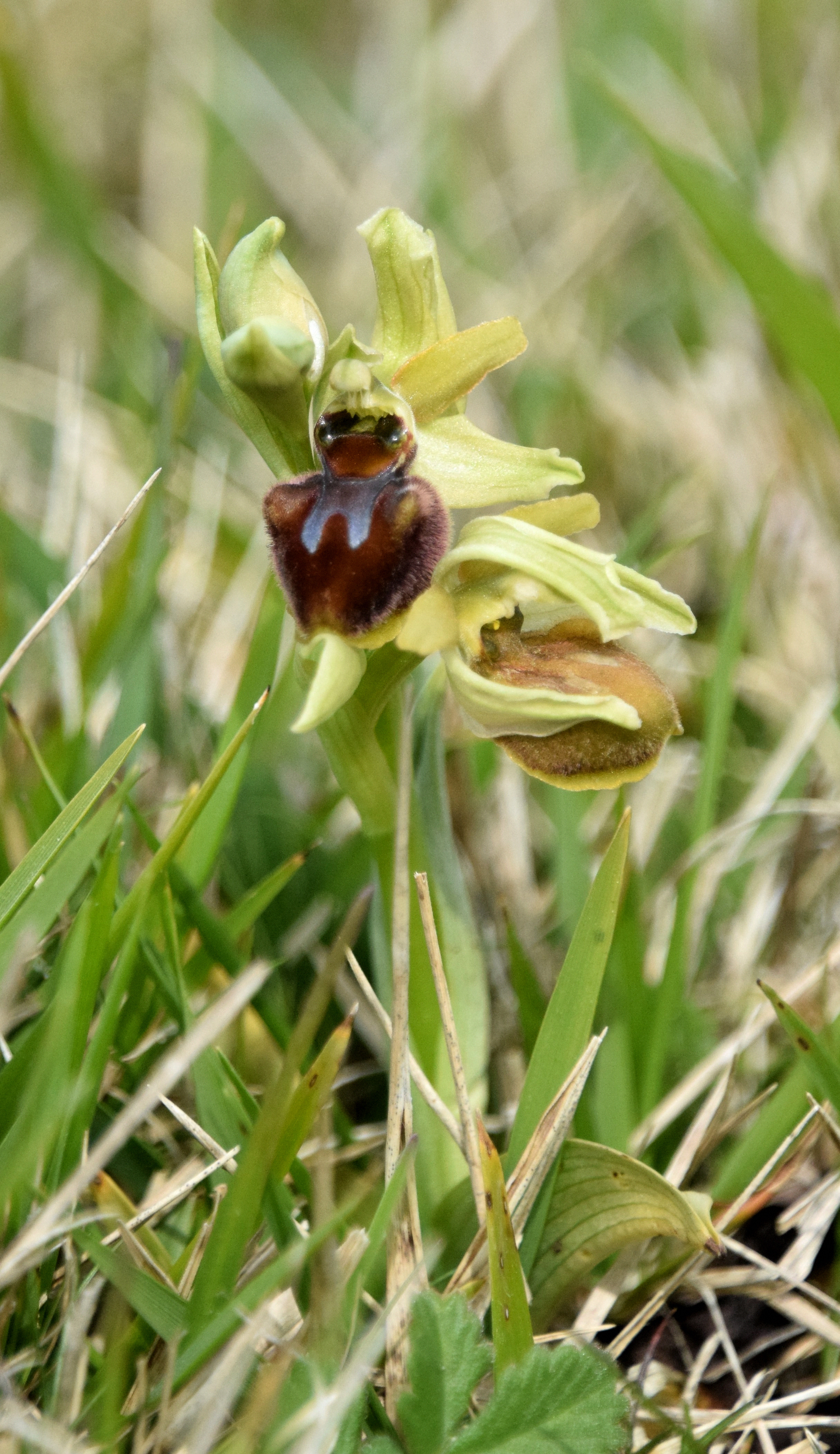
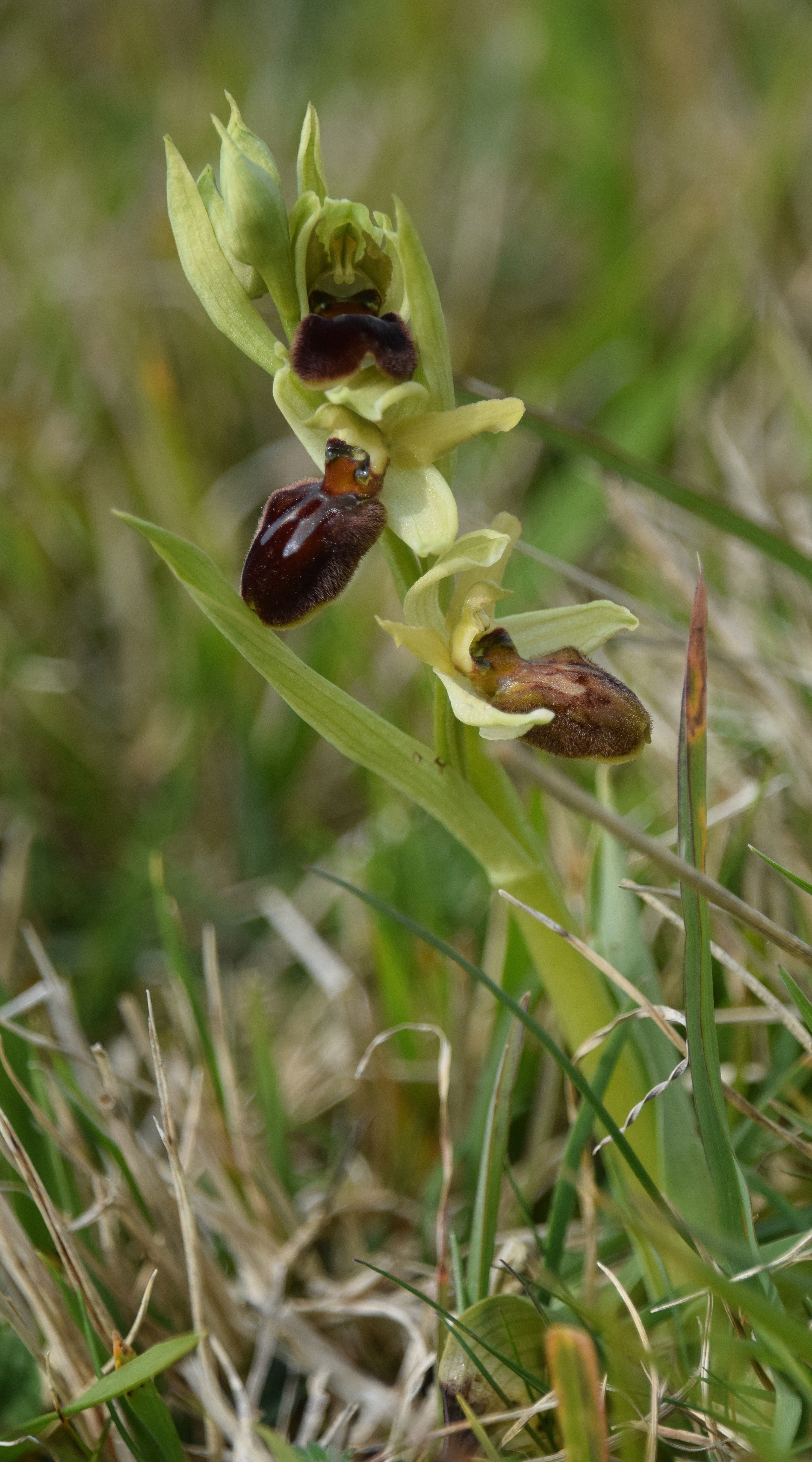

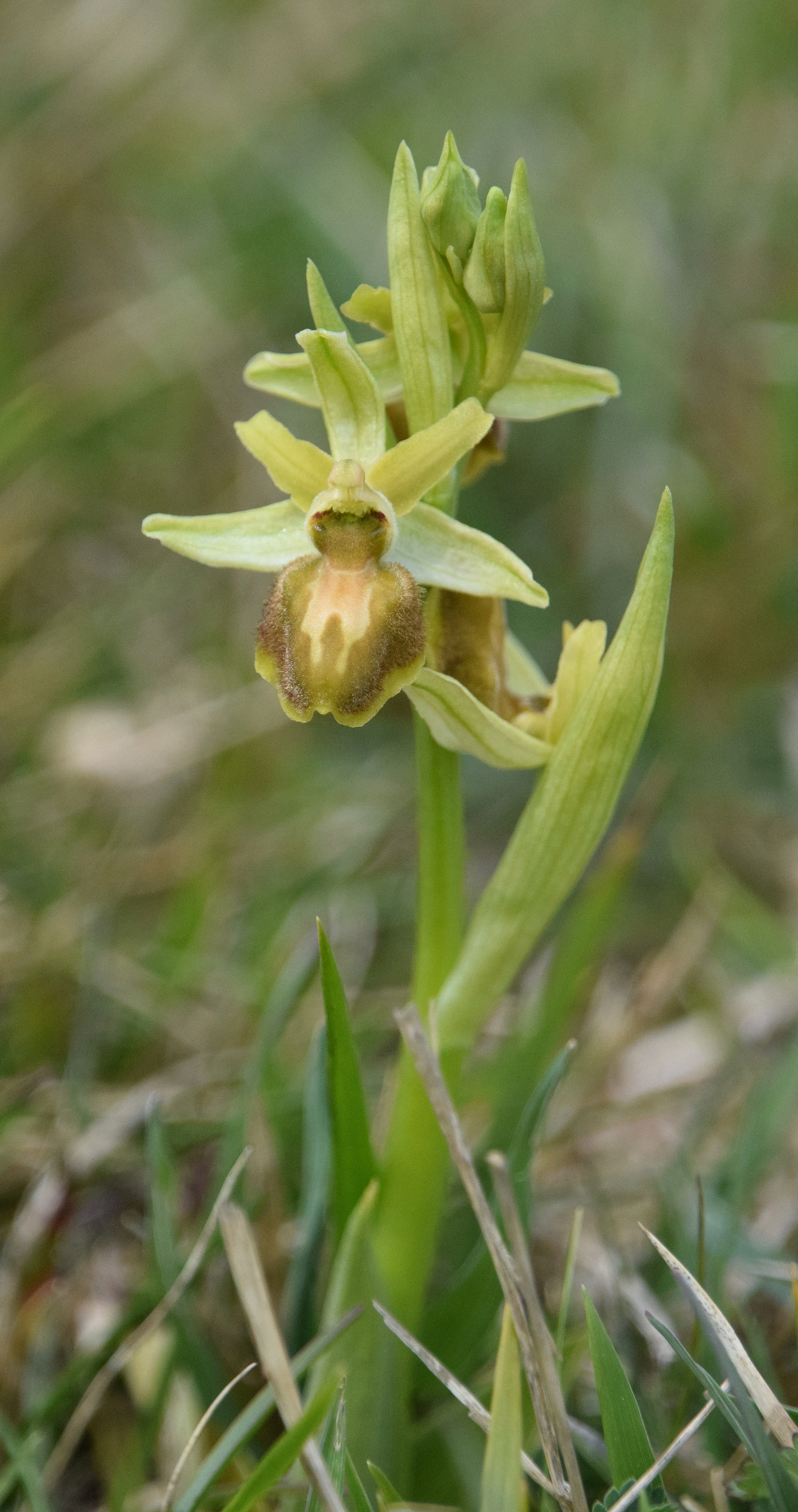
The 129 ha (320 acre) Durlston Country Park and NNR is administered by Dorset County Council as a visitor attraction at the gateway to England’s Jurassic Coast World Heritage Site and 630-mile South-west Coast long-distance footpath. On the wildlife side of things (see here) the majority of the area is calcareous grassland upon underlying limestone. So its varied habitats support more than 500 wild plant species, 33 breeding butterflies and thousands of other invertebrates; not to mention the south coast’s second largest Guillemot colony and more breeding sea-birds on the coastal cliffs.
This was not such a relaxing day as I prefer when doing botany. The unchanging lack of major roads in much of Dorset is part of that enduring gem of an English county’s special charm. But the sheer volume of vehicles battling in and out of the Isle of Purbeck makes driving a chore, especially during a sunny school holiday such as this, which I suppose is an inevitable trade-off.
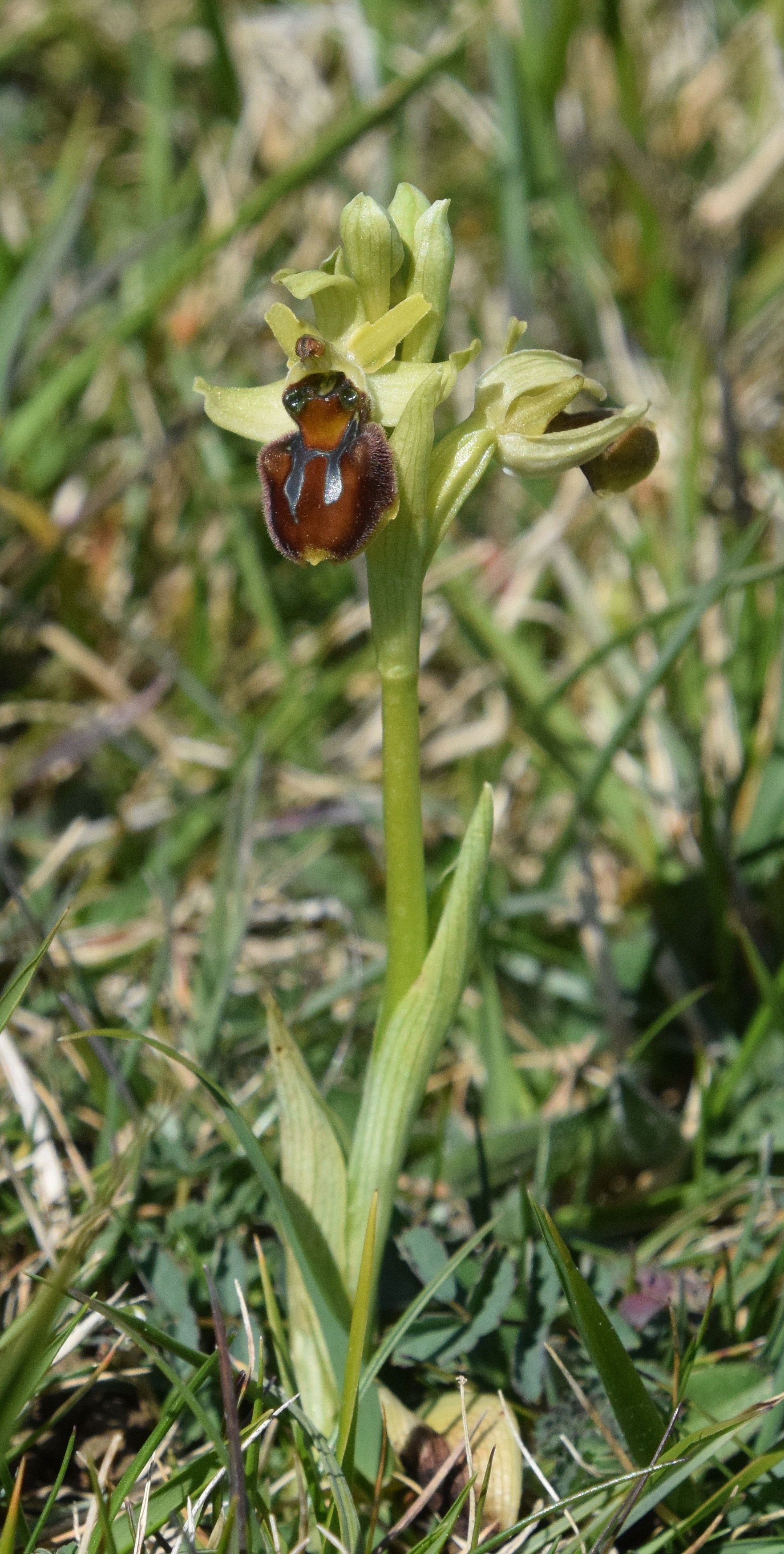
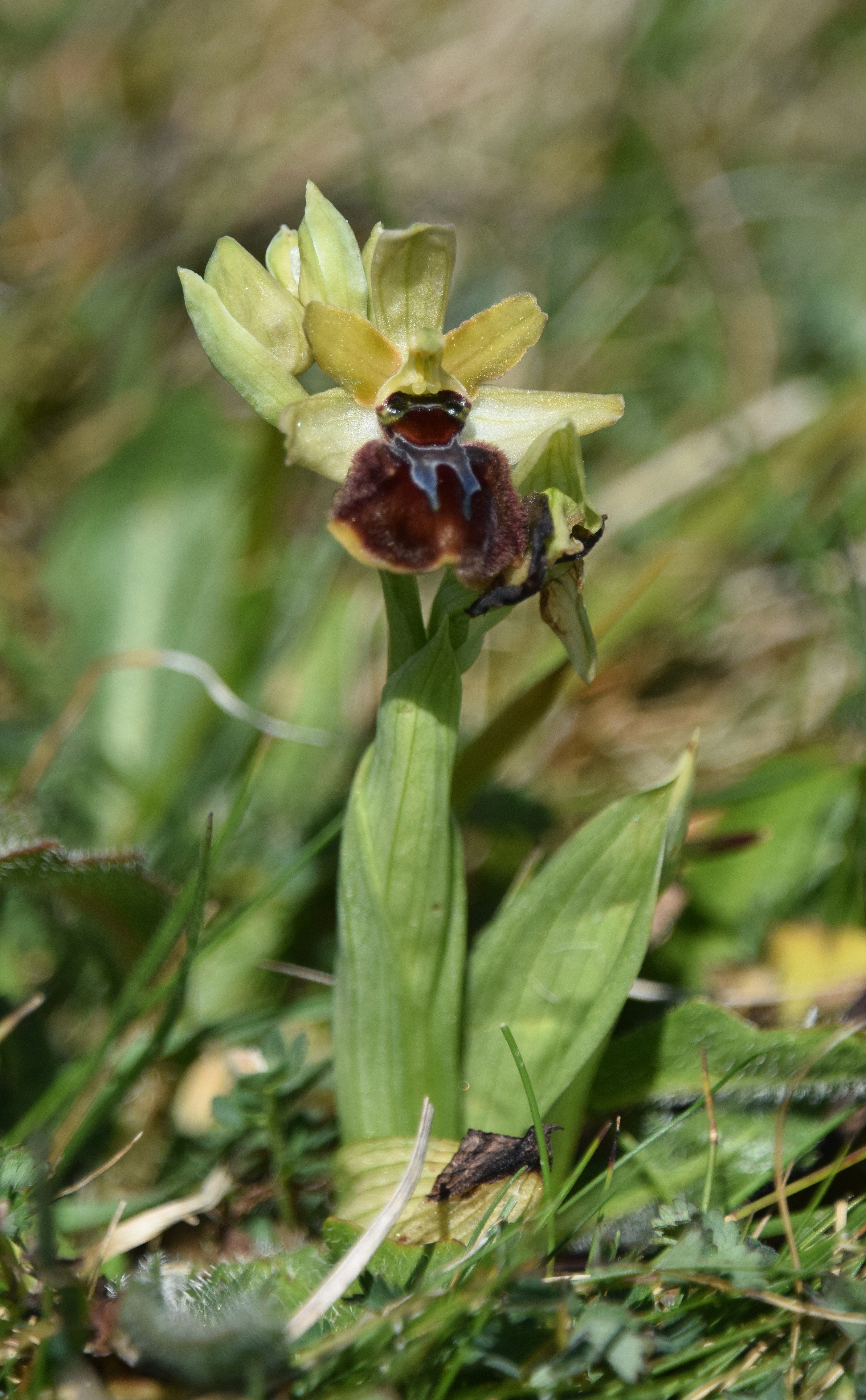

I returned to the slopes around Anvil Point alone nine days later on 17th during a day pursuing other interests on Purbeck. First time around I had thought it was still early days and there might be more to come here. But now almost all the ESOs had gone over, if not vanished entirely, and in their place were numbers of mostly very small Green-winged Orchids. So I realized things had probably already peaked by the time of that previous visit, and the sunny, dry flowering window had been quite brief from late March. But I did still find a few pristine subjects to add to my picture collection (above). Once again it took an hour to get back to the A31 to head home, a distance of just under 10 miles by the shortest route, though 40 minutes eastward to Ringwood is a more realistic assessment on a good day.
 Ramblings and Scribblings