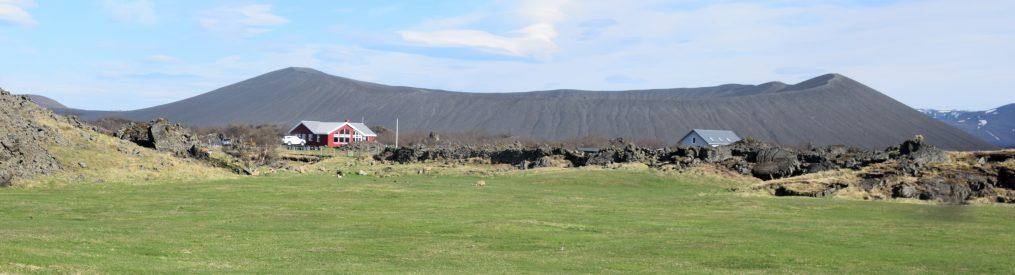
Earlier this year I learned from another OB listed blog that two residual items on my Westpal birding wish-list – Barrow’s Goldeneye and Harlequin – may be observed quite readily at Lake Mývatn in northern Iceland. So since recording either in British waters would almost certainly involve the sort of twitching I just don’t do, I at once planned a solo visit of my own (in the great Rn’S tradition) to their home ground.
In the event both these special ducks were converted on day one (13th), before I even reached Mývatn (pronounced Miir-vaagh with a Klingon emphasis on the second syllable) itself. That was at the point where highway 1 from Akureyri runs close by then crosses the river Laxá that drains the spring-fed lake from its south-western corner. First I noticed then crept up with the camera on two pairs of Barrow’s, then from the road bridge Harlequin were active in the river below. Reading things up that evening, I realised this spot is seasonally the prime option for observing the latter. And so I returned the next afternoon to attempt to do them justice.
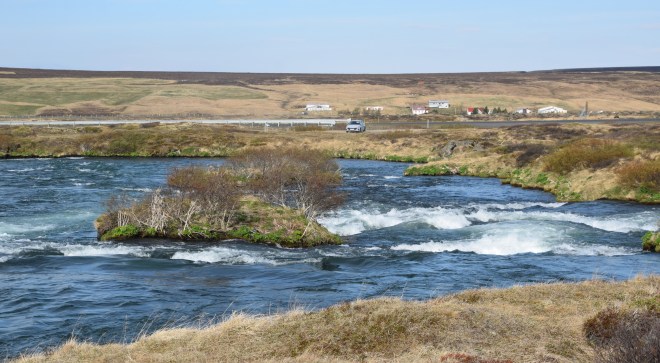
Immediately upstream from the bridge is a series of rapids marked on Google maps as Laxárdalur where my quest play out their days in May dabbling and diving in the fast-flowing, foamy waters, and resting in the lush marginal vegetation (pictured above). The River Laxá is exceptionally fertile since untold quantities of minute organisms drift out from the nutrient-rich lake to be filtered from the water by myriads of Blackfly (Simulium) larvae. Those in turn are feasted upon at this time of year by both the ducks of my intent, that move on when the adult insects emerge from June onwards. The biting, blood-sucking Blackfly migrate long distances upstream each year to lay their eggs in the lake outlet here. All is explained on the parking area information board.

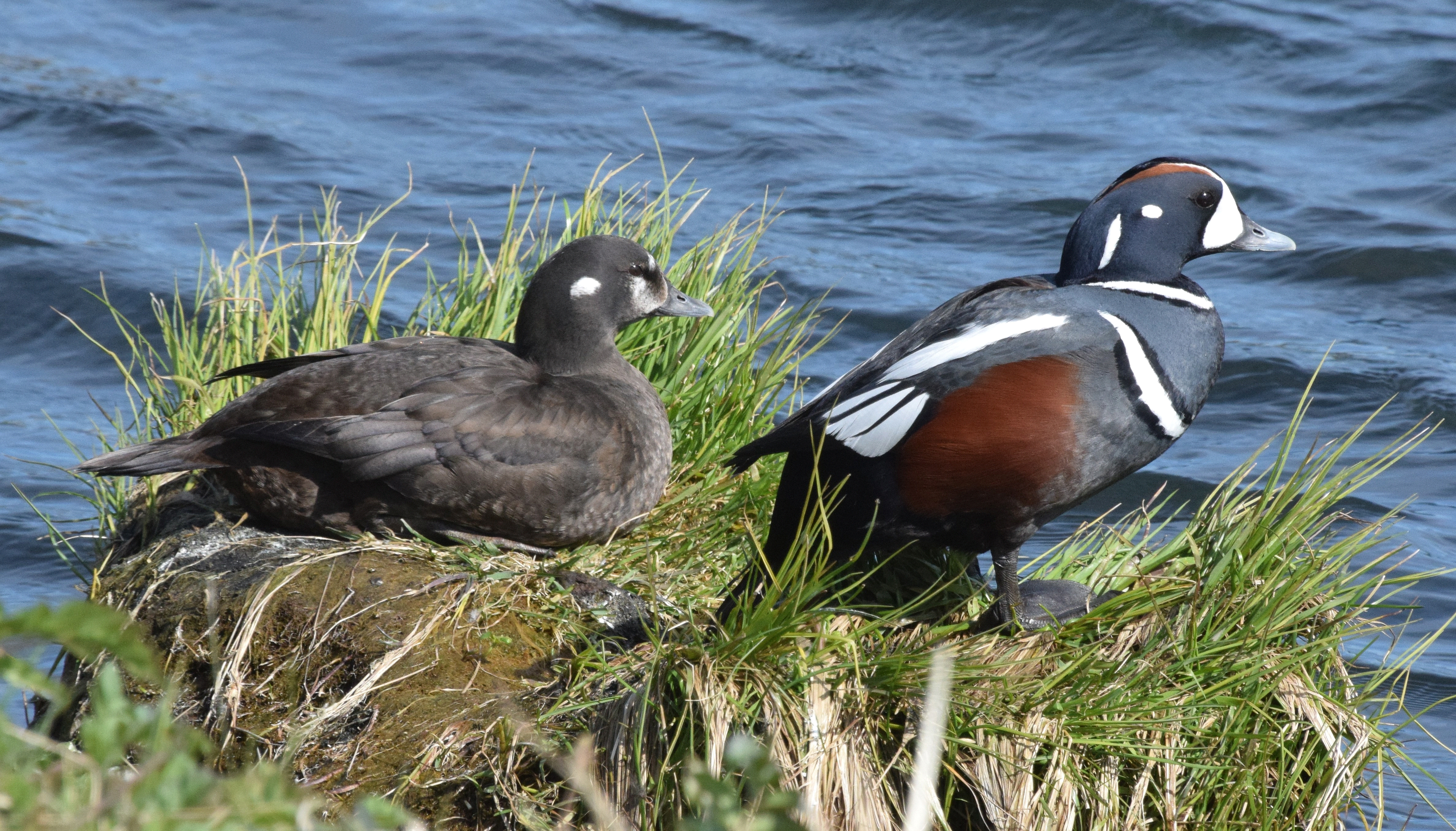
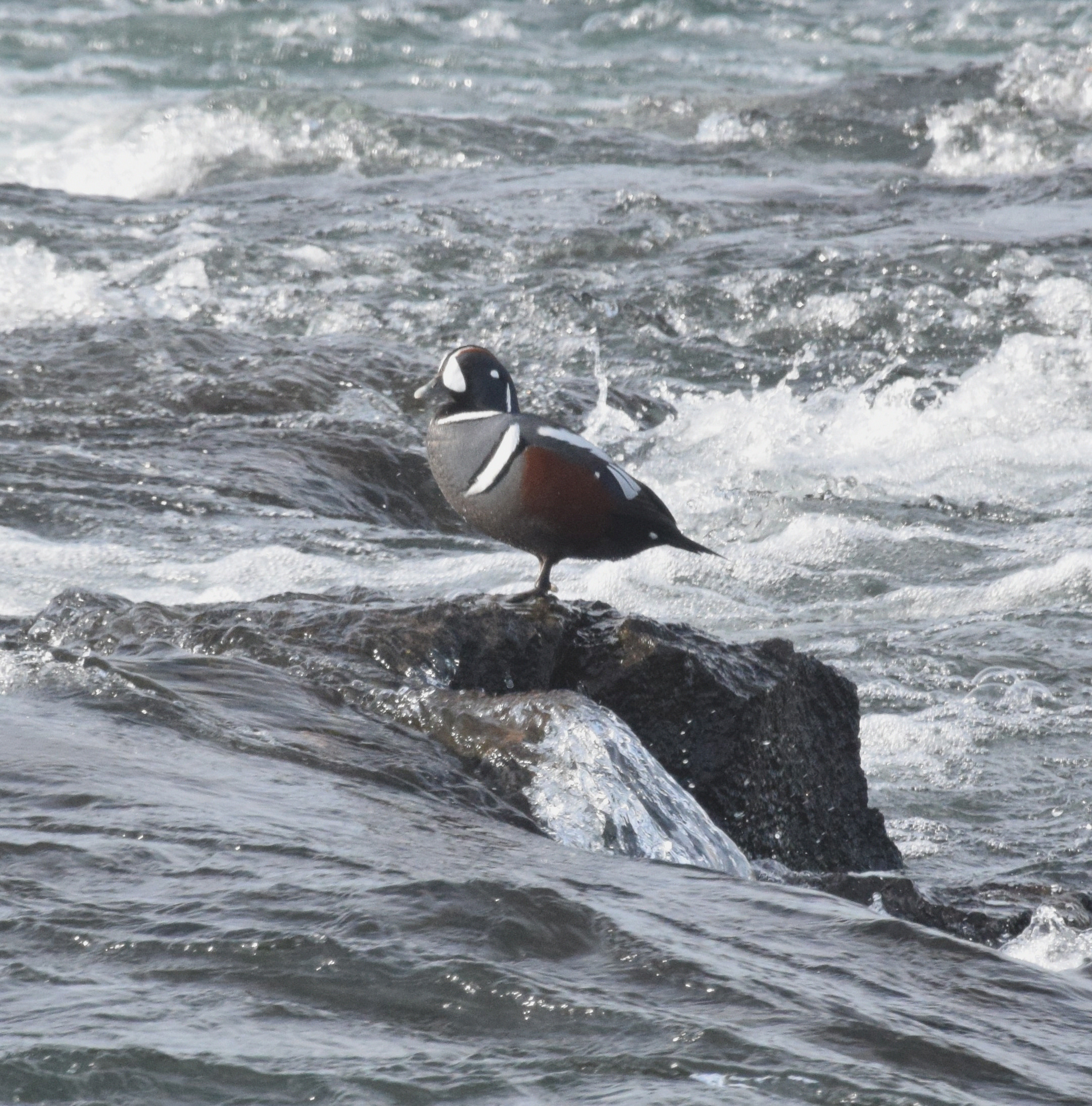
I had not been aware of all that prior to self-finding this place, which made the wildlife spectacle I now witnessed over two visits all the more pleasing. The hot-spot may be accessed from a small parking area just across the bridge and to the right. Walking out I found three pairs of Harlequin sheltering at the water’s edge, so not knowing how skittish they might be or wanting to put them up, I sat down at a safe distance and waited to see what might transpire. More of these ducks were in view upon the river, on islands in it or perched on rocks in a low waterfall a little upstream.

Suddenly three more birds moved out from right below where I was sitting, and when those showed no fear of me I stood up and approached the initial group that were similarly unconcerned as I took this post’s lead and more pictures. Eventually they slipped into the water themselves but did not fly off downstream which is what I had wanted to avoid. The images I gained mostly suffered from being at least partially into the sun. In the morning the light would be behind me more and so I resolved to come back for another turn.
The elaborately patterned Harlequin is classed as a small sea duck, and has a sedentary population of up to 3000 pairs in Iceland. Otherwise it is distributed across sub-Arctic regions of north America and far-eastern Asia, and is always associated with fast-moving water. Inland it breeds in such tundra habitats, while when wintering it favours rocky coastlines in the Atlantic north-east and Pacific north-west Americas, Alaska and the far-east of Russia. It is an extremely rare vagrant to western Europe.
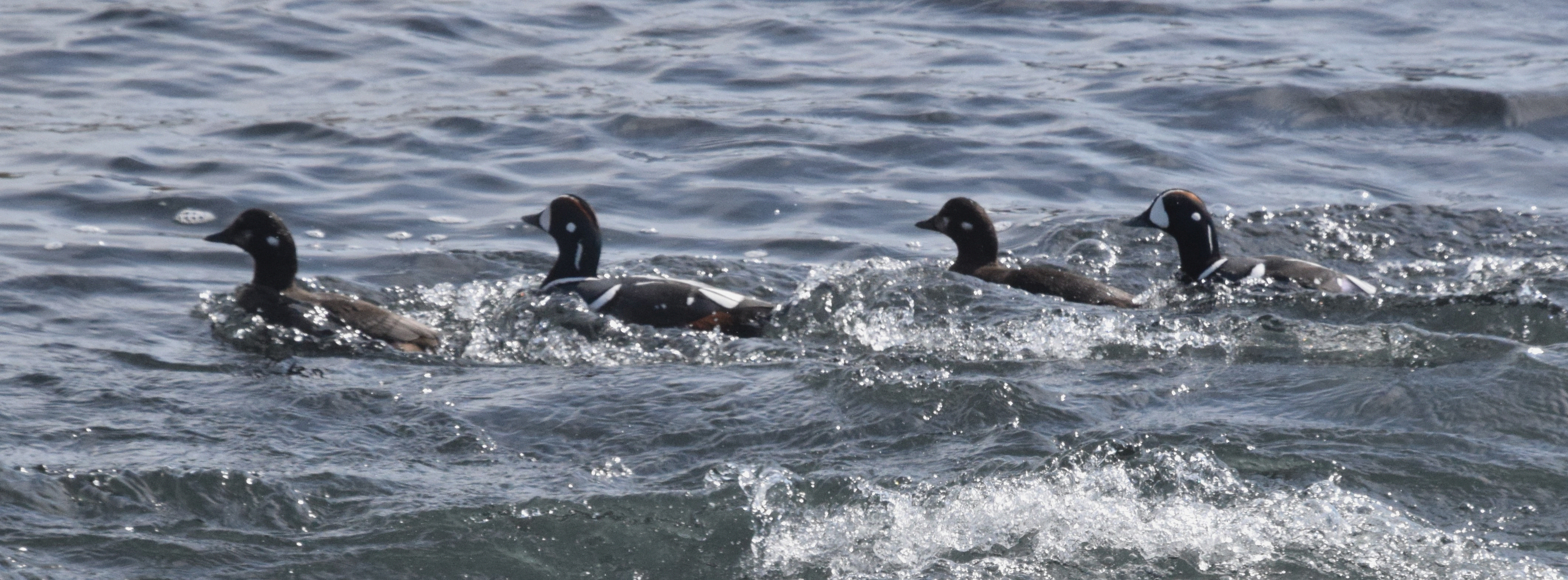
During my two spells of communion with this iconic species I noted various behaviour traits. Harlequins always swim busily and energetically, often into strong currents while diving, and such a dangerous lifestyle is said to result in frequent injury. Repeatedly they would ride the surf in small groups, or run across the water’s surface like the Red-knobbed Coots at El Fondo (see here). When interacting they squeak in a quite un-duck like fashion, and it was very noticeable how bonded pairs stick closely together while dabbling. This item has elected to lead lives of constant buffeting and being tossed around.
There but for fortune go any of us, perhaps? When I came back at 7am on 15th I was at first discouraged to find bright sunshine reflected on the water. The ducks were in just the same places as before, and I was able to gently coax one pair into a more favourably lit area (pictured below, top).
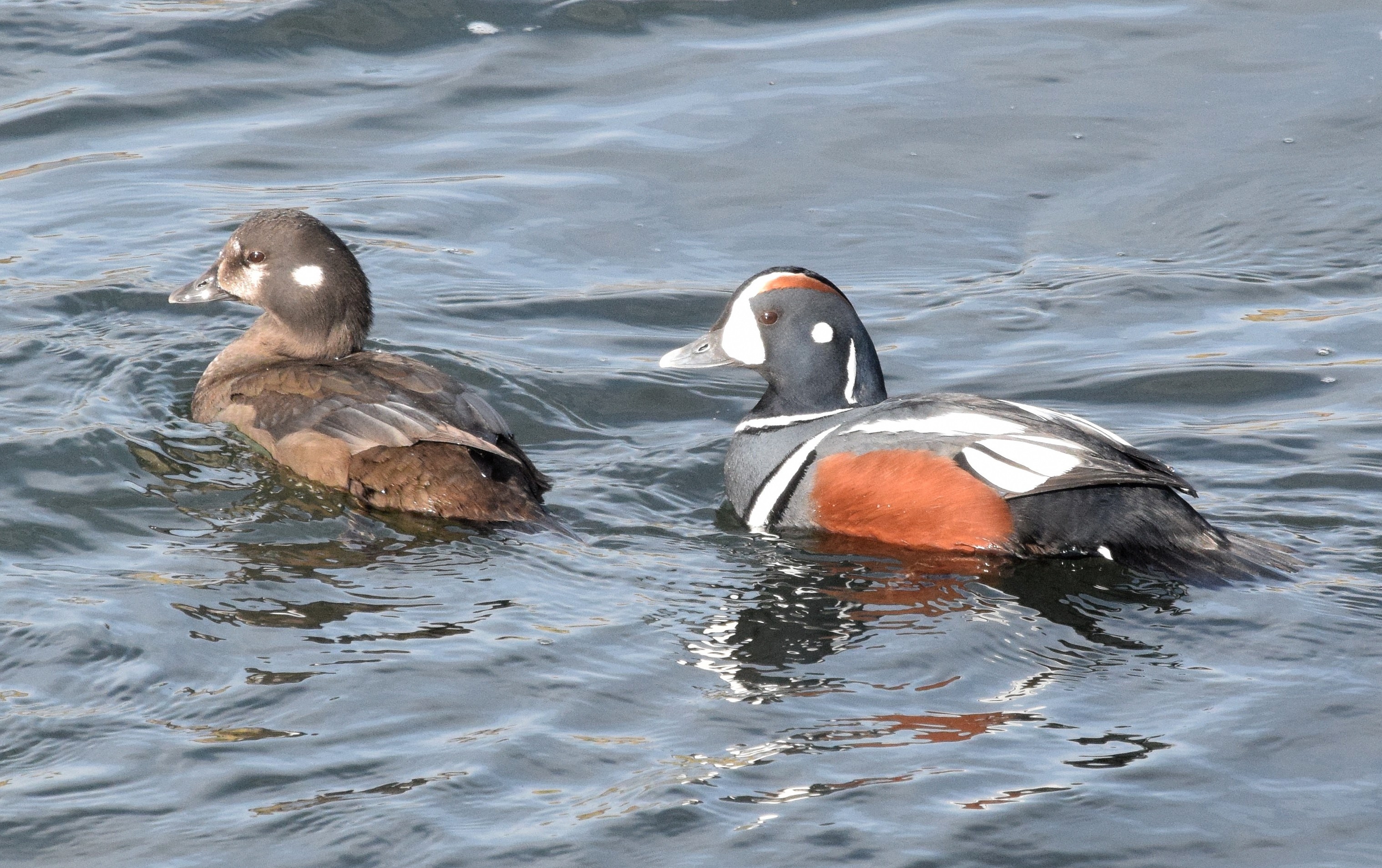
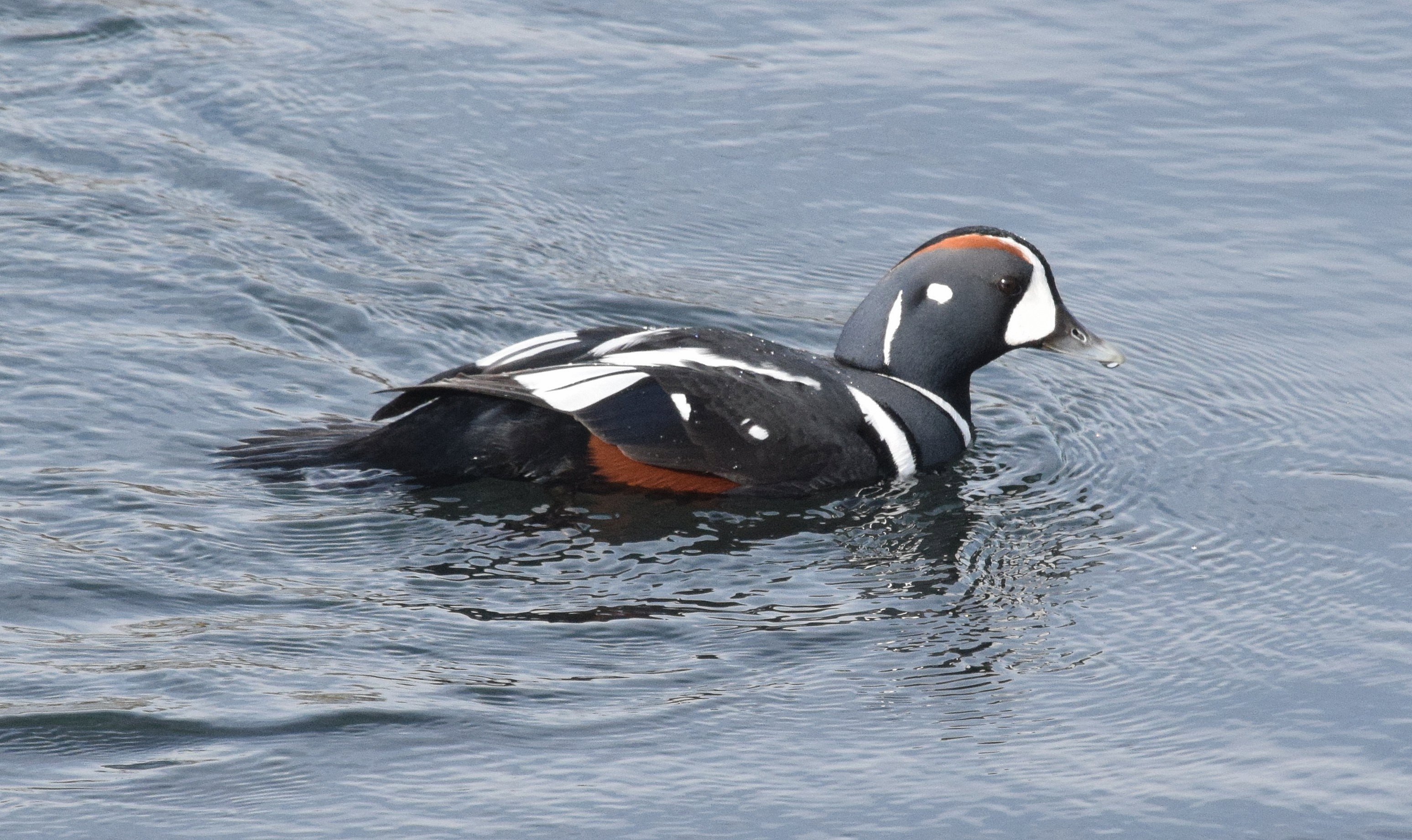
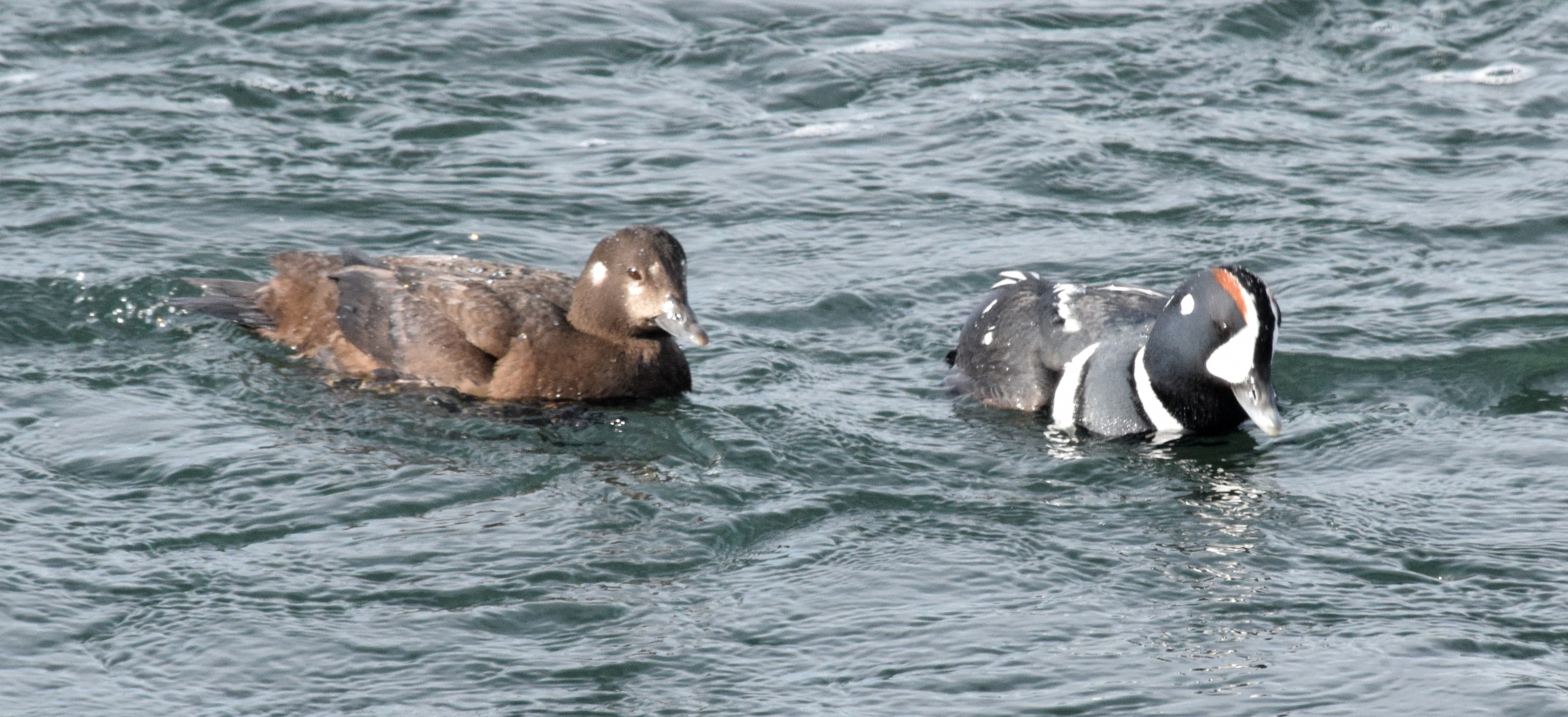
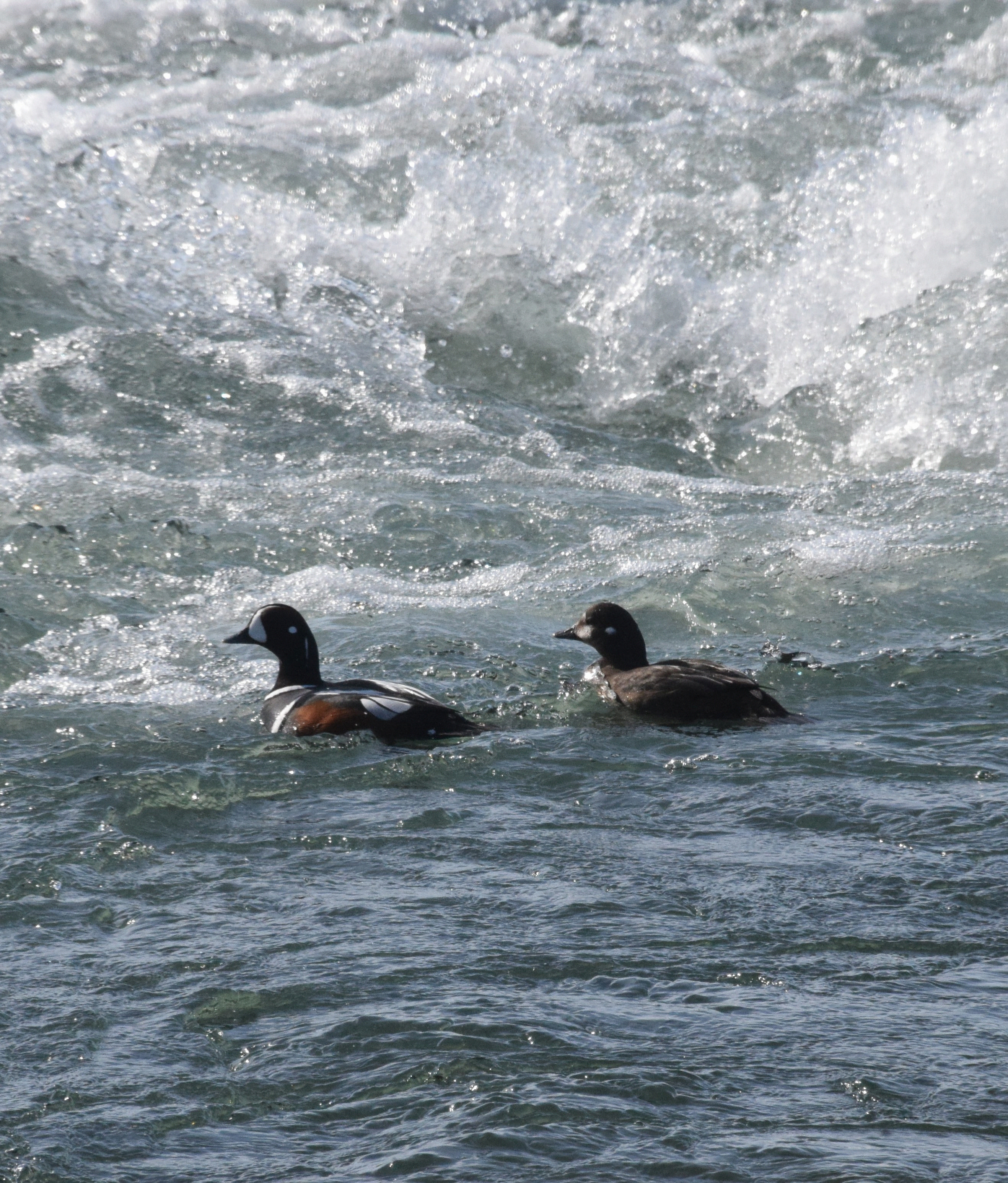

Then I walked upstream, encountering many more Harlequin, some in presumably bachelor groups, and their above-described antics were wonderful to behold. I had come all the way from England to see these ducks, and now here I was moving amongst them at close quarters. I remained completely alone here, just me and the birds in just the same way that I prefer to commune with insects in remote wild places. That scenario repeated itself throughout the five days of the trip and made its outstanding experiences even more fulfilling.
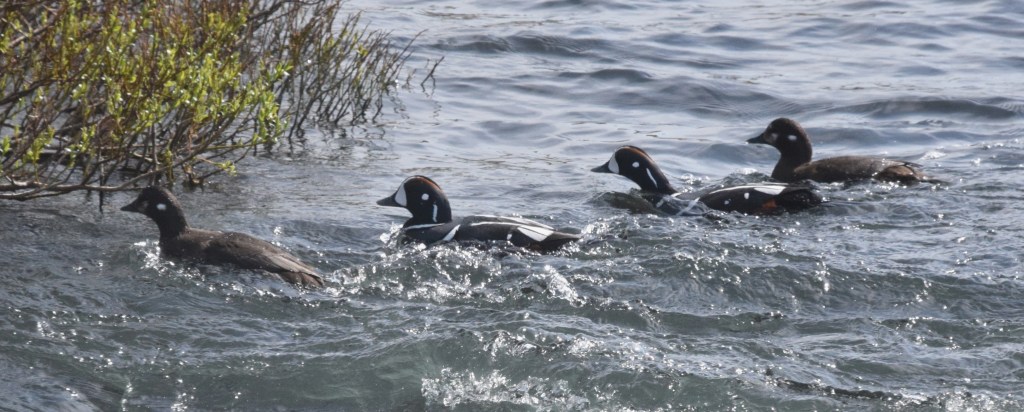
Some of the pictures selected herein suffer from bright sunlight on their subjects and glare on the water, but that is how these birds were experienced. I was visiting Iceland during an exceptional weather window for the country, with all day, wall to wall sun and temperatures in the high teens. I was told that normally: “We might get this in July if we’re lucky.” It was great for the locals, who would strip off and strut out in shorts while I yet donned an extra layer against the still cool wind, but quite difficult for picture taking. The sun was invariably in my eyes and there being no tall trees in the tundra landscape, there was no shade anywhere.
This trip was right up there with my best ever wildlife experiences, and what has just been described may take some ousting as the top one for 2025. I was birding once more and here was the way to do it. Time and again, alone in wild places, I self-found and recorded my various, new, different and exciting targets, often at very close quarters. This will all take some time to write up and picture edit. More of the highlights will be presented as separate posts.
NB If visiting this site be sure to use insect repellent on all exposed skin
 Ramblings and Scribblings