The first of these rarities, being a lifer was my top target for the featured Mariposa Kent Orchid tour (see here). And having already recorded Early Spider Orchid in Dorset earlier this year (here), its later flowering relative was top of my remaining wish-list. I had only previously observed just a few Monkey Orchids at BBOWT Hartslock and in les Cévennes, France; so as in the previous post the opportunity to experience them in greater numbers was a third reason for my participation.
In the afternoon we were taken quite briefly to a location that at the request of the tour guides I will not name. Here there were just two Late Spider Orchid in bloom, during what is cited as a poor year for them due to drought. My understanding is this very vulnerable item occurs at the far northern edge of it’s European range in just a few locations in Kent, all of which are highly protected. I assume there was some valid reason for not visiting the most well known option, possibly lack of parking space for a tour minibus and following car, or group footfall.
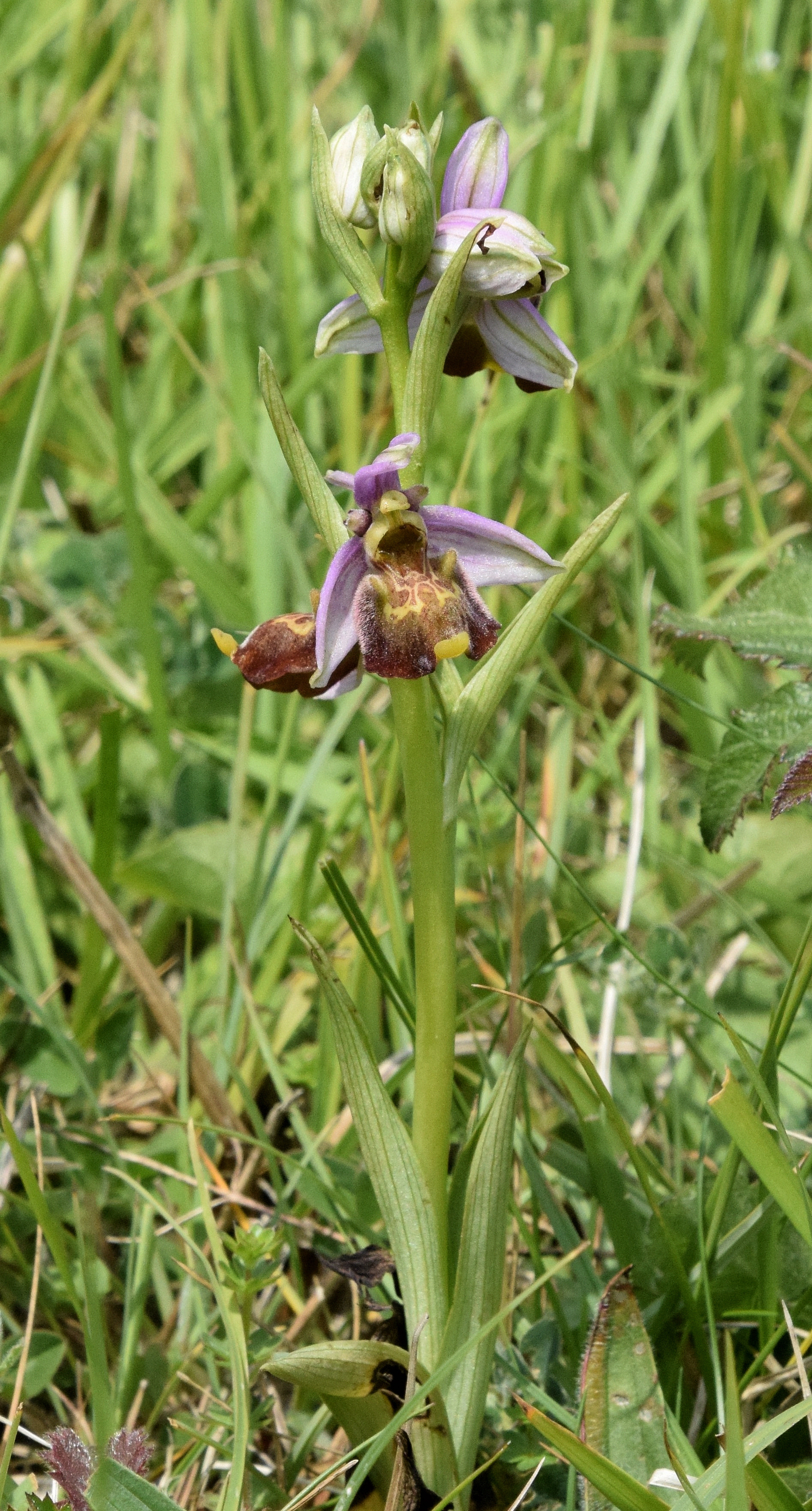
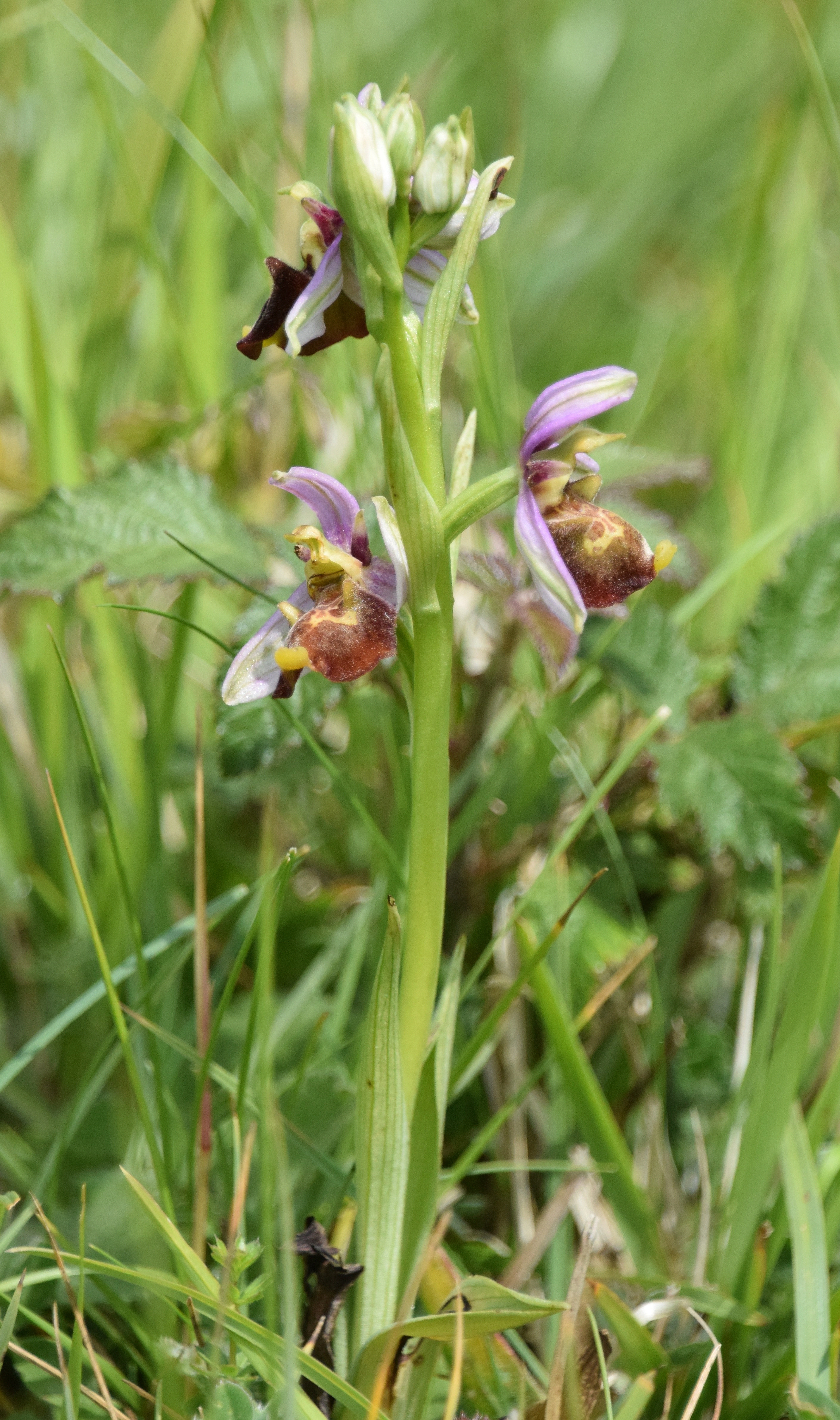
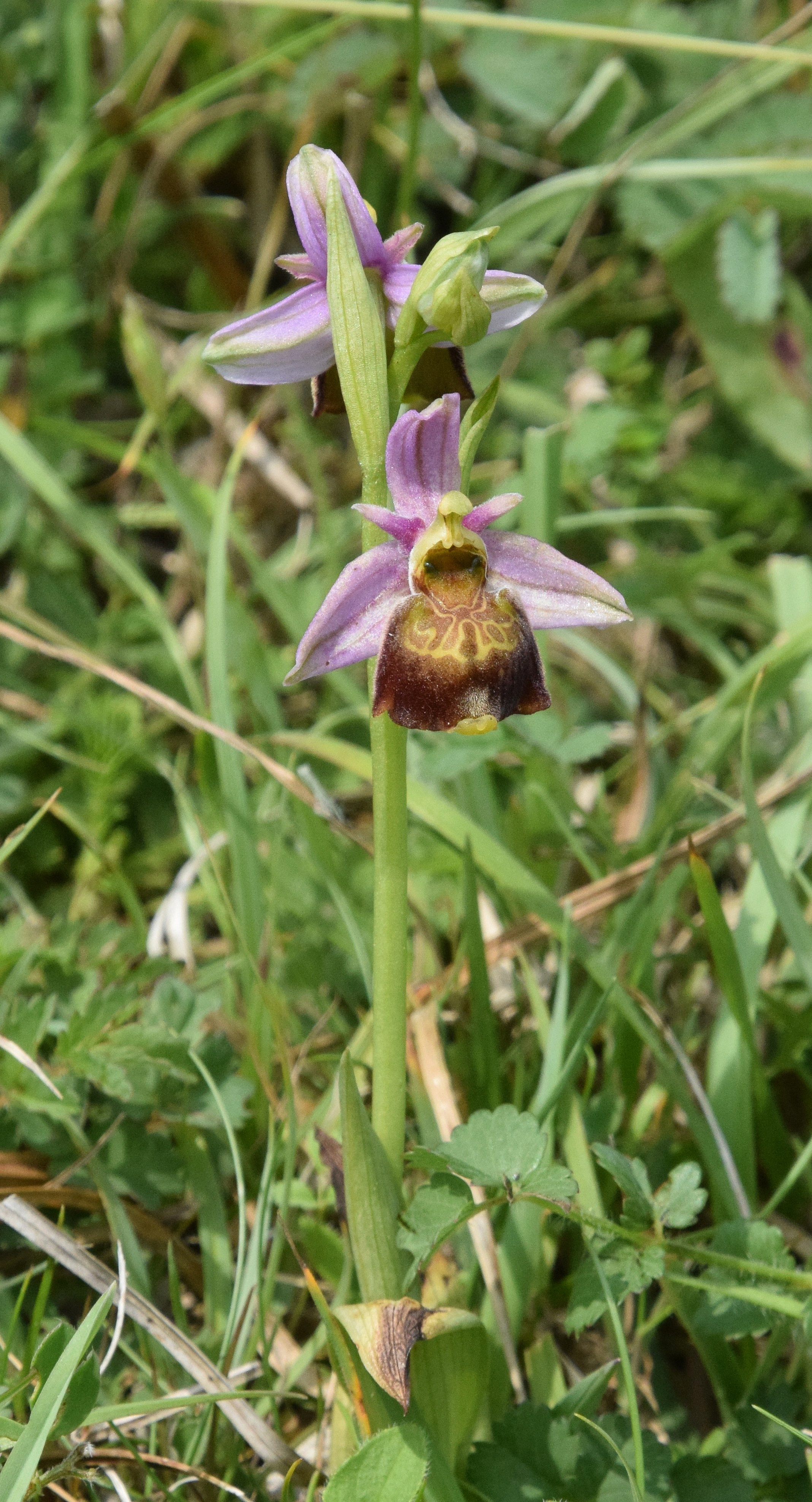
Late Spider Orchids (#1 left and centre, #2 right)
The specimens pictured above were nonetheless in pristine condition, which could possibly be a third reason. This orchid grows to between 10 and 50cm in height and each stem carries up to 10 large flowers, the quite distinctive lips of which are large and square with complex patterns that stand out against dark brown velvety backgrounds. The plant grows only in calcareous soils, and at these managed Kent sites the sward must be mown or grazed appropriately to meet their very particular needs. Further afield LSO is found throughout western and central Europe, but is in steep decline across much of its range due to ongoing habitat destruction.
After two more stops to build the trip list we ended the day at the rather remote Park Gate Down (CT4 6NE – TR168459 – see here), a 7ha (17 acre) ancient chalk grassland reserve on the east side of a dry valley. This is the best site nationally to observe my third trip target, Monkey Orchid, and good numbers soon announced themselves as we walked along the slope, albeit in a rather stunted and scorched state in the current drought year.
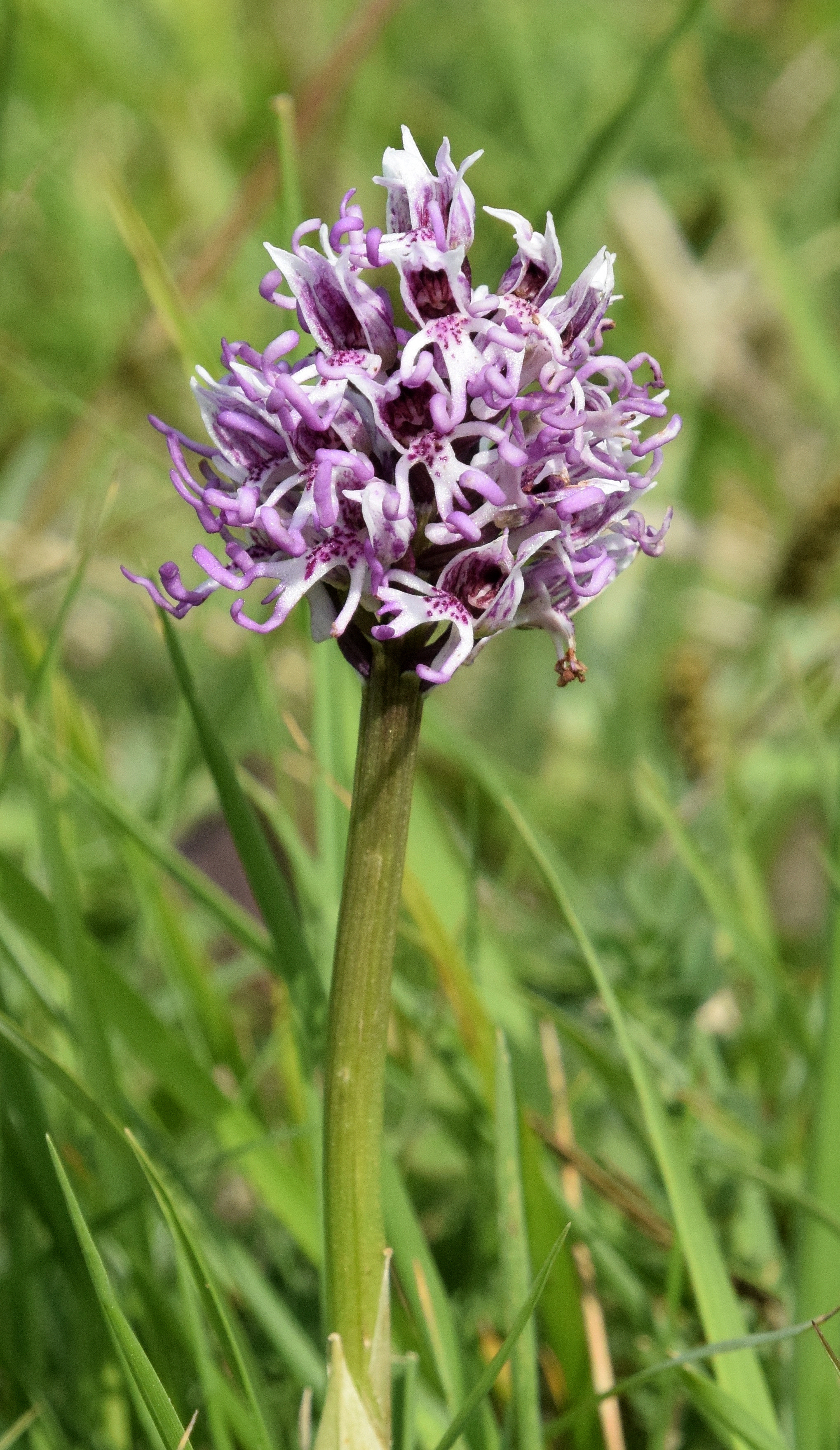
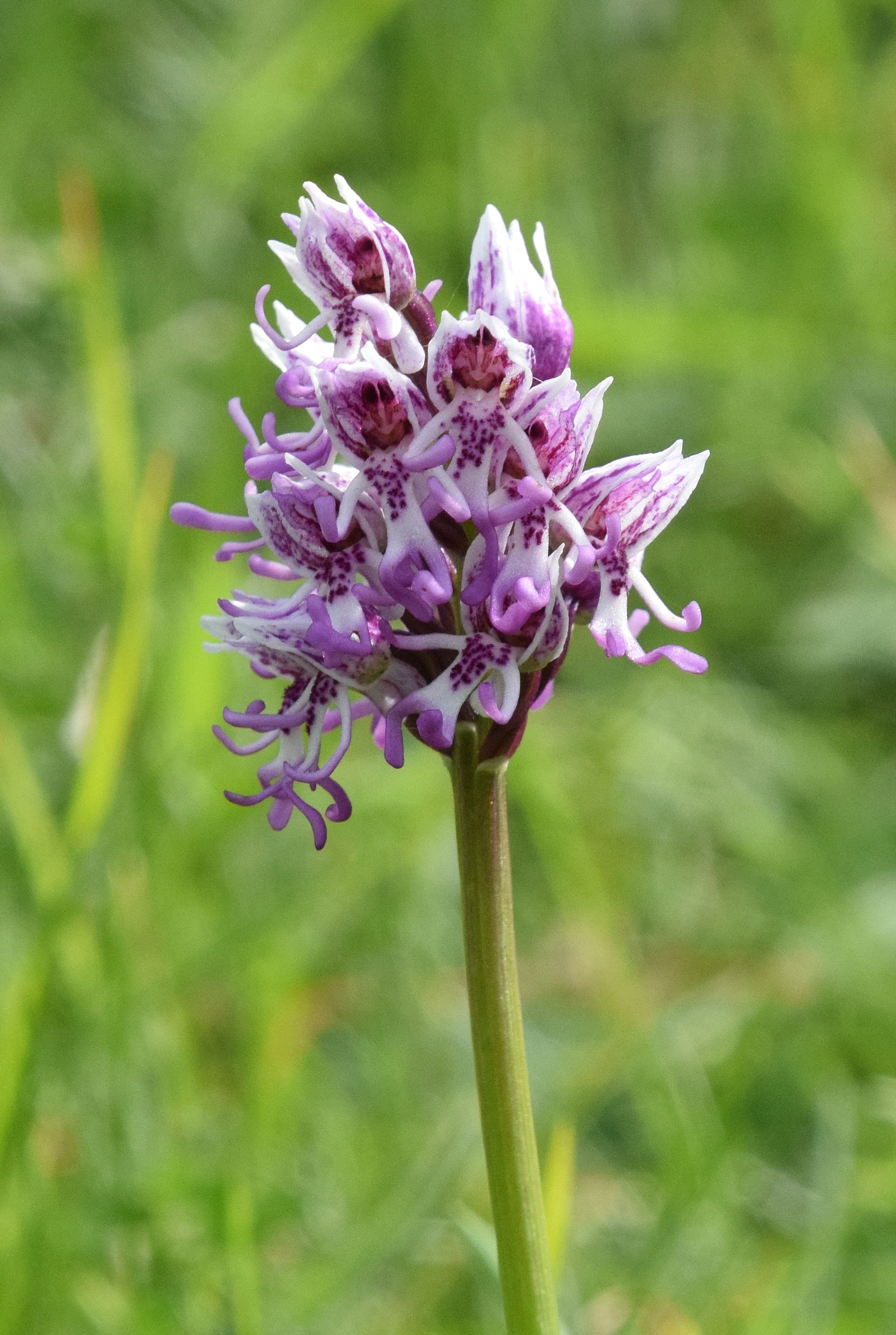
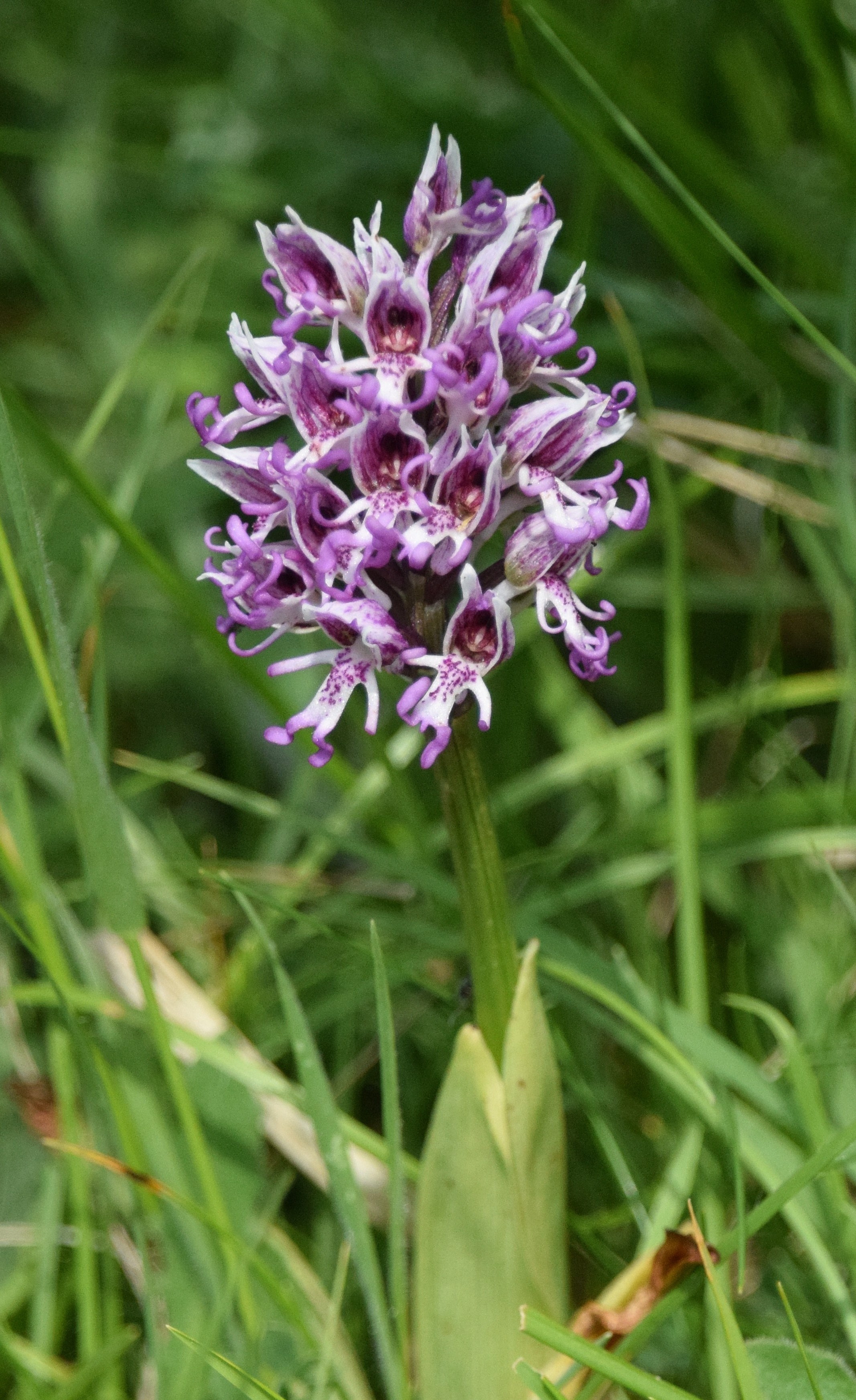
Monkey Orchids
This is a national rarity that occurs naturally in just three places in southern England, two of which are in Kent. The name comes from the pinkish-purple flowers’ resemblance to little monkeys hanging by their hands and feet. These flowers have an unusual hairy or furry appearance caused by papillae, long hair-like projections on the sepals and petals. And the particular arrangement of those mimics a monkey’s face, complete with eyes, nose and muzzle. The plant is also unique amongst British orchids in the flowers opening from the top downwards, creating a rather ragged appearance. But since the mildly vanilla-scented flowers open in quick succession, the spike is at its best for only a short time.
As with Lady Orchid, the county of Kent’s specific blend of mild climate and low-nutrient calcareous soils especially suits Monkey Orchid. But to thrive the second species also requires open but sparsely vegetated chalk and limestone grassland habitat that has become increasingly fragmented in southern England over time. At this site the Kent Wildlife Trust has long maintained those conditions through a careful grazing regime and removal of more aggressive plants, so these orchids are not crowded out as they otherwise would be. That conservation effort was founded by former KWT chair Hector Wilks, after whom this reserve is now named. The openness of the habitat was very noticeable as we walked around. Late Spider Orchid also occurs here in some seasons (see here).
Around 25 of the 52 orchid species found in Great Britain can be located in the Kent Downs National Landscape. We observed eight other Orchids at Park Gate Down today: Common Spotted Orchid, Chalk Fragrant Orchid, Pyramidal Orchid, plentiful Common Twayblade, good numbers of Greater Butterfly Orchid, a few Fly Orchids, and single Lady and Musk Orchids. The Monkey Orchids being some way below their best this year, I will have to re-visit in a more typical season.
 Ramblings and Scribblings