The stand-out experience of this year’s autumn fungi season has been my self-location and subsequent tracking of two uber-scarce Violet Webcap mushrooms (Cortinarius violacea) at one of just a few ancient woodland sites in the Chilterns where they are considered a notable find. I had recorded one there previously in each of 2020 and 21 but not since, despite searching. Now on 7th Oct I found and immediately felt attached to a pristine emerging specimen, and resolved to monitor its progress in the weeks ahead.
In the British Isles this is described as a rare entity, growing in calcareous woodland habitats mainly under Beech but also other broadleaf trees. It is considered a striking and unusual fungus, being dark purple in tone when young, with fibrous stems, and caps reaching 15cm at maturity on up to 12cm stems. I have corresponded with the mycologist who first recorded the species at this site, who said it caused quite a stir at the (unspecified) time when a specimen was sent to RHS Kew. Since then it has re-occurred at intervals but not in every calendar year.
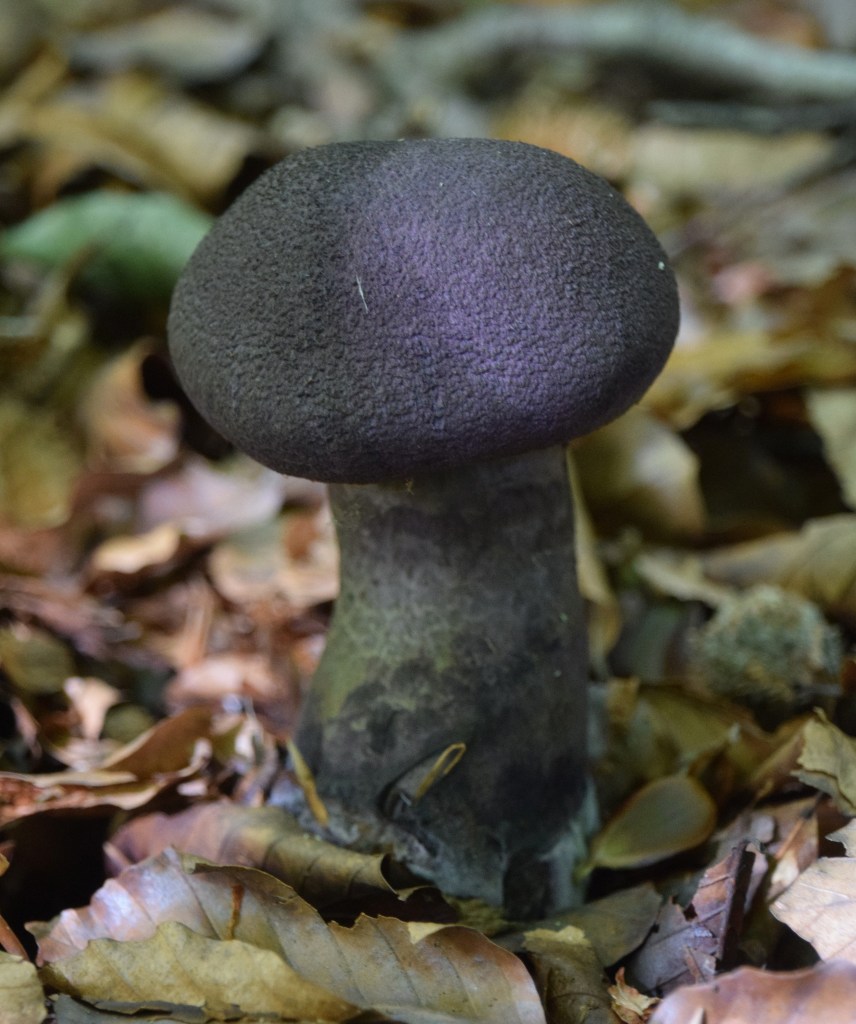
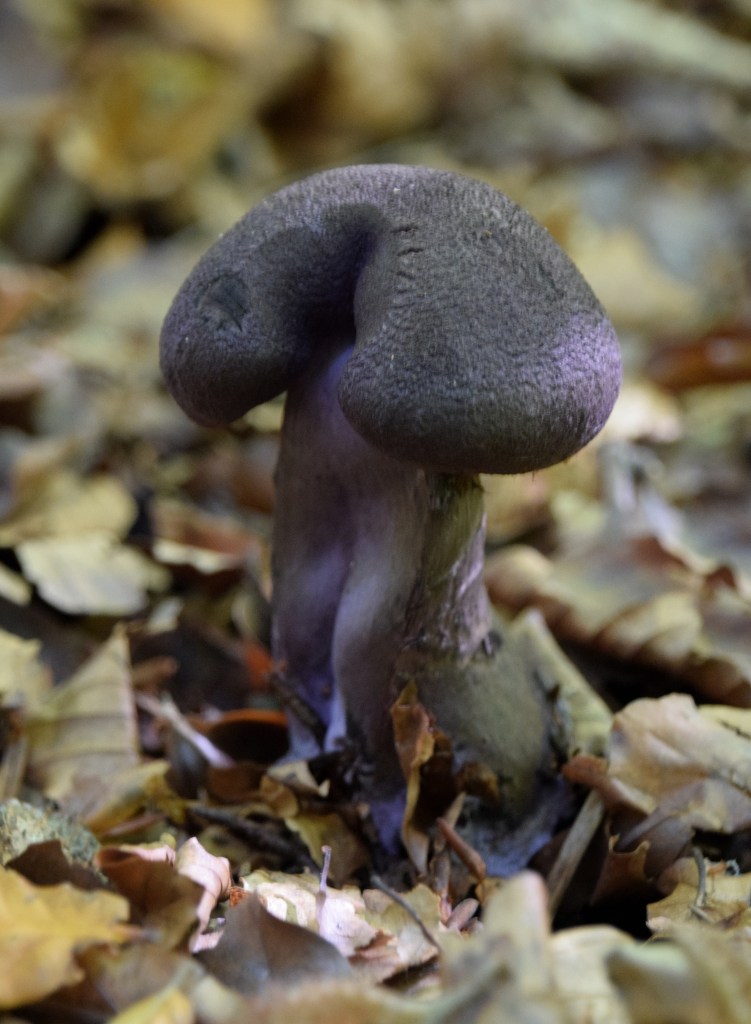
Young Violet Webcap #1
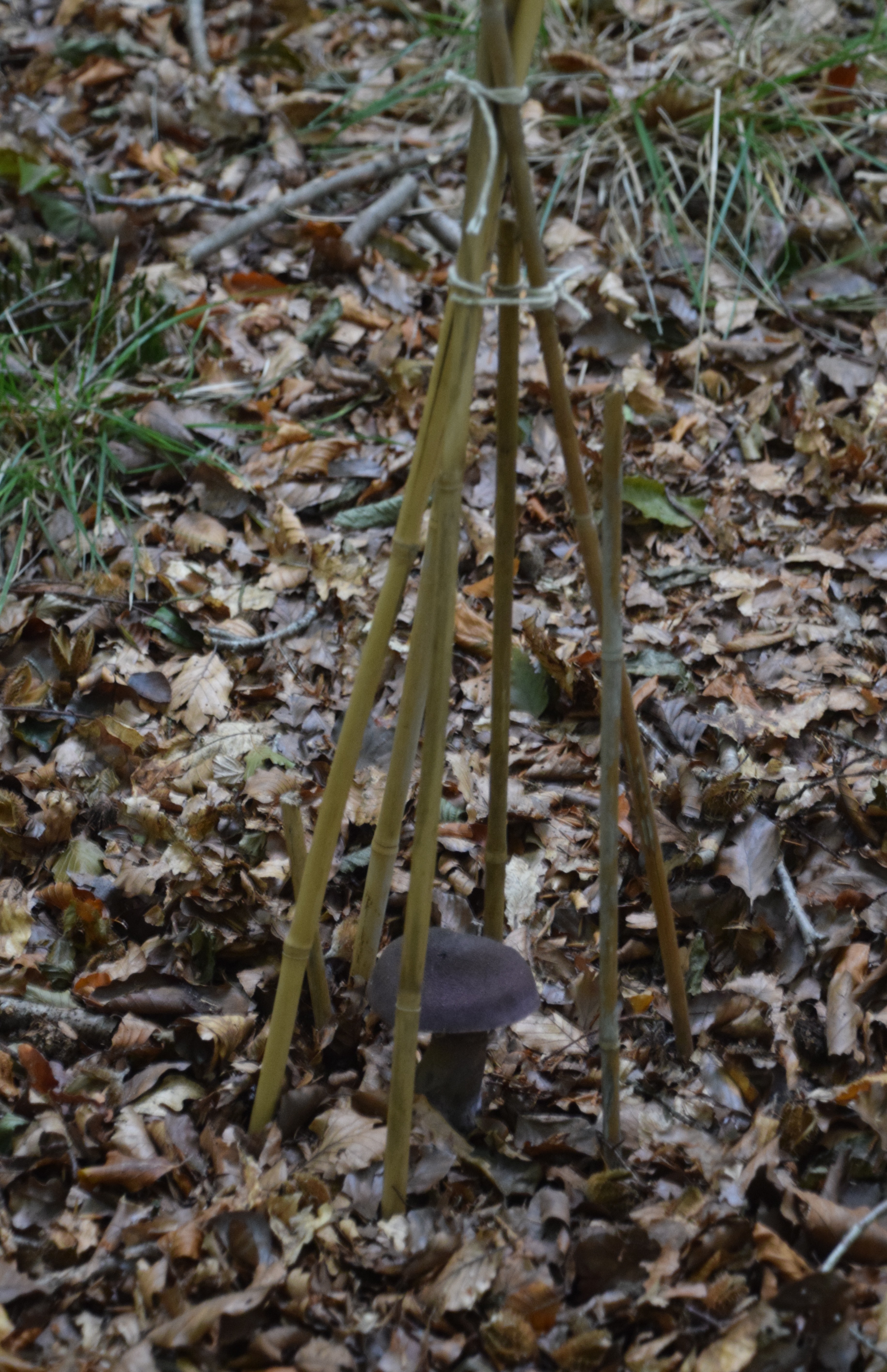
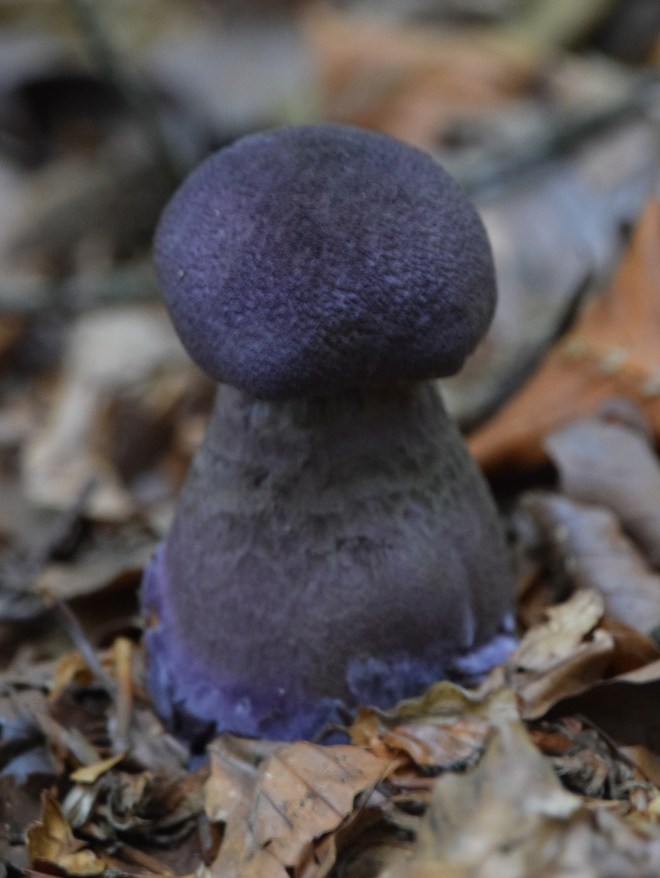
My first specimen when young had a certain suggestive quality when viewed from one side, such as I rather like to emphasise herein, reminiscent perhaps of a bare-buttocked garden fountain figure (above right). Returning three days later on 10th a second fruit had emerged nearby, while the now mature first had reached the round-headed convex stage (pictured below). As it matures this fungus typically develops a distinctive lump in the centre of the cap. I made protective “wigwams” around both my finds (centre) with garden canes and twine, and through the remainder of this post’s duration, quite remarkably neither specimen was troubled either by mollusc munching or human hands.


Mature Violet Webcap #1
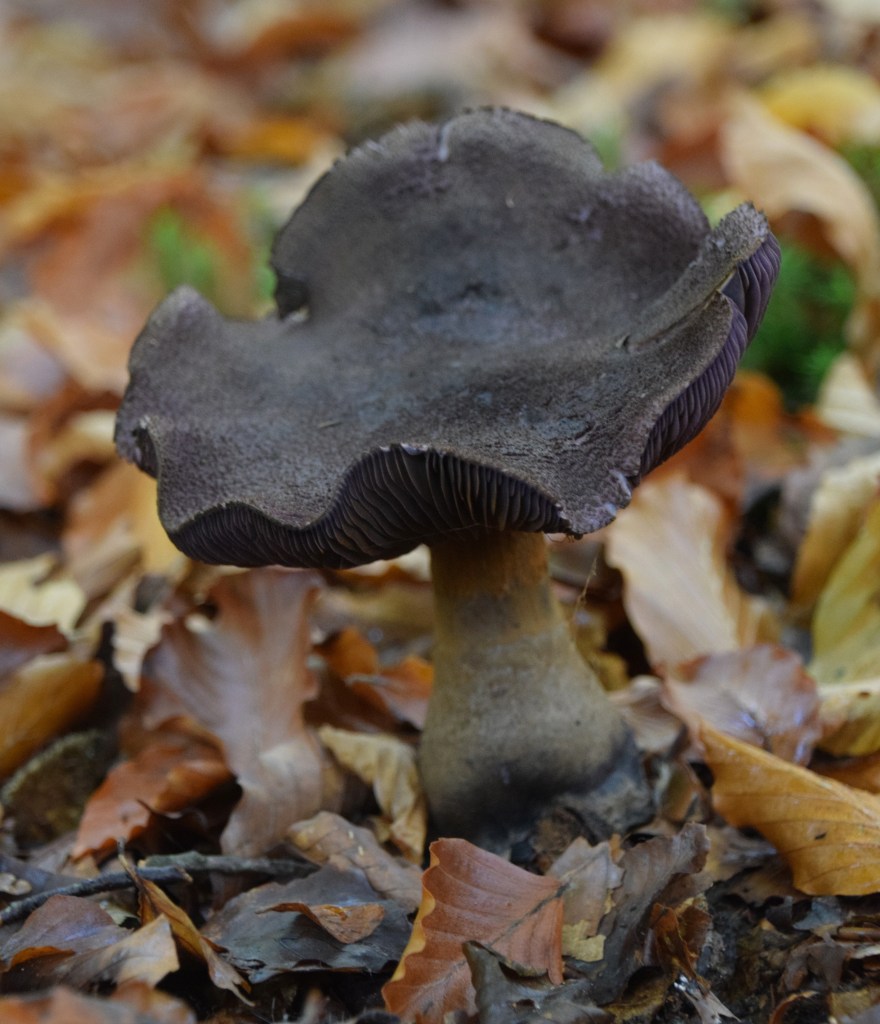
As with various other mushrooms featured in this journal, past posts that are becoming increasingly well referred to, I attempted to record the full fruiting cycle through a series of visits over 24 days. The following gallery presents this for the second specimen, showing a typical sequence of shapes to those other described subjects. By 30th Oct both my adopted mushrooms had lost their special violet lustre and were beginning to go over.

Violet Webcap #2
Cortinarius violacea occurs throughout Europe, where it is widespread but nowhere common, and is listed as endangered nationally. Other populations are distributed across the northern hemisphere in North America, mostly associated with coniferous trees, and Asia. Everywhere they are associated with acidic ground and form ectomycorrhizal relationships (see here) with the roots of various trees and shrubs. For further scientific detail on the species see here.
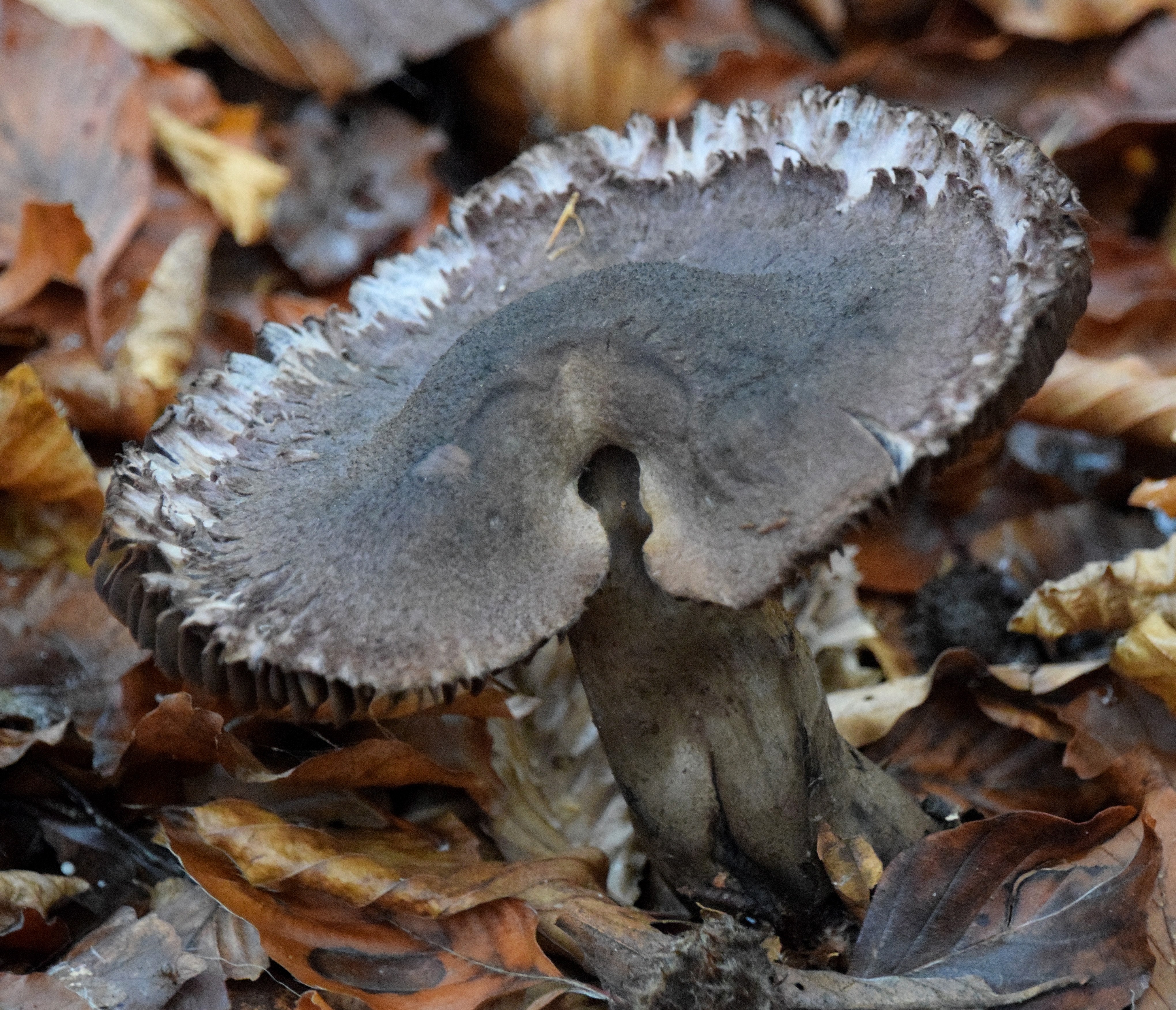
My final visit to the Chilterns’ site was on 6th Nov, by when both the objects of my past 30 days’ attention were in a collapsed state (pictured below). Autumn leaf fall from the tree cover was well advanced, and not much presentable fungi was still visible on the forest floor. I gathered up my makeshift wigwams and went upon my way for another year. The entire fruiting cycle of an extraordinary mushroom had thus been duly recorded and without interference. I expect I may return here in 2026.

This has at length given me something to blog about. In case fellow Oxon naturalists might have wondered where I’ve got to recently, I have been working part-time for up to four days a week in retail since late August, which might possibly help to fund park home improvements and future travel. I will never fill out this journal with repetitive content for its own sake. Things must evolve. I have managed to put a meaningful wildlife agenda in place once more for spring and early summer 2026, as in the quite exceptional first half of this year. Watch this space!
 Ramblings and Scribblings