A mainland Nearctic wader as close to home as Hampshire was a national and Westpal tick not to miss, and likewise Adam’s offer to Ewan and myself to do the driving when news broke a day earlier. The location was an agricultural irrigation facility on farmland between Ringwood to the north and Christchurch on the coast. That site has a niche reputation in local county birding for producing occasional quality records, and this Killdeer must be it’s finest moment to date.
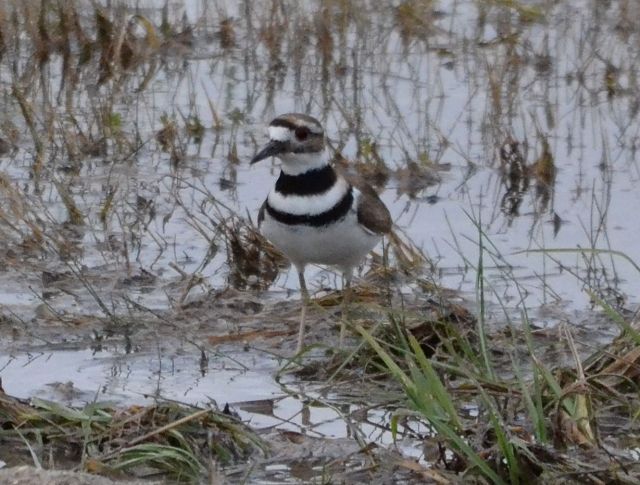
Ripley Farm Reservoir (50.7924,1.7741 – SZ158994) is viewable from a public right of way running westward from a hamlet of the same name. We arrived in the early afternoon to join around 30 other birders and our quest was visible distantly but clearly, hunched on the ground looking away from us and to one side. It had been quite still there for more than an hour but before too long got up and walked around, offering good views. The double breast band and long tail clearly distinguish this species on the ground from Ringed Plover for instance, and today’s bird preened at times to reveal its as distinctive bright rufous-brown rump. This is a very common shorebird in its home range, much more likely to occur in western or northern offshore locations here. So to observe one inland in southern England is quite special.
Killdeer is an abundant resident across north America (see here) where it breeds in similar grassland habitats to Northern Lapwing in Europe. It owes the rather brutal sounding name to its sharp and often repeated alarm call, a classic example of onomatopoeic bird nomenclature such as Kittiwake, Cuckoo, Chiffchaff or Bobolink. This post’s sighting is the 22nd in the British Isles so far this century, and there are typically only between two and five records each year across western Europe as a whole.
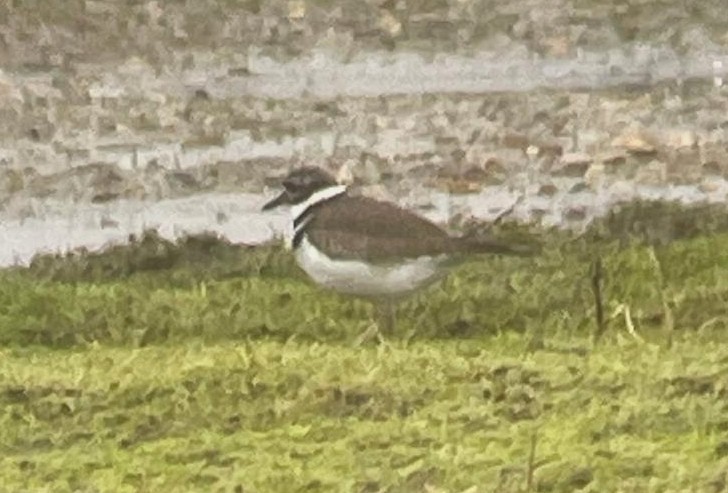
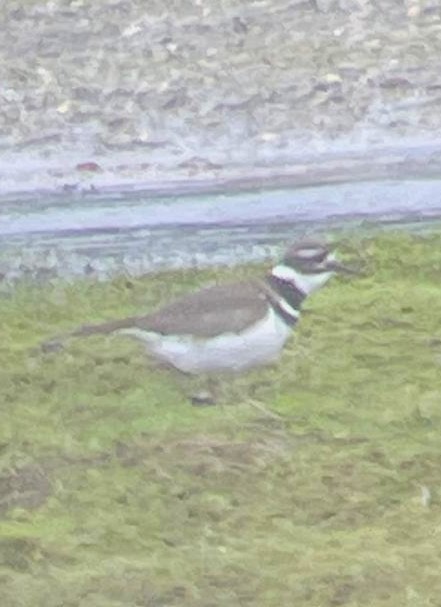
Today’s Killdeer © and courtesy of Adam Hartley
Adam was able to digiscope the above records of the sort of clarity everyone present must have been gaining in continuous light rain. At one point while the assembly was waiting for the main attraction to stand up and perform, a White-tailed Eagle from the Isle of Wight release scheme drifted by giving everyone a bonus bird for the day.
Had I done this twitch alone I would have combined it with converting the ship-assisted Great-tailed Grackle that has been present in Hampshire this winter since early November. And fortunately my two companions, though having seen it previously were of the same mind. After making landfall at Calshot near the mouth of Southampton Water this bird settled in a residential street at Holbury, close by the brooding presence of Fawley oil refinery, Great Britain’s largest that supplies around 20 per cent of national capacity. There it has been much-twitched on a daily basis ever since.
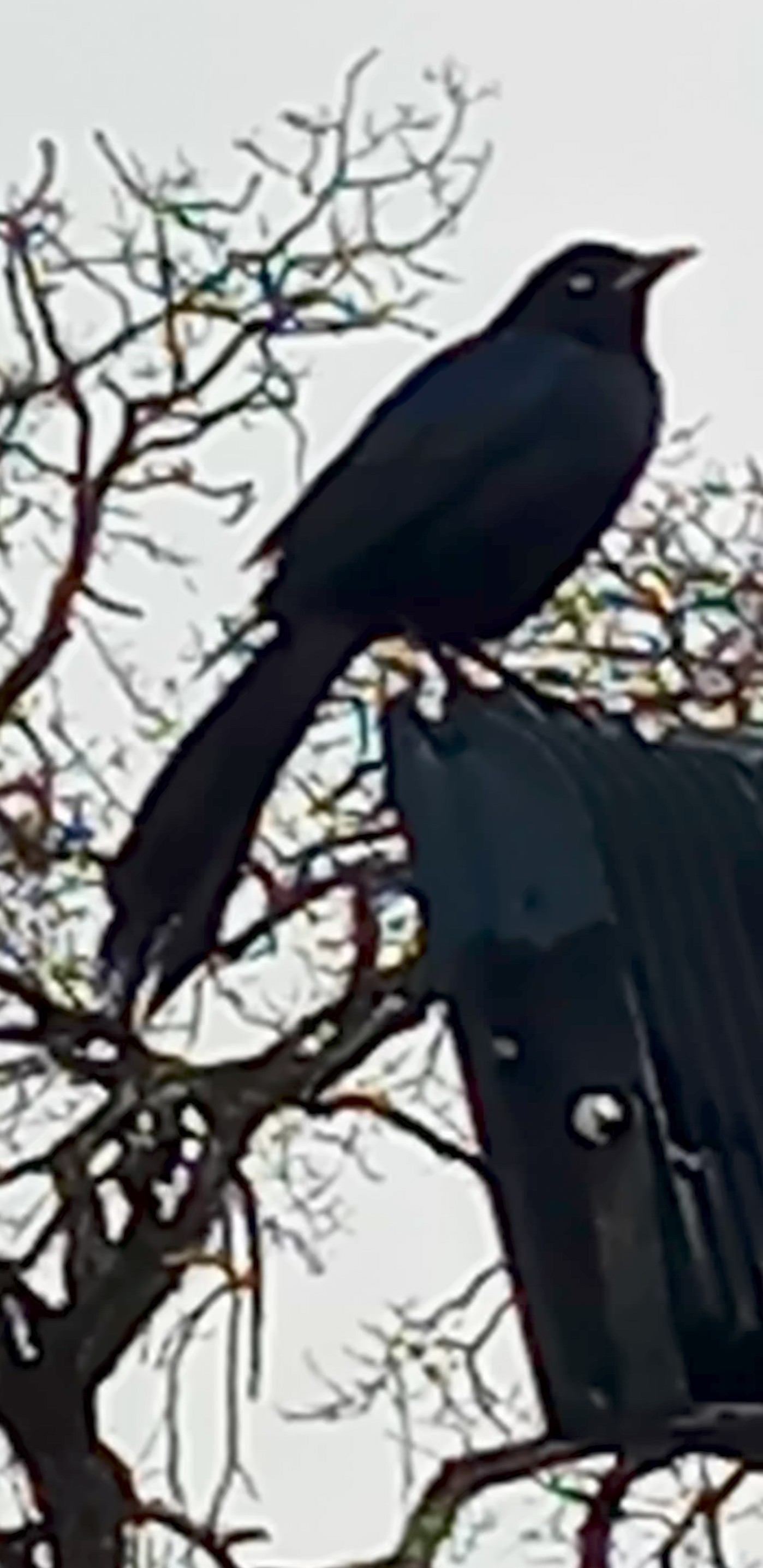
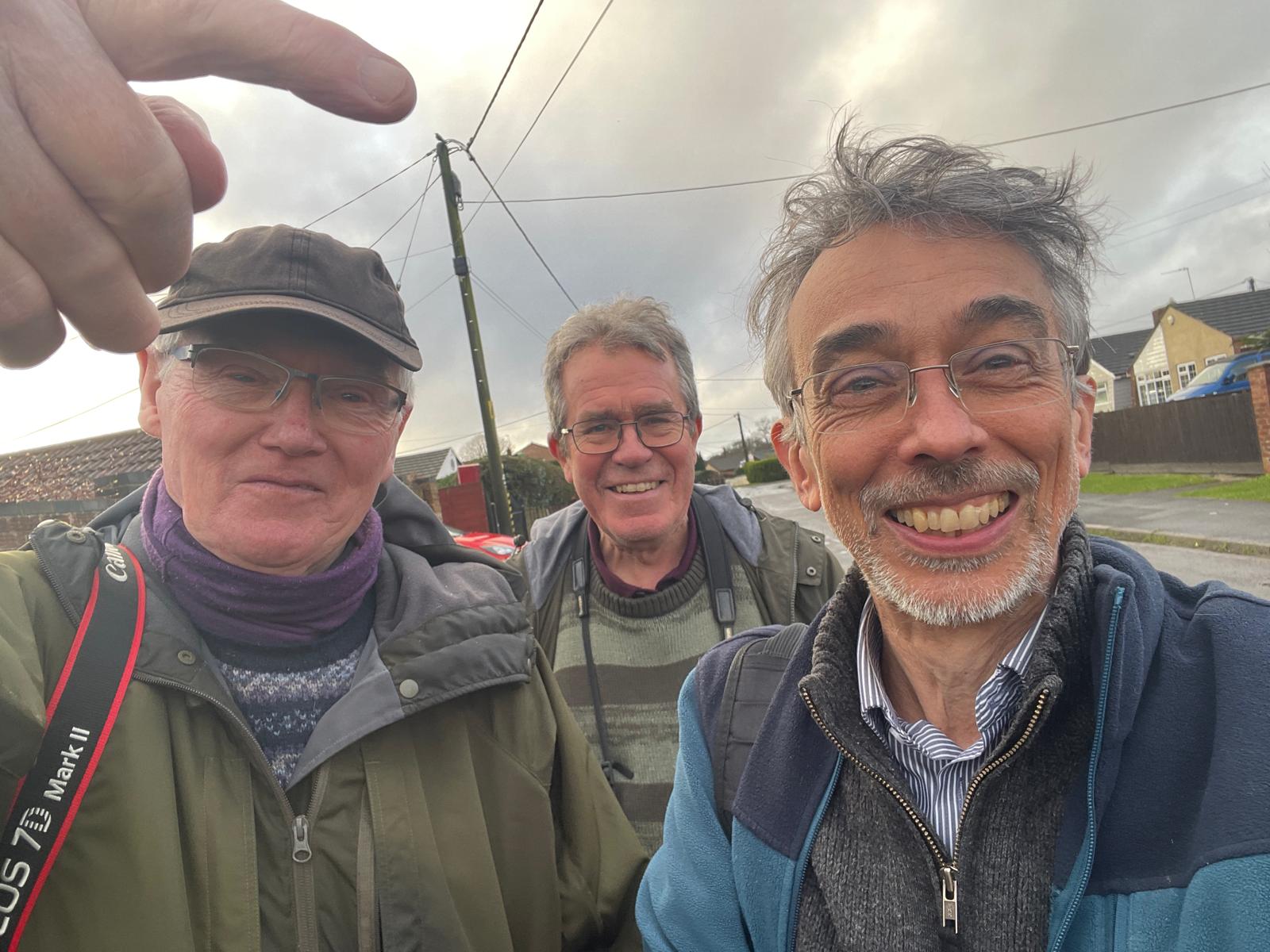
Team Grackle and the pole-top bird, with guidance from the late, great (cheat) Diego Maradona
As soon as we arrived at the street in question, Adam pointed and said: “There it is.” And there indeed the Grackle was, perched atop a structure in the nearest garden. It then moved from one telegraph pole to another around us, but being no doubt well fed here it wasn’t tempted down to the ground so late in the day by Adam’s offering of flapjack. The light was terrible so I could only gain blurred records with my phone (above, left), and the subject looked some way short of its usual smart self on such a wet day. But when conditions brightened a little I could discern the celebrity visitor’s metallic, midnight-blue sheen, reminiscent perhaps of my own, much-loved Vauxhall Corsa. For the RBA gallery of this bird see here.
Being extremely approachable I had not considered devoting a special trip to this second Nearctic item, waiting instead for something to combine it with, and now that opportunity had been realised. As a non-purist I am content to add it to my British list as a non-BOU record. And having seen only Boat-tailed Grackle of three related species, that this bird was initially identified as, during my past trip to Florida I see no reason not to consider it a lifer too. Hence I counted my 528th Western Palearctic bird on a very enjoyable if rainy day out.
 Ramblings and Scribblings