“Nemesis sublime” or “Exotic creepy crawly”: a special Wasp Spider at Radley Lakes, Oxon – 26th Aug

The following is presented in all seriousness. Today by way of doing something quite different I enjoyed Oxfordshire’s best fringe wildlife attraction of the moment, the Radley Wasp Spider. This thing of great beauty and mystique was found within a former gravel pit complex (SU520977) six days previously by my wildlife colleague Wayne (see here), then viewed and blogged subsequently by Ewan (here). So when I ran into the latter this morning and he said he was about to have another look, I gladly accepted his invitation to go along too.

This strikingly colourful arachnid, Argiope bruennichi originates from the Mediterranean region and occurs locally through much of central and northern Europe and beyond. It was first recorded in England in 1922, and through the rest of that century mostly from south coast locations. But with more recent global warming there has been a northward range expansion that has attracted some media attention. The name derives from the female of this post’s Wasp like colouring. Males are somewhat smaller and brown so hence less noticeable, even should they survive mating during which they are most often eaten alive.

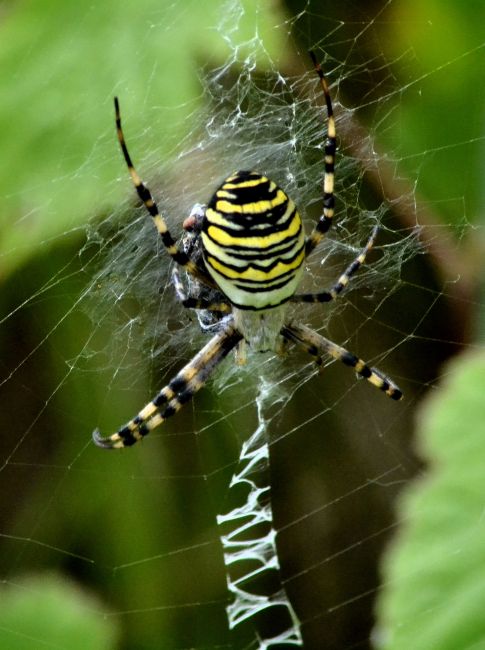
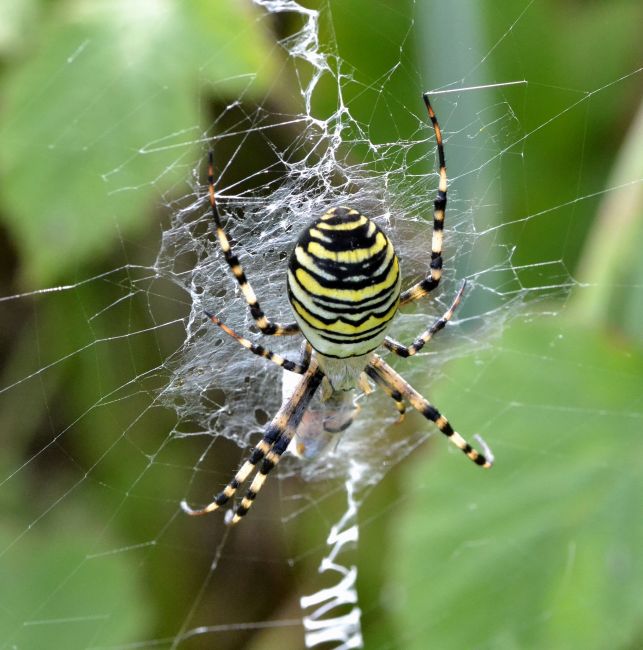
Wasp Spider (female)

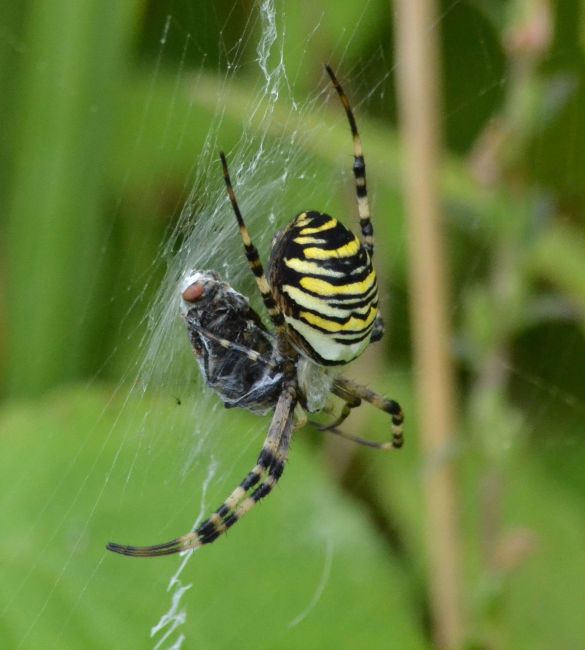
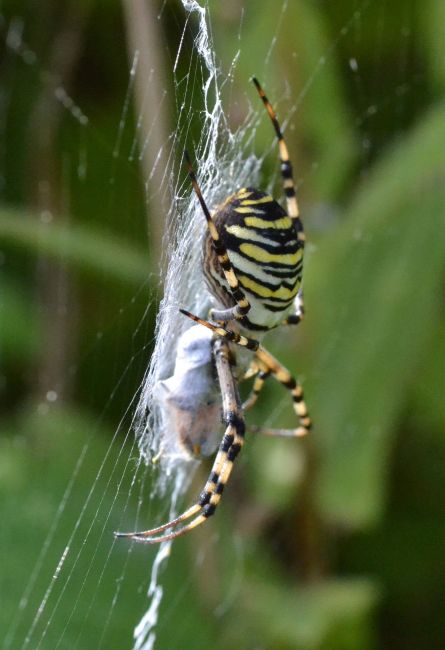
Well we’ve all known one or two of those, haven’t we chaps? Today we re-located the femme fatale in question quickly, still spread-eagled across her intricate web (pictured above) low down in the vegetation to one side of a track to where my colleague led me. She was busily engaged in cocooning an ensnared fly as some of these pictures show. The large web is termed an “orb web” with an ingenious vertical zigzag pattern running down its centre, known as a stabilimentum that is said to reflect ultra-violet light to attract prey insects.

Females are roughly the same size, between 140 and 180mm long as a larger Garden Spider (Araneus diadematus), that appear in profusion almost everywhere at this time of year. The latter species varies greatly in form but is never black and yellow. The former’s crossways abdomen pattern mimicking the colouration of a wasp is a clever survival mechanism, since predators will mostly leave such stinging insects alone.

The diminutive males are typically between just 4 and 5mm in length and for the reason stated earlier very few remain by this stage of the season. To avoid being consumed sooner they build webs of their own within the edges of the larger one. There they are able to remain undetected until the occupant completes her final moult and reaches sexual maturity, when her jaws will also be softer. Then the intrepid mini-suitors dart in to take their chance but soft jaws or not invariably become a convenient snack once the business is done.

That’s the way to treat ’em, hey chapesses? I am sure there must be more scientific if less entertaining explanations for all this. One is that males of a certain size are able to “plug” the female after mating with their entire bodies to prevent any other male from fertilising her eggs. But perhaps the divas in question might not wish to grant such exclusivity and so tuck in anyway. Maybe it’s time to move on!

Since Wasp Spiders have a particular liking for Grasshoppers as a food item they are rarely found in gardens but more usually unmanaged rough grassland in the countryside. There the web is typically spun in long grass a little above ground level, as with today’s example. Upon a prey item being caught in the web it is immobilised by being wrapped in silk, then bitten and injected with a paralysing venom.

The above picture shows our subject dealing with a newly trapped fly in that way. Being quite pleased with these images I wanted to return with my macro lens and so re-visited in the afternoon with another wildlife colleague, Sally who also wished to see this highly attractive spider. By then the food item was fully cocooned (pictured below), but the morning’s telephoto pictures are probably better. I believe the three of us are the only Oxon birders, other than its finder to take in this alternative local experience so far.


The subject of this post does not, however always receive such a good press as herein. Cue the DAILY STAR from 9th September 2020:

—————————

Sinister wasp spiders invading south east England

– and yes, they do bite

A chilling new creepy-crawly blitzing Britain is every bug-haters’ worst nightmare – because it is a combination of a wasp and spider.

Wasp spiders usually lurk in remote parts of continental Europe and Africa. But because wild grasses have been allowed to grow in the UK during lockdown the exotic species have marched across the English Channel and taken up residence.

The sinister-looking creatures are set to terrorise staycationers as they resemble two of Britain’s most-hated bugs. Luckily, though the spiders bear distinctive wasp-style stripes, they do not share their ability to fly. But they do bite.

Experts say a wasp spider nip can be painful but is not poisonous. They surfaced in Suffolk after councillors chose 40 places to ‘re-wild’ by leaving grass uncut during the pandemic. Within weeks all manner of bugs, birds and insects had made the hotspots their homes.

The spiders have mated and flourished, no mean feat for the males which are just a quarter of the size of females and often eaten by them during sex.

< An unnamed here > East Suffolk Council cabinet member for the environment, was delighted to spot one in his own garden after he let part of his lawn grow wild. “The wasp spider is visually nice,” he said. “It’s the biggest spider I have ever seen. “

Despite the spider’s eye-catching appearance < he > said most people seemed happy to welcome more exotic species of wildlife and the council plans to increase the number of wild grass sites to 100 over the next year.

“People have really engaged with nature more during the coronavirus lockdown and it’s really noticeable that people appreciate it in their own community or garden,” he said.

——————————–

Maroc “Serious Spider”

Hmmm … having now been properly introduced, I have to say I rather like them too. For the record, this similar looking number (above) that I stumbled upon in Morocco in November 2015 is the biggest spider that I myself have ever seen. This lady, as I’m now sure she must have been was the size of my hand … so for “terrified staycationers” her kind could be a further “nemesis sublime” were they also to “march across” to these shores. ID anyone?

Footnote: “She’s my nemesis sublime” is a lyric from a 2015 Thunder (English rock band) song about a dominatrix.

Pacific Golden Plovers at RSPB Frampton Marsh, Lincs + dipping a Black Stork and viewing the Boston Stump – 14th & 22nd Aug

In its most recent weekly birding round-up: 3 – 9 August, RBA posed the question: “What’s better than an adult Pacific Golden Plover?” Their answer: “Two together at the same site”, was prompted by the arrival on 5th of a second individual at the RSPB’s passage wader mecca of Frampton Marsh at the south-west corner of The Wash. So this seemed an ideal opportunity to add to my bird life list what I had thought of as a tricky Nearctic species and so had not bothered to attempt before.

Pacific and American Golden Plovers were split by the BOURC in 1986, having previously been treated as a single taxon “Lesser Golden Plover”. Since then the former has been an almost annual vagrant to the British Isles, averaging three or four a year, while the latter is a species I have observed just once before in Oxford’s Port Meadow in November 2012. Most British Pacific records occur immediately after the birds leave their breeding grounds in July and early August. These have been well scattered historically, usually on the east-coast, the Northern Isles and in Cornwall.

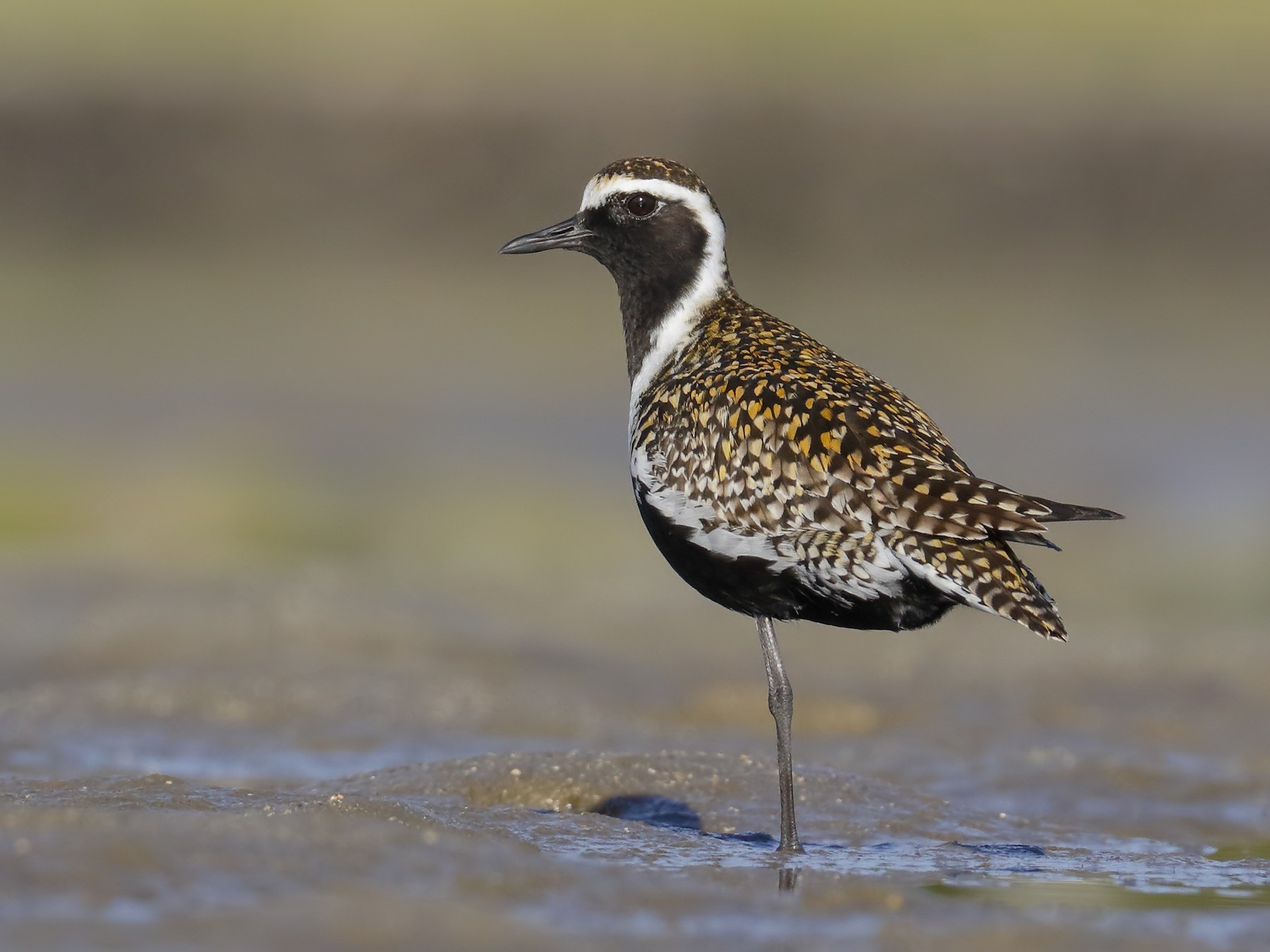
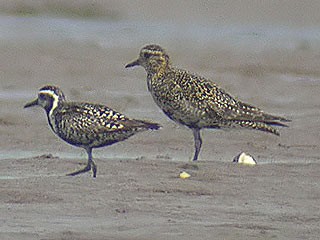
Adult Pacific Golden Plover (outsourced) – © rights of owner reserved

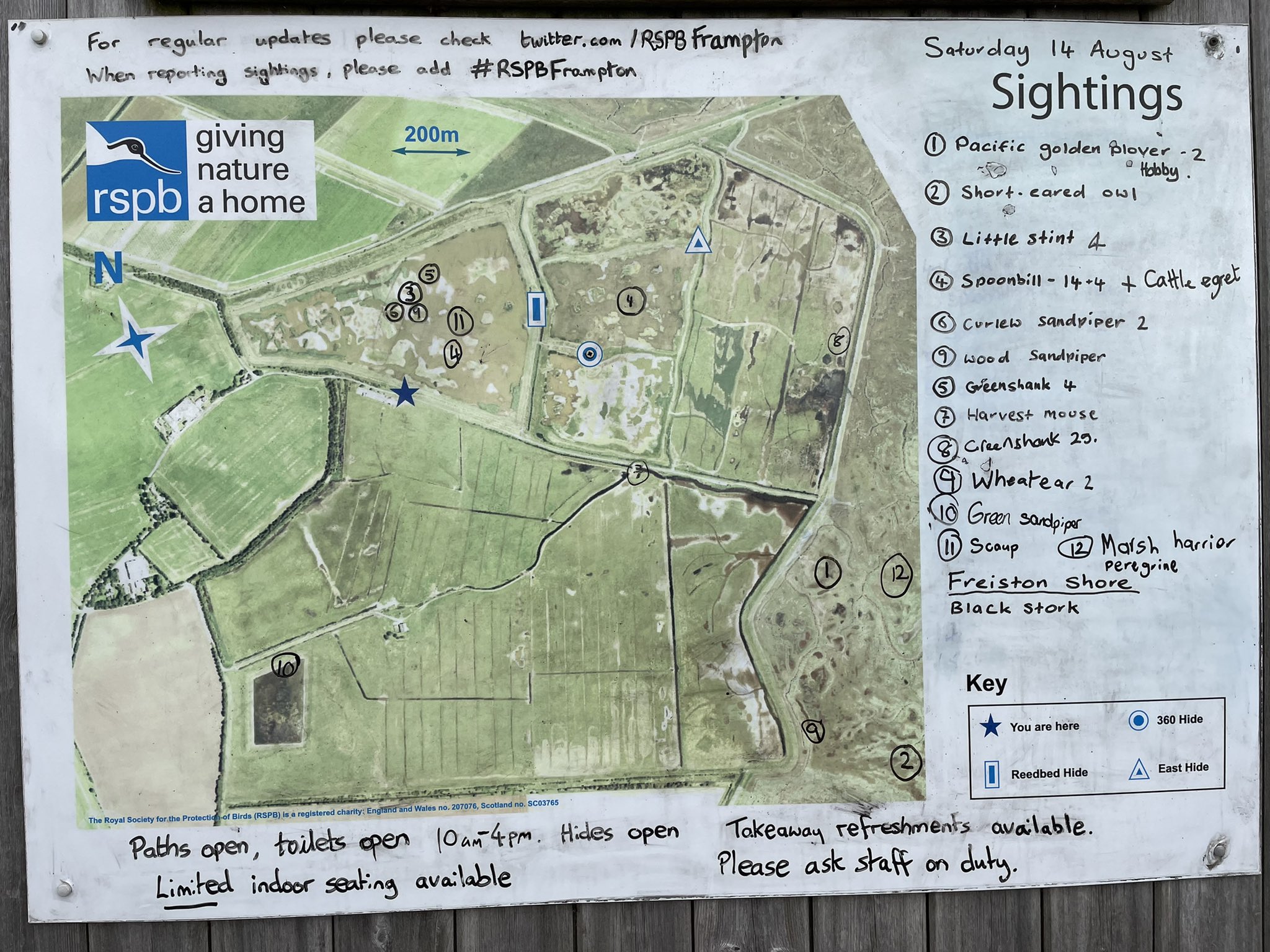
Two together in breeding plumage (see RBA gallery here) just 125 miles from home, that would not have to be picked out from carrier flocks of European Golden Plover, was therefore the kind of national birding opportunity I seek. In the event this was an easy conversion. Arriving at RSPB Frampton Marsh (PE20 1AY – TF357390) just after 10am it was good to actually be welcomed as a green clad optics carrier in the visitor centre, and I was directed out to the sea wall beyond which the two birds were still present on salt marsh. This sightings board (below) that is also published online was likewise very helpful.

Birder friendly guidance from the RSPB – the PGPs are at location 1

As I walked the main track through the freshwater marsh the exact location was obvious from a small group of people standing atop the embankment. When I got there the first person I enquired of muttered negatively: “Good luck, I haven’t seen it.” But several others were scoping some pools away to the east, and one of them pointed out the area to scan myself. I soon picked out the two Pacific Golden Plover moving up and down the edges of those pools and continued to watch them over the next hour. But I stood little chance of gaining acceptable pictures of my own at that distance looking into the hazy light.

By comparison with European “Goldies” these are smaller and slighter, with a longer neck more easily apparent when alert; a deeper-based, shorter bill and larger-headed appearance. In flight the toes of PGP extend beyond the tail tip and the wings are much slimmer. For an authoritative ID guide to all three GP species see here.

Pacific Golden Plover breed across the Siberian tundra from northern Russia eastward and into western Alaska. The species is highly migratory, with the main wintering range extending through the Indian subcontinent, south-east Asia, southern China and Japan; and across the Pacific islands to Australia and New Zealand. Small numbers also winter in Kenya and the Arabian Gulf, and some in southern California. Departure from the winter quarters takes place from March to early May, and they reach their breeding areas in the first half of June, leaving again in July and early August.

Though they are very similar in appearance, where the breeding grounds of Pacific and American GP overlap in Alaska the two are said to inter-breed only very rarely if at all. The latter species’ migration route is also quite different, with almost all birds wintering in South America. By contrast the wintering range of PGP extends across nearly half of the Earth’s circumference.

Pacific (left) and European Golden Plovers © rights of owner reserved

Having researched this post and especially found this outsourced image (above) I now realise it must be far less difficult to pick out PGP from carrier flocks than I had previously imagined. So having made the effort this was a day very well spent. This latest gain is items 366 and 507 respectively on my career British and western Palearctic bird lists.

When I was out at the sea wall, the reserve was re-visited briefly by a fly-through Black Stork that had frequented this area of Lincs since 12th, most often at the nearby RSPB reserve of Freiston Shore 6km (in a direct line) to the north-west. In my post-tick exploration of Frampton Marsh (as if I wouldn’t do that?!), I took a route through where the potential British list addition had circled for a time, but it had gone on it’s way. Enquiring at the visitor centre I was told it had last been reported heading north from that other location, so I decided not to chase it before heading home.

The bird did return to Freiston Shore (TF 397423) later in the day and not seeing it rankled slightly through the ensuing week when it was also reported there on most days. So on feeling the need to hit the road again after a seven day mainly dismal weather interval I went for it on Sunday 22nd. Arriving on-site just after 10am I spent four hours making a very long circuit and a half of the marshes there, but the Stork had well and truly gone absent and was not reported anywhere on that date. This at least illustrated how it might also have been a long search for me, without getting lucky eight days previously, but such is birding.

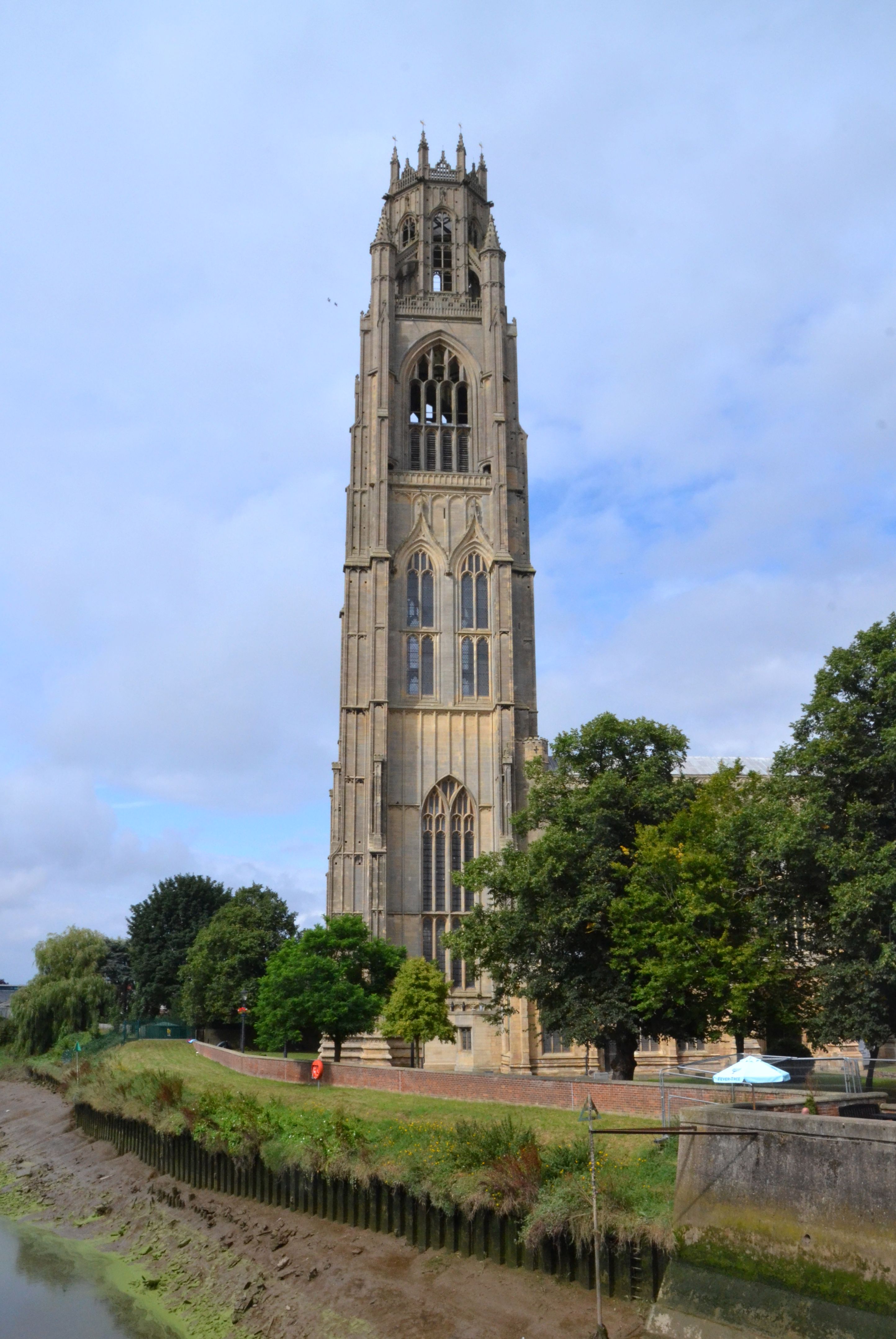
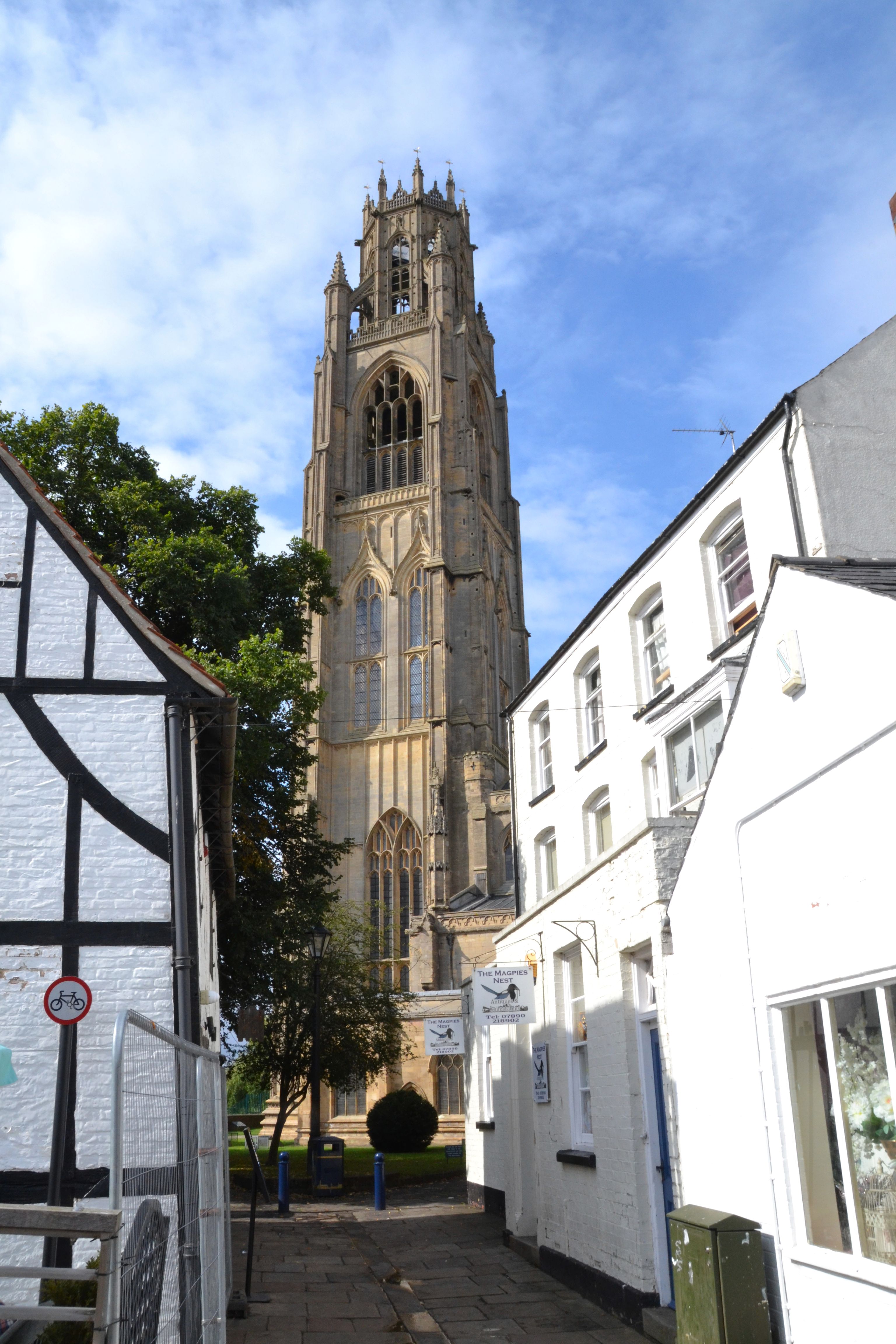
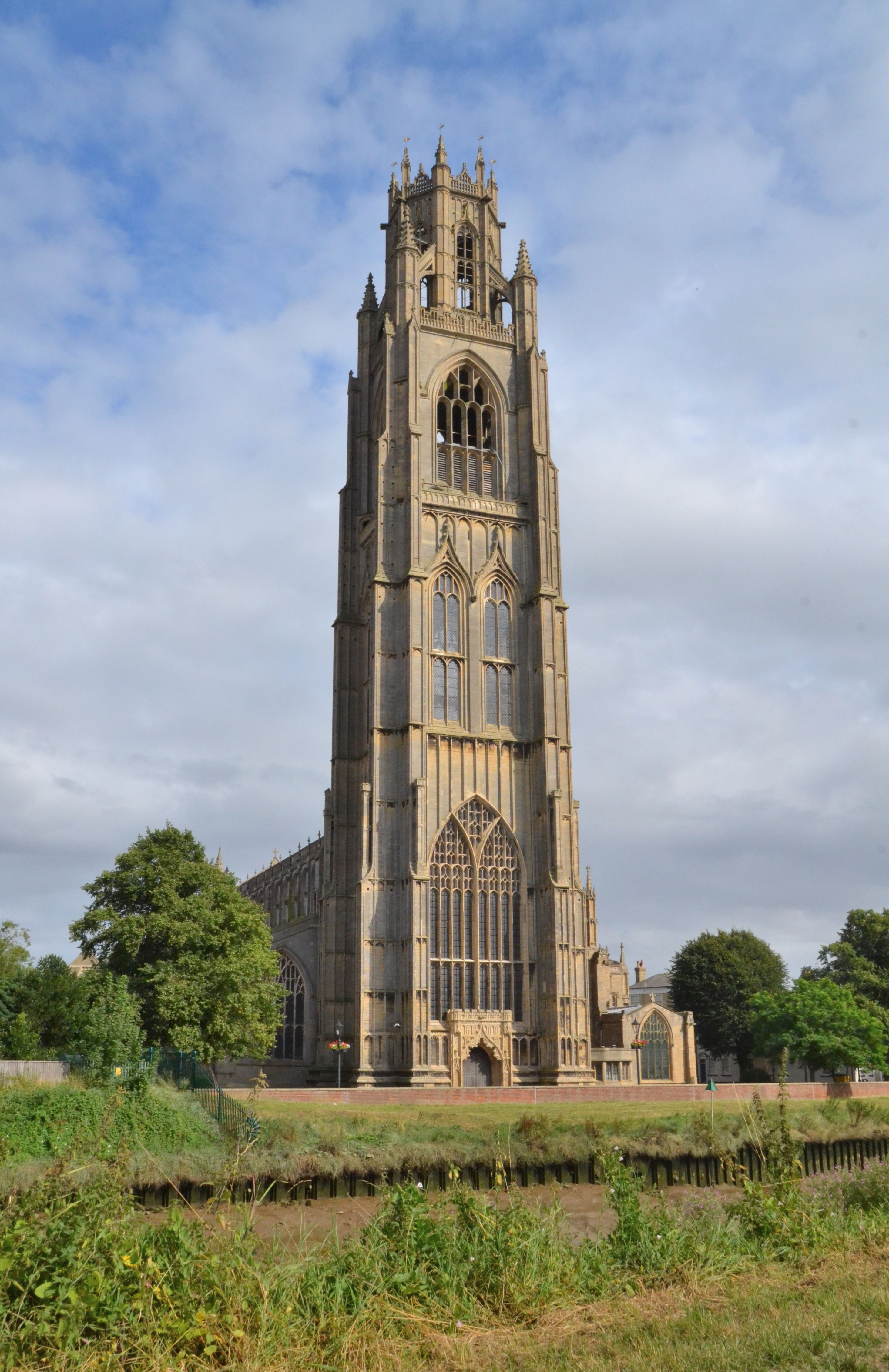
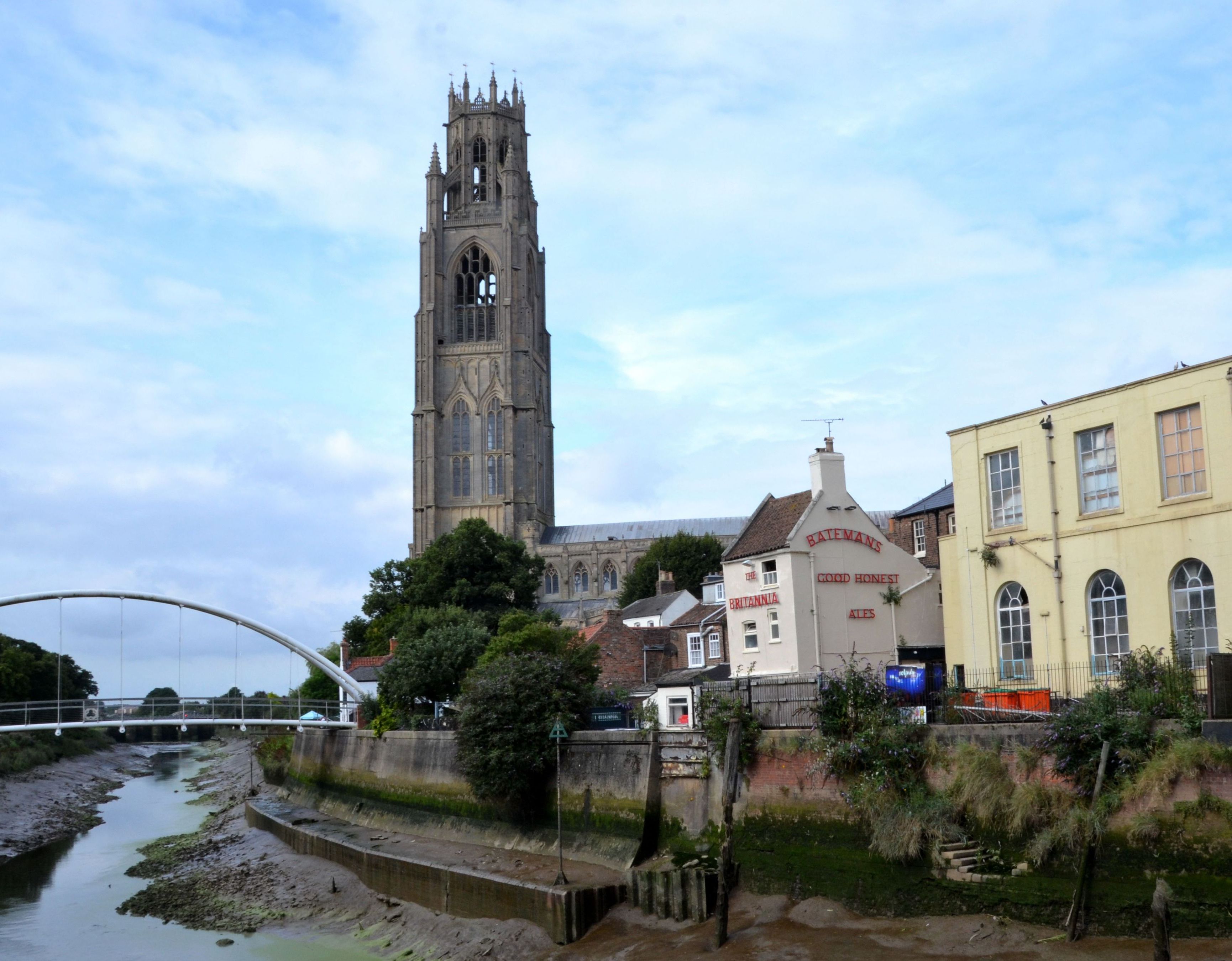
With two of my three latest bird twitches having ended in failure, the other being Western Sandpiper at Snettisham in Norfolk, the time seemed right to do a bit of history instead. At Frampton my attention was caught by the prominent local landmark of St Botolph’s Church tower in Boston that by road lies mid-way between the two RSPB reserves. I now resolved to get closer to and take pictures of the 83 metre structure of what is England’s tallest, non-spired parish church tower, popularly known as the “Boston Stump” (pictured above and below).

The River Witham in Boston and St Botolph’s Church

The ornate Gothic building dates from 1309 when Boston was a thriving commercial port, England’s second largest at that time. Construction of the tower began in 1452 and was completed by 1520 in the by then popular perpendicular style. The tower is topped with a highly decorated octagonal lantern ringed with pinnacles, one of very few surviving medieval examples in England. Standing at the foot of this magnificent edifice, looking upward and imagining the bygone effort and expertise involved in its construction was to my mind quite awe-inspiring. I have always held an interest in historic buildings and so now include the occasion’s different kind of uplifting experience in this mainly wildlife journal.

Seeking out High Brown Fritillary in South Wales – 5 & 8th July

The final item on my 2020 wildlife agenda, re-scheduled to 2021 has been to experience one of Great Britain’s most difficult to observe butterflies in possibly it’s least documented location. High Brown Fritillary being greatly reduced in it’s former Cumbria strongholds, extinct in Worcs’ Malvern Hills and viewed poorly by myself only in difficult habitat in Devon – all places in which I had tried for the species previously – I decided to see if things would be any easier with a population near Bridgend in Glamorganshire. The outcome after three attempts may best be described as more of the same hard work though ultimately satisfying.

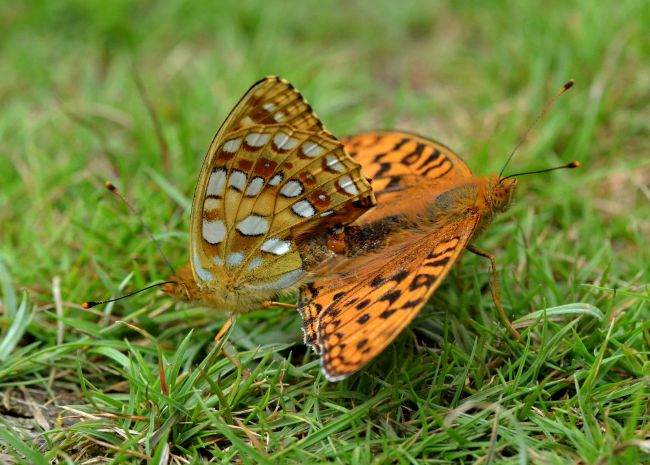
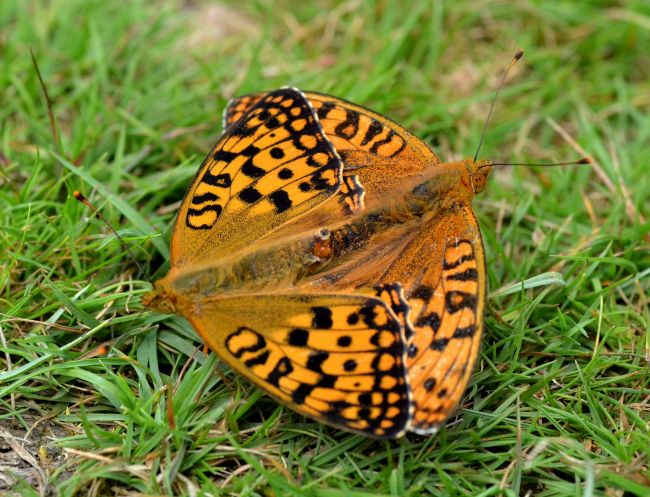
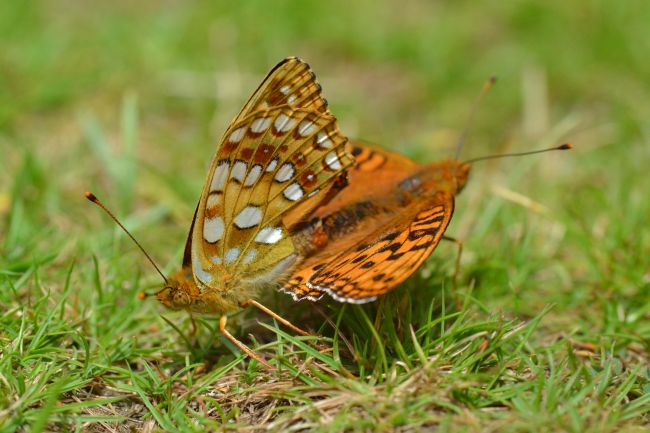
High Brown Fritillaries (mating pair)

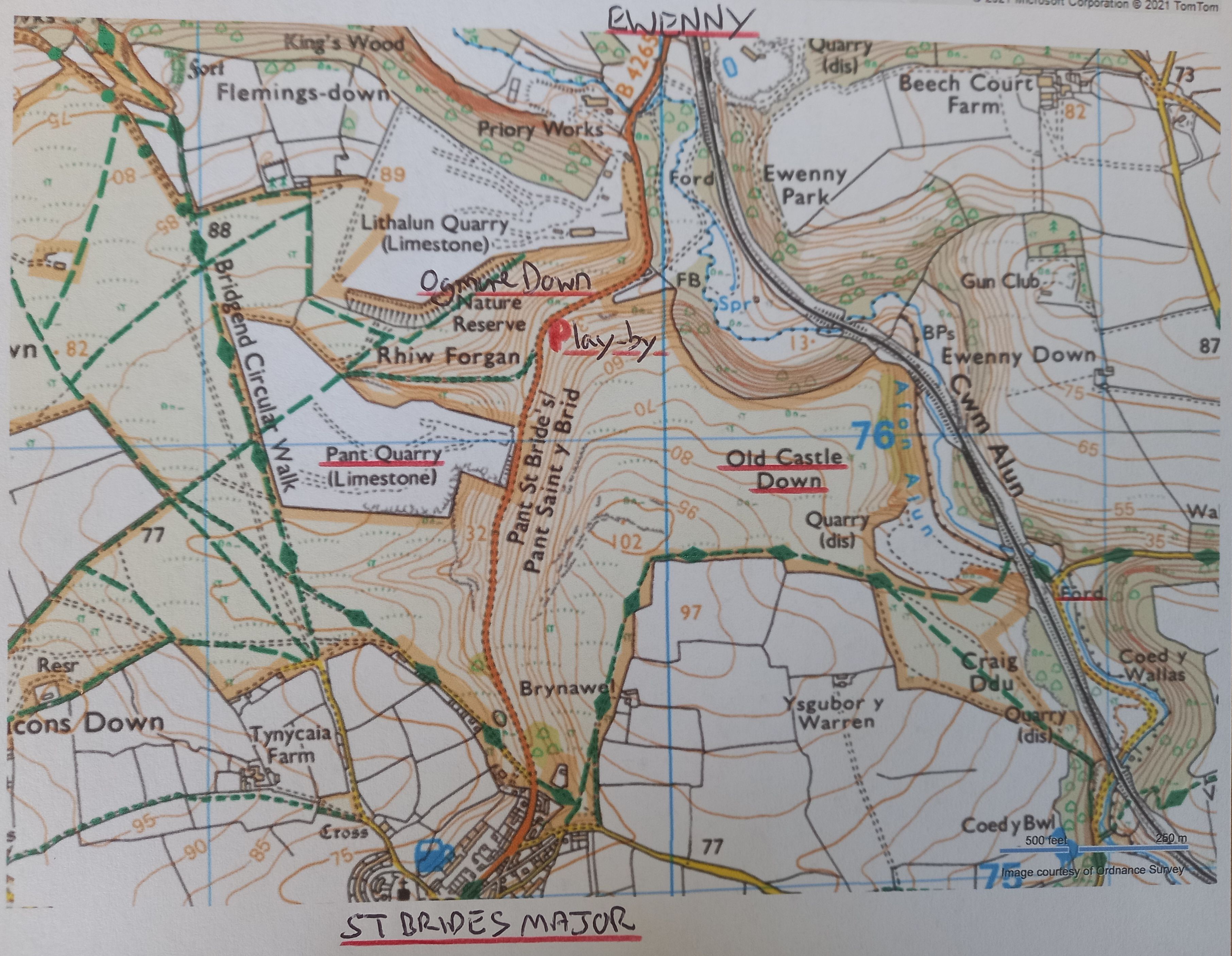
The Alun Valley Project (see here) involves management by Butterfly Conservation (BC) and partnership organizations of some hillsides and downs above them for HBF. That conservation effort has succeeded in increasing adult butterfly counts many fold since it began in 2002. The longer standing colonies are on Old Castle Down, but since December 2019 BC has attempted to create more habitat on Ogmore Down. That involves opening up dense bracken and scrub with hand tools and mechanical brush-cutters, followed by winter pony or cattle grazing since sheep grazing is unsuitable for producing an even distribution of required habitat.

Like other Fritillaries High Brown is a very picky habitat specialist, requiring unimproved semi-natural grassland in which to breed, and within that habitat pockets of very specialised micro-conditions. Achieving then maintaining all this (bullets) is a very delicate balance:

  • A sheltered, usually south-facing, open and sunny slope below 300m altitude
  • Bracken stands where the ground is littered with a light covering of dead bracken with sparse grass cover. This needs to be deep enough to provide a warm air pocket, but not so deep that it shades out the food plant
  • The sole larval food plant Common Dog Violet amongst that sparse ground vegetation, with relatively high spring ground temperatures when the larvae hatch in March
  • A grazing regime that breaks up the bracken by trampling but doesn’t remove the grass or Violets
  • A minimum area of 2 to 5 hectares of suitable habitat to support a breeding colony

From a lay-by (CF32 0TA – SS902757) on the B4265 St Brides Road south of Ewenny and just north of Pant Quarry, paths lead west up to Ogmore Down and east onto Old Castle Down that both have open public access. I first visited here a year ago, without realising that Covid travel restrictions had not been eased in Wales as in England. Overhead gantry messages along the M4 proclaimed STAY LOCAL PROTECT THE NHS but didn’t say “If you have come from England turn around and go back”, so how was I to know? Vehicle traffic volumes suggested little attention was being paid to the restrictions which were not being enforced.

That day I first explored Ogmore Down above the working Pant Quarry, encountering Dark Green and Small Pearl-bordered Fritillaries but no HBF. Then I met a friendly local who as well as making me realise I shouldn’t really be there explained the last-named’s established colonies are on Old Castle Down. In the afternoon I crossed the road to that second area but still without success, and so resolved to come back a year later.

High Brown Fritillaries (his n’ hers top-sides)

I have found published information on HBF in both Devon and Glamorgan to be very scant. Neither county has a BC sightings page and I don’t do social media so the first question is when to visit if a wasted journey is to be avoided. Adults normally fly in June, through the second half of which this journal’s other reference on the Devon sites (see here) became the most consulted post herein, suggesting the HBF season was indeed underway. Then a picture of the butterfly from today’s site featured in BirdGuides’ most recent weekly photo awards, so I awaited a next suitable weather window.

On 5th the BBC Breakfast weather forecast suggested it was indeed worth risking the 127 mile journey in what looked set to be another rainy week. Arriving just after 10:30am the dark grey stuff was stacked up against higher ground to the north of the Vale of Glamorgan, but the site of my intent was still sunlit. That situation lasted for around an hour, during which I surveyed Old Castle Down more or less randomly coming across some Dark Green Fritillaries amongst the more plentiful flying Meadow Brown, Ringlet, Small Heath and Large Skipper.

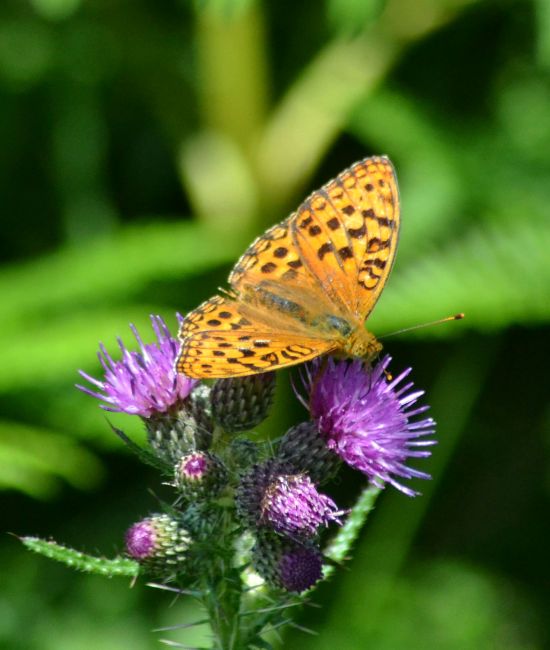
Then I crossed paths with another local who knew the area and had seen HBF earlier, showing me a picture on the back of his camera. He directed me to what he described as the reliable hotspot, a bracken slope at one end of the public right of way that runs along the southern edge of the open access land between a ford in Cwm Arun and St Brides Major (see map higher up). This was at once recognisable as suitable habitat, with many tall Thistle plants growing amongst the bracken that was noticeably less dense than at the Devon sites of my previous experience. Indeed it was possible to walk in at various points without damaging habitat, to investigate the butterflies that were active here and there.

Distant High Brown Fritillary (record shot)

Midday had now passed and conditions had become largely overcast with the sun attempting to break through on and off. But large Fritillaries were showing at intervals and I resolved just to keep walking up and down the tracks on either side of the favoured patch and persevere. Before too long gaining the poor quality underside study (above) of a High Brown Fritillary meant that mission had indeed been accomplished.

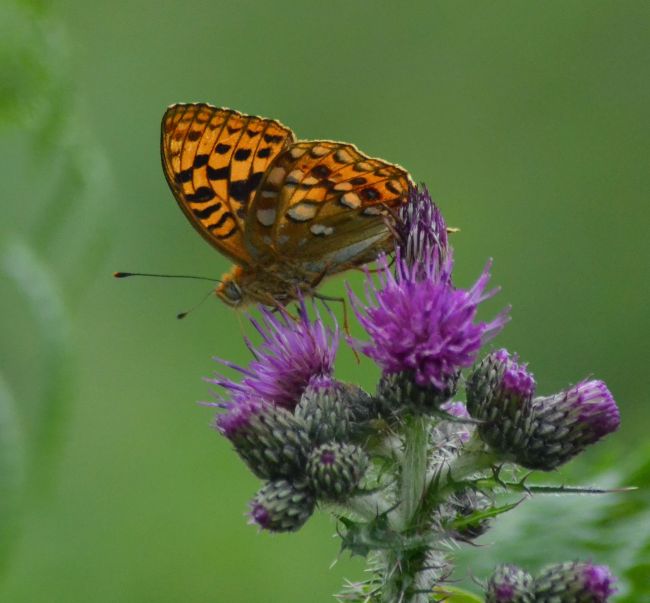
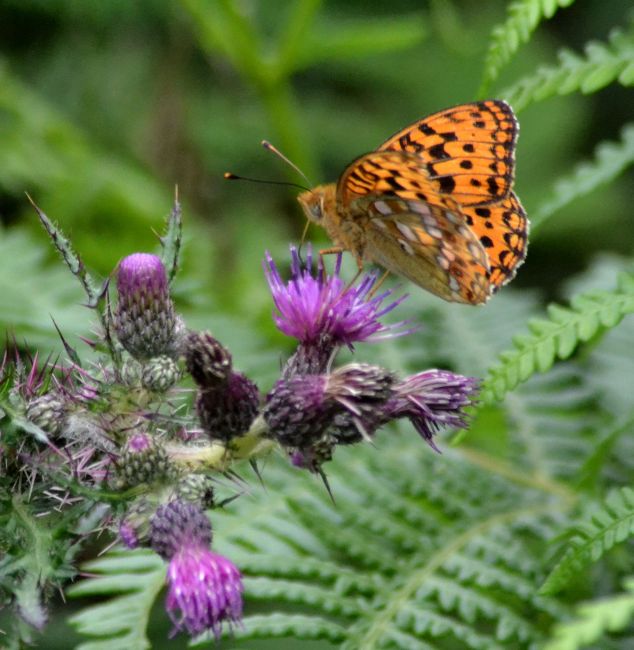
I was now reminded of visiting Aish Tor in Devon in similar weather conditions in 2018. Calling the colleague who had briefed me on that site his advice then was the butterflies would still need to nectar in the early afternoon to fuel up for the rest of their day. That was indeed what transpired here as perhaps three or four individuals, some of them worn all became active, moving around quickly and restlessly while rarely settling or showing their undersides for long. But I was able to obtain other unsatisfactory pictorial records (below) that confirmed the IDs.
This was presumably one of the managed Alun Valley Project colonies, of which there are more. By 14:30 conditions had become cooler and darker grey and the Fritillaries were no longer so visible. I was a long way from my start point of the morning and walking back around the site periphery immediately above the Alun Valley I appreciated having made what was a quite thorough exploration of Old Castle Down for future reference.

Hence my 2020/21 national wildlife agenda had been converted 100% successfully, and I had visited all the British High Brown Fritillary sites of recent history, viewing them poorly at just three. It now remained to re-visit Old Castle Down in the next suitable weather window to seek satisfactory pictures and maybe further colonies both there and on neighbouring Ogmore Down. So three days later (8th) I returned, being concerned to arrive earlier to catch the butterflies as they warmed up with the day.
That plan was scuppered by the mishap of realising after setting out for the hotspot I had left my phone on view in the car, so not wanting to invite a rock through the window I went back and the first hour was lost. Eventually getting down to the task in hand at past 10:30 the HBF were by then quite flighty and showing no inclination to settle on the Thistles to nectar. In bright sunshine they would instead keep landing in the shade of deep cover, eventually to re-emerge far less frequently. More poor quality records were gained including those above that show the top-side male diagnostics clearly enough.

Through the ensuing hour I felt sure the Fritillaries I was watching were High Browns but could not gain the underwing pictures that would remove all doubt. But as three days earlier I reasoned the butterflies would have to fuel up again in the early afternoon, and especially since they were expending a lot of energy. So I next wandered off to check out some other parts of Old Castle Down noted previously, in which differences in the bracken habitat to the managed hotspot were all too apparent.

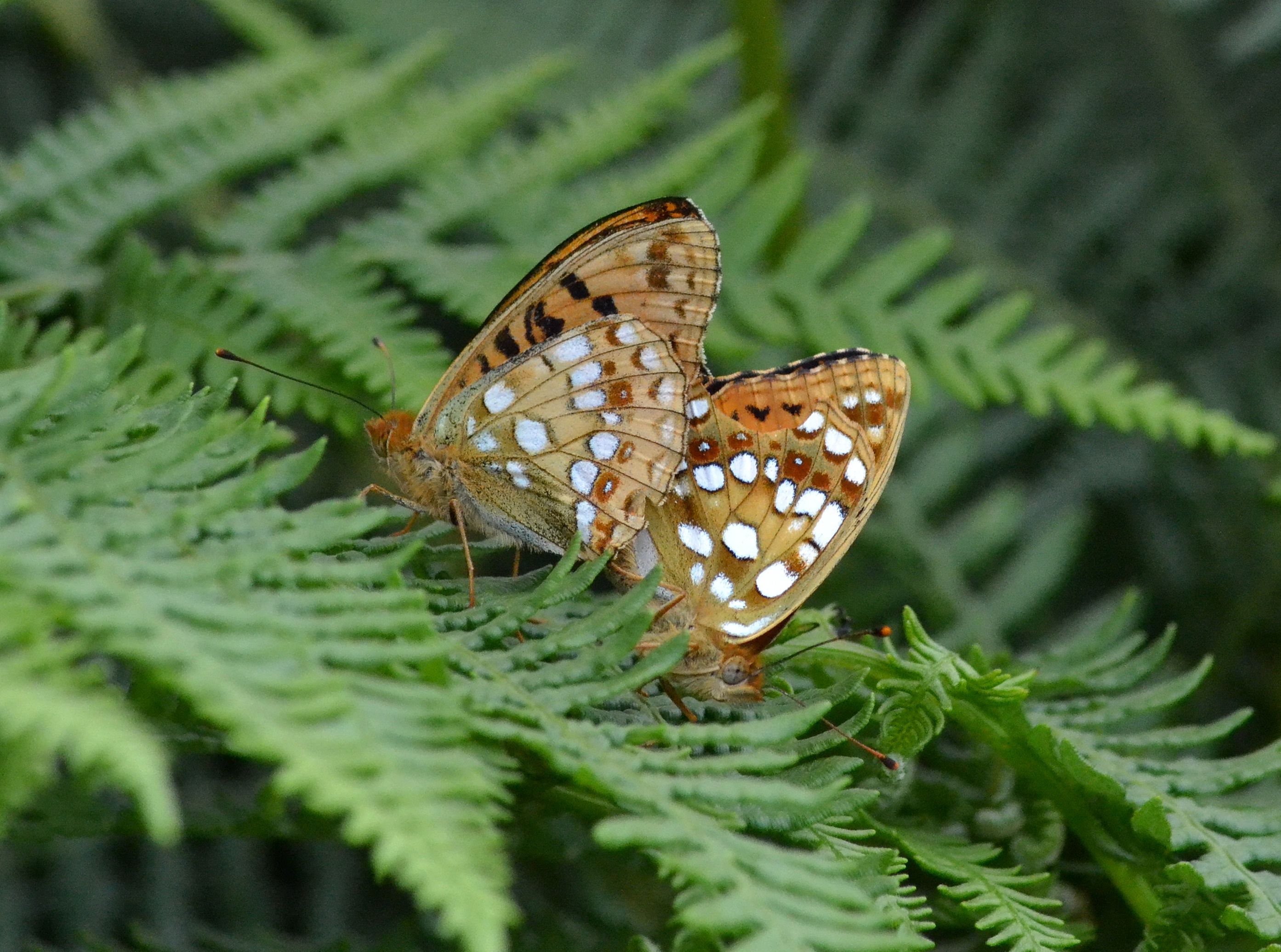
High Brown Fritillaries (mating pair)

Retracing my steps after 13:00 the HBFs were flying again but still not settling on the Thistles. Then I noticed a little ground level commotion to one side of the track where an interloper was attempting to muscle in on a mating pair. The next intruder on the scene, myself caused the female to be transported anew to the short grass sward of the track itself where they carried on. Cue a close encounter of the macro kind with which the happy couple were unconcerned.

Observing one of the scarcest British butterflies this well must be an infrequent opportunity, and to get so close to a mating pair in such pristine condition might be a rarer one still. But three times? Yes I encountered what must have been the same pair twice more through the early afternoon. Just look at all those lovely red occoli and the other red bit in the images that kind of stands out! It possibly goes without saying that acceptable pictures for this post had now been attained.

High Brown Fritillaries (his n’ hers under-sides)

On eventually walking away I met BC’s conservation officer for Wales, Andrea Rowe and a colleague and so took the opportunity to learn more about this site and its HBF project. They confirmed the other managed areas above the Alun Valley are not on publicly accessible land, and that High Browns may also be viewed on the slopes up to Ogmore Down above the B4265 St Brides Road where a deal of volunteer work has taken place. But checking those out would have to wait for another day. It had been a hot and tiring five hours in the field and my legs were aching, so it was time to move on and head home.
2025 update: I revisited here on a very hot 10th July, joining a BC-led guided walk, and learned the prime location on Old Castle Down described herein may no longer be productive due to habitat management constraints. The best alternative for HBF on this occasion was along the roadside just south of the layby on the B4265, at the foot of Ogmore Down

The Green-eyed Hawkers of Westbere Marsh, Kent – 23rd June

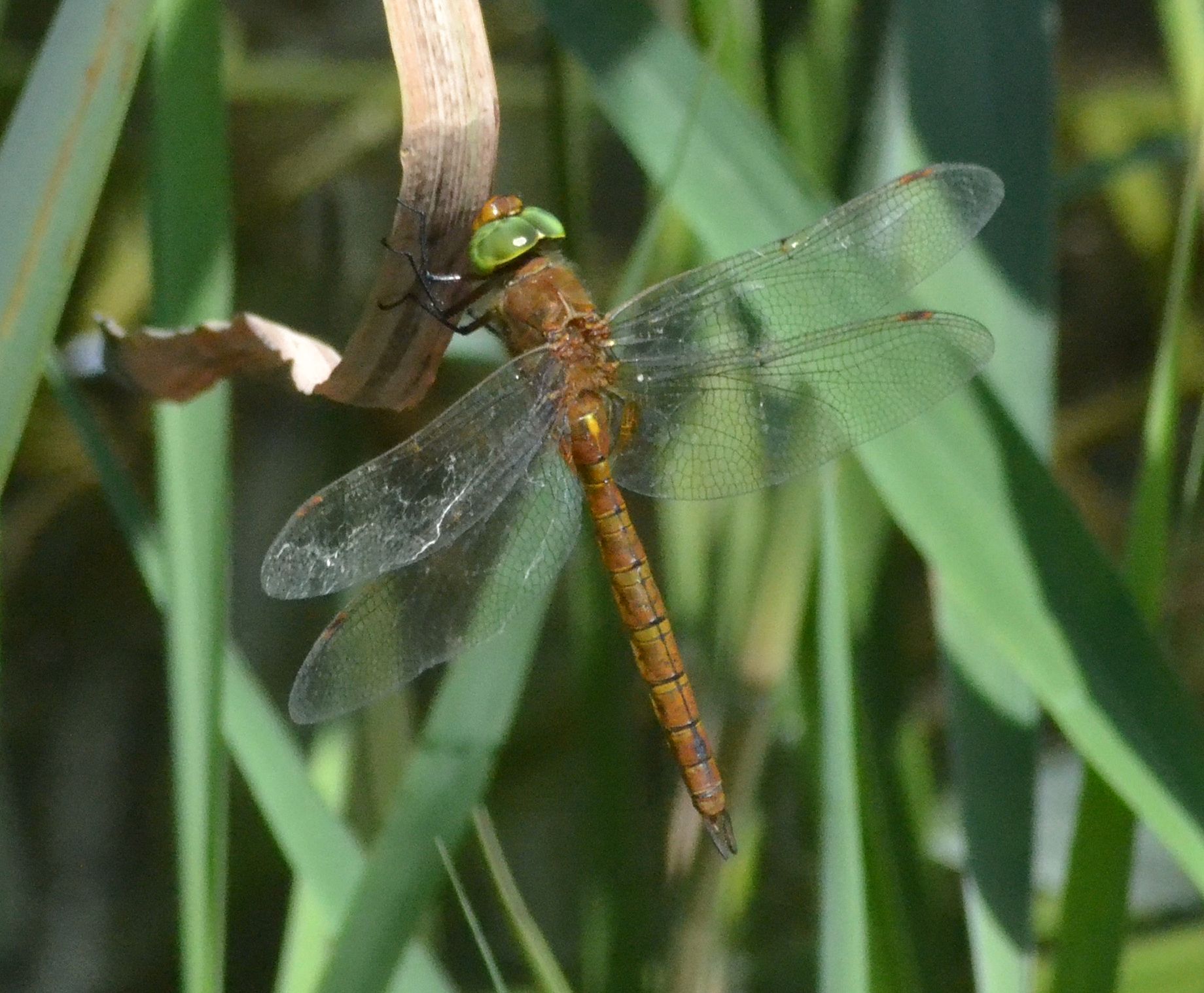
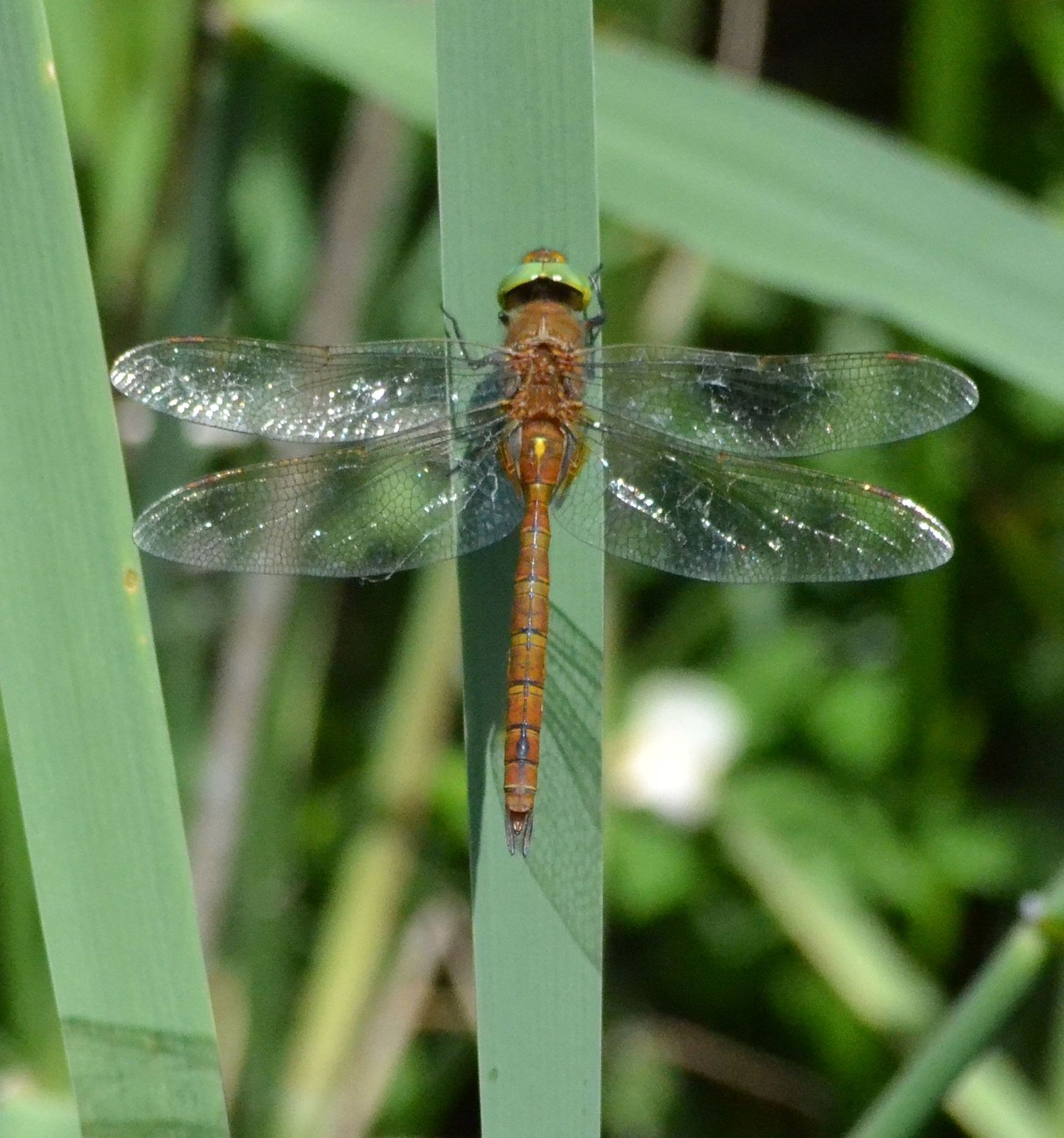
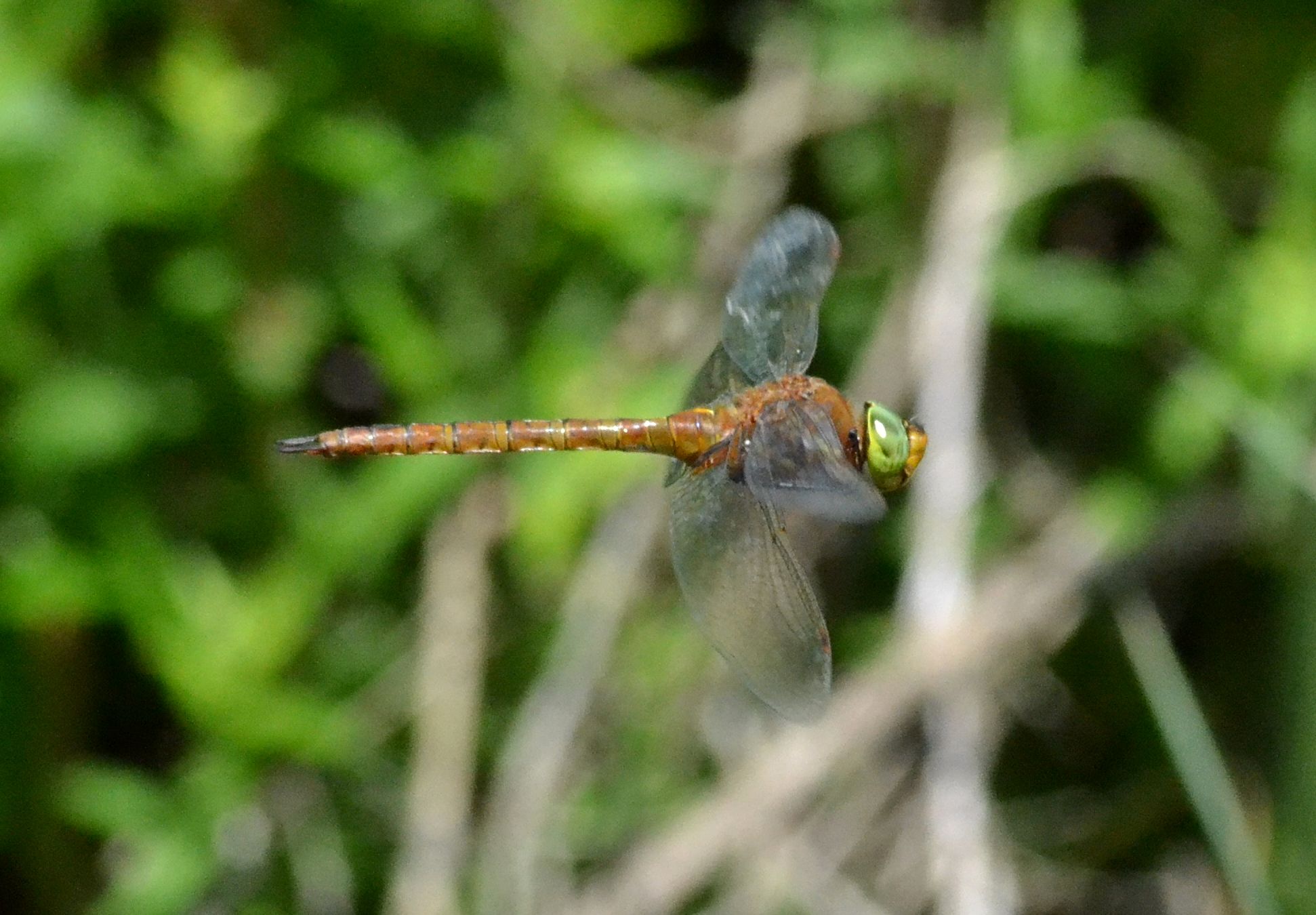
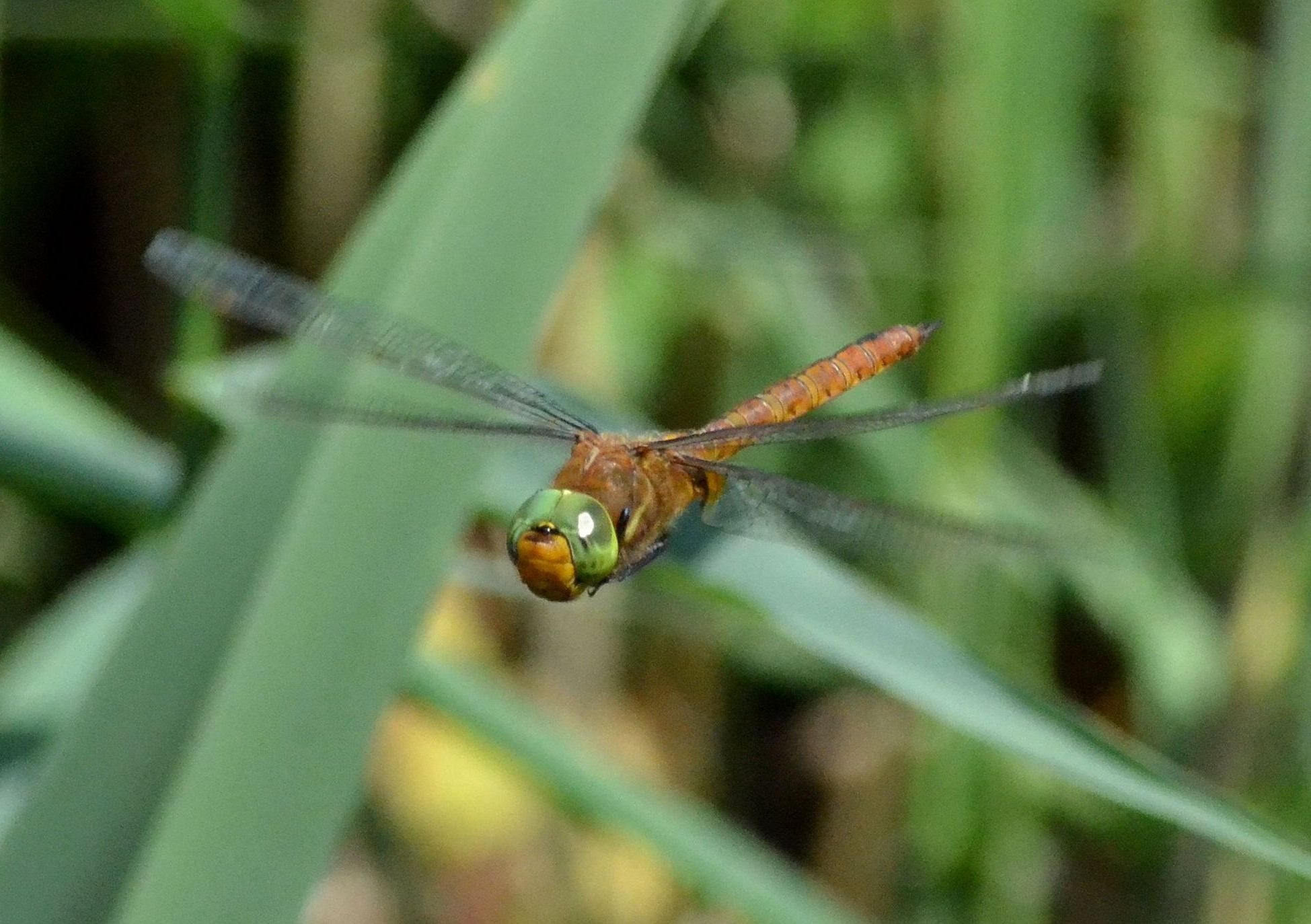
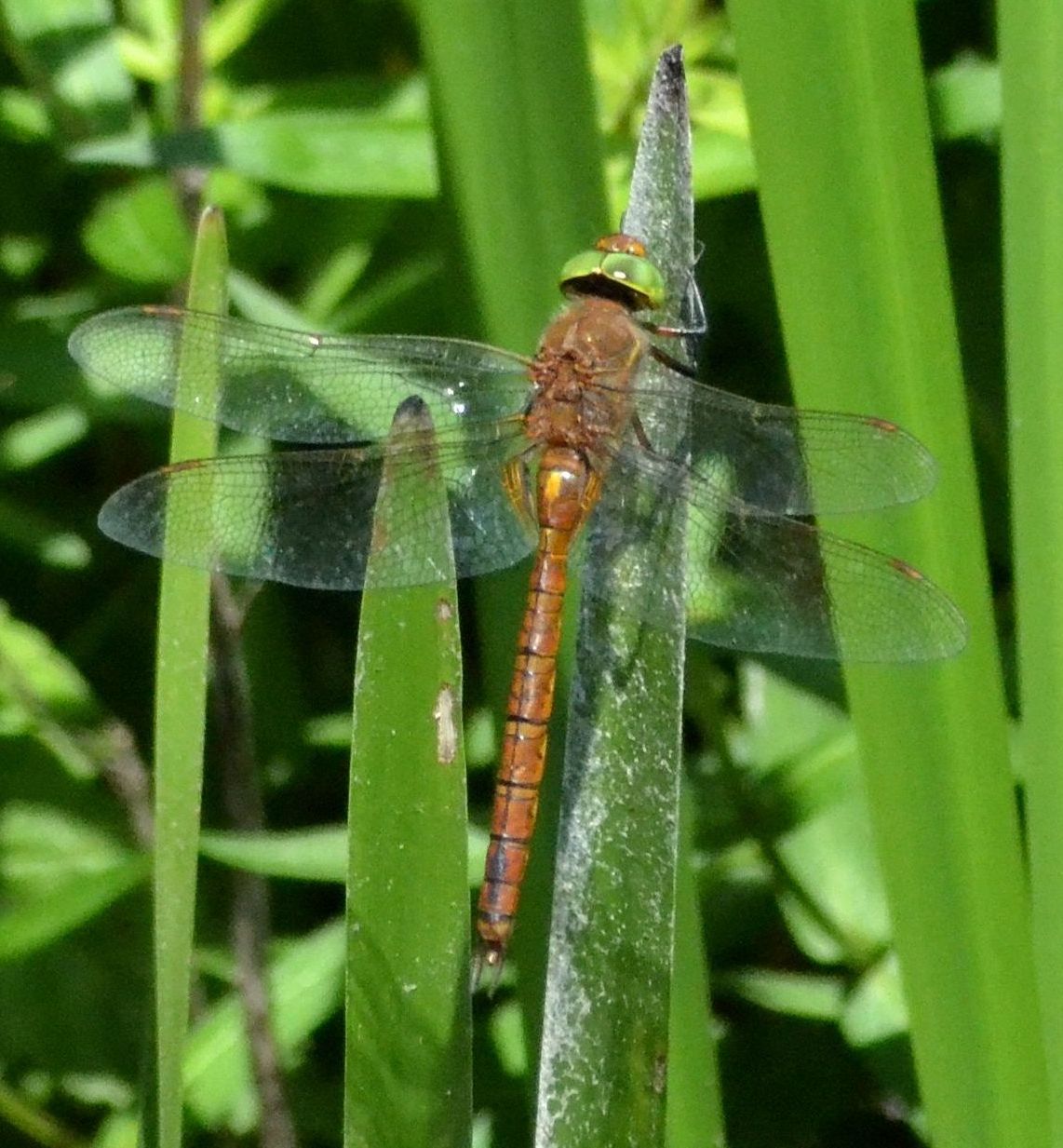
Any visit to Blean Woods as in the previous post is easily combined with observing Green-eyed Hawkers at the dragonfly’s Kent stronghold of Westbere Marshes. This large, gingery-brown item with bright green eyes, plain wings and a small yellow triangle at the top of the abdomen is one of a number of Odonata to expand it’s English range over the past decade; as well as one of my favourite species. So today I elected to re-visit, also for the first time since 2015.

Though widespread but localised across much of the European mainland, Green-eyed (or Norfolk) Hawker is a rare and protected dragonfly nationally. They first emerge in early June and continue flying until late August. As the Victorian British name suggests, this species was historically confined to Norfolk and a few sites in Suffolk. The British Dragonfly Society (BDS) first recorded two separate individuals from Kent in 2011, with a further report from Westbere Marsh in 2012 by the now county recorder Marc Heath.
One of today’s Green-eyed Hawkers

A year later a female was observed egg-laying in a dyke at the same site, then 2014 produced sightings of at least 10 individuals. Since then GEH’s population increase has been documented regularly on the excellent Kent Dragonflies blog published by the county odo recorder. These are seriously beautiful entities, even by dragonfly standards, and in my experience especially photogenic even when captured pictorially in the middle distance.

From the end of Walnut Tree Lane in Westbere (CT2 0HG – TR196610) a right of way leads over a railway crossing then out along the eastern edge of a large former gravel pit to the River Stour. On the opposite side of the track, where my quest is to be found lies Westbere Marsh itself, an area stretching towards more lakes and eventually Stodmarsh NNR. Walking out in the early afternoon in bright sunshine I soon crossed paths with a first Green-eyed Hawker in long grass to one side of the track, but it didn’t linger to offer a close picture opportunity.

My previous records at this site were all near the end of the track just before it meets another along the north bank of the Stour, and that was where the serious action came again today with several individuals noted. To me these seemed quite slow flying by comparison with a Blue Emperor or other Hawkers. The first two I observed were also prone to hovering so I was able to gain my first ever flight studies of the species which was both satisfying and evolved.

Then they began to settle on Bulrush stems on the far side of the dyke but a little frustratingly not closer. That situation would benefit from a 600mm camera lens and there was ample evidence along my side of the channel where such batteries must have been set up. But even using my own ancient 300mm telephoto, images of GEH from here always seem to scrub up in the editing suite better than for other dragonflies. Those herein will suffice for my purposes.

Things that stand out in these pictures are the rather cloudy quality of the largely uncoloured wings, and those huge, wrap-around green eyes. This dragonfly is unmistakeable in the field as the closest thing to it, the later flying Brown Hawker displays iridescent brown-toned wings, blue eyes and blue spots along the sides of the abdomen.

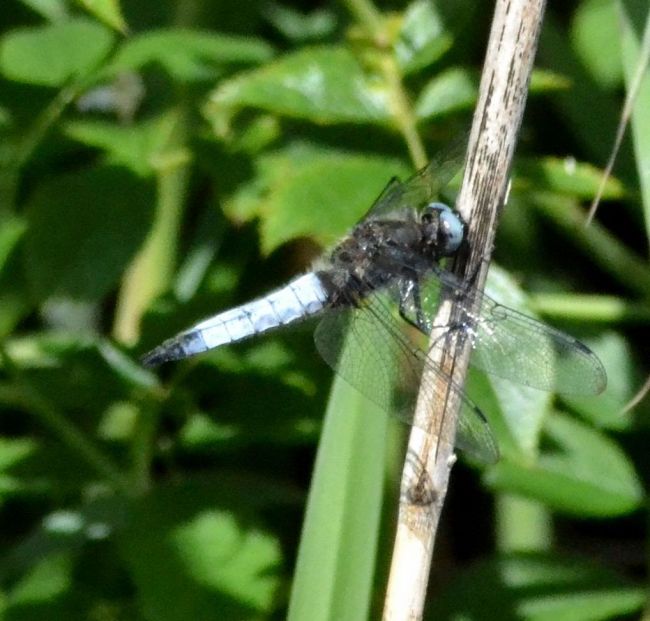
Another site speciality is Blue (or Scarce) Chaser (pictured below), of which I noted a number of individuals in the same dyke. Previously I had found these here only along the River Stour, and the opportunity to gain a first English (if as fuzzy as the male) pictorial record of a female offered further evolution from this quite exceptional day.

By 3:30pm I considered it time to brave rush hour on the M25, which in the event was an easy journey save for the usual queue into the Dartford Tunnel. And so I departed for home, the east Kent insect double bill of my intent having been converted most successfully.

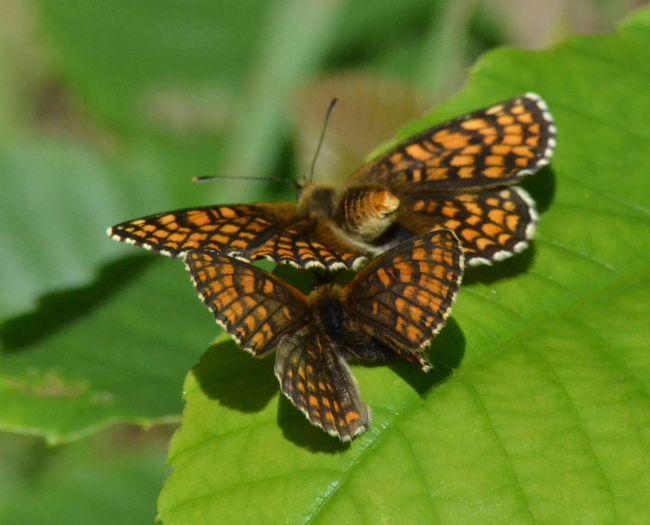
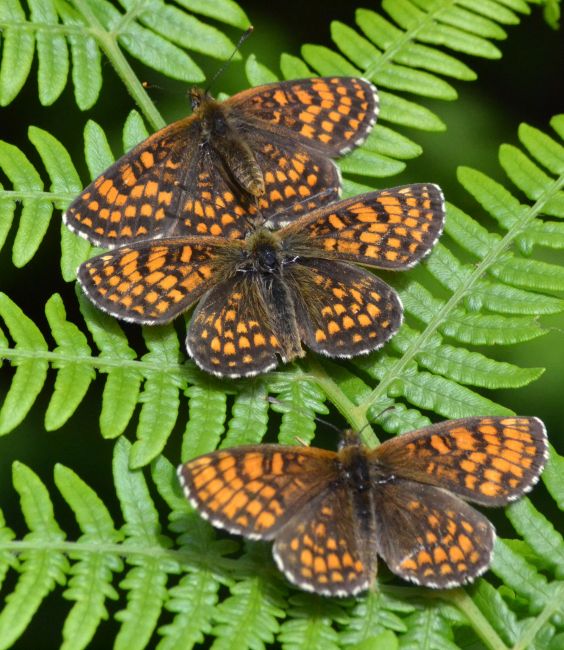
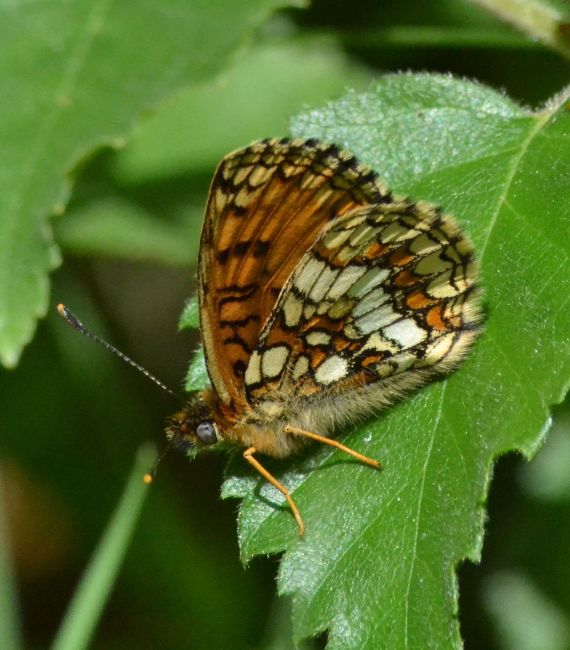
A celebration of the Heath Fritillary from East Blean Wood NNR, Kent – 23rd June

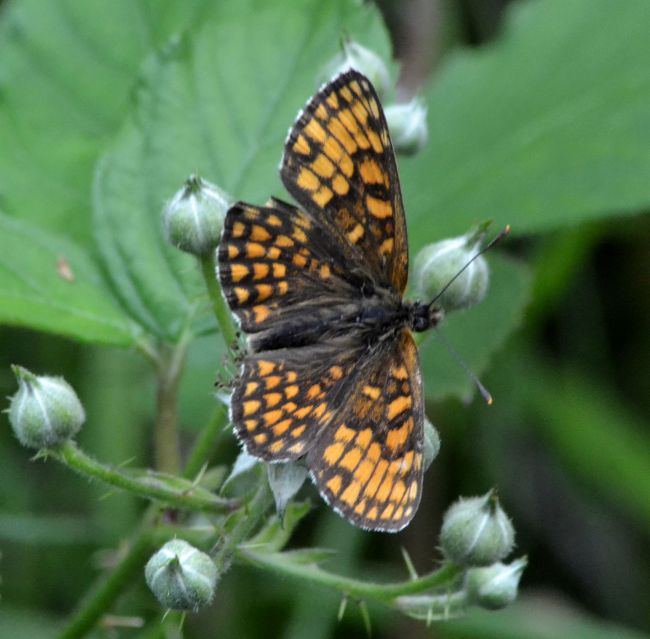
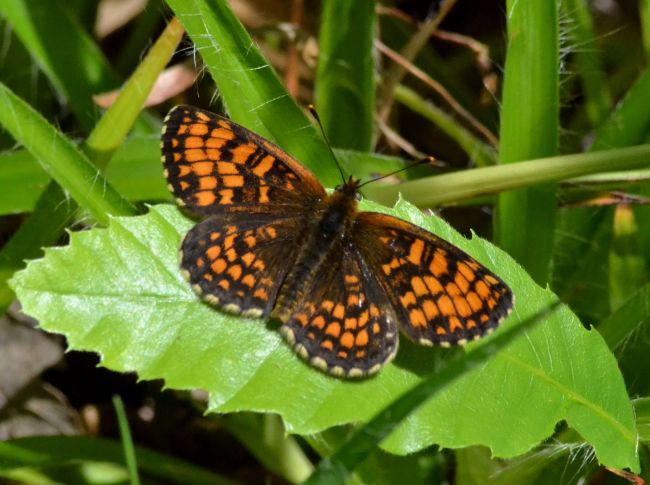
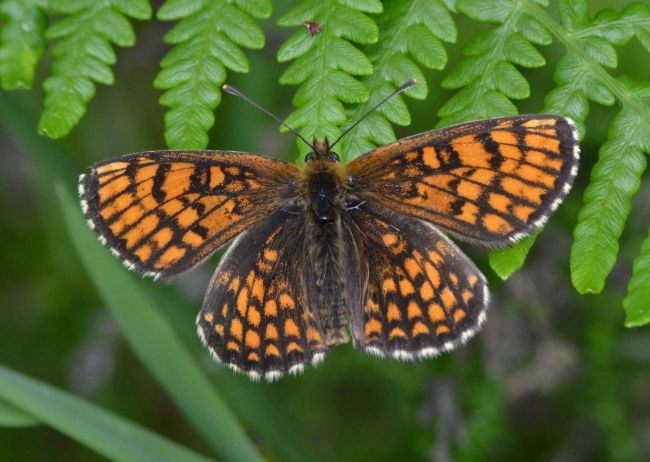
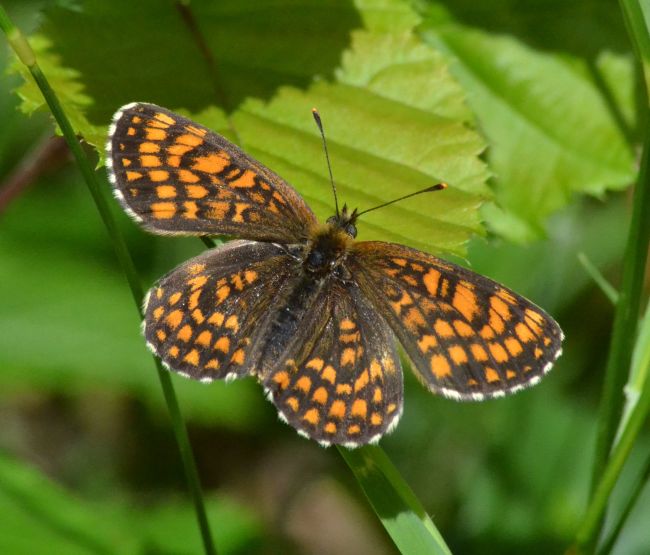
Since extending my butterfly experience abroad seems unlikely in the current travel restricted year, I have included an extra Fritillary in my national wildlife agenda for the first time in six seasons. Their emergence was announced on the Kent BC Facebook page a week ago (16th) and today being the most suitable weather one since then I set out to re-experience a quite special insect double bill that is available in that county just to the east of Canterbury.

The delicate little stunner that is Heath Fritillary

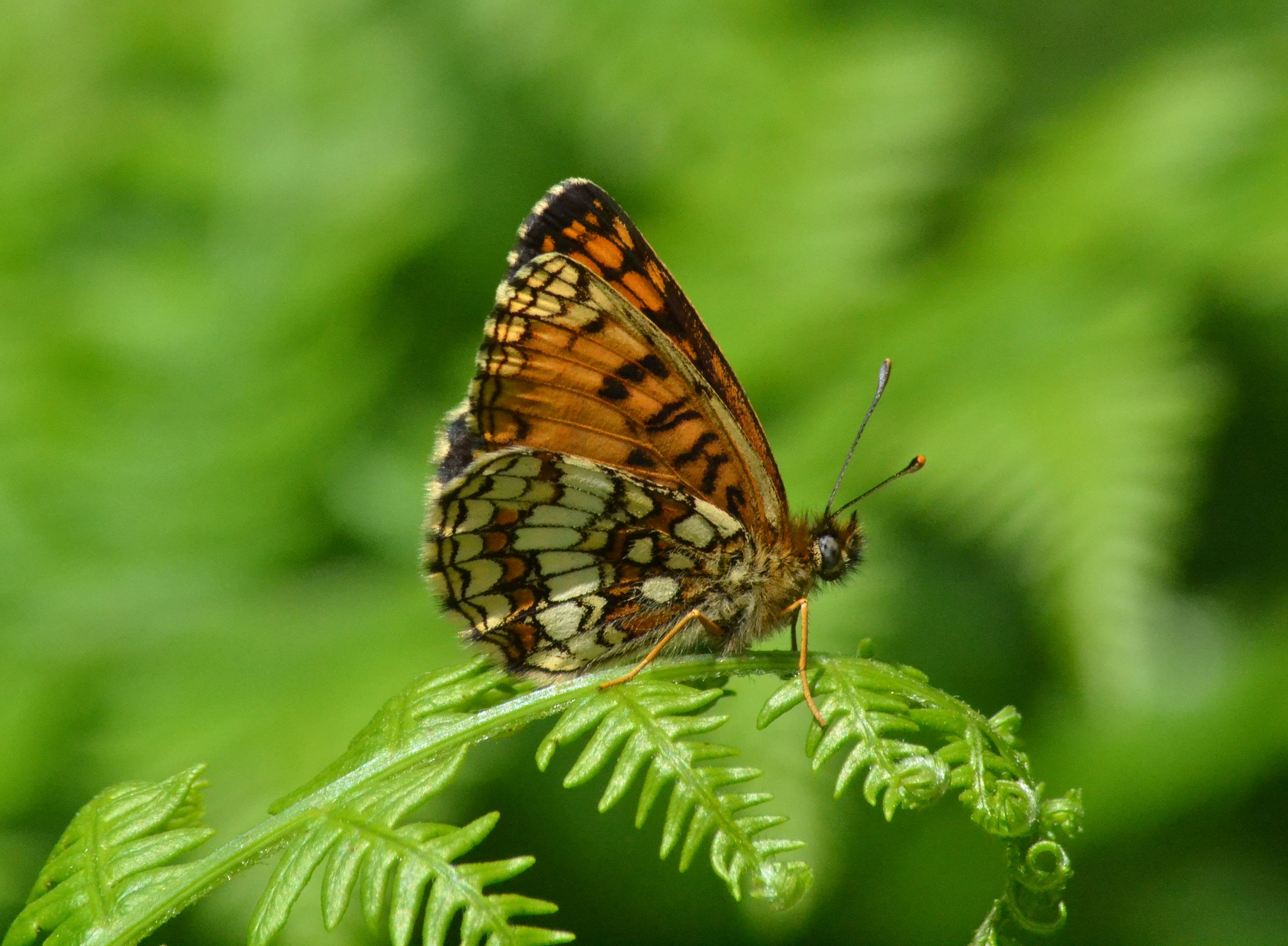
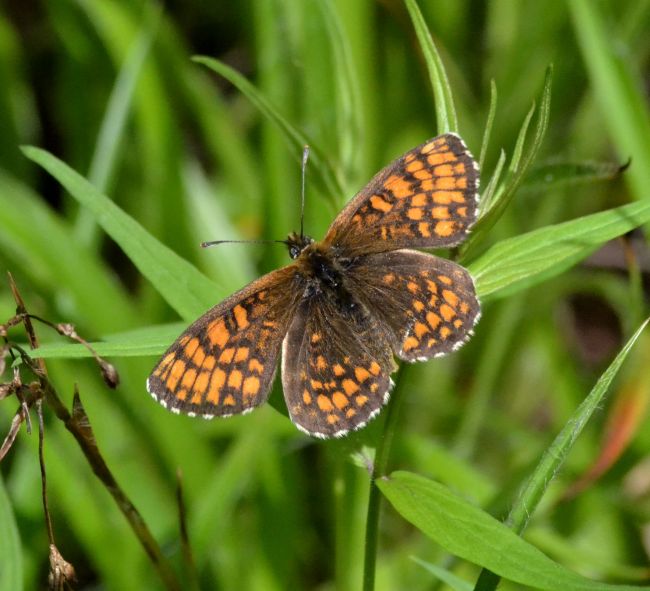
Though common and widespread across mainland Europe, Heath Fritillary (pictured above) is one of Great Britain’s rarest butterflies. It remains here naturally only at today’s ancient woodland site, that accounts for 60% of the national population, and in a few high coombes around Dunkery Beacon on Exmoor in Somerset. There have been re-introductions in a number of other places in south-west England and Essex. I had observed them previously at East Blean Wood in 2015 and Exmoor two years earlier. The two places are very different in character but what they have in common is a lot of bracken.

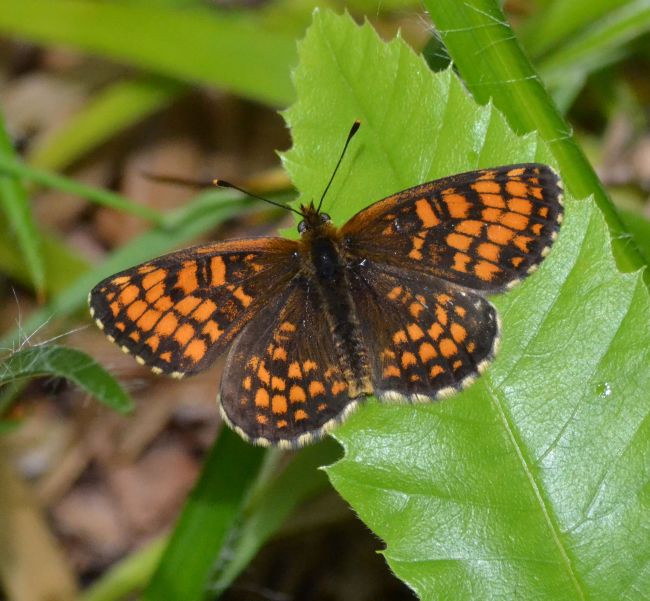
Male Heath Fritillary

East Blean Wood NNR (CT3 4JS – TR 194642) lies on a low ridge between Canterbury and the sea and is administered by the Kent Wildlife Trust (see here). Two factors here favour the reserve’s annual star attraction, the Heath Fritillary. Firstly soil is mostly acidic, lying atop poorly drained London clay, so the often damp forest floor is carpeted in part by plants associated with upland heaths. And as for centuries this 122 ha (300 acre) woodland is still managed by coppicing and newly felled areas are quickly colonised by Cow-wheat, the butterfly’s main larval food plant.

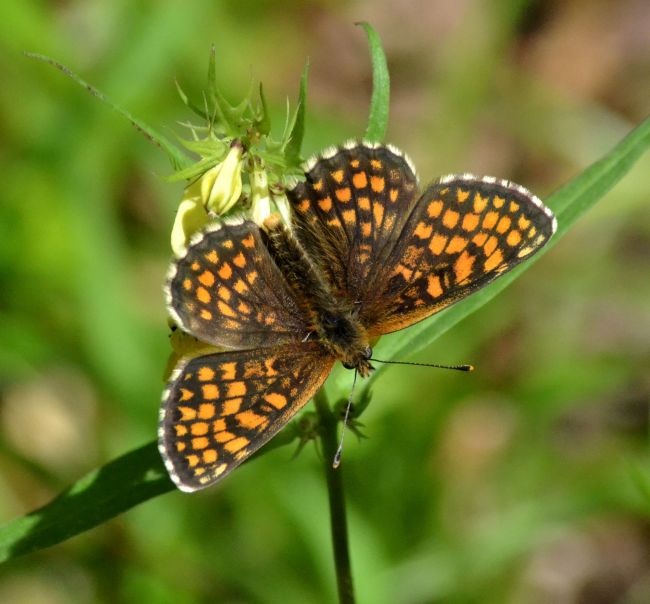
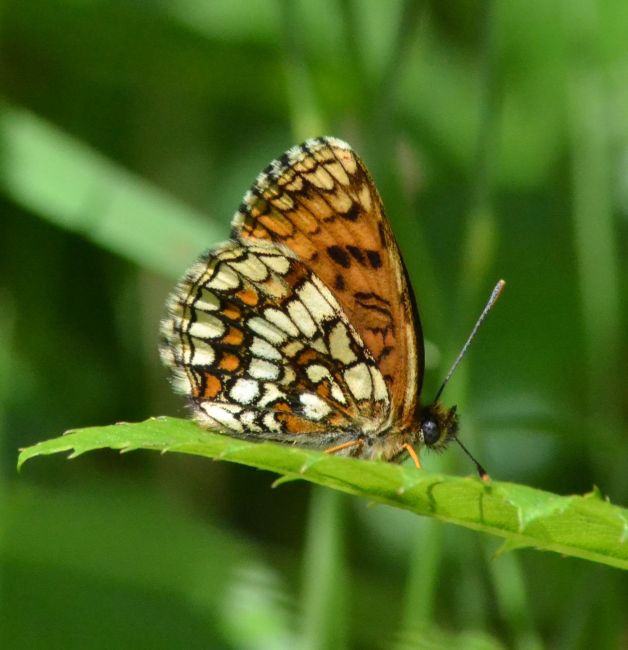
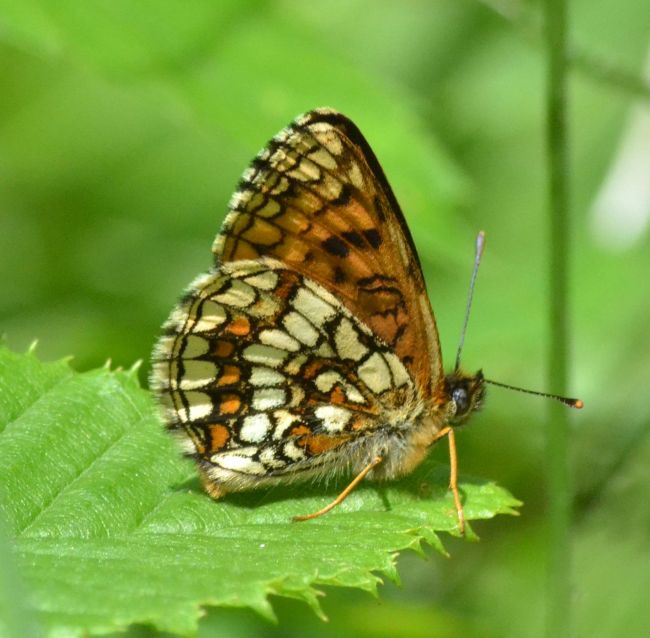
Female Heath Fritillary on Yellow Cow-wheat

At the end of a sunny near 150-mile journey I arrived on site late morning in lightly overcast conditions and so set out a little apprehensively to seek my quest. From that former visit I recalled coming across large numbers of the butterflies in a coppiced clearing, so the question in such a traditionally managed woodland was where exactly such habitat could be found this time around. The sun lovers of my intent are said not to fly in temperatures below 18ºC and to favour habitat where the vegetation has recently been cut, burned or cleared.

HF are therefore mobile from year to year within the overall site since the coppiced areas quickly become unsuitable for both the butterflies and their food plant as broad-leaved tree growth regenerates and shade intensifies. Maximum population size is reached in the first two or three years after coppicing, then populations decline as light conditions become too low and they will die out without continued targeted management.

At East Blean numbers declined by 73% over the 20 years between 1984 and 2004 until conservation effort between various organizations restored the population to former levels by 2011. Adults live for between five and 10 days, rarely straying from the breeding site. By 2019 almost 2300 butterflies was one of the highest day counts ever.

Today not re-finding the same locations as last time I followed instinct and tried to seek out more open glades or rides. With the sun breaking through overhead intermittently I began to wonder about re-tracing my steps and trying again, at which point the morning’s first Heath Fritillary settled on some bracken right in front of me. More soon materialised along the track ahead of there, all very fresh looking and I realised I had found a good spot.

At that early stage in the weather window the butterflies would settle on bracken with their wings turned slightly downwards to bask and absorb heat. Warming up with the day was very much the order of play as more and more insects appeared in bursts of sunshine and were not too flighty. These mostly allowed a close approach, tolerating my “gardening” around them to remove offending bits of vegetation that might spoil the pictures I was taking. As the earlier lingering cloud dispersed the small, delicate brown items with a light flying jizz appeared to be airborne all around.

Once warmed up the HF flew more widely and quickly, and the darker toned males soon turned their attention perhaps inevitably to matters in hand. I witnessed several attempts at mating but the females involved did not appear to be receptive. To my untrained eye it seemed there was a lot of sniffing and nudging but not any coupling going on. I had not observed this particular butterfly scenario, as depicted by the above images before.

It was also noticeable how the longer suitable temperatures persisted my subjects became more inclined to settle with wings closed. That was especially welcome for gaining difficult to come by underwing studies such as these (above).

I left site at around 12:30pm, encountering more observers on their way out as I walked back to the parking area. They didn’t know where to look, and having had things largely to myself thus far I was able to tell them. So it seemed I had not only been in the right place today but was leaving at the best time. The second part of the Kent double bill now awaited with Green-eyed Hawkers to re-visit five miles onward at Westbere Marsh.

Blyth’s Reed Warbler at Middleton Lakes, Warks & Staffs – 19th June

My personal third new Warbler nationally of this early summer, and second life list addition in that group, was possibly the most welcome of all. Each season I read of Blyth’s Reed Warblers at reasonably accessible coastal locations, but had not opted to go after one before this. Now a mere 80 mile excursion along the old corridor to excellence that is the M40 and M42 was at last a tempting opportunity.

That previous reluctance to convert the lifer mostly arose from a perception of this bird as “difficult” to distinguish. Given my aversion to plumage topography I had thought it is perhaps best told apart on song, which is totally different from regular Reed Warbler and very varied involving much mimicry of other birds. So I was concerned to travel with a day’s colleague who had experienced the species before and knew how it sounded. Hence I met Ewan at his home in west Oxon at 7am and off we set.

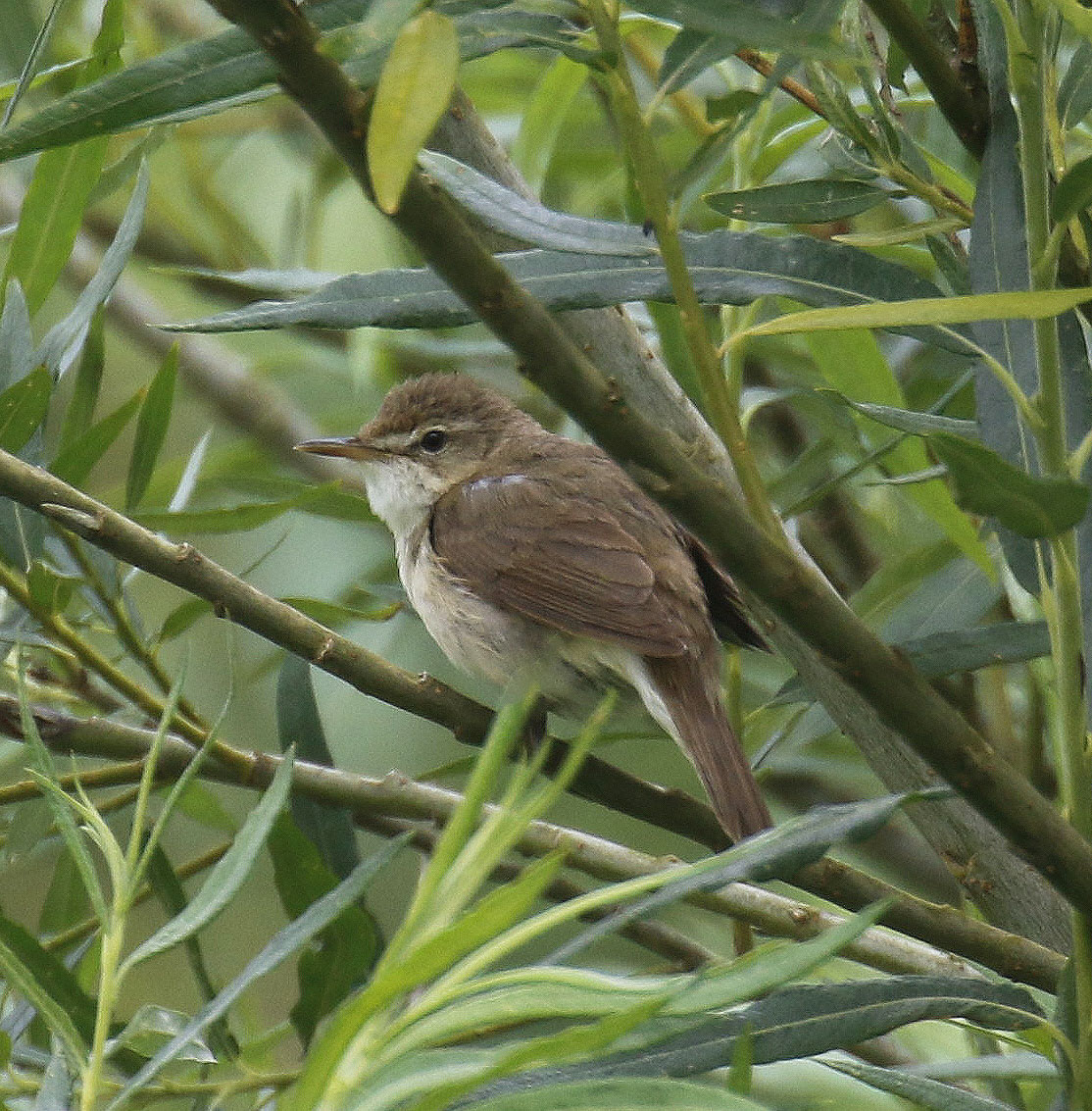
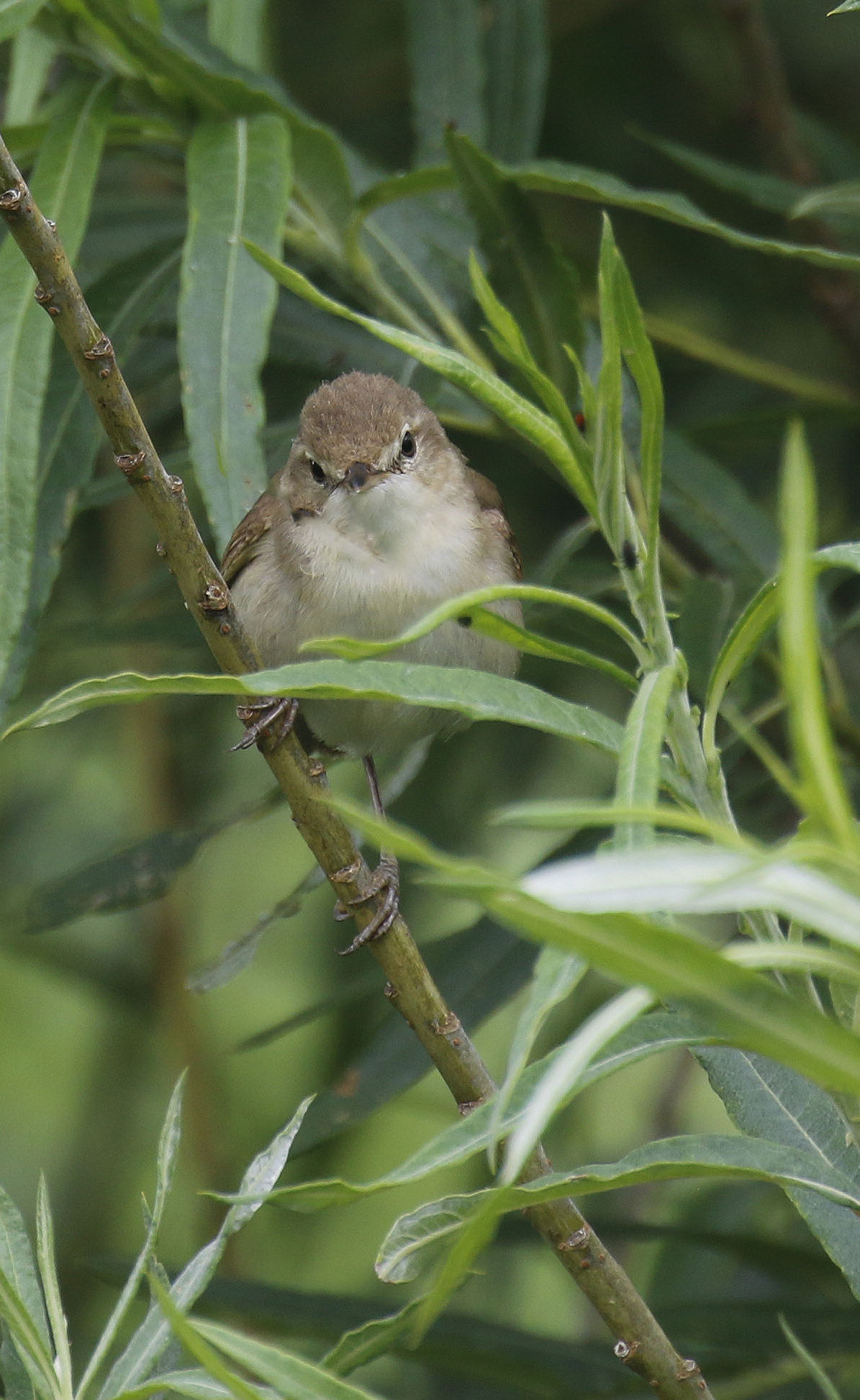
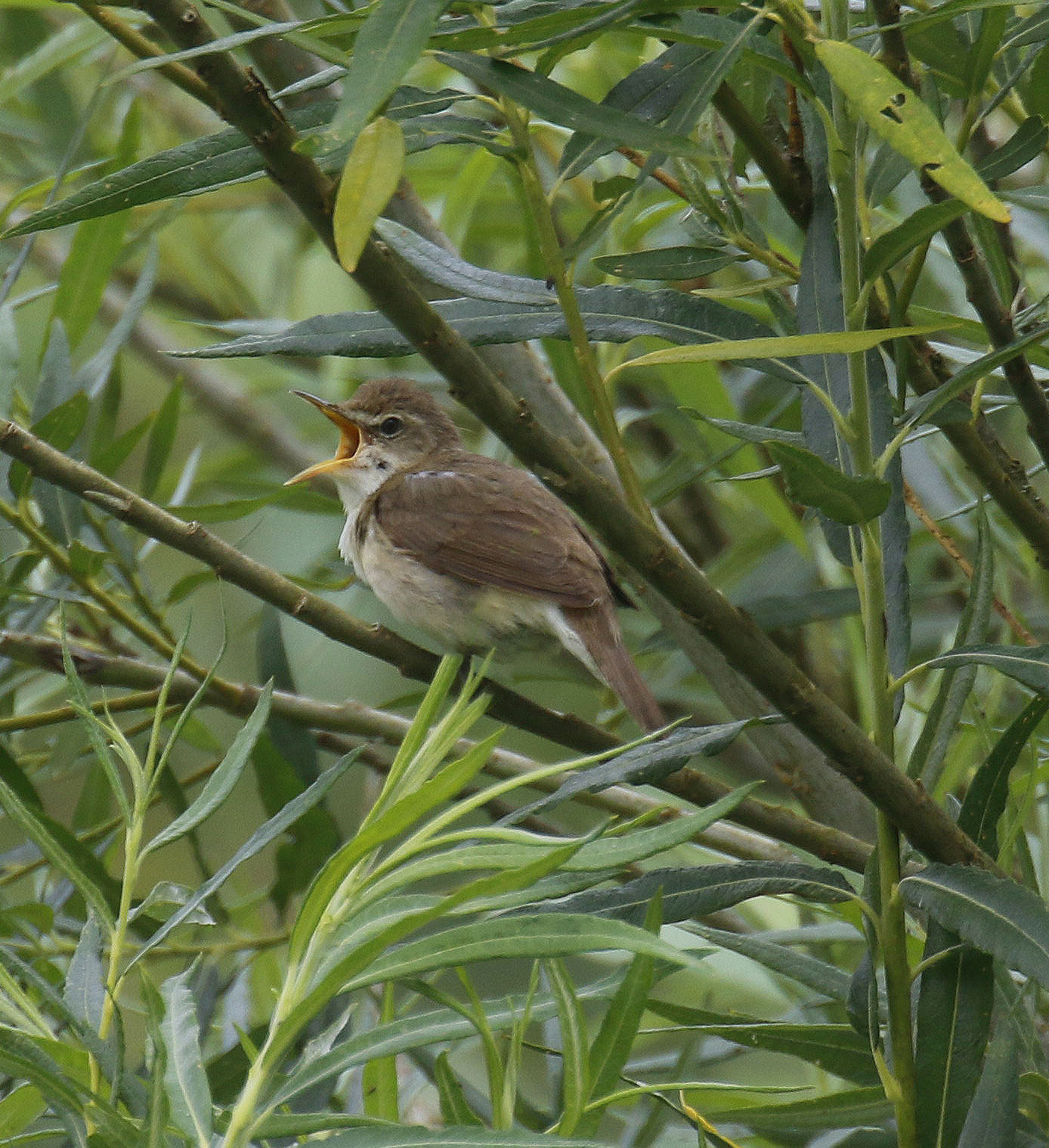
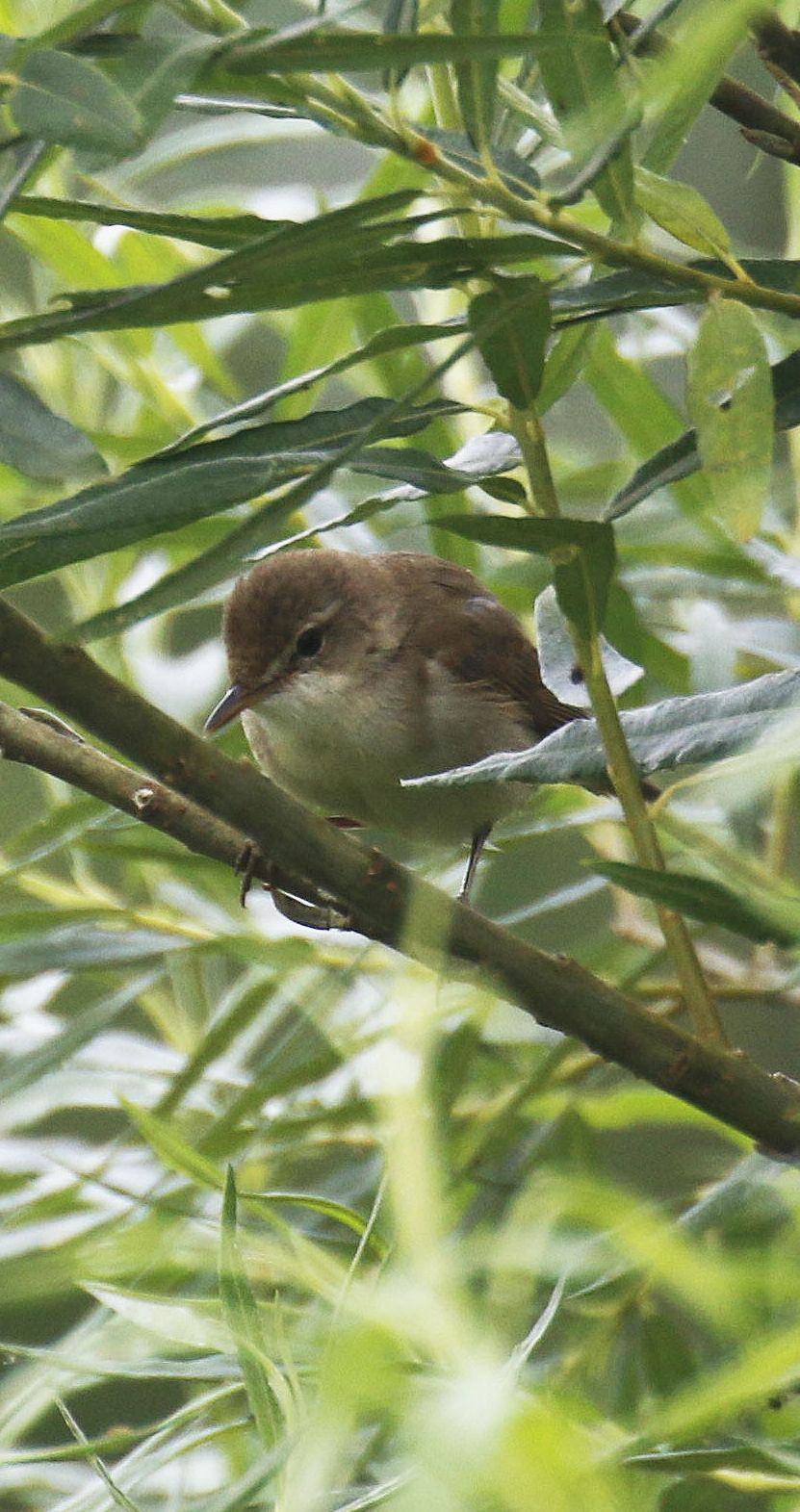
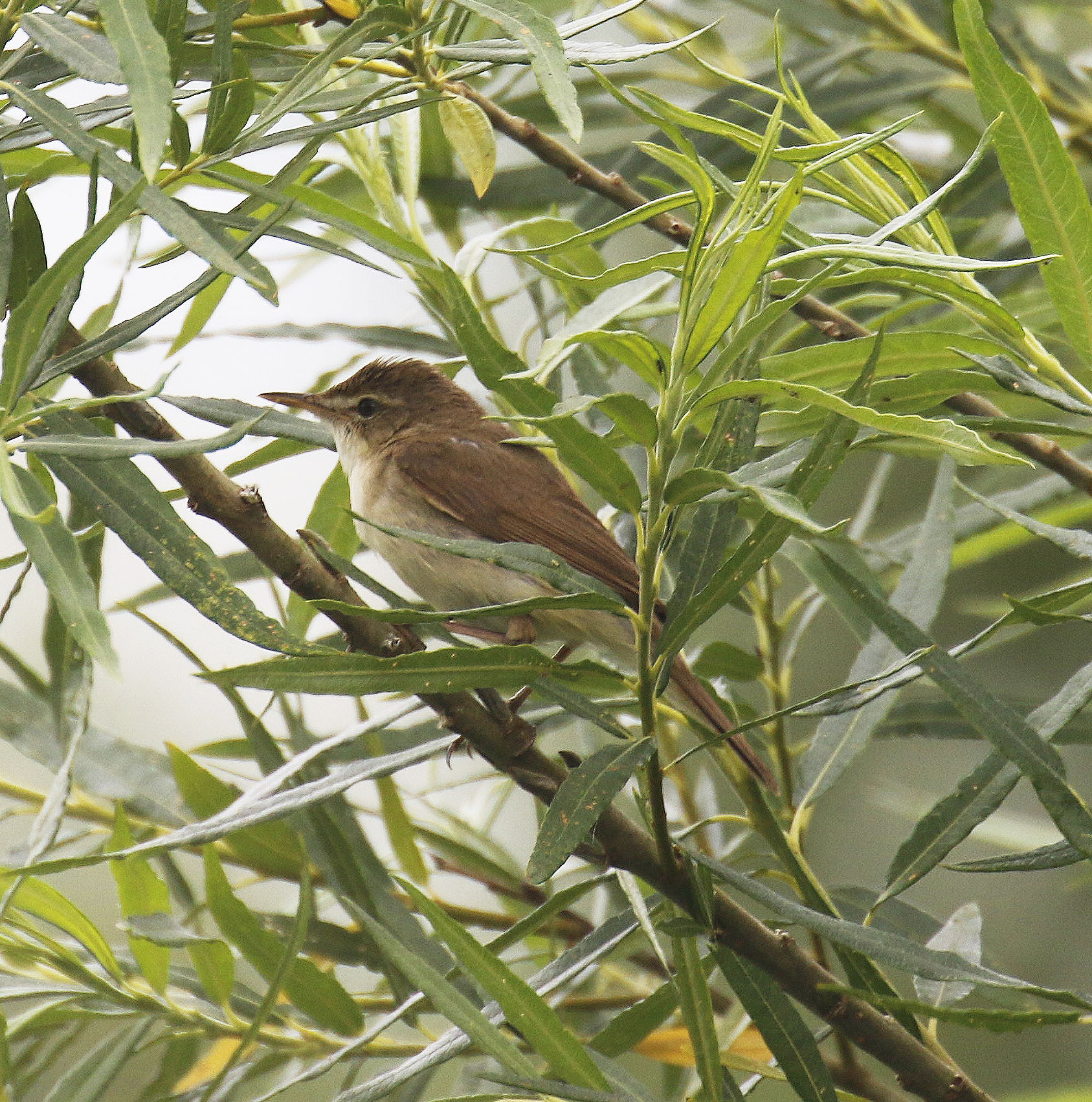
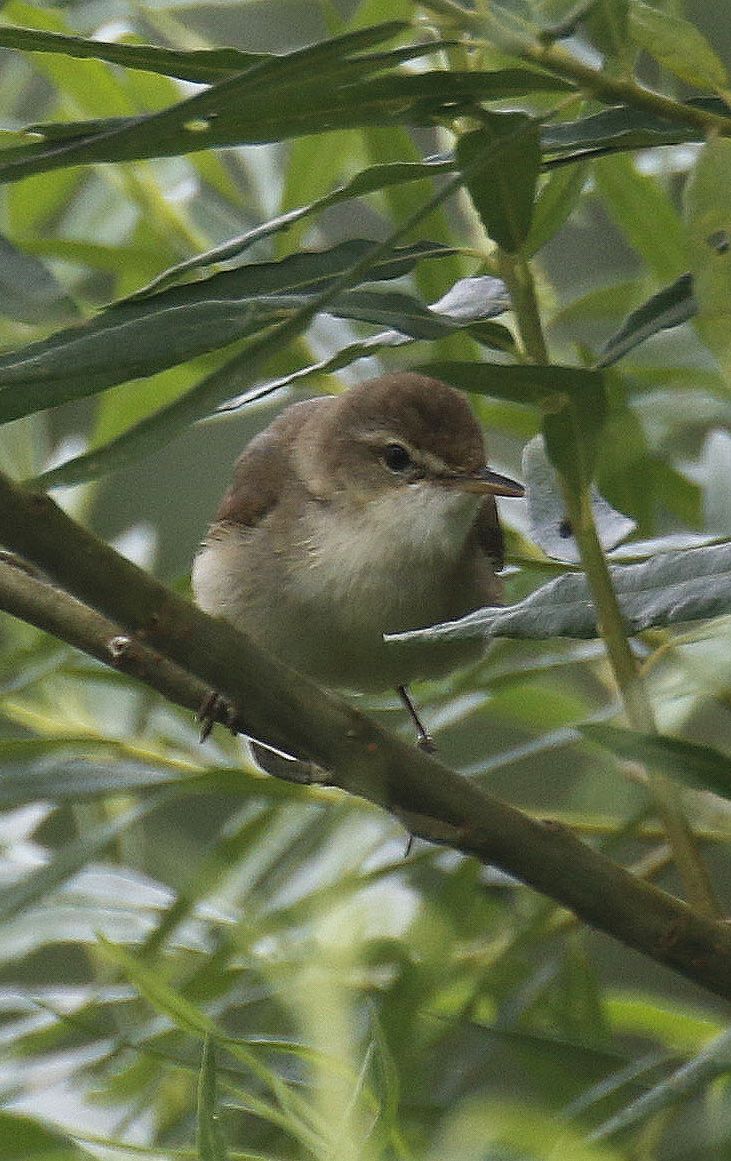
Today’s Blyth’s Reed Warbler, all pictures © and courtesy of Ewan Urquhart

The former gravel pit complex of Middleton Lakes (SP204998) being another RSPB reserve, I wanted to arrive ahead of the day’s bless ’ems. But this not being a lifer for my companion there was no need for a dawn twitch, which suited me. When we reached site at 8:30 it was plain from the number of vehicles in the car park (B78 2AE) a lot of green clad optics carriers were there ahead of us. Indeed Ewan showed me pictures that had begun to appear on Twitter some four hours earlier.

We strode out on what seemed a very long walk through this vast and sprawling reserve, eventually catching up with the twitch group at the spot described on the bird information services, which lies just across the Warks county boundary with Staffs. What a relief it is that nobody really bothers to distance any more, as was also true of the other recent twitches recounted in this journal. I could hear the song researched earlier on Xeno Canto (see here) issuing from the Willow of the RBA posts as soon as we arrived, and it didn’t take long for the Blyth’s Reed Warbler to show itself.

Over the next three hours or so the bird remained faithful to more or less the same singing perch in the Willow (pictured above, right), rarely posing openly as in some of the published early morning pictures, and mostly keeping partially obscured. My thanks are due to Ewan for providing the images for this post, as I stood no chance with my own camera on this occasion. Throughout the songster poured forth it’s full repertoire that I found an uplifting experience, and it’s jizz was to my mind always pleasant and understated.

The contrast with regular Reed Warbler was such that I wondered why a more appropriate name had never been found for the entity I was now witnessing, especially since this species is not attracted to reed beds or waterlogged ground but breeds in deciduous growth along rivers. On looking him up and not wishing any disrespect, Edward Blyth (1810 – 1873) worked as a curator of zoology at the museum of the Asiatic Society of India in Calcutta. At least 12 bird species and a number of reptiles still bear his name, including also Blyth’s Pipit (see here) that occurs regularly as a national vagrant. As with some British dragonfly names, I personally would prefer these historical Victorian anachronisms to be moved on from.

As things turned out today the whole experience of gaining what I had thought of as a difficult lifer was actually quite straightforward. Warbler twitches so often involve staring at banks of vegetation for hours on end to catch glimpses of skulking quests. But this bird stuck to a readily viewable location singing all the while, and so put on quite a show. I now realise the misnomer in question bears virtually no similarity to Reed Warbler not just in song but also its appearance, movement and habits.

Where its diagnostics are concerned Blyth’s is described as being a little smaller and less robust than Reed Warbler, with a more rounded body shape; and shorter-winged with a short primary projection. The bill is weaker, finely pointed and distinctly spiky; and the legs are also slighter. The Helm guide to confusion species also cites BRW’s plumage as overall greyer and lacking any rufous tones to the rump, while the underparts are silky white with some buff toning. This illustration (below) presents the required detail.

The species winters in south Asia and breeds across north-eastern Europe from the former “Baltic states” eastward through Russia and Siberia. British records, in May and June with a larger autumn peak in late September and October, are said to be increasing from a historic median of around eight a year. Most occur on the northern Scottish and Scilly Isles, with some on the east and south-east coasts of England. So to observe this much sought lifer at such a convenient inland location as today’s was exactly the kind of opportunity I seek.

Going into this quite strange summer with a limited wildlife agenda comprised mainly of insects and reptiles, I could not have imagined gaining such life and British bird list additions as River, Blyth’s Reed and Great Reed Warblers within 15 days of each other. In the ongoing climate any further gains that do not involve travelling abroad will of course be more than welcome. Sooner or later things do turn up within range and I remain ever hopeful of more. There are now as many birds on my British list as days in the year … 365.

An English summer celebration of the Dragon Arum (Dracunculus vulgaris) – 16th June

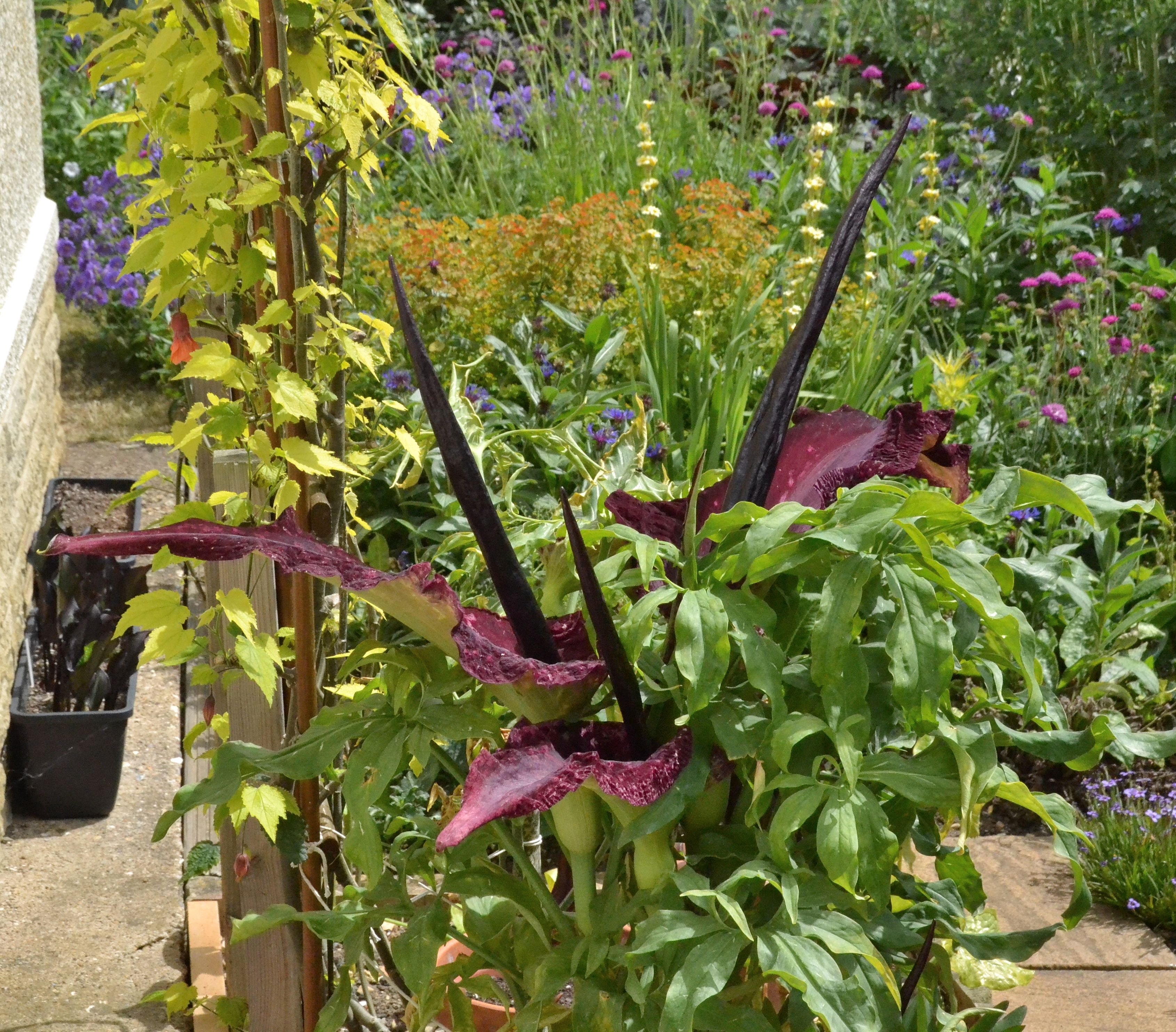
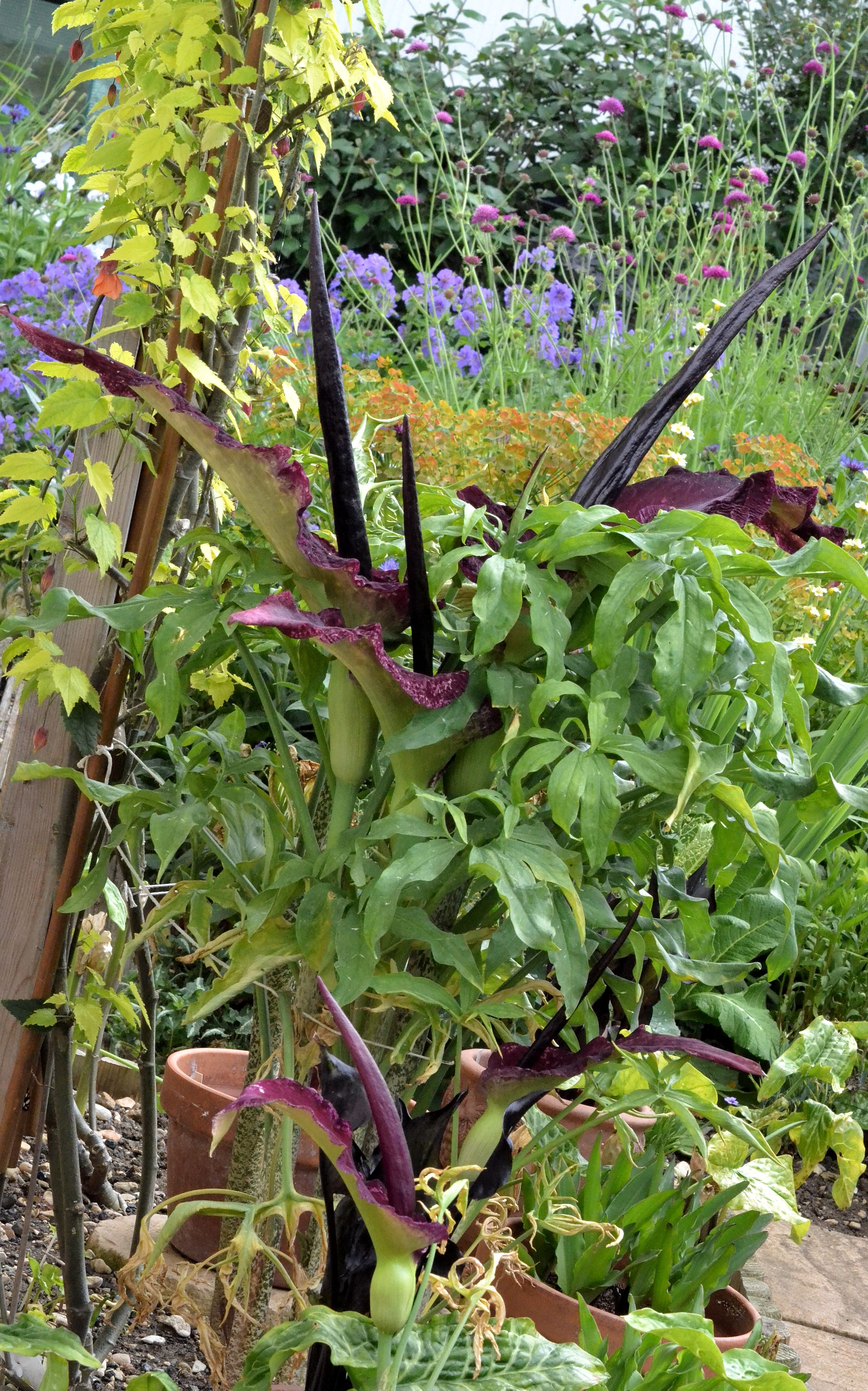
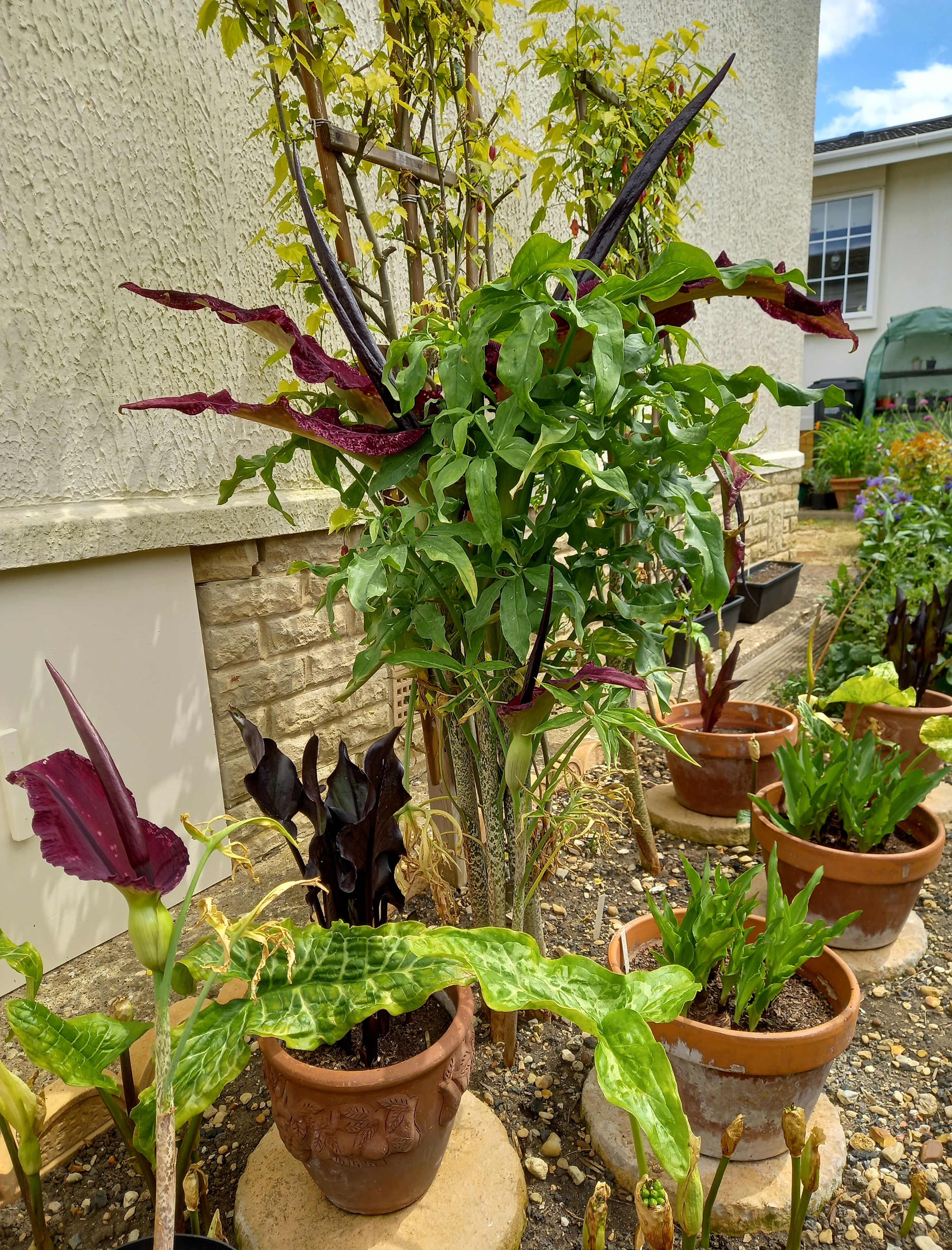
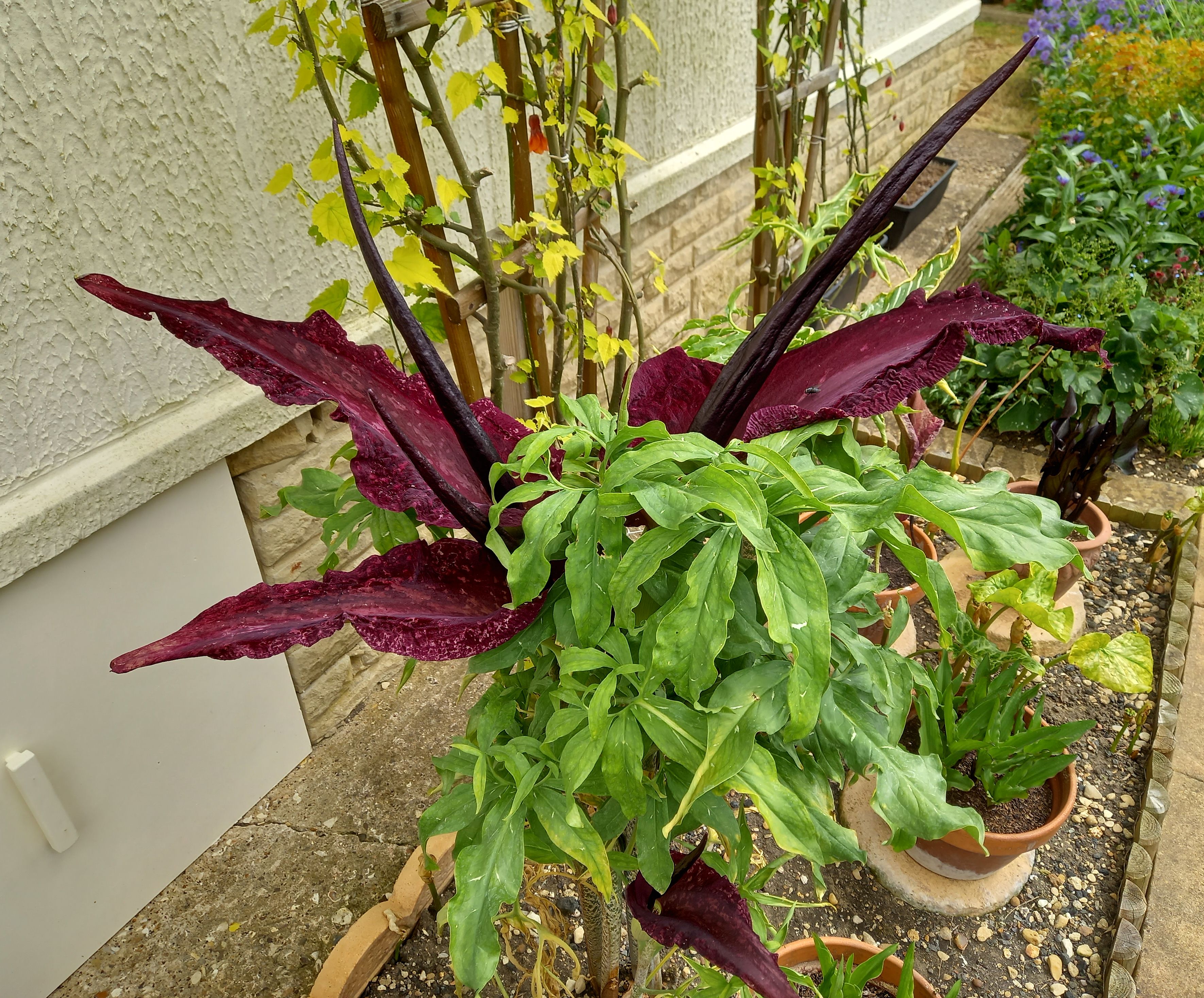
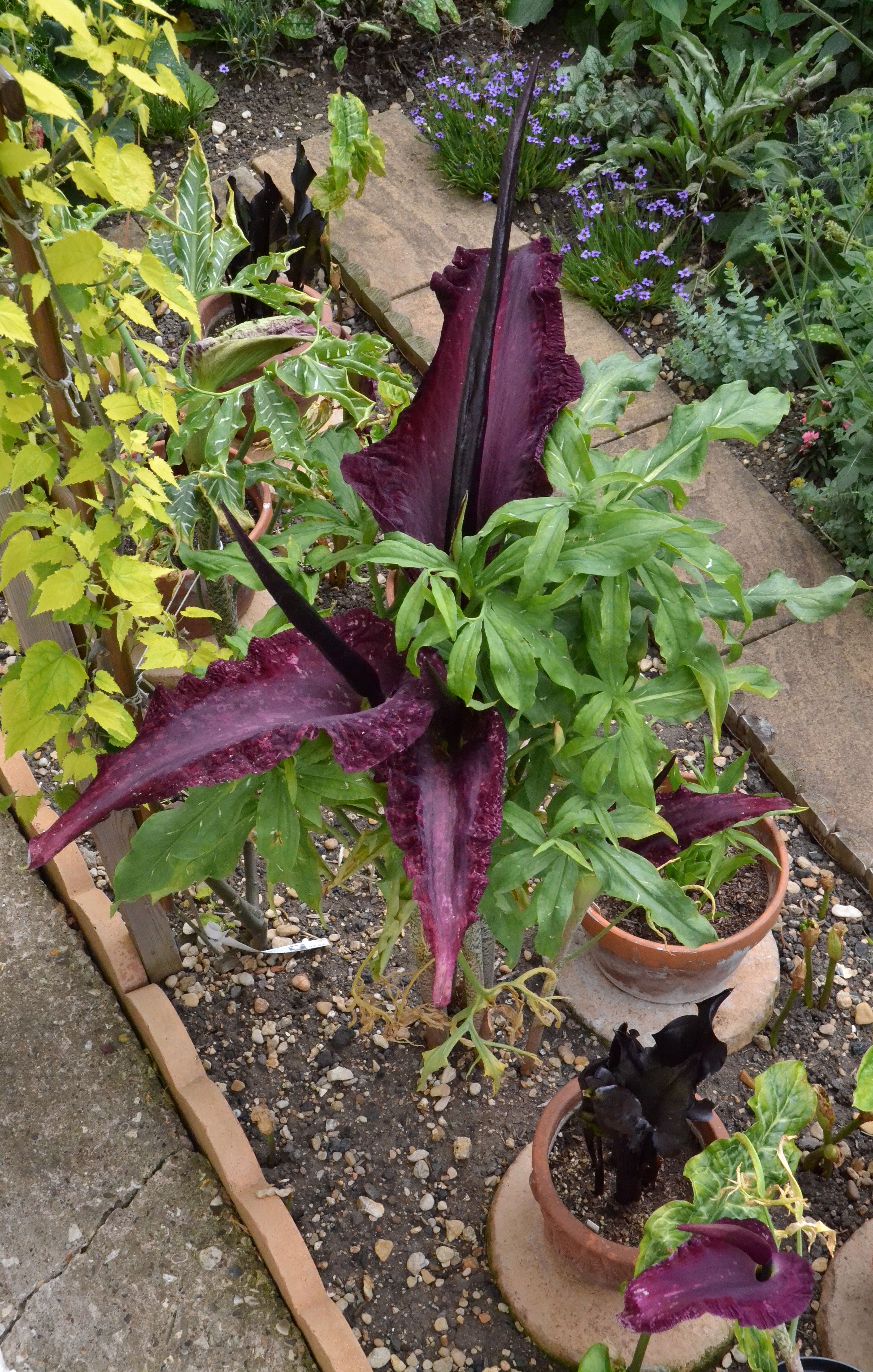
The last three days have possibly been a time for children to be kept indoors in the Oxford green belt village of Garsington after the Dragons of Kings Copse Park took to the air. Or to put things another way, no less than five Dragon Arum stems bloomed all at once here at KCP BG. These are impressive plants by any measure and our best developed clump this year has performed wonderfully well (pictured below).

It was seeing one of these growing wild in Greece in May 2017 that first prompted me to start collecting exotic Aroids and I acquired three tubers the following autumn. Those are widely available from bulb merchants and have been an early summer staple here in each May or June since. The plant originates from the eastern Mediterranean region but has been widely introduced elsewhere and is easily cultivated in the British Isles being fully hardy. The vivid, blotched inflorescences grow up to 60 cm or more in length and smell of rotting carrion to attract insect pollinators at first but not for long. Indeed the whole show is over in around three days. I just love ’em but not all nearby residents are quite so appreciative.

In the wild this plant grows in rocky gorges, along waterways, around waste ground or on the margins of olive groves. Robust shoots appear in early spring, slowly producing thick stems speckled with infinitely-varied patterns, from which pale green and usually marbled foliage emerges. All this grows to up to1.5 metres tall and the top-heavy structure is vulnerable to being blown down in the typically windy conditions of the season. Gradually the elongated blooms emerge, growing day upon day through which the crinkly leading edges slowly colour.

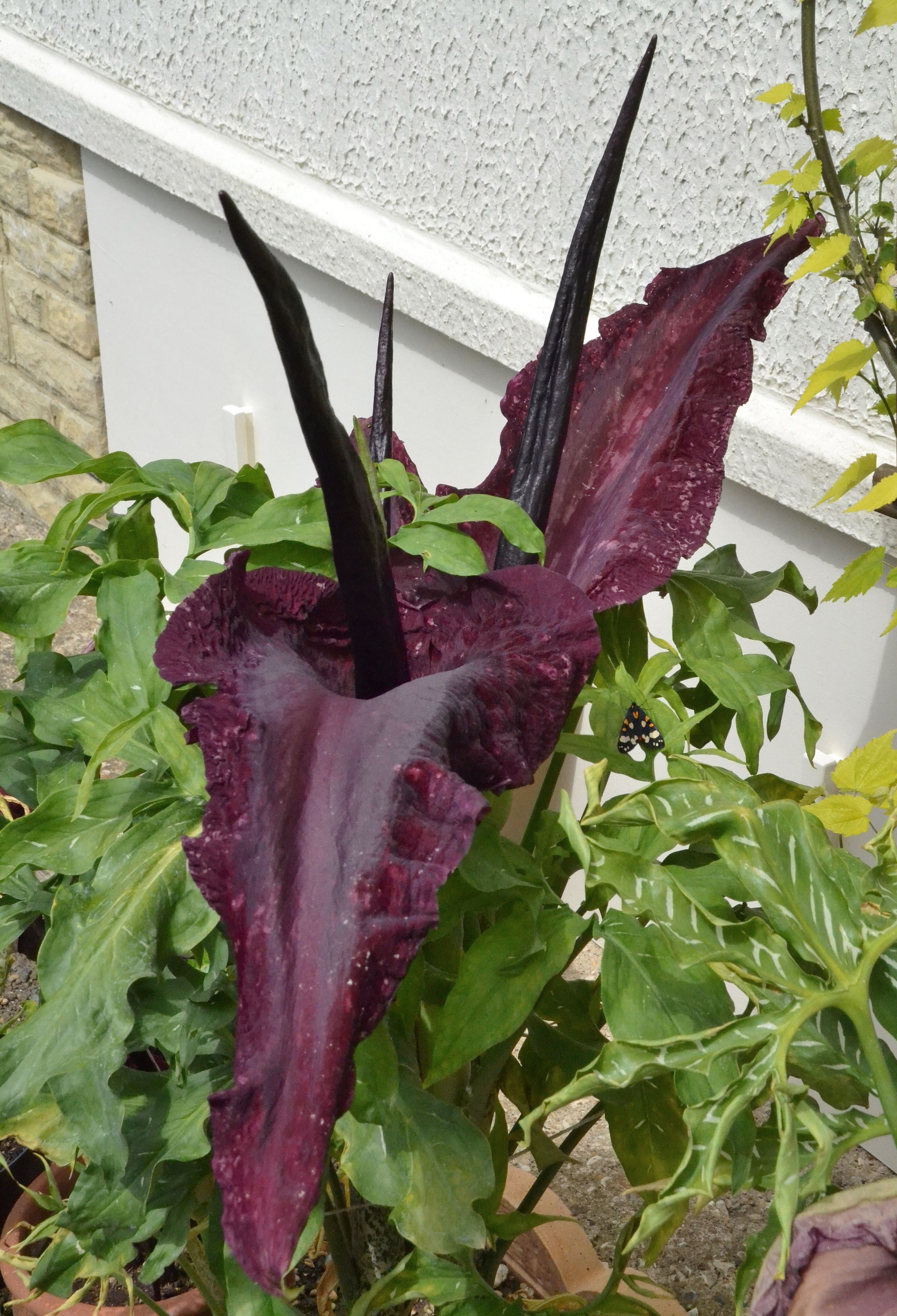
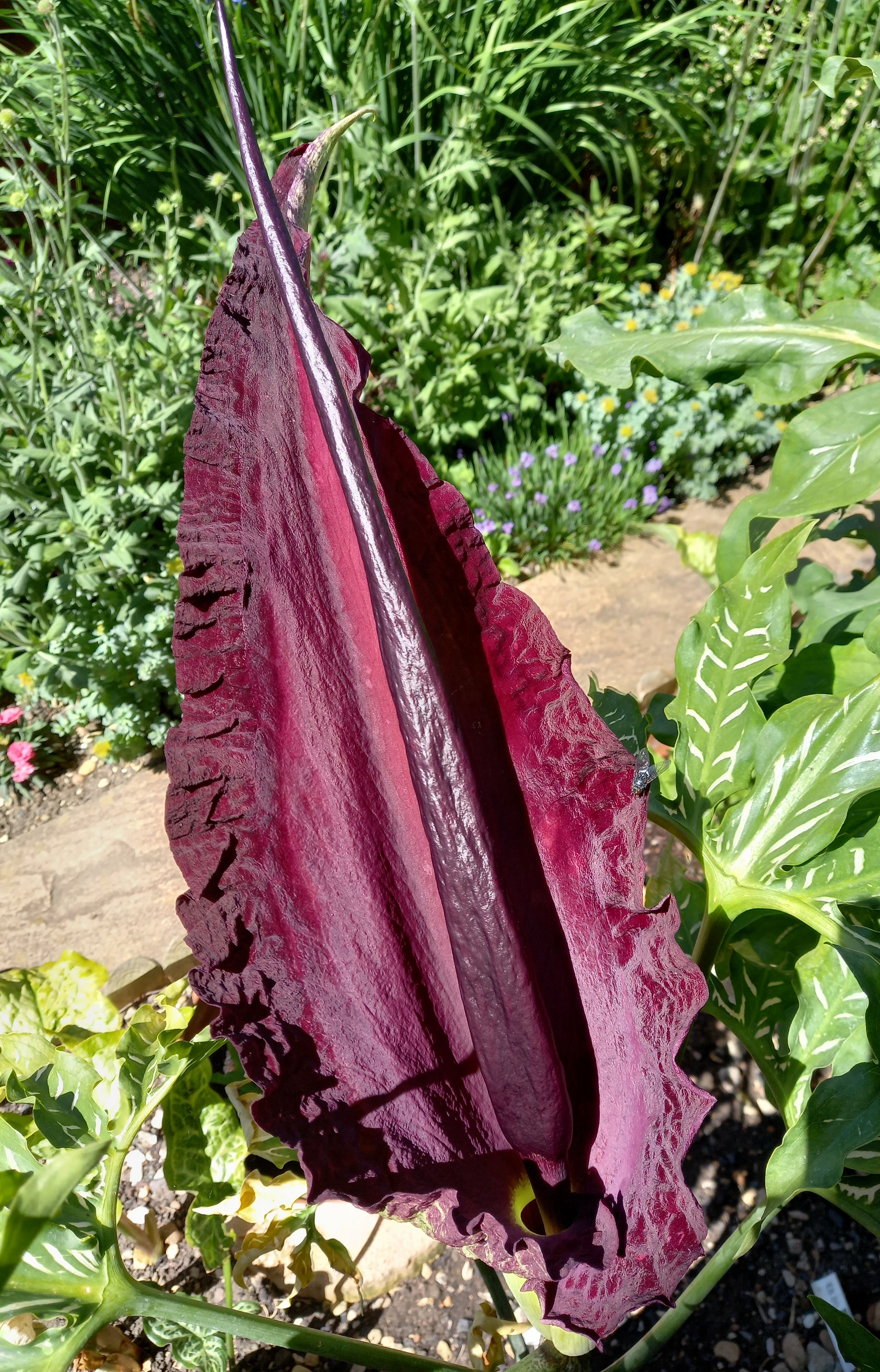
Finally, as I noticed before heading out on the morning of 14th these outsized exotic buds unfurl to reveal long, glistening purplish-black spadices that protrude from the deep magenta spathes like a Dragon’s tongue, hence the popular name. Typical blooms are around 40 – 50cm in length, though larger ones can reach up to 125cm and the spadix 135cm. I have seen this floral display described variously as “dramatic and curiously-unsettling”, “or beautiful and enchanting but with a dark, macabre side”. Certainly Dragon Arums lack none of the off-beat weirdness in Aroids that so captivates collectors such as myself.

Seven days previously on 9th June the only bloom (pictured above and below, left) this year from one of our other tubers was even more spectacular than any in the above featured clump that can be seen behind it. The fifth stem to bloom on 14th was a smaller pot grown plant, and the final image (below right) is of that “junior” member of our collection. A sixth stem in the large clump bloomed on 16th, by which time things were becoming a bit crowded.

Very soon these Arums will all have gone over and will then quickly shrivel and dry for another season, leaving no trace above ground. Next mid-winter mysterious stirrings will begin again further down as the sleeping Dragons of Kings Copse Park awaken once more and renewed life begins to thrust skyward. And such is the stuff of legend.

Teneral Scarce Blue-tailed Damselfly at Banbury, Oxon – 13 & 14th June

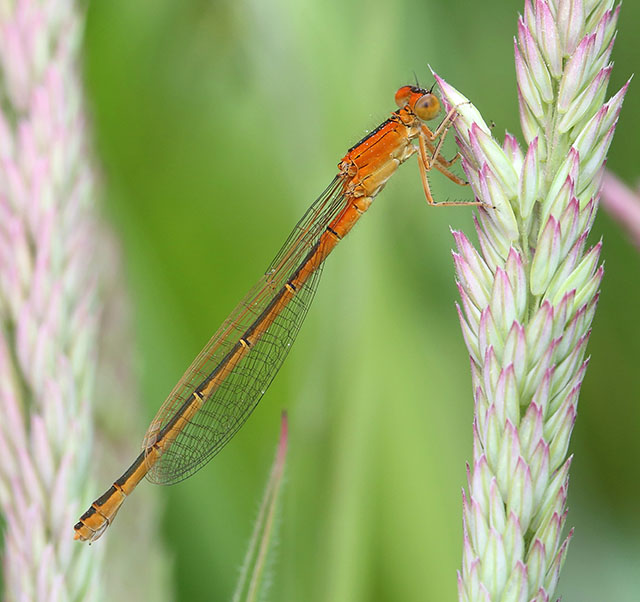
This was a welcome diversion. Amongst the evolved Odonata records I am achieving currently through focussing on teneral (or immature) forms, a liking may be apparent for the bright orange. Having converted one such item recently in Blue Chaser (see here), a second prize on my agenda was female Scarce Blue-tailed Damselfy in what is known as the “Aurantiaca” phase.

Until a year ago making this observation entailed visiting a particular site in Hampshire’s New Forest (see here). Then last summer a new colony was discovered much closer to home at Longford Park, a housing and country park development just outside the north-Oxfordshire town of Banbury (see here). County odo royalty then descended upon what is described as a storm water pool at SP469390, where a number of Aurantiacae were recorded. But I myself was not successful, observing only adult males.

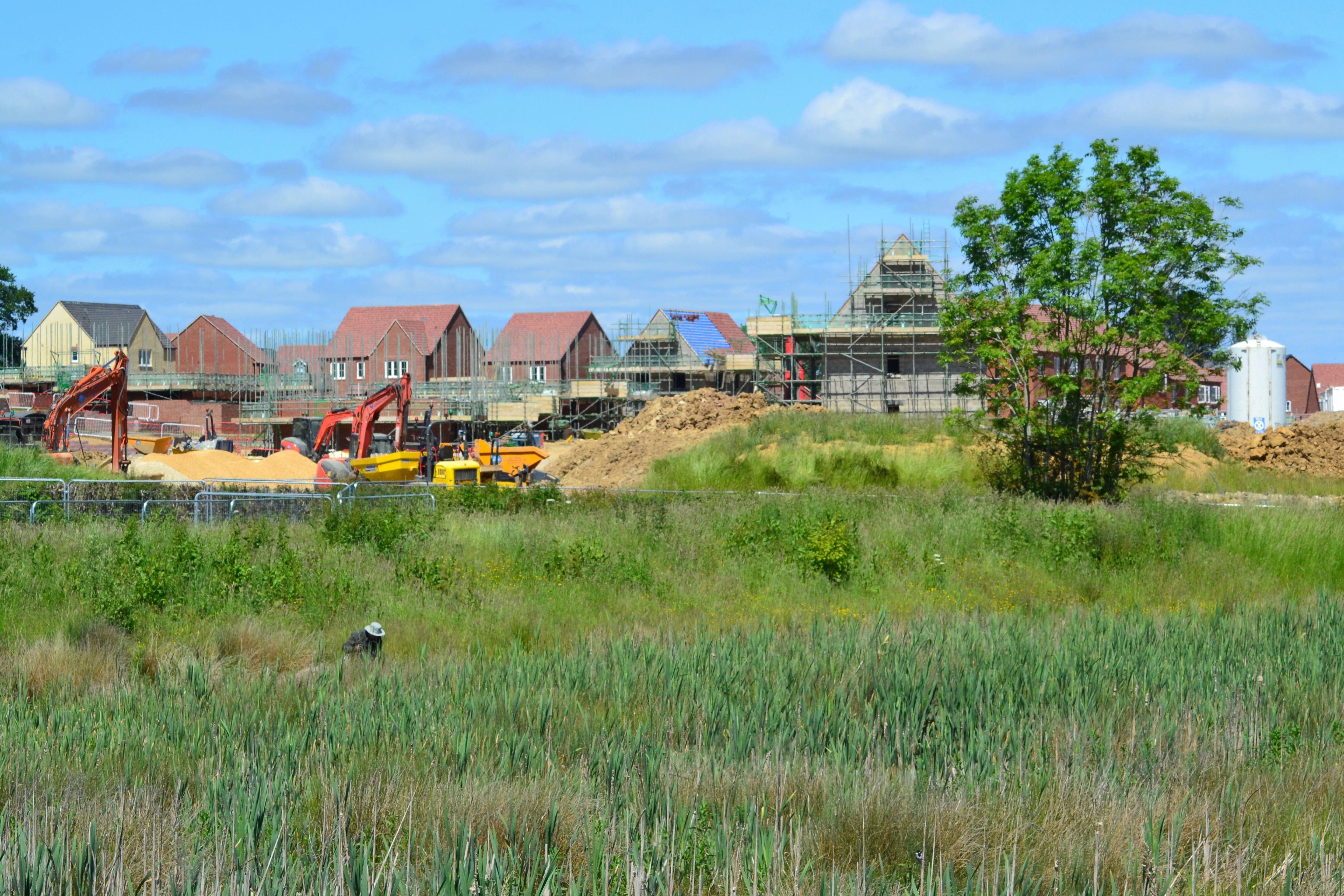
A natural wildlife oasis amidst rampant development

A year on from then what was presumed to be a transient feature of the development is still very much in place (pictured above) and remains a superb piece of Odonata habitat. On 12th the first records for 2021 were posted on Oxon Dragonflies by my county wildlife colleague Wayne Bull, so there was only one place I was likely to head the following morning.

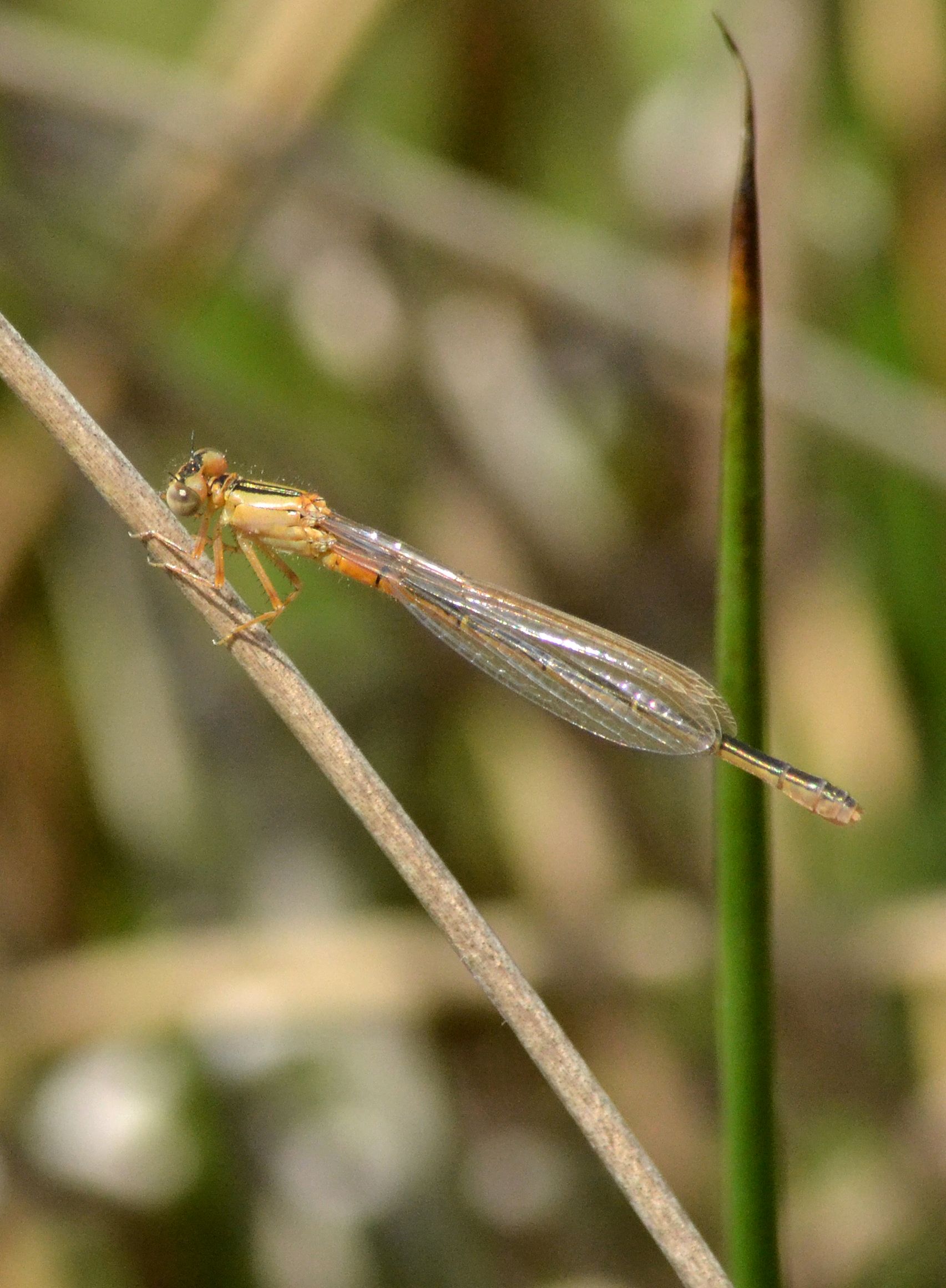
Arriving on site around 10:45am I was at first surprised by being the only observer present. Concentrating on the wetter edge of the pool that had been the most productive spot in 2020, I picked out possibly four mature male Scarce Blue-tailed Damselfly (or Small Bluetail) but not my quest. Then I waded in a little but not too much, since the shallow habitat here is quite resilient, and amongst various ghostly emergent damselflies noticed what looked like an interesting new (to me) form. Was this a pre-Aurantiaca phase female I wondered?

Pale-Aurantiaca phase female (above and below, left), and adult male (below right)

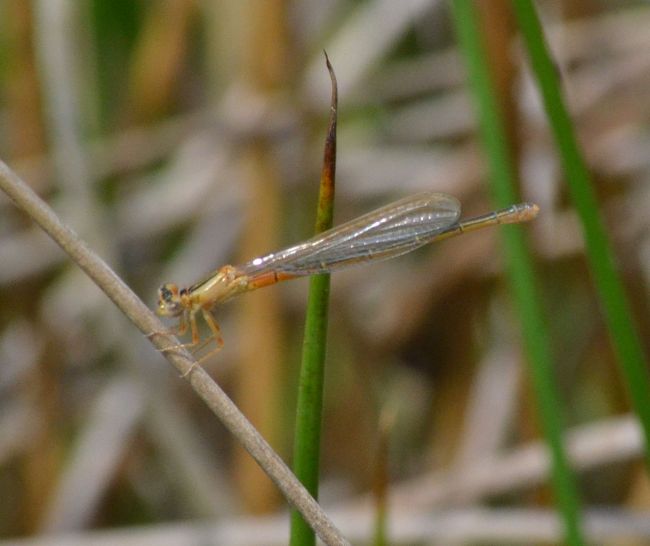
Searching on I came across a second such individual that kept still for the camera, on the back of which I discerned the paler orange and developing colouration of what I assumed to be a recent emergent. This being a welcome new colour form in my experience I then called Wayne, one of our most knowledgeable odo experts and he confirmed the ID. Indeed he said two of his three records a day earlier were of such tenerals, that unlike males favour drier vegetation at the pool’s edge; the third being an Aurantiaca of the pure orange form (below, left).

Aurantiaca phase female (left) © and courtesy of Wayne Bull, and today’s teneral (right)

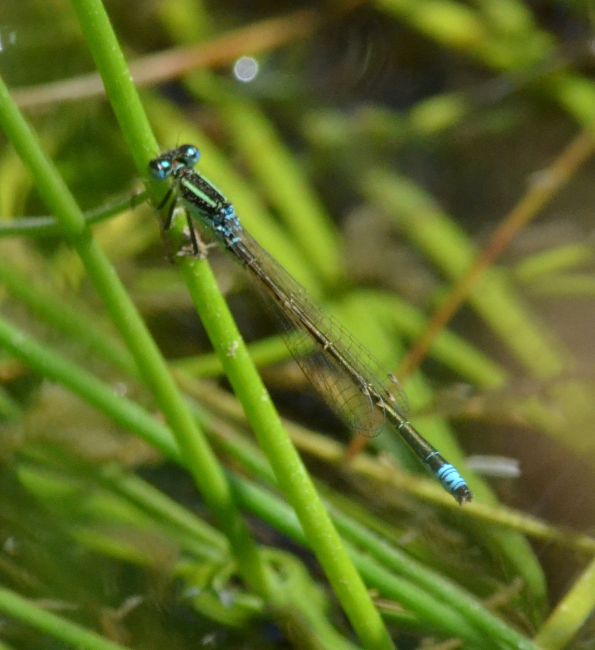
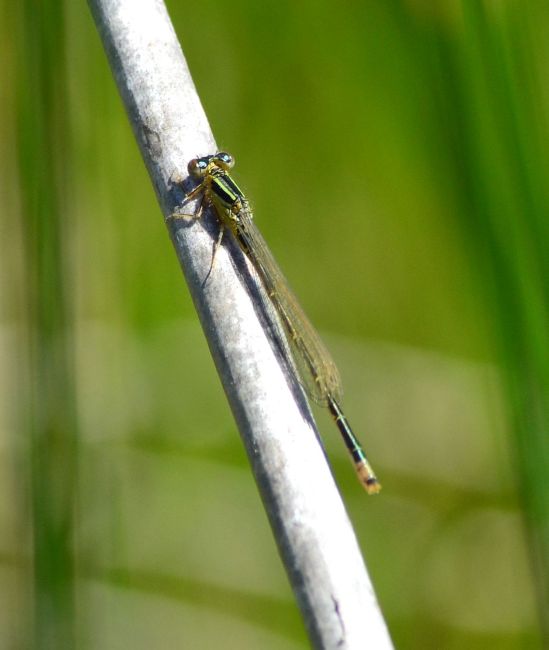
On 14th I re-visited hoping to find a bright Aurantiaca or two of my own, but could not locate any. Maybe the site’s few individuals of this transient form had matured and gone into cover already. But I was as thrilled to record a first ever teneral male (below, left and centre). This is a colour form I wasn’t aware of previously even as a field guide illustration. So I am indebted to Wayne for offering the ID for what I at first took to be a Common Emerald. Having been so advised and looking closely I could see the apex of abdomen diagnostics of segments 8 and 9 match, as the following sequence shows. And I have to say the male and female teneral forms of this quite intriguing damselfly are equally attractive.

Teneral and adult (right) male Scarce Blue-tailed Damselfly

In 2020 this site attracted some attention from odo enthusiasts, since SBTD is a nationally scarce species, as well as being a first site for Oxfordshire. The country park on the edge of which it lies is currently closed and fenced off, prior to hand over to the local authority. I fear for what lies in store for the Odonata of the storm water pool if it is fated to become doggy stick throwing grand central for surrounding new housing. But for the moment the site remains an outstanding, natural wildlife oasis where very few people go.

Great Reed Warbler at Besthorpe, Notts – 11th June

British bird list additions are always welcome, especially when national lifers are now at such a premium within my preferred driving distance. This one had been in place for 12 days in which I had felt tempted to go for it but imagined the journey would be more arduous than has turned out to be so. But with a number of hot days forecast ahead this cooler, cloudy Friday seemed like a good one on which to convert the record.

Motivation is always fragile for someone such as myself who prefers evolution in what I do. On waking early this morning, feeling a little too lacklustre to think in terms of “rising today”, I set about my usual tasks on the computer, then remembered this bird. Checking the distance, the shortest route was 126 miles and the day ahead at once assumed a purpose. That after all is what going on the road is for.

Archive picture of Great Reed Warbler from 2017

Mid-morning found me arriving at Notts WT’s Besthorpe nature reserve (SK818640), a restored gravel extraction site on the east bank of the River Trent (see here) a little north of Newark. On clearing my head sufficiently to find the exact location as cited on RBA – it had been an early start after all – eight other birders were there ahead of me. And as I approached the “north-west corner of Mons Pool” I could hear plainly the Great Reed Warbler singing. This is one of three in England recently, the others being in Cambridgeshire and Northumberland.

We are talking of course an out-sized, very loud Reed Warbler – still no plumage topography in this journal – that breeds across much of mainland Europe. I have encountered them a number of times on my southern European travels of the past 10 years, and recall on first hearing the strident, jangly-croaking song issuing from deep cover in Cyprus (2012) wondering what on Earth it could be. But this is usually a quite showy songster, as I first experienced later that year in Spain, then subsequently in Greece (2017) and Turkey (2019).

Not so on this latest occasion. The consensus amongst the gathering I joined was that windy conditions were keeping our quest further down in the reeds than its RBA gallery (see here) suggests. A wait of some 30 minutes then ensued until at around 11am, when the wind dropped a little it was myself who called the bird as it sat up to sing in view. That doesn’t happen too often with me, and I was thanked profusely by everyone present. Then around 15 minutes later the performance was repeated and this (below) was my best effort at a record shot to show I am not making all this up.

Today’s bird (record shot)

The original group of birders then drifted off, leaving myself and three hopeful toggers still in place, then the next shift began to assemble. But with conditions becoming windier and only having needed to tick the bird for Blighty, I opted to go back to the car park and put my head down before heading home. On starting awake some of my day’s companions were returning to their own vehicles, reporting that the GRW had sat up and sung for a further five minutes as I dozed. The bottom line here is that I feel more motivated as I write up this post than at the outset this morning, which is why I do all this.

River Warbler at RSPB Ham Wall, Somerset – 5th June

This is an opportunity I wasn’t anticipating any time soon. River Warbler is one of just over 50 regularly occurring European lifers I still required. It usually summers from eastern Europe through the former Soviet Union into Siberia – inhabiting dense deciduous growth close to water at swamp edges, marshland or along rivers – and winters in sub-Saharan Africa. This is a scarce visitor to western Europe and very rare vagrant to the British Isles. So when news broke early on Friday afternoon (4th) of a stray migrant singing and showing well at a very accessible location on the Somerset Levels it was a must see.

The species is described in Collins as shy and elusive except when singing. So I looked it up on Xeno Canto (see here) and needed to listen only once, the sound that is normally delivered from exposed shrubs or small trees being so distinctive. My immediate impression was of a Grasshopper Warbler reeling through a stack of Marshalls. Other, perhaps more conventional descriptions I have read this weekend were “a fast shuttling sewing machine rhythm with well-separated syllables” or “a low-frequency but very loud wart-biter cricket”. Not to be messed with then whichever interpretation you might prefer!

So what would be the best timing? Major dawn twitches as seemed inevitable on day two are not my scene, especially in what I knew to be a long, narrow location in which only the earliest arriving observers might get decent views. So I stuck with my plan A to start Saturday doing odonata near Bournemouth, intending to visit Ham Wall early on Sunday. But when the previous post’s assignment was completed so soon and successfully, I opted to drive the extra 60 something miles to Avalon.

In the event that was a novel experience in my Bluetooth-equipped new transport as Google Maps took me across country by a scenic route, alerting me as I progressed to incoming texts and WhatsApps, reading them out and offering to reply. Well it was all new to me anyway … perhaps I might even get around to acquiring an up-to-date camera before long.

On reaching Ham Wall (ST458398) at around 1:30pm there was indeed plenty of space in the car park. I then walked out along the familiar former railway line on which I had converted previous lifers Pied-billed Grebe (Feb 2013) and Dusky Warbler (Dec 2015), plus British list addition Collared Pratincole (Jul 2016). Being at a Royal Society for Populist Birdwatching (RSPB) reserve, I felt my usual unease with the ambience of general public supervised by over-earnest volunteer wardens. But on this occasion there was fortunately none of the over-officiousness that can accompany the scenario and I was able to proceed un-accosted. The exact location of my intent was obvious, across a drainage ditch to one side of that route.

Now the potential downside of my day’s decisions kicked in. River Warbler is said to sing mostly at dawn and dusk. I had opted for early afternoon, to be greeted by advice that the bird had not been seen for some time but was “due again soon”. A lady standing next to me pointed out the spot of the last appearance, then an edgy 30 – 40 minute wait ensued. From time to time movements low to the ground before us stirred the gathering but nothing actually showed … and so things went on.

Singing male River Warbler (all images above)

This bird was nonetheless a consummate virtuoso. Having kept the audience waiting this long he duly sat up in his own time and delivered. First he sung very close to where I had been advised to look, then moving left to an exposed perch threw back his head and poured forth with gusto. Everyone present was captivated by the volume and delivery before us. The artiste was a large, elongate looking Warbler with a noticeably streaked breast pattern; broad rounded tail with distinctive patterning on the underside, and a quite amazing gape … no plumage topography in this journal as always. Ultimately having tantalised us all just enough but not too much the performer exited stage right. Most birders present were thus more than sated and moved on, myself included.

Pictures 2 and 5 in this post are my own, but the other three were sent afterwards by the birder alongside me who requires no acknowledgement. My thanks are due to her anyway. For the RBA gallery see here. This had been a superb experience of a mega rarity that until now had been just a name and illustration in the field guides. I didn’t ever expect to experience this bird nationally … but one never knows.