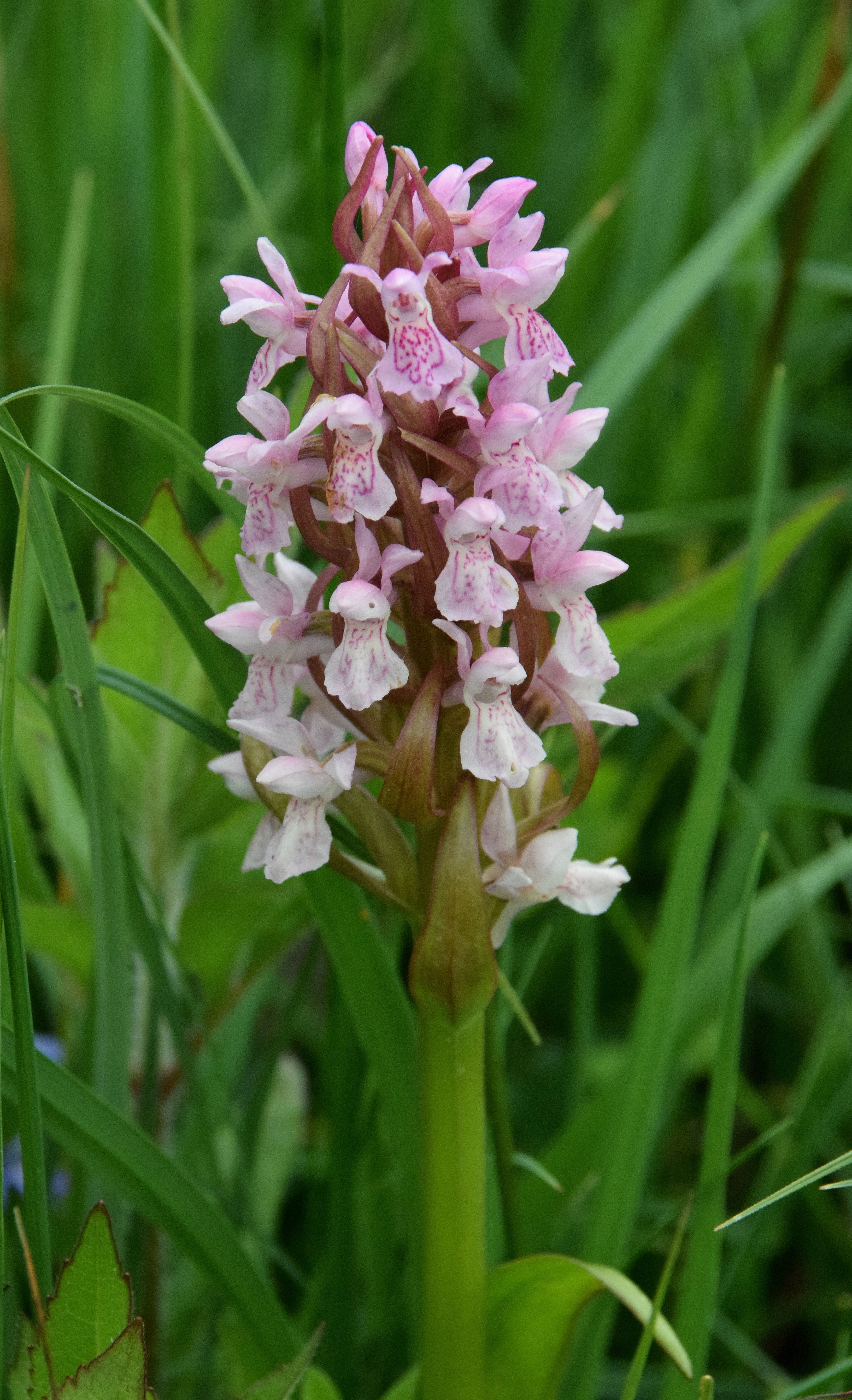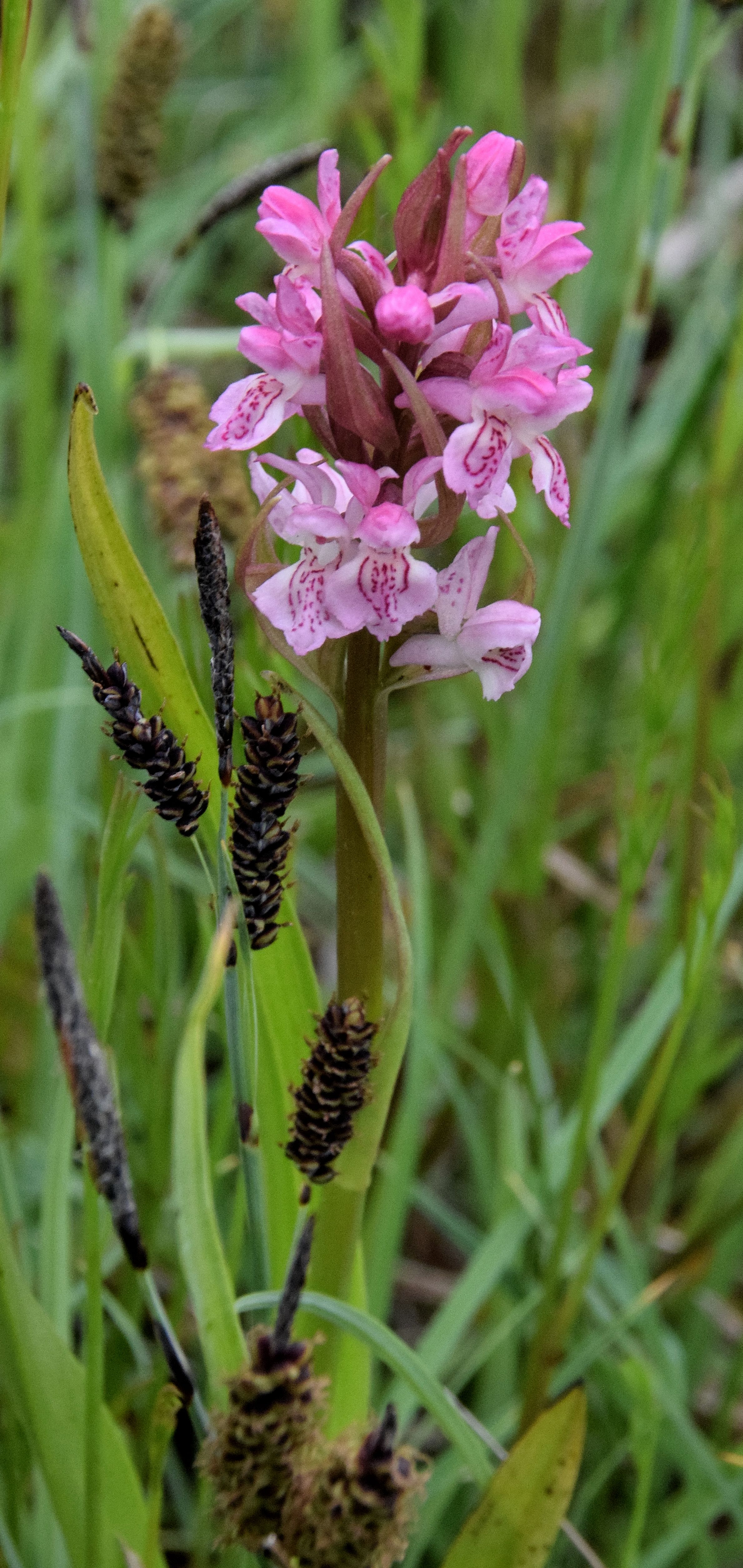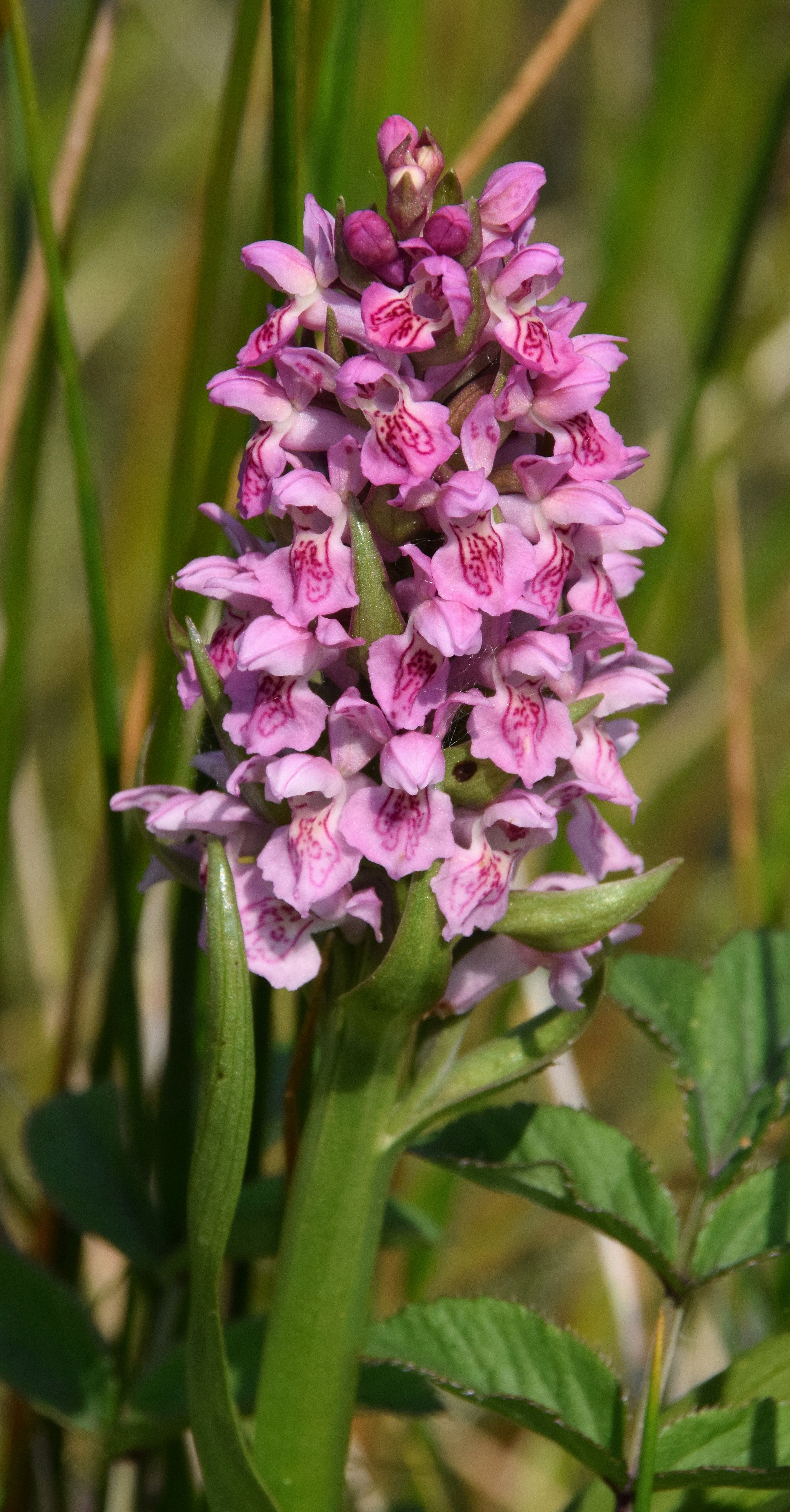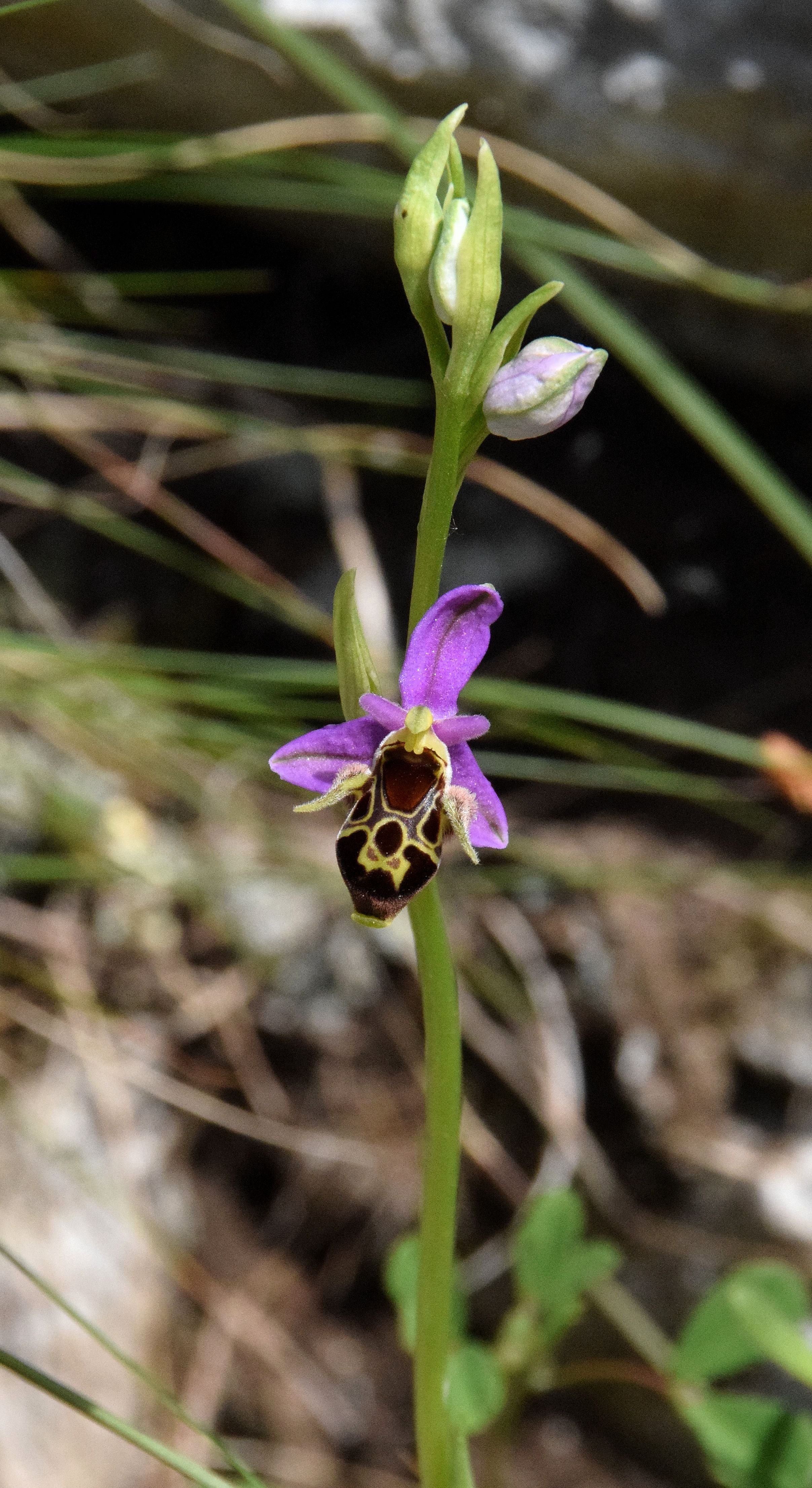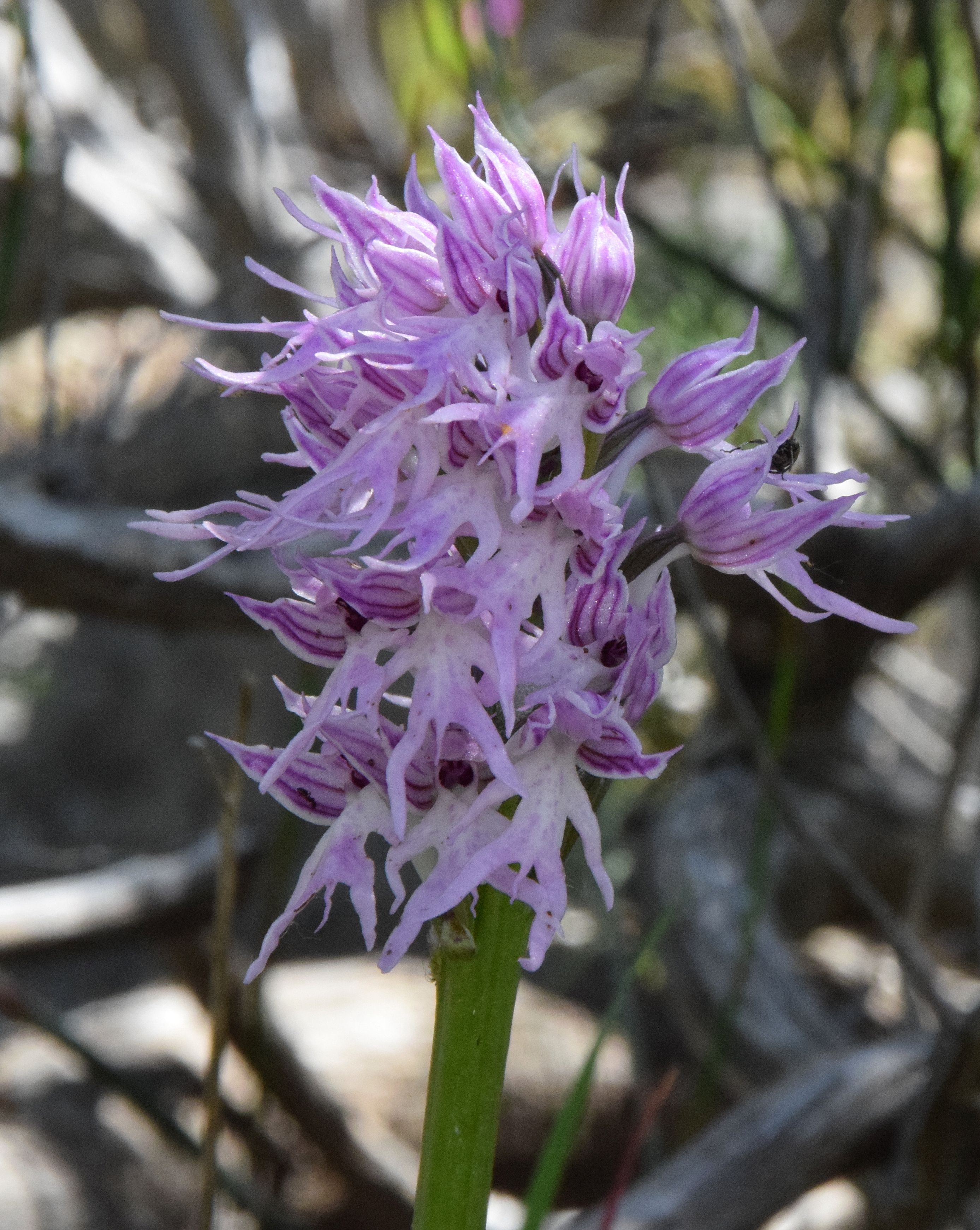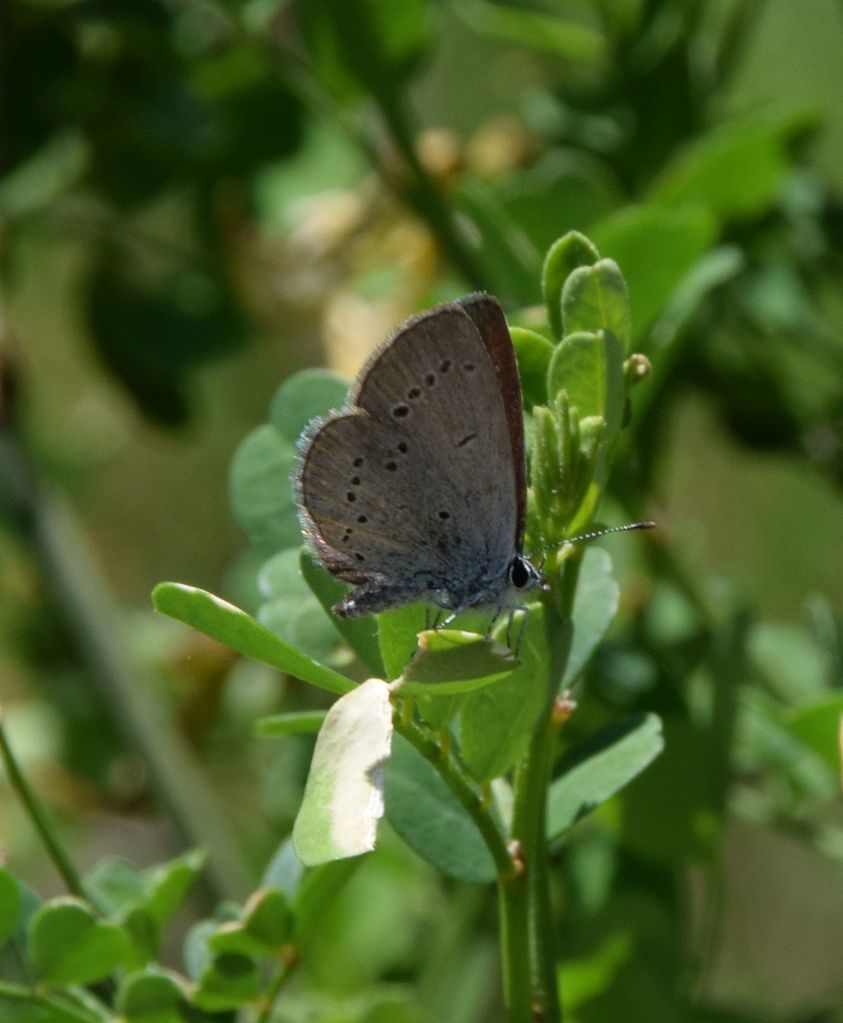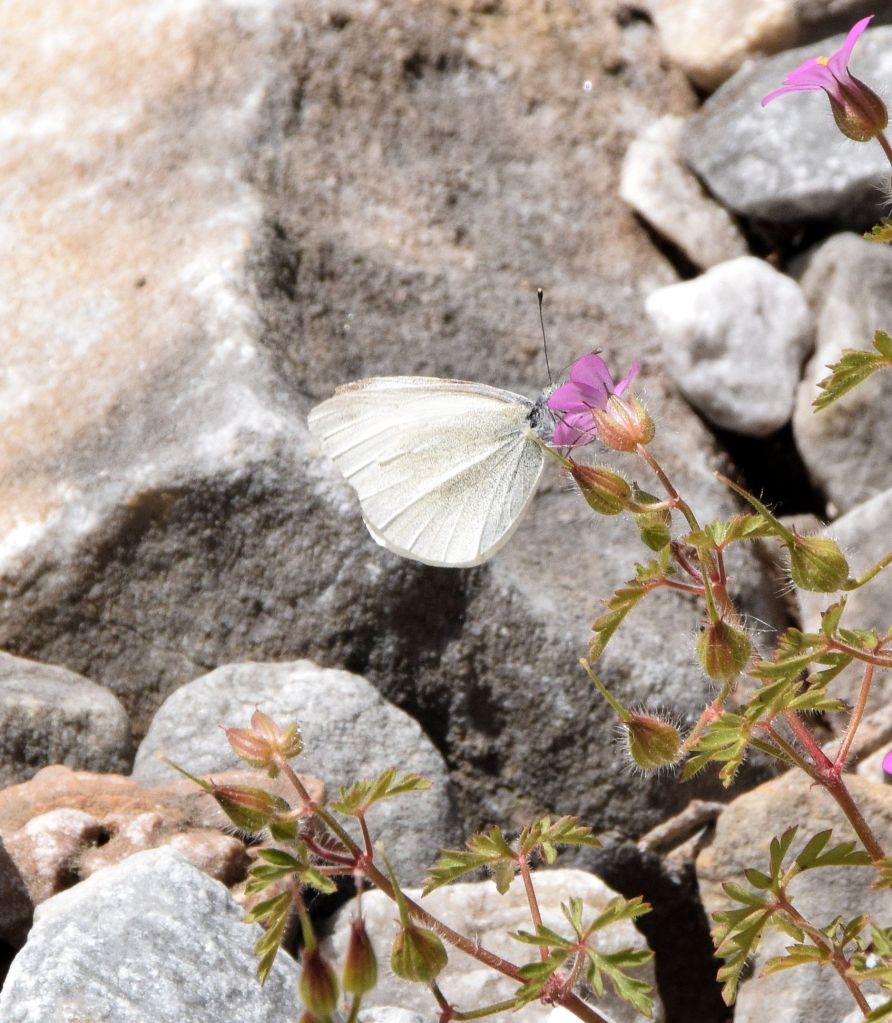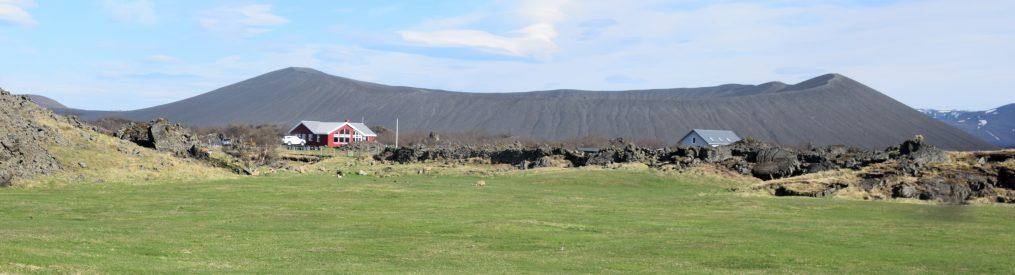
Butterflies in the Askion Mountains above Siatista, northern Greece – 5 & 6th May

My wish list for this trip was compiled from missed trip targets on the 2019 Greenwings Clouded Apollo tour. In attempting to research where to find them I consulted what trip reports from wildlife tour operators I could find online, but those understandably do not give away precise site locations. But the town of Siatista is a centre for some tours and above it is a range comprising Mounts Stalos, Askio, Pyrgos, Sideras and Skopia, the last of which is cited as a location for some species I was seeking this time. So that is where I decided to concentrate my search.

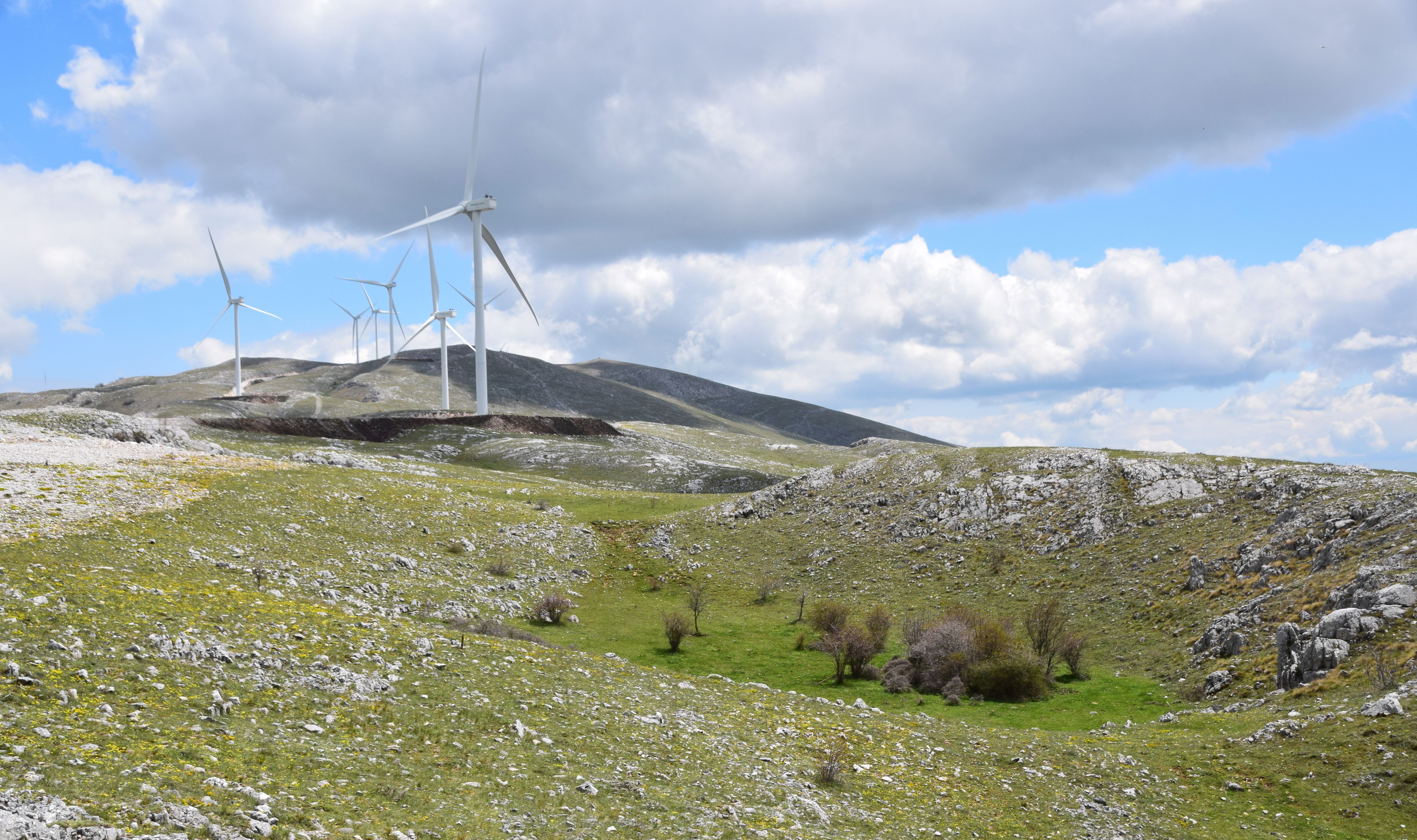
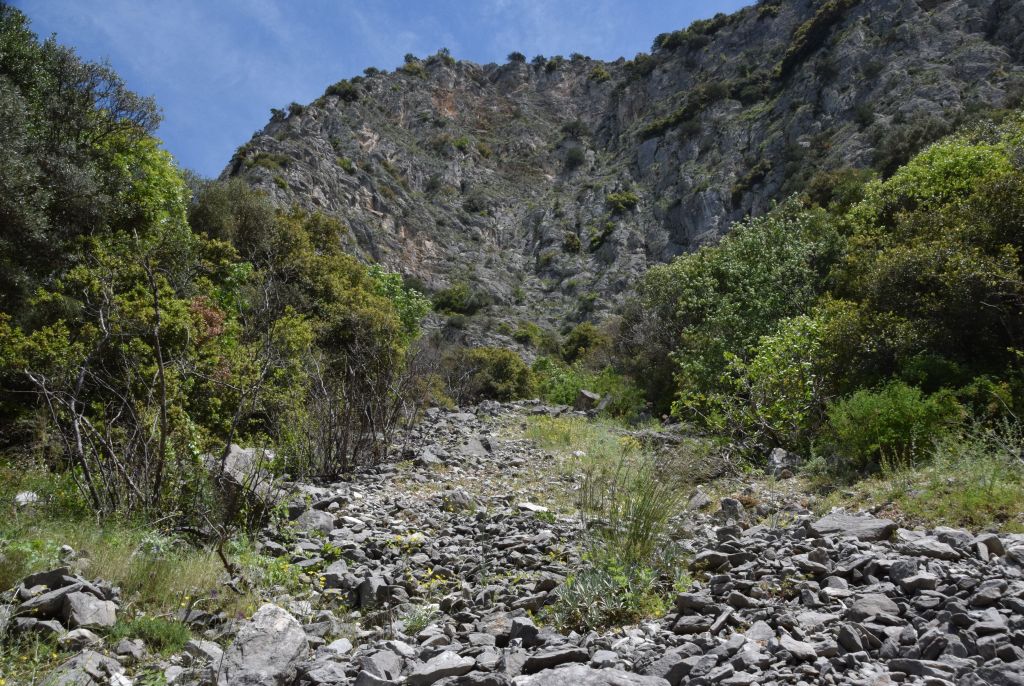
Just outside Siatista on the road to Galatini a right turn goes up into those mountains along an unmade road that is perfectly passable without a 4WD. I had imagined this led into the foothills but it is actually a service road to a wind farm and so runs along the heights to where the turbines are located. Cloud of course sits on mountain tops, colder winds blow up there than below and weather patterns can change very quickly, none of which is especially butterfly friendly; so this was going to be another challenge.

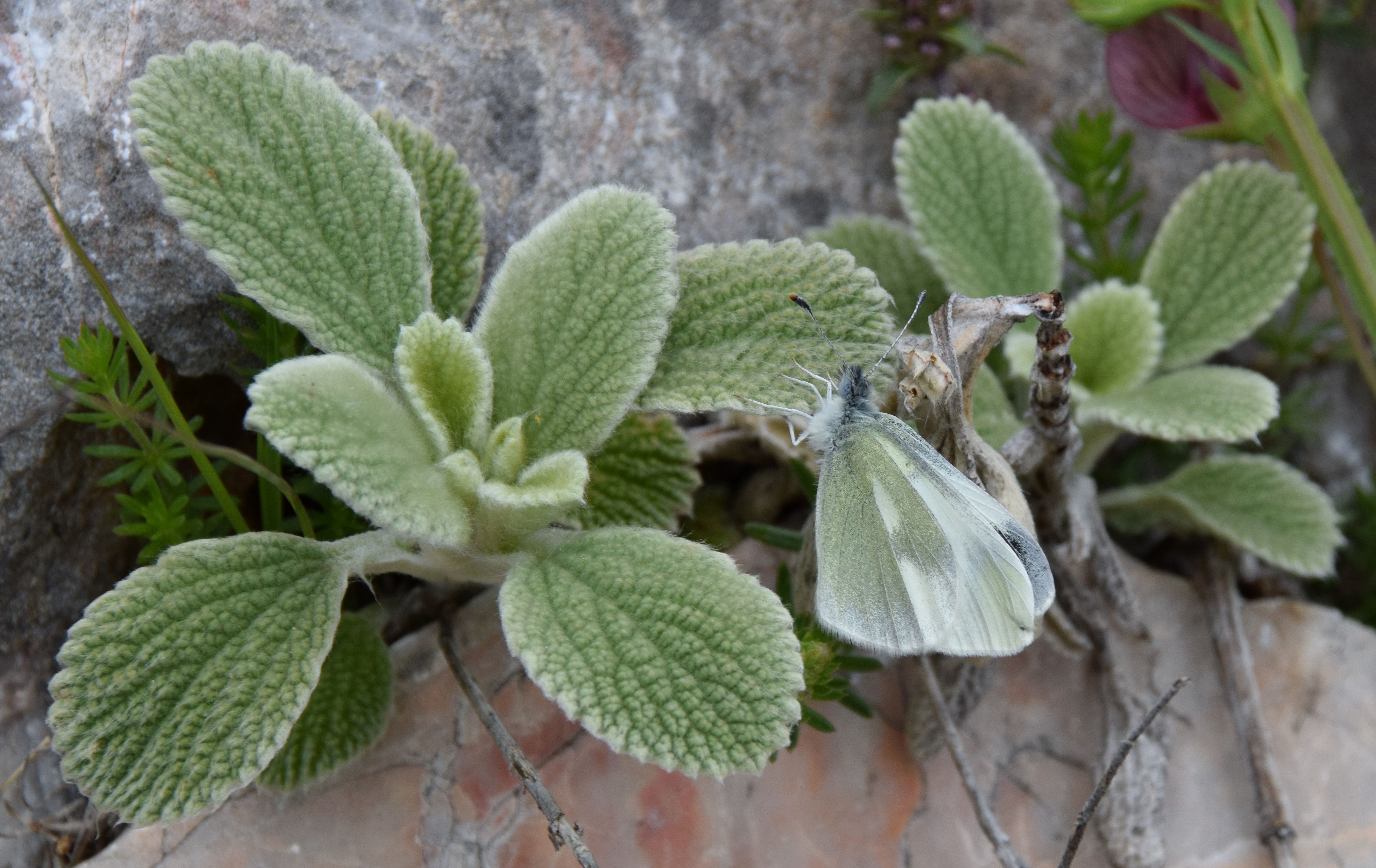
The wet weather finally relented on Friday (5th), but cloud still prevailed and I was expecting nothing more than a typical butterflying day (such as at home) of waiting for sunny interludes. After exploring the length of the route in mainly misty conditions I decided to come back later, but on the descent noticed butterflies for the first time in a sheltered gully above the road. Stopping to investigate, both Eastern Wood White and Grüner’s Orange Tip were immediately apparent on the wing. Some mysterious, larger, dark butterflies were also flying fast further up the slope but I couldn’t get close to them. Peacock perhaps or could they be the trip target Dalmatian Ringlet?

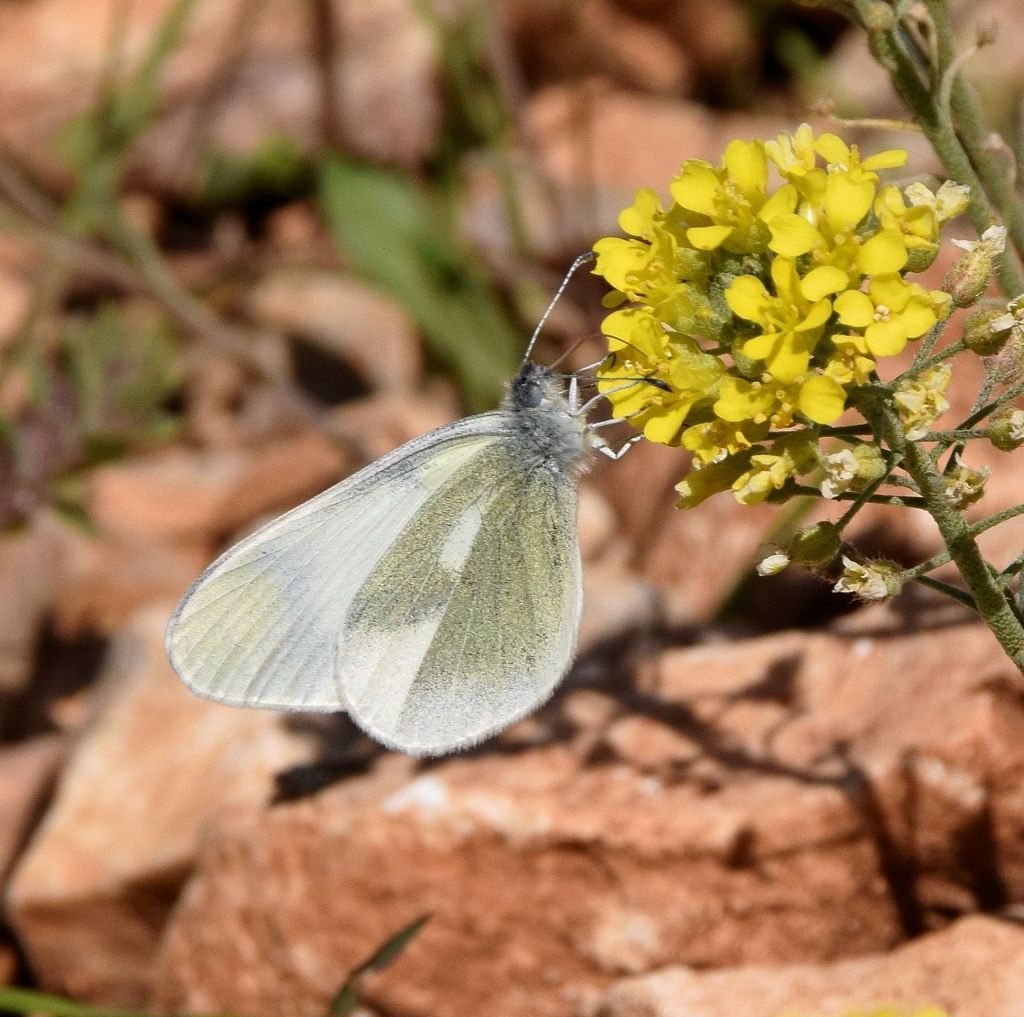
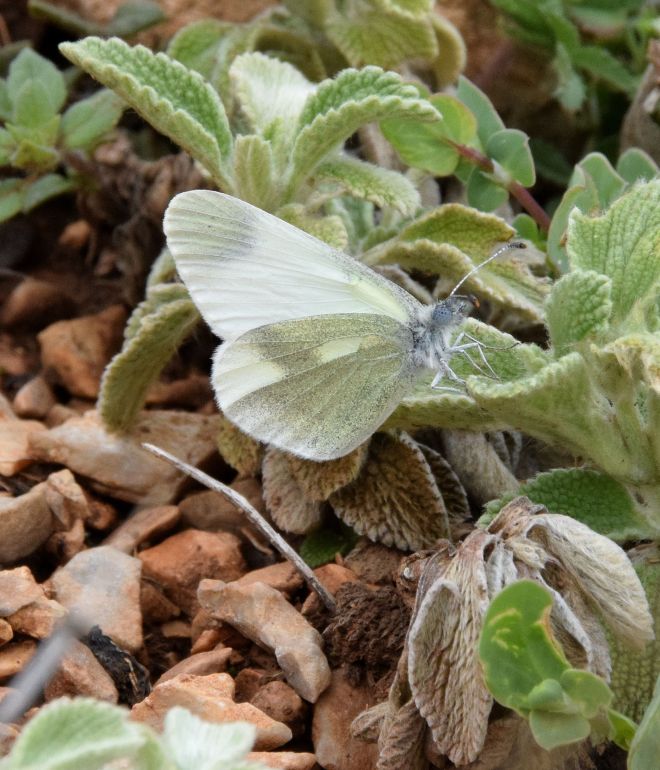
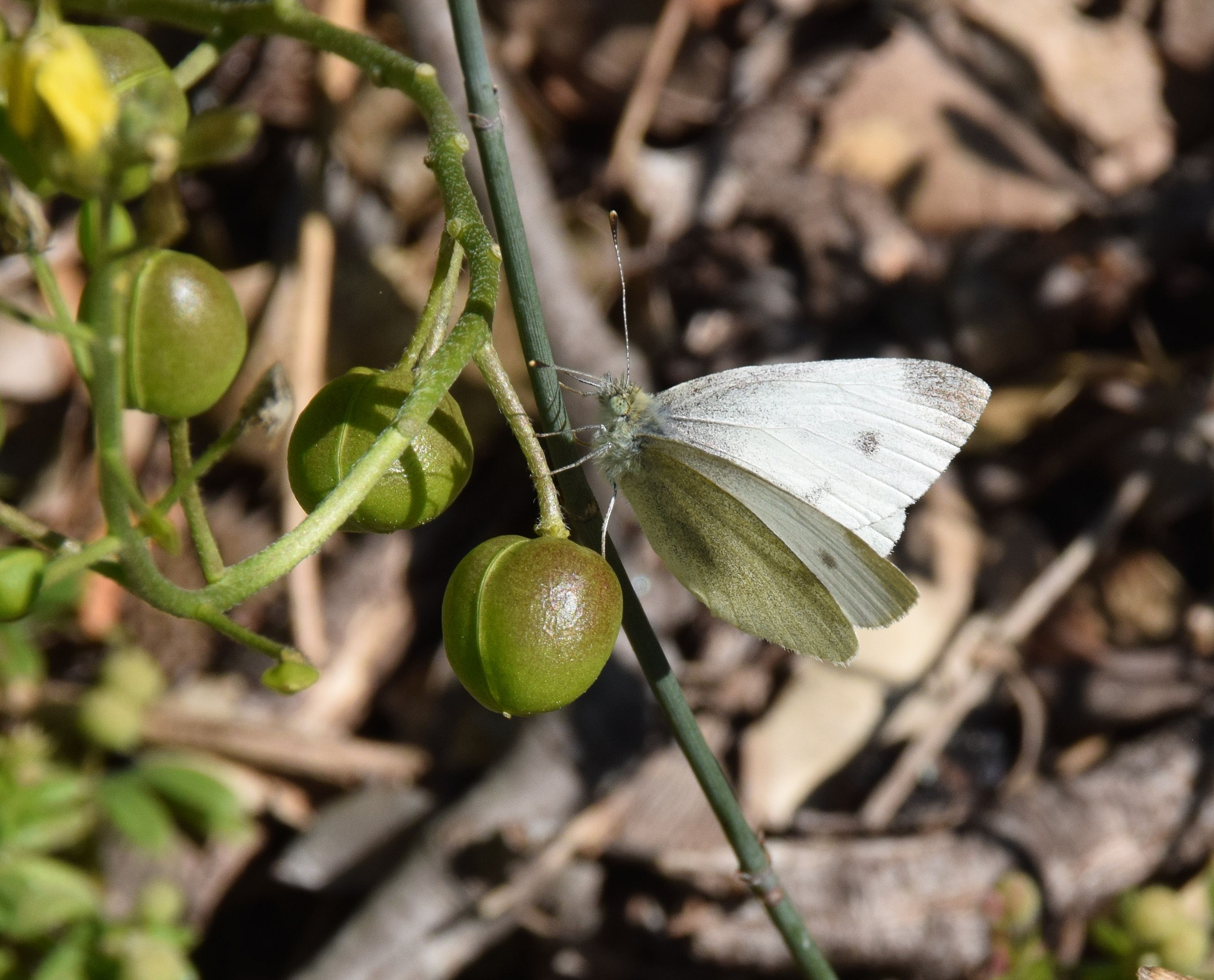
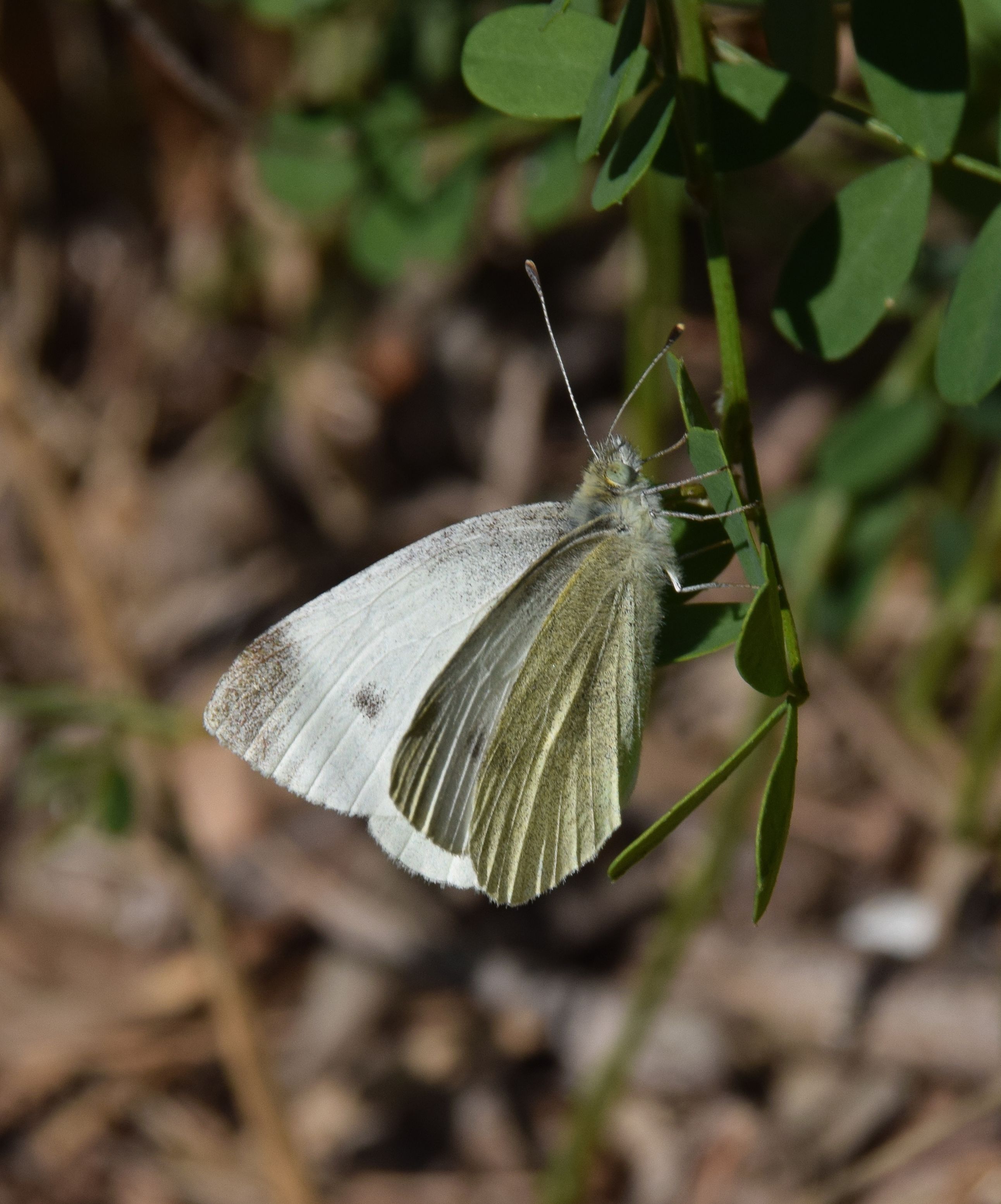
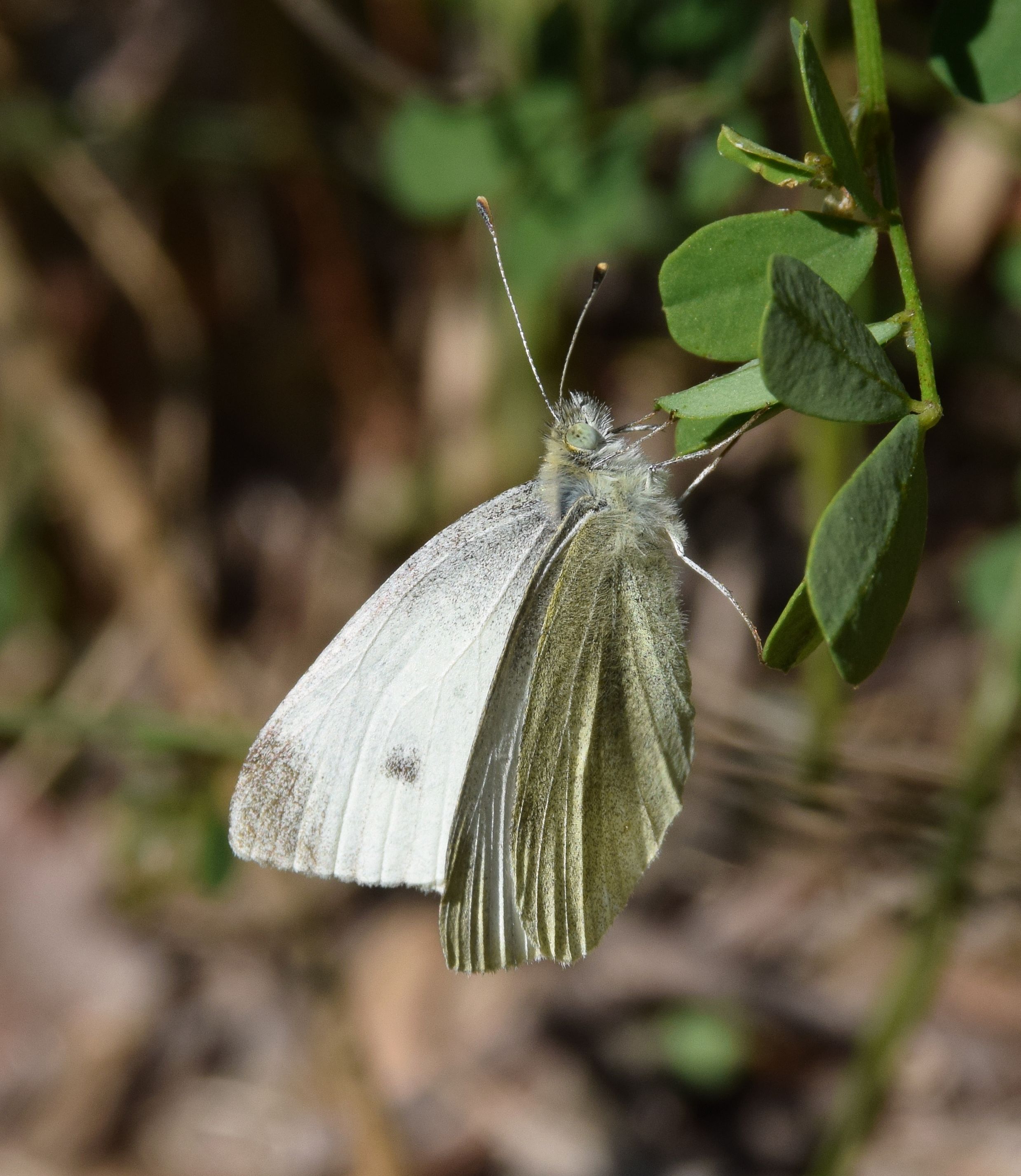
Eastern Wood White (first brood)

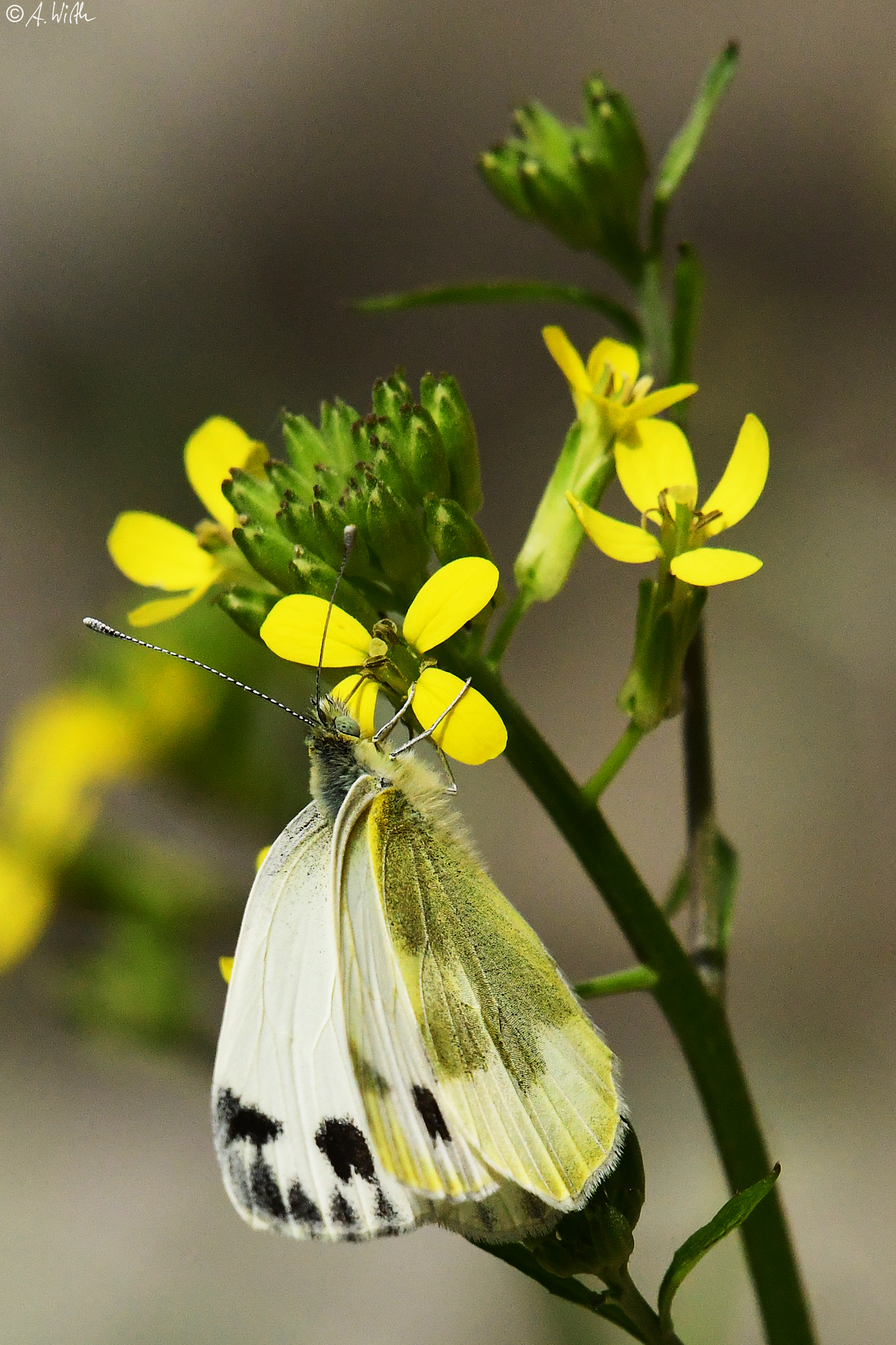
The first of those (Leptidea duponicheli)see here), which I had observed twice previously in northern Greece, from where its range extends through the Balkan region, occurs in a range of habitats including open scrub such as here. But on receiving an accurate ID for my observation I was surprised to have encountered a Wood White sp at such altitude. Eastern Wood White is easier to identify in the first than its two subsequent broods, the unh markings being green when fresh, fading to grey with wear. A detailed guide to separating it from Wood White (Leptidea sinapis) may be found here. I believe the rectangular white marking on the unh wing that these pictures show is one diagnostic.

The Grüner’s (pictured inconclusively below, top left) seemed paler-toned than those I had observed in Greece’s Rodopi Mountains in April 2019 (see here), and like all Orange Tips were difficult to gain adequate pictures of. But the yellowish ground colour of this localised species was more apparent in the field than in sub-standard images that I managed. Other butterflies seen in this post’s location over the two days were Dingy and Grizzled Skipper, Green Hairstreak, Green-veined White, Small Copper, Common Blue, Small Heath, Wall Brown and a solitary Spotted Fritillary.

Three Southern Festoon (below right) in the gully described above added a little more of a regional flavour to the list, which as at this trip’s first centre could only be described as very modest. And then there were those elusive, dark, fast flying numbers … what were they?

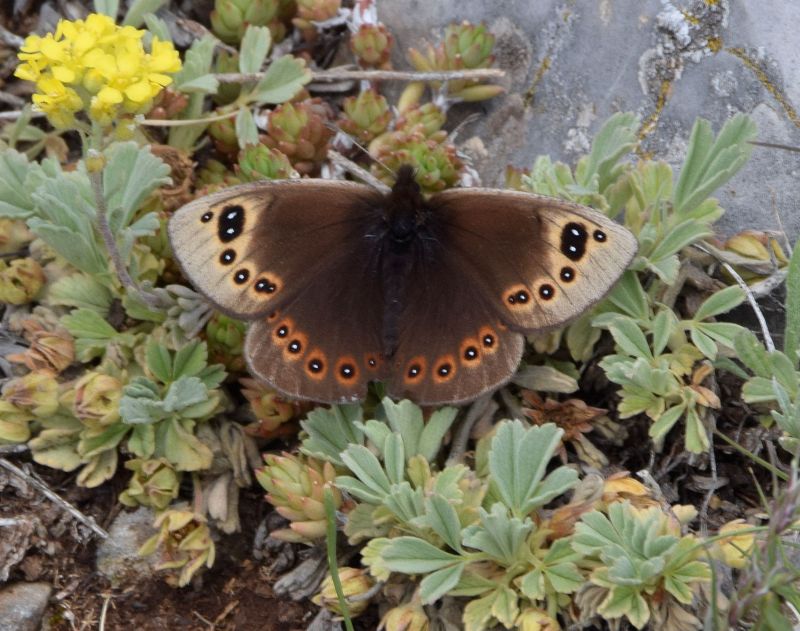
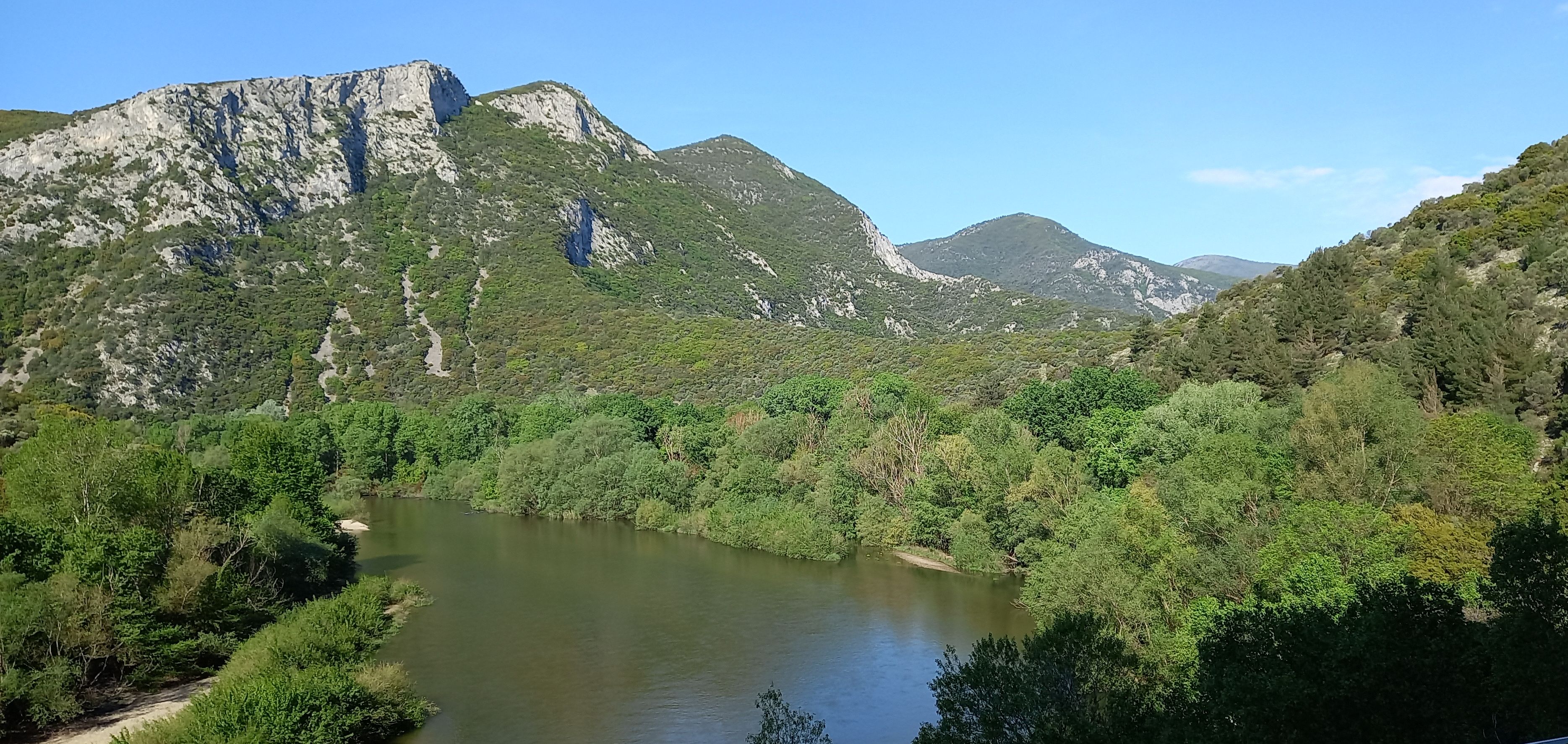
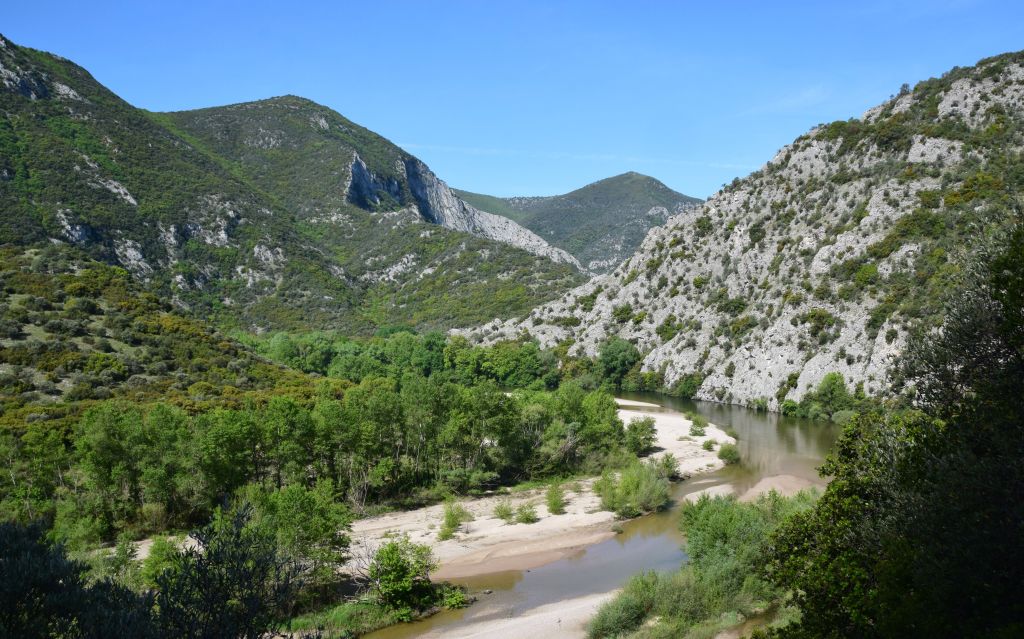
My final day in Siatista, Saturday 6th was to begin with the sunniest of the four. After checking out the same gully again without better results than a day earlier, I went all the way up to the aforementioned Mt Skopia but the wind was just too strong and cold up there for butterflies to be active. Hence I moved back down again systematically checking out the more sheltered hollows and gullies noted on the ascent. Still just one Grüner’s was the only butterfly encountered until in the spot featured in this post’s lead image one of those dark fast flyers landed on the ground close by. Conditions being momentarily overcast this item kept still and was indeed Dalmatian Ringlet (pictured below), of which several were active in the same hollow.

Dalmatian Ringlet

A huge wave of relief swept through me as I acquired unsatisfactory pictures of the third trip lifer. It is the only Ringlet to fly here in late April through May, and was bigger than I had expected. A distinctive member of the extensive Ringlet genus, it occurs only in a small area of north-west Greece as well as along the Croatian coast; and though very localised can be quite numerous where it is found. This butterfly favours warm, dry, grassy, rocky slopes, on which it flies just above ground level with an undulating jizz. As I had experienced over these two days their large, black forms are highly visible from quite a distance.

It was now the sunniest part of the day but I was very hungry, so with the journey back to the airport for a late departure ahead of me I went back to Siatista for a sandwich break. On the descent the tell tale presence of Krueper’s Small White and Dalmatian Ringlet were visible in more roadside gullies similar to the one I had spent time in. Then below that favourite spot I noted several Dalmatian Ringlet at the roadside that had dispersed when I reached them with the camera. The rocky slope above was alive with their dark, hyperactive forms. There are certainly a lot of this local speciality in these mountains.

Alas, when I came back with food the grey stuff had returned with me and the rest of the afternoon was far less productive than the morning. Butterflying, being so weather dependent is rarely easy and I had gained just three of my 15 mostly difficult trip targets on only one fully and three partially suitable days out of six. I had already decided to do Orchids at home for the first time as a project this coming season, which is perhaps just as well with the weather outlook for Blighty looking little better than in Greece. But unlike 2023’s earlier trip abroad to Fuerteventura, this first solo exercise in a country I like very much had on the balance of things been worthwhile.

A rain break visit to the Pelicans of Prespa Lakes in the far north-west of Greece – 4th May

So what does one do if a Greek butterfly trip is washed out AGAIN? Well, in this instance going to what until recently was the world’s largest Dalmatian Pelican breeding colony just 70 miles (111 km) away seemed like a welcome opportunity. Prespa Lakes, which straddle the borders between Greece, Albania and FYR Macedonia is also one of just two European sites where Dalmatian and White Pelican both breed; and there is a huge diversity of bird life across the immediate area.

There are two lakes here separated by a narrow strip of land. Megali Prespa to the north is by far the larger, while Mikri Prespa being shallower and having extensive reed beds is the focus for bird life. 1300 – 1400 pairs of Dalmatian and 350 of White Pelican have historically reproduced in the reed beds, while taking advantage of the larger lake for feeding. There are also important breeding populations of Pygmy Cormorant (700 pairs), Black-crowned Night Heron, Ferruginous Duck and most recently Glossy Ibis.

Mikri Prespa on a very grey day (with colour enhancement)

For the second stage of this trip I relocated to Siatista in the Askion Mountains, 90 miles (144 km) to the south-west of Thessaloniki. Having stopped half way back from Xanthi overnight, I drove here on Wednesday morning (3rd) through at times absolutely foul conditions. Things relented upon arrival for long enough to explore the local amenities and access point to the area I intended to search for butterflies, then from mid-afternoon onward it rained continuously.

Butterflies of course only come out with the golden orb, and seasonal weather patterns can vary their emergence times by two to three weeks. So planning any trip abroad is an imprecise art. Just driving around on 3rd it was all too apparent what a suitable location for my purpose I was in, if only the rain would stop and sunshine be given a chance.

Hence this morning it was with some excitement that I set off north-west from my base to experience a national park I had read about but didn’t think I would ever visit. By now my motivation in any case lay more in doing that than hanging around in the mountains above Siatista waiting for any breaks in the grey and wet stuff. For much of the time on both the outward and return journeys I was the only vehicle on the road.

I set Google Maps to “Prespa Lakes National Park” and the route ended at a point on the western shore of Mikri Prespa. If you too are coming here for the first time be warned the cited NP entrance is a very remote location accessed by a long rough road. After yesterday’s prolonged heavy rain I eventually considered it to be impassable. So not wanting to get my hire car stuck in mud with virtually no chance of rescue I left it on firm ground and walked the final stretch.

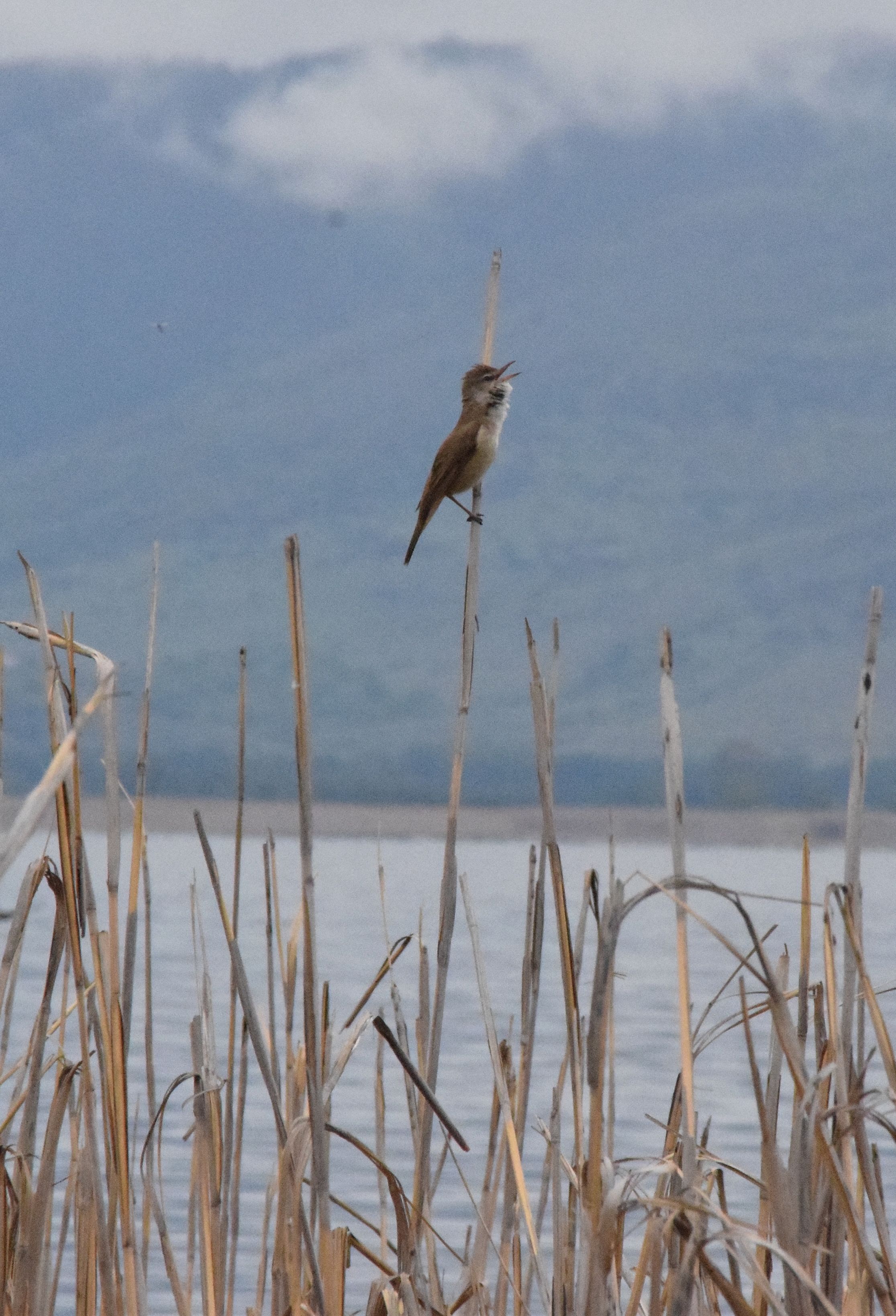
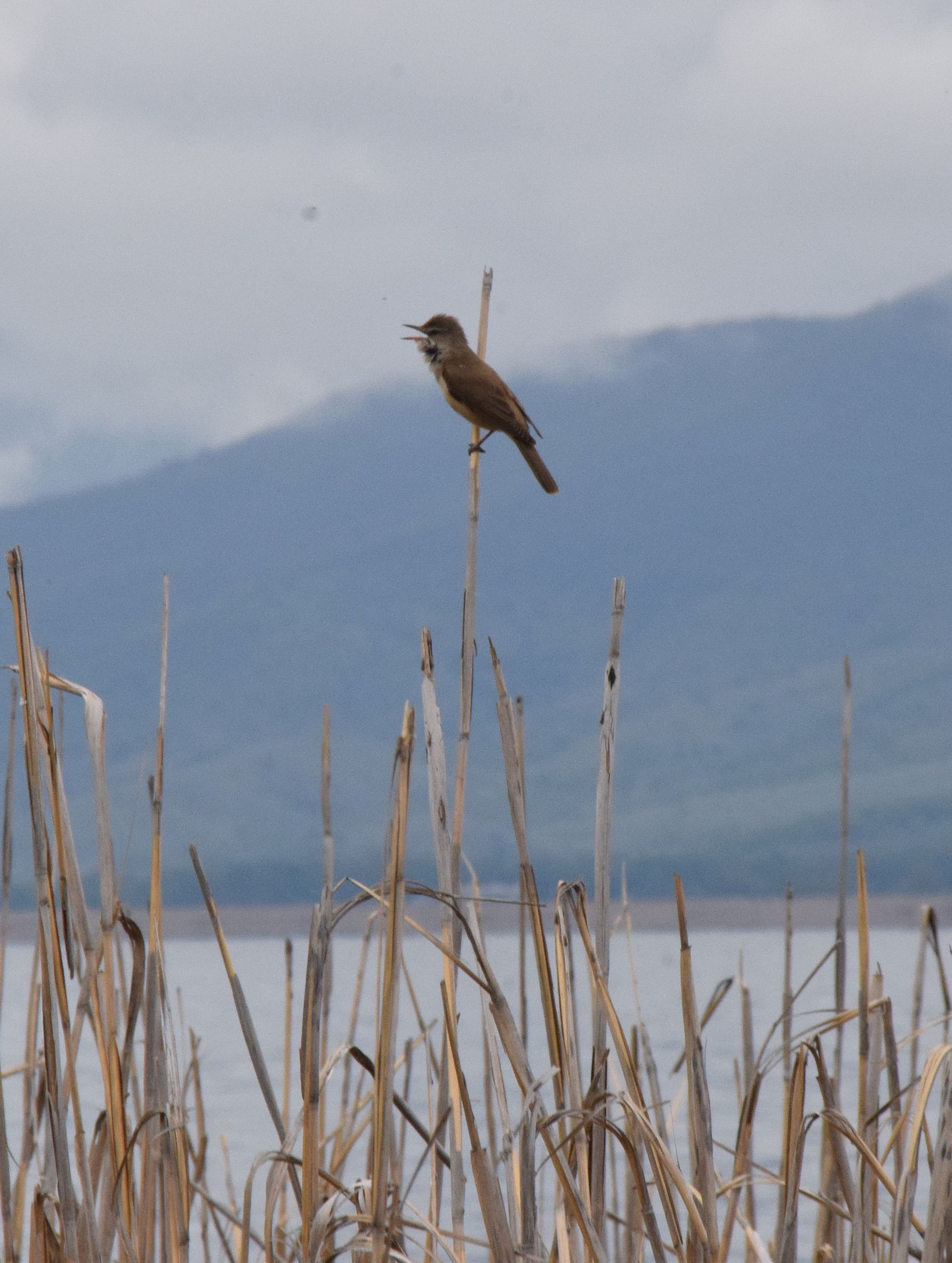
Below this access track stretched extensive reed beds from which the jangling calls of many Great Reed Warbler (pictured above) rang forth all the way along. Little and occasional Great White Egret were loafing here and there, while minor congregations of Pygmy Cormorant appearing as if almost suspended in the reeds stood out at intervals. On the landward side the sound of numbers of singing Nightingale and calls of Golden Oriole and Hoopoe filled the air.

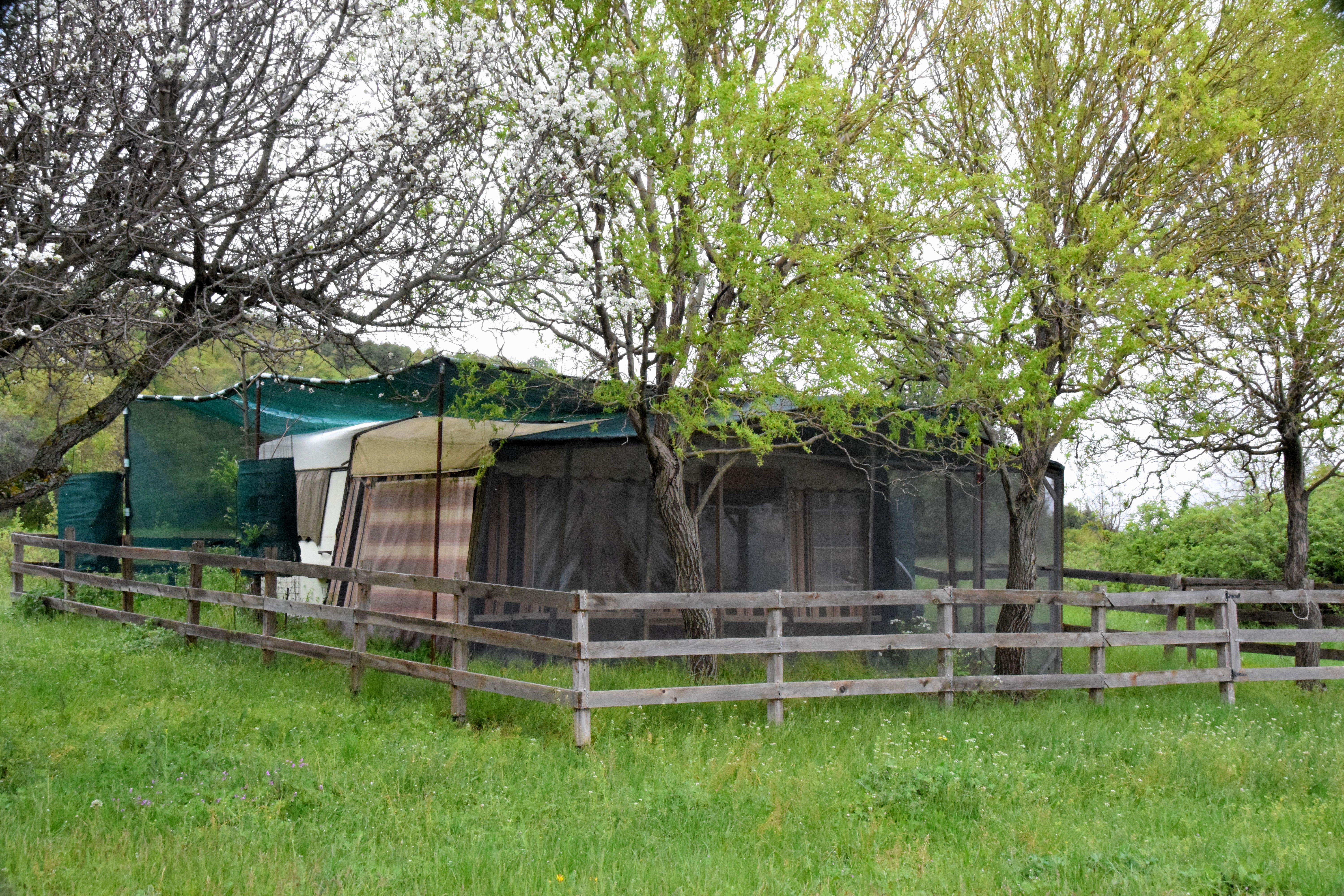
At my destination lay this (above). I had wondered if the national park would have any kind of visitor centre, but a makeshift field station was all there is. I couldn’t detect anything remarkable about the stretch of shoreline at the end of the track and felt glad to have been prevented from taking the car down there. Then gladder still to drive it safely away.

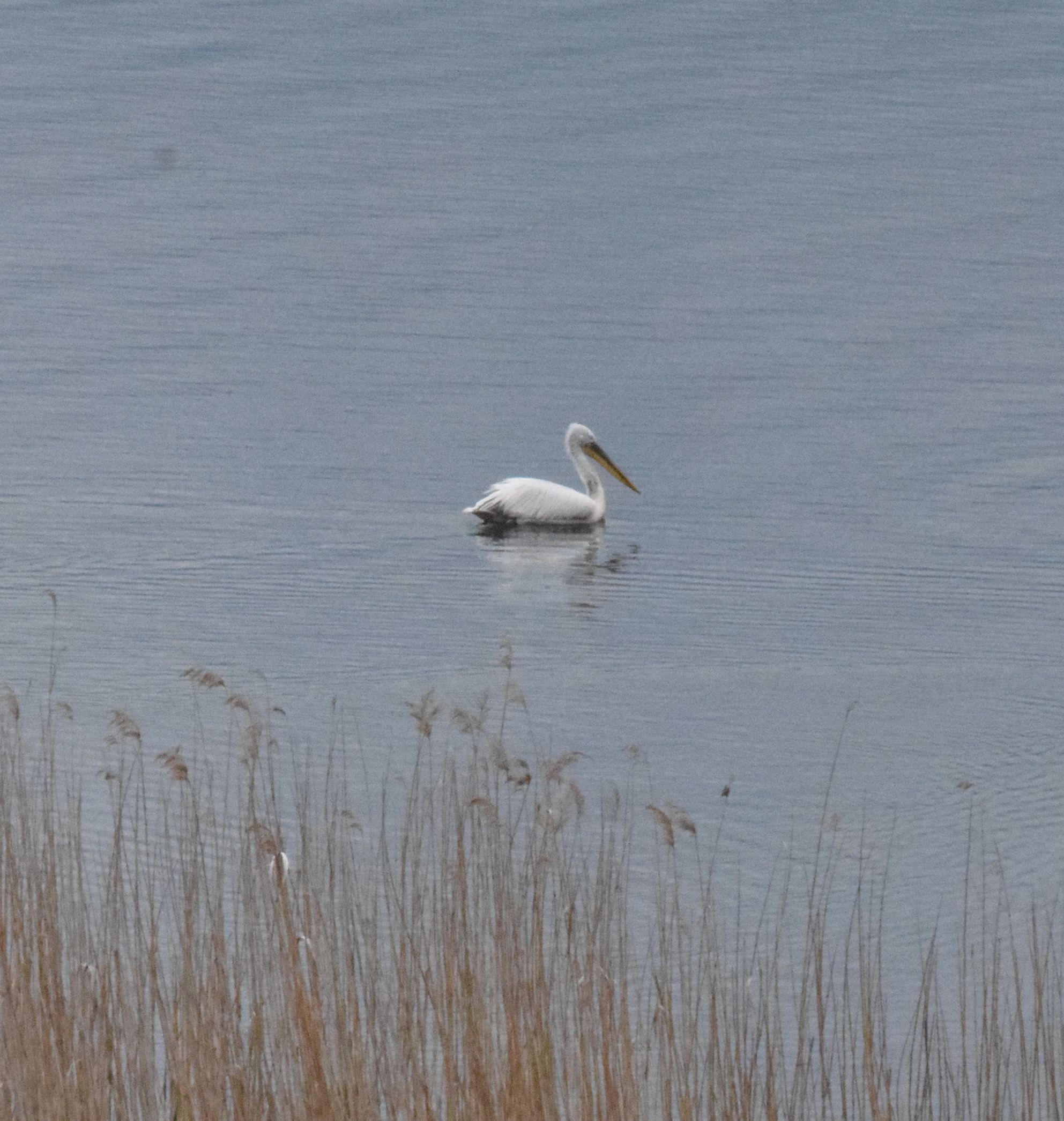
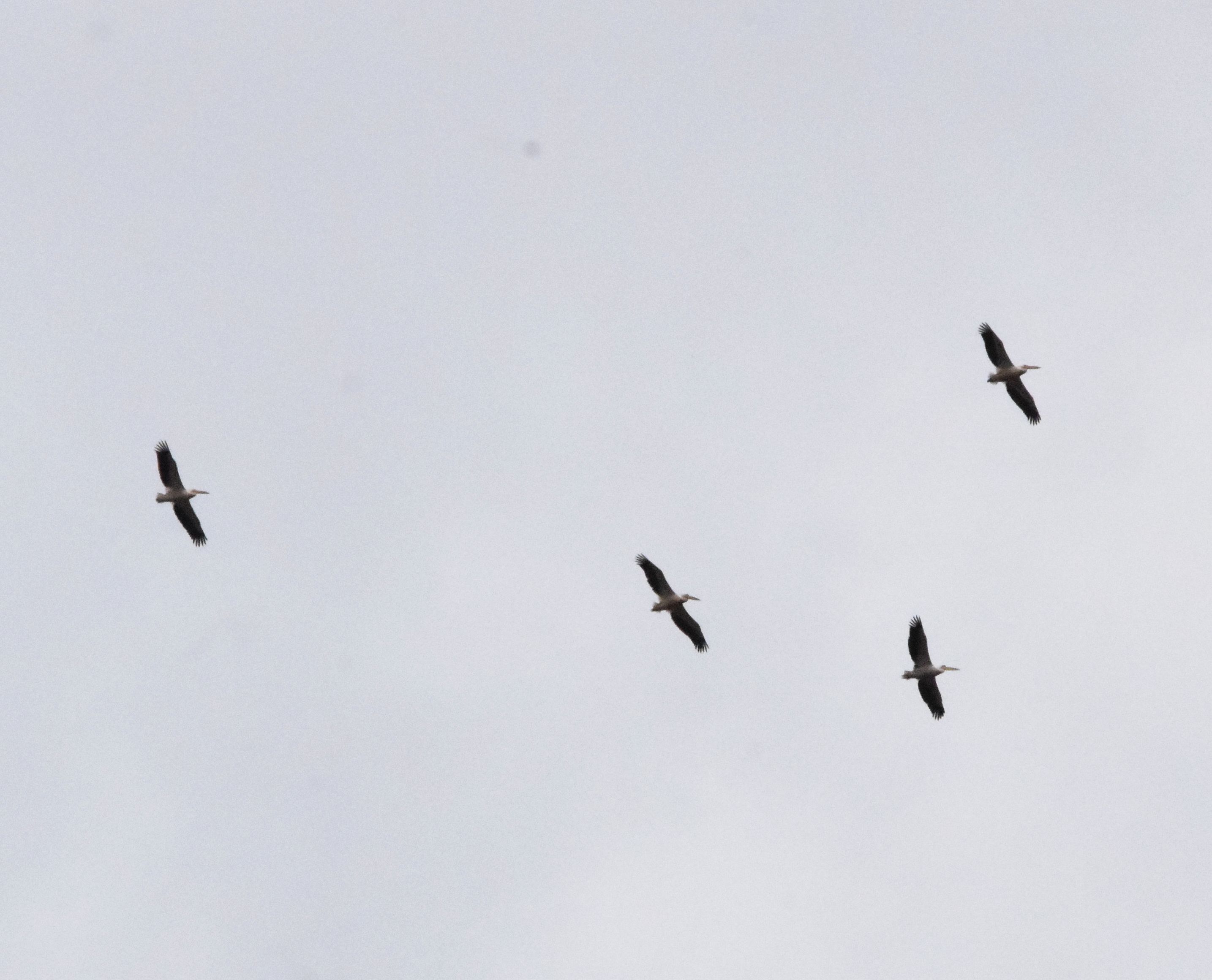
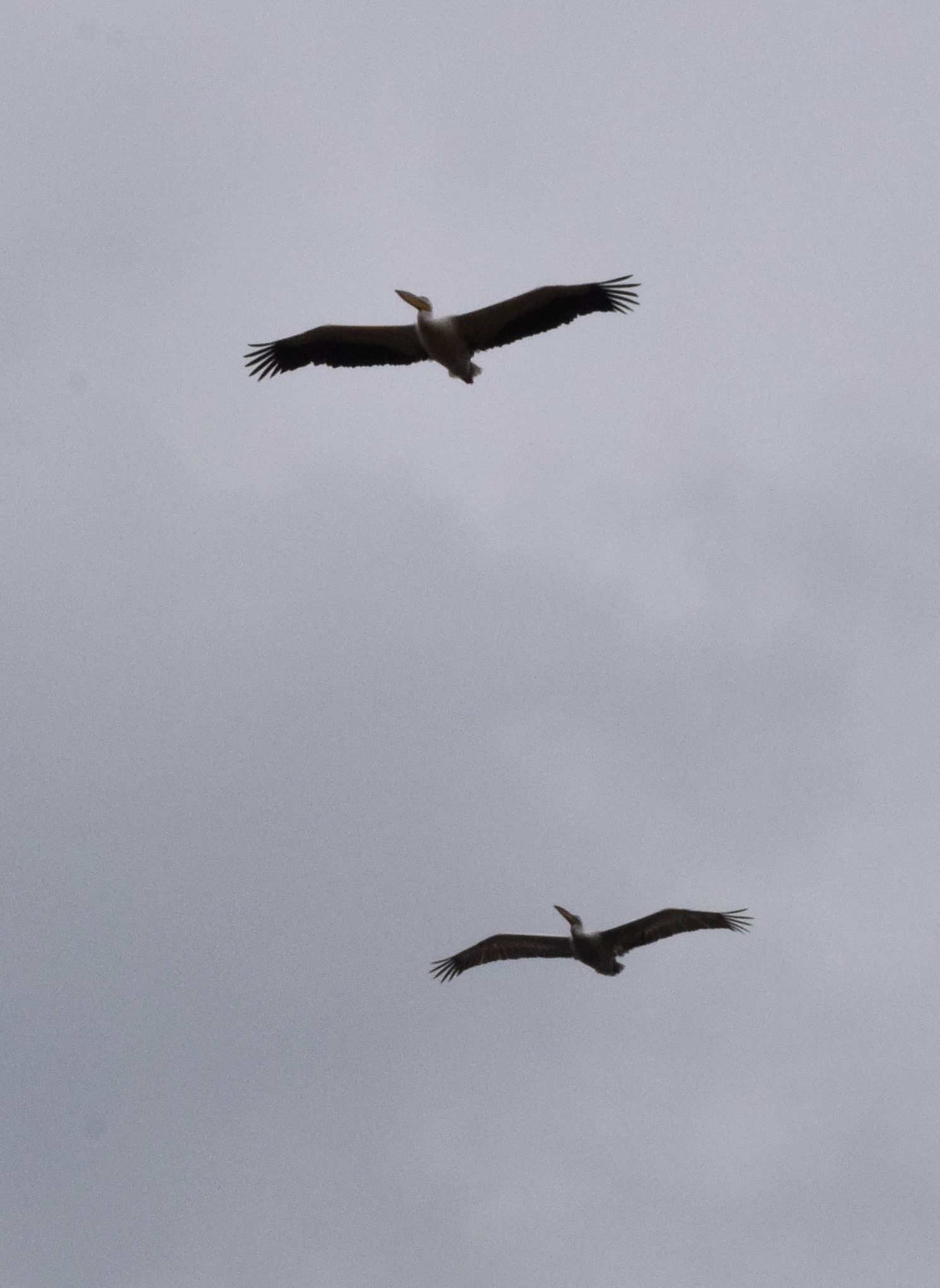
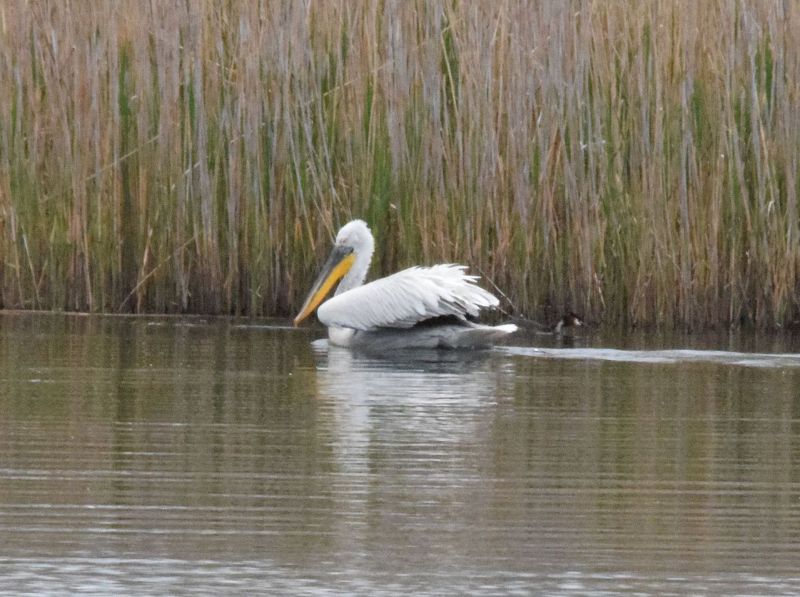
The best place to observe Pelicans was from the road that runs along the lake’s reed fringed north-west shore. There are two viewing platforms there beside an empty building, and a floating footbridge that crosses the lake to an island Agios Achillios. I viewed upwards of 30 Dalmatian Pelican (pictured below) today, either on the water or in flight, and at one point 17 were spiralling in the air like the Oxon Red Kites at home.

I at first assumed given these numbers the breeding season must not yet be in full swing. But writing this up I learned that in 2022 bird flu (see here) wiped out 60 per cent of the Dalmatian Pelicans here. The malaise broke out very early in the season, so after carcasses were removed and incinerated the later returning White Pelicans were mostly saved. The event has been described as the worst ecological tragedy ever to hit Greek wildlife. When the outbreak was over just 100 Dalmatian pairs raised 90 young. Nature is resilient and now has a task in hand to restore this colony to its former status.

There was no rain throughout my time here today but conditions remained steadfastly overcast so I did not experience the site at it’s best. I feel pleased to have now been to both of Greece’s major Pelican breeding sites after Lake Kerkini in May 2017 (see here). This post’s record shots gained in poor light reflect how it was not possible to get close to the birds. At Kerkini visitors are taken out to within a safe distance by boat. The more remote and probably less visited Prespa lacks the facilities and pazazz of Kerkini but was still good value on this alternative day out.

Seeking out Mountain and Krüeper’s Small Whites in Nestos Gorge, Thrace, northern Greece – 1st & 2nd May

I had first planned a solo expedition to this region in the Covid spring of 2020, prompted by the large-part failure through foul weather of the previous year’s Greenwings False Apollo tour (see here and here). Back then I had opted to forgo the convenience company, cramped minibuses and end of day sit down meals of group tours in favour of attempting to self-find up to 15 more butterfly lifers. This year that challenge still appealed though after three intervening seasons of enforced British list re-working I reasoned just being out in the mountainous wild again amongst southern European butterflies could be sufficiently rewarding even if the more specific trip agenda is not achieved.

Such a compromise approach seemed sensible given the difficulty of most of the species on my wish list. Three tricky ones are Southern, Mountain and Krüeper’s Small Whites that may all be found in Nestos Gorge, which had been the most spectacularly washed out location of all on that 2019 tour. The next Greenwings group in 2022 logged 37 species in near perfect weather conditions. Hence I elected to give things two full days there, anticipating a lot of careful scrutiny of on the wing subjects should the weather oblige.

Nestos Gorge

For my base I chose the nearby town of Xanthi, where upon arriving in the early afternoon of 30th April conditions turned showery, so I opted for a half-day of acclimatising after two days of travel. Nestos Gorge is accessed via an adventure park so I was mindful of that on a Sunday before embarking upon the serious wildlife agenda a day later. Monday morning (1st) was gloriously sunny but still cool as I walked out along 10 km of what is described as one of the most scenic and environmentally rich hiking trails in northern Greece (pictured above). When the sun rose above the cliff behind me as I approached a butterfly-friendly looking stretch they began to appear. Then the first Small White to cross my path was at once recognisable as a trip target.

Mountain Small White (pictured below) is not as big as the regular variety and my first sighting had a delicate, bouncy flight style more reminiscent of Wood White. When this butterfly settled the diagnostic pale, square forewing tips were apparent at once. First brood males such as this also have much fainter black dots on the forewings.

Mountain Small White (all images)

This Mediterranean and Middle Eastern species flies in a series of broods from April to August, favouring dry, open, stony places. Of the Small Whites encountered further along the trail I thought most were probably more of the same on jizz. There were two candidates for Southern SW, but each time other walkers passed at the moment when the butterflies allowed me to get close with the camera.

Nestos Gorge is a spectacular location and after the wash out of 2019 I was so pleased to be experiencing it in all its stunning glory (above). At around 12:30 I turned back to concentrate on finding the other two Small Whites in the better butterfly habitat. But my app had forecast early afternoon showers and a thundery build-up began right on cue. My luck held as I reached the adventure park just before it rained to be met by a sea of humanity, then I got out of there just in time. A huge May Day holiday event was in progress and with no marshalls the car park looked about to become gridlocked.

From the start of the entrance road to the Gorge runs a high road that winds its way up for 10km to a viewpoint from where it is possible to see as far as Bulgaria and Turkey on clear days. The Greenwings group had been there and the rain having soon passed I now went up. The habitat looked good for ground flying butterflies, so I sat in the car and waited for my app’s renewed sunshine.

The most frequently encountered mountain bird of this week

But conditions remained largely cloudy and cool, so after an hour I resolved to come back in the morning and left. My Tuesday forecast was for wall to wall sunshine and the adventure park would be closed. Hence I could spend the rest of the day in the gorge and major on Southern and Krüeper’s Small Whites. Unexciting as those species might seem to others I would surely not have a better chance of finding them than here.

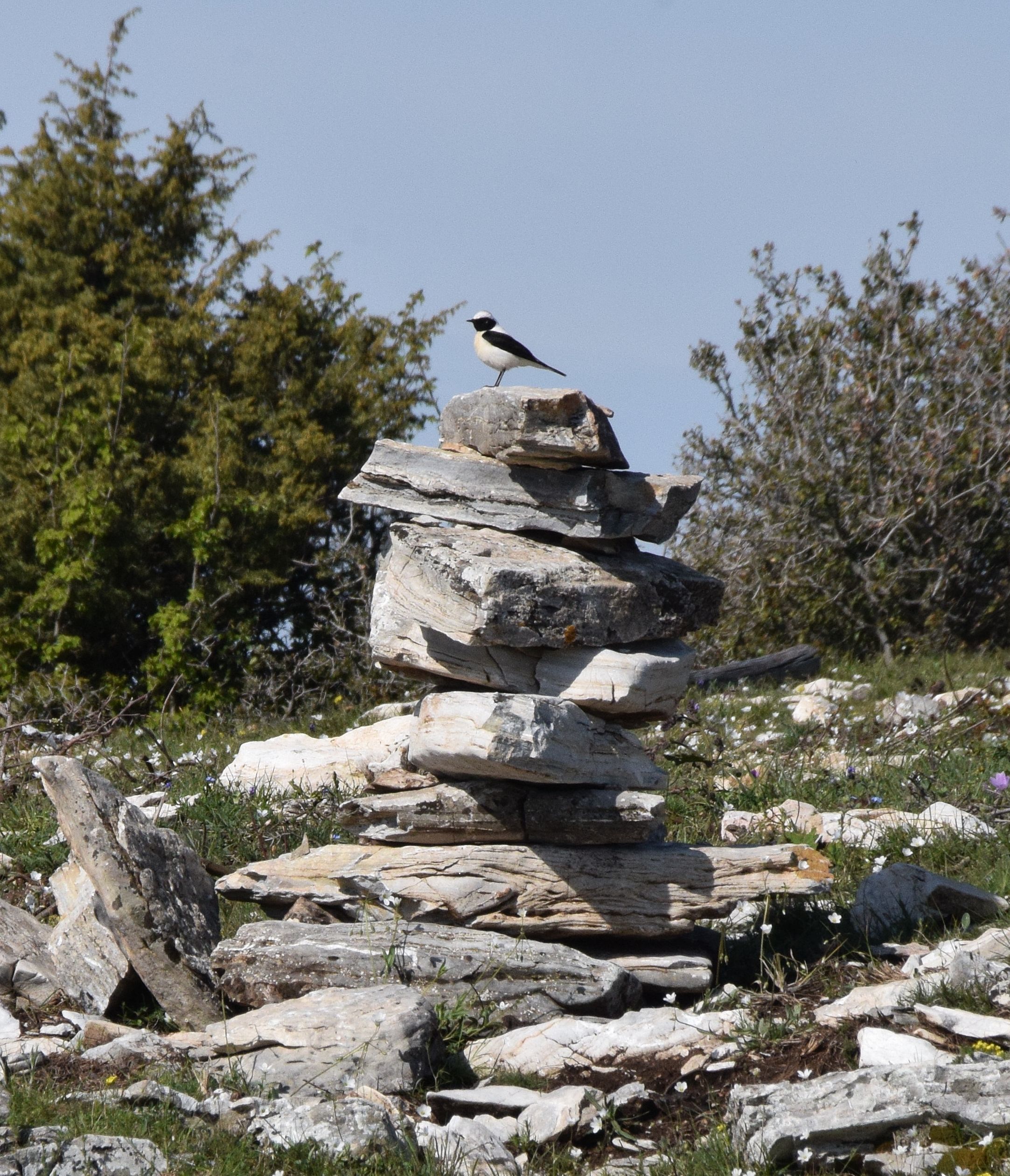
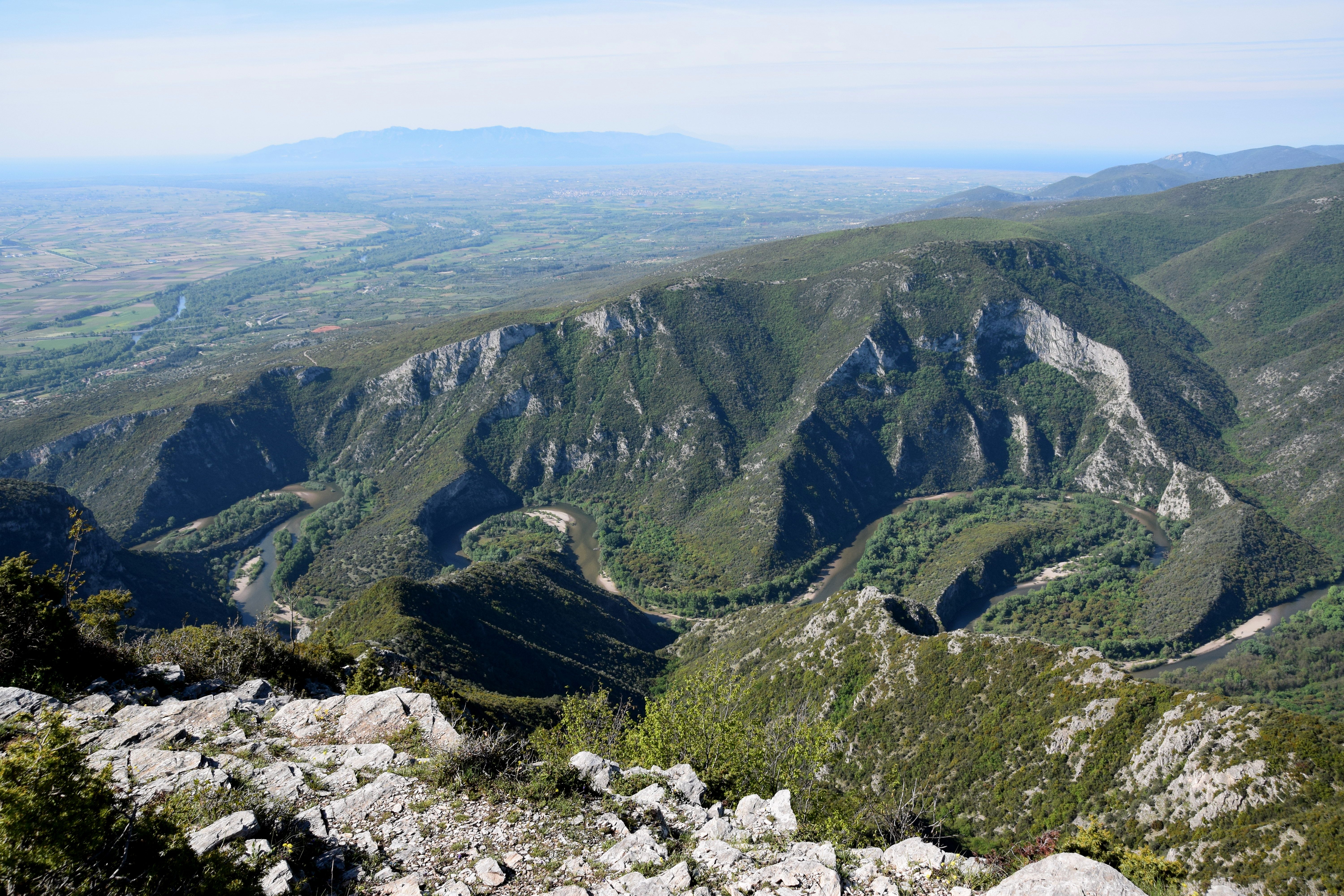
In my first hour on 2nd the sum total of butterflies seen at the high viewpoint was one Orange Tip. What looked like a resident pair of Black-eared Wheatear enlivened my search, while Dartford Warblers rattled away in the bushes and the lilting song of Woodlarks drifted through proceedings from the middle distance. Below to the west the grand scale of the complete route I had walked on Monday (pictured below) was viewable almost in miniature from where I was now standing.

Nestos Gorge from above

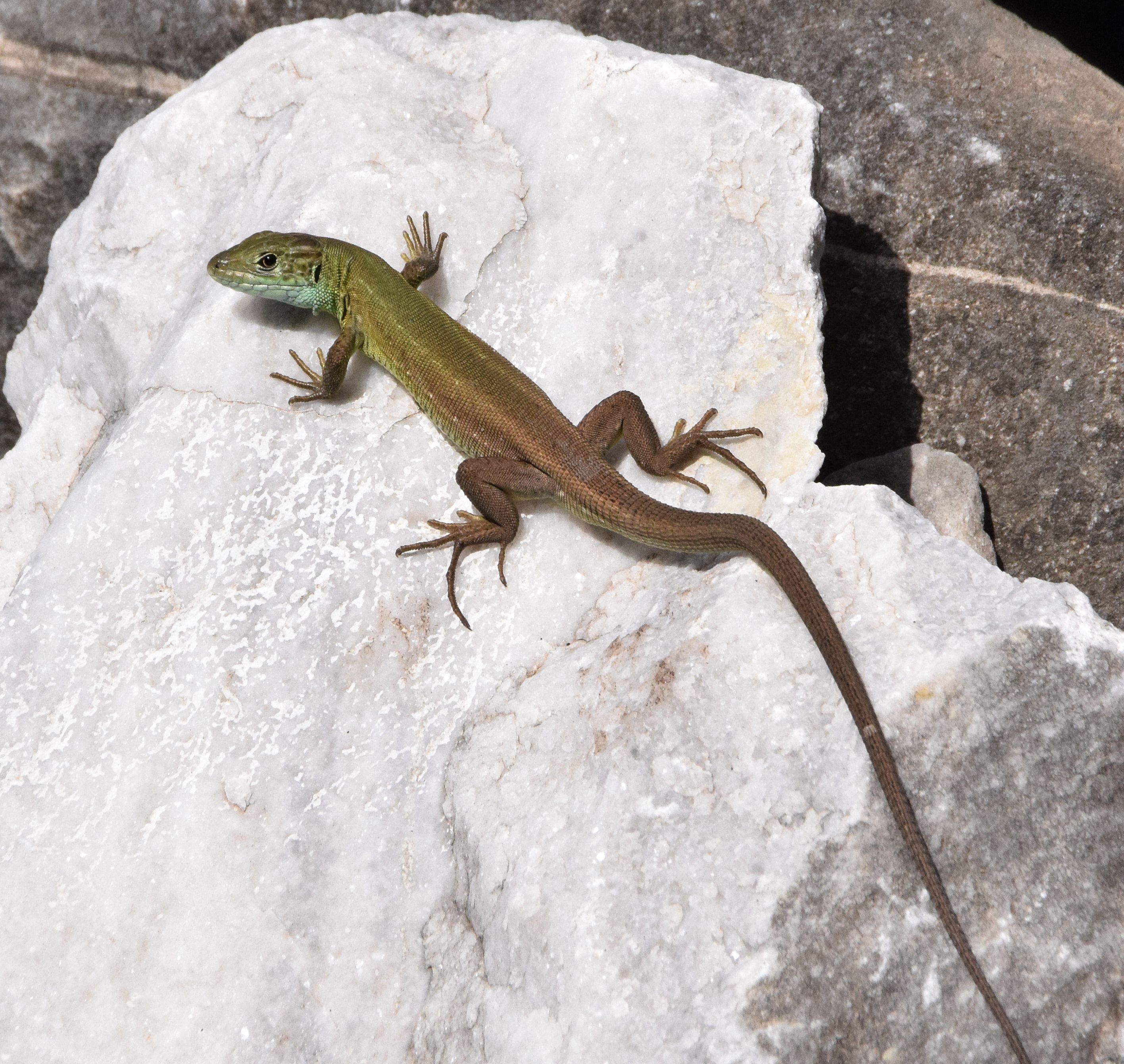
When I went back down there appeared to be a similar lack of butterflies along the hiking trail. Eventually while I was watching this Balkan Wall Lizard (below left) a Krüeper’s Small White flew over my shoulder and landed right in front of me. But having confirmed the ID I was too slow with the camera and off it went again down the slope.

Balkan Wall Lizard (left) and Krüeper’s Small White (right) © and courtesy of Alex Wirth

Like the previous day’s lifer this butterfly was instantly recognisable, this time by the blotchy green underside hind-wing markings and the chequered topside wing tips. The first of those diagnostics is darker in the first brood and less pronounced than in Bath White. This multi-brooded species flies from March to August, in the southern Balkans and Greece where it is very localised and occurs in small numbers. The range extends through Anatolia and the Middle East to the northern Indian sub-continent.

When the butterfly did not return I walked on, but a German group I had passed on the trail caught me up and they had seen the Krüeper’s as well. Their leader showed me his own picture (above right) and confirmed that spring is late in Greece this year. Hence the paucity of butterflies being encountered by me, compared with last year’s Greenwings group.

I then went back to what I dubbed “Krüeper’s corner” to re-try for my own pictures. Two small rival males and what appeared to be a larger one were now patrolling up and down the steep, rocky slopes above and below the trail (pictured above). The species is said to exploit air currents over hot, bare slopes such as this, as males search for females and the latter look for egg laying sites.

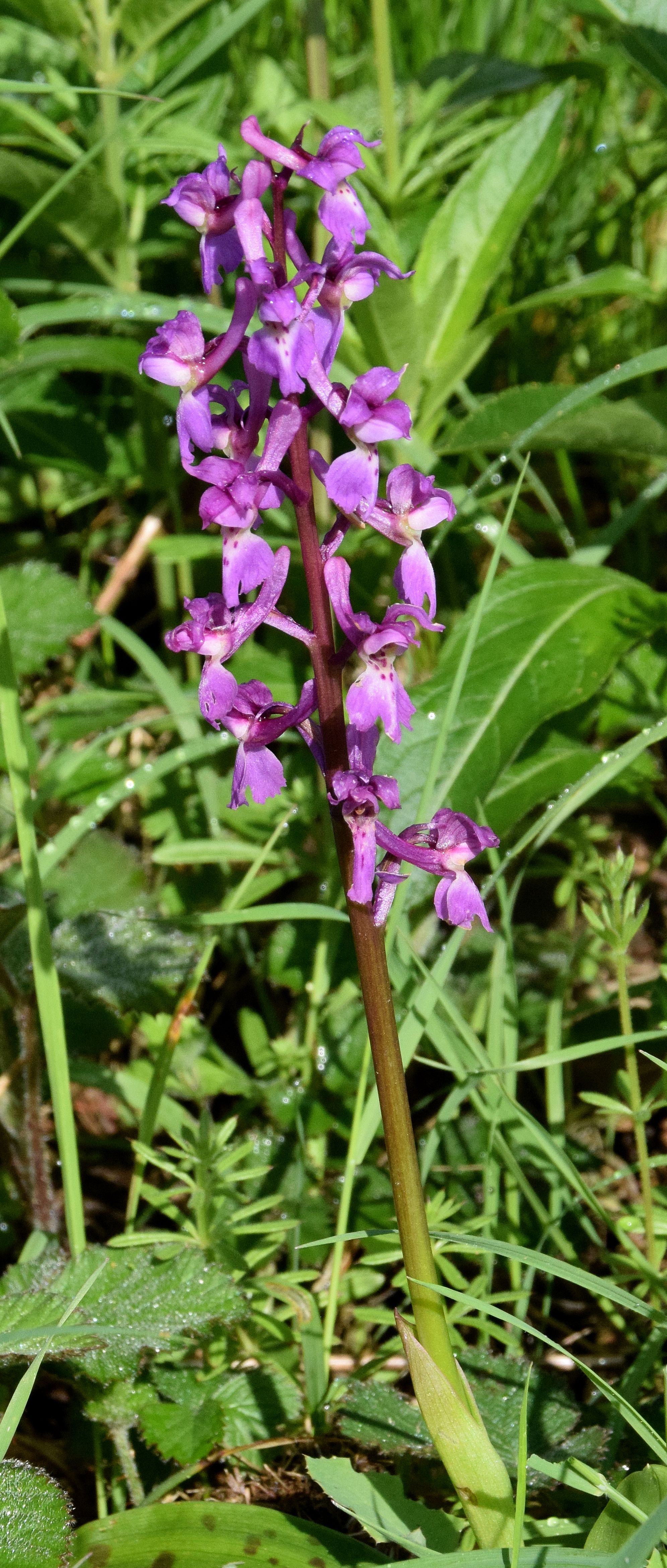
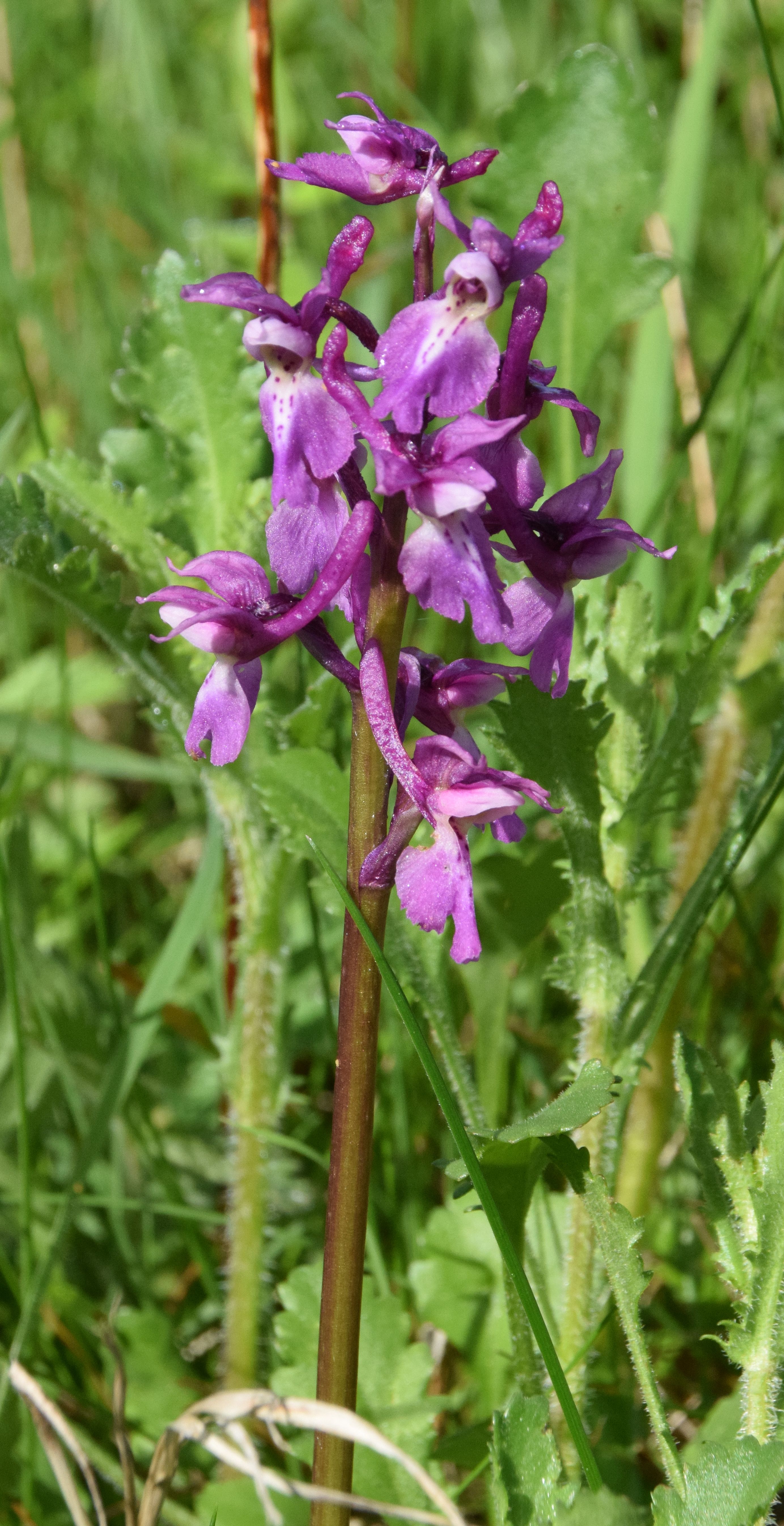
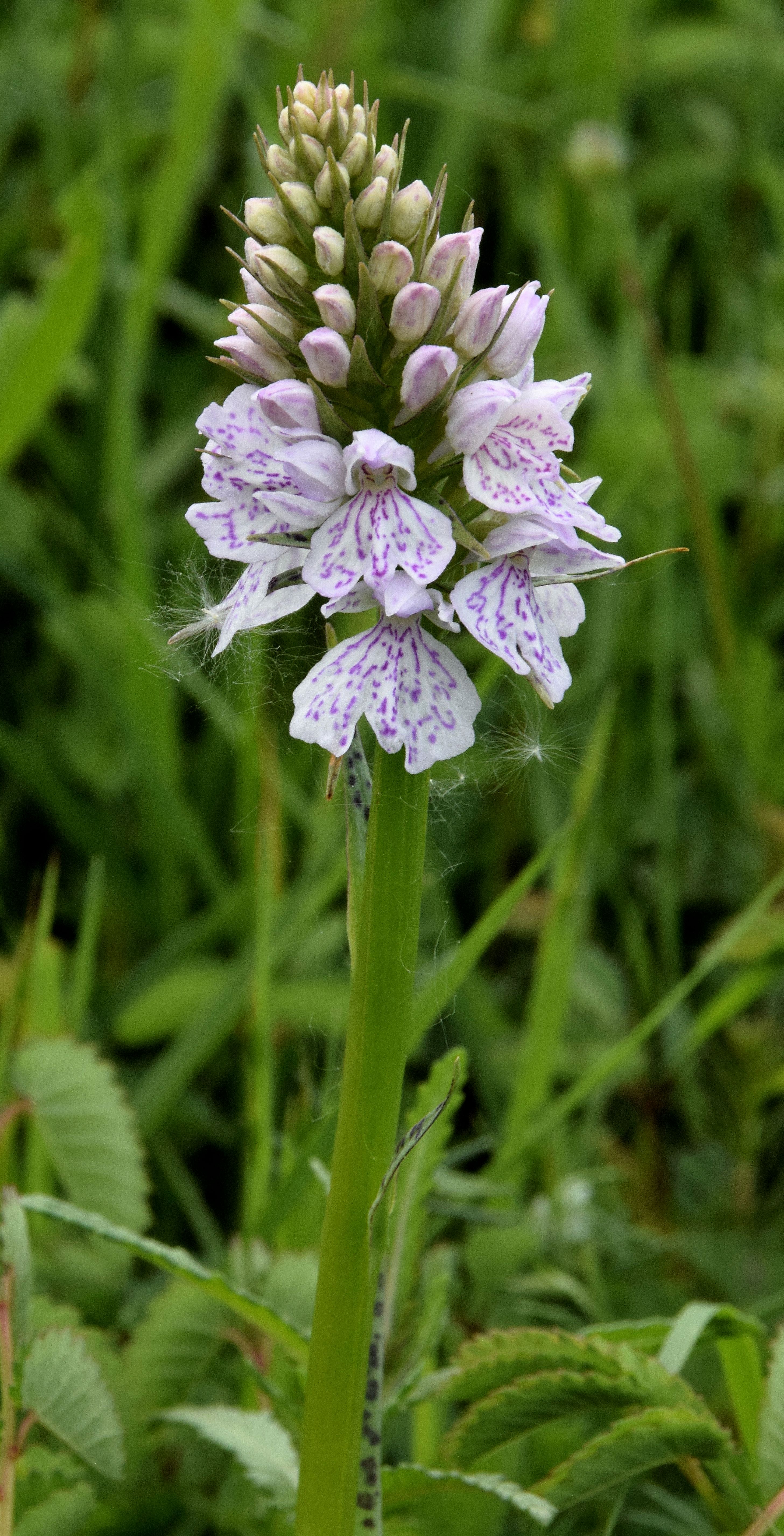
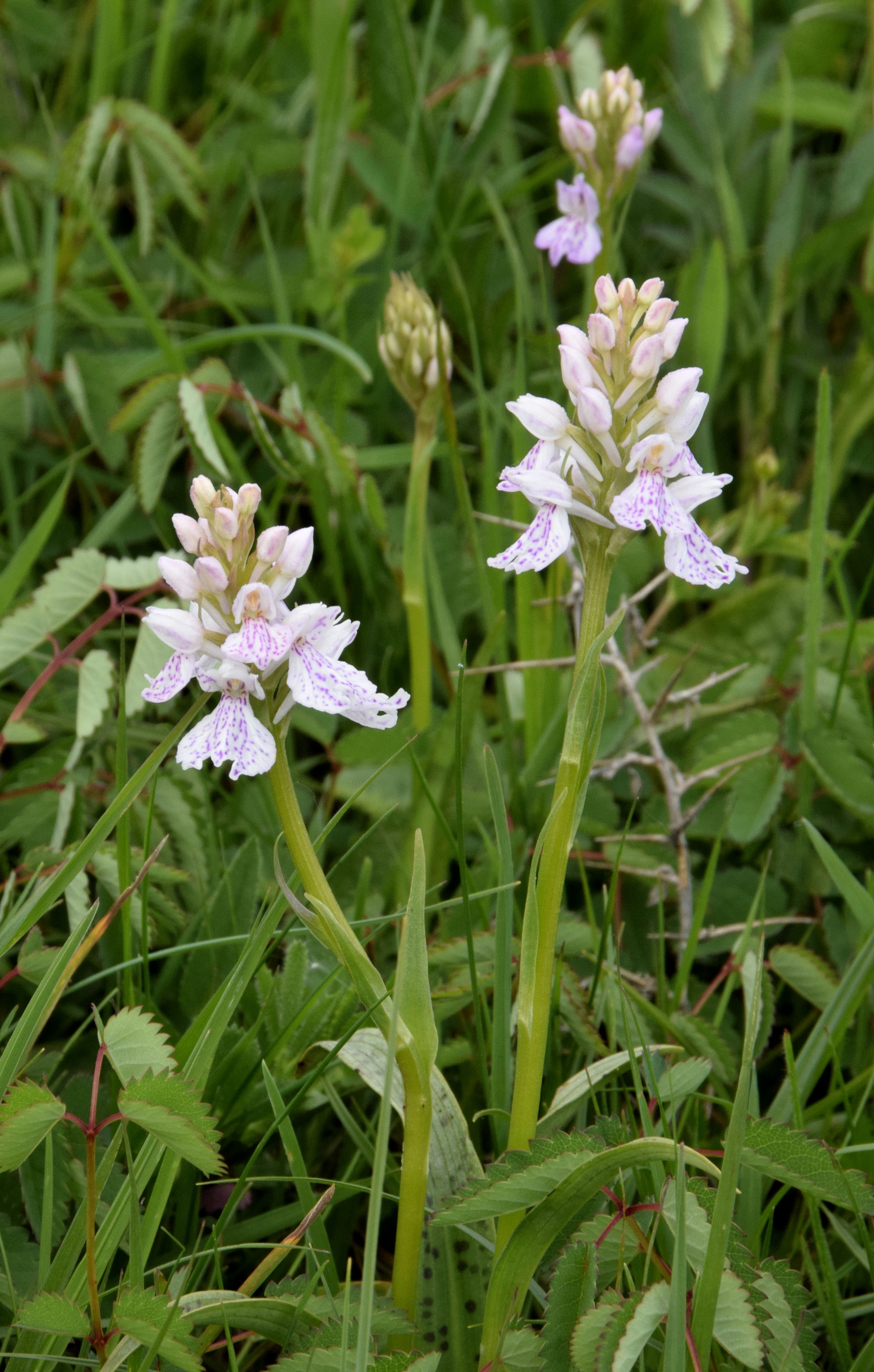
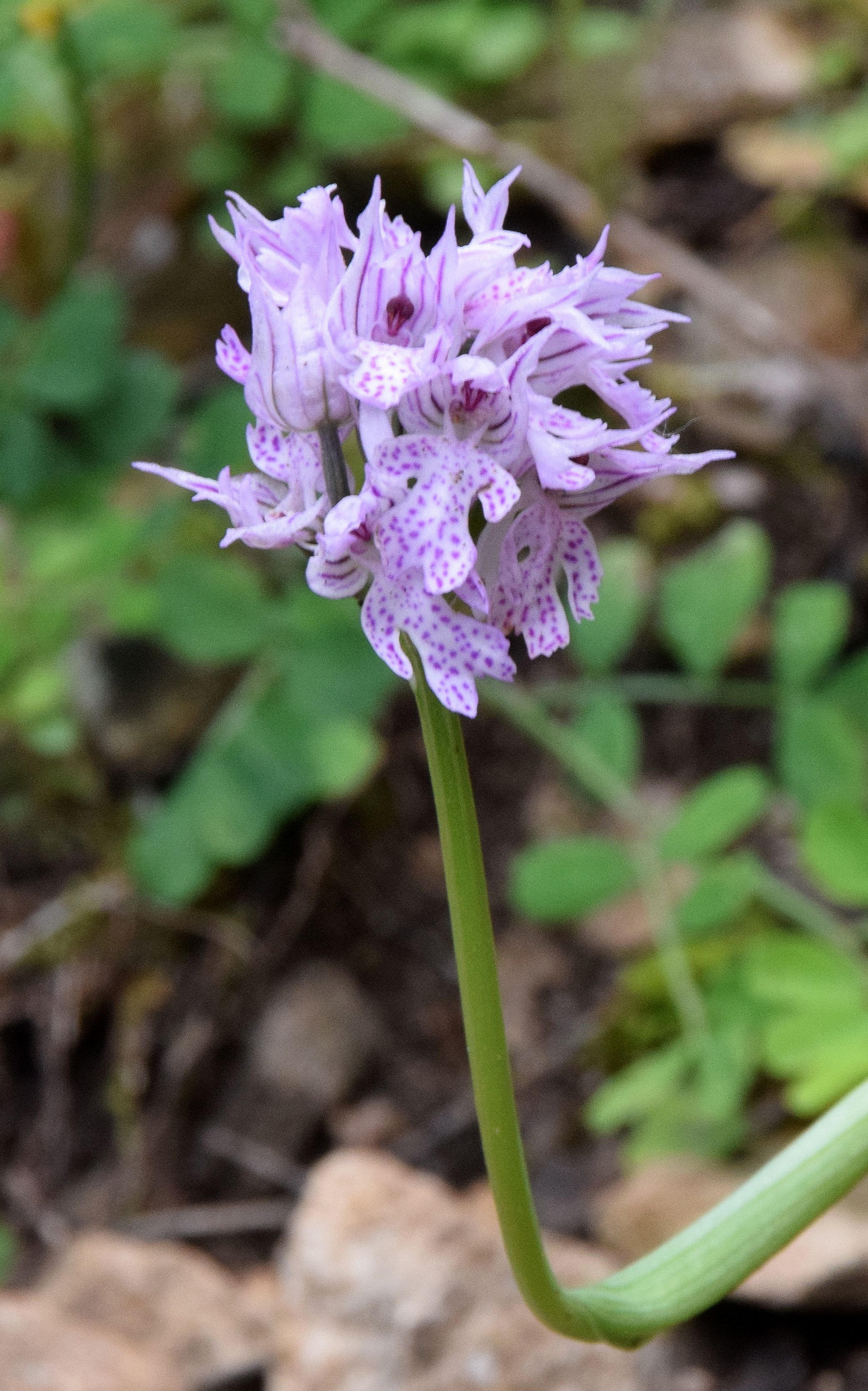
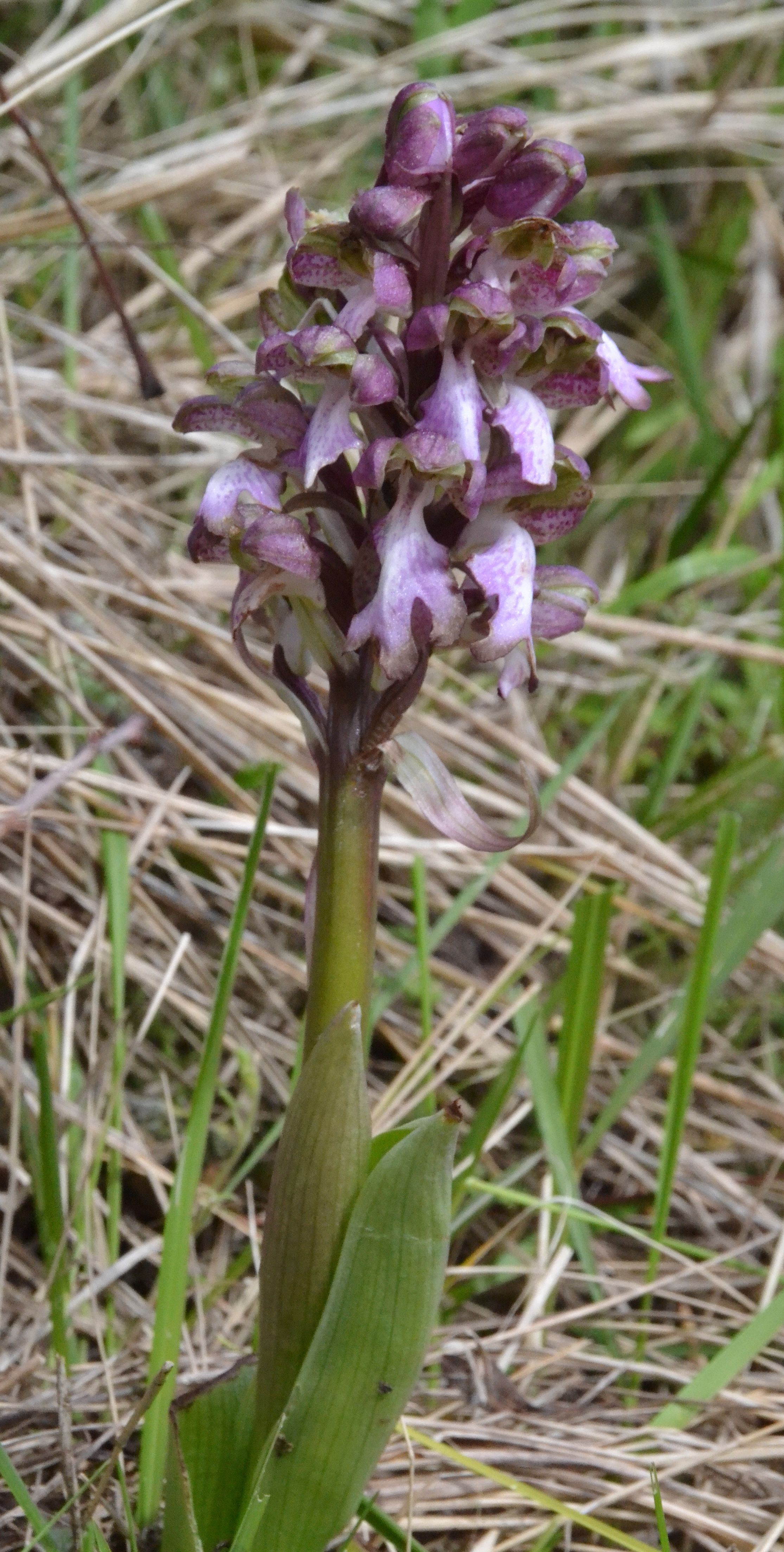
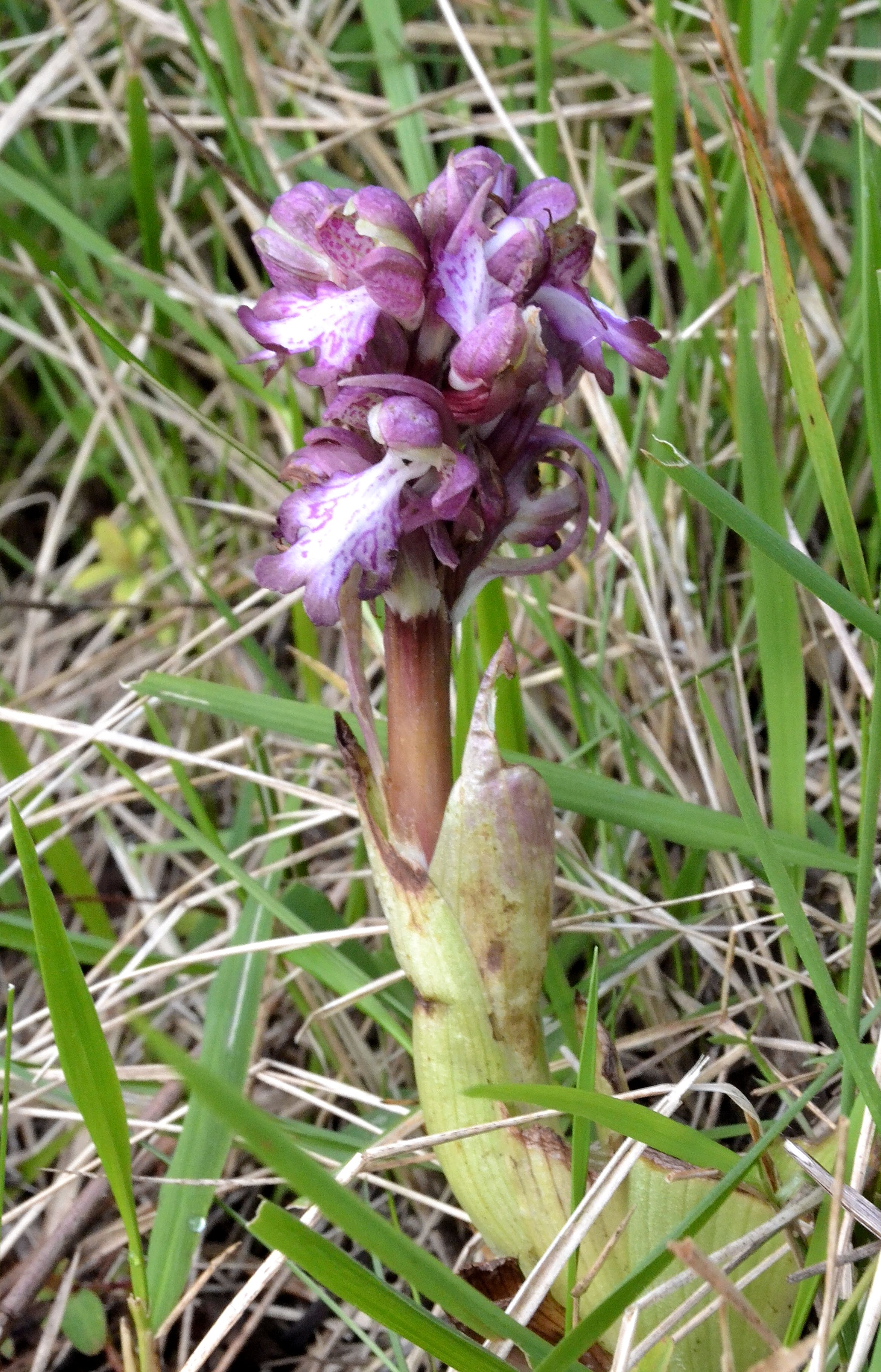
Two Mountain SW, one very worn were also in the mix and those were the only ones to co-operate for the camera. I returned here more times through the afternoon but the Krüeper’s though plain to pick out were just not inclined to settle. For the rest of the time I walked up and down the trail seeing what else I could find and being distracted by new (for me) Mediterranean Orchids (pictured below).

Nestos Gorge is not an easy place to butterfly given the steepness of the terrain that is impossible to move around without risk of serious mishap. So non-mountain goats such as myself are restricted to what can be observed along the trail path. And I couldn’t imagine being in such limited space with a wildlife group all jostling for pictures. When the lateness of this current season is added into the mix the task I had set myself here turned out to be quite difficult.

Apart from the two featured lifers there were meagre pickings through these two days. The only tiny Blues, rival males eventually revealed themselves to be nothing more than Small Blue (above left). Otherwise it was a limited selection of early season species: Wall Brown, Orange Tip, Clouded Yellow, Speckled Wood, Brimstone, Green-veined White, Painted Lady and Southern Festoon. But there could have been no better location in which to enjoy a little soul cleansing at the start of another butterfly season than Nestos Gorge.

2023 Helicos at the University Botanic Garden, Oxford: 13th April – 11th May

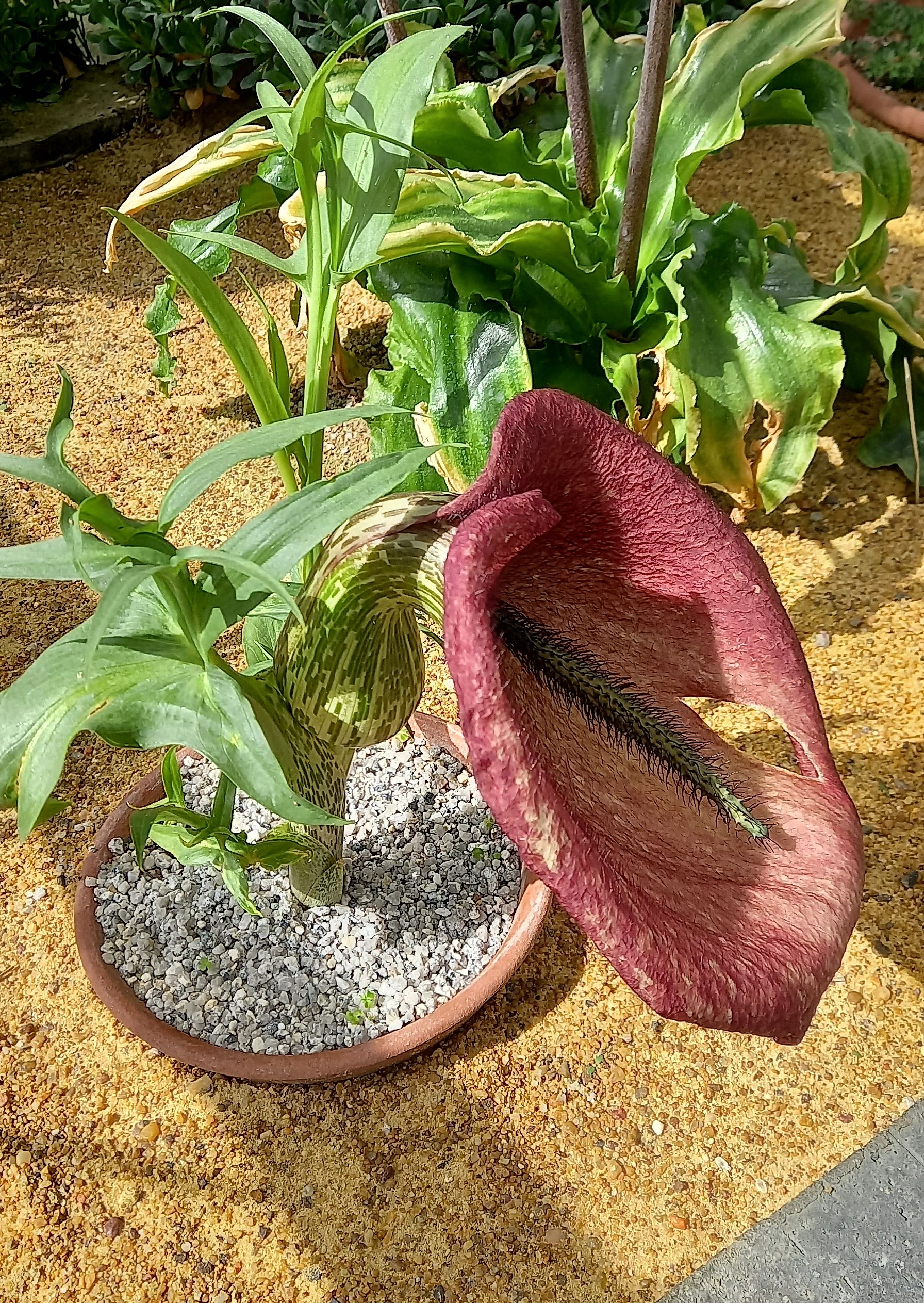
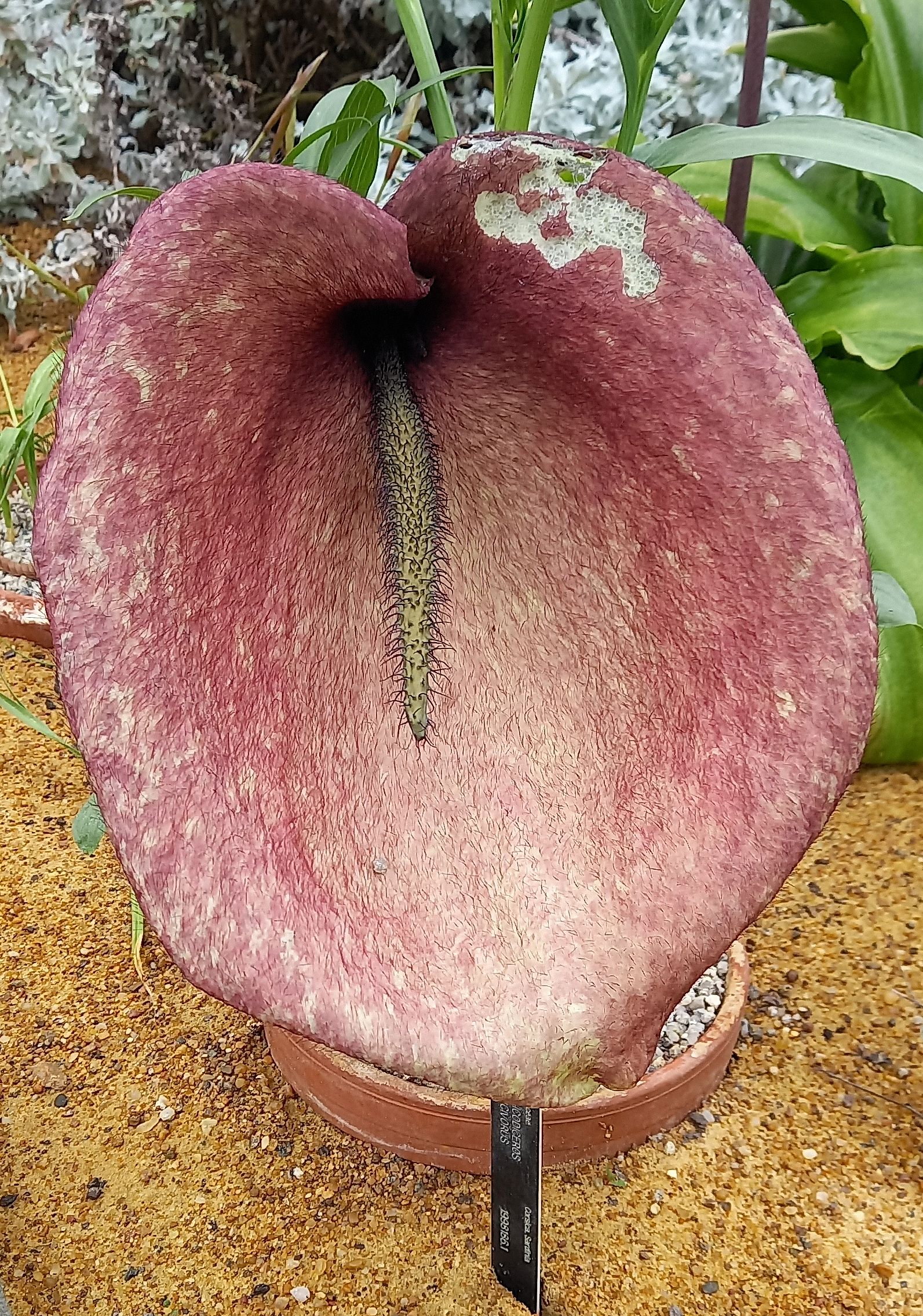
I will admit to a peculiar fascination with Helicodiceros muscivorus and apparently am not alone in that. The review article herein (see here) published upon the acquisition in 2020 of a “two-year from flowering” tuber for my own Aroid collection has now passed 500 referrals to reach the top 20 most popular Rn’S posts. But disappointingly that item did not bloom on schedule last season and has yet to make any growth this time around. If at all the tuber is shrinking rather than putting on bulk.

Hence my concern to check out the plants at UOBG again this year. When I first viewed these a little under 12 months ago (see here) the most mature specimen was past its best and two smaller ones had already gone over, so this year I timed things a little earlier in April than then. Great Britain’s longest established scientific gardens lie just across the road from Magdalen College, so on 13th I combined the post before last’s visit there with this.

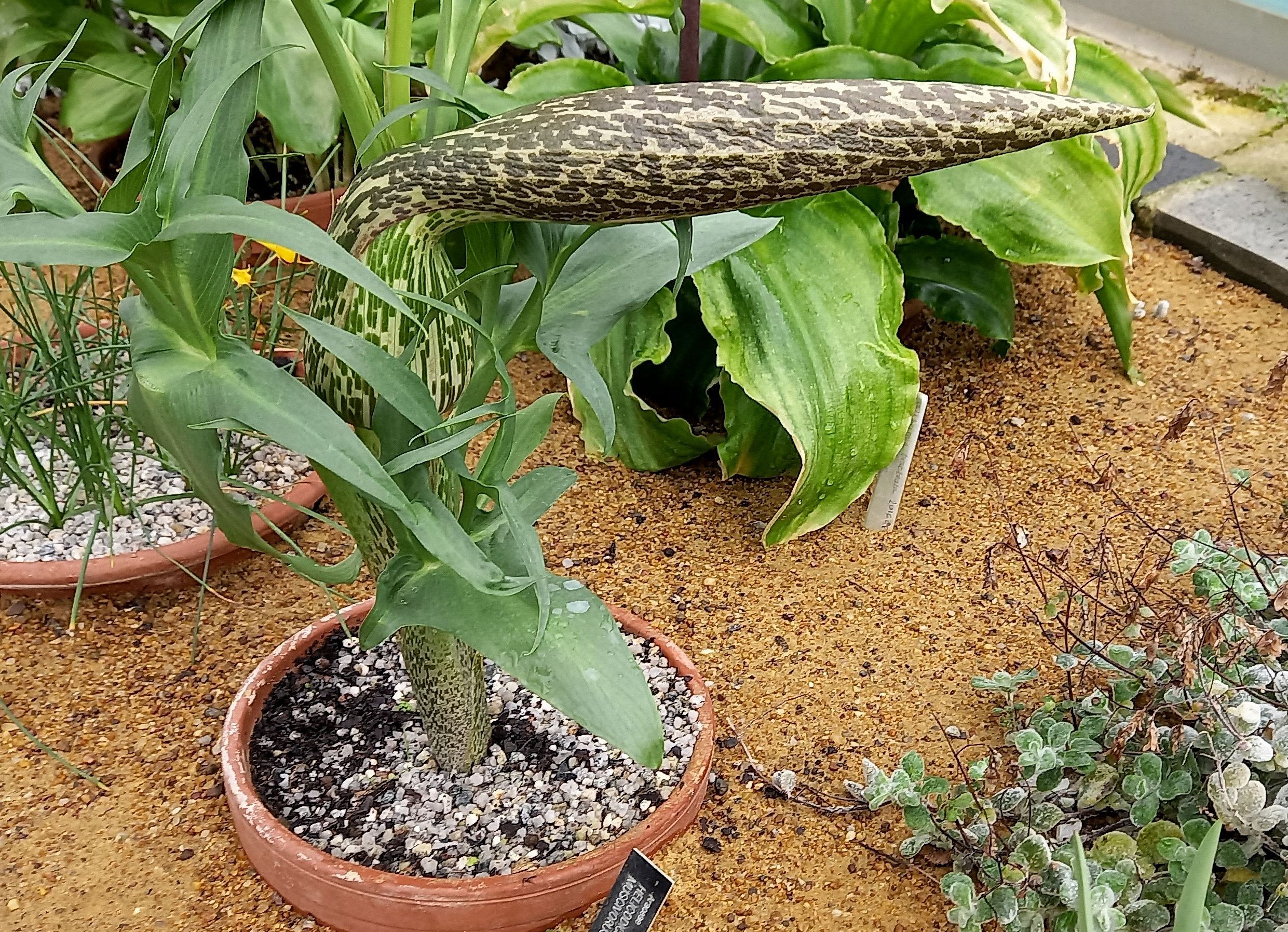
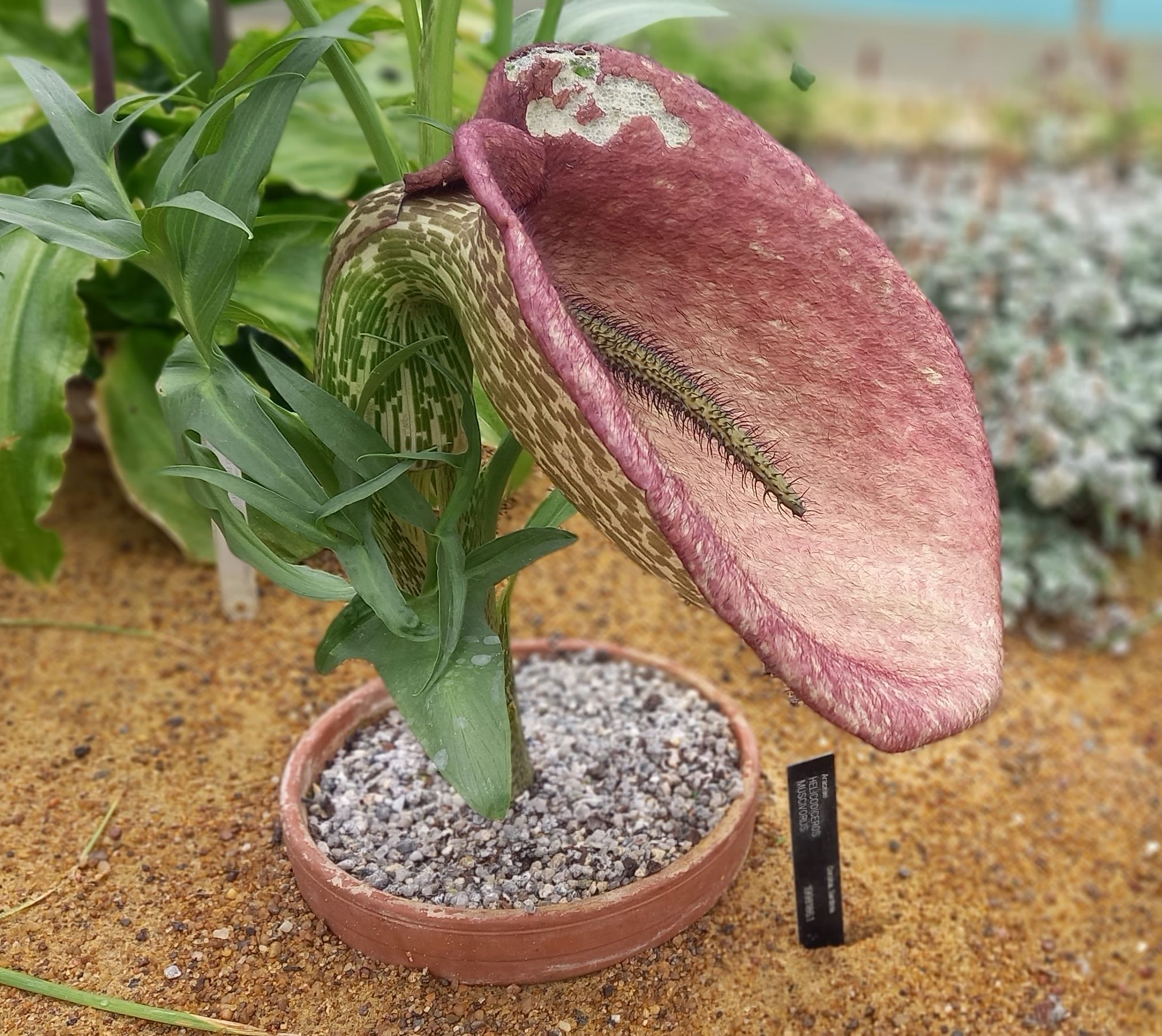
Heliodiceros muscivorous, the “Dead Horse Arum”

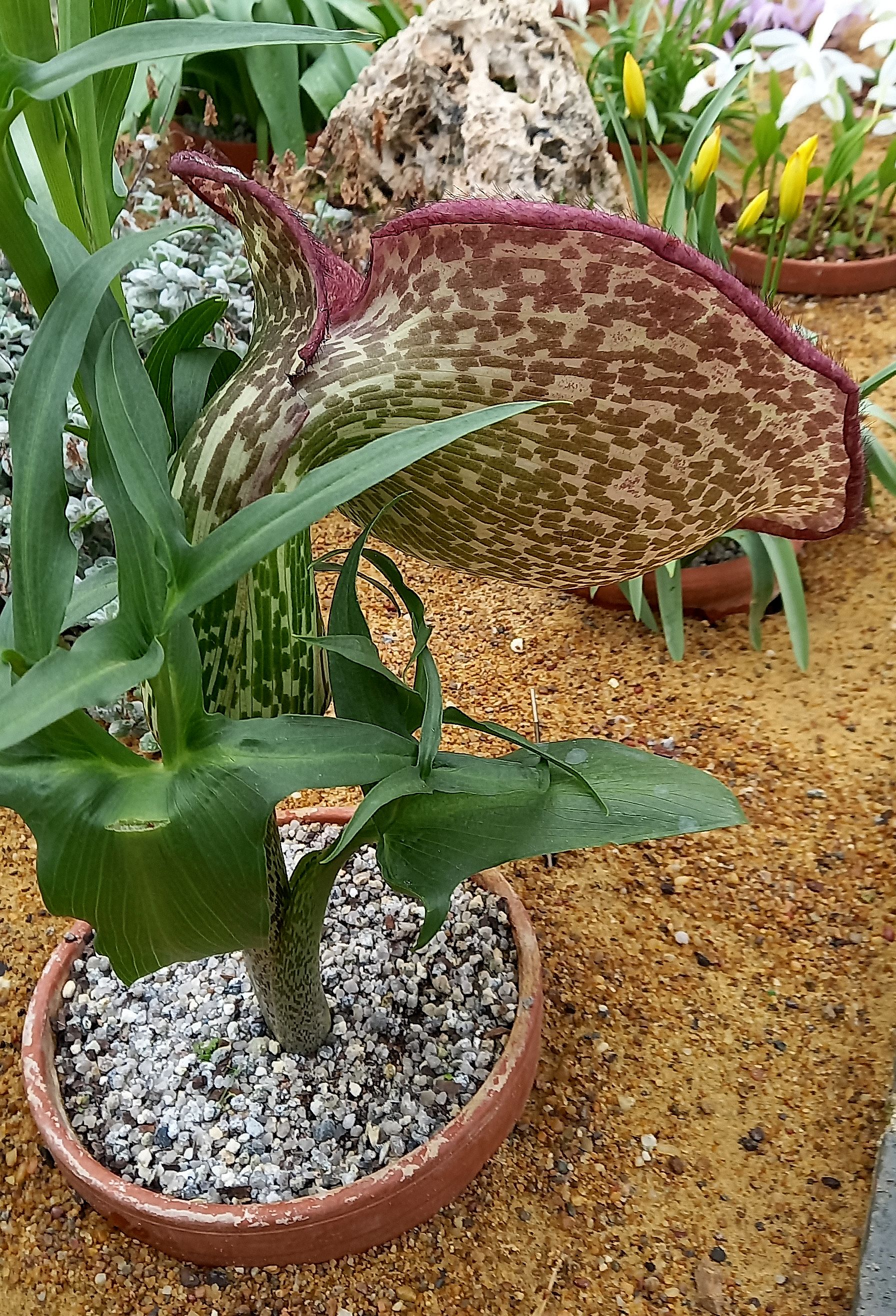
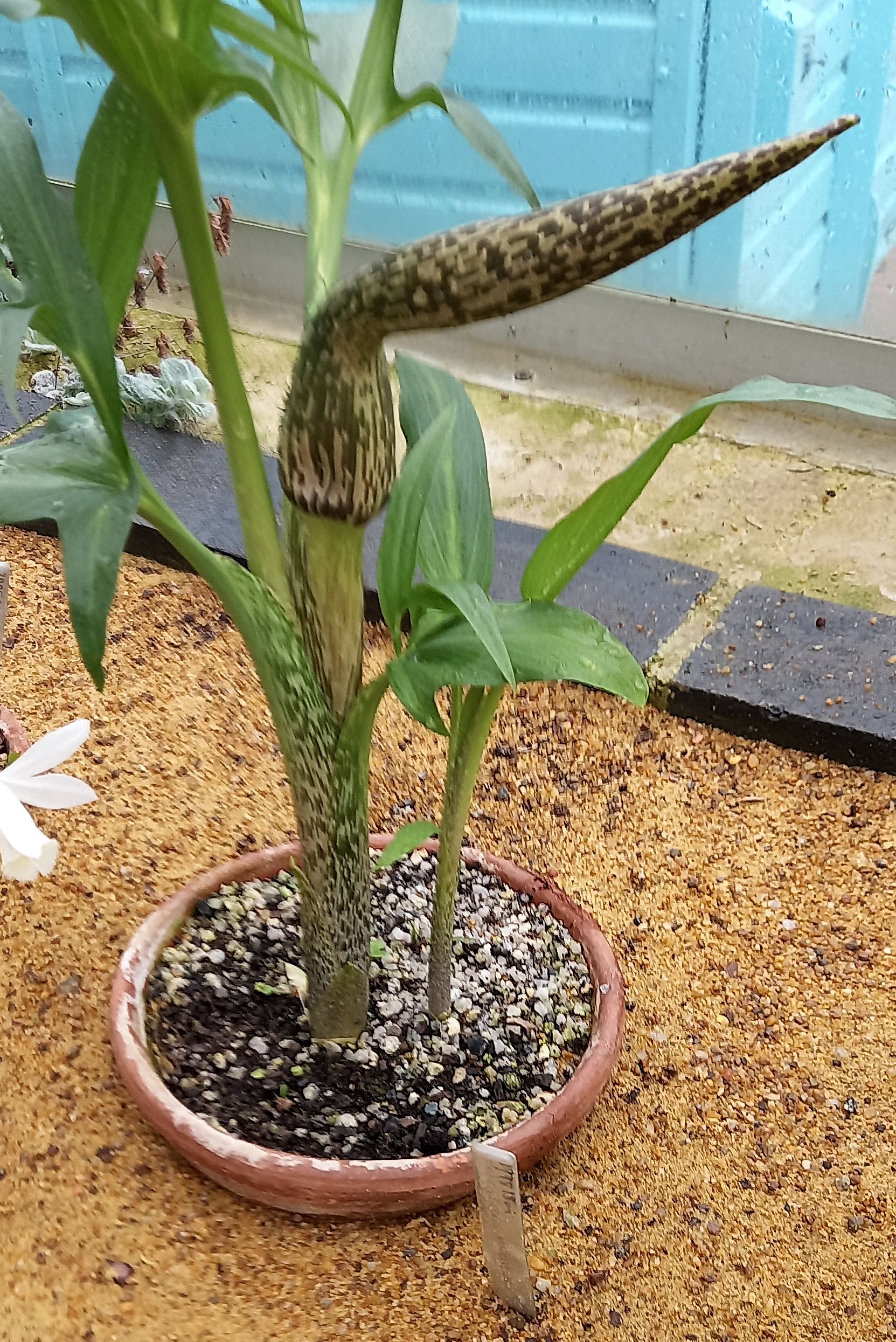
In the same glasshouse where I saw the Helicos last year there were two developing specimens. Just look at that bulging, ripe inflorescence (above left) and feel the sense of anticipation mingled with imminent danger as it prepares to unleash its magnificence and malodour upon the world. I had clearly timed things better this season and the plant could not be far from blooming. So it was now a matter of coming back on each available day until the event could be witnessed.

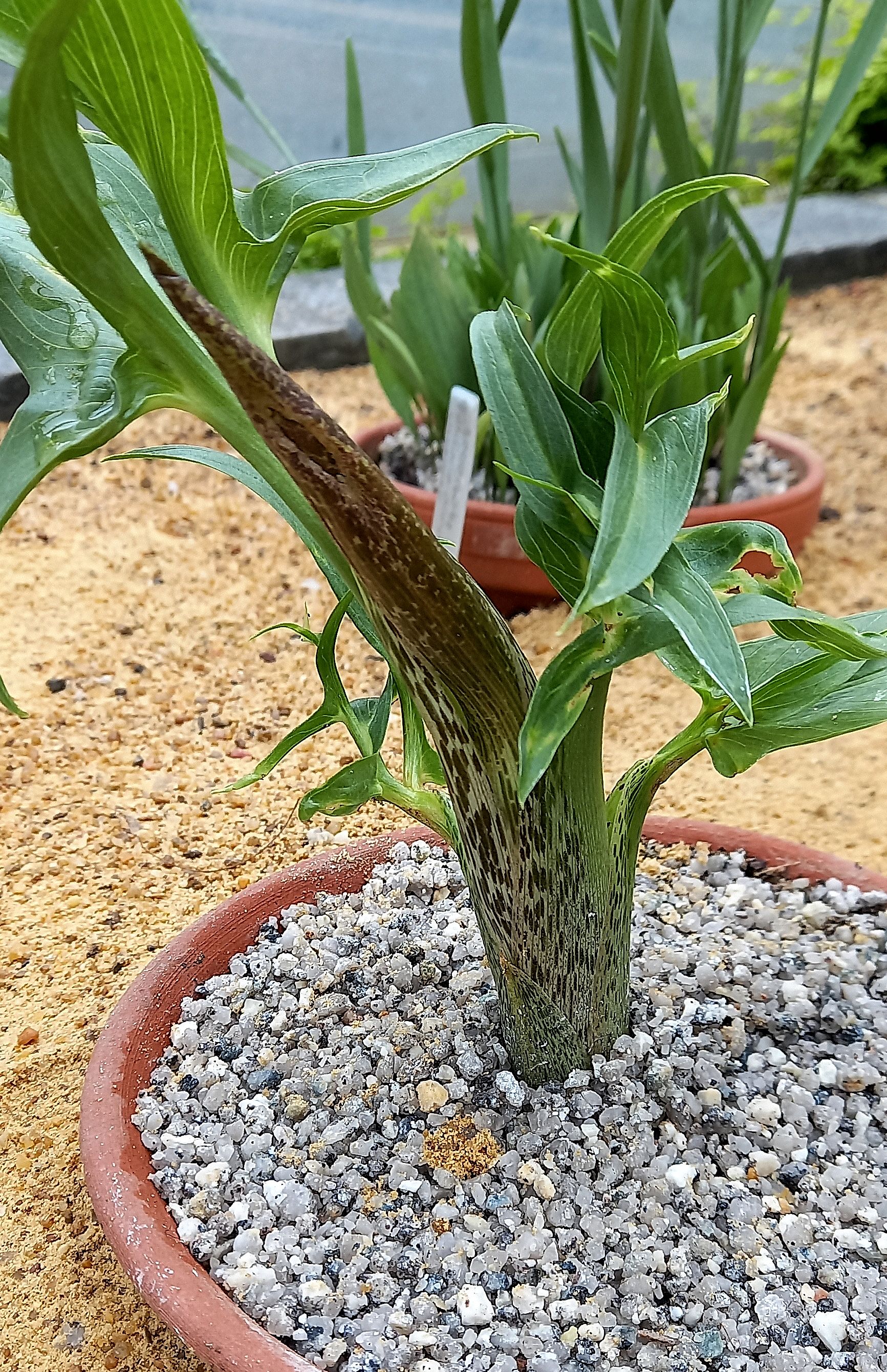
This took several more visits to achieve. Through four checks in five days the following week the inflorescence grew ever more plump and expectant looking but appeared to be in no hurry. By Friday (21st) the spadix was beginning to unfurl (below right), while a third plant had been put out in the glasshouse (left). Would sod’s law dictate that the blooming event I was tracking so patiently might materialise over my working weekend?

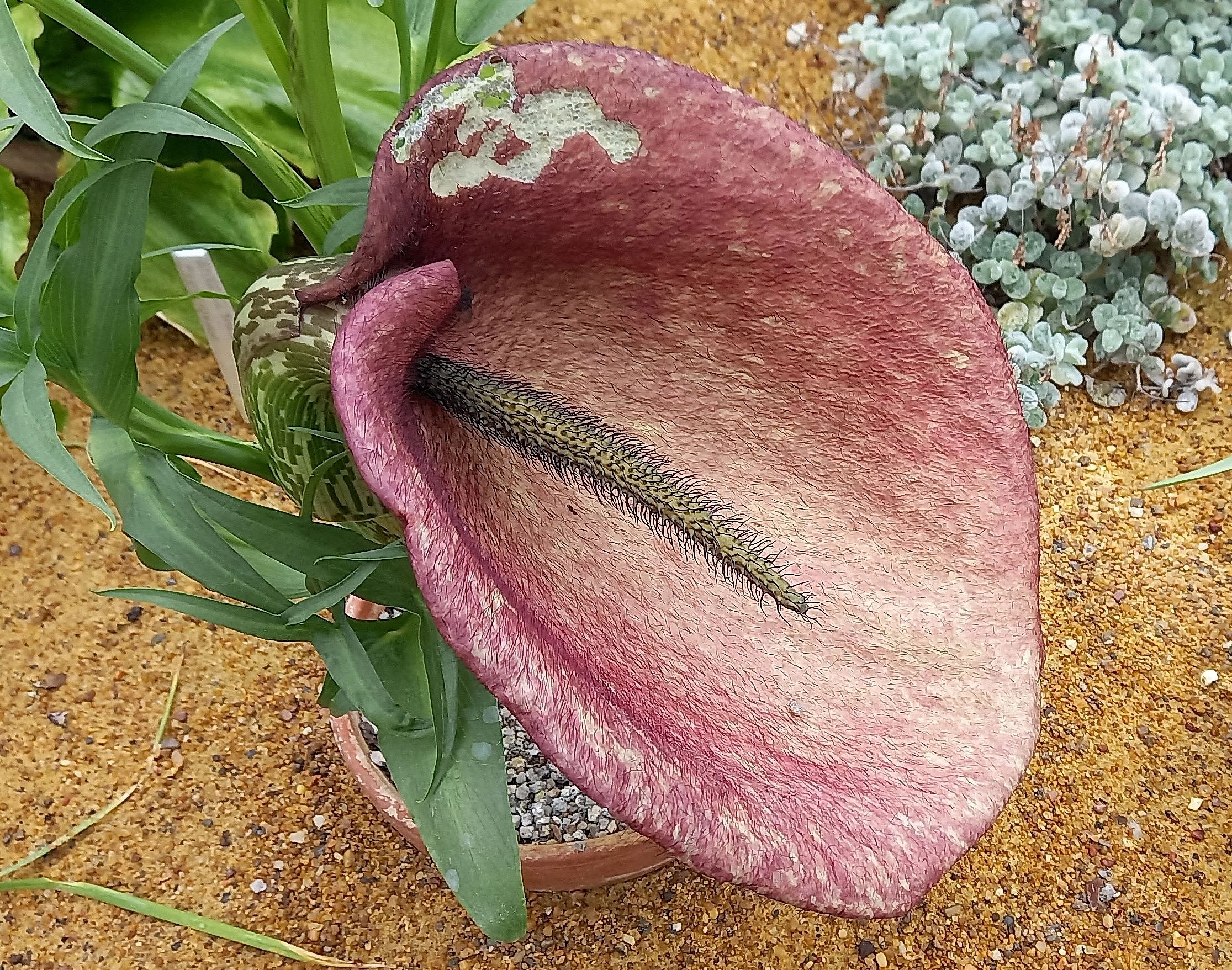
Today (Monday 24th) I hoped the wait would be over. Walking across Magdalen Bridge one more time I looked to see if the door to the glasshouse was open, suggesting there might be a bit of a pong inside? The object of my dedicated attention is of course reputed to be one of the world’s 10 foulest smelling plants. But the door was closed and within the largest Helico (pictured below) was beyond the pristine state in which I had hoped to record it. The spadix must indeed have opened over the weekend, probably on Saturday morning (22nd) as there was some damage to it and the infamous “Dead Horse Arum” odour was barely detectable. But a mission of 12 days had now been accomplished.

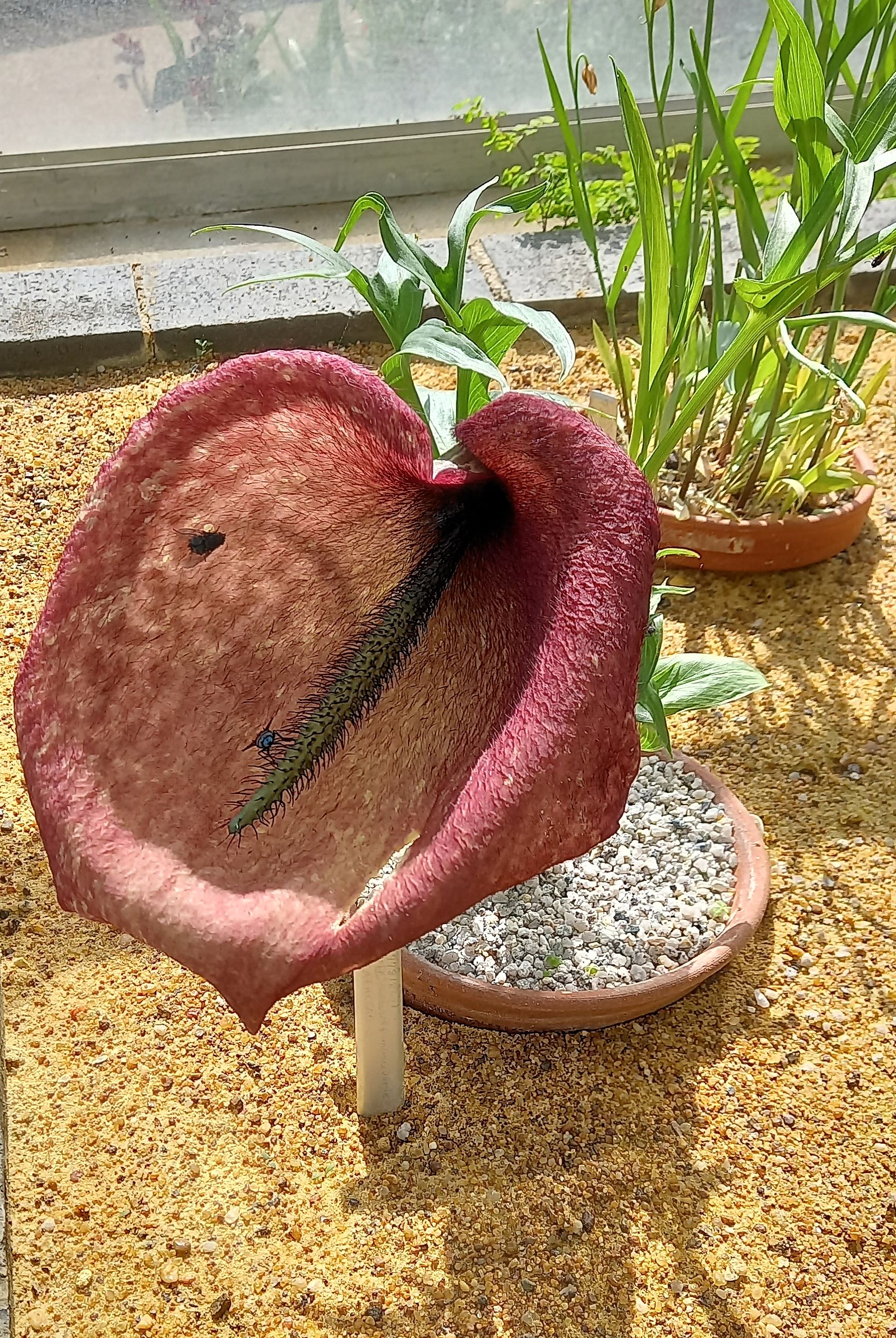
What’s been nibbling at and spoiling this then? There were two more plants here to attempt to connect with on their first day of flowering, so I went back on Thursday 11th May after my week in Greece (see next three posts). The smaller plant was in full bloom though the spadix had also suffered damage (below left), and an odour was detectable. To me this was no more intense than from other Aroids I have grown at home, but the flies were loving it. The larger plant (right) appeared to have gone over, the closed spadix becoming even more suggestive looking in the process.

So the Helico blooming season at UOBG had now almost run its course. When I got home I checked my own 2020 FS2 purchase that prompted this series herein, and the tuber was still firm but doing very little. The pictures in this post were all taken with my phone, which proved a better solution inside a glasshouse and often against the light.

Early days at a major Green-winged Orchid colony in Bernwood Meadows, Bucks: 9 – 19th April

A further wild flower spectacle locally that I should have paid attention to before now is the annual spring profusion of Orchids at a BBOWT reserve on the Oxon / Bucks border. I have visited here in several previous years a little later in the season to observe Black Hairstreak and other butterflies, but to avoid trampling habitat have not strayed far from the edges of its famed wild flower meadows. The site is best known for thousands of Green-winged Orchid (see here), which though quite widespread nationally I had not observed before.

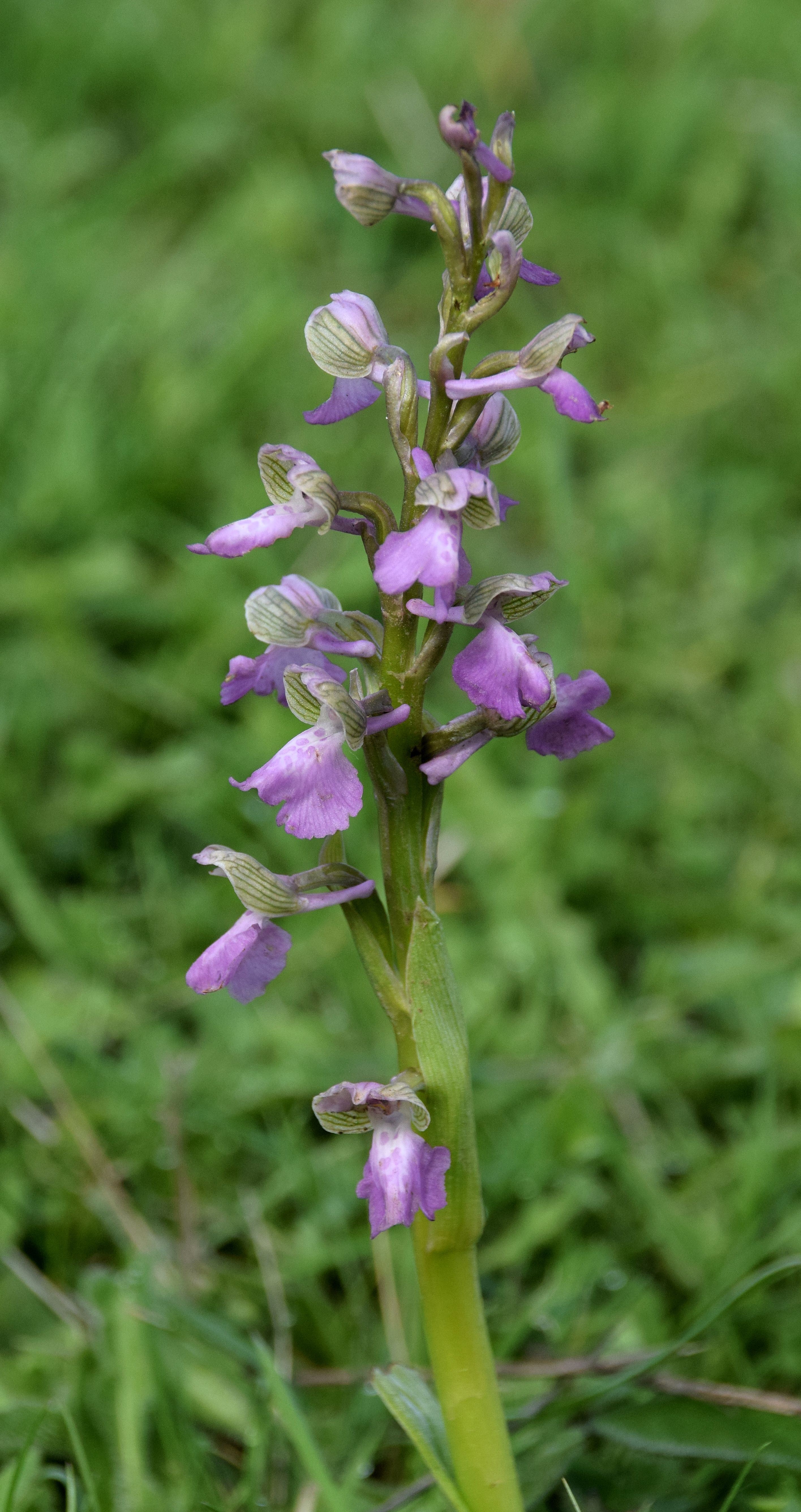
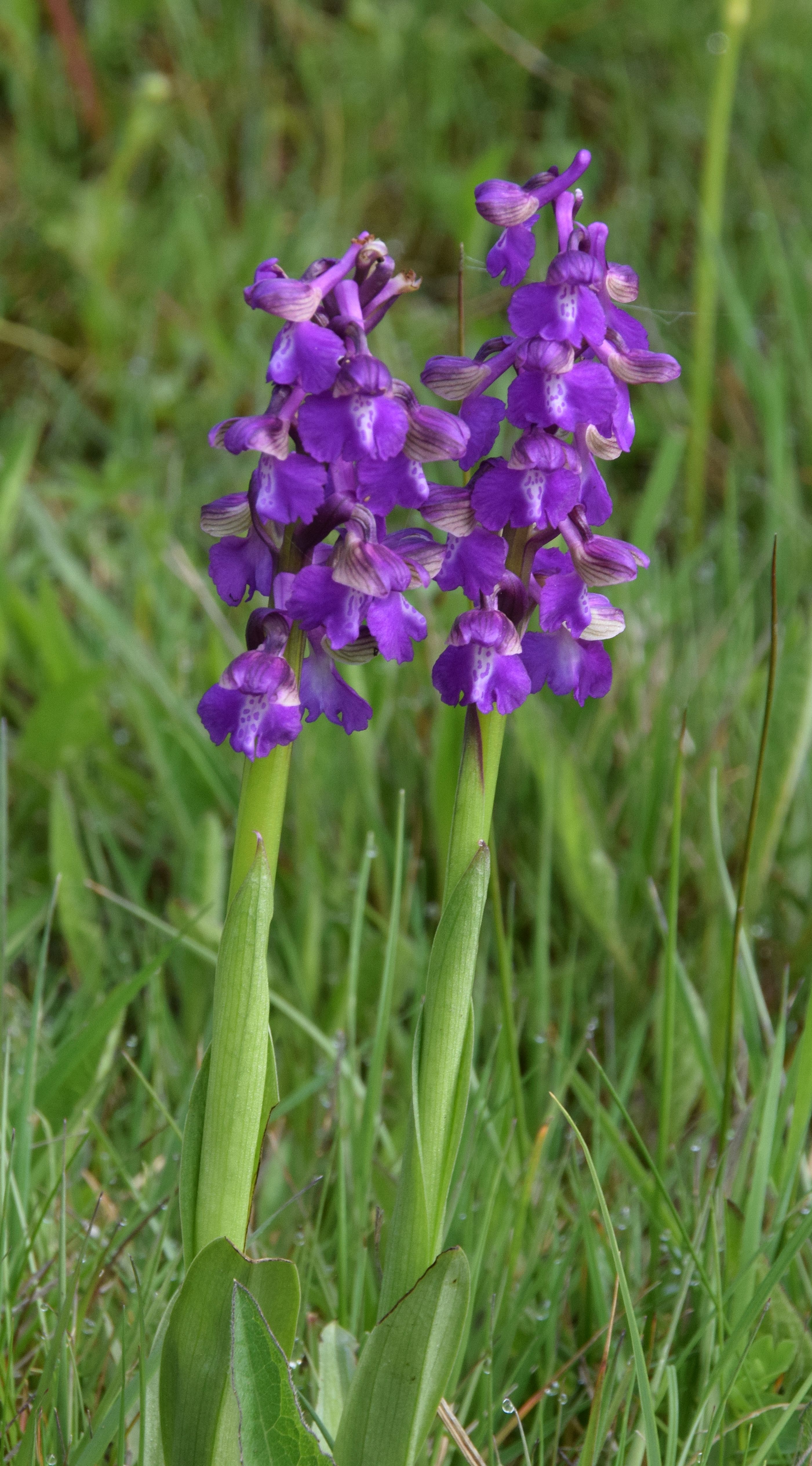
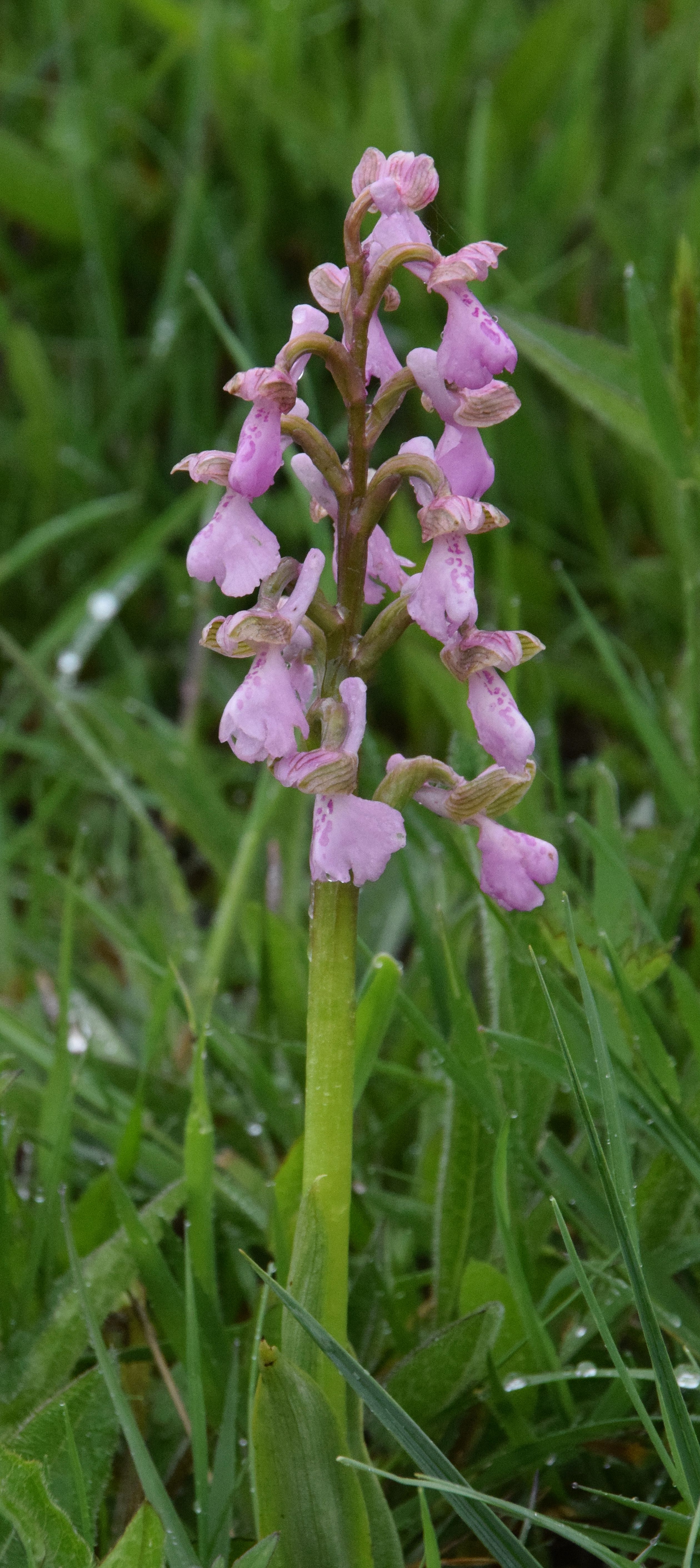
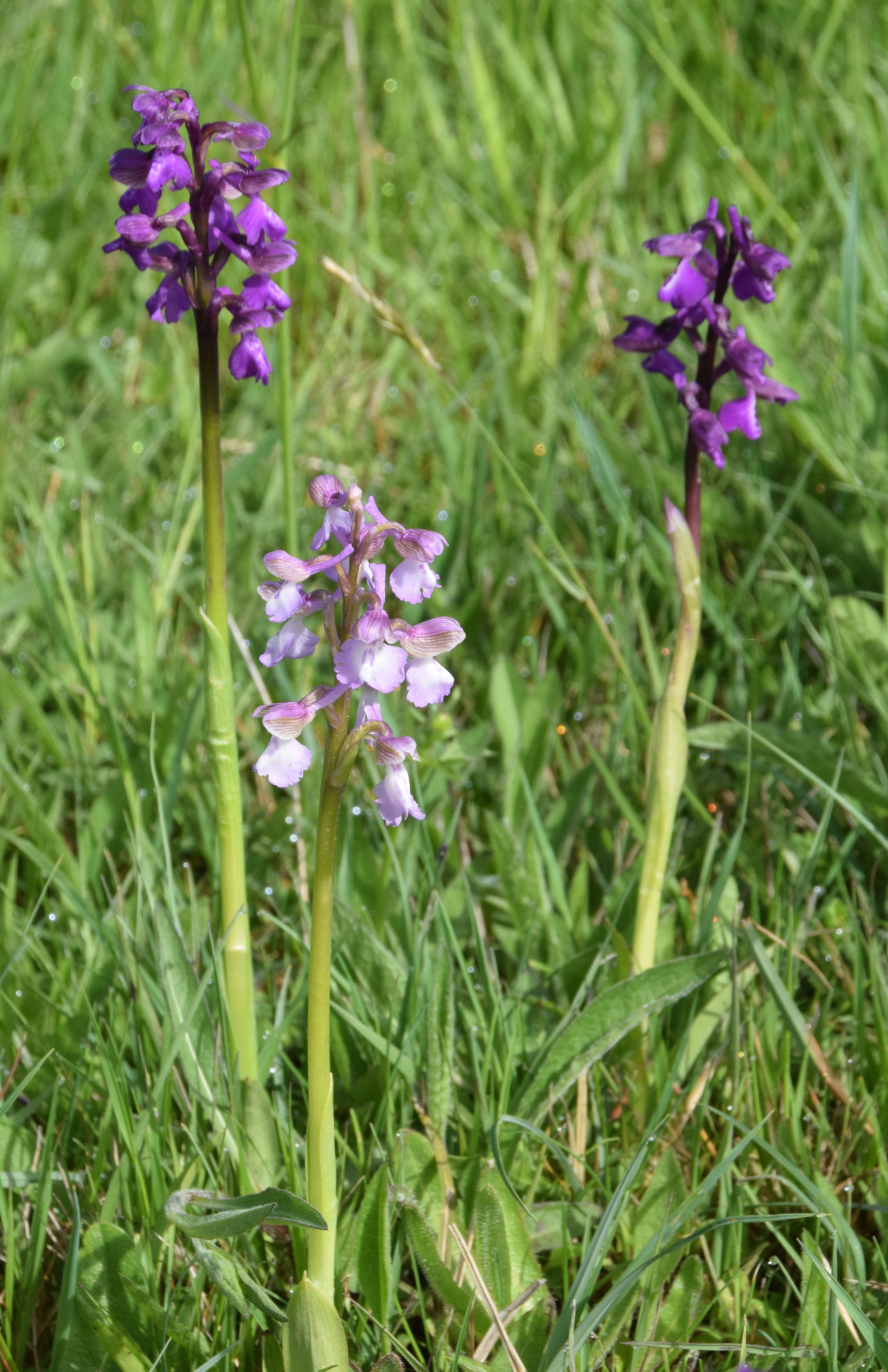
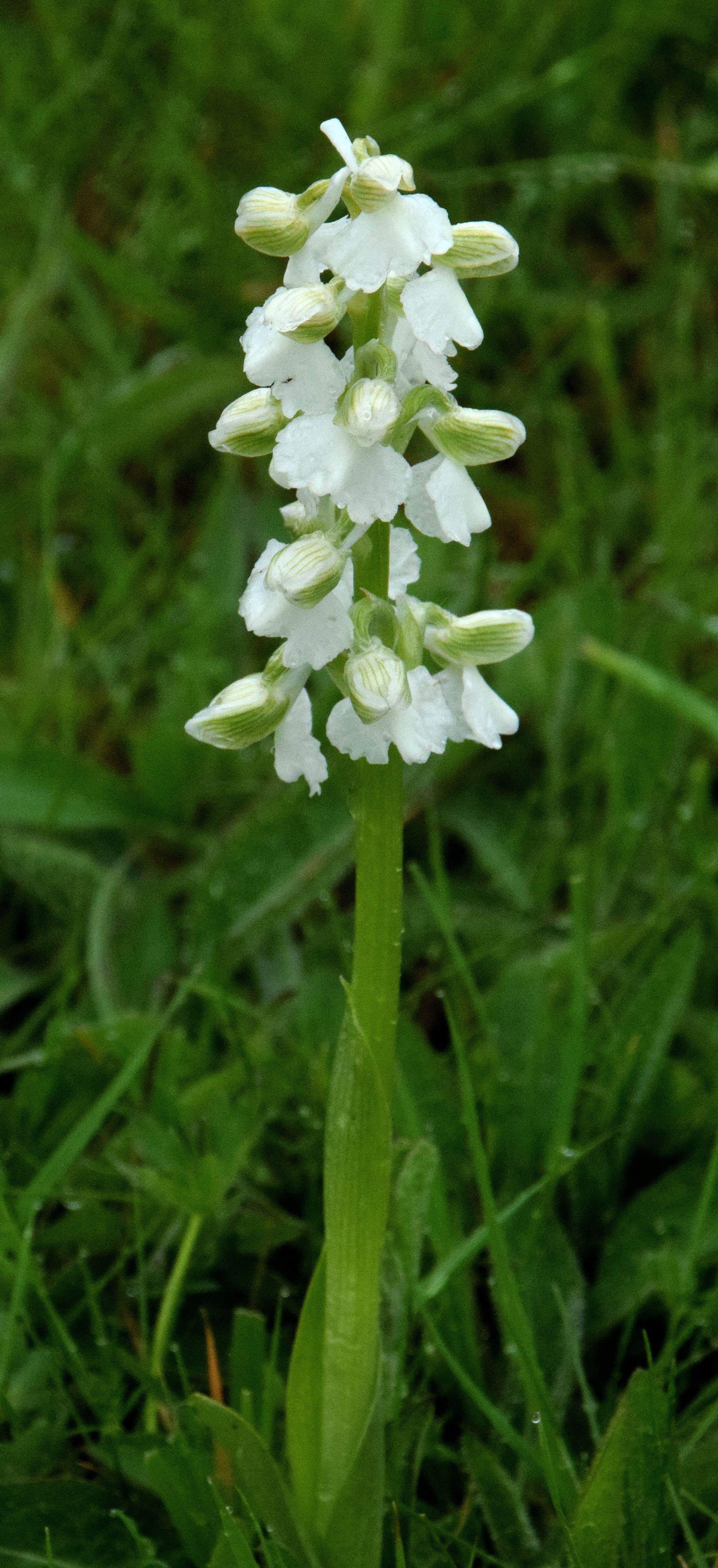
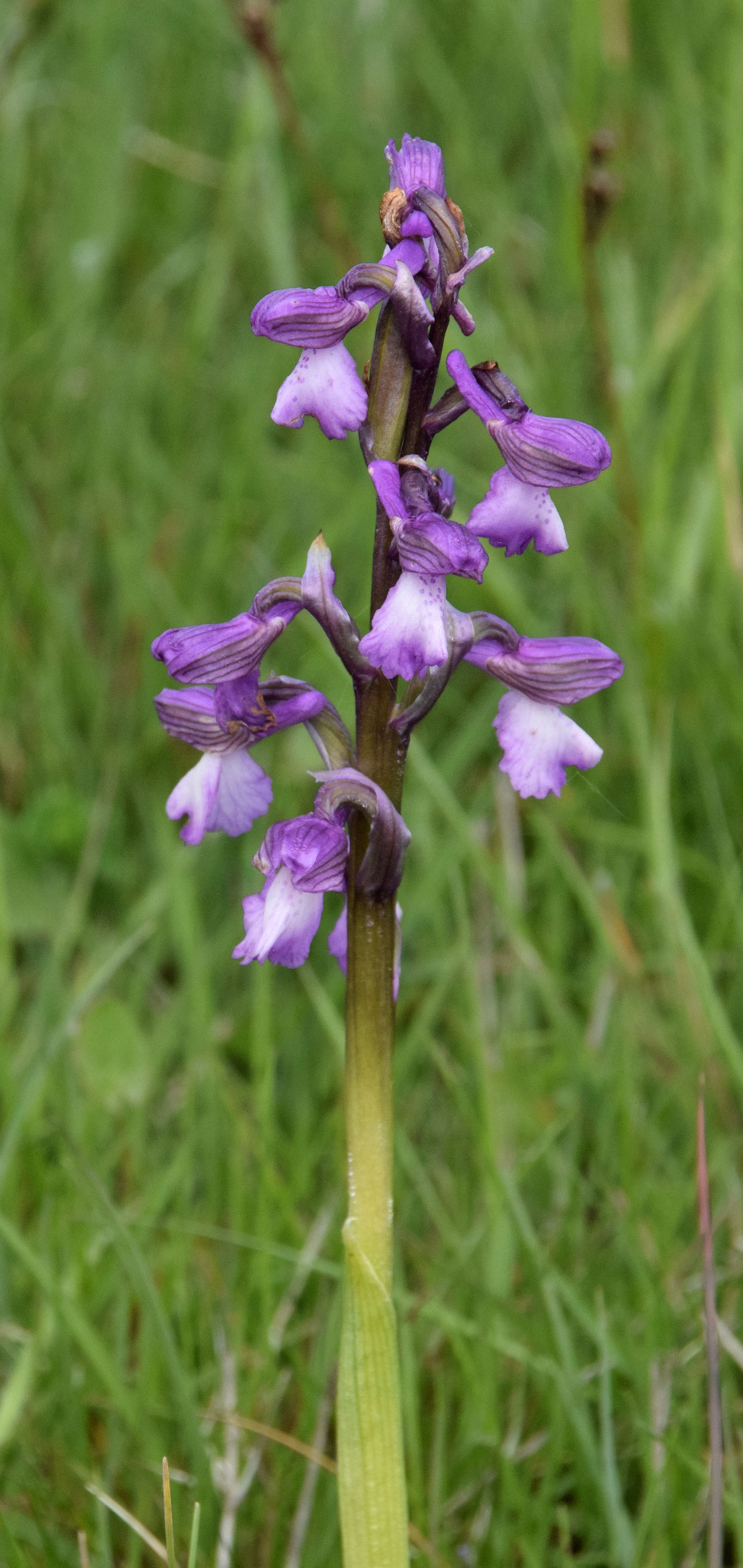
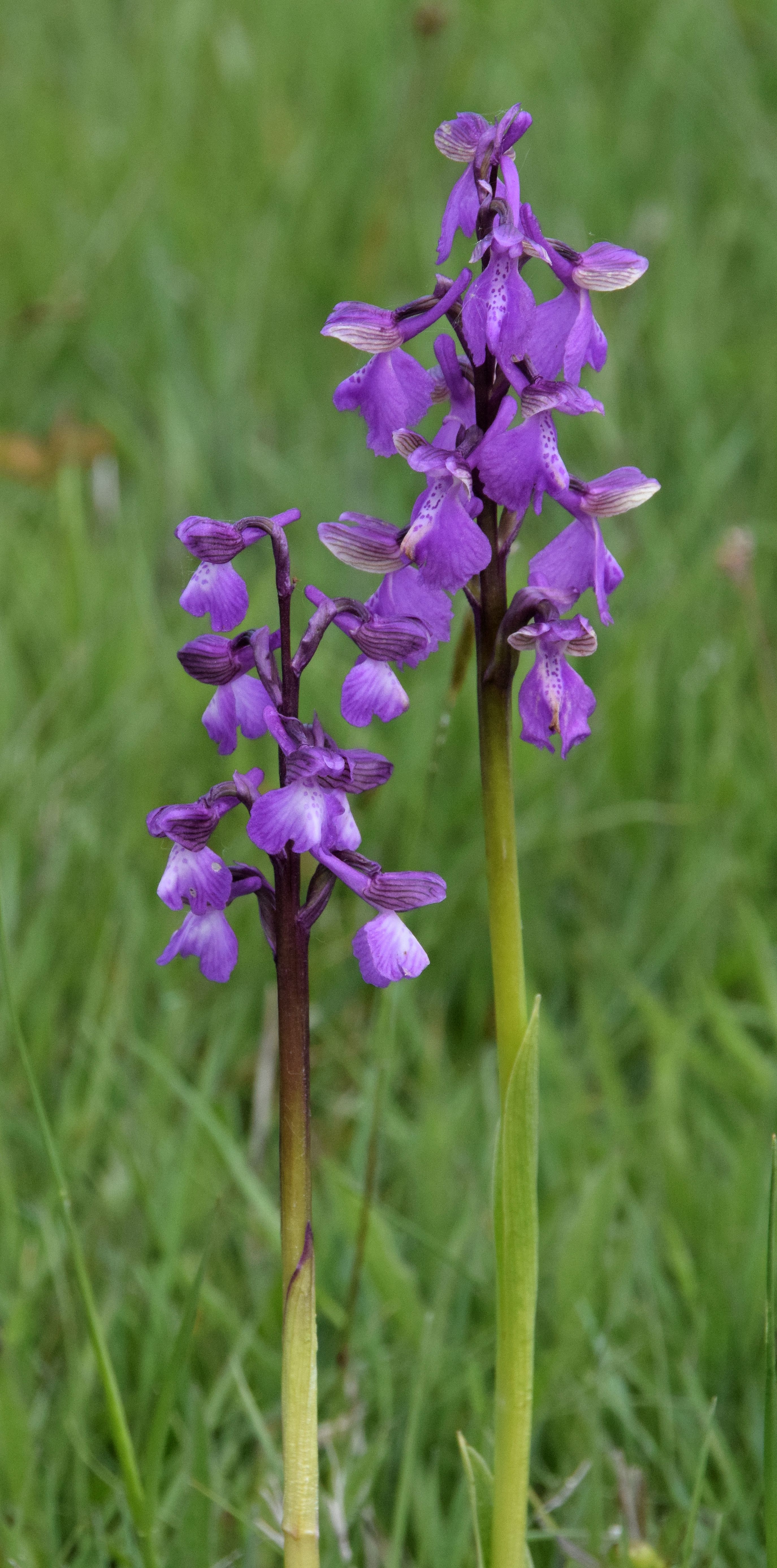
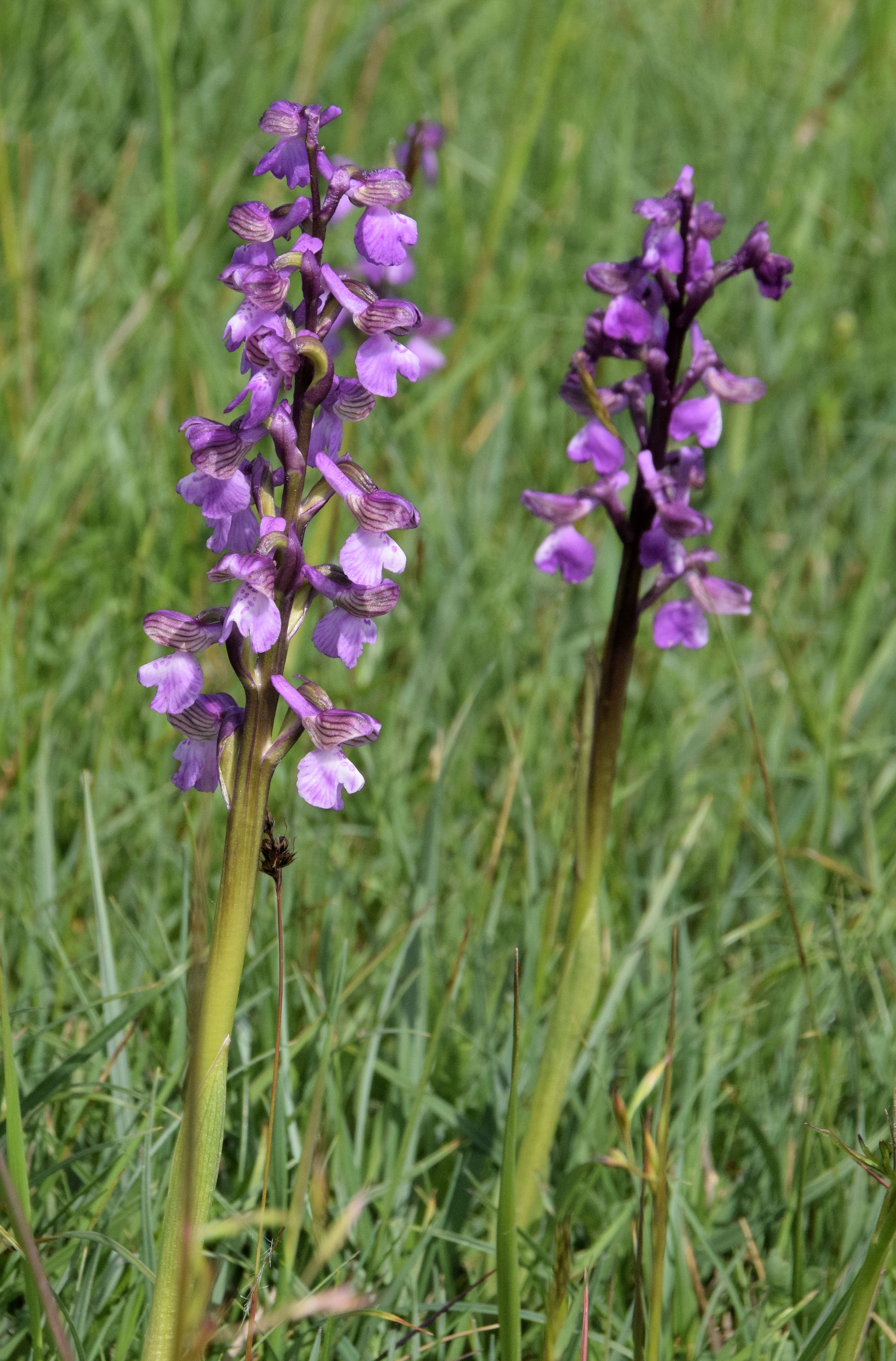
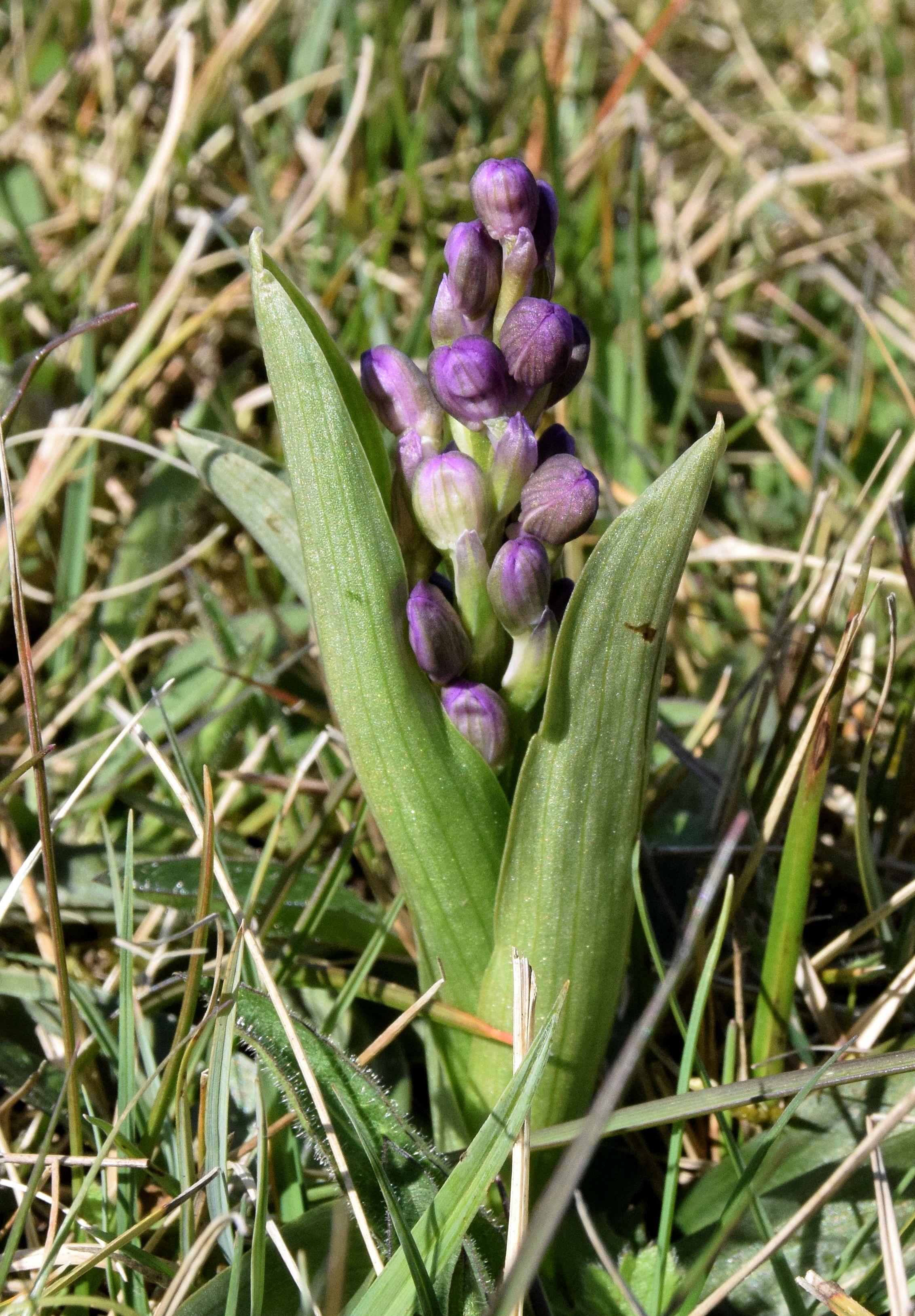
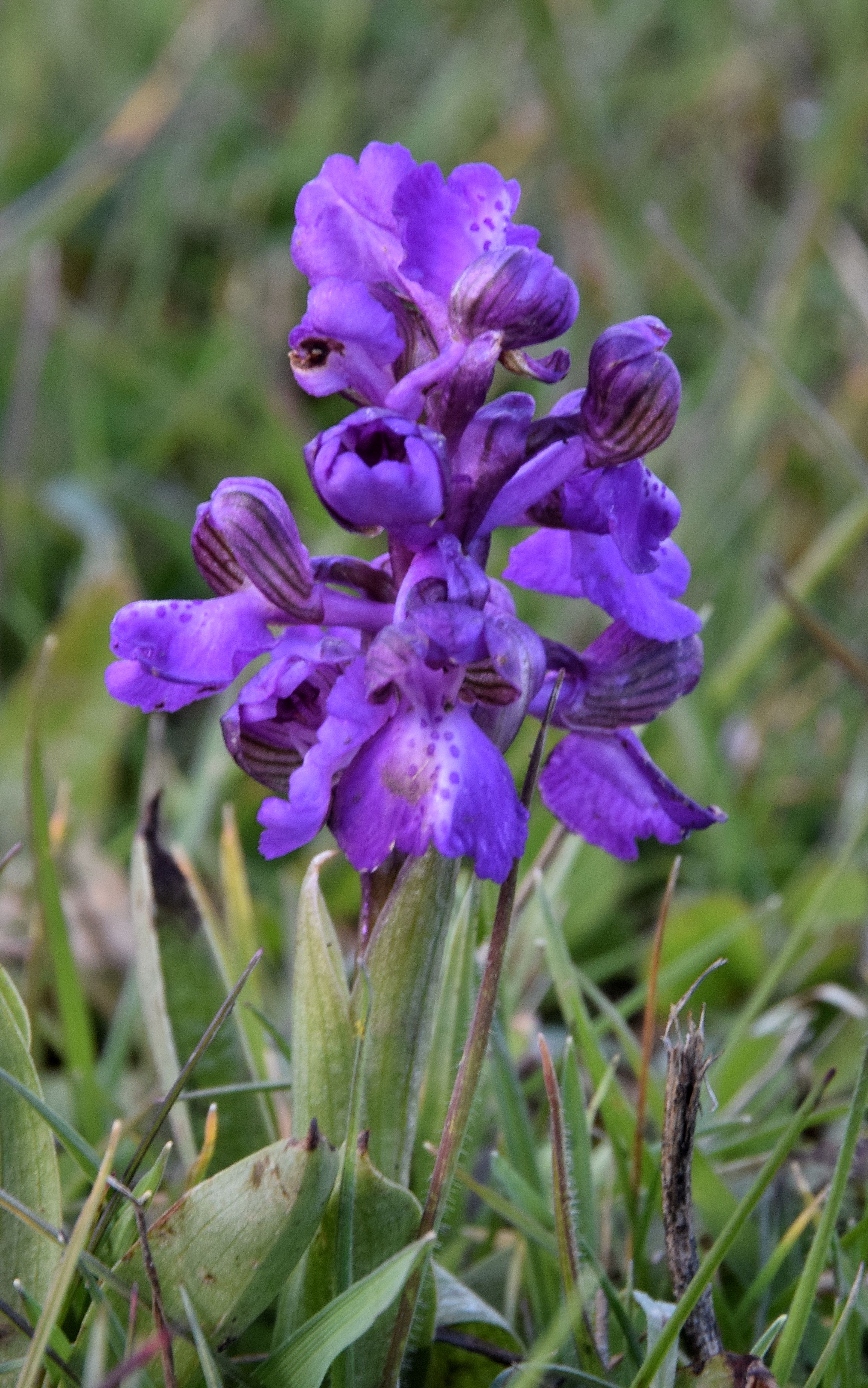
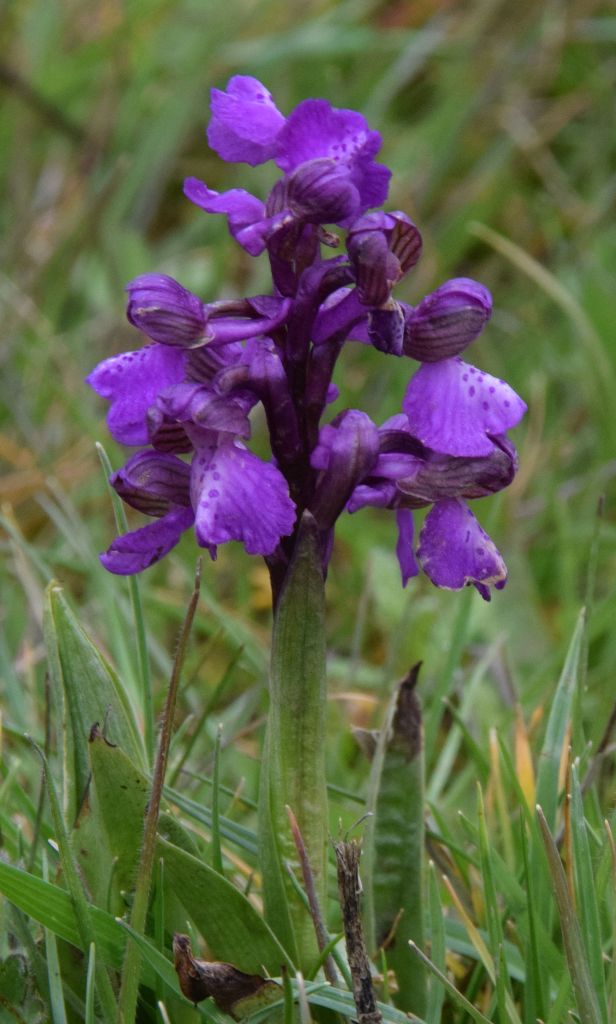
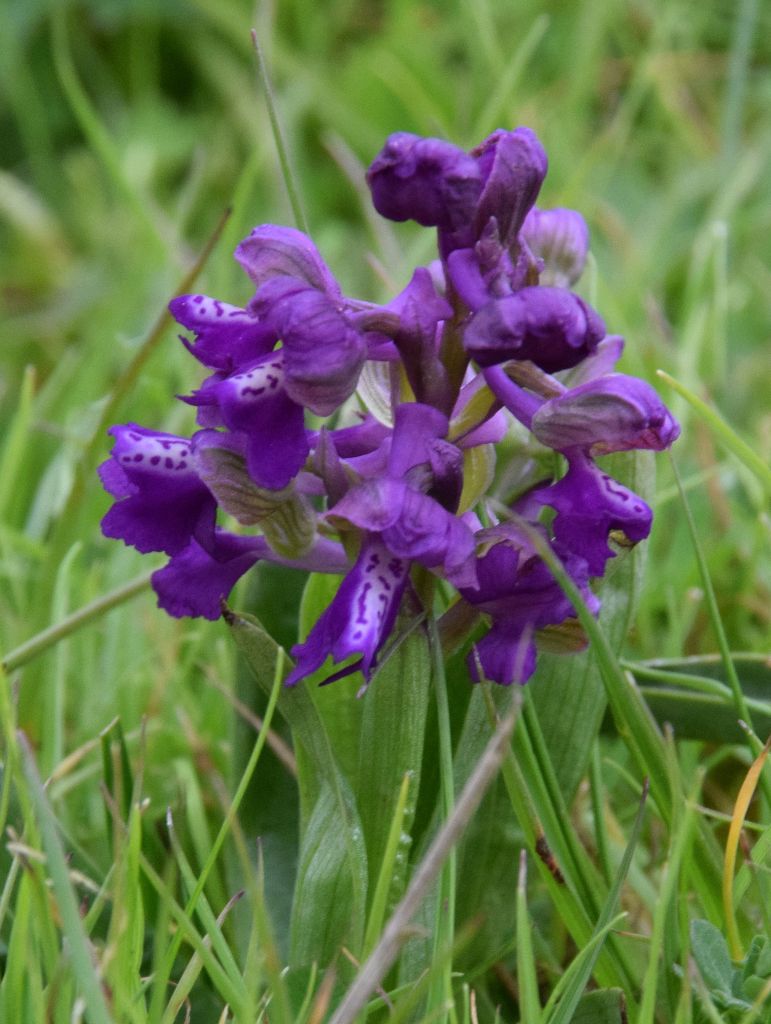
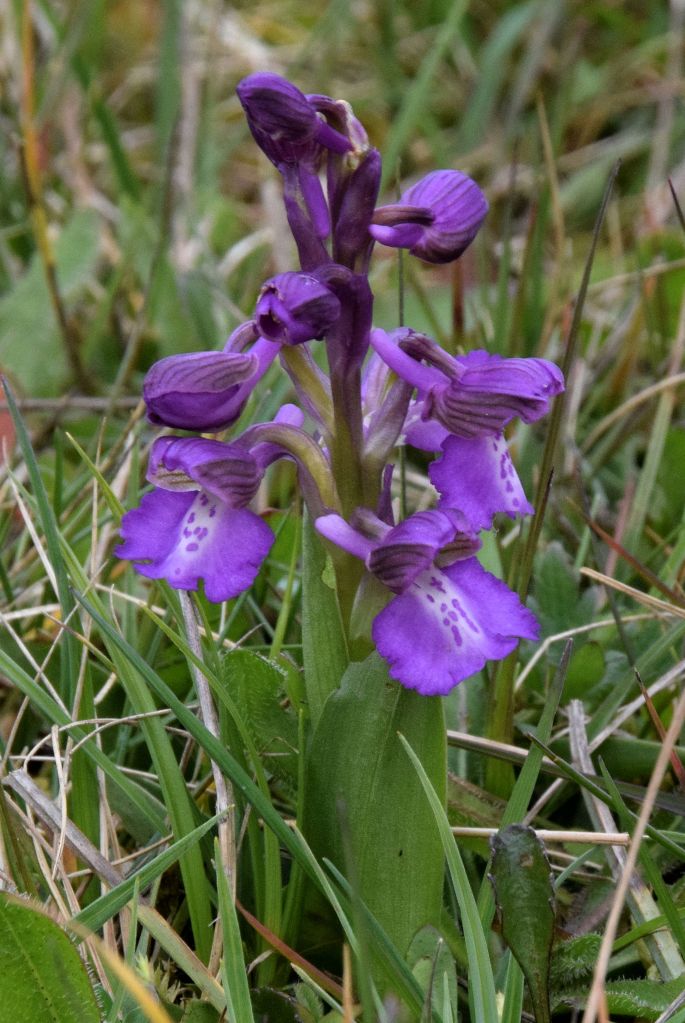
This is a “petite” (5 – 15 cm) Orchid of unimproved grasslands, occurring mainly on chalky soils. Once commonplace nationally in meadows and pastures, its historic range has halved in parallel with agricultural intensification since the mid-20th century. It is now one of the most rapidly declining British species away from sympathetically managed habitat. The name comes from green or bronze parallel veins in the hood of up to 25 helmet-shaped flowers that grow in a loose, linear bunch at the top of the single stalk. The inflorescence may be of various shades, mainly purple but ranging from pale pink, through mauve to blackish-purple. White forms are found occasionally. Although individually spaced this plant tends to grow in large colonies, such as here.

Green-winged Orchid

Most material published online cites May as the best time to visit, but prompted by a good response to the recent botanical posts herein I first decided to reconnoitre Bernwood Meadows (SP608109) on Easter Sunday morning 9th April. The habitat having undergone a pre-season mow I walked up and down in the centre of the main field where I had feared previously to tread. Save for a solitary Cuckoo Flower clump only Cowslips were coming into bloom, though the developing foliage of other wild plants was much in evidence.
Then I was surprised to locate an emergent Orchid which my Seek ID-app confirmed was Green-winged, but stomping around at random I found no others. The idea thus formed in my mind that if I re-visited at intervals through the rest of April and ahead of the peak flowering season, I might be able to gain close-up images of more early specimens without fear of damaging other wild flowers around them, and that I resolved to do.

I next visited four days later in a sunny weather window on 13th and soon re-located that first GWO (above left). Then going about I found another emergent plant (centre). Walking away a dog walker called out there were more along that edge of the meadow and indeed I found two others, each in a further stage of flowering (right) than the previous one. The plan of familiarising myself with this Orchid and gaining pictures on the close cut sward was now progressing nicely.

After another four day interval there was a much greater choice of subjects and searching indiscriminately I noticed 28 specimens in overcast conditions. Things were starting to get going here now as I had expected. Most GWO were in their early stages of development and none were more than 8cm high. Those in the following sequence are the more presentable ones encountered on this third occasion.

With these results my own education on one of the earlier flowering Orchids in any British season seemed complete. It now remains to appreciate the full spectacle of Bernwood Meadows as the numbers of blooming wild plants multiply many-fold in weeks to come. But with this first instalment of my Orchid self-tutorial having been so successful I decided to if possible repeat the exercise for another of the seasonal vanguards, the appropriately named and third commonest British species, Early Purple Orchid.

A still disappointingly dull weather day on 19th hence saw me surveying the local wildlife gem that is Sydlings Copse (SP 559096) just to the north of the city and close to RSPB Otmoor. But splendid as the intense little BBOWT reserve with its unusual combination of habitats proved to be, no Orchids were yet in bloom amongst the carpets of Cowslips, Violets, English Bluebells and other wild plants. So my conclusion is that Early Purple may not always be the species to herald a new season after all, and at least in the right place given such a wet spring as this Green-winged can begin to announce themselves first.

A second and superior Snake’s head Fritillary encounter at Magdalen College grounds, Oxford – 13th Apr

After early second helpings at Iffley Meadows on this only fair weather day of the week, I moved on to the other of Oxford’s famous Fritillary sites in the parkland of the historic and august University district. The first of those experiences had been pleasing enough but I could in no way have imagined the superlative quality and sheer joy of the floral spectacle that was about to dwarf it.

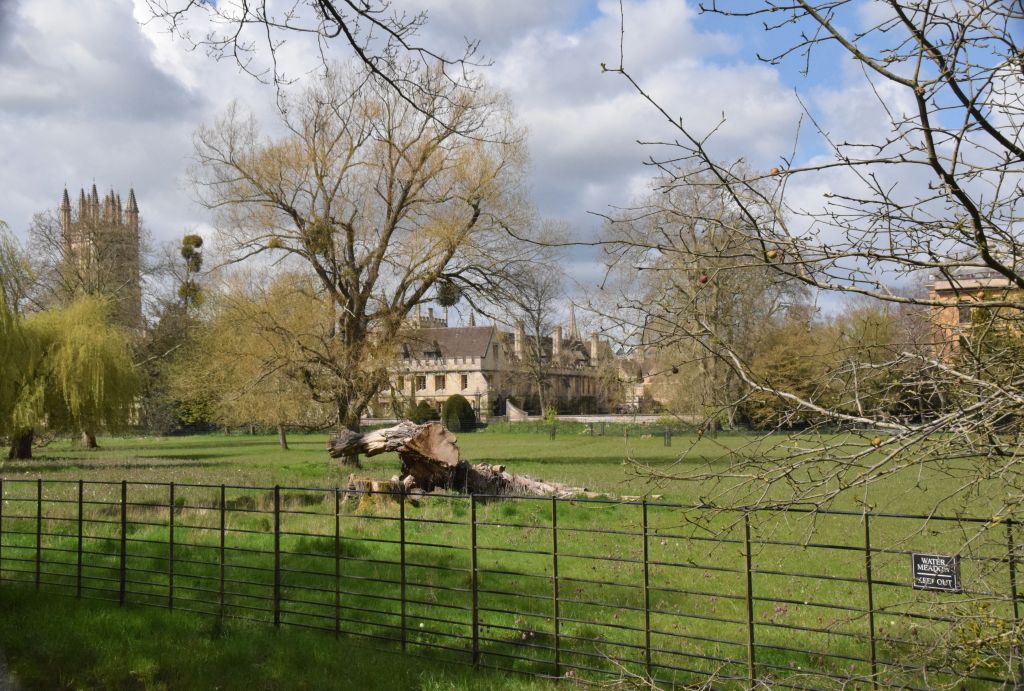
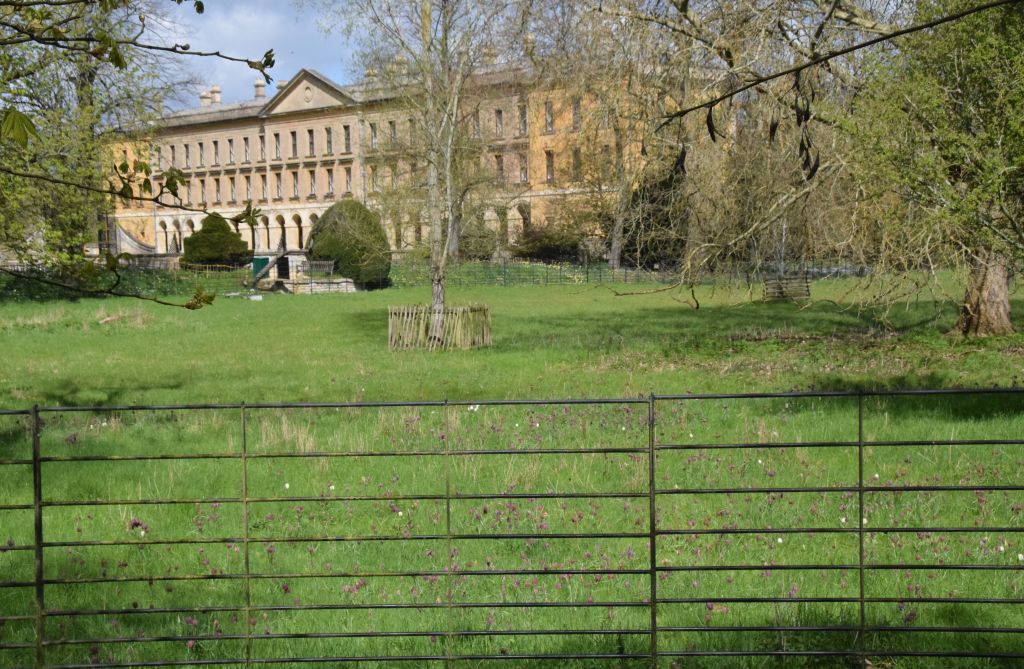
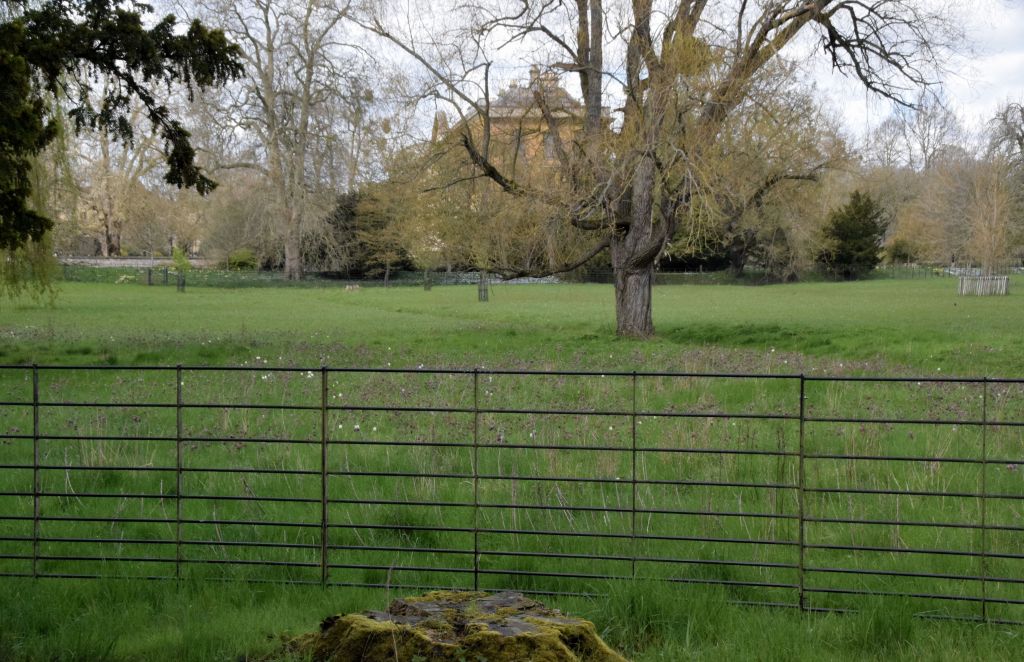
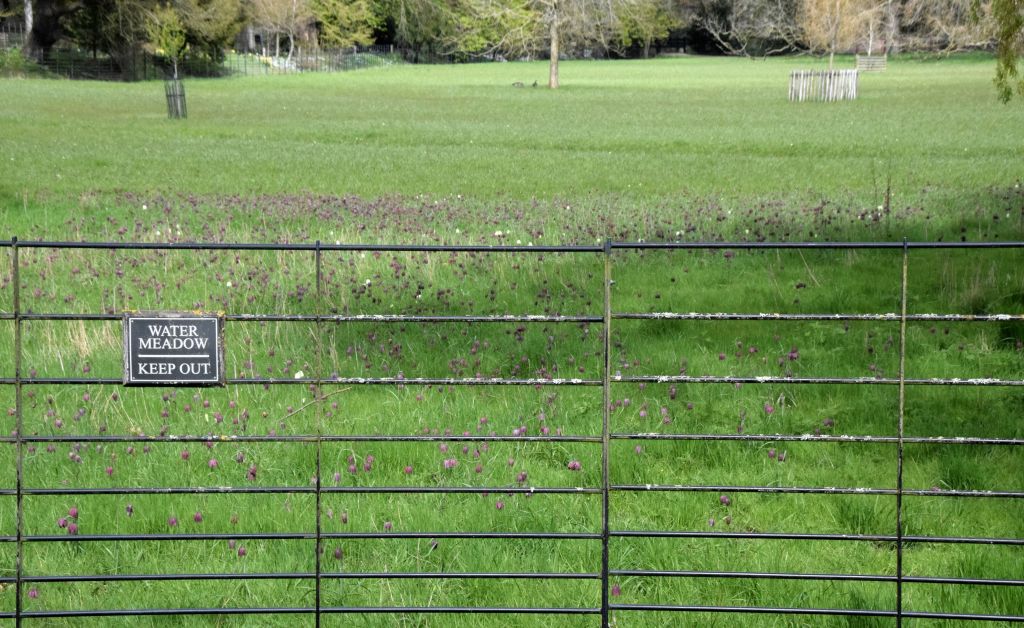
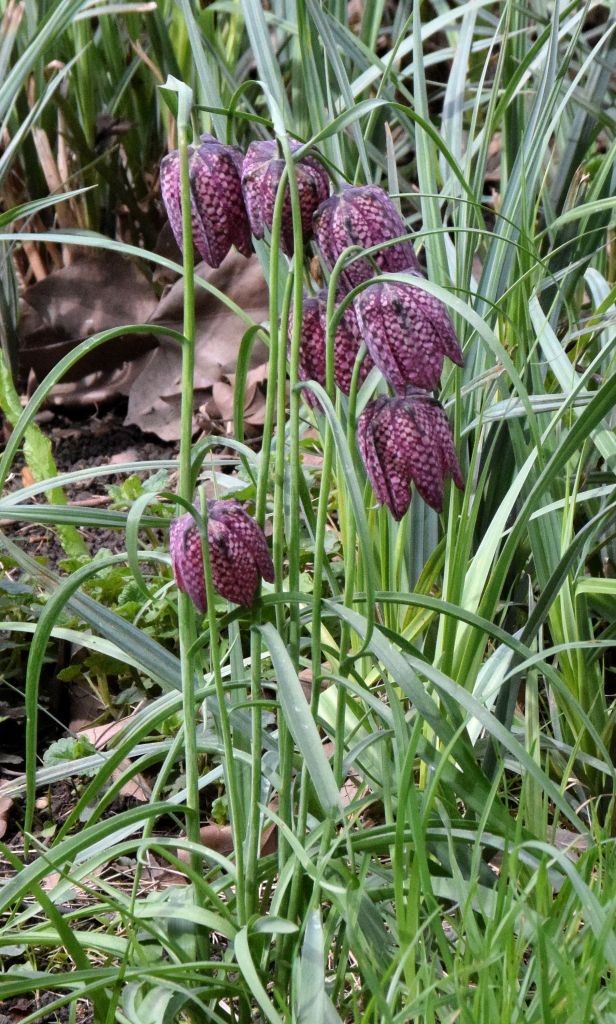
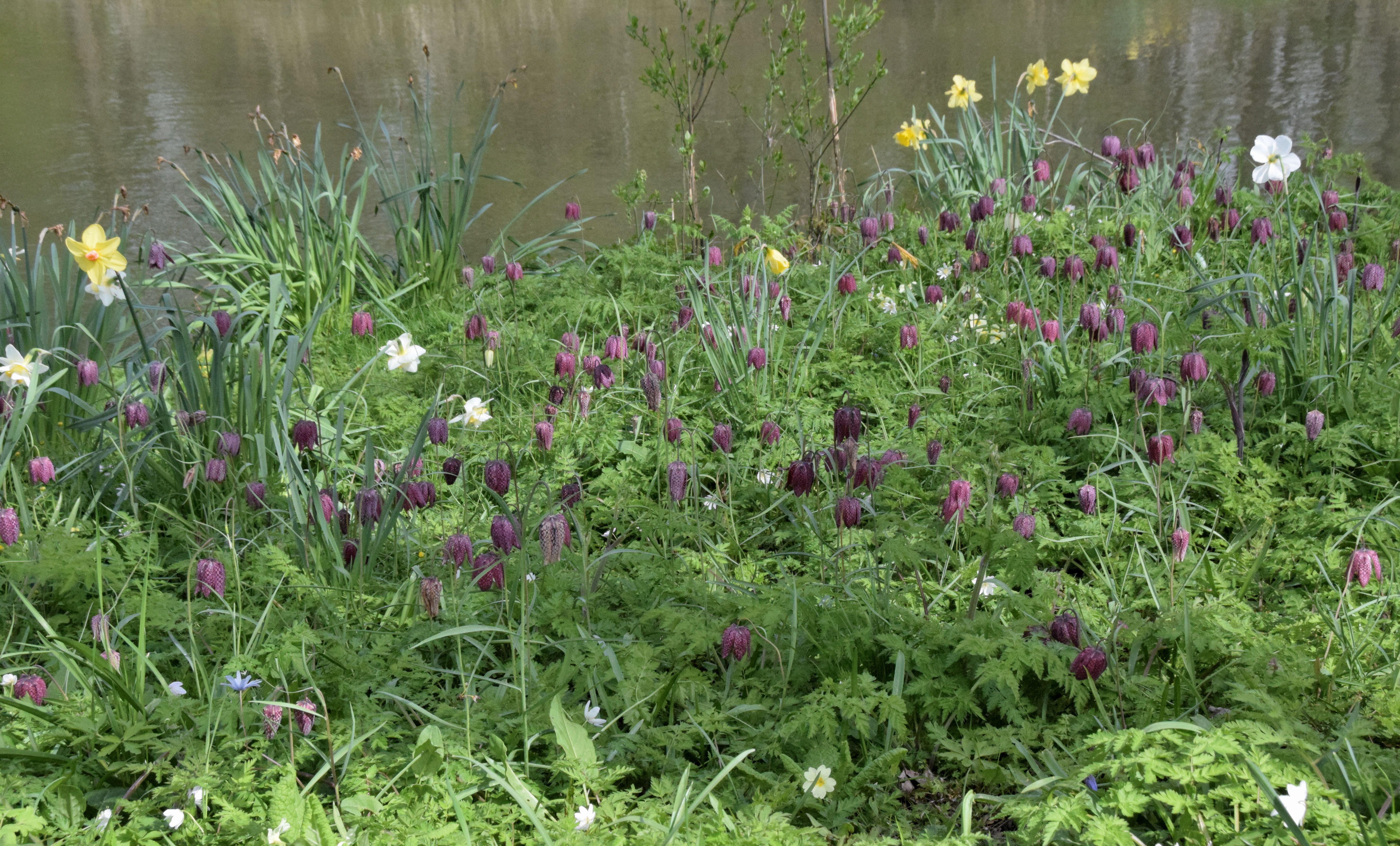
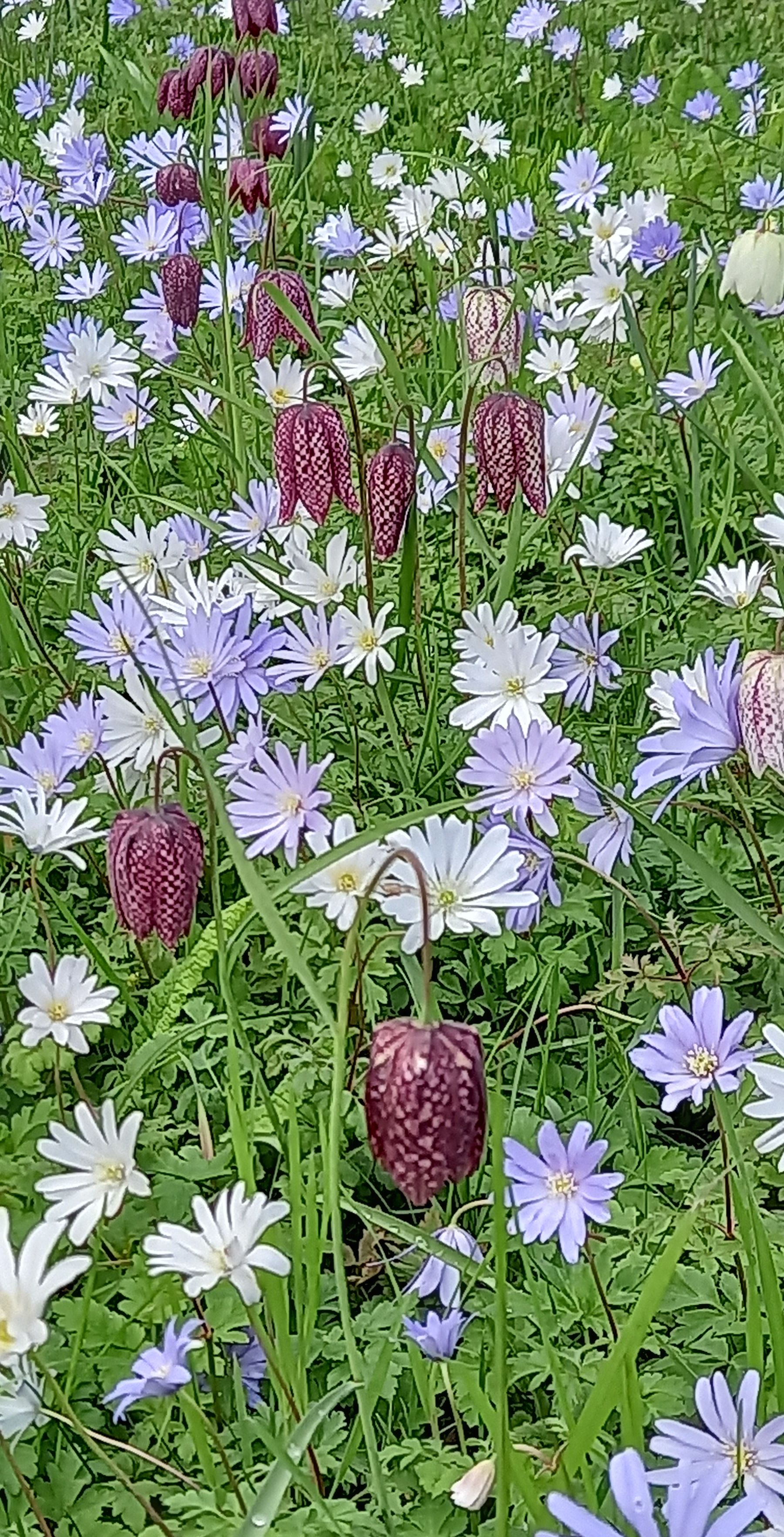
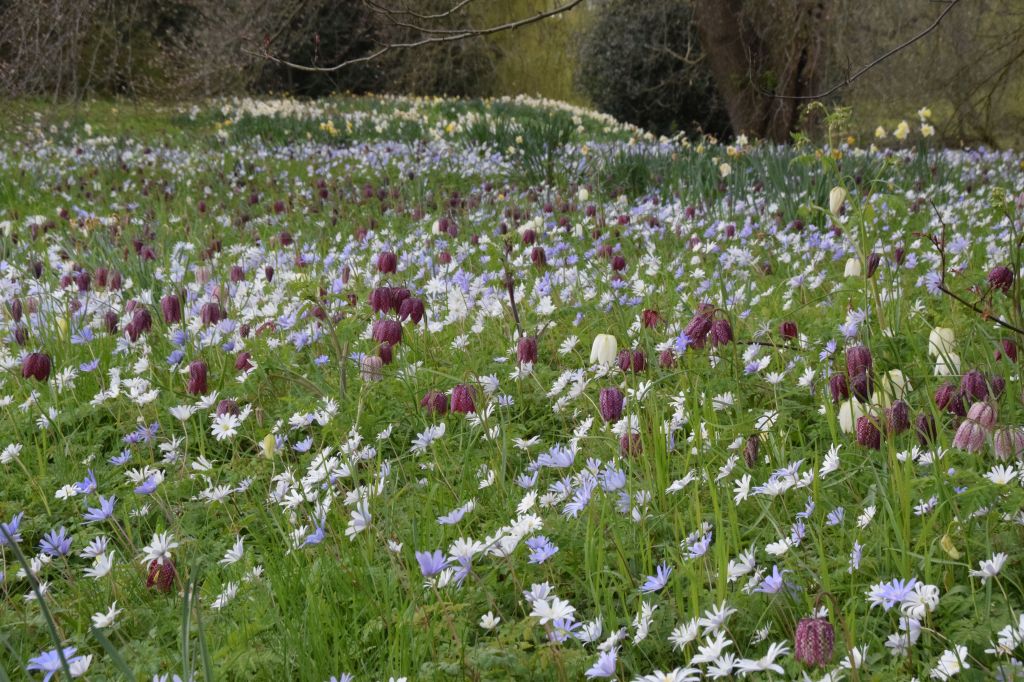
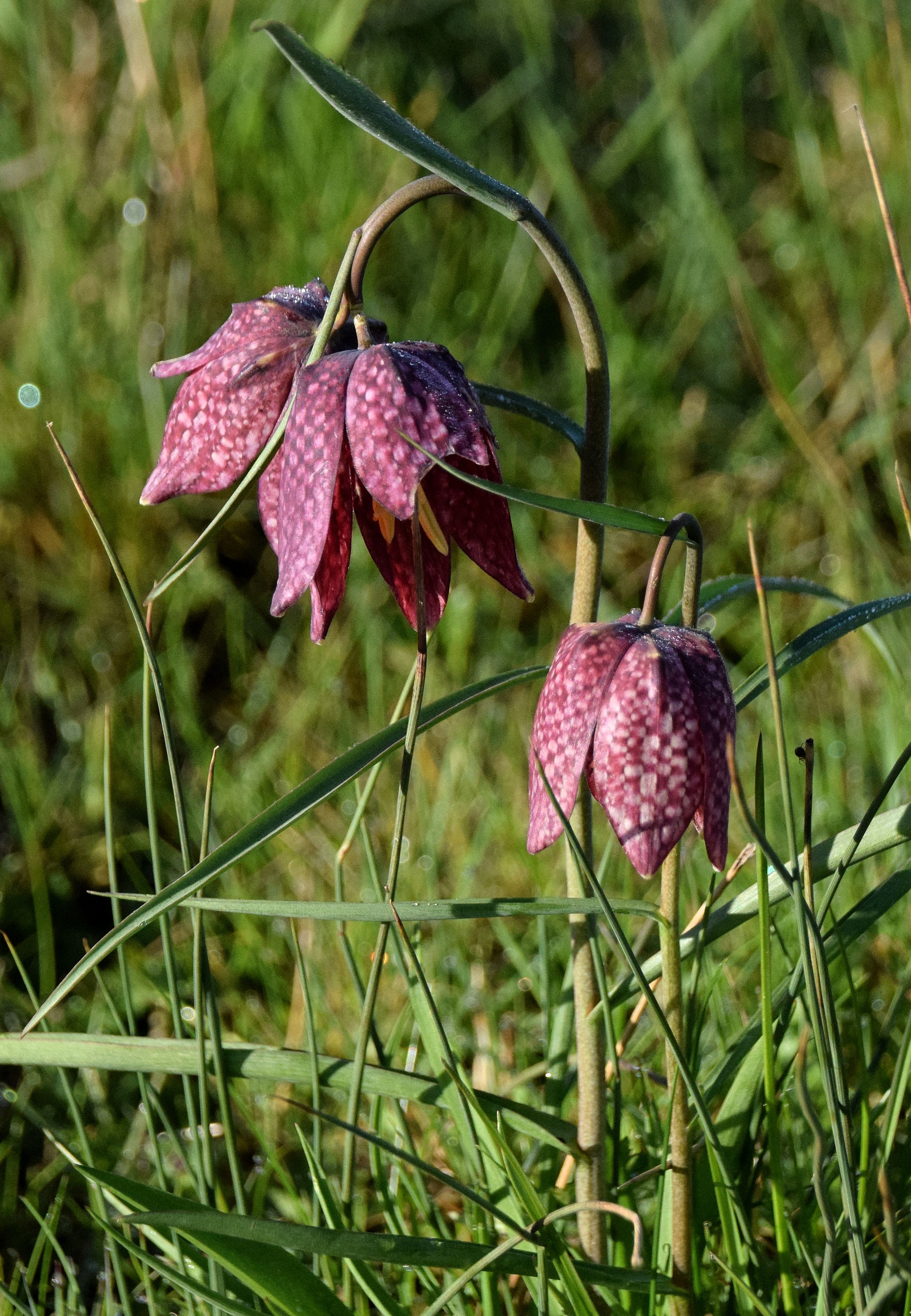
Immediately east of Magdalen College there is an ancient wild flower meadow covering an island between two branches of the River Cherwell. Around it’s perimeter and flooded boundary ditches runs a series of paths, Addison’s and Magdalen Water Ways (SP521064) to which Oxford residents are not charged for admission. There is no public access to the meadow itself, which is surrounded by rather formidable and unsightly black iron railings. But it was immediately plain to see the scale and intensity of the Snake’s head Fritillary colonies lying within (pictured below).

If Iffley Meadows has 90,000 plants there must be millions here. I believe the beautifully maintained park has changed very little since the late 17th century, and has been immortalised in literature and verse by Joseph Addison (1672 – 1719) and later C S Lewis (1898 – 1963), both former fellows of Magdalen College. Given such unending sympathetic management and lack of disturbance it is plain beyond measure how the spring wild or naturalised plants here must just have carried on multiplying to the present day.

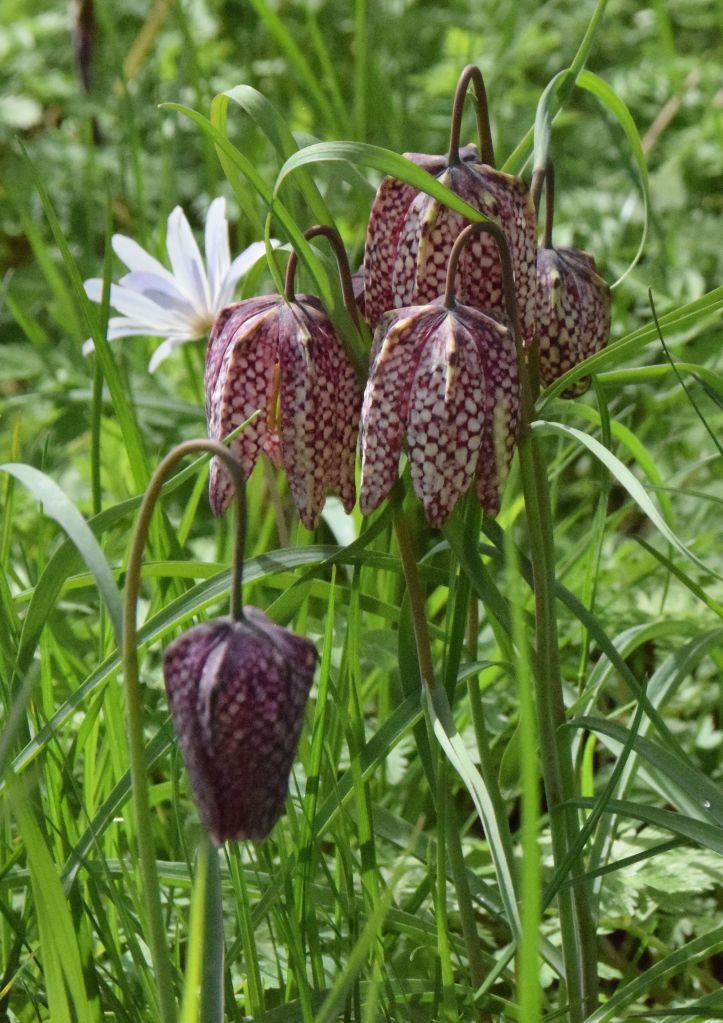
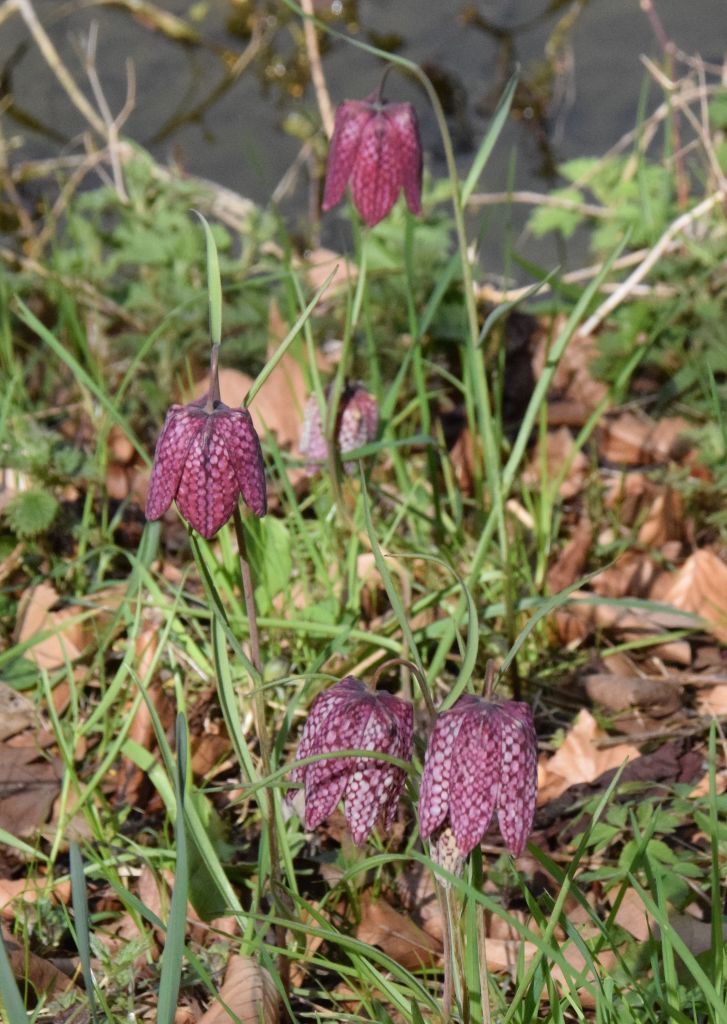
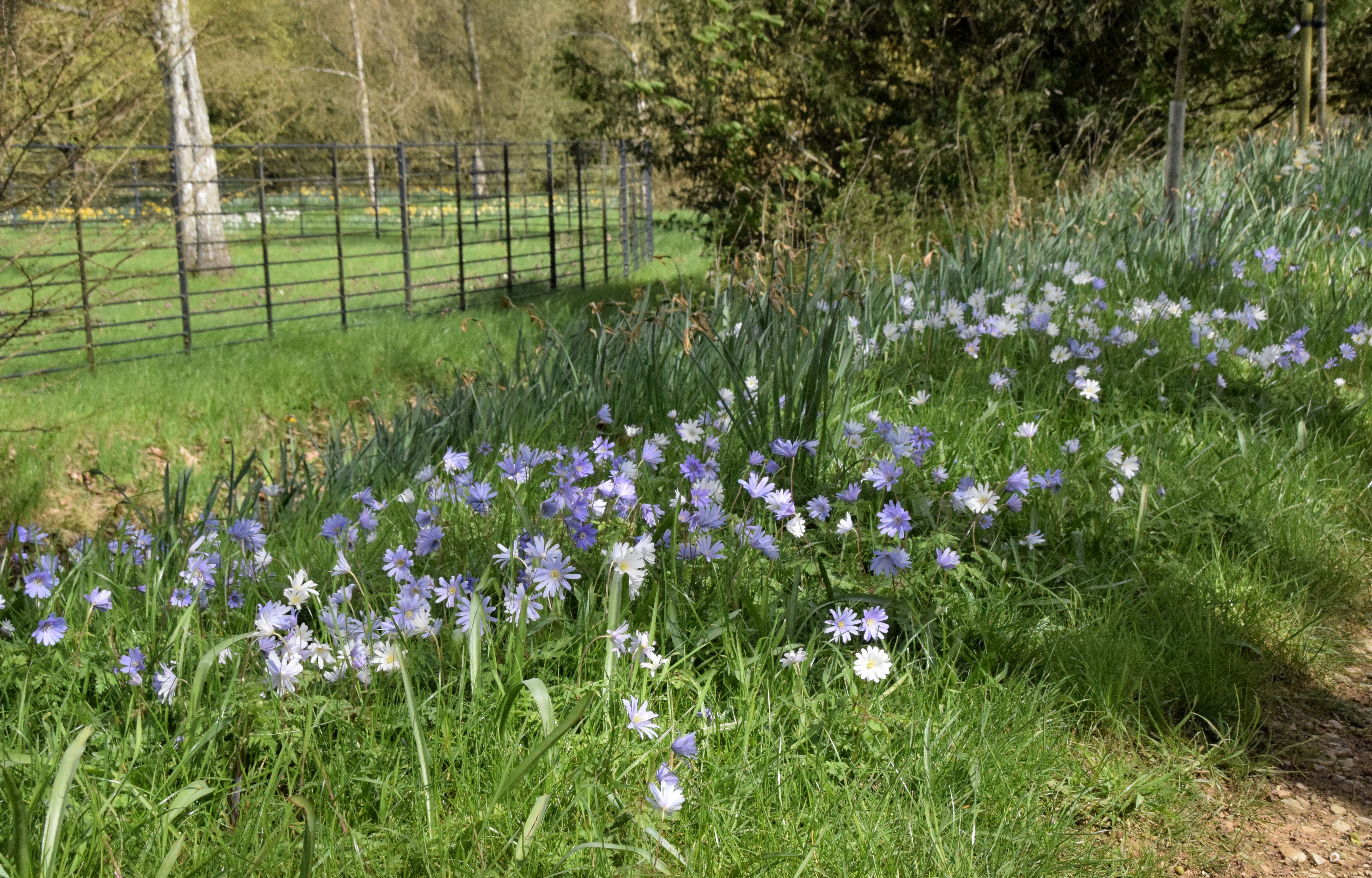
Where it is possible to get in amongst the Fritillaries is the adjacent Fellows’ Garden and that is where this experience went off the top of the scale. Between the hard path through here and the main channel of the Cherwell the nodding, swaying bells stretched before me as I walked on, mixed in with waterside plants, fading or gone over spring Narcissi and an even greater profusion of blue and white Anemones. The latter proliferate across the parkland and became very noticeable as soon as I started the waterside walk (below left). But in here there is a continuous dense carpet out of which countless Fritillary flowers rose all around in biblical quantities.

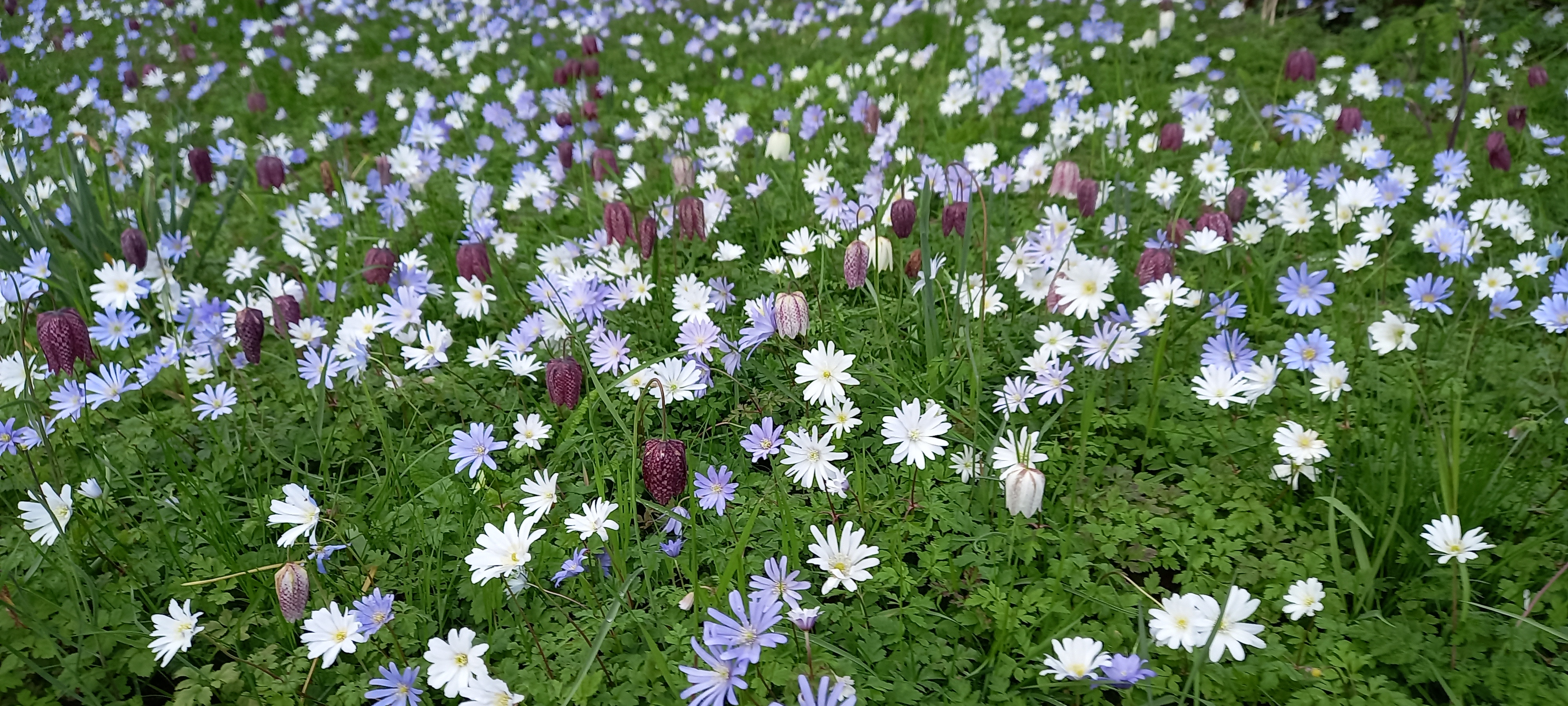
If there are millions of Fritillaries in Magdalen College grounds there must be trillions of naturalised Mediterranean Anemone blanda, and the visual juxtaposition and interaction of the two plants in such vast numbers was simply breath-taking. That quality peaked to the right of the path near it’s far end from the entrance where there is a circular walk around a bank covered in both species and that is where the following pictures were taken.

Having lived close to Oxford for more than 35 years and counting, how could I have not been aware of this until now? It is difficult to find words to convey adequately the spectacle I am attempting to describe, which is perhaps much better achieved in pictures. This was quite simply the most stunning and stimulating “wildlife” experience I have enjoyed and one of the best things I have done for quite some time … and it gladdened my heart.

The annual Snake’s head Fritillary spectacle in Iffley Meadows, Oxford – 7 & 13th Apr

This is something I really should have done a long time ago. Each April numbers of visitors are drawn to a Thames-side nature reserve in central Oxford to witness carpets of up to 90,000 blooms of what has become considered an iconic Oxon wild plant. Since the cultivated equivalent is now flowering in my own garden at home, having woken early on this sunny bank holiday morning I went to take a look myself and was not disappointed.

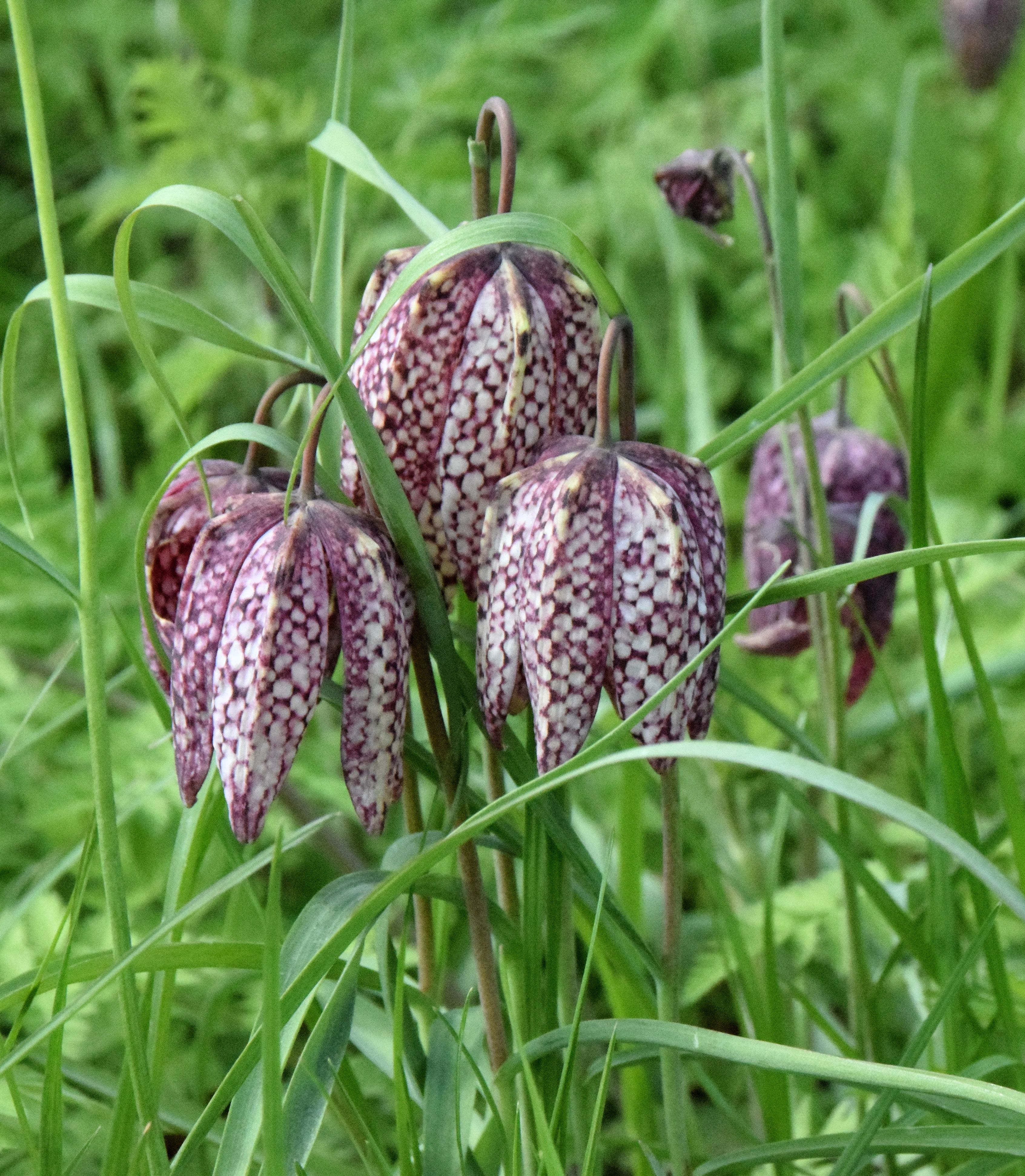
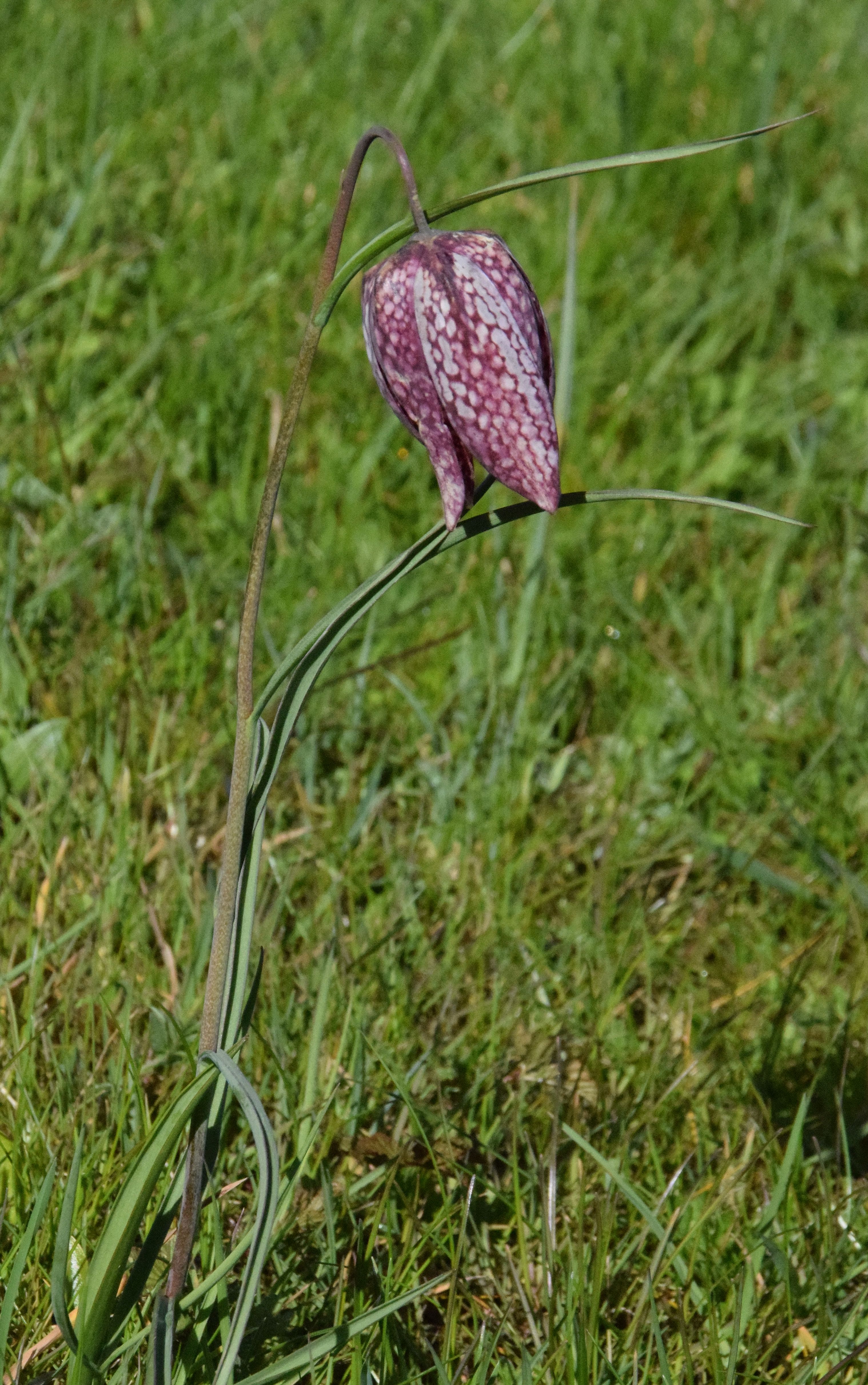
Now a scarce and localised species, Snake’s head Fritillary (Fritillaria meleagris) is Great Britain’s only native member of the genus. It occurs naturally at fewer than 30 mostly wet meadow sites in southern England and the Midlands and within those is often quite profuse. Iffley Meadows and nearby Magdalen College grounds in Oxford are widely cited as hosting some of the top five national populations. When BBOWT took over management of the former in 1983 there were around 500 plants here, but now annual surveys count in excess of 76,000 and more still in best years.

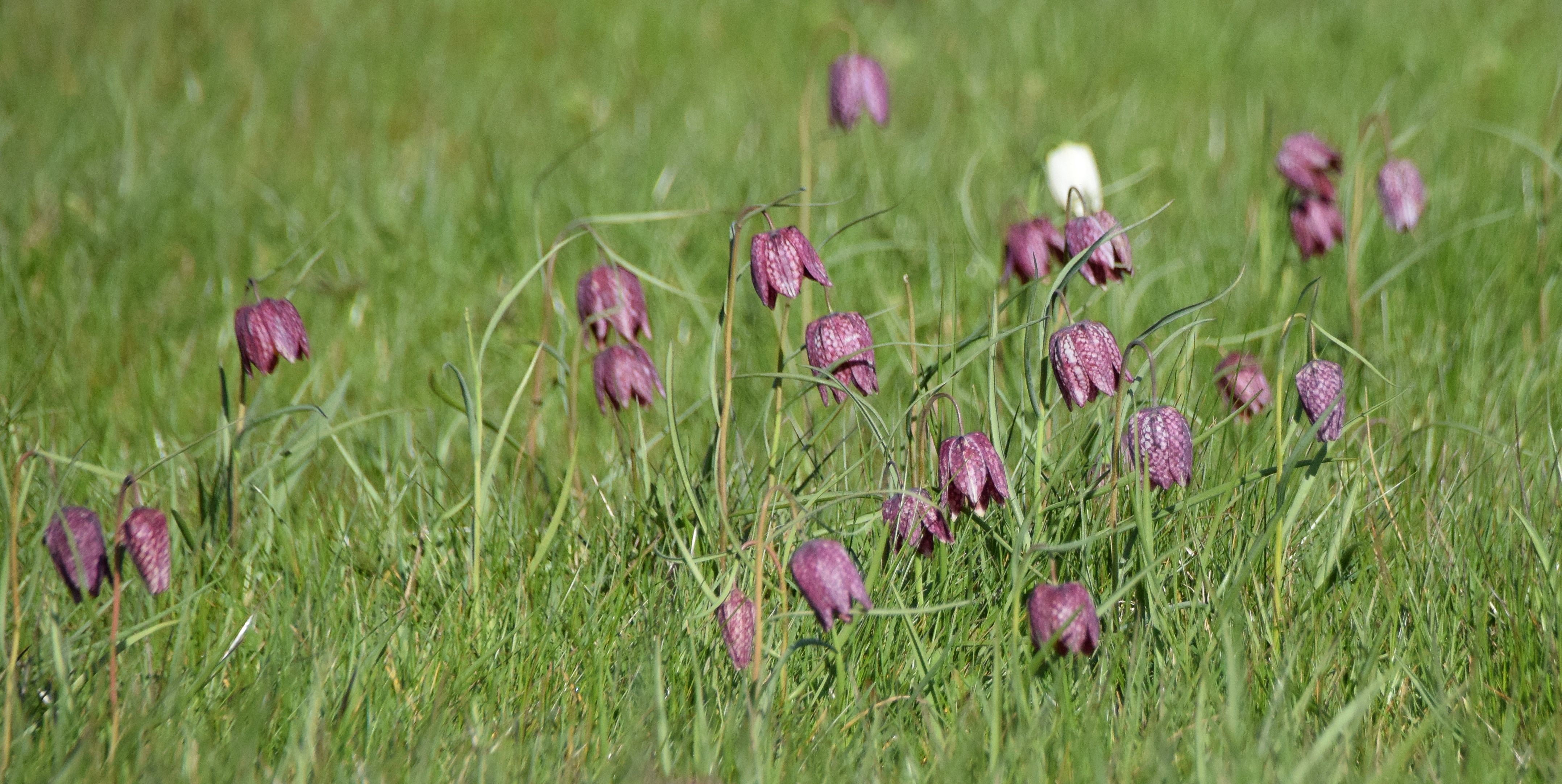
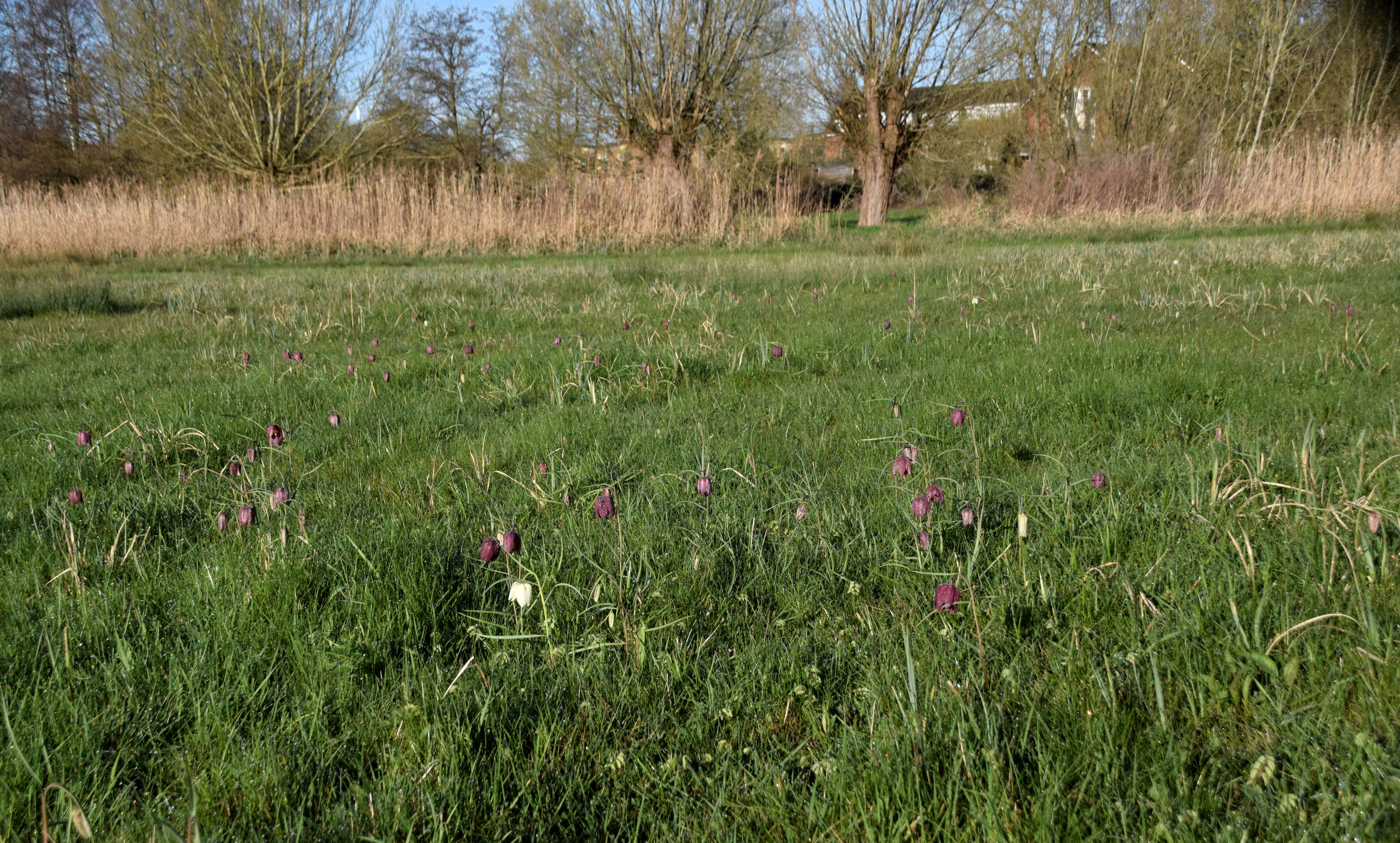
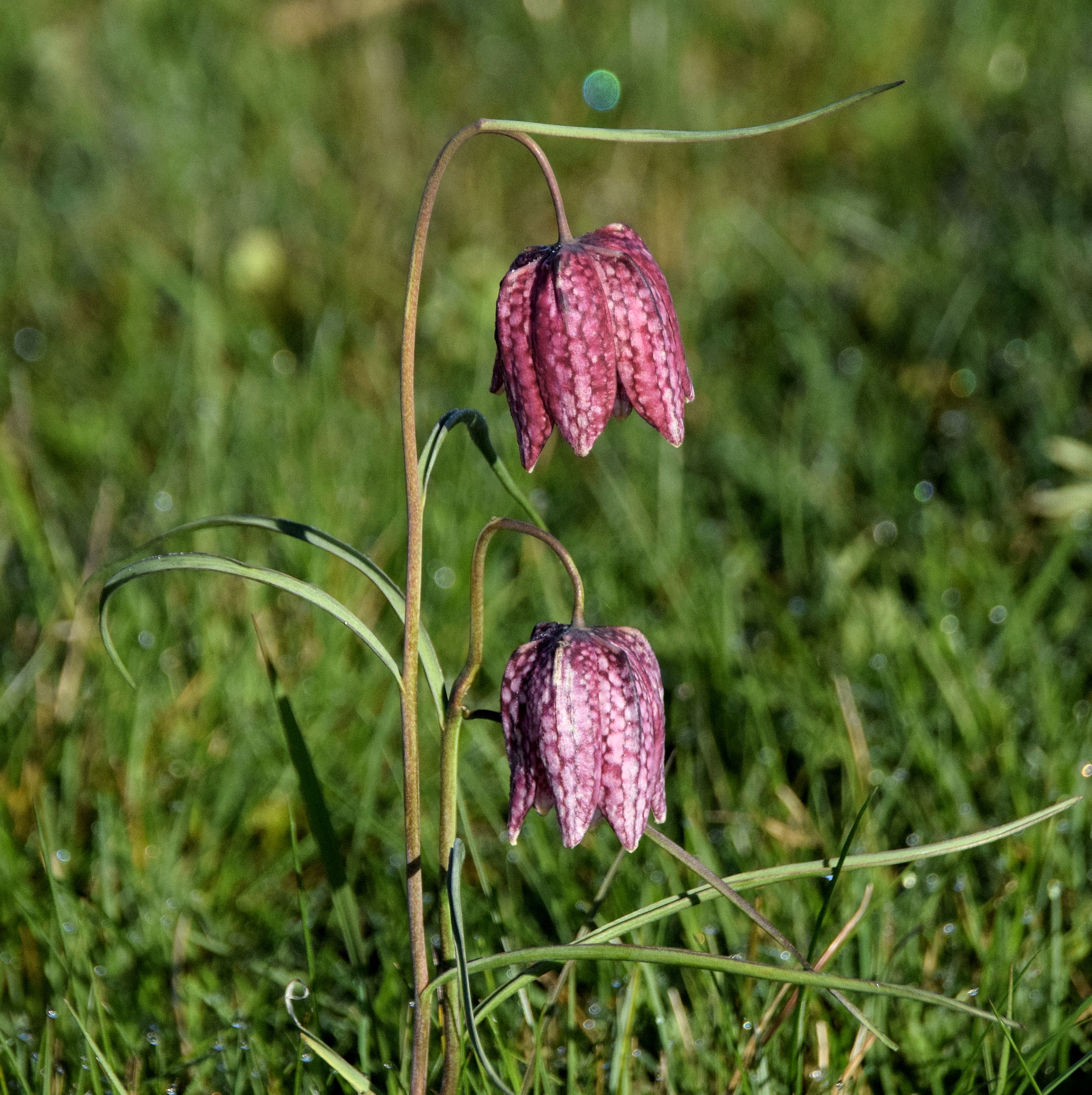
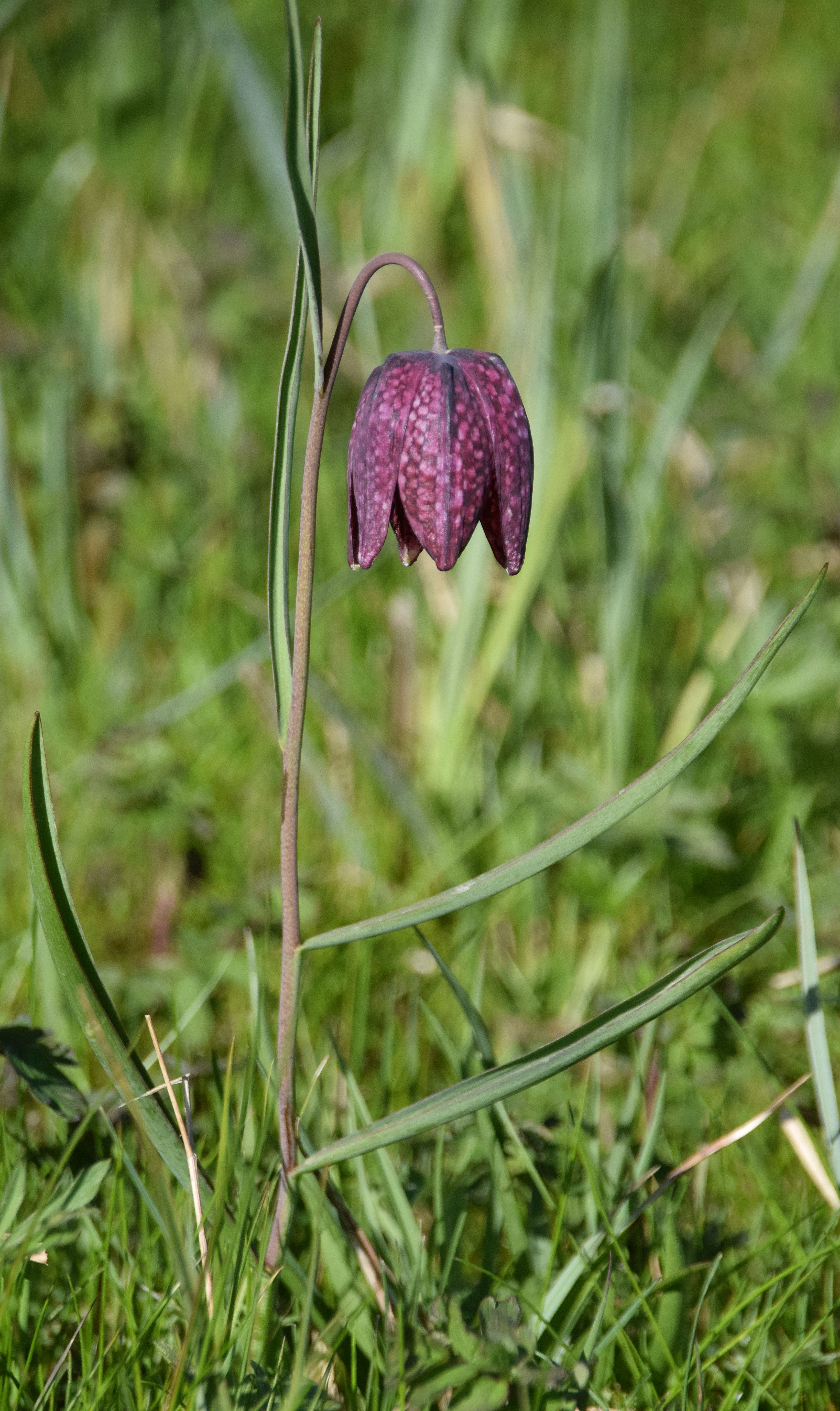
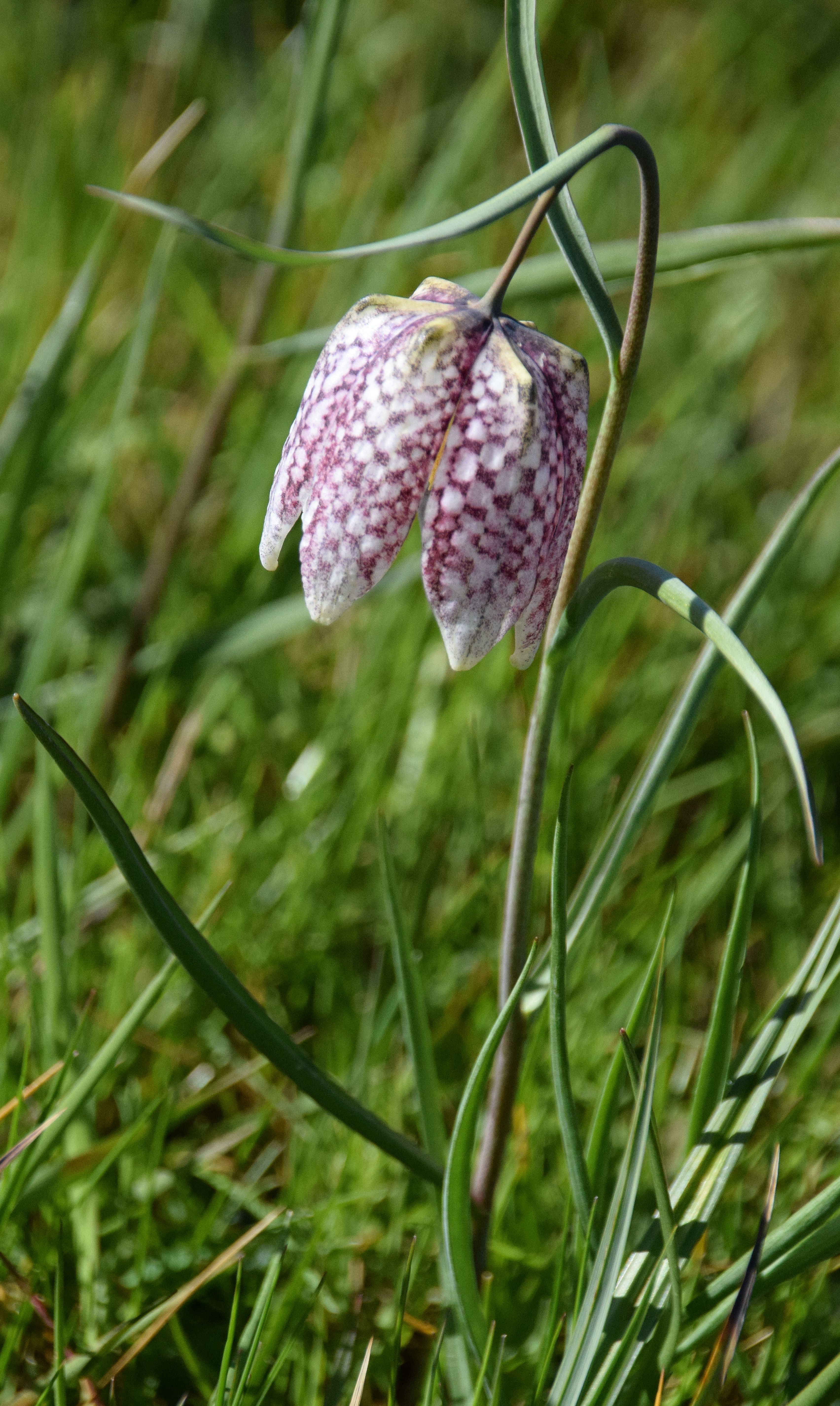
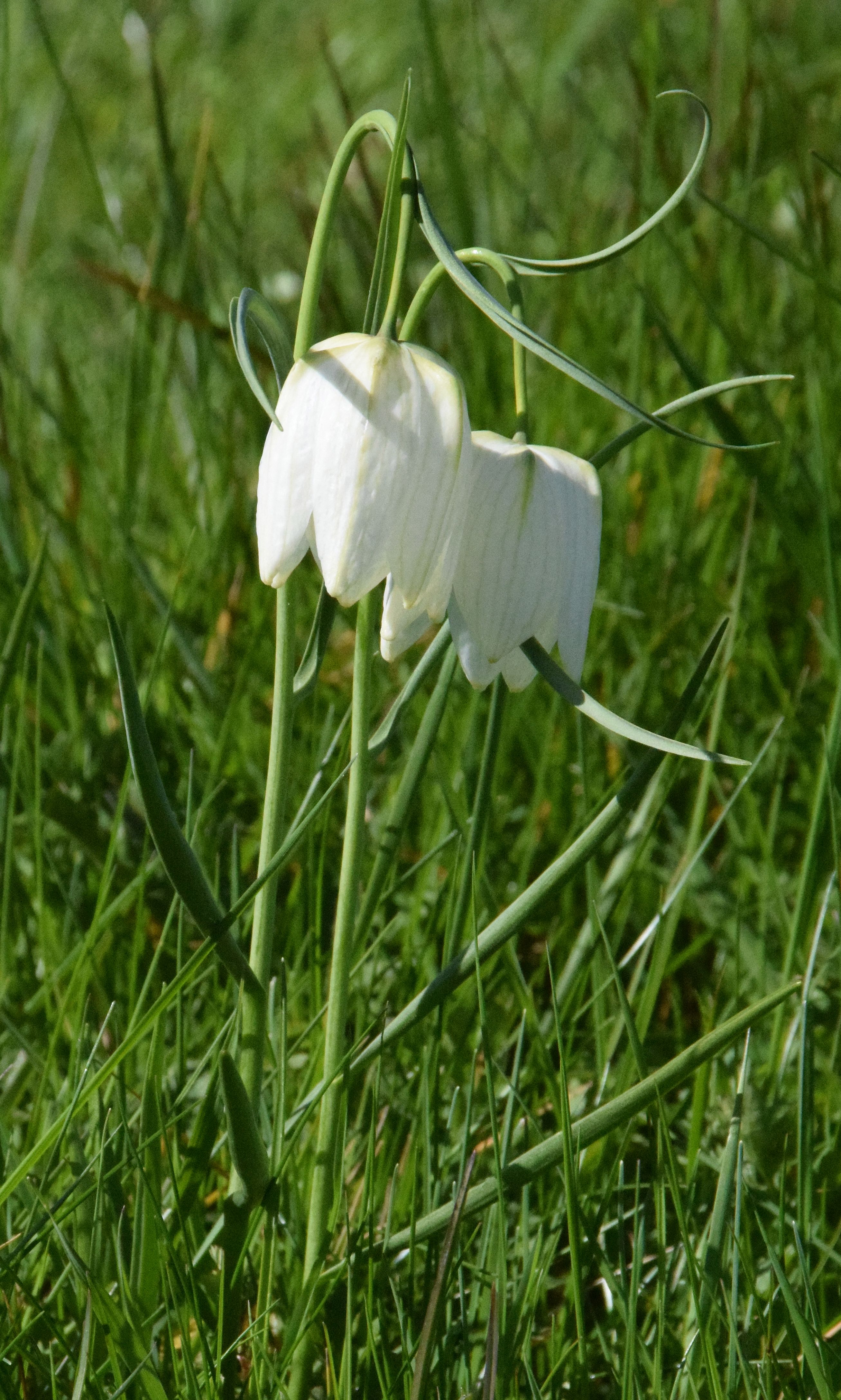
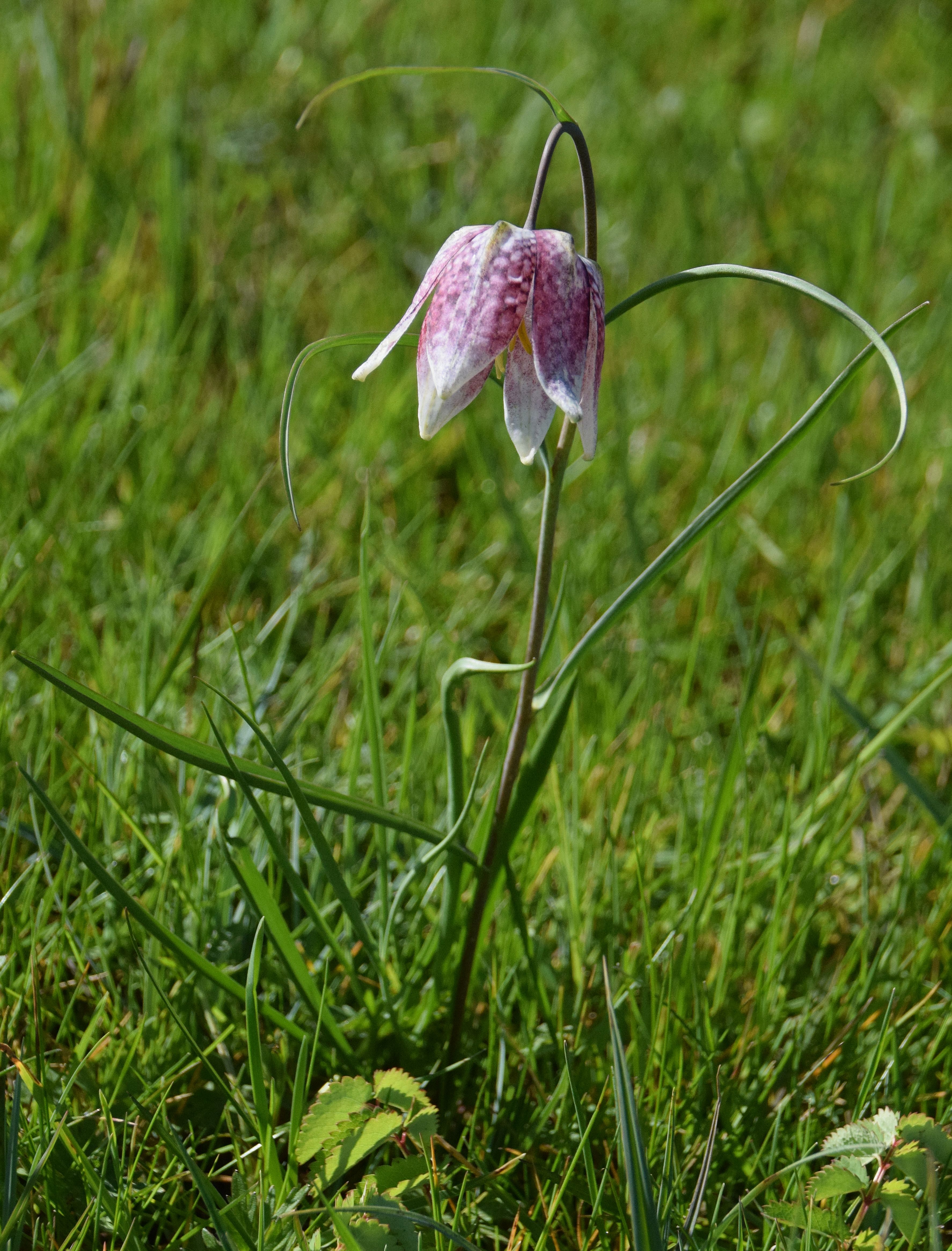
Snake’s head Fritillaries

These 33 hectares of wet meadows (OX1 4UP – SP525039) crossed by old river channels with willow-lined ditches have a rich diversity of wildlife. Such old, unspoilt meadow land was once a widespread feature of native river systems, but much has been lost to drainage and farming. There can be few British cities through which a river flows where such wildlife habitat still exists just 2.6 km from the urban centre, or where so much original floodplain habitat remains undeveloped as here in Oxford, and for such reasons I have always felt quite blessed to live here.

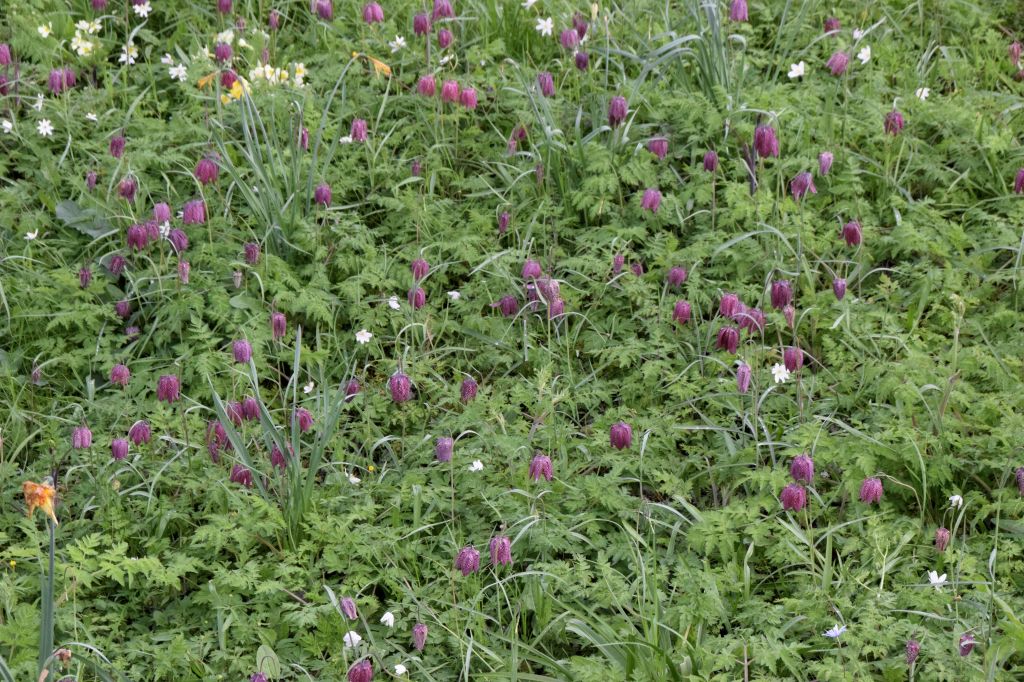
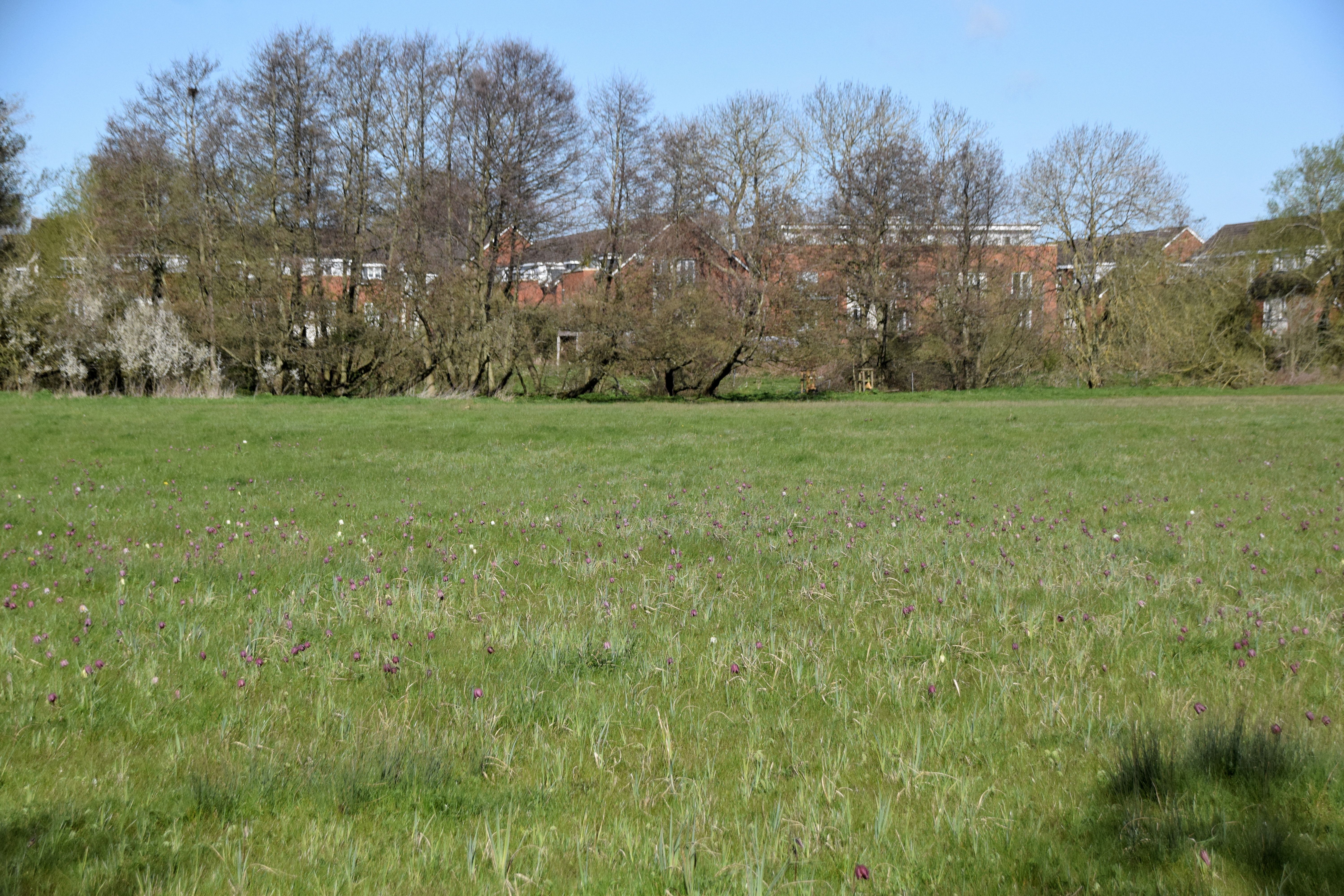
As I arrived on site the earliness of the hour seemed appropriate, as so soon upon the onset a week ago of English summer time and with it fair weather, I have found myself in an apparent phase of re-emergence and renewal. But more of that later. I wasn’t sure exactly where to look, but a dog walker called out, having noticed my camera and guessed my intent, and gave me directions. After a short walk onward I soon found what I was seeking (pictured below), though the display seemed some way from its annual peak.

Iffley Meadows Fritillary field # 1

This 15 – 40 cm tall bulbous plant favours damp riverside meadows that flood in winter, and BBOWT also maintains a regime of controlled grazing and July hay cutting at Iffley to optimise growing conditions. Botanists disagree as to whether it is a truly native species or a long-established and naturalised garden escapee. The first reference to it growing in the wild was in 1736, whilst it was known from gardens up to 150 years earlier. Though also native to continental Europe and western Asia it has been an endangered species in many localities and more often found as a cultivated than wild plant. But the fact that nationally it is usually confined to ancient hay meadows in the wild and rarely spreads to adjoining habitat casts doubt upon that theory.

By way of a little trivia, Meleagris is Latin for Guinea Fowl and the mottled pattern of the bell-shaped blooms is said to resemble those birds’ plumage. The likeness to snakes’ heads presumably comes from the nodding habit. Older common English names included Chess Flower, Frog Cup and Leper Lily since the flower shape was thought to resemble the bells once carried by the pariahs that were leprosy sufferers. In 2002 SHF was chosen as the county flower of Oxfordshire following a poll by the wild flora conservation charity Plantlife.

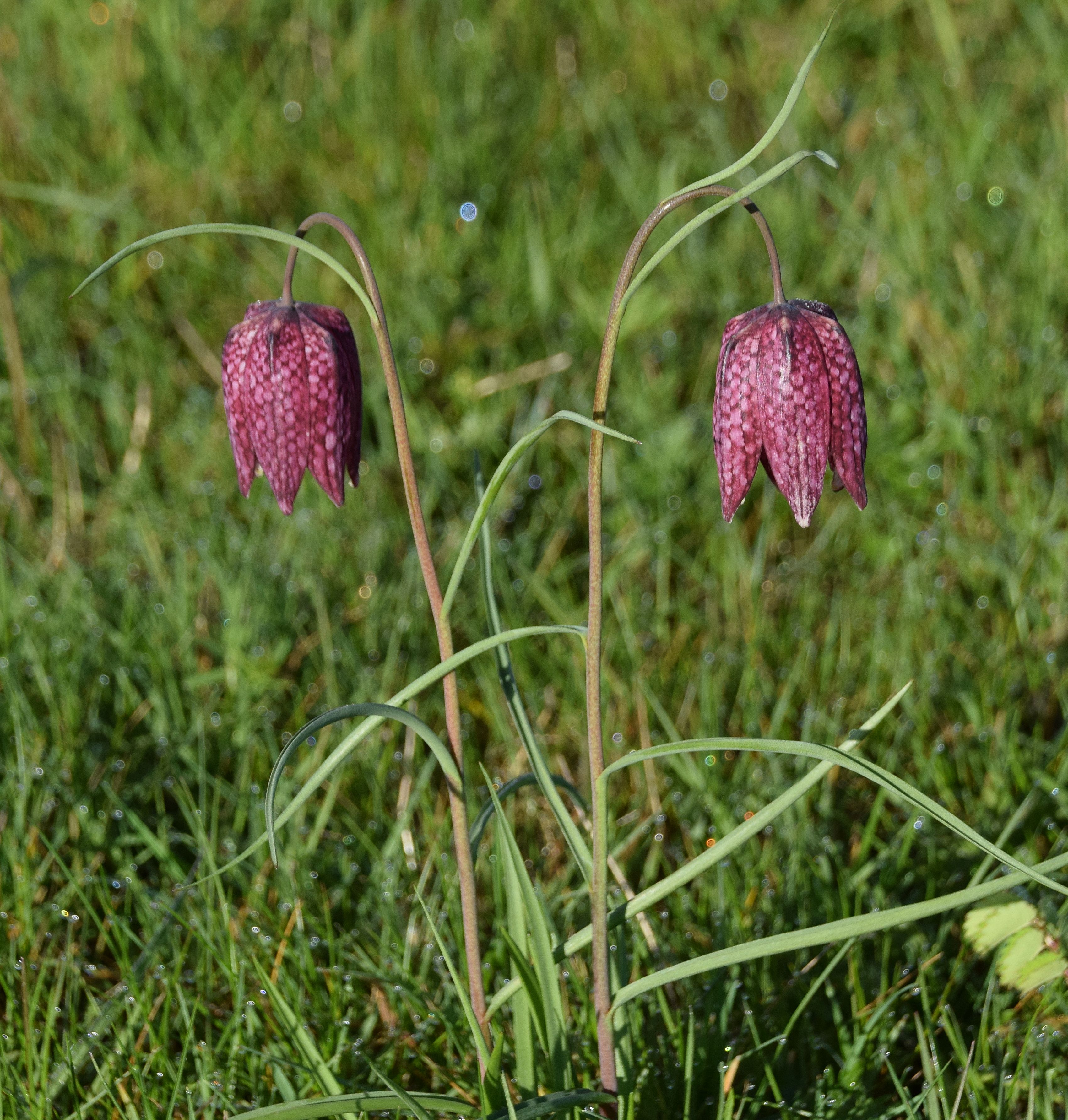
I spent around an hour here treading carefully amongst the sea of nodding, delicate, mainly purple, pink or berry-red chequered flower heads (pictured above), depending upon how the light caught them. These are said to look their best early in the day when backlit by the low spring sun. Smaller numbers are cream coloured with green highlights. Local residents I met all knew what I had come for, such is the reserve’s popularity with wild flower enthusiasts at this time of year.

Iffley Meadows Fritillary field # 2

Six days later (13th) I returned to see if the display was any more advanced in numbers but found that first spot to be much the same since a lot of blind plants were just the same. Then walking away I met an Oxon birder who lives nearby and he told me the best field is over a stream beyond the reed bed in the second picture from top (above). So I went back to take a look and now recognised the scene of the survey video on the reserve website.

Here, adjacent to Weirs Mill Stream was indeed a greater density of Fritillaries though still many blind plants. Amongst them stood out a proportion of paler mauve blooms (pictured above) that I found especially attractive. Having gone into a new season looking as ever to evolve my wildlife interests I came across more botanical sites when researching new Orchids to seek out locally. So I feel pleased to have at length taken the opportunity to experience a true local treasure. Welly boots are essential when visiting this site.

I visit Great Britain’s only Giant Orchid site in south Oxon: 17 – 30th March

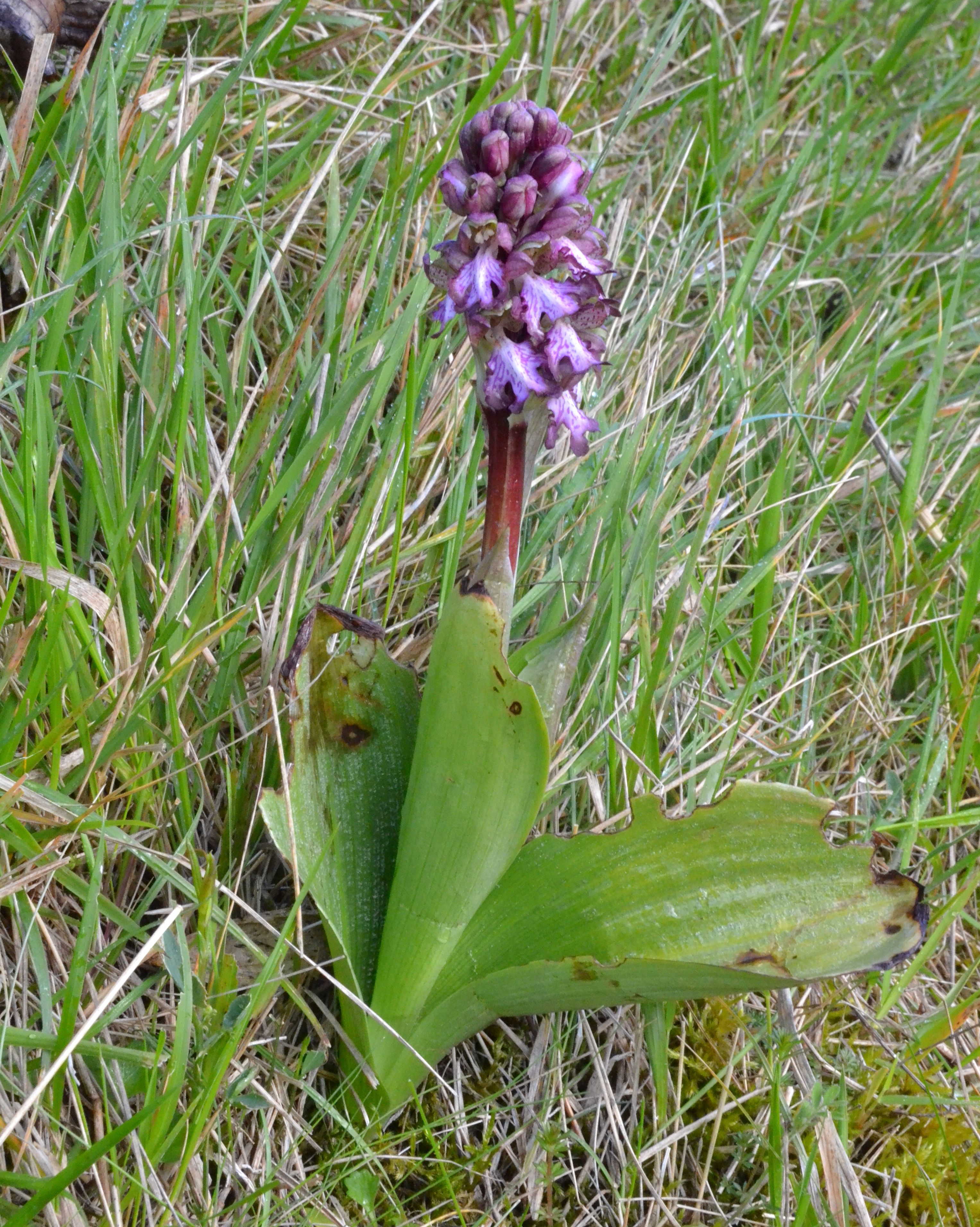
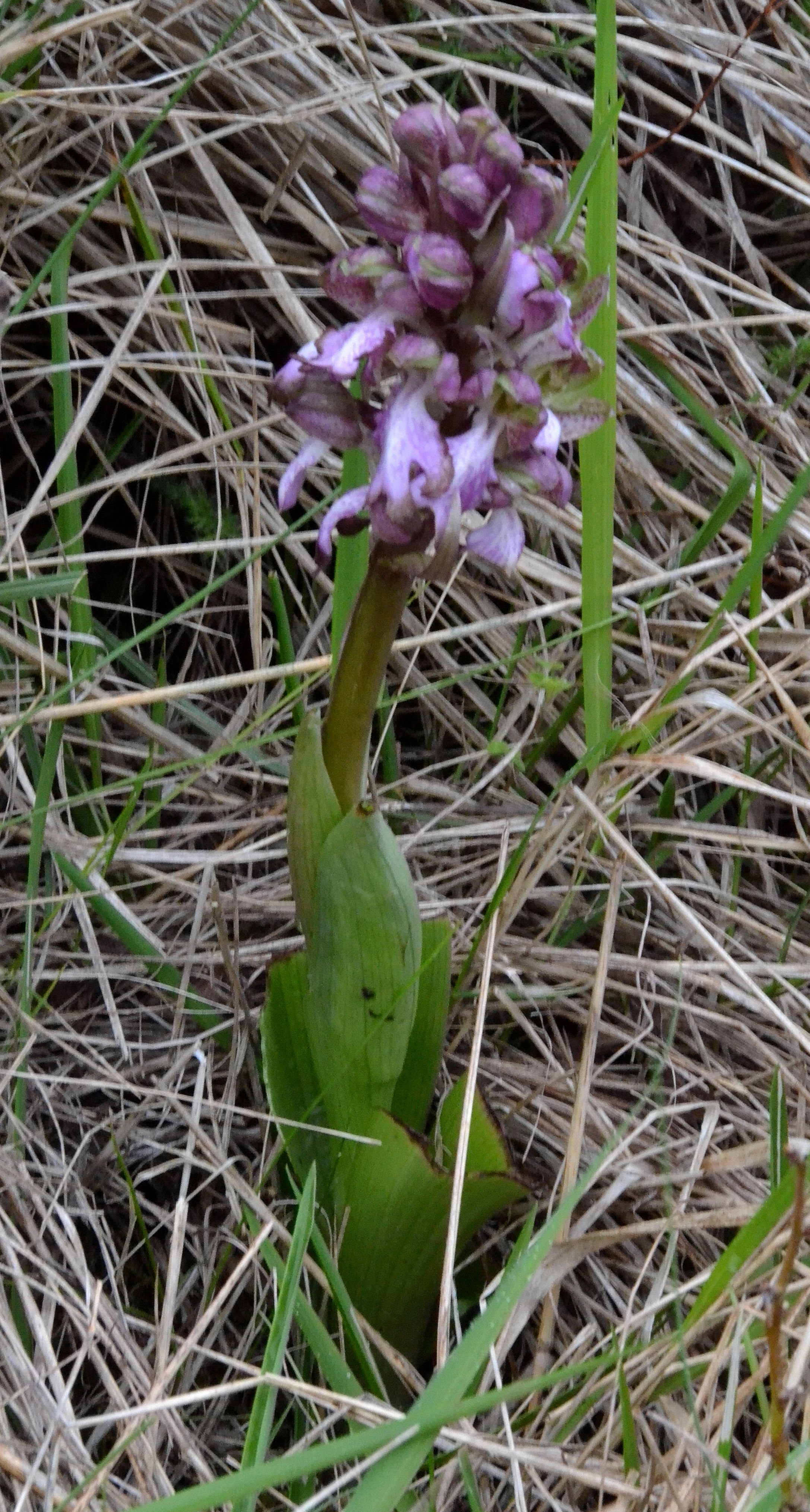
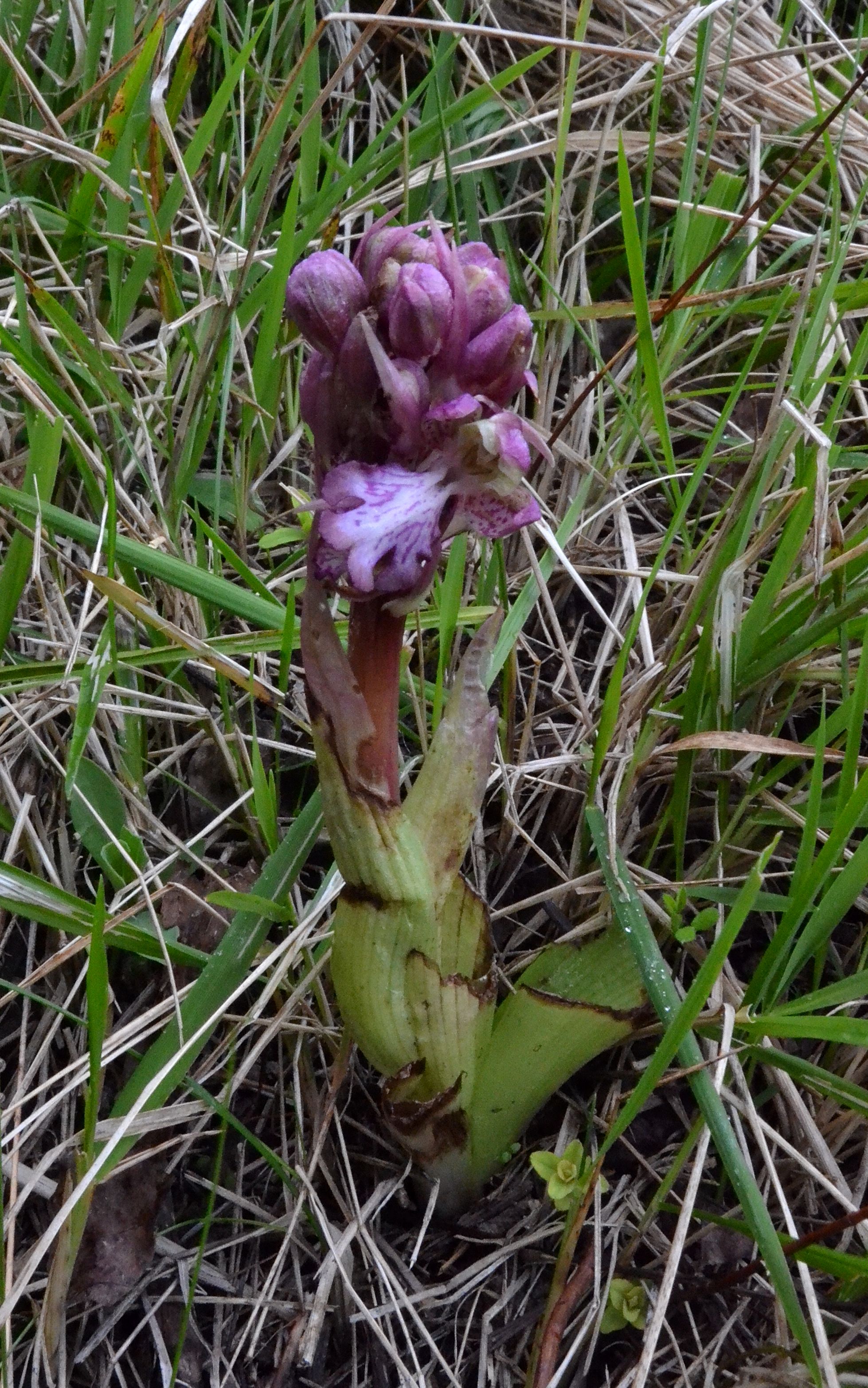
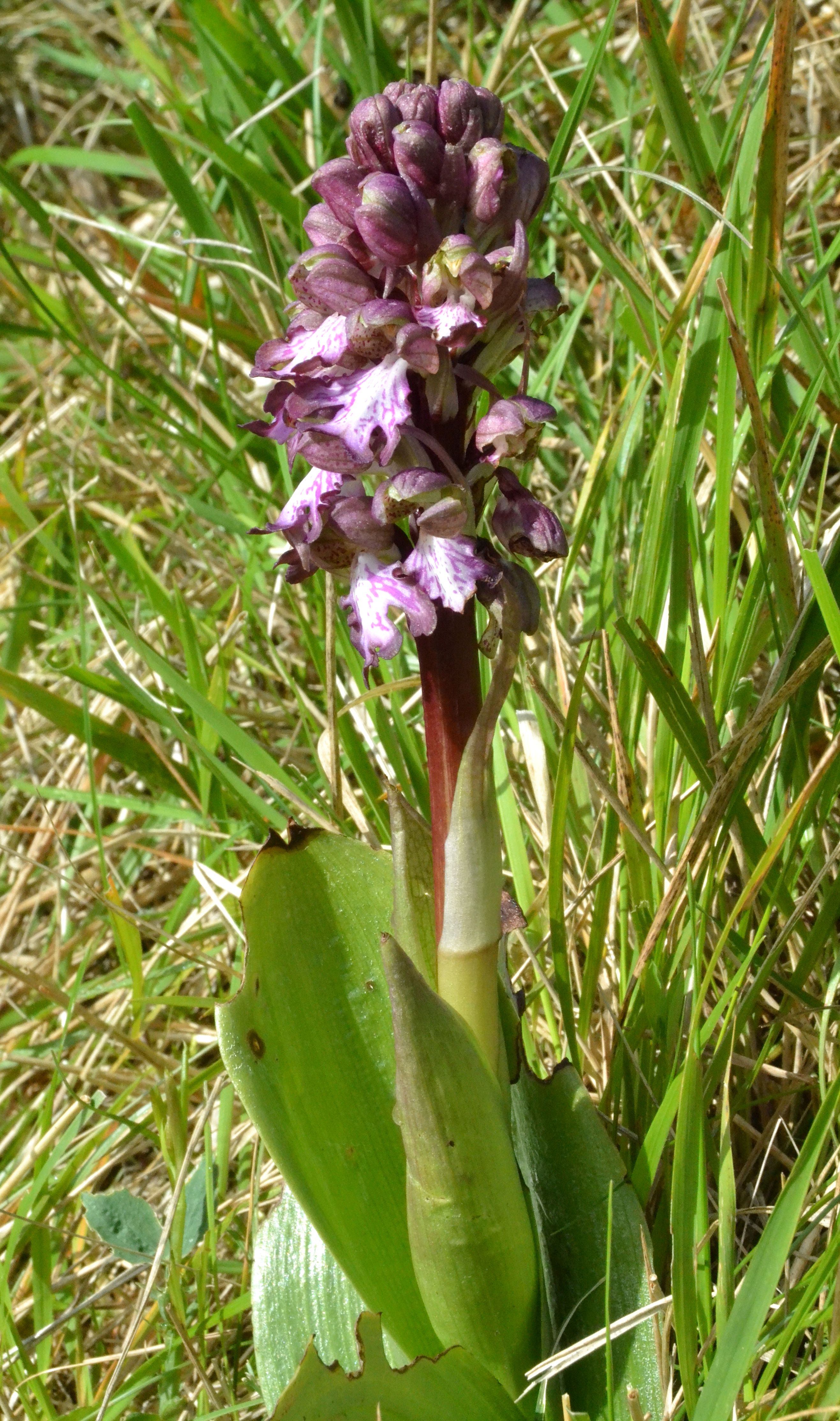
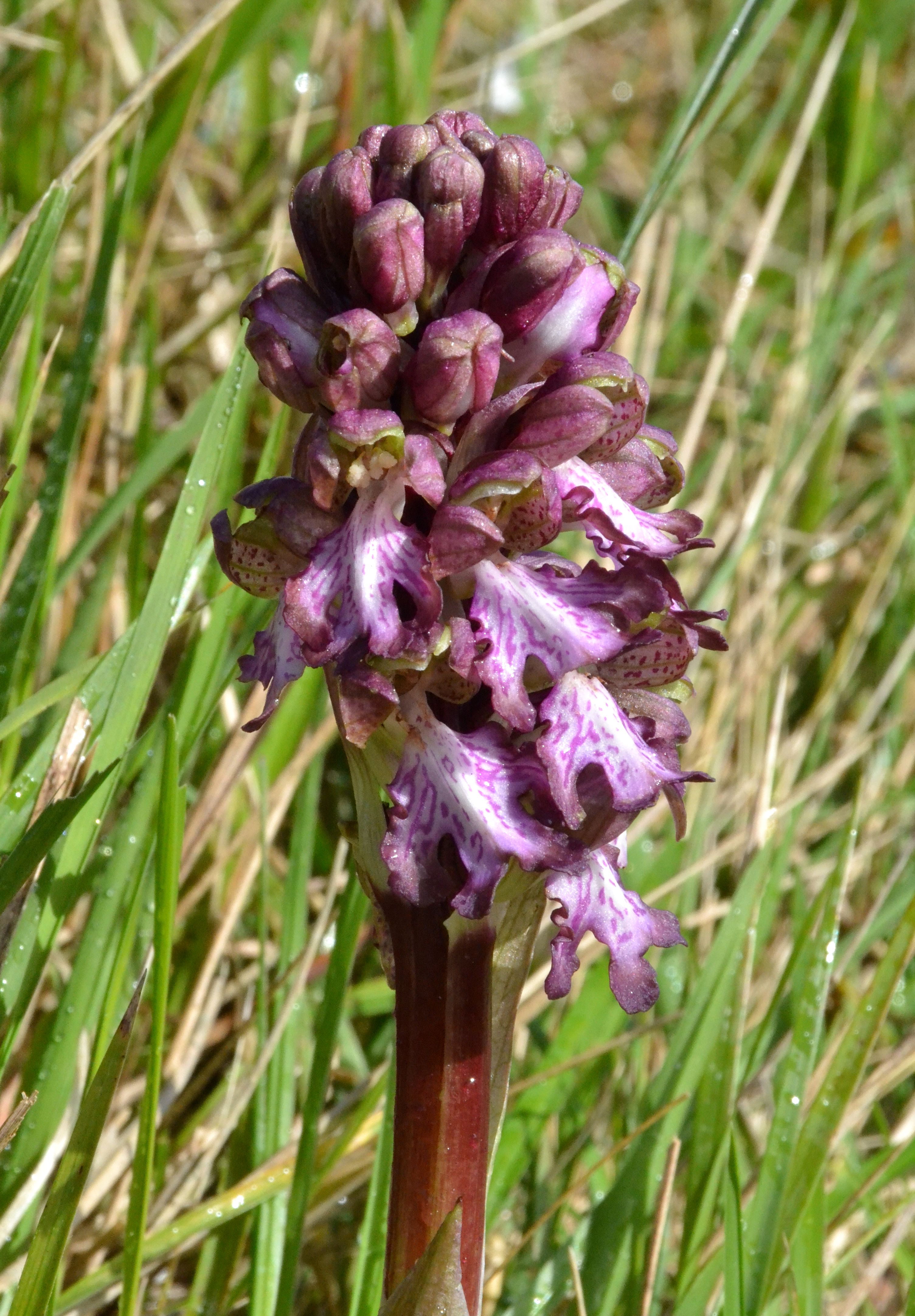
Having for some time been receptive to learning more about Orchids, preferably with informed guidance, on being invited to a sneak preview of a rare Giant Orchid colony in my home county I accepted at once. What I didn’t realise until our second site visit was this is the only national location for the species, which is native to the Mediterranean region but has expanded its range as far as northern France with global warming.
The Oxon colony, then numbering nine flowering and 10 non-flowering plants, was discovered a year ago by a local non-botanist (see here) who nonetheless had an interest in Orchids and informed the relevant learned authorities. A national Orchid referee visited site to confirm the record and upon local enquiry established that specimens flowered here around 15 years ago but then disappeared again. It is not thought these occurred naturally but more likely through seed being scattered, as at certain locations in the Netherlands where the plant has become established. But it is now assumed the species has naturalised in southern England for the first time.
Giant Orchid #5

I myself had observed this Orchid once before in Provence in January 2016. It is one of the earliest flowering species in Europe and can live up to its name by reaching a metre in height. But none of the 2022 Oxon specimens was more than 30cm tall. We first visited on 17th March, finding just one emergent Giant Orchid, but on returning a week later found four specimens in bud or beginning to bloom (pictured below). March in Blighty has been an unrelentingly foul weather month, and after a sunny morning the grey, windy, wet stuff set in again when we reached site, as the images and possibly their subjects reflect.
Fast forward a week and word concerning this year’s blooming event had largely filtered through the Orchid grapevine. Though this location has not been made known in the public domain, those suitably connected in the Orchid world would by now be aware of the situation and an Orchid Society group had visited over the previous weekend. On our third call here there were at last sunny intervals and I was guided to an especially fine fifth specimen that had escaped our attention on those earlier visits. It was at a very slippery spot in the steeply sloping site, so gaining these next images required some care. But I managed not to take a tumble, unlike some of my six colleagues today.

A wet arse is of course greatly preferable to a broken ankle, and a hiking pole or shooting stick is essential here. Having attained these required studies I moved on to re-find last weeks specimens, three of which were still present and reasonably correct. The sequence below is for comparison with the earlier one in this post. If this becomes an established British colony then perhaps better picture opportunities may be available in future drier springs when these Orchids might have had less of a battering from the elements.

By agreement with my contacts I have not revealed this location herein. My understanding is limited site access is being arranged in the present season through appropriate channels, and the site details will be released more widely in due course.

My first national Alpine Swift at Oldbury-upon-Severn, Glos – 16th Mar

This was as easy a twitch as any I can remember. Upon my rising today news of a potential British list addition within 80 miles of home was very welcome. Day after grey, damp, dismal day of late (when I am not working) has been spent largely at home and not finding much motivation for the same-old, same-old prospect of another local wildlife season. So this little diversion was enough to get me out of the door albeit with a fairly low-key, “tick it for Blighty” expectation.

I had observed Alpine Swift previously in Liechtenstein (2009), Provence (May 2012) and Greek Macedonia (Apr 2017). There are some British records in most years, and this week after south-westerly gales a 7-strong cluster in Ireland has been followed up by more occurrences in Cornwall, Devon, “briefly” in Merseyside (perhaps understandably), North Wales and Scotland. At just before 1pm yesterday what at once became a popular draw was found at an ageing nuclear power station on the Severn estuary, no doubt attracted by the insect-rich micro-climates that such facilities generate.

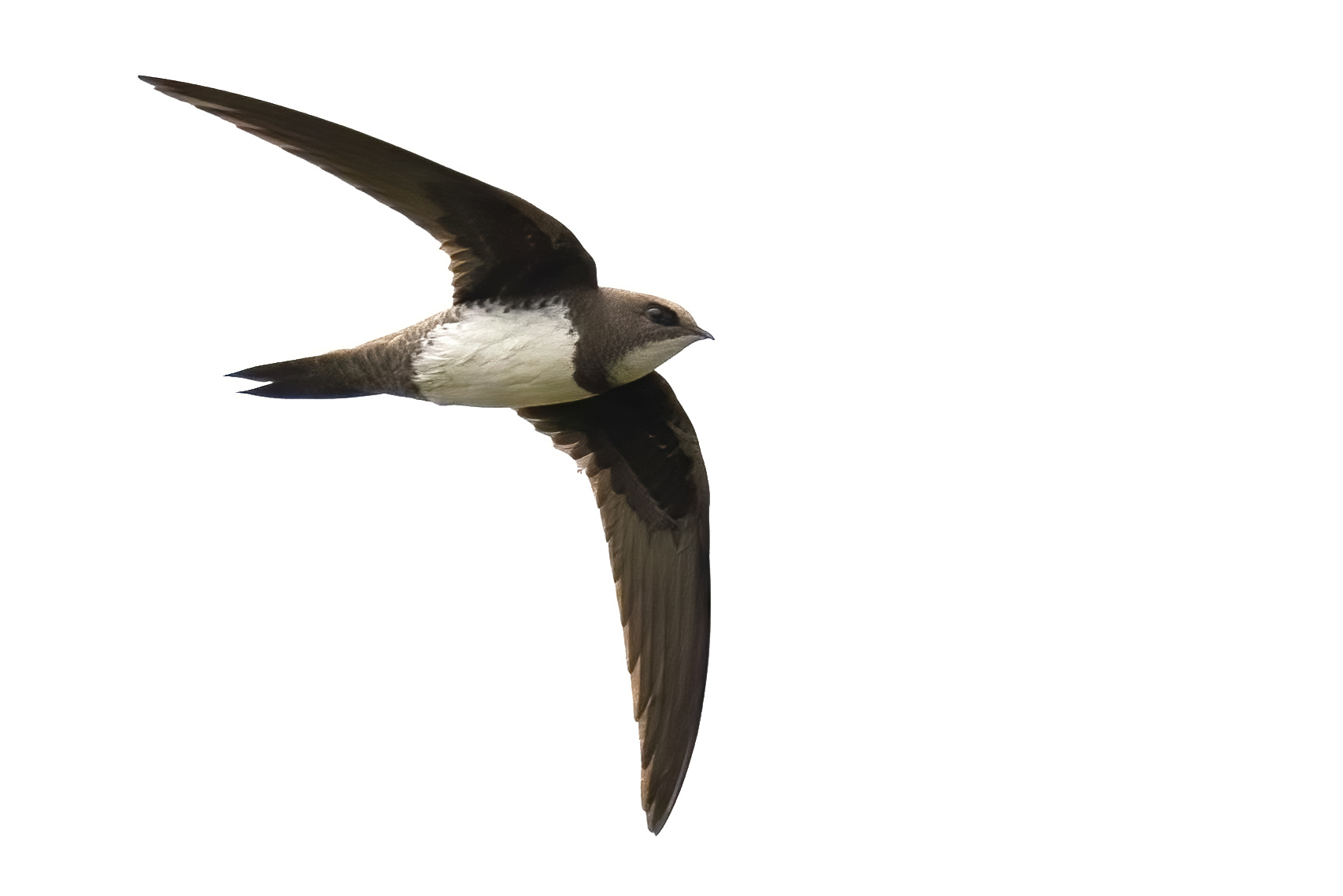
Today’s Alpine Swift © and courtesy of Richard Tyler

This item was confirmed as still being on-site at first light today, and early arriving observers videoed it roosting on the power station structure. I myself waited for rush hour traffic around both Oxford and Gloucester to subside before hitting the road westward in search of my 378th national bird, reaching Oldbury Power Station (ST607941) at just before midday.

On the approach road to the plant there was a lay-by containing several cars that I presumed belonged to birders. I was expecting to have to walk around the site to observe my quest from the north, but four birders with big lens cameras were stationed just a little back from the roadside. I enquired: “Surely you’re not seeing the Swift from here?”, and was told it would soon re-appear above trees on the opposite side of the road. Indeed it did and things today really were as instant and simple as that.

At 20-23cm this bird is up to 6cm longer in the body than our more usual Common Swift and has a maximum wingspan of up to 58cm compared to Common’s 44cm. That size differential was immediately apparent as my quest hawked for insects overhead, as were the white belly and brown breast band. A few Sand Martin were also on the wing here, offering a size and jizz comparison that served to emphasise just how big the Alpine visitor is. AS also has a markedly slower wing action with deeper scything wing beats compared to other Swifts.

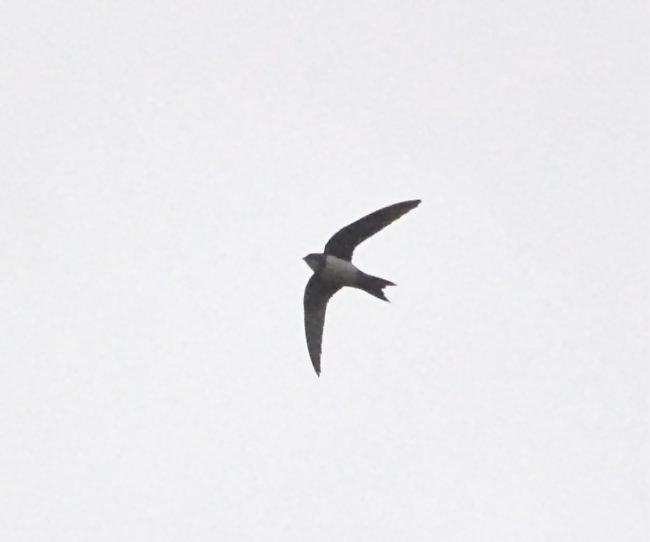
So this was a much more meaningful connect than I had anticipated, indeed as good an encounter as any of those previous ones. Alpine Swift breeds across southern Europe and north Africa on tall buildings, cliffs and rock faces; wintering in southern Africa. It seemed rude to not at least attempt some pictorial records with my equipment that I knew would not be adequate in the conditions. So I did and these (above) are the outcome.

Some of the other birders then followed a path into the wooded area opposite, leaving me with just one other person. I continued to watch the bird circling round and round, constantly on the wing as Swifts do, all the while just enjoying how unexpectedly close it was coming and what a complete species portrait it was offering. A birder then re-appeared in the gateway and called there was even better viewing from a field just through the narrow wooded strip. So I went through joining several big lens toters who were all trying to gain acceptable images in the damp and overcast conditions, then continued to commune with this superb bird.

In all I remained on site for around an hour before rainfall became steadier and I headed back home. The bird roosted overnight again on the power station and left during the morning of 17th. Through that day there were other national sightings of Alpine Swift in Cornwall, Dorset, Northumberland, north Devon and lastly Somerset in the early evening. And what became a record breaking influx continued over several more days. This was a very agreeable British tick twitchette as I edge ever closer to my lifetime target of 400 birds, the majority of which have been within 180 miles of home.

And now my second Lesser Scaup, also in Oxon at Farmoor Reservoir – 3rd Mar

What a difference a new and different bird to go after and see makes! Little could have been more welcome than overnight news that an Oxon mega had been discovered at the prime stomping ground that is Farmoor Reservoir.

My home county is enjoying a purple patch at present where Nearctic ducks are concerned, with the American Wigeon (see previous post) and now this latest item joining three over-wintering Ring-necked Ducks in different locations. The latest alert went out just before 4pm yesterday but seemed lukewarm and uncertain, being cited as “possible” then “putative” before nightfall. So recalling a Lesser Scaup candidate at Farmoor in November 2017 that was overruled as a hybrid, I opted to wait for the ID to be confirmed this time. On rising today that decision had been made and with it came a familiar but recently all too unavailable sense of purpose.

When I reached site just after 8am some earlier arrivals had already relocated the bird but it had flown and they were walking back along the causeway. I followed some of them to where it had been seen to land but there was no sign and alarm bells rang in my head. The group was about to walk on clockwise around F2 when I received a call saying our quest was now in the other direction in front of the sailing club, and so I briefly became a man of the moment for passing on that news. And when everyone present regrouped my second career Lesser Scaup stood out at once amongst a small group of Tufted Duck (below).

Drake Lesser Scaup (centre) and Tufted Ducks (record shot)

My only previous sighting of this species was at Cardiff Bay, Glamorgan in February 2015 (see here). It is common and widespread across North America and a regular vagrant to the British Isles with up to 15 records in some years. There have been two of them in England recently and since one of those, a drake at Staines Reservoir, Surrey has not been seen there in the last two days it is assumed that individual and today’s are one and the same. Similarly the still present American Wigeon is now thought to have commuted between Shapwick Heath in Somerset and Oxfordshire before settling at Otmoor.

Lesser Scaup is as the name suggests a noticeably smaller and more slightly built duck than either greater Scaup or Tufted Duck. Two of the most obvious diagnostics compared to greater in drakes are the high-crowned, less rounded head shape and a coarser vermiculation on the upper parts darkening to the rear. The latter feature was very apparent in today’s bird that I viewed at much closer range than previously in Cardiff Bay. The head shape can vary in appearance as the peaked crown is not a factor of skull structure but arises from elongated feathering, possibly a “bad hair day” as the Oxon birding colleague alongside me put it. This can lead to contentious IDs where the Nearctic duck is concerned, but not today.

Once the Farmoor bird (more muddy record shots above) was pinpointed in front of the sailing club it proceeded to drift up and down the northern edge of F2 fairly close in to the causeway with its Tufted companions, diving all the while. As several other birders commented, this was unusual in a site scarcity which more usually choose to favour the furthest corners of the twin reservoirs from the entry point. Once news went out again more of Oxon’s finest came and went over the ensuing three hours that I remained on site.

I learned the previous Lesser Scaup here had been in March 2000, though there was another elsewhere in the county in December 2007. So high (260+) county listers would presumably have it but many of those from the high 250s downwards could be expected to visit. This was a proper old school county twitch, the first in a while and at least while I was there surprisingly free of social media driven peripheral observers.

A female greater Scaup, always a good bird to see has also over-wintered here, which I took the opportunity to catch up with today. Sooner or later Farmoor Reservoir like any large inland water body will always deliver anew and the Lesser Scaup is actually my 250th Oxon county bird, including two heard only and six non-BOU recognised species that still count for me. More widely my four county birding events so far in 2023 of an early January Yellow-browed Warbler in central Oxford, a new Starling roost in Eynsham, and the two Nearctic ducks have all been motivating. I will of course, with whatever assistance the birding gods might provide, persist in encouraging my recent mind set to shift.