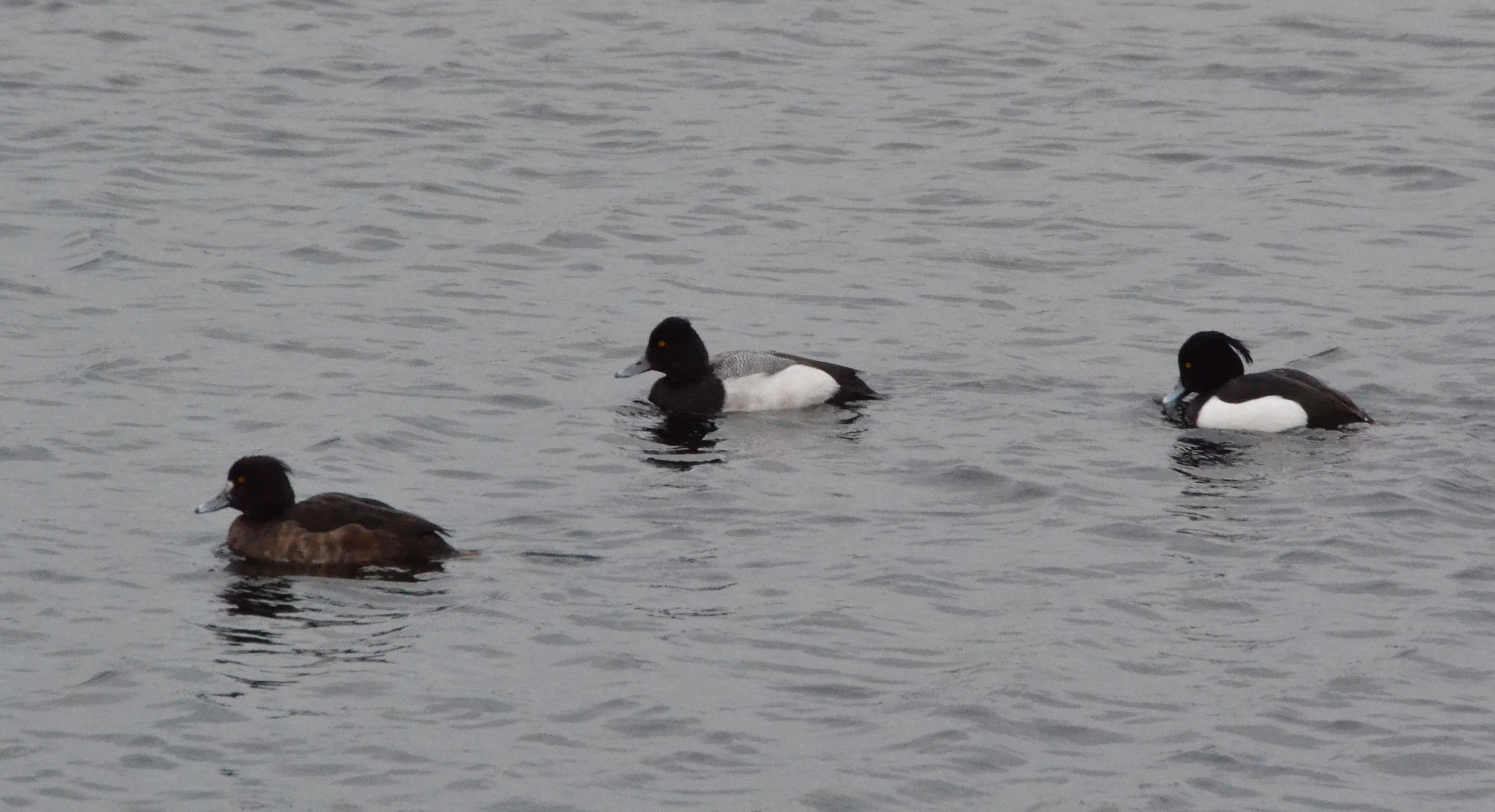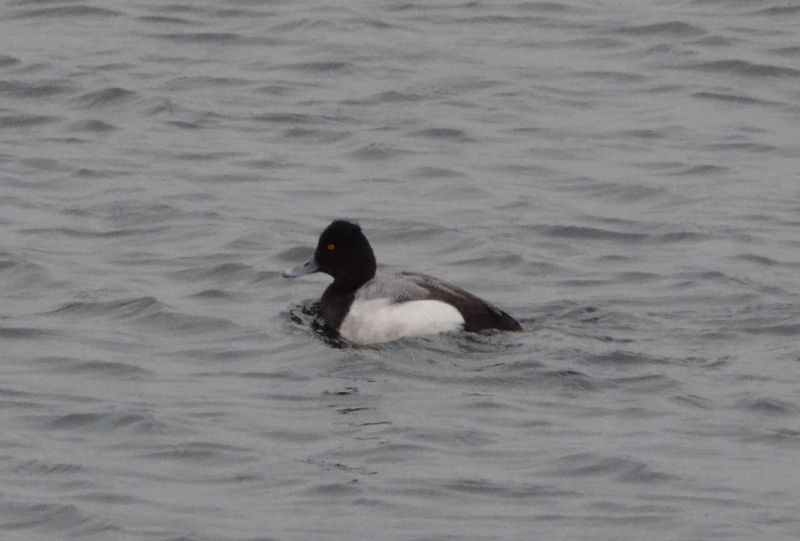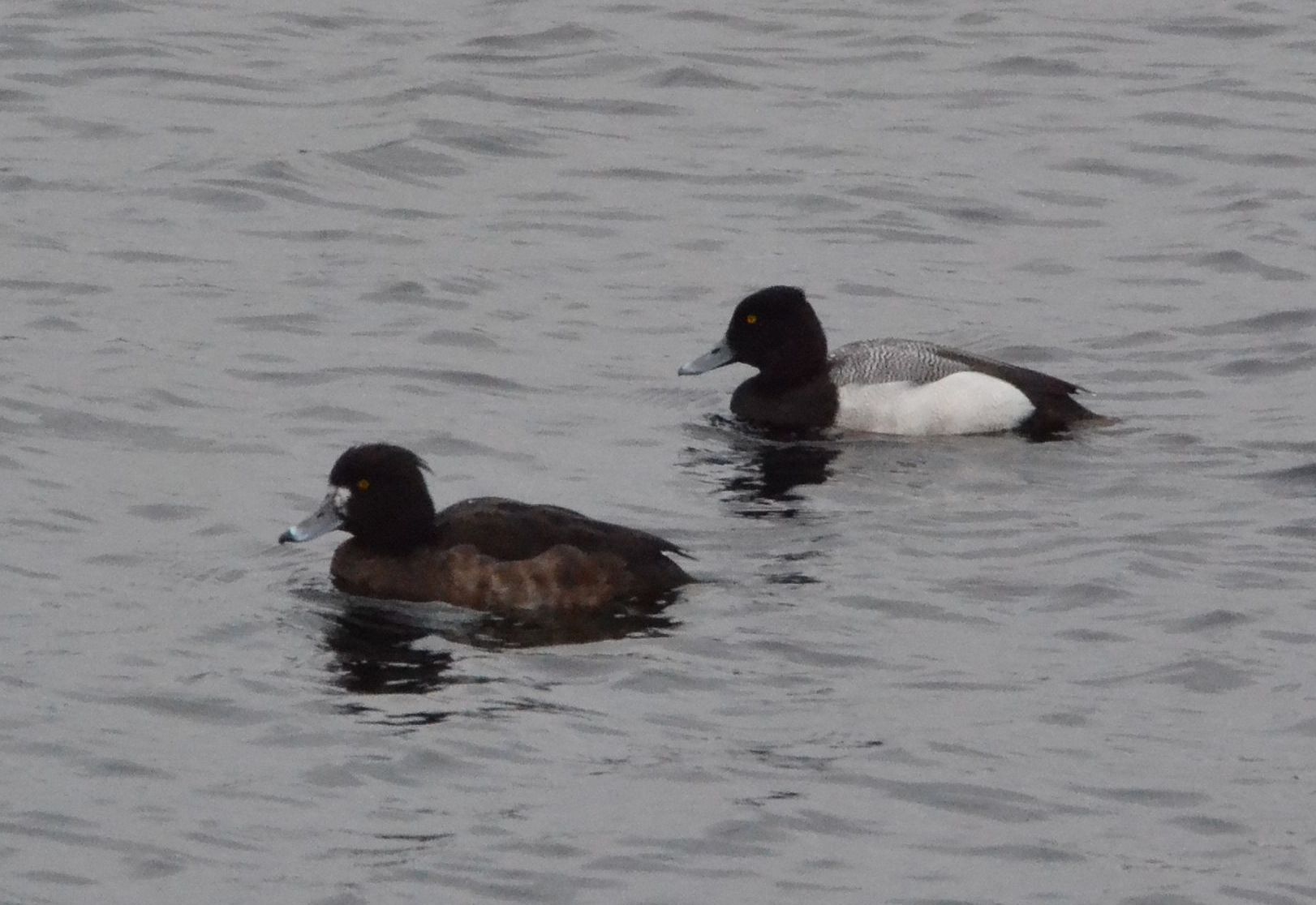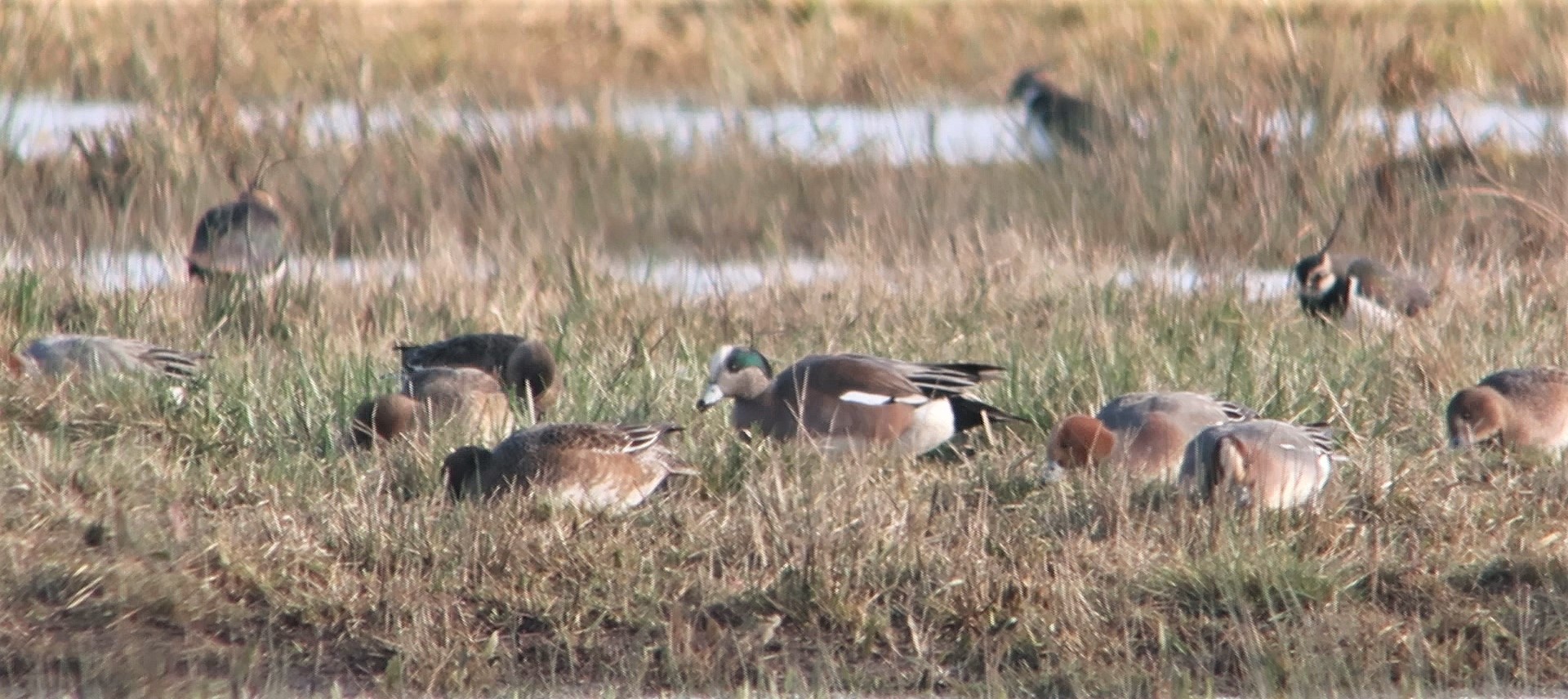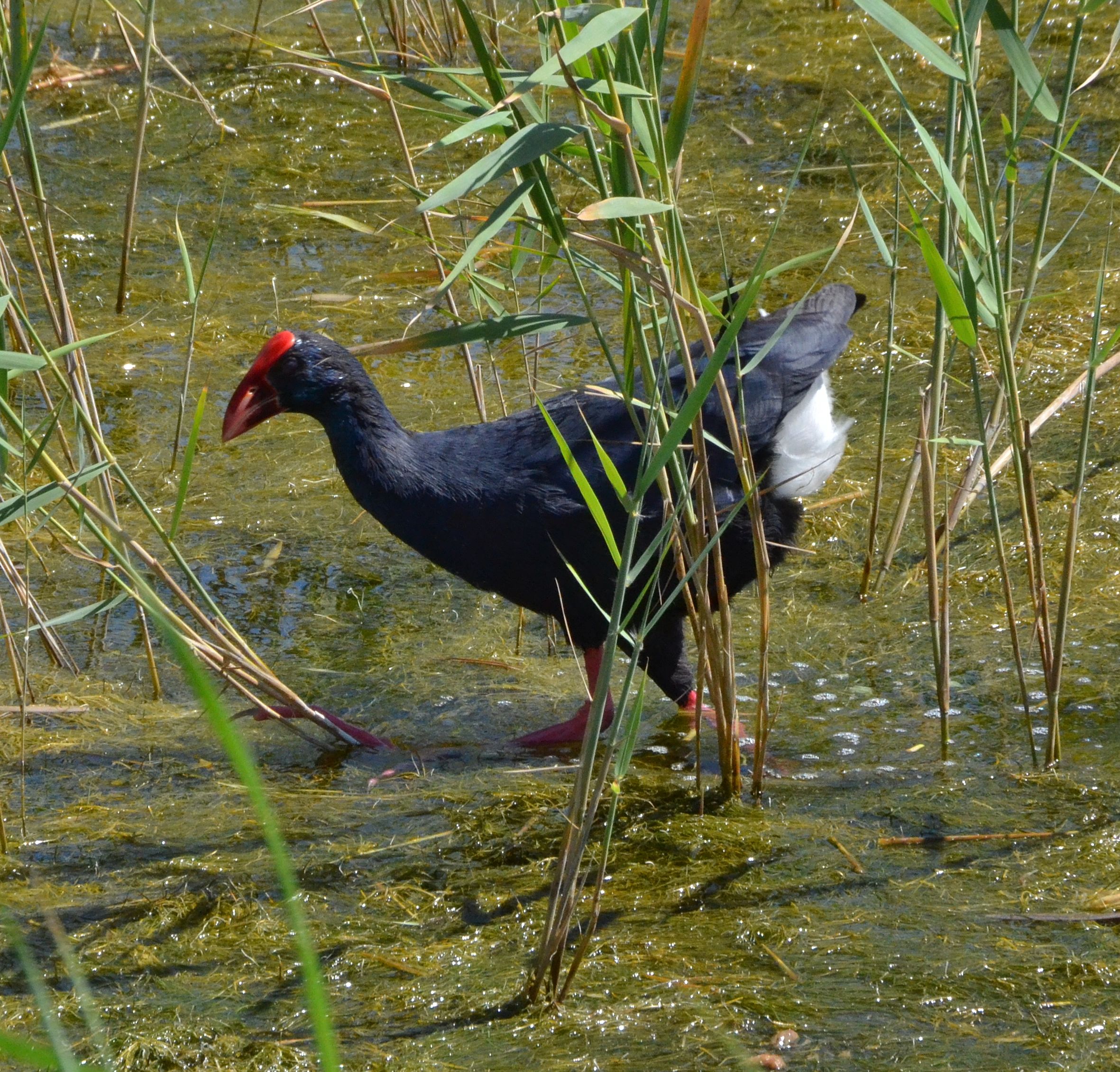
My second American Wigeon at Otmoor, Oxon – 20th Feb

A number of American Wigeon have been reported around England in recent weeks, and being an attractive Nearctic equivalent of one of our own most abundant winter wildfowl I had been tempted to travel a modest distance, say Somerset but not Yorkshire to connect with one. It is a duck I had experienced just once before, also within my home county in February 2011. Now, a little after 9am today the local grapevine announced the presence of a drake on my doorstep, and hence I welcomed the opportunity to move swiftly on both in blogging terms and actually on the ground from a rather dismal last post herein.

I was about to set out on my weekly food shop as the alert came in, and stuck to that plan reasoning the more company there might be when I arrived on site the better would be my chances of success. In the supermarket I ran into an Otmoor birder who told me the patch regulars had searched for this scarcity over the weekend, it’s presence being suspected. Since presumably the same individual was spotted at dusk in north Oxford’s Port Meadow on 12th January, the expectation has been it might remain somewhere locally. Now it had been relocated by the RSPB warden on the “flood field” to the north of the reserve’s visitor trail area (see here).

The Oxon bird (video grab) © and courtesy of Jason Coppock

That location is viewable from a bridle path (SP564146) between the villages of Oddington and Horton-cum-Studley. Given the interval since the last twitchable county record, AW is a bird that more recent published county listers than myself need. One of those, who is getting close to myself in the “league table”, was cycling away and back to work as I walked to the flood field. He said there were very many Eurasian Wigeon to pick our quest out from distantly, looking into glary light with a significant shimmer. That was the sort of difficulty level I was expecting and onward I trod.

I passed more people who had given up or had no more time on my way out, so when I arrived at the viewing point itself there was just myself and one other Oxon birder left to scan the distant Wigeon flock. We were soon joined by a well-known national birder who called the American Wigeon at just after 12:30pm. By then several social media driven people who like to take pictures of birds had also turned up, but they soon lost interest again when they found this one was too far away for that. Next I was joined by Badger with whom I continued to watch the bird for the next couple of hours.

© rights of owner reserved

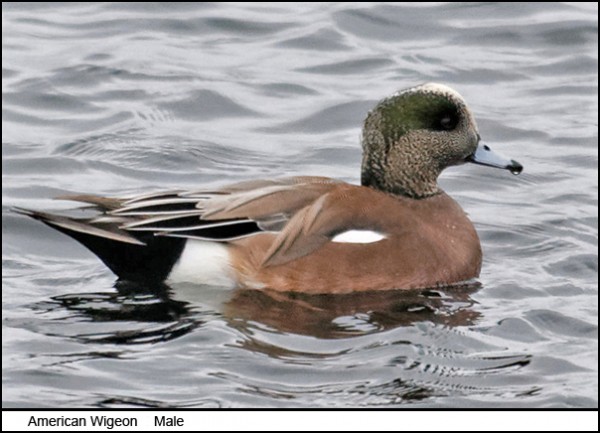
The AW remained on view intermittently throughout that time and after I left, things being a matter of picking it out of the constantly shifting flock. It took me a while to get onto it, as can be my wont, but when I did so this duck was unmistakable. It is a medium-sized, rather compact species with a rounded head and short, blue-grey, black-tipped bill. Breeding males have a brownish grey head with an iridescent green band behind the eye and a very distinctive creamy-toned cap. The breast and flanks are pinkish brown with two white patches on the sides of the rump that together with the black under-tail feathers are all very noticeable at distance.

I have selected the outsourced image (above) as it most resembles the plumage today’s bird was in, presumably coming into its full breeding finery. This is a common and widespread duck throughout north America and a regular vagrant to the British Isles and Europe. The main breeding grounds lie in the north-west of the continent (Canada and Alaska) and they winter from the US north-west to Mexico, other central American countries and the Caribbean.

Otmoor in February invariably offers a wildlife spectacle. Its flooded fields hold quantities of Wigeon, Teal and other dabbling ducks, out of which at intervals rise swirling flocks of Golden Plover and Lapwing. Witnessing all this is always uplifting and as much so again today as ever in my currently unmotivated state. And the American Wigeon provided something extra. What was there not to like?

Fuerteventura IV – searching for Houbaras and Cream-coloured Courser: 6 – 8th Feb

Could I squeeze a fourth meaningful wildlife experience out of the Canary desert island? Being unable to think of anywhere else to head for a deep-winter break, my assessment was possibly if I focused on the location’s most notable arid habitat birds – Houbara Bustard, Cream-coloured Courser and Black-bellied Sandgrouse.

I had observed Houbara Bustard on each of my three previous visits to the island (see here), but without the kind of crossing the road in front of the car or displaying at close quarters (here) experiences that other birders recount. CCC and BBS had each been encountered once previously. So this time I hired self-catering accommodation close to a prime area for all three birds of Tindaya Plain, with the evolved purpose of majoring on the Fvta speciality residents and hopefully gaining better pictures.

The proposed itinerary was similar to my most recent tripette to Alicante last September in allowing three full days of birding to accomplish a specific quest. That exercise was the best thing I did in 2022 by a distance. There can be little doubt that January in Blighty is dour, but winter breaks must never become repetitive and for their own sake any more than wildlife watching as a whole. Hence another successful seeking out of convenient flights and affordable accommodation saw me arriving at Aeropuerto de Fuerteventura in the late afternoon of 5th to test whether the foreign travel regime of four to six years ago could work anew.

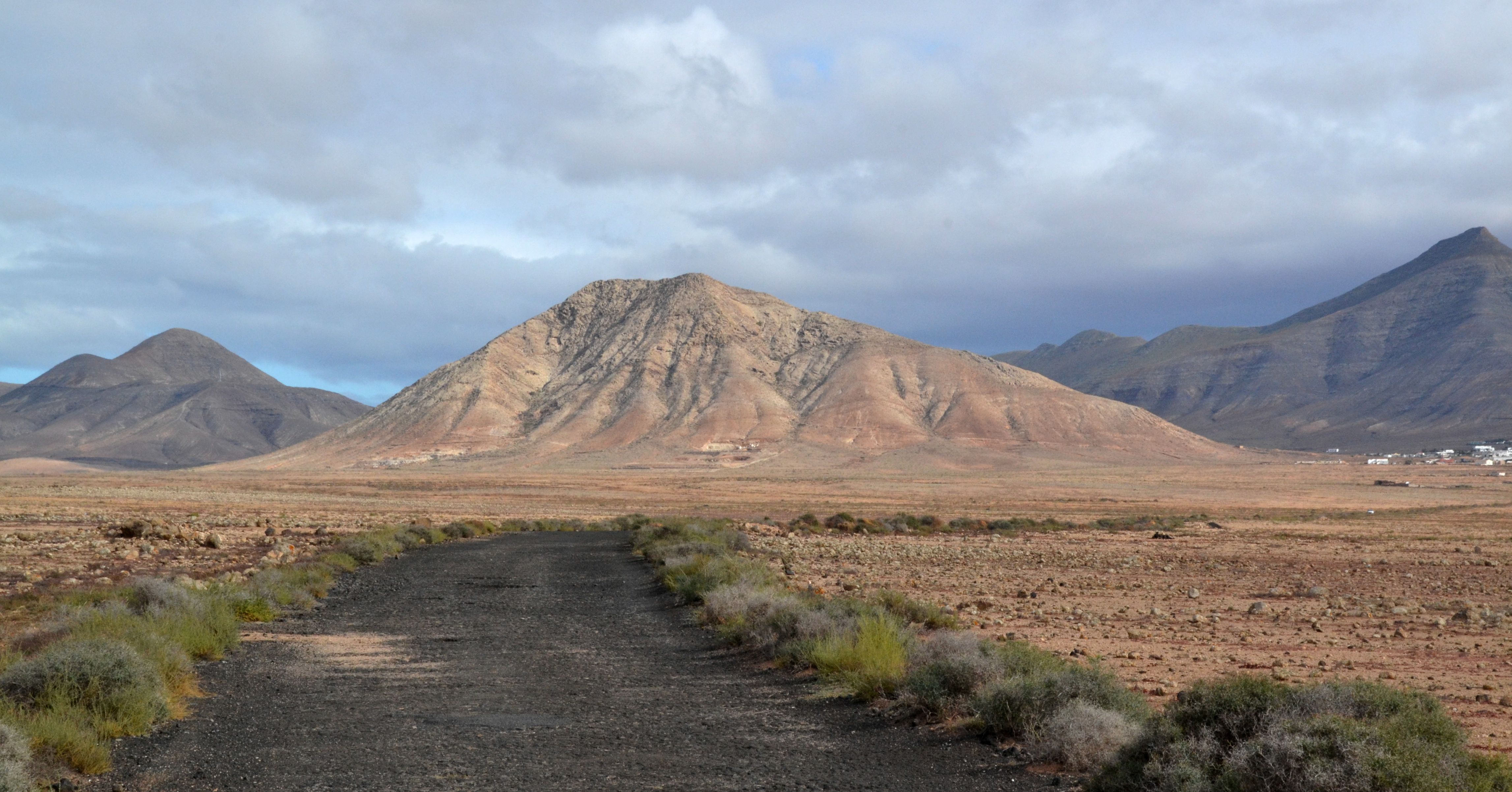
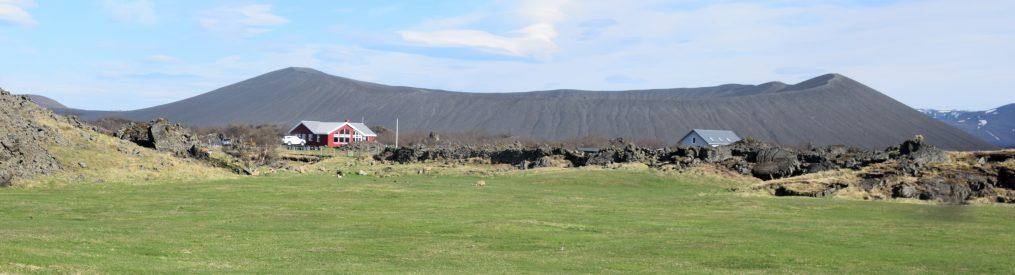
Mount Tindaya from the west

Tindaya Plain lying just west and north-west of the village and sacred mountain (pictured above) of the same name, is a flat expanse of semi-arid habitat with scattered vegetation, criss-crossed by a network of dirt tracks that are quite passable without a 4×4 vehicle. The technique is to drive slowly around using the car as a hide, scanning from side to side and stopping at intervals. This was where the displaying Houbara images of my January 2019 post were gained at 50 metres by another birder I met on that trip and I was seeking similar close encounters. Plenty more pictures and videos may be found online.

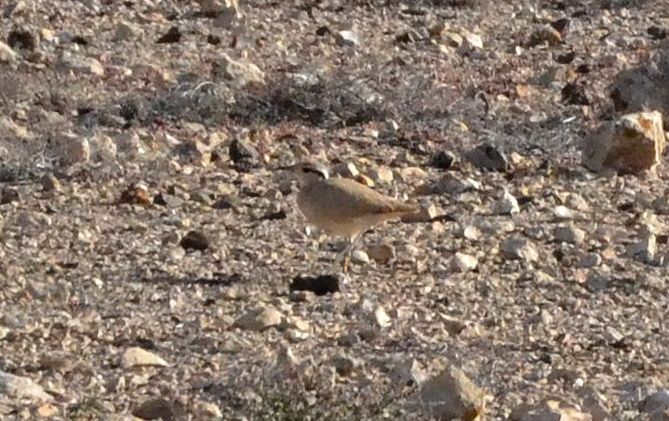
On the two mornings of 6 & 7th I got to site around 7:30am, soon after first light and spent the next few hours making a thorough exploration. This location was 15 – 20 minutes from my base. The highlight of these sessions was a career second sighting of Cream-coloured Courser. I have spent hours driving around and scanning moonscapes through my four visits to Fvta, hoping that one of the trillion-fold rocks that stretch away all around will suddenly move and morph into this desert wader. But when one is chanced upon they do stand out at once.

These are hyperactive birds that constantly run around as they seek out invertebrate and seed prey. The slim, upright, long-legged profile and bobbing jizz struck me as quite distinctive. On this occasion the blue back of head framed by a white and black stripe meeting at the nape was very noticeable, contrasting with the bird’s sandy-toned body and creamy underparts. The bill is slightly down-curved and used to dig for concealed food. Today’s bird would stop and watch around itself on occasion holding its head high, a further characteristic habit.

CCC has the most northerly distribution of a nine-strong genus (see here), being found all across northern Africa, through the Middle East and as far east as Pakistan. Six other Courser species occur in sub-Saharan Africa, and two on the Indian sub-continent. The Canary Islands CC population, which breeds from February to July, is one of four races. Unfortunately this 10 am Monday connect was the only one over my three days here.

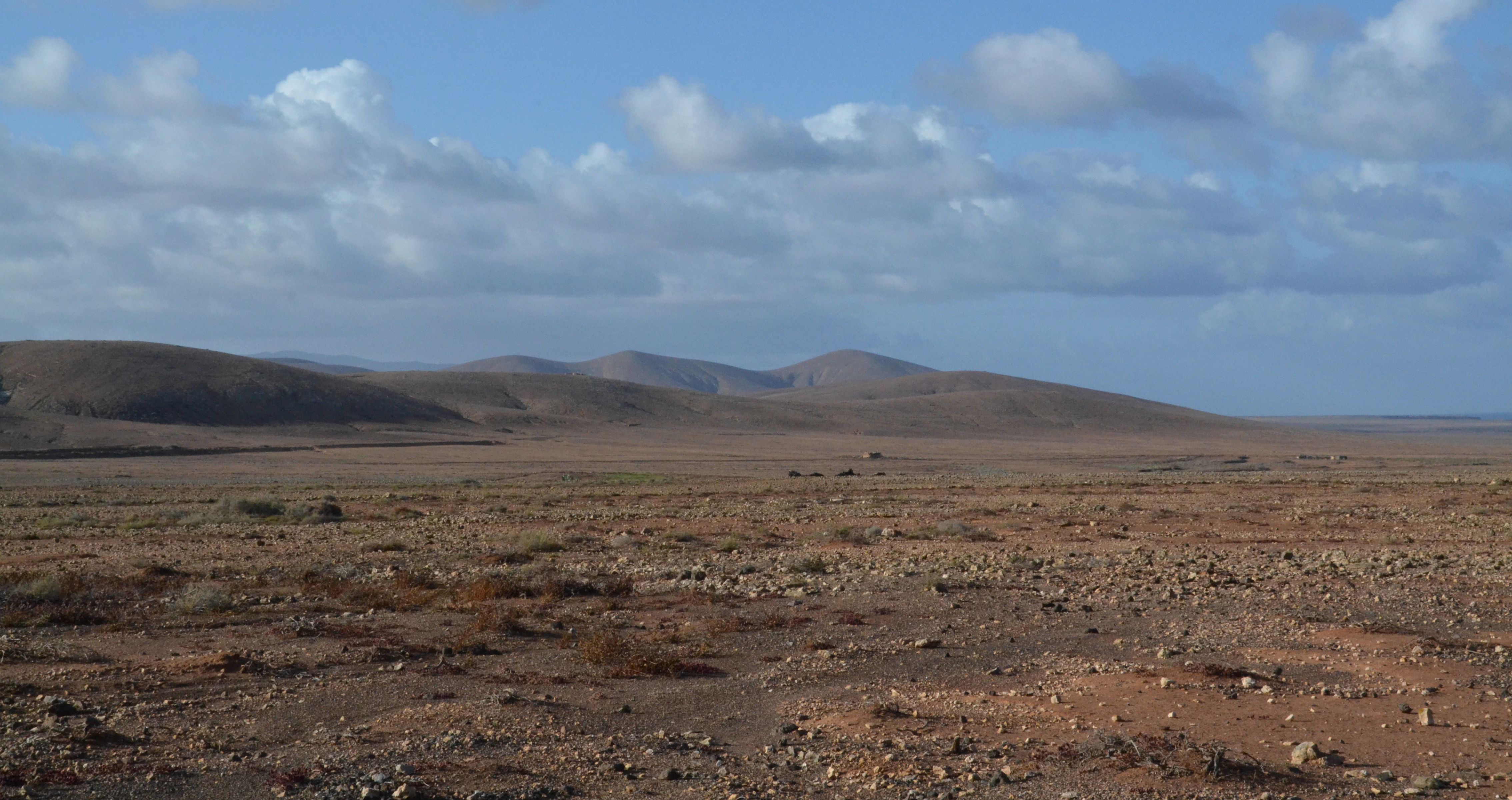
Tindaya Plain moonscape

By late morning on Tuesday I had become concerned and frustrated by a total lack of Houbara sightings, wondering if there was some reason why they were not showing themselves at present. After all I had observed them on previous visits to Fvta in each of December, January and February. If any reader can shed light on that in comments it would be appreciated. And so in the afternoon I relocated to El Cotillo Plain, which extends to the north of its Tindaya counterpart, so see if Houbaras might be about there later in the day.

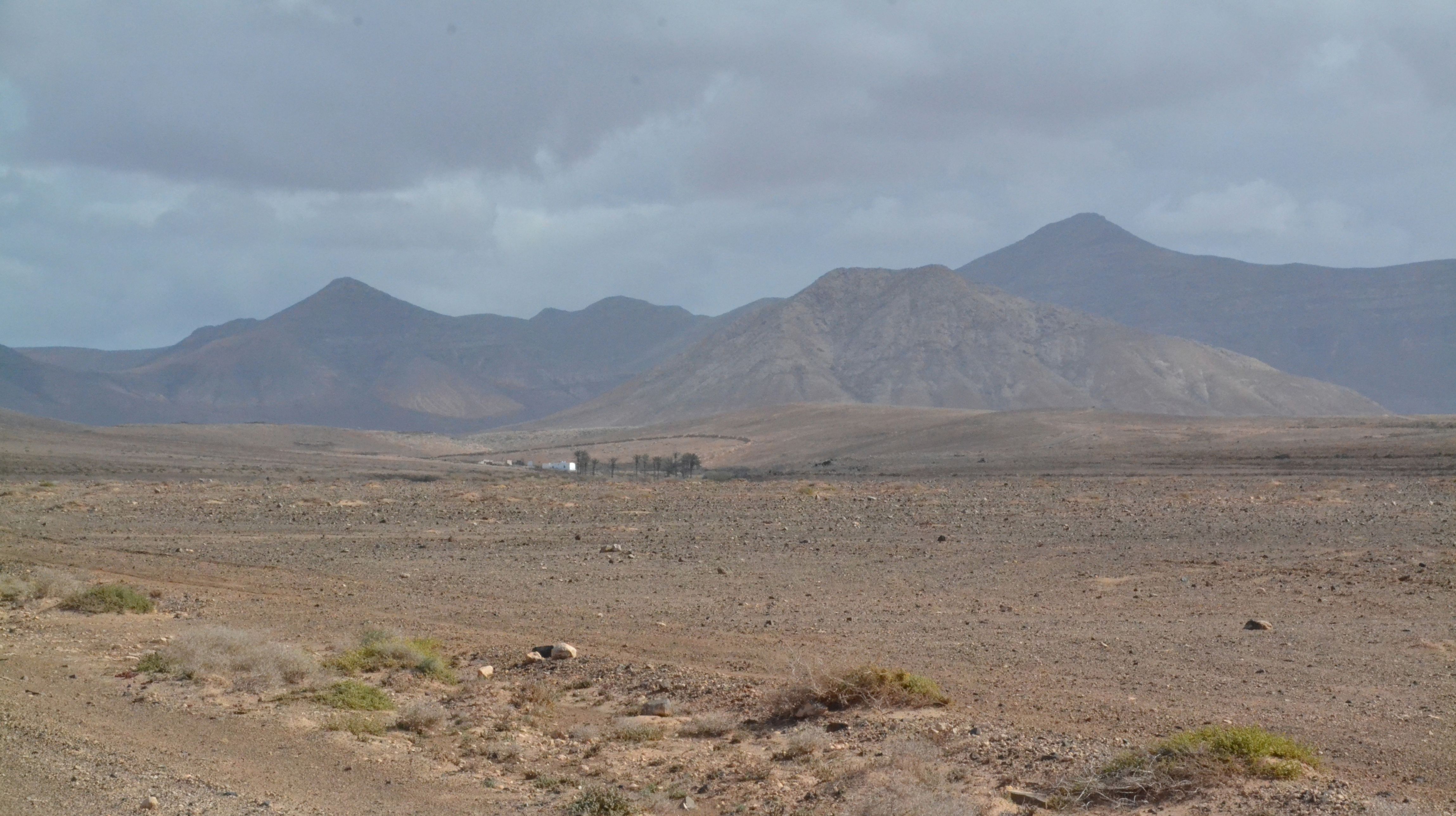
I had not previously worked out how the two plains are linked, but now I realised Mt Tindaya is visible from the dirt track that leads south from El Cotillo itself. The two are separated by a Barranco that is visible in the picture below, and the connecting track runs along it for a short distance. When I reached that point I stopped, recalling I had turned back here on previous visits. I could see the point on the Tindaya side at which I had also turned back and so resolved to come back in the morning to assess the risk of driving through. This plan would allow me to test out both sites at different times from today. Returning to El Cotillo I once again crossed paths with no Houbara Bustards.

Mount Tindaya from El Cotillo Plain

Just after dawn on Wednesday morning (8th) I drove out along the familiar route I had followed in 2015 and 17. The start point was just five minutes from my base and I paid particular attention to the hot-spot of three Houbara encounters on those occasions. Once again I drew blank, even there. On reaching the Barranco I walked ahead to inspect the road. It would have been passable but for one small, dangerous looking collapse. Some other vehicles were going through but I was not prepared to risk things in a hire car. That gave me a return attempt at Houbaras to the north but once again I drew blank.

After going the long way round to Tindaya Plain I spent the rest of the day re-covering previous ground. At around 2:30 pm I headed out along a long track towards the coast, nearly to the end. In the middle distance away to the right was a green area that I scanned and picked out three long-necked birds walking into cover that could only be Houbara Bustard. It may not be apparent from the picture below but this vegetation was actually tall and dense enough to conceal the birds. I sat in the car scanning the area through my scope and 17 minutes later at 15:19 the sighting was confirmed.

Where I saw the Houbara Bustards

My immediate reaction was if that is the sort of cover these birds keep to when not strutting their stuff it could explain why it had taken so long to find any. I had not come across too much habitat like it over the three days. Of course it is never known exactly how images and videos posted online are gained. Did the birders concerned go off piste and have mobile hides for instance, and if so how many days did it take to get their results? But there are enough accounts of roadside encounters with all three of my targets to suggest this expedition had produced a very meagre outcome.

By this time I was relieved to have gained any sighting at all, and it is always very fulfilling to self-find birds at the back of beyond. Being my first afternoon record and a first of Houbaras in cover it was also an evolved sighting in its way. The whole exercise was very hard work though and emotionally exhausting, so I cannot look back upon the experience with the required warm glow.

There is a fine line in solo travel between what works and what doesn’t, especially if the wildlife agenda is being largely dipped. For reasons not of interest to visiting readers this exercise fell below that line. So the answer to the question that opened this post is no. Like my attempt at a fourth winter break in southern Portugal in 2016 this was a tripette too far.

For more information on Houbara Bustards themselves follow the links in the second paragraph and below.

Sabine’s Gull at Langstone Harbour, Hants – 19th Jan

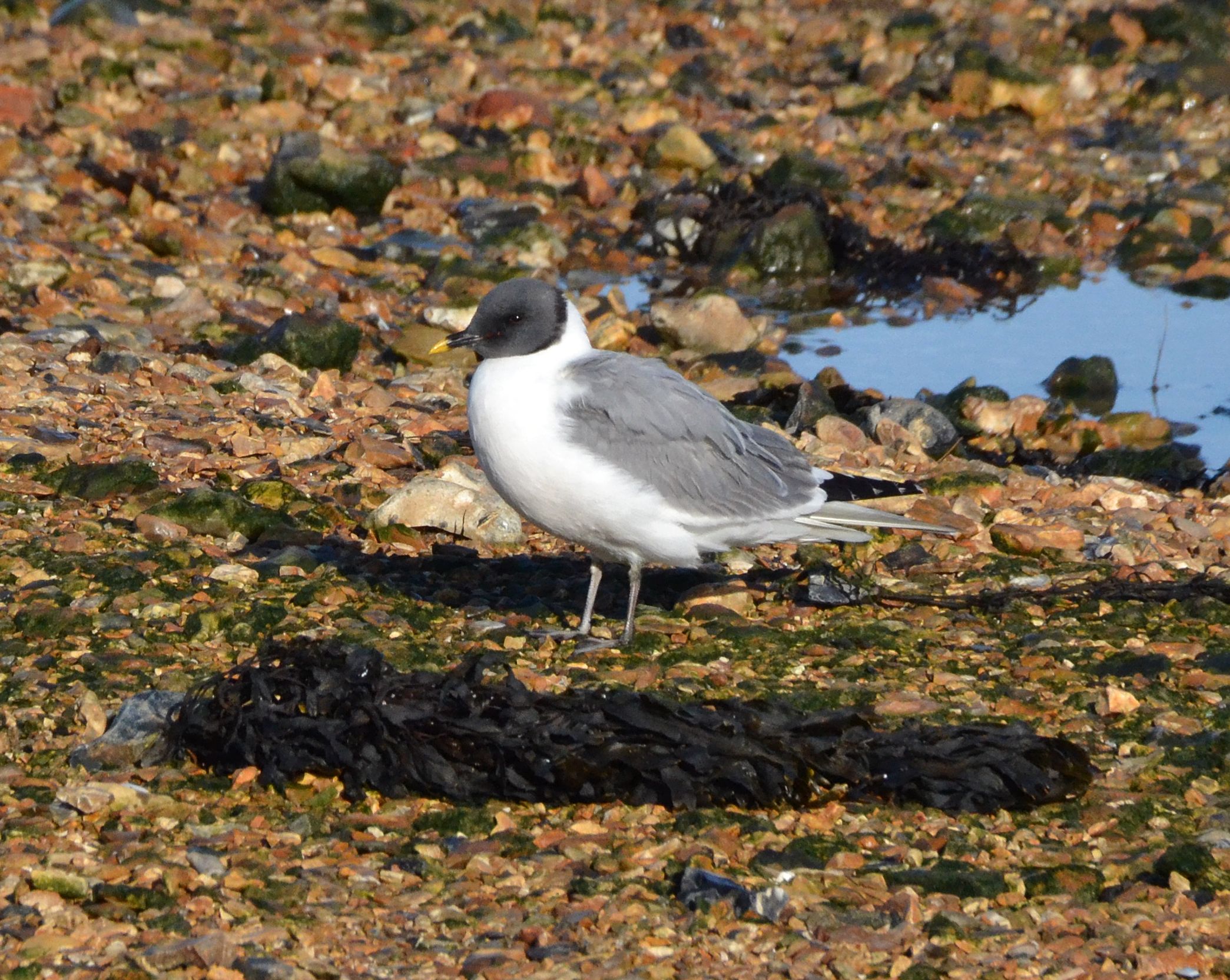
This unusual opportunity to experience an adult Sabine’s Gull in summer plumage, in the English deep mid-winter was one that grabbed my imagination once I saw pictures of the bird online. My birding colleague Ewan had been to see what became a popular national draw last weekend, and not wanting to let a cold, clear weather week pass without a meaningful outing of some kind I contacted him to see if he might be going back for more. He often does and yes he was – cue my first twitch of 2023.

In the absence of birding interest within my preferred range I have been concentrating on decorating and DIY in recent months, as well as thinking about the money with no special purpose in mind following last year’s return to part-time employment. An exception was an attempt at a long-term straggler / lifer, the Olive-backed Pipit at Exmouth in Devon that I dipped on the winter solstice (21st Dec), the day it either moved on or was had by a cat or Sparrowhawk. But possibly there is still only so much staying at home I can do, and hence we met just outside Oxford at 9am for a welcome hitting of the road.

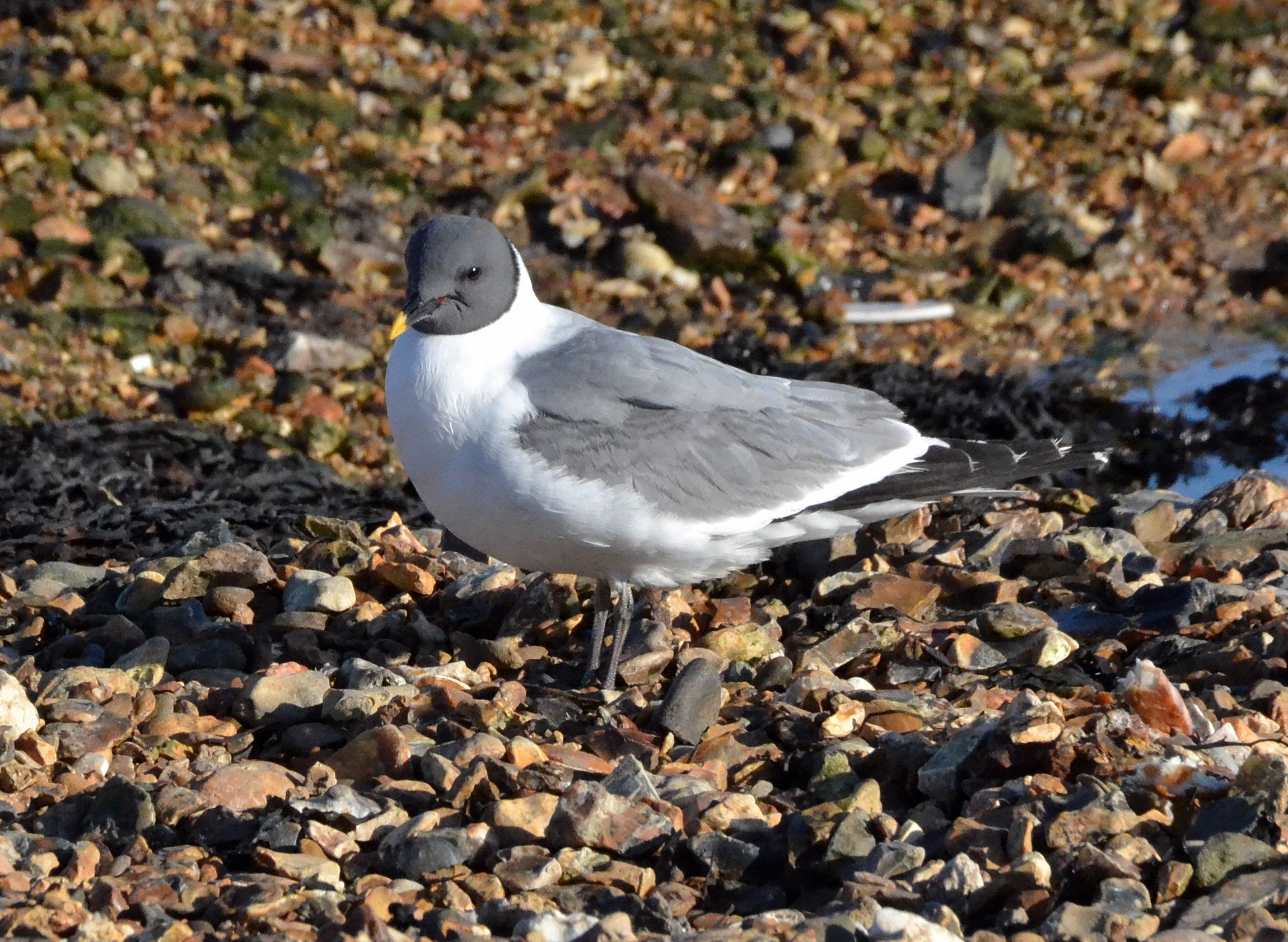
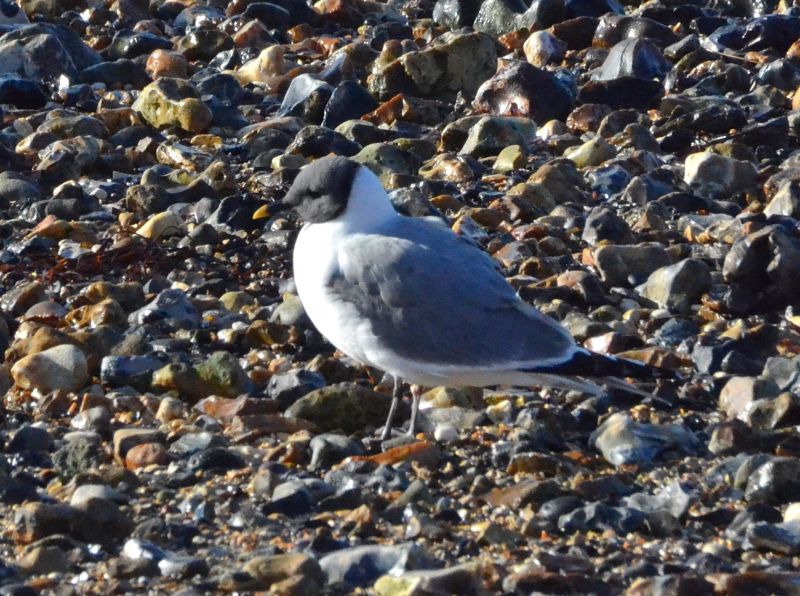
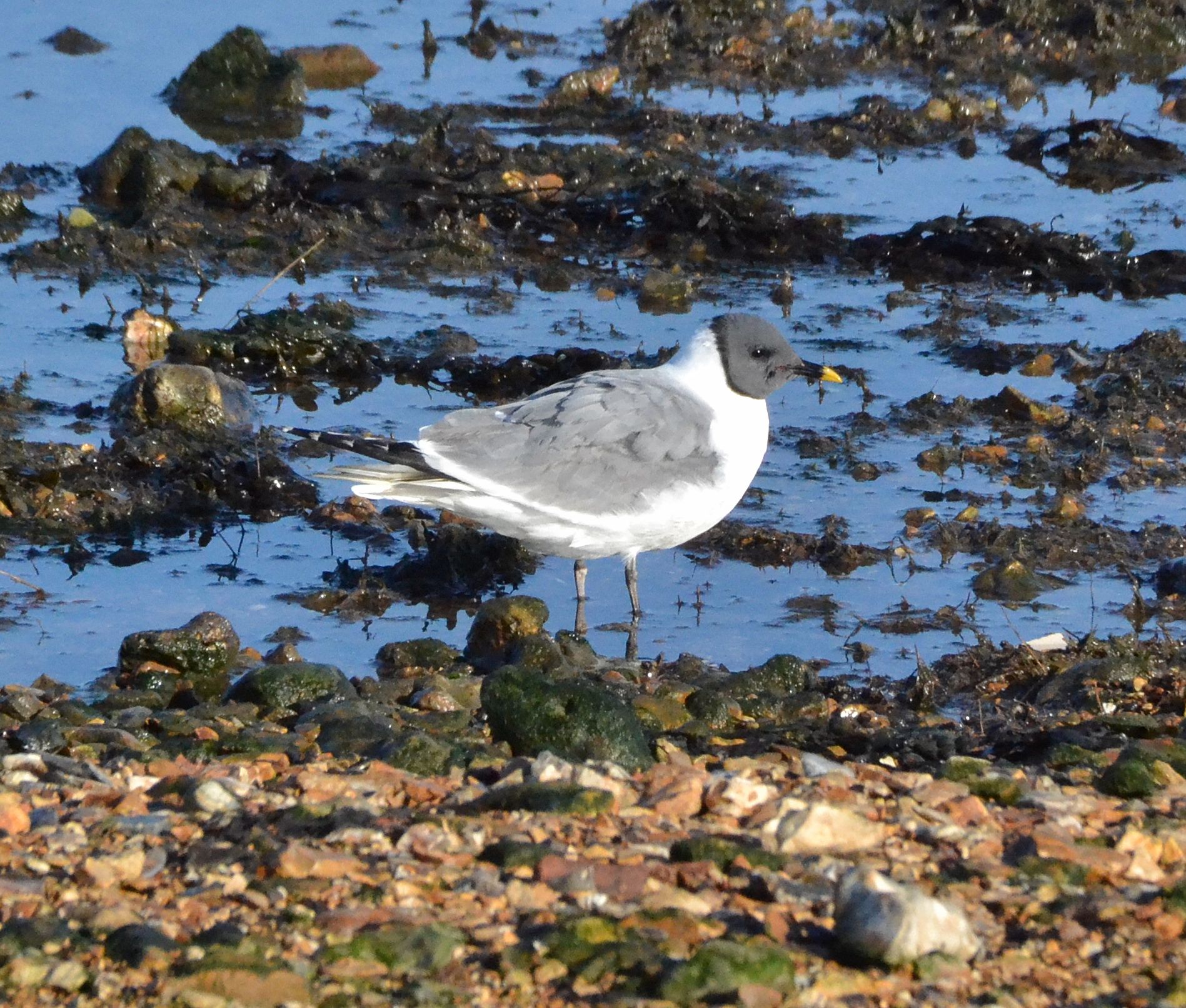
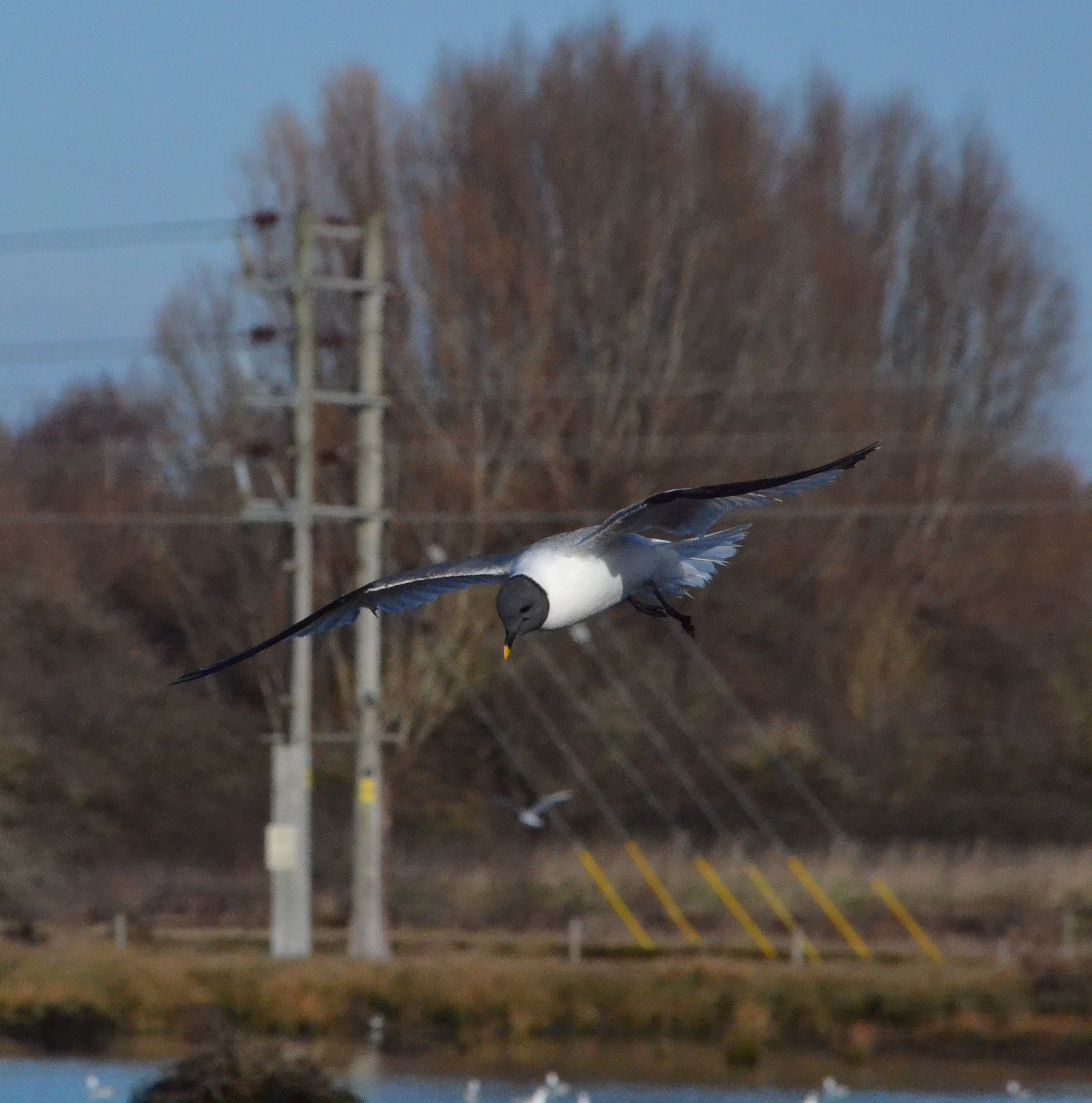
Our quest (pictured above) was a circumpolar Artic breeder that is widely acknowledged as one of the more attractive small Gulls. Most national birds are observed on autumn migration from far-northern Canada and Greenland down the British west coat to Atlantic wintering grounds off south-west Africa, and many of those are juveniles. Sometimes they turn up inland, and my only previous record was at Startops Reservoir, Herts in 2012 (below, left). Today’s bird arrived on the south coast on 10th, and has been kept in situ since by a copious unnatural food source laid on by the togger batteries it soon attracted.

As we got out of the car on the north shore of Langstone Harbour (SU708049) just before 11am, a group of birders walked off the sea wall away to our left saying the Sabine’s Gull had just gone past. Then it flew back over my own head so that was an immediate connect, which was a relief after the four hours spent dipping in Devon. We walked back along the sea wall, and after a short distance found it sitting close in on a shingle beach, and so my first images were gained (below right).

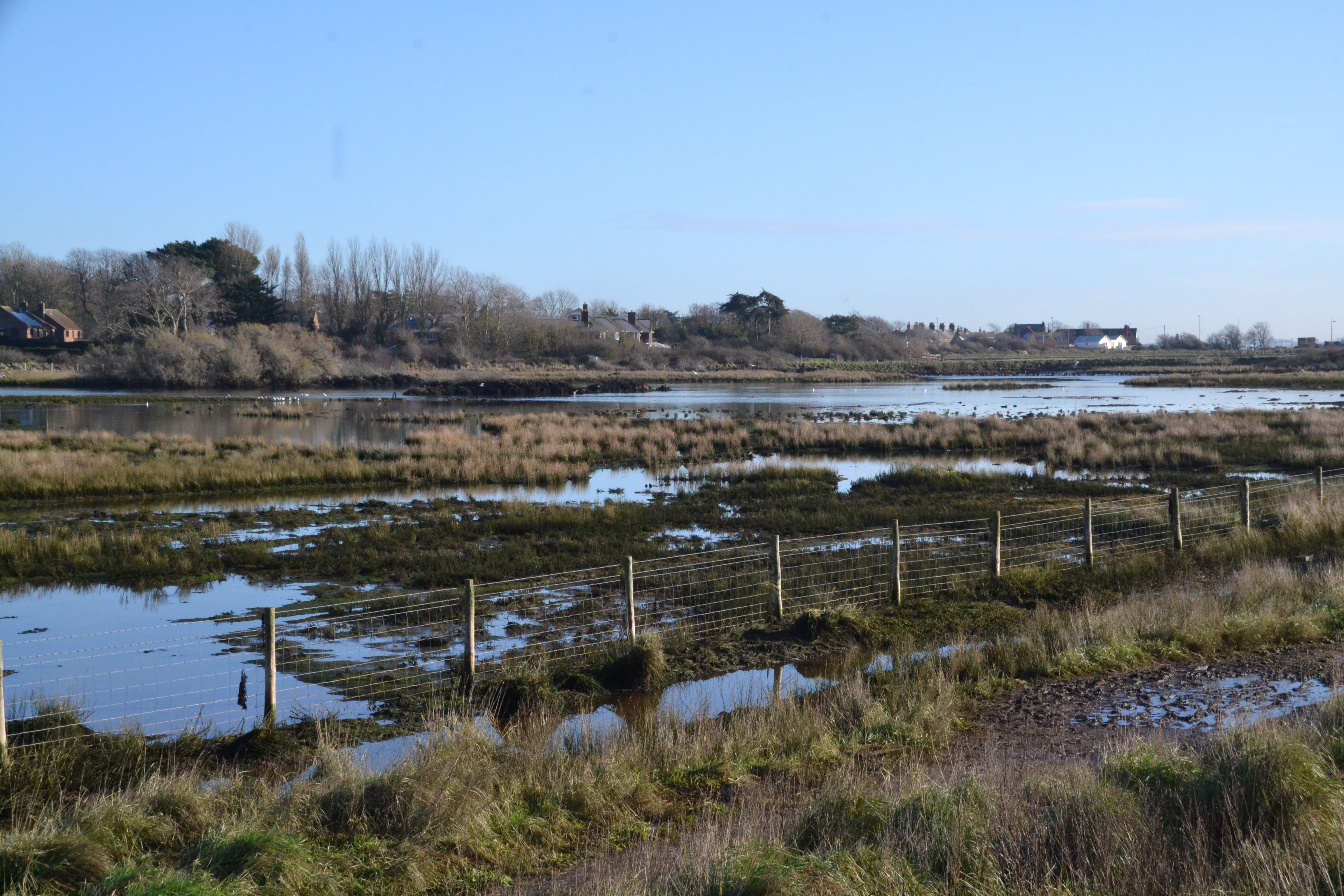
The bird favours a lagoon on an area of flooded fields called South Moor (pictured below) that has been created by a breach in the sea wall. A local told us there has been a long running dispute over responsibility for repairing the breach itself so this piece of good saline habitat prevails. People scanning the harbour itself were calling Great Northern Diver, Red-breasted Merganser, Black-necked Grebe, Long-tailed Duck and Velvet Scoter; but those were all a long way off and just tiny specks to me. As ever I felt no interest in showing any prowess at trying to identify birds at such a distance.

For our next four hours on-site the Gull would go out from and back to this location, alternately flying offshore, feeding, preening or just sitting on the ground. Some birders kept saying it didn’t look well but it seemed OK to us. I was pleased to see it finding sustenance for itself as I have misgivings over vagrant birds becoming too reliant on unnatural food sources. Fortunately today’s gathering appeared mainly to be birders with cameras rather than toggers, though one example of the latter who I recognised gave himself away by asking; “Which Gull is it then?”

The Sabine’s was throughout unconcerned about it’s human audience. That confiding quality is what has made the bird so popular and it lived up to its reputation a number of times at around 20 – 30 metres (below left) so that even I could gain acceptable images. The reasons why it remains in summer plumage are not fully understood, but the worn nature of some flight feathers (below right) suggest a delaying of moult from last season. The vagrant is presumed to be storm blown from a mid-Atlantic migration path.

After going back to the car for a sandwich break and to scope the harbour waters we returned around 2pm for more. One photo-birder now broke up three smoked Mackerel fillets and spread them around the Sabine’s favoured patch, and the next time it flew in it scoffed the lot. Maybe it hadn’t been finding much to eat through the morning after all, it certainly seemed ravenous now. Mopping up the last few scraps brought our subject to within 12 metres of the assembled lenses in overdrive, and so my own best image that leads this post was also obtained.

Not surprisingly the now rather bloated Gull became less active thereafter, settling down to digest its feast for around 30 minutes before absenting itself for longer periods than previously. I don’t know what the suitability of smoked fish is for wild birds but presume the provider knew what he was doing. Three whole fillets nonetheless seemed rather a lot, especially as some birders present were by then yet to lunch, and the resident Black-headed Gulls showed no interest.

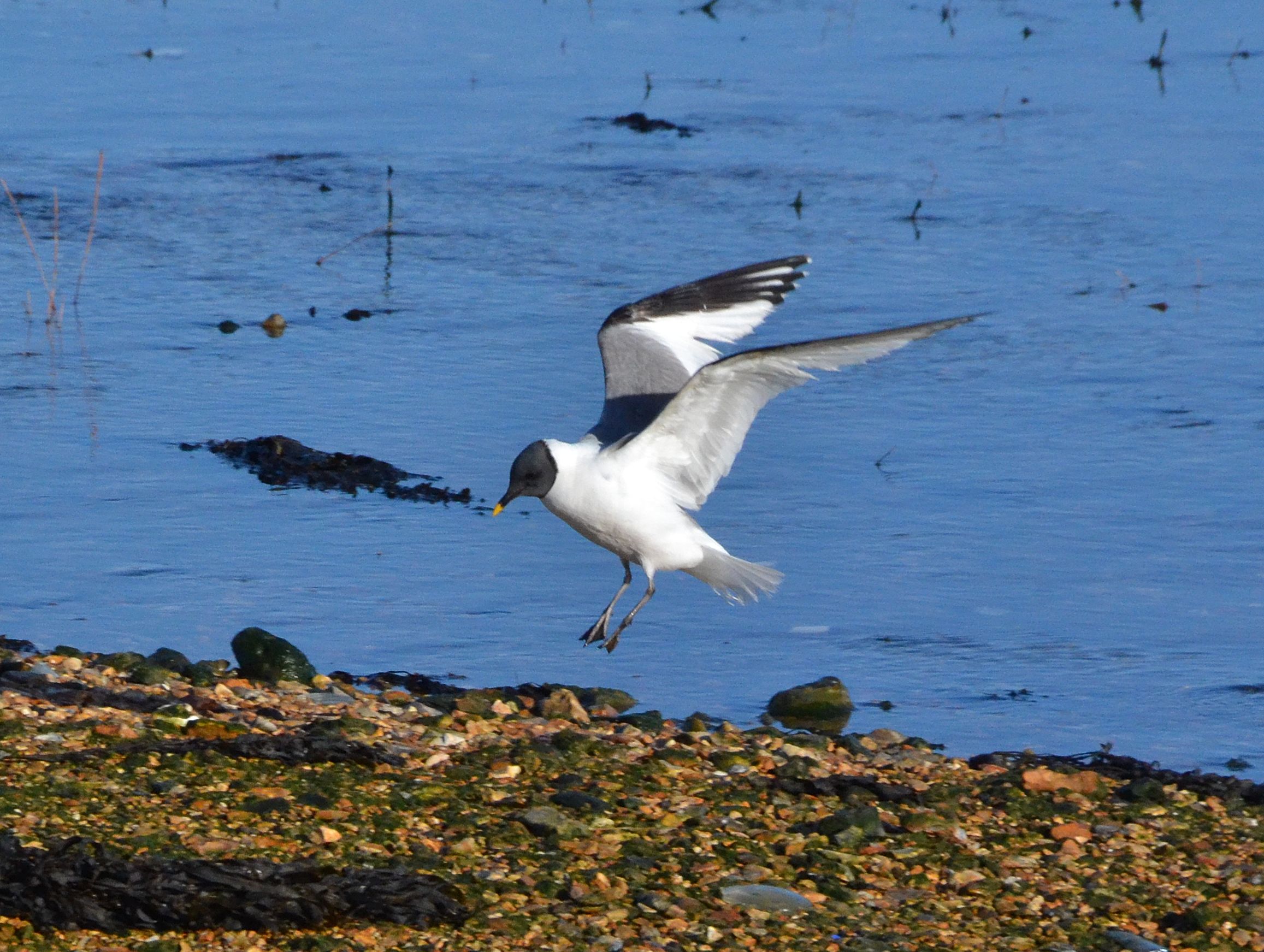
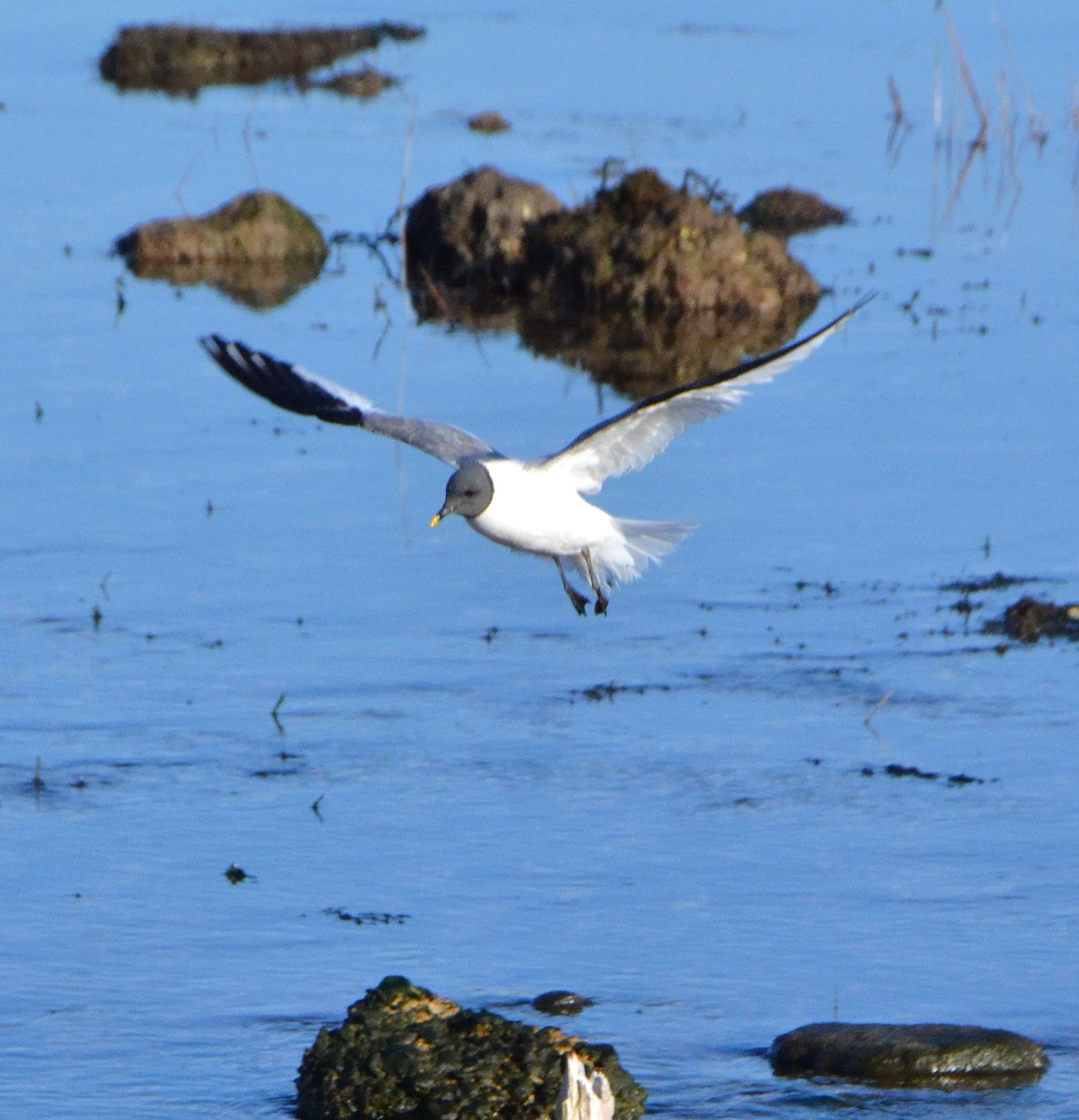
For myself the most attractive feature of this dainty Gull is the mask, with it’s black border appearing almost as a collar, set off by the red orbital eye-ring and yellow-tipped bill. The upper wing pattern is also remarkable with two triangular areas of contrasting black and white offsetting a central grey area. As is my wont I am avoiding conventional plumage topography here. Today’s bird had a Tern-like habit of hovering quite frequently, so despite my ancient equipment I could gain reasonable flight studies (below).

This was a superb bird that provided an as rewarding day out. After such a long and at times intense period of alternative pursuits I was glad to be birding again, and now as pleased to be writing and picture editing once more. 2022 with its exorbitant petrol prices, health issues and renewed part-time employment to meet cost of living increases, produced just two lifers nationally and one abroad; compared with nine lifers nationally and four British list additions in 2021. What I do in the coming calendar year will as always depend on the accessibility of things new, different or at least evolved; since I prefer not to bird or observe other wildlife repetitively or for its own sake. There has to be purpose to it all and today’s exercise offered a fulfilling start to another year.

The weird and wonderful fruiting cycle of the Devil’s Fingers fungus – 26th Oct

Until now my activity in the autumn fungi season has been limited mainly to tracking and attempting to gain a better understanding of the seemingly different mix to last year at my home patch of Highmoor Common, Oxon following the summer’s drought. All that changed today after I was invited unexpectedly to view a cluster of one of Great Britain’s scarcer and most exotic mushrooms at a woodland site in Sussex.

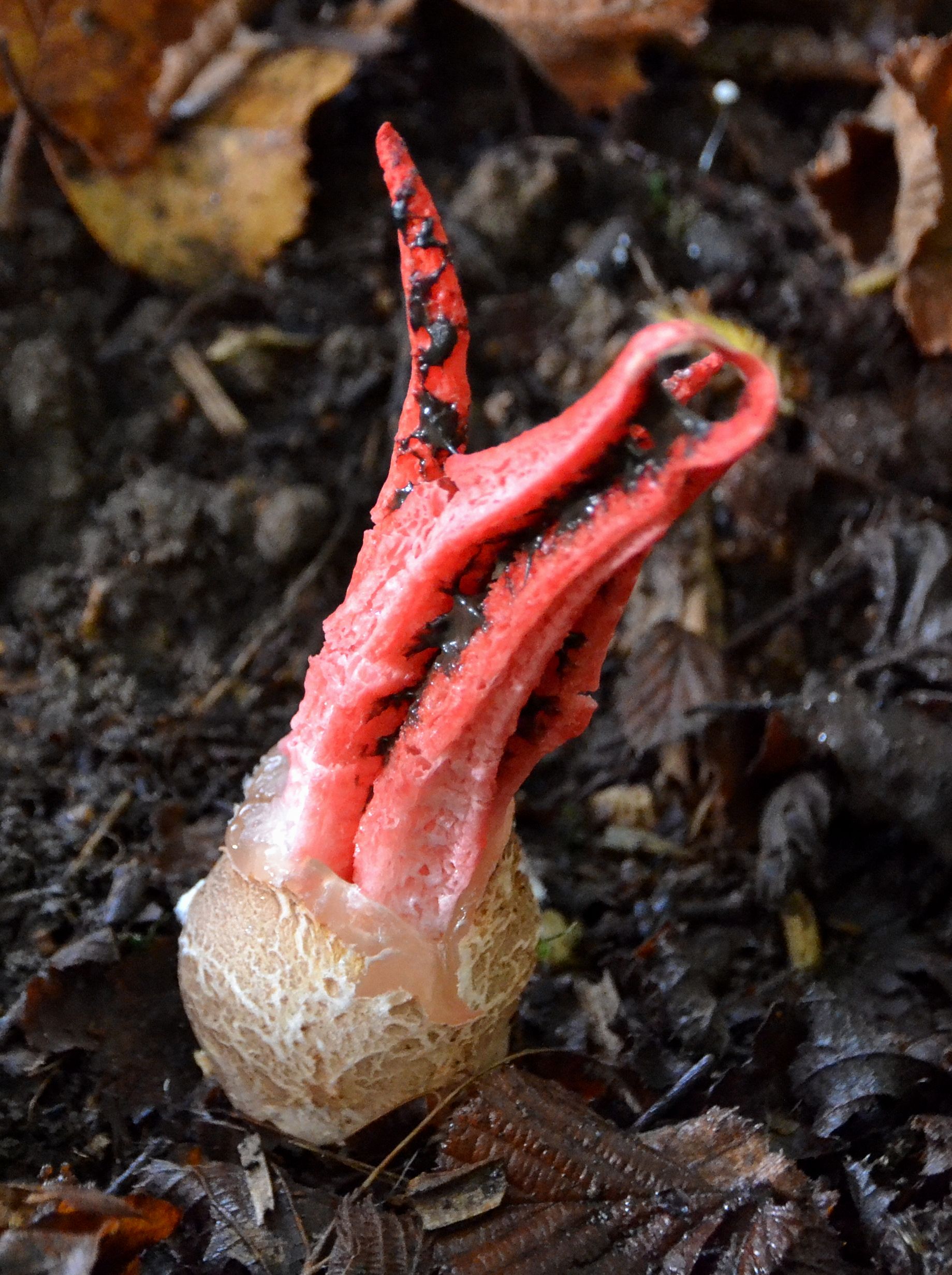
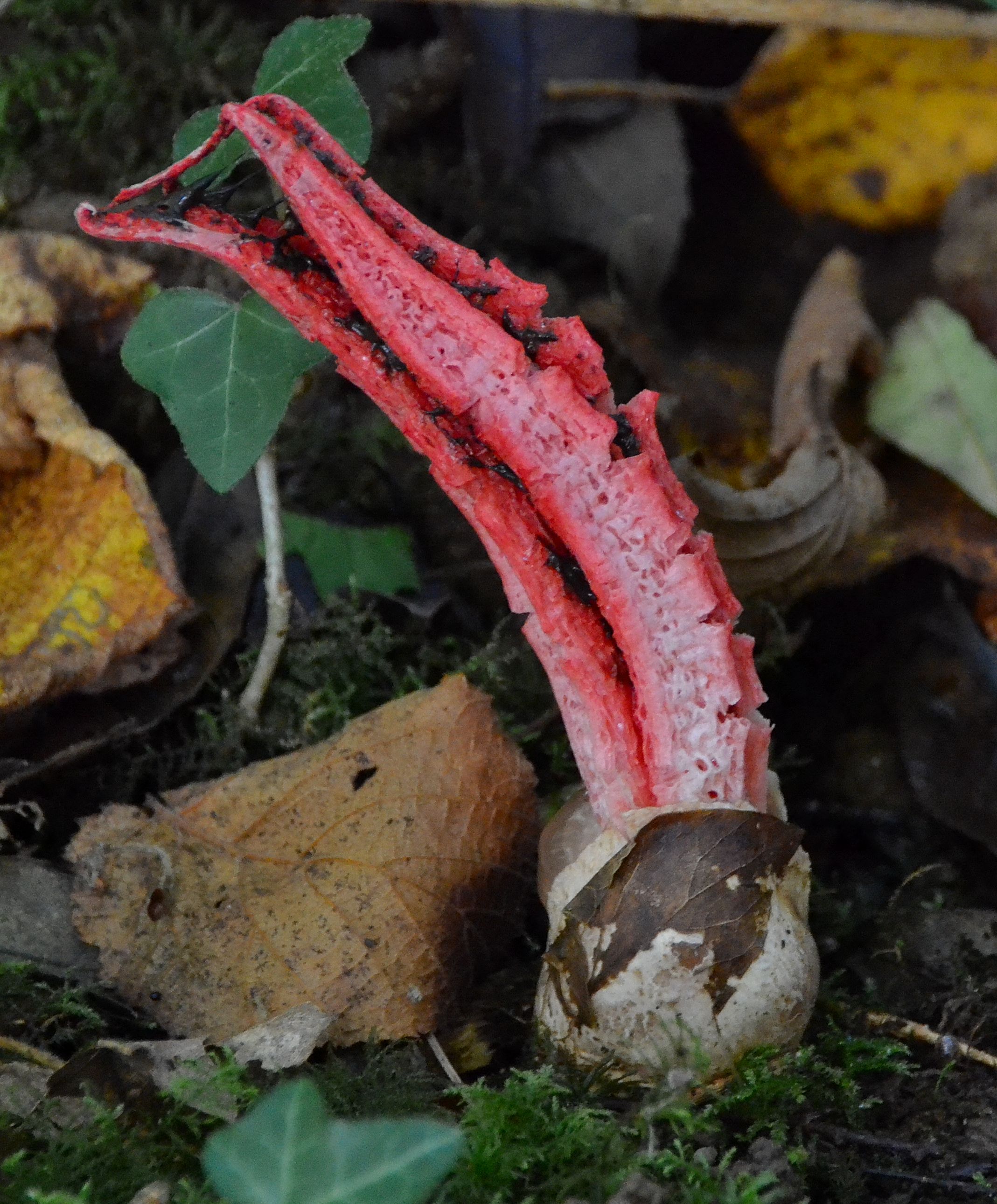
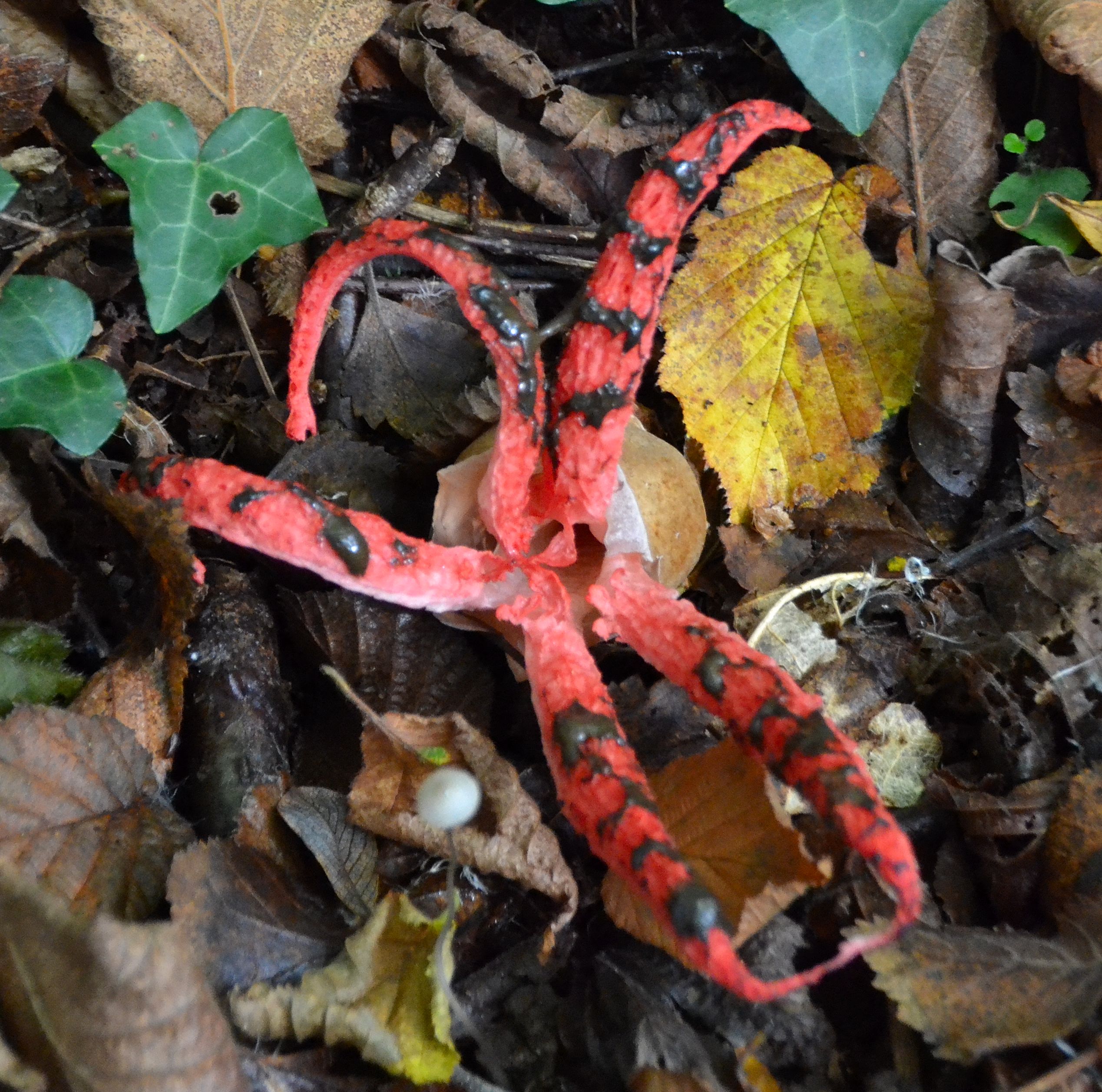
Devil’s Fingers or Octopus Stinkhorn

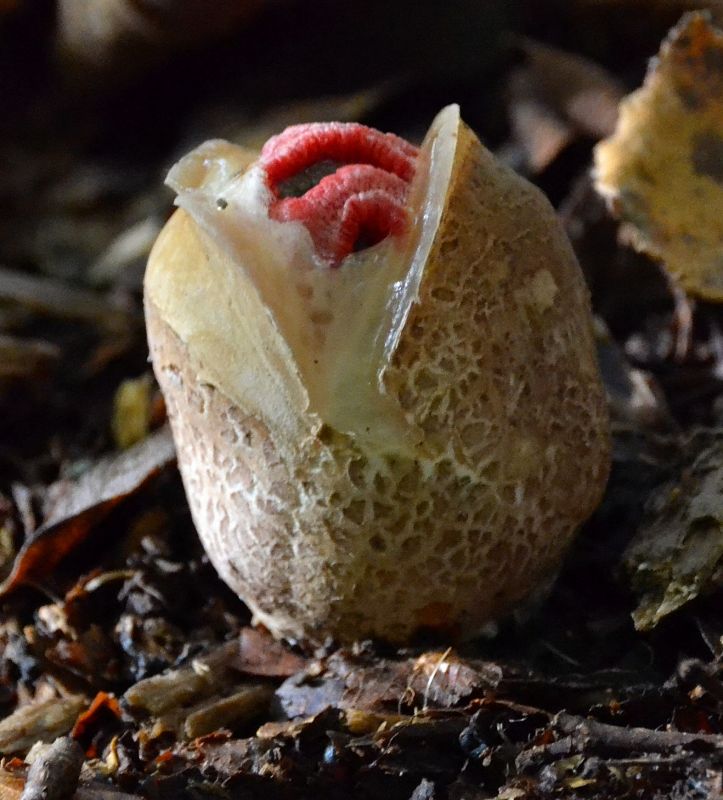
Clathrus archeri, the “Devil’s Fingers” is a native Antipodean species that is also found in warmer areas of Europe and very sporadically across the south of England. It was first reported in both England and France in 1914 and is thought to get here through spores transported in imported wood chippings and bark mulch. As such it tends to turn up in gardens and parks to the potential alarm of non-fungi savvy home owners, in addition to scattered locations in the leaf litter of ancient woodlands and elsewhere. 2022 is reported as being a very good year for them nationally.

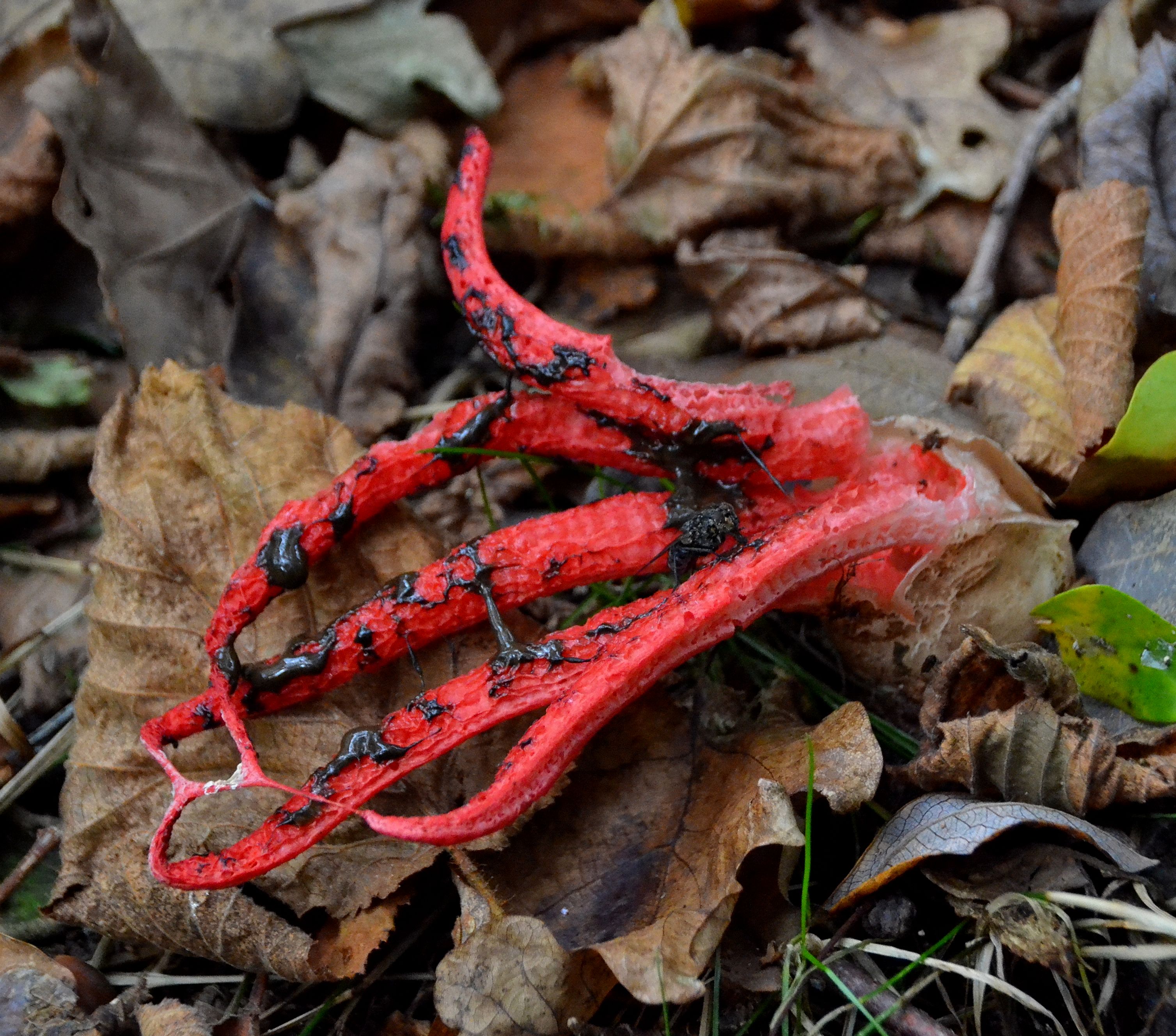
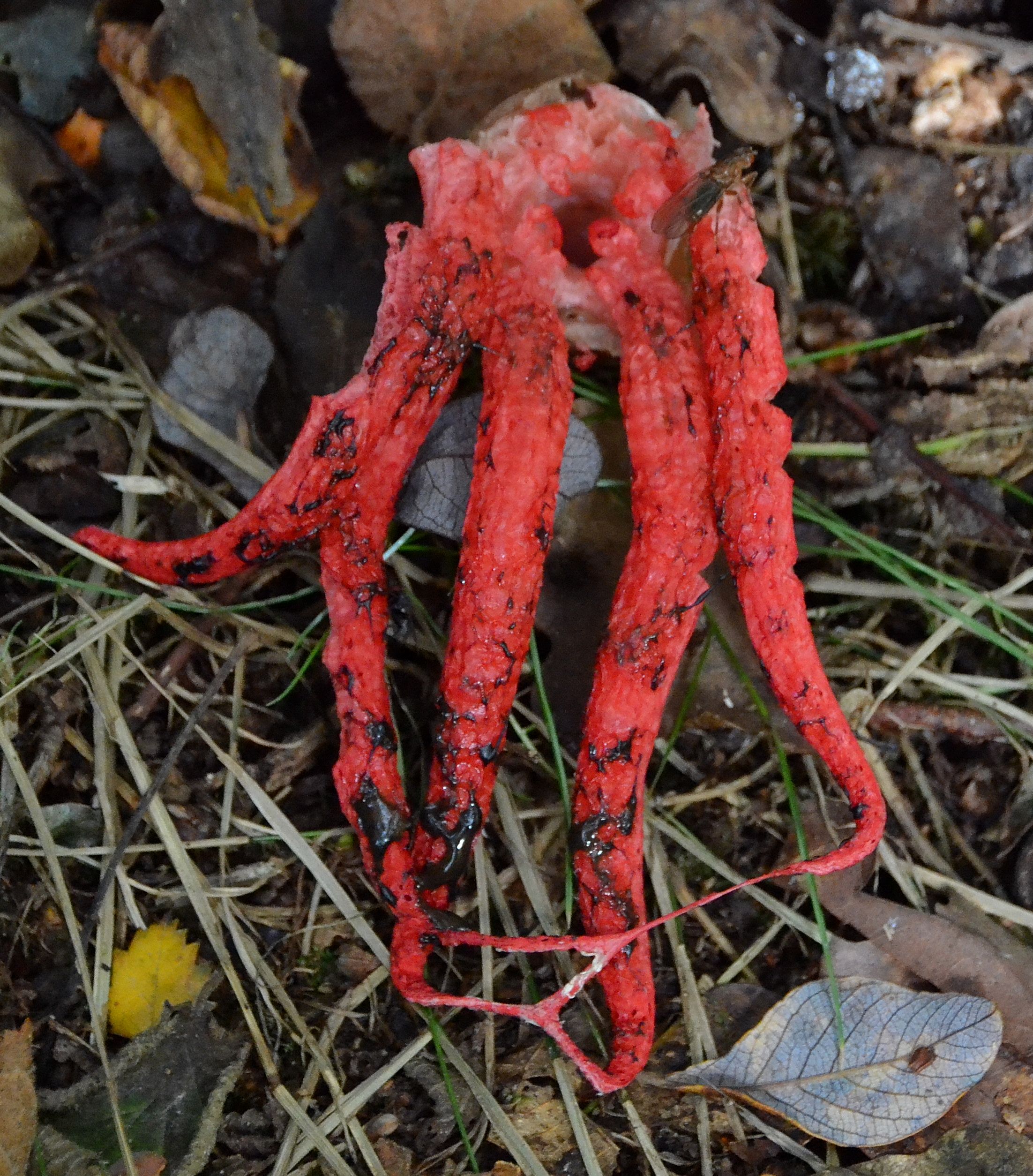
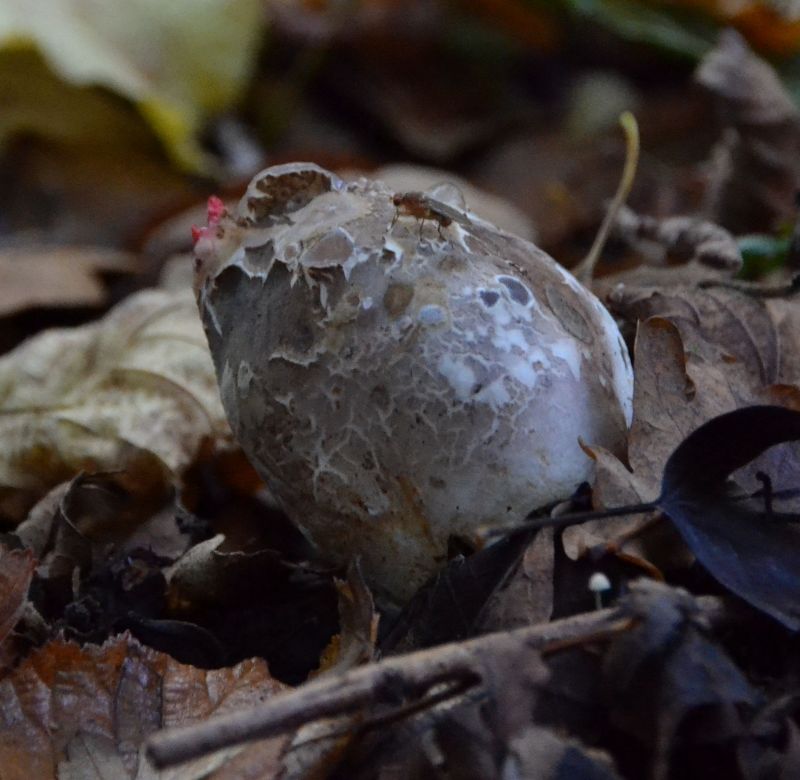
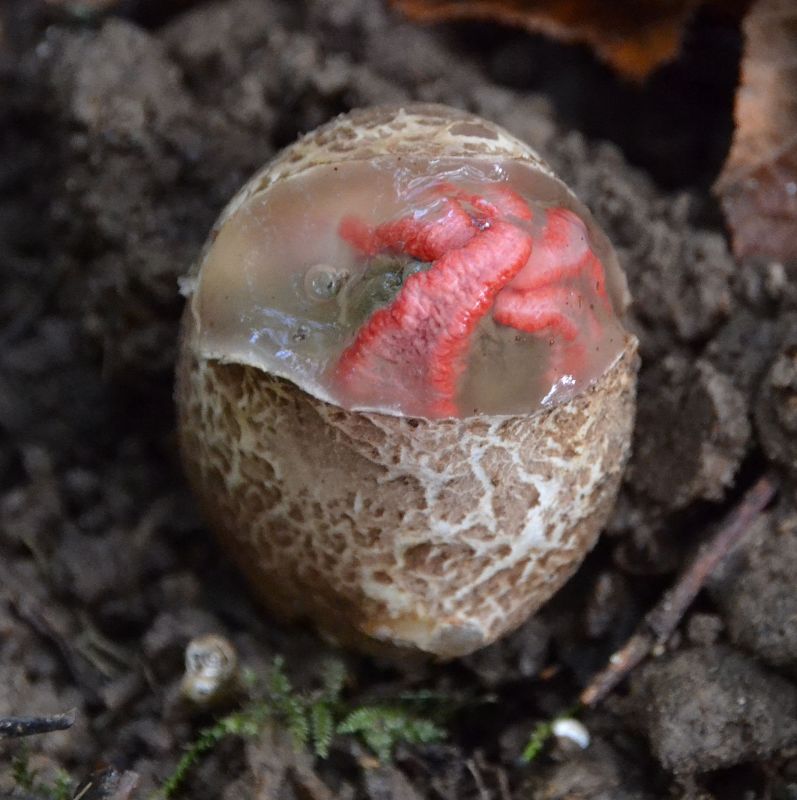
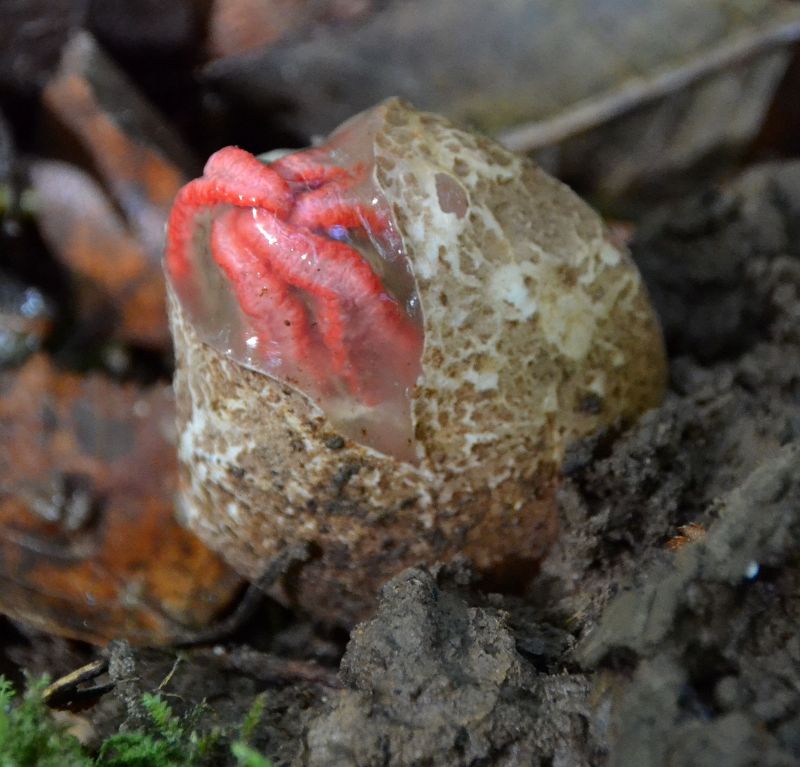
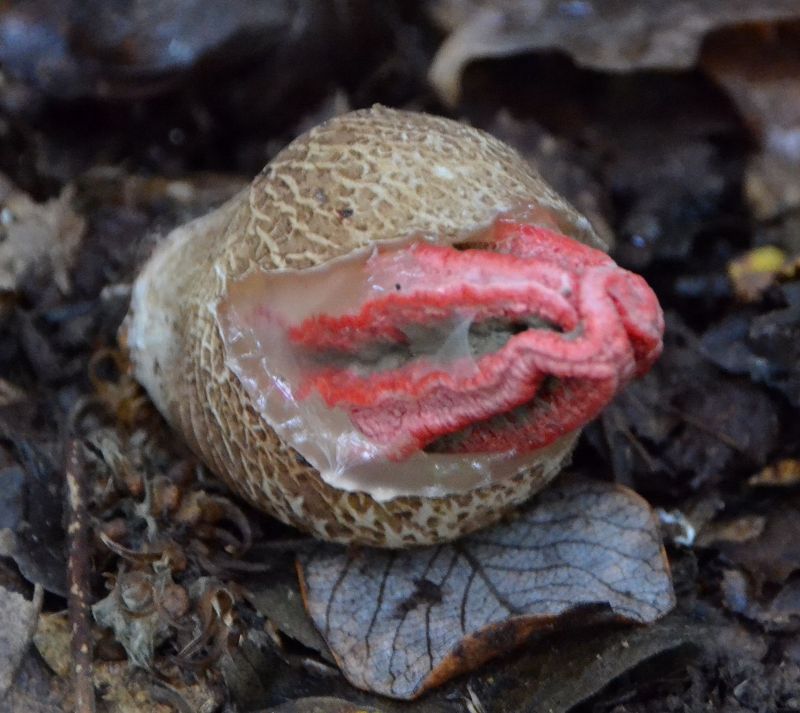
Like other members of its Stinkhorn family this strange, Starfish-shaped item emerges from a partly buried off-white 2-3 cm ball. We found up to 20 specimens today in all stages of the fruiting cycle. The mature fruit body is typically 20 cm across with arms arching to 10 cm in height. The inner sides of the red or pink fingers are covered in drops of black spore-bearing slime or gleba that becomes available to visiting insects as the limbs spread out, and hence spore dispersal occurs. A foetid odour arises from this material which is commonly described as putrid or awful, but to myself as a seasoned Aroid fancier it seemed quite mild.

The following images perhaps best convey this species’ European common name. In the Antipodes and United States the same fungus is known as “Octopus Stinkhorn”, that does not seem so appropriate as there are more usually only five limbs.

Perhaps the most alluring stage of the fruiting cycle to my mind is the initial one. Devil’s Fingers can remain at the “egg stage” for several weeks, eventually showing traces of the colour and outline of the tentacles within, while waiting for exactly the right conditions before the ball ruptures. The translucent, gelatinous textured structures (pictured below) are often likened to the Xenomorph eggs in the 1979 Alien movie, one of which famously opened in a similar way though rather more dramatically. But no face huggers were encountered by us here today.

The above sequence shows the emergence of the five fingers forming within, at first vertically and in a bunch (top sequence, below). Like the movie monster these grow to full size quickly before the limbs unfurl back upon themselves as in this post’s lead pictures. Their flesh is brittle and spongy and the mushrooms soon break up and assume a ruined appearance, as in the second row of pictures below. This fungus is not toxic and is quite harmless, but their unpleasant texture and odour renders them largely inedible.

Always a rare find in England, the Devil’s Fingers is thought to have been introduced to this country with supplies of wood and wool for the armed forces during both world wars. A first Cornish record came from Penzance in 1946. A more recent stronghold has been areas of the New Forest in Hampshire that were used for military training during World War II. From those the mushroom has spread all over that national park, attracting much attention from mycologists in the early years of this century. Colonies there have been known to re-appear several years after areas of Heather and Gorse were burnt.

Range expansion is continuing and individual populations also appear to be increasing. The site we visited today, like the species itself is very sensitive to footfall, so by agreement with my contacts I cannot disclose the location of this post.

The Red-knobbed Coots of El Fondo natural park, Alicante, Spain and more – 7 & 8th Sep

Prior to the Covid pandemic there were just four regularly occurring (ie non-vagrant) birds from what I term south-western Europe I had not recorded either there or elsewhere: Western Orphean Warbler, Western Olivaceous Warbler (both fairly recent species splits), Lammergeier (excluding the contentious 2020 touring individual nationally), and Red-knobbed (or Crested) Coot. The last named was a stand-out omission from the excellent tally I self-found through my solo ramblings on the Iberian peninsula in the first half of the previous decade, it being a quite scarce item.

At some time during August I received an email from the wildlife tour operator Greenwings, attempting to fill a late cancellation place on a holiday in the Valencia region of Spain. Looking through the itinerary I had already recorded almost all of the birds, butterflies and dragonflies on it. An exception was Red-knobbed Coot, of which a good number were cited as being resident at a major wetland reserve to the south-west of Alicante. Checking flights and accommodation they were affordable, so I elected to go and attempt to convert the long-time straggler by myself.

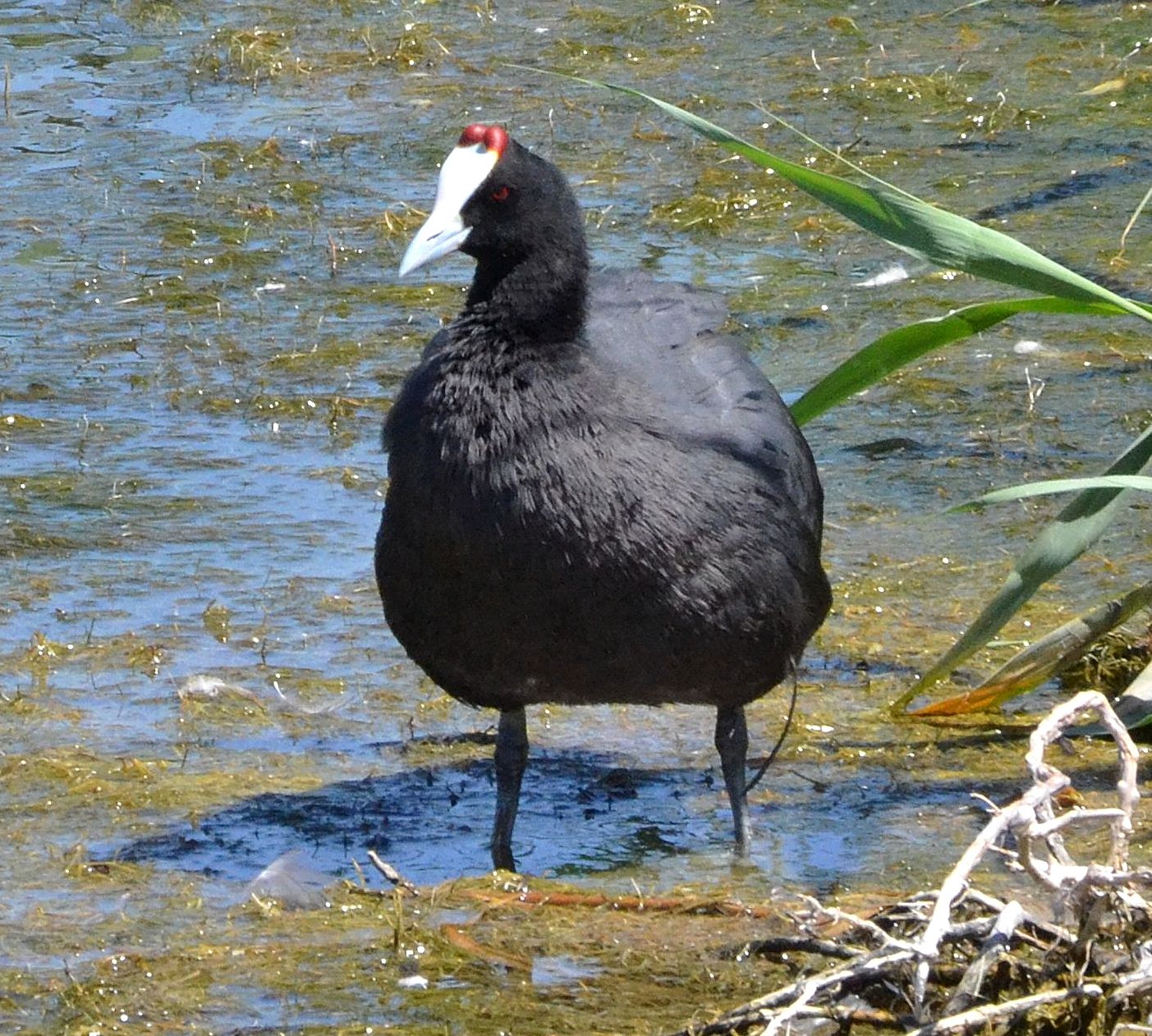
Red-knobbed (or Crested) Coot

Reviving these solo expeditions is not a preferred option but it gets things done, is what I know and have managed quite effectively in the past. After three wildlife seasons without foreign travel I had been feeling stale working through mainly the same species lists over and again at home, and so now feel inclined to do more of this sort of thing once again. Hence the approach of midnight on 6th (Tue) saw me stepping off a delayed Ryanair from Luton at Alicante airport for a three-night stay in nearby Elche. My base was a cheap and cheerful, 3-star hotel on an industrial fringe of that city, and the planned itinerary allowed three full days birding before an evening departure on 9th (Fri).

The Parque Natural de El Hondo (El Fondo Natural Park) is now home to Europe’s most important cluster of Red-knobbed Coot, one of the continent’s rarest breeders. In 2021 the reserve held 30 – 35 individuals, representing the equivalent percentage of the total Spanish population of around 100 birds. A pre-trip unknown would be how difficult or not it might be to locate this must-see lifer. There are four visitor trails at El Fondo – yellow, green, blue (16km) and red (see below) – of which the last is open only by arrangement on Saturdays. The Greenwings group had visited on Saturday 3rd, so I hoped that was not out of necessity to view my own quest.

In the event I need not have been concerned since upon enquiring at the visitor centre on Wednesday morning (7th) I was informed some birds would be viewable along the nearest and shortest (yellow) trail. I could not have imagined how easy it was to connect with the several Red-knobbed Coot here, from and sometimes close to a raised boardwalk through a lagoon adjacent to the visitor centre. There were five breeding pairs at El Fondo in 2021 and I observed three in this one location today.

El Fondo natural park (site plan)

I remained here all day, walking the shorter yellow and green routes in temperatures in the low thirties. That seemed like a large area to me but the entire natural park is vast. The blue trail running south-east then east is 16 km long and is intended to be a cycling not walking route. By the afternoon I had the place more or less to myself and making several passes of the boardwalk kept encountering the Coots in roughly the same places. On seeing my approach they would often move away but with care I was able to get close enough from time to time to gain the images in this post.

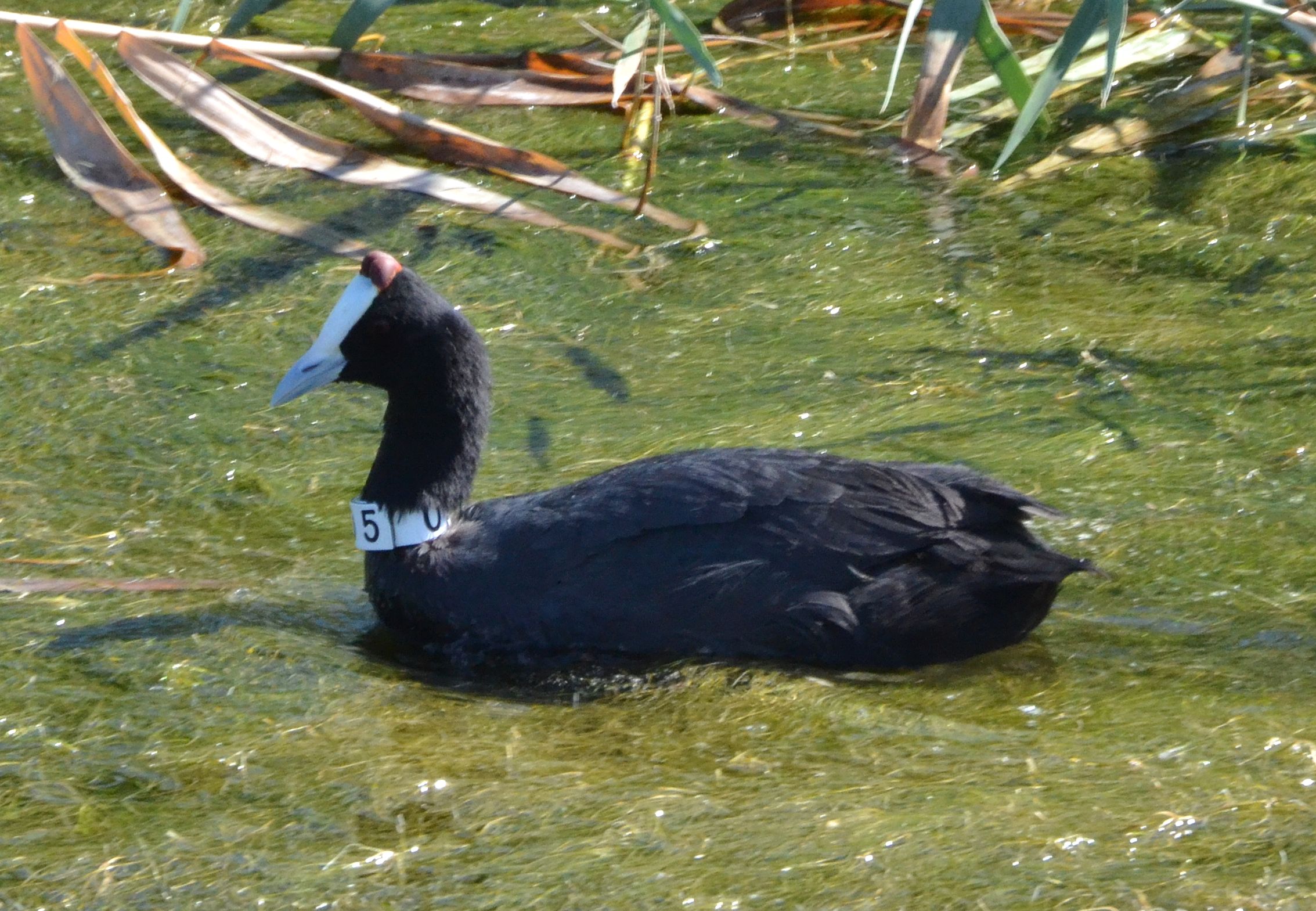
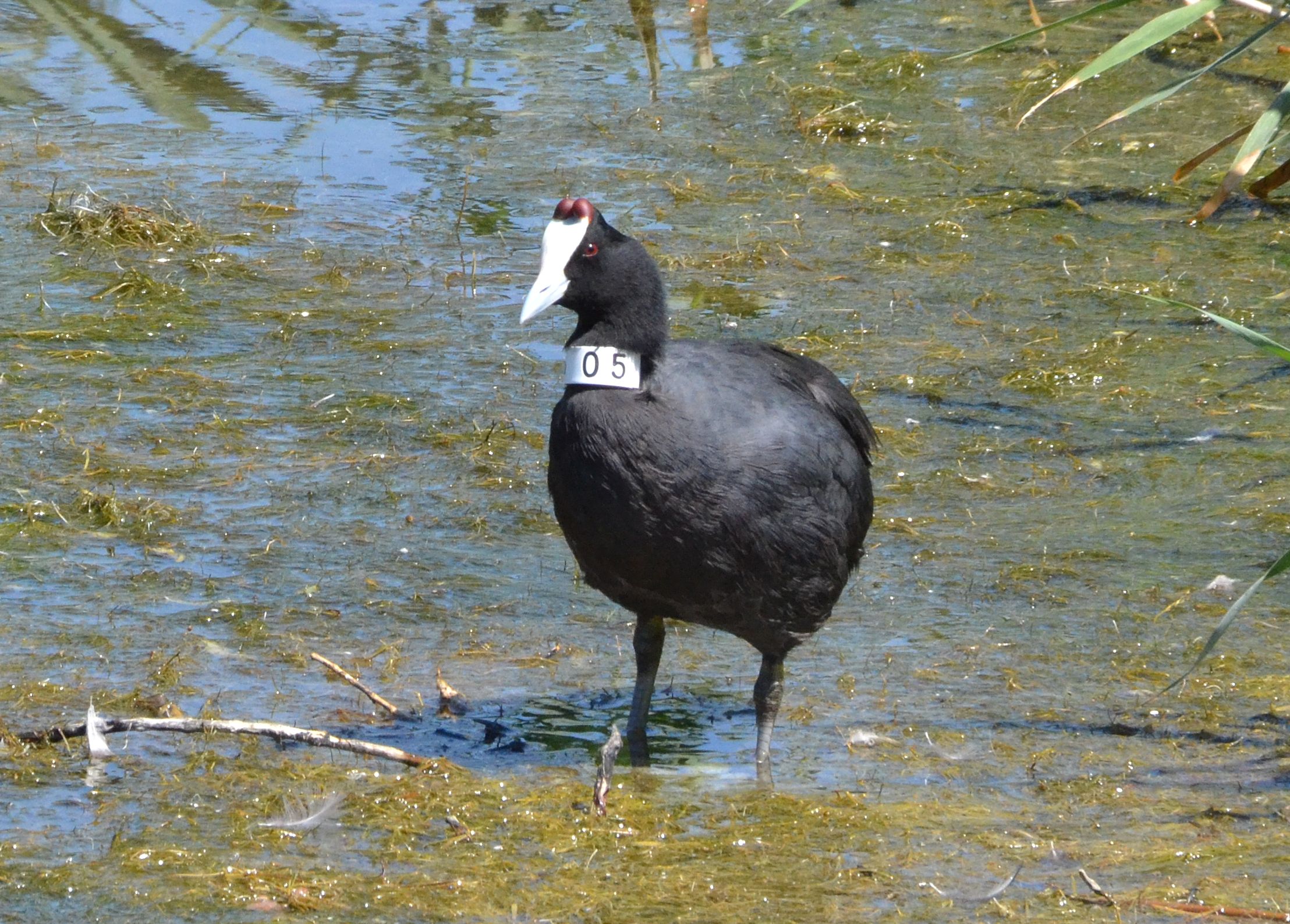
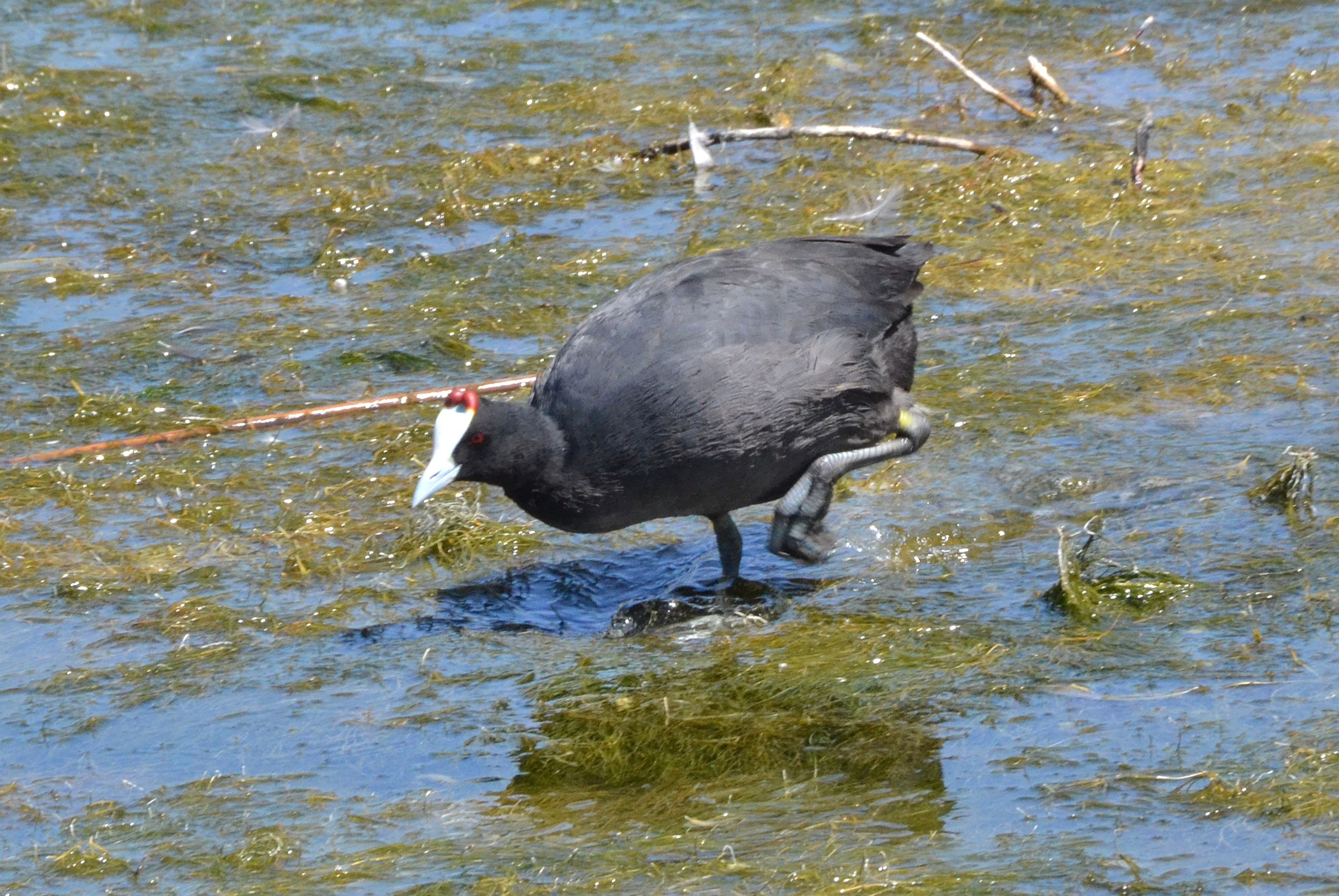
One pair was involved in active nest building (pictured above, top) and I observed a small chick (centre) as well as juveniles (bottom) of various sizes. A particular individual was wearing a somewhat disfiguring collar bearing the letter 05 (below), indicating it was a captive-bred bird that has been released into this group. By comparison with regular Eurasian Coot, RNC has a blue-tinged bill as well as the very distinctive red nodules on the brow. The latter are said to shrink rapidly and become much more difficult to distinguish at distance post-breeding, and I was surprised by how large and prominent the feature appeared today.

There is a rounded not pointed edging to the border between the black feathering and white facial shield in front of the eye (above right), and the wings are pure black without a white rear edge in flight. Red-knobbed is slightly bulkier than Eurasian with longer wings and neck, and is less inclined to keep its head upright, nodding as it moves. The call is also quite different and to me rather resembled the ooo .. ooo .. ooo of a Chimpanzee. This could often be heard when the birds were not actually visible.

Eurasian and Red-knobbed Coots comparison © Harper Collins Publishing

RNC has a fragmented global distribution, with the main population in eastern and southern Africa. The much smaller, isolated contingent in the western Mediterranean decreased significantly through the twentieth century. The larger proportion of that is in northern Morocco where the species is locally uncommon and in decline. The Spanish population is classed as endangered, being impacted by territorial reduction of wetlands, invasive competitors and hunting.

The species became extinct in the Region of Valencia in the 1950s and since 1998 has been the subject of a re-introduction scheme developed by the Generalitat Valenciana and the European Union. Four birds were released in 2019 and a further three during the Covid confinement period, all fitted with white PVC collars with black letters such as I observed.

El Fondo Natural Park is formed by a number of lagoons fed by the River Segura and other water courses. Two large reservoirs are man-made with surface areas of 450 and 650 hectares respectively. Constructed in the 1920s prior to which the area had been drained for agriculture, these water bodies are mostly hidden behind extensive reed beds and other marsh vegetation, and surrounded by a complex of ponds and salt marshes all of which constitute a highly bio-diverse landscape. Huge numbers of water birds are resident, amongst which the most noticeable are perhaps Greater Flamingo, Egrets and Herons, Glossy Ibis, wildfowl and waders.

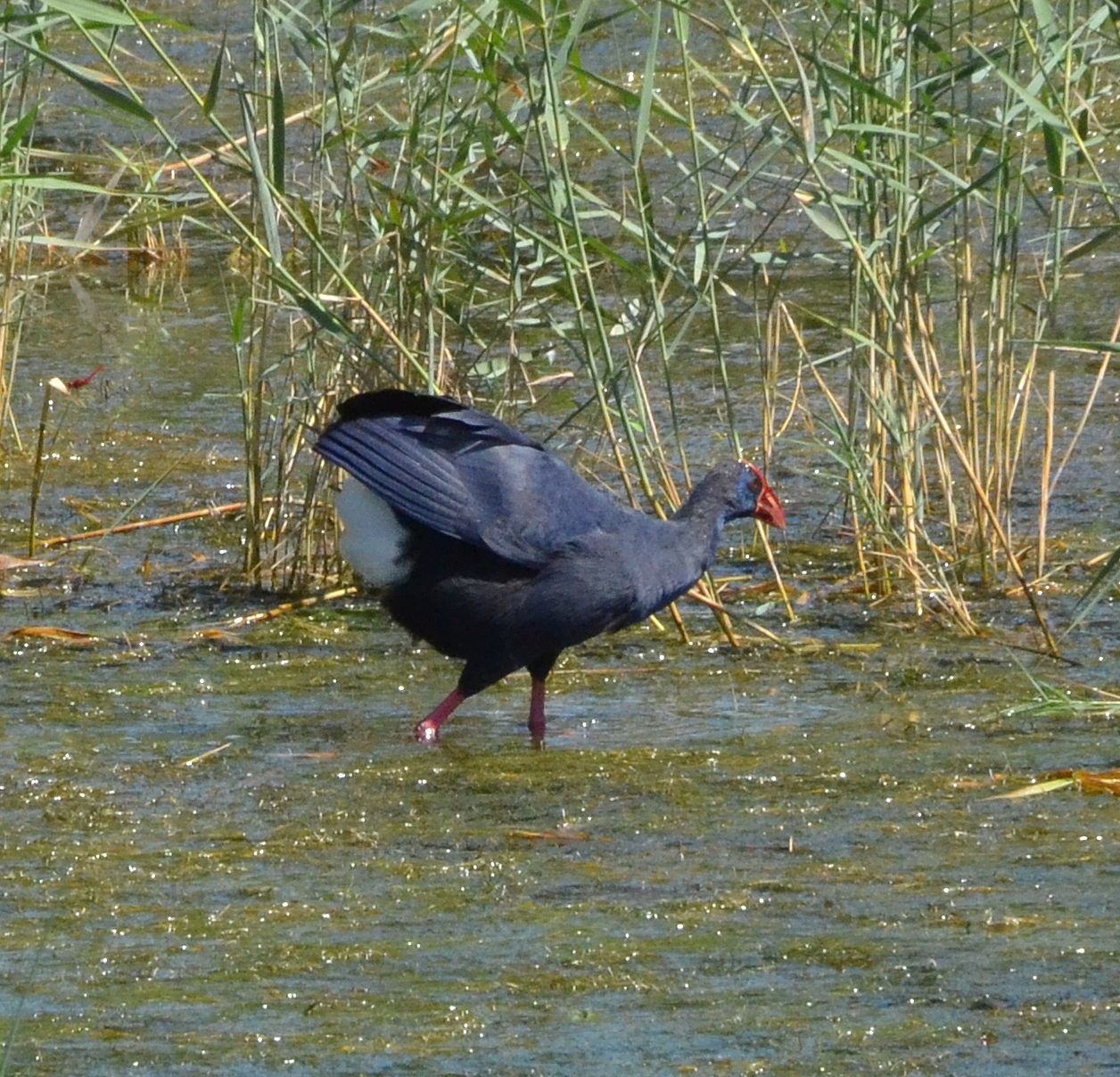
As I lingered alone on 7th without disturbance from other visitors I became aware of several Purple Gallinule on the same lagoon as the Coots. The former were very skittish, mostly heading for cover as soon as they noticed traffic on the boardwalk even quite distantly, and sometimes appearing to run over the water’s surface in a quite comical manner. Their range of calls like squealing pigs would issue from the pond margins when the birds themselves were not visible, blending in the soundscape with the previously mentioned ape-like utterances of the Coots. The park held 18 breeding pairs of PG in 2021.

El Fondo is also home to nationally important clusters of Marbled Duck for which it is the only breeding site on the Iberian peninsula, and White-headed Duck. I encountered each species just once during my three day visit, both on the lagoons nearest to the visitor centre. At the far end of the blue route in the south of the reserve are three hides from which I was advised are the best chances of seeing WHD. I spent some time there on both 8th and 9th but without success. The bird I did observe briefly was an adult winter male.

There is an immense amount of concealed and inaccessible habitat at El Fondo in which those rare breeding wildfowl might need to be located. But my first foreign travel in almost three years, at what became a momentous time at home, left me in no doubt that this is THE place in Europe and the Western Palearctic in which to experience Red-knobbed Coot.

My second White-rumped Sandpiper at Dorney Common, Bucks – 22nd July

Being just 40 miles from home this seemed worth doing today. I had seen the Nearctic wader in question just once before, a little distantly at Bournemouth’s Longham Lakes in Sep 2012, so it hasn’t featured in this journal until now. My recollections of that occasion are vague, so having been told the new bird was easier to view I went to take a look.

White-rumped Sandpiper is one of the more regular Nearctic vagrants of its group to occur in the British Isles, with several records through each autumn passage. In July 2022 there had been sightings at Snettisham and Titchwell in Norfolk, Lodmoor in Dorset and three Scottish sites prior to a quite confiding individual turning up on the Berks / Bucks border during Thursday (21st). This wader breeds on the Arctic tundra from June to August, and return migration to the estuaries of southern South America spans July to early December with juveniles going last.

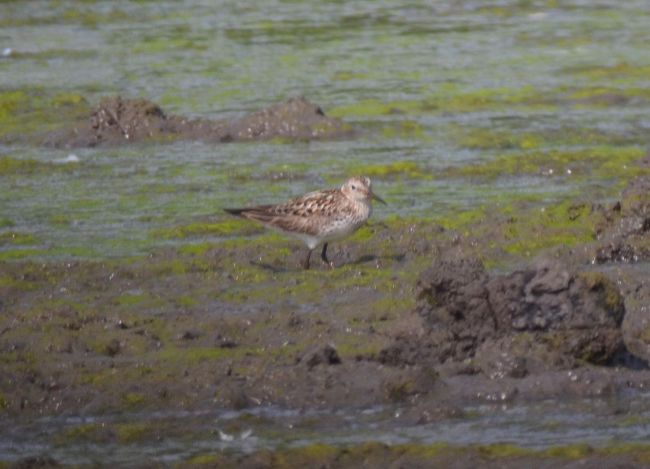
Today’s White-rumped Sandpiper (record shot)

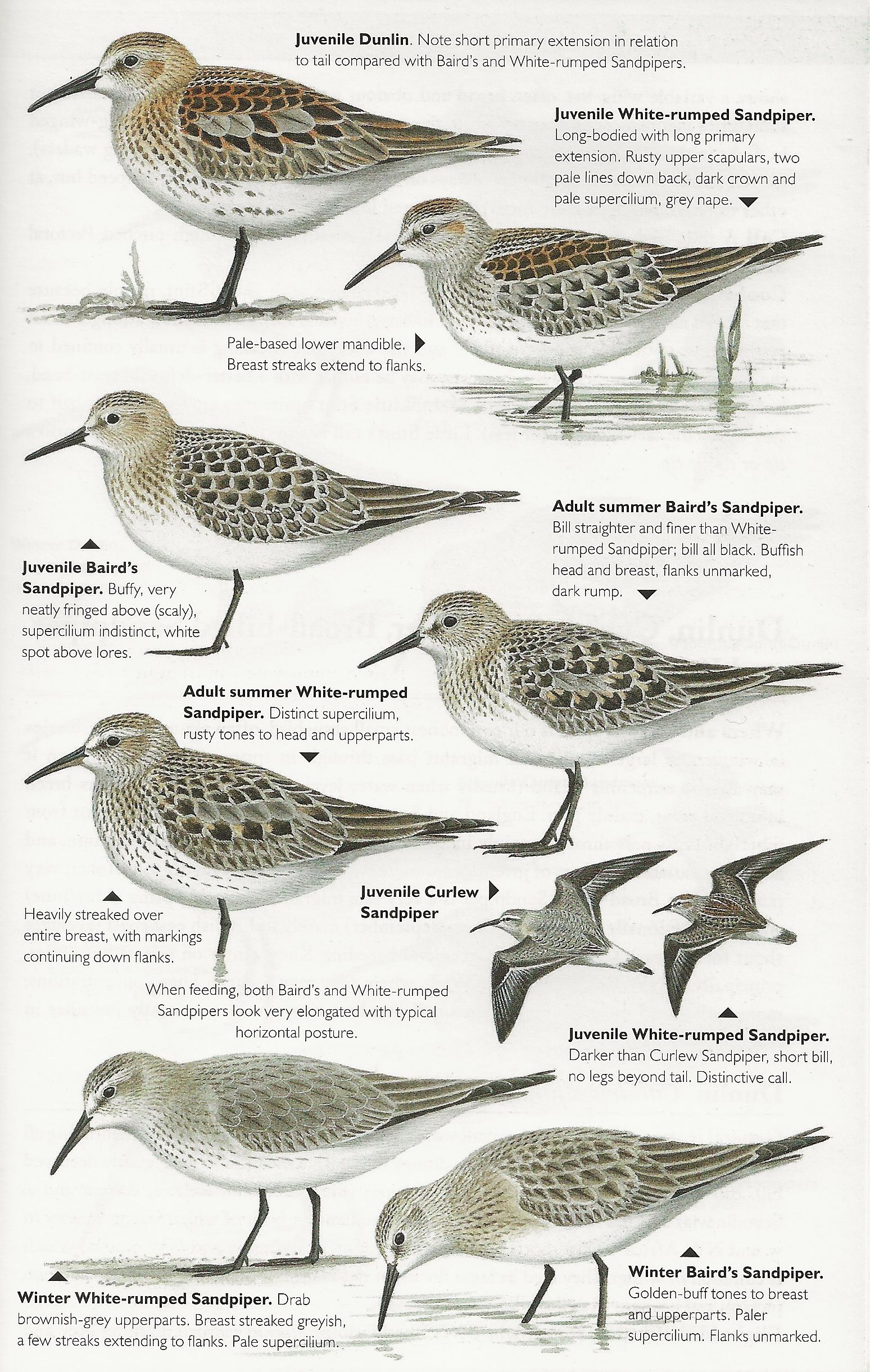
By comparison with what I regard as my default small wader Dunlin, White-rumped and the similar Baird’s Sandpipers are a little smaller. The two share a slimmer, longer-bodied and shorter-legged profile with remarkably long primary projections; the last-named feature meaning the wing-tips extend beyond the tail. After the white upper tail of its name, White-rumped’s other stand-out diagnostic is cited as a distinct whitish supercilium (eye stripe), while adults such as today’s bird display rusty tones to the head and upperparts. A weakish wing bar is apparent in flight. The graphic below presents full plumage topography for all three waders mentioned in this paragraph.

White-rumped and Baird’s Sandpipers et al © Bloomsbury Publishing

I arrived at the flat and featureless Dorney Common (SU942789) at 9:20am to find a dozen or more birders watching my quest, and was put onto it straight away. I had been here twice previously to log my second Pectoral Sandpiper (Sep 2012) and a Spotted Crake (Sep 2018 – see here), both of which had been quite difficult to view on an adjacent wetland.

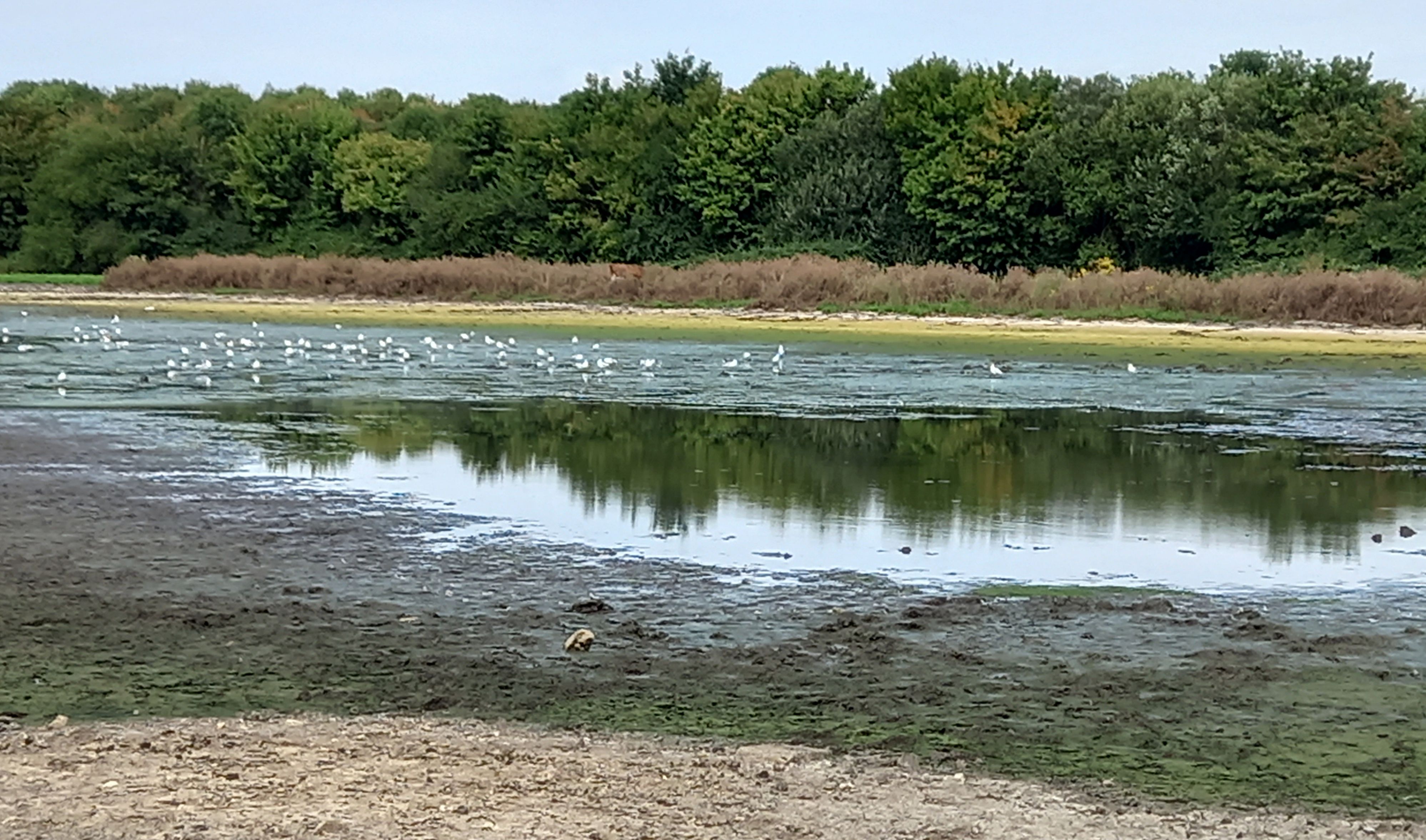
The White-rumped Sandpiper was showing really well on a shallow flash in the common’s north-east corner (pictured below) that was populated by gulls, geese and just three transient waders. That feature still seemed remarkably muddy and watery in its scorched surroundings considering this past week’s exceptionally hot weather in which Great Britain had recorded temperatures of 40 deg C for the first time ever.

The flash at Dorney Common

By comparison with my experience in Bournemouth almost 10 years ago, today was far more instructive as the bird was near enough for all the diagnostic features to be plain to discern. It also remained in close proximity with a plump and much darker-toned Dunlin for much of the time (pictured below). Its feeding action was generally quite brisk, though at times it appeared to move more inconspicuously. Using my digiscoping attachment I was also able to obtain the poor quality pictorial records of this post.

White-rumped Sandpiper (right) and Dunlin (record shot)

So my hour on-site here imparted a complete education in identifying WRS. As with last year’s Western Sandpiper (see here) and Long-toed Stint (see here) this had been another exercise in witnessing just how distinct these vagrant “peeps” are from one another on profile and jizz if only they are observed well enough. With the cost of petrol and health issues having impacted my birding so far this year, the twitchette of this post has been a very welcome diversion. This post’s featured bird departed overnight.

Northern Damselfly in The Cairngorms + my Scottish Highland trip conclusions – 27th June

This was the only one of the three prime odo trip targets to be converted. Having previously recorded every native English damselfly, with the exception of Sandwich Bay’s Dainty colony, I now needed Scotland’s one further species to expand that list to Great Britain.

Our guide’s chosen site was the Rothiemurchus Estate (NH895093) where there are a number of lochans. By contrast with the Common Blue Damselflies they associate with, our quest stands out by flying weakly and low down in long grass at the water’s edge, and rarely over large expanses of open water. We were led to such an overgrown location where several pairs of Northern Damselfly were located.

Northern Damselflies today

This is one of the scarcest British damselflies, occurring only at around 26 established sites in Scotland where they require quite a precise micro-habitat. Adults are nowhere abundant and there are few locations in which more than 100 have been observed at one time. Breeding waters tend to be shallow to 60cm and sheltered by dense stands of tall sedges.

Emergence takes place in mid-May, after which immatures may disperse for several hundred metres before returning to the breeding site in early June. Males then perch a short distance apart in low vegetation near the water’s edge to await females to mate with. The flight season lasts until early August.

The diagnostics of this damselfly were mostly plain to discern in the several tandem pairs and individuals that we observed at this site today:

  • The underside of the eyes and face are noticeably bright green in both genders
  • The blue and dark brown males have a spear-shaped marking on abdominal segments 1 and 2 that rather stands out. The standard international name for this damselfly is Spearhead Bluet.
  • When examined closely males also exhibit two short black lines on each side of the thorax, compared to a single line in Common Blue Damselfly
  • In side view the paler parts of females are pea-green, unlike related species
© British Wildlife Publishing

Trip Conclusions

The morning of this and the previous post was the only suitable weather window for insects in the first five days of the week to 30th. In wanting some kind of holiday this year I took a chance on Scottish weather and the gamble largely failed. I would not pre-book wildlife travel to Scotland again.

On 1st July we visited Loch Bran (NH506192) where a few fly-by Northern Emerald were seen by some of the group, including one by myself. That dragonfly is characterised by a fast and direct flight and one went right by me as pointed out by our guides. Given my previous experience with Downy and Brilliant Emerald I feel sure this trip target must be another very difficult subject, requiring possibly days of fieldwork to observe well and capture pictorially. So I may need to content myself with this fly-by tick.

If I re-attempt Azure Hawker in the future it would have to be on the spur of the moment in response to a particularly fair weather forecast, if suitable flights and accommodation are available and whatever the logistics of all that might be. And the same applies to the two butterflies, Chequered Skipper and Mountain Ringlet.

Ultimately this half-baked trip will be remembered for the wildlife it did produce, principally mammals while the northern insects will have to wait who knows when for another day.

Northern Brown Argus at a Cairngorms site – 27th June

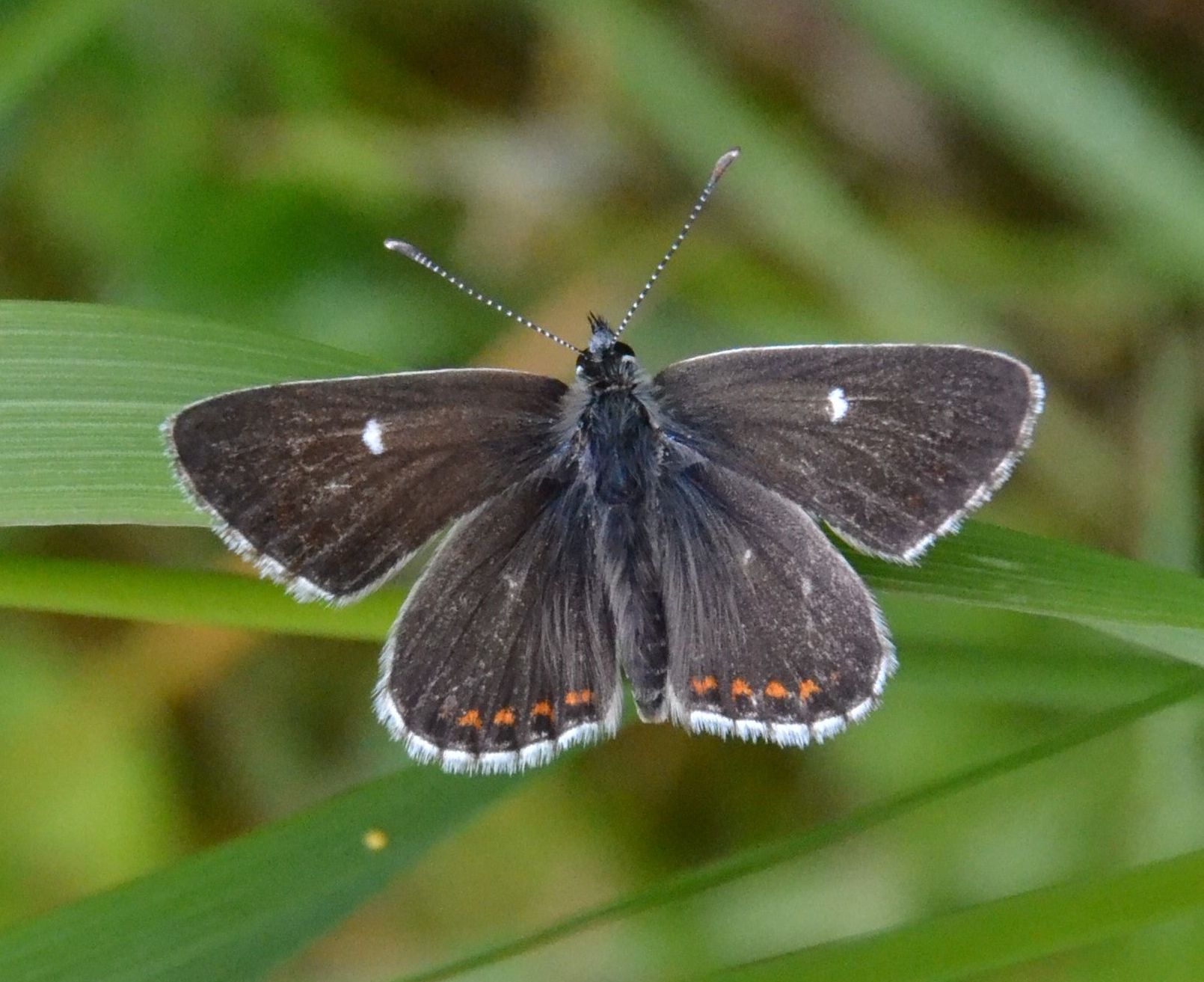
This is a butterfly I have not presented previously in this journal. I had only recorded it once before, in the Cumbrian Pennines in July 2018. Those were worn and faded specimens and I gained only poor quality record shots to support the sightings. Our first day of this trip (26th) set the tone for the week ahead in being a total write-off in Odonata terms. We visited superb habitat but found nothing in the prevailing cool, overcast and damp weather conditions. Nobody could find a better forecast for the rest of the trip, and by the end of Sunday my spirits were low.

On Monday we headed further afield to the Cairngorms National Park where conditions were predicted to be more insect friendly until around 2pm. When our guide announced we were stopping for a break to observe Northern Brown Argus my interest level rose. The site was Craig Dubh (NN673957), a steep hillside rising above one side of the road.

Today’s Northern Brown Argus

Two butterflies were soon located, then the group carried on up the incline to look for Fritillaries. “Yes, I’ll have some of this,” I thought as I was left alone with a subject I very much wanted to capture pictorially. I was now in my element and at once down on my hands and knees performing contortions on the ground.

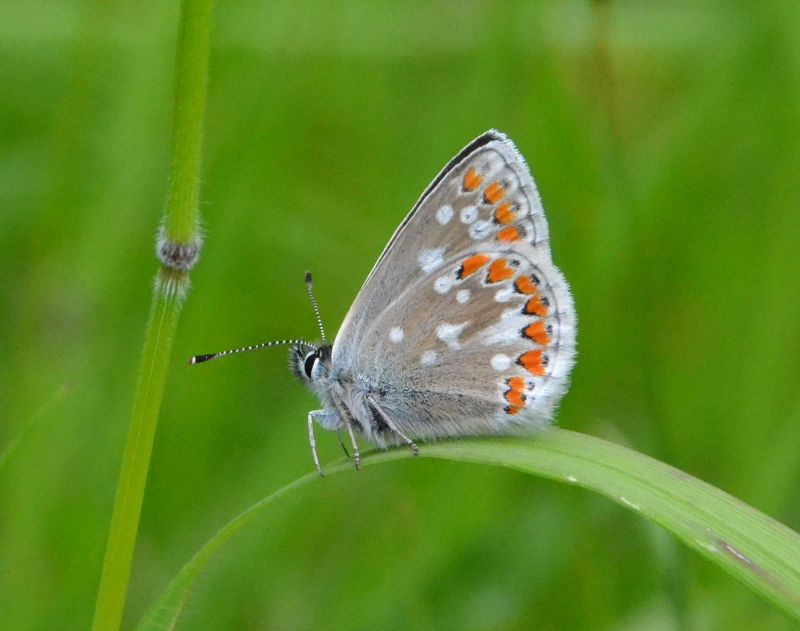
I am very pleased with these images that show perfectly this northern replacement of the regular and familiar Brown Argus’ diagnostic white upper wing dots. These butterflies were beautifully fresh and not having warmed up for the day were keeping quite still. That was a complete contrast to my 2018 experience.

When I eventually re-joined the group one each of Small Pearl-bordered and Dark Green Fritillary had been located here. Then on the way back down the hillside probably the same two NBA were re-found perched up in the long grass, and acceptable under-wing studies were duly gained. This had been a good start to day two.

Northern Brown Argus and Small Pearl-bordered Fritillary today

Northern Brown Argus is described (per Thomas and Lewington) as a locally common though declining species that occurs in scattered colonies. It is found on warm, sheltered northern hill and mountainsides, mainly on limestone and alkaline soils. Typical sites are well-drained, unfertilised grassland with patches of bare ground, abundant Rock Rose plants and an uneven lightly grazed sward. Numerous populations have been lost in recent years due to fertilisation or intensive stocking of such grasslands.

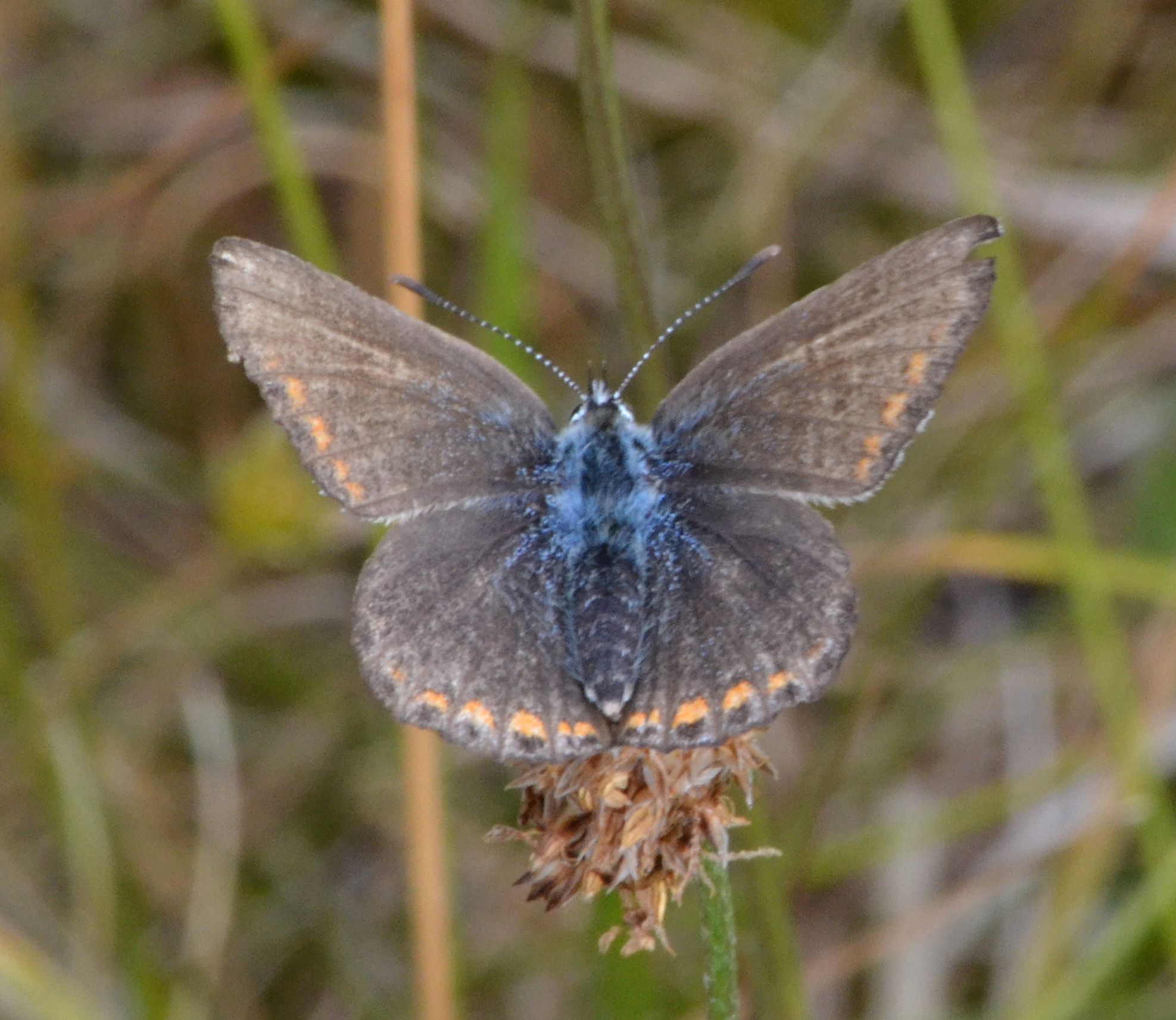
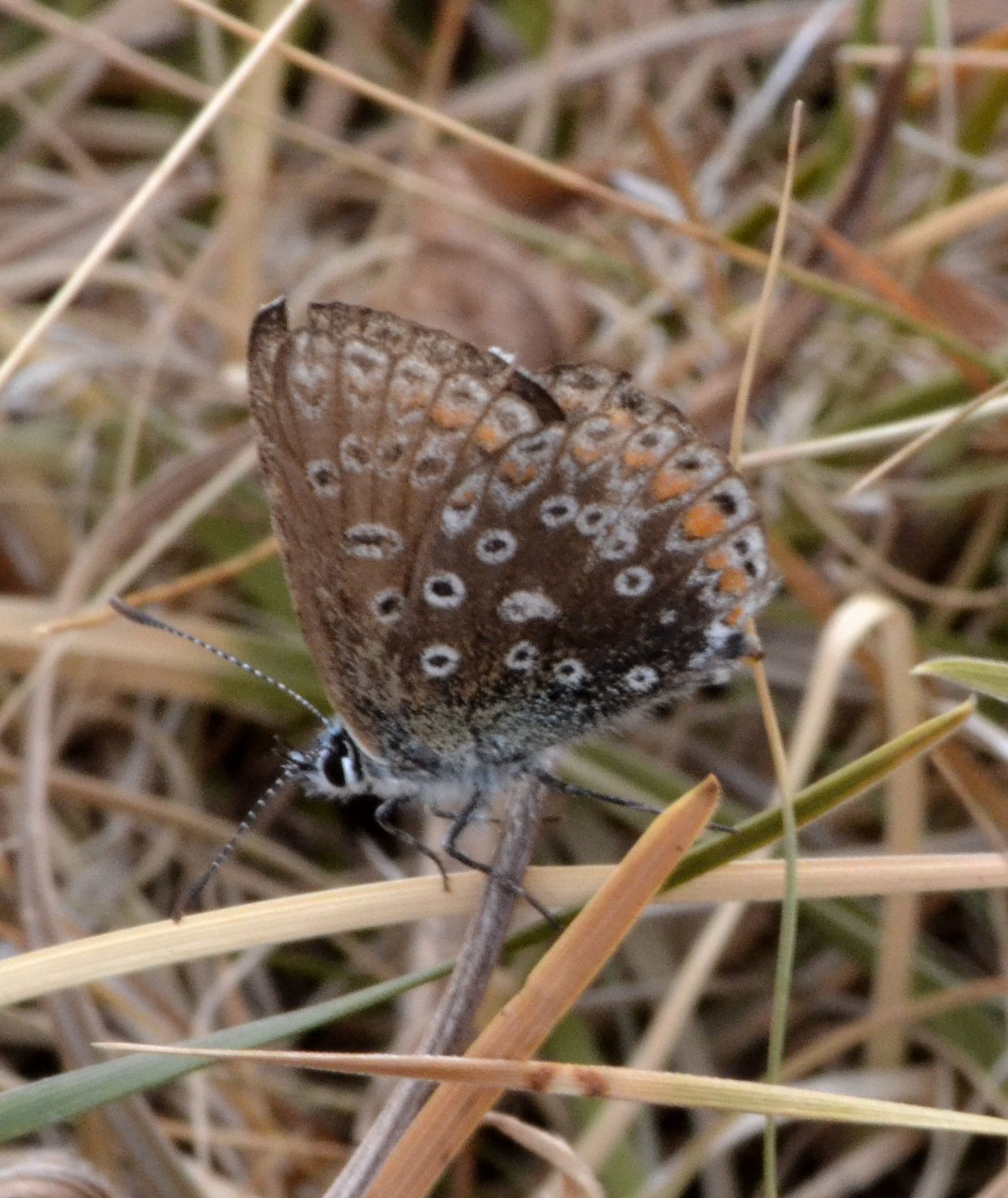
The butterfly was first discovered in Edinburgh at the end of the 18th century and was originally named rather unimaginatively the “Brown Whitespot”. But it resembled the Brown Argus in most respects and for the next 170 years there was much debate as to whether the two were distinct or sub-species. The picture was further confused by most northern English populations, such as those I observed in Cumbria, lacking the white upper wing spot. Those butterflies (known as salmacis – pictured below) have more clearly spotted underwings and more closely resemble continental European NBA.

Northern English form of NBA in Cumbria, 2018

NBA, in common with the most northerly populations of Brown Argus, produces just one generation each season while southern English Brown Argus are invariably double-brooded. Adult NBA are on the wing from June until mid-August, peaking in the first half of July. Most colonies are small, containing no more than 200 adults. NBA is also highly sedentary with individuals moving no more than 20 to 30 metres through their life cycle.

The principal areas for NBA in Great Britain are Scotland, especially the south and east; north Lancashire and Cumbria in north-west England, plus a remnant population in County Durham. I was very pleased of the opportunity to make an adequate study of this species today and in the absence of Chequered Skipper and Mountain Ringlet this was the butterfly highlight of the trip.

The Pine Martens and Red Squirrels of Glenloy Lodge, and other Scottish Highland mammals: 25 – 30th June

For my first holiday in three years I chose a week’s itinerary in the Scottish Highlands run by Glenloy Wildlife. Such group tours are not my natural habitat but with the potential for 10 lifers across odonata, butterflies and mammals, plus two British bird list additions, this was a case of needs must. I would be unlikely to observe that wildlife going solo.

The prime focus was intended to be the northern odonata – Azure Hawker, Northern Emerald and Northern Damselfly. Proper Scottish Chequered Skipper if any were still flying, and Mountain Ringlet given the right weather conditions, were also possibilities. Where birds were concerned I was pleased to add Golden Eagle (376) to my British list though we were not lucky with Crested Tit.

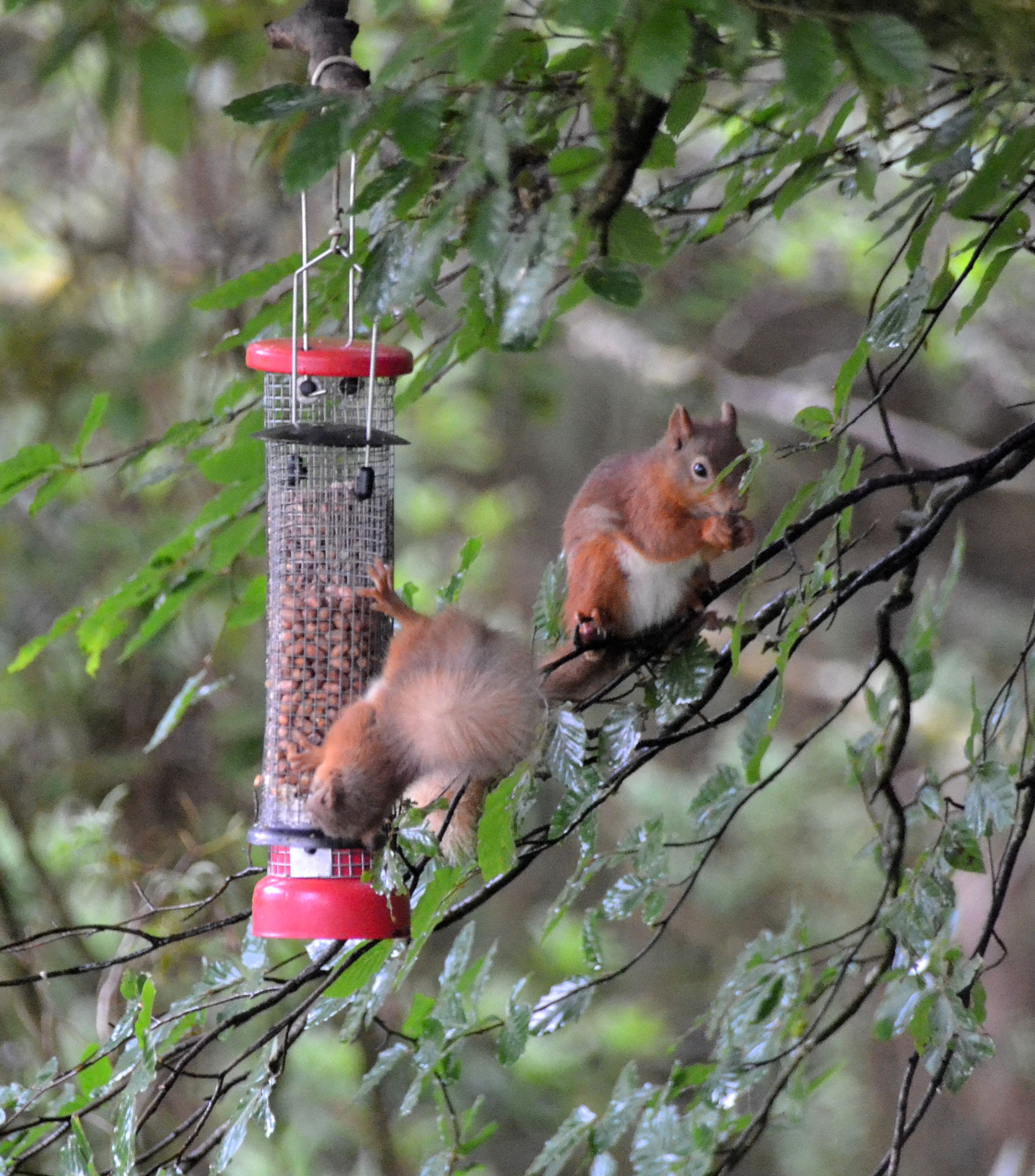
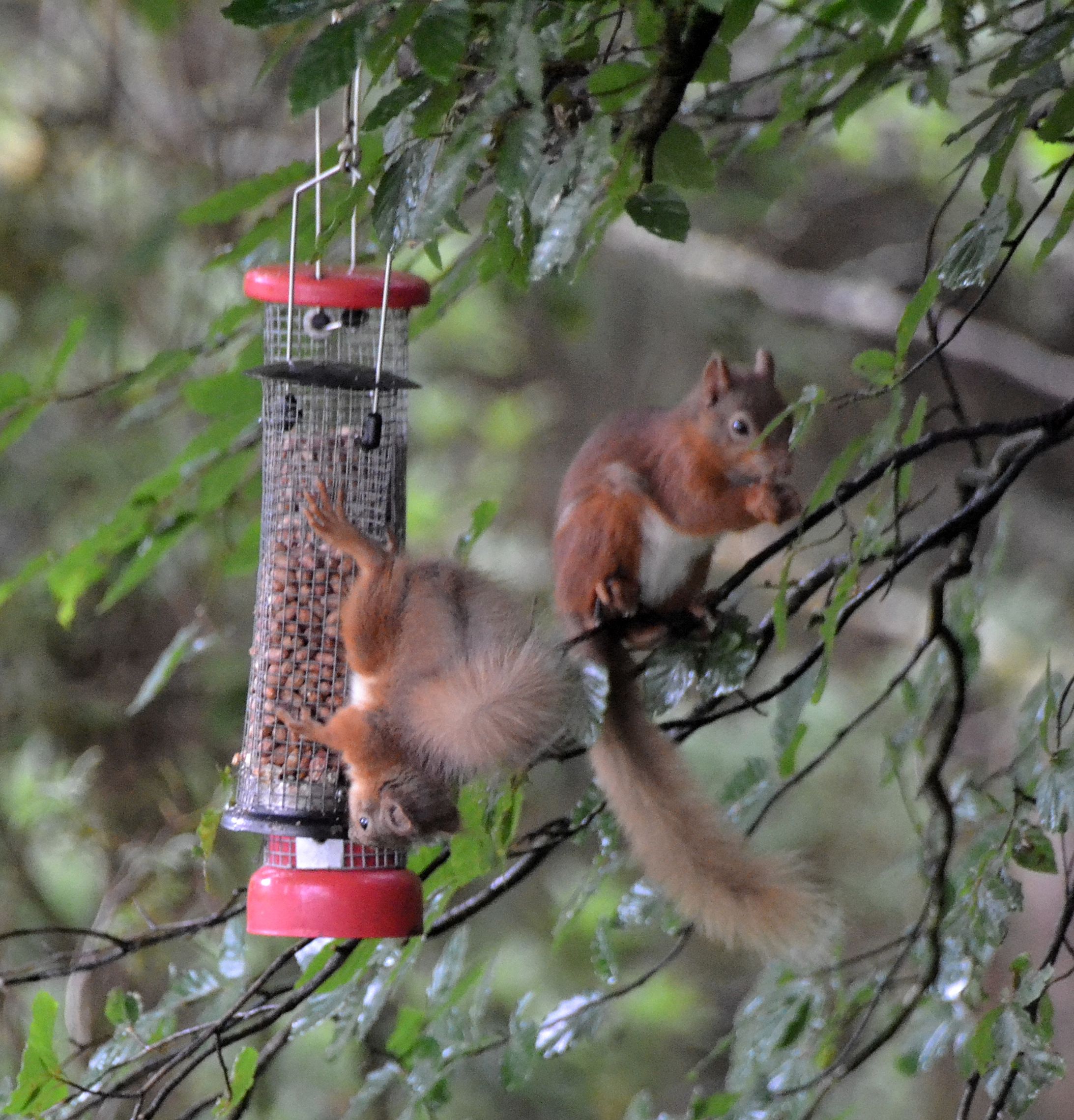
In the event the most successful area was mammals, with my first experiences of Pine Marten, Red Squirrel, Otter, Red Deer and Sika Deer all gained; and good observations of Common Seal and Dolphin. Of those the first two are resident in the grounds of Glenloy Lodge (NN118778) which is run by Jon and Angela Mercer. Each evening food is put out for the Pine Martens, while the Red Squirrels come to bird feeders through the day.

Pine Marten (fem)

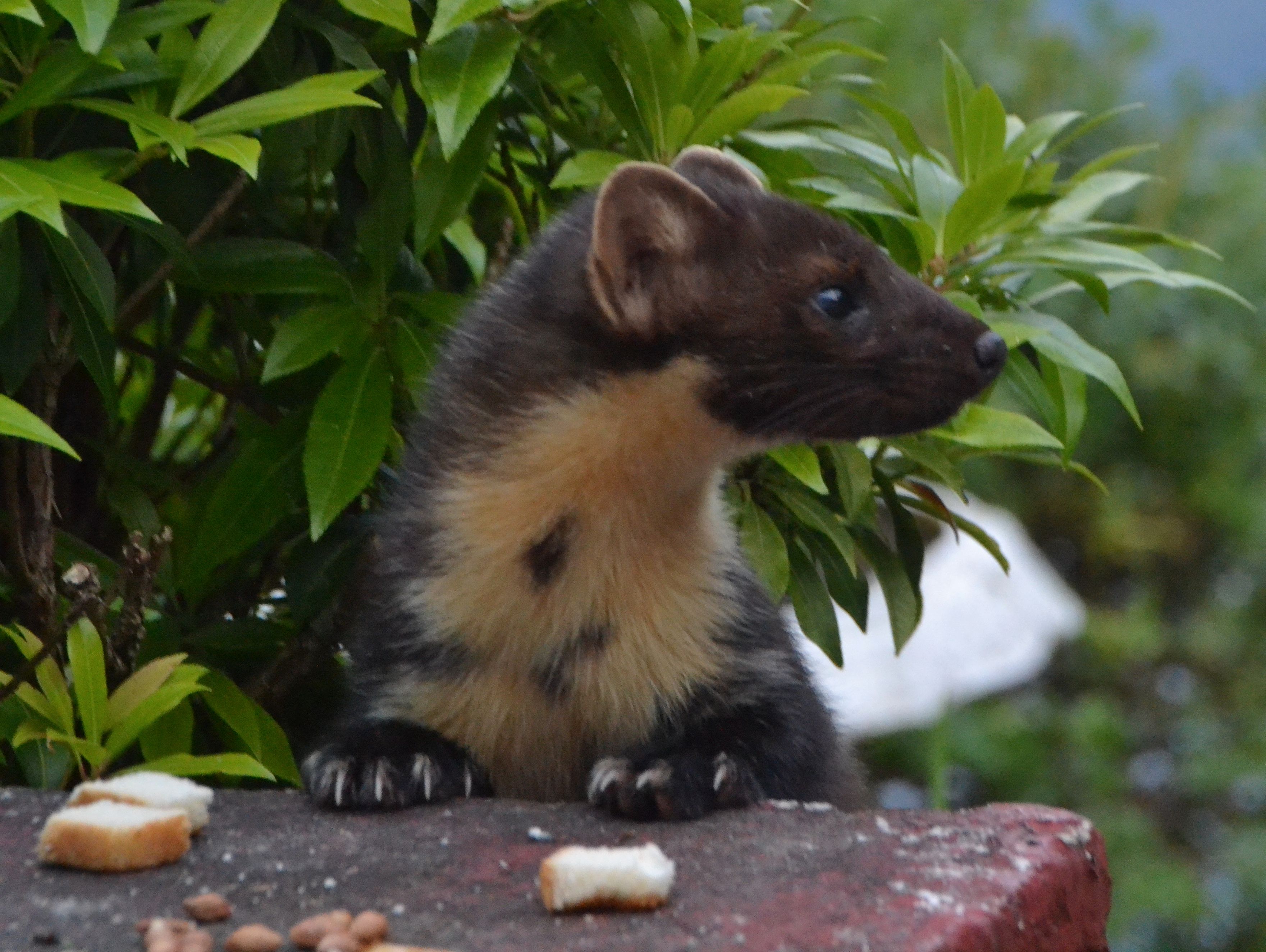
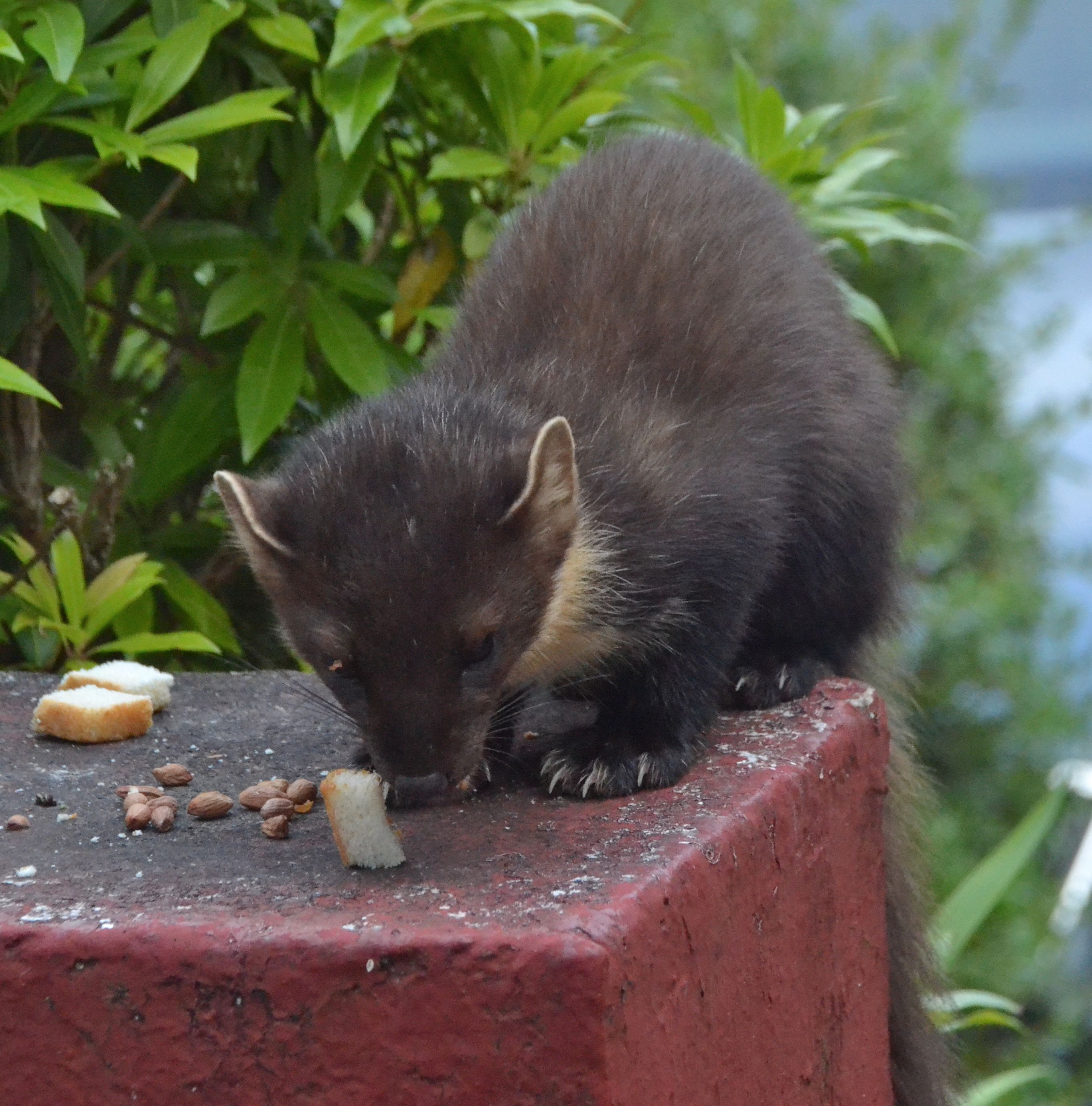
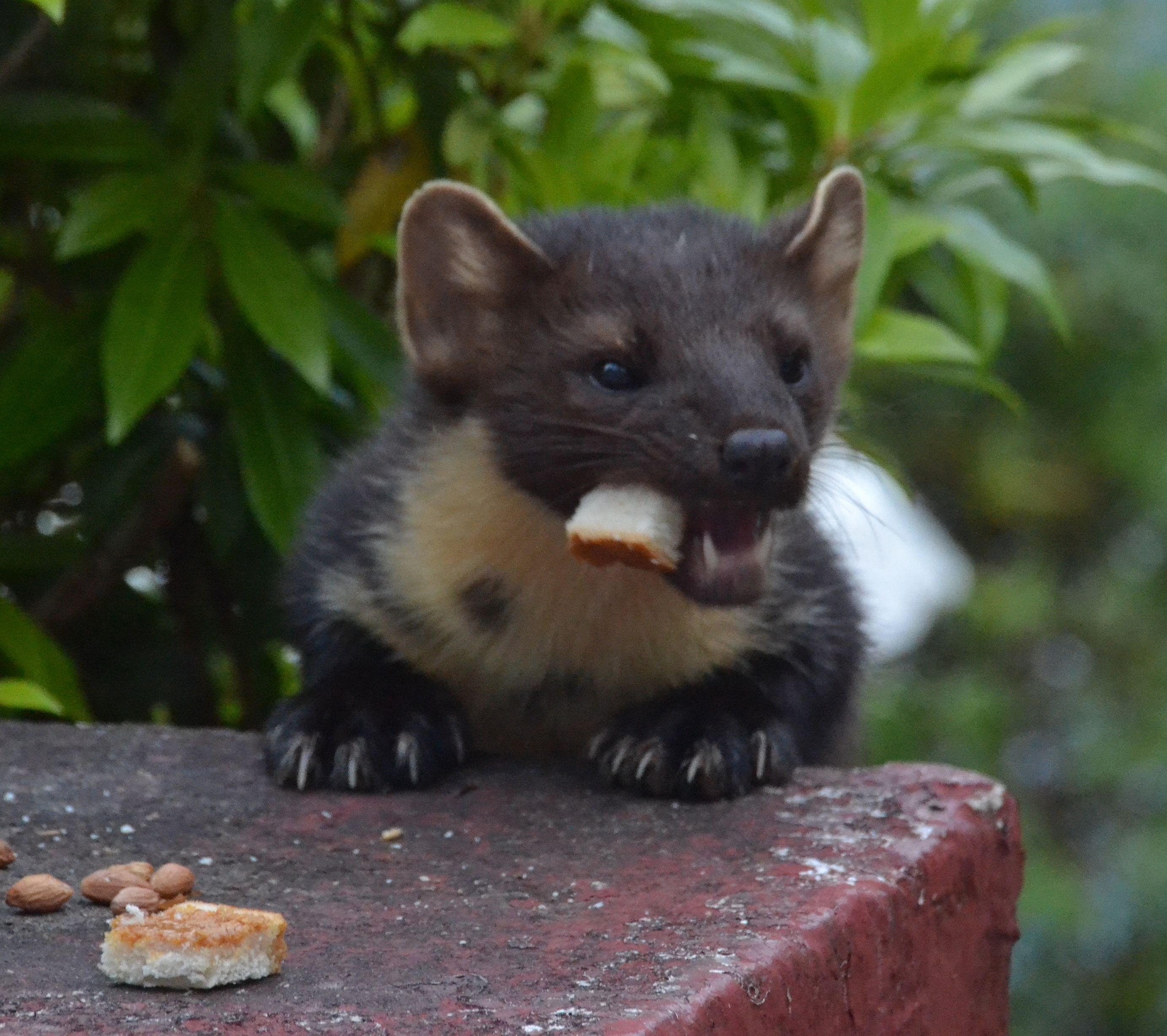
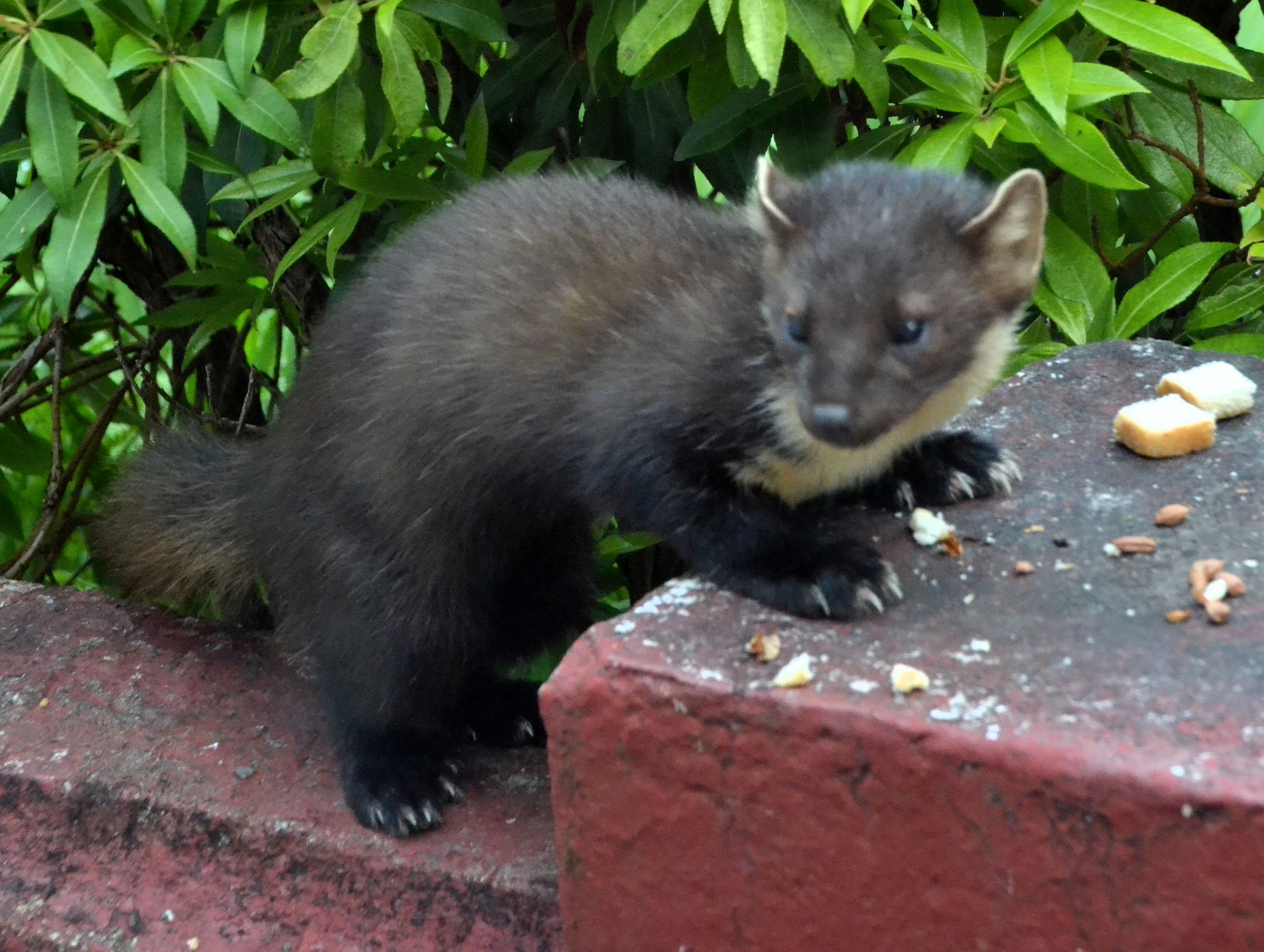
Pine Marten occurs widely across most of continental Europe, Andalucia, the Caucuses and parts of the middle east. Generalist predators, they have territories that vary in size according to habitat and food availability. Their dens may be found in hollow trees or the fallen root masses of Scots pines. In the British Isles most of the population is confined to the Scottish Highlands north of the central belt as well as the Grampians, preferring well-wooded areas with plenty of cover. Though they have increased their range in recent decades this remains one of the rarest British mammals and I would not expect to observe them other than in situations where they are attracted by man-made feeding opportunities.

These animals become active hunting and foraging at dusk, and at Glenloy Lodge usually appear from around 8:30pm onwards. There is a sun lounge on the front of the building outside which the Pine Martens’ food is laid out and each evening through my stay a female and two juveniles put on a show for the paying guests. I also saw the resident male once on the squirrels’ nut feeders in the morning. These (below) are the best of my pictorial records, captured through the double glazing of the sun lounge, some of which depict a juvenile … Aaaaw!

The early shift in the mornings was manned by the Red Squirrels that on some days I watched before breakfast. Ever since childhood I have read of how this native British mammal has been negatively impacted by the introduced north American Grey Squirrel, a story that has not changed too much in all those years. Now I was experiencing the fabled national original for the first time.

Red Squirrels occur across the Taiga zone of northern Europe and Siberia in coniferous woodlands, favouring Scots and Siberian Pine and Norway Spruce. They also inhabit broad-leaved woods in western and southern Europe where the mixture of tree and shrub species can provide better year-round food sources. But they have long been driven out of this habitat in the British Isles by the larger and more competitive Grey Squirrel that exploits the feeding opportunities to its own advantage.

Red numbers are said to have stabilised in Scotland, where 85 per cent of the British population of around 287,000 is now found. Increased Pine Marten numbers actually help the situation since the latter predate and hence help to control Grey Squirrels. Reds could actually live in most rural, suburban and even some urban habitats as long as there is no threat from greys. So conservation management in locations where reds have been re-introduced must keep the two species apart as they cannot live together long term. Such work is essential if the Red Squirrel is not to become extinct in the British Isles.

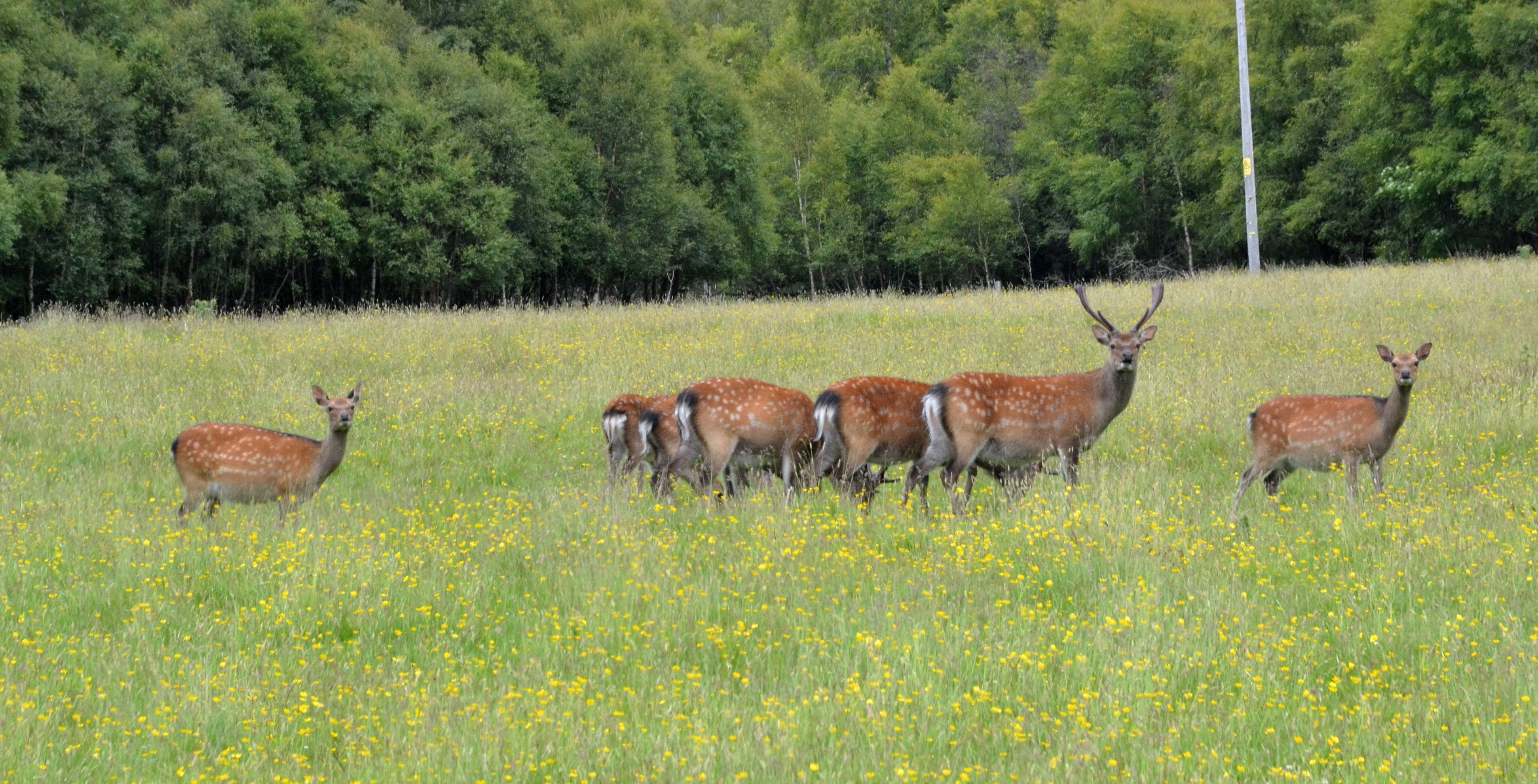
Red (left) and Sika Deer

Driving around rather too much in the tour minibus, in the absence of fieldwork opportunities for odonata, native Red Deer and introduced Sika were encountered fairly regularly. Red Deer is the largest British land mammal, widely distributed and expanding in range and number, and native stock is common in the Scottish Highlands. The distribution of Sika Deer too in Scotland is widespread and expanding. Their preferred habitat is coniferous woodland and heaths on acid soils.

Sika were first introduced from the far east and especially Japan in the 1860s. They are similar in coat colour to Fallow Deer with a distinctive black and white rump, and there is often a dark-coloured dorsal stripe running the length of the back. Populations of both these featured deer species require careful management to maintain health and quality and ensure a sustainable balance with their environment.

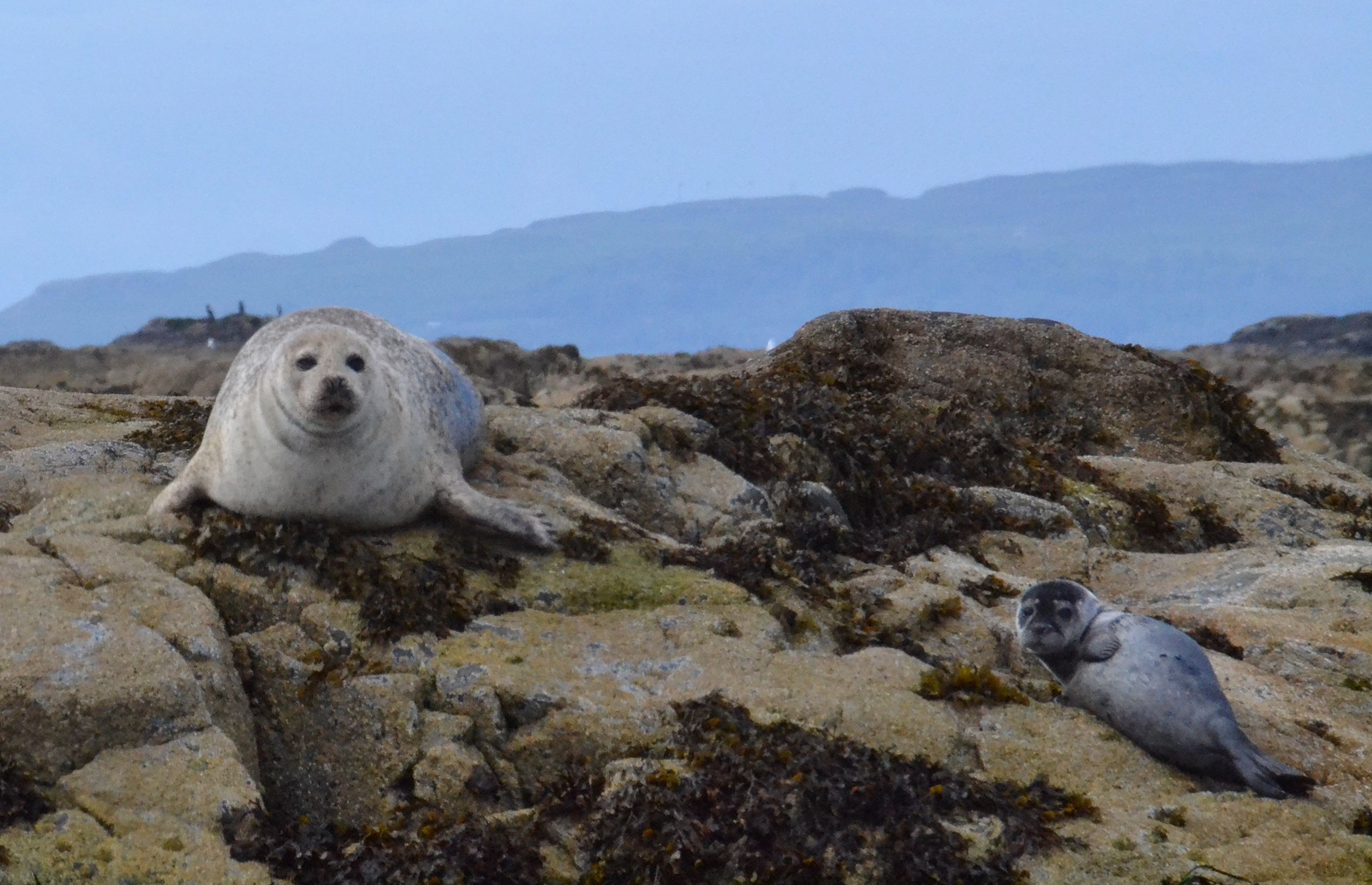
Surprising as it may seem it has also taken me this long to experience my first Otters, as well as the scarcer mammals that headline this post. A probable family group of four were encountered on Loch Linnhie to the south-west of Fort William on 28th. Lastly there were Common Seal in the same area then from a boat trip from Arisaig on 30th. After my superb experience of the Atlantic Grey Seal breeding colony at Donna Nook, Lincs in November 2019 (see here) it was now very pleasing to follow suit with these smaller, scarcer cousins.

Common Seal (pictured above) feed at sea but regularly haul out on to rocky shores or inter-tidal sandbanks around the coast of Scotland to rest or to give birth and suckle single pups in June or July each year. Pups are very well developed at birth and can swim and dive when just a few hours old. This enables Common Seals to breed in estuaries where sand-banks are exposed for only part of the day. Mothers feed their young with an extremely rich milk and pups grow rapidly, doubling their birth weight during the three or four weeks that they suckle. The above images are from Lock Nan Ceall just out of Arisaig on the boat trip.

The Keeled Skimmers of Lye Valley LNR, Headington, Oxford – 22nd June

This is a further piece of welcome evolution in my current pared down and disrupted wildlife summer of 2022. After becoming a little intrigued by the broader wildlife potential of the Lye Valley when Common Frogs were spawning back in February (see here), I resolved to assess it for Odonata in season and with particular emphasis on one species, Keeled Skimmer.

In September of last year news broke on the thriving Oxon Dragonflies blog administered by our county recorder, confirming that breeding had occurred at the Headington site (SP546057) in both 2020 and 2021 (see here). The significance was this represented a notable county range expansion from KS’ historic Oxon stronghold of Cothill Fen to the west of the city. That was logical since both locations comprise remnant and nationally scarce alkaline fen habitat.

One of today’s male Keeled Skimmers (record shot)

Keeled Skimmer (pictured above) is locally common in acid, boggy peat regions of south and south-west Britain, as well as similar localities in northern England and Scotland. It is a small, darter like dragonfly with a distinctive slender, tapering abdomen displaying a pale blue pruinescence in mature males. These establish small territories of which there may typically be around 15 in a 100 metre stretch of habitat. The flight season lasts from early June to late August.

After two days at home this sunny week, catching up on immediate chores following a week and a half away, I opted to test my fitness with a little local wildlife outing. The season’s first KS records had been published from the Cothill Fen complex, and I wanted to check things out for myself at the new site. Hence mid-morning found me taking things steadily along the boardwalk out to the area of LVNR that is known as “The Ponds”.

Note the bright yellow pterostigma and slim, tapering abdomen

Before long up to 10 powder blue dragonflies became readily apparent mooching around the fen habitat. But I was perhaps a little early in the day to observe females that usually approach the male territories around midday. I had paid no attention to odonata other than Clubtails so far this season, and given recent distractions needed to re-acquaint myself with the diagnostics of both my day’s quest and the larger, heavier Black-tailed Skimmer to confirm the ID.

Returning home with record shots in the can I discerned yellow pterostigma (wing tags), wings held forward over the head, and the correct number of segments with no black tail or yellow edges to the abdomen. I had indeed recorded Keeled Skimmer in a different and evolved Oxon location, so mission had been accomplished. These were the only dragonflies encountered here today. For myself, I suffered no ill effects from the little excursion and in general have felt stronger each day in what is a period of convalescence.