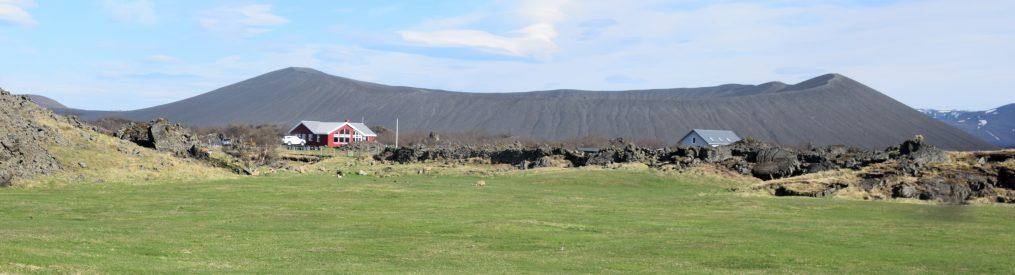
Having done very little with wildlife since the end of the Orchid season, on the last Friday in September I got around to seeing if it was worth starting to mushroom hunt again this autumn. One local source I consult carried a picture of a Pink Waxcap, also rather alluringly known as “The Ballerina”, in a Chilterns churchyard of mycology renown that I first visited last November (see here). That item is described as one of the most attractive of the much-sought Waxcap genus (here), and is also quite rare and very localised across its range. So like the Scarlet Waxcaps that had attracted me to the same location first time around, I decided I would rather like to see it.
This was also a test of whether fungi can still fascinate and motivate for a fifth as in past seasons, and the first foray confirmed the answer to be a most definite yes. Churchyards and other burial grounds, especially when managed sympathetically, often provide habitat in which mushroom genera that might have become scarce elsewhere can still thrive. Holy Trinity, Prestwood (HP16 0HJ – SU 874996) is a prime example, being a remnant of pristine acidic grassland in the chalk hills of the Chilterns (see here). Its recipe of short grass left unmown in season, nutrient-poor soil rich in moss on an acidic base, and no use of artificial fertilisers supports populations of Waxcaps, Pinkgills and more besides that have those needs.
Waxcaps exert a particular fascination upon fungi enthusiasts that I have quickly succumbed to. They are considered to be amongst the most spectacular British gilled mushrooms, since some are red or orange. Others are bright yellow, ivory, white, brown, green or black; some even changing colour as they age. Separating the various small red, orange or yellow species within the genus is notoriously difficult, since these may not be accurately identified without very detailed analysis. And last but by no means least, Waxcaps usually disappear if land where they occur is treated with agro-chemical fertilisers.
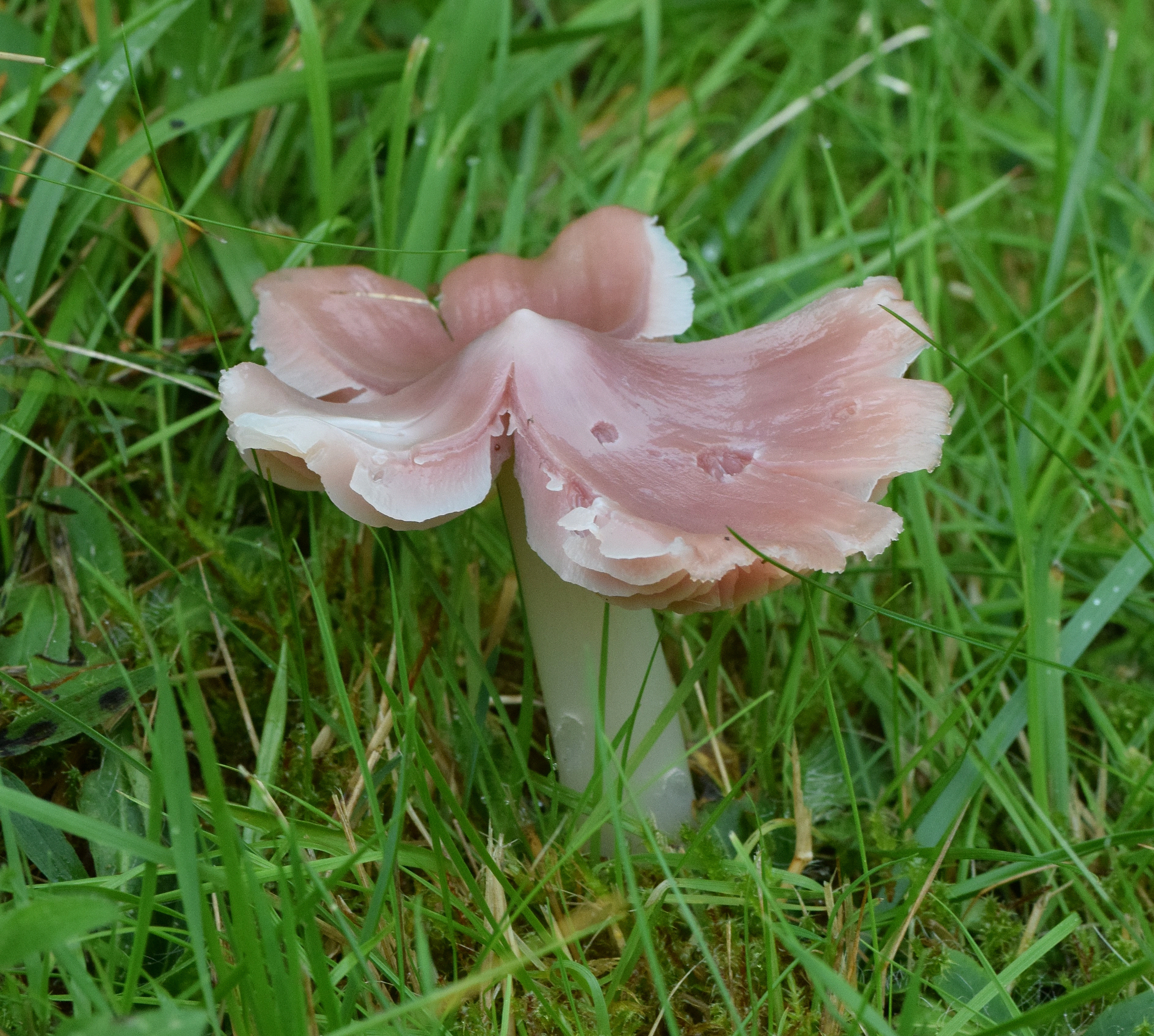
A “Waxcap grassland” such as Prestwood churchyard will have developed over centuries, so is irreplaceable, and can be destroyed quickly by excessive disturbance, neglect or artificial fertilisation. Pink Waxcap (Porpolomopsis calyptriformis – see here) itself, which occurs annually on site, is a Biodiversity Action Plan species for its special importance and rarity. I did locate this quest at the first attempt but in a ruined state though the remains still suggested some of the original beauty. Of two other larger items, Fibrous Waxcap (below left – here) was also ruined though I managed to make a photogenic arrangement out of the bits; while Yellow-foot Waxcap (right – here) was merely munched.
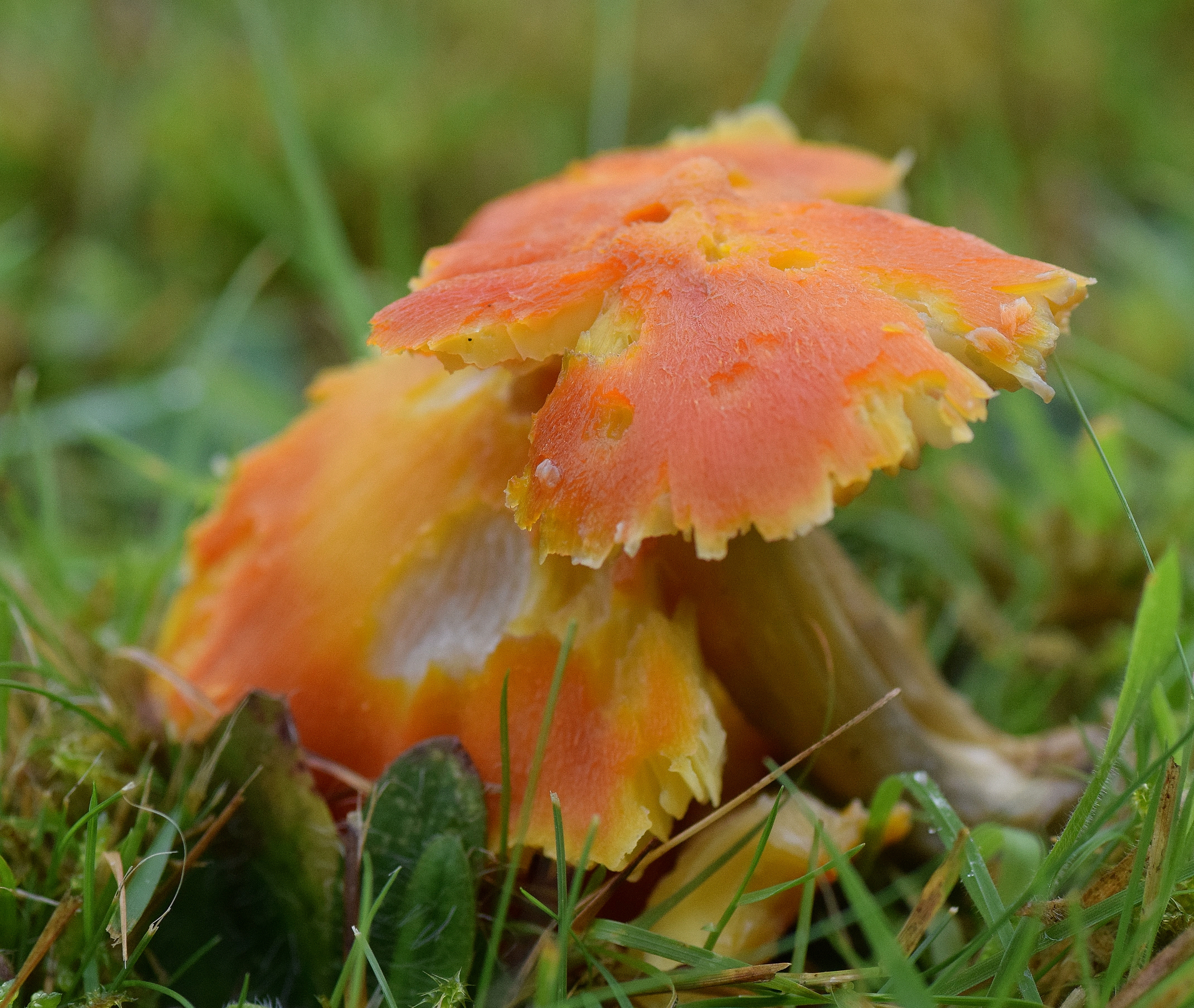
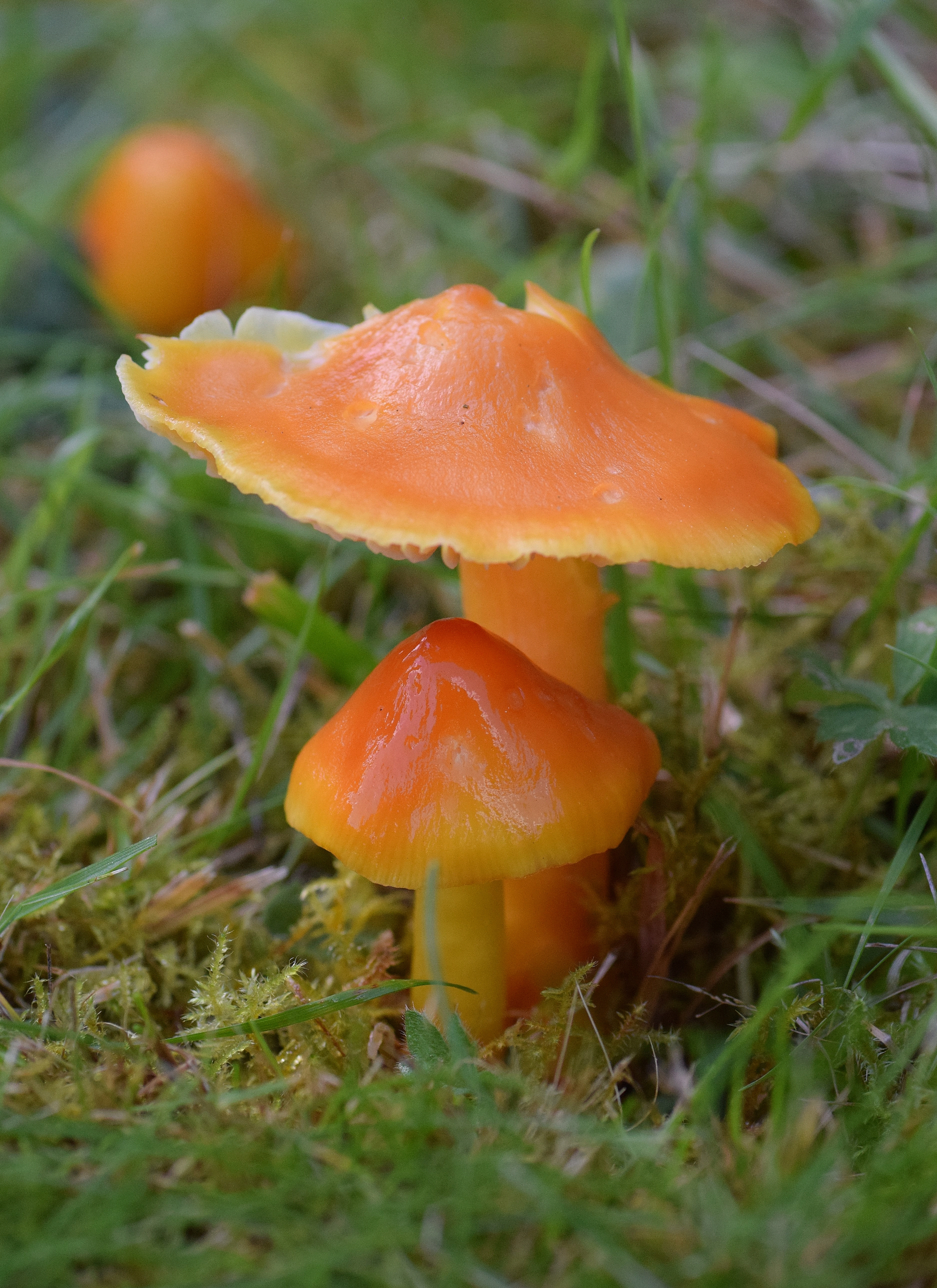
From left: Fibrous, Persistent and Yellow-foot Waxcaps
Over this and a second visit on 3rd Oct I also recorded three more orange / yellow-toned Waxcaps. Of those perhaps the most beguiling was Blackening Waxcap (here) that, as the name suggests bruises upon touching and blackens as it matures. Golden (or Lemon) Waxcap (here) I had recorded in quantity once before at Aston Clinton Ragpits during last year’s Orchid season. Now it was abundant again at Prestwood churchyard in autumn.
Also there was the intriguingly titled Persistent Waxcap (above centre – here), described as a scarcer item that pops up scattered amongst larger numbers of related species such as those cited above. It is distinguished by its conical shape, but guess what? The rest might produce similar individuals themselves. Another indicator is that it doesn’t blacken. For all these IDs I now use the Picture Mushroom app, that doesn’t always get things right but is more reliable than free options. Then I match them to authoritative resources and attempt to apply common sense. If still in doubt I consult expert local mycologists, who will acknowledge that mushroom identification is always an imprecise art.
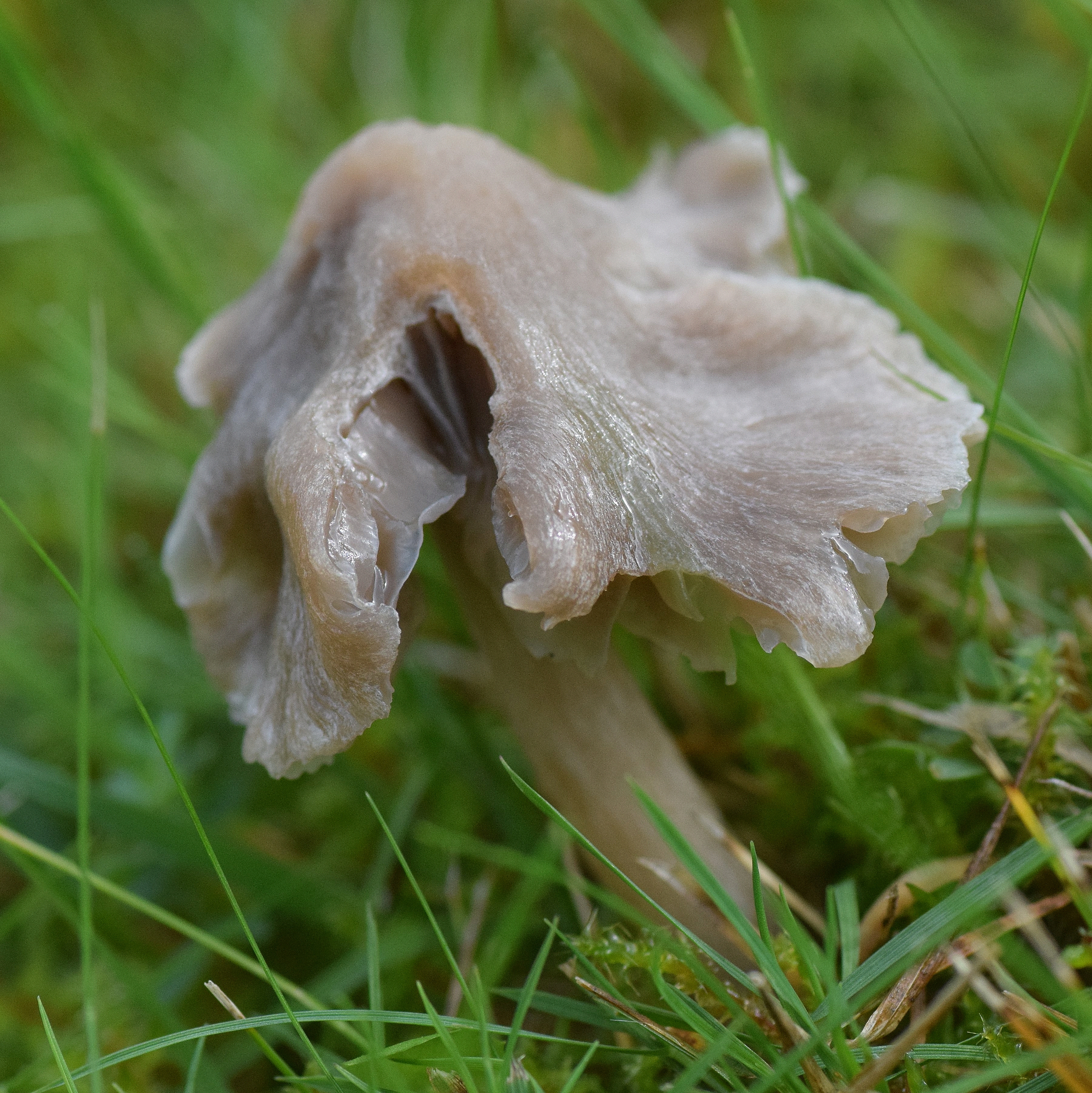
Upon my third visit (9th) I hit paydirt, there being four new Pink Waxcap on the south side of the church. These things of beauty, upon conversion did not disappoint … ballerinas indeed! The initially domed caps very noticeably split, turn up and fan outwards as individuals age. It might be a stretch of the imagination to compare fungi with the juvenile Roseate Spoonbills (see here) of my 2018 Florida lifetime’s experience, but there are similarities. What absolute stunners … in both instances. Solitary specimens of this species are said to re-appear in the same place for many years. It is said to be more common in western Britain and especially Wales, sheep grazed upland commons on acidic soils being more frequent habitat than churchyards. But here it is one of Holy Trinity, Prestwood’s most iconic residents and I had now been amply rewarded.
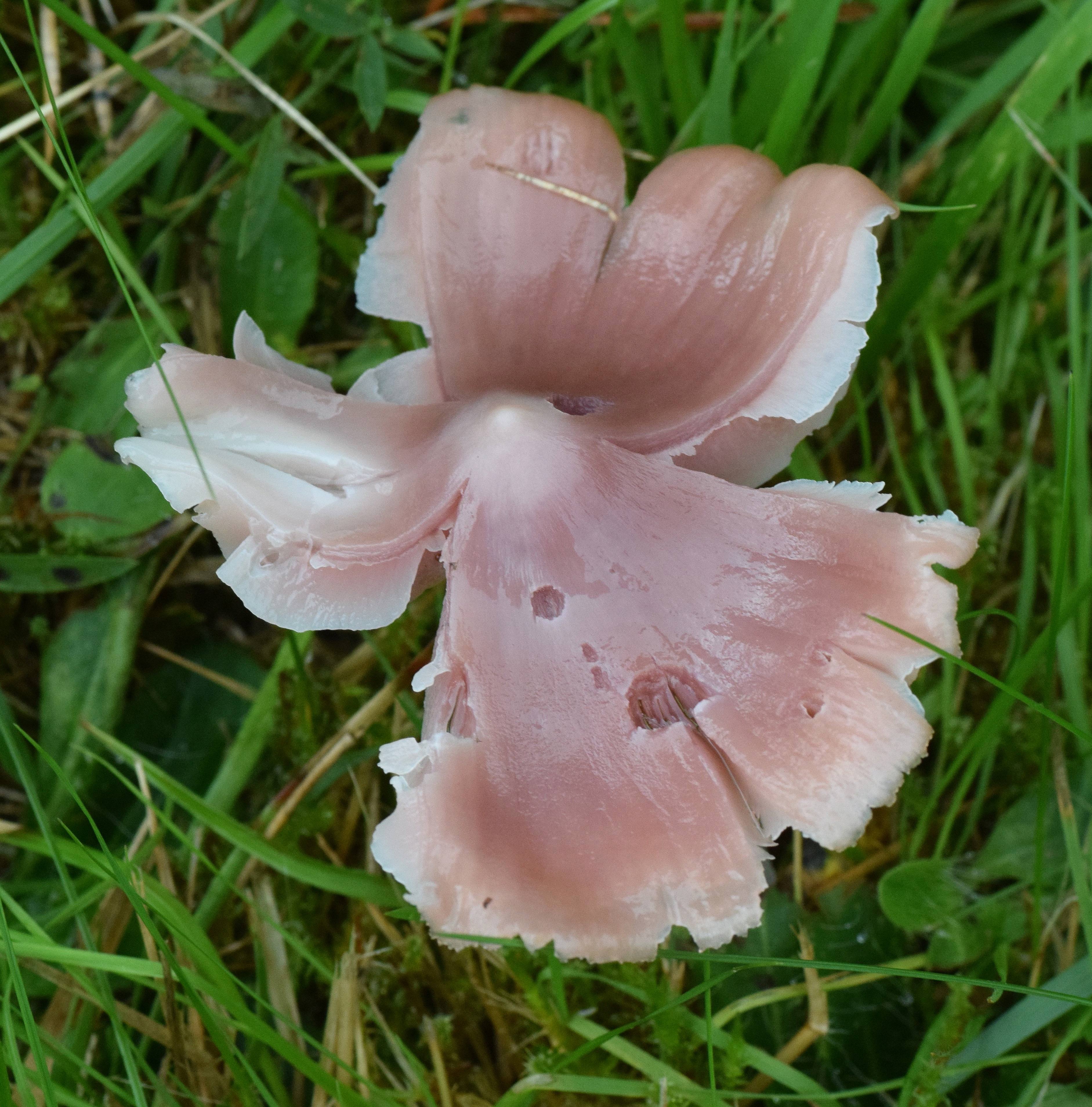
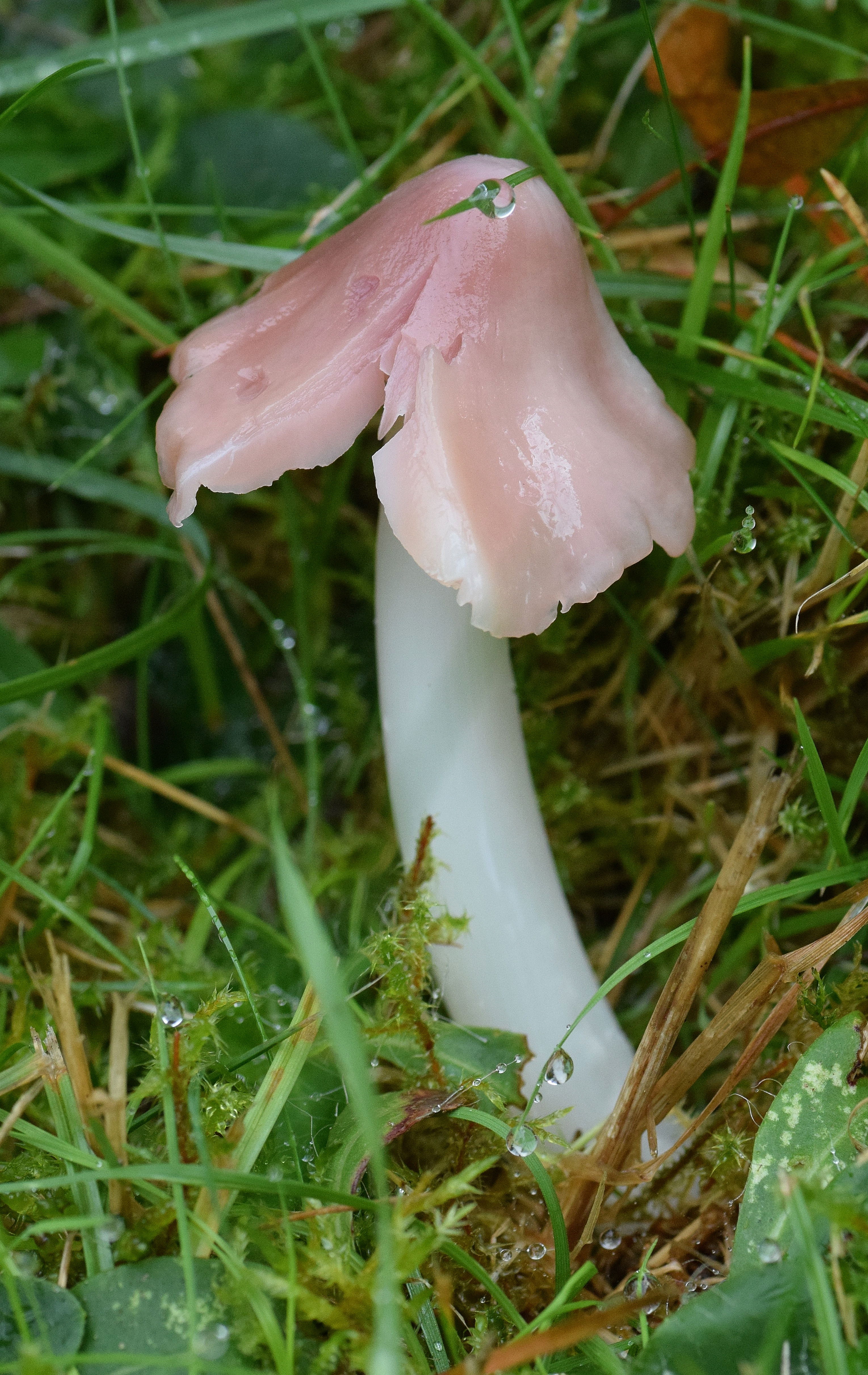

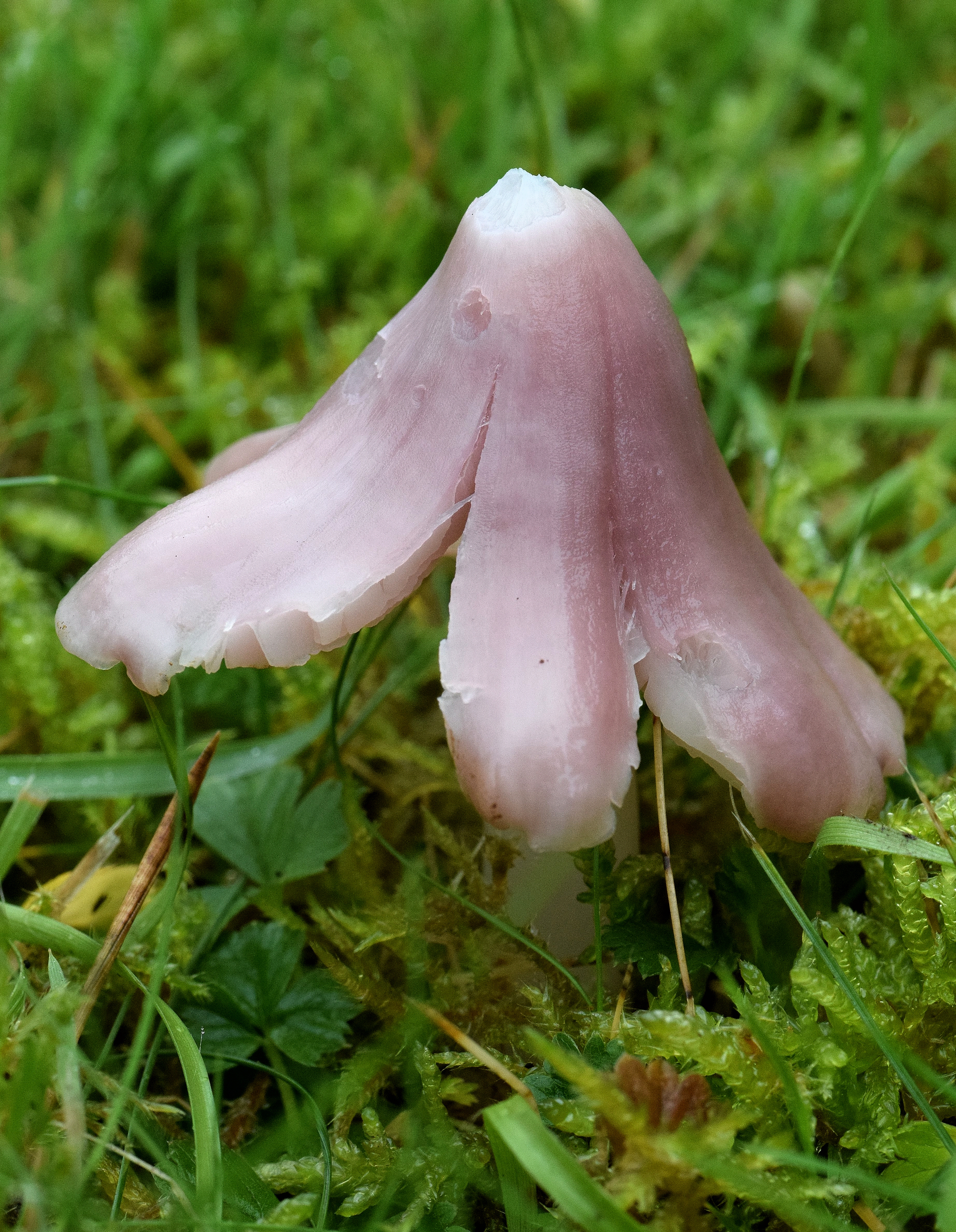
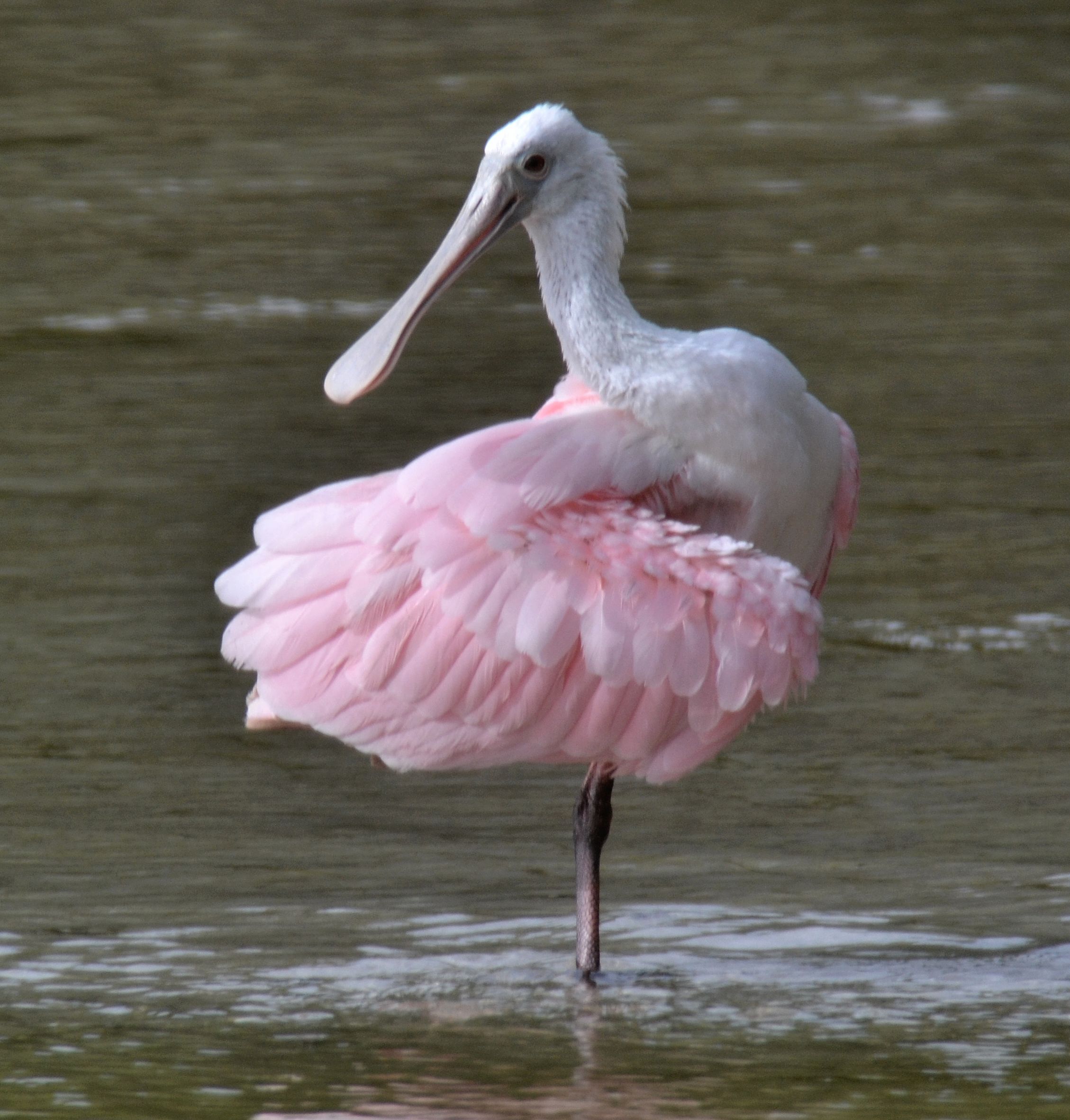
Pink Waxcaps on 9th October (with archive Roseate Spoonbill)
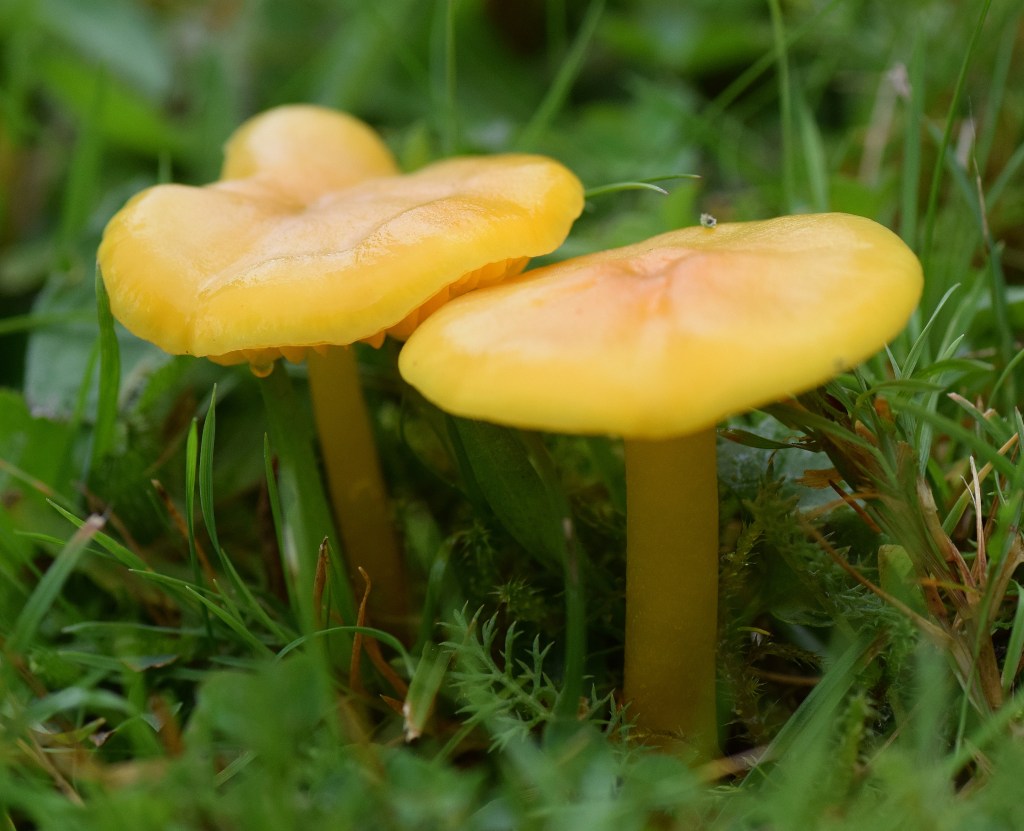
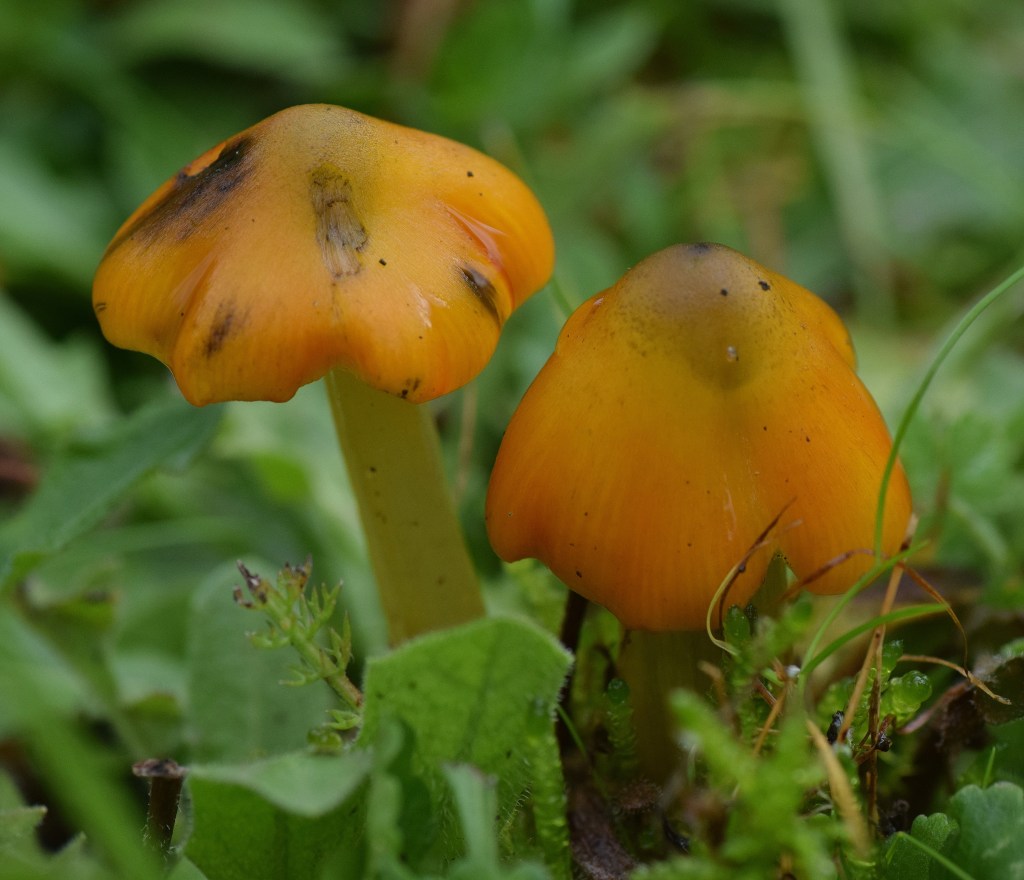
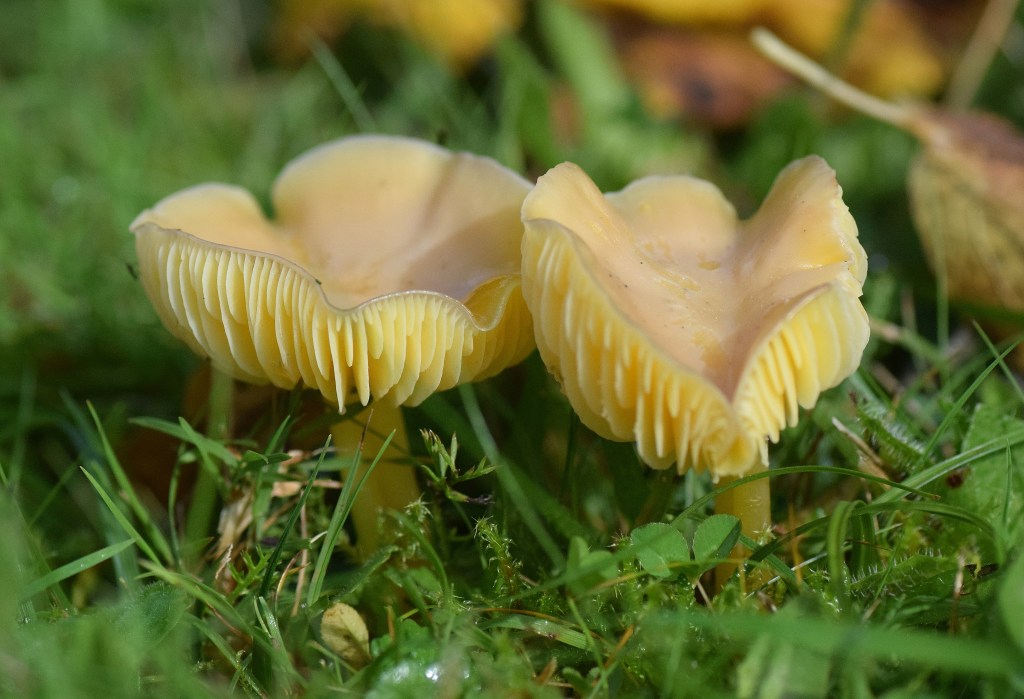
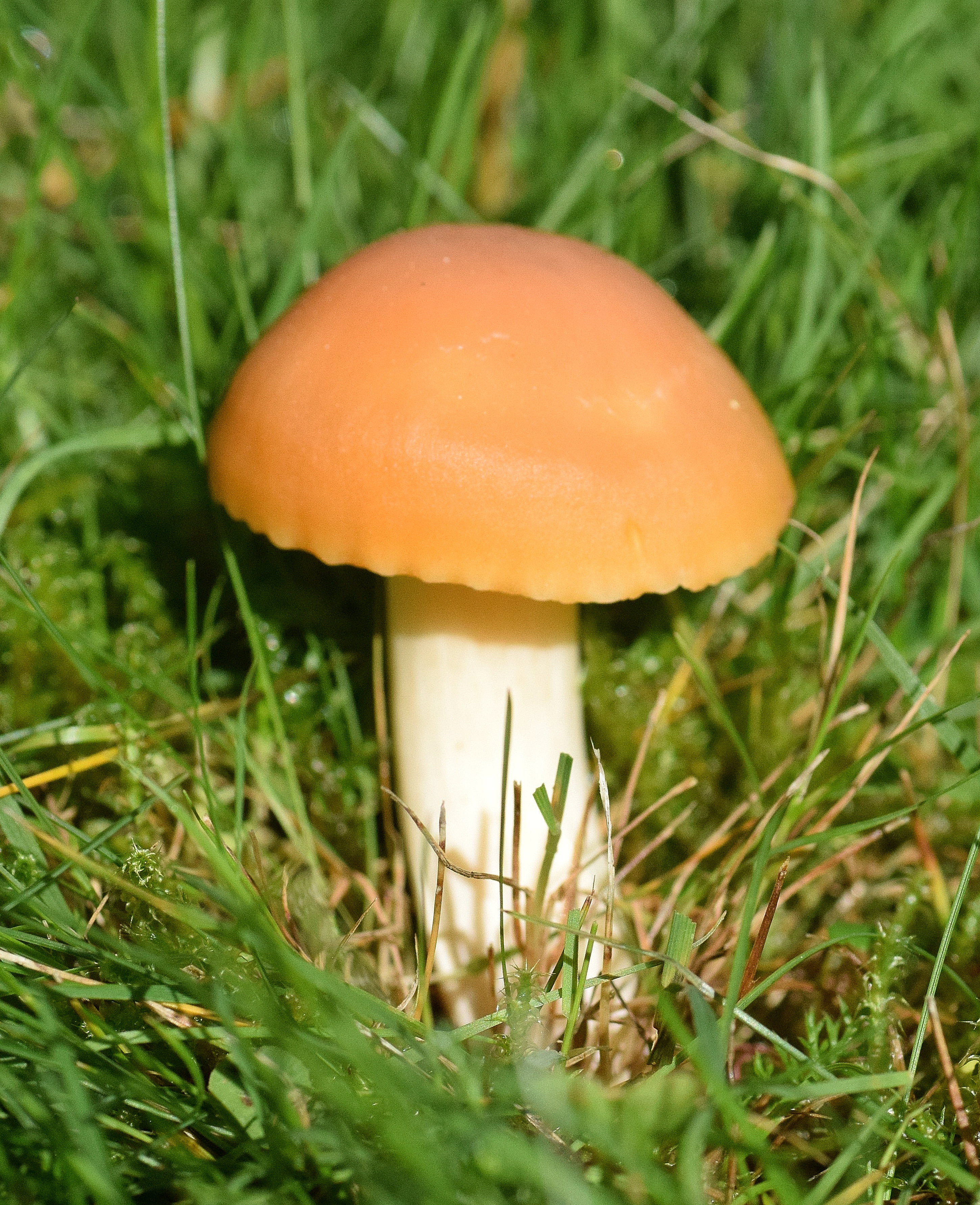
On this occasion there was a growing profusion of orange / yellow Waxcaps that my preferred ID app seemingly struggled with. The isolated cluster formerly ID’d as Persistent Waxcap now returned Golden, and there was apparent confusion betwen Blackening and options that are not actually meant to do that. All this illustrated the formerly cited difficulty of separating those similar species by sight alone, so better maybe to simply appreciate their special appeal … which is considerable. An extra item on this day was Slimy Waxcap (here) that I also recorded here in 2023. Lastly, Meadow Waxcap (here), also seen in 2023, was present on each visit.

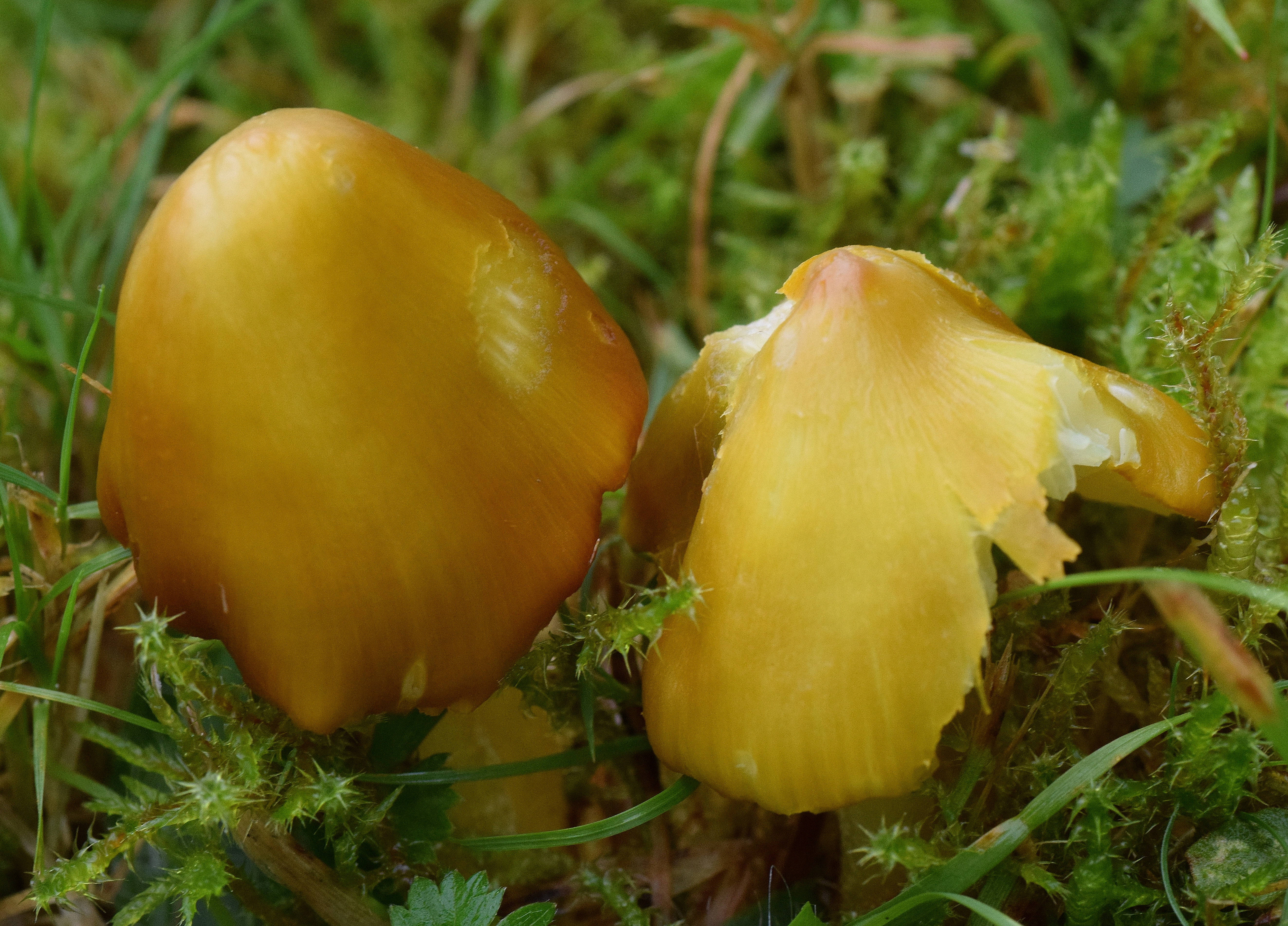
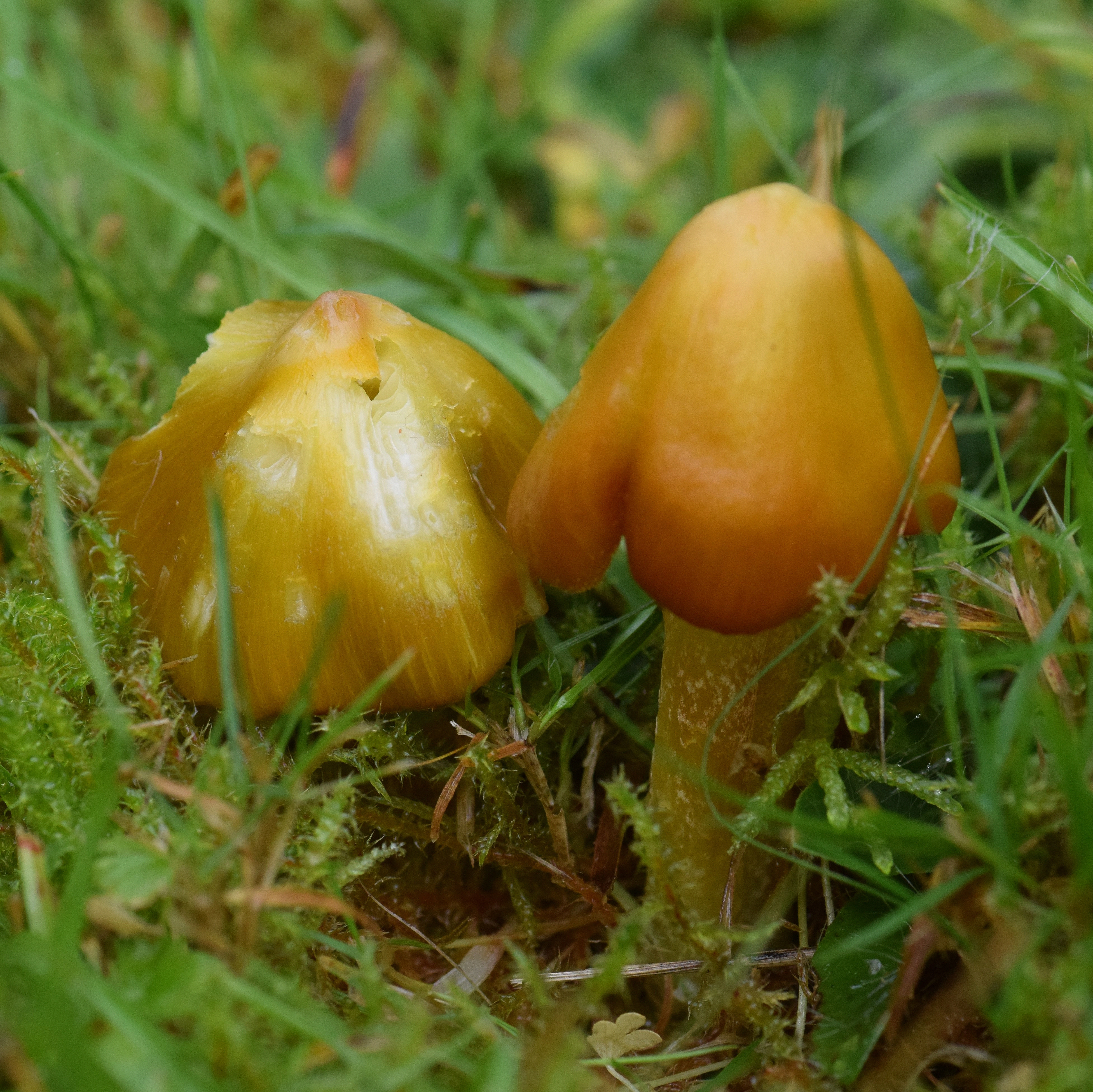
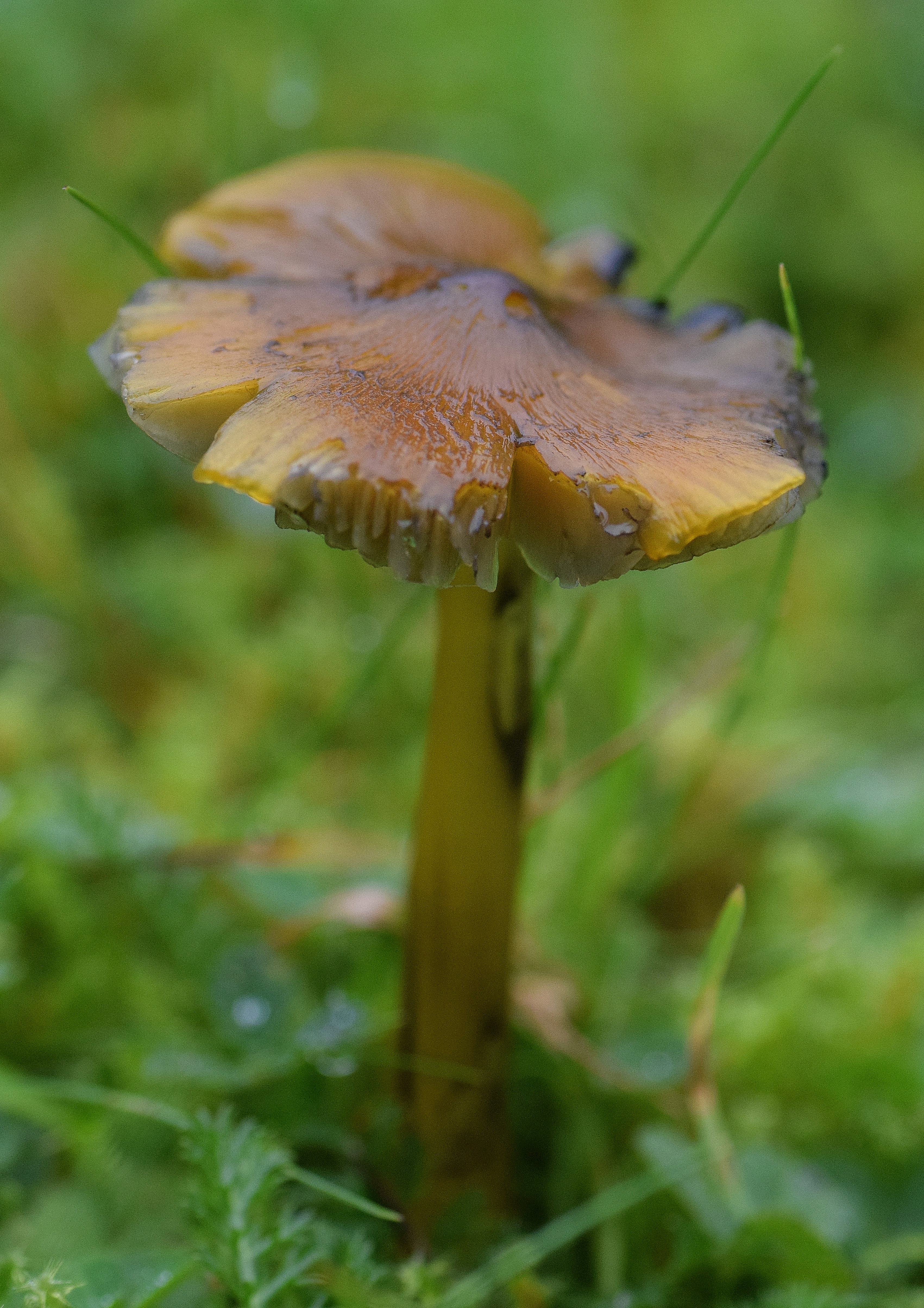
Golden Waxcaps (above, left and top), probable Persistent Waxcap (bottom) and ageing Blackening Waxcap (right). Meadow (left) and Slimy (right) Waxcaps (below)
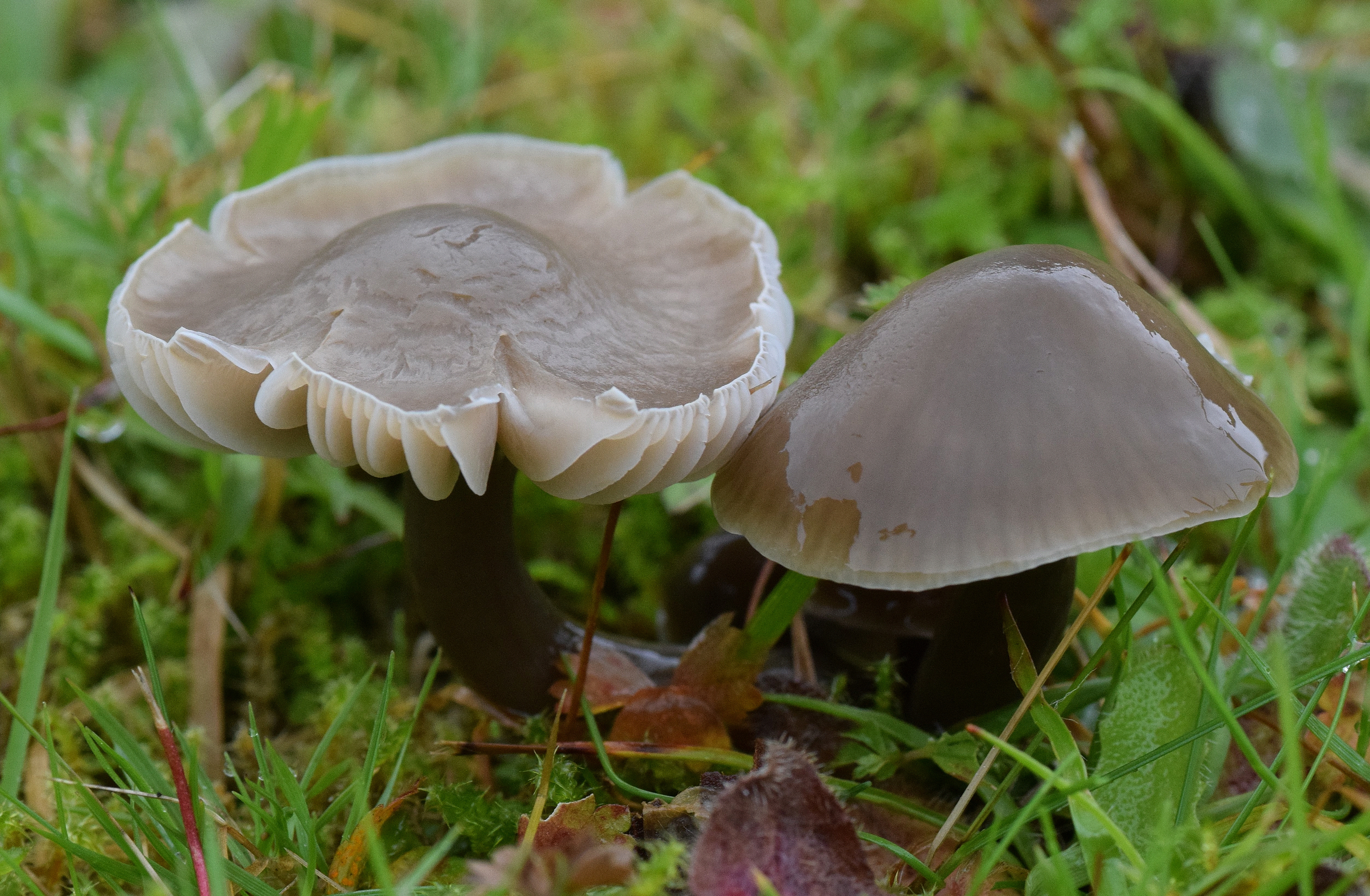
Of the Pinkgills I found up to five varieties (pictured below) on the three occasions recounted herein. That less showy genus (Entoloma) frequently occurs alongside Waxcaps (Hygrocybe) and is regarded as a fellow indicator of “unimproved” grassland quality, though there are woodland species as well. They are mainly small to medium-sized mushrooms, noted for a remarkable consistency of gill tone (ie pinkish) contrasted with a wide range of cap colours. I soon became quite fond of these understated allies amongst their mostly brighter Waxcap congeners.


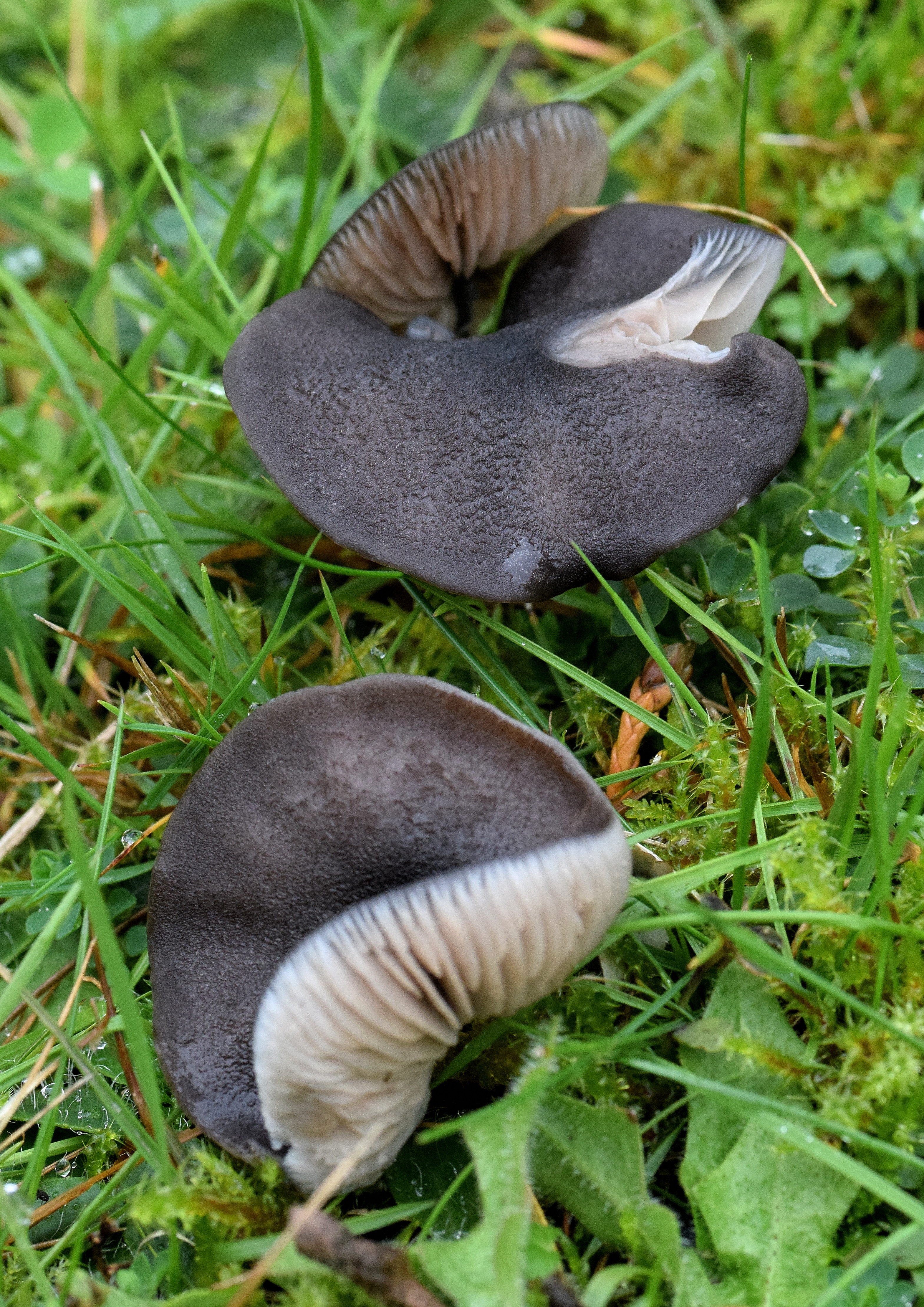
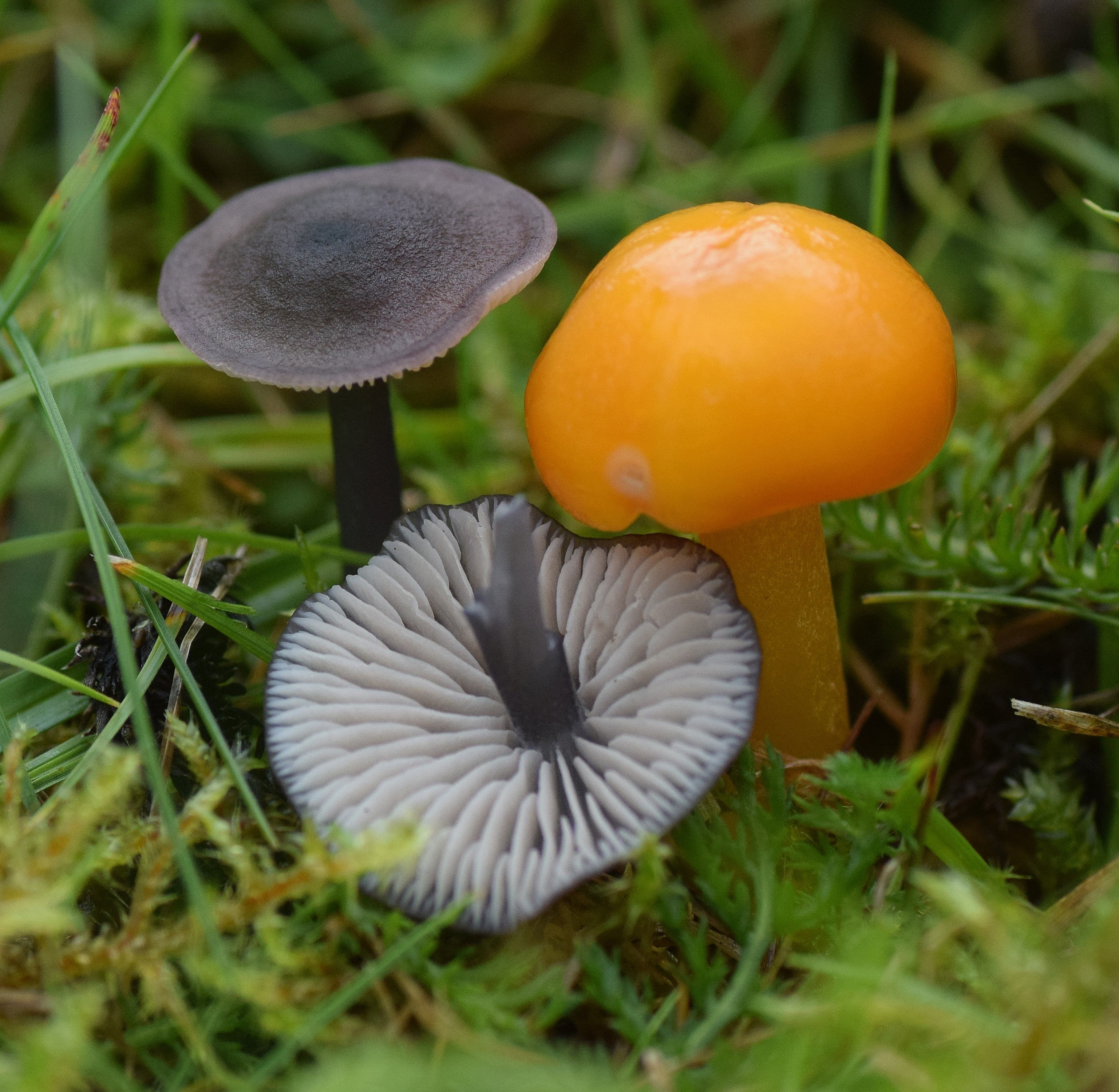
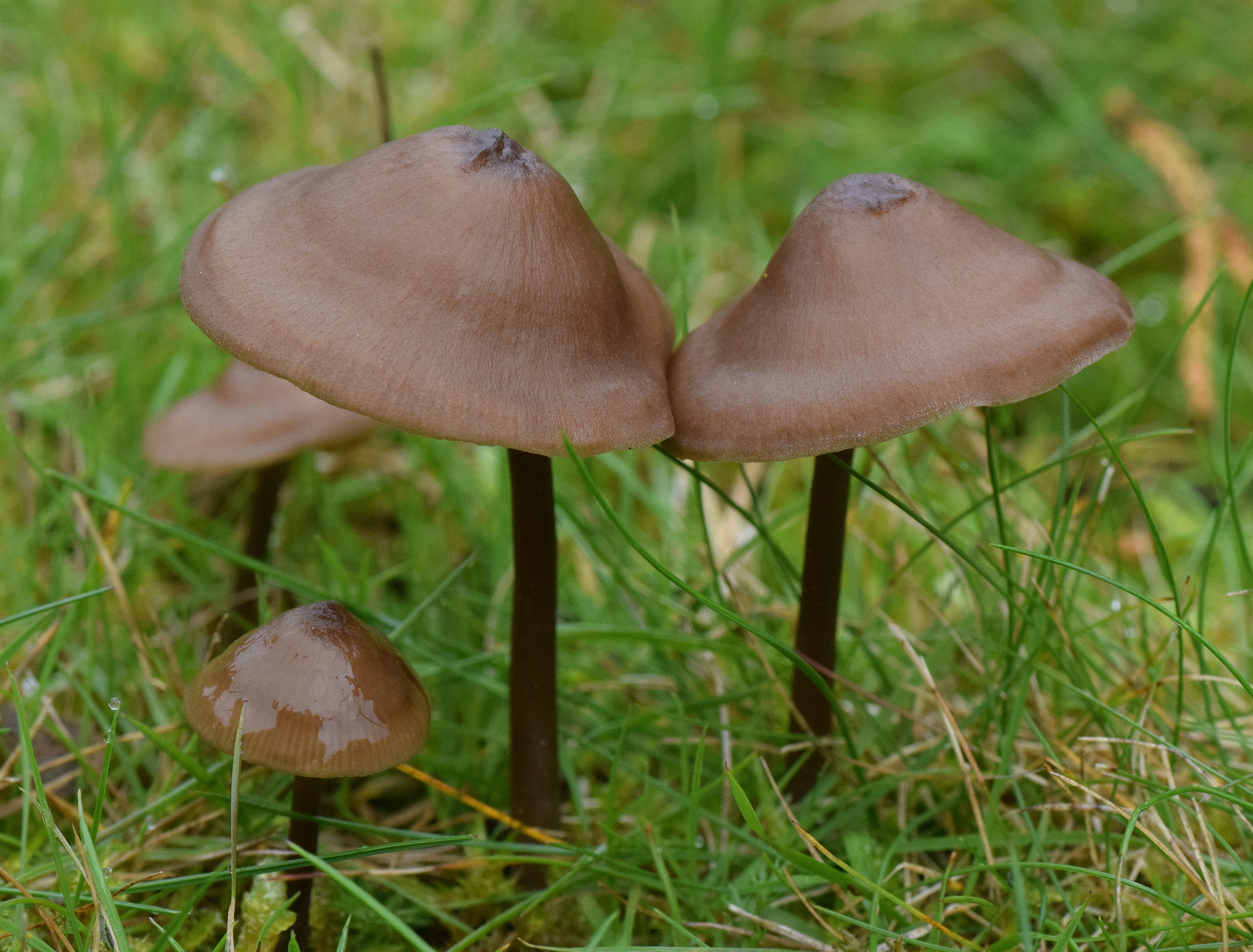
From top left: Silky Pinkgill (see here), possible Indigo Pinkgill (here), Blue Edge Pinkgill (here) twice (bottom row with young Waxcap) and Priest’s Hat Pinkgill (E infula)
Out of these the most arresting and alluring were the dark blue-capped species which are only occasional finds in southern lowland areas. But here they were at this remarkable site, skulking almost but ready to be picked out in its very particular habitat. As with Waxcaps, this is a very complex group to separate different species within, so once more it might be best just to enjoy them. Another uncommon item was a single Mealy Pinkgill (below – here), a rather more robust and thick-stemmed number than all of the above.
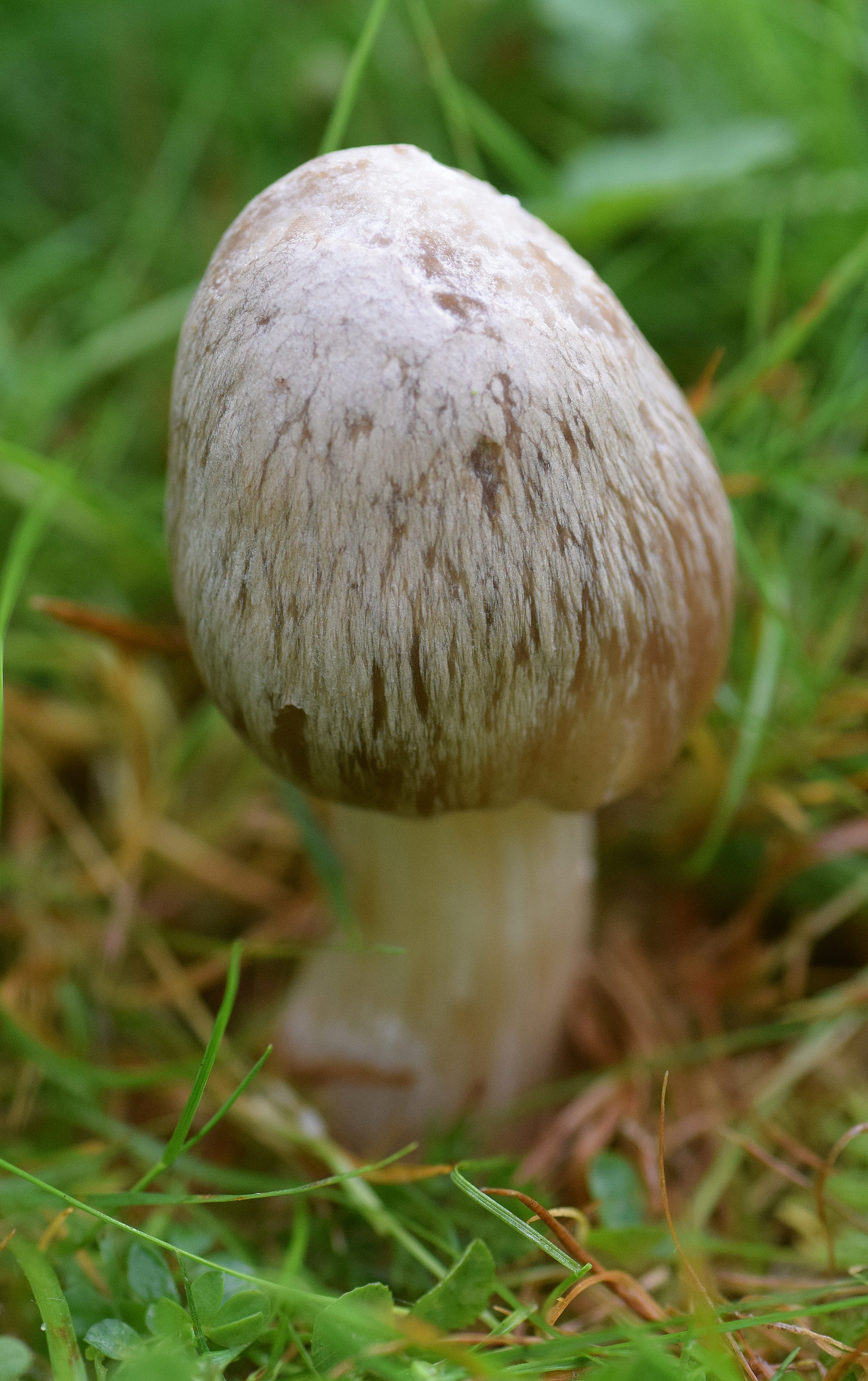
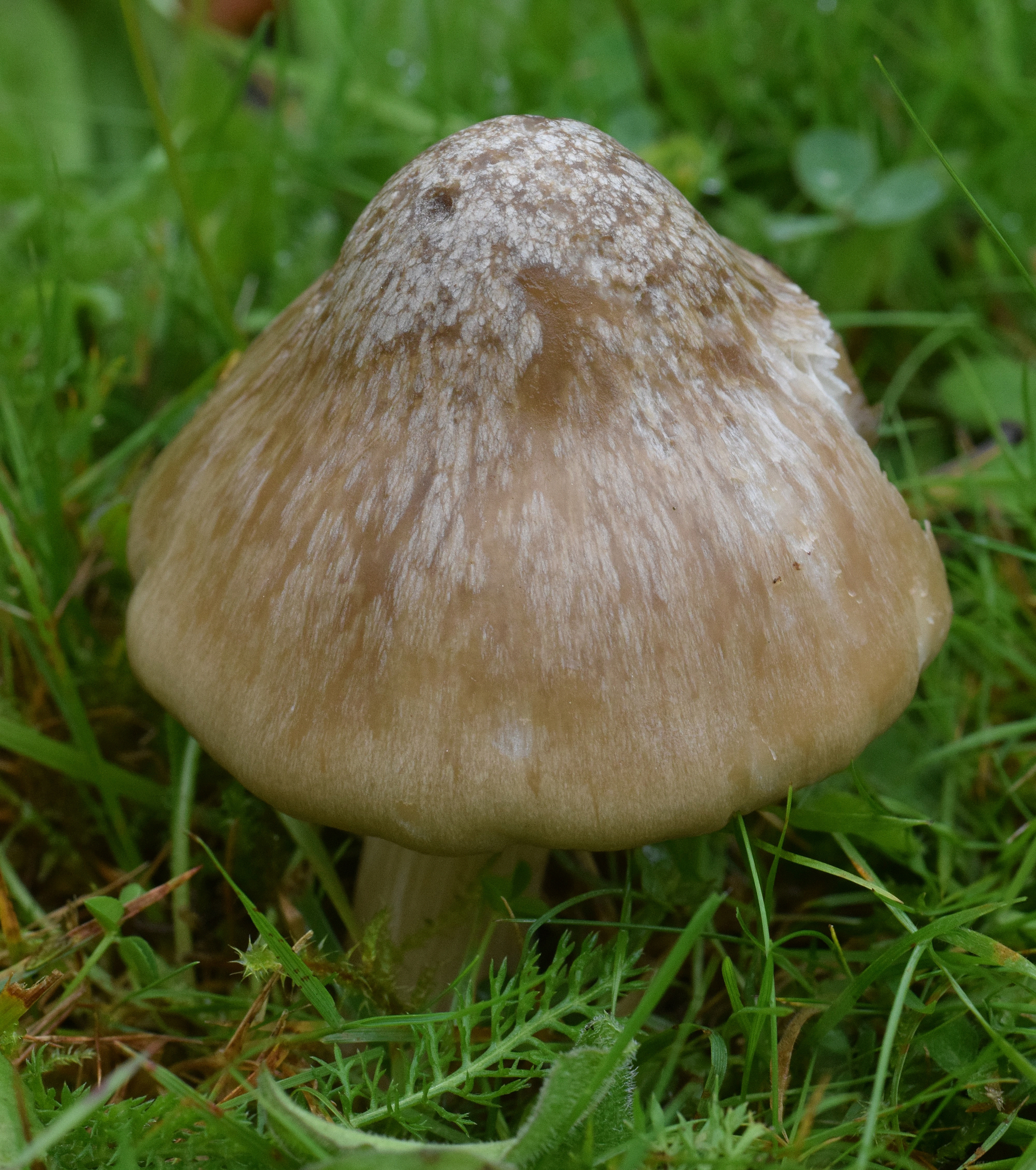
Mealy Pinkgill
A third specialty that thrives in these conditions is Spindles, part of a large group of diminutive fungi with neither gills nor pores that further includes Clubs and Corals. Though by no means uncommon these strange, wispy items have to be observed in short grass that has not been mown during fruiting … hence the need for sympathetic management again. In 2023 I admired Golden Spindles (see here) amongst the ancient graves of Prestwood Churchyard, and now I have added White (here) and Smoky Spindles (here) to my records.
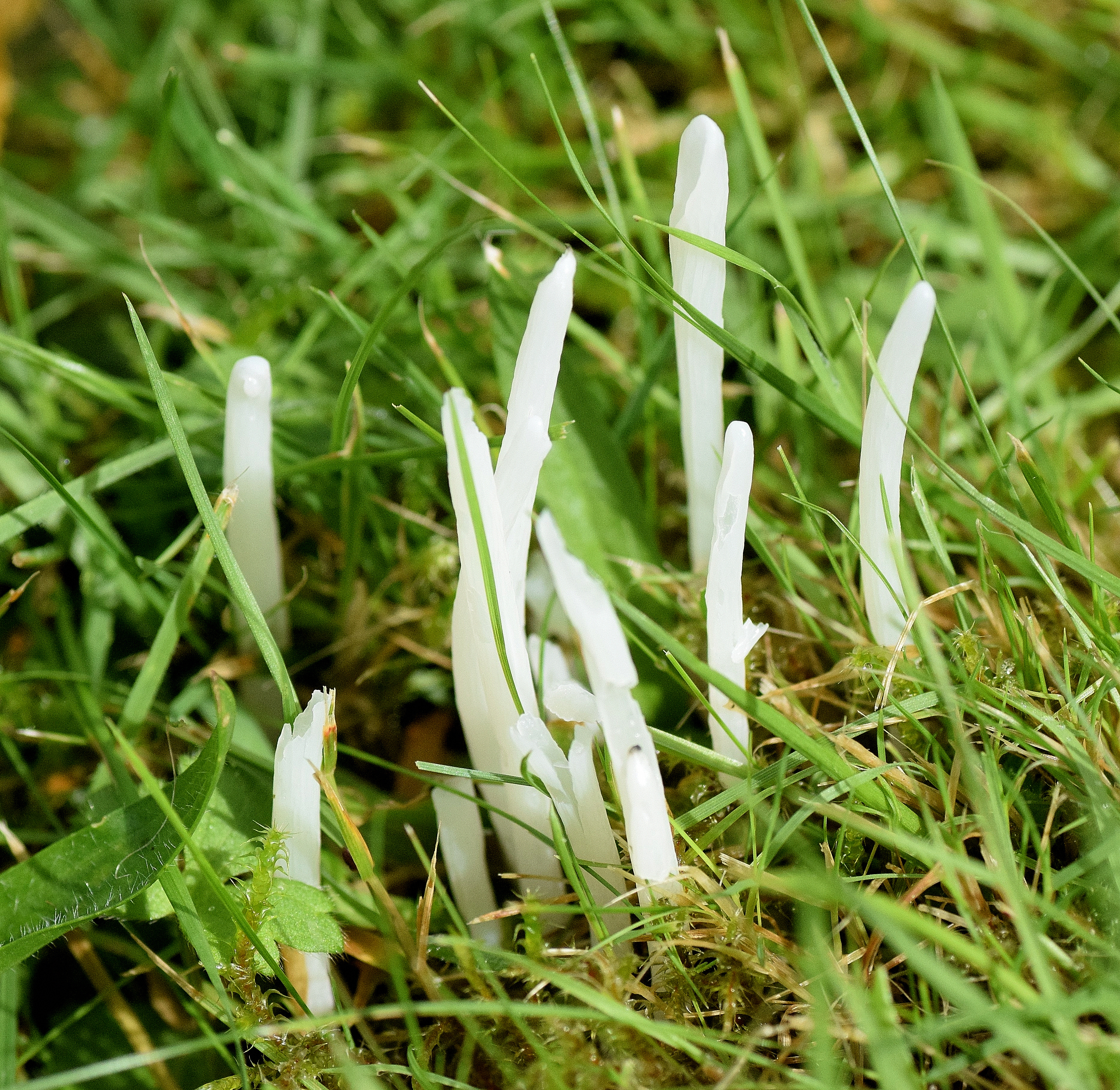
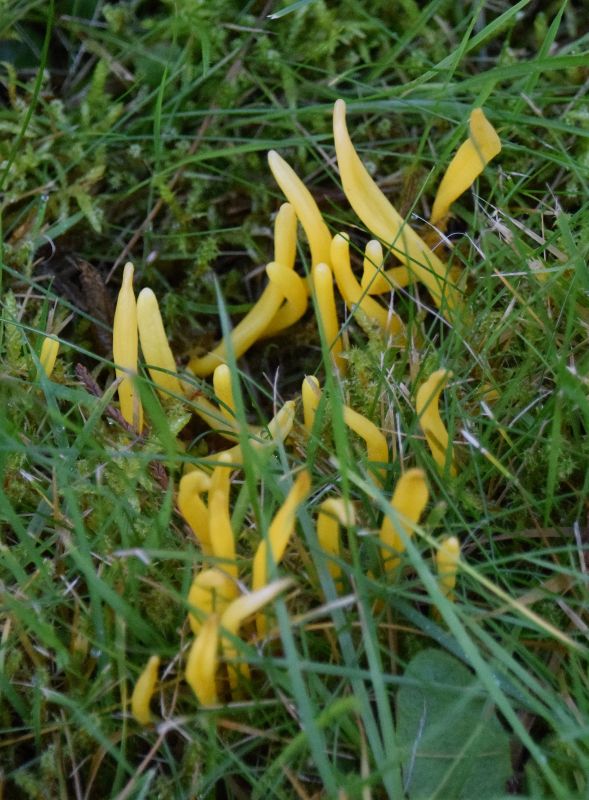
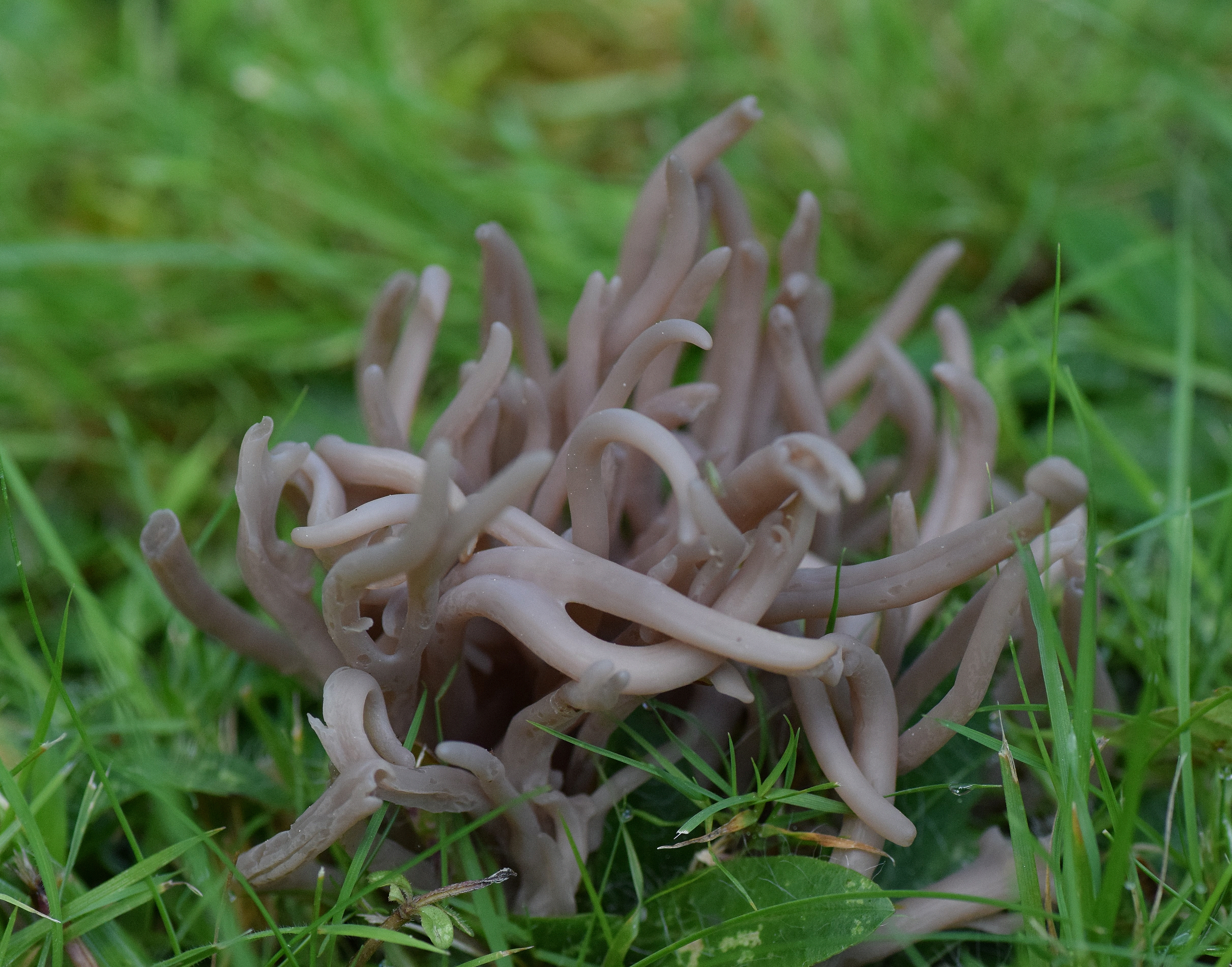
From left: White, Golden and Smoky Spindles
One pleasing aspect of this exercise is the openness of the location, that allowed pictures to be taken up close and personal with a macro lens. Over four previous seasons I have mostly been accustomed to recording fungi and attempting to capture half-decent images of them in the subdued light of ancient woodlands, so this could be where evolution might lie. The project will continue through October and November, with further updates herein. The intent is to convey the particular fungi potential of unimproved grassland. As I do not feel qualified to discuss these mushrooms in detail that in any case may not appeal to readers, I have instead included links to one of the resources I regularly consult.
 Ramblings and Scribblings