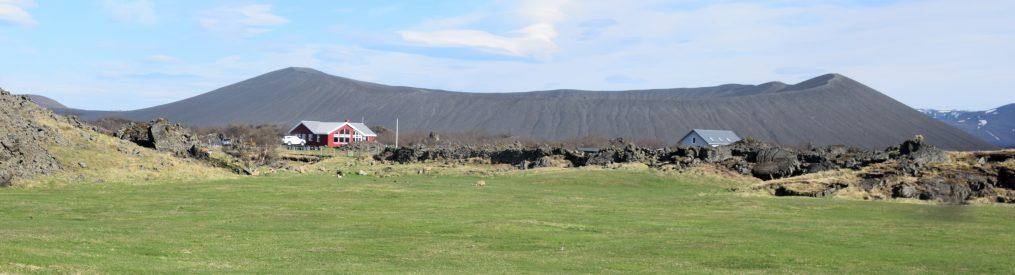
The presence of a seemingly settled Nearctic wader on the Hampshire coast was a sufficient draw to tempt me out for a second time in three days. A restlessness had settled on my spirit after a day on the road on Thursday, and this shorter distance twitch (87 miles) would fill the day ahead quite nicely.
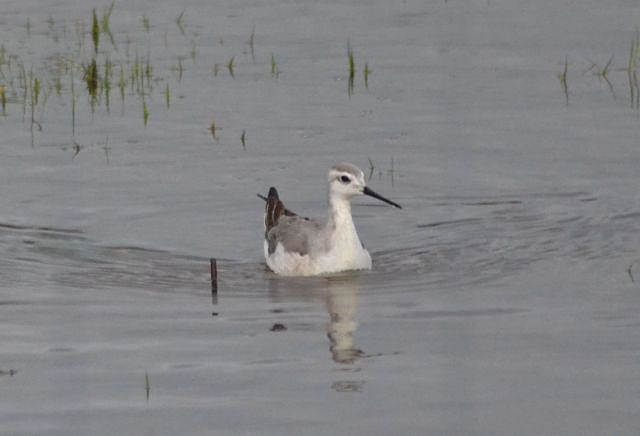
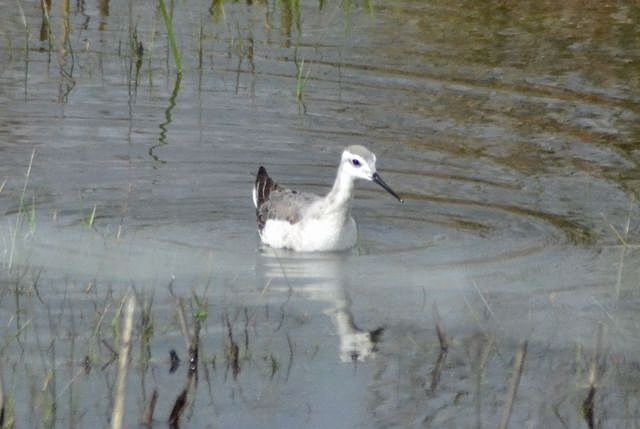
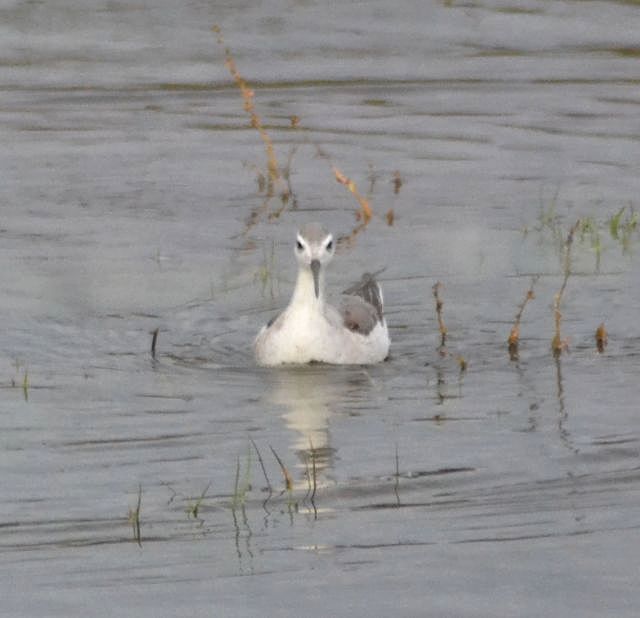
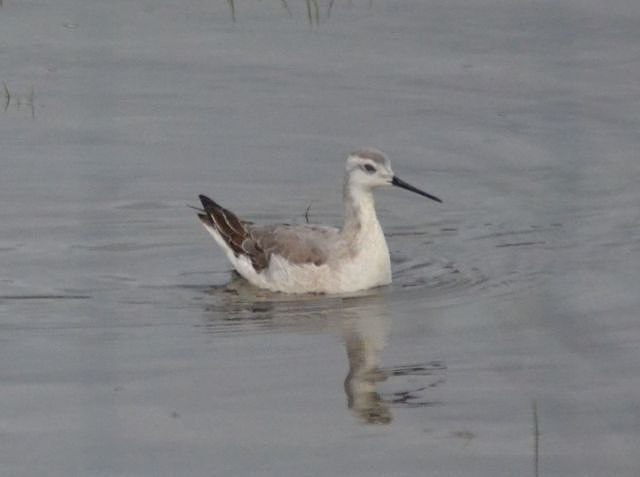
Wilson’s Phalarope is an annual vagrant to the British Isles, with most records being of juvenile birds such as this one in autumn. I had seen two previously at Staines Reservoir, Surrey in 1997 and Vange Marsh, Essex in September 2015 (see here). But those sightings had both been distant so the attraction now was the exceptionally close views the Hants bird was said to be offering, and hopefully the opportunity to take my first pictures of the species (below).
I arrived on site at Pennington Marsh just before midday, using the small parking area at the end of Lower Pennington Lane from Lymington SO41 8FU (SZ318927). This area of the 1200 hectare Lymington & Keyhaven Marshes LNR, administered by Hampshire County Council and the Hants and IoW Wildlife Trust (see here), regularly attracts scarcer passage waders. My own past records here are Pectoral Sandpiper (Aug 1997), Semipalmated Sandpiper (Sep 2013) and Long-billed Dowitcher (Sep 2016 – see here).
According to RBA the Phalarope was frequenting the south-eastern end of Fishtail Lagoon, one of the several saline water bodies that lie behind the sea wall. I remembered the location from previous visits here but still checked with birders walking the other way to be sure. A small crowd of possibly 20 observers was pointed out in the distance, but on my arrival they were dispersing as apparently my quest had flown.
At first I walked back along the sea wall to scan for the bird but soon reasoned it would be better to re-join the remains of the group and see what transpired. When I got back there was the Wilson’s Phalarope just inside the wire fence at the water’s edge, but it at once took off again to land on a muddy spit further out. There I watched it partially obscured for some minutes before it flew off again.
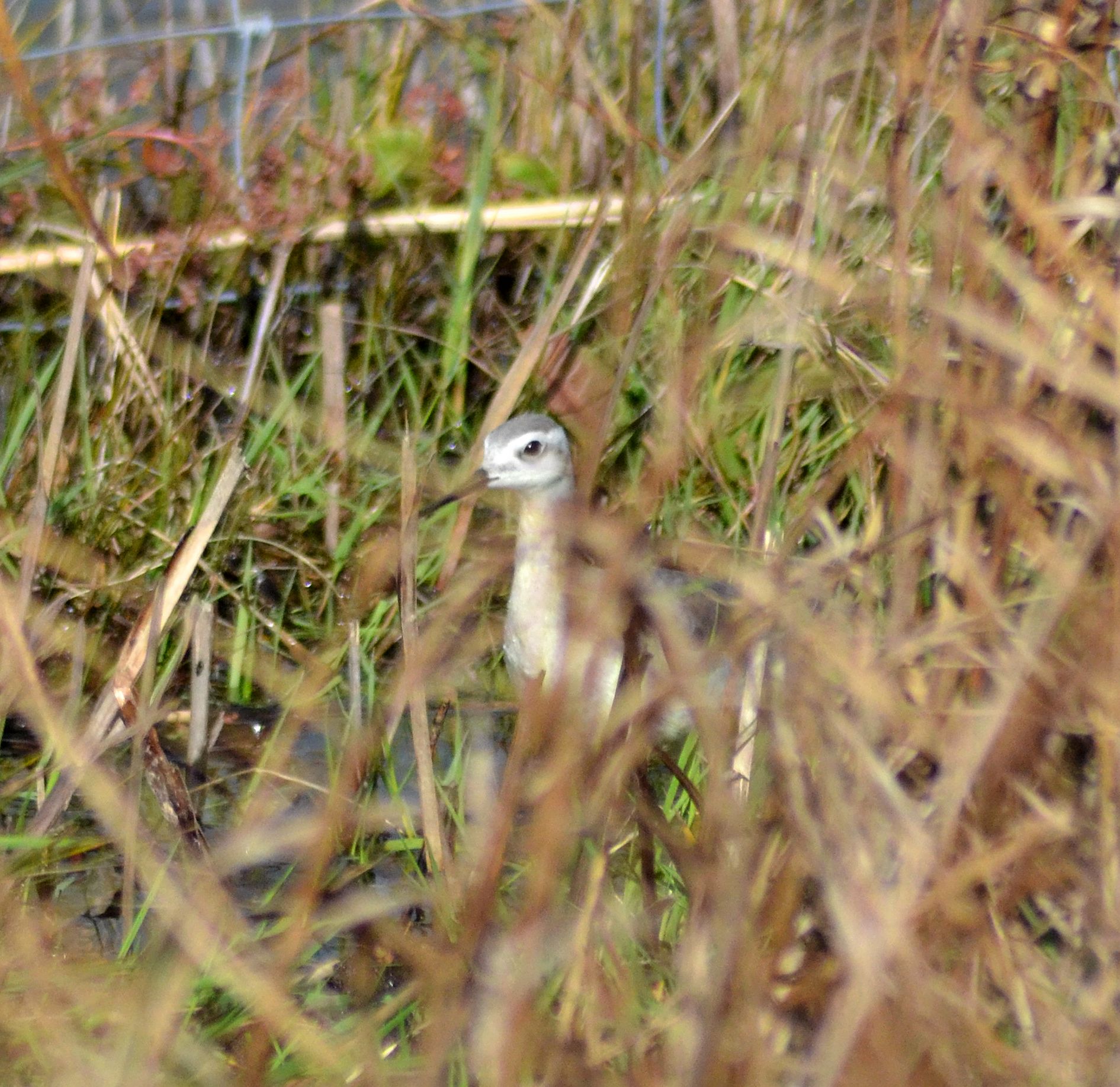
The first priority of seeing the bird had thus been attained and it now remained to try to get some pictures. Being told by some people around me that the WP favoured this spot and would keep coming back, I elected to stay there and wait rather than chase it up and down the lagoon. Eventually it was called approaching again, then one of my companions said it was moving through the long vegetation on our side of the fence. Cue the unusual study below.
Once it had moved through the fence and onto the water the WP proceeded to put on quite a show as apparently it had been doing all morning. The behaviour of this largest and longest billed of the Phalaropes is very different from its more common Red-necked and Grey cousins. The latter two both swim hyperactively while spinning and pecking at the water’s surface for food. Wilson’s wades much more, swimming far less persistently and it is more at home on land. Today’s bird demonstrated all this to good effect as I watched it on and off for more than an hour, sometimes down to less than 10 metres. The issue at closer range was the fence that spoiled any pictures taken, but when it moved further away I managed some reasonable images (below).


While all this was going on I received news of the huge dawn twitch that had taken place just within Cambridgeshire where the Lammergeier had catered for a further county’s listers by roosting overnight at a farm beside an open road. Now it had been wished “Rise today … and all that” by more than 100 birders, whose parked cars must have pleased the farmer no end. I myself have participated in enough such events over the years but it is not a scenario I especially enjoy. I felt glad to have done these two twitches of my own in the order that I did.
At 14:00 pm the Phalarope suddenly flew high then departed south towards the Isle of Wight, so I decided to head home feeling more than pleased with the day’s outcome. The bird returned around 90 minutes later and was reported again in the same location through several more days. Two Grey Phalarope were also present in the period covered by this post, but I didn’t see them myself.
 Ramblings and Scribblings