On being offered an opportunity to experience one of the newer migrant butterflies that reach Sussex in most seasons I quickly accepted the invitation. Long-tailed Blue has been recorded at a site beside Brighton’s horse racing track since 2015. Ewan learned from a local friend that a transect walker had come across them again on Sunday 6th and asked me to accompany him on what would be a welcome day out.
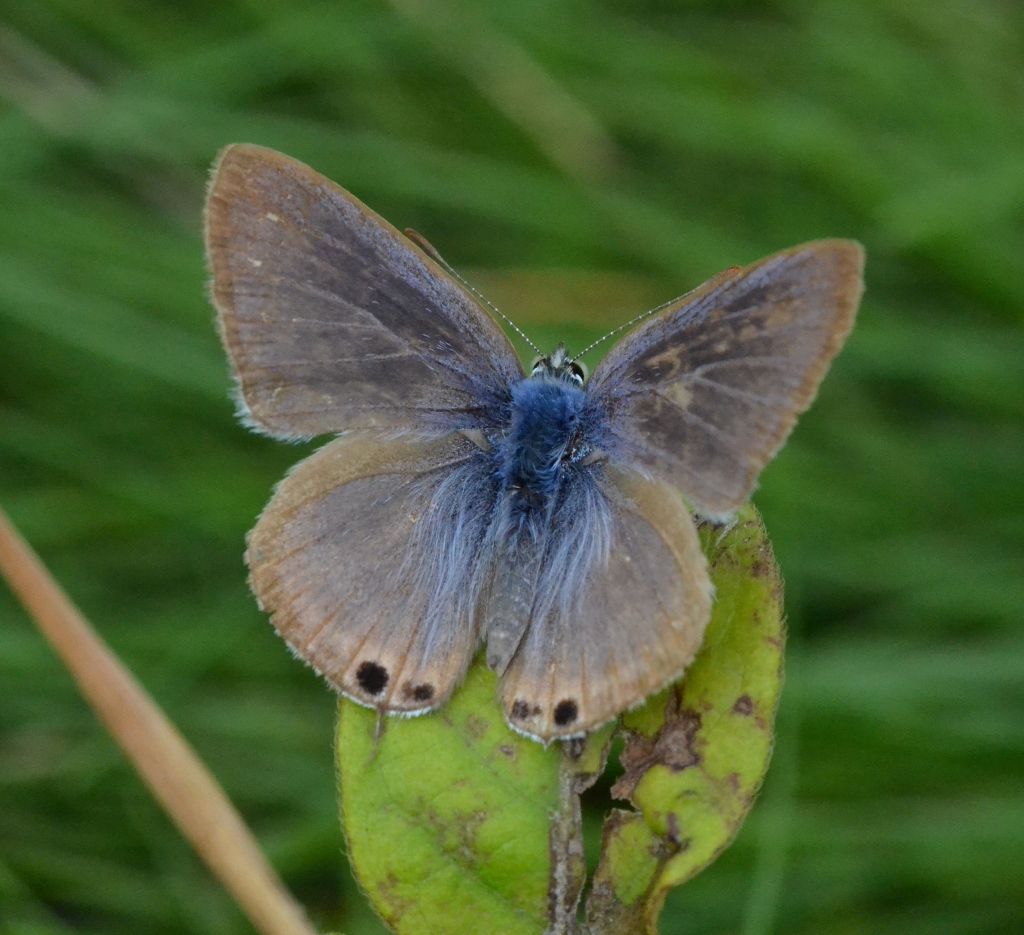
Long-tailed Blue is a common and widespread butterfly across temperate zones worldwide, but in Europe resides permanently only in the Mediterranean region. It has traditionally been a very rare vagrant to the British Isles, but there has been an upward trend since the late 20th century. A mere 39 sightings were recorded prior to 1939, and another 85 up to 1988. A notable recent irruption came in 2013 when the butterfly was recorded in nine southern English counties and breeding was confirmed for the first time. A further significant influx occurred two years later when the migrants penetrated further inland as far as Surrey.
Since then LTB has been a regular continental migrant to coastal Sussex. More than 50 adults and hundreds of eggs were recorded across southern England in the summer of 2019, resulting in the largest ever national emergence that autumn. But this multi-brooded species cannot survive the English winter in any of its life stages. The cluster in Brighton are late brood butterflies from eggs laid by migrants reaching these shores in summer.

Arriving on site in mid-morning, we walked from the public car park at the racing grandstand back round to the location my colleague had been given. Two dog walkers, guessing our intent then directed us to the exact spot in a meadow beside a radio mast. There we found two other observers squatting and pointing their cameras beside some Sweet Peas that the butterflies are said to favour here. So it was an immediate connect.
More people joined us straight away and things inevitably became a bit of a scrum. This is the butterflying scenario I most dislike, with several people all surrounding one settled insect and jostling for camera space. Then when more specimens began to fly the gathering chased them around, calling every movement. But this was no more than I expected since the sighting had been all over social media in the previous 24 hours, as well as on RBA. So it was necessary in order to add this butterfly to my British list.

That first Long-tailed Blue was a rather worn individual and was also the most prone to settling throughout our two hours at the site. Others were seen in flight over the meadow and adjacent allotments that would perch and offer picture opportunities occasionally. These are rapid, jerky flyers more reminiscent in jizz of a Hairstreak than other Blues. There was no consensus as to numbers but it was agreed that all the butterflies active here were males.
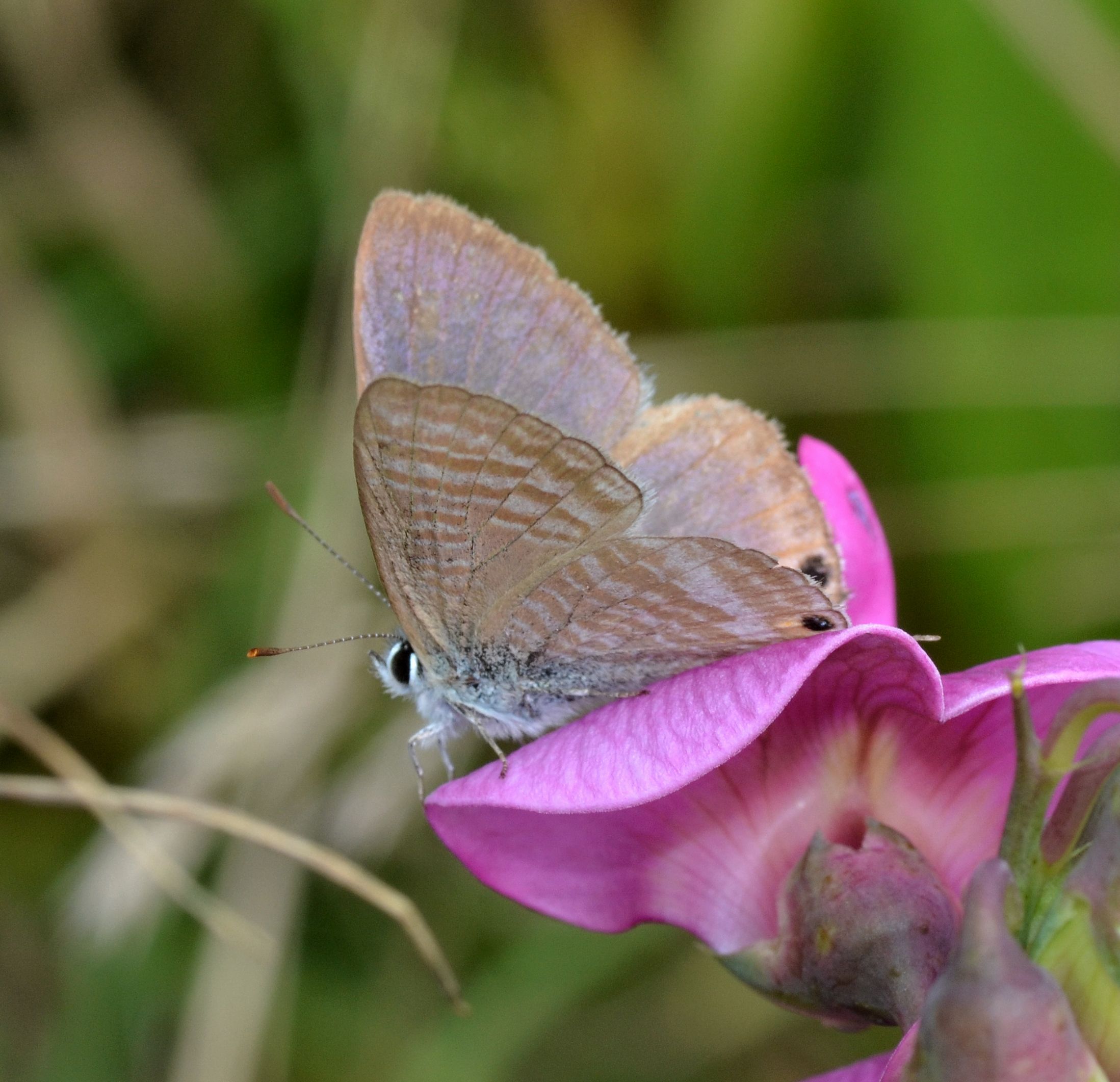

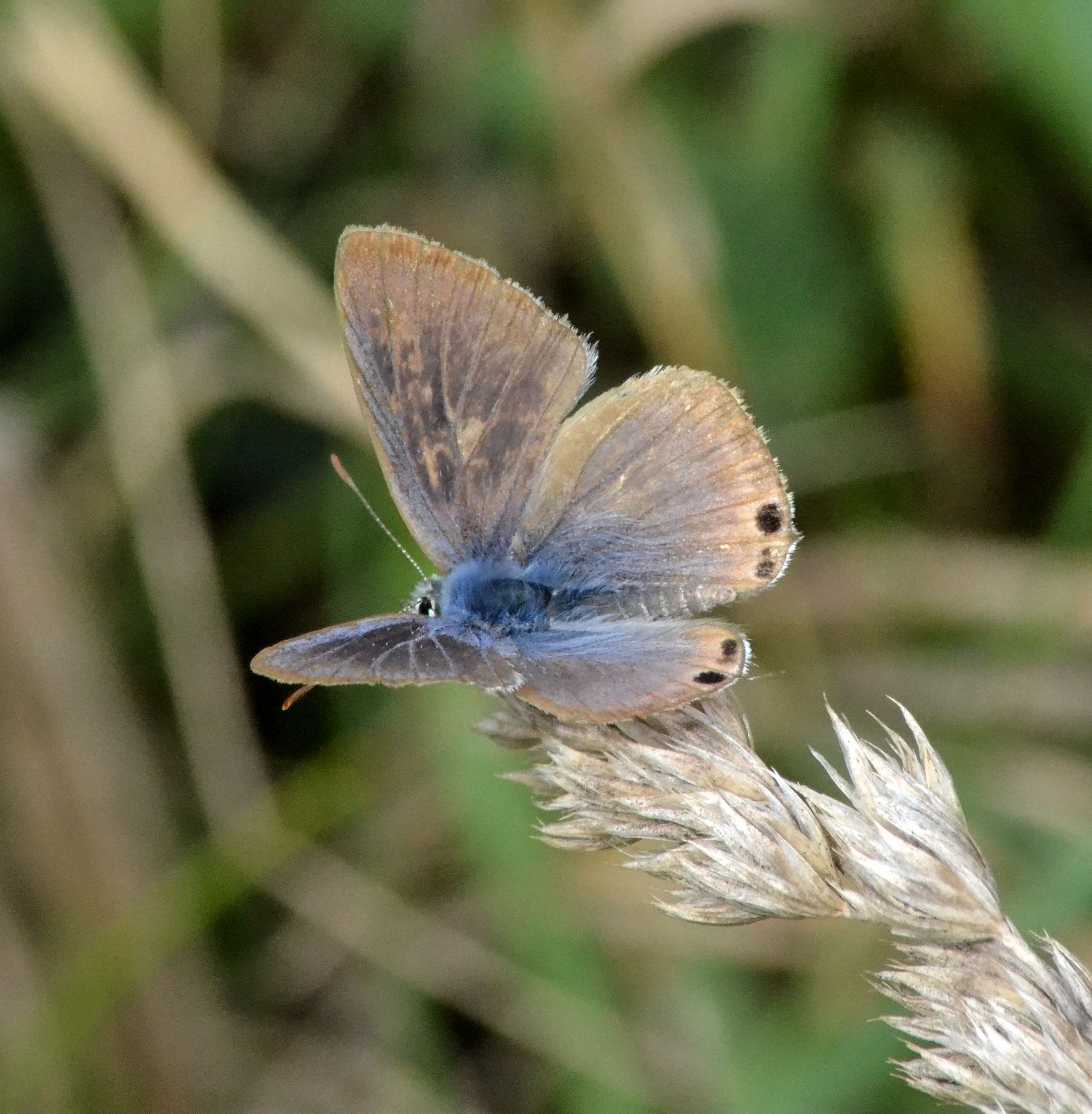
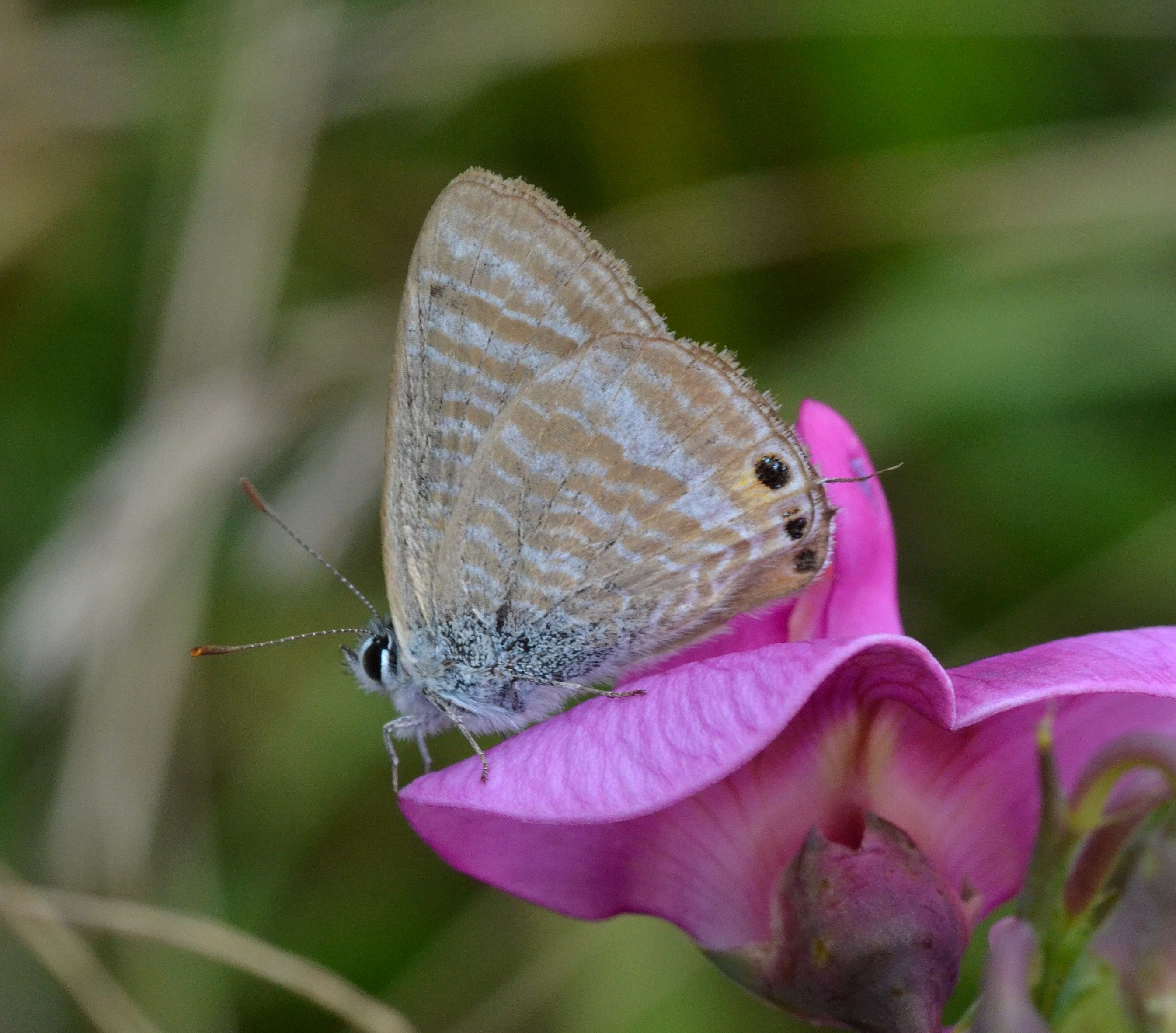
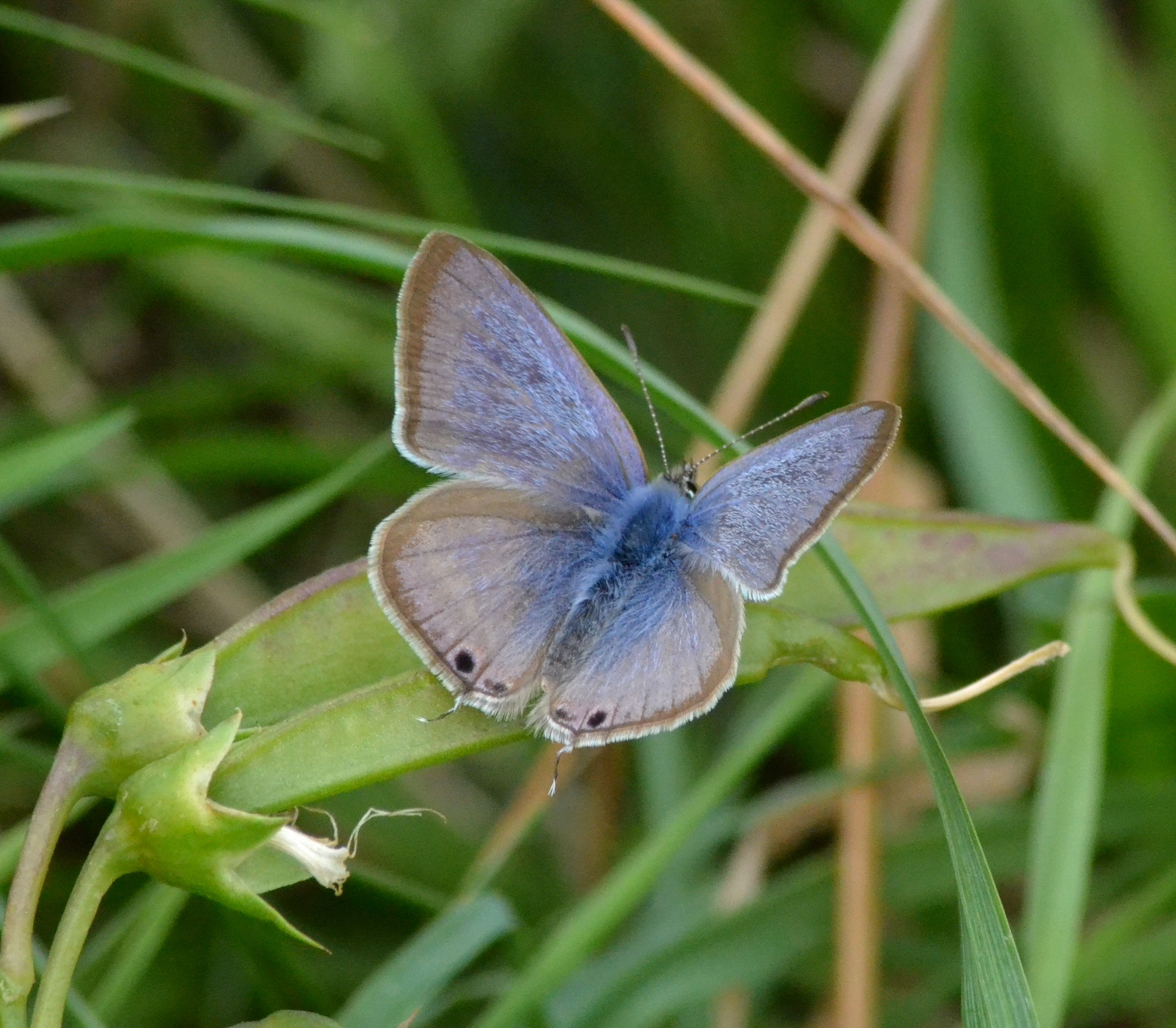
The butterfly owes its name to wispy ‘tails’ on the trailing edge of each hind-wing. Since these wave in the wind above eye spots where each adjoin the wing, the twin effect is to confuse birds into thinking this is the head of their prey. That may serve to reduce fatal attacks but also results in frequent damage to the above cited features. Males are a striking violet-blue in colouration, while females are a variable mix of duller blue and brown. The underside of both genders is a sandy brown colour crossed by numerous white, wavy lines.
All the usual characters were present amongst today’s assembly: the local guide, the over eager and the non-stop talkers. For myself I will welcome a return to butterflying either alone or in select company as I prefer. But by any measure this was a worthwhile added item on my national butterfly agenda for what has been a rather remarkable 2020.
 Ramblings and Scribblings