This is a butterfly I have not presented previously in this journal. I had only recorded it once before, in the Cumbrian Pennines in July 2018. Those were worn and faded specimens and I gained only poor quality record shots to support the sightings. Our first day of this trip (26th) set the tone for the week ahead in being a total write-off in Odonata terms. We visited superb habitat but found nothing in the prevailing cool, overcast and damp weather conditions. Nobody could find a better forecast for the rest of the trip, and by the end of Sunday my spirits were low.
On Monday we headed further afield to the Cairngorms National Park where conditions were predicted to be more insect friendly until around 2pm. When our guide announced we were stopping for a break to observe Northern Brown Argus my interest level rose. The site was Craig Dubh (NN673957), a steep hillside rising above one side of the road.
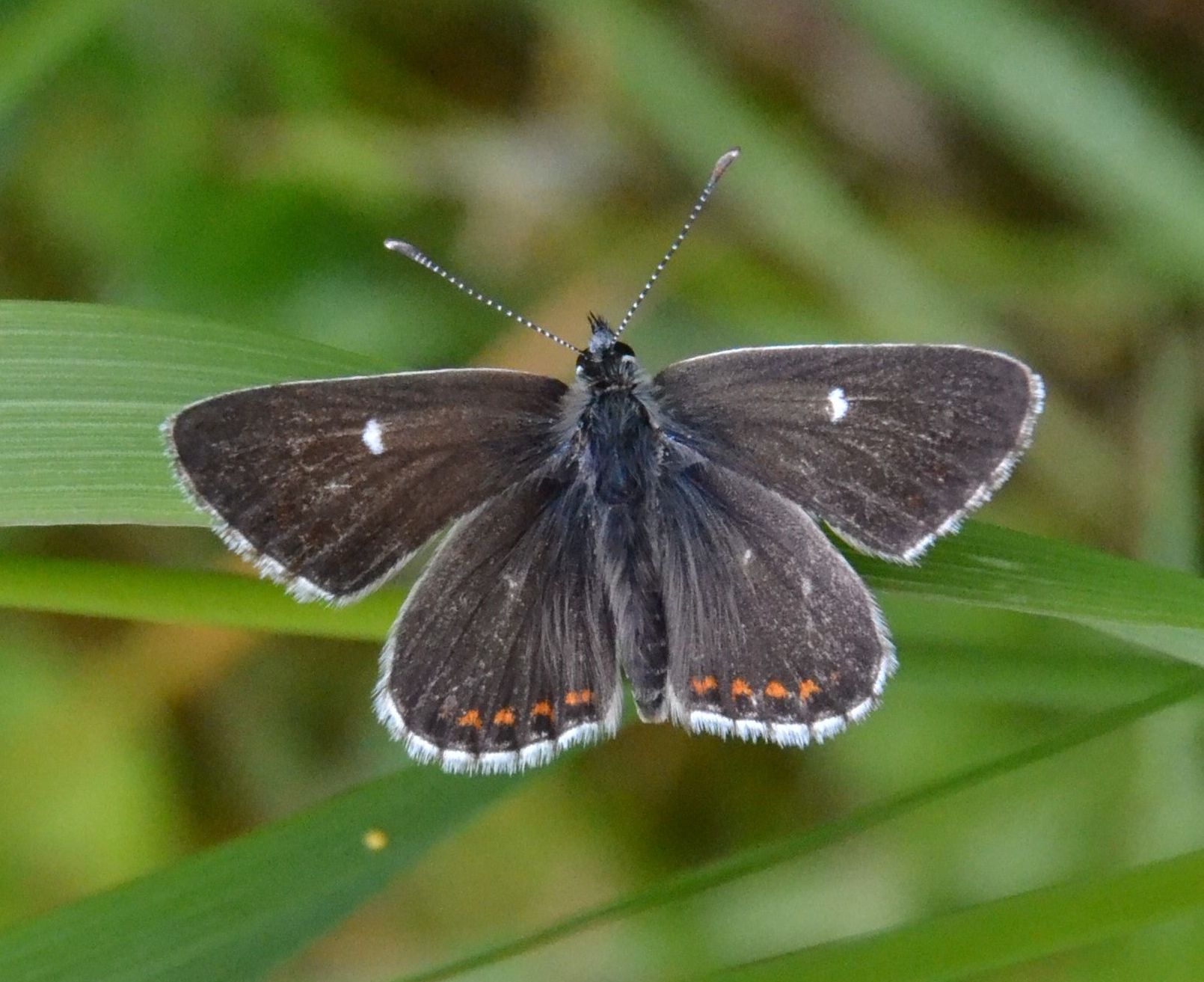
Two butterflies were soon located, then the group carried on up the incline to look for Fritillaries. “Yes, I’ll have some of this,” I thought as I was left alone with a subject I very much wanted to capture pictorially. I was now in my element and at once down on my hands and knees performing contortions on the ground.
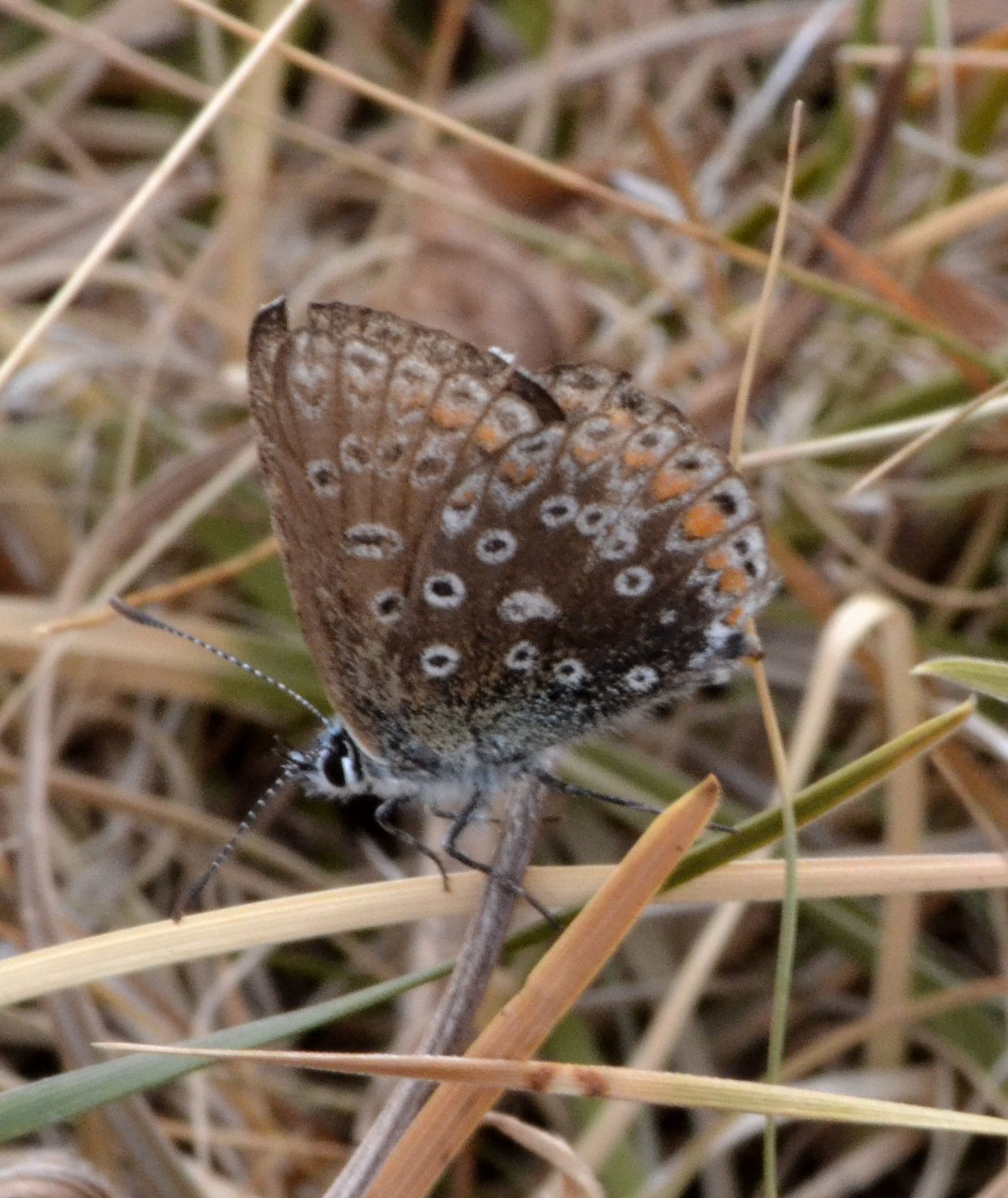
I am very pleased with these images that show perfectly this northern replacement of the regular and familiar Brown Argus’ diagnostic white upper wing dots. These butterflies were beautifully fresh and not having warmed up for the day were keeping quite still. That was a complete contrast to my 2018 experience.


When I eventually re-joined the group one each of Small Pearl-bordered and Dark Green Fritillary had been located here. Then on the way back down the hillside probably the same two NBA were re-found perched up in the long grass, and acceptable under-wing studies were duly gained. This had been a good start to day two.
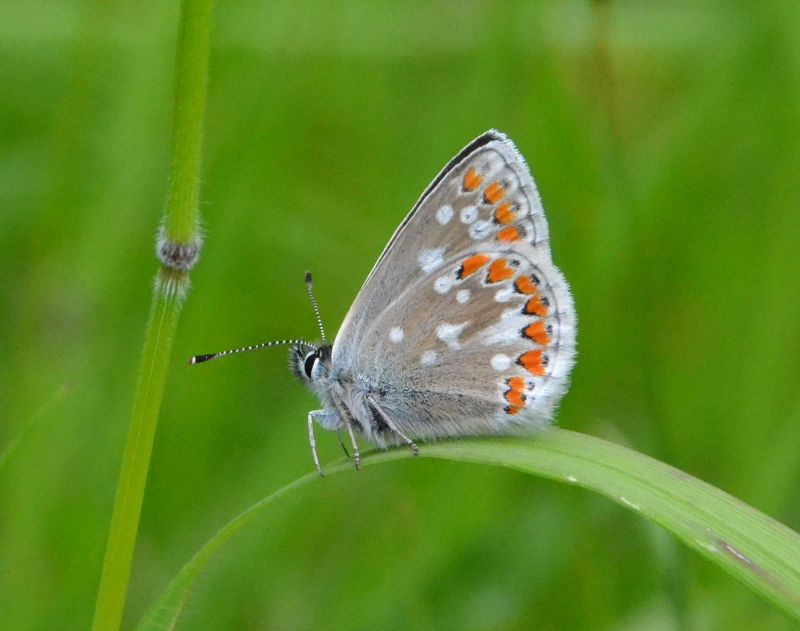

Northern Brown Argus and Small Pearl-bordered Fritillary today
Northern Brown Argus is described (per Thomas and Lewington) as a locally common though declining species that occurs in scattered colonies. It is found on warm, sheltered northern hill and mountainsides, mainly on limestone and alkaline soils. Typical sites are well-drained, unfertilised grassland with patches of bare ground, abundant Rock Rose plants and an uneven lightly grazed sward. Numerous populations have been lost in recent years due to fertilisation or intensive stocking of such grasslands.
The butterfly was first discovered in Edinburgh at the end of the 18th century and was originally named rather unimaginatively the “Brown Whitespot”. But it resembled the Brown Argus in most respects and for the next 170 years there was much debate as to whether the two were distinct or sub-species. The picture was further confused by most northern English populations, such as those I observed in Cumbria, lacking the white upper wing spot. Those butterflies (known as salmacis – pictured below) have more clearly spotted underwings and more closely resemble continental European NBA.
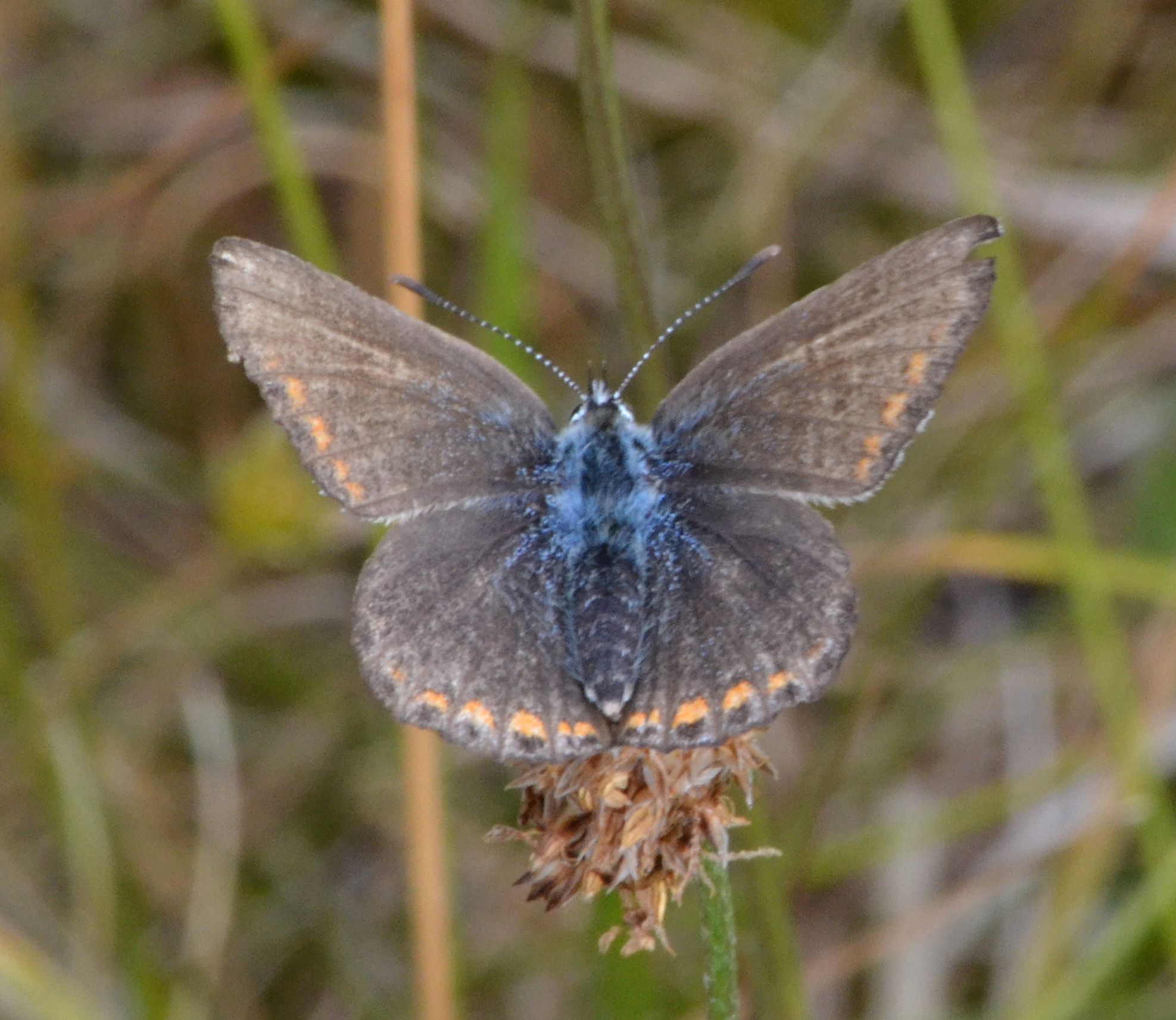
Northern English form of NBA in Cumbria, 2018
NBA, in common with the most northerly populations of Brown Argus, produces just one generation each season while southern English Brown Argus are invariably double-brooded. Adult NBA are on the wing from June until mid-August, peaking in the first half of July. Most colonies are small, containing no more than 200 adults. NBA is also highly sedentary with individuals moving no more than 20 to 30 metres through their life cycle.
The principal areas for NBA in Great Britain are Scotland, especially the south and east; north Lancashire and Cumbria in north-west England, plus a remnant population in County Durham. I was very pleased of the opportunity to make an adequate study of this species today and in the absence of Chequered Skipper and Mountain Ringlet this was the butterfly highlight of the trip.
 Ramblings and Scribblings