When researching this journal’s post before last I decided I would also like to record the second Toothwort species that occurs in the British Isles. So I consulted a trusted, top quality source and soon learned of a location in a northern suburb of Southampton, conveniently close to the first eastbound M27 junction from the M3 interchange, and just 70 miles and a similar number of minutes from home. Hitting the road southward on the A34 from Oxford is always restorative, given the numerous past and meaningful wildlife experiences that have awaited me beyond its end. In mid-morning I arrived in a built-up area then walked out into unspoiled habitat alongside the River Itchen.
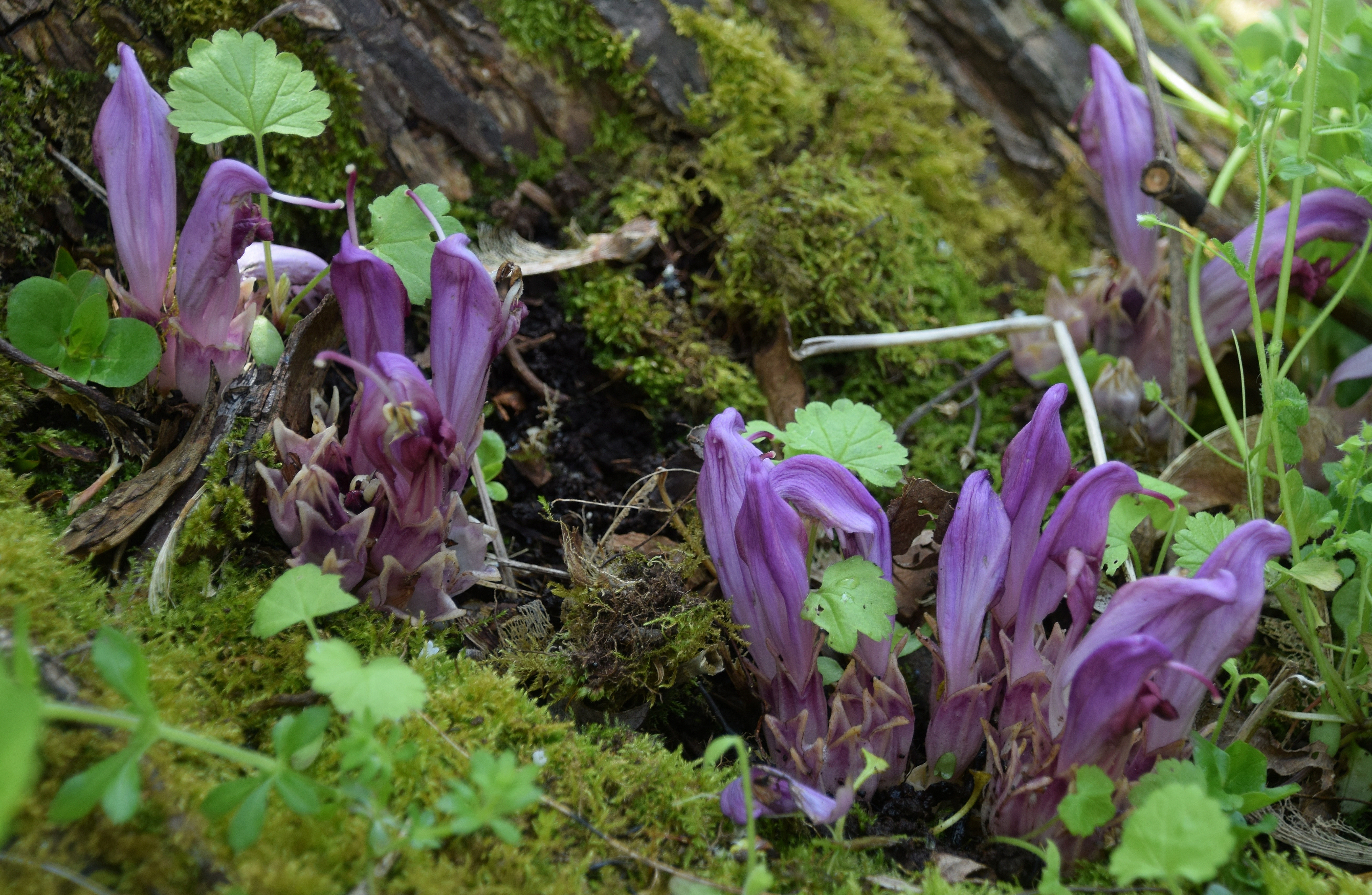
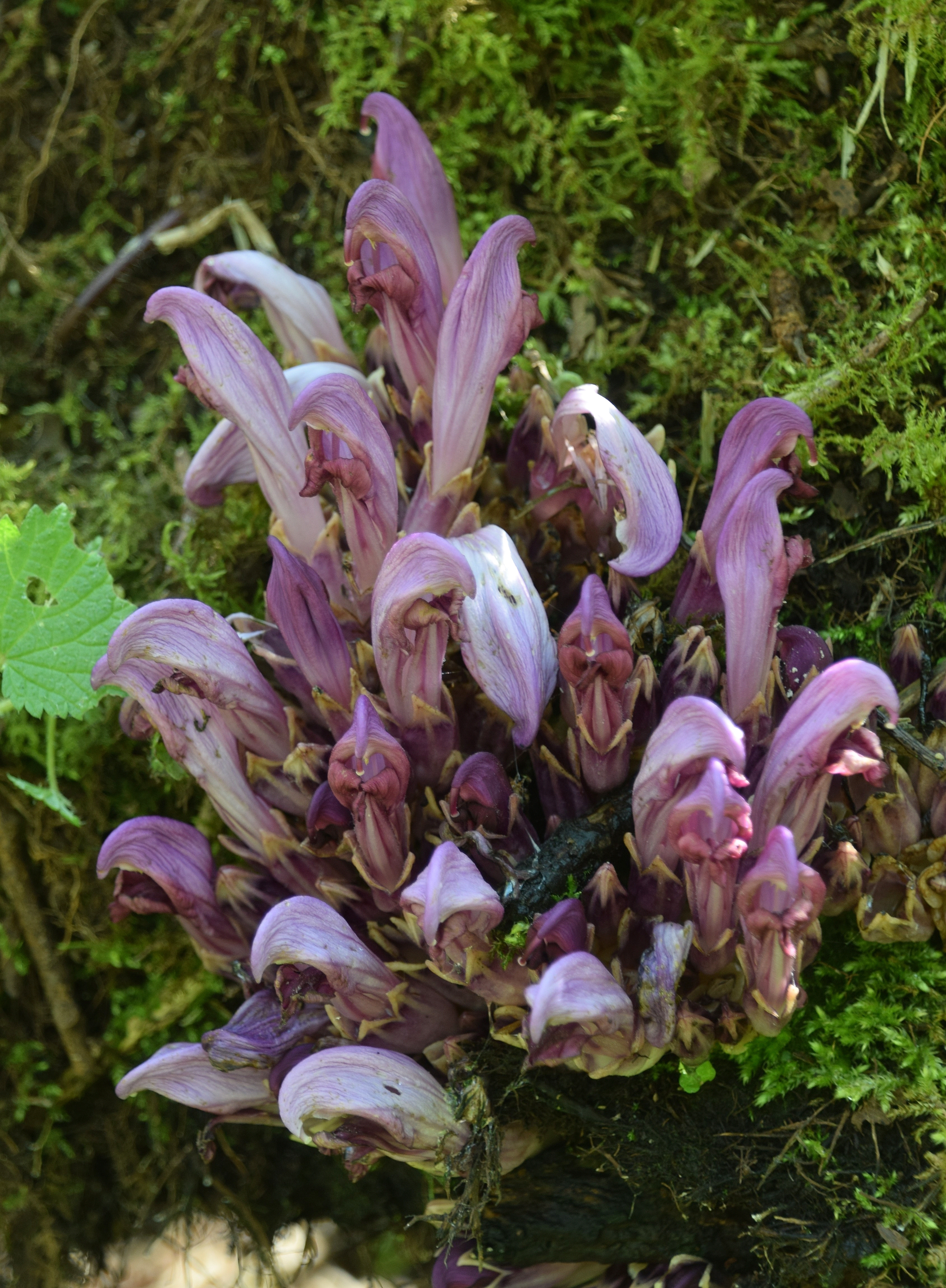
Purple Toothwort (Lathraea clandestina) was blooming in profusion beside a hard path alongside the tributary Monks Brook (SO18 2RS – SU441155), starting at /// leads.will.cove. There was so much of it here that I see no danger in revealing those site details that I believe are reasonably well-known in botanic circles, though less likely to attract the attention of passing general public. One regular walker here did tell me there have been other people taking pictures in recent days.


Like Common Toothwort (see here), this parasitic plant grows on host tree roots, in this case mainly Poplar and Willow, and only shows itself above ground in spring. But it has an entirely different character since the 40-50mm stemless, cowl-like, violet-purple flowers rise straight off the rootstock. Some clumps today were sprouting in fungal fashion from fallen, rotting wood (below left) and one even from the base of a low stone abutment (right). Clearing vegetation from protruding purple patches several times revealed large expanses beneath.

Native Purple Toothwort occurs across the west and south of Europe, from the Belgian Ardennes as far as northern Spain and central Italy, and is especially abundant in western and central France. In Great Britain it was originally introduced as a garden curiosity and planted at Kew Gardens in the late-19th century, then was first reported in the wild in 1908. Since then it has become locally naturalized in older parks and gardens, including both the Cambridge and Oxford University districts and RHS Wisley. The preferred habitat is damp woodland in valley bottoms, usually near streams such as in Swaythling. Several other Lathraea species occur around continental Europe.

The week’s earlier trip to Dorset hadn’t done it in re-humanising me after an exhausting prior working weekend, so this was a suitable opportunity to get out again by myself and draw the tranquility and renewal I seek from non-birding related wildlife activity. I couldn’t have had a better result, achieved with the aid of a precise pin drop in the best possible ambience, and returned home at least partially recovered.
 Ramblings and Scribblings