Pinail NNR, France re-visited for Yellow-spotted Whiteface, Large Chequered Skipper and more – 25 & 27th June

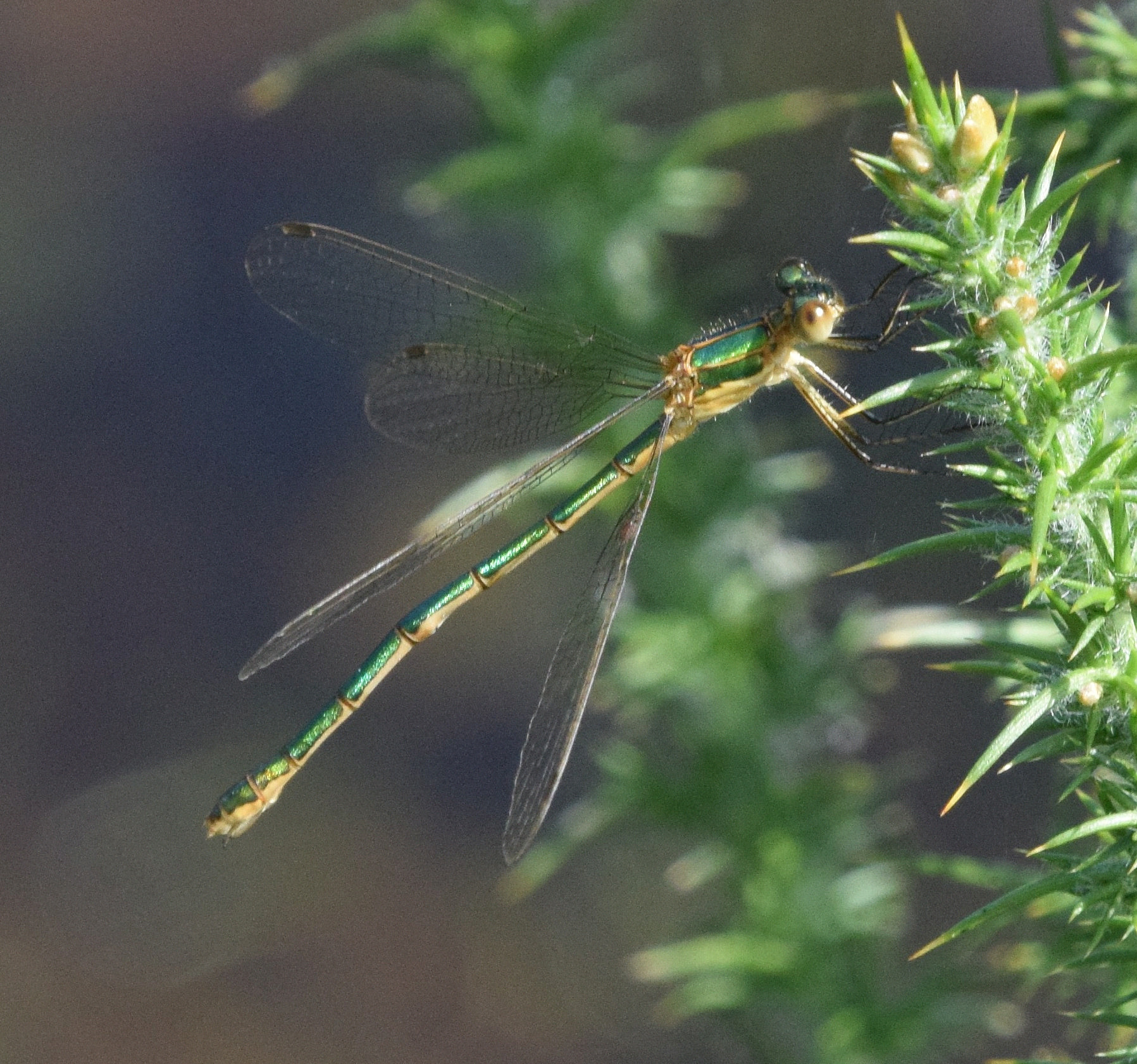
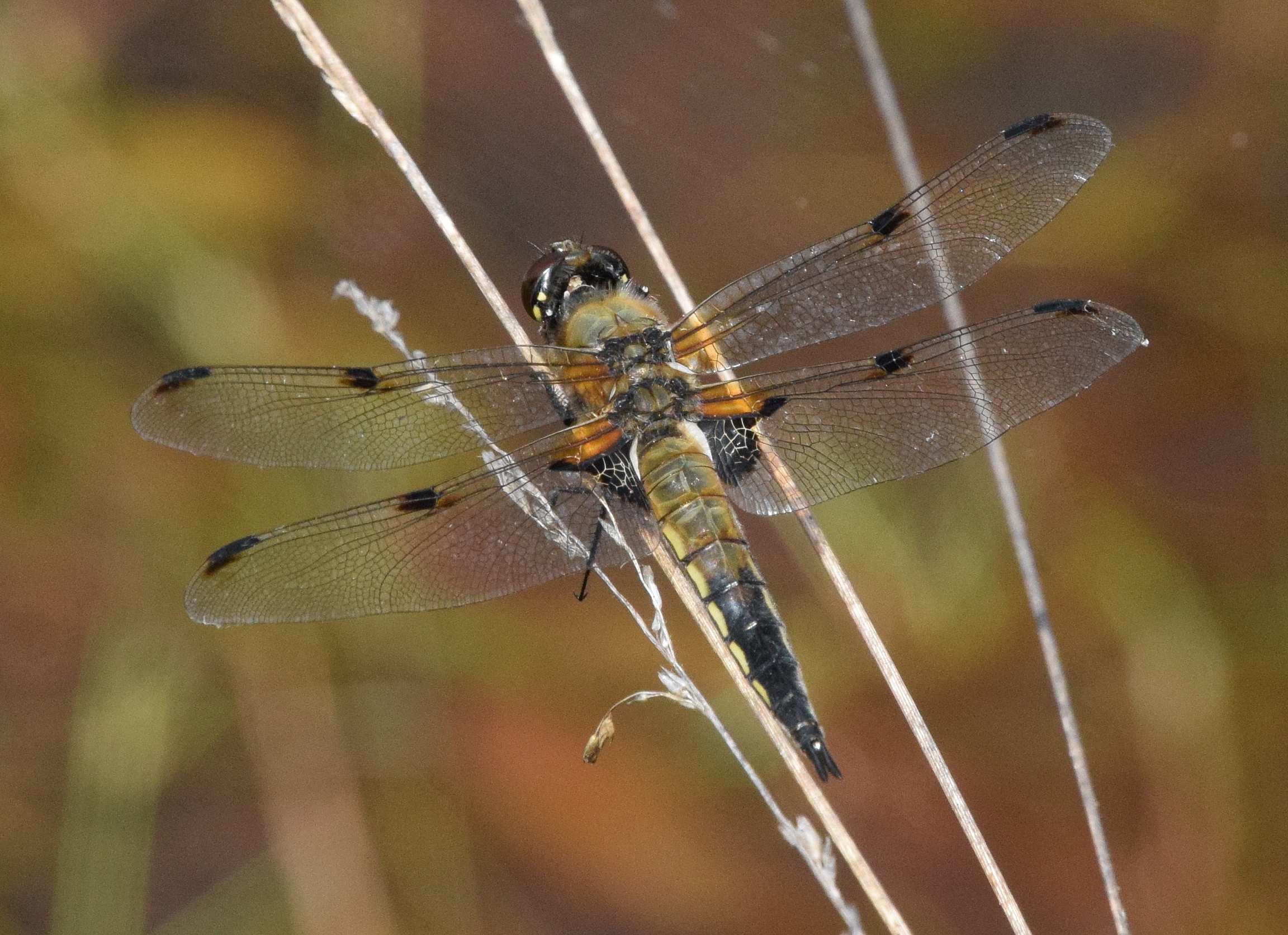
This post’s lead picture feels something like the humane equivalent of a hunting trophy. Nowhere near the standard of dragonfly images I usually seek to attain, it represents the outcome of a lot of effort, frustration and perseverance over three years. I first visited this fascinating location in 2023 (see here), my main interest then as now being to track down Yellow-Spotted and Lilypad Whiteface dragonflies.

La photo principale de ce post ressemble en quelque sorte à l’équivalent humain d’un trophée de chasse. Elle n’atteint pas du tout le niveau des images de libellules que je cherche habituellement à obtenir, mais elle représente le résultat de beaucoup d’efforts, de frustrations et de persévérance sur trois ans. J’ai visité cet endroit fascinant pour la première fois en 2023, mon principal intérêt alors et maintenant étant de retrouver les libellules Leucorrhine à gros thorax et Leucorrhine à large queue.
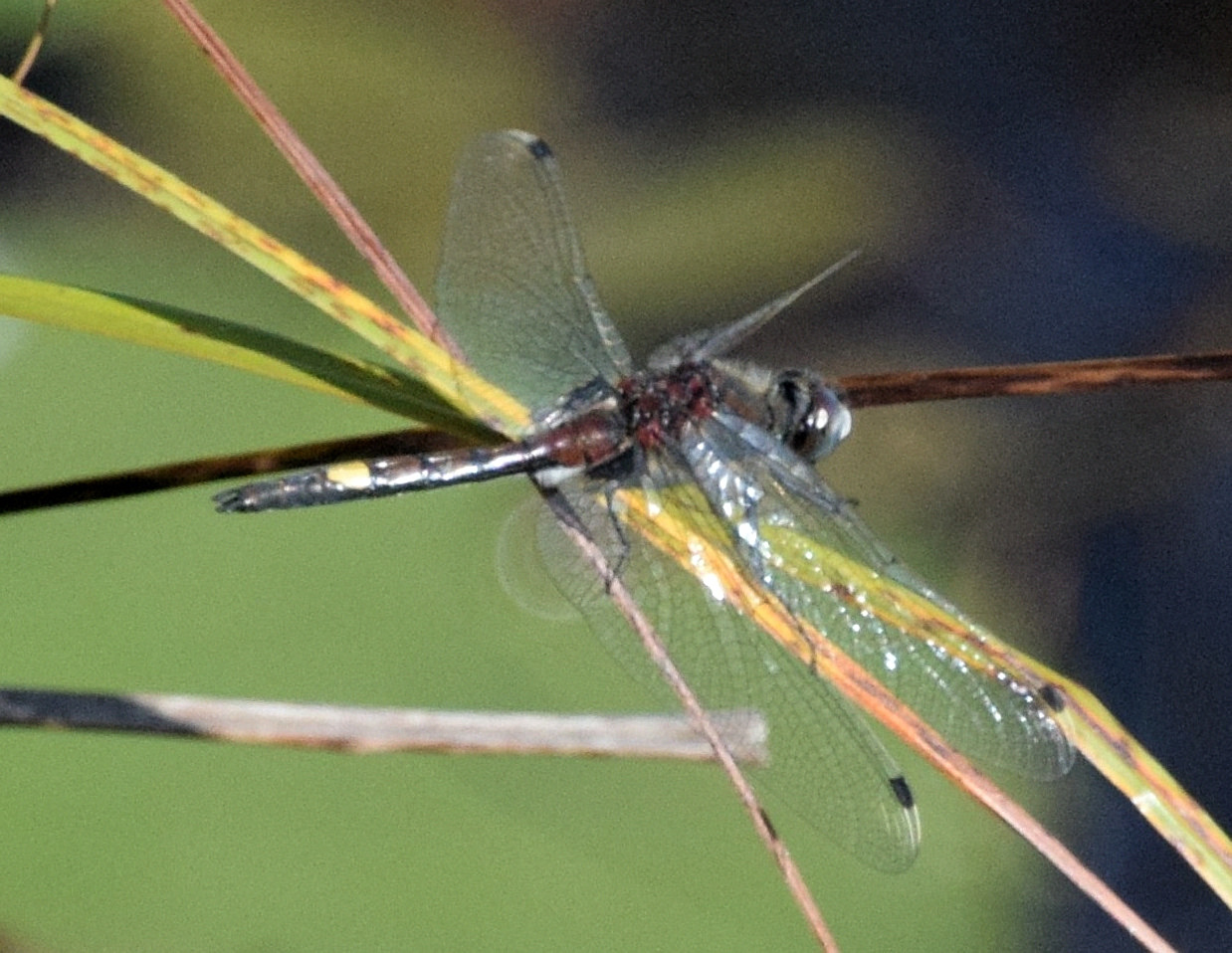
Yellow-spotted Whiteface, or Large White-faced Darter (male) / Leucorrhine à gros thorax

Attributing my failure then to lack of dry viewing points around the bog pool habitat, I resolved to come back with angling waders and so acquired a cheap and cheerful pair. But dragonfly hunting requires jumping on a plane at short notice if the weather is right, and last year the very low Ryanair walk-on fare from Stansted to Poitiers increased five-fold in the days leading up to the departure. This year I decided I was willing to lose that £45 if needs be and booked early, then when decision time came a suitable weather window indeed beckoned. The waders fitted neatly into an under seat bag and I travelled light with just a second cabin bag.

Attribuant mon échec à un manque de points de vue secs autour de l’habitat de la mare tourbeuse, j’ai décidé de revenir avec des cuissardes de pêche et j’en ai donc acquis une paire bon marché et joyeuse. Mais la chasse aux libellules nécessite de prendre un avion à la dernière minute si le temps est clément, et l’année dernière, le tarif très bas de Ryanair pour un passage à Stansted vers Poitiers a augmenté cinq fois dans les jours précédant le départ. Cette année, j’ai décidé que j’étais prêt à perdre ces 45 £ si besoin et j’ai réservé tôt, puis, lorsque le moment de la décision est venu, une fenêtre météo adéquate se profilait effectivement. Les cuissardes rentraient parfaitement dans un bagage sous le siège et j’ai voyagé léger avec juste un deuxième bagage à main.
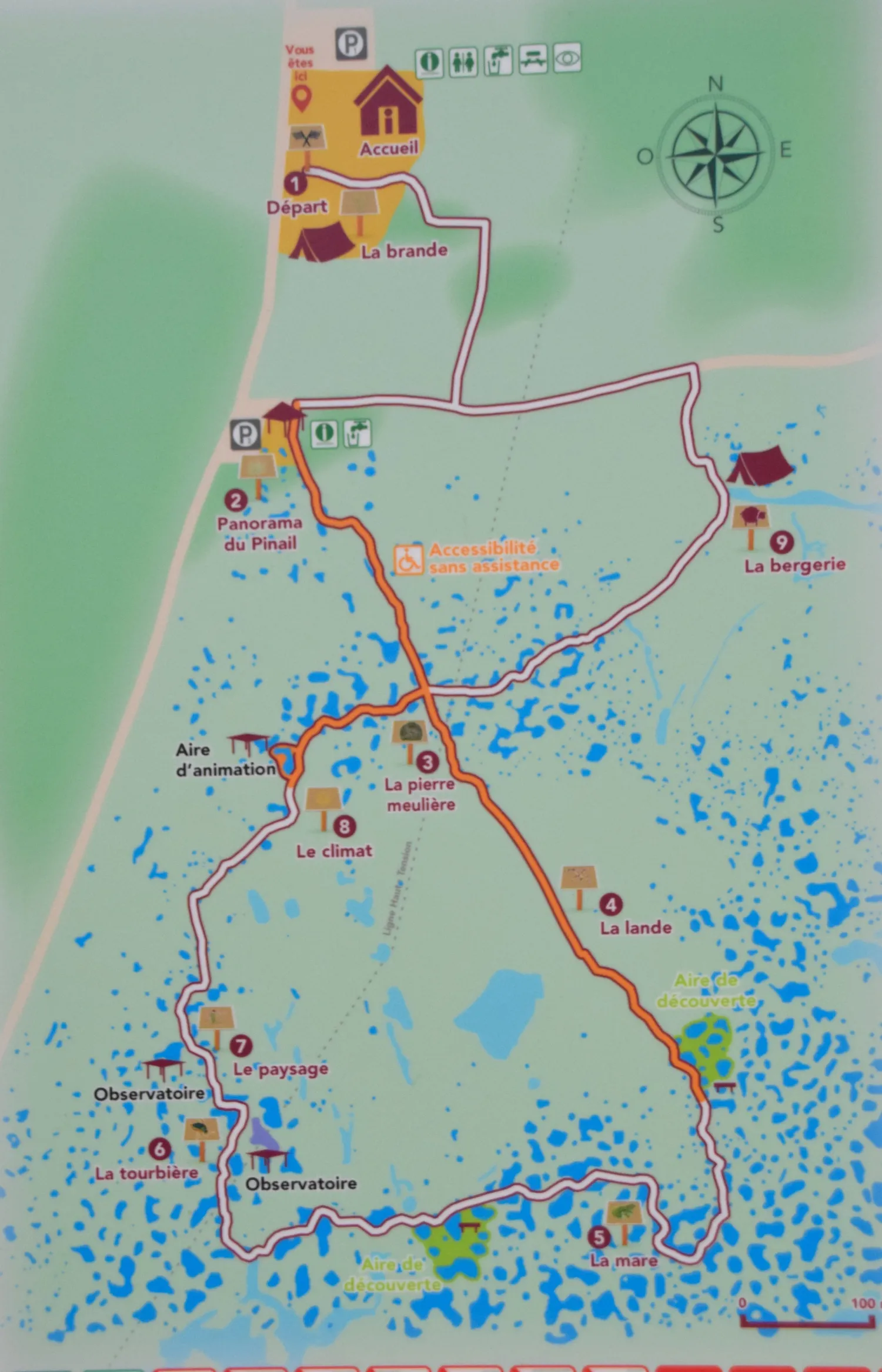
Pinail visitor trail plan / Plan du sentier des visiteurs de Pinail

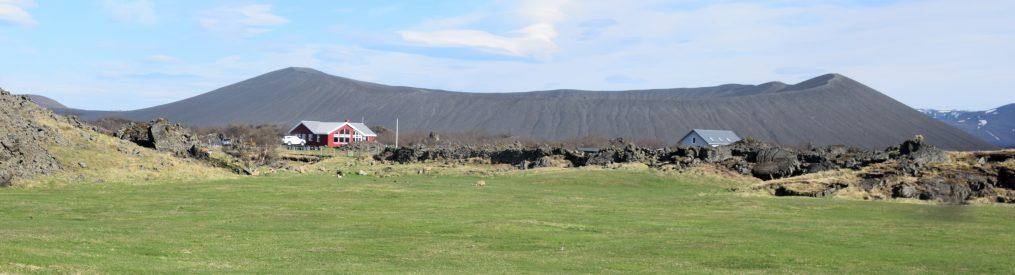
The 142 ha (350 acre) peat bog of Réserve Naturelle Nationale du Pinail (see here and here) contains more than 3000 water-filled hollows formed by past quarrying (pictured below). It is a known annual location for the twin lifers I wished to observe, those being outlier populations of species that mostly occur further north and east in mainland Europe and as far as Siberia. On Wednesday (25th) I made two circuits of the visitor trail, taking two and a half hours over the first of those in the morning. The angling waders proved not to be necessary, since I was able to look closely over numerous pools. I must assume a lot of habitat management work has been done here to open things up during the interval since my first visit.

La tourbière de 142 ha de la Réserve Naturelle Nationale du Pinail (voir ici et ici) contient plus de 3000 dépressions remplies d’eau formées par l’exploitation passée (illustré ci-dessous). C’est un lieu annuel connu pour les espèces jumelles que je souhaitais observer, à savoir des populations atypiques d’espèces qui se trouvent principalement plus au nord et à l’est en Europe continentale et jusqu’en Sibérie. Mercredi (25), j’ai effectué deux circuits du sentier des visiteurs, prenant deux heures et demie pour le premier d’entre eux le matin. Les cuissardes de pêche se sont avérées inutiles, puisque j’ai pu examiner de près de nombreux étangs. Je dois supposer qu’un grand nombre de travaux de gestion des habitats ont été réalisés ici pour ouvrir l’espace depuis ma première visite.

Pinail NNR / Les landes et des mares du Pinail © Roland Raimond 2020

Most pools had one or more Blue Emperor, a few held (presumably Downy) Emeralds that as ever didn’t perch, Four-spotted Chaser announced themselves at intervals, and Broad Scarlet (or Scarlet Darter) flew out regularly from the marginal vegetation. Common and Ruddy Darter, Large Red and various blue damsels were all present, and a single male Migrant Spreadwing (or Southern Emerald Damselfly) was a more unusual find. But of my twin quest there was no sign. With 3000 pools to select from, just where should the visitor start to look? The answer probably is as many as possible.

La plupart des bassins avaient un ou plusieurs Anax empereurs, quelques-uns abritaient des Émeraudes (presque certainement velue) qui, comme d’habitude, ne se posaient pas, des Libellules à quatre taches se manifestaient par intervalles, et la Libellule écarlate sortait régulièrement de la végétation marginale. Un seul mâle Leste sauvage était une découverte plus inhabituelle. Mais il n’y avait aucun signe de ma quête jumelle. Avec 3000 bassins à sélectionner, par où le visiteur devrait-il commencer à chercher? La réponse est probablement le plus possible.
Four-spotted Chaser / Libellule à quatre taches, Broad Scarlet / Crocothémis écarlate, and Migrant Spreadwing / Leste sauvage

In the afternoon my energy and enthusiasm waned in the 35 degree heat, and I was less thorough on the second circuit. The Emeralds were all keeping in cover now, leaving the numerous Emperors to reign supreme, while the vivid red sentinels of the pool margins still stood out. So if those Scarlets were active, why not the Whitefaces? The feeling grew in me that the best chance of success might come earlier as the day warms up.

Dans l’après-midi, mon énergie et mon enthousiasme ont diminué sous la chaleur de 35 degrés, et j’étais moins minutieux lors du deuxième circuit. Les Émeraudes se mettaient toutes à l’abri maintenant, laissant les nombreux Empereurs régner en maître, tandis que les vifs sentinelles rouges des marges de la mare se démarquaient encore. Alors, si ces Écarlates étaient actifs, pourquoi pas les Leucorrhines? Le sentiment grandissait en moi que la meilleure chance de succès pourrait venir plus tôt, à mesure que la journée se réchauffe.

Hence I returned at 8am on Friday (27th), after an intervening day butterflying at a woodland location in La Brenne Parc Regional. Now luck was with me as a film crew were meeting with two rangers in the car park. It always helps considerably to engage with suitably informed and willing rangers, and one of these explained that the Whiteface flight season is now nearly over. That is earlier at Pinail than other more northerly sites, but she gave me the exact location where a YSW had been seen a day earlier.

Ainsi, je suis revenu à 8h le vendredi (27), après une journée d’observation des papillons dans un bois à La Brenne Parc Régional. Par chance, une équipe de tournage se rencontrait avec deux rangers dans le parking. Il est toujours très utile de discuter avec des rangers informés et disposés, et l’un d’eux a expliqué que la saison de vol des Leucorrhines est presque terminée. Cela arrive plus tôt à Pinail que dans d’autres sites plus au nord, mais elle m’a donné l’emplacement exact où un YSW avait été aperçu un jour plus tôt.
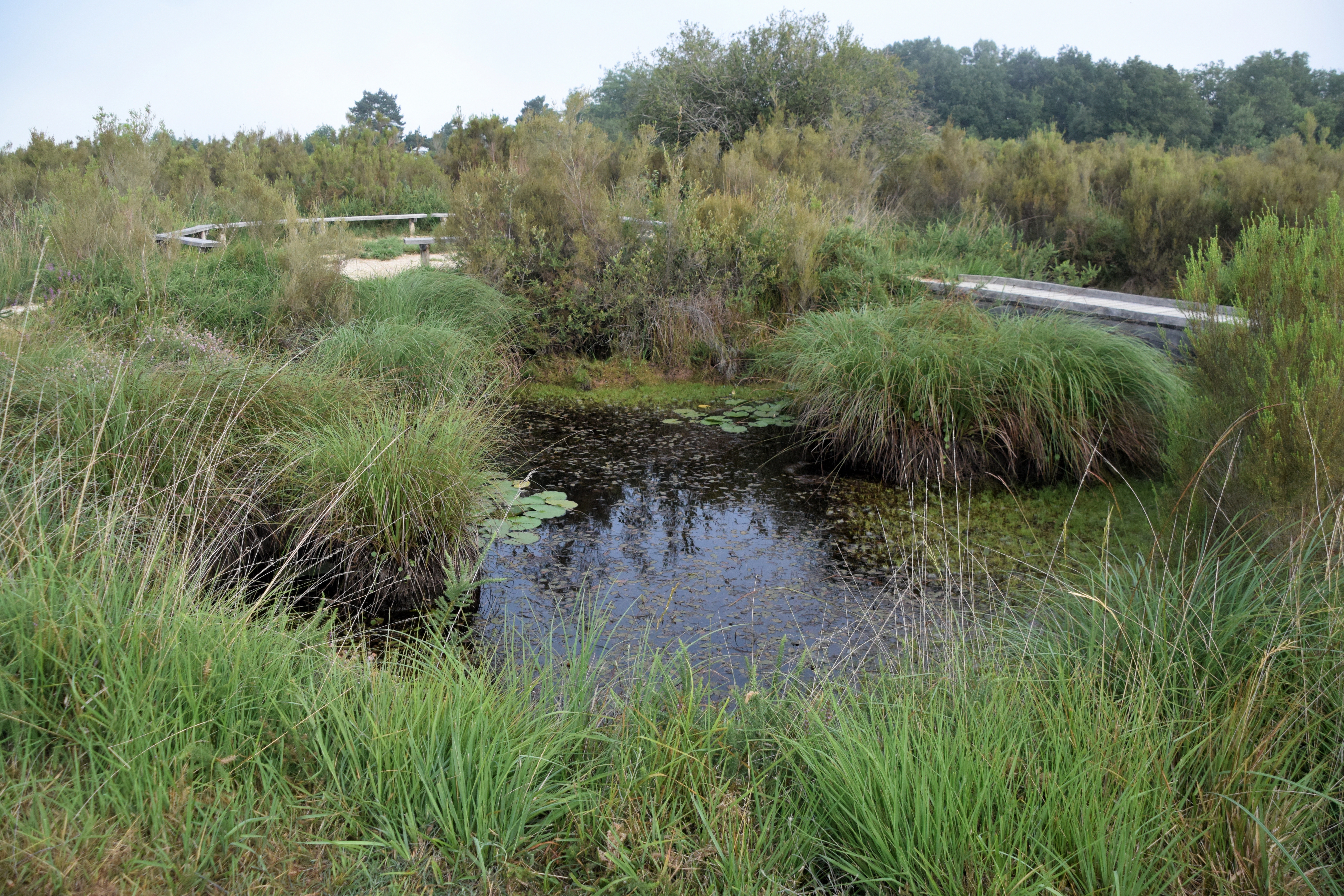
The partly weed-filled pool with well developed margins

Now I went to l’Aire d’animation (pictured above), a short distance anti-clockwise along the circular trail from it’s start point, and waited for the sun. At 9:15 two male dragonflies suddenly flew out and jousted territorially around the pool in front of me. One of them looked unusual, and indeed it was the white face of my quest that was attracting my notice. The second antagonist was a Four-spotted Chaser, and unusually where the bullying latter are concerned my Yellow-spotted Whiteface won, the opponent keeping a lower profile thereafter.

Maintenant, je suis allé à l’Aire d’animation, à une courte distance dans le sens inverse des aiguilles d’une montre le long du sentier circulaire depuis son point de départ, et j’ai attendu le soleil. À 9h15, deux libellules mâles ont soudainement volé et se sont affrontées territorialement autour de la piscine devant moi. L’une d’elles avait l’air inhabituelle, et en effet, c’était le visage blanc de ma quête qui attirait mon attention. Le deuxième antagoniste était un Mésange à quatre taches, et de manière inhabituelle, en ce qui concerne le harcèlement, mon Leucorrhine à gros thorax a gagné, l’adversaire gardant ensuite un profil plus bas.

Once the contest was settled the victor perched for a while quite near to where I was standing with the sun behind me, though not close enough for a clearer lead picture. After that it kept to the far end of the pool, largely concealed for much of the time. The film crew and rangers walked past again and one of them picked out the YSW looking straight at us (below). By 10am cloud set in once more and I decided to move on.

Une fois le concours terminé, le vainqueur s’est perché pendant un moment assez près de l’endroit où je me tenais avec le soleil derrière moi, bien qu’il ne soit pas assez près pour une image de tête plus claire. Après cela, il est resté à l’autre bout de la piscine, largement dissimulé pendant la majeure partie du temps. L’équipe de tournage et les rangers sont passés à nouveau et l’un d’eux a repéré le YSW nous regardant droit dans les yeux (ci-dessous). Vers 10 heures, les nuages se sont à nouveau installés et j’ai décidé de passer à autre chose.
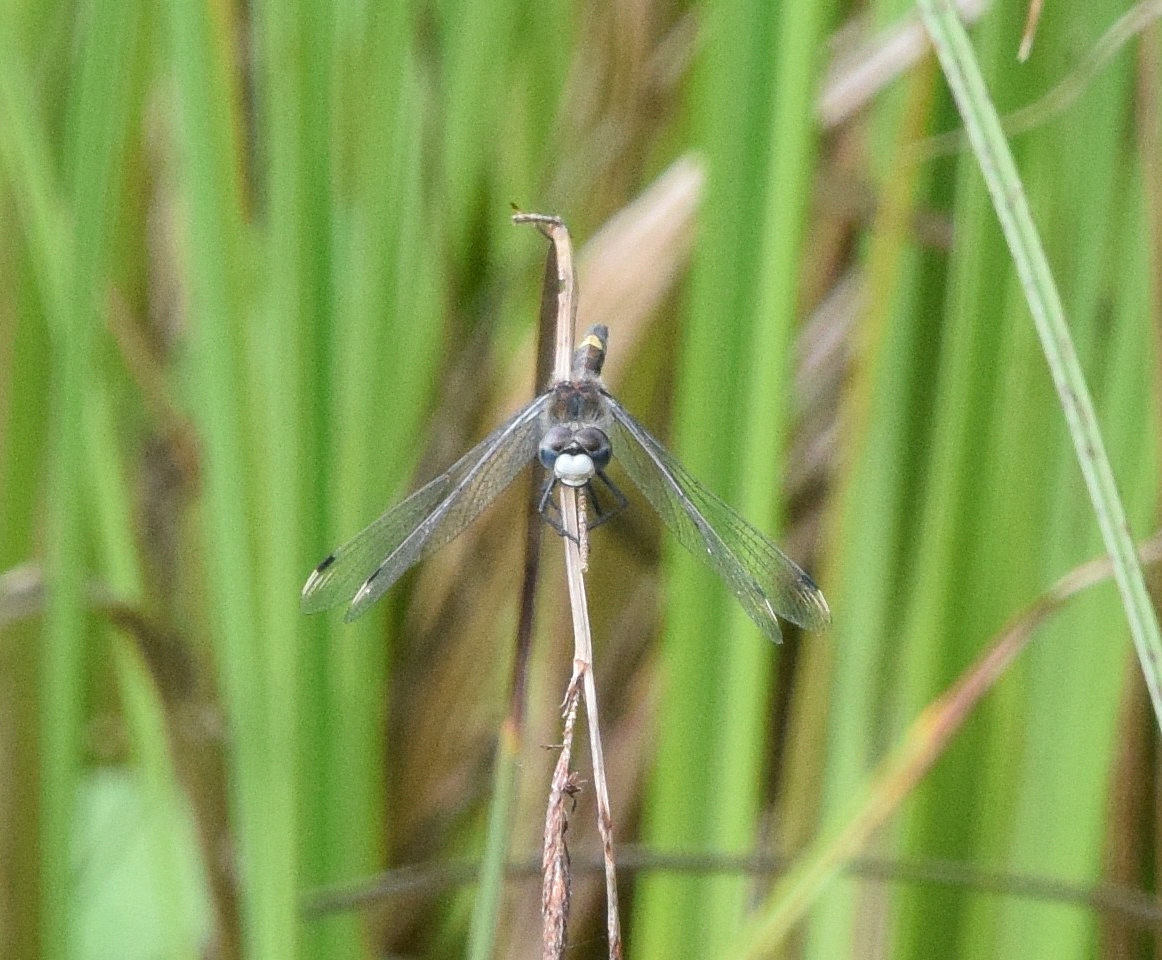
Just look at my white face and pterostigma
Regarde juste mon visage blanc et mon ptérostigmate

This is the largest of five Whiteface species occurring in Europe, at 32 – 39mm long with a wingspan of 60 – 70 mm. The prominent yellow spot that gives the species its name is on the seventh abdominal segment. It is found in boundary moorland areas, transition bogs and forested moors. Populations are usually small, localised and difficult to observe in the field. Reproduction requires moderately acidic and low to moderately nutrient-rich waters with pondweed and water lilies, as at this particular Pinail pond. There have only ever been three records from the British Isles.

C’est la plus grande des cinq espèces de Leucorrhine présentes en Europe, mesurant de 32 à 39 mm de long avec une envergure de 60 à 70 mm. La tache jaune qui donne son nom à l’espèce se trouve sur le septième segment abdominal. Elle se rencontre dans les zones de landes frontalières, les tourbières de transition et les landes boisées. Les populations sont généralement petites, localisées et difficiles à observer sur le terrain. La reproduction nécessite des eaux modérément acides et pauvres à modérément riches en nutriments, avec des plantes aquatiques et des nénuphars, comme dans ce particular étang de Pinail. Il n’y a eu que trois observations provenant des îles britanniques.
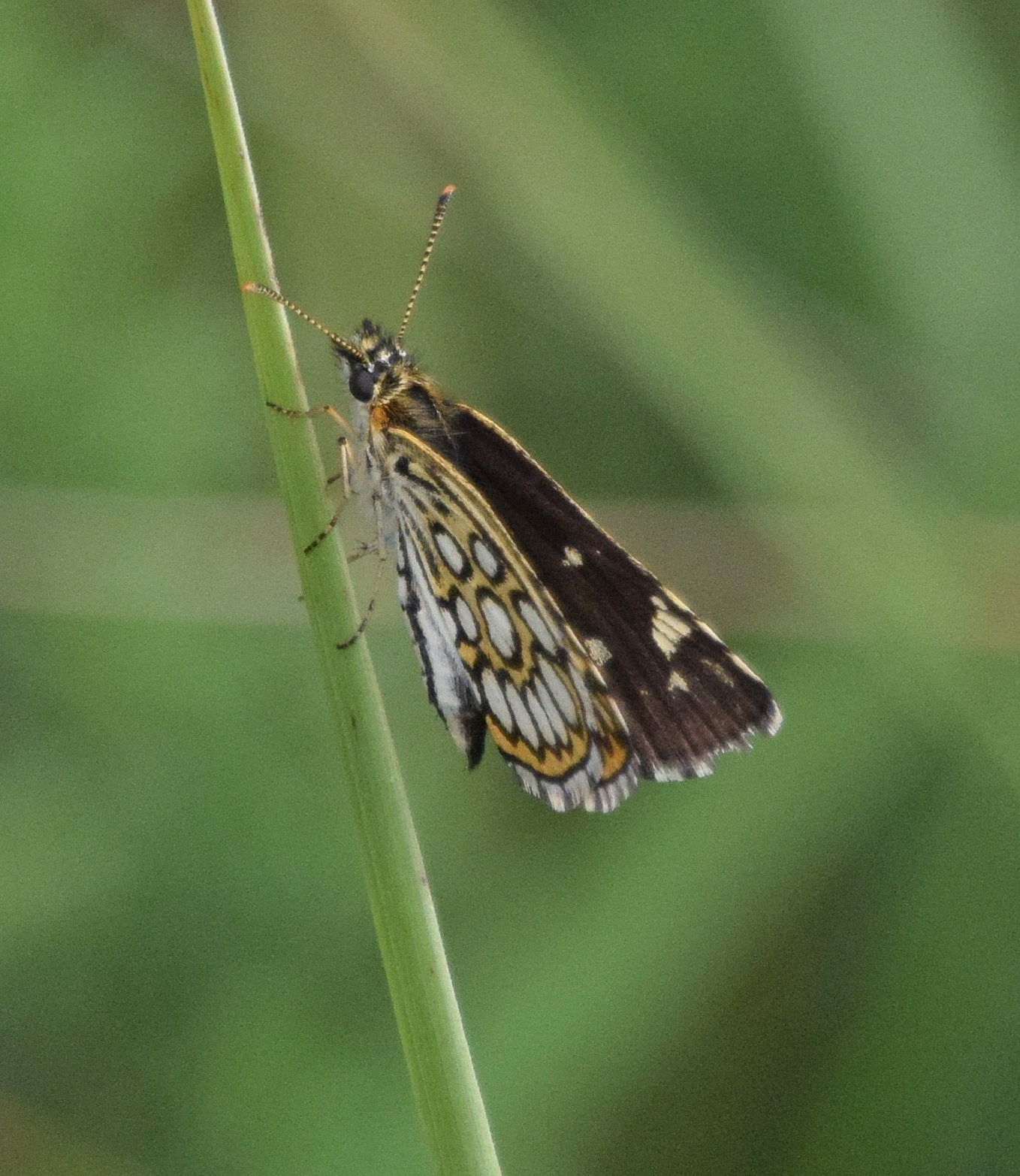
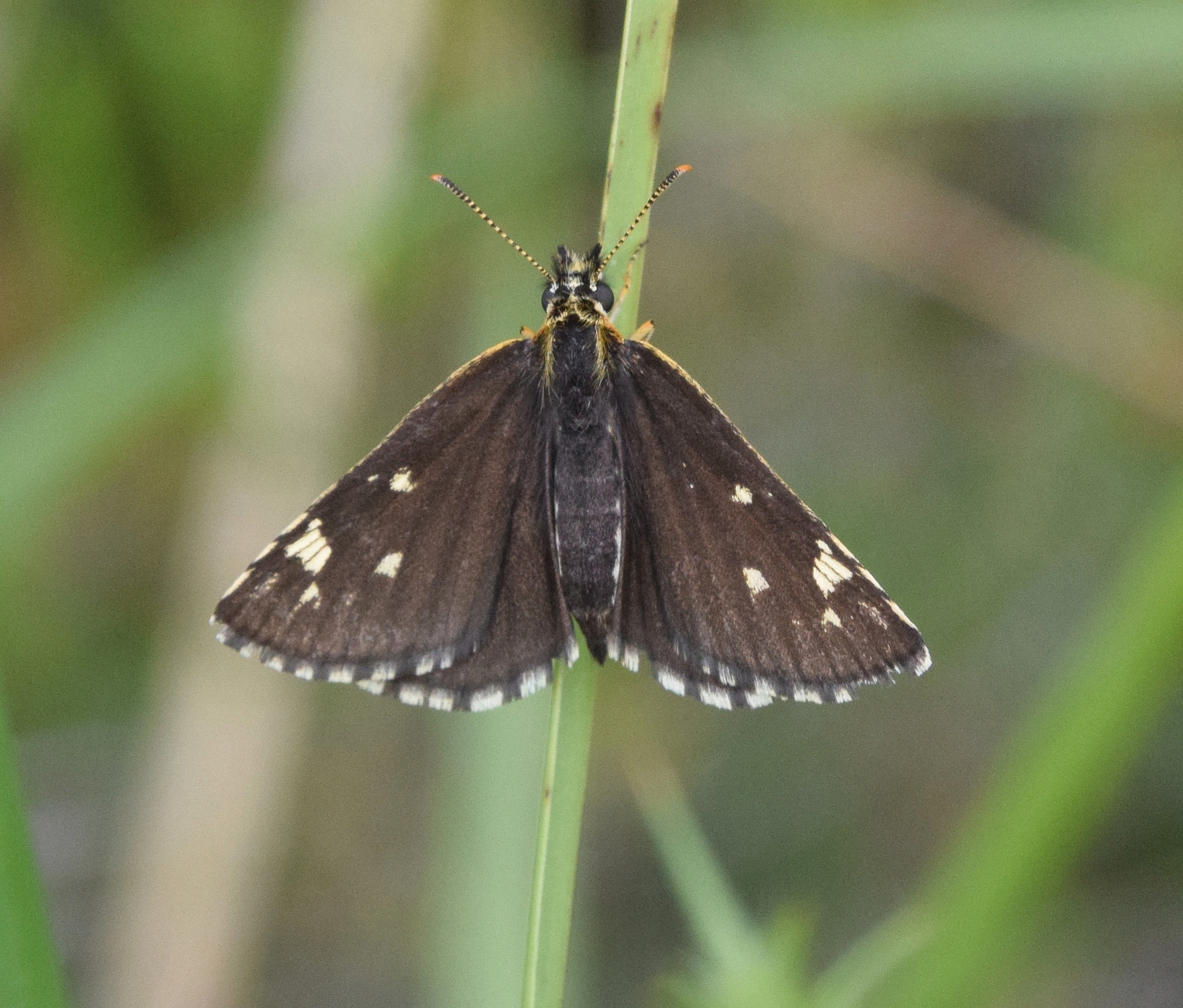
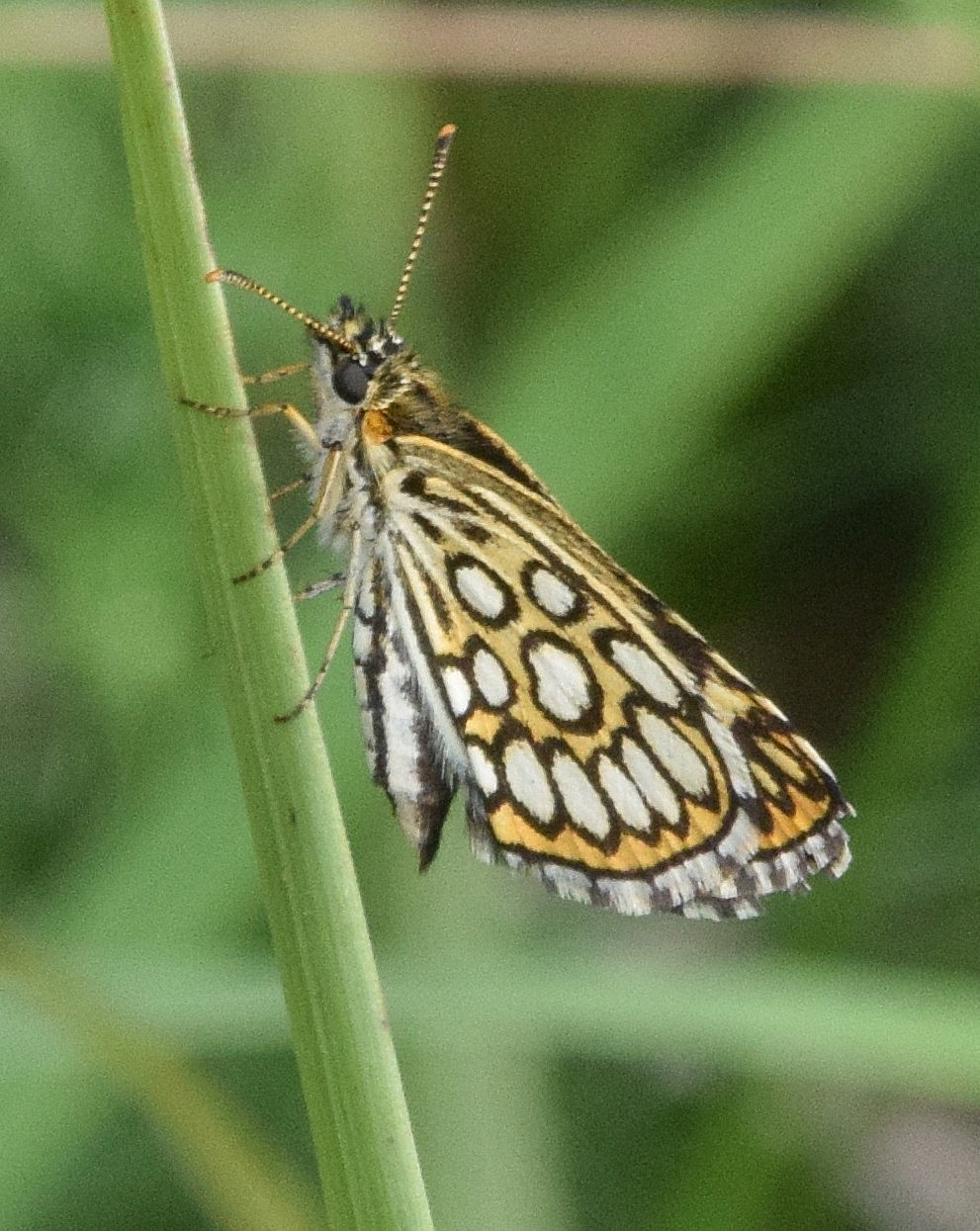
Large Chequered Skipper / le Miroir (fem)

Where butterflies were concerned, the highlight of the two days was a trail-side encounter with a female Large Chequered Skipper (pictured above), the species being something of a Pinail specialty that was a lifer for me here two years ago. This time the heat seemed to be slowing the flight pattern of several individuals I crossed paths with. Those observed in 2023 had all been bouncing around as if pogo-sticking on invisible threads of elastic. To a non-butterfly enthusiast this LBJ may not seem especially exciting, at least when viewed from above, but as she warmed up in the early morning my individual yielded personal first open-winged, top side studies. Other species that caught my attention at random while searching for the Whitefaces are presented in the next sequence.

En ce qui concerne les papillons, le point culminant des deux jours a été une rencontre en bordure de sentier avec une femelle Miroir (voir ci-dessus), l’espèce étant quelque peu une spécialité des Pinails et c’était un premier pour moi ici il y a deux ans. Cette fois, la chaleur semblait ralentir le rythme de vol de plusieurs individus que j’ai croisés. Ceux observés en 2023 avaient tous rebondi comme s’ils faisaient du pogo sur des fils élastiques invisibles. Pour un non-enthousiaste des papillons, ce peut ne pas sembler particulièrement excitant, du moins vu d’en haut, mais alors qu’elle se réchauffait tôt le matin, mon individu a fourni des études personnelles en première instance sur ses ailes ouvertes, côté supérieur. D’autres espèces qui ont attiré mon attention au hasard en cherchant les Leucorrhines sont présentées dans la séquence suivante.
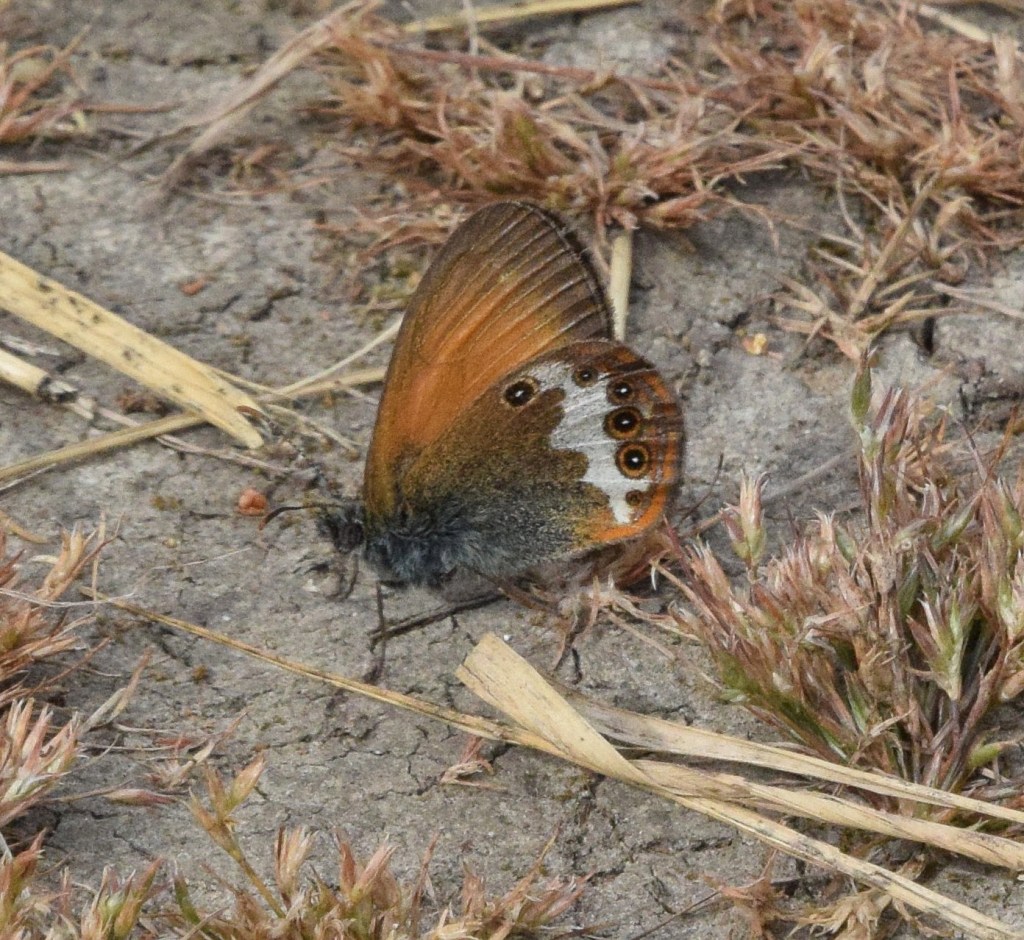
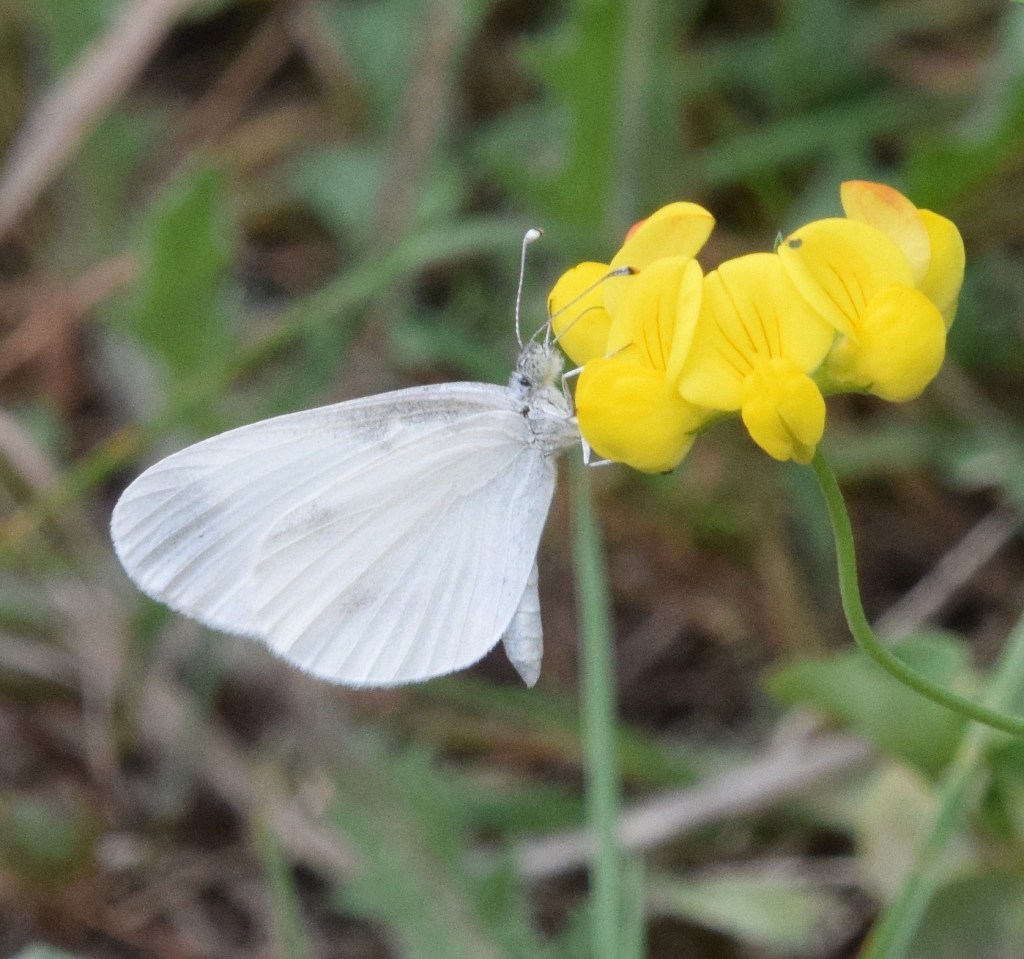
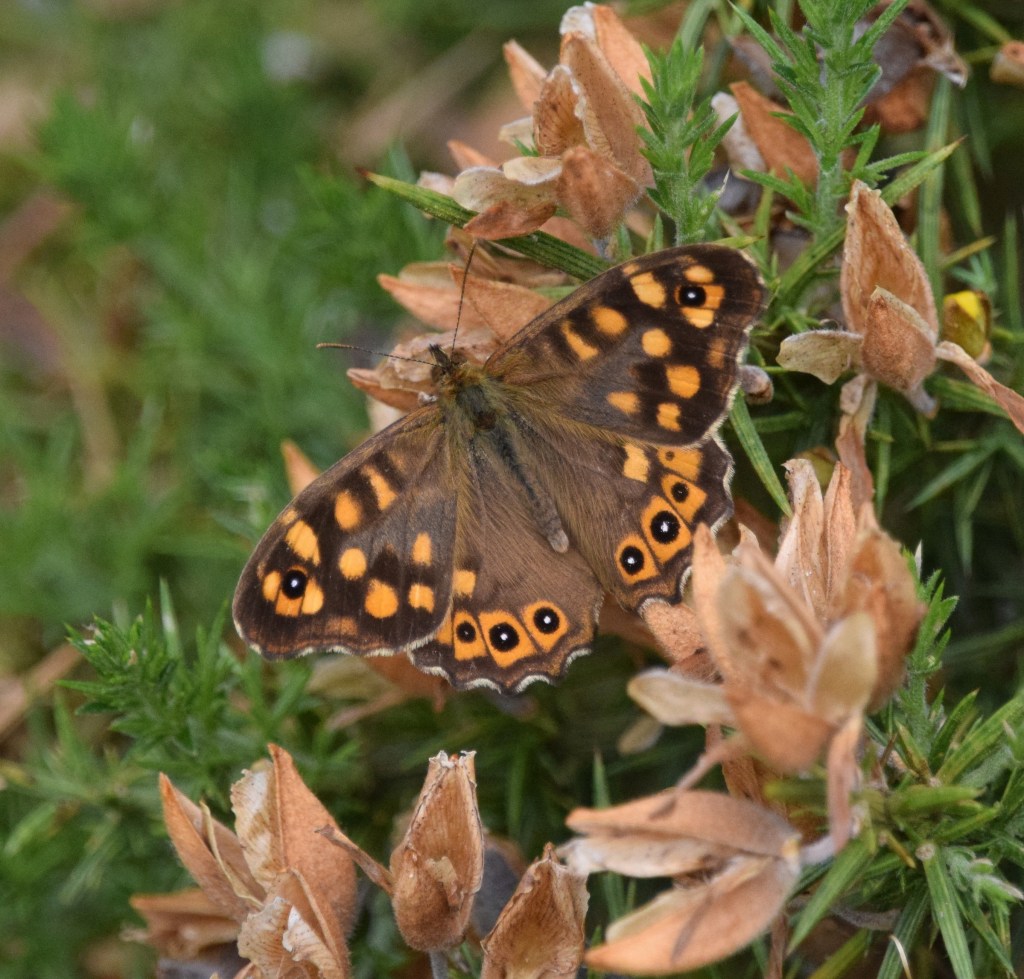
De la gauche: le Céphale / le Blanc-verdâtre / Tircis (aegeira)

Now I may have to do this all over again, earlier in another year if I can take more punishment, for Lilypad and hopefully more Yellow-spotted Whitefaces of both genders. This has been a very difficult task through three visits, and I have yet to read of anyone or any tour group that things were easier for. I also appreciate I would not have made an initial conversion without the ranger’s assistance. She told me of one regular visitor to the reserve who has yet to connect after multiple attempts. The programme being filmed here will air on French regional TV, and may even contain footage of yours truly scanning the pool with my binoculars.

Maintenant, je devrais peut-être tout recommencer, plus tôt dans une autre année si je peux supporter plus de punition, pour Lilypad et j’espère d’autres Blanches à taches jaunes des deux sexes. Cela a été une tâche très difficile à travers trois visites, et je n’ai pas encore lu sur quelqu’un ou un groupe de tourisme pour qui cela aurait été plus facile. J’apprécie également que je n’aurais pas fait de conversion initiale sans l’assistance du ranger. Elle m’a parlé d’un visiteur régulier de la réserve qui n’a pas encore fait de connexion après plusieurs tentatives. L’émission qui est filmée ici sera diffusée à la télévision régionale française et pourrait même contenir des images de moi scrutant la piscine avec mes jumelles.

NB: As usual when describing Odonata, I have referred to species herein by standard international names, with British Dragonfly Society equivalents in parentheses / Comme d’habitude lors de la description des Odonates, je me suis référé aux espèces ici par leurs noms internationaux standards, avec les équivalents de la British Dragonfly Society entre parenthèses.
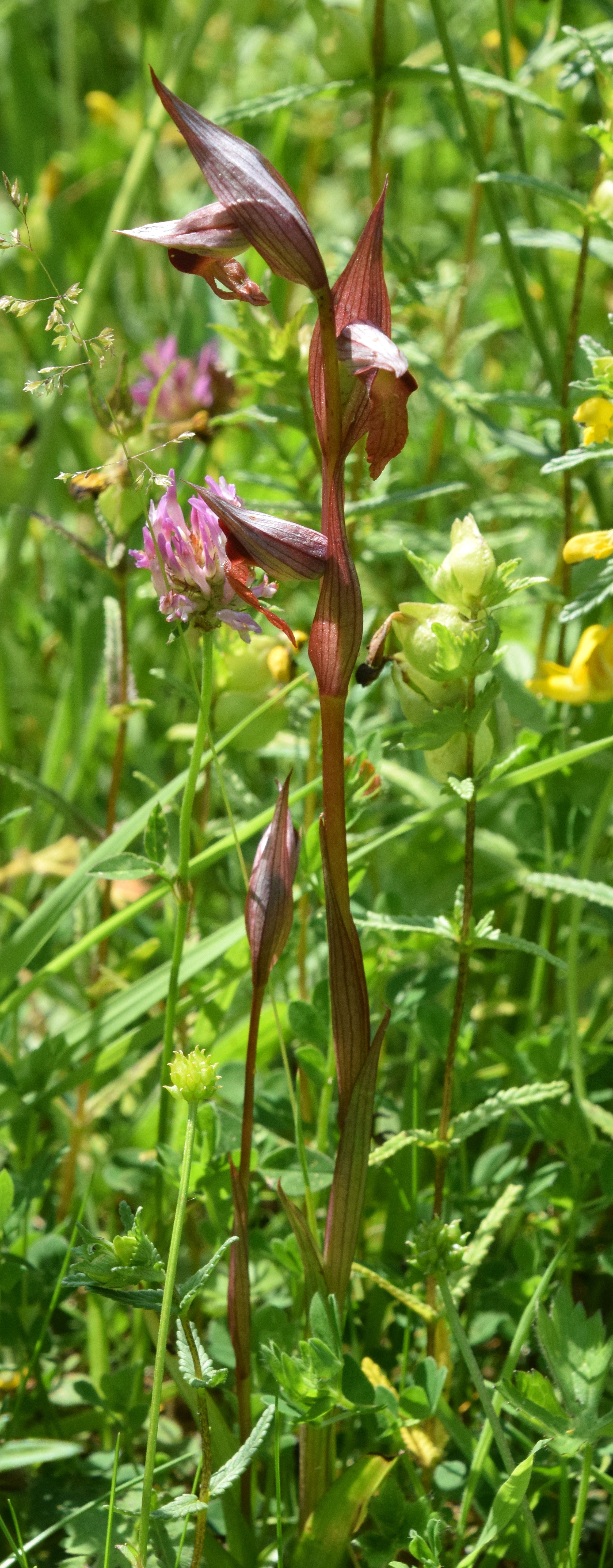
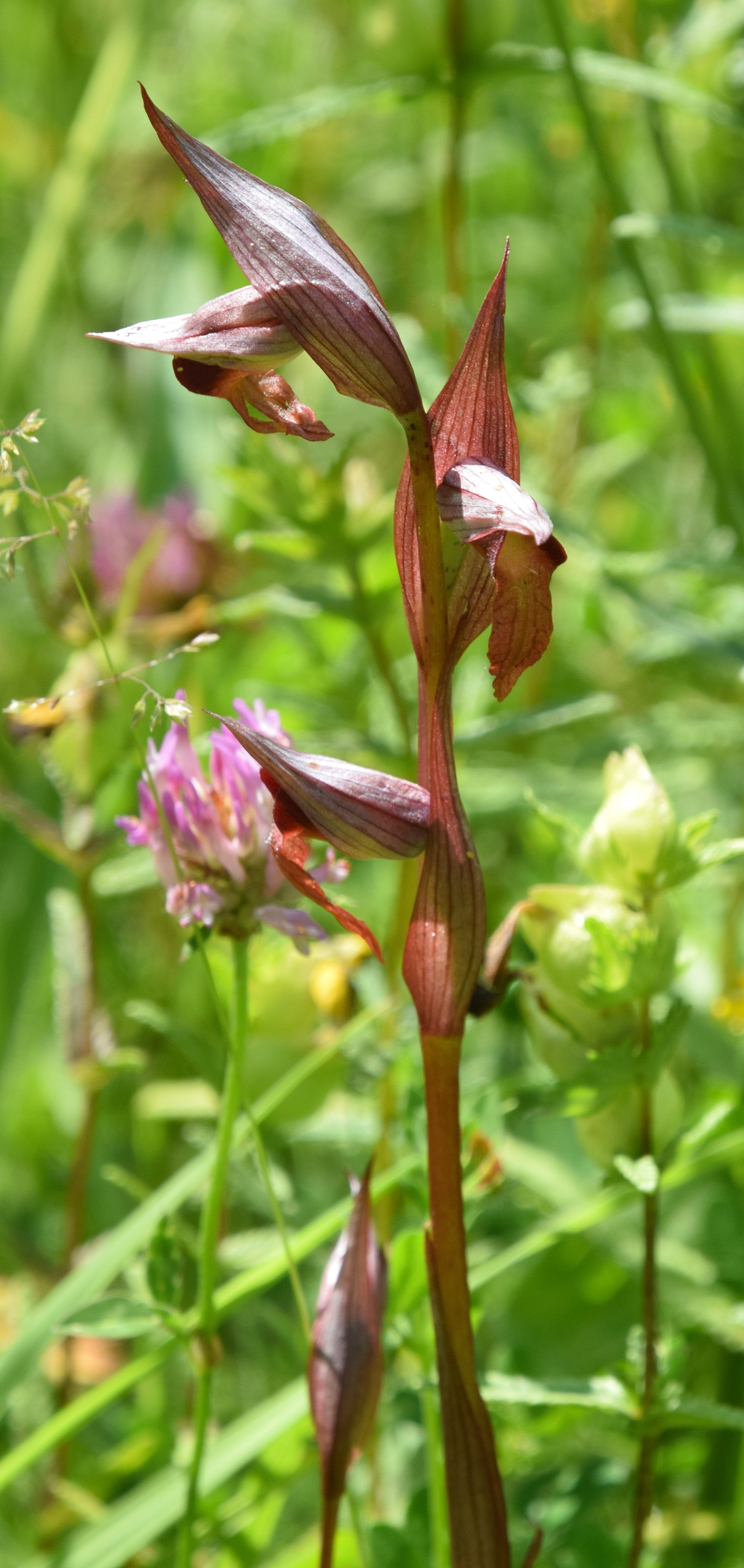
Tongue Orchid and Early Marsh Orchid var ochroleuca in Suffolk + Oxon Bee Orchid var belgarum – 11th June

At this time of year evolved Orchid experiences just keep on coming. When I learned of an opportunity to visit the first of this post’s subjects, led as a personal initiative by one Hardy Orchid Society member, I enrolled then interested Adam in coming with me. The proposed agenda would also allow us to record one of the rarest of all British Orchid forms at a nearby location, the prospect of which appealed to me greatly. Our would be guide fell ill but there was no reason not to fulfill the mission under our own steam, since the first site is open to the public at select times and the second is generally accessible.

The provenance of Tongue Orchid (genus Serapias) nationally is subject to conjecture, since there is no certainty that any of three known colonies are genuinely wild. Those are at today’s location in Suffolk, a second near Colchester in Essex and reportedly a City of London rooftop garden. This group of plants (see here) is native to Mediterranean Europe from the Iberian peninsula, through France, Italy and the Aegean region to Turkey. There are several species and more sub-species, so hybridisation is commonplace.

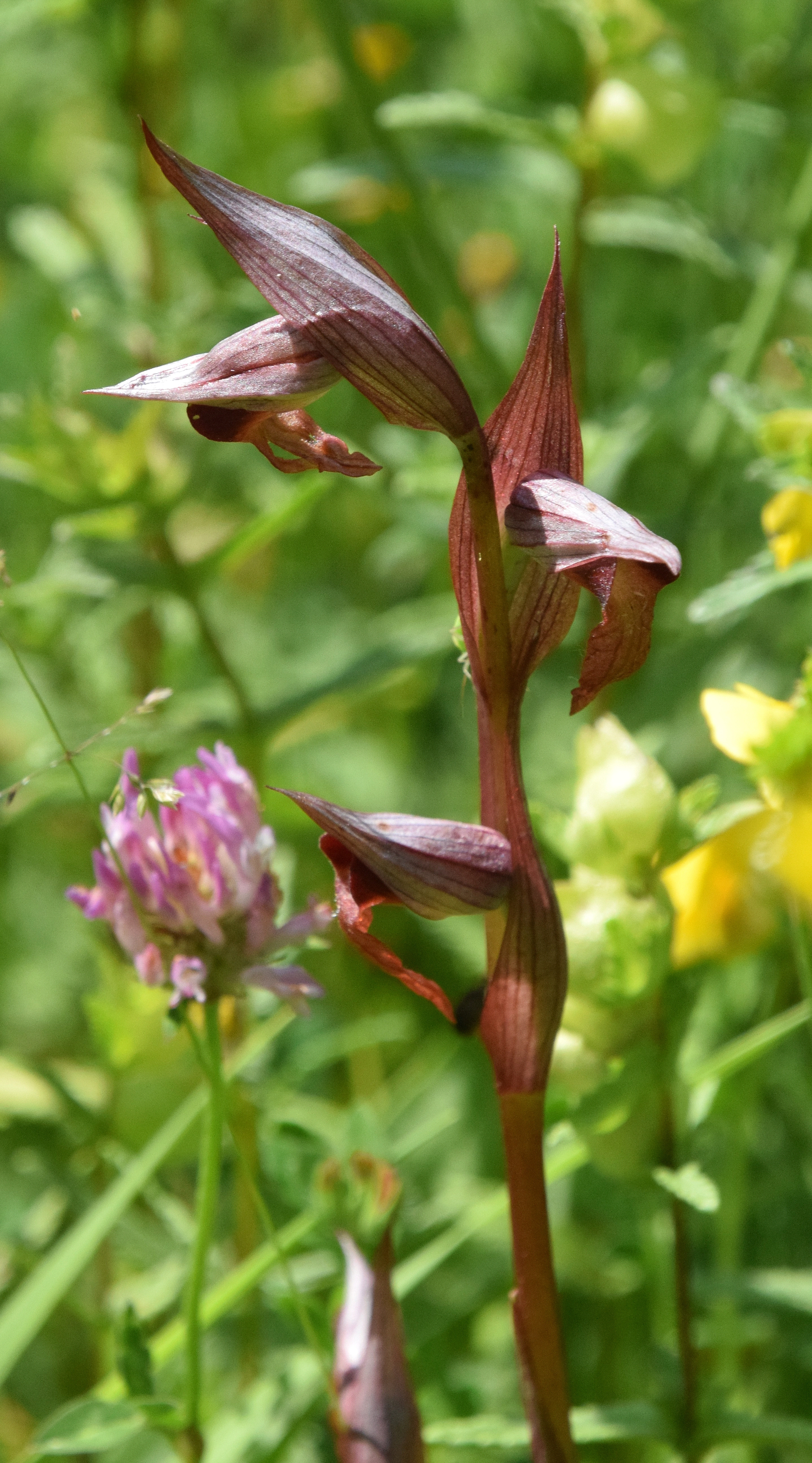
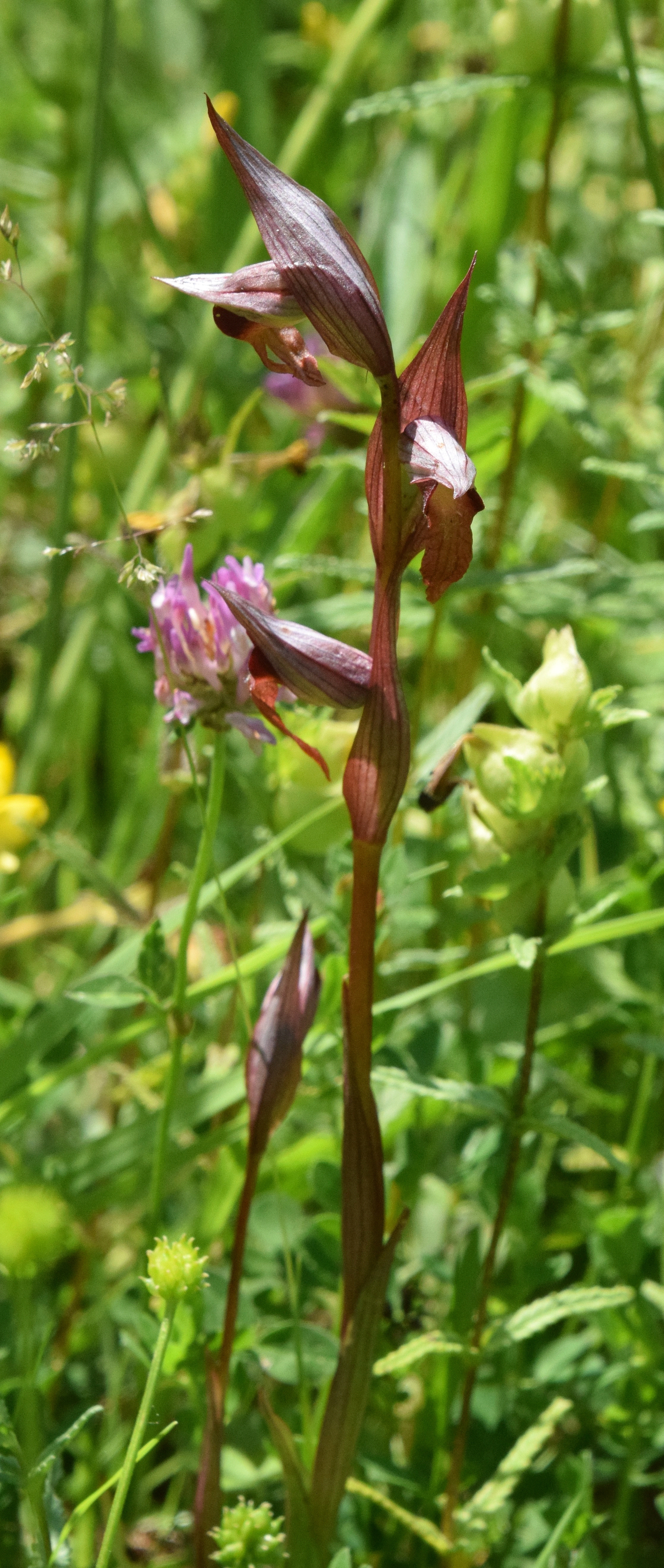
Tongue Orchid

In 2021 a specimen was found within the site featured herein that was at first assumed to have been planted. But after ongoing assessment by eminent botanists and Kew Gardens, by 2023 it became accepted that was unlikely since it grows on private land with limited public access, though it remains unknown where the now three stems could have originated from. A conspiracy theory that someone must have sneaked in out of hours and planted the original item has been dismissed.

One Tongue Orchid stem had gone over, but the second was in pristine condition (pictured below) with a very small third stem alongside it. My understanding is these particular plants are cited as Serapias bergonii (see here), for which there appears to be more than one common name if indeed consensus has been reached. I will not go into the detail. Each stem can grow to 50cm, along which are up to 12 streaked, deep red bracts containing the lax flowers of varying tone. Those are hairy in the centre with lips up to 30mm. At the time of our visit it was only possible to take pictures looking into the sun, but that is how the plant was experienced.

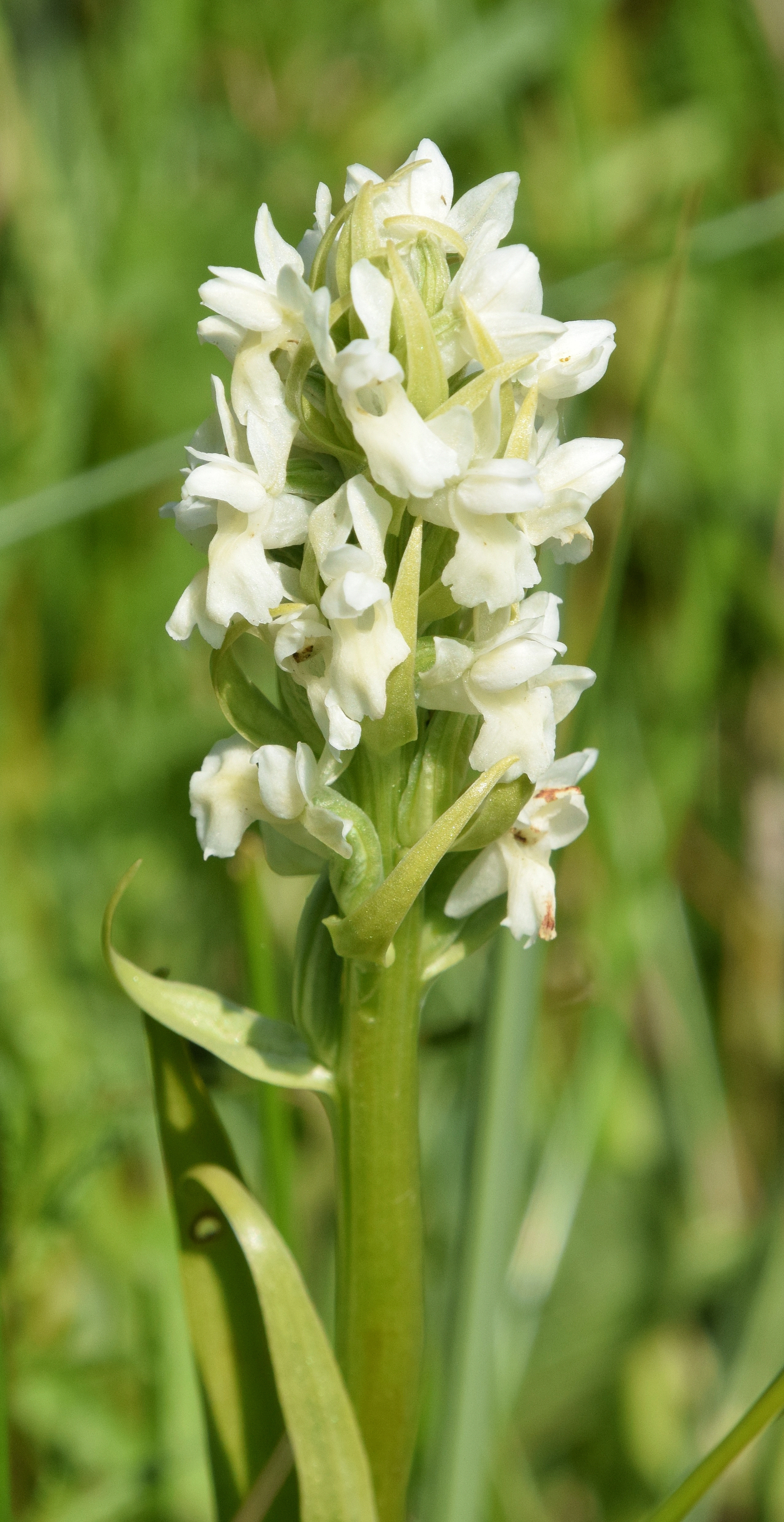
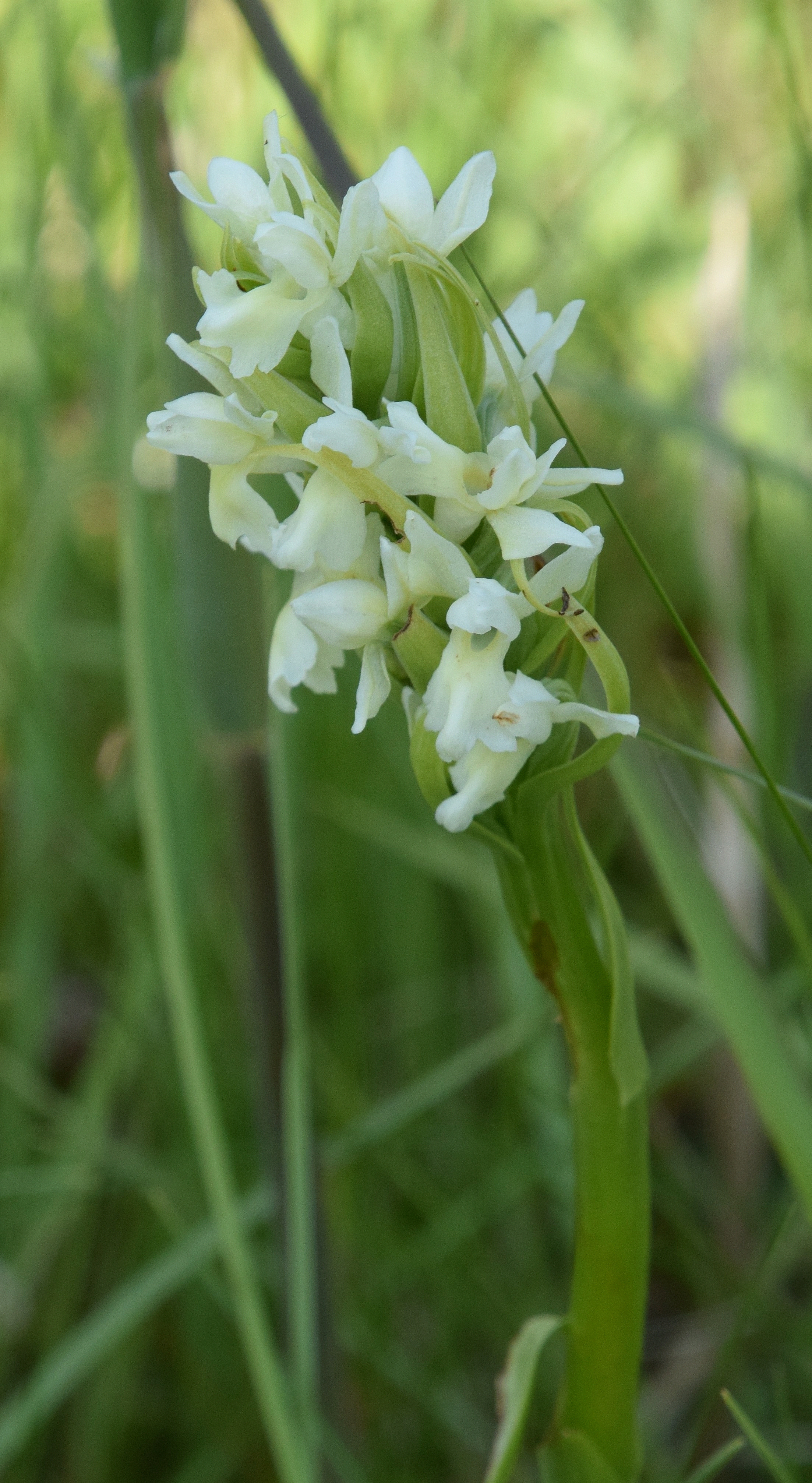
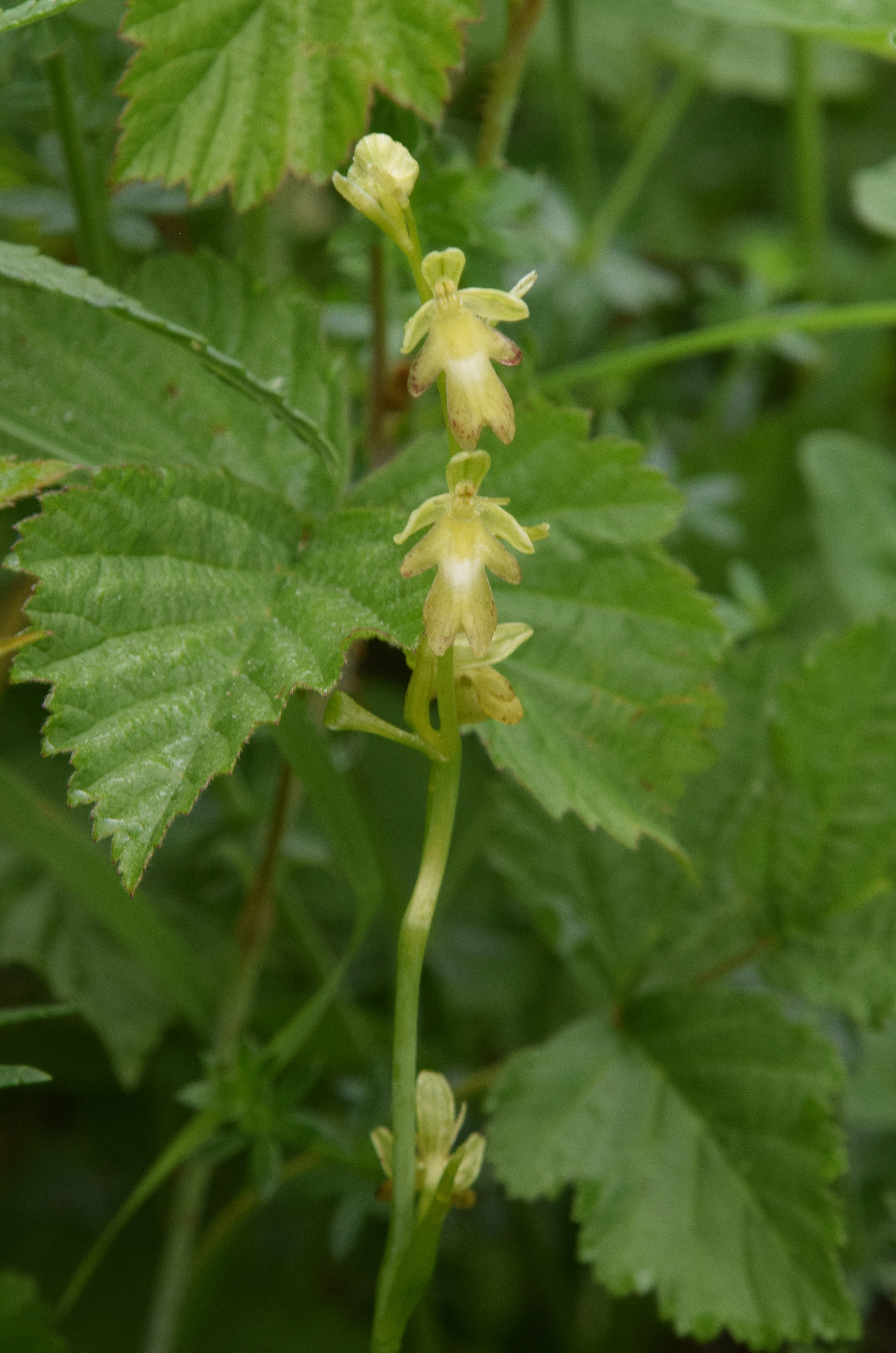
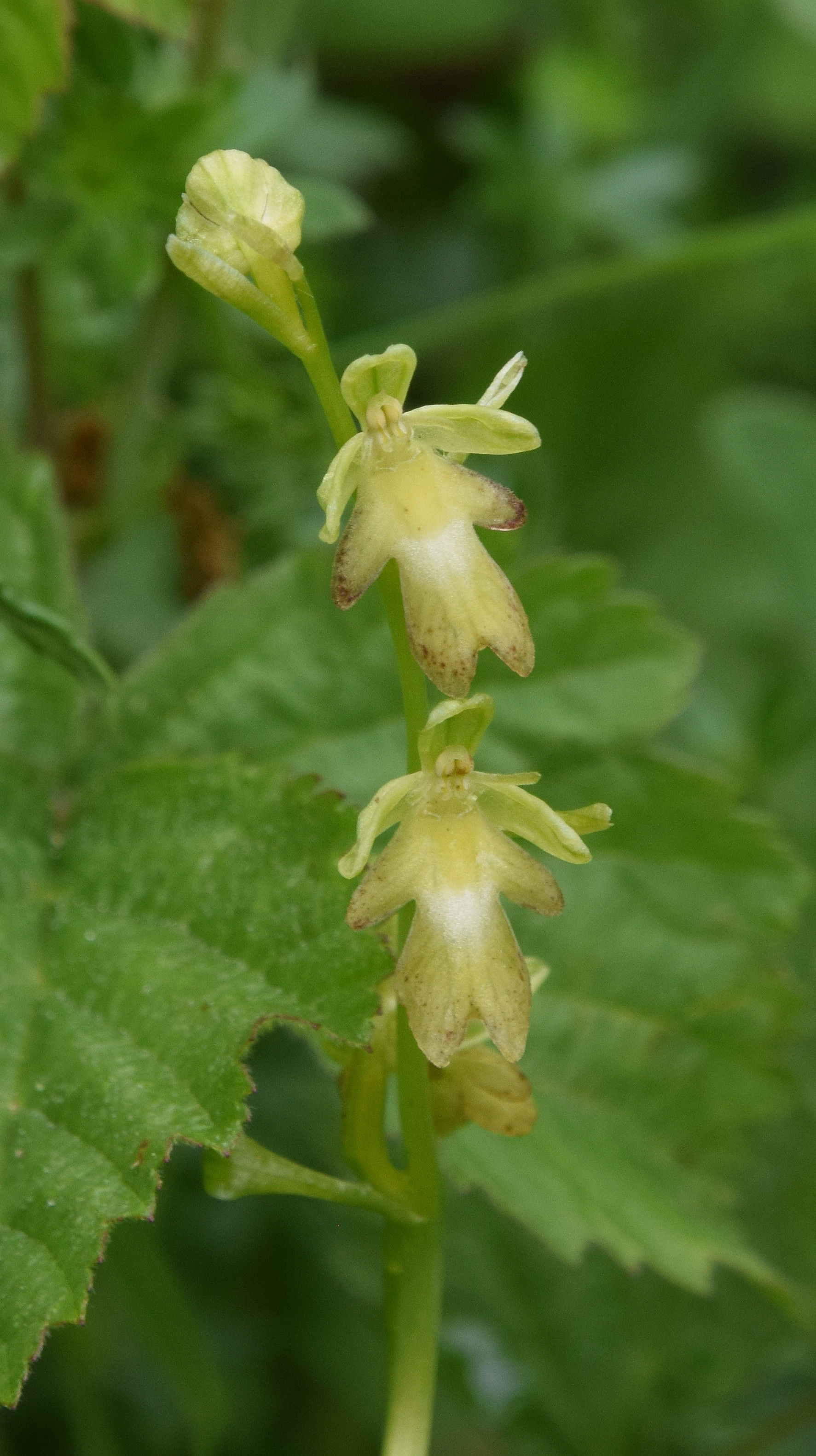
We were now conveniently placed to observe the critically endangered var ochroleuca form of Early Marsh Orchid (Dactylorhiza incarnata). In this area of northern Suffolk a network of remnant valley fens survives, preserving a habitat that has long been lost more widely to modern agriculture. Amongst these, that I cannot disclose herein, is one of just two remaining sites for our day’s second quest. As soon as I researched this great rarity, it was something I just had to see. Equipped with a GPS from our original source, we located nine plants here that were all in immaculate condition, in a spiritually uplifting, spring-fed landscape from a long-past age that as so often when Orchid hunting no longer exists in the normal run of things.

Suffolk Wildlife Trust describes these fens as being “strung like a beautiful necklace around the throat of north Suffolk”. This one offered my third var ochroleuca, the others being Marsh Helleborine (see here) and Fly Orchid (previous post). These forms lack the coloured pigments typically found in the three species, resulting in a lighter, often cream-green or yellowish-green appearance. Care must be exercised in identification, since two white forms of EMO also exist. But a botanist we met at the earlier site matched them to the Cole and Waller field guide he brought with him, so we were all satisfied these plants today were genuine.

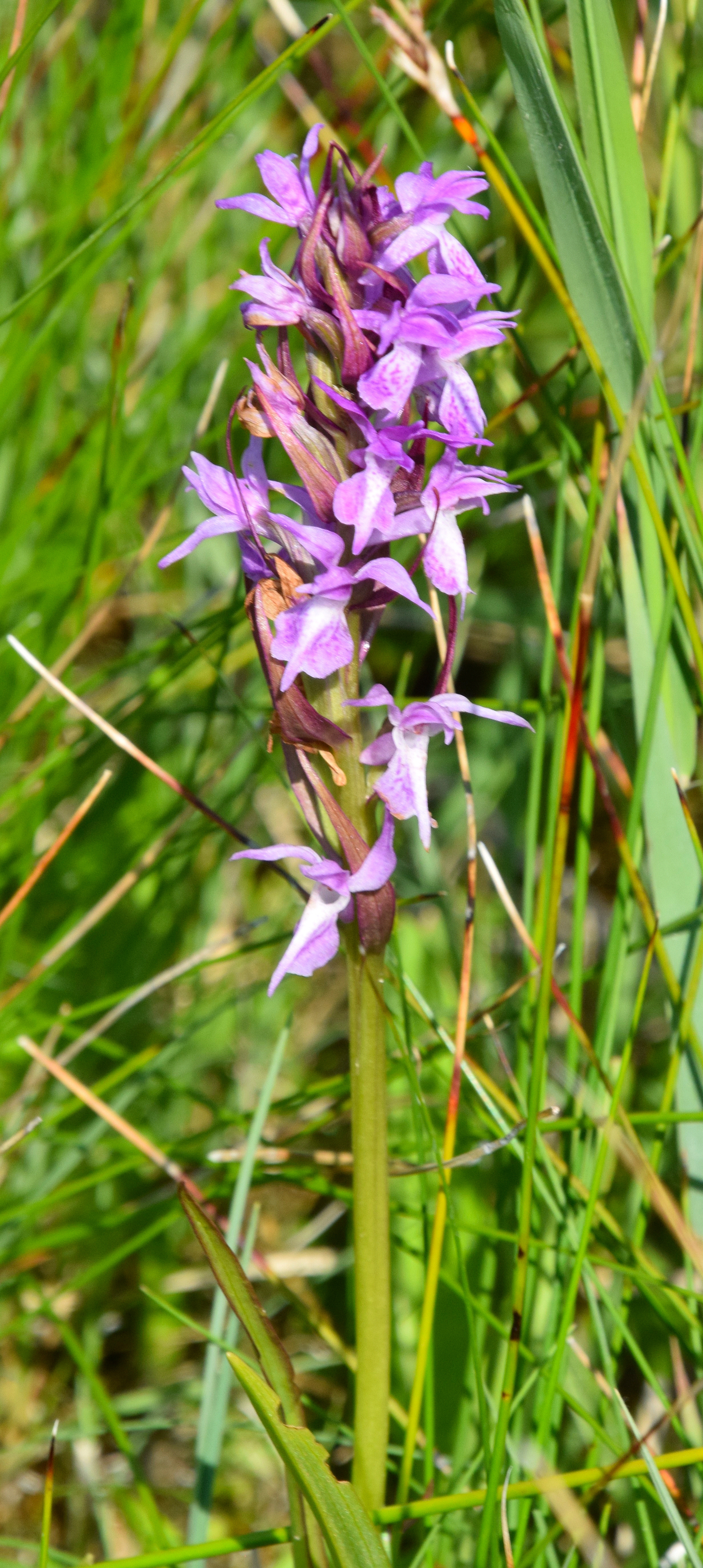
Early Marsh Orchids var ochroleuca and Southern Marsh ssp schoenophila (far right)

Amongst the many Marsh Orchids here were some Southern Marsh Orchid (Dactylorhiza praetermissa ssp schoenophila). This is the sub-species formerly classified as Narrow-leaved or Pugsley’s in southern England, for which this Suffolk site is a known location. Their stems are thinner and weaker than SMO, the leaves narrower, and the flower spike has a delicate, rather ragged character. I myself have observed schoenophila once before in Hants (here), and that post from last July contains more of the taxonomic background.

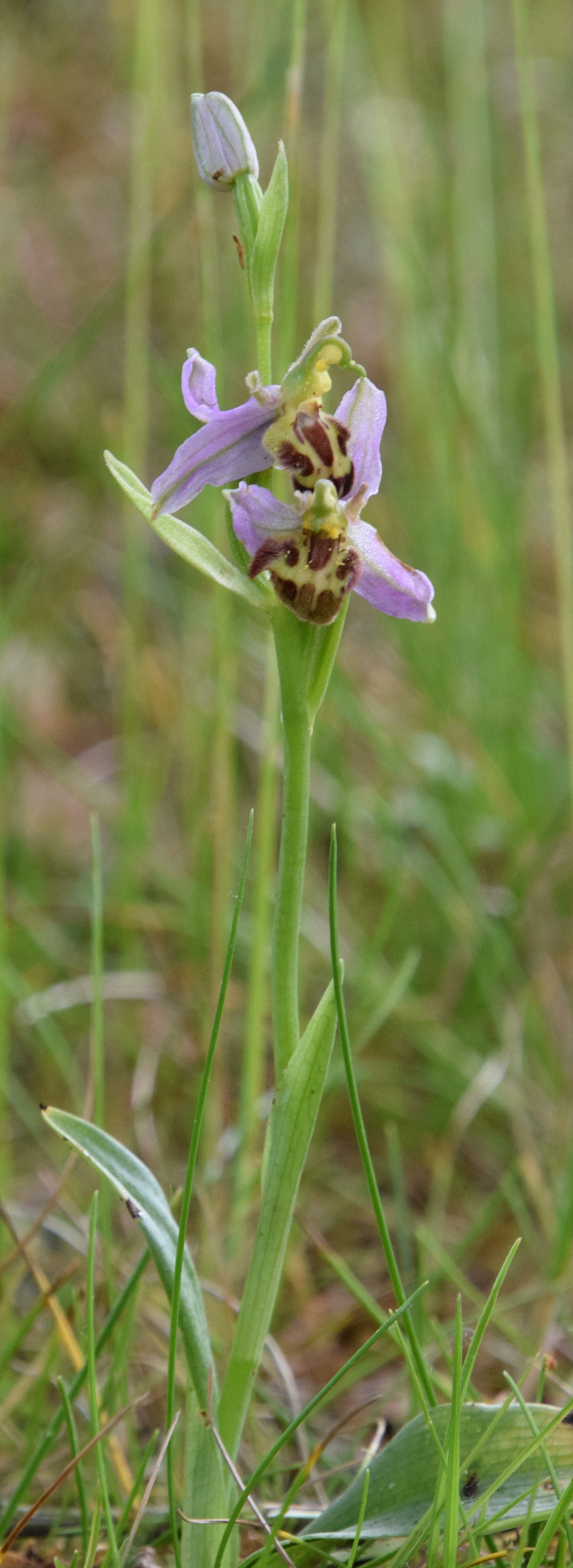
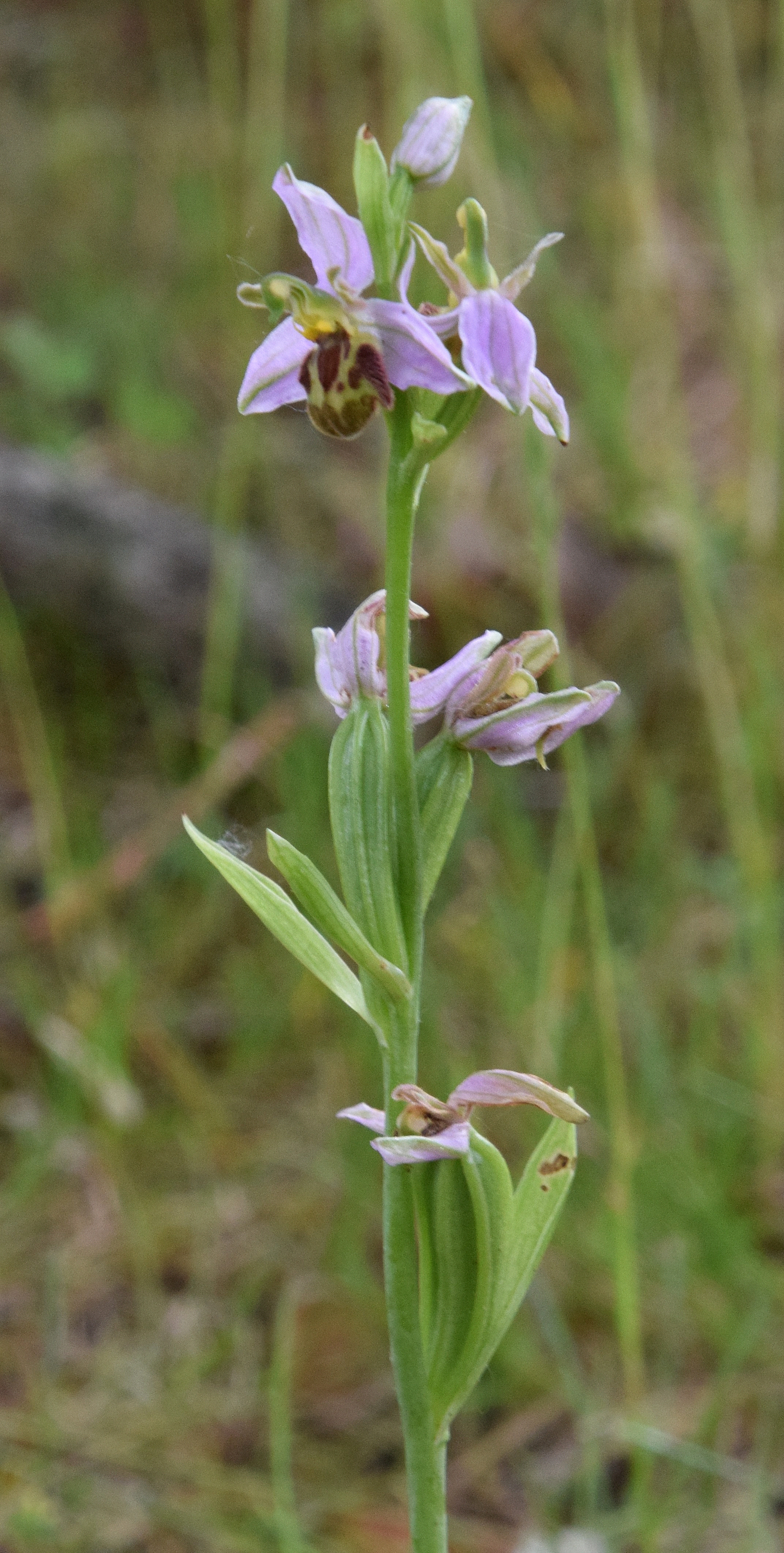
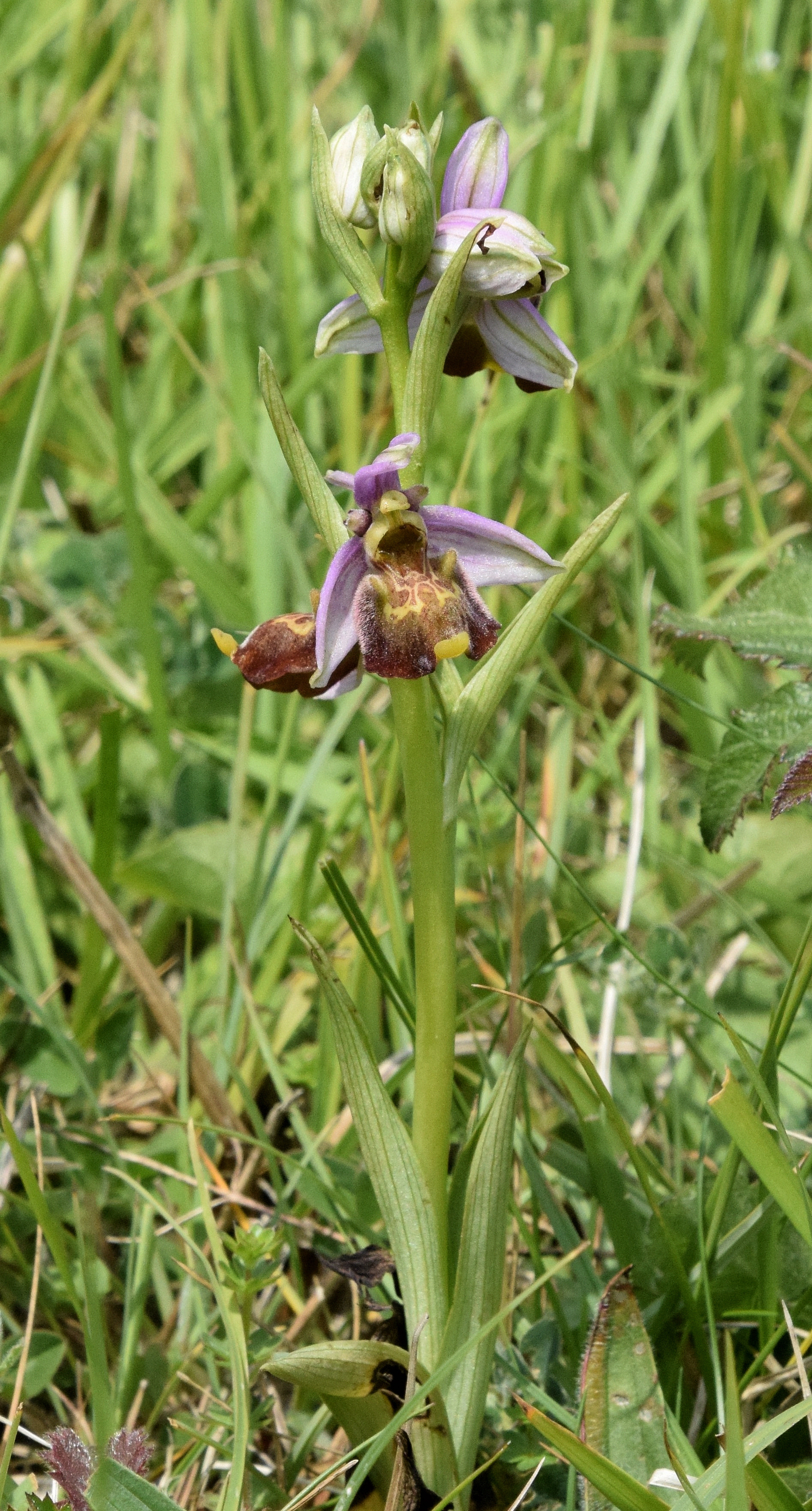
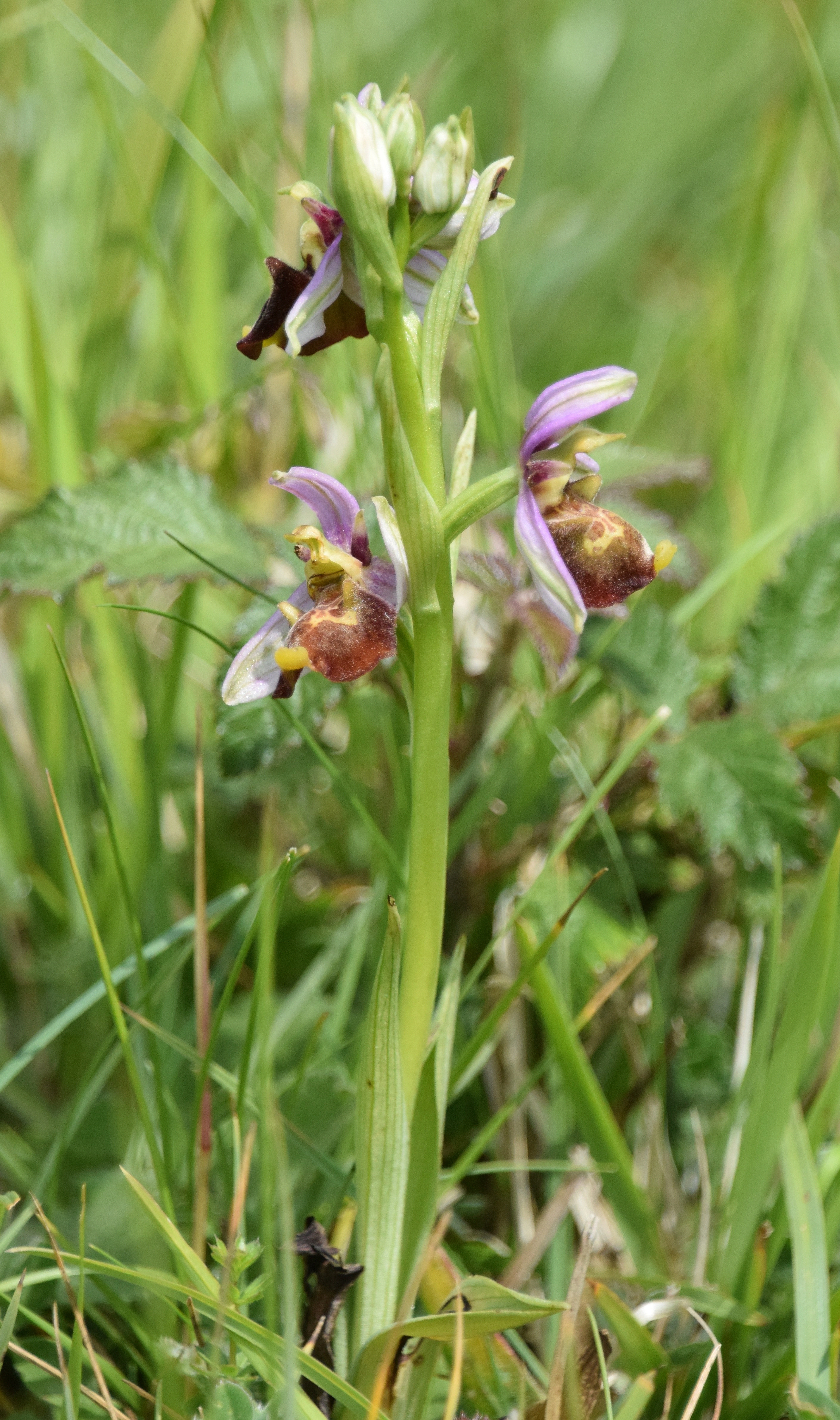
One Orchid I have yet to include in this journal’s coverage of the last three seasons is the familiar but often inconspicuous Bee Orchid (Ophrys apifera – pictured below), simply because I find them in the field so infrequently. The flowers resemble plump, furry bumblebees, and there may be between two and seven per stem. Whenever I do cross paths with them I am always charmed by their attractive fine detail. Plants may appear in a wide variety of habitats where wildflowers flourish, including garden and park lawns and grass verges. Earlier this week I was very pleased to find four stems growing in the car park of my part-time workplace, so the omission can now be remedied.
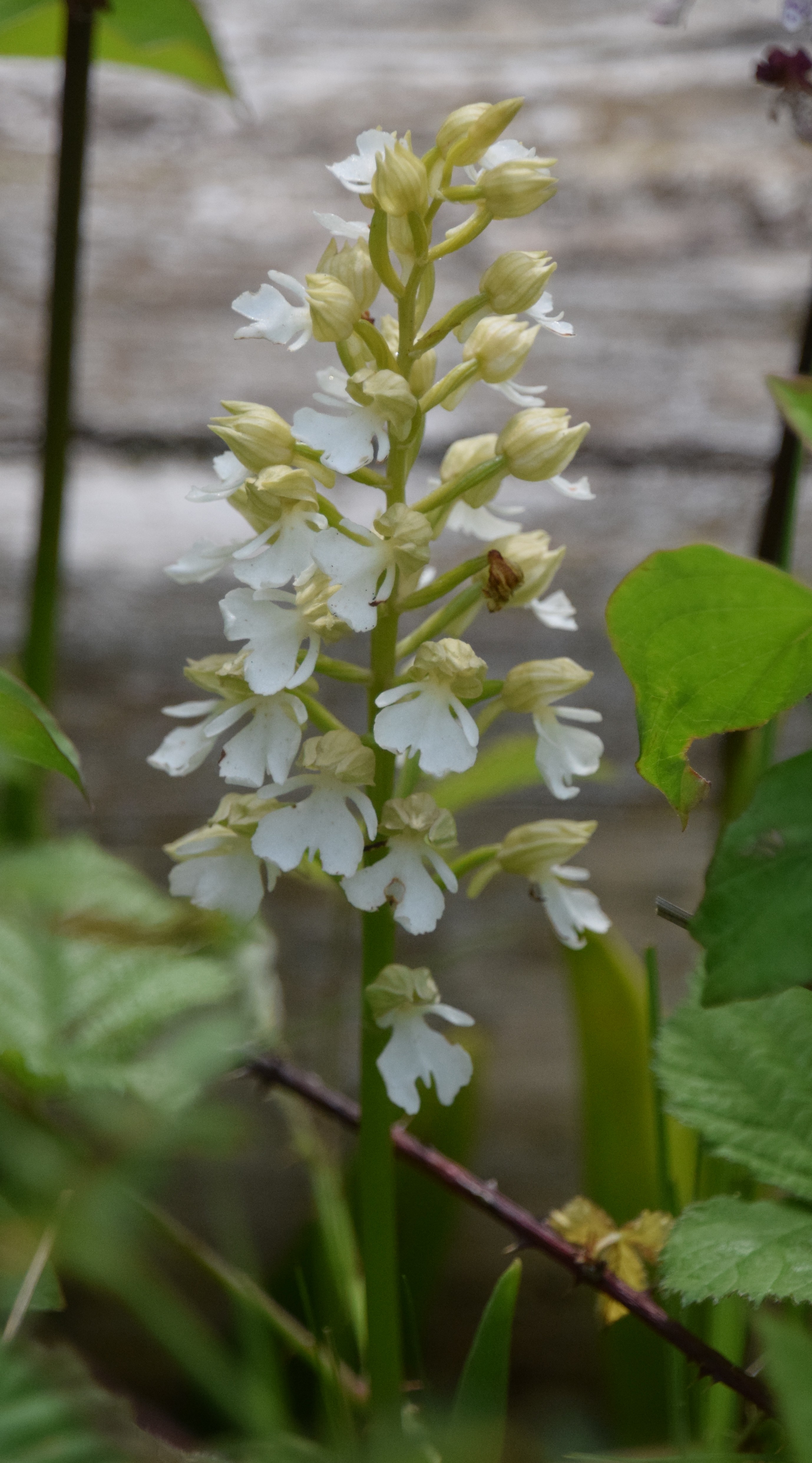
Bee Orchid var belgarum (left) and regular Bee Orchids at Nuneham Courtenay, Oxon

I am reliably informed that the specimen in the left hand picture, and possibly the right are an uncommon form var belgarum, (see here for detail). This variant was first discovered on a roadside verge near Winchester in 1998. Though initially thought to be restricted to that area of Hants chalk downland, it is now known from several other locations in England and Wales; but is extremely rare in continental Europe. When Ian followed up on Friday (13th) the left hand plant had been partly eaten.

Two special Fly Orchid experiences in Kent and Hants – 1st and 4th June

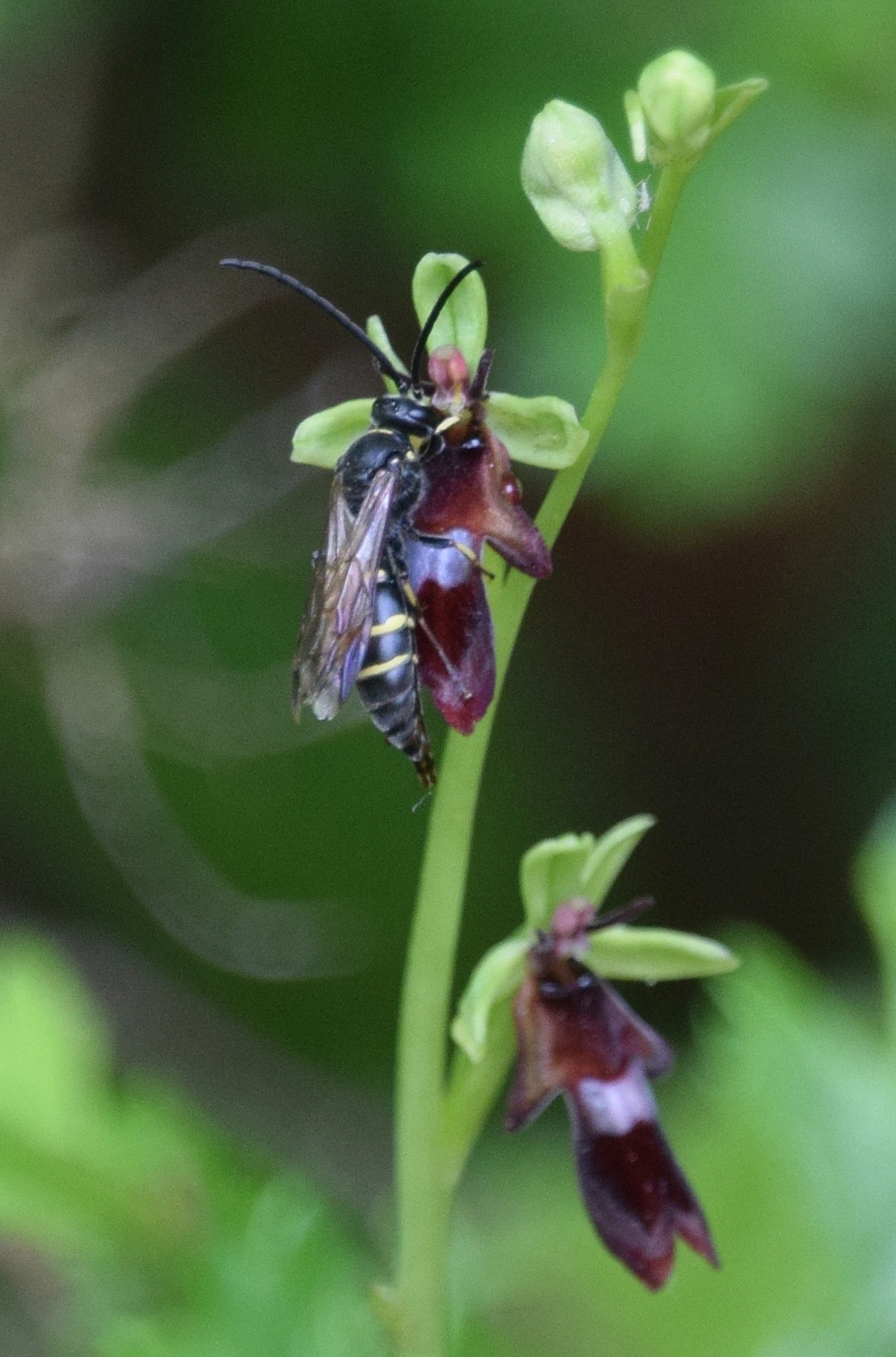
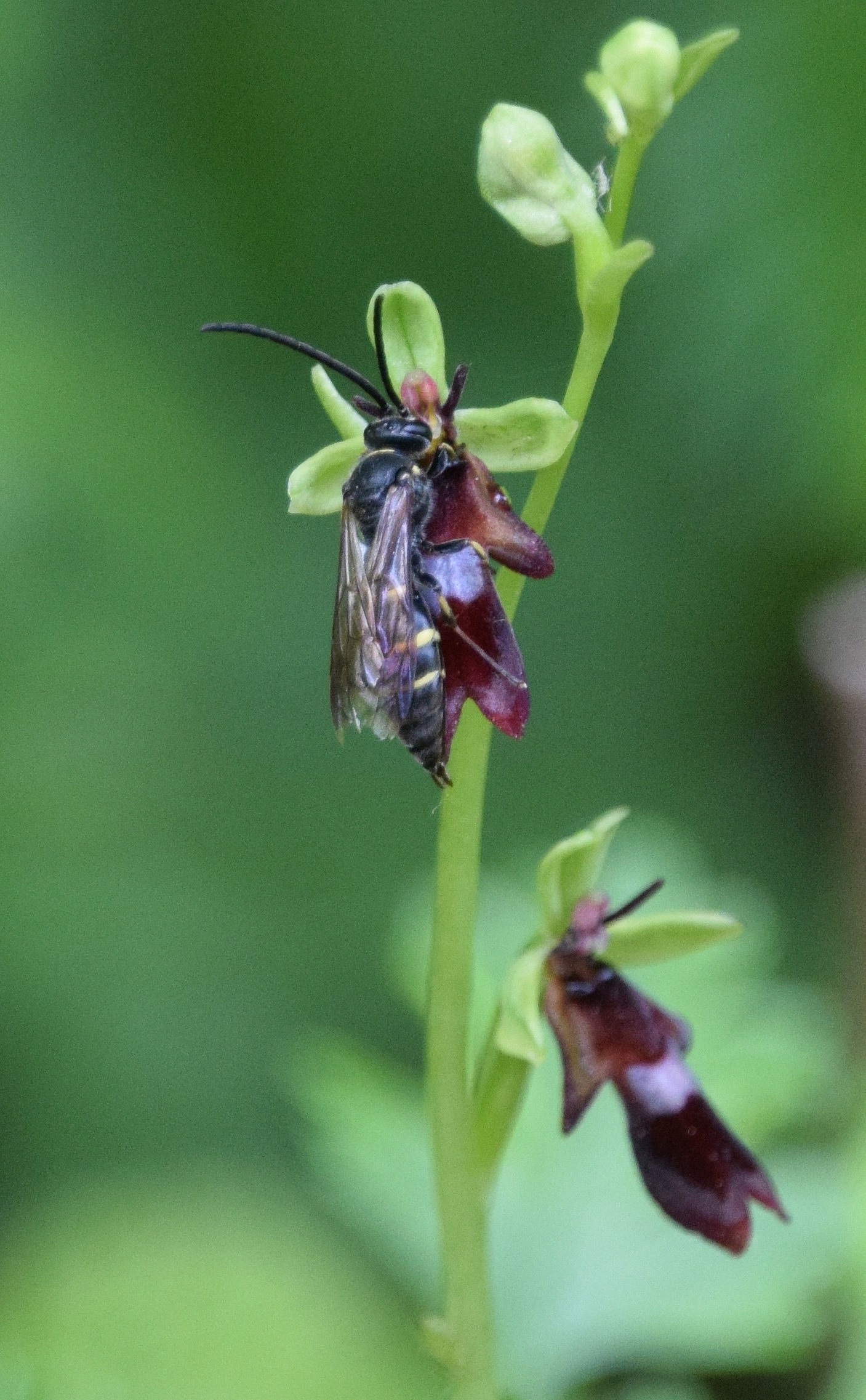
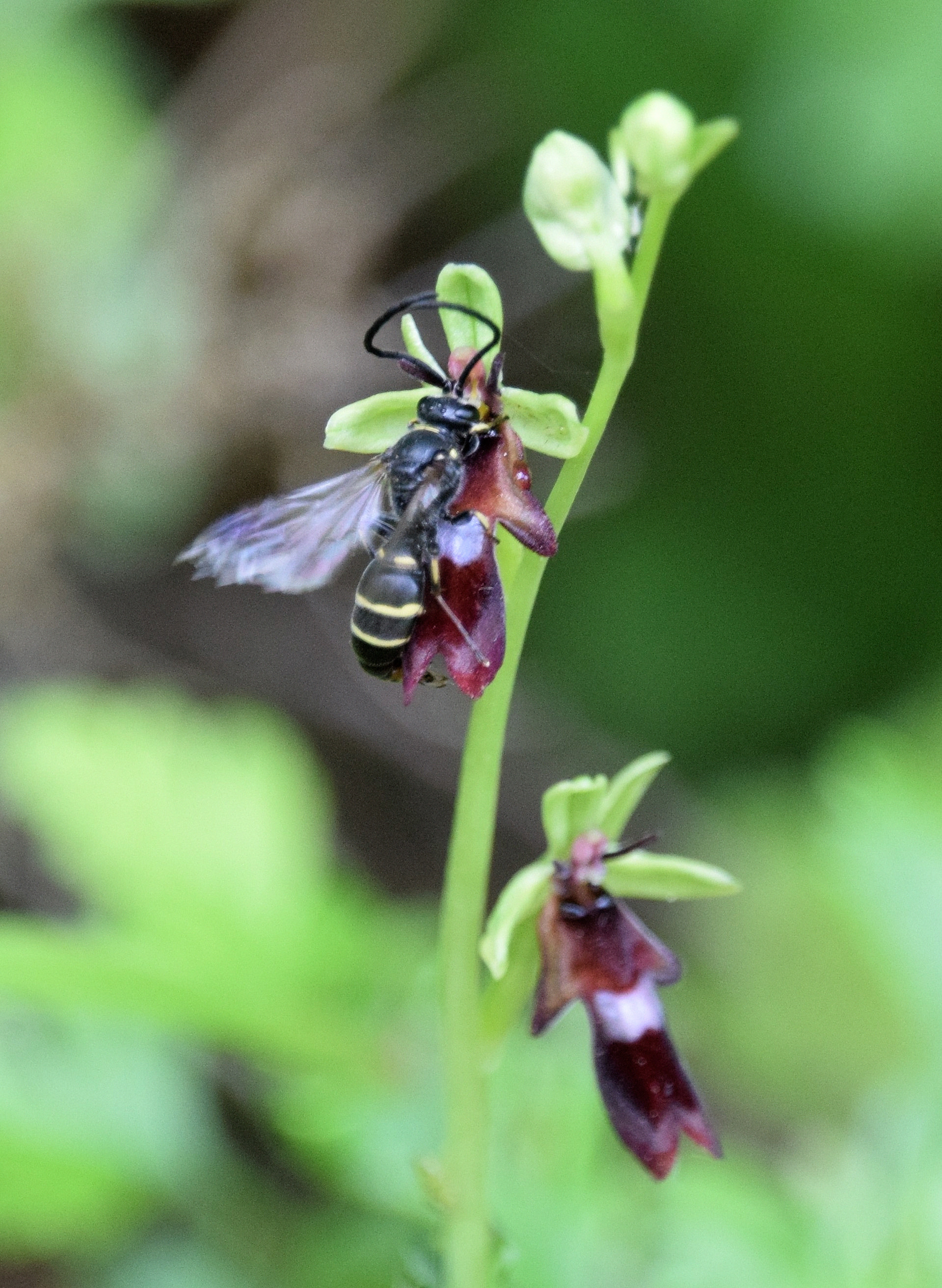
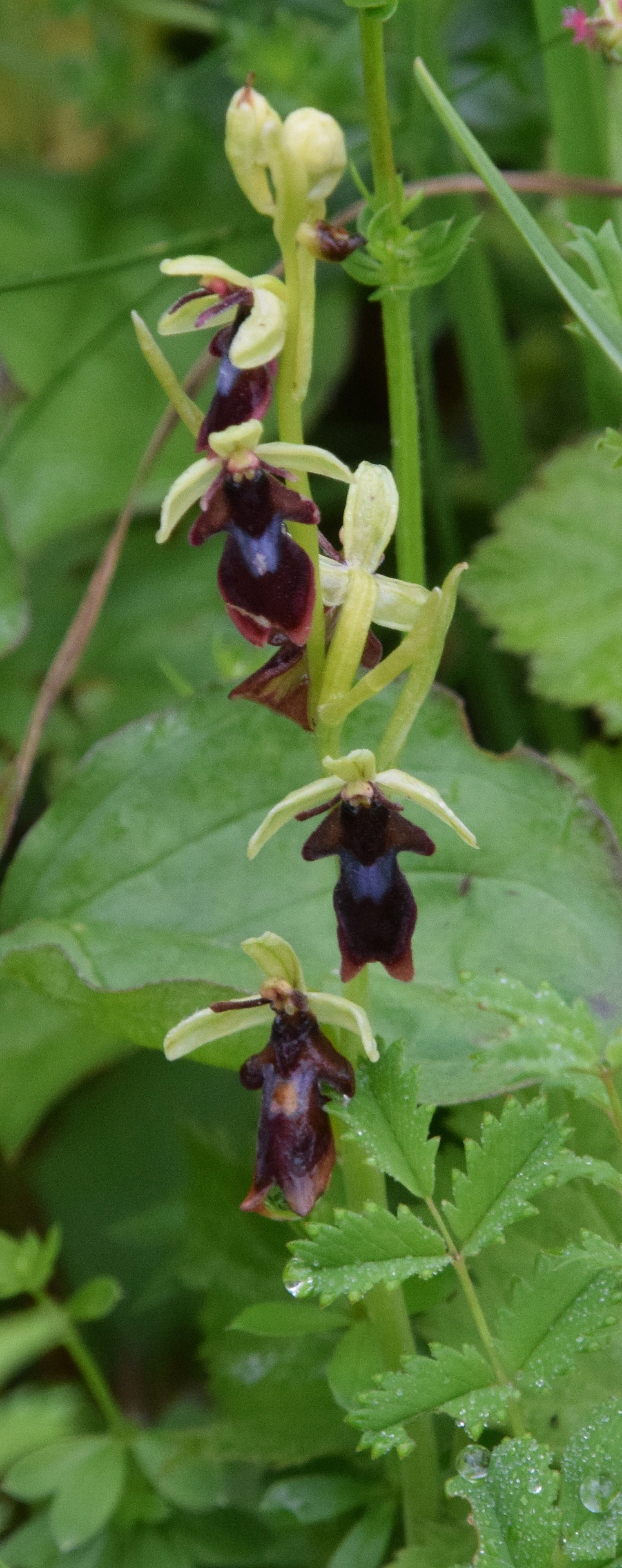
I have until now felt a little underwhelmed when encountering the undeniably delicate beauty of Fly Orchids, the plants being so skinny and the flowers so tiny, but what I will now describe has rather altered that. Twice in the course of four days a week ago I was fortunate enough to gain two quite exceptional records (pictured below).

As the Mariposa tour group I joined was leaving Bonsai Bank on 1st an excited shout went up from one guide Richard Bate to the other, Jon Dunn. Richard had found a Wasp attempting to mate with a Fly Orchid flower, something that is rarely actually witnessed in the field. Indeed both guides had observed this just a couple of times each before. Richard called participants forward to take pictures under supervision, then when he judged the insect was not bothered by our attentions I moved a little closer. By now I was lying on the ground while others stood around me getting their own pictures using the back of camera technique. I always look through the viewfinder. I had no idea whether I was getting anything decent, given glare on the camera screen and since I wear varifocals, but was eventually pleased with the outcome.

The process of pollination through sexual mimicry by Ophrys (Bee, Fly and Spider) Orchids is known as pseudocopulation. As well as the visual deception the plants also replicate the sexual pheromones (scent) of the pollinator species, which can be more attractive to male insects than that of females of their kind. In falling for the deception male wasps or bees contact the plants’ pollen sacs which attach to their bodies and are then transferred to the next flower they visit. To ensure reproductive isolation each Ophrys species, of which there are many abroad targets separate pollinators upon which they are completely dependent for their survival, though hybridisation of course does occur (see here). Pollination of around 10 per cent of an Ophrys population is sufficient to preserve it, since each plant can produce up to 12,000 minute seeds.
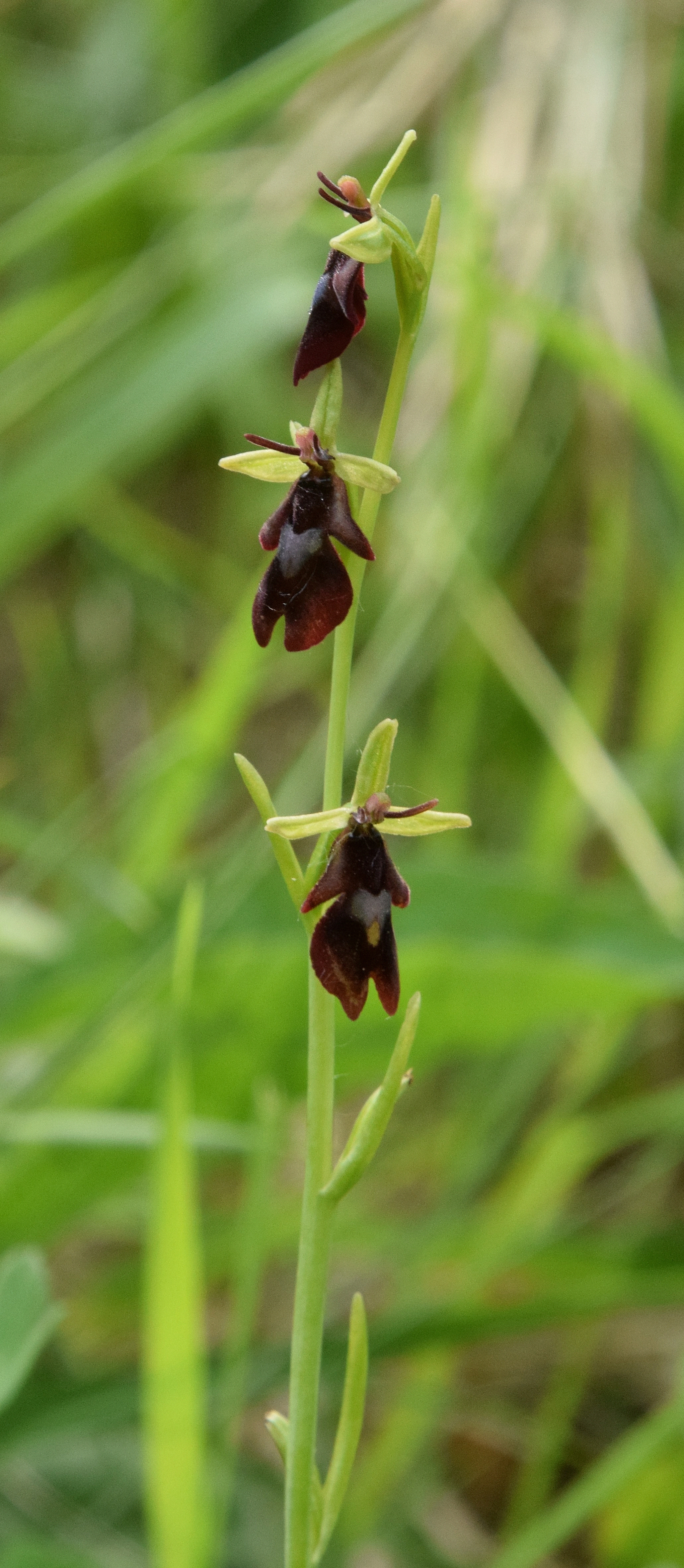
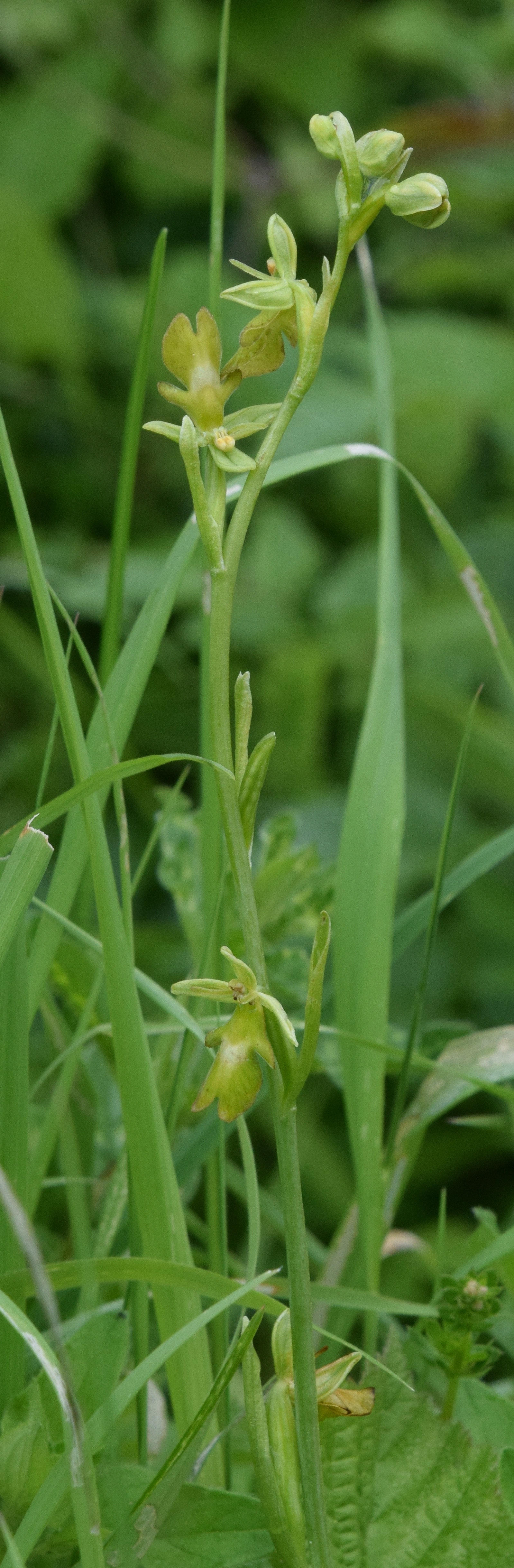
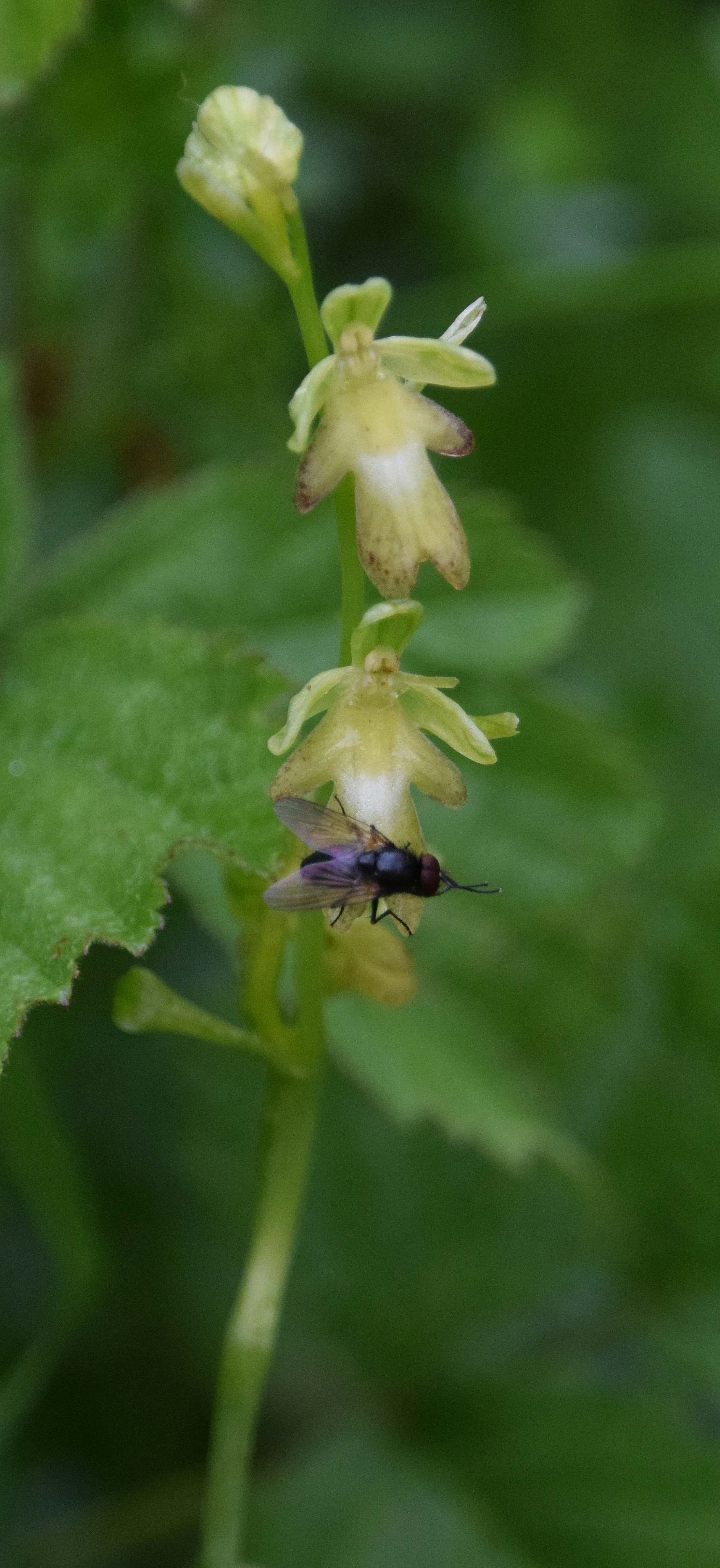
On the morning after that tour I was tipped off about a location in Hampshire for the rare green colour form of Fly Orchid, designated var ochroleuca. This seemed well worth going to see, Tuesday was a wet day, but I made an early start on 4th arriving on site at 9am. The two stems took some finding, as I paced up and down at the foot of a steep and densely vegetated former chalk pit side, trying to bring the cursor on my phone screen into my quest’s w3w square. Then all of a sudden there they were, a classic case of getting my eye in. The term ochroleuca refers to pale yellow or creamy-white forms of Orchids, that occur in some genera and are usually highly localised. I had previously encountered this in Marsh Helleborine (see here), while a form of Early Marsh Orchid occurs at just two sites in Suffolk and Cambs.
Though I often state that self-found things are the best, I am of course indebted to others for locating the twin subjects of this post. My thanks are due to Ian Lewington who spent hours searching for the second item, then very kindly gave me the precise location. As is customary when reporting on rare and vulnerable variant Orchids I cannot disclose that detail herein.

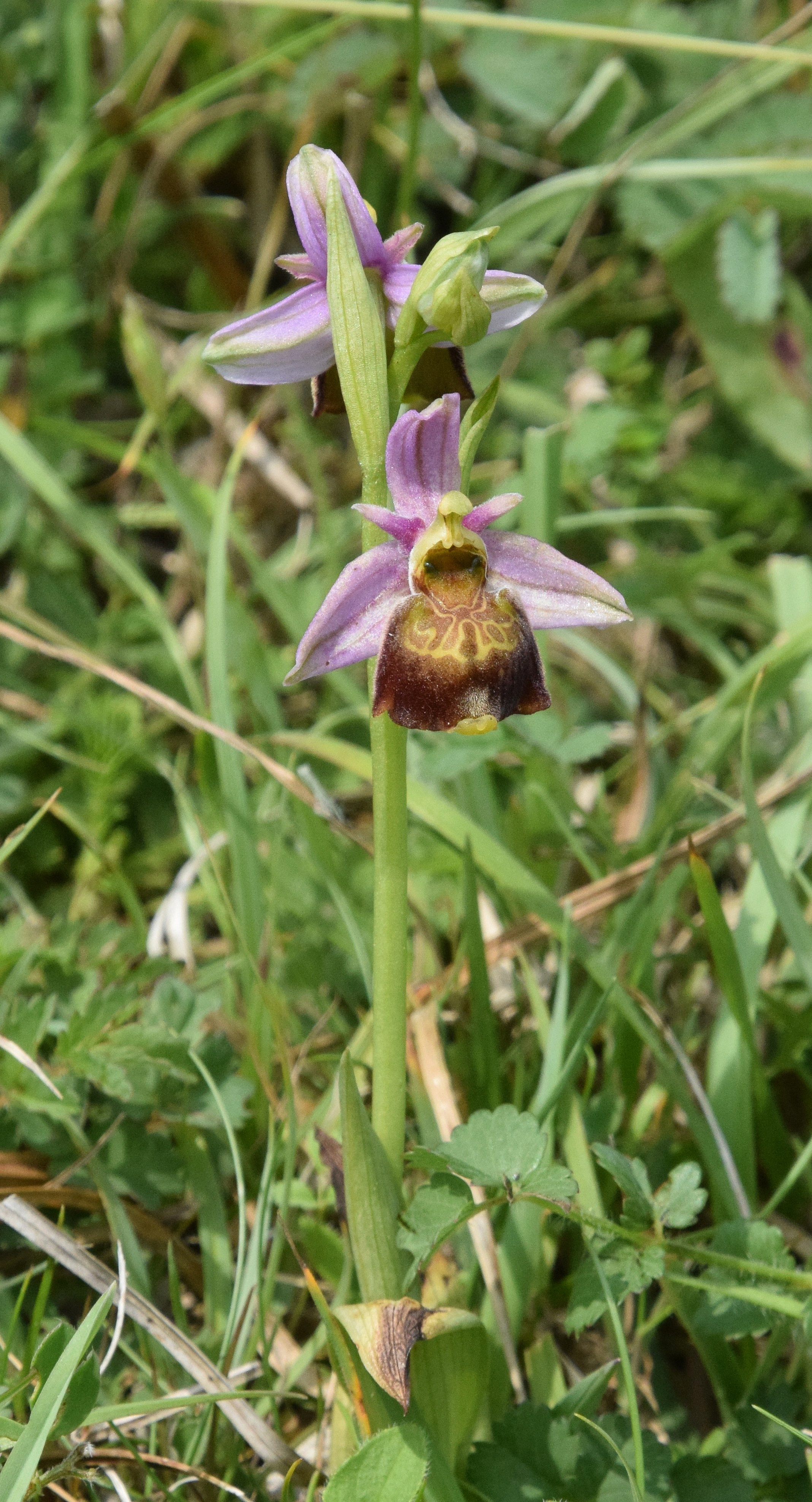
Late Spider Orchid at one Kent site, and Monkey Orchid at KWT Park Gate Down – 1st June

The first of these rarities, being a lifer was my top target for the featured Mariposa Kent Orchid tour (see here). And having already recorded Early Spider Orchid in Dorset earlier this year (here), its later flowering relative was top of my remaining wish-list. I had only previously observed just a few Monkey Orchids at BBOWT Hartslock and in les Cévennes, France; so as in the previous post the opportunity to experience them in greater numbers was a third reason for my participation.

In the afternoon we were taken quite briefly to a location that at the request of the tour guides I will not name. Here there were just two Late Spider Orchid in bloom, during what is cited as a poor year for them due to drought. My understanding is this very vulnerable item occurs at the far northern edge of it’s European range in just a few locations in Kent, all of which are highly protected. I assume there was some valid reason for not visiting the most well known option, possibly lack of parking space for a tour minibus and following car, or group footfall.

Late Spider Orchids (#1 left and centre, #2 right)

The specimens pictured above were nonetheless in pristine condition, which could possibly be a third reason. This orchid grows to between 10 and 50cm in height and each stem carries up to 10 large flowers, the quite distinctive lips of which are large and square with complex patterns that stand out against dark brown velvety backgrounds. The plant grows only in calcareous soils, and at these managed Kent sites the sward must be mown or grazed appropriately to meet their very particular needs. Further afield LSO is found throughout western and central Europe, but is in steep decline across much of its range due to ongoing habitat destruction.

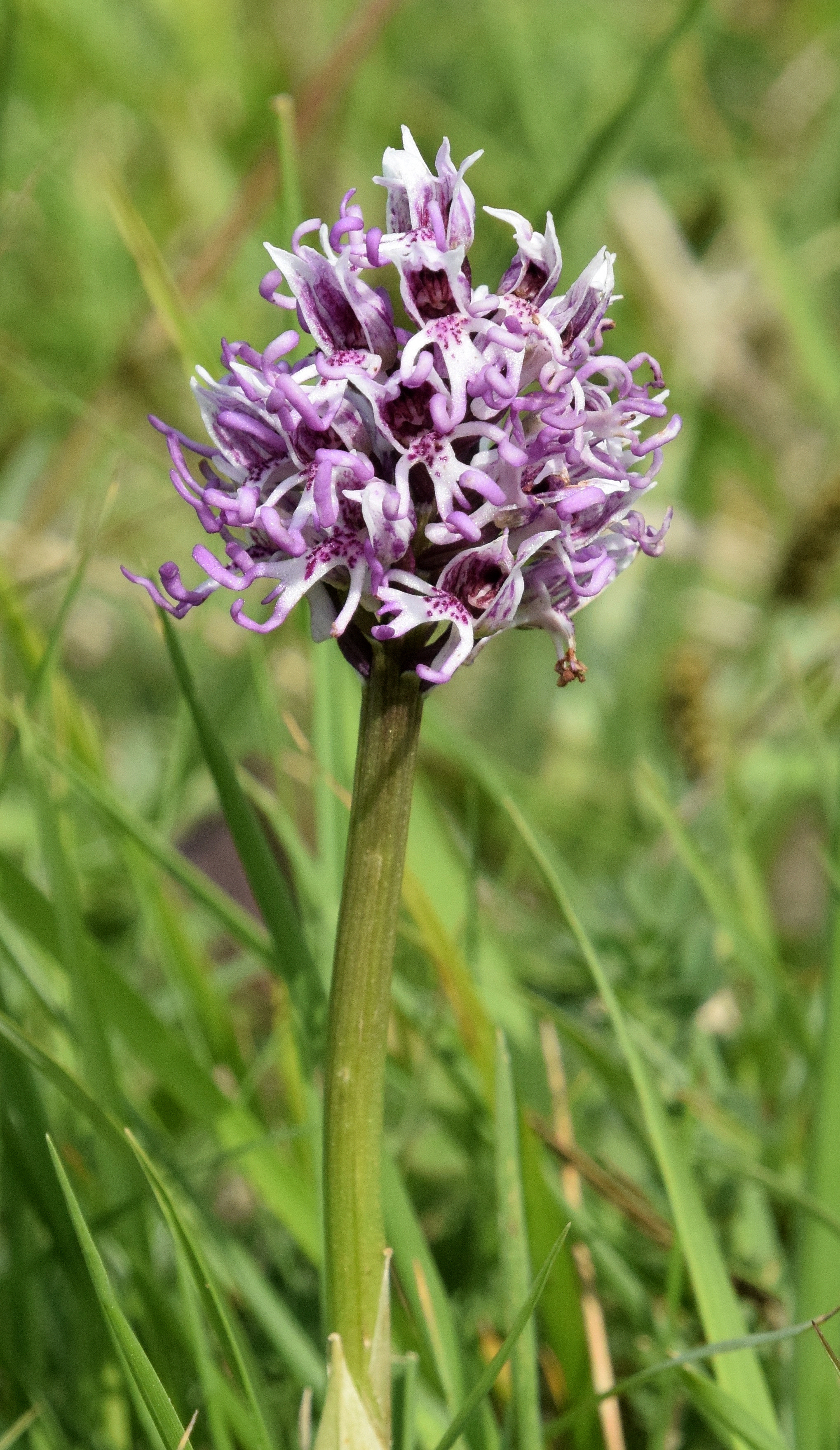
After two more stops to build the trip list we ended the day at the rather remote Park Gate Down (CT4 6NE – TR168459 – see here), a 7ha (17 acre) ancient chalk grassland reserve on the east side of a dry valley. This is the best site nationally to observe my third trip target, Monkey Orchid, and good numbers soon announced themselves as we walked along the slope, albeit in a rather stunted and scorched state in the current drought year.

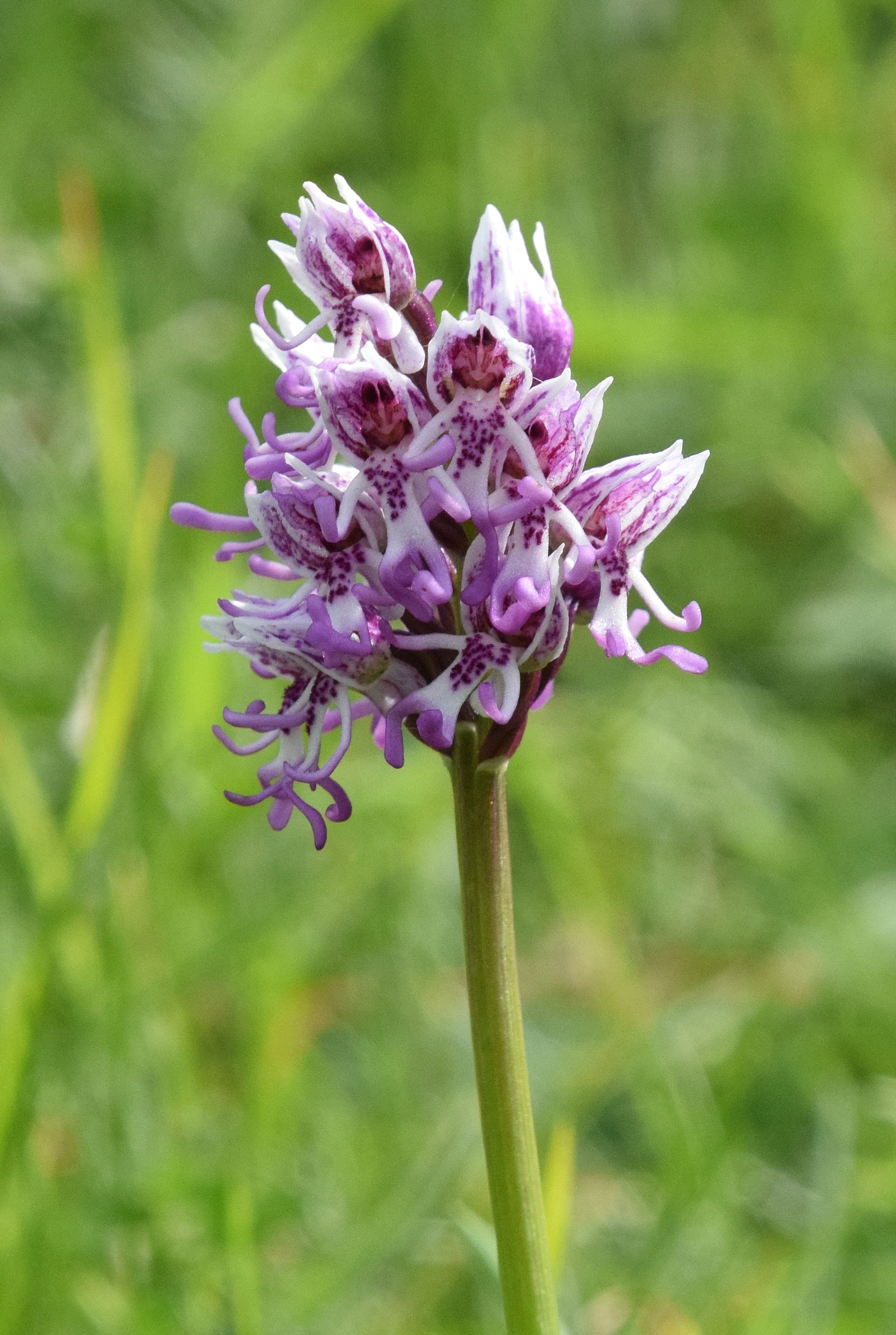
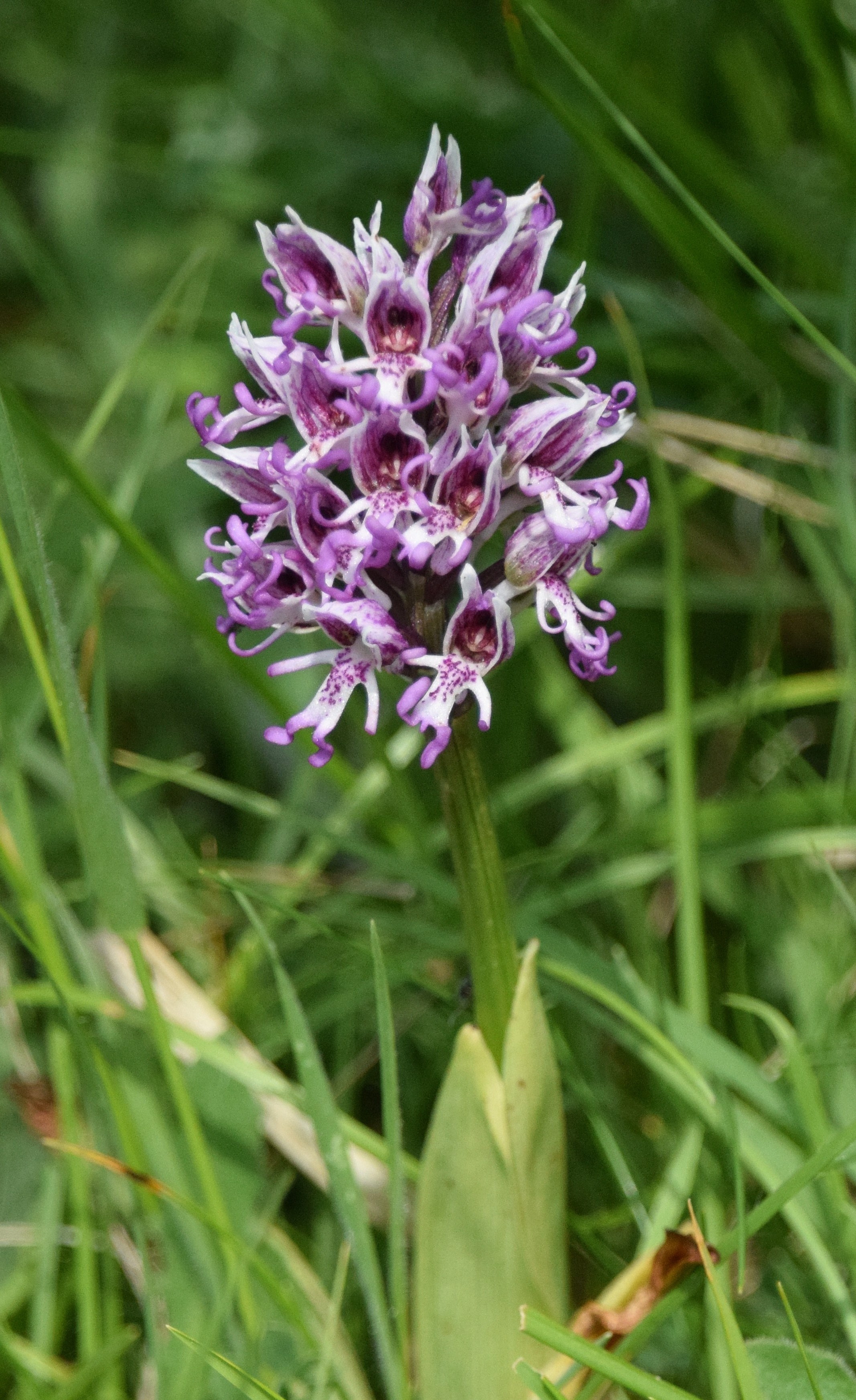
Monkey Orchids

This is a national rarity that occurs naturally in just three places in southern England, two of which are in Kent. The name comes from the pinkish-purple flowers’ resemblance to little monkeys hanging by their hands and feet. These flowers have an unusual hairy or furry appearance caused by papillae, long hair-like projections on the sepals and petals. And the particular arrangement of those mimics a monkey’s face, complete with eyes, nose and muzzle. The plant is also unique amongst British orchids in the flowers opening from the top downwards, creating a rather ragged appearance. But since the mildly vanilla-scented flowers open in quick succession, the spike is at its best for only a short time.

As with Lady Orchid, the county of Kent’s specific blend of mild climate and low-nutrient calcareous soils especially suits Monkey Orchid. But to thrive the second species also requires open but sparsely vegetated chalk and limestone grassland habitat that has become increasingly fragmented in southern England over time. At this site the Kent Wildlife Trust has long maintained those conditions through a careful grazing regime and removal of more aggressive plants, so these orchids are not crowded out as they otherwise would be. That conservation effort was founded by former KWT chair Hector Wilks, after whom this reserve is now named. The openness of the habitat was very noticeable as we walked around. Late Spider Orchid also occurs here in some seasons (see here).

Around 25 of the 52 orchid species found in Great Britain can be located in the Kent Downs National Landscape. We observed eight other Orchids at Park Gate Down today: Common Spotted Orchid, Chalk Fragrant Orchid, Pyramidal Orchid, plentiful Common Twayblade, good numbers of Greater Butterfly Orchid, a few Fly Orchids, and single Lady and Musk Orchids. The Monkey Orchids being some way below their best this year, I will have to re-visit in a more typical season.

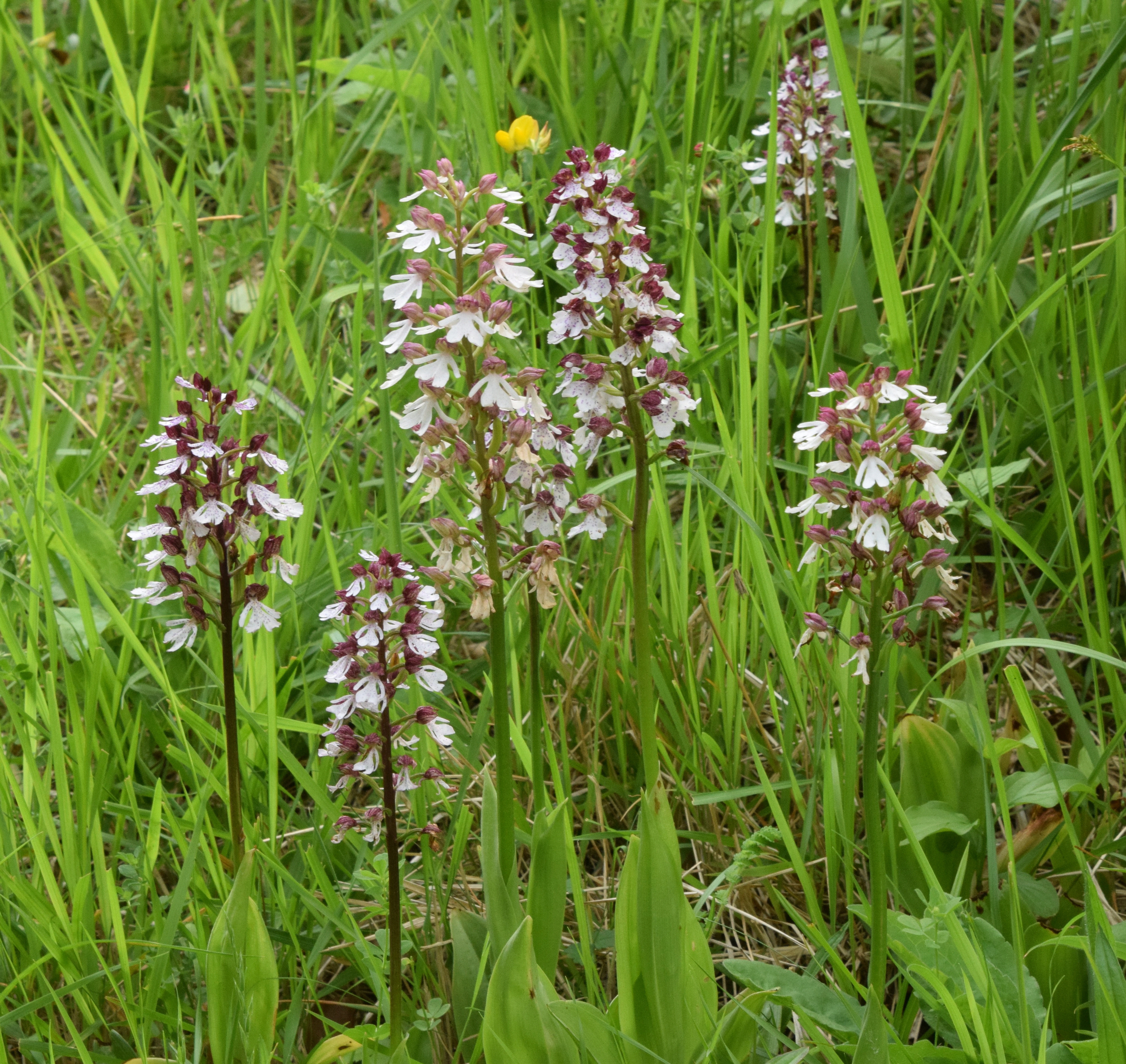
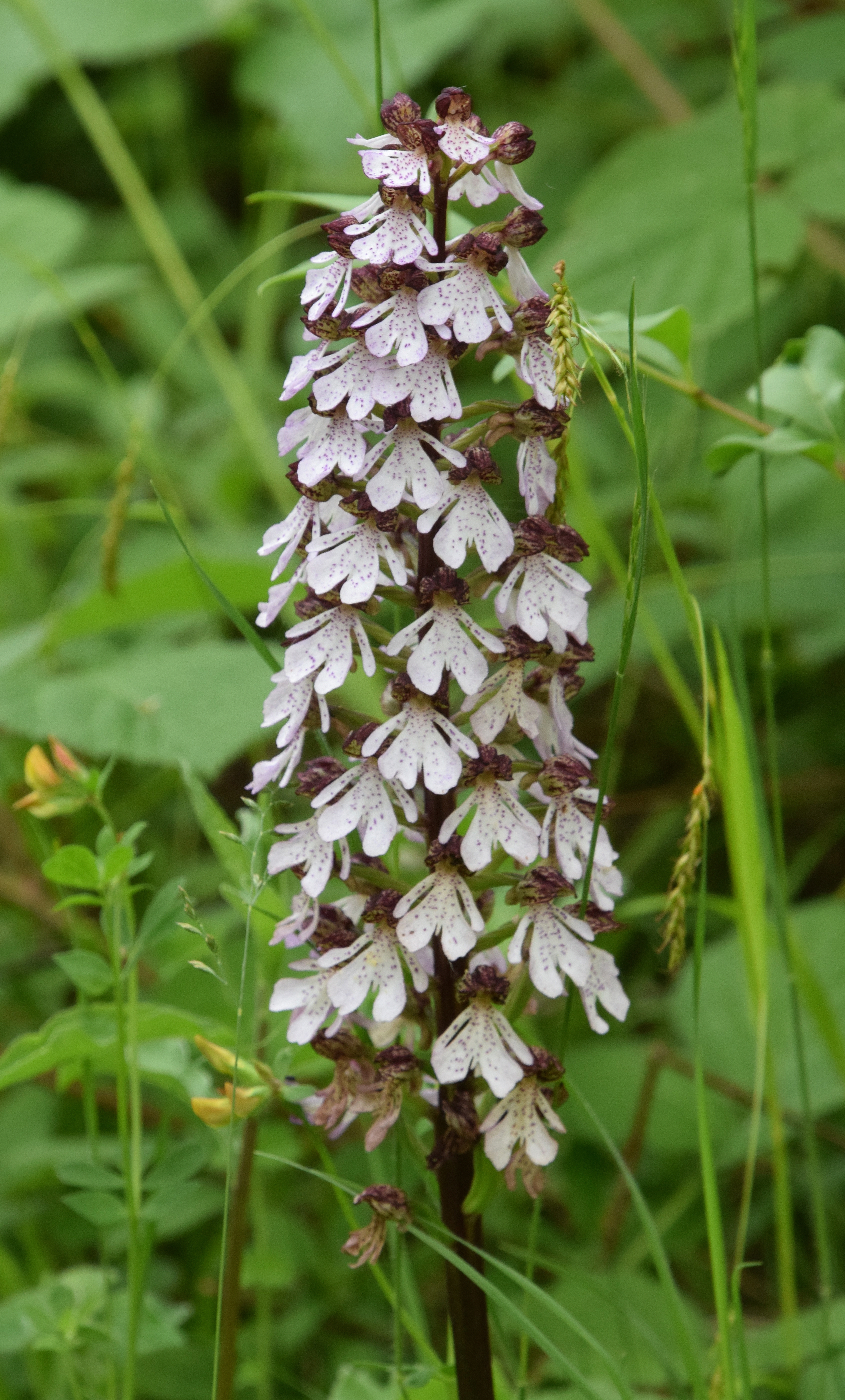
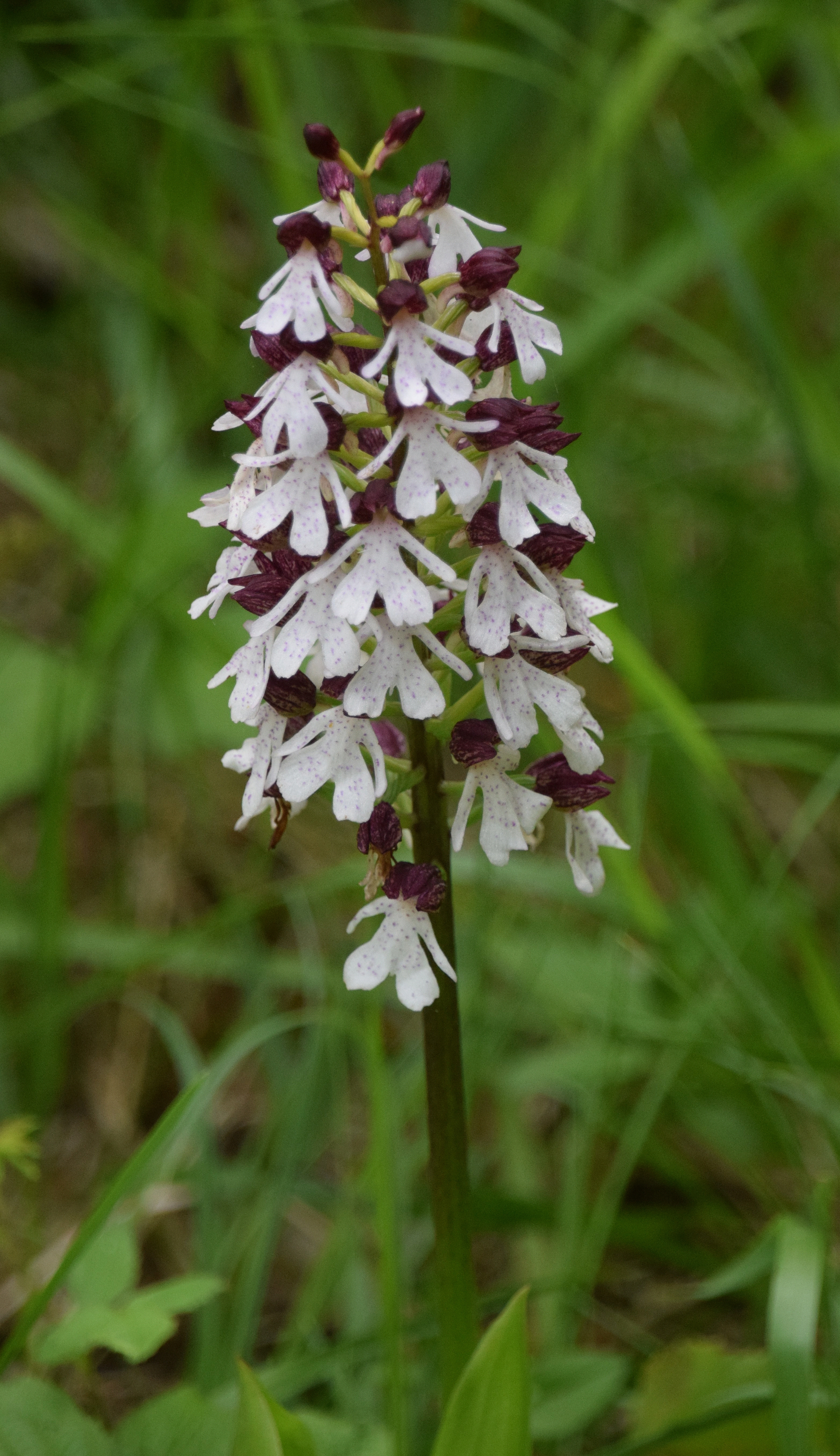
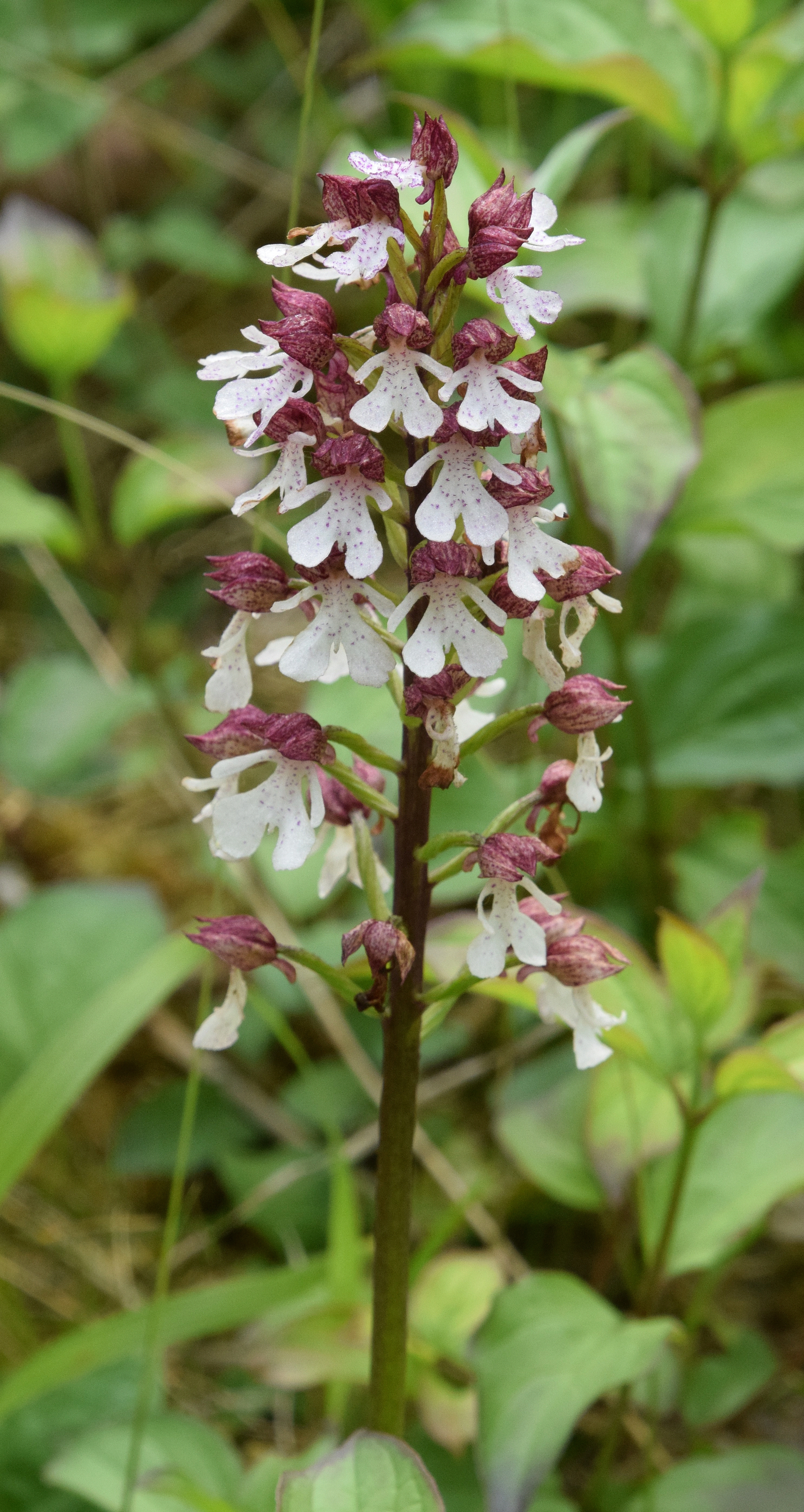
A profusion of Lady Orchids and several others at Bonsai Bank in Denge Wood, Kent – 1st June

I place this post’s lead item amongst the most attractive of Orchids. But nationally I had only recorded the now lone parent plant of BBOWT Hartslock’s Lady X Monkey colony in Oxon (see here), and some in les Cévennes, France. Hence I wanted to enjoy them in greater quantity within their Kent strongholds, and so booked onto one of Mariposa’s twin Orchid tours over this weekend. What transpired in the morning here greatly exceeded my expectations.

Lady Orchids

Bonsai Bank (CT4 7EZ – TR102507) is a large former chalk quarry within Denge Wood, an extensive ancient and semi-natural woodland to the south-west of Canterbury, owned by Forestry England and managed by the Woodland Trust. It is so-named because conifers planted in the past have not grown as normal and so are all rather stunted. Double-figured species of Orchid abound here, amongst which and most prominent are thousands of my sought Lady Orchid. Our guides, Jon Dunn and Richard Bate, said those have never looked better than in this dry and often difficult season in so many other places. The almost two hours spent on site were without doubt the best part of this day.

This spectacular site’s most eye-catching resident, the stately Lady Orchid is so named because the up to 50 flowers per stem suggest figures wearing a bonnet and gown. The most frequent colour form is deep red (pictured above), but I was captivated here by the different variations (below). The top prize today was a white and yellow form, var alba (bottom right).

Lady Orchid is nationally scarce, no longer surviving in around 60 per cent of its historic range due to changes in woodland management, particularly lack of coppicing. This is because the plant prefers well-lit but sheltered areas along paths and rides, in open woodland on calcareous soils. Kent’s geological and climatic blend, in conjunction with sympathetic habitat management, suits them perfectly. Bonsai Bank offers a prime example of these conditions.

  • Well-drained, chalky soils low in nutrients, which prevents root rot and reduces competition from more aggressive plants,
  • Relatively warm and dry climate, that creates favourable conditions for blooming and germination,
  • Traditional woodland coppicing that creates dappled light and open areas, without exposing the plants to scorching sun,
  • Undisturbed, stable ground that maintains the orchids symbiotic relationship with specific ectomycorrhizal fungi. This refers to mutually beneficial associations between fungi and the root systems of particular plants from which they draw nutrients. In return the mushrooms contribute to their hosts’ growth and survival in various ways.

Greater Butterfly Orchids

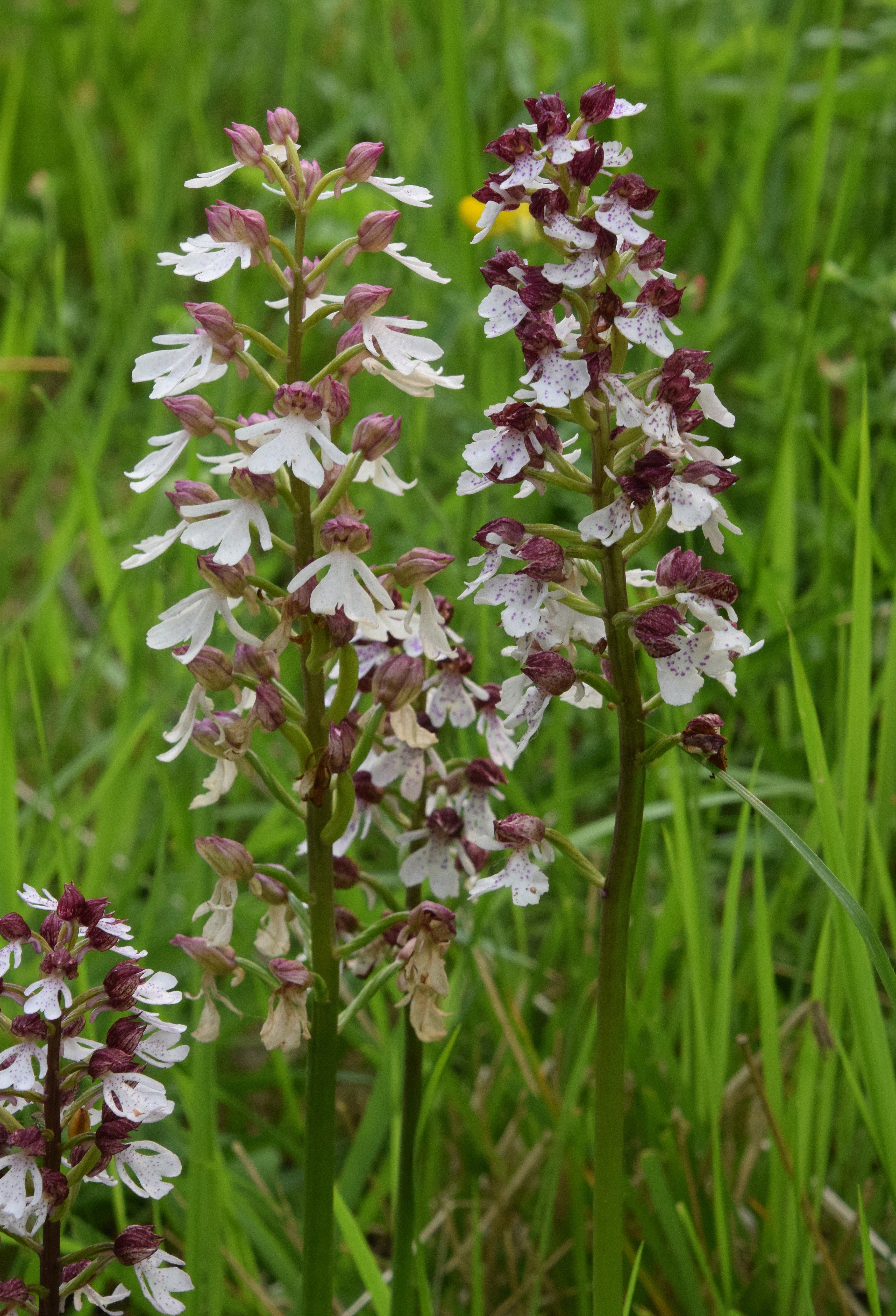
In all we recorded seven other Orchid species flowering here today. In the above sequences these are in the top row (from left) Fly Orchid, Common Twayblade that were particularly profuse, White Helleborine and Common Spotted Orchid. Chalk Fragrant and fading Early Purple Orchids were also present. There were good numbers of Greater Butterfly Orchids (second row) along the rides mixed in with the Ladies, amongst which was an attractive aberration (right hand picture). Jon Dunn described Bonsai Bank as one of his favourite of all Orchid locations, and after this magical experience I can sincerely endorse his sentiment.