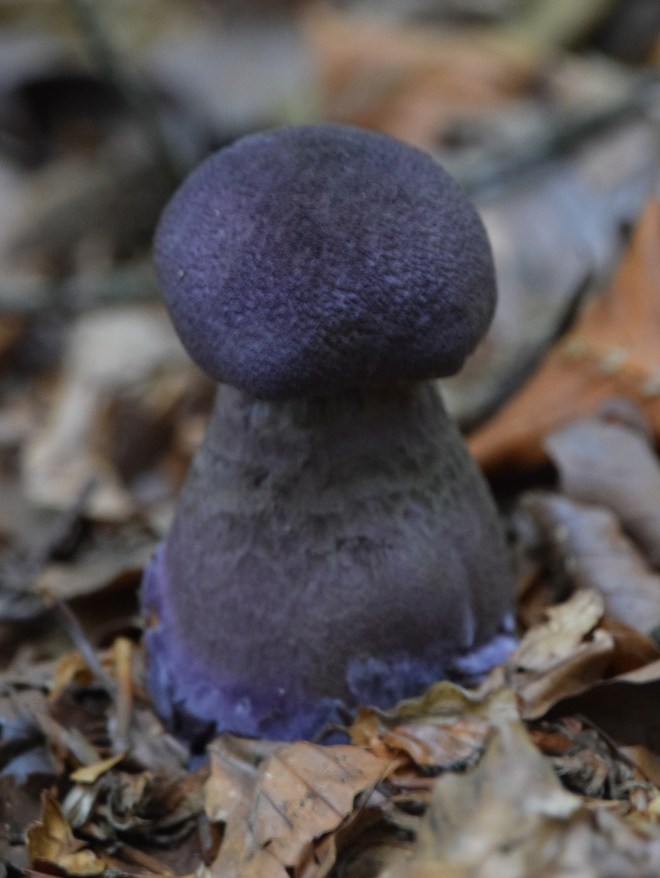
As the fungi season wound down for another year, the prospect of a full fair weather day on 13th, ahead of a washout Friday and working weekend, sent me out again to track more autumn subjects. But with leaf fall nearly complete finding anything on the forest floor would be difficult, so I headed out to a Chilterns’ site that usually yields some interesting deadwood rotters. Those I had in mind were Wrinkled Peach and the deadly poisonous Funeral Bell, but on my way up to where I had recorded those items previously I stumbled upon a quite spectacular prospect.
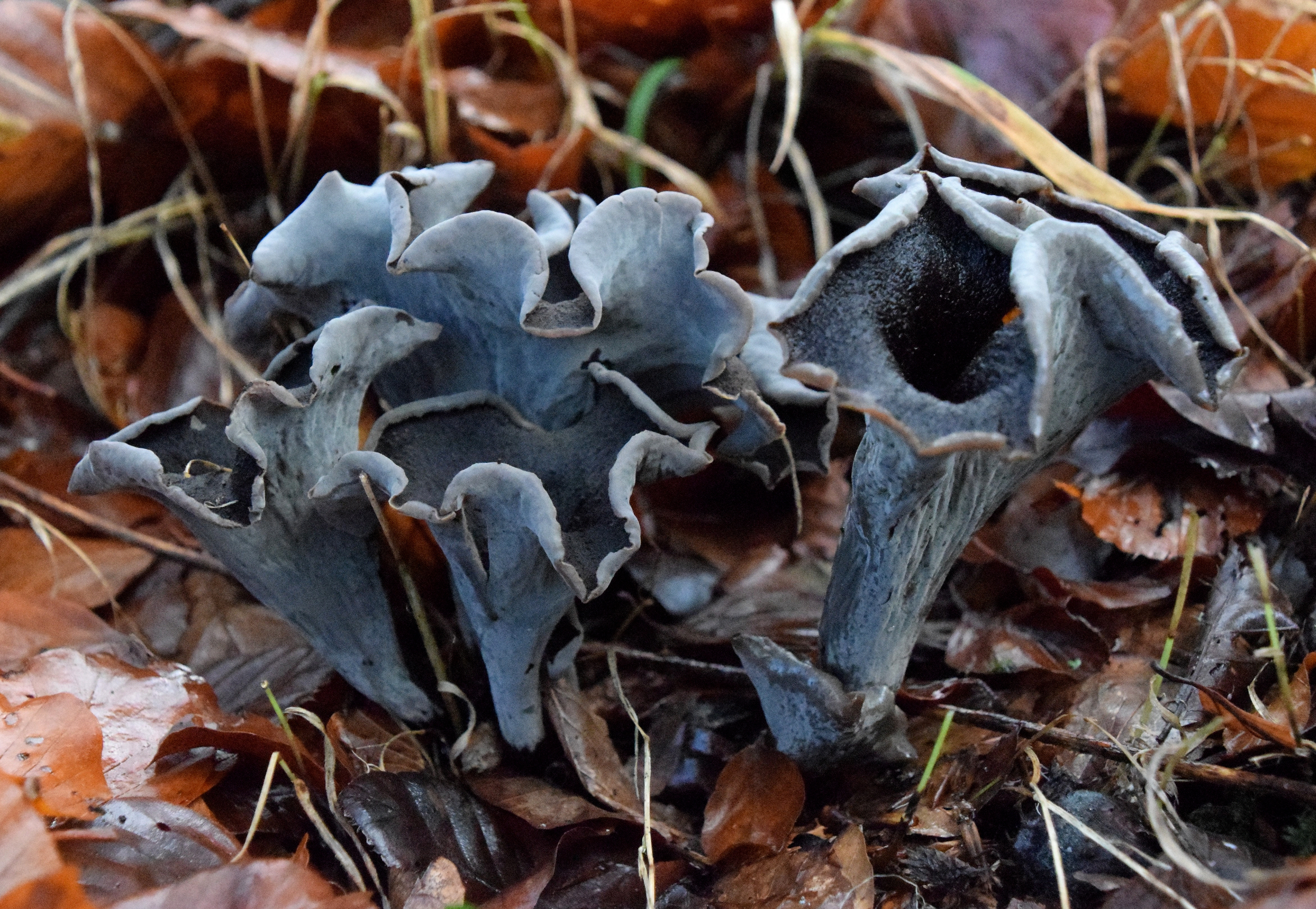
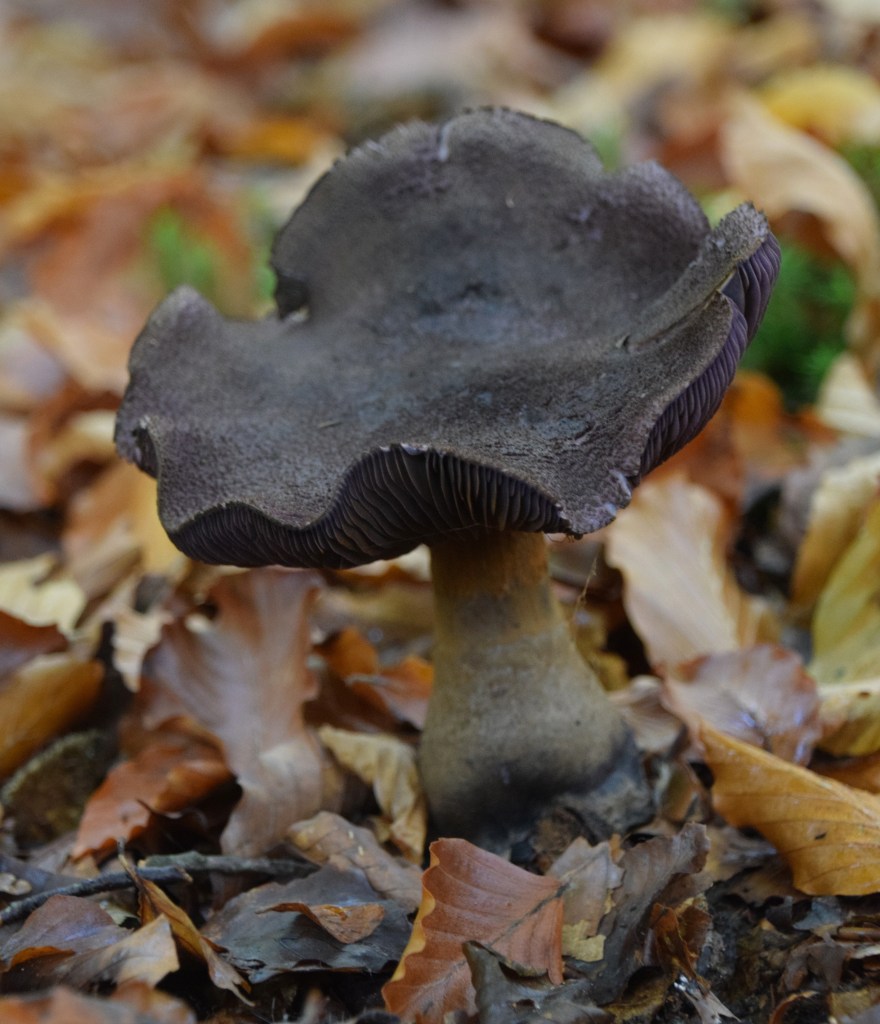
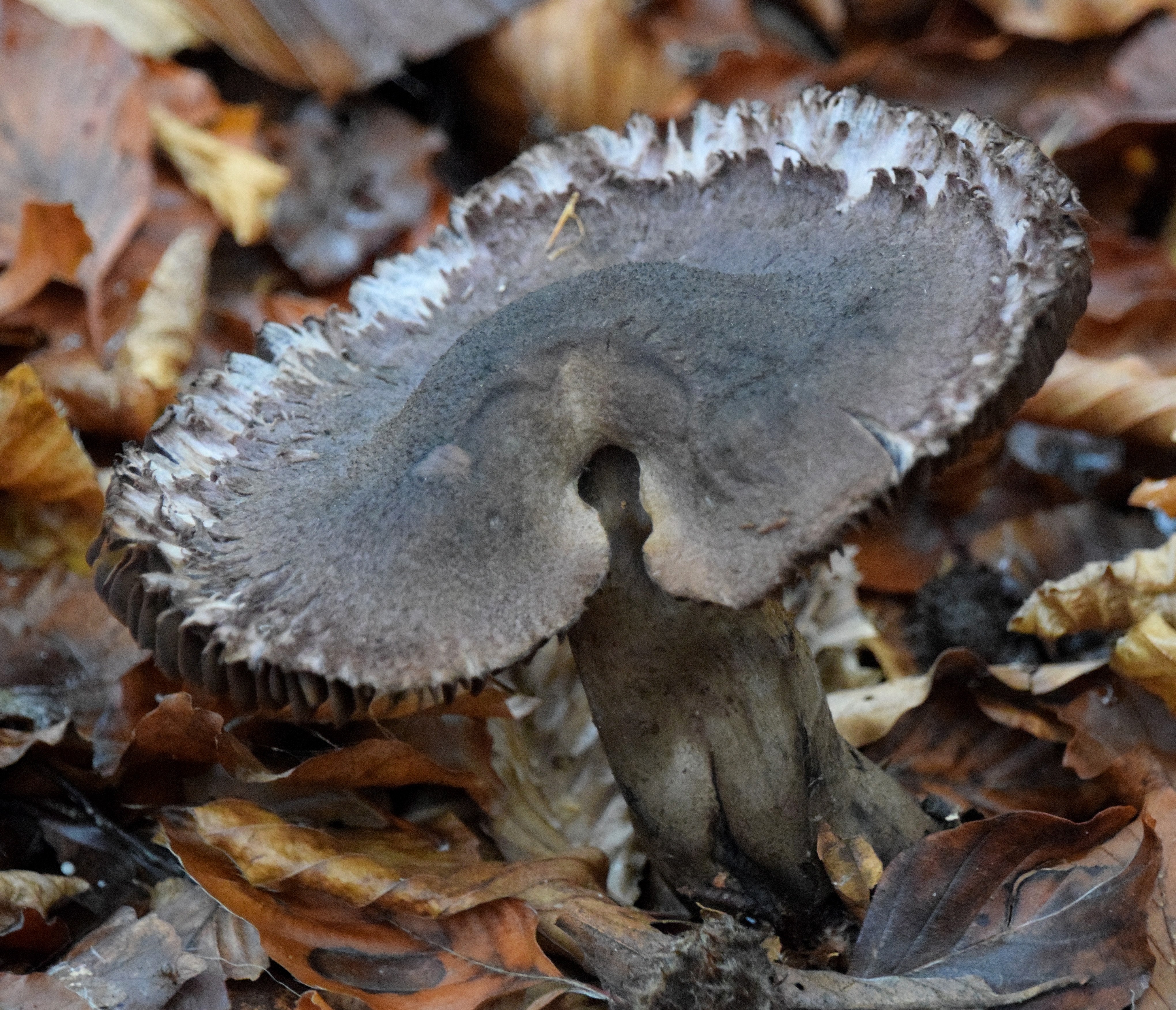
Stopping to check out a gone-over coral fungus on a fallen log, I noticed numerous large, dark shapes partially hidden but nonetheless emergent out of the omnipresent leaf litter in the ground beyond. These were as I suspected Horn of Plenty (Craterellus cornucopioides) that is described as not uncommon but localised, and often abundant where it does occur. The last was certainly true as looking around I detected more and more of them, having previously encountered this fungus on just two occasions. They are robust and can be difficult to detect, since though fruiting at all times of year they last very late in the season when leaves are down.
Once seen this remarkable mushroom’s distinctive grey and black tones and subtle, intriguing contours set it apart from all others. It is most often found under Beech trees as here, but is also associated with Oaks. The alternative name used in France, “Trompette de la Mort” (Trumpet of Death), seems incongruous since these are a highly desirable edible mushroom; hence I will not name the site. Death references in fungal common names usually denote highly toxic items, but the explanation here lies in ancient folklore where the fruiting bodies’ dark and sinister tones were attributed to the buried dead connecting with the living by playing these trumpets emerging from the ground. In North America the common name is “Black Trumpet”. This fungus has a worldwide distribution.

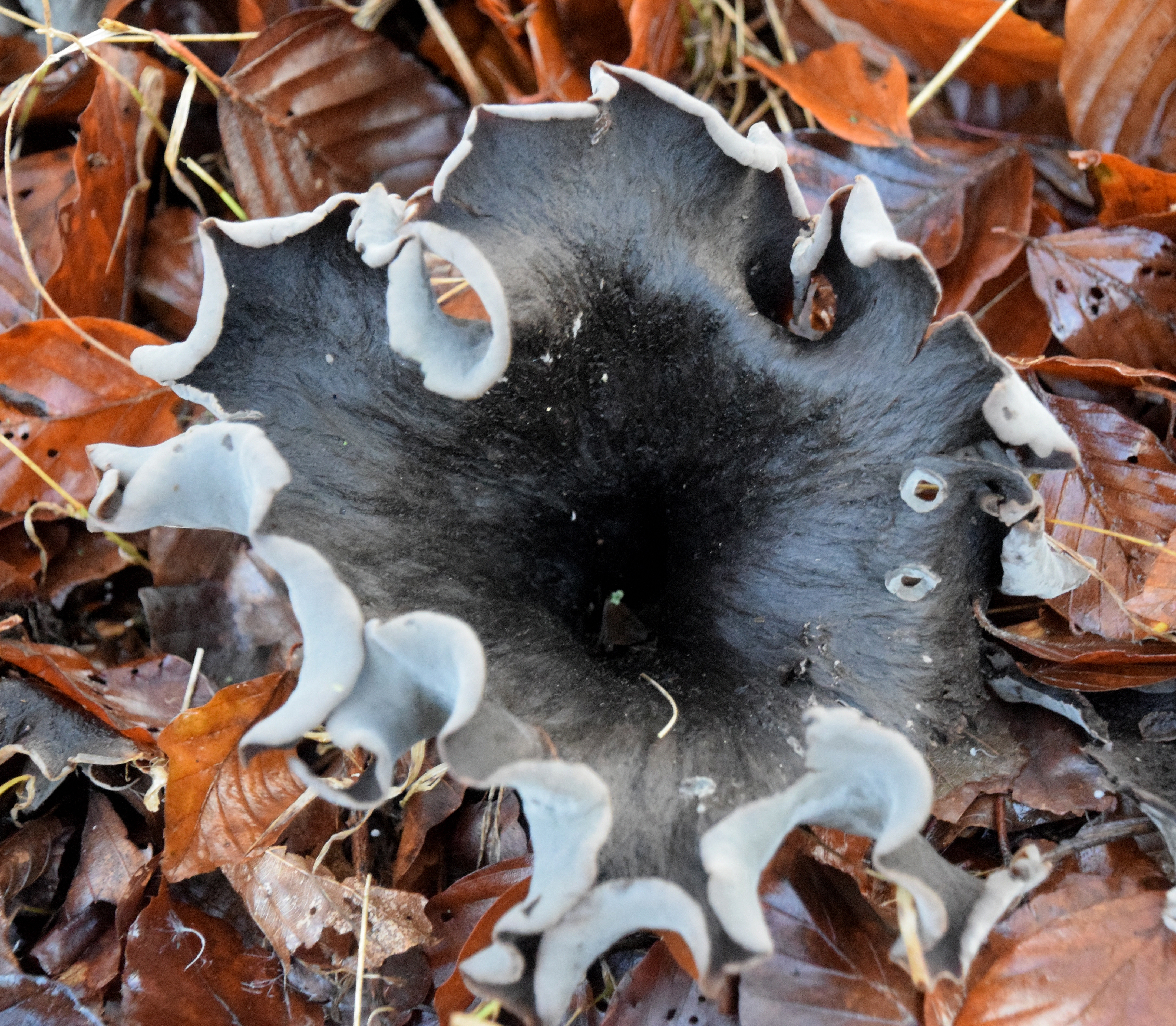
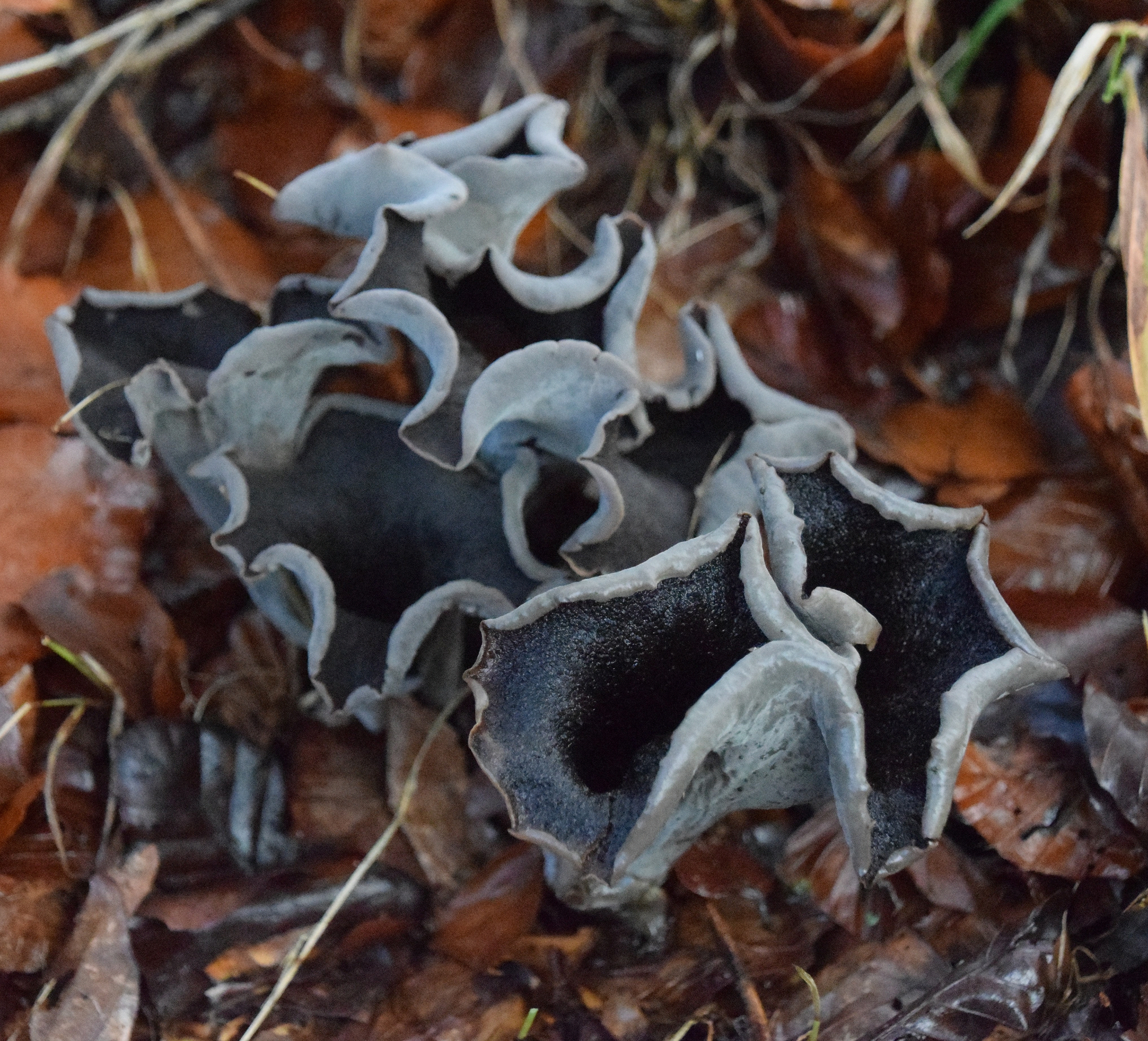
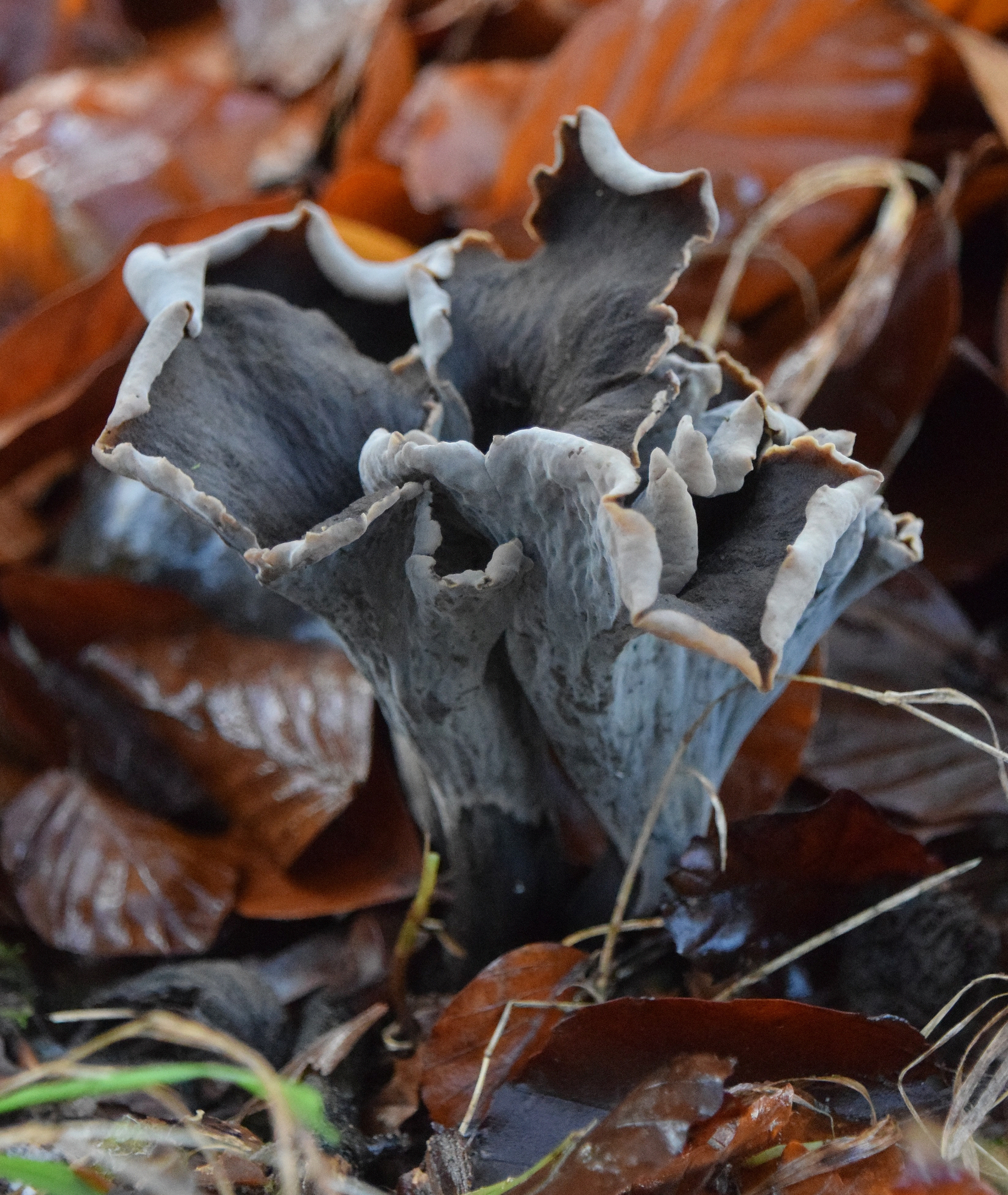

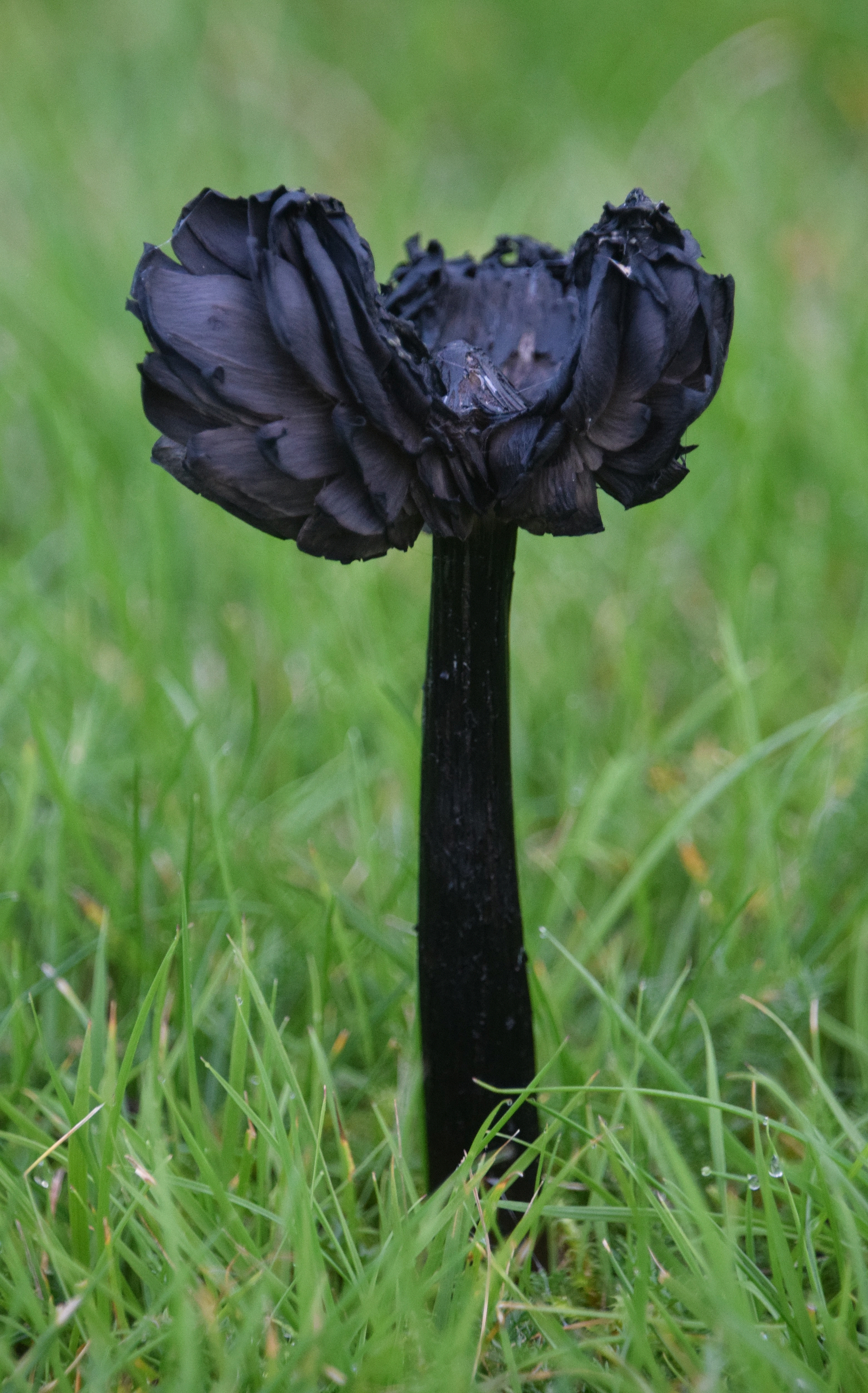
If the dead really did play trumpets from under the ground it might look something like this
I messaged two associates and Ewan, being quite near while having an unproductive morning’s birding, came to join me (see here). In the meantime I had located a large fallen log that was adorned by large numbers of King Alfred’s Cakes (Daldinia concentrica). These saprobic fungi (ie deadwood rotters) were in both the young mauve form and black, burnt state that gives them their common name, all mixed together. This was a find I had been hoping to make all autumn, and my most profuse to date.
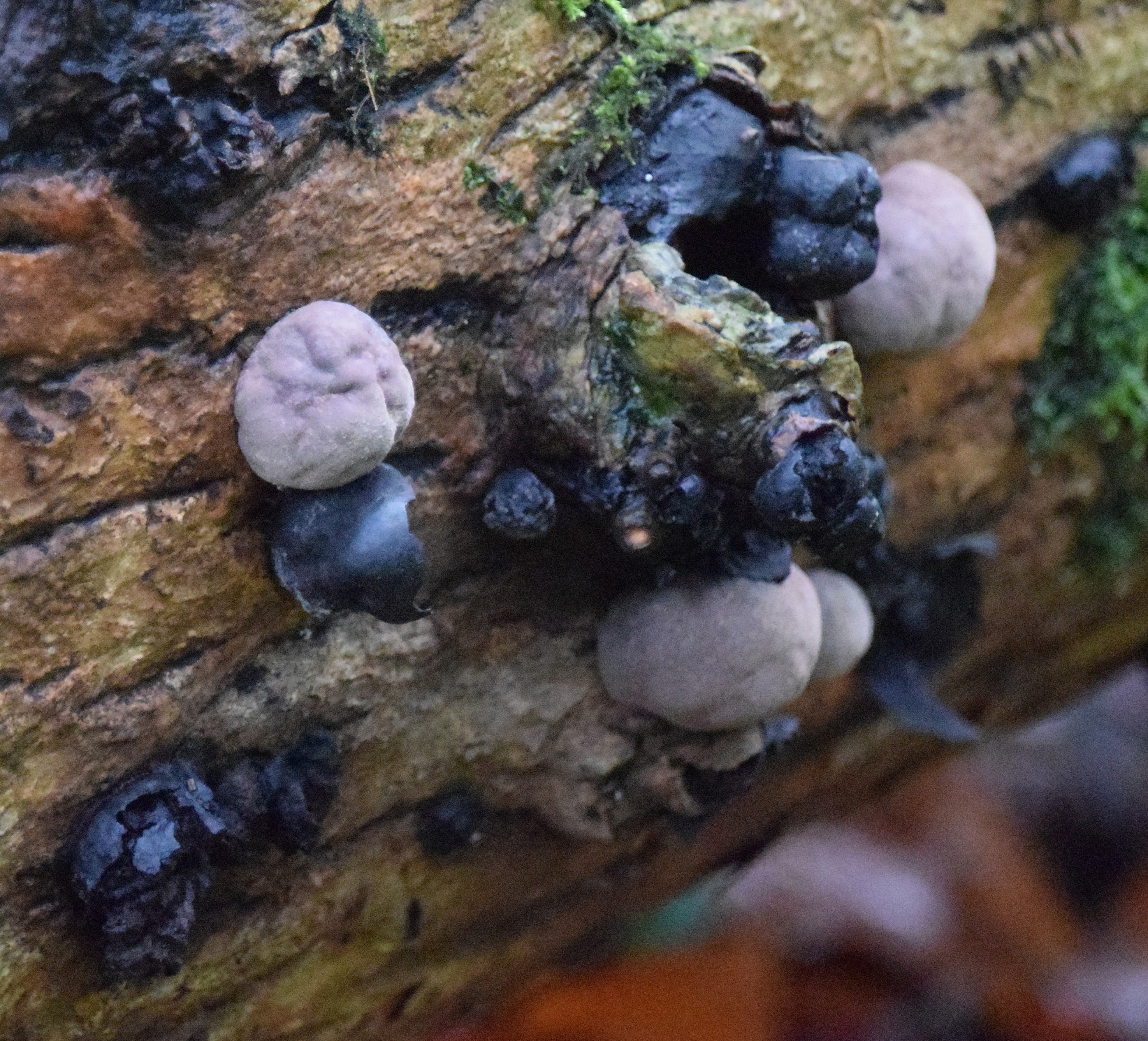

King Alfred’s Cakes
These hard, inedible fungi are also known as “Cramp Balls”. since carrying them was once thought to be a cure for cramp attacks. The pale specimens shown above are still growing, and during this asexual stage they develop and release spores over a long period. Once fully grown the fruit bodies turn black, hence the likeness to the hapless king’s burnt cakes in that old folk tale. Quantities of spores are released at this stage that typically blacken the surrounding host deadwood (above right). All saprobic fungi such as this feed upon and hence break down decaying organic material then recycle nutrients into the surrounding ecosystem.
When mushroom hunting I always get a special buzz if I find something that my phone app ID’s as deadly. I have possibly located the quite scarce but highly toxic Funeral Bell (Gallerina marginata – pictured below on 21st Oct) at this site in each of the last two seasons. The name tells all that needs to be known, since this item contains the same lethal toxins as the infamous Deathcap (Amanita phalloides – see here), that accounts for more than 90 per cent of fungus-related poisoning fatalities in Europe.
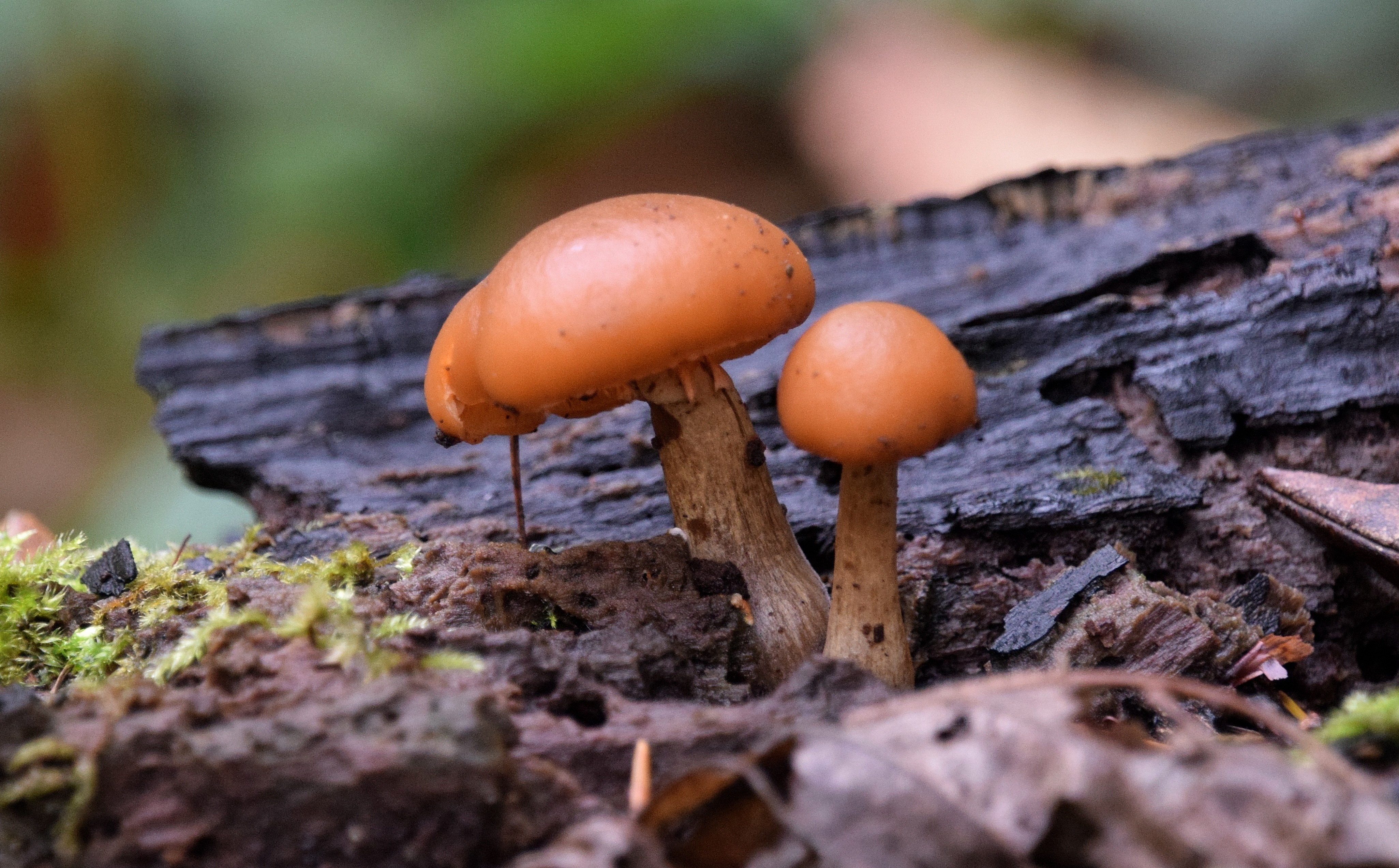
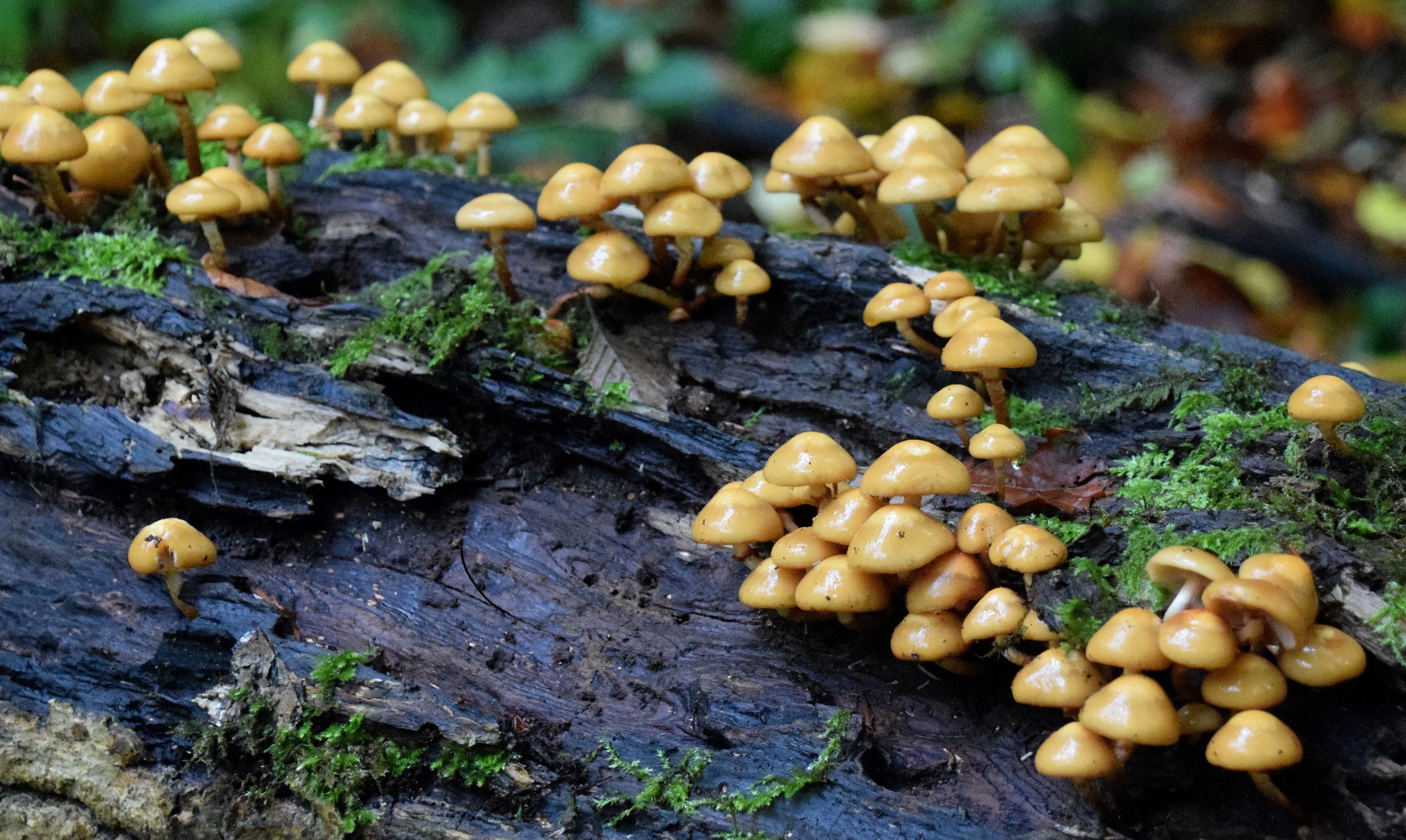
The catch is that Funeral Bell closely resembles an edible deadwood rotter Sheathed Woodtuft (Kuehneromyces mutabilis – above), also known as “Brown Stew Fungus” that is collected by some brave foragers and also abounds at this site. So my FB ID may not be accurate and in the absence of due scientific analysis I am open to correction. But I would not wish to test the more definite way of separating the two. Intriguing fungi indeed!
On a brighter note, I have also located Wrinkled Peach (see here for detail) whenever I have visited this Chilterns’ Beechwood. On 21st October I Iocated some typical clusters on the same fallen, presumably Elm logs as previously. By 13th November what remained was no longer really worth looking at, but this is always an attractive find due to its very particular colouration and growth habit.
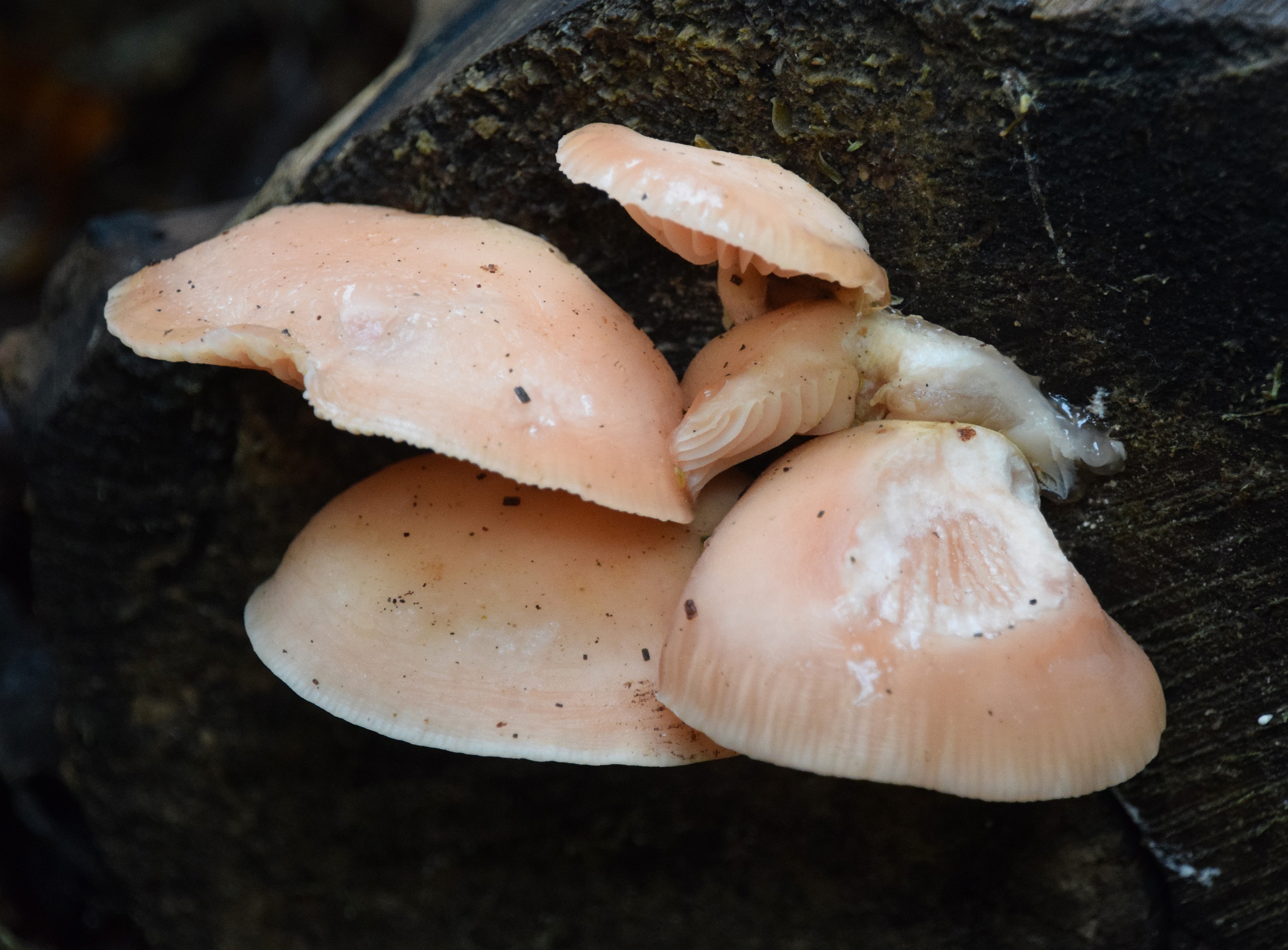
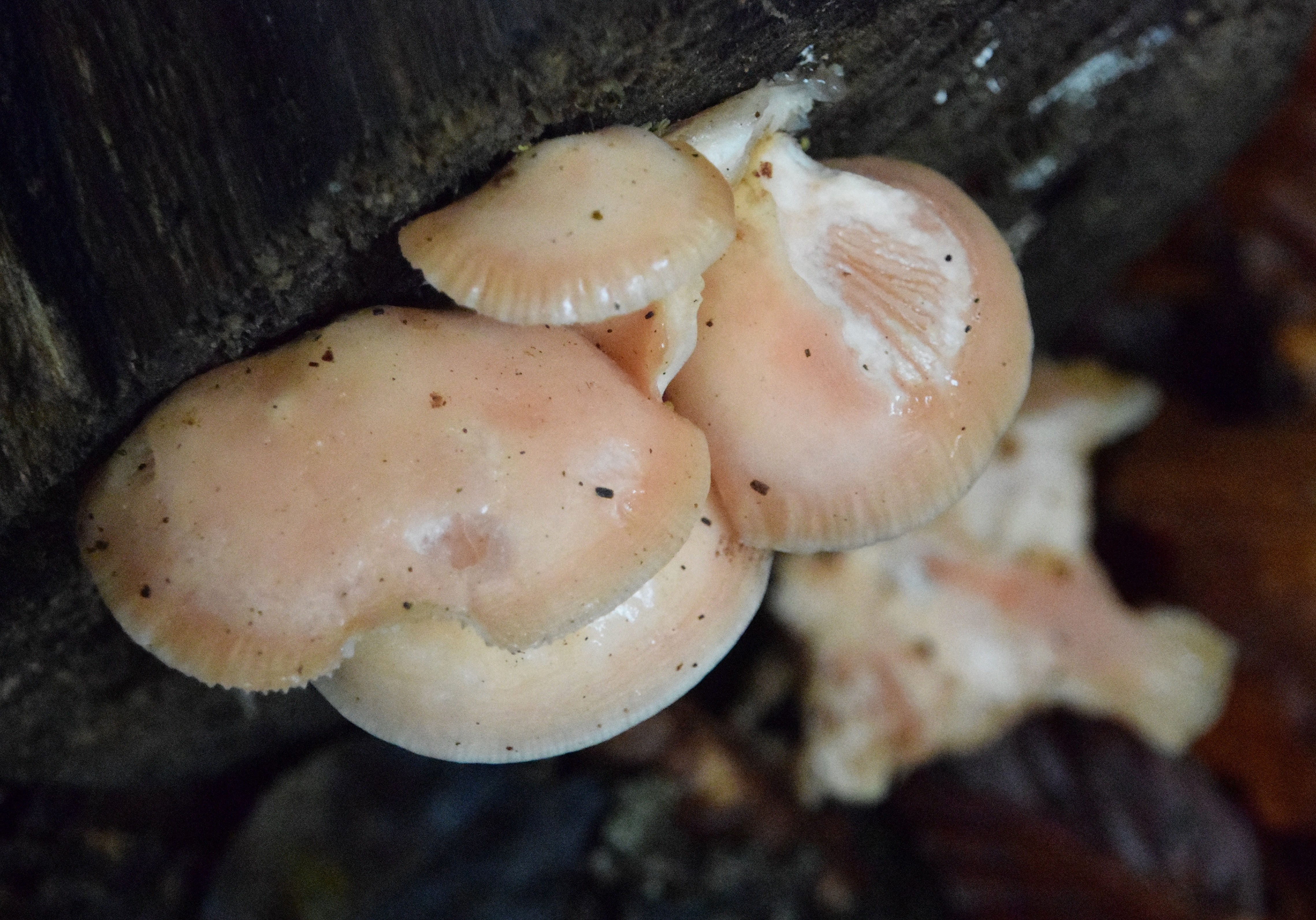
Wrinkled Peach
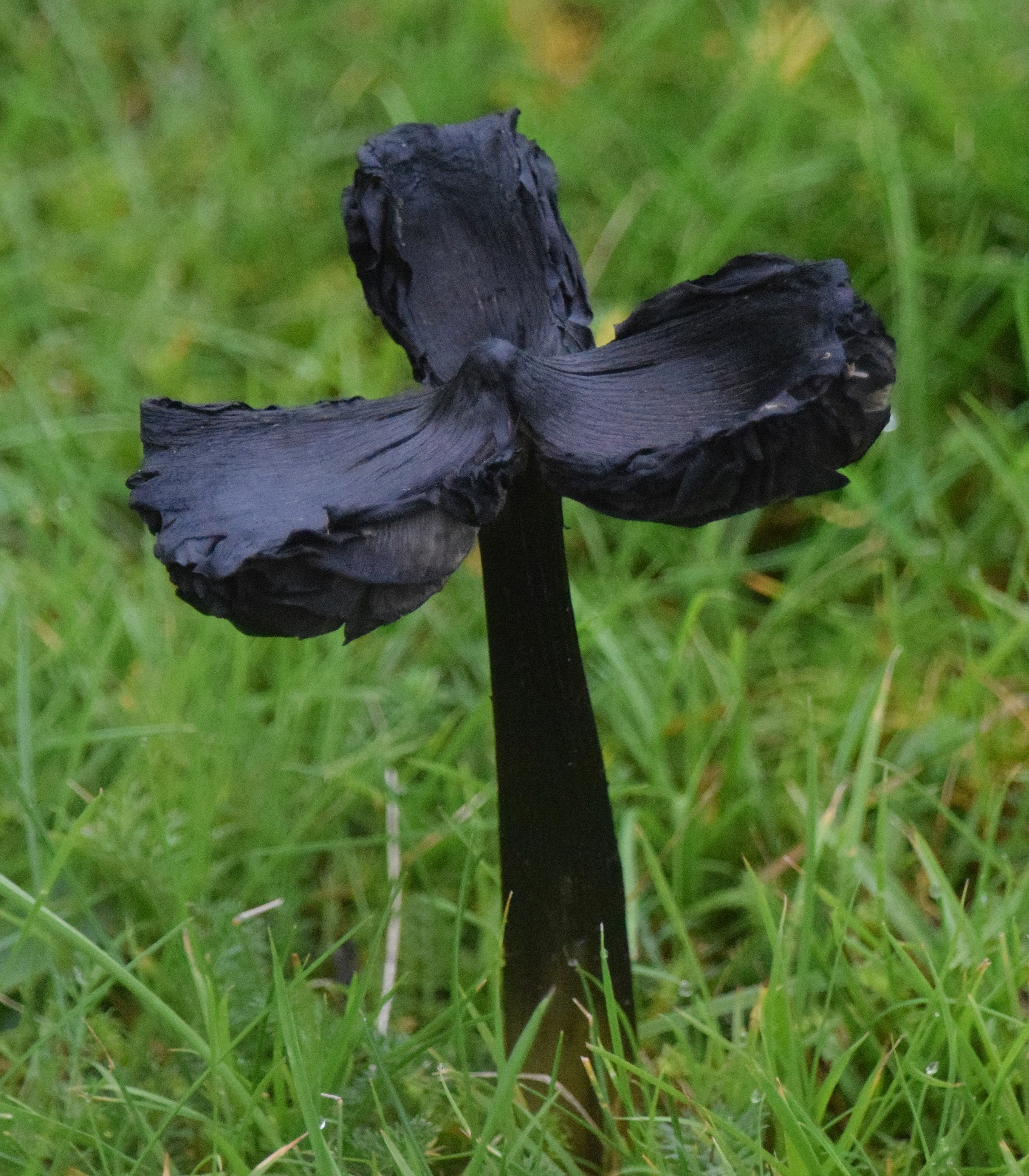
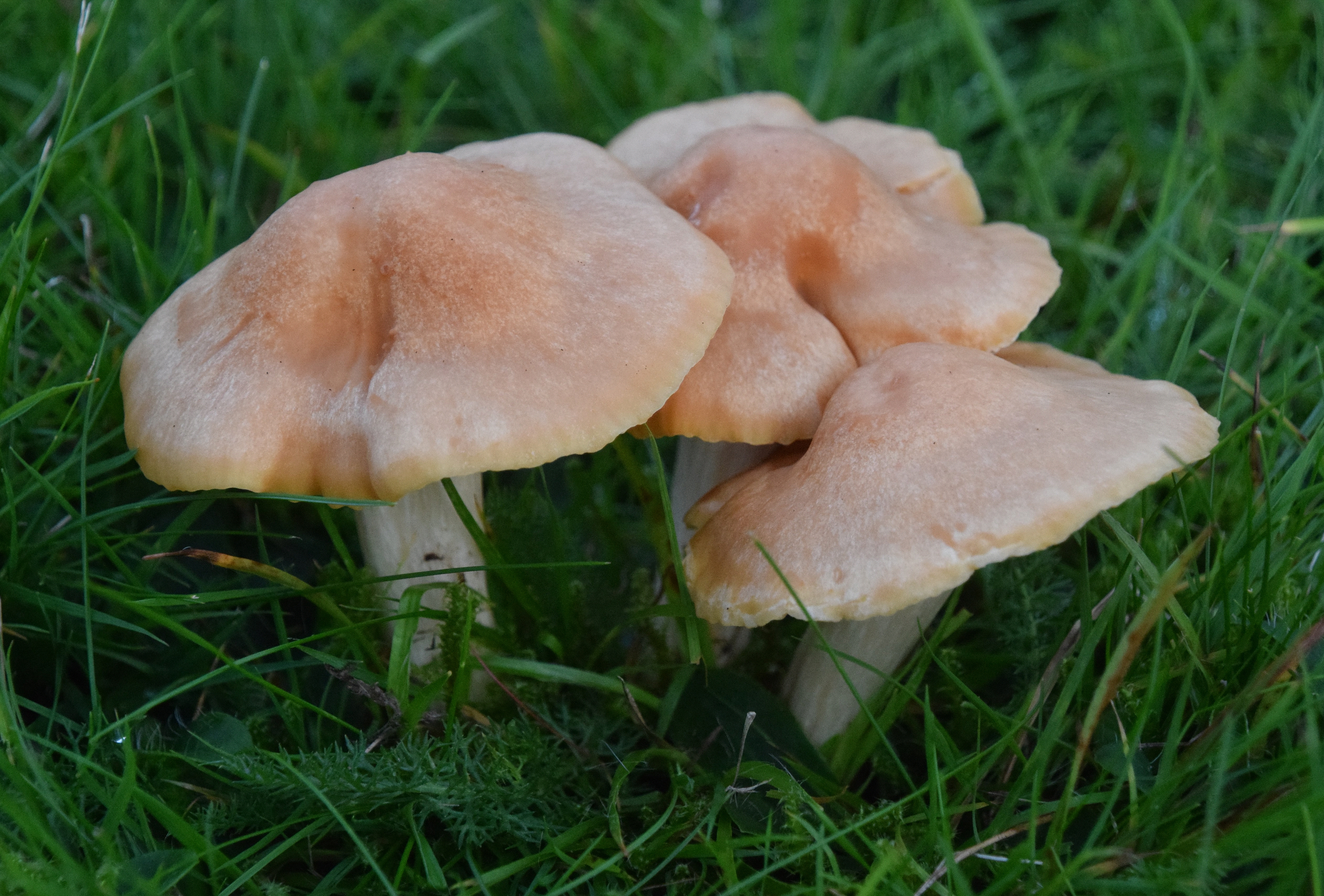
Blackening Waxcap on 6th (left) and 13th (right) November, with Meadow Waxcaps (centre)
Having had our fill from the Horn of Plenty on 13th Ewan and I moved on to Nettlebed Churchyard in the Oxon Chilterns (see here), where given this autumn’s more limited available time I have maintained my interest in Waxcaps, sometimes referred to as the “Orchids of the fungi kingdom”. There one particularly fine Blackening Waxcap (Hygrocybe conica – pictured above), that I had tracked twice previously and what a stunner, made an apt tailpiece to this journal’s 2025 fungi content and it’s variously dark, purple and mysterious themes.




 Ramblings and Scribblings