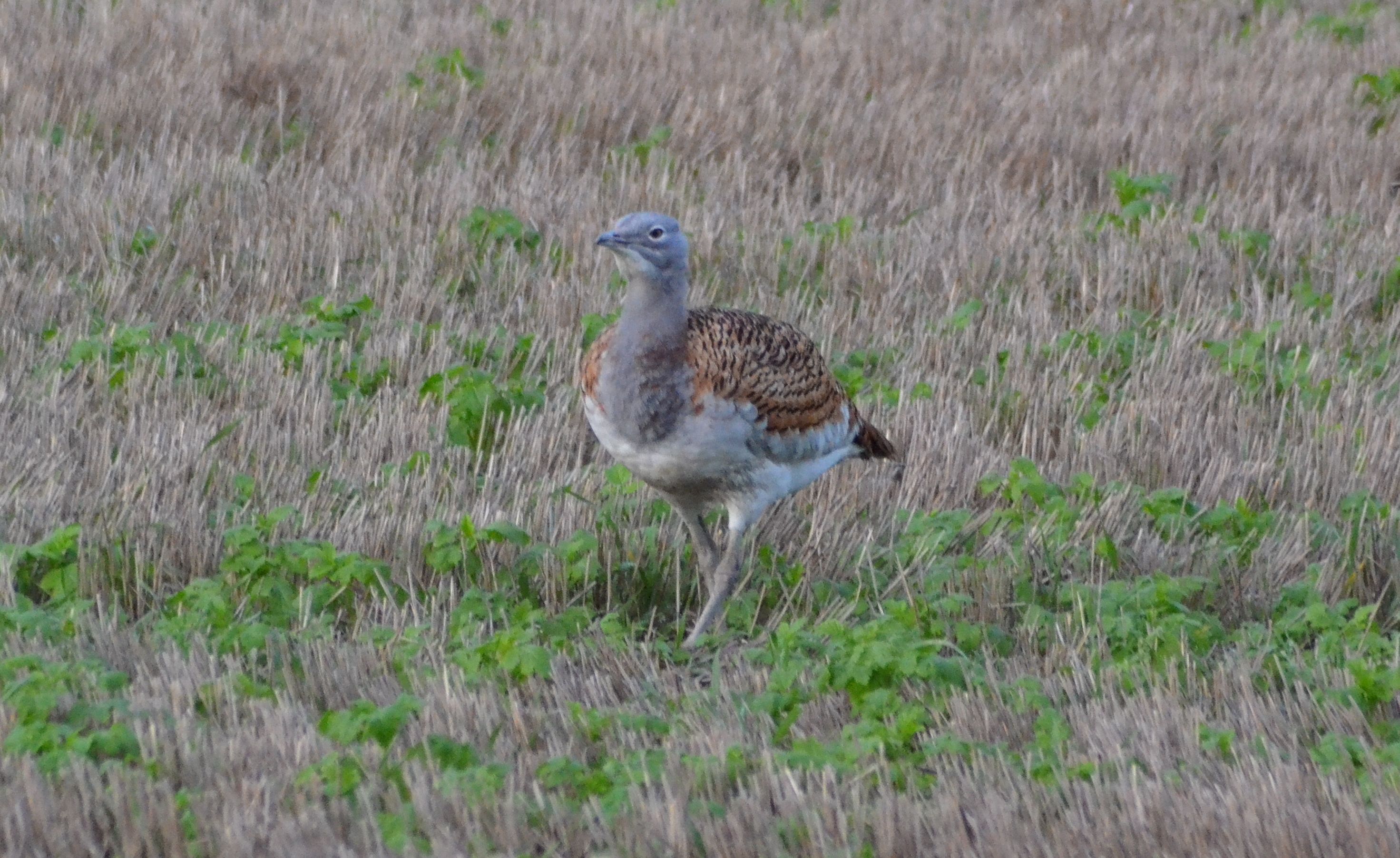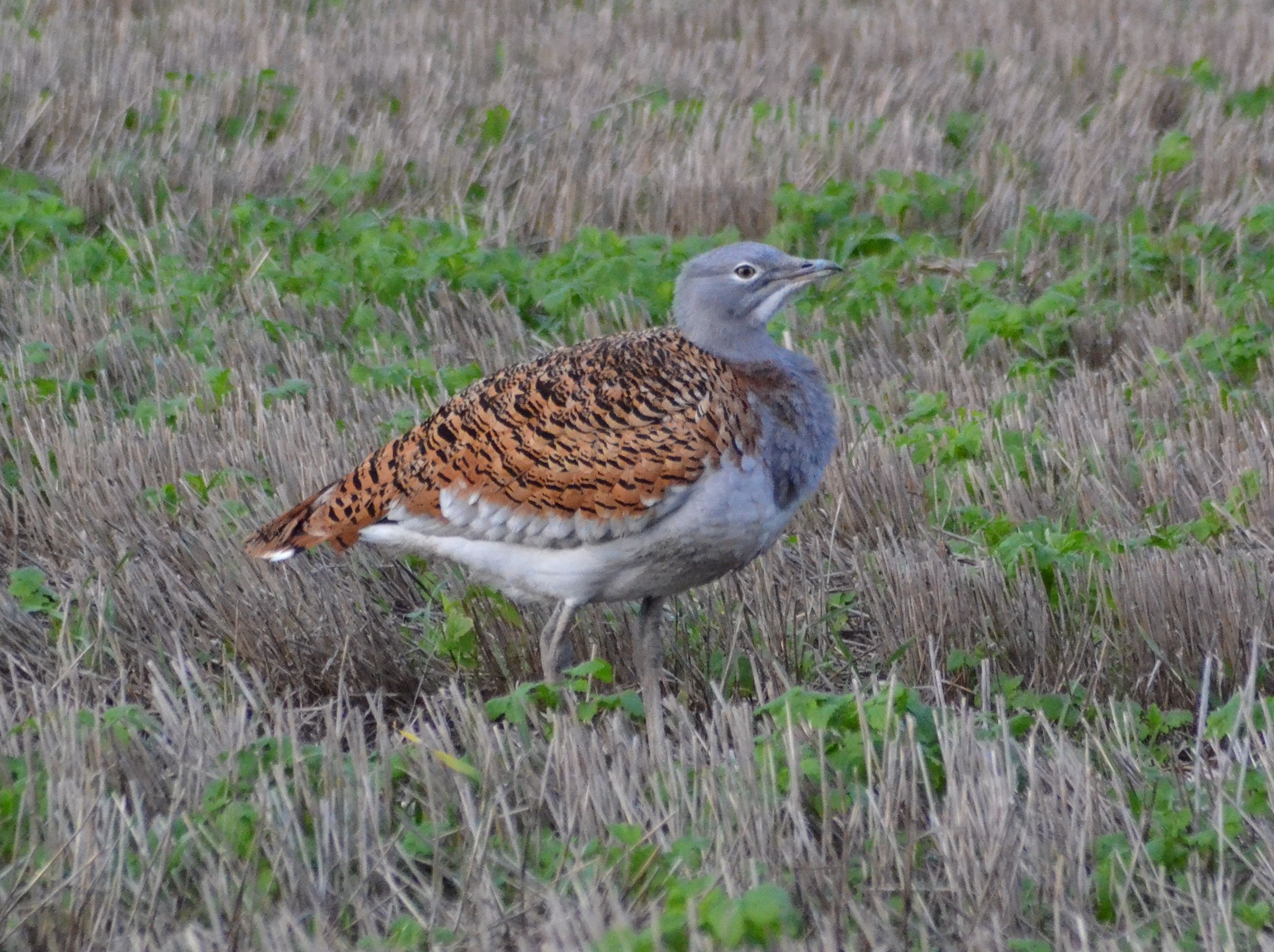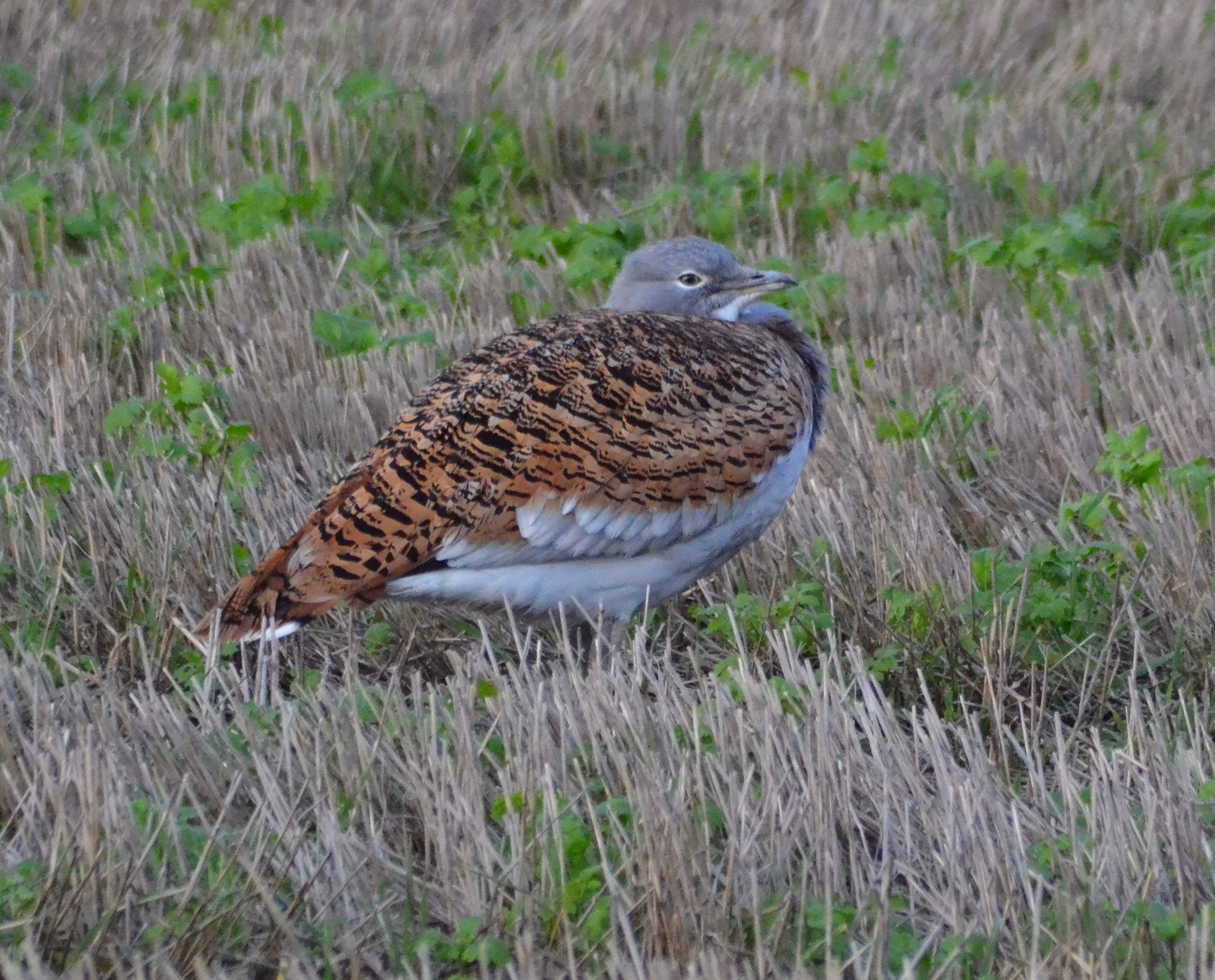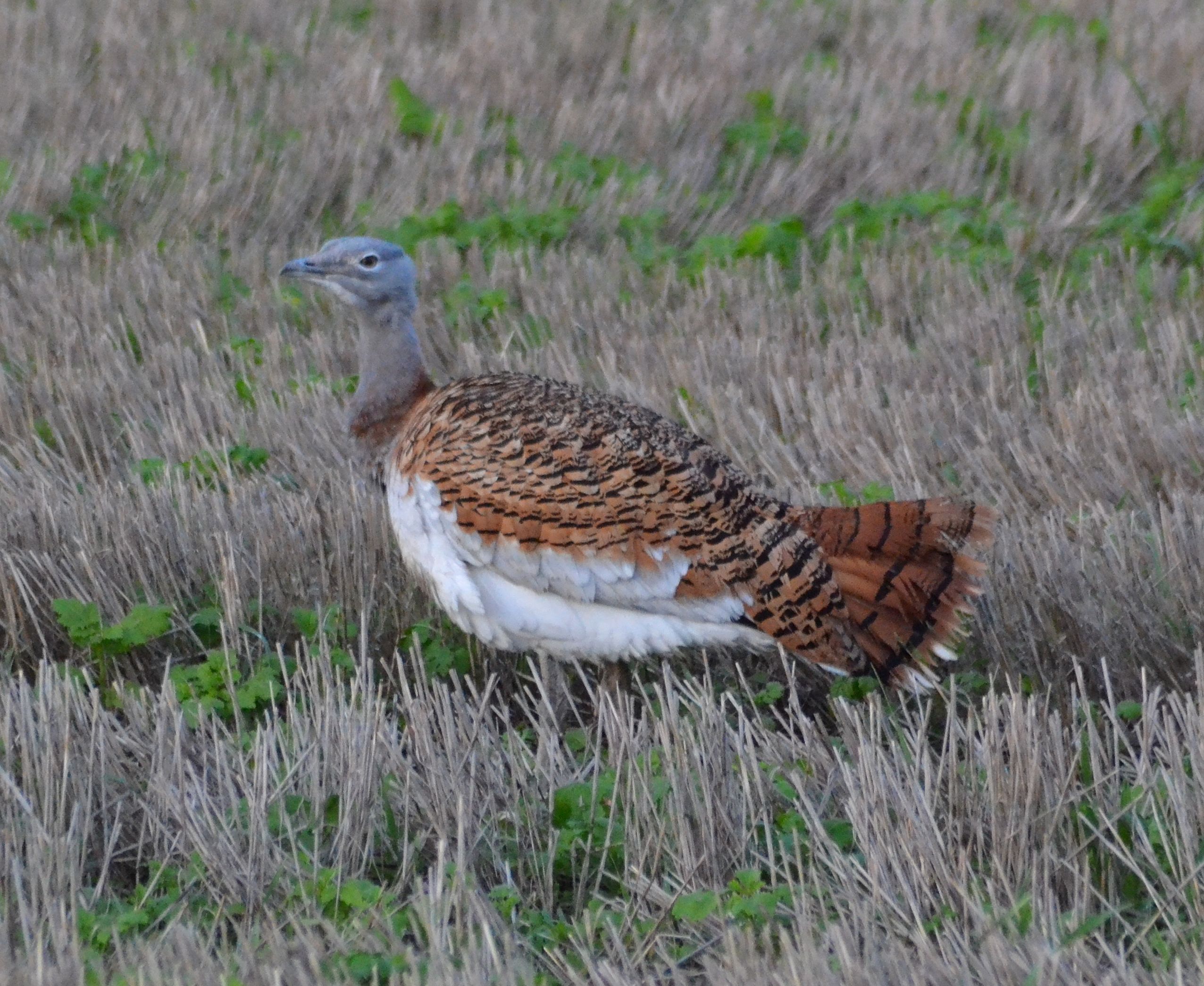
River Warbler at RSPB Ham Wall, Somerset – 5th June

This is an opportunity I wasn’t anticipating any time soon. River Warbler is one of just over 50 regularly occurring European lifers I still required. It usually summers from eastern Europe through the former Soviet Union into Siberia – inhabiting dense deciduous growth close to water at swamp edges, marshland or along rivers – and winters in sub-Saharan Africa. This is a scarce visitor to western Europe and very rare vagrant to the British Isles. So when news broke early on Friday afternoon (4th) of a stray migrant singing and showing well at a very accessible location on the Somerset Levels it was a must see.

The species is described in Collins as shy and elusive except when singing. So I looked it up on Xeno Canto (see here) and needed to listen only once, the sound that is normally delivered from exposed shrubs or small trees being so distinctive. My immediate impression was of a Grasshopper Warbler reeling through a stack of Marshalls. Other, perhaps more conventional descriptions I have read this weekend were “a fast shuttling sewing machine rhythm with well-separated syllables” or “a low-frequency but very loud wart-biter cricket”. Not to be messed with then whichever interpretation you might prefer!

So what would be the best timing? Major dawn twitches as seemed inevitable on day two are not my scene, especially in what I knew to be a long, narrow location in which only the earliest arriving observers might get decent views. So I stuck with my plan A to start Saturday doing odonata near Bournemouth, intending to visit Ham Wall early on Sunday. But when the previous post’s assignment was completed so soon and successfully, I opted to drive the extra 60 something miles to Avalon.

In the event that was a novel experience in my Bluetooth-equipped new transport as Google Maps took me across country by a scenic route, alerting me as I progressed to incoming texts and WhatsApps, reading them out and offering to reply. Well it was all new to me anyway … perhaps I might even get around to acquiring an up-to-date camera before long.

On reaching Ham Wall (ST458398) at around 1:30pm there was indeed plenty of space in the car park. I then walked out along the familiar former railway line on which I had converted previous lifers Pied-billed Grebe (Feb 2013) and Dusky Warbler (Dec 2015), plus British list addition Collared Pratincole (Jul 2016). Being at a Royal Society for Populist Birdwatching (RSPB) reserve, I felt my usual unease with the ambience of general public supervised by over-earnest volunteer wardens. But on this occasion there was fortunately none of the over-officiousness that can accompany the scenario and I was able to proceed un-accosted. The exact location of my intent was obvious, across a drainage ditch to one side of that route.
Now the potential downside of my day’s decisions kicked in. River Warbler is said to sing mostly at dawn and dusk. I had opted for early afternoon, to be greeted by advice that the bird had not been seen for some time but was “due again soon”. A lady standing next to me pointed out the spot of the last appearance, then an edgy 30 – 40 minute wait ensued. From time to time movements low to the ground before us stirred the gathering but nothing actually showed … and so things went on.

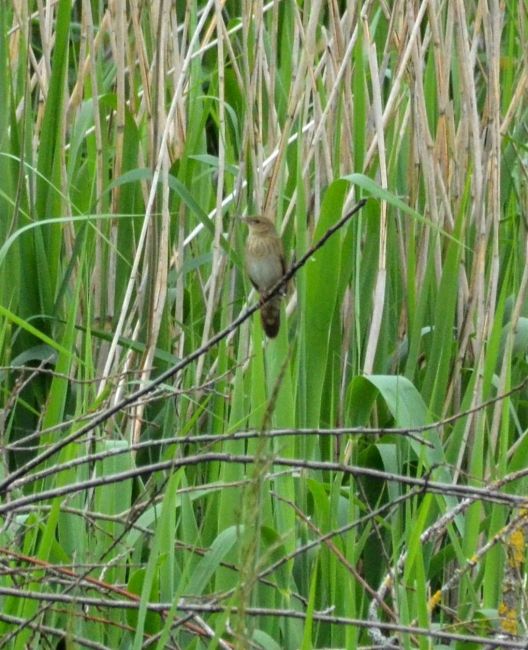
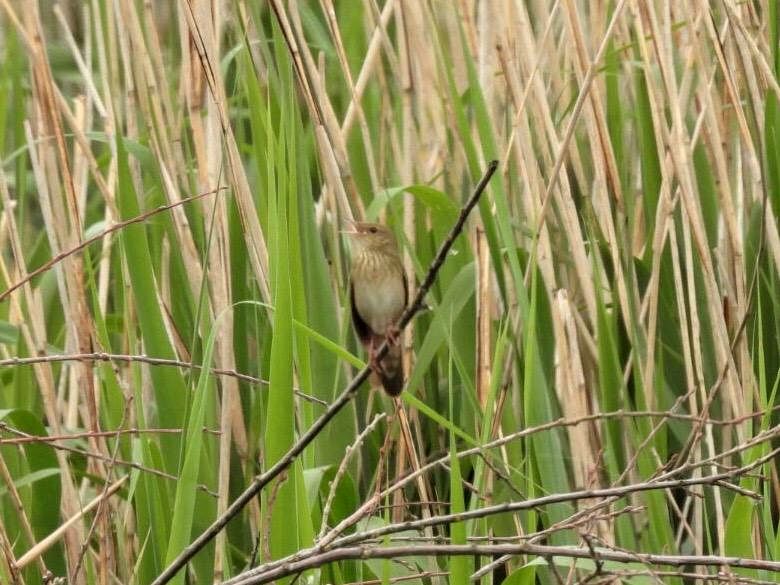
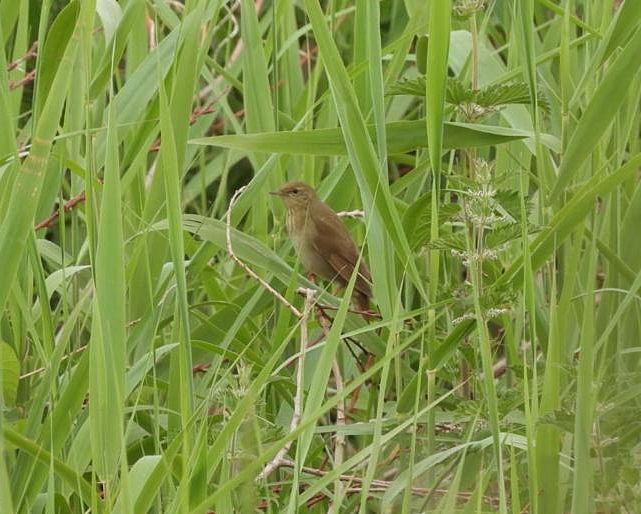
Singing male River Warbler (all images above)

This bird was nonetheless a consummate virtuoso. Having kept the audience waiting this long he duly sat up in his own time and delivered. First he sung very close to where I had been advised to look, then moving left to an exposed perch threw back his head and poured forth with gusto. Everyone present was captivated by the volume and delivery before us. The artiste was a large, elongate looking Warbler with a noticeably streaked breast pattern; broad rounded tail with distinctive patterning on the underside, and a quite amazing gape … no plumage topography in this journal as always. Ultimately having tantalised us all just enough but not too much the performer exited stage right. Most birders present were thus more than sated and moved on, myself included.

Pictures 2 and 5 in this post are my own, but the other three were sent afterwards by the birder alongside me who requires no acknowledgement. My thanks are due to her anyway. For the RBA gallery see here. This had been a superb experience of a mega rarity that until now had been just a name and illustration in the field guides. I didn’t ever expect to experience this bird nationally … but one never knows.
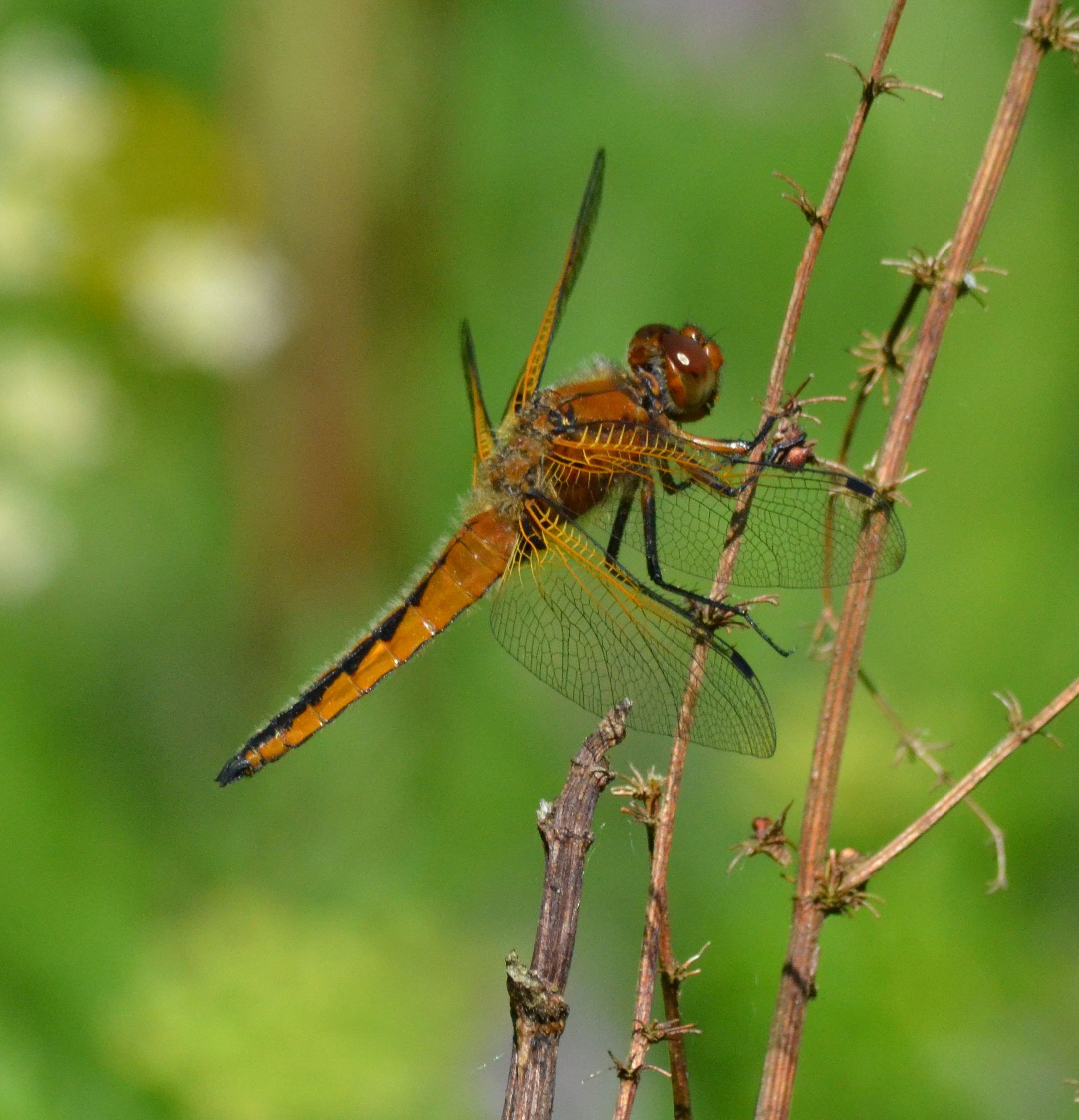
Teneral Blue (or Scarce) Chaser at Troublefield, Dorset – 5th June

I had first become aware of the bright orange stunners to be found at this site in 2015. Wanting at once to experience them I made a visit on 10th June in that year, viewing just two specimens quite poorly. Since then I have only observed the teneral form of Blue (or Scarce Chaser) abroad in Greece … until today.

Acquiring English pictorial records of this most arresting and enigmatic though transient dragonfly form has been something of an ambition in recent seasons, and an item on my 2020 carried forward to 2021 wildlife agenda. The odonata oasis of DWT Troublefield (SZ127976) made such an impression upon me during my previous visit 10 days ago that I resolved to return at the next fair weather opportunity to seek out a much wished for prize.

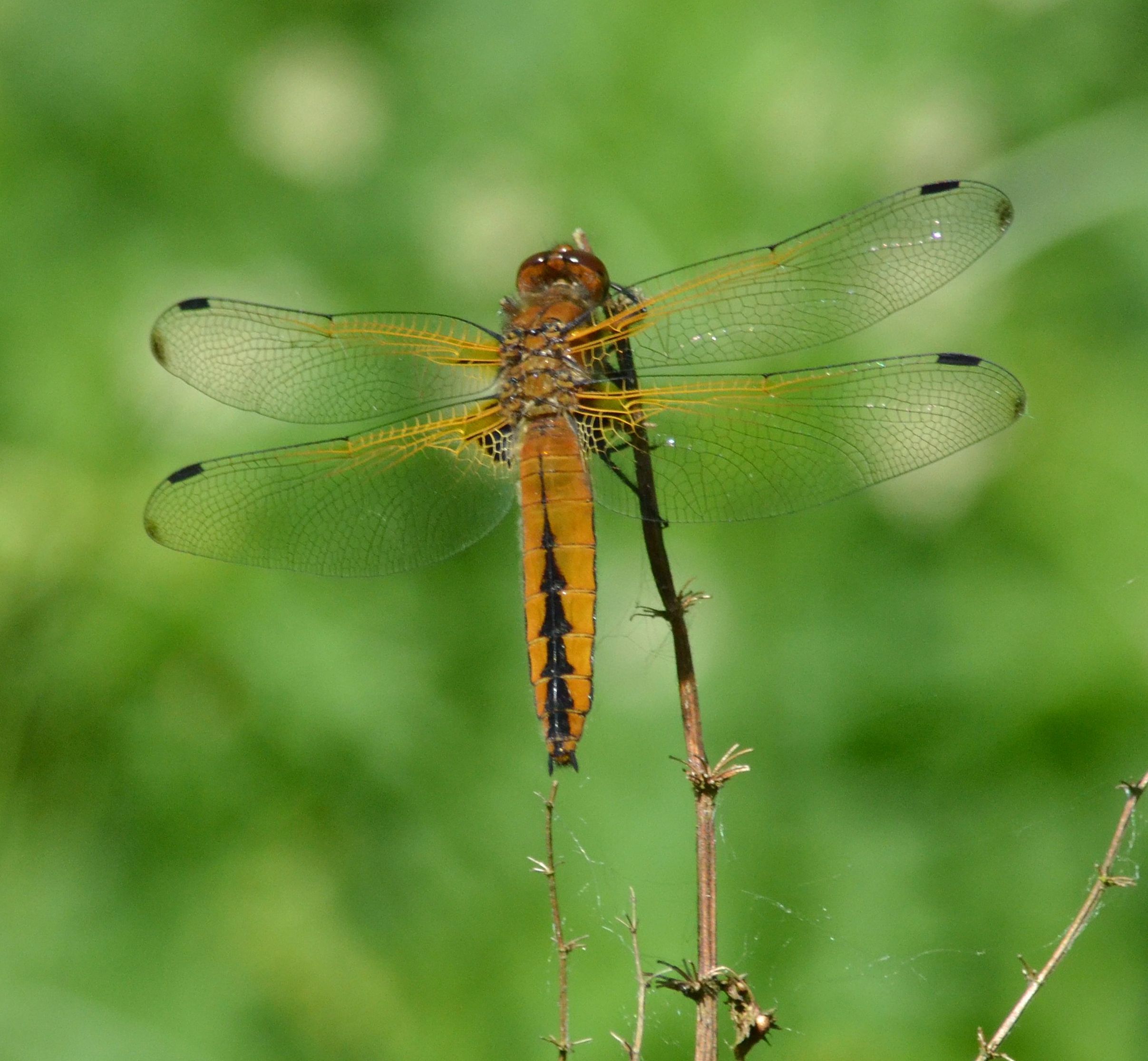
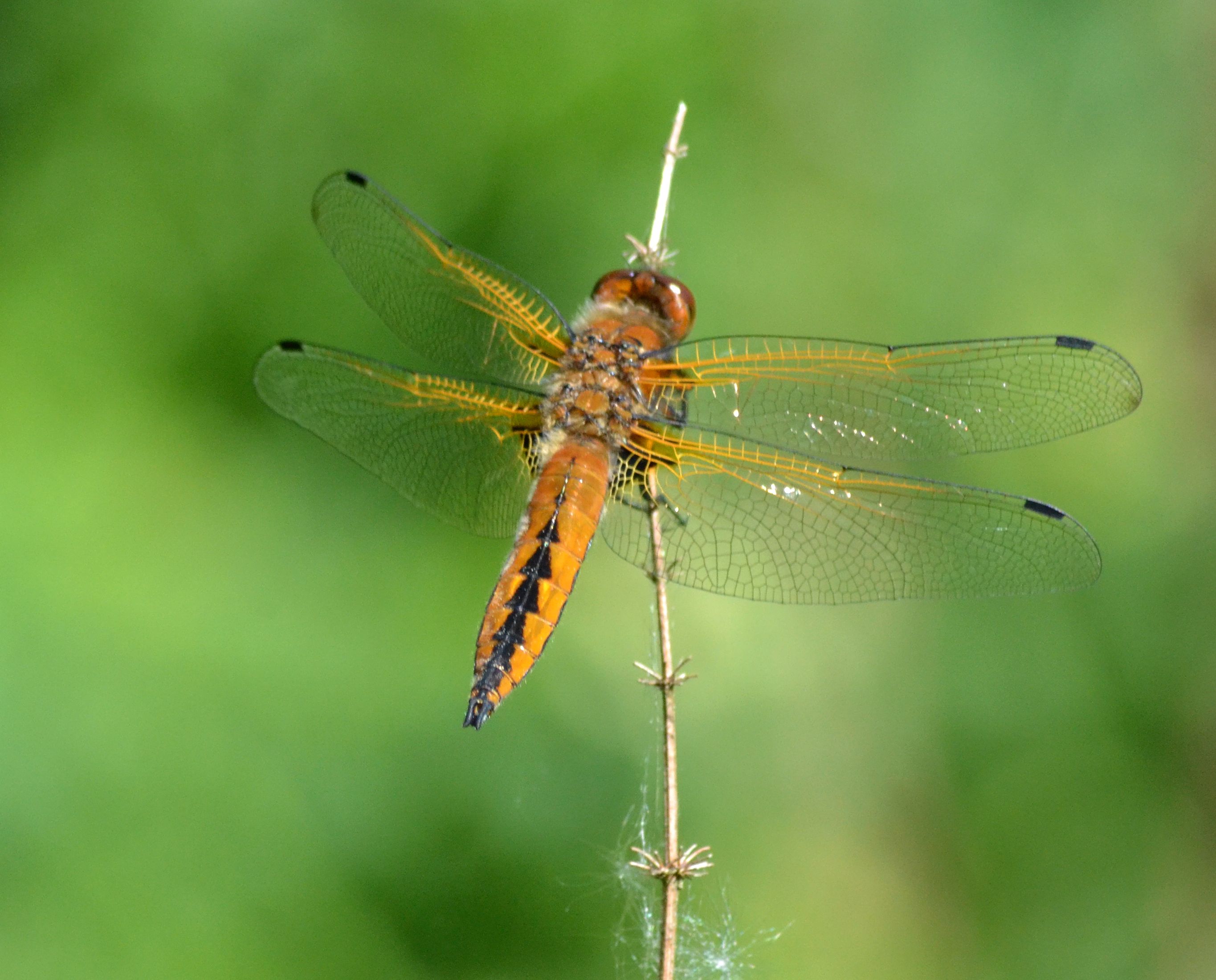
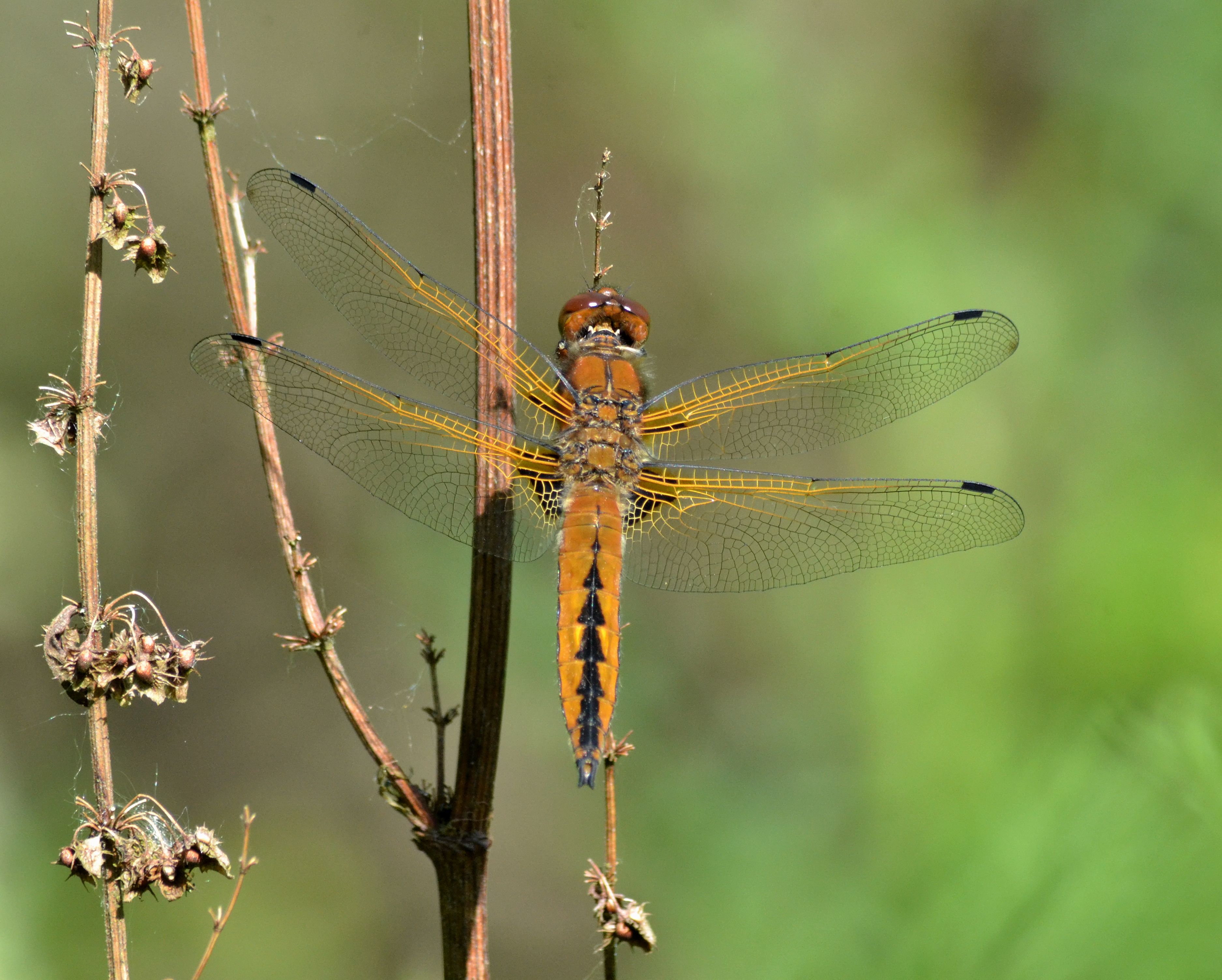
Teneral male Blue Chaser (all pictures)

Blue Chaser usually inhabit slow-flowing, meandering rivers and large dykes but are often found basking and feeding in woodland clearings and moors close by. Males become blue as adults having spent time away from water feeding and maturing. Immature females are superficially similar to immature males but retain the orange colouring, dulling as they age through shades of yellow ochre.

Arriving back on site just after 9am, I at first made a circuit of the reserve’s southern water meadow from where an emergent Common Goldenring, now attracting some referrals was featured herein on 27th May. Finding nothing at all I then located the northern meadow in which close by the Moors River appeared to be a hotspot as maybe three teneral Blue Chaser were flying. These particularly favoured settling on dried up Dock plant stems, affording some suitable picture opportunities that once again I had all to myself.

I feel pleased with these images, especially using an 11-year old, obsolete, entry level camera body and £45, second hand telephoto lens. My start of day attendance here turned out to be wise as by 10am my quests were becoming difficult to re-find and certainly more skittish. I concluded they were likely emergents that having warmed up for the day then alighted to the canopy or wherever such renewed entities might complete their onward development.
Reference to Brooks and Lewington confirms that emergence takes place as morning sun warms the area concerned. The larvae climb from 50cm to 1 metre above the water’s surface using plants such as Common Reed as supports. The tenerals bask on such vegetation as I was surrounded by, attaining full juvenile colouration within two hours. Maiden flight is typically completed by midday. For Blue Chaser the emergence period begins in late May and is most usually completed by the third week of June. The flight period continues throughout July.
A second circuit of the southern meadow subsequently was as unproductive as the first. So it seems I had been in the right place at the correct hour to convert another item on my season’s agenda. A rather special River Warbler was now beckoning in Avalon and so I went on my way. Having in the years between my Troublefield visits twice searched Westhay Moor on the Somerset Levels later in the day, I now appear to have got things right this time.

What an absolutely stunning dragonfly colour form this is! Witnessing the all too brief process in the peace and solitude afforded by today’s location was especially meaningful. There is no reason for anyone other than odo enthusiasts to trouble Troublefield. It has nothing to offer dog walkers, joggers, pram pushers, cyclists or any of the other usual fieldwork distractors. But being adjacent to Hurn Airport there is disturbance from light aircraft noise that thankfully only announced itself once today.

NB. “Scarce Chaser” is one of a number of silly English dragonfly misnomers, since this widespread species is by no means scarce across it’s entire range. Other such examples, rooted in19th century learned circles but still lingering are Norfolk Hawker, Hairy Dragonfly, Southern Migrant Hawker and Golden-ringed Dragonfly. The standard international names of Blue Chaser, Green-eyed Hawker, Hairy Hawker, Blue-eyed Hawker and Common Goldenring are each more accurately descriptive of the cited species; not to mention inclusive of the broader, non-parochial picture.

The Glanville Fritillaries of Hutchinson’s Bank, Surrey – 2nd June

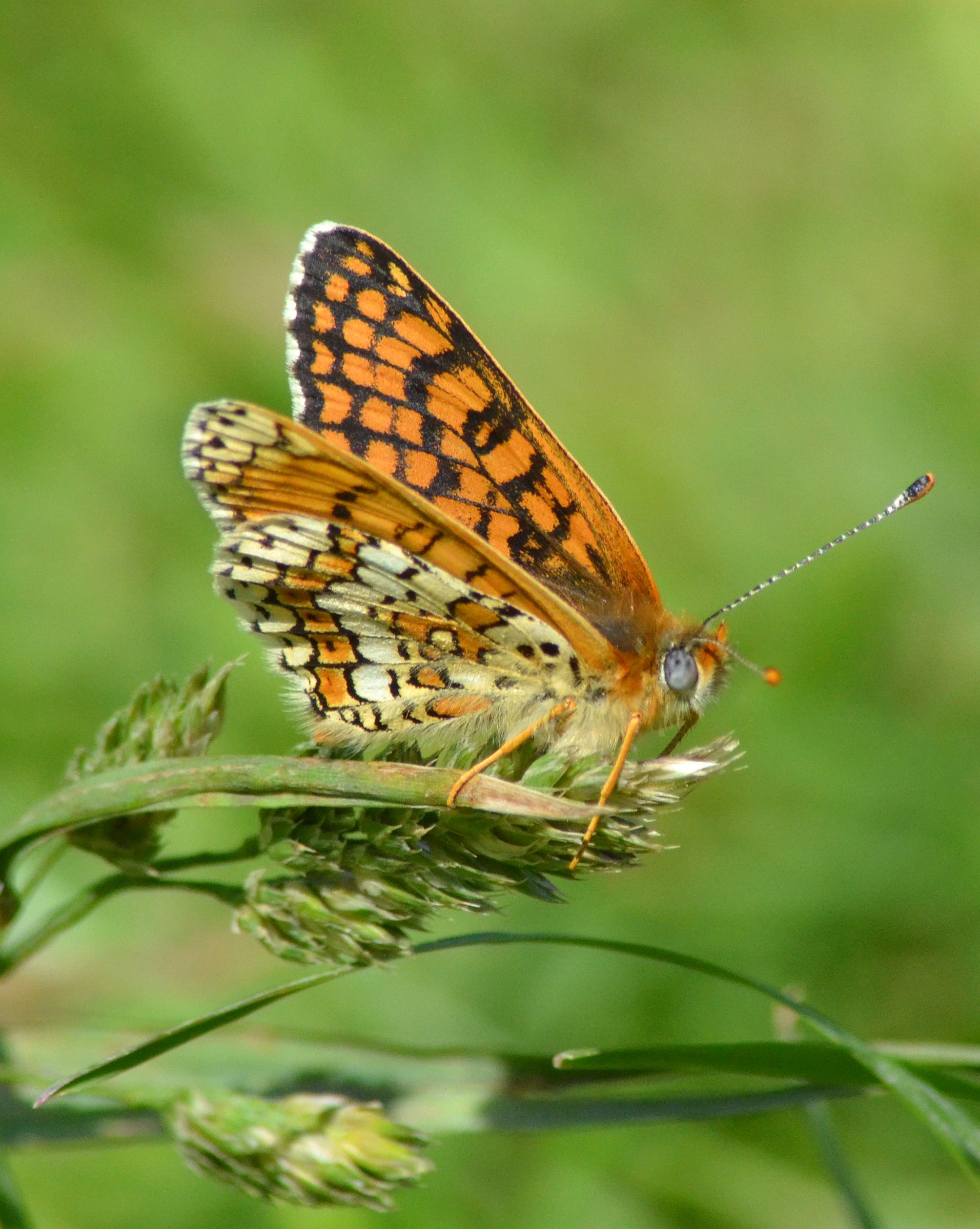
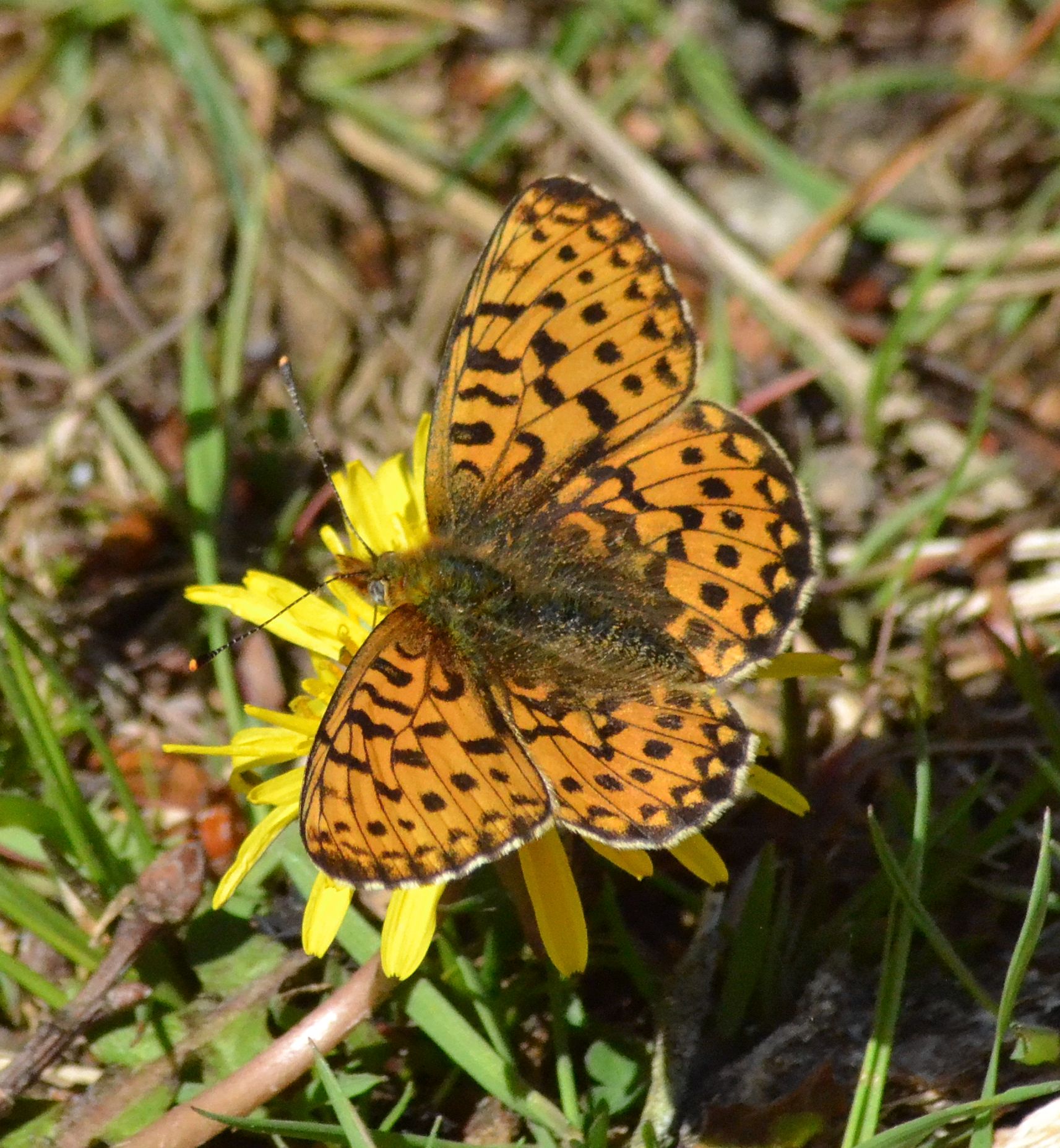
When a colleague came to this site 12 months ago and reported multiple sightings I decided to include it on my own national butterfly agenda again this year. The best place on the English mainland for Glanville Fritillary attracts many visitors. Since an unofficial release in 2011 the outcome has been rather more successful than previous re-introductions, all of which were short-lived, whilst here things are still thriving some 10 years on.

I myself last visited the colony six years ago. That post in my 2015 British Butterflies series has been by far and away the most referred to in this journal, being viewed over 300 times more than any other. But it actually said very little as we only found one individual that day, and so has now been removed. This new one is intended to be my English reference for what is clearly a very popular item.

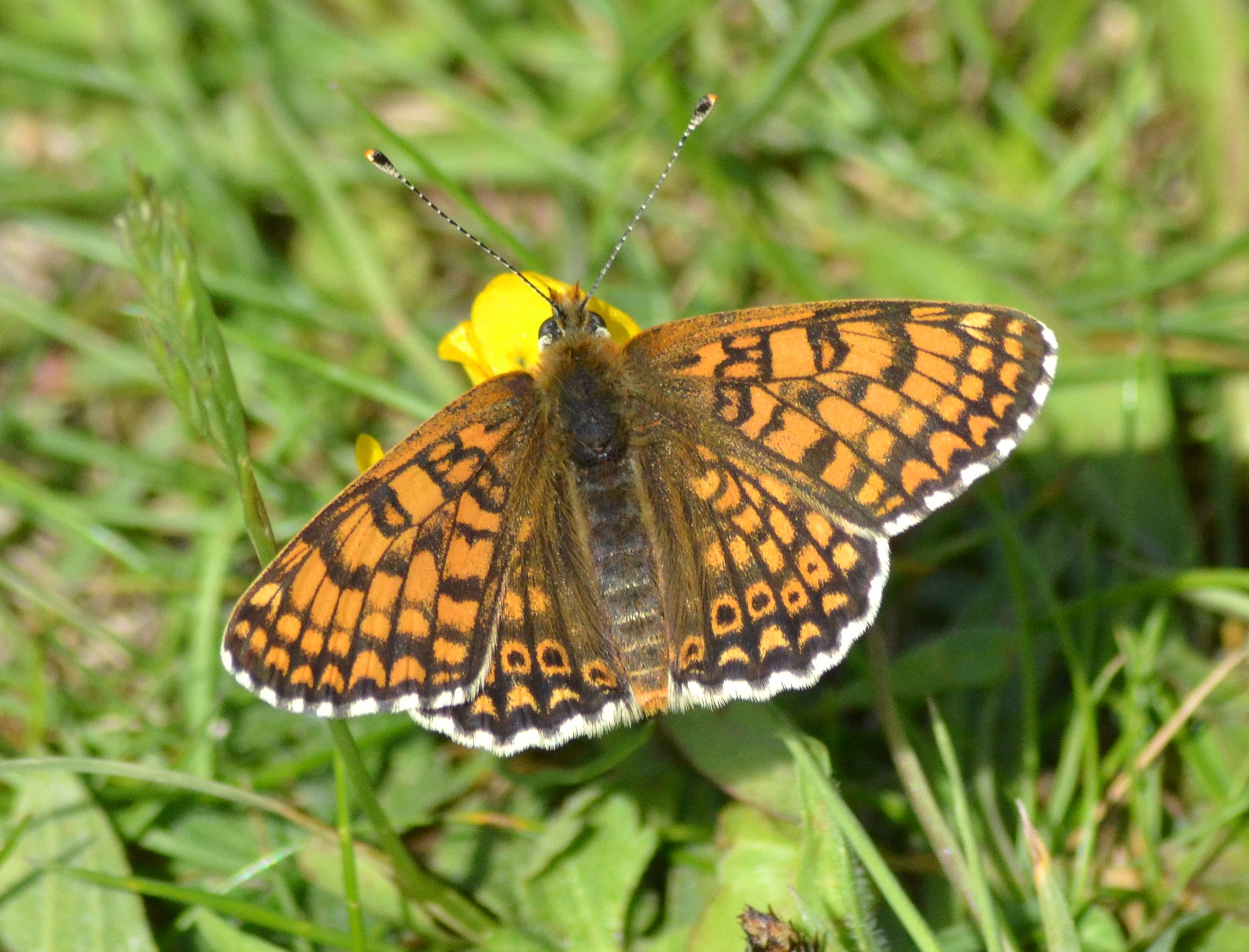
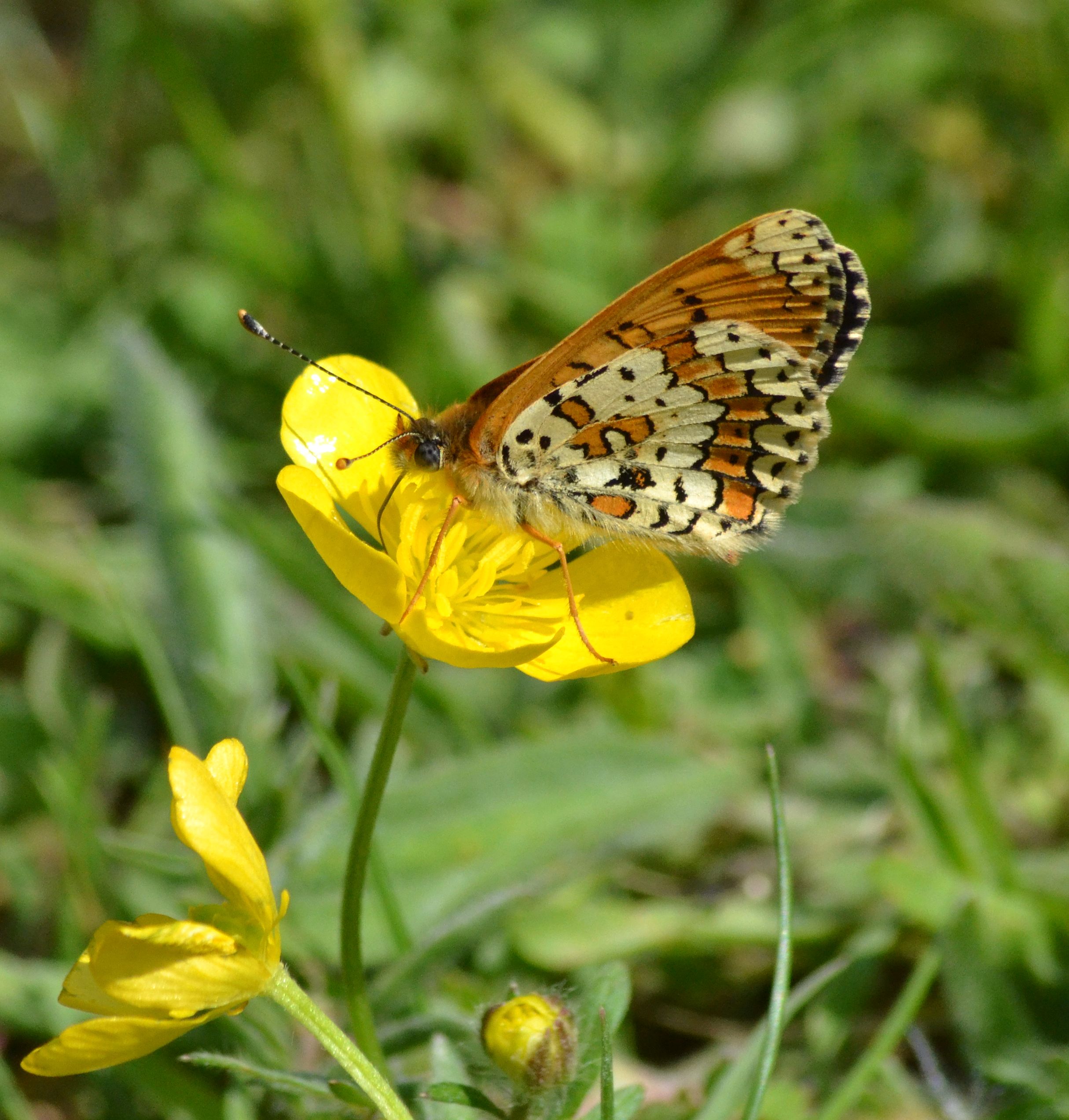
Glanville Fritillary on Ribwort Plantain

Hutchinson’s Bank (TQ381616) is owned by the London Borough of Croydon and managed by the London Wildlife Trust and the Downlands Partnership. The reserve covers a dry valley slope that is the largest area of chalk grassland remaining in Greater London. It supports a diverse flora and up to 28 butterfly species. From the end of Farleigh Dean Crescent (CR0 9AD), off Featherbed Lane a track leads through a hillside cutting that is the prime spot for viewing Glanvilles. On rising early today, as is usual at this time of year, I decided to beat the M25 rush hour and so arrived at around 8:30am. Five other observers were there ahead of me.

As the day began to warm up a first trip target was called at around 9:10am. The “early shift” were all genuine butterfly enthusiasts so we gave each other space, shared the picture opportunity and got on well. But mission having at least been accomplished I still preferred to wander off and explore elsewhere. Eventually re-entering the cutting from the other end, two or three Glanville Fritillary were by then active and for a while I had them all to myself.

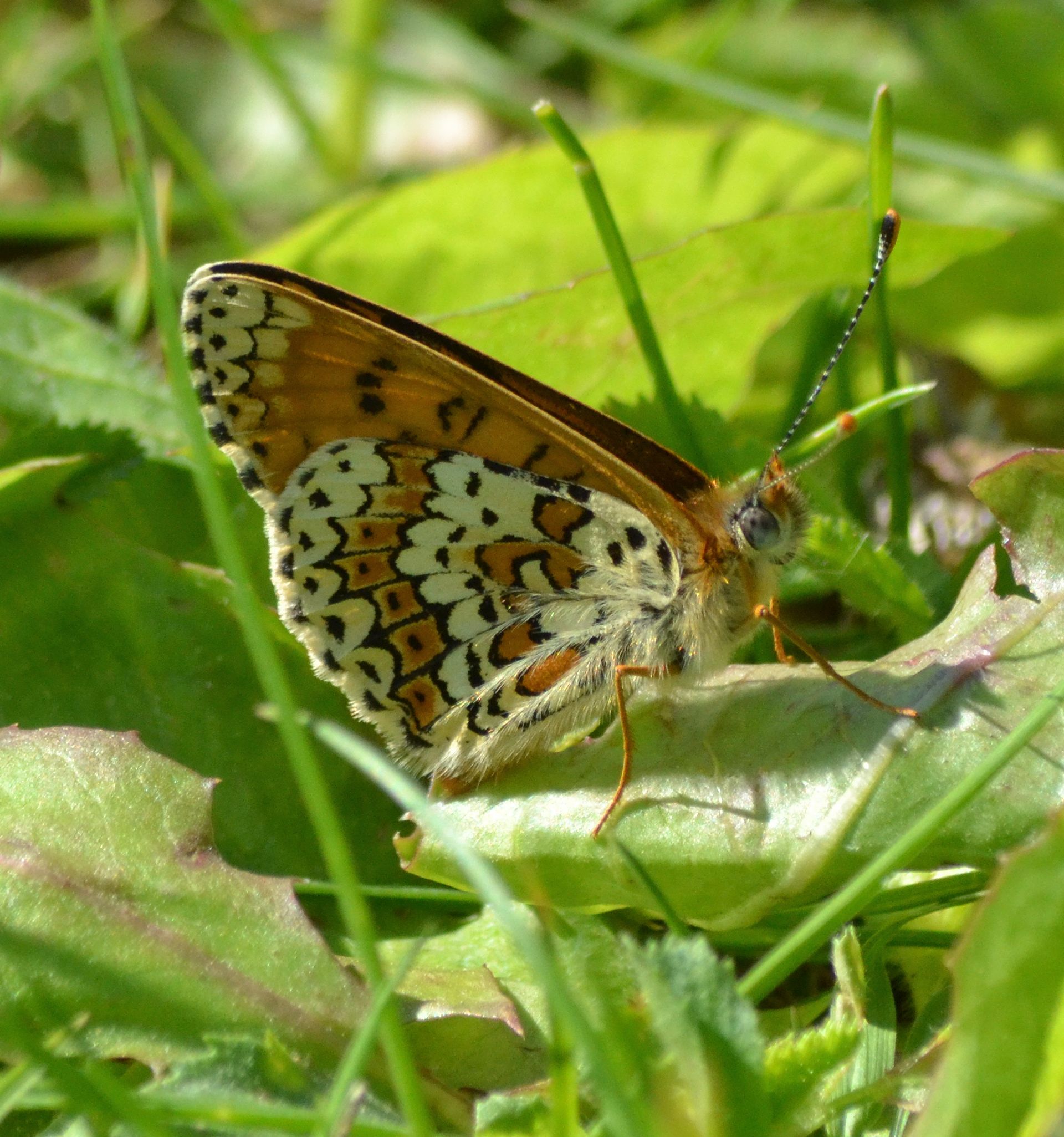
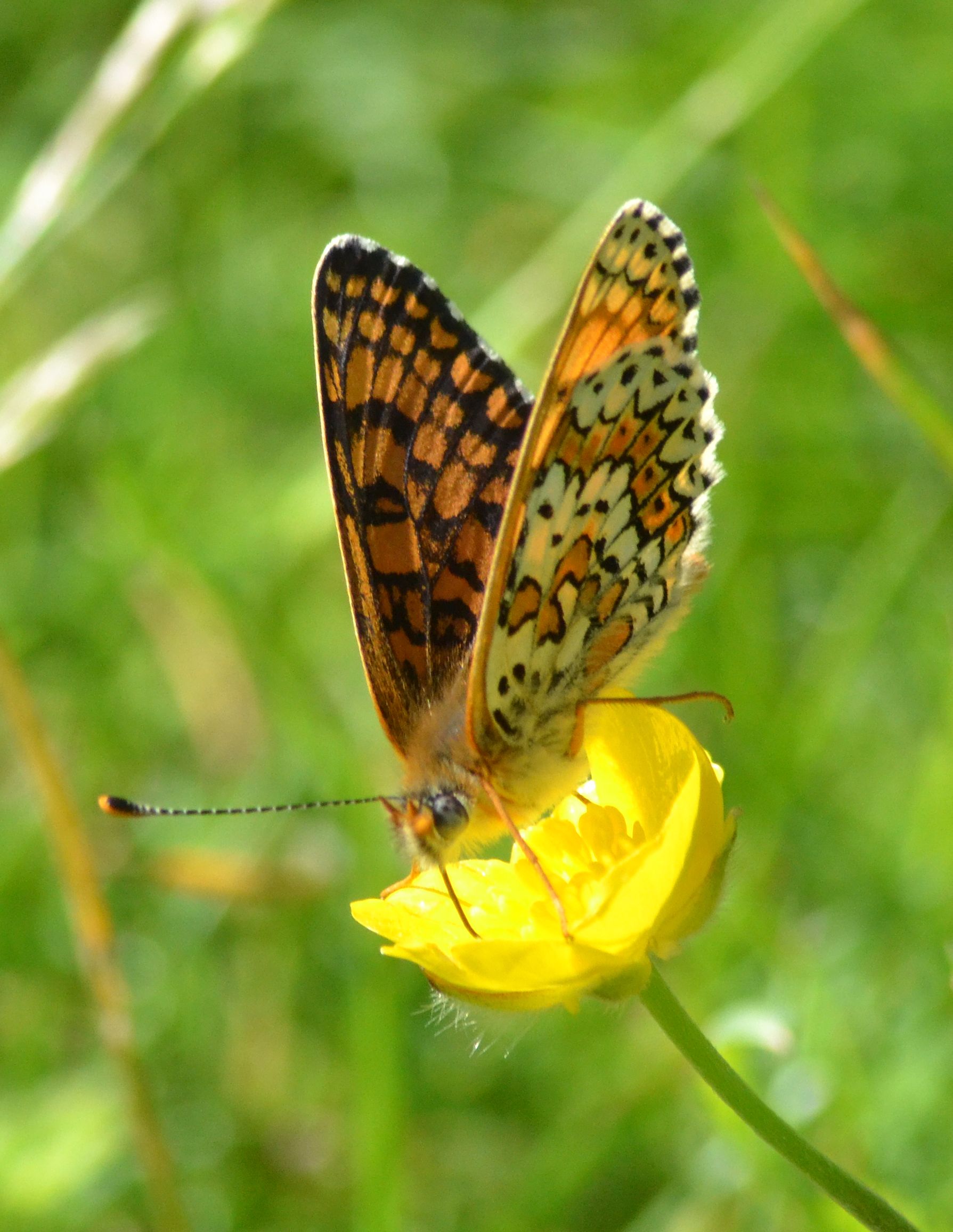
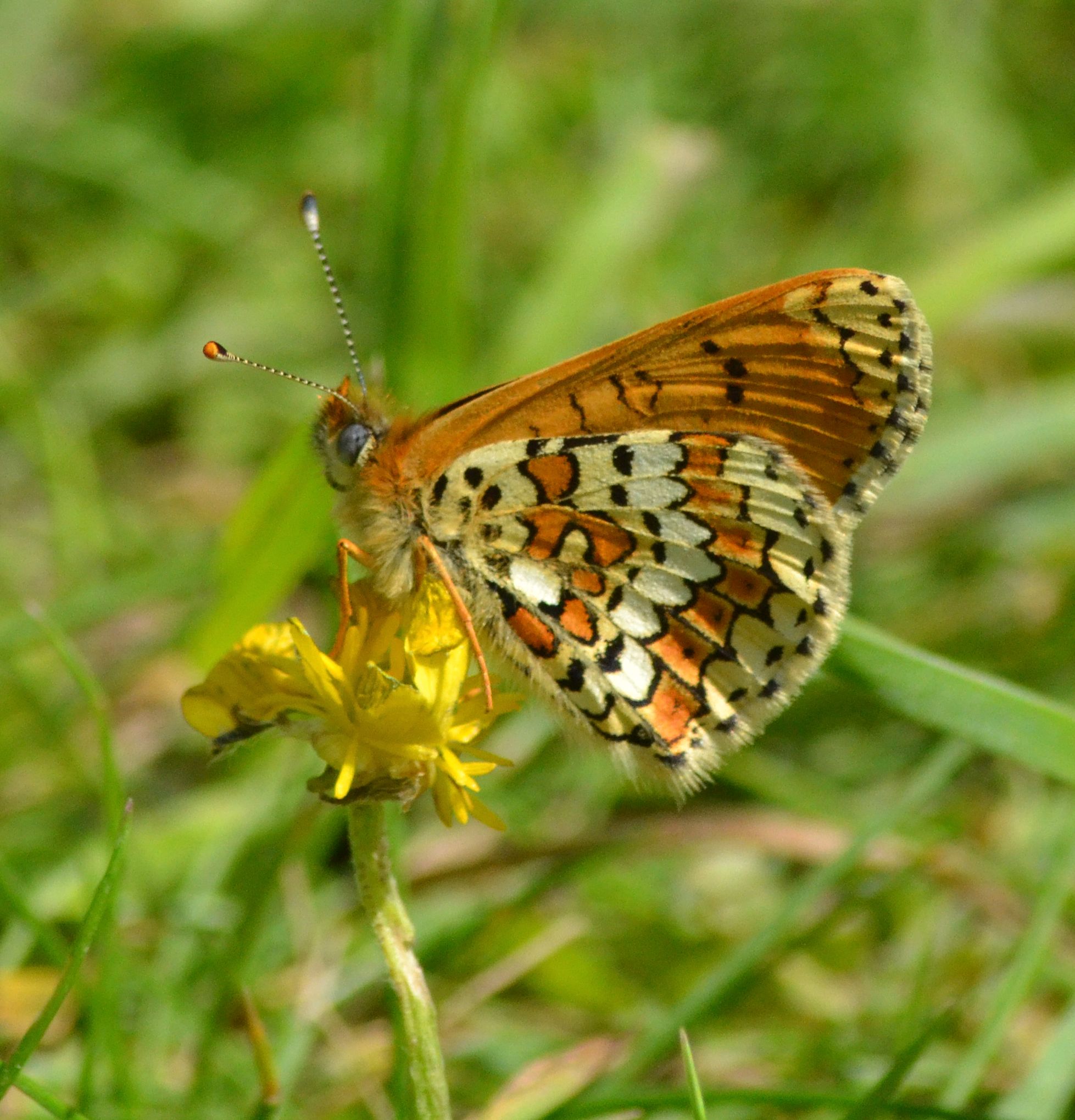
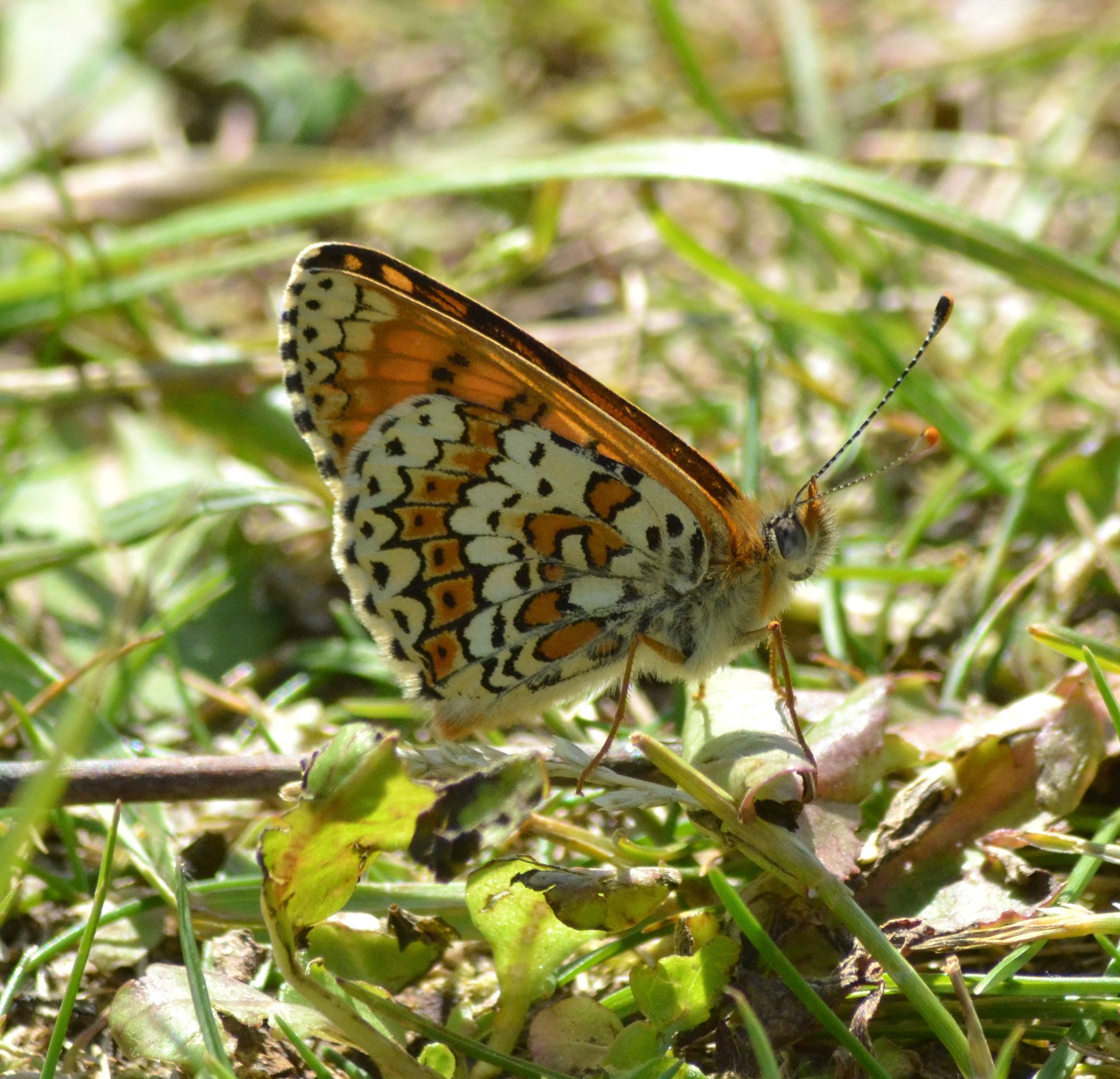
At that stage of the day the butterflies were more inclined to settle open-winged to bask, as these pictures (above) show. They were very low flyers with a quite delicate jizz and noticeably prone to resting on bare ground without nectaring. The main food plant is Ribwort Plantain.

Once fully warm they then perched mostly with wings closed, offering very pleasing underwing studies (above and below) of the white and orange banded patterning, interspersed with lines of black dots. By mid-morning as temperatures climbed to 25 deg C or more good numbers of Glanvilles became active all along the cutting and the number of observers also grew.

A butterfly of open, grassy hillsides and cliffs, the Glanville Fritillary is distributed widely across most of mainland Europe but is on the extreme north-western edge of its range in the British Isles. Since the mid-19th century the species has been confined to cliffs on the southern coast of the Isle of Wight. Emergence typically begins in mid-May and peaks in early June before numbers decline quickly, so there is limited scope for observing them. Certainly the opportunity to do so at Hutchinson’s Bank remains very much appreciated by British wildlife enthusiasts whatever the controversy surrounding the colony’s “introduced” status.


For new visitors to this blog who might have been directed via a Glanville fritillary web search, the different posts presented herein on British Butterflies are regularly referred to. The following may also be of interest:

Marsh Fritillary et al @ Battlesbury Hill, Wilts – 624 views

High Brown Fritillary @ Aish Tor & Heddon Valley, Devon – 436 views

Pearl-bordered Fritillary @ Rewell Wood, Sussex – 260 views

Pearl-bordered Fritillary in the New Forest, Hants – 208 views

Pearl-bordered Fritillary re-visit @ Rewell Wood, Sussex – 204 views

Marsh Fritillary @ Strawberry Banks, Glos – 199 views

Pearl & Small Pearl-bordered Fritillaries @ Wyre Forest, Worcs – 182 views

Small Pearl-bordered Fritillary @ Bentley Wood, Hants – 176 views

Also:

Duke of Burgundy at Noar and Butser Hills Sussex – 214 views

Scotch Argus @ Smardale Gill, Cumbria – 180 views

Large Blue @ Daneway Banks, Glos – 177 views

Duke of Burgundy @ Incombe Hole, Bucks – 96 views

A newly emerged female Goldenring at Troublefield, Dorset + 2021 New Forest Pearls – 27th May

The so often cold and wet spring of 2021 has been an undeniably dismal early season for both butterflies and odonata, but today was forecast at last to be consistently sunny. Hence I headed off south to attempt more from a lingering 2020/21 national agenda. It is an idiosyncratic dragonfly season indeed when Common Goldenring is encountered ahead of either Hairy Hawker or Four-spotted Chaser.

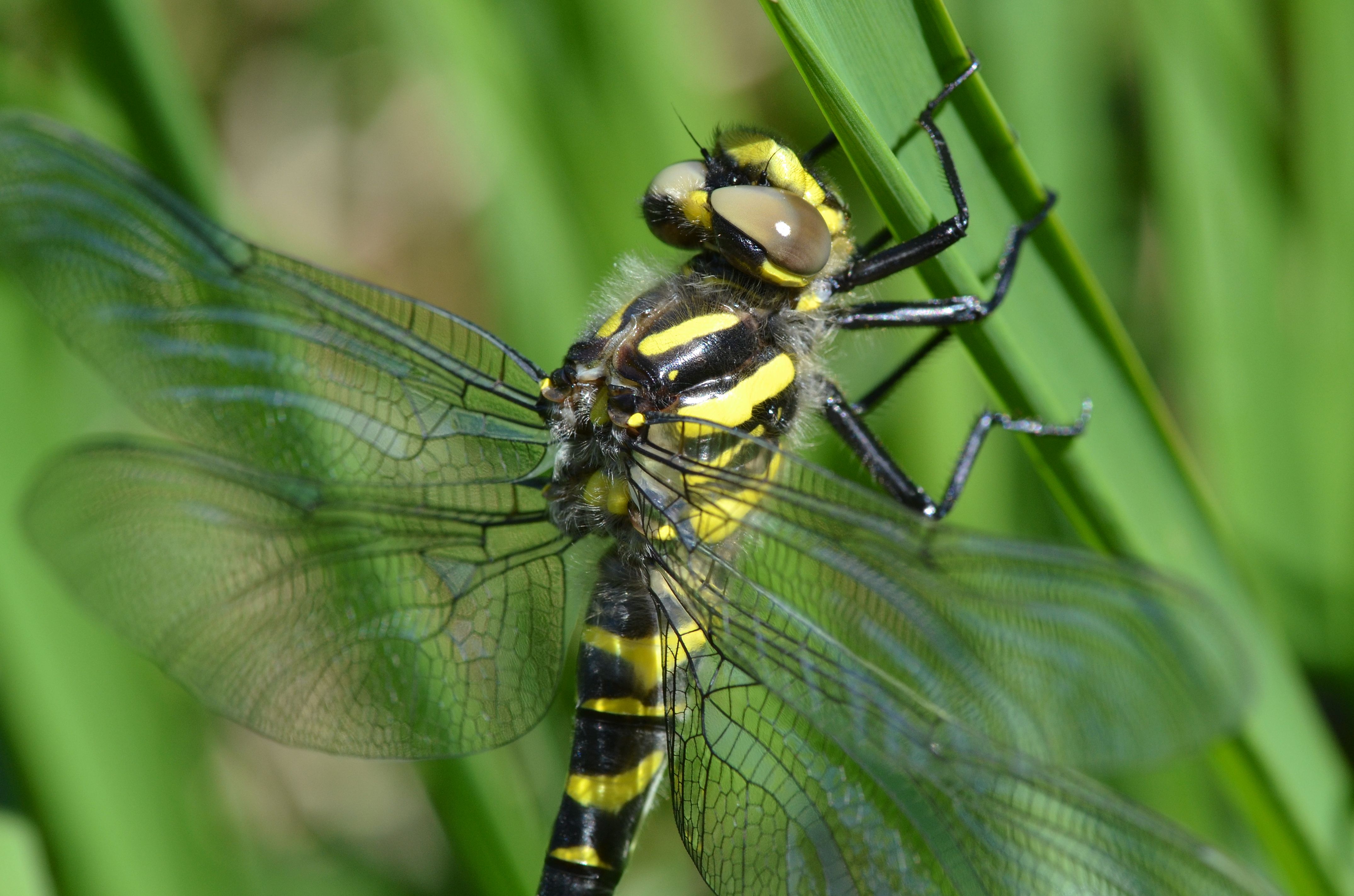
Teneral female Common Goldenring (or Golden-ringed Dragonfly)

Dorset Wildlife Trust’s Troublefield reserve (see here) is a remnant of unimproved wet pasture grassland beside the Moors River, a tributary of the River Stour that it joins a mile to the south. The Moors River is unusual in rising on chalk downland but being fed further downstream by run-off from acidic heath, and so supports a varied aquatic and wetland flora and fauna. The water meadows remain damp throughout the year and are flooded for most of the winter. In summer they are managed by light cattle grazing to keep the vegetation under control.

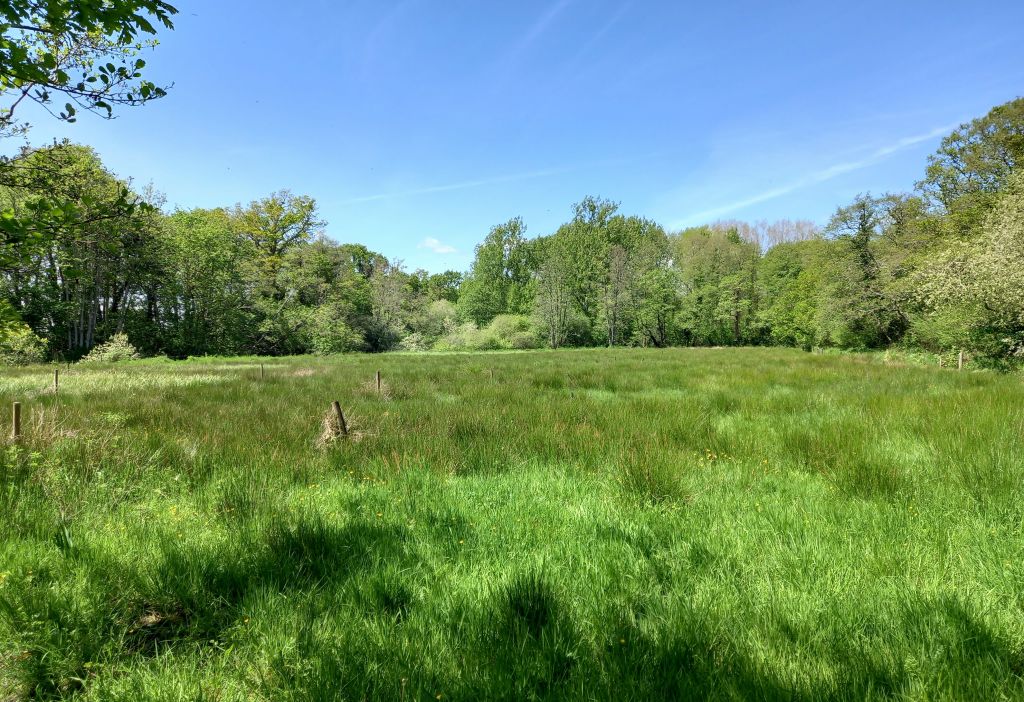
The reserve’s habitat of flowing and standing water alongside rushy grassland, trees and scrub creates conditions to suit a diverse range of insects. Up to 28 species of odonata have been recorded here including Great Britain’s last known Orange-spotted Emerald. It is very much an off-piste ambience at Troublefield (pictured below), with wellington boots essential barring a full set of angling waterproofs and a hiking pole advisable.

The entrance is accessed along a track signed 124 Matchams Lane in the village of Hurn (SZ 127976 – BH23 6AP). I arrived there just after midday. Another enthusiast who was about to leave said the main odo activity for him had been damselflies and he had not found either of my targets, Hairy Hawker and Blue (or Scarce) Chaser. That was indeed my own experience as I made two laps of the southern meadow, the outside edges of which had been cut to allow access. Both Demoiselles were present in places and lots of Large Red Damselfly, many of the latter in tandem. Then along the Moors River side, on looking down I beheld this (below).

Perched in the grass was a newly emerged female Common Goldenring. As I watched her wings gracefully opened proclaiming the nascent creature in all her latent elegance as she hung herself out to dry before me. What a stunner! I cannot ask often enough whether there is anything more exquisite in the natural world than a dragonfly, especially in such a pristine and virginal state as I was now witnessing. So birders, if you might have read thus far there is more of the same to come. This is not “Hobby food” and in my view certainly not more boring than plumage topography or camera settings.

Once again I was completely alone with the entity in question, which though not a preferred state for me may be a means to enjoy such communion and gain pictorial records of desired quality. Experiencing new odo colour forms is a real motivation now in order to evolve year on year. As in images of different species seen online the stand-out difference here was the eyes, that in Goldenrings meet in a point at the centre of the head.

Just look at those gorgeous and beguiling, milky coffee-coloured orbs (above) – Cappuccino even complete with the froth. In adults the eyes are bright green in males, less so in females. But this teneral also seemed to exude an all-round subtlety I had not discerned previously in such a bold looking dragonfly, by virtue of her paler lemon yellow toning. I sat down with this beautiful lady for some time, enjoying her complete trust and fellowship. But I feared for her in such an exposed pose lest she be snatched by a passing Corvid, or perhaps to some birders’ liking a Hobby. Fortunately there were none of either about.

Eventually my charge’s wings began to quiver and shimmer, gaining momentum as I watched on, then off she flew high towards the canopy on the far side of the meadow. “Rise today and change this world” is an analogy I cannot use too much and seems appropriate once more. Late May is indeed the start of Common Goldenring’s flight season, so something at least was now on time in the insect world for this particular spring.

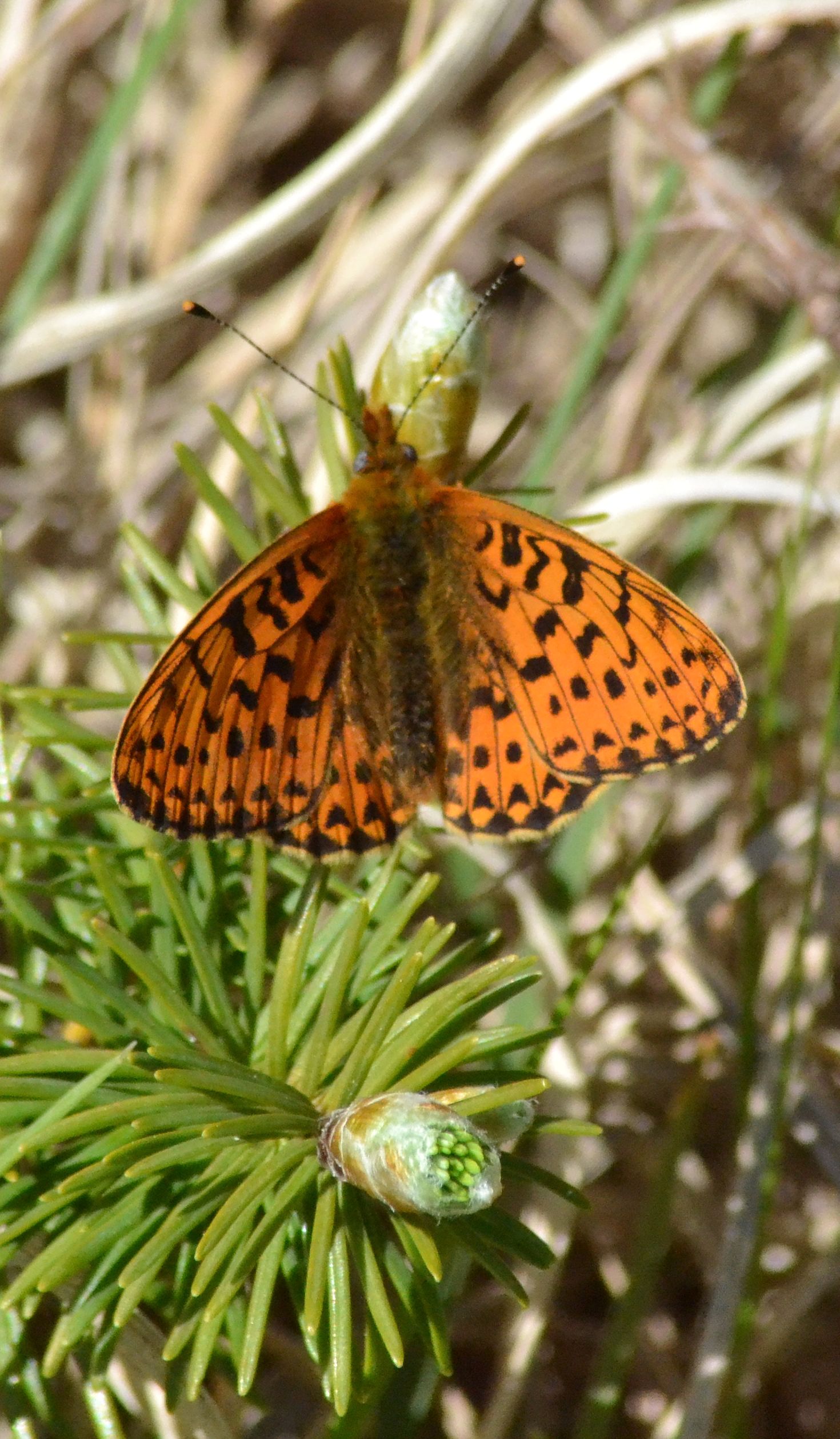
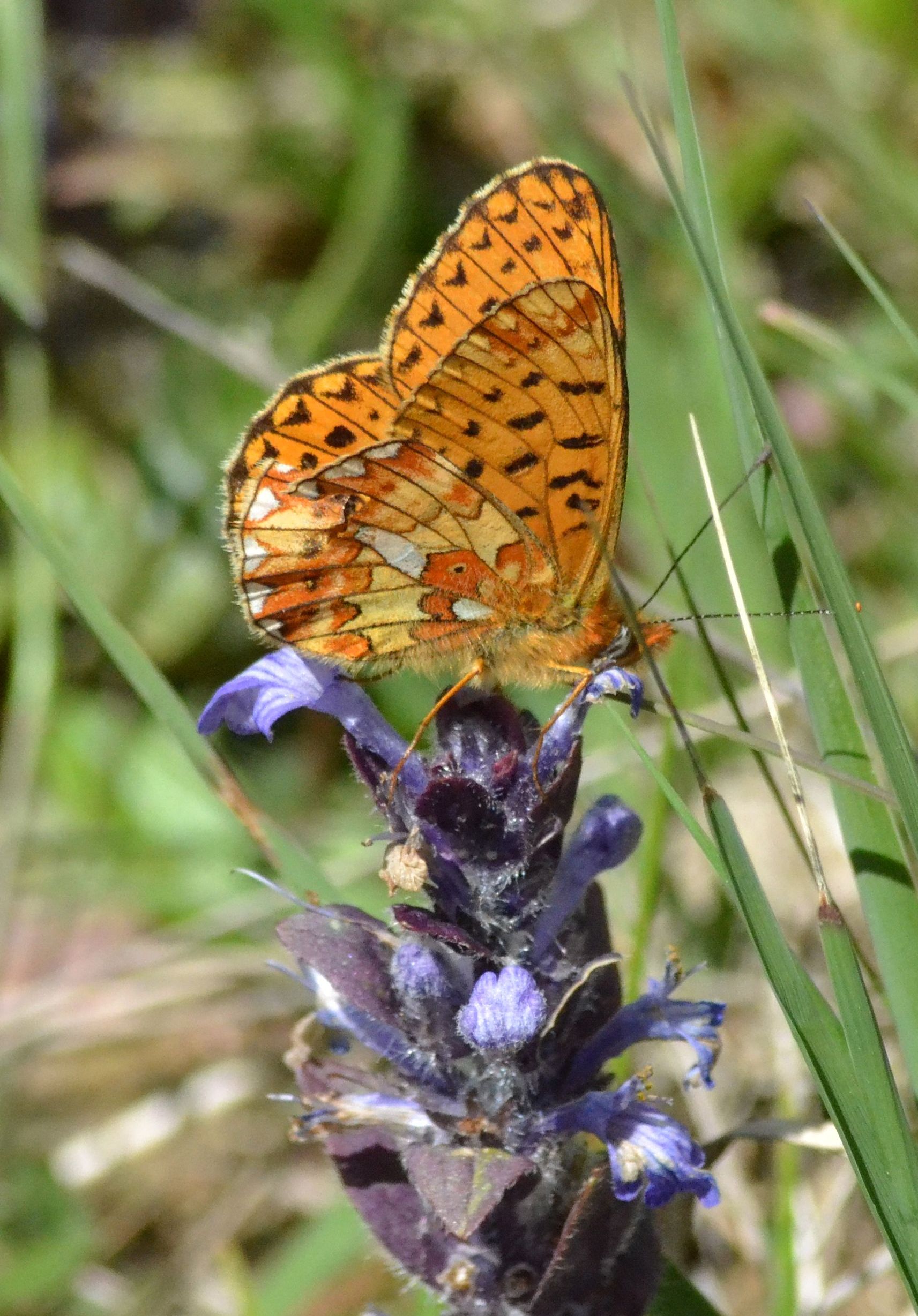
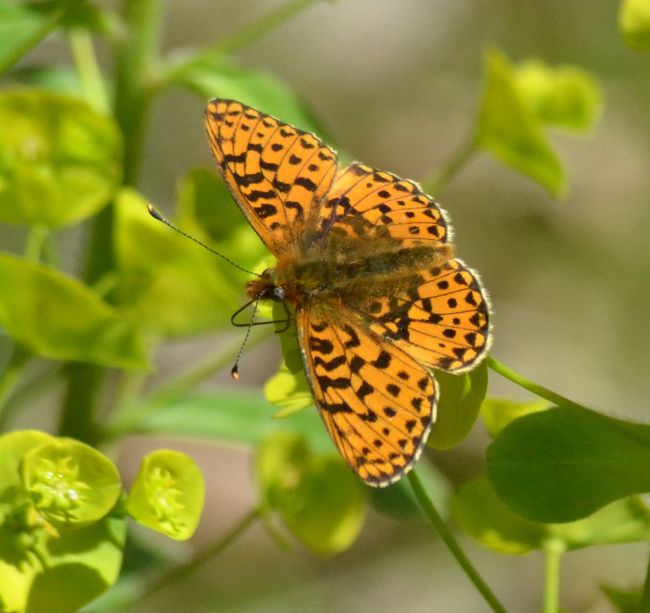
My day had begun in the East Inclosures of the New Forest, Hants where I headed for my now annual Pearl-bordered Fritillary fix. There have been only sporadic opportunities to observe the early season icon in 2021, with the most reported locations as usual being the popular circuses of Rewell Wood, Sussex and Bentley Wood, Hants. I much prefer it here where I can wander at will without being accosted or jostled by social media-enthused crowds.

I had first visited this year on 7th May with a companion who soon becomes impatient If I cannot make quick butterfly connects. Walking out from the Standing Hat car park (SU314036) there were no Pearls along the usual ride through Pignal Inclosure, beside which the habitat seemed very dry and devoid of wild flowers. The habitat also bore ample testimony to the human footfall it must have endured through the Covid year of 2020/21. What the effect of such visitor pressure must have been on wild flower generation was all too clear.

We went as far as Parkhill Inclosure that had been the most productive spot on my 2019 visit though less so in 2020. But there were still no butterflies or the wild Bugle plants that attract them. At that point my colleague refused to go further, saying the exercise was a waste of time. Fuelled by pessimism such as the experience induced I feared whether this New Forest locality was still being managed sympathetically for PBF by Forestry England and whether the butterflies might be in serious decline. But five days later on 12th a positive sighting came from the nearby Frowhawk Ride (SU317052) and I at once resolved to revisit what is a favourite site alone and do the job properly.

Such an opportunity arose today (there it is again!) and I was not to be disappointed. Arriving some time after 9am I came across four Pearls along the ride through Pignal Inclosure and 13 more as the day warmed up in or around Parkhill Inclosure. This was much more like it! Then I rambled on further, recognising suitable PBF habitat along other rides and counting up to 37 individuals, though there were clearly many more to be found had I searched harder. In the process and directed by locals I reached for a first time Ramnor Inclosure, where the habitat looked the best managed for PBF of all. But I could not locate the Frowhawk Ride – guidance in comments please anyone?

Though Bugle remained in short supply the butterflies were availing themselves of a number of other wild plants. I have many PBF images already in my collection. This post presents the best new additions from today, and it is always a privilege to capture any insect pictorially on Euphorbia (below, right).

So I am very pleased to have found the New Forest Pearl-bordered Fritillary population to be still healthy and thriving in suitably managed habitat. I love this place for the relaxation and tranquillity it affords. Butterflying for me is not about pressure, competition and adrenalin but escapism through unhurried fieldwork in beautiful wild places. The East Inclosures (see here) had once again supported that criterion as well as anywhere I know.

A Whiskered Tern at Longham Lakes, Dorset – 11th May

British bird list additions within 100 miles of home are usually an agreeable reason for me to hit the road for a day out. So when a Whiskered Tern that had been present for some days at Abbotsbury on the Dorset Fleet relocated to the nearer end of that county I quickly decided to make the tripette. I first experienced this attractive marsh Tern in la Camargue (France) and Coto Donana (Spain) in the spring of 2012, then again on Lake Kerkini in Greek Macedonia in May 2017 (pictured below).

Whiskered Tern

This scarce summer vagrant to the British Isles is one of a group of three species – the others being Black and White-winged Tern – known as the “Marsh Terns” that breed in loose colonies in shallow, wetland habitat such as lakes, rivers and marshes. These feed by dipping down to the water surface to take insects, actually diving for fish much less often. To quote Collins, they differ from the “Sea Terns” in their lazier flight with more banking from side to side, and do not hover and dive like the latter group. Marsh Terns also have slightly shorter and broader wings and a less forked tail. To my mind this all makes for entertaining and alluring viewing.

Longham Lakes (SZ 065982) on the outskirts of Bournemouth is something of a lucky birding location for me. I last came here in October 2019 to observe an American Black Tern (see here). Earlier visits for Hoopoe (Dec 2010) and White-rumped Sandpiper (Dec 2012) were also successful and today was no exception. I arrived mid-morning to find several birders in place who indicated the area in which my quest was active, and I soon picked the Whiskered Tern out by it’s smoky grey appearance on the wing. But it was actually the only Tern of any kind at this site today.

This bird offered superb value over my four hours or so on site through which it foraged for insects on the wing and hawked the water surface widely putting on quite an aerial display. Soon after my getting there it settled on one of a number of buoys out on the far side of the lake. I attempted digi-scoped records and this below was my best effort to show I am not making all this up.

Today’s Whiskered Tern (record shot)

I then learned that a day earlier the Tern had perched on a water level marker much closer in to the shore, further around the lake perimeter from where I was standing (see here). So I headed for that spot, finding several more birders and photographers all waiting hopefully for a repeat performance. The views from there over the next hour were much better (below), but the Tern did not come in closer to settle on the post.

After a sandwich break I returned to stake out the same spot again. The other birders from earlier had moved on, so I set up my shooting stick and as the Tern came and went over another hour I had it all to myself. But still it did not offer the picture opportunity I was seeking and so at some time after 2pm I departed.

Today’s Whiskered Tern (record shot)

In between the dates cited at the start of this post a Whiskered Tern was a first county record for my home county of Oxfordshire, at RSPB Otmoor on 25th April 2014. This occasion was famous in recent local birding history for the grapevine co-ordinator who usually puts out the alerts being on holiday abroad, so in the event only around 14 people got to connect. The record is still the most recent life addition for three of Oxon’s four highest published listers.

When news filtered through to me I met some of those departing Oxon birders on the access road to the reserve who said the bird had flown off north and it was not worth my going on. But I wasn’t told two reliable birders had stayed behind who reported it returning to roost that night. In the days that followed some of our county’s finest cast doubt upon that, but in the OOS Annual bird report for the year it is now acknowledged the later report was correct.

At first light the following morning I was one of rather more than 14 county birders who found the Whiskered Tern had moved on overnight. Though not a matter of great importance to me, I have since felt a slight frustration over allowing myself to be turned around on that occasion rather than taking the decision myself. So today’s experience of a first personal British record goes some way to redressing the balance. My British bird list now stands at 362.

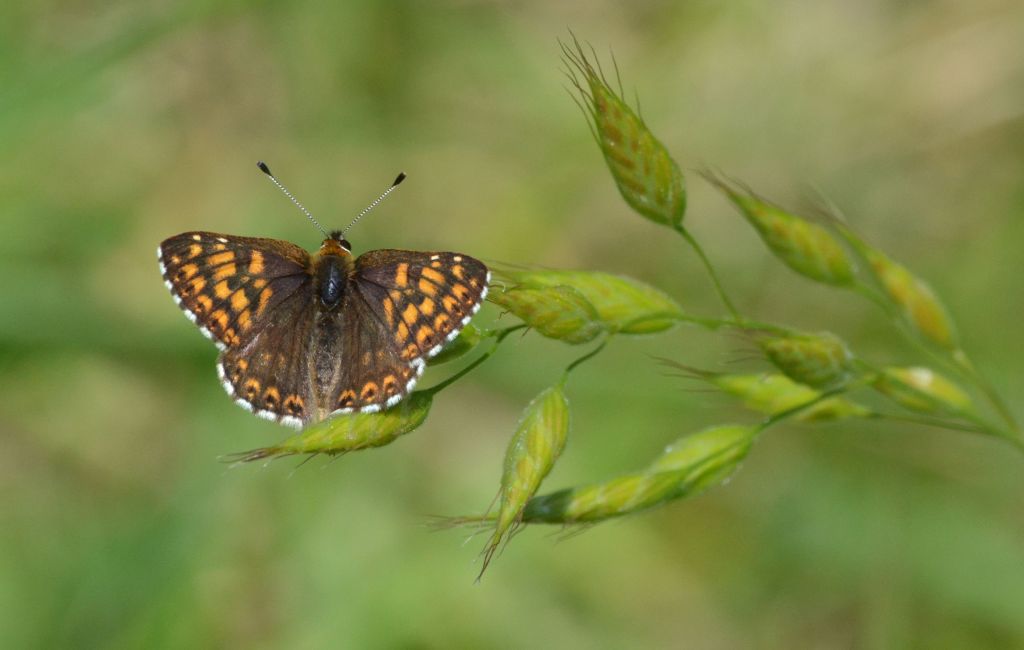
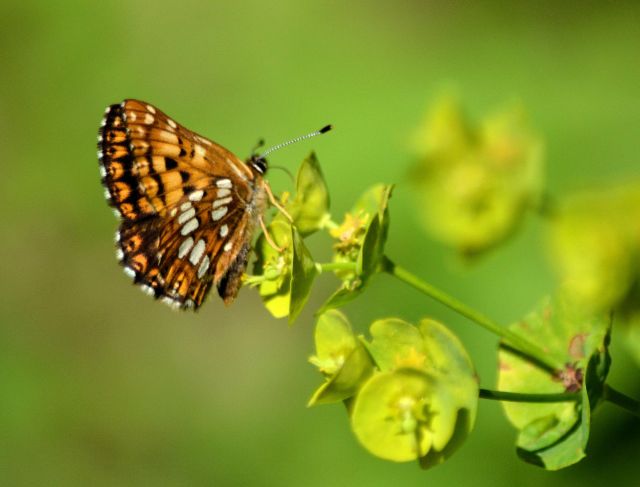
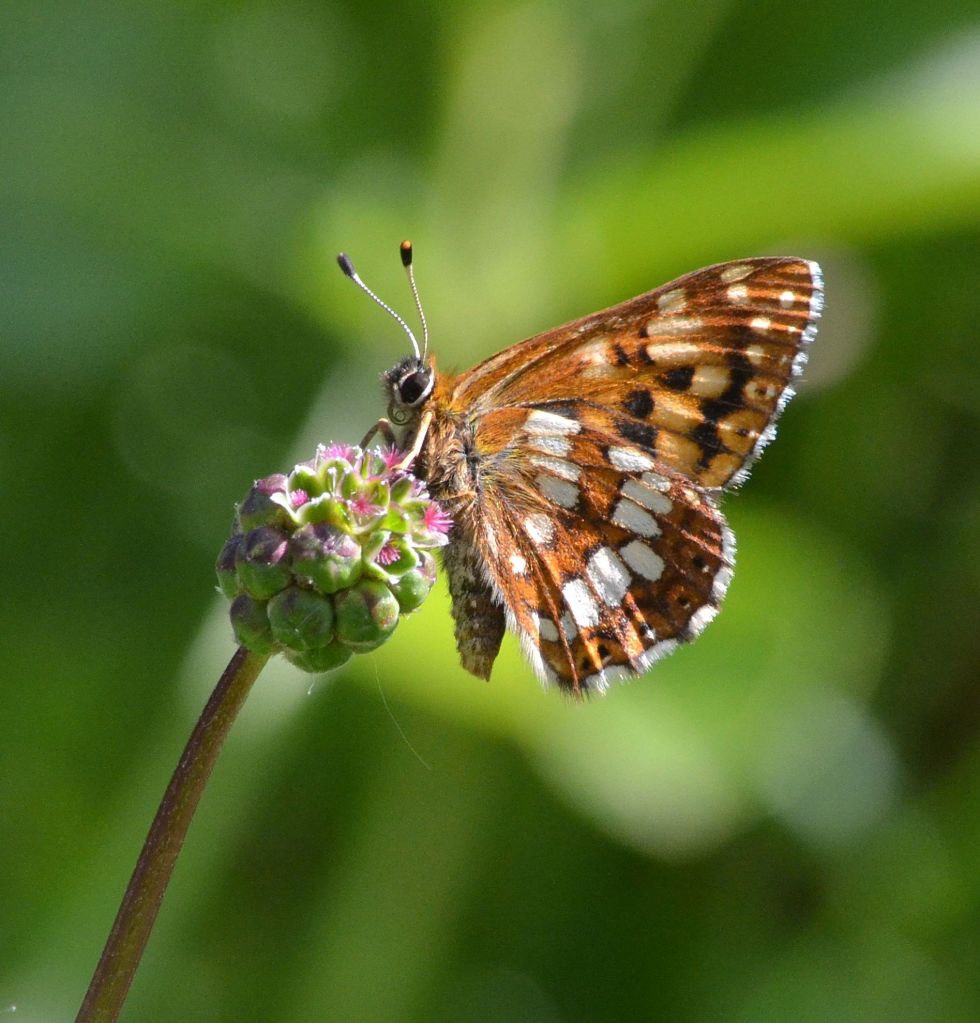
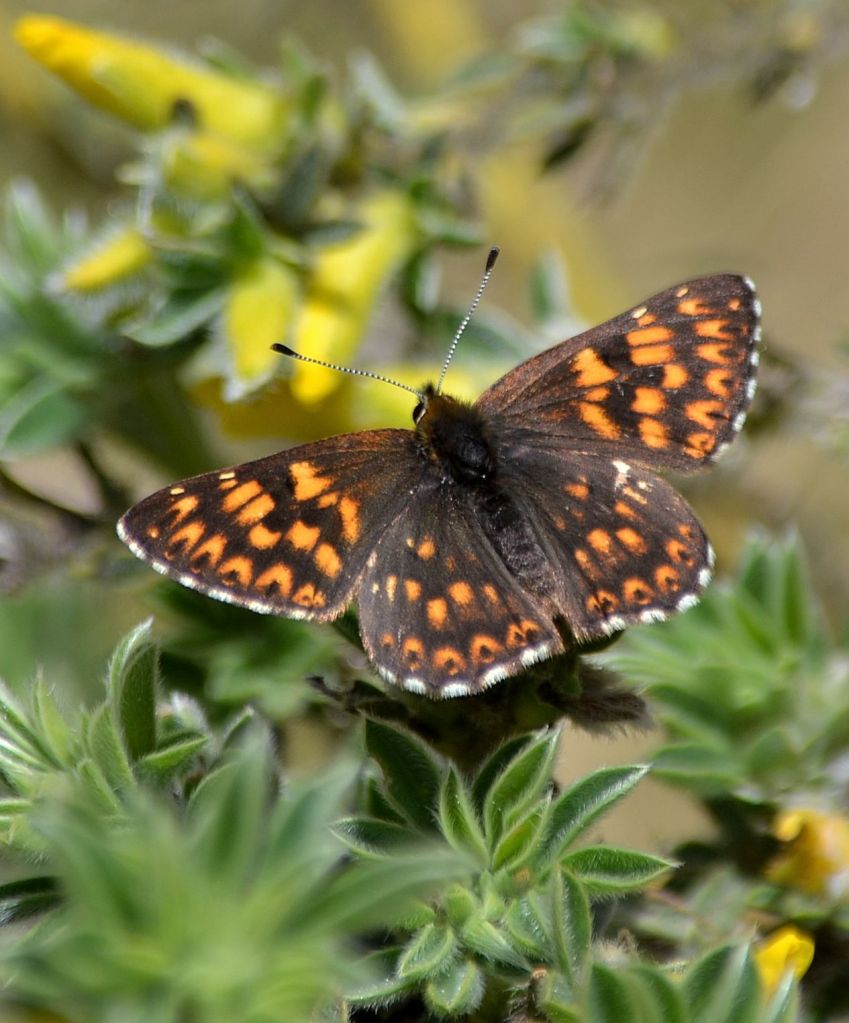
2021 Duke of Burgundy at Incombe Hole, Bucks – 27 & 30th Apr

One of just three BC Upper Thames Branch area butterflies I failed to record in 2020 was Duke of Burgundy, since by the end of Lockdown 1.0 they had largely ceased to fly. In recent years I have preferred to observe this early season speciality in Hampshire and Sussex, but to evolve for 2021 I chose a classic UTB site just 40 miles from home.

Incombe Hole is a steep sided dry valley immediately to the south of Steps Hill in the National Trust’s Ivinghoe Beacon AoNB in Buckinghamshire. The area as a whole is the largest complex of chalk grassland anywhere on the Chilterns escarpment. As soon as I approached the feature from the smaller car park on Beacon Road at SP963155, I recalled a similar geological trench running off the South Downs at Butser Hill in Sussex, where I observed Duke of Burgundy, Grizzled Skipper and Green Hairstreak in 2018 (see here).

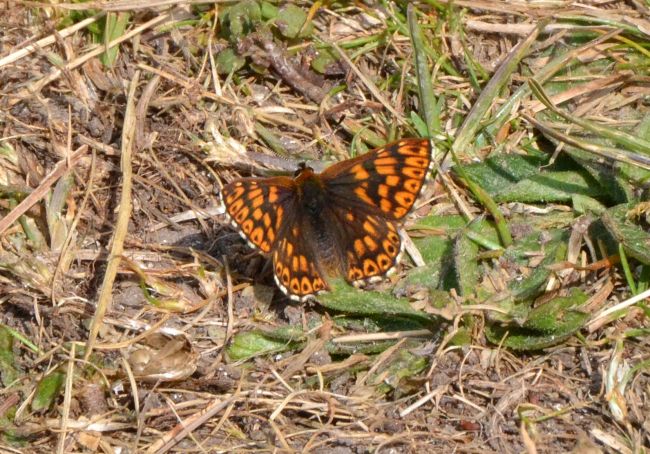
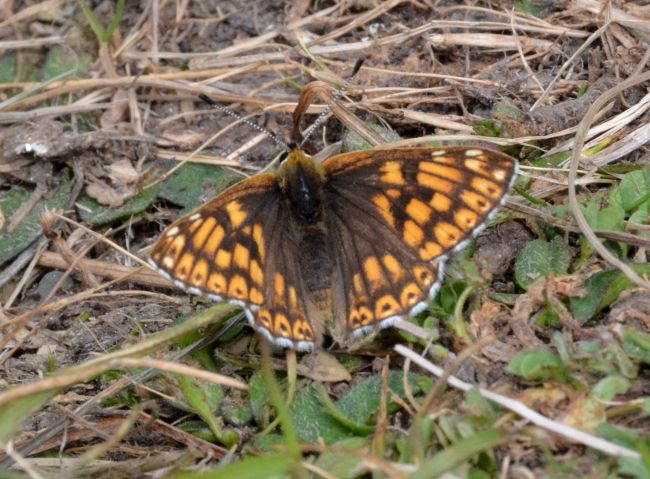
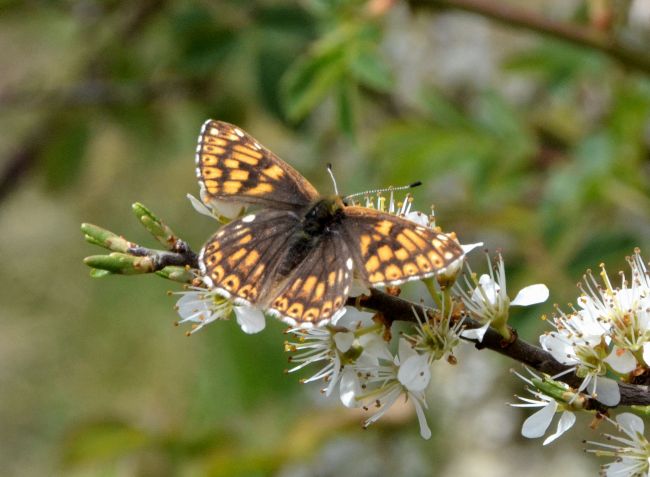
Male Duke of Burgundy

In the past I had joined Butterfly Conservation field trips to Beacon and Steps Hills in this Bucks’ locality but had not been to Incombe Hole before. Walking further along the top of the less lofty southern slope and looking downward there stretched out ideal habitat for Duke of Burgundy and those other spring butterflies. On selecting what looked like a manageable descent (hiking pole recommended) the valley floor contained swathes of Cowslip, my quest’s food plant. Now this site also reminded me very much of the popular Duke site Noar Hill in Hampshire (see here and here).

Incombe Hole on the Chilterns escarprment

I was in another beautiful, evocative location upon which I at once decided to focus my early butterflying activity for the new season. But on this morning the sun just did not want to come out. After making a thorough reconnoitre up and down the length of the valley I climbed back out again and rested for a while. It was now just before 1pm and a patch of blue sky was approaching that I attempted to walk back down into.

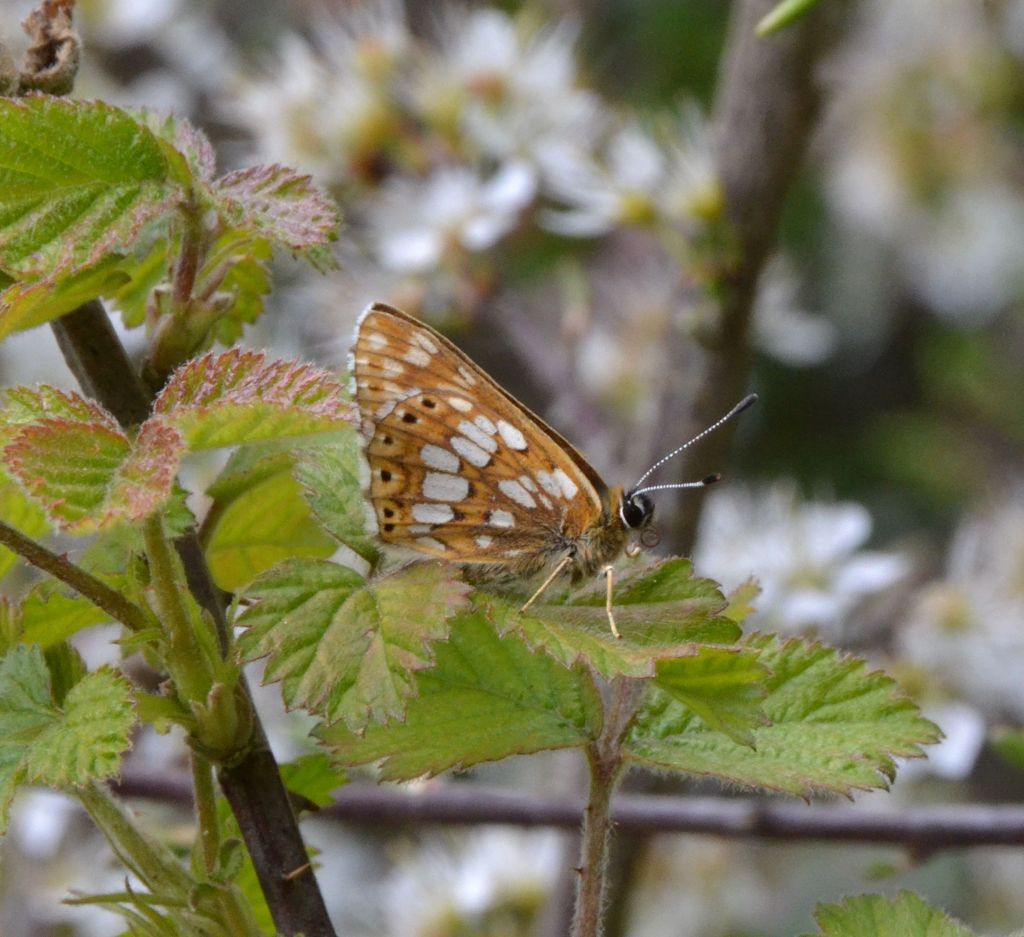
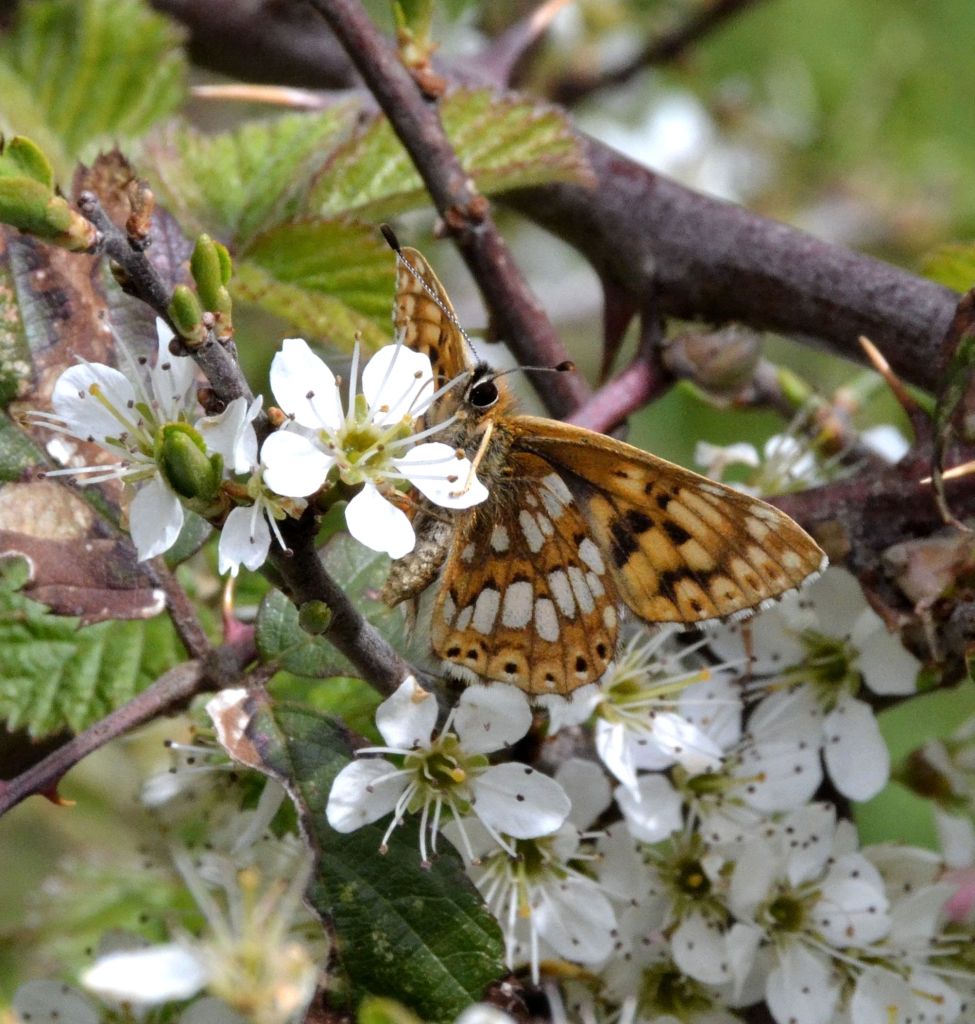
At the foot of my earlier descent two other observers were sitting on the ground staking out an expanse of blooming Hawthorn. As I approached them and quite by coincidence they jumped up, exclaiming: “It’s a Duke!” In the transient sunshine a butterfly had landed in a very small Hawthorn sapling right beside them. I hung back to let them get their pictures first, not wishing to barge in on what was reward for a patient wait, but they were friendly and talkative. Then I managed to gain acceptable images of my own (below).

We were soon joined by two other observers and so things became already a little crowded for my liking, though all of us got on perfectly well. One of these colleagues was a regular surveyor here who at the end of March found a Large Tortoiseshell in Incombe Hole (see here), and he briefed the rest of us further on the site. We were apparently at an especially good spot for Dukes since they like to nectar on the Hawthorn blossom. That may be due in part this year to the Cowslips being more under-developed than usual due to April’s dry, cold climate pattern.

I was led to expect a count potential of 20-something Dukes of Burgundy on a good day here if the weather improves, and checking back through BC UTB’s sightings records confirmed that. The 27th’s window of opportunity soon passed and conditions became cooler and more overcast than in the morning. I was the last of the five people present to leave, having gained a good understanding of the location and resolving to re-visit at the earliest opportunity.

Returning after three more days in the late morning of 30th I was at first the only person at this same spot, quickly finding one each of Green Hairstreak, Dingy and Grizzled Skipper in the sunshine. Then a male Duke began basking on the ground near to me (pictured above, left), at which a second observer appeared and he found a female in the Hawthorn (below). We took turns to take pictures of both these individuals and that opportunity was relatively brief again like two days earlier. Cloud is prone to bank up on the Chilterns escarpment here just as much as at Aston Rowant NNR in Oxon.

It seemed like the wait for another blue sky interval could be quite long as three more observers arrived. If anything did then show itself there would be the inevitable scrum, so having already gained enough material for this post I decided this journal’s Duke of Burgundy content had evolved enough for the new season and went on my way. It has been a very slow start to 2021 through a cold April with just small numbers of butterflies recorded so far. The early season specialities of which I saw all four at this site look set to not occur in numbers until mid-May, weather allowing.

The images herein of Dukes on Hawthorn blossom are especially pleasing, being the first I have gained in such a setting. Over the years I have managed as agreeable studies of this delightful little butterfly that will allow close approaches given careful, lone fieldwork. This celebration (below) presents the best of them:

The Rn’S Duke of Burgundy Gallery


For new visitors to this blog who might have been directed via a specific species search, the different posts presented herein on British Butterflies are regularly referred to. The following may also be of interest:

Marsh Fritillary et al @ Cotley Hill, Wilts – 721 views

Marsh Fritillary et al @ Battlesbury Hill, Wilts – 533 views

Large Heath @ Whixall Moss, Shropshire – 445 views

High Brown Fritillary @ Aish Tor & Heddon Valley, Devon – 370 views

Purple Emperor et al @ Bernwood Forest, Bucks – 337 views

Pearl-bordered Fritillary @ Rewell Wood, Sussex – 231 views

Duke of Burgundy at Noar and Butser Hills Sussex – 192 views

Pearl-bordered Fritillary re-visit @ Rewell Wood, Sussex – 174 views

Large Blue @ Daneway Banks, Glos – 155 views

Pearl-bordered Fritillary in the New Forest, Hants – 136 views

Pearl & Small Pearl-bordered Fritillaries @ Wyre Forest, Worcs – 135 views

Small Pearl-bordered Fritillary @ Bentley Wood, Hants – 135 views

Wood White @ Bucknell Wood, Northants – 118 views

Marsh Fritillary @ Strawberry Banks, Glos – 112 views

A complete Sand Lizard experience at Higher Hyde Heath, Dorset – 20th Apr & 7th May

This was something I intended to do a year ago. The first sunny days of April are said to offer the best opportunity for observing Sand Lizards as they emerge from hibernation and turn their minds to propagating the species. An early item on my national wildlife agenda for 2020, re-scheduled to 2021 was therefore to experience the scarcest British lizard within its classic stronghold of the Dorset heaths.

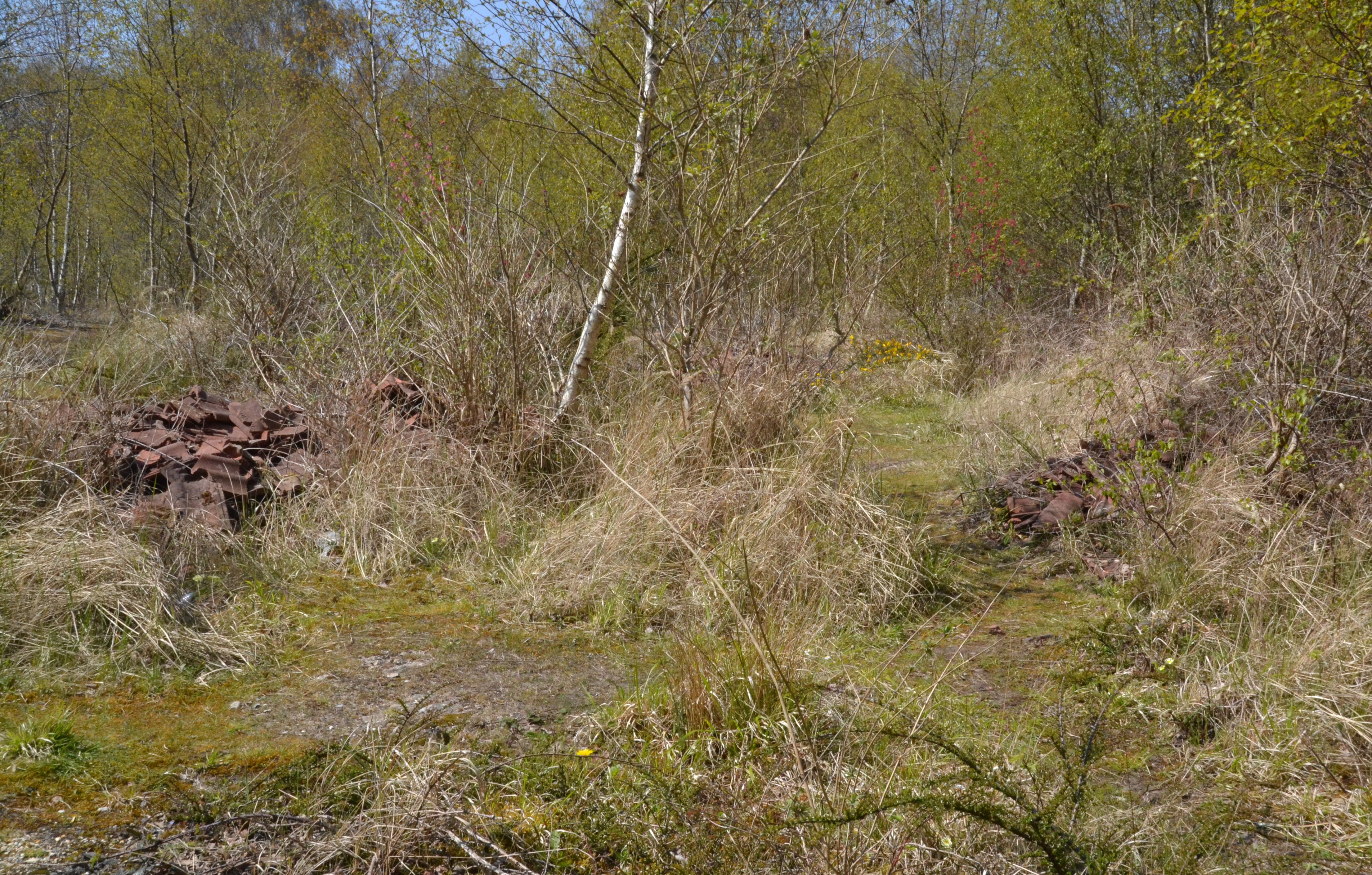
The Dorset Wildlife Trust reserve of Higher Hyde Heath (BH20 7NY – SY854899), around three miles south of Bere Regis from the A31 (see here) is reputedly one of the most reliable English sites for Sand Lizard. And that is in no small measure due to a quite particular piece of habitat management. Such small needles in huge haystacks as these might better be encountered when basking on rock outcrops. Three years ago I was briefly successful after much time and effort on a hilltop tor on the Surrey heaths (see here). At today’s location the desired outcome has long enjoyed a helping hand.

In Great Britain this lizard occurs naturally only in lowland heaths and sand dunes of Dorset, Hampshire and Surrey as well as some coastal dune systems in Merseyside and North Wales. The protected species is regarded as threatened due mainly to habitat fragmentation and destruction through commercial development and wild fires. This is nowhere more prevalent than on the Dorset heaths where my day’s quest is now largely confined to managed nature reserves. As mature sunny habitats are required containing open undisturbed sand in which to lay eggs, they can have quite limited distribution even within the protected areas.

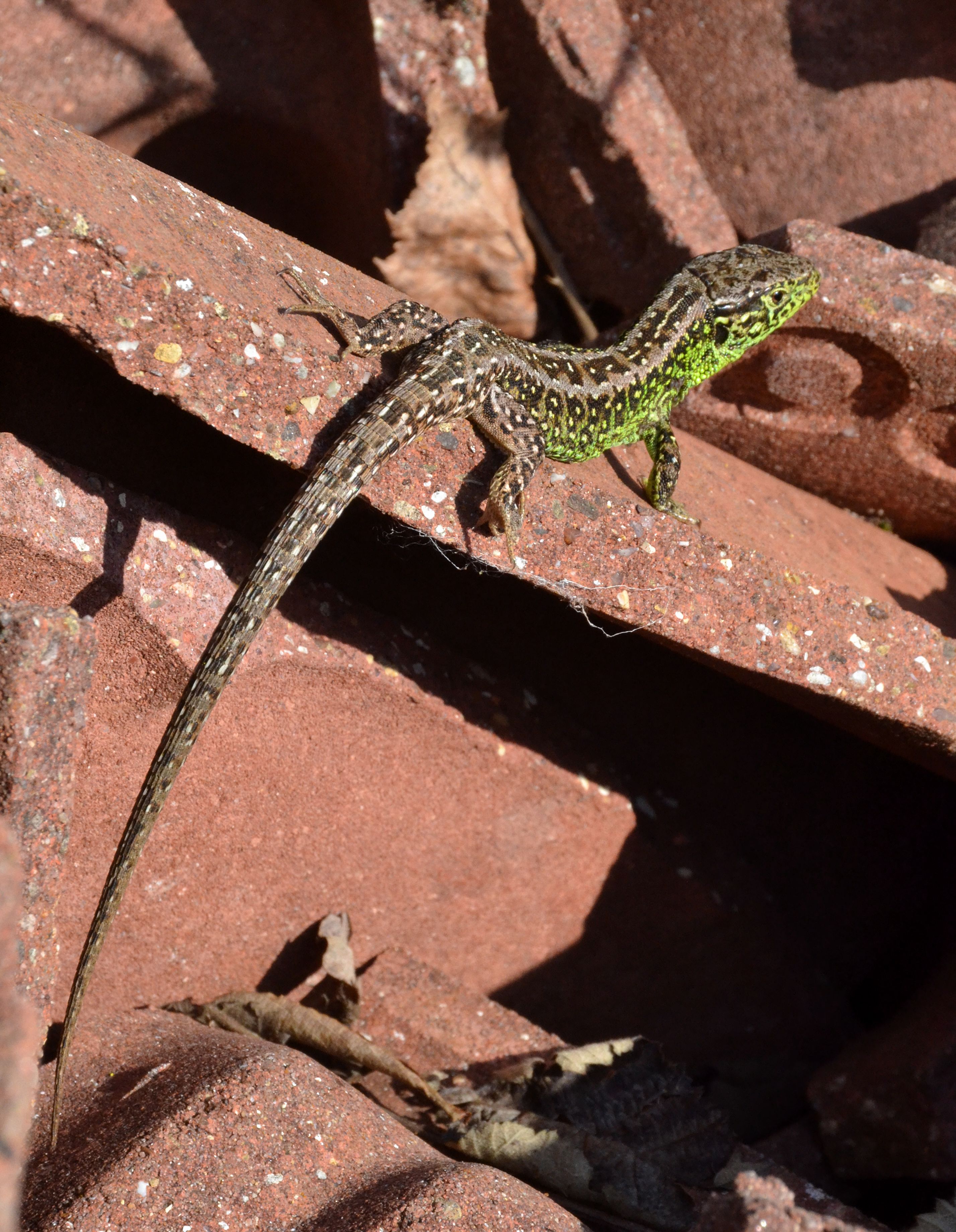
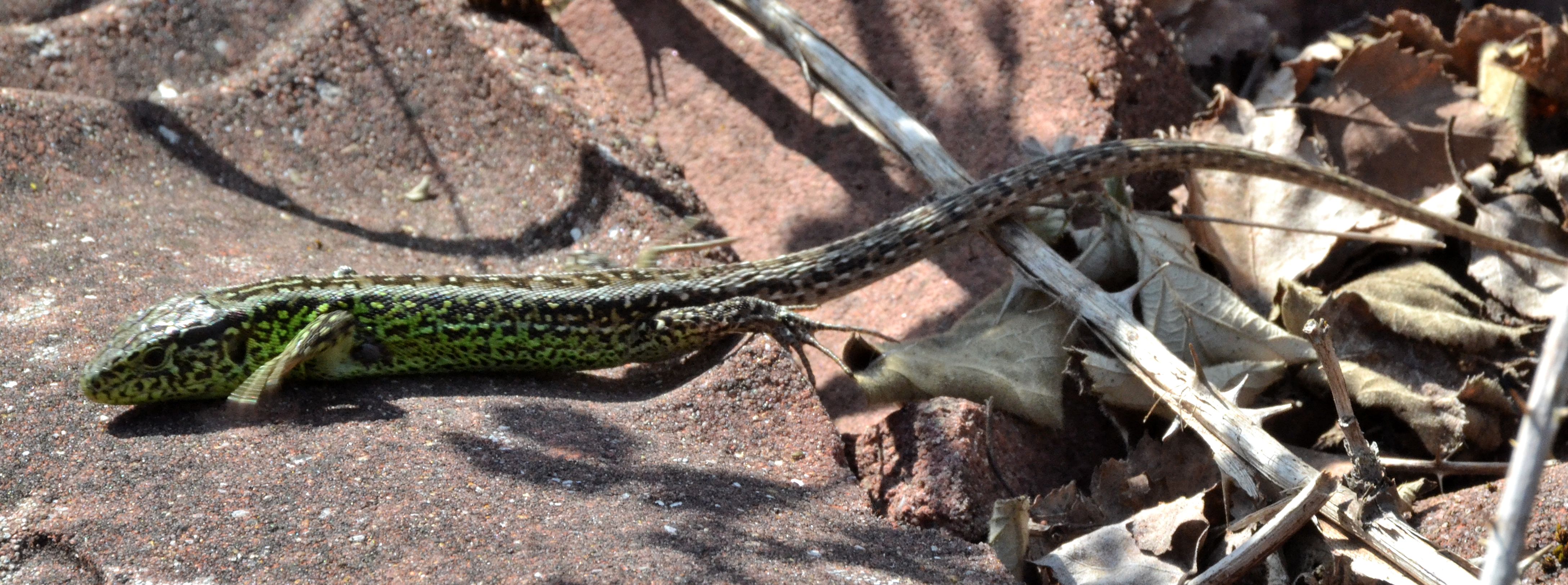
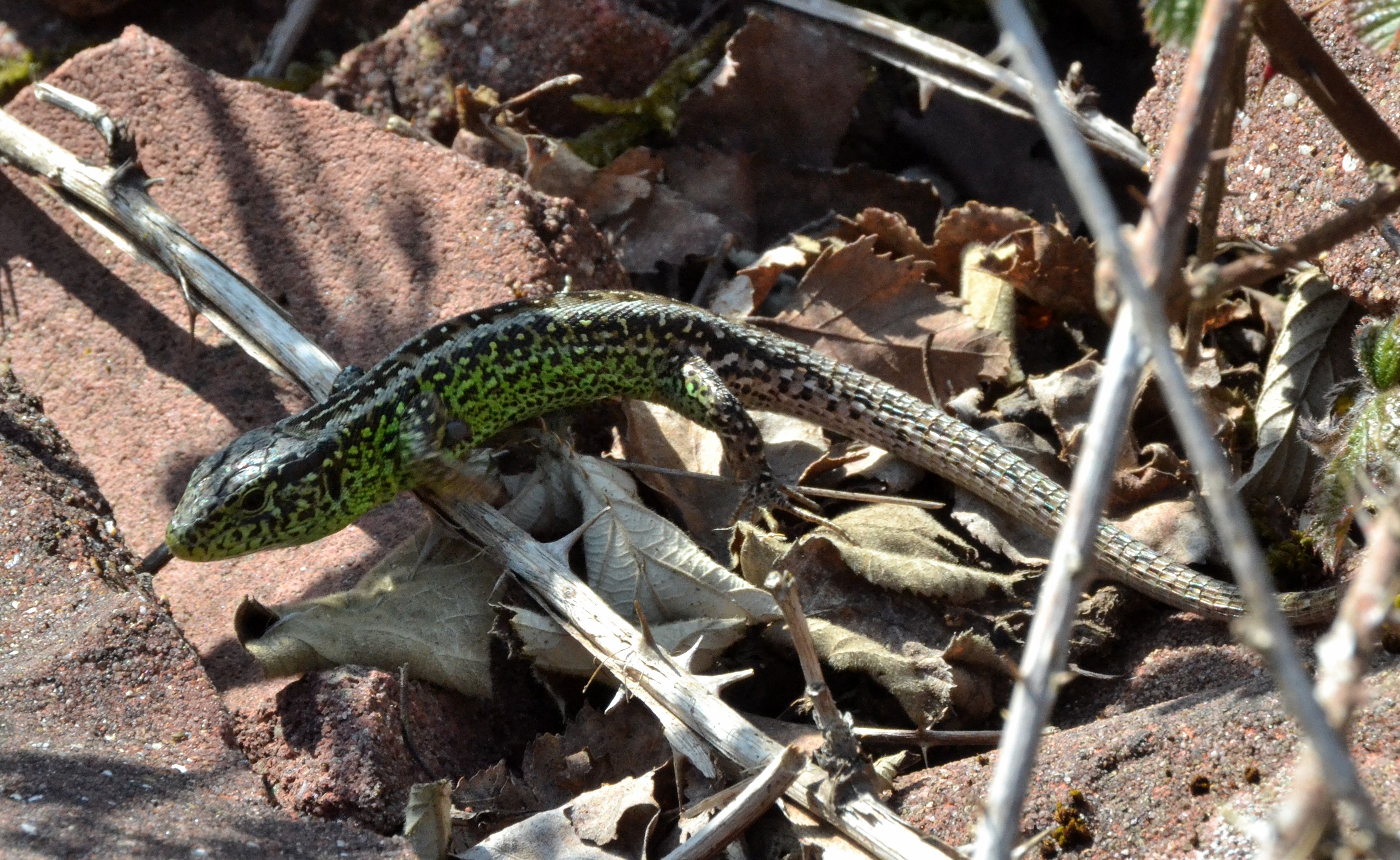
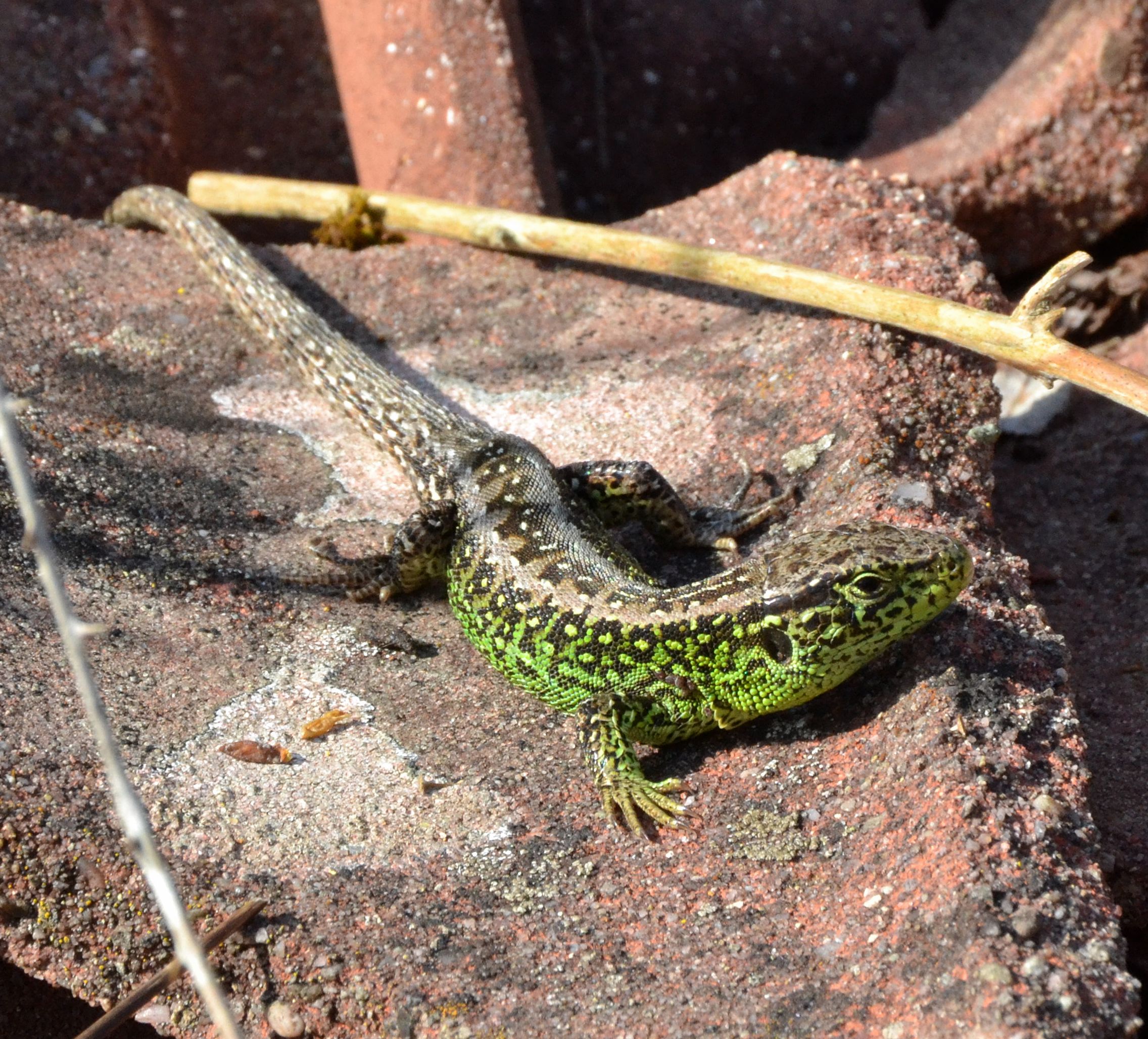
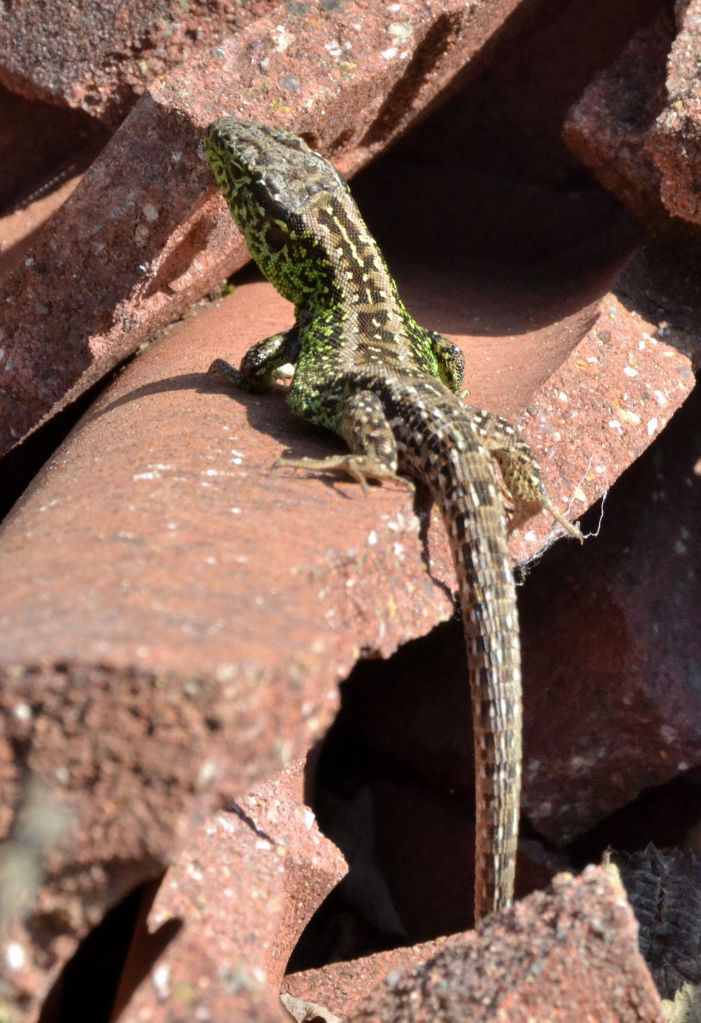
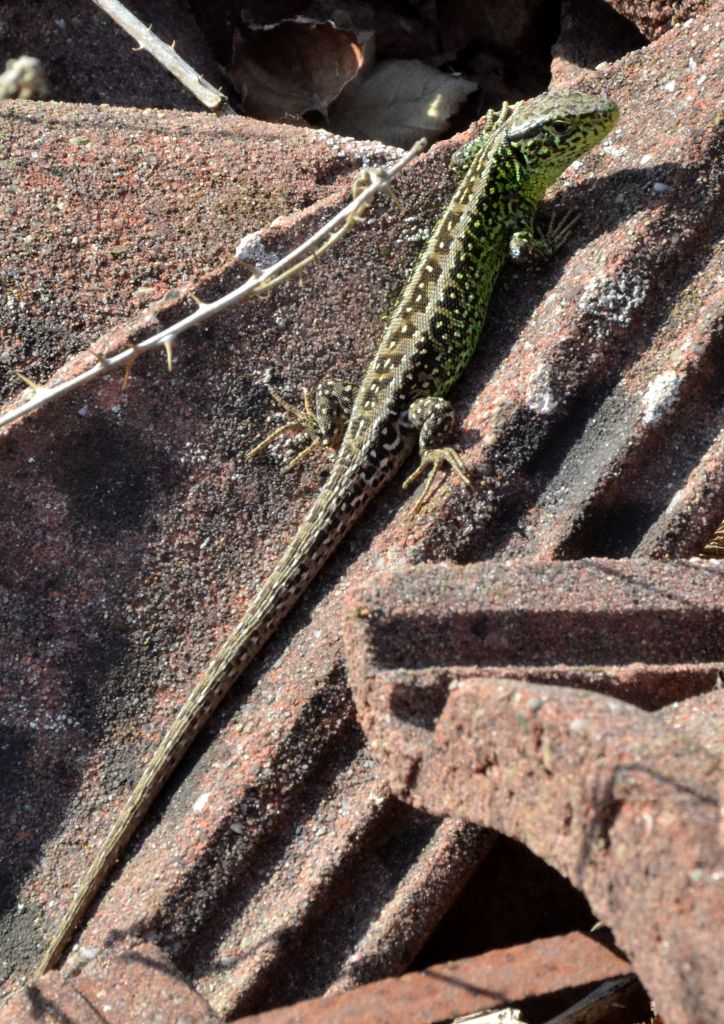
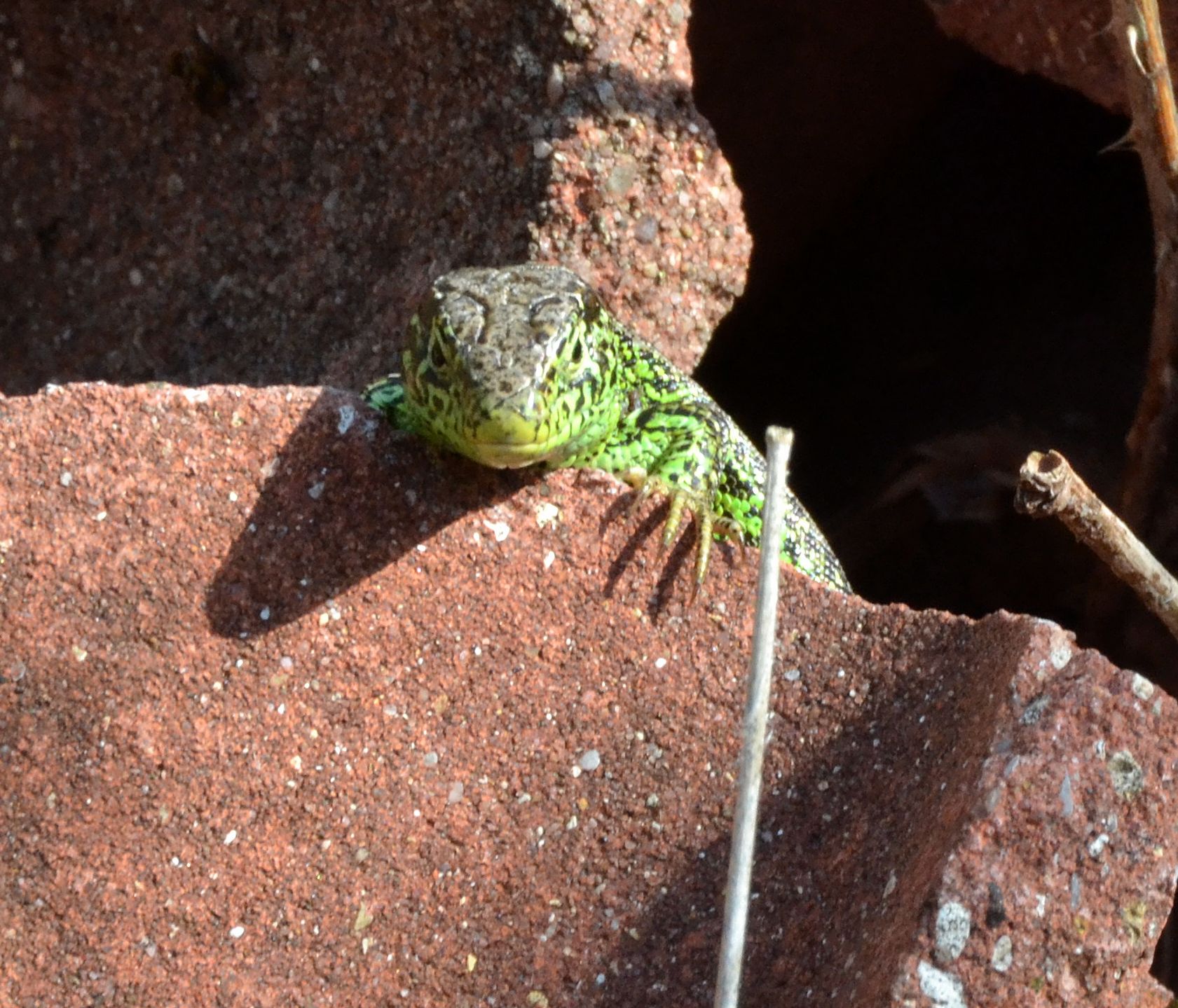
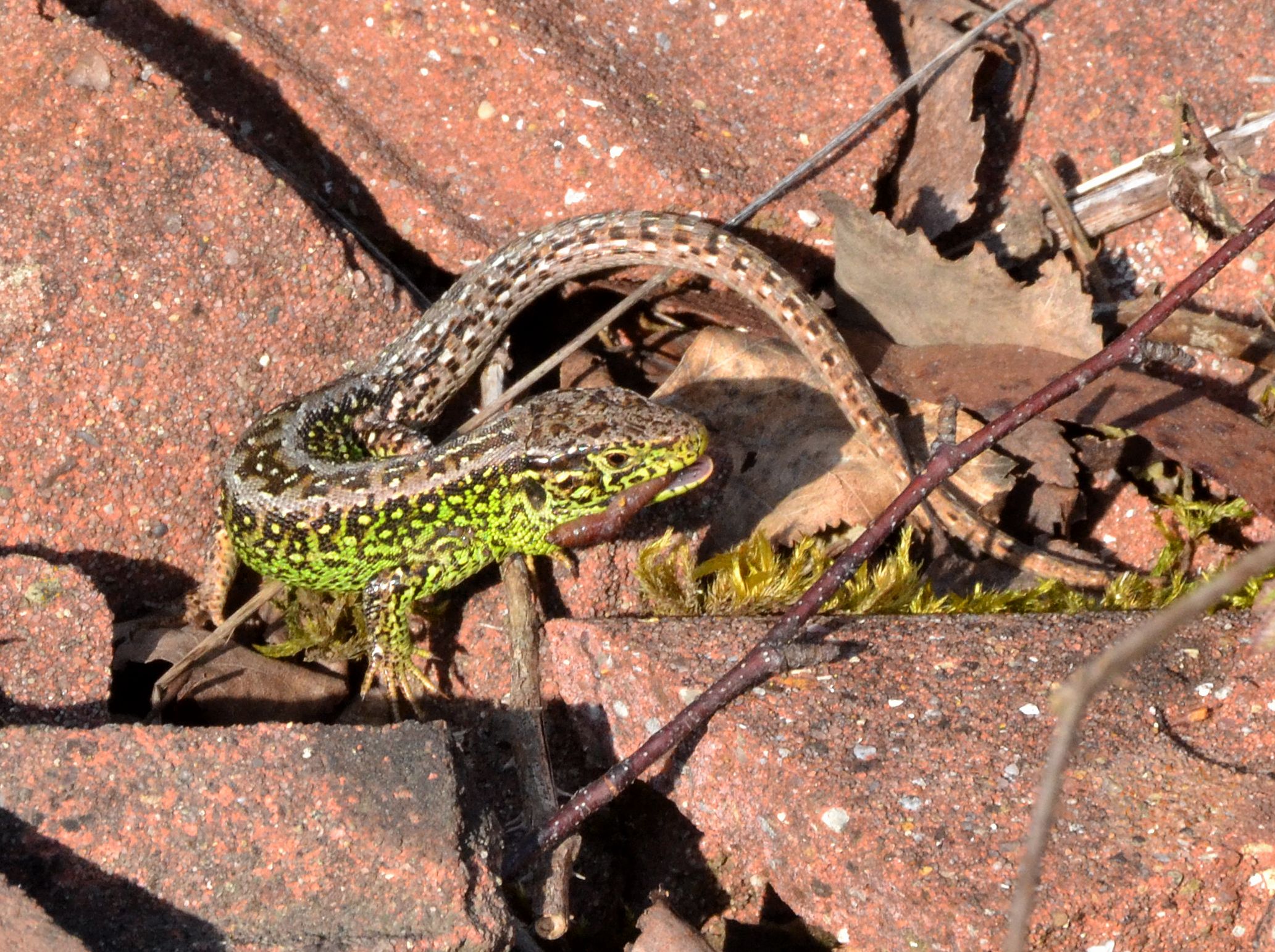
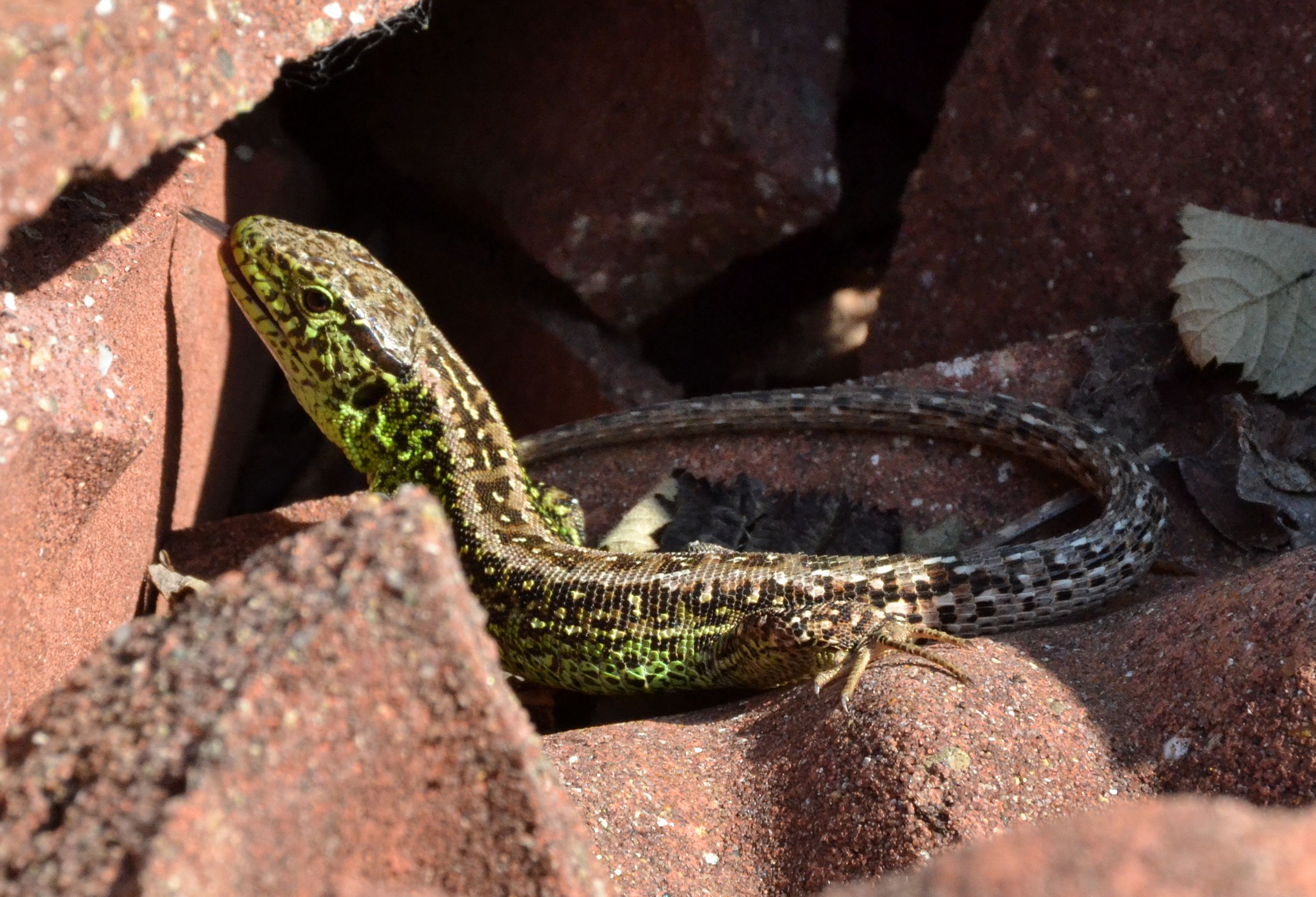
Male Sand Lizard in green breeding colouration

Arriving on site at around 10am I found the car park off Puddletown Road full of police vehicles and heavily armed officers toting automatic weaponry who were about to begin a firearms training exercise. With the Army also driving tanks along the road outside the atmosphere was a little unsettling as I set about finding the cited lizard habitat, and that took time. From the reserve entrance a trail skirts a landscaped gravel pit, before a left turn leads back towards the road and a former Hanson building aggregates yard. The piles of old broken roof tiles I was searching for lay along that path and just outside the yard.

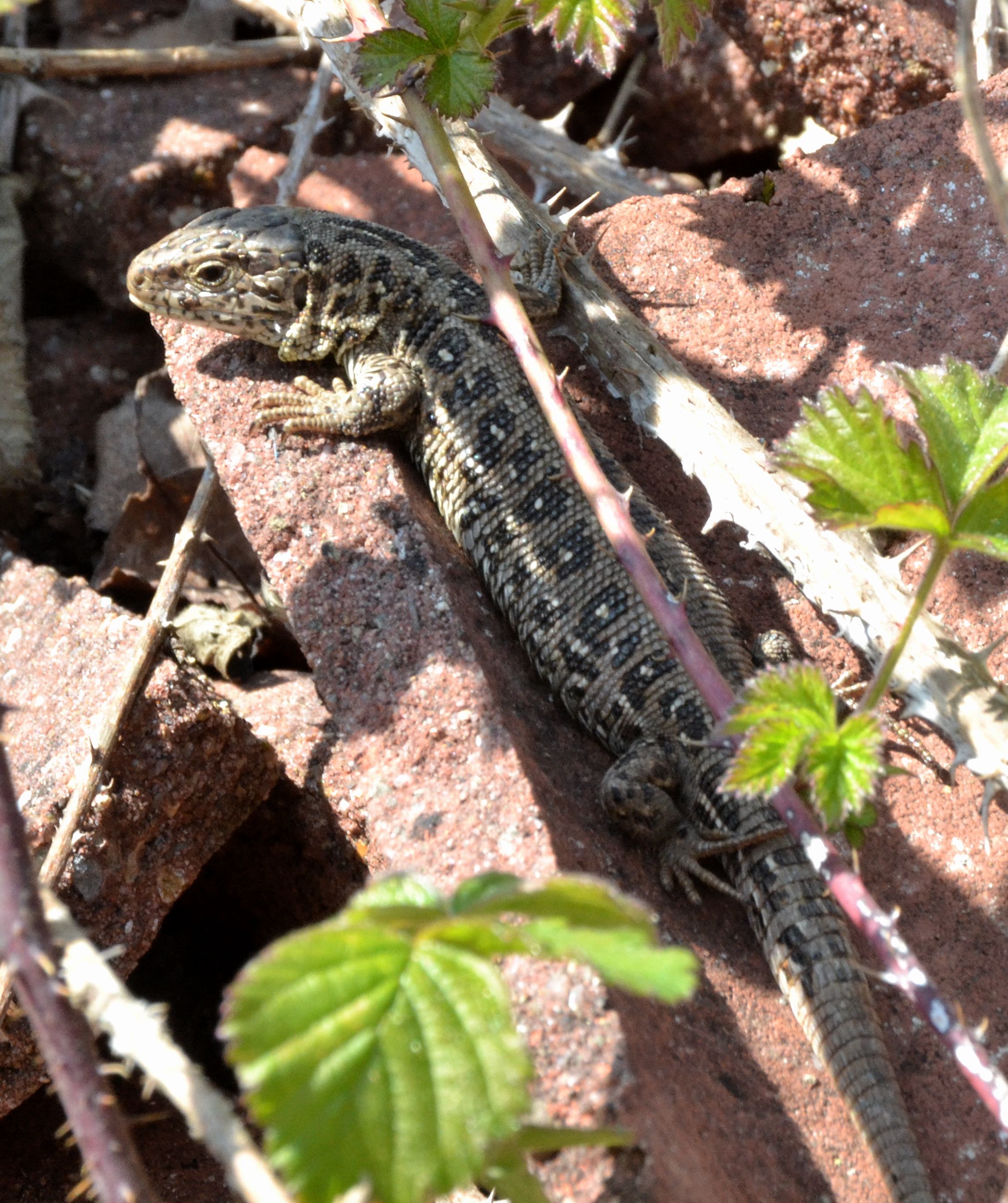
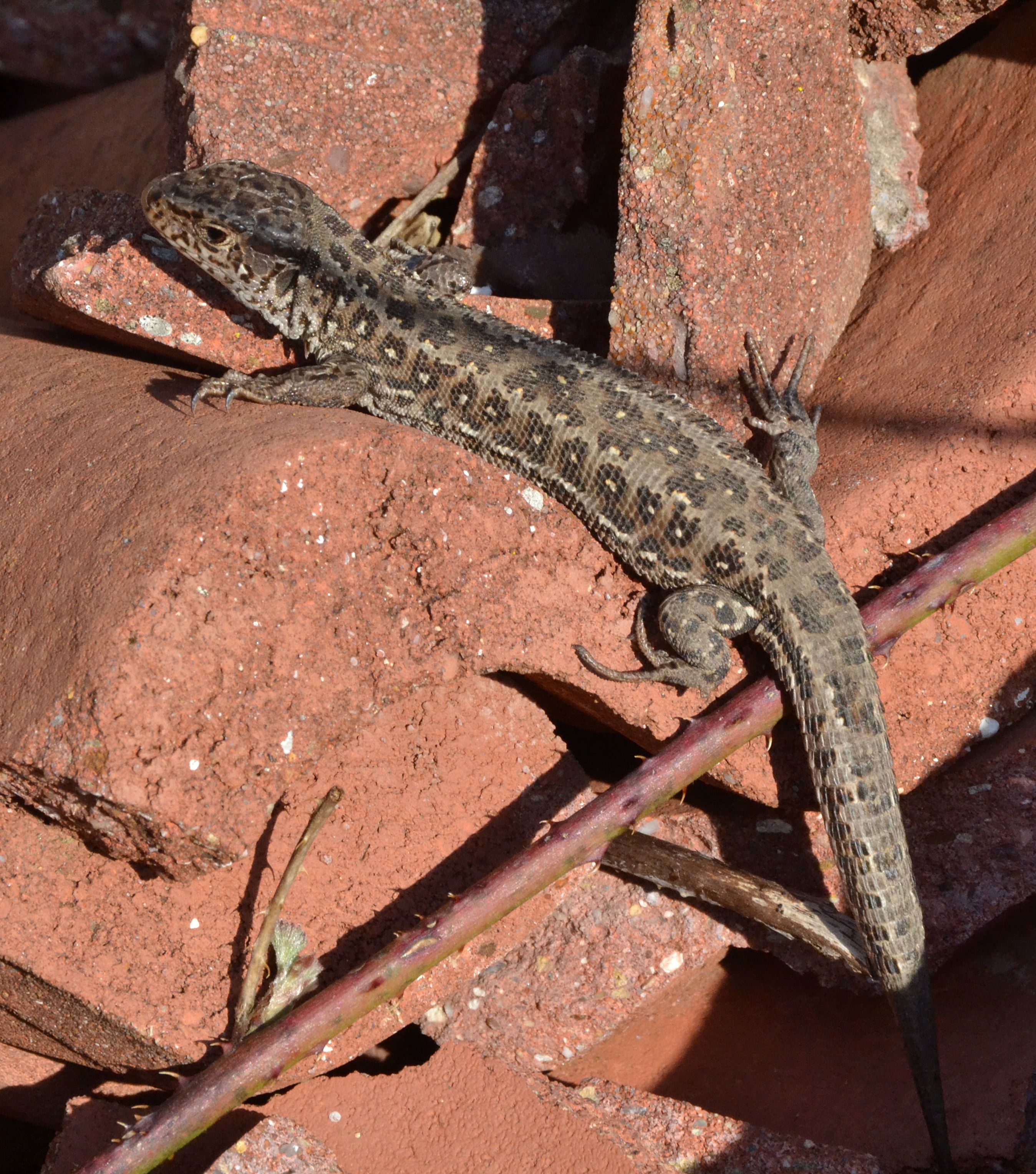
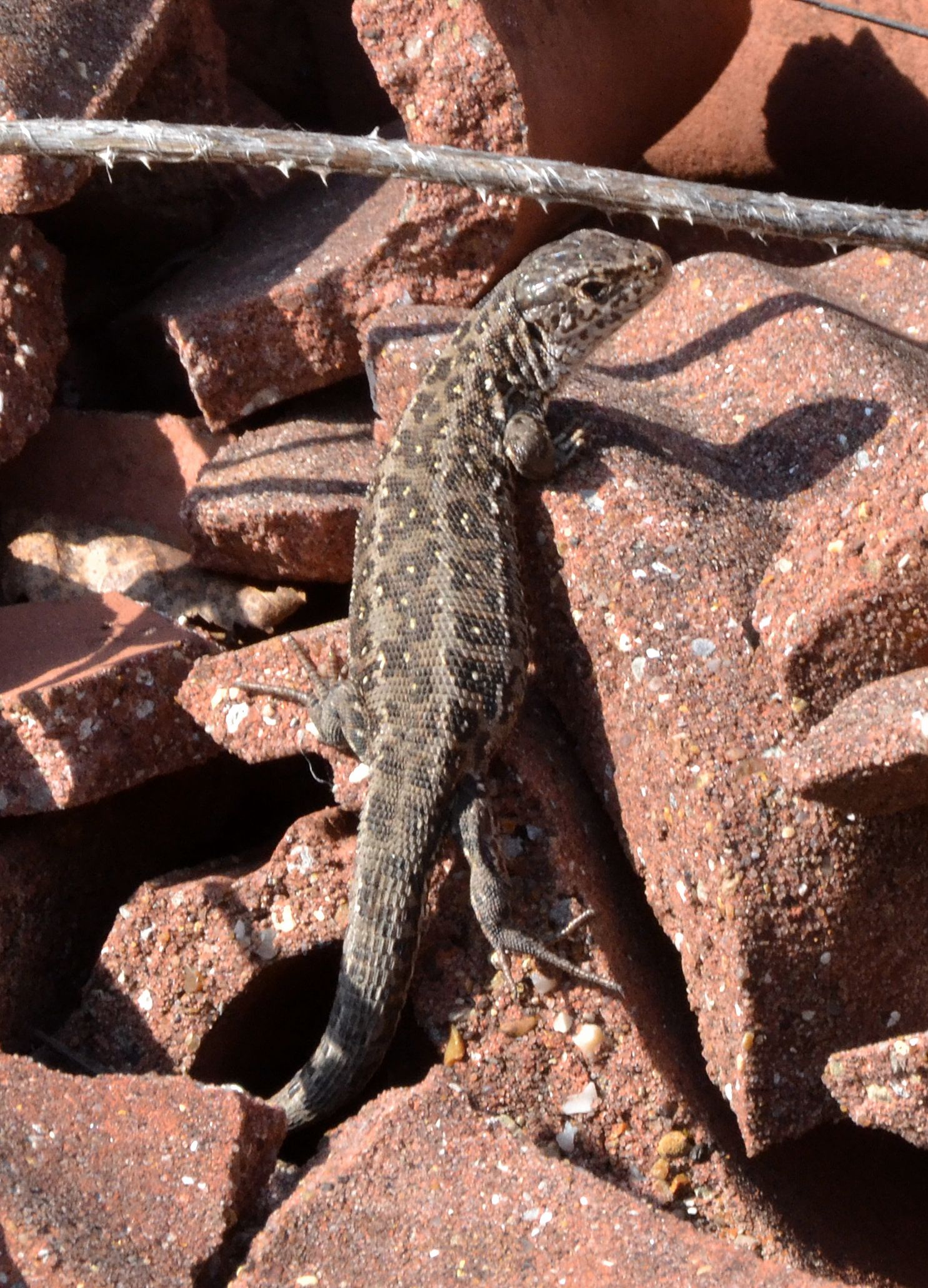
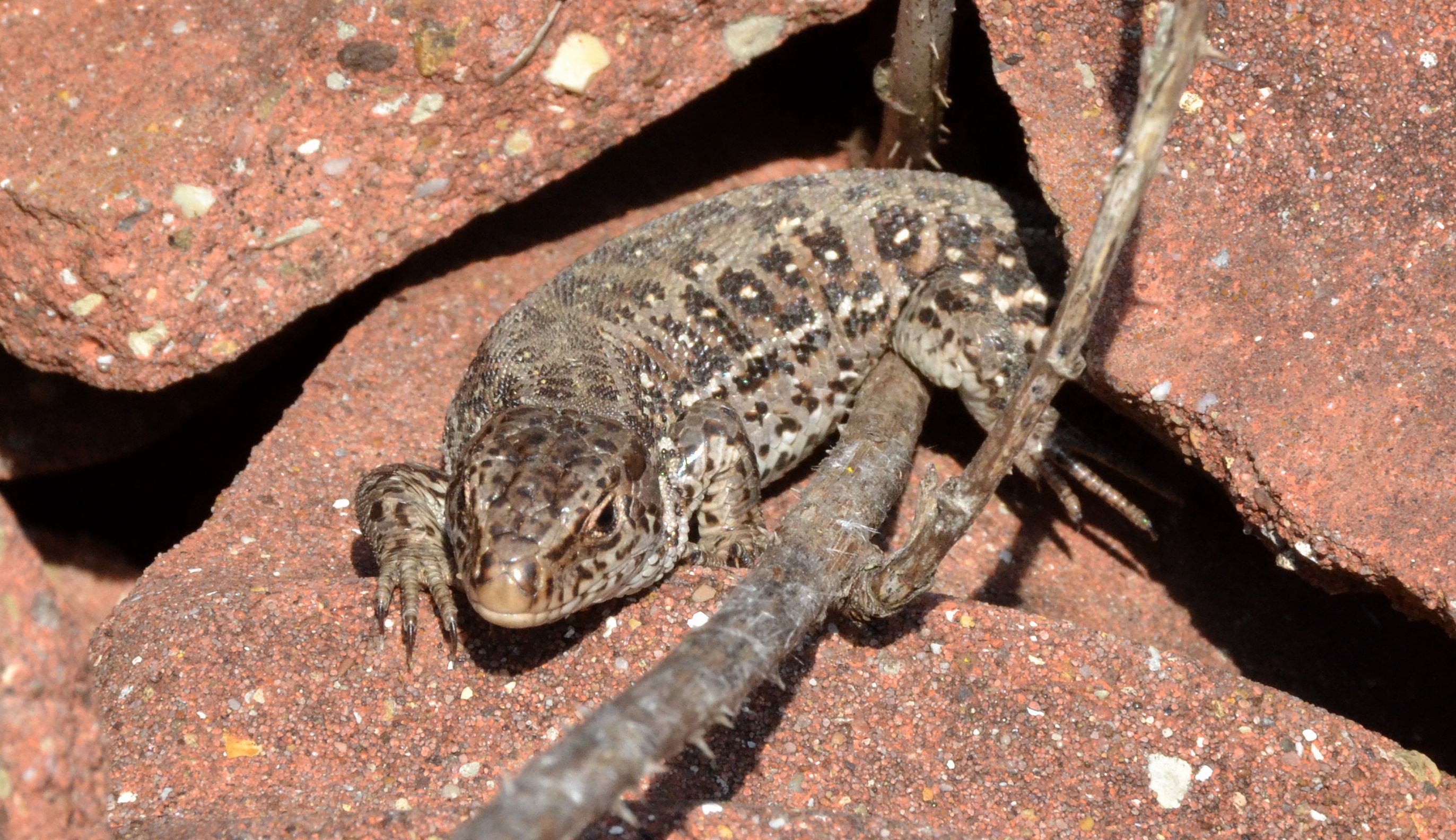
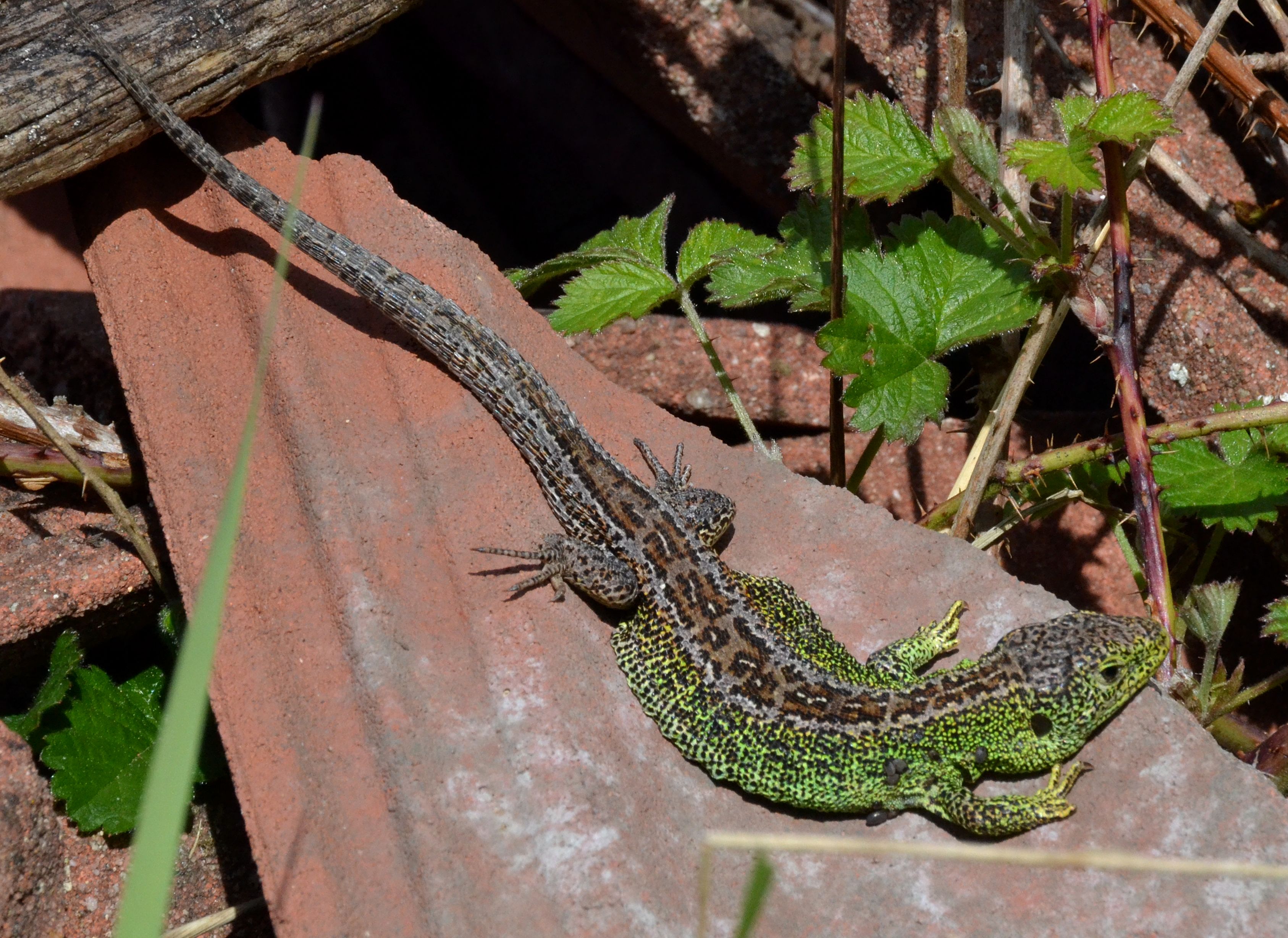
Looking around I quickly noticed possibly four Sand Lizard active within one of those piles but that soon ceased. It was now 10:30 and so past the optimal observation time as they bask to warm up with the day. Three years ago I was advised there was less likelihood of success through the hottest part of the day, and so it proved again over the ensuing two hours. But there was an exception. The lady in the right hand lead picture (top) was dozing gently in the morning sunshine, showing no objection to my gradual approach. She let me get so close that I took another picture with my phone that prompted some WhatsApps and drew responses.

Most of the other lizards seen briefly in the morning today were also females that will lay their eggs in late May or early June to hatch in late August and September. Both genders are robust and stocky in appearance, growing up to 20cm in length of which the tail accounts for half. They have a rounded head that is larger in males than females, short legs and two strong pale stripes running the length of the body. Between those “dorsal lateral” stripes along the centre of the back and on the flanks is usually a complexly variable brown camouflage pattern with “ocelli” (eyed markings), dark blobs with enclosed pale centres that signify life stages.

At around 2pm I drove back to Bere Regis for a sandwich break and then returned. The priority now was to acquire images of males in their April and May breeding colouration of striking bright green flanks and mottled brown back. I also wanted to assess whether the reptiles would become more active again as the afternoon began to cool down, and in the event was amply rewarded. The wildlife experience shortly to commence was off the top of the scale and I was the only observer present on site throughout.

Fairly soon a green-toned male (pictured above) showed itself in one tile pile before walking out and into adjacent ground cover, foraging and flicking it’s tongue all the while. Then I noticed a female basking in the neighbouring pile who remained still for a long time, seemingly unconcerned by my attention. After 4pm possibly two different males emerged from the same pile and my camera went into overdrive. These last three individuals offered simply amazing value over the next 60 minutes.

I have been in this situation many times, more usually with butterflies and odonata, of enjoying total communion with wildlife that becomes fully accepting of my presence and unconcerned by it as I linger. This is only possible when alone and I would not have gained the pictures in this post had anyone else been present, never mind a group of jostling camera toters.

Up until now I had kept a careful distance, expecting these reptiles to be wary and skittish. But in some of the images as I moved closer they are looking straight at me and not bothered in the slightest. As they seemingly grew more and more tolerant of me I threw caution to the wind. But stumbling on the periphery of the pile, casting shadows on the lizards or even removing twigs from around them – each things about which I would expect to be roundly barracked had other people been present – were all met with the same indifference by my willing subjects. Yes it most certainly is possible for a lone, careful and experienced fieldsman to mingle freely with wildlife and gain acceptable records without causing illegal disturbance.

Performing the ground level contortions required for these results wasn’t easy as the previous day my left hip had gone into spasm. But I needed to hit the road and armed with a can of Deep Heat spray felt no inclination to miss out on a warm weather opportunity. I fully expected to hardly be able to move at all when it came to writing up this piece, but actually feel alright physically not to mention elated by this whole reptilian experience.

I must have observed around a dozen Sand Lizards on this occasion. Having spent three days in 2018 tracking down just two individuals, the difference here was certainly the focal point offered by the basking habitat. More normally in dry, heathland situations these largely ground dwellers keep to older dense heather stands in which they remain very inconspicuous.

The Dorset heath and other southern English “Wealdon” populations are actually separate sub-species but very difficult to tell apart in the field. Indeed the numerous re-introductions of Dorset stock into Surrey makes it effectively impossible to distinguish between the two. Re-introductions have also taken place in other areas nationally.

My planned 2020 wildlife agenda is finally up and running and in the coming season it may be difficult to better what was a simply superb episode today.

Addendum

On 7th May I returned here with Ewan who had not seen Sand Lizards before and wanted to. We arrived at 9:15 in time for the optimal window through to 10:30, observing possibly two or three males in that interval but no females. This time we had to share the space with two photographers. While myself, Ewan and one of the others quietly staked out a tile pile each, the second togger paced constantly about. Then when the sun came out again just as the other two left at 10:30, perhaps not surprisingly a male Sand Lizard re-emerged and basked openly for some time (pictured below).

Male Sand Lizard with ticks

This individual has a number of ticks around it’s right-hand foreleg, the most common external form of parasitism in reptiles. These are usually found under the scales or in the nostrils where they feed on the host’s blood and are readily visible to the naked eye (as in the above images) especially if engorged with blood. Ticks do carry diseases that can be transmitted to other animals or indeed humans. In captive lizards they may be removed with small forceps or tweezers, but this one will have to take its chance. Here was another instance this morning of how the timing of my first visit at the earliest seasonal opportunity had been so special.

White-throated Sparrow at Barcombe Cross and a Little Bunting near Horsham, Sussex – 11th Apr

For my first post-lockdown 3.0 twitch and indeed just my second anywhere since early October I secured a very welcome life list addition. A male White-throated Sparrow, first sighted at Barcombe Cross (TQ417158) on 3rd February, was a bird I bookmarked to experience if still present once Covid travel restrictions were eased. After being reported again early on Friday 9th it has attracted a lot of attention, including my own.

The previous day another north American vagrant, a Northern Mockingbird that had spent the lockdown period in south Devon also relocated to Sussex. Being a British tick and beyond my preferred range I hadn’t rushed to see it at the earliest opportunity, and clearly wasn’t yet back into get up and go mode when news of the nearer location broke. I decided to sleep on things and go on Friday 9th if it was still at Pulborough, but in the morning it had moved on. That negative was immediately followed by the first news in a while of the Sparrow, and this one being a lifer I got up and went.

White-throated Sparrow © and courtesy of Ewan Urquhart

White-throated Sparrow is a common and widespread passerine within its Nearctic range but a very rare vagrant to the British Isles. The species breeds across central Canada and New England and winters in the southern and eastern United States. They typically forage on the ground under or near low dense vegetation such as today’s location, eating insects and seeds, and are particularly attracted to bird feeders.

Arriving in the village around 11:30am I secured what must have been the last parking space anywhere and the reason soon became clear. At the twitch site in a sunken copse between some playing fields and allotments there was quite a gathering of birders, many of whom must have gone to Sussex for the Mockingbird then opted for plan B. Amongst them was Ewan who had travelled separately with another colleague, but our quest was not co-operating.

We remained on site for around two hours and the prospect of seeing the bird with so many people tramping around its patch seemed poor, and so we left in the early afternoon. Shortly afterwards the WT Sparrow appeared again, coincidentally with the number of suitors having dwindled somewhat. Pictures appeared online of it perched in Blackthorn blossom (see here) and when I played it’s song on Xeno Canto (here) that was so distinctive I decided to go back early on Sunday. I contacted Ewan, offering to drive if he wished to join me and the re-twitch was agreed.

This time we arrived just after 7:00am and the local scenario was just the same as two days previously. Once again we found the last available parking space anywhere in the High Street then walked out to join just as many fellow birders at the top of a slope overlooking the copse. The difference now was a seed-adorned picnic table at the foot of the slope to which the Sparrow had been attracted through the intervening day. A contrived situation yes, but also the best means to avoid a repeat dip since we were dealing with a bird of normally skulking habits that was ranging through very dense habitat.

 © Ewan (and left hand pictures below)

It seemed merely a matter of time until mission would be accomplished since the White-throated Sparrow by now knew very well where the food source was. It duly appeared after around 30 minutes on the decking below the table (pictured above), then returned to view three more times including on the table top before we moved on at around 9:15am. In between those showings it would disappear into the cover of the copse from where it could be heard singing intermittently.

This bird’s routine must now be well established of coming to seed at the table which is ideally placed by the thicket edge at the foot of what is a natural amphitheatre. So expect moss-covered logs and other photographer’s props to adorn the table top from now on if a daily circus at the site intensifies. The greater challenge will be capturing the WTS pictorially perched and singing within the copse but I will not be going back. It feels enough to have come and gone here when I did.

My own best effort for the day is the right hand picture above. Having converted this record satisfyingly at Barcombe we moved on to visit a well-established Little Bunting at Warnham Local Nature Reserve (RH12 2RA – TQ167323) near Horsham. This was an excellent opportunity to observe the intricate plumage of an adult male at close quarters. But I also felt in another artificial situation given the vast amount of laid on food that keeps the bird at what is an educational and family fun facility rather than a truly wild location. My first ever Little Bunting in Cardiff in February 2015 (see here) was experienced in similar circumstances coming to seed in front of a hide at a LNR feeding station. Today’s bird was my fifth personal record, the three intervening ones also being at English sites.

Today’s Little Bunting (my own picture)

It was good to get out a bit further again on these two days and this double twitch was a step in the likely adjustment process back to more normal life. That will be aided by my now having a new and better vehicle, and for 2021 I intend to pursue a not too ambitious national wildlife agenda through to autumn whilst also maintaining this journal’s secondary botanical bias. I feel no inclination yet to resume international travel at whatever the earliest opportunity might be. Onward then.

A Great Bustard in south Oxon at Letcombe Regis – 8th Dec

All this week a Great Bustard originating from the re-introduction project on Salisbury Plain, Wilts has been drawing observers to the village of Letcombe Regis (OX12 9JG – SU386869) near Wantage in south Oxfordshire. This first winter male is the most recent of several individuals to stray from the same scheme to my home county over the past 11 years and is thought to have been in the wider south Oxon downland area for some months.

I last experienced what is the world’s heaviest flying bird locally near Oddington, in the Otmoor basin to the north-east of Oxford in April 2010. So given the ease with which the latest was being recorded pictorially I visited on Tuesday afternoon (8th) where upon my arrival at the most frequent viewing location a number of people were walking back along a metalled farmland path to the east of the village.

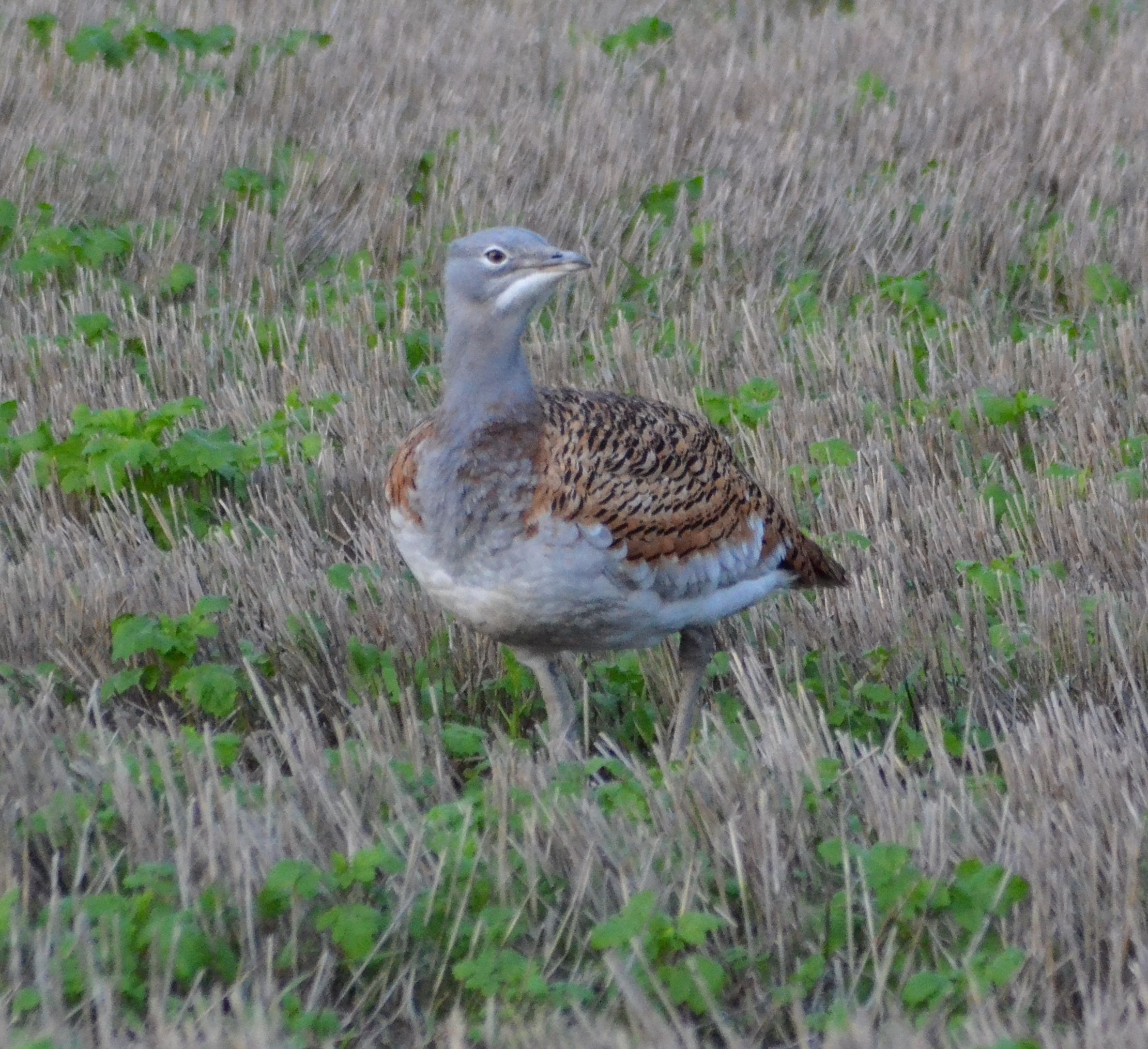
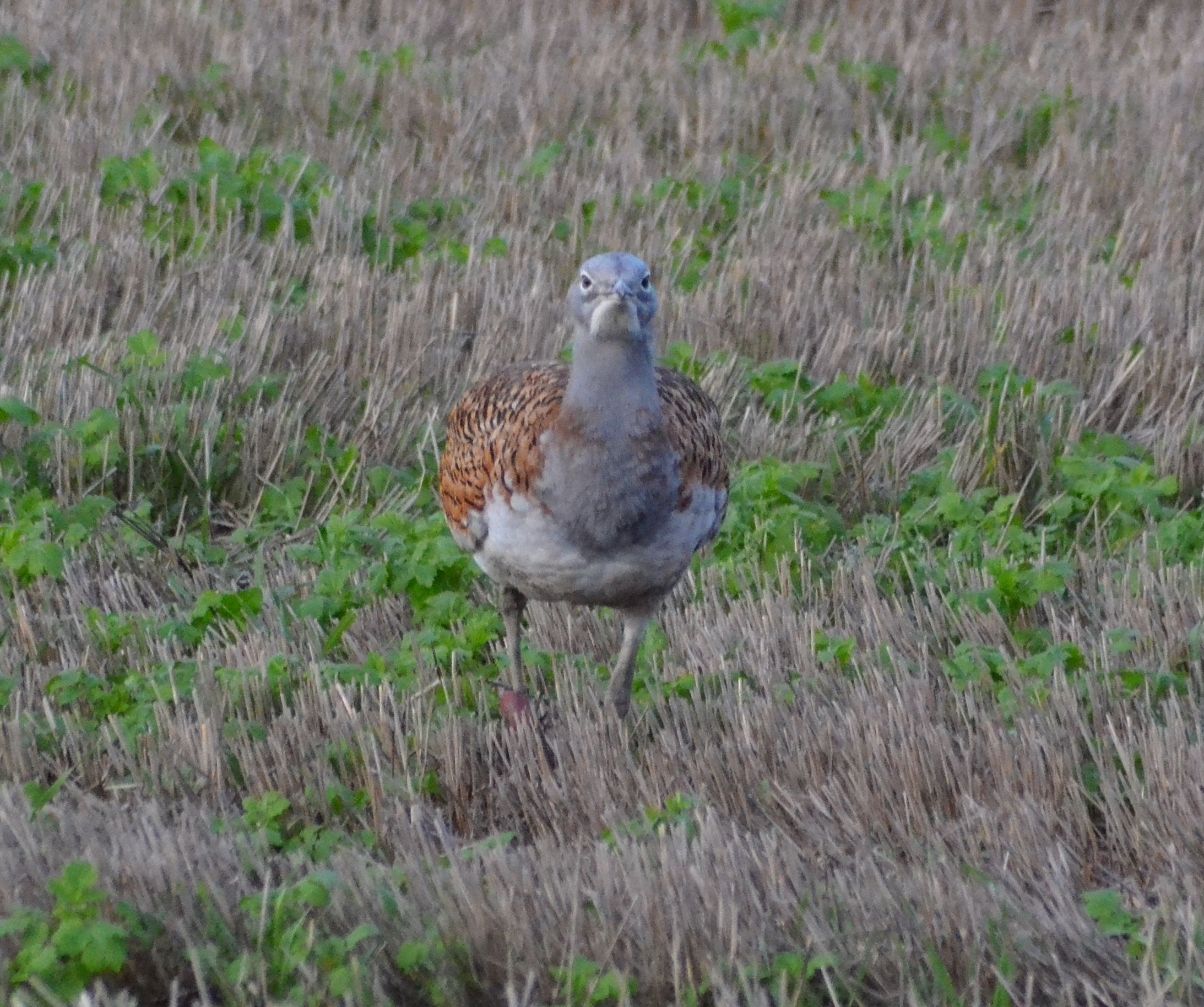
Great Bustard at Letcombe Regis

After around 300 metres there it was and what a handsome sight (pictured above), grazing about half way across a rough fallow field. In time it walked to within 25 metres of me, pausing at intervals between feeding and looking all around itself, an uplifting opportunity to observe a large species in prime condition. Though known for being wary in the truly wild state, this one must have been both fully aware of and unconcerned by its audience so long as sudden or intrusive movements were avoided, and I indeed wondered if it was only too pleased to oblige.

Talking to passing dog walkers here suggested the presence of this “escaped” bird is arousing some interest locally. So, not having published anything in this journal for more than five weeks I have researched how it came to be there. What follows does not present anything that will not be known already to seasoned bird enthusiasts, but I hope it may be informative to anyone who having shared this experience might have web-searched the topic to learn more.

Wild Great Bustard populations occur across the Eurasian land mass from the Iberian peninsula to China. Those are both migratory in the east and resident or dispersive elsewhere, while overall distribution is highly fragmented. They are gregarious grazing birds but also very wary by nature. The total population, variously estimated at between 44,000 and 57,000, has undergone a long-term decline over the past 200 years that has been arrested more recently by conservation action in different countries. As a result the European population has increased over the last 20 years and pan-Eurasian figures have stabilised.

In Great Britain the species, that in former times ranged over southern chalk downland and the East Anglian Brecks, was hunted to extinction by the early 1830s. The “Salisbury Plain release project” is operated by the Great Bustard Group, a registered charity working to re-establish and promote the species nationally. A now 100 strong population of free flying adult birds on rented, MoD military training land is said to be the largest introduced one anywhere. A major part of the project’s funding comes from pre-arranged and supervised public visits to the otherwise inaccessible site.

An initial 10 year trial re-introduction began in 2004 using eggs and chicks rescued from agricultural operations in the Trans-Volga region of southern Russia. There the ground nesting Bustards’ breeding season coincides with large-scale cereal cultivation. Sitting females are said to be “reluctant to fly” from approaching farm machinery and hence difficult to spot in time despite their size, so destruction of nests is widespread in Europe’s second highest breeding population of around 8000 birds.

But this Russian stock from what is a Bustard summering ground was ultimately deemed to have rather too strong “migratory tendencies”, presumably meaning the birds are prone to scarpering and / or perishing in the process. Perhaps that’s true of charitable re-introduction programmes in general, more recently the White-tailed Eagles in the Isle of Wight, one of which also deemed to spend time in Oxfordshire where many more “kosher” scarcities seemingly fear to touch down.

So from 2013 the emphasis turned to sourcing stock from the world’s largest resident Great Bustard concentration of 29 – 35k breeding birds in Spain. Studies had revealed this was closer genetically to the extinct British population and also Europe’s least prone to wander, which after all must be an important consideration for a wildlife visitor attraction. There had in any case been long standing concerns over the impact on the Russian donor population, and regulatory issues surrounding importing and releasing birds from there had been problematic.

This, as presented here is a great simplification of the various factors that are explained in detail on the GBG web site. Progress in achieving the project’s key objective of establishing a self-sustaining population has been slow, with a recurring mix of successes and setbacks. Though breeding took place every year between 2007 and 2013 none of the juveniles reached adulthood due to the substantial death rate arising from their dispersal. I have not been able to locate more recent data on breeding performance, but hand reared birds from imported eggs that have reached maturity at the project site now number around 100.

Natural mortality in the wild is in any case more than 80% in the first year. As ground nesting birds with a reluctance to fly they are vulnerable to predation when feeding, nesting and roosting. Many eggs and chicks are taken by both mammalian and avian predators, though young birds grow very quickly and adults are more than capable of defending themselves. Those that survive their first year typically live on for between 15 and 20 more.

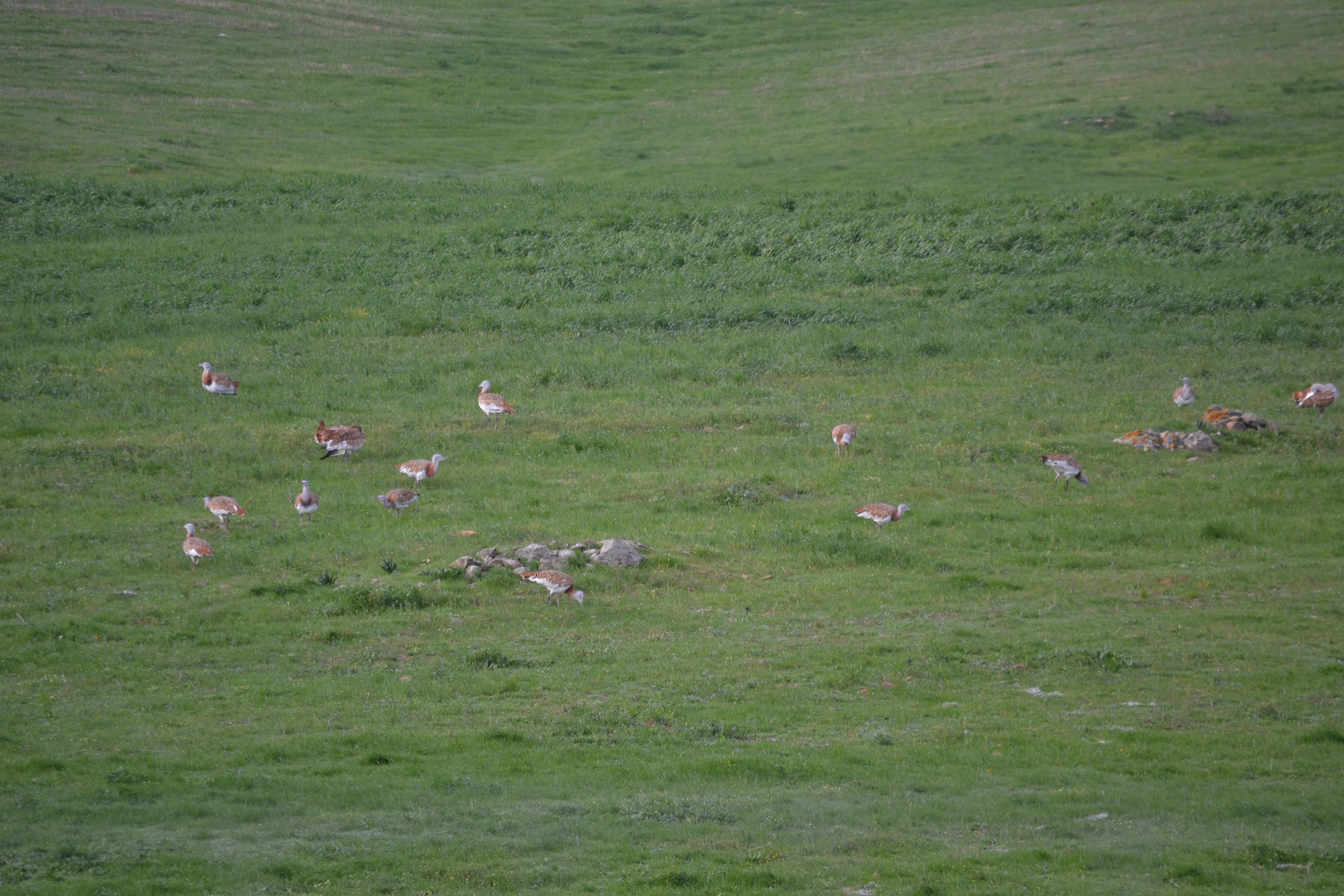
Great Bustard drove in Portugal, 2014

My personal experience of Great Bustards in between the two Oxon ones was all of a resident wild population in the Baixo Alentego region of southern Portugal in 2013 / 14 (pictured above). There it was possible to drive around the steppe grassland for hours on end without seeing any, then all of a sudden come across grazing “droves” as their social flocks are termed in the middle distance. I enjoyed a number of self-found encounters but was never able to observe them at such close range as this week’s bird. Doing so now, whatever it’s “plasticity” in birding parlance, was a most enjoyable event.

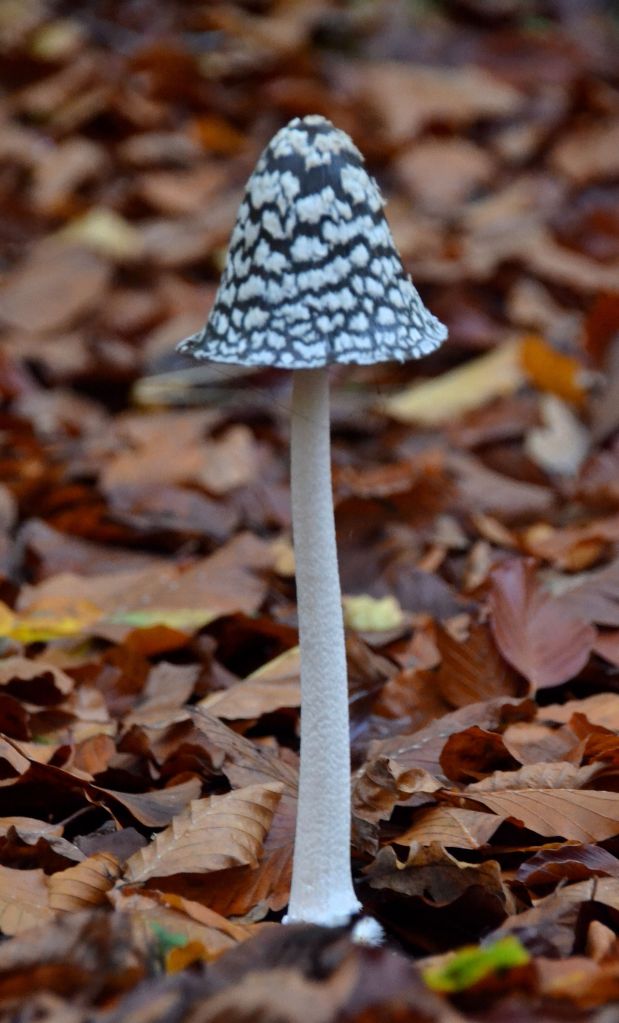
The four day fruiting cycle of the Magpie Inkcap mushroom in the Oxon Chilterns: 25 – 30th Oct

Over successive days this week I have taken the opportunity to track and record the fruiting cycle of an uncommon English mushroom, the enigmatic and tantalisingly attractive Magpie Inkcap (Coprinopsis picacaea), in Beech woodland in the Oxon Chilterns.

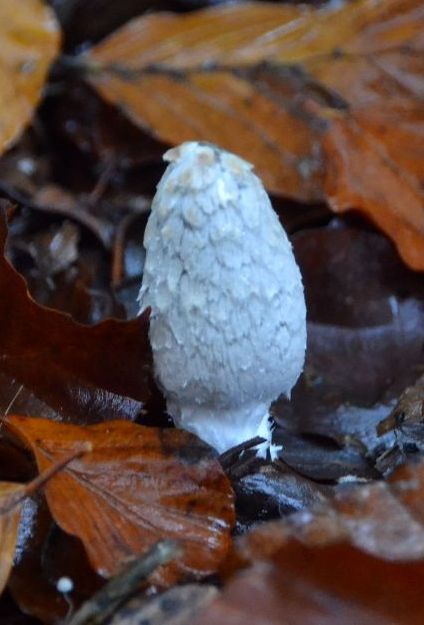
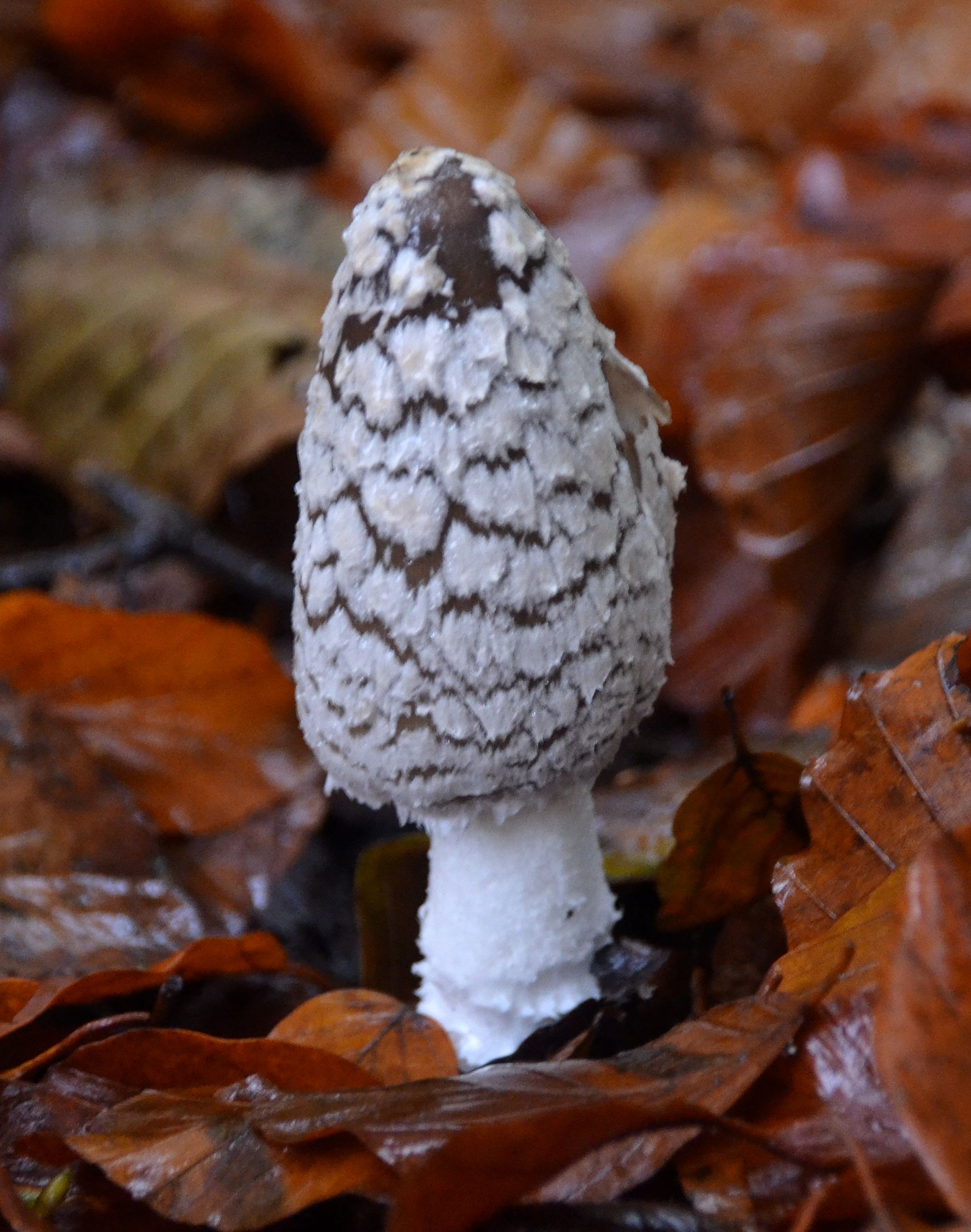
This began when choosing somewhere to go on Sunday (25th), a sunny first day of the detested dark season, I opted for a location near Nettlebed where Firecrests (the bird) might be found. After wandering around for a bit I met an enthusiast who was photographing something in the leaf litter with quite sophisticated paraphernalia. Guessing that must be fungi I engaged with him and he pointed out first some red Sickener mushrooms and then Magpie Inkcap (pictured below) growing from beneath a fallen log.

My researches now suggest it is quite unusual to find such a group since fruit of the latter fungus most usually occur singly or are at least well spaced. Having been introduced to this interest myself recently I soon forgot about the initial purpose giver for being there, and why not? The insect season is over for another year and the national birding action, though exceptional continues to occur mostly in the remotest outposts of the British Isles, way beyond both my preferred distance range and means. To put things another way I was in an apt frame of mind to be receptive to some late autumn fungi.

I had first come across Magpie Inkcap in another nearby Beech wood two years ago (pictured below). This thing of dark and delicate beauty occurs infrequently in much of the British Isles, but is found throughout continental Europe most usually in areas with alkaline soil and especially Beech woods, as well as in parts of North America; not to mention in the Chilterns.

2018 Magpie Inkcap in Padnell’s Wood, Oxon

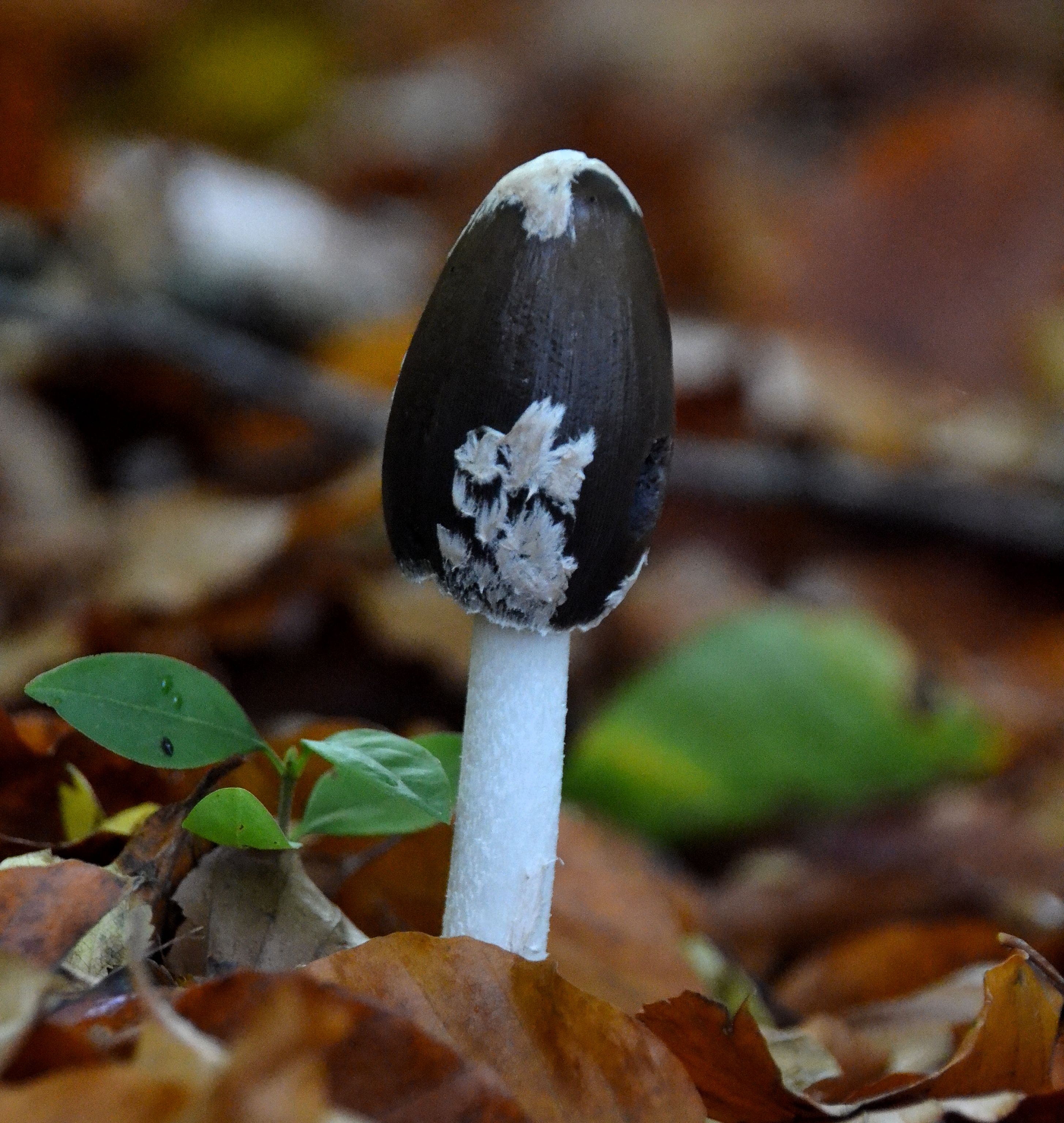
Monday (26th) was the only forecast sunny day of the week ahead and so I returned to the same place. Exploring a little further I became amazed and captivated in equal measure by the sheer quantity and variety of colourful, alluring and photogenic fungi all around the forest floor. Things soon felt similar to being back in Portugal or the south of France seeking out and taking pictures of insects. The Inkcap group of the previous day had evolved into the large bell shapes (pictured below) and my curiosity was suitably piqued.

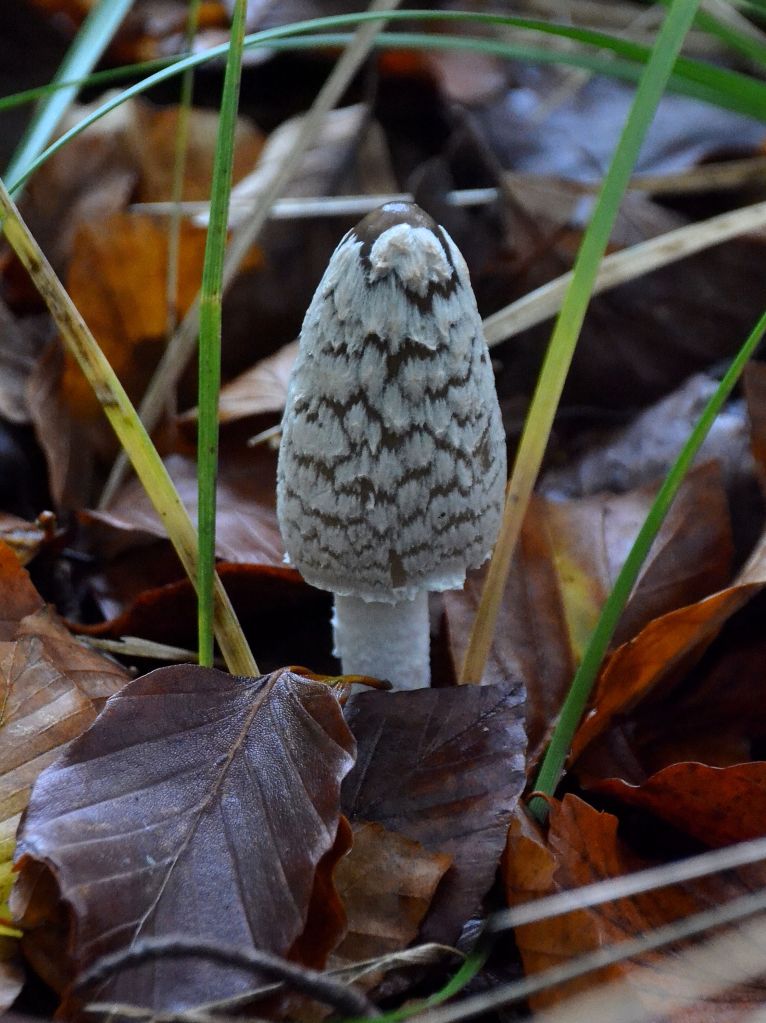
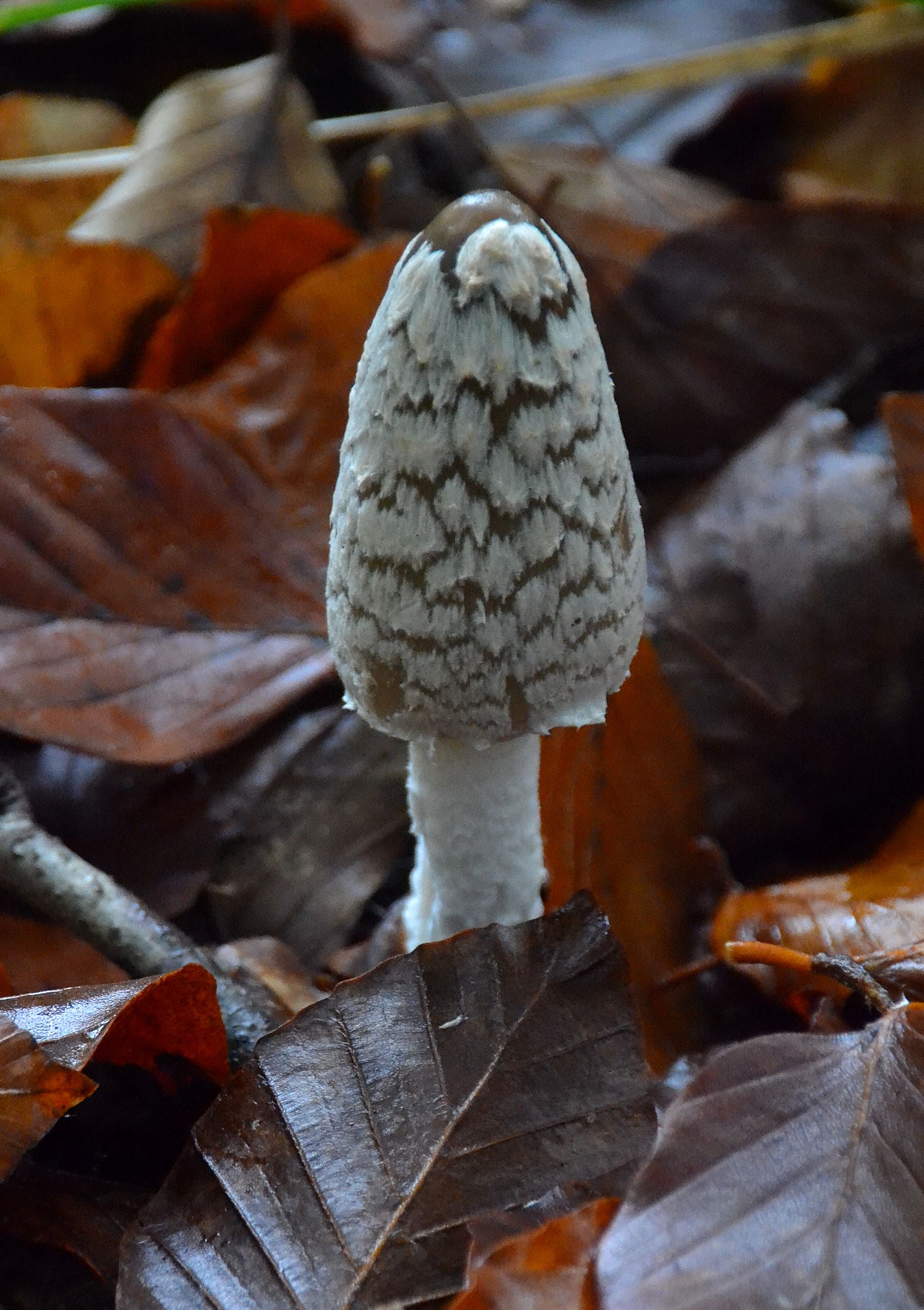
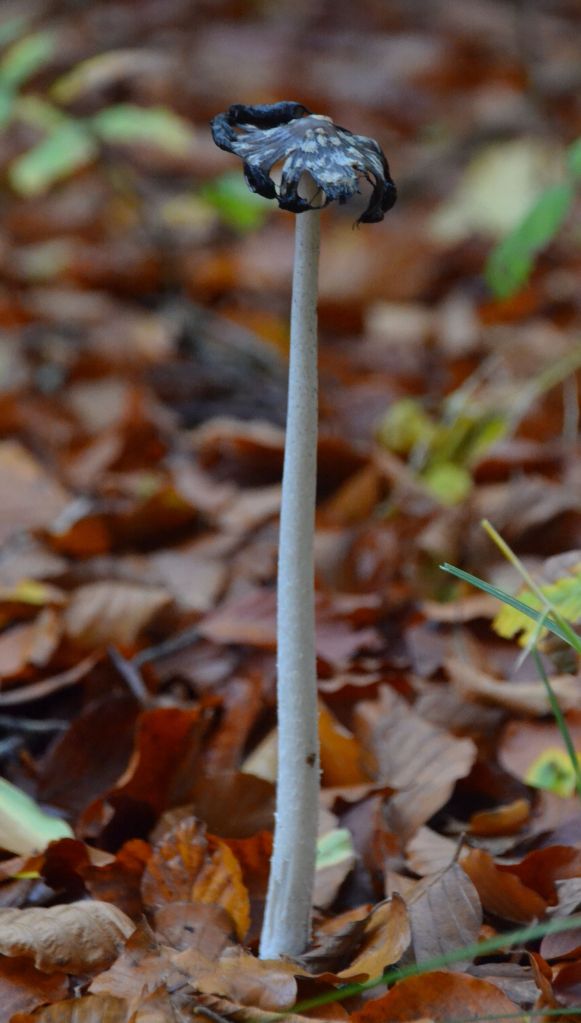
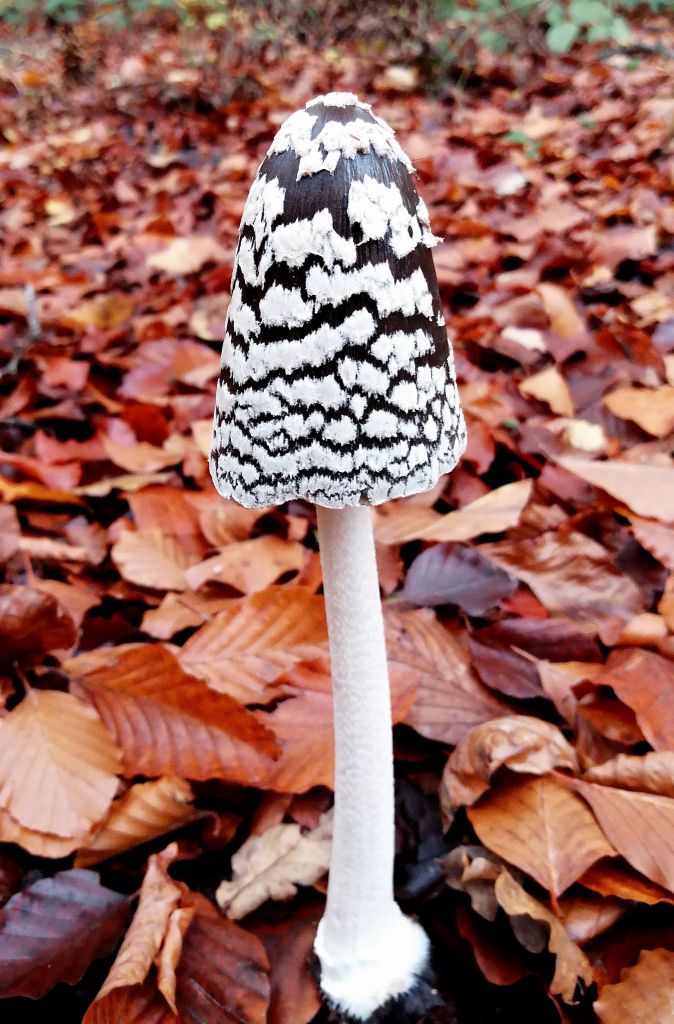
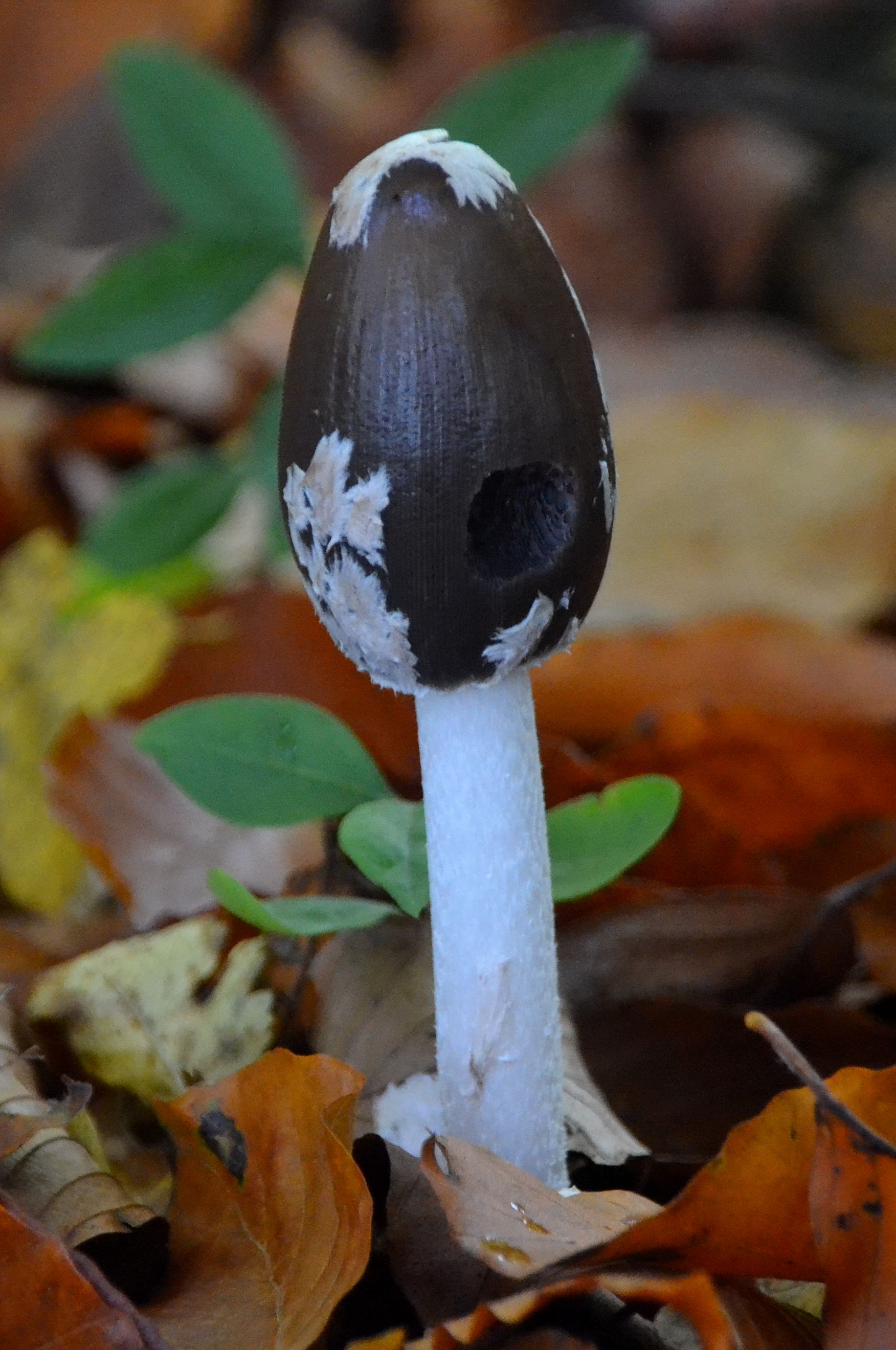
Reading up on things when I got home, I learned the poisonous Magpie Inkcap fruit bodies evolve through a sequence of shapes – egg to gherkin, then opening up to bell-like – through their short lived emergence. The patterning of white or silvery grey breaks into separate patches to reveal the glossy dark brown background as the reproductive cycle of spore dispersal progresses. The stalk is white, hollow and not very stable, slightly tapered towards the top and covered with scales. Eventually, at around day four by my observations the brim of the cap rolls up and dissolves, then the cycle is complete and the stalks collapse. 

Over the six days covered by this post I observed that sequence in three different specimens near by that initial group at Highmoor Common Wood (SU704856). This is presented in the mixed sequence above, captured wearing waterproofs and with the aid of a garden kneeler as I performed contortions in the leaf litter on the damp forest floor. At one point a passer by just had to call out: “Are you all right?” and yes thank you I was.

The following individual sequences show the daily progress of two of the Magpie Inkcap I tracked. At least in this study period, which was punctuated by heavy showers and spells of prolonged rain, there appeared to be a four day fruiting cycle that possibly shortened as the wet conditions persisted. I have used simplified language in discussing all this. For a more scientific treatment see here.

The second sequence (above) illustrates perfectly the four part cycle observed in each specimen, through egg to gherkin then into bell shape before the fruit begins to dissolve and collapse. But this further example #4 (below) was perhaps the finest of them all. One after another through six days I witnessed these emerging through the leaf littler from the underground network of threads that forms the main structure of this group of fungi, to put on the superb show recorded here. I felt glad indeed to have experienced something truly new and different in nature as winter commences.

On Wednesday (28th) I also checked out another woodland, Icknieldbank Plantation (SU668915) on the Chiltern Ridgeway below Swyncombe Down, finding another cluster. The only fruit here not to have gone over was a partially scale free specimen (pictured below) that I revisited the following day but did not track through the full cycle.

In my limited experience of fungi, the Magpie Inkcap of this post is definitely my favourite to date. But the Highmoor Common site was populated by an array of other highly attractive, weird and wonderful items. This has been a very welcome diversion and project through the first week of winter, and something I will definitely take more interest in come the autumn of 2021.