I had first become aware of the bright orange stunners to be found at this site in 2015. Wanting at once to experience them I made a visit on 10th June in that year, viewing just two specimens quite poorly. Since then I have only observed the teneral form of Blue (or Scarce Chaser) abroad in Greece … until today.
Acquiring English pictorial records of this most arresting and enigmatic though transient dragonfly form has been something of an ambition in recent seasons, and an item on my 2020 carried forward to 2021 wildlife agenda. The odonata oasis of DWT Troublefield (SZ127976) made such an impression upon me during my previous visit 10 days ago that I resolved to return at the next fair weather opportunity to seek out a much wished for prize.
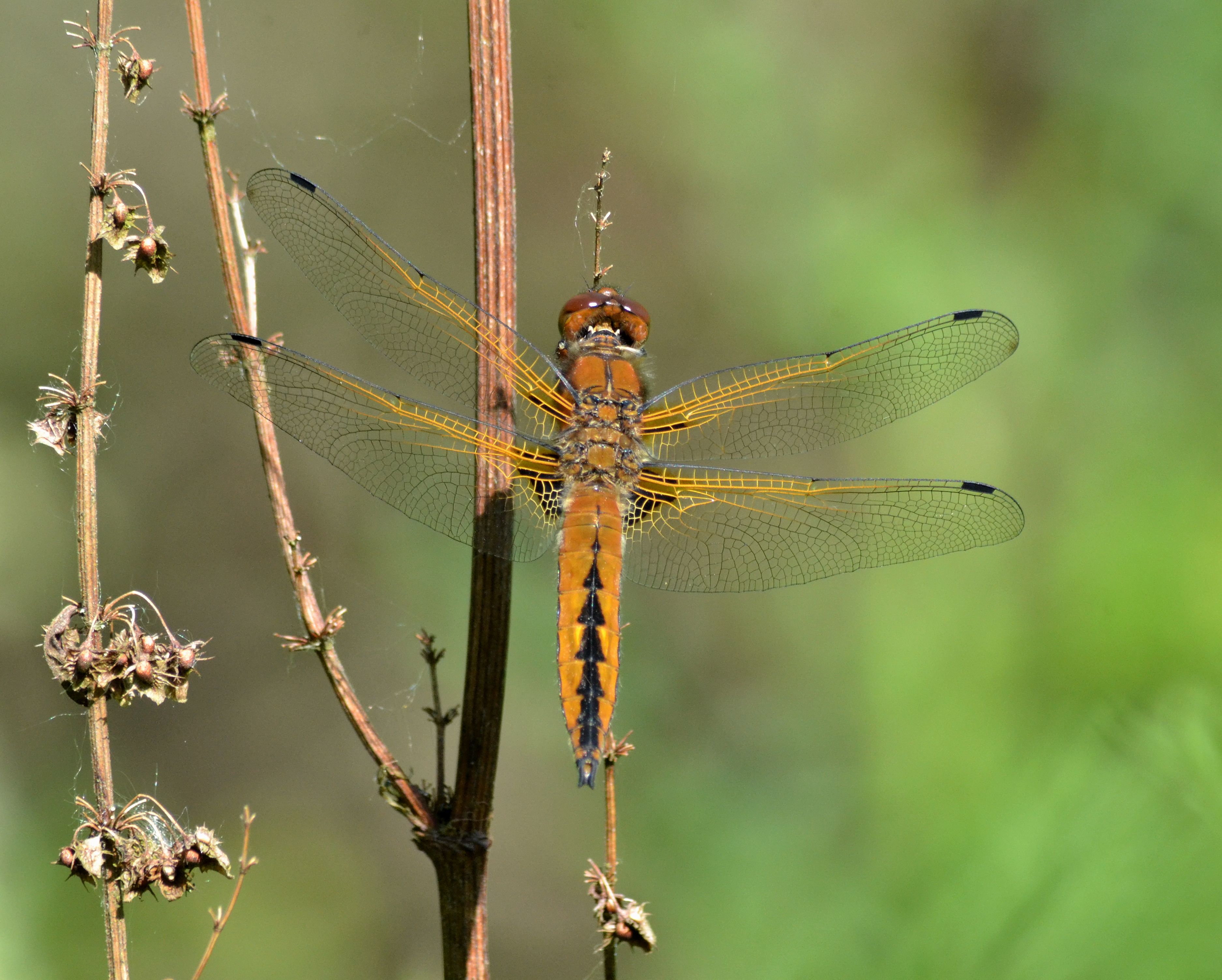
Blue Chaser usually inhabit slow-flowing, meandering rivers and large dykes but are often found basking and feeding in woodland clearings and moors close by. Males become blue as adults having spent time away from water feeding and maturing. Immature females are superficially similar to immature males but retain the orange colouring, dulling as they age through shades of yellow ochre.
Arriving back on site just after 9am, I at first made a circuit of the reserve’s southern water meadow from where an emergent Common Goldenring, now attracting some referrals was featured herein on 27th May. Finding nothing at all I then located the northern meadow in which close by the Moors River appeared to be a hotspot as maybe three teneral Blue Chaser were flying. These particularly favoured settling on dried up Dock plant stems, affording some suitable picture opportunities that once again I had all to myself.
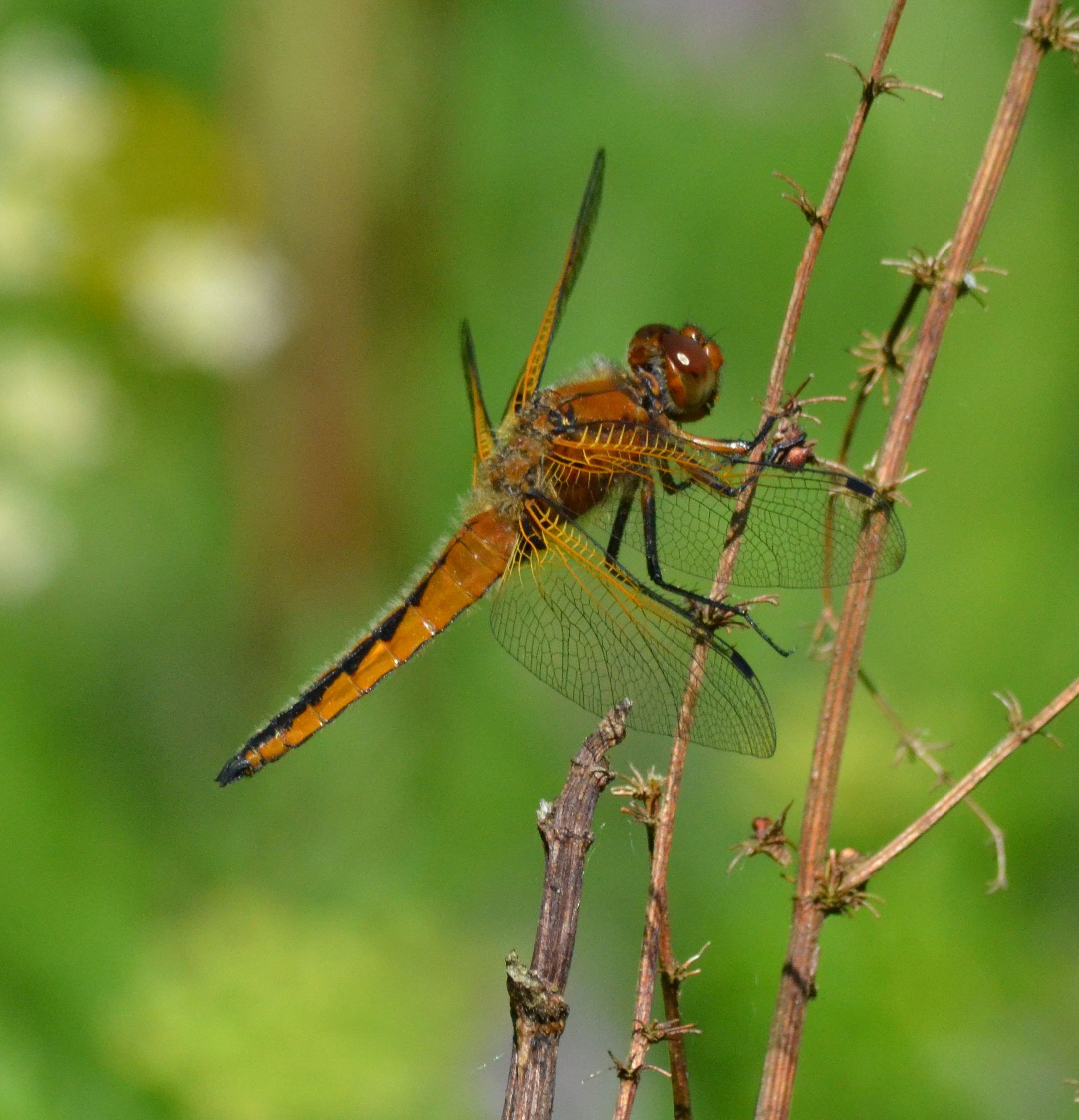

I feel pleased with these images, especially using an 11-year old, obsolete, entry level camera body and £45, second hand telephoto lens. My start of day attendance here turned out to be wise as by 10am my quests were becoming difficult to re-find and certainly more skittish. I concluded they were likely emergents that having warmed up for the day then alighted to the canopy or wherever such renewed entities might complete their onward development.

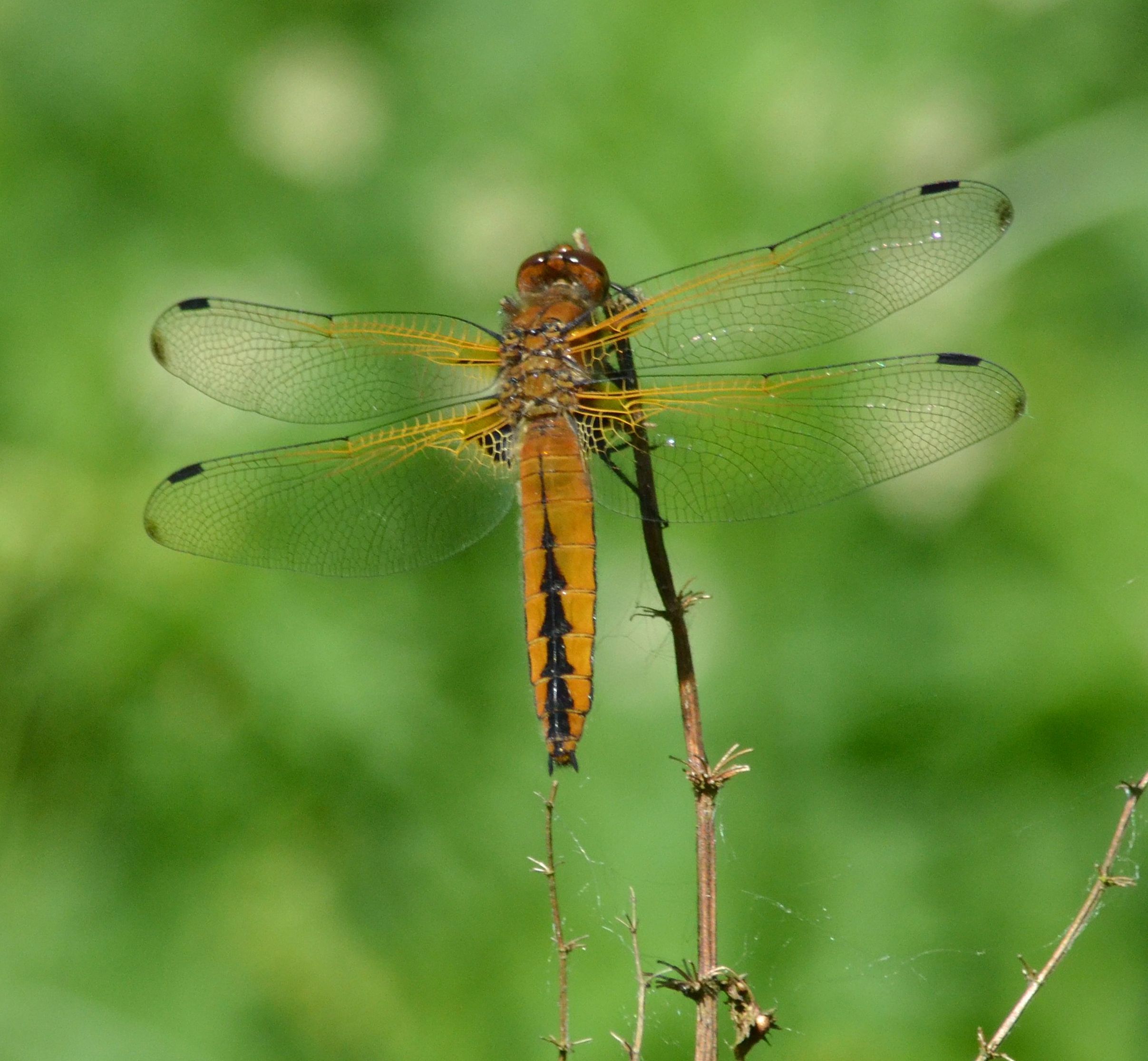
Reference to Brooks and Lewington confirms that emergence takes place as morning sun warms the area concerned. The larvae climb from 50cm to 1 metre above the water’s surface using plants such as Common Reed as supports. The tenerals bask on such vegetation as I was surrounded by, attaining full juvenile colouration within two hours. Maiden flight is typically completed by midday. For Blue Chaser the emergence period begins in late May and is most usually completed by the third week of June. The flight period continues throughout July.
A second circuit of the southern meadow subsequently was as unproductive as the first. So it seems I had been in the right place at the correct hour to convert another item on my season’s agenda. A rather special River Warbler was now beckoning in Avalon and so I went on my way. Having in the years between my Troublefield visits twice searched Westhay Moor on the Somerset Levels later in the day, I now appear to have got things right this time.
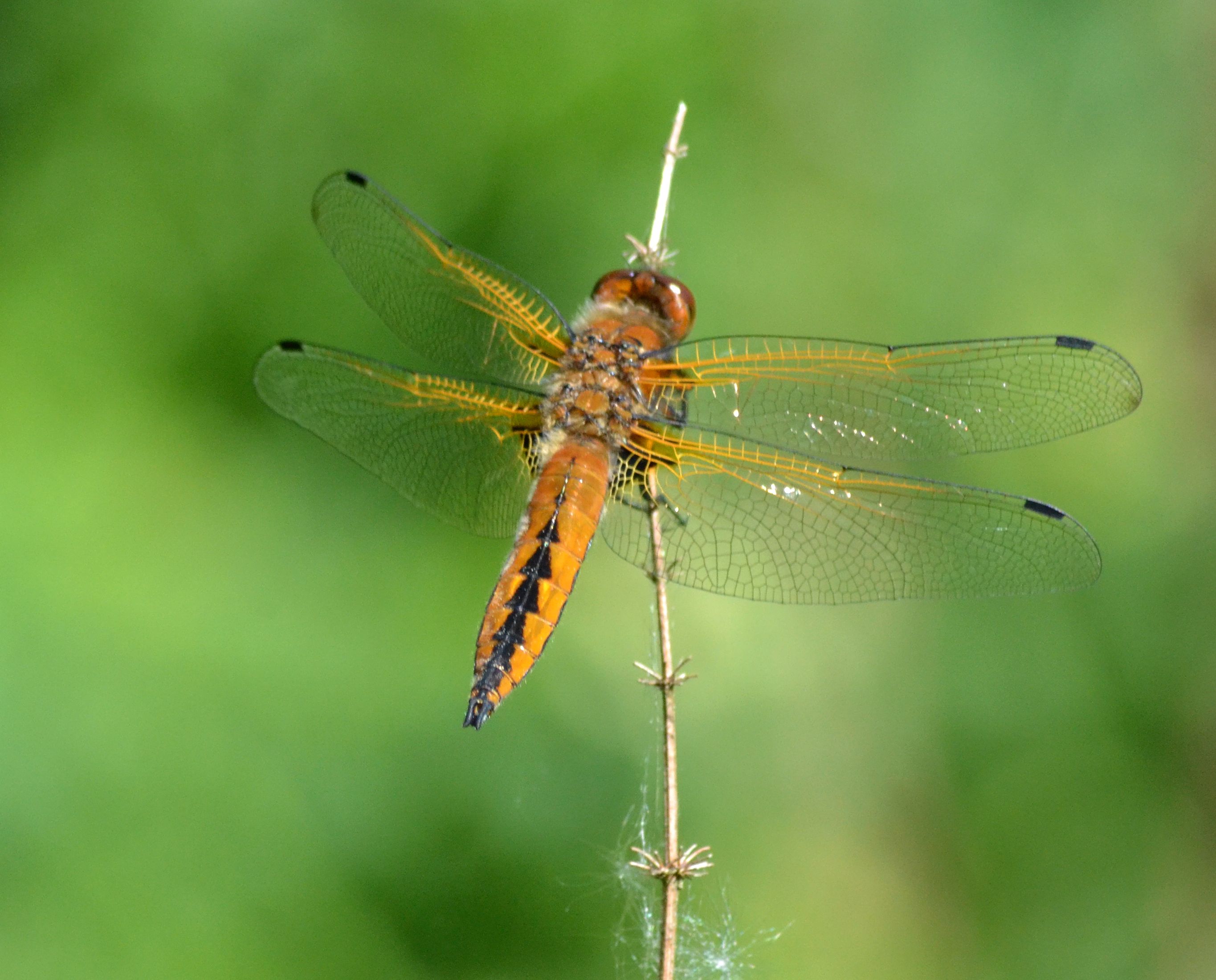
What an absolutely stunning dragonfly colour form this is! Witnessing the all too brief process in the peace and solitude afforded by today’s location was especially meaningful. There is no reason for anyone other than odo enthusiasts to trouble Troublefield. It has nothing to offer dog walkers, joggers, pram pushers, cyclists or any of the other usual fieldwork distractors. But being adjacent to Hurn Airport there is disturbance from light aircraft noise that thankfully only announced itself once today.
NB. “Scarce Chaser” is one of a number of silly English dragonfly misnomers, since this widespread species is by no means scarce across it’s entire range. Other such examples, rooted in19th century learned circles but still lingering are Norfolk Hawker, Hairy Dragonfly, Southern Migrant Hawker and Golden-ringed Dragonfly. The standard international names of Blue Chaser, Green-eyed Hawker, Hairy Hawker, Blue-eyed Hawker and Common Goldenring are each more accurately descriptive of the cited species; not to mention inclusive of the broader, non-parochial picture.
 Ramblings and Scribblings