This item was on my second season Orchid agenda as there are clusters within reasonable range. Of those, recent records suggested one near Dunstable is in decline, so I went a little further to just north-west of Peterborough and was not disappointed. My quest was in the same pale yellow-green colour spectrum as Common Twayblade and Frog Orchid; quite a contrast from the more striking fayre of a day earlier’s adventure.
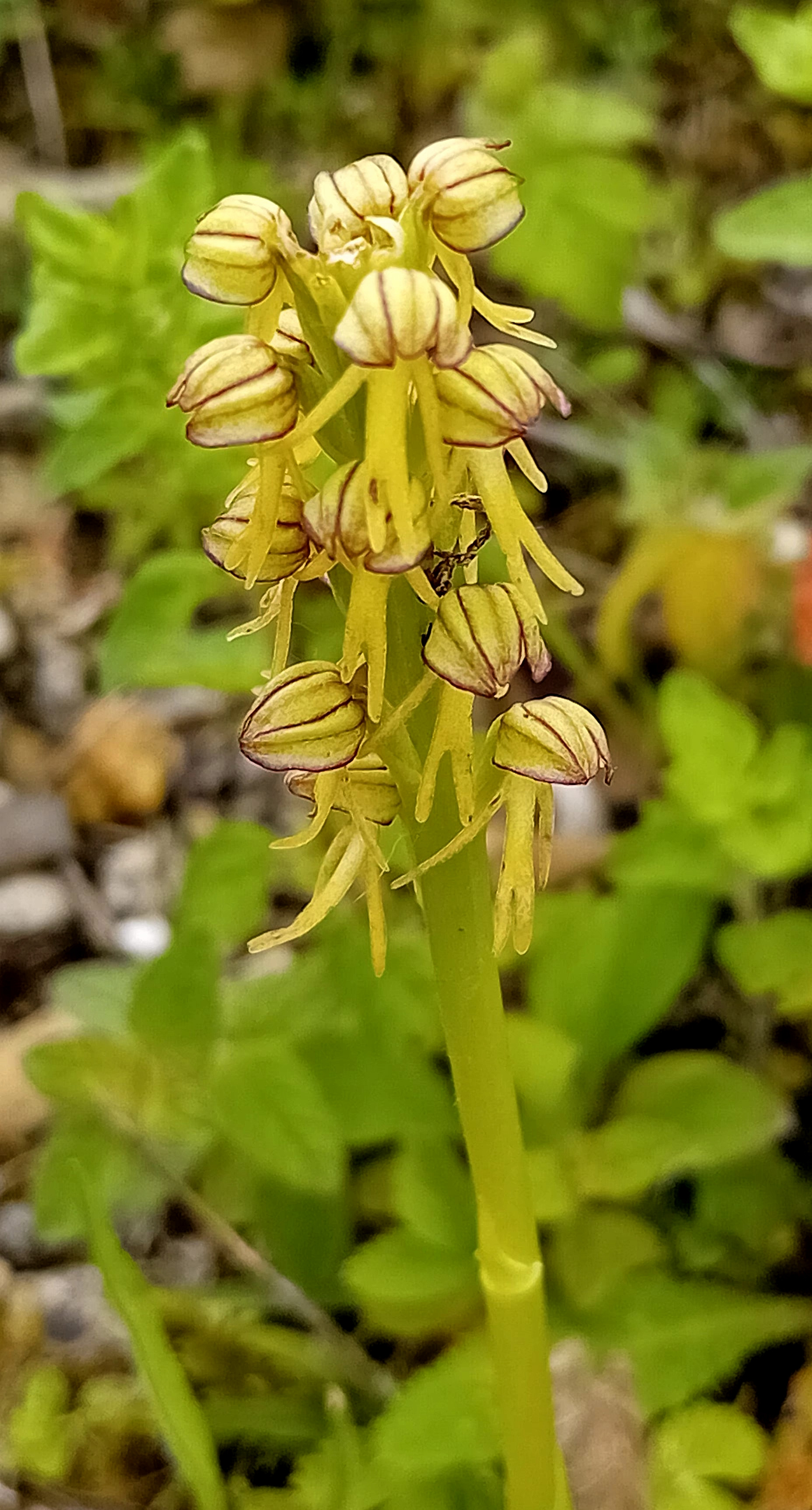
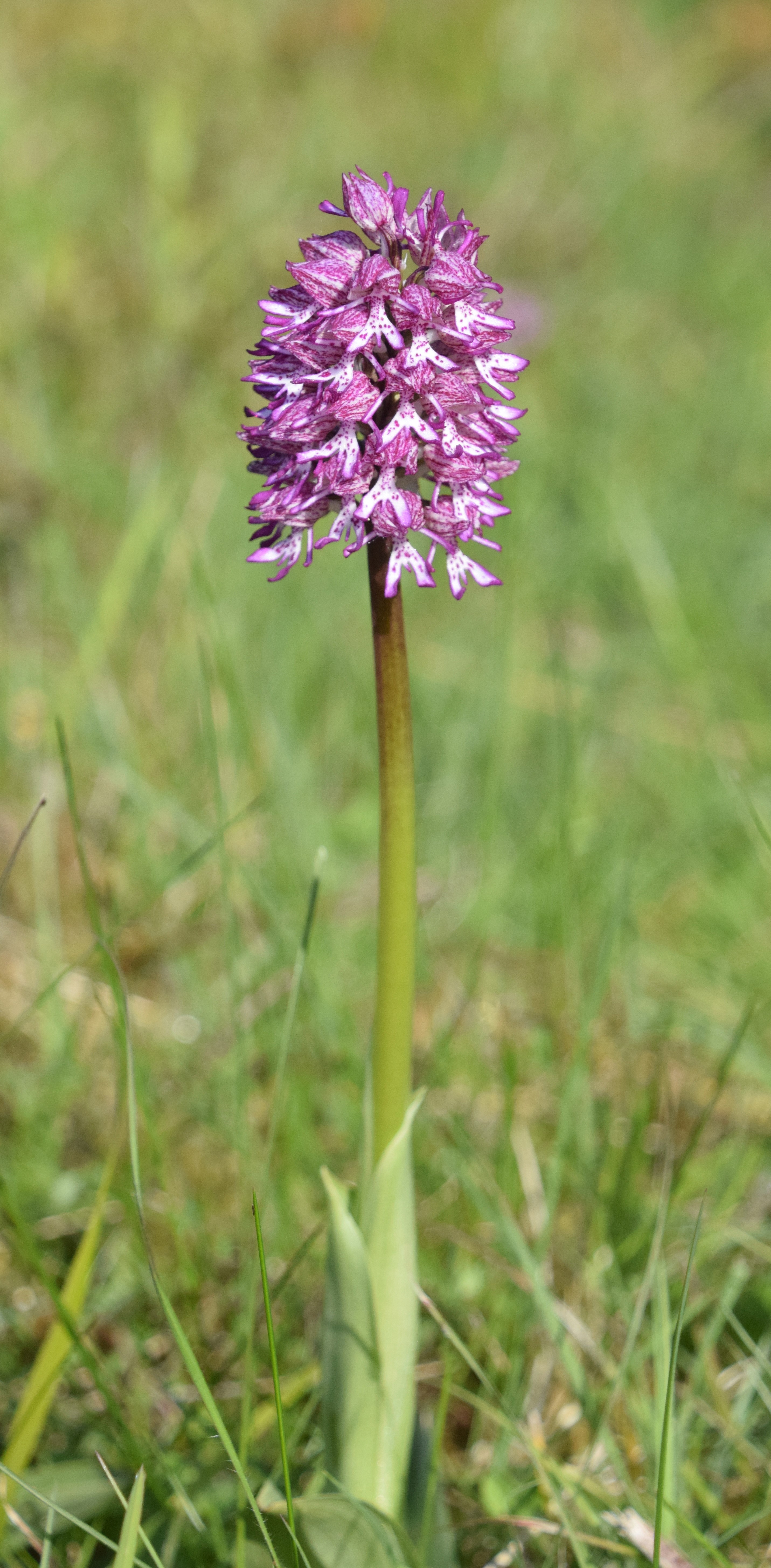
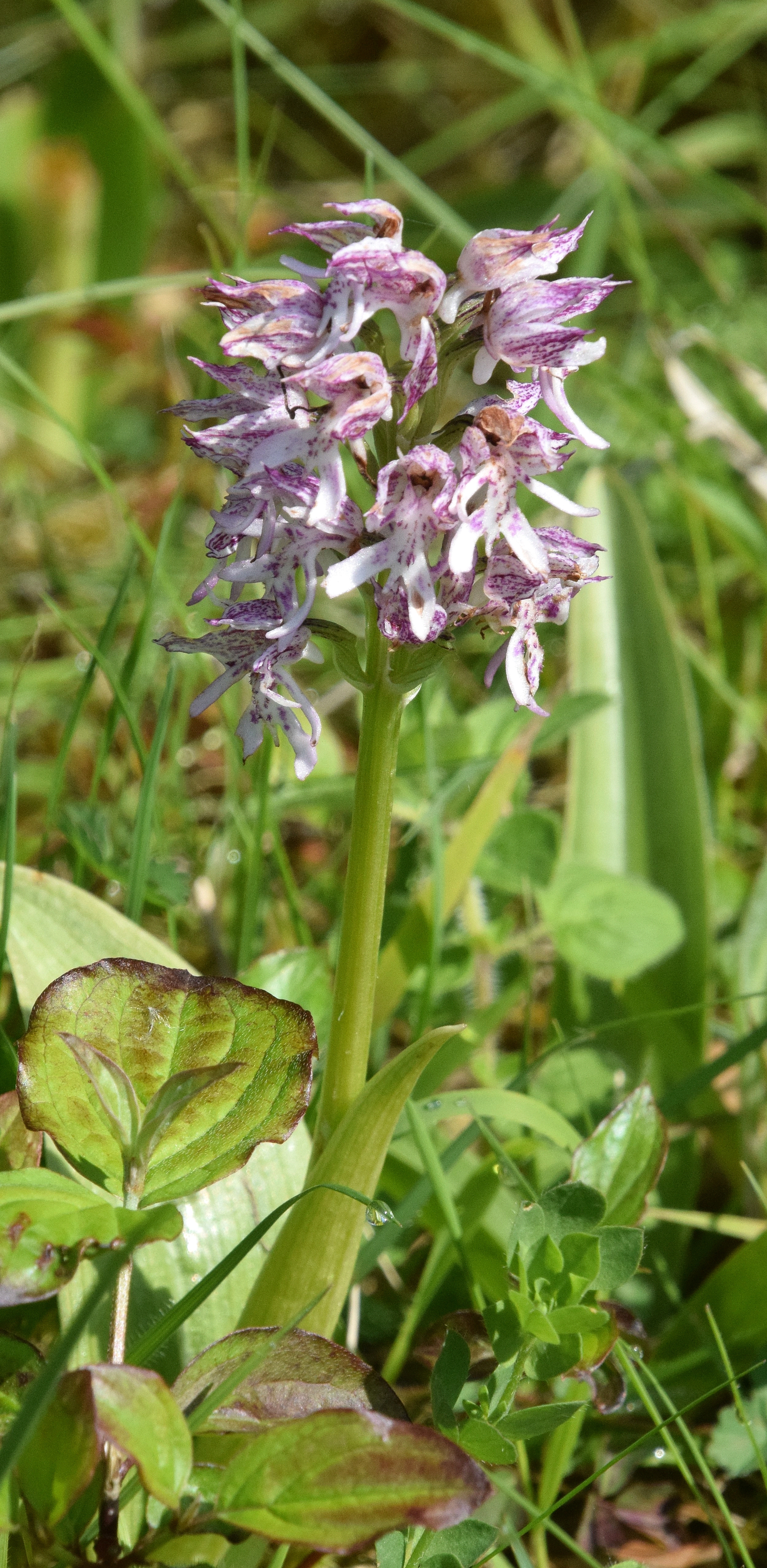
Man Orchids
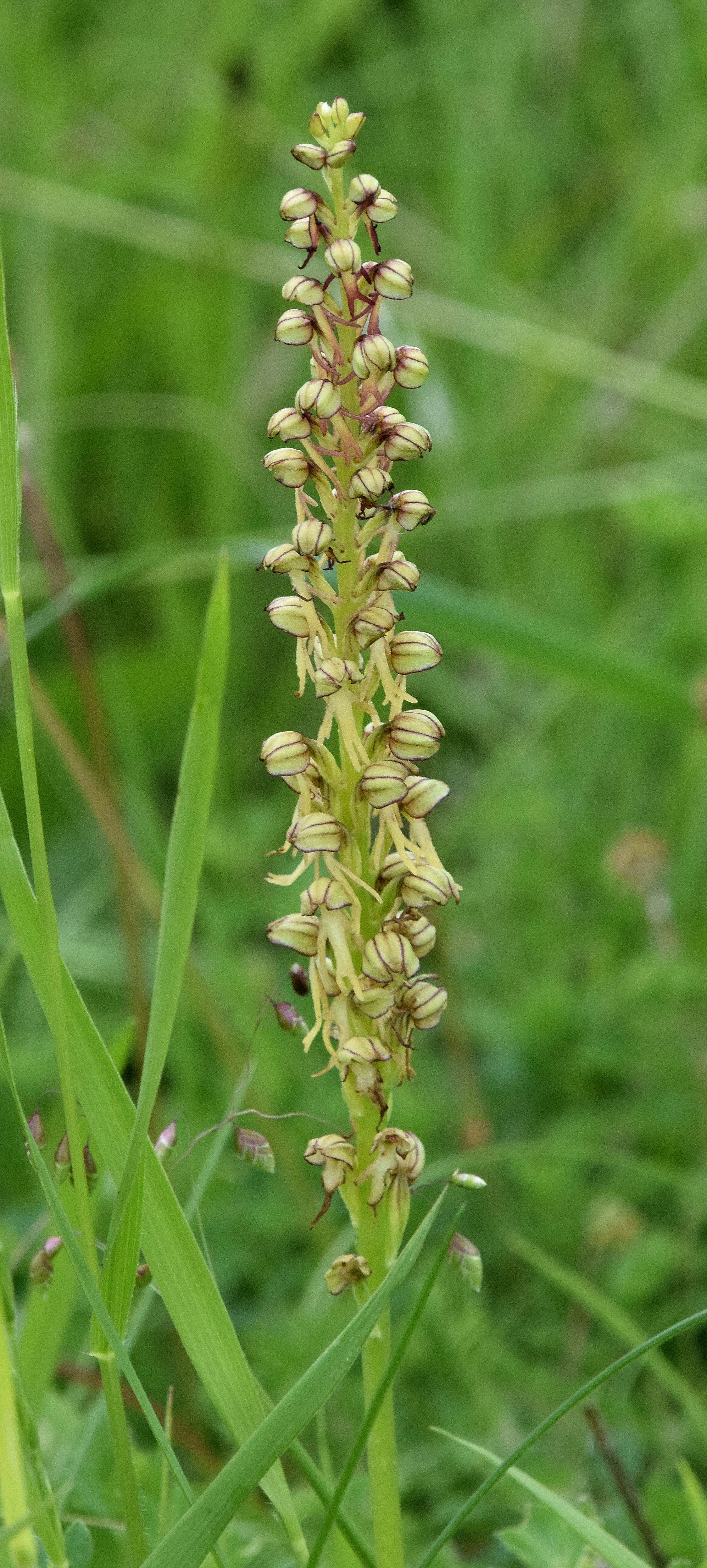
The enigmatic Man Orchid (pictured above) is fairly common and widespread across southern Europe but less so further north, being rare in Great Britain where it is classed as endangered. The flowers resemble small human figures with dangling arms and legs beneath (to my mind) copious Gatsby-style caps. These skinny, understated though subtly alluring plants grow 20 – 40 cm tall, most usually on alkaline grassland, and they are known to colonise former quarries.
I was intrigued to visit one such location where there were said to be around 30 subjects. Barnack Hills and Holes NNR (PE9 3EU, TF076046 – see here) is a former limestone quarry that in medieval times provided building material for the great cathedrals of Peterborough and Ely, and other churches of the region. It was worked out by the early 16th century, since when it has come to support more than 300 species of wild plant. Those include large populations of Green-winged, Early Purple and Chalk Fragrant Orchids; and this post’s subject is the site stand-out. A designated SSSI managed by Natural England and the local Langdyke Community Trust, the hummocky expanse of its 23 hectares (57 acres) comprises half of the remaining such limestone grassland in Cambs.
Barnack Hill & Holes NNR
As a day previously, on entering the reserve I was faced with a large “haystack” in which to search for the needle of my quest. Wandering in and around at random, cordoned off enclosures fairly soon became visible. They were the reserve’s plant protection area that is marked approximately by the blue dot on the above plan. The most convenient parking place is therefore at 52.628294, -0.408247 in Walcot Road.
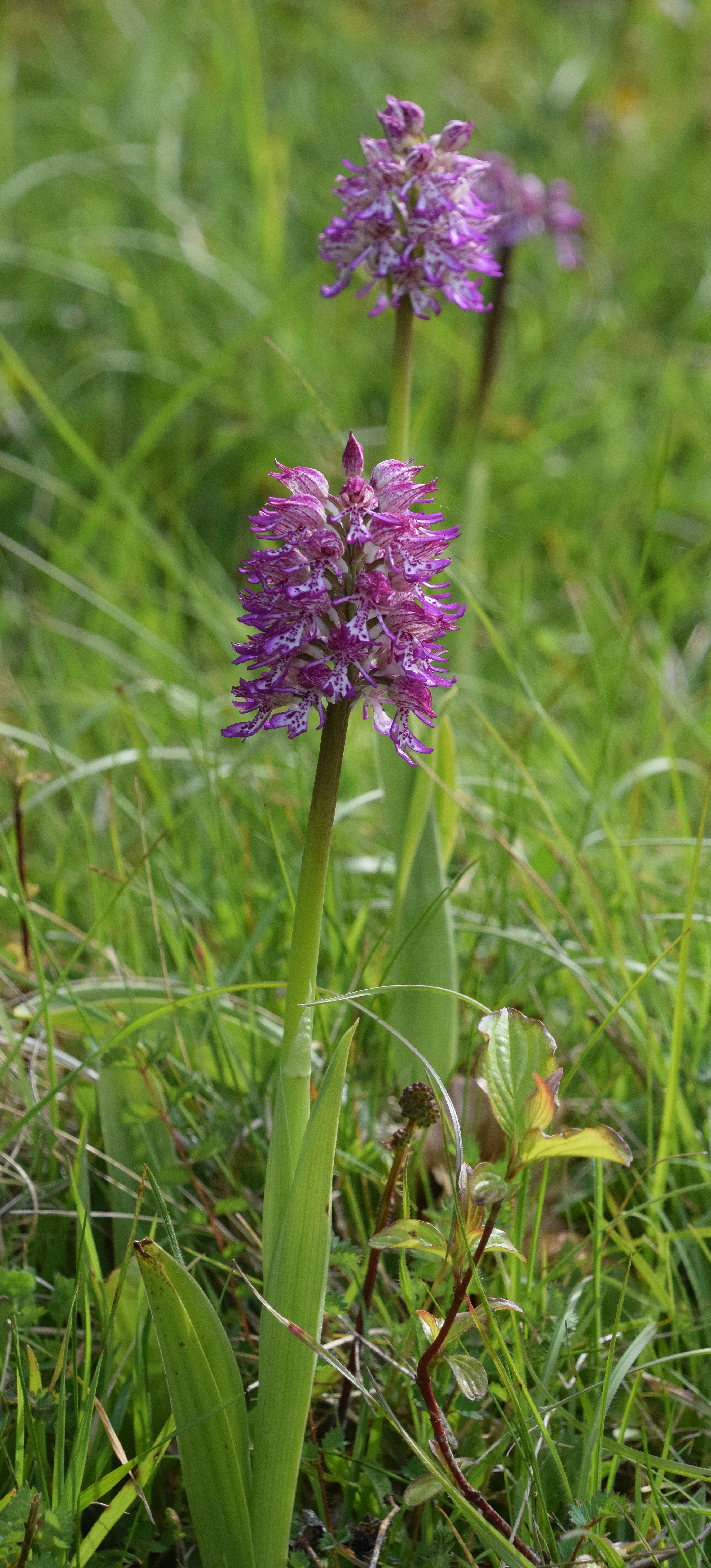
At the edge of one such enclosure I found a first two rather ragged specimens. Then I was approached by a local naturalist who led me to a more productive area with Man Orchid signage where we located another four better examples. The following pictures were all taken from the enclosure perimeters, so there were no doubt more plants further inside.
Man Orchids at BH&H
My chance acquaintance told me of a second former limestone quarry site three miles away, Swaddywell Pit (PE6 7EL, TF118034 – see here). Stone extraction at this outcrop of the lower beds of Lincolnshire limestone dates from Roman times and ceased in the 1920s. The greater part of the reserve is now a grassed-over former landfill site that must be crossed from a car park beside the Stamford Stone Company (52.614804, -0.353077). The managed area beyond, again by Langdyke Community Trust, contains a mosaic of habitats including open water, reed and scrub, limestone grassland and low cliff faces.
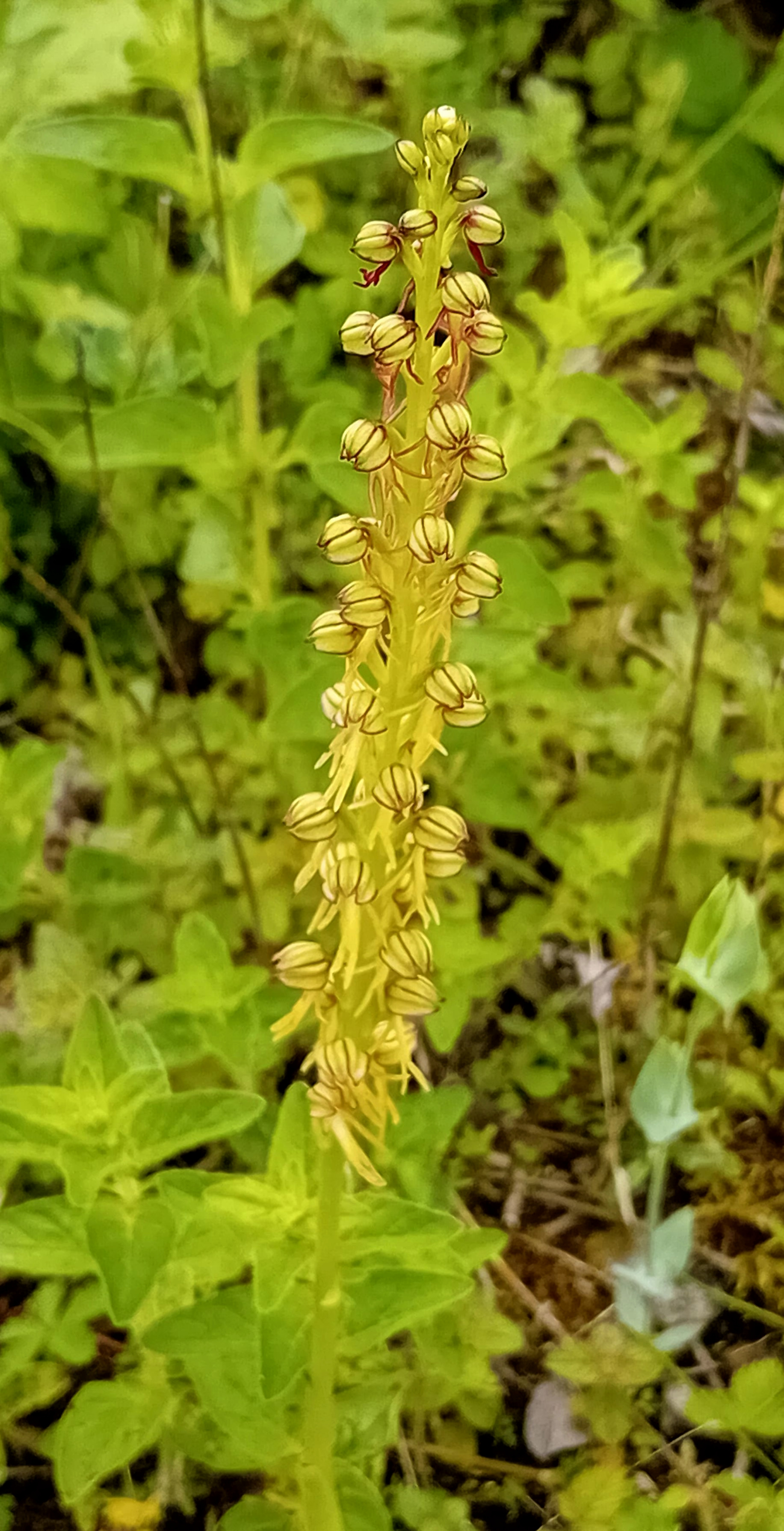
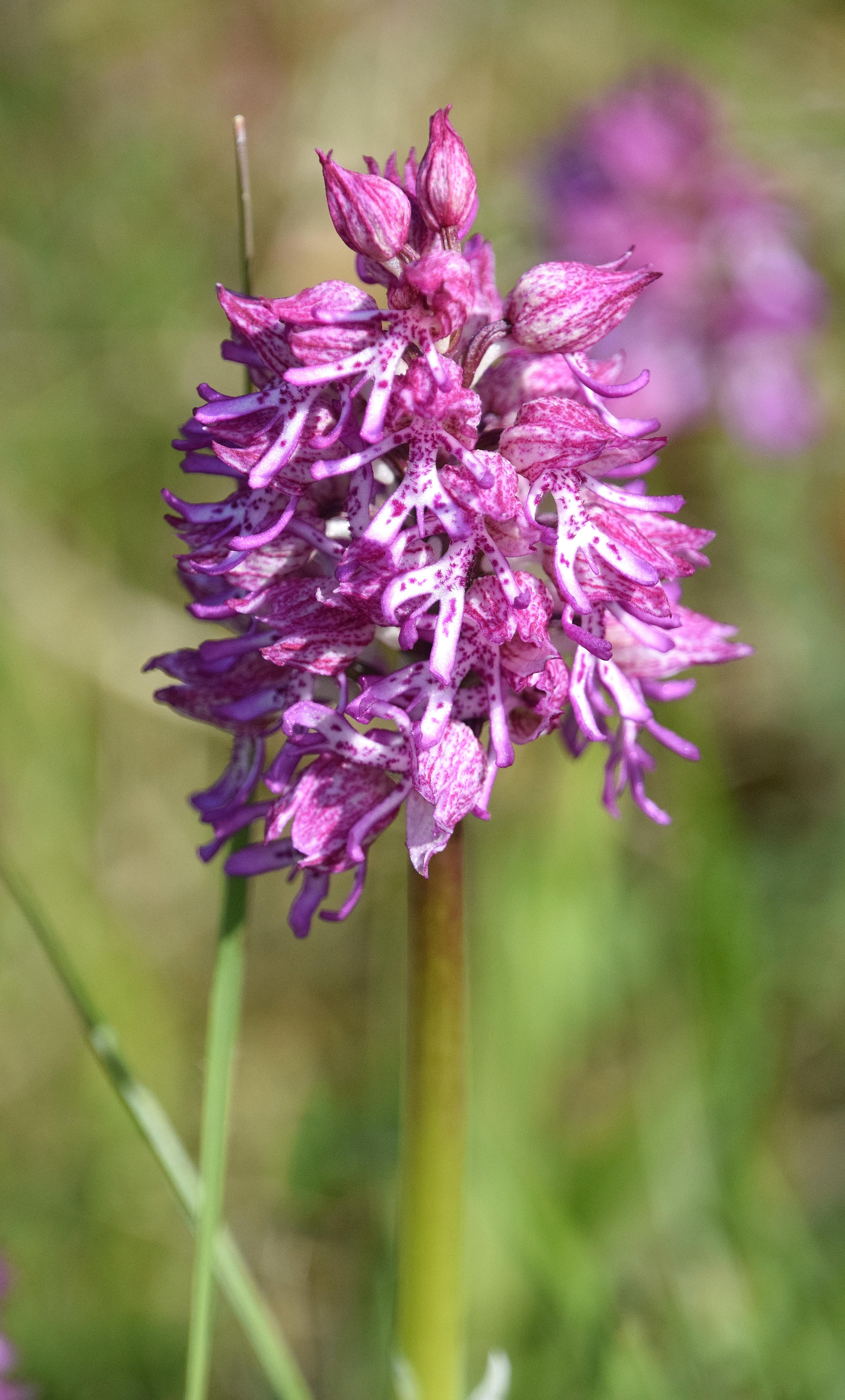
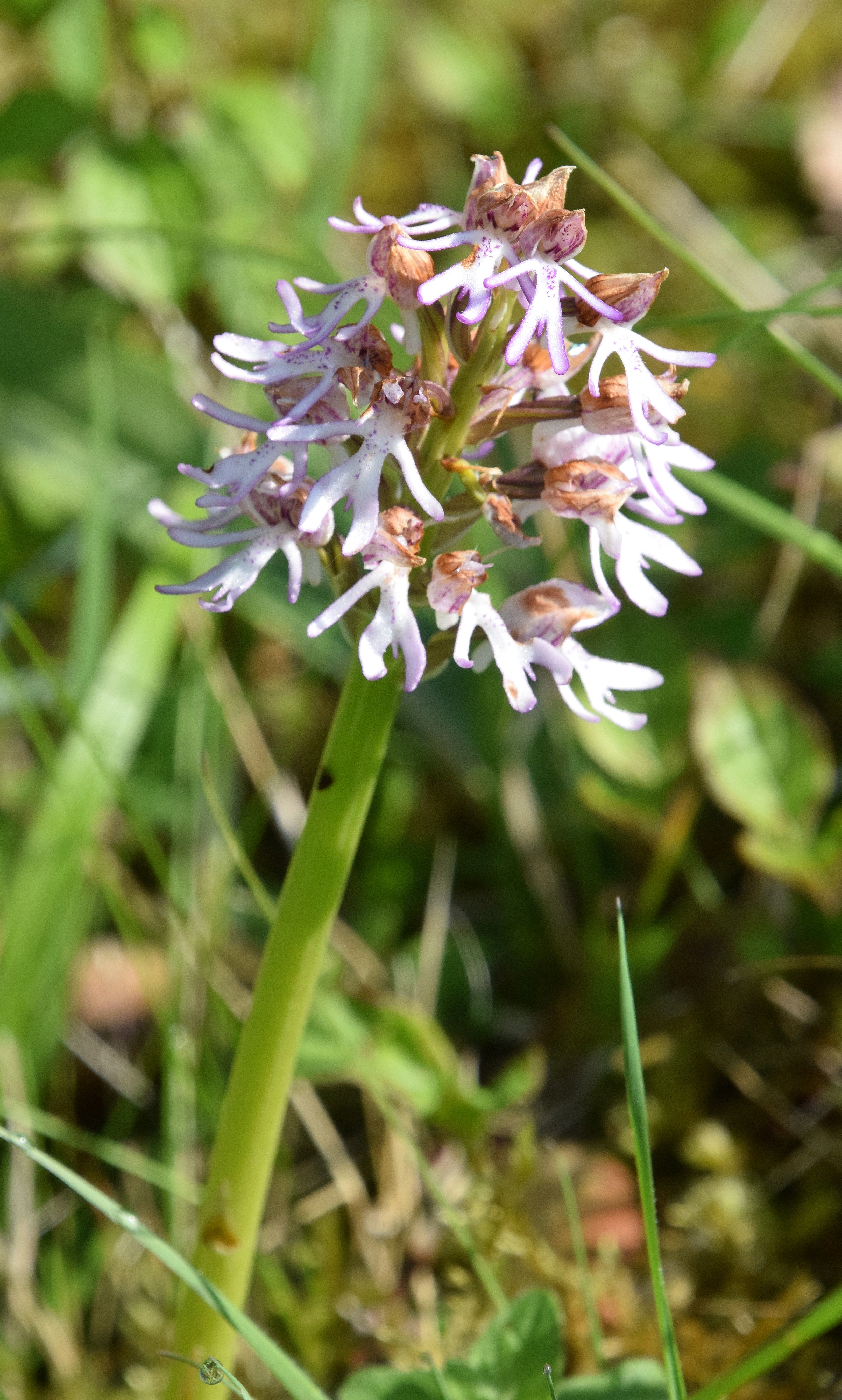
Inside I walked to its far north-western end, just before which cages gave away the presence of a good-sized group of Man Orchids. Some of the outliers were beautifully fresh (pictured below), while the majority were part concealed within the clutter of a fenced bank. The reserve also holds several other Orchid species, more rare wild plants,14 different Odonata and a nationally important cluster of Great Crested Newt.
Man Orchids at Swaddywell Pit
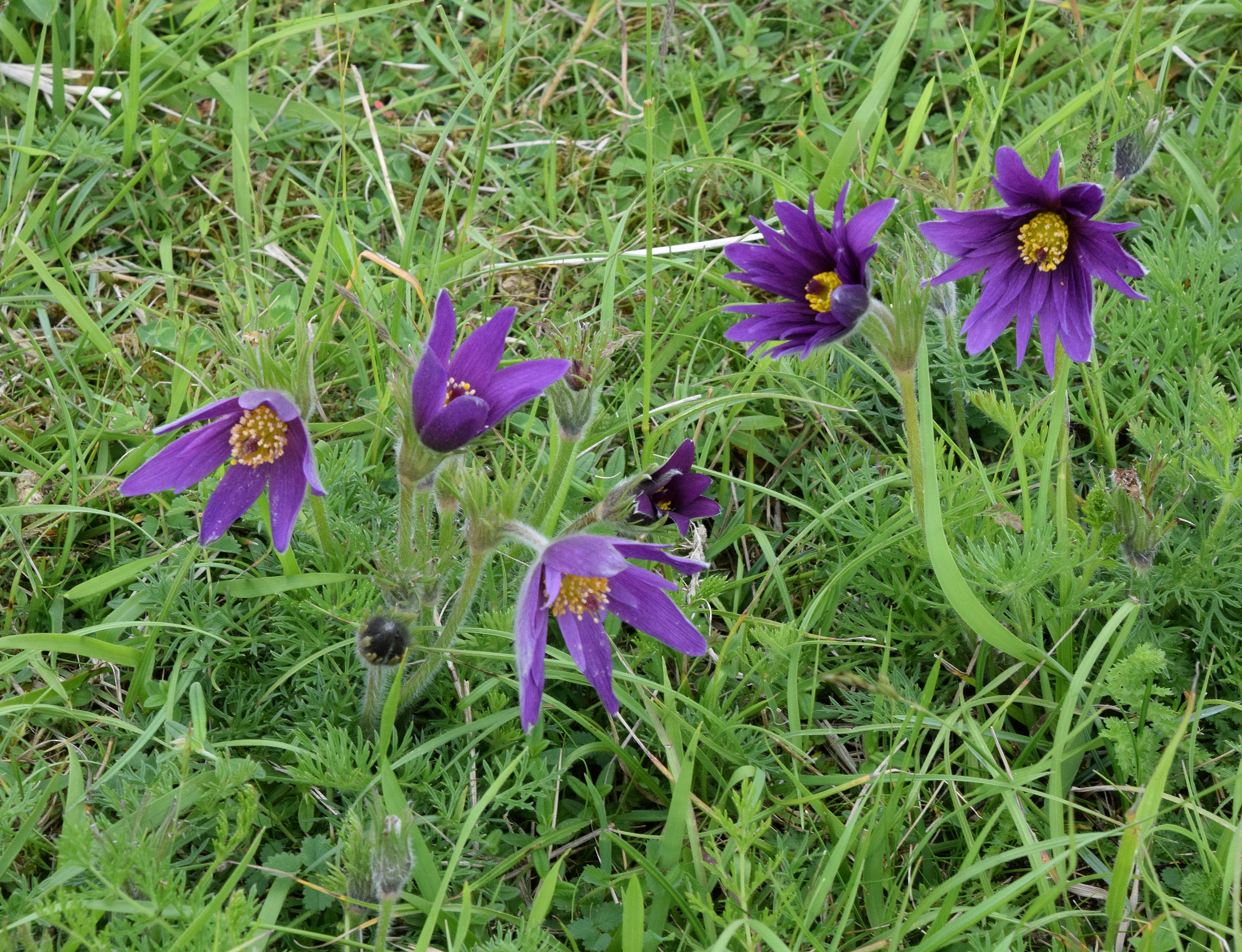
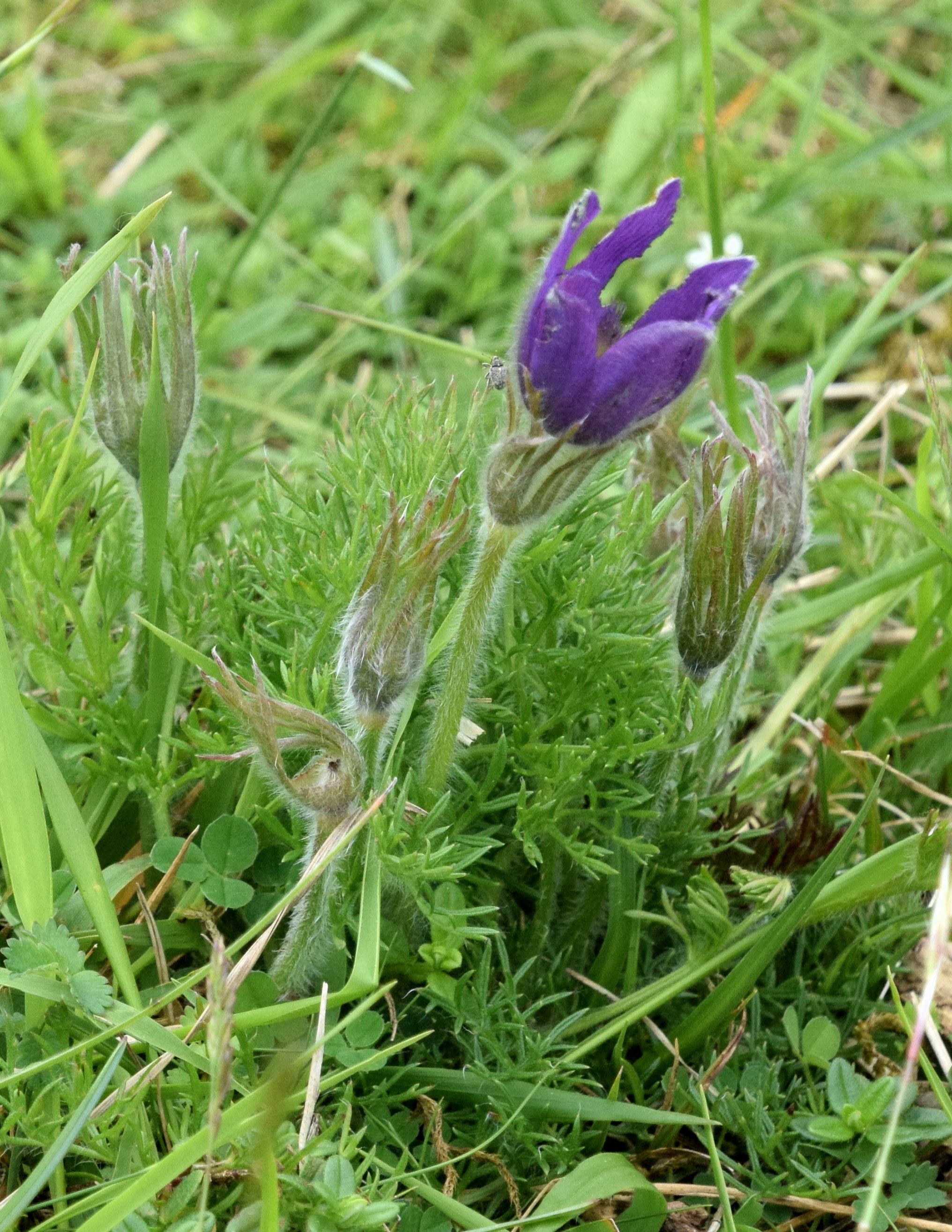
Like Knocking Hoe NNR a day earlier, both this post’s locations hold huge populations of the nationally rare Pasque Flower. My home county of Oxon has two sites entailing a handful of plants each, by contrast with which it seems my visited area of Cambs offers a second Pasque grand central of this week. The following pictures are from BH&H.
Pasque Flowers
The past two days in Beds and Cambs were truly stimulating and motivating. The intriguing wild places visited, and the specialty populations of their preserved habitats’ nationally rare plants are now set to dwell in my wildlife recollections for the season. A native Orchid checklist compiled after writing this post reveals I have now observed around two-thirds of the available total. How quickly another order reduces its required records to rare and more difficult stuff, as most of the remainder are! May 2024 has nonetheless been quite a statement month.
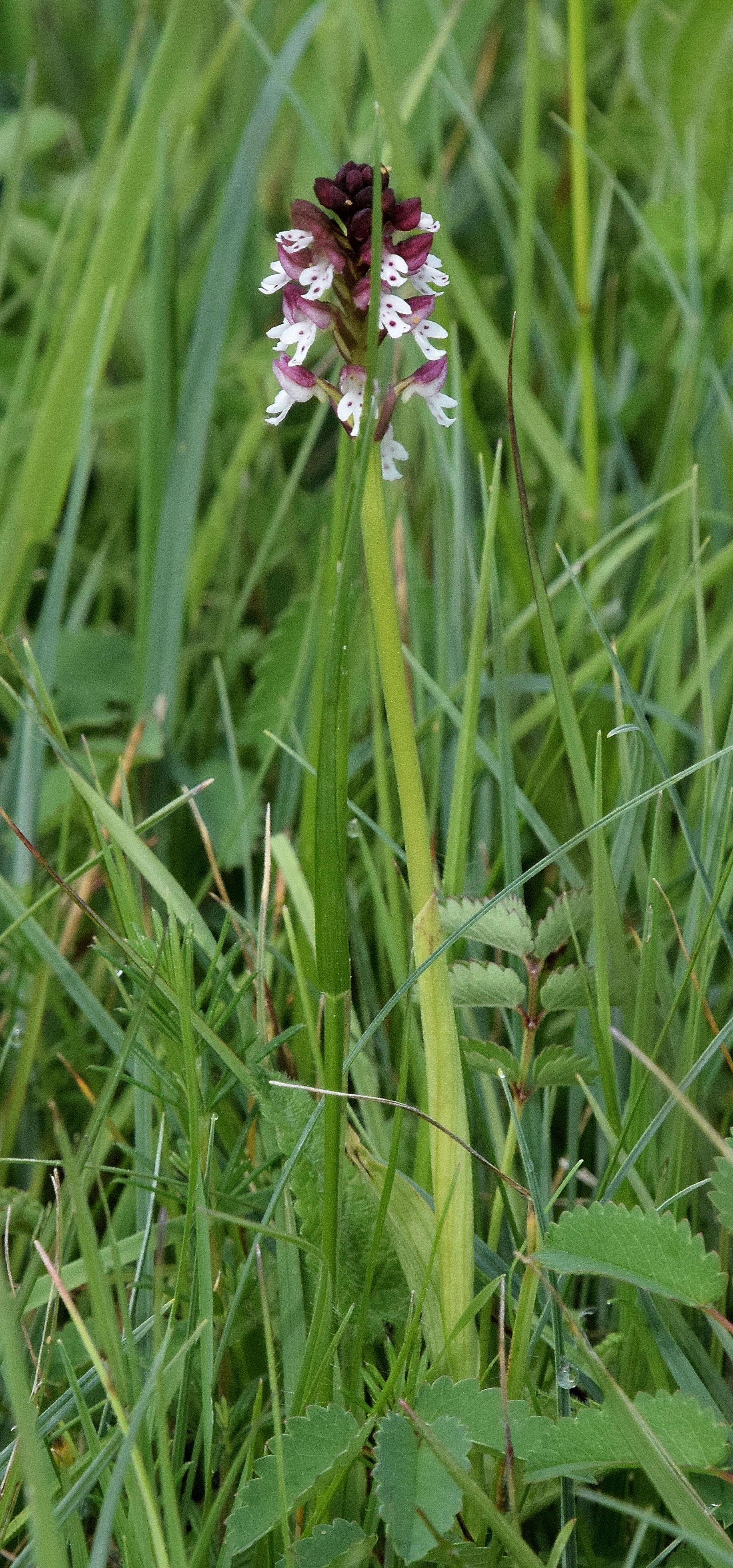
This was possibly the favourite experience of my debut Orchid hunting season a year ago. I am in no hurry to rush around trying to observe everything, since I currently feel low on motivation both for insects and anything but different birds, and so would prefer this new interest to last for another season or two. Given that all the unseen stuff is early this year, observing Burnt Orchids again remained a priority. My abiding impressions first time around were of it taking four hours to find them and then how small the plants were, so now I hoped the wet spring might have produced larger subjects.
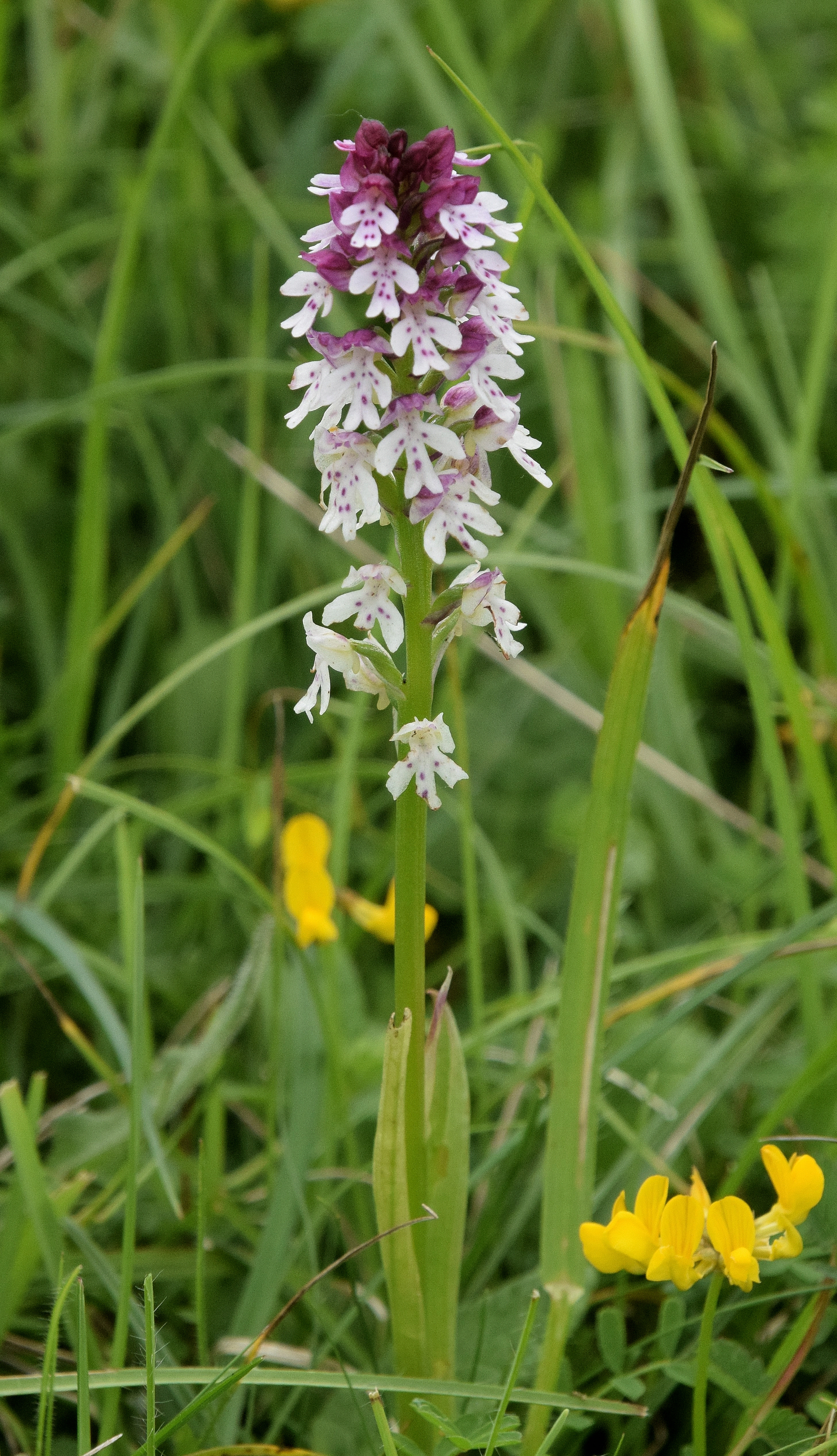
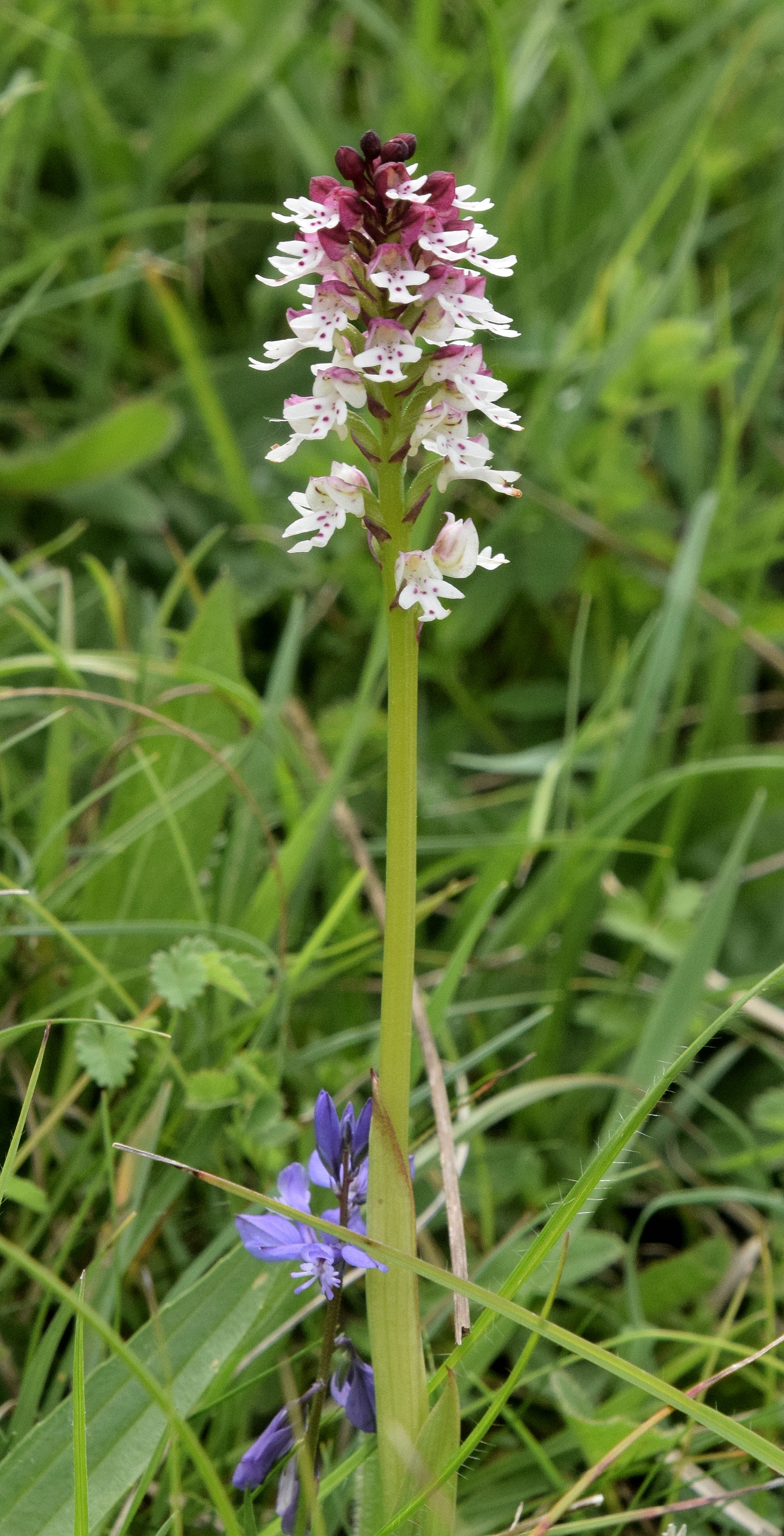
As soon as I reached the spot at Clattinger Farm (SN16 9TW – SU014932) remembered from a year ago I noted a first Burnt Orchid, then picked out three more (pictured below). This visit being two weeks earlier than in 2023 (see here), large numbers of going over Green-winged Orchids were still in bloom all around, while the as numerous Southern Marsh and hybrids were still at the emergent stage. A second cluster of my quest in Bridge Field had yet to appear, and those recorded were no larger than last year’s.
Burnt Orchids at Clattinger Farm with Green-winged Orchid (far right) for size comparison
Back at home I realised the size question is a common misconception amongst the less experienced. This is indeed one of Great Britain’s more diminutive Orchids, rarely exceeding 15 cm in height. That having been resolved, I also wished to see greater quantities and two very well-known sites suggested themselves. One was Martin Down on the Hants / Wilts border south-west of Salisbury. But I opted for the rather more intriguingly named second in this post’s title, which lies at the northernmost point of the Chiltern escarpment.
From a small lay-by (51.957186, -0.354002) on the B655 east of Pegsdon I walked back a few hundred metres then followed a bridleway northward around two sides of a private wood to the reserve entrance (51.961776, -0.352864). Knocking Hoe NNR (TL132305), an unaltered chalk grassland, is a SSSI due to its botanical diversity and the notable populations of some rare plants that it holds.
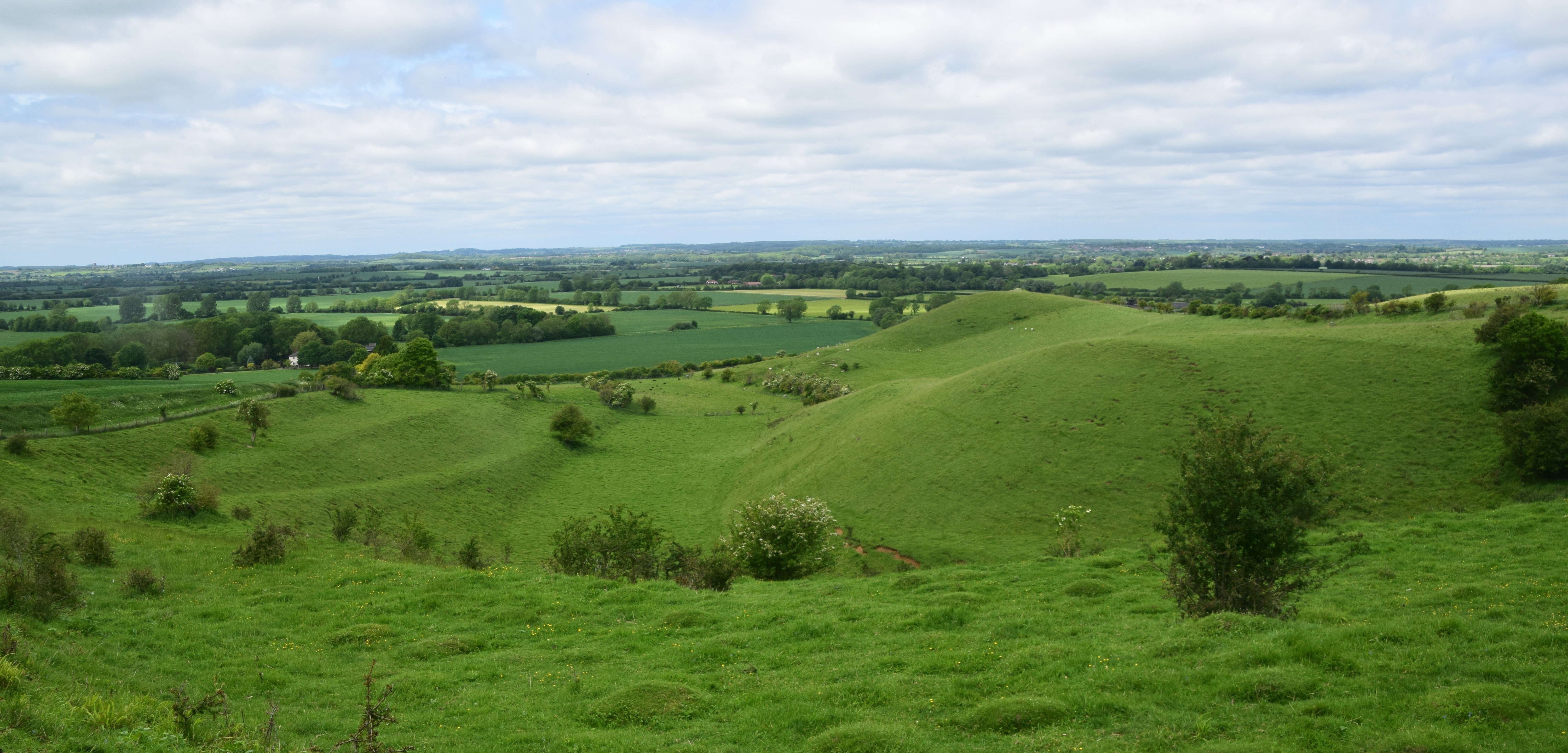
Knocking Hoe NNR
The vista before me (above) was vast, and it’s topography reminded me very much of the Devil’s Punchbowl (SU346849) on the South Oxon Downs and Rake Bottom of Duke of Burgundy note in West Sussex (see here). But where should I start to seek out the reason for coming here? At first I went in completely the wrong direction, walking downwards and along the nearest side of the pictured dry valley, finding only a few Common Twayblade. Then I retraced my steps, crossed the valley’s head then strode out along its opposite flank.
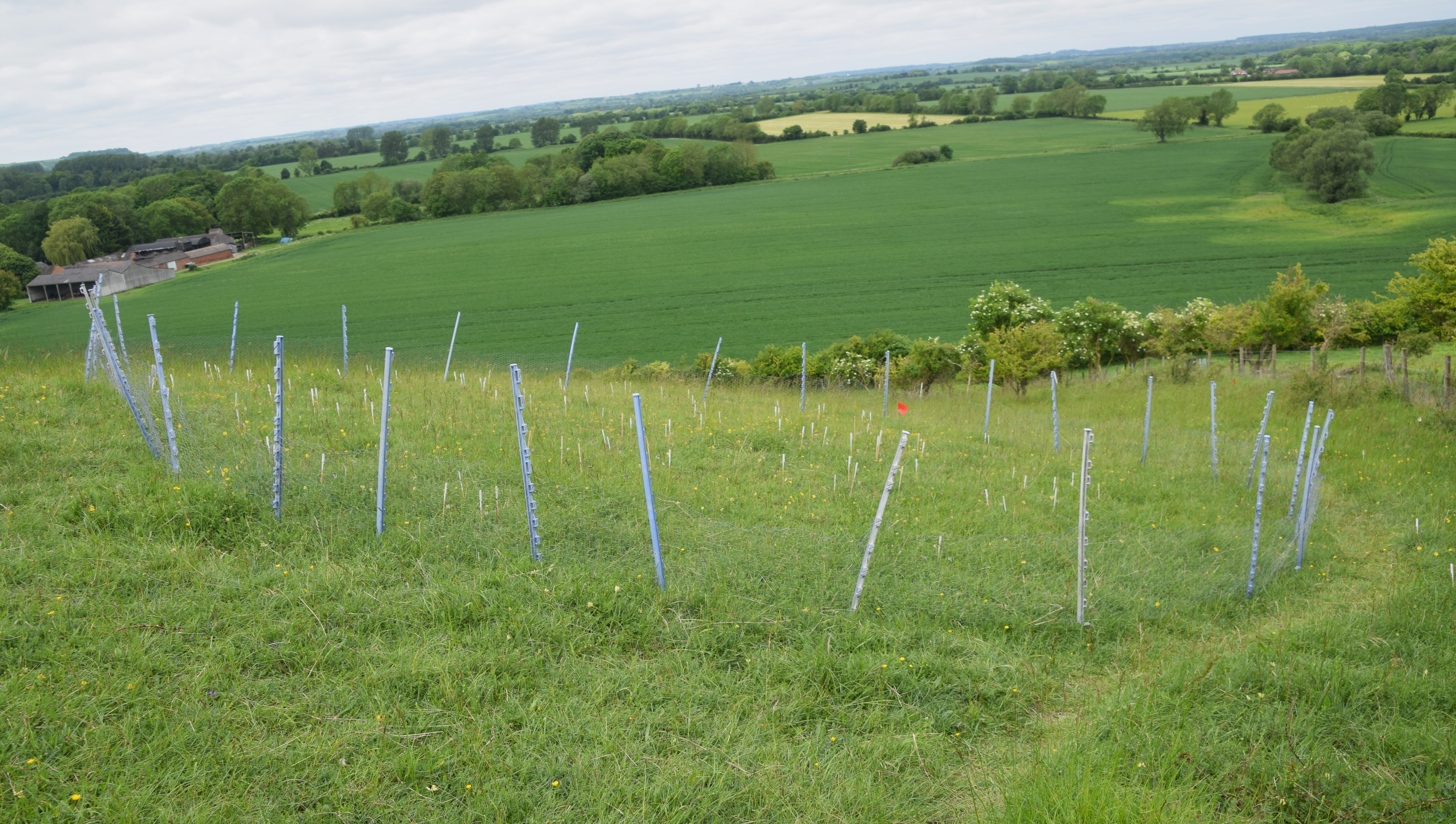
About half way along I noticed a fenced off enclosure (above) to keep the grazing sheep out, within which were red and blue flag markers. That looked promising but the protected wild plants were Pasque Flowers, one of Great Britain’s rarest for which I seemed to have found grand central. There were certainly hundreds, possibly thousands of them here, mostly gone to seed but more than I have ever seen in the wild nationally still in bloom. I didn’t attempt to take pictures for fear of trampling the habitat. Onward I forged and the hillside became more Orchid rich, with plenty of emergent Chalk Fragrant which was promising again.
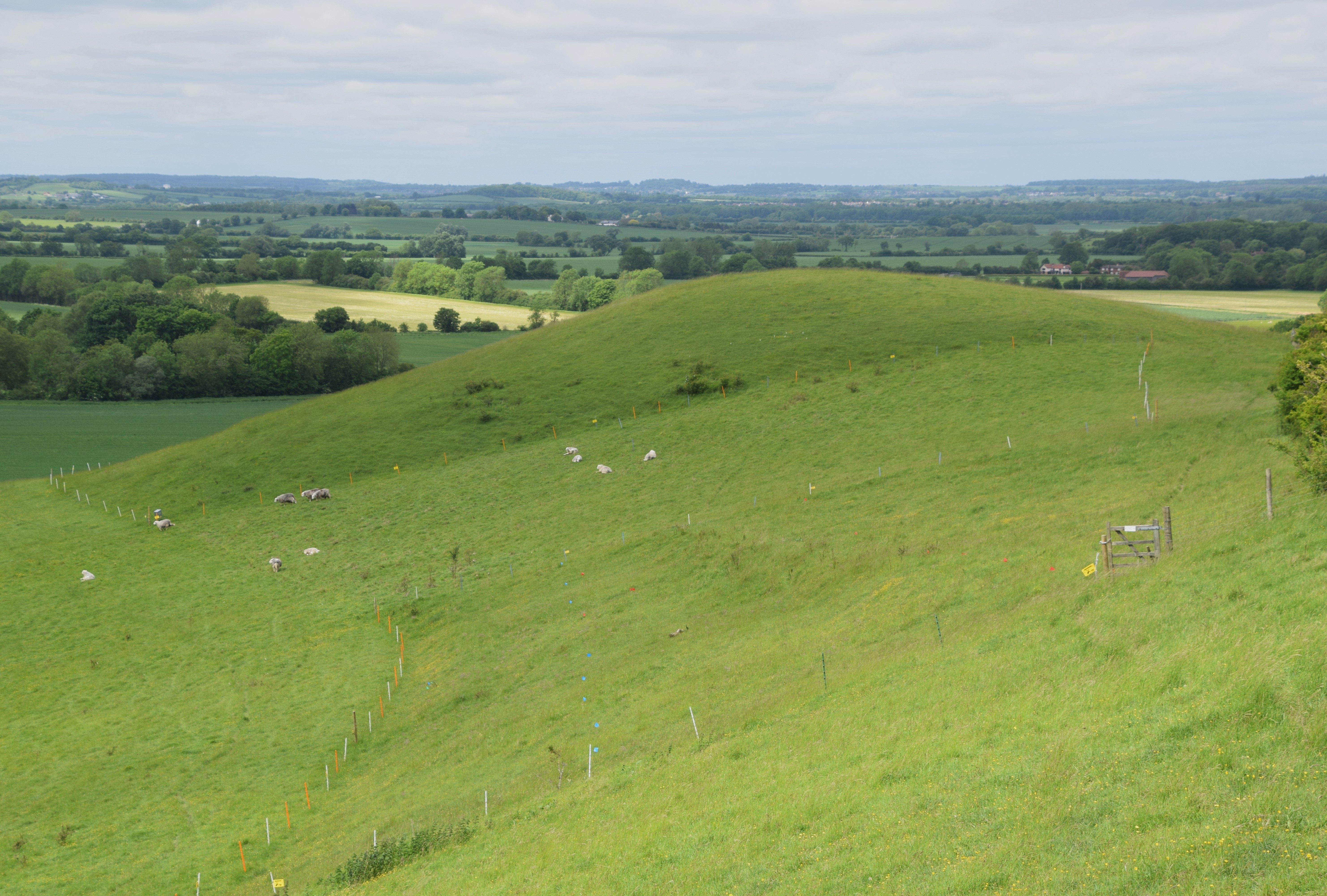
The Burnt Orchid slope is on the north-facing side of the furthest hill in the second vista (above), as far from the reserve entrance as it was possible to venture, but I had just followed my instinct. Now I was rewarded with very many plants, every one of which was marked by a white tag. It is plain some very meticulous management is practiced here.
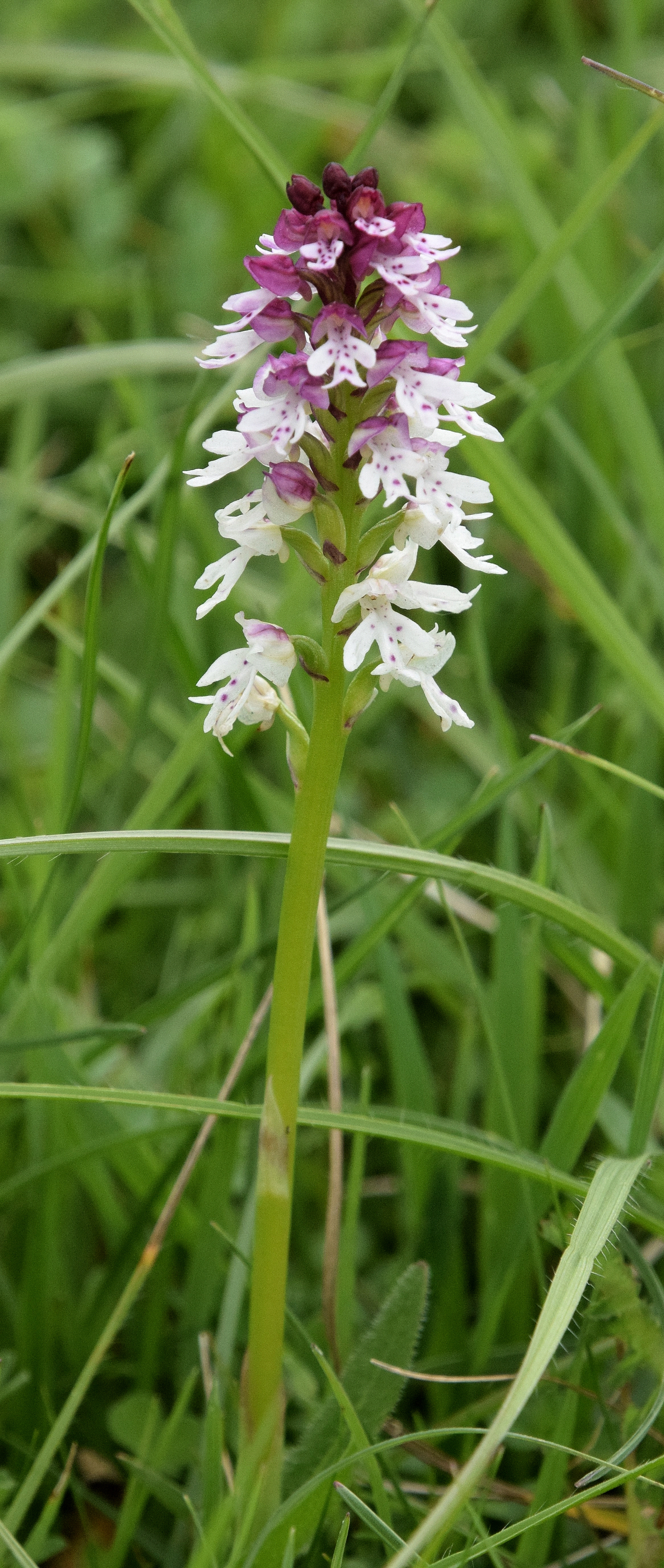
Burnt Orchids at Knocking Hoe
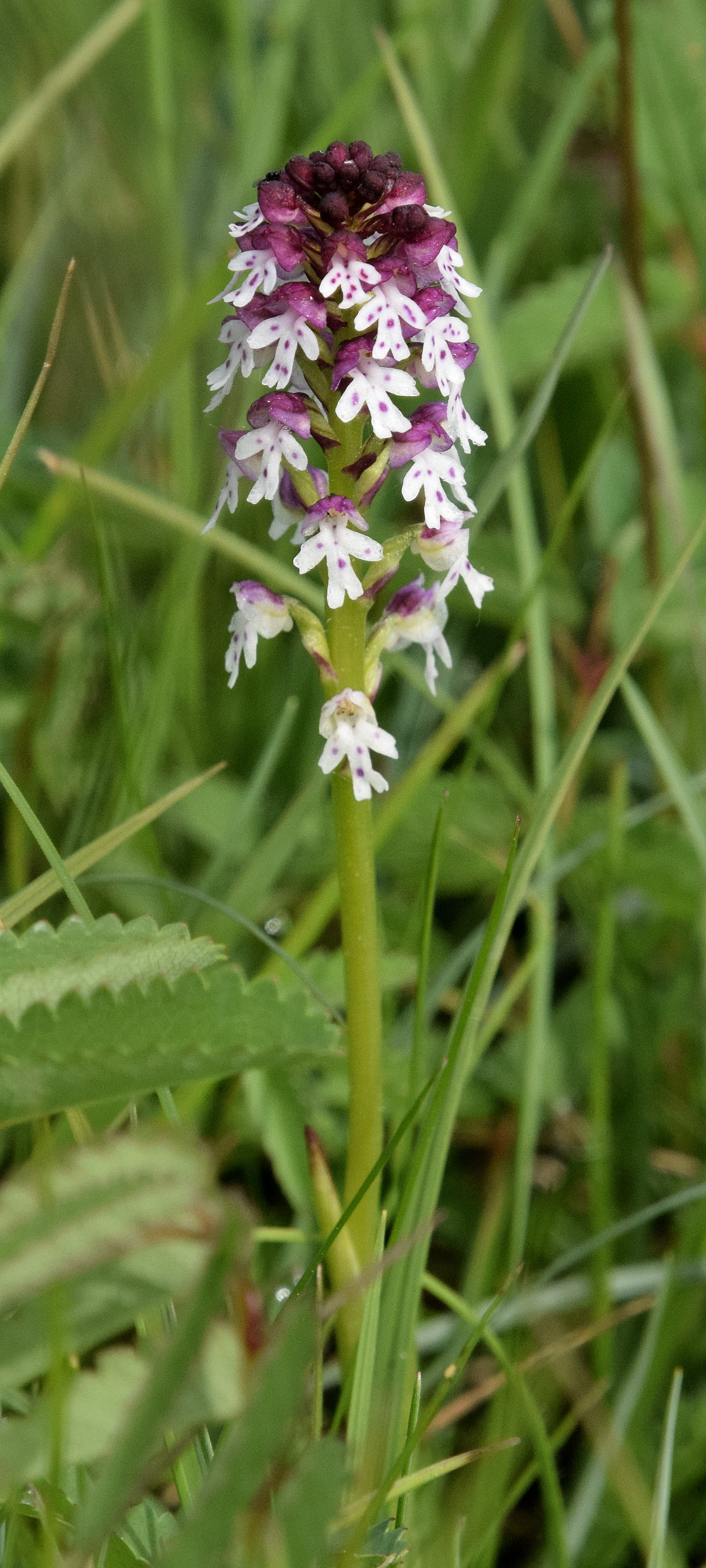
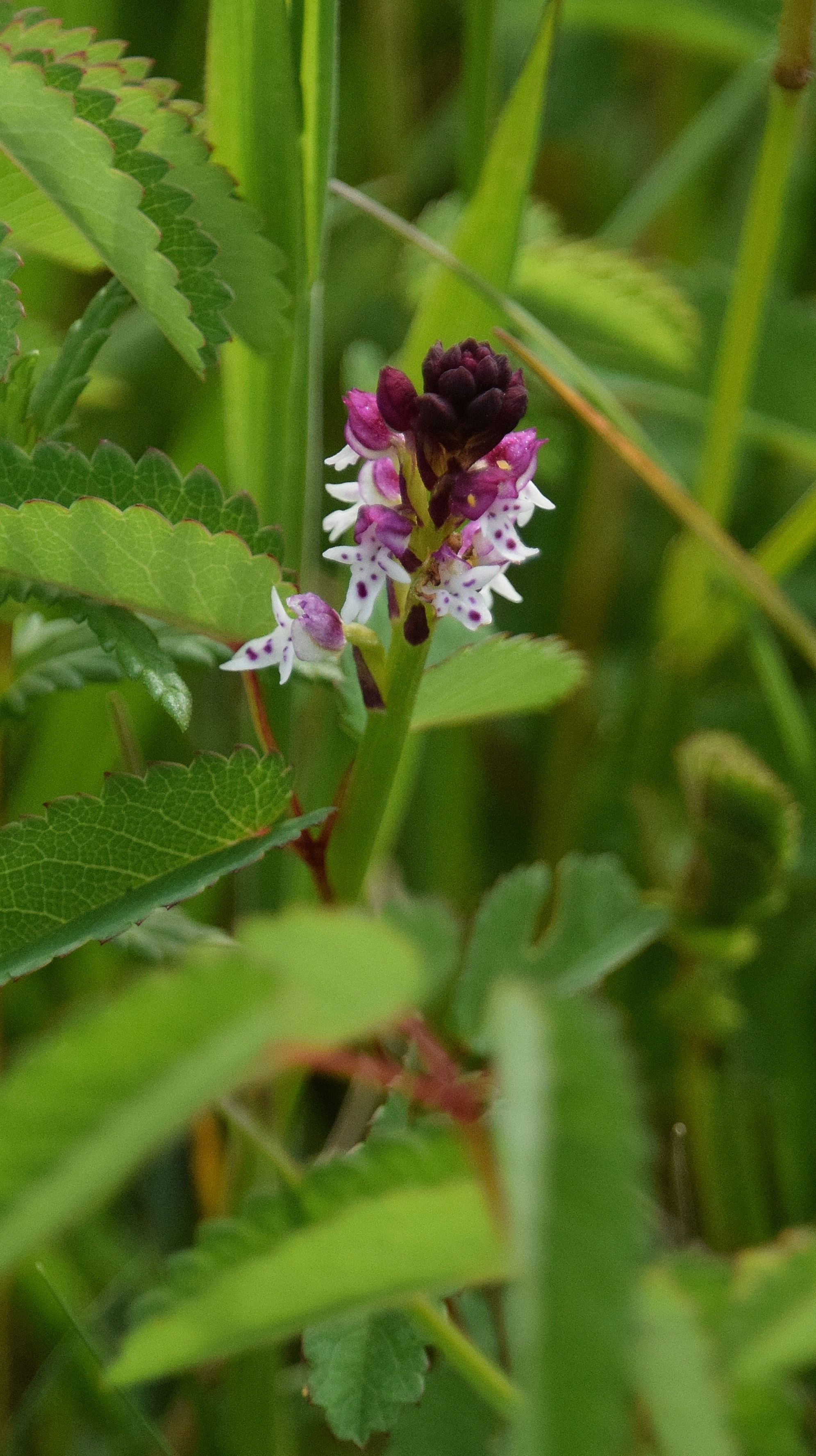
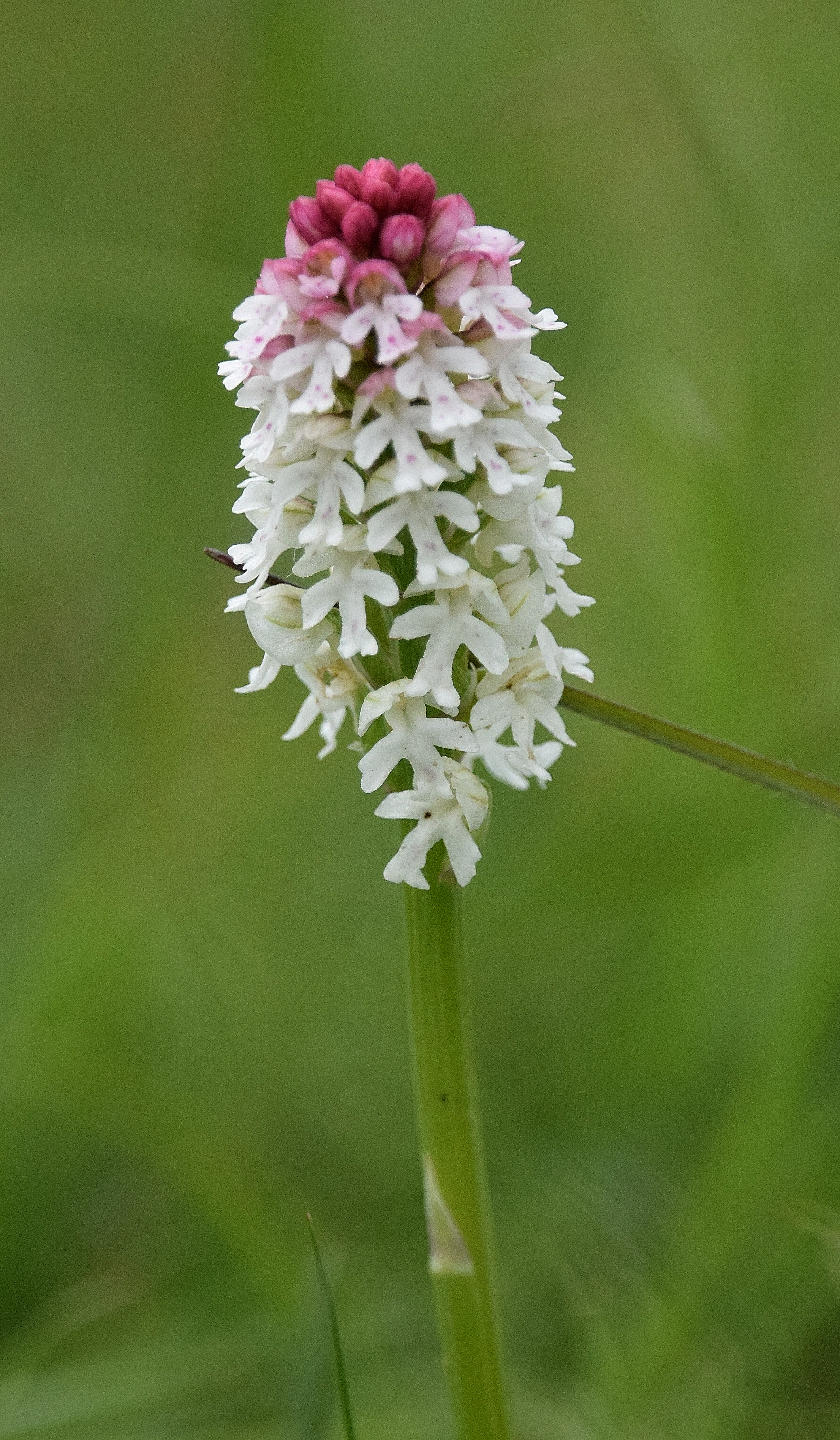
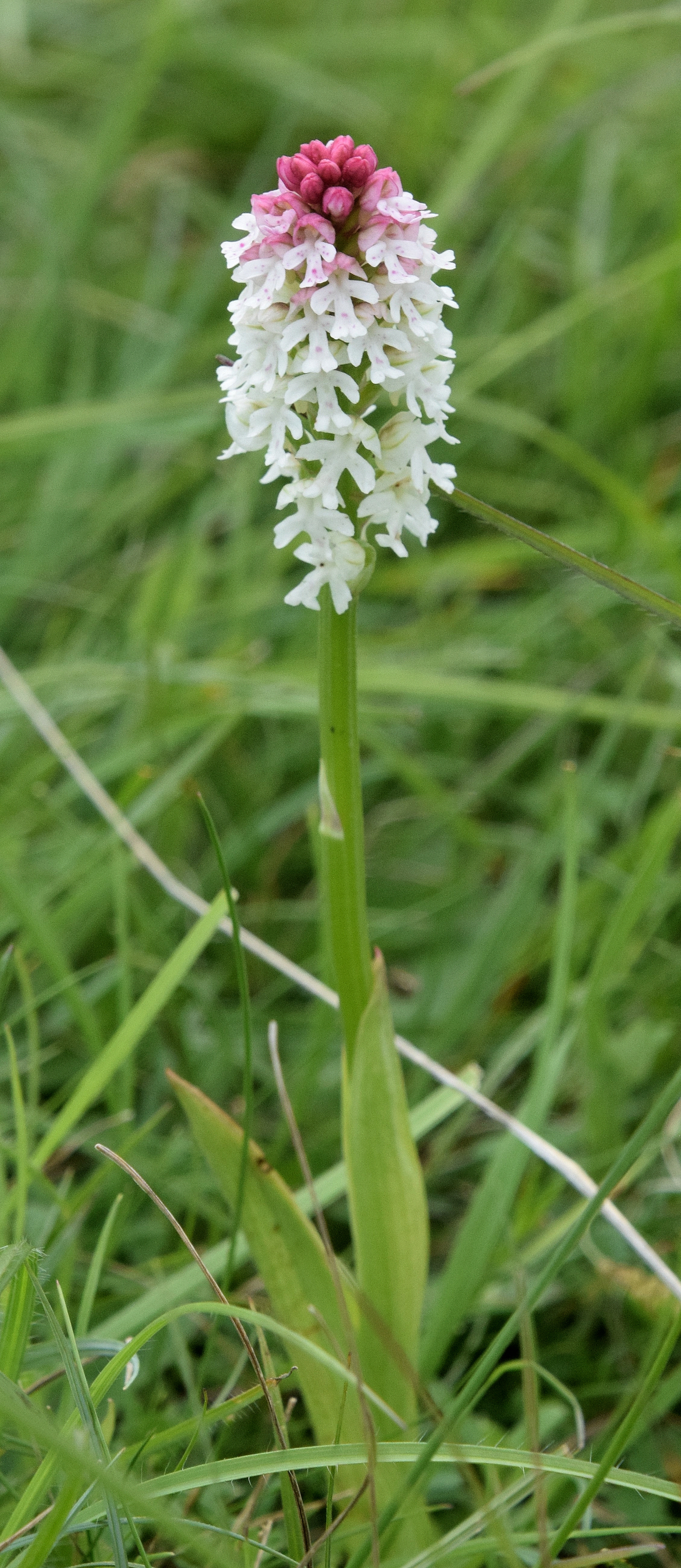
At first I took pictures (above) of the better, rather more developed specimens than those recorded at Clattinger Farm two days earlier. But they were not significantly larger, confirming that my past experiences were fairly typical for the species. Then I noticed a pale red and white item such as I had seen pictures of online (below, left), followed by a second variant (right). Pure white forms also exist but are very rare.
Burnt Orchid variants
Lastly came this enclosure (above), within which there must have been more than 100 plants. Things do not get better than what played itself out here today. This was a fabulous place that cleansed my soul and refreshed my spirit, and I had it completely to myself. So Burnt Orchid is the stand out item so far in this second season, as it was in the first … and once again thank heavens for Orchids as a whole.
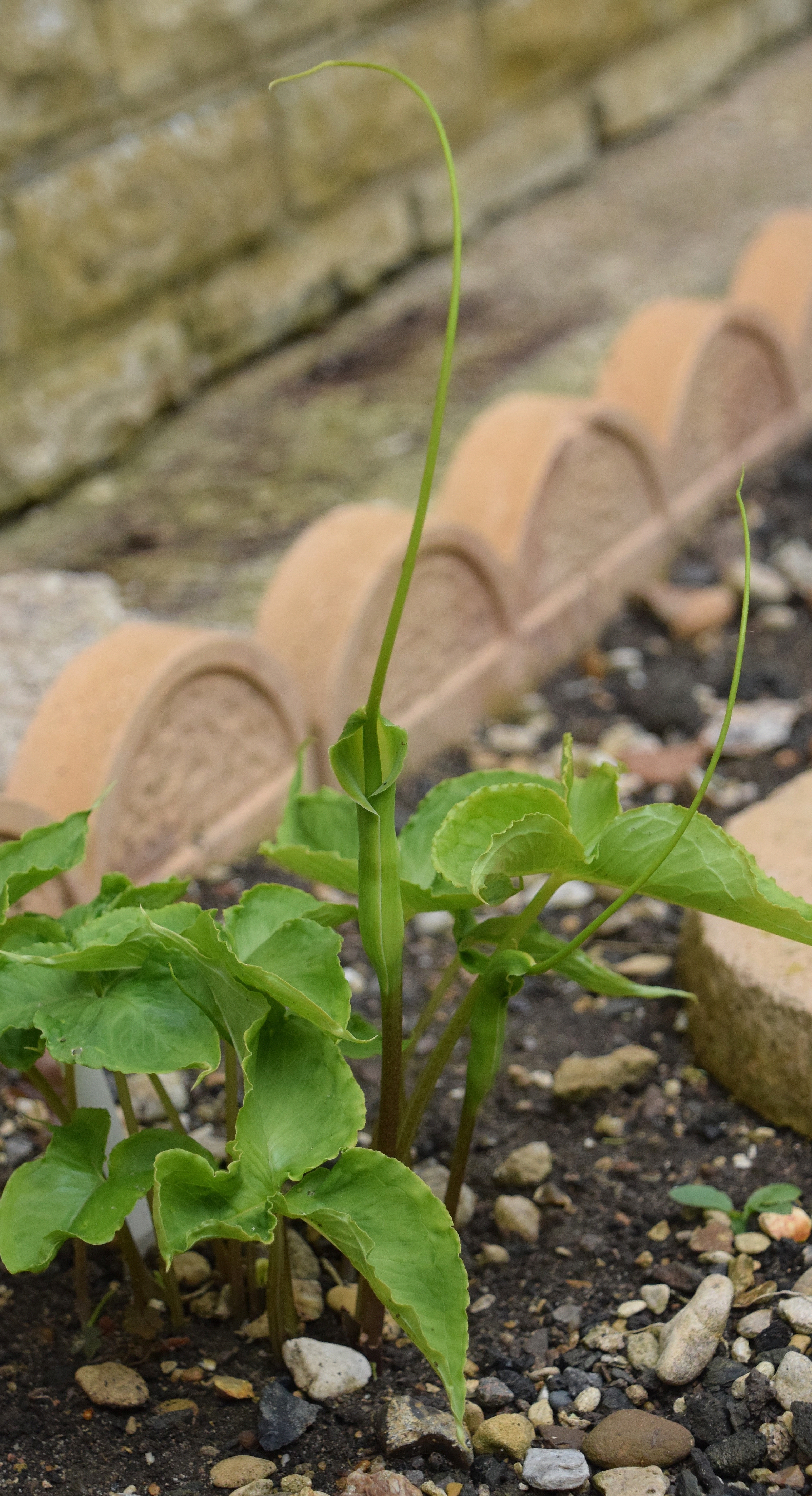
I do not do so much with Aroids these days, various of the difficult subjects I formerly attempted doggedly to bring to bloom year upon year having at length exhausted my reserves of the proverbial “Just a Little”. Neither the exceptional, prolonged frosts of winter 2022/23, nor the as notable wet one just gone have been kind to others. Of those featured herein in the past, our locally infamous Dragon Arum patch (see here) was put paid to by the first of those climactic events; while the FS2 Helicodiceros muscivorus tuber acquired with great expectation in 2020 (see here) shrunk season upon season instead before also expiring, whilst persisting as one of this journal’s top 20 most referred to subjects.
Amongst the survivors, Arisaema ringens, Arisarum proboscideum and Pinellia tripartitum (see Aroids tab) continue to thrive. Somewhere in the middle ground of all this lie two Mediterranean Arums acquired in the autumn of 2019, A concinnatum and A discoridis var syriacum. Since then their tuber stocks have multiplied greatly, producing ample foliage through each winter, but actual blooms in late spring have been a rare event. So the tantalising possibility of being thus rewarded still reminds me of my original fascination for the genus.
Arum concinnatum
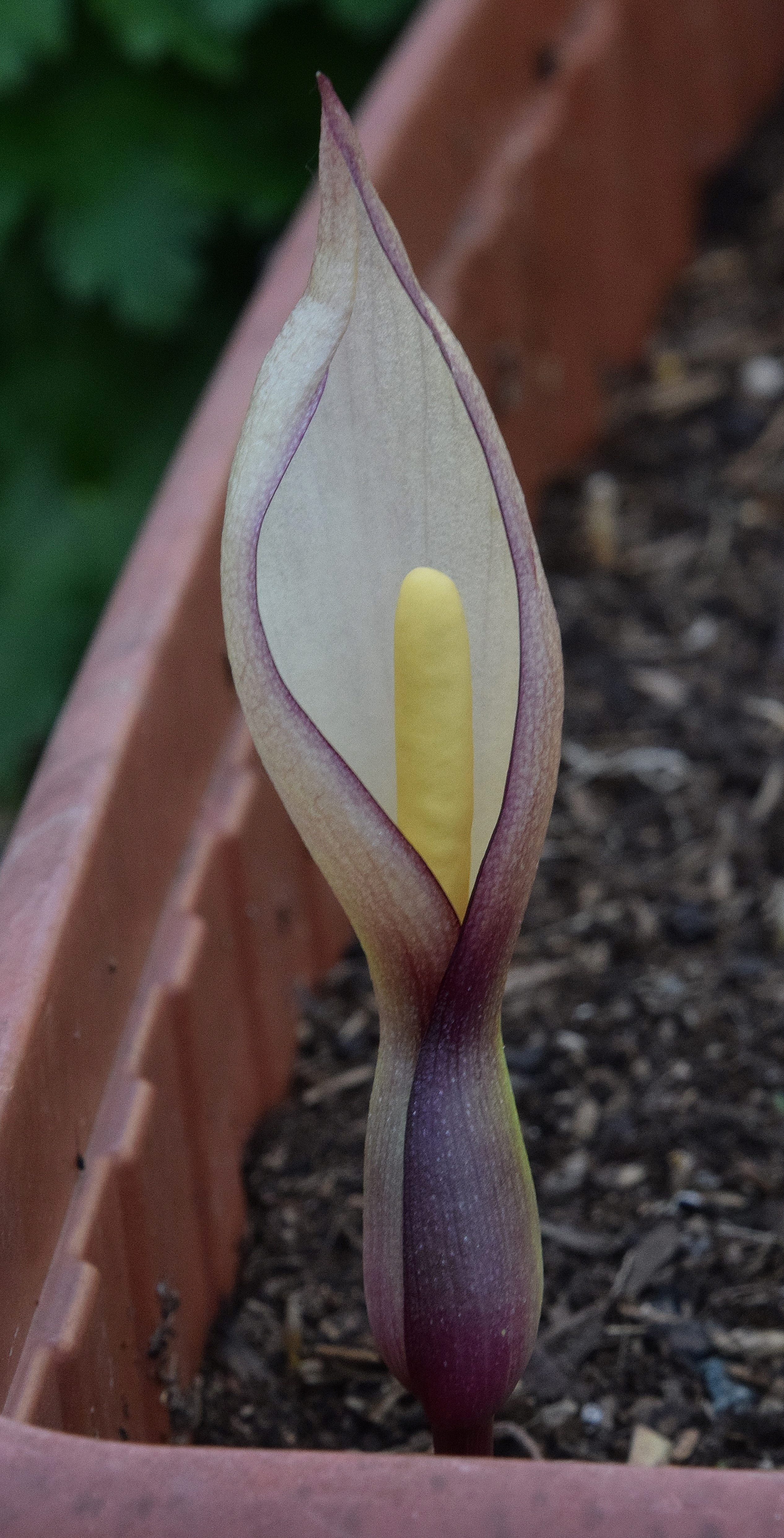
The first of those had performed just once before, in 2021. Now, on the evening of 8th I went outside to check, and what by the hitherto deep red, unopened toning I had expected to be a discoridis had announced itself as the other option. Moments like this cannot be missed since they occur so rarely and are then short-lived, so my camera was at once retrieved to capture the occasion (pictured above).
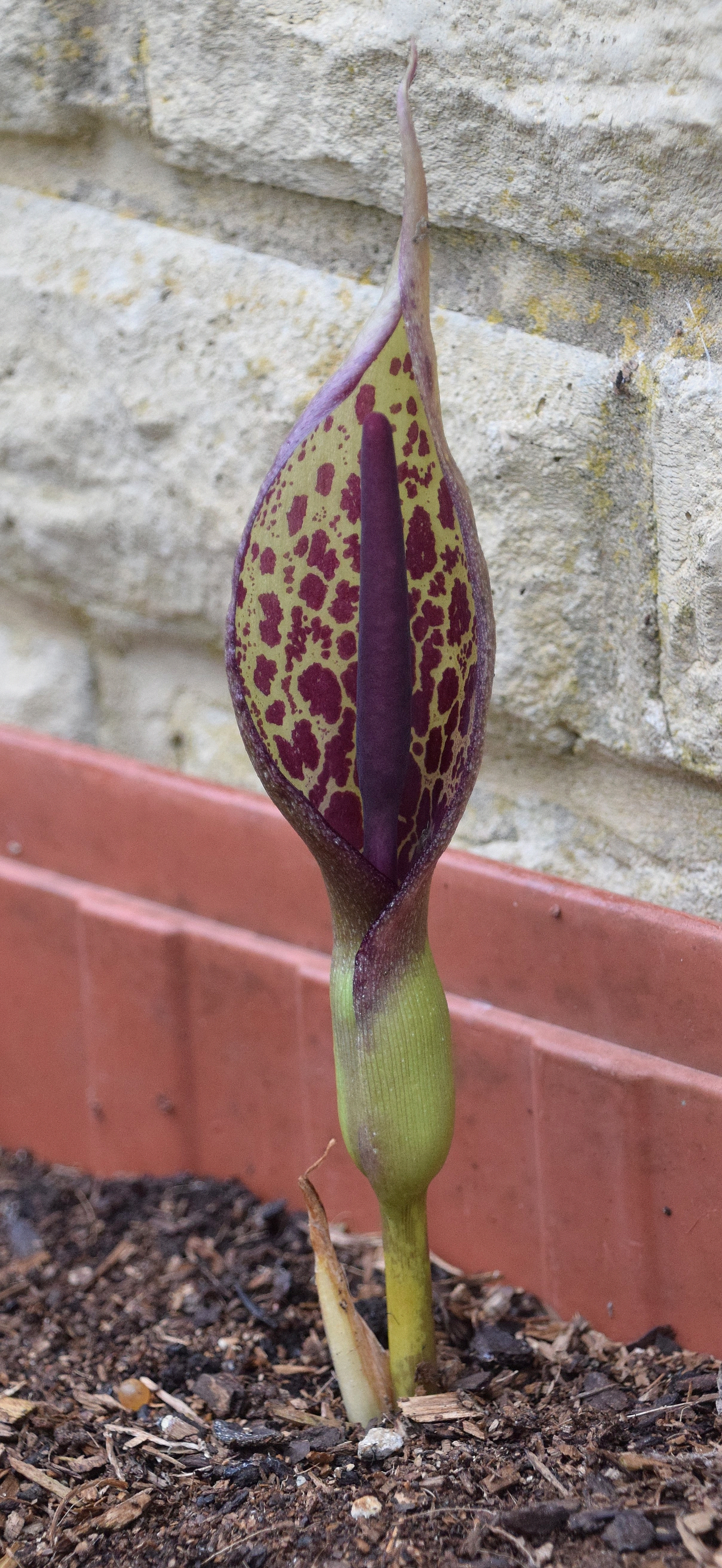
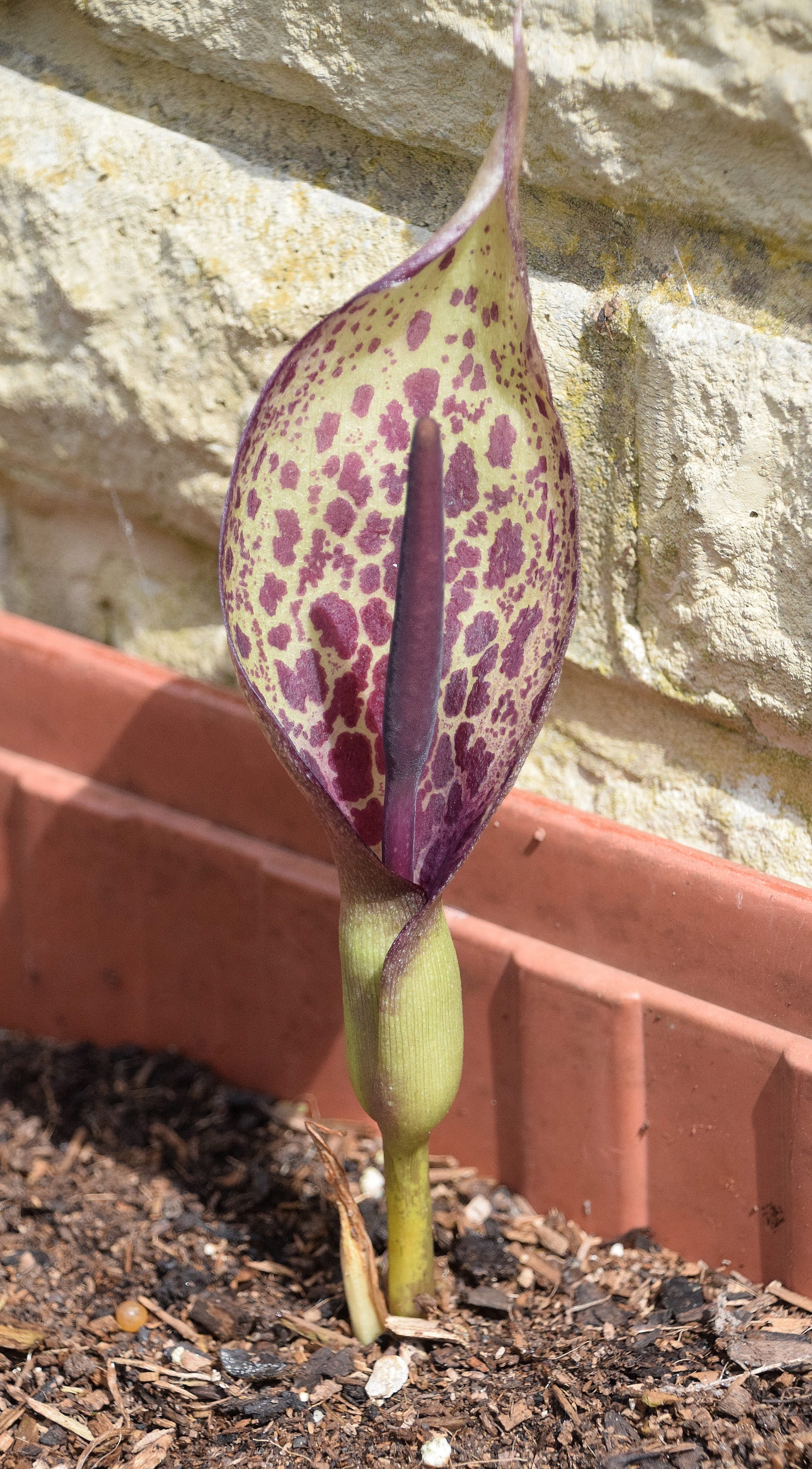
Through eight days that ensued, a second developing spathe gradually deepened in tone, to once more in the evening on 16th reveal itself as a discoridis (pictured below). Not only that but it was a stinker, the first of just three specimens to have bloomed here so far that has lived up to that reputation. Though quite diminutive by comparison with the now vanquished Dragons which once flourished before it, this dark beauty packed quite a punch for its size, as I had initially understood upon acquiring the so infrequently rewarding stock. Such odours are very short lived and so need to be appreciated upon these plants’ first announcement
Arum discoridis var syriacum
In the morning the bloom had fully opened (centre and right, above) and the smell was barely noticeable, as is normal with day two aroids. This Arum is an absolute stunner, and the latest specimen was the most strikingly marked so far. A second, developing A concinnatum spathe had yet to unfurl and that happened a day later, but it was rather under-developed and not worth recording. This episode was a reminder of both my past predilection for these weird plants and how they can still inspire.
Pinellia tripartitum
The aforementioned Pinellia tripartitum has bloomed early this year (pictured above). The alluring woodland Aroid from east Asia has flourished since its arrival here in 2018. Whilst the wet late winter and spring wiped out the top growth of the other two items and all the Arum italicum in our dedicated Aroid bed, the conditions seem to have suited this third. I will not be discarding my remaining Aroid stocks any time soon. For more information on these plants go to this journal’s Aroid tab then scroll down.
Before observing this Orchid for the first time earlier this week, I had intended to visit what is renowned as a British stronghold for them. Getting close to those Gloster plants would have involved scrabbling around a very steep slope in damp, slippery conditions, my days for doing which are now probably in decline. So wishing to make the most of the current fair weather window I stuck to plan A today.
Chappett’s Copse (GU32 1NB – SU653234 – see here), a Hants and IoW Wildlife Trust reserve near West Meon, is a remnant of ancient woodland that hosts a notable array of wild plants and fungi. From the entrance and parking area a well-defined track runs northward, along which I soon noticed Sword-leaved Helleborine on either side. Then the woodland opened into a glade that was carpeted with hundreds of them, an impressive sight indeed (pictured below). The red-listed plant is in decline and nationally scarce, now occurring in less than 20 locations, so for such a profusion to be in one place here seemed quite remarkable. This is just one of two sites with more than 1000 plants, having possibly up to 4000.
The Helleborine glade at Chappett’s Copse
The white flowers are not dissimilar to the more widespread White Helleborine (see here), though purer toned and more bell-shaped. Typically growing to around 40cm in height, Sword- or Narrow-leaved is a more stately plant, and the really noticeable difference is in the shape of the long, narrow leaves that radiate in all directions. My Gloster records (see here) had conveyed that structure of the plant, though at a certain distance and through clutter, so now I needed to do do justice to both flowers and leaves. That cause was not helped when upon arrival I found I had left my SHDC card at home, but in the event my phone proved adequate as well as capturing some habitat context in the following images.
Swortd -leaved Helleborines
I expected the viewing area to be enclosed but it is possible to walk around freely. There was ample opportunity to gain acceptable studies from well-trodden paths, without needing to go into the habitat. SWH grows in open, damp Beech (such as here) or Oak-Ash woodland on calcareous soils. It requires certain lighting conditions and being a slow growing plant from tough and congested root stock rather than tubers is sensitive to compaction of the soil. So woodland management at Chappett’s Copse to which SLH responds slowly – especially under-storey thinning, coppicing, and maintaining ridges and glades – is geared to catering carefully for those needs.
The main causes of decline elsewhere are:
Rapid clear-felling of sites leading to lush re-growth of the understory and consequent shading of individual plants
Lack of maintenance of rides and glades
Unsuitable tree planting particularly of conifers
High levels of deer browsing
Roadside populations being lost to road realignment
At Chappett’s Copse and other Hants sites, the introduction of a wood meadow mowing system, combined with careful tree removal has dramatically increased the number of flowering plants by up to 80 stems per season. Populations can then become self-sustaining requiring considerably less management in habitats that remain open. Conversely, removal of all trees could lead to increases in competitive ground flora, restricting growth. Moderate sun levels lead to greater insect visitation, and therefore higher seed set. Conversely, high sun levels may lead to burn-out and reduced flowering.
That regime which provides the required open, dappled shade was readily apparent to my untrained eye in the glade, and the whole reserve had a superbly well-managed air. Further information on all this may be found here. This visit today offered a fascinating insight into habitat creation and maintenance to benefit one of Great Britain’s most vulnerable Orchids.
This was my second new Amphibian target for the current year. I had planned to seek them out in the Norfolk Brecks given a suitable weather window, but when Ewan told me they also thrive at a location just 33 miles from home that seemed an easier option. I met him there at 9:30 am on this fair weather morning, and the objects of our intent did not disappoint.
There was long considered to be just one native British Frog, the Common variety, but this post’s subject is now generally accepted as a second (see here) that had become extinct. There have also been introductions of two other continental European species of the genus Water Frogs. This began in the early 19th century when Edible Frogs were released in the Fens, to largely die out by 1914, though there were more imports across south-east England later in the 20th century. The closely-related Marsh Frog was first introduced at Romney Marsh, Kent in 1935, since when they have been credited with penetrating other south-eastern counties.
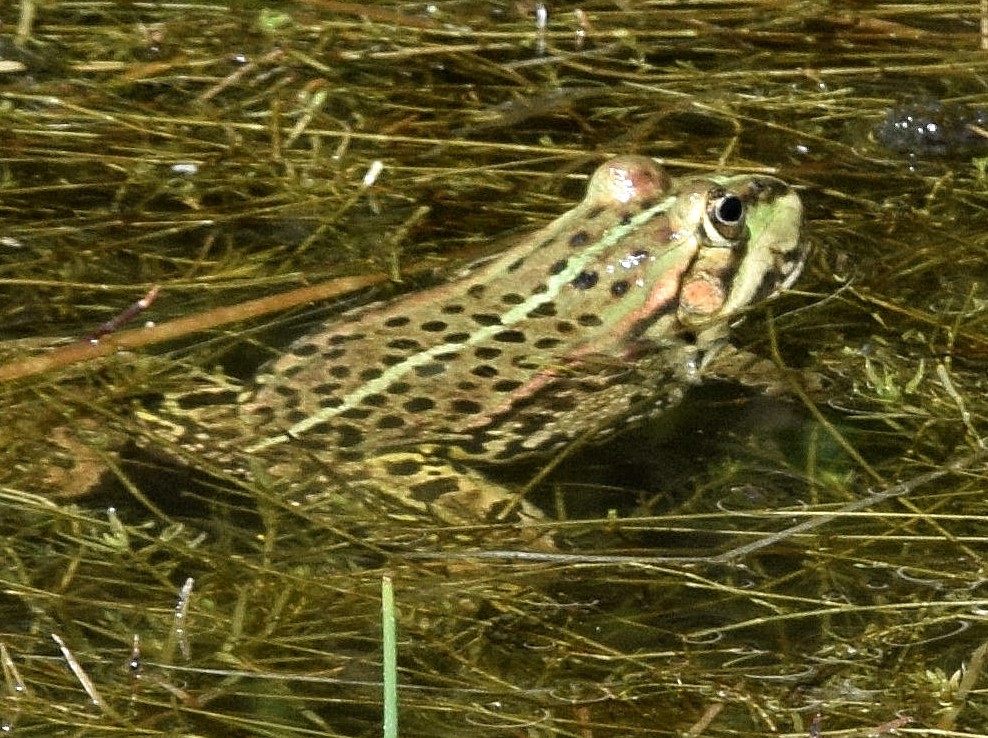
Pool Frog today
Similarly re-introduced Northern Pool Frogs had largely died out by the mid-1990s, but new East Anglian releases of stock from Sweden by ARC and partner organizations took place between 2005 and 2015. Elsewhere there have been unofficial imports of non-native, southern European Pool Frog sub-species. Exactly where the Greenham Common cluster fits in with all that I am not sure, though my research for this post suggests it derives from the latter. There is great variation in colouring and patterning so separation of different populations in the field must be nigh on impossible.
Pool Frogs are generally smaller than their mature Common counterparts and produce just 25% of the latter’s tadpole count. Spawning commences with the onset of warm weather in May, three months later than Common Frog, and Pool bask semi-submerged through sunny days as we witnessed here. Around 20 minutes after my arrival at a pond to the immediate west of the BBOWT reserve’s control tower (RG19 8DB – SU 499650), there was a sudden crescendo of croaking, but not for long and thereafter it was merely intermittent.
The different individuals we observed today (pictured above) exhibited variable green or brown ground colouring overlaid by well-defined dark spots, with a prominent pale green or yellowish stripe along the centre of their backs. Pool also have more pointed snouts and longer legs than Common Frogs. Males call by day in close-knit groups, with up to 10 within a square metre of water. Their spawn rafts are typically smaller than those of the Common Frog, individual eggs being brown above and yellowish below. There was certainly none of the breeding frenzy here that we witnessed with Common Frog two years ago (see here).
Pool Frogs have a restricted distribution within the five northern European countries where they occur as small populations, some of which are in decline. Even where they are stable, their limited distribution and numbers make them vulnerable to the impact of habitat loss, severe weather and disease. I have recorded both Marsh and Edible Frog previously abroad, and now the third of their Water or Green Frog group is a lifer, whatever the provenance of this post’s sightings today might be. The British Pool Frogs of centuries long past were the northern sub-species now re-established by ARC in the Brecks (see here), so as an unlicensed introduction the Greenham Common colony will be classed as non-native.
Top predator: swimming Grass Snake
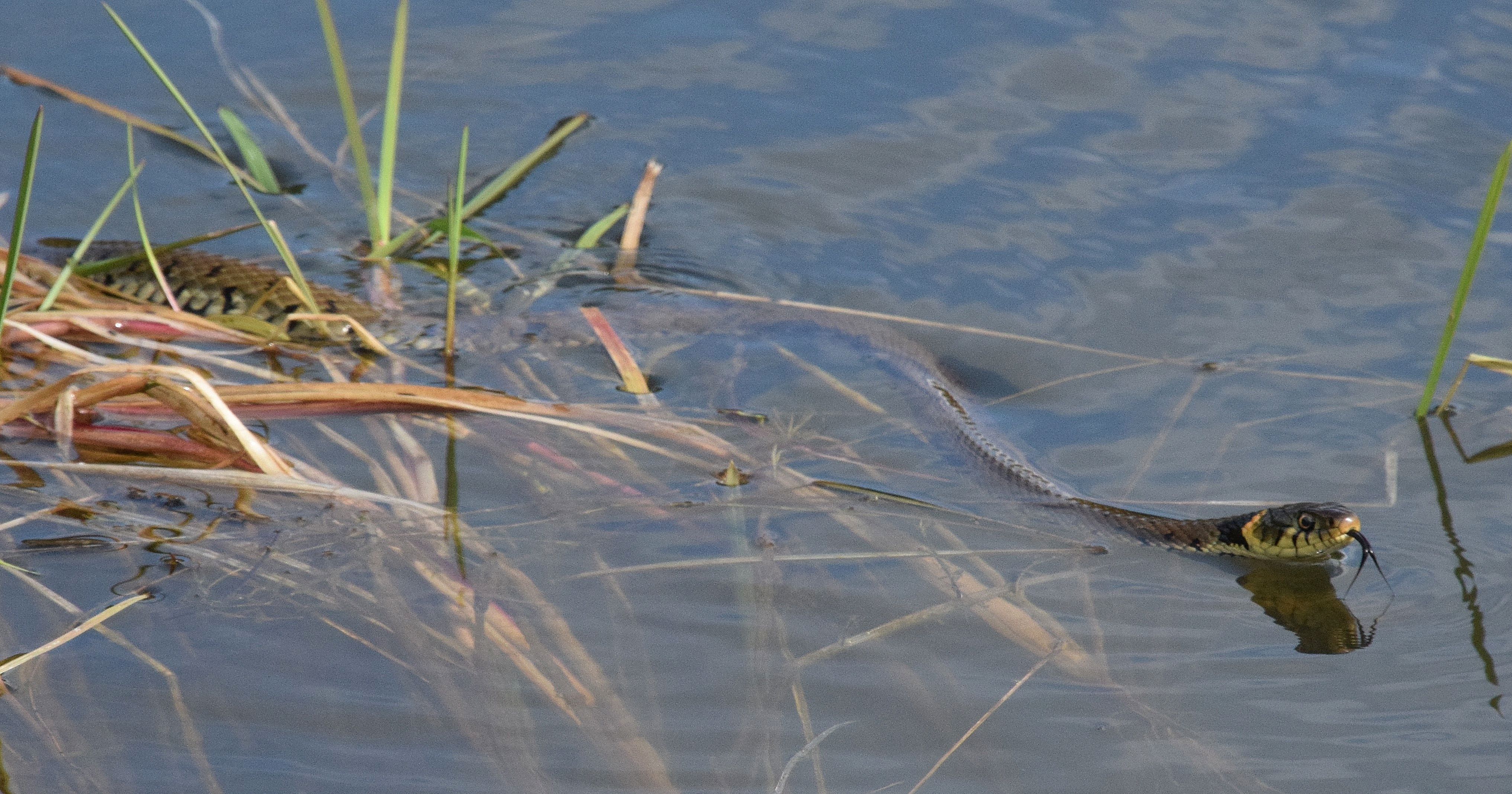
We were not the only outsiders taking an interest in the local Pool Frog resource today. The swimming Grass Snake (pictured above) is one of their main predators, though it was not an especially large one. Another is Herons that are no respecters of scarcity themselves. But nothing else disturbed the tranquility of either the observed or the observers. Fortunately we encountered no stick throwing doggy game enthusiasts on this occasion. And so the languid life forms of our scrutiny continued to laze their own time away, croaking occasionally.
Before leaving site we listened to the song of a Nightingale issuing from a reserve perimeter hedge, one of Greenham Common’s specialty birds; others being Dartford Warbler, Woodlark and Nightjar. I have also been here in the past for butterflies, Odonata and Autumn Ladies Tresses Orchids. The mystery remains as to how this latest item got here, since I can find no reference to it online (advice in comments, anyone?). And today’s experience was one more affirmation of the now naturalised former military airfield’s great biodiversity.
2024 is by all accounts a prolific season for the enigmatic Bird’s Nest Orchid, and my relative novice’s impression is that things are generally early across the board. So when, after a rather grueling working weekend, I received a Sunday evening call from Ewan offering a private viewing of this post’s first subject in a Cotswold Beech wood containing 200 or more plants, I jumped at the opportunity. My response was also to suggest finding out the details for the title’s second item, and by the time we met he had also been tipped off as to the third new species for both of us.
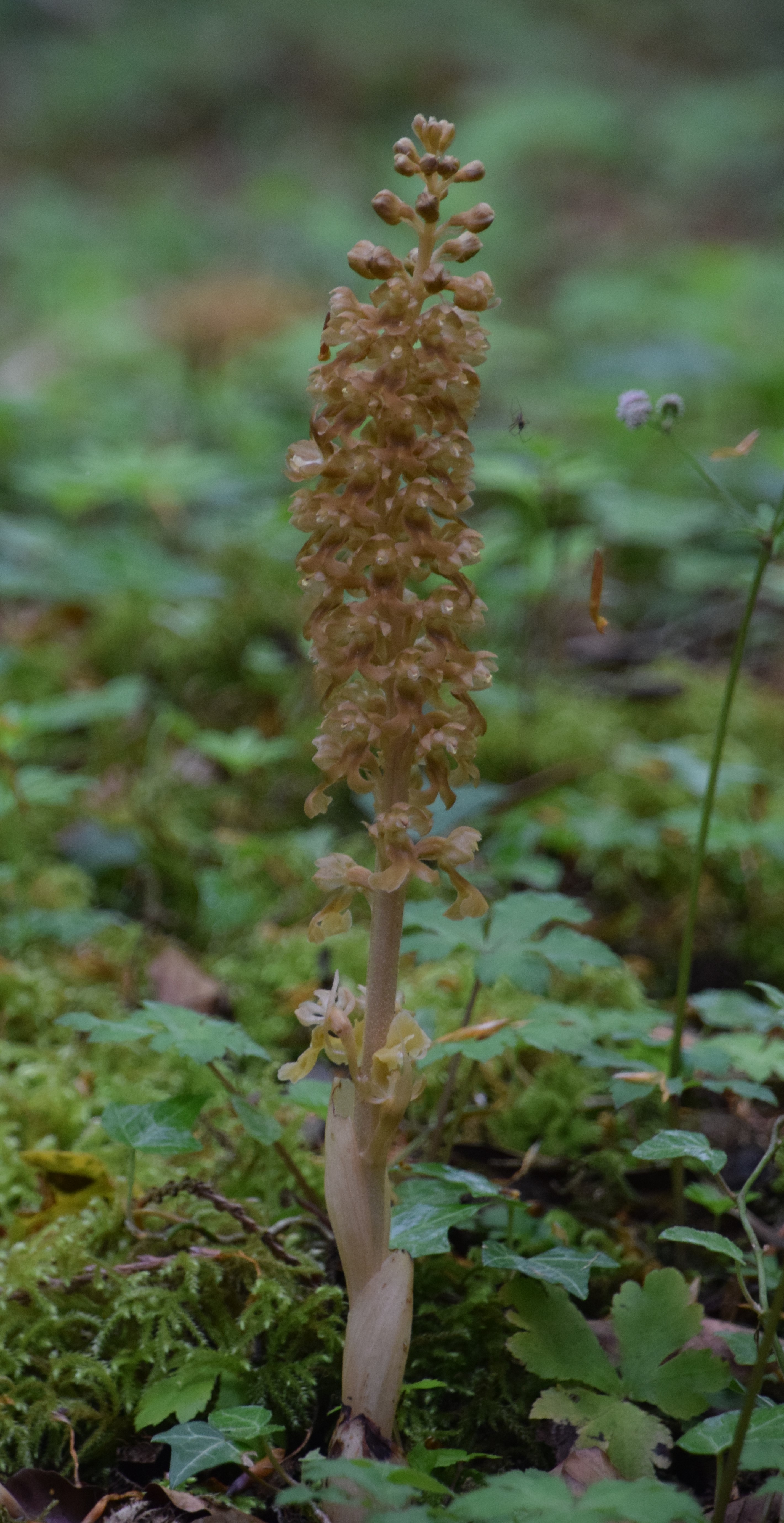
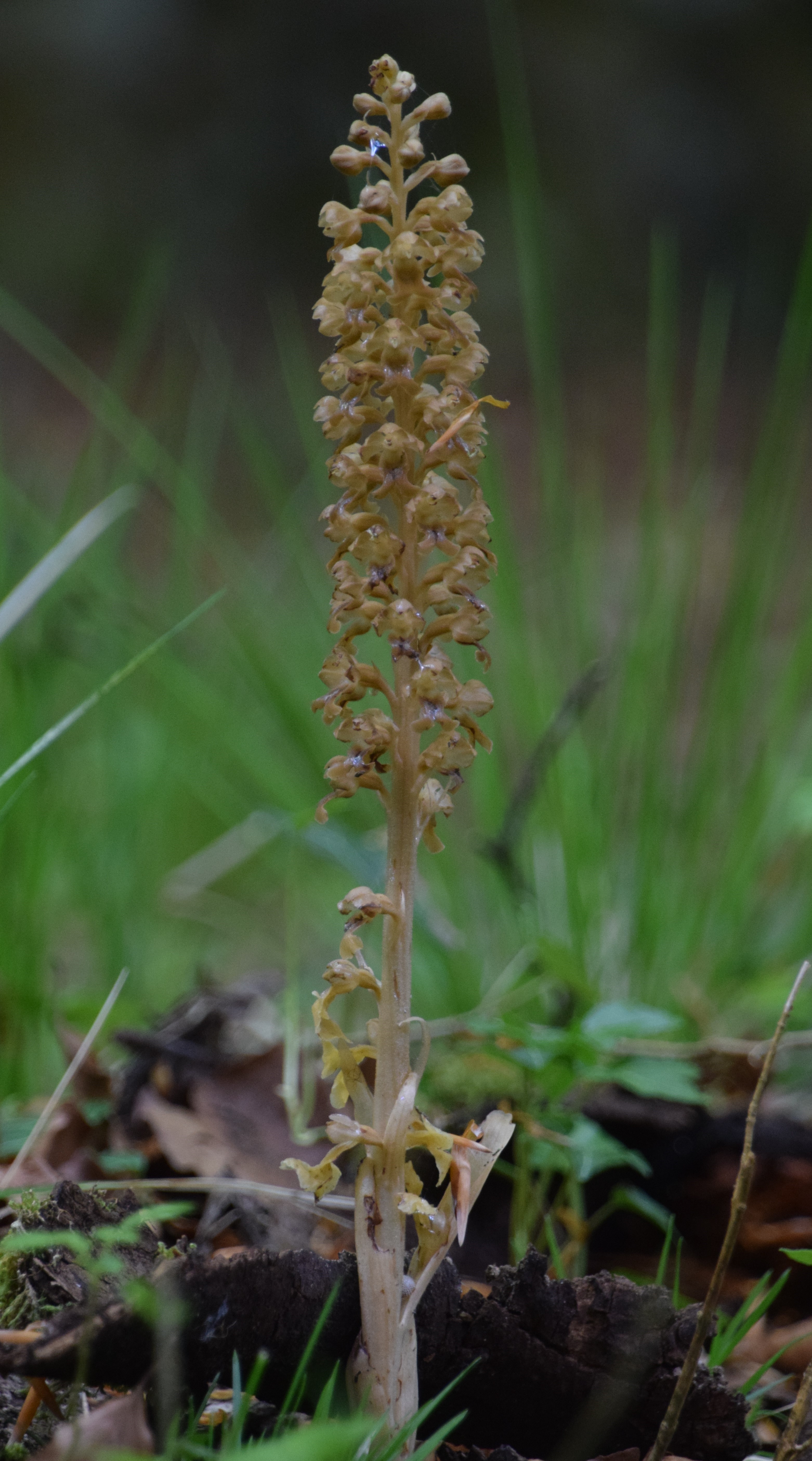
In my debut Orchid season last year, I located just two beyond their best specimens of the first of those. In the past week plentiful images have appeared in the online resources I now consult of emergent BNOs with a rather more alluring quality. At today’s site near Colesbourne, the expected profusion of Bird’s Nest Orchid was more advanced. The nearest subjects (pictured below) were at eye level on a bank above one side of a minor road, But many more stretched into the middle distance on the slope above.
Bird’s-nest Orchids
This declining Beech wood specialist is an unusual Orchid in various respects. The name comes from its tangled, nest-like root structure. It is entirely devoid of chlorophyll (green pigment), so is unable to photosynthesise (make nutrients from sunlight) like green plants, hence the subdued appearance. Instead it grows in deep shade and leaf litter, as a parasite on tree roots in partnership with buried host fungi. The honey-coloured and scented flowers are denser at the tops of the paler-toned stems (up to 40 cm), becoming more widely spaced lower down. Though uncommon and localised, as well as being classified as “near threatened”, BNO can thrive in suitable habitat such as here. This species has clearly benefited from the notably wet spring just past.
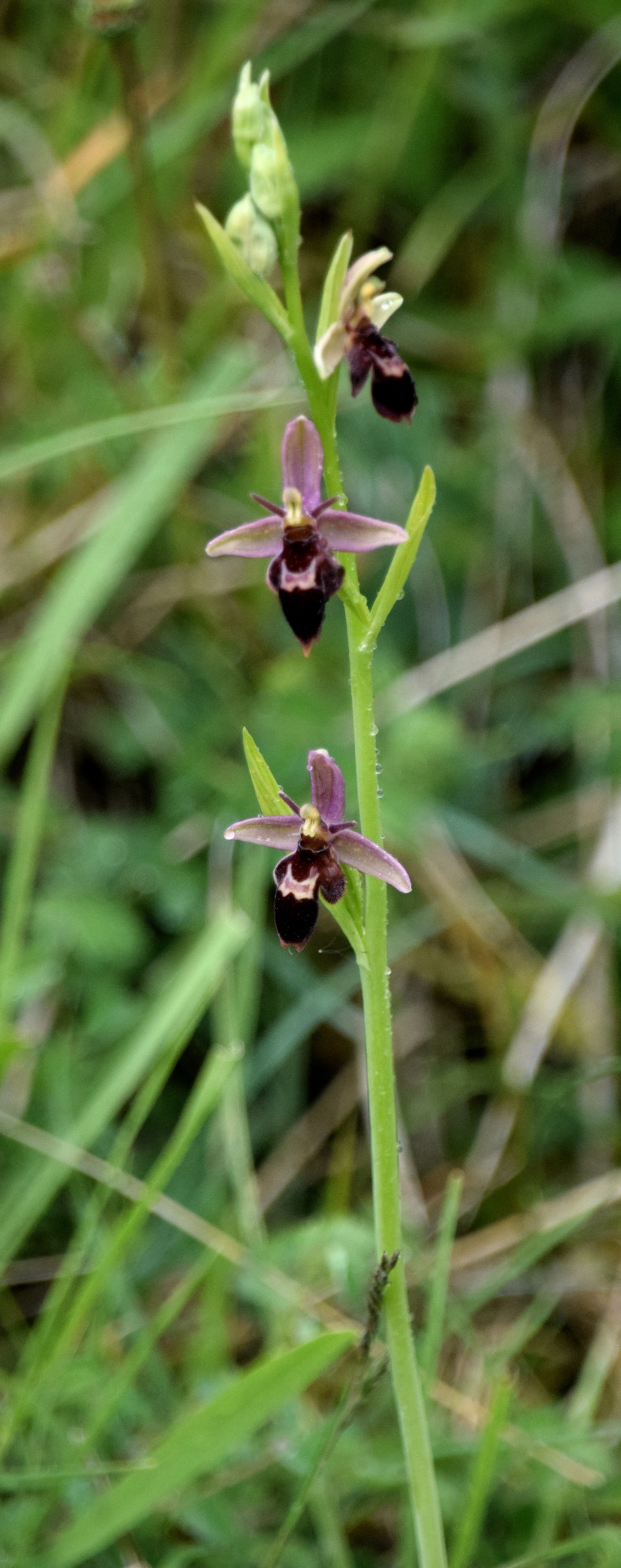
From there we moved on to a well-known site just south of Stroud to search out its famed Fly-Bee hybrids. The limestone grassland on a flat-topped spur of the Cotswold escarpment is one of just three national sites for this extreme rarity; the others being near Arundel, Sussex and at Maperton Ridge in Somerset. This hybrid first emerged from a genetic experiment in 1962 but has since occurred in the wild, though whether that is naturally or by design I cannot ascertain. The blooms (pictured below), up to 10 on a stem, combine roughly equal characteristics from each of the parent plants.
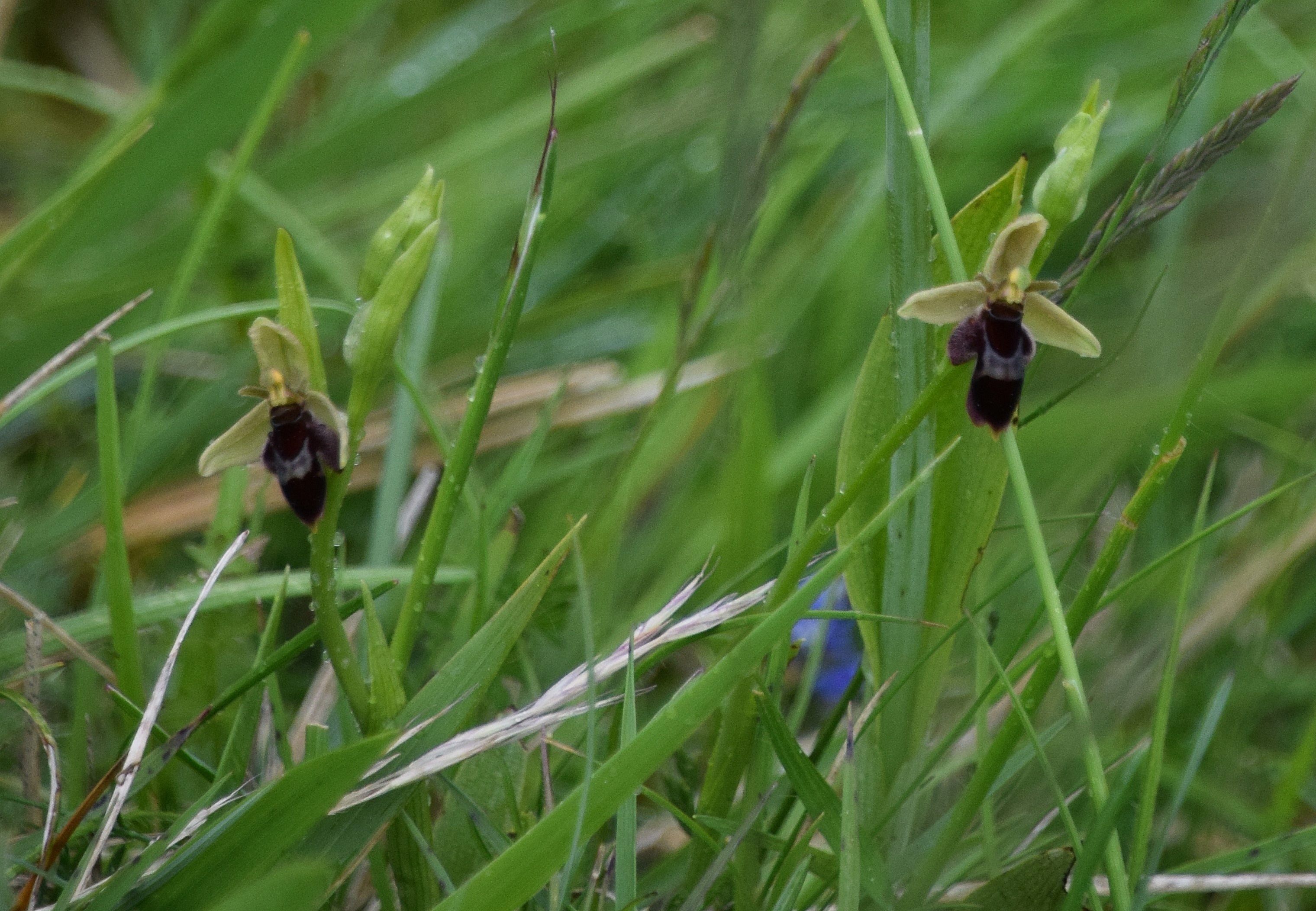
Fly-Bee hybrid Orchids (Ophrys x Pietzschill) and Fly Orchid (bottom right) for comparison
I admit to feeling a little underwhelmed by pure Fly Orchids since the flowers are so tiny, but there was something of a thrill in encountering these beautiful and all too vulnerable mutations. Here just two or possibly three plants announced themselves in a completely unprotected state, though the remoteness of the location was possibly a sufficient safeguard at least from human interference. The spot on a steep scarp face seemed ungrazed by Sheep, but I cannot vouch for Rabbits! Apparently a later season, reverse-pole Bee-Fly hybrid occurs nearby, but I doubt whether I will attempt to separate the two.
Our final stop of this Cotswold tour was another Beech wood at nearby Rodborough that is one of only two Gloster sites for Sword-leaved Helleborine. Also known as Narrow- or Long-leaved, these endangered plants now survive at around just 20 sites nationally, that scarcity being due mainly to changes in woodland management. Growing up to 50 cm tall, they are separated from White Helleborine by the long, narrow leaves (each up to 45 cm) that alternate up the stem towards a spire of white, bell-shaped flowers.
Sword-leaved HelleborineSword-leaved Helleborine
Here there were seven plants beneath a lone Holm Oak. I didn’t dare to attempt the steep slope, but could take adequate pictures (above) of the largest specimen from the minor road side. This was a very successful day, with all three targets converted. Due to the sensitivity of the sites covered herein, and through agreement with my companion’s source, I cannot include precise location detail for any of these Orchids.
The renowned location of this post is said to be one of the most visited by Orchid enthusiasts anywhere in the British Isles. This chalk hilltop above the north bank of the Oxon Thames is one of just two national sites for Monkey Orchid. In 1998 two Lady Orchids appeared amidst the historic colony, most probably due to seed being planted, then from 2006 hybrids began to flourish. Nowadays the prize is to identify pure specimens of each species amongst the proliferation of continually developing hybrid forms. In 2023 there were just two pure Lady Orchids here and around 10 of the smaller, later Monkey Orchid. These images (below) are my only past records of each, from Provence in 2016 (left) and Hartslock itself a year later (right).
Lady Orchid (archive picture)Monkey Orchid (archive picture)
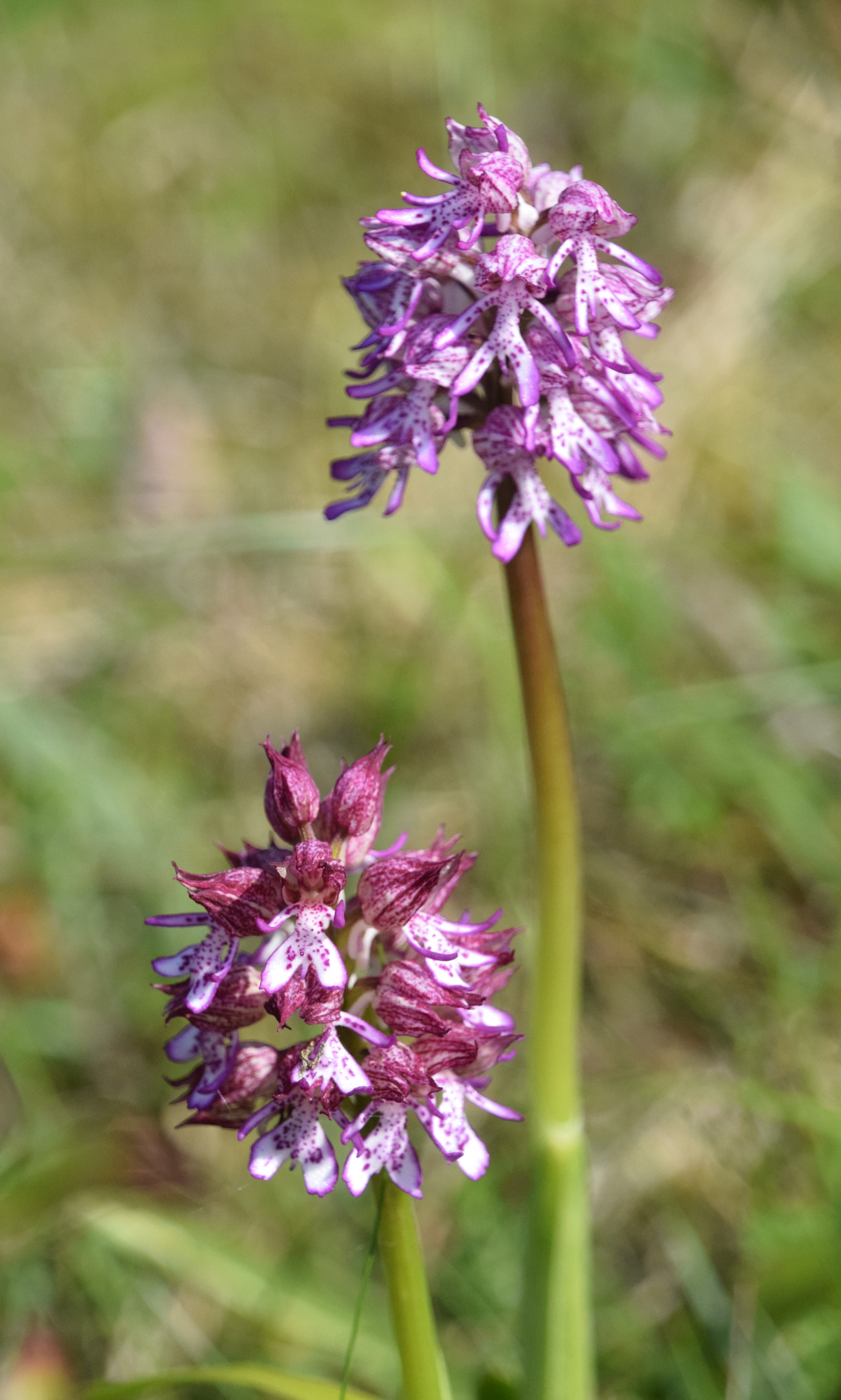
The two species readily hybridise when they coincide, as I also experienced in les Cévennes, France in May 2016 (see here). On what became a pleasant, sunny morning on 1st I walked out a mile or so from Goring-on-Thames along Gatehampton Road to the Hartslock Reserve entrance (RG8 0EP, SU 616796 – see here). There is no parking there. Continuing steeply uphill and through the right hand gate of two, upon reaching a taped-off enclosure I gasped out loud. There was a profusion of statuesque Orchids on the slope above, that by their size had clearly enjoyed recent soggy conditions. Almost all were hybrids, that occur only at this place nationally and dwarf both the pure forms..
The darker red item (left and centre) in the pictures below was the one true Lady Orchid I picked out. The right hand picture (courtesy of Ian Lewington) is from the site two years ago, for comparison. This is a distinctive and stately plant, from 30 – 80 cm tall, in which up to 200 deep red and white flowers per spike resemble a little figure wearing an old fashioned lady’s bonnet and polka-dotted ball gown. It favours short grassland on woodland edges, as at this location, and sometimes grows in open woodland. The species has now vanished from most of it’s historic British range. It is now confined to just a few sites in Kent and here.
The one or two of this rarity that remain at Hartslock do not self-pollinate and so struggle to produce more of their own kind. Some of the hybrids, also known as “Lankey Orchids” in the following sequence were more ladylike than others, but the true difference is in the colouring. That is to say the bonnets might be there but they are pink rather than wine-coloured. These plants are much larger than either of the pure forms, and some of the flower stems were very densely packed. All these subjects were close enough to record with my 300mm telefoto from outside the enclosure. There is no need to step inside, as visitors are requested not to do.
Lady x Monkey Orchids (all images)
Going into more detail now, to quote the Hartslock warden’s own web site (see here), these Lady x Monkey hybrids have the following mix of features:
the lip shape is like Monkey orchid but the legs are thicker
the hood is strongly speckled (like Lady Orchid) with a deep purple colour (like the lip colour of a Monkey Orchid). The hood of both Monkey and Military Orchids is most often very pale (almost white) with streaks of purple scattered sparsely across the surface
flowering period was 5 days after the Lady Orchids and 1 week before the bulk of the Monkeys
the hybrids are much larger and more vigorous than the normal Monkey Orchid and much closer in form to the Lady Orchid
flowers open from the bottom up as in Lady Orchid – not top down like the Monkey Orchid
foliage is lush and bushy, like the Lady Orchid but is a grey-green, like the Monkey Orchid
Hartslock is one of just three British Monkey Orchid sites, the other two also being in Kent. This distinctive plant typically grows to 15 cm, but can reach 30cm in height on sunny, south facing chalk grassland such as here or woodland edges. It is unique amongst British wild Orchids in that the flowers open and then go over from the tip of the spike downwards, giving it a rather top heavy, even untidy appearance. White-toned with lilac-rose highlights, the blooms have a long pointed hood and suggest the straggly arms, legs and tail of monkeys (pictured below, right). Depending upon the angle the whole is viewed from, as in this post’s lead picture, there is also the suggestion of faces peering out from within.
Monkey OrchidMonkey OrchidMonkey Orchid and friendHybrid Monkey Orchid (going over)Monkey x Lady Orchid
I returned here to look for them on 7th, by when settled fair weather had arrived at last. One emergent plant noted six days earlier, right at the top of the slope near a gate into the next field, now confirmed itself as a Monkey Orchid (pictured above, top row). A second specimen (above, centre) within the main profusion of hybrids was already going over from the top down, this being a short-lived species whose flowers open in quicker succession than many other Orchids. It and a third candidate (right) suggested themselves as being in an early phase of hybridisation, as indicated by their monkeys’ thicker legs. There was no sign of the lone Lady Orchid from six days previously on this re-visit.
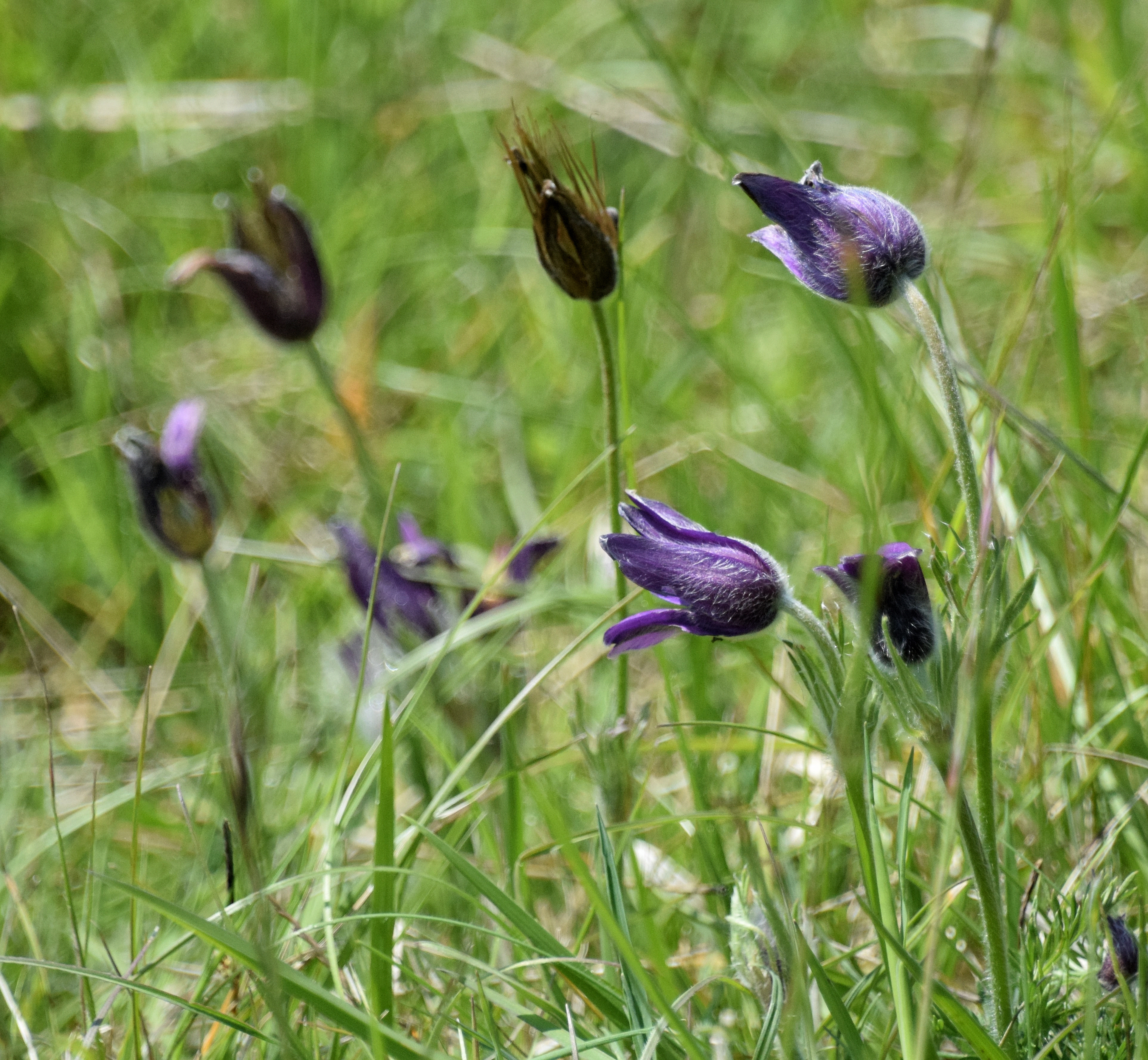
Another notable scarce plant at Hartslock is Pasque Flower (pictured above), that are concentrated in the field beyond the Orchid slope. Though cultivated forms are freely available through the horticultural trade, the wild original is now restricted to undisturbed chalk grassland at just a handful of sites in the Chilterns, Cotswolds, East Anglia and Lincolnshire. The velvety-purple blooms of these low growing plants rise above a cushion of feathery grey-green leaves amongst the short sward. Their open, upward-facing bells contain a contrasting golden-yellow stamen-filled centre. When I reached them they disappointed as being April flowering they had mostly gone over. These were a quite stimulating two days and I feel glad to have added another of Oxon’s botanical treasures to this journal.
I have heard of this post’s subject all my life. It was listed in the first books on British wildlife I read as a child, as in all such guides ever since; but how does one go about actually setting eyes upon Natterjack Toad? Great Britain’s scarcest amphibian is said to occur currently at up to 60 sites, mostly coastal sand dune systems, grazing marshes and sandy heaths; many of which are not generally accessible. It is largely nocturnal, concealing itself in shallow burrows through the daylight hours. Spawning occurs in April, when starting at dusk males maintain a night-long rasping chorus to attract females, and only the loudest succeed. And as a highly protected species, disturbing them in any way and unlicensed picture taking are illegal.
Given all those constraints, the only reliable way of connecting is by joining a licensed, guided walk. These are at present offered by Cheshire Wildlife Trust on the Dee Estuary (see here), the National Trust at this post’s location (here) and the RSPB at it’s Mersehead reserve in Dumfries and Galloway (here). All are expertly led, and the responsible use of torches and cameras is permitted. Of those north-western options the second most suited my own current part-time working schedule. It would be a long way to go, but this is something that had to be done if I am to record the remaining difficult Herpetora amongst other national wildlife I still need.
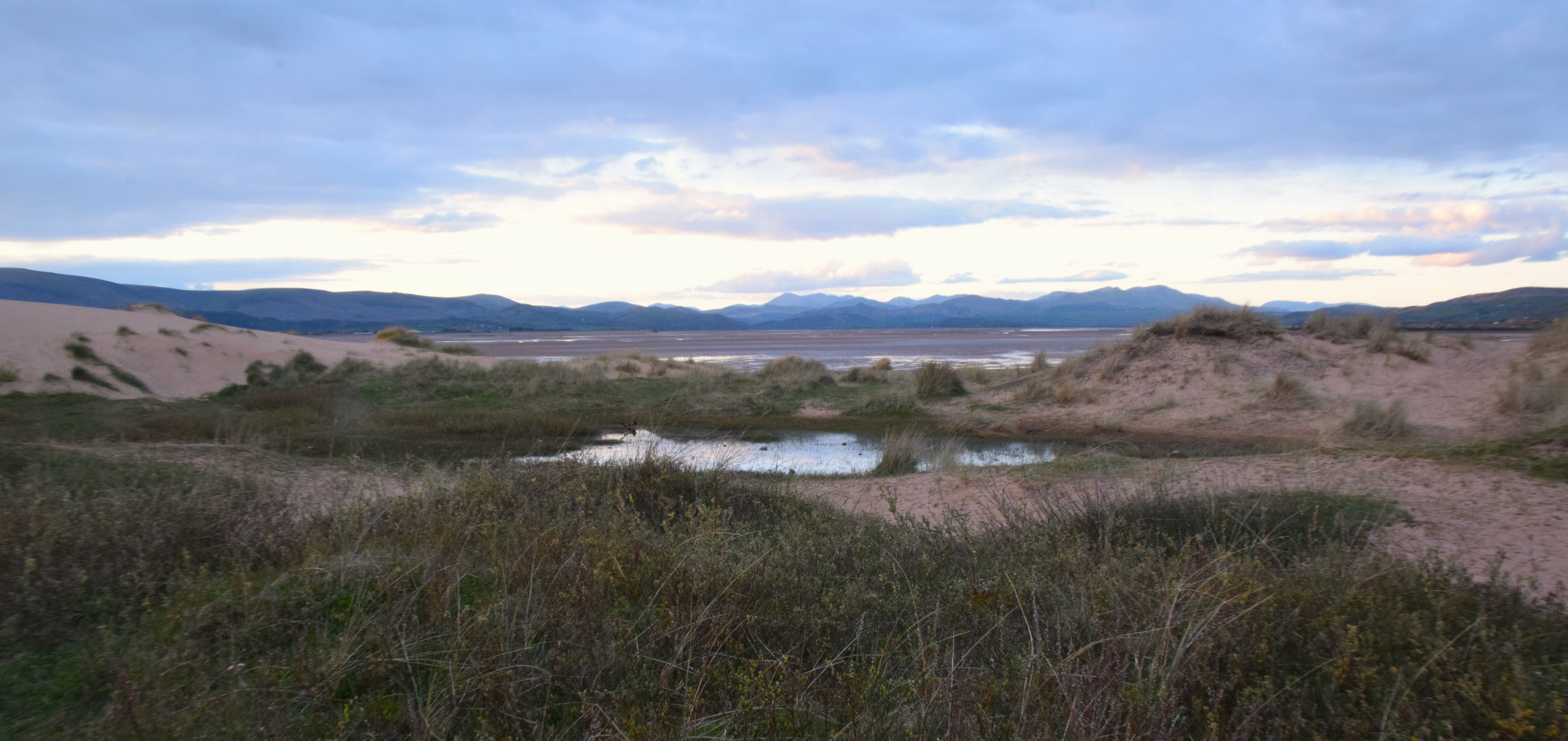
My locale of choice supports one fifth of the British Natterjack population at five different sites on Cumbria’s Duddon estuary. Sandscale Haws NNR (LA14 4QJ – SD 200756 see here) is an outstanding sand dune habitat (pictured above) containing around 40 shallow, seasonal breeding pools. In the event the logistics and expense of this exercise proved to be favourable. With searching online the return rail fare from Banbury to Lancaster was a mere £70 (surely less than the petrol cost), and from there an hourly local service runs to Barrow. Parking in Banbury, a £50 room to put my head down in overnight, and a local taxi fulfilled the trip agenda for less than £175. What was there not to like?
Hence the appointed evening found me striding out from Dalton-in-Furness railway station, around three miles to my destination. By some time after 7:30 pm a dozen participants had gathered to be briefed by our NT ranger hosts. Then we were led out into the 3000 year old dune system, and its dynamics were explained to us. For myself, in the failing light the setting seemed both that primeval and evocative in equal measure, and I felt glad to have taken the opportunity to be here. This was an interesting experience.
At what was cited as a likely dune slack pool we were shown spawn and tiny black tadpoles. Spawn is laid in 1 – 2 metre long strings, with just one row of eggs per string. Then we waited for the fabled Natterjack chorus to commence … and waited longer … but it didn’t arise. There was just the sound of drumming Snipe and occasional quacks of Mallard, and I began to feel disheartened. Males can be quite mobile between different pools, depending on where the females might go. So the decision was taken to check two other locations, and on we all tramped, torches in hand in the dark.
On the way to the first stop a faint though intermittent chorus became audible from the pool ahead, and one of the rangers went in to look things over. She emerged again a little further on to say she had found one male toad, and in we all went. Scanning again by flashlight our guide relocated it, which seemed quite amazing to me, though she was well practiced. Proof perhaps of the likely futility of searching for such things unaided. I was one of the first to reach the specimen in question.
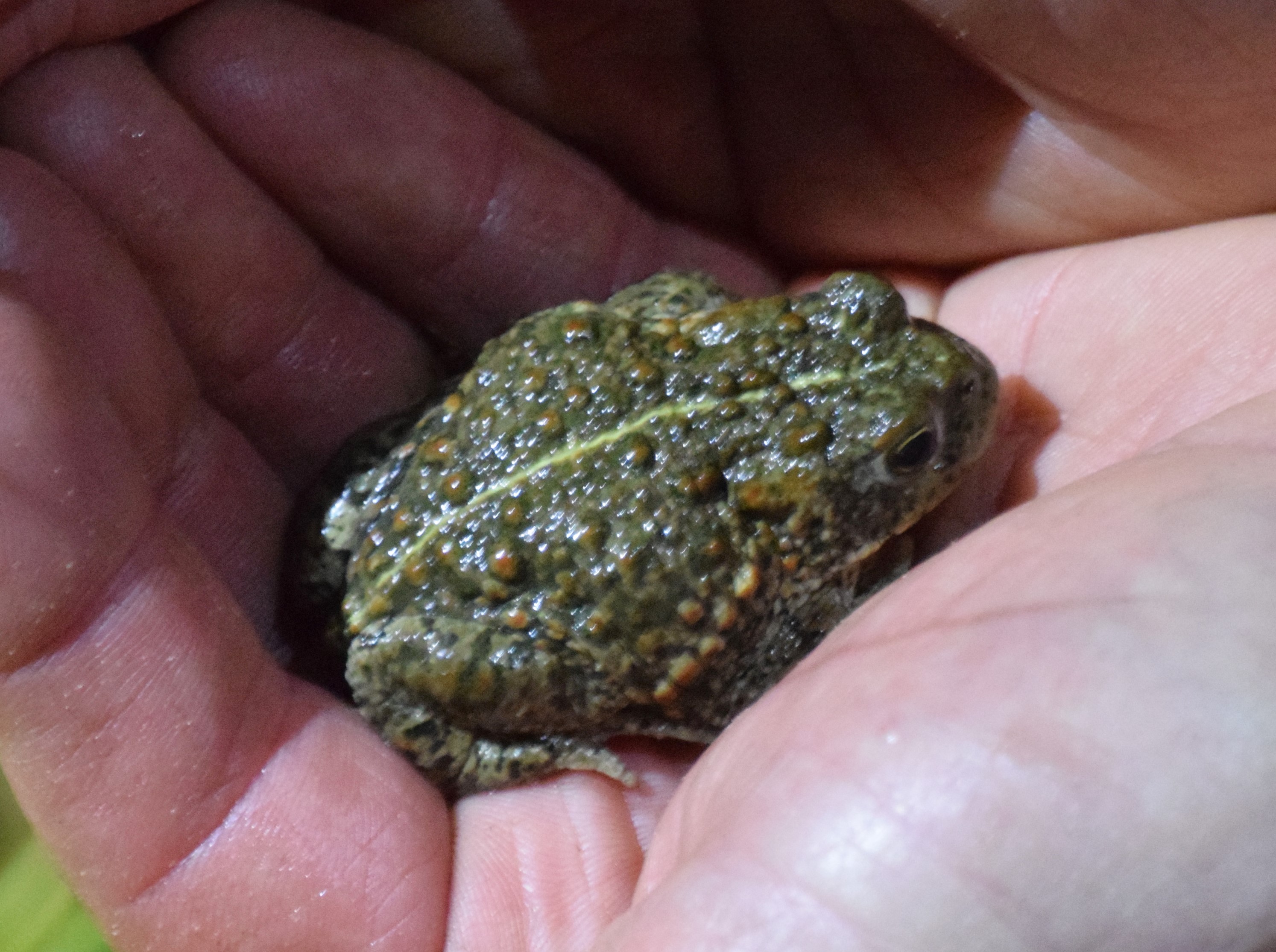
Natterjack Toad (male)
This male Natterjack Toad (pictured above) seemed small to me but was apparently an adult. They are indeed more diminutive and shorter-limbed than Common Toads, normally around 6-8 cm in length. There is a prominent bright yellow stripe down the centre of the back, and males have a bluish or purple throat. Colouring is otherwise brownish, grey or olive-green, and the skin is covered in red and yellow warts. The lead ranger then lifted our quest from the pool edge to present it to the group. Both of our hosts are licensed to do that. It is strictly forbidden for the general public to handle or otherwise disturb these creatures in any way, and visitors to Sandscale Haws are requested not to enter the pools.
The sighting gained was mission accomplished. We next moved on to the nearest pool to the reserve entrance (pictured above), from within which a louder chorus was rising. When we got there it stopped and we could not locate any more subjects. Things it seemed were quite fickle on this evening of my intent. It was now 10:15 pm and mindful of the booked taxi to take me into Barrow for the night, I left the group at this point. Two other torches had also been searching out the collective quest from other points around the pool.
The most notable British Natterjack populations now range from Merseyside through the Cumbrian coast to the Solway Firth, but this amphibian was formerly resident on Surrey and Hampshire heaths, and also around the coast of East Anglia. In each of those southern locations very few colonies now remain, though re-introduction schemes are in progress. My original plan had focused on Norfolk, within which Winterton Dunes NNR (TG496201) held a major colony, but no breeding has occurred since 2018. Just two individuals were recorded there in 2022 and none at all in 2023. At NWT Holme Dunes (PE36 6LQ – TF714449), where they were introduced in the 1970s, the local chorus is said to be audible from the sea wall at Thornham harbour; but there is no guided access. That left the inland site of Syderstone Common (PE31 8SE – TF834318 – see here) near King’s Lynn, but when the time came the nocturnal task seemed just too daunting to attempt alone.
The eventual longer-range exercise I opted for, described herein was far more difficult even than I had imagined. I am a little disappointed the occasion yielded just a single sighting, and more so with the chorus itself. Having read in advance that it starts at dusk and continues all night, being audible up to 2 km away, it actually began much later at around 9:30 pm, seeming fainter and sporadic. But hey, I have now done Natterjacks and a lifetime’s wildlife ambition has been realised.
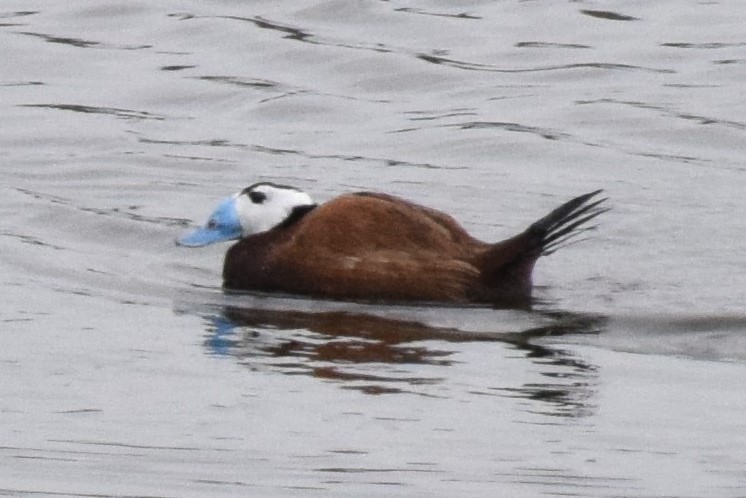
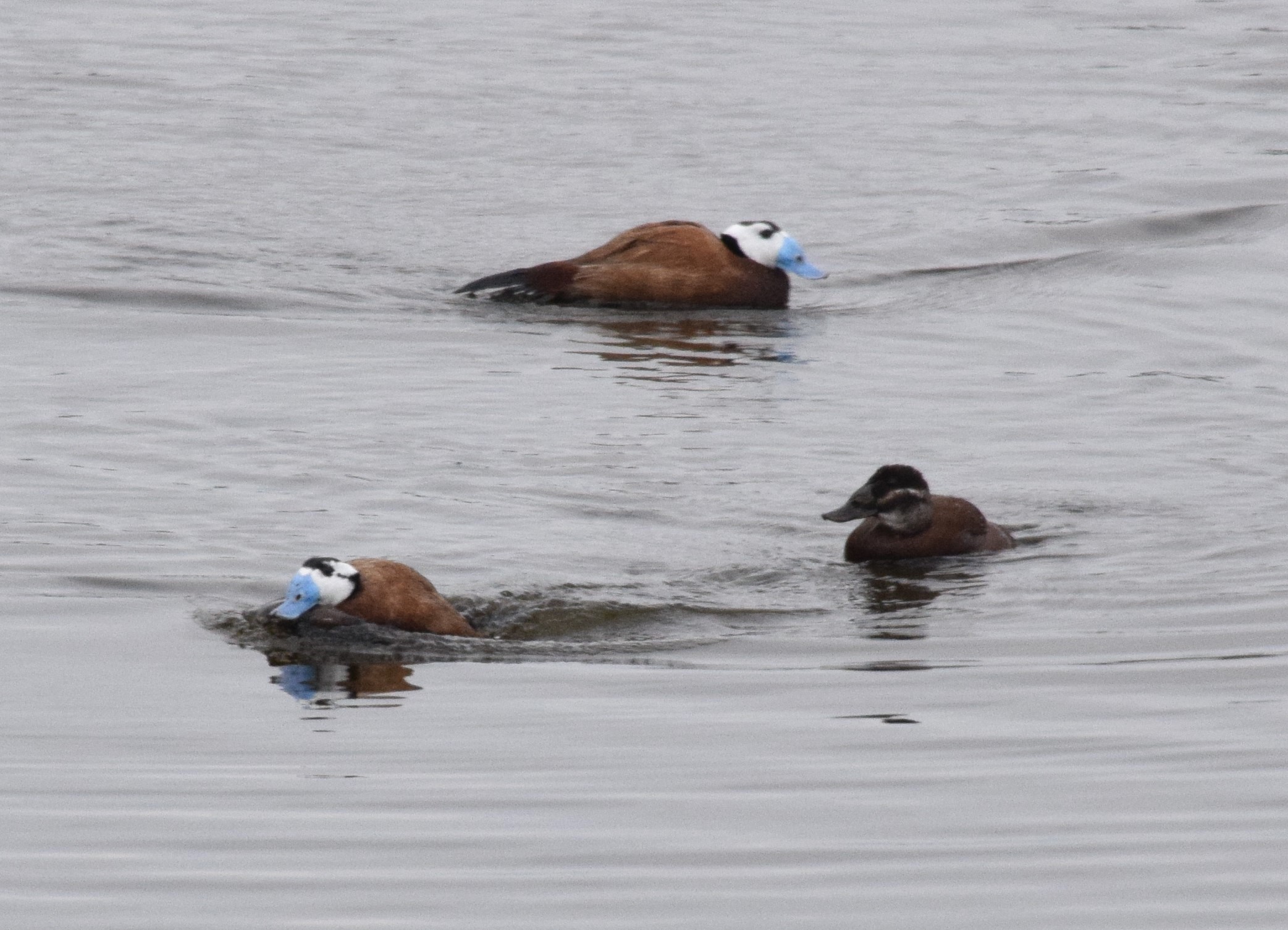
The reserve of this post is one of the best locations in Spain for observing the endangered (BirdLife International 2004) White-headed Duck. I had recorded just three of these previously, two females in Turkey (July 2019) and a lone drake, briefly elsewhere in Spain (Sep 2022). For this first foreign trip of 2024, gaining a better experience of the strange looking Stifftail was thus the top birding priority.
Drake White-headed Duck
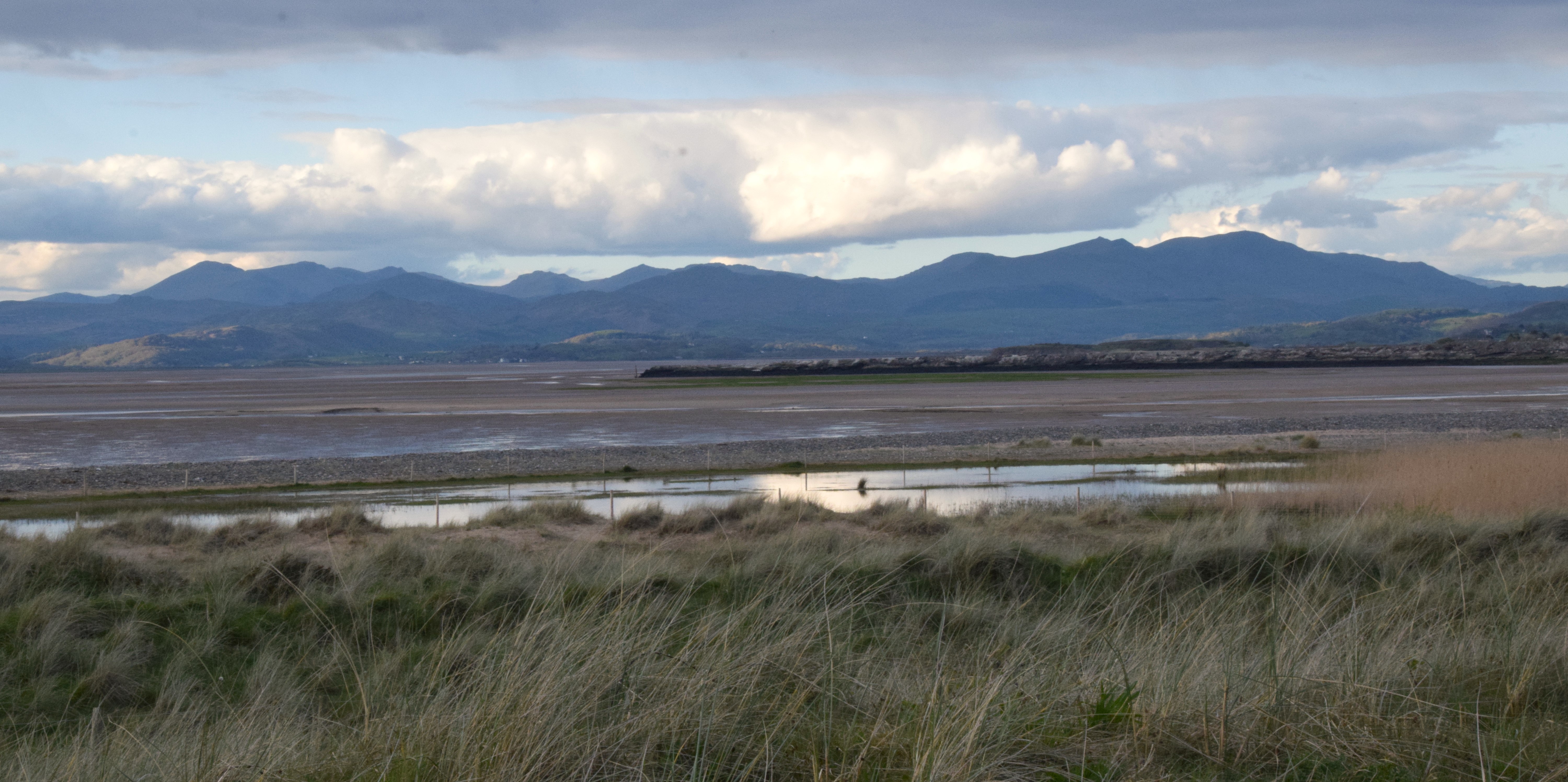
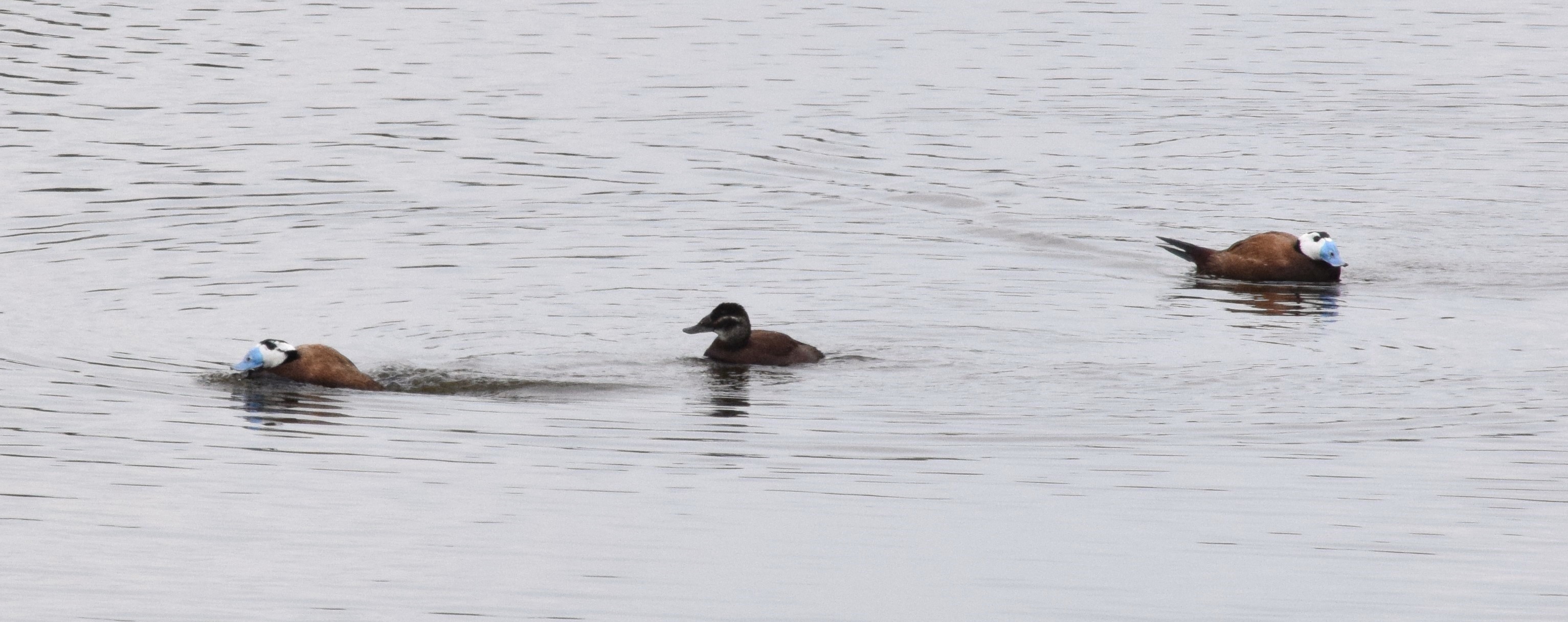
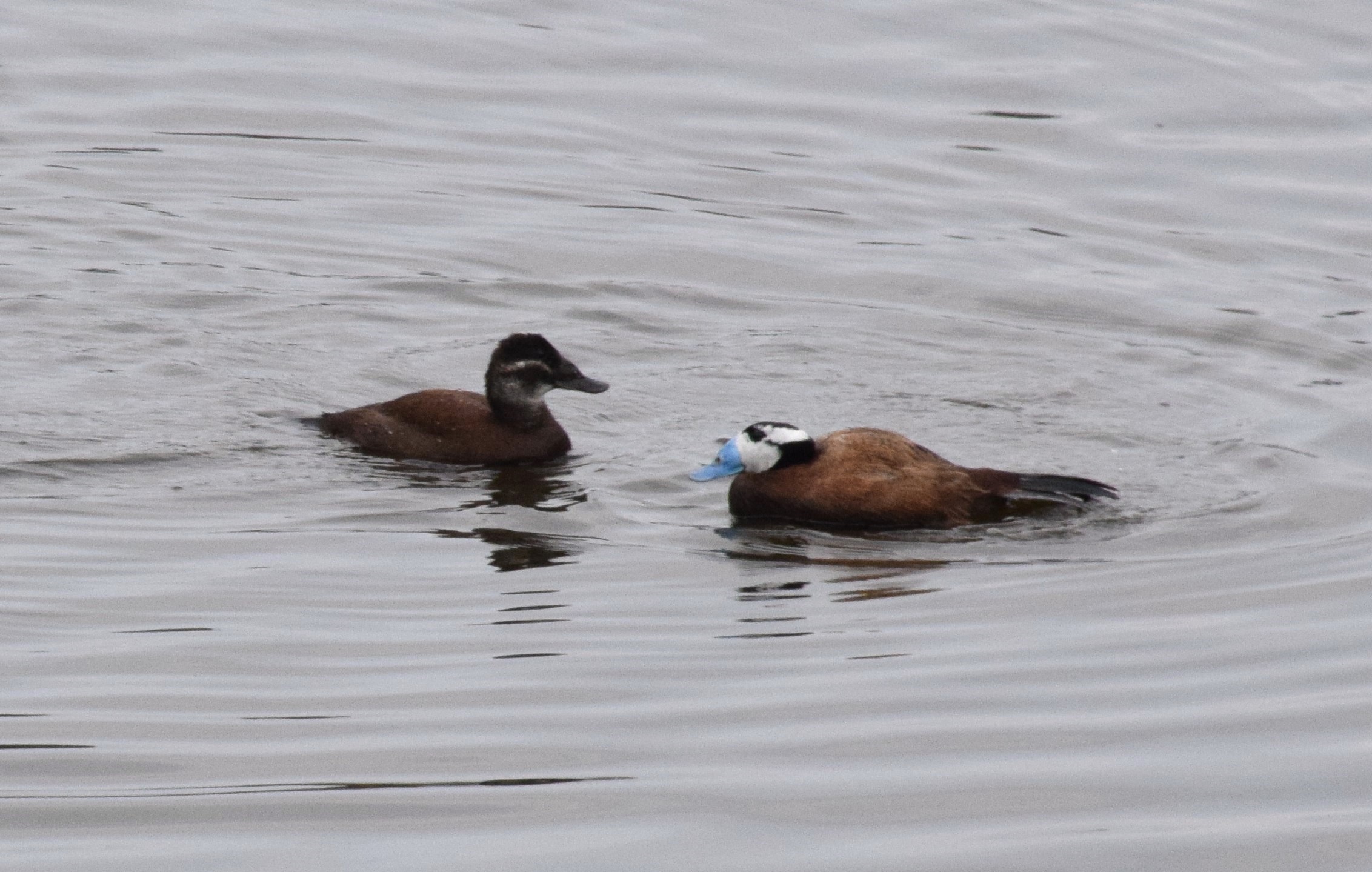
There are three lagoons, all overlooked by viewing screens at this major wetland that lies just south of the city of Málaga. The best for birding, especially in passage seasons is Laguna Grande, at which on the morning of 21st I was told several of my quest were showing on the smaller Laguna Escondida a little to the north. When I got there a female was positioned fairly close to the screen, then I picked out three drake White-headed Duck in bright light at the far end of the lagoon. These moved gradually down towards the female and all became attentive upon her, though on receiving no encouragement drifted away again. I had thus connected at just the right time for the picture opportunity that follows. A day later on 22nd I counted seven drakes at the far end of the same lagoon.
White-headed Ducks
WHD has a fragmented distribution, with small, resident clusters in Spain, Algeria and Tunisia; and a larger, mainly migratory population in the eastern Mediterranean and Asia. By the 1970s, the Spanish contingent was close to extinction due to habitat destruction and degradation, and particularly hunting. In1977 just 22 individuals remained at a single site in Córdoba province. Then from 1979, crucially following the prohibition of hunting in WHD’s Andalucían strongholds, a highly successful conservation programme was initiated. Other significant measures included removal of introduced fish, control of pollution and sedimentation, and regeneration of fringing vegetation.
Hence WHD’s presence began to recover, and the species gradually expanded into the adjoining Andalucían provinces of Sevilla, Cádiz and Huelva. By 1988, numbers exceeded 400 birds, and breeding spread further into the provinces of Almería and Toledo. Then with effective protection from illegal hunting the chief threat to WHD’s long-term survival was deemed to be hybridization with introduced north American Ruddy Duck.
It was the British feral Ruddy Duck population’s predilection for steaming down here on lads’ weekends, to convert the newly available White-headed females after their own fashion, that prompted the highly controversial culling of the former nationally. To put things more accurately, Ruddy Duck began to appear in Spain and hybridize with the closely related native Stifftail in the early 1990s. At that time the British population, descended from birds first introduced in the 1940s, was expanding rapidly to peak at around 6000 in the early noughties.
EU research supported by the UK and Dutch governments deemed it necessary to eradicate the alien to ensure WHD’s survival as a distinct species in Europe (see here). In Great Britain, where most of the former occurred, that process was 95% completed by 2010. France followed suit and very few Ruddy Duck now remain in Belgium and Holland too. On 1 January 2015 EU Invasive Alien Species (IAS) regulation 1143/214 came into force whereby Ruddy Duck cannot be imported, kept, bred, transported, sold or exchanged, allowed to reproduce, or released into the environment in Europe.
This remains a very emotive issue amongst British birders. I myself am not a great IAS advocate and prefer not to judge. Spanish White-headed Duck numbers have continued to grow to around 2500. In its home range of north America Ruddy Duck maintains a stable population of around half a million birds, compared with 10,000 White-headed worldwide.
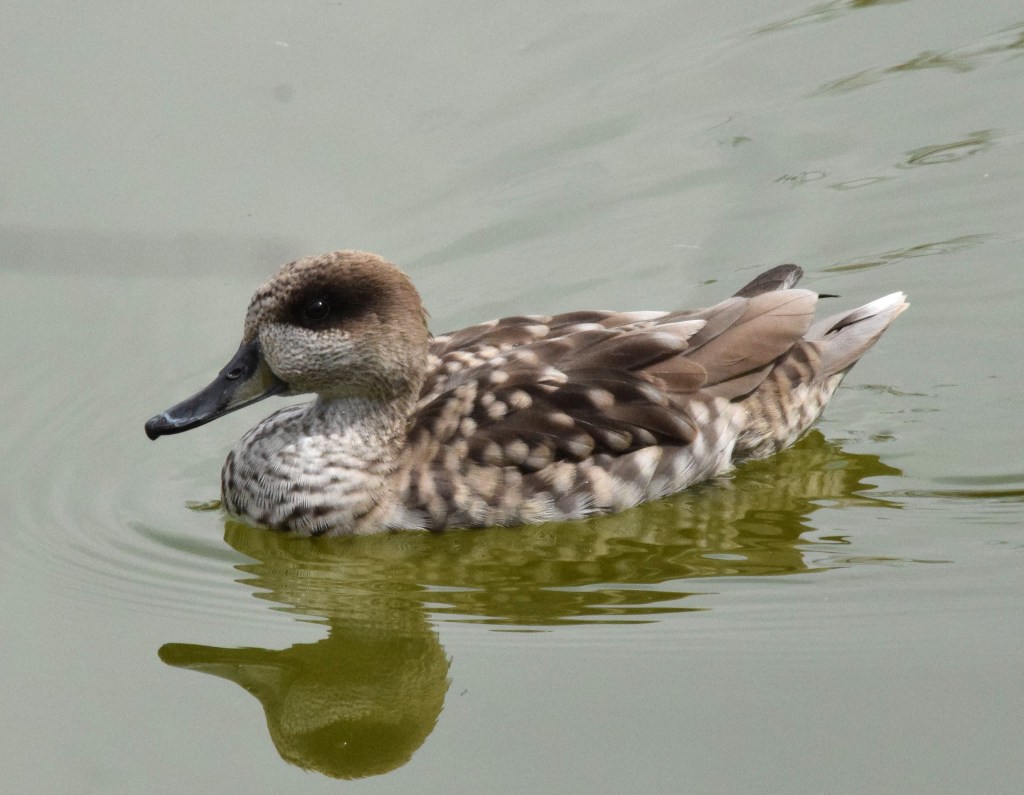
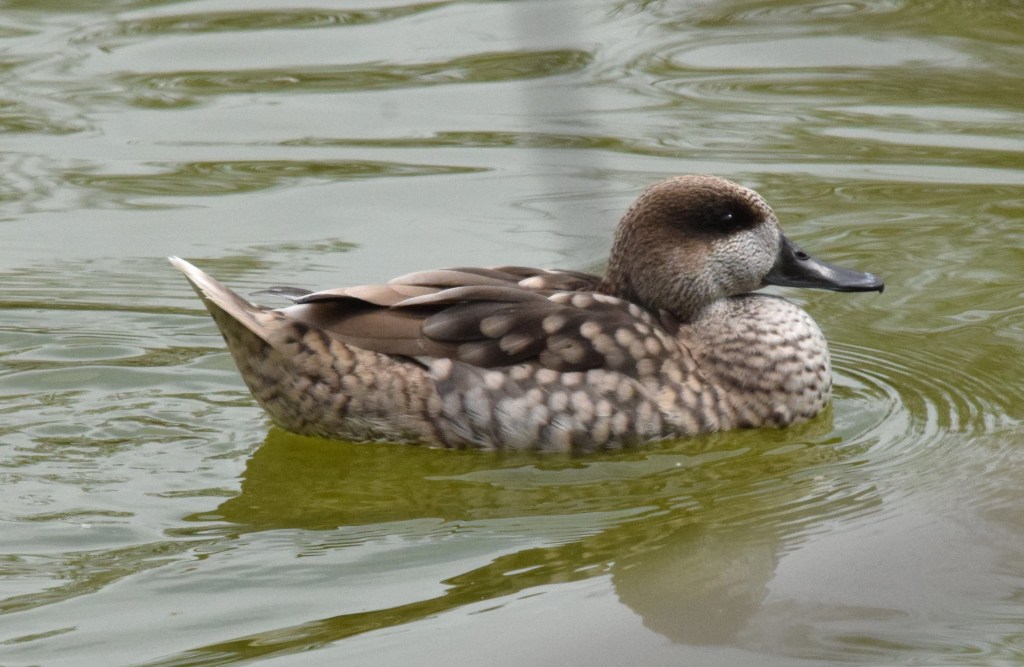
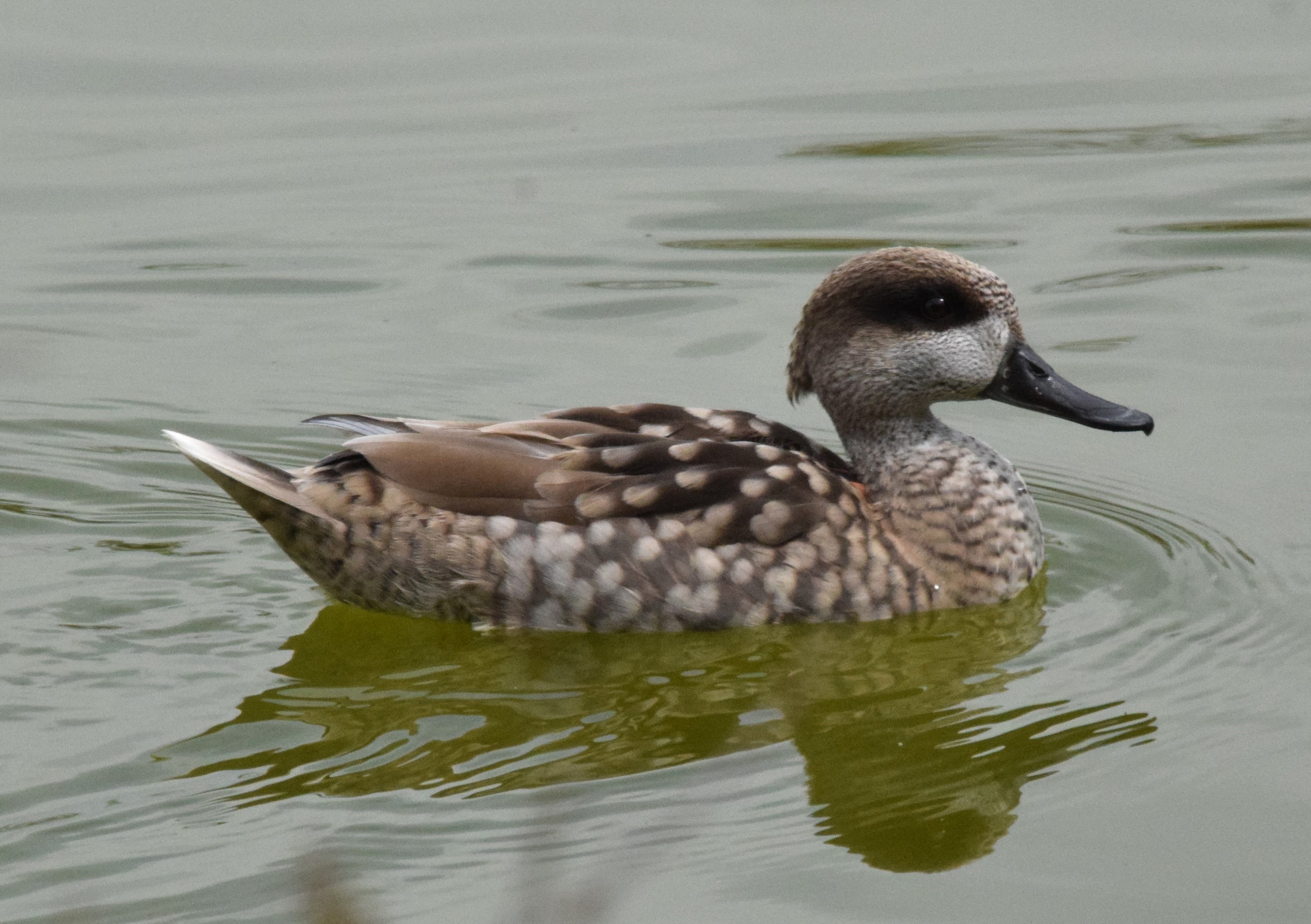
Marbled Duck
From Laguna Escondida I moved on to the third lagoon where I was initially excited to self-find two Marbled Duck (pictured above). This second item of conservation concern had until recently been cited as Spain’s rarest duck. It was once abundant in Mediterranean coastal wetlands, and especially in Doñana where I first failed to find it in 2012. But by 2020 Spain had become the only remaining refuge in Europe, with just 74 breeding pairs and falling. Habitat loss and degradation were once more the greatest threats as wetlands suffered the impacts of drainage for agriculture, pollution, proliferation of artificial barriers and other man-made threats. Re-introduction schemes at wetlands such as GRMNP are now reversing the decline.
On attempting to get closer I stumbled upon what was clearly one such project, administered by Life Cerceta Pardilla (see here). I then noticed a way down to a hiding place at the water’s edge, large enough for just one person, where the following pictures were taken. I felt sure I should not really be there, but there was plenty of evidence that people do go when the park rangers’ backs are turned. The birds, if aware of my presence were completely unconcerned by it, swimming up and down repeatedly at close quarters without taking fright.
Marbled Duck (all images)
Checking with a patch worker back at Laguna Grande, I was told the spot I had just found was common knowledge amongst informed local birders. Then on reading things up I learned that 25 ducklings were released here in 2022. On today’s evidence the resultant local population is thriving. These birds are all fitted with GPS collars to track their movements, as the final picture shows. Re-introduced colonies are never as exciting as those such as WHD that have recovered by conservation measures alone.
Black-winged Stilt
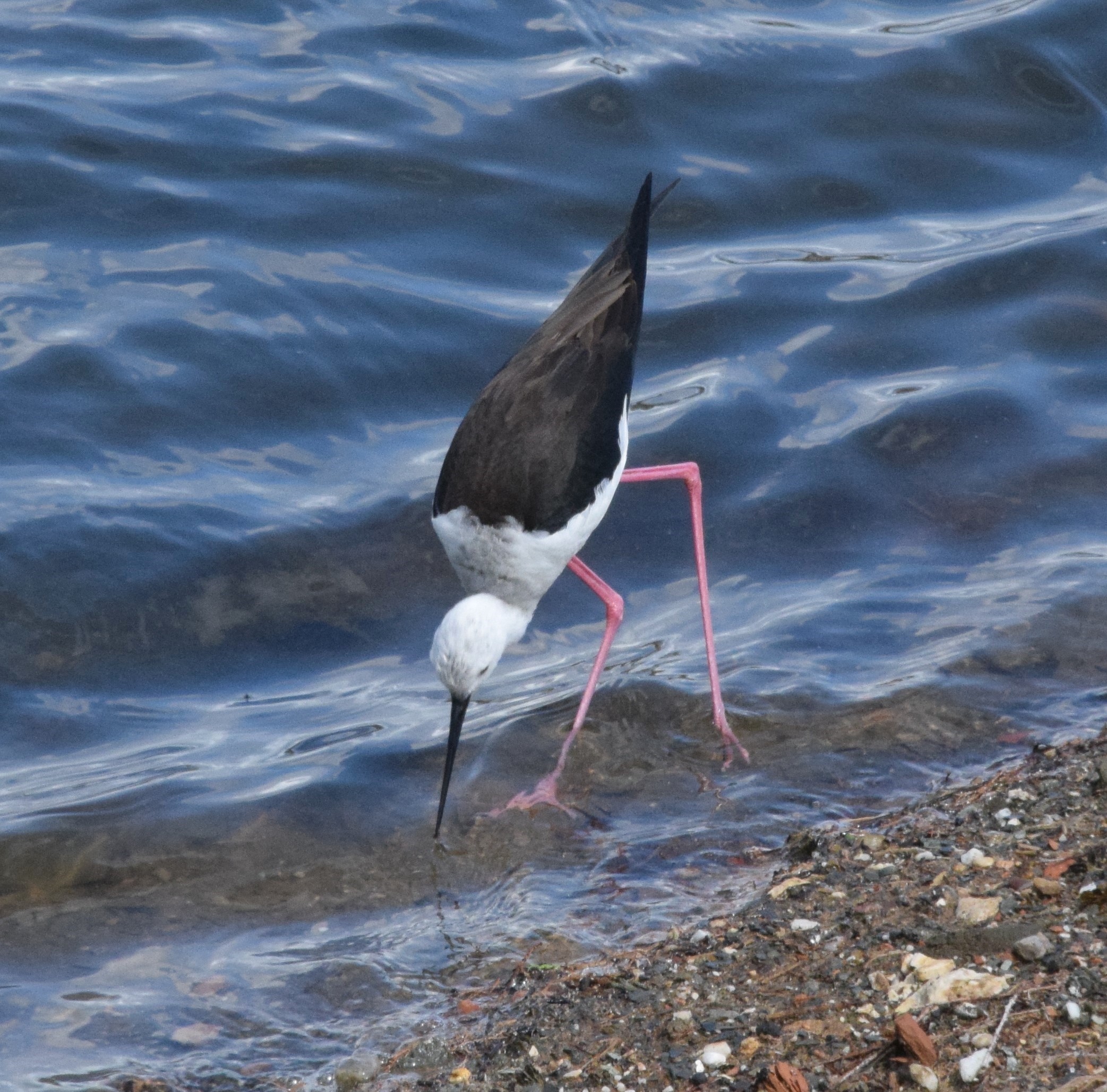
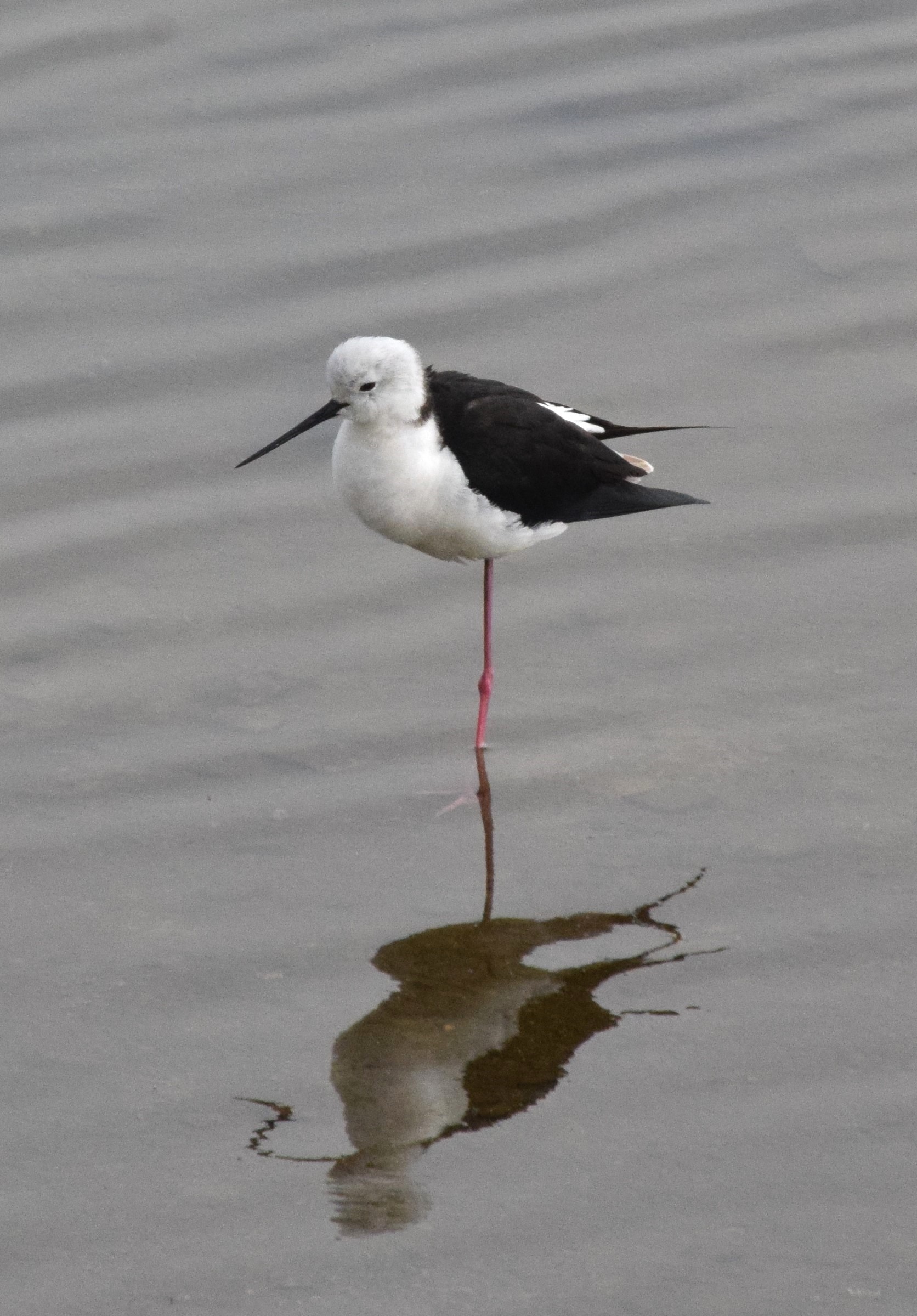
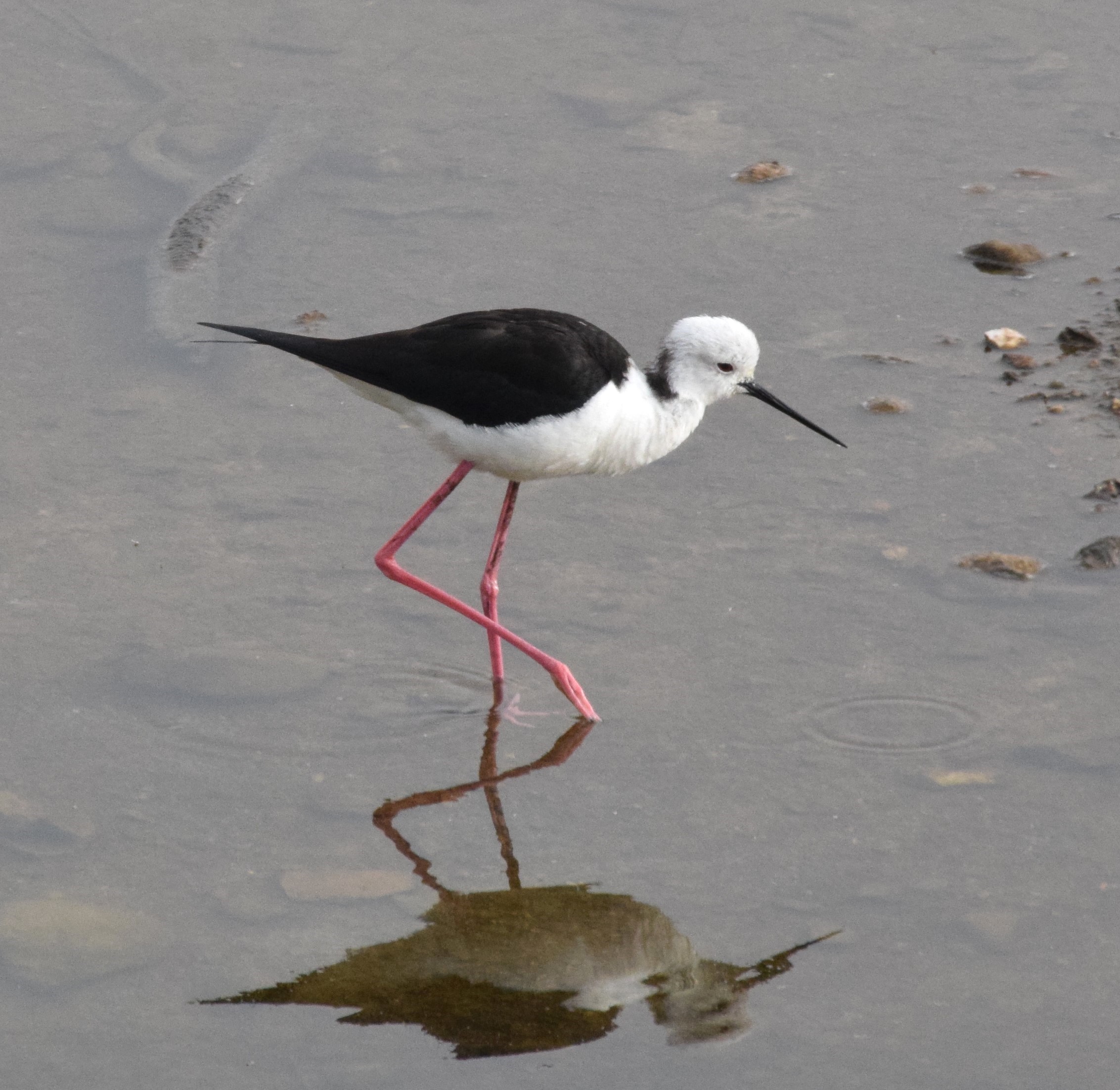
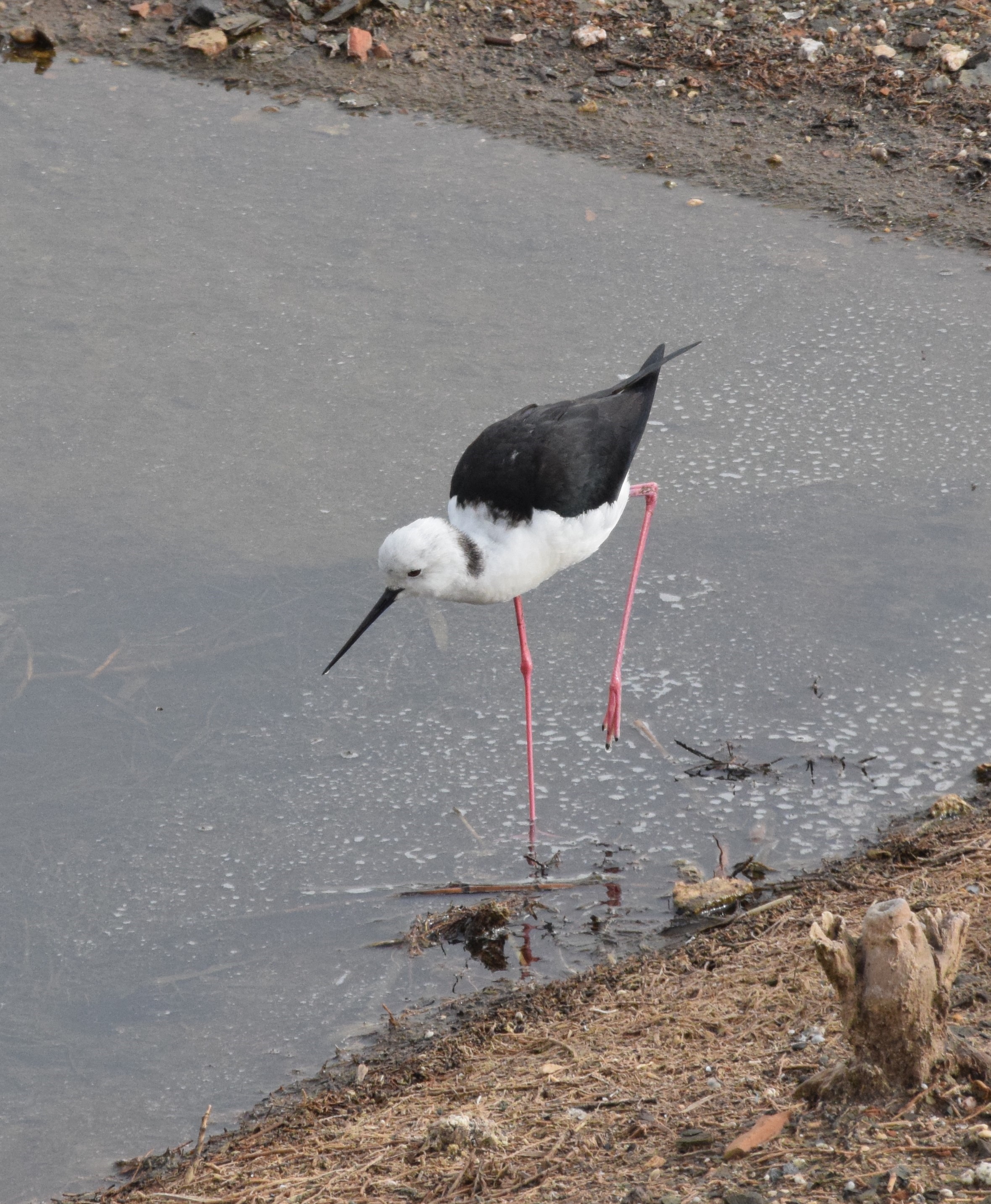
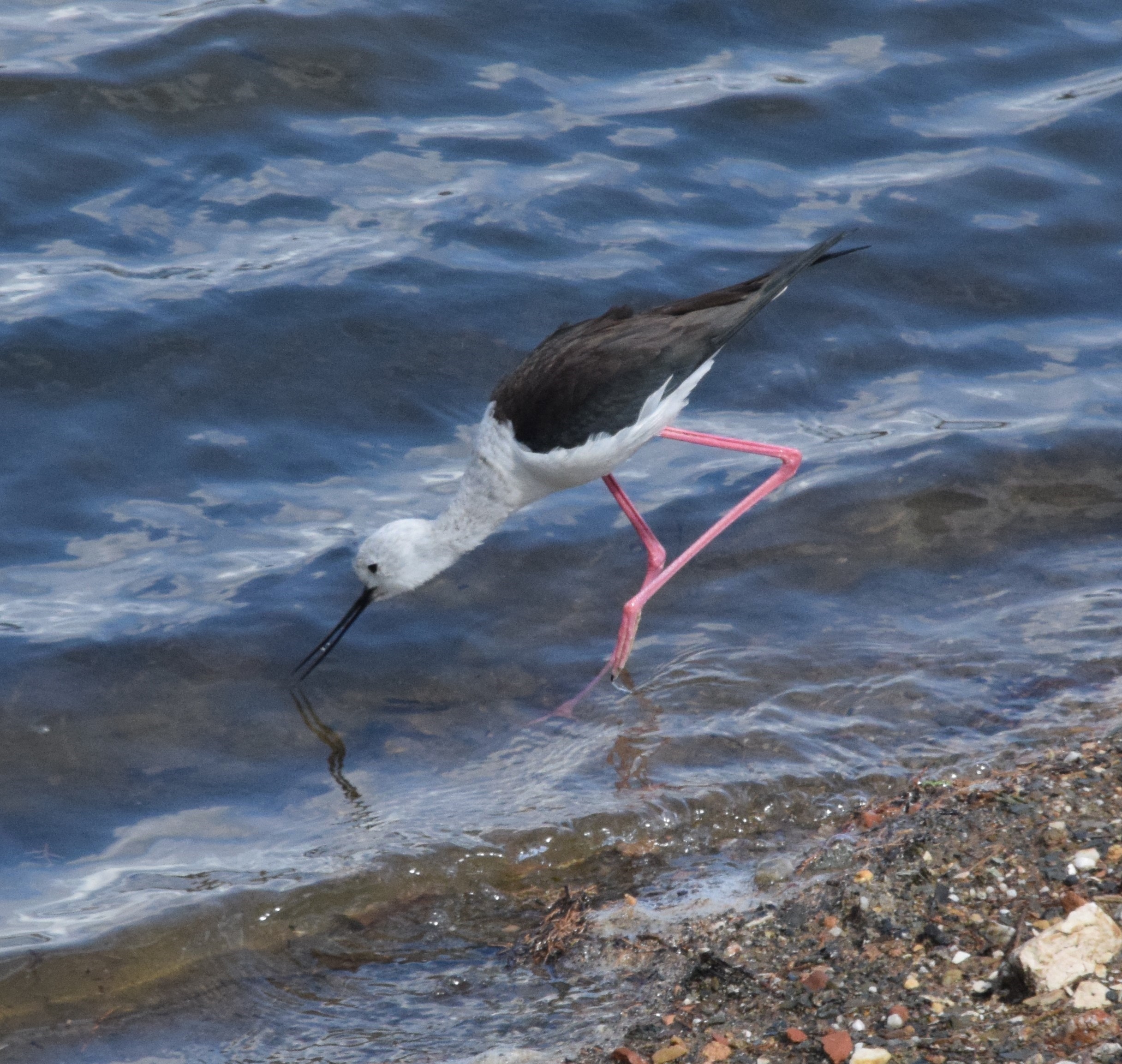
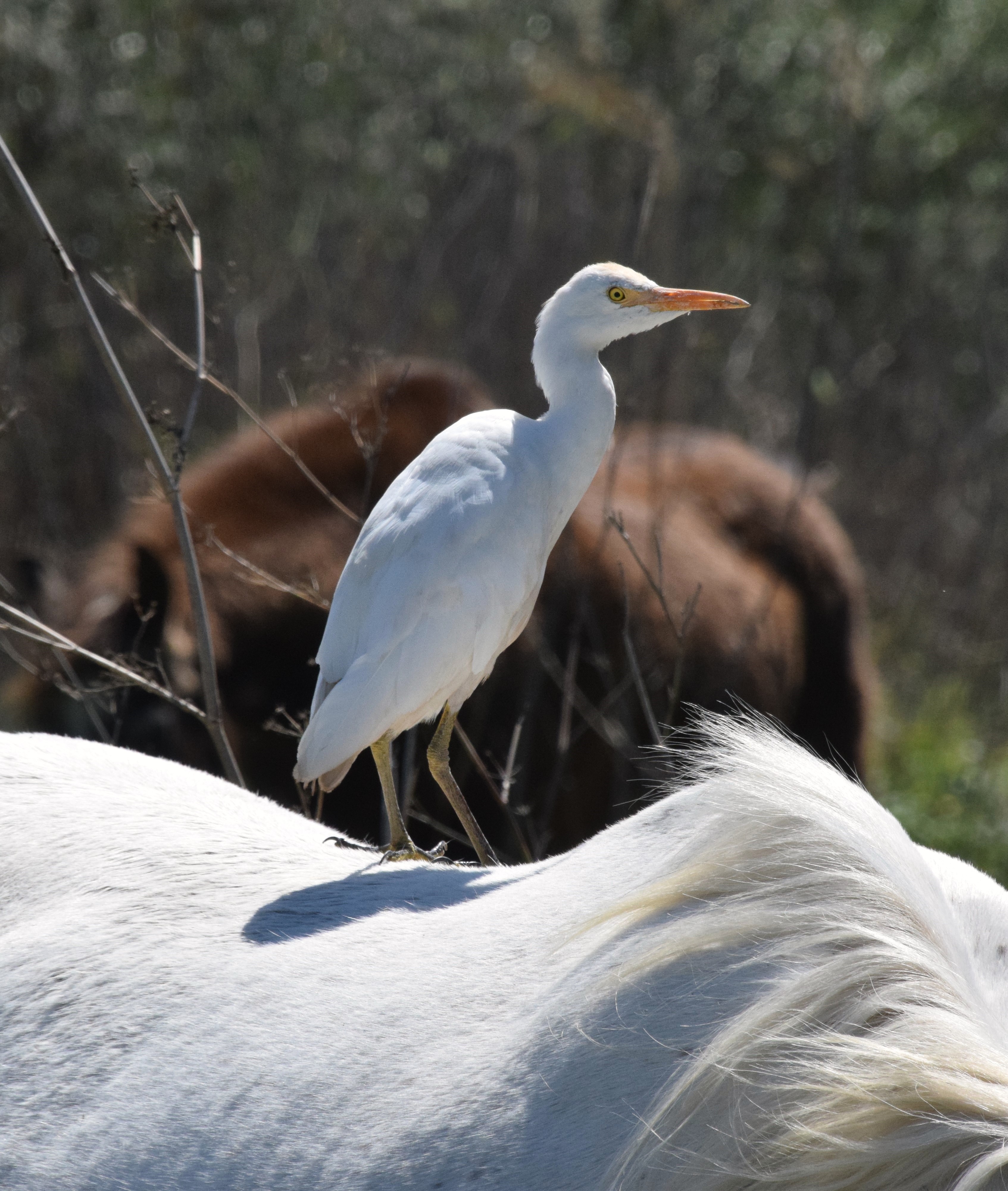
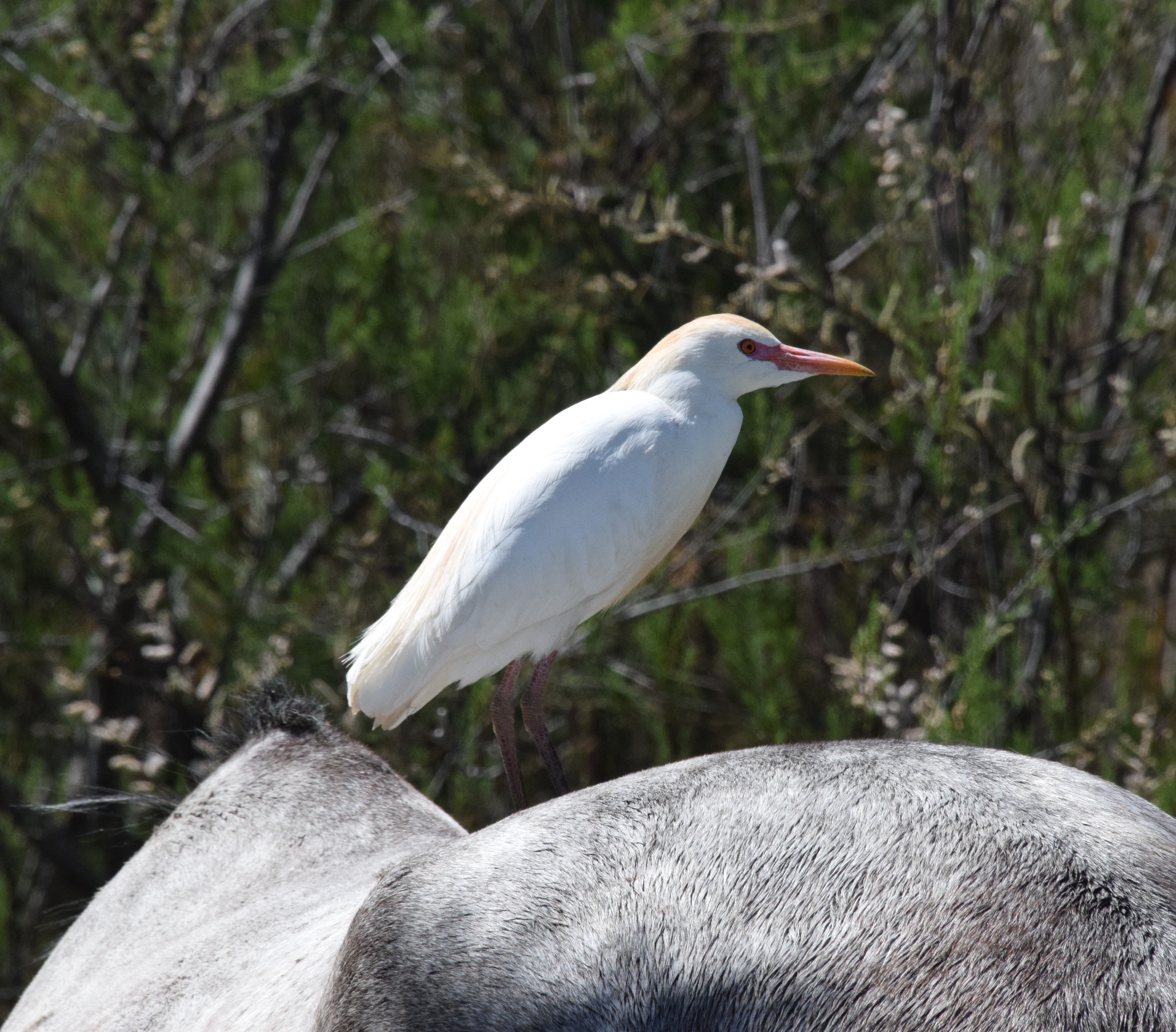
Where other birding was concerned, I can never recall having observed so many Black-winged Stilt at one site as here, and at the Laguna Grande screen I was able to add some reasonable pictures (above) to my collection. I have always found them difficult birds to capture well. On 26th I also took an opportunity to gain some studies of Cattle Egret on horseback (below).
Cattle Egret
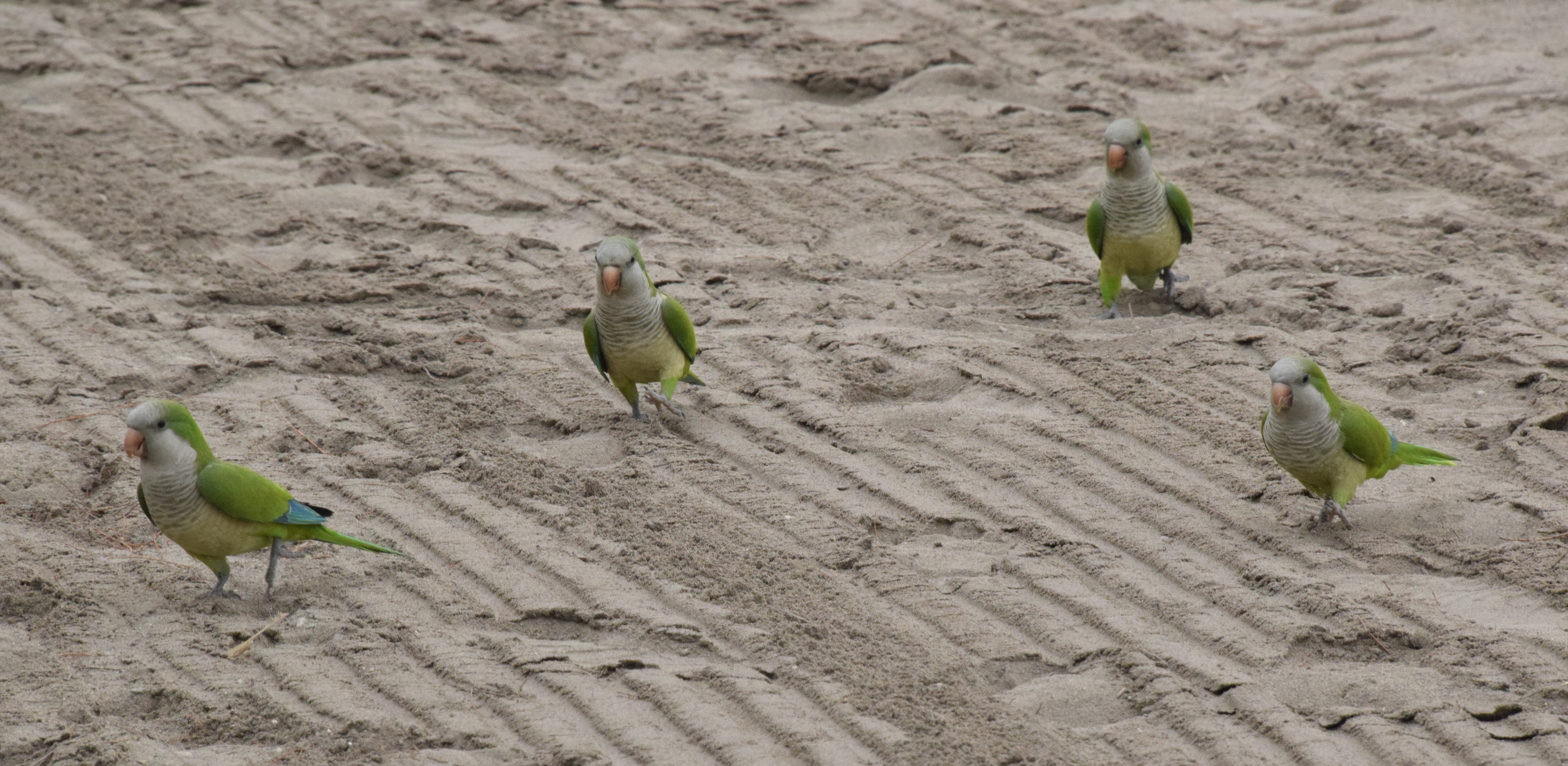
The only lifer gained was the ubiquitous Monk Parakeet. There are huge numbers of this South American IAS in Spain, especially in cities, and they are well established along the Costa del Sol. I actually rather liked them and find them more attractive than the Ring-necked Parakeets that now roost nightly in East Oxford. But I can imagine for people living amongst them, and especially if there might be one of their large communal nests outside an apartment window, their constant screeching must become irritating. Indeed the national colonisation is attributed to 1970s pet owners becoming sick of the sound of their imported Parrots and so releasing them into the outdoors. Cue an estimated current population of around 200,000.
Monk Parakeets (above) and Whiskered Tern (below)
(click to enlarge)
The bird list for this trip in so far as I paid attention (with notables in bold) was: Little Grebe, Cormorant, Little Egret, Cattle Egret, Grey Heron, Glossy Ibis, White Stork, Spoonbill, Greater Flamingo, Mallard, Garganey, Shoveler, Marbled Duck, Shelduck, Pochard, White-headed Duck, Osprey, Kestrel, Moorhen, Common Coot, Ringed Plover, Kentish Plover, Dunlin, Sanderling, Common Sandpiper, Green Sandpiper, Greenshank, Redshank, Avocet, Black-winged Stilt, Collared Pratincole, Yellow-legged Gull, Mediterranean Gull, Slender-billed Gull, Black-headed Gull, Whiskered Tern, Sandwich Tern, Feral Pigeon, Collared Dove, Monk Parakeet*, Woodlark, Swallow, Pied Wagtail, Spotless Starling, Cetti’s Warbler, Zitting Cisticola, Sardinian Warbler, Blackbird, Greenfinch, Goldfinch, Spanish Sparrow and hybrids.
Seven Collared Pratincole are hidden in this one (click to enlarge)
I was in no way attempting to build a bird list, these were just what I noticed without looking too hard. That is because my motivation for this trip arose out of wishing to experience one of the earliest butterflies of any Mediterranean season. Despite the name and my own liking for its region of southern France, my research suggested Provence Hairstreak is actually much more likely within the Iberian peninsula, and especially around Málaga.
They are also said to fly within the Guadalhorce Park, but things were not to be and so I have concluded converting them must be far more difficult than I had imagined. I would never normally have gone to Spain in March to do butterflies, but that is when this must-see lifer flies. There was an untold quantity of habitat in which they might be concealed, and on the three days out of six that produced partial butterfly-friendly weather I just could not locate any. Others of any kind were very few and far between.
The second reason for the three day gap in this post’s title is that on Saturday morning (23rd) I was struck down by a viral condition. The “two bob bits” Spanish style is no fun at all and I would not wish to meet El Montezuma again any time soon. So this otherwise not proper trip was saved by the quite reasonable Mediterranean birding recounted above, which had always been the contingency plan.
My motivation for local birding is currently at an all time low, unless something new and different thrusts itself outward, but it would hardly be credible to have gone through the current winter without observing any Waxwings. The well-documented, national Scandinavian berry bandit invasion took its time to reach my home county (see here), but there have been frequent and widespread sightings through this year’s first two months. I myself dipped them three times until this morning, when I was at last successful.
The issue with these birds in my view is they are difficult to twitch, being most usually mobile around wide feeding circuits. In other words, once you get there they’ve gone. I have been occupied with other interests and extra work shifts recently, and so have not found the time or urge to wait around in residential settings for them to come round again. With the hopefully more reliable groups I carefully selected, first I failed to connect in January with one just outside Thame; then another in north Oxford, close by Port Meadow. More recently a nine-strong flock has been reported fairly regularly by my birding colleague Andy and others in two locations in north Abingdon. I failed to find them again at the first attempt, but somehow felt lucky on this cold and clear morning.
Waxwing
My hunch about today proved to be not unfounded. Walking away from my car at the junction of Dunmore Road and Parsons Mead, close to where I lived for 14 years between 1986 and 2000, I saw a photographer on the far side of what had then been Abingdon’s northern outer ring road. His lens was trained upon a Poplar tree top by a football pitch, where a second local colleague, Sally had connected with the Waxwings a day earlier. He was clearly onto my quest and I went over to join him. Soon the birds flew back to another tree top at that road junction where they had been reported most often.
Cue WhatsApps or calls to Oxon Birding administrator Badger, Andy, Sally and Ewan. For around 30 minutes I then watched these birds descend at intervals onto Hawthorn hedges on the opposite side of Dunmore Road. This was clearly by now a diminishing food source, which explains why at this late stage of winter Waxwings are so much more difficult to locate in one place. All the while these delightful visitors’ distinctive and evocative trills would emanate from the air overhead.
WaxwingWaxwings
During the previous comparable Waxwing winter just over 10 years ago I was still doing mail order deliveries, and being out and about around Oxford each day, such trills would reveal Waxwings here and there without my having to go out specifically to look for them. My possibly most satisfying past encounter of all was in 2003 when the same sound announced a single bird in the south Oxford village suburb of Kennington, again whilst delivering parcels during what was not a Waxwing winter at all. Today’s birds at length moved on and I relocated to the nearby Aldi for this morning’s second purpose.
Waxwings
Having acquired a completely up-to-date computer with part of my albeit modest recent income from investments and part-time employment, I am now starting to find my way around, amongst other things Nikon’s current, free NX Studio picture editing download. It is much more advanced than what came on disc with the old technology SLRs I prefer. I never could get my head around Adobe Photoshop.
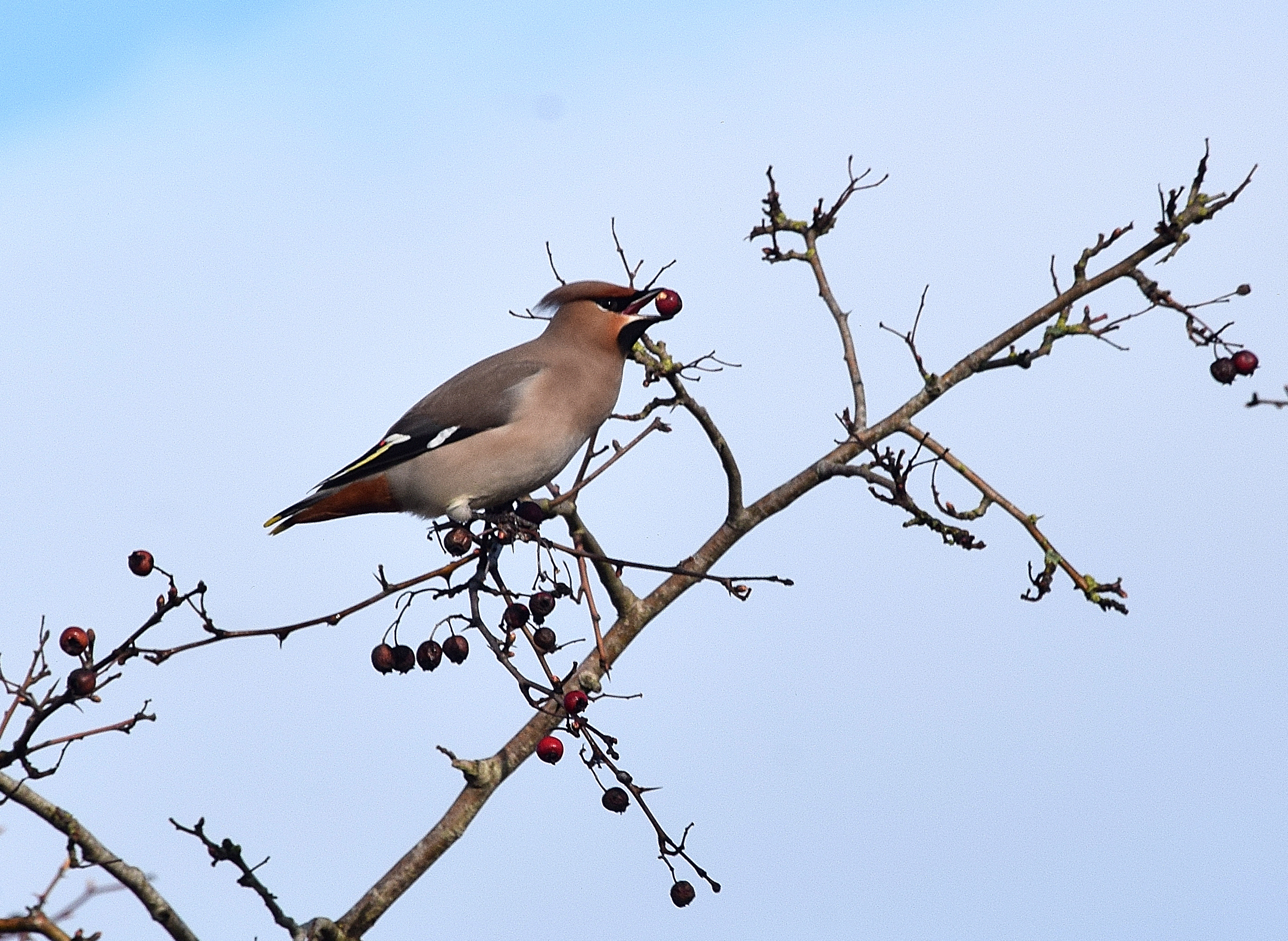
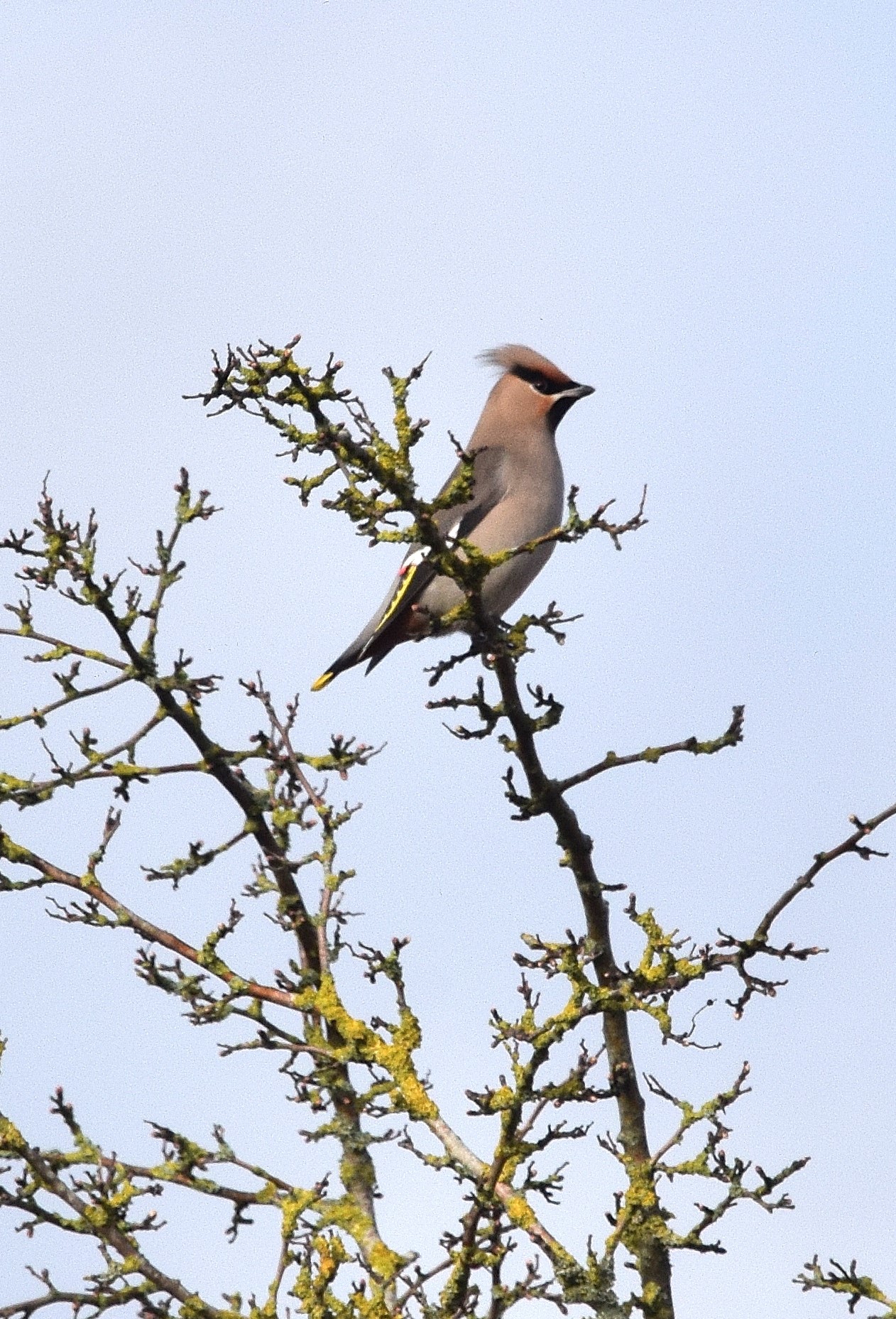
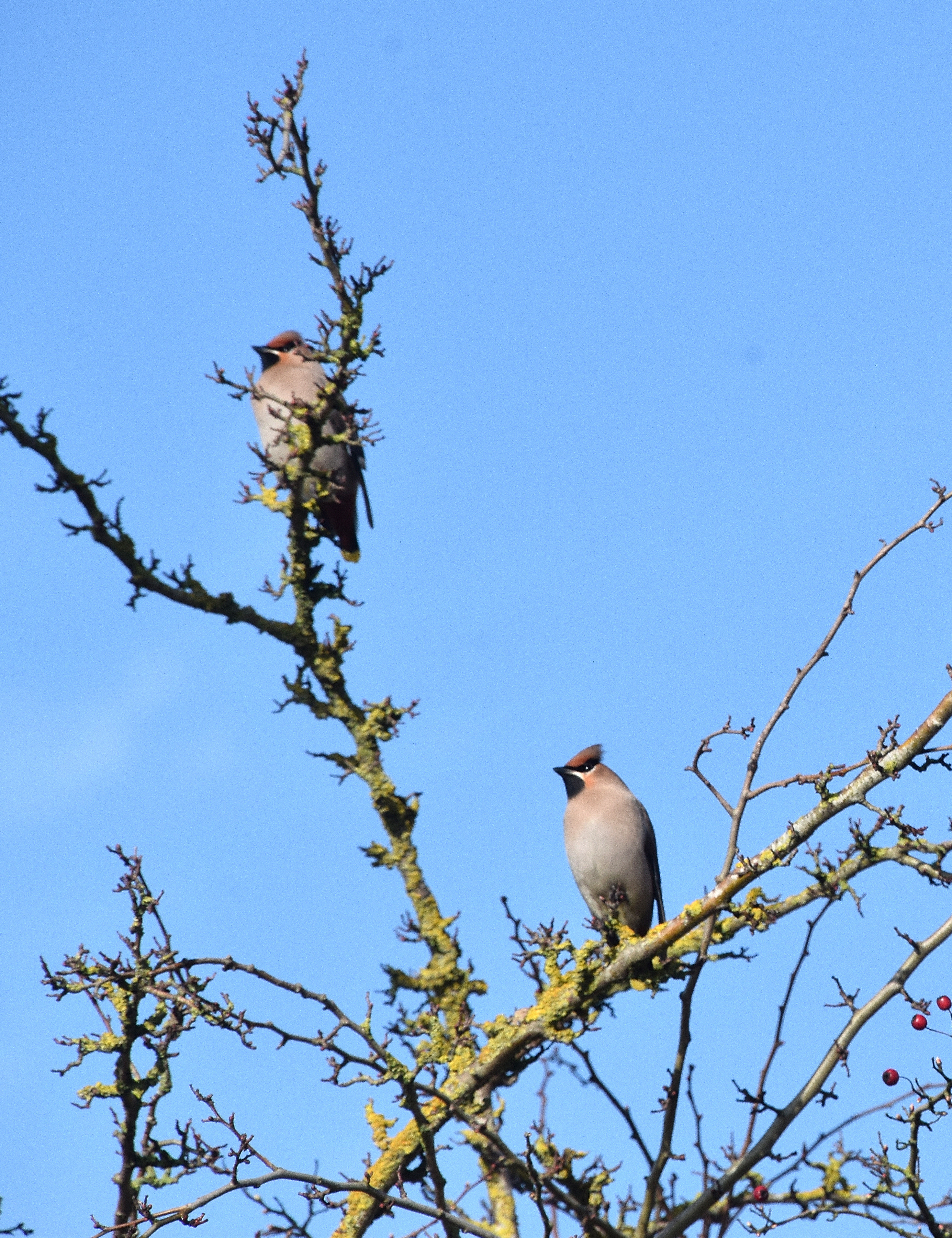
On reviewing my pictorial results, I found I had gained the type of berry in beak study (lead picture, above) that photographers prefer. I am not a photographer, preferring to style myself a wildlife enthusiast who takes pictures, but that one is still pleasing. The others posted herein are not close-ups, given my own equipment, but I feel they have context in conveying how I encountered these very attractive, visiting birds of the moment today. And my own sought experience for this English ‘Waxwing winter’ was thus complete.

































 Ramblings and Scribblings