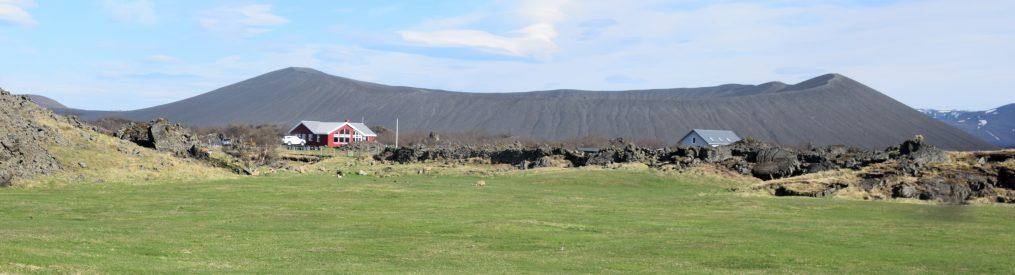
Marmora’s Warbler, Scops Owl and Eleonora’s Falcon in Sardinia + Tyrrhenian Flycatcher: 3rd – 8th Jun

I have just returned from a week’s tour of Sardinia with Naturetrek. The itinerary’s main focus was Odonata but I also had three must-see birds for the trip and all of them were found. A fourth life list addition was the endemic Tyrrhenian Flycatcher, that was split as a species from Spotted Flycatcher in 2015.

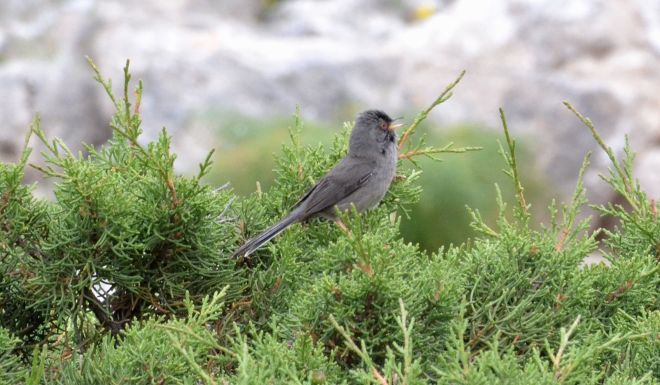
On 4th we visited Capo Caccia, near Alghero in the north-west of the island. There as the group enthused over what for me are now commonplace Mediterranean birds, I became distracted by lizards at the roadside. That was until I noticed everyone gathered about 100 metres away and clearly observing something of note. I hurried over to find that one of our guides, Luca Boscain had discovered a territorial Marmora’s Warbler which could not have read the script that they are by reputation skulkers offering only glimpses of themselves.
marmora's warbler.1801 san pietro

Marmora’s Warbler

This was my top target and now bird of the tour simply because they breed locally only in the Tyrrhenian islands (with a different race in the Balearics), wintering in North Africa. So I do not expect to see another one anytime soon. The species resembles Dartford Warbler in size and shape but has grey not red-brown underparts. They favour dry, scrubby locations, often in low maquis or rocky terrain.

One had been pointed out to me in Corsica last September flitting just once from cover to cover but to my mind it could have been anything, hence my desire to gain proper views this time. And the bird pictured below was quite exceptional in that respect, moving from one to another prominent perch on shrub tops or rocks, singing feistily all the while. To say this sighting exceeded my expectations is an understatement. What a beauty!

On 5th and 6th we stayed overnight at Su Baione near Abbasarra in central Sardinia, a remote location in a Cork Oak woodland. From dusk onwards the air around our hotel was filled continuously with the deep whistling calls of Scops Owl, but they were much harder to actually see. This is a small migrant Owl that is a widespread breeder across southern Europe, and also a long-time straggler on my remaining wish-list for the region.

During the first evening’s after dinner walk the group was more interested in locating Nightjar, that were heard distantly and so I was frustrated in my own aim. Returning to my room more Owls could be heard outside the window and so I sat out on the balcony for a while, still without success. Naively I expected to see them flying from tree to tree but they were rather more difficult to pick out than that, as the second evening’s experience demonstrated.
scops owl.1801 su baaone

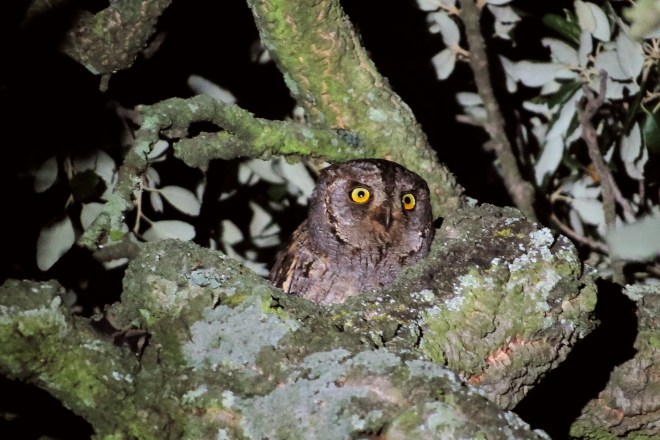
Eurasian Scops Owl courtesy of Luca Boscain

This time the group’s focus was the same as my own and the more experienced amongst us picked out a calling Scops with torches. It took a while to get my eye in then first the bird was seen from behind, dipping its tail with each call at 3-4 second intervals, and next head on from the other side of the tree (pictured above). At all times this Owl kept very close to branches at the centre of the tree, hence my own failed attempts at observation previously.

So that was two down and one to go: Eleonora’s, said to be the scarcest European Falcon. This summer visitor breeds colonially on islands throughout the Mediterranean, wintering in Africa. It owes it’s important lifer status to being absent from my Cyprus list, but I was probably there too early in the season in April 2012 since Eleonora’s postpones breeding until late summer to coincide with return passage of small passerines that are caught over the sea.

DSC_1134

Eleonora’s Falcon nesting cliffs on San Pietro island

On 8th we visited San Pietro island off Sardinia’s south-west corner, a long established breeding location for Eleonora’s Falcon. On the walk down to the nesting cliffs (above) I concentrated on scanning the rock faces ahead, seeing a dark, Falcon-shaped silhouette emerge from one of the many crevices and holes. But not having seen an Eleonora’s before I didn’t like to call it. Eventually our guides spotted another one against the sky and so I knew that I had indeed self-found this newest lifer while the group were busying themselves with roadside bugs.

To quote Collins, this is a medium-sized Falcon with long, comparatively narrow wings, long tail and rather slim body. It was clearly still early in their season and there were not many birds present, but those of us who left last had another sighting on the walk back up. It was an immense relief for me to have gained all three required lifers for this trip, especially as we did not find some key dragonfly targets which was very disappointing.

Tyrrhenian Flycatcher (pictured above) was encountered fairly frequently during this tour. It struck me as quite an urban sort of bird, given to hanging around hotels and bars and getting into dubious company such as groups of ageing British wildlife enthusiasts. My own brief researches reveal that prior to 2015 seven sub-species of Spotted Flycatcher (Muscicapa striata) were recognised across the Palearctic region. Studies of the Sardinian and Corsican breeding population (M. striata tyrrhenicais) over 10 previous years confirmed morphological differences previously observed in the field and cited in scientific literature and hence the latter was split as a full species.

To put things very simply, the paper I am quoting (†) cites the immediate impression given by Tyrrhenian Flycatcher is of a paler bird with warmer tones to the back and more homogeneous underparts. The breast markings, which are generally well defined streaks in Spotted Flycatcher (M. striata striata), appear faded and more spot-like, and the streaking on the nape is also less well defined. My own experiences this week certainly confirm this, but as always I have quoted very basic detail herein.

Biodiversity Journal, 2015, 6 (1): 271–284. Morphological differences between two subspecies of Spotted Flycatcher, by Michele Viganò and Andrea Corso.
2018 Marsh Fritillary and still more spring butterflies at Battlesbury Hill, Wilts – 19th May

Given this month’s now prolonged window of sunny weather, insect emergence in the new season appears to be back to normal after a wet early spring. Since last visiting the butterfly mecca of Cotley Hill, Wiltshire in 2015 (see here) it had been a vagueish aim to compare Marsh Fritillary numbers across three more hills – Scratchbury, Middle and Battlesbury – that lie north-westward at the bottom left corner of the Salisbury Plain military training area.

On consulting Butterfly Conservation’s Wilts county web site (see here) on Friday evening, most of the recent Marsh Frit sightings were coming from the most north-westerly site, Battlesbury Hill (ST898456) on the edge of the aptly named garrison town of Warminster. A good spread of other spring species was also being observed here, including Duke of Burgundy. So as Ewan had contacted me during the day to ask if I was butterflying this weekend I suggested we make this our latest destination, and he agreed.

marsh fritillary.1803_01 battlesbury hill

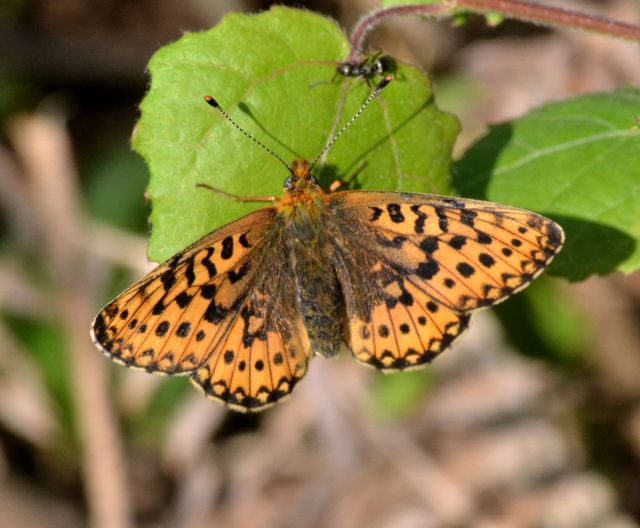
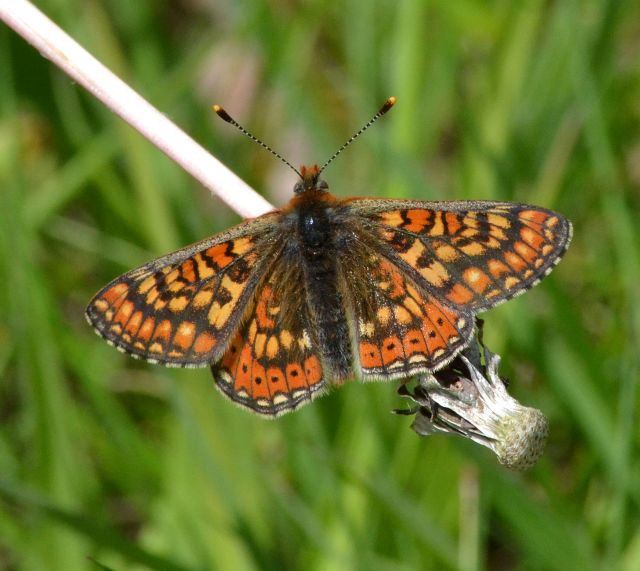
The delicate stained-glass petals that are Marsh Fritillary

Amongst iron age hill-forts Battlesbury is certainly formidable, sitting atop a very steep, round hill upon which rise as steep ramparts. Our prehistoric forebears were certainly no mugs in selecting sites on which to build these enclosures to provide safe haven for local communities during times of unrest. Battlesbury and it’s neighbour Scratchbury (ST911443) dominate the Wylye valley to the south from the scarp edge of Salisbury Plain, and each site has fine views of the other. Battlesbury is an example of the type of late iron age fortification where multiple lines of ramparts follow the contours of a hill top, with intervening ditches and complex entrances. Scratchbury, just 1.5km away is a simpler and roughly rectangular structure.

These ancient sites are accessed via a public right of way starting from MoD facilities in a road named Sack Hill (ST89923 46476) NE of Warminster town centre. Once reached the ramparts of Battlesbury Hill are an impressive prospect (pictured below). The natural chalk grassland of the Defence Estates-owned enclosure is grazed by cattle to maintain a tussocky structure and 30-40 plant species may be found within just one square metre. This all provides ideal habitat for a diverse range of insects, as well as birds.

This slideshow requires JavaScript.

Whenever I take other Oxon birders out to see insects I notice a twitching impatience to connect as quickly as possible with whatever it is we are looking for. I am content to explore the location first to see what’s there and eventually enjoy due communion with what is discovered. Observing insects cannot be hurried and in any case once found they are unlikely to fly off somewhere else as birds might do. For these reasons I was happy to follow our separate inclinations at first while keeping in touch by phone.

At first it seemed there were not many butterflies around. The species encountered most often on the hill’s south side was perhaps surprisingly Wall Brown. I can recall visiting this region several times in the early years of this decade to look for them, only ever finding ones and twos. Today’s evidence was that they must now be faring rather better. This is most often an unco-operative butterfly to approach and photograph so a grassy record shot (below left) will have to suffice for this post. Limited numbers of Small Heath (right) were also on the wing.

On reaching the eastern ramparts I began to notice butterflies below me with a lighter, more delicate jizz than the similar-sized Walls. These were indeed the Marsh Fritillary of our intention and I edged down the slope a little to attempt some first pictures. Then I called Ewan who in the event was walking up quite close behind me. And so with our prime target species in the bag my companion now relaxed more and began to enjoy this stunning location and its myriad butterfly life. And there was plenty more to come.

From this point onward there were numerous Marsh Frit wherever we trod. Though a butterfly of conservation concern in England, in my experience where it does occur it is abundant. There must have been hundreds of them here, offering an experience that certainly matched my visits to Cotley Hill between 2011 and 2015. This is a very photogenic insect with the pleasing trait of resting on flower and seed heads with wings spread gloriously open and flat. And what a picture they make (below) with beautifully marbled upper wings perhaps suggestive of stained glassware.

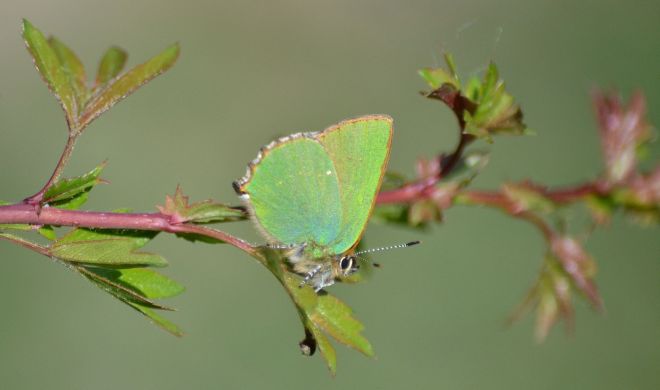
Several other notable spring species were active here since the east-facing slopes, especially between the upper and lower ramparts were sheltered and warm, facing directly into the sun. Busy Dingy Skipper buzzing about and basking Small Copper were both present in good numbers, as well as a few Brown Argus. All of the butterflies mentioned so far, other than the Dingy were my first records of the year. Fairly frequent Green Hairstreak also encountered were mostly past their prime and becoming worn.

When we reached the fort’s eastern entrance we crossed over to the outer rampart to walk back around the lower ring, reasoning the north side of the hill would probably be less productive. From here there were panoramic vistas (below) over the area described earlier in this post, and the military training land to the north. The connecting right of way was visible across the two hills to the south-east. I at once conceded my original plan of tracking Marsh Frit numbers all along that route would probably have been ambitious to achieve.

This slideshow requires JavaScript.

A short distance back round the lower circuit, another butterfly enthusiast below us drew our attention to two Adonis Blue (pictured below) he had found. For this bright herald of shortly arriving summer to be on the wing here in mid-May is a good indicator that the 2018 butterfly season is nicely back on track. And all the while we continued to be delighted by the dancing, gliding and ever delicious delicacies that were the Marsh Fritillaries.

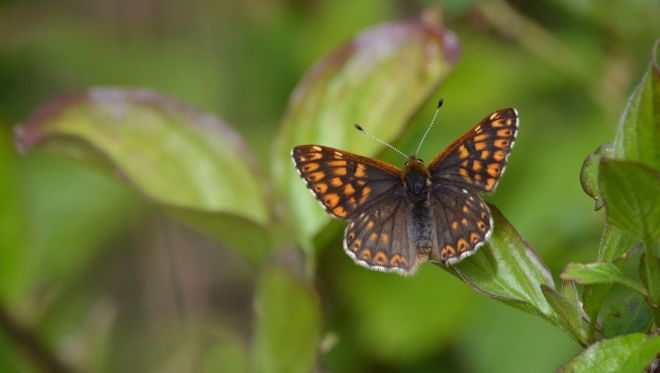
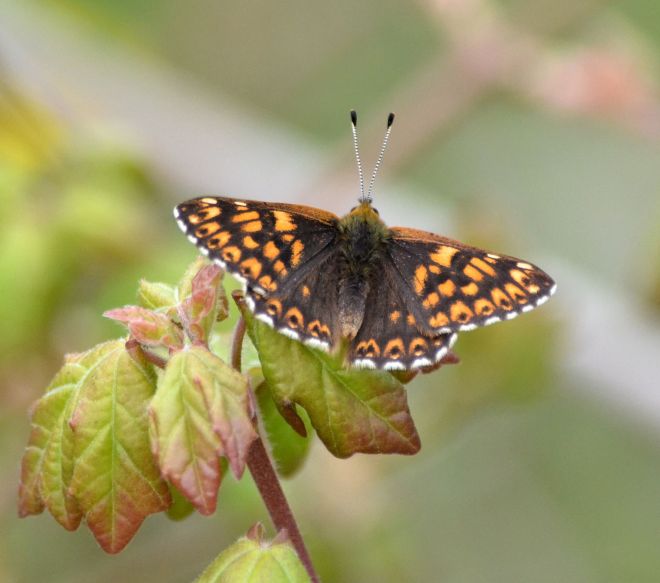
Back at our start point, the western fort entrance, of the species on our wish list we had yet to see Grizzled Skipper and Duke of Burgundy. Two other observers advised us to look for the latter around some Beech hangings on Battlesbury Hill’s southern slopes. We then took a lower path still, and in some Hawthorn scrub habitat I picked out two fresh looking Dukes staking out exposed twigs or grass heads. This was my fifth different site for the species so far in May, and once again “His Grace” rather stole the show (below).

Lastly we made our (or at least my own) weary way back uphill then crossed the hill top to see if Grizzled Skipper could be found in the open area within the prehistoric enclosure itself. But that little butterfly remained our one miss of the day and we headed back to the car satisfied with having obtained an almost full set. An exercise monitoring app Ewan uses on his i-phone revealed we had trodden a total of seven miles in enjoying another highly rewarding butterfly outing while re-acquainting ourselves with the so pleasing and attractive Marsh Fritillary.

2018 Pearl-bordered Fritillary and some more spring butterflies at Rewell Wood and Kithurst Hill, Sussex – 15th May

Where “Pearls” are concerned one site has been receiving a lot of attention in the current season, Rewell Wood near Arundel in Sussex. I had observed this butterfly before only at Bentley Wood on the Hants / Wilts border, and this year wanted to go somewhere different. And so it was to this new (for me) place that my attention turned.

pearl-bordered fritillary.1801_01 rewell wood

Pearl-bordered Fritillary (male) and friend

The exact location within the extensive mixed woodland was not easy to find and in the event took me three attempts. BC’s Sussex branch web site (see here) says these butterflies are active along the main west-east ride, but there are two such tracks so which one was it? After my 9th May visit to Heyshott Down (see previous post) I ended the day by checking out the more northerly ride that is accessed from a lay-by on the A29 (SU98310 09079). Crossing Fairmile Bottom LNR then making a steep uphill climb brought me to an area of clear fell in which there was abundant blooming Bugle (Ajuga) on which Pearl’s’ nectar. But there were no butterflies there and after a brief look around the woods that turned up no more suitable areas I left.

The next day I returned with Ewan following our visit to Noar Hill. We spent a good couple of hours in the clearing, but once again despite the seeming suitability of the habitat no butterflies were encountered. We again walked to some other parts of the woods but without success. Then over the intervening weekend large numbers of PBF were reported on-line, so it seemed most likely we had been in the wrong place and an injection of local knowledge was required.

rewell wood.1801 bluebells

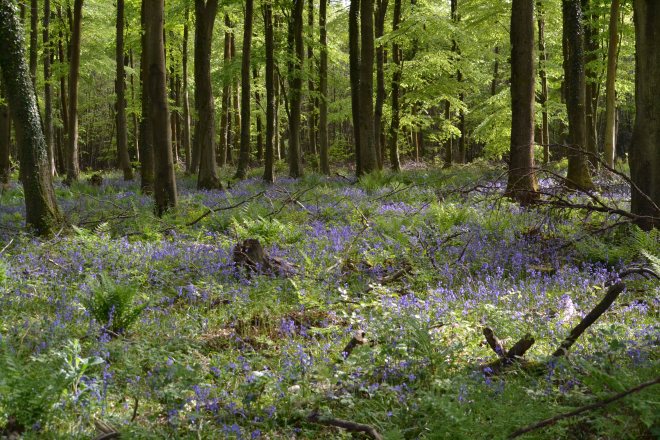
A walk through Rewell Wood: the joy of an English Bluebell woodland in May

Today (15th) we investigated the southern ride that may be accessed from two points. The first is a metalled track from the A27 trunk road, but there are just two parking spaces there within a private facility of the Duke of Norfolk’s estate, so BC asks visitors to find alternatives. A public bridleway close to Shellbridge Road south of Slindon (SU97727 06987) also leads up into Rewell Wood and getting there involves walking for 100 metres along the verge of the A27 trunk road, that may not appeal to everyone.

Once we were on the latter right of way I followed my intuition that this time did not let us down. Turning right when we joined the west-east ride, we reached a more open area in which Pearl-bordered Fritillary soon became visible at the ride edges, zooming low across the ground and rarely settling as is their wont. Having such a short adult life span of no more than a few weeks this butterfly is seemingly always in a hurry. The males spend most of their day searching for newly emerged females, that once mated spend the rest of their own flight period keeping a low profile whilst egg laying and avoiding further contact with males.

We had of course arrived on site approaching the warmest part of the day when the PBF are at their most hyperactive. I am not ever likely to obtain better pictures of this species than in Bentley Wood in May 2015 (see here) but those were of inactive insects in cool conditions. In today’s sunshine and in this habitat, gaining uncluttered images of the standard I seek was always going to be more difficult. At first and with perseverance most of the more acceptable results were under-wing studies (below).

Pearl-bordered Fritillary (above and below)

It is very important that visiting observers, especially those with cameras do not chase the fast moving PBF around. Doing so will not make them stop and is likely to result in habitat being trampled with loss of pupae, newly-deposited eggs and even adult insects. Standing in one place and waiting for them to approach and settle is likely to be far more effective. The better picture opportunities are near the beginning and end of the day when the PBF are more inclined to rest for longer and nectar.

In the early afternoon we were fortunate enough to run into the estate ecologist and Sussex butterfly authority Neil Hulme, who readily shared his extensive knowledge of all things PBF and this site’s management for them. We were indeed in a conservation area where rotational coppicing is being practiced with the intention of meeting the species’ finely balanced habitat needs and boosting its numbers all along the ride year on year. The other spot that so distracted us is on a neighbouring estate and had been felled commercially since the last breeding season. Mystery solved!

There was now an interval to fill before conditions would start to cool again after 4pm, and so we went on to Kithurst Hill (TQ070125) on the South Downs escarpment to seek out some different spring butterflies. Just below the hill top is a meadow managed by the National Park Authority and Butterfly Conservation to encourage the spread of plant and insect species that were once much more common. Here I recorded my season’s first Dingy Skipper, Common and Small Blue; as well as Duke of Burgundy at a fourth site, and Green Hairstreak.

Despite a somewhat busy ambience, these butterflies offered images with the kind of diffused backgrounds and pastel shades I prefer. One Duke (pictured above, right) provided an underwing study to match my recent improved top-side shots. Several Dingy Skipper (below) gave a reminder there is no such thing as a mundane butterfly, and a Small Blue showed just why it is one of my favourites. The normally photogenic Grizzled Skipper, unfortunately could not be found so I have still not seen one this year.

We returned to Rewell Wood before 5pm and met up again with Neil who had told us where those two parking spaces were. He was busy recording Pearl-bordered Fritillary numbers along the conservation ride. It can be seen here how relatively small areas are coppiced in succession, so a brood emerges from one cut patch then females disperse into another to lay their eggs. Our priority now was top-side pictures but it was still some time before the PBF showed signs of slowing down.

There was plenty of other insect life in this woodland, with recently emerged Broad-bodied Chaser in particular (below, centre and right) encountered frequently. By way of something a little different Dark-edged Bee Fly (below left) had been abundant in the newly felled clearing of our earlier visit, hovering over spring flowers in sunny spots. This intriguing creature is so-called because of it’s furry appearance and sucks nectar from plants through a rigid black proboscis. I instantly formed a liking for them, hence their inclusion herein.

Whilst appreciating the benefits of company I was by this time beginning to yearn for the solitude that would allow a proper communion with the dancing, restless Pearls. And so I wandered off, finding a few late flying individuals still nectaring on Bugle (below). All the pictures in this new post are quite different from those premium treatments of three years ago (see here), but still as satisfying in their way.

Two further encounters were yet to stand out. First Neil spotted a mating pair (below, left) fairly high up, assuring us this was late in the day at 6:30pm for such an occurrence. The female must have emerged well into the afternoon. He was also concerned to find us a roosting individual, since there is no way that PBF will move once they’ve “gone to bed”, and eventually he did. In the failing light it was difficult to find the right camera setting, but after much cursing I got to manage something half decent (below right).

It had been a thoroughly rewarding if long and tiring day, thanks in no small measure to the very personable and knowledgeable Neil, and so we two Oxon visitors headed home. As Ewan remarked, it makes such a difference to be with someone who knows what they are talking about. Like Duke of Burgundy I now feel I have done justice to Pearl-bordered Fritillary in the 2018 butterfly season, and their immediate future at this site at least looks to be assured.

More Dukes of Burgundy at Heyshott Down, Sussex and Noar Hill, Hants again + 2018 Oxon Green Hairstreak: 8-10th May

This butterfly (pictured below) is probably my Duke of the 2018 season. Why so? Because it was self-found in a new and rather stunning location, then kept still for long enough for me to practice with camera settings and get things passably right. The last of those reasons was helped by there not being another human soul around.

duke of burgundy.1816 heyshott down

Basking Duke of Burgundy (male), a scarce and diminutive jewel

This all began while I researched some Sussex butterfly sites on Wednesday morning (9th). In the absence of new and different southern English butterflies to experience, I have considered visiting more locations beyond Oxon, Bucks and Berks as a motivation in 2018. Now, reading of Heyshott Down on the South Downs escarpment it seemed so scenic and otherwise superb I just upped and went.

I was not disappointed on arrival. The South Downs national park is not an area I know well, but its outstanding natural beauty has always impressed when travelling nearby. The Duke site (SU896168) is reached via a minor road east of Cocking on the A286 and towards the village of Heyshott itself. The picture below is the view back from where I chose to park.

heyshott down.1802

The South Downs escarpment between Cocking and Heyshott

From below the butterfly habitat was immediately apparent a little further to the east. Access tracks leading up to it through arable fields were populated with the new season’s fresh Orange Tip and Green-veined White, flying amongst upward thrusting Cow Parsley, abundant English Bluebells and other wild flowers. Eventually I reached a gate into open access land that resembled the historically quarried habitat of Noar Hill. This had to be the place and up and onward I climbed.

As previously at Noar Hill and Rake Bottom (see previous post) I found just two territorial male Duke of Burgundy in this third spot, though more were no doubt present had I searched thoroughly enough. With the second of these tiny jewels I sat down for a while and enjoyed the sense of communion that is only possible when completely alone with a self-discovered insect in a beautiful natural ambience. Such a situation banishes at least temporarily all thoughts of material and populist concerns or any other of the assorted stresses of daily existence.

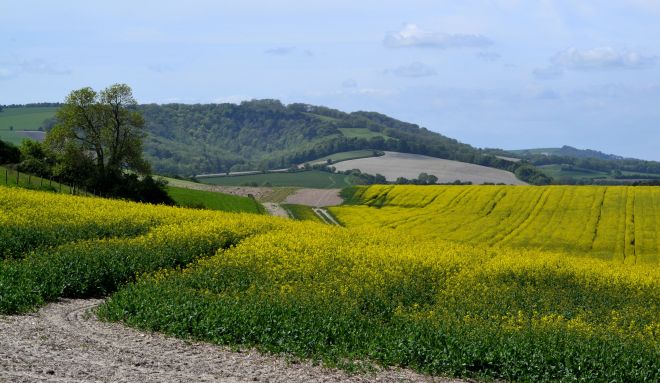
The location I had reached was an equal part of the experience: remote, wild, perfectly quiet and unspoiled at least on this occasion by dog walkers, kite flyers, mountain bikers, shouters and whoopers, projectile throwers, light aircraft performing aerobatics or any of the other man-made distractions that butterflying can entail. Aside possibly of their imbalance of oilseed rape fields, the vistas northward into The Weald (below) could perhaps be described as the acme of traditional English summer. I simply luxuriated in having all this rural peace and tranquillity to myself in the spirit quenching sunshine of such an early May day.

This slideshow requires JavaScript.

On Thursday (10th) I had arranged to go butterflying with Ewan, our first such outing in 2018. As he had not observed Duke of Burgundy in a while we went first to Noar Hill, Hants (SU745317) which was a re-visit for me but a first for him. This time the Dukes were at last out in force and we began to find them as soon as we entered the hill-top Hants and IoW Trust reserve. During two hours on site we must have amassed 25-30 butterflies between us, and aside of one group outing and a conservation work party we had the place quite agreeably to ourselves for much of the time.

These (below) are my better new images from this visit, armed as I was with a preferred camera setting from the previous day. Once located this is quite an easy butterfly to approach since the territorial males tend to return to the same spot over and again if disturbed or after flying up to challenge rivals. On this breezy day they were distributed in more sheltered spots in the many former medieval chalk pits across this hill top.

Most of the Dukes I have recorded this May have been in such a pose, males absorbing warmth on exposed perches. It seems they have been less inclined to offer underwing images in the current season. But more importantly, a threatened species appears to be faring tolerably well in the southern counties and carefully managed habitats of the visits described here.

One thing that always strikes me about this butterfly is just how small they are. Given the high regard they excite amongst enthusiasts due to their scarcity, I had expected something a bit bigger when I first went out on Butterfly Conservation field meetings in 2010. But then as now their diminutiveness was in inverse proportion to their reputation. The species was once known as Duke of Burgundy Fritillary on account of the colouration. But this is not a fritillary at all, rather the sole European member of a butterfly family occurring in other parts of the world.

In amongst the abundant Cowslip on which Noar Hill’s DoB depend, the sward here was becoming carpeted in Orchids (pictured above). It is always a pleasure to include some pictures of these iconic wild plants in a blog post. I am not a botanist but believe these are Early Purple Orchid or hybrids thereof.

So now I have done justice to Duke of Burgundy in their present flight season. Earlier this week on 8th I also went out locally to record one of my favourite butterflies, the subtle and delicate Green Hairstreak. During an earlier visit to the Chilterns escarpment on 22nd April (see here) I had noticed the Hawthorn scrub habitat at the species’ former stronghold of Linky Down (SU725965) was growing up once more, having been cut severely by English Nature in recent seasons. So now I went back to see whether butterfly numbers were on the increase again. In the event I found two specimens, one of which sat up for the camera nicely (pictured below).

green hairstreak.1809 linky down

The heart gladdening treasure that is Green Hairstreak

A three minute scene for a forthcoming TV production was being filmed on the hillside above the M40 motorway, a day long exercise that seemingly required a vast assemblage of vehicles, facilities, equipment and people. When the luvvies saw someone with camera and binoculars walking close to their cordoned off area, they sent their EN contact across to find out what I was doing. It was perhaps an effort of understanding for the one-off visitors, being so far from London that a person carrying optics on a national nature reserve might just be observing wildlife rather than looking at themselves.

So having been engaged by someone from English Nature I took the opportunity to talk to him about the site’s butterflies and habitat management. Whilst saying that Dingy Skipper are still present on another part of the reserve, he confirmed as when I last encountered an EN work party here that the Hawthorn scrub will be cut again soon. The priority is to preserve the chalk downland sward and hence to remove the invasive Hawthorn. I dare say there are very sound reasons for this but to my mind it is still a shame that one of Oxfordshire’s best Green Hairstreak locations was destroyed in the process.

2018 Dukes of Burgundy at Noar Hill and Butser Hill, Hants & Sussex – 4 & 5th May

There’s no two ways about it, the first precious jewels of spring have had a difficult time of it so far this year. The bulk of the interval since my last post in this journal has been cold, windy and at times oppressively wet; so 2018 butterfly emergences are running more than two weeks later than in a typical season.

With fine weather forecast for the next few days, on Friday morning I just felt like going somewhere and hence decided to re-visit a particular Hampshire heath with an indigenous Smooth Snake population that had captured my fancy of late. On the way I dropped in at the classic Duke of Burgundy site to the south-east of Alton, Noar Hill (SU745317) where that much sought butterfly had commenced it’s flight season on 1st May.

duke of burgundy.1802 noar hill

New season Duke of Burgundy at Noar Hill

I had not recorded this species in Great Britain since compiling entries in my 2015 British butterflies series (see here and here). Arriving at around 11:30 I headed for the spot that had been the most reliable for sightings earlier in this decade. There another observer spotted a Duke keeping fairly low in the vegetation, before going to ground altogether. So I wandered on to try to re-locate another hotspot recalled from three years ago.

Conditions had become lightly overcast, and on my way back a group of four observers were gathered in one of the many former chalk pits on this hill top. That could only mean one thing and I went across to join them. I do not favour the situation of being amongst several people all pointing camera lenses at one butterfly, but in the circumstances this was the best option. Things were cooler and cloudier than the morning’s BBC forecast had suggested, and there was a lot of habitat in which to seek out more butterflies.

Those conditions did ensure this individual Duke of Burgundy was keeping stock still on its chosen perch. I was able to capture some rather different images than in previous seasons, first of all from below. I then asked and was granted my field colleagues’ permission to climb the bank above the butterfly that was resting with wings flat to absorb what warmth it could. As one man remarked it wouldn’t be going anywhere and the greatest risk was my sliding down the slope taking the Duke with me.

English Duke of Burgundy are found mostly on southern chalk and limestone grassland such as this. They require a delicate balance of site management to cater for their needs, which are sheltered habitat with patches of scrub and well distributed Cowslip and Primrose. Those larval food plants must not become too shaded by surrounding shrubs and grasses. In the past DoB was known as a woodland species using managed coppice where the plants abound. But due to the general reduction of coppicing a relocation of around 80% of the population has occurred in modern times. Most sightings are of territorial males perching on prominent leaves at the edge of scrub. The females are more elusive, spending much of their time resting or flying low to the ground.

Now a digression. Throughout a short time on Noar Hill I remained aware that it wasn’t exactly ideal reptile conditions. But after indulging my liking for home-made village shop pasties in nearby Selborne I still moved on the short distance to the Smooth Snake site of my intention. There, strangely for this observer in the field, the sun came out on my arrival and there was a good window of opportunity but all I found was one Slow Worm. This is not expected to be easy though and the quest goes on.

On Saturday (5th) I began the day at my “new spiritual home” in Surrey. Arriving at 8:45am I staked out the spot for the next 90 minutes or so where in mid-April I encountered male and female Sand Lizard (see previous post), finding nothing this time. Then it was a drive south-west along the A3 to Butser Hill (SU713206) near Petersfield, Sussex to check out how early season butterflies were doing there.

This site or more specifically Rake Bottom, a deep dry valley on the hill’s western flank, also featured in my 2015 British butterflies series (see here and here). Today despite gloriously sunny conditions butterflies had clearly not got going for the year. I walked the length of the valley bottom in this stunningly beautiful location, then back again but felt little inclination to search extensively for the very sparse numbers of Green Hairstreak and Grizzled Skipper being mentioned by other people present.

I did come across two more Dukes here (pictured above) and other observers I met spoke of up to five. It was all not a patch on what I experienced three years ago but after such a cold early spring there were not a lot of wild flowers around, the exception being one of the Duke of Burgundy’s food plants, Cowslip. The valley is also now being grazed by cattle that cannot help, since such grazing is cited as one cause of DoB population declines. This location nonetheless has a wilder and more remote feel to it than Noar Hill, where I was told there were 27 parked cars later on the day of my visit after sightings were posted online.

There were certainly more people on the hill top that day than I can ever remember in past seasons. Fortunately they all came across as genuine and knowledgeable butterfly enthusiasts, rather than that irritating field underclass of butterfly tourists who seemingly have yet to add this scarcity to the small species range that attracts their destructive attentions. One person still quipped that the Dukes will probably all be trampled under foot after the forecast sunny bank holiday weekend, by the crowds they are likely to attract. I hope not. This remains a species of major conservation concern.

Sand Lizards at Frensham Common, Surrey (and the long quest for them) – 20th Apr

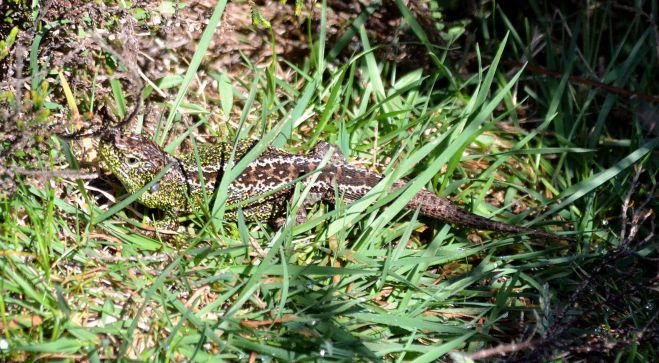
Gaining the grassy and not terribly sharp image below has involved a lot of hard work. In recent weeks I have invested more time and energy to self-finding Britain’s rarest lizard than I can ever remember devoting to any bird or insect. But Sand Lizards are not easy creatures to track down or take pictures of. After three days this week searching sites on the Surrey heaths, following on from two earlier days reconnoitring, I was eventually successful this morning and all that effort was well worth it in the end.

sand lizard.1801 frensham common

Male Sand Lizard

I have a great liking for all reptiles and observing the scarce heathland specialists Sand Lizard and Smooth Snake has been a long held ambition. My first attempt three years ago on the Dorset heaths resulted in abject failure. Put off by the difficulty of finding such tiny needles in the haystacks of huge expanses of habitat, I have looked in vain for organised walks in the two springs since then. But alas, the Wildlife Trusts like all conservation organisations now seem interested only in the family audience rather than catering for serious wildlife enthusiasts.

Locating an experienced guide to assist me in this quest has proved equally fruitless. But this year one source gave me the valuable advice that Sand Lizard are best located as the day warms up, and to avoid searching during the hottest part of the day. That narrow window of opportunity serves to complicate the logistics of a trip to Dorset, and so after consulting Amphibian and Reptile Conservation’s on-line site guide (see here) I switched my attention to the Surrey Heaths instead.

DSC_0044

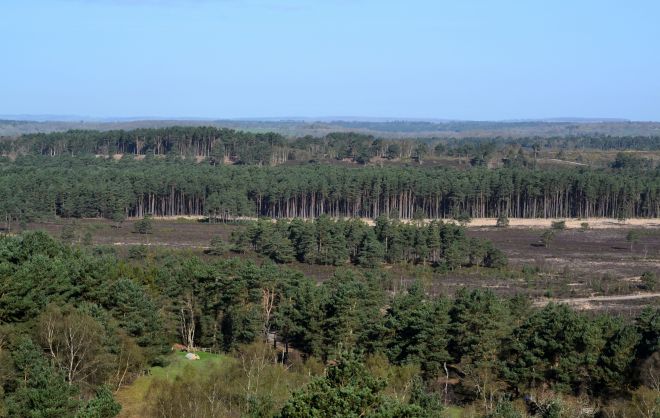
Frensham Common

ARC lists various locations in Surrey and Hampshire where it has re-introduced and manages habitat for Sand Lizard and Smooth Snake. Some of them also have indigenous populations and that whet my interest still further. Due to wider habitat loss these species now only occur naturally on such managed heathland sites. As Sand Lizards require mature sunny habitats and open undisturbed sand in which to lay their eggs, they can have quite limited distribution even within the protected areas. Eggs are laid in late May or early June and left to incubate in sand exposed to the sun before hatching between late August and September.

On two finer days during the recent wet early spring weather I explored several sites, noting the more compact and hence easier to work ones where reptile habitat appeared to have been created. Then with the prospect of spring weather arriving this week at the peak time for Sand Lizard emergence from hibernation, I booked into local accommodation and resolved to give things a proper go. There’s an old saying that if you want a thing done properly it’s best to do it yourself, and let’s face it I take that option quite a lot.

I needed a new and different project to fire my imagination this spring and self-finding those two rare reptiles had become it. One site stood out amongst all those I surveyed, a hilltop by Frensham Common that is said to hold all six British reptiles and where with luck they might be found basking on a sandstone outcrop at the summit. If Sand Lizard really do sit out to be noticed in this place (above, left) the picture opportunities would be quite special.

My first day on site (17th) was a write-off as the forecast sunny weather had yet to materialise. After spending a couple of hours on the hilltop, I continued to explore other sites in the afternoon, gaining an education on many aspects of Tree Pipit (above right) though with little chance of finding reptiles. But from Wednesday morning (18th) “Heatwave Britain” was set to bask in temperatures upwards of 23º C and the quest was well and truly on.

I arrived on site that day at 08:30 in perfect weather conditions and remained as advised while the day warmed up. But by late morning still no Sand Lizard or any other reptile had been encountered. In the afternoon I moved on to explore two more new sites, getting into some beautiful and evocative landscapes. As when I visited Wishmoor Bottom for the Parrot Crossbills last December, it is difficult to remember one is in the south-east English commuter belt in what seem like these vast tracts of heathland.

Feeling disappointed that my prime location had not produced, on Thursday – the warmest April day for 69 years – I tried other previously reconnoitred sites instead. Dog walkers confirmed that reptiles are indeed present and I did at least begin to notice rather small Viviparous (or Common) Lizard diving for cover. On another part of Frensham Common I also witnessed an Adder going to ground, before ending the day back at the hilltop. What I hadn’t reckoned on was the toll all this foot-stomping was taking on my post-prime body. As I write this piece I remain absolutely shattered. Maybe I am being told to slow down as such ageing carriages are wont to do.

That evening I reflected on how to continue motivating myself in the “new and different” sense that habitually I punish myself with. Regularly occurring European birds are now a diminishing return. I have observed and secured images of every English dragonfly and damselfly, and all but a group of northern butterflies. So then there are Sand Lizard and Smooth Snake, or perhaps newts or Natterjack Toad, all of which seemingly involve such an effort of finding. Or getting the garden right again and collecting new and different plants.

No matter, there was one more opportunity this morning and only one place to consider going back to before heading home. This time I took a chair and sat facing the sandstone outcrop in what is just a lovely spot to be. After an hour nothing had appeared on that back drop save a lot of large and fierce looking red ants and various flies and moths. I got up to walk around and there at last was the week’s first adult lizard (pictured below), spoiling the pose by resting underneath a heather twig.

DSC_0142

Female Sand Lizard

I hoped by the size and shape this was a female Sand Lizard, but not having seen one before could not be sure. After taking some pictures I went to retrieve my chair and upon returning an unmistakeable male was basking just out of the heather very close to where the other lizard had been. These are medium-sized, robust and stocky lizards with a rounded head and short legs. Males show striking green flanks that are brighter in the breeding season of late April and May. Both genders are characterised by brown and complexly variable patterns down the back with two strong dorsal stripes. Life stages are identifiable by their ocellated (eyed) markings, the dark blobs with enclosed pale centres.

The circumstances of this sighting were just as I had been led to expect: 10am as the day warmed up, though as seemed realistic these reptiles stayed close to cover rather than venturing out onto the rocks. And so my images are just like all the others I see of Sand Lizard, partially concealed. Oh well it wouldn’t do if this superb place were to find its way onto photographers’ forums. Hence my circumspection as to the precise location.

Eventually the male raised its head as if sniffing the air, then darted back into cover not to reappear. Shortly afterwards my chair toppled over backwards and downhill. I landed in a heap in a tangle of gorse and heather but save for a few scratches and a mildly sprained wrist there were no ill effects other than the growing feeling that perhaps I am getting too old for all this. At any rate the day having now warmed up I took that mishap as the signal to leave and seek the relative safety of my wildlife garden at home.

On the way back downhill a Slow Worm (above, left) was basking to one side of the path, and at the bottom a group of walkers had located another smallish Viviparous Lizard. I suppose I should return here in the weeks ahead to try for better pictures. Next up will also be Smooth Snake. Any tips on how to find them, anyone?

Black-necked Grebe at Grimsbury Reservoir, Oxon – 13th Apr

This little stunner brightened up another dull morning today. The attraction was that I had not previously gained pictures of a Black-necked Grebe in breeding plumage. This one was present for it’s second day at the grim reservoir serving Oxon’s grimmest town, Banbury. So with the dismal weather pattern of recent weeks having turned dry and merely overcast, I ventured 30-something miles up the M40 motorway to take a look.

2018 so far is an above average year for Black-necked in Oxfordshire, with this scarcer Grebe having been recorded at several sites since my return from America. They are more usually an infrequent inland visitor seen mostly between July and November, and again in the early spring. As a breeding species in England BNG is very rare, the main range occurring eastward from continental Europe. Today’s is the year’s first Oxon individual to exhibit the distinctive summer colouration, and so has been a popular draw.

I myself was not to be disappointed. I will not call these poor-light images (above and below) photographs as I am not a bird photographer. But as records of what is by any standards a rather special and attractive water bird they will suffice until I can manage something better.

Having lost my appetite for all out county birding at the end of last year, I have been more selective over what to experience in 2018. After seven seasons of going for everything in Oxfordshire, while definitely not keeping a year list, just enjoying what happens to grab my fancy is proving more motivating than I had thought. The extended cold and wet weather has served to create a rather different and interesting March and early-April mix of county birds more usually associated with late winter: Common Scoter, Whooper Swan, Iceland Gull and of course the widespread wintering Hawfinches.

I am not one to bemoan the late arrival of hirundines and other same-old, samey migrants seen every year. Rather since my last post herein I have enjoyed all the above-mentioned scarcer species locally as well as the Black-necked Grebes. With the pressure of needing to chase everything removed, more has also been getting done at home and (weather allowing) my wildlife garden is looking more orderly at least in parts. I have also begun to collect certain exotic plants, but more of that in the months to come.

After leaving the grim north I headed for the usual stamping ground of Farmoor Reservoir, that today resembled a roll call of county birding as it often does in the passage season. And so I found myself staying and socialising through the rest of the afternoon. In the atrocious climactic conditions of the last few weeks it would have been easy to become depressed, but I have managed the situation far more effectively than when I last opted out of work in 2015. Today’s mix of good birds and good company proved rather more therapeutic than I could have imagined.

Snowy Owl at Snettisham, Norfolk – 11th Mar

Finding news of this lifer during Saturday afternoon prompted one of those get up and go moments. Snowy Owl, a staple of many a past Arctic wildlife documentary, usually turn up in Scotland, the Scillies and Cornwall or so I thought. Hence the opportunity to experience one just 150 miles from home was not to be missed, and I resolved at once to head off immediately upon waking the following morning.

After first reports in Kings Lynn on 5th March and nearby Heacham the next day this individual had become twitchable at Scolt Head Island on the north Norfolk coast through the latter part of Friday 9th. A day later it relocated to Thornham Point west of RSPB Titchwell where large numbers of birders connected, albeit distantly before the owl flew inland at dusk. On my arrival in Norfolk a negative had gone out from that last observed location at 7:17am and there had been no further sightings since.

It seemed sensible to go to Titchwell and await further news as there would be plenty of birders around. Getting there at 9am I bought a day permit and headed for the beach, where the earliest starters had now spread out along the coastline to watch and wait. Various sea duck were being reported offshore and wandering around I managed to self-find several splendid male Long-tailed Duck, though the other interest was rather too distant for my liking.

So I began to walk back inland and just before 11am the RSPB home for nature’s blandish ambience suddenly and imperceptibly assumed a certain added sharpness. Upon overhearing two phone calls I checked RBA again and the latest alert read: “SNOWY OWL Snettisham RSPB at far viewing screen late morning”. This at once suggested a long walk that I remembered well from having twice twitched a Pallid Harrier at the site in 2015.

I was relieved the day’s quest had been re-found back towards Kings Lynn, since it could have become a very long day if the owl had moved on east to Cromer, for instance. There was now a general evacuation on the part of serious birders, though even more of the RSPB’s preferred clientele were still walking in the opposite direction as we all left.

At Snettisham Beach the Snowy Owl had indeed settled in the furthest possible location from the bulging reserve car park. This wild and windswept reserve can be quite an unforgiving place. On and on I strode in company with many other birders, some of impressively advanced years for their exertion and a few walking with sticks, until the sought for twitch line finally came into view.

Here the Snowy Owl, a first winter female (pictured above) was visible at once, amongst long grass on a mound 90 yards to one side of a boardwalk upon which the assemblage of birders was gathered. This owl likes such a look-out post and there she sat unconcerned by all the attention, turning her head from side to side just like all the others in those TV documentaries. Much of the time her big round eyes were half closed but on occasion they would open wide revealing a vivid yellow. What a superb bird.

She was indeed a beautiful sight and one I like many others present would not have expected to witness in Norfolk, until now. The views here were by all accounts much better than those on offer at Thornham Point the previous day. Whilst males are strikingly white, females have a narrowly barred appearance making their own white faces stand out especially. A million images such as these (below) must be appearing in cyberspace as I write.

Snowy Owl are nomadic tundra breeders and an irregular vagrant further south. A large, powerful owl their numbers vary with the food supply of Lemmings, since breeding only takes place in plentiful years. One pair bred in Shetland during the 1960s and 70s but this is otherwise an extremely rare visitor to Great Britain that I feel excited to have observed here today. My second Arctic icon in England of successive posts has been as pleasing as the first.

By 2pm I had enjoyed my fill and so began to head for home. The walk back did seem less far as return legs usually do but I still took things slowly to rest my aching limbs. Back at the reserve entrance the car park was half empty but the access road was still lined with later arriving vehicles along its entire length. That was testimony to the appeal of a truly stunning species making such an unlikely excursion to eastern England.

Ross’s and Glaucous Gulls in Weymouth, Dorset – 24th Feb

At last a national bird to go after. Since my return from Florida pretty much the same scarcities as before that winter break had been reported day upon day on RBA, and nothing new within acceptable range. Then with a week of February remaining a change to very cold, clear weather coincided with the arrival of some far northern gulls. Glaucous Gull numbers were boosted nationally and an adult Ross’s Gull appeared on the south coast around Weymouth.

The second of those was a must see, being not only a lifer but a very attractive vagrant from the high Arctic that reaches England maybe once or twice a year and even less frequently on the south coast. This bird had followed a fairly regular circuit over its first three days, being seen early each morning at Ferrybridge on the causeway to Portland, then later in the day at RSPB Lodmoor to the east of the town centre. It seemed likely the visitor would stay for a while so on Saturday morning I drove down to what is a favourite area with Oxon birding colleagues Ewan and Badger.

In the interim some very nice images had appeared on Dorset Birds (see here) that whetted my appetite further to see for myself a first ever Ross’s Gull. The species breeds in the high Arctic of north America and north-east Siberia and mostly winters at the edge of the pack ice or at sea. It is similar to Little Gull in size and habits, but with a very small bill and a broader white trailing edge to the wing. Breeding adults have a neat black collar and pink-flushed underparts, while adult winters are very pale grey (above) with unmarked wings.

We arrived at Ferrybridge just after 7:30 am. On getting out of the car a bitter north-easterly wind was blowing out of Siberia. With high pressure settled over Scandinavia sunny, freezing conditions were prevailing across the whole of Europe and I reflected ruefully on how welcome such a scenario would have been last autumn. But no matter, we strode off to join a twitch line sheltering below the A354 causeway to watch and wait.

At 8:13 the day’s first Ross’s Gull report came through on people’s pagers, from Lodmoor. This was the opposite of what had happened each day until now, but the bird was said to have flown off west. So it might still settle amongst the small assembly of gulls before us in what was a very good light for taking pictures. Numbers of Red-breasted Merganser were out on the water at this far southern end of The Fleet, Brent Geese foraged here and there, while Ringed Plover and Turnstone ran around on the mud. But after two hours the Ross’s Gull had still not appeared and a decision needed to be made.

lodmoor.1801.JPG

RSPB Lodmoor, one of the Ross’s Gull’s favoured haunts

Birder numbers had thinned by now and with our parking time running out we too opted to switch location to Lodmoor (pictured above). There our party was boosted to four by fellow Oxon birder Terry who had endured a similarly fruitless wait, the main attraction having not returned since that one earlier sighting. Another sojourn ensued then at 11:35 the day’s second report came from RSPB Radipole Lake close by the town centre.

Cue a mass relocation, and when we arrived at Radipole a crowd of birders was visible to one side of the visitor centre. The Ross’s Gull was dozing on the nearest island out in the reserve’s southern lagoon, then began to move around a little so everyone got to see it. I myself was able to obtain some hardly satisfactory record shots (below) but the bird had been seen, a life-list addition gained and that familiar sense of relief set in from mission having been accomplished.

DSC_0001

Adult Ross’s Gull (centre) with Black-headed Gulls, and more record shots (below)

Eventually this delicate and delightful waif flew up high and circled the immediate vicinity, displaying a dainty, tern-like flight action with pointed wings and long sharp tail. The final departure when it came was in the direction of Lodmoor and so we followed once more.

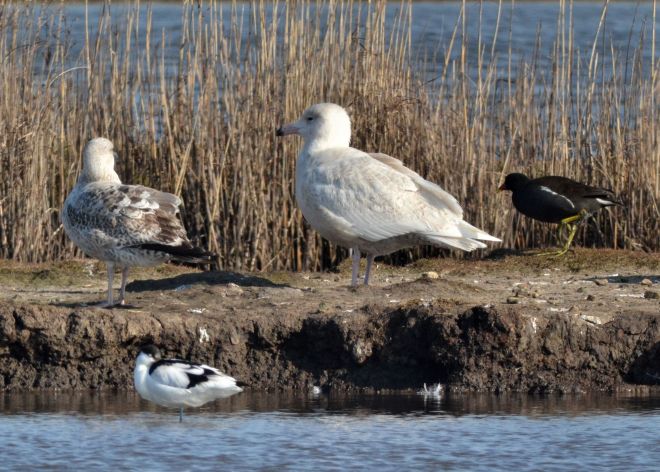
Back at the more agreeable (to me) of the RSPB’s two Weymouth sites, being the one without visitor facilities, not a lot had changed in terms of viewable birds. But a pair of Spoonbill were feeding near the southern edge of the reserve, Avocet were dotted about then in the early afternoon two Glaucous Gull flew in, both immatures.

I had observed this large and powerful gull (pictured above) twice before in dusk roosts around Oxfordshire, so it was pleasing to take in and appreciate their paleness in the cold light of such a clear, sunny day. It has been a good winter in Britain for the Arctic’s commonest breeding gull, and these two individuals also arrived in Weymouth during the previous week.

Just before 2pm the Ross’s Gull was reported again back at Radipole Lake to where we relocated for the final time. It was in the same spot as before, but birder volumes were now more manageable and so I managed as good digiscoped images (above) as I was likely to get in the glary light with my equipment. At around 2:45 the object of our attention took off once more, flew around for a while as in the morning, and eventually disappeared from view high over Weymouth town centre. All four of us were now content with our day’s views and so we headed for home after a most successful outing.

glaucous gull.1807 lodmoor

Glaucous Gull (imm) and friends at RSPB Lodmoor, Weymouth

A newcomer’s impressions of southern Florida 5 – the best of the rest: 8 – 25th Jan

Herewith a round-up of some other locations visited and wildlife observed during my 19 days in Florida. I commented in part 4 on the lack of walkable countryside in the sunshine state. That perception changed on the last two days of this trip when I was pleased to at last find two big expanses of unspoilt original habitat with general access and mercifully no visitor facilities. So such places were out here after all.

Upon researching somewhere to go to fill my final day (25th) I became aware of the Babcock / Webb Wildlife Management Area some 15 miles to the north of Fort Myers. It sounded like a possible area in which to locate further birds I wanted to see in Florida, such as some more Woodpeckers, Blue and Scrub Jays, but most of all the enigmatic Limpkin. At the preserve entrance, just off the US-75 highway is a chain of water bodies known as Webb Lake and that was where I commenced my search.

DSC_0109

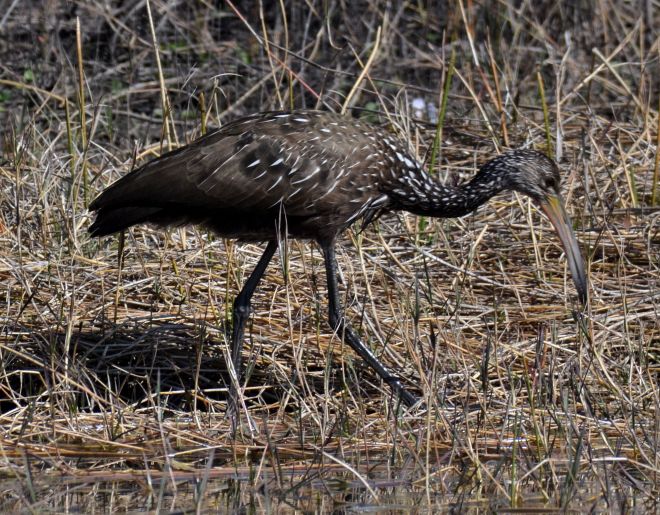
The enigmatic and mysterious Limpkin, a Florida speciality

The WMA’s only metalled road snaked between this feature and the nearby highway away to the west. It was clear most of the other interested parties here were anglers, but I had chosen well since at each likely looking stopping place I did indeed observe Limpkin. There was one by itself at my first stop, a group of four at the next, and three more on the return drive that were close enough to digiscope adequately. Two Sandhill Crane as a fly past provided a second welcome life list addition here.

Limpkin inhabits freshwater habitats including lake margins, swamps and water courses, where the diet is frogs, snails and insects. Its range within North America lies almost entirely within Florida. Sibley describes the species as an unusual bird, combining characteristics of a large Rail or small Crane. Well it would certainly be a very elongated Rail, with down-curved yellow bill and dark olive legs. The plumage colouration is generally brown with white flecking on the body and a buff toned head. These birds conveyed a certain out of the ordinary, even primeval quality and charm as they moved sedately through the marginal vegetation with a limping gait, hence their name.

Having seen my top target so well I then drove further into the WMA, finding it to be another of those places I so often get into abroad in which it seems possible to walk or even drive for hours in a single expansive habitat, most probably without noticing a lot. Of the few birds encountered, the only ones that didn’t fly up and into the sun ahead of my approaching vehicle were a group of Common Ground Dove.

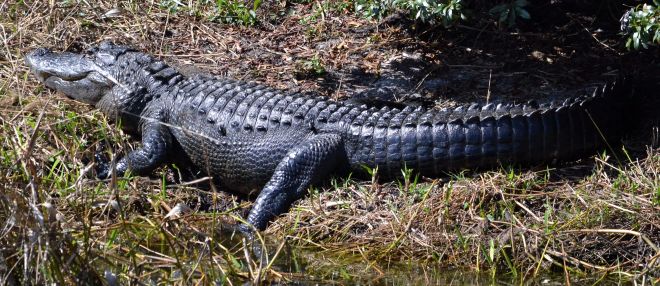
It struck me the best way to explore what seemed like interesting habitat would be by mountain bike. I am always wary of taking a hire car on dirt roads, so not wanting to tempt mishap and having forgotten to bring any food I decided not to persevere and so returned to base for a lunch break. That was not before encountering the trip’s final American Alligator (below), that like myself was contentedly on its own at the back of beyond.

DSC_0120

Babcock / Webb WMA Alligator, the last one of the trip

In the afternoon I paid a second visit in as many days to the Estero Bay State Buffer Preserve in Fort Myers. As if to confirm my earlier sentiments I came upon next to no birds, just a handsome Gopher Tortoise (below, left) but it still felt good to be walking in such a large expanse of natural habitat and to think it is being preserved as such smack in the middle of what is a highly developed district.

On my first visit the previous afternoon I had expected another public park but actually found a huge tract of original habitat that has been set aside as a buffer against development and to help preserve ecosystems. How refreshing, and now I knew what this part of suburban Florida must have looked like before all the condominiums, country clubs and golf courses were fashioned out of the landscape. I came across a Downy Woodpecker, the US’ smallest of the family, while a Loggerhead Shrike (above, right) hunting on territory was busy behaving as grey Shrikes do everywhere.

The wildlife interest that time was otherwise mainly butterflies, mostly the same as I had been finding all trip but three new ones as well. Pearl Crescent (above, left) is a common and widespread species throughout much of the US and Mexico, being found in a variety of non-specialised habitats. Cassius Blue (above, top right) is resident throughout the year in southern Florida, producing at least three broods. There are many and similar Skipper species in North America so I will not attempt to ID the one seen here (bottom, right).

On my first and last days in Homestead (8th and 18th) I visited Biscayne National Park on the coast to the east. Since 95% of it’s 172,971 acres is water, between the Mangrove swamp coastline and the offshore Florida reef system, much of the wildlife interest here is marine. But the park’s only land based area around its Dante Fascell Visitor Centre offers seabird watching over the bay. It was here after driving south from Miami on day 1 that I first encountered Brown Pelican, Royal Tern, Bonaparte’s Gull, Green Heron and the subsequently ubiquitous Yellow-rumped Warbler.

A private boat hire concession operates from here, allowing visitors to explore the mostly impenetrable Mangroves to the north and south where American Crocodile and Manatee can be found. But I have no experience of canoeing or kayaking and in any case was alone, so that otherwise attractive option was not possible.

Immediately south of the centre lies Homestead Bayfront Park, which is more a boating facility than a nature reserve. But the marina piers held an interesting accumulation of approachable seabirds (above and below) that on 18th were much easier to photograph than they had been in The Keys. Some of the pictures in part 1 were indeed taken here.

But perhaps the stand-out bird that morning was a rather impressive white-morph Great Blue Heron (below). Also known as Great White Heron, this largest of all American herons is found only in Florida where it is most prevalent in The Keys. Adult white and indeed blue-morphs here can be 10% larger than the norm for Great Blue (per Sibley), and exhibit a very heavy bill. Just look at that magnificent weapon!

My thanks are due to Oxon county recorder and north American bird authority Ian Lewington (see here), for kindly checking through these five Florida posts and putting me right on some of the trickier IDs, including this one.

Lastly, I didn’t include the following sequences in part 3 so as not to overload that post with Alligator pictures. These were all from the Oasis visitor centre on the Tamiami Trail that held the largest concentration of the reptiles I came across during this trip. It seems fitting the series should end with a further celebration of these magnificent creatures that together with all the Herons were my prime reasons for wanting to take a winter break in Florida this year.

I can only proclaim once more, as often before in this journal that I love all reptiles. And these big and beautiful beasties most certainly didn’t disappoint. This trip was the realisation of a long held ambition. Whether I will re-visit Florida in the future remains to be decided, but hey I’ve done it and the memories cannot be erased.