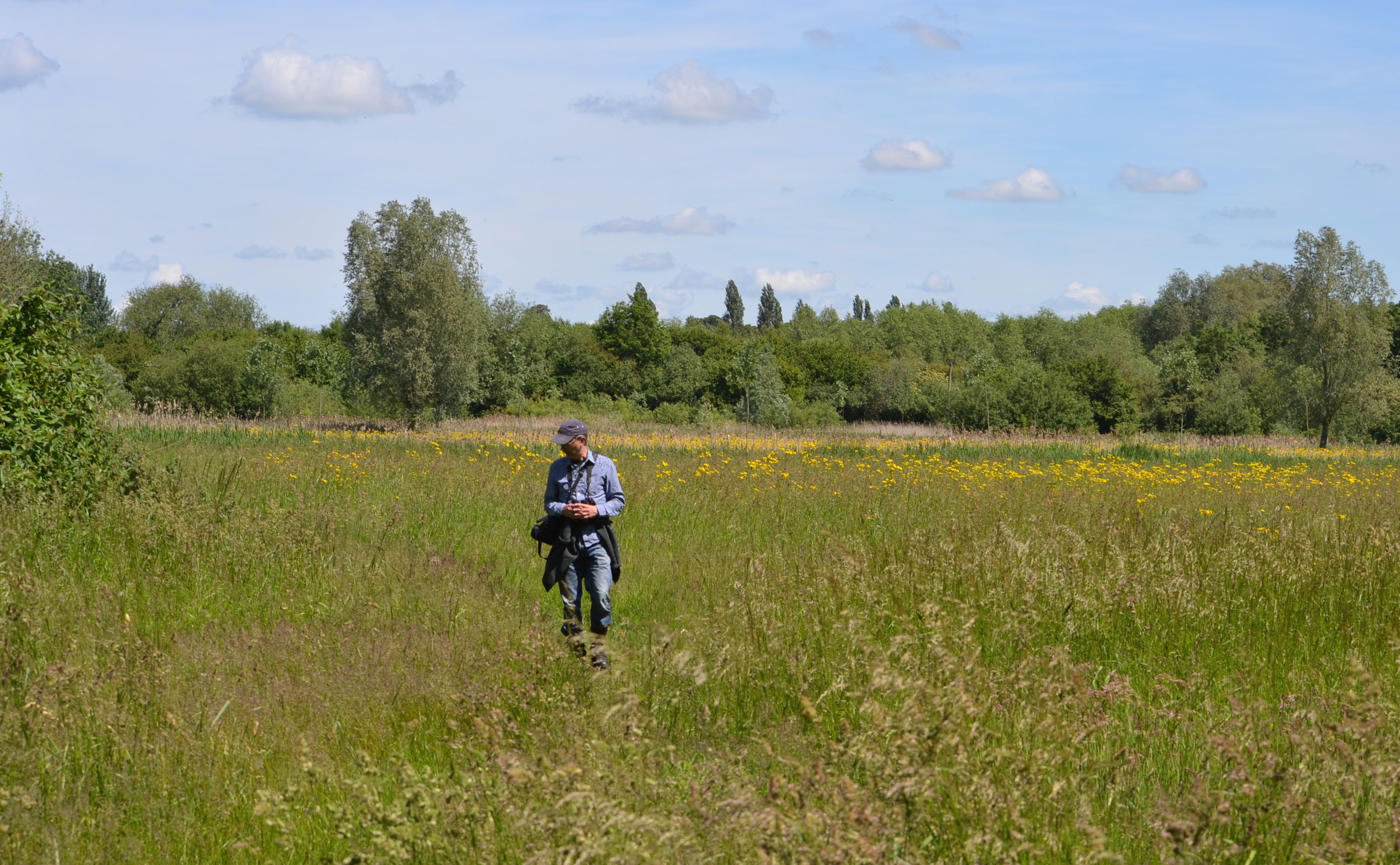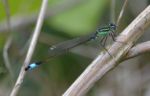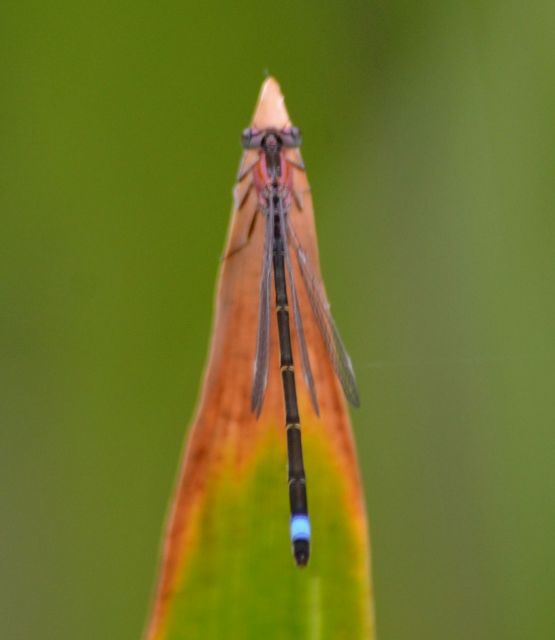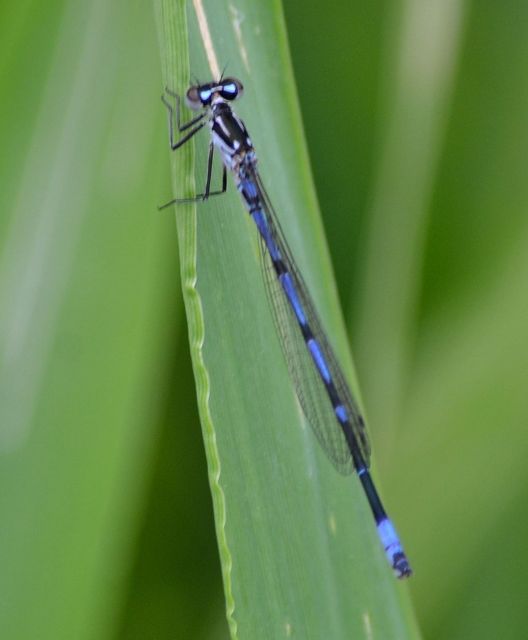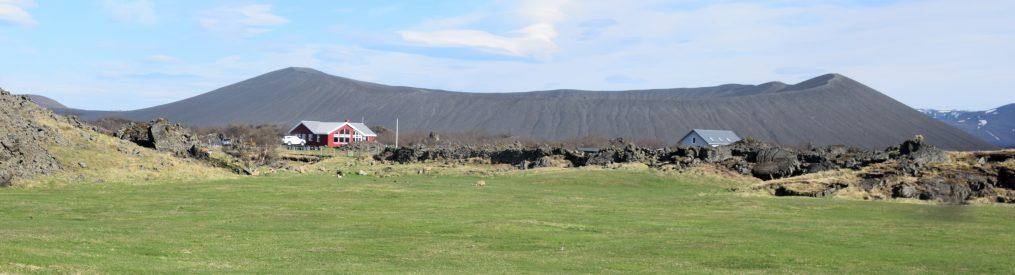
Brilliant Emerald dragonflies at Warren Heath, Hants – 22nd & 25th July

I have always found Brilliant Emerald to be one of the most difficult dragonflies to observe. Why so? Because they fly fast and low around pond edges, seldom settle and keep beneath overhanging vegetation as much as possible. In 2013 at Esher Common, Surrey I watched one doing just that over and over again, always approaching from away to my left and vanishing to the right. I also saw them at Thursley Common’s Moat Pond that year but not since until now.

2013 Brilliant Emerald

2013 Brilliant Emerald at Esher Common

This national rarity is locally common within a limited area of south-eastern England, south of the Thames and London where it favours acidic soils and coniferous woods. This week I read up on a well-known site at Warren Heath (SU774596), just inside north Hampshire and visited first on 22nd to get to know the species better. The exact spot wasn’t easy to locate but a call to Jason Coppock (aka Badger) who had been here before put me straight. From just opposite the Eversley Materials Recycling Facility at SU784586 a track leads down through Forestry Commission woodland to two large ponds in a valley bottom. And that is where the metallica, as BE is known from its Latin name live.
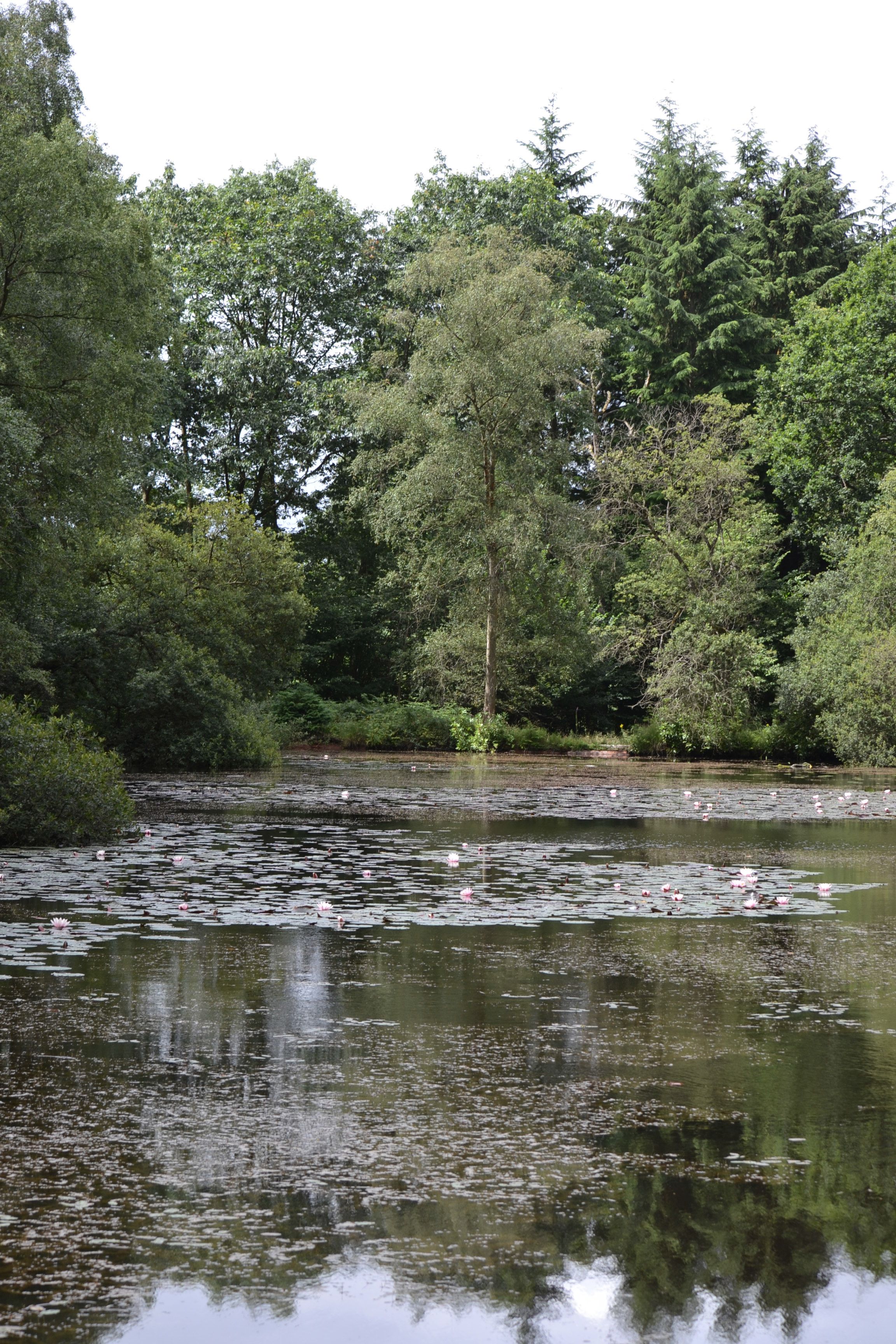
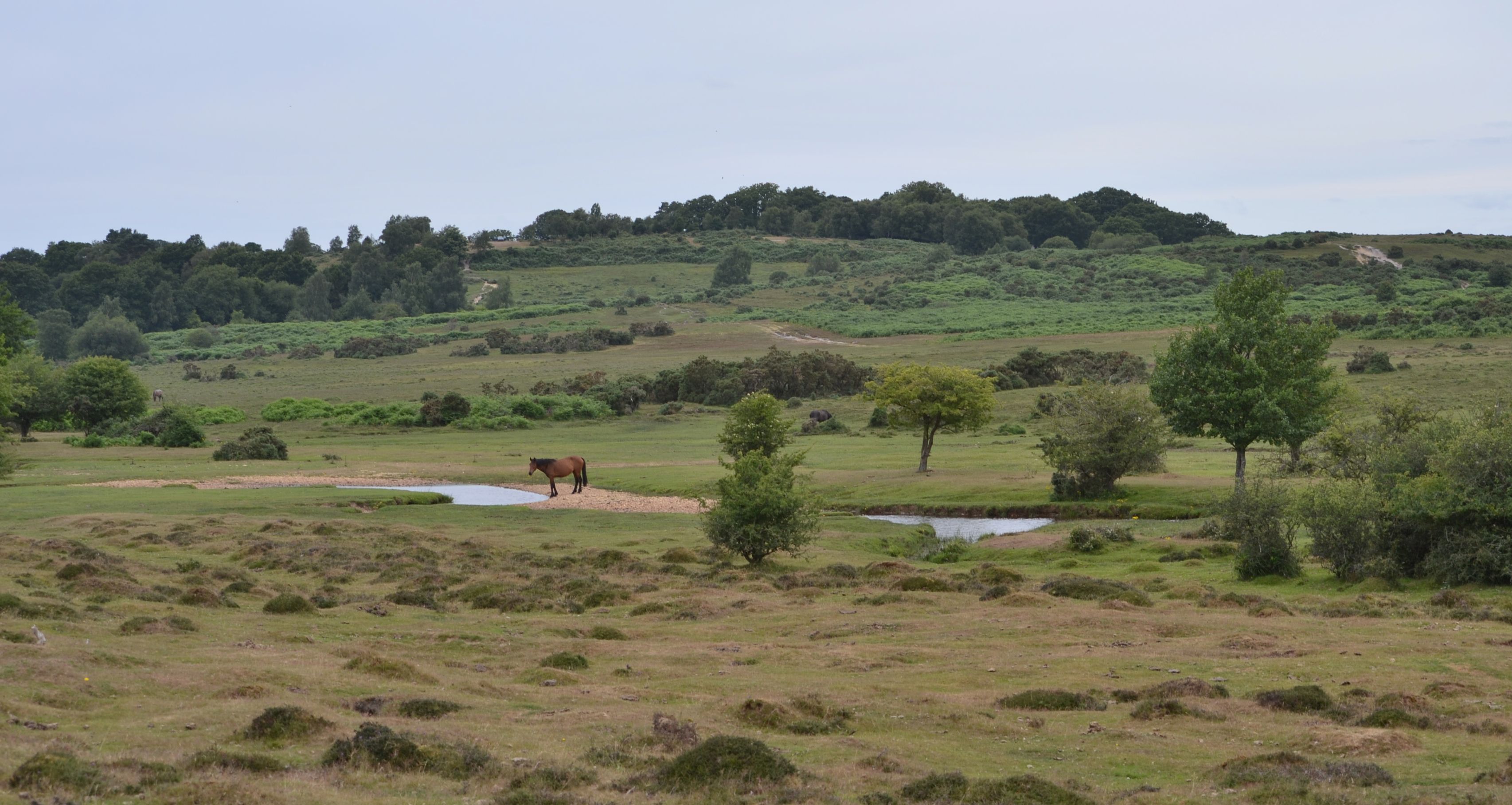
Today's secluded location

Today’s secluded location

Water Lilies - I love 'em

Water Lilies – I love ’em

It was possible to walk all around the edges of the larger pond, and despite only intermittent bursts of sunlight two Brilliant Emerald were active at the eastern end. Cue a text to Badger thanking him for his excellent directions. I then retraced my steps along the pond’s northern edge finding two more BE, one of which was patrolling up and down close to the western bank and moving relatively slowly in the low light conditions. So I decided to retrieve my chair and lunch and stake out that spot with the camera all afternoon if necessary or until it rained. After too many chalk hillsides of late and suffering more than a bit with asthma this week I fancied a restful sit down.

Irritatingly it was the second (rainy) possibility that prevailed. Fairly soon after I returned dark shower cloud moved in from the west, ending dragon flying for the day. I encountered about five metallica in all here at this first attempt but realised that getting a suitable picture to post on this blog could be a challenge. In the meantime I out-sourced the image below.
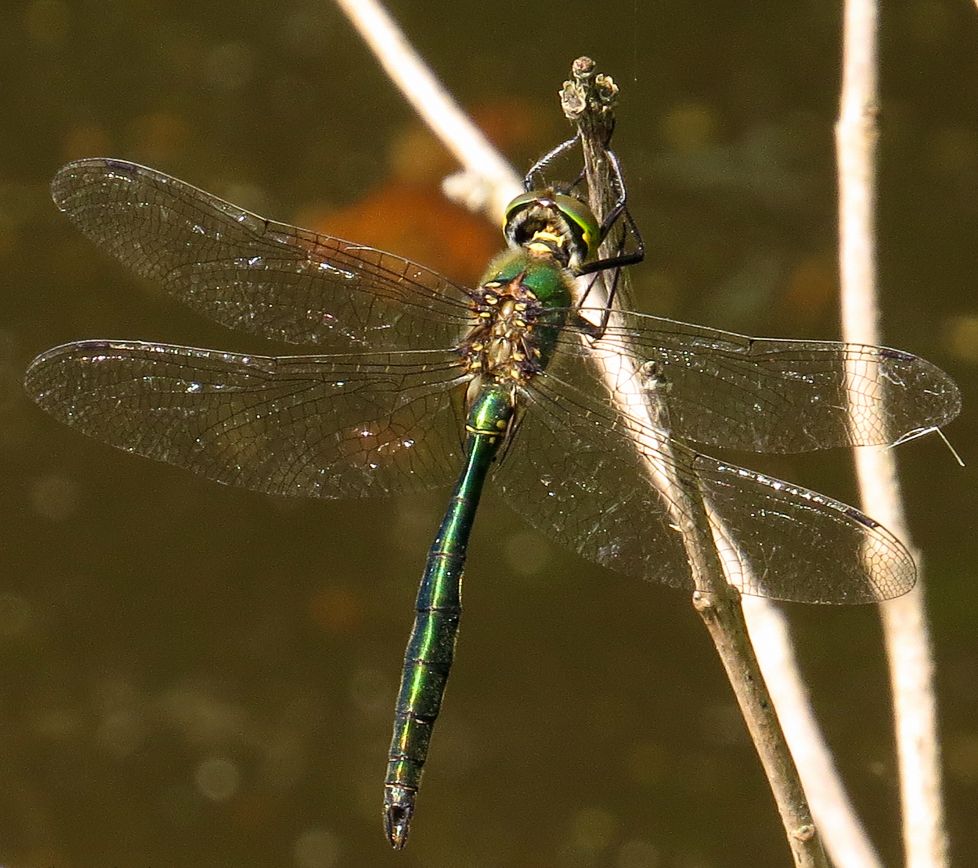
Brilliant Emerald rights of owner reserved

Brilliant Emerald (male)
© rights of owner reserved

I also captured this immature male Keeled Skimmer (a first) in this forest today

An immature male Keeled Skimmer in the forest

I re-visited this afternoon (25th) with Ewan who had not seen Brilliant Emerald before. We spent a couple of hours watching them in the same spots as on Wednesday doing the same as the Esher Common one had done two years ago, which of course is just what metallica do. According to Brooks and Lewington, males rarely and females never take prey at water, feeding and mating both taking place in the surrounding tree cover. I did manage another blurry flight shot today (below) and having got to know this superb site could gladly spend more time here in quest of the precious perched photo.

2015 Brilliant Emerald
2015 Brilliant Emerald

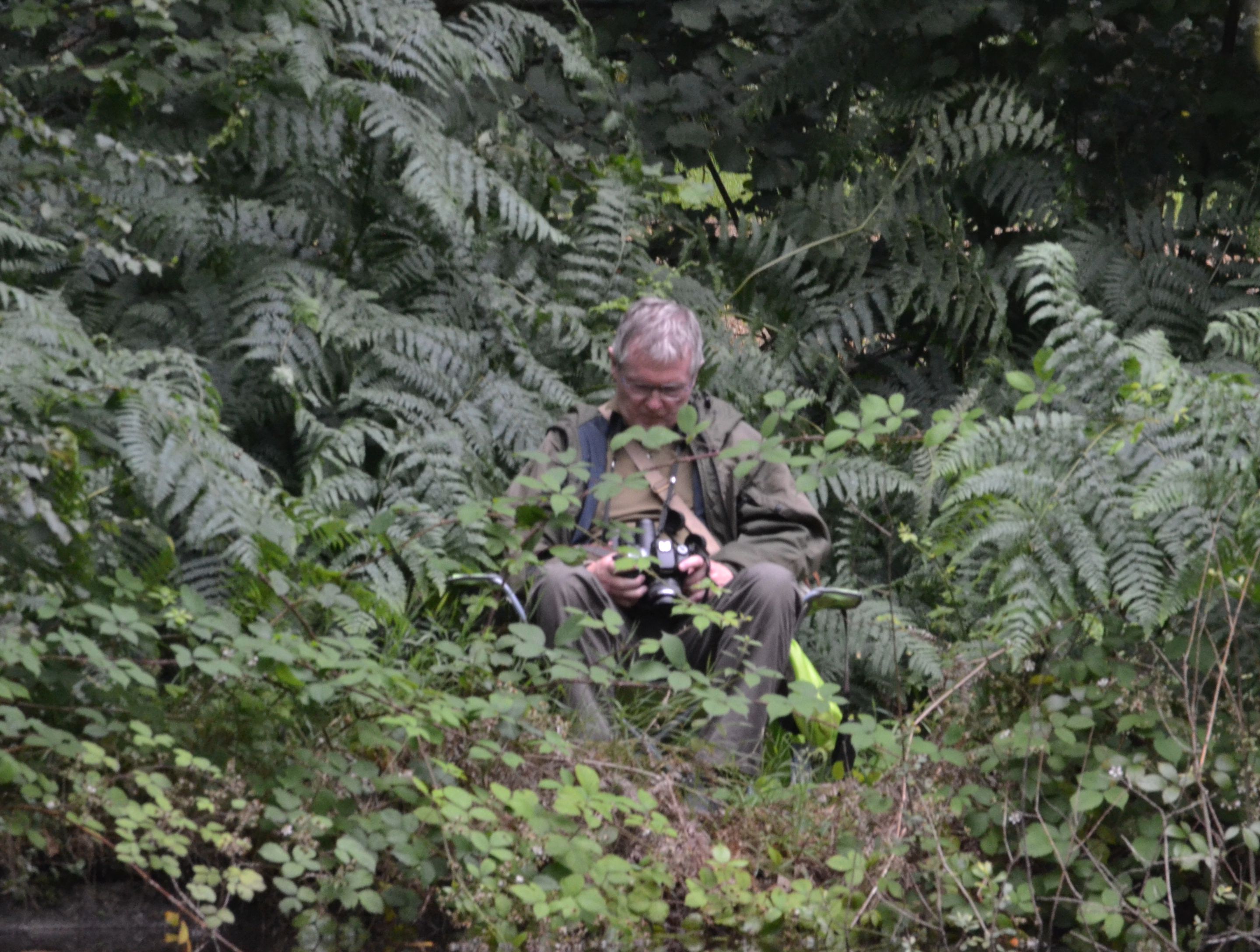
Ewan checking his shots

Ewan taking the weight off his feet

New Forest Odonata – 1: Latchmore Brook – 18th July

High summer is also a time for enjoyable day trips to the Hampshire playground of the New Forest.  The valley mires and streams of this huge tract of lowland heath support around 28 different dragonfly and damselfly species, 70 per cent of the resident British population. The distance is a convenient 85 miles and a visit here has yet to disappoint.

For my first excursion of 2015 I chose a new site, Latchmore Brook because one of only two regular English damselflies that I had yet to see is found here. Scarce Blue-tailed Damselfy occurs only at scattered sites across southern England because it has very specific habitat requirements that are met by certain valley mires. A parking area at Ogdens (SU182124) lies conveniently next to the brook that can be explored upstream from this point. My research had indicated that Golden-ringed Dragonfly are found along the stream itself, while Keeled Skimmer and SBTD should be looked for in peat bogs on rising ground just to the north.

Latchmore Brook

Latchmore Brook

Arriving here at 10:30 am I first checked out an adjacent boggy area but found no odonata at all. Then I walked upstream for about a mile until the bed began to run dry. A few Keeled Skimmer were around and not having seen males either at Cothill Fen or Decoy Heath this year I was pleased to photograph one here. These bog dwellers are smaller and slimmer looking than the other British skimmer, Black-tailed with a tendency to up-curve their hind end when perched. Another New Forest regular, Small Red Damselfly showed itself here and there, while Beautiful Demoiselle were present in numbers everywhere.

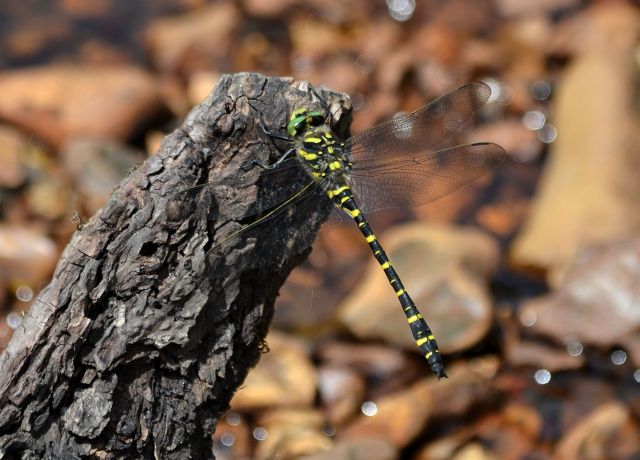
About two-thirds of the way along this watercourse I began to notice large dragonflies patrolling low over its surface, first one way then back the other over and again. These were the magnificent Golden-ringed Dragonfly, banded yellow and black with green eyes that meet in a point on top of the head. This species is common and widely distributed in heath and moorland areas. All the insects I observed today were males that didn’t settle much. But there were spots here with dead wood perches that I thought could yield interesting photographs if staked out on a future visit.

Golden-ringed Dragonfly

Golden-ringed Dragonfly

A short distance back from my turning point I reconnoitred a more promising looking bog on the stream’s northern side. Here there were better numbers of Keeled Skimmer suggesting this might also be a location for the lifer, SBTD. I returned to the same spot after a lunch break and this (below) is a Scarce Blue-tailed Damselfy, one of two found. The diagnostic is that the blue tail band covers part of segment 8 and all of 9, and has a convex upper edge. In males of the larger Blue-tailed Damselfy segment 8 is all blue and 9 black. The insects I recorded today had a noticeably more delicate appearance than the much commoner latter species.

Scarce Blue-tailed Damselfly

Scarce Blue-tailed Damselfly

I had to get muddy to capture this poor quality image. Adjusting position and camera settings to secure a better one could have involved sinking in to who knows what depth. Wellies would be a definite advantage for any repeat attempt. This was still a very pleasing result, meaning the last regular English damselfly I need to record is Scarce Emerald.
Purple Emperor and White Admiral at Bernwood Forest sites – 11 & 15th July

Each early July in any butterfly season Bernwood Forest to the north of Oxford and just across the county boundary in Bucks becomes a focus for enthusiasts wishing to observe Purple Emperor, and it’s supporting cast of two other large woodland butterflies White Admiral and Silver-washed Fritillary. The Forestry Commission complex most associated with that name, accessed from the car park at SP612118 – comprising three merging woodlands of Oakley, York and Shabbington Woods – has been a fixture in my own annual calendar since I started butterflying seriously in 2010. The location’s downside is its heavy use by dog walkers and how crowded it becomes otherwise at this time of year.

This year Butterfly Conservation’s Purple Emperor field meetings were taking place here on 11 & 12th. Though I have attended those in the past I grew to prefer butterfly watching alone or with just one or two companions. That’s because whereas birding may best be done in a group, real communion with insects is impossible when numbers of people gather around settled butterflies jostling for camera space. The location’s other downside is its heavy use by dog walkers and between the two things can become a bit hassle prone at this time of year.

DSC_0002

click to enlarge

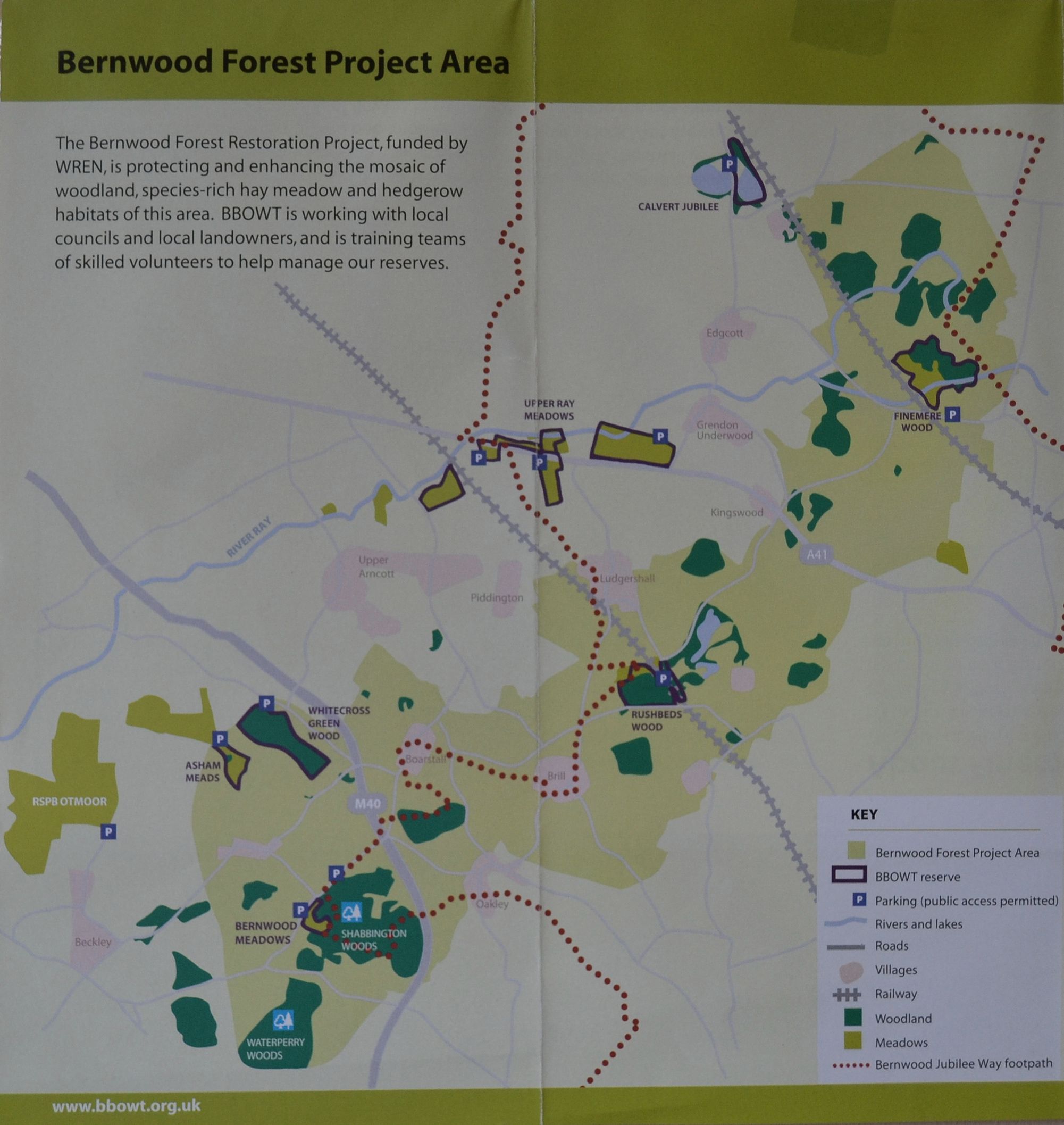
Hence on 11th I headed for Finemere Wood, Bucks (SP722217) hoping for a more agreeable option. The ancient hunting forest of Bernwood once covered much more land either side of the Oxon and Bucks border. Now a mosaic of woodland and hay meadows remains stretching north-eastwards from the villages of  Beckley and Stanton St John, just outside Oxford into countryside beyond the A41 between Bicester and Aylesbury. The Berks, Bucks and Oxon Wildlife Trust (BBOWT) manages five nature reserves within this complex: Finemere, Rushbeds and Whitecross Green Woods; Bernwood Meadows and Asham Meads. These are variously important for the “big three” woodland butterflies of July and the scarcer Hairstreaks.

Arriving at Finemere Wood at 10:30am I joined a small number of observers who had located two Purple Emperor (pictured below) in tree tops about a third of the way along this site’s main ride. But these did not descend to the ground as they can be relied upon to do at the Forestry Commission location. Being accessed along a farm track from the nearest road where there is limited parking, Finemere is not troubled by dog walkers or joggers and when the sun shines its only open ride becomes a corridor of frenetic butterfly activity. There were White Admiral gliding about at intervals but these are not generally inclined to perch for long openly, and hence it can take some time to secure acceptable pictures.

Tree top Emperor

Tree top Emperor

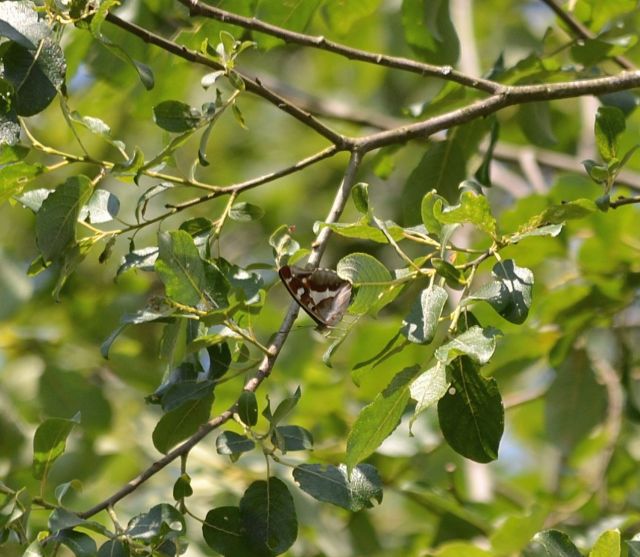
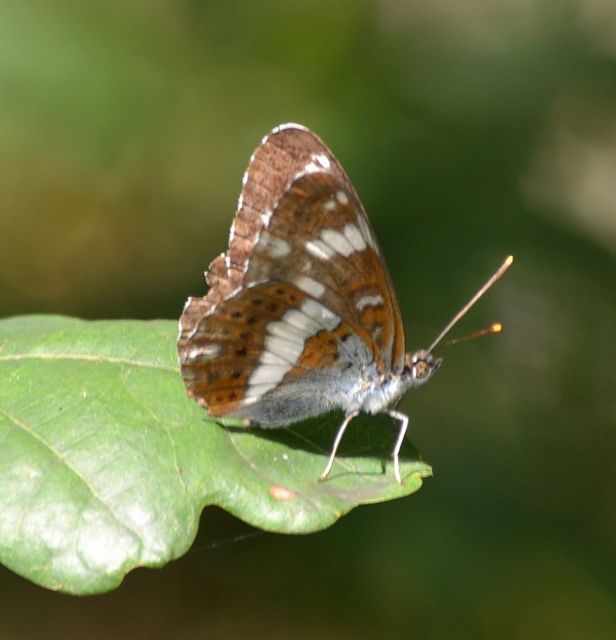
I then relocated to Whitecross Green Wood (SP600150) to try my luck there. This second location has a lot of brambly spots to attract White Admiral and Silver-washed Fritillary, but the grassy record shot below was the best I could manage this time. Once flying the condition of White Admirals can deteriorate quickly as the lower image demonstrates, so if they are not captured when newly emerged acceptable pictures can be difficult to come by.

White Admiral

White Admiral

white admiral_01.1502 whitecross green wood

A three day rain break ensued, then as the weather brightened again this morning (15th) I headed back to Oakley Wood. Arriving at 11:15am as the sun was breaking weakly through blanket cloud cover, I hoped that if like me the Emperors had been stuck at home for three days they might now be more inclined to come down from the trees and pose on the ground. I walked the main track again as far as Shabbington Wood, seeing one Purple Emperor flying amongst Oaks and my year’s first Purple Hairstreak, another speciality species at this site.

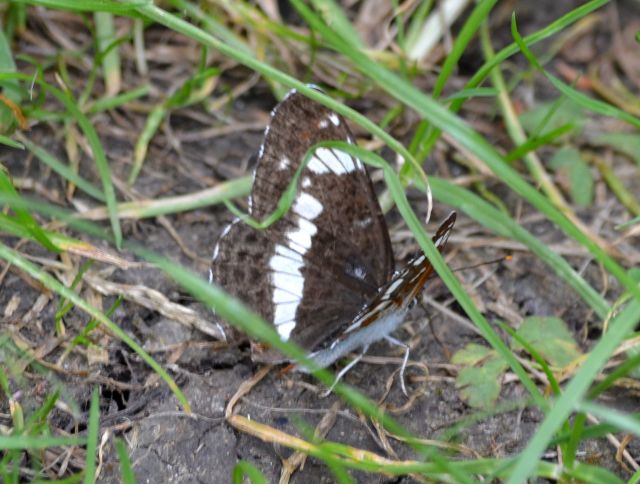
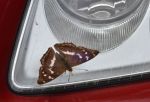
Returning to the car park to retrieve my sandwiches at around midday I hung around to see what would happen. Sure enough a male Purple Emperor glided down from on high and settled on a car. Whatever it is they gather from the gritty surface of the main track, today’s butterfly was probing for with its proboscis on the car tyres. It then set about striking interesting poses on another nearby vehicle.

purple emperror_01.1506 oakley wood

Purple Emperor (male)

These pictures (above) are a bit different from what I’ve taken before. Well everyone gets the ground level studies don’t they, but here’s a couple more anyway (below). I went to alert two observers from Bristol whom I had passed on the track, and being still nearby they hurried back to the car park. It was one of them’s first Emperor and both were delighted with my find.

Purple Emperor (male)

2015 Purple Emperor (male)

purple emperror_01.1504 oakley wood

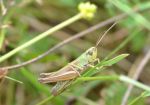
The pressure now being off I next followed the main paths around York Wood to see what else was about. On reaching the gate from York Wood into Bernwood Meadows (SP609112) I did a circuit of this lovely wild flower meadow. There was a profusion everywhere of one of my favourites, Knapweed that made for still more picture opportunities. The sound of grasshoppers was all around and countless dozens would zip in every direction to escape my footfall. Eventually I just had to get down on all fours with my macro lens to record these. I believe they are Meadow Grasshopper –  confirmation please anyone?

Wild flowers in Bernwood Meadows

Wild flowers in Bernwood Meadows

It is possible to enjoy many hours browsing these various sites in the Bernwood Forest complex, that are managed for the greater public good by BBOWT, WREN and the Forestry Commission. I spent around four hours in these woods today and in that time what was a half-baked blog post has become a celebration of high summer wildlife. We are so lucky in Oxford to have all this habitat and its nationally important butterfly populations on our doorstep.

Essex Skipper in Burgess Field, Oxford – 10th July

It is now high summer and countless millions of butterflies fill the countryside. Four familiar groups are absolutely everywhere. The common brown species of any grassy place or woodland are being joined on the wing by second brood whites and new brood Vanessids produced by the early season hibernators. And darting about amongst all of these are the diminutive, moth-like brown Skippers: Large, Small and Essex.

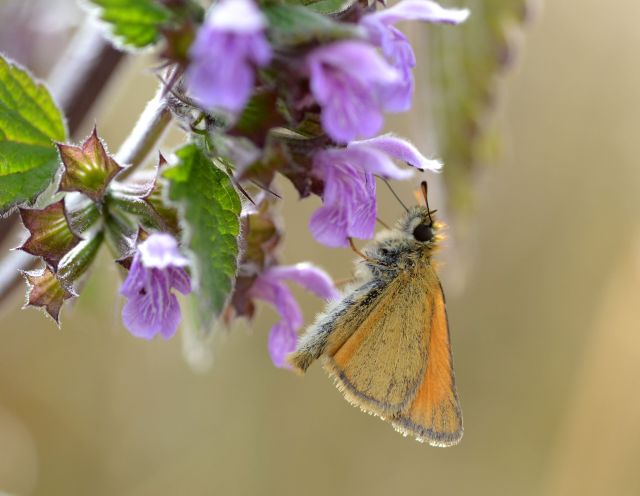
I know of two reliable Oxon locations for the enigmatic Essex Skipper: Hagbourne railway embankment (SU622894) and Burgess Field nature park in North Oxford (SU497087). Having been alerted by Adam to their emergence at the second one I went to check it out on Friday afternoon. The first brown Skipper I came across in this landfill regeneration site was indeed an Essex and thereafter the long grass and many wildflowers here sported hundreds of them.

Essex Skipper

Essex Skipper

essex skipper_01.1508 burgess field

Though a relatively common species in south-eastern England, Essex is very similar to Small Skipper and hence easily overlooked in the field by experienced and less savvy observers alike. That is unless one wishes to get down on all fours and examine the antennae of every brown skipper encountered.

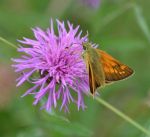
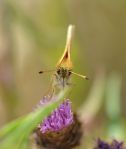
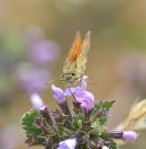
So here is the Rn’S identification guide to brown Skippers. Most people new to butterflying know that Essex Skipper has inky black tips to the antennae. But Large Skipper have black undersides to their antennae and so are easily confused with Essex depending on the angle from which they are viewed. The key difference is that Large Skipper antennae are hooked at the ends, as the central picture below shows. Small Skipper antennae are golden brown on the top sides and so easier to distinguish.

I had this lesson a few seasons ago from Butterfly Conservation’s former Upper Thames Branch and now national chair Dr Jim Asher. He said the surest way to separate Essex Skipper is to view them head on, as the outside pictures demonstrate. Turned off? Well it’s no worse to me than expert birders banging on about tertiaries, scapulars and greater ear coverts.

Large Heath butterfly at Whixall Moss, Shropshire + White-faced Darter – 29th June

Prior to heading back to Suffolk and work this week I needed to fit in an insect double bill before it was too late. During our recent damselfly collaboration Adam and I had agreed to go when convenient for Large Heath and White-faced Darter, he as driver and me as guide. These species would both be lifers for Adam and today was the day.

Having myself travelled to east Kent and back, Suffolk twice and the long way home from the Norfolk Broads in the past eight days, it was relaxing to be chauffeured on this occasion. And especially in a big Volvo 4×4, the “Gnome mobile” of Oxon legend. After arriving on site we walked out through a wooded area where there were good numbers of common butterflies: Meadow Brown, Ringlet and Speckled Wood. Then upon reaching the mosses proper we immediately began to see Large Heath, the first of very many.

Whixall Moss

Whixall Moss

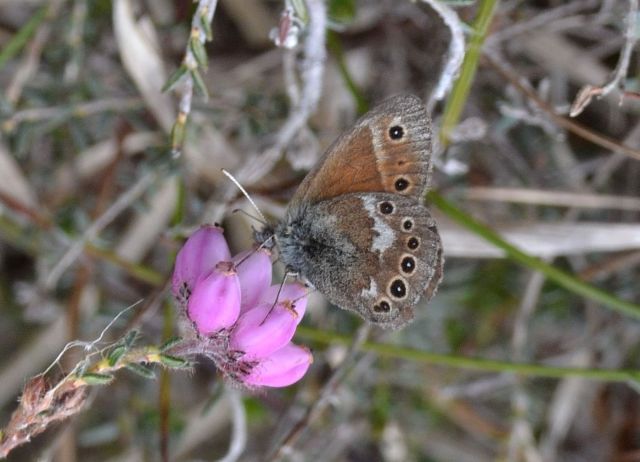
Fenn’s, Whixall and Bettisfield Mosses NNR is one of the largest lowland raised peat bogs in Britain. The acidic and waterlogged environment here allows a significant number of specialist bog plants and insects to thrive, including our day’s joint targets. Large Heath, of which there are several forms is most common in Scotland but also occurs in isolated colonies further south where suitable habitat exists. In my experience they are not easy to photograph, being skittish and unapproachable with unhelpful habits of sitting low down in long grass, flushing as the observer gets near then flying around tantalisingly without settling, before heading off into the middle distance. The shot I wanted was of a butterfly nectaring on Bell Heather, and this was duly gained. But they don’t usually do “clutter free “.

meadow brown_01.1502 otmoor

Large Heath

Large Heath

At the first bog pool we came across there were two White-faced Darter. It then took a little time to find the larger pool where I had experienced these attractive little dragonflies in 2014. There were partial board walks leading into that hot spot upon which the several WFD present were prone to settle, and we also located a mating pair. This species is also most common in the Scottish Highlands, while Whixall Moss is the closest location to Oxford where it occurs.

White-faced Darter

White-faced Darter

DSC_0087_01

At both pools WFD were being harassed constantly by Four-spotted Chaser, the bovver boys of the dragonfly world. Adam wandered off and found teneral Black Darter nearby, that emerge at this time of year; but neither of us saw Common Hawker, another possibility at this site.

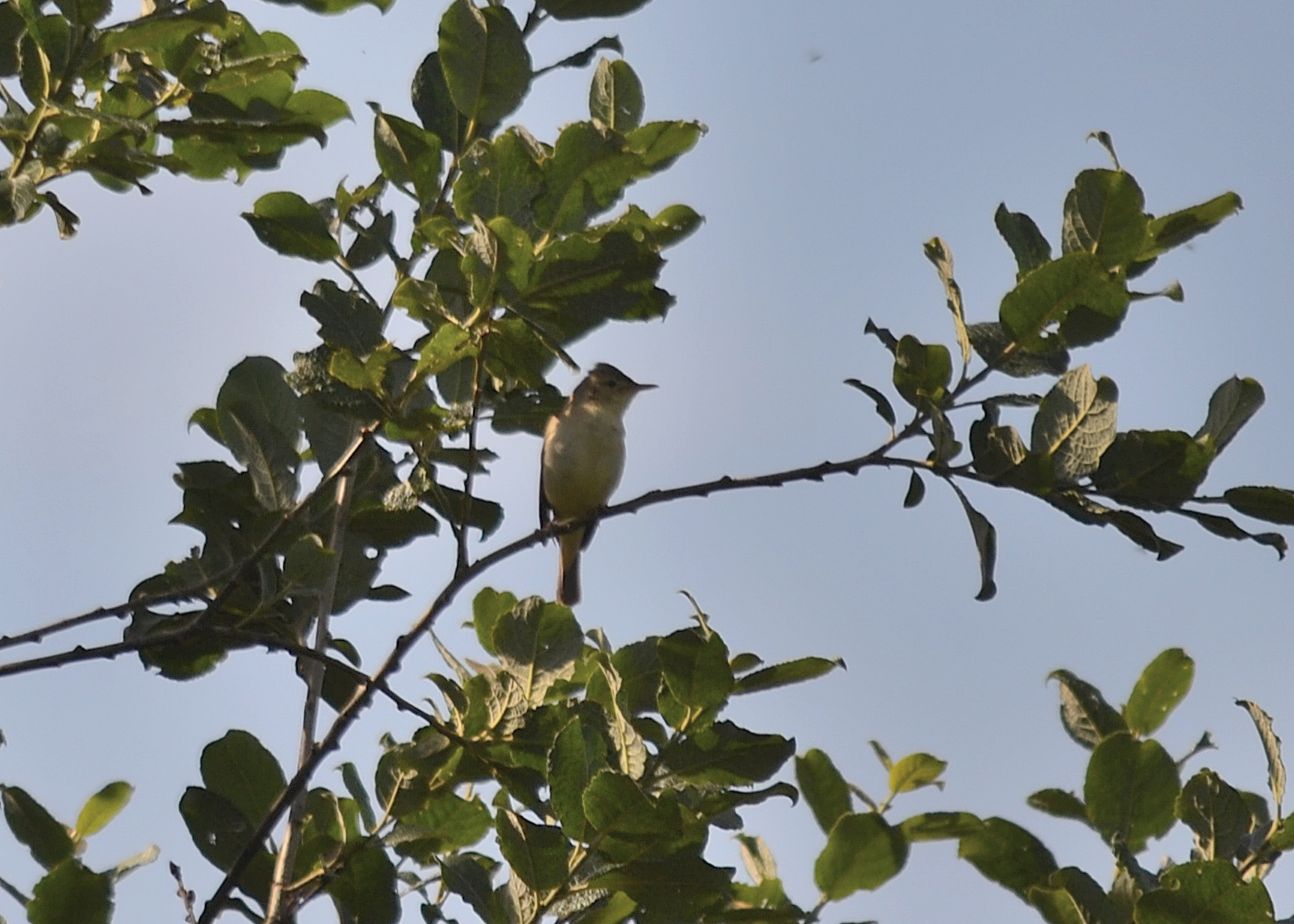
On the way home we dropped in to visit the male Melodious Warbler near Marsh Lane NR, Hampton-in-Arden, West Midlands. When we reached the recycling works where this bird (my second British sighting) has set up territory in recent weeks it was singing and showing well. So that was three out of three easy connects and a nice bonus to end a successful day.

Melodious Warbler

Melodious Warbler

Swallowtail butterfly at Hickling Broad, Norfolk + Red-veined Darter – 27th June

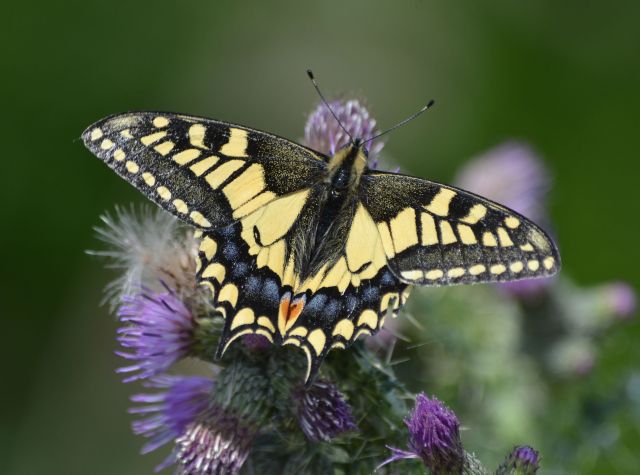
I am spending some time working in Suffolk at present, and so was within range of Britain’s largest butterfly that I had observed on just one previous occasion. Though widespread across mainland Europe Swallowtail has been found here only within the Norfolk Broads historically, though there has been some colonisation of Sussex since 2013 (see here). The resident Norfolk butterflies are actually a sub-species britannicus that is slightly smaller and has more extensive dark markings than the continental counterpart.

The Norfolk Wildlife Trust’s Hickling Broad NNR (TG428221) comprises extensive areas of reed bed, pools and woodland adjacent to the largest area of open water in the Broads system. On arrival mid-morning I was directed by the visitor centre to a trail along which many tall thistles grow in the reed edge. Here I found several Swallowtail moving from plant to plant with their characteristic floppy flight. These certainly looked bolder and brighter than the continental form that I have experienced many times. They were a beautiful sight nectaring on swaying thistle heads and trying to keep their balance in a strong breeze. I could gladly have taken much more time photographing them but there was a lot of reserve to explore.

Swallowtail

Swallowtail

swallowtail_01.1501 hickling broad

swallowtail_01.1504 hickling broad

Having achieved the day’s main objective I quickly became preoccupied with the reserve’s abundant dragonfly life. Amongst these I gained pictures of Black-tailed Skimmer for the first time this season (below). Around a large pond near the reserve’s western edge, Emperor were engaged lazily in territorial jousts with fading Four-spotted Chaser and I eventually located one Green-eyed (or Norfolk) Hawker. There are plenty of the last-named at this site had I cared to search the many reed bed channels for them, but I’d done the species recently in Kent.

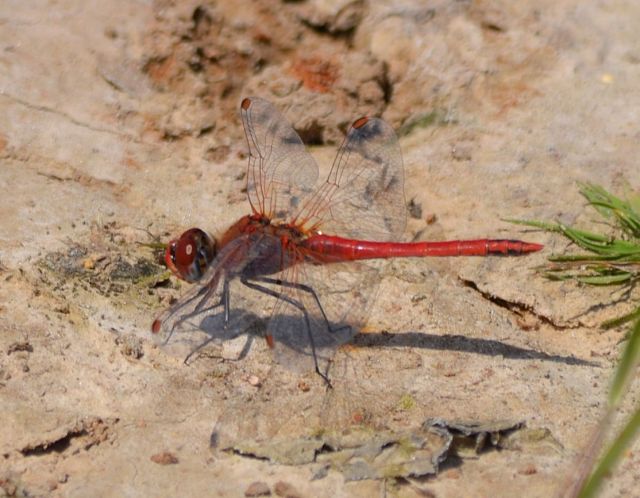
Red-veined Darter

Red-veined Darter

There were also some Darter species on the wing and amongst these was what I believe is my first British sighting of Red-veined Darter. This migrant is a frequent visitor to eastern and southern England and occasionally breeds. It took some time to secure a confirmation picture (above) after which I followed the “Bittern Trail” along the edge of Hickling Broad. From there cut paths led into the reed bed and I came across a cluster of Swallowtail again. These could have been the same butterflies I had photographed in the morning because when I got back to that first spot there were none to be seen.

It was now past 3pm and mindful of the 190 mile drive home, way beyond my usual range, I needed to leave. But hours could be spent productively at this fabulous site, getting better pictures of the Swallowtails, seeking out the Green-eyed Hawkers and more dragonflies; and there had been no time today to locate the reserve’s Common Cranes. Bittern? … Bearded Tit, Marsh Harrier … well we’ve got all those birds in Oxfordshire nowadays. I expect I’ll visit Hickling Broad again though sooner or later.

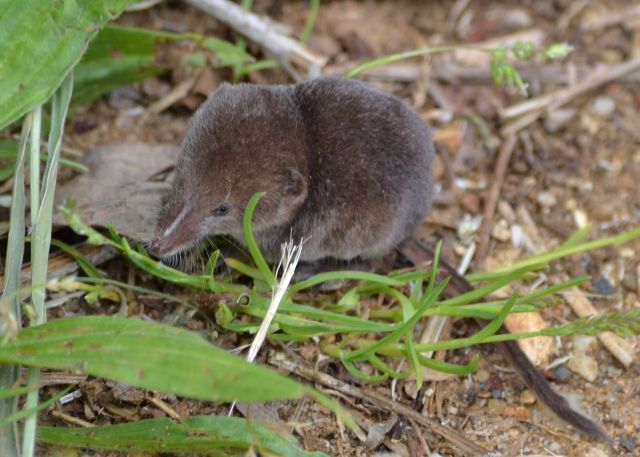
And should insect fatigue be setting in anywhere, here's a shrewd operator. No tame jokes on this blog!

Lastly, here’s a shrewd little fellow should insect fatigue be setting in anywhere … no tame puns on this blog!

Oxon Variable Damselfly at Barton Fields – 15th June

Over the weekend Oxfordshire’s newly revealed colony of Variable Damselfy has drawn the great and good of the local Odonata community to a nature reserve by the Thames in Abingdon. Yesterday Adam invited me to join him in locating 2015’s six-legged stars of our county “birding quiet season”. Since his preparation is always thorough I appreciated this would be a good opportunity to get to know that site, Barton Fields.

Today Adam had found out exactly where to look from our county odo recorder Steve Burch, and also Richard Lewington whose own interest shows the significance of this recent discovery by an Abingdon enthusiast. Armed with this information we found the insects straight away in an area of dense vegetation that was ankle deep in water. Compiling the last two Rn’S posts has brought home that I need to be much bolder in getting into odonata habitat, and today demonstrated that very well.

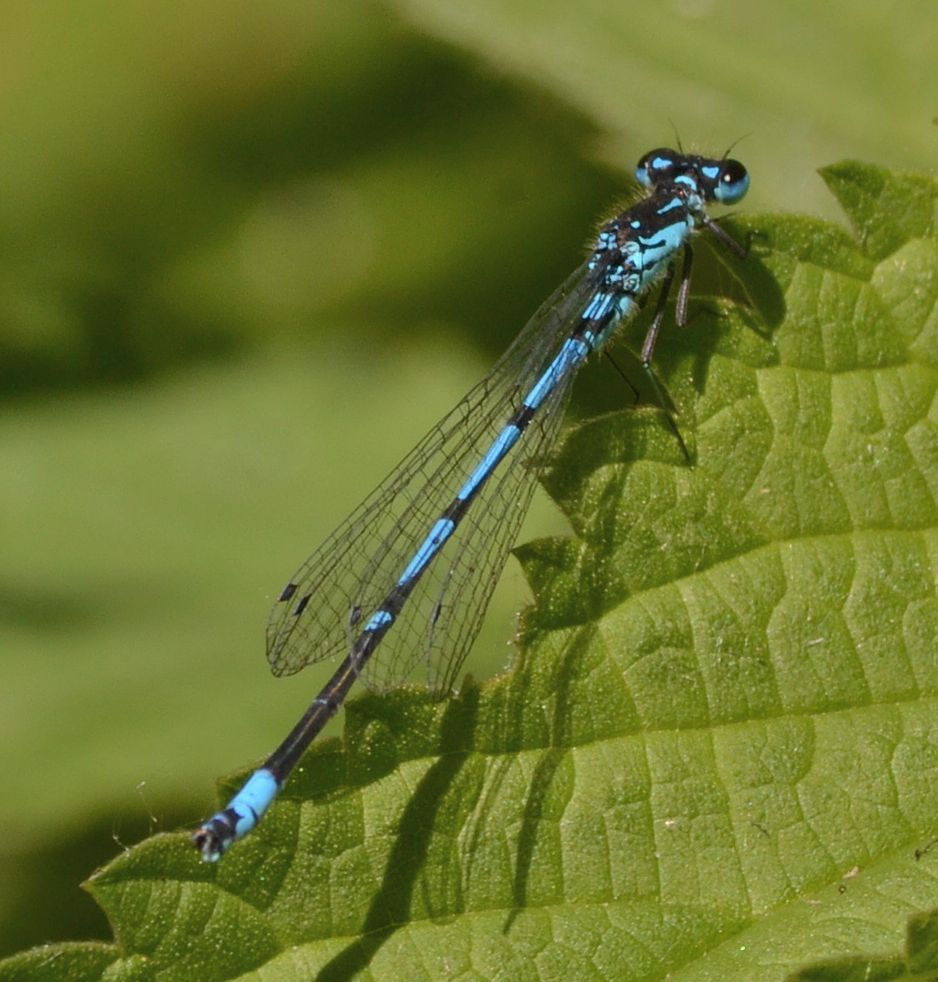
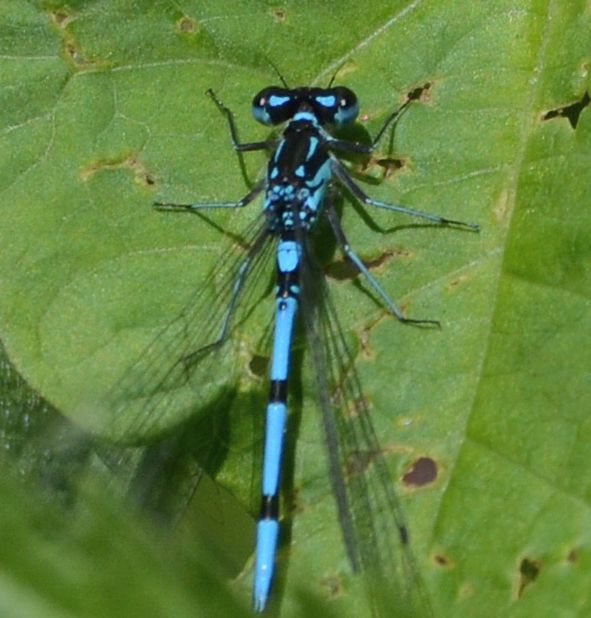
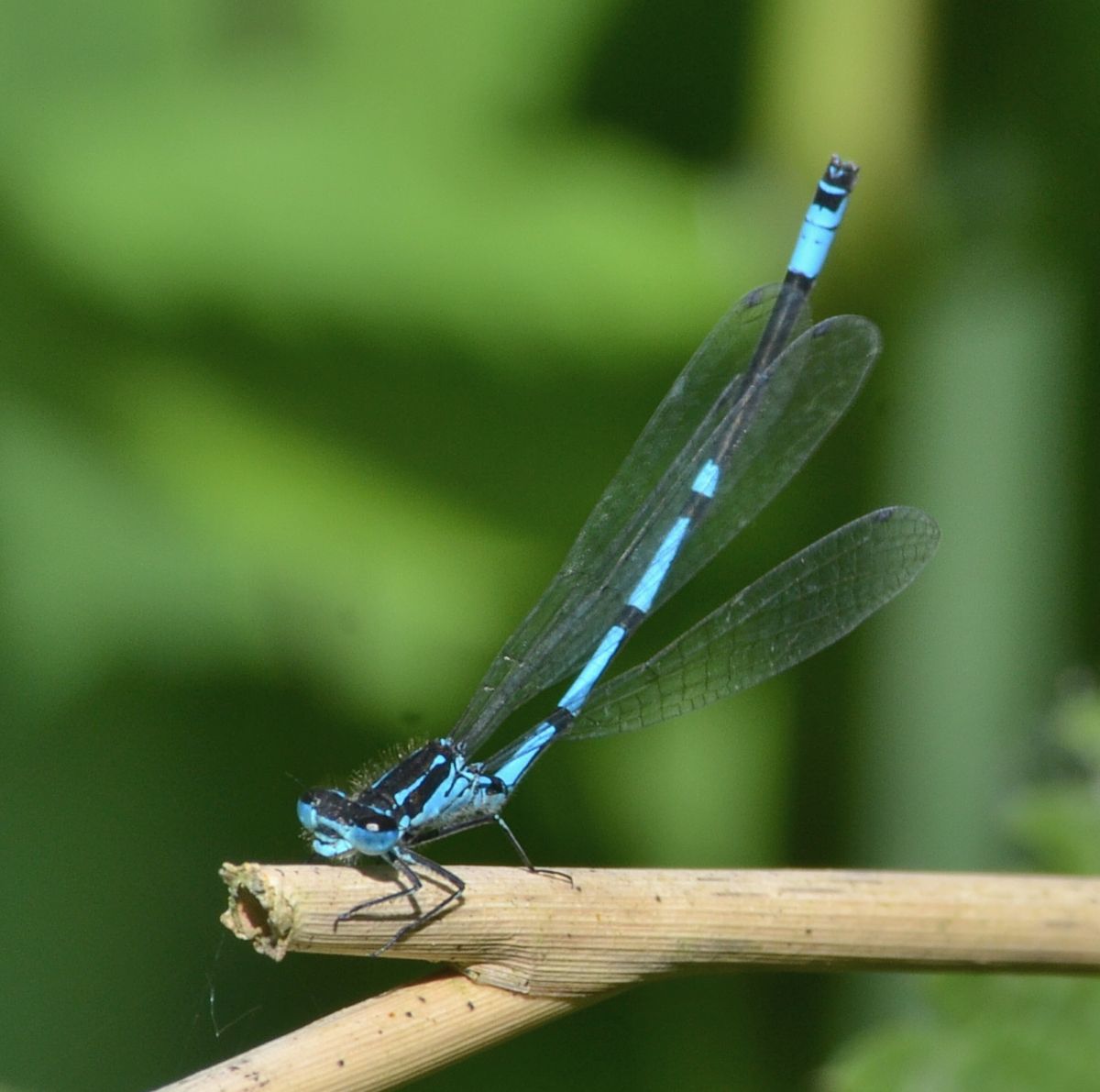
Variable Dameslfy

Variable Dameslfy

Diagnostic broken blue stripes on thorax and wine glass pattern near top of abdomen

“Are you looking at me?”

In total we saw 9 individuals which Adam assured me exceeds the previous day count for Oxon, though later in the day Wayne had more than 10. Good quantities of other blue damselflies were also present. It was noticeable how the dominant May species Azure Damselfy is suddenly dwarfed in numbers by Common Blue Damselfy that has a more vivid blue appearance in flight. There’s also been one record this year of White-legged Damselfy at Barton Fields, but despite searching we didn’t see any today.

Barton Fields

Barton Fields

To me there is no such thing as a birding quiet season, just an insect high season. At present, weather allowing I am spoilt for choice of places to go and things to see. Watch this space!

Variable Damselfy and Green-eyed Hawker at Westbere Marshes, Kent – 13th June

June in Blighty! I woke early this morning to weather in Oxford that could only be described as dismal. My plan for the day had been to visit east Kent to observe the rare Heath Fritillary butterfly and more odonata at sites close to Canterbury. I stuck to that since the alternative appeared to be a day at home watching rain fall.

Overnight an excellent picture was posted on Oxon Dragonflies (see here) of a Variable Damselfly, after none other than Richard Lewington had defied the Oxon murk and drizzle to turn up several of that scarce species by the Thames in Abingdon. So recalling from a Kent blog that this potential lifer also occurs at my intended destination, I was prompted to read up on the diagnostics and fix them in my mind.

In a two-hour reconnoitre at Blean Woods, the nationally important Heath Fritillary sites, it was plain I was unlikely to see any of these butterflies in the overcast though dry conditions. So I relocated to Westbere Marshes (TR197610) where the site specialities include Norfolk Hawker and Scarce Chaser dragonflies. I had found and photographed both species here on my previous visit a year ago. Today I saw only a season’s first Black-tailed Skimmer in my first two hours on site. But when nothing else is flying damselflies are still active, and so I began to take an interest in those that congregated in more sheltered places.

Blue tailed Damselfy Rufescens form

They included various forms of Blue-tailed Damselfy and my first Common Blue Damselfy of the year, both male and female. Eventually one blue damsel exhibited the broken stripes (like exclamation marks) on the thorax and wine glass pattern near the top of the abdomen of my early morning researches. This was indeed my first ever Variable Damselfy, a generally darker looking insect than the similar Azure Damselfy, and self found sightings are always the best. No need to go after them in Abingdon now, though I still probably will.

Variable Damselfy

Variable Damselfy

At 3:30pm blue sky at last began to approach from the south and east. Was there to be a business end to the day? After 50 more minutes searching a Green-eyed (or Norfolk) Hawker obliged with various poses (below). These are seriously beautiful dragons, the subtle brown tones of their bodies perfectly offsetting their languid pale green eyes. The species has in recent years established colonies here and at more nearby locations in Kent. Other dragonflies seen today were one each of Hairy and Brown Hawker, but not Scarce Chaser vermillion or otherwise in the areas where I looked. I suspect it is as yet early season at this site.

DSC_0084_01

Green-eyed Hawker

DSC_0087_01

On my arrival back in Oxfordshire the dark grey stuff was still hanging over the area west of the Chilterns escarpment. The wetness of the ground at home evidenced what my wildlife garden had gained but I had missed during this day out

Hudsonian Whimbrel at Pagham Harbour, Sussex – 10th June

Well, any American with Hudson in the name is OK by me and this was the second wader with that distinction to visit Blighty in 2015. Like the Avalon marshes Godwit I hadn’t heard of this Whimbrel either until it turned up in Sussex yesterday. A check of my north American field guide suggested it must be another recent species split of birds previously classified as races.

The hudsonicus Whimbrel has a darker rump and underwings than it’s European phaeopus counterpart, as the earliest pictures on RBA (see here) show; also a longer bill and more striking head pattern. Worth a look then! I had planned to check out some dragonfly sites around Bournemouth and Poole today, but start-of-day cloud and cold wind in Oxford suggested a plan B might be sensible. In the event it was sunny on my reaching the M3 at Winchester, but by then I wanted to see this bird and so I turned east on the M27 not west.

DSC_0016

Pagham harbour

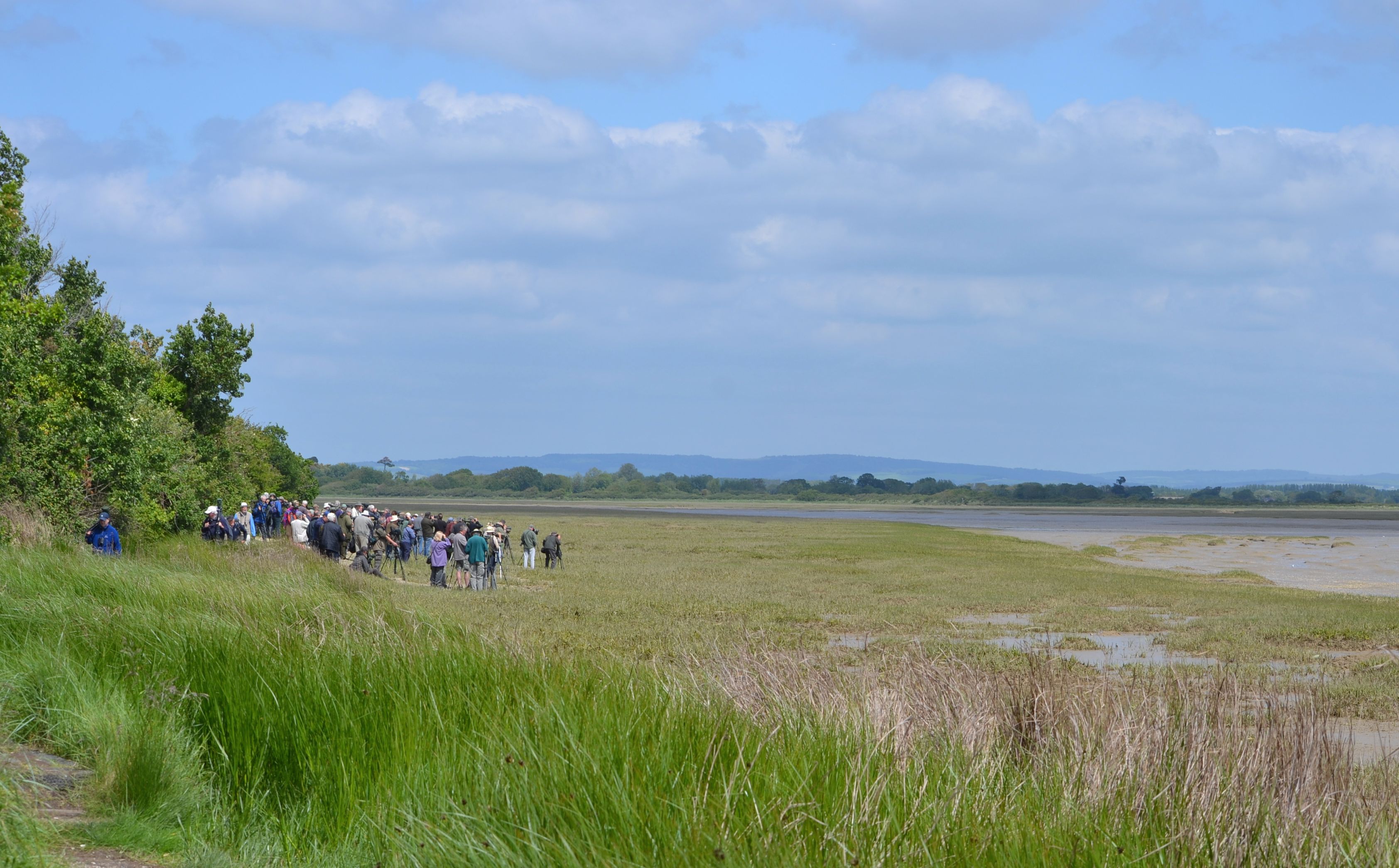
On approaching site just before 11am it became clear that a lot more people felt the same way. Vehicles occupied every available space along the lane to one of the Pagham Harbour LNR car parks, that itself was heaving. From there, Church Norton chapel it was just a short walk to where a good sized group (pictured above) was watching five Whimbrel, including the visitor out on the harbour’s low tide mud.

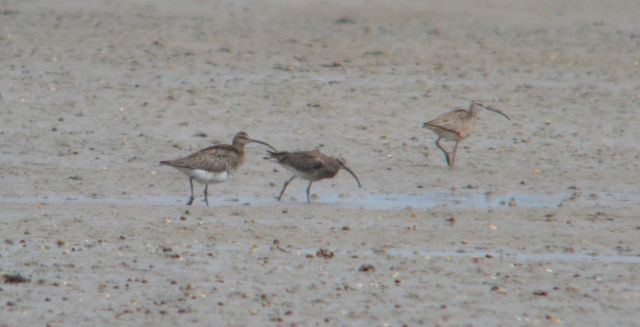
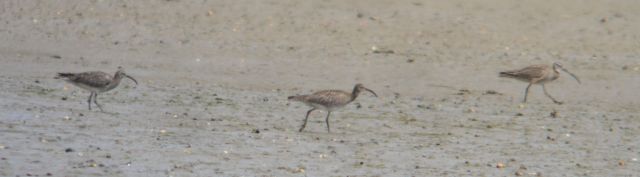
In my distant, digiscoped images (below) the Hudsonian is the sandy coloured bird on the right. The more I watched it the more distinctive it appeared, the duller belly, head pattern and bill length all being plain to see. At one point the bird even flapped its wings, revealing the darker undersides. But mindful of the need to get back to plan A, I didn’t wait to see if the five birds would take flight.

European and Hudsonian (right) Whimbrel

European and Hudsonian (right) Whimbrel

DSC_0033_01

From those around me I learned that debate over separation of the two races is ongoing, one classification body having done so but not the other. Oh well, might as well tick it! And it was good to have fitted a birding twitch into all my current insect work. This was the ninth British record for Hudsonian Whimbrel and my third new Nearctic wader of the year after Greater Yellowlegs and the Hudsonian Godwit.

Small Pearl-bordered Fritillary in Bentley Wood, Hants – 5th June

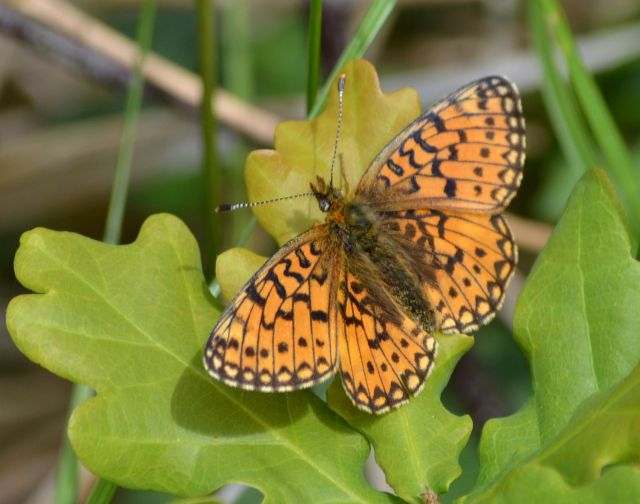
A few weeks after Pearl-bordered Fritillary begin flying in woodland glades they are joined on the wing by their Small Pearl-bordered cousins. Over much of its range the latter is found on rough grassland and scrubby moorland areas, but in southern England isolated colonies occur in forest clearings. Here SPBF favours sites with a warm, damp, sheltered, grassy sward and an abundance of the food plant, Violets. The eastern clearing at Bentley Wood SSSI, Hants (SU264293) is managed to provide such habitat.

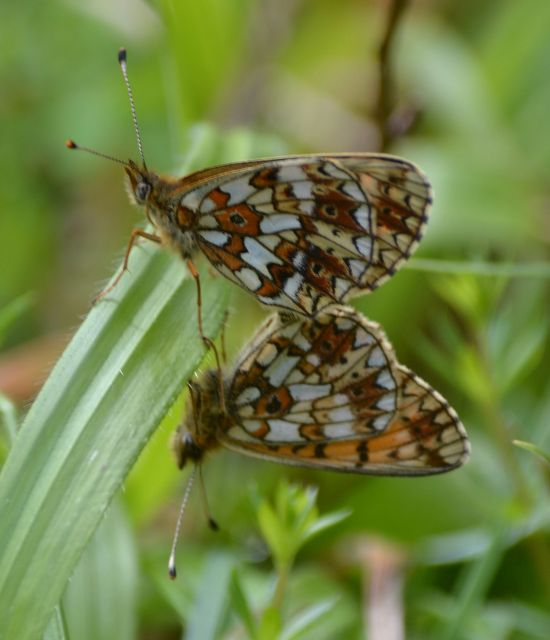
Today Ewan and I enjoyed the rare treat of driving south from Oxford under overcast skies to find sunny conditions prevailing at our destination. On walking into the eastern clearing we soon began to see Small Pearl-bordered Fritillary but these flighty little things were not inclined to settle for long. There were probably as many Pearl-bordered Fritillary still present but all had become faded, making the two species easy to tell apart. SPBF also has a lighter, more gliding flight. This mating pair (below) that I found provided the morning’s only photo opportunity. We alerted three other observers, who attracted more people as they arrived and so it went on.

Small Pearl-bordered Fritillary

Small Pearl-bordered Fritillary

Information boards here tell how cutting small areas each year stops the clearing from becoming overgrown and creates a diverse structure of short and tall vegetation. This provides the right habitat for the requirements of each Fritillary species: PBF favouring warm, bracken-rich areas, while SPBF prefer damper, grassier patches. The latter’s decline in central and eastern England through the latter half of the 20th century is attributed to that period’s great reduction in coppicing.

Following a midday sandwich break we walked around again. The mating pair had by now drawn a group of photographers and the habitat around them was suffering as a result. It was noticeable that the SPBF appeared to be less active in the warmer early afternoon. But on our going into another area of the site two of these attractive little butterflies obliged by perching open-winged close by (below) and that was mission accomplished.

Small Pearl-bordered Fritillary

Small Pearl-bordered Fritillary

DSC_0073_01

We left site at just before 2pm and went home via Cotley Hill, Wilts so Ewan could see the Marsh Fritillaries there. Most of these were as faded as the Bentley Wood Pearl-bordered, but not all of them (below) and so we had totted up four different Fritillaries in a week.

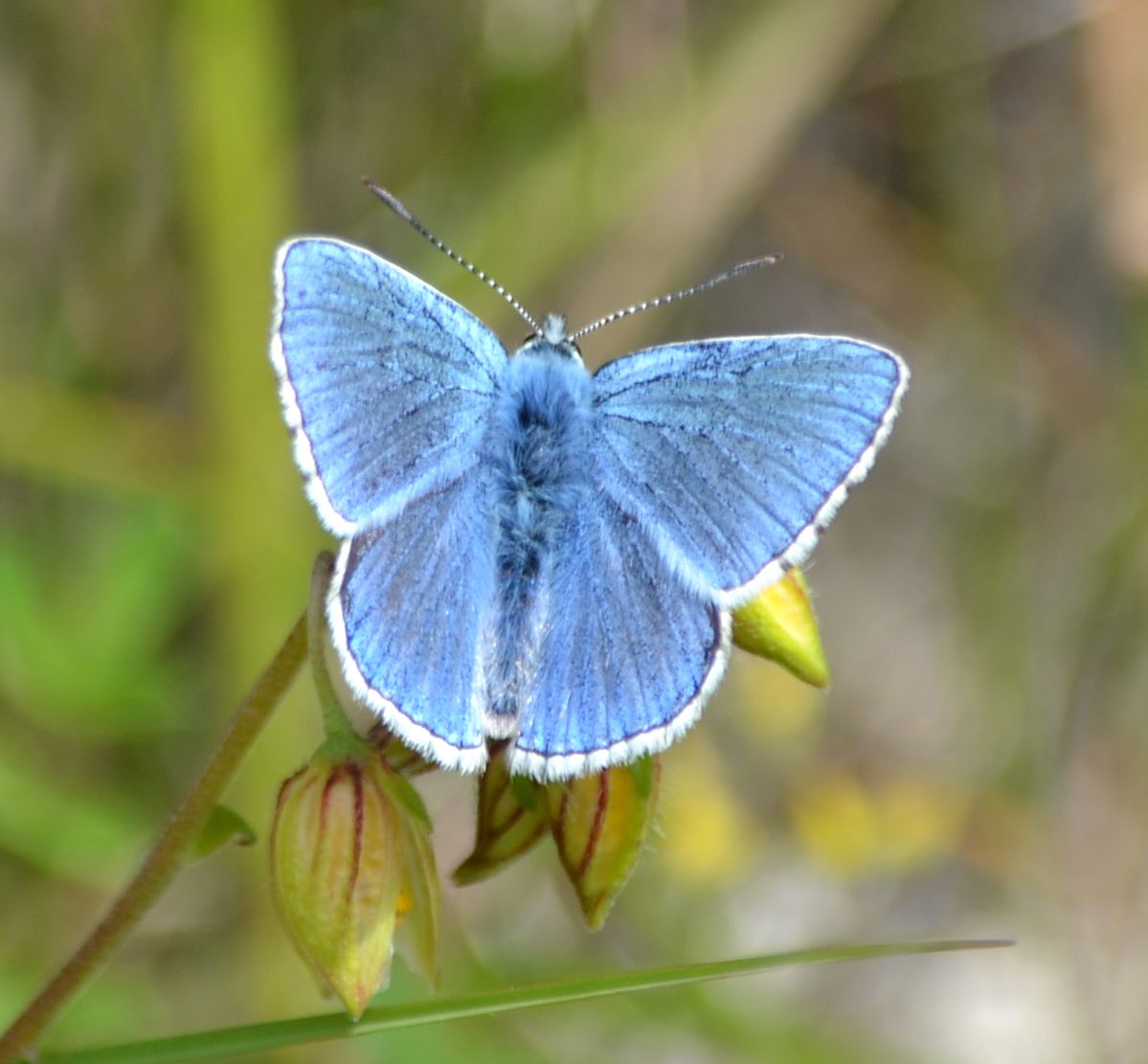
A forecast weather front appeared to have stalled just to the west of here, and so we stayed in the sheltered area at the foot of the hill. Several Adonis Blue were active amongst plentiful Horseshoe Vetch, and as usual at this butterfly mecca there was a good variety of seasonal species: Dingy and Grizzled Skipper, Common and Small Blue, Brown Argus, Small White, Brimstone, Peacock and Red Admiral. Cotley Hill (ST917427) never disappoints.

Adonis Blue

Adonis Blue

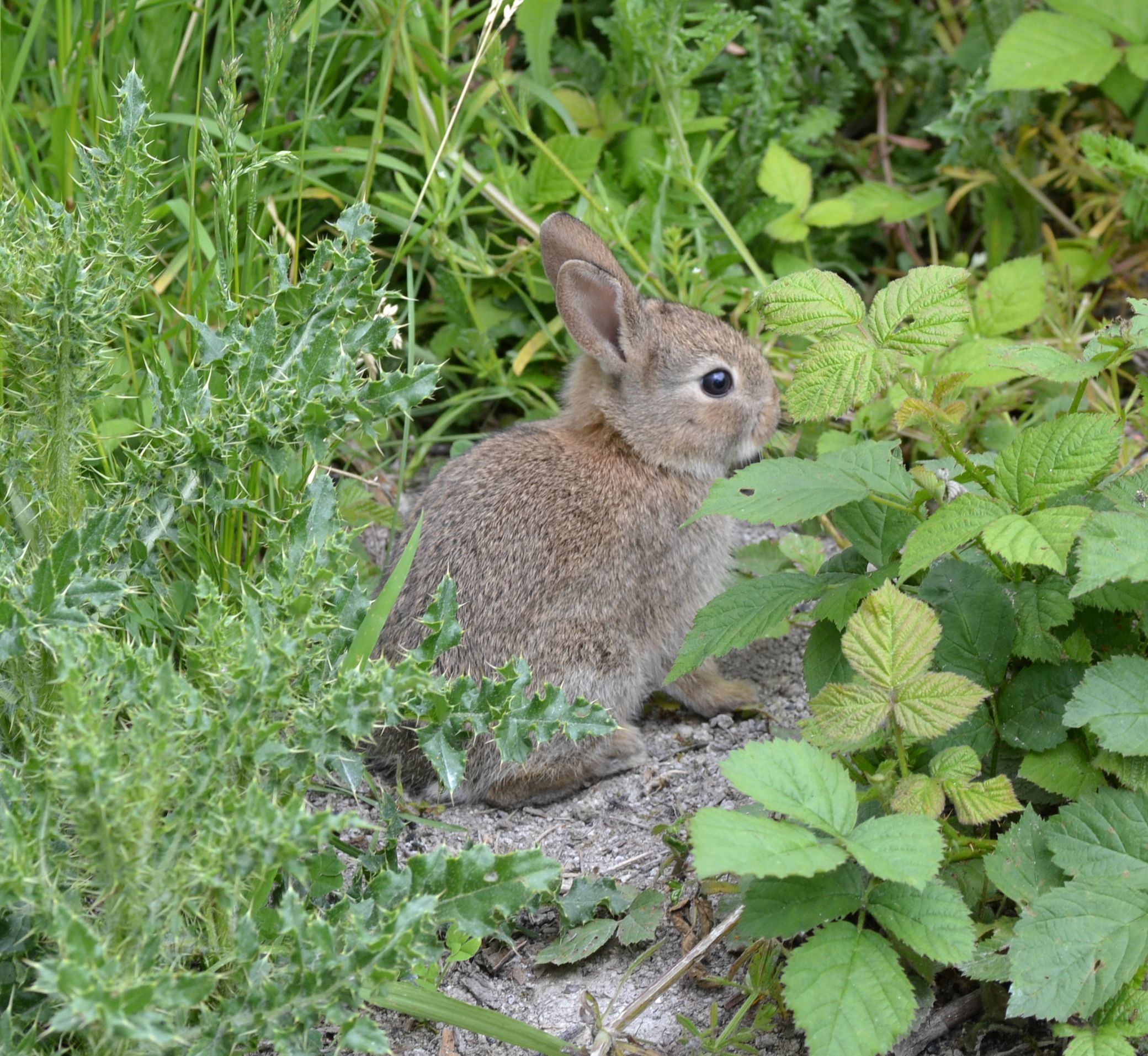
And should anyone be getting tired of all these insects ... Aaaww!

But should anyone be getting tired of all these insects … Aaaww!