That Rough-legged Buzzard time again – 27th Oct

Being free of work commitments this week I was pleased to accept an invite from Ewan and Clackers to go with them to see one of this autumn’s crop of Rough-legged Buzzard. Our bird was at Holland Haven Country Park just east of Clacton-on-Sea in Essex. So at just after 6am I was collected at home by the fabled black Audi and off we sped.

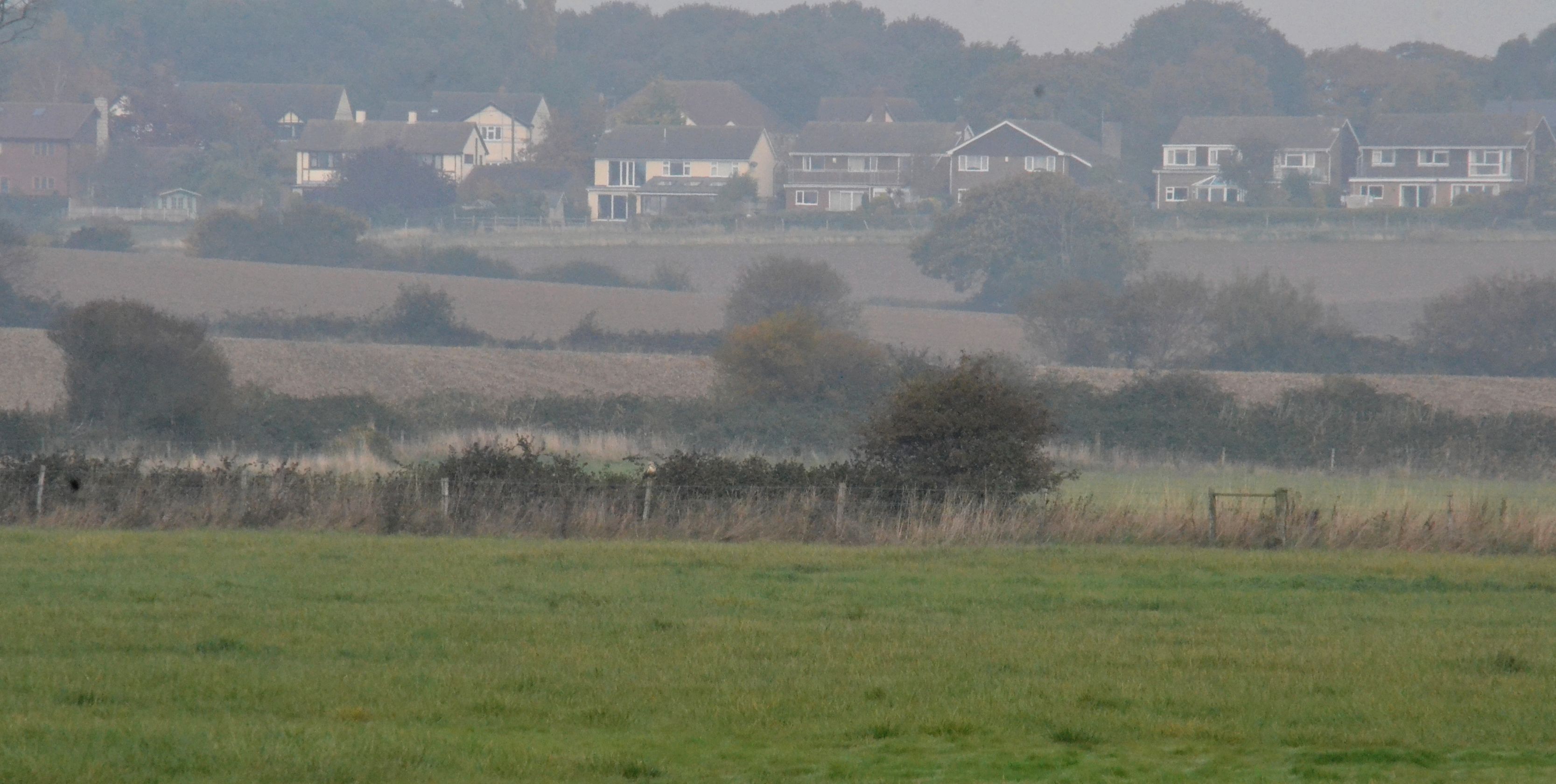
On arrival around three hours later we headed for a bird hide that is actually two shipping containers stacked on top of one another, to scan an area of coastal grazing marsh beyond which is a golf course. The Clackmeister quickly located the Rough-leg, an attractively pale and creamy-toned juvenile perched on a fence post between those two areas. Ewan at once rushed off to get closer but I lingered to scope the bird adequately at that range. It was already clear that we were in for much more satisfying views of this species than my last encounter at Braughing, Herts in November 2014.

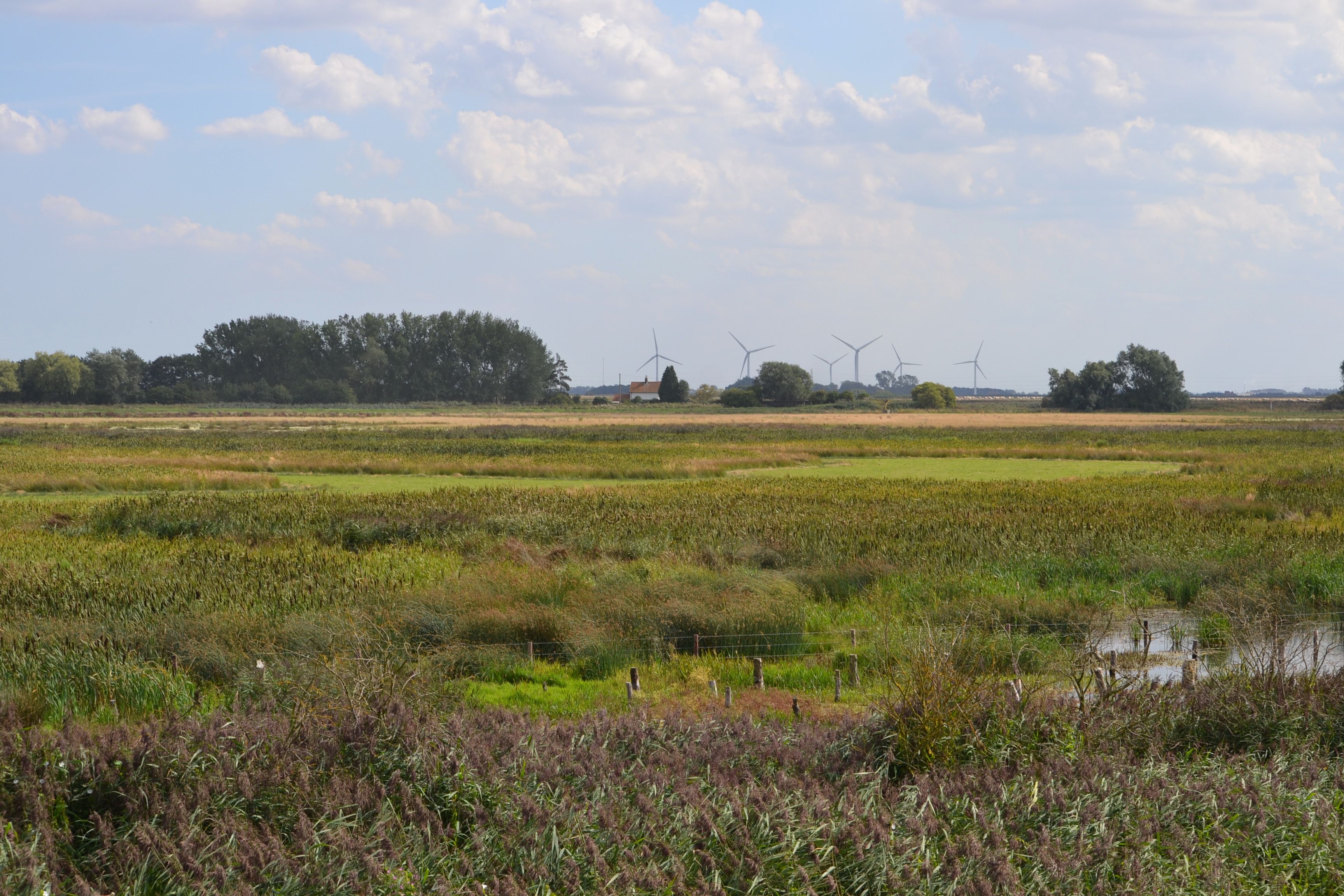
Holland Haven: the RLB is perched on the third fence post from the left

Holland Haven Country Park: the RLB is perched on the third fence post from the left

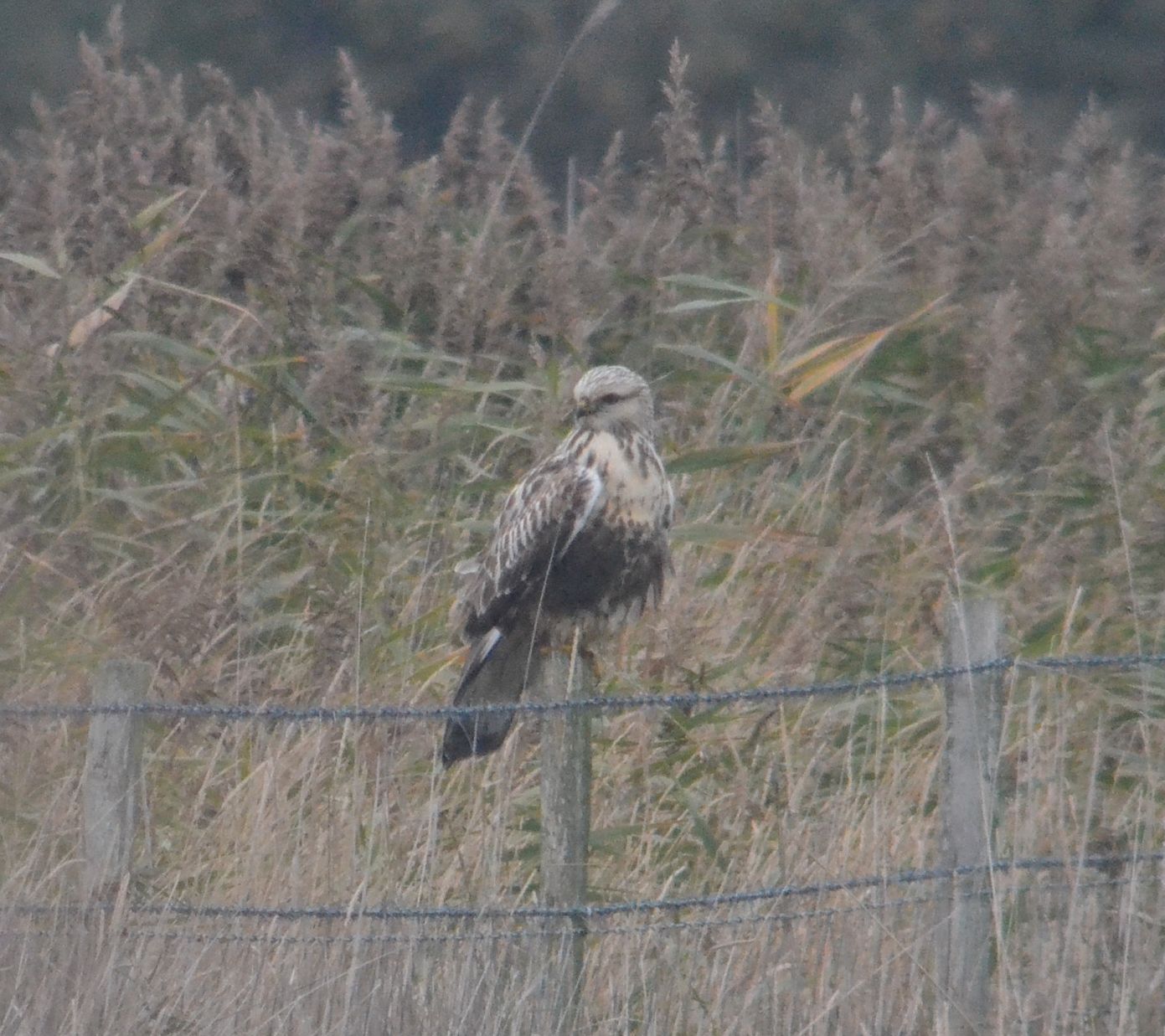
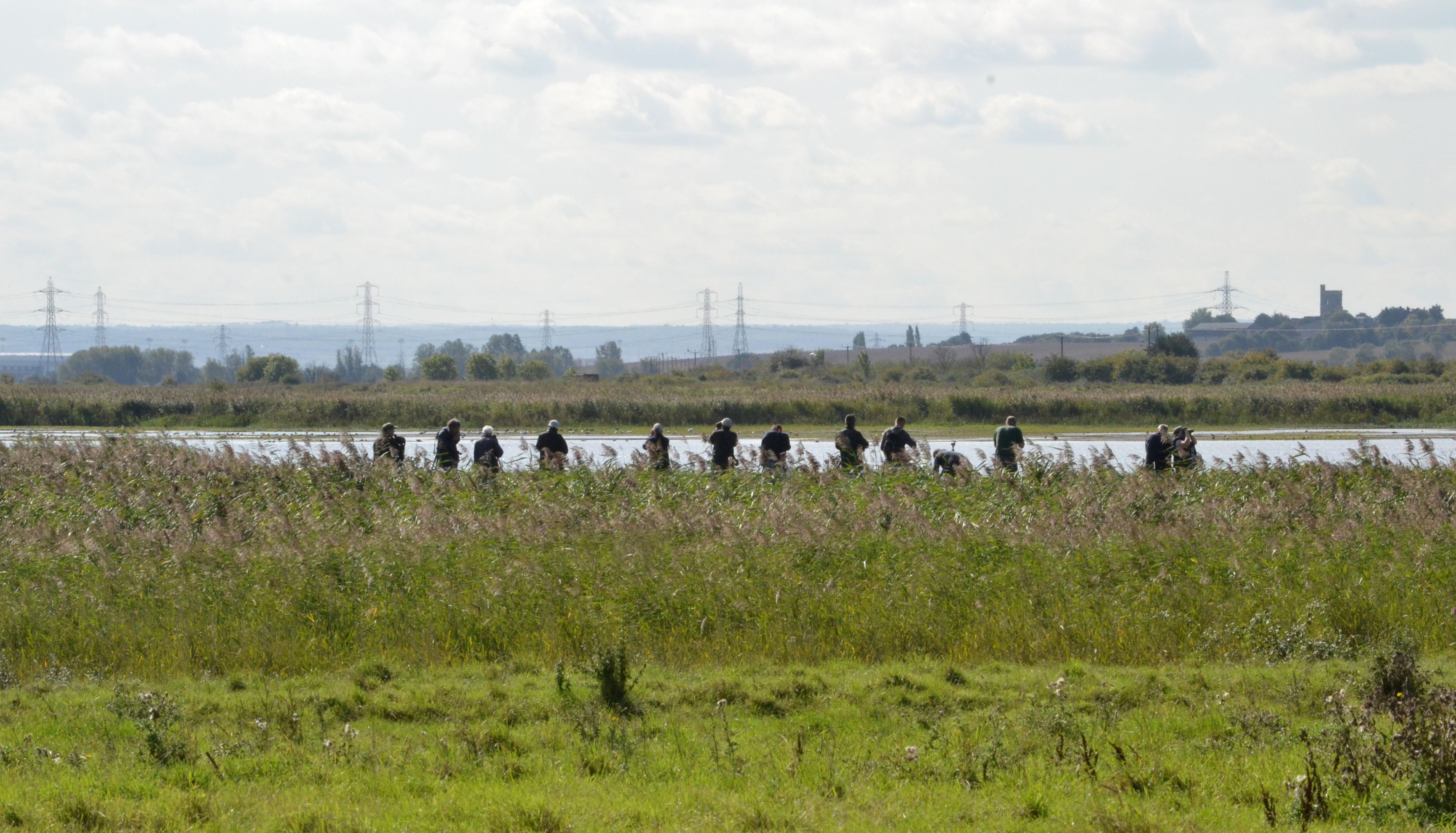
Eventually Clackers and I walked to join Ewan and several other birders and photographers who were watching this raptor and hoping it would fly across the marsh towards them. We learned that it moves around this site a lot offering close views at times. For the next couple of hours the Rough-legged Buzzard tantalised its audience by moving right a few or several posts at a time along a fence to the rear of the grazing marsh, always watching the ground before it intently and turning its head on a 180 degree axis like an owl. At one point it swooped onto and caught a large looking vole, then eventually it flew all the way left again to start anew. My digiscoped images (below) show how this bird was seen at that range.

rough-legged buzzard.1501 holland haven

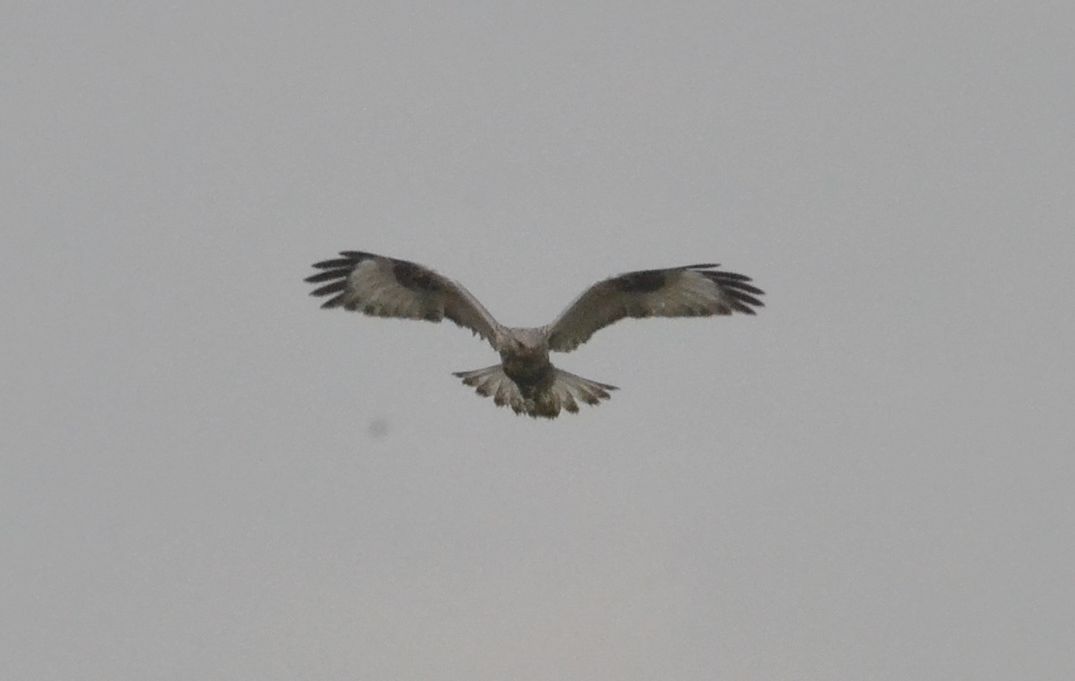
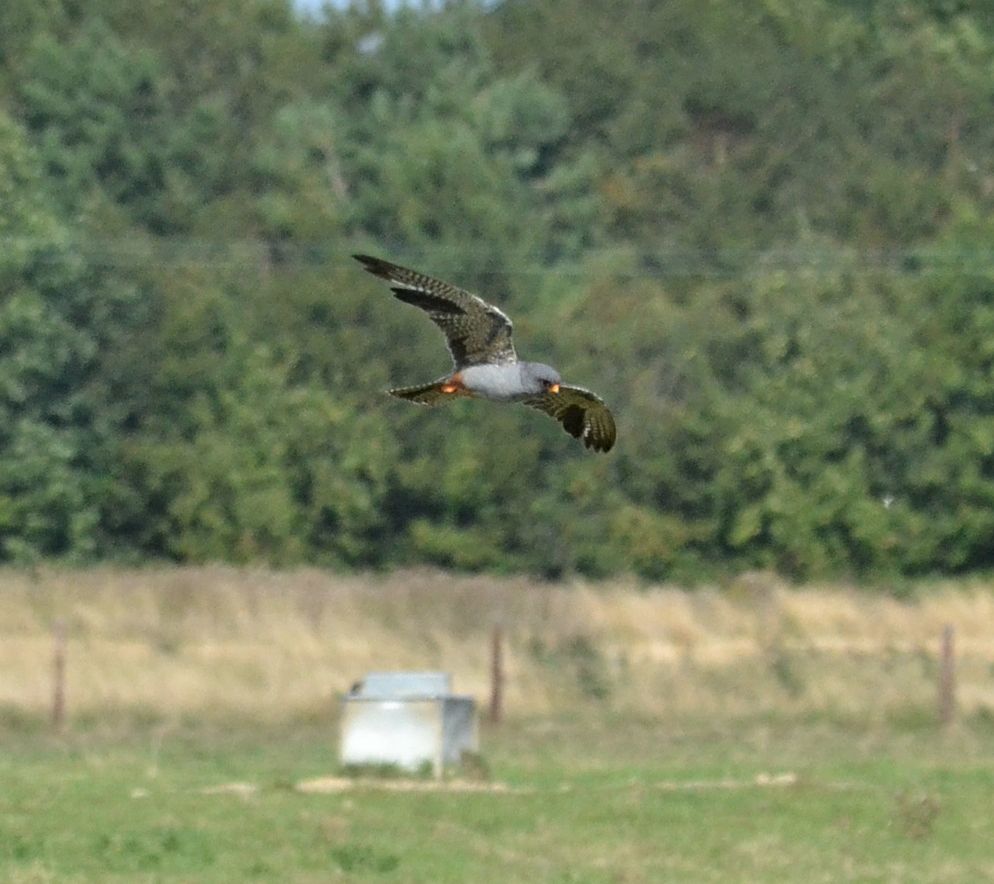
At this point I left the group to walk a little closer, then the RLB seemingly tired of its ground searching and took to the air, flying towards the sea. I saw all the other birders follow at once then it hovered, as RLBs do right above two photographers who were stationed on the sea wall. “Some jammy sods have all the luck,” I thought, but when I got over there the RLB flew towards me and hovered again quite close. I had not witnessed this diagnostic behaviour before and the day’s experience was improving all the time. An excited jogger asked if the bird was a Buzzard or a Kestrel and was clearly impressed.

Hovering Rough-legged Buzzard

Hovering Rough-legged Buzzard

Ewan and I then walked back towards the container hide to which Clackers had already gone, locating the RLB again at closer range. First one then two Short-eared Owl suddenly appeared at this point quartering the marsh. Earlier a fly through ring-tailed Hen Harrier had enhanced the morning’s entertainment, and I also gained an unusually close view of a Woodcock upon first walking away from the hide. Purple Sandpiper were being reported on the beach but when we went to look the tide was in.

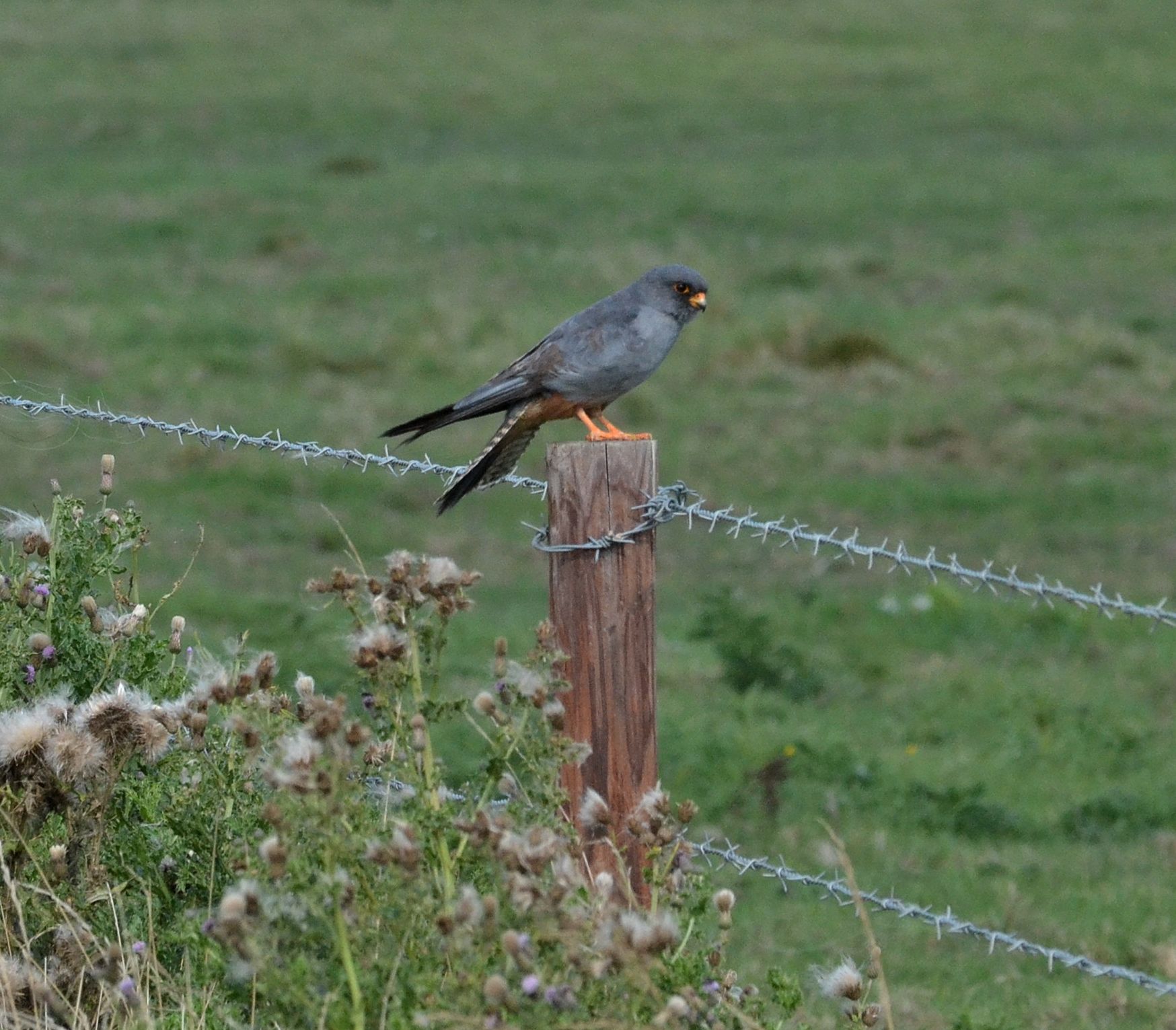
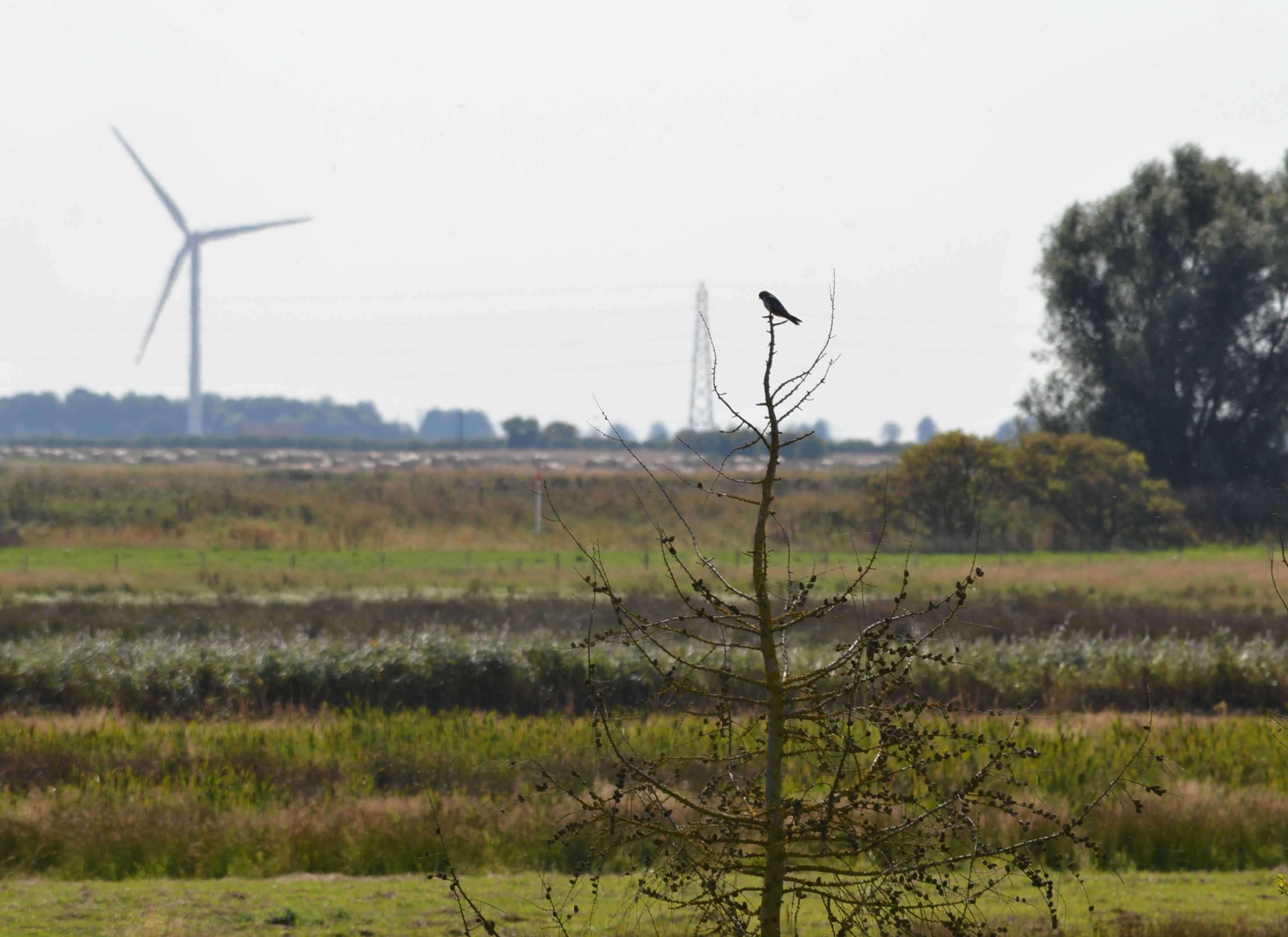
To quote the Helm Guide To Bird Identification, a typical view of RLB is of a large, pale buzzard hovering over coastal fields and marshes, with ponderous wing beats or hanging motionless, the tail twisted and turned like a Kite’s. The species is slightly larger, longer-winged and sturdier than a Common Buzzard; pale headed with a clear cut black and white tail and black belly patches. All these diagnostics were plain to see today and like the Lincs Red-footed Falcon that I observed at length in August, this Rough-legged Buzzard offered excellent value.

Semipalmated Sandpiper at Slimbridge WWT, Glos – 3rd Oct

This was my second record of another vagrant north-American wader. Today’s bird had been a high-tide visitor at the Wildfowl and Wetland Trust’s Slimbridge reserve for most of the past week. Semipalmated Sandpiper resembles Little Stint but is a shade larger with a slightly heavier bill and subtle plumage differences. I had observed one nicely at Keyhaven, Hants in September 2013, a bird that had flown when other Oxonbirders visited the next day.

Saturdays being my only available time for birding with present work commitments, I am reasoning that anything worth seeing is worth going for. On checking RBA at 7am my eye was caught by two rarities in north Norfolk: Blyth’s Pipit, a lifer; and Marsh Sandpiper, a potential British list addition. I fired off a couple of texts seeking company then eventually made it as far as the car inside which my satnav had been seeking a valid signal. 160 miles! No way: too far, too risky and as I was unlikely to get to Norfolk much before 1pm, too potentially hectic.

2013 Semipalmated Sandpiper at Keyhaven

2013 Semipalmated Sandpiper at Keyhaven

I resigned myself to a day spent locally but on reaching the car park at Otmoor received a reply from Andy. Both Norfolk birds were no longer there but he was tempted by the Slimbridge Semipal, having missed that Keyhaven bird. Here was an acceptable day out for both of us so we met and headed west, arriving on site shortly before midday.

Slimbridge is of course a zoo, but beyond the captive wildfowl pens, play areas and other visitor facilities lies the Zeiss Hide that overlooks marshes adjoining the Severn estuary. On our arrival this facility was bulging with birders three lines deep, all scanning a distant assemblage of wildfowl and waders amongst which somewhere was concealed the star visitor. My own experience of Slimbridge is that anything reported on RBA is invariably distant, and my distaste for observing birds at that range is well known in the Oxon birding community. This was clearly a bird to let others find for me.

View from the Zeiss Hide ... it's out there somewhere

View from the Zeiss Hide … it’s out there somewhere

Murmured directions were issuing from up and down the hide and I got onto the birds being discussed several times. But it was plain there was no true consensus as to which of many small waders the Semipal was, that question being confused by the presence of an adult and a juvenile Little Stint. Numbers inside the hide thinned nicely after quite a few people ticked what some who remained agreed had been a Dunlin moving left. Then the bird now thought to be the Semipal went out of view, prompting a frustrating wait. Things had been much easier than this at Keyhaven two years ago.

Andy muttered how this was a typical Slimbridge experience: distant bird, disagreement over ID and that he had sworn never to come here again after we had both dipped on an even more distant Buff-breasted Sandpiper a couple of years ago. If looks could kill from the reserve warden who was standing nearby, I would have had to drive home myself in my companion’s car! I also agreed entirely with his sentiments.

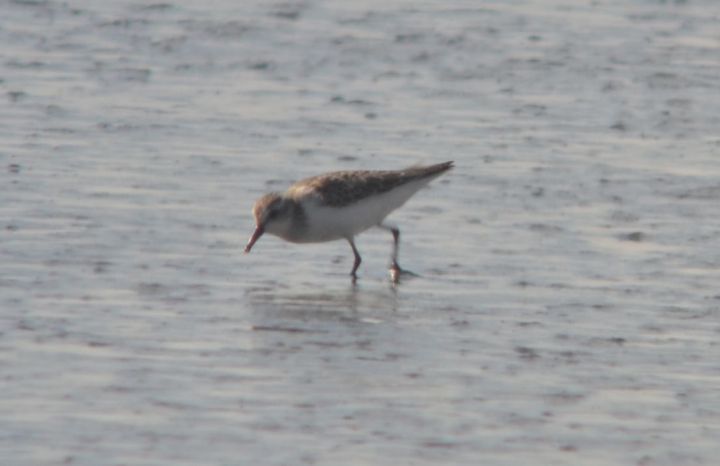
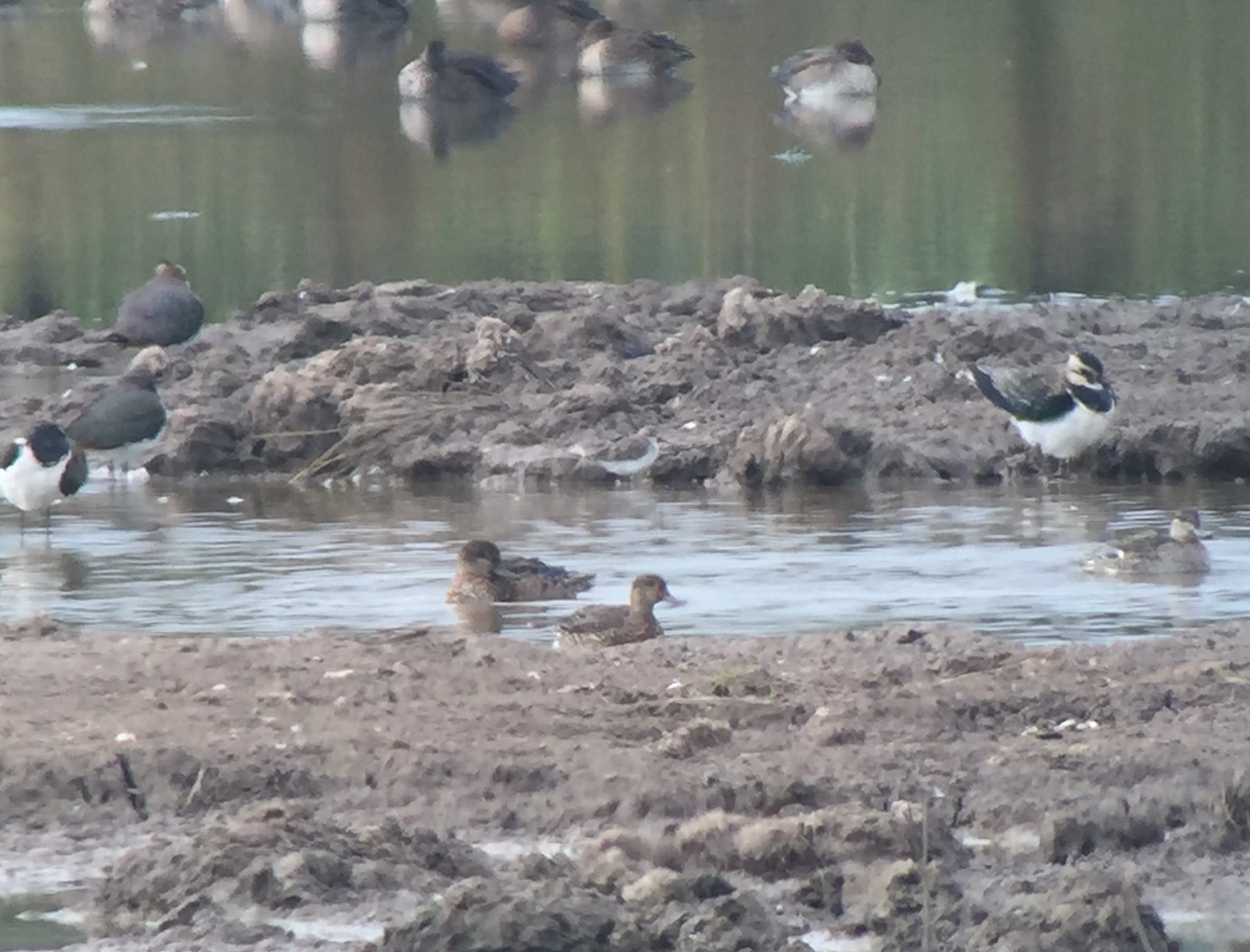
Slimbridge Semipalmated Sandpiper (centre) behind Teal and between Lapwings c Andrew Last

Slimbridge Semipalmated Sandpiper (centre) behind Teal and between Lapwings © Andrew Last

Eventually the Semipalmated Sandpiper emerged into full view, with far fewer birds present to pick it out from and much more manageable numbers of birders in the hide. Andy was now satisfied this was the same bird we had seen earlier before the Dunlin confusion, and that we were indeed observing the Nearctic wader we had come to see. Mission accomplished!

For a close-up image of today’s bird captured by one of the Slimbridge wardens see here

Wilson’s Phalarope at Vange Marsh, Essex – 23rd Sep

With Tuesday’s excitement passed there remained the matter of observing a juvenile Wilson’s Phalarope that was present for it’s third day beside the Thames estuary in Essex. That is another Nearctic wader I have just one old record for at Staines reservoir, Surrey in 1997. On that occasion the bird was on the opposite side of that huge water body to myself and I relied on someone else to point it out. Hence my interest in a better, current era sighting this week.

This largest of the three Phalaropes breeds in north America and there are a few British records annually of young passage birds, mostly in September. Very different in behaviour to its Grey and Red-necked cousins, Wilson’s is less inclined to swim and more at home on land. The Essex bird was reported early on RBA today and I set off mid-morning in clear, sunny weather conditions; such a contrast to the day before.

vange marsh.1501

Vange Marsh RSPB reserve

vange marsh.1502

Upon parking in RBA’s recommended side street just before 1pm, who should I meet but Oxonbirder Terry Sherlock (aka Tezzer), who was on his way home from Dungeness. There the Empidonax Flycatcher had unfortunately not been relocated today, disappointing the many birders who had travelled down hoping to see it. Myself, Terry and another birder walked out together to Vange Marsh (TQ730870), an RSPB reserve created in 2005 that has a large freshwater lagoon with islands, a smaller saltwater lagoon, reed beds and some grassland with patches of scrub.

We joined a small group who were scanning the freshwater lagoon, upon which the Wilson’s Phalarope was fairly easy to pick out due to its distinctive jizz and energetic feeding action. But the distant bird was directly into the sun and hence a mere silhouette observed from the north. After Terry left for home I walked around to where a few birders were watching the Phalarope from the eastern side of the lagoon. From that spot the plumage detail and slim black bill – as illustrated by the outsourced image (below) – were much easier to decipher. Spotted Redshank were also active on the lagoon, always a good wader to find.

Vange Marsh Wilson’s Phalarope (juv) © Steve Gantlett

I then watched the bird for around 30 minutes. Grey and Red-necked Phalaropes, each of which I have observed a few times, typically spin around on the water’s surface whilst feeding. But this third, fresh water species behaves much more like other waders. Wilson’s is said to resemble Wood Sandpiper by the Helm guide to confusion species, but I couldn’t really see that. To me it looked like what it is: a larger, longer-billed Phalarope that wades instead of swimming. I was able to thoroughly acquaint myself with this third north American wader of my autumn today on what was another very worthwhile day out.
Acadian Flycatcher at Dungeness, Kent: a first for Britain – 22nd Sep

National birding is starting to do the business for me again this autumn and yesterday, through a sequence of chance events I found myself present at a rather special occasion. That was, once the ID is confirmed the first ever record of a particular north American passerine at the famous migration land fall site of Dungeness in Kent. So how did this entirely unplanned little adventure come about?

On Monday evening my eye had been caught by reports of a Wilson’s Phalarope in Essex, and I invited Ewan to go with me to see it. But when a wet morning dawned his interest waned in a Nearctic wader he had seen several times before to my once, and I had to coax him back into going. We agreed to set off a little later than originally discussed, then just after 10:30am Ewan arrived at my door in the grip of an adrenalin rush. “Come on, we’re going to Dungeness to see a probable British first!”  He had been tipped off by a friend moments earlier.

Never mind that I had just waited 90 minutes: I was now holding things up and was harried out of my home and into the waiting car, only too willingly of course! Andy had also seen the news at work and fed us information throughout our outward journey. The first winter bird was being described on RBA as an Empidonax Flycatcher species, a group of which all but one would be a first for Great Britain. It had been found on a shingle beach at the eastern edge of Dungeness point. Early photographs (see here) that were already in circulation suggested it was allowing a very close approach and was possibly exhausted.

All the way round the M25 and through the Kent motorway system Ewan was like a taught spring, running on adrenalin. After all: “This is what we wait all year for,” as he explained. I had read of his birding exploits on many occasions. Now I was witnessing the legend in action and just trying to take things all in my stride while joking about stopping for a sandwich break. We arrived on site just before 1pm to find a large but not huge group of birders lined up outside a small white bungalow. The star visitor had relocated to the shelter of the garden there.
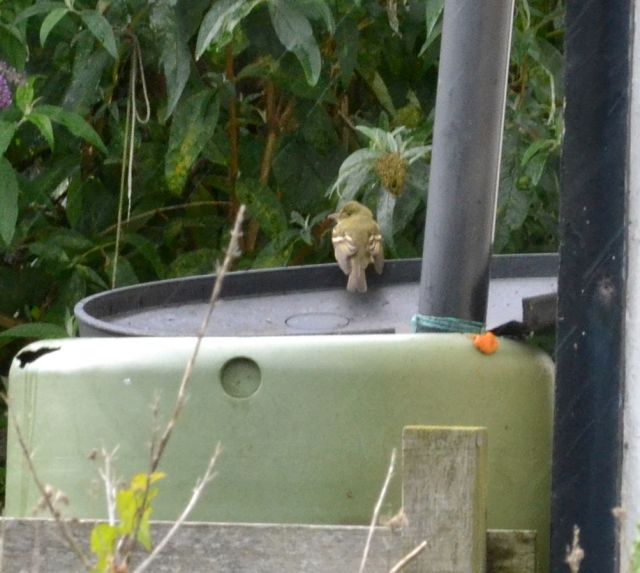
Probable Acadian Flycatcher

Probable Acadian Flycatcher

Within minutes the Flycatcher came onto the top of a water butt to one side of the dwelling (pictured above). Having seen it I went back to the car to retrieve my camera’s battery that in the rush I had left behind. On returning the bird posed twice more in a similar way and those were the best views we had of it. When the weather turned wet this bird kept a lower profile in the garden, but was seen briefly several more times over the next 90 minutes or so. And for many of the birders who arrived after ourselves that was as good as things got. Ewan being a man who enjoys a good drenching as part and partial of a high octane twitch, I tucked into his lee side and kept tolerably less wet than he did, without him really noticing until I told him!

The lady of the house could be seen inside taking photographs of all her surprise guests, then the man arrived home and went inside. Both people were watching the bird themselves at the window, which did little for the chances of it perching on the water butt again, but then they do live there so we couldn’t complain. By 3pm the number of birders outside had possibly tripled, with cars parked along both sides of the access road for some way back. Realising we were unlikely to get better views than earlier, and sensing a possible bun fight as the crowd swelled further, Ewan and I decided to leave. It had been quite a special outing. For a superior, big lens photograph of this bird in the garden see here.

“Dear, there’s a lot of people standing outside the house with telescopes and cameras”

The day’s final report on RBA said that at 7pm the Flycatcher species flew to scrub 250 yards south-west of the garden and was lost to view in fading light. It was thought to be an Acadian Flycatcher, indeed a first for Great Britain and only the second for the western Palearctic following one found dead in Ireland in 1967. The ID was confirmed on 2nd October after DNA analysis of droppings taken from the beach (see here).

Buff-breasted Sandpiper at Ringstead Bay, Dorset – 18th Sep

This is one of the more regular north American waders to make landfall in Great Britain during autumn passage. For me the species also carried “important lifer” status due to the usual sort of reason that I dipped my only previous attempt at it two years ago. On that occasion other Oxonbirders saw the bird briefly and distantly on Slimbridge’s estuary mud before my arrival. I consider that today’s Buff-breasted Sandpiper, in a ploughed field above the Purbeck Heritage Coast, offered better value.

This morning while enjoying a coffee ahead of a planned supermarket visit, I scanned RBA and there it was: news of a previously unseen Nearctic vagrant within my twitching range. Briefly I considered this day’s alternatives of gardening or what has become the onerous task of paying attention to my Oxon year list. It took about five minutes to shake off the lethargy those twin prospects had induced, then I upped and went.

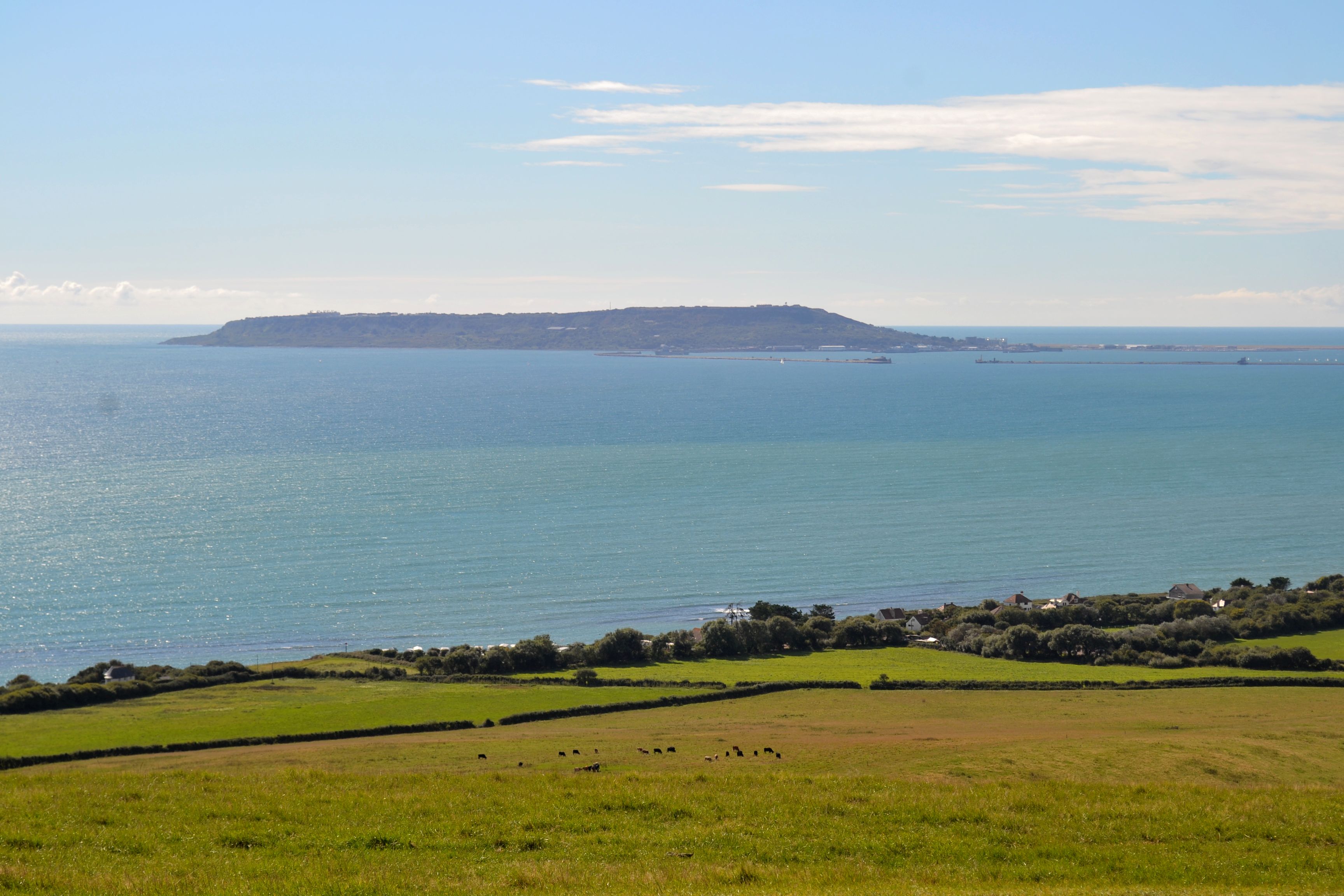
One way of knowing you're in Dorset

One way of knowing you’re in Dorset

Very soon my little white economy car was eating up the familiar miles southward on the A34. Reaching the M27 the weather became sunny to enhance the sense of re-motivation within me, and those fair conditions prevailed until I arrived on site at midday. From a National Trust car park at SY752814 a track led east and slightly inland to where I could see a group of birders at the spot described on RBA. The Isle of Portland (pictured above) shimmered as it does offshore in a hazy, deep blue light.

Returning birders all offered positive news and on approaching those who remained I saw the Buff-breasted Sandpiper crossing higher ground to my left. So this lifer was not only ticked easily but self-found. I was struck immediately by the Dunlin-sized juvenile bird’s distinctive appearance. In shape and jizz it resembles a small female Ruff but with a shorter, finer bill and very attractive sandy buff underparts. As it moved about I was also reminded of a Cream-coloured Courser observed in Fuerteventura last February.

Distant Buff-breasted Sandpiper (left)

Distant Buff-breasted Sandpiper (left)

Once I joined the group my efforts at keeping on this bird were less successful. Black rain cloud was approaching from the west and attempts at obtaining digiscoped images suffered from being rushed. Fearing a drenching, everyone beat a retreat to the car park but in the event the rain wasn’t too heavy. After a break of about an hour I returned to the same spot.

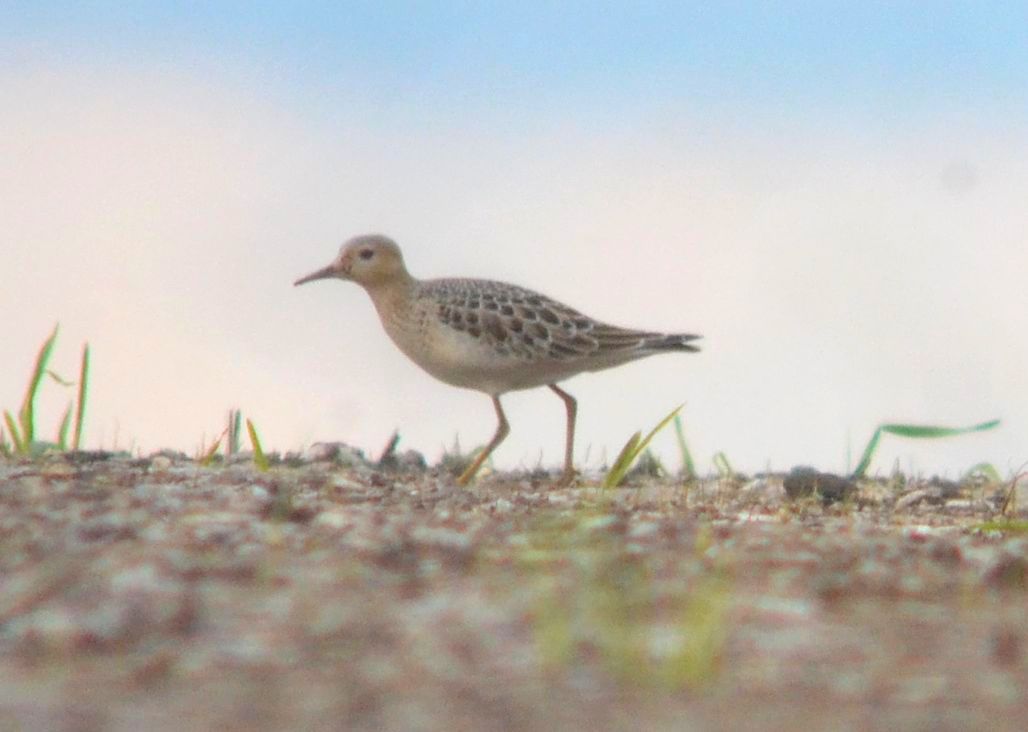
I was now the only person there. Quite a lot of Ringed Plover were in the field but at first there was no sign of the star visitor. Then I picked up the BBS again more distantly than before, moving around on the horizon of rising ground and removing all doubt as to its self-found status. I hope I am not mis-using that term, my meaning being birds not pointed out by other people. For about an hour I watched the BBS feeding in this field and was joined by more birders while doing so. The image (below) is the best I could obtain before leaving at 5pm.

Buff-breasted Sandpiper

Buff-breasted Sandpiper (juv)

This was a very satisfying day with a much-sought life list addition of my fourth Nearctic wader of 2015.

Barred Warbler at Staines Moor, Surrey – 9th Sep

This was my third Barred Warbler and second in England. Pictures on RBA and elsewhere of a bird near Heathrow Airport suggested people were getting quite close to it. I had hoped to be working again this week but things got put off, prompting a mini-motivational crisis with the insect season having all but run its course. So trying to capture better images of one of the more frequent autumn drift migrants than a year ago at Dunstable (not a great ask – see here) would fill a day nicely.

Staines Moor SSSI (TQ035735) is one of England’s largest areas of neutral grassland that has never been agriculturally improved or extracted for gravel. Originally a clearing in the Forest of Windsor, this large alluvial meadow has remained unploughed for over 1000 years. It lies immediately east of the M25 between the Wraysbury and King George V reservoirs, just to the SW of Heathrow Terminal 5. The site that is crossed by the Colne and Wraysbury rivers, also features ponds, ditches, marsh, scrub and woodland, to which the large adjacent reservoirs help to attract bird life.

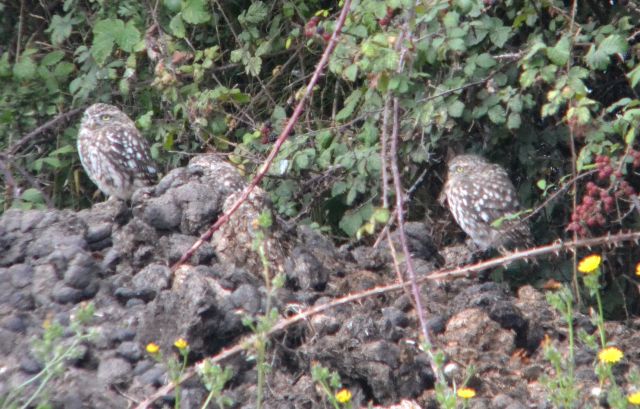
Having texted Ewan early in the day he replied after I had set off to say he and fellow Oxonbirder Clackers were on their way, so we agreed to meet on site. From half way round loop-shaped Hithermoor Road in the village Stanwick Moor a metalled path leads below the western edge of King George V reservoir. Here I came across four local birders watching two young Little Owls that were dozing on a large dung pile on the far side of a horse paddock. So I went back to the car to retrieve my digiscoping collar but the result (below) was not great.

Little Owls

Little Owls

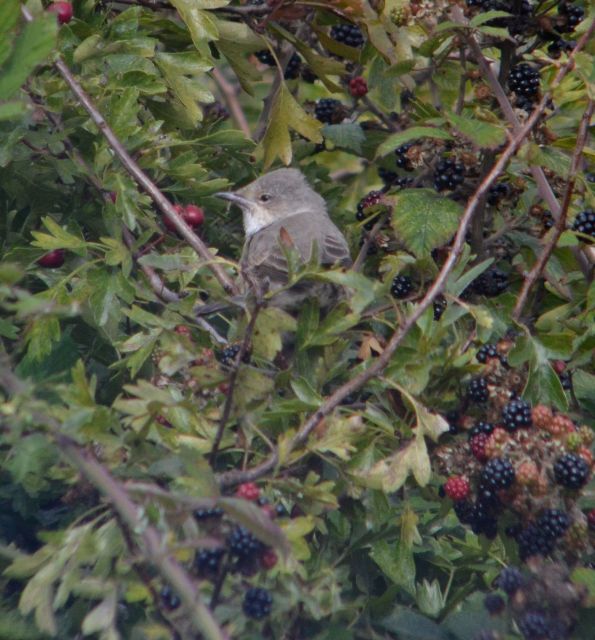
Those birders told me the Barred Warbler was also showing well, as did others walking back between there and the spot itself. About 100 metres beyond the Owl field a track led off to the SW through a board-walked marshy area. Upon emerging from Willow scrub it was at once apparent what a magnet for over-flying passerines this open space must be, surrounded as it is by large water bodies, industry, housing and Heathrow Airport. But when I reached the BW’s favoured haunt the only remaining birder said the visitor had just flown from the large bush where it had been gorging on blackberries for more than a hour.

So if I hadn’t been distracted by the Owls I too would have seen the BW but not for very long. I waited for Ewan and Clackers to arrive then we began to search the area. A patch watcher pointed out the BW’s “favourite bush” so we hung around there while each wandering off in turn. Eventually I heard Ewan talking on his phone. The Clackmeister had relocated the bird, or perhaps it had found him, dropping suddenly into the next bush to where he was standing. We hurried over but the BW was out of view again. More birders arrived at this point then an anxious wait ensued.

Barred Warbler (1w)

Barred Warbler (1w)

After almost three hours on site myself, the young  Barred Warbler re-appeared in the top of the bush where Clackers had first seen it. Lots of Whitethroat, Blackcap and other common species had been active in the interim but this large Sylvia warbler is unmistakeable. As before my own arrival, the BW fed intently on blackberries changing location little, and the assembled group of birders watched and photographed the bird for around 30 minutes. My companions, both of whom are much more experienced birders than myself, said they had not previously watched the species at such close quarters.

A feast of blackberries

A feast of blackberries

So today required more than a little working at but had a pleasing outcome as my objective of gaining reasonable images was achieved. On our walk back to the cars the Little Owls were still in the same spot though my efforts at photographing them, given the distance were no better than in the morning.

Little Owl

Little Owl

2nd brood Adonis Blue at Chilterns sites + Otmoor Hawkers – 26-28th Aug & 7th Sep

In this greyest of English summers there are still some butterflies and dragonflies that have yet to be featured in this journal. Locally the only butterfly business still to do was checking out second brood Adonis Blue at my “home ground” Aston Rowant NNR (N), Oxon. I had resolved today to get on with some much needed gardening at home, but when yet more gloomy cloud settled upon Garsington in the early afternoon my noble intentions were defeated. It looked more cheerful over towards the Chilterns escarpment but the grey stuff seemed to follow me along the M40, to settle upon the reserve when I reached it.

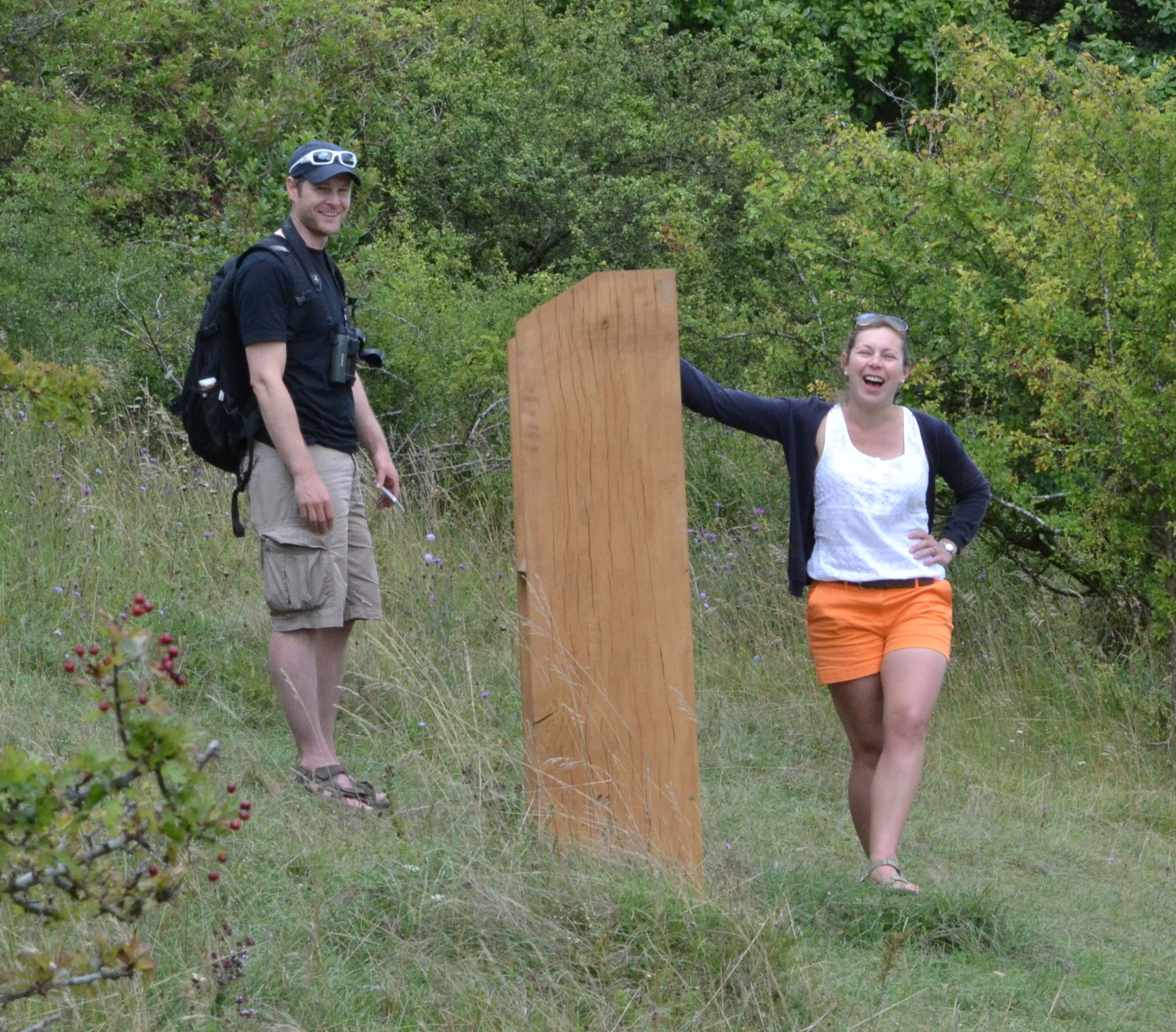
On arrival I met fellow Oxon naturalist Chris Bottrell and a couple from Newark, Notts and they had not seen any Adonis. So a collective decision was taken to relocate to Yoesden Bank across the county boundary in Bucks. It still looked sunnier in that direction but guess what: the grey stuff followed us to that new location too. Chris decided to head home, leaving me to search this BBOWT reserve with Nick and Amy, the visitors. They had already seen their first Brown Hairstreak and Silver-spotted Skipper in God’s own county (Oxon) today and now hoped for the third lifer Adonis Blue, since none of these species occur in the East Midlands. Not only that but they had referred to this blog to help research their day out – nice people!

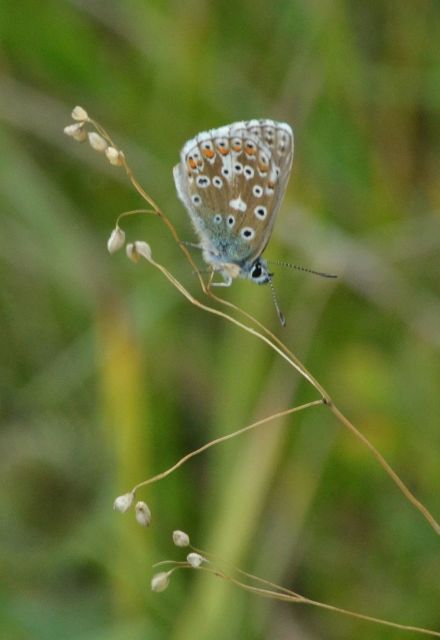
Adonis Blue (male)

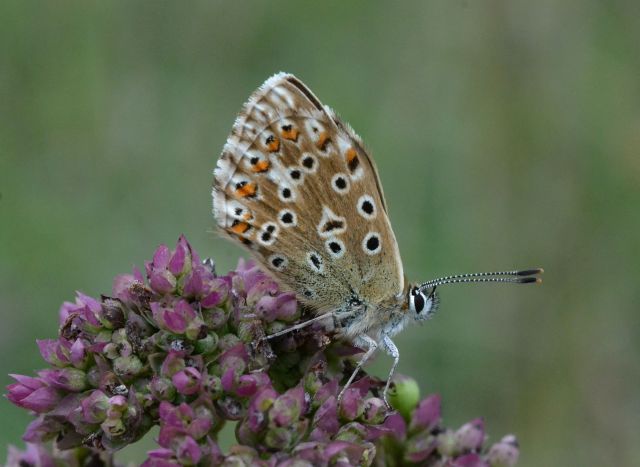
So a chance encounter with other enthusiasts reminded me again how fortunate we are in Oxford to be within easy range of so many butterfly species. Yoesden Bank (SU789980), a steep sided stretch of flower rich chalk grassland to the east of a village Radnage, is England’s northernmost location for Adonis Blue and notable in also supporting Small and Chalkhill Blue in one place. The pursuing cloud decided to go no further east once we were on site here, but in a brief sunny interlude three male Adonis Blue (pictured above) showed themselves.

Nick and Amy from Notts

Nick and Amy from Notts

After leaving Yoesden Bank I returned to Aston Rowant hoping things might have brightened. In the event conditions were still overcast but it was too early to go home. So I followed the top footpath from the car park then trod directly down that part of the hillside above the M40 where I expect to find Adonis Blue. After disturbing two possible females I found a third perched on Marjoram, motionless in the cool early evening temperature. Then further down the hillside I came across two males, the first of which posed in a similar way to the female while the second buried itself deep in the sward. So maybe this cloudy afternoon had a silver lining, since I would not have captured these images (below) had it been sunny.

Adonis Blue (male)

Adonis Blue (male)

Adonis Blue (female)

Adonis Blue (female)

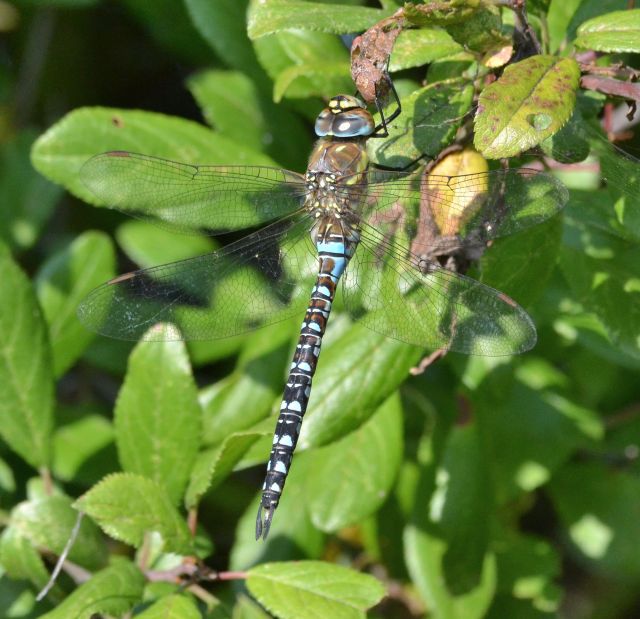
During the previous two afternoons I visited the RSPB’s Otmoor reserve just north of Oxford to catch up with two hitherto late summer absentees from 2015’s Rn’S dragonfly records. Both Southern Hawker and Migrant Hawker were seen at this reliable location for each species, along with some ever unco-operative Brown Hawker and many Common and Ruddy Darter.

Migrant Hawker (male)

Migrant Hawker (male)

Addendum

7th Sep: After just over a week mostly of more oppressive murk the last two mornings have dawned cold and sunny. Cue “England set for Indian summer” headlines in the national press. Well, kids have just gone back to school. Following a report on RBA of a Red-backed Shrike on Otmoor I went out for a mooch around from 8am today, but no-one else was looking. But here was an opportunity finally to capture male Migrant Hawker for the autumn. This one (above) was warming up for the day along one of the Blackthorn hedges.

Red-footed Falcon at Willow Tree Fen, Lincs – 22nd Aug

This is another bird I have observed just once previously. I do recall the old Wiltshire sighting in the summer of 1989 and that it was fairly distant. Several of these attractive vagrant Falcons have been reported in England in 2015. I was first tempted by one at Wareham, Dorset back in the spring but didn’t bother to go for it in the end. Next I read of one near Stoke-on-Trent being enticed with food by batteries of 50 or more photographers, to hover above their heads while they competed for the perfect shot. To my mind, the unnaturalness of such a contrived situation meant that Falcon might as well have been in a zoo or brought out to perform for evening classes at a birds of prey centre somewhere.

Then a couple of weeks ago today’s little number turned up in the Lincolnshire fens. After going to north-Norfolk a week ago for an Icterine Warbler (see here) I realised that this latest Red-foot was well within my preferred range at a mere 110 miles. This was the one to go for and a very hot Saturday was an apt time to re-acquaint myself with the species.

Arriving on site just before 11am, I turned into a car park full of birders one of whom pointed out a hazy blob in his scope. By the time I set up my own scope the Red-footed Falcon had moved, so I followed the main track into Willow Tree Fen then turned left along the top of a dyke. Apparently, prior to my arrival the bird had posed for an hour on a fence post along this access track and hovered over people’s heads. When I caught up with the RFF it was hunting from a favoured tree, perched into the sun looking away from its audience most of the time.

Distant, hazy Red-footed Falcon

Distant, hazy Red-footed Falcon

Red-footed Falcon is similar in shape and flight to the more familiar Hobby, but hovers like a Kestrel though with deeper wing beats. A slate blue grey in tone with striking red undertail and legs in the adult male, they hawk mainly for insects from bushes, overhead wires or fence posts in a Shrike-like manner. I watched this one for some time in the heat haze before wandering off to explore some more of the reserve.

Willow Tree Fen (TF181213) was purchased by the Lincolnshire Wildlife Trust in 2009 since when the site has been restored from arable farmland back into the region’s largest area of natural fen habitat. The reserve comprises a mixture of reed beds, shallow meres, seasonally flooded pastures and hay meadows. This is part of an ongoing conservation programme to increase the county’s wild fenland by 200%.

Willow Tree Fen

Willow Tree Fen

After a lunch break I went back with my digiscoping collar to try to gain some at least half decent images. The Falcon had remained faithful to the same spot and the light was now better as cloud gathered ahead of a forecast showery breakdown. But as in the morning my efforts didn’t bear consideration. Then at some time after 3pm the bird began to move around the reserve more. Someone alerted me to a growing cluster of birders along the access track and I headed there. The situation had turned full circle from that time before my arrival, with the RFF hunting from fence posts to one side of the track.

Red-footed Falcon

Red-footed Falcon (1s male)

DSC_0109

Now I was rewarded for my uncharacteristic devotion of more than four hours to this bird. It’s admirers, most of whom had only just arrived, were being treated to displays of aerobatics, hovering and fairly close perching on fence posts. What a stunner! The expression “cracking bird” could have been coined just to describe it. With acceptable pictures taken and cumulo nimbus building up it was time to head home after a day well spent.

Spotted Sandpiper at Coate Water LNR, Wilts – 18th Aug

This was a nice and easy twitchette for a Nearctic wader that I had seen just once before. But I retain little recollection of that sighting somewhere in Cambridgeshire in 1993, and was abroad when much more recently a Spotted Sandpiper spent a few days at Oxford’s Farmoor Reservoir. Hence the appeal of a 30-mile drive today to the outskirts of swingingest Swindon.

Use of the bird hides at Coate Water requires a permit and key obtainable from the country park activity centre here. That meant a walk the longer way around the Y-shaped lake, but on reaching the LNR I was greeted by some birders one of whom said the visiting attraction was showing well. This Spotted Sandpiper was active in a muddy area to the right of a cramped and dingy hide that on my arrival held several other birders. But views of it were spoiled by an untidy protective fence (pictured below).

spotted sandpiper.1505 coate water

At a distance the adult individual at first looked like a Common Sandpiper but once I had it in my scope the dark breast spots, yellowish legs and bold supercilium all stood out. This was indeed a cracking bird. It now remained to wait for the Spot Sand to come closer to the hide and offer better photo opportunities. Eventually it did and these images (below) were the best I could obtain. The bird moved around the muddy area throughout my stay, feeding constantly as a steady trickle of people entered and left the hide to observe it.

spotted sandpiper.1501 coate water

Though a north American breeder, Spotted Sandpiper is a fairly regular vagrant to Great Britain with annual records mostly in late summer and autumn. The species is closely related to the slightly larger Common Sandpiper but distinctive by virtue of its breeding plumage and jerky flight style. I was pleased to get a fresh record of a vaguely remembered wader that had become just a name on my life list, and now hope it might hop across the county boundary into Oxfordshire. The May 2014 Farmoor bird was a county tick for quite a few high (ie 250+) listers but I was otherwise engaged in Portugal at that time.

Spot Sand watercolour

Spot Sand watercolour

Icterine Warbler at Burnham Overy Dunes, Norfolk + Wall Brown – 15th Aug

A fall of Eurasian drift migrants across eastern England on Friday prompted my first out-of-county birding twitch of the autumn passage. The outstanding candidates for me were two Icterine Warbler, a lifer on the north Norfolk coast. One of these birds was reported at Blakeney point, of 3-mile (each way) shingle spit walk fame. The second was about a mile from the nearest road at a spot just west of Holkham Pines, near the village of Burnham Overy Staithe. As usual I went for the easier option.

During the three hour outward drive Oxonbirders Tezzer and Andy kept me informed of relevant news on RBA, and when I got to my destination mid-morning plenty of cars were parked beside the A149 by a track out to Burnham Overy Dunes. That looked promising, then a man walking back told me the “Icky” was showing well and I picked out a cluster of birders some way off. The bird was pointed out as soon as I arrived on site and that was another of the more regular drift migrant warblers added to my British and life lists.

The

The “Icky” site from a distance

It being a first winter individual I expected a paler looking bird than I was actually observing. In the event the lemon yellow tone of this fairly large warbler was plain to see and the big orange bill also stood out. Other diagnostics are a pale wing panel, long primary projection and grey legs; but I expect lots of you know that because you’ve seen them before and I hadn’t until now! Today’s bird was quite showy to begin with, treating its audience to displays of feeding and preening at fairly close range. Then it relocated to the far side of the watching group and put on an even better performance.

icterine warbler.1501 holkham dunes

Large head, long wings, short tail

Like last winter, these images of a small passerine are as good as it’s likely to get with my equipment and show how the bird was seen. As the morning progressed and the number of birders grew the Icky became more skulking, offering less frequent views. So I checked with Norfolk people present whether there was anything else of note in the area, and on being told not began to meander my way homeward.

holkham dunes.1502 icky twitch

On the walk out and back to this site today I came across several Wall Brown, a butterfly that is more numerous in England around coasts during it’s larger August and September second brood. This species has the most intricate underwing pattern of all the British browns, as these pictures show. Grayling and Dark Green Fritillary were also active in the dunes and along the sea wall, adding a nice bonus to a successful twitch.

wall brown_01.1506 holkham dunes