The rarest British white is almost extinct in my home area of Oxon, Bucks and Berks, but thrives in a number of woodlands in Northamptonshire. One of these, Wicken Woods straddles the border with Bucks but my location of choice is Bucknell Wood (SP660451) just outside of Silverstone off the A43. This is possibly out of laziness, having visited before in each season from 2011 to 2013, as the species is easy to find here and I know exactly where to look.
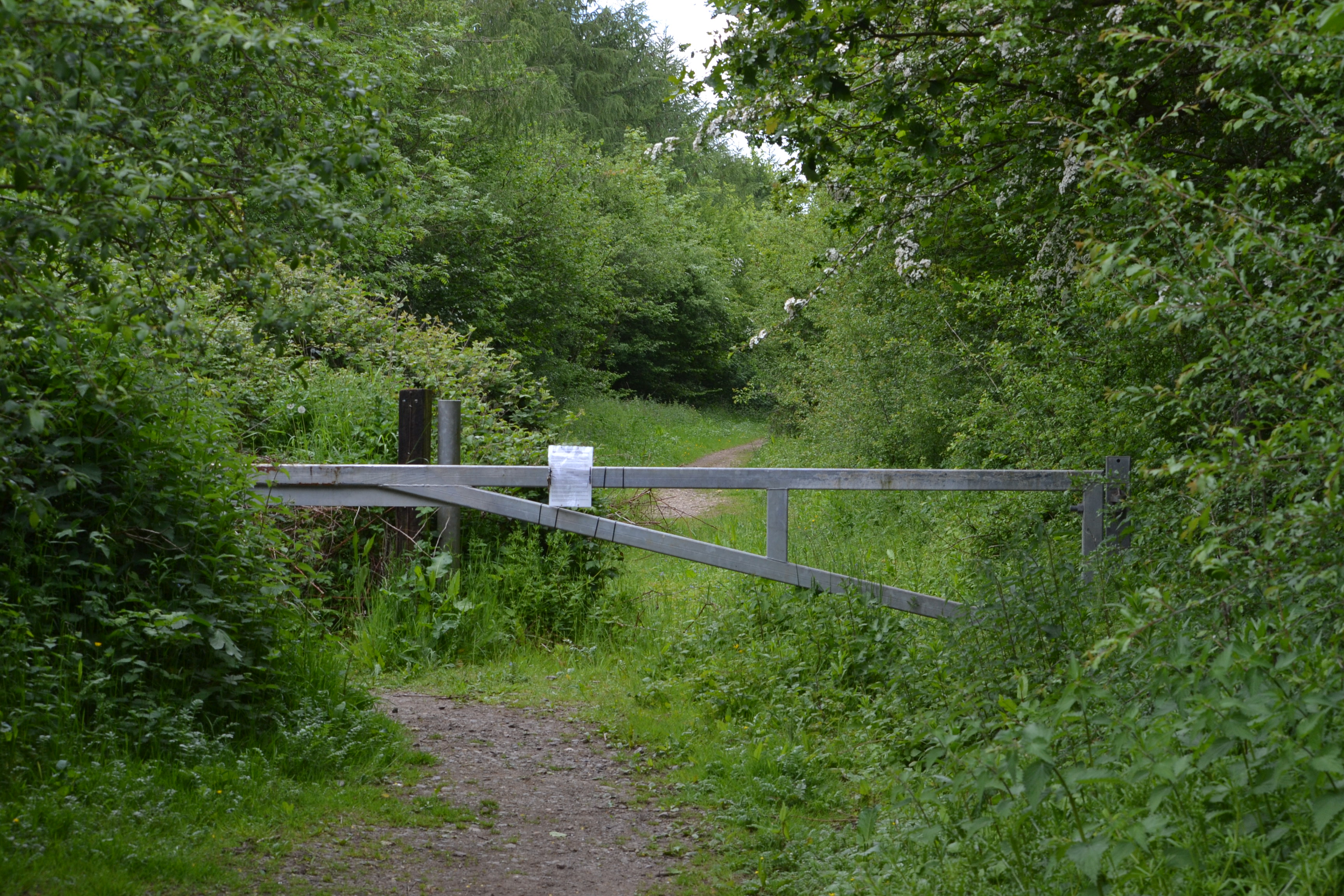
The road to this Forestry Commission woodland from Silverstone is currently closed, necessitating a diversion back onto the A43 towards Towcester, then left at the next roundabout following signs to Abthorpe. On my arrival today a first Wood White ghosted by in the car park. I then walked the main track westward as it was bathed in sunshine (below).
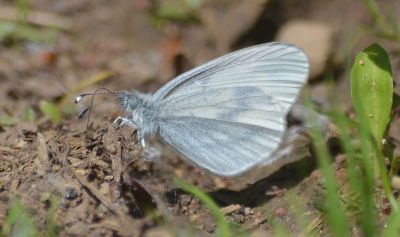
I quickly began to see Wood Whites here and counted about 20 as far as the crossroads in the centre of the wood. These languid waifs have a dainty appearance and delicate flight that easily distinguishes them from Green-veined or Small White, and they are also smaller than those other species. As I fired off the frames from which to select the pictures below, all the frustration of a four day wait for sunny weather melted out of me.
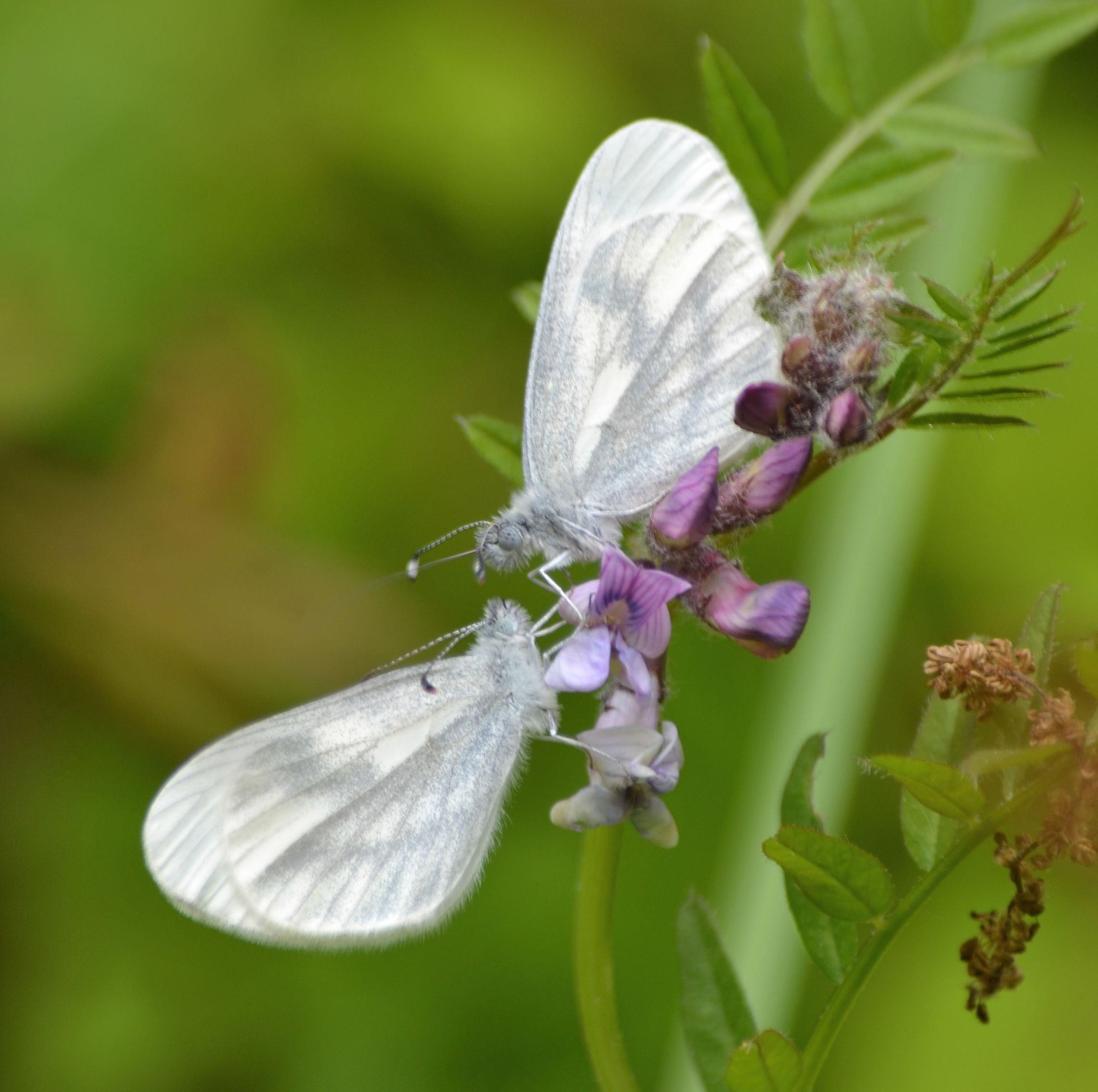
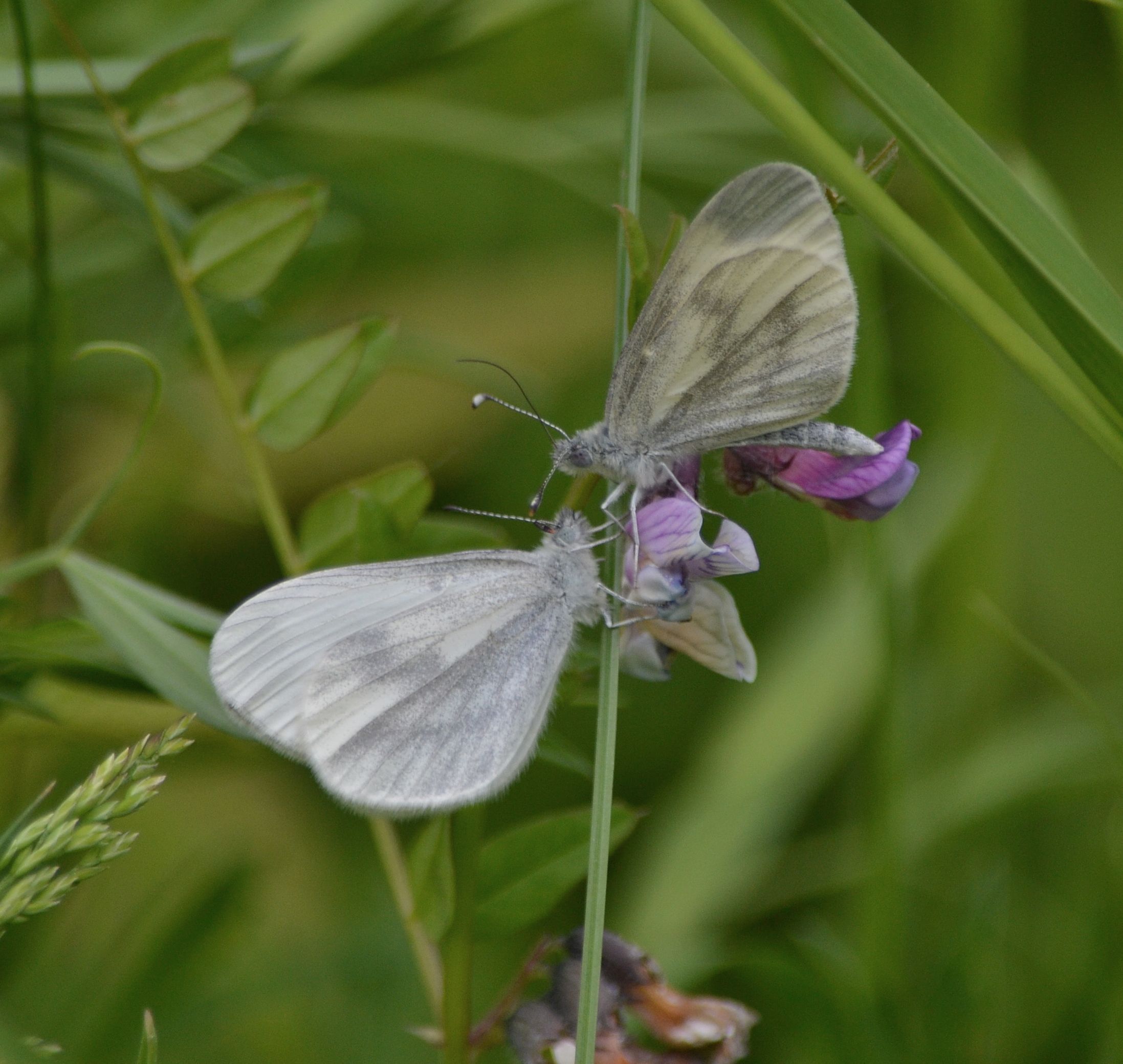
Wood White is localised in southern England and rarely numerous where it does occur. The black wing tips of the males seemed more noticeable today than on my previous visits to this site. These are very apparent in this picture of a courting pair (below).
Having gained such a good result along just part of the route I usually walk here, and mindful of the need to return to Otmoor, I decided against going further into the woods. If anything there seemed to be more butterflies on the wing as I walked back to the car park.
When my plans for this morning fell through I was pleased to get an Oxonbirders’ text alert saying there was a Black-throated Diver at Farmoor Reservoir. I jumped into the car and went at once, this being a bird I have seen twice before but not in summer plumage. In the event I was the first local twitcher to arrive on site, and patch watchers Dai and Steve walking back along the central causeway told me the bird was diving close to one side of the famed concrete bank.
Rain having begun to fall on my arrival I had left my camera in the car and realised that in choosing to do so I had missed a good photo opportunity. Once company arrived and the bird drifted into the middle of F2 this error of judgement caused a few wry looks and the county bird recorder suggested I use a carrier bag in future. Very apt advice and why didn’t I think of that? We all watched the BTD for a while then Dai (who has a vehicle permit) returned to get the bird onto his dog Billy’s Farmoor list (see here). So he kindly ran me back to the car park where I swapped my scope for my camera (and carrier bag).
Black-throated Diver
Black-throated Diver
Black-throated Diver
On my return the BTD was being watched close to the causeway hide. Once the others had returned to work or wherever they had to be, myself and one other birder who said he shouldn’t be here were left to watch the bird drifting first one way then the other close to the hide. I was then able to experiment with different camera settings and get what with my equipment were reasonable shots (above). At times the bird would stand up in the water and preen, behaviour I have not observed before.
In the past couple of weeks I have also noted with envy various county birders’ pictures of summer plumaged Sanderling at Farmoor. But whenever I dropped in there were none of this species present. Spotting one today on the opposite side of the causeway I added more reasonable results to my Farmoor waders’ gallery. As usual the sludge and detritus of the reservoir shoreline provided a subtle background to the subtler and delicate tones of this beautiful passage migrant.
Sanderling
I think I am right in saying the reaction of everyone who saw the BTD today was “cracking bird!” I can only agree on both species and all this was a most excellent way of passing a wet spring morning. The BTD remained at Farmoor for nine days but observers realised it had picked up an injury and wasn’t well. Sadly this bird was found dead on 23rd May.
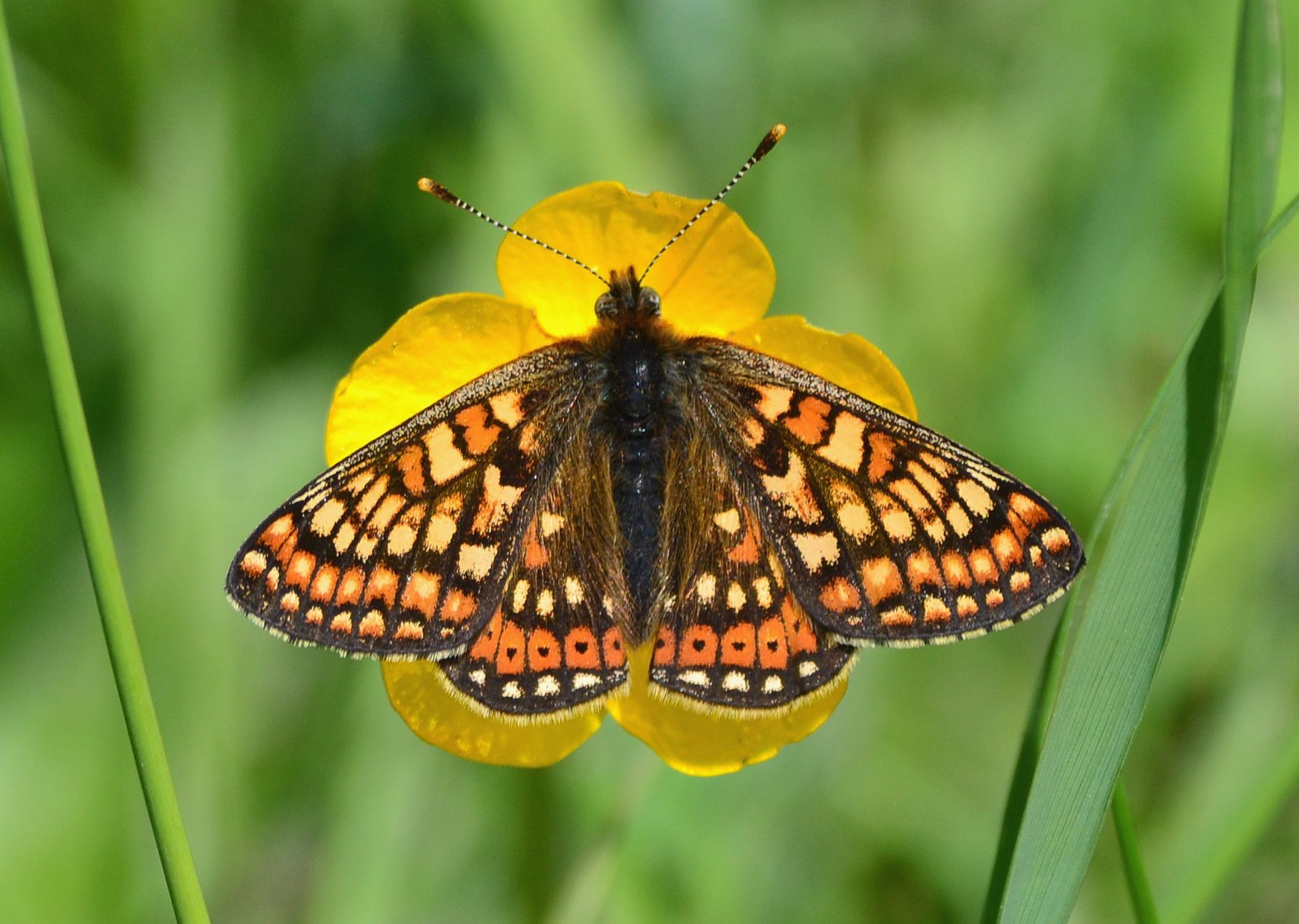
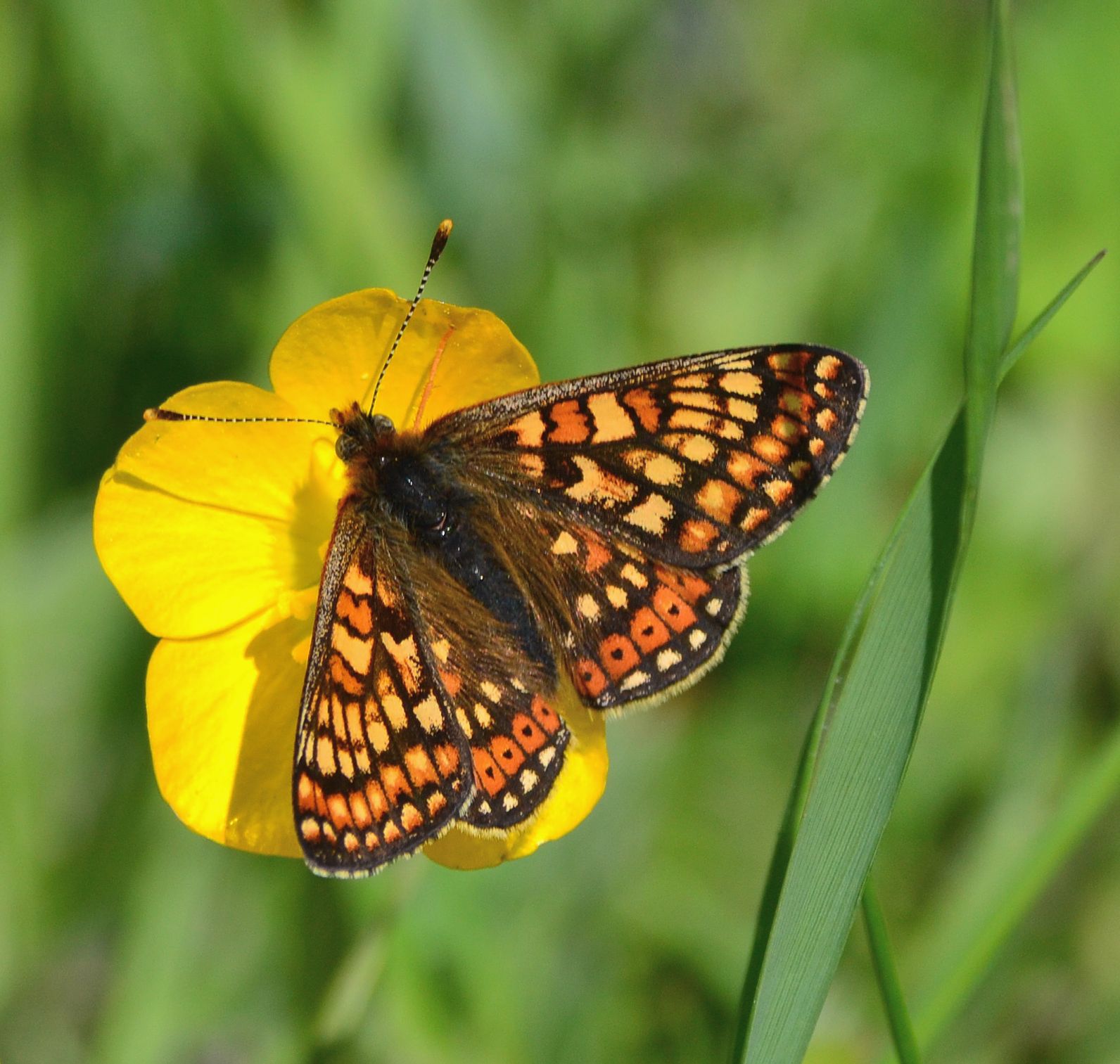
When I read that Marsh Fritillary were flying at my site of choice there was only one place to go on this warm and sunny day. In my home area of Oxon, Bucks and Berks there is just one tiny and fragile cluster left. Not too far away in Wiltshire variable concentrations of the species can be found, and Cotley Hill (ST917427) near Warminster must take the title of Marsh Frit grand central. My visits here in 2011 and 2013 yielded large numbers of what is a declining and distinctly localised butterfly nationally, and today was a repeat experience.
From a lay-by at a roundabout on the A36 near Heytesbury, a footpath leads uphill into a long south-west facing slope covered by unimproved grassland. This site supports a rich flora and 29 breeding species of butterfly. Taking the first sheep track left at the foot of the hill I quickly began to see Marsh Fritillary, as on those previous visits. An observer walking back told me there were hundreds on the hillside above and indeed there were. This butterfly has a pleasing habit of sitting up and keeping still for the camera, and one after another did just that as I walked around.
Marsh Fritillary
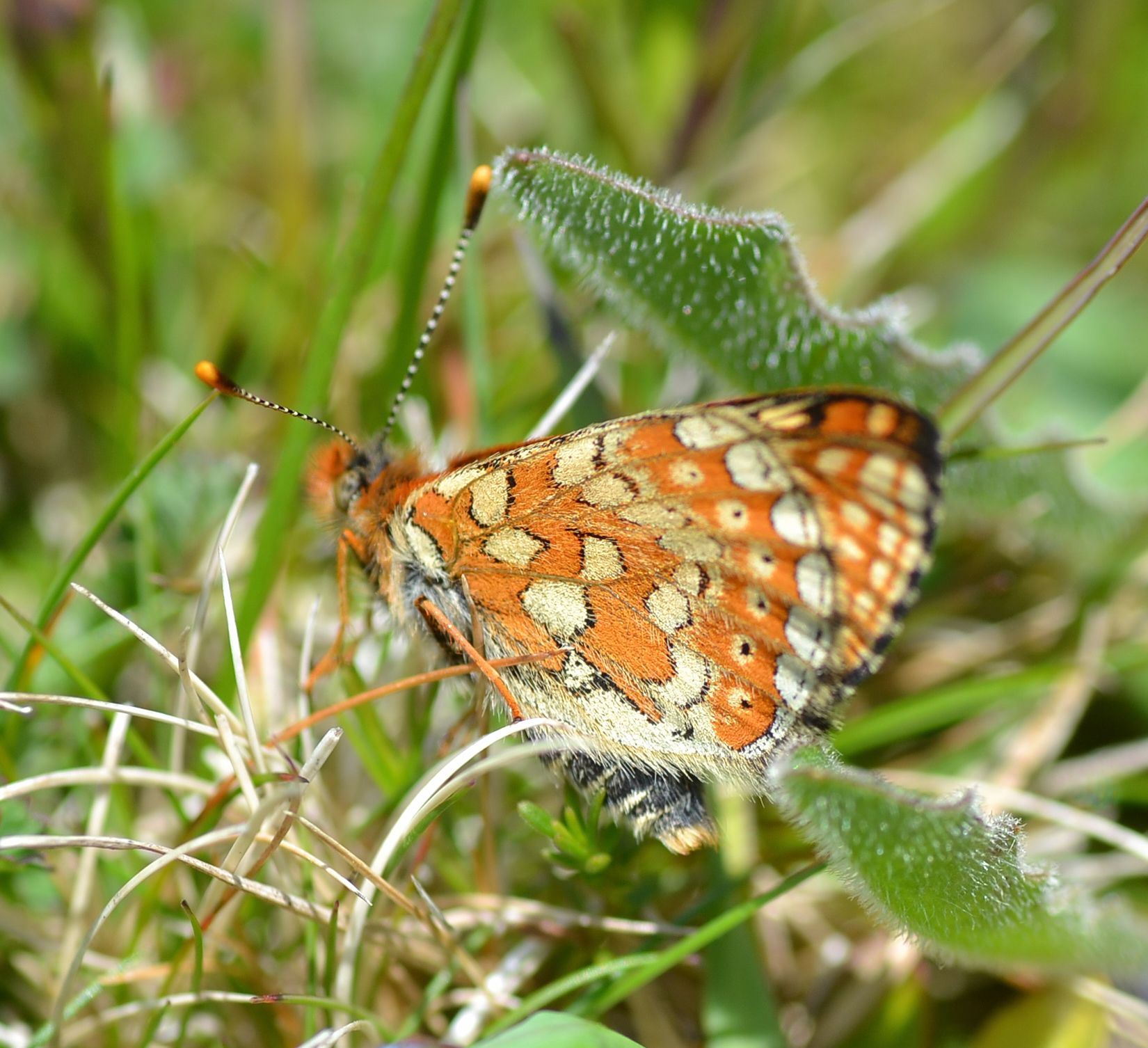
Marsh Frit can be very variable, the smallest males being a fraction of the size of the largest females. Although the chequered pattern is constant the wing colours can also vary a lot. Underwing shots are more difficult to come by. This newly emerged female (below) was still drying in the sun while already rejecting the attentions of a male suitor.
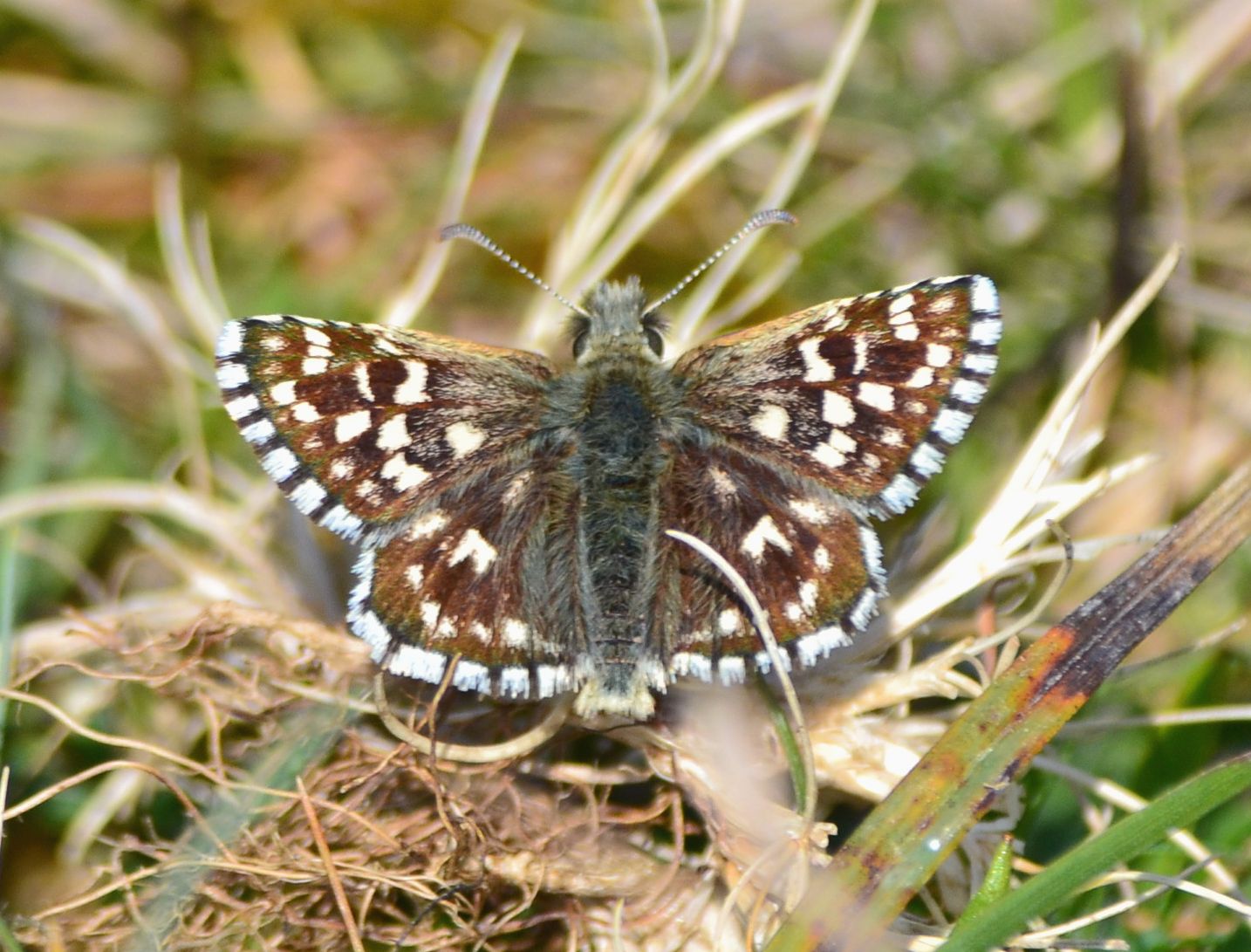
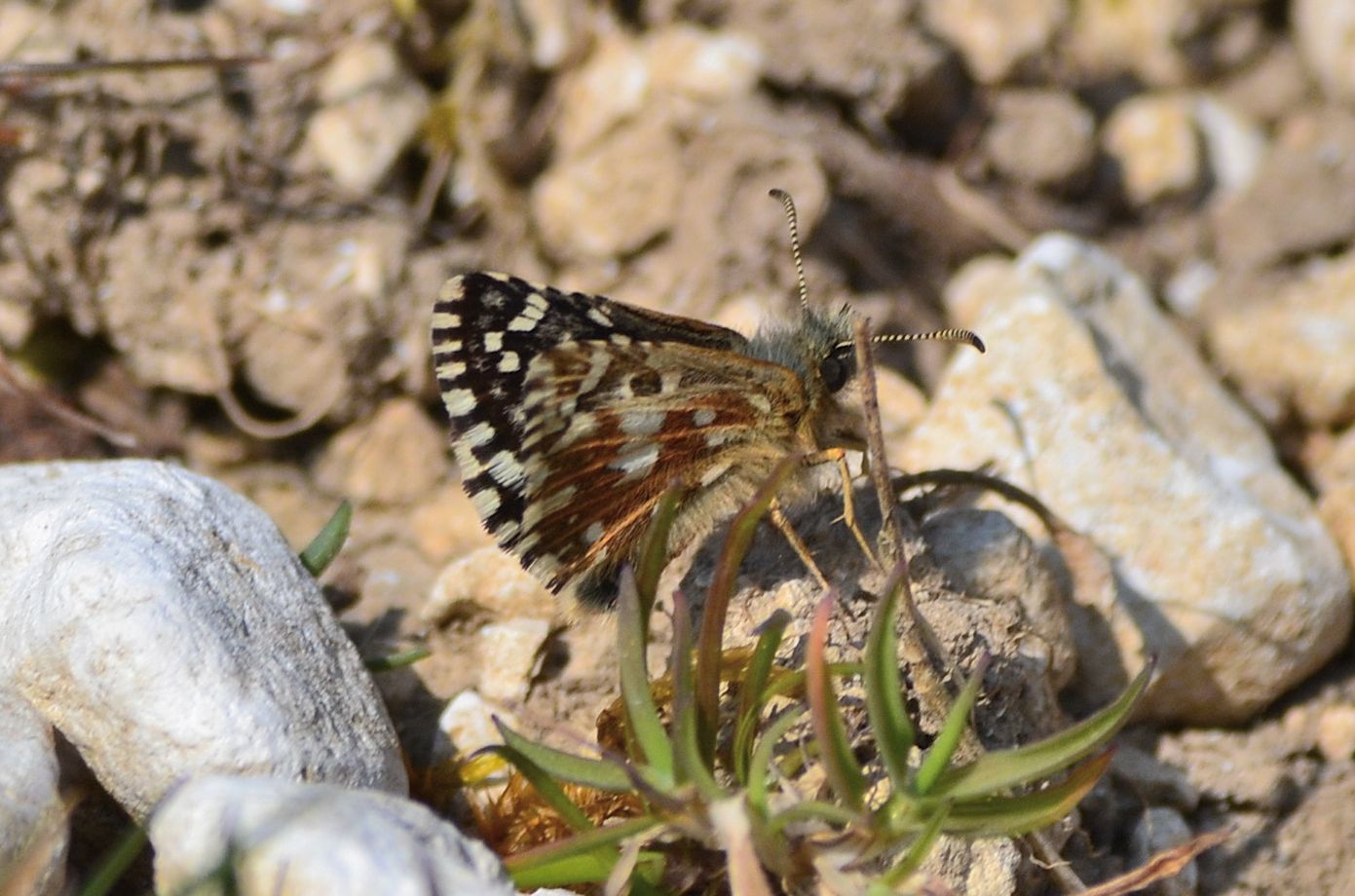
The supporting cast here was a check list of April and early May key species: Dingy and Grizzled Skipper, Green Hairstreak, Brown Argus, Small Heath and my year’s first Small Blue.
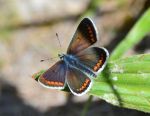
Brown Argus
Green Hairstreak
Small Heath
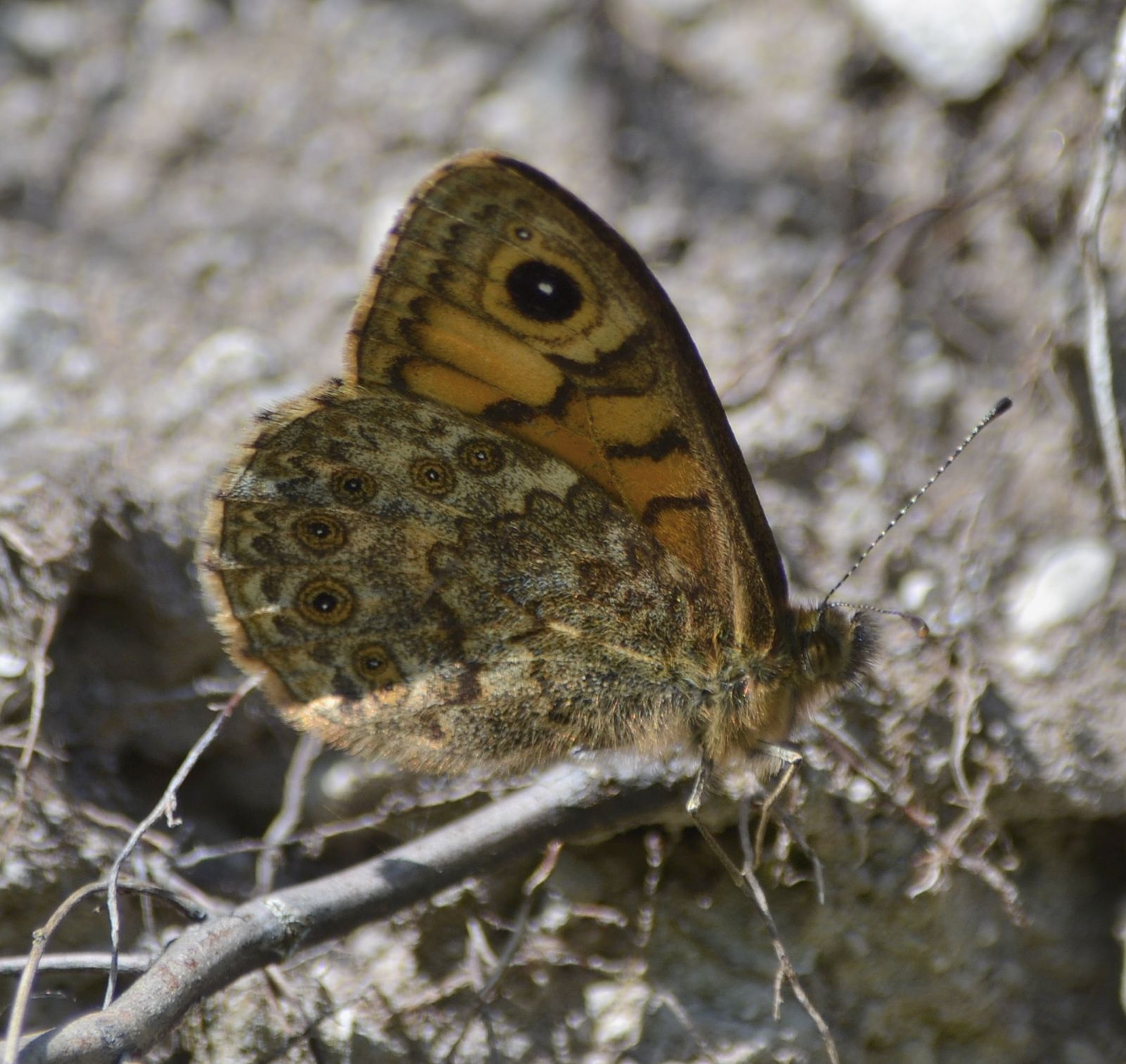
There was still time for a bonus butterfly so I walked up the main path and back to look for Wall Brown, having seen them here previously and at other Wiltshire sites. This species is virtually extinct in my home area. Back at the lay-by a Wilts man gave me directions to another location where he said they fly. About ¾ mile west of Avebury on the A4 is a lay-by on the south side of the road from where a footpath leads uphill through a Beech copse. On the eastern side of this, above some racing gallops is a worked out chalk pit with an exposed chalk bank. And here indeed I encountered this rather splendid Wall Brown (below).
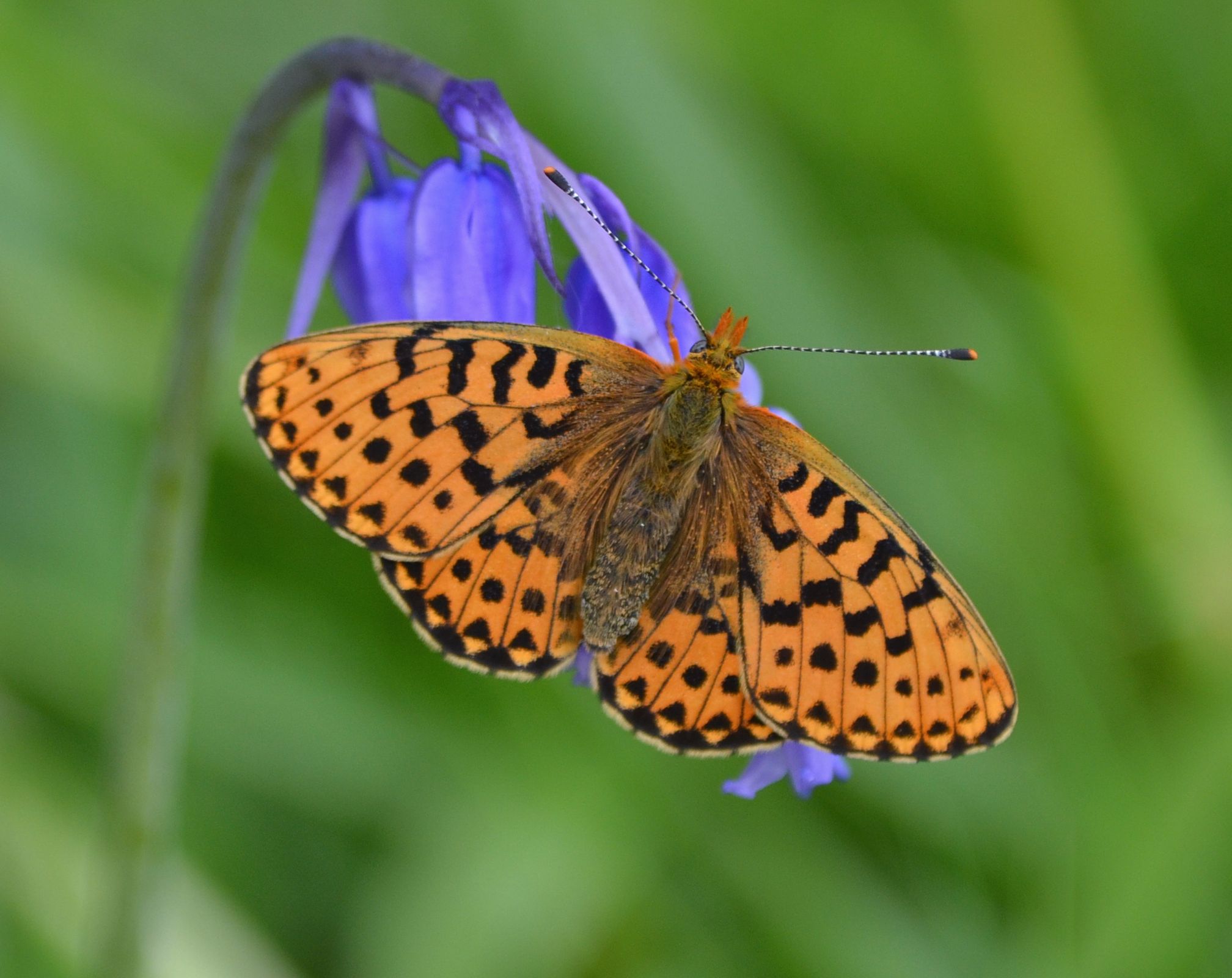
Britain’s earliest flying Fritillary has suffered serious declines and is restricted to dry, sheltered grassland and woodland clearings throughout its range. Various sites are now managed to fuel a recovery for Pearl-bordered Fritillary, and my location of choice has been Bentley Wood SSSI on the Hants / Wilts border (SU264293). This large mixed woodland near the village of West Tytherly is a nationally recognised lepidopterist’s mecca since 35 different species are recorded regularly including every woodland butterfly resident in central southern England. Hence there are usually plenty of visitors here to help anyone find things.
Pearl-bordered Fritillary on Bluebell
My day’s excursion followed three weeks of mainly overcast and often showery weather. Just as there is nothing more inspiring than a sunny hillside teeming with different butterflies, so it gets very frustrating hanging around in changeable weather conditions waiting for the sun to break through and butterflies to appear. That is the downside of insect watching. Worse is when the observer leaves home in bright sunshine to see cloud sitting over a site on approach, and worst of all is when the grey stuff rolls in just upon arrival.
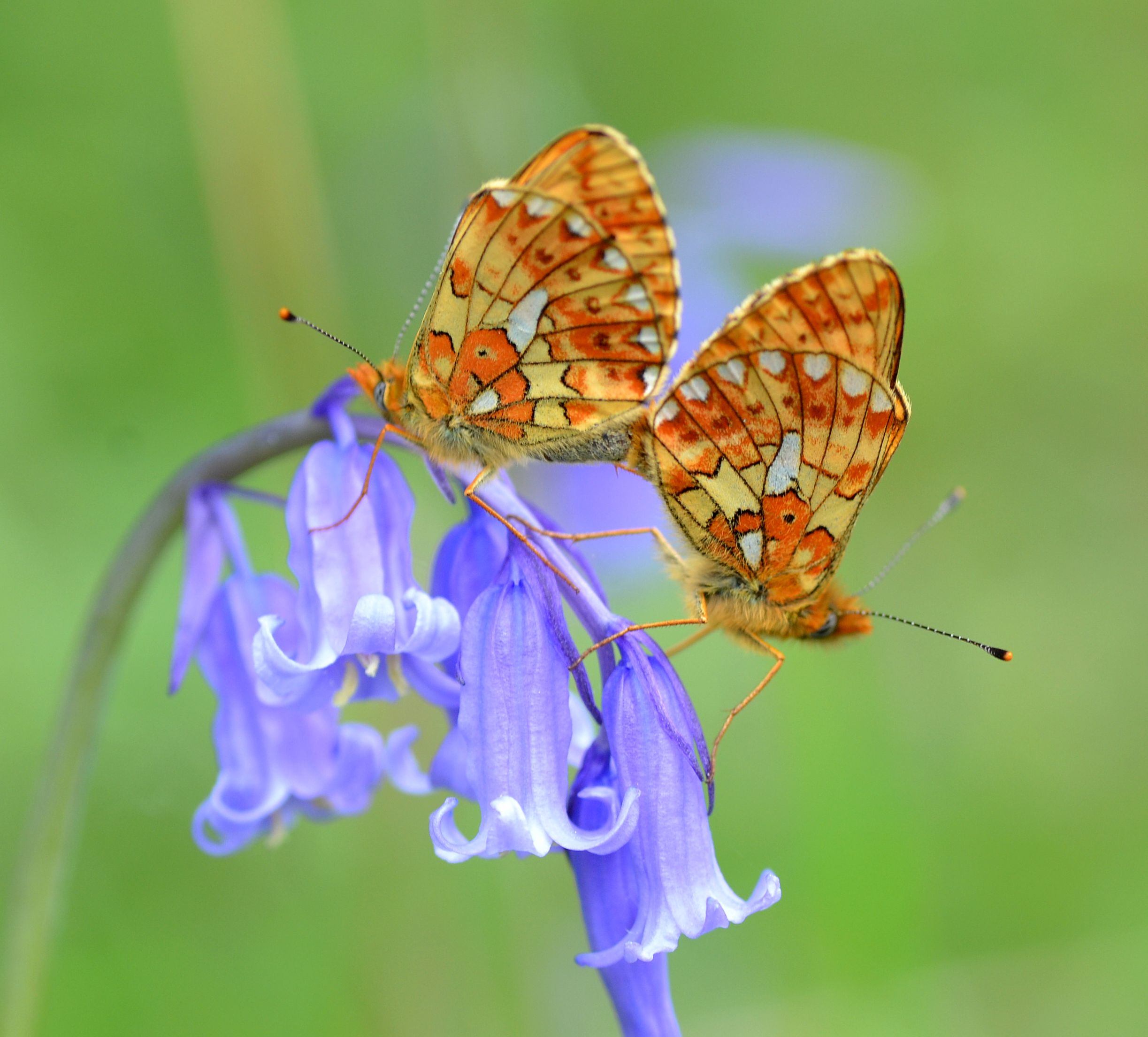
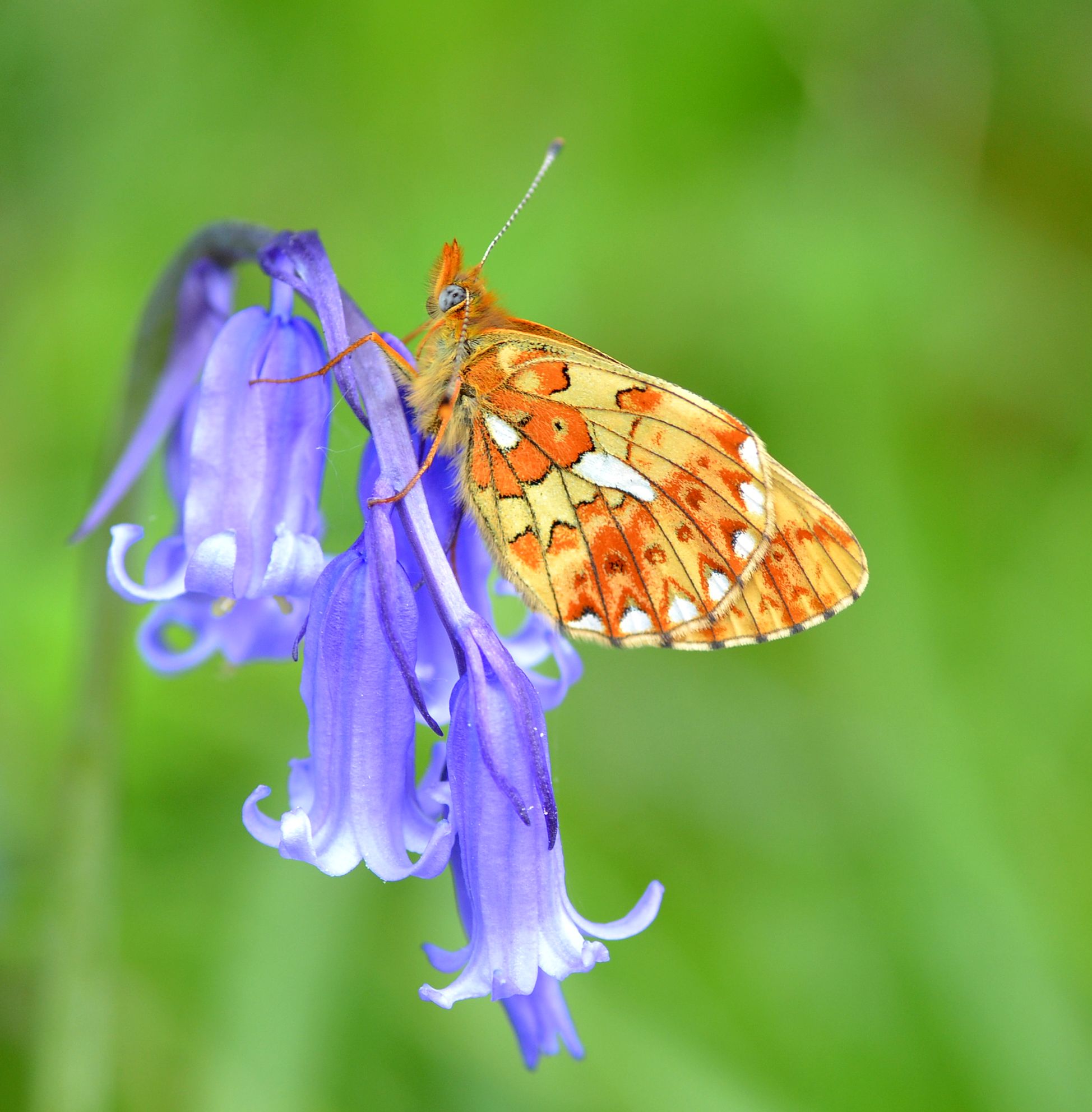
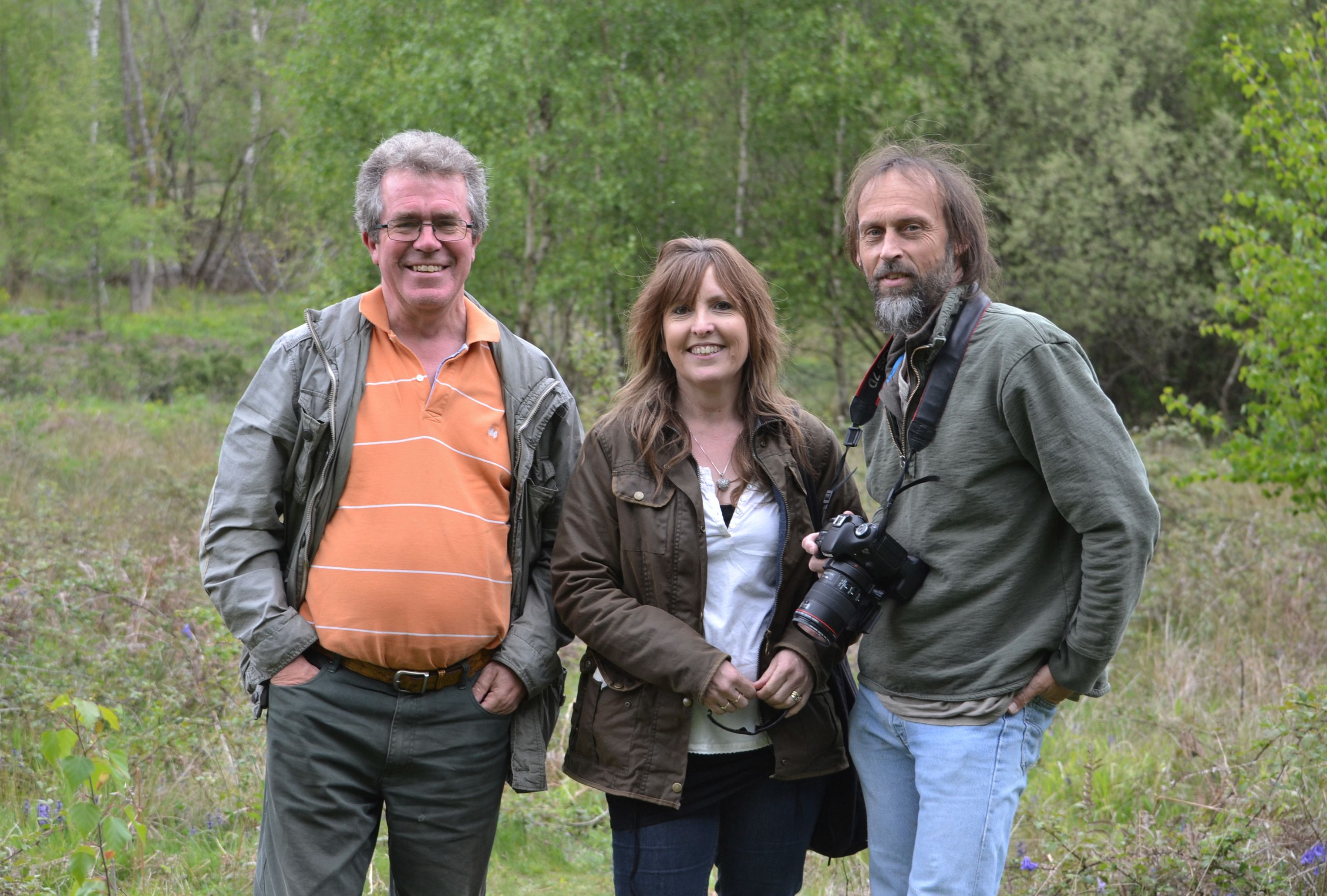
Today was my second attempt at PBF, having visited at the end of April but not seen any on a day when four were recorded. I needed to go somewhere and after yet another “brightening later” weather forecast decided to risk it. The Pearls favour an area called Cowley’s Copse that is usually referred to in field reports as the “eastern clearing”. To one side of the access track to the public car park I saw the tell tale sight of a group of observers crouched low with their cameras. That was it: I parked immediately in a convenient trackside place and went to join them. They had found a mating pair on an English Bluebell (below), and who should be amongst this group but Oxon’s very own and finest Wayne and Julie Bull.
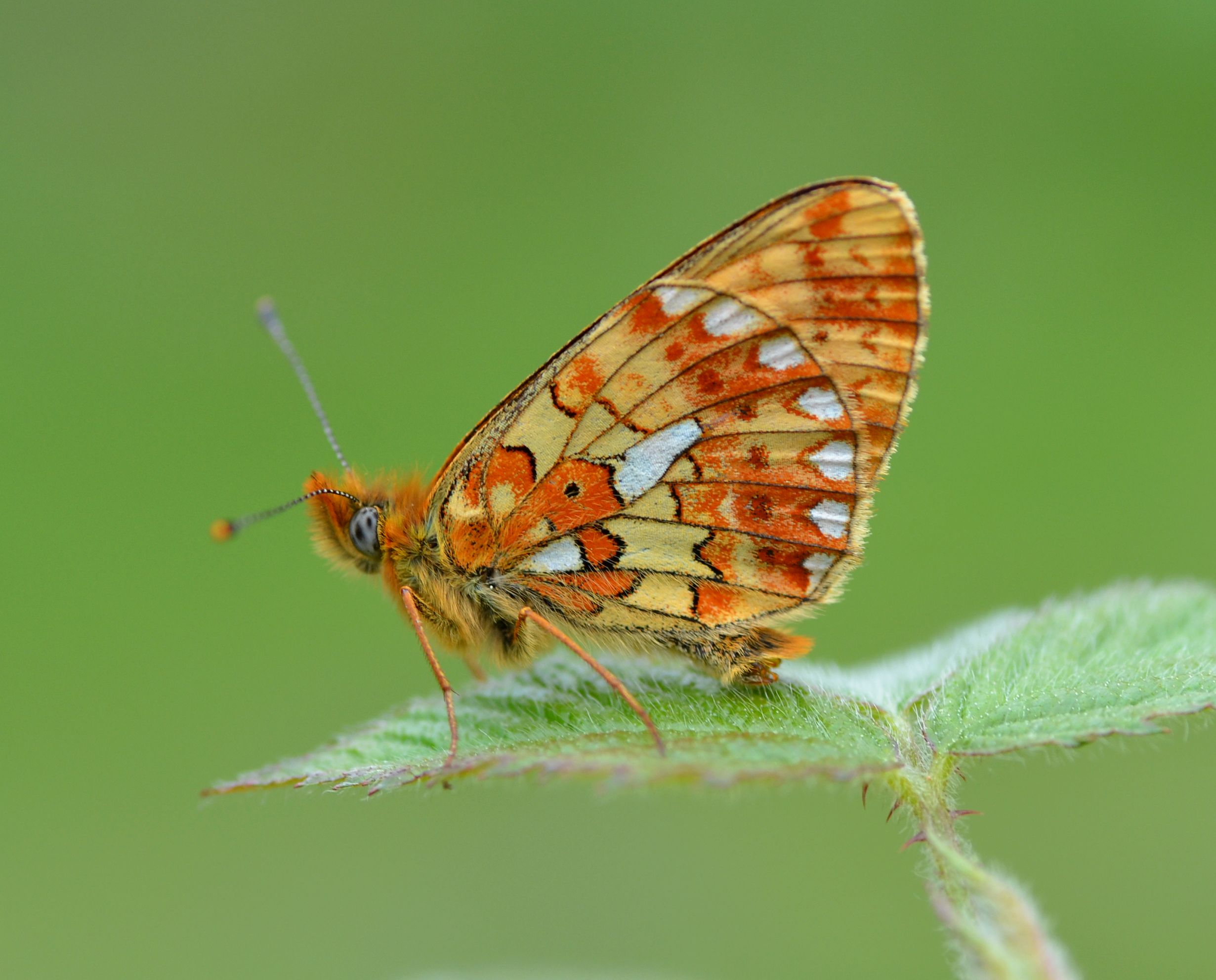
On my previous visits here in 2011 and 2013 I gained good though grassy top wing pictures of PBF but still needed underwing studies. Now with conditions remaining overcast on my arrival and hence too cool for the butterflies to be lively, they kept still and allowed a point blank approach. PBF is so called because of seven silver “pearls” along the borders of each underwing, which these pictures (below) show. The large black dot is another diagnostic.
Pearl-bordered Fritillary
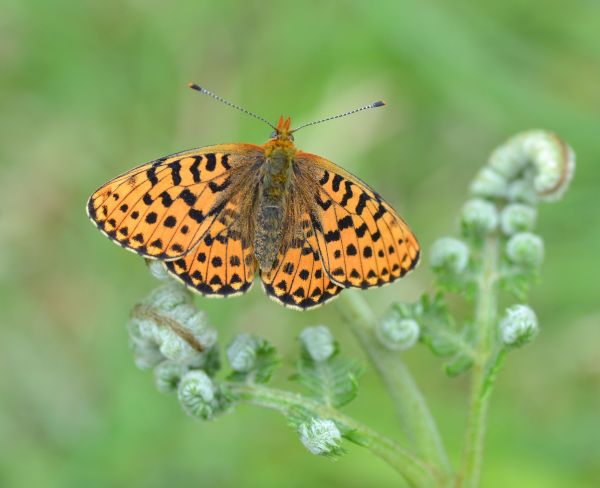
Once the pair had finished what they were doing and separated, a photographer moved one of them onto a more artistic perch that he had set up. I wouldn’t dream of such tricks myself (toggers!) but have to say I am very pleased with the outcome (below). Mission and a premium collection photograph having been accomplished so quickly and easily, I didn’t feel inclined to trawl the still overcast forest clearing for more species and so took the opportunity to visit other sites through the afternoon.
Pearl-bordered Fritillary
Me, Julie and Wayne
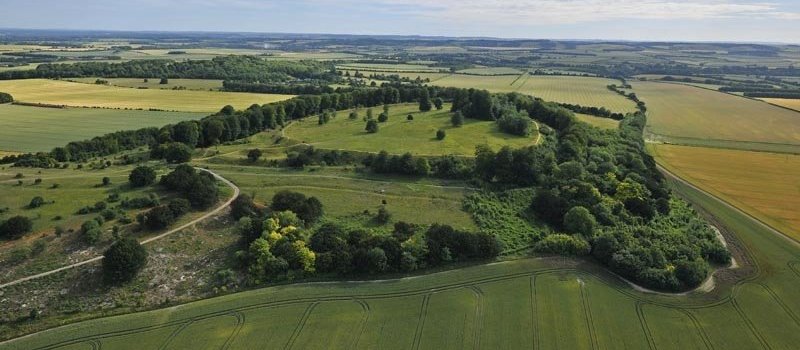
My first stop was the nearby Danebury hill fort (SU323377) for a bit of history, as is my wont. I don’t know whether this has any particular claims to butterfly fame, but being a previously unvisited iron age site in the Wessex area I wanted to give it a once over. Hill top ramparts are often good for butterflies because of the shelter they provide and when the sun cared to show itself so did several common species. It was an impressive location with lots of suitable butterfly habitat, one I thought worth a future visit to see what is there.
Danebury Hill, Hants
Then it was on to Butser Hill (SU713206) on the South Downs near Petersfield, Sussex. Having left my planned second visit here to the late afternoon, the brightening forecast materialised and I was rewarded with perfect butterfly conditions. As on 20th April I concentrated on Rake Bottom, a deep dry valley on the western flank of the highest point on the chalk ridge of the South Downs. Walking in from the top end then down along the valley bottom, I quickly began to see Grizzled Skipper but these all looked well worn compared to that first visit.
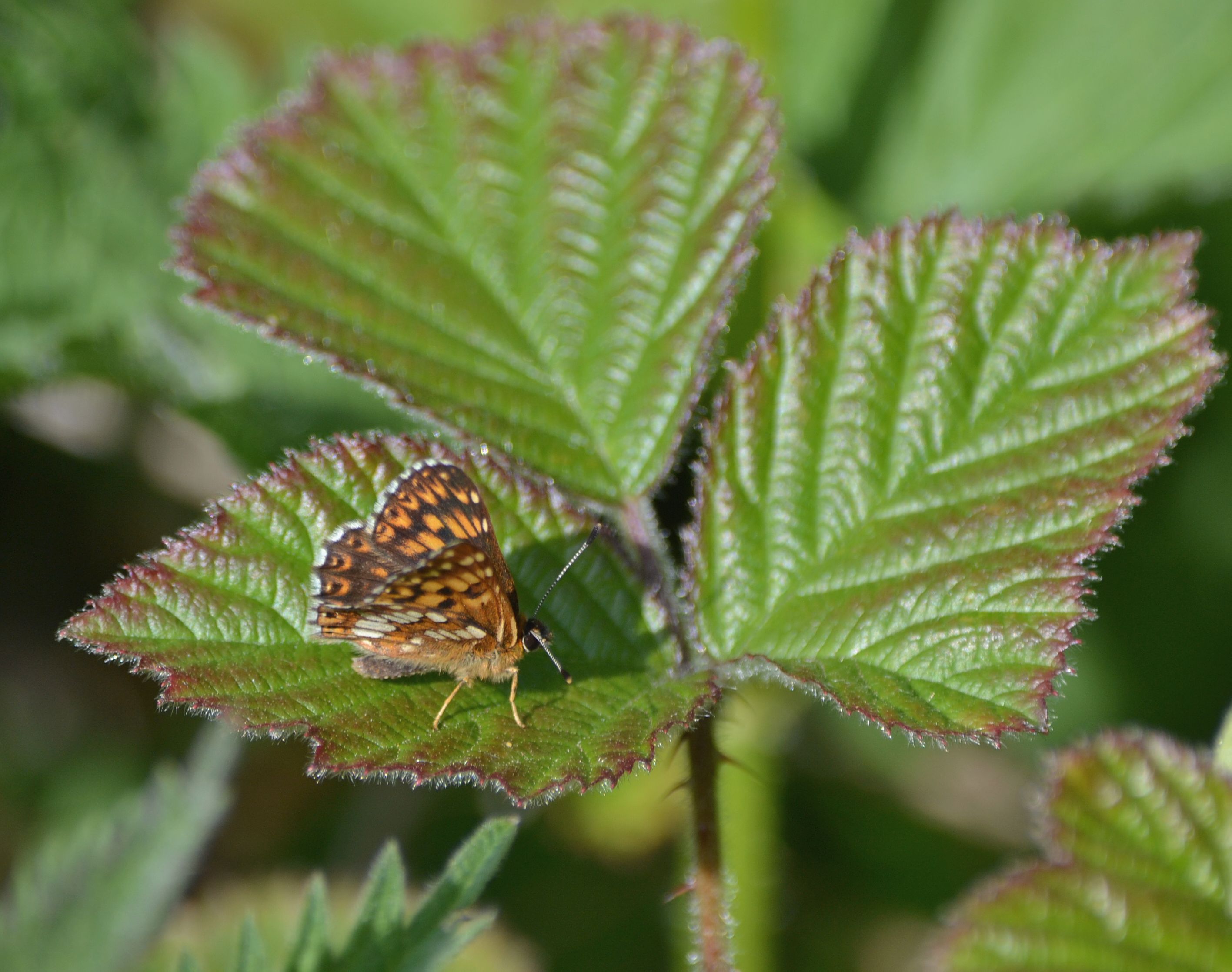
Then I began to find Duke of Burgundy that were flying in good numbers. I knew that Butser Hill was a site for this threatened species, but not that Rake Bottom was the spot for them until now. They were present in low scrub all along the valley floor.
Duke of Burgundy
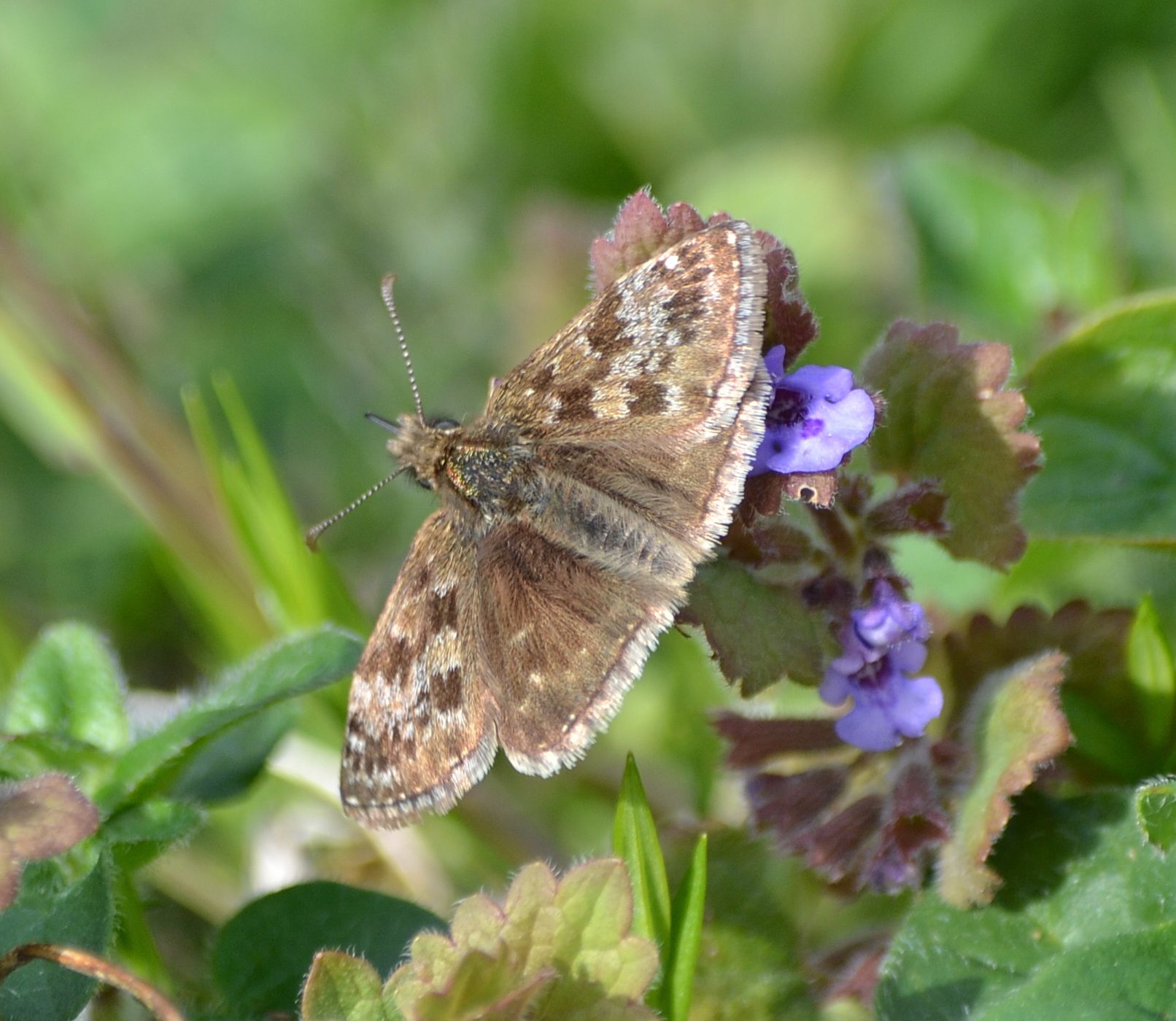
Next up came the visit’s target Dingy Skipper. There can be no more appropriately named British butterfly than this nondescript little number. I have only been used to seeing small numbers of the conservation priority species at any site visited but they are locally common on the South Downs. My experience today bore that out. This was the most numerous butterfly present and given the site’s vastness they must occur here in very large numbers.
This species had been frustrating me locally over the previous three weeks, with just one found on the Chilterns escarpment at Linkey Down prior to today. Dingy also sums up my past attempts at photographing the butterfly that always seems to look “smudgy” in captured images. I had not previously achieved a really satisfying picture of one, though these are better than average.
Dingy Skipper
This is a clearly a butterfly site par excellence as well as a spectacularly beautiful location, and all the common downland species must be present in high season.
At last some rare wader action to end the month! For me this has seemed like an uneventful spring bird passage so far, with only the Hampshire Greater Yellowlegs to go after. Then six evenings ago another Nearctic vagrant, only the third of its kind to be seen in Great Britain arrived at Meare Heath on the Somerset Levels. News was put out early on Saturday once the finder (see here) had made sure of his sighting, but I didn’t notice in time and the bird flew off late afternoon.
I will admit to having to read up on Hudsonian Godwit, not recalling the name previously. The species is so called because almost the entire post-breeding population gathers along the south Hudson Bay and James Bay in Canada. This is a spectacular migrant, wintering in Argentina, and trans-Atlantic vagrancy is very uncommon. In RBA’s weekly summary the bird is said to have acquired mythical status over the 32 years since it was last twitchable here.
I arranged to go down on Sunday with Oxonbirder Andy Last but the “Hudwit” was not relocated. The bird stayed away until Wednesday when it returned with a flock of Black-tailed Godwit and remained until dusk. Where it had been in the interval is not known. Today I was just setting out for what would have been a routine sort of day locally when I got a text from Andy saying the Hudwit was back once more. Suddenly my day had a greater sense of purpose and I upped and went.
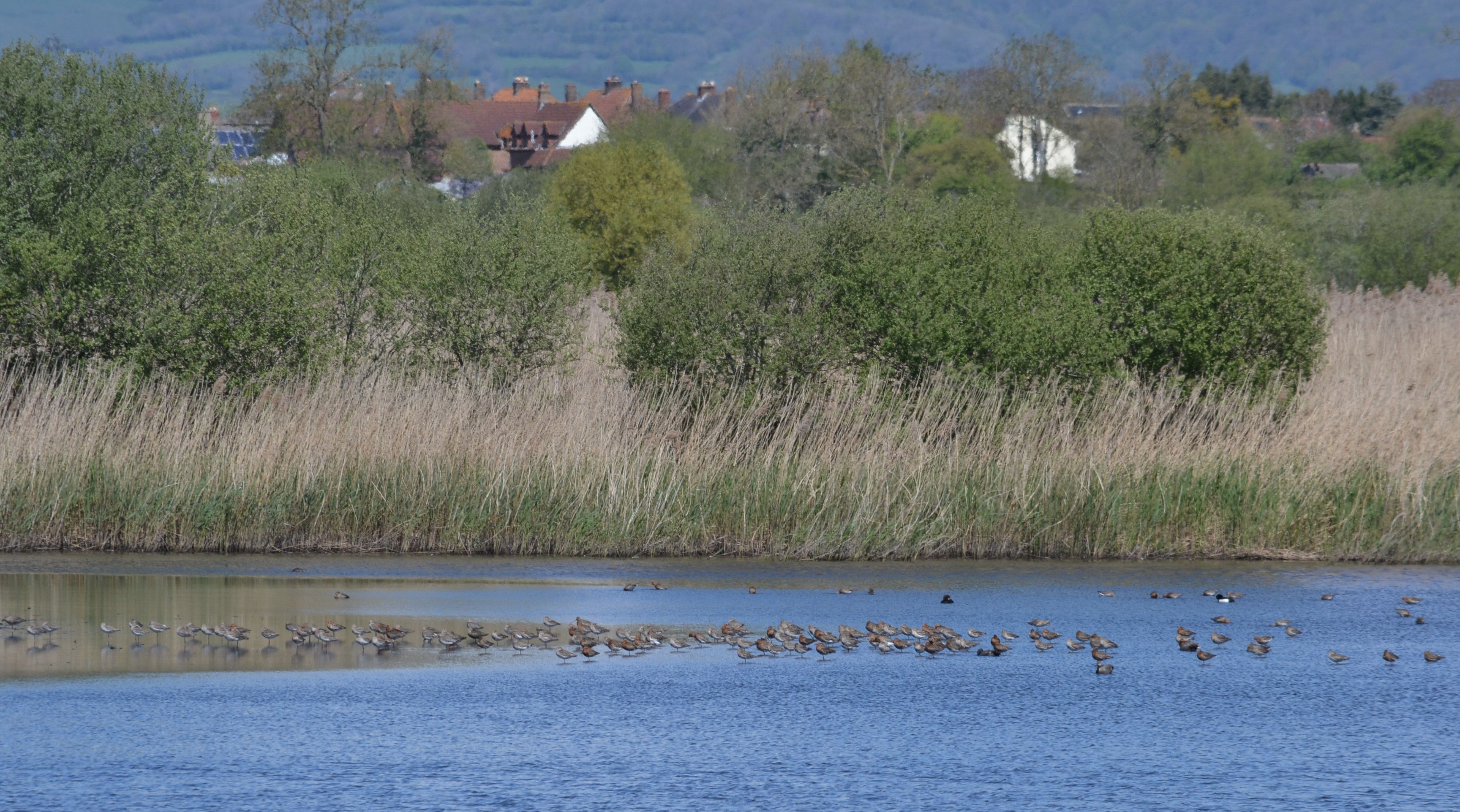
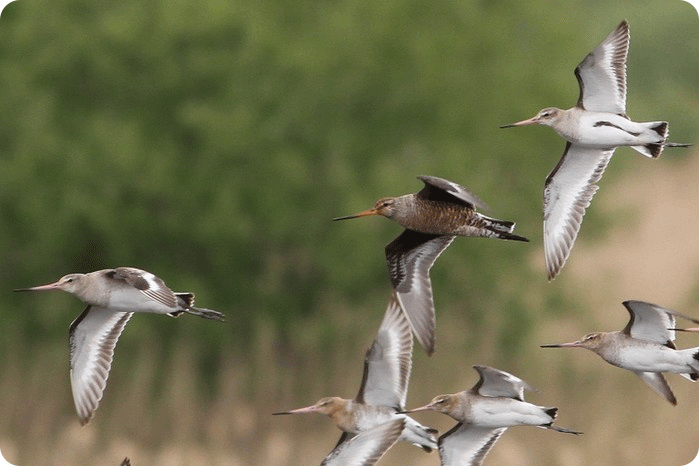
On arriving at Ashcott Corner between the Avalon Marshes reserves of RSPB Ham Wall and Shapwick Heath I found the welcome sight of bulging car parks and a procession of birders coming and going. The location was just a ¼ mile to the west but there was a large flock of Blackwits and other common waders to pick the visitor out of (pictured above). Fortunately I stood next to a friendly expert who guided me to the correct bird. At this point the Hudwit, a female was sleeping and the most noticeable diagnostic was a dark coloured belly. But when she occasionally shook her head or preened briefly the bi-coloured, slightly upturned bill and distinctive pattern of the upperparts were plain to see.
Then I saw Oxonbirder Adam Hartley (aka Gnome) walking towards me to greet some friends of his, so I thanked my helpful guide and went to join Adam. Having got my eye in I could now relocate the Hudwit fairly easily unless it became obscured by other birds, and we watched it mostly sleeping for over an hour. All the time birders were coming and going, with up to 300 present at times. Many of these had the air of vastly experienced twitchers: grizzled, tanned characters with big beards, dated spectacles and carrying all manner of optics; all of this reflecting the great rarity of the bird we had come to see. And a good natured ambience prevailed with people exchanging anecdotes of birding derring do from far and wide
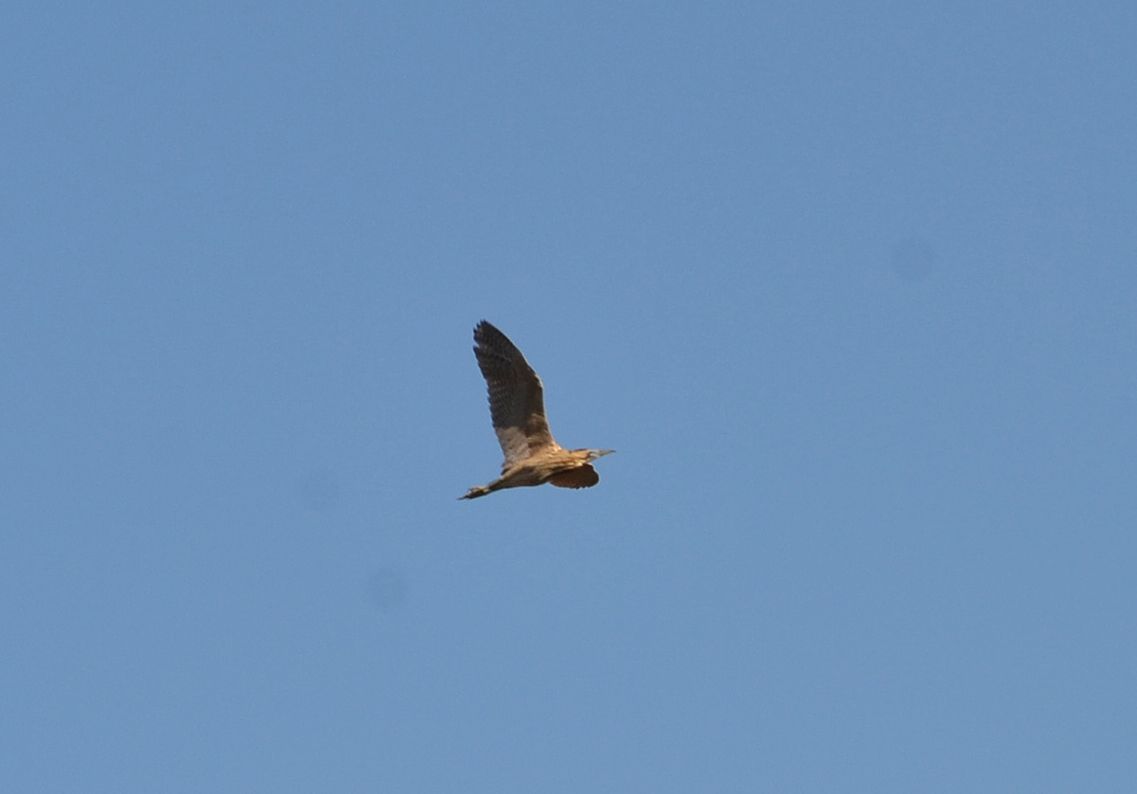
Bittern
As if to demonstrate how I only have to step out of Oxfordshire to trip over Bittern, this one (above) did a fly past. A local bird surveyor told us there are now over 40 booming males on the Avalon Marshes, as well as growing numbers of Great White Egret. Marsh Harrier and Hobby also put in frequent appearances to entertain the crowd. All this is testimony to the huge amount of habitat restoration carried out by the RSPB and English Nature since the 1980s when this area was one largely of peat workings.
At just before 3pm all the Godwits went up and circled round. This was the flight view that everyone had been waiting for since the Hudwit revealed its distinctive dark underwing pattern (pictured below). Adam, who was on an errand to IKEA in Bristol, then had to leave and so I departed too. Back at the car park a business suited man in a BMW pulled up next to me and transformed himself quickly into a birder. He said his day had started in Lancaster, where he saw mainland England’s other mega a Pied-billed Grebe. Then after client meetings there and in Wolverhampton he had time to drop in here before heading home to Bedford. Now that’s what I call achieving a work / life balance!
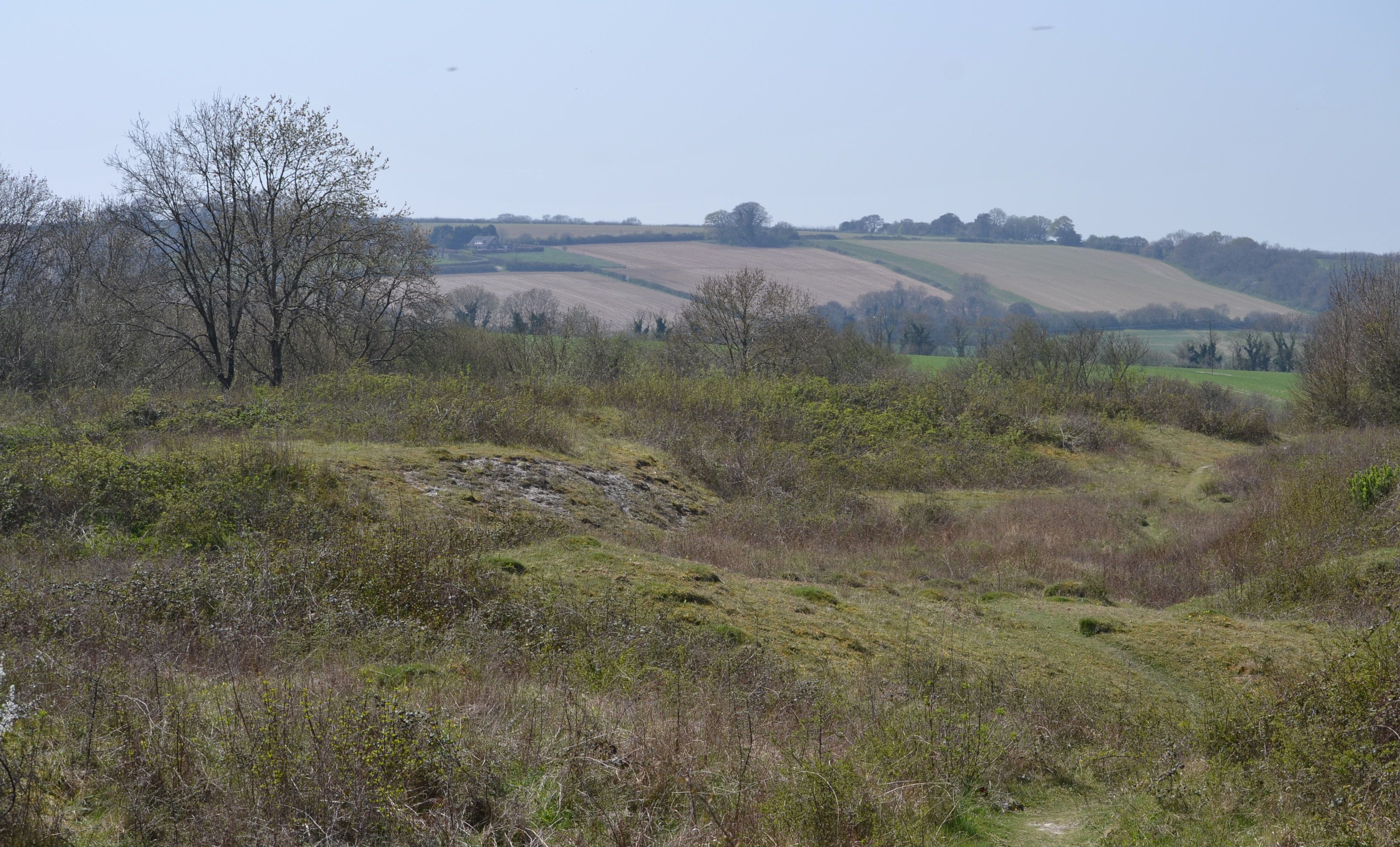
Noar Hill is a Hampshire & Isle of White Wildlife Trust reserve where I previously observed Duke of Burgundy in the 2011 and 2013 seasons. The hilltop (SU744319), just south of the village of Selborne, is characterised by former medieval chalk workings that created a patchwork of sheltered hollows and rich chalk scrub habitat (pictured below) ideal for chalk downland butterflies. This year the Dukes, one of Britain’s most vulnerable species, began flying on 15 April and should continue until late May.
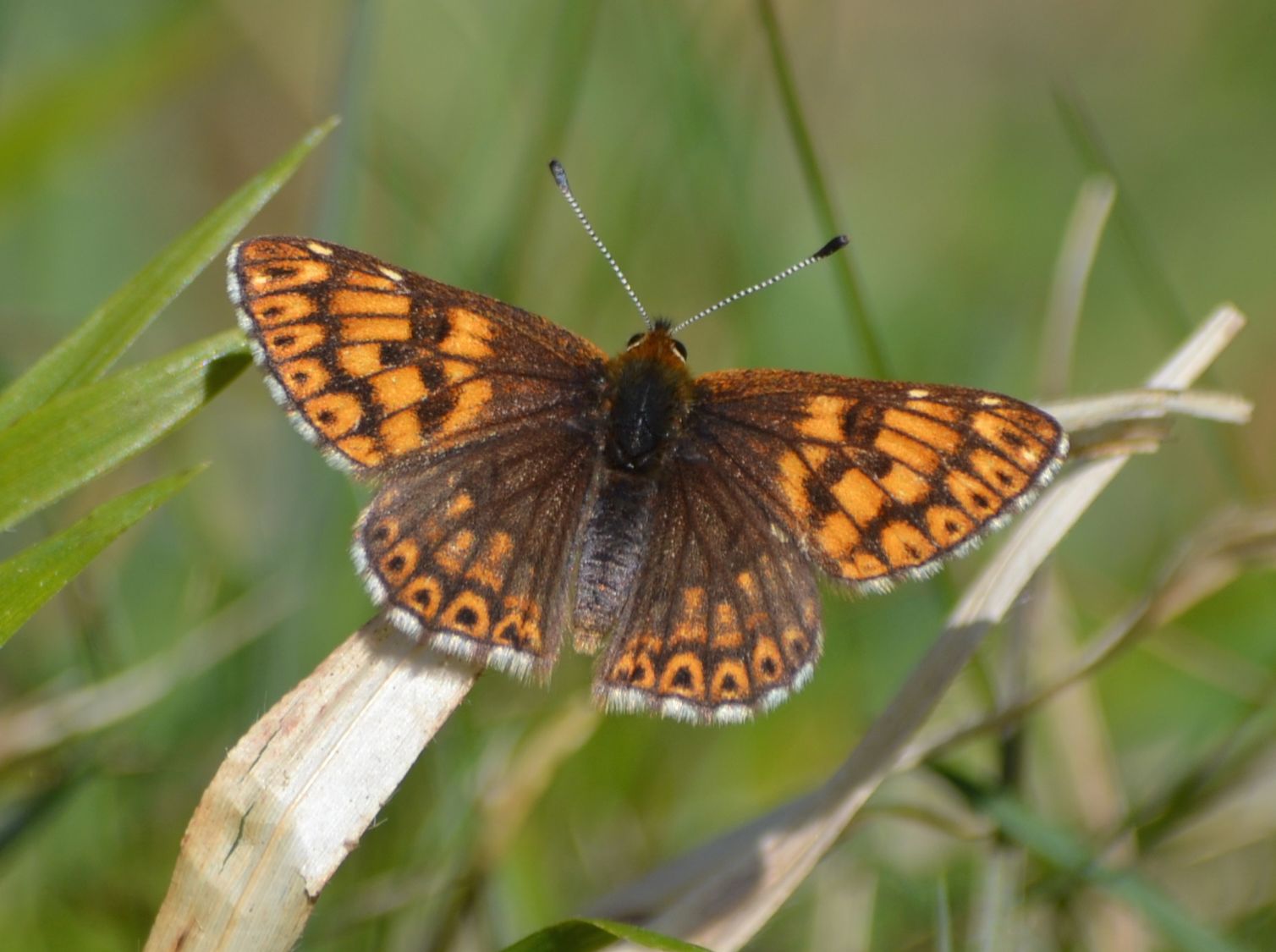
Arriving on site mid-morning I searched those areas with which I was familiar but could find no Dukes. Then I was fortunate to meet Butterfly Conservation’s Hants and IoW co-ordinator Ashley Whitlock who directed me to the new (for myself) location of his one sighting so far on this day. When I reached that spot Ashley and a companion arrived behind me and re-found the butterfly, a male (pictured below).
Duke of Burgundy (male)
Duke of Burgundy are very territorial, so if an observer stays in the place where one is first seen that butterfly will keep coming back. Eventually a second male appeared, challenging the first one. It was now midday and warm sunshine prevailed. I moved on to a chalk pit where I had seen and photographed Dukes two years ago, finding two butterflies in exactly the same spot as then. I believe these were a male and female, the latter being the slightly larger and paler of the genders. Once again these insects kept returning to the same place.
In all I saw five Duke of Burgundy at this site and was told of one other. According to the British butterfly bible Thomas and Lewington this is a typical day’s haul for a downland colony, since adults emerge progressively from mid-April to late May and their average life span is five to seven days.
Female Duke of Burgundy (above) and on Cowslip food plant (below)
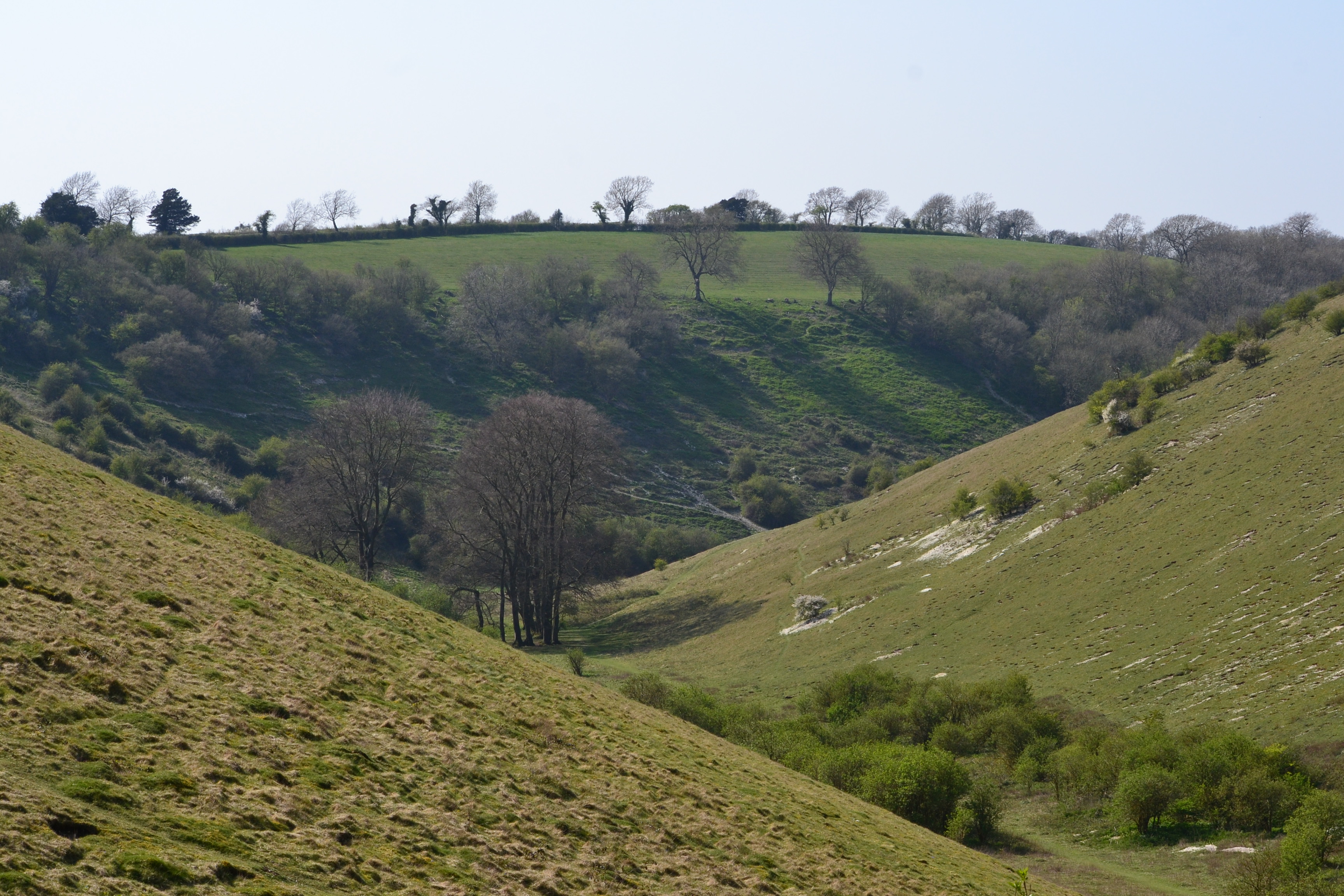
In the afternoon I moved on another 14 miles or so to Butser Hill NNR (SU716203), the highest point on the chalk ridge of the South Downs. From the reserve car park I walked to the top end of Rake Bottom, a deep dry valley on the western flank of the hill that is a hotspot for Grizzled Skipper. I would guess this spectacular natural feature dwarves the fabled Devil’s Punchbowl on the Oxfordshire Downs by a third as much again in depth (pictured below).
Rake Bottom, Butser Hill NNR
I met a couple here who had walked up the valley from the lower end. They confirmed that the “Grizzles” were the most numerous species present and before long I began to see them as well. Being so tiny they are quite difficult to relocate after they jump out of the way in typical Skipper fashion. But I do not recall seeing so many of this butterfly in one location before. The afternoon was drawing on and I had bought just an hour’s parking time, so resolving to return to this site at some time in the future to see what else might be here, I left.
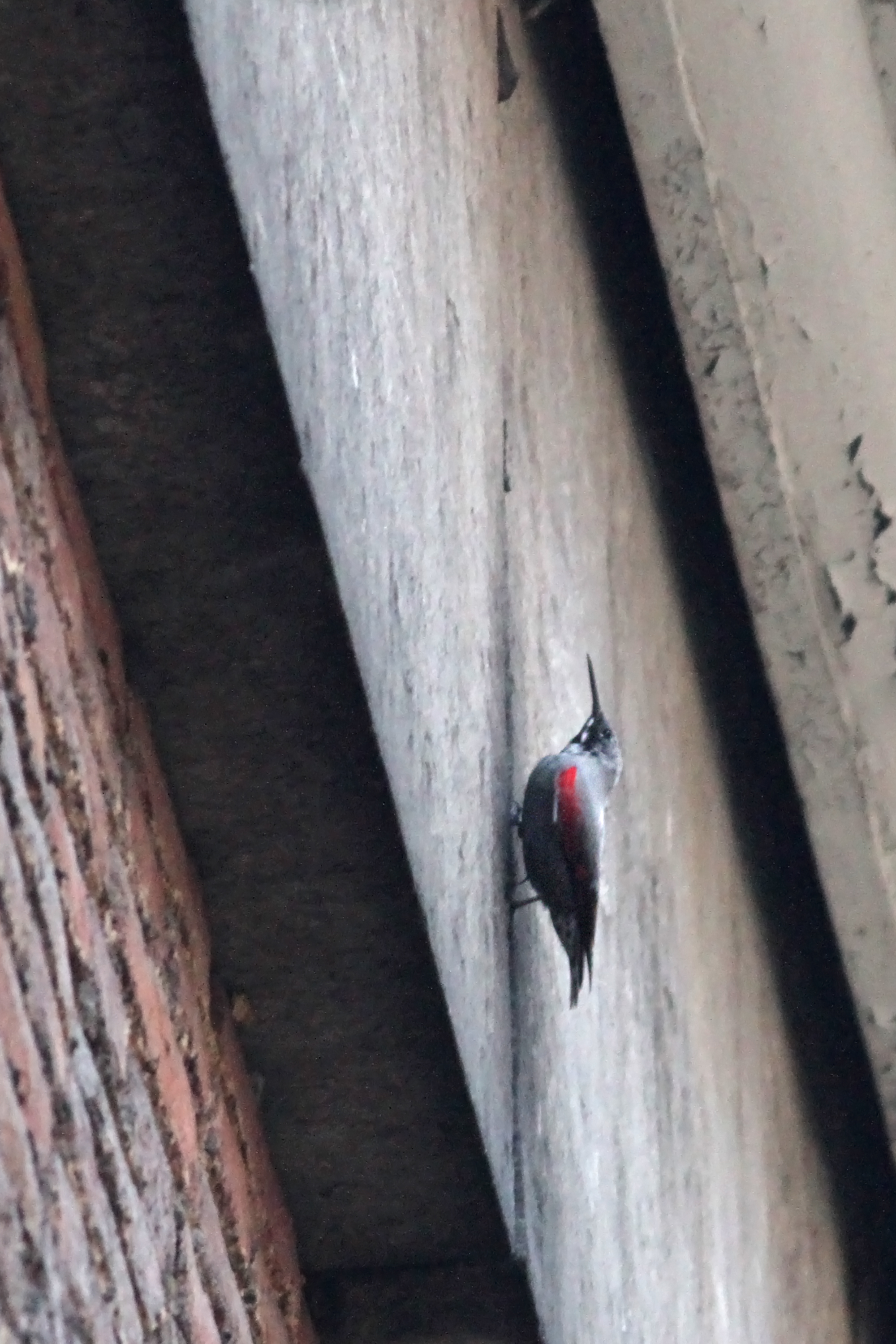
I have had an email from Robin Gailly, the Belgian birder who guided me to observing the long-staying Wallcreeper in Dinant on 22nd March. The bird last roosted in that town on 7th April and is now assumed to have departed. I am interested to learn that it was first found (on 30th December 2014) due to a group of local birders prospecting suitable sites for the species that they thought occurred more in south-east Belgium than was previously assumed. Robin tells me a second Wallcreeper wintered in a quarry near Liège.
I like this picture of the bird on the Palais de Justice wall just before disappearing into the dark cavity above it’s head for the night.
Today was the second time in 2015 that a particular north American wader passed through Hampshire County Council’s reserve at Titchfield Haven on The Solent. One Sunday back in January I had missed Greater Yellowlegs through not seeing the news in time to get down there. By the following day the bird, a lifer had gone. This time I picked up the news within an hour of it appearing on RBA and so got straight into my car and went.
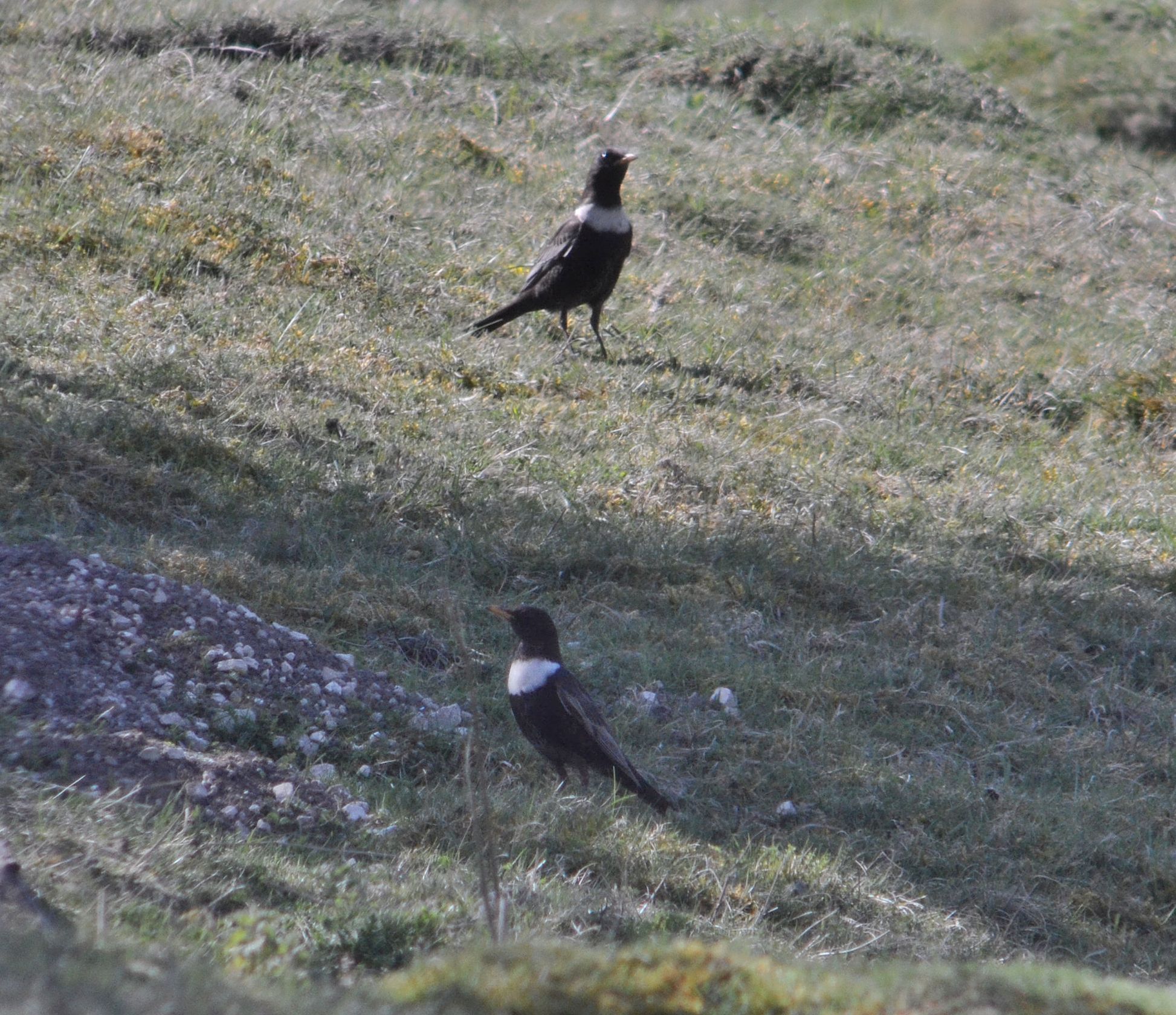
My day had begun locally at Farmoor Reservoir where I met up with Tezzer and Mark. Some site passage specialities are passing through there at the moment but not while we were present. So we relocated to Linkey Down on the Chiltern escarpment where this spring’s first reported Ring Ouzel for that location had been seen earlier in the day. There we met several other Oxonbirders and thanks to the most sharp-eyed amongst the group I saw this species in our county for a fourth consecutive year *. I bowed out at that point, fortunately so given events a little further afield.
* I have since self-found Ring Ouzel at another Oxfordshire location
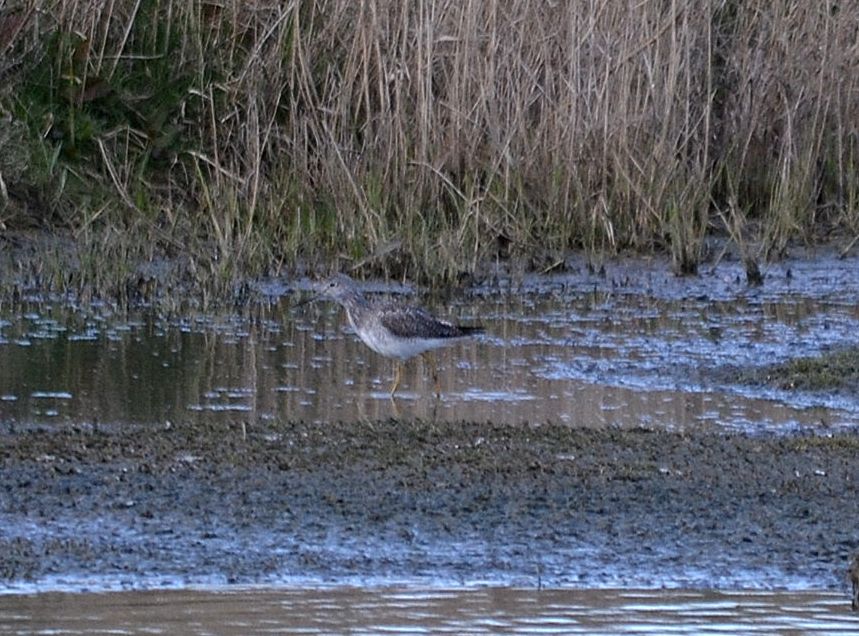
When I arrived on site just before 4pm, the Greater Yellowlegs was sleeping to one side of Titchfield Haven’s Meon Shore Hide that was bulging with birders. Fairly soon the bird began to move around, being a lot smaller and greyer in appearance than the Black-tailed Godwits with which it was associating. The GY had a quick and delicate action and the diagnostic, slightly upturned bill was noticeable. But it was too distant to obtain clear pictures, this one (below) being as good as things got for me today.
Greater Yellowlegs
Various other birds seemed to object to the visitor’s presence however, until the “Yank” fled exclaiming onto the River Meon nearer the coastal road. But it didn’t stay there for long before going inland again. When I got back to the Meon Shore Hide the Yellowlegs was not on view, though it had apparently dropped back in before flying off for good (see here).
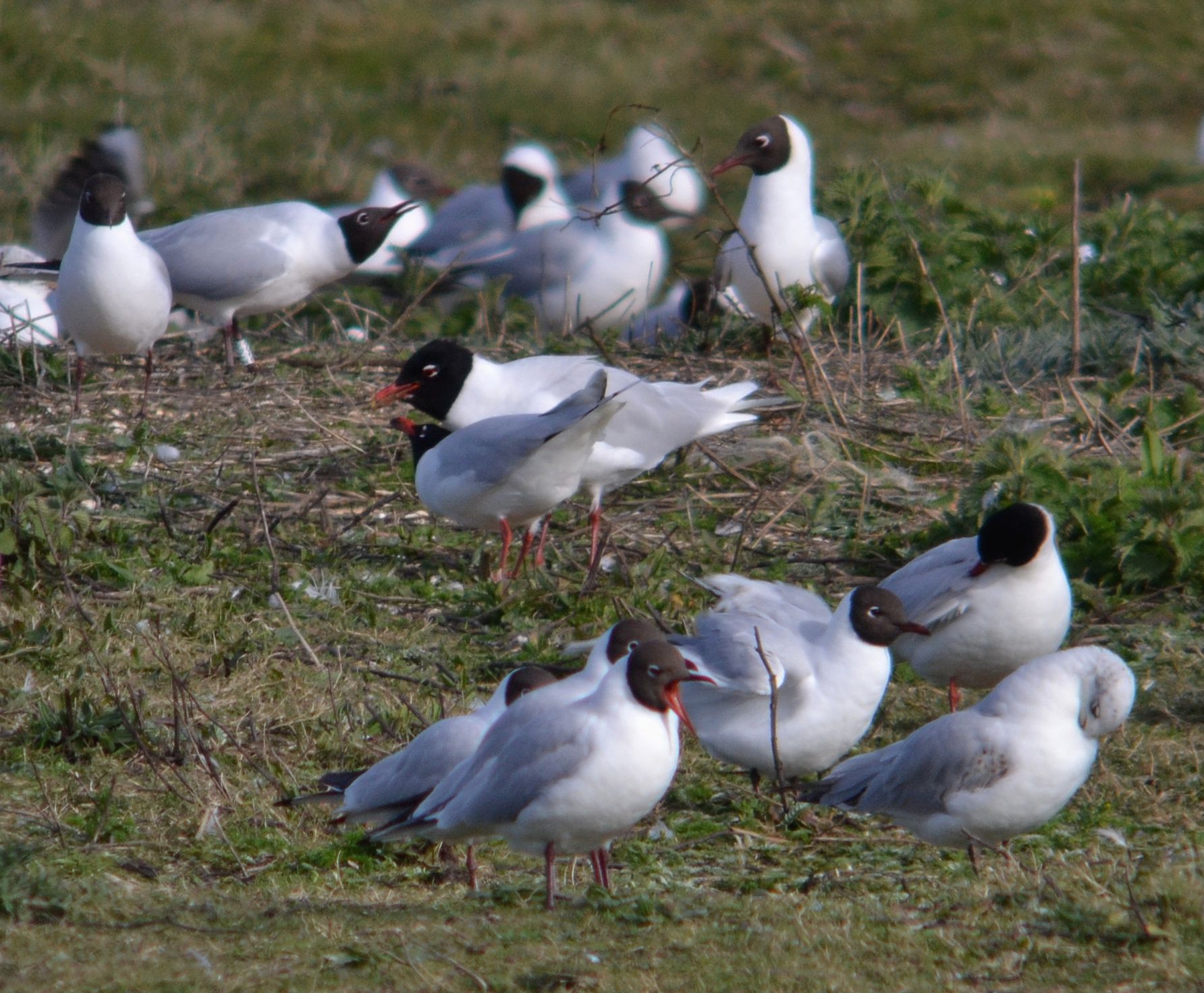
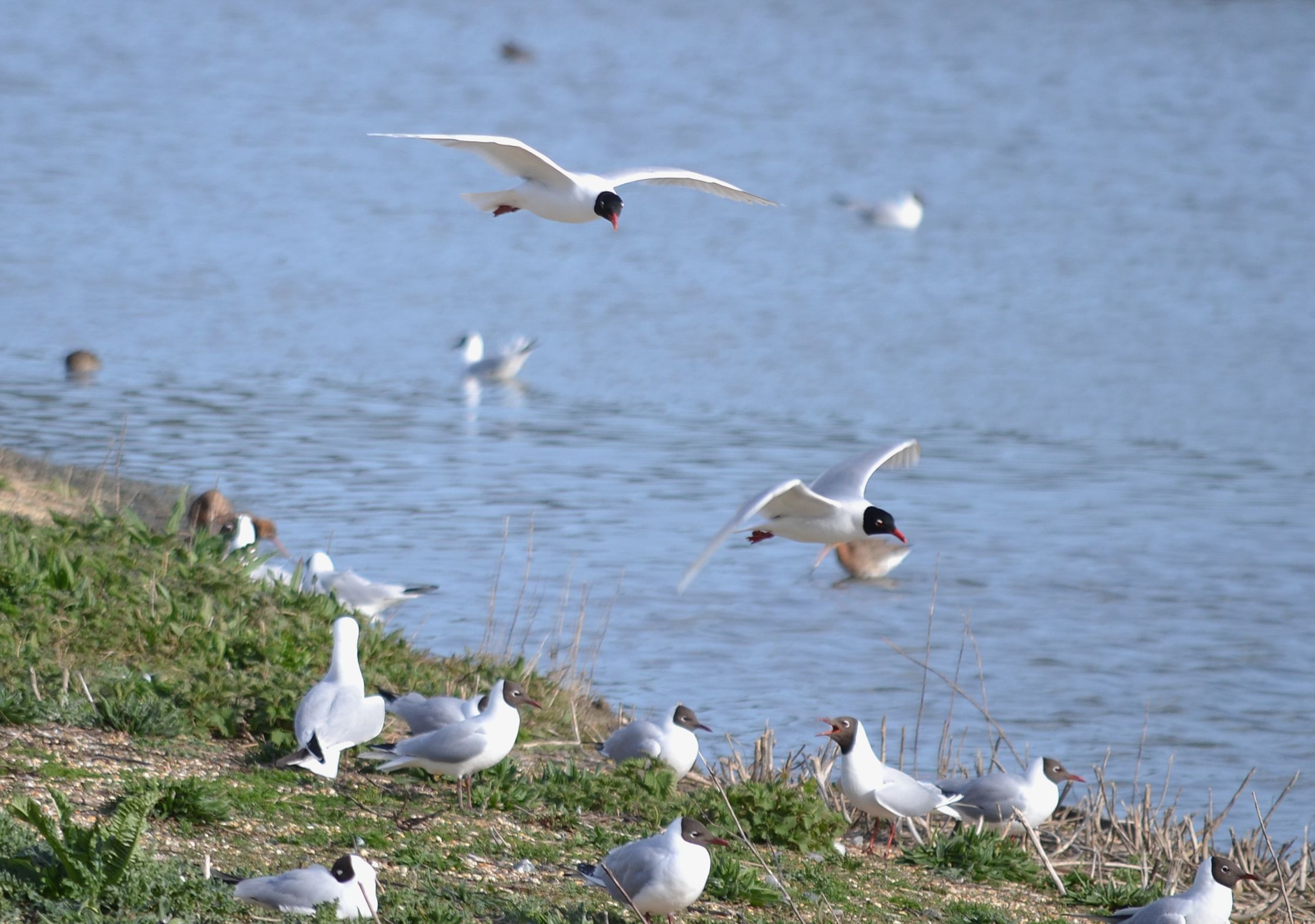
The scrapes at Titchfield Haven (pictured above) hold large numbers of breeding Black-headed and some Mediterranean Gull. This reserve was the first place, in March 2010 where I saw the latter species. Having picked out a nice group of them on the northern scrape, once the star visitor had been lost I walked round to the Pumfrett Hide to observe the gulls. These pictures (below) show how Med Gulls stand out amongst their Black-headed counterparts, with jet black masks, bright red beaks and legs, white wing tips and a different character. They are to my mind very striking and attractive birds.
Mediterranean (centre) and Black-headed Gulls
I looked in at the Meon Shore Hide again after 5:30pm but there had been no further sign of the Greater Yellowlegs and the crowd of visiting birders had largely dispersed. I was pleased to have had a second bite at this cherry and to gain another north American addition to my life list, and so headed home mindful of this day’s narrow window of opportunity.
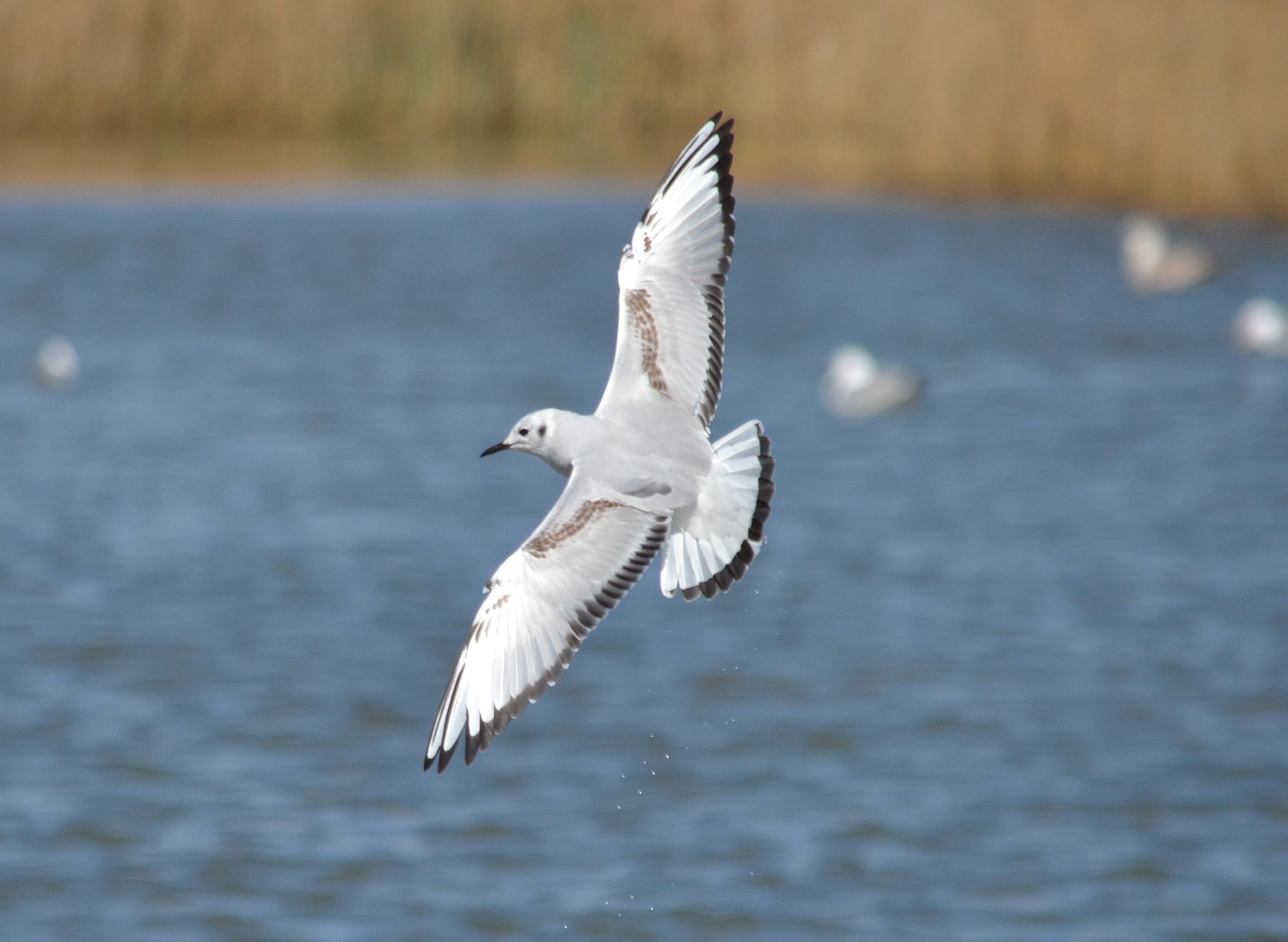
New Birds in England are becoming more difficult to find as my life list grows. The outstanding candidate in the six days since my Belgium trip has been a north American rarity Bonaparte’s Gull. These have been present in Cardiff, South Wales; and Weymouth, Dorset. Today I went for the latter bird as it involved the more pleasant drive (120 miles) and location. This proved a wise choice as the Cardiff equivalent was elusive until late afternoon.
Present weather patterns appear to be holding up the spring passage, making local birding tedious so I made a snap decision to hit the road again. After leaving home at 8:30am, to avoid the rush hour around Winchester and Southampton, bright sunshine came to prevail when I reached the M27 but very strong, cold wind persisted throughout the day. I arrived at the RSPB’s Radipole Lake reserve in Weymouth shortly after 11am to be told the star visitor was showing well.
Bonaparte’s Gull at Radipole Lake RSPB
The Bonaparte’s Gull (pictured above) was viewable from a path known as the Buddleia Loop. There was a shelter there containing a jolly band of locals but I needed no assistance in identifying my bird. This first-winter individual stood out at once from the other species it was associating with: a very small gull with a busy, almost delicate flight pattern. A number of people in the visitor centre and shelter all described this gull as being “tern-like” in it’s behaviour and that description was quite apt.
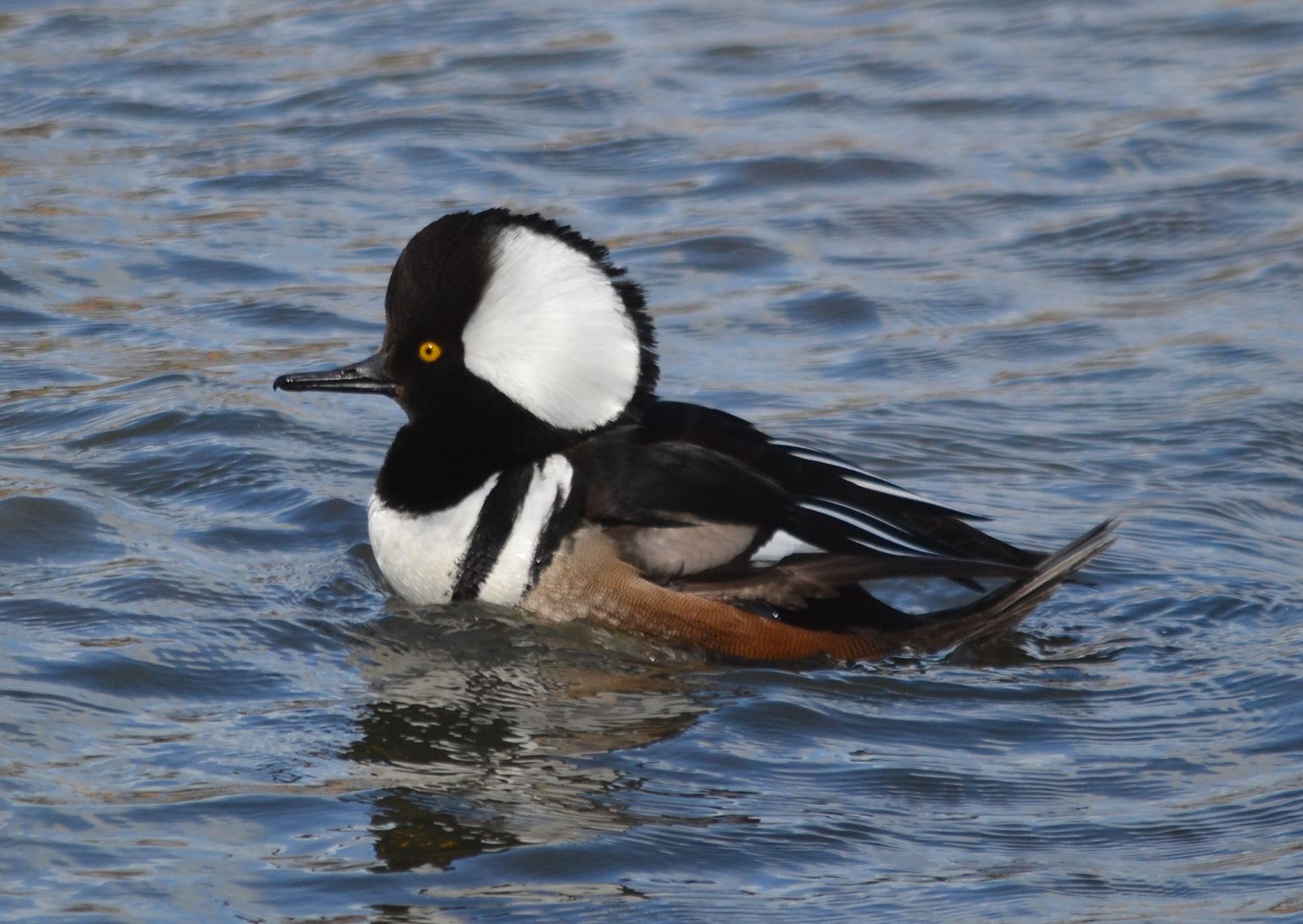
I watched the “Boney” for some time in the freezing wind and then returned to the visitor centre. Outside I caught up with the reserve’s more famous north American resident, the drake Hooded Merganser. He had apparently just returned from four weeks’ holiday, or possibly a search for a mate, and was looking as dapper as ever (below).
Hooded Merganser (male)
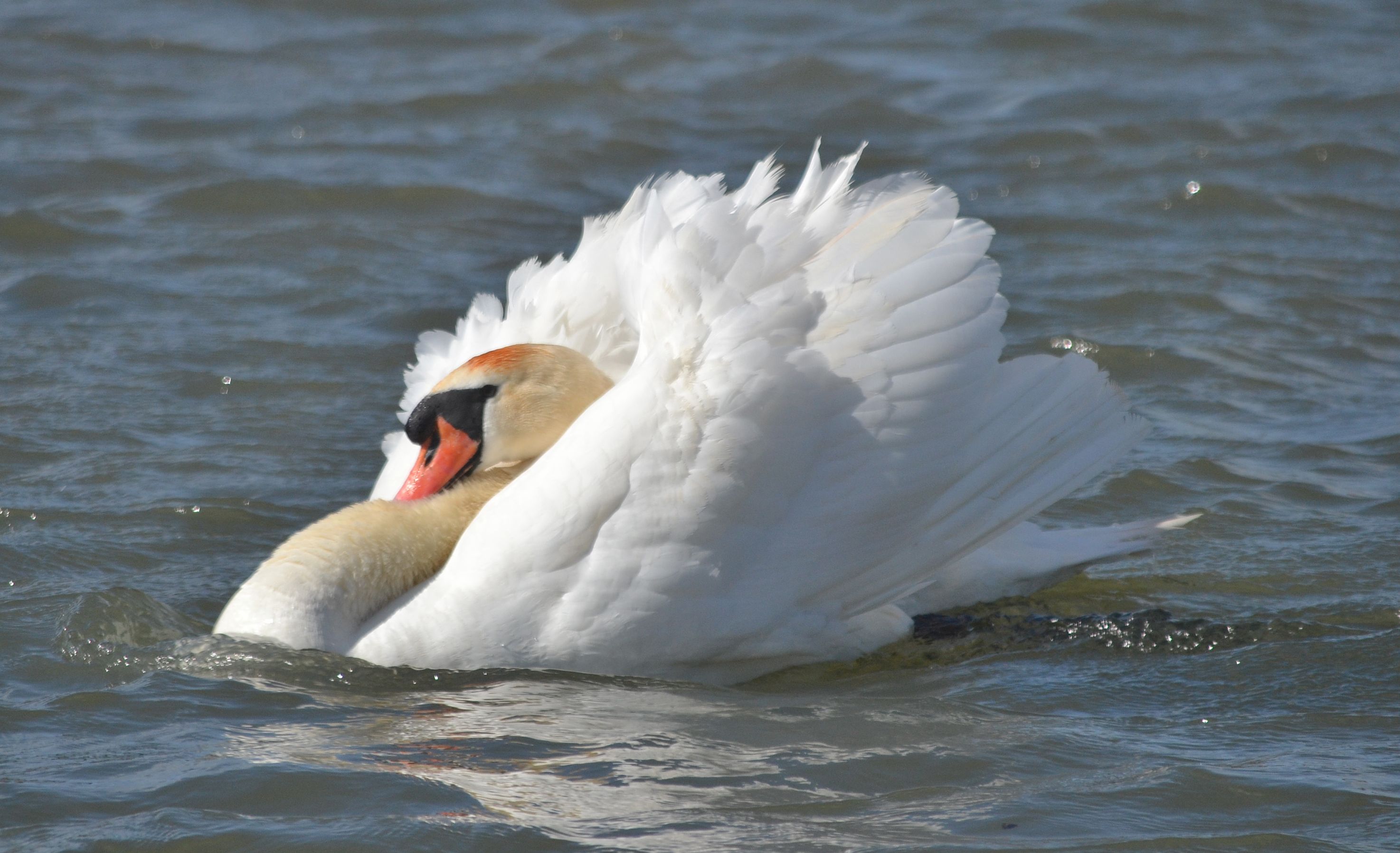
Mute Swan
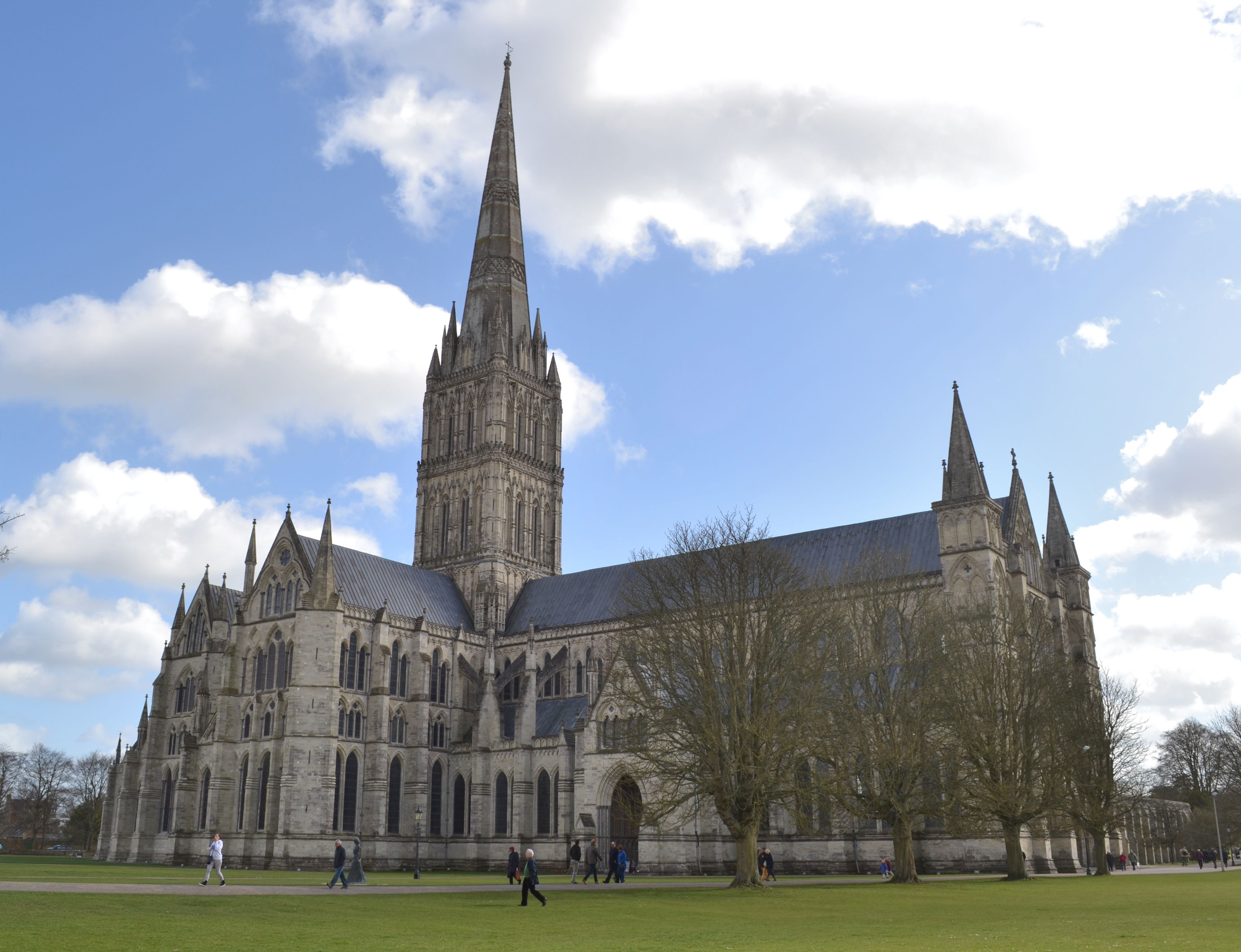
I have retained a soft spot for Dorset since first visiting as a teenager and relish any reason for going there again. So I travelled back to Oxford via Dorchester then Blandford Forum to reacquaint myself with the green and rolling landscape of this lovely county. There was more scope for nostalgia when I reached Salisbury in neighbouring Wiltshire and found a free two-hour parking space close to the city’s cathedral close, a beautiful and historic location with fond past associations. Eventually I reached home, pleased with my day out, its birding result and most of all my flight study of the Bonaparte’s Gull.
Black Woodpecker being one of the few birds that are resident in Belgium but not Britain, I have for years wanted to visit the area north and east of Antwerp where they are found. My attempts at researching this trip also produced references to Middle Spotted and Grey-headed Woodpecker, though I suspected these were real scarcities. My base for the two days was the excellent Klokkenhof Hotel in Brasschaat, where I secured a last minute rate.
The most promising looking site was the cross-border (with Holland) nature reserve of Zoom – Kalmthoutse Heide. It’s page on Holland.com says all Belgium’s Woodpeckers may be found here, but on enquiring at the on-site education centre I was told the only new one I was likely to see was Black. This was no surprise: had the tourist site authors heard of the other two on my wish list I wondered?
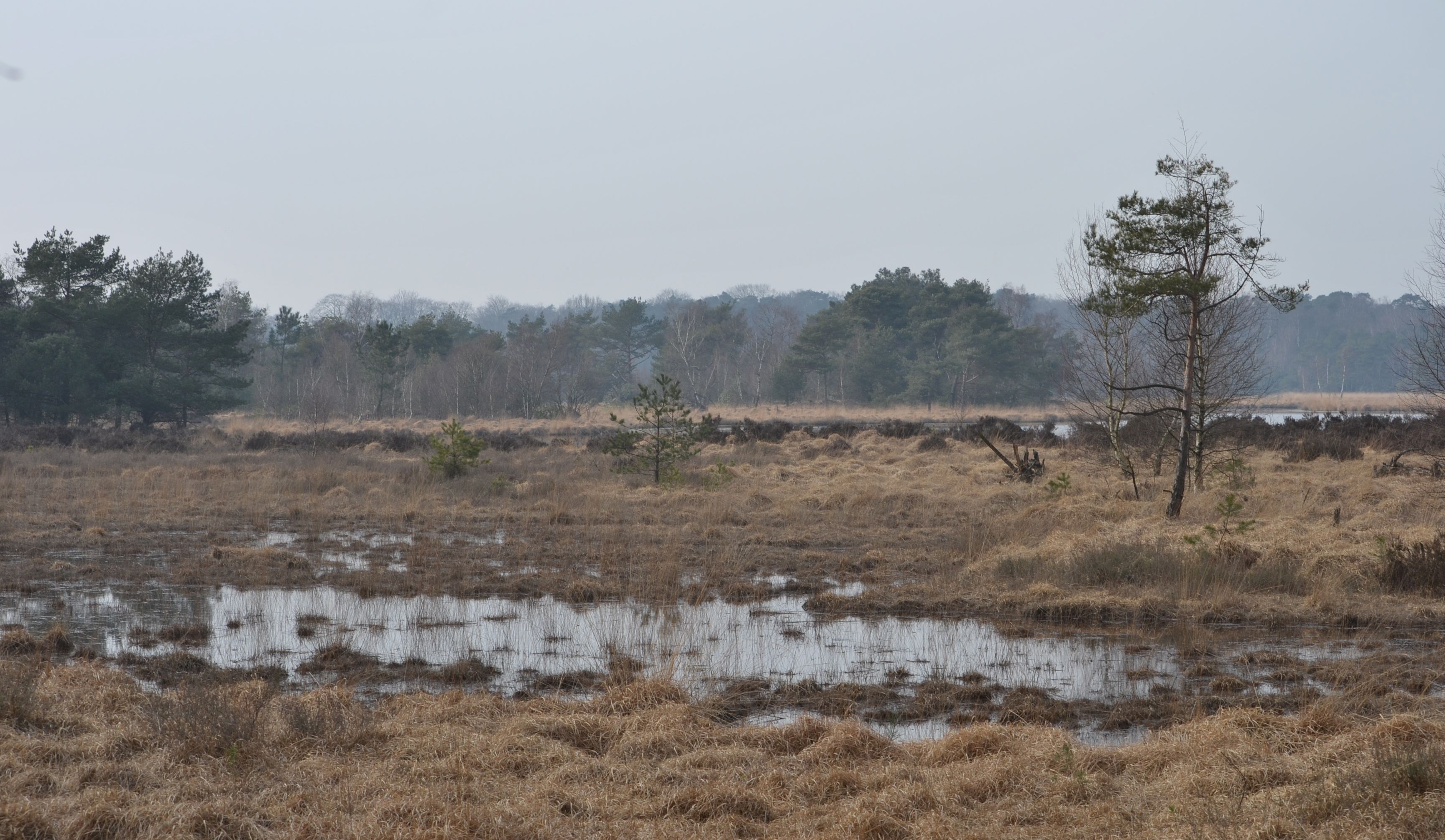
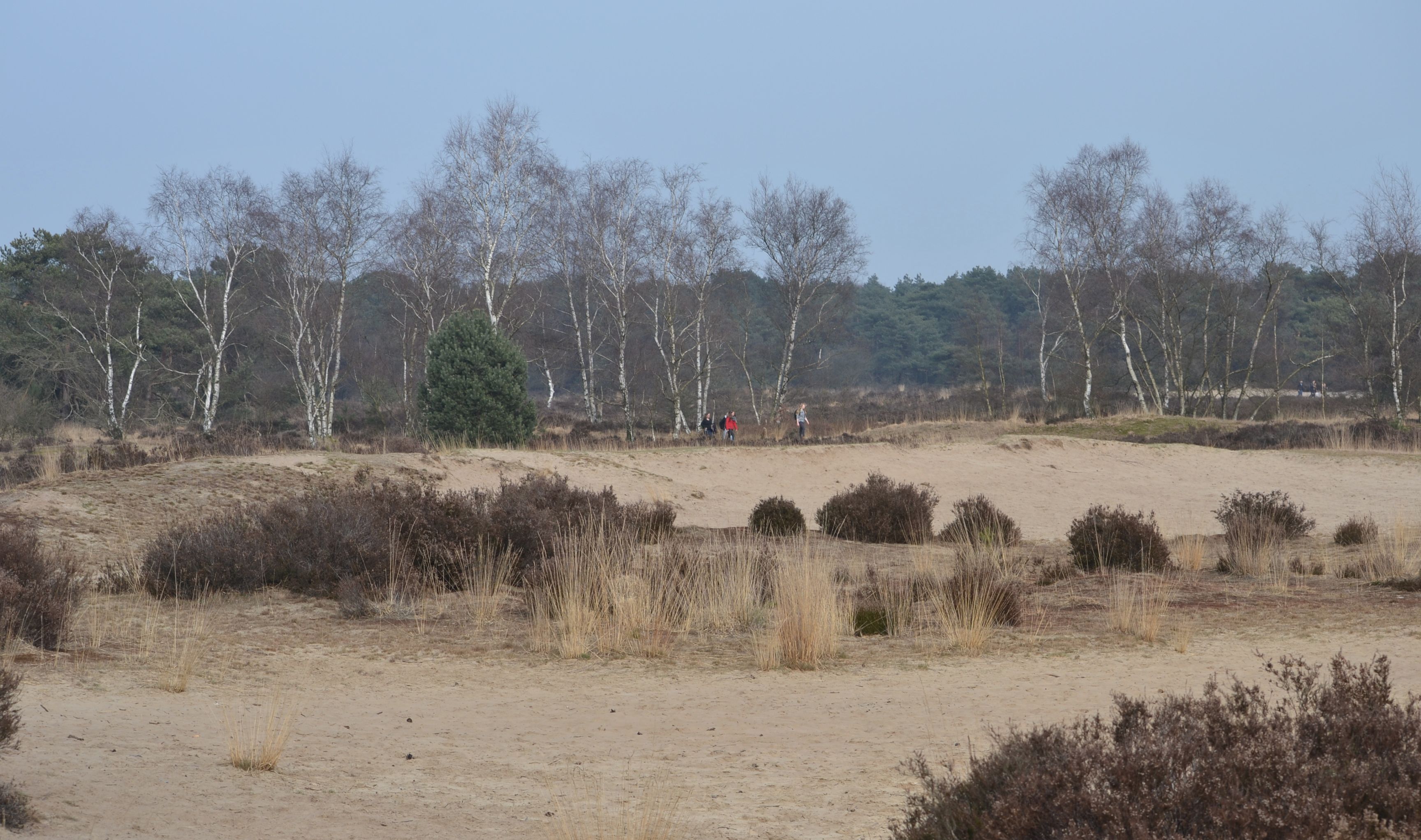
Z-KH is a 10,000 acre area of dry and wet heathland, inland dunes, pools and coniferous forests (pictured above), lying north-west of the town of Kalmthout. The education centre staff recommended two “hot spots” where Black Woodpecker might be found, stressing that the birds favour areas with burned and fallen trees. I checked out both of these on Monday morning without success.
Then I recognised a loud call that had been mimicked to me coming from a wooded area about 500 metres from the centre. As I walked towards the sound my first Black Woodpecker flew out of those woods and towards the place where I had just been. A little later I heard probably the same bird drumming from that location. So I had gained a flight view and now had two more half days in which to find a perched bird.
Crested Tit and Treecreeper are also resident here. My best view of the former was actually in the car park. I wasn’t able to catch one of the latter to measure the hind claw, but hoped I might have seen Short-toed Treecreeper since both varieties are found in Belgium. Later on Monday afternoon I heard another Black Woodpecker drumming from some distance away, the sound continuing for considerably longer than a Great Spot and having a larger more resonant tone. Both the drumming and call are audible at up to 4km distance.
Having covered only a very small area of the reserve on these two visits, I walked for some way further in when I returned on Tuesday morning. The more open areas held large numbers of Larks and Pipits, and in particular the liquid song of Woodlark was a frequent back drop. Every so often one of the last-named would proclaim itself from an exposed song perch, in what Collins Bird Guide describes as “sweet but melancholy notes”. But I was not to see another Black Woodpecker either perched or in flight, though I did hear what must have been another one calling on Tuesday morning.
The weather was cool and sunny throughout the two days of my visit, enabling me to fully appreciate the subtle beauty of this place. So yes there are Black Woodpecker here though I suspect not large numbers, and there is a vast amount of habitat in which to search for them. Discovering a nest site then staking it out in the breeding season would probably be the best strategy for observing and photographing these birds. If I can find a Belgian photographers’ network then perhaps I might come back here one day.
I returned to blighty thinking it would be worth spending more time in both the locations of this trip. The two additions took my European life list to 390 birds.











 Ramblings and Scribblings